Questions as text
Q1 · Assess the impact of the oil crises of the 1970s on the US economy 9489/43 May/June 2021
6 Assess the impact of the oil crises of the 1970s on the US economy. [30]
30 marks
Mark scheme: 6 Assess the impact of the oil crises of the 1970s on the US economy. 30 The Arab–Israeli War of 1973 led to OPEC countries imposing an embargo on the US as a result of the US of supplying the Israeli forces. Oil production was cut and shortages led to price rises, causing a serious effect on the US economy which had become dependent on low cost oil. The price of oil initially doubled and later quadrupled as OPEC pressured foreign companies to raise prices and increase contributions to local subsidiaries. This resulted in a major shift of power for oil producing countries. The crisis coincided with a devaluation and threatened a world recession. The Nixon administration was forced to make efforts to boost internal energy production – project independence and try to get an association of international consumers to control energy prices, but the overall effects of the price rises could not be easily addressed. The crisis was made worse by the floating dollar, inflation and an economy which was already suffering from low growth rates. This hastened ‘stagflation’. Measures had to be taken, which indicated that the US was not the confident economic giant that it appeared to be, including a 55 mph speed limit, fuel economy standards and the attempts to establish a petroleum reserve. The oil crisis has been blamed for recessions, inflation, lower economic growth, reduced productivity, and has been seen as comparable to the Great Crash as a distinct event bringing severe economic consequences. It led to a rapid drive for diversity in the US energy industry to develop alternative sources, such as in Alaska, and maximise existing output. The end of the embargo in 1974 did not ease the long-term problem of the weakened dollar because of the crisis, and the ending of the gold standard made oil imports more expensive. Internal energy policy was drastically changed with rationing, restrictions, and controls. Internal markets were disrupted by problems of distribution. In 1976, there were grants for insulation to help avoid wasting energy and there were major changes to the automobile industry with the change to smaller and more fuel-efficient vehicles. There was a stimulus to new forms of energy – nuclear for example and in conservation led by a new Energy Department. The whole post war premise of an economy dependent on prodigious use of cheap energy changed, but it is doubtful if a long term overall strategy emerged. The fall in auto exports and the restriction of economic activity and the higher price of production resulted in financial policies which led to lowering interest rates. This not only caused inflation but contributed to economic stagnation, as it shielded producers from the need for innovation. The rise in oil prices also led to oil producers accumulating large trade surpluses which were recycled, causing a considerable growth in the US capital market. Analysis might draw a distinction between the immediate effects of the crisis on the US economy and the longer term developments and changes brought about.
This question in 9489/43 May/June 2021
Q2 · ‘The Red Scare of the McCarthy era was caused by domestic political factors in the US.’… 9489/42 Oct/Nov 2021
5 ‘The Red Scare of the McCarthy era was caused by domestic political factors in the US.’ Discuss this view. [30]
30 marks
Mark scheme: 5 ‘The Red Scare of the McCarthy era was caused by domestic political 30 factors in the US.’ Discuss this view. Factors might include the desire of Republicans to secure advantage; support of Democrats; electorate’s concern over spies; social resentment at New Deal elite These domestic factors might be set against developments in Far East and Europe. The anti-Communist hysteria of the later 40s developed into virulent campaigns at national and local level against suspected Un American activities in the McCarthy era from 1950 to 1954. Domestic political factors might be the fears of both Truman and Eisenhower that opposition to the accusations and hysteria would be politically unpopular and a sign of weakness. There was little overt and organized resistance and in many localities elites stoked discrimination against key elements in trade unions and education. The memories of the Red Scare after the First World War might be seen as a factor. Political pressure was exerted to ensure that liberals were not ‘soft’ on Communism. The fears were aroused by revelations about spying. The Alger Hiss case seemed to indicate that the New Deal might have been subversive and old antagonisms about the growth of federal power and the leftist tendency of government were reawakened. The trial and execution of the Rosenbergs also stirred anti- foreign bias. The election of a Republican president led to expectations that conservative and traditional values would be upheld and as McCarthy was a Republican it was difficult for the administration to control him. Domestically, the McCarthy era revealed splits and resentments within US society regardless of the actual evidence of subversion. However, without external developments it is difficult to see how the Red Scare could have developed so extensively and the extension of Soviet power into Eastern Europe worried many Americans with roots in those countries. The Berlin Blockade, followed by the development of the atomic bomb by the Soviet Union and the Korean war put America on the defensive. The major eternal event was probably the victory of the Communists in China which seemed to confirm the aggressive spread of Communist ideology and the weakness of political leadership in not stopping it. As political leaders stressed ideological conflicts abroad, so it was natural that the supposedly socialist tendencies within the United States during the New Deal and the growth of federal power in wartime should be scrutinized. Spy revelations released a similar hysteria that had arisen in relation to external events in the Russian Revolution after the First World War. The ability of McCarthy to use press publicity and the showing of the activities of the Congressional investigations brought the witch hunt to wider audiences and again made political opposition difficult. In the end it was the interaction of external events with internal developments, but the question invites a judgement about the balance between internal political factors and other developments.
This question in 9489/42 Oct/Nov 2021
Q3 · Assess the effectiveness of the war on drugs in the 1980s 9489/42 Oct/Nov 2021
7 Assess the effectiveness of the war on drugs in the 1980s. [30]
30 marks
Mark scheme: 7 Assess the effectiveness of the war on drugs in the 1980s. 30 The Reagan administration took the strategic decision to widen the campaign against drugs to focus more on internal drug use. This was because drug use was portrayed as a threat to US society and national security in the planned War on Drugs announced in 1982. Thus, there were linked approaches. As well as efforts to stop the international trade, there was an effort to step up domestic enforcement, to campaign for greater education on the dangers of drugs and more treatment to end addiction. Foreign governments were to be involved and there was considerable stress put by the main policy maker Carlton Turner on persuading the US public to see both hard and soft drugs as a menace to the stability and health of society. Resources were made available to law enforcement and to federal drug treatment programmes. Legislation such as the anti-Drug Abuse Acts established a zero-tolerance policy with minimum penalties for drug offences and withdrawal of some public benefits on conviction. The government encouraged corporate and private funding of campaigns like ‘Just Say No’ which targeted young middle-class users and was supported by Nancy Reagan. Later campaigns boosted spending on prevention measures and educational policies. Problems to be overcome were some diffusion of efforts and a confusion about whether this was a crime problem which needed rigorous police action or a social problems which required action to get to the root of motivations for drug use. The increasing social divides brought about by economic policy and issues of urban deprivation and limited public health care were often seen as an obstacle. The perception that drug use as principally an African American issue limited the overall effectiveness of actions. Also, the increased supply of cheaper heroin and cocaine was difficult to control. The lack of distinction between soft and hard drugs led to some lack of support and resources were not all directed towards the most pernicious and dangerous drug activities. The widespread drug use among Americans who were nor criminals or in poor housing and ghettos was sometimes compared to prohibition and was a barrier to success. Zero tolerance did not always reflect the changing social attitudes to drug use. The problems of containing the supply and importation of drugs from other countries were an obstacle as was the strength and ingenuity of organized crime groups.
This question in 9489/42 Oct/Nov 2021
Q4 · ‘The Red Scare was mainly a reaction to the growth of Communism overseas.’ Discuss this… 9489/43 May/June 2022
5 ‘The Red Scare was mainly a reaction to the growth of Communism overseas.’ Discuss this view. [30]
30 marks
Mark scheme: 5 ‘The Red Scare was mainly a reaction to the growth of Communism 30 overseas.’ Assess this view. Answers could consider the impact of the disintegration of the war time alliance with the expansion of Stalin’s power in Eastern Europe seeming to contravene the commitment to democracy at Yalta. The Salami tactics which led to Communist domination in the East and the coup in Czechoslovakia alienated many in the US originating from Eastern Europe and confirmed fears of Communism which went back to the 1917 Revolution. The establishment of the Communist regime in China and the Korean War seemed to confirm fears of a worldwide Communist conspiracy. However, there were obvious roots in domestic issues. These could be seen as an ideological clash going back to the post World War One period with fears of foreign spies and infiltration. The backlash to the new Deal era of growing state power and the desire of the Republicans to have a clear domestic issue to combat the Democrats after the disappointment of the 1948 presidential election. There were also social tensions as a liberal elite was resented and the revelations about leading figures such as Alger Hiss and fears that ordinary people were being betrayed over Atomic secrets provided a groundswell of discontent which could be exploited by an unstable demagogue like McCarthy but also by more mainstream politicians. The Red Scare’s deployment of terms like ‘anti-American’ fed off remnants of nativism and opposition to social and economic changes which found scapegoats in all sorts of supposed enemies in the world of politics and culture.
This question in 9489/43 May/June 2022
Q5 · Evaluate the impact of the Vietnam War on the US economy in the 1960s and 1970s 9489/41 Oct/Nov 2022
6 Evaluate the impact of the Vietnam War on the US economy in the 1960s and 1970s. [30]
30 marks
Mark scheme: 6 Evaluate the impact of the Vietnam War on the US economy in the 30 1960s and 1970s. Indicative content The Vietnam War had several effects on the US economy. The requirements of the war effort strained the nation's production capacities, leading to imbalances in the industrial sector. Factories that would have been producing consumer goods were being used to make items from the military, causing controversy over the government's handling of economic policy. In addition, the government's military spending caused several problems for the American economy. The funds were going overseas, which contributed to an imbalance in the balance of payments and a weak dollar, since no corresponding funds were returning to the country. In addition, military expenditures, combined with domestic social spending, created budget deficits which fuelled inflation. Anti-war sentiments and dissatisfaction with government further eroded consumer confidence. Interest rates rose, restricting the amount of capital available for businesses and consumers. Despite the success of many Kennedy and Johnson economic policies, the Vietnam War was an important factor in bringing down the American economy from the growth and affluence of the early 1960s to the economic crises of the 1970s. The debate might be between direct and indirect economic effects. Some of the economic effects can be seen as being directly related to the production of military materials and the inflationary effects of spending. However, some areas of the economy were stimulated by this rise in demand. The effects of political unrest and the diversion of spending and resources away from the social welfare of the Great Society were less direct but could be seen as significant. The question asks for some assessment of the relative importance of different possible consequences.
This question in 9489/41 Oct/Nov 2022
Q6 · Assess the reasons for the persistence of the budget deficit in the 1980s and early 1990s 9489/42 Oct/Nov 2022
7 Assess the reasons for the persistence of the budget deficit in the 1980s and early 1990s. [30]
30 marks
Mark scheme: 7 Assess the reasons for the persistence of the budget deficit in the 30 1980s and early 1990s. Indicative content Debt held by the public relative to GDP rose rapidly again in the 1980s.as Reagan lowered tax rates. The top income tax rate fell from 70% to 28%, and increased military spending, while congressional Democrats blocked cuts to social programs. Debt as a share of GDP increased from 26.2% in 1980 to 40.9% in 1988 and it continued to rise, reaching 48.3% of GDP in 1992. Under Bush there was still opposition to social welfare cuts and pressure to maintain military spending to support foreign policy aims. Annual budget deficits under Reagan averaged $167bn or 4.2% of GDP compared with significantly lower levels under Carter of $57bn. Explanations link this to reduced economic activity during periods of recession, for example 1981–82, which reduced income from taxes. Economic issues can also be the explanation as the basis for tax cuts. Other explanations are the 30% increase in defence spending and the high costs of pressuring the USSR by high tech space wars. In economic terms, the campaign to reduce inflation by monetary policy under Federal Reserve Chairman Volcker (which resulted in a fall from 13% in 1980 to 4% in 1982) had a big impact on tax assessment as taxes were assessed on nominal incomes not inflation- adjusted incomes. Each percentage point reduction in inflation was calculated to reduce tax income by $11 billion and it has been suggested that tax revenue was reduced by 50% as a result in the first years of the 80s. However, reduction in inflation had an effect on the costs of government so spending was reduced. It also had a beneficial effect on business activity so this explanation can be criticised. The gap between Reagan’s rhetoric and the actual ability to bring about cuts in federal spending may be the key. The priority given to defence spending may be seen as key but the long-term development of federal spending and the political problems in reducing it may also explain a continued deficit in the face of ideological commitment to reducing ‘big government’.
This question in 9489/42 Oct/Nov 2022
Q7 · ‘Britain had largely recovered from the effects of the Great Depression by 1939.’ Discuss… 9489/43 Oct/Nov 2022
4 ‘Britain had largely recovered from the effects of the Great Depression by 1939.’ Discuss this view. [30]
30 marks
Mark scheme: 4 ‘Britain had largely recovered from the effects of the Great Depression 30 by 1939.’ Discuss this view. Indicative content One view is that the British economy in the 1930s went through a process of change and development so that the worst elements of the Great Depression which had caused particular problems in the 1930–32 period gave way to greater prosperity. Certainly GDP growth was encouraging. It had fallen below 1929 levels had reached by 1939 some 35% higher and growth showed an upward trend. Unemployment which had stood at some 23% of the work force in 1932 had fallen to 9% by 1939. The fall in prices which had characterised the deflationary years of the early 1930s had changed to a modest rise which stimulated key areas which were still reliant more on internal demand as overseas trade suffered from the autarchic tendencies in world economic policies. The recovery was aided by large scale defence spending which acted as stimulus to industries which had suffered since the end of the First World War. Agriculture was helped by government policies which maintained prices by restricting and controlling marketing and by this price rise and by an increase in domestic demand. This positive view is qualified by a persistent unemployment level albeit more evident in some areas and sectors than others. London and the South East had higher employment levels through the 1930s than areas of traditional industry and Scotland and Wales in particular. Also, the recovery was slower in staple industries than in newer industries such as transport and electrical engineering which had only a 4% unemployment rate overall by 1939. Higher levels of over 20% persisted in some regions and some industries. Another issue is the return of economic cycles and the effects of the 1937 recession which were still visible through 1938 and into the early part of 1939 in some areas. Real GDP had fallen quite dramatically in 1938 and by 1939 was lower than it had been in 1936. There was a spike in unemployment caused by the recession as most economic sectors were affected. Looked at in the light of this return to some of the problems of 1932 it has been argued that the economy of 1939 was still vulnerable to cyclic fluctuation. Unemployment lingered until the war economy was in fuller operation by 1940. The demands of rearmament, especially in the post- Munich period war had an effect on the structural changes that were still causing economic problems. The view in the quotation is dependent on an interpretation of ‘largely’ but is tenable. Qualifications can be made about employment, exports, some depressed areas and the overall vulnerability to cyclic fluctuation.
This question in 9489/43 Oct/Nov 2022
Q8 · Analyse the outcomes of the ‘war on drugs’ in the 1980s 9489/42 Feb/March 2023
7 Analyse the outcomes of the ‘war on drugs’ in the 1980s. [30]
30 marks
Mark scheme: 7 Analyse the outcome of the ‘war on drugs’ in the 1980s. 30 In the 1970s, President Richard Nixon formally launched the war on drugs to eradicate illicit drug use in the US. Under the Reagan administration, what followed was the escalation of global military and police efforts against drugs. But in that process, the drug war led to unintended consequences that have proliferated violence around the world and contributed to mass incarceration in the US, even if it has made drugs less accessible and reduced potential levels of drug abuse. There could be arguments that drug use was reduced and that a clear signal was made about the dangers and legality of drugs in line with Nixon’s initial concerns of the damaging social and medical consequences. However, the discussion could be about whether the negative consequences of hard-line policies, imprisonment raids and the so-called balloon effects have been greater than the social gains, especially as enforcement increased social and racial tensions. One consequence has been large number of arrests – by the 1980s there were over 580,000 annually. The proportion of people in US jails on drug-related offenses saw a big increase. The social effects have been considerable with criminal records for drug possession affecting job opportunities. Statistically the proportion of Black and Hispanic Americans affected has been higher than for White Americans so one consequence has been to exacerbate racial divides, the costs of this policing has been considerable in financial terms. The consequences of the policy have been felt overseas with US operations in Mexico and Afghanistan. Reduction in drug use by a concerted effort has had effects on public health, the economy, crime. The dangers of capture and imprisonment have driven drug dealers out of the market. However, critics of the war point to this driving dealing further underground and raising prices. It has also led to tainted drugs as dealers try to economise to meet what is a virtual tax on their activities in the form of the costs of prison. In economic terms there has also been an increase in higher potency drugs offering greater effects in smaller units. An unforeseen effect of rising prices and potency is greater incidence of serious overdose. Unforeseen effects on restrictions of the use of needles has been the spread of disease from contamination. By falling more heavily on smaller users and raising prices tended to lead to the growth of cartels much in the same way that Prohibition led to gangsterism. It has been claimed that the war has encouraged drug cartels as smaller dealers and users are more likely to be those caught in the net of state action. Spiralling violence might have been the result of the need for more intense police actions. It could be argued that, as with Prohibition, an unintended consequence has been corruption. This increased with the provision for the seizure of assets derived from drug crime. There has also been the militarisation of the police – involved in a ‘war’ and not just enforcement of laws. A controversial effect of drug legislation was suggested to be the Nixon’s administration desire to strike at groups they saw as enemies – the ‘hippy’ left and radical Blacks. 7 This remains a controversial topic and responses could balance obvious benefits in the sense of deterrence, greater awareness of the dangers of drugs, a determination to deal with what Nixon called ‘public enemy number one’ and the assault on crime and activity which endangered public health with some unforeseen consequences both at home and abroad.
This question in 9489/42 Feb/March 2023
Q9 · Assess the reasons for regional differences in living standards in the period 1929–39 9489/43 May/June 2023
4 Assess the reasons for regional differences in living standards in the period 1929–39. [30]
30 marks
Mark scheme: 4 Assess the reasons for regional differences in living standards in the 30 period 1929–39. The common view of the ‘hungry thirties’ in which economic depression led to lower living standards across the nation can be challenged to some extent by the regional nature of events. An assessment of these factors might include: The growth of unemployment, cuts in working hours and pay led to a decline in living standards for millions. Unemployment benefit in 1933 was insufficient to provide the minimum healthy diet recommended by the Ministry of Health. For many families, bread, margarine, and tea were staples and women often suffered disproportionately as children and husbands were often fed first. There was little money left for new clothing, possessions and leisure activities. The Means Test only served to exacerbate these issues. However, rates of unemployment differed greatly across the country. In 1936 5.6% in SE England were unemployed compared to 28.5% in Wales. The staple industries, situated in the north, Scotland, and south Wales, were affected far more than new, light industries, often situated in the midlands or the south. The concept of two nations began to grow. For those in work, no matter what part of the country they lived in, living standards could be argued to have improved as prices never rose higher than wages. Therefore, real wages increased for those in employment. There was also a growth in consumerism, with 400 000 vacuum cleaners sold a year in 1938 and a 300% increase in the sale of economic cookers between 1930 and 1935. Prices of basic foodstuffs such as tea, sugar, vegetables, and milk fell. Millions of new homes were also built in the 1930s, both by local authorities for rent and by building companies for sale. These new homes had amenities such as indoor toilets, electricity, hot running water and gardens, previously unavailable to many people. Home ownership rates were as high as 32% by 1938. Living standards also improved for families with a regular income, which were more likely to be situated in certain areas of the country.
This question in 9489/43 May/June 2023
Q10 · ‘The National Governments had more successes than failures between 1931 and 1939.’ Discuss 9489/43 May/June 2024
4 ‘The National Governments had more successes than failures between 1931 and 1939.’ Discuss. [30]
30 marks
Mark scheme: 4 ‘The National Governments had more successes than failures between 30 1931 and 1939.’ Discuss. This question requires analysis of the extent to which the National Government successfully dealt with the challenges which it faced in this period. Some discussion of the formation of the National Government in 1931 as a response to the economic crisis facing the country might be made. An assessment of the National Government’s economic policies will probably include the decision to end spending cuts following the Invergordon Mutiny and to instead devalue the pound by leaving the Gold Standard, leading to pound falling to $3.40. This helped British industry by making exports more competitive. Cutting interest rates from six to two percent led to ‘cheap money’ which allowed businesses to borrow and invest and helped to fuel an increase in house construction as mortgages were cheaper. However, the Special Areas Act, passed in 1934, to channel investment into areas badly hit by the slump, was, at best, a partial success. Candidates might conclude that although there was a partial recovery by 1939, the worst affected areas of industrial Britain were still badly hit by unemployment. The National Government also faced a deteriorating international situation, being faced with the challenges of growing aggression from Italy, Japan and Nazi Germany. Baldwin might be seen to have failed initially to deal with the invasion of Abyssinia by Italy by attempting to appease Mussolini through the Hoare-Laval Pact. The rise of Hitler led to debates over rearmament, hugely unpopular with millions of people, although the increased spending from 1935 onwards helped to reduce unemployment in the iron, steel and shipbuilding industries. Appeasement of Hitler is largely associated with Chamberlain and can be argued as a failure as it placed too much trust in Hitler’s promises at Munich in 1938. However, candidates might choose to argue that it was a popular policy which bought Britain time to further rearm and to prepare for war. There might also be some comments about the effectiveness of Britain’s preparation from 1938 onwards, including plans for evacuation, gas masks, the organisation of a system of rationing and of conscription. A balanced response will require discussion of the National Government’s policies which might be judged as successes and failures and an overall judgement.
This question in 9489/43 May/June 2024
Q11 · Evaluate the consequences of ongoing budget deficits in the 1980s and early 1990s 9489/43 May/June 2024
7 Evaluate the consequences of ongoing budget deficits in the 1980s and early 1990s. [30]
30 marks
Mark scheme: 7 Evaluate the consequences of ongoing budget deficits in the 1980s and 30 early 1990s. In economic terms, increasing federal budget deficits were held to be responsible for upward pressure on US interest rates. Falling deficits added to national savings but increased deficits meant a claim on savings and a rise in interest rates. Foreign investors were tempted to buy more US assets. The net demand for dollars rose on the foreign exchange market and this led to a rise in value in the dollar and increased the exchange rate. This made goods and services more expensive abroad and reduced the prices of foreign goods and services in the US. The value of exports fell. This led in the 1980s to an allied trade imbalance. Between 1980 and 1985, the budget deficit went from 0.6 to 4.3 and the trade deficit went from a surplus of 0.2 to a deficit of 2.3. A discussion could be sustained about the effects of this on different sectors of the US economy and society and there could be consideration of political consequences. Budget deficits were a consequence of a reduction in taxes and a continued commitment to social security and a greater expenditure on defence. Budget deficit stood at $73.8b and then rose hugely despite Republican ideas of fiscal control and limited government. By 1983 at $207bn debt amounted to 6% of GNP. By 1986 it was $211bn and by 1991 $269bn. Interest payments rose in the 1980s from 2.0% of GNP to 3.4% and there was a big increase in debt held by the public in terms of government securities. This rose from 26.8% in 1980 to 44.2% in 1990. As taxes were cut many Americans had money to invest in government bonds and so for those with spare capital there was a double benefit. Long term interest rates did fall for gilt edged investments but remained high at 9%. This increased the gap between those who could benefit and those who faced cuts in social spending in an attempt to restrict the growth of the deficit even further. These were mainly not older people but those whose benefits were likely to change and unemployment insurance was the main victim. Increased charges for servicing the deficit and a much higher level of defence spending were consequences of an acceptance of a considerable growth in debt. The 1980s saw a rise in level of defence spending after a post-Vietnam decline. The inflationary possibilities of large deficit and spending were generally managed by the Federal Reserve but there was widespread political and economic concern which Reagan and his successors were in a limited position to address.
This question in 9489/43 May/June 2024
Q12 · ‘Economic issues were the most serious domestic challenge faced by the Ford… 9489/42 Feb/March 2025
6 ‘Economic issues were the most serious domestic challenge faced by the Ford administration.’ Assess this view. [30]
30 marks
Mark scheme: 6 ‘Economic issues were the most serious domestic challenge faced by 30 the Ford administration.’ Assess this view. In terms of economic issues the problem was that inflation was running high at 12% by 1975 and the US was in recession with unemployment at 9%. The rise in energy prices affected economic growth. For Ford this was difficult because he was committed to cutting back on taxes and government intervention and aiming to reduce the deficit. To that end he introduced large budget cutbacks and also initially increased taxes on the wealthy and larger businesses. But state and city governments were facing financial crises and New York faced bankruptcy so, even though he vetoed 39 bills to keep spending down, he was driven to measures to ease pressures with tax cuts and subsidies, giving the impression of some lack of coherence. Other domestic challenges he faced were the backlash from the Watergate affair and how to deal with Nixon. His decision to pardon the former president was controversial and helped the Democrats to mid-term victories which meant that Ford was struggling with a hostile Congress. He also had to deal with the consequences of Vietnam and earned criticism for an amnesty for draft dodgers. Pressure for social improvements such as the valuable reform of special needs facilities for handicapped children meant that it was harder to please his Republican colleagues by reducing the deficit which continued to rise. There was also concern among his supporters about his support for Equal Pay and his perceived support, because of his wife’s stated sympathy, for a woman’s right to choose in the abortion debate. Responses could consider the challenge he faced in the election from Carter.
This question in 9489/42 Feb/March 2025
Q13 · ‘Rising prices were the biggest challenge to the US economy in the 1960s and 1970s.’… 9489/43 May/June 2025
6 ‘Rising prices were the biggest challenge to the US economy in the 1960s and 1970s.’ Discuss this view. [30]
30 marks
Mark scheme: 6 ‘Rising prices were the biggest challenge to the US economy in the 30 1960s and 1970s.’ Discuss this view. Rising prices resulted from high levels of spending, monetary policy and external factors such as the oil crises and were a considerable challenge in push up costs, particularly of transport, creating a wage-cost spiral and affecting US competitiveness in world markets. More a feature of the 1970s, inflation made investors wary of long-term commitments, and it made economic planning by businesses difficult. Productivity was therefore affected and there was a lack of innovation into new technology. However, it was rising places in conjunction with stagnation that made them such a challenge. The economic recessions which affected the US in the early and late 1970s intensified unemployment but did not bring down prices. When there was greater growth as in the mid-1970s this was restricted by another rise in oil prices. Conservative critics pointed to the policies of the Federal Reserve being a challenge because fears of ongoing recession and higher unemployment prevented measures to bring down inflation. The consumer confidence which had helped to boost growth was hit by stockpiling of goods and unwillingness to spend because the fear of both rising prices and recession. Long term factors such as the rise of foreign competition, an overvalued dollar, an over reliance on cheap fuel and income inequality might be set against inflation as such and some responses might analyse ‘stagflation’ and argue that inflation was an isolated development.
This question in 9489/43 May/June 2025
Q14 · Assess the importance of economic factors in Clinton’s victory in the 1992 presidential… 9489/43 Oct/Nov 2025
7 Assess the importance of economic factors in Clinton’s victory in the 1992 presidential election. [30]
30 marks
Mark scheme: 7 Assess the importance of economic factors in Clinton’s victory in the 30 1992 presidential election. The famous phrase ‘It’s the economy Stupid!’ might indicate the importance of economic issues. Unemployment was high at over 7 million and the $300 billion budget deficit of the Reagan-Bush years was a big election issue. Among Republicans, the failure of Bush to implement promised tax cuts lost him support. Clinton campaigned a lot on economic issues. Middle class Americans were concerned about talk of recession. However, there were other factors. Clinton was a more relaxed and articulate candidate than Bush but there were elements of his personality that might have been less attractive, and other factors might be seen to have been more significant. Clinton was criticised for evading the Vietnam draft and there were insinuations of extra marital affairs and pot smoking at college. The Bush campaign was lacklustre, and the candidacy of Perot took away more Republican votes than those for Clinton. There was a reaction against the Reagan era conservatism in favour of a younger and more progressive candidate. It could be argued that the candidacy of the businessman Ross Perot whose ‘United We Stand, America’ was aimed at conservative Republicans was the major issue. However, this too had economic elements with Perot offering conservative pro-business policies and Reagan-esque supply side policies with tax cuts and a balanced budget. Both Perot and Clinton benefited from a desire for change and the context here may be more important than the personal characteristics of the candidates and might be more linked to economic concerns. Clinton did well in traditional Democratic areas but also won back voters who had gone over to Reagan.
This question in 9489/43 Oct/Nov 2025
![Question 1: Assess the impact of the oil crises of the 1970s on the US economy. [30]](https://img.pastlit.com/crops/5d5af204-39ae-45b1-9d8b-46c00cdfcfb3/q6.webp)
![Question 2: ‘The Red Scare of the McCarthy era was caused by domestic political factors in the US.’ Discuss this view. [30]](https://img.pastlit.com/crops/bfbb7893-c3b7-4f70-a15a-90bd55fd5fe6/q5.webp)
![Question 3: Assess the effectiveness of the war on drugs in the 1980s. [30]](https://img.pastlit.com/crops/bfbb7893-c3b7-4f70-a15a-90bd55fd5fe6/q7.webp)
![Question 4: ‘The Red Scare was mainly a reaction to the growth of Communism overseas.’ Discuss this view. [30]](https://img.pastlit.com/crops/d7fe6fa7-c02a-4c14-898f-c9b58ddad0da/q5.webp)
![Question 5: Evaluate the impact of the Vietnam War on the US economy in the 1960s and 1970s. [30]](https://img.pastlit.com/crops/6896396d-c9b6-433c-9be9-14eb5c1f5d67/q6.webp)
![Question 6: Assess the reasons for the persistence of the budget deficit in the 1980s and early 1990s. [30]](https://img.pastlit.com/crops/3fd09b96-2dd6-4af5-a596-eb657beec32d/q7.webp)
![Question 7: ‘Britain had largely recovered from the effects of the Great Depression by 1939.’ Discuss this view. [30]](https://img.pastlit.com/crops/a500d44d-e3ce-4f25-93a1-742c1f8fd87e/q4.webp)
![Question 8: Analyse the outcomes of the ‘war on drugs’ in the 1980s. [30]](https://img.pastlit.com/crops/8468a86d-d25c-44c2-bbba-0d92c802c57e/q7.webp)
![Question 9: Assess the reasons for regional differences in living standards in the period 1929–39. [30]](https://img.pastlit.com/crops/68c70623-55be-4a25-b929-2242be7ea5e3/q4.webp)
![Question 10: ‘The National Governments had more successes than failures between 1931 and 1939.’ Discuss. [30]](https://img.pastlit.com/crops/a8c236e1-df78-4ef5-bbbf-2cd9a3f1ada5/q4.webp) 1 / 2
1 / 2![Question 11: Evaluate the consequences of ongoing budget deficits in the 1980s and early 1990s. [30]](https://img.pastlit.com/crops/a8c236e1-df78-4ef5-bbbf-2cd9a3f1ada5/q7.webp)
![Question 12: ‘Economic issues were the most serious domestic challenge faced by the Ford administration.’ Assess this view. [30]](https://img.pastlit.com/crops/2d10de0b-5538-4ca9-b600-156e50272442/q6.webp)
![Question 13: ‘Rising prices were the biggest challenge to the US economy in the 1960s and 1970s.’ Discuss this view. [30]](https://img.pastlit.com/crops/77fd4149-11bf-46bd-830f-c19a0ab13150/q6.webp)
![Question 14: Assess the importance of economic factors in Clinton’s victory in the 1992 presidential election. [30]](https://img.pastlit.com/crops/0fdfaa7f-8a26-469f-a282-4971fee6da14/q7.webp) 2 / 2
2 / 2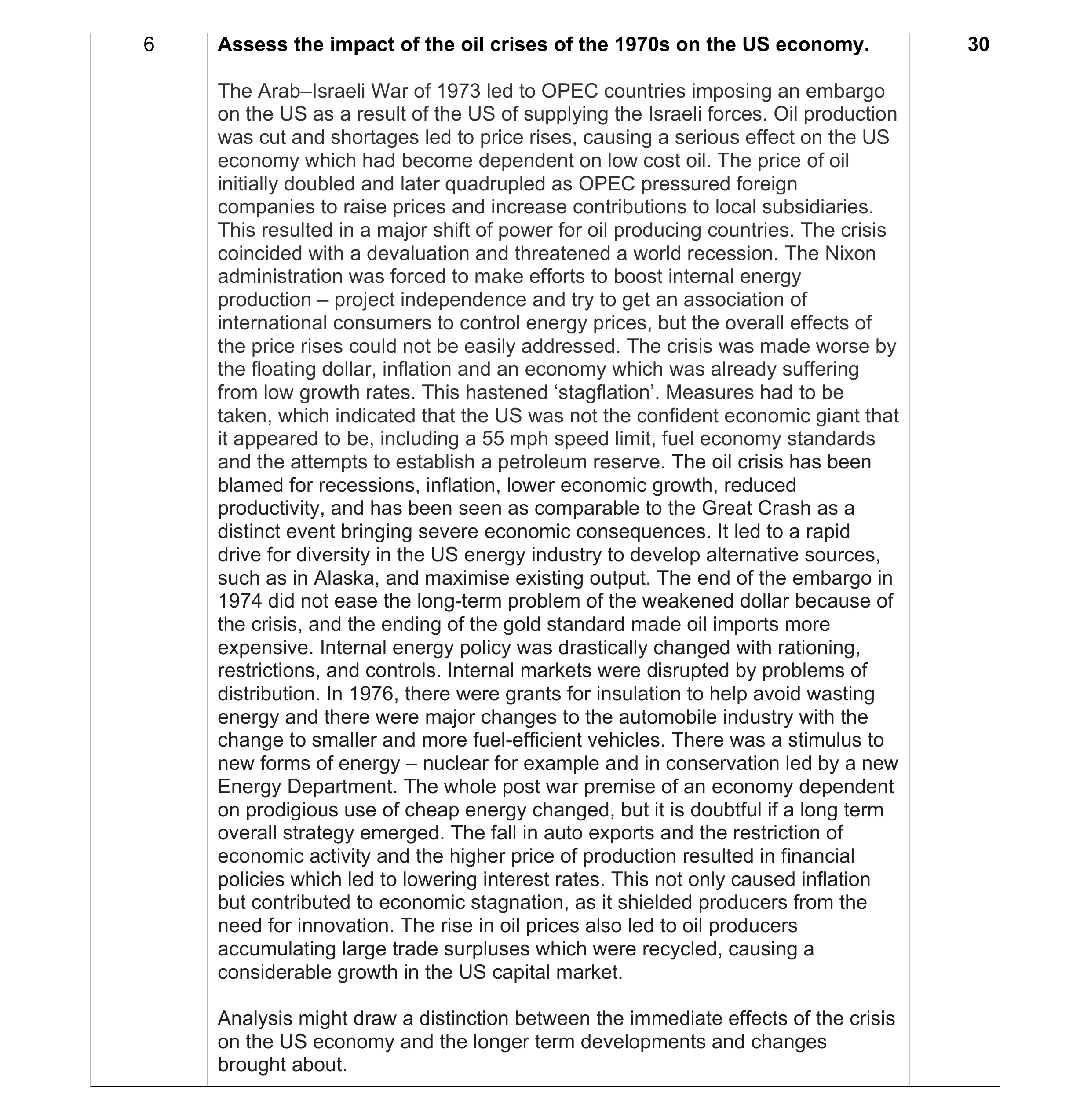 30
30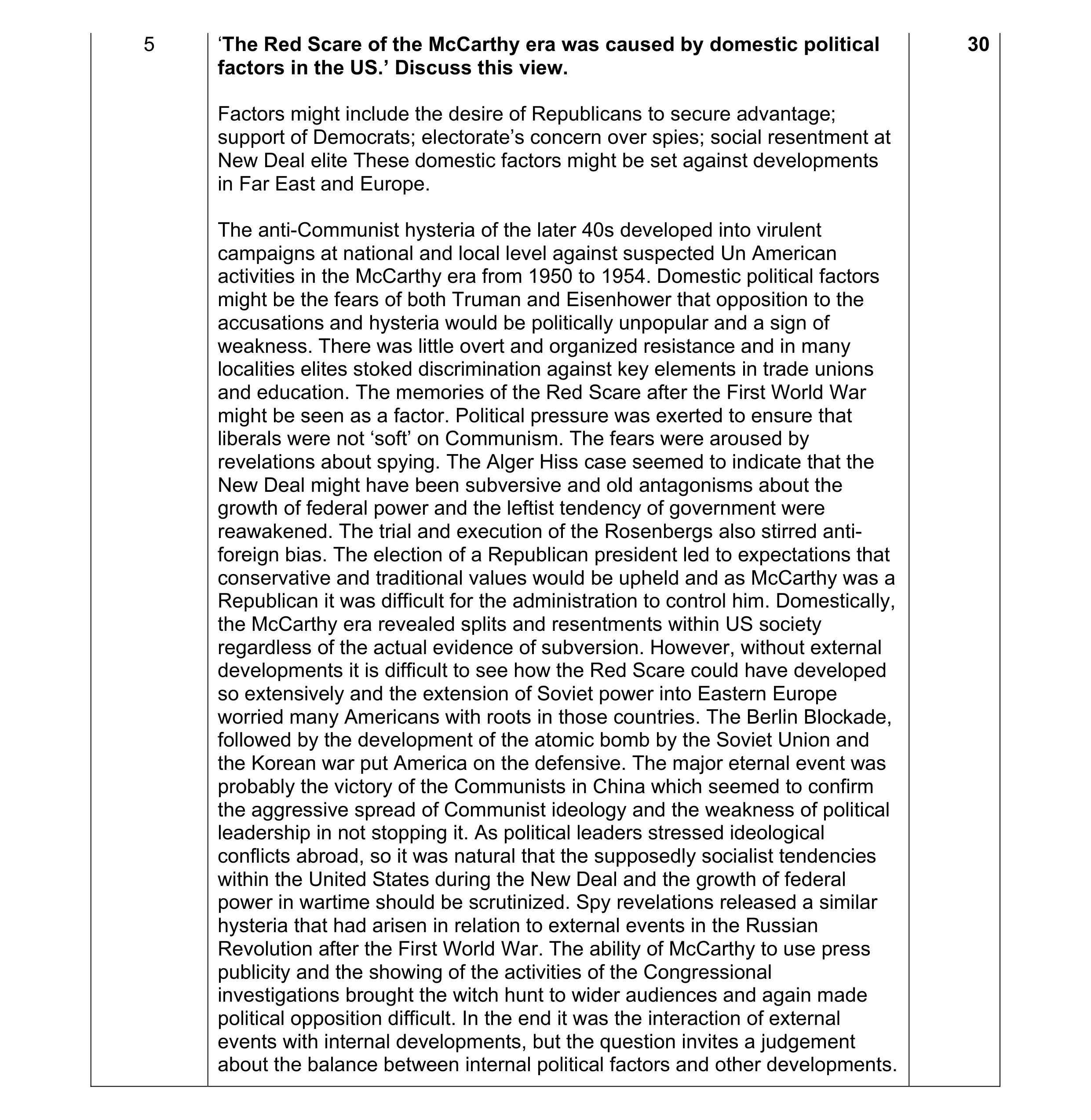 30
30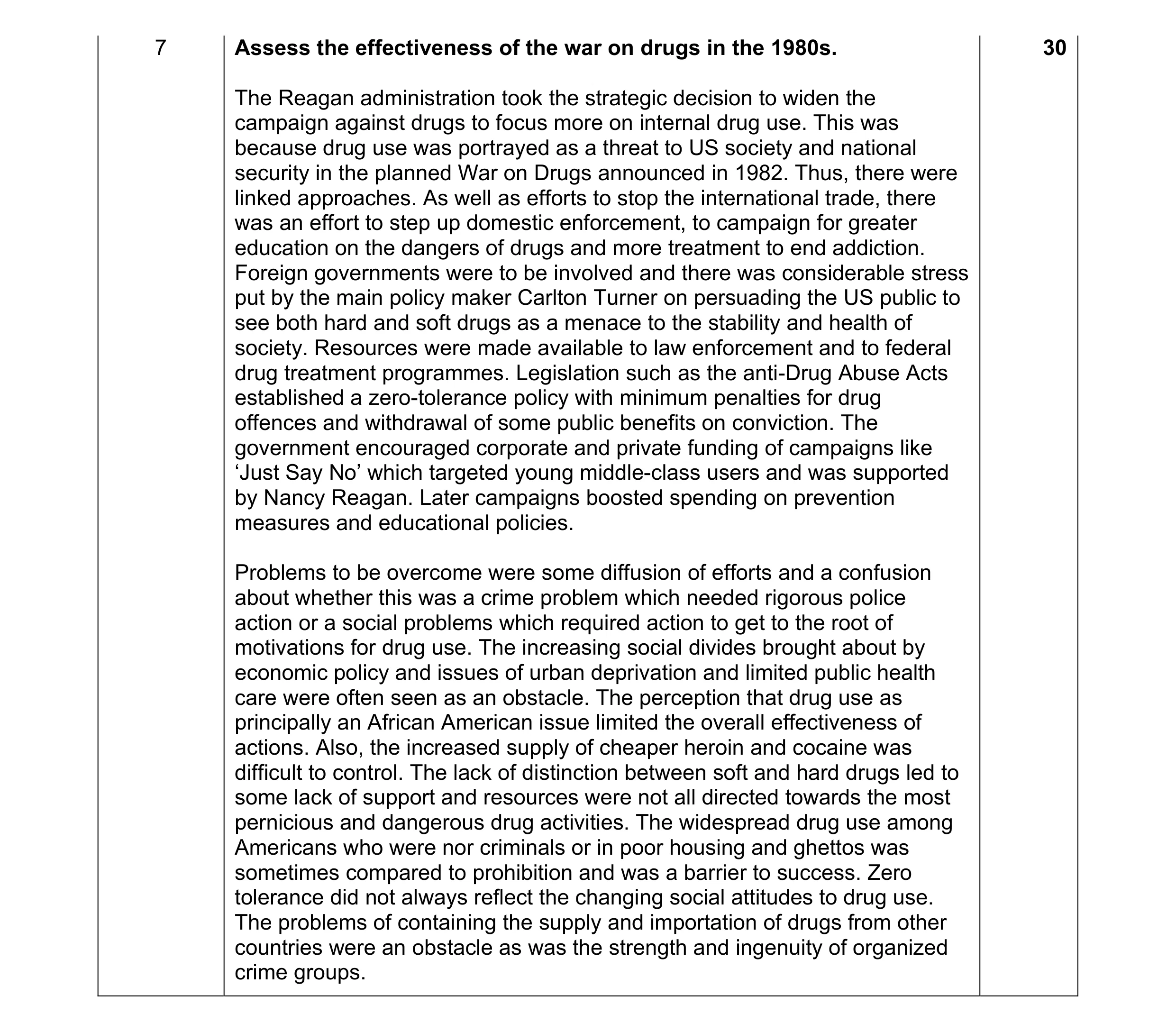 30
30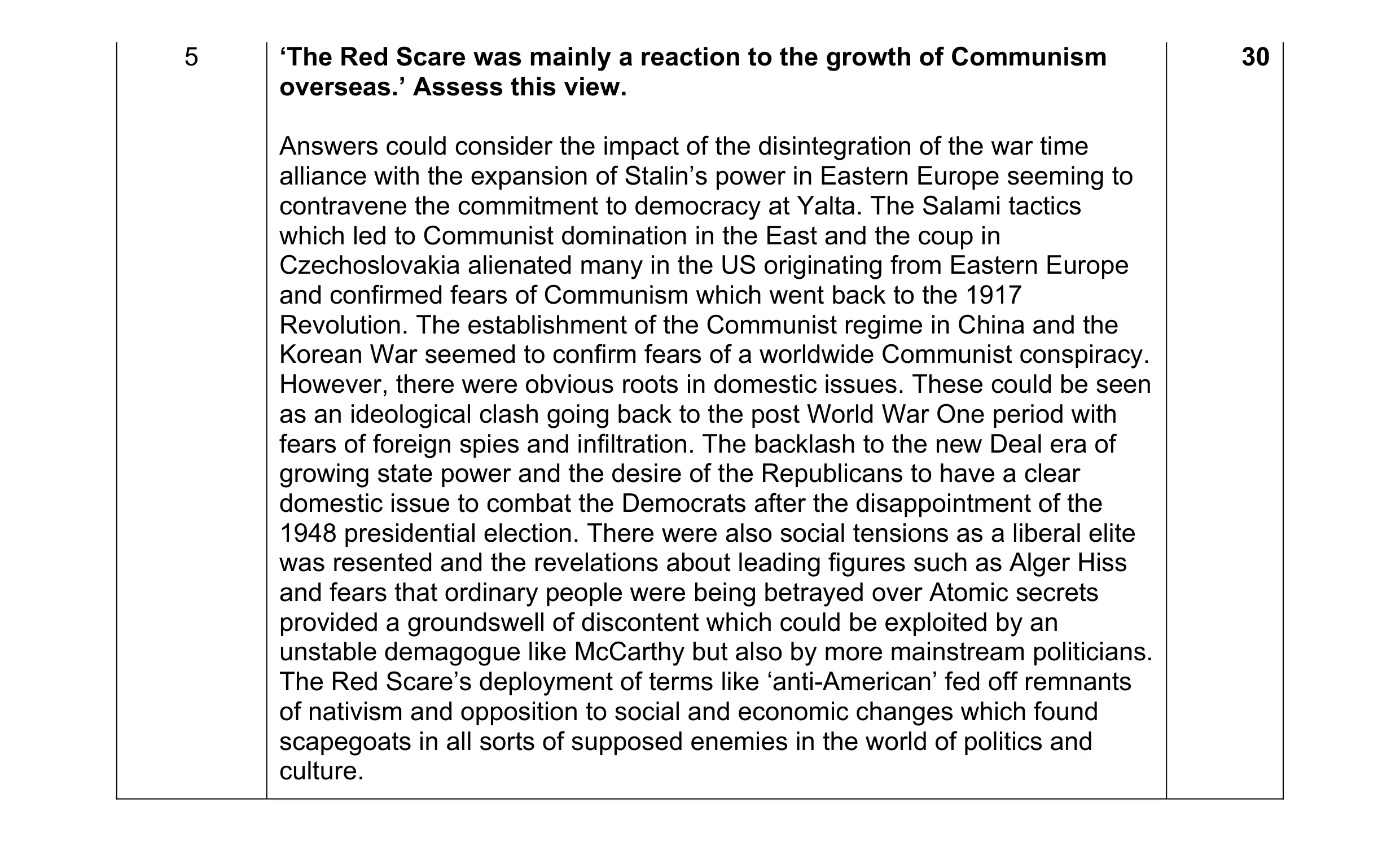 30
30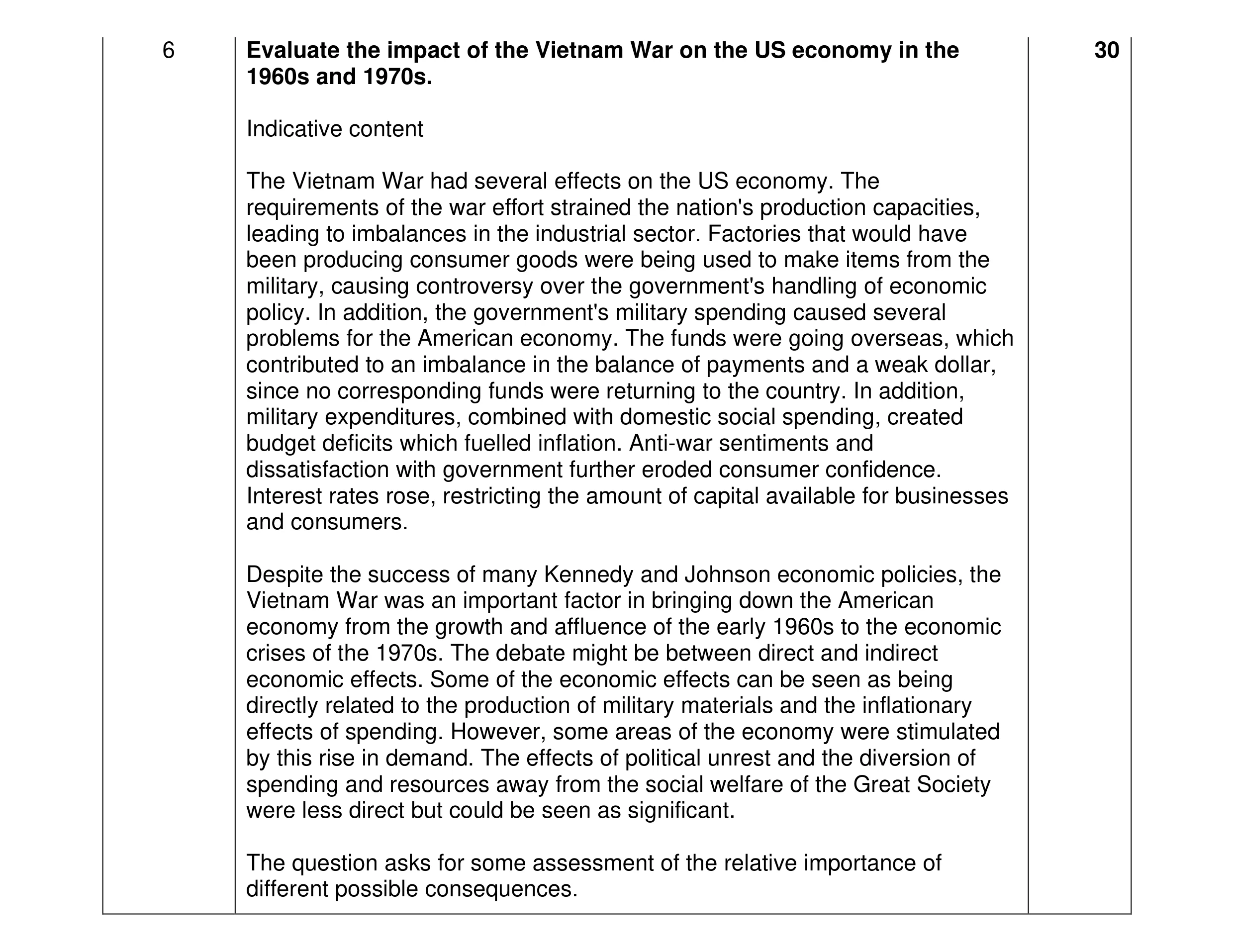 30
30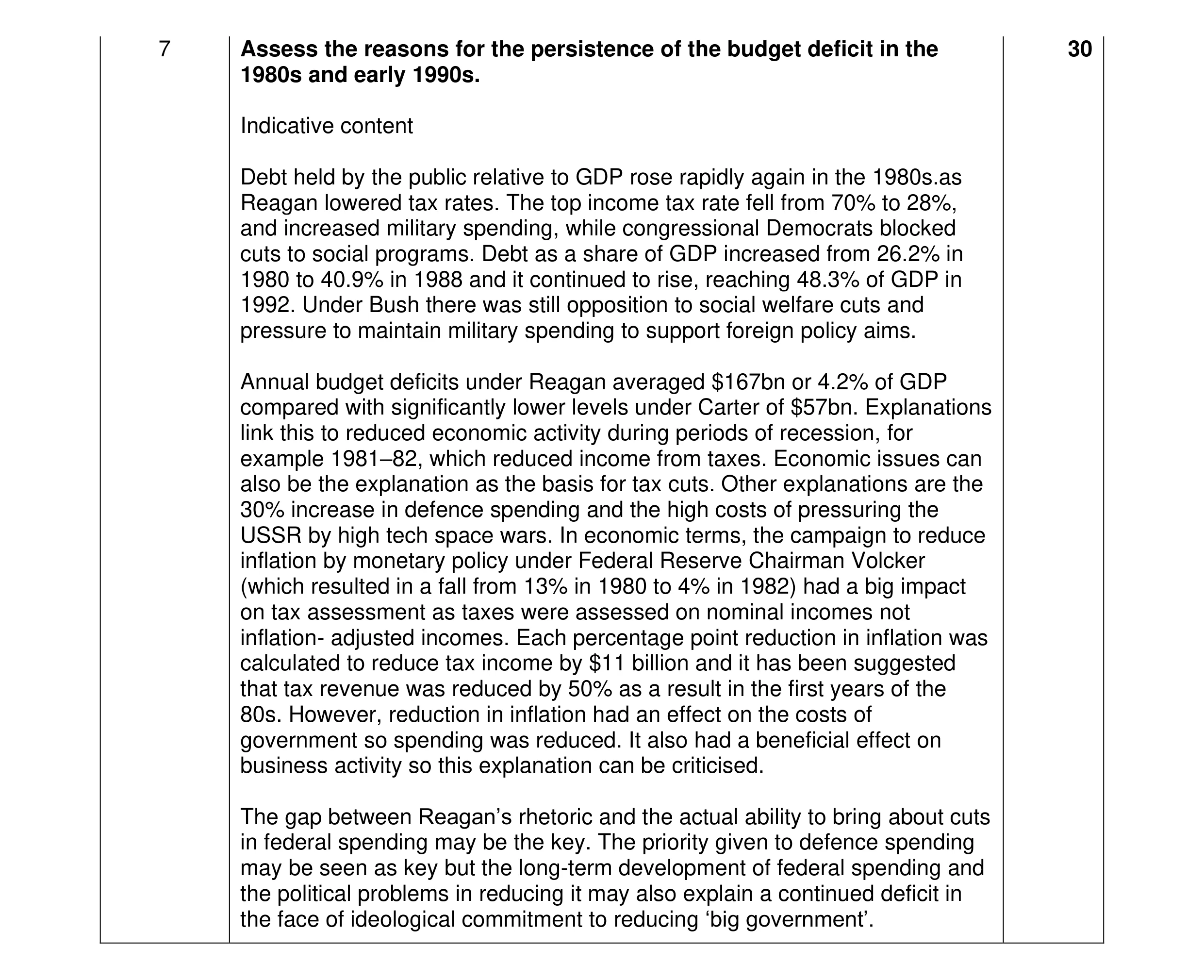 30
30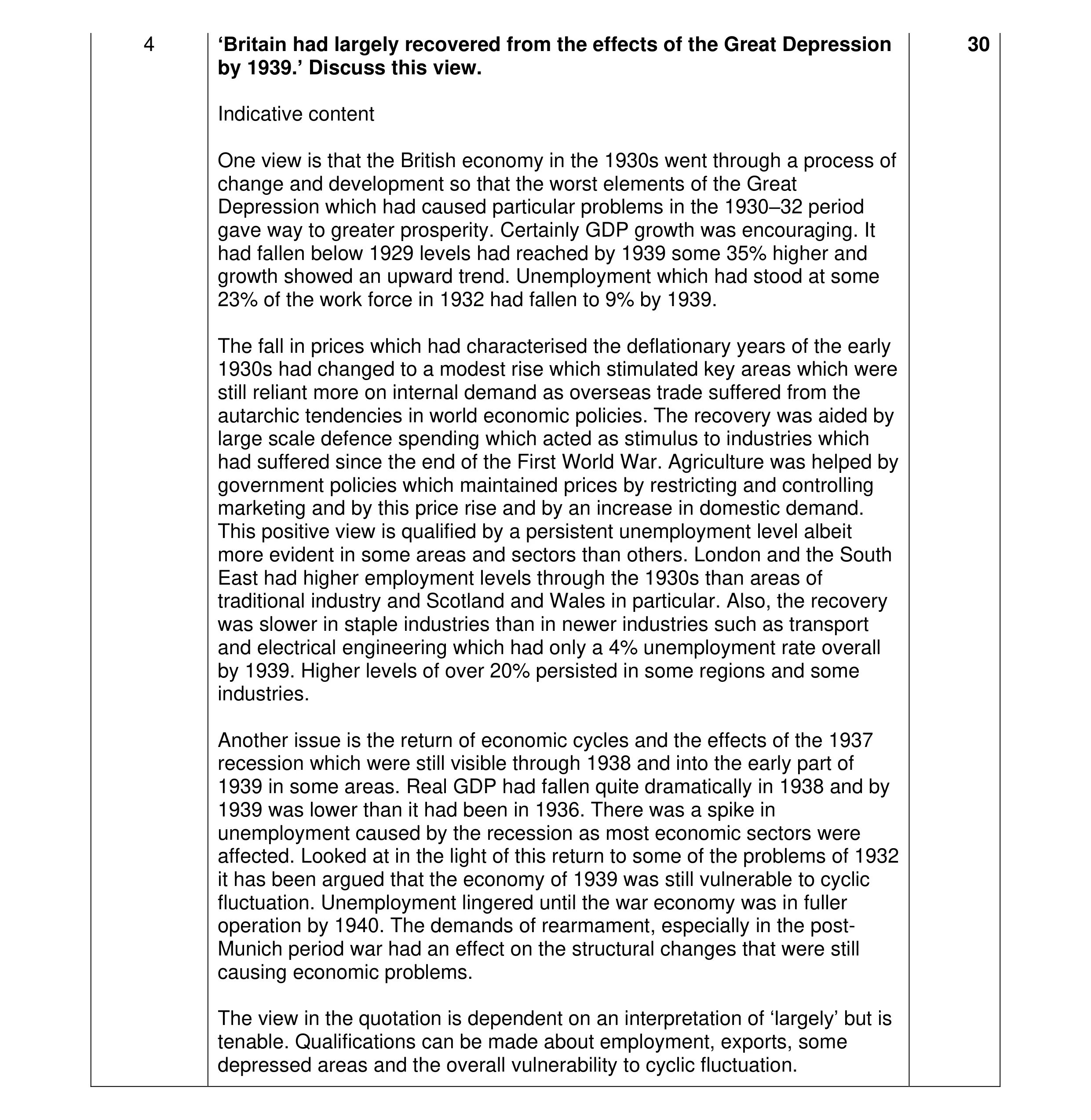 30
30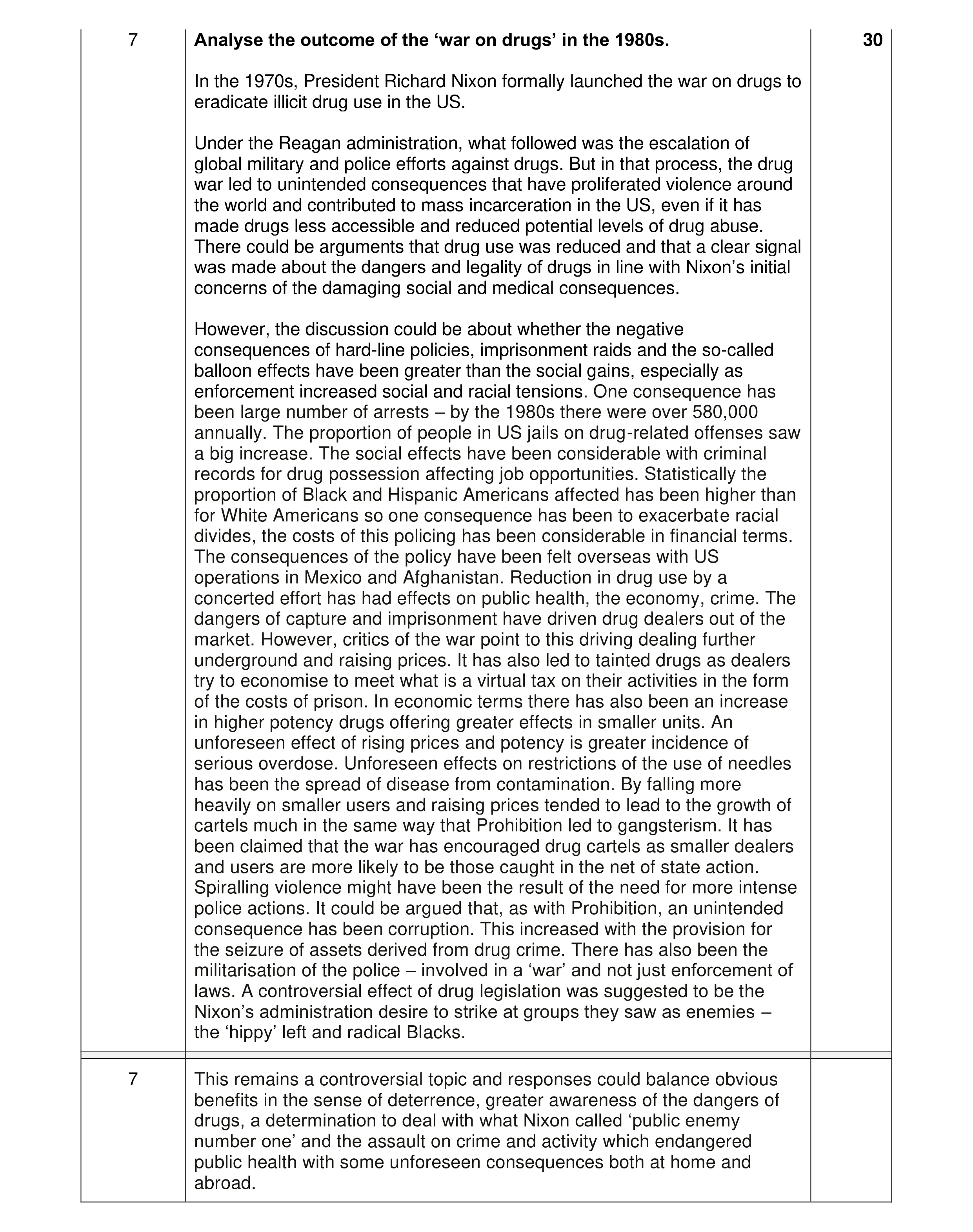 30
30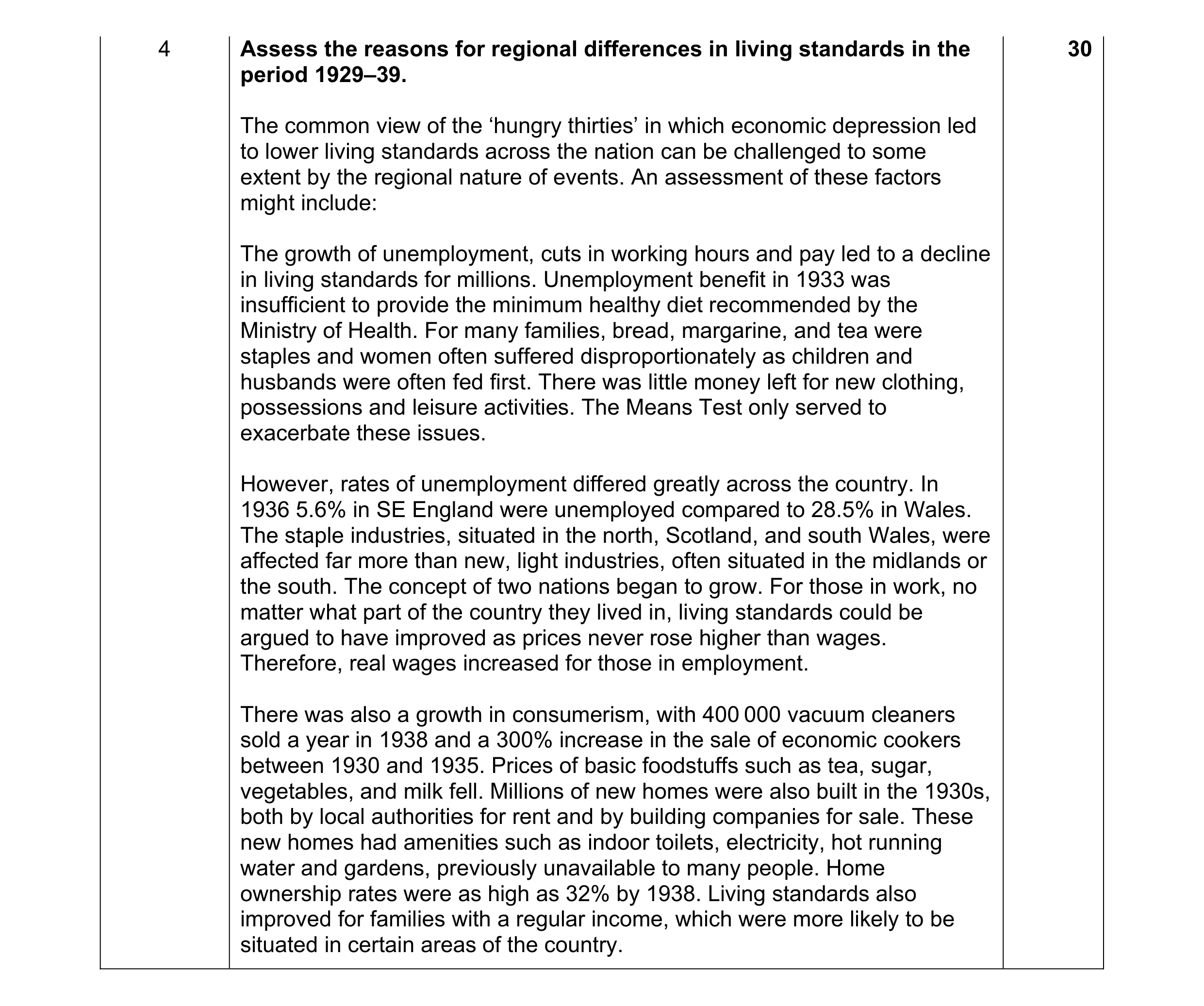 30
30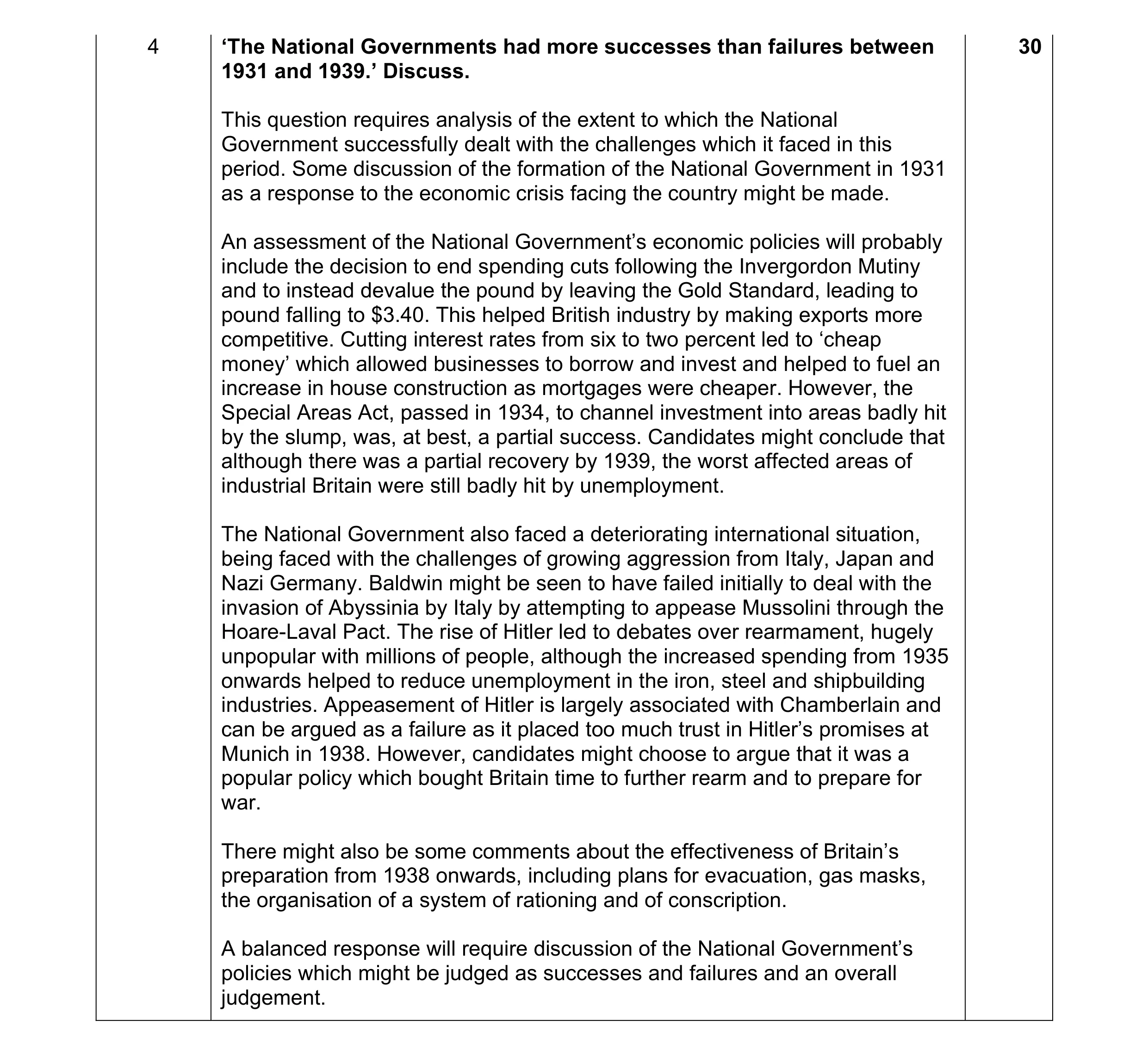 30
30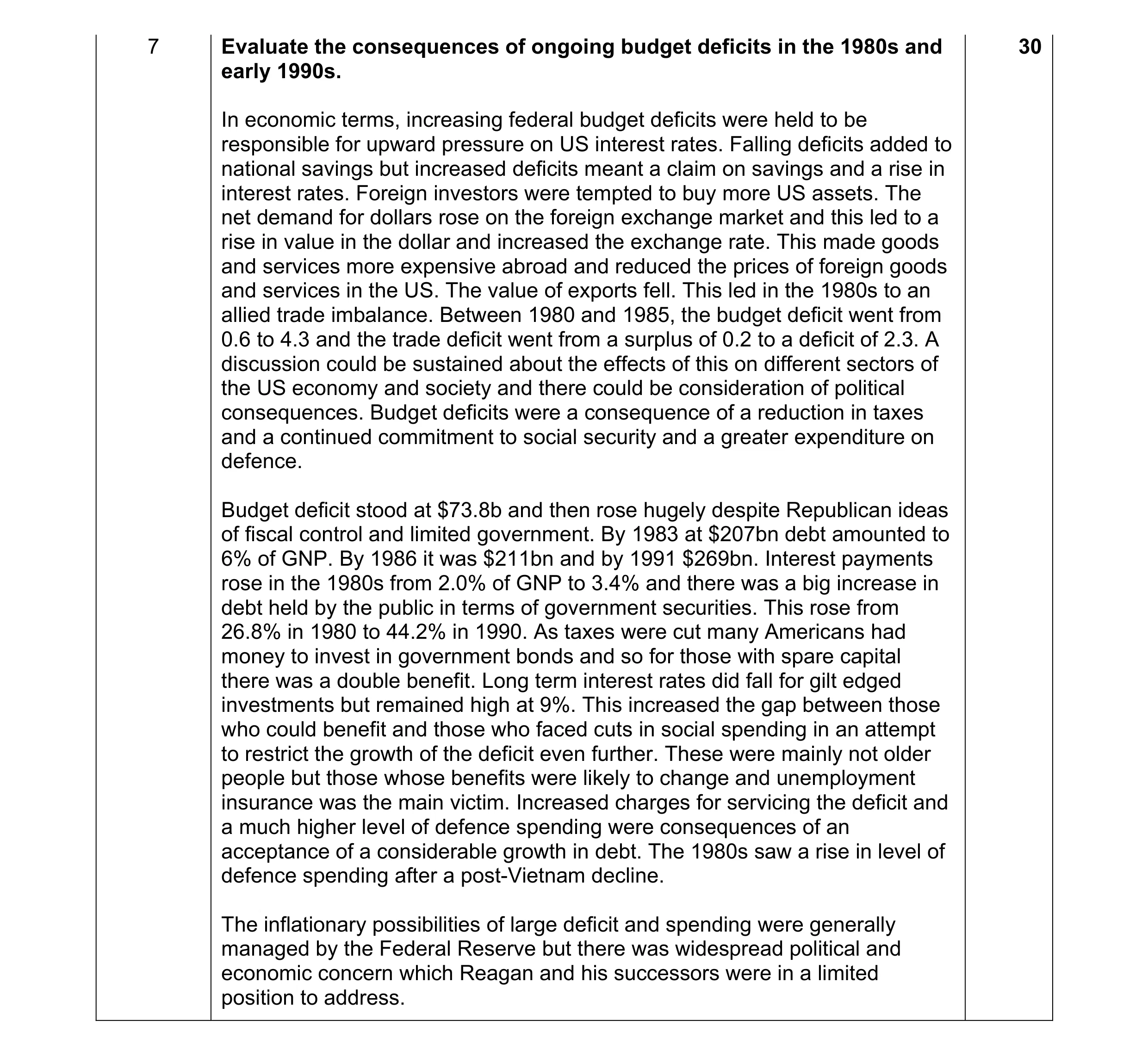 30
30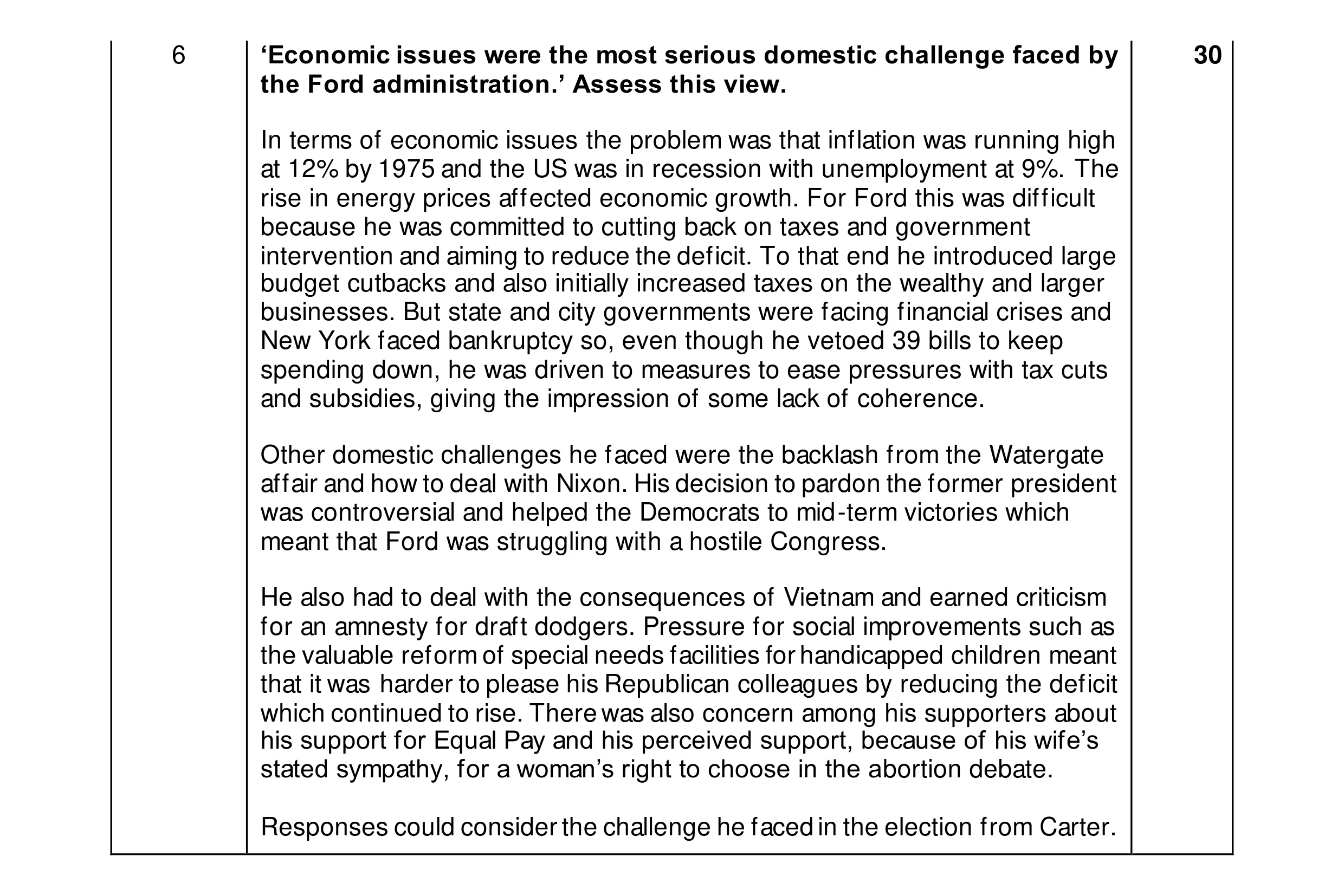 30
30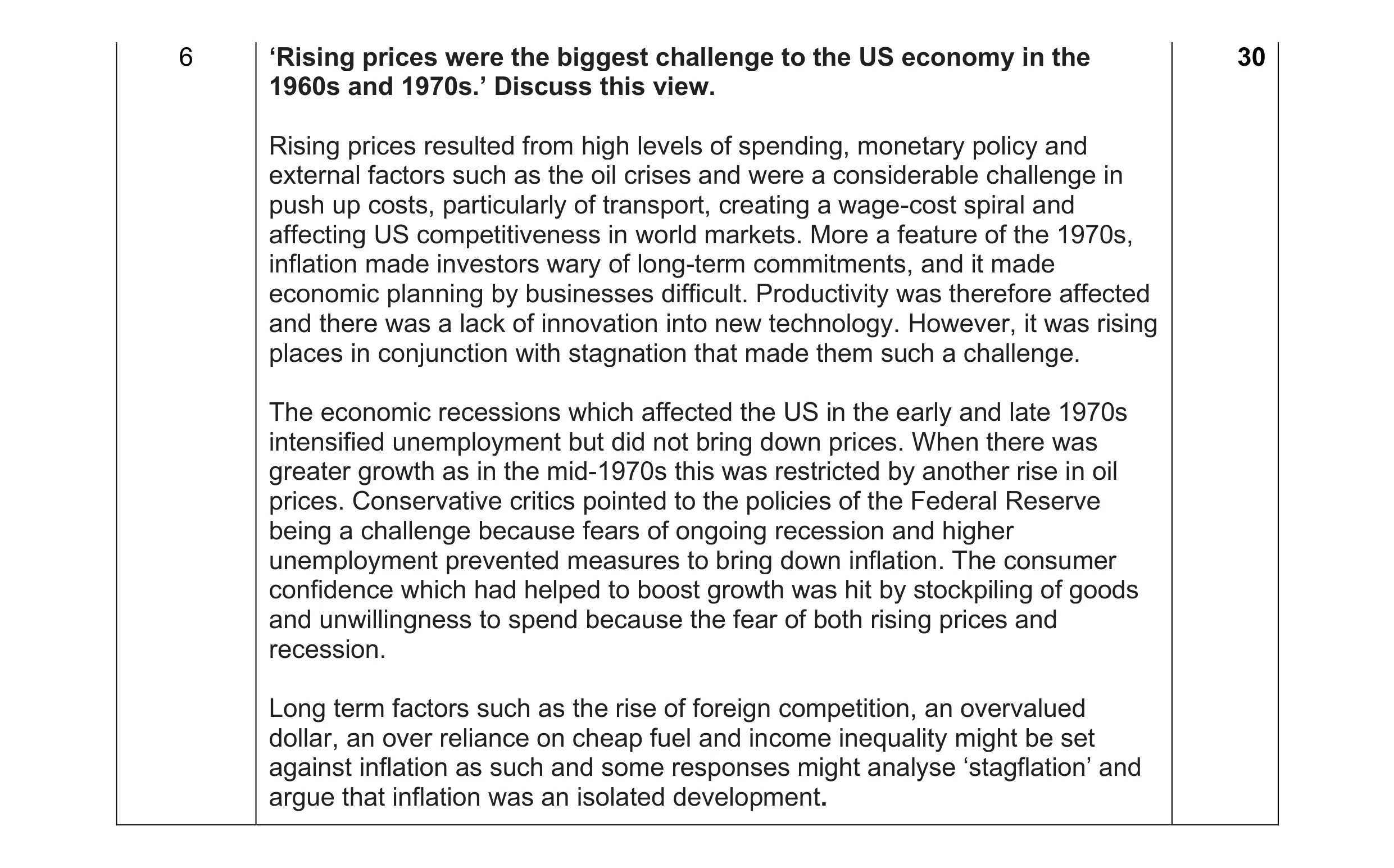 30
30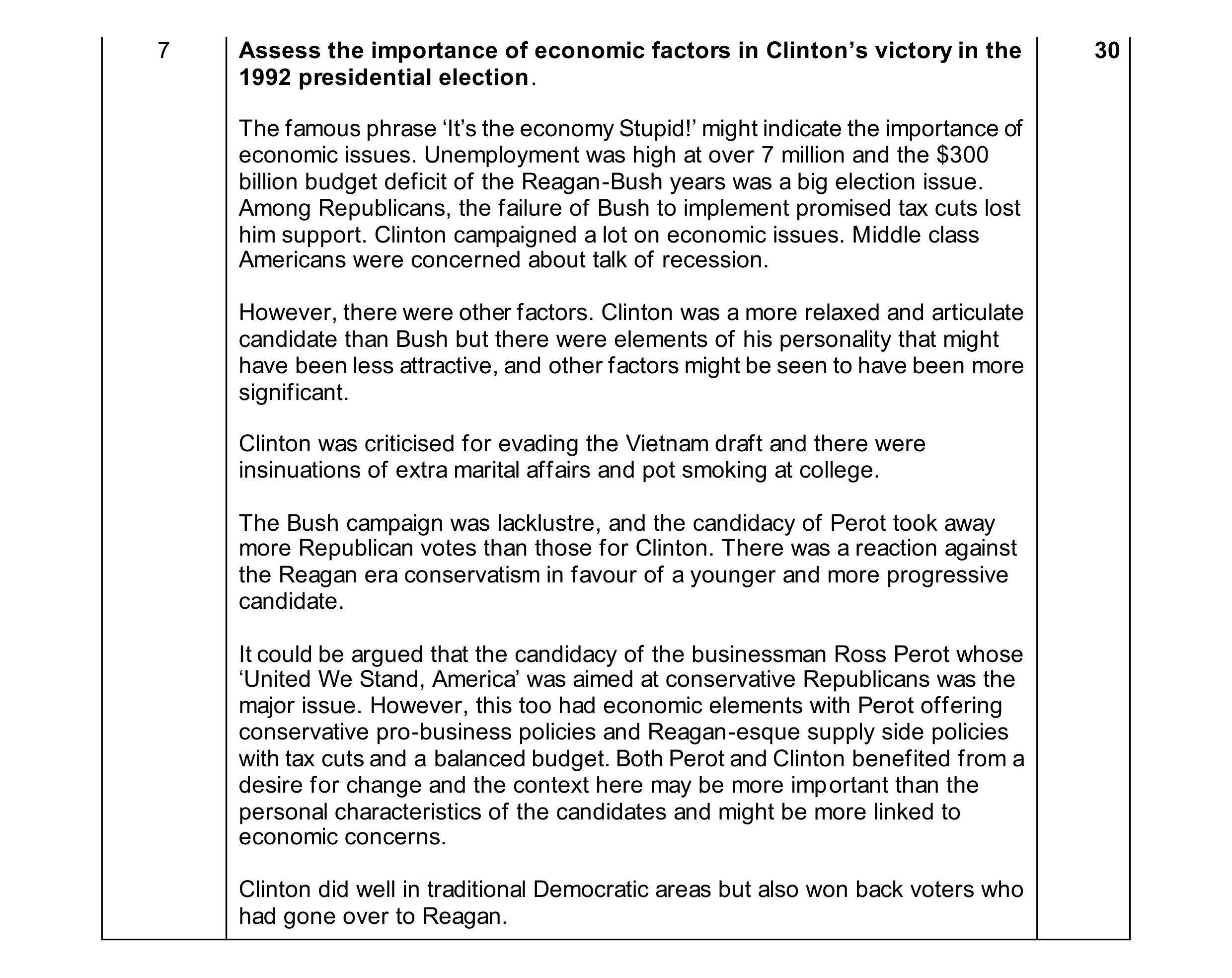 30
30