Questions as text
Q1 · France, 1774–1814 (a) Explain why the monarchy was abolished in 1792 9489/22 Feb/March 2021
1 France, 1774–1814 (a) Explain why the monarchy was abolished in 1792. [10] (b) How far did Napoleon’s domestic policies benefit the French people? [20]
30 marks
Mark scheme: Question Answer Marks 1(a) Explain why the monarchy was abolished in 1792. 10 • Louis XVI showed little enthusiasm for the ideas of the Revolution because his acceptance of reform appeared to be grudging (e.g. The Civil Constitution of the Clergy), which suggested that he was at heart an autocratic king. • He was perceived by many as an incompetent ruler. He was indecisive and this inspired little trust in him, and by extension in the idea of a constitutional monarchy. • There were huge social and political divisions within France, compounded by economic and political problems. The new system of a constitutional monarchy appeared unlikely to resolve the situation. • The Flight to Varennes in 1791 led many in France to see Louis as a traitor and a threat to what had been gained since 1789. • All this led, allied to military setbacks, to a growing movement in favour of removing the monarchy altogether, especially in Paris amongst the sans culottes and Republican Clubs, such as the Jacobin. Accept any other valid responses. 1(b) How far did Napoleon’s domestic policies benefit the French people? 20 Arguments in favour of Napoleon’s policies benefiting the French people could be as follows. The founding of the Bank of France in 1800 and then its direct control by the state in 1806 helped establish France’s creditworthiness and, thereby, contributed to financial stability. In addition, the introduction of a new metal coinage in 1803 provided for a strong and stable currency and helped make the country solvent. Therefore, these actions of Napoleon benefited all and were in marked contrast to what had gone before in France. The Civil Code enshrined equality for all before the law and the establishment of uniform laws brought rationality to the French legal system. This clearly benefited all. This policy of rationalisation was also extended to the fiscal system. This was something previous governments had sought to do but had not succeeded in doing. Therefore, Napoleon’s action here was a benefit. Education was widened and the careers open to the talents offered opportunities for some social mobility. The use of plebiscites promoted a sense of democracy. The view can, however, be challenged. The guaranteeing of property rights under the Consulate was more of a benefit to the middle-class than the rural and urban poor. Plebiscites were under the control of the government and the franchise was limited. In 1801, and for the rest of his rule, Napoleon used a select group to act as intermediaries between the government and the people. This group was drawn from the richest men in the department. Thus, popular choice was reduced whilst the wealthy gained further influence. The Imperial University, in function a kind of Ministry of Education, was founded in 1808. It controlled the curriculum and appointed all state secondary school teachers. It offered no room for freedom of thought or expression for either staff or pupils. The Civil Code emphasised male authority and the father’s rights, thereby reversing several gains made by women as a result of the Revolution. The personal freedom of all was restricted through the policy of spies and censorship. By 1811 only four newspapers remained in Paris and all were subject to police supervision. Napoleon did rationalise the fiscal system. However, the shift was now from direct to indirect taxation, i.e. consumption was taxed. Thus, the burden now fell on the consumer, and most consumers were poor. Accept any other valid responses.
This question in 9489/22 Feb/March 2021
Q2 · France, 1774–1814 (a) Explain why Napoleon introduced the Civil Code 9489/23 May/June 2021
1 France, 1774–1814 (a) Explain why Napoleon introduced the Civil Code. [10] (b) ‘Louis XVI brought about his own downfall.’ How far do you agree with this view? [20]
30 marks
Mark scheme: Question Answer Marks 1(a) Explain why Napoleon introduced the Civil Code. 10 • There was a need because the old feudal system with its outdated laws and customs had been dealt a death-blow by the Revolution. There was a need to establish a uniform legal system which reflected the new situation in France. • Successive governments had tried to organise a national legal system. Napoleon aimed to succeed where they had failed. • He wanted to show that he was the heir of the Revolution by establishing the principle of the equality of all before the law. • Introducing the Code would allow Napoleon’s views to become dominant. The Code was influenced greatly by the authoritarian ideas of Roman Law, emphasising male authority and the father’s rights. This fitted well with Napoleon’s views on society and his belief in the inferior position of women. • The Civil Code would foster uniformity and centralisation in France, thereby consolidating his personal control. Accept any other valid responses. 1(b) ‘Louis XVI brought about his own downfall’. How far do you agree with 20 this view? Arguments to support the view could be as follows. Louis XVI’s lack of a royal policy for the drawing up of the cahiers allowed expectations to be raised that the Estates General was going to bring about an overhaul of the political system, which was not what was planned when it was called by the government. This would mean the deputies would need careful management. However, Louis XVI showed little political nous. For example, in June in 1789 he tried to prevent the Third Estate from meeting as the National Assembly which led to the Tennis Court Oath’s declaration that deputies would not leave until a constitution was created. Louis XVI displayed an inconsistent attitude towards developments after 1789. For example, opposition to and then acceptance of the Civil Constitution of the Clergy (1790). This sense of a lack of commitment to the political developments taking place in France seemed to be confirmed by his flight to Varennes in 1791. He began to be seen as a traitor to France, not as the king of France. The discovery in the Tuileries Palace of secret correspondence (1792) appeared to show Louis XVI was fostering counter- revolution. Thus, Robespierre was able to argue, during the debates on what should be done with the king, that the Revolution would never be stable whilst Louis was alive. On 21 January 1793 Louis XVI was executed. The view can be challenged. The series of poor harvests, beyond the king’s control, and rising prices created a febrile political atmosphere, and engendered a desire for change with the determination to use extreme methods, if needed, to achieve this. Enlightenment ideas and the success of the American Revolution had created the belief amongst many in France that their political system was outdated and had to change. The impact of war, such as social and economic disruption, from 1792 led this desire to take on an increasingly radical form. The Jacobins, who were the first party to call for the execution of the king, began to grow in political influence. Amidst the increasing loss of life due to war and civil disorder, plus seeming economic collapse, the removal of the king no longer appeared unthinkable. Accept any other valid responses.
This question in 9489/23 May/June 2021
Q3 · France, 1774–1814 (a) Explain why Louis XVI was executed in 1793 9489/21 Oct/Nov 2021
1 France, 1774–1814 (a) Explain why Louis XVI was executed in 1793. [10] (b) To what extent was Napoleon’s military ability the reason for the ending of the Directory in 1799? [20]
30 marks
Mark scheme: Question Answer Marks 1(a) Explain why Louis XVI was executed in 1793. 10 • Louis XVI was reluctant to make concessions (e.g. Civil Constitution of the Clergy) which made him appear as a barrier to reform. • The flight to Varennes seemed to show that the king supported foreign invasion to undo the Revolution and this made many citizens in France see him as a traitor. • After the Flight to Varennes, radicals, such as the Jacobins, gained more influence. The Jacobins were the first political group to demand the death of the king. • Events such as the Massacre on the Champs de Mars (1791) and the attack on the Tuileries Palace (1792) caused many Parisians to see Louis XVI as the cause of the death of many of their fellow citizens. This further increased the calls for his execution. • The discovery in the Tuileries Palace of the king’s secret correspondence seemed to show that he was encouraging counter-revolution and was a further sign of his bad faith regarding the Revolution. It was made public in November 1792 and it undoubtedly influenced the debates over the king’s fate. On 21 January 1793 he was executed. Accept any other valid responses. 1(b) To what extent was Napoleon’s military ability the reason for the ending 20 of the Directory in 1799? Arguments to support the view could be as follows. Napoleon had a superb military reputation due to his successes in Italy (1796–1797) and Egypt (1798–99). These victories attested to his military ability and created a popular appeal which was one reason why the conspirators of 1799 looked to Napoleon for support and to organise the necessary military support. This seemed to be vindicated by the fact that Napoleon was greeted as a hero by the civilian population on his return from Egypt. The army saw him as a leader to overthrow a weak government which appeared to have abandoned its revolutionary roots. Thus, on 10 November, it was Napoleon who ordered troops to move against the Council of 500 in the Palace of St. Cloud. This led the Council of Ancients to end the Directory and the creation of a three-man executive, the Consuls. However, this view can be challenged. The Directory came to an end because it was assailed by coups and regional instability throughout its period of rule, and so it could not establish firm foundations. For example, there were royalist risings in the west and the threat of invasion by the Second Coalition. It was further isolated because it appeared to many Republicans that the Directory was abandoning the ideas of the Revolution. There was a lack of support which bordered on apathy. For example, by the late 1790s, it had become difficult to persuade men to come forward as candidates for election as local officials. The initial reaction to the coup of 1799 was muted as it was seen as a cosmetic manoeuvre by the Directory – Consuls instead of Directors. Lucien Bonaparte’s work prior to the coup in arranging and organising support was central to its success and the ending of the Directory. Napoleon showed political nous by leaving Egypt and reaching France before knowledge of his failing became common knowledge. Accept any other valid responses.
This question in 9489/21 Oct/Nov 2021
Q4 · France, 1774–1814 (a) Explain why the September Massacres of 1792 happened 9489/22 May/June 2022
1 France, 1774–1814 (a) Explain why the September Massacres of 1792 happened. [10] (b) How far was the passing of the August Decrees in 1789 caused by ideas of the Enlightenment? [20]
30 marks
Mark scheme: Question Answer Marks 1(a) Explain why the September Massacres of 1792 happened. 10 Indicative content After the events of August 10 1792 power no longer lay with the Legislative Assembly but with the new, more radical Paris Commune. The over-riding wish of the Commune was to exact revenge. Their targets were those who had aided the king, anyone who had resisted the popular will, prior to and during the events of 10 August, refractory priests and Lafayette, the latter seen as the butcher of the Champs de Mars (July 1791). Paranoia gripped the city of Paris – Prussia had invaded French territory and the fall of Longwy, with little French resistance, seemed to confirm that traitors were everywhere and a threat to the revolution. Danton called for 30 000 volunteers from the capital, but many feared leaving their families to the mercy of a counter-revolutionary prison breakout. There was frustration with the slow progress of the 17 August tribunal set up to try those guilty of a political crime. The arrest of an additional 3000 following the ‘domiciliary visits’ (searching for hidden arms and suspects), ordered by Danton in late August, led to Marat’s call for a massacre of these suspects, along with some ministers. Crisis came to a head when the hungry Sans Culottes persuaded the National Guard to storm the Tuileries and arrest the royal family. several hundred defenders were killed, and this triggered the attack on royalist supporters in general. News reached Paris that the Prussians who were besieging Verdun had passed it. Now, there was no other fortress on the road to Paris. This led to panic in the city and between 2 and 7 September up to 1400 people, about half the prison population of Paris, were killed. Accept any other valid responses. 1(b) How far was the passing of the August Decrees in 1789 caused by 20 ideas of the Enlightenment? Indicative content The abolition of feudalism, other privileges of the nobility and tithes gathered by the Church point, clearly, to the influence of the Enlightenment. It placed emphasis on the rational in the running of society and disapproved of the accretion of rights for a select few, sanctioned by custom alone. Aristocratic proponents of the Decrees such as the Duc D’Aigullion had seen service in America in the 1770s and, undoubtedly, were driven by Enlightenment ideas. The August Decrees created a fundamental change to the Ancien Régime. The domination and privilege of the few were stripped away and seemed to herald a society based on the individual, equality, and merit. These ideas were in accord with the Enlightenment. The abolition of the tithe halved the income of the Church. Thus, the influence of the Church would be lessened, something advocates of the Enlightenment strongly favoured. 1(b) The view can be challenged. The August Decrees were issued because of the pressure of immediate events. They were designed to restore calm in the country, following the storming of the Bastille (July 14 1789) turmoil was created, which spread from Paris to the countryside. This was known as the ‘Great Fear’ and saw noble families attacked and property destroyed. This frightened the property owners of the National Constituent Assembly, as the attacks on property were made, often, irrespective of whether they were noble owned. They had no means available, however, to restore order by force. Against this background members of the Breton Club felt that only a grand gesture such as completely transforming the nation’s social organisation would calm the peasants and restore order. This heightened atmosphere, it has been suggested, led deputies to go further in their proposals than, perhaps, they first intended. Candidates might offer a definition of what constituted Enlightenment ideas and organise their response accordingly. This is perfectly acceptable. Accept any other valid responses.
This question in 9489/22 May/June 2022
Q5 · France, 1774–1814 (a) Explain why Napoleon’s domestic policies were popular 9489/21 Oct/Nov 2022
1 France, 1774–1814 (a) Explain why Napoleon’s domestic policies were popular. [10] (b) ‘War caused the French monarchy to fall in 1792.’ How far do you agree? [20]
30 marks
Mark scheme: Question Answer Marks 1(a) Explain why Napoleon’s domestic policies were popular. 10 Indicative content • A sense of order – The Concordat with the Catholic church was popular as most of the population was Catholic and had been distressed by revolutionary developments such as the Cult of the Supreme Being. Napoleon was seen as restoring an acceptable order to State-Church relations. • A feeling of stability – The country’s finances were put on a sounder footing following the economic chaos that had beset the country since 1789. • Aspirations met – Whilst the Concordat did re-establish the Church’s influence in France, it was not as pre-1789. The Revolution was recognised and the Church agreed not to seek to recover Church lands. The clergy were to be paid civil servants appointed by the government and bound by oath. Other faiths were to be tolerated. This appealed to supporters of the Revolution who could see that the Church was state- controlled, a long-held revolutionary aim. • Government for all – The Civil Code rationalised France’s chaotic legal system, with uniform laws established through the country and alongside the principle of equality before the law. The law now seemed be for all, not a favoured few. References to developments in education, public works and ‘career open to the talents’ should be rewarded. Accept any other valid responses 1(b) ‘War caused the French monarchy to fall in 1792.’ How far do you 20 agree? Indicative content France had been at war since April 1792 and had suffered several reverses. French soldiers deserted en masse, and in one case murdered their General, Dillon. Since 1789, more than 50% of France’s army officers had fled the country and it took time to train new officers. There was animosity between the old regulars (Whites) and new volunteers (Blues) who had joined 1791-92. These volunteers were often poorly armed and untrained. Added to this was the social and economic disruption caused by war. This led to a growing sense of fear and paranoia, especially in Paris, about traitors and counterrevolutionaries, and a desire to apportion blame. This fell on the monarchy. If this institution was removed then, it followed, the war would go in France’s favour. This argument can be questioned. Louis XVI did not inspire trust. His failed attempt to flee France in June 1791 and his vetoing of legislation led many to see him as less than enthusiastic about the Revolution. Indeed, he seemed a positive threat. For example, the issuing of the Brunswick Manifesto (July 1792), which stated Paris would face severe consequences if the king were to be harmed, seemed to highlight this threat and gave credence to the view that the monarchy should go. Economic issues played a part as the harvest of 1792 was mediocre, leading to a rise in grain prices. This all added to the febrile atmosphere created by war and the king’s actions. The result was that talk of getting rid of the monarchy, unthought of in 1789, was commonplace now by the summer of 1792. Accept any other valid responses.
This question in 9489/21 Oct/Nov 2022
Q6 · France, 1774–1814 (a) Explain why the insurrection of 10 August 1792 happened 9489/22 Oct/Nov 2022
1 France, 1774–1814 (a) Explain why the insurrection of 10 August 1792 happened. [10] (b) ‘The Concordat of 1801 was Napoleon’s greatest domestic achievement.’ How far do you agree? [20]
30 marks
Mark scheme: Question Answer Marks 1(a) Explain why the insurrection of 10 August 1792 happened. 10 Indicative content • After Louis XVI’s failed attempt to flee France in June 1791 support for the monarchy began to fall markedly. The attempted escape was a threat to what the revolution had so far achieved. • The outbreak of war in April 1792 increased the fear of traitors and counter-revolutionaries. The French army was weakened by unreliable officers and undisciplined recruits. Therefore, the army had to rely, more and more, on volunteers from the urban working populations. This meant the sans culottes demanded an increased voice in decision making. • Economic considerations further influenced their actions. The 1791 harvest had been mediocre and grain prices rose. In 1792, there was a demand to halt the free trade in grain and for prices to be fixed by law. The sans culottes saw rising grain prices as a counter-revolutionary design to starve them into surrender. • The Brunswick Manifesto, July 1792, added to the mix of fear and tension in Paris. It threatened the people of Paris with retribution if any harm befell the king. • This led to a growing demand for the dethronement of the king, and the Legislative Assembly (LA) agreed to debate the question on the 9 August. However, the LA’s decision not to indict Lafayette, now seen as an enemy of the revolution, convinced many that there would be no decision made about dethronement. In the early hours of 10 August the sounding of the tocsin, the call to insurrection since the journées of 1789, marked the start of the seizure of power. Accept any other valid responses. 1(b) ‘The Concordat of 1801 was Napoleon’s greatest domestic 20 achievement.’ How far do you agree? Indicative content The Concordat provided stability. Most of the French people were Catholic, and they had been appalled at the disorder in Church–State relations brought about by events since 1789. It restored the Church to a position of influence within France, albeit not at the same level as before 1789. Nonetheless, it was established that Catholicism was the religion of most French citizens and that it would be freely exercised. Those who had purchased Church lands were able to keep them, and so were supportive of Napoleon’s actions. Those of a more revolutionary inclination were pleased that the Church’s wealth was not restored and welcomed the toleration of other religions as a further limit to the Church’s influence. Extreme ultramontanists and unreformed Jacobins might take issue, but they were a small minority. Therefore, the Concordat had a far-reaching appeal which provided extensive support for Napoleon’s regime from an early stage and which could be built upon. The statement, however, can be challenged. Napoleon was able to achieve a large amount of economic stability, something that had been noticeably lacking since 1789. This was done through the founding of the Bank of France in 1800 and its direct control by the state in in 1806. This helped to establish France’s creditworthiness. The introduction of a new coinage in 1803 established economic order by helping the country become solvent. The Civil Code brought rationality to the legal system by making the law accessible to all and establishing the principle of equality before the law. The system was widely accepted and still lasts. The lessening of women’s rights by the Civil Code, whilst questionable by the standards of today, was seen, from an early nineteenth century standpoint, as a necessary correction of revolutionary excess. These policies gave the impression that Napoleon was ruling in the interests of all, and it was this perception, perhaps, that was his greatest domestic achievement. Candidates might seek to define ‘greatest’ and use its definition to organise their response. This is perfectly acceptable. Accept any other valid responses.
This question in 9489/22 Oct/Nov 2022
Q7 · France, 1774–1814 (a) Explain why Louis XVI and his family fled Paris in June 1791 9489/22 Oct/Nov 2024
1 France, 1774–1814 (a) Explain why Louis XVI and his family fled Paris in June 1791. [10] (b) ‘Napoleon was a dictator.’ How far do you agree? [20]
30 marks
Mark scheme: Question Answer Marks 1(a) Explain why Louis XVI and his family fled Paris in June 1791. 10 Indicative content • One view is that Louis XVI intended to leave France, put himself at the head of foreign troops and French émigrés and forcibly restore the Ancien Regime. • J. Hardman, a biographer of Louis XVI, disagrees. He claims Louis intended to set up his headquarters in Lorraine. The mobilisation of 8000 Austrian troops in Luxemburg was a pretext for his general, Marquis de Bouille, to assemble an army in Lorraine and afford the royal family personal protection. • Louis XVI feared for his and his family’s safety – in April when the royal family tried to celebrate Easter mass at the Queen’s palace of Saint- Cloud a crowd turned back the royal carriage which was sitting in the courtyard of the Tuileries. • He was seeking to forestall an émigré uprising. They had often embarrassed him by speaking in his name yet would have put him under the control of an aristocratic form of government he had rejected. • Louis XVI expected the constitution to be finalised in July. Therefore, he wanted to leave Paris to avoid being forced to accept it as it stood. Accept any other valid responses. 1(b) ‘Napoleon was a dictator.’ How far do you agree? 20 Indicative content Arguments to support the view that Napoleon was a dictator could be as follows. He dominated the whole policy-making process and took the key decisions on war and peace. His methods of attaining power showed strong autocratic tendencies (a military coup). There was censorship and Fouché ran an effective police force. He took considerable steps to deal with opposition (Duc d’ Enghien) and there was an effective propaganda campaign. It was an authoritarian regime, and he made himself Emperor and looked set to create a hereditary monarchy with his family’s control of other countries spreading, as in Spain. He manipulated plebiscites to provide seeming popular support for his policies. Under Napoleon, the Senate became an instrument of his personal power. Its membership increased from 80 to 140 by 1814, most of the additional members being his direct nominees. Therefore, its members were anxious to please its benefactor and president, Napoleon. In 1808 the Tribunate was abolished, and the Legislature survived only by being subservient to Napoleon’s will. However, the view can be challenged. The army took no part in implementing government policies nor was it used to interfere directly in politics, as had been the case under the Directory. He had substantial support from the majority of the French people. The fact that so many of the changes that he brought about remained after his defeat indicates popular support for much of what he did. He took care not to offend Catholic sensibilities and was aware that there were limits to his authority. He was aware of the background of coups and took great care also to stress that many of the revolutionary ‘gains’ became part of French law. Accept any other valid responses.
This question in 9489/22 Oct/Nov 2024
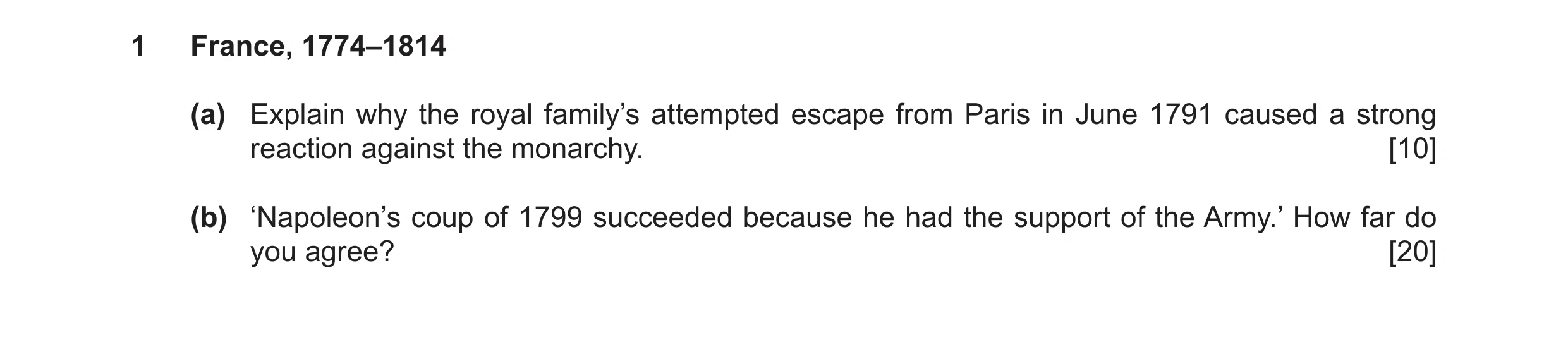
Q8 · France, 1774–1814 (a) Explain why the royal family’s attempted escape from Paris in June… 9489/21 Oct/Nov 2025
1 France, 1774–1814 (a) Explain why the royal family’s attempted escape from Paris in June 1791 caused a strong reaction against the monarchy. [10] (b) ‘Napoleon’s coup of 1799 succeeded because he had the support of the Army.’ How far do you agree? [20]
30 marks
Mark scheme: Question Answer Marks 1(a) Explain why the royal family’s attempted escape from Paris in June 1791 10 caused a strong reaction against the monarchy. Indicative content • The constitutional experiment was at an end. The attempted escape showed that the king was opposed to what had happened in France since the summer of 1789. • In seeming to seek foreign aid Louis XVI showed himself to be a traitor. • It showed there was a growing royalist faction prepared to use foreign intervention to destroy the gains of the revolution. If the monarchy were removed this faction would have no purpose. • Louis XVI was seen to be out of touch with his people in wanting to restore the Ancien Régime. The question of the governance of France now required more extreme methods (e.g. the petition on the Champs de Mars, July 1791, demanding the removal of the king). Accept any other valid responses. 1(b) ‘Napoleon’s coup of 1799 succeeded because he had the support of the 20 Army.’ How far do you agree? Indicative content Arguments to support this view could be as follows. The status that Napoleon had with the support of the army made him a national figure, especially since it had brought considerable glory to France (Italy/Egypt). His army was also critical in ensuring the coup worked and that there was no armed opposition. Moreover, it had been the army which had ensured the survival of the Directory against the numerous coups it faced. Once this support was lost the Directory had no means to survive. There was no countercoup against Napoleon in 1799. As an authoritarian figure due to his army support, he could find a middle way between the excesses of the Revolution and the failings of the Ancien Régime, and he could gain legitimacy at the same time This appeared to be the only possible solution to the problem of French government in 1799. Challenges to this view might consider how the Directory had clearly failed to establish a degree of permanency and lacked legitimacy in the eyes of many. There was, also, no credible figure capable of leading France on either the right or the left. Additionally, there was a complete lack of consensus about how France could and should be governed. Most people wanted stability and the gains of 1789–91. The war that France was also fighting was deeply unpopular because of the increased taxation and conscription. Napoleon’s ambition and his timing, together with his successful career and record, also made him a strong alternative. He also enjoyed the support of his brother and men like Fouché and Sieyès. His propaganda skills and political astuteness, also, marked him out. Accept any other valid responses.
This question in 9489/21 Oct/Nov 2025
Q9 · France, 1774–1814 (a) Explain why Napoleon’s regime can be seen as a dictatorship 9489/22 Oct/Nov 2025
1 France, 1774–1814 (a) Explain why Napoleon’s regime can be seen as a dictatorship. [10] (b) To what extent had the Revolution changed France by the end of 1791? [20]
30 marks
Mark scheme: Question Answer Marks 1(a) Explain why Napoleon’s regime can be seen as a dictatorship. 10 Indicative content • His method of gaining power, a military coup, showed strong autocratic tendencies. • He manipulated plebiscites to get the desired outcome. Commitment to revolutionary democracy was a sham. • There was extensive censorship and a network of government spies to ensure there was no questioning of Napoleon’s rule. • He made himself emperor and the imperial title hereditary. Accept any other valid responses. 1(b) To what extent had the Revolution changed France by the end of 1791? 20 Indicative content Arguments to show that the Revolution had changed France to a great degree might be as follows. It was clear to many that by 1789, after the fall of the Bastille, a wider national uprising and the ‘Great Fear’, that fundamental change had to happen. The ‘Bonfire of Privilege’ when feudalism effectively went, happened as early as August 1789. So many of the institutions of the Ancien régime which had perpetrated inequality such as the Parlements, the Provincial Estates and taxes like the gabelle, had gone. June 1790 saw the abolition of all hereditary titles and the nobility. The previous feudal geography of France was gone, replaced by 83 departments. The Civil Constitution of the Clergy, July 1790, was also a major step forward in linking the Church more closely to the State and dealing with abuses common under the Ancien Régime such as absenteeism and pluralism. For example, the number of bishoprics declined from 135 to 83 and all clerical posts except for parish priests and bishops ceased to exist. March 1791 saw the dissolution of the guilds and in September Louis XVI accepted the new constitution. It was the new phenomenon of public opinion that had forced change not the wishes of the king and his ministers. However, this view can be challenged. While on the one hand the Ancien Régime appeared to have gone, there was little sign of coherent rebuilding. There was little fiscal stability and no real answers to the issues of taxation which had played such a key part in bringing about the crisis of 1789. The new tax rolls were based, still, on those of the Ancien Régime so that great regional variations remained. A survey of land values was not begun until 1807 and not completed until the 1830s. The voting system with its concept of ‘active citizens’ still favoured the wealthy. Arguably, change could be seen as superficial and not likely to last while there was still a Bourbon on the throne, and there was still a throne. The royal family’s attempted escape from Paris in June 1791 seemed to confirm this for many. The petition to abolish the monarchy and the consequences of the Massacre on the Champs de Mars in July 1791 showed that revolutionary change was not over but moving to a more radical phase. Accept any other valid responses.
This question in 9489/22 Oct/Nov 2025
Q10 · France, 1774–1814 (a) Explain why the Assembly of Notables failed 9489/23 Oct/Nov 2025
1 France, 1774–1814 (a) Explain why the Assembly of Notables failed. [10] (b) ‘The insurrection of 10 August 1792 happened because of France’s war with Austria and Prussia.’ How far do you agree? [20]
30 marks
Mark scheme: Question Answer Marks 1(a) Explain why the Assembly of Notables failed. 10 Indicative content 144 chosen nominees were composed of princes of the blood, archbishops, noblemen and others of the traditional elites. They were convened in February 1787 to consider the king’s views on ‘the relief of his peoples, the ordering of his finances and the reform of various abuses.’ • Some argue that the Assembly members refused to bear the burden of increased taxation proposed by Calonne. • Others, like Schama, argue that they were willing to accept radical changes – the elimination of all tax exemptions conferred by noble status. Their opposition was prompted by Calonne not going far enough. • The Assembly of Notables disliked the ‘operational methods’ (Schama) built into Calonne’s programme (i. e., how it was to be carried out) – for Calonne the land tax was to be in kind, but the Assembly of Notables wanted it to be in cash. • The problems France faced were such that the Assembly of Notables were bound to fail, what was needed was a root and branch overhaul of the Ancien Régime. The Assembly members said that the only body which could deliberate on such a step was the Estates General. Accept any other valid responses. 1(b) ‘The insurrection of 10 August 1792 happened because of France’s war 20 with Austria and Prussia.’ How far do you agree? Indicative content Arguments to support this view could be as follows. Since declaring war on Austria in April 1792, the French had suffered continuous militarily setbacks and Prussia’s declaration of war against France in June added to French troubles. The initial invasion of the Austrian Netherlands was a failure, the army was disorganised, and troops deserted en masse. On the home front the fear of traitors and counterrevolutionaries grew. Volunteers from the urban working population began to fill the ranks. This led to a growing radicalisation as the sans culottes demanded a greater voice in decision making. War led to dislocation in the supply of food to Paris, further fuelling discontent and fear. The Brunswick Manifesto, July 1792, a product of the war, added to the mix of fear and tension in Paris. It threatened the people of Paris with retribution if any harm befell the king. This led to a growing demand for the dethronement of the king, and the Legislative Assembly agreed to debate the question on the 9 August. The view can be challenged. After Louis XVI’s failed attempt to flee France in June 1791 support for the monarchy began to fall markedly. The attempted escape was a threat to what the revolution had so far achieved. Economic considerations further influenced their actions. The 1791 harvest had been mediocre and grain prices rose. In 1792, there was a demand to halt the free trade in grain and for prices to be fixed by law. The sans culottes saw rising grain prices as a counter-revolutionary design to starve them into surrender. The Legislative Assembly’s decision not to indict Lafayette, now seen as an enemy of the revolution, convinced many that there would be no decision made about dethronement. In the early hours of 10 August, the sounding of the tocsin, the call to insurrection since the journées of 1789, marked the start of the seizure of power. Accept any other valid responses.
This question in 9489/23 Oct/Nov 2025
![Question 1: France, 1774–1814 (a) Explain why the monarchy was abolished in 1792. [10] (b) How far did Napoleon’s domestic policies benefit the French …](https://img.pastlit.com/crops/1ed363be-b9e0-442c-ac52-96baff607b3a/q1.webp)
![Question 2: France, 1774–1814 (a) Explain why Napoleon introduced the Civil Code. [10] (b) ‘Louis XVI brought about his own downfall.’ How far do you a…](https://img.pastlit.com/crops/a2dd7a46-f840-4e99-a1a1-4c55cac6aff6/q1.webp)
![Question 3: France, 1774–1814 (a) Explain why Louis XVI was executed in 1793. [10] (b) To what extent was Napoleon’s military ability the reason for th…](https://img.pastlit.com/crops/63a88974-9d8b-4fde-90de-0e3bfda623dc/q1.webp)
![Question 4: France, 1774–1814 (a) Explain why the September Massacres of 1792 happened. [10] (b) How far was the passing of the August Decrees in 1789 …](https://img.pastlit.com/crops/add952c7-e96d-4797-b251-f72e907439e5/q1.webp)
![Question 5: France, 1774–1814 (a) Explain why Napoleon’s domestic policies were popular. [10] (b) ‘War caused the French monarchy to fall in 1792.’ How…](https://img.pastlit.com/crops/282c593b-07bc-48aa-b218-f66ce3507669/q1.webp)
![Question 6: France, 1774–1814 (a) Explain why the insurrection of 10 August 1792 happened. [10] (b) ‘The Concordat of 1801 was Napoleon’s greatest dome…](https://img.pastlit.com/crops/124b0c92-4203-4199-9793-a06889ebec9c/q1.webp) 1 / 2
1 / 2![Question 7: France, 1774–1814 (a) Explain why Louis XVI and his family fled Paris in June 1791. [10] (b) ‘Napoleon was a dictator.’ How far do you agre…](https://img.pastlit.com/crops/3cd171d1-0ecf-44fa-ae60-c8f47acabfd0/q1.webp)
![Question 9: France, 1774–1814 (a) Explain why Napoleon’s regime can be seen as a dictatorship. [10] (b) To what extent had the Revolution changed Franc…](https://img.pastlit.com/crops/f34ff3ad-4811-4297-b0bb-1f9e0c2c9aee/q1.webp)
![Question 10: France, 1774–1814 (a) Explain why the Assembly of Notables failed. [10] (b) ‘The insurrection of 10 August 1792 happened because of France’…](https://img.pastlit.com/crops/2b5bfc49-c8bb-4041-b0c0-cf9d22e3808b/q1.webp) 2 / 2
2 / 2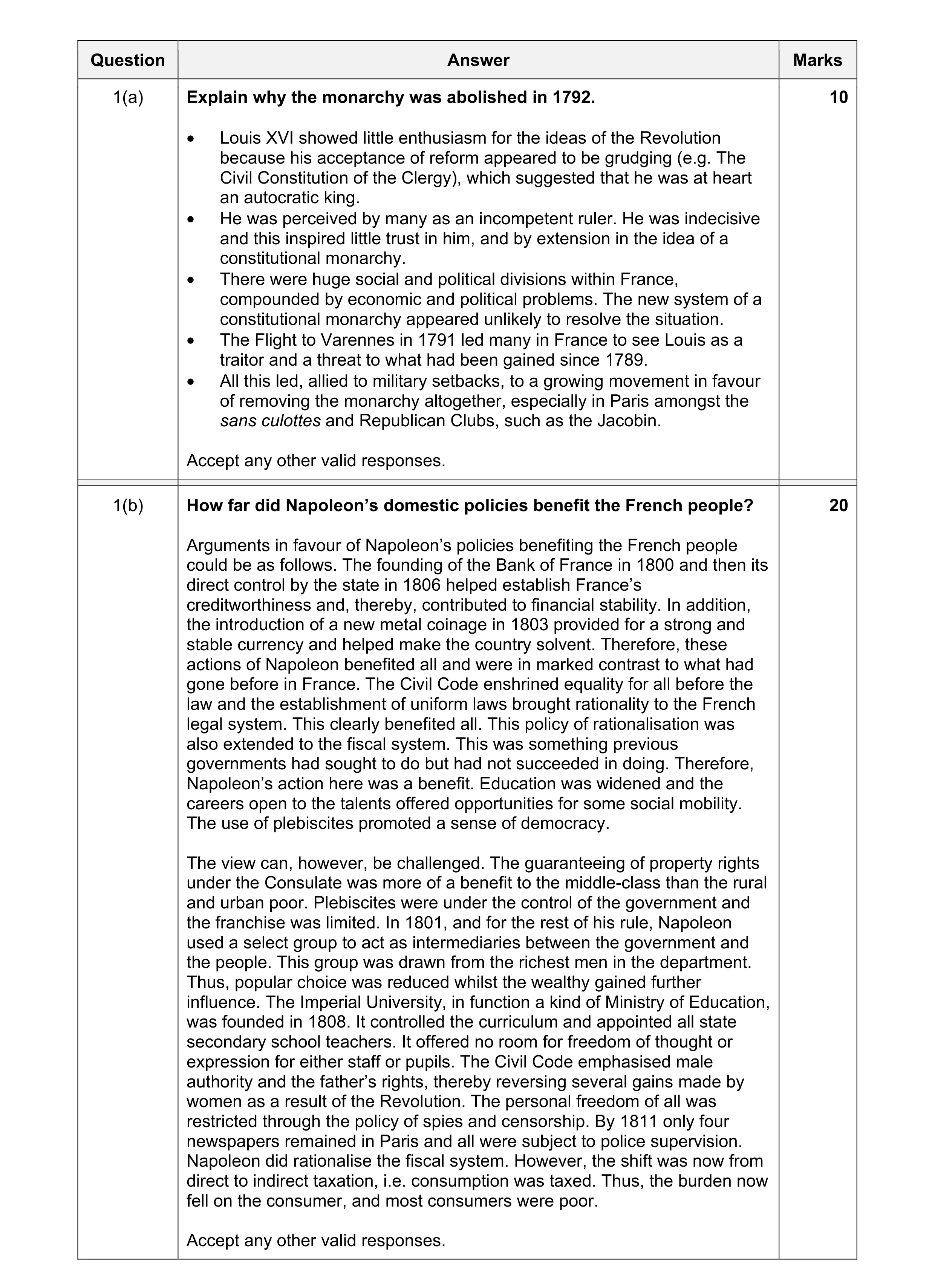 30
30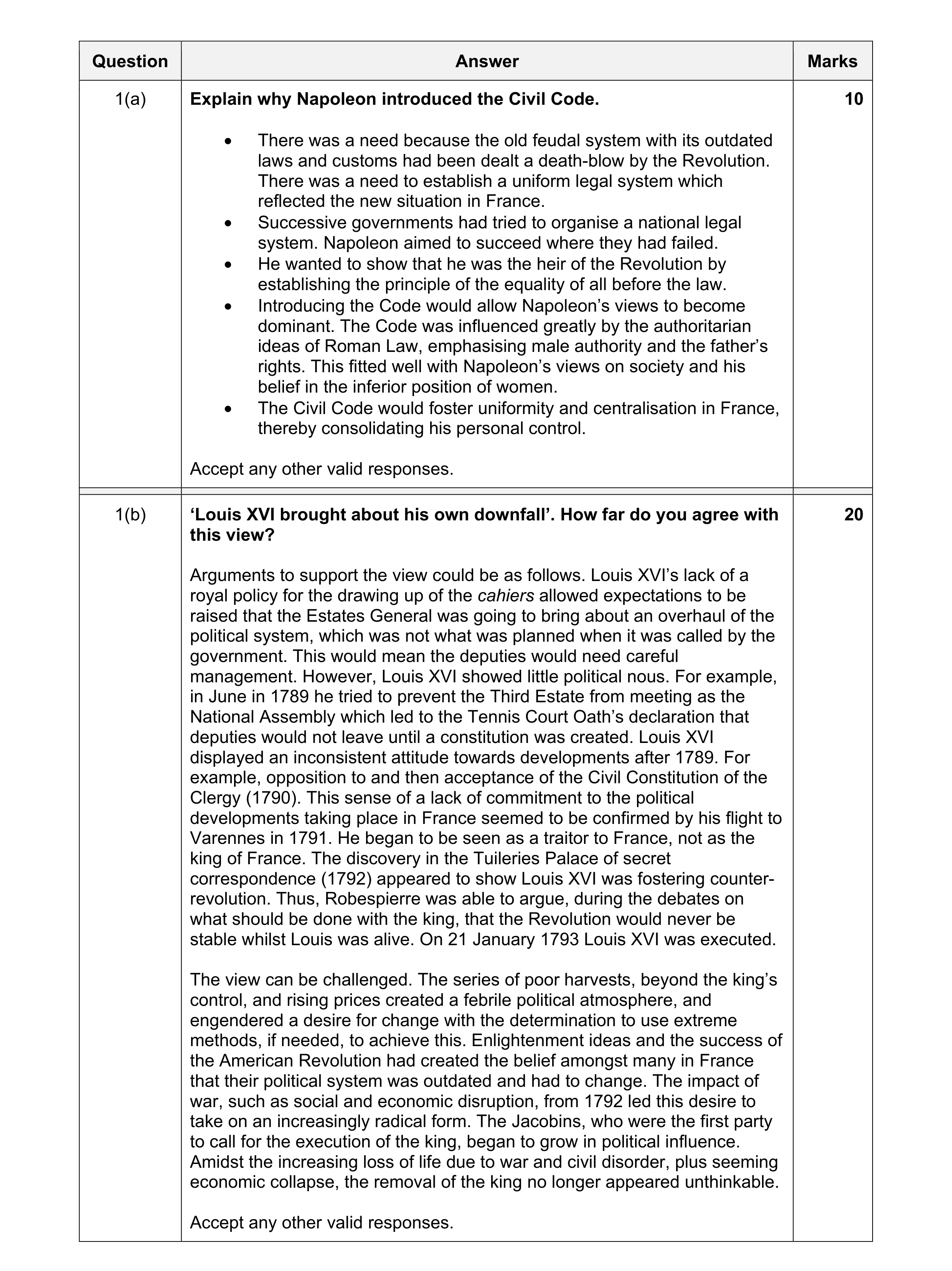 30
30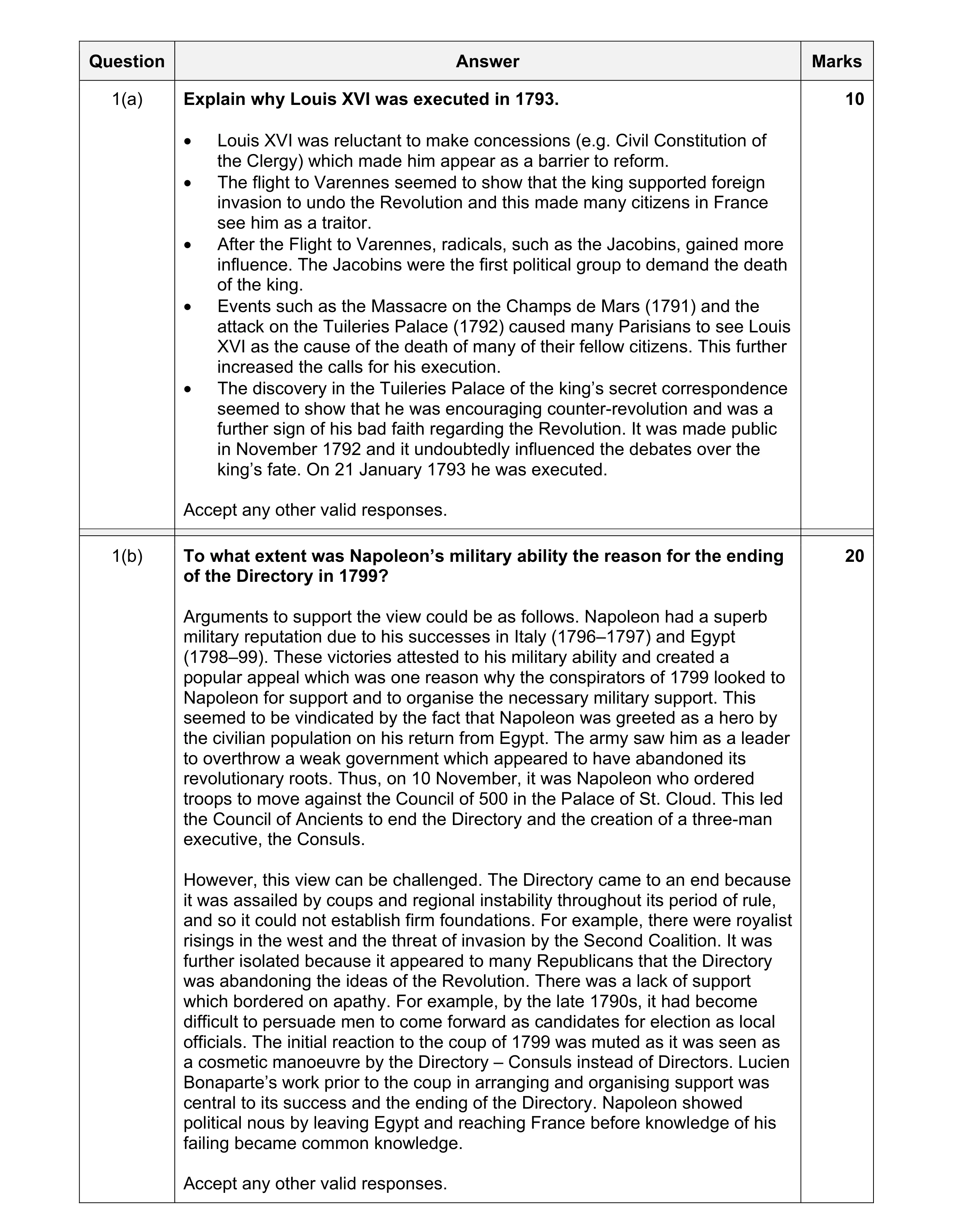 30
30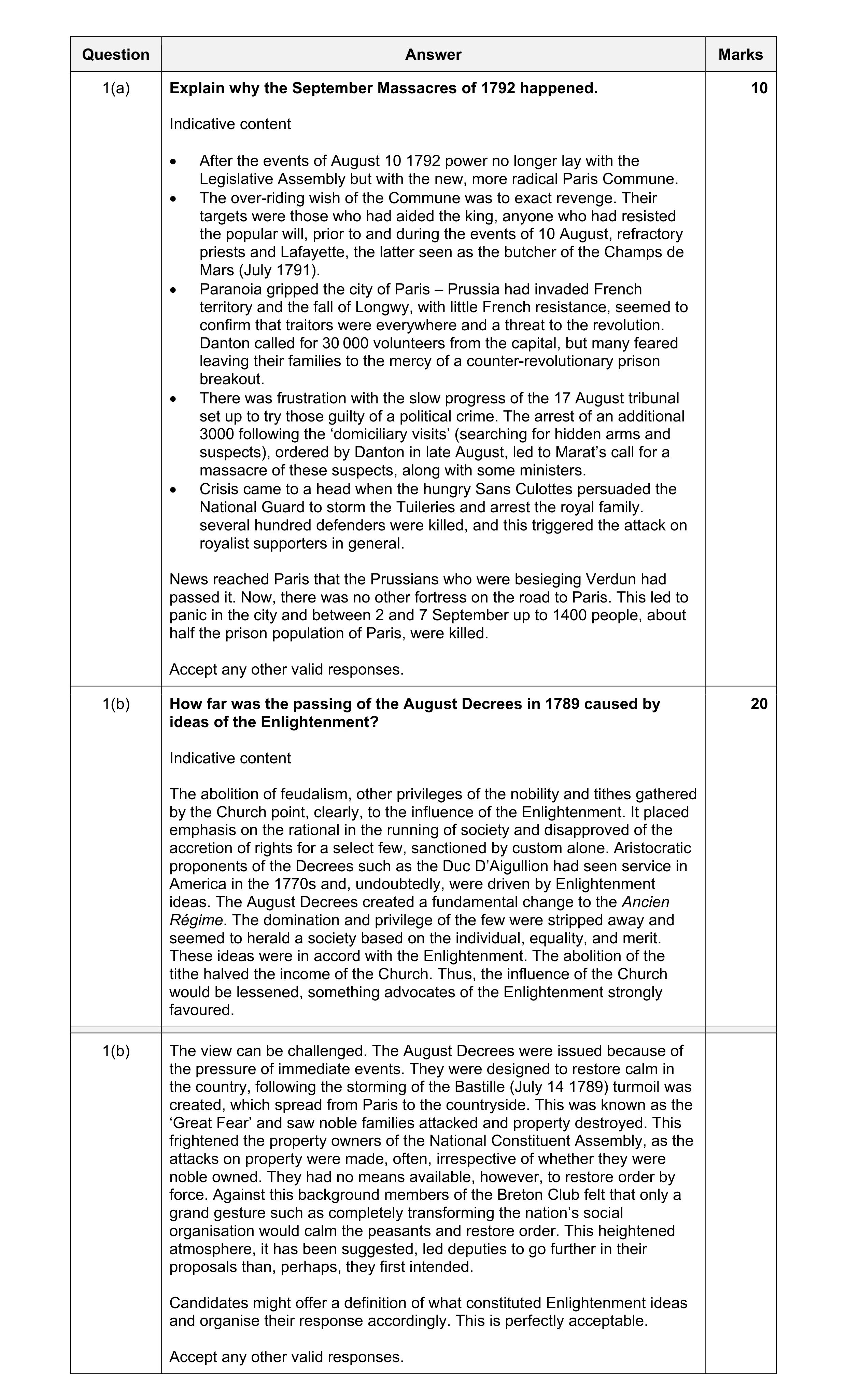 30
30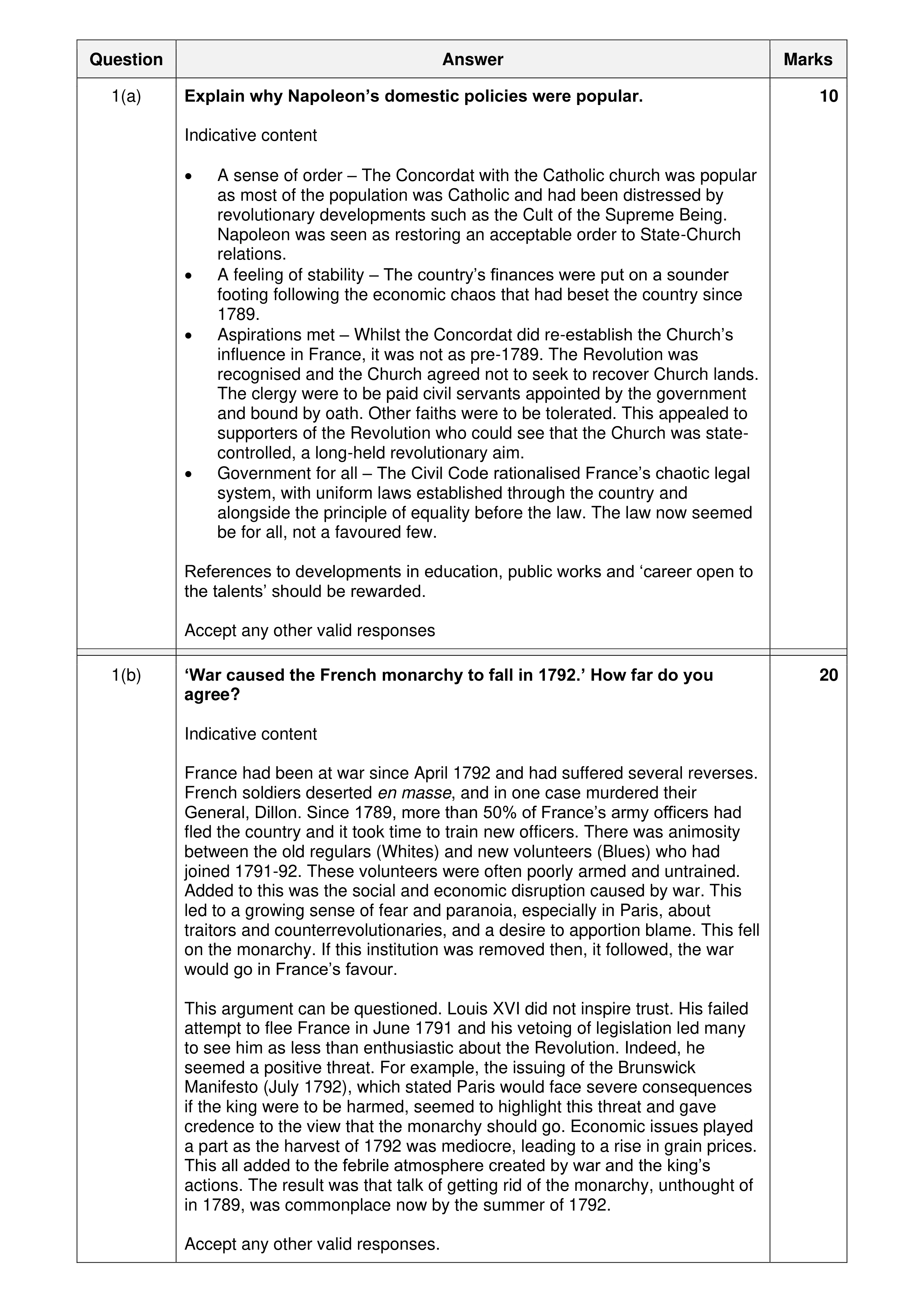 30
30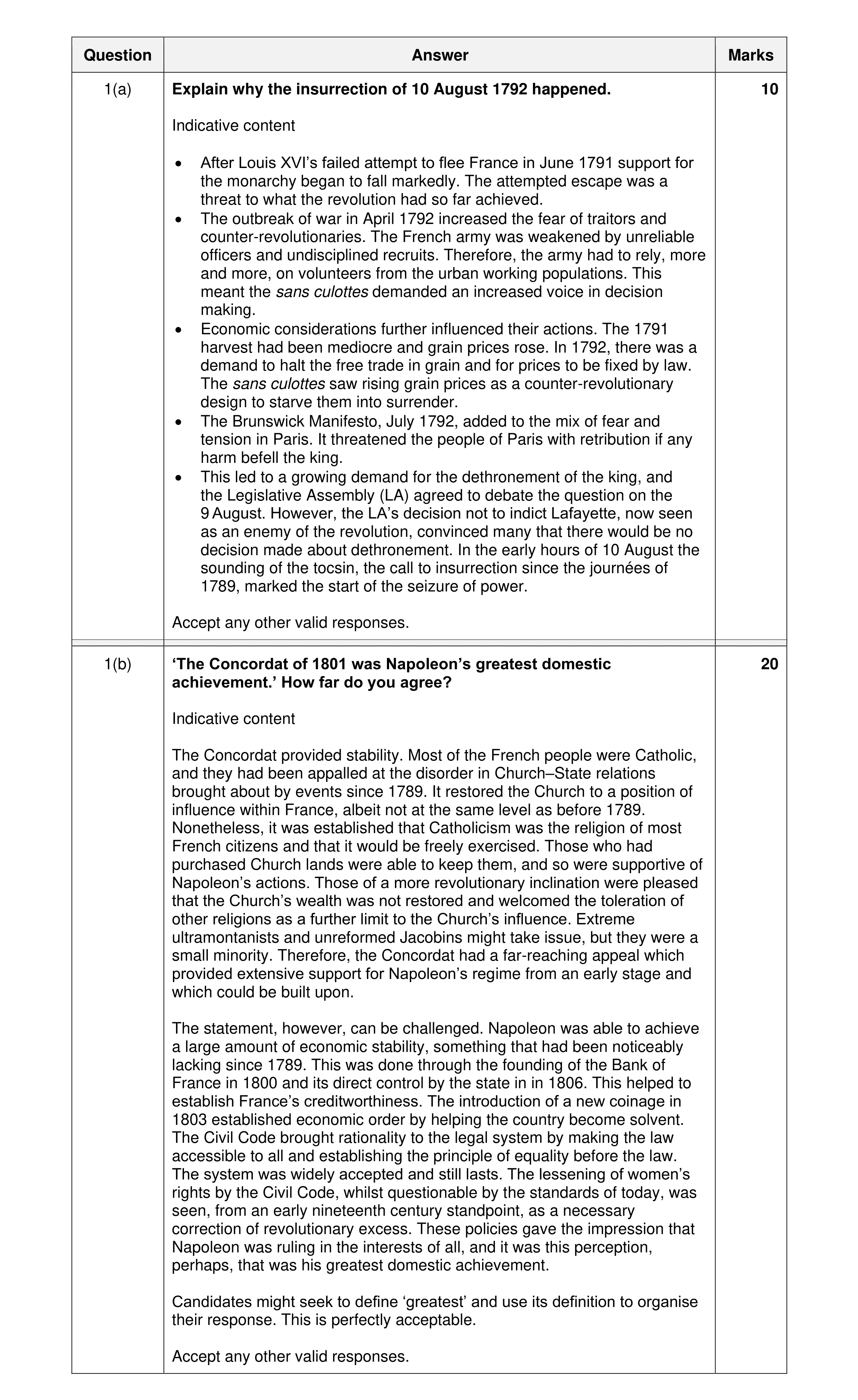 30
30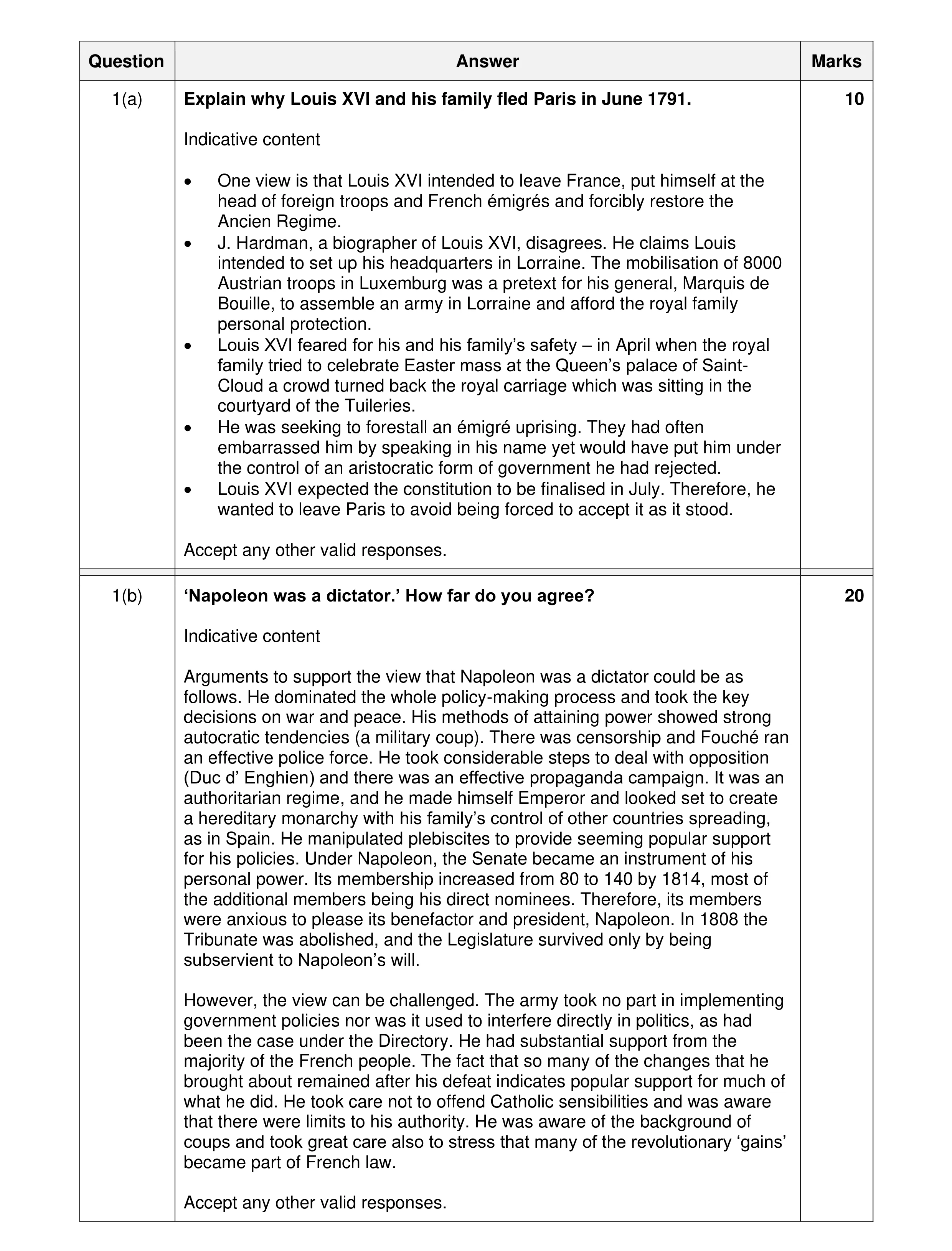 30
30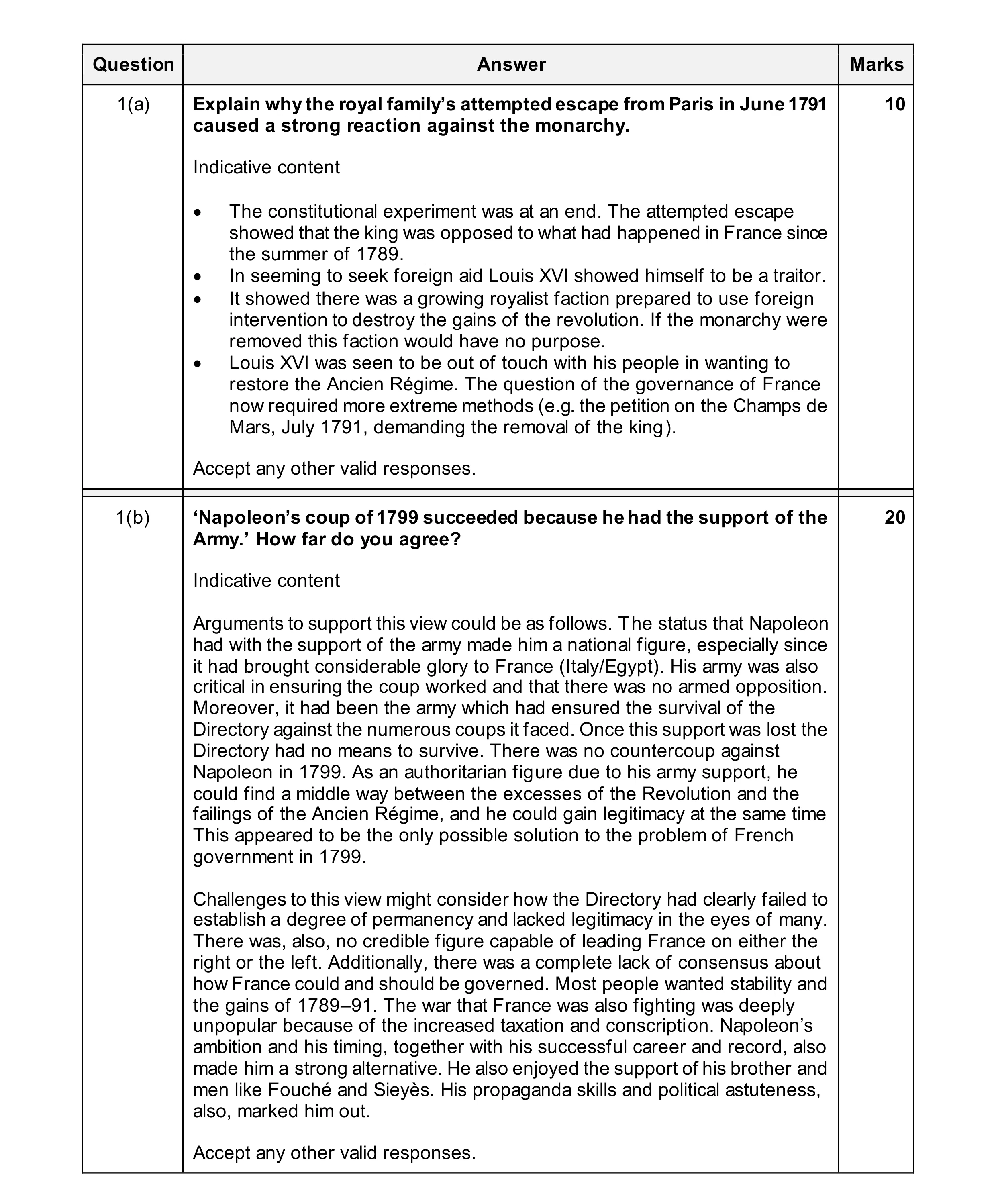 30
30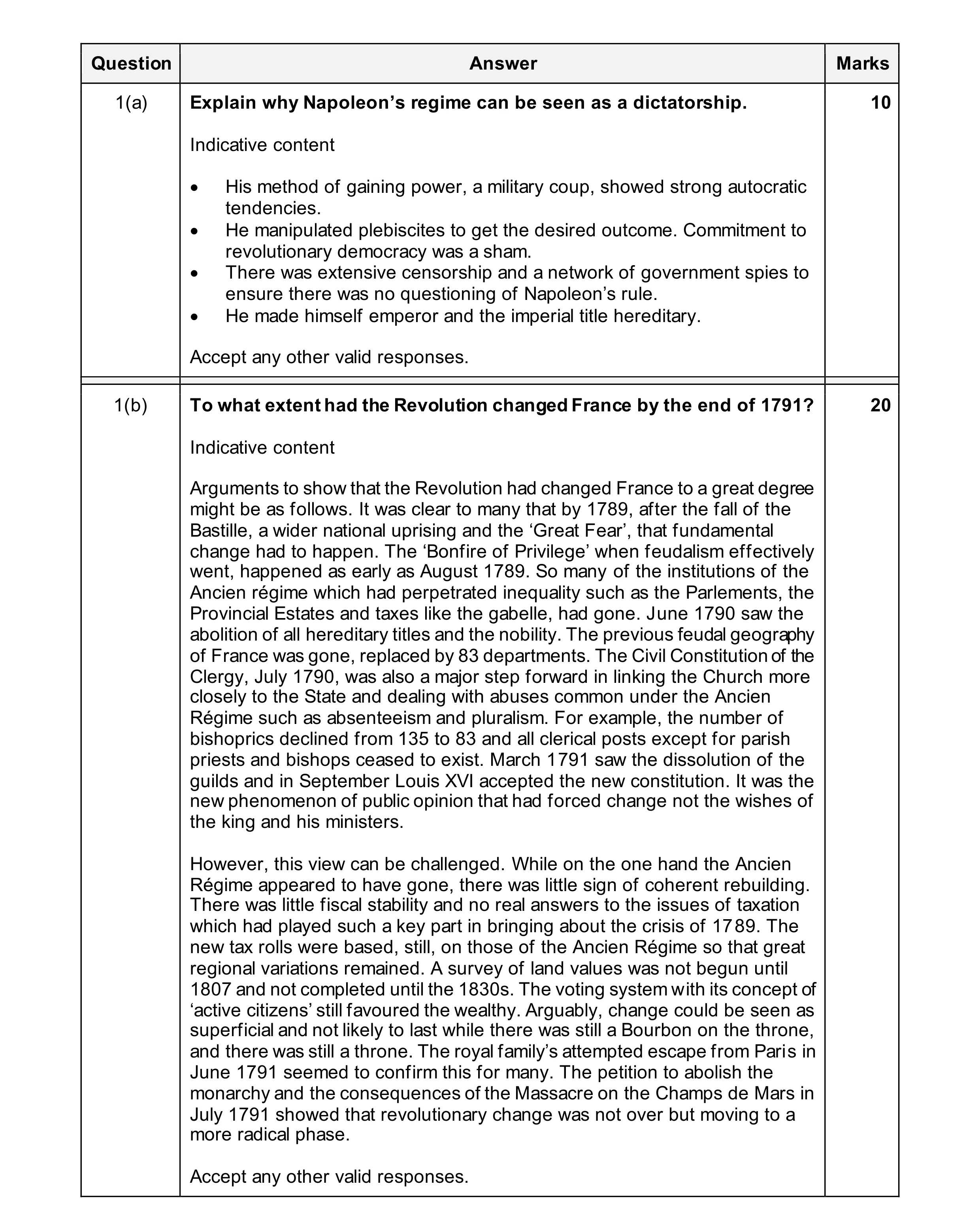 30
30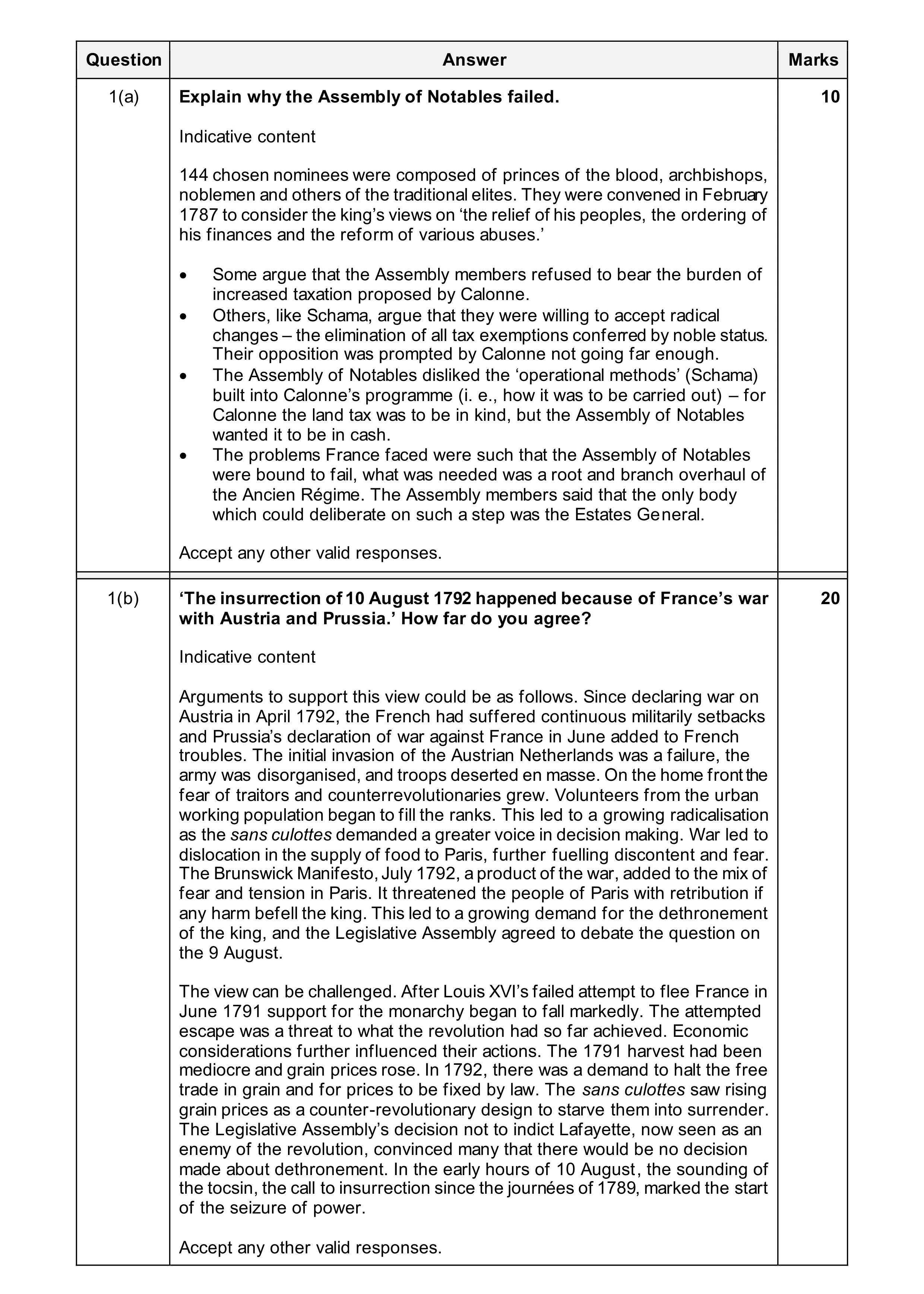 30
30