Cambridge IGCSE Science - Combined 0653 — 2022 Oct/Nov Paper 4 · Variant 1
0653/41/O/N/22 · 9 questions · 80 marks · ≈90 min
The question paper and its mark scheme, free to read here and free to download. This is Cambridge’s own paper, exactly as it was sat.
Question paper24 pages
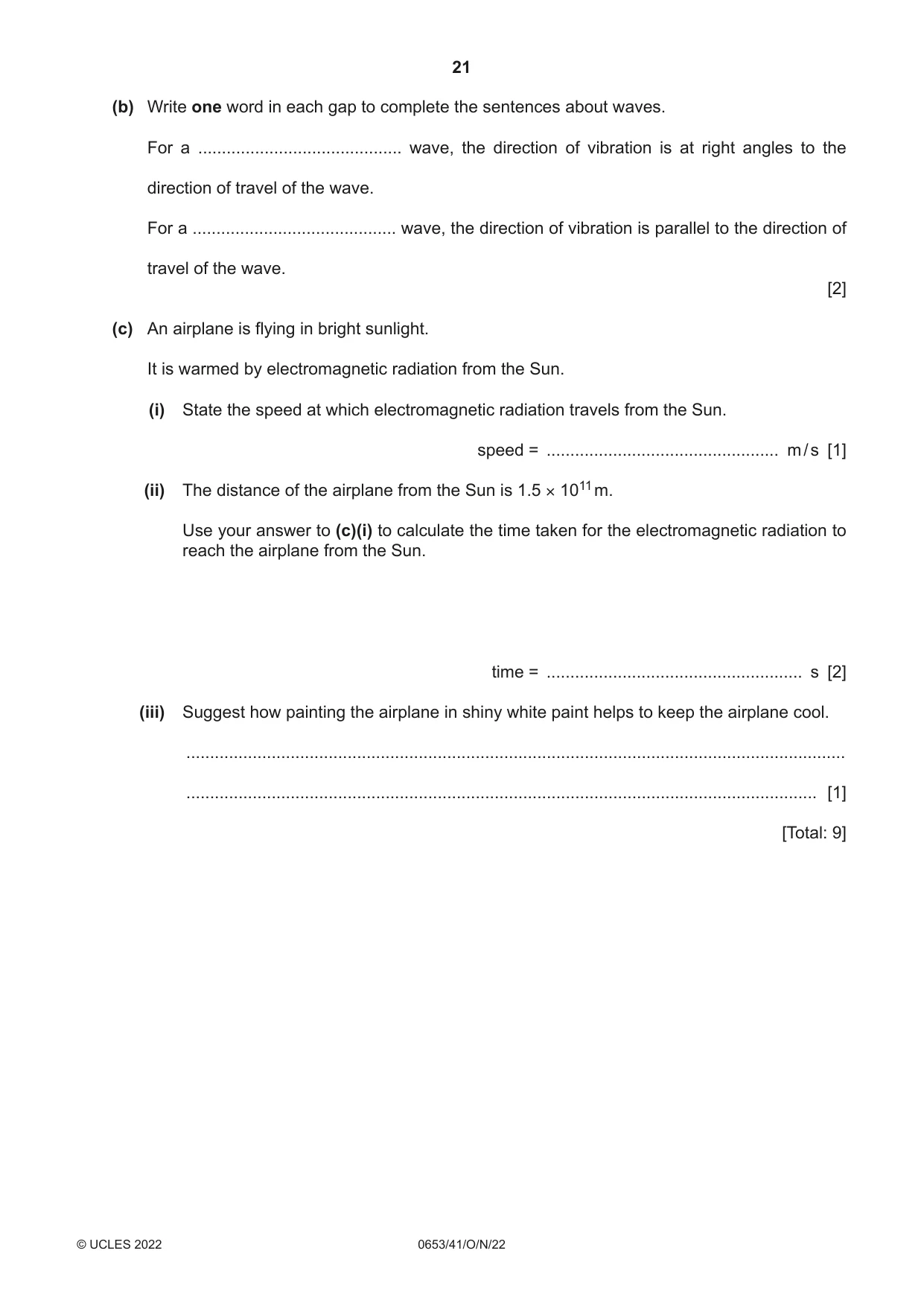


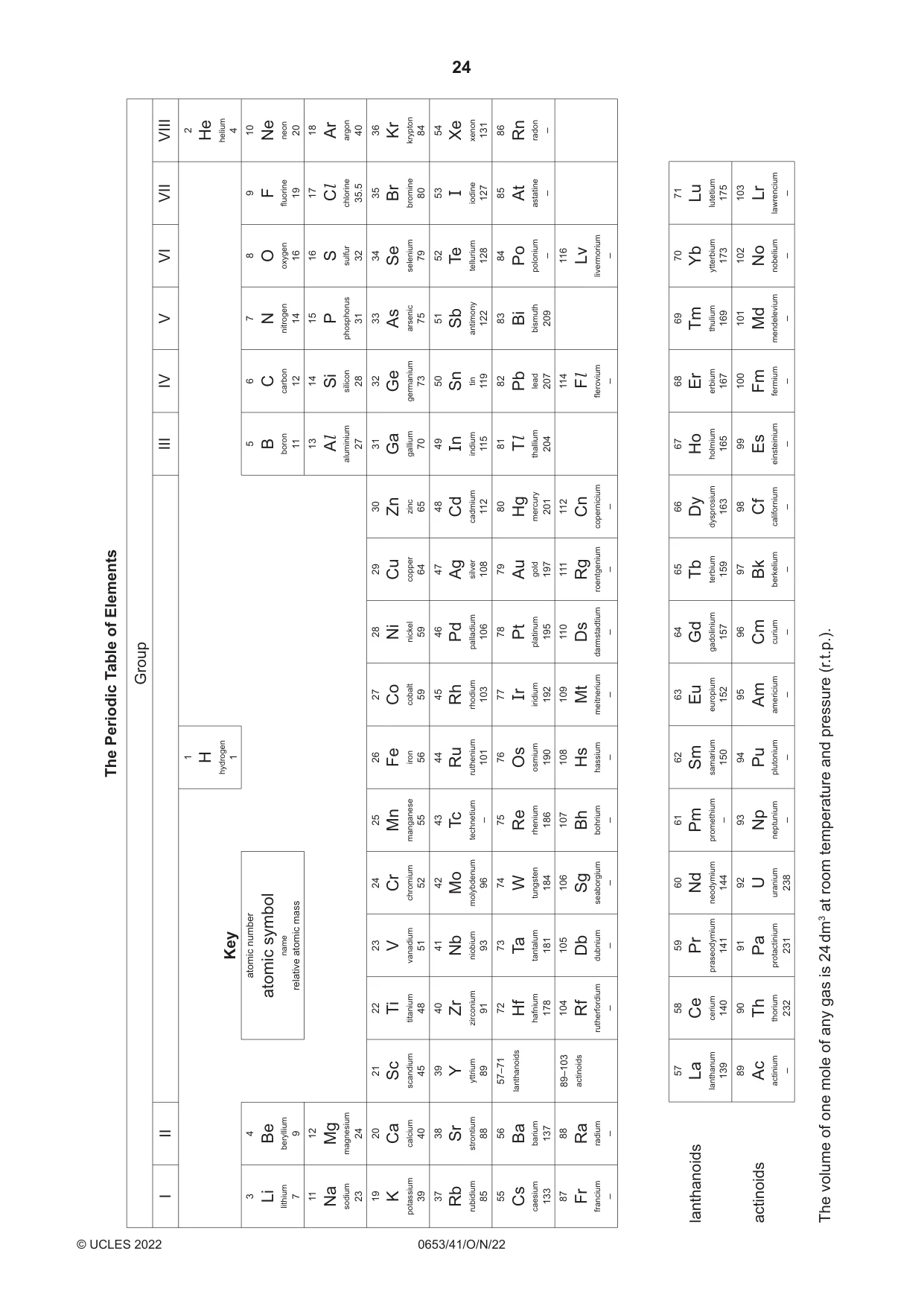
Mark scheme13 pages
Answers below. Sit the paper first if you are practising.
Questions as text
Q1 · The structure of a human heart
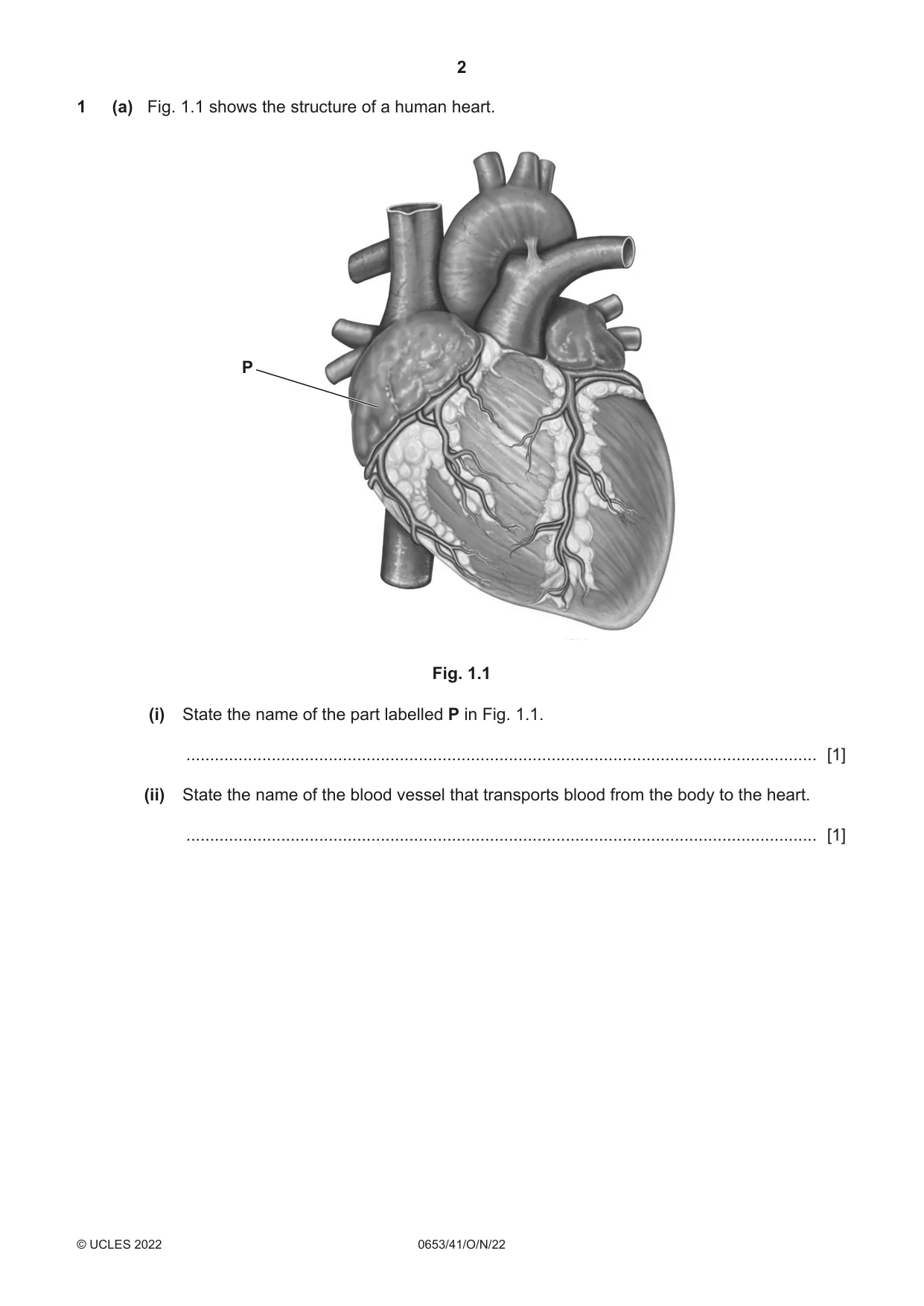
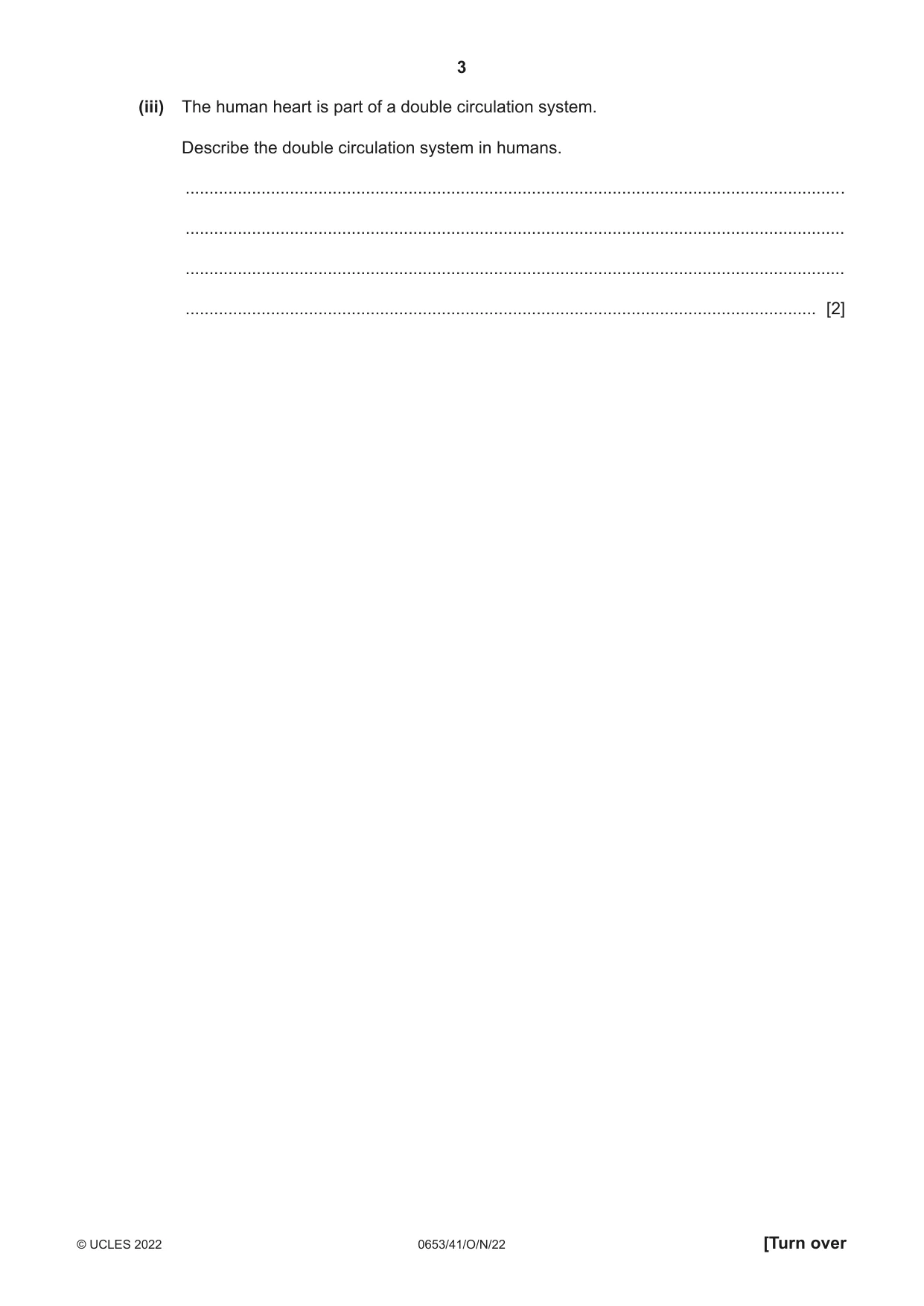
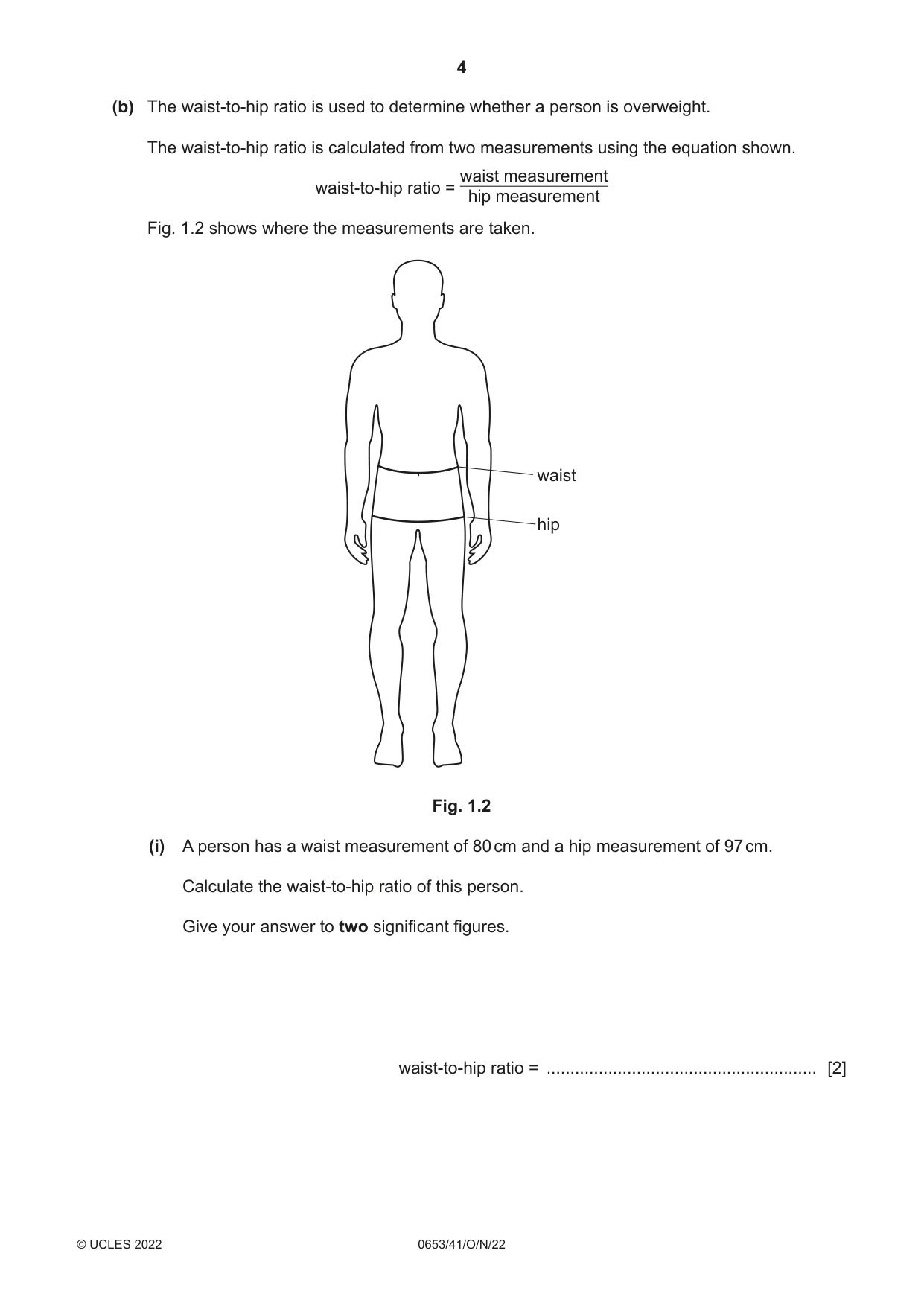
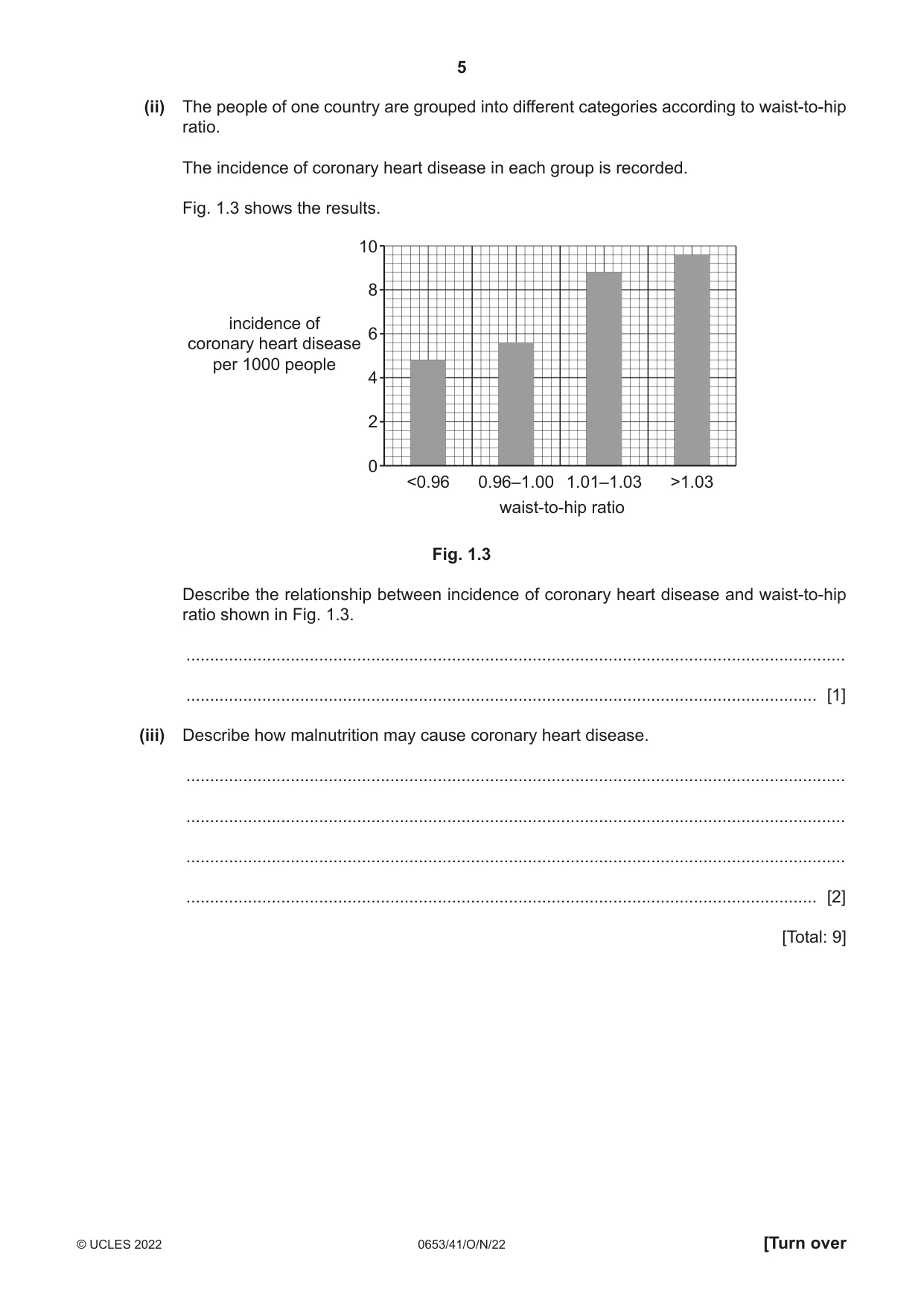
1 (a) Fig. 1.1 shows the structure of a human heart. P Fig. 1.1 (i) State the name of the part labelled P in Fig. 1.1. ..................................................................................................................................... [1] (ii) State the name of the blood vessel that transports blood from the body to the heart. ..................................................................................................................................... [1] (iii) The human heart is part of a double circulation system. Describe the double circulation system in humans. ........................................................................................................................................... ........................................................................................................................................... ........................................................................................................................................... ..................................................................................................................................... [2] (b) The waist-to-hip ratio is used to determine whether a person is overweight. The waist-to-hip ratio is calculated from two measurements using the equation shown. waist measurement waist-to-hip ratio = hip measurement Fig. 1.2 shows where the measurements are taken. waist hip Fig. 1.2 (i) A person has a waist measurement of 80 cm and a hip measurement of 97 cm. Calculate the waist-to-hip ratio of this person. Give your answer to two significant figures. waist-to-hip ratio = ......................................................... [2] (ii) The people of one country are grouped into different categories according to waist-to-hip ratio. The incidence of coronary heart disease in each group is recorded. Fig. 1.3 shows the results. 10 8 incidence of 6 coronary heart disease per 1000 people 4 2 0 <0.96 0.96–1.00 1.01–1.03 >1.03 waist-to-hip ratio Fig. 1.3 Describe the relationship between incidence of coronary heart disease and waist-to-hip ratio shown in Fig. 1.3. ........................................................................................................................................... ..................................................................................................................................... [1] (iii) Describe how malnutrition may cause coronary heart disease. ........................................................................................................................................... ........................................................................................................................................... ........................................................................................................................................... ..................................................................................................................................... [2] [Total: 9]
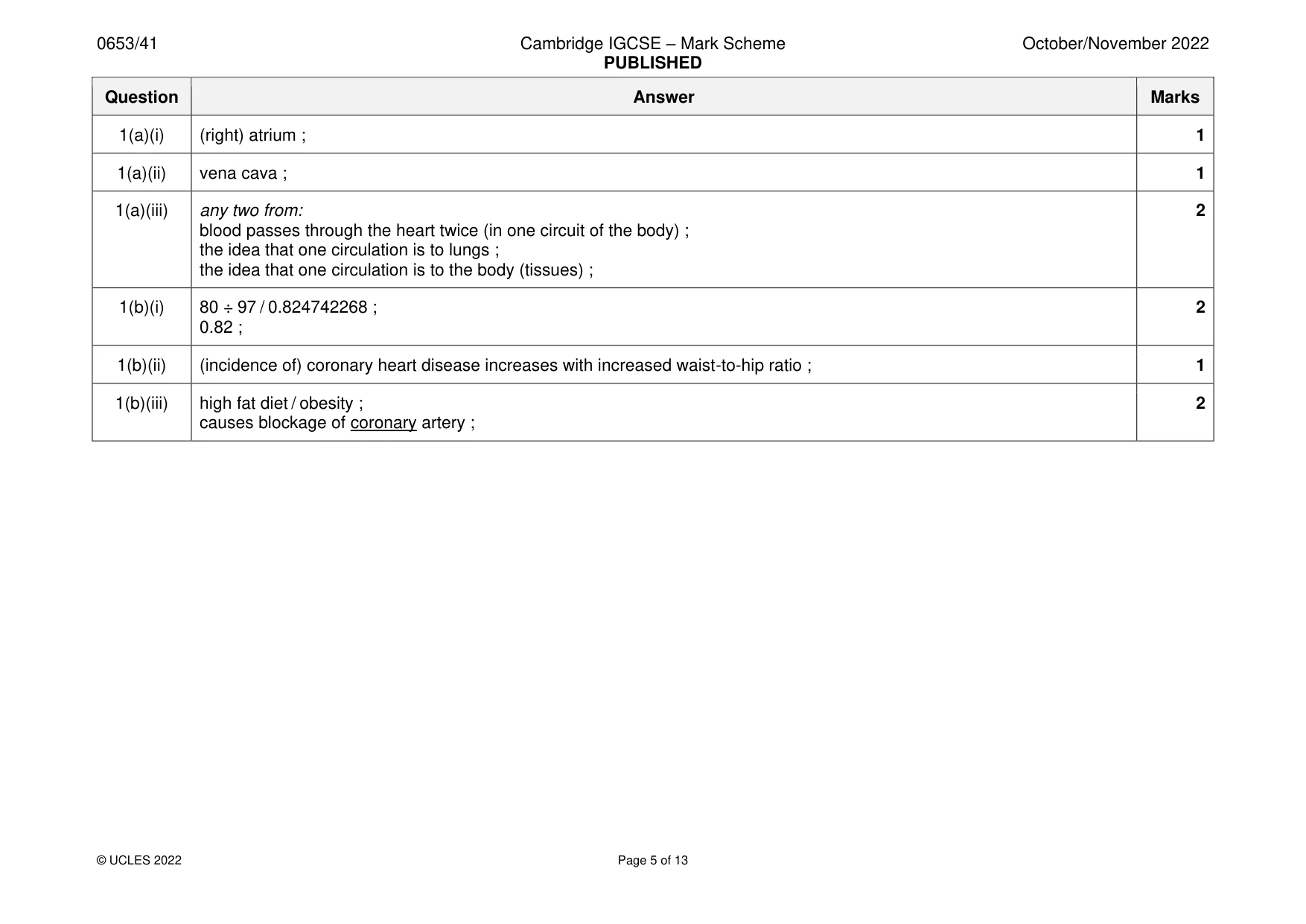
Mark scheme: Question Answer Marks 1(a)(i) (right) atrium ; 1 1(a)(ii) vena cava ; 1 1(a)(iii) any two from: 2 blood passes through the heart twice (in one circuit of the body) ; the idea that one circulation is to lungs ; the idea that one circulation is to the body (tissues) ; 1(b)(i) 80 ÷ 97 / 0.824742268 ; 2 0.82 ; 1(b)(ii) (incidence of) coronary heart disease increases with increased waist-to-hip ratio ; 1 1(b)(iii) high fat diet / obesity ; 2 causes blockage of coronary artery ;
Q2 · Concentrated aqueous sodium chloride is electrolysed using inert electrodes, as shown in…
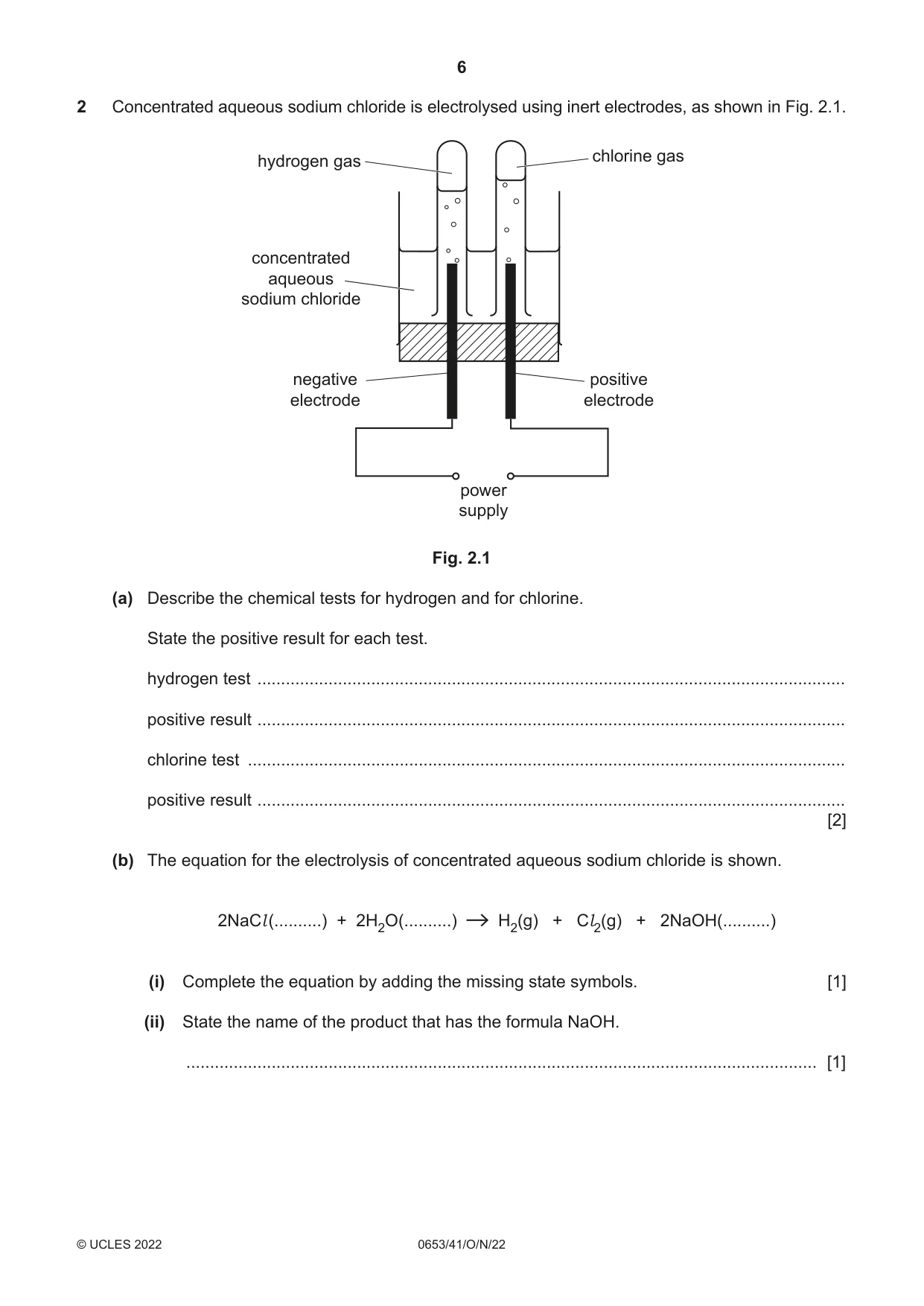
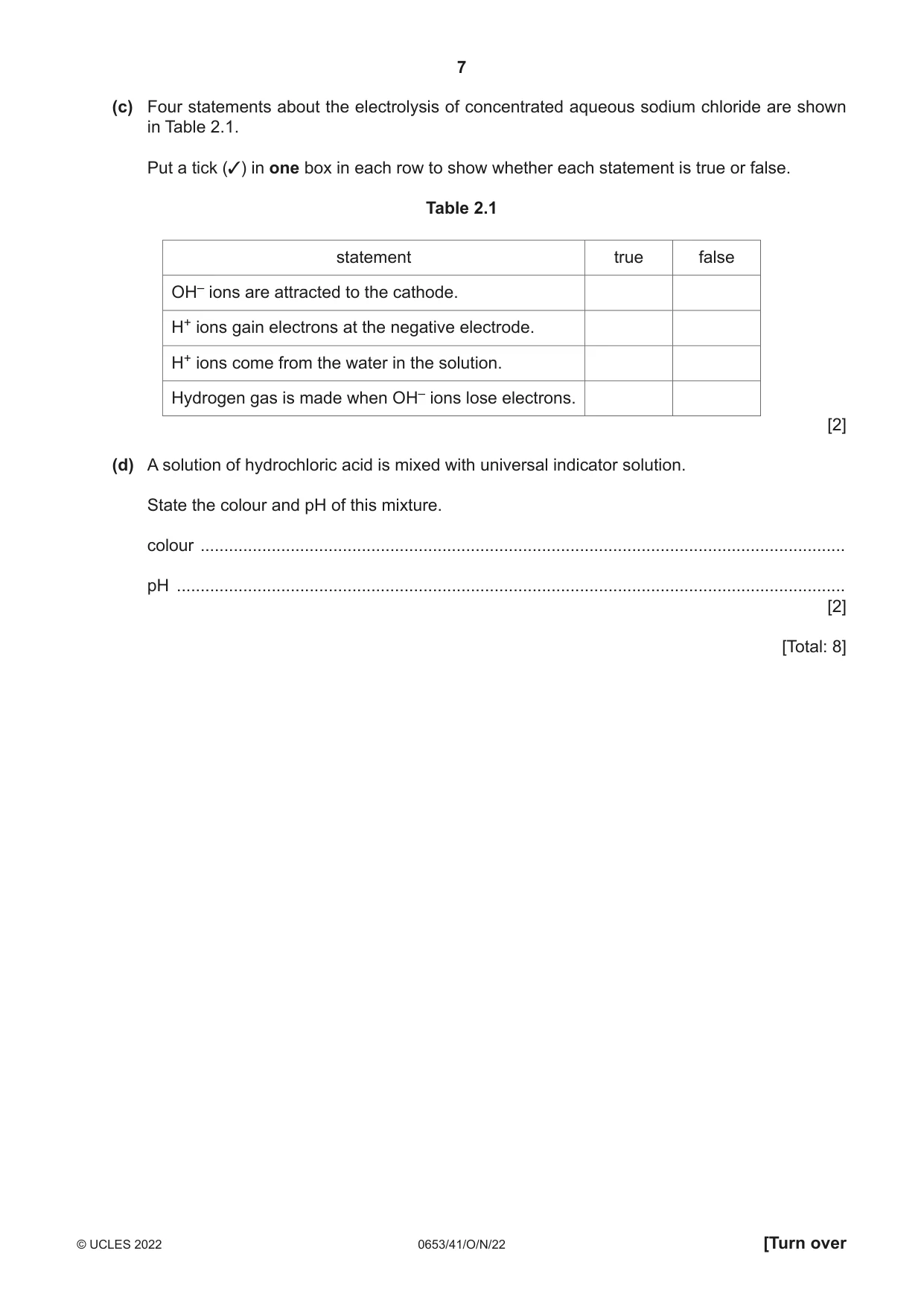
2 Concentrated aqueous sodium chloride is electrolysed using inert electrodes, as shown in Fig. 2.1. chlorine gas hydrogen gas concentrated aqueous sodium chloride negative positive electrode electrode power supply Fig. 2.1 (a) Describe the chemical tests for hydrogen and for chlorine. State the positive result for each test. hydrogen test ............................................................................................................................ positive result ............................................................................................................................ chlorine test .............................................................................................................................. positive result ............................................................................................................................ [2] (b) The equation for the electrolysis of concentrated aqueous sodium chloride is shown. 2NaCl (..........) + 2H2O(..........) H2(g) + Cl2(g) + 2NaOH(..........) (i) Complete the equation by adding the missing state symbols. [1] (ii) State the name of the product that has the formula NaOH. ..................................................................................................................................... [1] (c) Four statements about the electrolysis of concentrated aqueous sodium chloride are shown in Table 2.1. Put a tick (3) in one box in each row to show whether each statement is true or false. Table 2.1 statement true false OH– ions are attracted to the cathode. H+ ions gain electrons at the negative electrode. H+ ions come from the water in the solution. Hydrogen gas is made when OH– ions lose electrons. [2] (d) A solution of hydrochloric acid is mixed with universal indicator solution. State the colour and pH of this mixture. colour ........................................................................................................................................ pH ............................................................................................................................................. [2] [Total: 8]
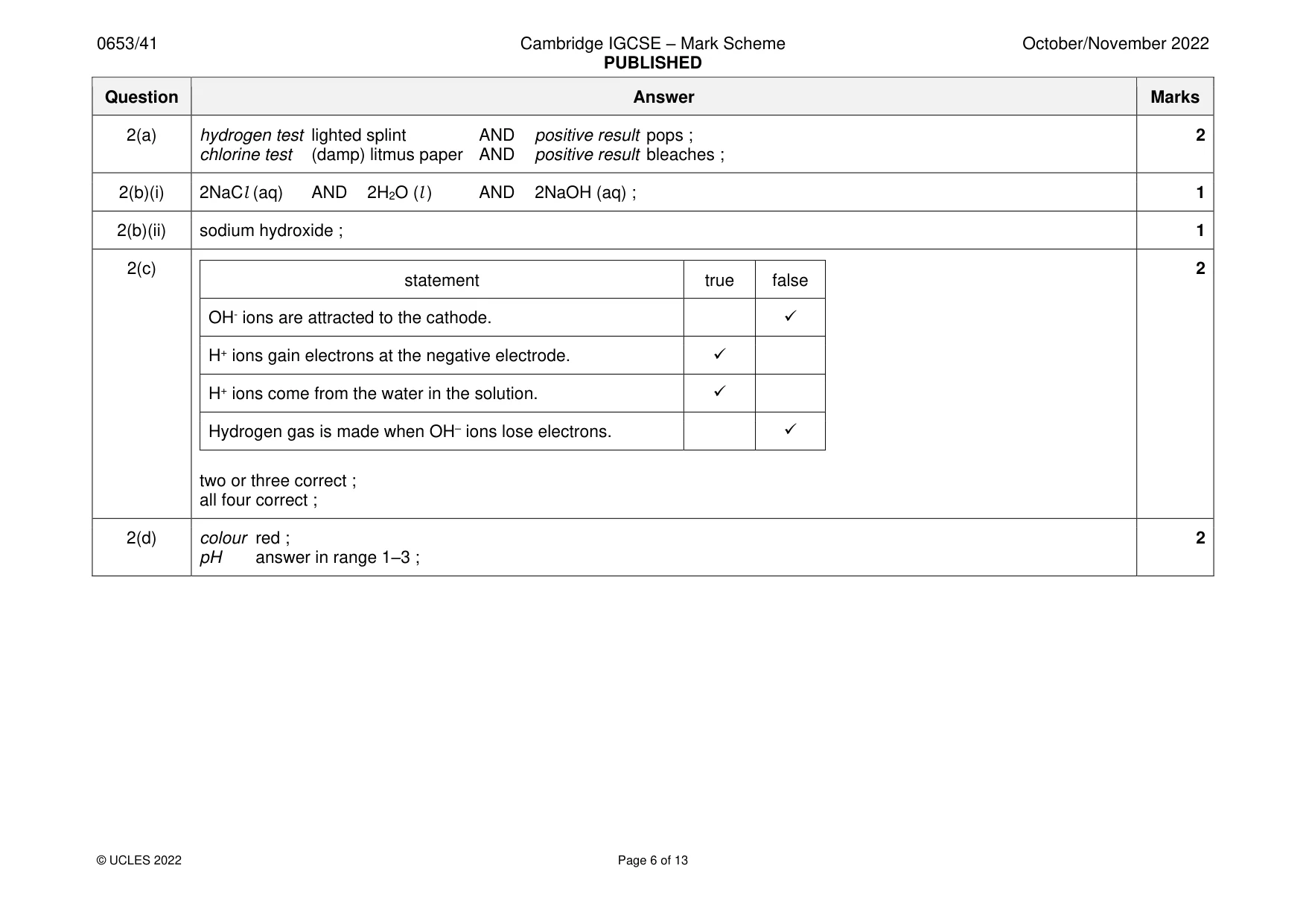
Mark scheme: 2(a) hydrogen test lighted splint AND positive result pops ; 2 chlorine test (damp) litmus paper AND positive result bleaches ; 2(b)(i) 2NaCl (aq) AND 2H2O (l ) AND 2NaOH (aq) ; 1 2(b)(ii) sodium hydroxide ; 1 2(c) 2 statement true false OH- ions are attracted to the cathode. ✓ H+ ions gain electrons at the negative electrode. ✓ H+ ions come from the water in the solution. ✓ Hydrogen gas is made when OH– ions lose electrons. ✓ two or three correct ; all four correct ; 2(d) colour red ; 2 pH answer in range 1–3 ;
Q3 · Forces P, Q, R and S acting on an airplane moving forward along a runway
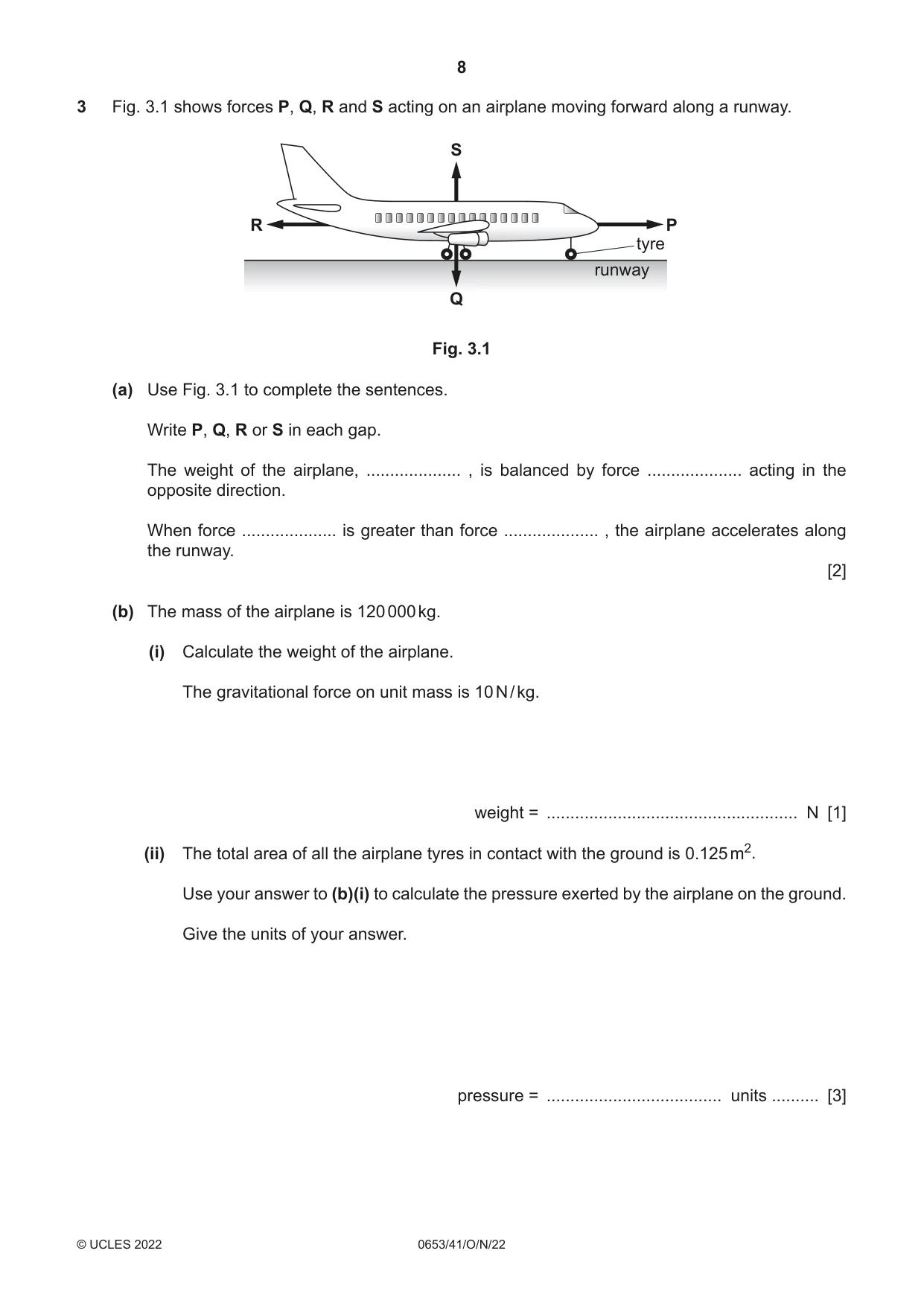
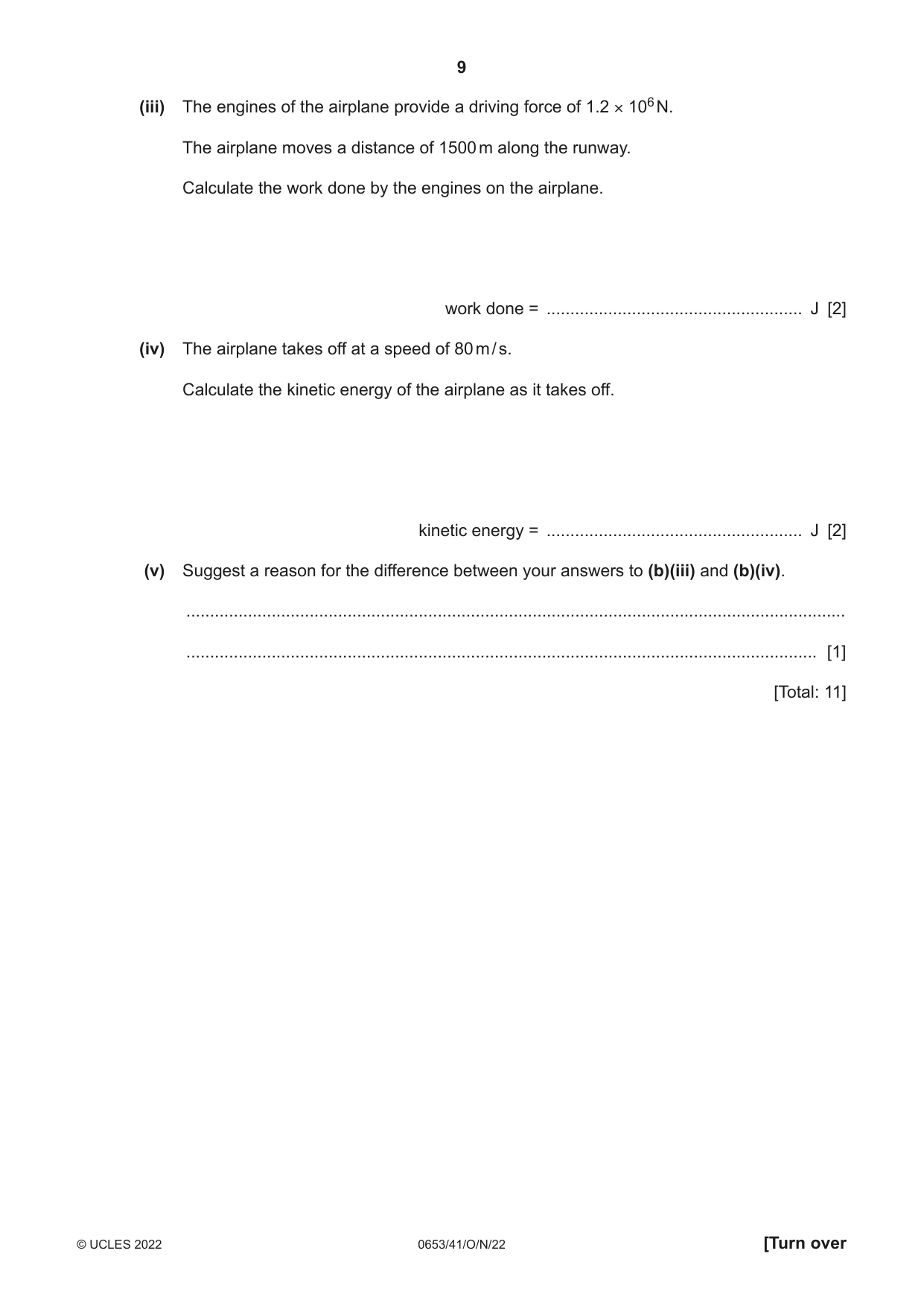
3 Fig. 3.1 shows forces P, Q, R and S acting on an airplane moving forward along a runway. S R P tyre runway Q Fig. 3.1 (a) Use Fig. 3.1 to complete the sentences. Write P, Q, R or S in each gap. The weight of the airplane, .................... , is balanced by force .................... acting in the opposite direction. When force .................... is greater than force .................... , the airplane accelerates along the runway. [2] (b) The mass of the airplane is 120 000 kg. (i) Calculate the weight of the airplane. The gravitational force on unit mass is 10 N / kg. weight = ..................................................... N [1] (ii) The total area of all the airplane tyres in contact with the ground is 0.125 m2. Use your answer to (b)(i) to calculate the pressure exerted by the airplane on the ground. Give the units of your answer. pressure = ..................................... units .......... [3] (iii) The engines of the airplane provide a driving force of 1.2 × 10⁶ N. The airplane moves a distance of 1500 m along the runway. Calculate the work done by the engines on the airplane. work done = ...................................................... J [2] (iv) The airplane takes off at a speed of 80 m / s. Calculate the kinetic energy of the airplane as it takes off. kinetic energy = ...................................................... J [2] (v) Suggest a reason for the difference between your answers to (b)(iii) and (b)(iv). ........................................................................................................................................... ..................................................................................................................................... [1] [Total: 11]
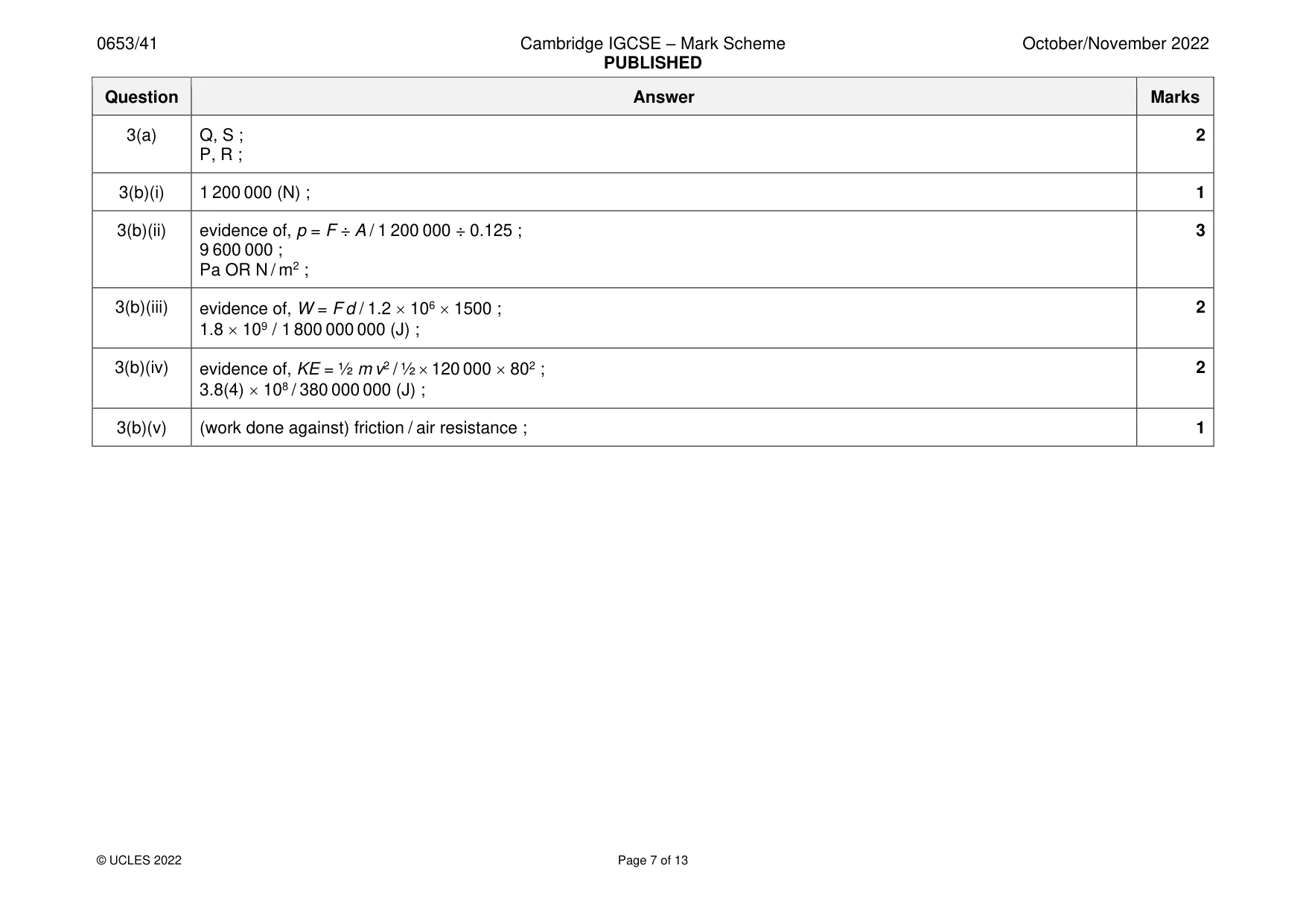
Mark scheme: 3(a) Q, S ; 2 P, R ; 3(b)(i) 1 200 000 (N) ; 1 3(b)(ii) evidence of, p = F ÷ A / 1 200 000 ÷ 0.125 ; 3 9 600 000 ; Pa OR N / m2 ; 3(b)(iii) evidence of, W = F d / 1.2 106 1500 ; 2 1.8 109 / 1 800 000 000 (J) ; 3(b)(iv) evidence of, KE = ½ m v2 / ½ 120 000 802 ; 2 3.8(4) 108 / 380 000 000 (J) ; 3(b)(v) (work done against) friction / air resistance ; 1
Q4 · Starch is broken down by amylase into smaller molecules
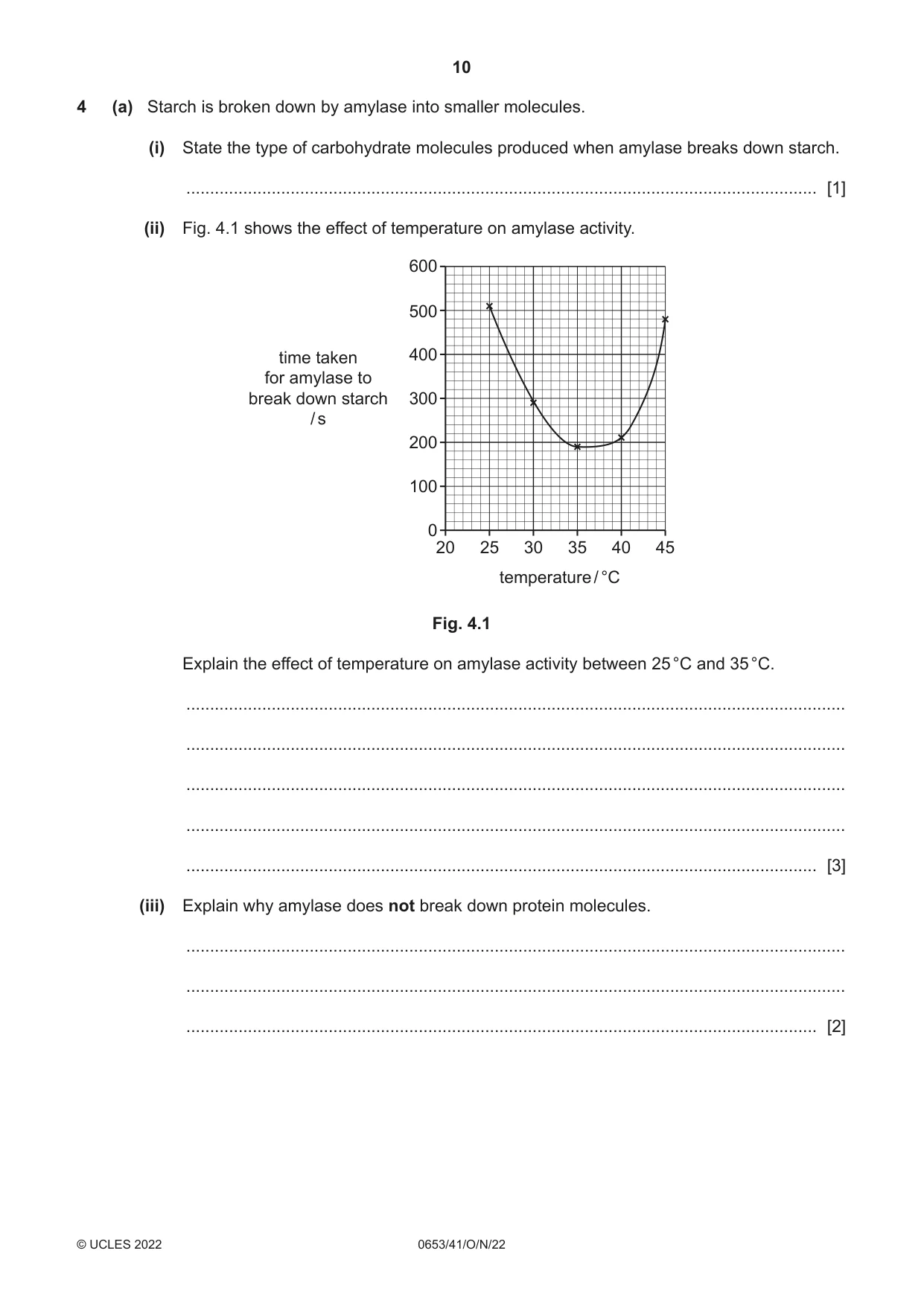
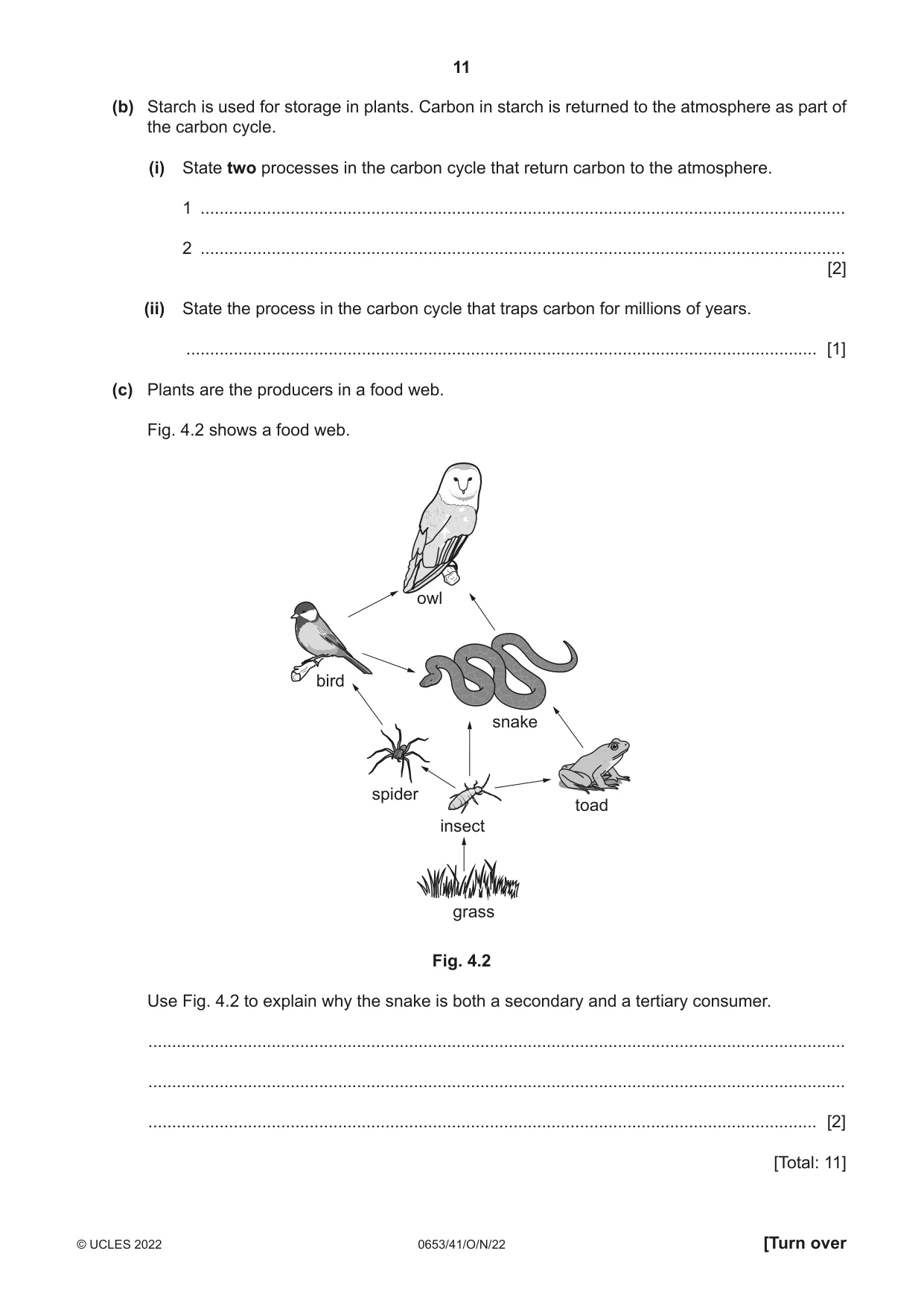
4 (a) Starch is broken down by amylase into smaller molecules. (i) State the type of carbohydrate molecules produced when amylase breaks down starch. ..................................................................................................................................... [1] (ii) Fig. 4.1 shows the effect of temperature on amylase activity. 600 500 time taken 400 for amylase to break down starch 300 / s 200 100 0 20 25 30 35 40 45 temperature / °C Fig. 4.1 Explain the effect of temperature on amylase activity between 25 °C and 35 °C. ........................................................................................................................................... ........................................................................................................................................... ........................................................................................................................................... ........................................................................................................................................... ..................................................................................................................................... [3] (iii) Explain why amylase does not break down protein molecules. ........................................................................................................................................... ........................................................................................................................................... ..................................................................................................................................... [2] (b) Starch is used for storage in plants. Carbon in starch is returned to the atmosphere as part of the carbon cycle. (i) State two processes in the carbon cycle that return carbon to the atmosphere. 1 ........................................................................................................................................ 2 ........................................................................................................................................ [2] (ii) State the process in the carbon cycle that traps carbon for millions of years. ..................................................................................................................................... [1] (c) Plants are the producers in a food web. Fig. 4.2 shows a food web. owl bird snake spider toad insect grass Fig. 4.2 Use Fig. 4.2 to explain why the snake is both a secondary and a tertiary consumer. ................................................................................................................................................... ................................................................................................................................................... ............................................................................................................................................. [2] [Total: 11]
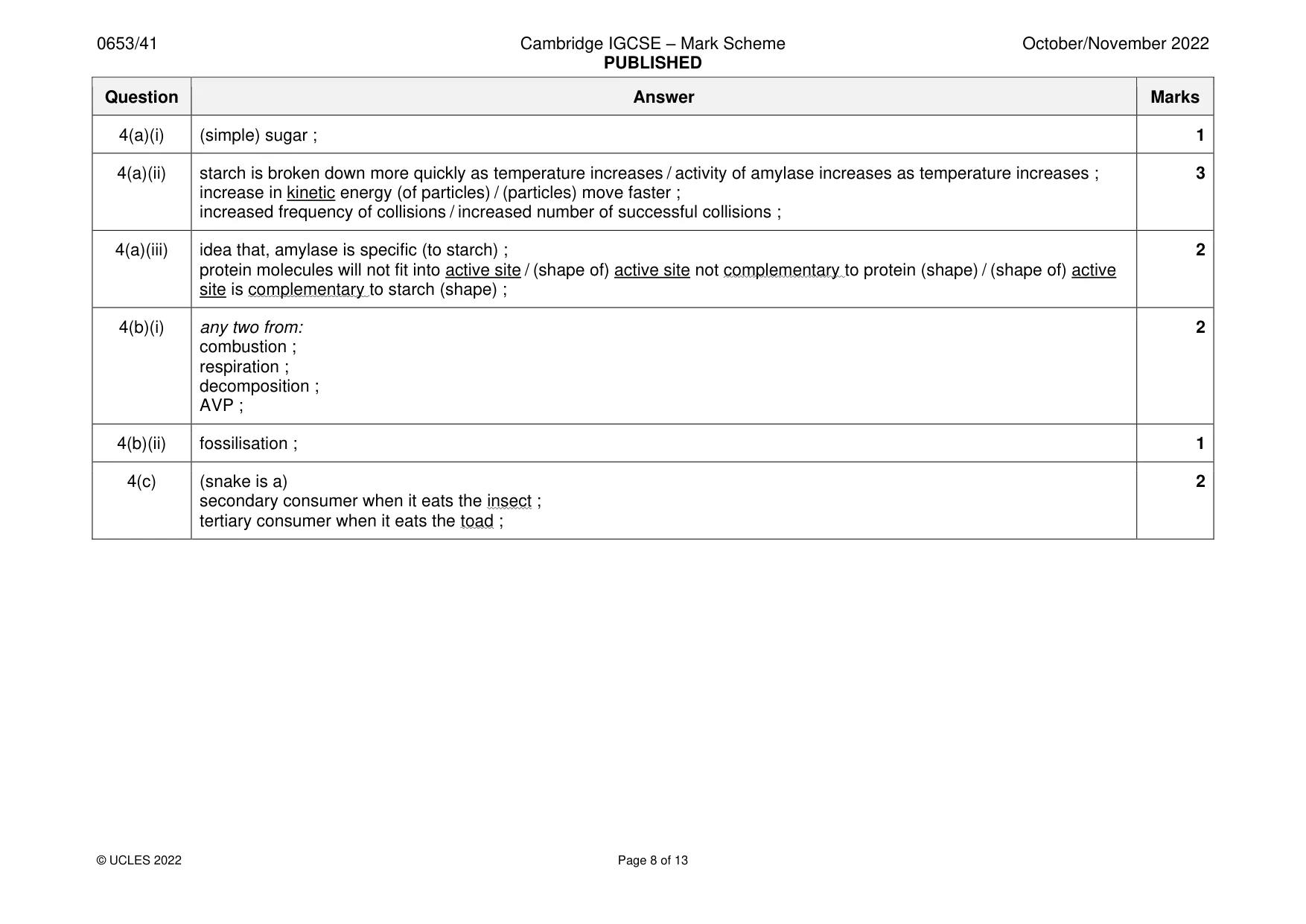
Mark scheme: 4(a)(i) (simple) sugar ; 1 4(a)(ii) starch is broken down more quickly as temperature increases / activity of amylase increases as temperature increases ; 3 increase in kinetic energy (of particles) / (particles) move faster ; increased frequency of collisions / increased number of successful collisions ; 4(a)(iii) idea that, amylase is specific (to starch) ; 2 protein molecules will not fit into active site / (shape of) active site not complementary to protein (shape) / (shape of) active site is complementary to starch (shape) ; 4(b)(i) any two from: 2 combustion ; respiration ; decomposition ; AVP ; 4(b)(ii) fossilisation ; 1 4(c) (snake is a) 2 secondary consumer when it eats the insect ; tertiary consumer when it eats the toad ;
Q5 · The energy level diagram for the combustion of hydrogen is shown in Fig
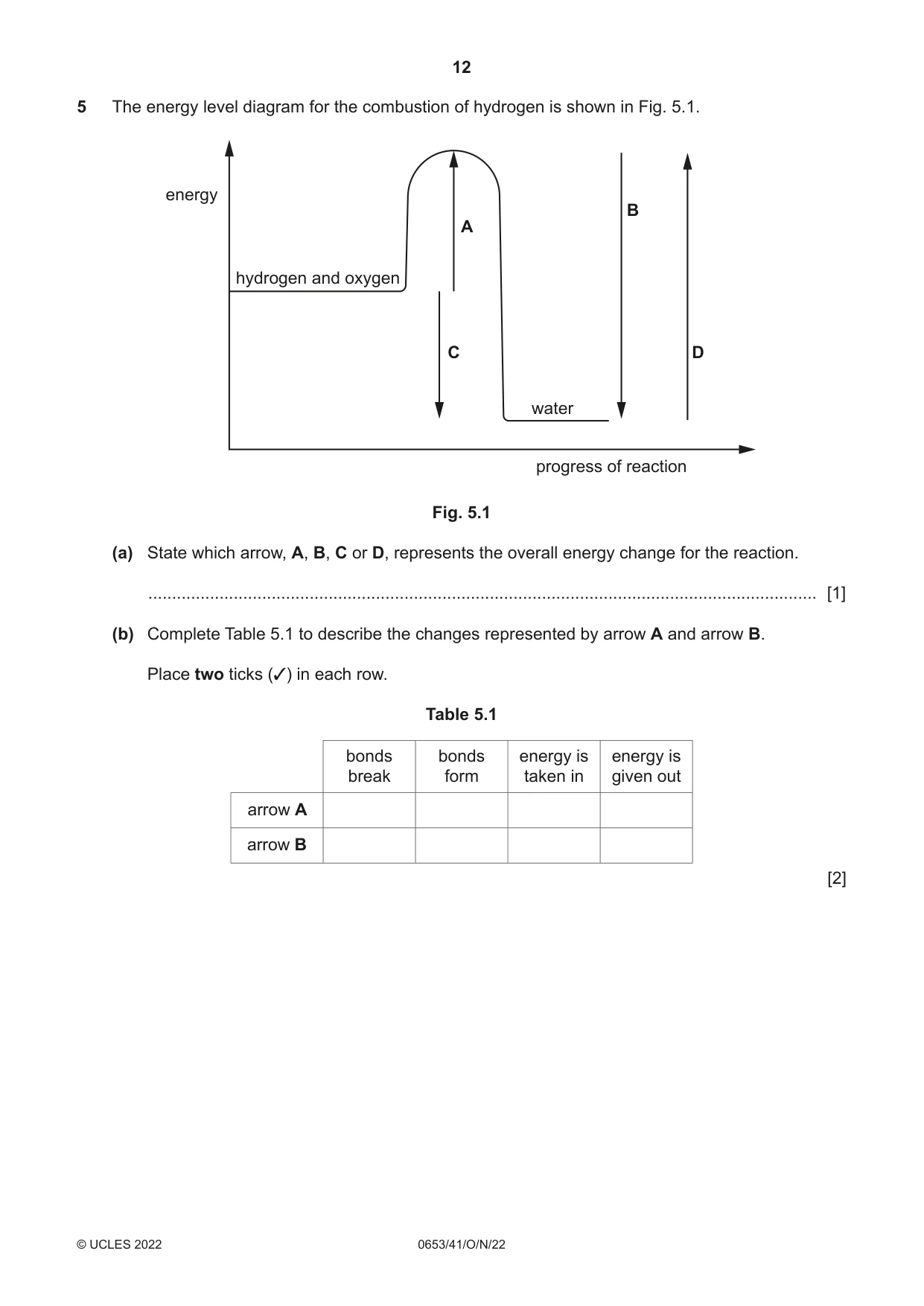
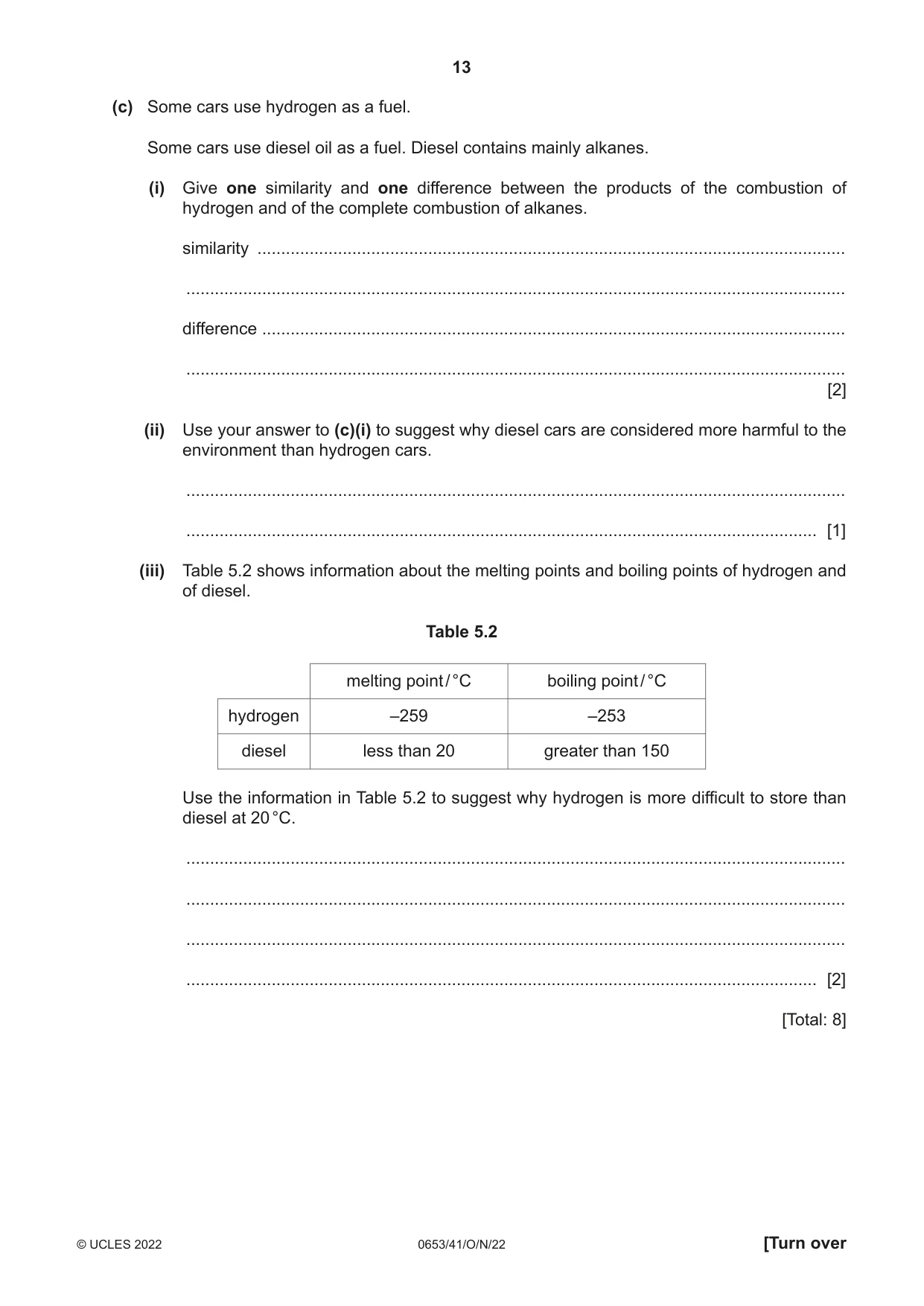
5 The energy level diagram for the combustion of hydrogen is shown in Fig. 5.1. energy B A hydrogen and oxygen C D water progress of reaction Fig. 5.1 (a) State which arrow, A, B, C or D, represents the overall energy change for the reaction. ............................................................................................................................................. [1] (b) Complete Table 5.1 to describe the changes represented by arrow A and arrow B. Place two ticks (3) in each row. Table 5.1 bonds bonds energy is energy is break form taken in given out arrow A arrow B [2] (c) Some cars use hydrogen as a fuel. Some cars use diesel oil as a fuel. Diesel contains mainly alkanes. (i) Give one similarity and one difference between the products of the combustion of hydrogen and of the complete combustion of alkanes. similarity ............................................................................................................................ ........................................................................................................................................... difference ........................................................................................................................... ........................................................................................................................................... [2] (ii) Use your answer to (c)(i) to suggest why diesel cars are considered more harmful to the environment than hydrogen cars. ........................................................................................................................................... ..................................................................................................................................... [1] (iii) Table 5.2 shows information about the melting points and boiling points of hydrogen and of diesel. Table 5.2 melting point / °C boiling point / °C hydrogen –259 –253 diesel less than 20 greater than 150 Use the information in Table 5.2 to suggest why hydrogen is more difficult to store than diesel at 20 °C. ........................................................................................................................................... ........................................................................................................................................... ........................................................................................................................................... ..................................................................................................................................... [2] [Total: 8]
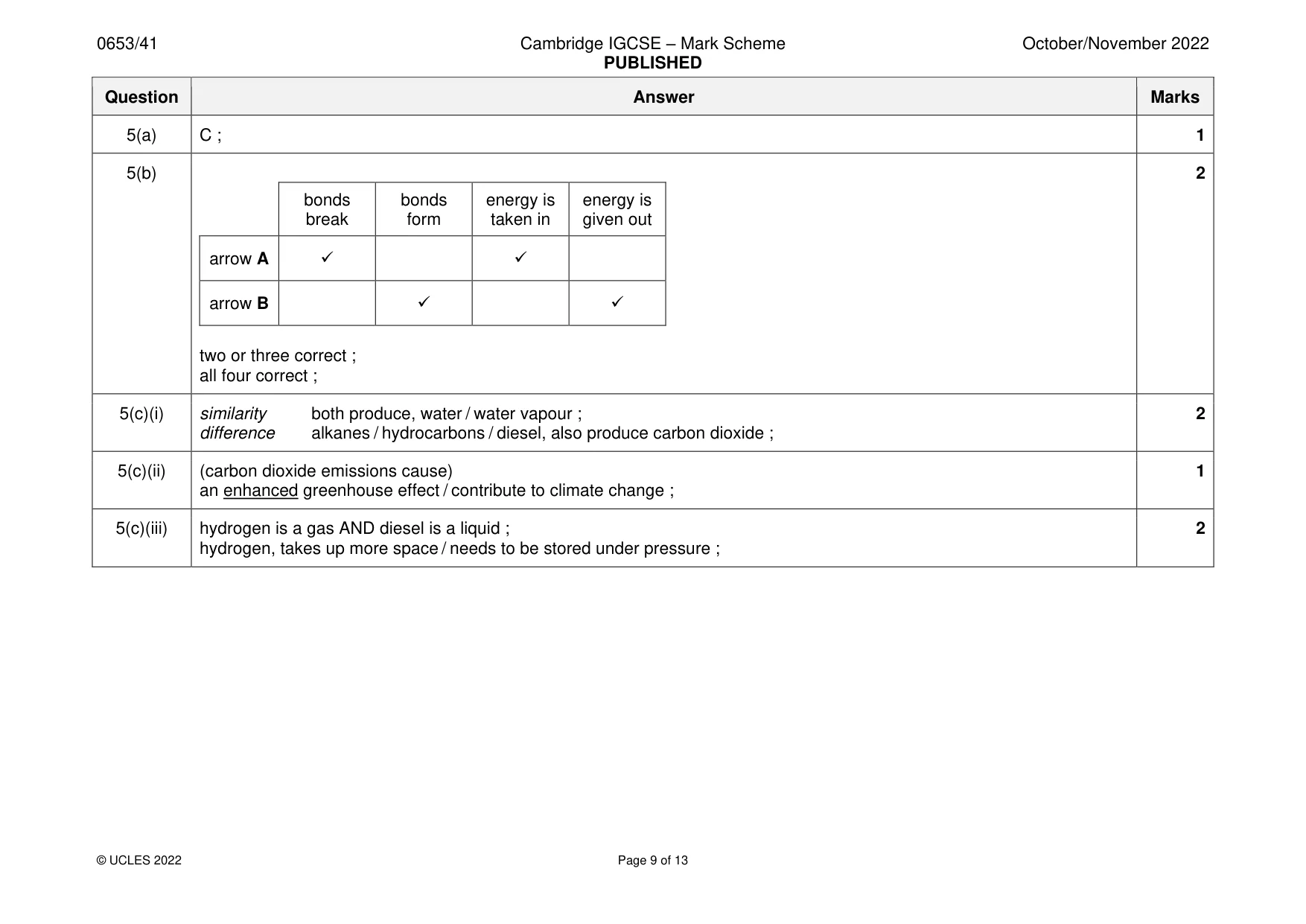
Mark scheme: 5(a) C ; 1 5(b) 2 bonds bonds energy is energy is break form taken in given out arrow A ✓ ✓ arrow B ✓ ✓ two or three correct ; all four correct ; 5(c)(i) similarity both produce, water / water vapour ; 2 difference alkanes / hydrocarbons / diesel, also produce carbon dioxide ; 5(c)(ii) (carbon dioxide emissions cause) 1 an enhanced greenhouse effect / contribute to climate change ; 5(c)(iii) hydrogen is a gas AND diesel is a liquid ; 2 hydrogen, takes up more space / needs to be stored under pressure ;
Question 6
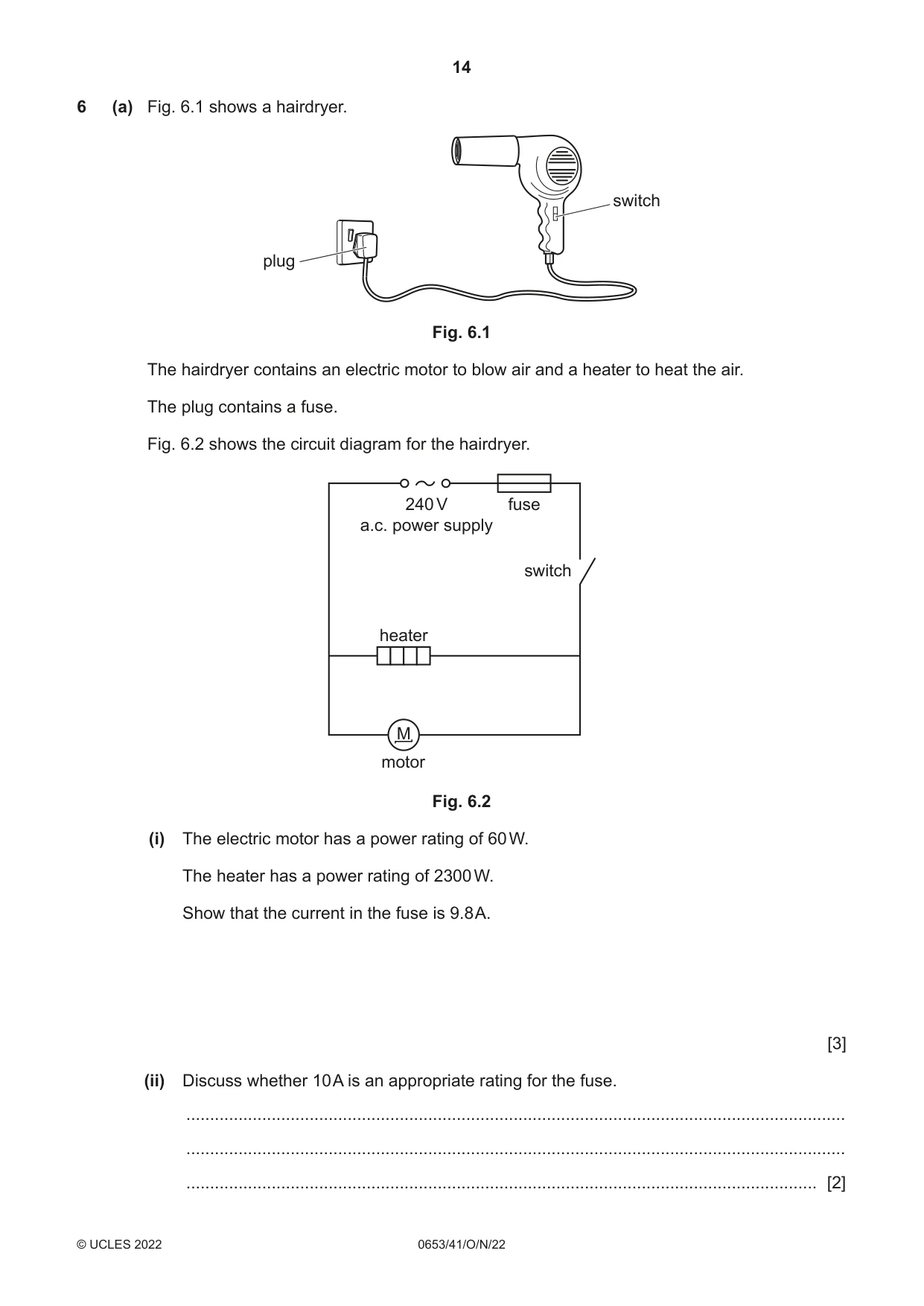
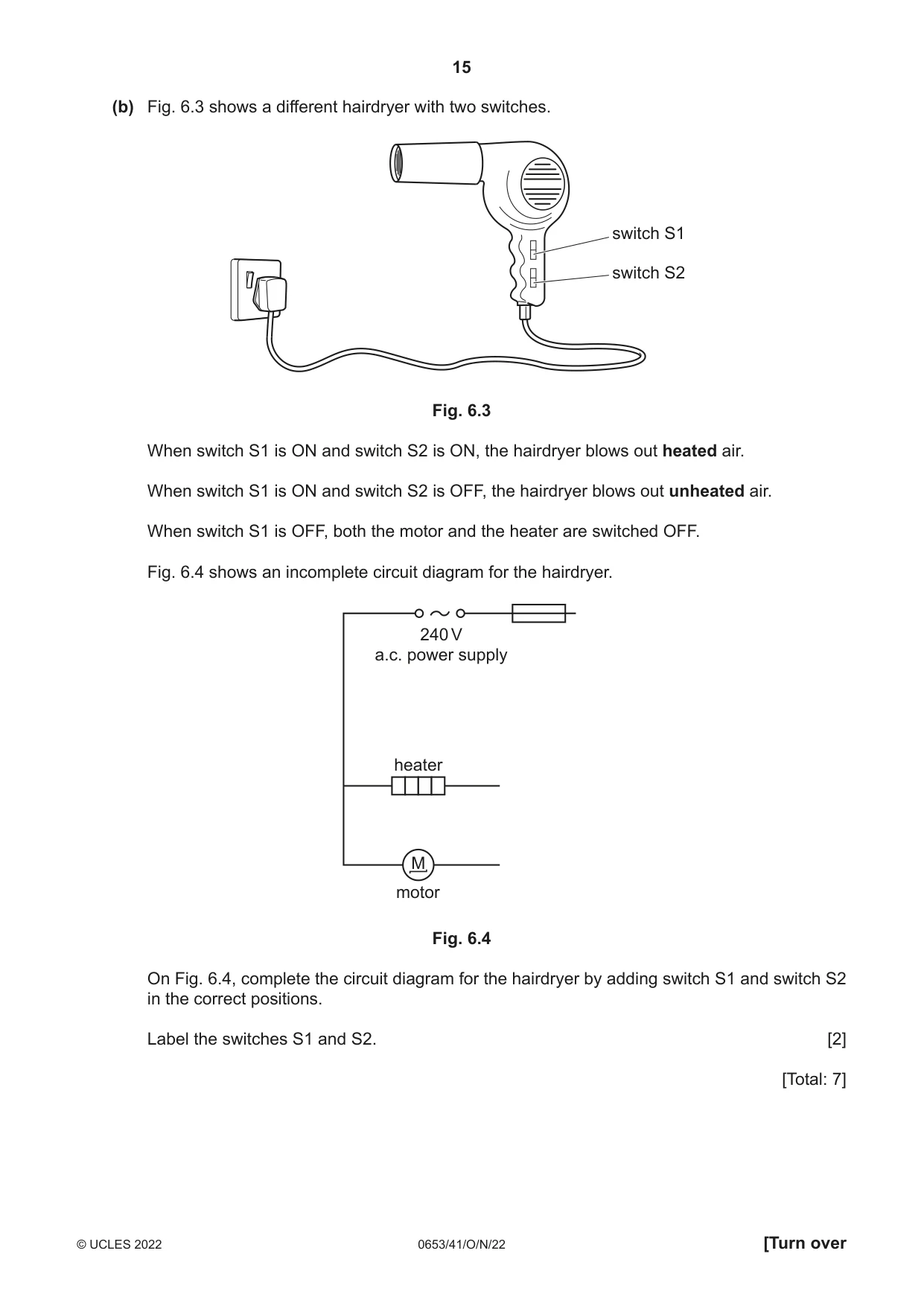
6 (a) Fig. 6.1 shows a hairdryer. switch plug Fig. 6.1 The hairdryer contains an electric motor to blow air and a heater to heat the air. The plug contains a fuse. Fig. 6.2 shows the circuit diagram for the hairdryer. 240 V fuse a.c. power supply switch heater M motor Fig. 6.2 (i) The electric motor has a power rating of 60 W. The heater has a power rating of 2300 W. Show that the current in the fuse is 9.8 A. [3] (ii) Discuss whether 10 A is an appropriate rating for the fuse. ........................................................................................................................................... ........................................................................................................................................... ..................................................................................................................................... [2] (b) Fig. 6.3 shows a different hairdryer with two switches. switch S1 switch S2 Fig. 6.3 When switch S1 is ON and switch S2 is ON, the hairdryer blows out heated air. When switch S1 is ON and switch S2 is OFF, the hairdryer blows out unheated air. When switch S1 is OFF, both the motor and the heater are switched OFF. Fig. 6.4 shows an incomplete circuit diagram for the hairdryer. 240 V a.c. power supply heater M motor Fig. 6.4 On Fig. 6.4, complete the circuit diagram for the hairdryer by adding switch S1 and switch S2 in the correct positions. Label the switches S1 and S2. [2] [Total: 7]
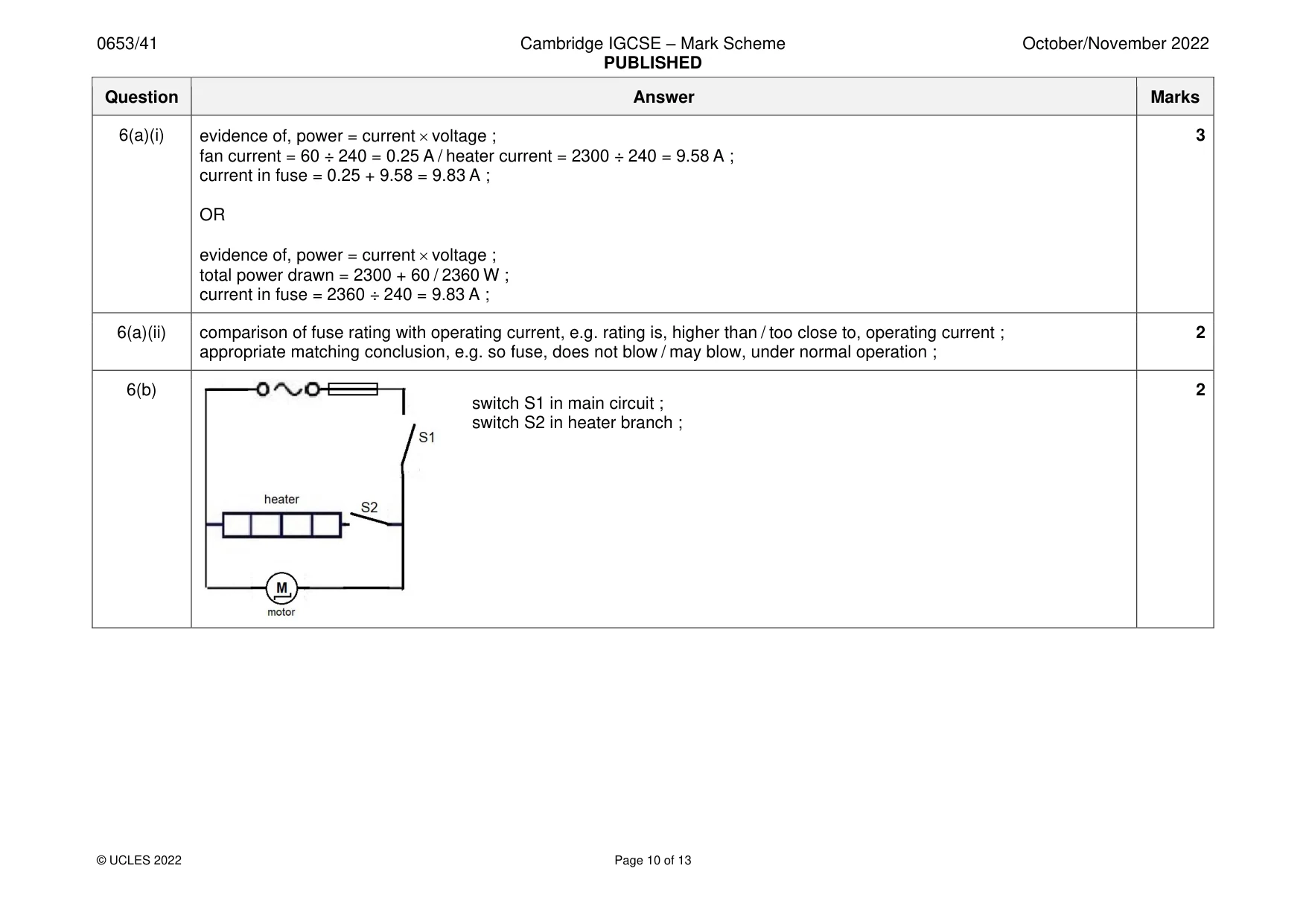
Mark scheme: 6(a)(i) evidence of, power = current voltage ; 3 fan current = 60 ÷ 240 = 0.25 A / heater current = 2300 ÷ 240 = 9.58 A ; current in fuse = 0.25 + 9.58 = 9.83 A ; OR evidence of, power = current voltage ; total power drawn = 2300 + 60 / 2360 W ; current in fuse = 2360 ÷ 240 = 9.83 A ; 6(a)(ii) comparison of fuse rating with operating current, e.g. rating is, higher than / too close to, operating current ; 2 appropriate matching conclusion, e.g. so fuse, does not blow / may blow, under normal operation ; 6(b) 2 switch S1 in main circuit ; switch S2 in heater branch ;
Q7 · A diagram showing a fetus developing inside the female reproductive system
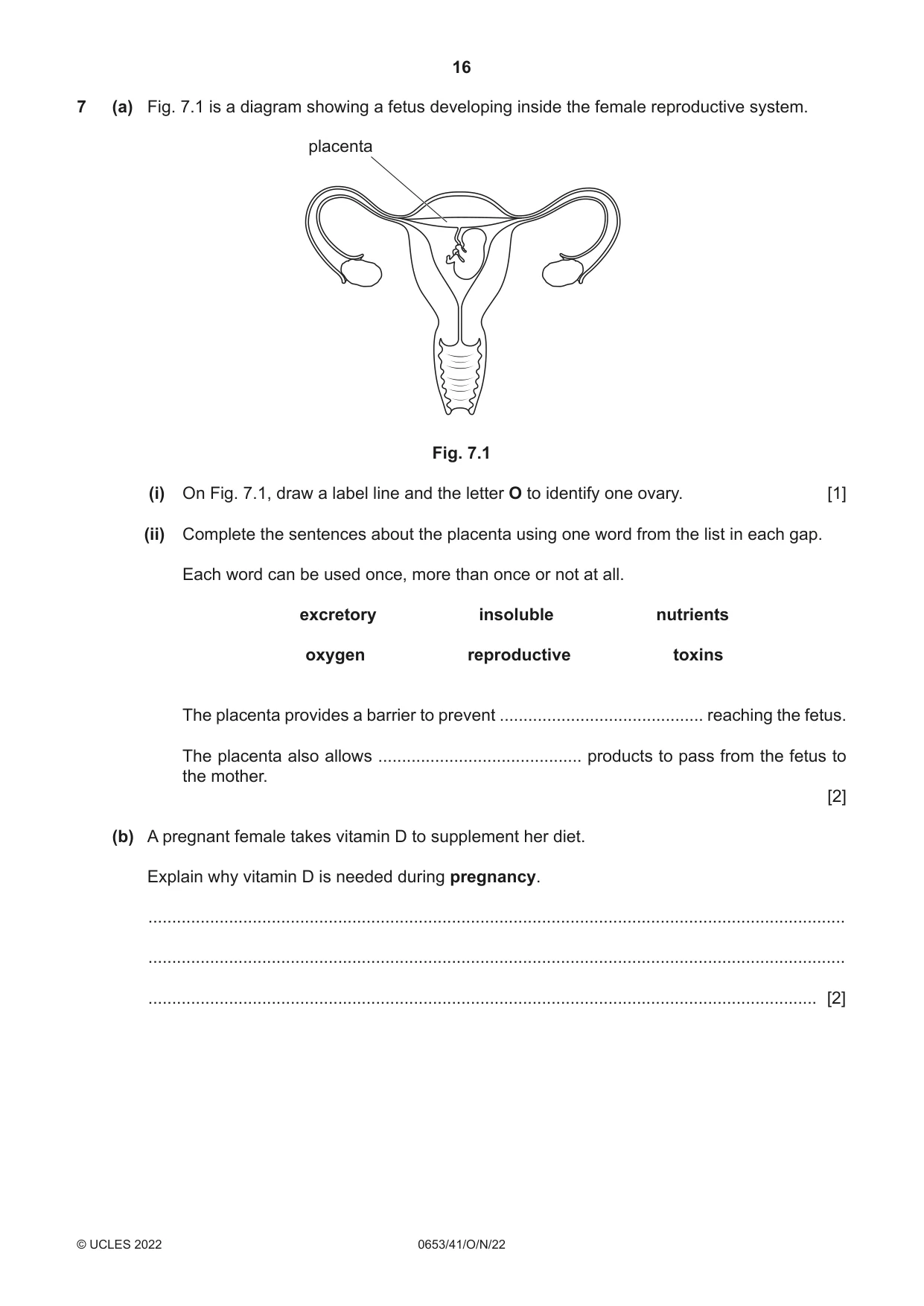
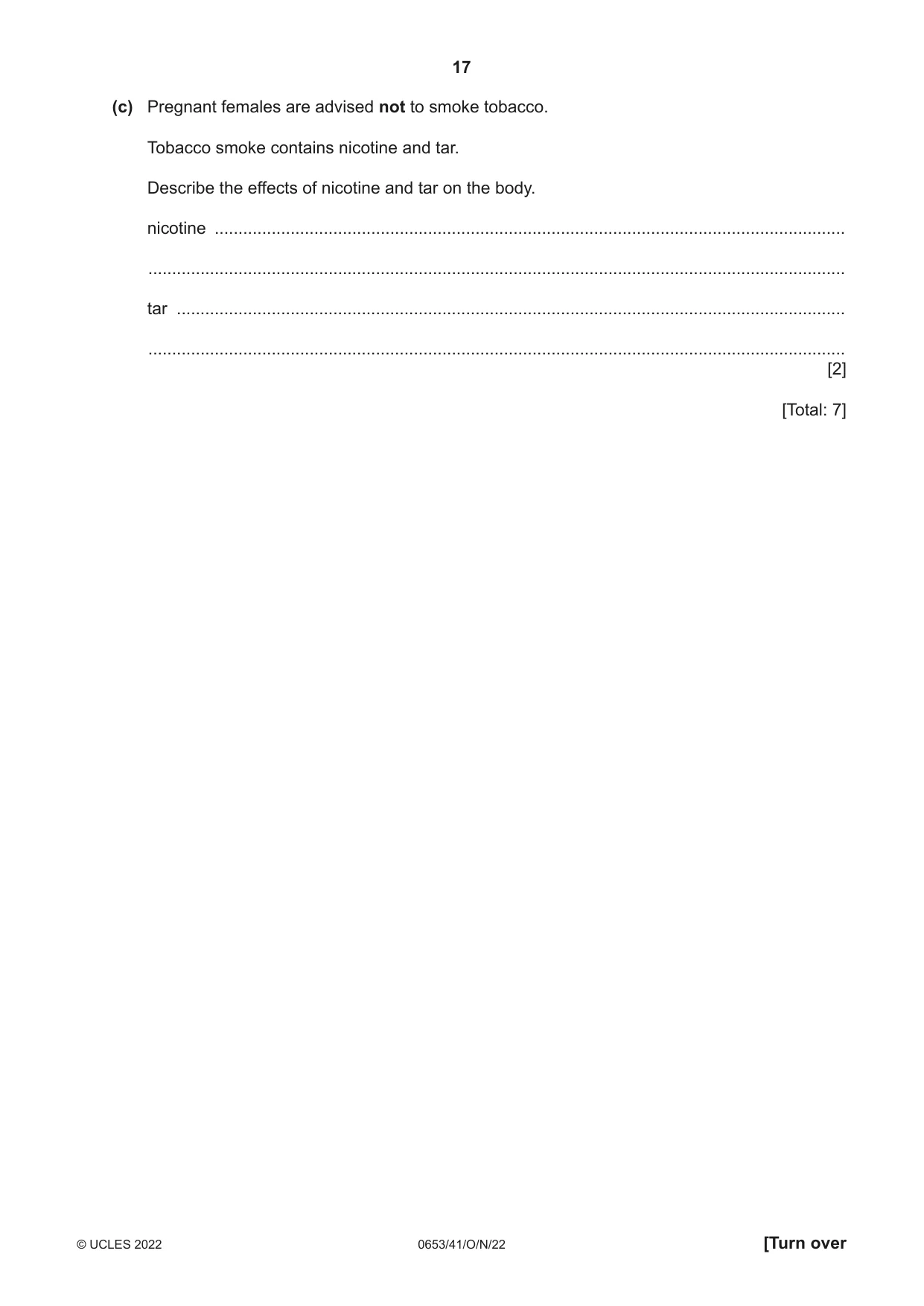
7 (a) Fig. 7.1 is a diagram showing a fetus developing inside the female reproductive system. placenta Fig. 7.1 (i) On Fig. 7.1, draw a label line and the letter O to identify one ovary. [1] (ii) Complete the sentences about the placenta using one word from the list in each gap. Each word can be used once, more than once or not at all. excretory insoluble nutrients oxygen reproductive toxins The placenta provides a barrier to prevent ........................................... reaching the fetus. The placenta also allows ........................................... products to pass from the fetus to the mother. [2] (b) A pregnant female takes vitamin D to supplement her diet. Explain why vitamin D is needed during pregnancy. ................................................................................................................................................... ................................................................................................................................................... ............................................................................................................................................. [2] (c) Pregnant females are advised not to smoke tobacco. Tobacco smoke contains nicotine and tar. Describe the effects of nicotine and tar on the body. nicotine ..................................................................................................................................... ................................................................................................................................................... tar ............................................................................................................................................. ................................................................................................................................................... [2] [Total: 7]
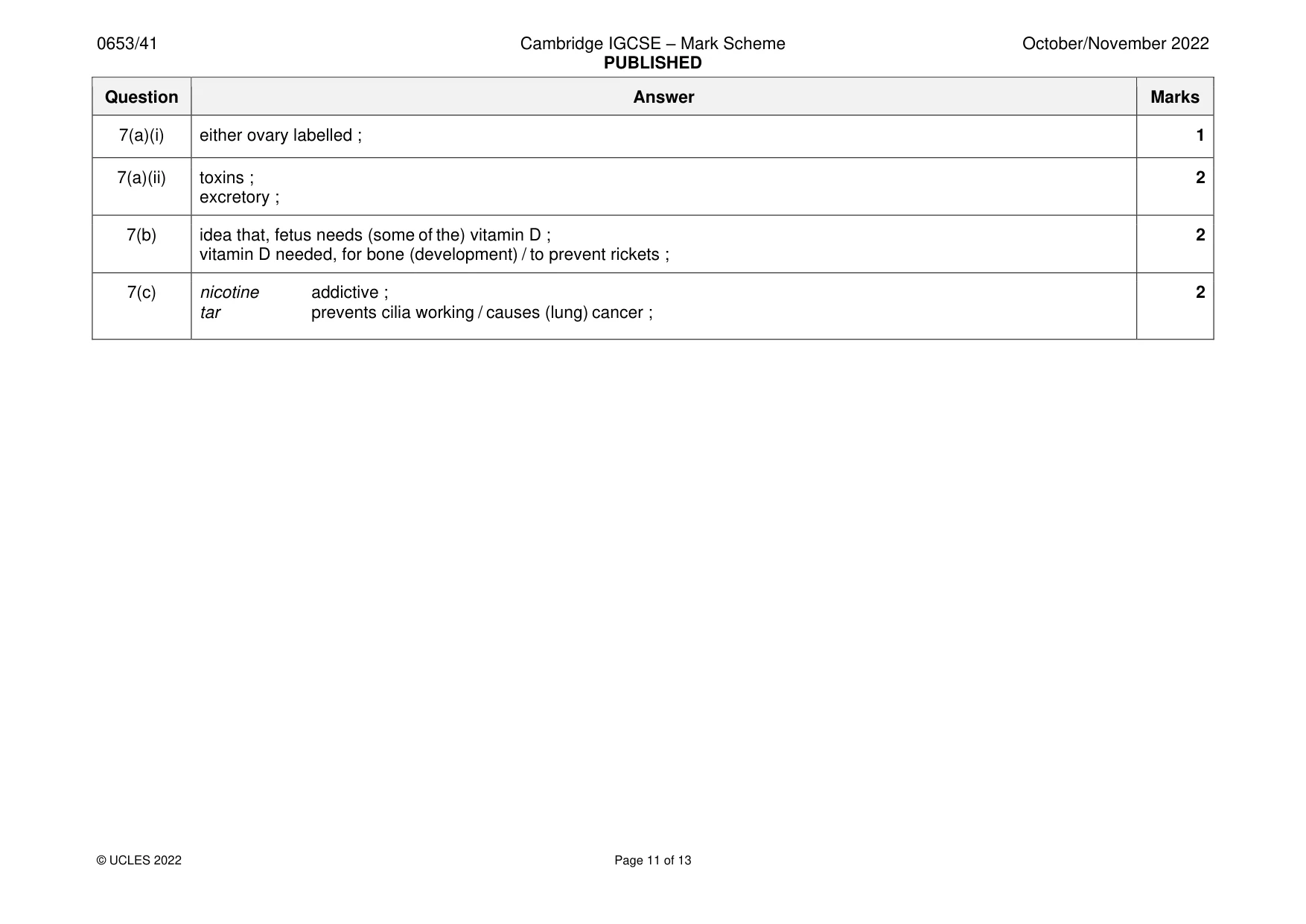
Mark scheme: 7(a)(i) either ovary labelled ; 1 7(a)(ii) toxins ; 2 excretory ; 7(b) idea that, fetus needs (some of the) vitamin D ; 2 vitamin D needed, for bone (development) / to prevent rickets ; 7(c) nicotine addictive ; 2 tar prevents cilia working / causes (lung) cancer ;
Q8 · Period 3 of the Periodic Table is shown in Fig
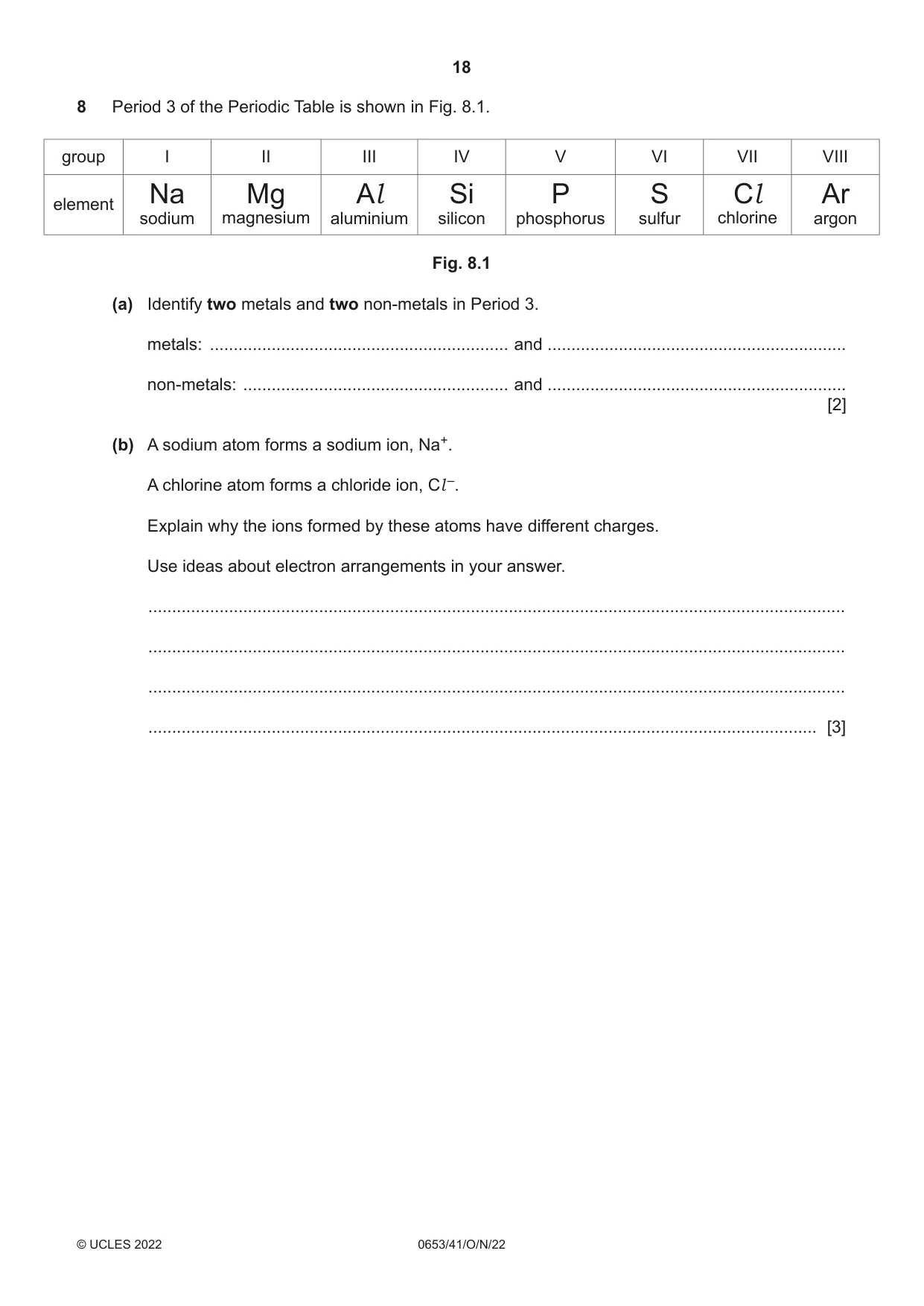
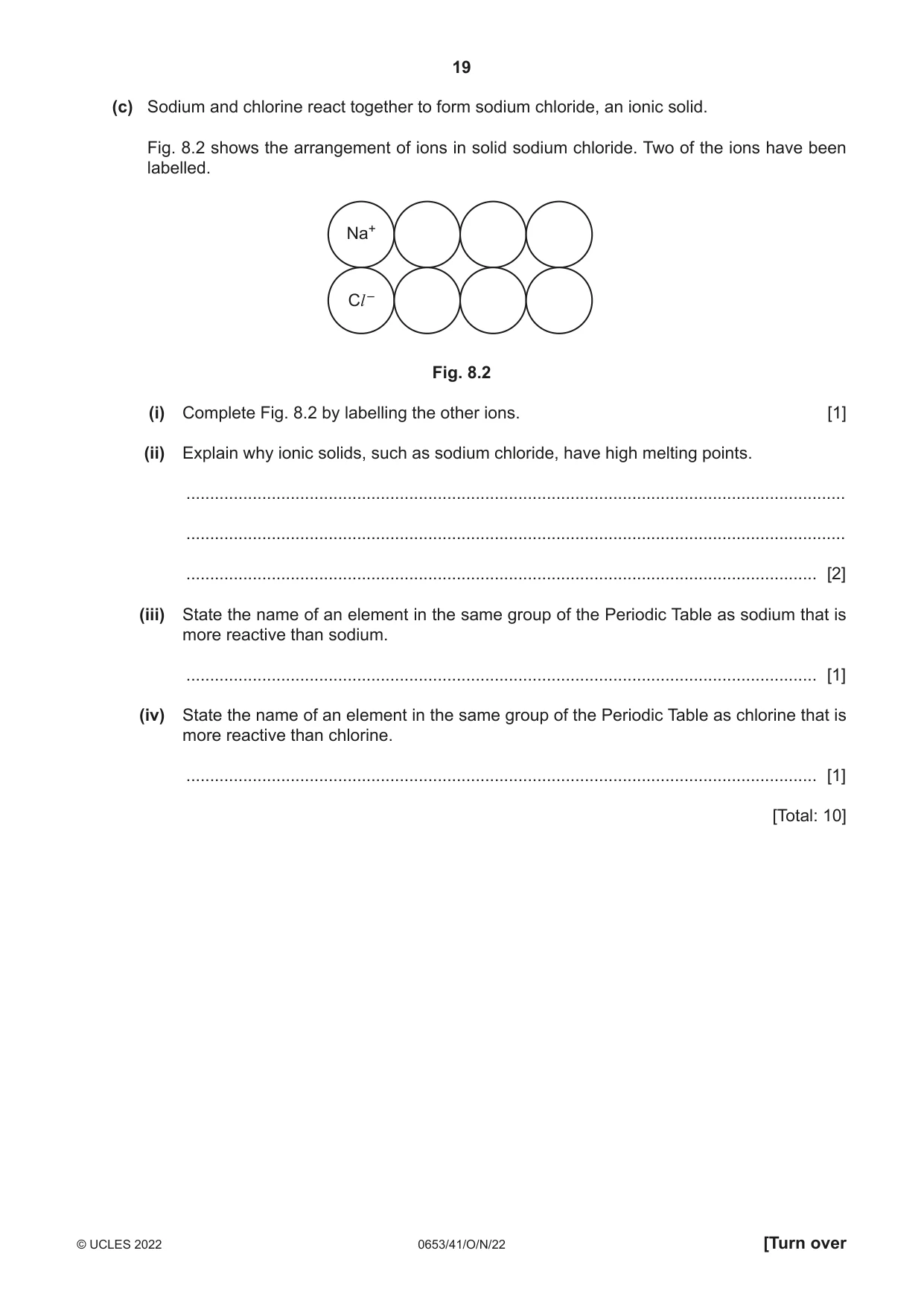
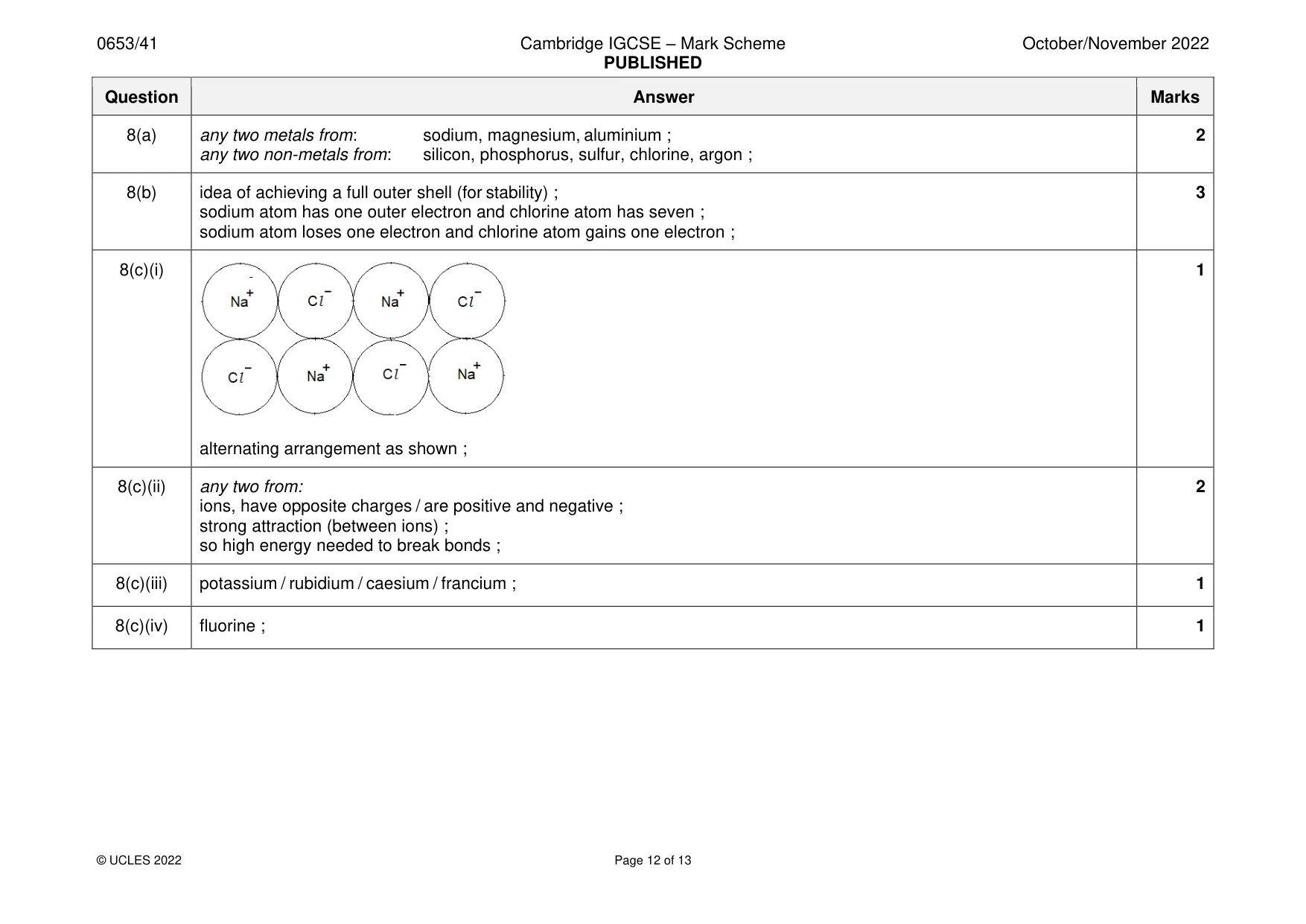
8 Period 3 of the Periodic Table is shown in Fig. 8.1. group I II III IV V VI VII VIII element Na Mg Al Si P S Cl Ar sodium magnesium aluminium silicon phosphorus sulfur chlorine argon Fig. 8.1 (a) Identify two metals and two non-metals in Period 3. metals: ............................................................... and ............................................................... non-metals: ........................................................ and ............................................................... [2] (b) A sodium atom forms a sodium ion, Na+. A chlorine atom forms a chloride ion, Cl –. Explain why the ions formed by these atoms have different charges. Use ideas about electron arrangements in your answer. ................................................................................................................................................... ................................................................................................................................................... ................................................................................................................................................... ............................................................................................................................................. [3] (c) Sodium and chlorine react together to form sodium chloride, an ionic solid. Fig. 8.2 shows the arrangement of ions in solid sodium chloride. Two of the ions have been labelled. Na+ Cl – Fig. 8.2 (i) Complete Fig. 8.2 by labelling the other ions. [1] (ii) Explain why ionic solids, such as sodium chloride, have high melting points. ........................................................................................................................................... ........................................................................................................................................... ..................................................................................................................................... [2] (iii) State the name of an element in the same group of the Periodic Table as sodium that is more reactive than sodium. ..................................................................................................................................... [1] (iv) State the name of an element in the same group of the Periodic Table as chlorine that is more reactive than chlorine. ..................................................................................................................................... [1] [Total: 10]
Mark scheme: 8(a) any two metals from: sodium, magnesium, aluminium ; 2 any two non-metals from: silicon, phosphorus, sulfur, chlorine, argon ; 8(b) idea of achieving a full outer shell (for stability) ; 3 sodium atom has one outer electron and chlorine atom has seven ; sodium atom loses one electron and chlorine atom gains one electron ; 8(c)(i) 1 alternating arrangement as shown ; 8(c)(ii) any two from: 2 ions, have opposite charges / are positive and negative ; strong attraction (between ions) ; so high energy needed to break bonds ; 8(c)(iii) potassium / rubidium / caesium / francium ; 1 8(c)(iv) fluorine ; 1
Q9 · A radar system in an airport uses microwaves to find and track an airplane in the sky
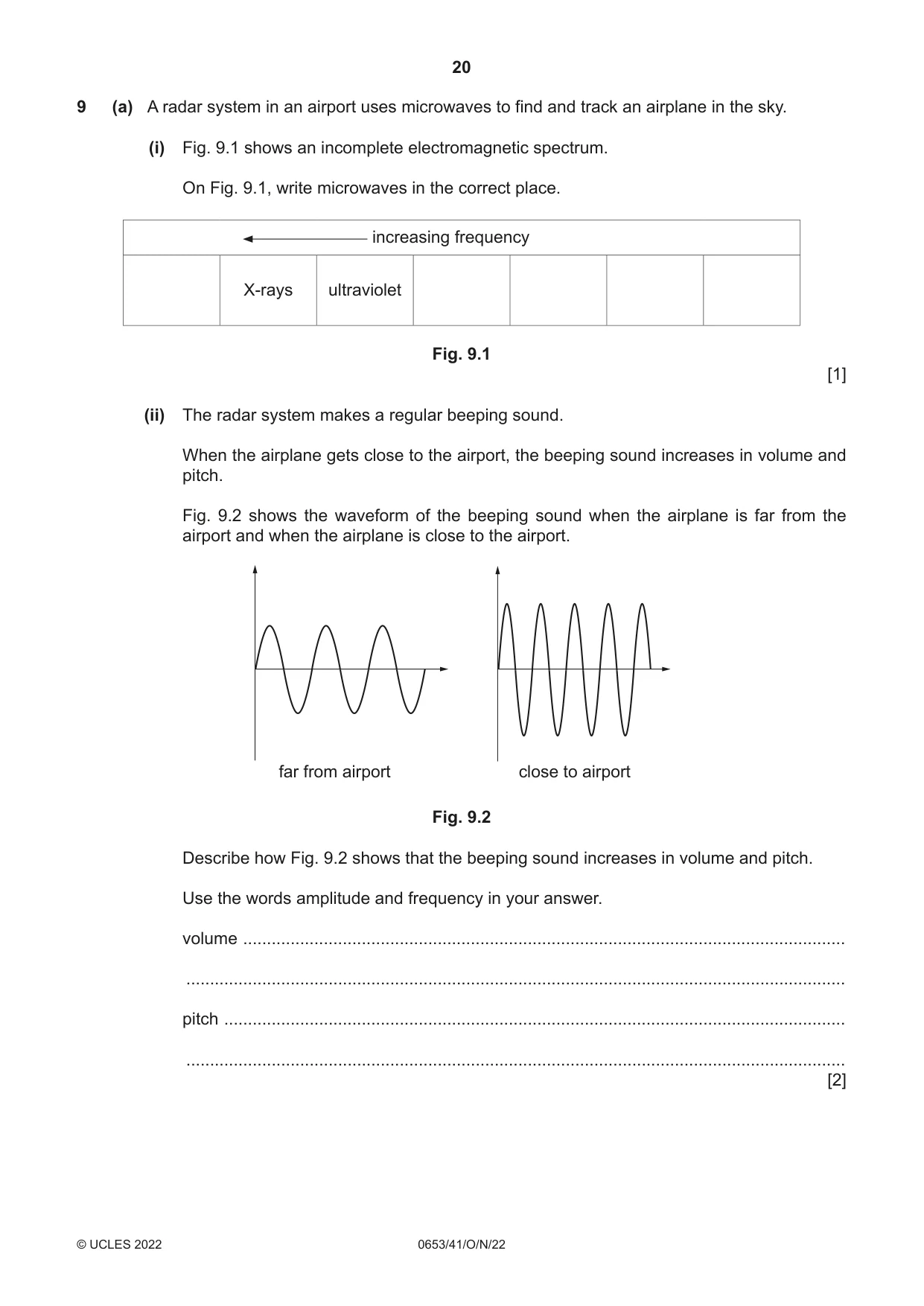
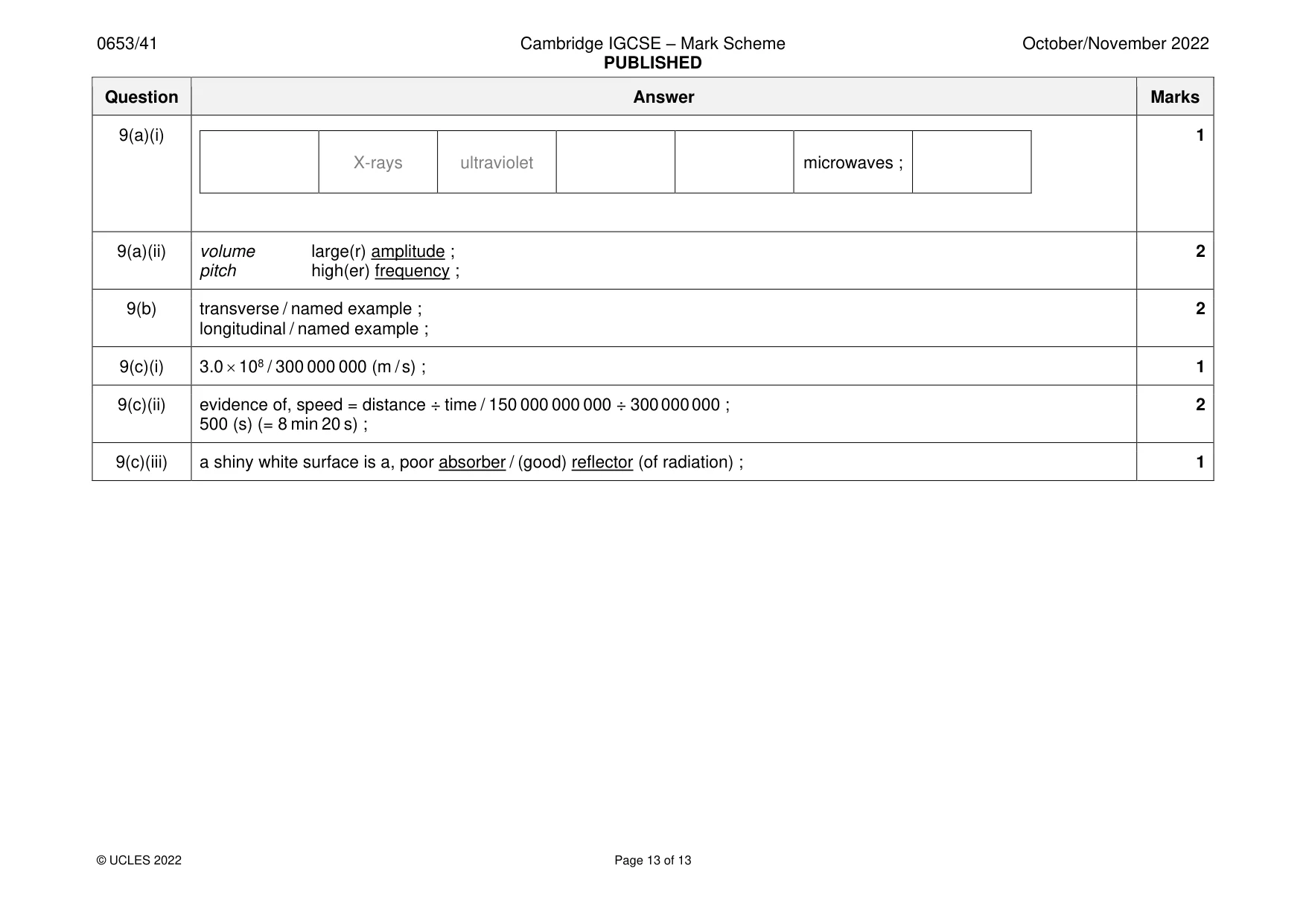
9 (a) A radar system in an airport uses microwaves to find and track an airplane in the sky. (i) Fig. 9.1 shows an incomplete electromagnetic spectrum. On Fig. 9.1, write microwaves in the correct place. increasing frequency X-rays ultraviolet Fig. 9.1 [1] (ii) The radar system makes a regular beeping sound. When the airplane gets close to the airport, the beeping sound increases in volume and pitch. Fig. 9.2 shows the waveform of the beeping sound when the airplane is far from the airport and when the airplane is close to the airport. far from airport close to airport Fig. 9.2 Describe how Fig. 9.2 shows that the beeping sound increases in volume and pitch. Use the words amplitude and frequency in your answer. volume ............................................................................................................................... ........................................................................................................................................... pitch ................................................................................................................................... ........................................................................................................................................... [2] (b) Write one word in each gap to complete the sentences about waves. For a ........................................... wave, the direction of vibration is at right angles to the direction of travel of the wave. For a ........................................... wave, the direction of vibration is parallel to the direction of travel of the wave. [2] (c) An airplane is flying in bright sunlight. It is warmed by electromagnetic radiation from the Sun. (i) State the speed at which electromagnetic radiation travels from the Sun. speed = ................................................. m / s [1] (ii) The distance of the airplane from the Sun is 1.5 × 10¹¹ m. Use your answer to (c)(i) to calculate the time taken for the electromagnetic radiation to reach the airplane from the Sun. time = ...................................................... s [2] (iii) Suggest how painting the airplane in shiny white paint helps to keep the airplane cool. ........................................................................................................................................... ..................................................................................................................................... [1] [Total: 9]
Mark scheme: 9(a)(i) 1 X-rays ultraviolet microwaves ; 9(a)(ii) volume large(r) amplitude ; 2 pitch high(er) frequency ; 9(b) transverse / named example ; 2 longitudinal / named example ; 9(c)(i) 3.0 108 / 300 000 000 (m / s) ; 1 9(c)(ii) evidence of, speed = distance ÷ time / 150 000 000 000 ÷ 300 000 000 ; 2 500 (s) (= 8 min 20 s) ; 9(c)(iii) a shiny white surface is a, poor absorber / (good) reflector (of radiation) ; 1
What was in this paper
The subtopics covered by these 9 questions, and how many questions each got. Open one in a new tab to see every Cambridge question on it.
What you needed in this session
Cambridge’s own grade thresholds for 2022 Oct/Nov, Paper 4 · Variant 1. A higher threshold means an easier paper — the bar moves with how the cohort did.