Cambridge IGCSE Science - Combined 0653 — 2019 Oct/Nov Paper 4 · Variant 3
0653/43/O/N/19 · 9 questions · 80 marks · ≈90 min
The question paper and its mark scheme, free to read here and free to download. This is Cambridge’s own paper, exactly as it was sat.
Question paper20 pages
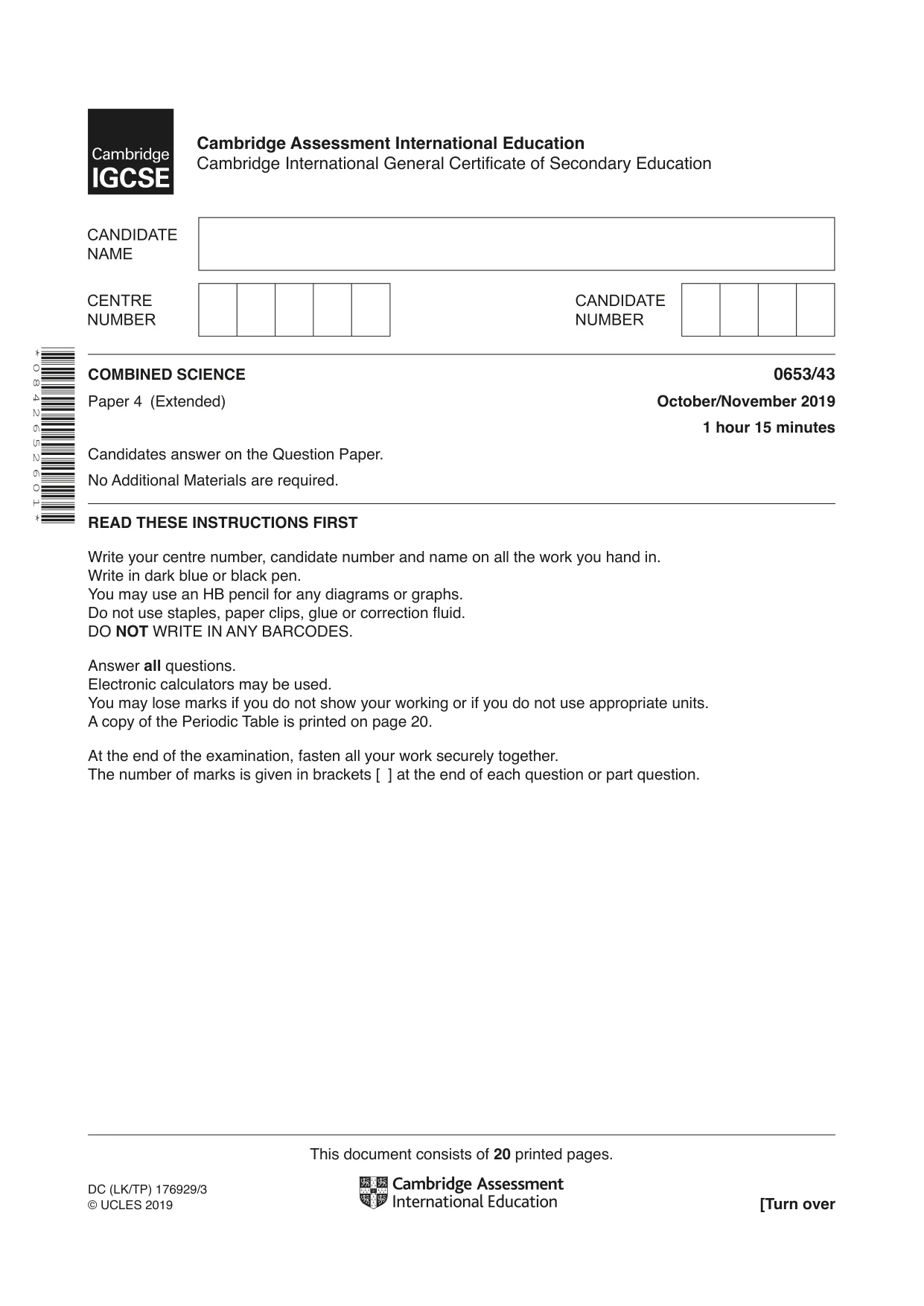

Mark scheme10 pages
Answers below. Sit the paper first if you are practising.
Questions as text
Q1 · A diagram of the carbon cycle
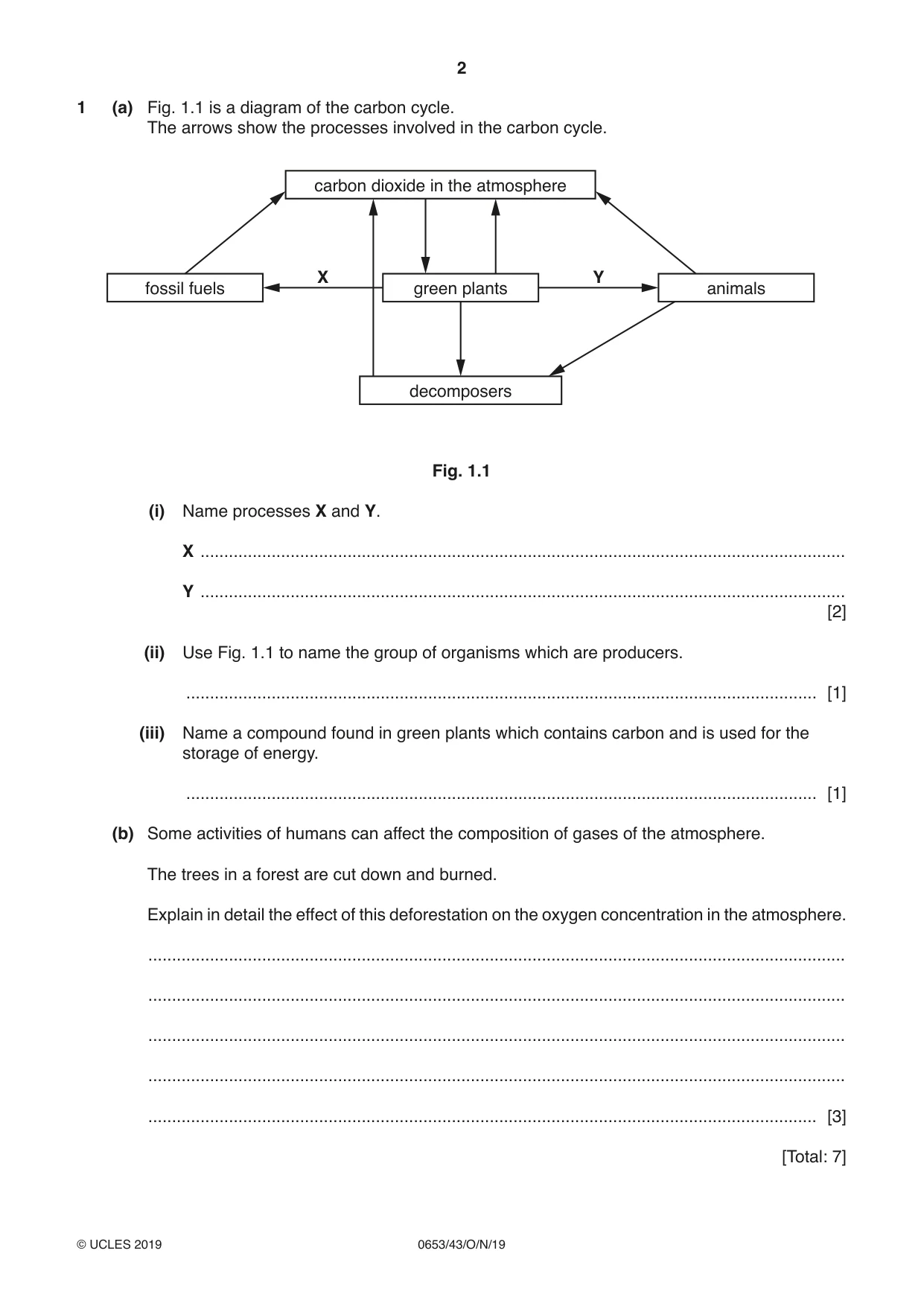
1 (a) Fig. 1.1 is a diagram of the carbon cycle. The arrows show the processes involved in the carbon cycle. carbon dioxide in the atmosphere X Y fossil fuels green plants animals decomposers Fig. 1.1 (i) Name processes X and Y. X ........................................................................................................................................ Y ........................................................................................................................................ [2] (ii) Use Fig. 1.1 to name the group of organisms which are producers. ..................................................................................................................................... [1] (iii) Name a compound found in green plants which contains carbon and is used for the storage of energy. ..................................................................................................................................... [1] (b) Some activities of humans can affect the composition of gases of the atmosphere. The trees in a forest are cut down and burned. Explain in detail the effect of this deforestation on the oxygen concentration in the atmosphere. ................................................................................................................................................... ................................................................................................................................................... ................................................................................................................................................... ................................................................................................................................................... ............................................................................................................................................. [3] [Total: 7]
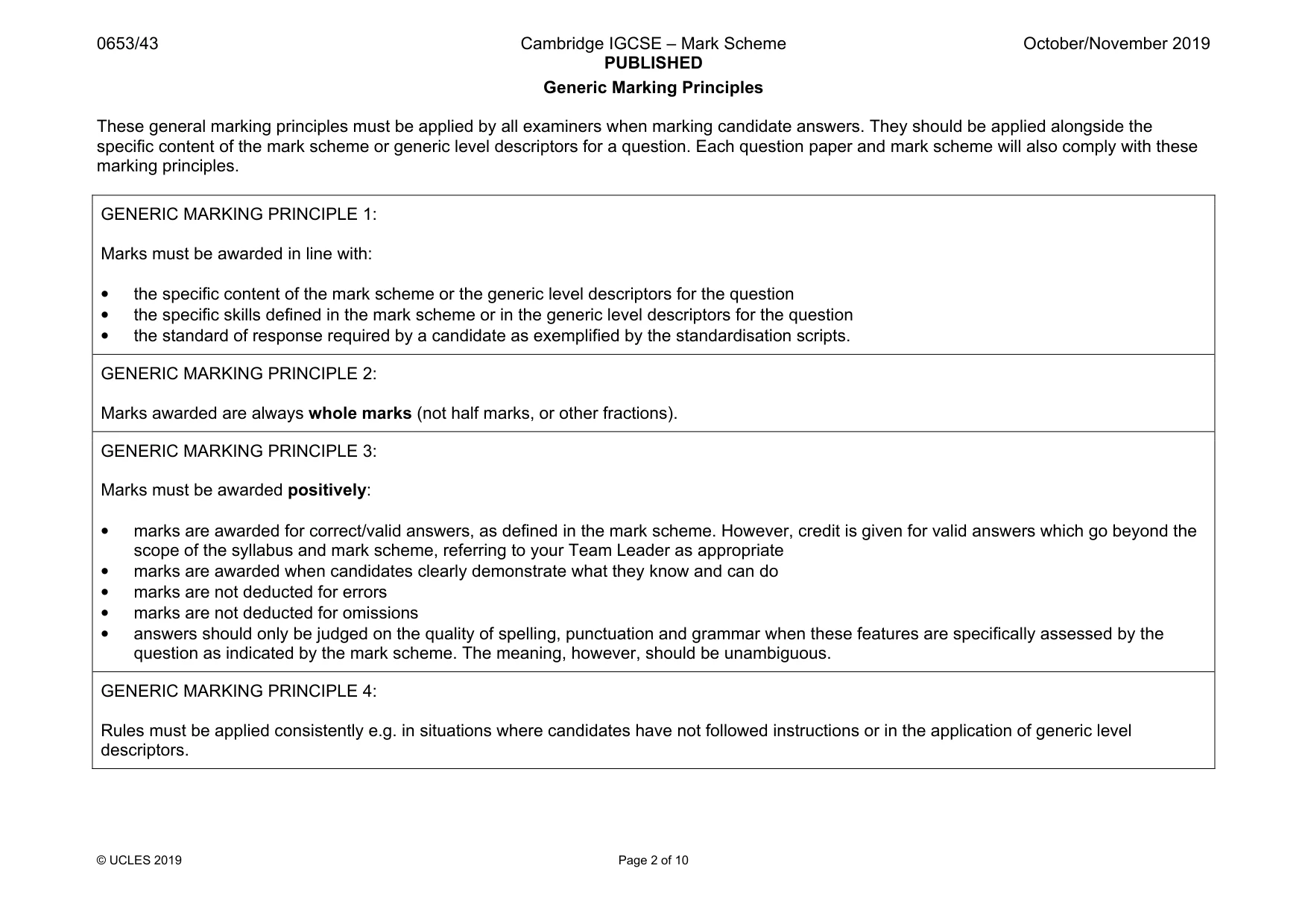
Mark scheme: 1(a)(i) X fossilisation ; Y feeding / eating / ingestion ; 2 1(a)(ii) green plants ; 1 1(b)(iii) starch ; 1 1(b) (oxygen concentration decreases because) O2 used up during combustion ; fewer trees so less photosynthesis ; so less oxygen produced ; 3
Q2 · The formula of methanol is CH3OH
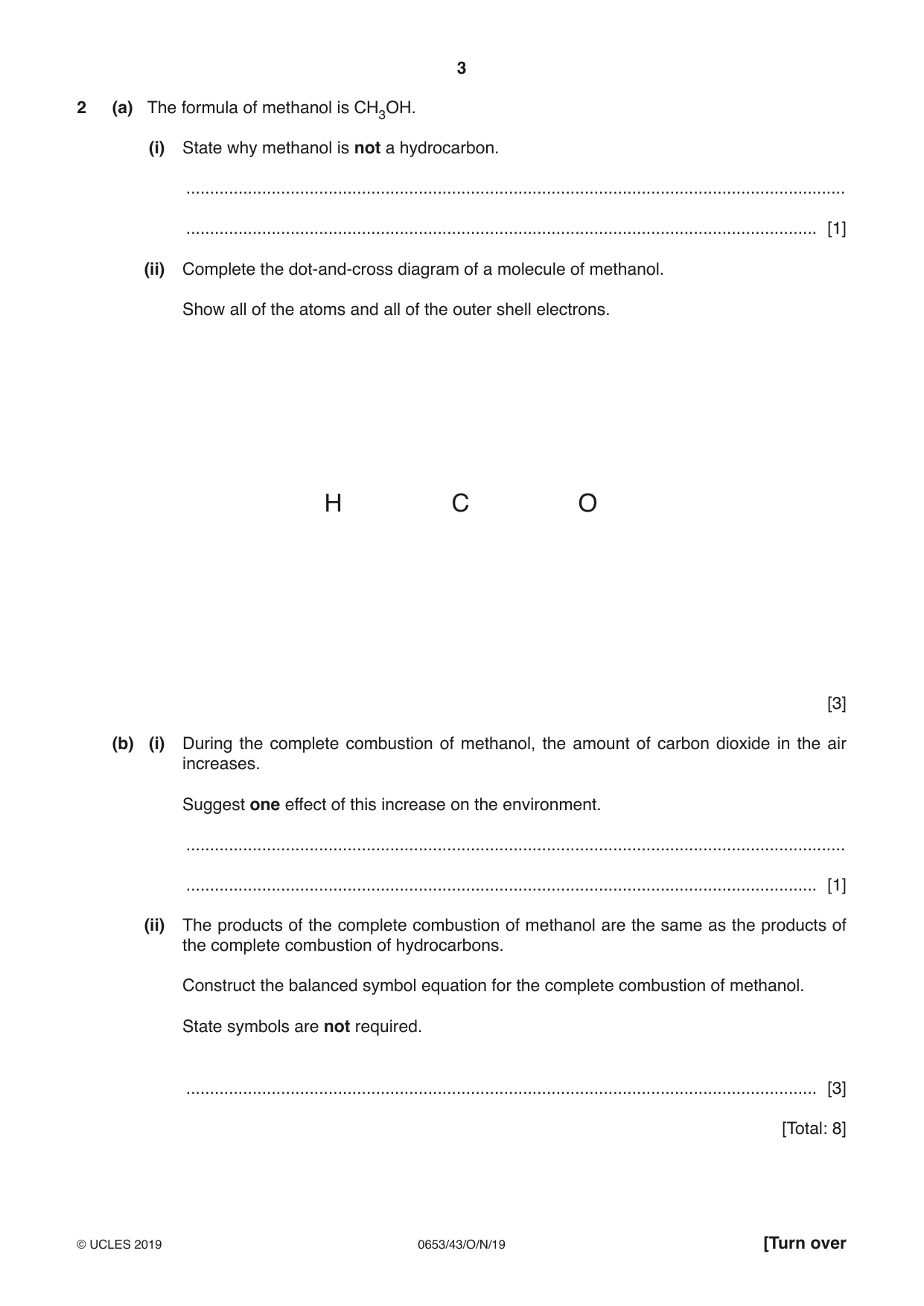
2 (a) The formula of methanol is CH3OH. (i) State why methanol is not a hydrocarbon. ........................................................................................................................................... ..................................................................................................................................... [1] (ii) Complete the dot-and-cross diagram of a molecule of methanol. Show all of the atoms and all of the outer shell electrons. H C O [3] (b) (i) During the complete combustion of methanol, the amount of carbon dioxide in the air increases. Suggest one effect of this increase on the environment. ........................................................................................................................................... ..................................................................................................................................... [1] (ii) The products of the complete combustion of methanol are the same as the products of the complete combustion of hydrocarbons. Construct the balanced symbol equation for the complete combustion of methanol. State symbols are not required. ..................................................................................................................................... [3] [Total: 8]
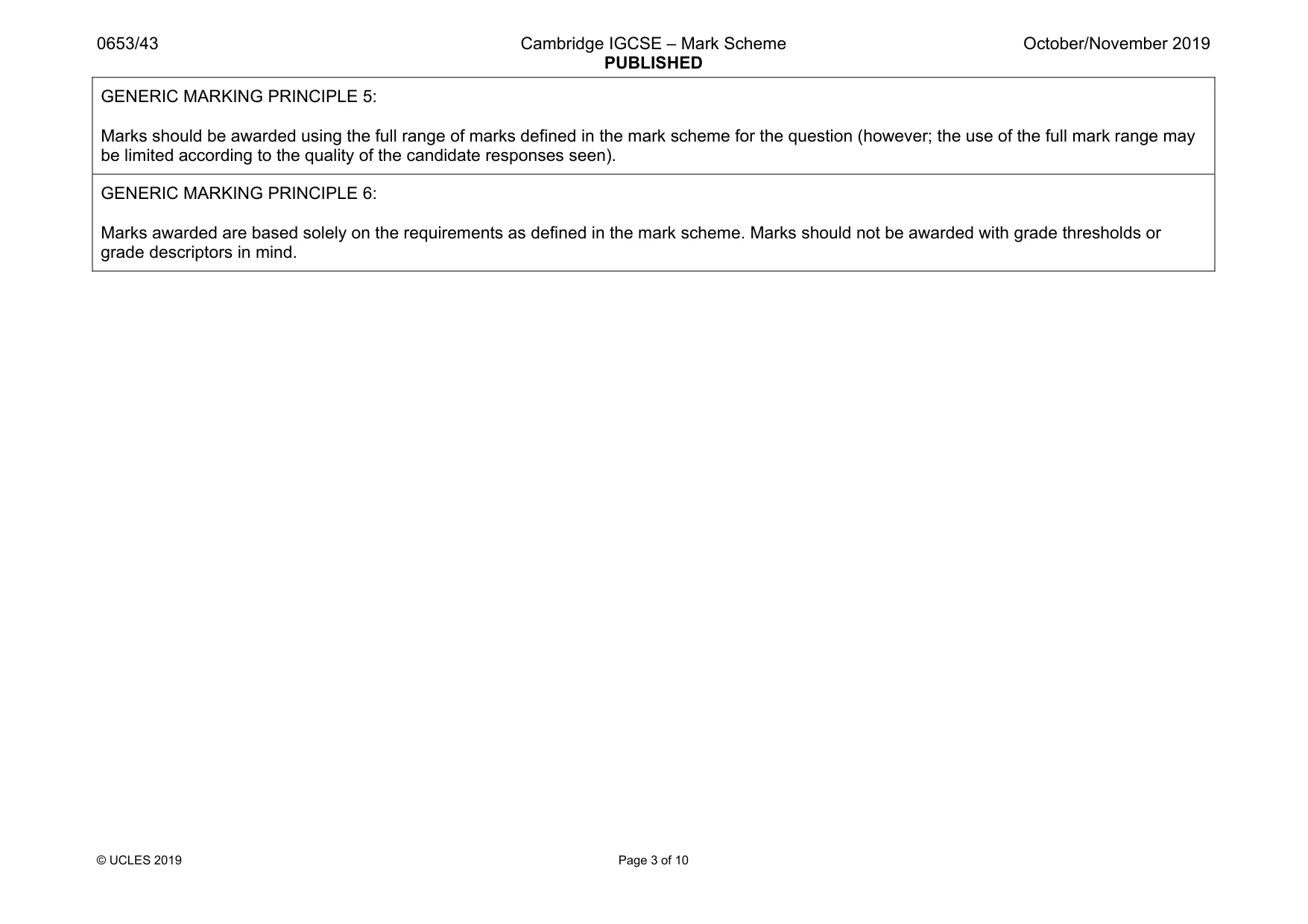
Mark scheme: 2(a)(i) (methanol contains oxygen and) hydrocarbons contain only carbon atoms and hydrogen atoms ; 1 2(a)(ii) all hydrogen atoms correctly located ; correct electron distribution around carbon atom ; correct electron distribution around the oxygen atom ; 3 2(b)(i) enhanced greenhouse effect / global warming / climate change ; 1 2(b)(ii) 2CH3OH + 3O2 → 2CO2 + 4H2O correct formulae on LHS ; correct formulae on RHS ; correctly balanced ; 3
Q3 · Children using a magnifying glass to view a butterfly
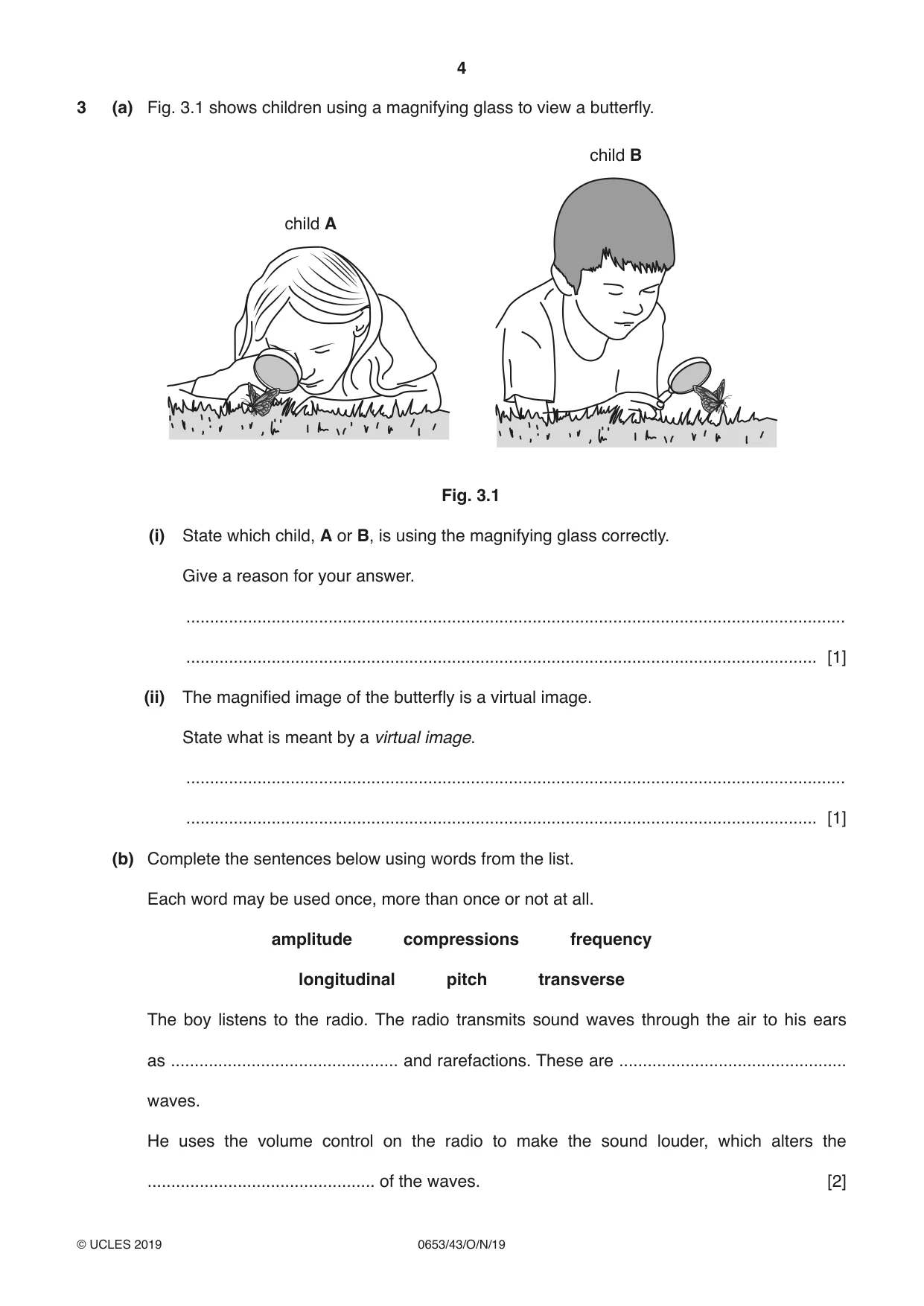
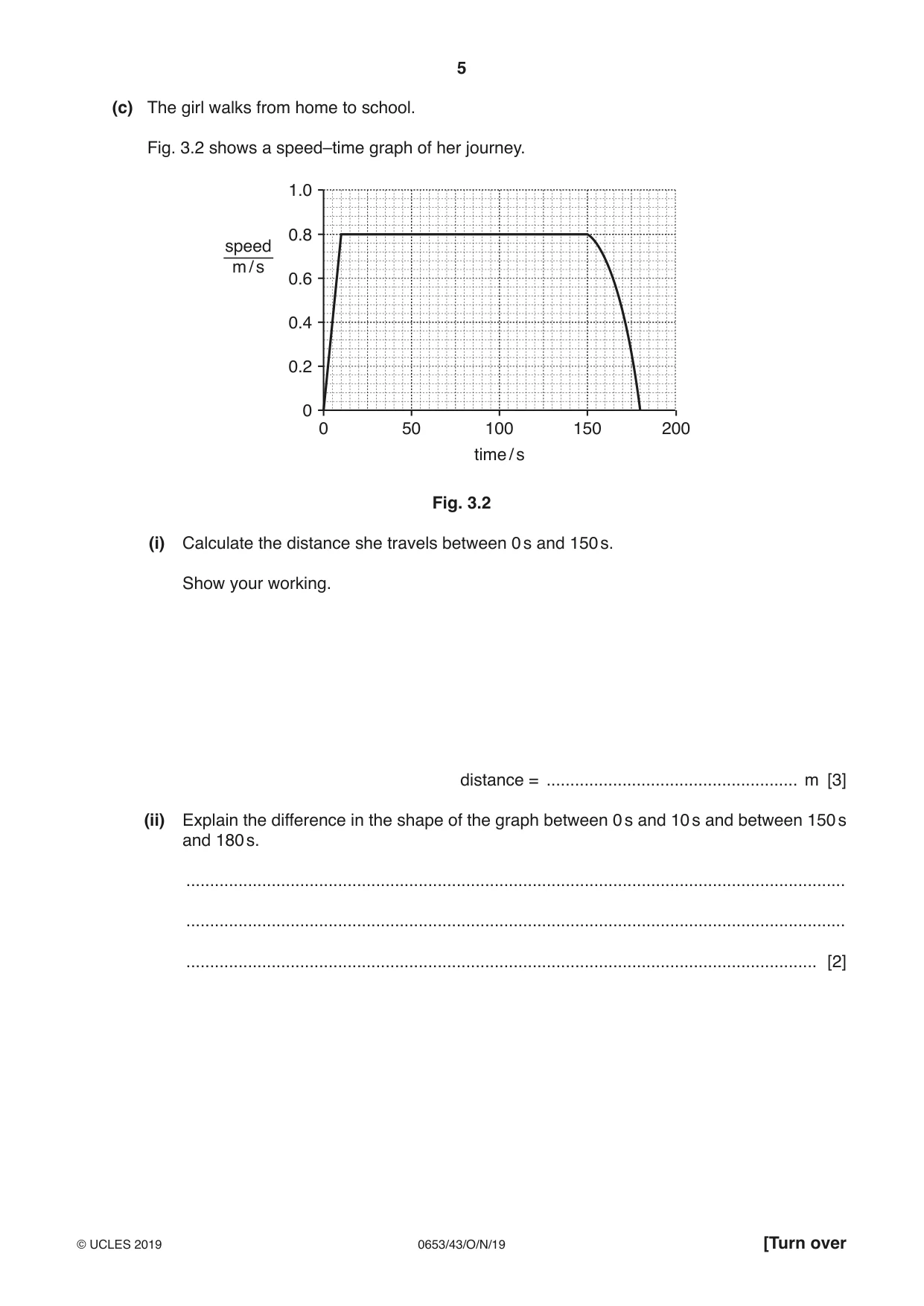
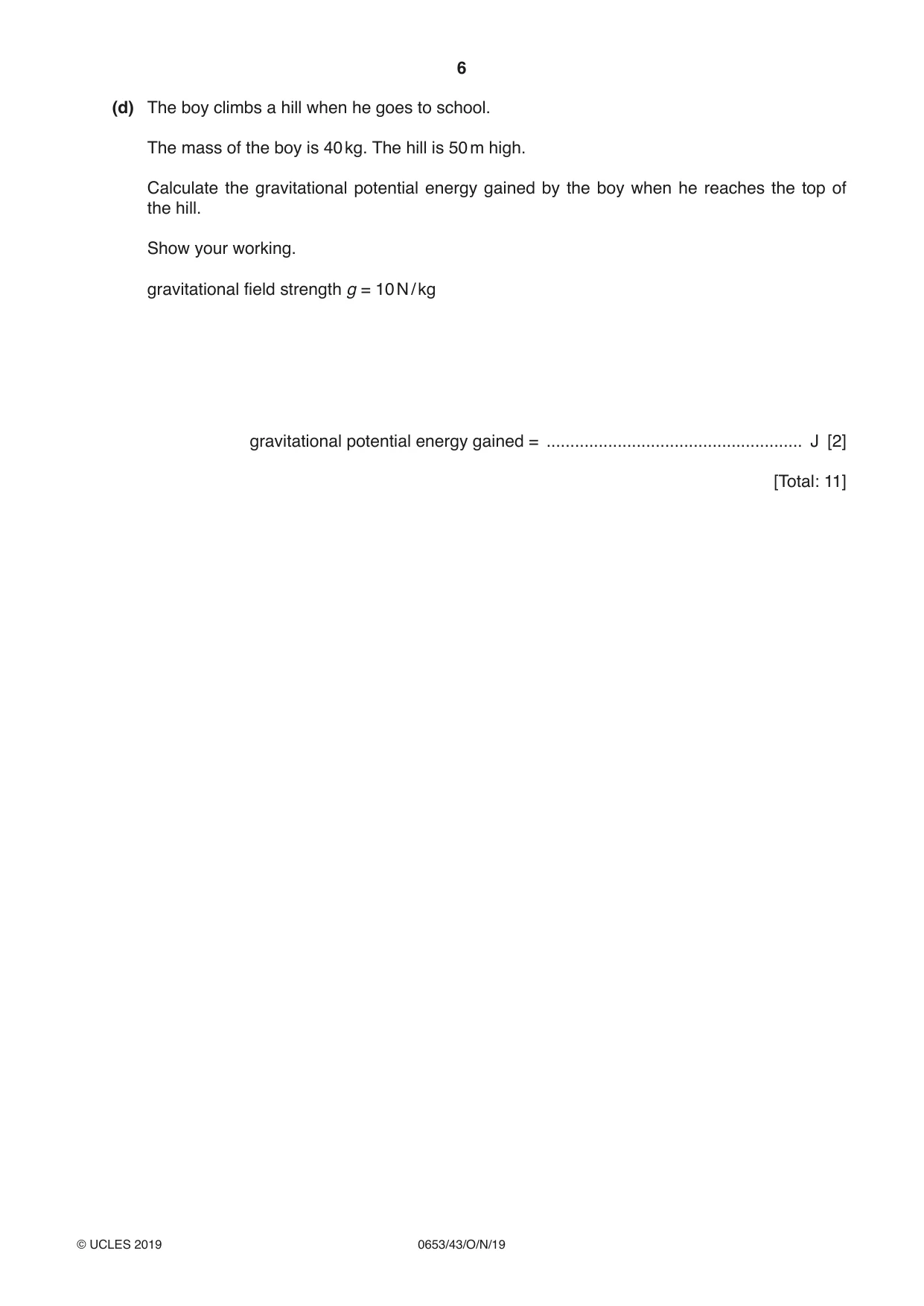
3 (a) Fig. 3.1 shows children using a magnifying glass to view a butterfly. child B child A Fig. 3.1 (i) State which child, A or B, is using the magnifying glass correctly. Give a reason for your answer. ........................................................................................................................................... ..................................................................................................................................... [1] (ii) The magnified image of the butterfly is a virtual image. State what is meant by a virtual image. ........................................................................................................................................... ..................................................................................................................................... [1] (b) Complete the sentences below using words from the list. Each word may be used once, more than once or not at all. amplitude compressions frequency longitudinal pitch transverse The boy listens to the radio. The radio transmits sound waves through the air to his ears as ................................................ and rarefactions. These are ................................................ waves. He uses the volume control on the radio to make the sound louder, which alters the ................................................ of the waves. [2] (c) The girl walks from home to school. Fig. 3.2 shows a speed–time graph of her journey. 1.0 0.8 speed m / s 0.6 0.4 0.2 0 0 50 100 150 200 time / s Fig. 3.2 (i) Calculate the distance she travels between 0 s and 150 s. Show your working. distance = ..................................................... m [3] (ii) Explain the difference in the shape of the graph between 0 s and 10 s and between 150 s and 180 s. ........................................................................................................................................... ........................................................................................................................................... ..................................................................................................................................... [2] (d) The boy climbs a hill when he goes to school. The mass of the boy is 40 kg. The hill is 50 m high. Calculate the gravitational potential energy gained by the boy when he reaches the top of the hill. Show your working. gravitational field strength g = 10 N / kg gravitational potential energy gained = ...................................................... J [2] [Total: 11] Question 4 starts on the next page.
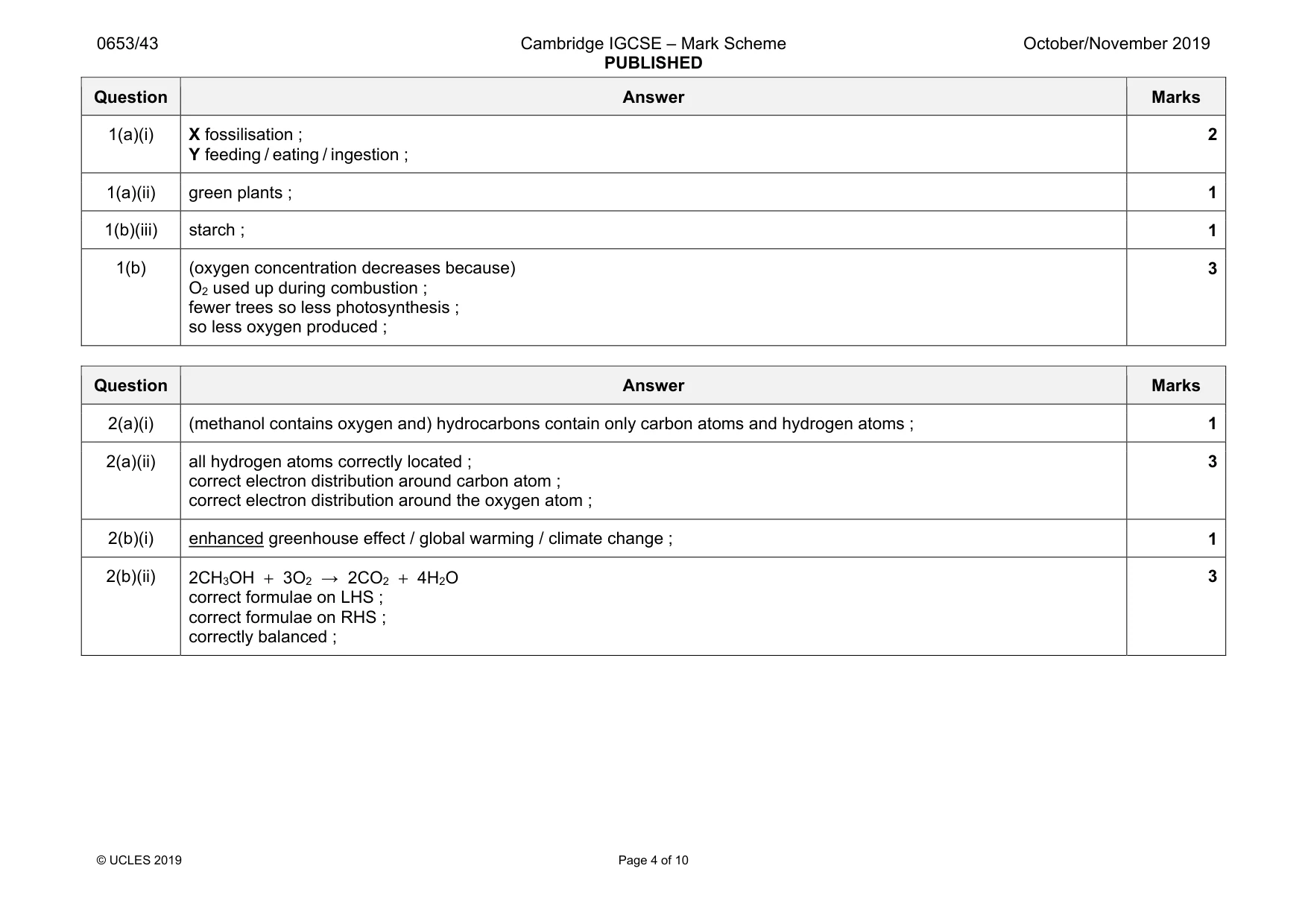
Mark scheme: 3(a)(i) (child A because) child A holding close(r) to eye / child B eye is too far from the lens ; 1 3(a)(ii) image that cannot be projected onto a screen ; 1 3(b) compressions longitudinal amplitude any 2 correct = 1 mark all 3 correct = 2 marks 2 3(c)(i) use of area under graph or d = s × t ; correct use of data from graph ; = 116 ; 3 3(c)(ii) constant acceleration (0–10 s) ; non-constant deceleration (150–180 s) ; 2 3(d) use of gravitational PE gained = mgh ; (= 40 × 10 × 50) = 20 000 (J) ; 2
Q4 · Define the term enzyme
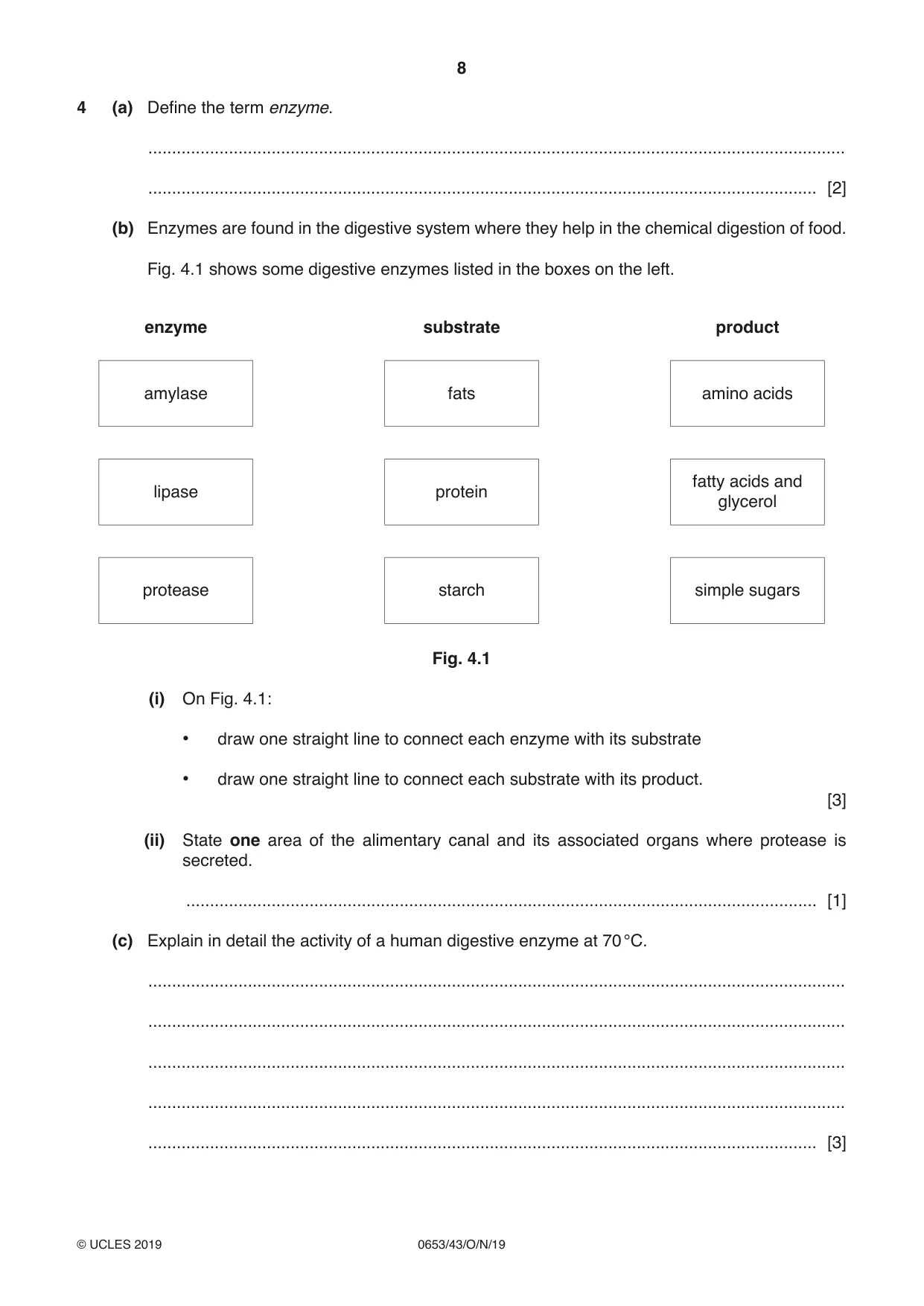
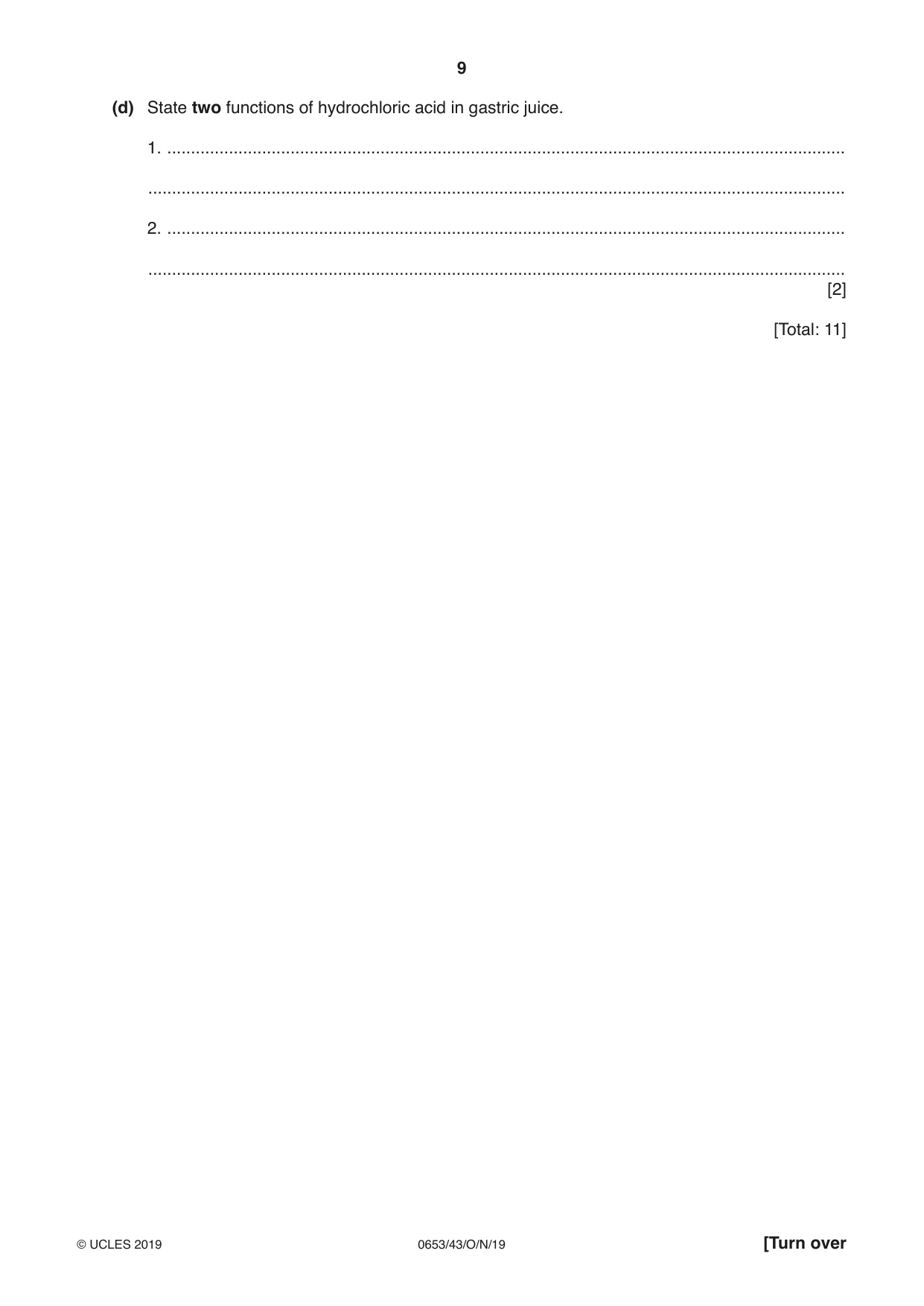
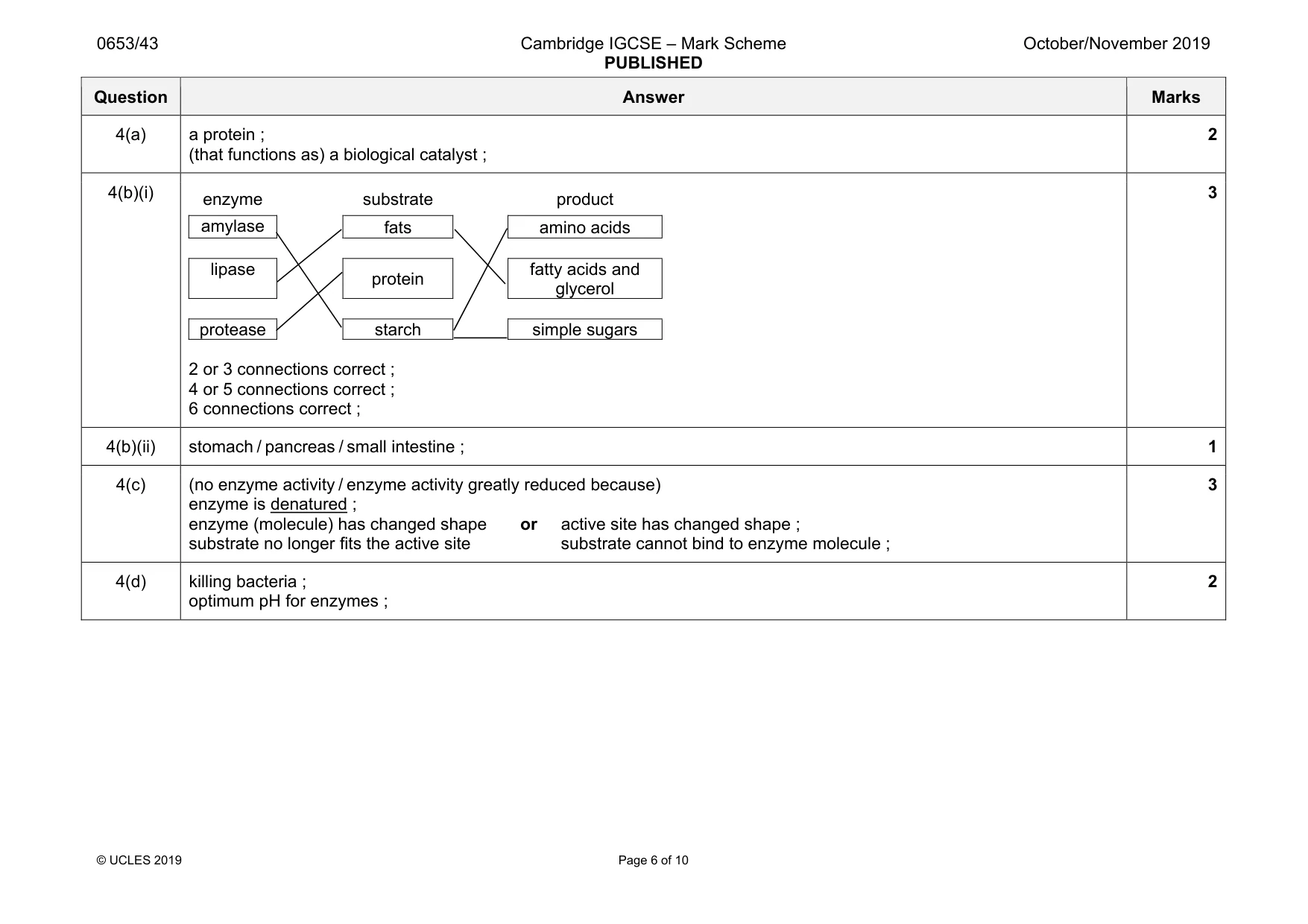
4 (a) Define the term enzyme. ................................................................................................................................................... ............................................................................................................................................. [2] (b) Enzymes are found in the digestive system where they help in the chemical digestion of food. Fig. 4.1 shows some digestive enzymes listed in the boxes on the left. enzyme substrate product amylase fats amino acids fatty acids and lipase protein glycerol protease starch simple sugars Fig. 4.1 (i) On Fig. 4.1: • draw one straight line to connect each enzyme with its substrate • draw one straight line to connect each substrate with its product. [3] (ii) State one area of the alimentary canal and its associated organs where protease is secreted. ..................................................................................................................................... [1] (c) Explain in detail the activity of a human digestive enzyme at 70 °C. ................................................................................................................................................... ................................................................................................................................................... ................................................................................................................................................... ................................................................................................................................................... ............................................................................................................................................. [3] (d) State two functions of hydrochloric acid in gastric juice. 1. ............................................................................................................................................... ................................................................................................................................................... 2. ............................................................................................................................................... ................................................................................................................................................... [2] [Total: 11]
Mark scheme: 4(a) a protein ; (that functions as) a biological catalyst ; 2 4(b)(i) enzyme substrate product amylase fats amino acids lipase protein fatty acids and glycerol protease starch simple sugars 2 or 3 connections correct ; 4 or 5 connections correct ; 6 connections correct ; 3 4(b)(ii) stomach / pancreas / small intestine ; 1 4(c) (no enzyme activity / enzyme activity greatly reduced because) enzyme is denatured ; enzyme (molecule) has changed shape or active site has changed shape ; substrate no longer fits the active site substrate cannot bind to enzyme molecule ; 3 4(d) killing bacteria ; optimum pH for enzymes ; 2
Q5 · The elements in the Periodic Table, shown on page 20, are arranged in groups and periods
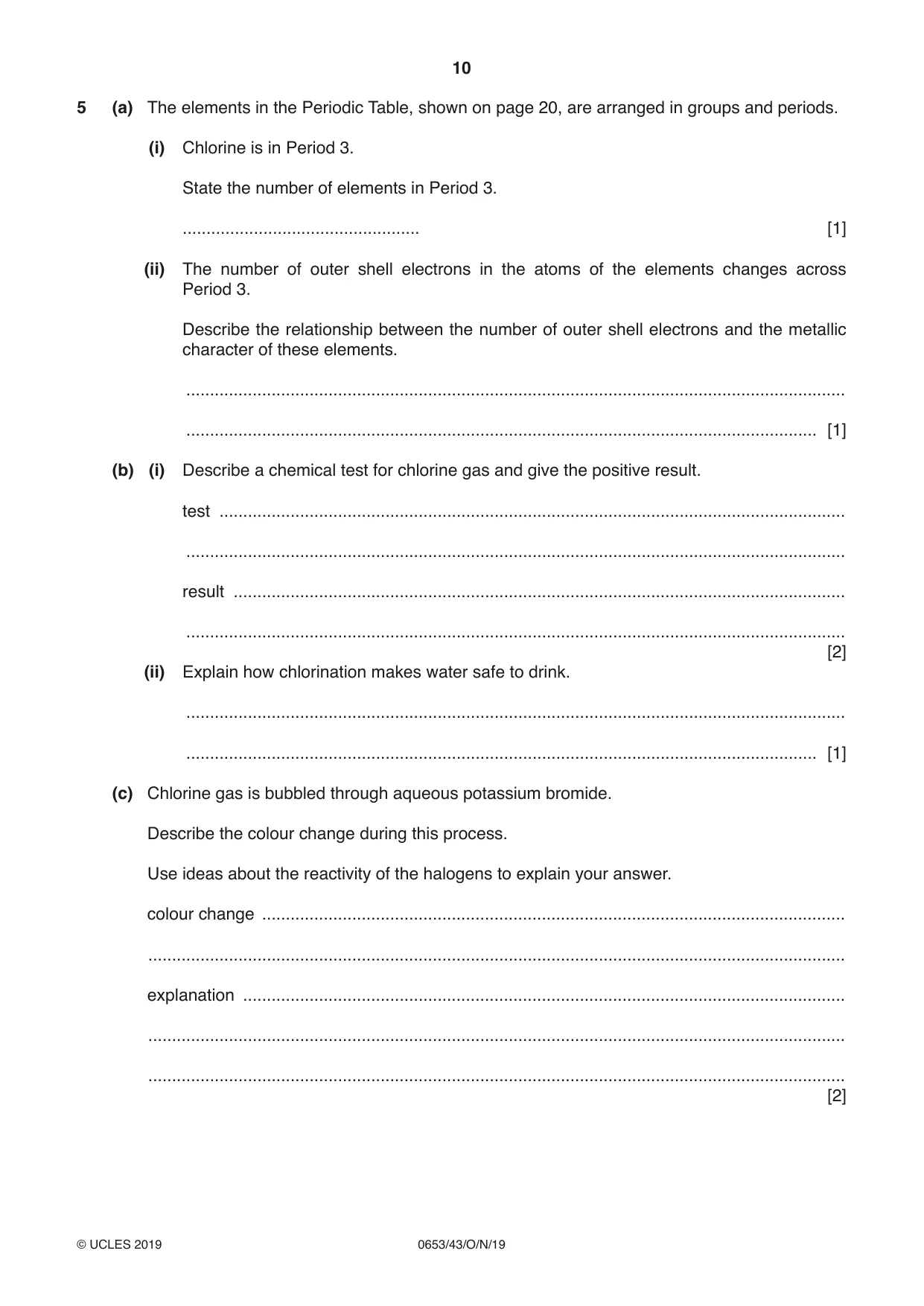
5 (a) The elements in the Periodic Table, shown on page 20, are arranged in groups and periods. (i) Chlorine is in Period 3. State the number of elements in Period 3. .................................................. [1] (ii) The number of outer shell electrons in the atoms of the elements changes across Period 3. Describe the relationship between the number of outer shell electrons and the metallic character of these elements. ........................................................................................................................................... ..................................................................................................................................... [1] (b) (i) Describe a chemical test for chlorine gas and give the positive result. test .................................................................................................................................... ........................................................................................................................................... result ................................................................................................................................. ........................................................................................................................................... [2] (ii) Explain how chlorination makes water safe to drink. ........................................................................................................................................... ..................................................................................................................................... [1] (c) Chlorine gas is bubbled through aqueous potassium bromide. Describe the colour change during this process. Use ideas about the reactivity of the halogens to explain your answer. colour change ........................................................................................................................... ................................................................................................................................................... explanation ............................................................................................................................... ................................................................................................................................................... ................................................................................................................................................... [2] (d) Chlorine gas can be obtained by the electrolysis of molten potassium chloride using inert electrodes. (i) Name the electrode at which chlorine forms. ..................................................................................................................................... [1] (ii) Describe how chloride ions are changed into chlorine atoms. ........................................................................................................................................... ........................................................................................................................................... ..................................................................................................................................... [2] (iii) State the other product of this electrolysis. ..................................................................................................................................... [1] [Total: 11]
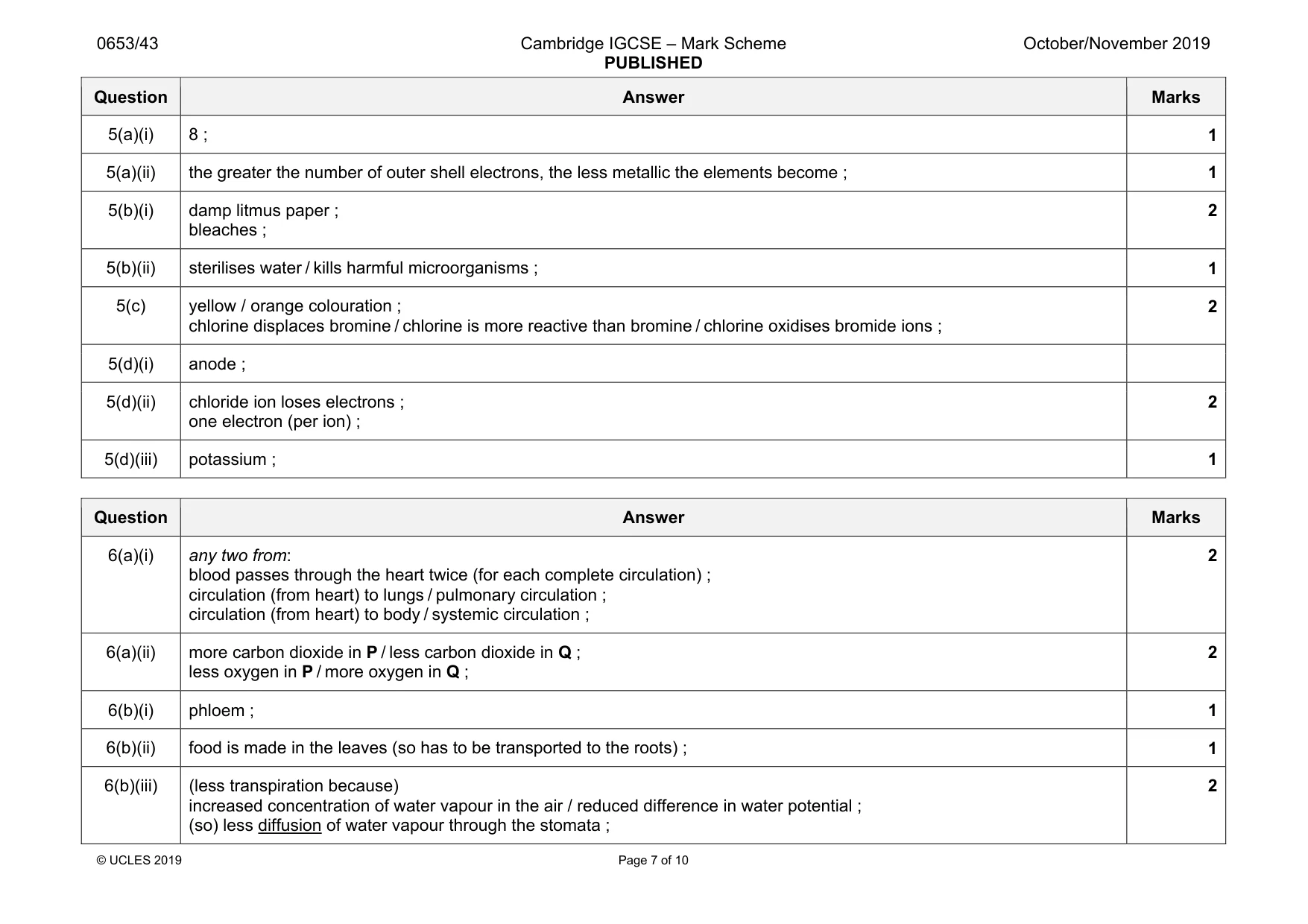
Mark scheme: 5(a)(i) 8 ; 1 5(a)(ii) the greater the number of outer shell electrons, the less metallic the elements become ; 1 5(b)(i) damp litmus paper ; bleaches ; 2 5(b)(ii) sterilises water / kills harmful microorganisms ; 1 5(c) yellow / orange colouration ; chlorine displaces bromine / chlorine is more reactive than bromine / chlorine oxidises bromide ions ; 2 5(d)(i) anode ; 5(d)(ii) chloride ion loses electrons ; one electron (per ion) ; 2 5(d)(iii) potassium ; 1
Q6 · Simple diagrams of the human and plant transport systems
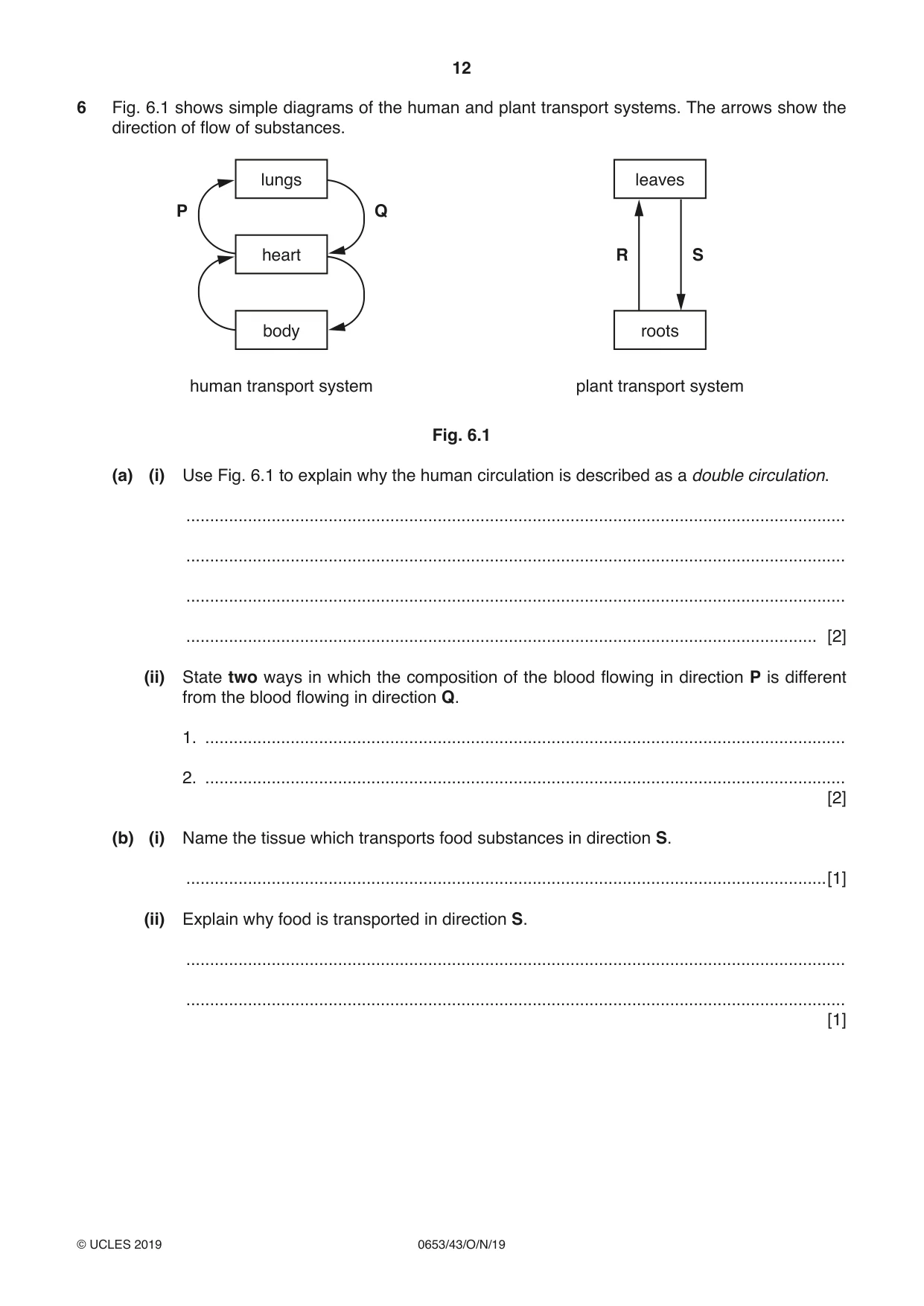
6 Fig. 6.1 shows simple diagrams of the human and plant transport systems. The arrows show the direction of flow of substances. lungs leaves P Q heart R S body roots human transport system plant transport system Fig. 6.1 (a) (i) Use Fig. 6.1 to explain why the human circulation is described as a double circulation. ........................................................................................................................................... ........................................................................................................................................... ........................................................................................................................................... ..................................................................................................................................... [2] (ii) State two ways in which the composition of the blood flowing in direction P is different from the blood flowing in direction Q. 1. ....................................................................................................................................... 2. ....................................................................................................................................... [2] (b) (i) Name the tissue which transports food substances in direction S. .......................................................................................................................................[1] (ii) Explain why food is transported in direction S. ........................................................................................................................................... ........................................................................................................................................... [1] (iii) Water passes through the roots to the leaves in direction R in the xylem. Some of the water from the xylem replaces water lost during transpiration. Explain in detail why the rate of transpiration decreases when the humidity of the air increases. ........................................................................................................................................... ........................................................................................................................................... ..................................................................................................................................... [2] (iv) State one other function of the xylem apart from transport. ........................................................................................................................................... ..................................................................................................................................... [1] [Total: 9]
Mark scheme: 6(a)(i) any two from: blood passes through the heart twice (for each complete circulation) ; circulation (from heart) to lungs / pulmonary circulation ; circulation (from heart) to body / systemic circulation ; 2 6(a)(ii) more carbon dioxide in P / less carbon dioxide in Q ; less oxygen in P / more oxygen in Q ; 2 6(b)(i) phloem ; 1 6(b)(ii) food is made in the leaves (so has to be transported to the roots) ; 1 6(b)(iii) (less transpiration because) increased concentration of water vapour in the air / reduced difference in water potential ; (so) less diffusion of water vapour through the stomata ; 2 Question Answer Marks 6(b)(iv) support ; 1
Q7 · In hot climates, some foods such as milk must be kept cool to ensure they stay fresh
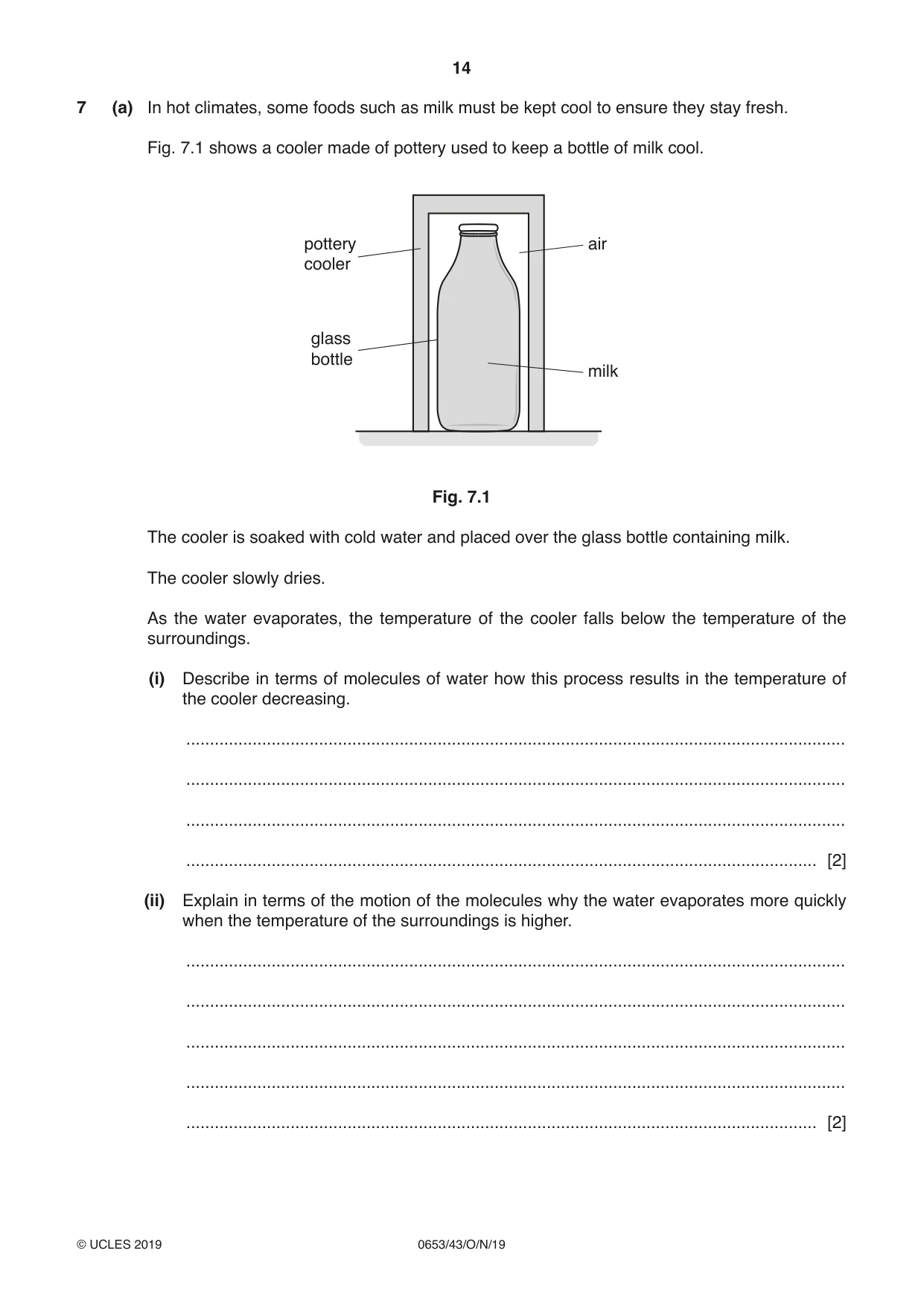
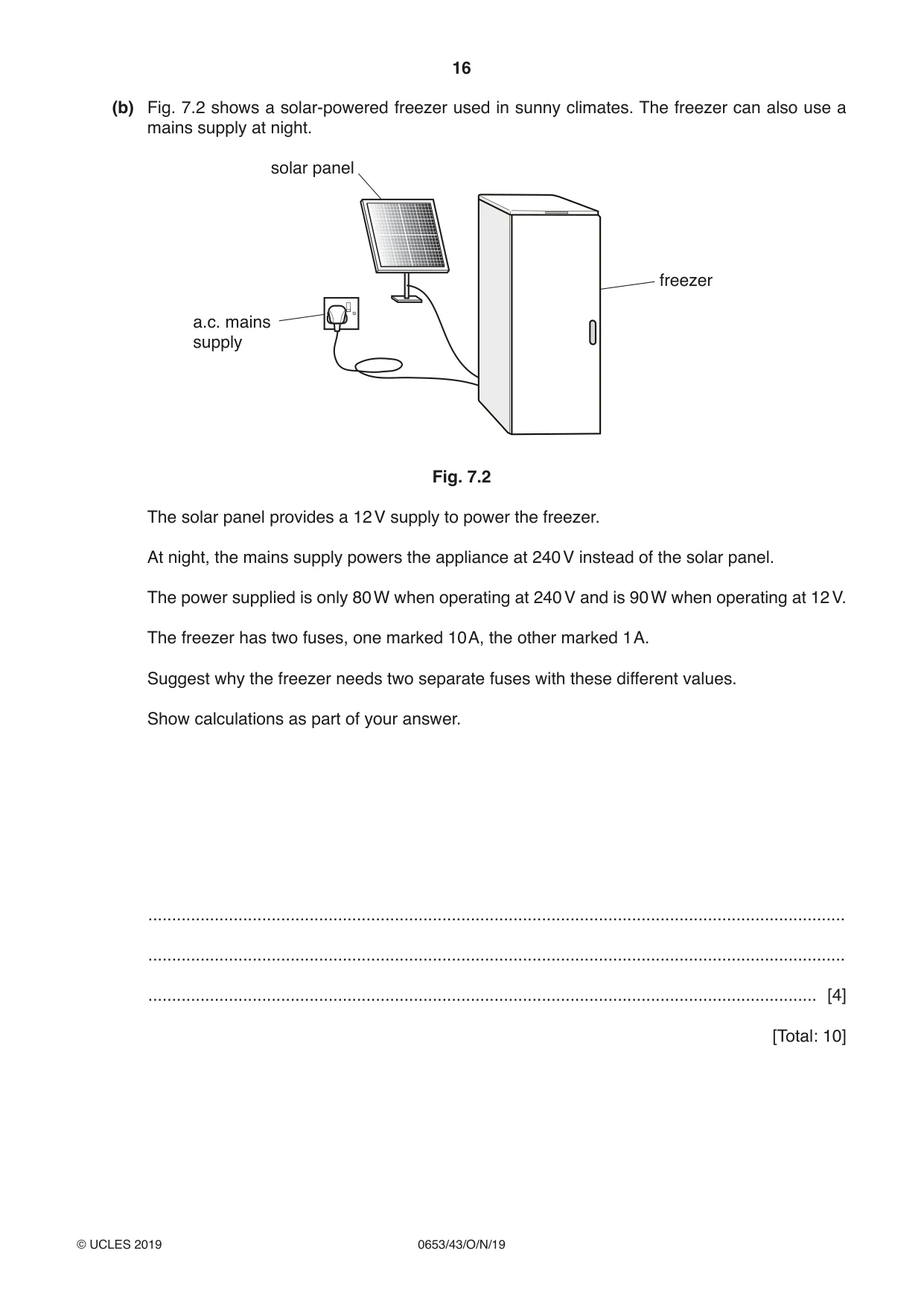
7 (a) In hot climates, some foods such as milk must be kept cool to ensure they stay fresh. Fig. 7.1 shows a cooler made of pottery used to keep a bottle of milk cool. pottery air cooler glass bottle milk Fig. 7.1 The cooler is soaked with cold water and placed over the glass bottle containing milk. The cooler slowly dries. As the water evaporates, the temperature of the cooler falls below the temperature of the surroundings. (i) Describe in terms of molecules of water how this process results in the temperature of the cooler decreasing. ........................................................................................................................................... ........................................................................................................................................... ........................................................................................................................................... ..................................................................................................................................... [2] (ii) Explain in terms of the motion of the molecules why the water evaporates more quickly when the temperature of the surroundings is higher. ........................................................................................................................................... ........................................................................................................................................... ........................................................................................................................................... ........................................................................................................................................... ..................................................................................................................................... [2] (iii) The temperature of the milk in the glass bottle also decreases. Describe in terms of molecular movement how thermal energy is transferred from the milk through the glass bottle by conduction. ........................................................................................................................................... ........................................................................................................................................... ........................................................................................................................................... ..................................................................................................................................... [2] (b) Fig. 7.2 shows a solar-powered freezer used in sunny climates. The freezer can also use a mains supply at night. solar panel freezer a.c. mains supply Fig. 7.2 The solar panel provides a 12 V supply to power the freezer. At night, the mains supply powers the appliance at 240 V instead of the solar panel. The power supplied is only 80 W when operating at 240 V and is 90 W when operating at 12 V. The freezer has two fuses, one marked 10 A, the other marked 1 A. Suggest why the freezer needs two separate fuses with these different values. Show calculations as part of your answer. ................................................................................................................................................... ................................................................................................................................................... ............................................................................................................................................. [4] [Total: 10]
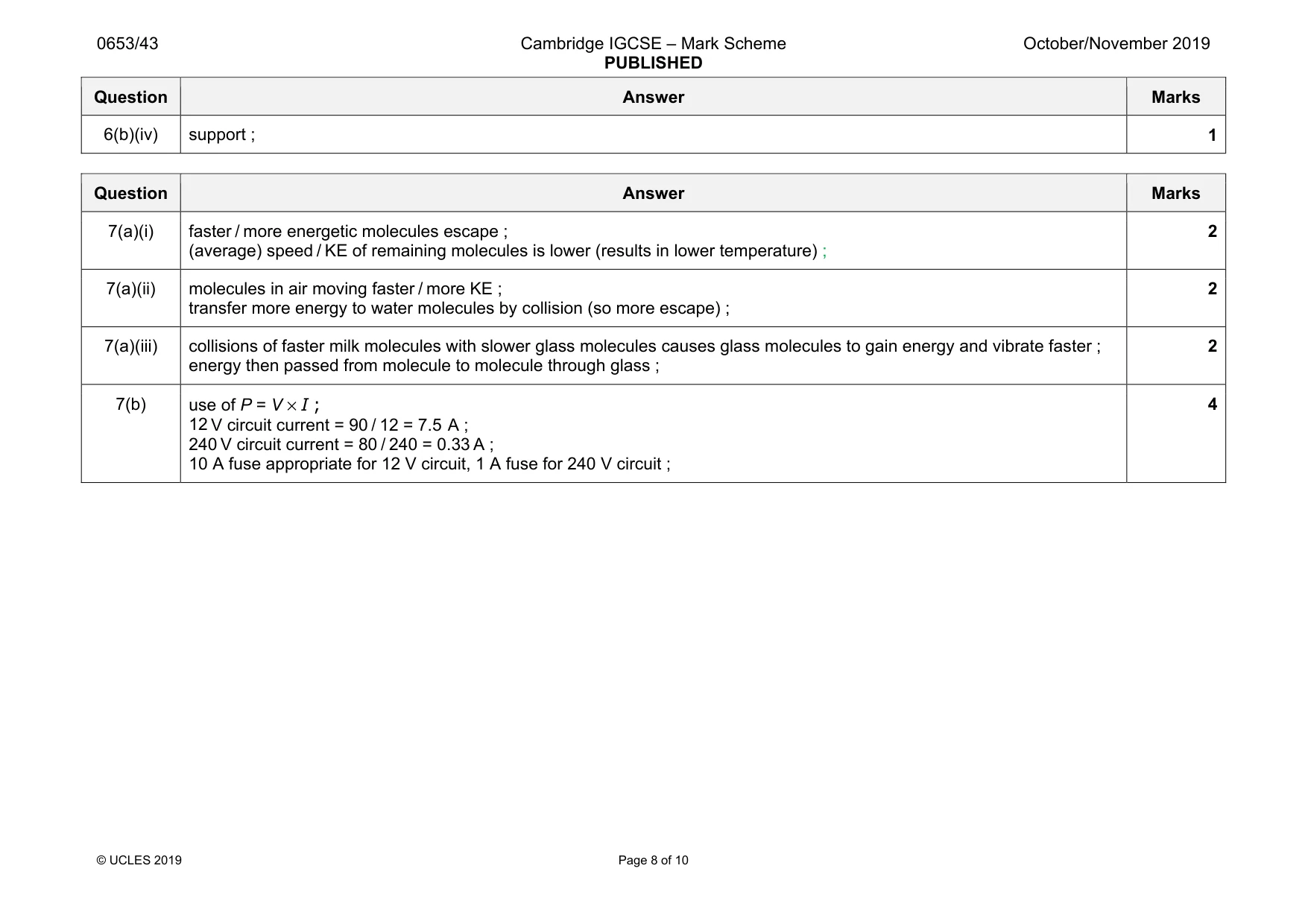
Mark scheme: 7(a)(i) faster / more energetic molecules escape ; (average) speed / KE of remaining molecules is lower (results in lower temperature) ; 2 7(a)(ii) molecules in air moving faster / more KE ; transfer more energy to water molecules by collision (so more escape) ; 2 7(a)(iii) collisions of faster milk molecules with slower glass molecules causes glass molecules to gain energy and vibrate faster ; energy then passed from molecule to molecule through glass ; 2 7(b) use of P = V × I ; 12 V circuit current = 90 / 12 = 7.5 A ; 240 V circuit current = 80 / 240 = 0.33 A ; 10 A fuse appropriate for 12 V circuit, 1 A fuse for 240 V circuit ; 4
Q8 · Magnesium reacts with dilute hydrochloric acid
8 (a) Magnesium reacts with dilute hydrochloric acid. (i) Explain in detail why the rate of this reaction increases when the concentration of the acid increases. ........................................................................................................................................... ........................................................................................................................................... ........................................................................................................................................... ........................................................................................................................................... ..................................................................................................................................... [3] (ii) State one other change that increases the rate of this reaction. ..................................................................................................................................... [1] (iii) The reaction between magnesium and hydrochloric acid is exothermic. Explain why an exothermic reaction releases heat. Use ideas about energy, bond breaking and bond forming in your answer. ........................................................................................................................................... ........................................................................................................................................... ........................................................................................................................................... ..................................................................................................................................... [2] (b) Iron is extracted from iron oxide in a blast furnace. Explain why magnesium cannot be extracted from magnesium oxide in a blast furnace. ................................................................................................................................................... ............................................................................................................................................. [1] [Total: 7]
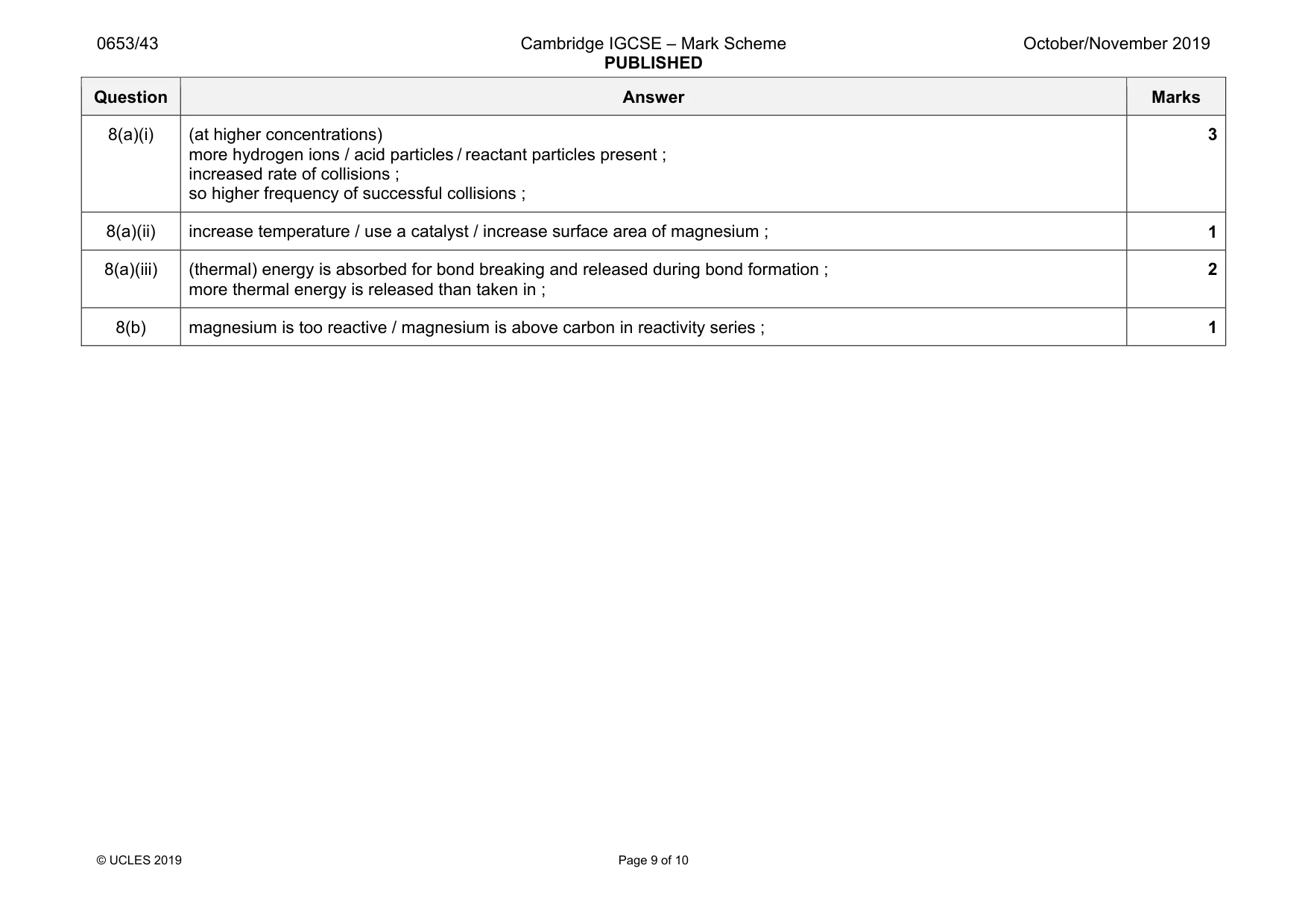
Mark scheme: 8(a)(i) (at higher concentrations) more hydrogen ions / acid particles / reactant particles present ; increased rate of collisions ; so higher frequency of successful collisions ; 3 8(a)(ii) increase temperature / use a catalyst / increase surface area of magnesium ; 1 8(a)(iii) (thermal) energy is absorbed for bond breaking and released during bond formation ; more thermal energy is released than taken in ; 2 8(b) magnesium is too reactive / magnesium is above carbon in reactivity series ; 1
Question 9
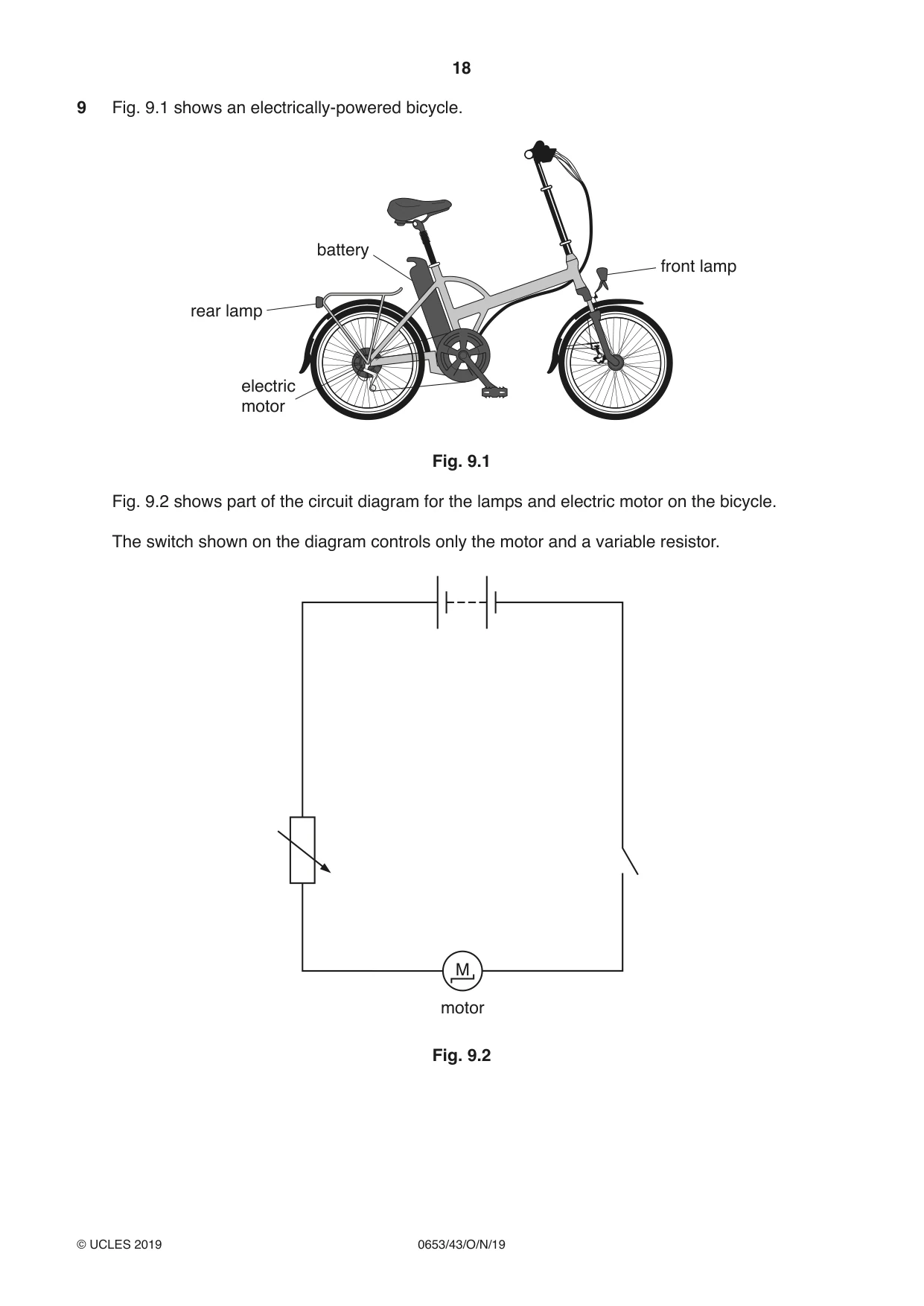
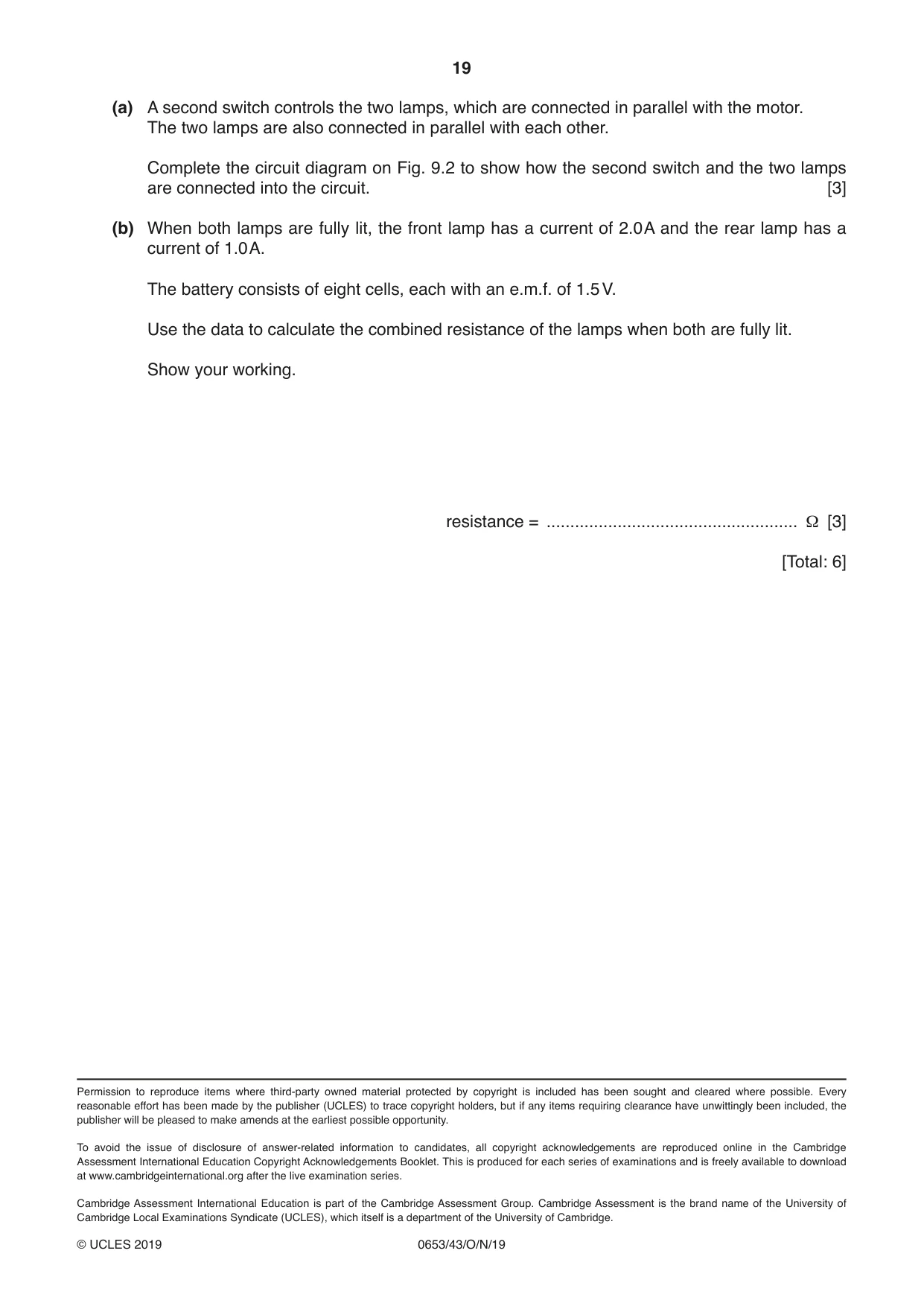
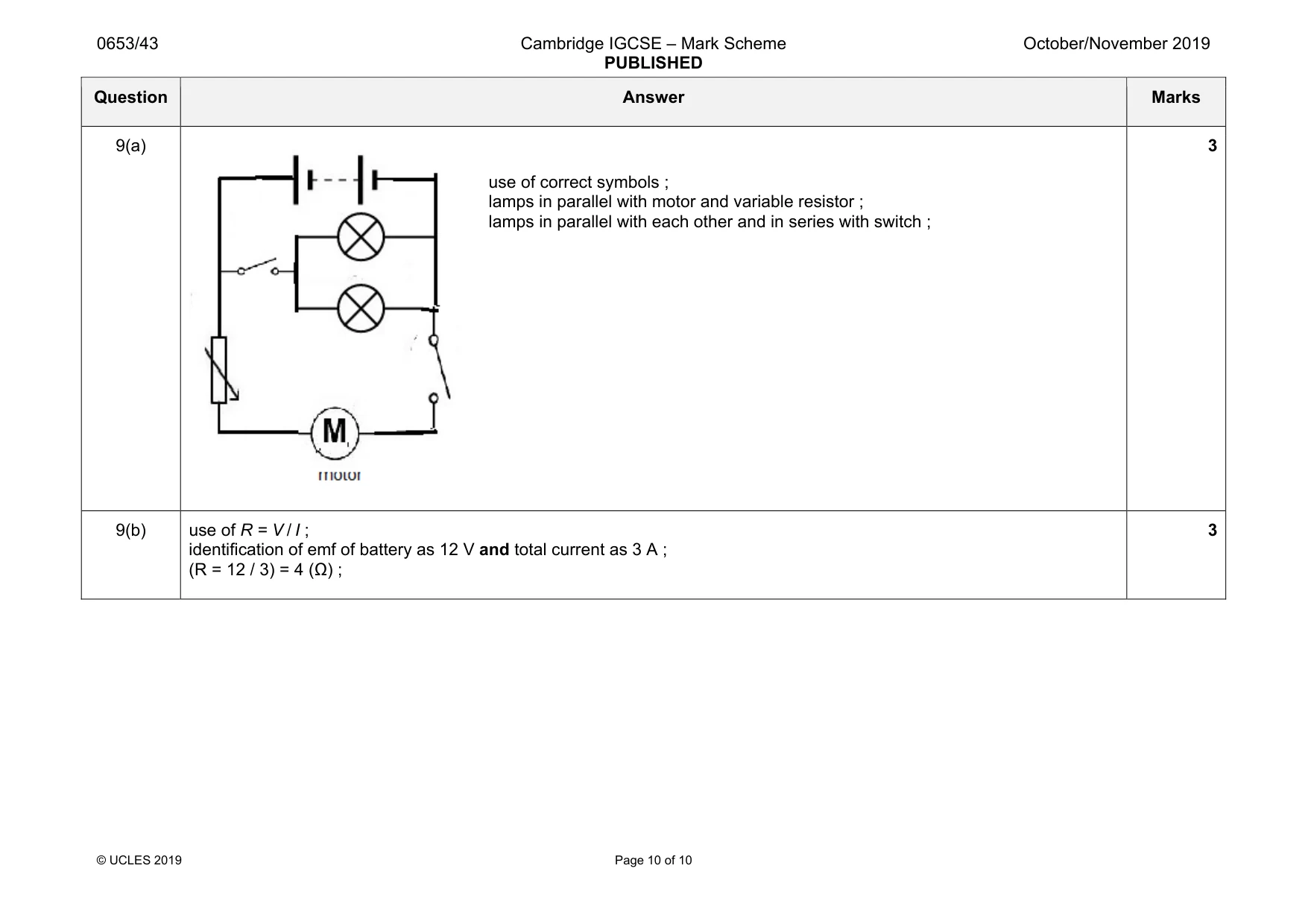
9 Fig. 9.1 shows an electrically-powered bicycle. battery front lamp rear lamp electric motor Fig. 9.1 Fig. 9.2 shows part of the circuit diagram for the lamps and electric motor on the bicycle. The switch shown on the diagram controls only the motor and a variable resistor. M motor Fig. 9.2 (a) A second switch controls the two lamps, which are connected in parallel with the motor. The two lamps are also connected in parallel with each other. Complete the circuit diagram on Fig. 9.2 to show how the second switch and the two lamps are connected into the circuit. [3] (b) When both lamps are fully lit, the front lamp has a current of 2.0 A and the rear lamp has a current of 1.0 A. The battery consists of eight cells, each with an e.m.f. of 1.5 V. Use the data to calculate the combined resistance of the lamps when both are fully lit. Show your working. resistance = ..................................................... Ω [3] [Total: 6]
Mark scheme: 9(a) 3 9(b) use of R = V / I ; identification of emf of battery as 12 V and total current as 3 A ; (R = 12 / 3) = 4 (Ω) ; 3 use of correct symbols ; lamps in parallel with motor and variable resistor ; lamps in parallel with each other and in series with switch ;
What was in this paper
The subtopics covered by these 9 questions, and how many questions each got. Open one in a new tab to see every Cambridge question on it.
What you needed in this session
Cambridge’s own grade thresholds for 2019 Oct/Nov, Paper 4 · Variant 3. A higher threshold means an easier paper — the bar moves with how the cohort did.