Cambridge IGCSE Science - Combined 0653 — 2017 Oct/Nov Paper 4 · Variant 1
0653/41/O/N/17 · 9 questions · 80 marks · ≈90 min
The question paper and its mark scheme, free to read here and free to download. This is Cambridge’s own paper, exactly as it was sat.
Question paper24 pages
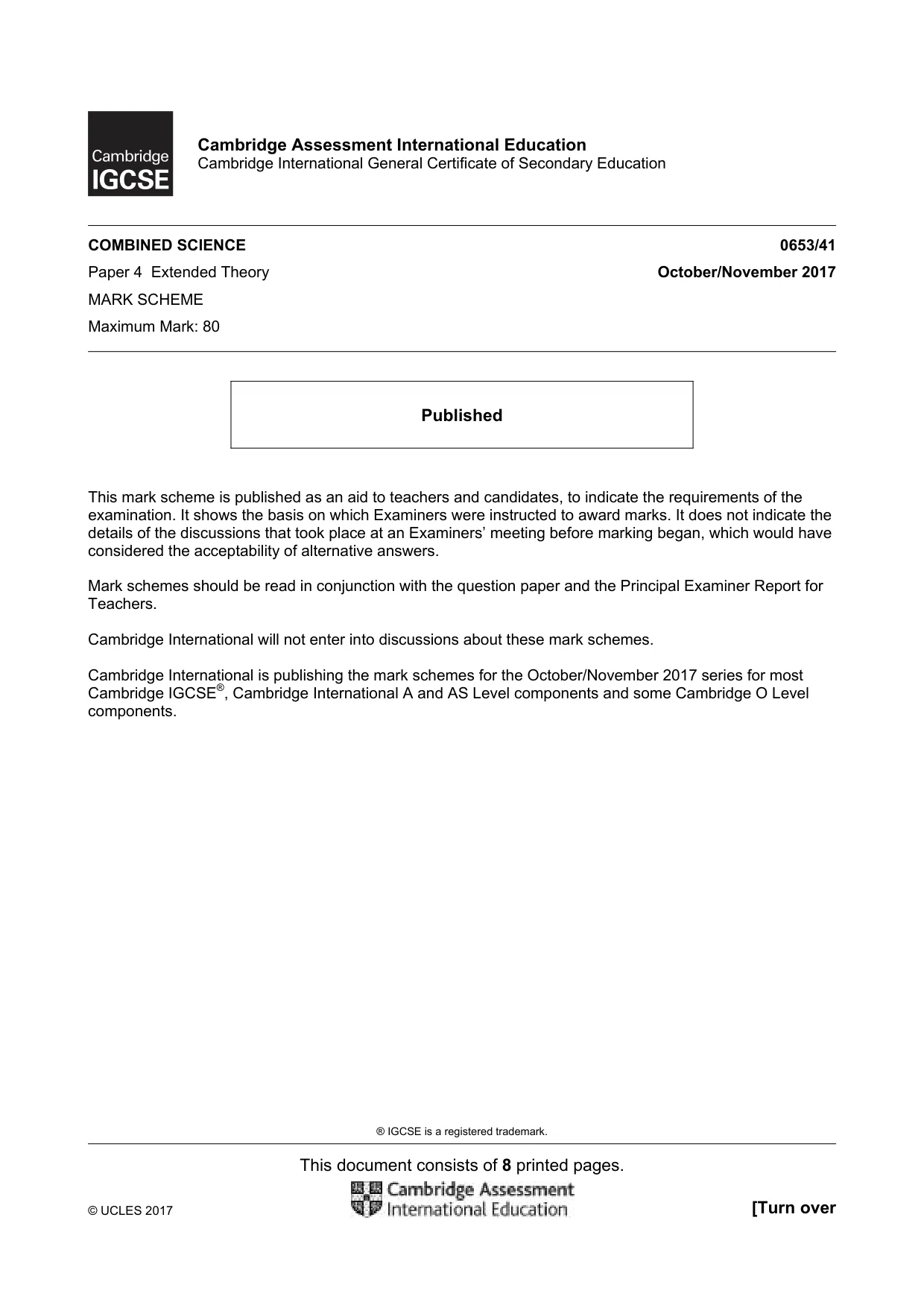
Mark scheme8 pages
Answers below. Sit the paper first if you are practising.

Questions as text
Q1 · Use the following words or phrases to complete the flow chart about the transport of…
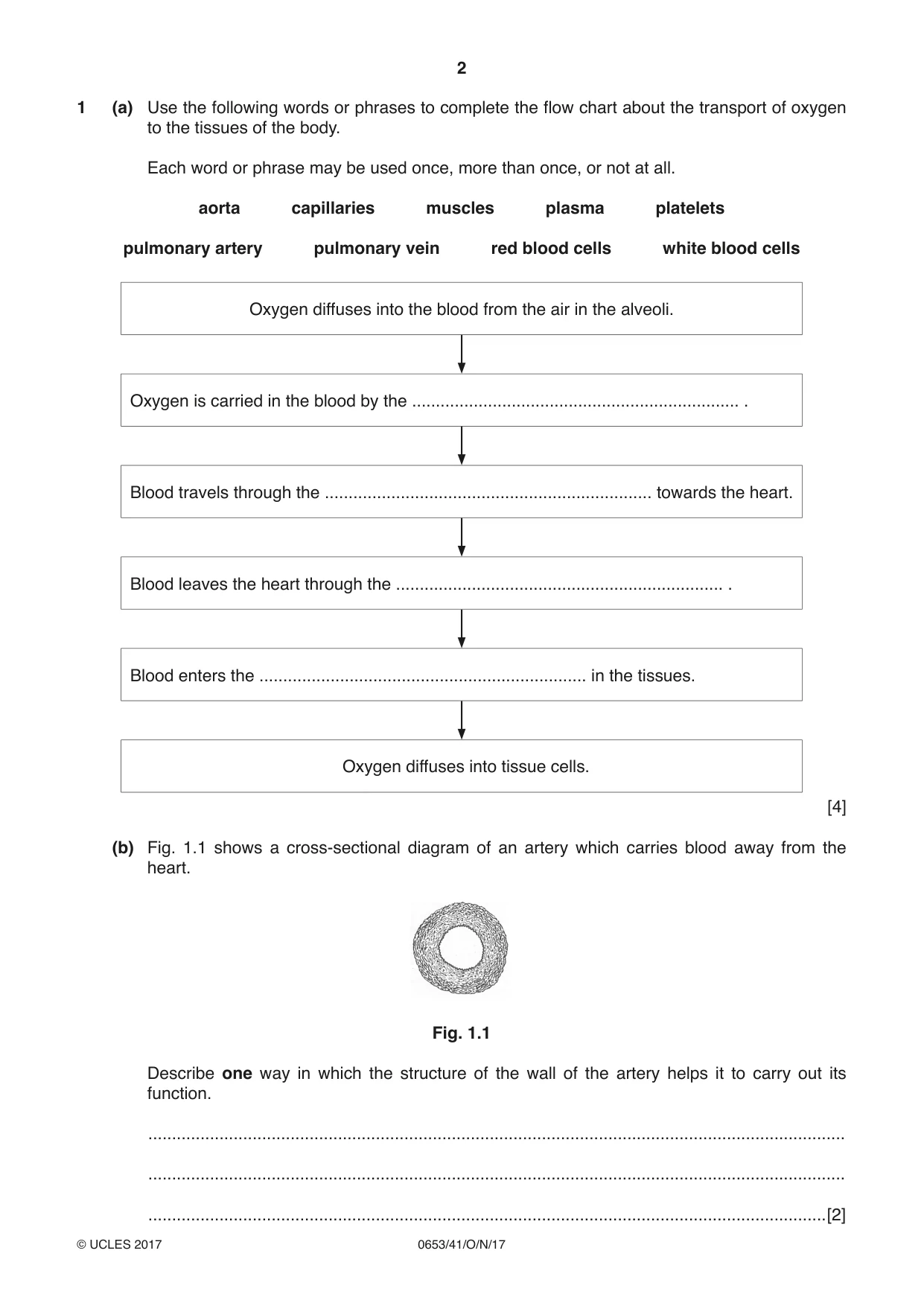
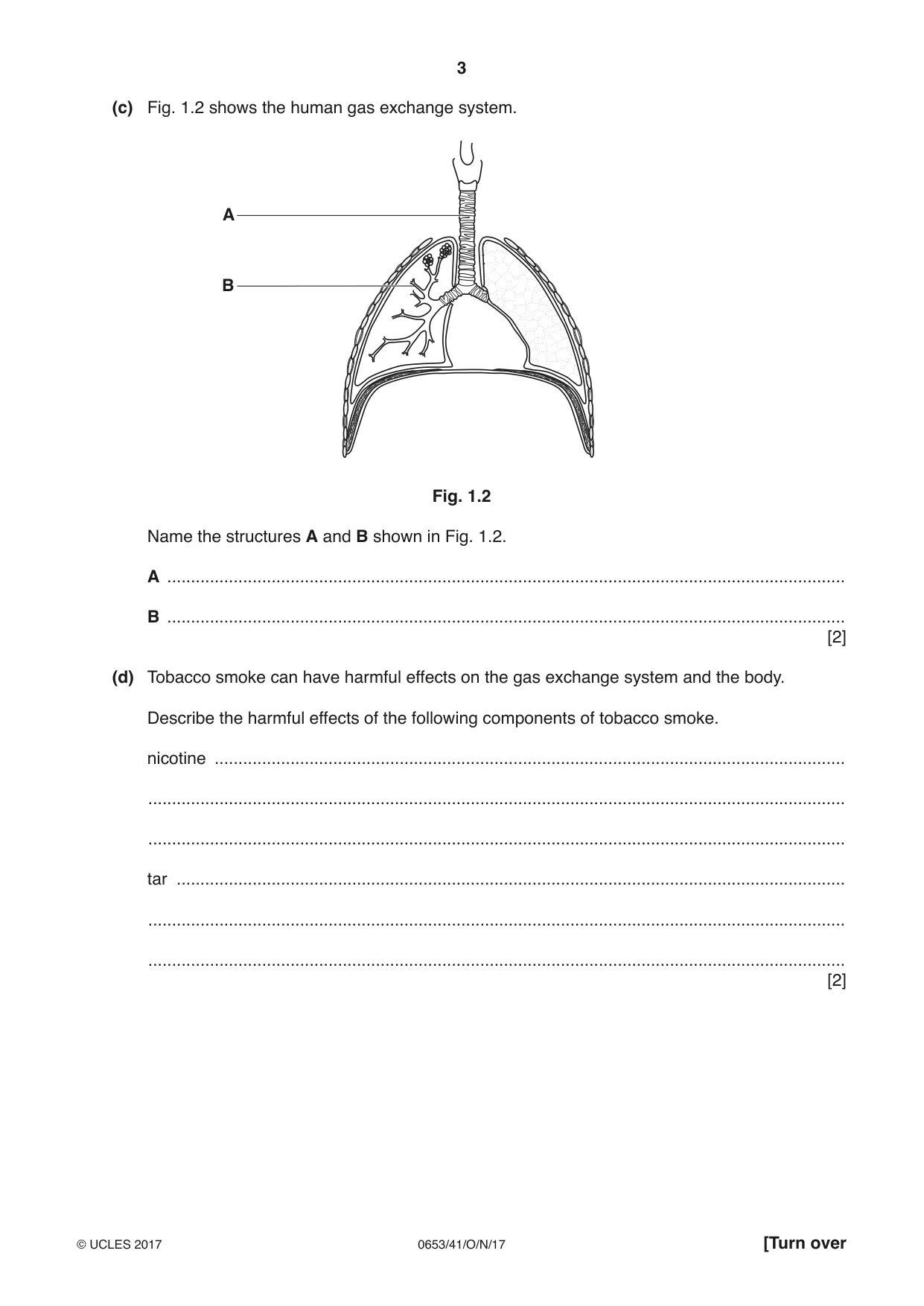
1 (a) Use the following words or phrases to complete the flow chart about the transport of oxygen to the tissues of the body. Each word or phrase may be used once, more than once, or not at all. aorta capillaries muscles plasma platelets pulmonary artery pulmonary vein red blood cells white blood cells Oxygen diffuses into the blood from the air in the alveoli. Oxygen is carried in the blood by the ..................................................................... . Blood travels through the ..................................................................... towards the heart. Blood leaves the heart through the ..................................................................... . Blood enters the ..................................................................... in the tissues. Oxygen diffuses into tissue cells. [4] (b) Fig. 1.1 shows a cross-sectional diagram of an artery which carries blood away from the heart. Fig. 1.1 Describe one way in which the structure of the wall of the artery helps it to carry out its function. ................................................................................................................................................... ................................................................................................................................................... ...............................................................................................................................................[2] (c) Fig. 1.2 shows the human gas exchange system. A B Fig. 1.2 Name the structures A and B shown in Fig. 1.2. A ............................................................................................................................................... B ............................................................................................................................................... [2] (d) Tobacco smoke can have harmful effects on the gas exchange system and the body. Describe the harmful effects of the following components of tobacco smoke. nicotine ..................................................................................................................................... ................................................................................................................................................... ................................................................................................................................................... tar ............................................................................................................................................. ................................................................................................................................................... ................................................................................................................................................... [2]
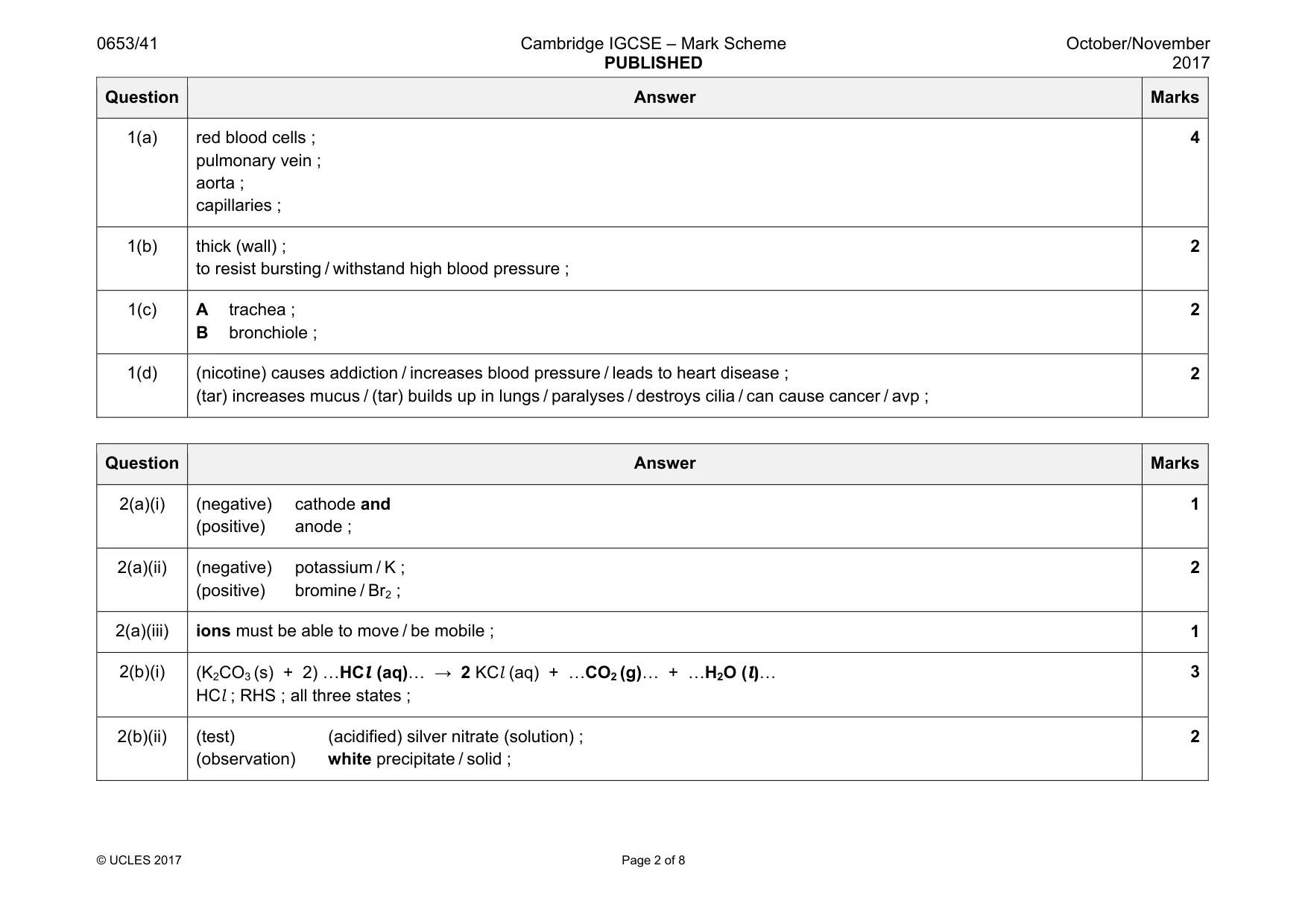
Mark scheme: 1(a) red blood cells ; pulmonary vein ; aorta ; capillaries ; 4 1(b) thick (wall) ; to resist bursting / withstand high blood pressure ; 2 1(c) A trachea ; B bronchiole ; 2 1(d) (nicotine) causes addiction / increases blood pressure / leads to heart disease ; (tar) increases mucus / (tar) builds up in lungs / paralyses / destroys cilia / can cause cancer / avp ; 2
Q2 · Electrolysis is used to break up some compounds into simpler substances
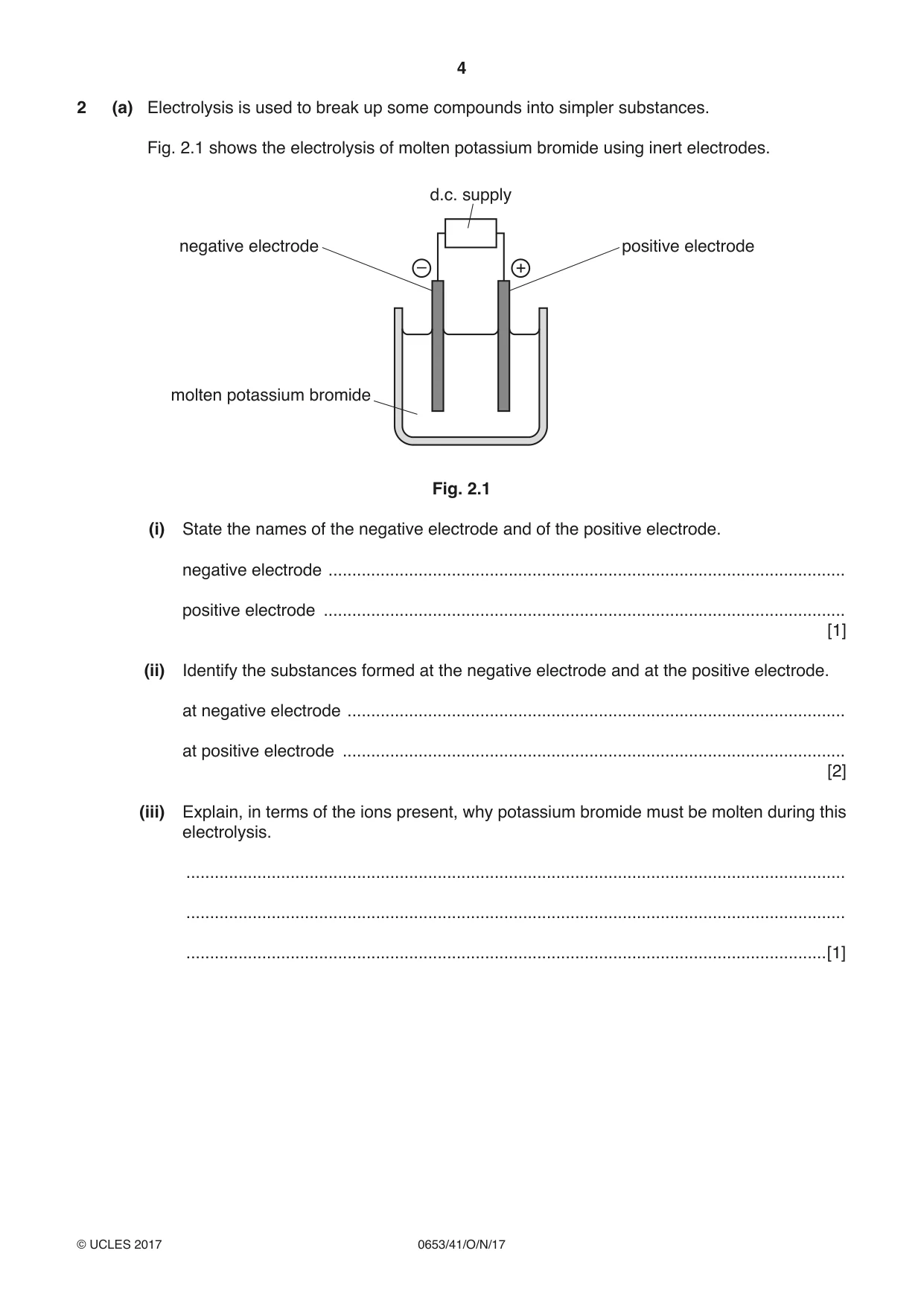
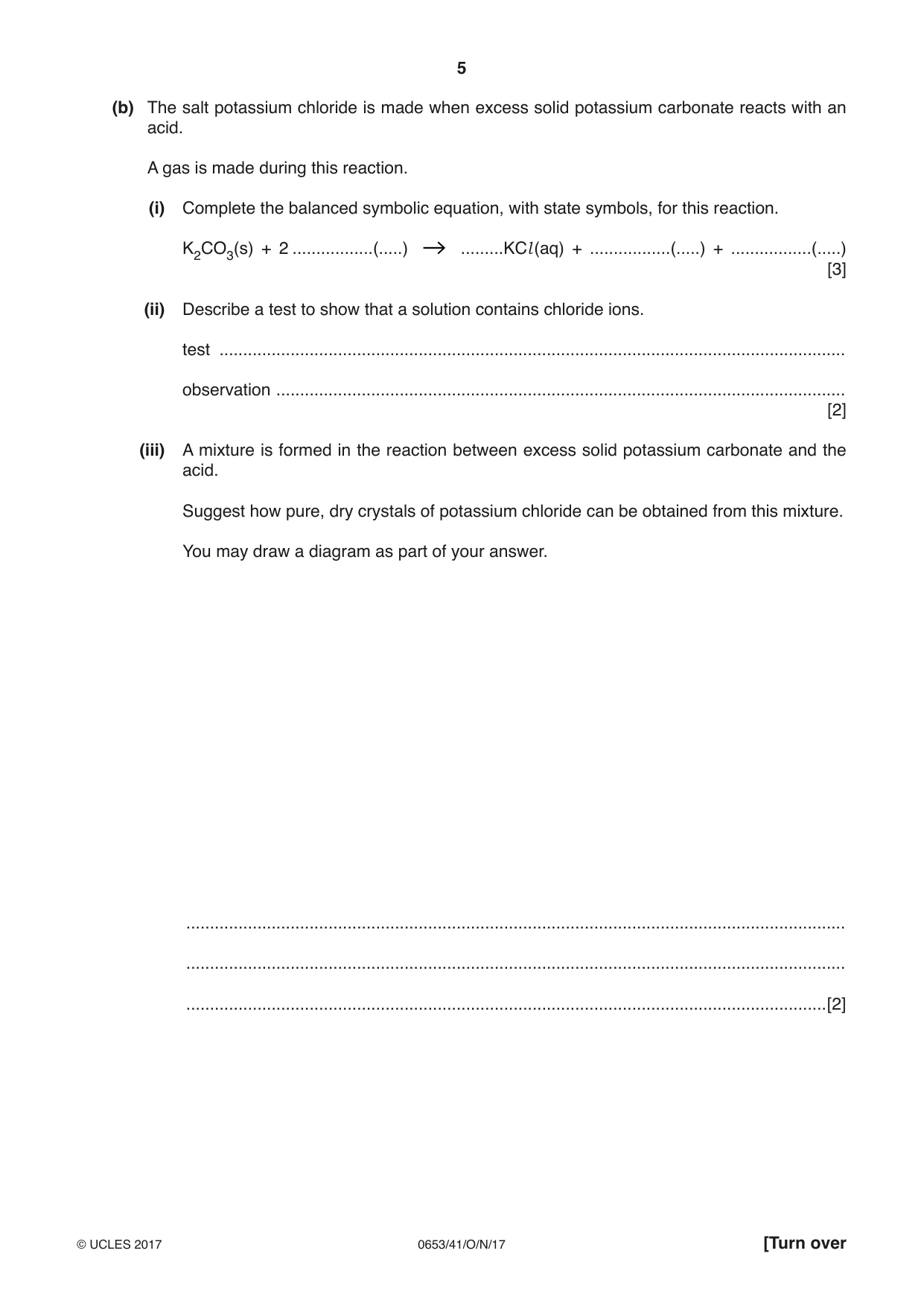
2 (a) Electrolysis is used to break up some compounds into simpler substances. Fig. 2.1 shows the electrolysis of molten potassium bromide using inert electrodes. d.c. supply negative electrode positive electrode – + molten potassium bromide Fig. 2.1 (i) State the names of the negative electrode and of the positive electrode. negative electrode ............................................................................................................. positive electrode .............................................................................................................. [1] (ii) Identify the substances formed at the negative electrode and at the positive electrode. at negative electrode ......................................................................................................... at positive electrode .......................................................................................................... [2] (iii) Explain, in terms of the ions present, why potassium bromide must be molten during this electrolysis. ........................................................................................................................................... ........................................................................................................................................... .......................................................................................................................................[1] (b) The salt potassium chloride is made when excess solid potassium carbonate reacts with an acid. A gas is made during this reaction. (i) Complete the balanced symbolic equation, with state symbols, for this reaction. K2CO3(s) + 2 .................(.....) .........KCl (aq) + .................(.....) + .................(.....) [3] (ii) Describe a test to show that a solution contains chloride ions. test .................................................................................................................................... observation ........................................................................................................................ [2] (iii) A mixture is formed in the reaction between excess solid potassium carbonate and the acid. Suggest how pure, dry crystals of potassium chloride can be obtained from this mixture. You may draw a diagram as part of your answer. ........................................................................................................................................... ........................................................................................................................................... .......................................................................................................................................[2]
Mark scheme: 2(a)(i) (negative) cathode and (positive) anode ; 1 2(a)(ii) (negative) potassium / K ; (positive) bromine / Br2 ; 2 2(a)(iii) ions must be able to move / be mobile ; 1 2(b)(i) (K2CO3 (s) + 2) «HCl (aq)« → 2 KCl (aq) + «CO2 (g)« + «H2O (l)« HCl ; RHS ; all three states ; 3 2(b)(ii) (test) (acidified) silver nitrate (solution) ; (observation) white precipitate / solid ; 2 Question Answer Marks 2(b)(iii) filter (to remove excess solid / potassium carbonate) ; and then one from heat / boil the solution / filtrate / mixture / diagram showing this process ; reference to evaporation / removal of water ; cool / leave (to allow crystals to form) ; max 2
Question 3
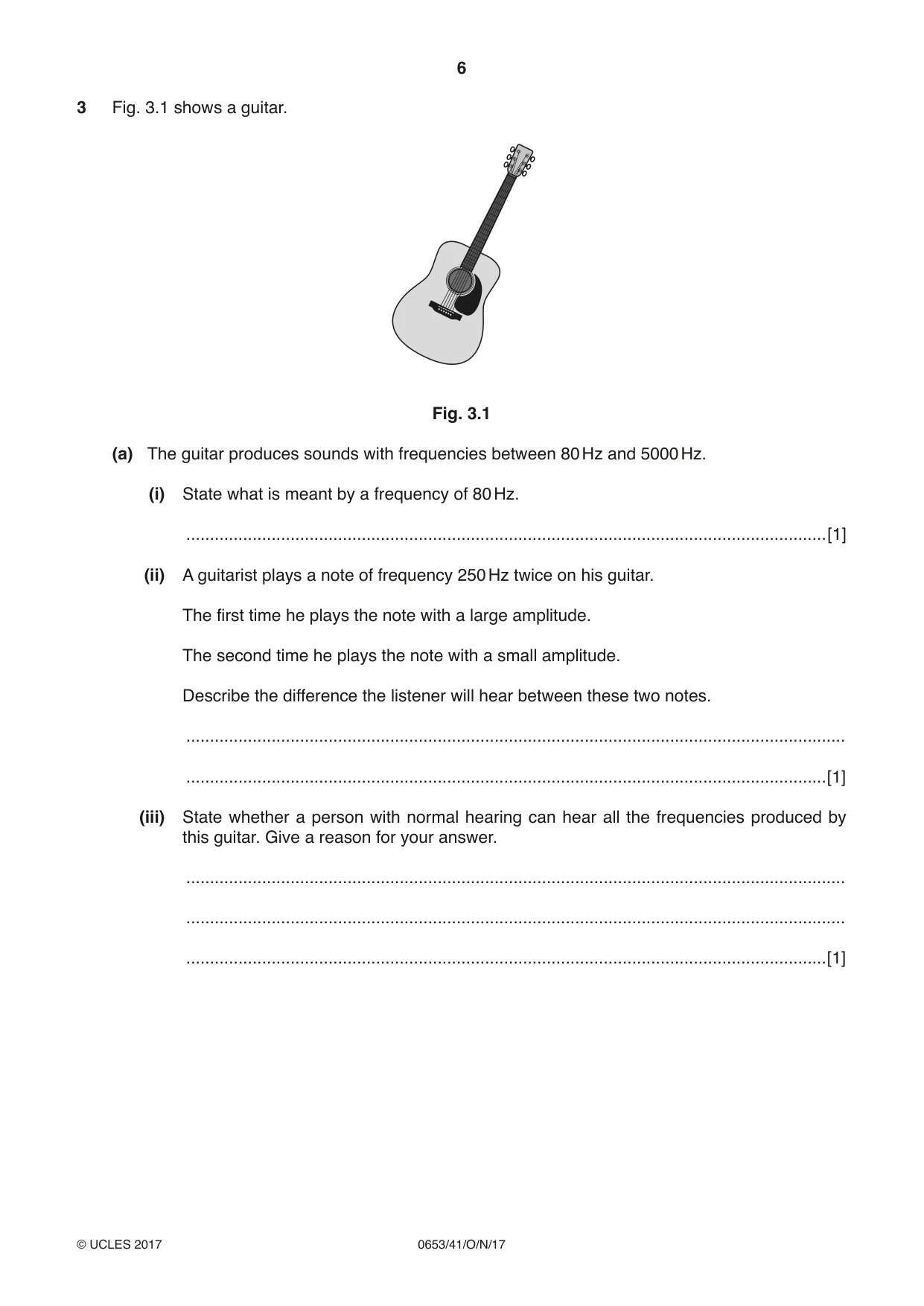
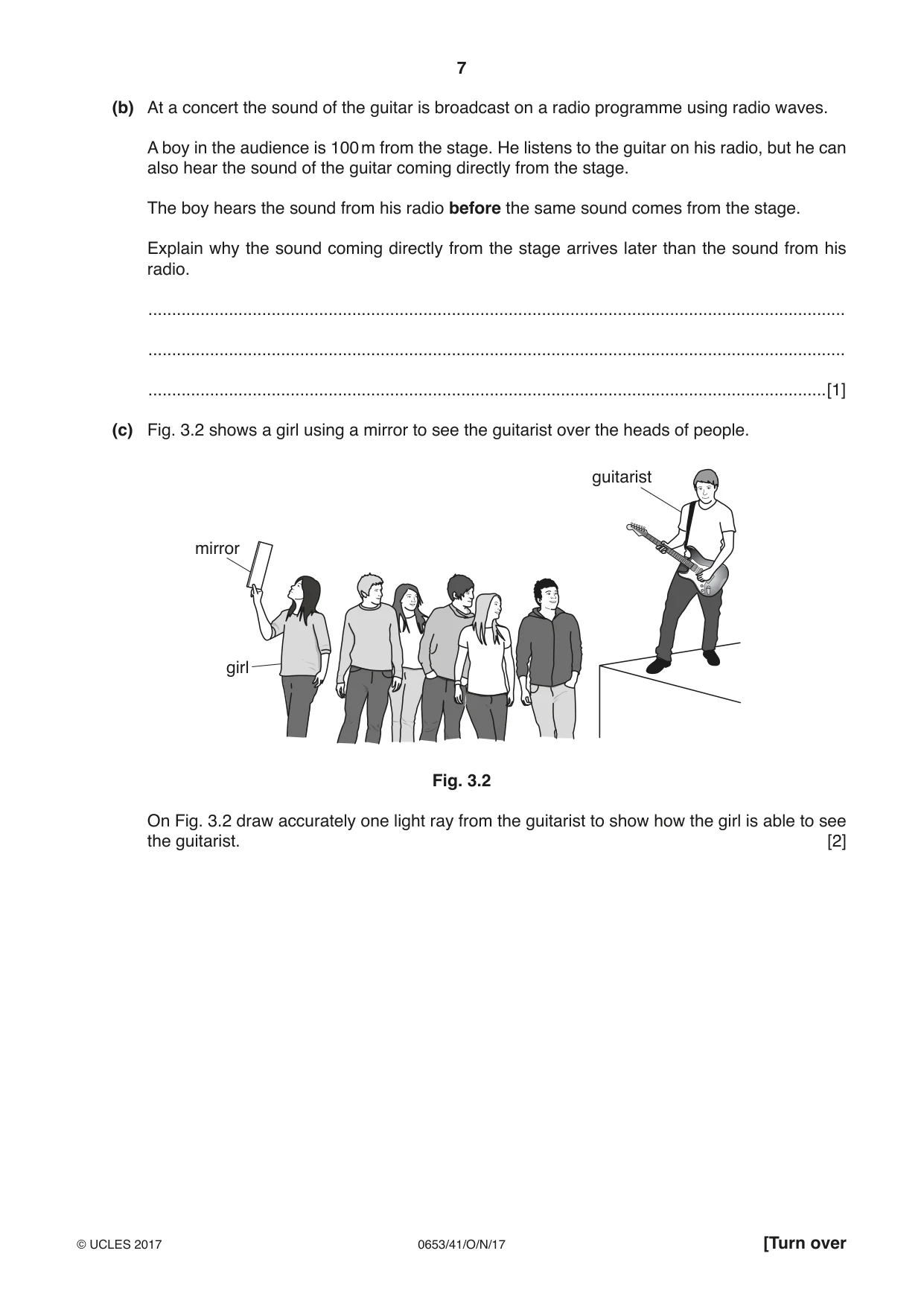
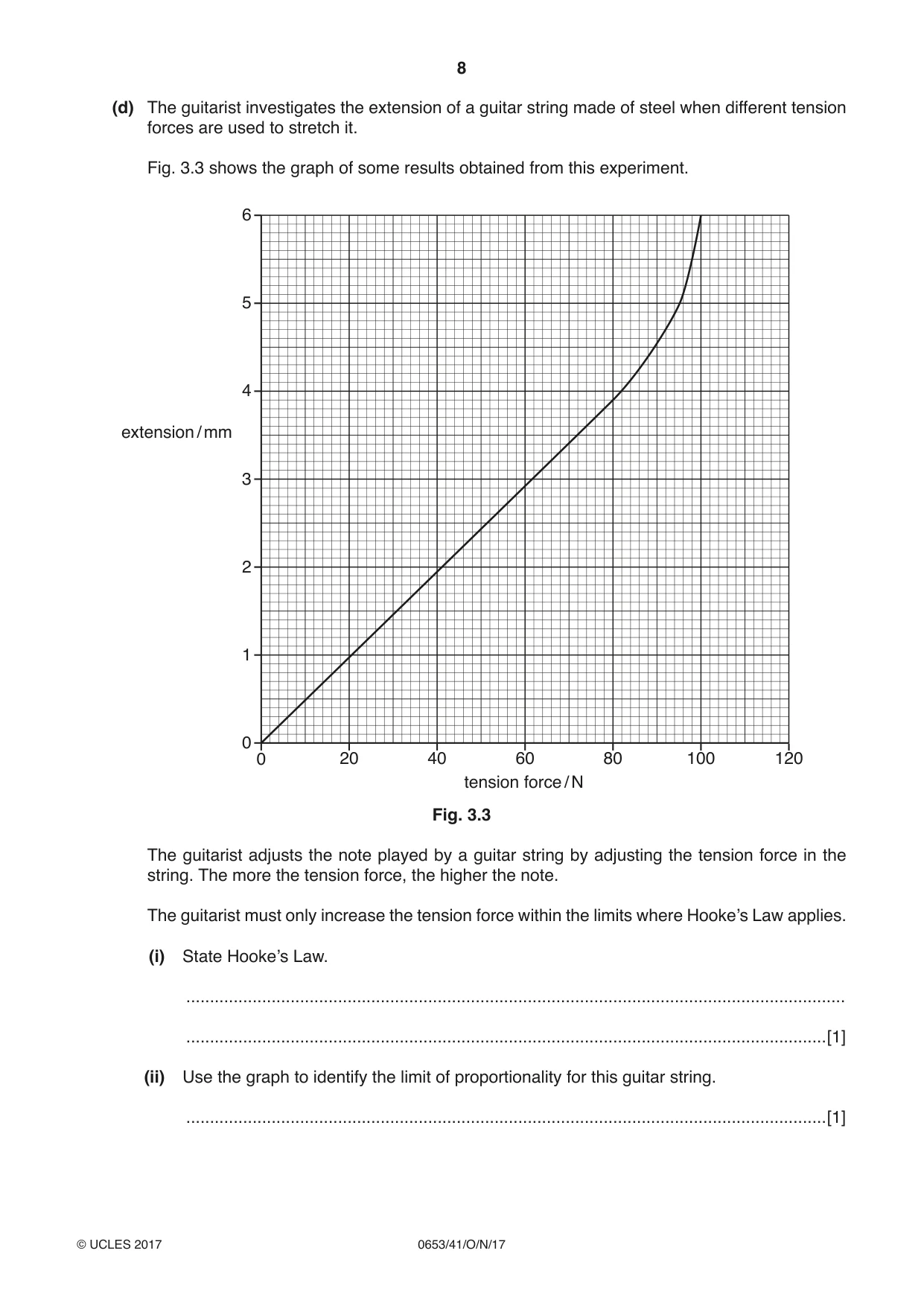
3 Fig. 3.1 shows a guitar. Fig. 3.1 (a) The guitar produces sounds with frequencies between 80 Hz and 5000 Hz. (i) State what is meant by a frequency of 80 Hz. .......................................................................................................................................[1] (ii) A guitarist plays a note of frequency 250 Hz twice on his guitar. The first time he plays the note with a large amplitude. The second time he plays the note with a small amplitude. Describe the difference the listener will hear between these two notes. ........................................................................................................................................... .......................................................................................................................................[1] (iii) State whether a person with normal hearing can hear all the frequencies produced by this guitar. Give a reason for your answer. ........................................................................................................................................... ........................................................................................................................................... .......................................................................................................................................[1] (b) At a concert the sound of the guitar is broadcast on a radio programme using radio waves. A boy in the audience is 100 m from the stage. He listens to the guitar on his radio, but he can also hear the sound of the guitar coming directly from the stage. The boy hears the sound from his radio before the same sound comes from the stage. Explain why the sound coming directly from the stage arrives later than the sound from his radio. ................................................................................................................................................... ................................................................................................................................................... ...............................................................................................................................................[1] (c) Fig. 3.2 shows a girl using a mirror to see the guitarist over the heads of people. guitarist mirror girl Fig. 3.2 On Fig. 3.2 draw accurately one light ray from the guitarist to show how the girl is able to see the guitarist. [2] (d) The guitarist investigates the extension of a guitar string made of steel when different tension forces are used to stretch it. Fig. 3.3 shows the graph of some results obtained from this experiment. 6 5 4 extension / mm 3 2 1 0 0 20 40 60 80 100 120 tension force / N Fig. 3.3 The guitarist adjusts the note played by a guitar string by adjusting the tension force in the string. The more the tension force, the higher the note. The guitarist must only increase the tension force within the limits where Hooke’s Law applies. (i) State Hooke’s Law. ........................................................................................................................................... .......................................................................................................................................[1] (ii) Use the graph to identify the limit of proportionality for this guitar string. .......................................................................................................................................[1]
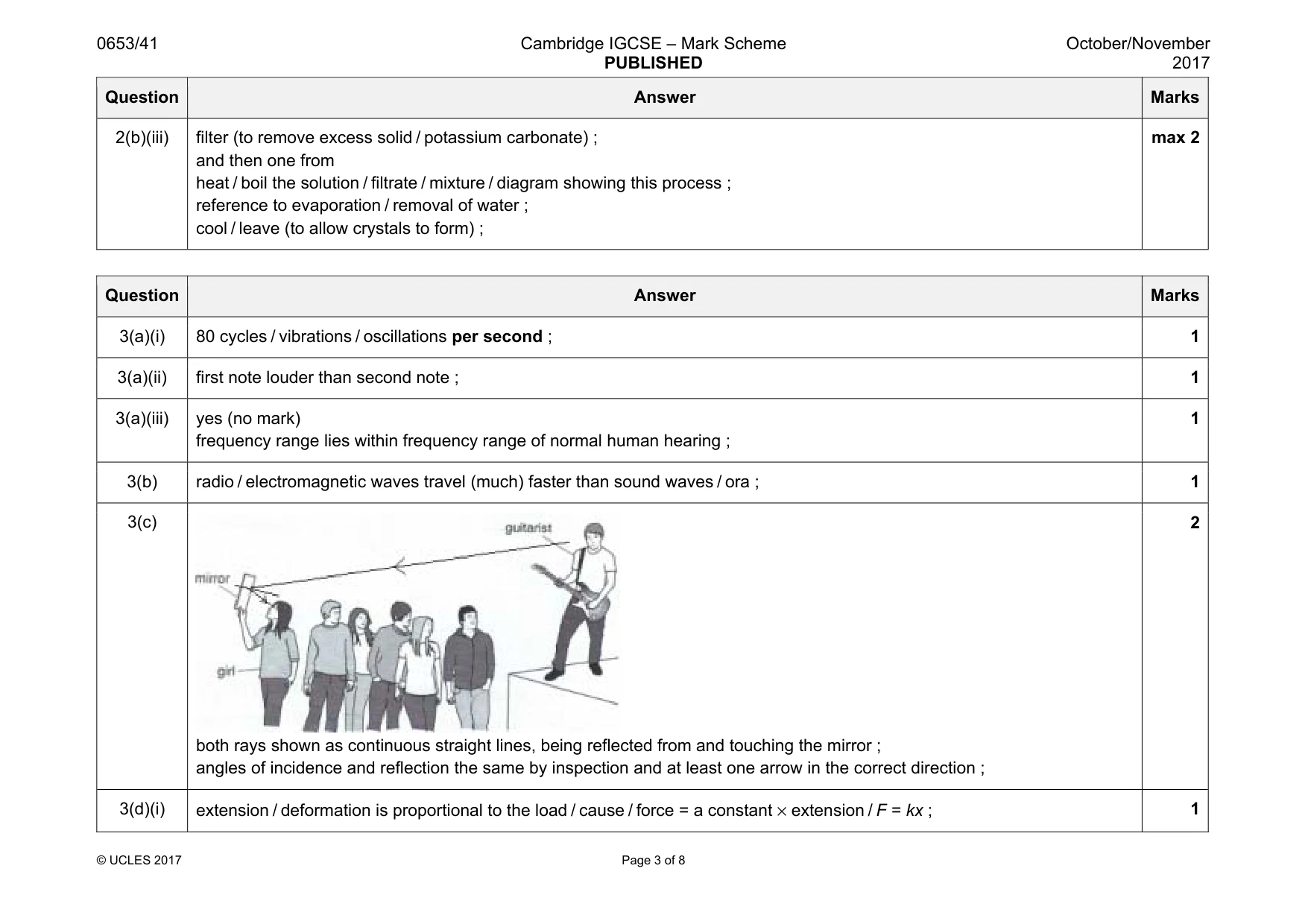
Mark scheme: 3(a)(i) 80 cycles / vibrations / oscillations per second ; 1 3(a)(ii) first note louder than second note ; 1 3(a)(iii) yes (no mark) frequency range lies within frequency range of normal human hearing ; 1 3(b) radio / electromagnetic waves travel (much) faster than sound waves / ora ; 1 3(c) both rays shown as continuous straight lines, being reflected from and touching the mirror ; angles of incidence and reflection the same by inspection and at least one arrow in the correct direction ; 2 3(d)(i) extension / deformation is proportional to the load / cause / force = a constant × extension / F = kx ; 1 Question Answer Marks 3(d)(ii) tension in the range 80 to 84 N ; 1
Q4 · Some bacterial cells as seen using an electron microscope
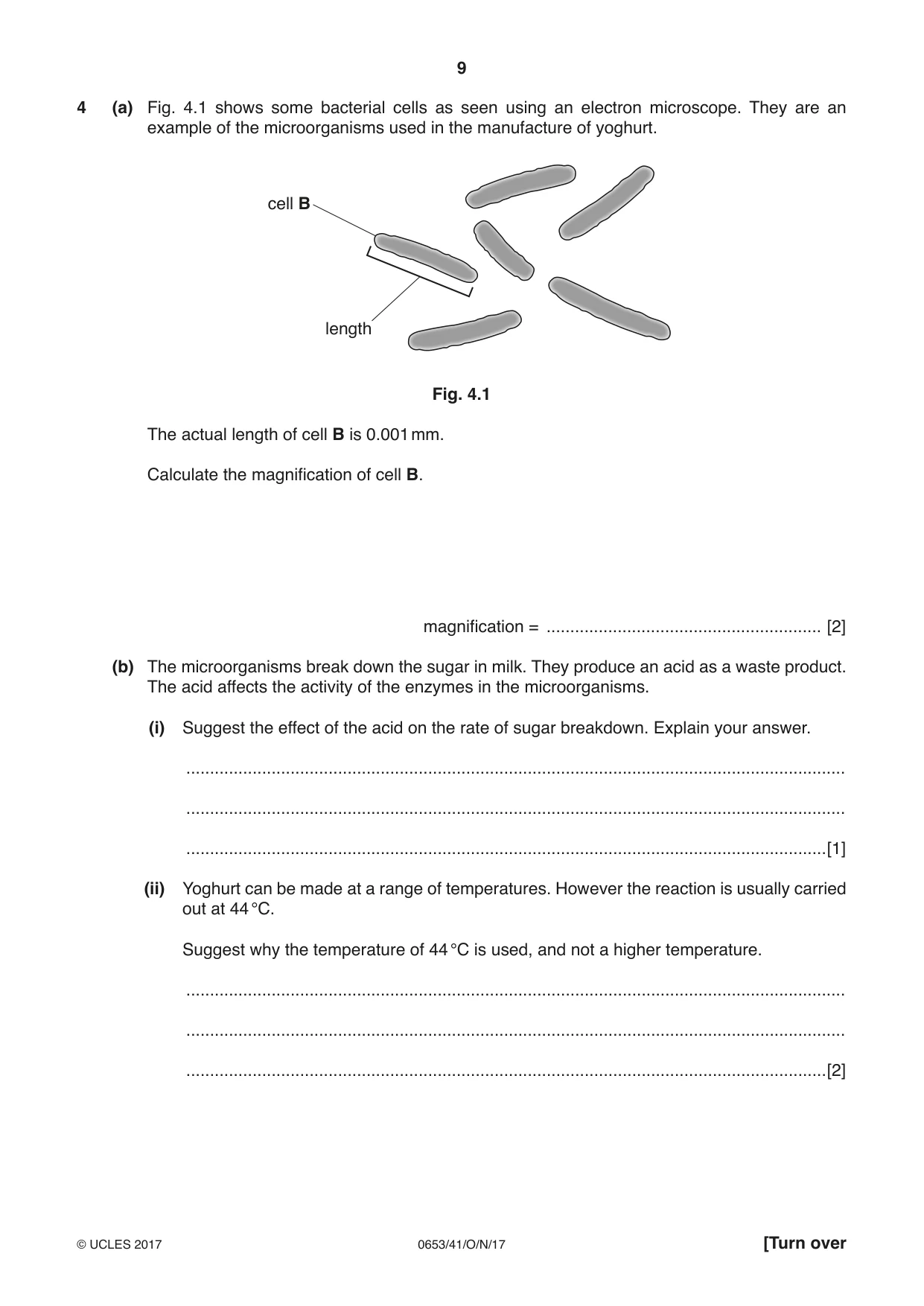
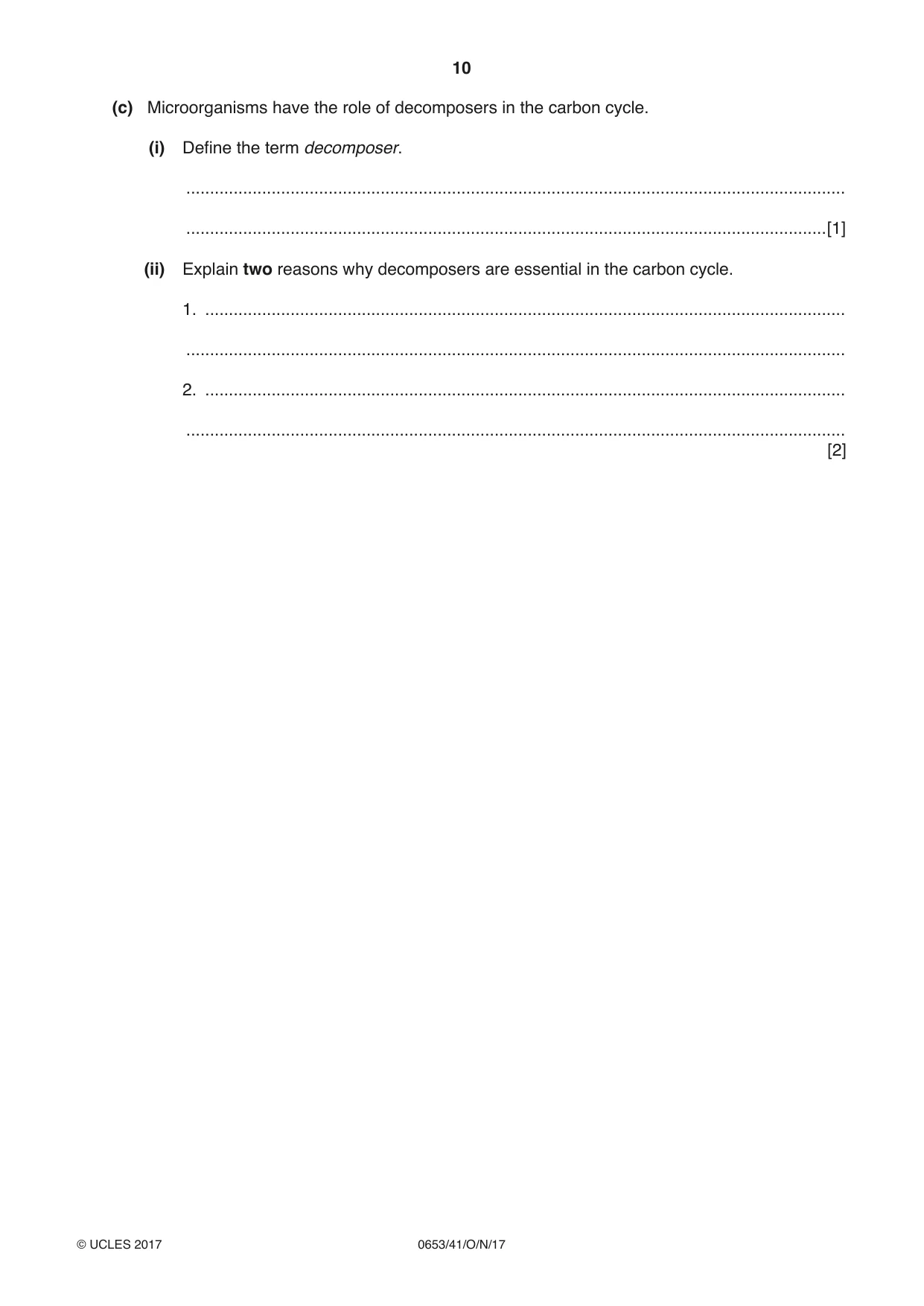
4 (a) Fig. 4.1 shows some bacterial cells as seen using an electron microscope. They are an example of the microorganisms used in the manufacture of yoghurt. cell B length Fig. 4.1 The actual length of cell B is 0.001 mm. Calculate the magnification of cell B. magnification = .......................................................... [2] (b) The microorganisms break down the sugar in milk. They produce an acid as a waste product. The acid affects the activity of the enzymes in the microorganisms. (i) Suggest the effect of the acid on the rate of sugar breakdown. Explain your answer. ........................................................................................................................................... ........................................................................................................................................... .......................................................................................................................................[1] (ii) Yoghurt can be made at a range of temperatures. However the reaction is usually carried out at 44 °C. Suggest why the temperature of 44 °C is used, and not a higher temperature. ........................................................................................................................................... ........................................................................................................................................... .......................................................................................................................................[2] (c) Microorganisms have the role of decomposers in the carbon cycle. (i) Define the term decomposer. ........................................................................................................................................... .......................................................................................................................................[1] (ii) Explain two reasons why decomposers are essential in the carbon cycle. 1. ....................................................................................................................................... ........................................................................................................................................... 2. ....................................................................................................................................... ........................................................................................................................................... [2]
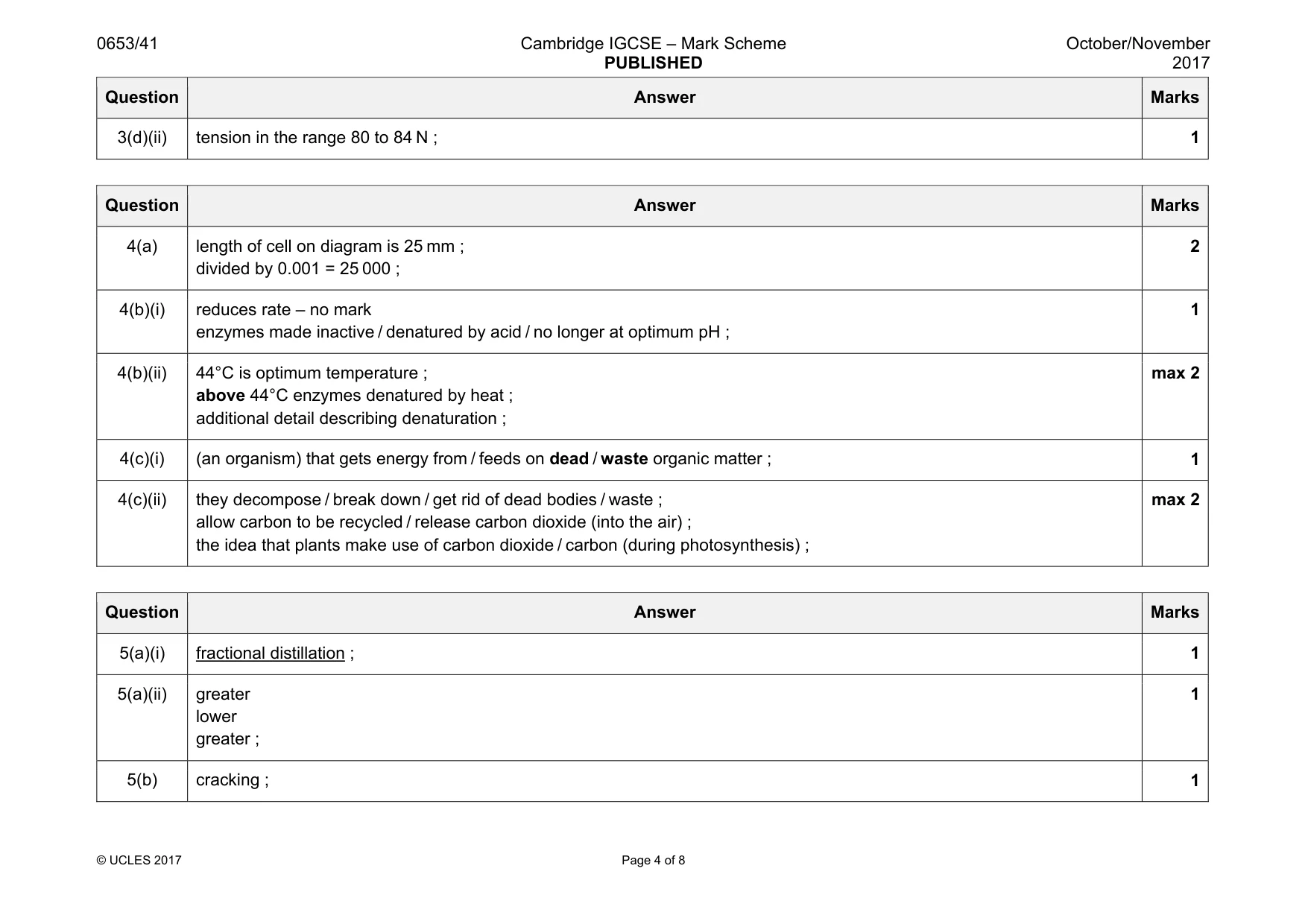
Mark scheme: 4(a) length of cell on diagram is 25 mm ; divided by 0.001 = 25 000 ; 2 4(b)(i) reduces rate – no mark enzymes made inactive / denatured by acid / no longer at optimum pH ; 1 4(b)(ii) 44°C is optimum temperature ; above 44°C enzymes denatured by heat ; additional detail describing denaturation ; max 2 4(c)(i) (an organism) that gets energy from / feeds on dead / waste organic matter ; 1 4(c)(ii) they decompose / break down / get rid of dead bodies / waste ; allow carbon to be recycled / release carbon dioxide (into the air) ; the idea that plants make use of carbon dioxide / carbon (during photosynthesis) ; max 2
Q5 · Petroleum is separated into useful products by process W shown in Fig
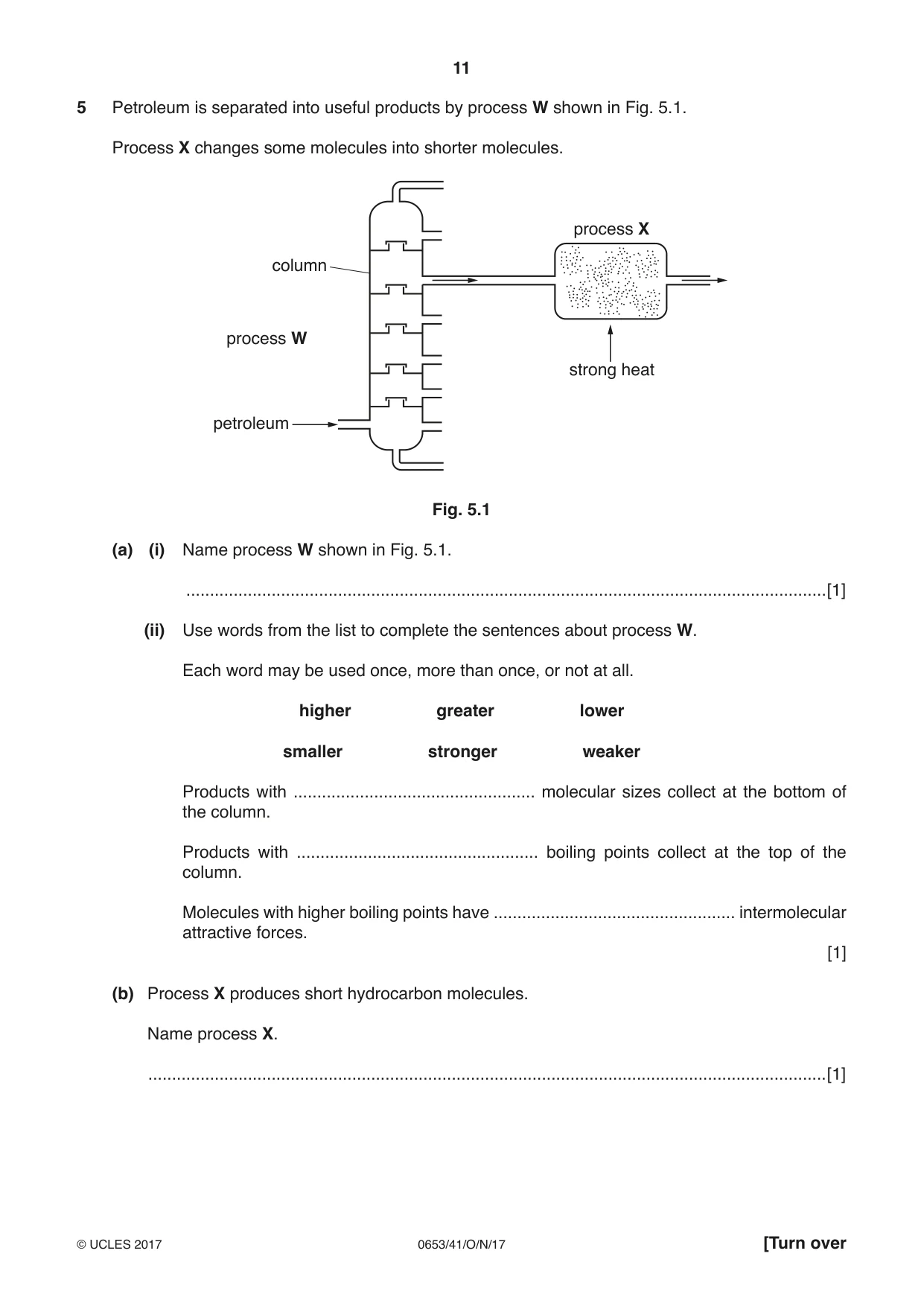
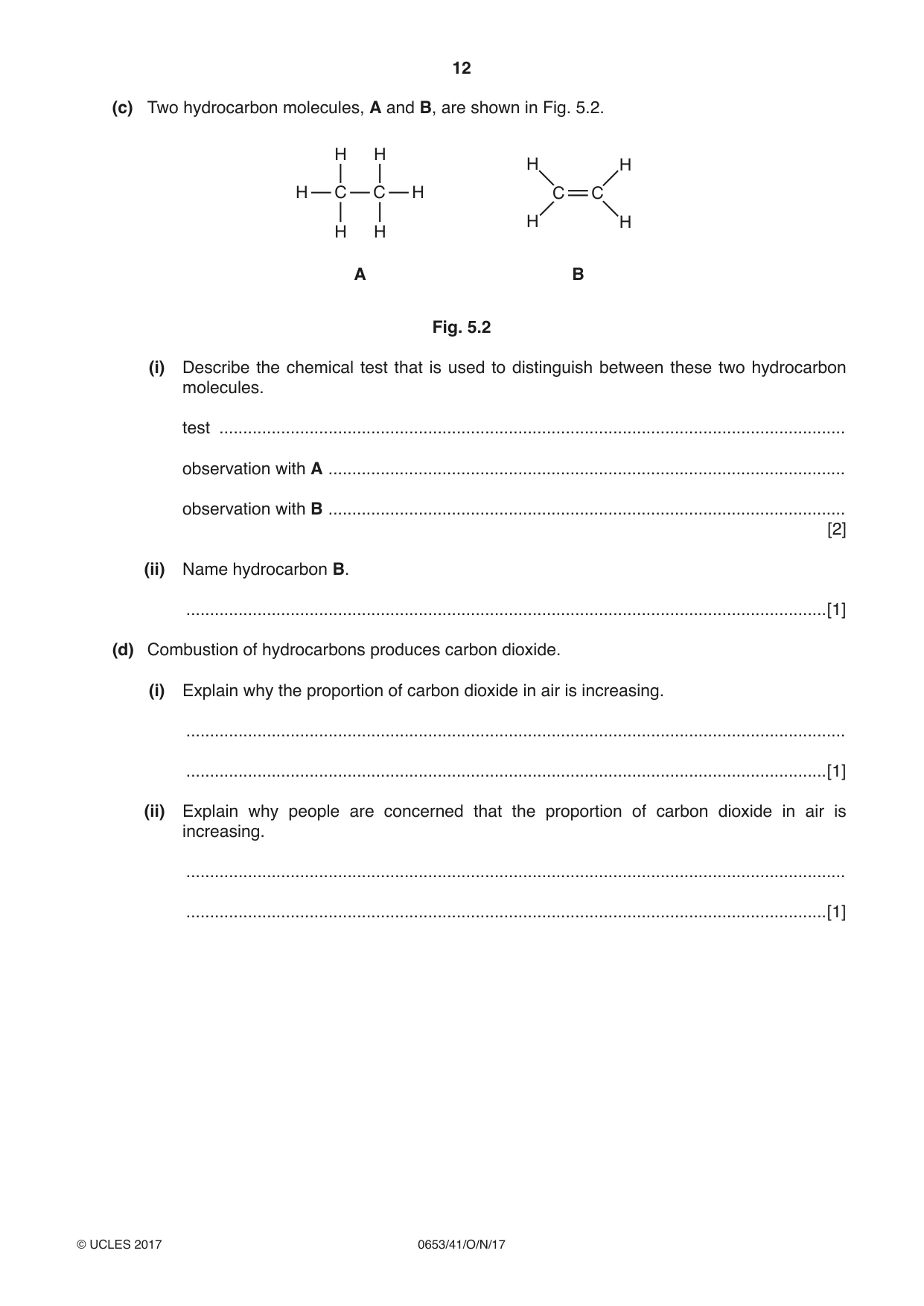
5 Petroleum is separated into useful products by process W shown in Fig. 5.1. Process X changes some molecules into shorter molecules. process X column process W strong heat petroleum Fig. 5.1 (a) (i) Name process W shown in Fig. 5.1. .......................................................................................................................................[1] (ii) Use words from the list to complete the sentences about process W. Each word may be used once, more than once, or not at all. higher greater lower smaller stronger weaker Products with ................................................... molecular sizes collect at the bottom of the column. Products with ................................................... boiling points collect at the top of the column. Molecules with higher boiling points have ................................................... intermolecular attractive forces. [1] (b) Process X produces short hydrocarbon molecules. Name process X. ...............................................................................................................................................[1] (c) Two hydrocarbon molecules, A and B, are shown in Fig. 5.2. H H H H H C C H C C H H H H A B Fig. 5.2 (i) Describe the chemical test that is used to distinguish between these two hydrocarbon molecules. test .................................................................................................................................... observation with A ............................................................................................................. observation with B ............................................................................................................. [2] (ii) Name hydrocarbon B. .......................................................................................................................................[1] (d) Combustion of hydrocarbons produces carbon dioxide. (i) Explain why the proportion of carbon dioxide in air is increasing. ........................................................................................................................................... .......................................................................................................................................[1] (ii) Explain why people are concerned that the proportion of carbon dioxide in air is increasing. ........................................................................................................................................... .......................................................................................................................................[1]
Mark scheme: 5(a)(i) fractional distillation ; 1 5(a)(ii) greater lower greater ; 1 5(b) cracking ; 1 Question Answer Marks 5(c)(i) (test) bromine (water) ; (observation A) no change and (observation B) decolourises / turns (brown to) colourless ; 2 5(c)(ii) ethene ; 1 5(d)(i) reference to use of (fossil) fuel / named fuel / industrialisation / deforestation ; 1 5(d)(ii) global warming / consequences of global warming ; 1
Q6 · A fan heater used to heat a room in cold weather
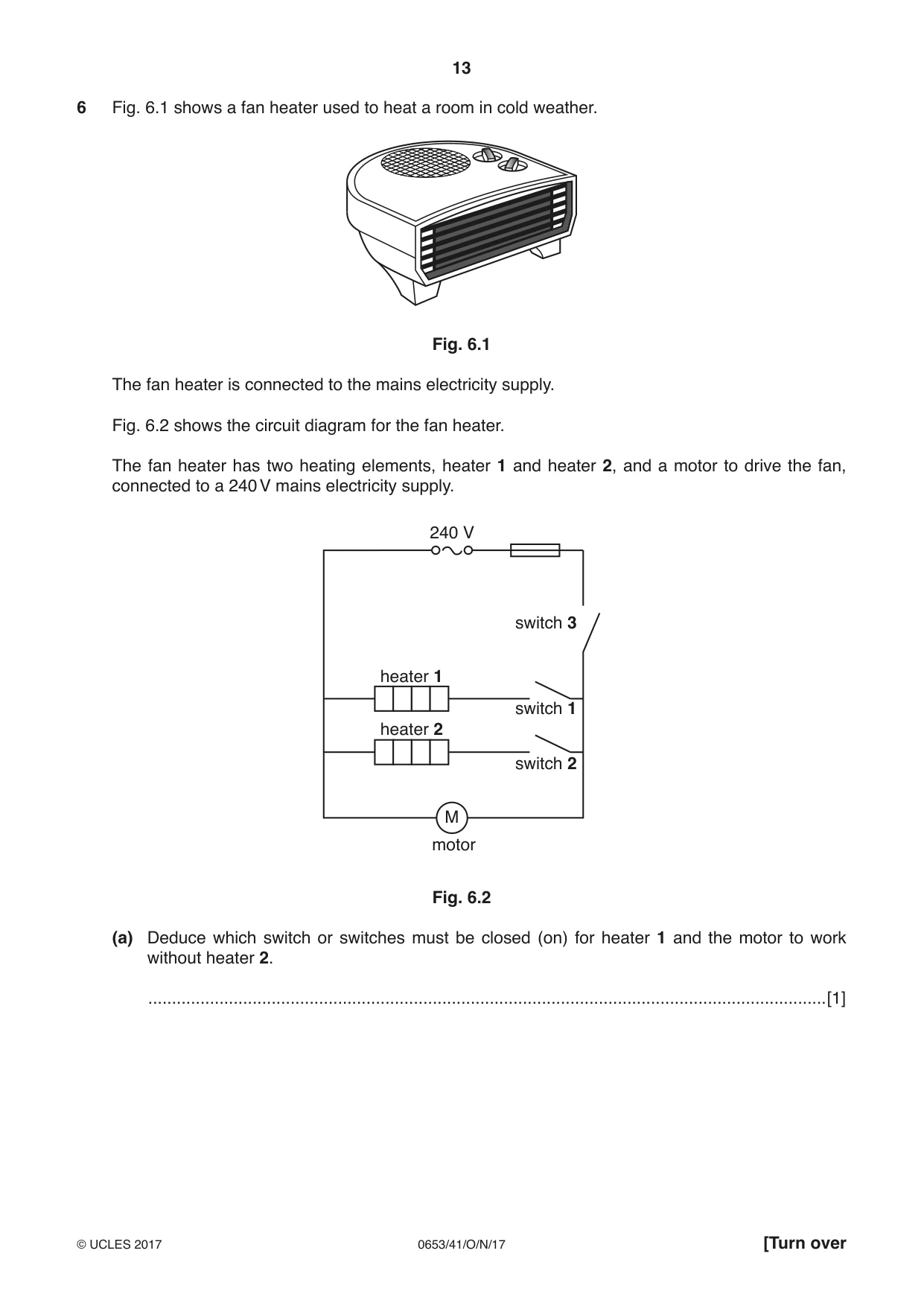
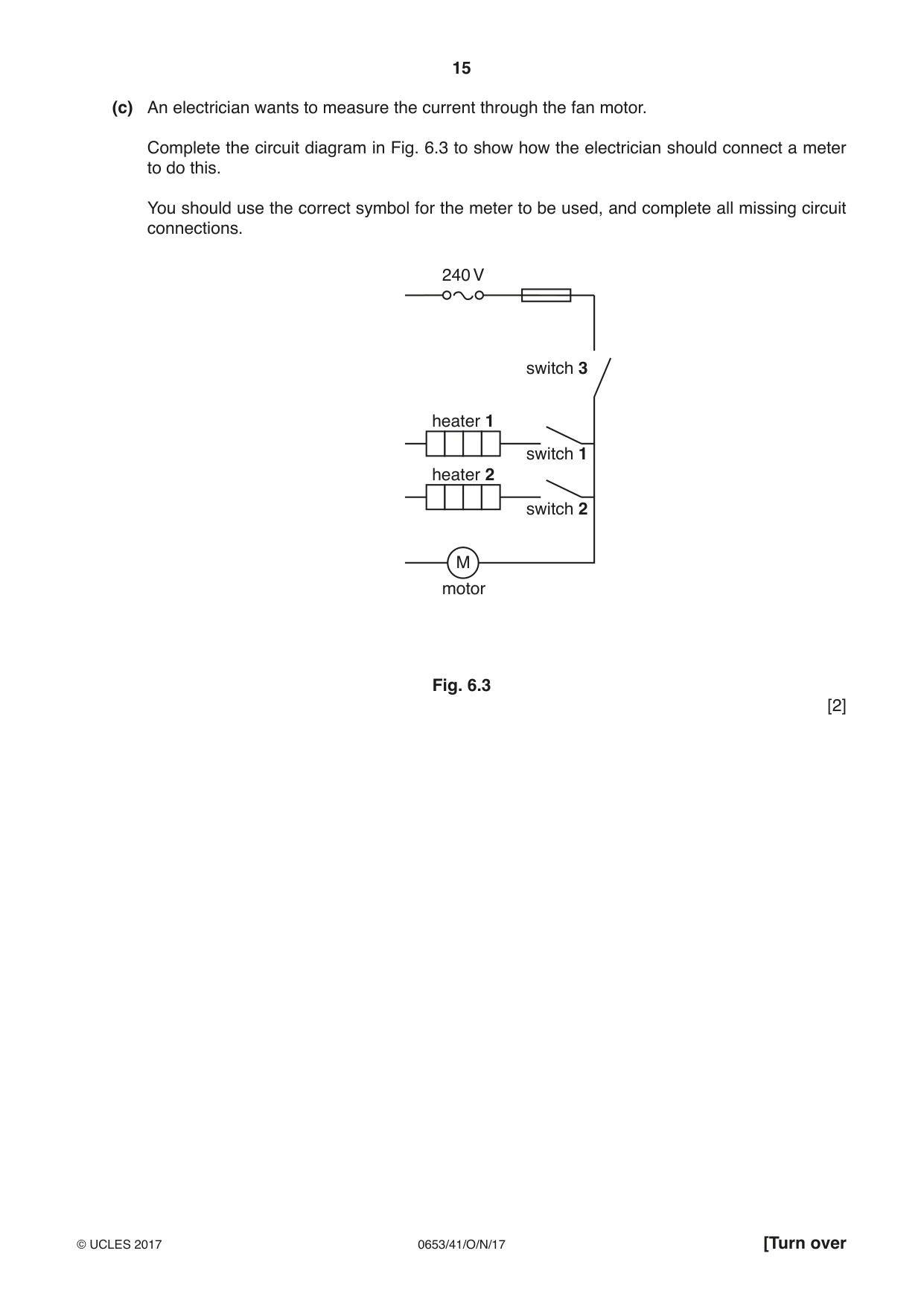
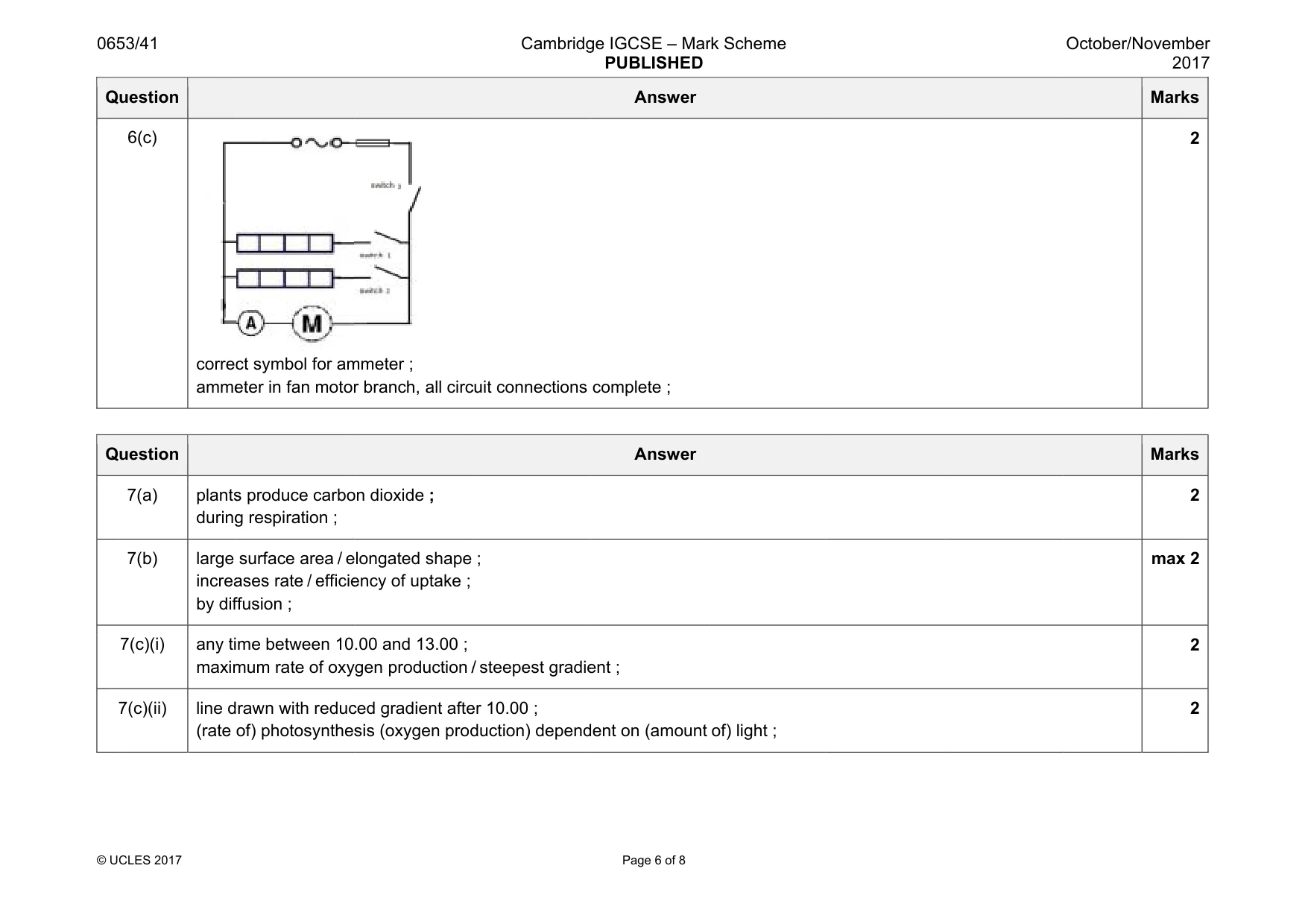
6 Fig. 6.1 shows a fan heater used to heat a room in cold weather. Fig. 6.1 The fan heater is connected to the mains electricity supply. Fig. 6.2 shows the circuit diagram for the fan heater. The fan heater has two heating elements, heater 1 and heater 2, and a motor to drive the fan, connected to a 240 V mains electricity supply. 240 V switch 3 heater 1 switch 1 heater 2 switch 2 M motor Fig. 6.2 (a) Deduce which switch or switches must be closed (on) for heater 1 and the motor to work without heater 2. ...............................................................................................................................................[1] (b) (i) Each heating element has a power consumption of 1100 W. Calculate the current through one heating element when switched on. State the formula that you use and show your working. formula working current = ....................................................... A [2] (ii) The fan motor is rated at 50 W. The fuse in the circuit is rated at 10 A. Explain whether this fuse provides good protection if an overload happens. ........................................................................................................................................... ........................................................................................................................................... .......................................................................................................................................[2] (c) An electrician wants to measure the current through the fan motor. Complete the circuit diagram in Fig. 6.3 to show how the electrician should connect a meter to do this. You should use the correct symbol for the meter to be used, and complete all missing circuit connections. 240 V switch 3 heater 1 switch 1 heater 2 switch 2 M motor Fig. 6.3 [2]
Mark scheme: 6(a) (both) switch 1 and switch 3 ; 1 6(b)(i) P = V × I (or rearranged) / 1100 / 240 ; = 4.58 or 4.6 A ; 2 6(b)(ii) (if everything switched on) then 9.4 A / 2250 W / 0.21 A seen in calculation ; correct comparison of total current with fuse rating ; 2 Q Question 6(c) correc amme ct symbol for am eter in fan motor mmeter ; r branch, all circ cuit connections Answer complete ; Mar ks 2
Q7 · A sealed glass jar containing soil and plants
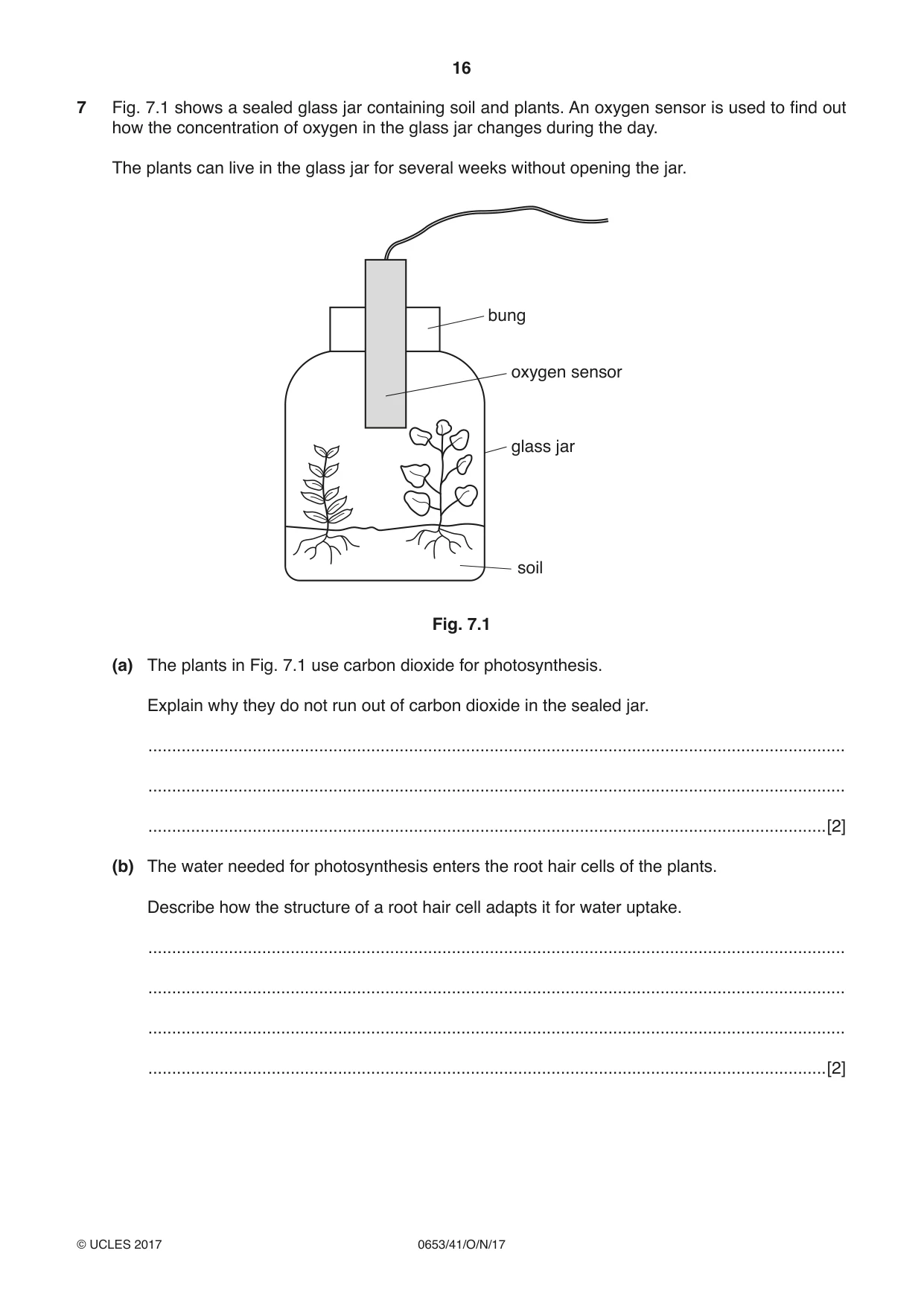
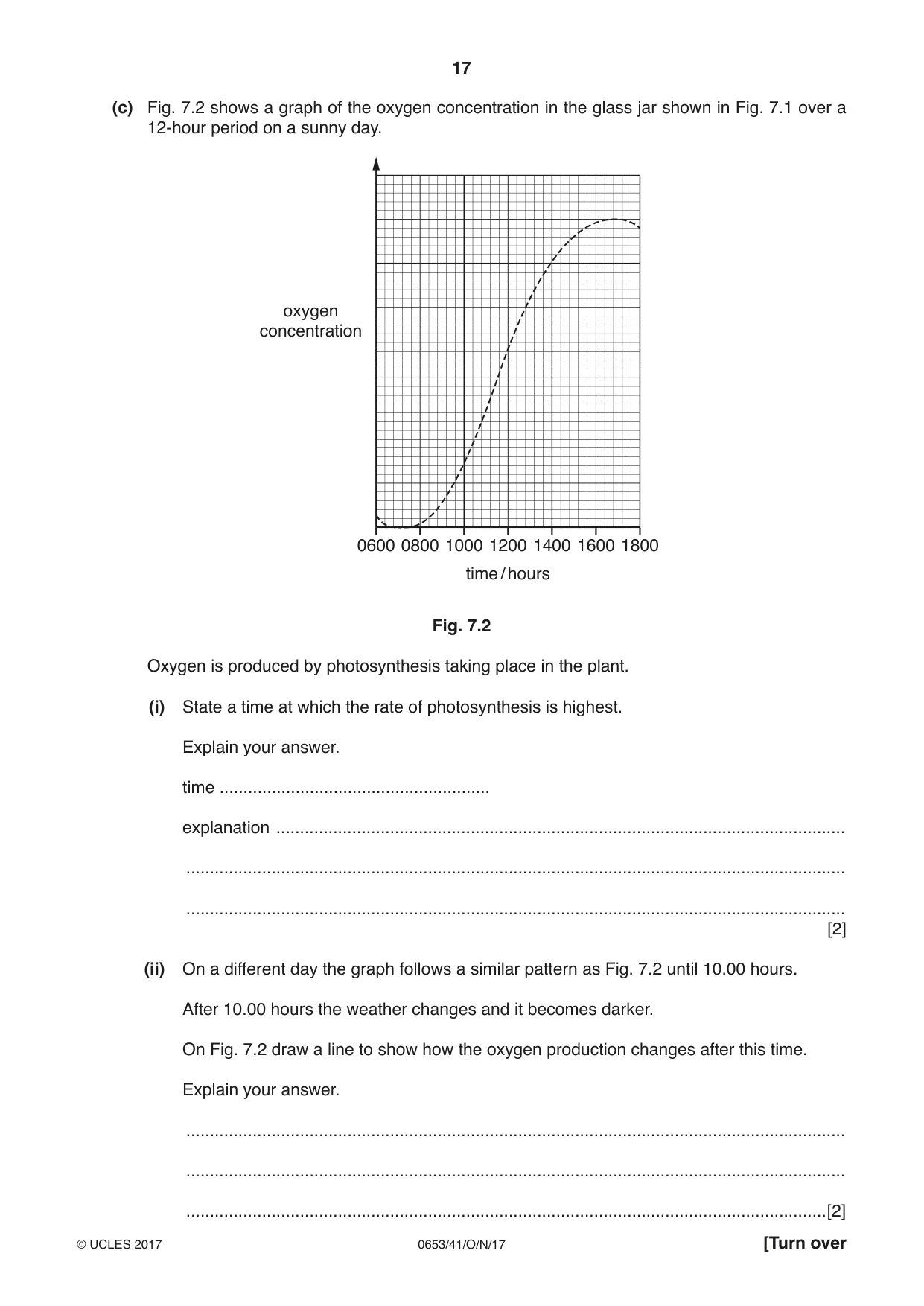
7 Fig. 7.1 shows a sealed glass jar containing soil and plants. An oxygen sensor is used to find out how the concentration of oxygen in the glass jar changes during the day. The plants can live in the glass jar for several weeks without opening the jar. bung oxygen sensor glass jar soil Fig. 7.1 (a) The plants in Fig. 7.1 use carbon dioxide for photosynthesis. Explain why they do not run out of carbon dioxide in the sealed jar. ................................................................................................................................................... ................................................................................................................................................... ...............................................................................................................................................[2] (b) The water needed for photosynthesis enters the root hair cells of the plants. Describe how the structure of a root hair cell adapts it for water uptake. ................................................................................................................................................... ................................................................................................................................................... ................................................................................................................................................... ...............................................................................................................................................[2] (c) Fig. 7.2 shows a graph of the oxygen concentration in the glass jar shown in Fig. 7.1 over a 12-hour period on a sunny day. oxygen concentration 0600 0800 1000 1200 1400 1600 1800 time / hours Fig. 7.2 Oxygen is produced by photosynthesis taking place in the plant. (i) State a time at which the rate of photosynthesis is highest. Explain your answer. time ......................................................... explanation ........................................................................................................................ ........................................................................................................................................... ........................................................................................................................................... [2] (ii) On a different day the graph follows a similar pattern as Fig. 7.2 until 10.00 hours. After 10.00 hours the weather changes and it becomes darker. On Fig. 7.2 draw a line to show how the oxygen production changes after this time. Explain your answer. ........................................................................................................................................... ........................................................................................................................................... .......................................................................................................................................[2]
Mark scheme: 7(a) plants during 7(b) large increa by dif 7(c)(i) any ti maxim 7(c)(ii) line d (rate s produce carbo g respiration ; surface area / e ases rate / efficie ffusion ; me between 10 mum rate of oxy rawn with reduc of) photosynthes on dioxide ; longated shape ency of uptake ; .00 and 13.00 ; gen production / ced gradient afte sis (oxygen prod ; / steepest gradie er 10.00 ; duction) depend ent ; dent on (amount of) light ; max 2 x 2 2 2
Q8 · An atom of phosphorus is represented as shown
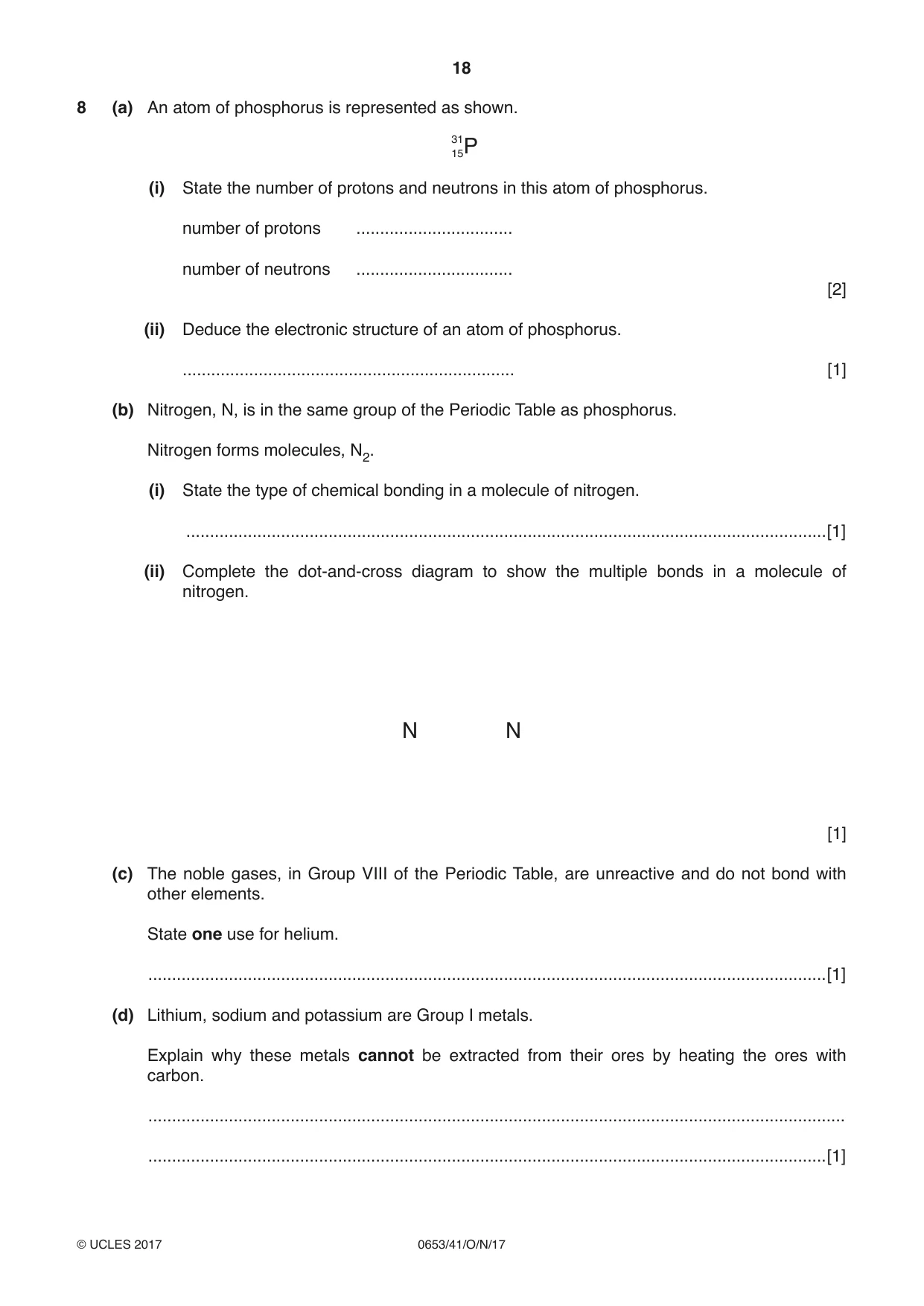
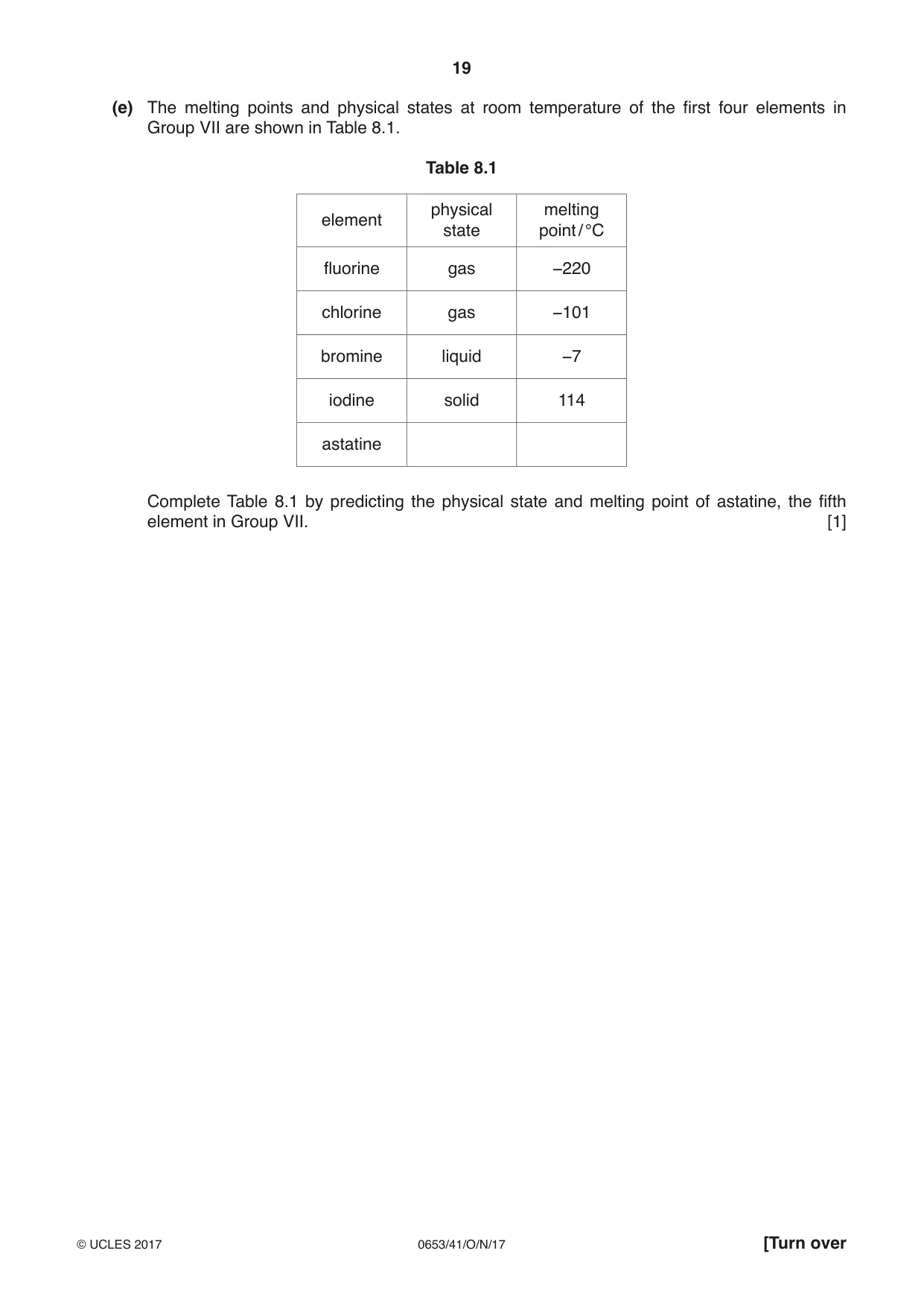
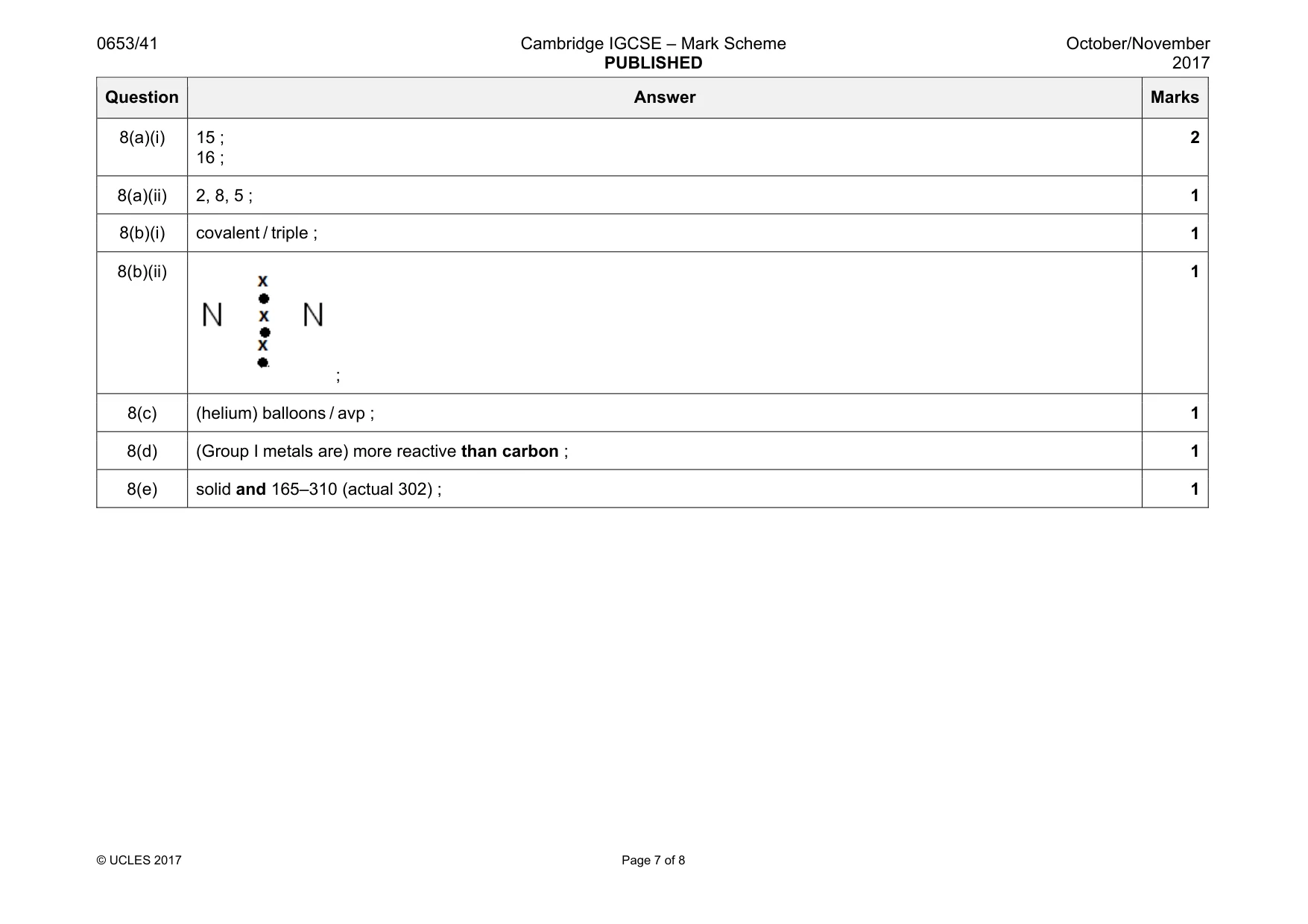
8 (a) An atom of phosphorus is represented as shown. 3115P (i) State the number of protons and neutrons in this atom of phosphorus. number of protons ................................. number of neutrons ................................. [2] (ii) Deduce the electronic structure of an atom of phosphorus. ...................................................................... [1] (b) Nitrogen, N, is in the same group of the Periodic Table as phosphorus. Nitrogen forms molecules, N2. (i) State the type of chemical bonding in a molecule of nitrogen. .......................................................................................................................................[1] (ii) Complete the dot-and-cross diagram to show the multiple bonds in a molecule of nitrogen. N N [1] (c) The noble gases, in Group VIII of the Periodic Table, are unreactive and do not bond with other elements. State one use for helium. ...............................................................................................................................................[1] (d) Lithium, sodium and potassium are Group I metals. Explain why these metals cannot be extracted from their ores by heating the ores with carbon. ................................................................................................................................................... ...............................................................................................................................................[1] (e) The melting points and physical states at room temperature of the first four elements in Group VII are shown in Table 8.1. Table 8.1 physical melting element state point / °C fluorine gas −220 chlorine gas −101 bromine liquid −7 iodine solid 114 astatine Complete Table 8.1 by predicting the physical state and melting point of astatine, the fifth element in Group VII. [1]
Mark scheme: 8(a)(i) 15 ; 16 ; 2 8(a)(ii) 2, 8, 5 ; 1 8(b)(i) covalent / triple ; 1 8(b)(ii) ; 1 8(c) (helium) balloons / avp ; 1 8(d) (Group I metals are) more reactive than carbon ; 1 8(e) solid and 165–310 (actual 302) ; 1
Q9 · The horizontal and vertical forces which act on a car on a level road
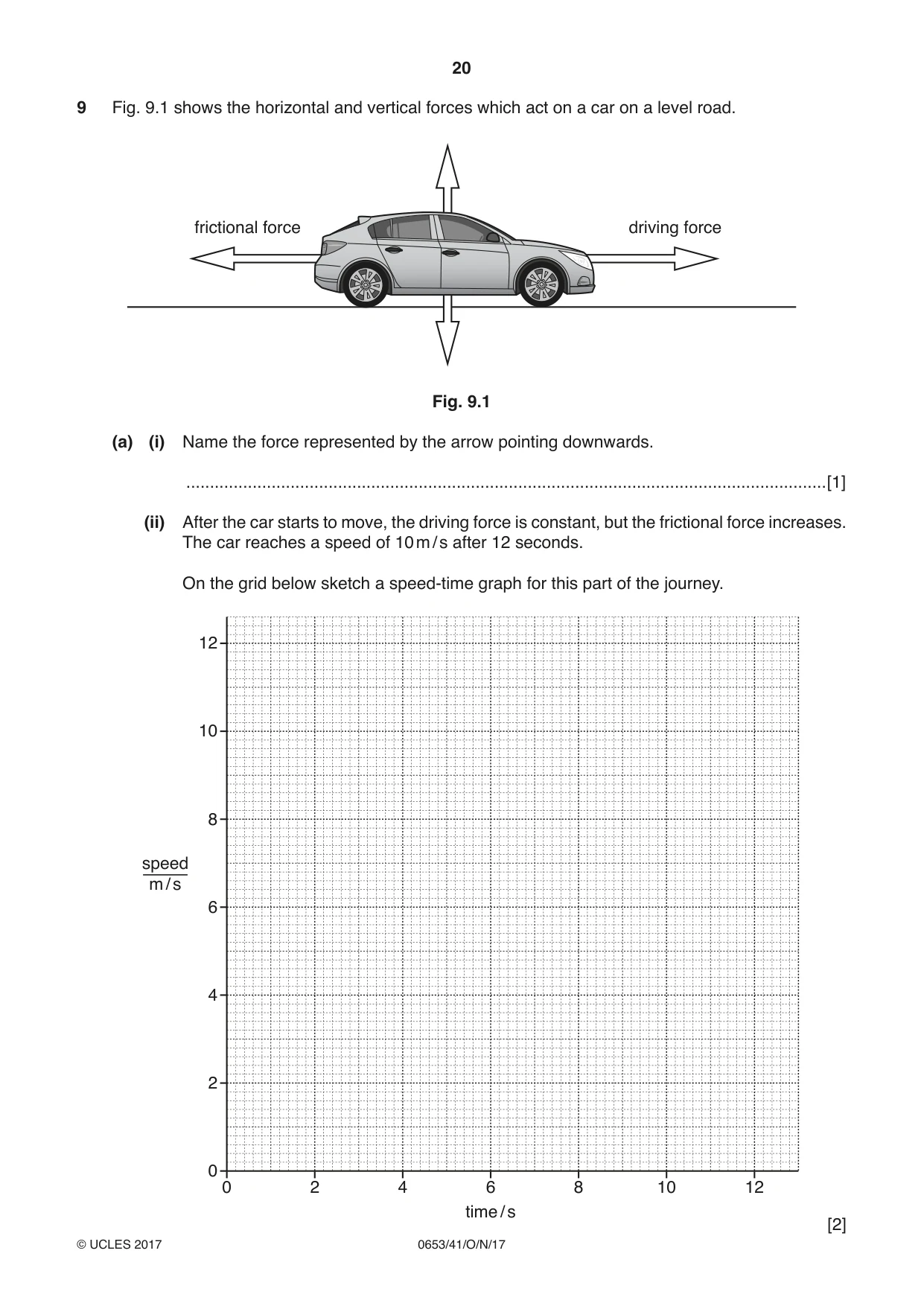
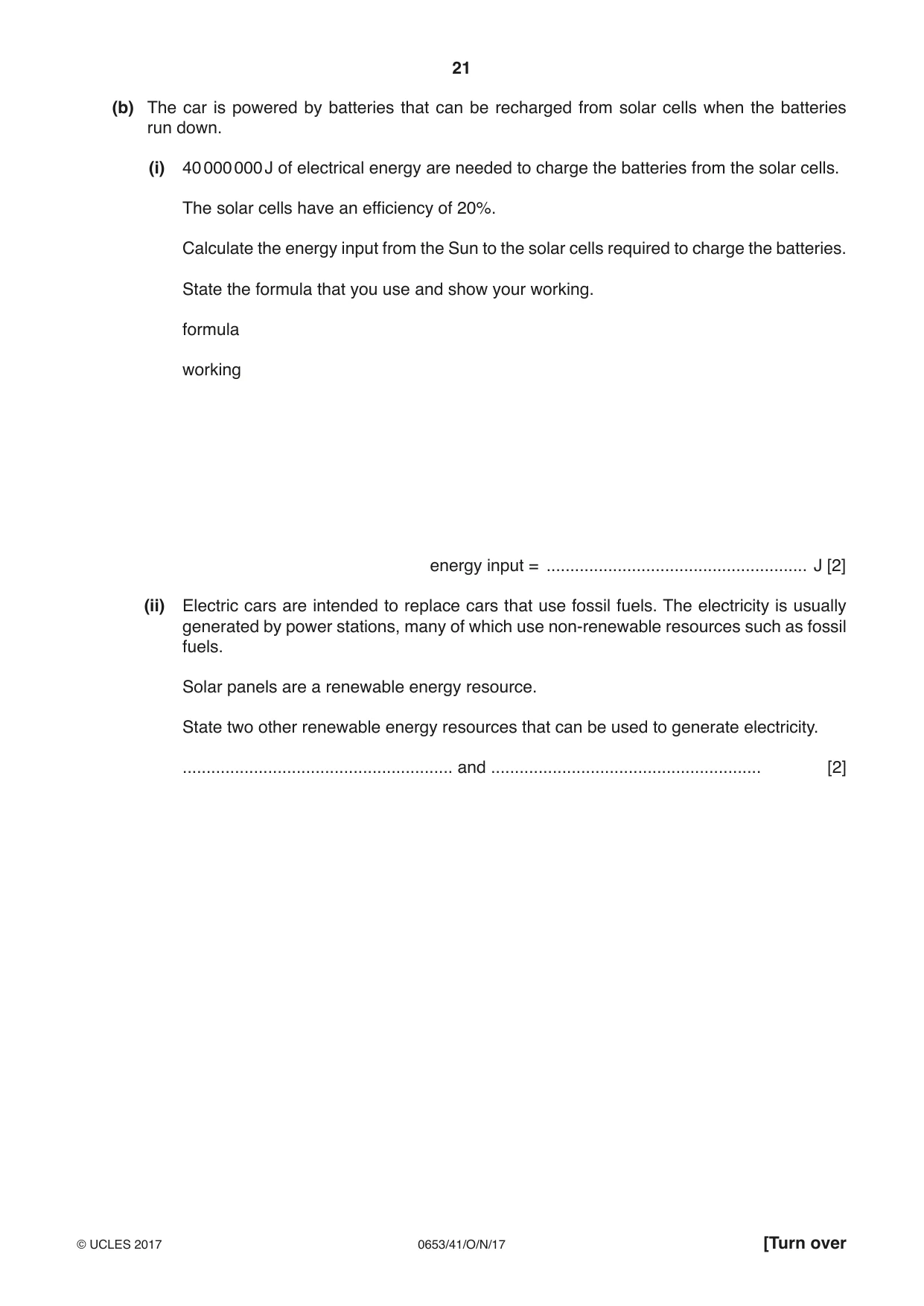
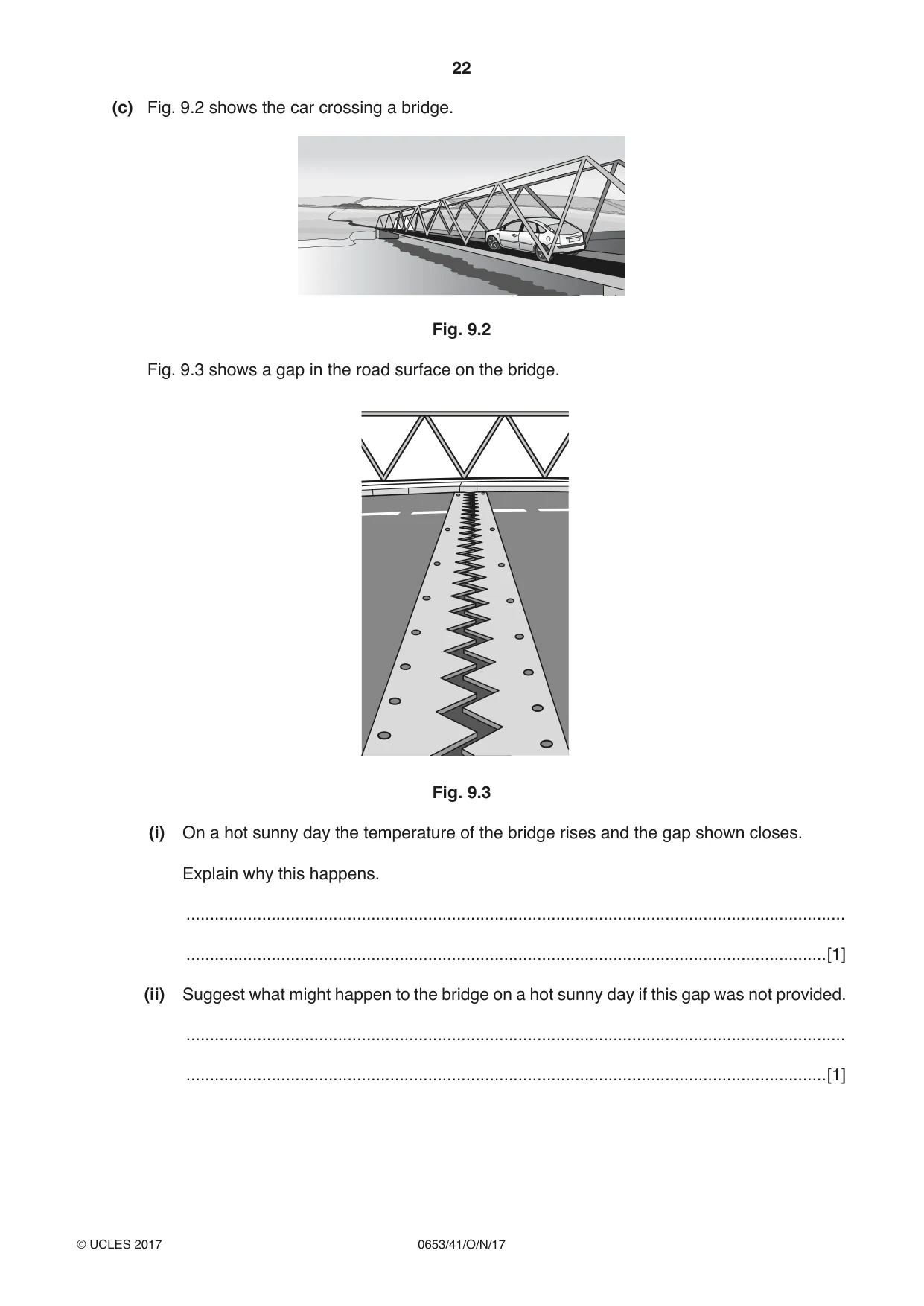
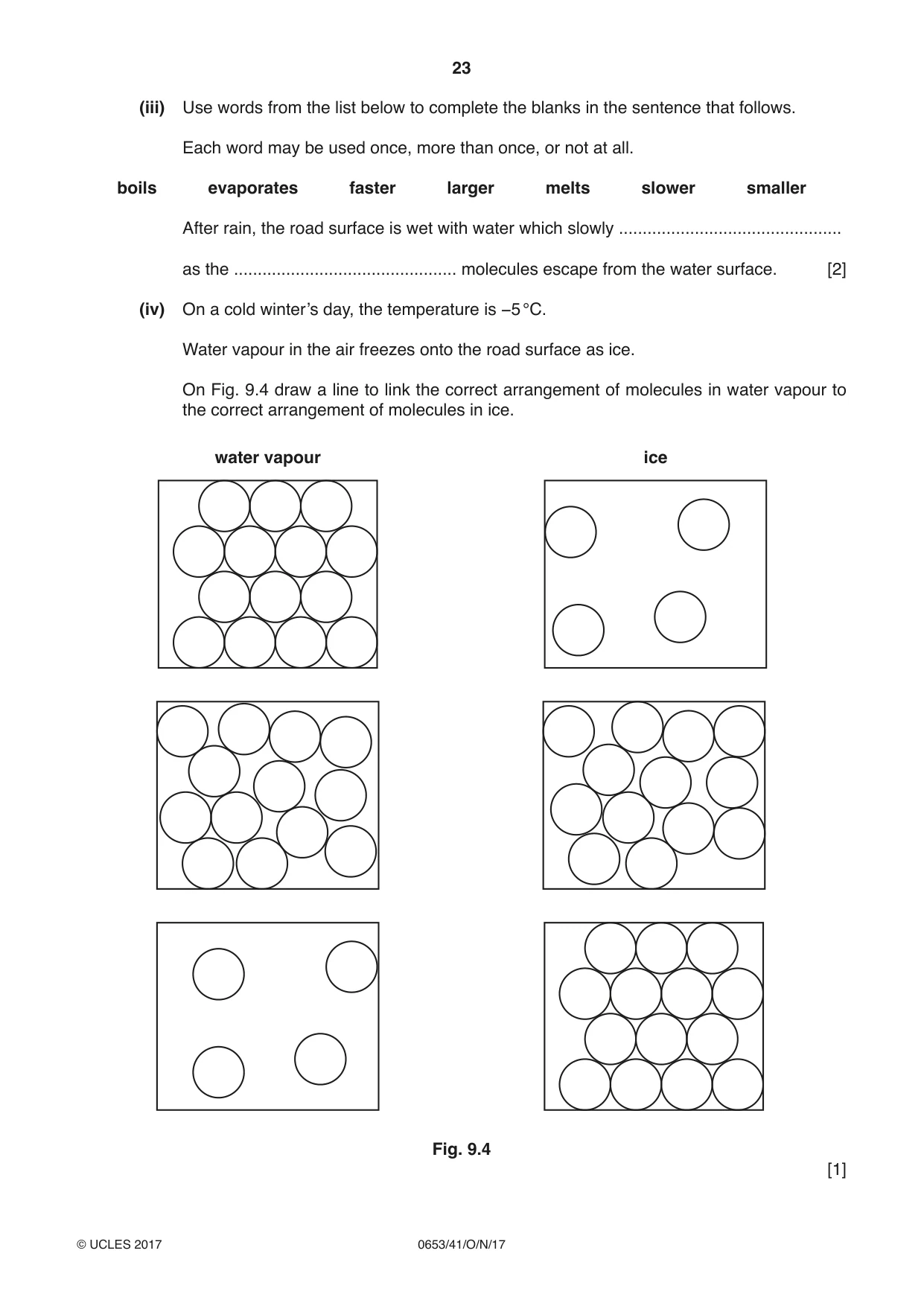
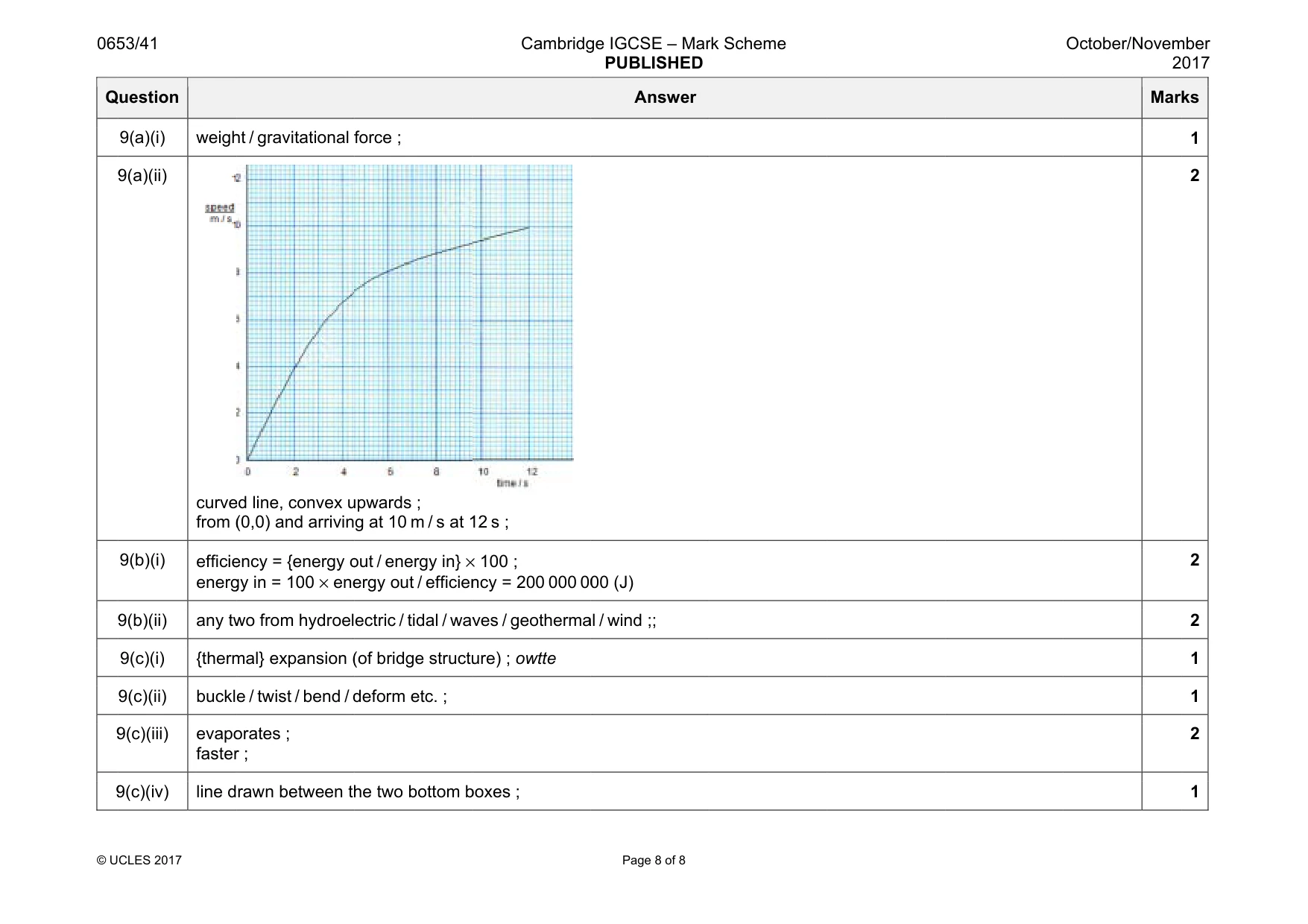
9 Fig. 9.1 shows the horizontal and vertical forces which act on a car on a level road. frictional force driving force Fig. 9.1 (a) (i) Name the force represented by the arrow pointing downwards. .......................................................................................................................................[1] (ii) After the car starts to move, the driving force is constant, but the frictional force increases. The car reaches a speed of 10 m / s after 12 seconds. On the grid below sketch a speed-time graph for this part of the journey. 12 10 8 speed m / s 6 4 2 0 0 2 4 6 8 10 12 time / s (b) The car is powered by batteries that can be recharged from solar cells when the batteries run down. (i) 40 000 000 J of electrical energy are needed to charge the batteries from the solar cells. The solar cells have an efficiency of 20%. Calculate the energy input from the Sun to the solar cells required to charge the batteries. State the formula that you use and show your working. formula working energy input = ....................................................... J [2] (ii) Electric cars are intended to replace cars that use fossil fuels. The electricity is usually generated by power stations, many of which use non-renewable resources such as fossil fuels. Solar panels are a renewable energy resource. State two other renewable energy resources that can be used to generate electricity. ......................................................... and ......................................................... [2] (c) Fig. 9.2 shows the car crossing a bridge. Fig. 9.2 Fig. 9.3 shows a gap in the road surface on the bridge. Fig. 9.3 (i) On a hot sunny day the temperature of the bridge rises and the gap shown closes. Explain why this happens. ........................................................................................................................................... .......................................................................................................................................[1] (ii) Suggest what might happen to the bridge on a hot sunny day if this gap was not provided. ........................................................................................................................................... .......................................................................................................................................[1]
Mark scheme: 9 9 9 9 9(a)(i) weigh 9(a)(ii) curve from ( 9(b)(i) efficie energ 9(b)(ii) any tw 9(c)(i) {therm 9(c)(ii) buckl 9(c)(iii) evapo faster 9(c)(iv) line d ht / gravitational f ed line, convex u (0,0) and arrivin ency = {energy o gy in = 100 × ene wo from hydroel mal} expansion ( e / twist / bend / d orates ; r ; rawn between th force ; upwards ; g at 10 m / s at 1 out / energy in} × ergy out / efficien ectric / tidal / wav (of bridge structu deform etc. ; he two bottom b 12 s ; × 100 ; ncy = 200 000 00 ves / geotherma ure) ; owtte boxes ; 00 (J) al / wind ;; 1 2 2 2 1 1 2 1
What was in this paper
The subtopics covered by these 9 questions, and how many questions each got. Open one in a new tab to see every Cambridge question on it.
What you needed in this session
Cambridge’s own grade thresholds for 2017 Oct/Nov, Paper 4 · Variant 1. A higher threshold means an easier paper — the bar moves with how the cohort did.