Questions as text
Q1 · Answer the whole of this question on a sheet of graph paper 0580/41 May/June 2006
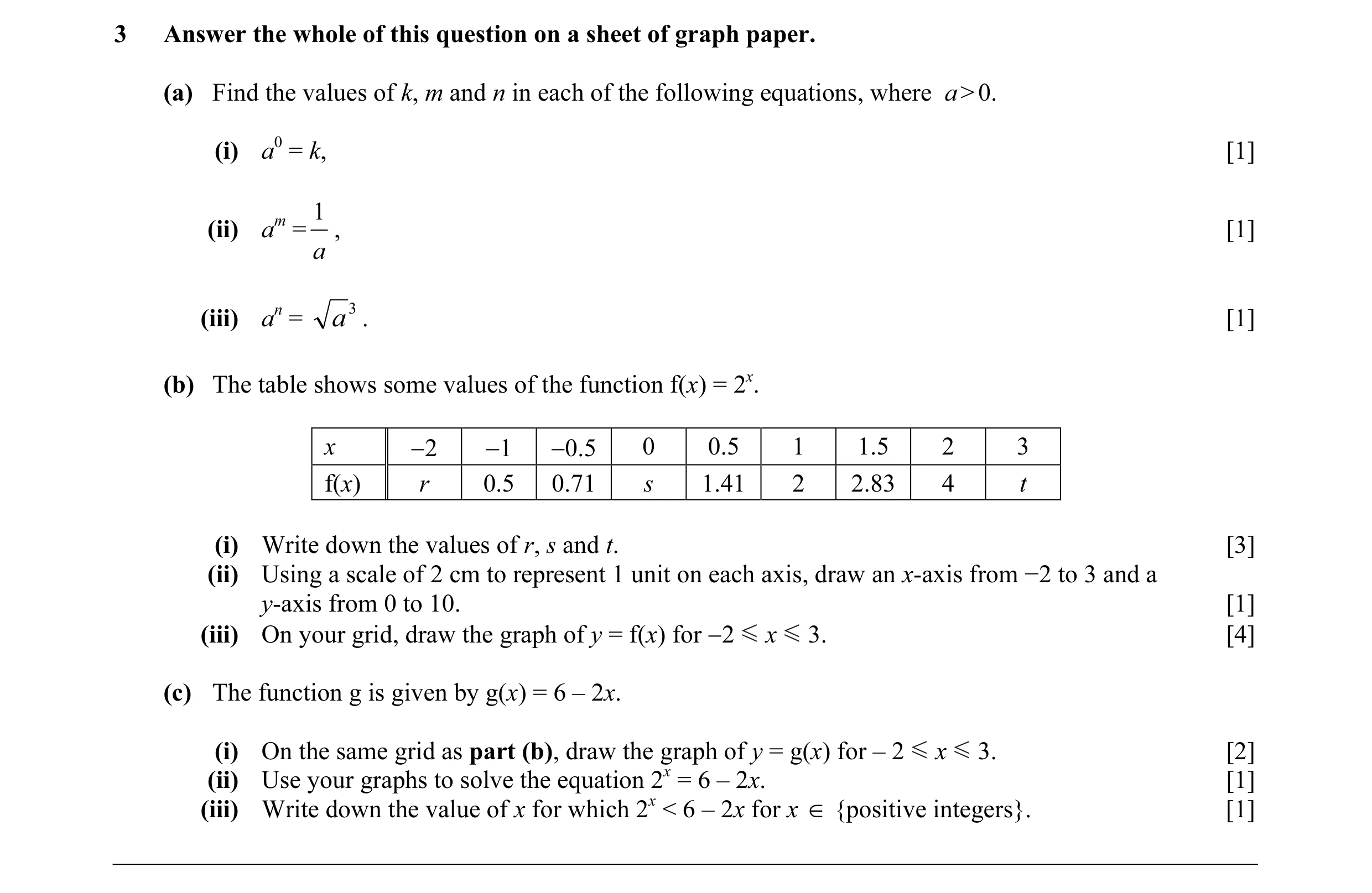
3 Answer the whole of this question on a sheet of graph paper. (a) Find the values of k, m and n in each of the following equations, where a > 0. (i) a0 = k, [1] 1 (ii) am = , [1] a (iii) an = a 3 . [1] (b) The table shows some values of the function f(x) = 2x. x −2 −1 −0.5 0 0.5 1 1.5 2 3 f(x) r 0.5 0.71 s 1.41 2 2.83 4 t (i) Write down the values of r, s and t. [3] (ii) Using a scale of 2 cm to represent 1 unit on each axis, draw an x-axis from −2 to 3 and a y-axis from 0 to 10. [1] (iii) On your grid, draw the graph of y = f(x) for −2 x 3. [4] (c) The function g is given by g(x) = 6 – 2x. (i) On the same grid as part (b), draw the graph of y = g(x) for – 2 x 3. [2] (ii) Use your graphs to solve the equation 2x = 6 – 2x. [1] (iii) Write down the value of x for which 2x < 6 – 2x for x ∈ {positive integers}. [1]
15 marks
Mark scheme: 3 (a) (i) 1 B1 (ii) –1 B1 (iii) 3 1 B1 or 1 or 1.5 2 2 (b) (i) (r =) 0.25 B1 These must be seen. No feedback from the graph. (s =) 1 B1 (t =) 8 B1 (ii) Scales correct S1 x from –2 to 3 y to accommodate their values. (iii) Their 9 points plotted correctly. They must P3 ft P2 for 7 or 8 points be in correct square and within 1 mm. correct. Ft P1 for 5 or 6 points correct. Smooth curve through all 9 points (1 mm) C1 ft provided correct shape maintained. (c) (i) Correct ruled straight line of full length. B2 SC1 for complete freehand line or for short correct ruled line crossing the curve and y-axis. (ii) 1.52 to 1.57 (correct for their graph) B1 Spoilt if y coordinate also given. (iii) 1 B1 15
This question in 0580/41 May/June 2006
Q2 · F(x) = 2x Examiner's Use Complete the table 0580/41 May/June 2010
8 (a) f(x) = 2x Examiner's Use Complete the table. x –2 –1 0 1 2 3 4 y = f(x) 0.5 1 2 4 [3] (b) g(x) = x(4 – x) Complete the table. x –1 0 1 2 3 4 y = g(x) 0 3 3 0 [2] For (c) On the grid, draw the graphs of Examiner's Use (i) y = f(x) for −2 Y x Y 4, [3] (ii) y = g(x) for −1 Y x Y 4. [3] y 16 14 12 10 8 6 4 2 x –2 –1 0 1 2 3 4 –2 –4 –6 (d) Use your graphs to solve the following equations. (i) f(x) = 10 Answer(d)(i) x = [1] (ii) f(x) = g(x) Answer(d)(ii) x = or x = [2] (iii) f -1(x) = 1.7 Answer(d)(iii) x = [1]
15 marks
Mark scheme: 8 (a) 0.25, 8, 16 3 B1 B1 B1 (b) – 5, 4 2 B1 B1 (c) (i) 7 points plotted ft P2ft P1 for 5 or 6 points ft Curve through all 7 points exponential C1ft ft only if exponential shape shape (ii) 6 points plotted ft P2ft P1 for 5 points ft Curve through all 6 points parabola C1ft ft only if parabola shape shape (d) (i) 3.2 to 3.4 1 (ii) 0.3 to 0.4 and 2 2 B1 B1 (iii) 3.1 to 3.4 1
This question in 0580/41 May/June 2010
Q3 · The first five terms P1, P2, P3, P4 and P5 of a sequence are given below 0580/41 Oct/Nov 2010
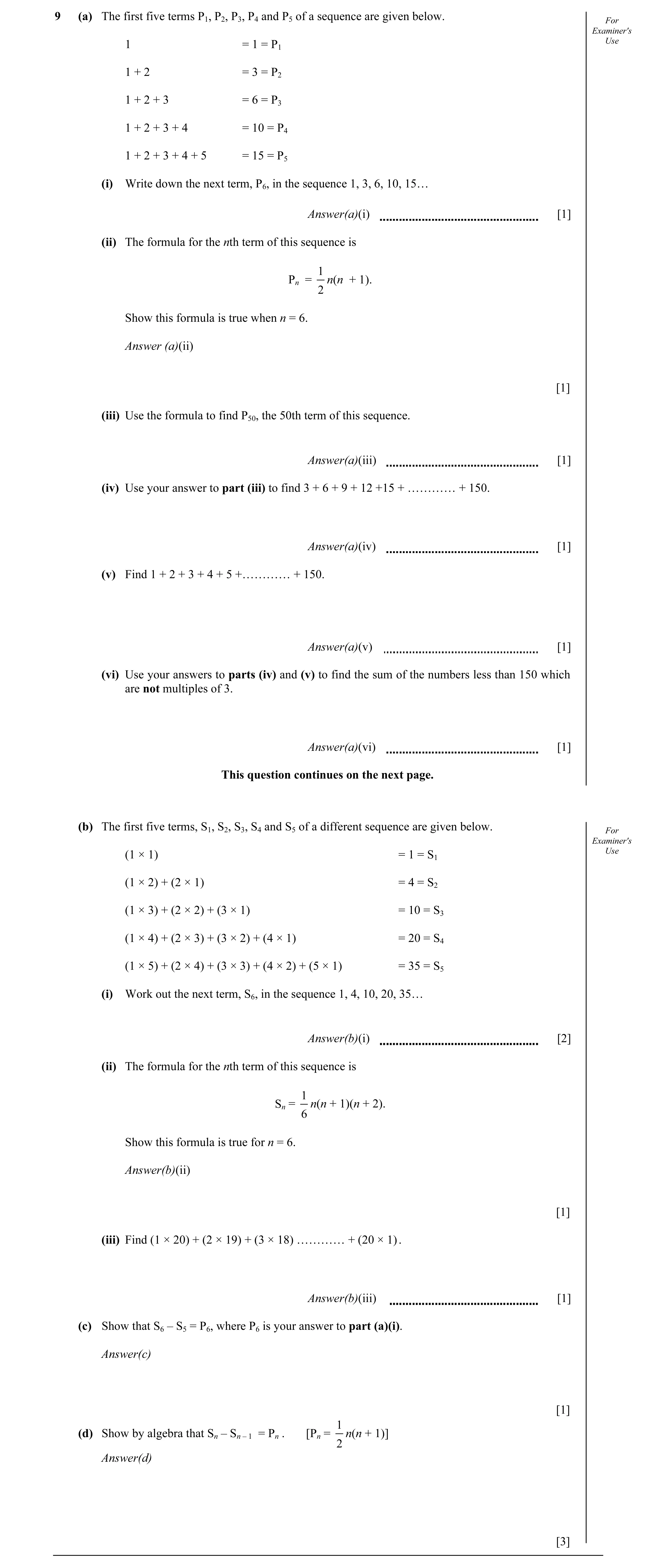
9 (a) The first five terms P1, P2, P3, P4 and P5 of a sequence are given below. For Examiner's 1 = 1 = P1 Use 1 + 2 = 3 = P2 1 + 2 + 3 = 6 = P3 1 + 2 + 3 + 4 = 10 = P4 1 + 2 + 3 + 4 + 5 = 15 = P5 (i) Write down the next term, P6, in the sequence 1, 3, 6, 10, 15… Answer(a)(i) [1] (ii) The formula for the nth term of this sequence is 1 Pn = n(n + 1). 2 Show this formula is true when n = 6. Answer (a)(ii) [1] (iii) Use the formula to find P50, the 50th term of this sequence. Answer(a)(iii) [1] (iv) Use your answer to part (iii) to find 3 + 6 + 9 + 12 +15 + ………… + 150. Answer(a)(iv) [1] (v) Find 1 + 2 + 3 + 4 + 5 +………… + 150. Answer(a)(v) [1] (vi) Use your answers to parts (iv) and (v) to find the sum of the numbers less than 150 which are not multiples of 3. Answer(a)(vi) [1] This question continues on the next page. (b) The first five terms, S1, S2, S3, S4 and S5 of a different sequence are given below. For Examiner's (1 × 1) = 1 = S1 Use (1 × 2) + (2 × 1) = 4 = S2 (1 × 3) + (2 × 2) + (3 × 1) = 10 = S3 (1 × 4) + (2 × 3) + (3 × 2) + (4 × 1) = 20 = S4 (1 × 5) + (2 × 4) + (3 × 3) + (4 × 2) + (5 × 1) = 35 = S5 (i) Work out the next term, S6, in the sequence 1, 4, 10, 20, 35… Answer(b)(i) [2] (ii) The formula for the nth term of this sequence is 1 Sn = n(n + 1)(n + 2). 6 Show this formula is true for n = 6. Answer(b)(ii) [1] (iii) Find (1 × 20) + (2 × 19) + (3 × 18) ………… + (20 × 1) . Answer(b)(iii) [1] (c) Show that S6 – S5 = P6, where P6 is your answer to part (a)(i). Answer(c) [1] 1 (d) Show by algebra that Sn – Sn – 1 = Pn . [Pn = n(n + 1)] 2 Answer(d) [3]
14 marks
Mark scheme: 9 (a) (i) 21 1 (ii) P6 = ½ × 6 × 7 or better (= 21) 1 Allow 3(6 + 1) (iii) 1275 1 (iv) 3825 1ft ft for 3 × their (iii) (v) 11325 1 (vi) 7500 1ft ft their (v) – their (iv) provided > 0 (b) (i) 56 2 M1 for 1 × 6 + 2 × 5 + 3 × 4 + 4 × 3 + 5 × 2 + 6 × 1 1 (ii) S6 = × 6 × 7 × 8 or better (= 56) 1 6 (iii) 1540 1 (c) 56 – 35 = 21 1 1 1 (d) Correct algebraic proof with no errors 3 M1 for n(n + 1)(n + 2) – (n – 1)(n)(n + 1) oe 6 6 1 and M1 for n(n + 1)(3) oe 6
This question in 0580/41 Oct/Nov 2010
Q4 · Simplify For Examiner's (i) (2x2y3)3, Use Answer(a)(i) [2] _ 1 27 3 (ii) 6 0580/42 May/June 2012
10 (a) Simplify For Examiner's (i) (2x2y3)3, Use Answer(a)(i) [2] _ 1 27 3 (ii) 6 . x Answer(a)(ii) [3] (b) Multiply out and simplify. (3x – 2y)(2x + 5y) Answer(b) [3] (c) Make h the subject of (i) V = πr3 + 2πr2h, Answer(c)(i) h = [2] (ii) V = 3h . Answer(c)(ii) h = [2] (d) Write as a single fraction in its simplest form. x 5x 7x + – 2 3 4 Answer(d) [2]
14 marks
Mark scheme: 10 (a) (i) 8x 6 y 9 final answer 2 B1 for any two of 8, x 6, y 9 in a single term in answer x 2 1 3 −2 1 (ii) oe but not oe final answer 3 B2 for 2 or 3 x or − 2 as answer − 2 3 3 x x 3 x x 6 1 or B1 for oe as answer or seen 27 27 3 x 6 or SC1 for 3 or x 2 or x – 2 seen in answer (b) 6x 2 + 11xy – 10y 2 final answer 3 B2 for 3 of 6x 2 – 4xy + 15xy – 10y 2 (11xy implies 2 terms) or B1 for 2 of 6x 2 – 4xy + 15xy – 10y 2 V − πr 3 V r (c) (i) or − oe but not triple 2 M1 for correct subtraction or correct division by 2πr 2 2 πr 2 2 2 2 πr seen fractions final answer 2 V 2 2 V V (ii) final answer 2 B1 for V = 3h or = h or h = 3 3 3 5x 6x 20x − 21x 10x (d) final answer 2 B1 for 2 of , , oe implied by 12 12 12 12 24 ie 2 with common denominator = at least 6 2
This question in 0580/42 May/June 2012
Q5 · For Examiner's Use Diagram 1 Diagram 2 Diagram 3 The diagrams show a sequence of dots and… 0580/43 May/June 2012
11 For Examiner's Use Diagram 1 Diagram 2 Diagram 3 The diagrams show a sequence of dots and circles. Each diagram has one dot at the centre and 8 dots on each circle. The radius of the first circle is 1 unit. The radius of each new circle is 1 unit greater than the radius of the previous circle. (a) Complete the table for diagrams 4 and 5. Diagram 1 2 3 4 5 Number of dots 9 17 25 Area of the largest circle π 4π 9π Total length of the circumferences of the circles 2π 6π 12π [4] (b) (i) Write down, in terms of n, the number of dots in diagram n. Answer(b)(i) [2] (ii) Find n, when the number of dots in diagram n is 1097. Answer(b)(ii) n = [2] (c) Write down, in terms of n and π, the area of the largest circle in (i) diagram n, Answer(c)(i) [1] (ii) diagram 3n. Answer(c)(ii) [1] (d) Find, in terms of n and π, the total length of the circumferences of the circles in diagram n. Answer(d) [2]
12 marks
Mark scheme: 11 (a) 33, 41 1 16 ,π 25 π 1 2 B1 each 20 ,π30 π (b) (i) 8 n + 1 oe final answer 2 e.g. 9 + 8(n –1), condone n = 8n + 1 SC1 for 8 n + k (ii) 137 www2 2 M1 for their (b)(i) = 1097 (c) (i) n 2 π oe final answer 1 (ii) 9 n 2 π oe final answer 1 Allow (3n ) 2 π (d) n ( n + )1 π oe final answer 2 SC1 for a quadratic expression e.g. n ( n + )1 , n2 + 5, n2 + n π
This question in 0580/43 May/June 2012
Q6 · For Examiner′s Use Star 1 Star 2 Star 3 The diagrams show a sequence of stars made of… 0580/41 May/June 2013
10 For Examiner′s Use Star 1 Star 2 Star 3 The diagrams show a sequence of stars made of lines and dots. (a) Complete the table for Star 5, Star 7 and Star n. Star 1 Star 2 Star 3 Star 4 Star 5 Star 7 Star n Number of lines 10 20 30 40 Number of dots 11 21 31 41 [4] (b) The sums of the number of dots in two consecutive stars are shown in the table. Star 1 and Star 2 Star 2 and Star 3 Star 3 and Star 4 32 52 72 Find the sum of the number of dots in (i) Star 10 and Star 11, Answer(b)(i) … [1] (ii) Star n and Star (n + 1), Answer(b)(ii) … [1] (iii) Star (n + 7) and Star (n + 8). Answer(b)(iii) … [1] (c) The total number of dots in the fi rst n stars is given by the expression 5n2 + 6n . For Examiner′s Use (i) Show that this expression is correct when n = 3. Answer(c)(i) [2] (ii) Find the total number of dots in the fi rst 10 stars. Answer(c)(ii) … [1] (d) The total number of dots in the fi rst n stars is 5n2 + 6n . The number of dots in the (n + 1)th star is 10(n + 1) + 1. Add these two expressions to show that the total number of dots in the fi rst (n + 1) stars is 5(n + 1)2 + 6(n + 1) . You must show each step of your working. Answer(d) [4] _____________________________________________________________________________________
14 marks
Mark scheme: 10 (a) 50, 70 1 10n oe 1 51, 71 1 10n + 1 oe 1 (b) (i) 212 1 (ii) 20n + 12 1 (iii) 20n + 152 1 (c) (i) 5 × 32 + 6 × 3 = 63 1 and 11 + 21 + 31 = 63 or 32 + 31 = 63 or 11 + 52 = 63 1 (ii) 560 1 (d) Complete solution with no errors seen 4 B1 for 5n2 + 6n + 10n + 10 + 1 or and a conclusion better e.g. 5n2 + 6n + 10(n + 1) + 1 B1 for use of 5(n + 1)2 = 5n2 + 10n + 5 oe at any stage = 5n2 + 6n + 10n + 10 + 1 B1 for use of 6n + 6 = 6(n + 1) oe at = 5n2 + 10n + 5 + 6n + 6 any stage = 5n2 + 10n + 5 + 6n + 6 = 5(n + 1)2 + 6(n + 1)
This question in 0580/41 May/June 2013
Q7 · F(x) = 2x – 1 g(x) = , x 0 h(x) = 2x x (a) Find h(3) 0580/43 Oct/Nov 2015
19 f(x) = 2x – 1 g(x) = , x 0 h(x) = 2x x (a) Find h(3). Answer(a) … [1] (b) Find fg(0.5). Answer(b) … [2] (c) Find f –1(x). Answer(c) f –1(x) = … [2] (d) Find ff(x), giving your answer in its simplest form. Answer(d) … [2] (e) Find (f(x))2 + 6, giving your answer in its simplest form. Answer(e) … [2] (f) Simplify hh–1(x). Answer(f) … [1] (g) Which of the following statements is true? f –1(x) = f(x) g–1(x) = g(x) h–1(x) = h(x) Answer(g) … [1] (h) Use two of the functions f(x), g(x) and h(x) to find the composite function which is equal to 2x+1 – 1. Answer(h) … [1] __________________________________________________________________________________________ Question 10 is printed on the next page.
12 marks
Mark scheme: 9 (a) 8 1 (b) 3 2 B1 for [g(0.5) =] 2 soi or 1 M1 for 2 − 1 or better x x + 1 (c) final answer 2 M1 for x = 2 y − 1 or y + 1 = 2 x or better 2 y 1 or = x − 2 2 (d) 4x – 3 2 M1 for 2(2x – 1) – 1 (e) 4x2 – 4x + 7 2 B1 for ( 2 x − 1) 2 = 4 x 2 − 2 x − 2 x + 1 (f) x 1 (g) g − 1 ( x ) = g( x ) 1 (h) fh(x) 1
This question in 0580/43 Oct/Nov 2015
Q8 · Work out the value of x in each of the following 0580/42 May/June 2016
2 (a) Work out the value of x in each of the following. (i) 3x = 243 x = … [1] (ii) 16x = 4 x = … [1] (iii) 8x = 32 x = … [2] 1 (iv) 27x = 9 x = … [2] (b) Solve by factorisation. y2 – 7y – 30 = 0 Show your working. y = … or y = … [3]
9 marks
Mark scheme: 2 (a) (i) 5 1 (ii) 1 1 oe 2 (iii) 5 2 M1 for 23x = 25 oe or better oe 3 or SC1 for either denominator or numerator of index correct in final answer 2 (iv) − oe 2 M1 for 33x = 3–2 oe or better or 3 −3 x 2 1 1 = or better 3 3 2 or SC1 for or any negative index 3
This question in 0580/42 May/June 2016
Q9 · Solve 30 + 2x = 3(3 – 4x) 0580/42 Oct/Nov 2018
2 (a) Solve 30 + 2x = 3(3 – 4x). x = … [3] (b) Factorise 12ab3 + 18a3b2. … [2] (c) Simplify. (i) 5a3c2 × 2a2c7 … [2] 3 16a 8 4 (ii) 12 e c o … [2] (d) y is inversely proportional to the square of (x + 2). When x = 3, y = 2. Find y when x = 8. y = … [3] (e) Write as a single fraction in its simplest form. 5 x - 5 - x - 2 2 … [3]
15 marks
Mark scheme: 2(a) –1.5 3 M1 for 30 + 2x = 9 – 12x or 2 10 + x = 3 – 4x 3 M1 for collecting their terms correctly to reach ax = b 2(b) 6ab2(2b + 3a2) final answer 2 M1 for any correct partial factorisation seen or for correct answer seen 2(c)(i) 10a5c9 final answer 2 B1 for final answer with 10akc9 or 10a5ck or ka5c9 2(c)(ii) 6 2 6 k 8a 8a 8a 9 or 8a6 c–9 final answer B1 for final answer with k or 9 or c c c ka 6 9 [k ≠ 0] c or for correct answer seen 2(d) 1 3 k 0.5 or M1 for y = 2 oe 2 ( x + 2 ) B1 for k = 50 or M2 for 2(3 + 2)2 = y(8 + 2)2 oe 2(e) 7 x − x 2 7 x − x 2 3 M1 for 5 × 2 – (x – 5)(x – 2) oe seen or oe final answer 2 ( x − 2 ) 2 x − 4 M1 for common denominator 2(x – 2) oe isw
This question in 0580/42 Oct/Nov 2018
Q10 · Simplify, giving your answer as a single power of 7 0580/42 May/June 2021
3 (a) Simplify, giving your answer as a single power of 7. (i) 7 5 # 7 6 … [1] (ii) 7 15 ' 7 5 … [1] (iii) 42 + 7 … [1] (b) Simplify. ( 5x 2 # 2xy 4 ) 3 … [3] (c) P = 2 5 # 3 3 # 7 Q = 540 (i) Find the highest common factor (HCF) of P and Q. … [2] (ii) Find the lowest common multiple (LCM) of P and Q. … [2] (iii) P # R is a cube number, where R is an integer. Find the smallest possible value of R. … [2] (d) Factorise the following completely. (i) x 2 - 3x - 28 … [2] (ii) 7 ( a + 2b) 2 + 4a ( a + 2b) … [2] 2 x - 1 1 2 y - x # 3(e) 3 = x 9 Find an expression for y in terms of x. y = … [4]
20 marks
Mark scheme: 3(a)(i) 711 cao 1 3(a)(ii) 710 cao 1 3(a)(iii) 72 cao 1 If answers 11, 10 and 2 in (a) then allow SC1 in this part 3(b) 1000x9y12 final answer 3 B2 for correct answer seen or answer of the form 1000x9yk or 1000xky12 or kx9y12 or B1 for answer with one correct element in product or (10x3y4)[3] seen 3(c)(i) 108 2 M1 for [540 =] 22 [×] 33 [×] 5 or B1 for 108 oe not in prime factor form e.g. 22 × 3 × 9 3(c)(ii) 30 240 2 M1 for (540 × 25 × 33 × 7) ÷ their (c)(i) oe or B1 for answer 30 240 oe not in prime factor form e.g. 25 × 33 × 35 3(c)(iii) 98 2 B1 for 592 704 seen or 26 × 33 × 73 seen or 2 × 72 oe seen 3(d)(i) (x – 7) (x + 4) final answer 2 M1 for x(x – 7) + 4(x – 7) or x(x + 4) – 7 (x + 4) or better or for (x + a)(x + b) where ab = – 28 or a + b = – 3 3(d)(ii) (a + 2b)(11a + 14b) final answer 2 M1 for (a + 2b) (7(a + 2b) + 4a) or (a + pb)(11a + qb) where pq = 28 or 11p + q = 36 If 0 scored, SC1 for a + 2b (11a + 14b) 3(e) 5 x − 1 4 B2 for 2x – 1 = –2x + 2y – x oe [ y = ] oe final answer or B1 for 9x = 32x or better 2 M1dep for correct rearrangement of their 5 term ‘linear’ equation in y and x to make y the subject
This question in 0580/42 May/June 2021
Q11 · Write (i) 2994.99 correct to the nearest 10, … [1] (ii) 0.983 correct to 1 decimal place… 0580/41 Oct/Nov 2022
2 (a) Write (i) 2994.99 correct to the nearest 10, … [1] (ii) 0.983 correct to 1 decimal place, … [1] (iii) 2090 correct to 2 significant figures. … [1] (b) Write down a prime number between 90 and 100. … [1] (c) Write 2 -6 as a fraction. … [1] (d) Write 0.007 01 in standard form. … [1] (e) Simplify 1.5 # 10 x + 1 .5 # 10 x - 1 giving your answer in standard form. … [2] (f) Write .037o as a fraction. You must show all your working. … [2]
10 marks
Mark scheme: 2(a)(i) 2990 cao 1 2(a)(ii) 1.0 cao 1 2(a)(iii) 2100 cao 1 2(b) 97 1 2(c) 1 1 final answer 64 2(d) 7.01[0] 10–3 1 2(e) 1.65 10x 2 M1 for final answer figs 165 or for 15 10 x −1 seen or for 0.15 10 x seen 2(f) 37.7... – 3.7... [= 34] oe M1 34 B1 oe fraction 90
This question in 0580/41 Oct/Nov 2022
Q12 · 5 m 2 n 21 = 64 4 Find m in terms of n 0580/41 May/June 2025
16 5 m 2 n 21 = 64 4 Find m in terms of n. m = … [3]
3 marks
Mark scheme: 21 6 n + 1 3 M2 for 2(5m) – 1 = 3(2n) oe or better [m =] oe 10 or M1 for 42(5m) or for 43(2n) oe or better
This question in 0580/41 May/June 2025
Q13 · 40012 = 10k 10 220 # 10 80 Find the value of k 0580/43 May/June 2025
10 40012 = 10k 10 220 # 10 80 Find the value of k. k = … [3]
3 marks
Mark scheme: 12 50 nfww 3 100 10 200 B2 for 10 or 150 or answer k = 1050 10 or for 10100 = 102k or M1 for any correct first step from: 10 220 × 1080 = 10 300 , 10 400 ÷ 10 220 = 10180 , 10 400 ÷ 1080 = 10 320 , 10 400 = 10200, 10 220 = 10110, 1080 = 1040 If 0 scored, SC1 for correct manipulation of 400, 220 and 80 to give 100 or for correctly dealing with the square root of an expression involving power(s) of 10 to find an explicit value for k 10 20 or for seen 1010 3
This question in 0580/43 May/June 2025
 1 / 16
![Question 2: (a) f(x) = 2x Examiner's Use Complete the table. x –2 –1 0 1 2 3 4 y = f(x) 0.5 1 2 4 [3] (b) g(x) = x(4 – x) Complete the table. x –1 0 1 …](https://img.pastlit.com/crops/af18e727-1bb6-4d48-900e-a0840e7b995b/q8.webp)
![Question 4: (a) Simplify For Examiner's (i) (2x2y3)3, Use Answer(a)(i) [2] _ 1 27 3 (ii) 6 . x Answer(a)(ii) [3] (b) Multiply out and sim…](https://img.pastlit.com/crops/68f856b8-673d-4d24-aa23-d049e30fc65a/q10.webp) 5 / 16
5 / 16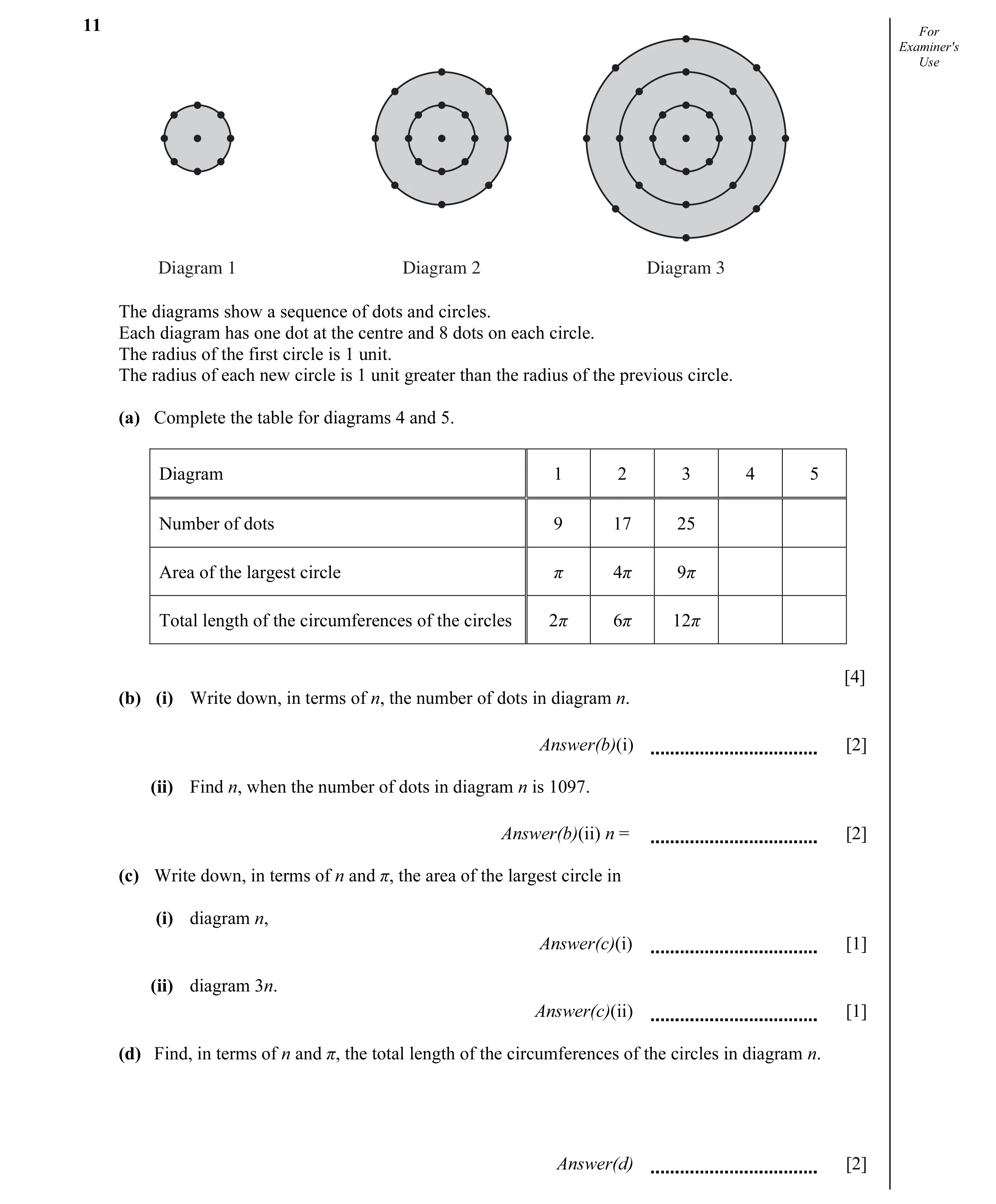 6 / 16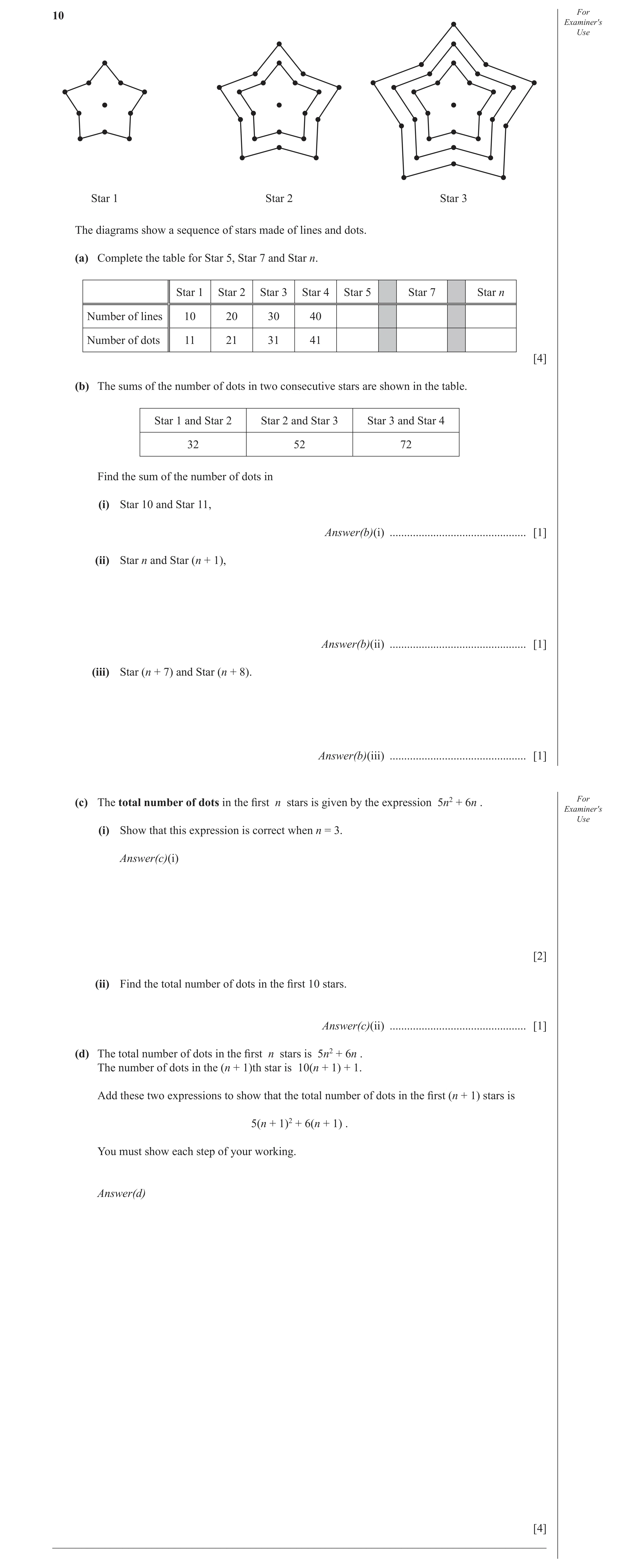
![Question 7: f(x) = 2x – 1 g(x) = , x 0 h(x) = 2x x (a) Find h(3). Answer(a) ................................................ [1] (b) Find fg(0.5). An…](https://img.pastlit.com/crops/00c50ebf-3be8-405c-8d0e-5dc5c39f3d54/q9.webp)
![Question 8: (a) Work out the value of x in each of the following. (i) 3x = 243 x = ................................................. [1] (ii) 16x = 4 x…](https://img.pastlit.com/crops/96b1433c-3483-4c80-9f1d-73eaadd6f482/q2.webp) 11 / 16
11 / 16![Question 9: (a) Solve 30 + 2x = 3(3 – 4x). x = ................................................ [3] (b) Factorise 12ab3 + 18a3b2. .....................…](https://img.pastlit.com/crops/47934fa5-a68d-419a-88c2-85efc762fdb9/q2.webp)
![Question 10: (a) Simplify, giving your answer as a single power of 7. (i) 7 5 # 7 6 ................................................. [1] (ii) 7 15 ' 7 …](https://img.pastlit.com/crops/a0b8f6e8-1247-43f9-ac8b-bffadb7aef51/q3.webp)
![Question 11: (a) Write (i) 2994.99 correct to the nearest 10, ................................................. [1] (ii) 0.983 correct to 1 decimal plac…](https://img.pastlit.com/crops/de0c6118-ae4f-4056-a3a6-1af874f4aa0f/q2.webp) 15 / 16
15 / 16![Question 12: 5 m 2 n 21 = 64 4 Find m in terms of n. m = ................................................ [3]](https://img.pastlit.com/crops/de4b468b-4d1b-4117-b2d8-bbf753ec3837/q21.webp)
![Question 13: 40012 = 10k 10 220 # 10 80 Find the value of k. k = ................................................ [3]](https://img.pastlit.com/crops/f1a3657f-3c14-488d-9db1-eaf815aec653/q12.webp) 16 / 16
16 / 16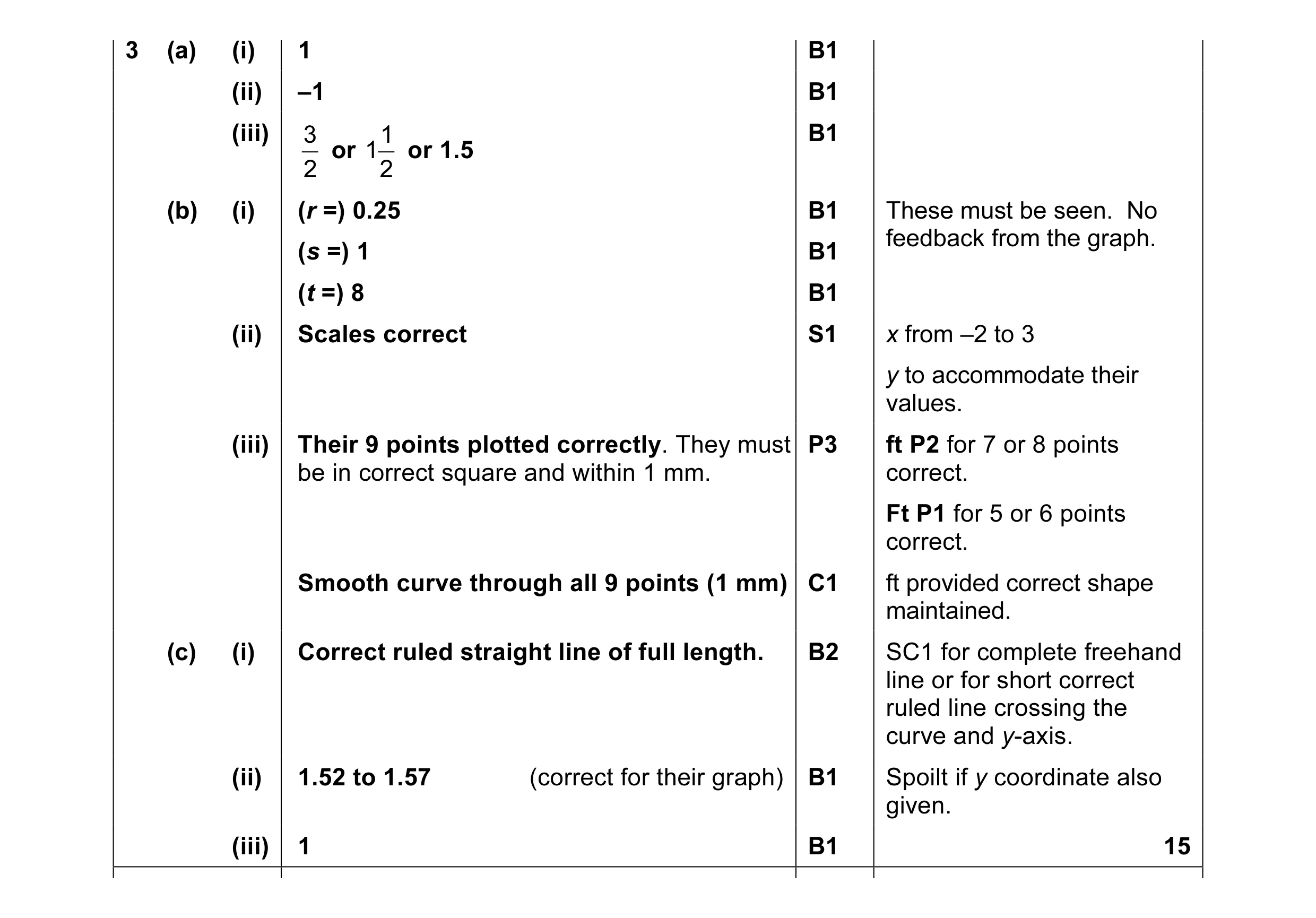 15
15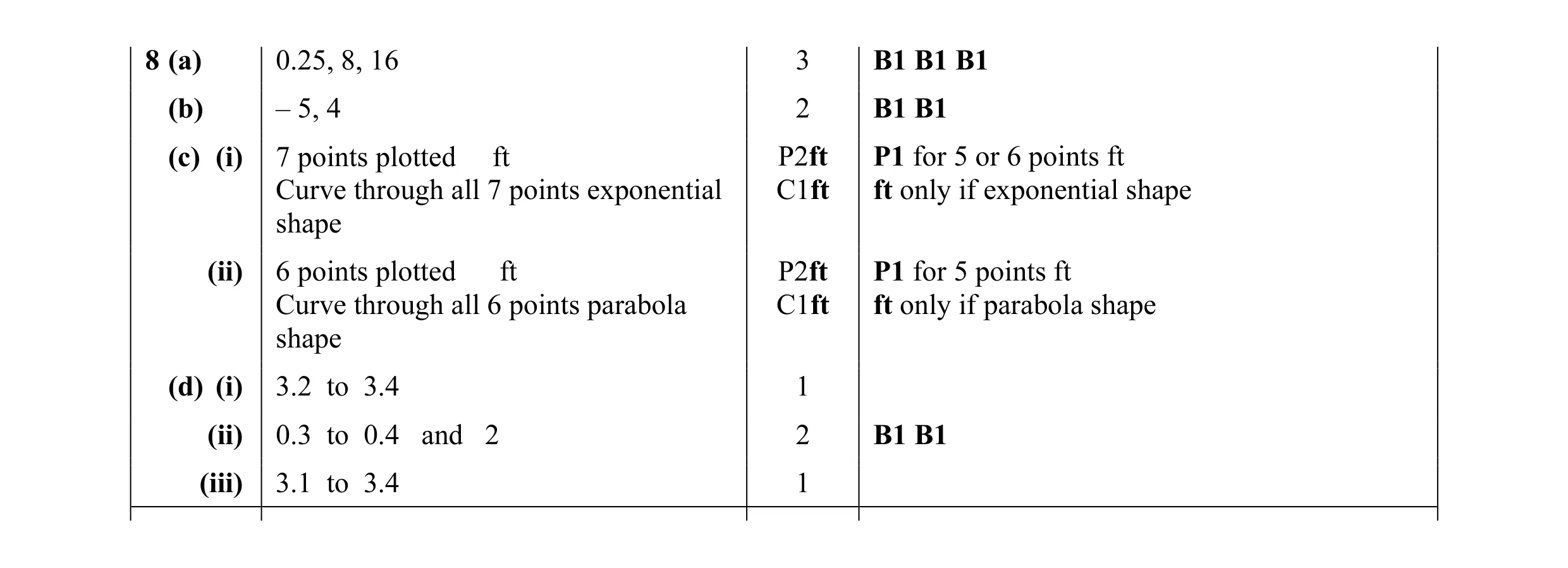 15
15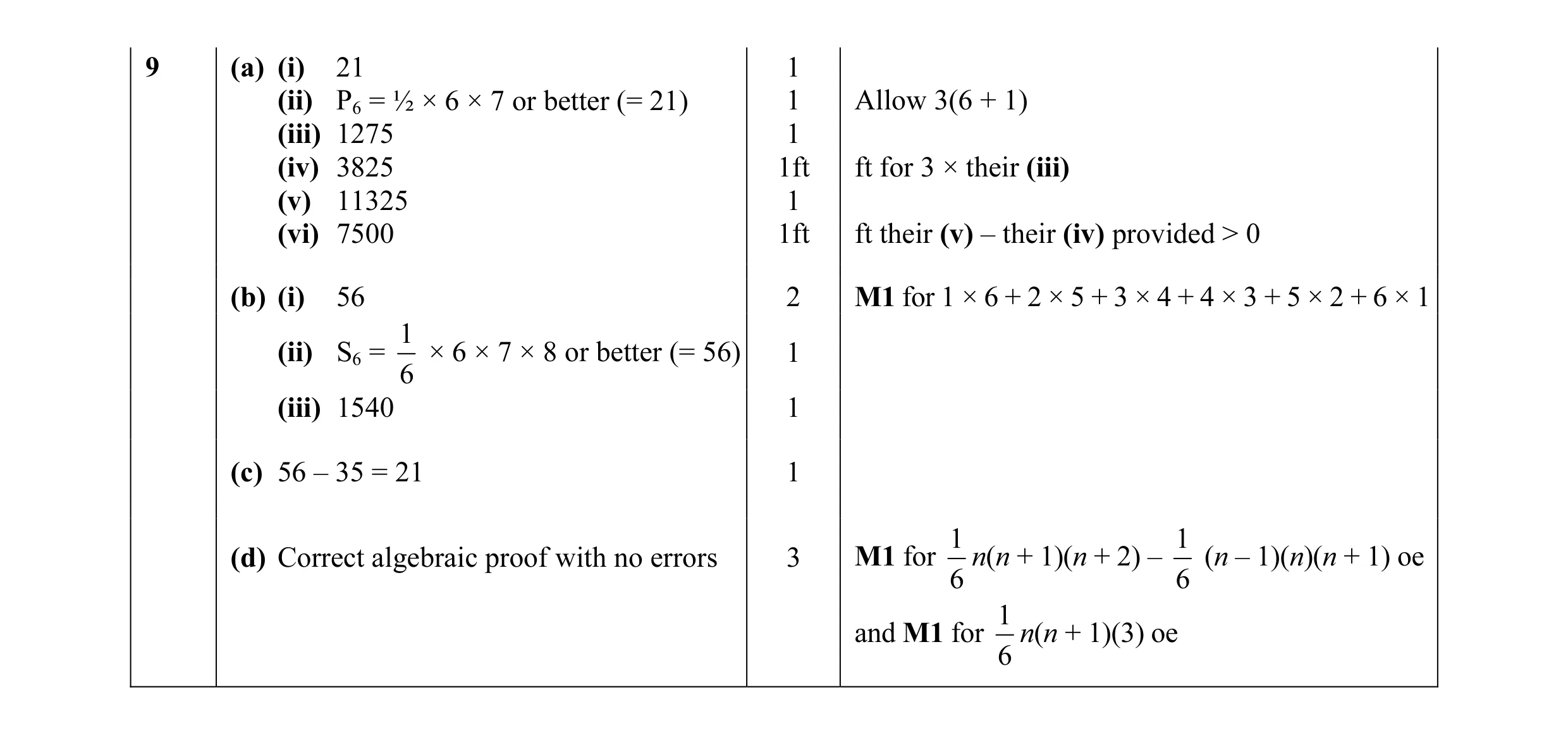 14
14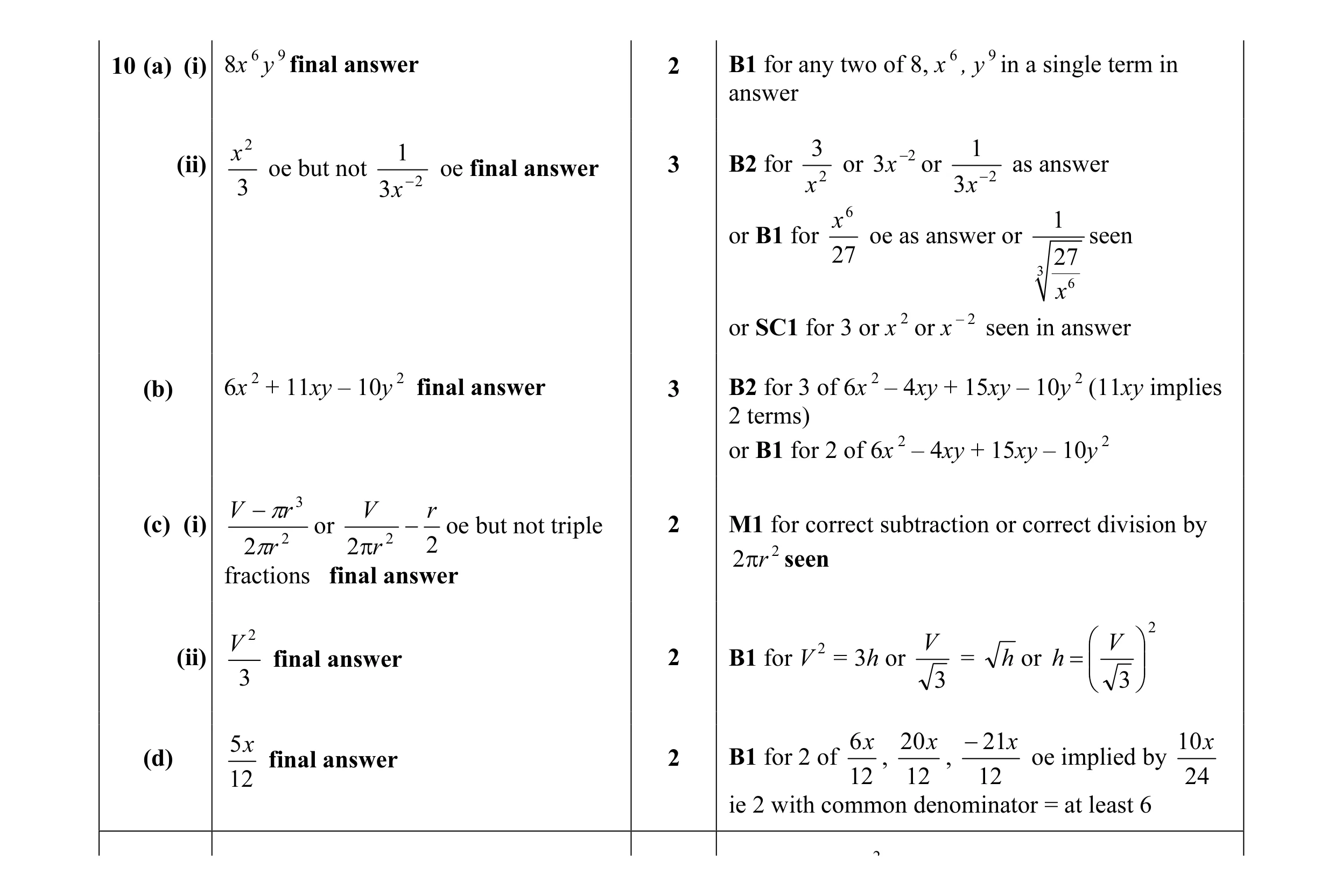 14
14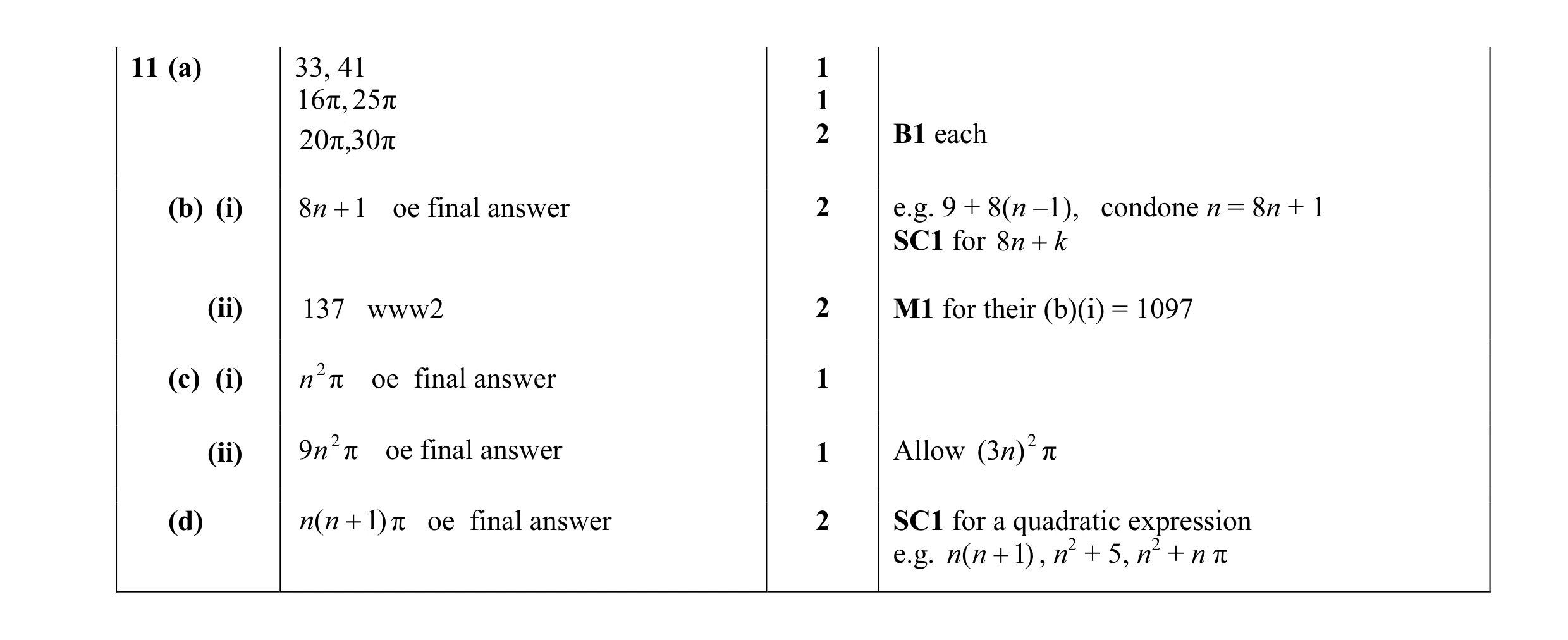 12
12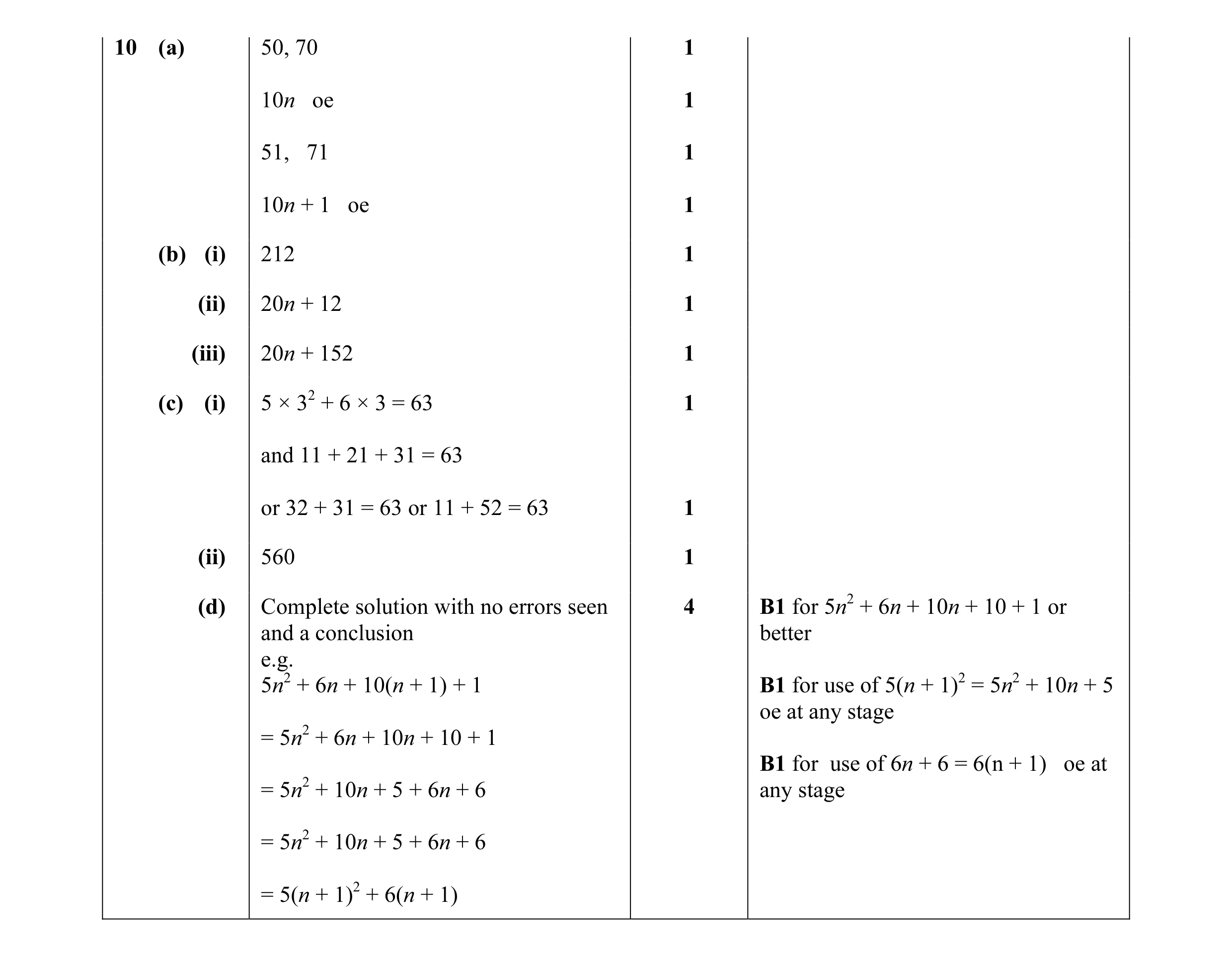 14
14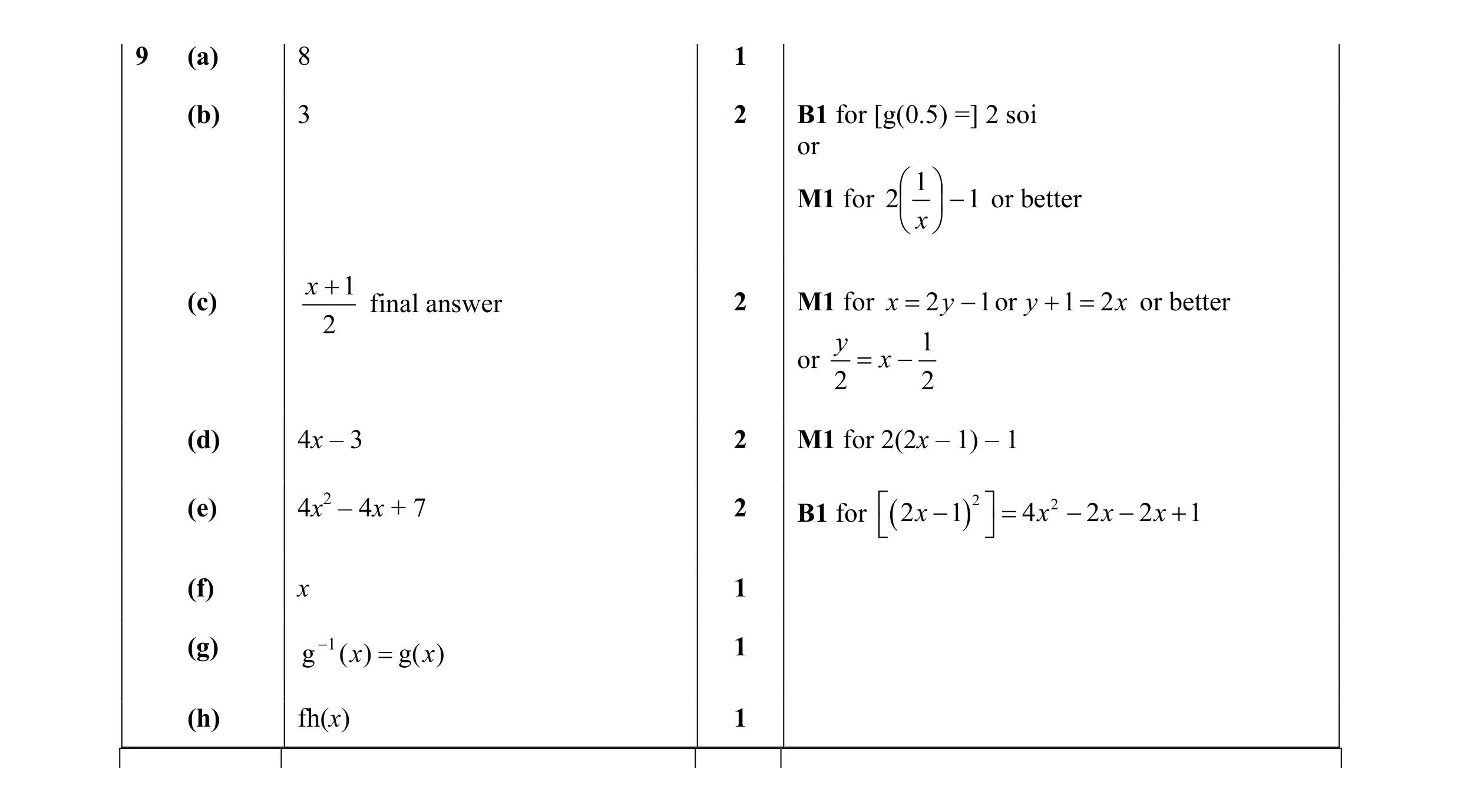 12
12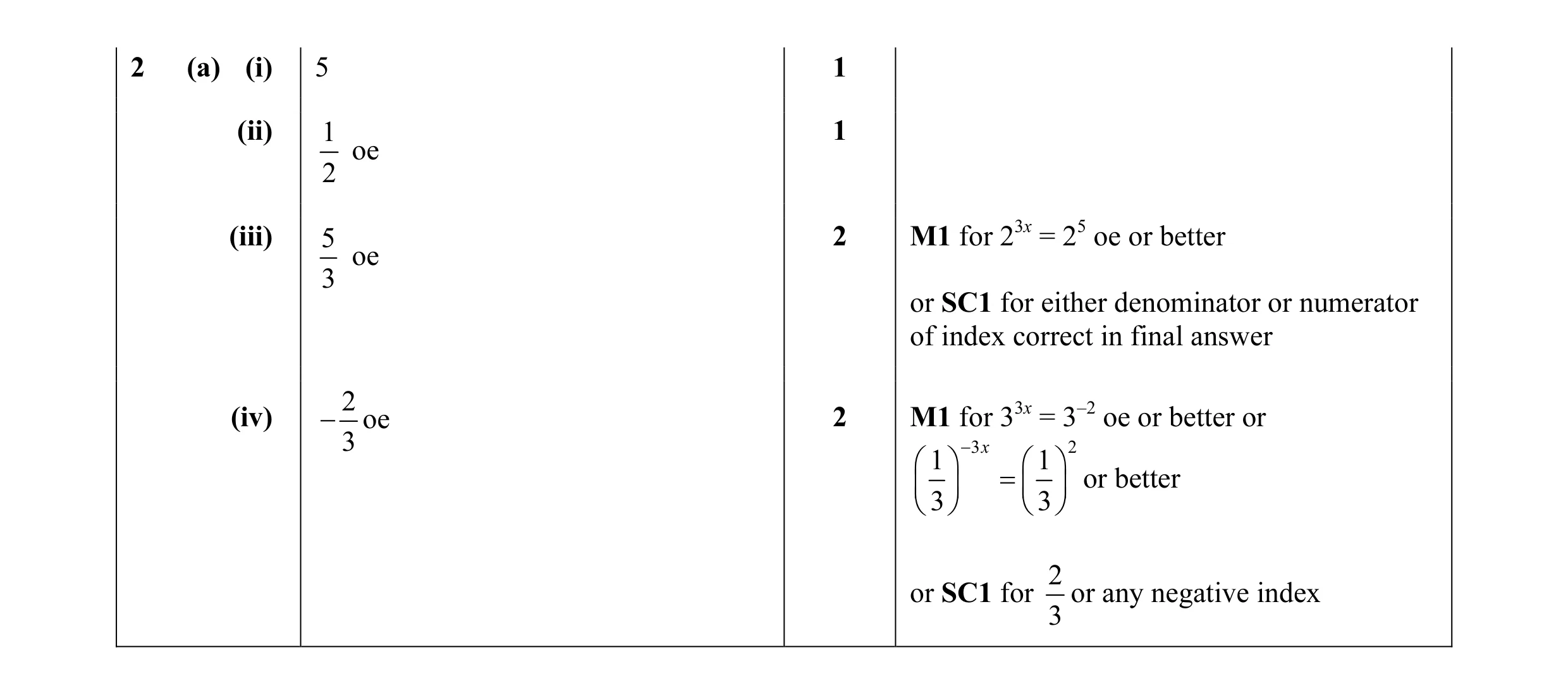 9
9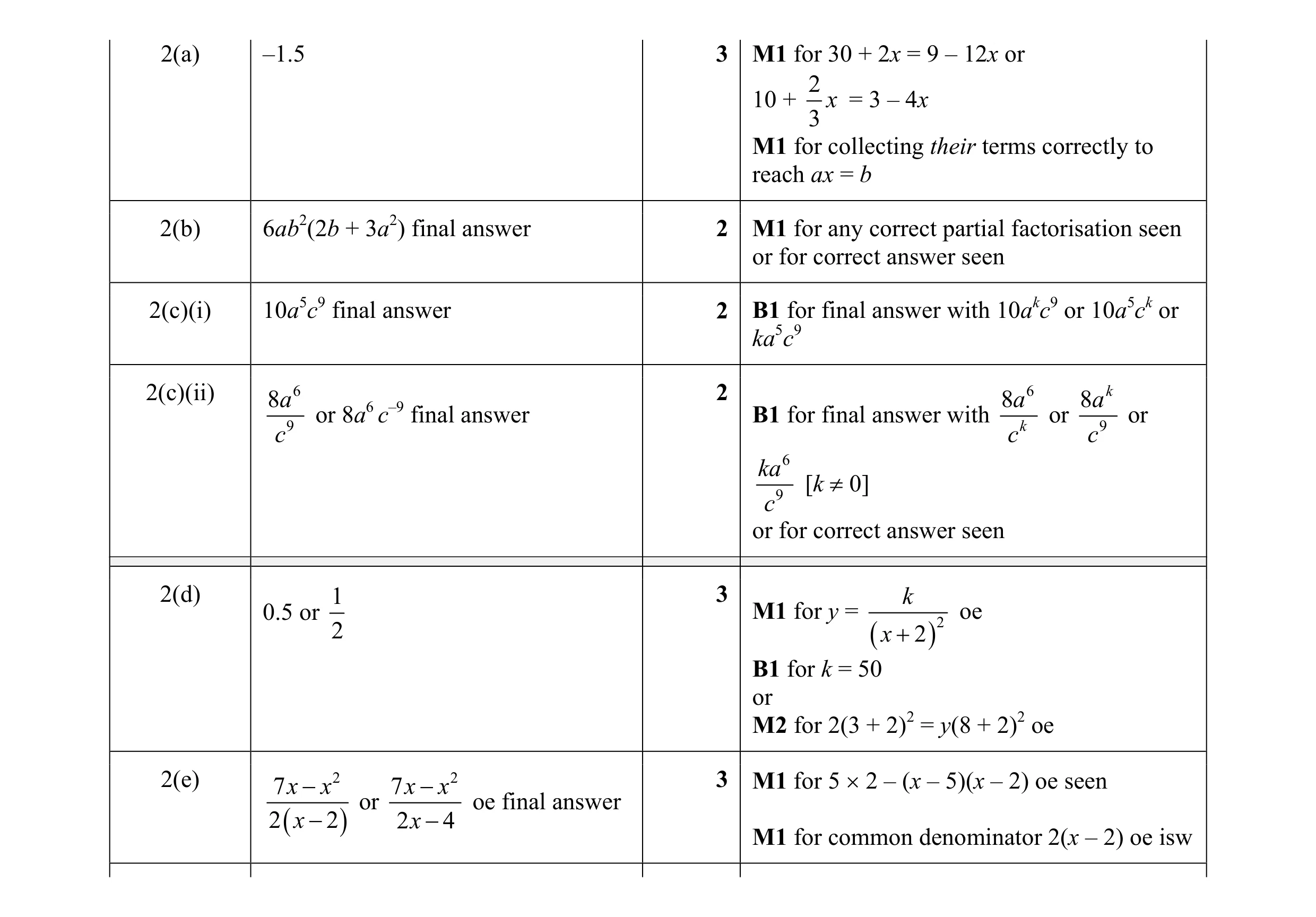 15
15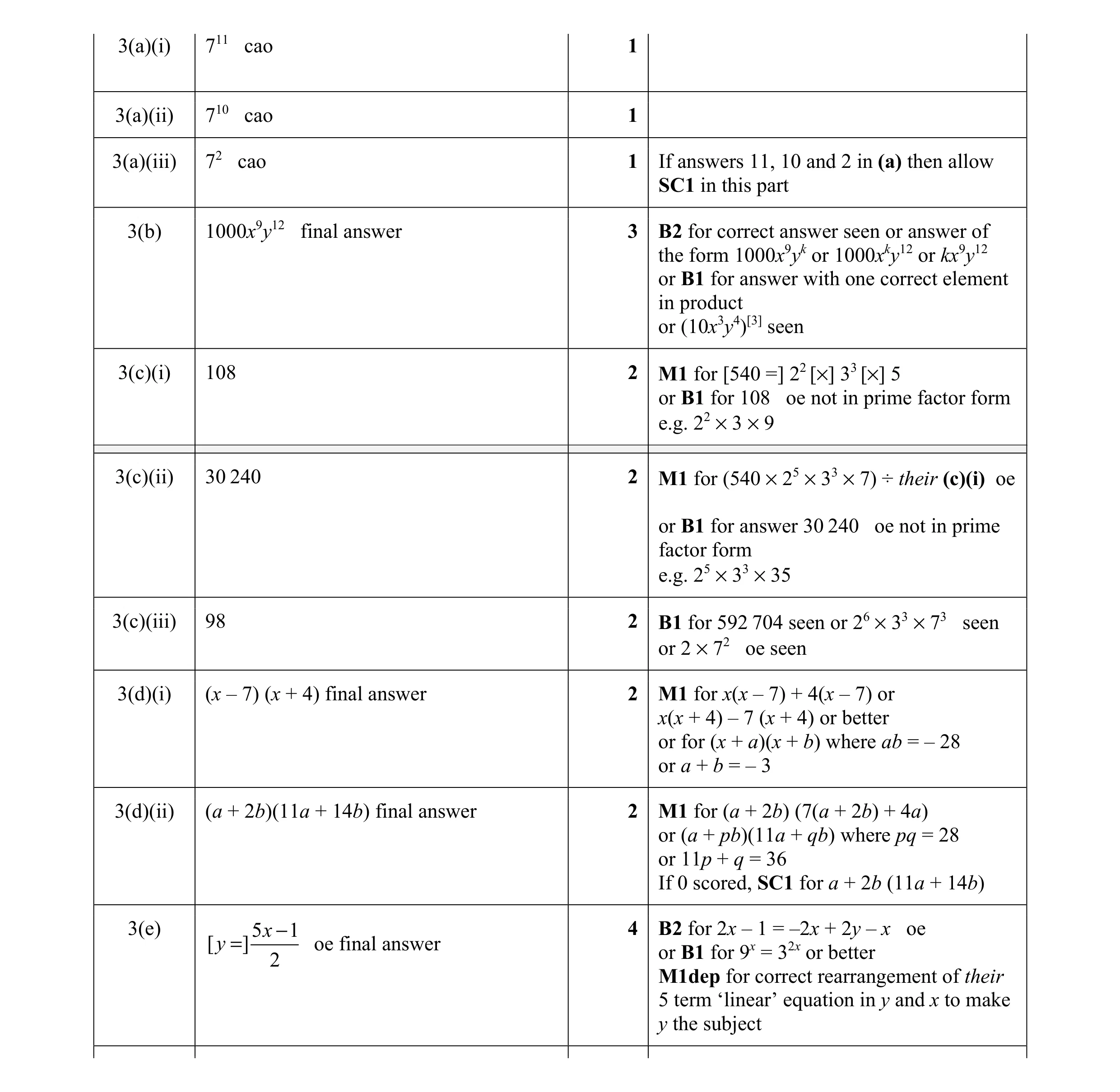 20
20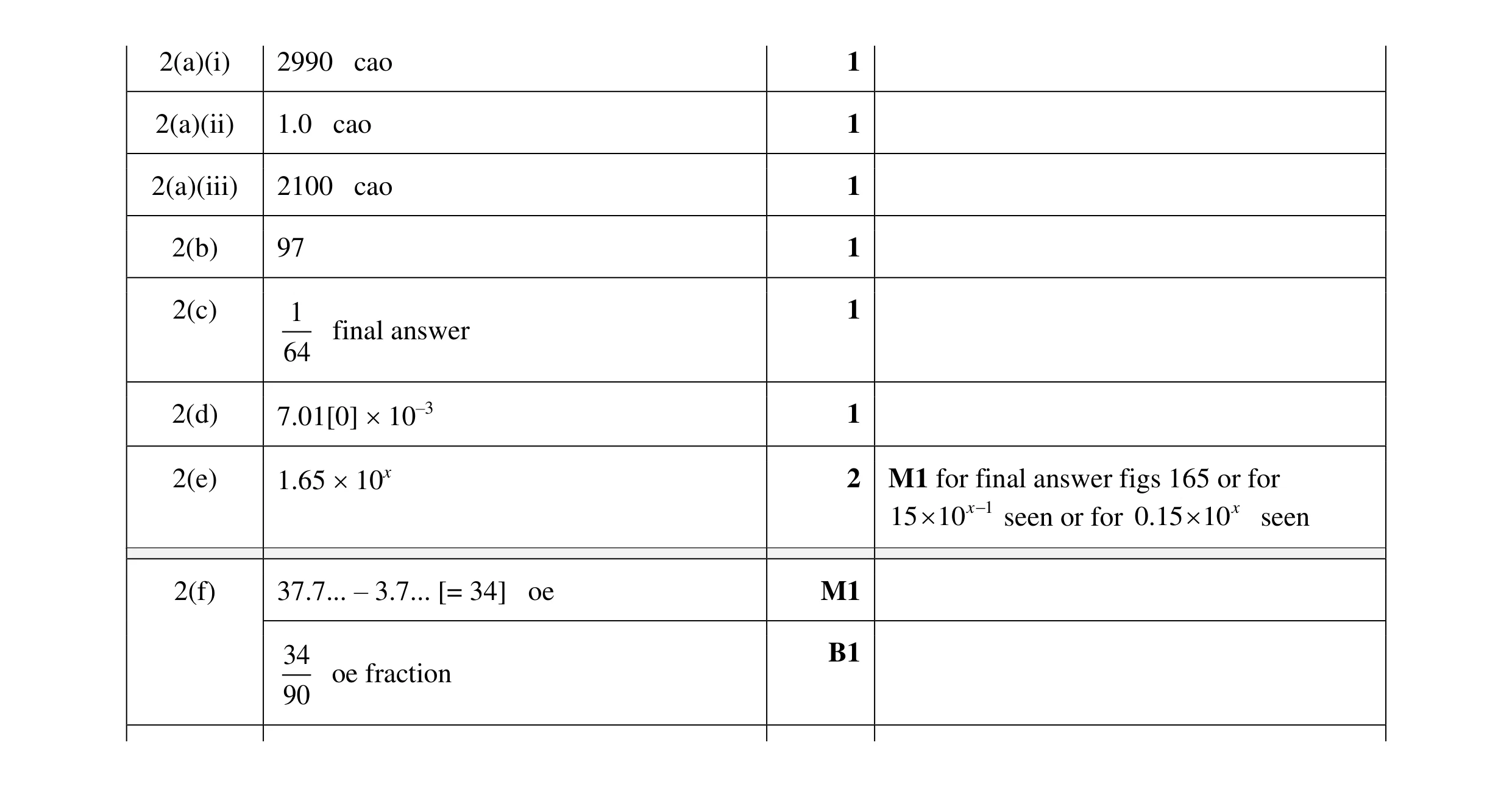 10
10 3
3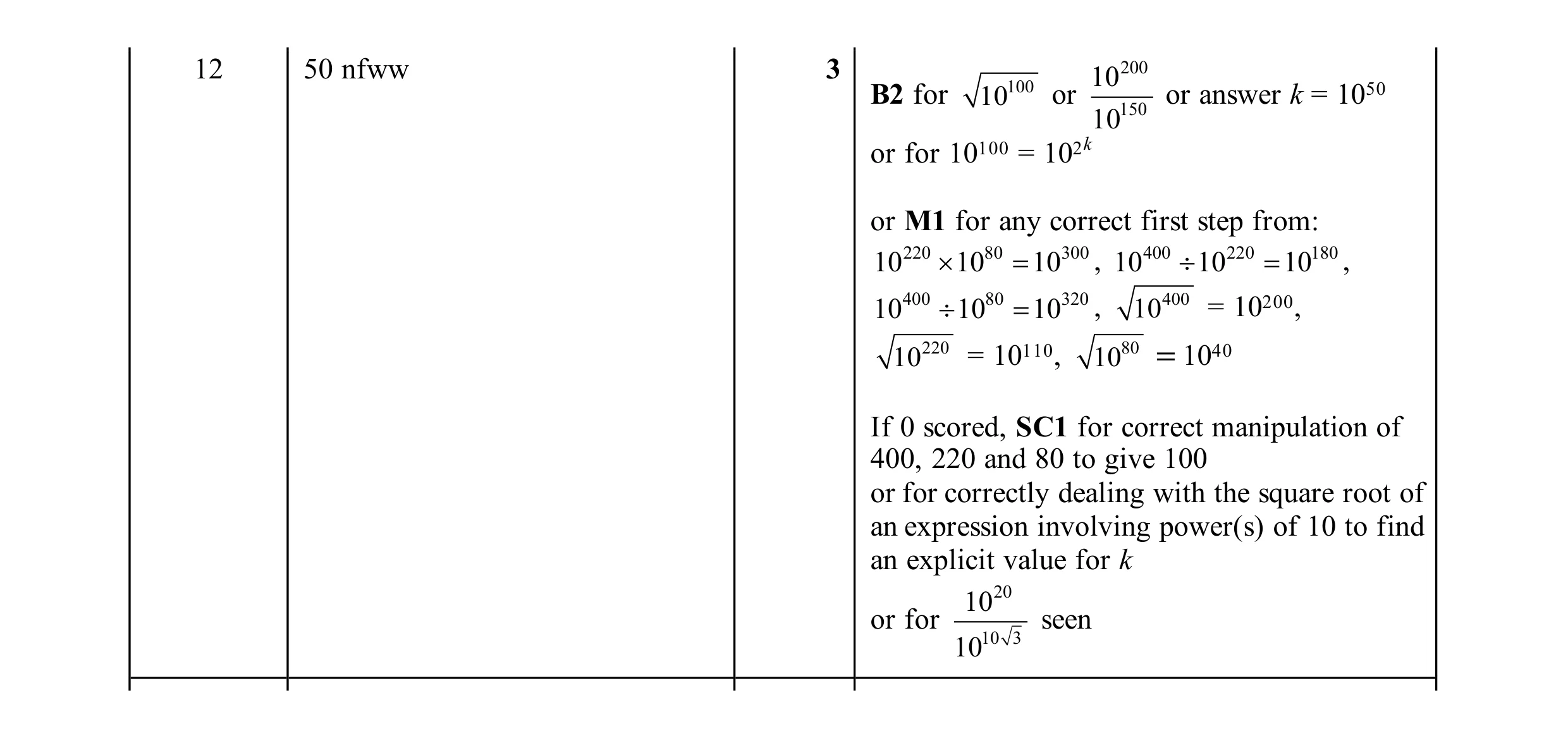 3
3