Cambridge A Level Psychology (from 2018) 9990 — 2021 Oct/Nov Paper 2 · Variant 3
9990/23/O/N/21 · 10 questions · 60 marks · ≈68 min
The question paper and its mark scheme, free to read here and free to download. This is Cambridge’s own paper, exactly as it was sat.
Question paper12 pages



Mark scheme14 pages
Answers below. Sit the paper first if you are practising.
Questions as text
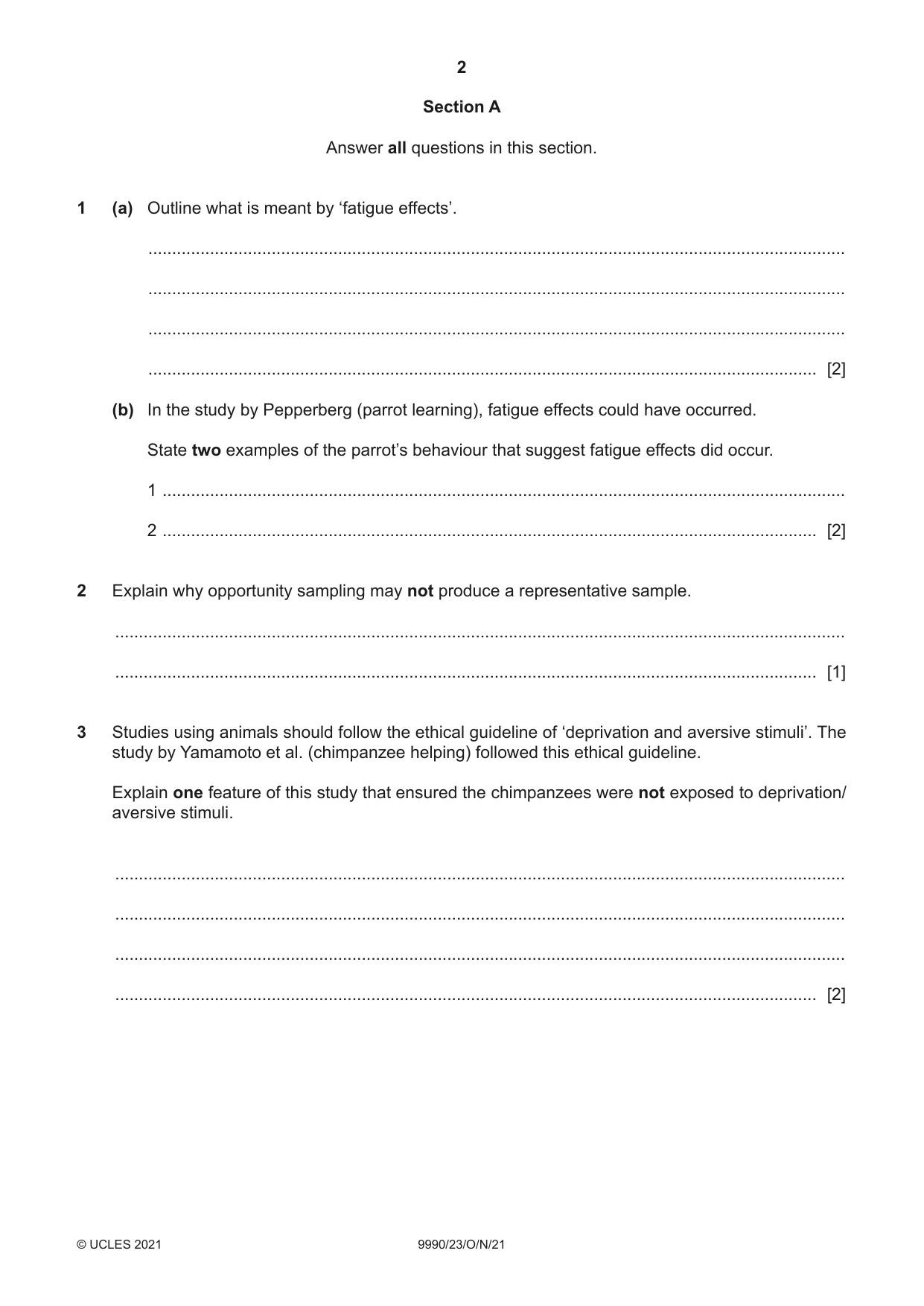
Q1 · Outline what is meant by ‘fatigue effects’
1 (a) Outline what is meant by ‘fatigue effects’. ................................................................................................................................................... ................................................................................................................................................... ................................................................................................................................................... ............................................................................................................................................. [2] (b) In the study by Pepperberg (parrot learning), fatigue effects could have occurred. State two examples of the parrot’s behaviour that suggest fatigue effects did occur. 1 ................................................................................................................................................ 2 .......................................................................................................................................... [2]
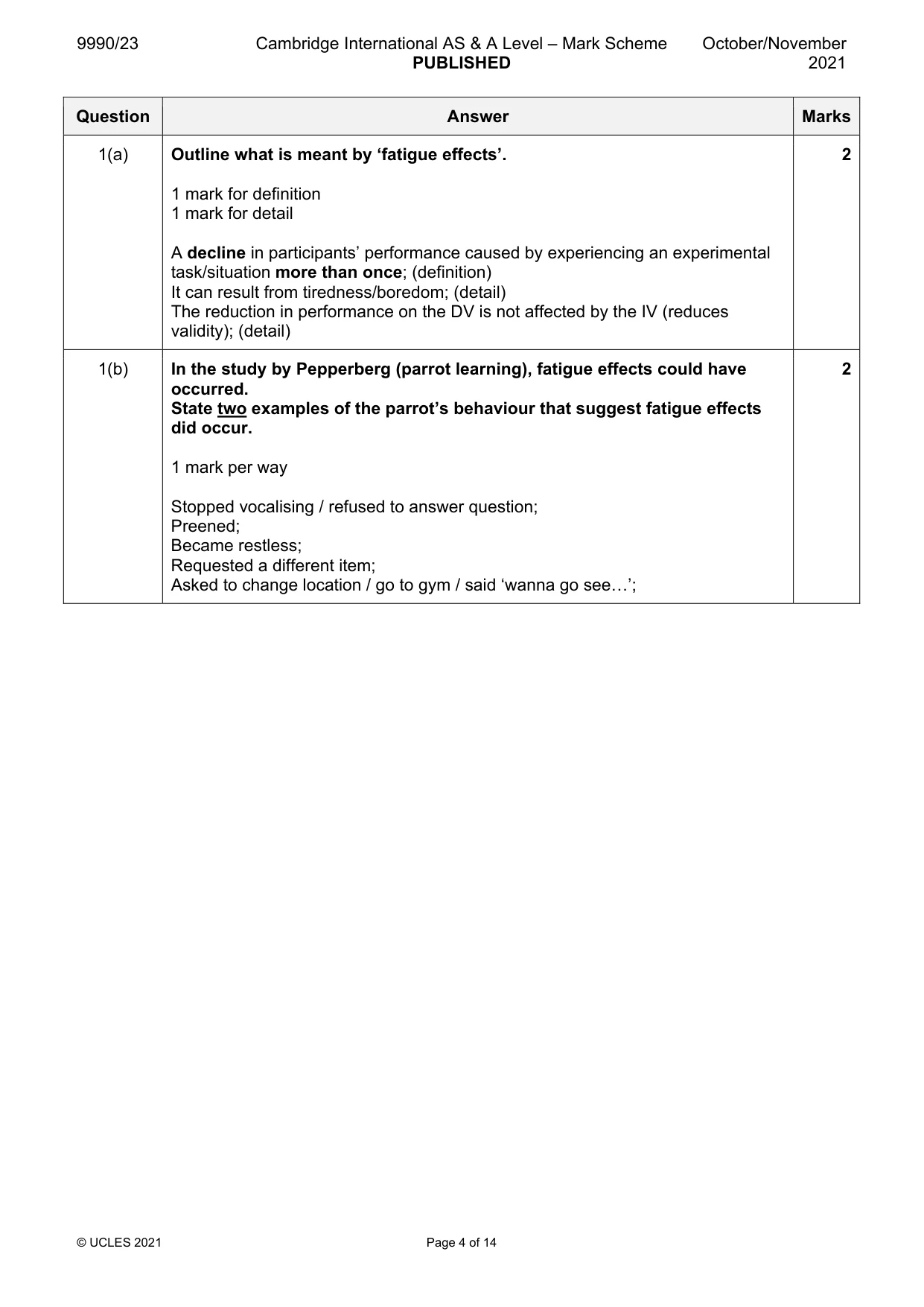
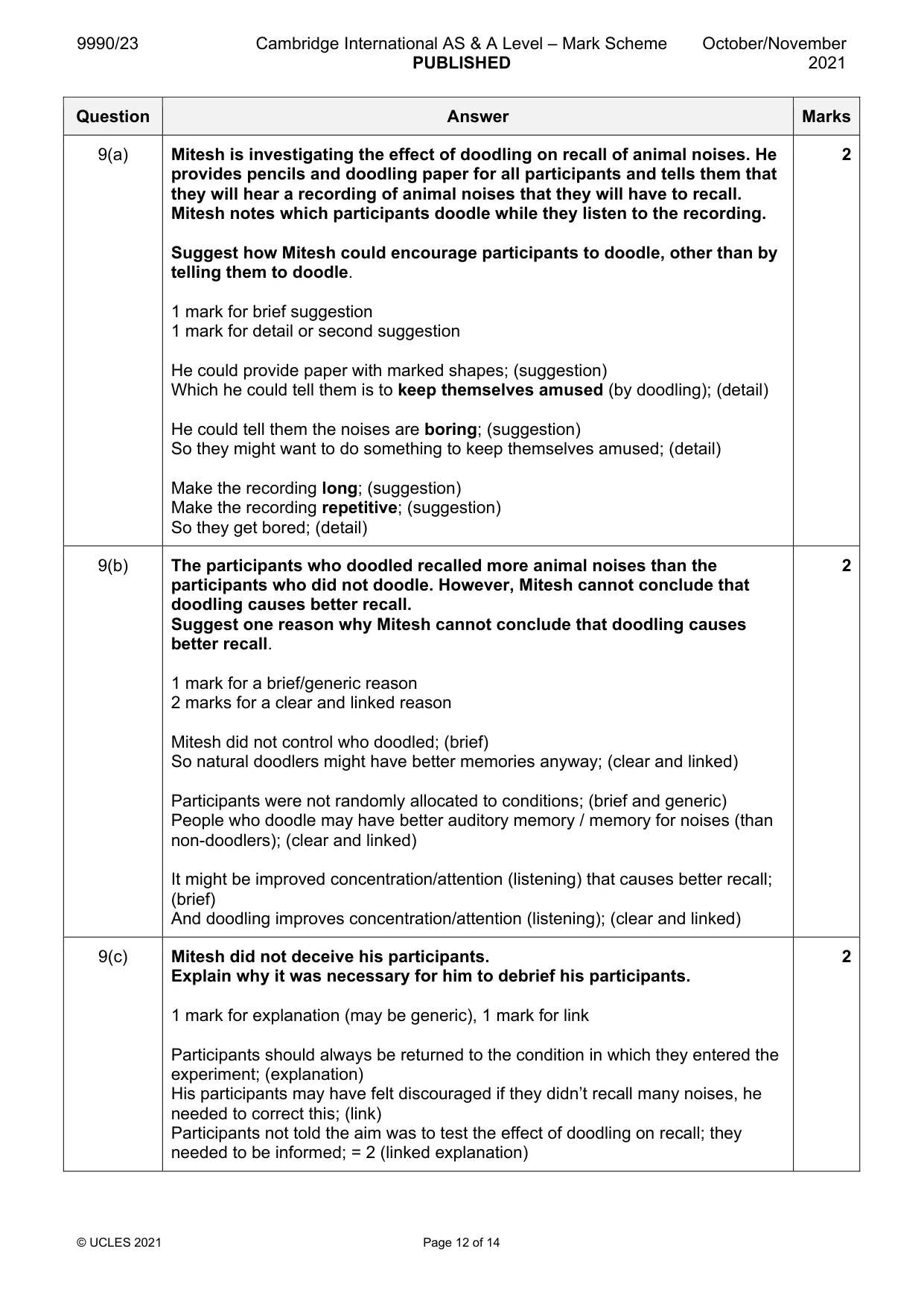
Mark scheme: Question Answer Marks 1(a) Outline what is meant by ‘fatigue effects’. 2 1 mark for definition 1 mark for detail A decline in participants’ performance caused by experiencing an experimental task/situation more than once; (definition) It can result from tiredness/boredom; (detail) The reduction in performance on the DV is not affected by the IV (reduces validity); (detail) 1(b) In the study by Pepperberg (parrot learning), fatigue effects could have 2 occurred. State two examples of the parrot’s behaviour that suggest fatigue effects did occur. 1 mark per way Stopped vocalising / refused to answer question; Preened; Became restless; Requested a different item; Asked to change location / go to gym / said ‘wanna go see…’;
Q2 · Explain why opportunity sampling may not produce a representative sample
2 Explain why opportunity sampling may not produce a representative sample. .......................................................................................................................................................... .................................................................................................................................................... [1]
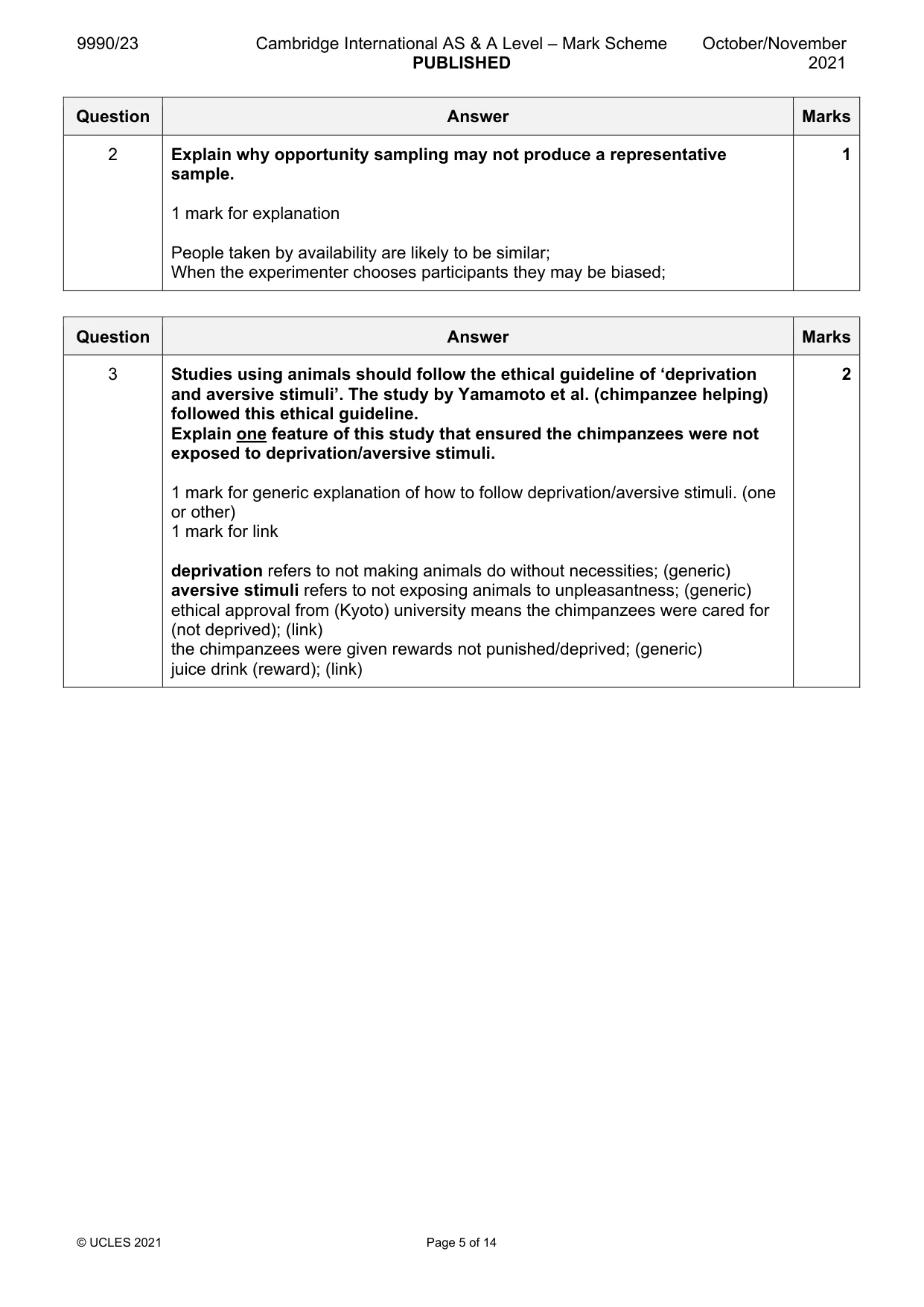
Mark scheme: 2 Explain why opportunity sampling may not produce a representative 1 sample. 1 mark for explanation People taken by availability are likely to be similar; When the experimenter chooses participants they may be biased;
Q3 · Studies using animals should follow the ethical guideline of ‘deprivation and aversive…
3 Studies using animals should follow the ethical guideline of ‘deprivation and aversive stimuli’. The study by Yamamoto et al. (chimpanzee helping) followed this ethical guideline. Explain one feature of this study that ensured the chimpanzees were not exposed to deprivation/ aversive stimuli. .......................................................................................................................................................... .......................................................................................................................................................... .......................................................................................................................................................... .................................................................................................................................................... [2]
Mark scheme: 3 Studies using animals should follow the ethical guideline of ‘deprivation 2 and aversive stimuli’. The study by Yamamoto et al. (chimpanzee helping) followed this ethical guideline. Explain one feature of this study that ensured the chimpanzees were not exposed to deprivation/aversive stimuli. 1 mark for generic explanation of how to follow deprivation/aversive stimuli. (one or other) 1 mark for link deprivation refers to not making animals do without necessities; (generic) aversive stimuli refers to not exposing animals to unpleasantness; (generic) ethical approval from (Kyoto) university means the chimpanzees were cared for (not deprived); (link) the chimpanzees were given rewards not punished/deprived; (generic) juice drink (reward); (link)
Q4 · In the study by Canli et al
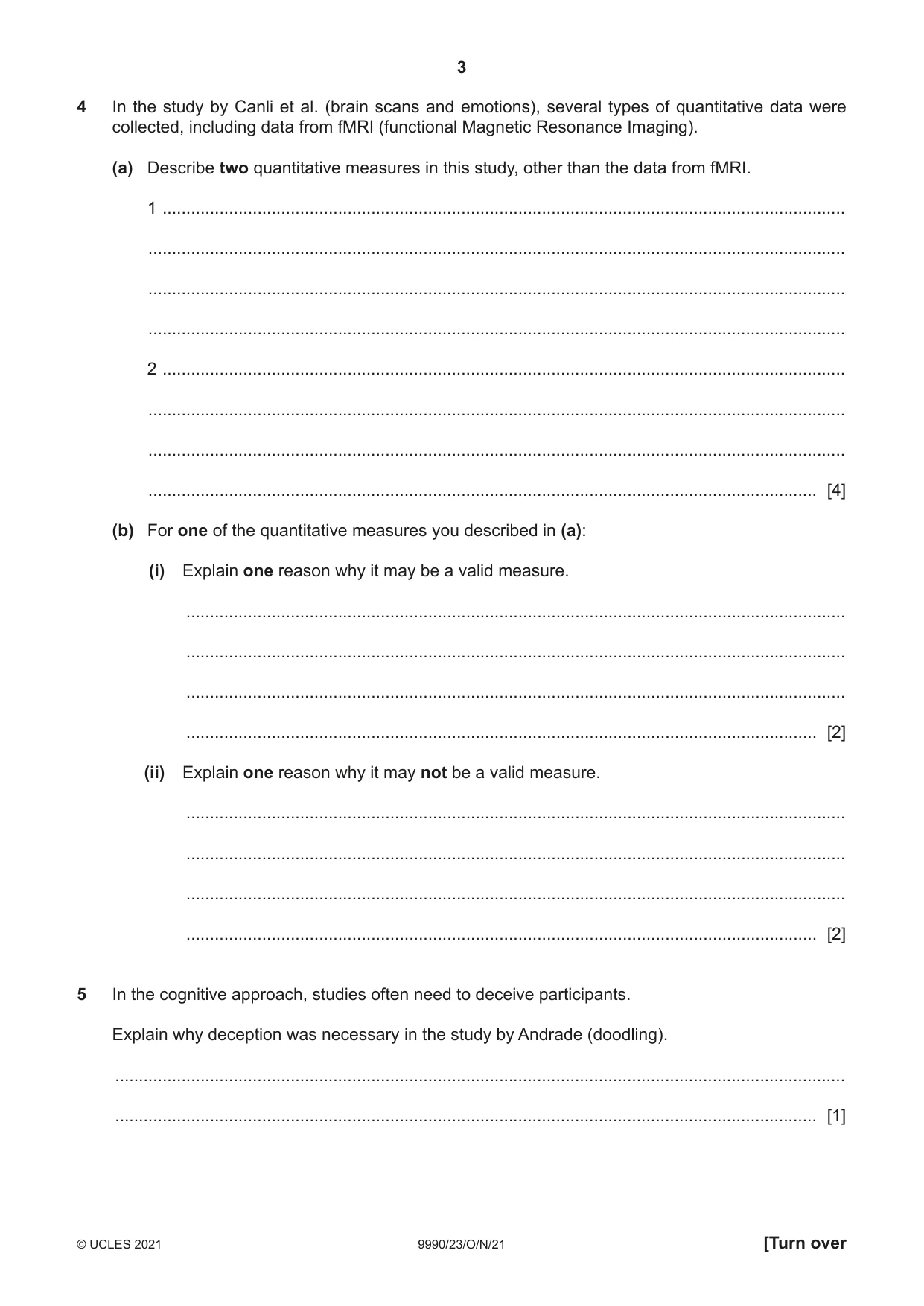
4 In the study by Canli et al. (brain scans and emotions), several types of quantitative data were collected, including data from fMRI (functional Magnetic Resonance Imaging). (a) Describe two quantitative measures in this study, other than the data from fMRI. 1 ................................................................................................................................................ ................................................................................................................................................... ................................................................................................................................................... ................................................................................................................................................... 2 ................................................................................................................................................ ................................................................................................................................................... ................................................................................................................................................... ............................................................................................................................................. [4] (b) For one of the quantitative measures you described in (a): (i) Explain one reason why it may be a valid measure. ........................................................................................................................................... ........................................................................................................................................... ........................................................................................................................................... ..................................................................................................................................... [2] (ii) Explain one reason why it may not be a valid measure. ........................................................................................................................................... ........................................................................................................................................... ........................................................................................................................................... ..................................................................................................................................... [2]
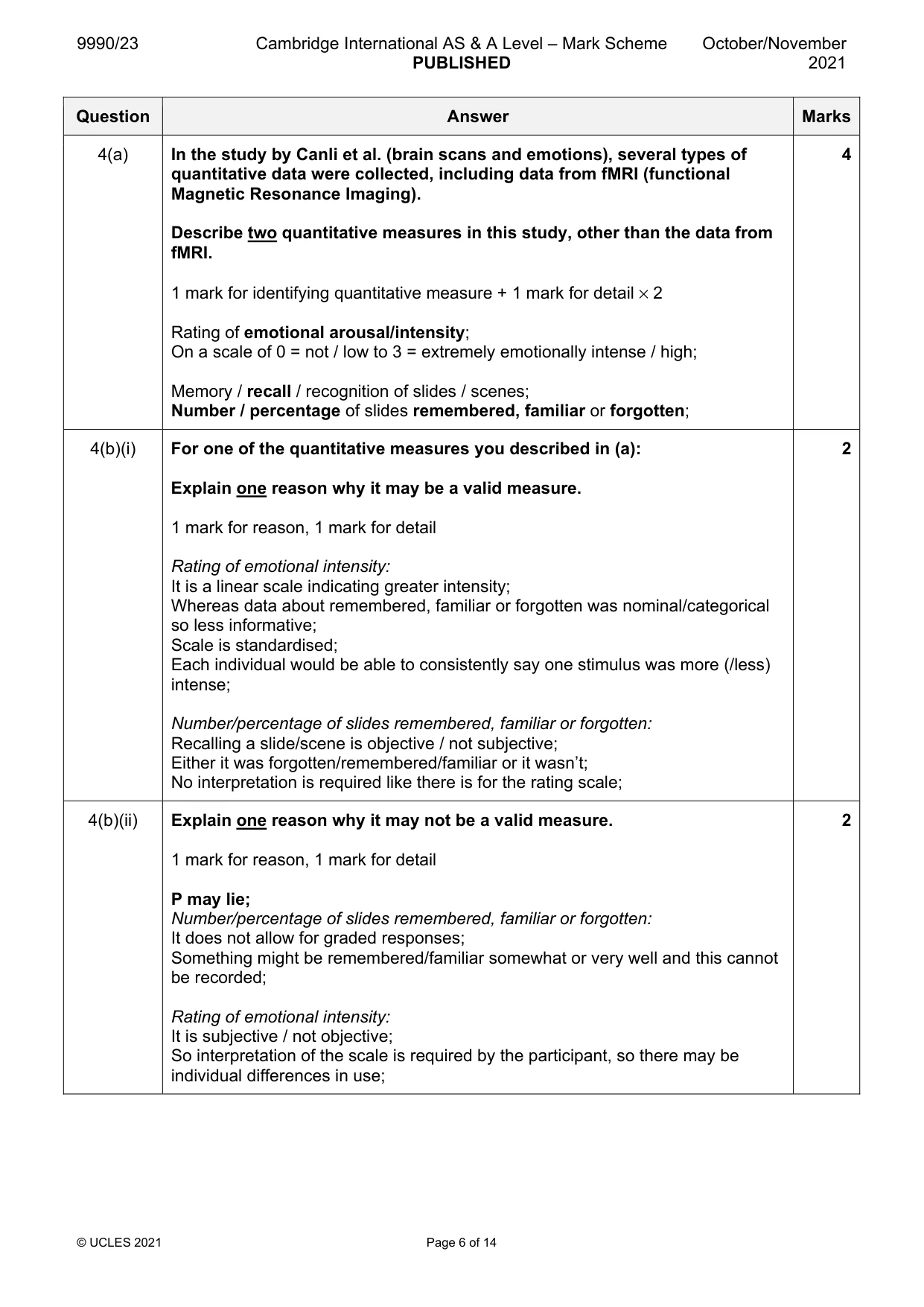
Mark scheme: 4(a) In the study by Canli et al. (brain scans and emotions), several types of 4 quantitative data were collected, including data from fMRI (functional Magnetic Resonance Imaging). Describe two quantitative measures in this study, other than the data from fMRI. 1 mark for identifying quantitative measure + 1 mark for detail × 2 Rating of emotional arousal/intensity; On a scale of 0 = not / low to 3 = extremely emotionally intense / high; Memory / recall / recognition of slides / scenes; Number / percentage of slides remembered, familiar or forgotten; 4(b)(i) For one of the quantitative measures you described in (a): 2 Explain one reason why it may be a valid measure. 1 mark for reason, 1 mark for detail Rating of emotional intensity: It is a linear scale indicating greater intensity; Whereas data about remembered, familiar or forgotten was nominal/categorical so less informative; Scale is standardised; Each individual would be able to consistently say one stimulus was more (/less) intense; Number/percentage of slides remembered, familiar or forgotten: Recalling a slide/scene is objective / not subjective; Either it was forgotten/remembered/familiar or it wasn’t; No interpretation is required like there is for the rating scale; 4(b)(ii) Explain one reason why it may not be a valid measure. 2 1 mark for reason, 1 mark for detail P may lie; Number/percentage of slides remembered, familiar or forgotten: It does not allow for graded responses; Something might be remembered/familiar somewhat or very well and this cannot be recorded; Rating of emotional intensity: It is subjective / not objective; So interpretation of the scale is required by the participant, so there may be individual differences in use;
Q5 · In the cognitive approach, studies often need to deceive participants
5 In the cognitive approach, studies often need to deceive participants. Explain why deception was necessary in the study by Andrade (doodling). .......................................................................................................................................................... .................................................................................................................................................... [1]
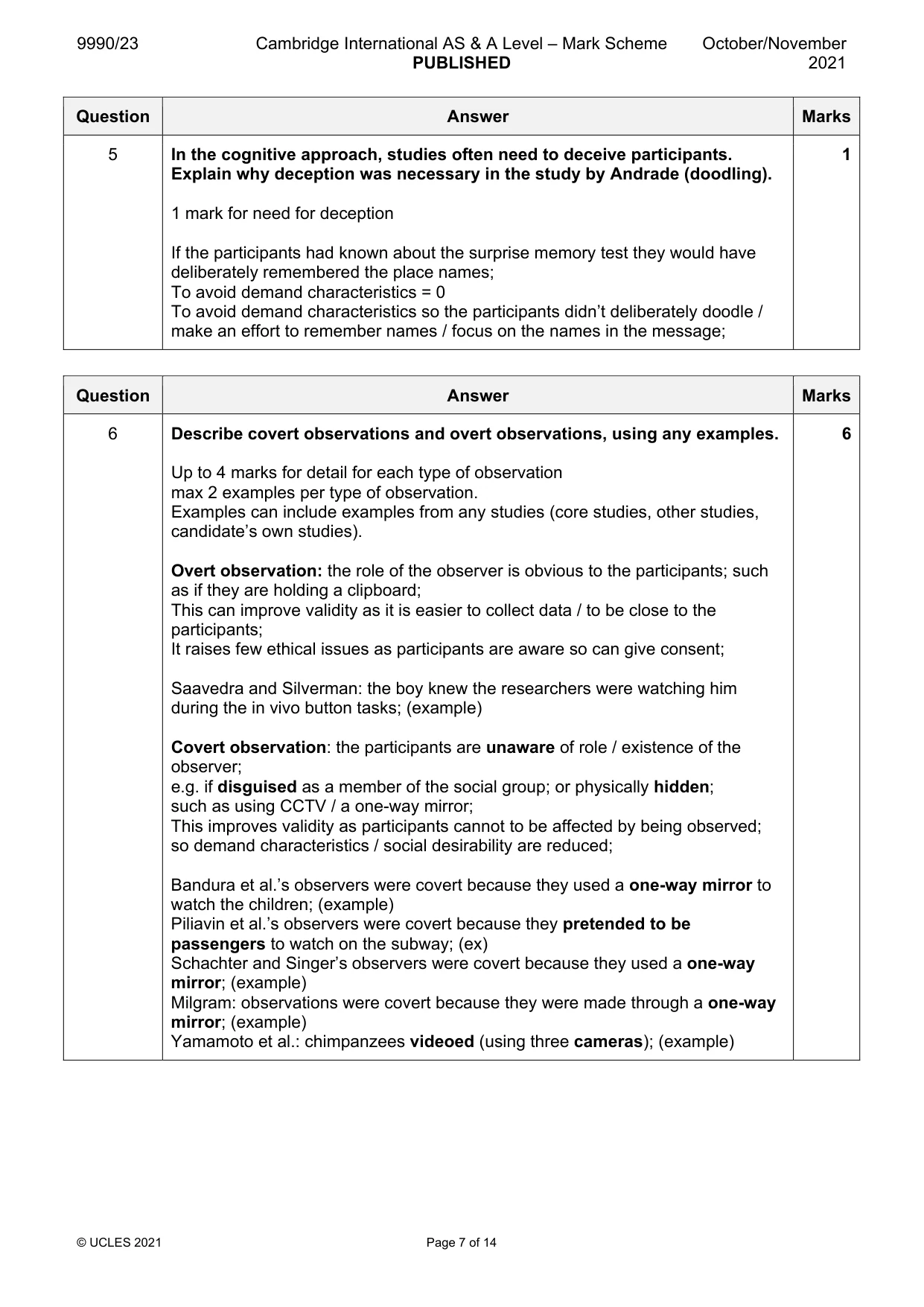
Mark scheme: 5 In the cognitive approach, studies often need to deceive participants. 1 Explain why deception was necessary in the study by Andrade (doodling). 1 mark for need for deception If the participants had known about the surprise memory test they would have deliberately remembered the place names; To avoid demand characteristics = 0 To avoid demand characteristics so the participants didn’t deliberately doodle / make an effort to remember names / focus on the names in the message;
Q6 · Describe covert observations and overt observations, using any examples
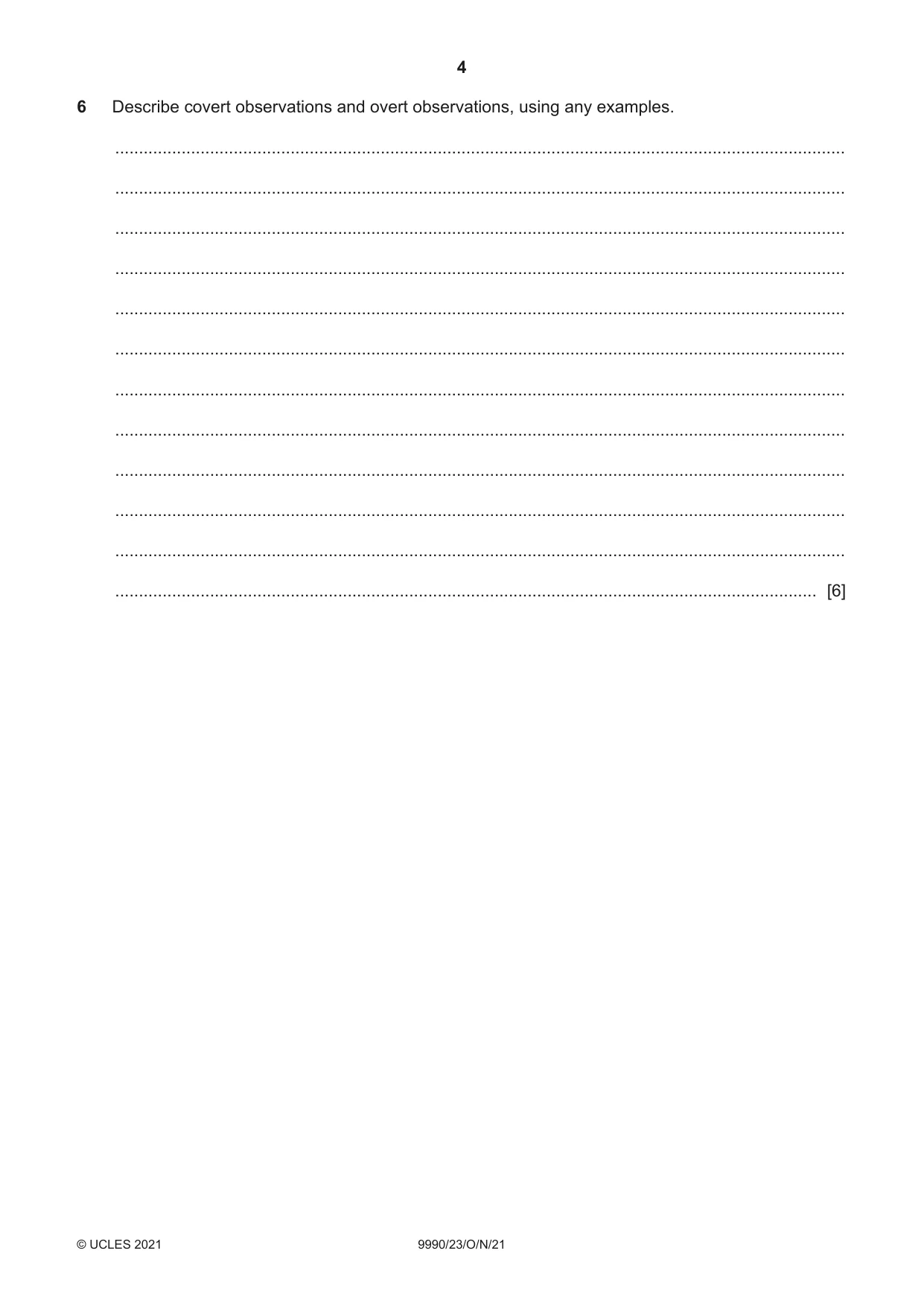
6 Describe covert observations and overt observations, using any examples. .......................................................................................................................................................... .......................................................................................................................................................... .......................................................................................................................................................... .......................................................................................................................................................... .......................................................................................................................................................... .......................................................................................................................................................... .......................................................................................................................................................... .......................................................................................................................................................... .......................................................................................................................................................... .......................................................................................................................................................... .......................................................................................................................................................... .................................................................................................................................................... [6] Question 7 appears on Page 6.
Mark scheme: 6 Describe covert observations and overt observations, using any examples. 6 Up to 4 marks for detail for each type of observation max 2 examples per type of observation. Examples can include examples from any studies (core studies, other studies, candidate’s own studies). Overt observation: the role of the observer is obvious to the participants; such as if they are holding a clipboard; This can improve validity as it is easier to collect data / to be close to the participants; It raises few ethical issues as participants are aware so can give consent; Saavedra and Silverman: the boy knew the researchers were watching him during the in vivo button tasks; (example) Covert observation: the participants are unaware of role / existence of the observer; e.g. if disguised as a member of the social group; or physically hidden; such as using CCTV / a one-way mirror; This improves validity as participants cannot to be affected by being observed; so demand characteristics / social desirability are reduced; Bandura et al.’s observers were covert because they used a one-way mirror to watch the children; (example) Piliavin et al.’s observers were covert because they pretended to be passengers to watch on the subway; (ex) Schachter and Singer’s observers were covert because they used a one-way mirror; (example) Milgram: observations were covert because they were made through a one-way mirror; (example) Yamamoto et al.: chimpanzees videoed (using three cameras); (example)
Q7 · Dhia is investigating when children learn to understand differences between shapes
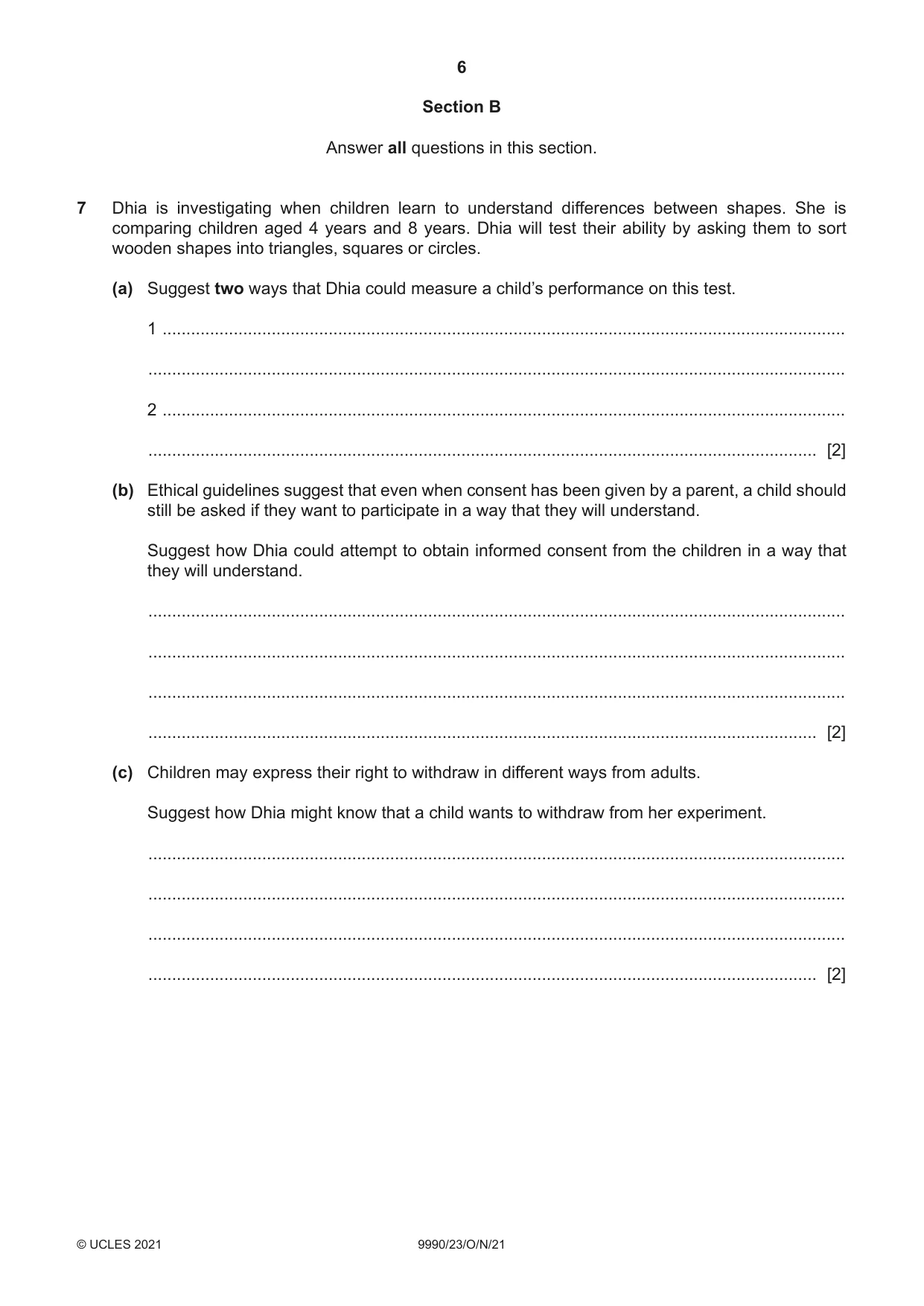
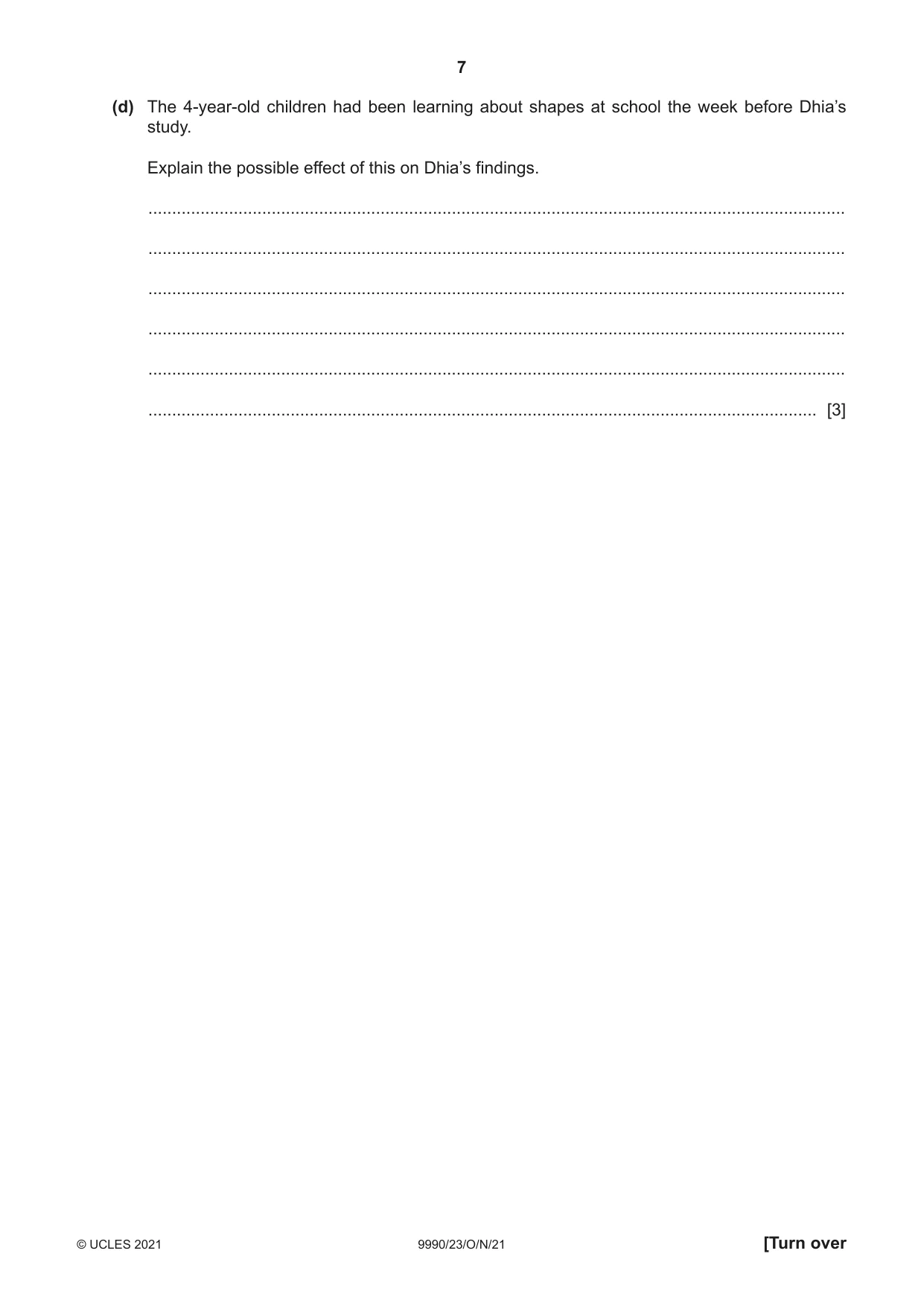
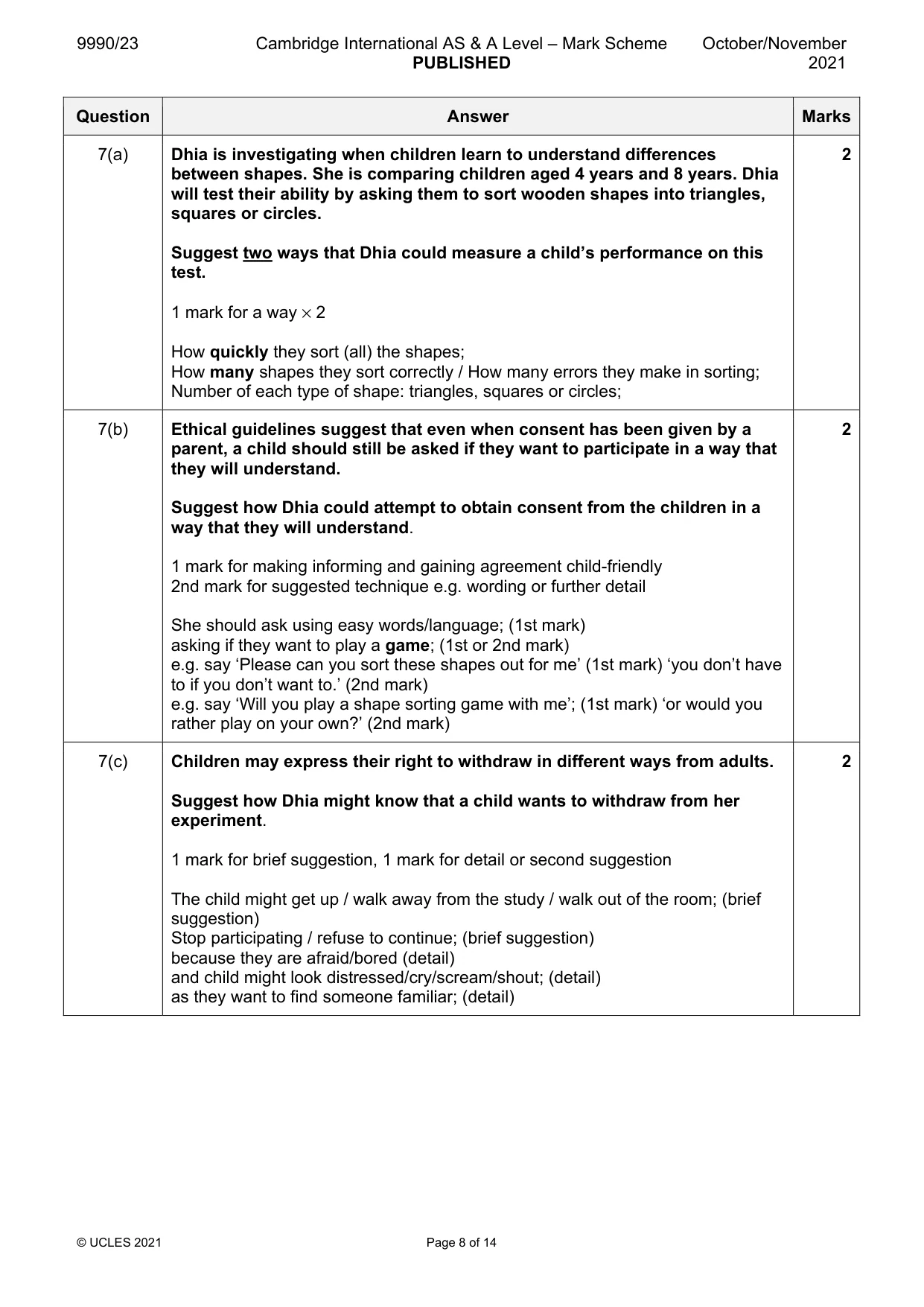
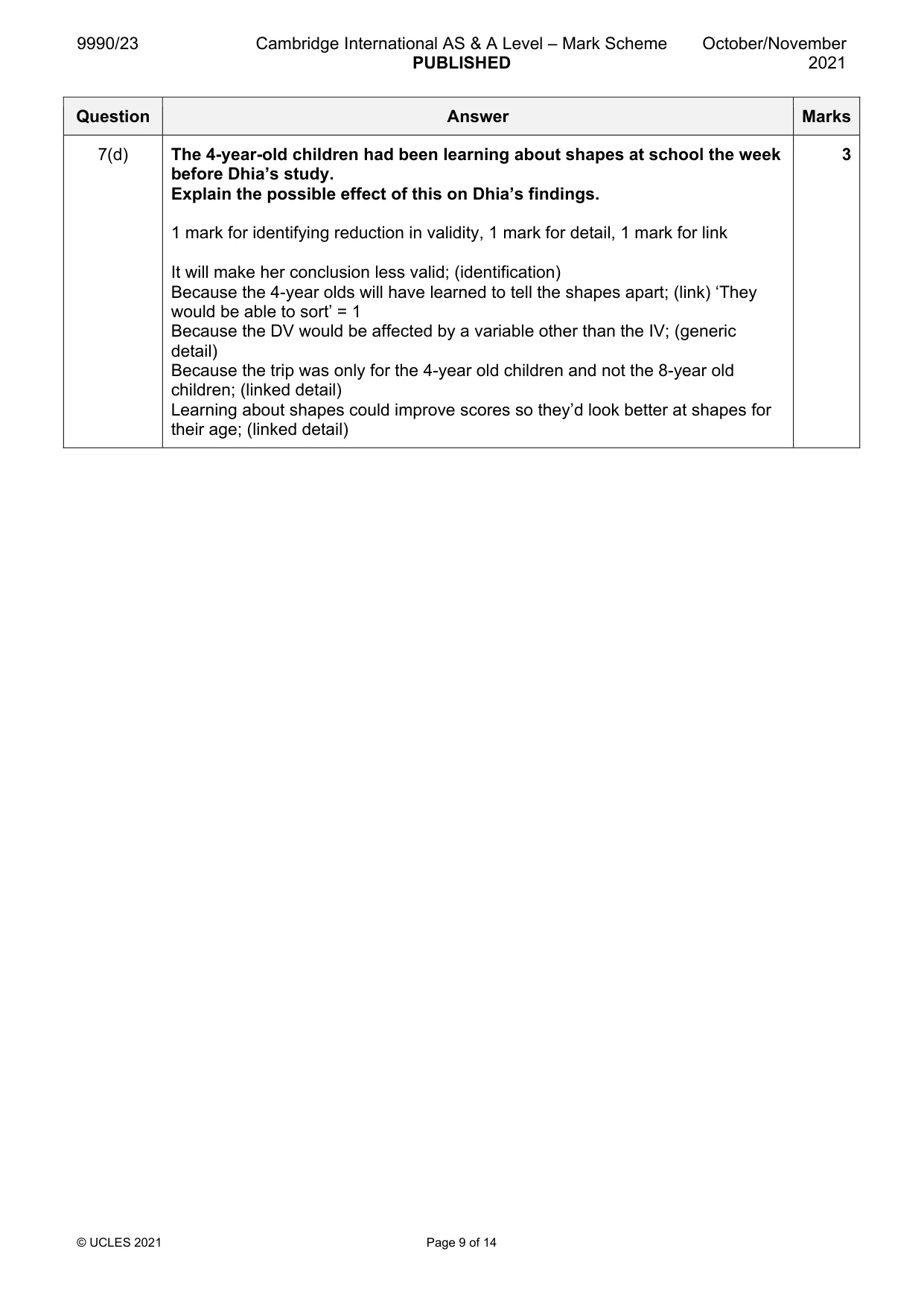
7 Dhia is investigating when children learn to understand differences between shapes. She is comparing children aged 4 years and 8 years. Dhia will test their ability by asking them to sort wooden shapes into triangles, squares or circles. (a) Suggest two ways that Dhia could measure a child’s performance on this test. 1 ................................................................................................................................................ ................................................................................................................................................... 2 ................................................................................................................................................ ............................................................................................................................................. [2] (b) Ethical guidelines suggest that even when consent has been given by a parent, a child should still be asked if they want to participate in a way that they will understand. Suggest how Dhia could attempt to obtain informed consent from the children in a way that they will understand. ................................................................................................................................................... ................................................................................................................................................... ................................................................................................................................................... ............................................................................................................................................. [2] (c) Children may express their right to withdraw in different ways from adults. Suggest how Dhia might know that a child wants to withdraw from her experiment. ................................................................................................................................................... ................................................................................................................................................... ................................................................................................................................................... ............................................................................................................................................. [2] (d) The 4-year-old children had been learning about shapes at school the week before Dhia’s study. Explain the possible effect of this on Dhia’s findings. ................................................................................................................................................... ................................................................................................................................................... ................................................................................................................................................... ................................................................................................................................................... ................................................................................................................................................... ............................................................................................................................................. [3]
Mark scheme: 7(a) Dhia is investigating when children learn to understand differences 2 between shapes. She is comparing children aged 4 years and 8 years. Dhia will test their ability by asking them to sort wooden shapes into triangles, squares or circles. Suggest two ways that Dhia could measure a child’s performance on this test. 1 mark for a way × 2 How quickly they sort (all) the shapes; How many shapes they sort correctly / How many errors they make in sorting; Number of each type of shape: triangles, squares or circles; 7(b) Ethical guidelines suggest that even when consent has been given by a 2 parent, a child should still be asked if they want to participate in a way that they will understand. Suggest how Dhia could attempt to obtain consent from the children in a way that they will understand. 1 mark for making informing and gaining agreement child-friendly 2nd mark for suggested technique e.g. wording or further detail She should ask using easy words/language; (1st mark) asking if they want to play a game; (1st or 2nd mark) e.g. say ‘Please can you sort these shapes out for me’ (1st mark) ‘you don’t have to if you don’t want to.’ (2nd mark) e.g. say ‘Will you play a shape sorting game with me’; (1st mark) ‘or would you rather play on your own?’ (2nd mark) 7(c) Children may express their right to withdraw in different ways from adults. 2 Suggest how Dhia might know that a child wants to withdraw from her experiment. 1 mark for brief suggestion, 1 mark for detail or second suggestion The child might get up / walk away from the study / walk out of the room; (brief suggestion) Stop participating / refuse to continue; (brief suggestion) because they are afraid/bored (detail) and child might look distressed/cry/scream/shout; (detail) as they want to find someone familiar; (detail) 7(d) The 4-year-old children had been learning about shapes at school the week 3 before Dhia’s study. Explain the possible effect of this on Dhia’s findings. 1 mark for identifying reduction in validity, 1 mark for detail, 1 mark for link It will make her conclusion less valid; (identification) Because the 4-year olds will have learned to tell the shapes apart; (link) ‘They would be able to sort’ = 1 Because the DV would be affected by a variable other than the IV; (generic detail) Because the trip was only for the 4-year old children and not the 8-year old children; (linked detail) Learning about shapes could improve scores so they’d look better at shapes for their age; (linked detail)
Q8 · Bai is conducting a correlational study about pain and hours of daylight
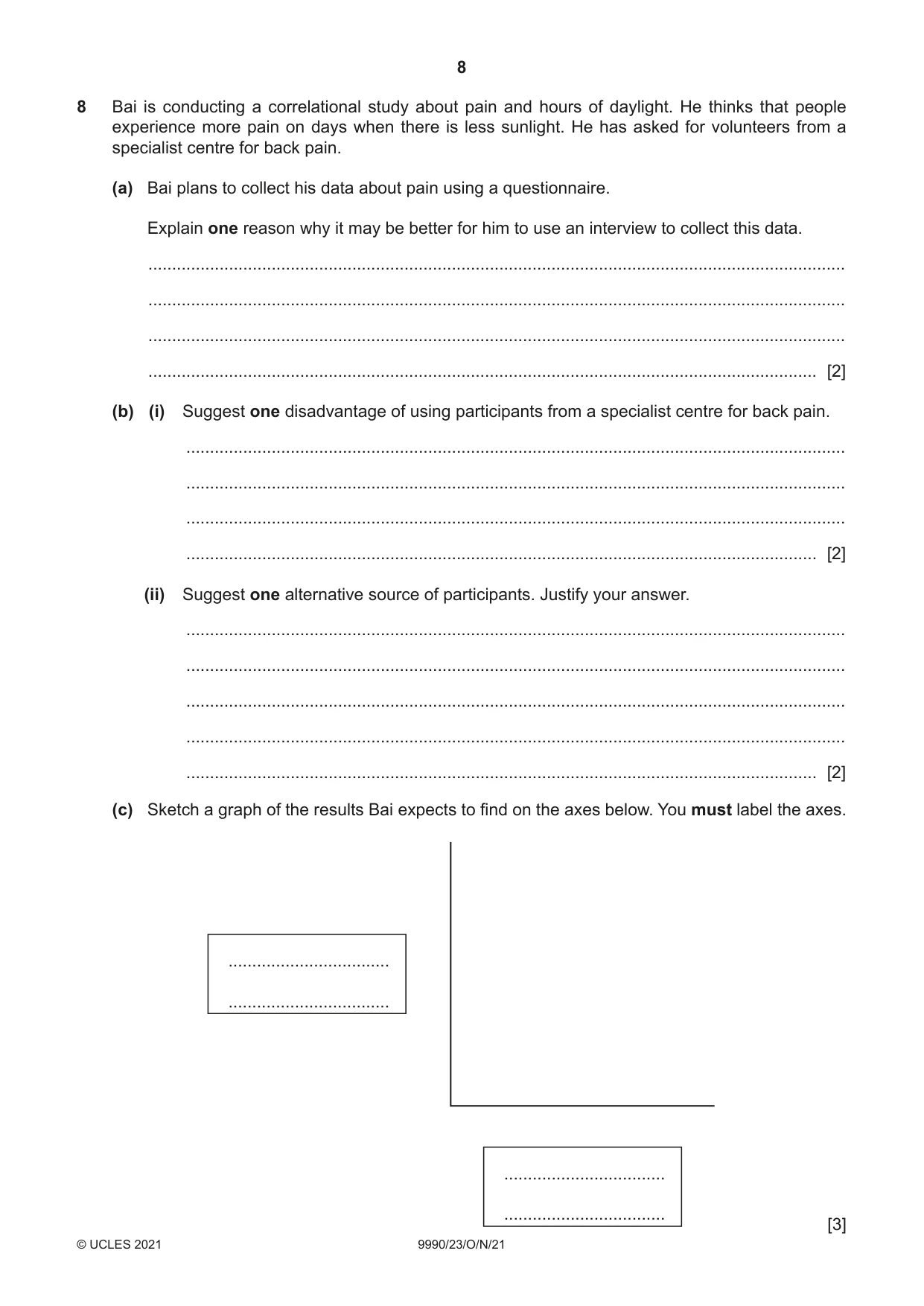
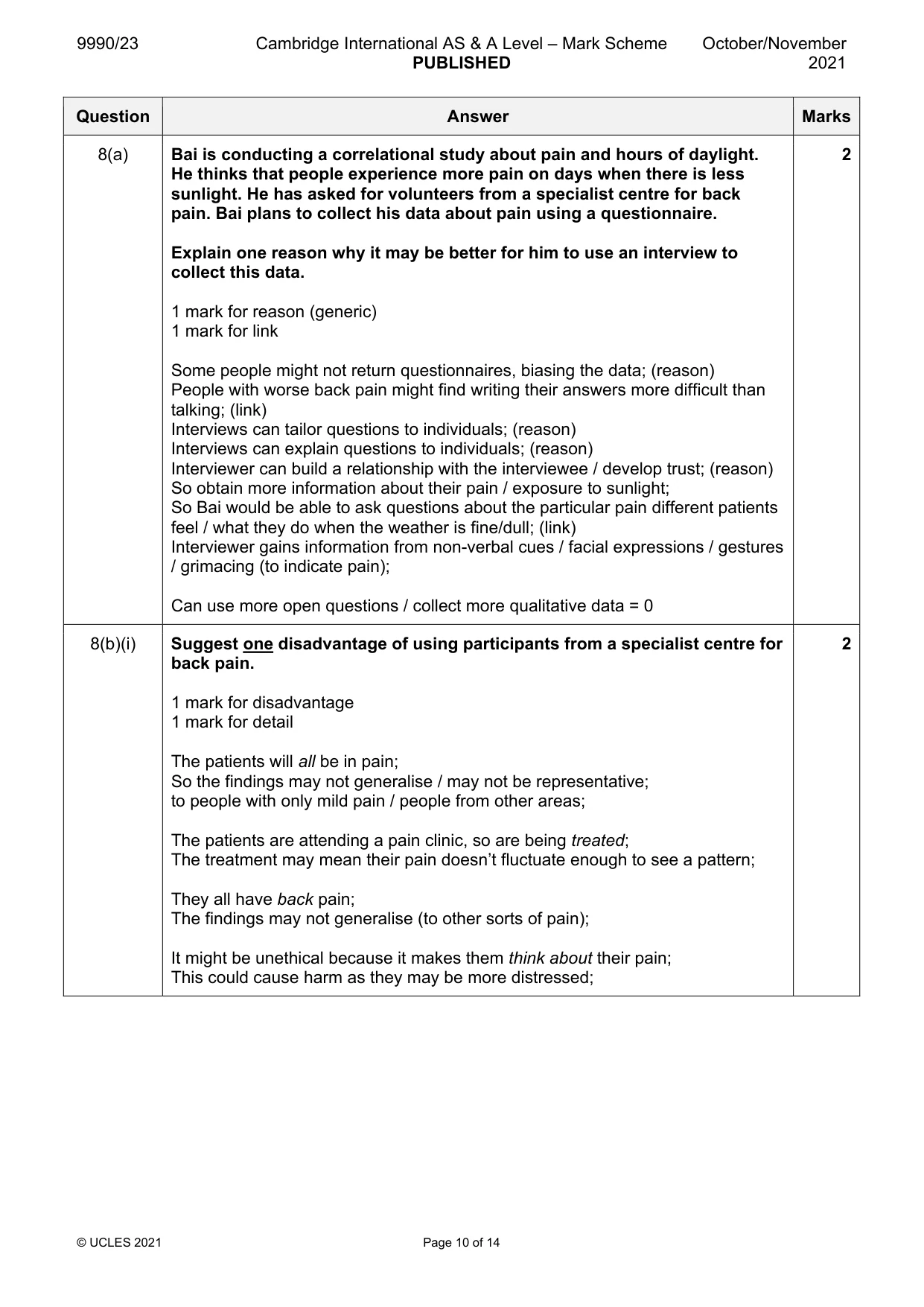
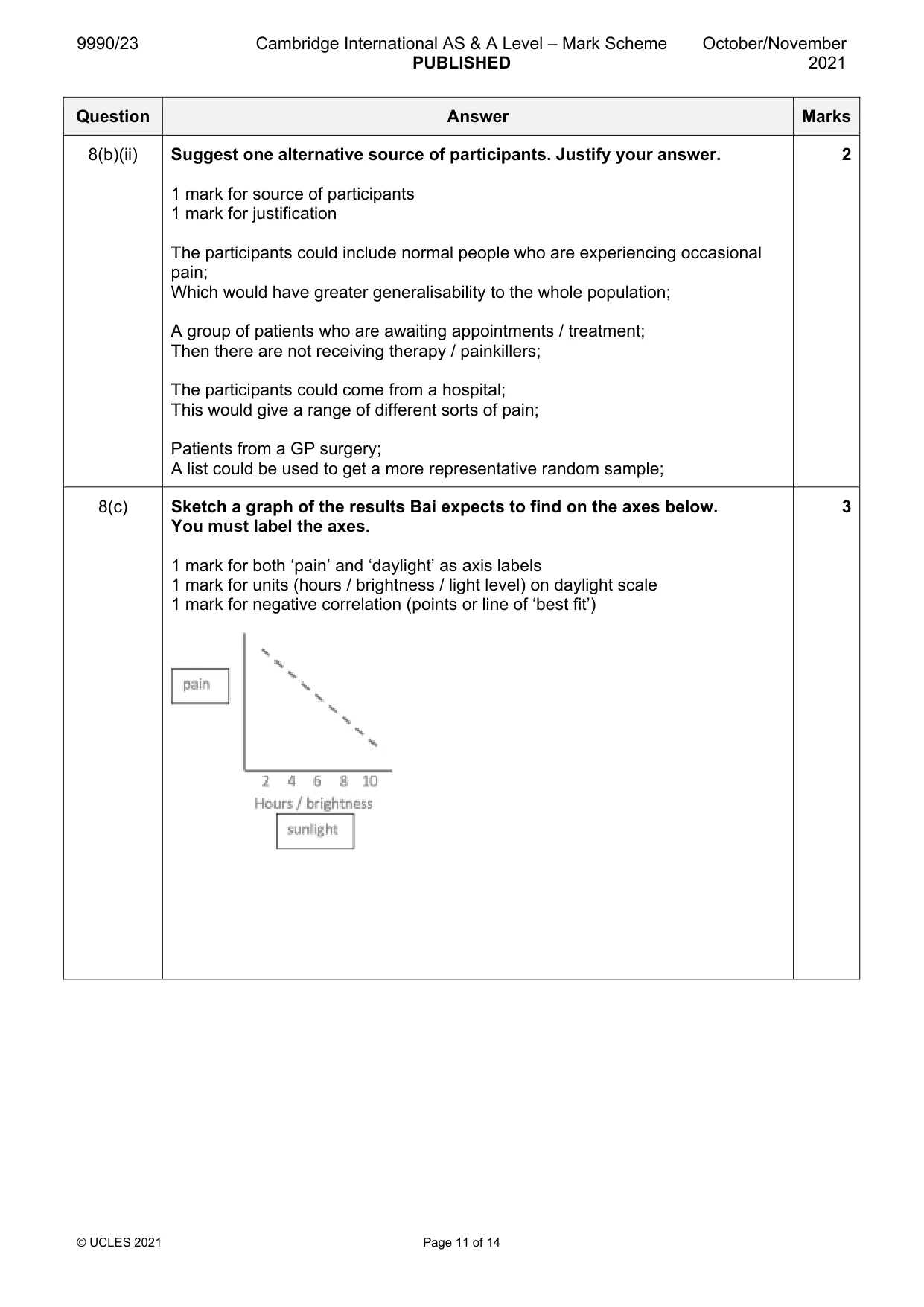
8 Bai is conducting a correlational study about pain and hours of daylight. He thinks that people experience more pain on days when there is less sunlight. He has asked for volunteers from a specialist centre for back pain. (a) Bai plans to collect his data about pain using a questionnaire. Explain one reason why it may be better for him to use an interview to collect this data. ................................................................................................................................................... ................................................................................................................................................... ................................................................................................................................................... ............................................................................................................................................. [2] (b) (i) Suggest one disadvantage of using participants from a specialist centre for back pain. ........................................................................................................................................... ........................................................................................................................................... ........................................................................................................................................... ..................................................................................................................................... [2] (ii) Suggest one alternative source of participants. Justify your answer. ........................................................................................................................................... ........................................................................................................................................... ........................................................................................................................................... ........................................................................................................................................... ..................................................................................................................................... [2] (c) Sketch a graph of the results Bai expects to find on the axes below. You must label the axes. .................................. .................................. .................................. .................................. [3]
Mark scheme: 8(a) Bai is conducting a correlational study about pain and hours of daylight. 2 He thinks that people experience more pain on days when there is less sunlight. He has asked for volunteers from a specialist centre for back pain. Bai plans to collect his data about pain using a questionnaire. Explain one reason why it may be better for him to use an interview to collect this data. 1 mark for reason (generic) 1 mark for link Some people might not return questionnaires, biasing the data; (reason) People with worse back pain might find writing their answers more difficult than talking; (link) Interviews can tailor questions to individuals; (reason) Interviews can explain questions to individuals; (reason) Interviewer can build a relationship with the interviewee / develop trust; (reason) So obtain more information about their pain / exposure to sunlight; So Bai would be able to ask questions about the particular pain different patients feel / what they do when the weather is fine/dull; (link) Interviewer gains information from non-verbal cues / facial expressions / gestures / grimacing (to indicate pain); Can use more open questions / collect more qualitative data = 0 8(b)(i) Suggest one disadvantage of using participants from a specialist centre for 2 back pain. 1 mark for disadvantage 1 mark for detail The patients will all be in pain; So the findings may not generalise / may not be representative; to people with only mild pain / people from other areas; The patients are attending a pain clinic, so are being treated; The treatment may mean their pain doesn’t fluctuate enough to see a pattern; They all have back pain; The findings may not generalise (to other sorts of pain); It might be unethical because it makes them think about their pain; This could cause harm as they may be more distressed; 8(b)(ii) Suggest one alternative source of participants. Justify your answer. 2 1 mark for source of participants 1 mark for justification The participants could include normal people who are experiencing occasional pain; Which would have greater generalisability to the whole population; A group of patients who are awaiting appointments / treatment; Then there are not receiving therapy / painkillers; The participants could come from a hospital; This would give a range of different sorts of pain; Patients from a GP surgery; A list could be used to get a more representative random sample; 8(c) Sketch a graph of the results Bai expects to find on the axes below. 3 You must label the axes. 1 mark for both ‘pain’ and ‘daylight’ as axis labels 1 mark for units (hours / brightness / light level) on daylight scale 1 mark for negative correlation (points or line of ‘best fit’)
Q9 · Mitesh is investigating the effect of doodling on recall of animal noises
9 Mitesh is investigating the effect of doodling on recall of animal noises. He provides pencils and doodling paper for all participants and tells them that they will hear a recording of animal noises that they will have to recall. Mitesh notes which participants doodle while they listen to the recording. (a) Suggest how Mitesh could encourage participants to doodle, other than by telling them to doodle. ................................................................................................................................................... ................................................................................................................................................... ................................................................................................................................................... ............................................................................................................................................. [2] (b) The participants who doodled recalled more animal noises than the participants who did not doodle. However, Mitesh cannot conclude that doodling causes better recall. Suggest one reason why Mitesh cannot conclude that doodling causes better recall. ................................................................................................................................................... ................................................................................................................................................... ................................................................................................................................................... ............................................................................................................................................. [2] (c) Mitesh did not deceive his participants. Explain why it was necessary for him to debrief his participants. ................................................................................................................................................... ................................................................................................................................................... ................................................................................................................................................... ............................................................................................................................................. [2] Section C Answer all questions in this section.
Mark scheme: 9(a) Mitesh is investigating the effect of doodling on recall of animal noises. He 2 provides pencils and doodling paper for all participants and tells them that they will hear a recording of animal noises that they will have to recall. Mitesh notes which participants doodle while they listen to the recording. Suggest how Mitesh could encourage participants to doodle, other than by telling them to doodle. 1 mark for brief suggestion 1 mark for detail or second suggestion He could provide paper with marked shapes; (suggestion) Which he could tell them is to keep themselves amused (by doodling); (detail) He could tell them the noises are boring; (suggestion) So they might want to do something to keep themselves amused; (detail) Make the recording long; (suggestion) Make the recording repetitive; (suggestion) So they get bored; (detail) 9(b) The participants who doodled recalled more animal noises than the 2 participants who did not doodle. However, Mitesh cannot conclude that doodling causes better recall. Suggest one reason why Mitesh cannot conclude that doodling causes better recall. 1 mark for a brief/generic reason 2 marks for a clear and linked reason Mitesh did not control who doodled; (brief) So natural doodlers might have better memories anyway; (clear and linked) Participants were not randomly allocated to conditions; (brief and generic) People who doodle may have better auditory memory / memory for noises (than non-doodlers); (clear and linked) It might be improved concentration/attention (listening) that causes better recall; (brief) And doodling improves concentration/attention (listening); (clear and linked) 9(c) Mitesh did not deceive his participants. 2 Explain why it was necessary for him to debrief his participants. 1 mark for explanation (may be generic), 1 mark for link Participants should always be returned to the condition in which they entered the experiment; (explanation) His participants may have felt discouraged if they didn’t recall many noises, he needed to correct this; (link) Participants not told the aim was to test the effect of doodling on recall; they needed to be informed; = 2 (linked explanation)
Q10 · Mandy wants to investigate the effects of phobias on the way people socialise, such as…
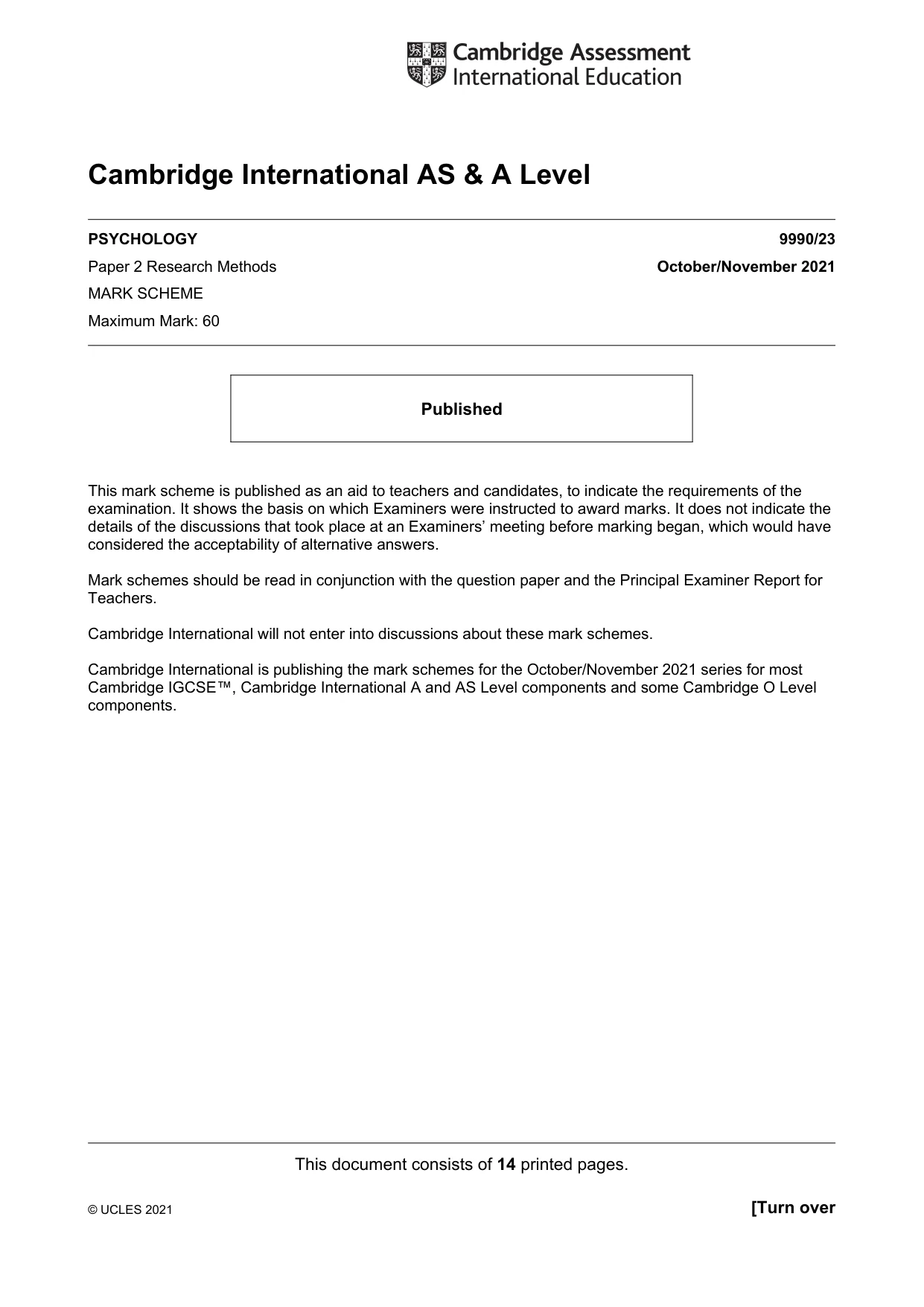
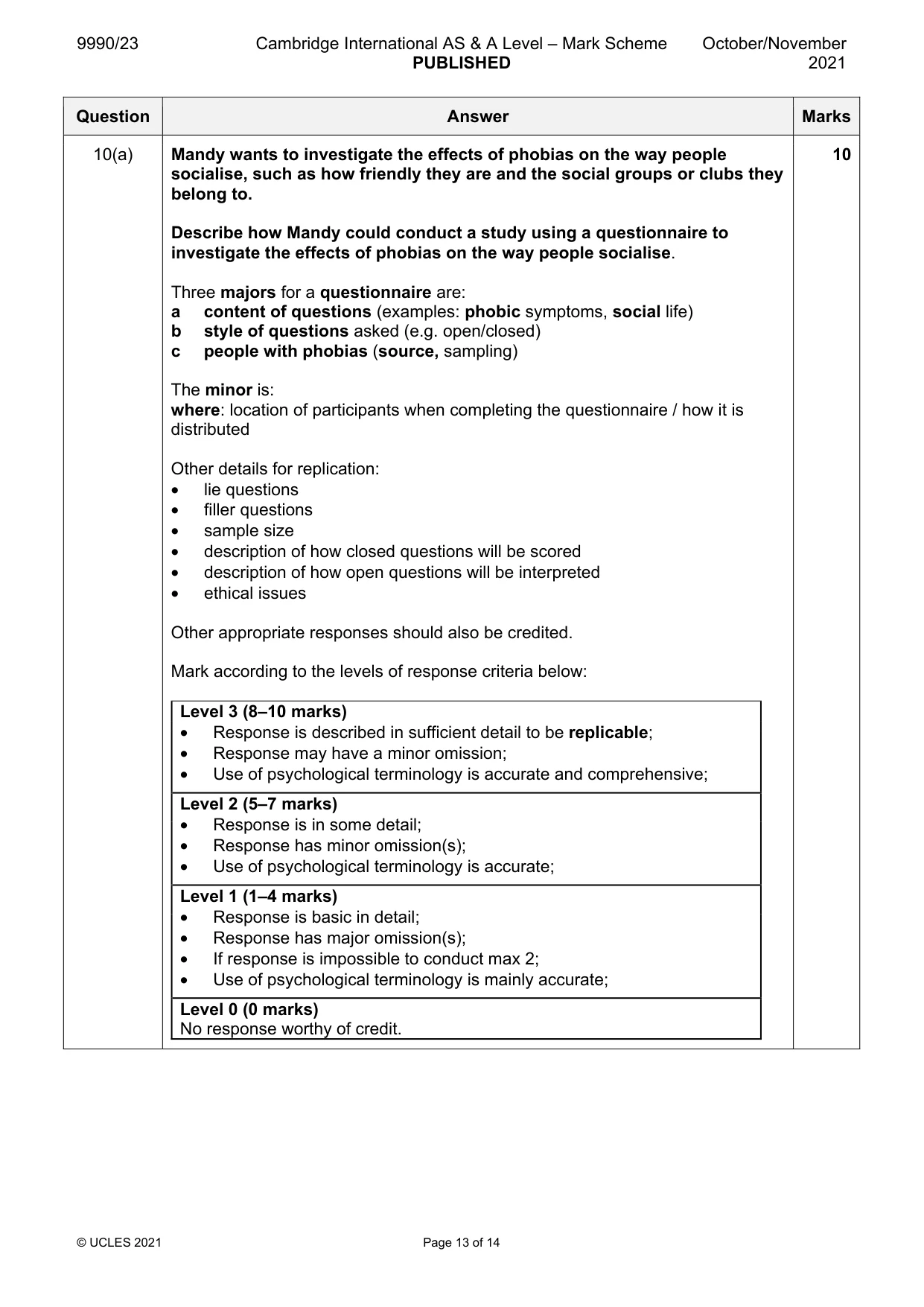
10 Mandy wants to investigate the effects of phobias on the way people socialise, such as how friendly they are and the social groups or clubs they belong to. (a) Describe how Mandy could conduct a study using a questionnaire to investigate the effects of phobias on the way people socialise. ................................................................................................................................................... ................................................................................................................................................... ................................................................................................................................................... ................................................................................................................................................... ................................................................................................................................................... ................................................................................................................................................... ................................................................................................................................................... ................................................................................................................................................... ................................................................................................................................................... ................................................................................................................................................... ................................................................................................................................................... ................................................................................................................................................... ................................................................................................................................................... ................................................................................................................................................... ................................................................................................................................................... ................................................................................................................................................... ................................................................................................................................................... ................................................................................................................................................... ................................................................................................................................................... ................................................................................................................................................... ................................................................................................................................................... ................................................................................................................................................... ................................................................................................................................................... ................................................................................................................................................... ................................................................................................................................................... ................................................................................................................................................... ................................................................................................................................................... ................................................................................................................................................... ................................................................................................................................................... ................................................................................................................................................... ................................................................................................................................................... ................................................................................................................................................... ................................................................................................................................................... ................................................................................................................................................... ................................................................................................................................................... ................................................................................................................................................... ................................................................................................................................................... ................................................................................................................................................... ........................................................................................................................................... [10] (b) Identify one practical weakness/limitation with the procedure you have described in your answer to part (a) and suggest how your study might be done differently to overcome the problem. Do not refer to ethics or sampling in your answer. ................................................................................................................................................... ................................................................................................................................................... ................................................................................................................................................... ................................................................................................................................................... ................................................................................................................................................... ................................................................................................................................................... ...................................................................................................................................................
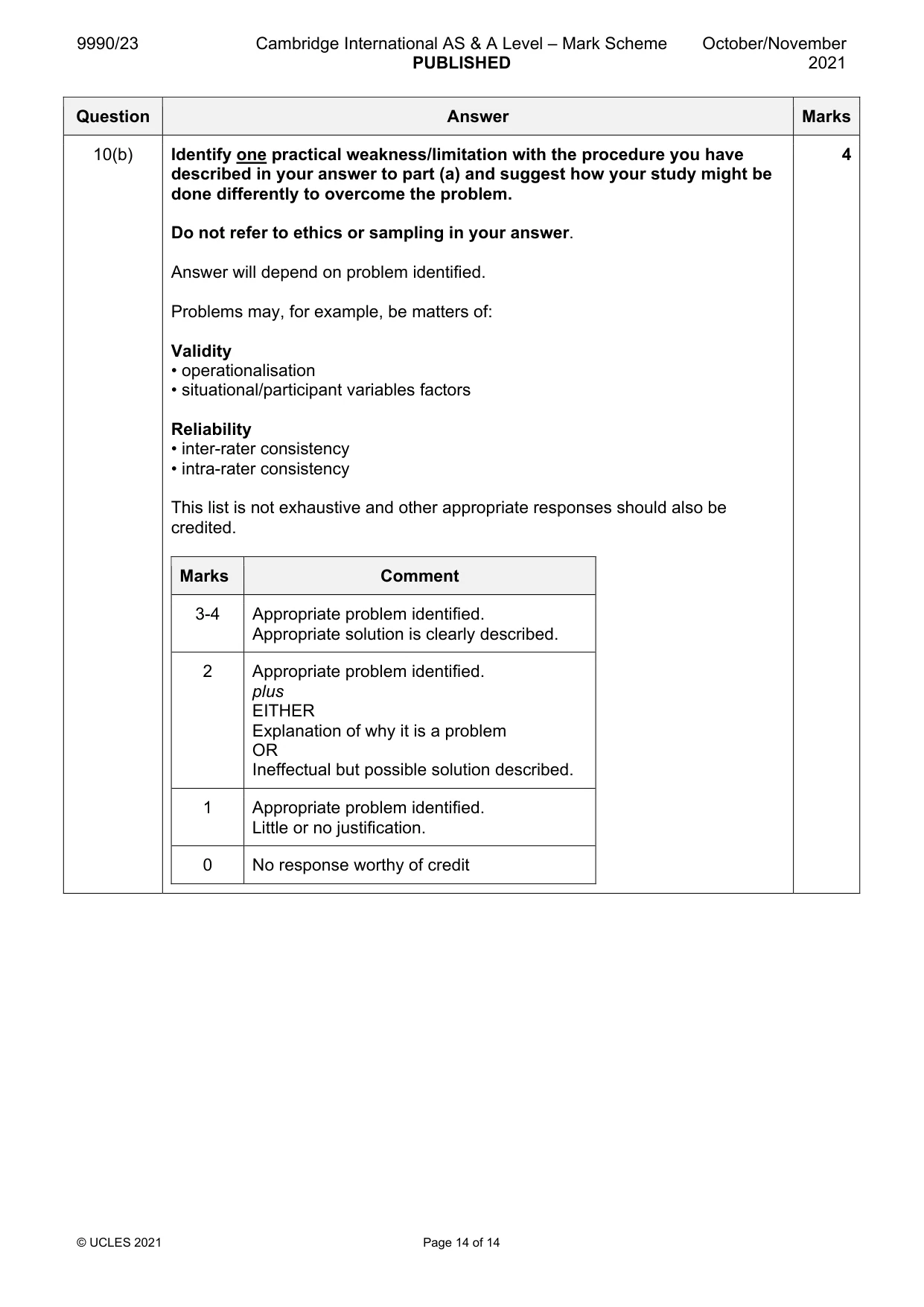
Mark scheme: 10(a) Mandy wants to investigate the effects of phobias on the way people 10 socialise, such as how friendly they are and the social groups or clubs they belong to. Describe how Mandy could conduct a study using a questionnaire to investigate the effects of phobias on the way people socialise. Three majors for a questionnaire are: a content of questions (examples: phobic symptoms, social life) b style of questions asked (e.g. open/closed) c people with phobias (source, sampling) The minor is: where: location of participants when completing the questionnaire / how it is distributed Other details for replication: • lie questions • filler questions • sample size • description of how closed questions will be scored • description of how open questions will be interpreted • ethical issues Other appropriate responses should also be credited. Mark according to the levels of response criteria below: Level 3 (8–10 marks) • Response is described in sufficient detail to be replicable; • Response may have a minor omission; • Use of psychological terminology is accurate and comprehensive; Level 2 (5–7 marks) • Response is in some detail; • Response has minor omission(s); • Use of psychological terminology is accurate; Level 1 (1–4 marks) • Response is basic in detail; • Response has major omission(s); • If response is impossible to conduct max 2; • Use of psychological terminology is mainly accurate; Level 0 (0 marks) No response worthy of credit. 10(b) Identify one practical weakness/limitation with the procedure you have 4 described in your answer to part (a) and suggest how your study might be done differently to overcome the problem. Do not refer to ethics or sampling in your answer. Answer will depend on problem identified. Problems may, for example, be matters of: Validity • operationalisation • situational/participant variables factors Reliability • inter-rater consistency • intra-rater consistency This list is not exhaustive and other appropriate responses should also be credited. Marks Comment 3-4 Appropriate problem identified. Appropriate solution is clearly described. 2 Appropriate problem identified. plus EITHER Explanation of why it is a problem OR Ineffectual but possible solution described. 1 Appropriate problem identified. Little or no justification. 0 No response worthy of credit
More questions on Anxiety disorders and fear-related disorders
What was in this paper
The subtopics covered by these 10 questions, and how many questions each got. Open one in a new tab to see every Cambridge question on it.
What you needed in this session
Cambridge’s own grade thresholds for 2021 Oct/Nov, Paper 2 · Variant 3. A higher threshold means an easier paper — the bar moves with how the cohort did.