Cambridge A Level Psychology (from 2018) 9990 — 2021 Oct/Nov Paper 2 · Variant 2
9990/22/O/N/21 · 10 questions · 60 marks · ≈68 min
The question paper and its mark scheme, free to read here and free to download. This is Cambridge’s own paper, exactly as it was sat.
Question paper12 pages


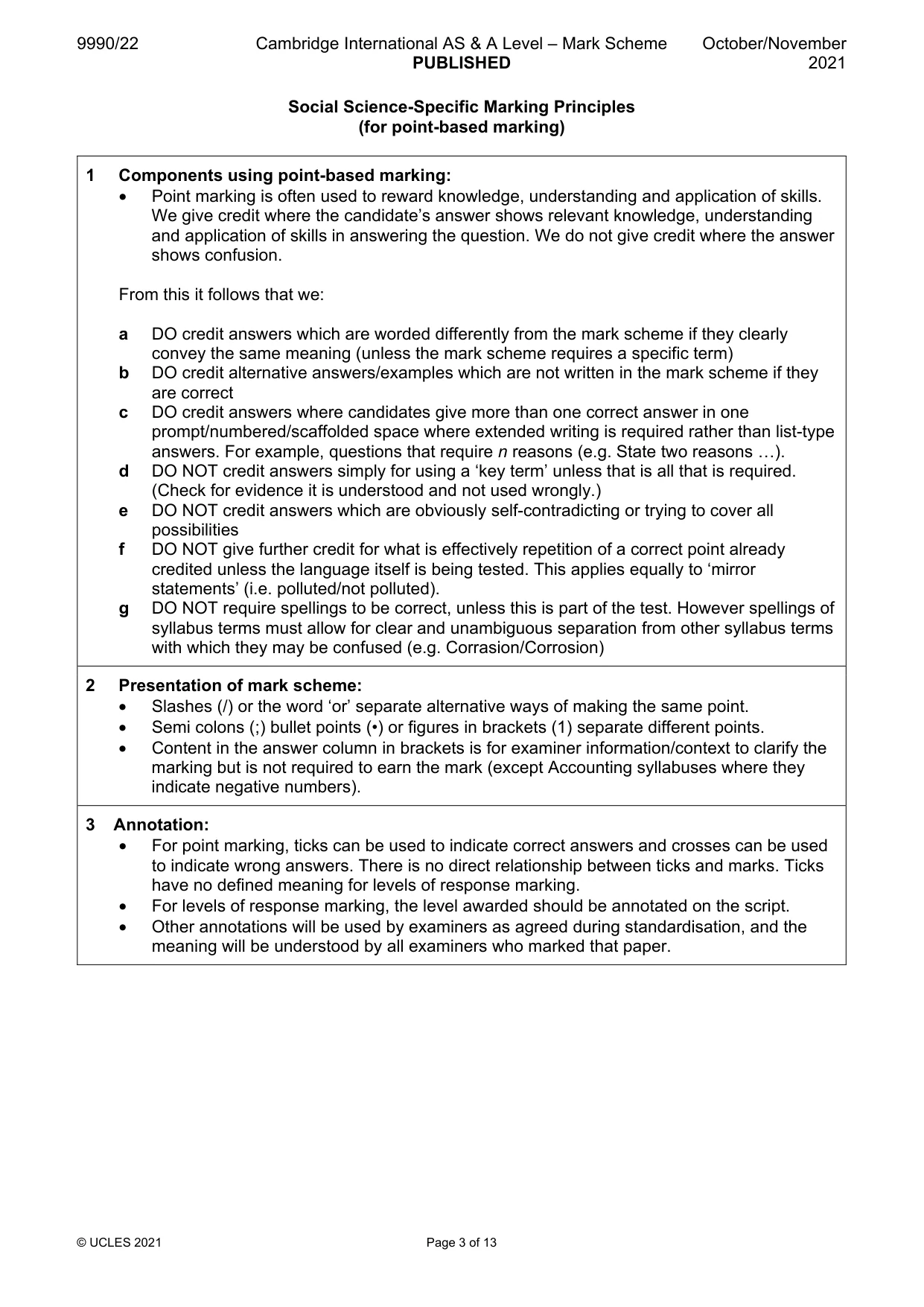
Mark scheme13 pages
Answers below. Sit the paper first if you are practising.
Questions as text
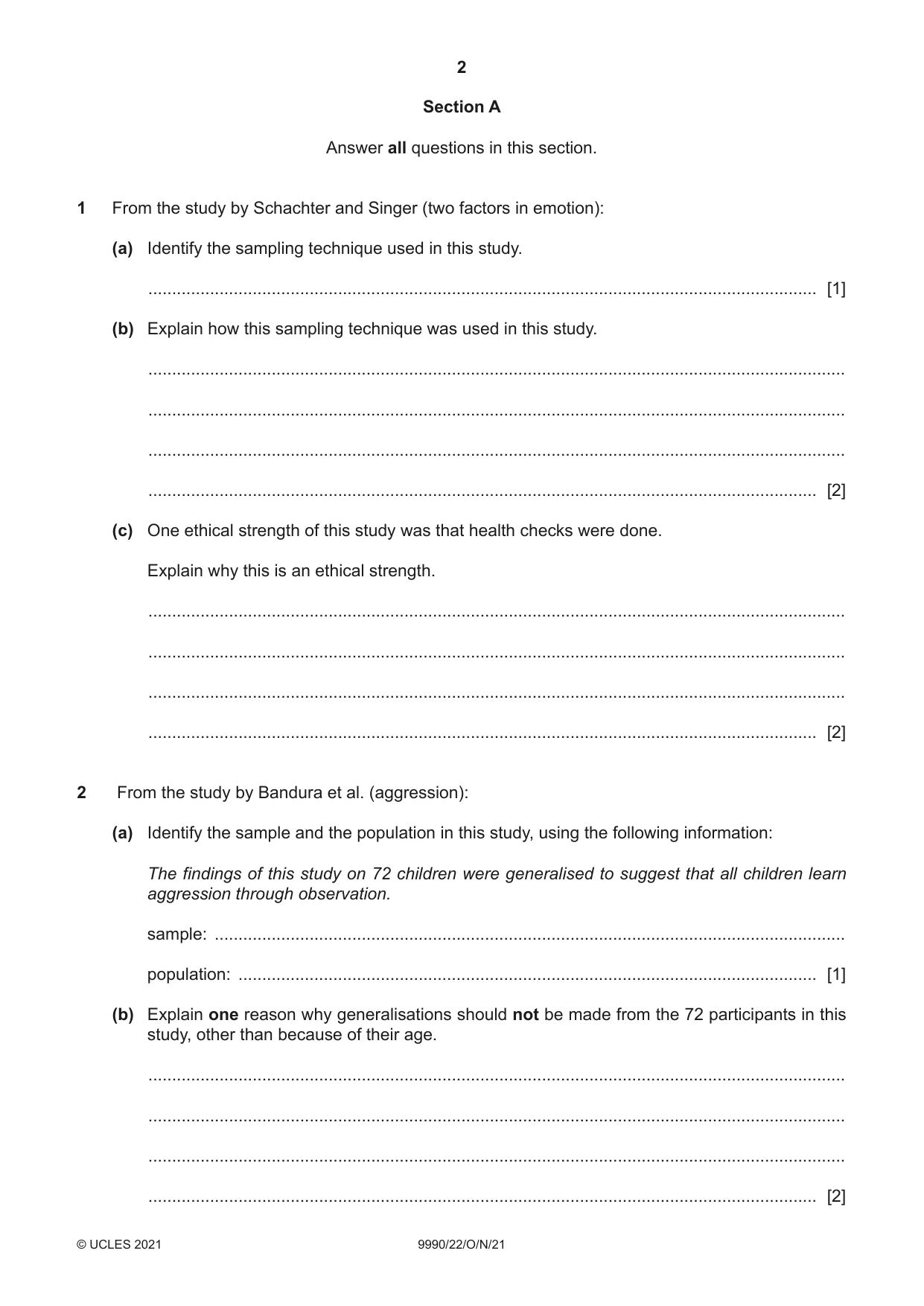
Q1 · From the study by Schachter and Singer (two factors in emotion): (a) Identify the…
1 From the study by Schachter and Singer (two factors in emotion): (a) Identify the sampling technique used in this study. ............................................................................................................................................. [1] (b) Explain how this sampling technique was used in this study. ................................................................................................................................................... ................................................................................................................................................... ................................................................................................................................................... ............................................................................................................................................. [2] (c) One ethical strength of this study was that health checks were done. Explain why this is an ethical strength. ................................................................................................................................................... ................................................................................................................................................... ................................................................................................................................................... ............................................................................................................................................. [2]
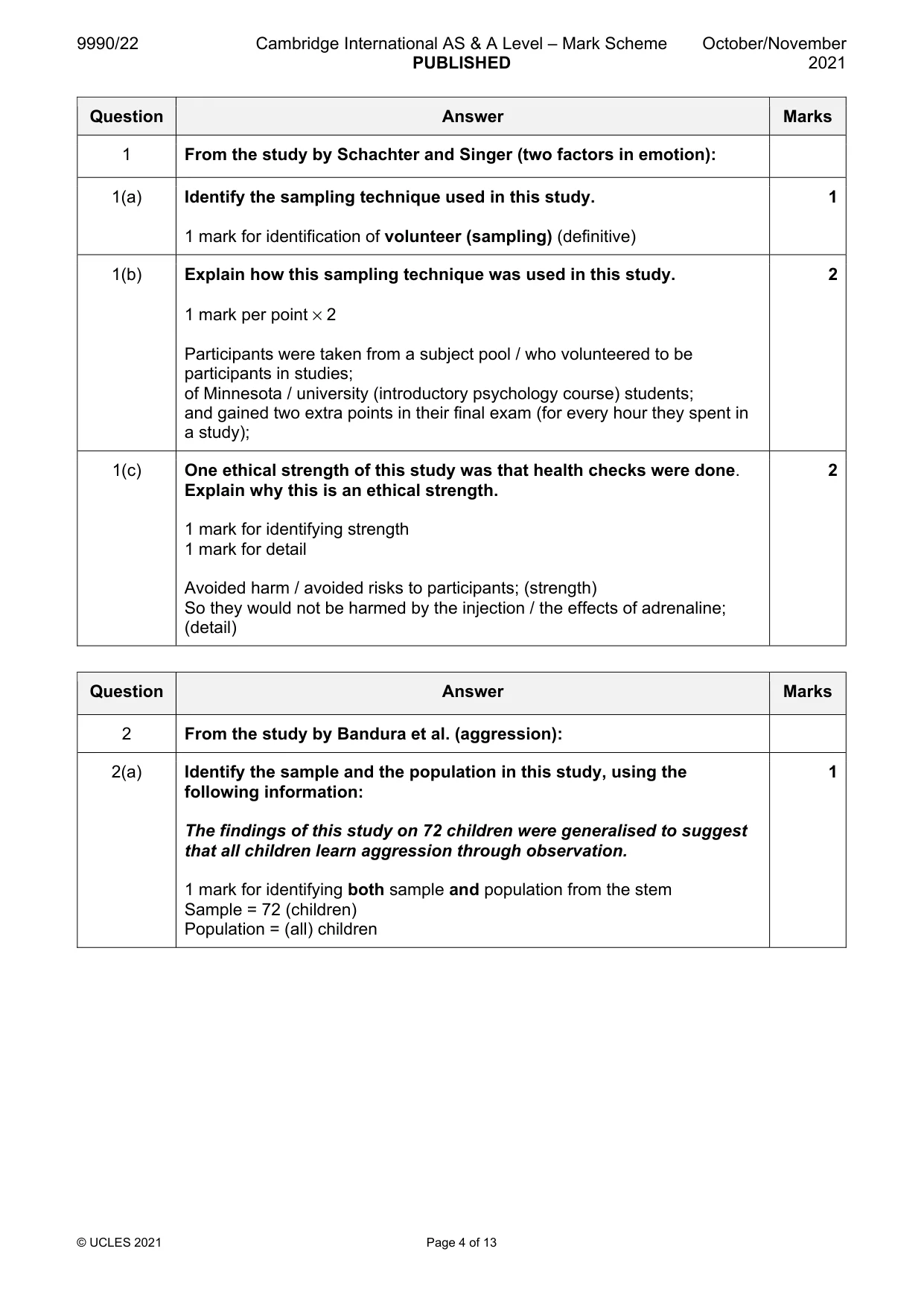
Mark scheme: Question Answer Marks 1 From the study by Schachter and Singer (two factors in emotion): 1(a) Identify the sampling technique used in this study. 1 1 mark for identification of volunteer (sampling) (definitive) 1(b) Explain how this sampling technique was used in this study. 2 1 mark per point × 2 Participants were taken from a subject pool / who volunteered to be participants in studies; of Minnesota / university (introductory psychology course) students; and gained two extra points in their final exam (for every hour they spent in a study); 1(c) One ethical strength of this study was that health checks were done. 2 Explain why this is an ethical strength. 1 mark for identifying strength 1 mark for detail Avoided harm / avoided risks to participants; (strength) So they would not be harmed by the injection / the effects of adrenaline; (detail)
Q2 · From the study by Bandura et al
2 From the study by Bandura et al. (aggression): (a) Identify the sample and the population in this study, using the following information: The findings of this study on 72 children were generalised to suggest that all children learn aggression through observation. sample: ..................................................................................................................................... population: .......................................................................................................................... [1] (b) Explain one reason why generalisations should not be made from the 72 participants in this study, other than because of their age. ................................................................................................................................................... ................................................................................................................................................... ................................................................................................................................................... ............................................................................................................................................. [2]
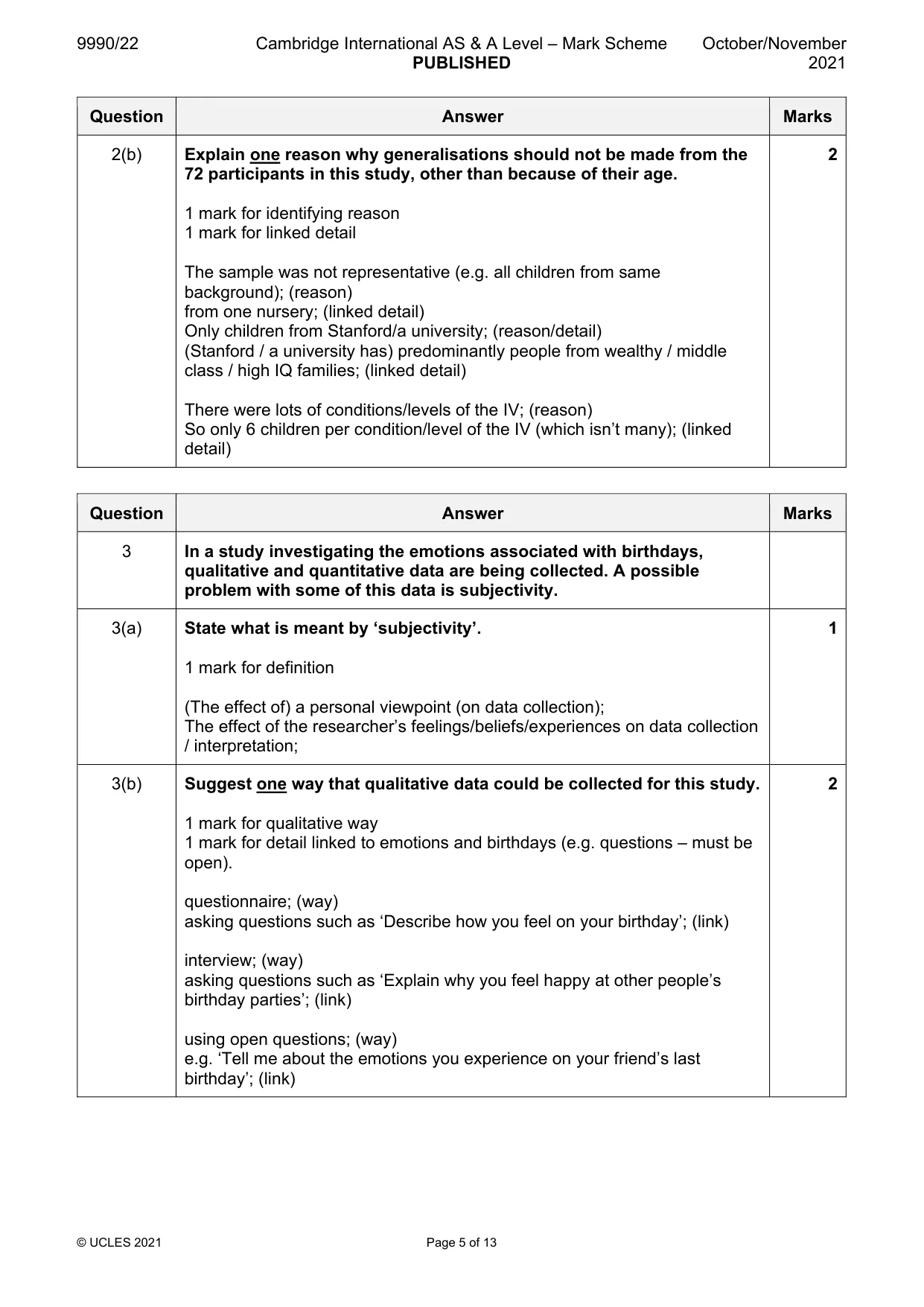
Mark scheme: 2 From the study by Bandura et al. (aggression): 2(a) Identify the sample and the population in this study, using the 1 following information: The findings of this study on 72 children were generalised to suggest that all children learn aggression through observation. 1 mark for identifying both sample and population from the stem Sample = 72 (children) Population = (all) children 2(b) Explain one reason why generalisations should not be made from the 2 72 participants in this study, other than because of their age. 1 mark for identifying reason 1 mark for linked detail The sample was not representative (e.g. all children from same background); (reason) from one nursery; (linked detail) Only children from Stanford/a university; (reason/detail) (Stanford / a university has) predominantly people from wealthy / middle class / high IQ families; (linked detail) There were lots of conditions/levels of the IV; (reason) So only 6 children per condition/level of the IV (which isn’t many); (linked detail)
Q3 · In a study investigating the emotions associated with birthdays, qualitative and…
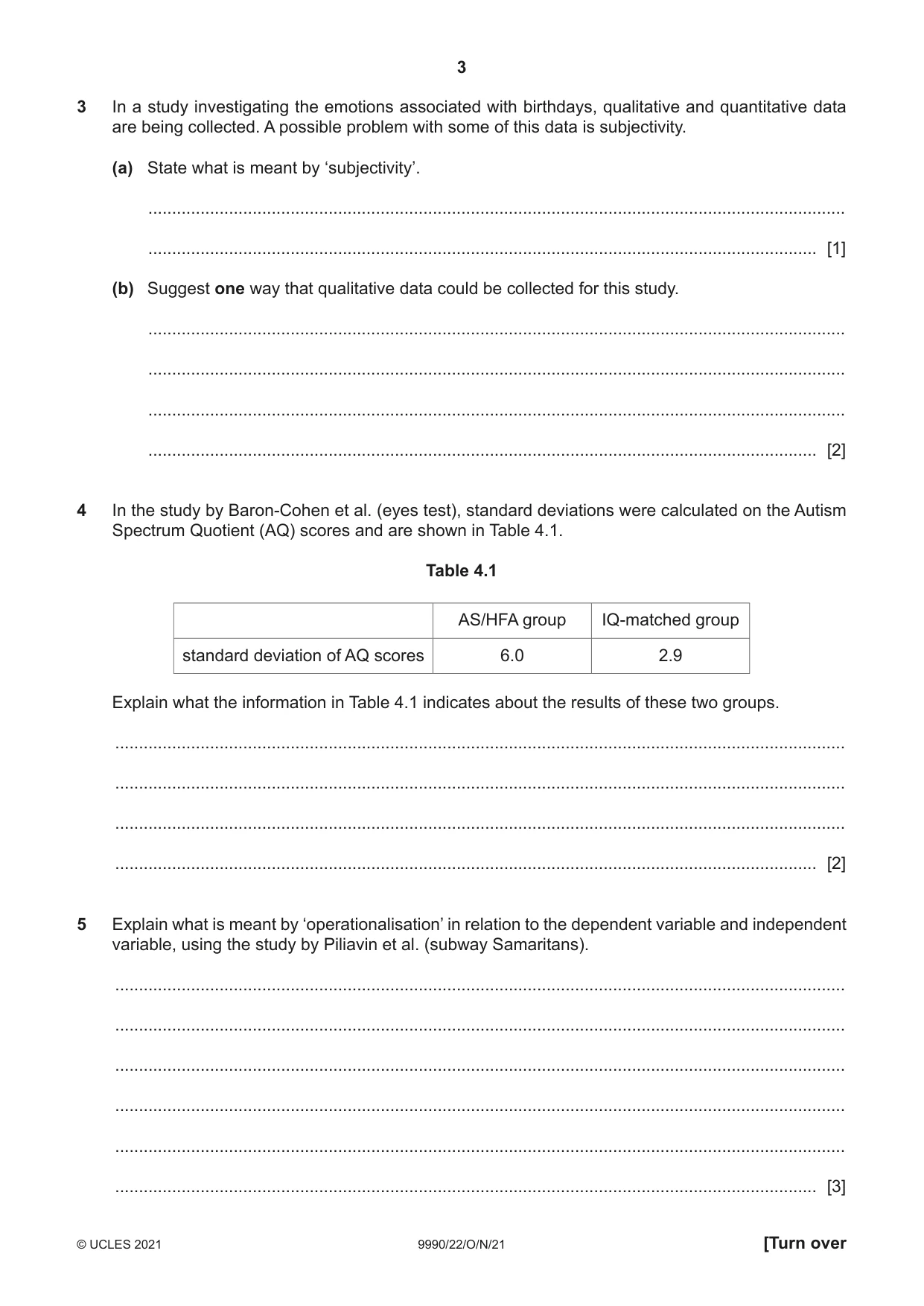
3 In a study investigating the emotions associated with birthdays, qualitative and quantitative data are being collected. A possible problem with some of this data is subjectivity. (a) State what is meant by ‘subjectivity’. ................................................................................................................................................... ............................................................................................................................................. [1] (b) Suggest one way that qualitative data could be collected for this study. ................................................................................................................................................... ................................................................................................................................................... ................................................................................................................................................... ............................................................................................................................................. [2]
Mark scheme: 3 In a study investigating the emotions associated with birthdays, qualitative and quantitative data are being collected. A possible problem with some of this data is subjectivity. 3(a) State what is meant by ‘subjectivity’. 1 1 mark for definition (The effect of) a personal viewpoint (on data collection); The effect of the researcher’s feelings/beliefs/experiences on data collection / interpretation; 3(b) Suggest one way that qualitative data could be collected for this study. 2 1 mark for qualitative way 1 mark for detail linked to emotions and birthdays (e.g. questions – must be open). questionnaire; (way) asking questions such as ‘Describe how you feel on your birthday’; (link) interview; (way) asking questions such as ‘Explain why you feel happy at other people’s birthday parties’; (link) using open questions; (way) e.g. ‘Tell me about the emotions you experience on your friend’s last birthday’; (link)
Q4 · In the study by Baron-Cohen et al
4 In the study by Baron-Cohen et al. (eyes test), standard deviations were calculated on the Autism Spectrum Quotient (AQ) scores and are shown in Table 4.1. Table 4.1 AS/HFA group IQ-matched group standard deviation of AQ scores 6.0 2.9 Explain what the information in Table 4.1 indicates about the results of these two groups. .......................................................................................................................................................... .......................................................................................................................................................... .......................................................................................................................................................... .................................................................................................................................................... [2]
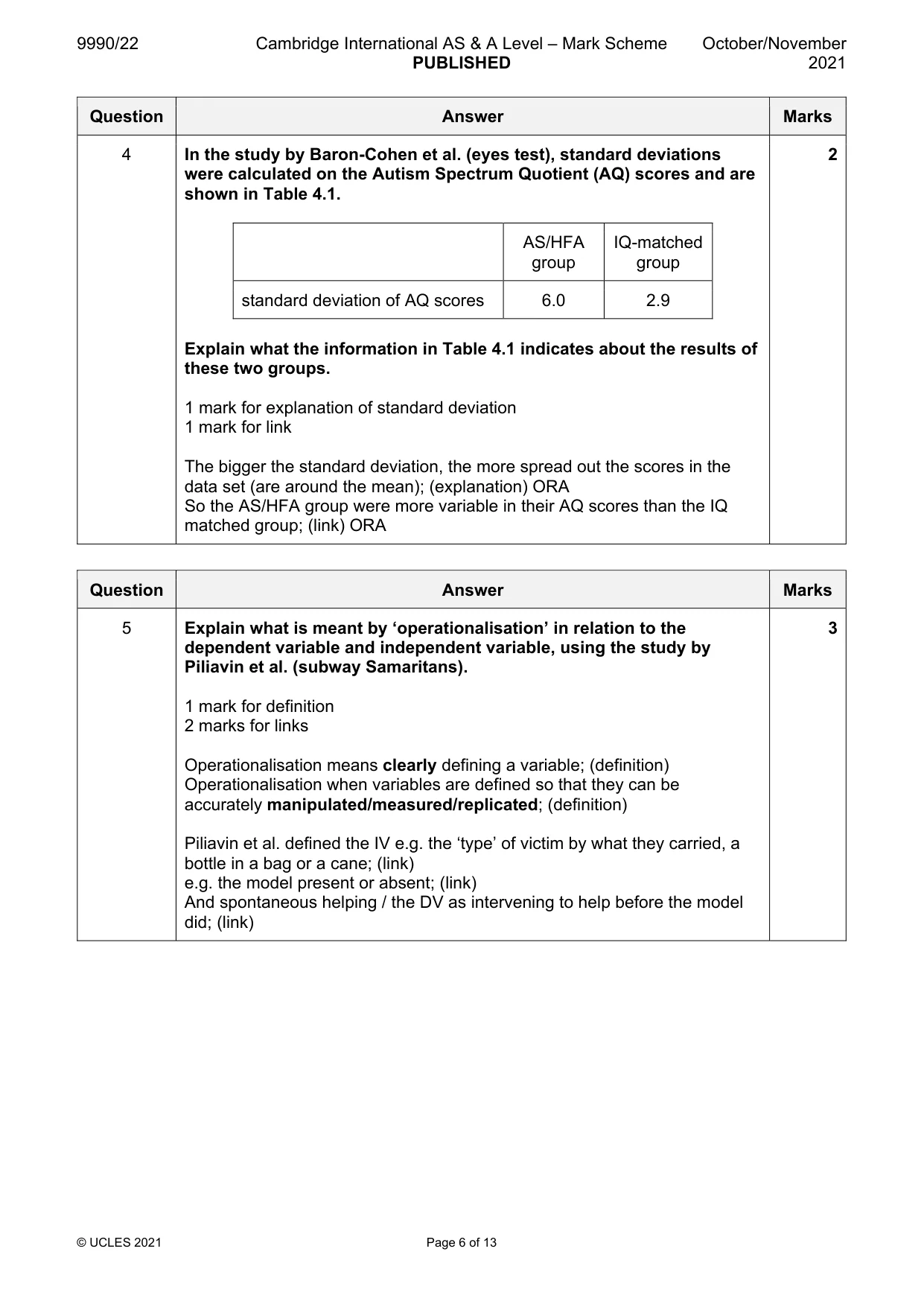
Mark scheme: 4 In the study by Baron-Cohen et al. (eyes test), standard deviations 2 were calculated on the Autism Spectrum Quotient (AQ) scores and are shown in Table 4.1. AS/HFA IQ-matched group group standard deviation of AQ scores 6.0 2.9 Explain what the information in Table 4.1 indicates about the results of these two groups. 1 mark for explanation of standard deviation 1 mark for link The bigger the standard deviation, the more spread out the scores in the data set (are around the mean); (explanation) ORA So the AS/HFA group were more variable in their AQ scores than the IQ matched group; (link) ORA
Q5 · Explain what is meant by ‘operationalisation’ in relation to the dependent variable and…
5 Explain what is meant by ‘operationalisation’ in relation to the dependent variable and independent variable, using the study by Piliavin et al. (subway Samaritans). .......................................................................................................................................................... .......................................................................................................................................................... .......................................................................................................................................................... .......................................................................................................................................................... .......................................................................................................................................................... .................................................................................................................................................... [3]
Mark scheme: 5 Explain what is meant by ‘operationalisation’ in relation to the 3 dependent variable and independent variable, using the study by Piliavin et al. (subway Samaritans). 1 mark for definition 2 marks for links Operationalisation means clearly defining a variable; (definition) Operationalisation when variables are defined so that they can be accurately manipulated/measured/replicated; (definition) Piliavin et al. defined the IV e.g. the ‘type’ of victim by what they carried, a bottle in a bag or a cane; (link) e.g. the model present or absent; (link) And spontaneous helping / the DV as intervening to help before the model did; (link)
Q6 · Describe reliability and validity, using any examples
6 Describe reliability and validity, using any examples. .......................................................................................................................................................... .......................................................................................................................................................... .......................................................................................................................................................... .......................................................................................................................................................... .......................................................................................................................................................... .......................................................................................................................................................... .......................................................................................................................................................... .......................................................................................................................................................... .......................................................................................................................................................... .......................................................................................................................................................... .......................................................................................................................................................... .................................................................................................................................................... [6]
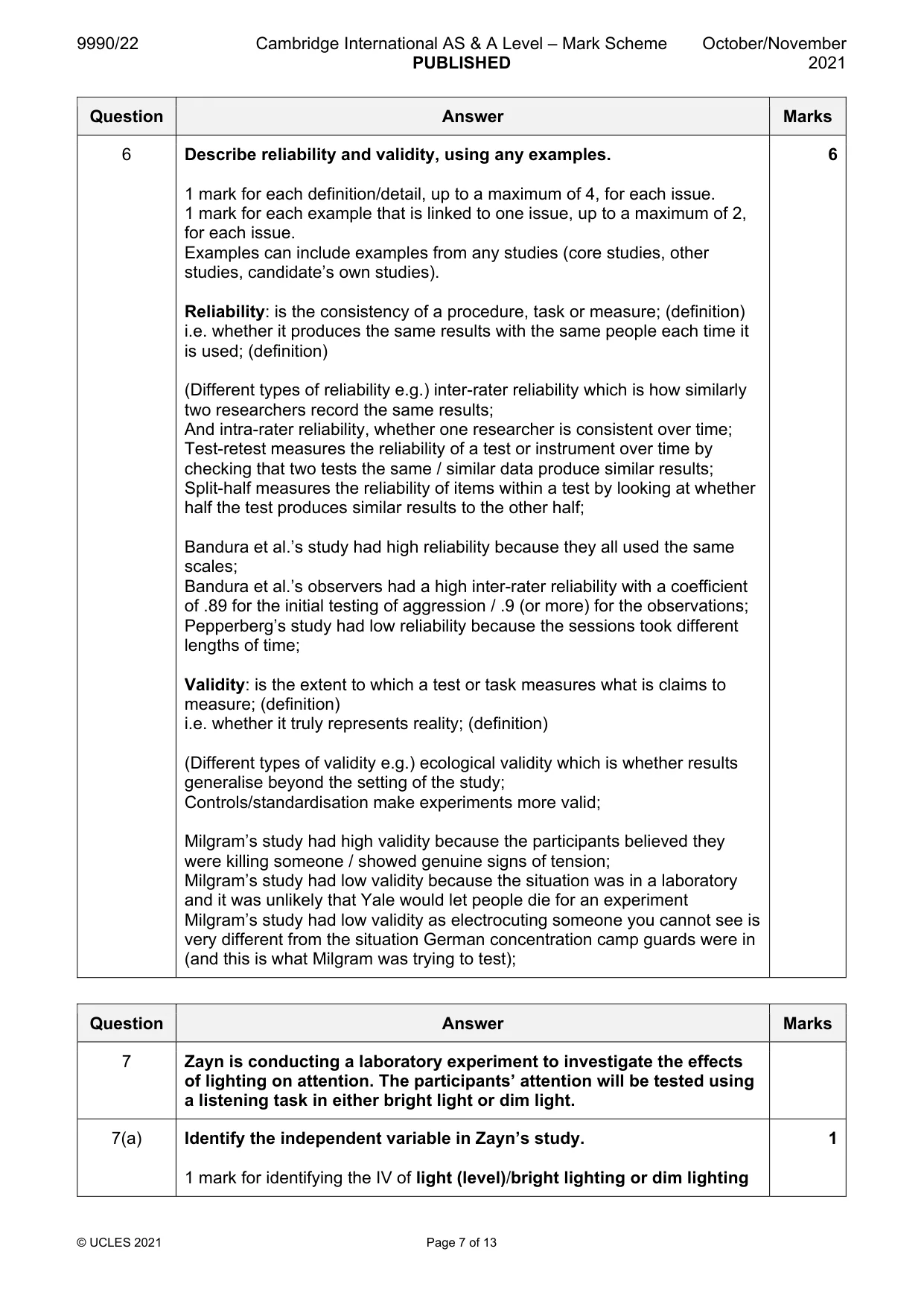
Mark scheme: 6 Describe reliability and validity, using any examples. 6 1 mark for each definition/detail, up to a maximum of 4, for each issue. 1 mark for each example that is linked to one issue, up to a maximum of 2, for each issue. Examples can include examples from any studies (core studies, other studies, candidate’s own studies). Reliability: is the consistency of a procedure, task or measure; (definition) i.e. whether it produces the same results with the same people each time it is used; (definition) (Different types of reliability e.g.) inter-rater reliability which is how similarly two researchers record the same results; And intra-rater reliability, whether one researcher is consistent over time; Test-retest measures the reliability of a test or instrument over time by checking that two tests the same / similar data produce similar results; Split-half measures the reliability of items within a test by looking at whether half the test produces similar results to the other half; Bandura et al.’s study had high reliability because they all used the same scales; Bandura et al.’s observers had a high inter-rater reliability with a coefficient of .89 for the initial testing of aggression / .9 (or more) for the observations; Pepperberg’s study had low reliability because the sessions took different lengths of time; Validity: is the extent to which a test or task measures what is claims to measure; (definition) i.e. whether it truly represents reality; (definition) (Different types of validity e.g.) ecological validity which is whether results generalise beyond the setting of the study; Controls/standardisation make experiments more valid; Milgram’s study had high validity because the participants believed they were killing someone / showed genuine signs of tension; Milgram’s study had low validity because the situation was in a laboratory and it was unlikely that Yale would let people die for an experiment Milgram’s study had low validity as electrocuting someone you cannot see is very different from the situation German concentration camp guards were in (and this is what Milgram was trying to test);
Q7 · Zayn is conducting a laboratory experiment to investigate the effects of lighting on…
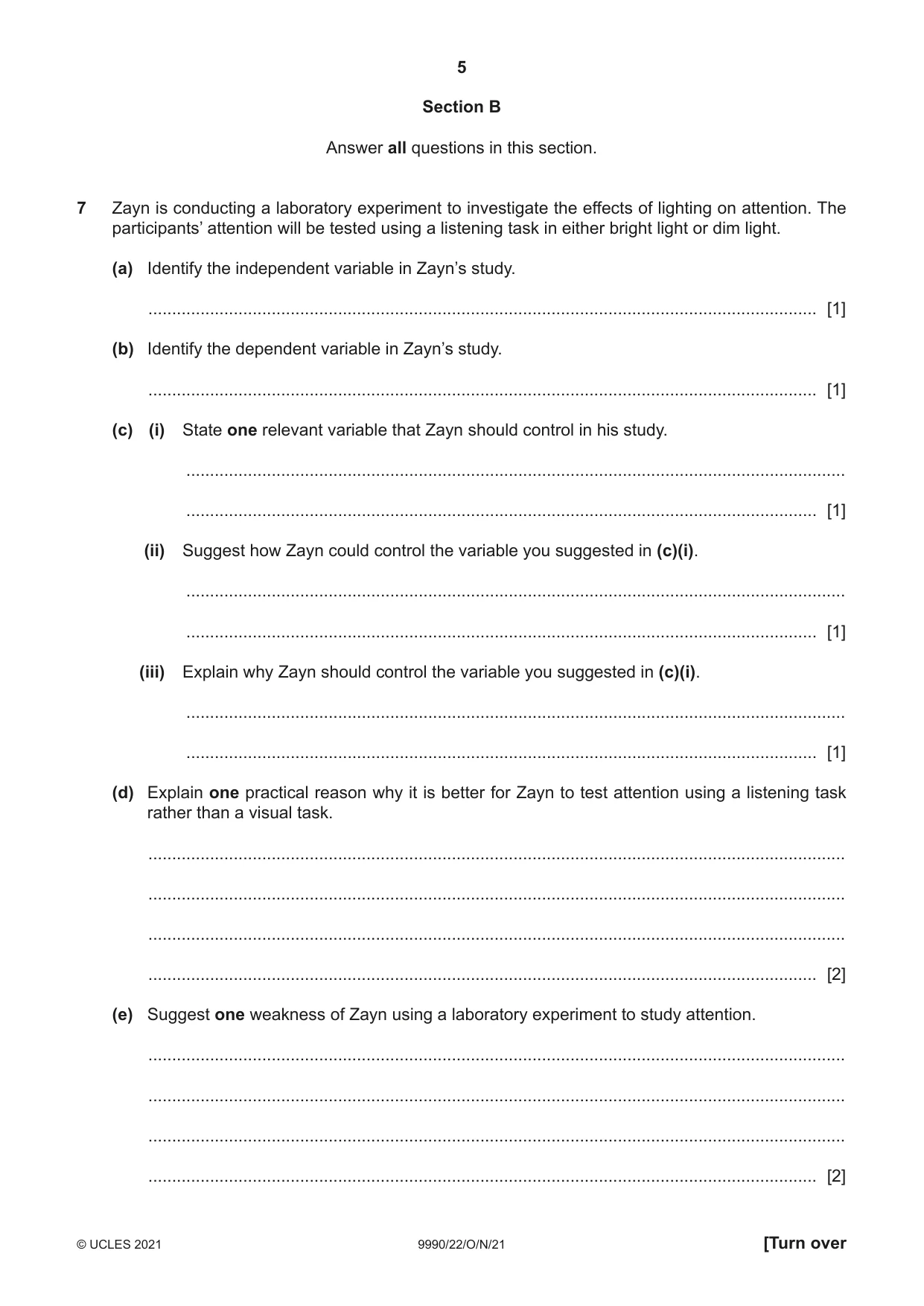
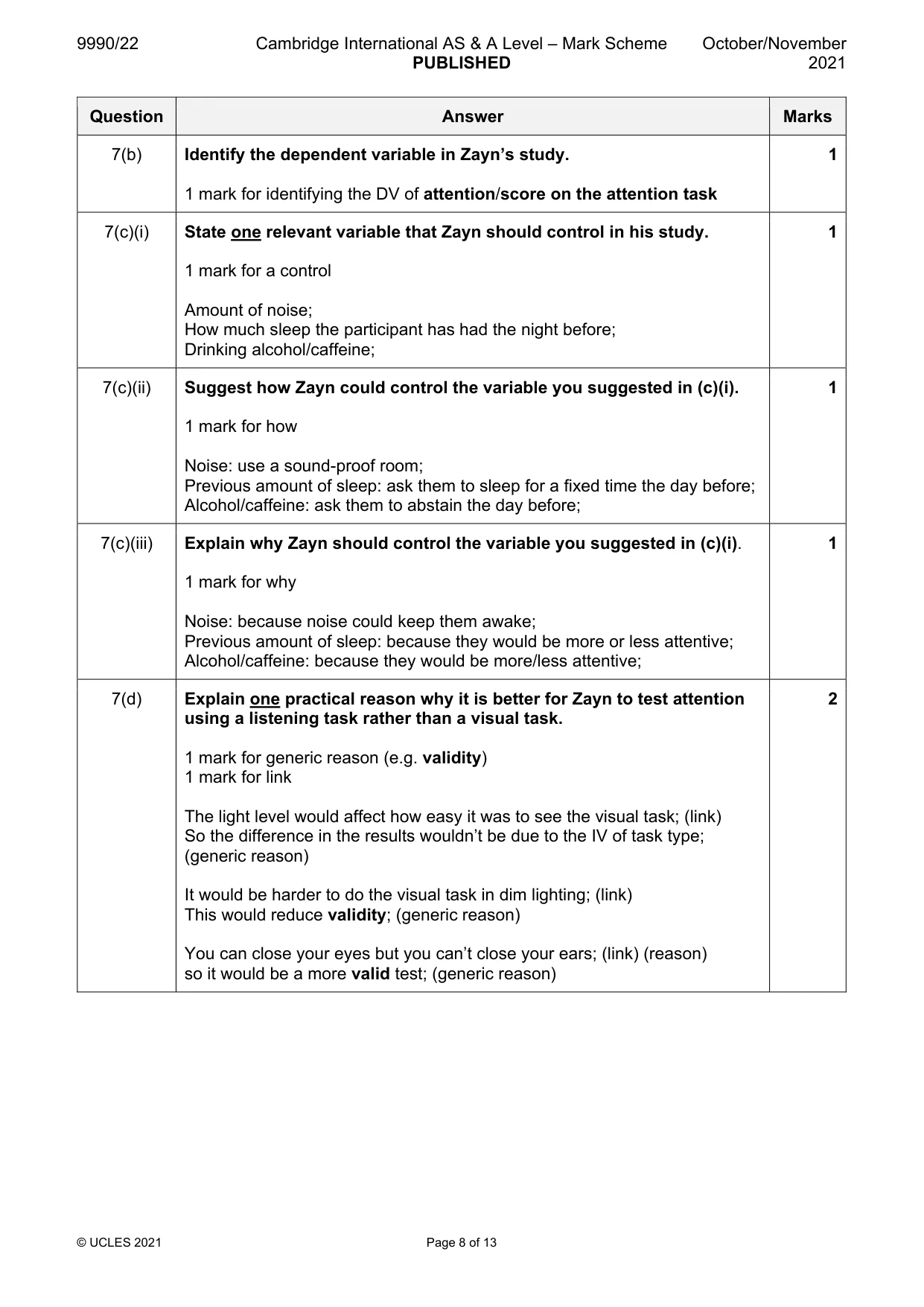
7 Zayn is conducting a laboratory experiment to investigate the effects of lighting on attention. The participants’ attention will be tested using a listening task in either bright light or dim light. (a) Identify the independent variable in Zayn’s study. ............................................................................................................................................. [1] (b) Identify the dependent variable in Zayn’s study. ............................................................................................................................................. [1] (c) (i) State one relevant variable that Zayn should control in his study. ........................................................................................................................................... ..................................................................................................................................... [1] (ii) Suggest how Zayn could control the variable you suggested in (c)(i). ........................................................................................................................................... ..................................................................................................................................... [1] (iii) Explain why Zayn should control the variable you suggested in (c)(i). ........................................................................................................................................... ..................................................................................................................................... [1] (d) Explain one practical reason why it is better for Zayn to test attention using a listening task rather than a visual task. ................................................................................................................................................... ................................................................................................................................................... ................................................................................................................................................... ............................................................................................................................................. [2] (e) Suggest one weakness of Zayn using a laboratory experiment to study attention. ................................................................................................................................................... ................................................................................................................................................... ................................................................................................................................................... ............................................................................................................................................. [2]
Mark scheme: 7 Zayn is conducting a laboratory experiment to investigate the effects of lighting on attention. The participants’ attention will be tested using a listening task in either bright light or dim light. 7(a) Identify the independent variable in Zayn’s study. 1 1 mark for identifying the IV of light (level)/bright lighting or dim lighting 7(b) Identify the dependent variable in Zayn’s study. 1 1 mark for identifying the DV of attention/score on the attention task 7(c)(i) State one relevant variable that Zayn should control in his study. 1 1 mark for a control Amount of noise; How much sleep the participant has had the night before; Drinking alcohol/caffeine; 7(c)(ii) Suggest how Zayn could control the variable you suggested in (c)(i). 1 1 mark for how Noise: use a sound-proof room; Previous amount of sleep: ask them to sleep for a fixed time the day before; Alcohol/caffeine: ask them to abstain the day before; 7(c)(iii) Explain why Zayn should control the variable you suggested in (c)(i). 1 1 mark for why Noise: because noise could keep them awake; Previous amount of sleep: because they would be more or less attentive; Alcohol/caffeine: because they would be more/less attentive; 7(d) Explain one practical reason why it is better for Zayn to test attention 2 using a listening task rather than a visual task. 1 mark for generic reason (e.g. validity) 1 mark for link The light level would affect how easy it was to see the visual task; (link) So the difference in the results wouldn’t be due to the IV of task type; (generic reason) It would be harder to do the visual task in dim lighting; (link) This would reduce validity; (generic reason) You can close your eyes but you can’t close your ears; (link) (reason) so it would be a more valid test; (generic reason) 7(e) Suggest one weakness of Zayn using a laboratory experiment to study 2 attention. 1 mark for a generic weakness 1 mark for a link (study on paying attention) It lacks ecological validity; (generic) People usually have a reason to pay attention e.g. in lessons / to a good film (but wouldn’t in a laboratory); They know they are being studied / there will be demand characteristics; (generic) So they will try harder to pay attention;
Q8 · Gwyn is conducting a study about obedience to traffic rules
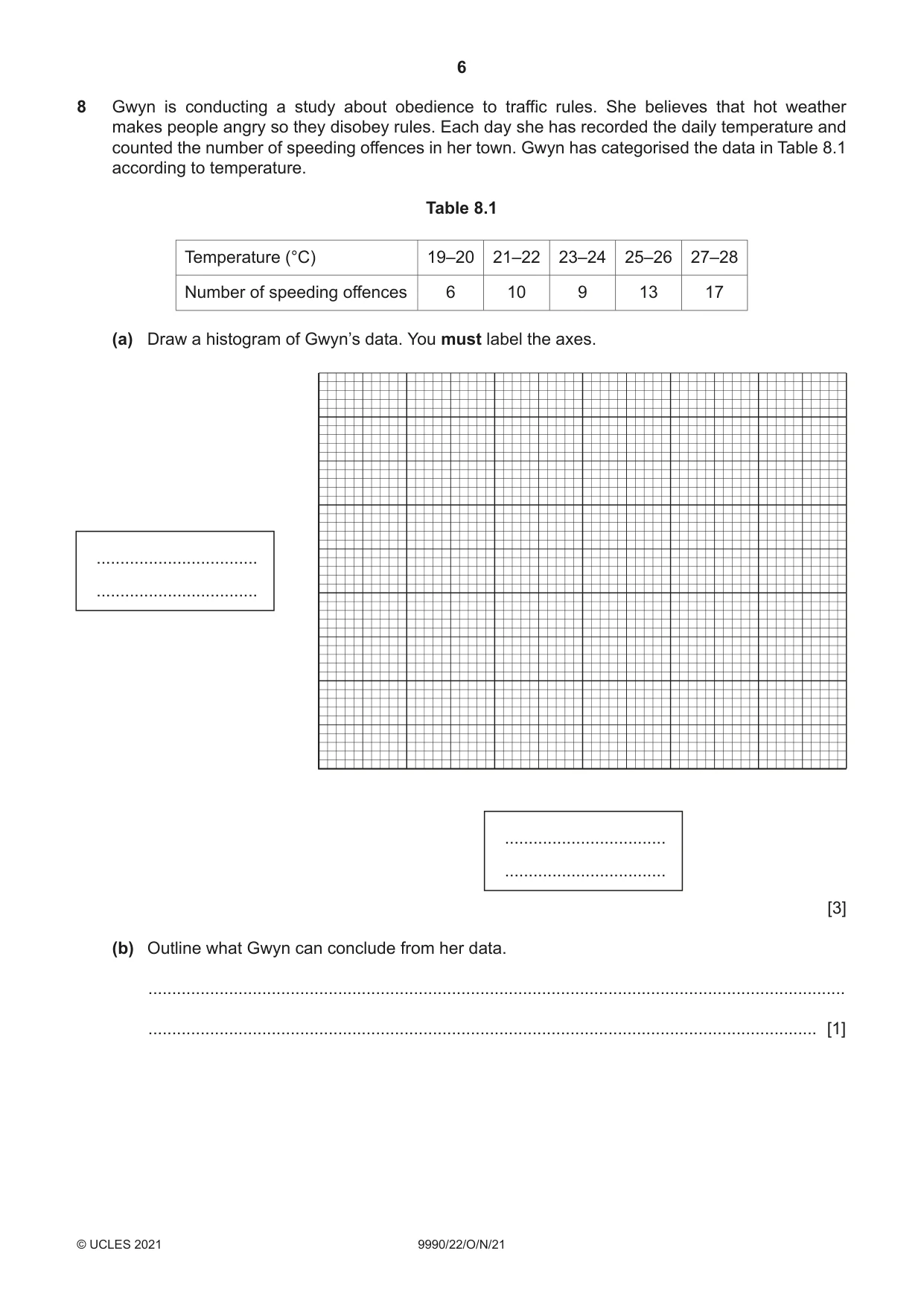
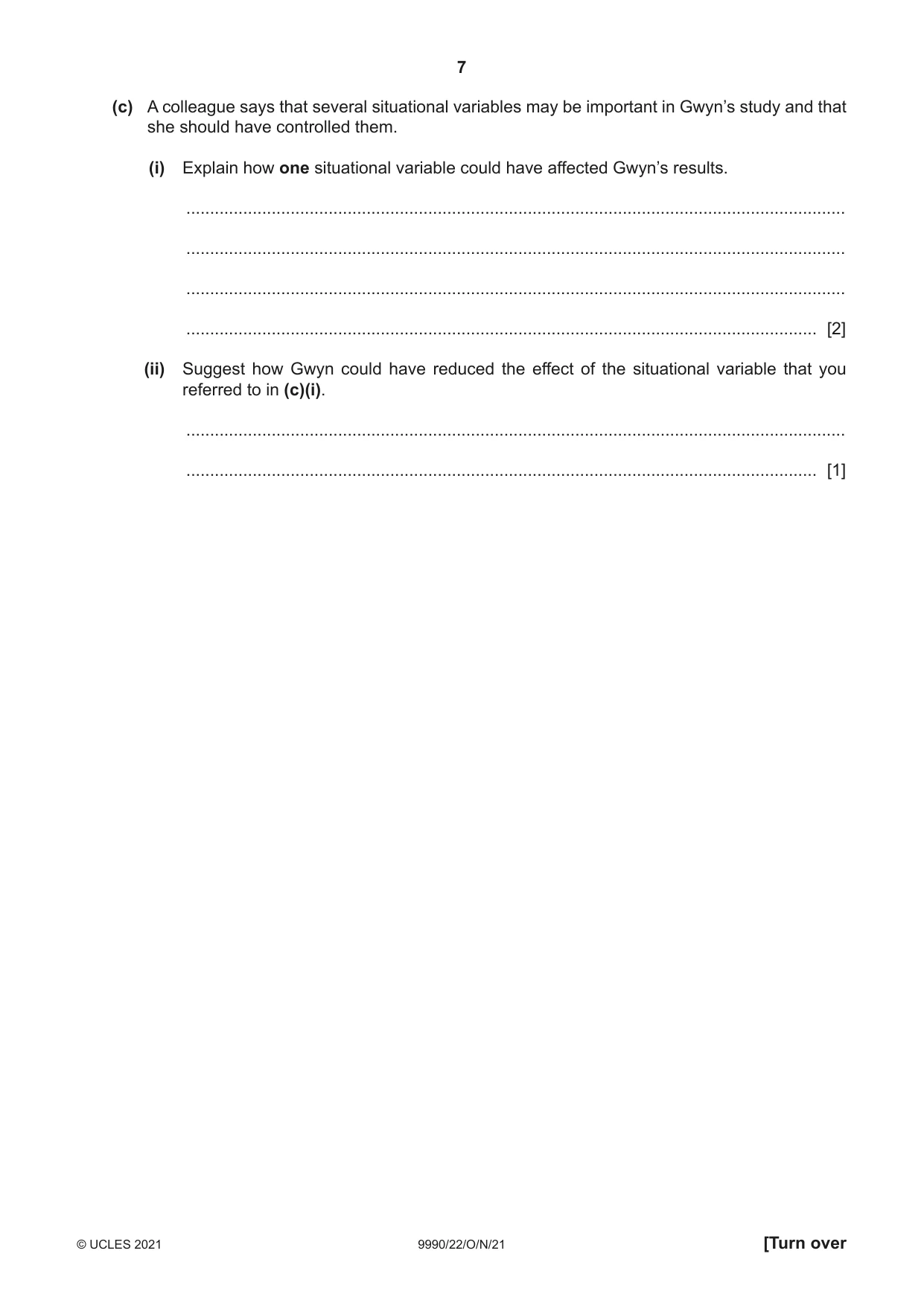
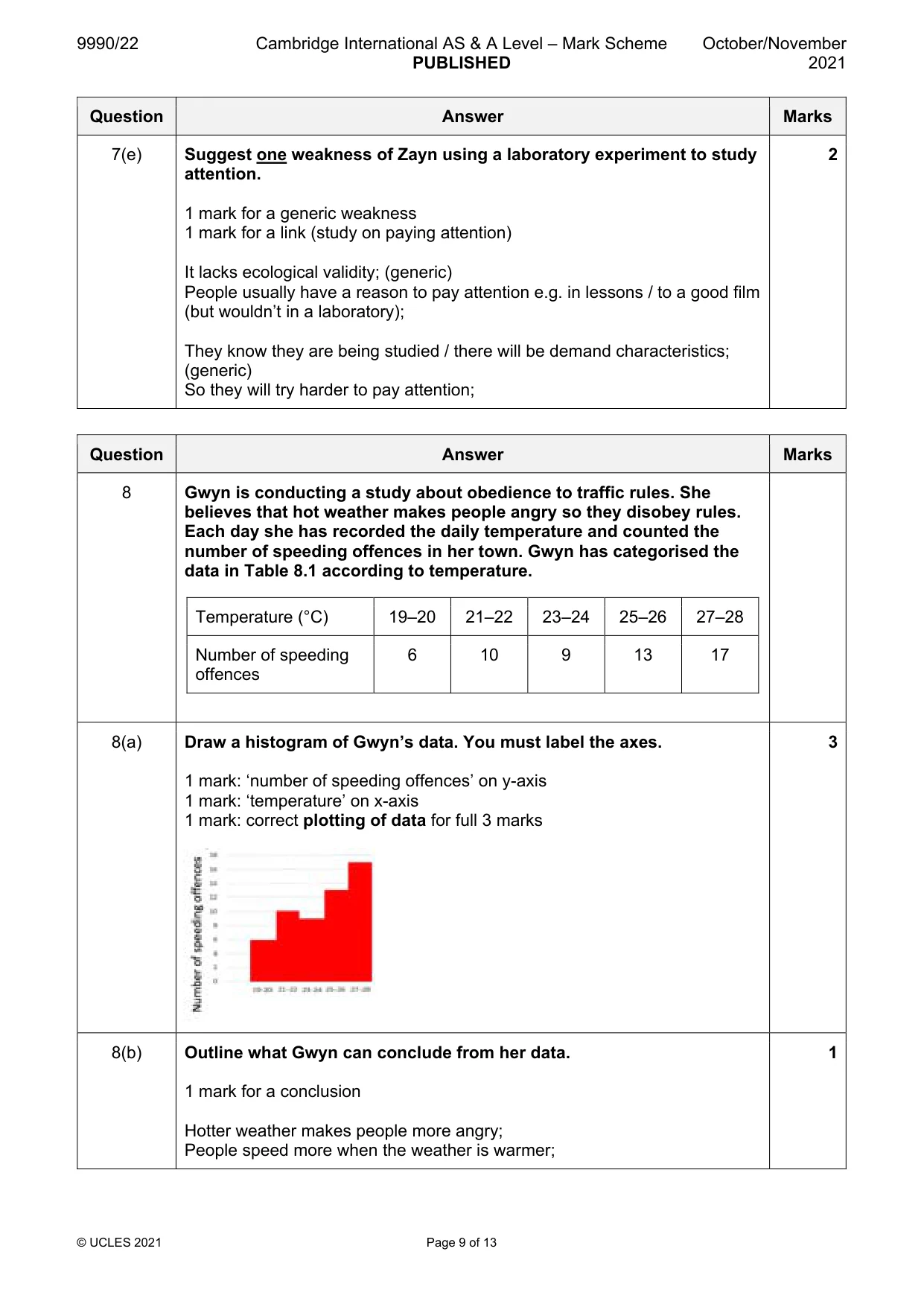
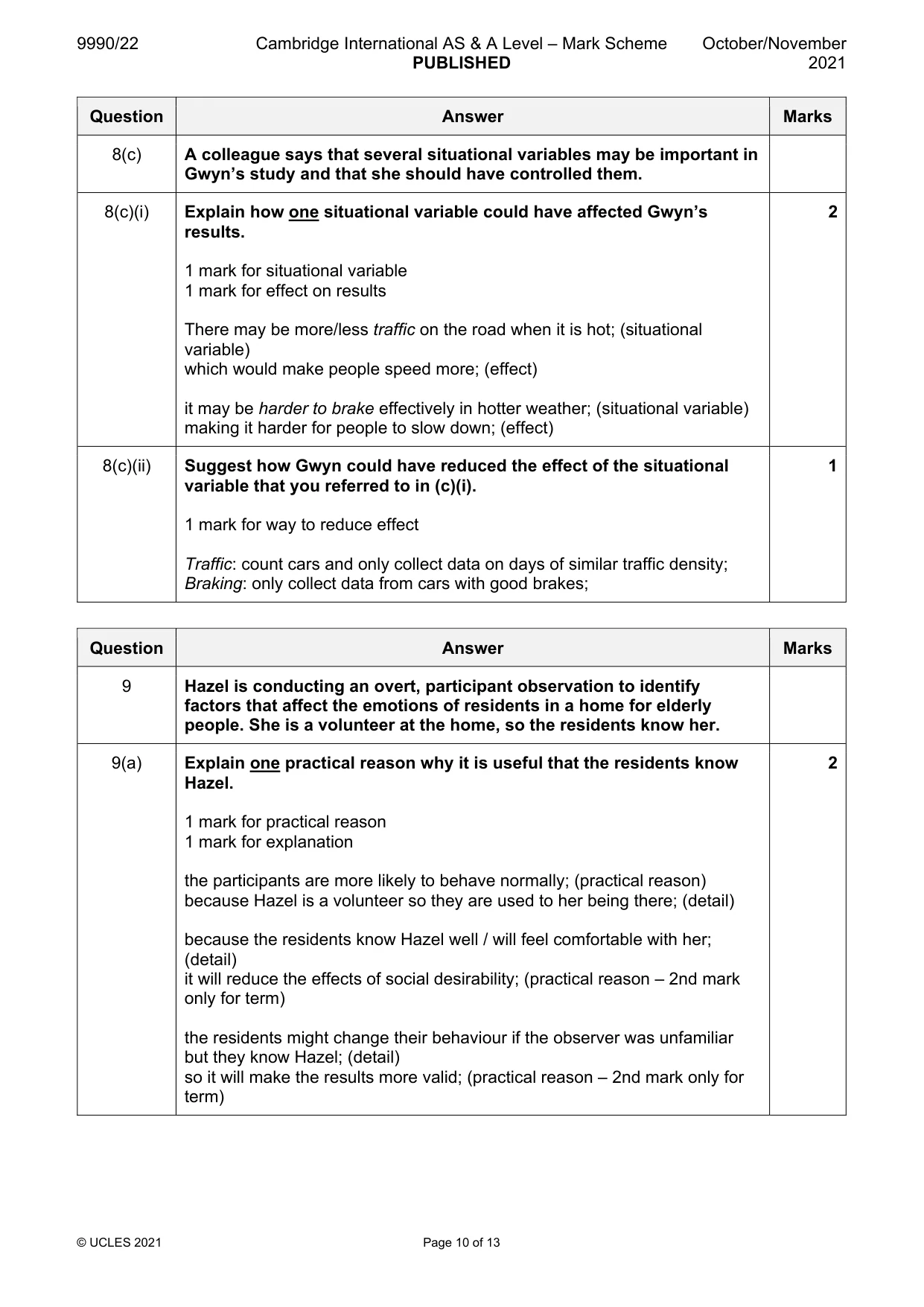
8 Gwyn is conducting a study about obedience to traffic rules. She believes that hot weather makes people angry so they disobey rules. Each day she has recorded the daily temperature and counted the number of speeding offences in her town. Gwyn has categorised the data in Table 8.1 according to temperature. Table 8.1 Temperature (°C) 19–20 21–22 23–24 25–26 27–28 Number of speeding offences 6 10 9 13 17 (a) Draw a histogram of Gwyn’s data. You must label the axes. .................................. .................................. .................................. .................................. [3] (b) Outline what Gwyn can conclude from her data. ................................................................................................................................................... ............................................................................................................................................. [1] (c) A colleague says that several situational variables may be important in Gwyn’s study and that she should have controlled them. (i) Explain how one situational variable could have affected Gwyn’s results. ........................................................................................................................................... ........................................................................................................................................... ........................................................................................................................................... ..................................................................................................................................... [2] (ii) Suggest how Gwyn could have reduced the effect of the situational variable that you referred to in (c)(i). ........................................................................................................................................... ..................................................................................................................................... [1]
Mark scheme: 8 Gwyn is conducting a study about obedience to traffic rules. She believes that hot weather makes people angry so they disobey rules. Each day she has recorded the daily temperature and counted the number of speeding offences in her town. Gwyn has categorised the data in Table 8.1 according to temperature. Temperature (°C) 19–20 21–22 23–24 25–26 27–28 Number of speeding 6 10 9 13 17 offences 8(a) Draw a histogram of Gwyn’s data. You must label the axes. 3 1 mark: ‘number of speeding offences’ on y-axis 1 mark: ‘temperature’ on x-axis 1 mark: correct plotting of data for full 3 marks 8(b) Outline what Gwyn can conclude from her data. 1 1 mark for a conclusion Hotter weather makes people more angry; People speed more when the weather is warmer; 8(c) A colleague says that several situational variables may be important in Gwyn’s study and that she should have controlled them. 8(c)(i) Explain how one situational variable could have affected Gwyn’s 2 results. 1 mark for situational variable 1 mark for effect on results There may be more/less traffic on the road when it is hot; (situational variable) which would make people speed more; (effect) it may be harder to brake effectively in hotter weather; (situational variable) making it harder for people to slow down; (effect) 8(c)(ii) Suggest how Gwyn could have reduced the effect of the situational 1 variable that you referred to in (c)(i). 1 mark for way to reduce effect Traffic: count cars and only collect data on days of similar traffic density; Braking: only collect data from cars with good brakes;
Q9 · Hazel is conducting an overt, participant observation to identify factors that affect the…
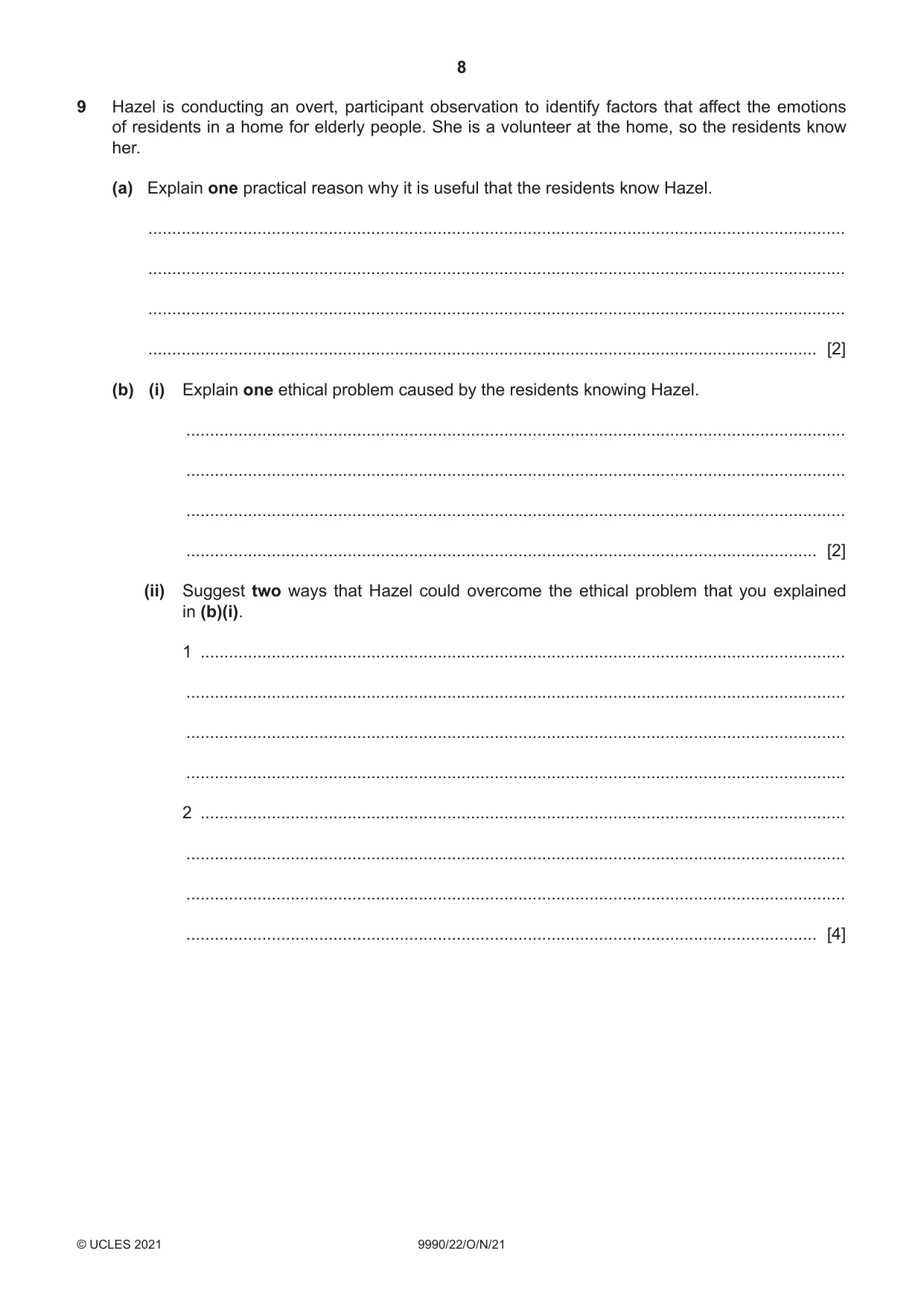
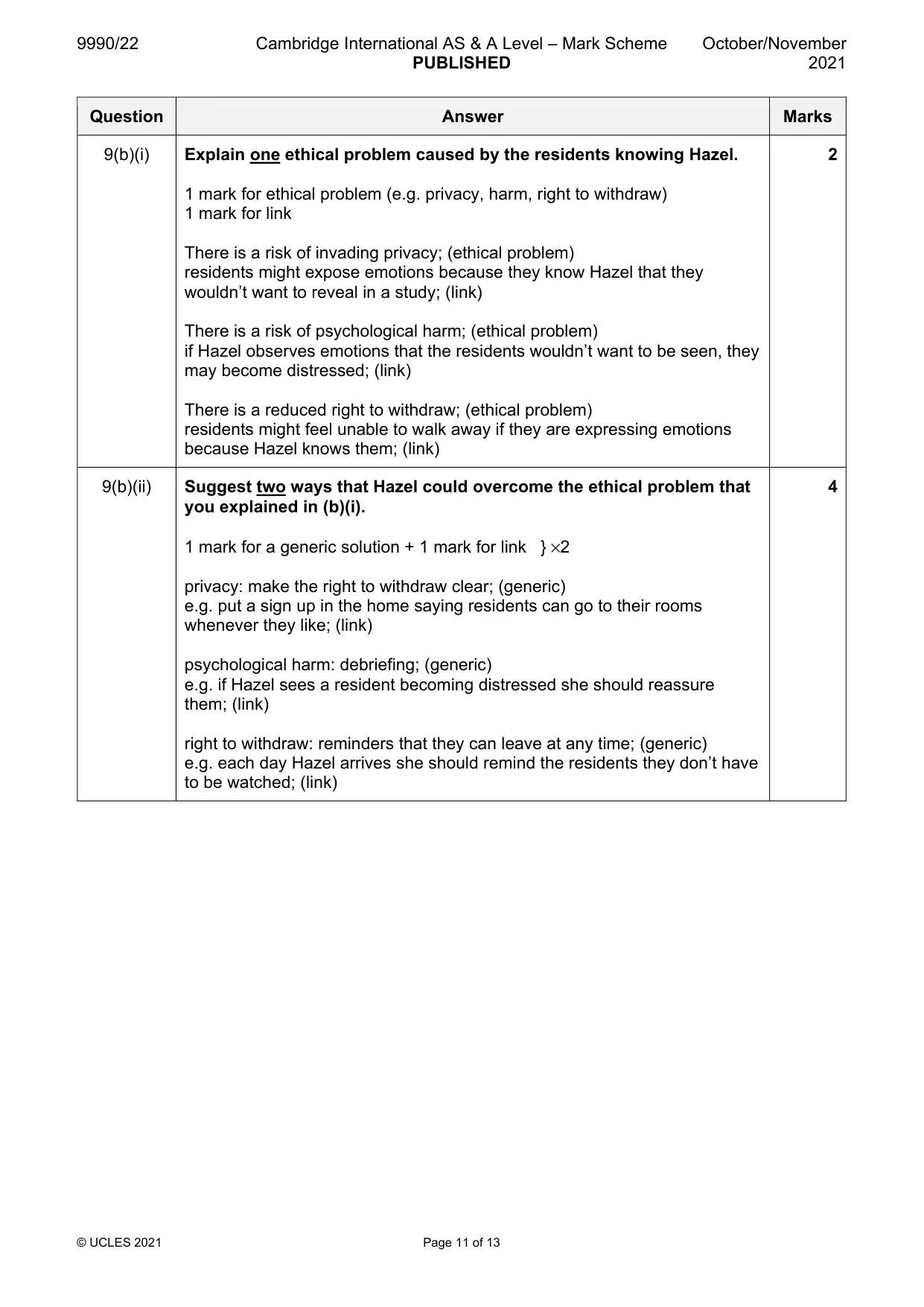
9 Hazel is conducting an overt, participant observation to identify factors that affect the emotions of residents in a home for elderly people. She is a volunteer at the home, so the residents know her. (a) Explain one practical reason why it is useful that the residents know Hazel. ................................................................................................................................................... ................................................................................................................................................... ................................................................................................................................................... ............................................................................................................................................. [2] (b) (i) Explain one ethical problem caused by the residents knowing Hazel. ........................................................................................................................................... ........................................................................................................................................... ........................................................................................................................................... ..................................................................................................................................... [2] (ii) Suggest two ways that Hazel could overcome the ethical problem that you explained in (b)(i). 1 ........................................................................................................................................ ........................................................................................................................................... ........................................................................................................................................... ........................................................................................................................................... 2 ........................................................................................................................................ ........................................................................................................................................... ........................................................................................................................................... ..................................................................................................................................... [4] Section C Answer all questions in this section.
Mark scheme: 9 Hazel is conducting an overt, participant observation to identify factors that affect the emotions of residents in a home for elderly people. She is a volunteer at the home, so the residents know her. 9(a) Explain one practical reason why it is useful that the residents know 2 Hazel. 1 mark for practical reason 1 mark for explanation the participants are more likely to behave normally; (practical reason) because Hazel is a volunteer so they are used to her being there; (detail) because the residents know Hazel well / will feel comfortable with her; (detail) it will reduce the effects of social desirability; (practical reason – 2nd mark only for term) the residents might change their behaviour if the observer was unfamiliar but they know Hazel; (detail) so it will make the results more valid; (practical reason – 2nd mark only for term) 9(b)(i) Explain one ethical problem caused by the residents knowing Hazel. 2 1 mark for ethical problem (e.g. privacy, harm, right to withdraw) 1 mark for link There is a risk of invading privacy; (ethical problem) residents might expose emotions because they know Hazel that they wouldn’t want to reveal in a study; (link) There is a risk of psychological harm; (ethical problem) if Hazel observes emotions that the residents wouldn’t want to be seen, they may become distressed; (link) There is a reduced right to withdraw; (ethical problem) residents might feel unable to walk away if they are expressing emotions because Hazel knows them; (link) 9(b)(ii) Suggest two ways that Hazel could overcome the ethical problem that 4 you explained in (b)(i). 1 mark for a generic solution + 1 mark for link } ×2 privacy: make the right to withdraw clear; (generic) e.g. put a sign up in the home saying residents can go to their rooms whenever they like; (link) psychological harm: debriefing; (generic) e.g. if Hazel sees a resident becoming distressed she should reassure them; (link) right to withdraw: reminders that they can leave at any time; (generic) e.g. each day Hazel arrives she should remind the residents they don’t have to be watched; (link)
Q10 · Jilpa plans to explore how personalities vary
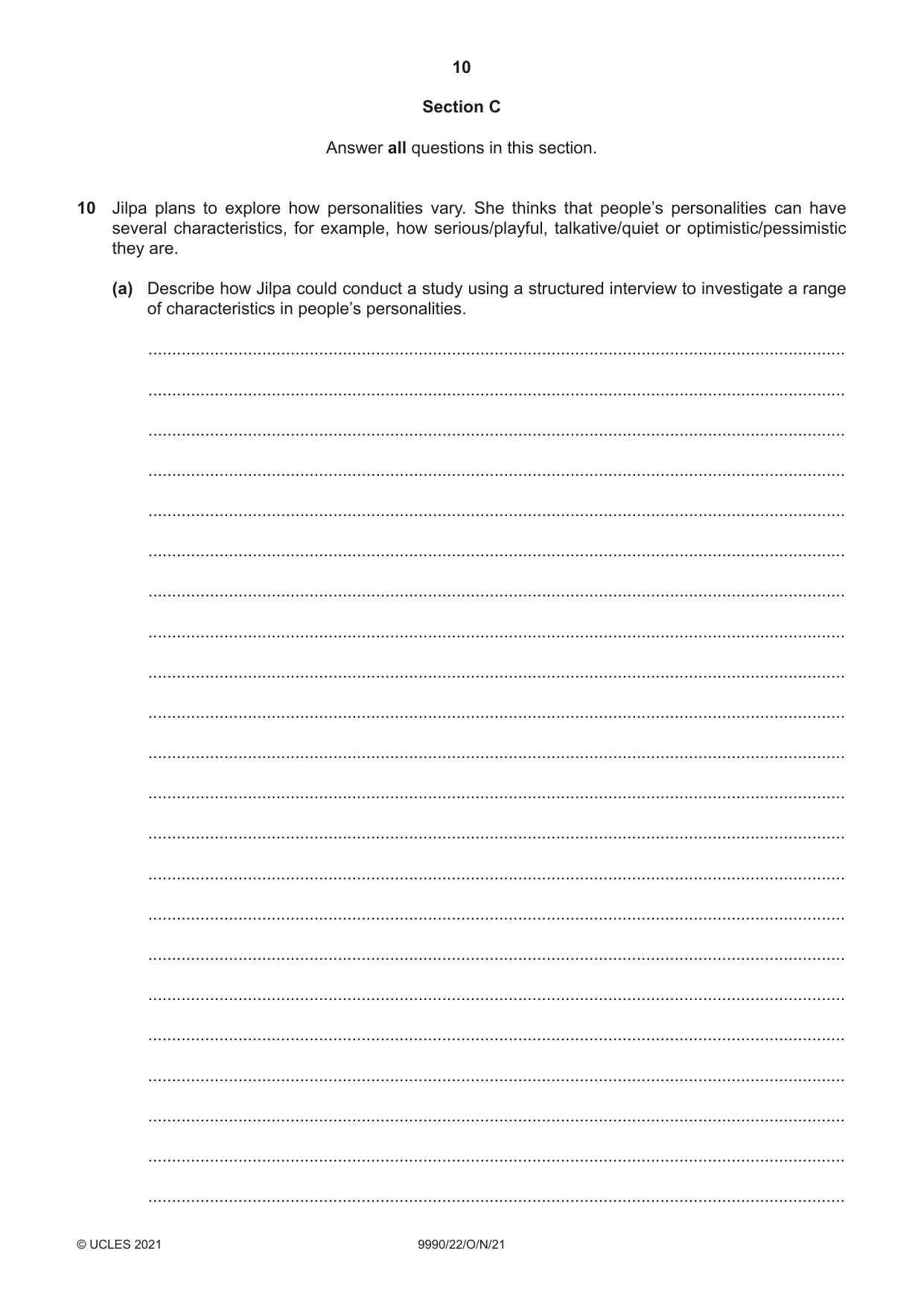
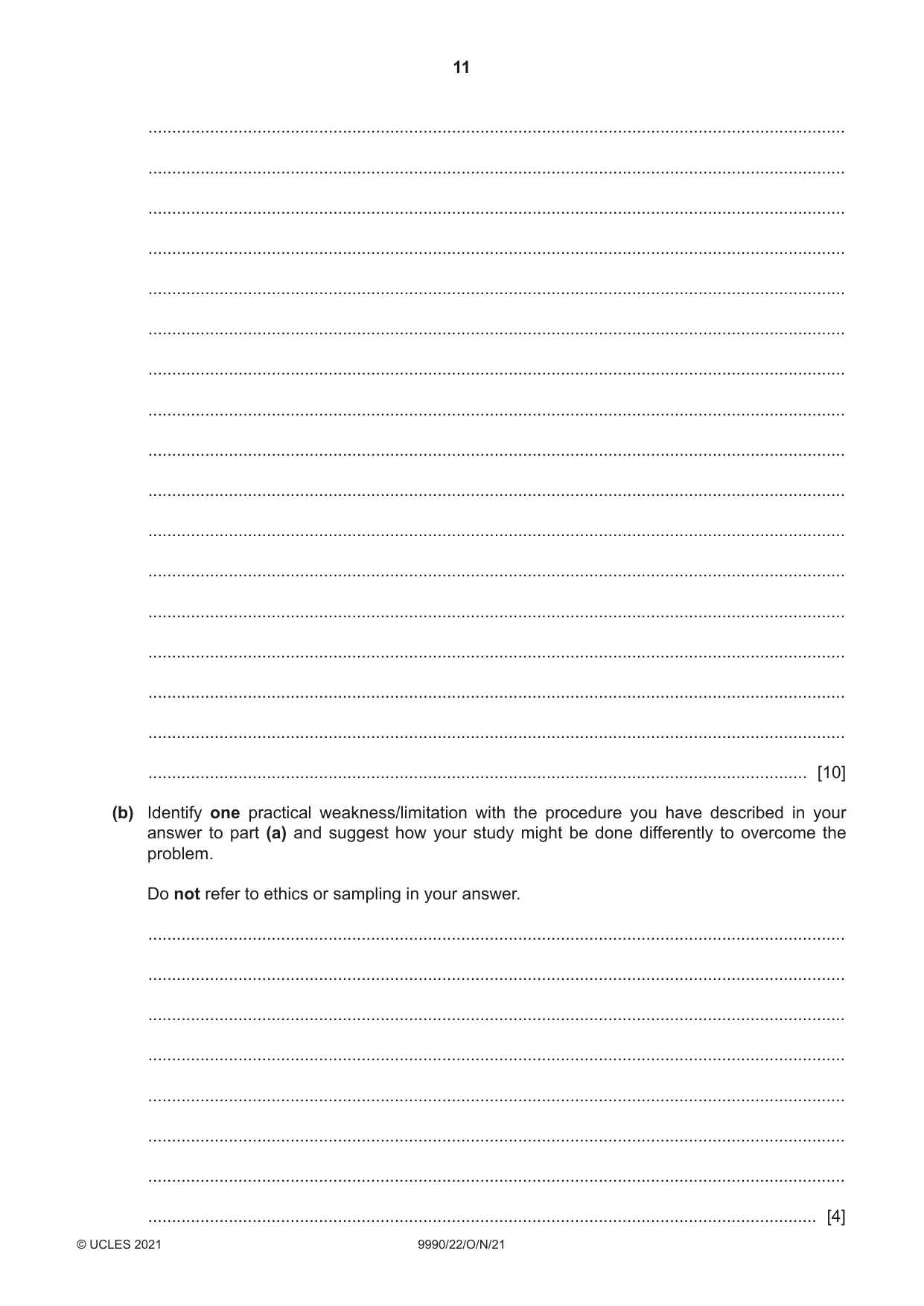
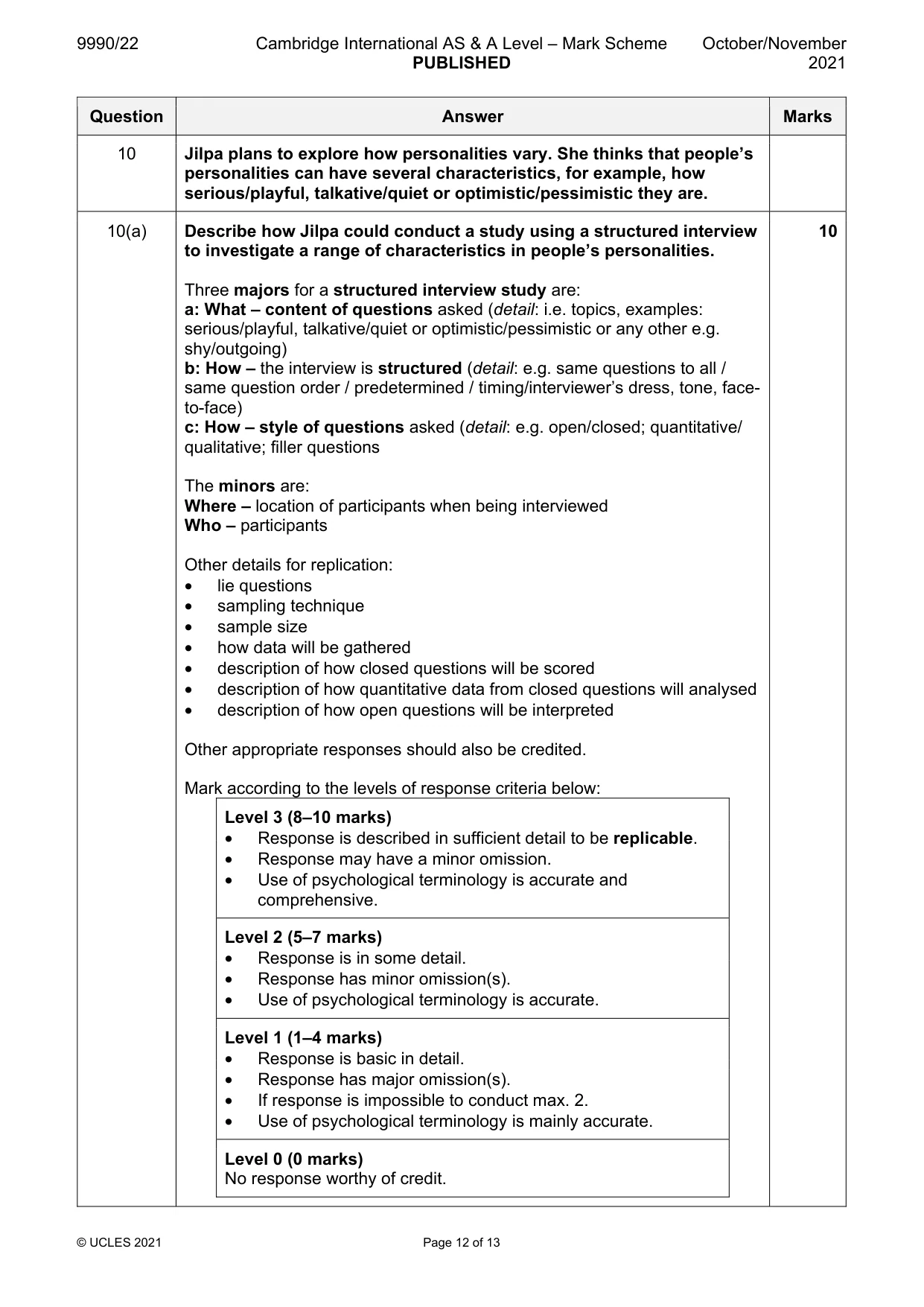
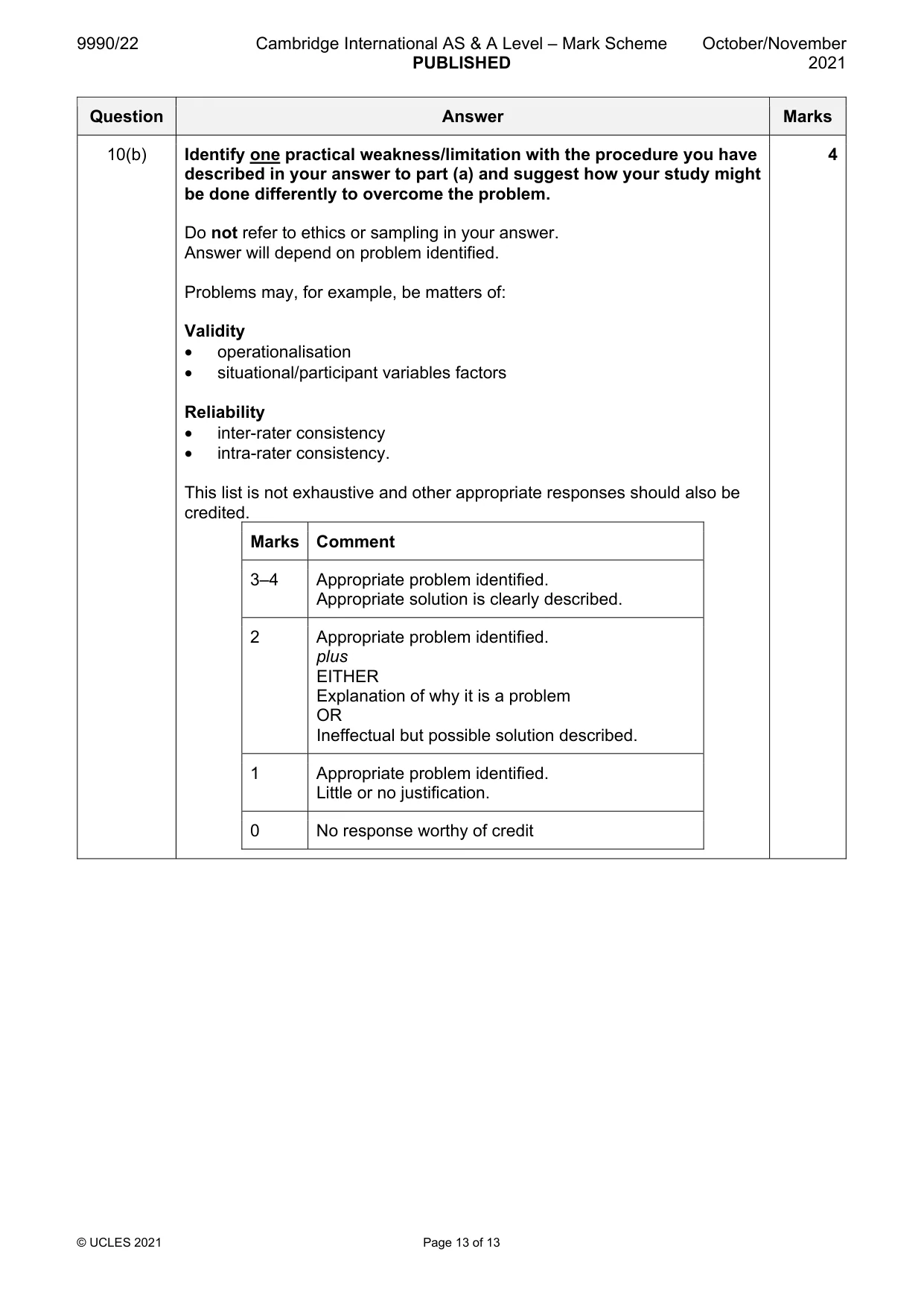
10 Jilpa plans to explore how personalities vary. She thinks that people’s personalities can have several characteristics, for example, how serious/playful, talkative/quiet or optimistic/pessimistic they are. (a) Describe how Jilpa could conduct a study using a structured interview to investigate a range of characteristics in people’s personalities. ................................................................................................................................................... ................................................................................................................................................... ................................................................................................................................................... ................................................................................................................................................... ................................................................................................................................................... ................................................................................................................................................... ................................................................................................................................................... ................................................................................................................................................... ................................................................................................................................................... ................................................................................................................................................... ................................................................................................................................................... ................................................................................................................................................... ................................................................................................................................................... ................................................................................................................................................... ................................................................................................................................................... ................................................................................................................................................... ................................................................................................................................................... ................................................................................................................................................... ................................................................................................................................................... ................................................................................................................................................... ................................................................................................................................................... ................................................................................................................................................... ................................................................................................................................................... ................................................................................................................................................... ................................................................................................................................................... ................................................................................................................................................... ................................................................................................................................................... ................................................................................................................................................... ................................................................................................................................................... ................................................................................................................................................... ................................................................................................................................................... ................................................................................................................................................... ................................................................................................................................................... ................................................................................................................................................... ................................................................................................................................................... ................................................................................................................................................... ................................................................................................................................................... ................................................................................................................................................... ........................................................................................................................................... [10] (b) Identify one practical weakness/limitation with the procedure you have described in your answer to part (a) and suggest how your study might be done differently to overcome the problem. Do not refer to ethics or sampling in your answer. ................................................................................................................................................... ................................................................................................................................................... ................................................................................................................................................... ................................................................................................................................................... ................................................................................................................................................... ................................................................................................................................................... ...................................................................................................................................................
Mark scheme: 10 Jilpa plans to explore how personalities vary. She thinks that people’s personalities can have several characteristics, for example, how serious/playful, talkative/quiet or optimistic/pessimistic they are. 10(a) Describe how Jilpa could conduct a study using a structured interview 10 to investigate a range of characteristics in people’s personalities. Three majors for a structured interview study are: a: What – content of questions asked (detail: i.e. topics, examples: serious/playful, talkative/quiet or optimistic/pessimistic or any other e.g. shy/outgoing) b: How – the interview is structured (detail: e.g. same questions to all / same question order / predetermined / timing/interviewer’s dress, tone, face- to-face) c: How – style of questions asked (detail: e.g. open/closed; quantitative/ qualitative; filler questions The minors are: Where – location of participants when being interviewed Who – participants Other details for replication: • lie questions • sampling technique • sample size • how data will be gathered • description of how closed questions will be scored • description of how quantitative data from closed questions will analysed • description of how open questions will be interpreted Other appropriate responses should also be credited. Mark according to the levels of response criteria below: Level 3 (8–10 marks) • Response is described in sufficient detail to be replicable. • Response may have a minor omission. • Use of psychological terminology is accurate and comprehensive. Level 2 (5–7 marks) • Response is in some detail. • Response has minor omission(s). • Use of psychological terminology is accurate. Level 1 (1–4 marks) • Response is basic in detail. • Response has major omission(s). • If response is impossible to conduct max. 2. • Use of psychological terminology is mainly accurate. Level 0 (0 marks) No response worthy of credit. 10(b) Identify one practical weakness/limitation with the procedure you have 4 described in your answer to part (a) and suggest how your study might be done differently to overcome the problem. Do not refer to ethics or sampling in your answer. Answer will depend on problem identified. Problems may, for example, be matters of: Validity • operationalisation • situational/participant variables factors Reliability • inter-rater consistency • intra-rater consistency. This list is not exhaustive and other appropriate responses should also be credited. Marks Comment 3–4 Appropriate problem identified. Appropriate solution is clearly described. 2 Appropriate problem identified. plus EITHER Explanation of why it is a problem OR Ineffectual but possible solution described. 1 Appropriate problem identified. Little or no justification. 0 No response worthy of credit
What was in this paper
The subtopics covered by these 10 questions, and how many questions each got. Open one in a new tab to see every Cambridge question on it.
What you needed in this session
Cambridge’s own grade thresholds for 2021 Oct/Nov, Paper 2 · Variant 2. A higher threshold means an easier paper — the bar moves with how the cohort did.