Cambridge A Level Psychology (from 2018) 9990 — 2020 Oct/Nov Paper 2 · Variant 2
9990/22/O/N/20 · 10 questions · 60 marks · ≈68 min
The question paper and its mark scheme, free to read here and free to download. This is Cambridge’s own paper, exactly as it was sat.
Question paper12 pages



Mark scheme12 pages
Answers below. Sit the paper first if you are practising.
Questions as text
Q1 · In the study by Saavedra and Silverman (button phobia), the results were the effect of…
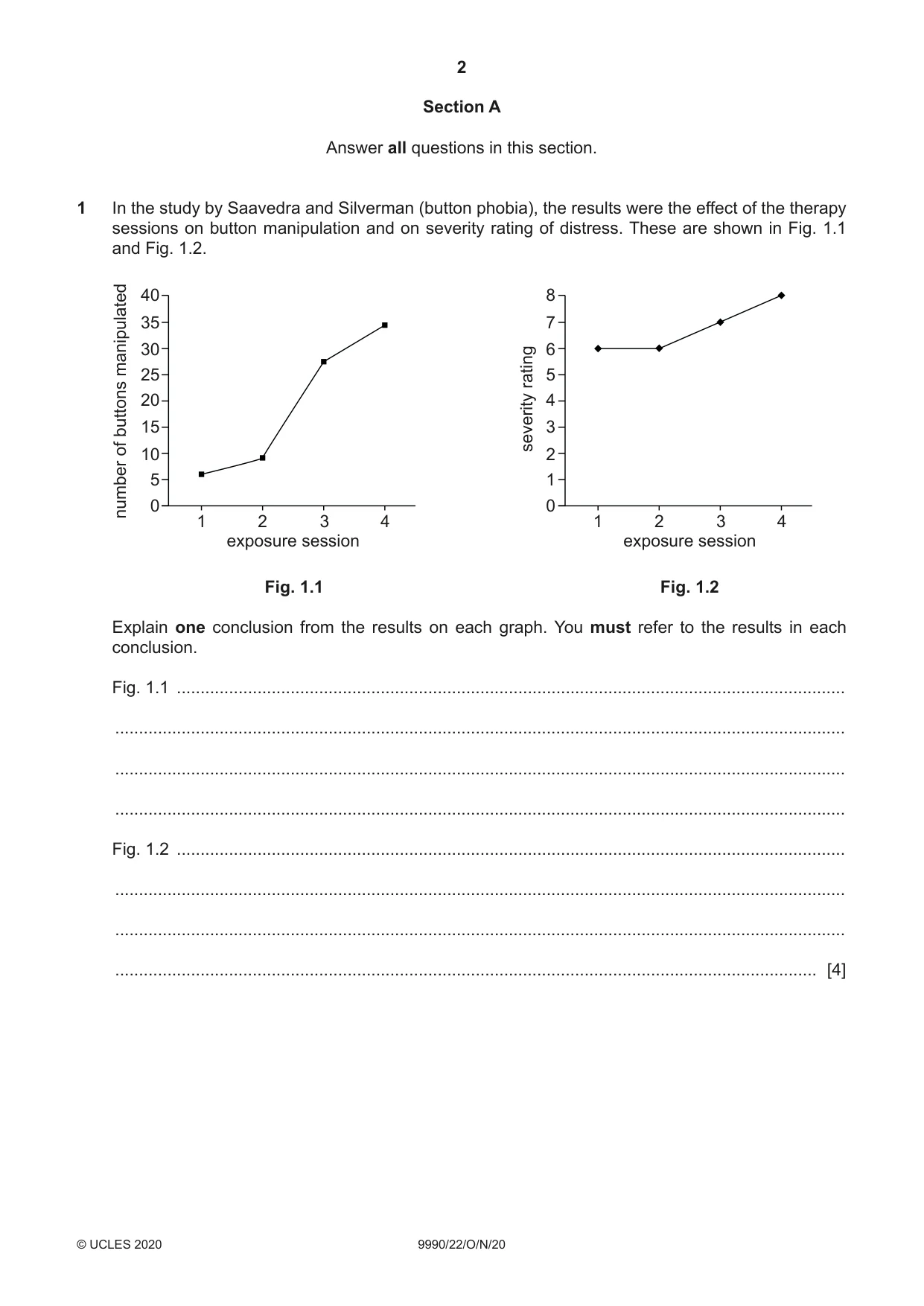
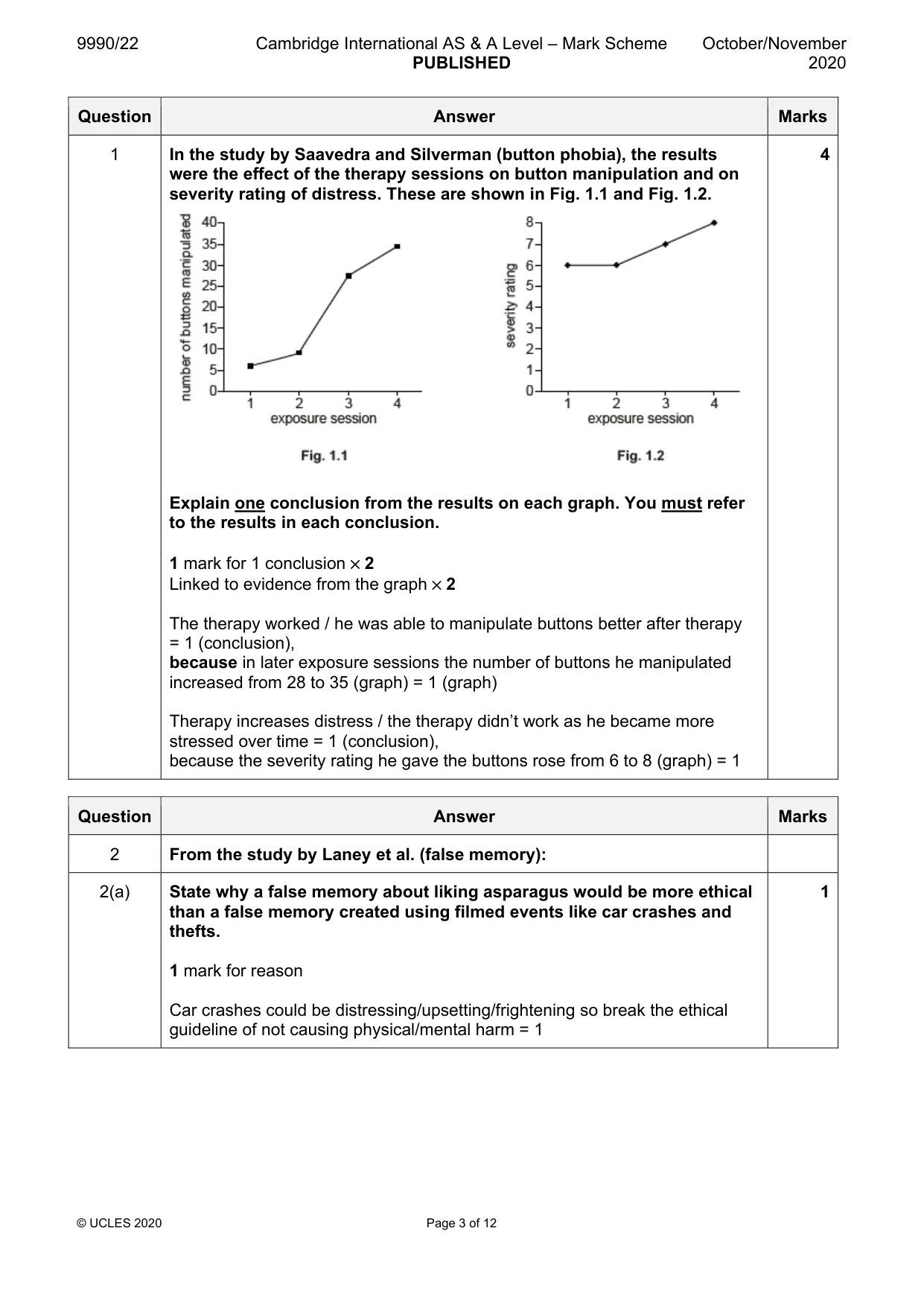
1 In the study by Saavedra and Silverman (button phobia), the results were the effect of the therapy sessions on button manipulation and on severity rating of distress. These are shown in Fig. 1.1 and Fig. 1.2. 40 8 35 7 30 6 manipulated 25 rating 5 20 4 buttons 15 3 of severity 10 2 5 1 number 0 0 1 2 3 4 1 2 3 4 exposure session exposure session Fig. 1.1 Fig. 1.2 Explain one conclusion from the results on each graph. You must refer to the results in each conclusion. Fig. 1.1 ............................................................................................................................................. .......................................................................................................................................................... .......................................................................................................................................................... .......................................................................................................................................................... Fig. 1.2 ............................................................................................................................................. .......................................................................................................................................................... .......................................................................................................................................................... .................................................................................................................................................... [4]
Mark scheme: Question Answer Marks 1 In the study by Saavedra and Silverman (button phobia), the results 4 were the effect of the therapy sessions on button manipulation and on severity rating of distress. These are shown in Fig. 1.1 and Fig. 1.2. Explain one conclusion from the results on each graph. You must refer to the results in each conclusion. 1 mark for 1 conclusion × 2 Linked to evidence from the graph × 2 The therapy worked / he was able to manipulate buttons better after therapy = 1 (conclusion), because in later exposure sessions the number of buttons he manipulated increased from 28 to 35 (graph) = 1 (graph) Therapy increases distress / the therapy didn’t work as he became more stressed over time = 1 (conclusion), because the severity rating he gave the buttons rose from 6 to 8 (graph) = 1
More questions on Anxiety disorders and fear-related disorders
Q2 · From the study by Laney et al
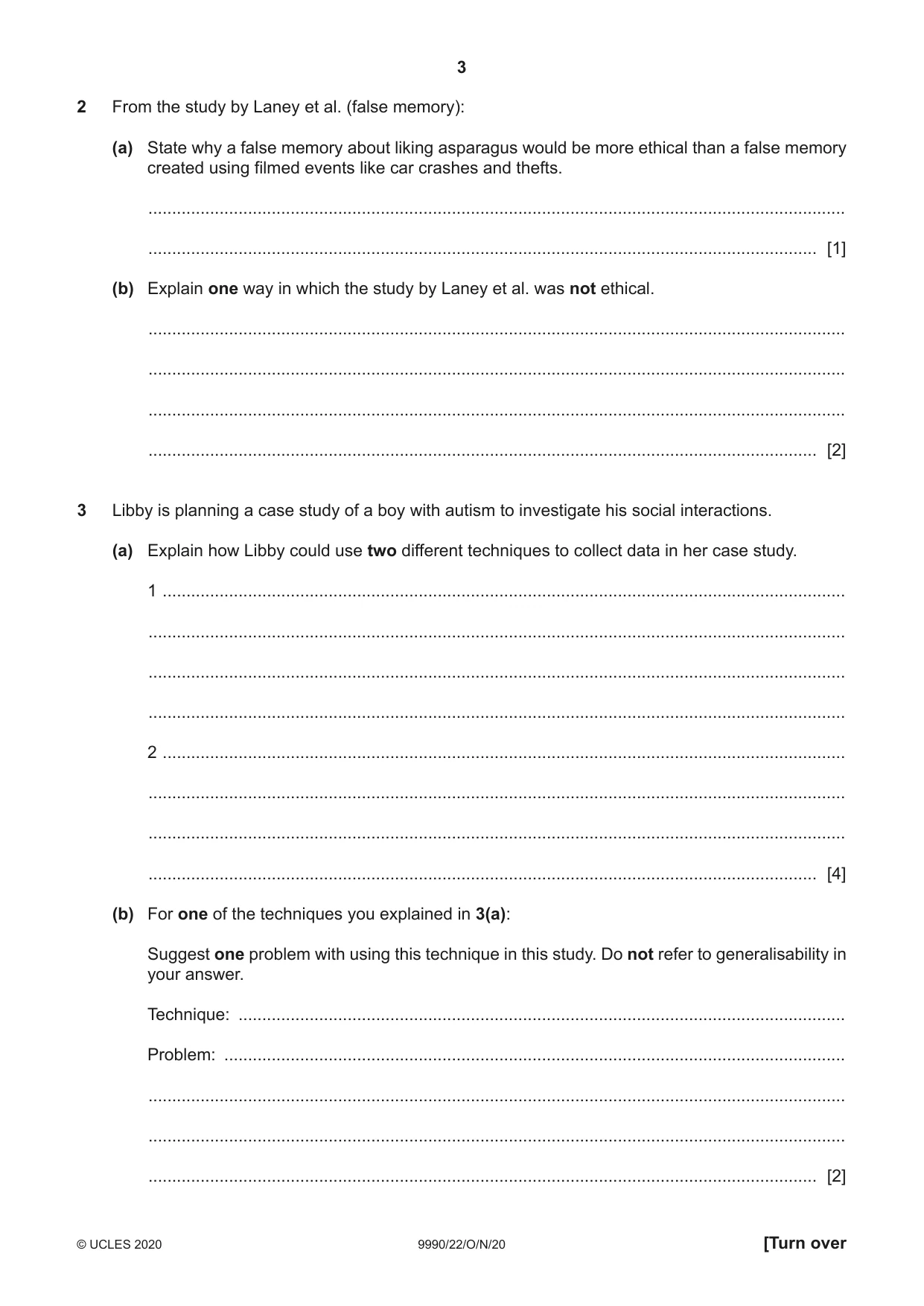
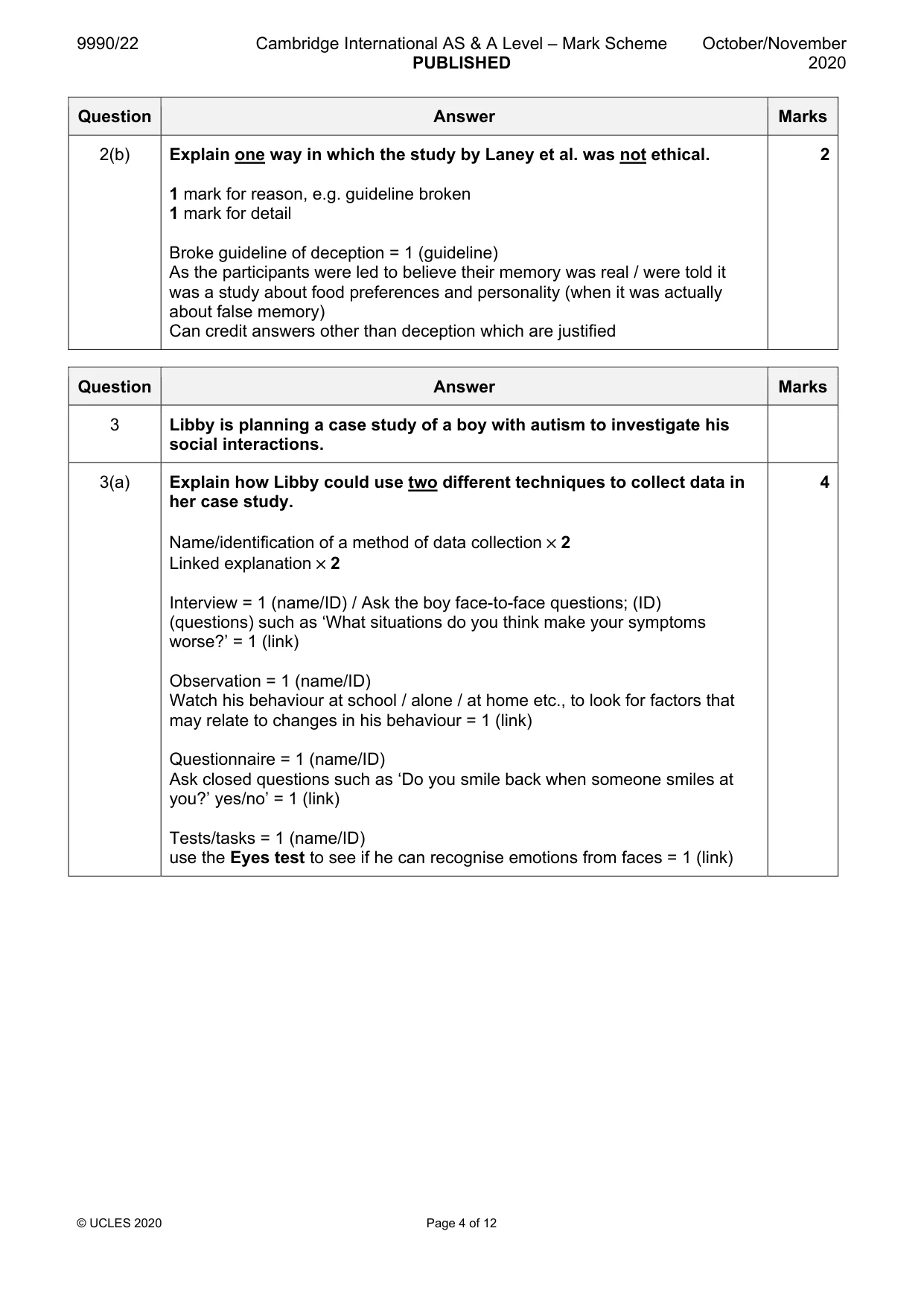
2 From the study by Laney et al. (false memory): (a) State why a false memory about liking asparagus would be more ethical than a false memory created using filmed events like car crashes and thefts. ................................................................................................................................................... ............................................................................................................................................. [1] (b) Explain one way in which the study by Laney et al. was not ethical. ................................................................................................................................................... ................................................................................................................................................... ................................................................................................................................................... ............................................................................................................................................. [2]
Mark scheme: 2 From the study by Laney et al. (false memory): 2(a) State why a false memory about liking asparagus would be more ethical 1 than a false memory created using filmed events like car crashes and thefts. 1 mark for reason Car crashes could be distressing/upsetting/frightening so break the ethical guideline of not causing physical/mental harm = 1 2(b) Explain one way in which the study by Laney et al. was not ethical. 2 1 mark for reason, e.g. guideline broken 1 mark for detail Broke guideline of deception = 1 (guideline) As the participants were led to believe their memory was real / were told it was a study about food preferences and personality (when it was actually about false memory) Can credit answers other than deception which are justified
Q3 · Libby is planning a case study of a boy with autism to investigate his social interactions
3 Libby is planning a case study of a boy with autism to investigate his social interactions. (a) Explain how Libby could use two different techniques to collect data in her case study. 1 ................................................................................................................................................ ................................................................................................................................................... ................................................................................................................................................... ................................................................................................................................................... 2 ................................................................................................................................................ ................................................................................................................................................... ................................................................................................................................................... ............................................................................................................................................. [4] (b) For one of the techniques you explained in 3(a): Suggest one problem with using this technique in this study. Do not refer to generalisability in your answer. Technique: ................................................................................................................................ Problem: ................................................................................................................................... ................................................................................................................................................... ................................................................................................................................................... ............................................................................................................................................. [2]
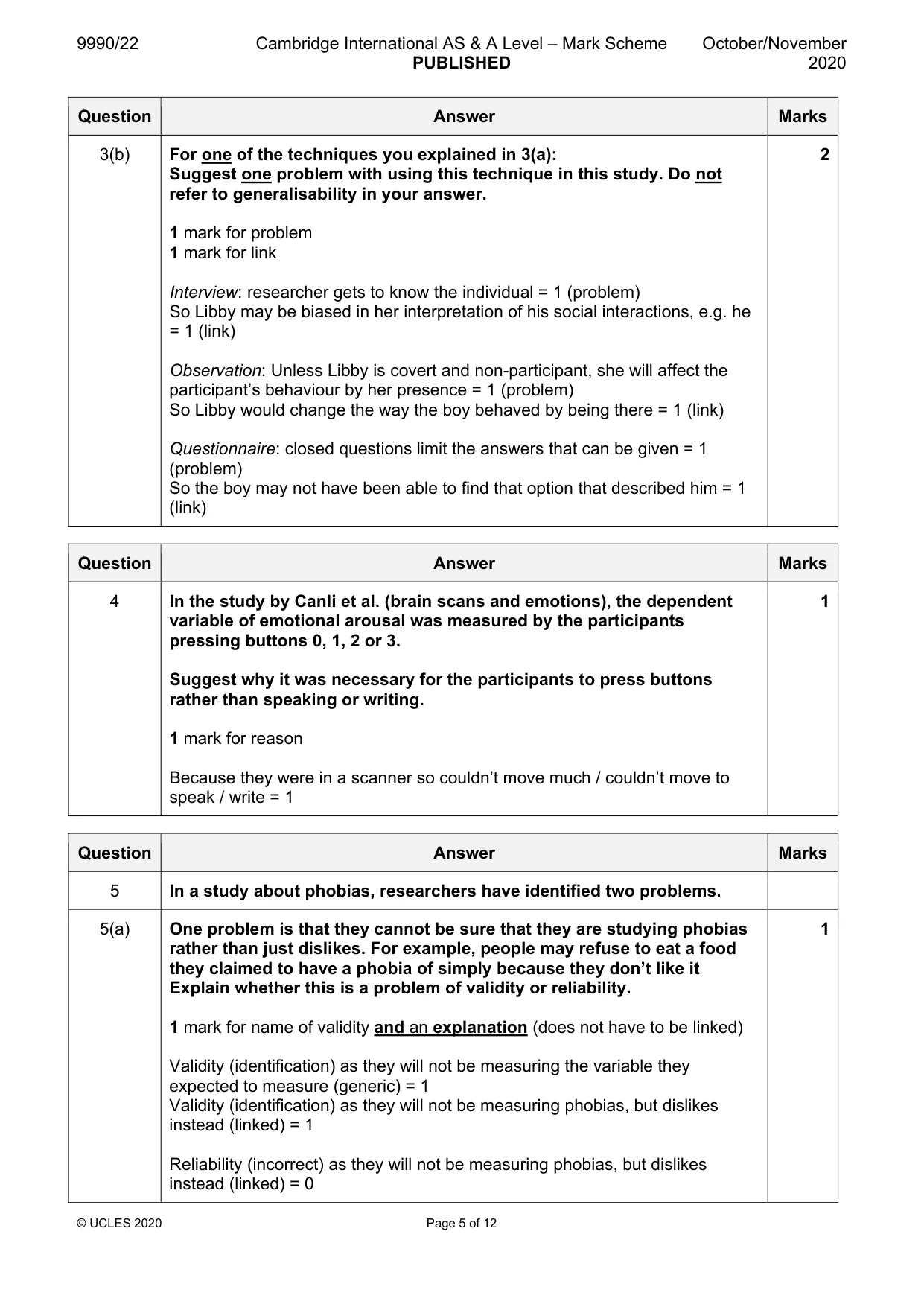
Mark scheme: 3 Libby is planning a case study of a boy with autism to investigate his social interactions. 3(a) Explain how Libby could use two different techniques to collect data in 4 her case study. Name/identification of a method of data collection × 2 Linked explanation × 2 Interview = 1 (name/ID) / Ask the boy face-to-face questions; (ID) (questions) such as ‘What situations do you think make your symptoms worse?’ = 1 (link) Observation = 1 (name/ID) Watch his behaviour at school / alone / at home etc., to look for factors that may relate to changes in his behaviour = 1 (link) Questionnaire = 1 (name/ID) Ask closed questions such as ‘Do you smile back when someone smiles at you?’ yes/no’ = 1 (link) Tests/tasks = 1 (name/ID) use the Eyes test to see if he can recognise emotions from faces = 1 (link) 3(b) For one of the techniques you explained in 3(a): 2 Suggest one problem with using this technique in this study. Do not refer to generalisability in your answer. 1 mark for problem 1 mark for link Interview: researcher gets to know the individual = 1 (problem) So Libby may be biased in her interpretation of his social interactions, e.g. he = 1 (link) Observation: Unless Libby is covert and non-participant, she will affect the participant’s behaviour by her presence = 1 (problem) So Libby would change the way the boy behaved by being there = 1 (link) Questionnaire: closed questions limit the answers that can be given = 1 (problem) So the boy may not have been able to find that option that described him = 1 (link)
Q4 · In the study by Canli et al
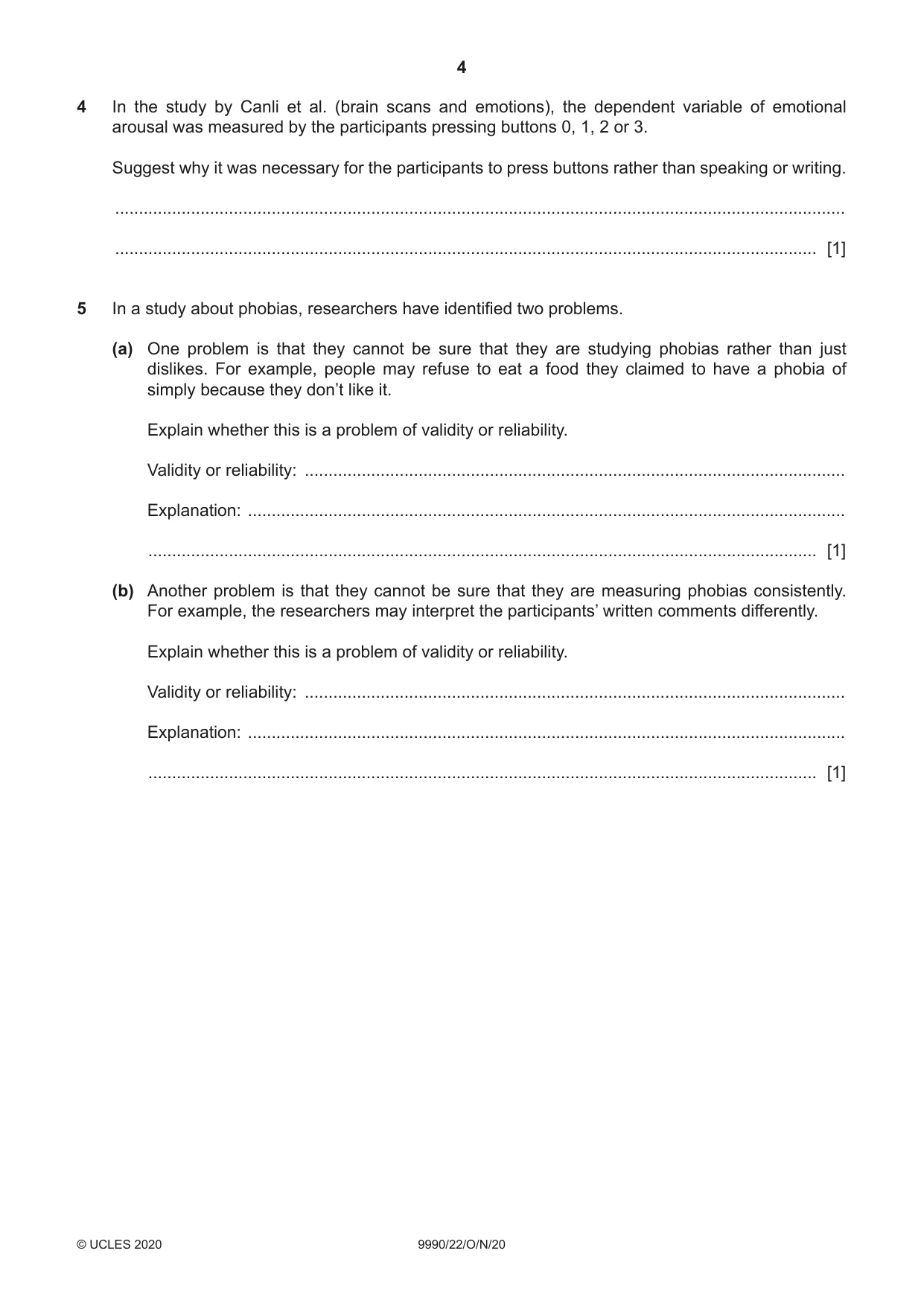
4 In the study by Canli et al. (brain scans and emotions), the dependent variable of emotional arousal was measured by the participants pressing buttons 0, 1, 2 or 3. Suggest why it was necessary for the participants to press buttons rather than speaking or writing. .......................................................................................................................................................... .................................................................................................................................................... [1]
Mark scheme: 4 In the study by Canli et al. (brain scans and emotions), the dependent 1 variable of emotional arousal was measured by the participants pressing buttons 0, 1, 2 or 3. Suggest why it was necessary for the participants to press buttons rather than speaking or writing. 1 mark for reason Because they were in a scanner so couldn’t move much / couldn’t move to speak / write = 1
Q5 · In a study about phobias, researchers have identified two problems
5 In a study about phobias, researchers have identified two problems. (a) One problem is that they cannot be sure that they are studying phobias rather than just dislikes. For example, people may refuse to eat a food they claimed to have a phobia of simply because they don’t like it. Explain whether this is a problem of validity or reliability. Validity or reliability: .................................................................................................................. Explanation: .............................................................................................................................. ............................................................................................................................................. [1] (b) Another problem is that they cannot be sure that they are measuring phobias consistently. For example, the researchers may interpret the participants’ written comments differently. Explain whether this is a problem of validity or reliability. Validity or reliability: .................................................................................................................. Explanation: .............................................................................................................................. ............................................................................................................................................. [1]
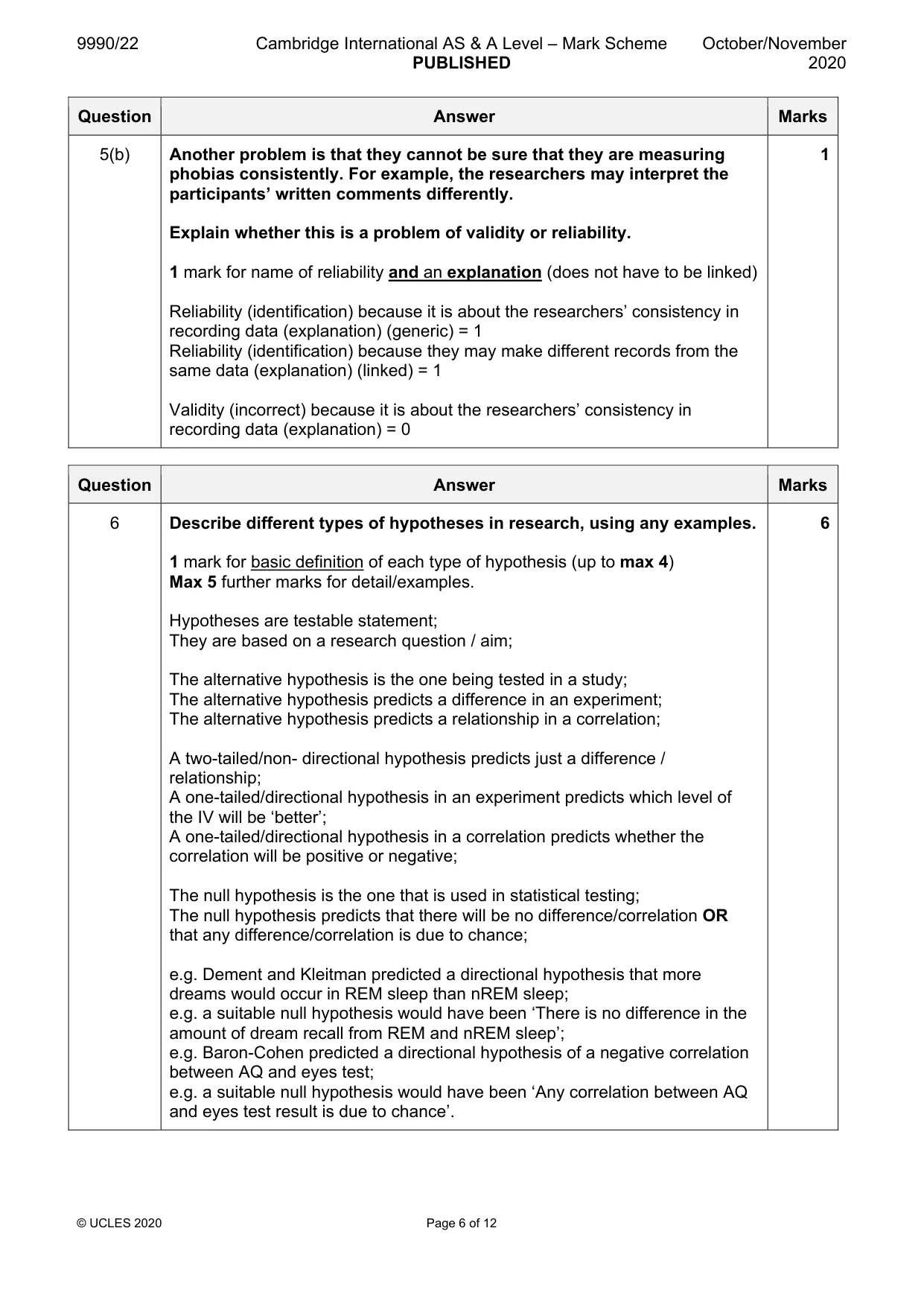
Mark scheme: 5 In a study about phobias, researchers have identified two problems. 5(a) One problem is that they cannot be sure that they are studying phobias 1 rather than just dislikes. For example, people may refuse to eat a food they claimed to have a phobia of simply because they don’t like it Explain whether this is a problem of validity or reliability. 1 mark for name of validity and an explanation (does not have to be linked) Validity (identification) as they will not be measuring the variable they expected to measure (generic) = 1 Validity (identification) as they will not be measuring phobias, but dislikes instead (linked) = 1 Reliability (incorrect) as they will not be measuring phobias, but dislikes instead (linked) = 0 5(b) Another problem is that they cannot be sure that they are measuring 1 phobias consistently. For example, the researchers may interpret the participants’ written comments differently. Explain whether this is a problem of validity or reliability. 1 mark for name of reliability and an explanation (does not have to be linked) Reliability (identification) because it is about the researchers’ consistency in recording data (explanation) (generic) = 1 Reliability (identification) because they may make different records from the same data (explanation) (linked) = 1 Validity (incorrect) because it is about the researchers’ consistency in recording data (explanation) = 0
More questions on Anxiety disorders and fear-related disorders
Q6 · Describe different types of hypothesis in research, using any examples
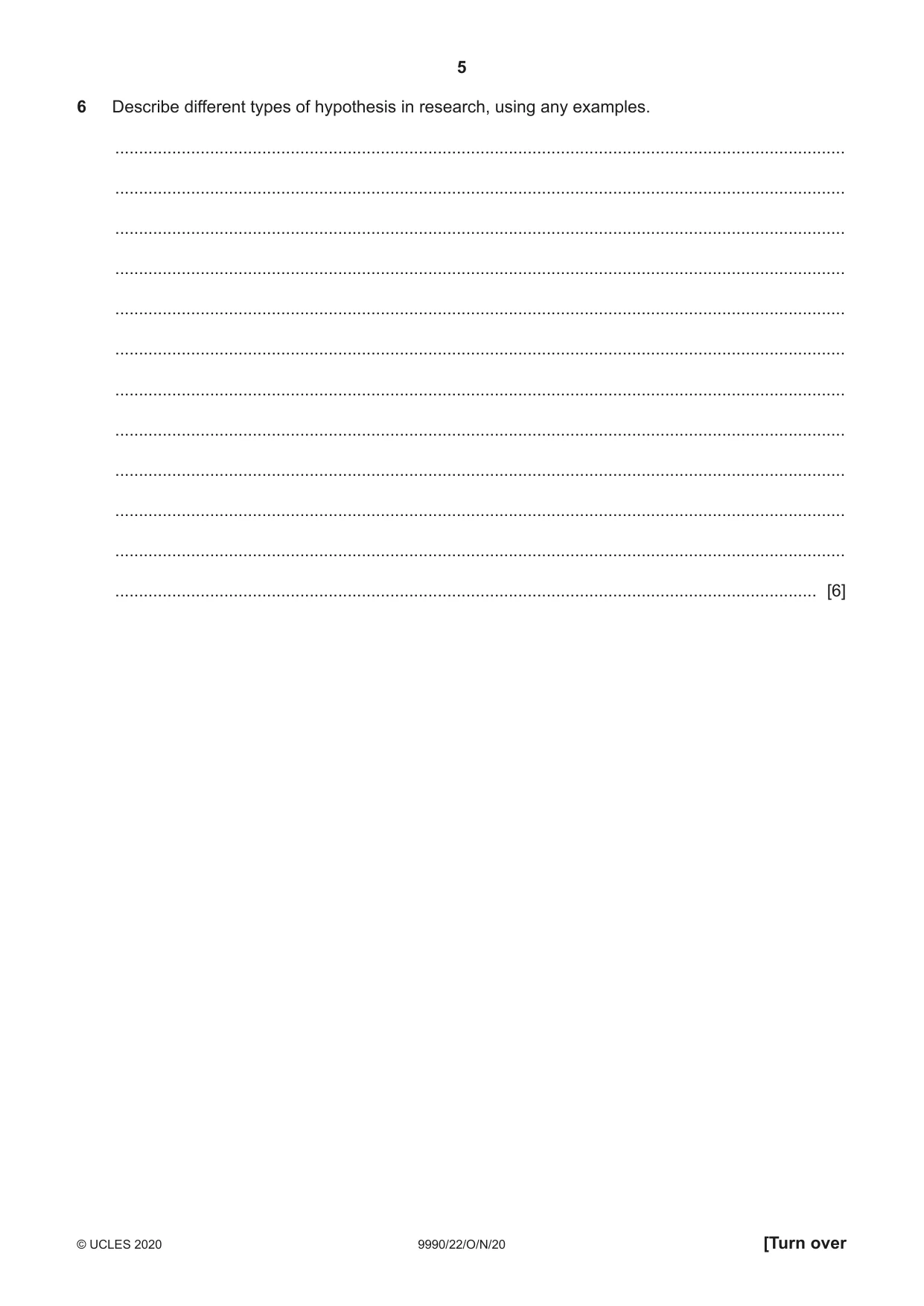
6 Describe different types of hypothesis in research, using any examples. .......................................................................................................................................................... .......................................................................................................................................................... .......................................................................................................................................................... .......................................................................................................................................................... .......................................................................................................................................................... .......................................................................................................................................................... .......................................................................................................................................................... .......................................................................................................................................................... .......................................................................................................................................................... .......................................................................................................................................................... .......................................................................................................................................................... .................................................................................................................................................... [6]
Mark scheme: 6 Describe different types of hypotheses in research, using any examples. 6 1 mark for basic definition of each type of hypothesis (up to max 4) Max 5 further marks for detail/examples. Hypotheses are testable statement; They are based on a research question / aim; The alternative hypothesis is the one being tested in a study; The alternative hypothesis predicts a difference in an experiment; The alternative hypothesis predicts a relationship in a correlation; A two-tailed/non- directional hypothesis predicts just a difference / relationship; A one-tailed/directional hypothesis in an experiment predicts which level of the IV will be ‘better’; A one-tailed/directional hypothesis in a correlation predicts whether the correlation will be positive or negative; The null hypothesis is the one that is used in statistical testing; The null hypothesis predicts that there will be no difference/correlation OR that any difference/correlation is due to chance; e.g. Dement and Kleitman predicted a directional hypothesis that more dreams would occur in REM sleep than nREM sleep; e.g. a suitable null hypothesis would have been ‘There is no difference in the amount of dream recall from REM and nREM sleep’; e.g. Baron-Cohen predicted a directional hypothesis of a negative correlation between AQ and eyes test; e.g. a suitable null hypothesis would have been ‘Any correlation between AQ and eyes test result is due to chance’.
Q7 · Claus is investigating whether there is a correlation between happiness and exercise
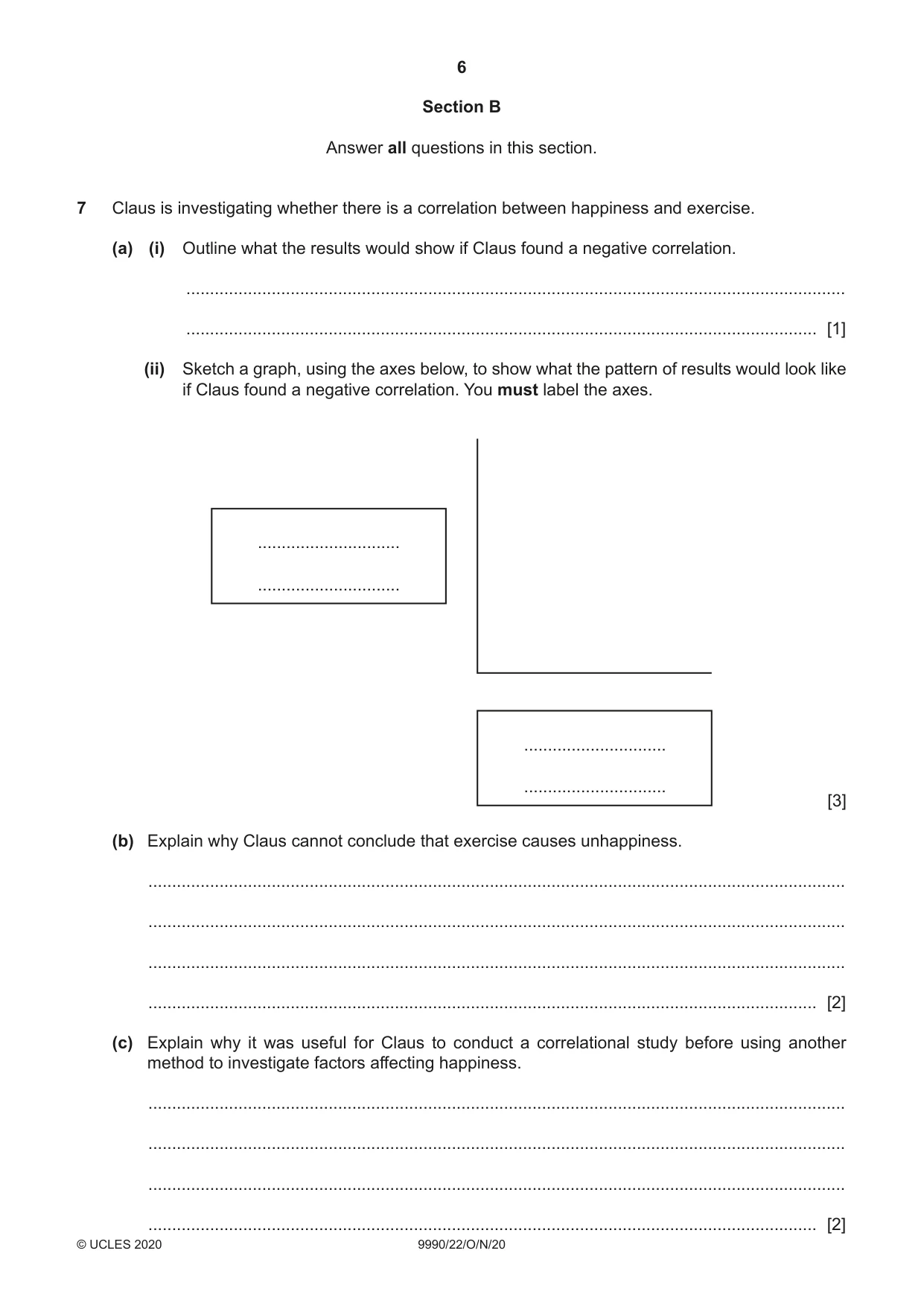
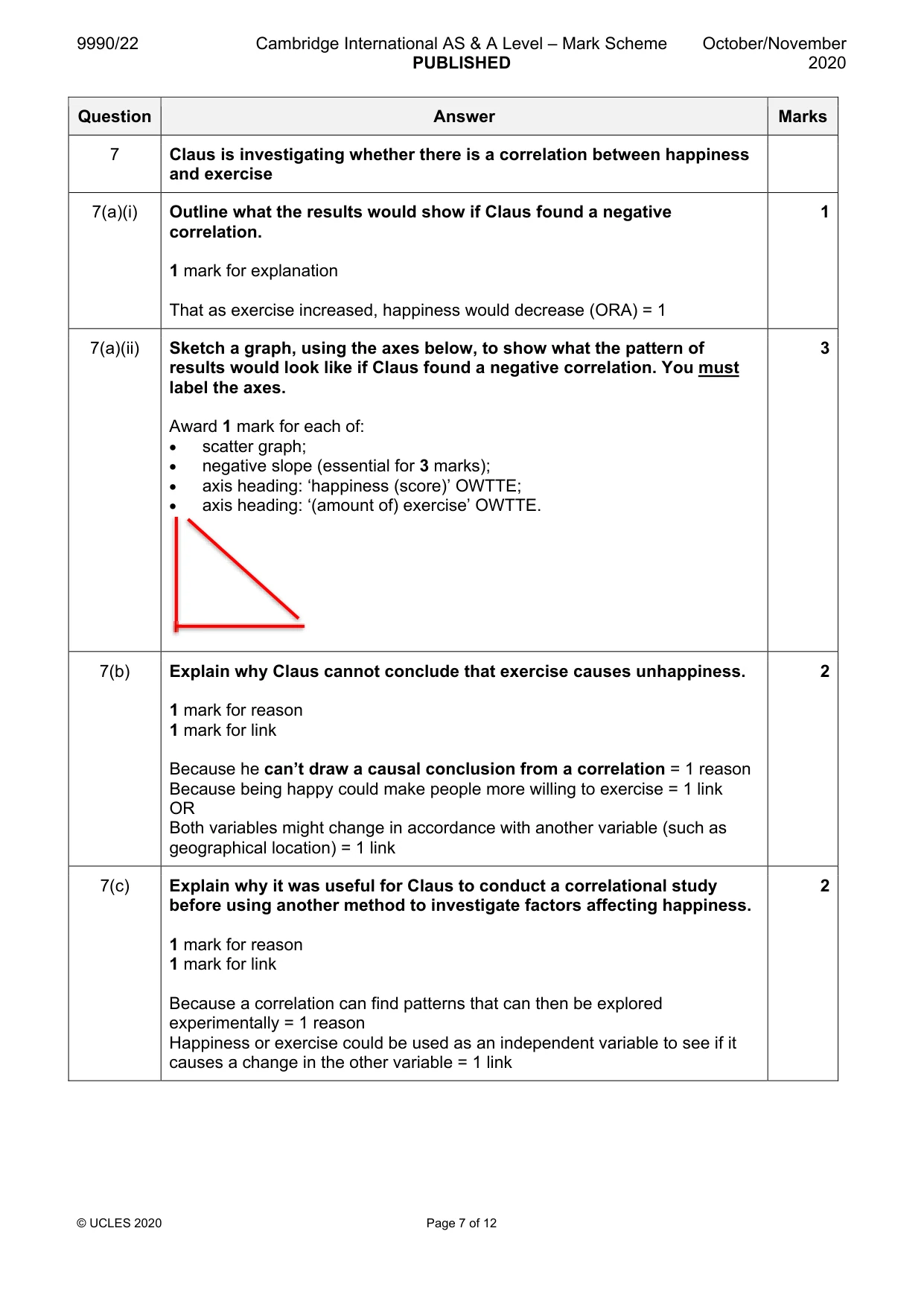
7 Claus is investigating whether there is a correlation between happiness and exercise. (a) (i) Outline what the results would show if Claus found a negative correlation. ........................................................................................................................................... ..................................................................................................................................... [1] (ii) Sketch a graph, using the axes below, to show what the pattern of results would look like if Claus found a negative correlation. You must label the axes. .............................. .............................. .............................. .............................. [3] (b) Explain why Claus cannot conclude that exercise causes unhappiness. ................................................................................................................................................... ................................................................................................................................................... ................................................................................................................................................... ............................................................................................................................................. [2] (c) Explain why it was useful for Claus to conduct a correlational study before using another method to investigate factors affecting happiness. ................................................................................................................................................... ................................................................................................................................................... ................................................................................................................................................... ............................................................................................................................................. [2]
Mark scheme: 7 Claus is investigating whether there is a correlation between happiness and exercise 7(a)(i) Outline what the results would show if Claus found a negative 1 correlation. 1 mark for explanation That as exercise increased, happiness would decrease (ORA) = 1 7(a)(ii) Sketch a graph, using the axes below, to show what the pattern of 3 results would look like if Claus found a negative correlation. You must label the axes. Award 1 mark for each of: • scatter graph; • negative slope (essential for 3 marks); • axis heading: ‘happiness (score)’ OWTTE; • axis heading: ‘(amount of) exercise’ OWTTE. 7(b) Explain why Claus cannot conclude that exercise causes unhappiness. 2 1 mark for reason 1 mark for link Because he can’t draw a causal conclusion from a correlation = 1 reason Because being happy could make people more willing to exercise = 1 link OR Both variables might change in accordance with another variable (such as geographical location) = 1 link 7(c) Explain why it was useful for Claus to conduct a correlational study 2 before using another method to investigate factors affecting happiness. 1 mark for reason 1 mark for link Because a correlation can find patterns that can then be explored experimentally = 1 reason Happiness or exercise could be used as an independent variable to see if it causes a change in the other variable = 1 link
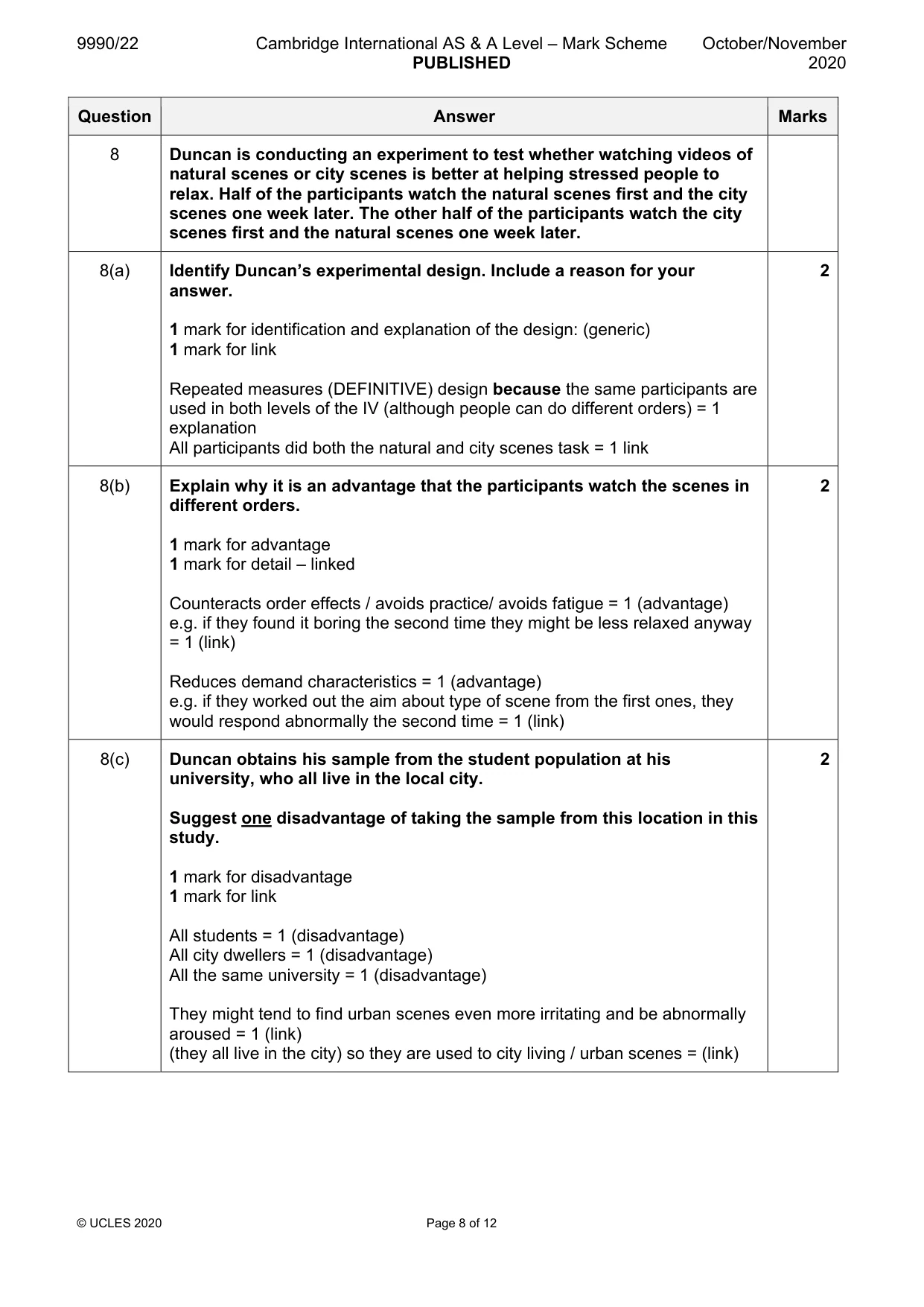
Q8 · Duncan is conducting an experiment to test whether watching videos of natural scenes or…
8 Duncan is conducting an experiment to test whether watching videos of natural scenes or city scenes is better at helping stressed people to relax. Half of the participants watch the natural scenes first and the city scenes one week later. The other half of the participants watch the city scenes first and the natural scenes one week later. (a) Identify Duncan’s experimental design. Include a reason for your answer. ................................................................................................................................................... ................................................................................................................................................... ................................................................................................................................................... ............................................................................................................................................. [2] (b) Explain why it is an advantage that the participants watch the scenes in different orders. ................................................................................................................................................... ................................................................................................................................................... ................................................................................................................................................... ............................................................................................................................................. [2] (c) Duncan obtains his sample from the student population at his university, who all live in the local city. Suggest one disadvantage of taking a sample from this location for this study. ................................................................................................................................................... ................................................................................................................................................... ................................................................................................................................................... ............................................................................................................................................. [2] (d) In order to ensure that his participants are stressed before watching the videos, Duncan could scare them but this would be unethical. He must stress them in an ethical way. He decides to do this by raising their arousal level. Describe one ethical way that Duncan could stress his participants by raising their arousal level. ................................................................................................................................................... ................................................................................................................................................... ................................................................................................................................................... ............................................................................................................................................. [2]
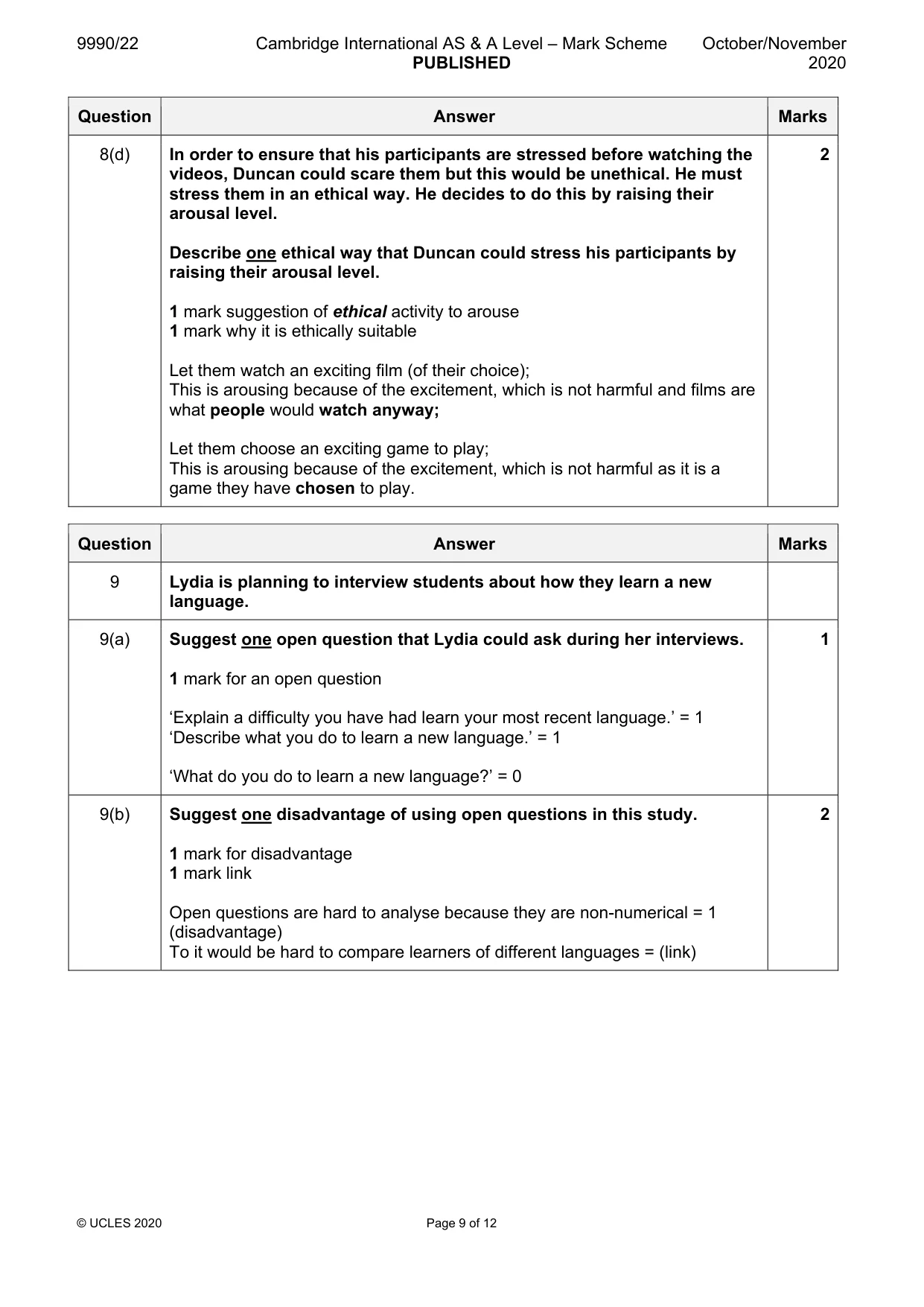
Mark scheme: 8 Duncan is conducting an experiment to test whether watching videos of natural scenes or city scenes is better at helping stressed people to relax. Half of the participants watch the natural scenes first and the city scenes one week later. The other half of the participants watch the city scenes first and the natural scenes one week later. 8(a) Identify Duncan’s experimental design. Include a reason for your 2 answer. 1 mark for identification and explanation of the design: (generic) 1 mark for link Repeated measures (DEFINITIVE) design because the same participants are used in both levels of the IV (although people can do different orders) = 1 explanation All participants did both the natural and city scenes task = 1 link 8(b) Explain why it is an advantage that the participants watch the scenes in 2 different orders. 1 mark for advantage 1 mark for detail – linked Counteracts order effects / avoids practice/ avoids fatigue = 1 (advantage) e.g. if they found it boring the second time they might be less relaxed anyway = 1 (link) Reduces demand characteristics = 1 (advantage) e.g. if they worked out the aim about type of scene from the first ones, they would respond abnormally the second time = 1 (link) 8(c) Duncan obtains his sample from the student population at his 2 university, who all live in the local city. Suggest one disadvantage of taking the sample from this location in this study. 1 mark for disadvantage 1 mark for link All students = 1 (disadvantage) All city dwellers = 1 (disadvantage) All the same university = 1 (disadvantage) They might tend to find urban scenes even more irritating and be abnormally aroused = 1 (link) (they all live in the city) so they are used to city living / urban scenes = (link) 8(d) In order to ensure that his participants are stressed before watching the 2 videos, Duncan could scare them but this would be unethical. He must stress them in an ethical way. He decides to do this by raising their arousal level. Describe one ethical way that Duncan could stress his participants by raising their arousal level. 1 mark suggestion of ethical activity to arouse 1 mark why it is ethically suitable Let them watch an exciting film (of their choice); This is arousing because of the excitement, which is not harmful and films are what people would watch anyway; Let them choose an exciting game to play; This is arousing because of the excitement, which is not harmful as it is a game they have chosen to play.
Q9 · Lydia is planning to interview students about how they learn a new language
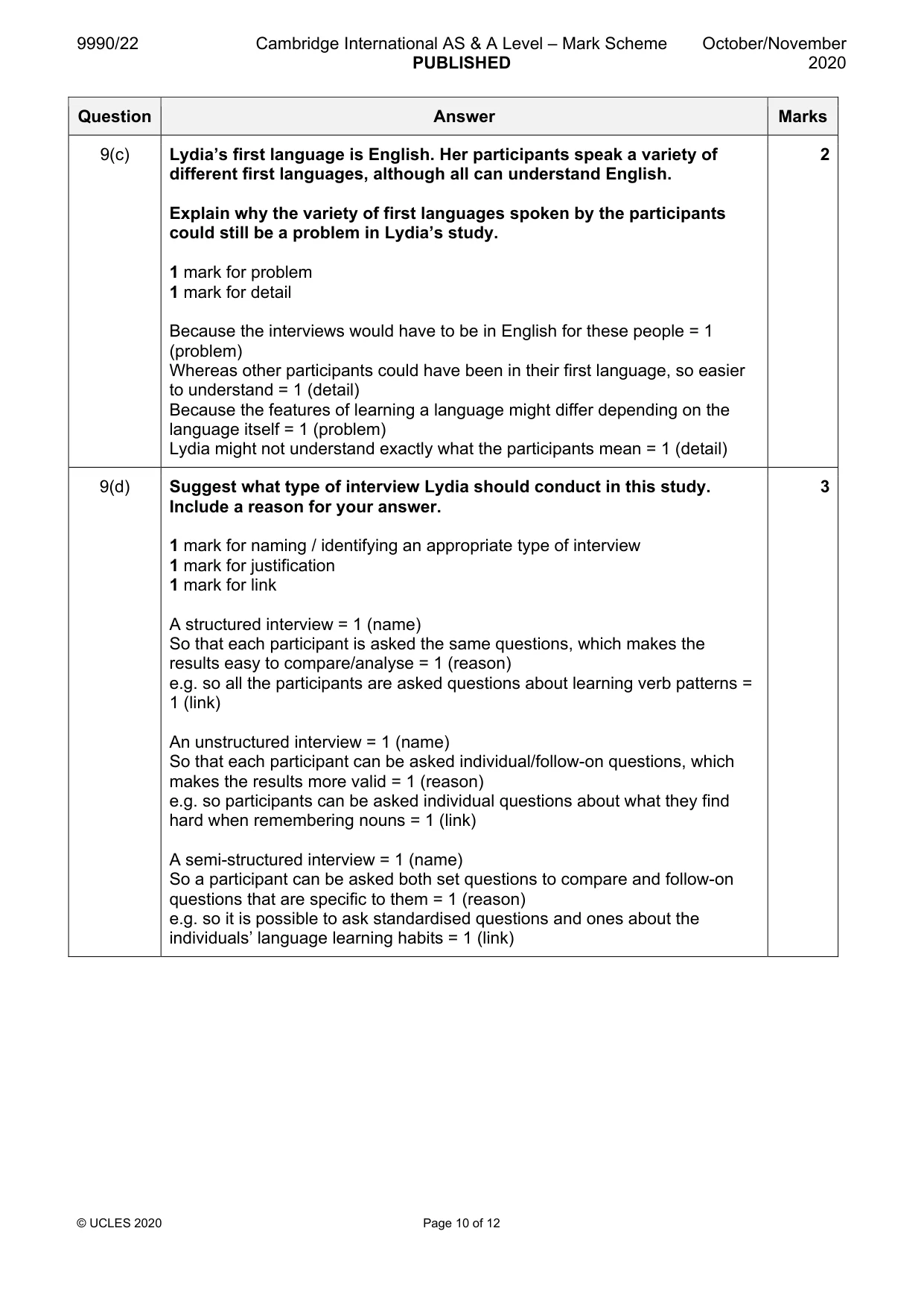
9 Lydia is planning to interview students about how they learn a new language. (a) Suggest one open question that Lydia could ask during her interviews. ................................................................................................................................................... ............................................................................................................................................. [1] (b) Suggest one disadvantage of using open questions in this study. ................................................................................................................................................... ................................................................................................................................................... ................................................................................................................................................... ............................................................................................................................................. [2] (c) Lydia’s first language is English. Her participants speak a variety of different first languages, although all can understand English. Explain why the variety of first languages spoken by the participants could still be a problem in Lydia’s study. ................................................................................................................................................... ................................................................................................................................................... ................................................................................................................................................... ............................................................................................................................................. [2] (d) Suggest what type of interview Lydia should conduct in this study. Include a reason for your answer. ................................................................................................................................................... ................................................................................................................................................... ................................................................................................................................................... ................................................................................................................................................... ................................................................................................................................................... ............................................................................................................................................. [3] Section C Answer all questions in this section.
Mark scheme: 9 Lydia is planning to interview students about how they learn a new language. 9(a) Suggest one open question that Lydia could ask during her interviews. 1 1 mark for an open question ‘Explain a difficulty you have had learn your most recent language.’ = 1 ‘Describe what you do to learn a new language.’ = 1 ‘What do you do to learn a new language?’ = 0 9(b) Suggest one disadvantage of using open questions in this study. 2 1 mark for disadvantage 1 mark link Open questions are hard to analyse because they are non-numerical = 1 (disadvantage) To it would be hard to compare learners of different languages = (link) 9(c) Lydia’s first language is English. Her participants speak a variety of 2 different first languages, although all can understand English. Explain why the variety of first languages spoken by the participants could still be a problem in Lydia’s study. 1 mark for problem 1 mark for detail Because the interviews would have to be in English for these people = 1 (problem) Whereas other participants could have been in their first language, so easier to understand = 1 (detail) Because the features of learning a language might differ depending on the language itself = 1 (problem) Lydia might not understand exactly what the participants mean = 1 (detail) 9(d) Suggest what type of interview Lydia should conduct in this study. 3 Include a reason for your answer. 1 mark for naming / identifying an appropriate type of interview 1 mark for justification 1 mark for link A structured interview = 1 (name) So that each participant is asked the same questions, which makes the results easy to compare/analyse = 1 (reason) e.g. so all the participants are asked questions about learning verb patterns = 1 (link) An unstructured interview = 1 (name) So that each participant can be asked individual/follow-on questions, which makes the results more valid = 1 (reason) e.g. so participants can be asked individual questions about what they find hard when remembering nouns = 1 (link) A semi-structured interview = 1 (name) So a participant can be asked both set questions to compare and follow-on questions that are specific to them = 1 (reason) e.g. so it is possible to ask standardised questions and ones about the individuals’ language learning habits = 1 (link)
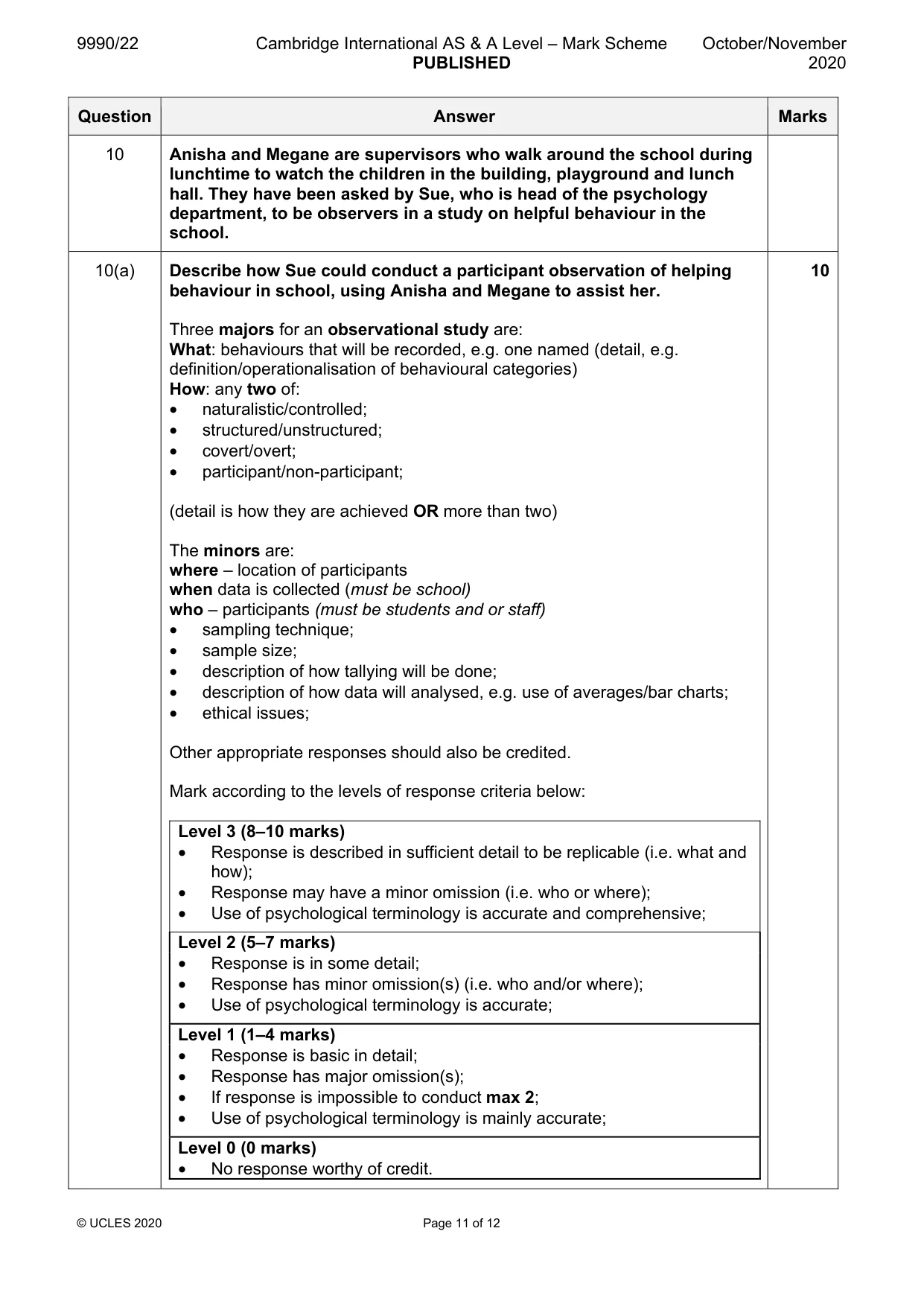
Q10 · Anisha and Megane are supervisors who walk around the school during lunchtime to watch…
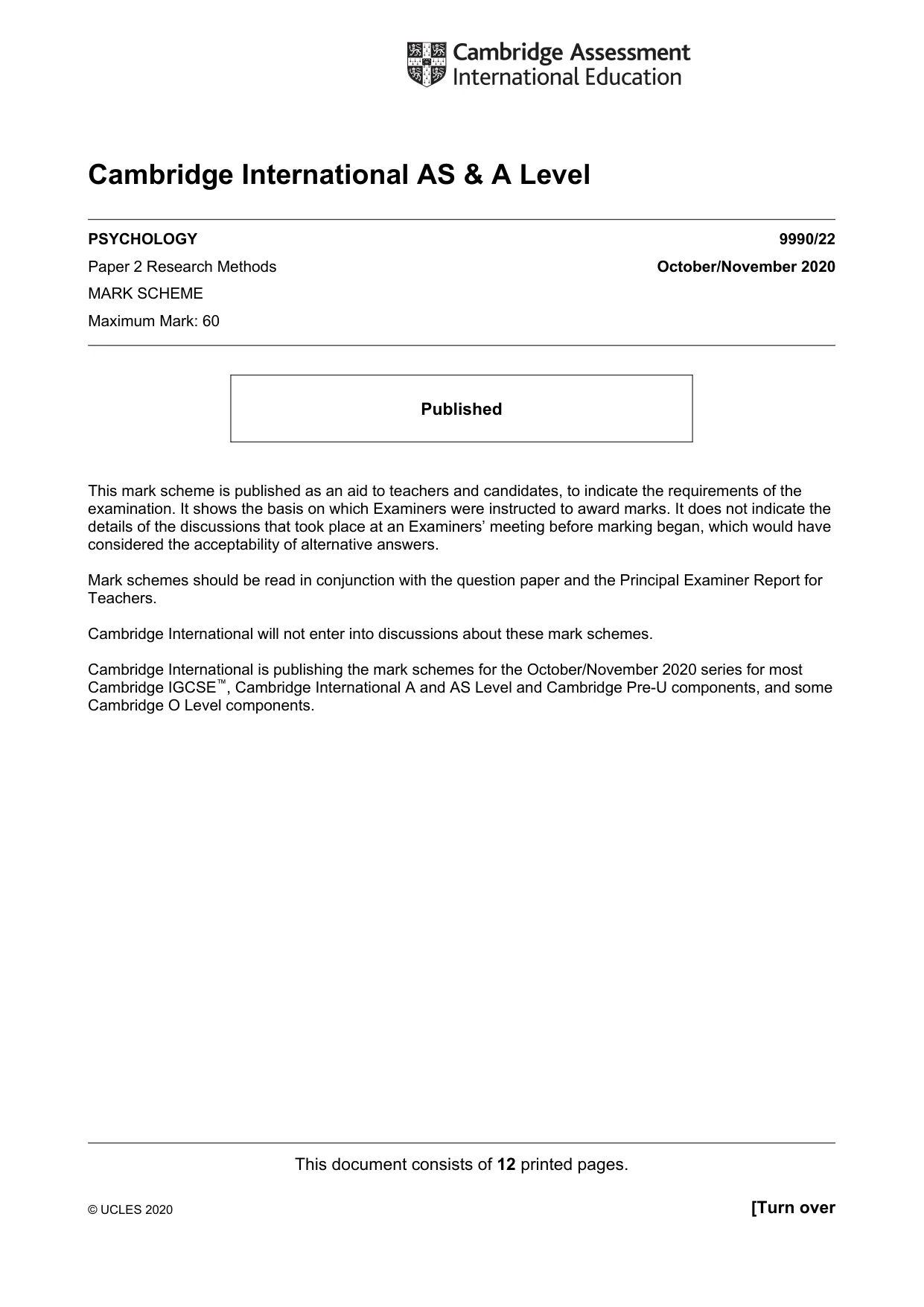
10 Anisha and Megane are supervisors who walk around the school during lunchtime to watch the children in the building, playground and lunch hall. They have been asked by Sue, who is head of the psychology department, to be observers in a study on helpful behaviour in the school. (a) Describe how Sue could conduct a participant observation of helping behaviour in school, using Anisha and Megane to assist her. ................................................................................................................................................... ................................................................................................................................................... ................................................................................................................................................... ................................................................................................................................................... ................................................................................................................................................... ................................................................................................................................................... ................................................................................................................................................... ................................................................................................................................................... ................................................................................................................................................... ................................................................................................................................................... ................................................................................................................................................... ................................................................................................................................................... ................................................................................................................................................... ................................................................................................................................................... ................................................................................................................................................... ................................................................................................................................................... ................................................................................................................................................... ................................................................................................................................................... ................................................................................................................................................... ................................................................................................................................................... ................................................................................................................................................... ................................................................................................................................................... ................................................................................................................................................... ................................................................................................................................................... ................................................................................................................................................... ................................................................................................................................................... ................................................................................................................................................... ........................................................................................................................................... [10] (b) Identify one practical weakness/limitation with the procedure you have described in your answer to part (a) and suggest how your study might be done differently to overcome the problem. Do not refer to ethics or sampling in your answer. ................................................................................................................................................... ................................................................................................................................................... ................................................................................................................................................... ................................................................................................................................................... ................................................................................................................................................... ................................................................................................................................................... ................................................................................................................................................... ............................................................................................................................................. [4]
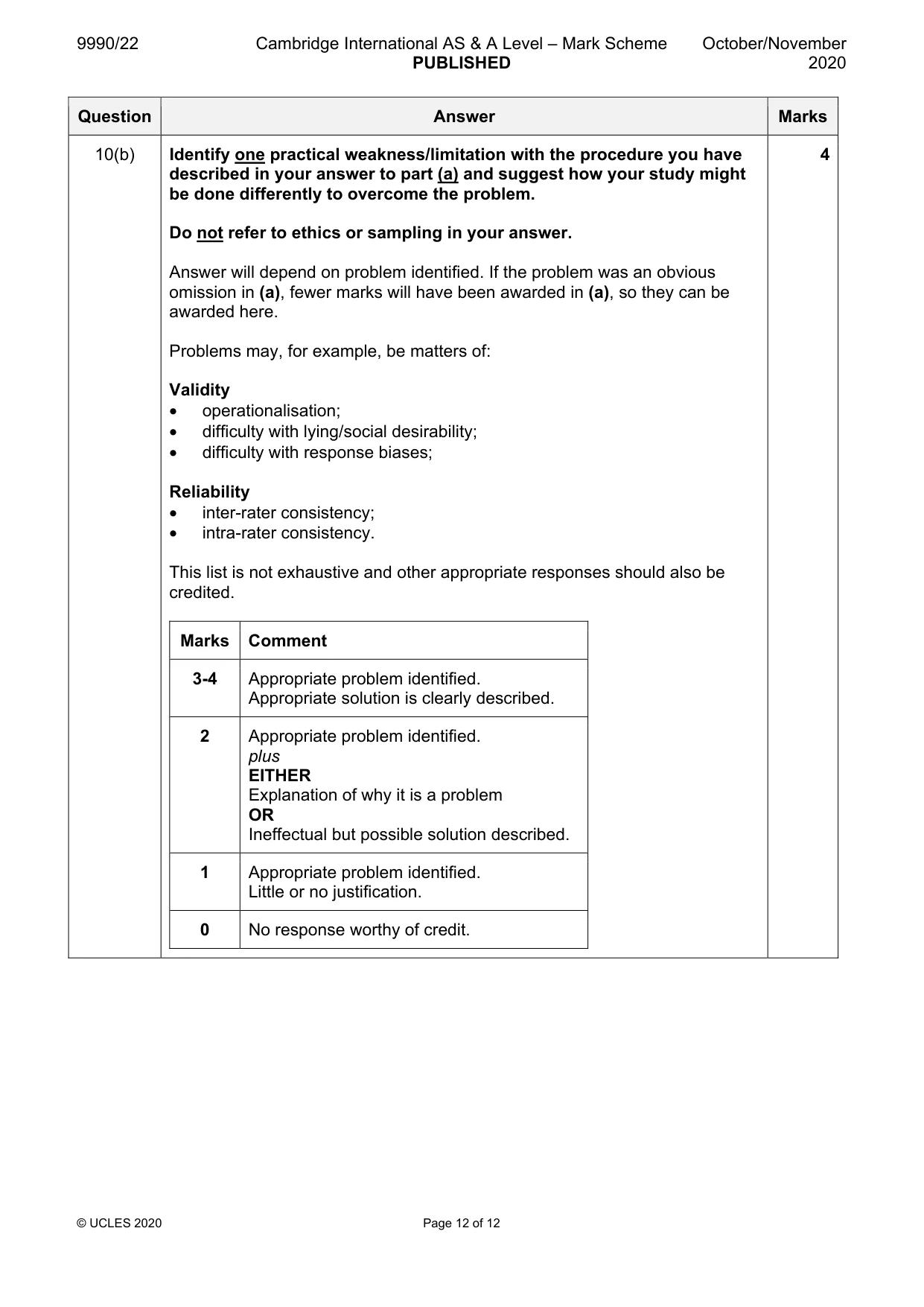
Mark scheme: 10 Anisha and Megane are supervisors who walk around the school during lunchtime to watch the children in the building, playground and lunch hall. They have been asked by Sue, who is head of the psychology department, to be observers in a study on helpful behaviour in the school. 10(a) Describe how Sue could conduct a participant observation of helping 10 behaviour in school, using Anisha and Megane to assist her. Three majors for an observational study are: What: behaviours that will be recorded, e.g. one named (detail, e.g. definition/operationalisation of behavioural categories) How: any two of: • naturalistic/controlled; • structured/unstructured; • covert/overt; • participant/non-participant; (detail is how they are achieved OR more than two) The minors are: where – location of participants when data is collected (must be school) who – participants (must be students and or staff) • sampling technique; • sample size; • description of how tallying will be done; • description of how data will analysed, e.g. use of averages/bar charts; • ethical issues; Other appropriate responses should also be credited. Mark according to the levels of response criteria below: Level 3 (8–10 marks) • Response is described in sufficient detail to be replicable (i.e. what and how); • Response may have a minor omission (i.e. who or where); • Use of psychological terminology is accurate and comprehensive; Level 2 (5–7 marks) • Response is in some detail; • Response has minor omission(s) (i.e. who and/or where); • Use of psychological terminology is accurate; Level 1 (1–4 marks) • Response is basic in detail; • Response has major omission(s); • If response is impossible to conduct max 2; • Use of psychological terminology is mainly accurate; Level 0 (0 marks) • No response worthy of credit. 10(b) Identify one practical weakness/limitation with the procedure you have 4 described in your answer to part (a) and suggest how your study might be done differently to overcome the problem. Do not refer to ethics or sampling in your answer. Answer will depend on problem identified. If the problem was an obvious omission in (a), fewer marks will have been awarded in (a), so they can be awarded here. Problems may, for example, be matters of: Validity • operationalisation; • difficulty with lying/social desirability; • difficulty with response biases; Reliability • inter-rater consistency; • intra-rater consistency. This list is not exhaustive and other appropriate responses should also be credited. Marks Comment 3-4 Appropriate problem identified. Appropriate solution is clearly described. 2 Appropriate problem identified. plus EITHER Explanation of why it is a problem OR Ineffectual but possible solution described. 1 Appropriate problem identified. Little or no justification. 0 No response worthy of credit.
What was in this paper
The subtopics covered by these 10 questions, and how many questions each got. Open one in a new tab to see every Cambridge question on it.
What you needed in this session
Cambridge’s own grade thresholds for 2020 Oct/Nov, Paper 2 · Variant 2. A higher threshold means an easier paper — the bar moves with how the cohort did.