Cambridge A Level Psychology (from 2018) 9990 — 2018 Oct/Nov Paper 2 · Variant 3
9990/23/O/N/18 · 10 questions · 60 marks · ≈68 min
The question paper and its mark scheme, free to read here and free to download. This is Cambridge’s own paper, exactly as it was sat.
Question paper12 pages




Mark scheme13 pages
Answers below. Sit the paper first if you are practising.
Questions as text
Q1 · Explain what is meant by the term ‘population’
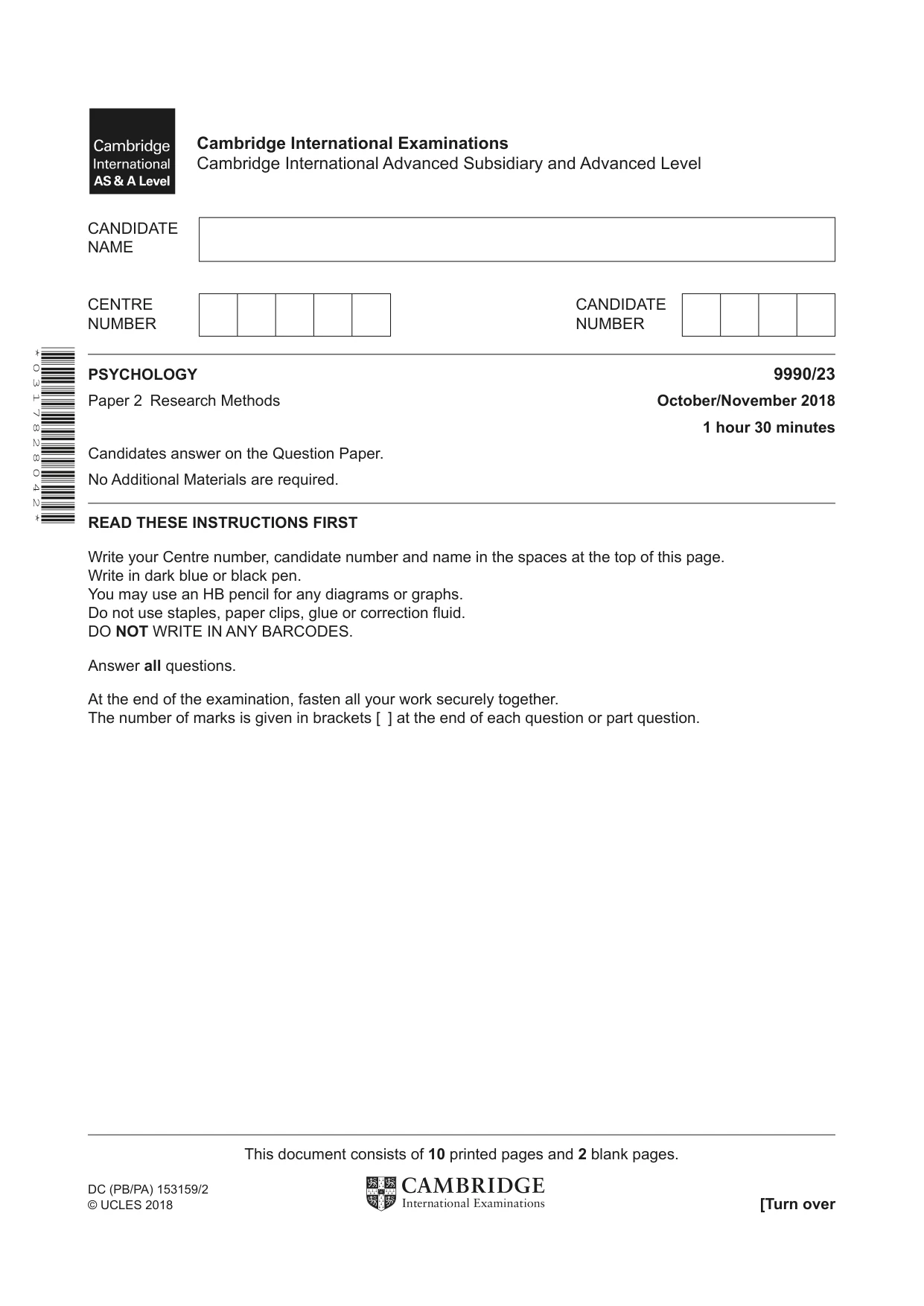
1 Explain what is meant by the term ‘population’. .......................................................................................................................................................... ......................................................................................................................................................[1]
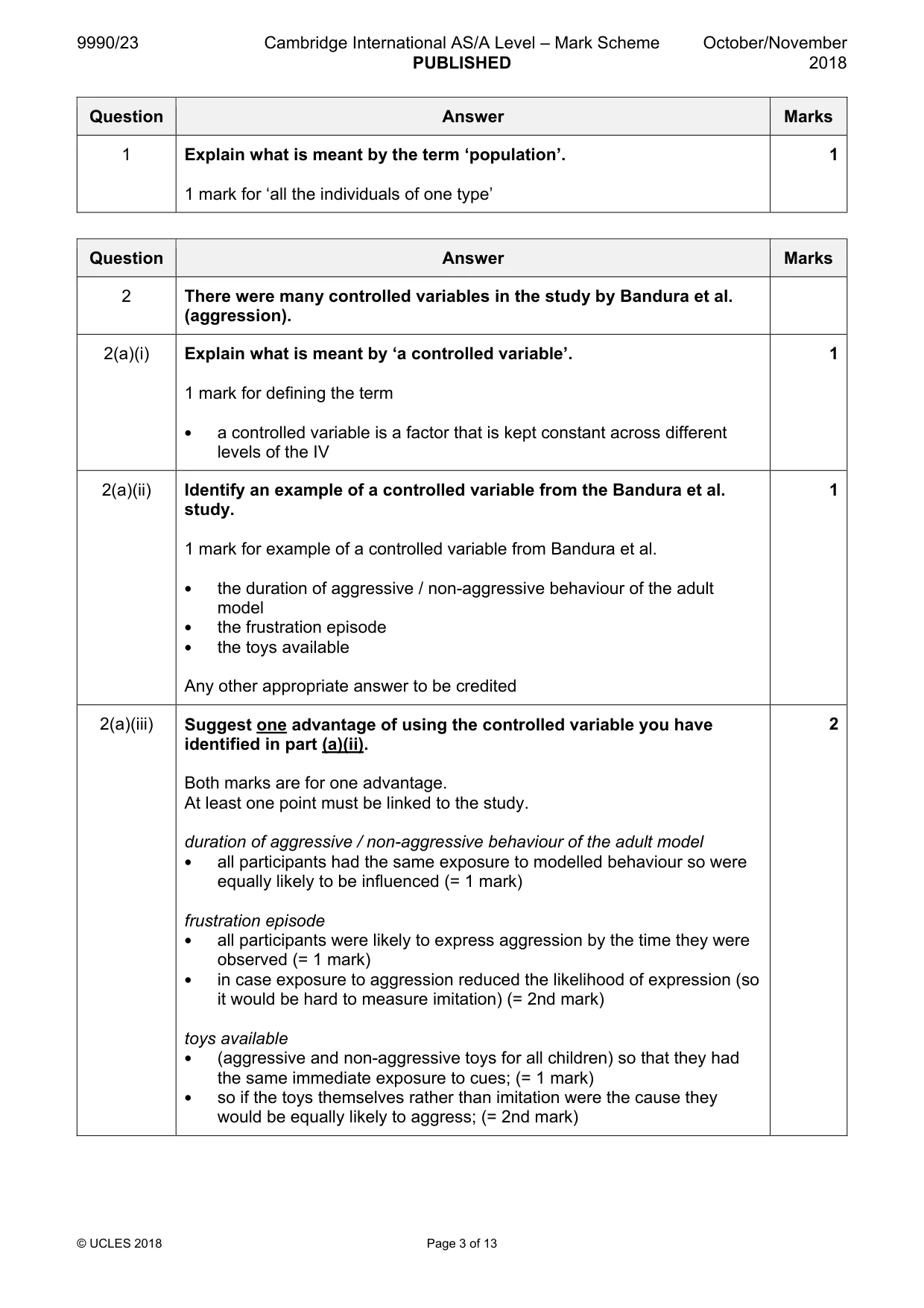
Mark scheme: Question Answer Marks 1 Explain what is meant by the term ‘population’. 1 1 mark for ‘all the individuals of one type’
Q2 · There were many controlled variables in the study by Bandura et al
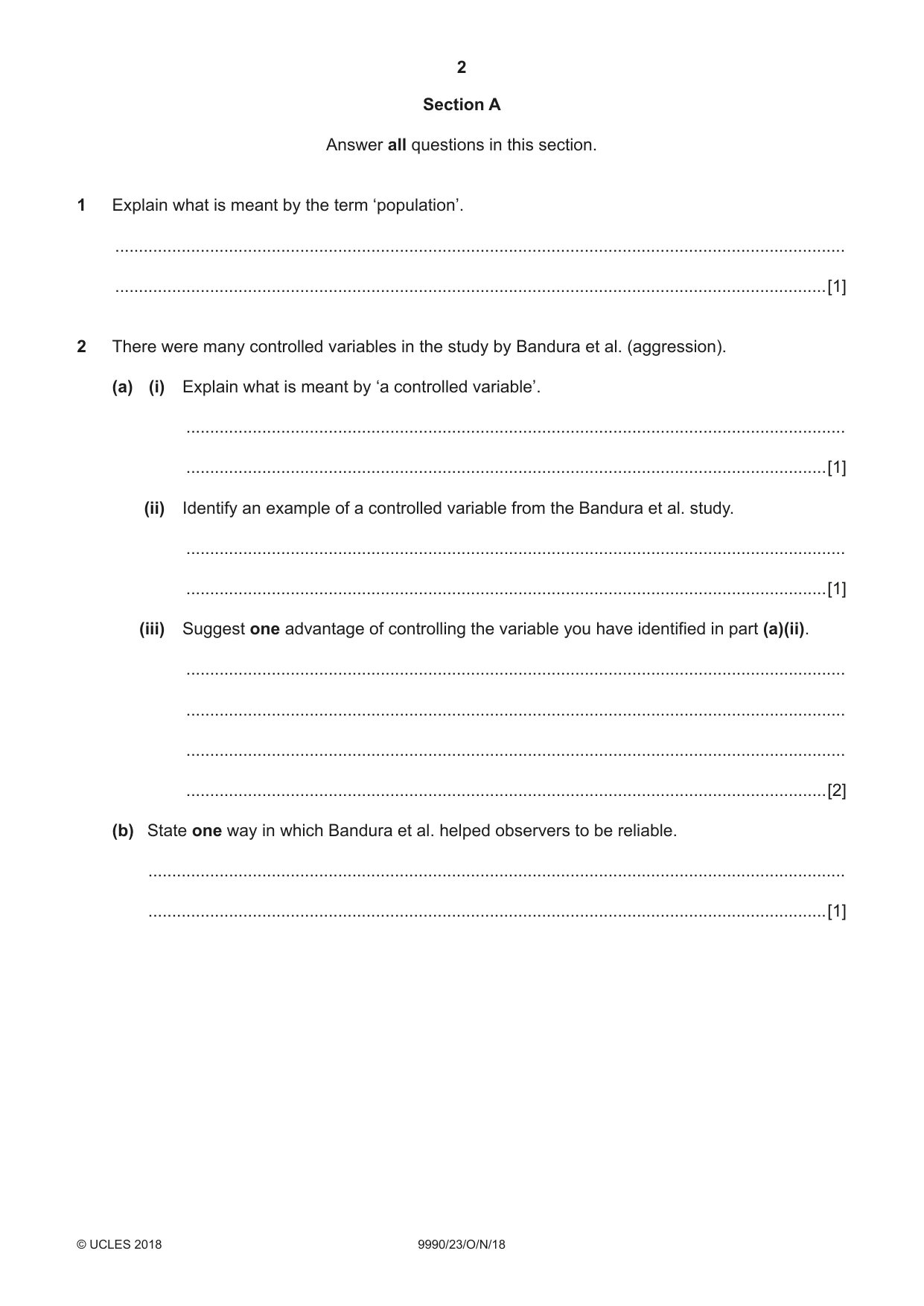
2 There were many controlled variables in the study by Bandura et al. (aggression). (a) (i) Explain what is meant by ‘a controlled variable’. ........................................................................................................................................... .......................................................................................................................................[1] (ii) Identify an example of a controlled variable from the Bandura et al. study. ........................................................................................................................................... .......................................................................................................................................[1] (iii) Suggest one advantage of controlling the variable you have identified in part (a)(ii). ........................................................................................................................................... ........................................................................................................................................... ........................................................................................................................................... .......................................................................................................................................[2] (b) State one way in which Bandura et al. helped observers to be reliable. ................................................................................................................................................... ...............................................................................................................................................[1]
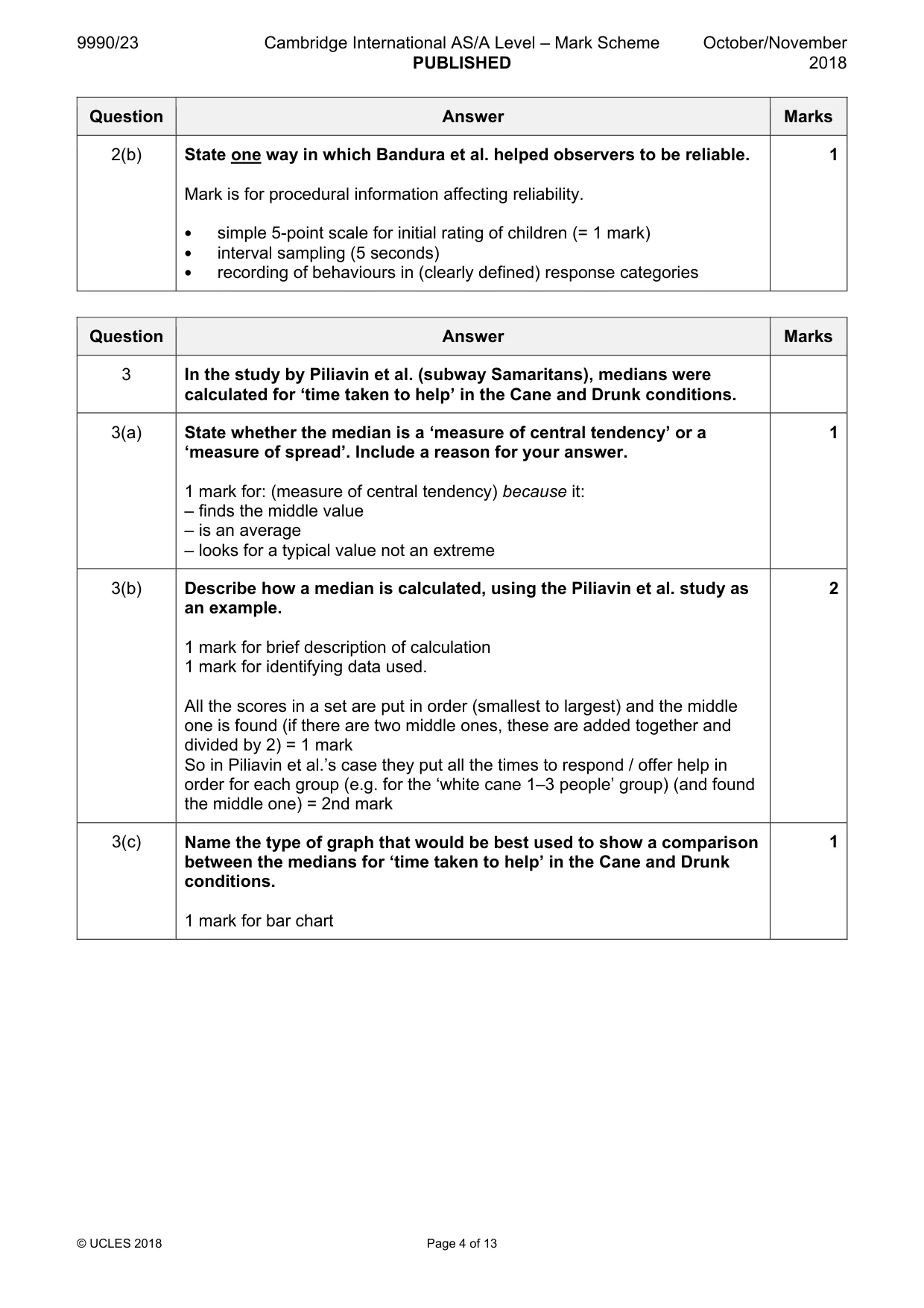
Mark scheme: 2(a)(i) Explain what is meant by ‘a controlled variable’. 1 1 mark for defining the term • a controlled variable is a factor that is kept constant across different levels of the IV 2(a)(ii) Identify an example of a controlled variable from the Bandura et al. 1 study. 1 mark for example of a controlled variable from Bandura et al. • the duration of aggressive / non-aggressive behaviour of the adult model • the frustration episode • the toys available Any other appropriate answer to be credited 2(a)(iii) Suggest one advantage of using the controlled variable you have 2 identified in part (a)(ii). Both marks are for one advantage. At least one point must be linked to the study. duration of aggressive / non-aggressive behaviour of the adult model • all participants had the same exposure to modelled behaviour so were equally likely to be influenced (= 1 mark) frustration episode • all participants were likely to express aggression by the time they were observed (= 1 mark) • in case exposure to aggression reduced the likelihood of expression (so it would be hard to measure imitation) (= 2nd mark) toys available • (aggressive and non-aggressive toys for all children) so that they had the same immediate exposure to cues; (= 1 mark) • so if the toys themselves rather than imitation were the cause they would be equally likely to aggress; (= 2nd mark) 2(b) State one way in which Bandura et al. helped observers to be reliable. 1 Mark is for procedural information affecting reliability. • simple 5-point scale for initial rating of children (= 1 mark) • interval sampling (5 seconds) • recording of behaviours in (clearly defined) response categories
Q3 · In the study by Piliavin et al
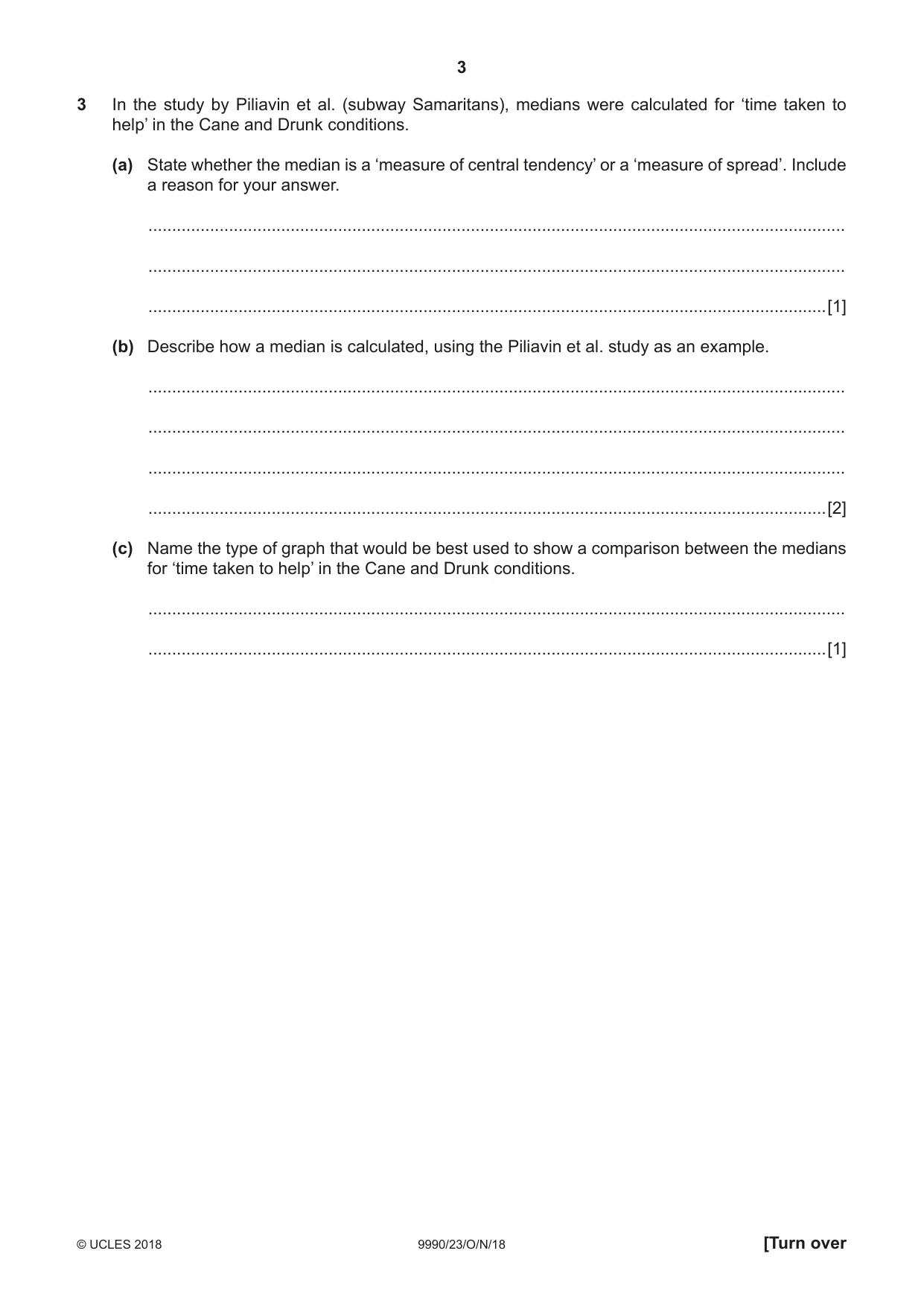
3 In the study by Piliavin et al. (subway Samaritans), medians were calculated for ‘time taken to help’ in the Cane and Drunk conditions. (a) State whether the median is a ‘measure of central tendency’ or a ‘measure of spread’. Include a reason for your answer. ................................................................................................................................................... ................................................................................................................................................... ...............................................................................................................................................[1] (b) Describe how a median is calculated, using the Piliavin et al. study as an example. ................................................................................................................................................... ................................................................................................................................................... ................................................................................................................................................... ...............................................................................................................................................[2] (c) Name the type of graph that would be best used to show a comparison between the medians for ‘time taken to help’ in the Cane and Drunk conditions. ................................................................................................................................................... ...............................................................................................................................................[1]
Mark scheme: 3(a) State whether the median is a ‘measure of central tendency’ or a 1 ‘measure of spread’. Include a reason for your answer. 1 mark for: (measure of central tendency) because it: – finds the middle value – is an average – looks for a typical value not an extreme 3(b) Describe how a median is calculated, using the Piliavin et al. study as 2 an example. 1 mark for brief description of calculation 1 mark for identifying data used. All the scores in a set are put in order (smallest to largest) and the middle one is found (if there are two middle ones, these are added together and divided by 2) = 1 mark So in Piliavin et al.’s case they put all the times to respond / offer help in order for each group (e.g. for the ‘white cane 1–3 people’ group) (and found the middle one) = 2nd mark 3(c) Name the type of graph that would be best used to show a comparison 1 between the medians for ‘time taken to help’ in the Cane and Drunk conditions. 1 mark for bar chart
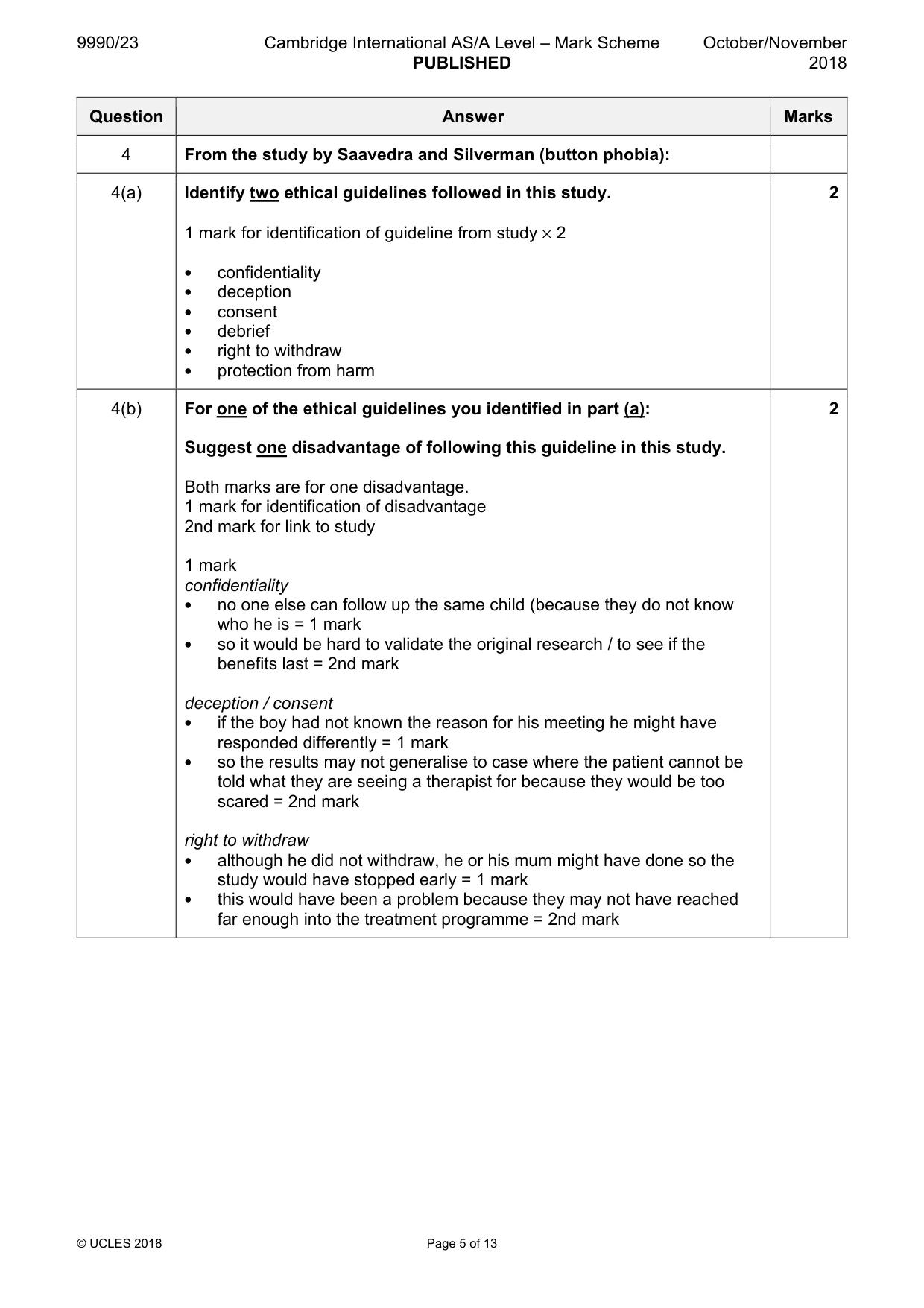
Q4 · From the study by Saavedra and Silverman (button phobia): (a) Identify two ethical…
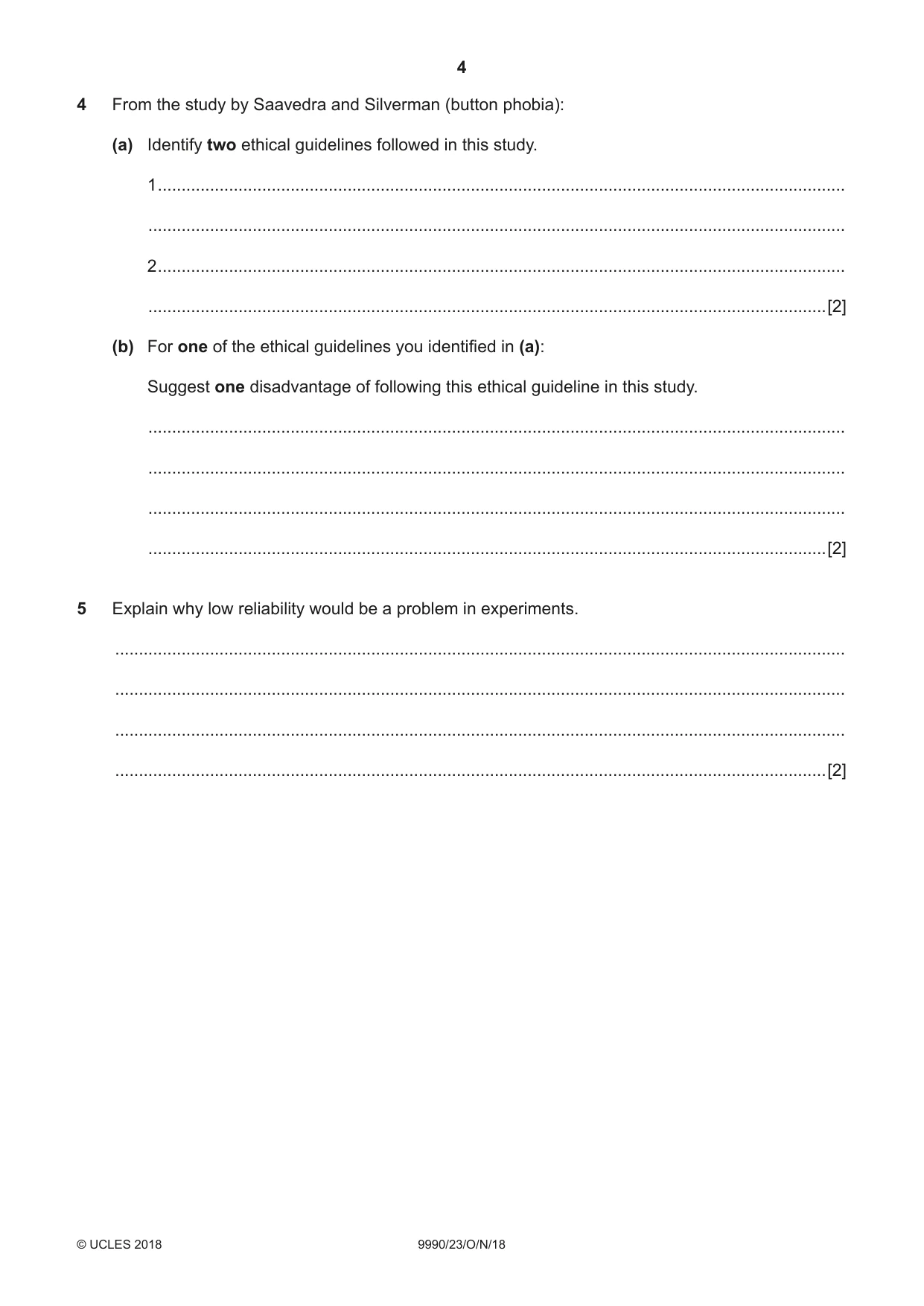
4 From the study by Saavedra and Silverman (button phobia): (a) Identify two ethical guidelines followed in this study. 1 ................................................................................................................................................. ................................................................................................................................................... 2 ................................................................................................................................................. ...............................................................................................................................................[2] (b) For one of the ethical guidelines you identified in (a): Suggest one disadvantage of following this ethical guideline in this study. ................................................................................................................................................... ................................................................................................................................................... ................................................................................................................................................... ...............................................................................................................................................[2]
Mark scheme: 4(a) Identify two ethical guidelines followed in this study. 2 1 mark for identification of guideline from study × 2 • confidentiality • deception • consent • debrief • right to withdraw • protection from harm 4(b) For one of the ethical guidelines you identified in part (a): 2 Suggest one disadvantage of following this guideline in this study. Both marks are for one disadvantage. 1 mark for identification of disadvantage 2nd mark for link to study 1 mark confidentiality • no one else can follow up the same child (because they do not know who he is = 1 mark • so it would be hard to validate the original research / to see if the benefits last = 2nd mark deception / consent • if the boy had not known the reason for his meeting he might have responded differently = 1 mark • so the results may not generalise to case where the patient cannot be told what they are seeing a therapist for because they would be too scared = 2nd mark right to withdraw • although he did not withdraw, he or his mum might have done so the study would have stopped early = 1 mark • this would have been a problem because they may not have reached far enough into the treatment programme = 2nd mark
More questions on Anxiety disorders and fear-related disorders
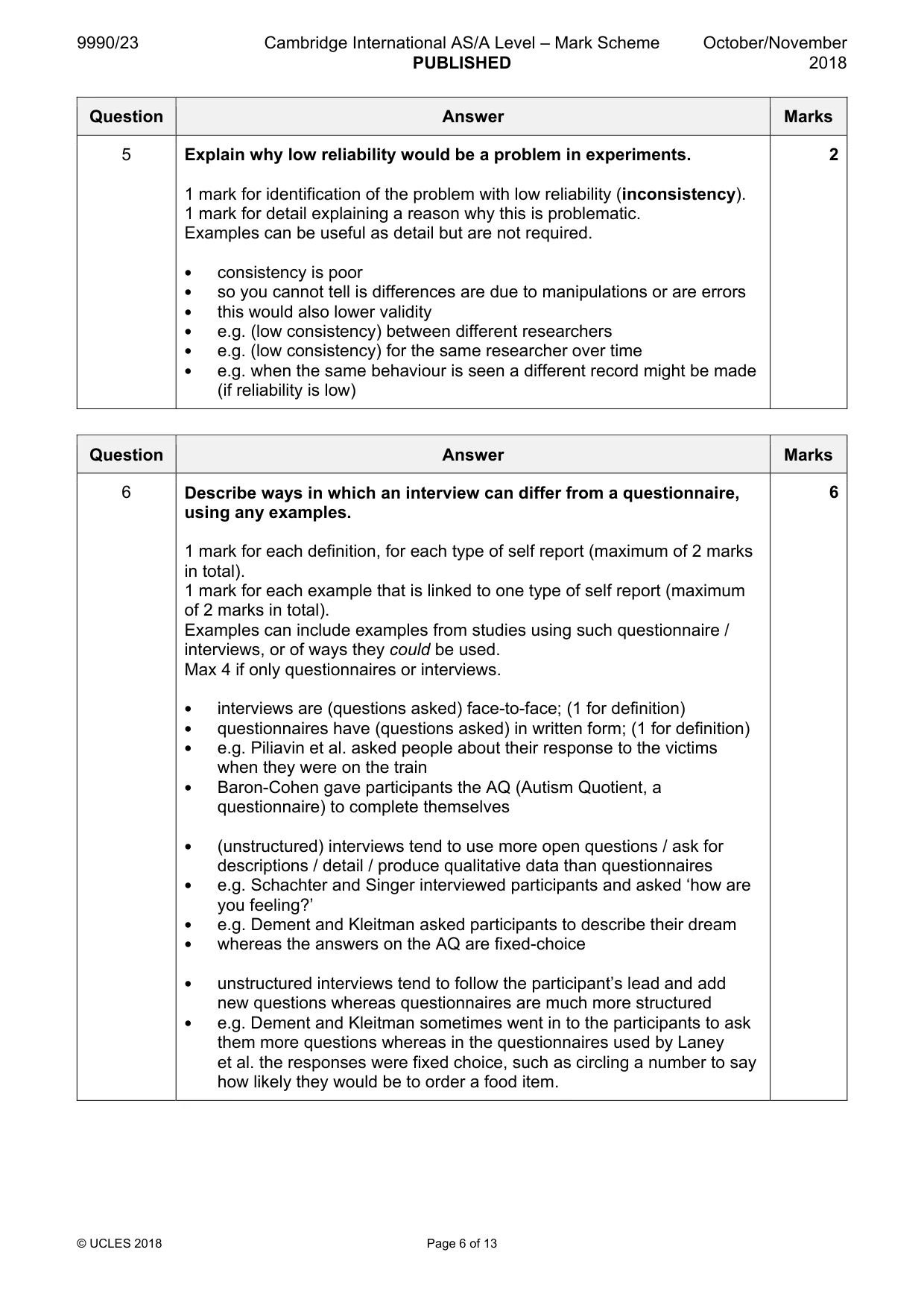
Q5 · Explain why low reliability would be a problem in experiments
5 Explain why low reliability would be a problem in experiments. .......................................................................................................................................................... .......................................................................................................................................................... .......................................................................................................................................................... ......................................................................................................................................................[2]
Mark scheme: 5 Explain why low reliability would be a problem in experiments. 2 1 mark for identification of the problem with low reliability (inconsistency). 1 mark for detail explaining a reason why this is problematic. Examples can be useful as detail but are not required. • consistency is poor • so you cannot tell is differences are due to manipulations or are errors • this would also lower validity • e.g. (low consistency) between different researchers • e.g. (low consistency) for the same researcher over time • e.g. when the same behaviour is seen a different record might be made (if reliability is low)
Q6 · Describe ways in which an interview can differ from a questionnaire, using any examples
6 Describe ways in which an interview can differ from a questionnaire, using any examples. .......................................................................................................................................................... .......................................................................................................................................................... .......................................................................................................................................................... .......................................................................................................................................................... .......................................................................................................................................................... .......................................................................................................................................................... .......................................................................................................................................................... .......................................................................................................................................................... .......................................................................................................................................................... .......................................................................................................................................................... .......................................................................................................................................................... ......................................................................................................................................................[6]
Mark scheme: 6 Describe ways in which an interview can differ from a questionnaire, 6 using any examples. 1 mark for each definition, for each type of self report (maximum of 2 marks in total). 1 mark for each example that is linked to one type of self report (maximum of 2 marks in total). Examples can include examples from studies using such questionnaire / interviews, or of ways they could be used. Max 4 if only questionnaires or interviews. • interviews are (questions asked) face-to-face; (1 for definition) • questionnaires have (questions asked) in written form; (1 for definition) • e.g. Piliavin et al. asked people about their response to the victims when they were on the train • Baron-Cohen gave participants the AQ (Autism Quotient, a questionnaire) to complete themselves • (unstructured) interviews tend to use more open questions / ask for descriptions / detail / produce qualitative data than questionnaires • e.g. Schachter and Singer interviewed participants and asked ‘how are you feeling?’ • e.g. Dement and Kleitman asked participants to describe their dream • whereas the answers on the AQ are fixed-choice • unstructured interviews tend to follow the participant’s lead and add new questions whereas questionnaires are much more structured • e.g. Dement and Kleitman sometimes went in to the participants to ask them more questions whereas in the questionnaires used by Laney et al. the responses were fixed choice, such as circling a number to say how likely they would be to order a food item.
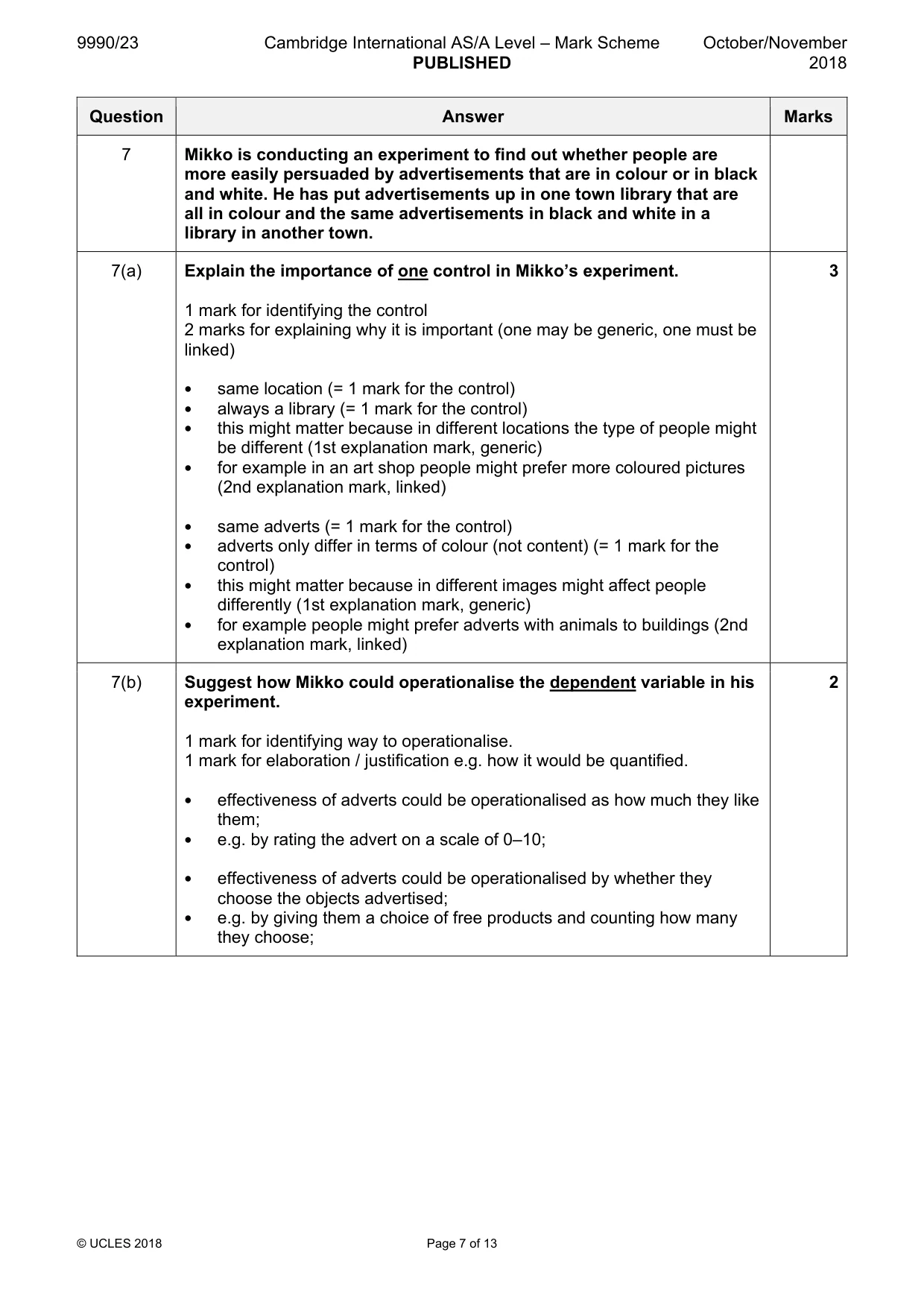
Q7 · Mikko is conducting an experiment to find out whether people are more easily persuaded by…
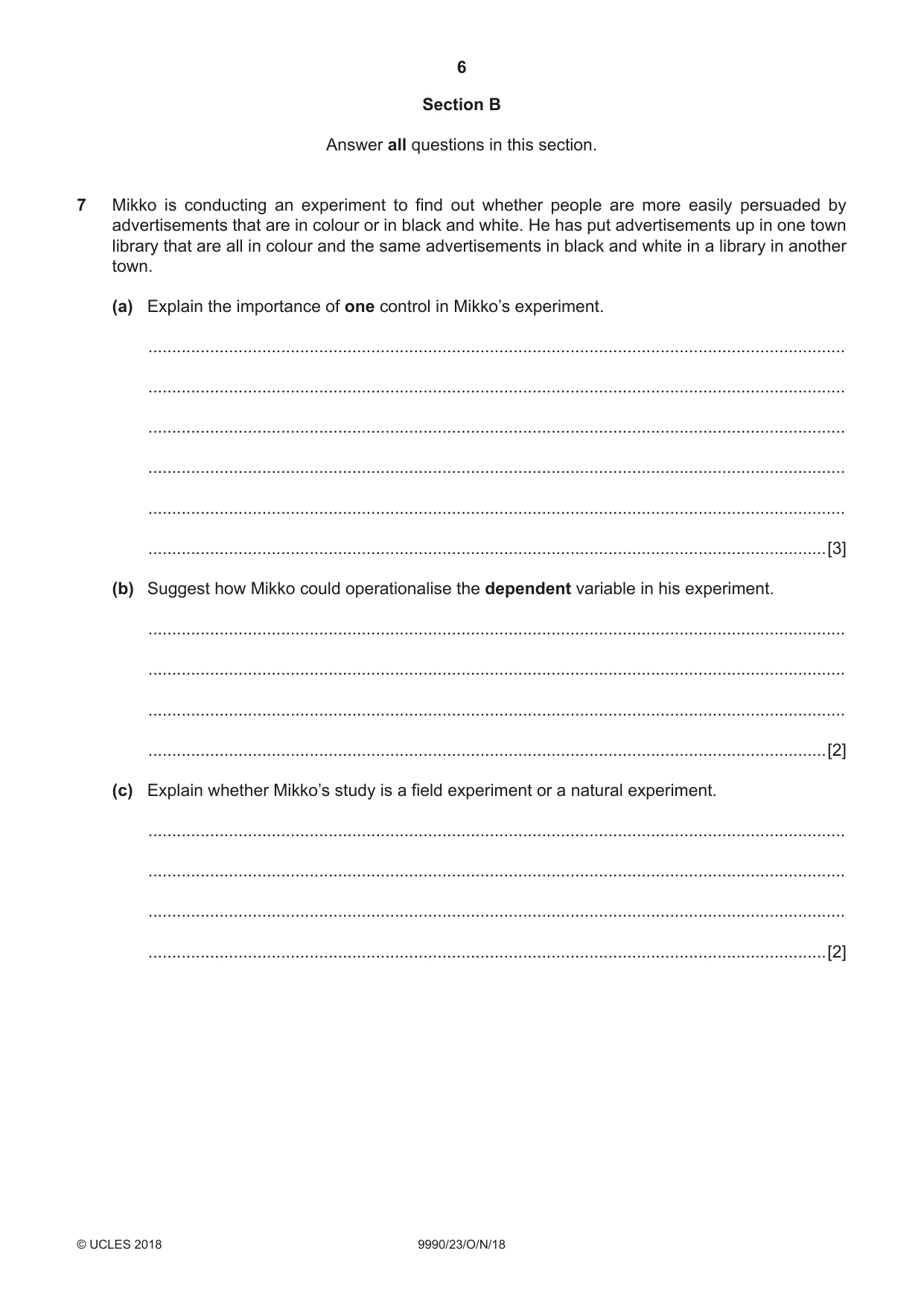
7 Mikko is conducting an experiment to find out whether people are more easily persuaded by advertisements that are in colour or in black and white. He has put advertisements up in one town library that are all in colour and the same advertisements in black and white in a library in another town. (a) Explain the importance of one control in Mikko’s experiment. ................................................................................................................................................... ................................................................................................................................................... ................................................................................................................................................... ................................................................................................................................................... ................................................................................................................................................... ...............................................................................................................................................[3] (b) Suggest how Mikko could operationalise the dependent variable in his experiment. ................................................................................................................................................... ................................................................................................................................................... ................................................................................................................................................... ...............................................................................................................................................[2] (c) Explain whether Mikko’s study is a field experiment or a natural experiment. ................................................................................................................................................... ................................................................................................................................................... ................................................................................................................................................... ...............................................................................................................................................[2]
Mark scheme: 7(a) Explain the importance of one control in Mikko’s experiment. 3 1 mark for identifying the control 2 marks for explaining why it is important (one may be generic, one must be linked) • same location (= 1 mark for the control) • always a library (= 1 mark for the control) • this might matter because in different locations the type of people might be different (1st explanation mark, generic) • for example in an art shop people might prefer more coloured pictures (2nd explanation mark, linked) • same adverts (= 1 mark for the control) • adverts only differ in terms of colour (not content) (= 1 mark for the control) • this might matter because in different images might affect people differently (1st explanation mark, generic) • for example people might prefer adverts with animals to buildings (2nd explanation mark, linked) 7(b) Suggest how Mikko could operationalise the dependent variable in his 2 experiment. 1 mark for identifying way to operationalise. 1 mark for elaboration / justification e.g. how it would be quantified. • effectiveness of adverts could be operationalised as how much they like them; • e.g. by rating the advert on a scale of 0–10; • effectiveness of adverts could be operationalised by whether they choose the objects advertised; • e.g. by giving them a choice of free products and counting how many they choose; 7(c) Explain whether Mikko’s study is a field experiment or a natural 2 experiment. 1 mark for defining / describing a field experiment or a natural experiment 1 mark for identifying why Mikko’s study is a field experiment or is not a natural experiment • a field experiment has a manipulated IV (= 1 mark definition) • a field experiment tests participants in the normal environment (for the behaviour being studied) (= 1 mark definition) • it is a field experiment because people would expect to see adverts in a library (= 2nd mark linked) • in a natural experiment the IV is not manipulated by the researcher / exists in the environment (= 1 mark definition) • it is not a natural experiment because the type of advert is being changed by Mikko (= 2nd mark linked)
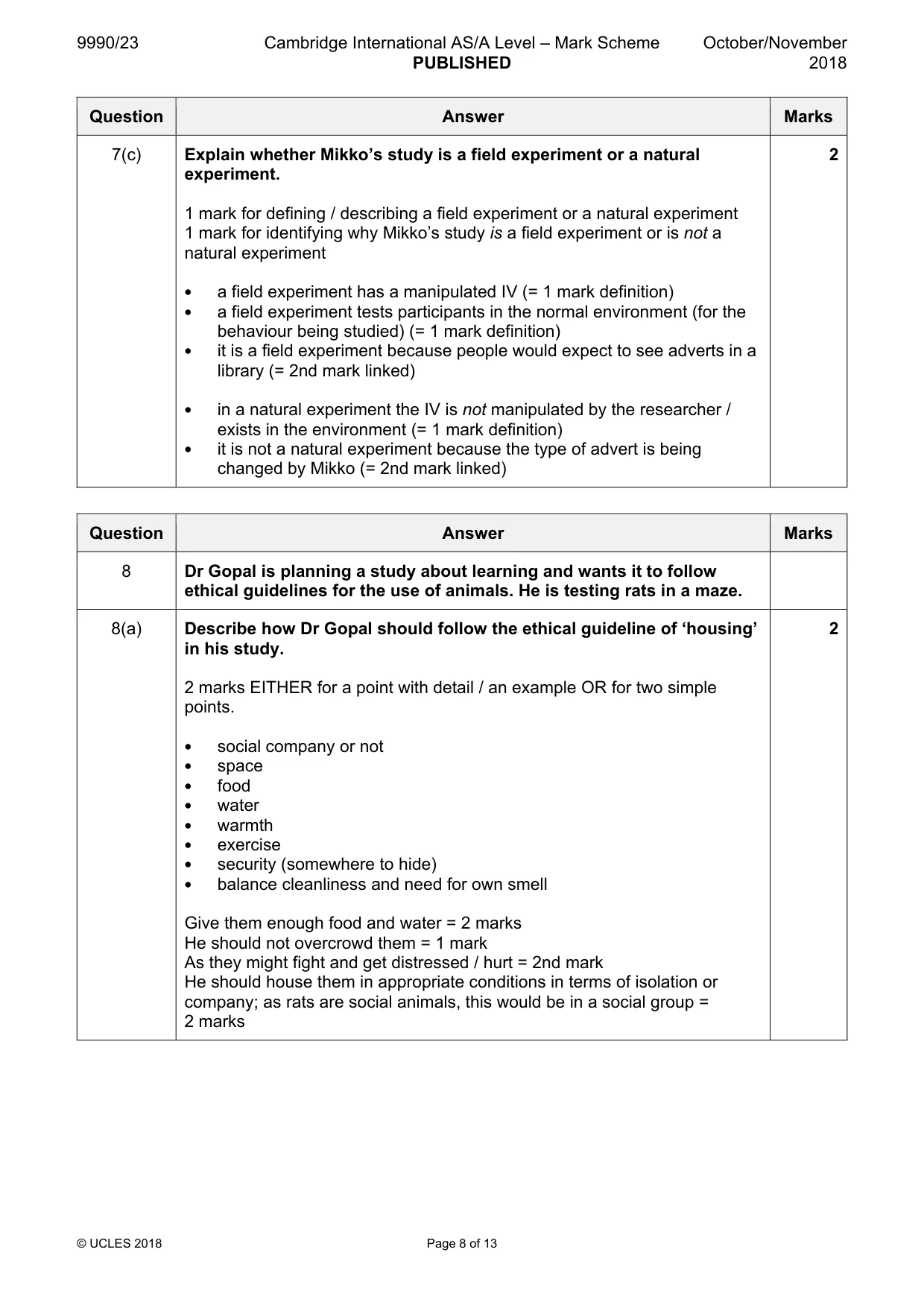
Q8 · Dr Gopal is planning a study about learning and wants it to follow ethical guidelines for…
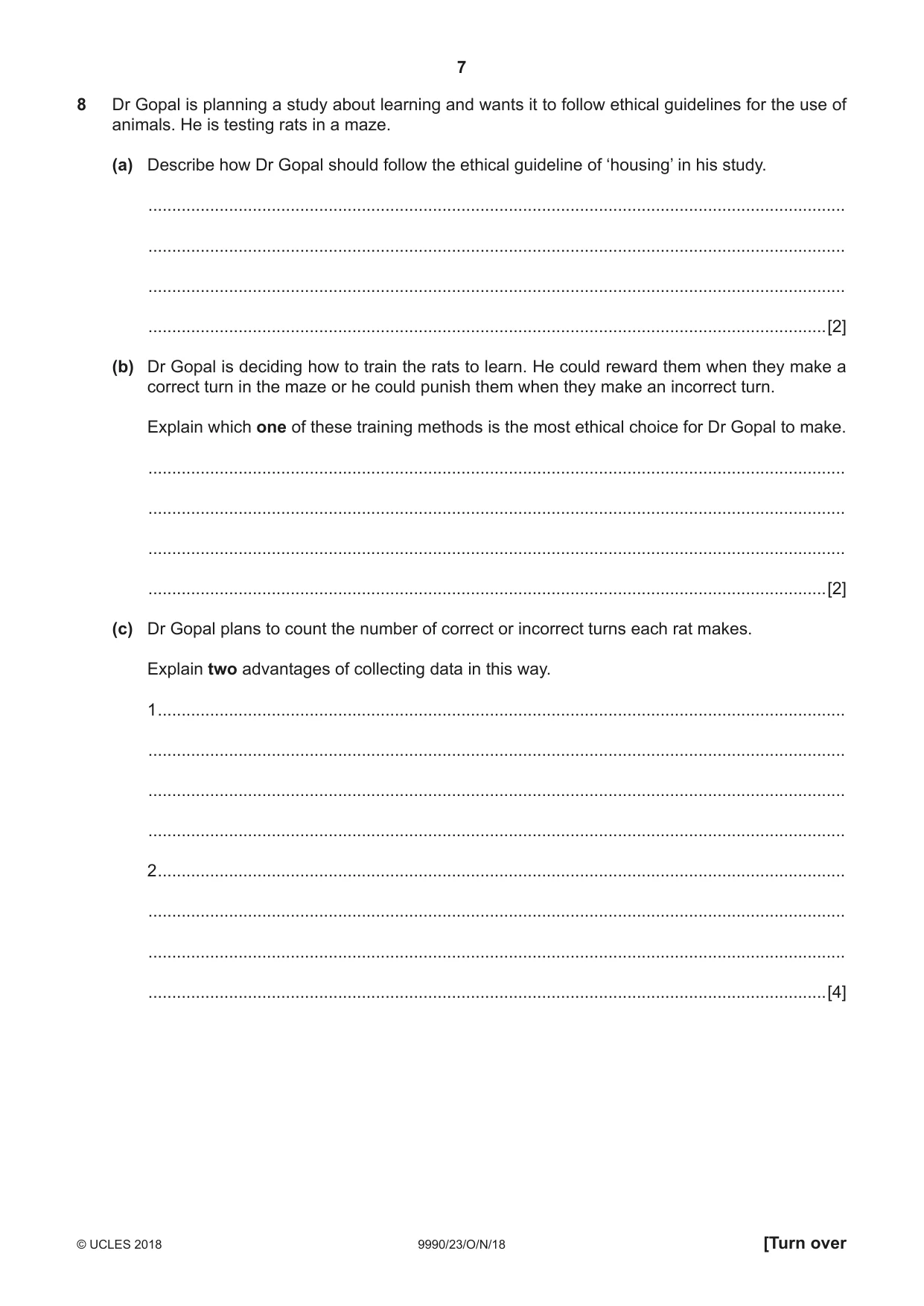
8 Dr Gopal is planning a study about learning and wants it to follow ethical guidelines for the use of animals. He is testing rats in a maze. (a) Describe how Dr Gopal should follow the ethical guideline of ‘housing’ in his study. ................................................................................................................................................... ................................................................................................................................................... ................................................................................................................................................... ...............................................................................................................................................[2] (b) Dr Gopal is deciding how to train the rats to learn. He could reward them when they make a correct turn in the maze or he could punish them when they make an incorrect turn. Explain which one of these training methods is the most ethical choice for Dr Gopal to make. ................................................................................................................................................... ................................................................................................................................................... ................................................................................................................................................... ...............................................................................................................................................[2] (c) Dr Gopal plans to count the number of correct or incorrect turns each rat makes. Explain two advantages of collecting data in this way. 1 ................................................................................................................................................. ................................................................................................................................................... ................................................................................................................................................... ................................................................................................................................................... 2 ................................................................................................................................................. ................................................................................................................................................... ................................................................................................................................................... ...............................................................................................................................................[4]
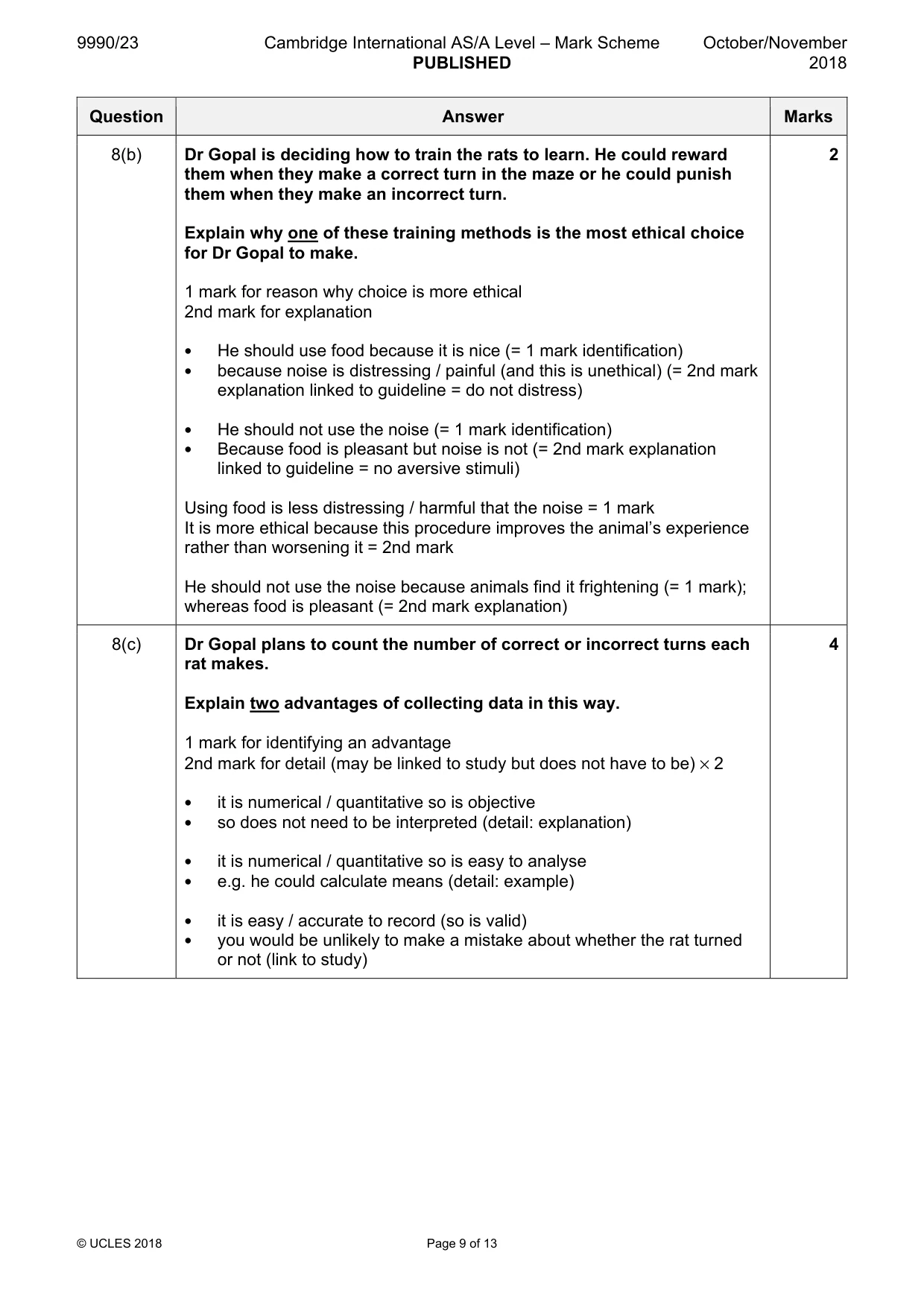
Mark scheme: 8(a) Describe how Dr Gopal should follow the ethical guideline of ‘housing’ 2 in his study. 2 marks EITHER for a point with detail / an example OR for two simple points. • social company or not • space • food • water • warmth • exercise • security (somewhere to hide) • balance cleanliness and need for own smell Give them enough food and water = 2 marks He should not overcrowd them = 1 mark As they might fight and get distressed / hurt = 2nd mark He should house them in appropriate conditions in terms of isolation or company; as rats are social animals, this would be in a social group = 2 marks 8(b) Dr Gopal is deciding how to train the rats to learn. He could reward 2 them when they make a correct turn in the maze or he could punish them when they make an incorrect turn. Explain why one of these training methods is the most ethical choice for Dr Gopal to make. 1 mark for reason why choice is more ethical 2nd mark for explanation • He should use food because it is nice (= 1 mark identification) • because noise is distressing / painful (and this is unethical) (= 2nd mark explanation linked to guideline = do not distress) • He should not use the noise (= 1 mark identification) • Because food is pleasant but noise is not (= 2nd mark explanation linked to guideline = no aversive stimuli) Using food is less distressing / harmful that the noise = 1 mark It is more ethical because this procedure improves the animal’s experience rather than worsening it = 2nd mark He should not use the noise because animals find it frightening (= 1 mark); whereas food is pleasant (= 2nd mark explanation) 8(c) Dr Gopal plans to count the number of correct or incorrect turns each 4 rat makes. Explain two advantages of collecting data in this way. 1 mark for identifying an advantage 2nd mark for detail (may be linked to study but does not have to be) × 2 • it is numerical / quantitative so is objective • so does not need to be interpreted (detail: explanation) • it is numerical / quantitative so is easy to analyse • e.g. he could calculate means (detail: example) • it is easy / accurate to record (so is valid) • you would be unlikely to make a mistake about whether the rat turned or not (link to study)
Q9 · Lotty and Nazeem are aiming to observe emotional responses to different films at the…
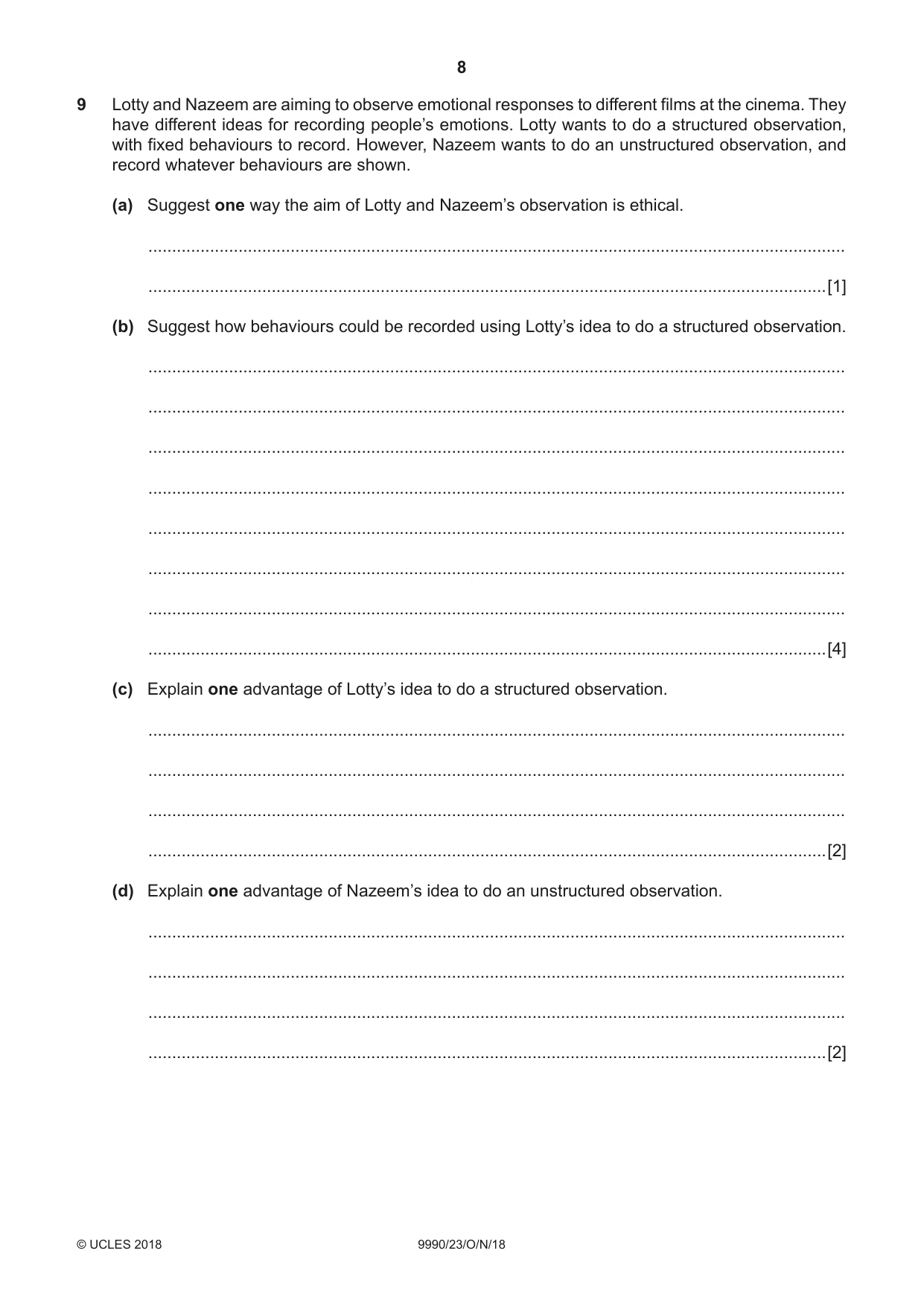
9 Lotty and Nazeem are aiming to observe emotional responses to different films at the cinema. They have different ideas for recording people’s emotions. Lotty wants to do a structured observation, with fixed behaviours to record. However, Nazeem wants to do an unstructured observation, and record whatever behaviours are shown. (a) Suggest one way the aim of Lotty and Nazeem’s observation is ethical. ................................................................................................................................................... ...............................................................................................................................................[1] (b) Suggest how behaviours could be recorded using Lotty’s idea to do a structured observation. ................................................................................................................................................... ................................................................................................................................................... ................................................................................................................................................... ................................................................................................................................................... ................................................................................................................................................... ................................................................................................................................................... ................................................................................................................................................... ...............................................................................................................................................[4] (c) Explain one advantage of Lotty’s idea to do a structured observation. ................................................................................................................................................... ................................................................................................................................................... ................................................................................................................................................... ...............................................................................................................................................[2] (d) Explain one advantage of Nazeem’s idea to do an unstructured observation. ................................................................................................................................................... ................................................................................................................................................... ................................................................................................................................................... ...............................................................................................................................................[2] Section C Answer all questions in this section.
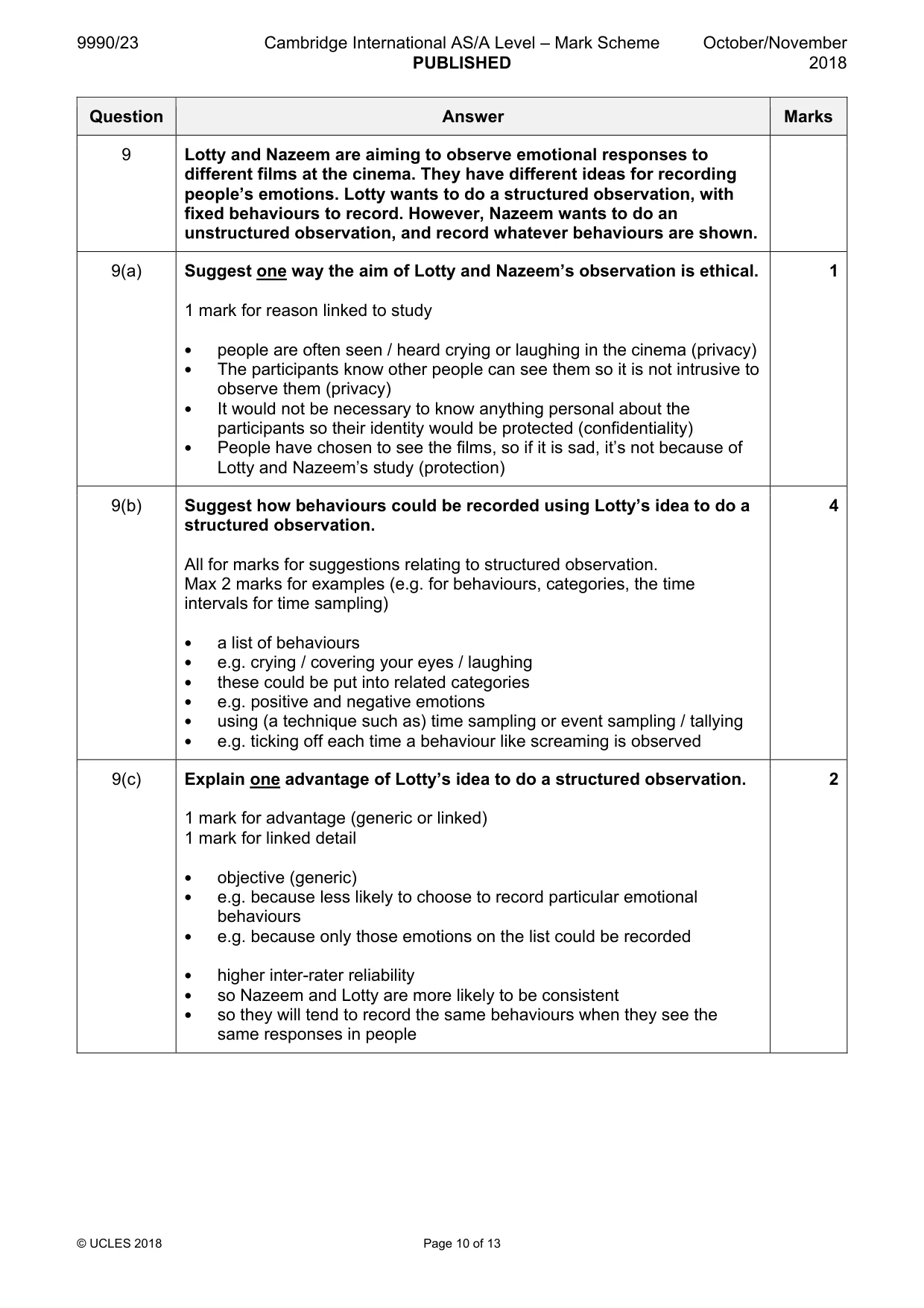
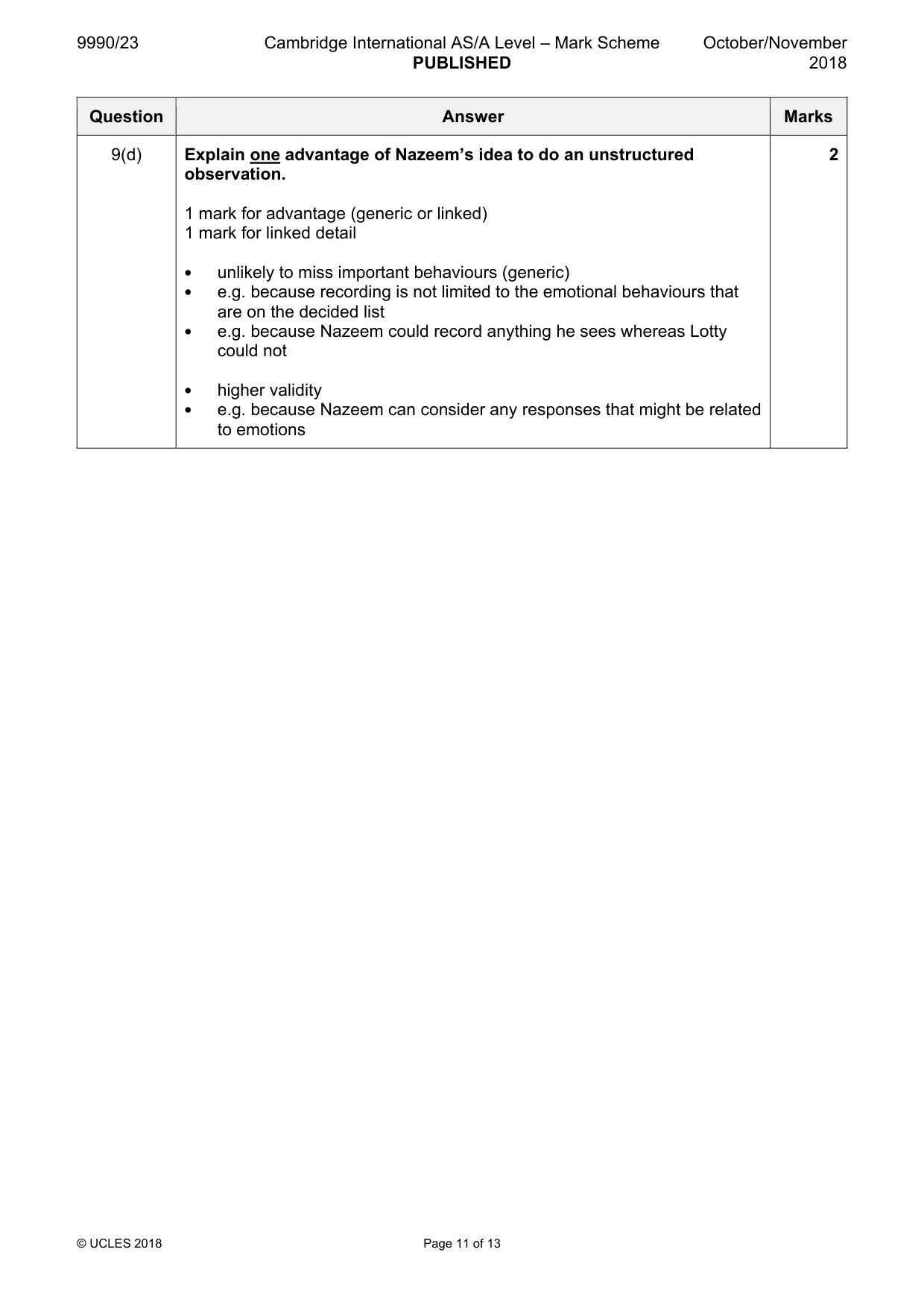
Mark scheme: 9(a) Suggest one way the aim of Lotty and Nazeem’s observation is ethical. 1 1 mark for reason linked to study • people are often seen / heard crying or laughing in the cinema (privacy) • The participants know other people can see them so it is not intrusive to observe them (privacy) • It would not be necessary to know anything personal about the participants so their identity would be protected (confidentiality) • People have chosen to see the films, so if it is sad, it’s not because of Lotty and Nazeem’s study (protection) 9(b) Suggest how behaviours could be recorded using Lotty’s idea to do a 4 structured observation. All for marks for suggestions relating to structured observation. Max 2 marks for examples (e.g. for behaviours, categories, the time intervals for time sampling) • a list of behaviours • e.g. crying / covering your eyes / laughing • these could be put into related categories • e.g. positive and negative emotions • using (a technique such as) time sampling or event sampling / tallying • e.g. ticking off each time a behaviour like screaming is observed 9(c) Explain one advantage of Lotty’s idea to do a structured observation. 2 1 mark for advantage (generic or linked) 1 mark for linked detail • objective (generic) • e.g. because less likely to choose to record particular emotional behaviours • e.g. because only those emotions on the list could be recorded • higher inter-rater reliability • so Nazeem and Lotty are more likely to be consistent • so they will tend to record the same behaviours when they see the same responses in people 9(d) Explain one advantage of Nazeem’s idea to do an unstructured 2 observation. 1 mark for advantage (generic or linked) 1 mark for linked detail • unlikely to miss important behaviours (generic) • e.g. because recording is not limited to the emotional behaviours that are on the decided list • e.g. because Nazeem could record anything he sees whereas Lotty could not • higher validity • e.g. because Nazeem can consider any responses that might be related to emotions
Q10 · Cael and Elsie are working at a sleep laboratory and have read about external stimuli…
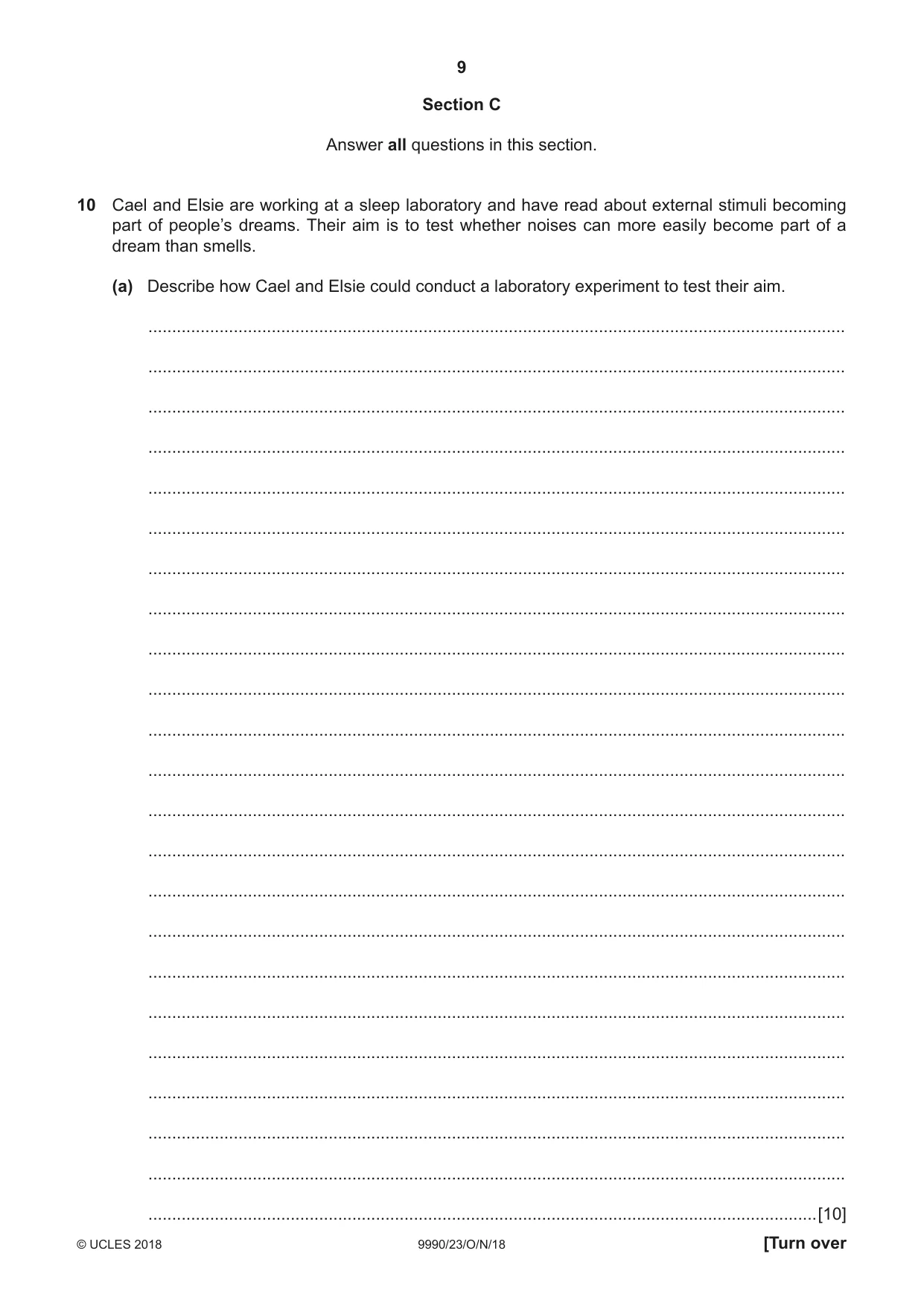
10 Cael and Elsie are working at a sleep laboratory and have read about external stimuli becoming part of people’s dreams. Their aim is to test whether noises can more easily become part of a dream than smells. (a) Describe how Cael and Elsie could conduct a laboratory experiment to test their aim. ................................................................................................................................................... ................................................................................................................................................... ................................................................................................................................................... ................................................................................................................................................... ................................................................................................................................................... ................................................................................................................................................... ................................................................................................................................................... ................................................................................................................................................... ................................................................................................................................................... ................................................................................................................................................... ................................................................................................................................................... ................................................................................................................................................... ................................................................................................................................................... ................................................................................................................................................... ................................................................................................................................................... ................................................................................................................................................... ................................................................................................................................................... ................................................................................................................................................... ................................................................................................................................................... ................................................................................................................................................... ................................................................................................................................................... ................................................................................................................................................... .............................................................................................................................................[10] (b) Identify one weakness/limitation with the procedure you have described in your answer to part (a) and suggest how your study might be done differently to overcome the problem. ................................................................................................................................................... ................................................................................................................................................... ................................................................................................................................................... ................................................................................................................................................... ................................................................................................................................................... ................................................................................................................................................... ................................................................................................................................................... ...............................................................................................................................................[4]
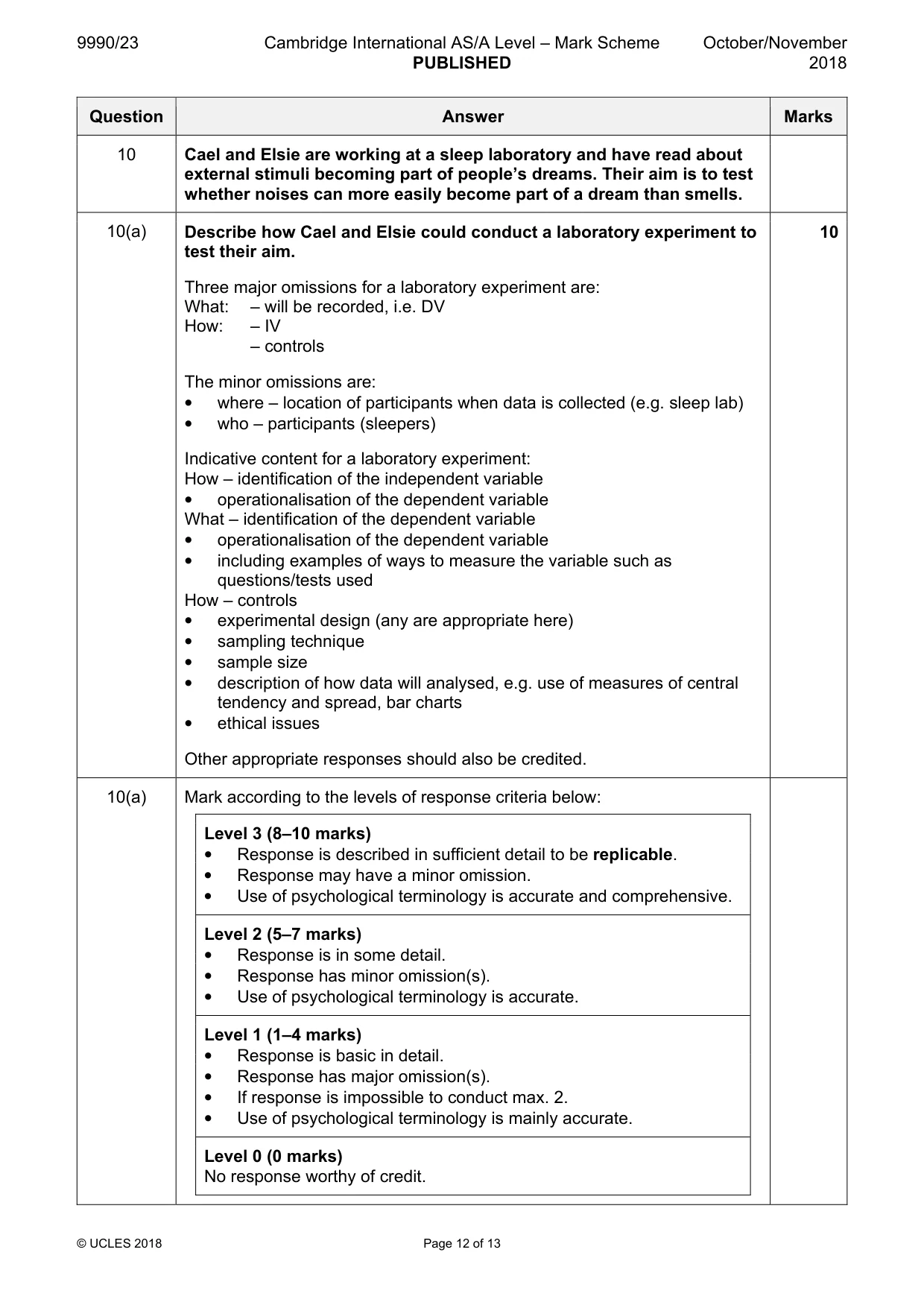
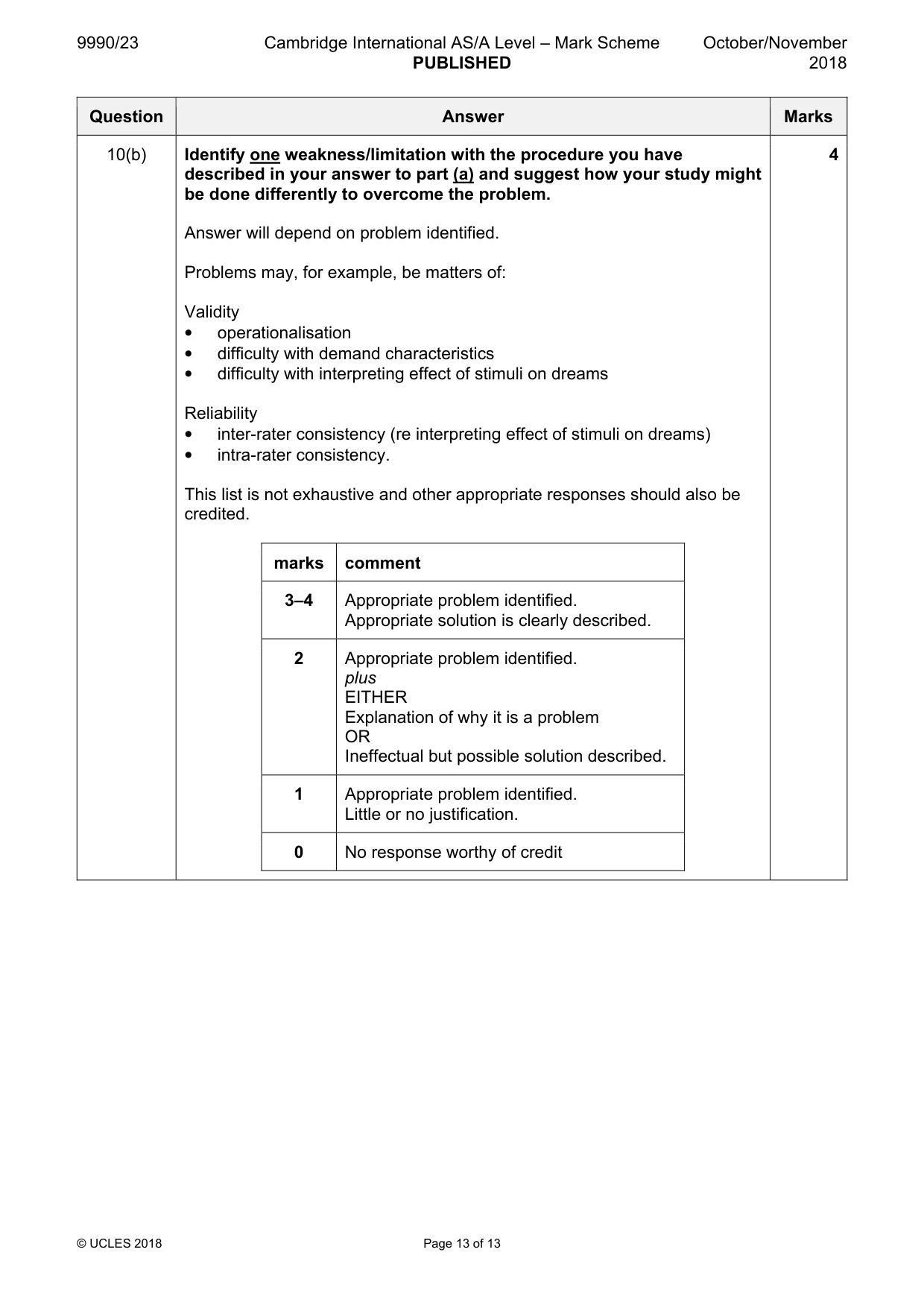
Mark scheme: 10(a) Describe how Cael and Elsie could conduct a laboratory experiment to 10 test their aim. Three major omissions for a laboratory experiment are: What: – will be recorded, i.e. DV How: – IV – controls The minor omissions are: • where – location of participants when data is collected (e.g. sleep lab) • who – participants (sleepers) Indicative content for a laboratory experiment: How – identification of the independent variable • operationalisation of the dependent variable What – identification of the dependent variable • operationalisation of the dependent variable • including examples of ways to measure the variable such as questions/tests used How – controls • experimental design (any are appropriate here) • sampling technique • sample size • description of how data will analysed, e.g. use of measures of central tendency and spread, bar charts • ethical issues Other appropriate responses should also be credited. 10(a) Mark according to the levels of response criteria below: Level 3 (8–10 marks) • Response is described in sufficient detail to be replicable. • Response may have a minor omission. • Use of psychological terminology is accurate and comprehensive. Level 2 (5–7 marks) • Response is in some detail. • Response has minor omission(s). • Use of psychological terminology is accurate. Level 1 (1–4 marks) • Response is basic in detail. • Response has major omission(s). • If response is impossible to conduct max. 2. • Use of psychological terminology is mainly accurate. Level 0 (0 marks) No response worthy of credit. 10(b) Identify one weakness/limitation with the procedure you have 4 described in your answer to part (a) and suggest how your study might be done differently to overcome the problem. Answer will depend on problem identified. Problems may, for example, be matters of: Validity • operationalisation • difficulty with demand characteristics • difficulty with interpreting effect of stimuli on dreams Reliability • inter-rater consistency (re interpreting effect of stimuli on dreams) • intra-rater consistency. This list is not exhaustive and other appropriate responses should also be credited. marks comment 3–4 Appropriate problem identified. Appropriate solution is clearly described. 2 Appropriate problem identified. plus EITHER Explanation of why it is a problem OR Ineffectual but possible solution described. 1 Appropriate problem identified. Little or no justification. 0 No response worthy of credit
What was in this paper
The subtopics covered by these 10 questions, and how many questions each got. Open one in a new tab to see every Cambridge question on it.
What you needed in this session
Cambridge’s own grade thresholds for 2018 Oct/Nov, Paper 2 · Variant 3. A higher threshold means an easier paper — the bar moves with how the cohort did.