Cambridge A Level Psychology (from 2018) 9990 — 2018 Oct/Nov Paper 2 · Variant 1
9990/21/O/N/18 · 10 questions · 60 marks · ≈68 min
The question paper and its mark scheme, free to read here and free to download. This is Cambridge’s own paper, exactly as it was sat.
Question paper12 pages
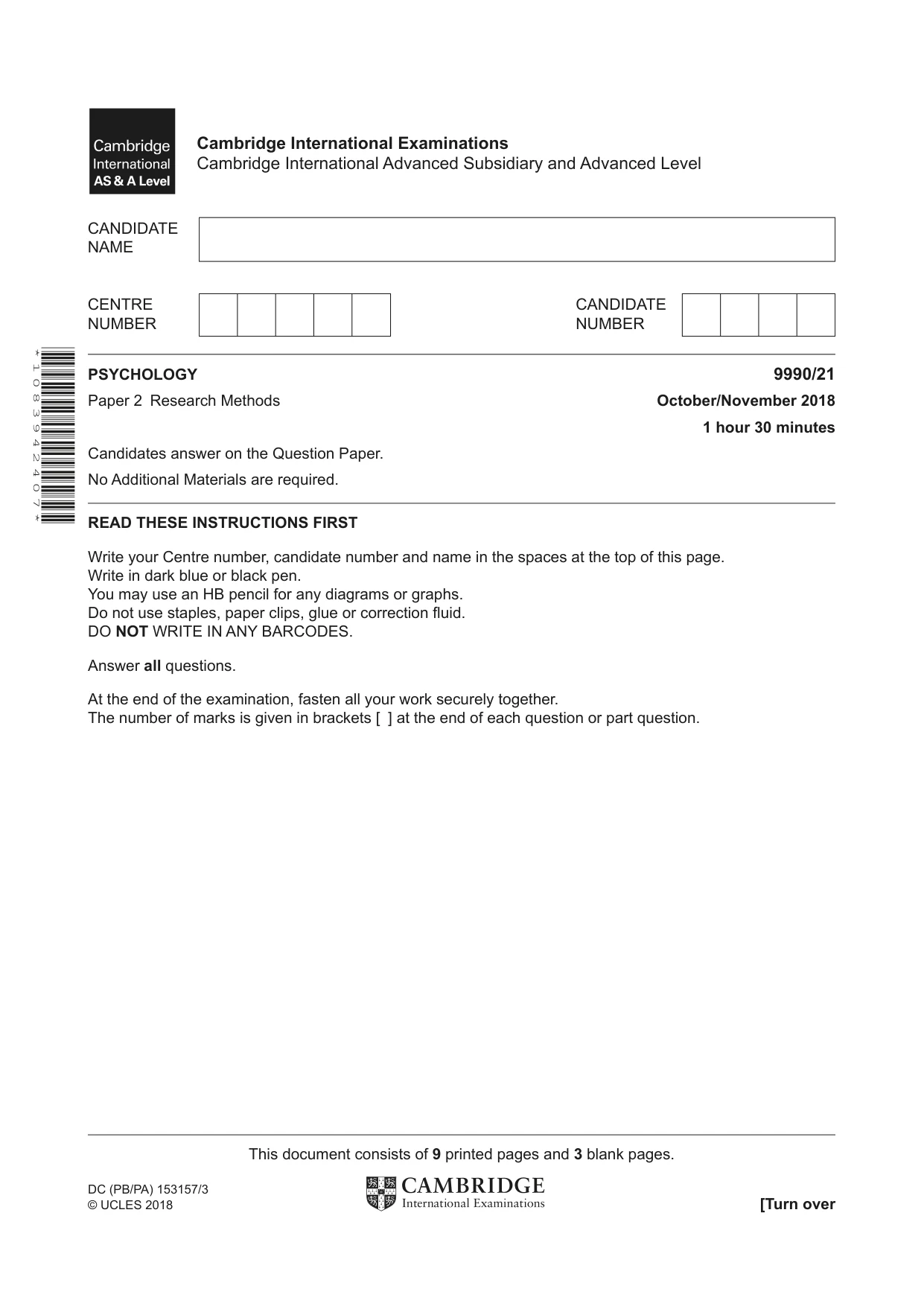



Mark scheme13 pages
Answers below. Sit the paper first if you are practising.
Questions as text
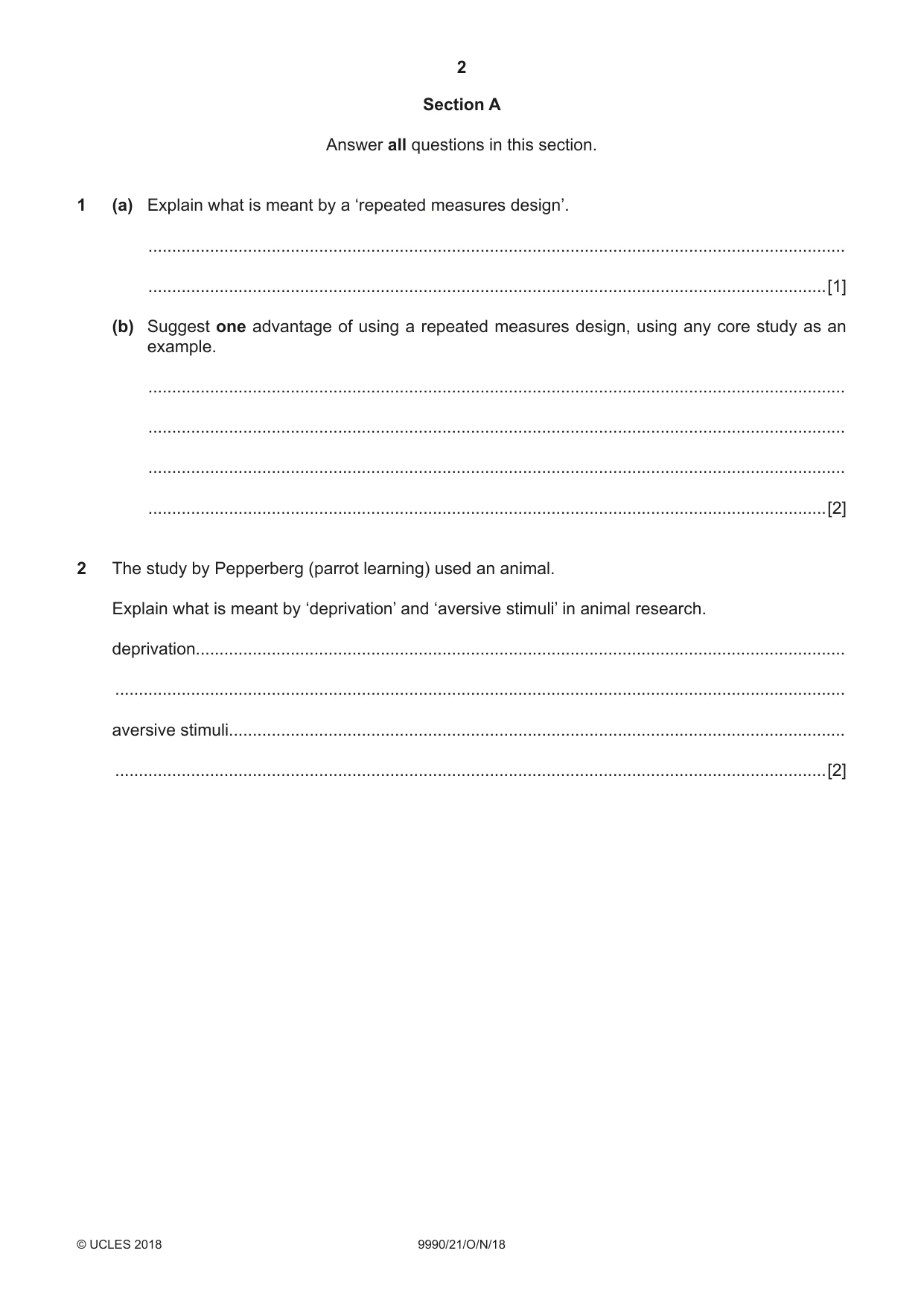
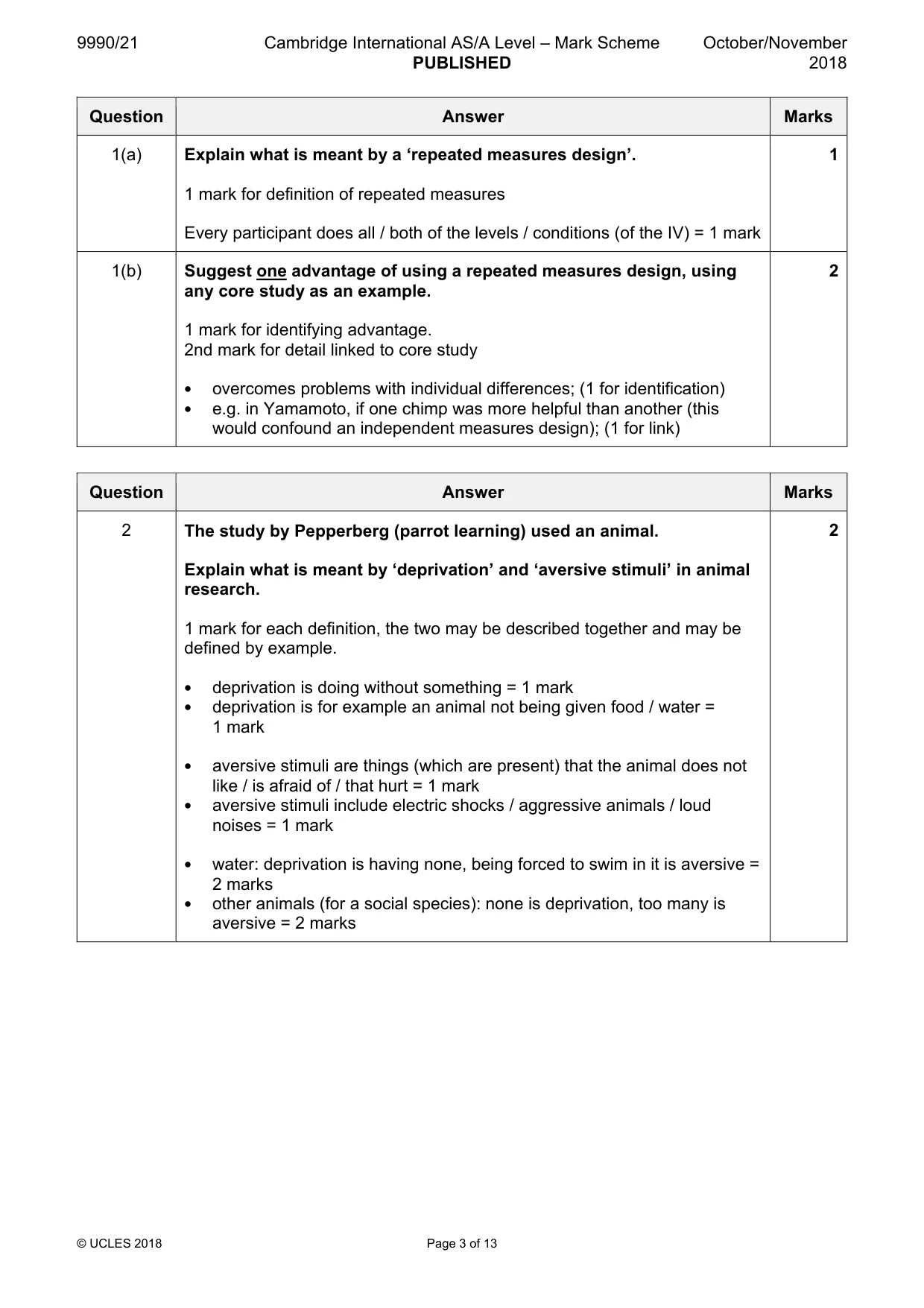
Q1 · Explain what is meant by a ‘repeated measures design’
1 (a) Explain what is meant by a ‘repeated measures design’. ................................................................................................................................................... ...............................................................................................................................................[1] (b) Suggest one advantage of using a repeated measures design, using any core study as an example. ................................................................................................................................................... ................................................................................................................................................... ................................................................................................................................................... ...............................................................................................................................................[2]
Mark scheme: Question Answer Marks 1(a) Explain what is meant by a ‘repeated measures design’. 1 1 mark for definition of repeated measures Every participant does all / both of the levels / conditions (of the IV) = 1 mark 1(b) Suggest one advantage of using a repeated measures design, using 2 any core study as an example. 1 mark for identifying advantage. 2nd mark for detail linked to core study • overcomes problems with individual differences; (1 for identification) • e.g. in Yamamoto, if one chimp was more helpful than another (this would confound an independent measures design); (1 for link)
Q2 · The study by Pepperberg (parrot learning) used an animal
2 The study by Pepperberg (parrot learning) used an animal. Explain what is meant by ‘deprivation’ and ‘aversive stimuli’ in animal research. deprivation......................................................................................................................................... .......................................................................................................................................................... aversive stimuli.................................................................................................................................. ......................................................................................................................................................[2]
Mark scheme: 2 The study by Pepperberg (parrot learning) used an animal. 2 Explain what is meant by ‘deprivation’ and ‘aversive stimuli’ in animal research. 1 mark for each definition, the two may be described together and may be defined by example. • deprivation is doing without something = 1 mark • deprivation is for example an animal not being given food / water = 1 mark • aversive stimuli are things (which are present) that the animal does not like / is afraid of / that hurt = 1 mark • aversive stimuli include electric shocks / aggressive animals / loud noises = 1 mark • water: deprivation is having none, being forced to swim in it is aversive = 2 marks • other animals (for a social species): none is deprivation, too many is aversive = 2 marks
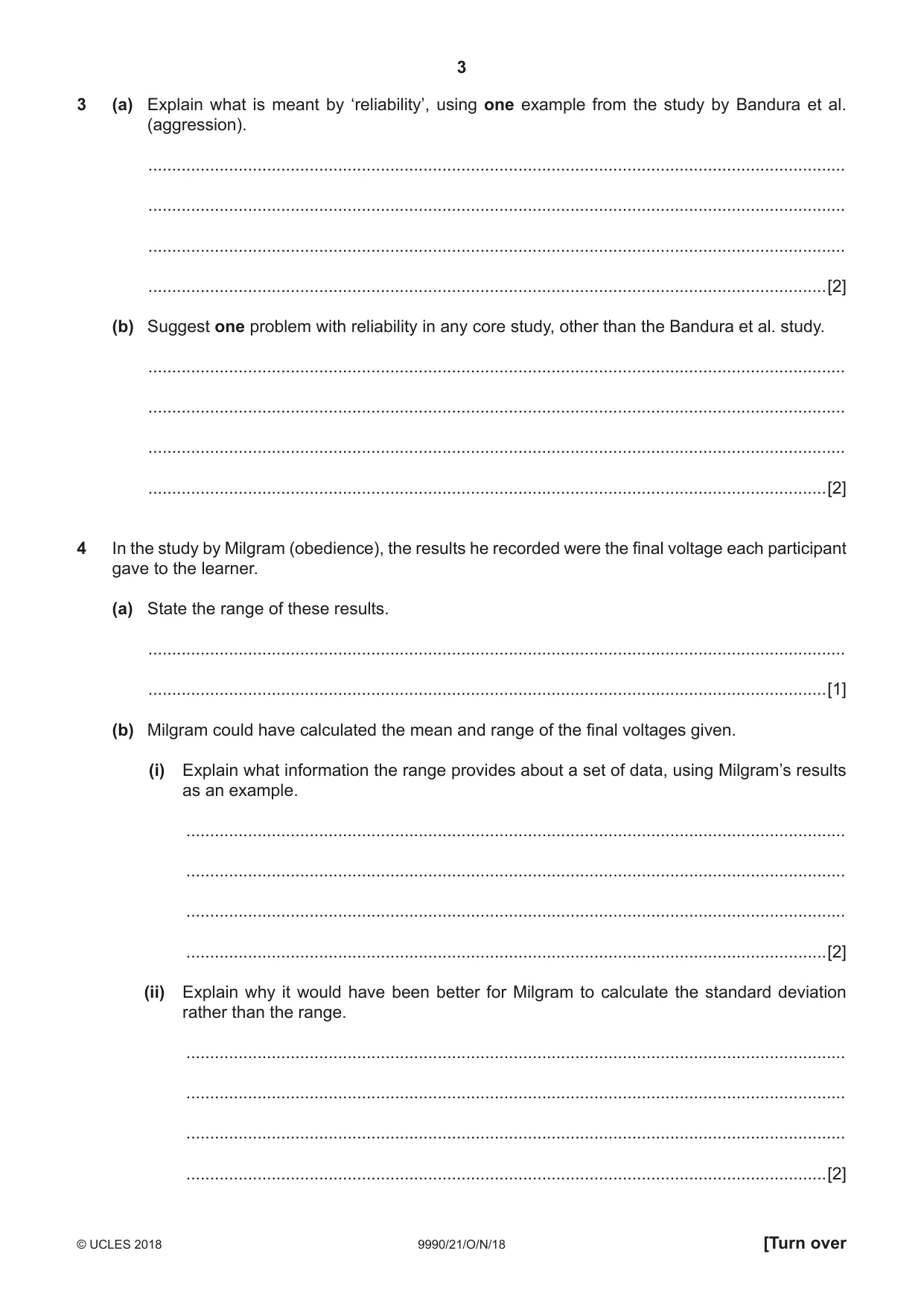
Q3 · Explain what is meant by ‘reliability’, using one example from the study by Bandura et al
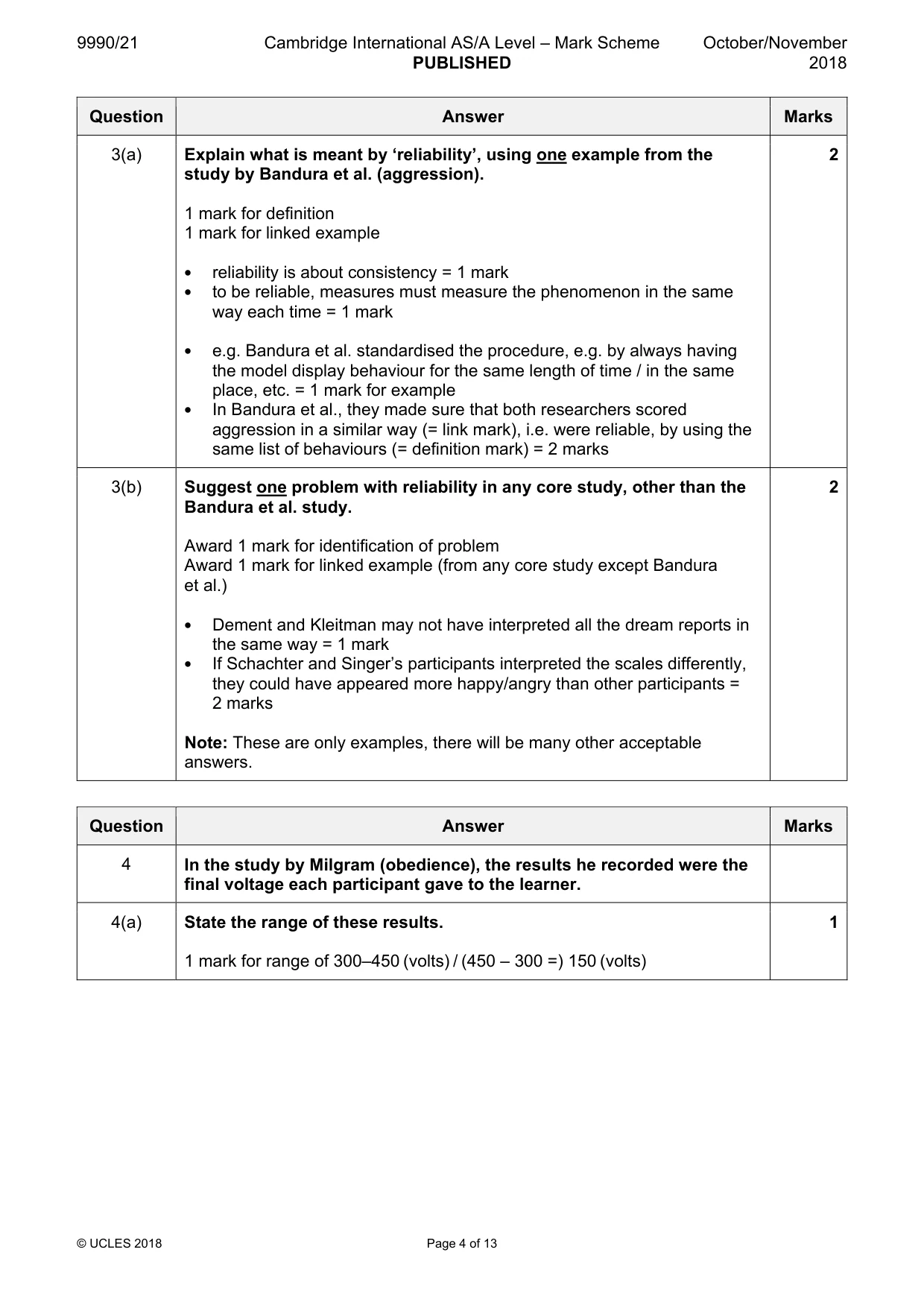
3 (a) Explain what is meant by ‘reliability’, using one example from the study by Bandura et al. (aggression). ................................................................................................................................................... ................................................................................................................................................... ................................................................................................................................................... ...............................................................................................................................................[2] (b) Suggest one problem with reliability in any core study, other than the Bandura et al. study. ................................................................................................................................................... ................................................................................................................................................... ................................................................................................................................................... ...............................................................................................................................................[2]
Mark scheme: 3(a) Explain what is meant by ‘reliability’, using one example from the 2 study by Bandura et al. (aggression). 1 mark for definition 1 mark for linked example • reliability is about consistency = 1 mark • to be reliable, measures must measure the phenomenon in the same way each time = 1 mark • e.g. Bandura et al. standardised the procedure, e.g. by always having the model display behaviour for the same length of time / in the same place, etc. = 1 mark for example • In Bandura et al., they made sure that both researchers scored aggression in a similar way (= link mark), i.e. were reliable, by using the same list of behaviours (= definition mark) = 2 marks 3(b) Suggest one problem with reliability in any core study, other than the 2 Bandura et al. study. Award 1 mark for identification of problem Award 1 mark for linked example (from any core study except Bandura et al.) • Dement and Kleitman may not have interpreted all the dream reports in the same way = 1 mark • If Schachter and Singer’s participants interpreted the scales differently, they could have appeared more happy/angry than other participants = 2 marks Note: These are only examples, there will be many other acceptable answers.
Q4 · In the study by Milgram (obedience), the results he recorded were the final voltage each…
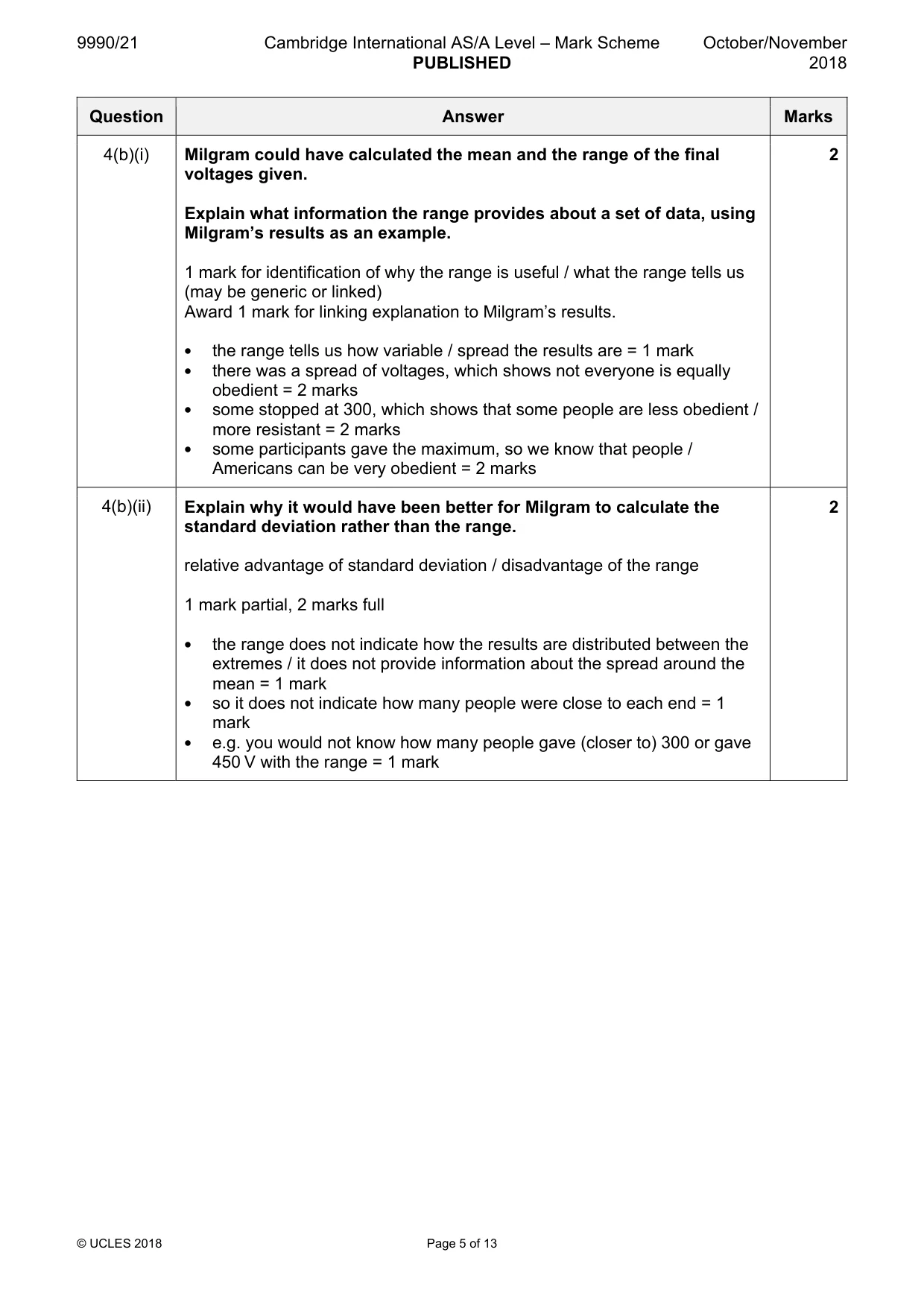
4 In the study by Milgram (obedience), the results he recorded were the final voltage each participant gave to the learner. (a) State the range of these results. ................................................................................................................................................... ...............................................................................................................................................[1] (b) Milgram could have calculated the mean and range of the final voltages given. (i) Explain what information the range provides about a set of data, using Milgram’s results as an example. ........................................................................................................................................... ........................................................................................................................................... ........................................................................................................................................... .......................................................................................................................................[2] (ii) Explain why it would have been better for Milgram to calculate the standard deviation rather than the range. ........................................................................................................................................... ........................................................................................................................................... ........................................................................................................................................... .......................................................................................................................................[2]
Mark scheme: 4(a) State the range of these results. 1 1 mark for range of 300–450 (volts) / (450 – 300 =) 150 (volts) 4(b)(i) Milgram could have calculated the mean and the range of the final 2 voltages given. Explain what information the range provides about a set of data, using Milgram’s results as an example. 1 mark for identification of why the range is useful / what the range tells us (may be generic or linked) Award 1 mark for linking explanation to Milgram’s results. • the range tells us how variable / spread the results are = 1 mark • there was a spread of voltages, which shows not everyone is equally obedient = 2 marks • some stopped at 300, which shows that some people are less obedient / more resistant = 2 marks • some participants gave the maximum, so we know that people / Americans can be very obedient = 2 marks 4(b)(ii) Explain why it would have been better for Milgram to calculate the 2 standard deviation rather than the range. relative advantage of standard deviation / disadvantage of the range 1 mark partial, 2 marks full • the range does not indicate how the results are distributed between the extremes / it does not provide information about the spread around the mean = 1 mark • so it does not indicate how many people were close to each end = 1 mark • e.g. you would not know how many people gave (closer to) 300 or gave 450 V with the range = 1 mark
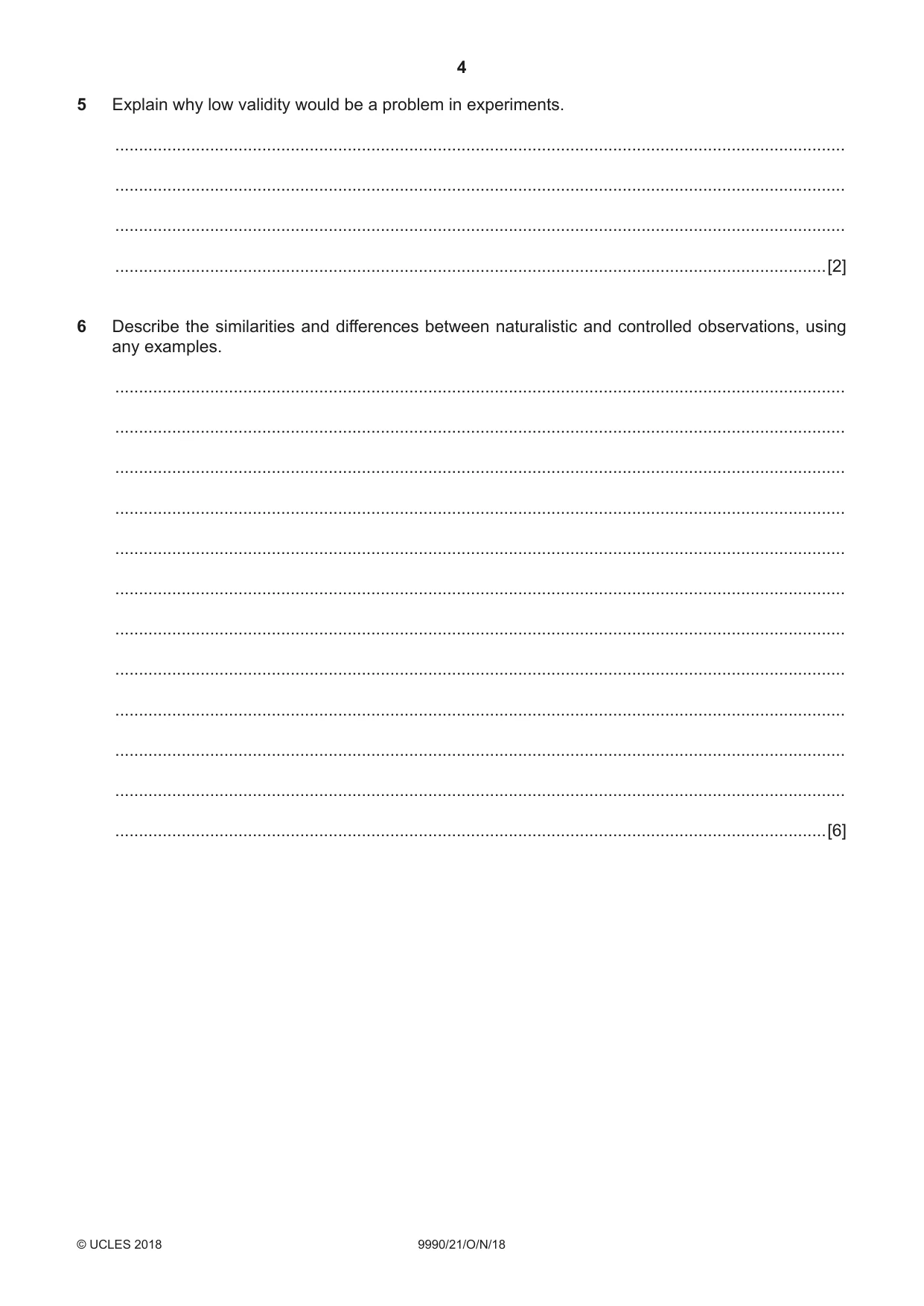
Q5 · Explain why low validity would be a problem in experiments
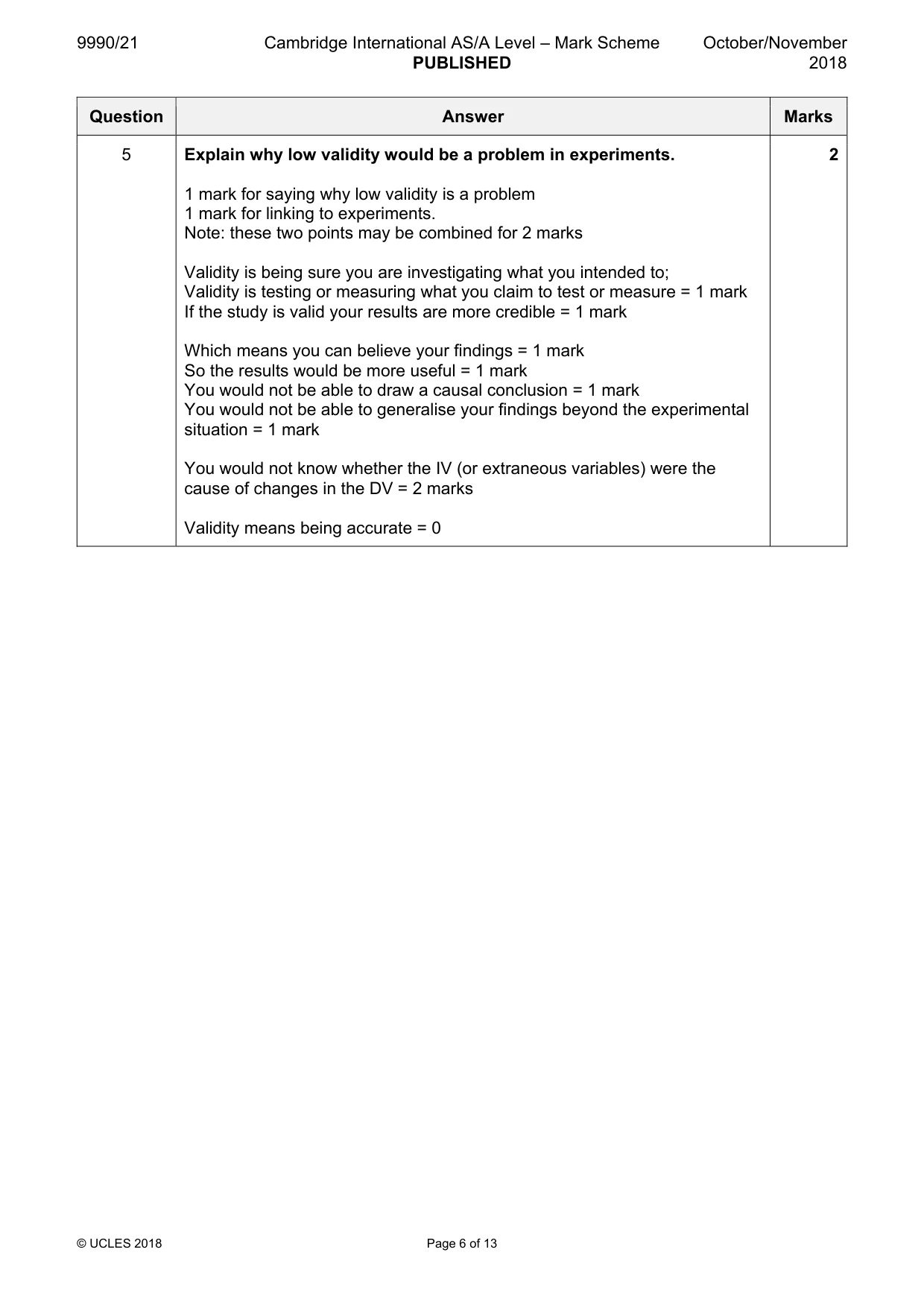
5 Explain why low validity would be a problem in experiments. .......................................................................................................................................................... .......................................................................................................................................................... .......................................................................................................................................................... ......................................................................................................................................................[2]
Mark scheme: 5 Explain why low validity would be a problem in experiments. 2 1 mark for saying why low validity is a problem 1 mark for linking to experiments. Note: these two points may be combined for 2 marks Validity is being sure you are investigating what you intended to; Validity is testing or measuring what you claim to test or measure = 1 mark If the study is valid your results are more credible = 1 mark Which means you can believe your findings = 1 mark So the results would be more useful = 1 mark You would not be able to draw a causal conclusion = 1 mark You would not be able to generalise your findings beyond the experimental situation = 1 mark You would not know whether the IV (or extraneous variables) were the cause of changes in the DV = 2 marks Validity means being accurate = 0
Q6 · Describe the similarities and differences between naturalistic and controlled…
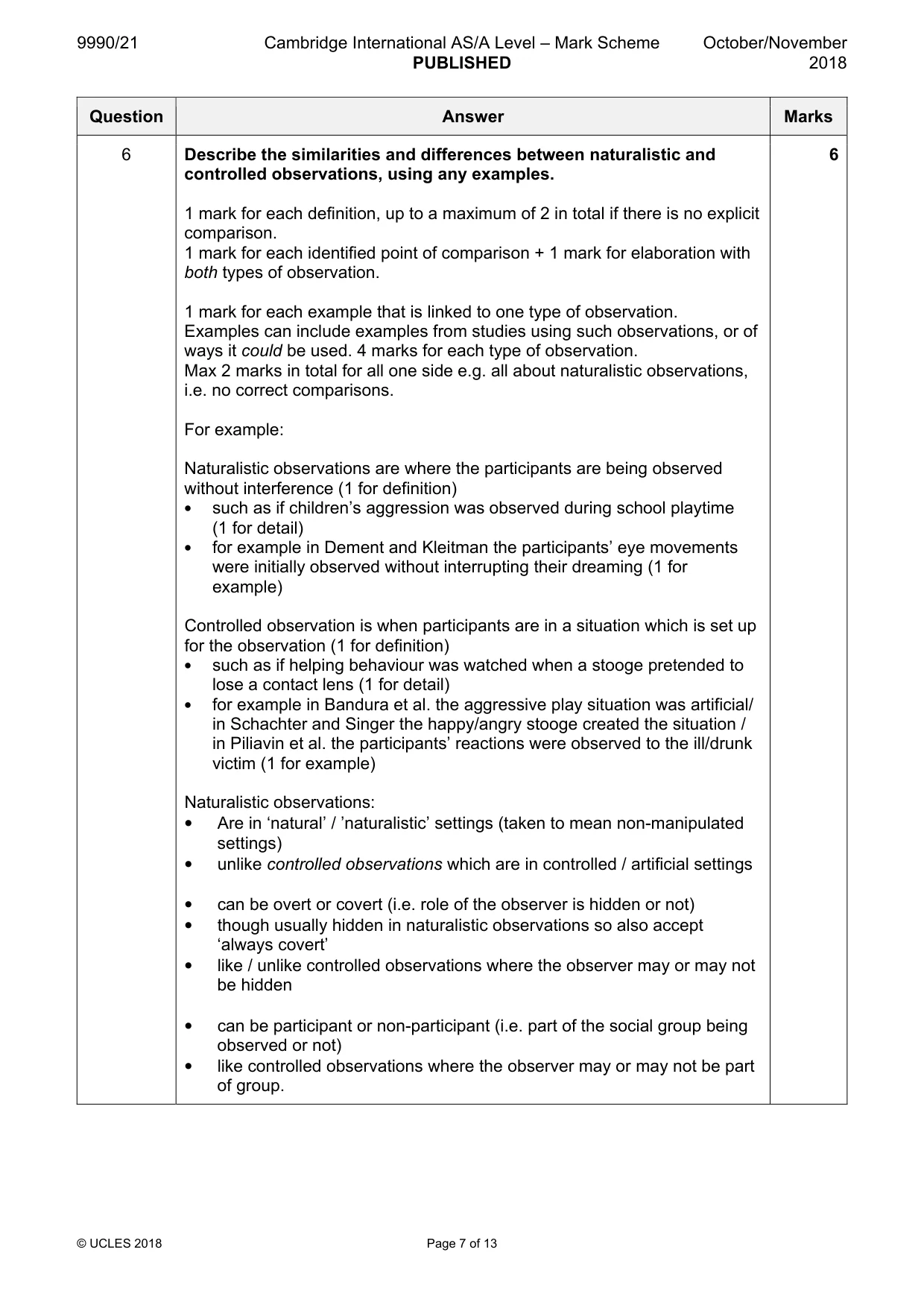
6 Describe the similarities and differences between naturalistic and controlled observations, using any examples. .......................................................................................................................................................... .......................................................................................................................................................... .......................................................................................................................................................... .......................................................................................................................................................... .......................................................................................................................................................... .......................................................................................................................................................... .......................................................................................................................................................... .......................................................................................................................................................... .......................................................................................................................................................... .......................................................................................................................................................... .......................................................................................................................................................... ......................................................................................................................................................[6]
Mark scheme: 6 Describe the similarities and differences between naturalistic and 6 controlled observations, using any examples. 1 mark for each definition, up to a maximum of 2 in total if there is no explicit comparison. 1 mark for each identified point of comparison + 1 mark for elaboration with both types of observation. 1 mark for each example that is linked to one type of observation. Examples can include examples from studies using such observations, or of ways it could be used. 4 marks for each type of observation. Max 2 marks in total for all one side e.g. all about naturalistic observations, i.e. no correct comparisons. For example: Naturalistic observations are where the participants are being observed without interference (1 for definition) • such as if children’s aggression was observed during school playtime (1 for detail) • for example in Dement and Kleitman the participants’ eye movements were initially observed without interrupting their dreaming (1 for example) Controlled observation is when participants are in a situation which is set up for the observation (1 for definition) • such as if helping behaviour was watched when a stooge pretended to lose a contact lens (1 for detail) • for example in Bandura et al. the aggressive play situation was artificial/ in Schachter and Singer the happy/angry stooge created the situation / in Piliavin et al. the participants’ reactions were observed to the ill/drunk victim (1 for example) Naturalistic observations: • Are in ‘natural’ / ’naturalistic’ settings (taken to mean non-manipulated settings) • unlike controlled observations which are in controlled / artificial settings • can be overt or covert (i.e. role of the observer is hidden or not) • though usually hidden in naturalistic observations so also accept ‘always covert’ • like / unlike controlled observations where the observer may or may not be hidden • can be participant or non-participant (i.e. part of the social group being observed or not) • like controlled observations where the observer may or may not be part of group.
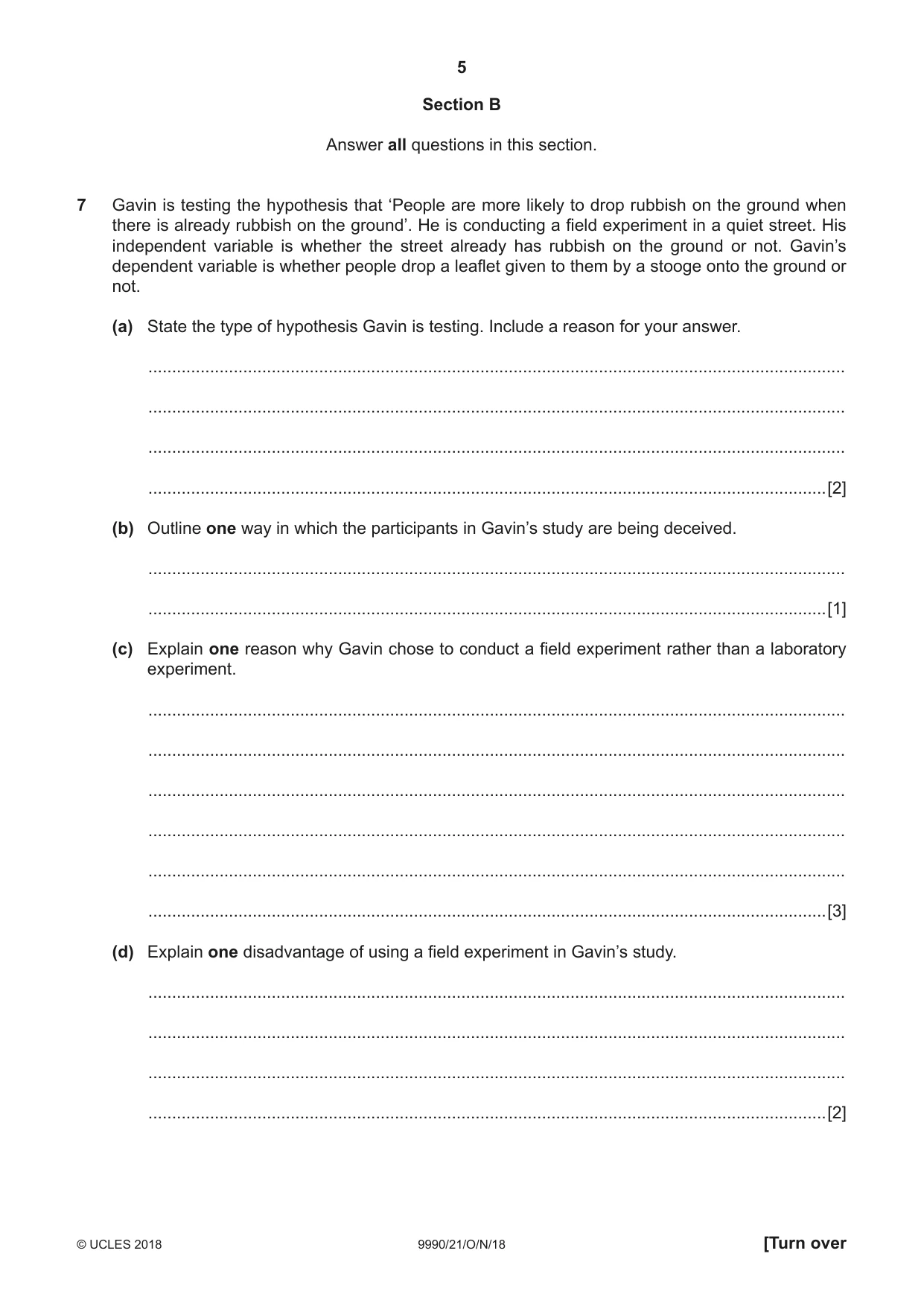
Q7 · Gavin is testing the hypothesis that ‘People are more likely to drop rubbish on the…
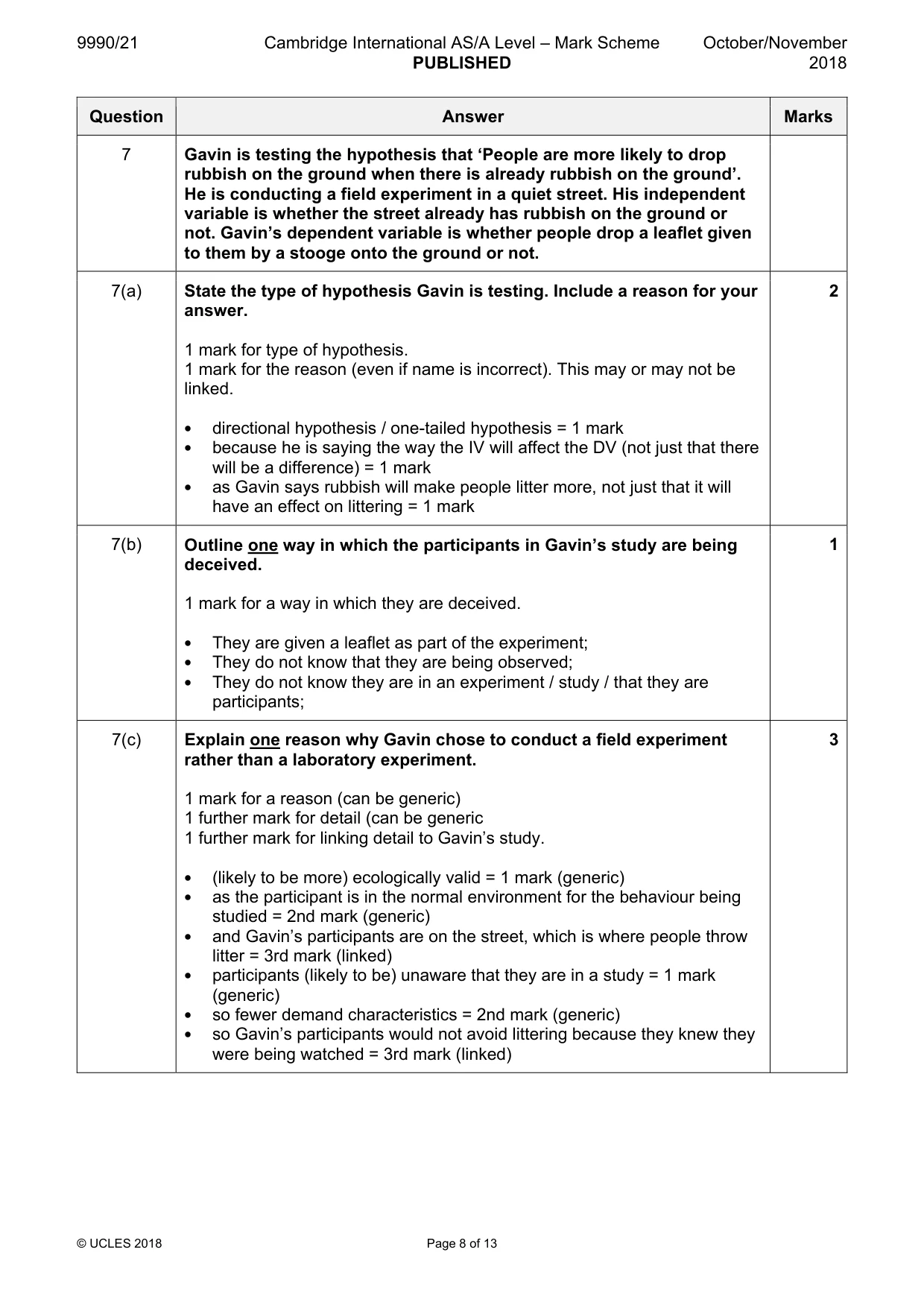
7 Gavin is testing the hypothesis that ‘People are more likely to drop rubbish on the ground when there is already rubbish on the ground’. He is conducting a field experiment in a quiet street. His independent variable is whether the street already has rubbish on the ground or not. Gavin’s dependent variable is whether people drop a leaflet given to them by a stooge onto the ground or not. (a) State the type of hypothesis Gavin is testing. Include a reason for your answer. ................................................................................................................................................... ................................................................................................................................................... ................................................................................................................................................... ...............................................................................................................................................[2] (b) Outline one way in which the participants in Gavin’s study are being deceived. ................................................................................................................................................... ...............................................................................................................................................[1] (c) Explain one reason why Gavin chose to conduct a field experiment rather than a laboratory experiment. ................................................................................................................................................... ................................................................................................................................................... ................................................................................................................................................... ................................................................................................................................................... ................................................................................................................................................... ...............................................................................................................................................[3] (d) Explain one disadvantage of using a field experiment in Gavin’s study. ................................................................................................................................................... ................................................................................................................................................... ................................................................................................................................................... ...............................................................................................................................................[2]
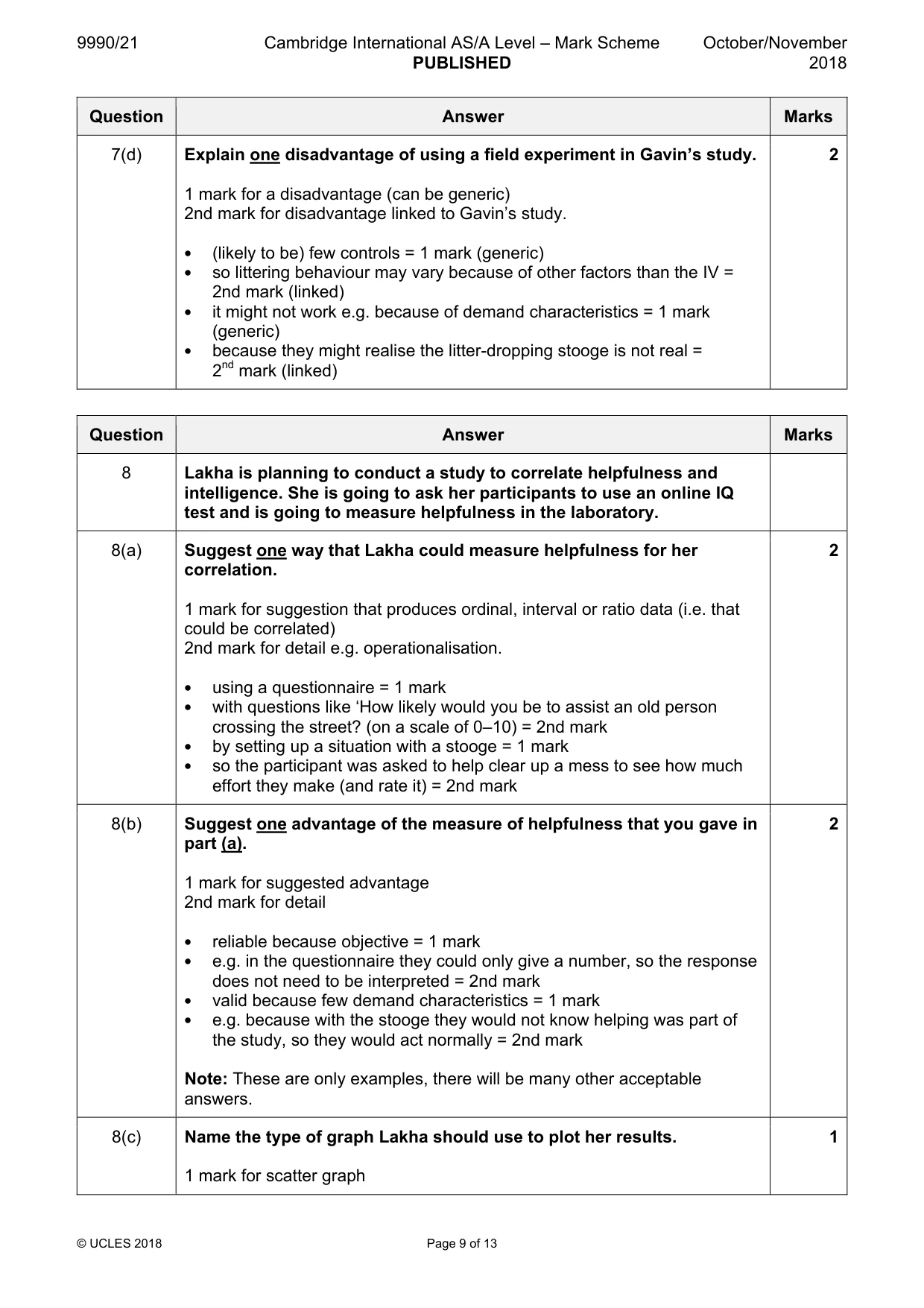
Mark scheme: 7(a) State the type of hypothesis Gavin is testing. Include a reason for your 2 answer. 1 mark for type of hypothesis. 1 mark for the reason (even if name is incorrect). This may or may not be linked. • directional hypothesis / one-tailed hypothesis = 1 mark • because he is saying the way the IV will affect the DV (not just that there will be a difference) = 1 mark • as Gavin says rubbish will make people litter more, not just that it will have an effect on littering = 1 mark 7(b) Outline one way in which the participants in Gavin’s study are being 1 deceived. 1 mark for a way in which they are deceived. • They are given a leaflet as part of the experiment; • They do not know that they are being observed; • They do not know they are in an experiment / study / that they are participants; 7(c) Explain one reason why Gavin chose to conduct a field experiment 3 rather than a laboratory experiment. 1 mark for a reason (can be generic) 1 further mark for detail (can be generic 1 further mark for linking detail to Gavin’s study. • (likely to be more) ecologically valid = 1 mark (generic) • as the participant is in the normal environment for the behaviour being studied = 2nd mark (generic) • and Gavin’s participants are on the street, which is where people throw litter = 3rd mark (linked) • participants (likely to be) unaware that they are in a study = 1 mark (generic) • so fewer demand characteristics = 2nd mark (generic) • so Gavin’s participants would not avoid littering because they knew they were being watched = 3rd mark (linked) 7(d) Explain one disadvantage of using a field experiment in Gavin’s study. 2 1 mark for a disadvantage (can be generic) 2nd mark for disadvantage linked to Gavin’s study. • (likely to be) few controls = 1 mark (generic) • so littering behaviour may vary because of other factors than the IV = 2nd mark (linked) • it might not work e.g. because of demand characteristics = 1 mark (generic) • because they might realise the litter-dropping stooge is not real = 2nd mark (linked)
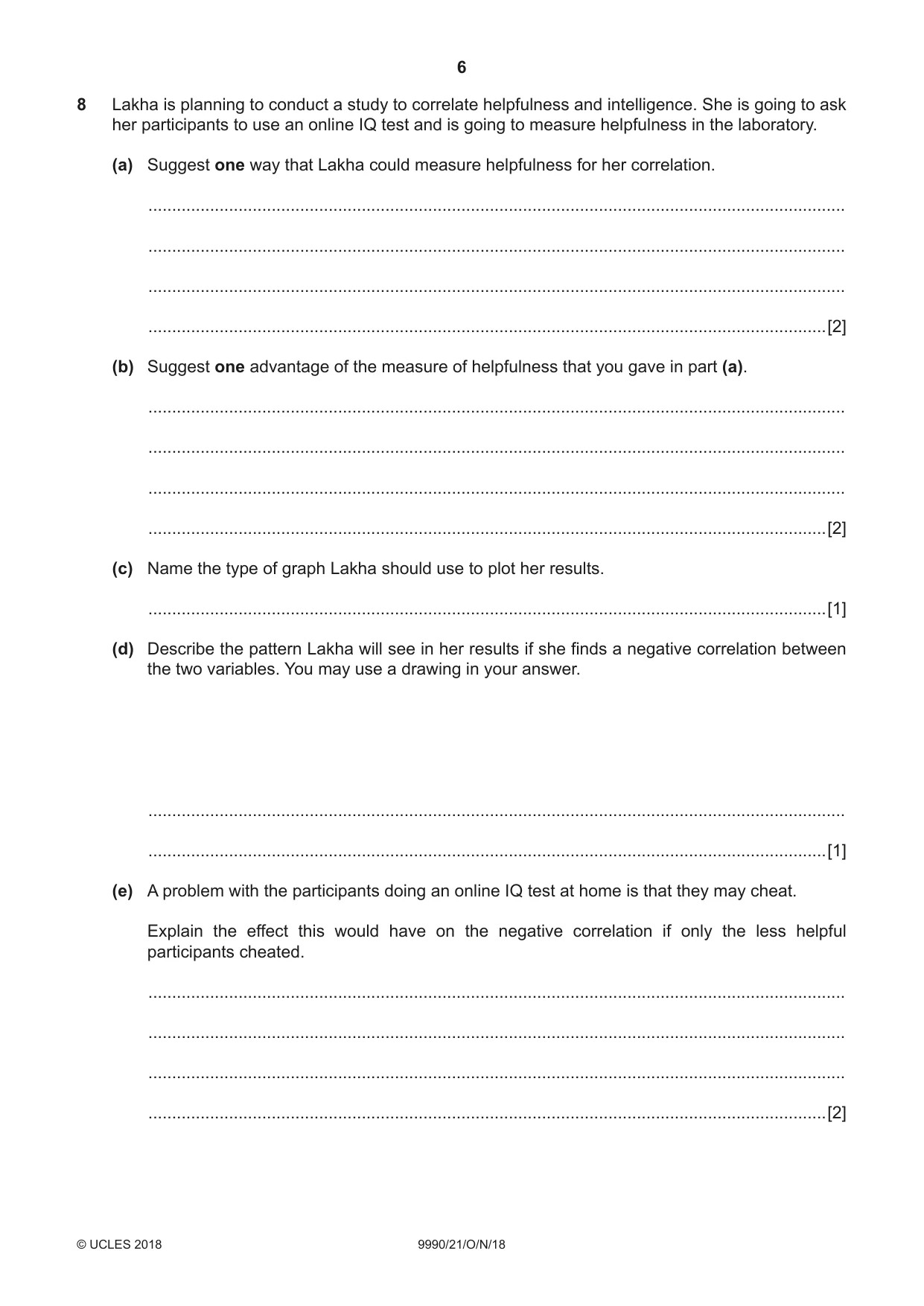
Q8 · Lakha is planning to conduct a study to correlate helpfulness and intelligence
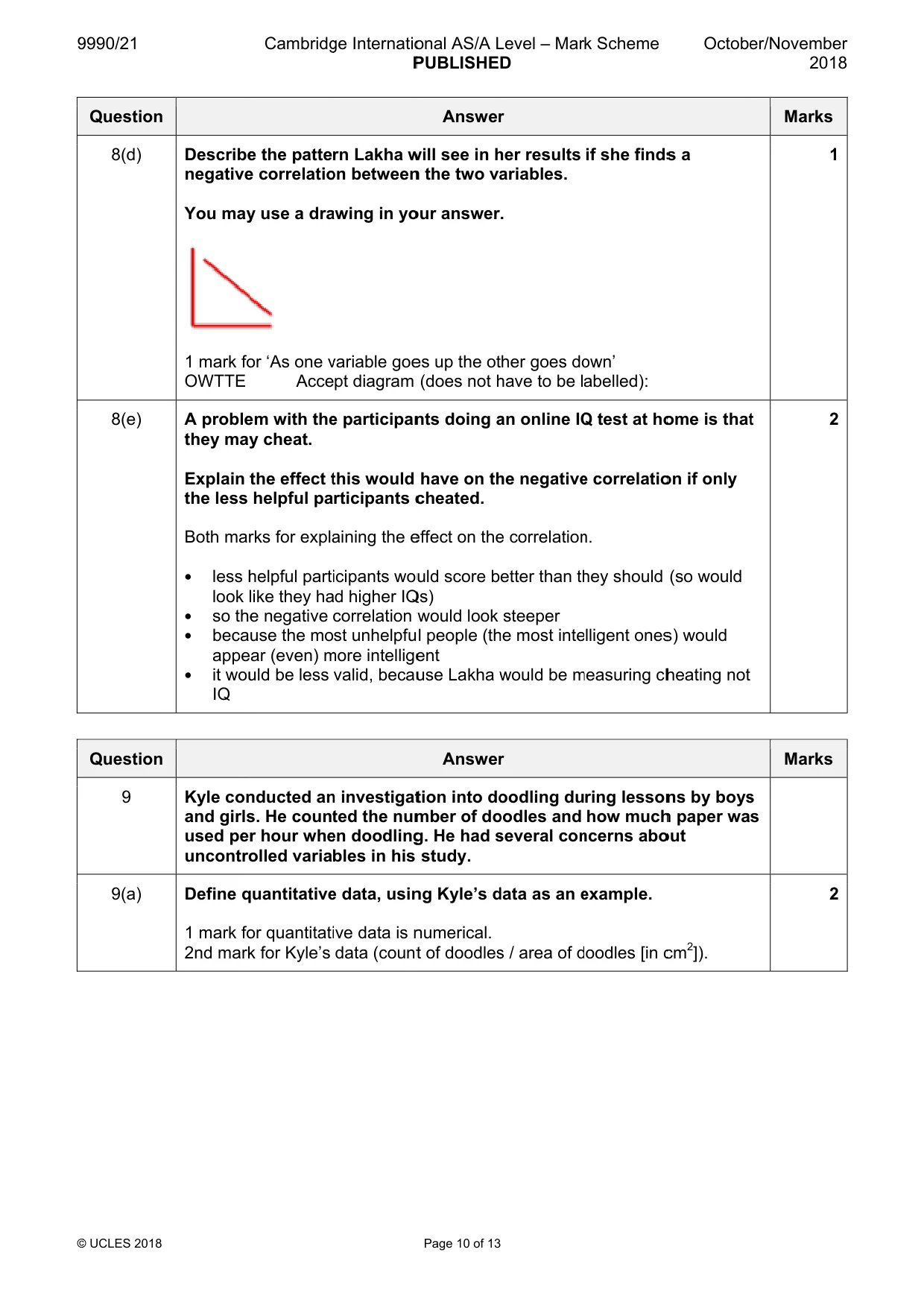
8 Lakha is planning to conduct a study to correlate helpfulness and intelligence. She is going to ask her participants to use an online IQ test and is going to measure helpfulness in the laboratory. (a) Suggest one way that Lakha could measure helpfulness for her correlation. ................................................................................................................................................... ................................................................................................................................................... ................................................................................................................................................... ...............................................................................................................................................[2] (b) Suggest one advantage of the measure of helpfulness that you gave in part (a). ................................................................................................................................................... ................................................................................................................................................... ................................................................................................................................................... ...............................................................................................................................................[2] (c) Name the type of graph Lakha should use to plot her results. ...............................................................................................................................................[1] (d) Describe the pattern Lakha will see in her results if she finds a negative correlation between the two variables. You may use a drawing in your answer. ................................................................................................................................................... ...............................................................................................................................................[1] (e) A problem with the participants doing an online IQ test at home is that they may cheat. Explain the effect this would have on the negative correlation if only the less helpful participants cheated. ................................................................................................................................................... ................................................................................................................................................... ................................................................................................................................................... ...............................................................................................................................................[2]
Mark scheme: 8(a) Suggest one way that Lakha could measure helpfulness for her 2 correlation. 1 mark for suggestion that produces ordinal, interval or ratio data (i.e. that could be correlated) 2nd mark for detail e.g. operationalisation. • using a questionnaire = 1 mark • with questions like ‘How likely would you be to assist an old person crossing the street? (on a scale of 0–10) = 2nd mark • by setting up a situation with a stooge = 1 mark • so the participant was asked to help clear up a mess to see how much effort they make (and rate it) = 2nd mark 8(b) Suggest one advantage of the measure of helpfulness that you gave in 2 part (a). 1 mark for suggested advantage 2nd mark for detail • reliable because objective = 1 mark • e.g. in the questionnaire they could only give a number, so the response does not need to be interpreted = 2nd mark • valid because few demand characteristics = 1 mark • e.g. because with the stooge they would not know helping was part of the study, so they would act normally = 2nd mark Note: These are only examples, there will be many other acceptable answers. 8(c) Name the type of graph Lakha should use to plot her results. 1 1 mark for scatter graph
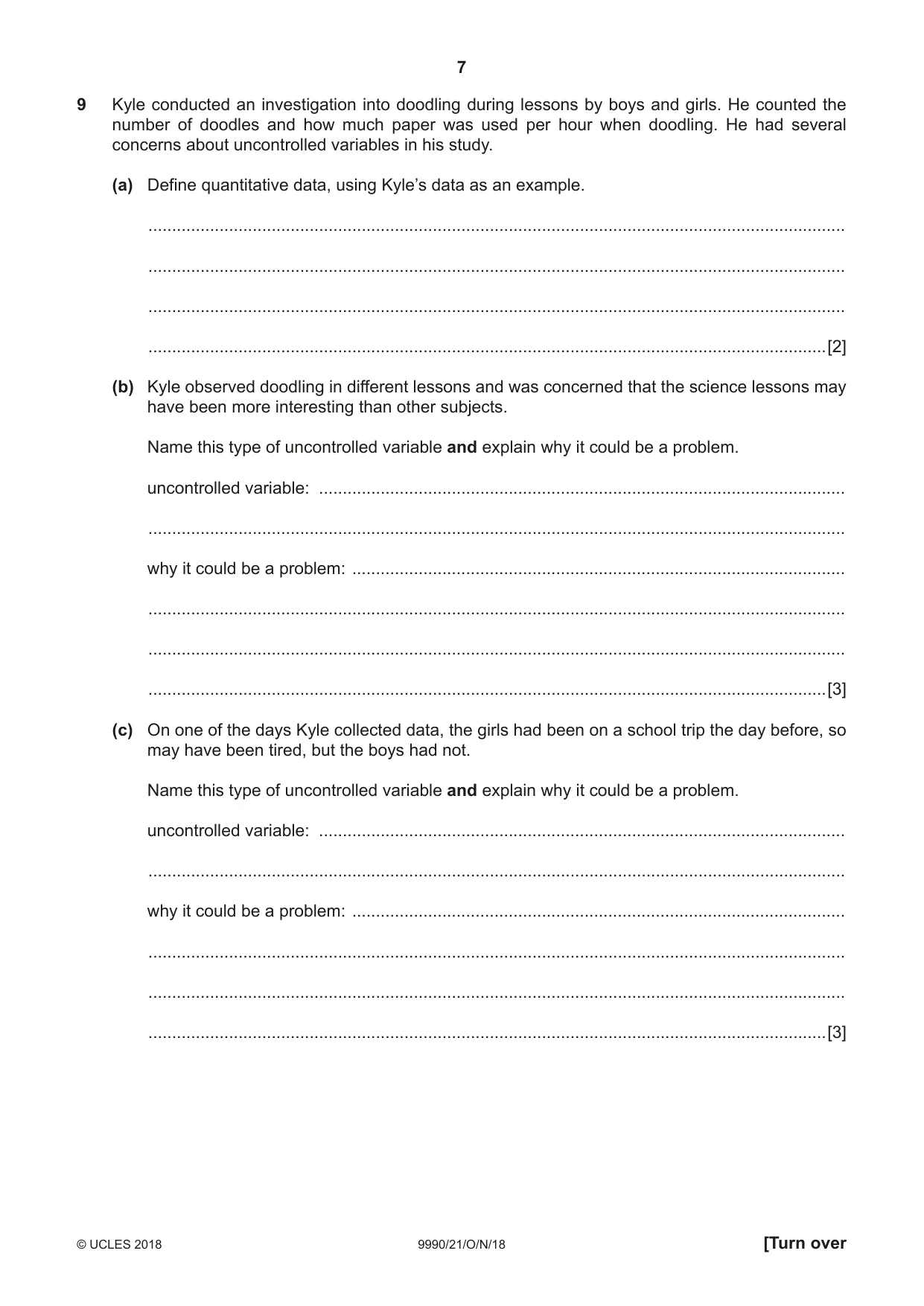
Q9 · Kyle conducted an investigation into doodling during lessons by boys and girls
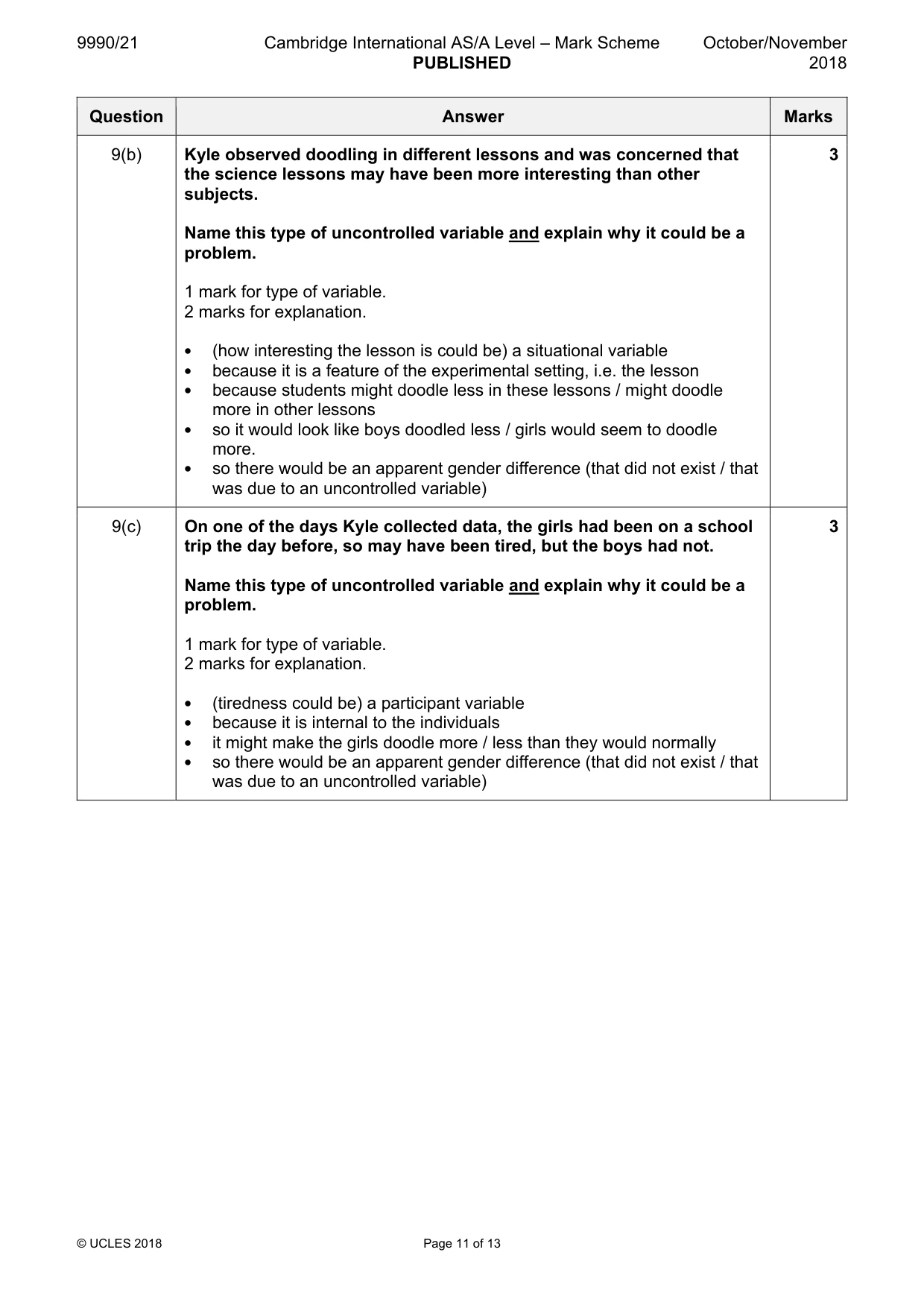
9 Kyle conducted an investigation into doodling during lessons by boys and girls. He counted the number of doodles and how much paper was used per hour when doodling. He had several concerns about uncontrolled variables in his study. (a) Define quantitative data, using Kyle’s data as an example. ................................................................................................................................................... ................................................................................................................................................... ................................................................................................................................................... ...............................................................................................................................................[2] (b) Kyle observed doodling in different lessons and was concerned that the science lessons may have been more interesting than other subjects. Name this type of uncontrolled variable and explain why it could be a problem. uncontrolled variable: ............................................................................................................... ................................................................................................................................................... why it could be a problem: ........................................................................................................ ................................................................................................................................................... ................................................................................................................................................... ...............................................................................................................................................[3] (c) On one of the days Kyle collected data, the girls had been on a school trip the day before, so may have been tired, but the boys had not. Name this type of uncontrolled variable and explain why it could be a problem. uncontrolled variable: ............................................................................................................... ................................................................................................................................................... why it could be a problem: ........................................................................................................ ................................................................................................................................................... ................................................................................................................................................... ...............................................................................................................................................[3] Section C Answer all questions in this section.
Mark scheme: Question Answerr Marks 8(d) Describee the patterrn Lakha wwill see in herh results if she findss a 11 negativee correlatioon betweenn the two vaariables. You mayy use a draawing in yoour answer. 1 mark foor ‘As one variablev goees up the other goes doown’ OWTTE Accept diagram (does not haveh to be labelled): 8(e) A probleem with thee participannts doing ana online IQQ test at hoome is thatt 22 they mayy cheat. Explain tthe effect thist would have on thhe negativee correlatioon if only the less helpful participants ccheated. Both marrks for explaaining the eeffect on thee correlationn. • less hhelpful partiicipants wouuld score better than thhey should (so would look llike they had higher IQQs) • so thee negative correlationc wwould look steeper • beca use the most unhelpfu l people (thhe most intelligent oness) would appe ar (even) morem intelligeent • it wouuld be less valid, becauuse Lakha wouldw be measuringm chheating not IQ Question Answerr Marks 9 Kyle connducted ann investigattion into dooodling during lessonns by boyss and girlss. He countted the nummber of dooodles and how muchh paper wass used perr hour wheen doodlingg. He had severals conncerns aboout uncontroolled variabbles in his study. 9(a) Define qquantitativee data, usinng Kyle’s datad as an example.e 22 1 mark foor quantitatiive data is nnumerical. 2nd markk for Kyle’s data (countt of doodless / area of doodles [in ccm2]). 9(b) Kyle observed doodling in different lessons and was concerned that 3 the science lessons may have been more interesting than other subjects. Name this type of uncontrolled variable and explain why it could be a problem. 1 mark for type of variable. 2 marks for explanation. • (how interesting the lesson is could be) a situational variable • because it is a feature of the experimental setting, i.e. the lesson • because students might doodle less in these lessons / might doodle more in other lessons • so it would look like boys doodled less / girls would seem to doodle more. • so there would be an apparent gender difference (that did not exist / that was due to an uncontrolled variable) 9(c) On one of the days Kyle collected data, the girls had been on a school 3 trip the day before, so may have been tired, but the boys had not. Name this type of uncontrolled variable and explain why it could be a problem. 1 mark for type of variable. 2 marks for explanation. • (tiredness could be) a participant variable • because it is internal to the individuals • it might make the girls doodle more / less than they would normally • so there would be an apparent gender difference (that did not exist / that was due to an uncontrolled variable)
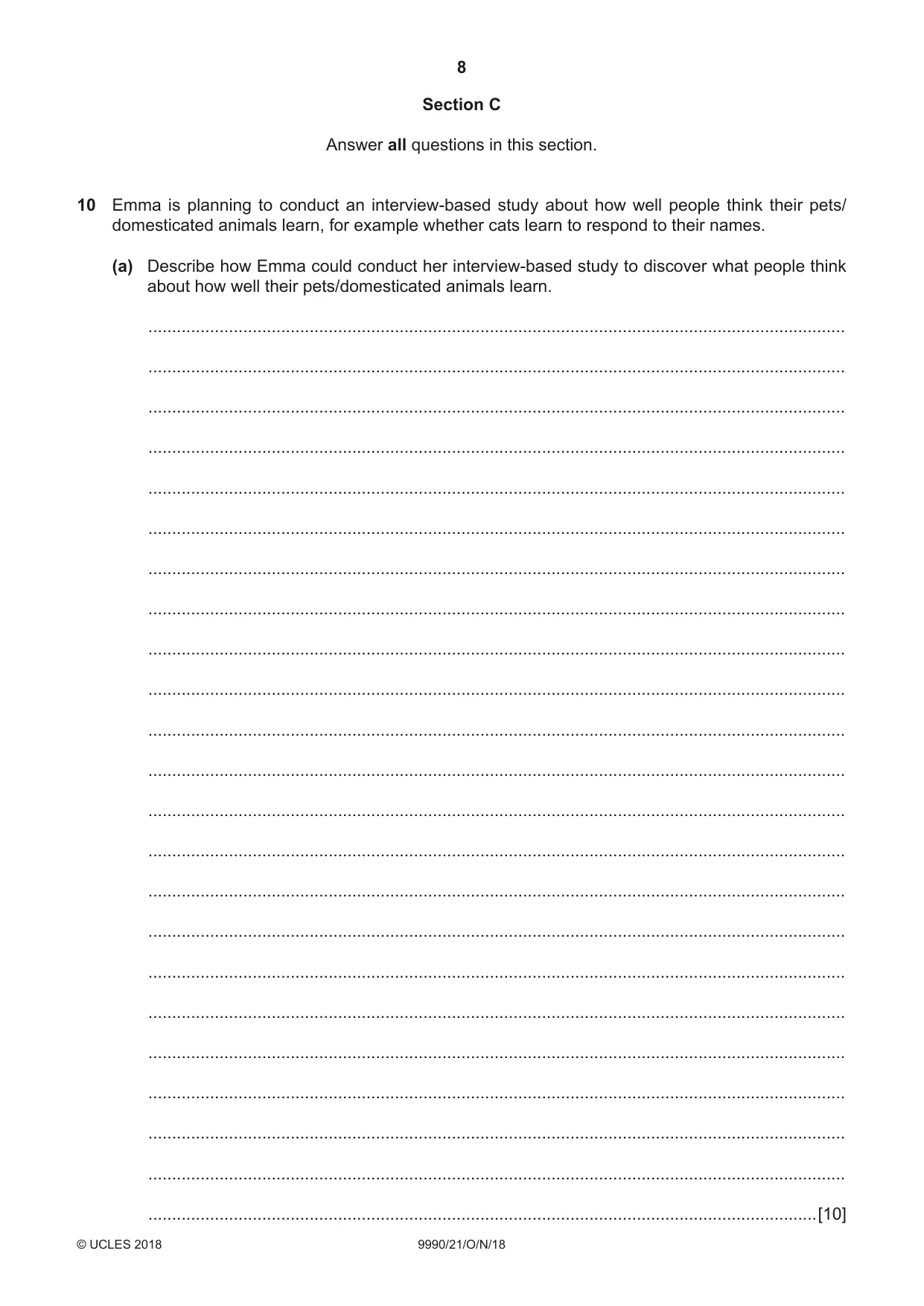
Q10 · Emma is planning to conduct an interview-based study about how well people think their…
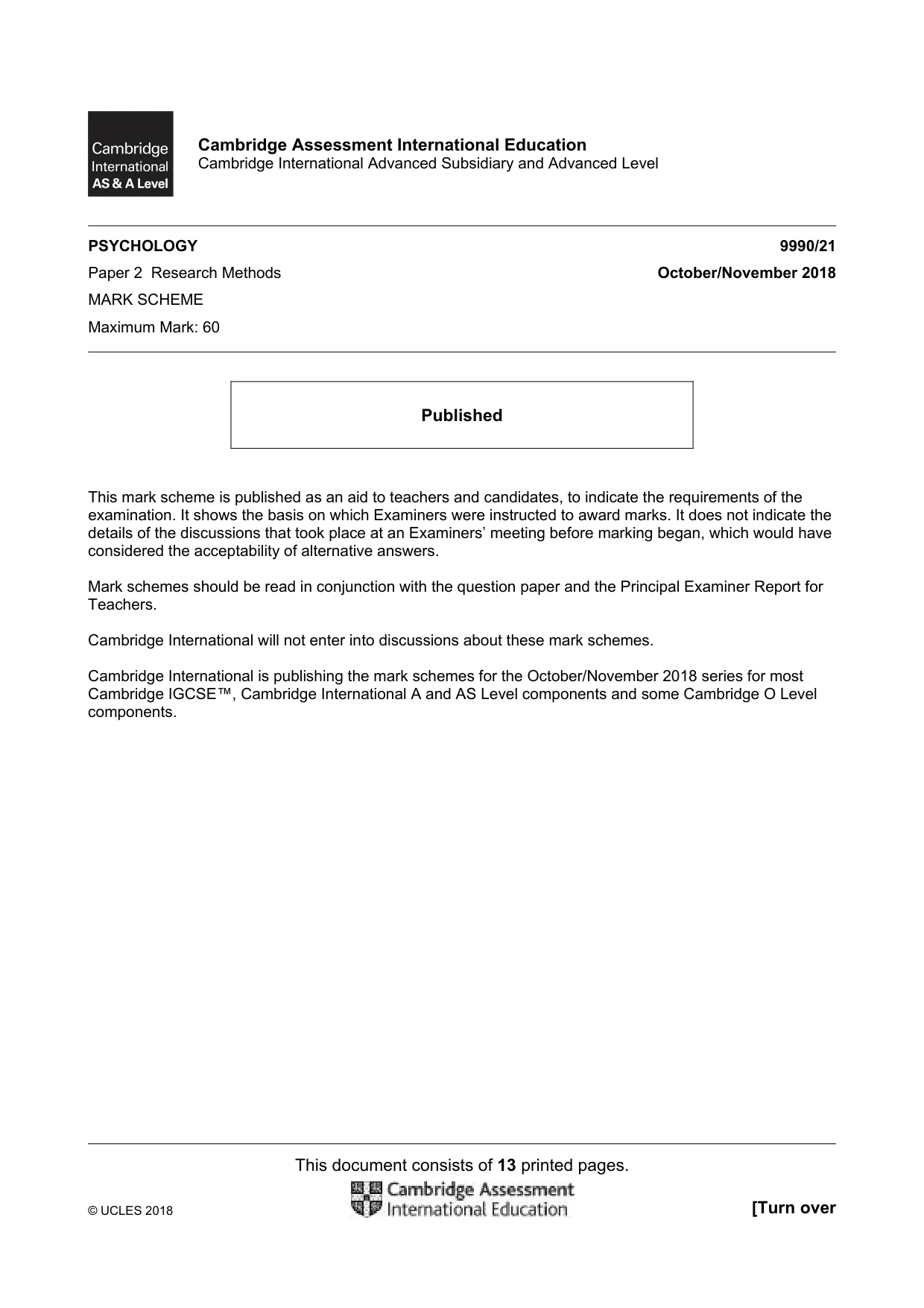
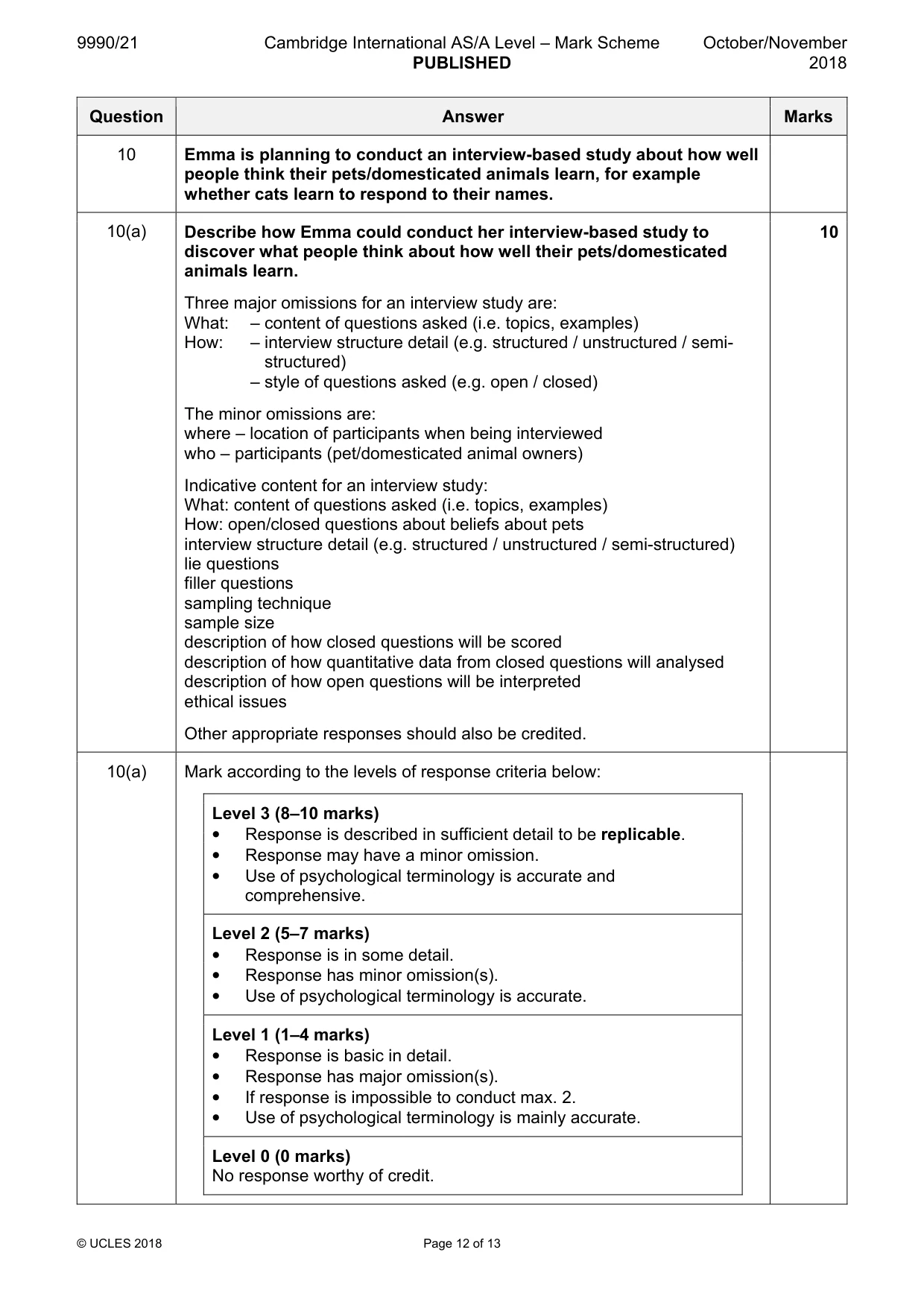
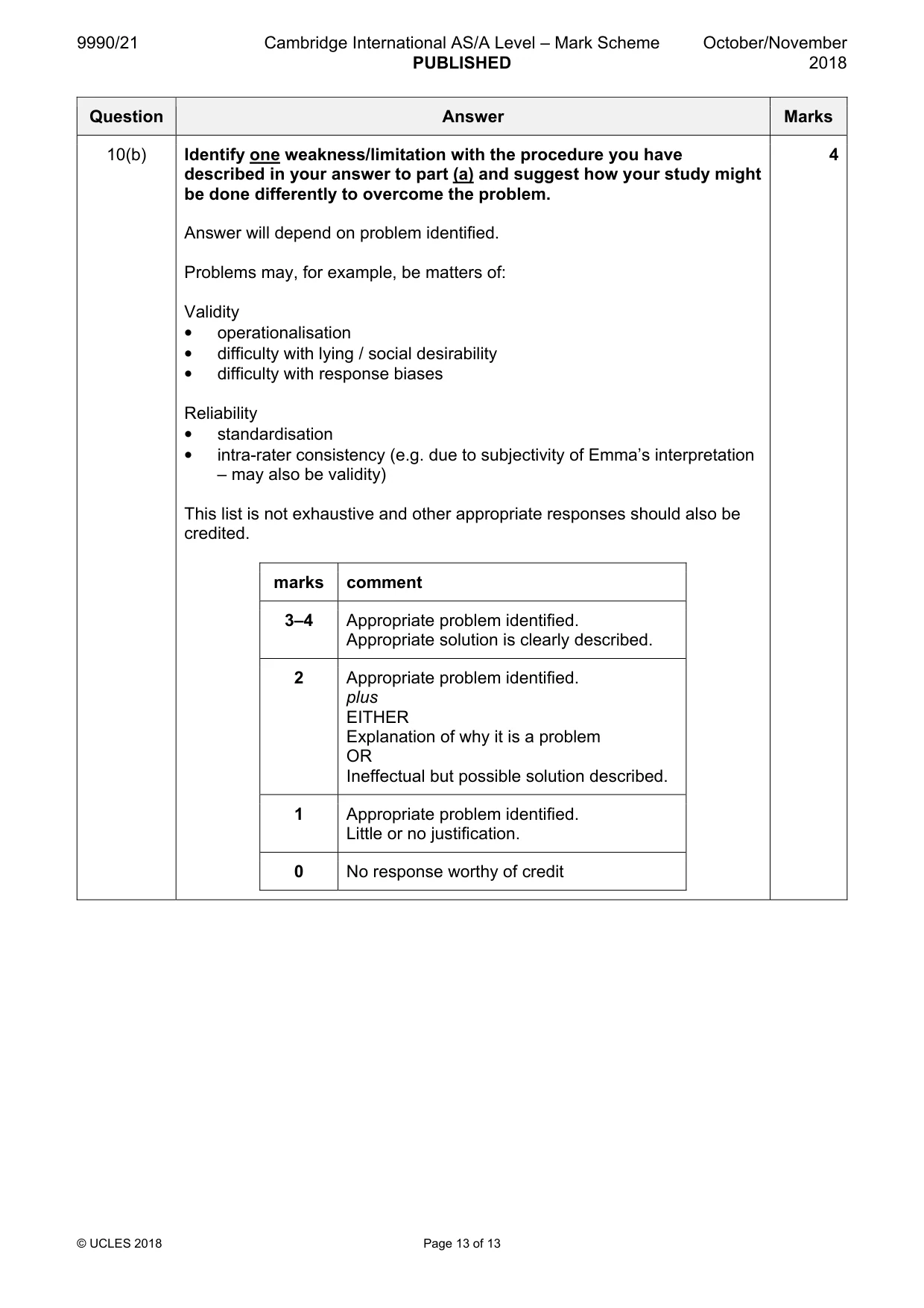
10 Emma is planning to conduct an interview-based study about how well people think their pets/ domesticated animals learn, for example whether cats learn to respond to their names. (a) Describe how Emma could conduct her interview-based study to discover what people think about how well their pets/domesticated animals learn. ................................................................................................................................................... ................................................................................................................................................... ................................................................................................................................................... ................................................................................................................................................... ................................................................................................................................................... ................................................................................................................................................... ................................................................................................................................................... ................................................................................................................................................... ................................................................................................................................................... ................................................................................................................................................... ................................................................................................................................................... ................................................................................................................................................... ................................................................................................................................................... ................................................................................................................................................... ................................................................................................................................................... ................................................................................................................................................... ................................................................................................................................................... ................................................................................................................................................... ................................................................................................................................................... ................................................................................................................................................... ................................................................................................................................................... ................................................................................................................................................... .............................................................................................................................................[10] (b) Identify one weakness/limitation with the procedure you have described in your answer to part (a) and suggest how your study might be done differently to overcome the problem. ................................................................................................................................................... ................................................................................................................................................... ................................................................................................................................................... ................................................................................................................................................... ................................................................................................................................................... ................................................................................................................................................... ................................................................................................................................................... ...............................................................................................................................................[4]
Mark scheme: 10(a) Describe how Emma could conduct her interview-based study to 10 discover what people think about how well their pets/domesticated animals learn. Three major omissions for an interview study are: What: – content of questions asked (i.e. topics, examples) How: – interview structure detail (e.g. structured / unstructured / semi- structured) – style of questions asked (e.g. open / closed) The minor omissions are: where – location of participants when being interviewed who – participants (pet/domesticated animal owners) Indicative content for an interview study: What: content of questions asked (i.e. topics, examples) How: open/closed questions about beliefs about pets interview structure detail (e.g. structured / unstructured / semi-structured) lie questions filler questions sampling technique sample size description of how closed questions will be scored description of how quantitative data from closed questions will analysed description of how open questions will be interpreted ethical issues Other appropriate responses should also be credited. 10(a) Mark according to the levels of response criteria below: Level 3 (8–10 marks) • Response is described in sufficient detail to be replicable. • Response may have a minor omission. • Use of psychological terminology is accurate and comprehensive. Level 2 (5–7 marks) • Response is in some detail. • Response has minor omission(s). • Use of psychological terminology is accurate. Level 1 (1–4 marks) • Response is basic in detail. • Response has major omission(s). • If response is impossible to conduct max. 2. • Use of psychological terminology is mainly accurate. Level 0 (0 marks) No response worthy of credit. 10(b) Identify one weakness/limitation with the procedure you have 4 described in your answer to part (a) and suggest how your study might be done differently to overcome the problem. Answer will depend on problem identified. Problems may, for example, be matters of: Validity • operationalisation • difficulty with lying / social desirability • difficulty with response biases Reliability • standardisation • intra-rater consistency (e.g. due to subjectivity of Emma’s interpretation – may also be validity) This list is not exhaustive and other appropriate responses should also be credited. marks comment 3–4 Appropriate problem identified. Appropriate solution is clearly described. 2 Appropriate problem identified. plus EITHER Explanation of why it is a problem OR Ineffectual but possible solution described. 1 Appropriate problem identified. Little or no justification. 0 No response worthy of credit
What was in this paper
The subtopics covered by these 10 questions, and how many questions each got. Open one in a new tab to see every Cambridge question on it.
What you needed in this session
Cambridge’s own grade thresholds for 2018 Oct/Nov, Paper 2 · Variant 1. A higher threshold means an easier paper — the bar moves with how the cohort did.