Cambridge A Level Psychology (from 2018) 9990 — 2018 May/June Paper 2 · Variant 3
9990/23/M/J/18 · 10 questions · 60 marks · ≈68 min
The question paper and its mark scheme, free to read here and free to download. This is Cambridge’s own paper, exactly as it was sat.
Question paper12 pages




Mark scheme11 pages
Answers below. Sit the paper first if you are practising.
Questions as text
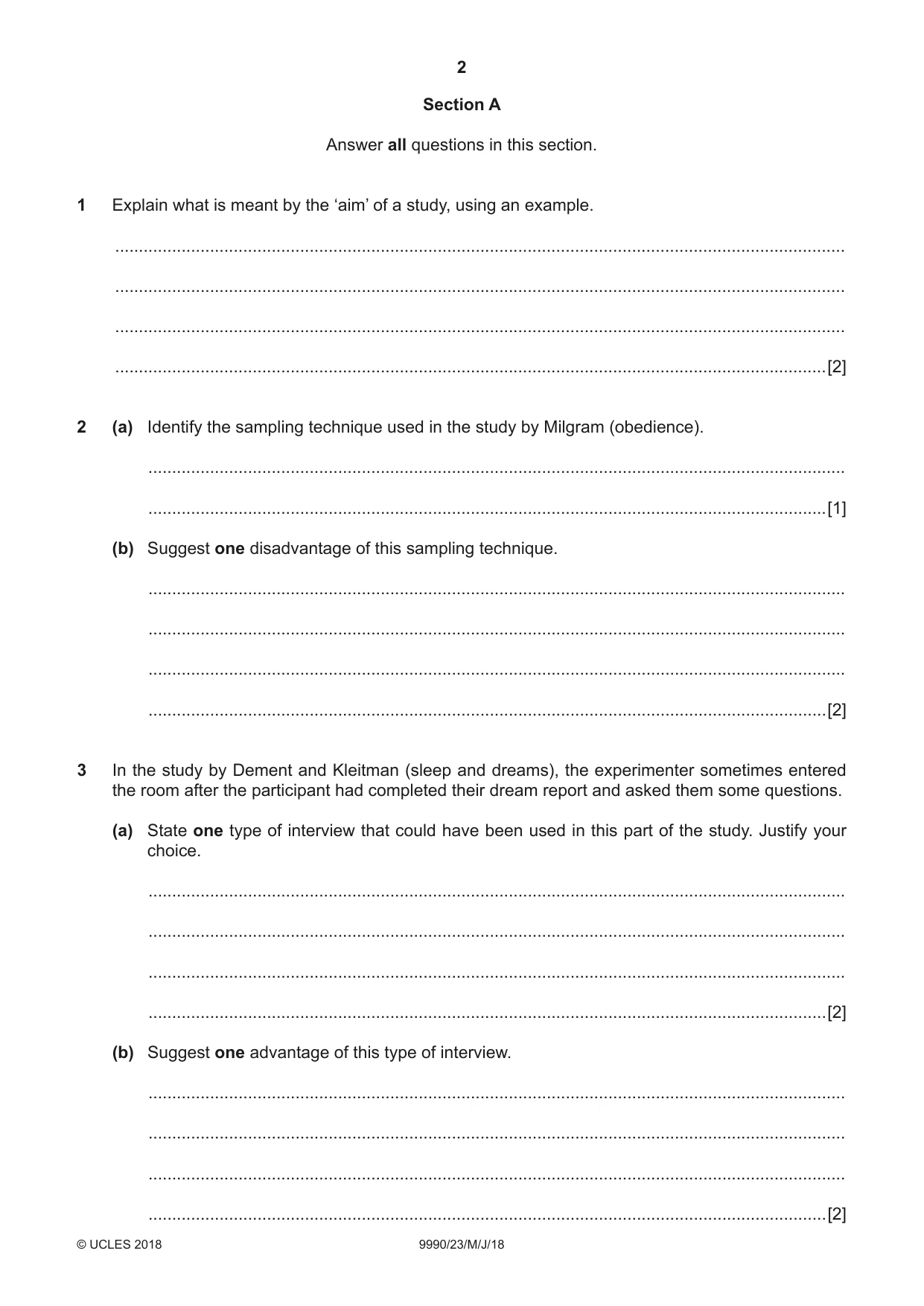
Q1 · Explain what is meant by the ‘aim’ of a study, using an example
1 Explain what is meant by the ‘aim’ of a study, using an example. .......................................................................................................................................................... .......................................................................................................................................................... .......................................................................................................................................................... ......................................................................................................................................................[2]
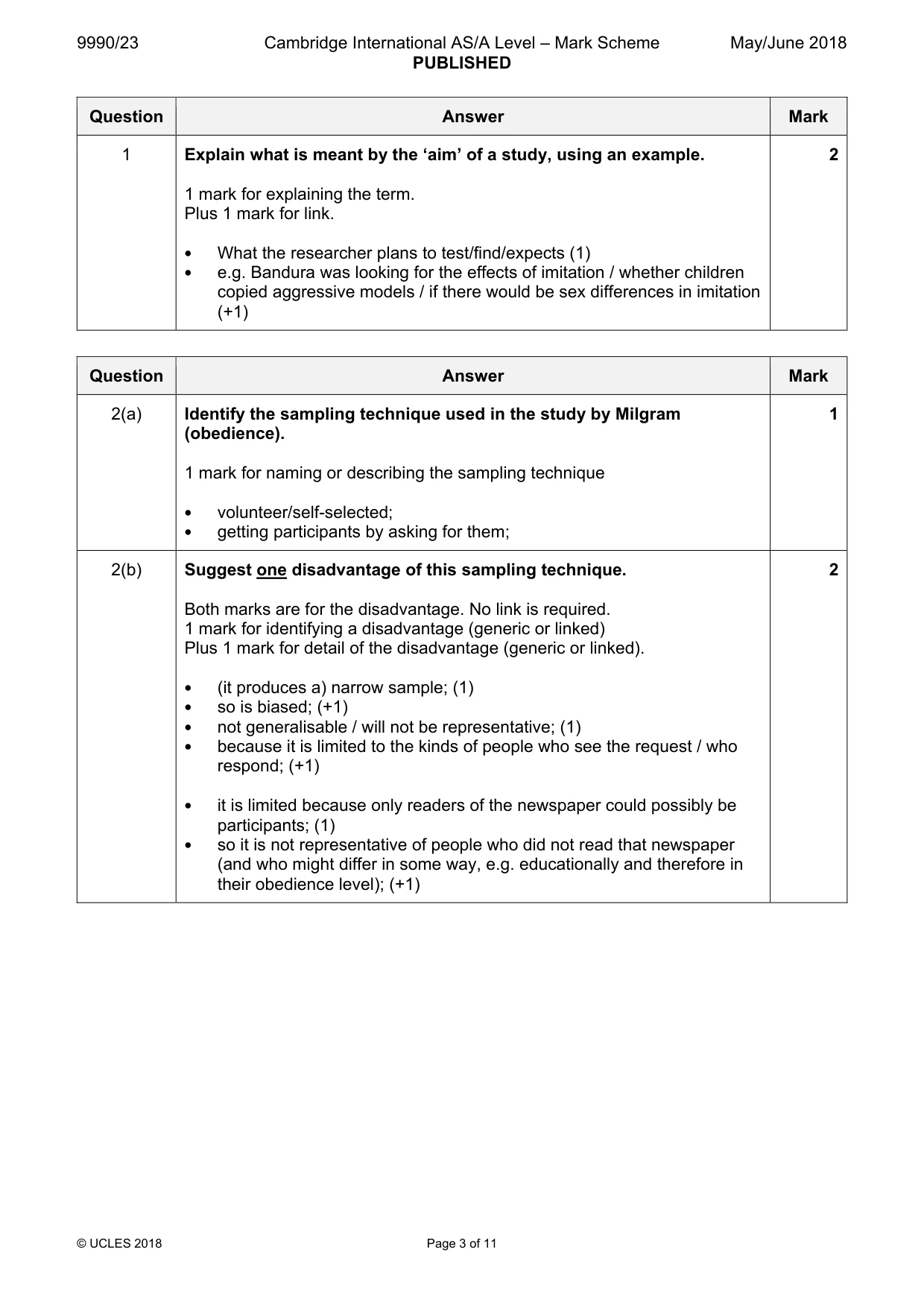
Mark scheme: Question Answer Mark 1 Explain what is meant by the ‘aim’ of a study, using an example. 2 1 mark for explaining the term. Plus 1 mark for link. • What the researcher plans to test/find/expects (1) • e.g. Bandura was looking for the effects of imitation / whether children copied aggressive models / if there would be sex differences in imitation (+1)
Q2 · Identify the sampling technique used in the study by Milgram (obedience)
2 (a) Identify the sampling technique used in the study by Milgram (obedience). ................................................................................................................................................... ...............................................................................................................................................[1] (b) Suggest one disadvantage of this sampling technique. ................................................................................................................................................... ................................................................................................................................................... ................................................................................................................................................... ...............................................................................................................................................[2]
Mark scheme: 2(a) Identify the sampling technique used in the study by Milgram 1 (obedience). 1 mark for naming or describing the sampling technique • volunteer/self-selected; • getting participants by asking for them; 2(b) Suggest one disadvantage of this sampling technique. 2 Both marks are for the disadvantage. No link is required. 1 mark for identifying a disadvantage (generic or linked) Plus 1 mark for detail of the disadvantage (generic or linked). • (it produces a) narrow sample; (1) • so is biased; (+1) • not generalisable / will not be representative; (1) • because it is limited to the kinds of people who see the request / who respond; (+1) • it is limited because only readers of the newspaper could possibly be participants; (1) • so it is not representative of people who did not read that newspaper (and who might differ in some way, e.g. educationally and therefore in their obedience level); (+1)
Q3 · In the study by Dement and Kleitman (sleep and dreams), the experimenter sometimes…
3 In the study by Dement and Kleitman (sleep and dreams), the experimenter sometimes entered the room after the participant had completed their dream report and asked them some questions. (a) State one type of interview that could have been used in this part of the study. Justify your choice. ................................................................................................................................................... ................................................................................................................................................... ................................................................................................................................................... ...............................................................................................................................................[2] (b) Suggest one advantage of this type of interview. ................................................................................................................................................... ................................................................................................................................................... ................................................................................................................................................... ...............................................................................................................................................[2]
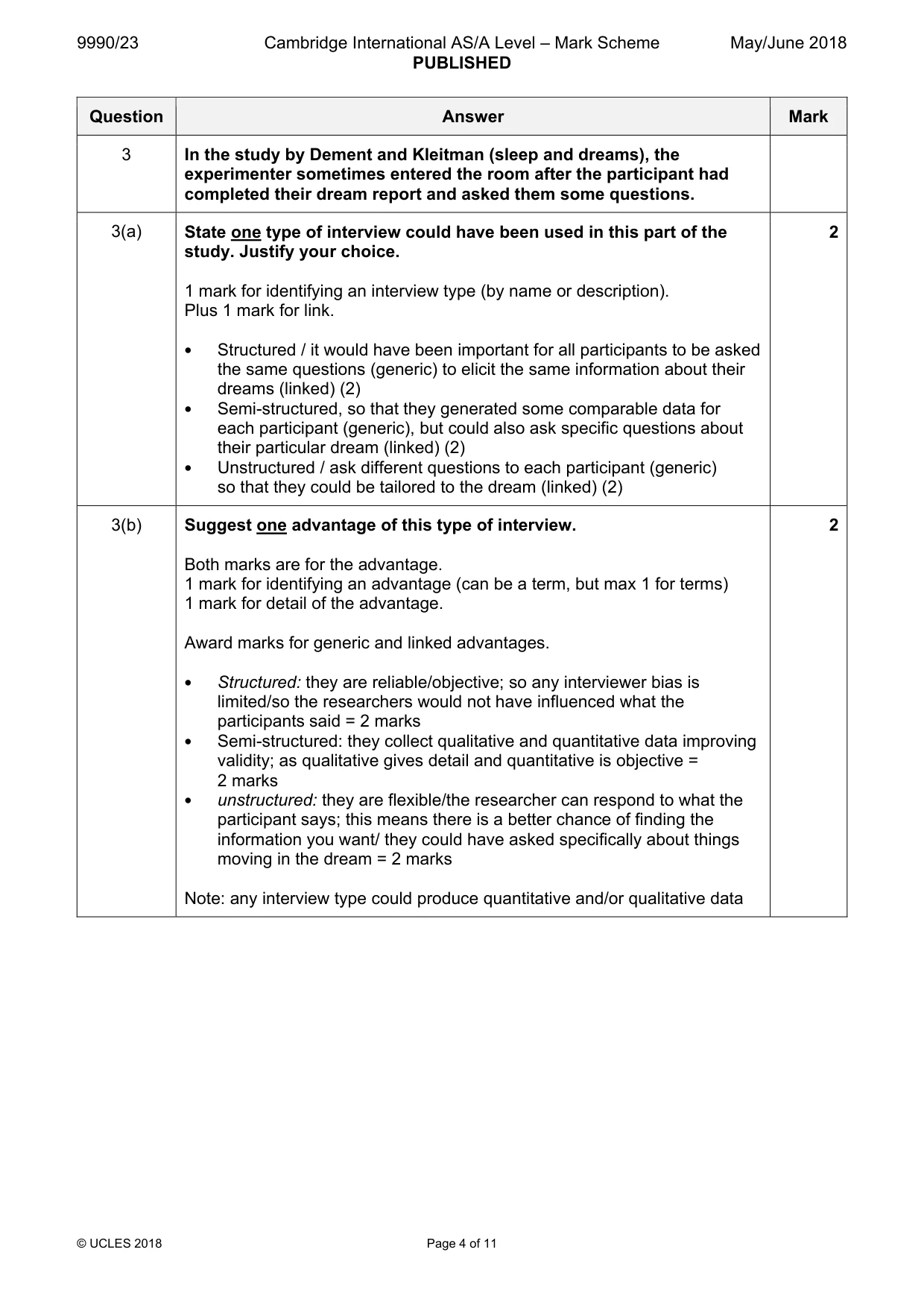
Mark scheme: 3(a) State one type of interview could have been used in this part of the 2 study. Justify your choice. 1 mark for identifying an interview type (by name or description). Plus 1 mark for link. • Structured / it would have been important for all participants to be asked the same questions (generic) to elicit the same information about their dreams (linked) (2) • Semi-structured, so that they generated some comparable data for each participant (generic), but could also ask specific questions about their particular dream (linked) (2) • Unstructured / ask different questions to each participant (generic) so that they could be tailored to the dream (linked) (2) 3(b) Suggest one advantage of this type of interview. 2 Both marks are for the advantage. 1 mark for identifying an advantage (can be a term, but max 1 for terms) 1 mark for detail of the advantage. Award marks for generic and linked advantages. • Structured: they are reliable/objective; so any interviewer bias is limited/so the researchers would not have influenced what the participants said = 2 marks • Semi-structured: they collect qualitative and quantitative data improving validity; as qualitative gives detail and quantitative is objective = 2 marks • unstructured: they are flexible/the researcher can respond to what the participant says; this means there is a better chance of finding the information you want/ they could have asked specifically about things moving in the dream = 2 marks Note: any interview type could produce quantitative and/or qualitative data
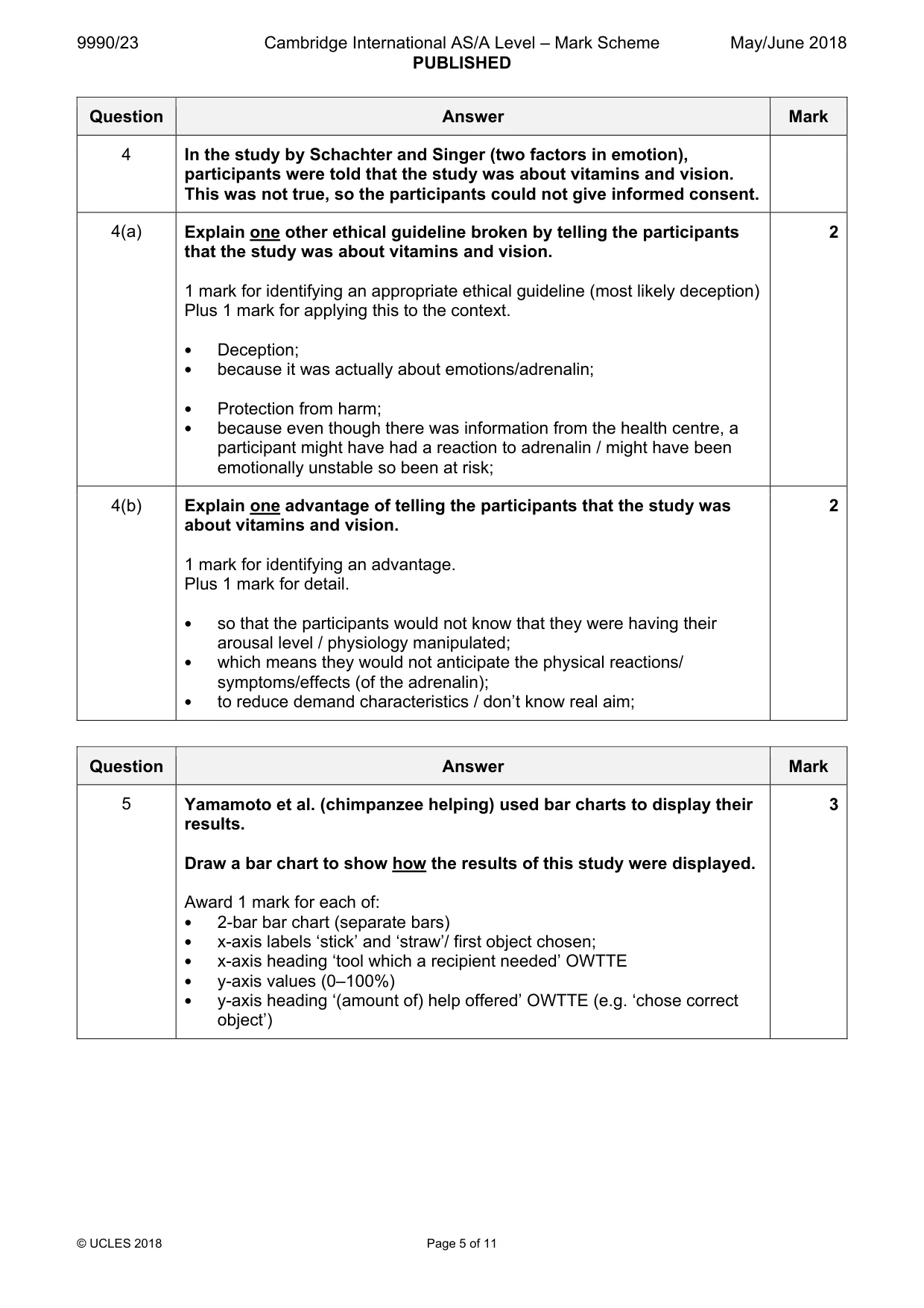
Q4 · In the study by Schachter and Singer (two factors in emotion), participants were told…
4 In the study by Schachter and Singer (two factors in emotion), participants were told that the study was about vitamins and vision. This was not true, so the participants could not give informed consent. (a) Explain one other ethical guideline broken by telling the participants that the study was about vitamins and vision. ................................................................................................................................................... ................................................................................................................................................... ................................................................................................................................................... ...............................................................................................................................................[2] (b) Explain one advantage of telling the participants that the study was about vitamins and vision. ................................................................................................................................................... ................................................................................................................................................... ................................................................................................................................................... ...............................................................................................................................................[2]
Mark scheme: 4(a) Explain one other ethical guideline broken by telling the participants 2 that the study was about vitamins and vision. 1 mark for identifying an appropriate ethical guideline (most likely deception) Plus 1 mark for applying this to the context. • Deception; • because it was actually about emotions/adrenalin; • Protection from harm; • because even though there was information from the health centre, a participant might have had a reaction to adrenalin / might have been emotionally unstable so been at risk; 4(b) Explain one advantage of telling the participants that the study was 2 about vitamins and vision. 1 mark for identifying an advantage. Plus 1 mark for detail. • so that the participants would not know that they were having their arousal level / physiology manipulated; • which means they would not anticipate the physical reactions/ symptoms/effects (of the adrenalin); • to reduce demand characteristics / don’t know real aim;
Question 5
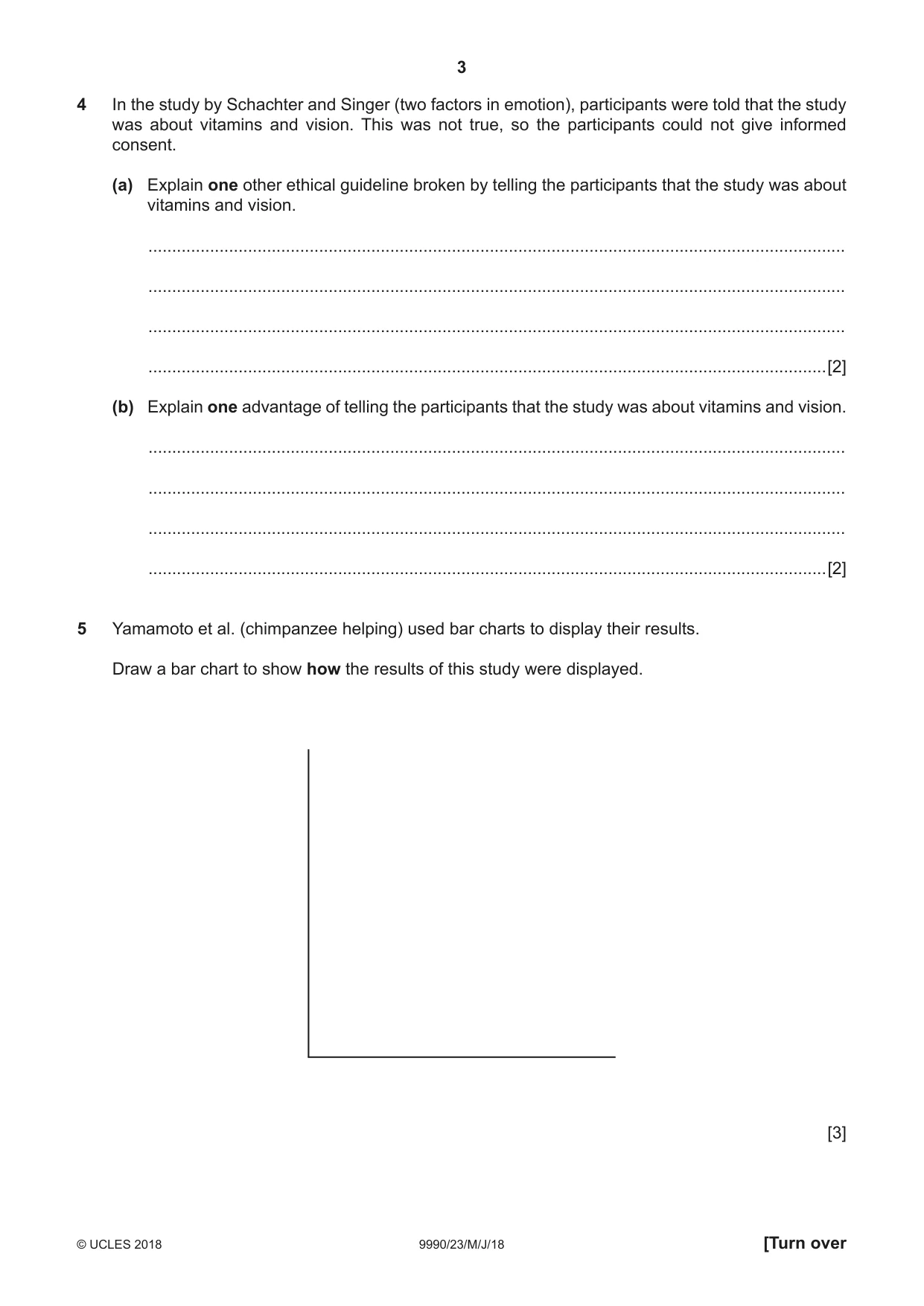
5 Yamamoto et al. (chimpanzee helping) used bar charts to display their results. Draw a bar chart to show how the results of this study were displayed. [3]
Mark scheme: 5 Yamamoto et al. (chimpanzee helping) used bar charts to display their 3 results. Draw a bar chart to show how the results of this study were displayed. Award 1 mark for each of: • 2-bar bar chart (separate bars) • x-axis labels ‘stick’ and ‘straw’/ first object chosen; • x-axis heading ‘tool which a recipient needed’ OWTTE • y-axis values (0–100%) • y-axis heading ‘(amount of) help offered’ OWTTE (e.g. ‘chose correct object’)
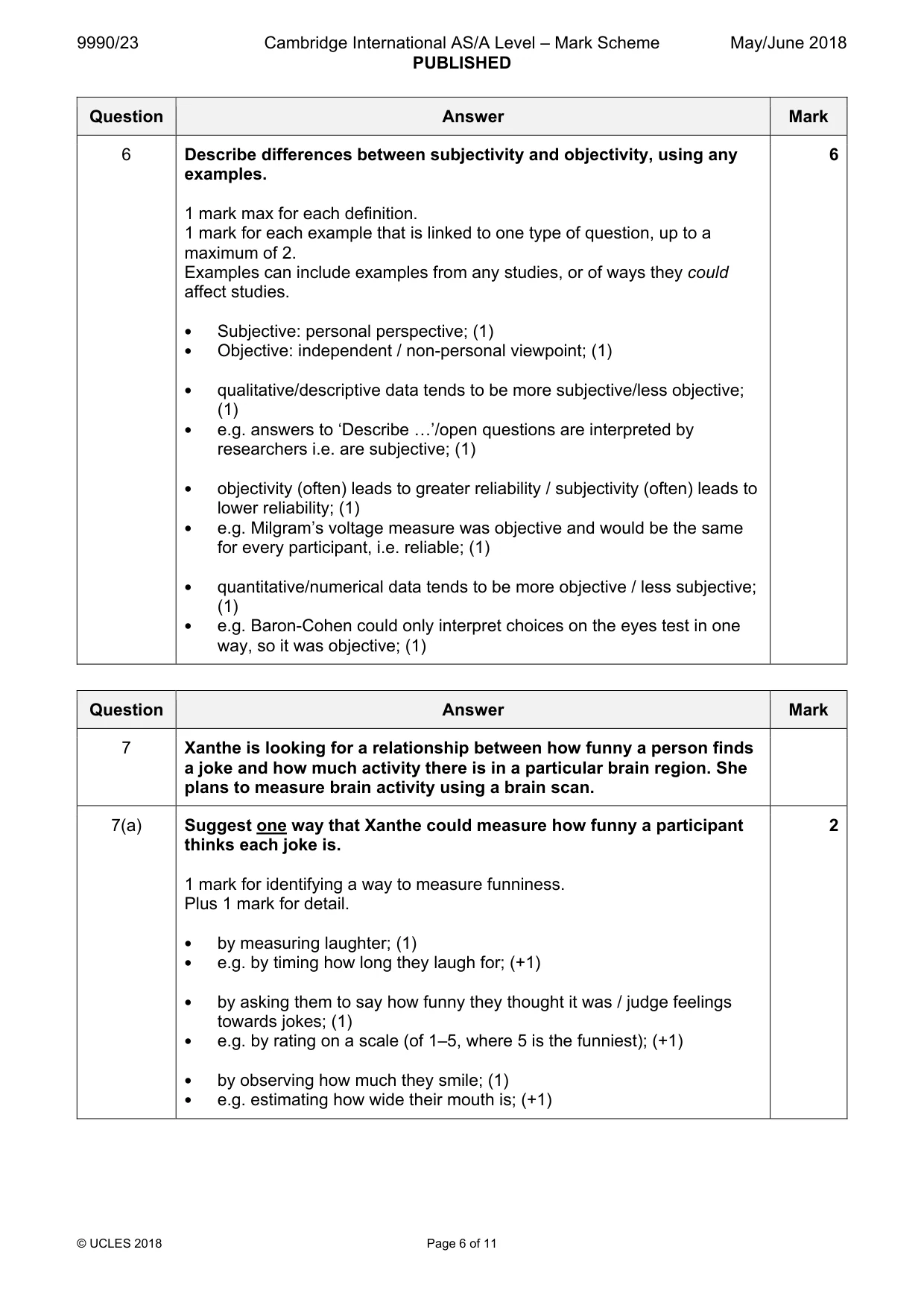
Q6 · Describe differences between subjectivity and objectivity, using any examples
6 Describe differences between subjectivity and objectivity, using any examples. .......................................................................................................................................................... .......................................................................................................................................................... .......................................................................................................................................................... .......................................................................................................................................................... .......................................................................................................................................................... .......................................................................................................................................................... .......................................................................................................................................................... .......................................................................................................................................................... .......................................................................................................................................................... .......................................................................................................................................................... .......................................................................................................................................................... ......................................................................................................................................................[6]
Mark scheme: 6 Describe differences between subjectivity and objectivity, using any 6 examples. 1 mark max for each definition. 1 mark for each example that is linked to one type of question, up to a maximum of 2. Examples can include examples from any studies, or of ways they could affect studies. • Subjective: personal perspective; (1) • Objective: independent / non-personal viewpoint; (1) • qualitative/descriptive data tends to be more subjective/less objective; (1) • e.g. answers to ‘Describe «’/open questions are interpreted by researchers i.e. are subjective; (1) • objectivity (often) leads to greater reliability / subjectivity (often) leads to lower reliability; (1) • e.g. Milgram’s voltage measure was objective and would be the same for every participant, i.e. reliable; (1) • quantitative/numerical data tends to be more objective / less subjective; (1) • e.g. Baron-Cohen could only interpret choices on the eyes test in one way, so it was objective; (1)
Q7 · Xanthe is investigating whether there is a relationship between how funny a person finds…
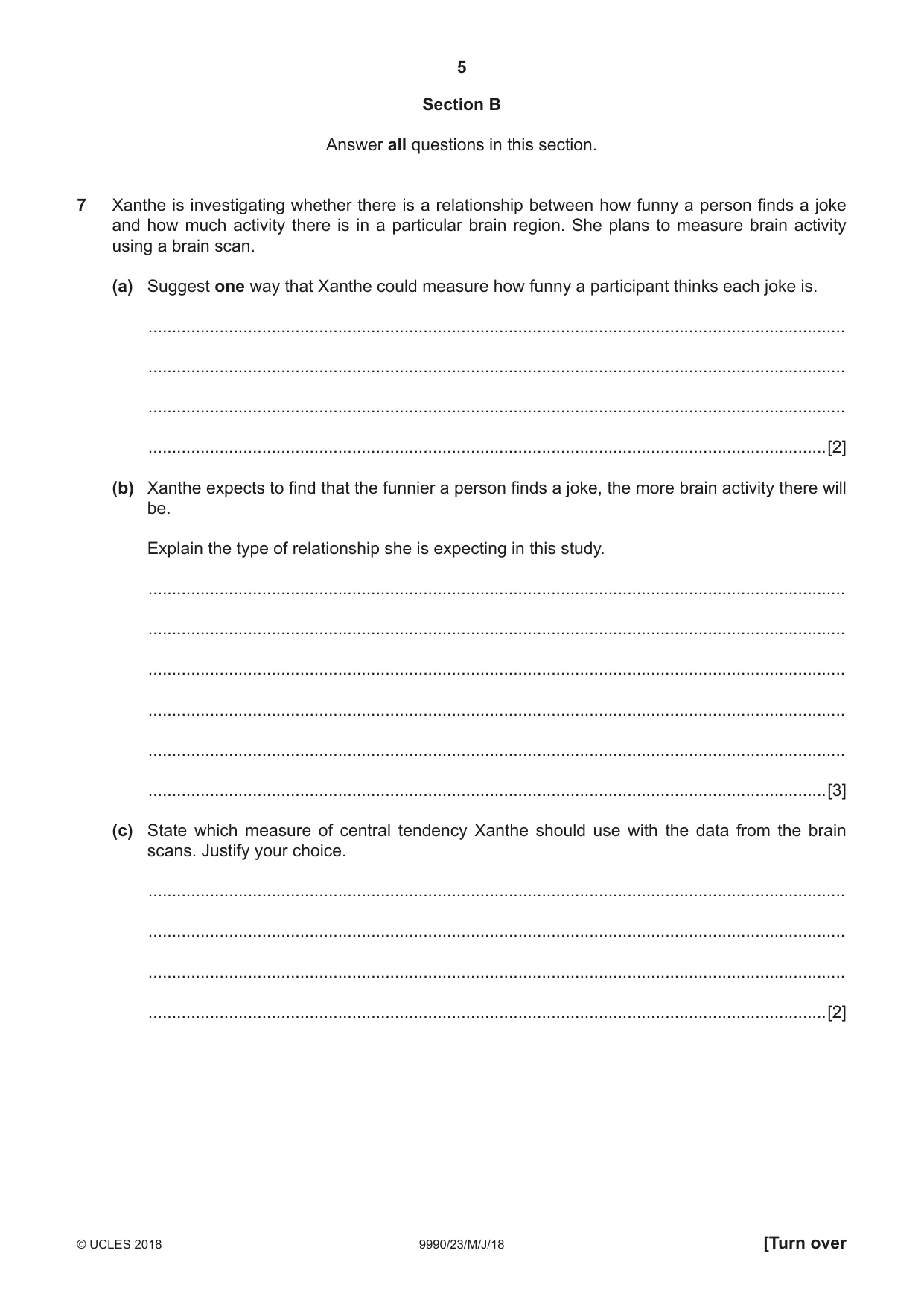
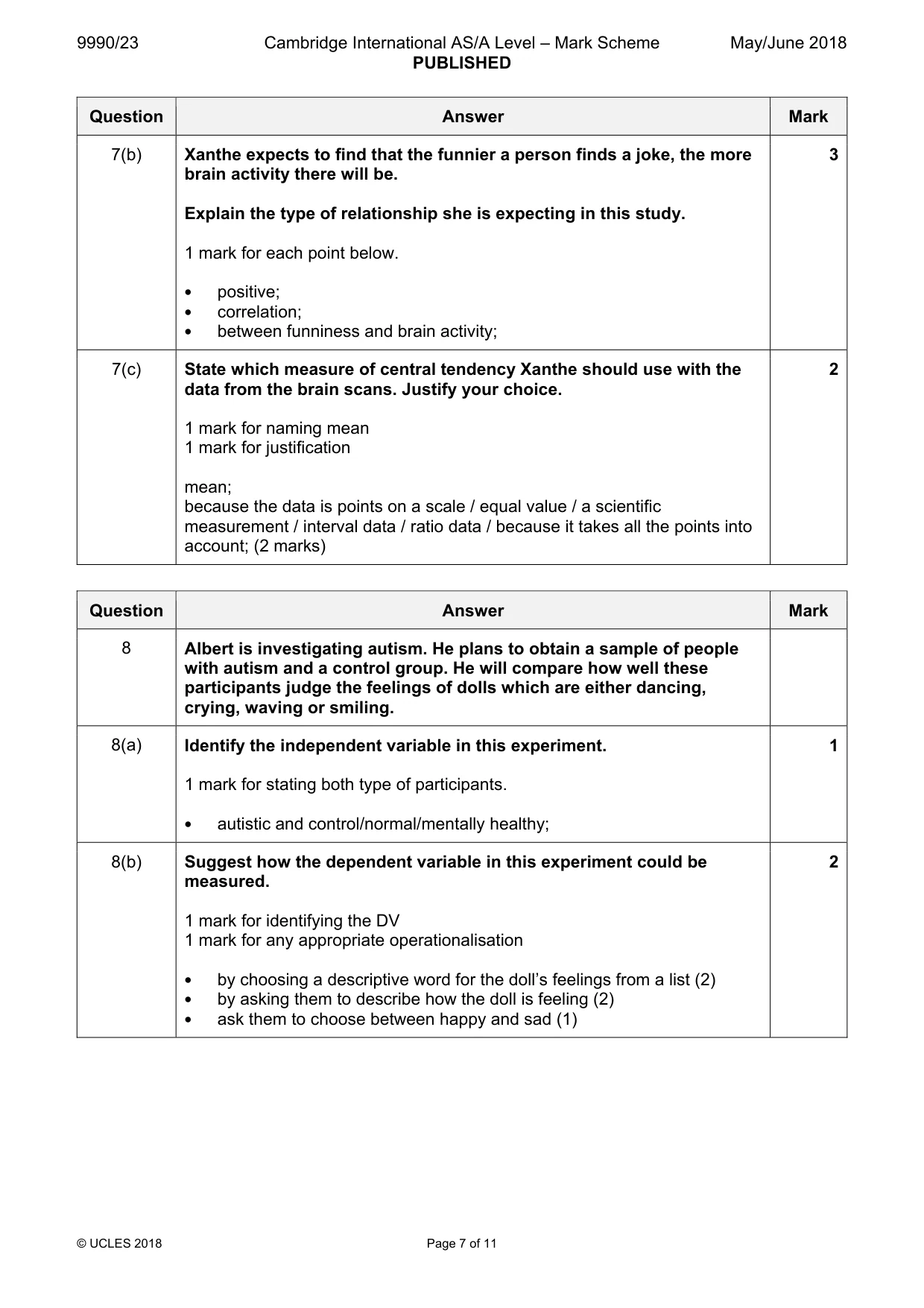
7 Xanthe is investigating whether there is a relationship between how funny a person finds a joke and how much activity there is in a particular brain region. She plans to measure brain activity using a brain scan. (a) Suggest one way that Xanthe could measure how funny a participant thinks each joke is. ................................................................................................................................................... ................................................................................................................................................... ................................................................................................................................................... ...............................................................................................................................................[2] (b) Xanthe expects to find that the funnier a person finds a joke, the more brain activity there will be. Explain the type of relationship she is expecting in this study. ................................................................................................................................................... ................................................................................................................................................... ................................................................................................................................................... ................................................................................................................................................... ................................................................................................................................................... ...............................................................................................................................................[3] (c) State which measure of central tendency Xanthe should use with the data from the brain scans. Justify your choice. ................................................................................................................................................... ................................................................................................................................................... ................................................................................................................................................... ...............................................................................................................................................[2]
Mark scheme: 7(a) Suggest one way that Xanthe could measure how funny a participant 2 thinks each joke is. 1 mark for identifying a way to measure funniness. Plus 1 mark for detail. • by measuring laughter; (1) • e.g. by timing how long they laugh for; (+1) • by asking them to say how funny they thought it was / judge feelings towards jokes; (1) • e.g. by rating on a scale (of 1–5, where 5 is the funniest); (+1) • by observing how much they smile; (1) • e.g. estimating how wide their mouth is; (+1) 7(b) Xanthe expects to find that the funnier a person finds a joke, the more 3 brain activity there will be. Explain the type of relationship she is expecting in this study. 1 mark for each point below. • positive; • correlation; • between funniness and brain activity; 7(c) State which measure of central tendency Xanthe should use with the 2 data from the brain scans. Justify your choice. 1 mark for naming mean 1 mark for justification mean; because the data is points on a scale / equal value / a scientific measurement / interval data / ratio data / because it takes all the points into account; (2 marks)
Q8 · Albert is investigating autism
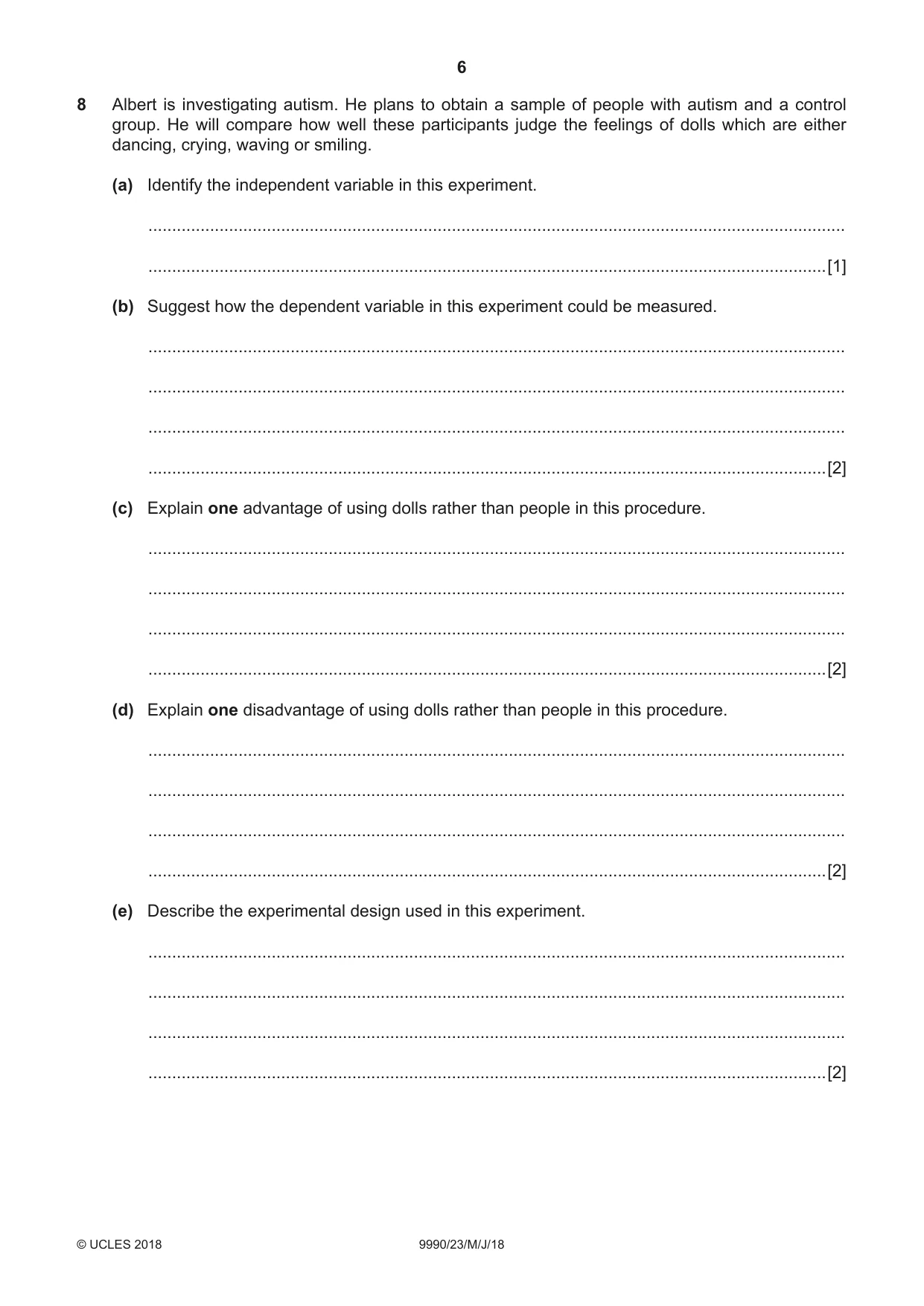
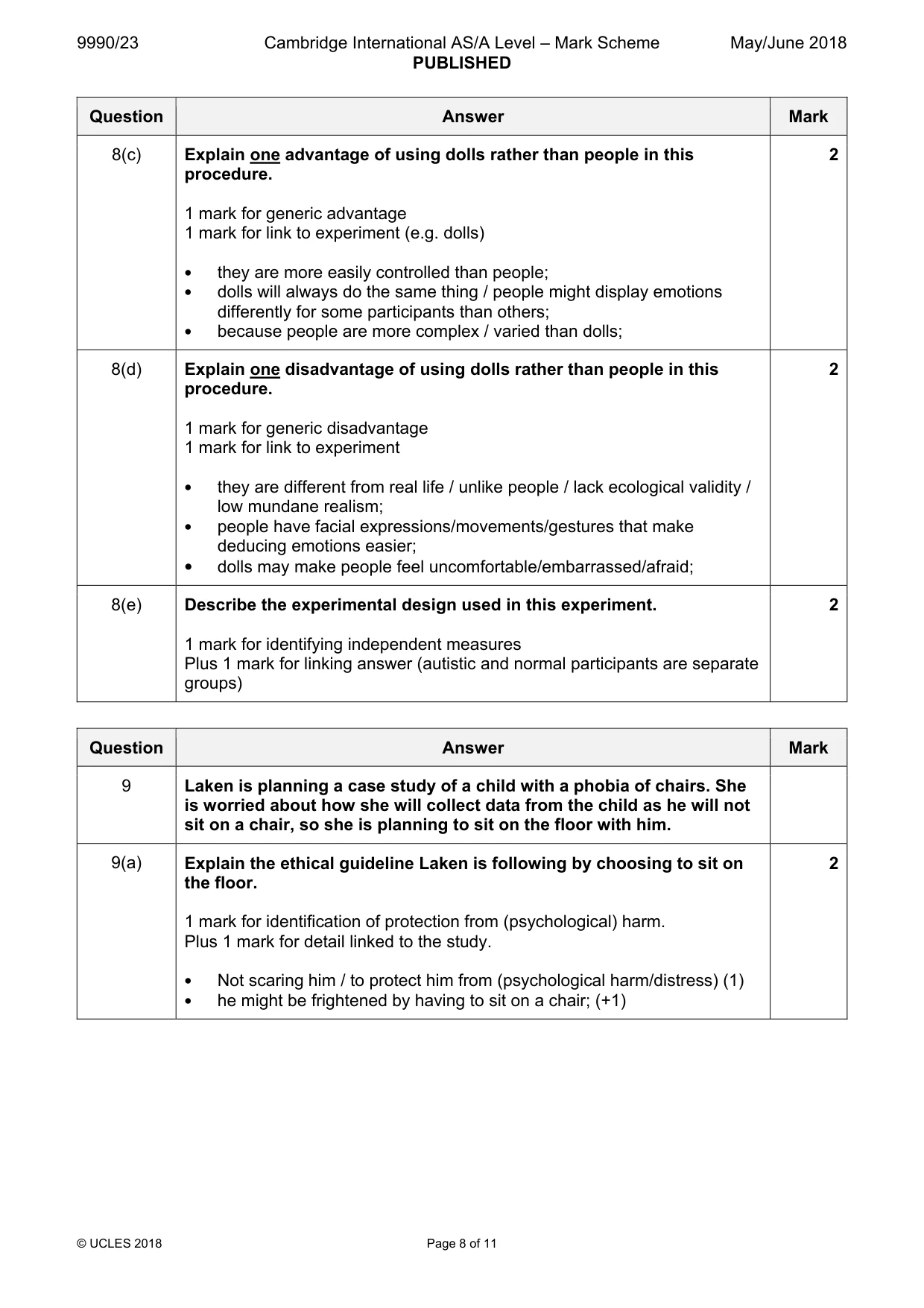
8 Albert is investigating autism. He plans to obtain a sample of people with autism and a control group. He will compare how well these participants judge the feelings of dolls which are either dancing, crying, waving or smiling. (a) Identify the independent variable in this experiment. ................................................................................................................................................... ...............................................................................................................................................[1] (b) Suggest how the dependent variable in this experiment could be measured. ................................................................................................................................................... ................................................................................................................................................... ................................................................................................................................................... ...............................................................................................................................................[2] (c) Explain one advantage of using dolls rather than people in this procedure. ................................................................................................................................................... ................................................................................................................................................... ................................................................................................................................................... ...............................................................................................................................................[2] (d) Explain one disadvantage of using dolls rather than people in this procedure. ................................................................................................................................................... ................................................................................................................................................... ................................................................................................................................................... ...............................................................................................................................................[2] (e) Describe the experimental design used in this experiment. ................................................................................................................................................... ................................................................................................................................................... ................................................................................................................................................... ...............................................................................................................................................[2]
Mark scheme: 8(a) Identify the independent variable in this experiment. 1 1 mark for stating both type of participants. • autistic and control/normal/mentally healthy; 8(b) Suggest how the dependent variable in this experiment could be 2 measured. 1 mark for identifying the DV 1 mark for any appropriate operationalisation • by choosing a descriptive word for the doll’s feelings from a list (2) • by asking them to describe how the doll is feeling (2) • ask them to choose between happy and sad (1) 8(c) Explain one advantage of using dolls rather than people in this 2 procedure. 1 mark for generic advantage 1 mark for link to experiment (e.g. dolls) • they are more easily controlled than people; • dolls will always do the same thing / people might display emotions differently for some participants than others; • because people are more complex / varied than dolls; 8(d) Explain one disadvantage of using dolls rather than people in this 2 procedure. 1 mark for generic disadvantage 1 mark for link to experiment • they are different from real life / unlike people / lack ecological validity / low mundane realism; • people have facial expressions/movements/gestures that make deducing emotions easier; • dolls may make people feel uncomfortable/embarrassed/afraid; 8(e) Describe the experimental design used in this experiment. 2 1 mark for identifying independent measures Plus 1 mark for linking answer (autistic and normal participants are separate groups)
Q9 · Laken is planning a case study of a child with a phobia of chairs
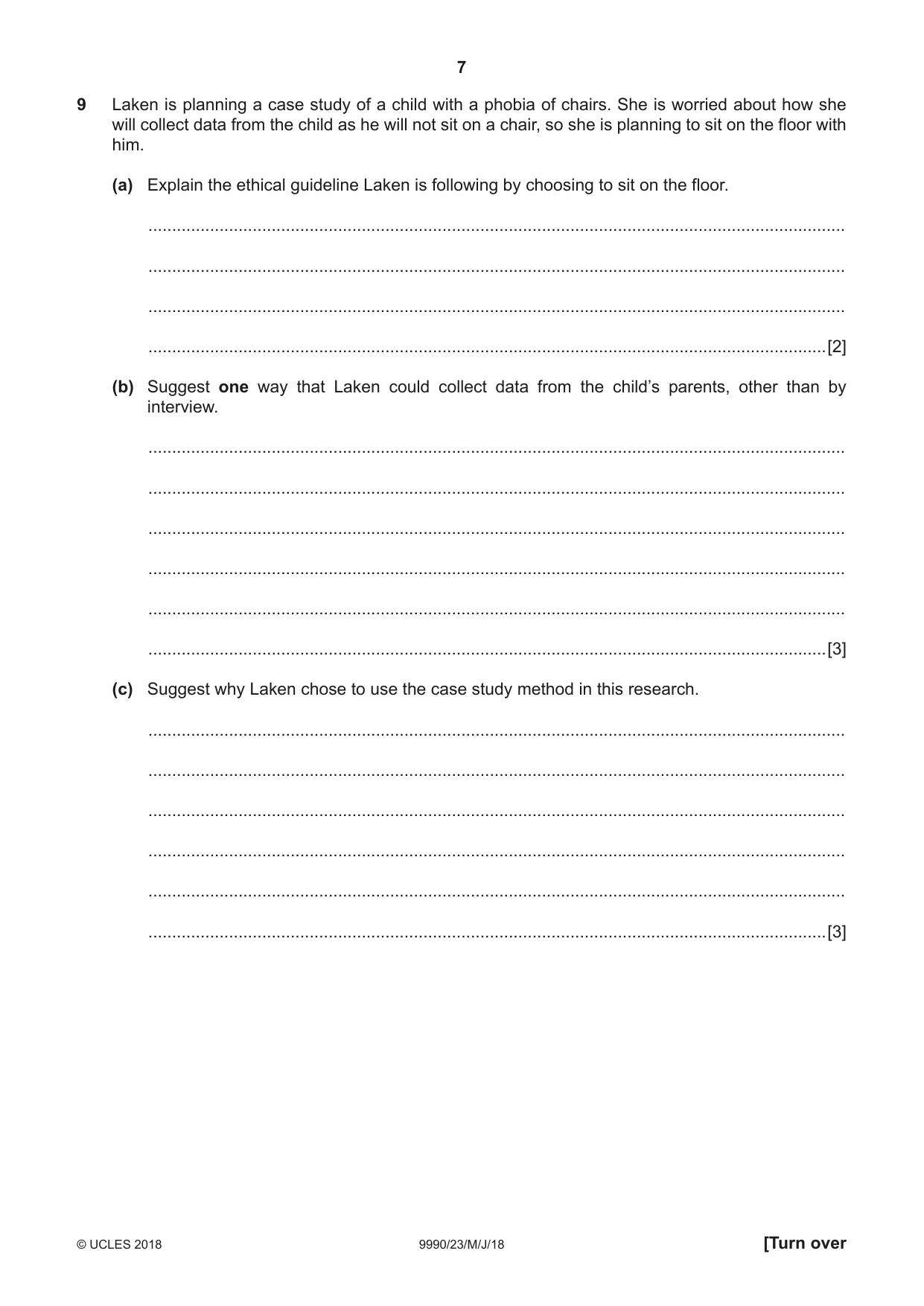
9 Laken is planning a case study of a child with a phobia of chairs. She is worried about how she will collect data from the child as he will not sit on a chair, so she is planning to sit on the floor with him. (a) Explain the ethical guideline Laken is following by choosing to sit on the floor. ................................................................................................................................................... ................................................................................................................................................... ................................................................................................................................................... ...............................................................................................................................................[2] (b) Suggest one way that Laken could collect data from the child’s parents, other than by interview. ................................................................................................................................................... ................................................................................................................................................... ................................................................................................................................................... ................................................................................................................................................... ................................................................................................................................................... ...............................................................................................................................................[3] (c) Suggest why Laken chose to use the case study method in this research. ................................................................................................................................................... ................................................................................................................................................... ................................................................................................................................................... ................................................................................................................................................... ................................................................................................................................................... ...............................................................................................................................................[3] Section C Answer all questions in this section.
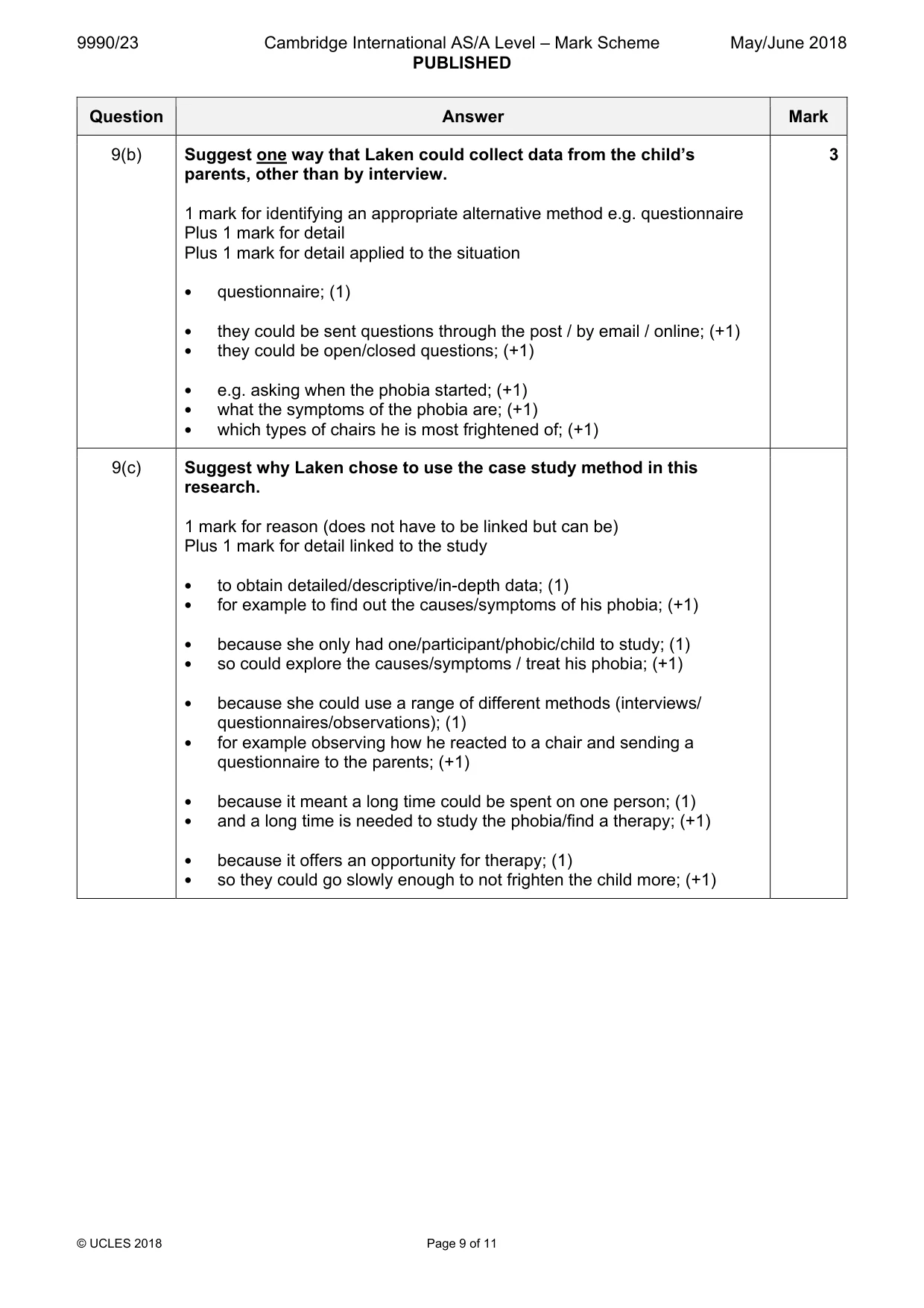
Mark scheme: 9(a) Explain the ethical guideline Laken is following by choosing to sit on 2 the floor. 1 mark for identification of protection from (psychological) harm. Plus 1 mark for detail linked to the study. • Not scaring him / to protect him from (psychological harm/distress) (1) • he might be frightened by having to sit on a chair; (+1) 9(b) Suggest one way that Laken could collect data from the child’s 3 parents, other than by interview. 1 mark for identifying an appropriate alternative method e.g. questionnaire Plus 1 mark for detail Plus 1 mark for detail applied to the situation • questionnaire; (1) • they could be sent questions through the post / by email / online; (+1) • they could be open/closed questions; (+1) • e.g. asking when the phobia started; (+1) • what the symptoms of the phobia are; (+1) • which types of chairs he is most frightened of; (+1) 9(c) Suggest why Laken chose to use the case study method in this research. 1 mark for reason (does not have to be linked but can be) Plus 1 mark for detail linked to the study • to obtain detailed/descriptive/in-depth data; (1) • for example to find out the causes/symptoms of his phobia; (+1) • because she only had one/participant/phobic/child to study; (1) • so could explore the causes/symptoms / treat his phobia; (+1) • because she could use a range of different methods (interviews/ questionnaires/observations); (1) • for example observing how he reacted to a chair and sending a questionnaire to the parents; (+1) • because it meant a long time could be spent on one person; (1) • and a long time is needed to study the phobia/find a therapy; (+1) • because it offers an opportunity for therapy; (1) • so they could go slowly enough to not frighten the child more; (+1)
More questions on Anxiety disorders and fear-related disorders
Q10 · Taavi works in an office and has been asked to conduct an observation of employees’…
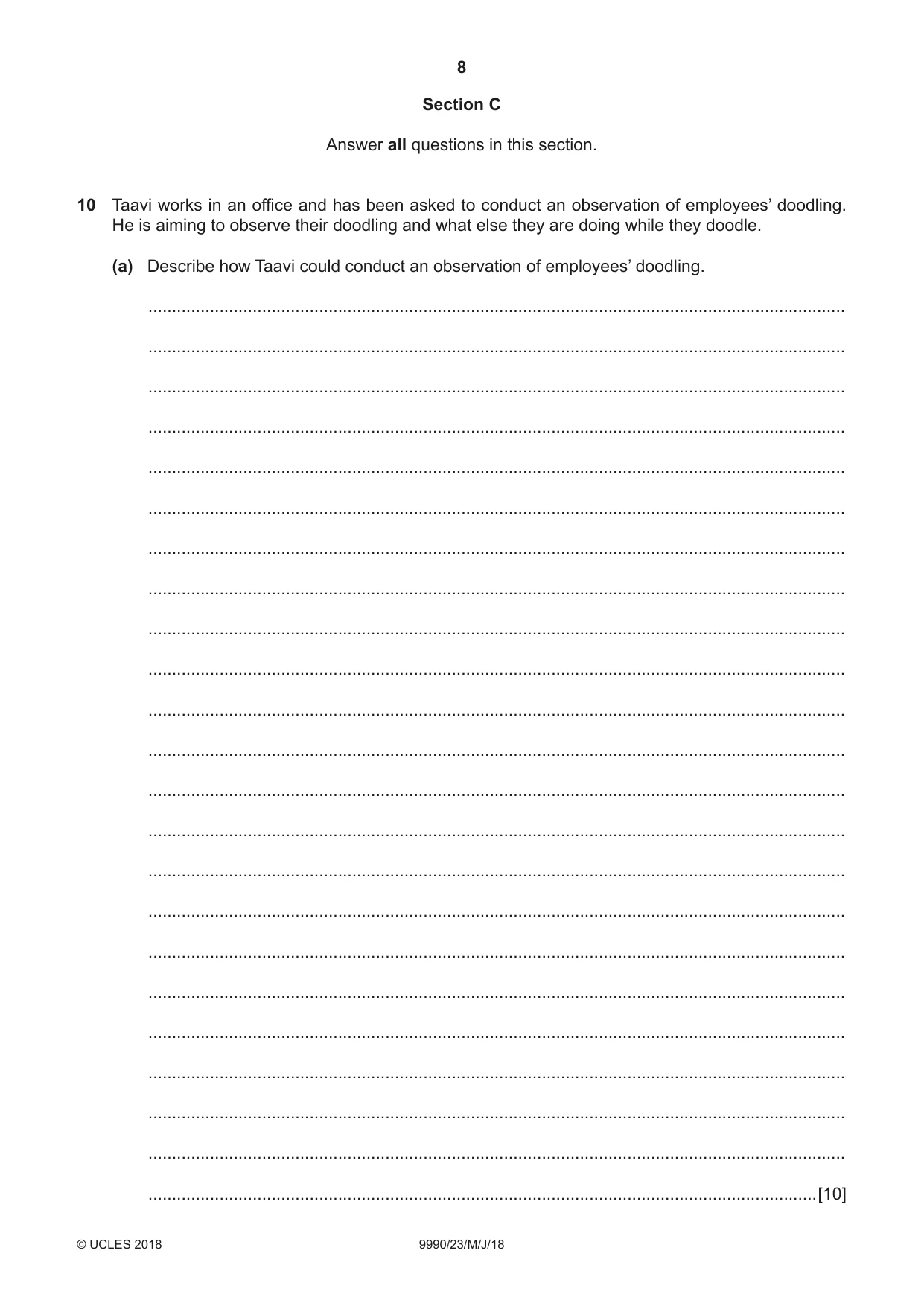
10 Taavi works in an office and has been asked to conduct an observation of employees’ doodling. He is aiming to observe their doodling and what else they are doing while they doodle. (a) Describe how Taavi could conduct an observation of employees’ doodling. ................................................................................................................................................... ................................................................................................................................................... ................................................................................................................................................... ................................................................................................................................................... ................................................................................................................................................... ................................................................................................................................................... ................................................................................................................................................... ................................................................................................................................................... ................................................................................................................................................... ................................................................................................................................................... ................................................................................................................................................... ................................................................................................................................................... ................................................................................................................................................... ................................................................................................................................................... ................................................................................................................................................... ................................................................................................................................................... ................................................................................................................................................... ................................................................................................................................................... ................................................................................................................................................... ................................................................................................................................................... ................................................................................................................................................... ................................................................................................................................................... .............................................................................................................................................[10] (b) Identify one weakness/limitation with the procedure you have described in your answer to part (a) and suggest how your study might be done differently to overcome the problem. ................................................................................................................................................... ................................................................................................................................................... ................................................................................................................................................... ................................................................................................................................................... ................................................................................................................................................... ................................................................................................................................................... ................................................................................................................................................... ...............................................................................................................................................[4]
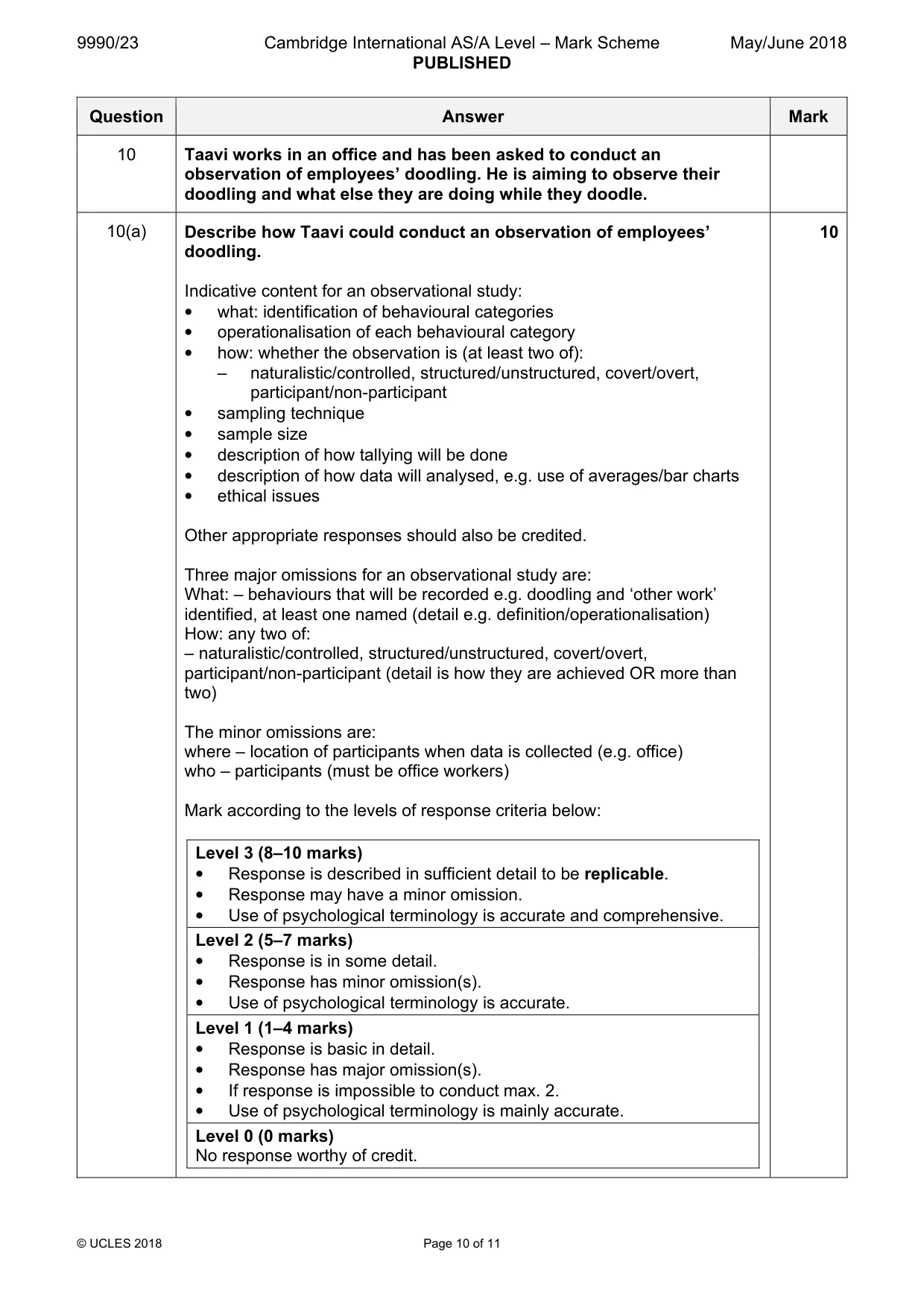
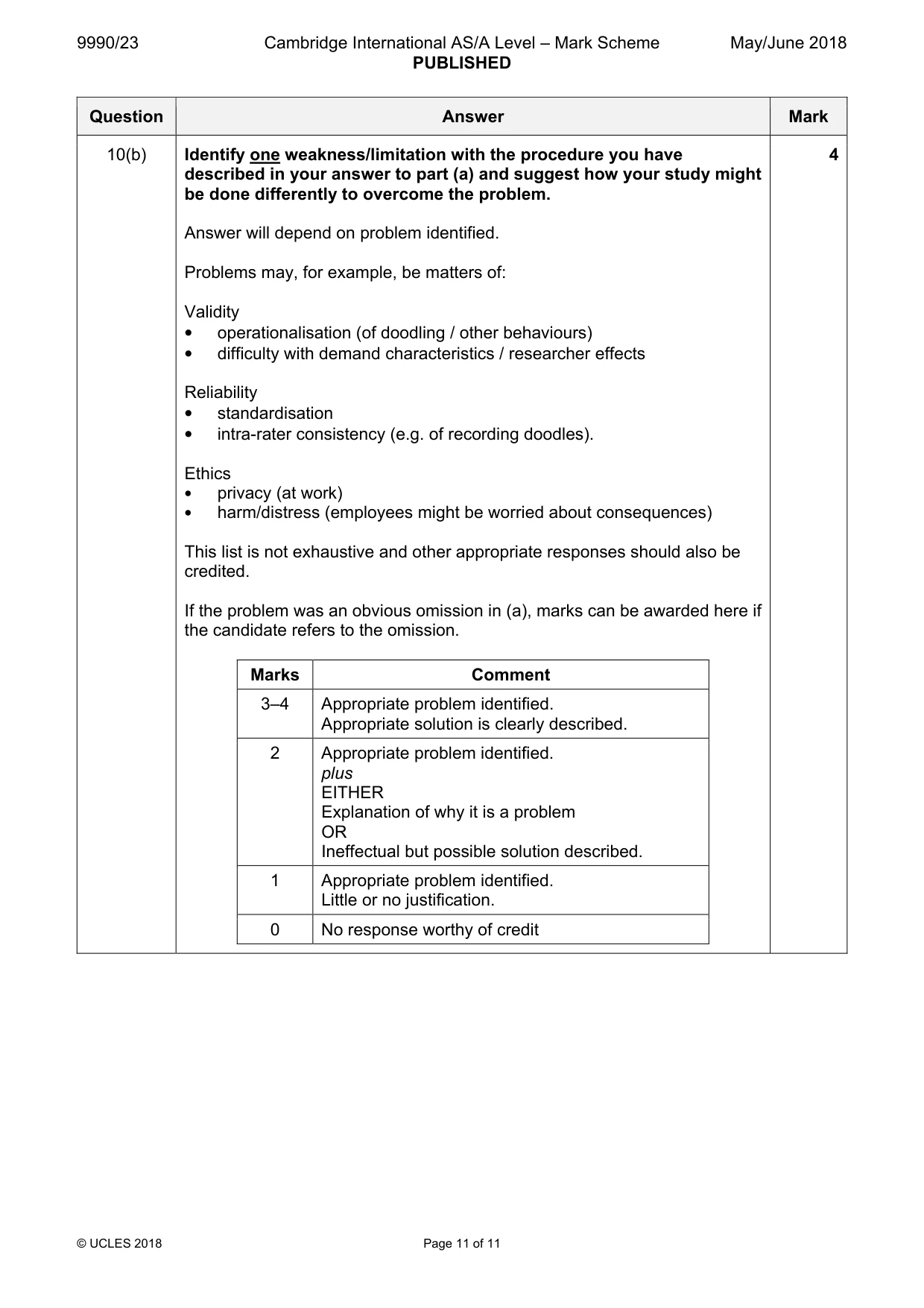
Mark scheme: 10(a) Describe how Taavi could conduct an observation of employees’ 10 doodling. Indicative content for an observational study: • what: identification of behavioural categories • operationalisation of each behavioural category • how: whether the observation is (at least two of): – naturalistic/controlled, structured/unstructured, covert/overt, participant/non-participant • sampling technique • sample size • description of how tallying will be done • description of how data will analysed, e.g. use of averages/bar charts • ethical issues Other appropriate responses should also be credited. Three major omissions for an observational study are: What: – behaviours that will be recorded e.g. doodling and ‘other work’ identified, at least one named (detail e.g. definition/operationalisation) How: any two of: – naturalistic/controlled, structured/unstructured, covert/overt, participant/non-participant (detail is how they are achieved OR more than two) The minor omissions are: where – location of participants when data is collected (e.g. office) who – participants (must be office workers) Mark according to the levels of response criteria below: Level 3 (8–10 marks) • Response is described in sufficient detail to be replicable. • Response may have a minor omission. • Use of psychological terminology is accurate and comprehensive. Level 2 (5–7 marks) • Response is in some detail. • Response has minor omission(s). • Use of psychological terminology is accurate. Level 1 (1–4 marks) • Response is basic in detail. • Response has major omission(s). • If response is impossible to conduct max. 2. • Use of psychological terminology is mainly accurate. Level 0 (0 marks) No response worthy of credit. 10(b) Identify one weakness/limitation with the procedure you have 4 described in your answer to part (a) and suggest how your study might be done differently to overcome the problem. Answer will depend on problem identified. Problems may, for example, be matters of: Validity • operationalisation (of doodling / other behaviours) • difficulty with demand characteristics / researcher effects Reliability • standardisation • intra-rater consistency (e.g. of recording doodles). Ethics • privacy (at work) • harm/distress (employees might be worried about consequences) This list is not exhaustive and other appropriate responses should also be credited. If the problem was an obvious omission in (a), marks can be awarded here if the candidate refers to the omission. Marks Comment 3–4 Appropriate problem identified. Appropriate solution is clearly described. 2 Appropriate problem identified. plus EITHER Explanation of why it is a problem OR Ineffectual but possible solution described. 1 Appropriate problem identified. Little or no justification. 0 No response worthy of credit
What was in this paper
The subtopics covered by these 10 questions, and how many questions each got. Open one in a new tab to see every Cambridge question on it.
What you needed in this session
Cambridge’s own grade thresholds for 2018 May/June, Paper 2 · Variant 3. A higher threshold means an easier paper — the bar moves with how the cohort did.