Cambridge A Level Psychology (from 2018) 9990 — 2018 May/June Paper 2 · Variant 2
9990/22/M/J/18 · 10 questions · 60 marks · ≈68 min
The question paper and its mark scheme, free to read here and free to download. This is Cambridge’s own paper, exactly as it was sat.
Question paper12 pages




Mark scheme12 pages
Answers below. Sit the paper first if you are practising.
Questions as text
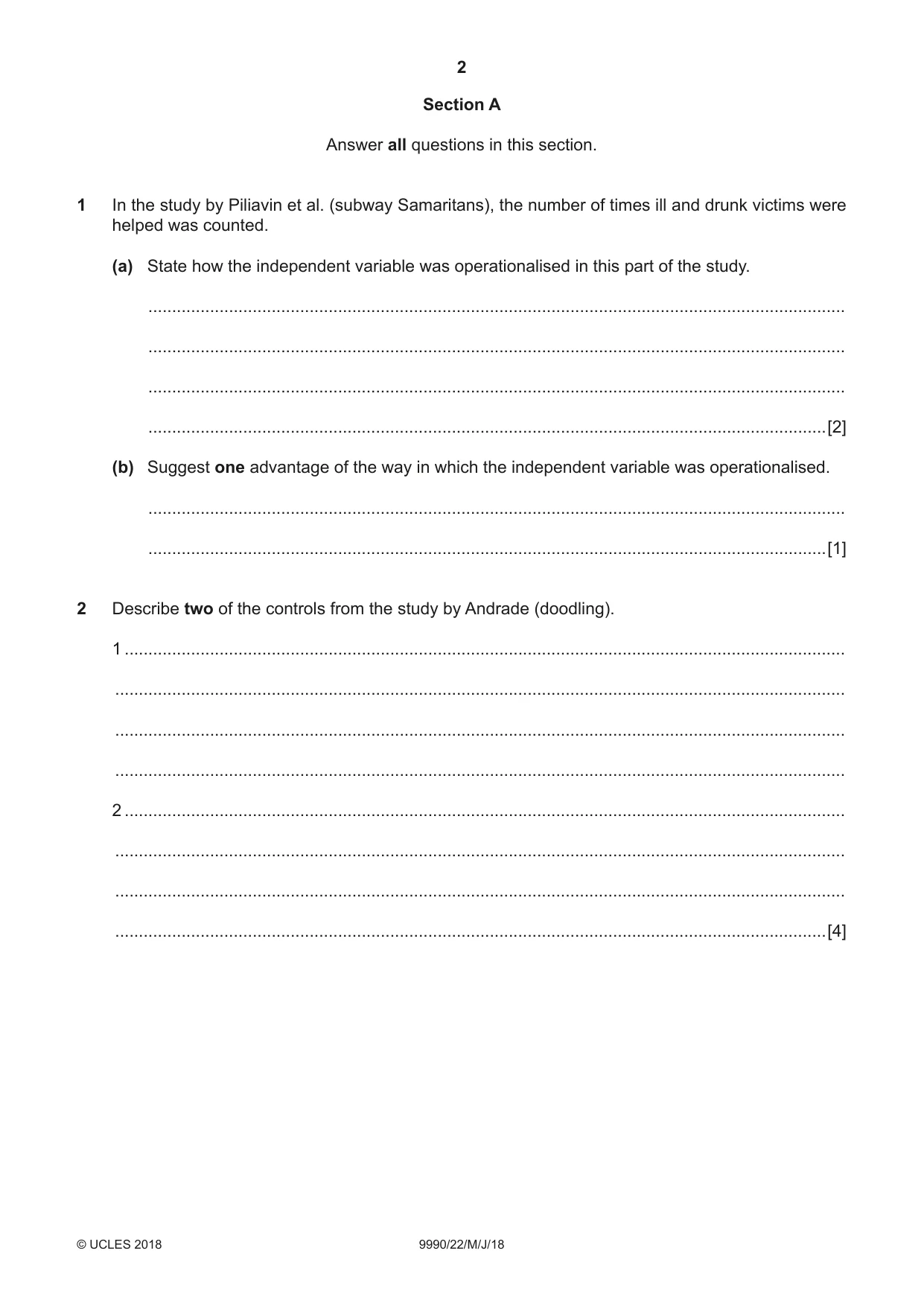
Q1 · In the study by Piliavin et al
1 In the study by Piliavin et al. (subway Samaritans), the number of times ill and drunk victims were helped was counted. (a) State how the independent variable was operationalised in this part of the study. ................................................................................................................................................... ................................................................................................................................................... ................................................................................................................................................... ...............................................................................................................................................[2] (b) Suggest one advantage of the way in which the independent variable was operationalised. ................................................................................................................................................... ...............................................................................................................................................[1]
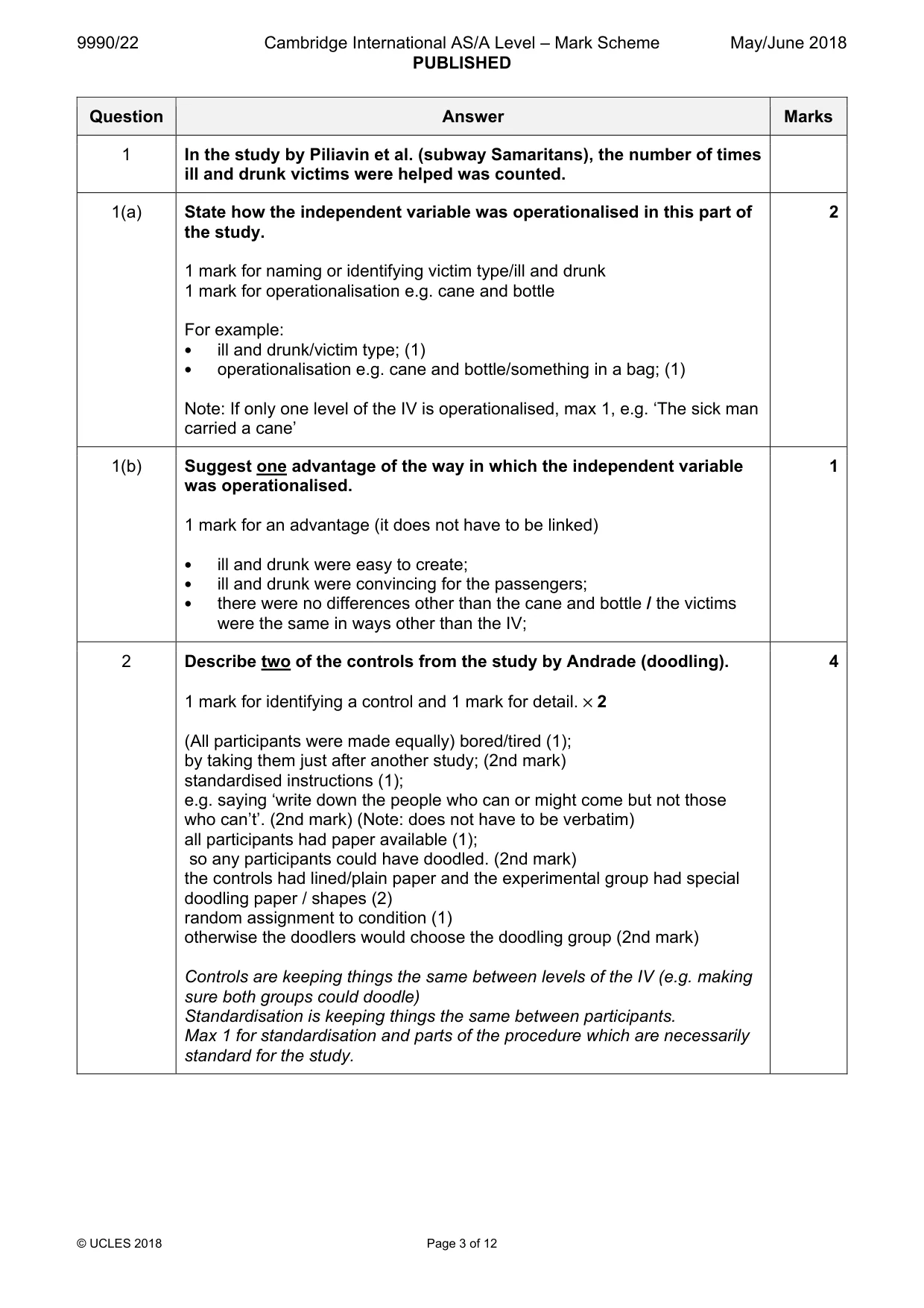
Mark scheme: Question Answer Marks 1 In the study by Piliavin et al. (subway Samaritans), the number of times ill and drunk victims were helped was counted. 1(a) State how the independent variable was operationalised in this part of 2 the study. 1 mark for naming or identifying victim type/ill and drunk 1 mark for operationalisation e.g. cane and bottle For example: • ill and drunk/victim type; (1) • operationalisation e.g. cane and bottle/something in a bag; (1) Note: If only one level of the IV is operationalised, max 1, e.g. ‘The sick man carried a cane’ 1(b) Suggest one advantage of the way in which the independent variable 1 was operationalised. 1 mark for an advantage (it does not have to be linked) • ill and drunk were easy to create; • ill and drunk were convincing for the passengers; • there were no differences other than the cane and bottle / the victims were the same in ways other than the IV;
Q2 · Describe two of the controls from the study by Andrade (doodling)
2 Describe two of the controls from the study by Andrade (doodling). 1 ........................................................................................................................................................ .......................................................................................................................................................... .......................................................................................................................................................... .......................................................................................................................................................... 2 ........................................................................................................................................................ .......................................................................................................................................................... .......................................................................................................................................................... ......................................................................................................................................................[4]
Mark scheme: 2 Describe two of the controls from the study by Andrade (doodling). 4 1 mark for identifying a control and 1 mark for detail. × 2 (All participants were made equally) bored/tired (1); by taking them just after another study; (2nd mark) standardised instructions (1); e.g. saying ‘write down the people who can or might come but not those who can’t’. (2nd mark) (Note: does not have to be verbatim) all participants had paper available (1); so any participants could have doodled. (2nd mark) the controls had lined/plain paper and the experimental group had special doodling paper / shapes (2) random assignment to condition (1) otherwise the doodlers would choose the doodling group (2nd mark) Controls are keeping things the same between levels of the IV (e.g. making sure both groups could doodle) Standardisation is keeping things the same between participants. Max 1 for standardisation and parts of the procedure which are necessarily standard for the study.
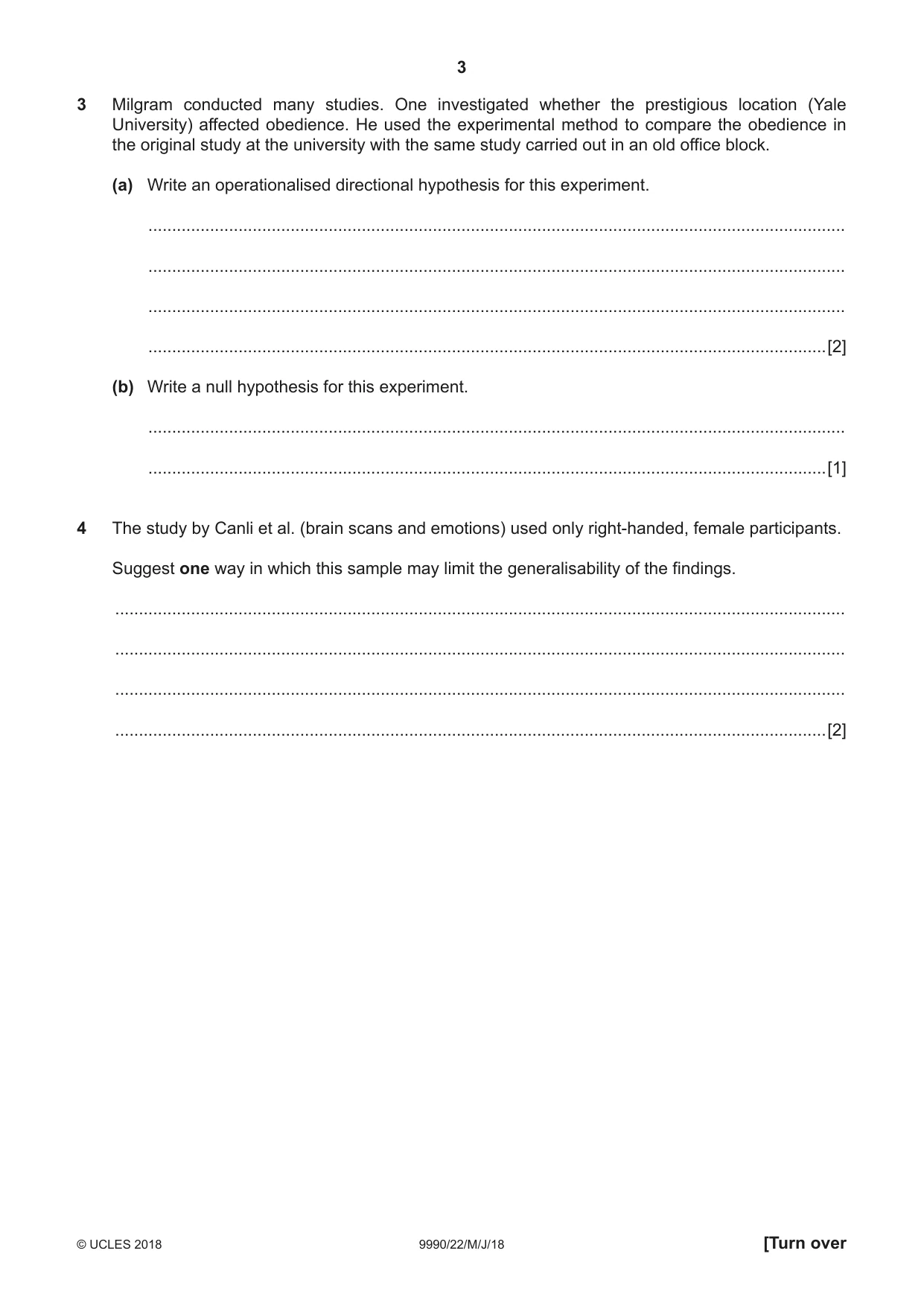
Q3 · Milgram conducted many studies
3 Milgram conducted many studies. One investigated whether the prestigious location (Yale University) affected obedience. He used the experimental method to compare the obedience in the original study at the university with the same study carried out in an old office block. (a) Write an operationalised directional hypothesis for this experiment. ................................................................................................................................................... ................................................................................................................................................... ................................................................................................................................................... ...............................................................................................................................................[2] (b) Write a null hypothesis for this experiment. ................................................................................................................................................... ...............................................................................................................................................[1]
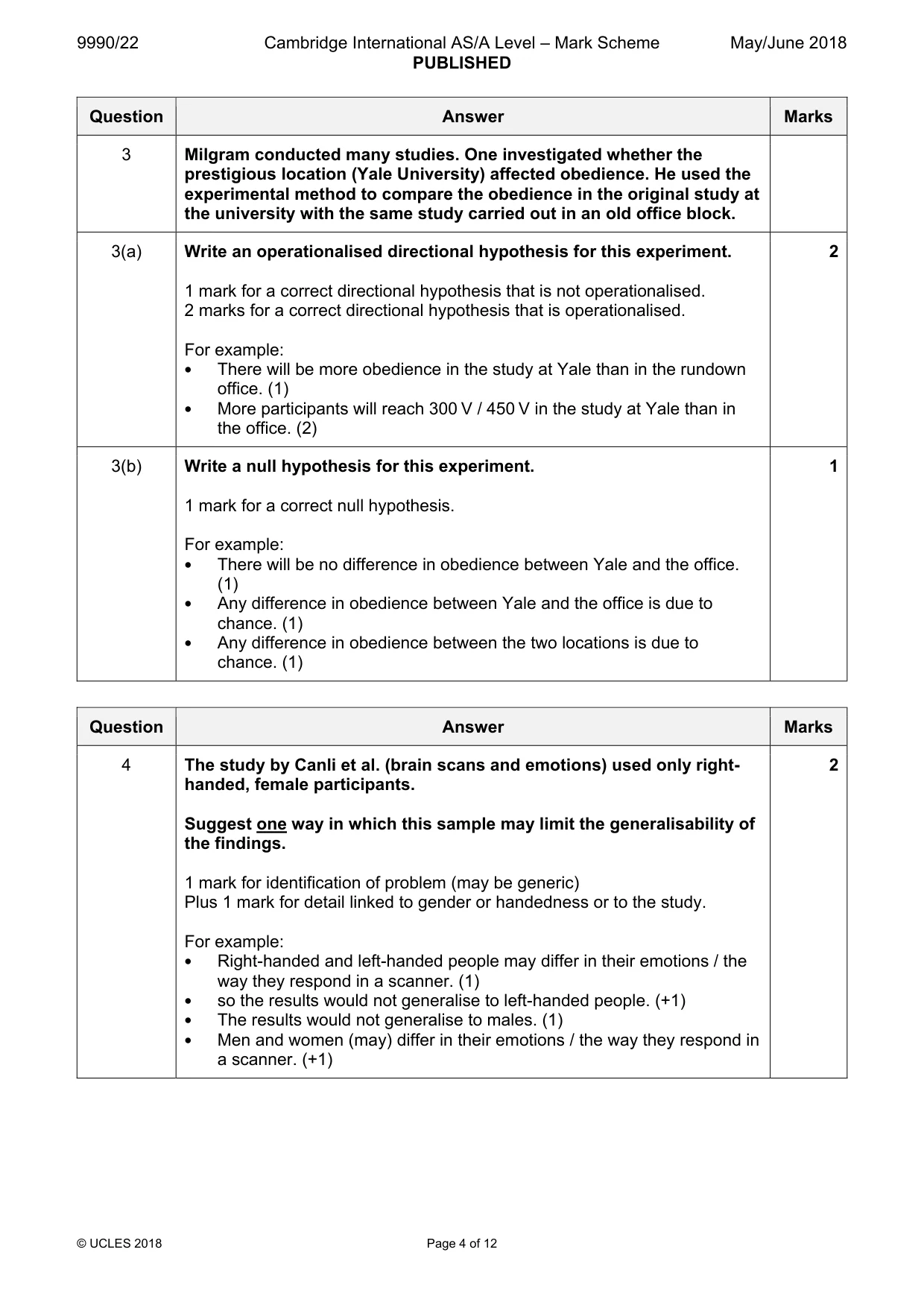
Mark scheme: 3(a) Write an operationalised directional hypothesis for this experiment. 2 1 mark for a correct directional hypothesis that is not operationalised. 2 marks for a correct directional hypothesis that is operationalised. For example: • There will be more obedience in the study at Yale than in the rundown office. (1) • More participants will reach 300 V / 450 V in the study at Yale than in the office. (2) 3(b) Write a null hypothesis for this experiment. 1 1 mark for a correct null hypothesis. For example: • There will be no difference in obedience between Yale and the office. (1) • Any difference in obedience between Yale and the office is due to chance. (1) • Any difference in obedience between the two locations is due to chance. (1)
Q4 · The study by Canli et al
4 The study by Canli et al. (brain scans and emotions) used only right-handed, female participants. Suggest one way in which this sample may limit the generalisability of the findings. .......................................................................................................................................................... .......................................................................................................................................................... .......................................................................................................................................................... ......................................................................................................................................................[2]
Mark scheme: 4 The study by Canli et al. (brain scans and emotions) used only right- 2 handed, female participants. Suggest one way in which this sample may limit the generalisability of the findings. 1 mark for identification of problem (may be generic) Plus 1 mark for detail linked to gender or handedness or to the study. For example: • Right-handed and left-handed people may differ in their emotions / the way they respond in a scanner. (1) • so the results would not generalise to left-handed people. (+1) • The results would not generalise to males. (1) • Men and women (may) differ in their emotions / the way they respond in a scanner. (+1)
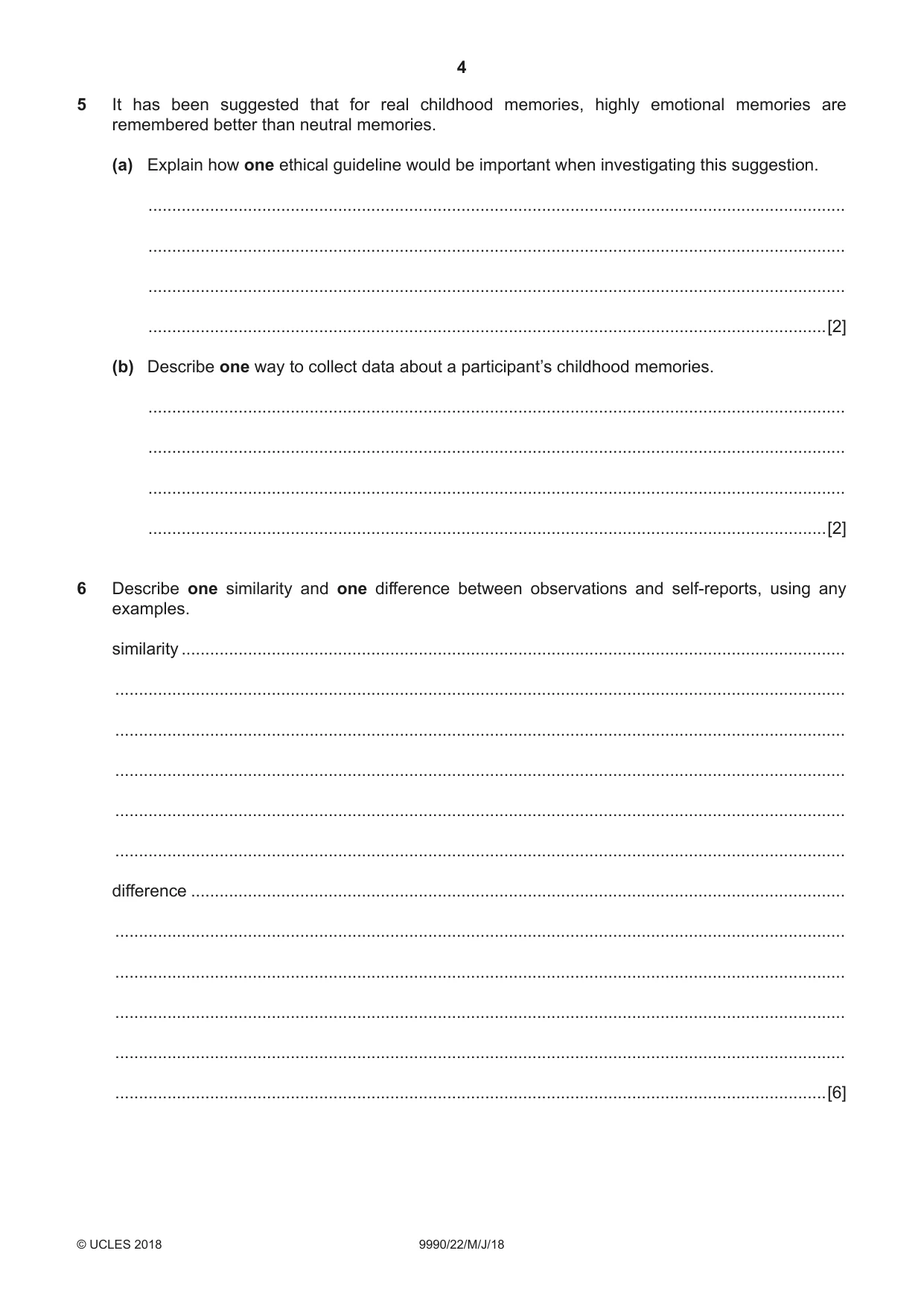
Q5 · It has been suggested that for real childhood memories, highly emotional memories are…
5 It has been suggested that for real childhood memories, highly emotional memories are remembered better than neutral memories. (a) Explain how one ethical guideline would be important when investigating this suggestion. ................................................................................................................................................... ................................................................................................................................................... ................................................................................................................................................... ...............................................................................................................................................[2] (b) Describe one way to collect data about a participant’s childhood memories. ................................................................................................................................................... ................................................................................................................................................... ................................................................................................................................................... ...............................................................................................................................................[2]
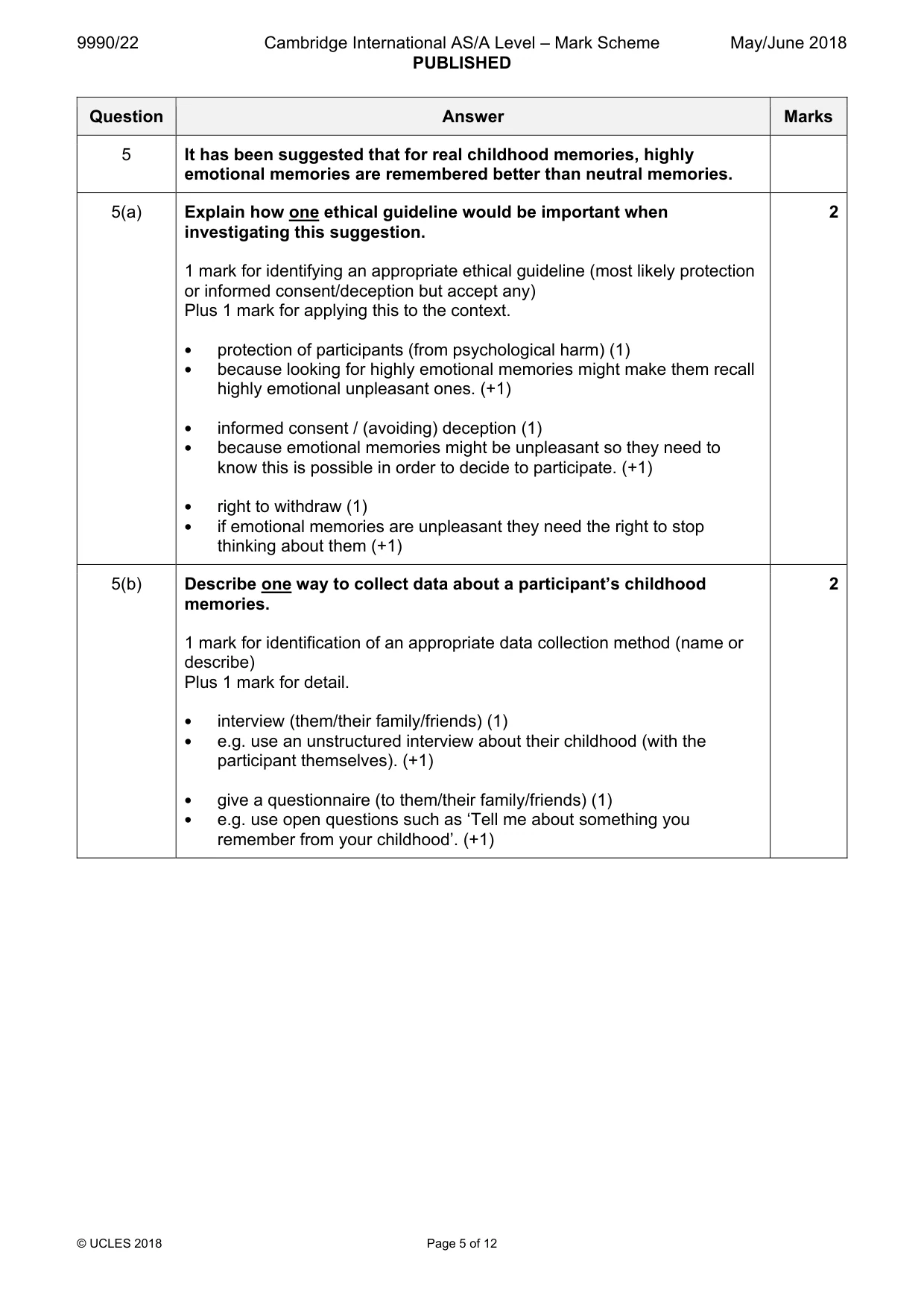
Mark scheme: 5(a) Explain how one ethical guideline would be important when 2 investigating this suggestion. 1 mark for identifying an appropriate ethical guideline (most likely protection or informed consent/deception but accept any) Plus 1 mark for applying this to the context. • protection of participants (from psychological harm) (1) • because looking for highly emotional memories might make them recall highly emotional unpleasant ones. (+1) • informed consent / (avoiding) deception (1) • because emotional memories might be unpleasant so they need to know this is possible in order to decide to participate. (+1) • right to withdraw (1) • if emotional memories are unpleasant they need the right to stop thinking about them (+1) 5(b) Describe one way to collect data about a participant’s childhood 2 memories. 1 mark for identification of an appropriate data collection method (name or describe) Plus 1 mark for detail. • interview (them/their family/friends) (1) • e.g. use an unstructured interview about their childhood (with the participant themselves). (+1) • give a questionnaire (to them/their family/friends) (1) • e.g. use open questions such as ‘Tell me about something you remember from your childhood’. (+1)
Q6 · Describe one similarity and one difference between observations and self-reports, using…
6 Describe one similarity and one difference between observations and self-reports, using any examples. similarity ............................................................................................................................................ .......................................................................................................................................................... .......................................................................................................................................................... .......................................................................................................................................................... .......................................................................................................................................................... .......................................................................................................................................................... difference .......................................................................................................................................... .......................................................................................................................................................... .......................................................................................................................................................... .......................................................................................................................................................... .......................................................................................................................................................... ......................................................................................................................................................[6]
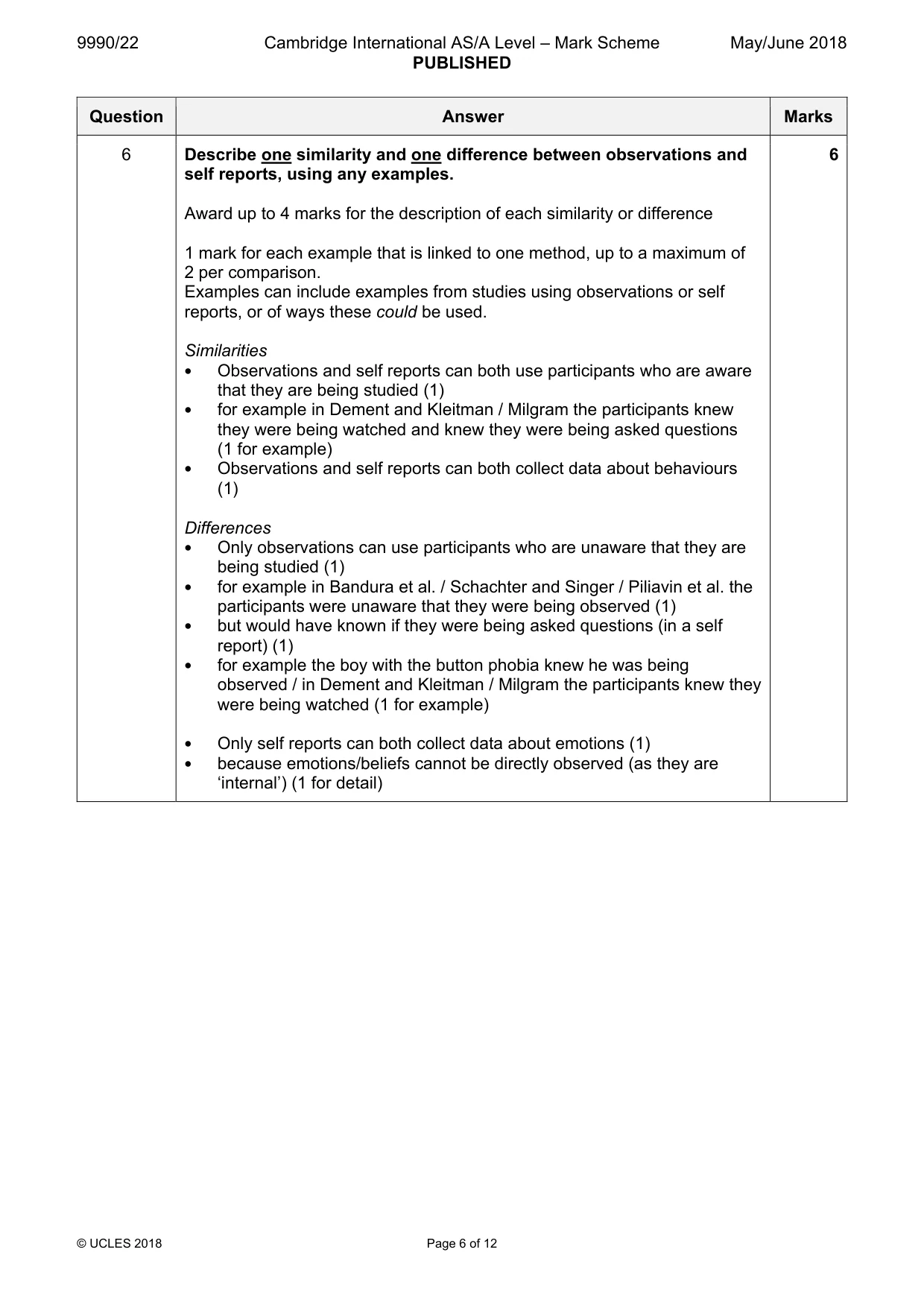
Mark scheme: 6 Describe one similarity and one difference between observations and 6 self reports, using any examples. Award up to 4 marks for the description of each similarity or difference 1 mark for each example that is linked to one method, up to a maximum of 2 per comparison. Examples can include examples from studies using observations or self reports, or of ways these could be used. Similarities • Observations and self reports can both use participants who are aware that they are being studied (1) • for example in Dement and Kleitman / Milgram the participants knew they were being watched and knew they were being asked questions (1 for example) • Observations and self reports can both collect data about behaviours (1) Differences • Only observations can use participants who are unaware that they are being studied (1) • for example in Bandura et al. / Schachter and Singer / Piliavin et al. the participants were unaware that they were being observed (1) • but would have known if they were being asked questions (in a self report) (1) • for example the boy with the button phobia knew he was being observed / in Dement and Kleitman / Milgram the participants knew they were being watched (1 for example) • Only self reports can both collect data about emotions (1) • because emotions/beliefs cannot be directly observed (as they are ‘internal’) (1 for detail)
Q7 · Hanif is investigating helping behaviour in animals
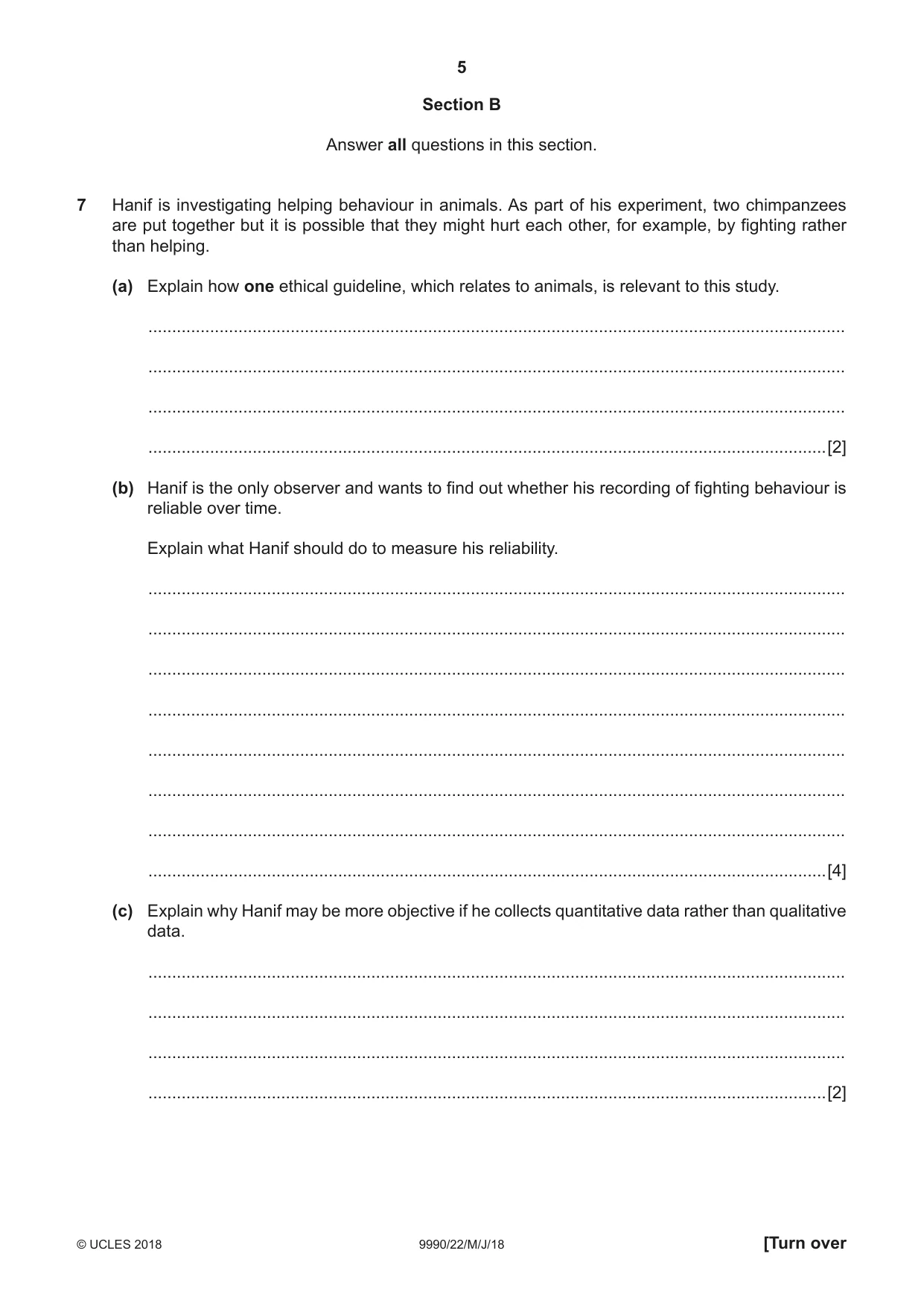
7 Hanif is investigating helping behaviour in animals. As part of his experiment, two chimpanzees are put together but it is possible that they might hurt each other, for example, by fighting rather than helping. (a) Explain how one ethical guideline, which relates to animals, is relevant to this study. ................................................................................................................................................... ................................................................................................................................................... ................................................................................................................................................... ...............................................................................................................................................[2] (b) Hanif is the only observer and wants to find out whether his recording of fighting behaviour is reliable over time. Explain what Hanif should do to measure his reliability. ................................................................................................................................................... ................................................................................................................................................... ................................................................................................................................................... ................................................................................................................................................... ................................................................................................................................................... ................................................................................................................................................... ................................................................................................................................................... ...............................................................................................................................................[4] (c) Explain why Hanif may be more objective if he collects quantitative data rather than qualitative data. ................................................................................................................................................... ................................................................................................................................................... ................................................................................................................................................... ...............................................................................................................................................[2]
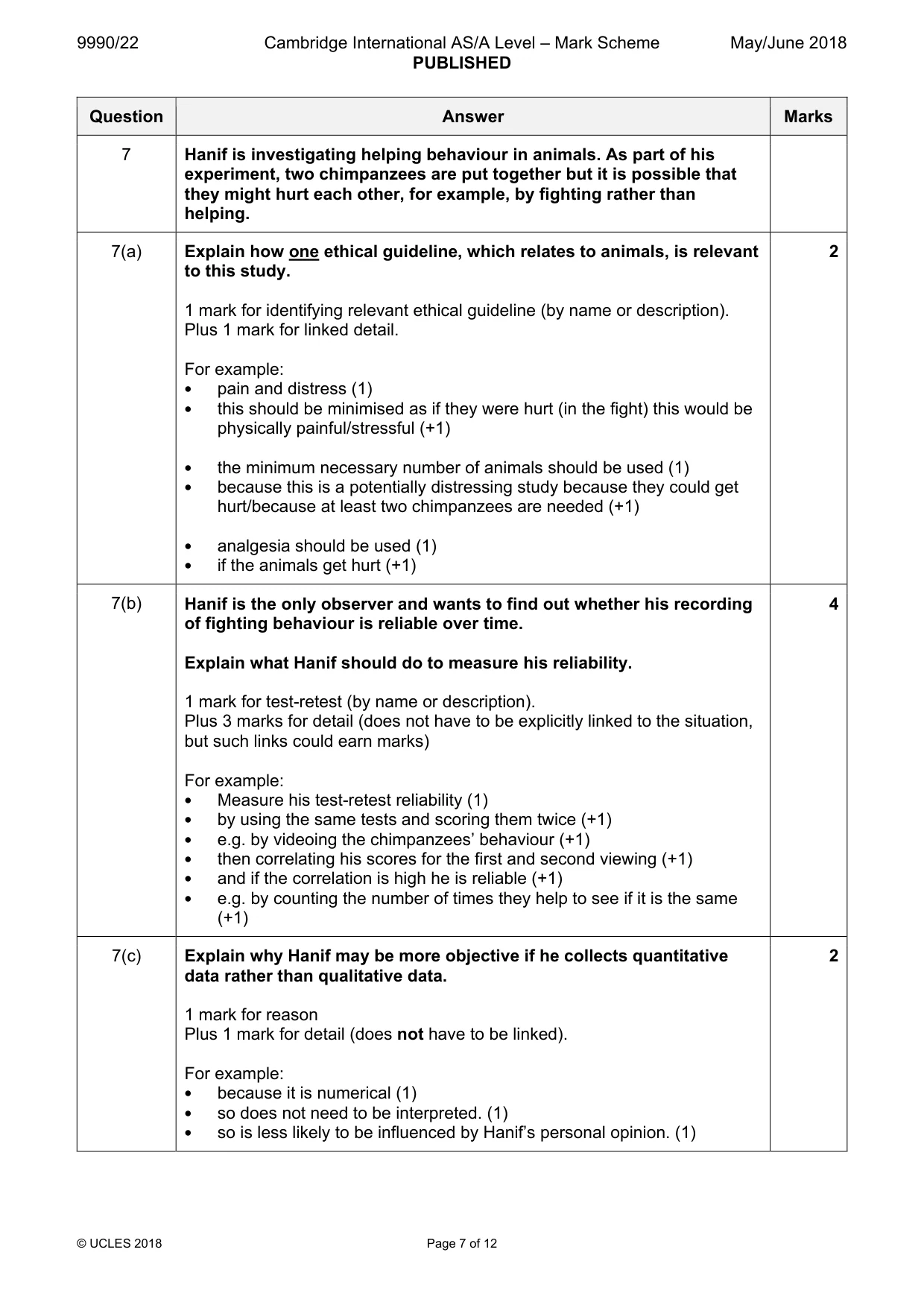
Mark scheme: 7(a) Explain how one ethical guideline, which relates to animals, is relevant 2 to this study. 1 mark for identifying relevant ethical guideline (by name or description). Plus 1 mark for linked detail. For example: • pain and distress (1) • this should be minimised as if they were hurt (in the fight) this would be physically painful/stressful (+1) • the minimum necessary number of animals should be used (1) • because this is a potentially distressing study because they could get hurt/because at least two chimpanzees are needed (+1) • analgesia should be used (1) • if the animals get hurt (+1) 7(b) Hanif is the only observer and wants to find out whether his recording 4 of fighting behaviour is reliable over time. Explain what Hanif should do to measure his reliability. 1 mark for test-retest (by name or description). Plus 3 marks for detail (does not have to be explicitly linked to the situation, but such links could earn marks) For example: • Measure his test-retest reliability (1) • by using the same tests and scoring them twice (+1) • e.g. by videoing the chimpanzees’ behaviour (+1) • then correlating his scores for the first and second viewing (+1) • and if the correlation is high he is reliable (+1) • e.g. by counting the number of times they help to see if it is the same (+1) 7(c) Explain why Hanif may be more objective if he collects quantitative 2 data rather than qualitative data. 1 mark for reason Plus 1 mark for detail (does not have to be linked). For example: • because it is numerical (1) • so does not need to be interpreted. (1) • so is less likely to be influenced by Hanif’s personal opinion. (1)
Q8 · Elea is conducting an experiment to test whether people who sleep for more than eight…
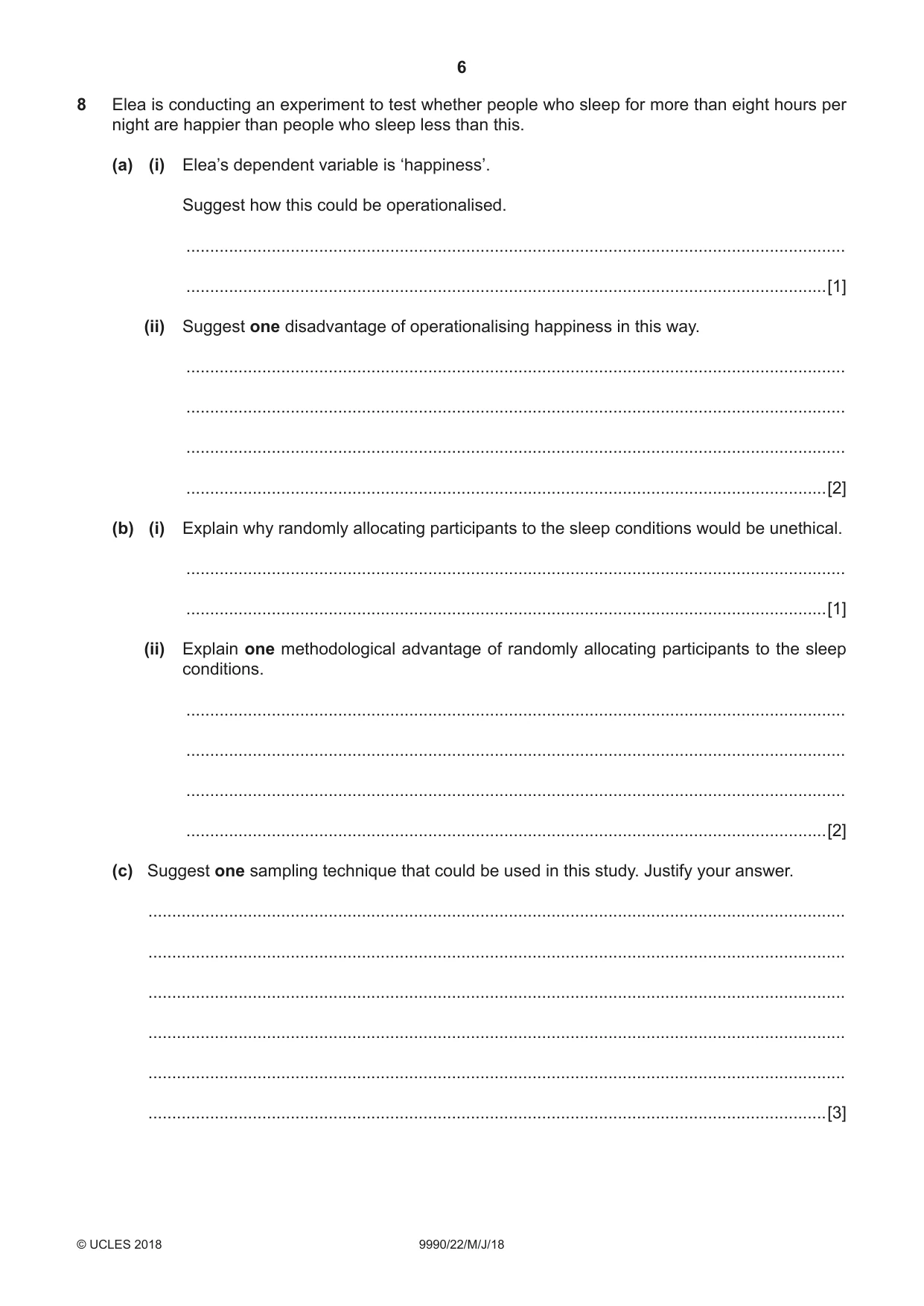
8 Elea is conducting an experiment to test whether people who sleep for more than eight hours per night are happier than people who sleep less than this. (a) (i) Elea’s dependent variable is ‘happiness’. Suggest how this could be operationalised. ........................................................................................................................................... .......................................................................................................................................[1] (ii) Suggest one disadvantage of operationalising happiness in this way. ........................................................................................................................................... ........................................................................................................................................... ........................................................................................................................................... .......................................................................................................................................[2] (b) (i) Explain why randomly allocating participants to the sleep conditions would be unethical. ........................................................................................................................................... .......................................................................................................................................[1] (ii) Explain one methodological advantage of randomly allocating participants to the sleep conditions. ........................................................................................................................................... ........................................................................................................................................... ........................................................................................................................................... .......................................................................................................................................[2] (c) Suggest one sampling technique that could be used in this study. Justify your answer. ................................................................................................................................................... ................................................................................................................................................... ................................................................................................................................................... ................................................................................................................................................... ................................................................................................................................................... ...............................................................................................................................................[3]
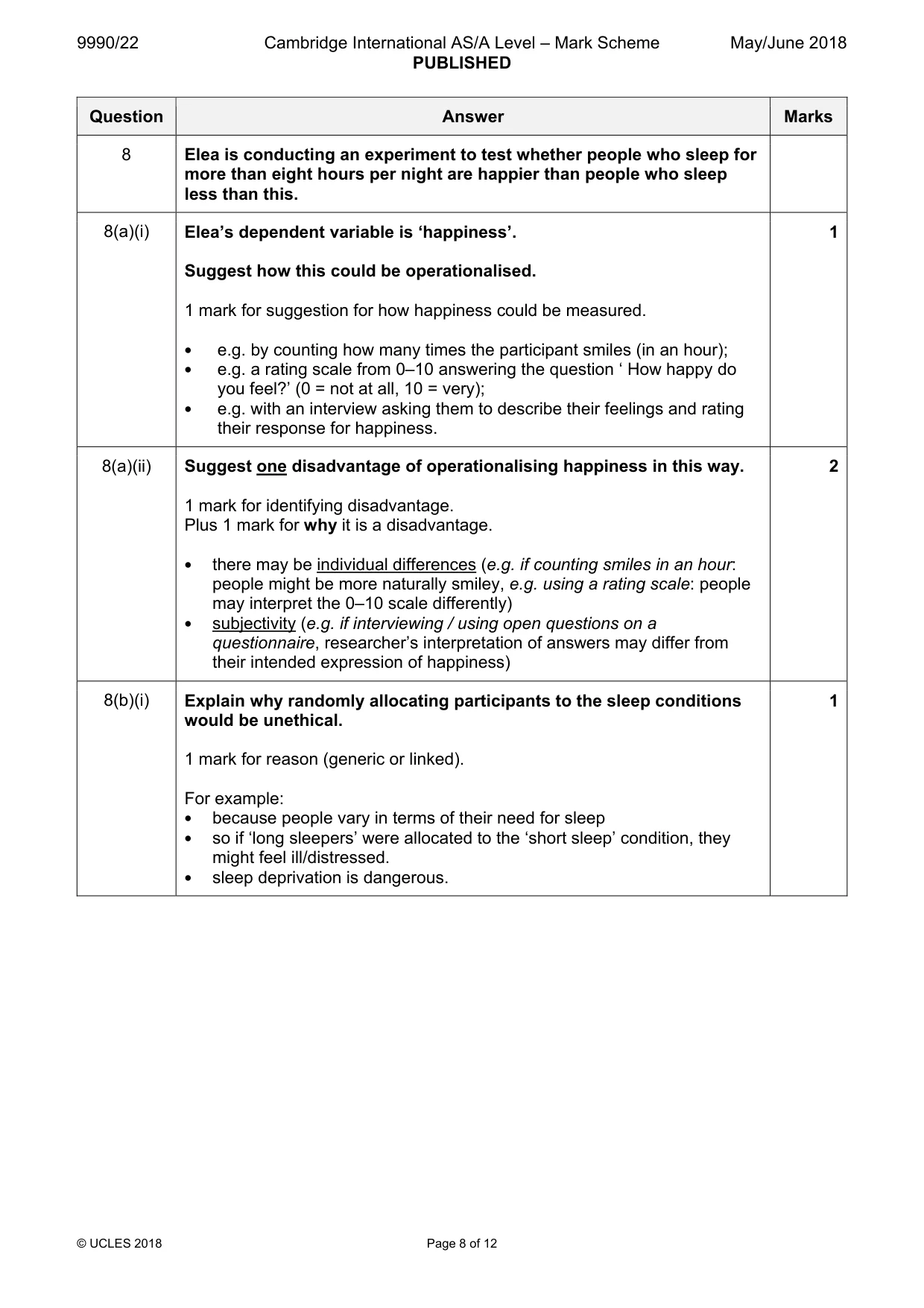
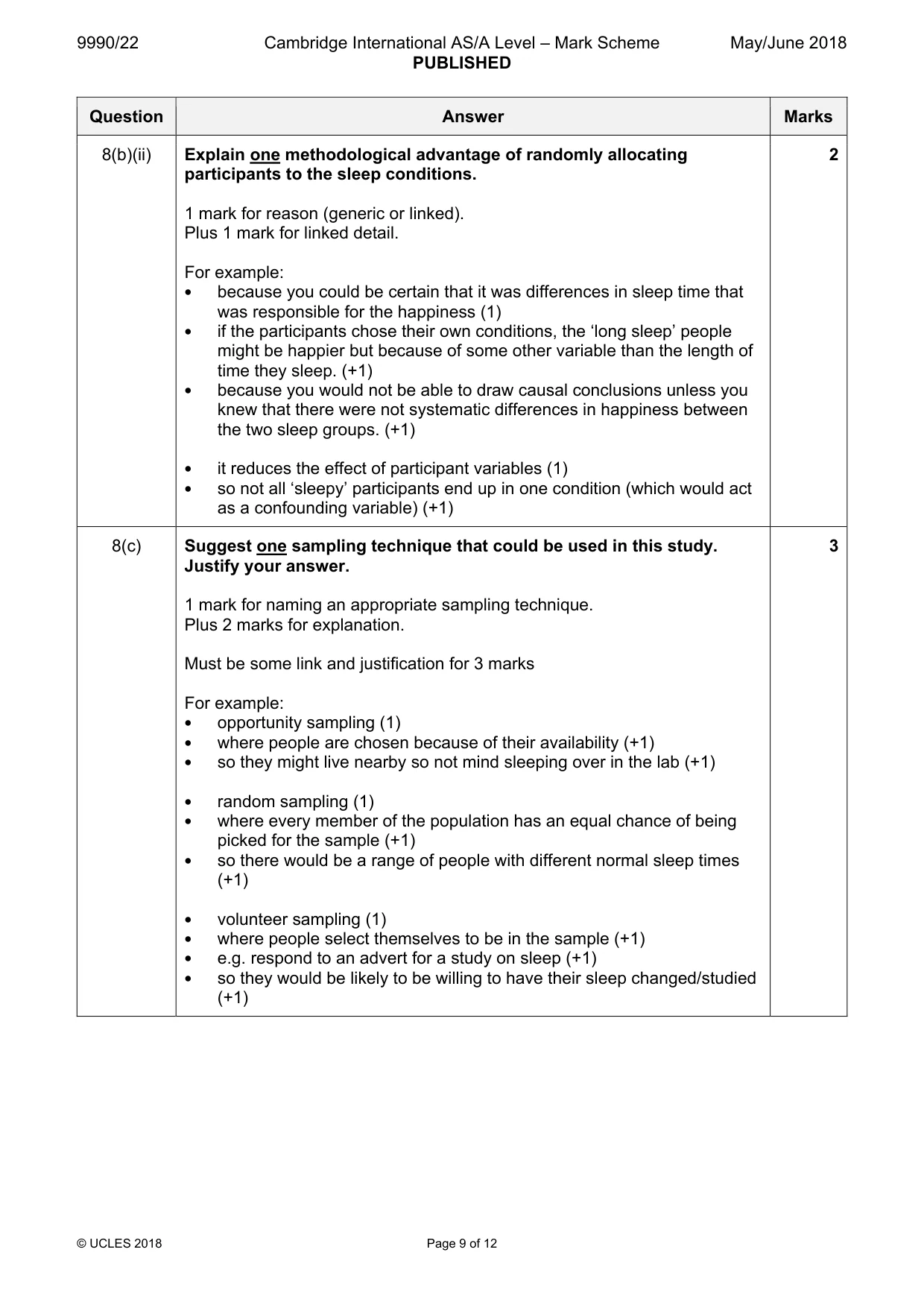
Mark scheme: 8(a)(i) Elea’s dependent variable is ‘happiness’. 1 Suggest how this could be operationalised. 1 mark for suggestion for how happiness could be measured. • e.g. by counting how many times the participant smiles (in an hour); • e.g. a rating scale from 0–10 answering the question ‘ How happy do you feel?’ (0 = not at all, 10 = very); • e.g. with an interview asking them to describe their feelings and rating their response for happiness. 8(a)(ii) Suggest one disadvantage of operationalising happiness in this way. 2 1 mark for identifying disadvantage. Plus 1 mark for why it is a disadvantage. • there may be individual differences (e.g. if counting smiles in an hour: people might be more naturally smiley, e.g. using a rating scale: people may interpret the 0–10 scale differently) • subjectivity (e.g. if interviewing / using open questions on a questionnaire, researcher’s interpretation of answers may differ from their intended expression of happiness) 8(b)(i) Explain why randomly allocating participants to the sleep conditions 1 would be unethical. 1 mark for reason (generic or linked). For example: • because people vary in terms of their need for sleep • so if ‘long sleepers’ were allocated to the ‘short sleep’ condition, they might feel ill/distressed. • sleep deprivation is dangerous. 8(b)(ii) Explain one methodological advantage of randomly allocating 2 participants to the sleep conditions. 1 mark for reason (generic or linked). Plus 1 mark for linked detail. For example: • because you could be certain that it was differences in sleep time that was responsible for the happiness (1) • if the participants chose their own conditions, the ‘long sleep’ people might be happier but because of some other variable than the length of time they sleep. (+1) • because you would not be able to draw causal conclusions unless you knew that there were not systematic differences in happiness between the two sleep groups. (+1) • it reduces the effect of participant variables (1) • so not all ‘sleepy’ participants end up in one condition (which would act as a confounding variable) (+1) 8(c) Suggest one sampling technique that could be used in this study. 3 Justify your answer. 1 mark for naming an appropriate sampling technique. Plus 2 marks for explanation. Must be some link and justification for 3 marks For example: • opportunity sampling (1) • where people are chosen because of their availability (+1) • so they might live nearby so not mind sleeping over in the lab (+1) • random sampling (1) • where every member of the population has an equal chance of being picked for the sample (+1) • so there would be a range of people with different normal sleep times (+1) • volunteer sampling (1) • where people select themselves to be in the sample (+1) • e.g. respond to an advert for a study on sleep (+1) • so they would be likely to be willing to have their sleep changed/studied (+1)
Q9 · Ed and Jim are planning a field experiment about learning
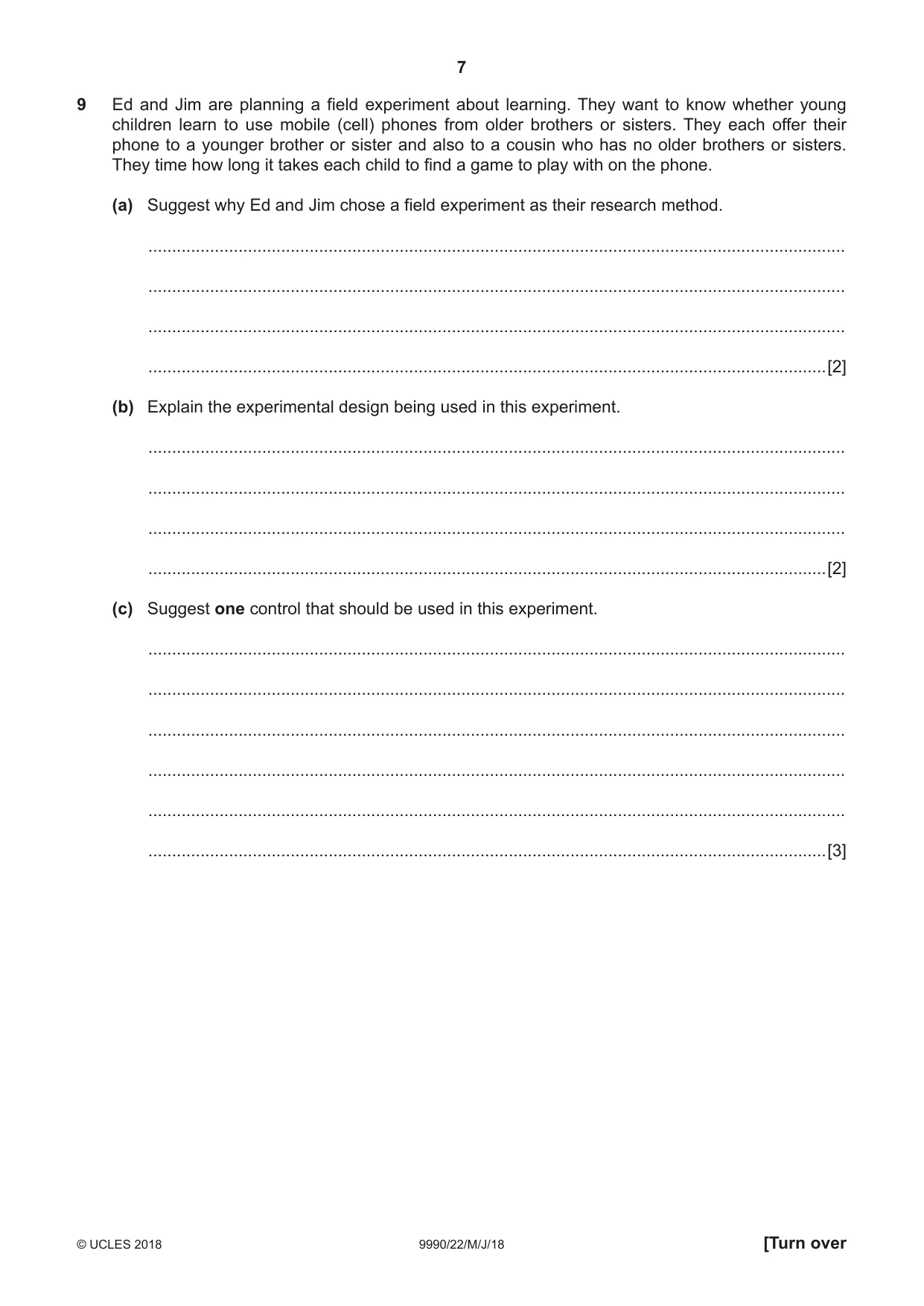
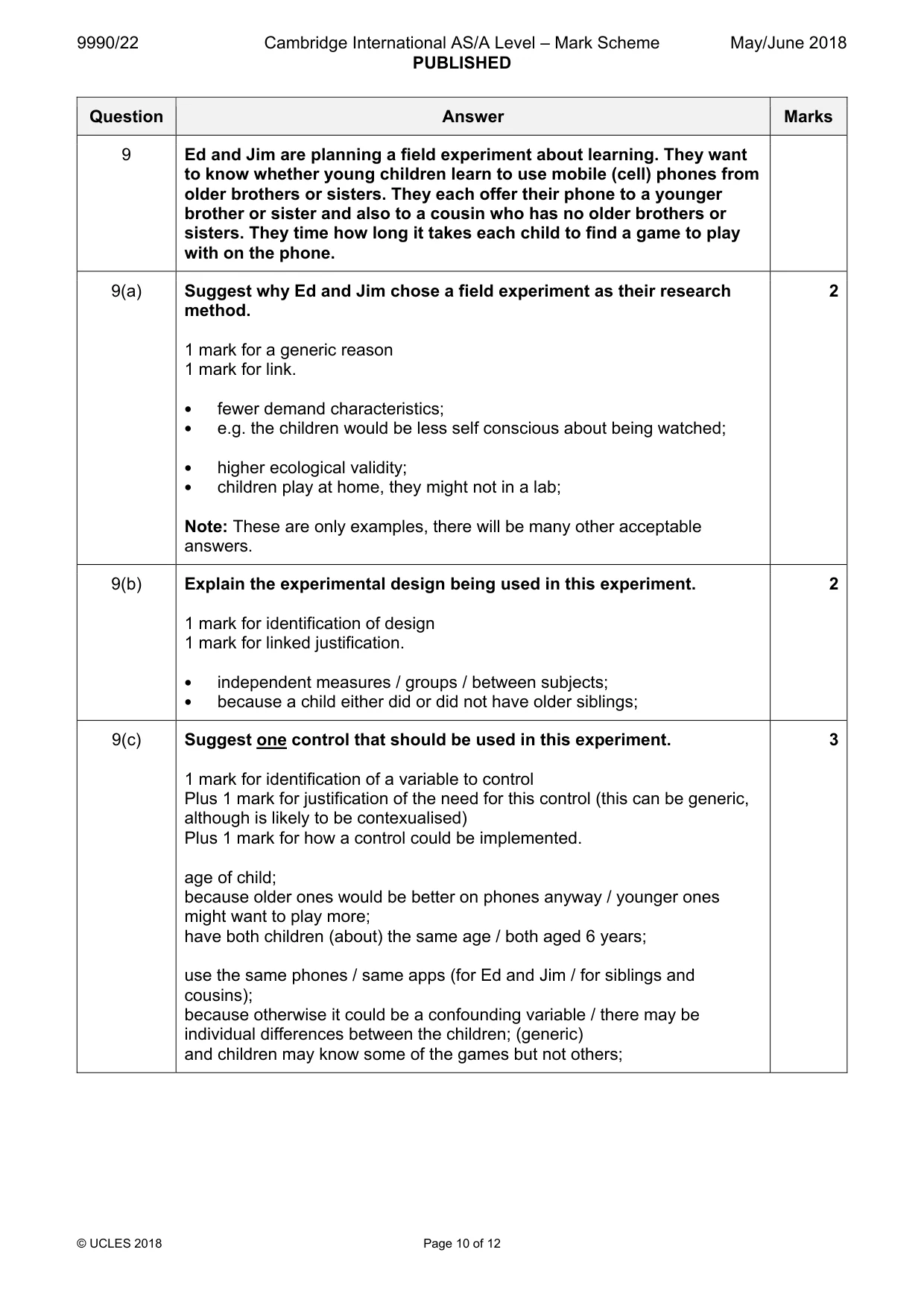
9 Ed and Jim are planning a field experiment about learning. They want to know whether young children learn to use mobile (cell) phones from older brothers or sisters. They each offer their phone to a younger brother or sister and also to a cousin who has no older brothers or sisters. They time how long it takes each child to find a game to play with on the phone. (a) Suggest why Ed and Jim chose a field experiment as their research method. ................................................................................................................................................... ................................................................................................................................................... ................................................................................................................................................... ...............................................................................................................................................[2] (b) Explain the experimental design being used in this experiment. ................................................................................................................................................... ................................................................................................................................................... ................................................................................................................................................... ...............................................................................................................................................[2] (c) Suggest one control that should be used in this experiment. ................................................................................................................................................... ................................................................................................................................................... ................................................................................................................................................... ................................................................................................................................................... ................................................................................................................................................... ...............................................................................................................................................[3] Section C Answer all questions in this section.
Mark scheme: 9(a) Suggest why Ed and Jim chose a field experiment as their research 2 method. 1 mark for a generic reason 1 mark for link. • fewer demand characteristics; • e.g. the children would be less self conscious about being watched; • higher ecological validity; • children play at home, they might not in a lab; Note: These are only examples, there will be many other acceptable answers. 9(b) Explain the experimental design being used in this experiment. 2 1 mark for identification of design 1 mark for linked justification. • independent measures / groups / between subjects; • because a child either did or did not have older siblings; 9(c) Suggest one control that should be used in this experiment. 3 1 mark for identification of a variable to control Plus 1 mark for justification of the need for this control (this can be generic, although is likely to be contexualised) Plus 1 mark for how a control could be implemented. age of child; because older ones would be better on phones anyway / younger ones might want to play more; have both children (about) the same age / both aged 6 years; use the same phones / same apps (for Ed and Jim / for siblings and cousins); because otherwise it could be a confounding variable / there may be individual differences between the children; (generic) and children may know some of the games but not others;
Q10 · Beth is looking at the treatment of people with phobias
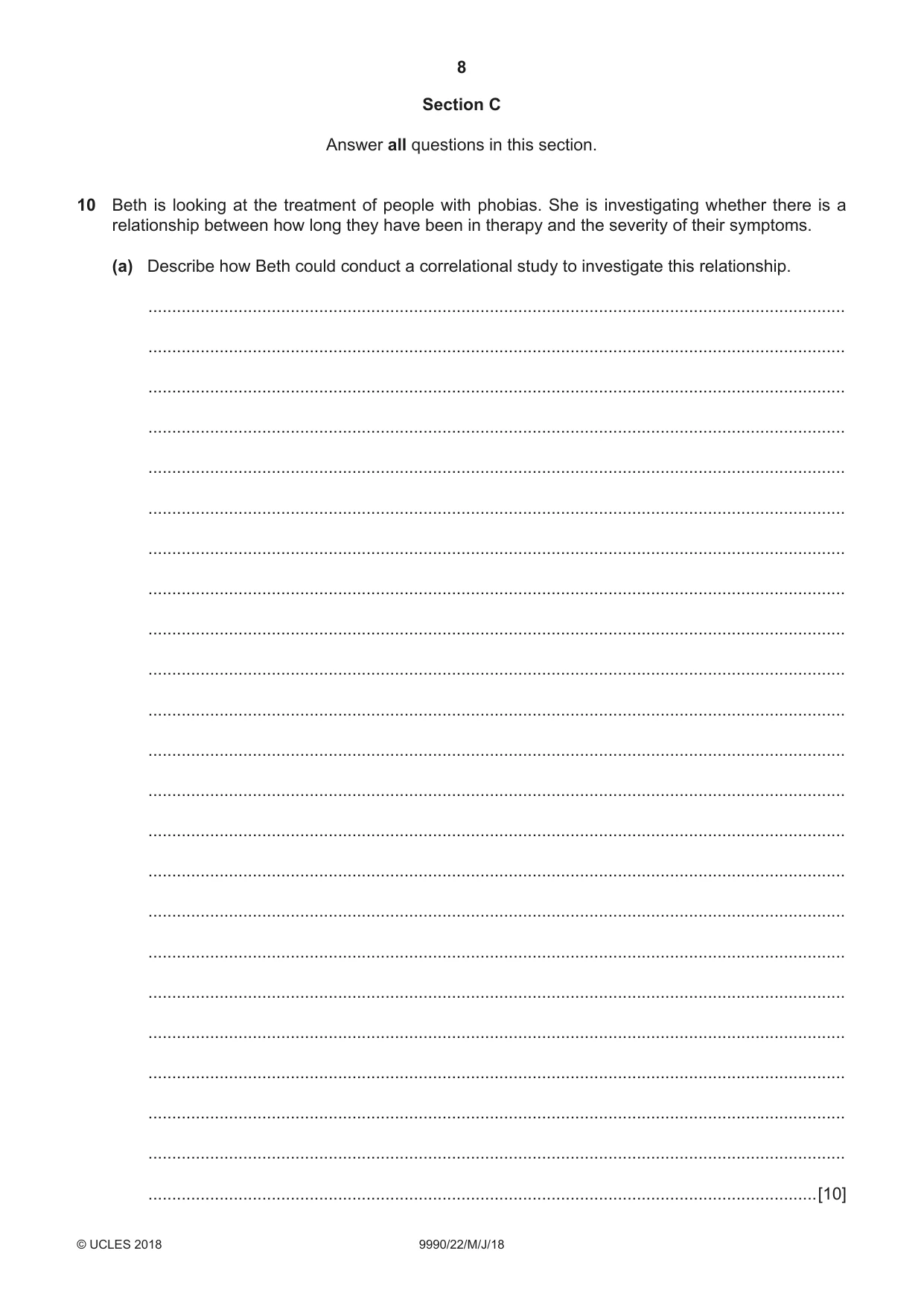
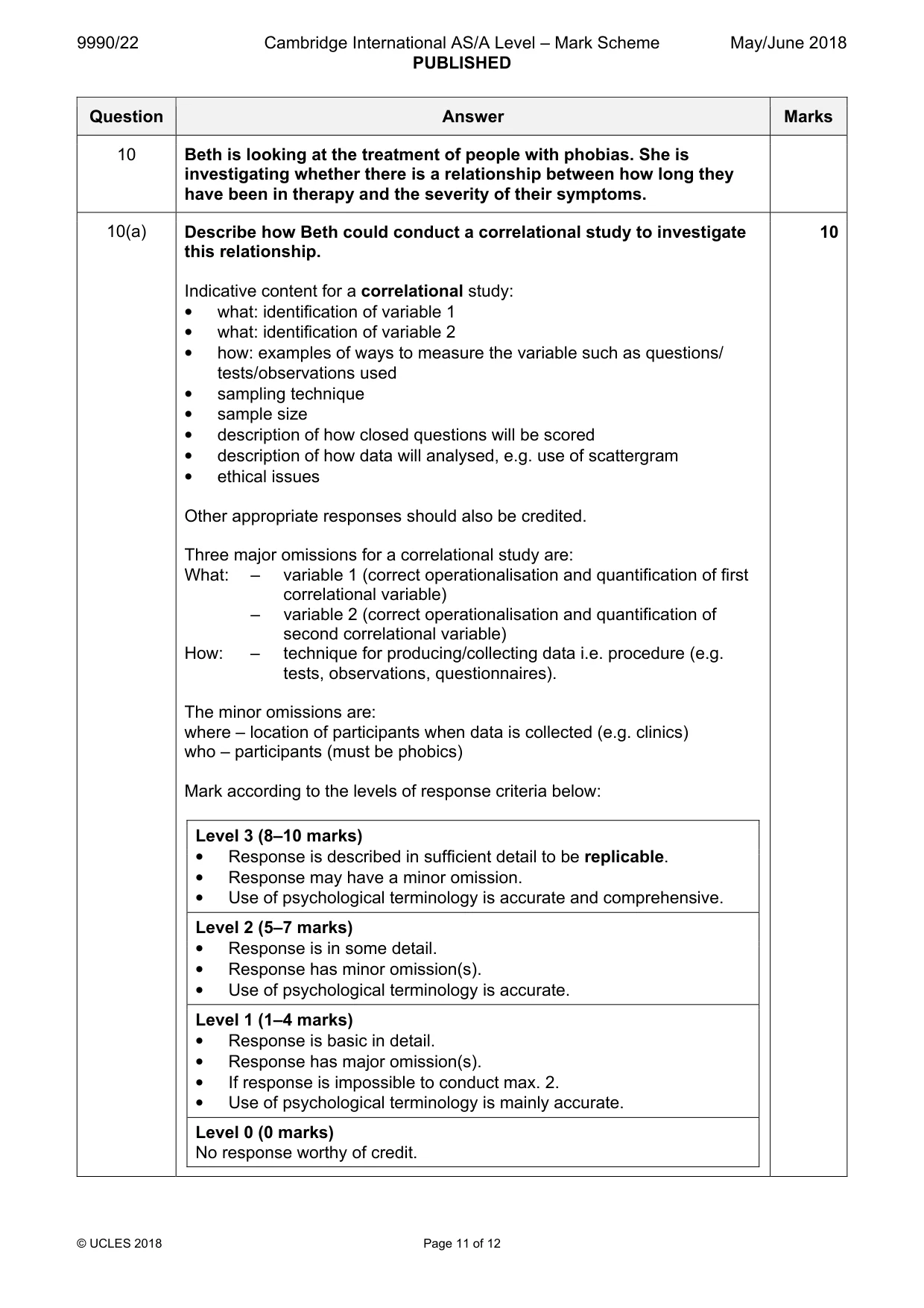
10 Beth is looking at the treatment of people with phobias. She is investigating whether there is a relationship between how long they have been in therapy and the severity of their symptoms. (a) Describe how Beth could conduct a correlational study to investigate this relationship. ................................................................................................................................................... ................................................................................................................................................... ................................................................................................................................................... ................................................................................................................................................... ................................................................................................................................................... ................................................................................................................................................... ................................................................................................................................................... ................................................................................................................................................... ................................................................................................................................................... ................................................................................................................................................... ................................................................................................................................................... ................................................................................................................................................... ................................................................................................................................................... ................................................................................................................................................... ................................................................................................................................................... ................................................................................................................................................... ................................................................................................................................................... ................................................................................................................................................... ................................................................................................................................................... ................................................................................................................................................... ................................................................................................................................................... ................................................................................................................................................... .............................................................................................................................................[10] (b) Identify one weakness/limitation with the procedure you have described in your answer to part (a) and suggest how your study might be done differently to overcome the problem. ................................................................................................................................................... ................................................................................................................................................... ................................................................................................................................................... ................................................................................................................................................... ................................................................................................................................................... ................................................................................................................................................... ................................................................................................................................................... ...............................................................................................................................................[4]
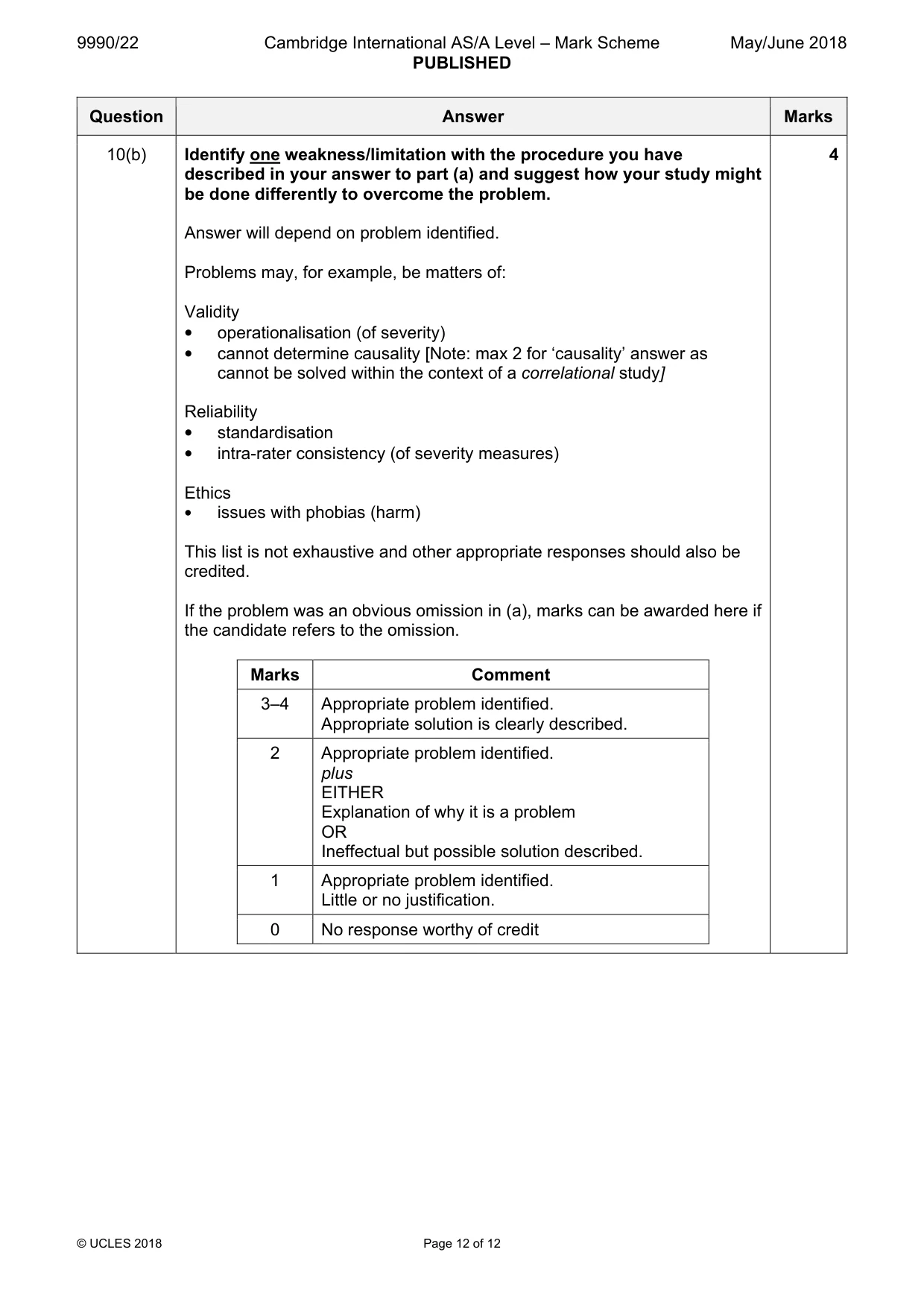
Mark scheme: 10(a) Describe how Beth could conduct a correlational study to investigate 10 this relationship. Indicative content for a correlational study: • what: identification of variable 1 • what: identification of variable 2 • how: examples of ways to measure the variable such as questions/ tests/observations used • sampling technique • sample size • description of how closed questions will be scored • description of how data will analysed, e.g. use of scattergram • ethical issues Other appropriate responses should also be credited. Three major omissions for a correlational study are: What: – variable 1 (correct operationalisation and quantification of first correlational variable) – variable 2 (correct operationalisation and quantification of second correlational variable) How: – technique for producing/collecting data i.e. procedure (e.g. tests, observations, questionnaires). The minor omissions are: where – location of participants when data is collected (e.g. clinics) who – participants (must be phobics) Mark according to the levels of response criteria below: Level 3 (8–10 marks) • Response is described in sufficient detail to be replicable. • Response may have a minor omission. • Use of psychological terminology is accurate and comprehensive. Level 2 (5–7 marks) • Response is in some detail. • Response has minor omission(s). • Use of psychological terminology is accurate. Level 1 (1–4 marks) • Response is basic in detail. • Response has major omission(s). • If response is impossible to conduct max. 2. • Use of psychological terminology is mainly accurate. Level 0 (0 marks) No response worthy of credit. 10(b) Identify one weakness/limitation with the procedure you have 4 described in your answer to part (a) and suggest how your study might be done differently to overcome the problem. Answer will depend on problem identified. Problems may, for example, be matters of: Validity • operationalisation (of severity) • cannot determine causality [Note: max 2 for ‘causality’ answer as cannot be solved within the context of a correlational study] Reliability • standardisation • intra-rater consistency (of severity measures) Ethics • issues with phobias (harm) This list is not exhaustive and other appropriate responses should also be credited. If the problem was an obvious omission in (a), marks can be awarded here if the candidate refers to the omission. Marks Comment 3–4 Appropriate problem identified. Appropriate solution is clearly described. 2 Appropriate problem identified. plus EITHER Explanation of why it is a problem OR Ineffectual but possible solution described. 1 Appropriate problem identified. Little or no justification. 0 No response worthy of credit
More questions on Anxiety disorders and fear-related disorders
What was in this paper
The subtopics covered by these 10 questions, and how many questions each got. Open one in a new tab to see every Cambridge question on it.
What you needed in this session
Cambridge’s own grade thresholds for 2018 May/June, Paper 2 · Variant 2. A higher threshold means an easier paper — the bar moves with how the cohort did.