Cambridge A Level Psychology (from 2018) 9990 — 2018 May/June Paper 2 · Variant 1
9990/21/M/J/18 · 10 questions · 60 marks · ≈68 min
The question paper and its mark scheme, free to read here and free to download. This is Cambridge’s own paper, exactly as it was sat.
Question paper12 pages



Mark scheme13 pages
Answers below. Sit the paper first if you are practising.
Questions as text
Q1 · In the study by Canli et al
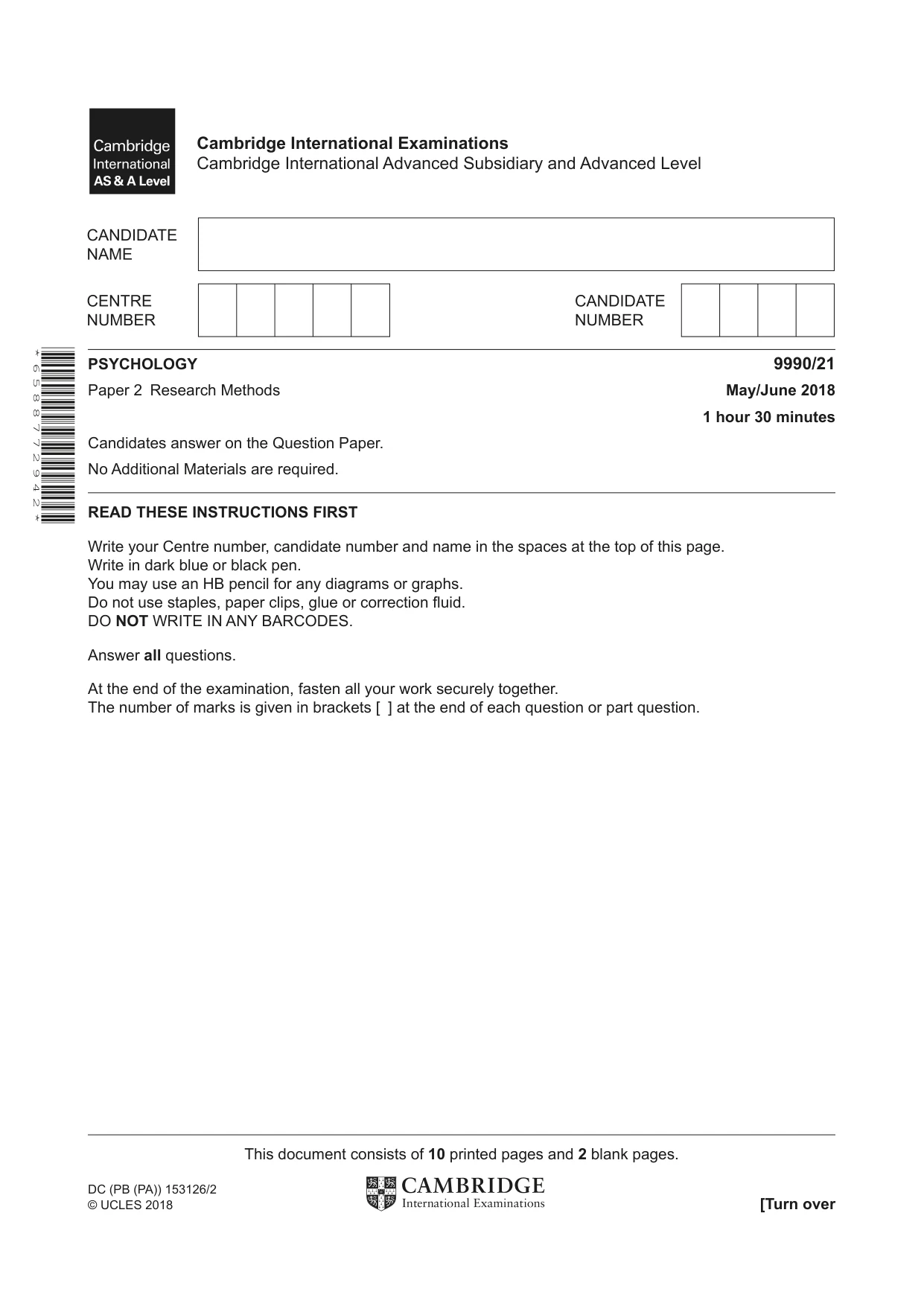
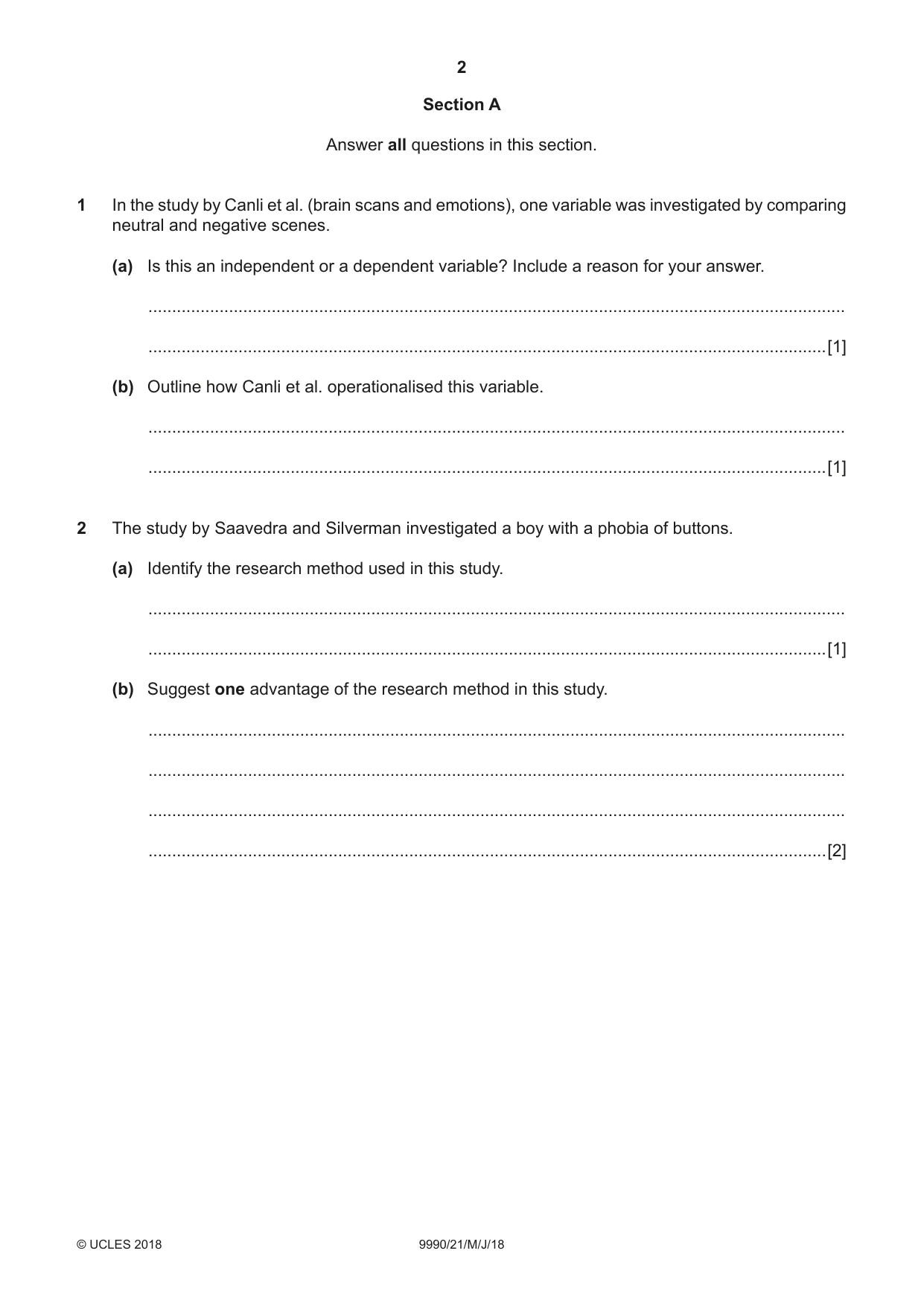
1 In the study by Canli et al. (brain scans and emotions), one variable was investigated by comparing neutral and negative scenes. (a) Is this an independent or a dependent variable? Include a reason for your answer. ................................................................................................................................................... ...............................................................................................................................................[1] (b) Outline how Canli et al. operationalised this variable. ................................................................................................................................................... ...............................................................................................................................................[1]
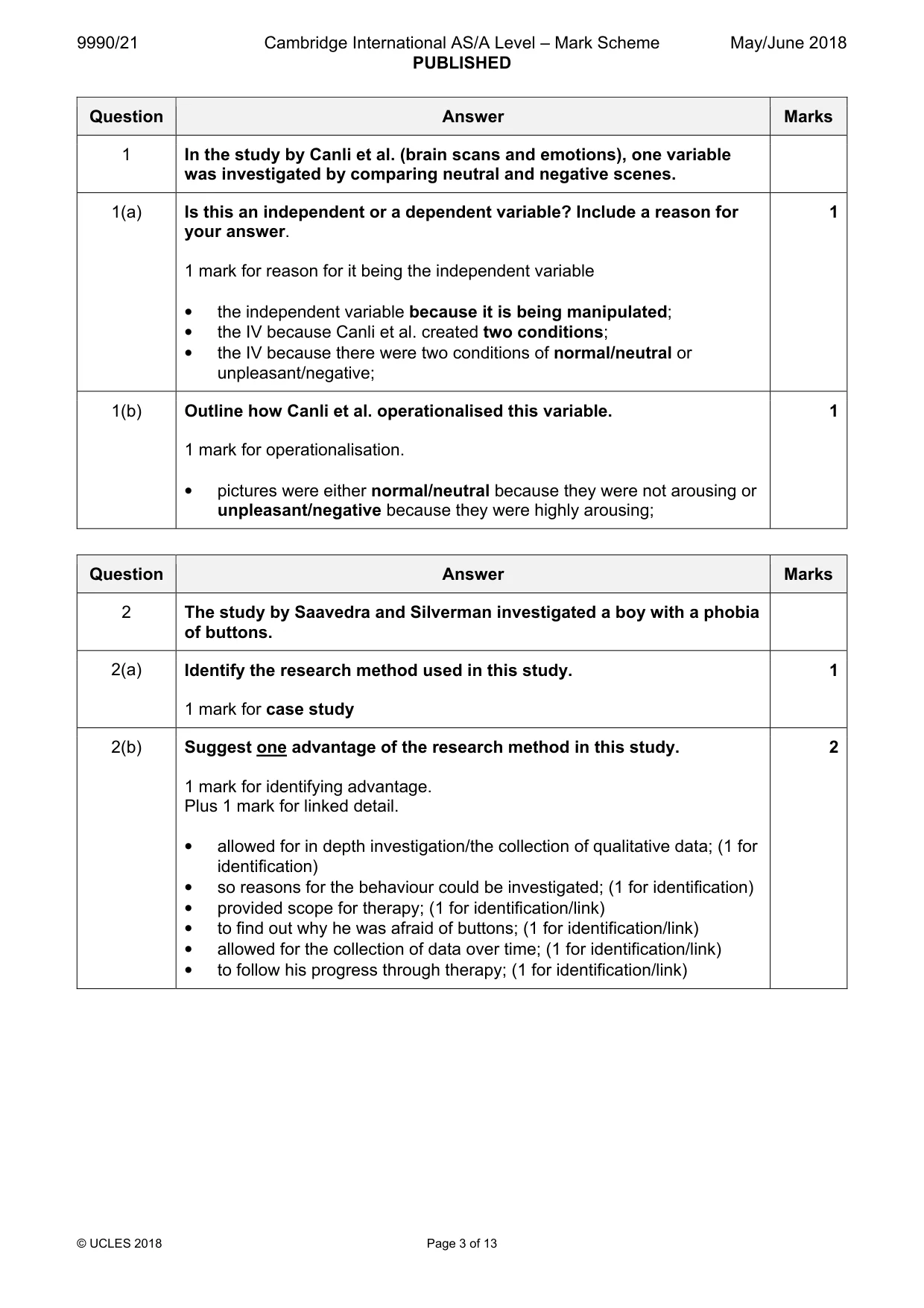
Mark scheme: Question Answer Marks 1 In the study by Canli et al. (brain scans and emotions), one variable was investigated by comparing neutral and negative scenes. 1(a) Is this an independent or a dependent variable? Include a reason for 1 your answer. 1 mark for reason for it being the independent variable • the independent variable because it is being manipulated; • the IV because Canli et al. created two conditions; • the IV because there were two conditions of normal/neutral or unpleasant/negative; 1(b) Outline how Canli et al. operationalised this variable. 1 1 mark for operationalisation. • pictures were either normal/neutral because they were not arousing or unpleasant/negative because they were highly arousing;
Q2 · The study by Saavedra and Silverman investigated a boy with a phobia of buttons
2 The study by Saavedra and Silverman investigated a boy with a phobia of buttons. (a) Identify the research method used in this study. ................................................................................................................................................... ...............................................................................................................................................[1] (b) Suggest one advantage of the research method in this study. ................................................................................................................................................... ................................................................................................................................................... ................................................................................................................................................... ...............................................................................................................................................[2]
Mark scheme: 2(a) Identify the research method used in this study. 1 1 mark for case study 2(b) Suggest one advantage of the research method in this study. 2 1 mark for identifying advantage. Plus 1 mark for linked detail. • allowed for in depth investigation/the collection of qualitative data; (1 for identification) • so reasons for the behaviour could be investigated; (1 for identification) • provided scope for therapy; (1 for identification/link) • to find out why he was afraid of buttons; (1 for identification/link) • allowed for the collection of data over time; (1 for identification/link) • to follow his progress through therapy; (1 for identification/link)
More questions on Anxiety disorders and fear-related disorders
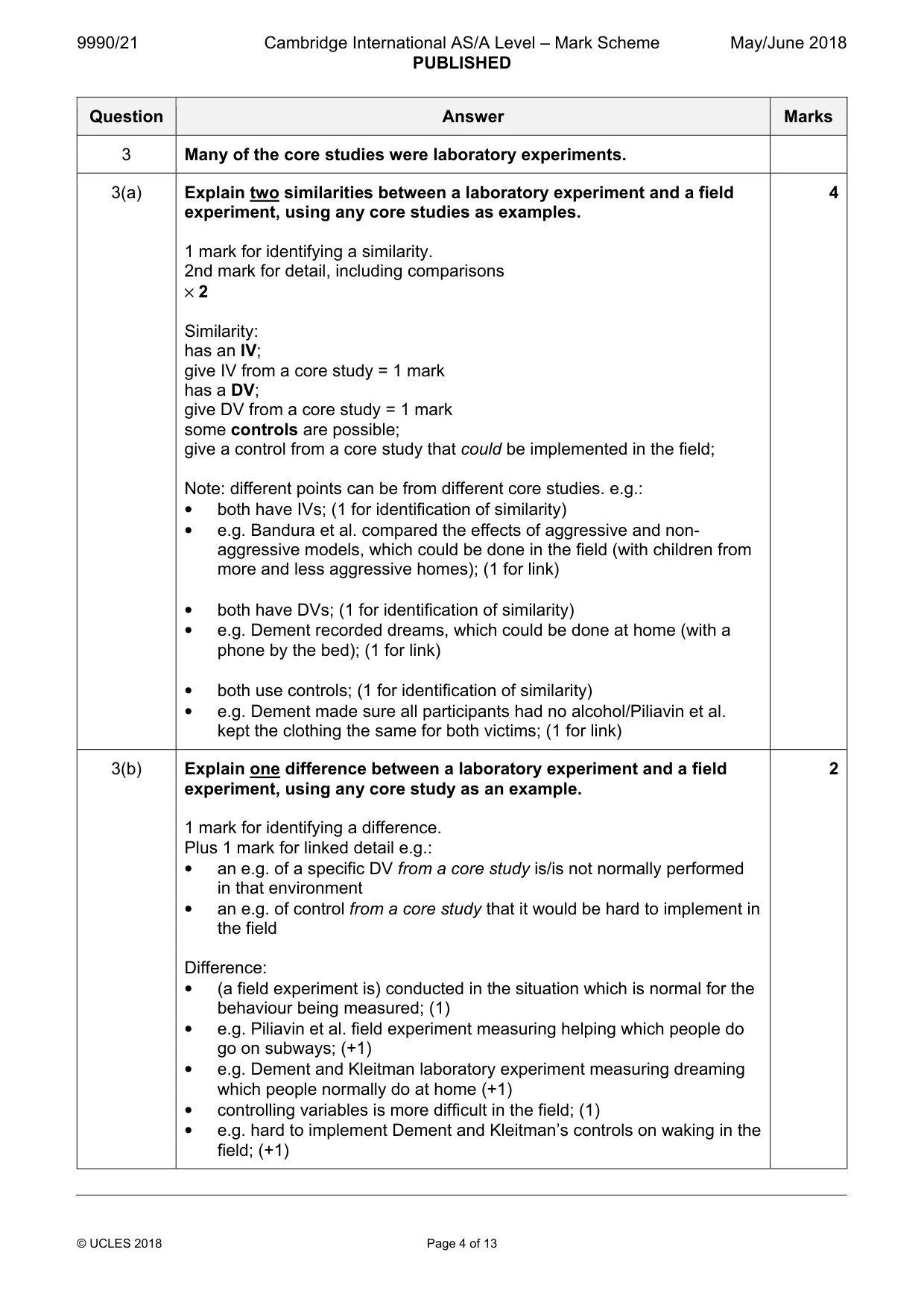
Q3 · Many of the core studies were laboratory experiments
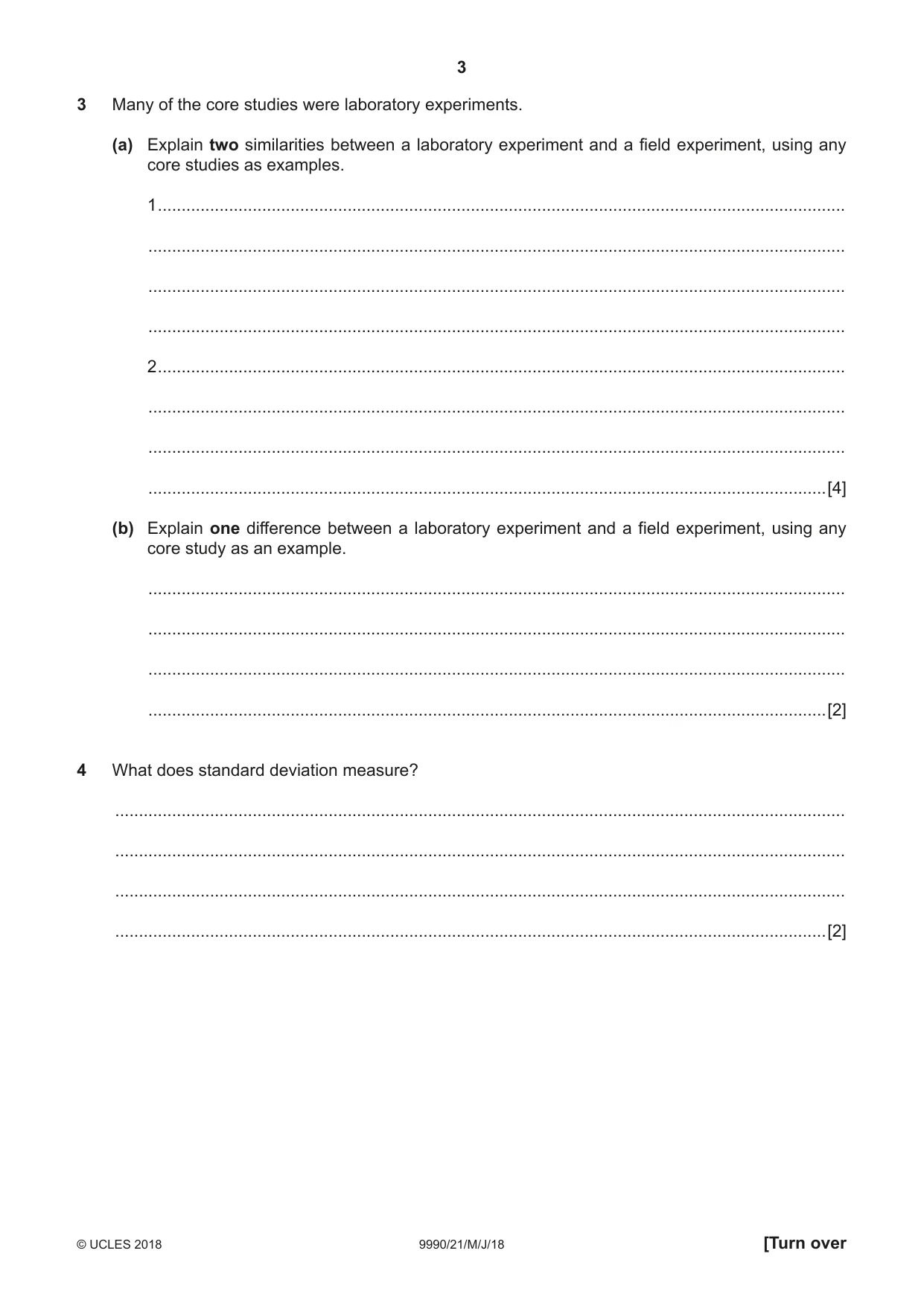
3 Many of the core studies were laboratory experiments. (a) Explain two similarities between a laboratory experiment and a field experiment, using any core studies as examples. 1 ................................................................................................................................................. ................................................................................................................................................... ................................................................................................................................................... ................................................................................................................................................... 2 ................................................................................................................................................. ................................................................................................................................................... ................................................................................................................................................... ...............................................................................................................................................[4] (b) Explain one difference between a laboratory experiment and a field experiment, using any core study as an example. ................................................................................................................................................... ................................................................................................................................................... ................................................................................................................................................... ...............................................................................................................................................[2]
Mark scheme: 3(a) Explain two similarities between a laboratory experiment and a field 4 experiment, using any core studies as examples. 1 mark for identifying a similarity. 2nd mark for detail, including comparisons × 2 Similarity: has an IV; give IV from a core study = 1 mark has a DV; give DV from a core study = 1 mark some controls are possible; give a control from a core study that could be implemented in the field; Note: different points can be from different core studies. e.g.: • both have IVs; (1 for identification of similarity) • e.g. Bandura et al. compared the effects of aggressive and non- aggressive models, which could be done in the field (with children from more and less aggressive homes); (1 for link) • both have DVs; (1 for identification of similarity) • e.g. Dement recorded dreams, which could be done at home (with a phone by the bed); (1 for link) • both use controls; (1 for identification of similarity) • e.g. Dement made sure all participants had no alcohol/Piliavin et al. kept the clothing the same for both victims; (1 for link) 3(b) Explain one difference between a laboratory experiment and a field 2 experiment, using any core study as an example. 1 mark for identifying a difference. Plus 1 mark for linked detail e.g.: • an e.g. of a specific DV from a core study is/is not normally performed in that environment • an e.g. of control from a core study that it would be hard to implement in the field Difference: • (a field experiment is) conducted in the situation which is normal for the behaviour being measured; (1) • e.g. Piliavin et al. field experiment measuring helping which people do go on subways; (+1) • e.g. Dement and Kleitman laboratory experiment measuring dreaming which people normally do at home (+1) • controlling variables is more difficult in the field; (1) • e.g. hard to implement Dement and Kleitman’s controls on waking in the field; (+1)
Q4 · What does standard deviation measure?
4 What does standard deviation measure? .......................................................................................................................................................... .......................................................................................................................................................... .......................................................................................................................................................... ......................................................................................................................................................[2]
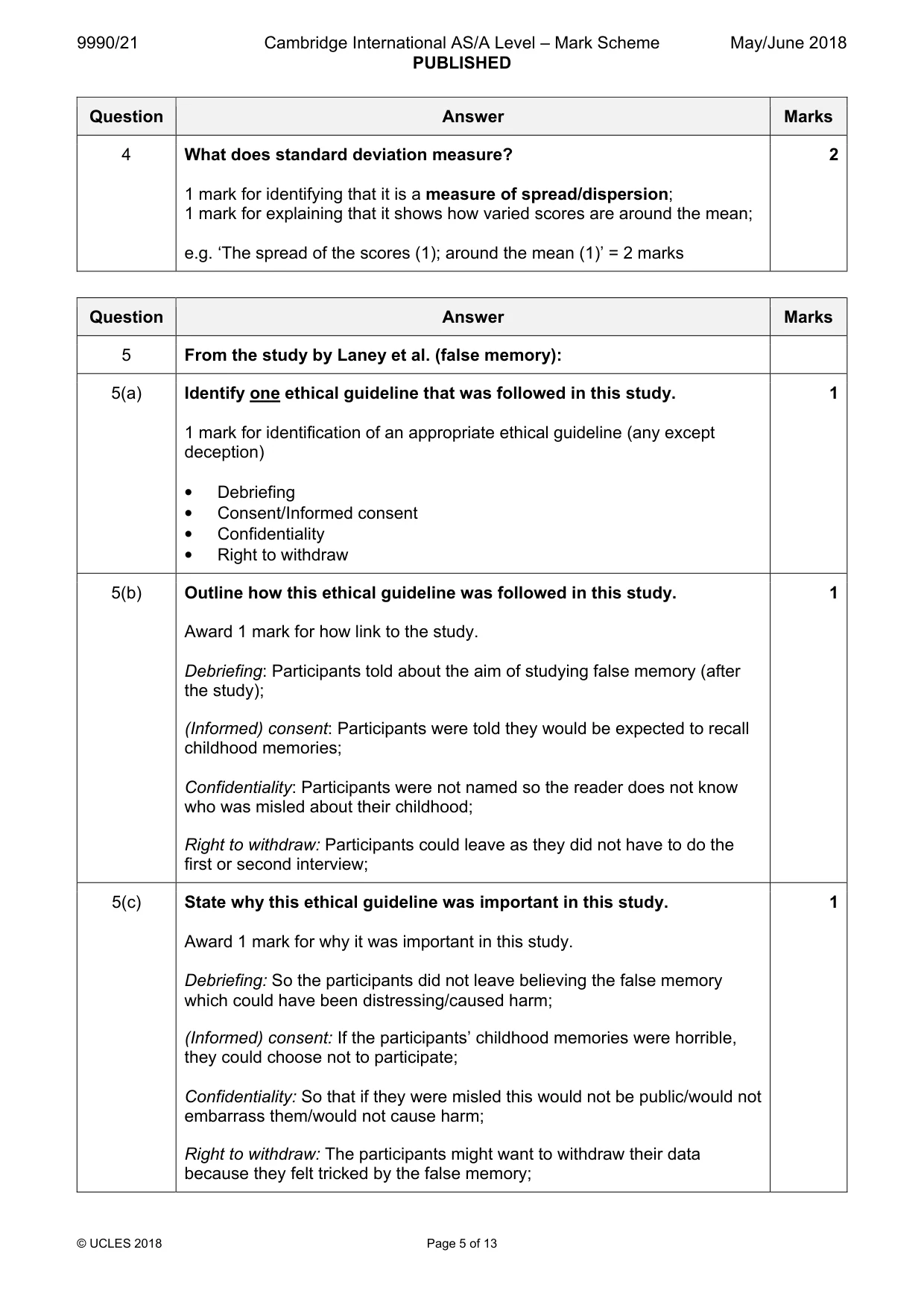
Mark scheme: 4 What does standard deviation measure? 2 1 mark for identifying that it is a measure of spread/dispersion; 1 mark for explaining that it shows how varied scores are around the mean; e.g. ‘The spread of the scores (1); around the mean (1)’ = 2 marks
Q5 · From the study by Laney et al
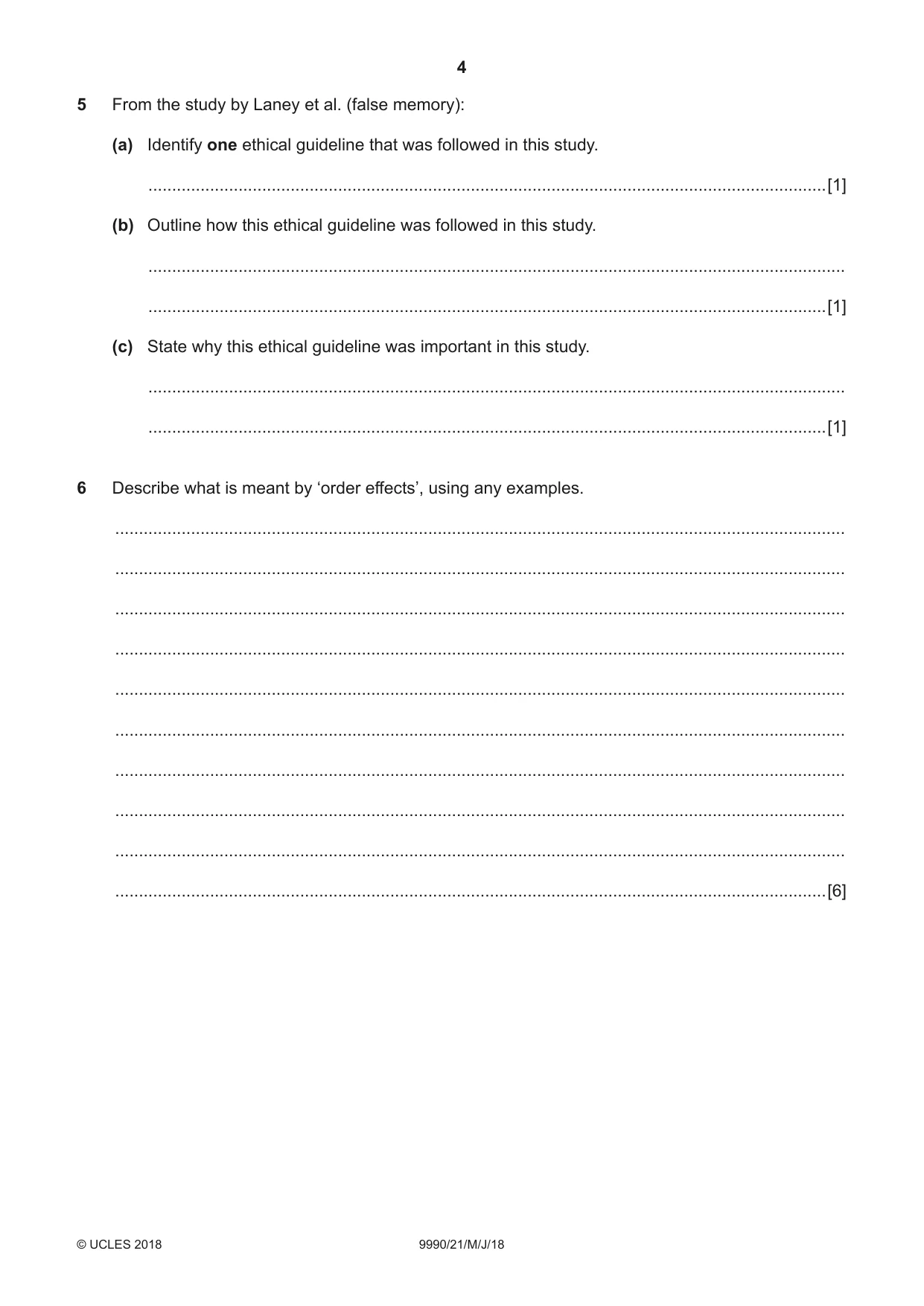
5 From the study by Laney et al. (false memory): (a) Identify one ethical guideline that was followed in this study. ...............................................................................................................................................[1] (b) Outline how this ethical guideline was followed in this study. ................................................................................................................................................... ...............................................................................................................................................[1] (c) State why this ethical guideline was important in this study. ................................................................................................................................................... ...............................................................................................................................................[1]
Mark scheme: 5(a) Identify one ethical guideline that was followed in this study. 1 1 mark for identification of an appropriate ethical guideline (any except deception) • Debriefing • Consent/Informed consent • Confidentiality • Right to withdraw 5(b) Outline how this ethical guideline was followed in this study. 1 Award 1 mark for how link to the study. Debriefing: Participants told about the aim of studying false memory (after the study); (Informed) consent: Participants were told they would be expected to recall childhood memories; Confidentiality: Participants were not named so the reader does not know who was misled about their childhood; Right to withdraw: Participants could leave as they did not have to do the first or second interview; 5(c) State why this ethical guideline was important in this study. 1 Award 1 mark for why it was important in this study. Debriefing: So the participants did not leave believing the false memory which could have been distressing/caused harm; (Informed) consent: If the participants’ childhood memories were horrible, they could choose not to participate; Confidentiality: So that if they were misled this would not be public/would not embarrass them/would not cause harm; Right to withdraw: The participants might want to withdraw their data because they felt tricked by the false memory;
Q6 · Describe what is meant by ‘order effects’, using any examples
6 Describe what is meant by ‘order effects’, using any examples. .......................................................................................................................................................... .......................................................................................................................................................... .......................................................................................................................................................... .......................................................................................................................................................... .......................................................................................................................................................... .......................................................................................................................................................... .......................................................................................................................................................... .......................................................................................................................................................... .......................................................................................................................................................... ......................................................................................................................................................[6]
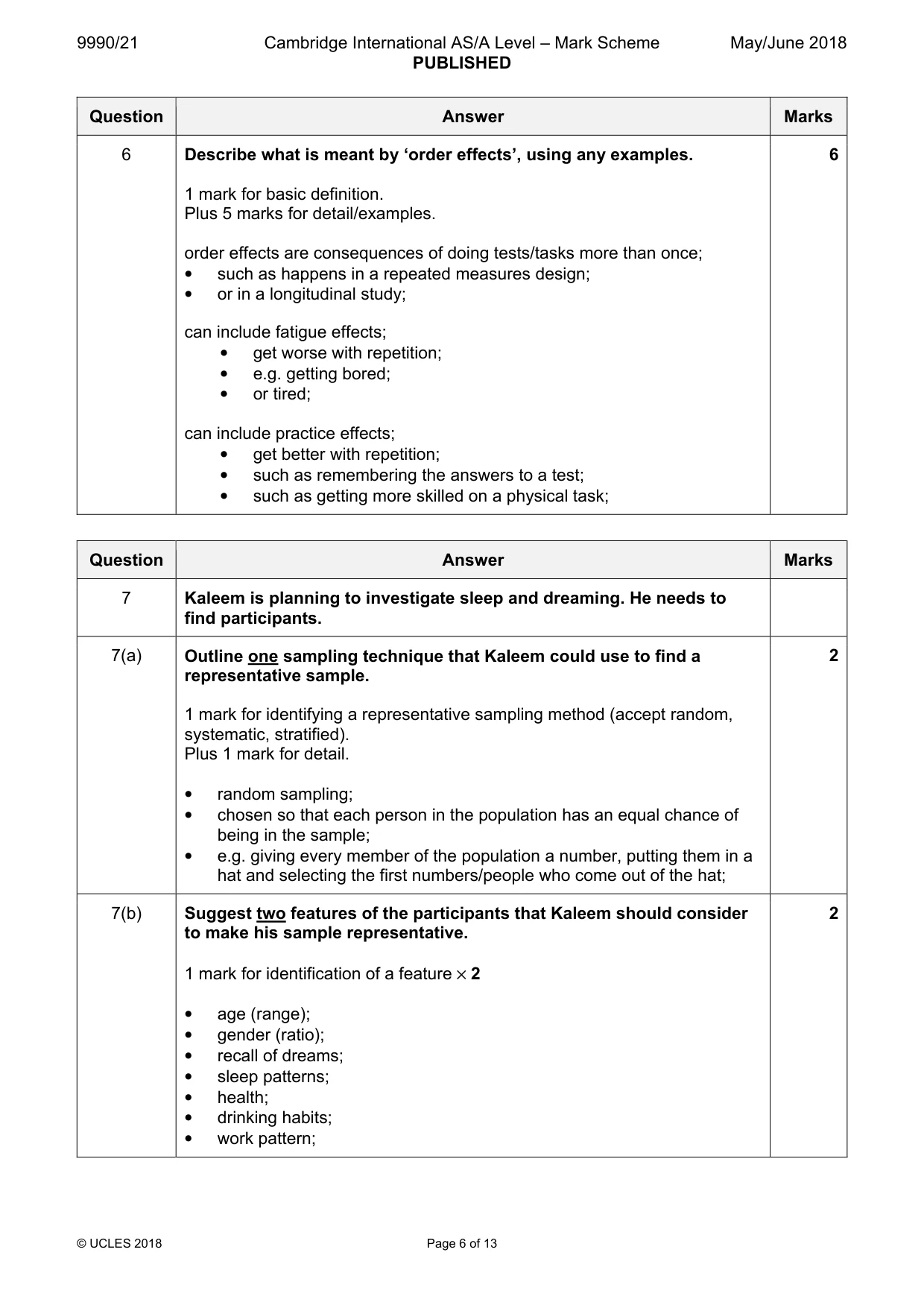
Mark scheme: 6 Describe what is meant by ‘order effects’, using any examples. 6 1 mark for basic definition. Plus 5 marks for detail/examples. order effects are consequences of doing tests/tasks more than once; • such as happens in a repeated measures design; • or in a longitudinal study; can include fatigue effects; • get worse with repetition; • e.g. getting bored; • or tired; can include practice effects; • get better with repetition; • such as remembering the answers to a test; • such as getting more skilled on a physical task;
Q7 · Kaleem is planning to investigate sleep and dreaming
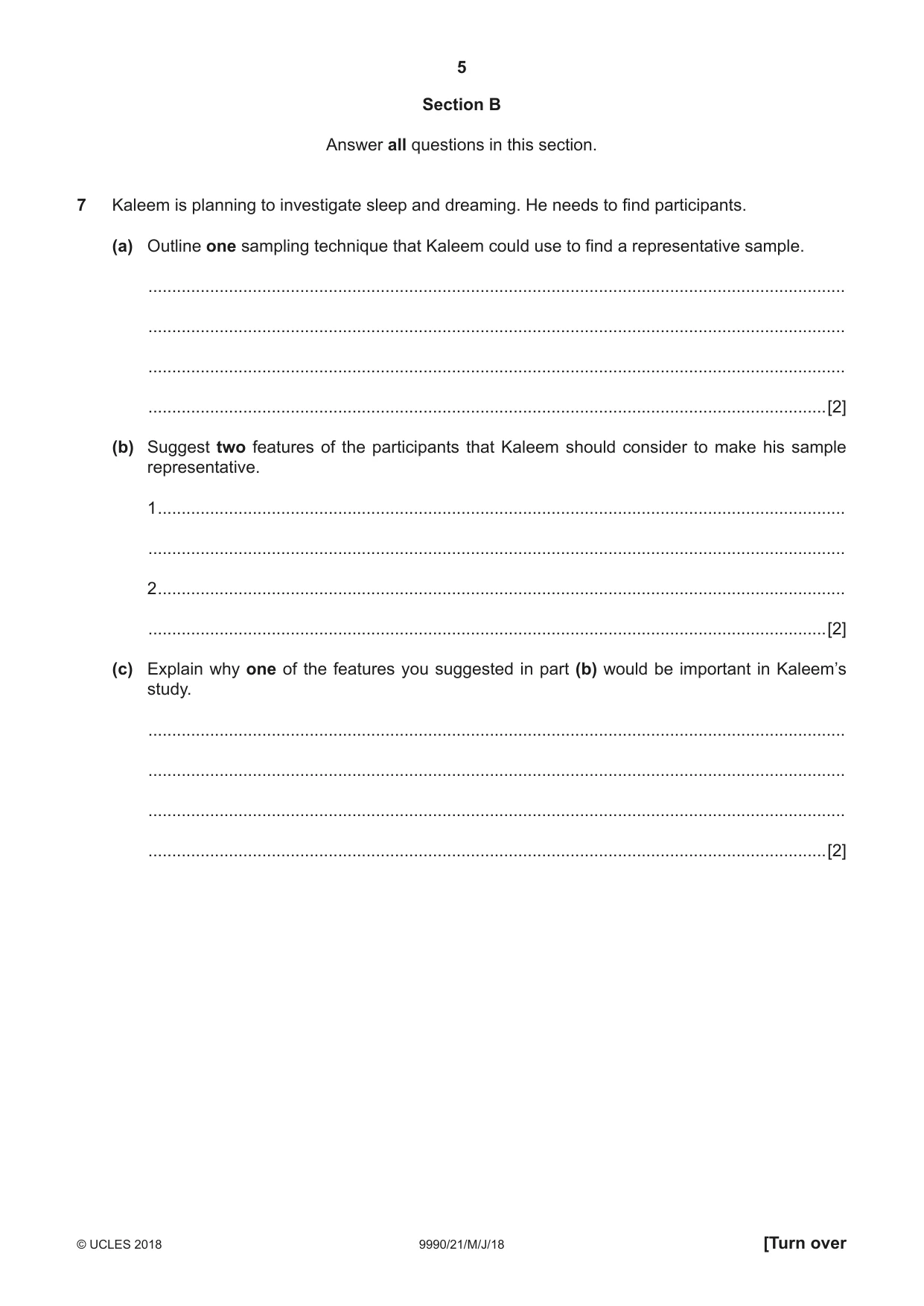
7 Kaleem is planning to investigate sleep and dreaming. He needs to find participants. (a) Outline one sampling technique that Kaleem could use to find a representative sample. ................................................................................................................................................... ................................................................................................................................................... ................................................................................................................................................... ...............................................................................................................................................[2] (b) Suggest two features of the participants that Kaleem should consider to make his sample representative. 1 ................................................................................................................................................. ................................................................................................................................................... 2 ................................................................................................................................................. ...............................................................................................................................................[2] (c) Explain why one of the features you suggested in part (b) would be important in Kaleem’s study. ................................................................................................................................................... ................................................................................................................................................... ................................................................................................................................................... ...............................................................................................................................................[2]
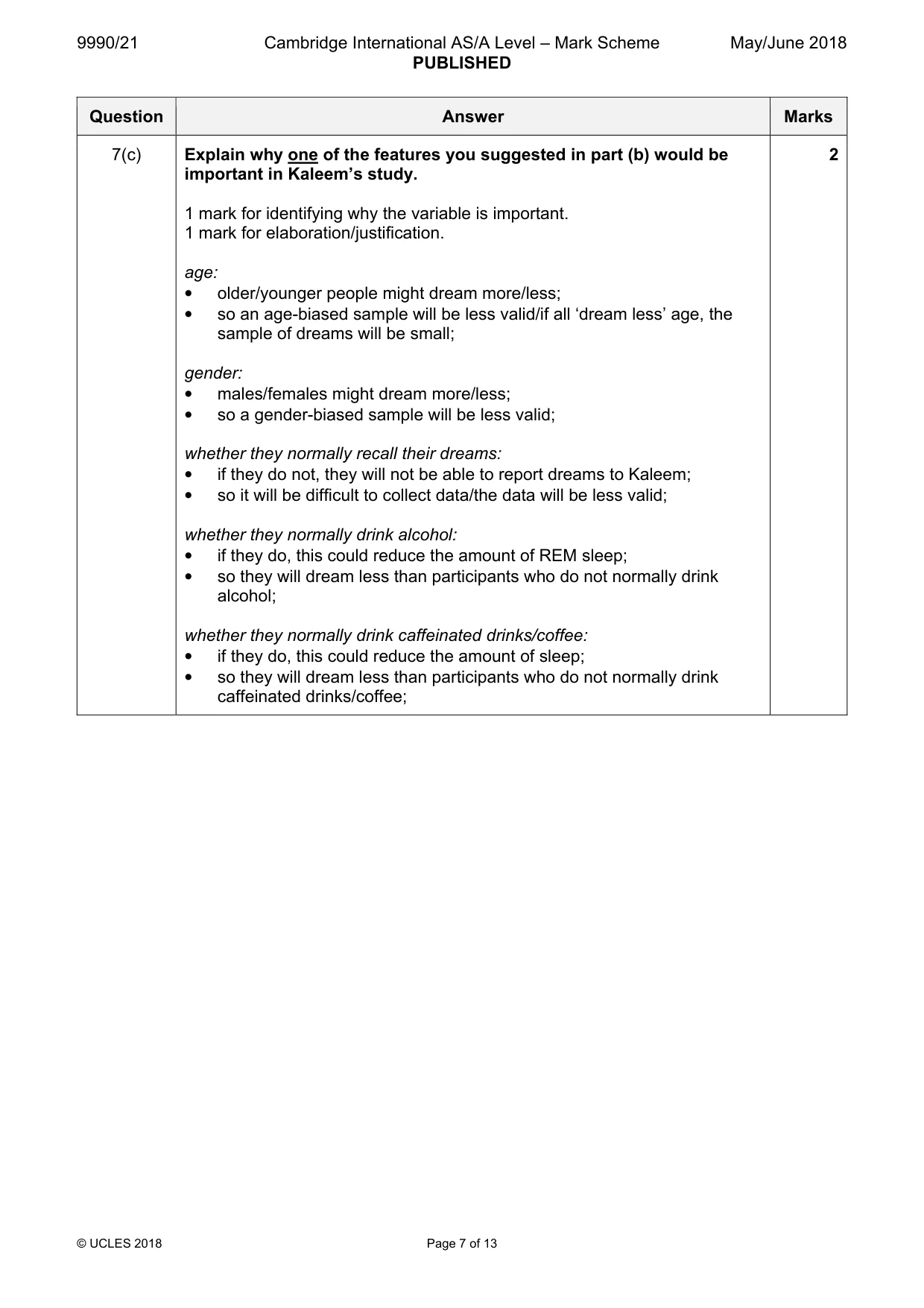
Mark scheme: 7(a) Outline one sampling technique that Kaleem could use to find a 2 representative sample. 1 mark for identifying a representative sampling method (accept random, systematic, stratified). Plus 1 mark for detail. • random sampling; • chosen so that each person in the population has an equal chance of being in the sample; • e.g. giving every member of the population a number, putting them in a hat and selecting the first numbers/people who come out of the hat; 7(b) Suggest two features of the participants that Kaleem should consider 2 to make his sample representative. 1 mark for identification of a feature × 2 • age (range); • gender (ratio); • recall of dreams; • sleep patterns; • health; • drinking habits; • work pattern; 7(c) Explain why one of the features you suggested in part (b) would be 2 important in Kaleem’s study. 1 mark for identifying why the variable is important. 1 mark for elaboration/justification. age: • older/younger people might dream more/less; • so an age-biased sample will be less valid/if all ‘dream less’ age, the sample of dreams will be small; gender: • males/females might dream more/less; • so a gender-biased sample will be less valid; whether they normally recall their dreams: • if they do not, they will not be able to report dreams to Kaleem; • so it will be difficult to collect data/the data will be less valid; whether they normally drink alcohol: • if they do, this could reduce the amount of REM sleep; • so they will dream less than participants who do not normally drink alcohol; whether they normally drink caffeinated drinks/coffee: • if they do, this could reduce the amount of sleep; • so they will dream less than participants who do not normally drink caffeinated drinks/coffee;
Q8 · Penny is using cats and parrots in her experiment
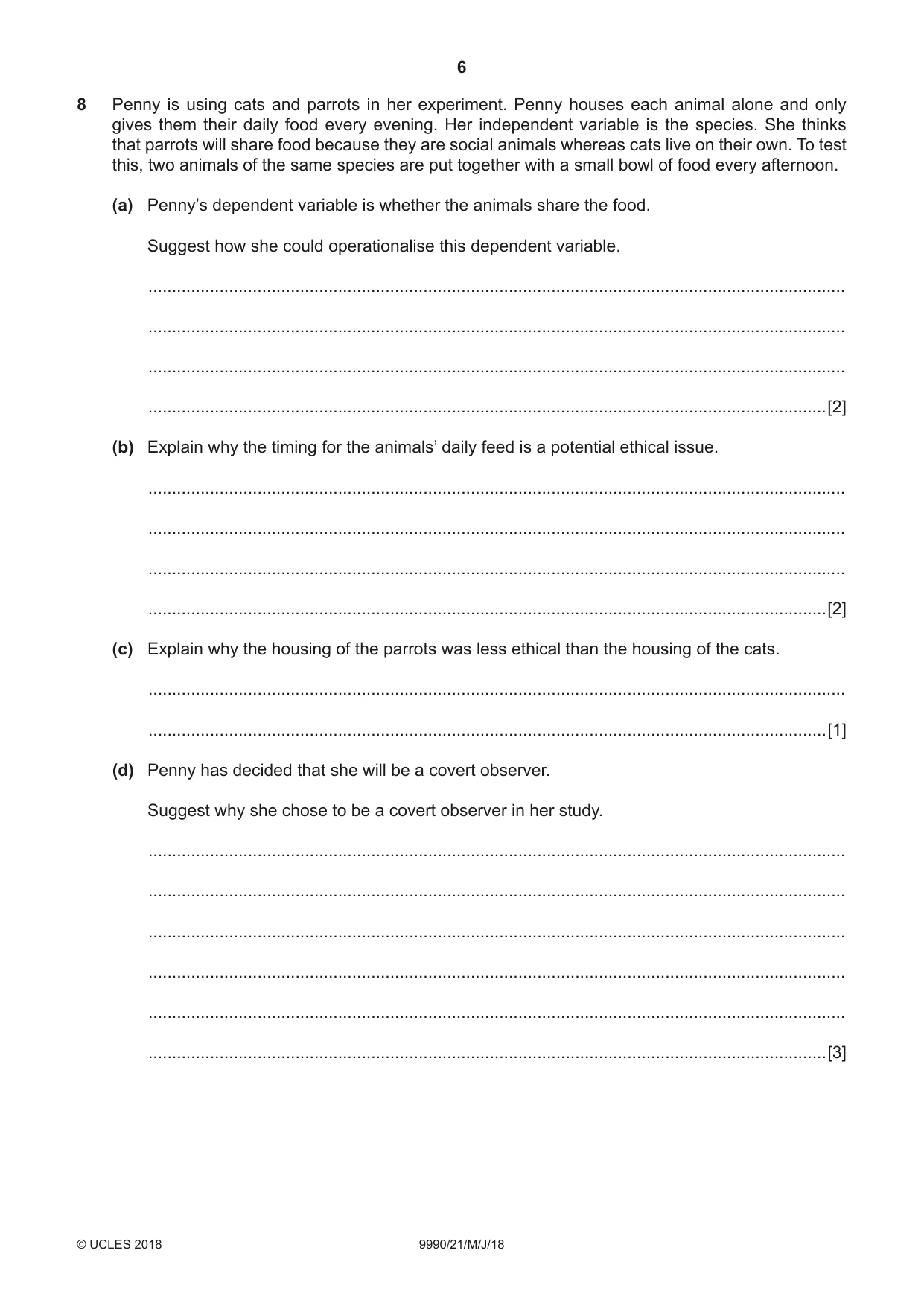
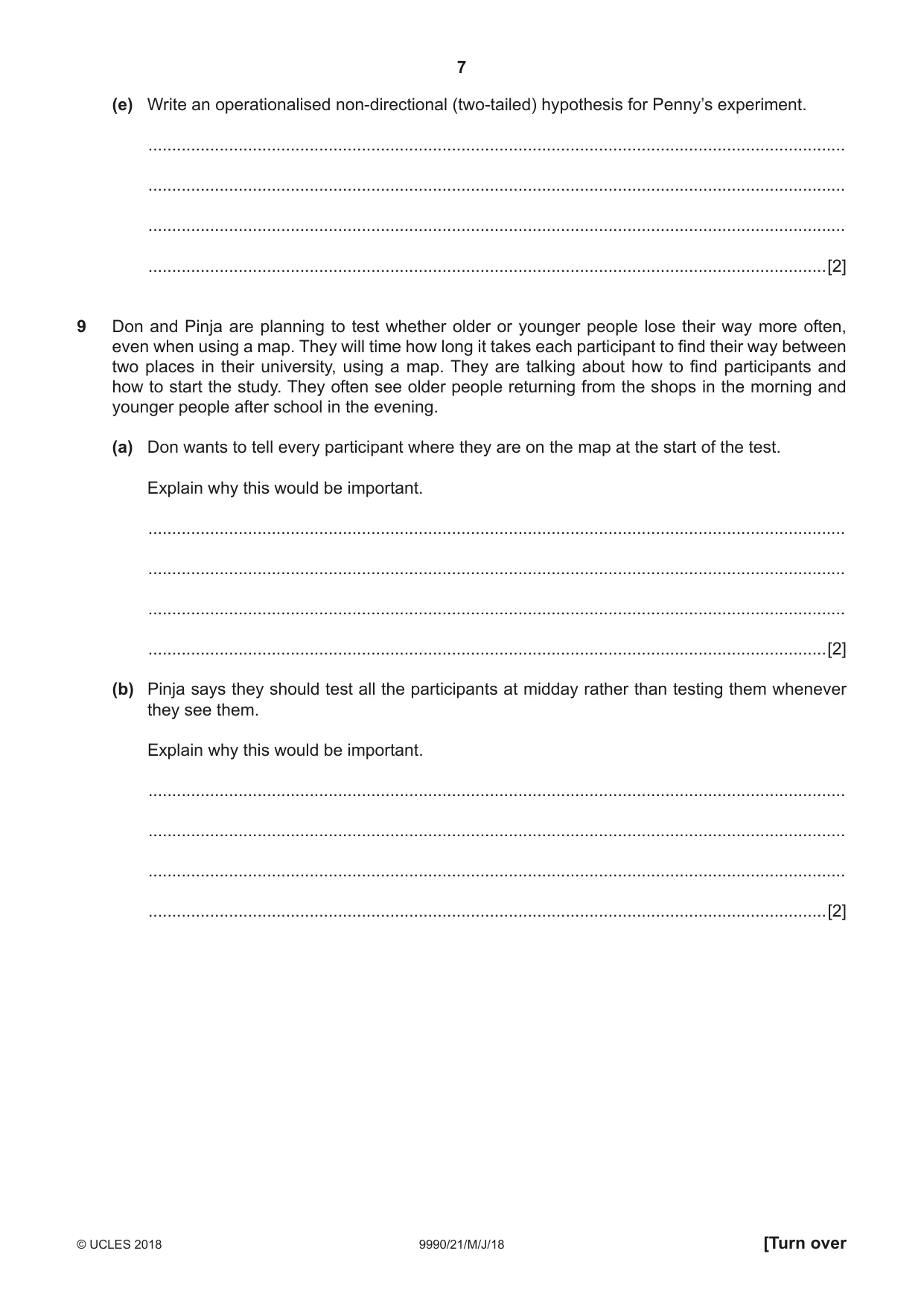
8 Penny is using cats and parrots in her experiment. Penny houses each animal alone and only gives them their daily food every evening. Her independent variable is the species. She thinks that parrots will share food because they are social animals whereas cats live on their own. To test this, two animals of the same species are put together with a small bowl of food every afternoon. (a) Penny’s dependent variable is whether the animals share the food. Suggest how she could operationalise this dependent variable. ................................................................................................................................................... ................................................................................................................................................... ................................................................................................................................................... ...............................................................................................................................................[2] (b) Explain why the timing for the animals’ daily feed is a potential ethical issue. ................................................................................................................................................... ................................................................................................................................................... ................................................................................................................................................... ...............................................................................................................................................[2] (c) Explain why the housing of the parrots was less ethical than the housing of the cats. ................................................................................................................................................... ...............................................................................................................................................[1] (d) Penny has decided that she will be a covert observer. Suggest why she chose to be a covert observer in her study. ................................................................................................................................................... ................................................................................................................................................... ................................................................................................................................................... ................................................................................................................................................... ................................................................................................................................................... ...............................................................................................................................................[3] (e) Write an operationalised non-directional (two-tailed) hypothesis for Penny’s experiment. ................................................................................................................................................... ................................................................................................................................................... ................................................................................................................................................... ...............................................................................................................................................[2]
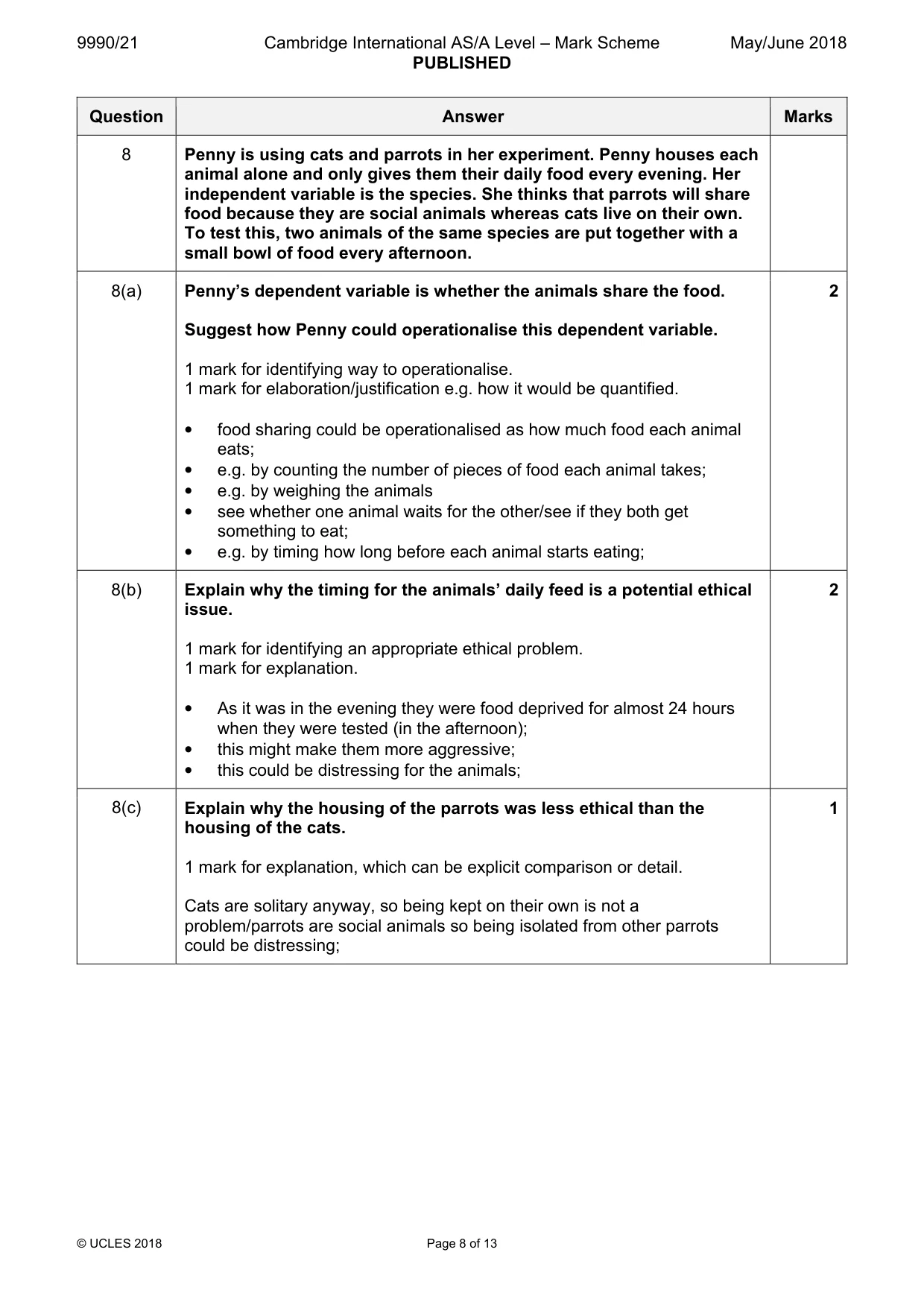
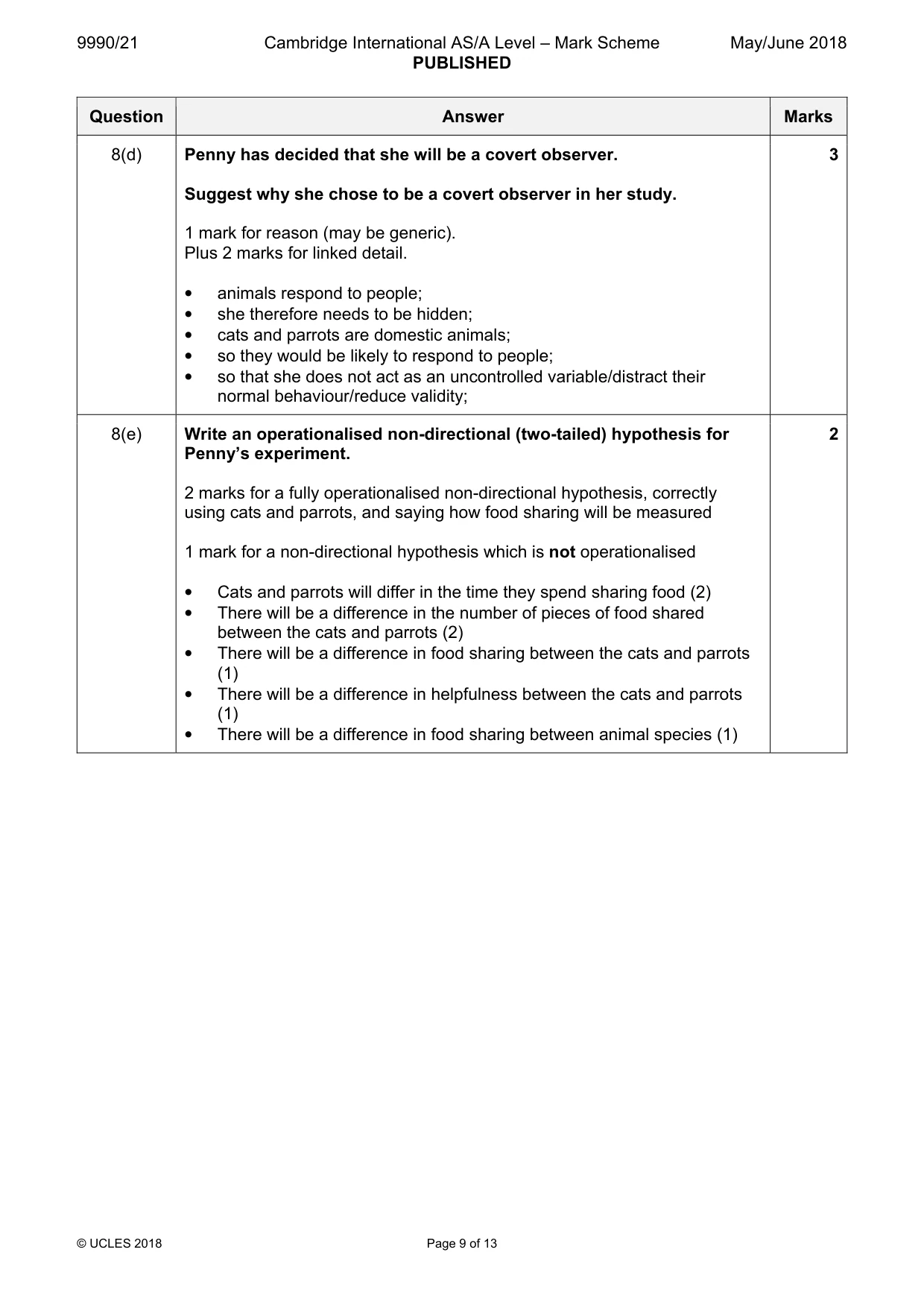
Mark scheme: 8(a) Penny’s dependent variable is whether the animals share the food. 2 Suggest how Penny could operationalise this dependent variable. 1 mark for identifying way to operationalise. 1 mark for elaboration/justification e.g. how it would be quantified. • food sharing could be operationalised as how much food each animal eats; • e.g. by counting the number of pieces of food each animal takes; • e.g. by weighing the animals • see whether one animal waits for the other/see if they both get something to eat; • e.g. by timing how long before each animal starts eating; 8(b) Explain why the timing for the animals’ daily feed is a potential ethical 2 issue. 1 mark for identifying an appropriate ethical problem. 1 mark for explanation. • As it was in the evening they were food deprived for almost 24 hours when they were tested (in the afternoon); • this might make them more aggressive; • this could be distressing for the animals; 8(c) Explain why the housing of the parrots was less ethical than the 1 housing of the cats. 1 mark for explanation, which can be explicit comparison or detail. Cats are solitary anyway, so being kept on their own is not a problem/parrots are social animals so being isolated from other parrots could be distressing; 8(d) Penny has decided that she will be a covert observer. 3 Suggest why she chose to be a covert observer in her study. 1 mark for reason (may be generic). Plus 2 marks for linked detail. • animals respond to people; • she therefore needs to be hidden; • cats and parrots are domestic animals; • so they would be likely to respond to people; • so that she does not act as an uncontrolled variable/distract their normal behaviour/reduce validity; 8(e) Write an operationalised non-directional (two-tailed) hypothesis for 2 Penny’s experiment. 2 marks for a fully operationalised non-directional hypothesis, correctly using cats and parrots, and saying how food sharing will be measured 1 mark for a non-directional hypothesis which is not operationalised • Cats and parrots will differ in the time they spend sharing food (2) • There will be a difference in the number of pieces of food shared between the cats and parrots (2) • There will be a difference in food sharing between the cats and parrots (1) • There will be a difference in helpfulness between the cats and parrots (1) • There will be a difference in food sharing between animal species (1)
Q9 · Don and Pinja are planning to test whether older or younger people lose their way more…
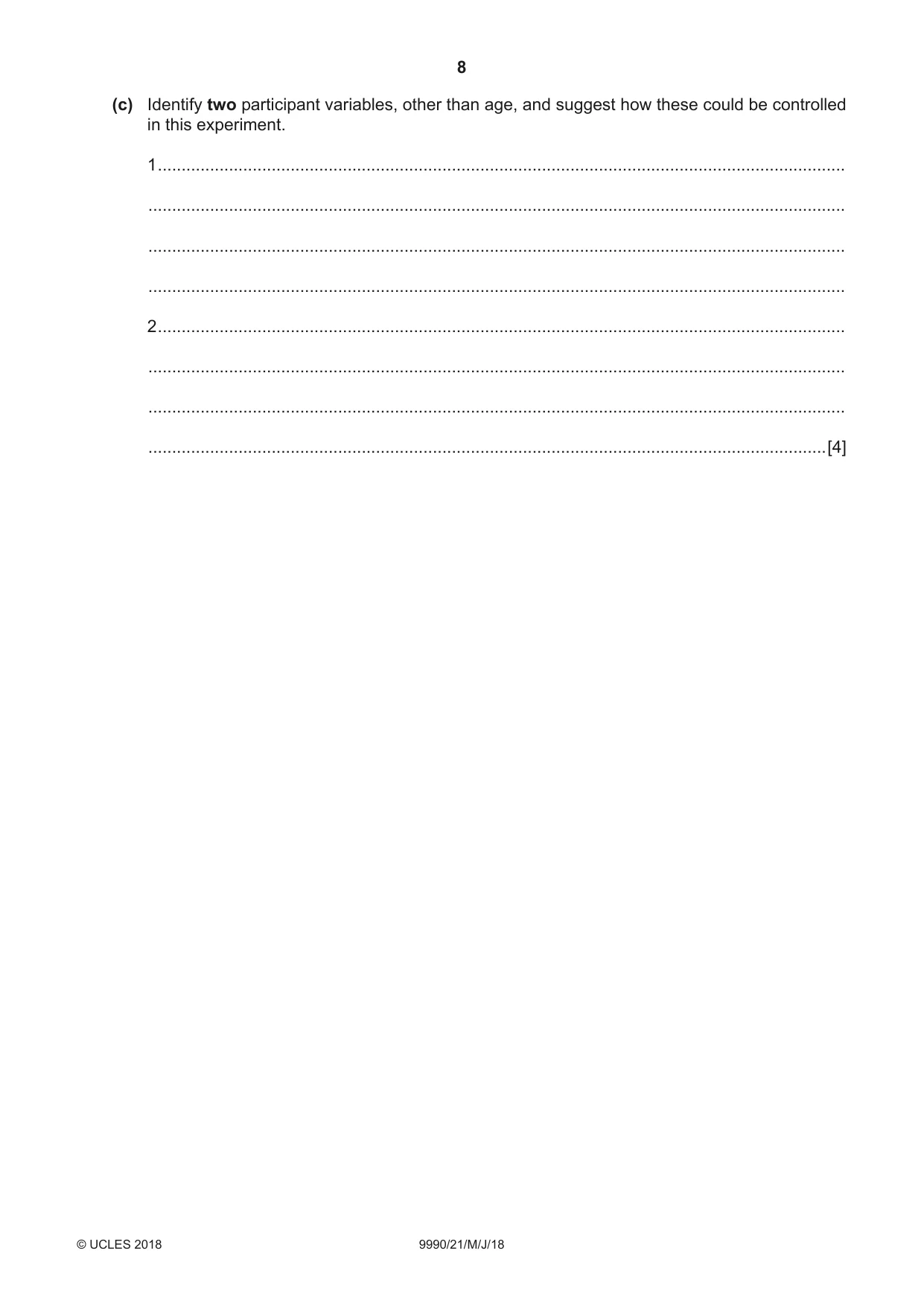
9 Don and Pinja are planning to test whether older or younger people lose their way more often, even when using a map. They will time how long it takes each participant to find their way between two places in their university, using a map. They are talking about how to find participants and how to start the study. They often see older people returning from the shops in the morning and younger people after school in the evening. (a) Don wants to tell every participant where they are on the map at the start of the test. Explain why this would be important. ................................................................................................................................................... ................................................................................................................................................... ................................................................................................................................................... ...............................................................................................................................................[2] (b) Pinja says they should test all the participants at midday rather than testing them whenever they see them. Explain why this would be important. ................................................................................................................................................... ................................................................................................................................................... ................................................................................................................................................... ...............................................................................................................................................[2] (c) Identify two participant variables, other than age, and suggest how these could be controlled in this experiment. 1 ................................................................................................................................................. ................................................................................................................................................... ................................................................................................................................................... ................................................................................................................................................... 2 ................................................................................................................................................. ................................................................................................................................................... ................................................................................................................................................... ...............................................................................................................................................[4] Section C Answer all questions in this section.
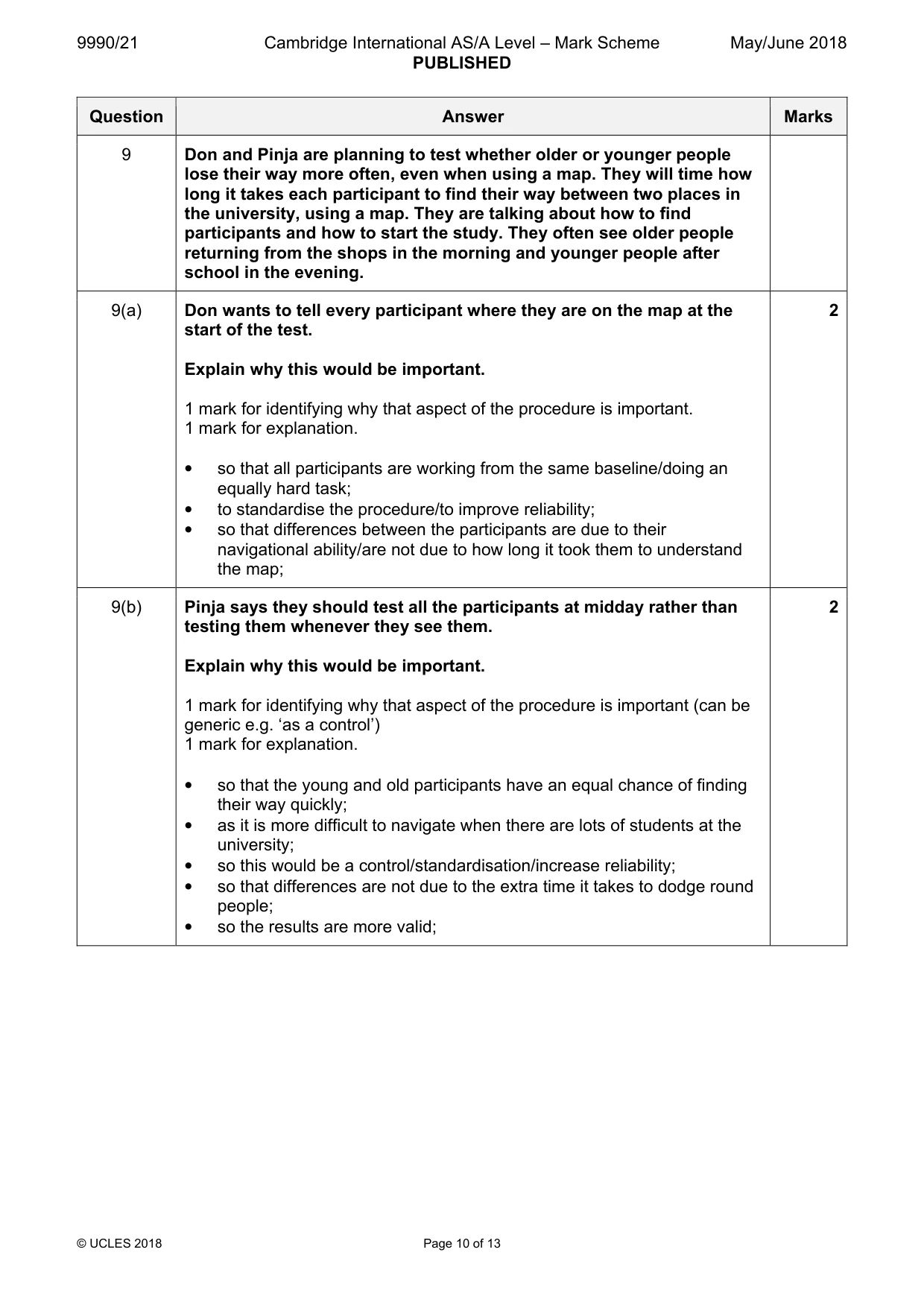
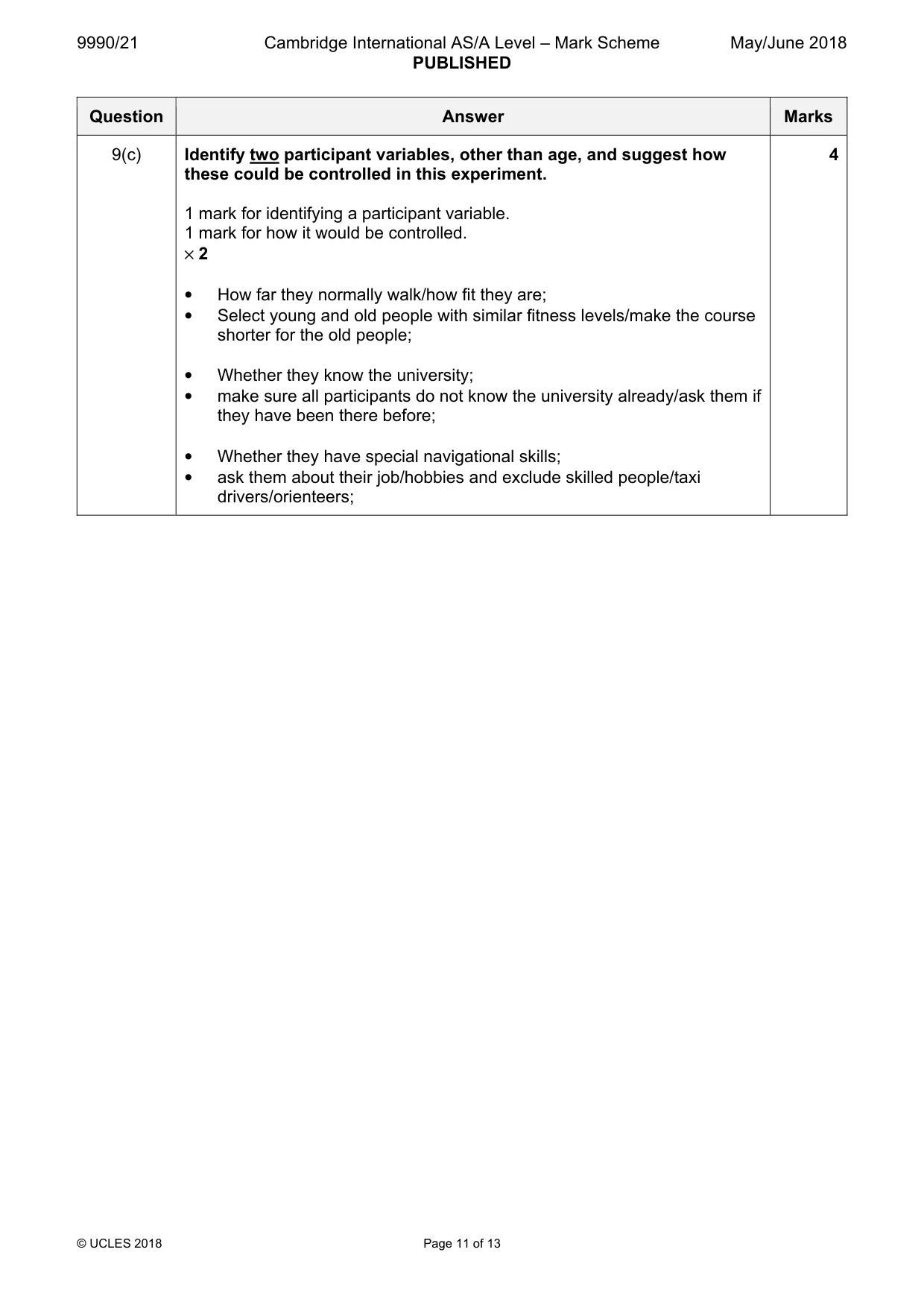
Mark scheme: 9(a) Don wants to tell every participant where they are on the map at the 2 start of the test. Explain why this would be important. 1 mark for identifying why that aspect of the procedure is important. 1 mark for explanation. • so that all participants are working from the same baseline/doing an equally hard task; • to standardise the procedure/to improve reliability; • so that differences between the participants are due to their navigational ability/are not due to how long it took them to understand the map; 9(b) Pinja says they should test all the participants at midday rather than 2 testing them whenever they see them. Explain why this would be important. 1 mark for identifying why that aspect of the procedure is important (can be generic e.g. ‘as a control’) 1 mark for explanation. • so that the young and old participants have an equal chance of finding their way quickly; • as it is more difficult to navigate when there are lots of students at the university; • so this would be a control/standardisation/increase reliability; • so that differences are not due to the extra time it takes to dodge round people; • so the results are more valid; 9(c) Identify two participant variables, other than age, and suggest how 4 these could be controlled in this experiment. 1 mark for identifying a participant variable. 1 mark for how it would be controlled. × 2 • How far they normally walk/how fit they are; • Select young and old people with similar fitness levels/make the course shorter for the old people; • Whether they know the university; • make sure all participants do not know the university already/ask them if they have been there before; • Whether they have special navigational skills; • ask them about their job/hobbies and exclude skilled people/taxi drivers/orienteers;
Q10 · Fajar has noticed that some of the younger children in her school believe their toys have…
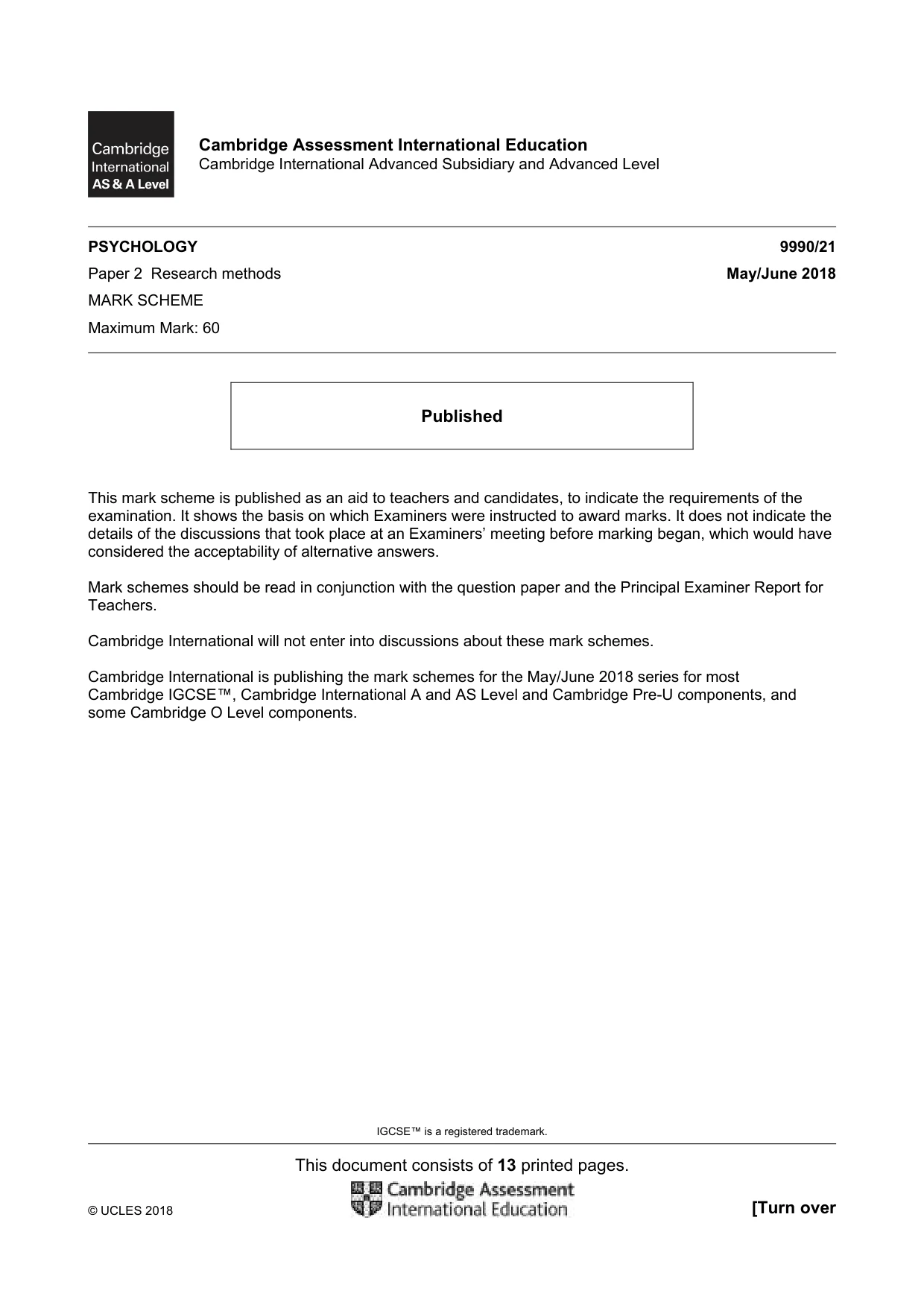
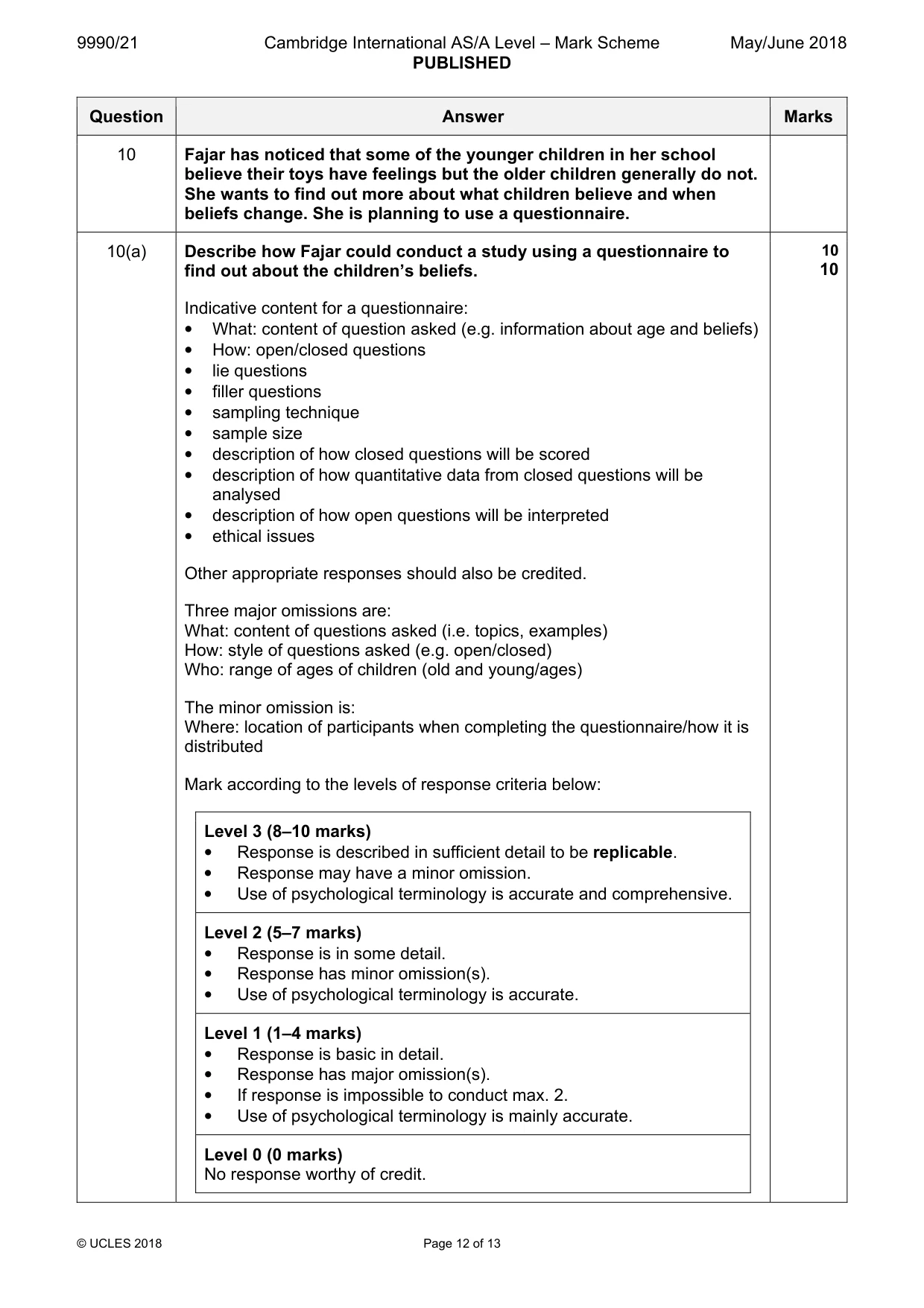
10 Fajar has noticed that some of the younger children in her school believe their toys have feelings but the older children generally do not. She wants to find out more about what children believe and when beliefs change. She is planning to use a questionnaire. (a) Describe how Fajar could conduct a study using a questionnaire to find out about the children’s beliefs. ................................................................................................................................................... ................................................................................................................................................... ................................................................................................................................................... ................................................................................................................................................... ................................................................................................................................................... ................................................................................................................................................... ................................................................................................................................................... ................................................................................................................................................... ................................................................................................................................................... ................................................................................................................................................... ................................................................................................................................................... ................................................................................................................................................... ................................................................................................................................................... ................................................................................................................................................... ................................................................................................................................................... ................................................................................................................................................... ................................................................................................................................................... ................................................................................................................................................... ................................................................................................................................................... ................................................................................................................................................... ................................................................................................................................................... .............................................................................................................................................[10] (b) Identify one weakness/limitation with the procedure you have described in your answer to part (a) and suggest how your study might be done differently to overcome the problem. ................................................................................................................................................... ................................................................................................................................................... ................................................................................................................................................... ................................................................................................................................................... ................................................................................................................................................... ................................................................................................................................................... ................................................................................................................................................... ...............................................................................................................................................[4]
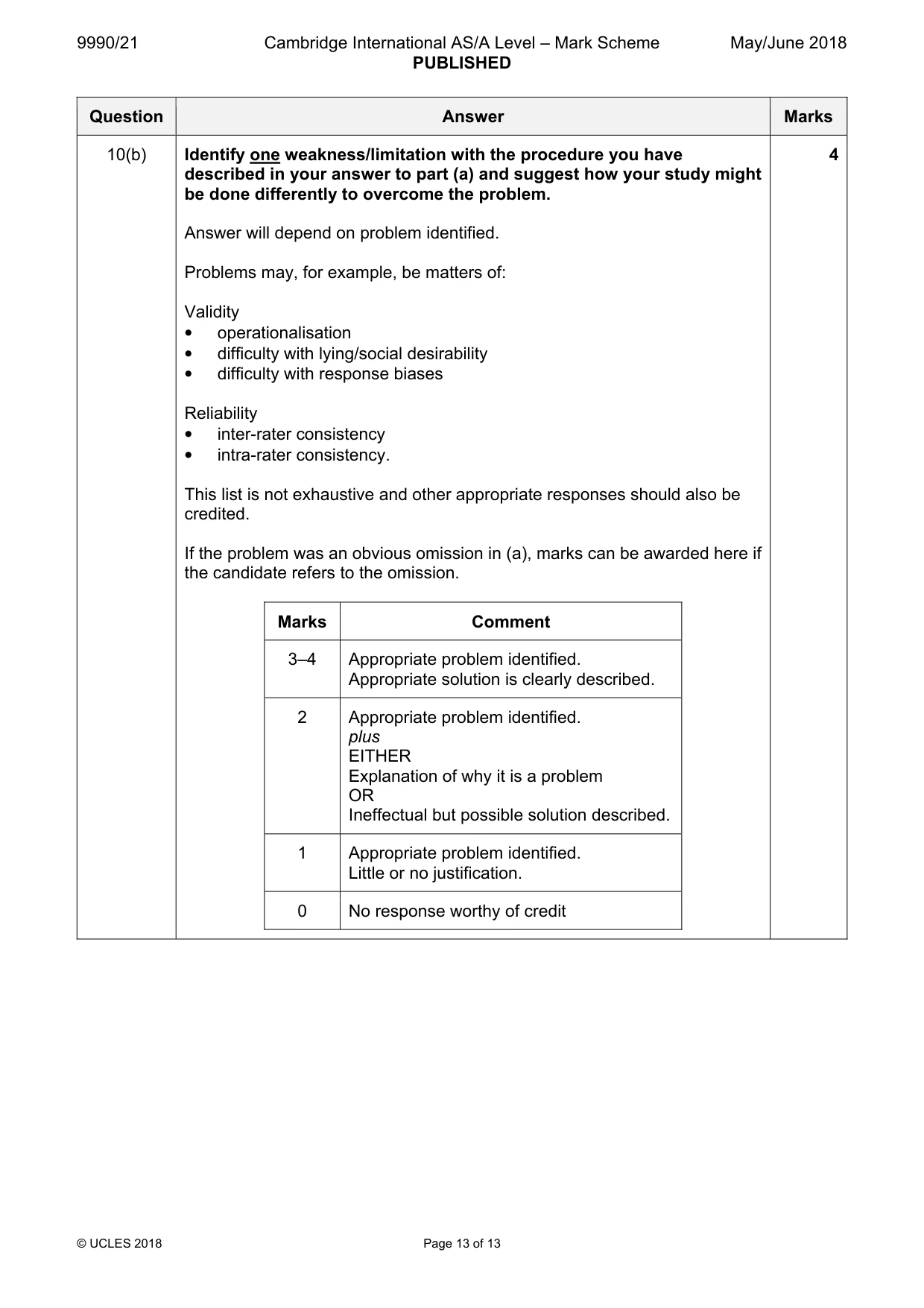
Mark scheme: 10(a) Describe how Fajar could conduct a study using a questionnaire to 10 find out about the children’s beliefs. 10 Indicative content for a questionnaire: • What: content of question asked (e.g. information about age and beliefs) • How: open/closed questions • lie questions • filler questions • sampling technique • sample size • description of how closed questions will be scored • description of how quantitative data from closed questions will be analysed • description of how open questions will be interpreted • ethical issues Other appropriate responses should also be credited. Three major omissions are: What: content of questions asked (i.e. topics, examples) How: style of questions asked (e.g. open/closed) Who: range of ages of children (old and young/ages) The minor omission is: Where: location of participants when completing the questionnaire/how it is distributed Mark according to the levels of response criteria below: Level 3 (8–10 marks) • Response is described in sufficient detail to be replicable. • Response may have a minor omission. • Use of psychological terminology is accurate and comprehensive. Level 2 (5–7 marks) • Response is in some detail. • Response has minor omission(s). • Use of psychological terminology is accurate. Level 1 (1–4 marks) • Response is basic in detail. • Response has major omission(s). • If response is impossible to conduct max. 2. • Use of psychological terminology is mainly accurate. Level 0 (0 marks) No response worthy of credit. 10(b) Identify one weakness/limitation with the procedure you have 4 described in your answer to part (a) and suggest how your study might be done differently to overcome the problem. Answer will depend on problem identified. Problems may, for example, be matters of: Validity • operationalisation • difficulty with lying/social desirability • difficulty with response biases Reliability • inter-rater consistency • intra-rater consistency. This list is not exhaustive and other appropriate responses should also be credited. If the problem was an obvious omission in (a), marks can be awarded here if the candidate refers to the omission. Marks Comment 3–4 Appropriate problem identified. Appropriate solution is clearly described. 2 Appropriate problem identified. plus EITHER Explanation of why it is a problem OR Ineffectual but possible solution described. 1 Appropriate problem identified. Little or no justification. 0 No response worthy of credit
What was in this paper
The subtopics covered by these 10 questions, and how many questions each got. Open one in a new tab to see every Cambridge question on it.
What you needed in this session
Cambridge’s own grade thresholds for 2018 May/June, Paper 2 · Variant 1. A higher threshold means an easier paper — the bar moves with how the cohort did.