Questions as text
Q1 · Assess the reasons for the rise of the ‘imperial presidency’ in the 1960s and 1970s 9489/42 May/June 2021
6 Assess the reasons for the rise of the ‘imperial presidency’ in the 1960s and 1970s. [30]
30 marks
Mark scheme: 6 Assess the reasons for the rise of the ‘imperial presidency’ in the 30 1960s and 1970s. Factors might include personalities, ambitions and increasing pressure from foreign policy. The idea that an imperial presidency developed, with the president assuming more powers than the constitution strictly allowed derived from a 1973 study of the presidents’ powers by the historian, Arthur Schlesinger. The manifestation in the 1960s and 1970s was directly linked to foreign policy. There had been a trend in the 1950s for foreign policy actions to be taken without formal congressional consultation and approval. The reasons can be traced back to the precedents set by the New Deal, which saw the economic problems as so severe that a great expansion of federal power was needed, followed by the unprecedented emergency powers exercised in World War Ⅱ, the pressures of the nuclear age, and the threats of the Cold War, all of which led Congress to accept that presidents needed to pursue independent and unilateral action. The Cuban Missile Crisis underlined this. Johnson acted without Congressional approval by sending troops into the Dominican Republic and the Gulf of Tonkin Resolution gave him authority to escalate the conflict in Vietnam, until revoked in 1971. Nixon did not have congressional approval for the war in Cambodia, and the bombing of Laos was not revealed to Congress. Actions in Thailand and Ethiopia were not shared with Congress. Thus, the president came to wield ‘imperial powers’ because of the nature of world events and the demands of foreign policy. This had a knock-on effect on domestic policy being conducted without the control and scrutiny of Congress, the Supreme Court, or the press, which undermined controls of the executive. Nixon pursued economic policies on his own initiative and by- passed Congressional measures by denying funds. Nixon used security forces to investigate potential opposition, culminating in Watergate, and it has been argued that the presidency shifted towards a powerful figure employing staff personally loyal outside of the regular administration. With the development of covert operations and a cult of secrecy justified by a fear that the US was under attack and could not afford transparency or congressional control or full media scrutiny, the Cold War may bear some responsibility. However, some may feel that the development of executive power in two world wars and the pressure from the extreme economic conditions of the slump might have set a dangerous precedent. Also, the personalities of the presidents might offer explanations with the development of a ‘court’ under Kennedy and with Johnson’s autocratic manner and Nixon’s dislike of scrutiny and criticism. The development of an inflated White House staff, which the founders of the constitution did not anticipate, and the increased threat of aggressive and well-informed media, may be seen as encouraging an inward-looking presidential style in which unilateral decision-making was the norm.
This question in 9489/42 May/June 2021
Q2 · Analyse the reasons for Clinton’s election victory in 1992 9489/42 May/June 2021
7 Analyse the reasons for Clinton’s election victory in 1992. [30]
30 marks
Mark scheme: 7 Assess the reasons for Clinton’s election victory in 1992. 30 The debate might be about whether Clinton won the election more than Bush losing it. Bush’s campaign lacked vigour and purpose, and he had alienated Republicans by failing to deliver on the tax cuts promised in 1988. The performance of the economy, which was in recession, did not help Bush. Bush found it hard to deal with criticisms of the Reagan-Bush era as socially divisive and the inconsistencies of Reaganomics as the budget deficit was running at $300 billion, despite the talk of sound finance. Also, while the Reagan era had seemed to deliver on jobs despite what appeared to be attacks on the welfare state, the situation had changed by 1992, with unemployment and economic sectors not helped by Republican policies facing hard times, as well as much talk of divisions and inequalities within US society. The conservative vote was split, with the emergence of Ross Perot’s ‘United we stand America’ campaign, which promised a balanced budget and patriotism to become a powerful third-party movement, which hit Bush much harder than Clinton. Clinton was an articulate and agile candidate, who offered a very clear focus on the economy – famously saying ‘It’s the economy – stupid’ and did well not only in traditional Democrat areas but was able to appeal to many middle-class Americans. His own rather doubtful personal history was effectively played down and his family support was strong, despite some infidelities. His owning up to smoking cannabis – modified by the statement that he had not inhaled – seemed to some to be a sign of openness and his youthful manner and enthusiasm was an asset. It was clear from the combined 62% popular vote for Clinton and Perot that there was the desire for change and a break with the Republican ascendancy.
This question in 9489/42 May/June 2021
Q3 · ‘Clinton mostly owed his electoral success to his personal appeal.’ Discuss this view 9489/41 May/June 2022
7 ‘Clinton mostly owed his electoral success to his personal appeal.’ Discuss this view. [30]
30 marks
Mark scheme: 7 Bill Clinton mostly owed his electoral success to his personal appeal.’ 30 Discuss this view. Despite dubious elements in his private life Clinton conducted a focused campaign in 1992 based on opposition to a $300 bn deficit and inequalities produced by Republican economic policies. There was a clear and effective message ‘It’s the economy, stupid!’ Bush’s campaign lacked energy and many in his party were alienated by tax rises. The economic recession made it hard for Bush as did the split in conservative ranks caused by Ross Perot’s candidature based on a balanced budget and conservative values. Perot brought about one of the most impressive Third Party campaigns in the century. Clinton won back many Democrats who had gone to Reagan but more people voted against him than for him and he owed a lot to the conservative division – Perot hurt Bush more than Clinton. The desire for change however characterised both Perot and Clinton’s campaigns and the 1992 election was a rejection of the Republicans. By 1994 it was clear that Clinton’s policies had been unpopular – the North American Free Trade Association aroused fears of Latin American competition and Clinton had failed over the issue of health care reform. His administration suffered from scandals and the Republicans did well in the midterm elections. However, by 1996 the Republicans had alienated moderate voters. Newt Gingrich's relentless attack on government programmes had frightened many moderates. Dismantling environmental protection programmes seemed extreme Most importantly, when the Republicans proposed drastic cuts in Medicare expenditures coupled with a tax-cut to benefit the wealthy, a backlash began to roll across the nation. Americans grew weary of the nonstop personal attacks on the Clintons and ‘the Comeback Kid’ won the election. His opponent Bob Dole was known for his integrity, his age (seventy-three), speaking style, and excessively dry wit worked against him. He seemed out of touch with a more youthful America. Clinton’s policies had moved to the right since 1994 as he supported a crime bill, claiming it would put 100 000 new police officers on the streets; he also championed anti-assault weapons measures. In addition, the President promoted the goal of a two-year limit on how long a person could remain on welfare. Tax policies attracted middle class support. The economy had rebounded in the previous five months, allowing Clinton to take credit for low interest rates, a low unemployment rate, and a dramatic decline in the federal budget deficit. Answers might weigh the relative importance of Clinton’s genial image and his ability to modify his policies to undercut the Republicans; weak opposition and favourable circumstances
This question in 9489/41 May/June 2022
Q4 · Assess how far Johnson achieved his aims in creating ‘The Great Society’ 9489/43 May/June 2022
6 Assess how far Johnson achieved his aims in creating ‘The Great Society’. [30]
30 marks
Mark scheme: 6 Assess how far Johnson achieved his aims in creating ‘The Great 30 Society’. Though vague as a term, the Great Society invited comparison with the New Deal and had the aims of a Federal-led series of policies to bring about reform, modernisation and greater equality after the relatively laissez faire policies of the Republican 1950s and early 1960s. In the aftermath of Kennedy’s assassination Johnson had the Congressional authority to push through changes which Kennedy’s New Frontier aspirations lacked. To argue that aims were achieved, answers could point to a series of significant changes and may well argue that Civil Rights came at the top of the list with legislation against discrimination and facilitating the exercise of voting rights. There could be discussion of key measures concerning education, urban renewal with Model Cities and aid for urban transport, Social Security and Medicare for older and poorer Americans, community action for jobs, conservation measures such as the Wilderness Protection Act, consumer protection and road improvement. There is more than a listing of measures required as the legislation does need to be evaluated. There were achievements especially as there had been a relative lack of change in the 1950s, but critics have pointed to limitations and there is a counter view that aims were only partially met. Perhaps the greatest casualty of the nation’s war in Vietnam was the Great Society. As the war escalated, the money spent to fund it also increased, leaving less to pay for the many social programs. Vietnam doomed the Great Society in other ways as well. Dreams of racial harmony suffered, as many African Americans, angered by the failure of Johnson’s programs to alleviate severe poverty in the inner cities, rioted in frustration. Their anger was heightened by the fact that a disproportionate number of African Americans were fighting and dying in Vietnam. By the end of Johnson’s administration, the percentage of people living below the poverty line had been cut nearly in half. The percentage of poor African Americans had decreased dramatically, though inequality persisted and there was in absolute terms a lot of poverty among racial minorities. The creation of Medicare and Medicaid as well as the expansion of Social Security benefits and welfare payments improved the lives of many, while increased federal funding for education enabled more people to attend college than ever before. Conservatives argues that taxes and debt were too high, aid was often inefficient, and aid would not only fail to solve the problem of poverty but would also encourage people to become dependent on government ‘handouts’. Johnson was depressed by white hostility to Civil Rights measures and outbreaks of rioting and violence. So much depends on an interpretation of what constituted the aims being met and whether the real achievements were greater than the limitations of achieving equality and waging a successful war against poverty and inequality of opportunity.
This question in 9489/43 May/June 2022
Q5 · Assess the effectiveness of Carter’s domestic policies 9489/42 Oct/Nov 2022
6 Assess the effectiveness of Carter’s domestic policies. [30]
30 marks
Mark scheme: 6 Assess the effectiveness of Carter’s domestic policies. 30 Indicative content Carter inherited economic problems – unemployment rose to 7.5% in 1977 and there were energy shortages. There was the ongoing problem of low economic growth and inflation. The problem was that federal spending stimulation and tax cuts to promote business activities stood the risk of increasing inflation. Carter was caught between promoting and restricting the economy. Initially there was a $30b federal spending plan and tax cuts but the president became more worried about inflation when it reached 7% and abandoned the idea of tax rebate and instead aimed to reduce welfare spending and job creation. However, economic downturn promoted another reversal and tax cuts returned to the agenda. But stop go prevailed and cuts were reduced and attempts at a voluntary wages and prices policies followed high levels of inflation in 1978. In 1979–80 partially because of higher energy prices inflation moved to 10% promoting high interest rates and monetary policies aimed at deflation. Carter faced criticism for energy shortages and from business for inconsistency and attempting to control prices. The stock market fluctuations reflected this. Carter was unpopular with many in the business sector but organised labour and liberal Democratic opinion were critical of unemployment, a failure to address poverty and to provide medical care reform. The agrarian sector objected to cuts in guaranteed prices and there was unrest about cancelled public water projects in the West. Carter had had some success with energy management with the creation of the federal Department of Energy and the establishment of a national energy policy. Another reform was the creation of the Department of Education. He was successful in promoting affirmative action for black Americans, supporting civil rights groups in the Bakke Case but was criticised for not doing enough for black unemployed workers.
This question in 9489/42 Oct/Nov 2022
Q6 · Evaluate the reasons for the changing fortunes of the Democrats in the period 1980–92 9489/43 May/June 2023
7 Evaluate the reasons for the changing fortunes of the Democrats in the period 1980–92. [30]
30 marks
Mark scheme: 7 Evaluate the reasons for the changing fortunes of the Democrats in the 30 period 1980–92. The elements might be the policies offered by the Democrats; the appeal of Republican policies; the changing economic context; the personalities of the leaders. The relative importance of different factors should be weighed to meet the demand for evaluation. The Democrats in 1980 offered an interventionist programme to create jobs and by implication put jobs and low interest rates before measures to fight inflation. There was social radicalism in support for federal funding for abortions and endorsement of gay rights and ending sexual discrimination. The programme included universal health insurance. The more traditional conservative programme of Reagan with a low tax and socially conservative agenda was for many Americans more compelling agenda after the perceived shortcomings of Carter and concerns about the economy and the foreign policy situation. Mondale offered less divisive policies in 1984 but still was socially liberal and encompassed Jesse Jackson’s policies for affirmative action. Reagan was able to capitalise on the Republicans being a low tax party in comparison with Democrat plans for tax increases on corporations and on wealthier individuals. By 1988 there was less on what had clearly been unpopular taxation proposals while Jackson carried other progressive policies Jackson easily won approval of nine amendments that dealt with Central American military policy; support of a national health care program; increased spending on education; and an end to missile. Dukakis supported social liberalism but reined back on radical economic policies giving the impression of some division. In 1992 Clinton offered the most personable candidate with greater charisma than previous Democrat leaders and also a more realistic social and economic outlook. The 1992 platform, according to former Rep. Barbara Jordan, represented a philosophical change in the Democratic party from ‘tax and spend’ to ‘investment and growth.’ The economic planks in the platform called for stimulating economic growth by ‘stimulating both public and private investment.’ As a part of this, it called for a ‘future budget’ to pay for improved transportation and information infrastructure. The platform rejected both the ‘do-nothing government of the last 12 years’ and ‘the big government theory that says we can hamstring business and tax and spend our way to prosperity. This middle way coupled with a less than dynamic Bush campaign saw a return to power.
This question in 9489/43 May/June 2023
Q7 · ‘The ‘imperial presidency’ no longer existed in the 1970s.’ Evaluate this claim 9489/41 Oct/Nov 2023
6 ‘The ‘imperial presidency’ no longer existed in the 1970s.’ Evaluate this claim. [30]
30 marks
Mark scheme: 6 ‘The ‘imperial presidency’ no longer existed in the 1970s.’ Evaluate this 30 claim. Answers might define the term by considering the relative powers and importance of the executive and congress and by noting the growth in size of presidential staffs and authority wielded, so that the scope of federal authority generally and presidents in particulars increased. The term ‘imperial presidency’ comes from the early 1970s. Aspects of a growing presidential authority in the twentieth century could be seen as offering a distinct agenda for legislation, taking foreign policy decisions independently and sanctioning military action. Executive orders were used to make important changes. Thus, Nixon inherited a presidency whose power had increased through the need to respond to emergencies of war and massive economic depression. His actions had aspects of this imperial presidency by refusing to spend money appropriated by Congress; by claiming executive privilege to avoid disclosing to Congress information; but broadening the role and power of officials and by taking vital decisions such as bombing in Southeast Asia without the approval of Congress. So in the first part of the 1970s the statement could be challenged. However, with the abuse of power, Congress managed to claw back authority and it might be see that Watergate marked a decisive change. The Imperial presidency was weakened by the War Powers Act of 1973 restricting the power of the president to commit forces in foreign combat for more than 90 days without Congressional approval. Congress provided public financing of presidential elections, public disclosure of sources of funding, limits on private campaign contributions and spending, and to enforce campaign finance laws by an independent Federal Election Commission. Branch. Congress required the attorney general to appoint a special prosecutor to investigate accusations of illegal activities. A Congressional Budget Office was set up, and Congress forbade a president to impound funds without its approval. To open government to public scrutiny, Congress opened more committee deliberations and enacted the Freedom of Information Act: the declassification of government documents could be demanded by press and public. However, the extent of the assault on the imperial presidency can be questioned The War Powers Act has never been invoked. Campaign financing reform did not fully restrict special interests influencing with politicians or the capacity of the very rich to outspend opponents.
This question in 9489/41 Oct/Nov 2023
Q8 · ‘Kennedy’s domestic policies failed to deliver on his promises.’ Discuss this view 9489/41 Oct/Nov 2024
6 ‘Kennedy’s domestic policies failed to deliver on his promises.’ Discuss this view. [30]
30 marks
Mark scheme: 6 ‘Kennedy’s domestic policies failed to deliver on his promises.’ Discuss 30 this view. ‘. ... And we stand today on the edge of a new frontier….unconquered problems of ignorance and prejudice, unanswered questions of poverty and surplus. ... I'm asking each of you to be pioneers towards that New Frontier.’ The promises might be linked to New Frontier rhetoric but the realities were that his own party put a brake on radical change and circumstances often made change problematic The recession with falling agricultural income, rising unemployment and high levels of business bankruptcies required government stimulus measures. With lowering of taxes, an increase in minimum wage and higher spending, money was put into the economy. Kennedy’s defenders point to 33/53 reforming bills actually passing and to a variety of social and economic reforms. Unemployment benefits increased, there was more food available for the poor, public works, and greater aid for agriculture. There was also a sustained campaign against organised crime and Kennedy challenged price rises by Big Steel. Critics have argued that plans for regional development and greater social security however did not lead to sustained change. Plans for a medical programme for the elderly, a new Department of Urban Affairs were opposed and Kennedy did not back a bill for aid for parochial education. However regional aid for Appalachia was passed. Despite speeches supporting civil rights, Kennedy was forced to appoint white supremacist judges in the south by Democratic senators and a general Civil Rights Act had to wait until 1964. Kennedy did support the enrolment of James Meredith at the University of Mississippi and used substantial armed force. Kennedy faced growing pressure from civil rights campaigns and though he would have liked to delay legislation did propose a Civil Rights Act. The actual achievements in terms of appointing African Americans and supporting voting rights and full integration, however, have been seen as limited.
This question in 9489/41 Oct/Nov 2024
Q9 · Assess the effectiveness of Nixon’s domestic policies 9489/42 Oct/Nov 2024
6 Assess the effectiveness of Nixon’s domestic policies. [30]
30 marks
Mark scheme: 6 Assess the effectiveness of Nixon’s domestic policies. 30 Advocates for Nixon have argued that he responded to the problems of inflation and stagnation in a practical way, despite being in theory an opponent of intervention, in the ‘new economic policy’ by a wage and price freeze with a devaluation of the dollar hoping for more exports and deregulation to stimulate growth. His policies did show some vision as with the ‘new federalism’ plan of returning a percentage of federal tax revenues to state and local governments to give greater local freedom. He did not pursue reactionary spending policies and the proportion of the national budget going to social welfare programmes increased from 40 to 53% with benefits rising to meet problems brought about by rising prices and expansion of Medicare and Medicaid. There was a substantial programme to combat cancer with national cancer centres. It could also be argued that the ending of the draft in 1973 moved the US military towards a more professional volunteer force. Nixon was also concerned with environmental issues and he founded the Environmental Protection Agency in 1970 and his administration saw regulation on clean air and water and also marine mammal protection. The administration did see extensions of civil rights for example by legislation against discrimination against women entering colleges and universities receiving federal aid, by measures giving Native Americans greater self-determination and ending forced assimilation and by progress in desegregation of southern schools. Young people benefited by a lowering of the voting age by the 26th Amendment. Though the attempts to control drug related crime were variable, there were successes in combating organised crime through the FBI and Special Task Forces. Nixon’s conservatism was more evident in his Supreme Court appointment and the Burger Court did find that the states could cap the amount of money paid to welfare recipients if they chose, basically rejecting the idea that welfare was a national right. However, it upheld environmental and health and safety legislation and was responsible for the liberal Roe v Wade judgement. More critical analysis argued that ending the Gold Standard pushed the value of the dollar down as did a 10% tax on imports fuelling inflation. There was contemporary criticism of controls of prices and wages, and it was argued that prices rose and the US was driven into low growth and high unemployment. There was some inconstancy in his policy. He vetoed the Occupational Health and Safety Act in 1970 and his major policy of boosting family incomes by the Family Assistance Plan was insufficient for Democratic support and too radical for Republicans and was still born. This inconsistency is shown by his stated opposition to busing while actually supporting the Supreme Court decision on it and his promotion of anti-segregation measures. The results of ‘law and order policies’ were variable and the war on Drugs was not effective. The support for repression of dissent and radicalism as in the Kent State shootings and the violent suppression of Black Panthers went against his stated policy of uniting America and his own misuse of authority in the Watergate affair cast doubts on his domestic achievements.
This question in 9489/42 Oct/Nov 2024
Q10 · Assess the political importance of the Watergate affair in the 1970s 9489/41 May/June 2025
6 Assess the political importance of the Watergate affair in the 1970s. [30]
30 marks
Mark scheme: 6 Assess the political importance of the Watergate affair in the 1970s. 30 The involvement of a committee linked to the White House in illegal activity showed that the president had lost control of his team but Nixon’s attempts to cover up and the publication of the White House Tapes made this possibly the worst scandal in American history and undermined trust in the office of president and in politics and public life. It also distracted attention from other key matters especially Vietnam and undermined Nixon’s reputation. Kissinger thought that it would become a sort of footnote and that Nixon’s record would be the key element that would be remembered. However, it was the other way round and Watergate devalued and tarnished the work that Nixon had done. It continued to be a source of political trouble for Ford whose pardon of Nixon was highly criticised and undermined his credibility. In a wider sense, it had an impact on the development of the so-called Imperial Presidency. Congress, the judiciary and the press were a powerful combination, but it took a considerable amount of time before Nixon resigned and the whole theory of the balance of power came under scrutiny with a determination to exert more control for example by reforming campaign finance. In a broader sense the public’s view of politics was affected with Nixon’s conservative supporters disillusioned with his personal behaviour. The New Right had higher expectations of value-based politics. Liberal opinion was mistrustful and alienated from an establishment that seemed to be corrupt and out of control. This in turn had the political effect of polarisation in the longer term between Republicans and Democrats. Answers could consider whether the short-term effects of Nixon’s resignation and disgrace were more significant than long term effects on the imperial presidency and distrust of the office. The scandal has continued to be a yardstick for measuring accusations of abuse of power.
This question in 9489/41 May/June 2025
Q11 · ‘Much less radical than it appeared.’ Evaluate this view of Reagan’s economic policy 9489/43 May/June 2025
7 ‘Much less radical than it appeared.’ Evaluate this view of Reagan’s economic policy. [30]
30 marks
Mark scheme: 7 ‘Much less radical than it appeared.’ Evaluate this view of Reagan’s 30 economic policy. The rhetoric was radical in promising a shift away from big government, deregulation, tax and spending cuts a determination to control inflation by strict monetary policy and promote growth and a move to supply side economics away from Keynesian. There was talk of another American Revolution, but the discussion could centre on whether in themselves the policies were radical or whether because of the overall limitations of cuts and the actual rise in debt the radicalism was limited. In terms of tax cuts, the initial reductions seemed radical but cuts in 1986 and 1987 made less impact. Also, tax cuts were offset by increases in other sectors like Social Security payments and excise taxes. The effects were not especially radical. Growth remained limited at 3.5% in 1987 and unemployment had only a marginal fall. Though Corporate Tax rates were cut from 46 to 40% it has been argued that any radical improvement from ‘trickle down’ was limited though Reagan argued that the principle of reducing business costs was radical. The reduction in big government and deregulation was portrayed as radical but though domestic programmes were cut defence spending rose from $154b in 1981 to $295 in 1989. In a way that was radical but not in the sense that Reagan put over his supply side economics. Government spending overall increased from 1981 to 1989 by $390b. The national debt rose from $998b to $2.9b in his period of office so investment in government remained high and money was not necessarily more available for the private sector. There was deregulation and an end to the price controls of the 1970s. Prices of oil and gas, cable TV and phones were freed. Some key elements were deregulated in transport. Whether this had a radical effect in freeing the US economy and financial sector or simulating growth can be discussed. Considering outcomes, there was an increase in income inequality, in consumer spending and credit and a change in the balance between services and manufacturing. However, the radical shift away from federal borrowing and spending and the role of the state in economic activity was not reduced as much as changed with high levels of defence spending acting as a stimulus The Keynesian consensus was shaken. Monetarism and supply side economics were put centre stage and some reductions made in some sectors of federal spending. Business confidence in some sectors changed radically and culturally there was more stress put on individual enterprise and responsibility. However, in terms of what was set out as a radical realignment, there was more continuity with the past. No set judgement is expected and much depends on how ‘radical’ is defined.
This question in 9489/43 May/June 2025
Q12 · ‘A defeat for the Republican Party rather than a victory for Truman and his policies.’… 9489/41 Oct/Nov 2025
5 ‘A defeat for the Republican Party rather than a victory for Truman and his policies.’ Assess this view of the presidential election of 1948. [30]
30 marks
Mark scheme: 5 ‘A defeat for the Republican party rather than a victory for Truman and 30 his policies.’ Assess this view of the presidential election of 1948. Opinion polls showed lack of support for Truman personally and the Fair Deal and so interpretations have tended to explain the result by the lacklustre campaigns of the Republicans. The alternative view is to see Truman as an energetic campaigner with an appeal to middle America and with policies which maintained some of the gains of the New Deal while jettisoning the association with waste and left-wing ideology. Arguments that the election was a result of positive achievements by Truman may point to the Fair Deal and the continuation of the so-called New Deal coalition. He was the first president to address the NAACP, and he did desegregate the armed forces. There was also admiration for his stance over the Berlin Airlift. He campaigned in very state and his image of an energetic, plain speaking political leader who had held his own in international negotiations may have been more popular than the opinion polls suggested. However, the alternative explanation is that the Republicans did not offer a strong enough alternative. Dewey’s campaign lacked energy and the sort of popular appeal that was shown in the ‘Give ‘em Hell, Harry’ slogan. Dewey was convinced that he had lost in 1944 because of an over-partisan approach. Thus, his campaigning style was bland. The splits in the Democrats seemed to be likely to secure victory without much effort. He shared views about federal intervention and internationalism with Truman so there was not the ideological gap that more conservative Republicans offered. He rejected advice to be more critical and incisive but, in the end, he lost because of a narrow defeat in three critical states – Ohio, Illinois and California where he ‘lost the farm vote’. He had been an effective and reforming governor of New York and had a high reputation as a public servant but lacked personal appeal and could not offer a clear enough alternative to affect a major swing even with the Democrats disunited.
This question in 9489/41 Oct/Nov 2025
Q13 · Assess the reasons for the failure of the Democrats to defeat Eisenhower in the… 9489/42 Oct/Nov 2025
5 Assess the reasons for the failure of the Democrats to defeat Eisenhower in the presidential elections of the 1950s. [30]
30 marks
Mark scheme: 5 Assess the reasons for the failure of the Democrats to defeat 30 Eisenhower in the presidential elections of the 1950s. There should be a focus on Democrat failures – divisions, weakness in campaigning and associations with ideas which seemed too radical, even if consensus politics often made the choice more to do with personalities than policies, and this could be could be contrasted with other factors including Eisenhower’s personality and political skills and the prosperity which accompanied his period in office. The discussion could be about whether it was limitations in the Democrat candidates and policies or the appeal of Eisenhower that led to their failure in 1952 and 1956. By 1952 Truman had become unpopular for firing MacArthur and for the stalemate in the Korean War. Eisenhower promised to bring an end to the war. The Democrat candidate Adlai Stevenson was an able and well-respected public figure but lacked the ability to inspire a wider audience. Eisenhower seemed to stand outside party politics which was an advantage and also had an enormous reputation as a war commander, His running mate Nixon had a reputation for anti-communism and had prosecuted Hiss. The Republican tactic was to attack the record of the Truman administration but not to attack Stevenson personally. The Democrats were slow to use TV and could not compete with the effective ‘I like Ike’ slogan. Stevenson seemed aloof and academic in comparison with the very straightforward Eisenhower and Truman made the mistake of attacking Eisenhower personally for his association with McCarthy. Eisenhower made the most of weaknesses in the previous administration by campaigning on ‘K1C2’ – the Korean stalemate, Communism – and the apparent weakness of Truman over China and in not rooting out communist sympathisers and Corruption – something that Stevenson himself seemed to accept when he referred to the ‘mess in Washington’ which needed clearing up. Democrats seemed divided with Truman accusing Eisenhower being ‘a stooge of Wall Street’ but Stevenson, an establishment lawyer not offering radical rhetoric. Eisenhower offered a clearer message – less government, an end to the war and a tough stance on Communism that got support even in the Democratic South and he won 55% of the popular vote. In 1956 the election was on Eisenhower’s record – he had ended the war and there was prosperity and economic growth. The Democrats stuck to Stevenson as their candidate but there were divisions with Truman urging Harriman as a candidate. Stevenson found it difficult to find issues – he raised Eisenhower’s health and aimed to gain liberal support by advocating a test ban treaty but when the USSR endorsed this it seemed that the Democrats were again ‘soft on Communism’ – something exploited by Nixon who again was the Republican running mate. It was difficult for the Democrats to condemn two major foreign policy decisions before the election – Eisenhower’s refusal to endorse the British and French invasion of Suez and to make the USSR invasion of Hungary a cause for war. The US seemed in safe hands. More African Americans voted Republican than ever before and the Democrats had not maintained their hold on their traditional supporters. Ike increased his share of the popular vote to 58%.
This question in 9489/42 Oct/Nov 2025
![Question 1: Assess the reasons for the rise of the ‘imperial presidency’ in the 1960s and 1970s. [30]](https://img.pastlit.com/crops/27cc7add-1fda-4183-8878-9d8ed6399411/q6.webp)
![Question 2: Analyse the reasons for Clinton’s election victory in 1992. [30]](https://img.pastlit.com/crops/27cc7add-1fda-4183-8878-9d8ed6399411/q7.webp)
![Question 3: ‘Clinton mostly owed his electoral success to his personal appeal.’ Discuss this view. [30]](https://img.pastlit.com/crops/5ab749f5-d062-439b-ae8c-a7c3ab0f037b/q7.webp)
![Question 4: Assess how far Johnson achieved his aims in creating ‘The Great Society’. [30]](https://img.pastlit.com/crops/d7fe6fa7-c02a-4c14-898f-c9b58ddad0da/q6.webp)
![Question 5: Assess the effectiveness of Carter’s domestic policies. [30]](https://img.pastlit.com/crops/3fd09b96-2dd6-4af5-a596-eb657beec32d/q6.webp)
![Question 6: Evaluate the reasons for the changing fortunes of the Democrats in the period 1980–92. [30]](https://img.pastlit.com/crops/68c70623-55be-4a25-b929-2242be7ea5e3/q7.webp)
![Question 7: ‘The ‘imperial presidency’ no longer existed in the 1970s.’ Evaluate this claim. [30]](https://img.pastlit.com/crops/6da671e8-2410-43a3-8f1f-6836c69bfcb4/q6.webp)
![Question 8: ‘Kennedy’s domestic policies failed to deliver on his promises.’ Discuss this view. [30]](https://img.pastlit.com/crops/f6187812-7f6c-4e66-b74a-7a4ca993a0a4/q6.webp)
![Question 9: Assess the effectiveness of Nixon’s domestic policies. [30]](https://img.pastlit.com/crops/24db16d7-863b-4f30-ad97-efe5236f743c/q6.webp)
![Question 10: Assess the political importance of the Watergate affair in the 1970s. [30]](https://img.pastlit.com/crops/82423ed5-7ec0-4cb3-989f-048cb933ad49/q6.webp)
![Question 11: ‘Much less radical than it appeared.’ Evaluate this view of Reagan’s economic policy. [30]](https://img.pastlit.com/crops/77fd4149-11bf-46bd-830f-c19a0ab13150/q7.webp) 1 / 2
1 / 2
![Question 13: Assess the reasons for the failure of the Democrats to defeat Eisenhower in the presidential elections of the 1950s. [30]](https://img.pastlit.com/crops/d9a1dfa7-e72d-45e1-894d-c697206f166c/q5.webp) 2 / 2
2 / 2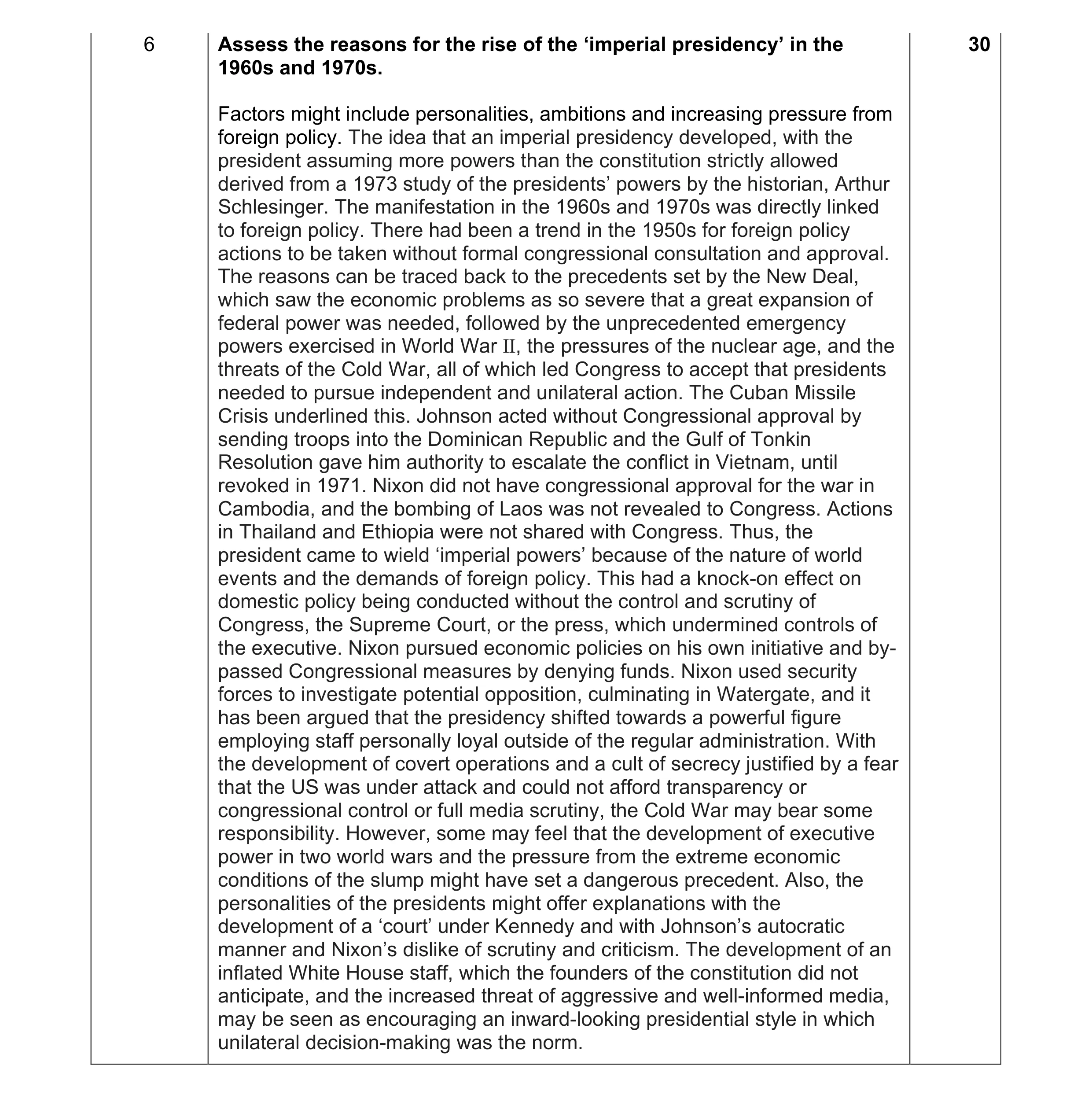 30
30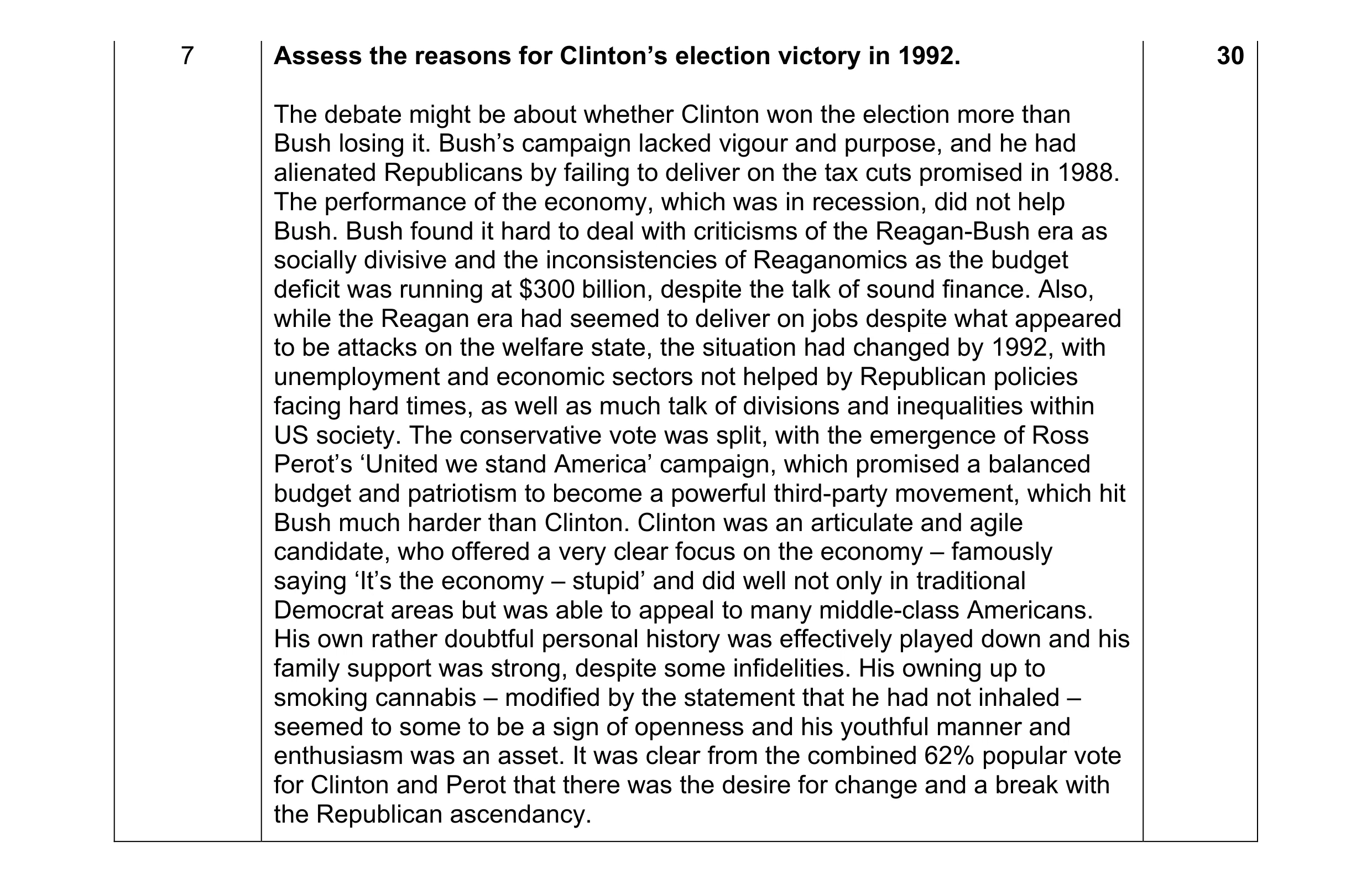 30
30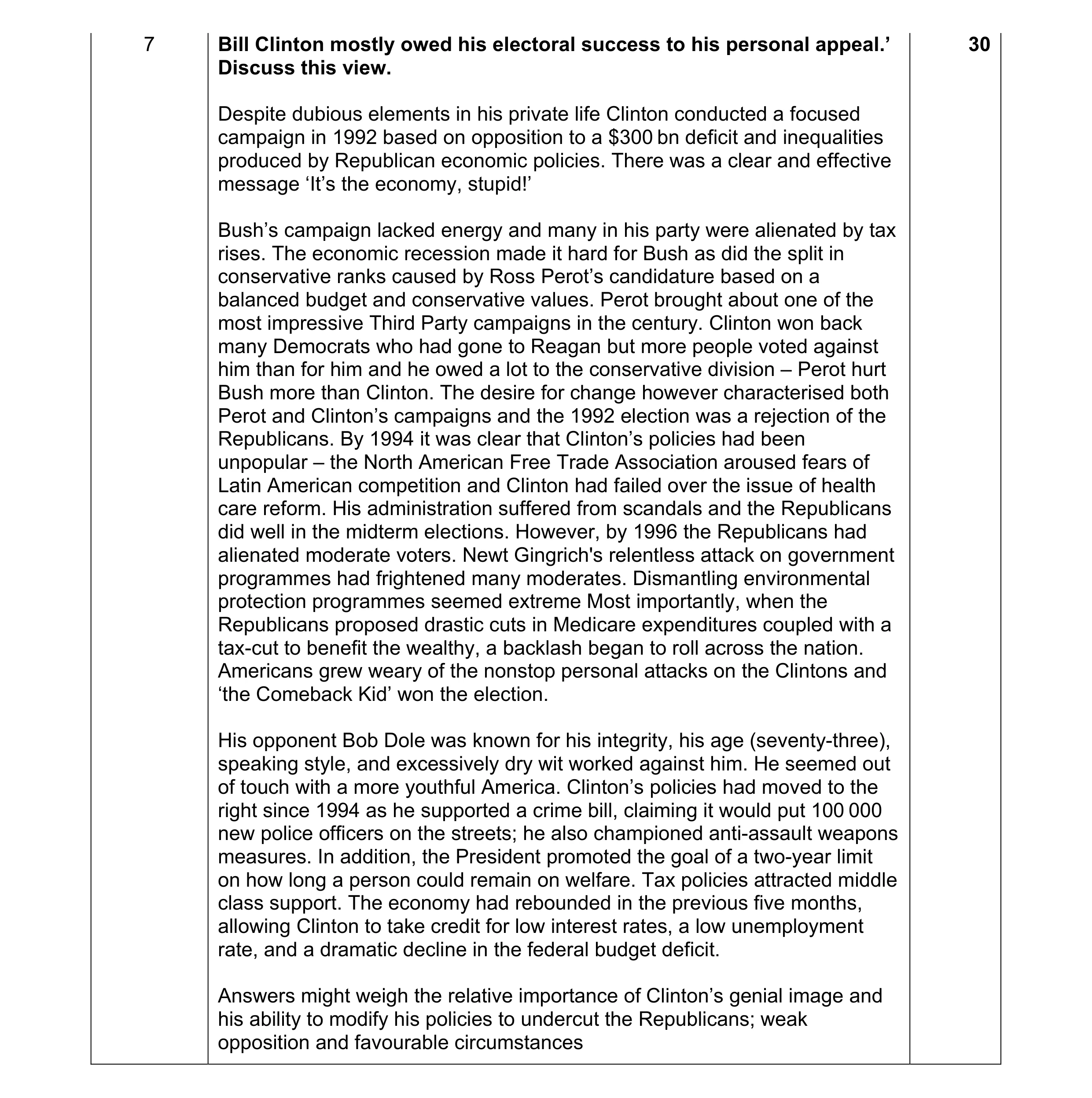 30
30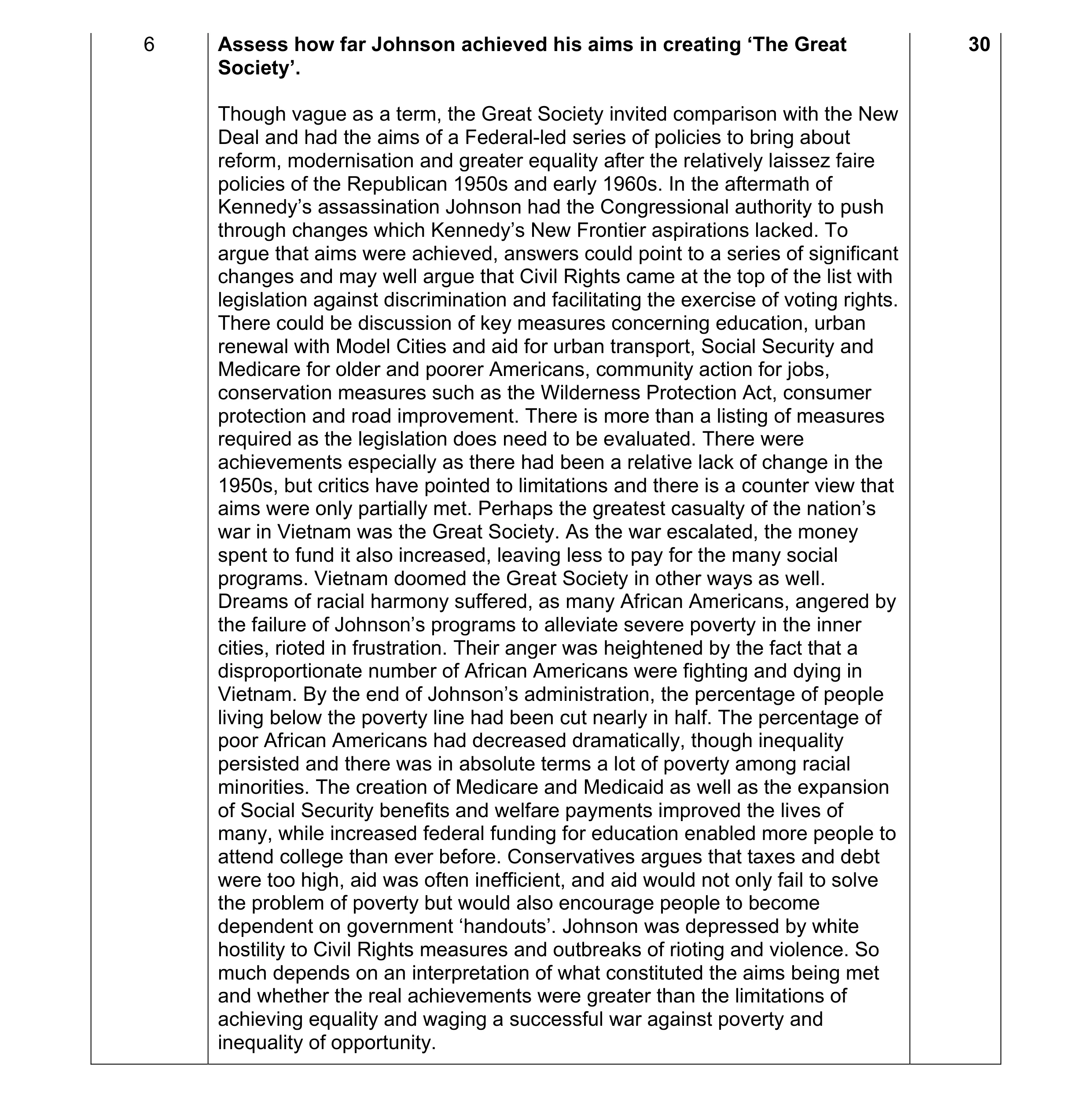 30
30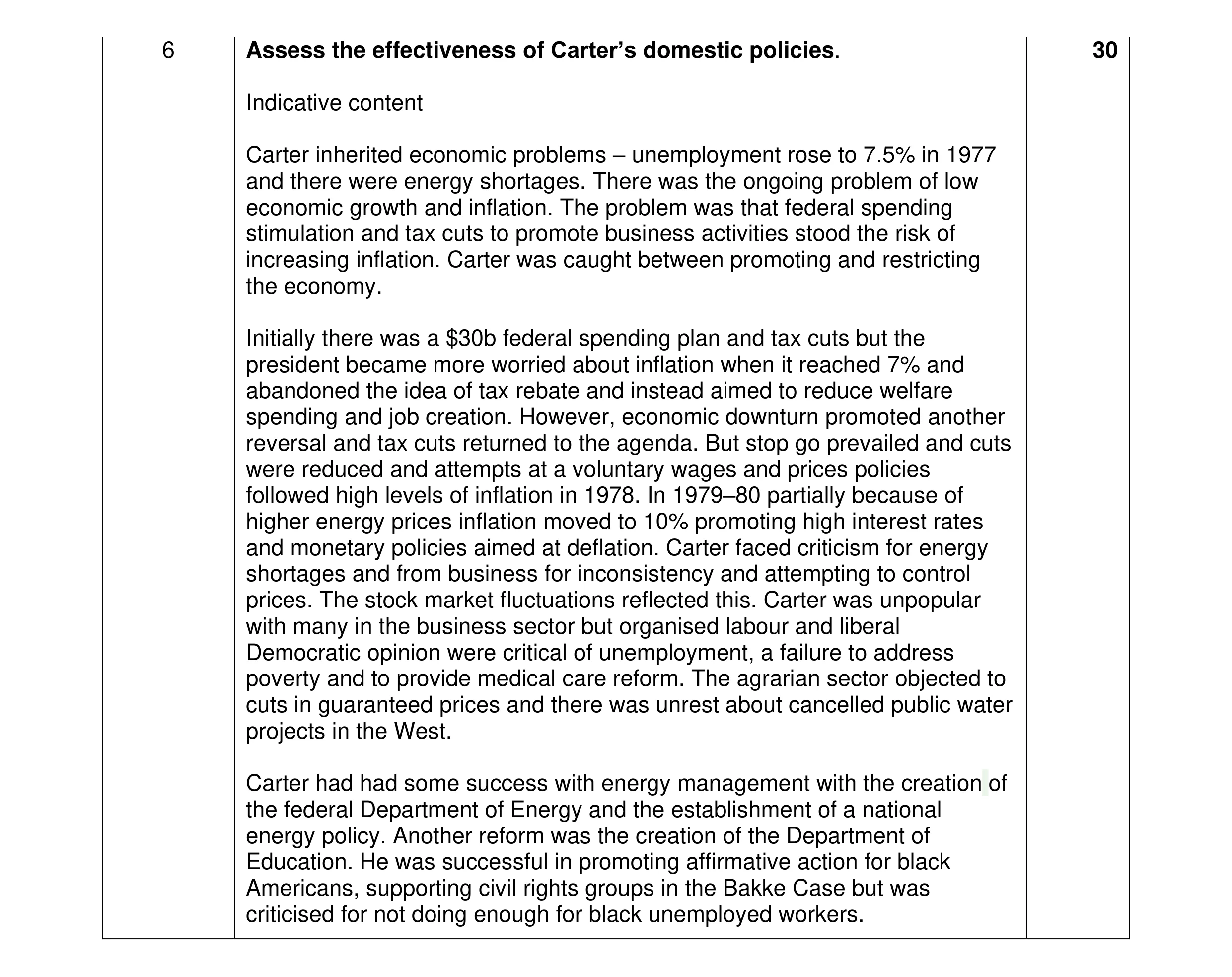 30
30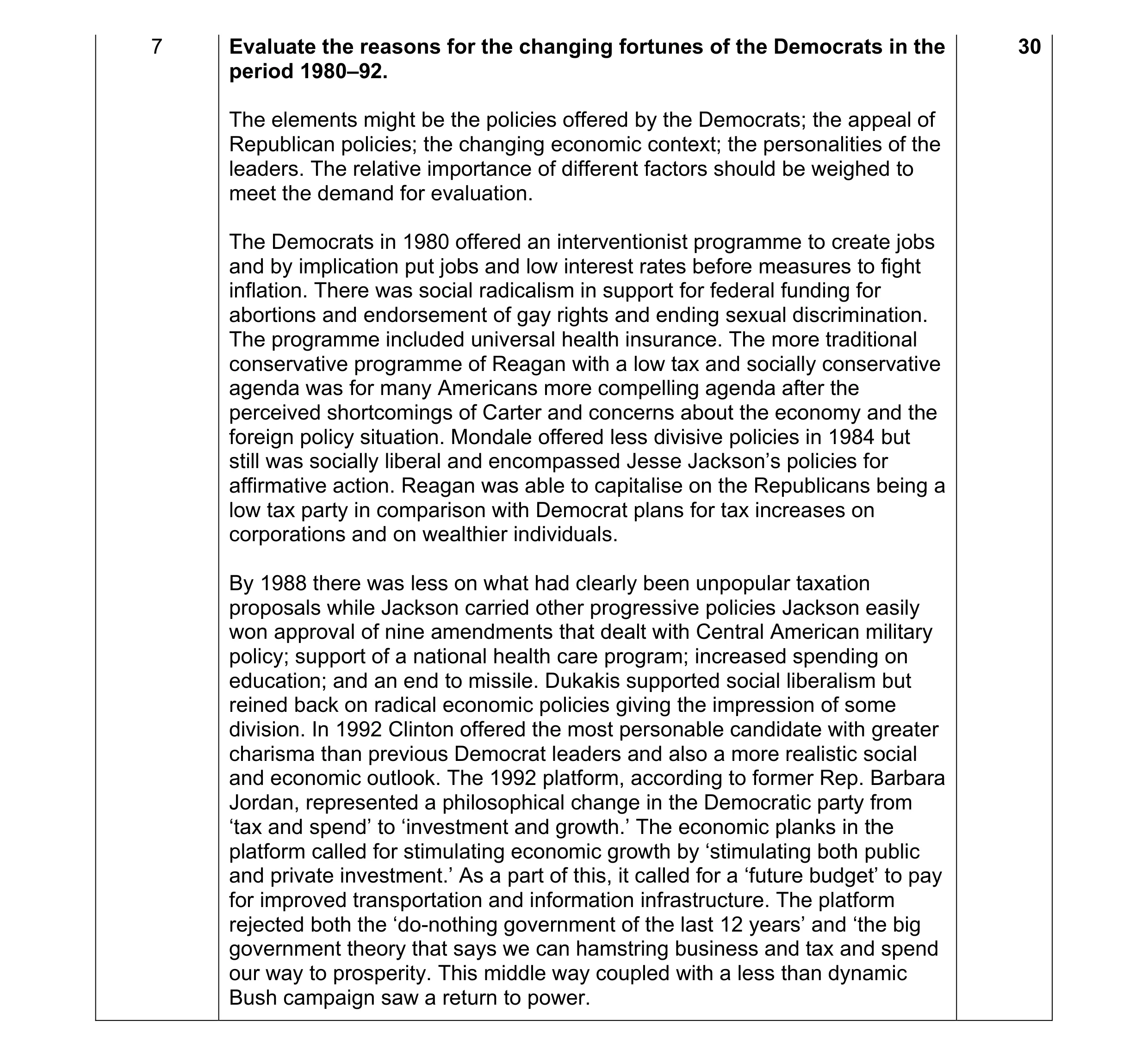 30
30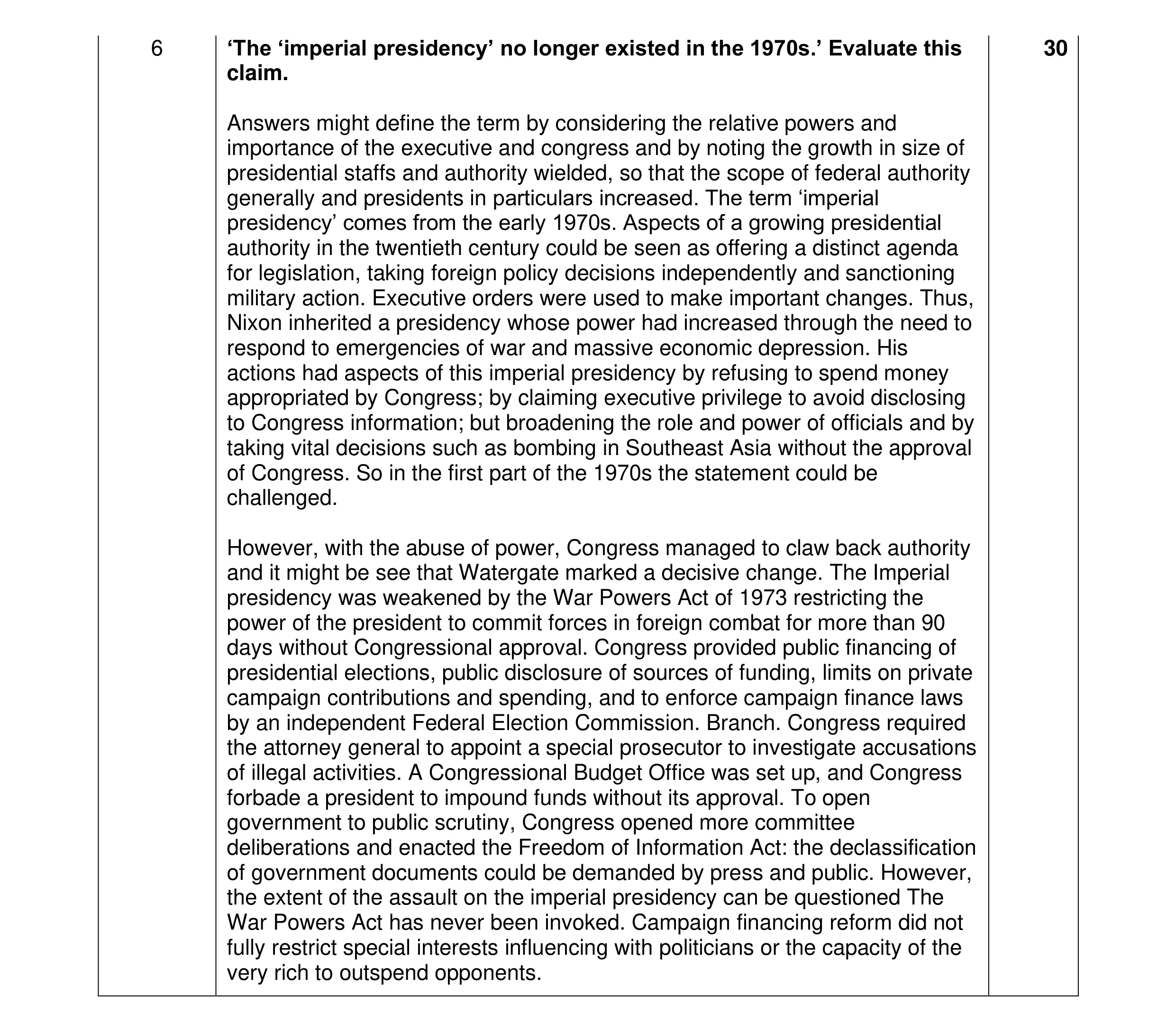 30
30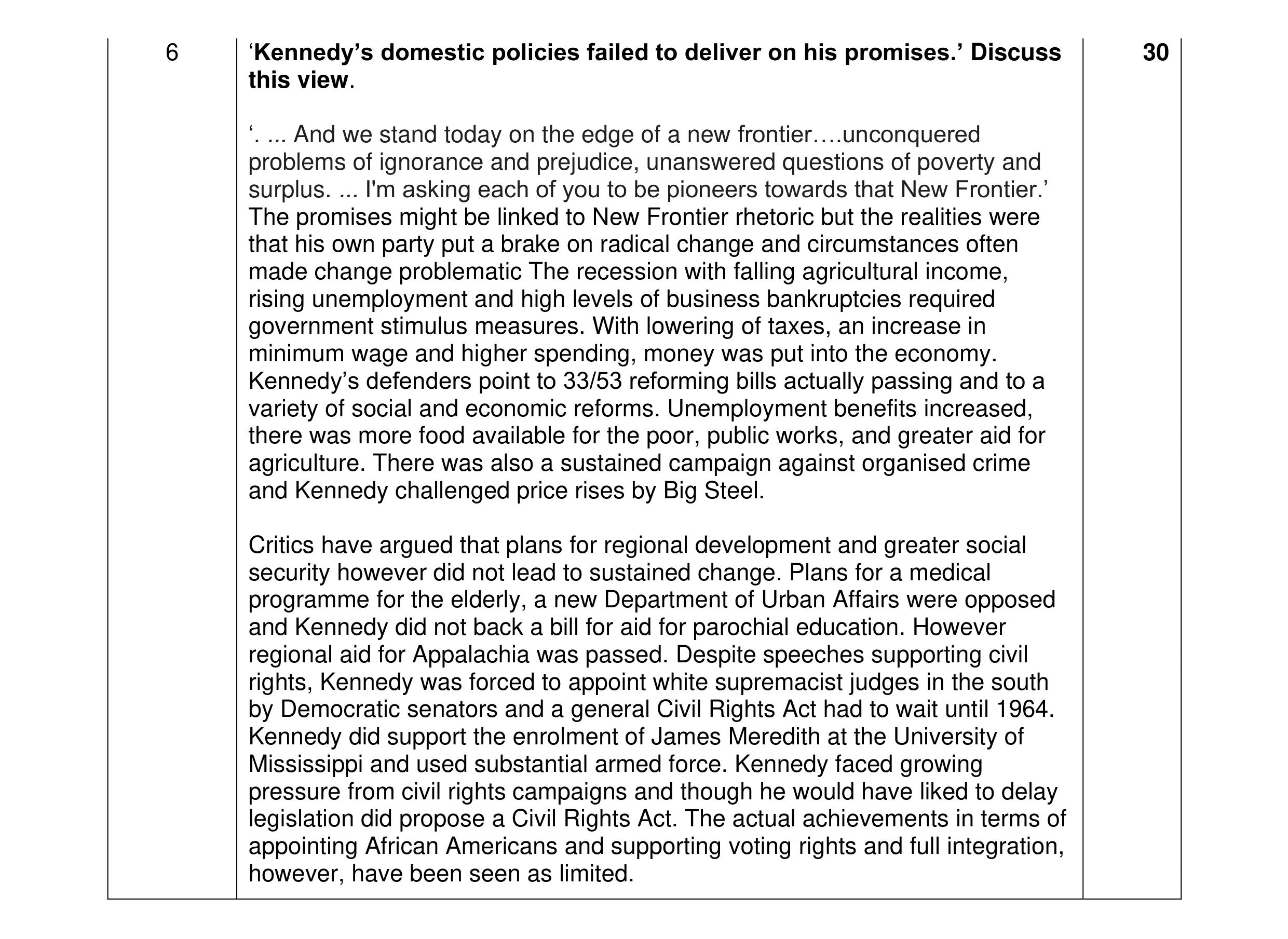 30
30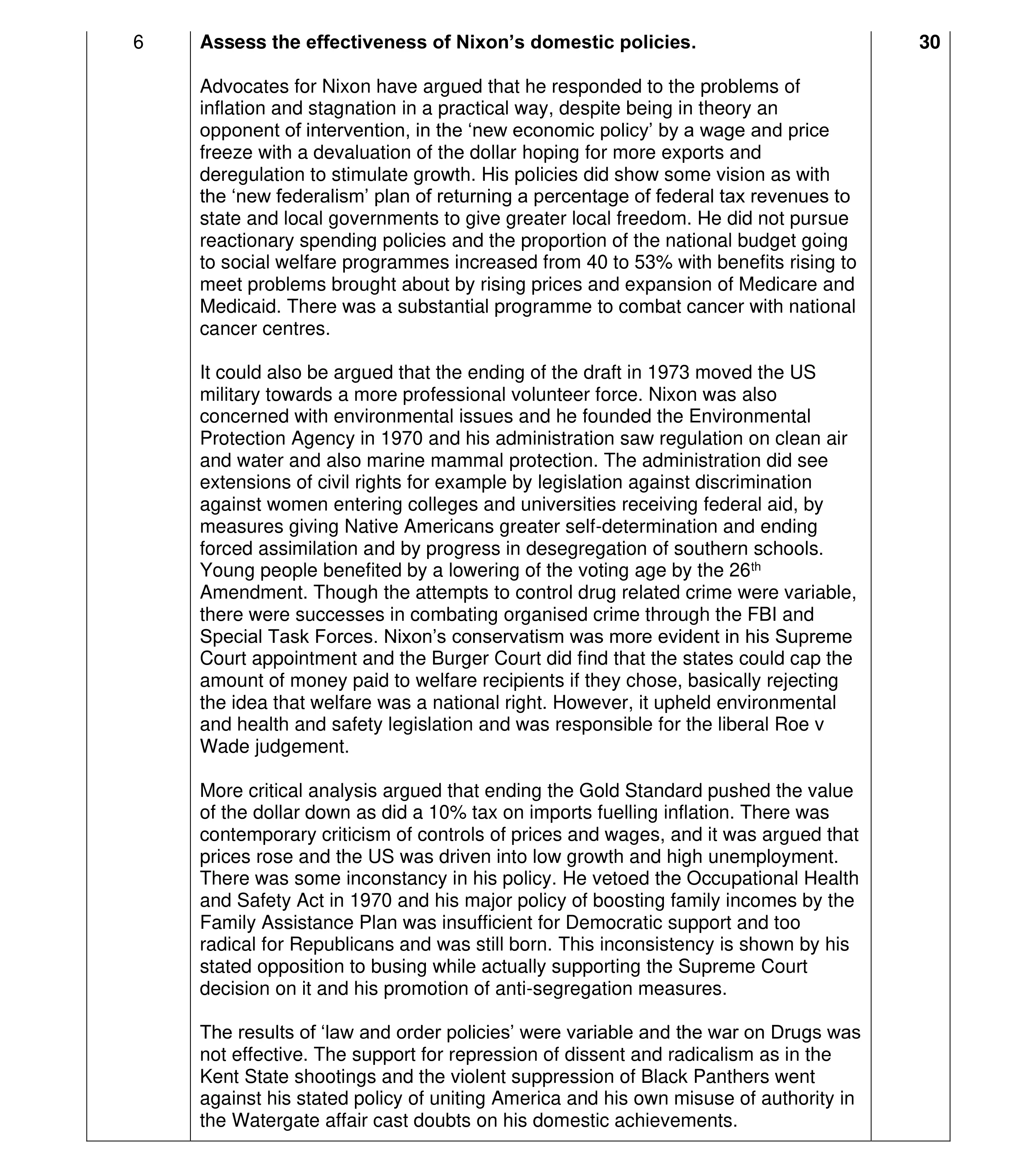 30
30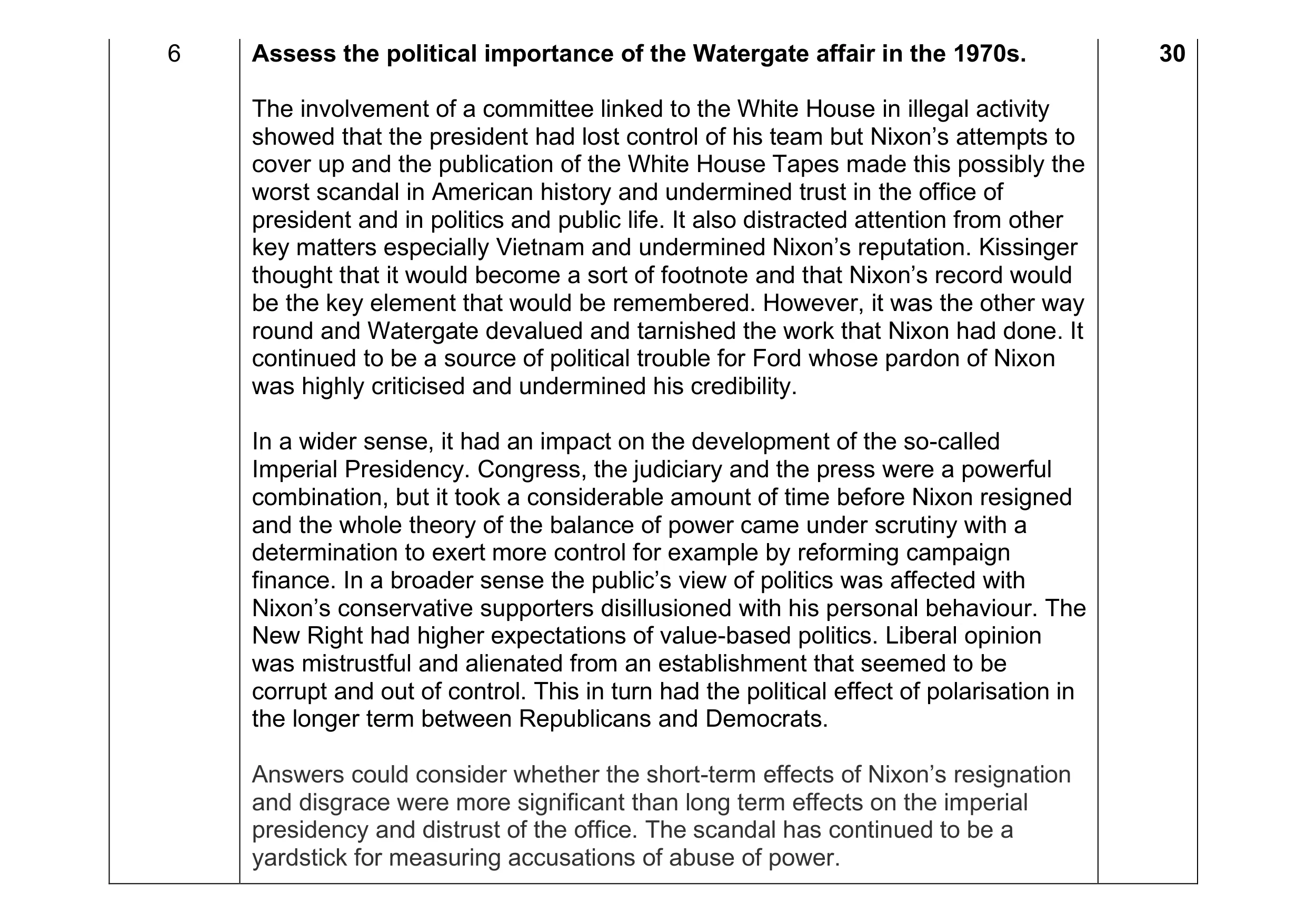 30
30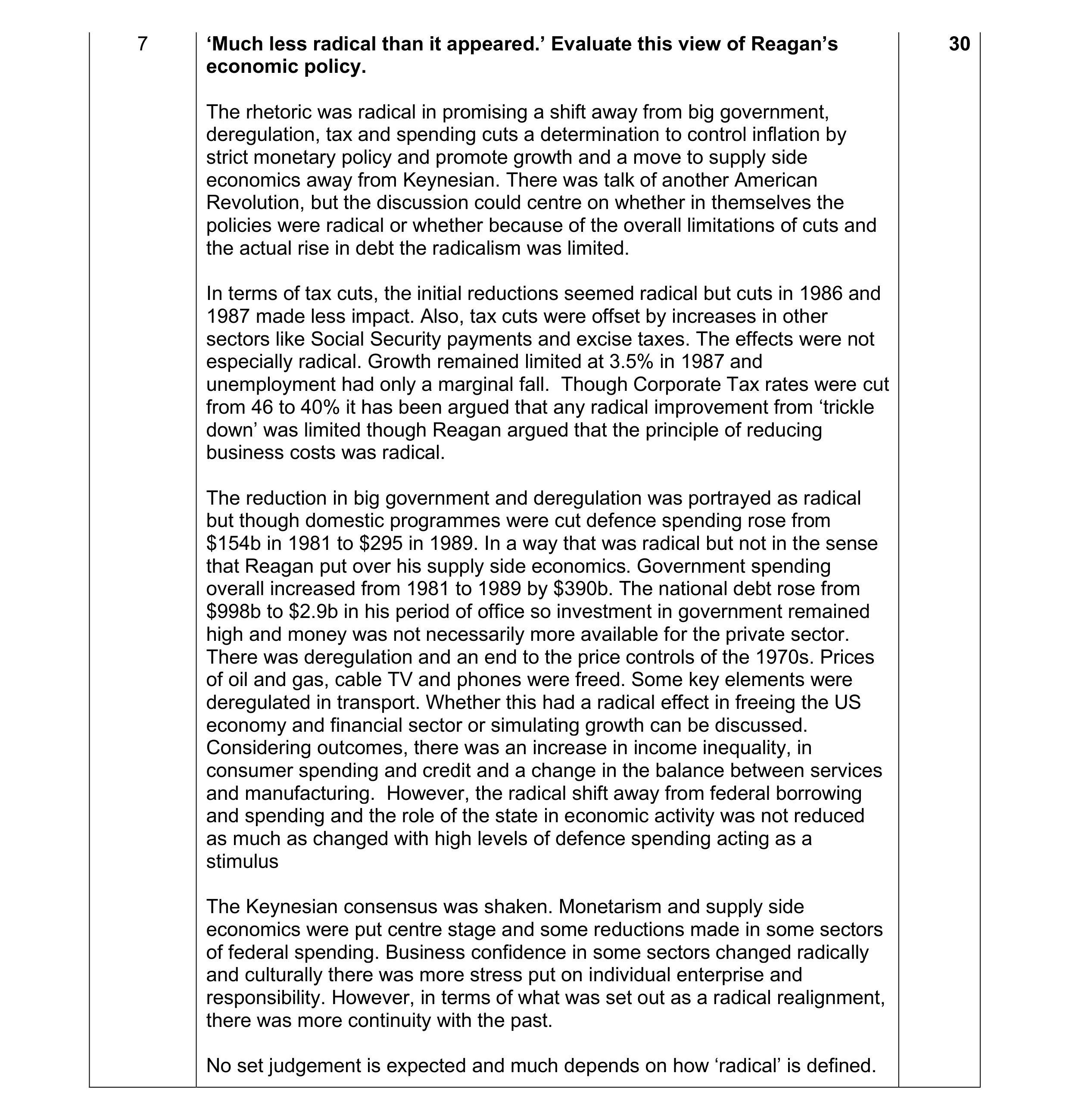 30
30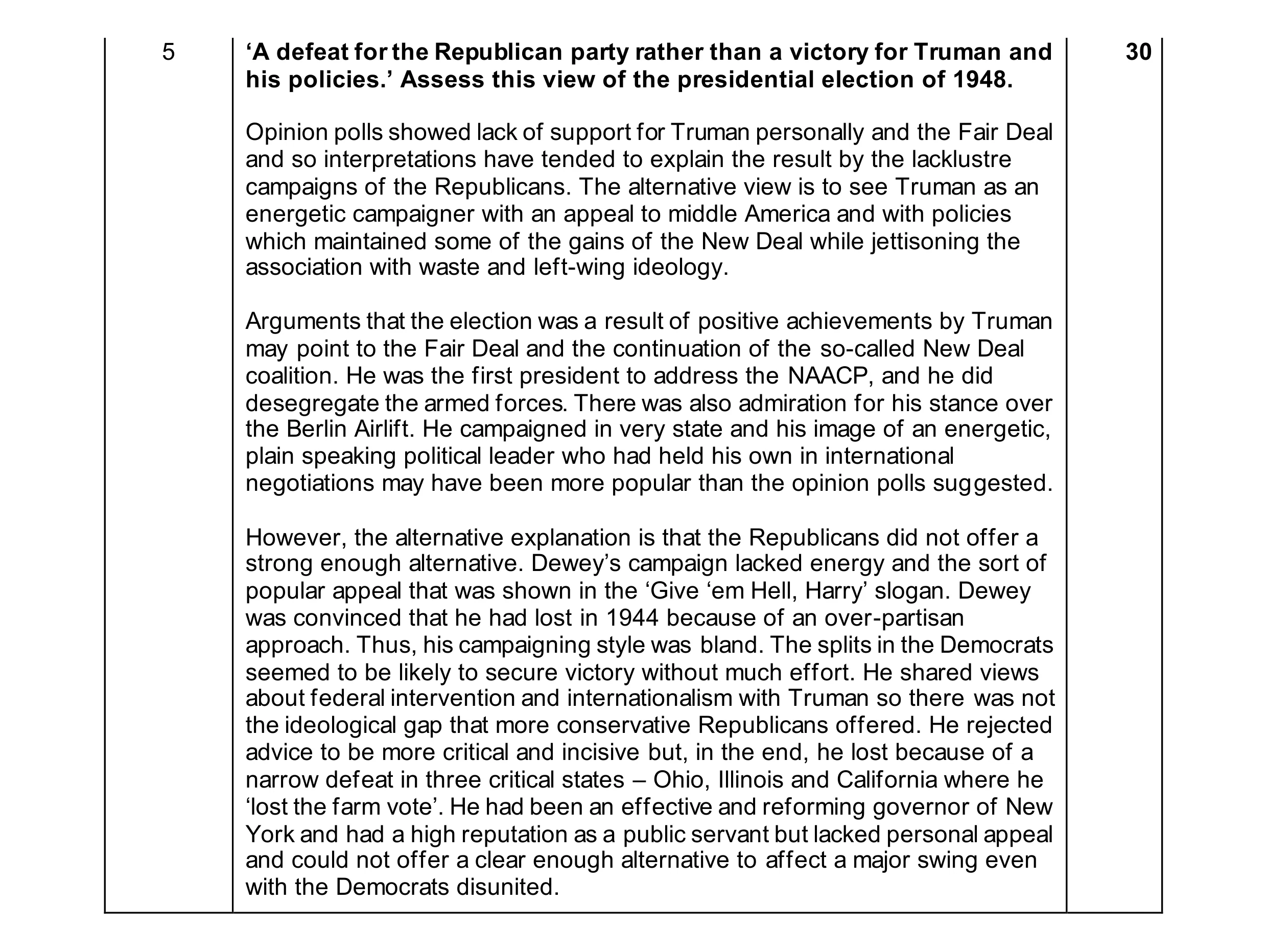 30
30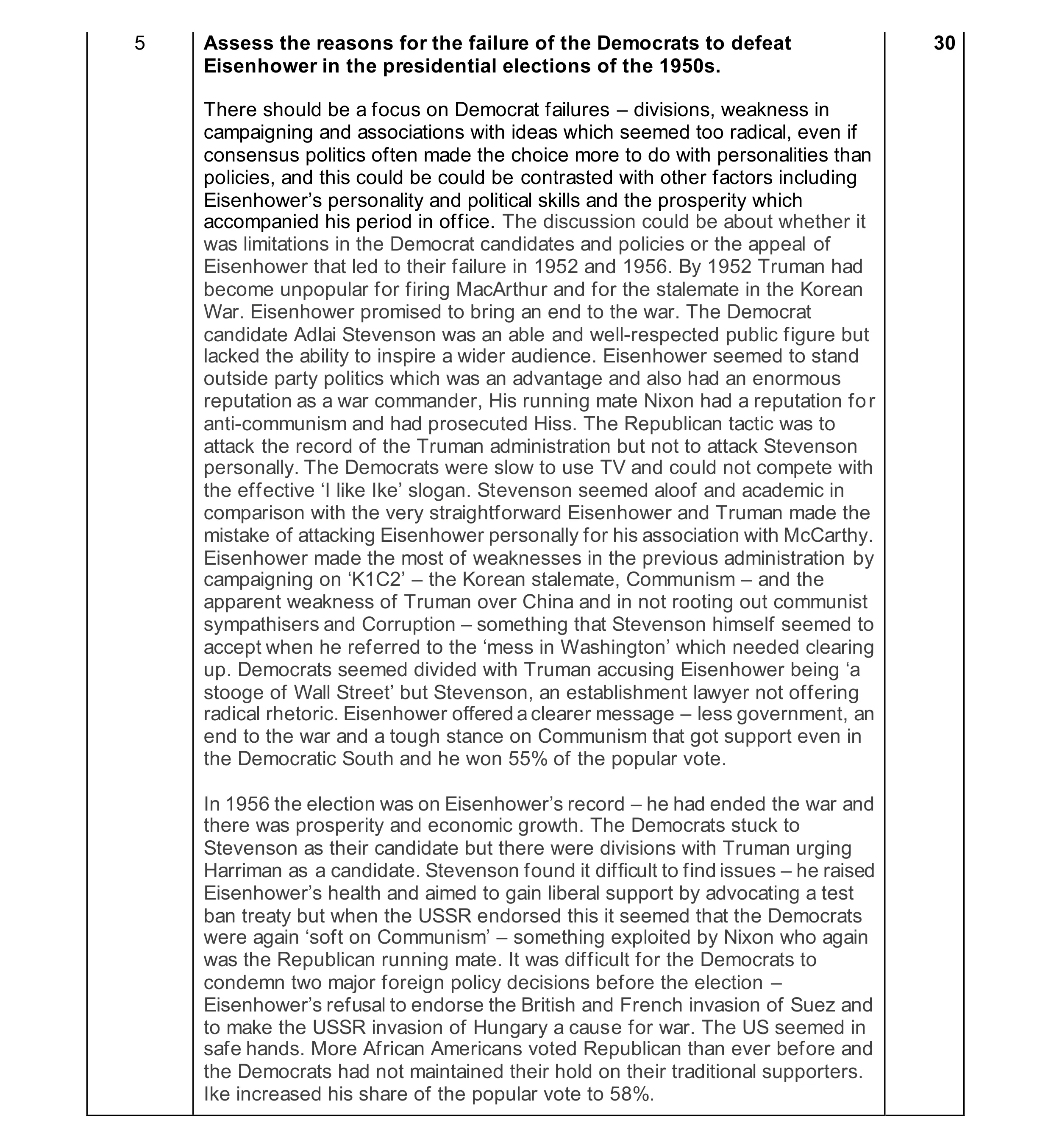 30
30