Cambridge A Level Economics 9708 — 2020 Oct/Nov Paper 2 · Variant 1
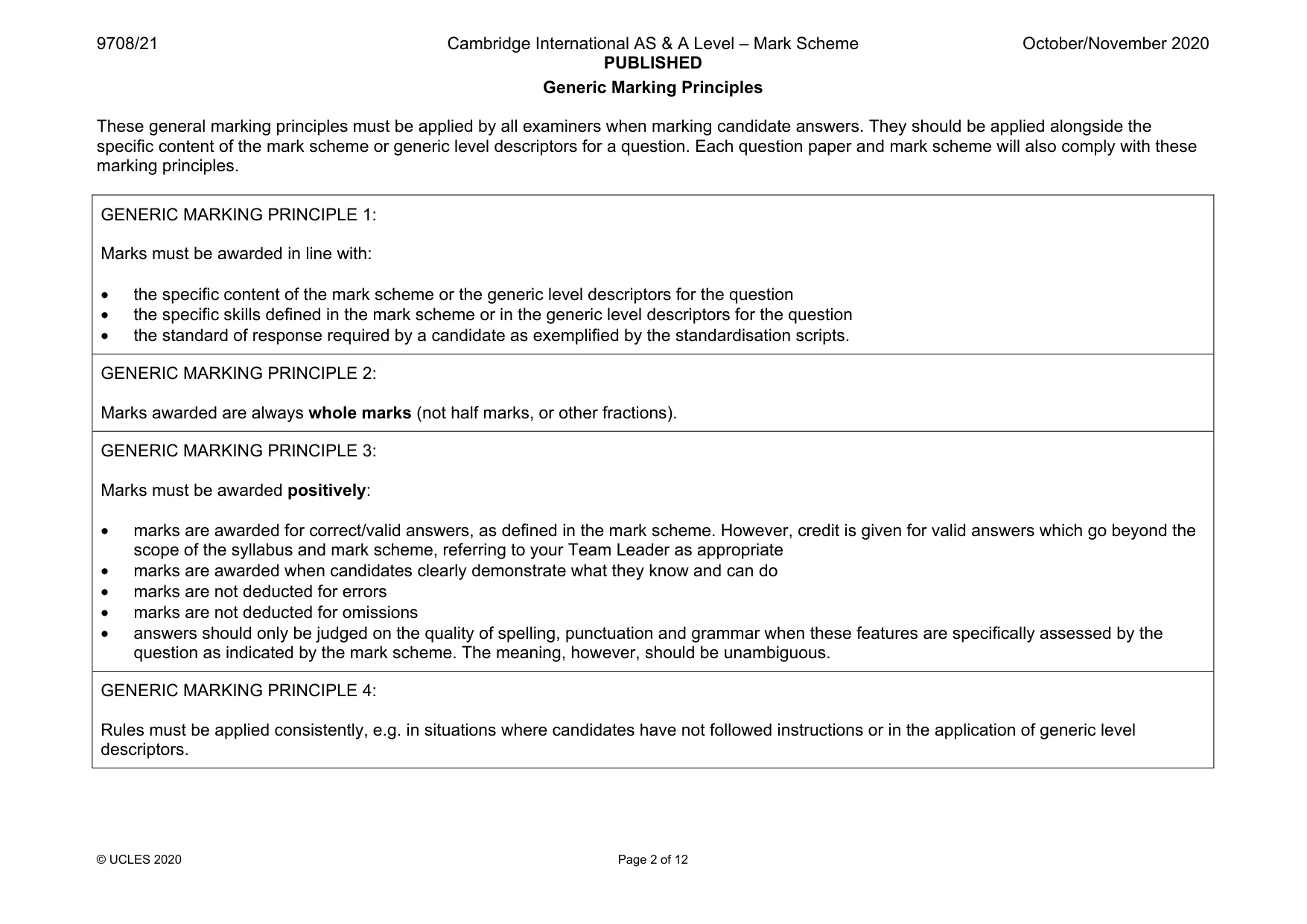
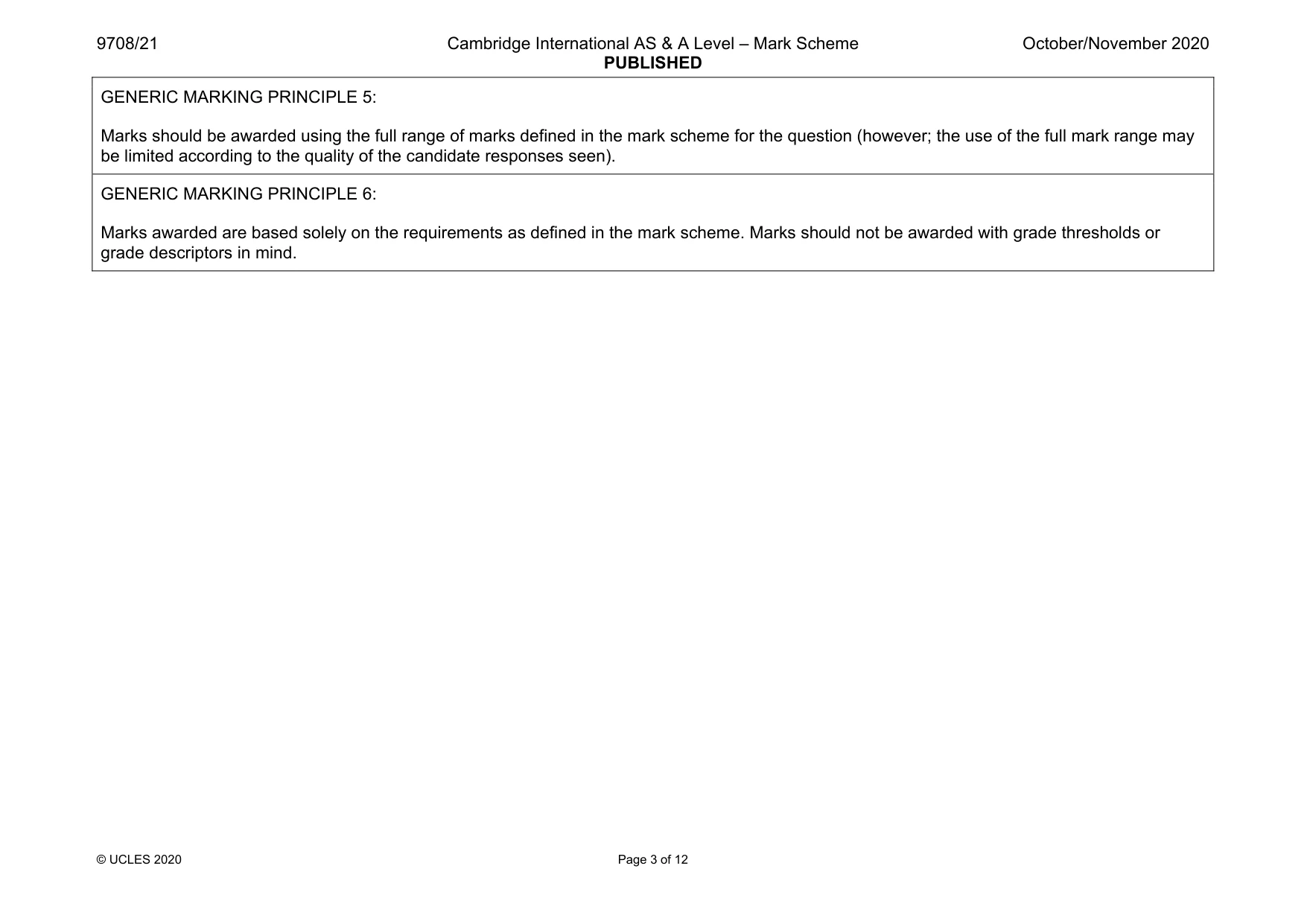
9708/21/O/N/20 · 4 questions · 40 marks · ≈45 min
The question paper and its mark scheme, free to read here and free to download. This is Cambridge’s own paper, exactly as it was sat.
Question paper4 pages

Mark scheme12 pages
Answers below. Sit the paper first if you are practising.
Questions as text
Q1 · Latvia becomes a banking capital between the European Union’s (EU’s) east and west Latvia…
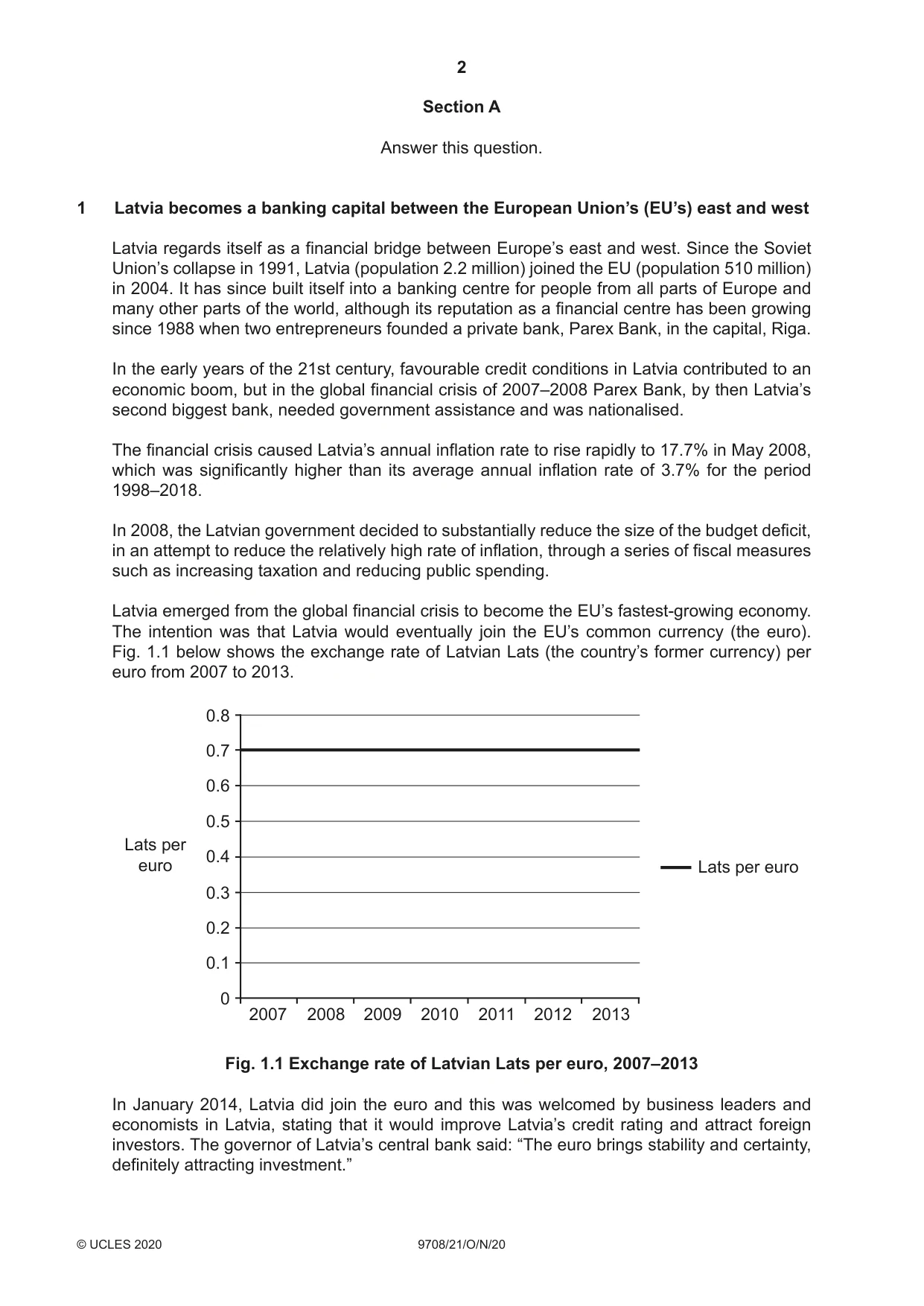
1 Latvia becomes a banking capital between the European Union’s (EU’s) east and west Latvia regards itself as a financial bridge between Europe’s east and west. Since the Soviet Union’s collapse in 1991, Latvia (population 2.2 million) joined the EU (population 510 million) in 2004. It has since built itself into a banking centre for people from all parts of Europe and many other parts of the world, although its reputation as a financial centre has been growing since 1988 when two entrepreneurs founded a private bank, Parex Bank, in the capital, Riga. In the early years of the 21st century, favourable credit conditions in Latvia contributed to an economic boom, but in the global financial crisis of 2007–2008 Parex Bank, by then Latvia’s second biggest bank, needed government assistance and was nationalised. The financial crisis caused Latvia’s annual inflation rate to rise rapidly to 17.7% in May 2008, which was significantly higher than its average annual inflation rate of 3.7% for the period 1998–2018. In 2008, the Latvian government decided to substantially reduce the size of the budget deficit, in an attempt to reduce the relatively high rate of inflation, through a series of fiscal measures such as increasing taxation and reducing public spending. Latvia emerged from the global financial crisis to become the EU’s fastest-growing economy. The intention was that Latvia would eventually join the EU’s common currency (the euro). Fig. 1.1 below shows the exchange rate of Latvian Lats (the country’s former currency) per euro from 2007 to 2013. 0.8 0.7 0.6 0.5 Lats per 0.4 euro Lats per euro 0.3 0.2 0.1 0 2007 2008 2009 2010 2011 2012 2013 Fig. 1.1 Exchange rate of Latvian Lats per euro, 2007–2013 In January 2014, Latvia did join the euro and this was welcomed by business leaders and economists in Latvia, stating that it would improve Latvia’s credit rating and attract foreign investors. The governor of Latvia’s central bank said: “The euro brings stability and certainty, definitely attracting investment.” However, not everybody in Latvia supported the introduction of the euro. Many people thought that Latvia would lose a certain amount of economic independence and that it would lead to an increase in prices and taxes. Sources: Adapted from The Financial Times 20 February 2018 Latvijas Banka, accessed October 2018 (a) Describe the functions of an entrepreneur in the production process. [2] (b) When Latvia joined the EU it became part of a customs union. How does a customs union differ from a free trade area? [2] (c) As a result of the global financial crisis in 2007–2008 there was a large capital outflow from Latvia. Use a supply and demand diagram to explain how the exchange rate against the euro was maintained as shown in Fig. 1.1. [4] (d) (i) Explain what is meant by a ‘budget deficit’. [2] (ii) Analyse, using a diagram, how fiscal measures to reduce the budget deficit could be used by the Latvian government to lower the relatively high rate of inflation. [4] (e) Discuss whether it is better for Latvia to specialise in banking services rather than having a more diversified economy. [6]
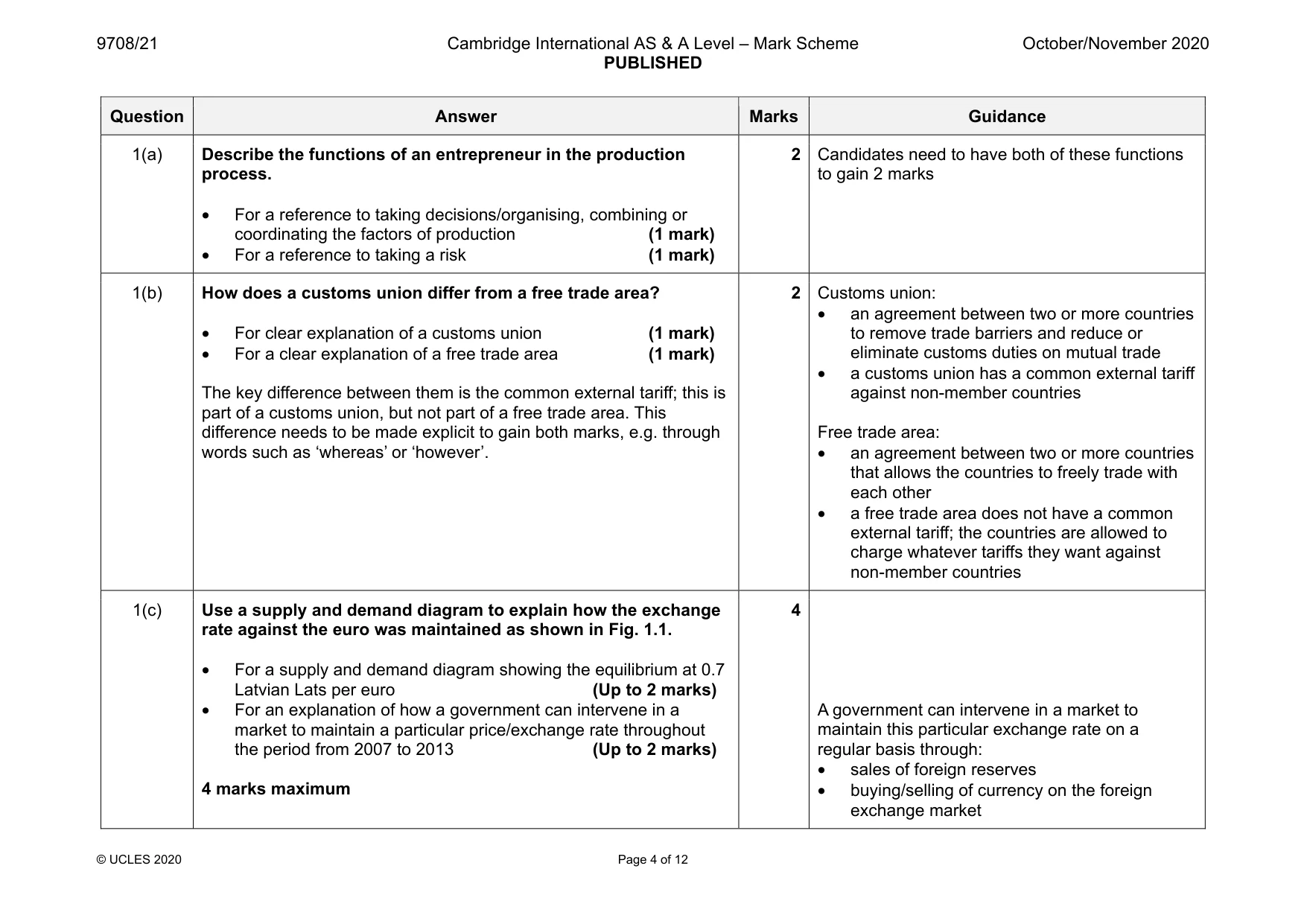
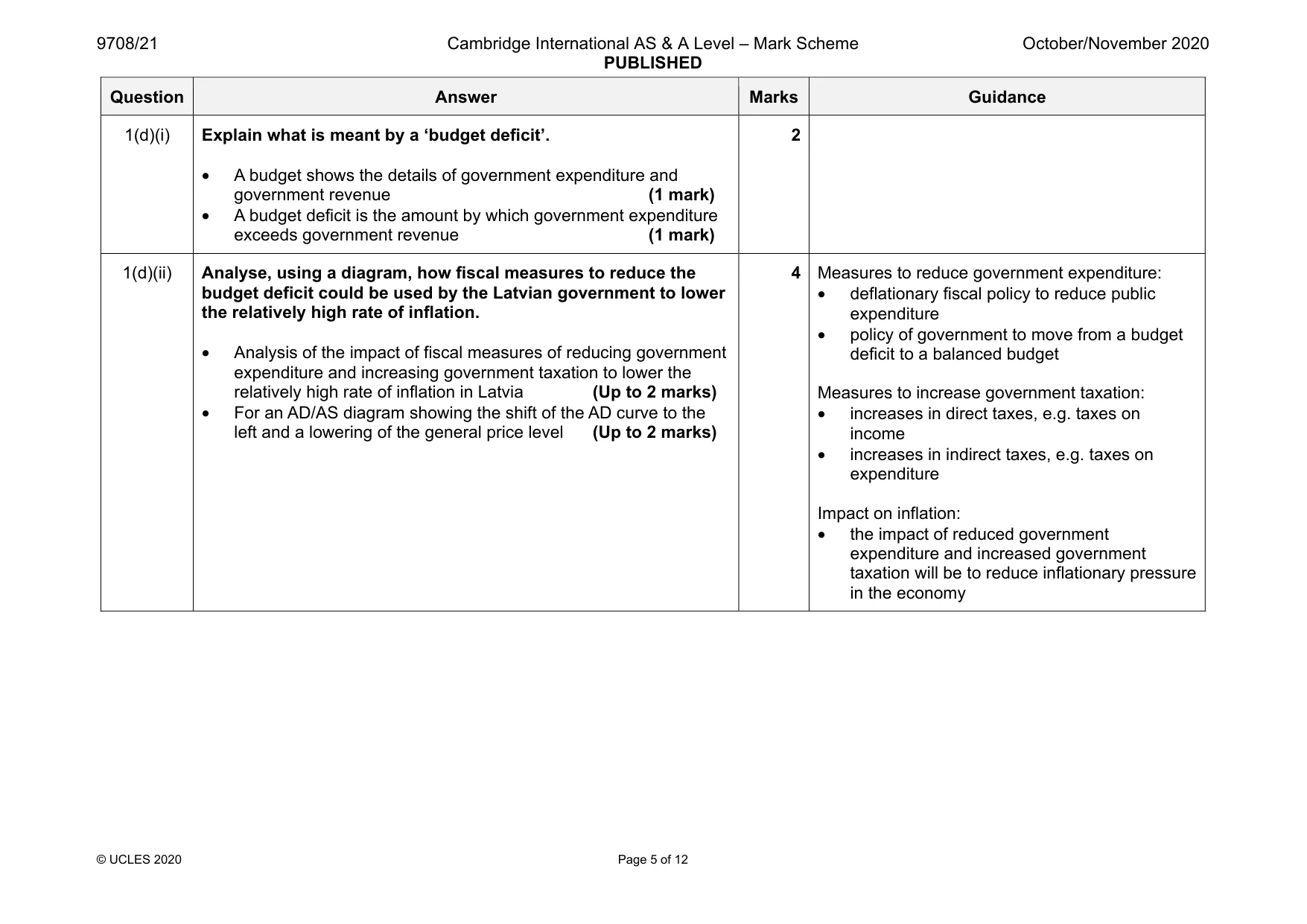
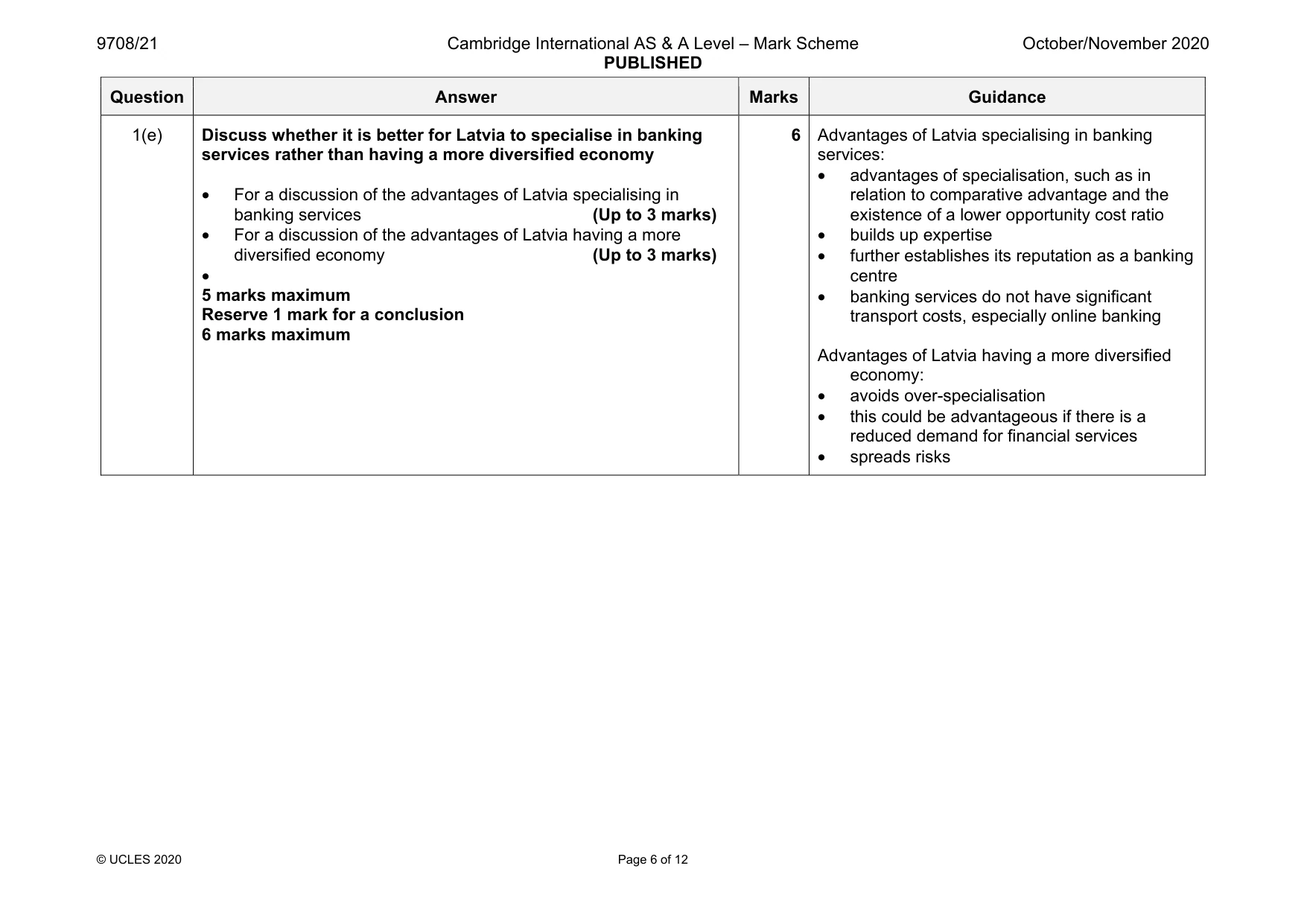
Mark scheme: 1(a) Describe the functions of an entrepreneur in the production process. • For a reference to taking decisions/organising, combining or coordinating the factors of production (1 mark) • For a reference to taking a risk (1 mark) 2 Candidates need to have both of these functions to gain 2 marks 1(b) How does a customs union differ from a free trade area? • For clear explanation of a customs union (1 mark) • For a clear explanation of a free trade area (1 mark) The key difference between them is the common external tariff; this is part of a customs union, but not part of a free trade area. This difference needs to be made explicit to gain both marks, e.g. through words such as ‘whereas’ or ‘however’. 2 Customs union: • an agreement between two or more countries to remove trade barriers and reduce or eliminate customs duties on mutual trade • a customs union has a common external tariff against non-member countries Free trade area: • an agreement between two or more countries that allows the countries to freely trade with each other • a free trade area does not have a common external tariff; the countries are allowed to charge whatever tariffs they want against non-member countries 1(c) Use a supply and demand diagram to explain how the exchange rate against the euro was maintained as shown in Fig. 1.1. • For a supply and demand diagram showing the equilibrium at 0.7 Latvian Lats per euro (Up to 2 marks) • For an explanation of how a government can intervene in a market to maintain a particular price/exchange rate throughout the period from 2007 to 2013 (Up to 2 marks) 4 marks maximum 4 A government can intervene in a market to maintain this particular exchange rate on a regular basis through: • sales of foreign reserves • buying/selling of currency on the foreign exchange market Question Answer Marks Guidance 1(d)(i) Explain what is meant by a ‘budget deficit’. • A budget shows the details of government expenditure and government revenue (1 mark) • A budget deficit is the amount by which government expenditure exceeds government revenue (1 mark) 2 1(d)(ii) Analyse, using a diagram, how fiscal measures to reduce the budget deficit could be used by the Latvian government to lower the relatively high rate of inflation. • Analysis of the impact of fiscal measures of reducing government expenditure and increasing government taxation to lower the relatively high rate of inflation in Latvia (Up to 2 marks) • For an AD/AS diagram showing the shift of the AD curve to the left and a lowering of the general price level (Up to 2 marks) 4 Measures to reduce government expenditure: • deflationary fiscal policy to reduce public expenditure • policy of government to move from a budget deficit to a balanced budget Measures to increase government taxation: • increases in direct taxes, e.g. taxes on income • increases in indirect taxes, e.g. taxes on expenditure Impact on inflation: • the impact of reduced government expenditure and increased government taxation will be to reduce inflationary pressure in the economy Question Answer Marks Guidance 1(e) Discuss whether it is better for Latvia to specialise in banking services rather than having a more diversified economy • For a discussion of the advantages of Latvia specialising in banking services (Up to 3 marks) • For a discussion of the advantages of Latvia having a more diversified economy (Up to 3 marks) • 5 marks maximum Reserve 1 mark for a conclusion 6 marks maximum 6 Advantages of Latvia specialising in banking services: • advantages of specialisation, such as in relation to comparative advantage and the existence of a lower opportunity cost ratio • builds up expertise • further establishes its reputation as a banking centre • banking services do not have significant transport costs, especially online banking Advantages of Latvia having a more diversified economy: • avoids over-specialisation • this could be advantageous if there is a reduced demand for financial services • spreads risks
Q2 · Explain, with the help of examples, how imperfect information among consumers affects…
2 (a) Explain, with the help of examples, how imperfect information among consumers affects their consumption of merit goods and demerit goods. [8] (b) Discuss why in most mixed economies, resources are mainly allocated using market forces and the price mechanism. [12]
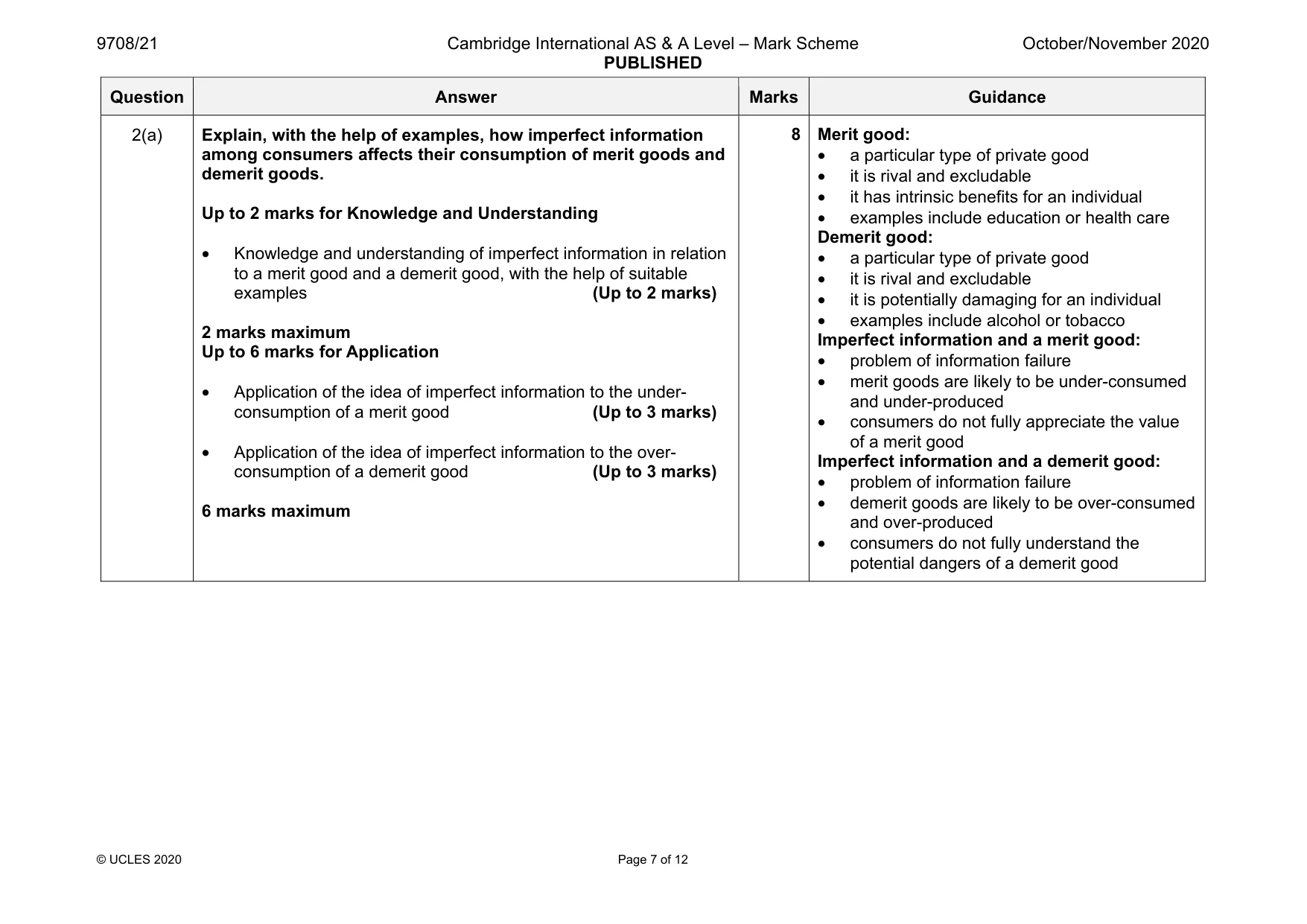
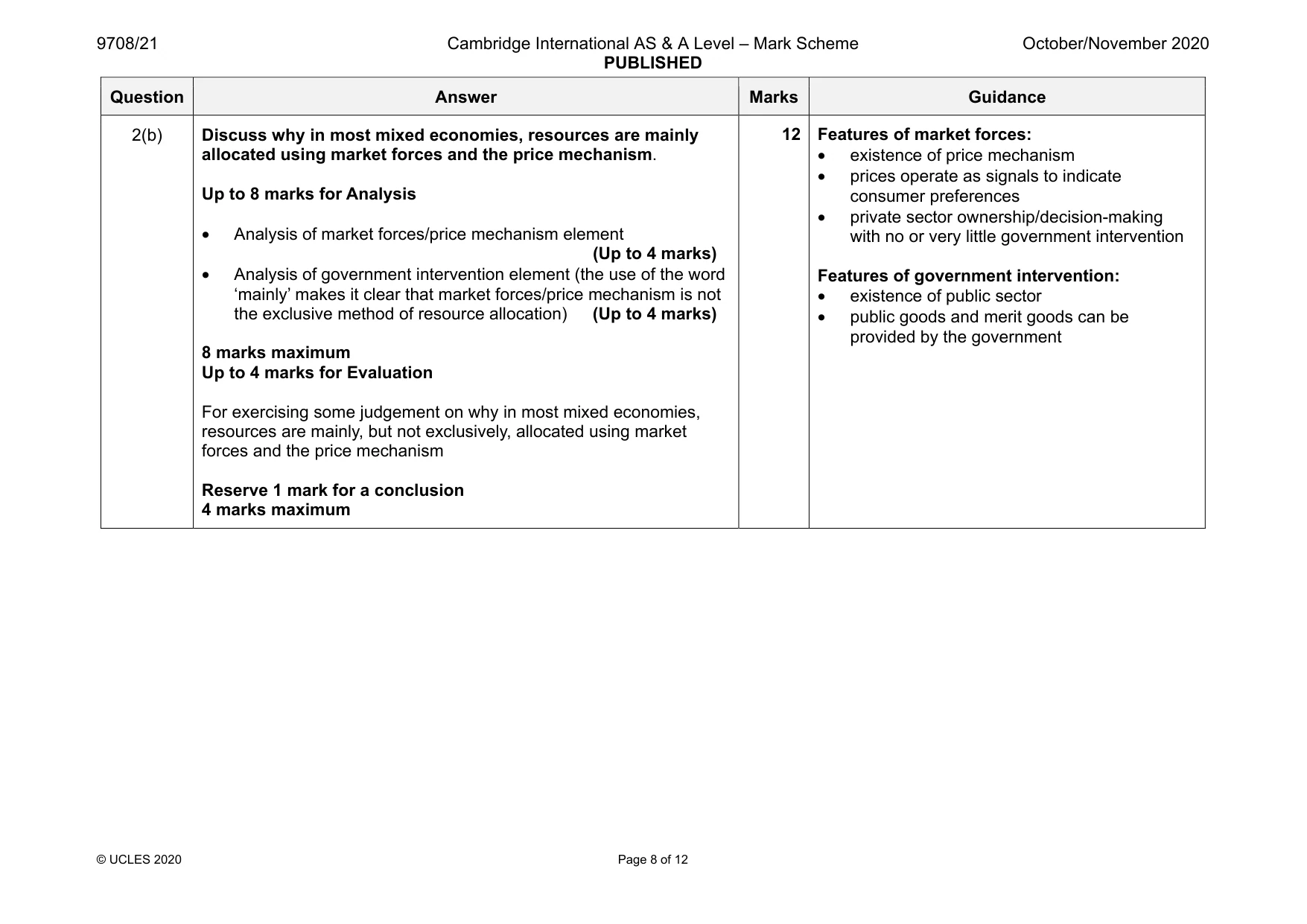
Mark scheme: 2(a) Explain, with the help of examples, how imperfect information among consumers affects their consumption of merit goods and demerit goods. Up to 2 marks for Knowledge and Understanding • Knowledge and understanding of imperfect information in relation to a merit good and a demerit good, with the help of suitable examples (Up to 2 marks) 2 marks maximum Up to 6 marks for Application • Application of the idea of imperfect information to the under- consumption of a merit good (Up to 3 marks) • Application of the idea of imperfect information to the over- consumption of a demerit good (Up to 3 marks) 6 marks maximum • a particular type of private good • it is rival and excludable • it has intrinsic benefits for an individual • examples include education or health care Demerit good: • a particular type of private good • it is rival and excludable • it is potentially damaging for an individual • examples include alcohol or tobacco Imperfect information and a merit good: • problem of information failure • merit goods are likely to be under-consumed and under-produced • consumers do not fully appreciate the value of a merit good Imperfect information and a demerit good: • problem of information failure • demerit goods are likely to be over-consumed and over-produced • consumers do not fully understand the potential dangers of a demerit good Question Answer Marks Guidance 2(b) Discuss why in most mixed economies, resources are mainly allocated using market forces and the price mechanism. Up to 8 marks for Analysis • Analysis of market forces/price mechanism element (Up to 4 marks) • Analysis of government intervention element (the use of the word ‘mainly’ makes it clear that market forces/price mechanism is not the exclusive method of resource allocation) (Up to 4 marks) 8 marks maximum Up to 4 marks for Evaluation For exercising some judgement on why in most mixed economies, resources are mainly, but not exclusively, allocated using market forces and the price mechanism Reserve 1 mark for a conclusion 4 marks maximum 12 Features of market forces: • existence of price mechanism • prices operate as signals to indicate consumer preferences • private sector ownership/decision-making with no or very little government intervention Features of government intervention: • existence of public sector • public goods and merit goods can be provided by the government
More questions on Resource allocation in different economic systems
Q3 · Cross elasticity of demand for bread with respect to the price of rice is +1.4 while the…
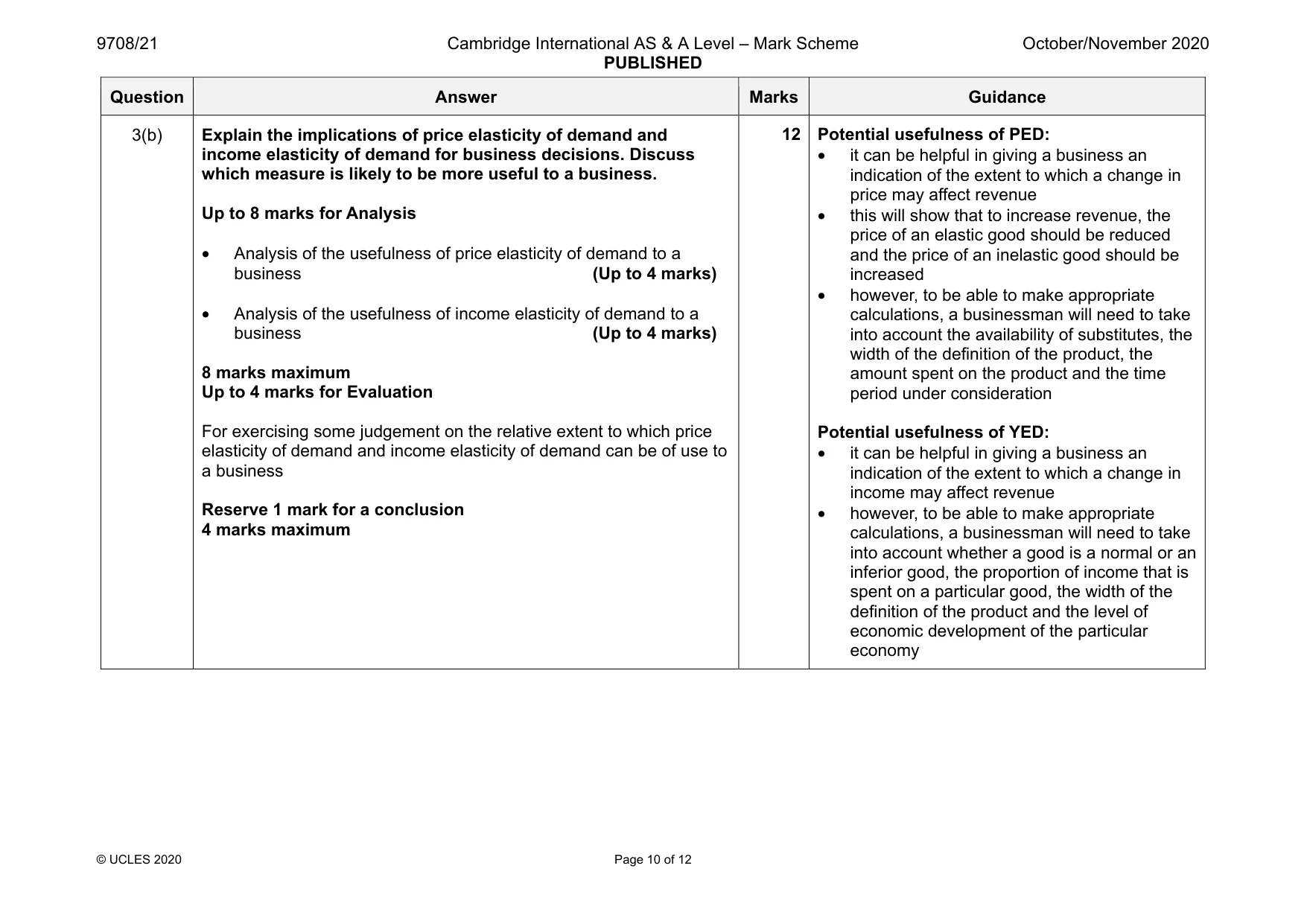
3 (a) Cross elasticity of demand for bread with respect to the price of rice is +1.4 while the cross elasticity of demand for bread with respect to the price of butter is –0.7. Explain why the cross elasticity of demand figures for bread differ. [8] (b) Explain the implications of price elasticity of demand and income elasticity of demand for business decisions. Discuss which measure is likely to be more useful to a business. [12]
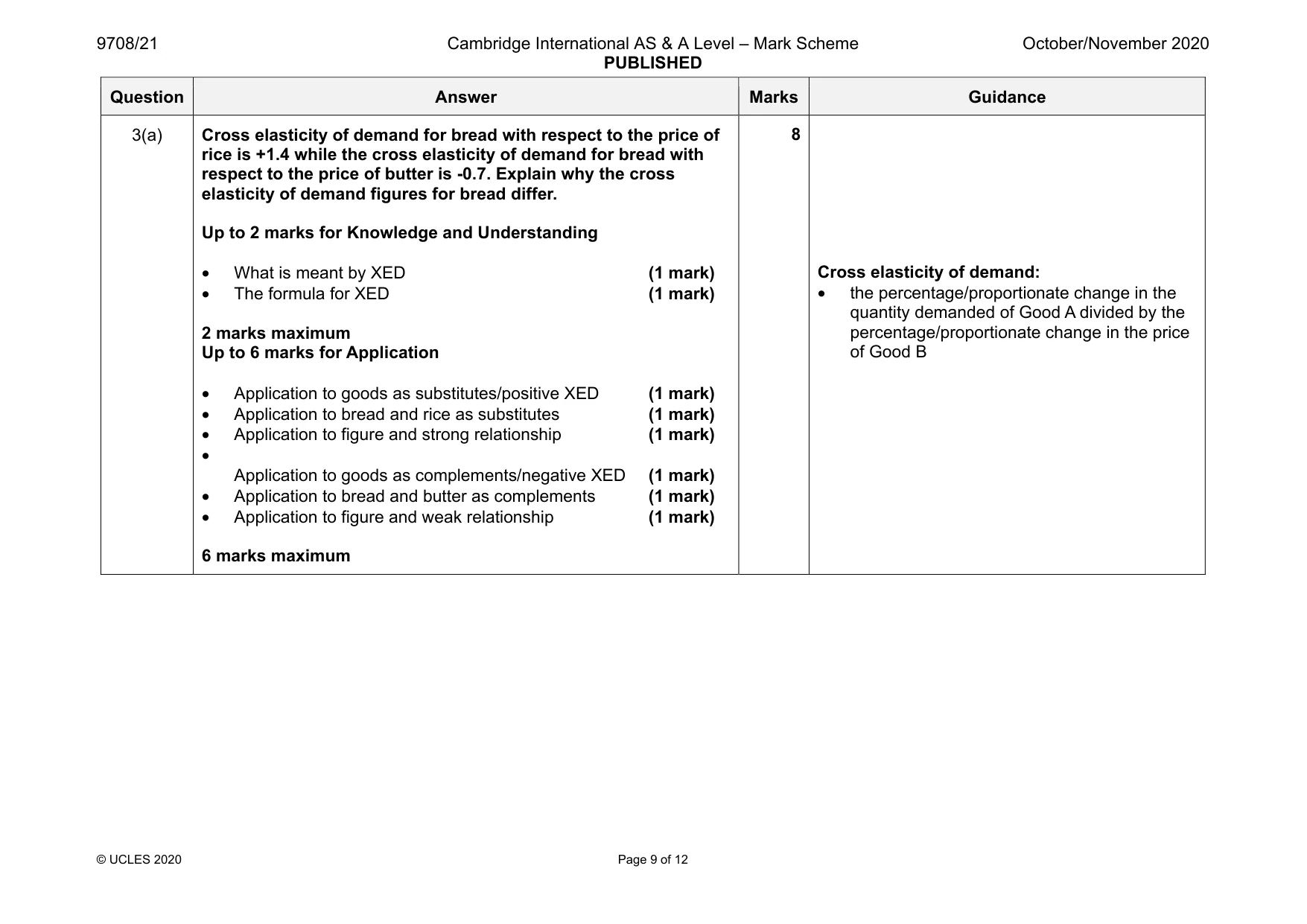
Mark scheme: 3(a) Cross elasticity of demand for bread with respect to the price of rice is +1.4 while the cross elasticity of demand for bread with respect to the price of butter is -0.7. Explain why the cross elasticity of demand figures for bread differ. Up to 2 marks for Knowledge and Understanding • What is meant by XED (1 mark) • The formula for XED (1 mark) 2 marks maximum Up to 6 marks for Application • Application to goods as substitutes/positive XED (1 mark) • Application to bread and rice as substitutes (1 mark) • Application to figure and strong relationship (1 mark) • Application to goods as complements/negative XED (1 mark) • Application to bread and butter as complements (1 mark) • Application to figure and weak relationship (1 mark) 6 marks maximum Cross elasticity of demand: • the percentage/proportionate change in the quantity demanded of Good A divided by the percentage/proportionate change in the price of Good B Question Answer Marks Guidance 3(b) Explain the implications of price elasticity of demand and income elasticity of demand for business decisions. Discuss which measure is likely to be more useful to a business. Up to 8 marks for Analysis • Analysis of the usefulness of price elasticity of demand to a business (Up to 4 marks) • Analysis of the usefulness of income elasticity of demand to a business (Up to 4 marks) 8 marks maximum Up to 4 marks for Evaluation For exercising some judgement on the relative extent to which price elasticity of demand and income elasticity of demand can be of use to a business Reserve 1 mark for a conclusion 4 marks maximum 12 Potential usefulness of PED: • it can be helpful in giving a business an indication of the extent to which a change in price may affect revenue • this will show that to increase revenue, the price of an elastic good should be reduced and the price of an inelastic good should be increased • however, to be able to make appropriate calculations, a businessman will need to take into account the availability of substitutes, the width of the definition of the product, the amount spent on the product and the time period under consideration Potential usefulness of YED: • it can be helpful in giving a business an indication of the extent to which a change in income may affect revenue • however, to be able to make appropriate calculations, a businessman will need to take into account whether a good is a normal or an inferior good, the proportion of income that is spent on a particular good, the width of the definition of the product and the level of economic development of the particular economy
More questions on Price elasticity, income elasticity and cross elasticity of demand
Q4 · Explain, with the aid of a diagram, the impact of a subsidy to domestic producers of a…
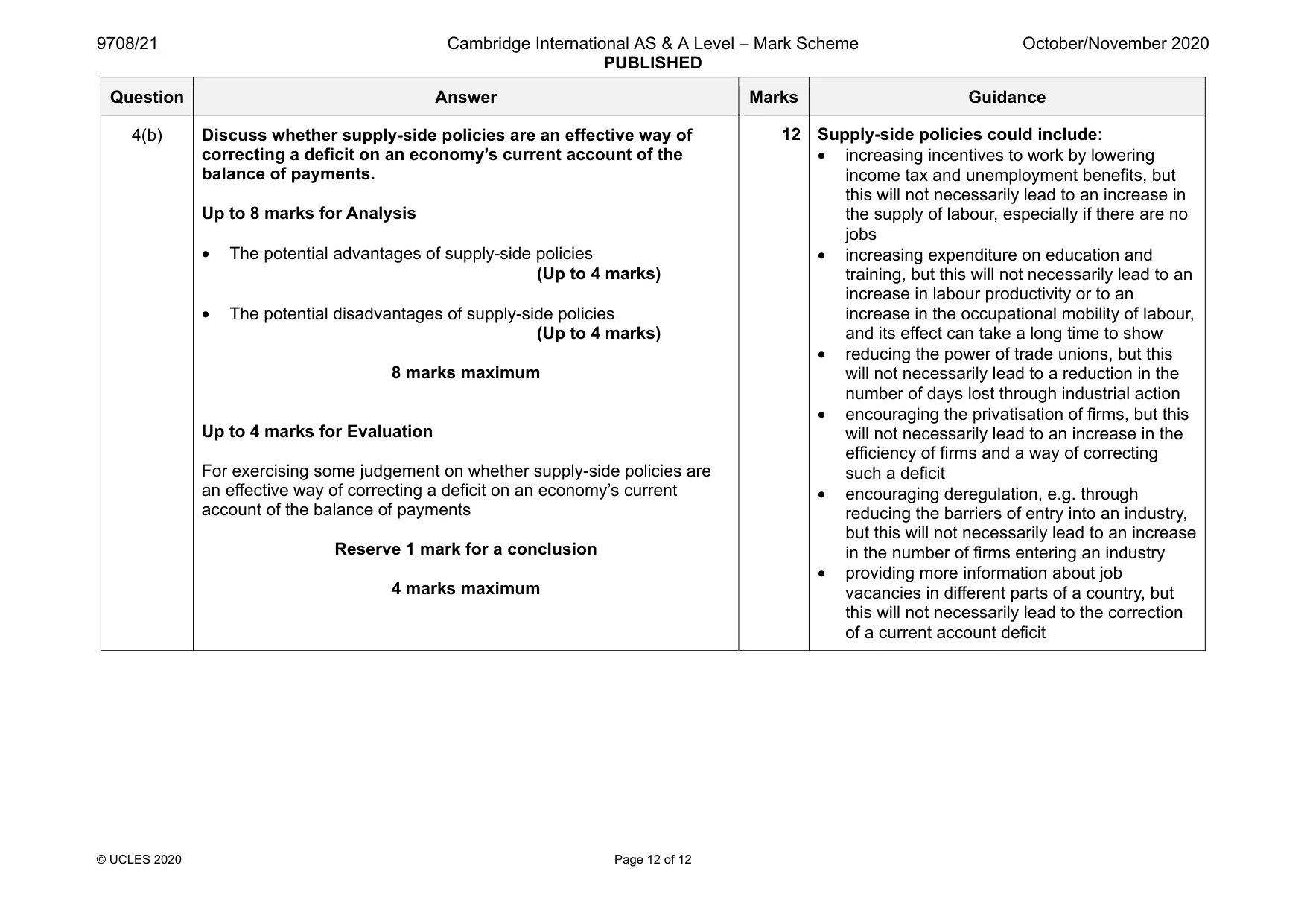
4 (a) Explain, with the aid of a diagram, the impact of a subsidy to domestic producers of a product on the export revenue from that product. [8] (b) Discuss whether supply-side policies are an effective way of correcting a deficit on an
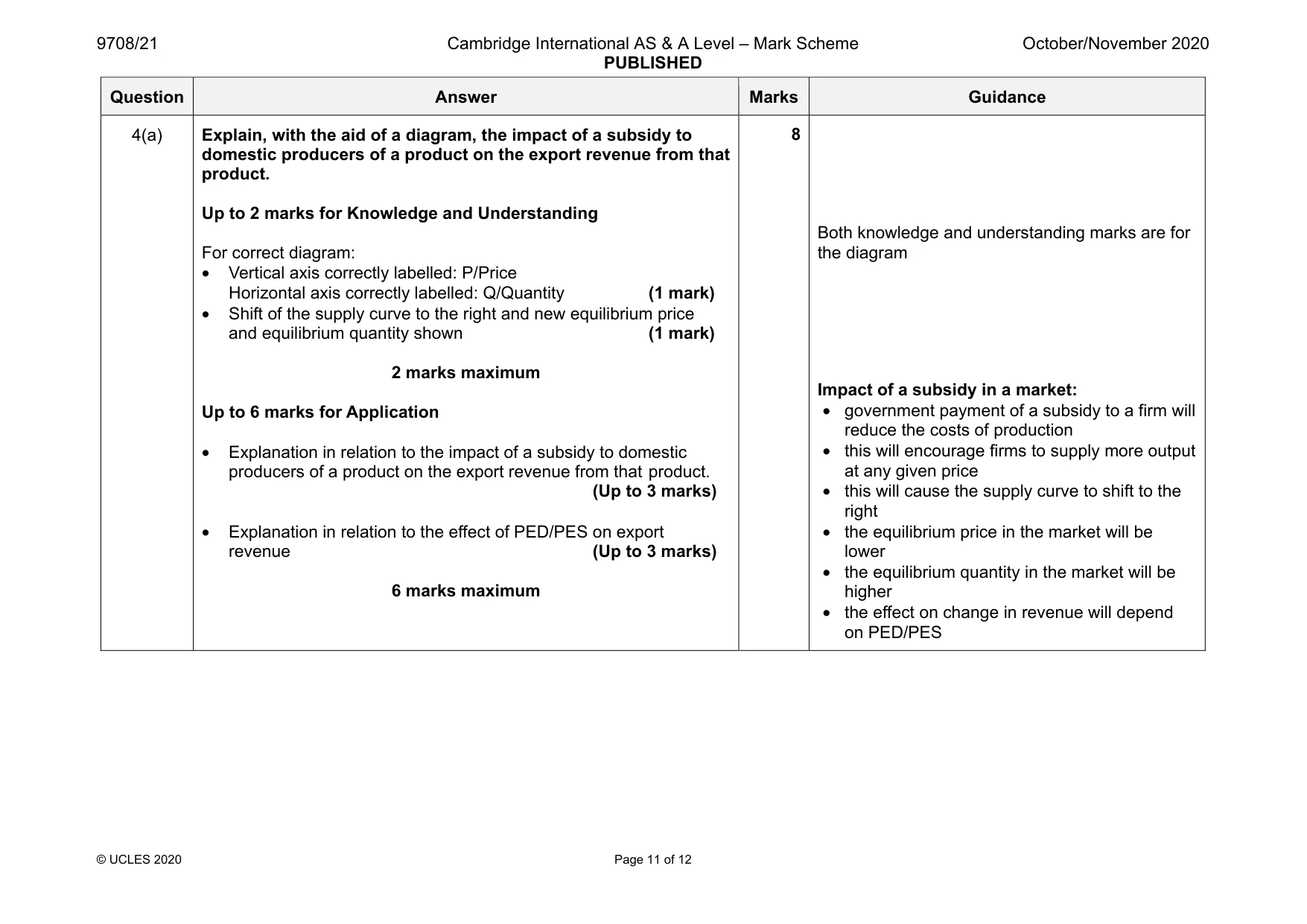
Mark scheme: 4(a) Explain, with the aid of a diagram, the impact of a subsidy to domestic producers of a product on the export revenue from that product. Up to 2 marks for Knowledge and Understanding For correct diagram: • Vertical axis correctly labelled: P/Price Horizontal axis correctly labelled: Q/Quantity (1 mark) • Shift of the supply curve to the right and new equilibrium price and equilibrium quantity shown (1 mark) 2 marks maximum Up to 6 marks for Application • Explanation in relation to the impact of a subsidy to domestic producers of a product on the export revenue from that product. (Up to 3 marks) • Explanation in relation to the effect of PED/PES on export revenue (Up to 3 marks) 6 marks maximum Both knowledge and understanding marks are for the diagram Impact of a subsidy in a market: • government payment of a subsidy to a firm will reduce the costs of production • this will encourage firms to supply more output at any given price • this will cause the supply curve to shift to the right • the equilibrium price in the market will be lower • the equilibrium quantity in the market will be higher • the effect on change in revenue will depend on PED/PES Question Answer Marks Guidance 4(b) Discuss whether supply-side policies are an effective way of correcting a deficit on an economy’s current account of the balance of payments. Up to 8 marks for Analysis • The potential advantages of supply-side policies (Up to 4 marks) • The potential disadvantages of supply-side policies (Up to 4 marks) 8 marks maximum Up to 4 marks for Evaluation For exercising some judgement on whether supply-side policies are an effective way of correcting a deficit on an economy’s current account of the balance of payments Reserve 1 mark for a conclusion 4 marks maximum 12 Supply-side policies could include: • increasing incentives to work by lowering income tax and unemployment benefits, but this will not necessarily lead to an increase in the supply of labour, especially if there are no jobs • increasing expenditure on education and training, but this will not necessarily lead to an increase in labour productivity or to an increase in the occupational mobility of labour, and its effect can take a long time to show • reducing the power of trade unions, but this will not necessarily lead to a reduction in the number of days lost through industrial action • encouraging the privatisation of firms, but this will not necessarily lead to an increase in the efficiency of firms and a way of correcting such a deficit • encouraging deregulation, e.g. through reducing the barriers of entry into an industry, but this will not necessarily lead to an increase in the number of firms entering an industry • providing more information about job vacancies in different parts of a country, but this will not necessarily lead to the correction of a current account deficit
More questions on Policies to correct imbalances in the current account of the balance of payments
What was in this paper
The subtopics covered by these 4 questions, and how many questions each got. Open one in a new tab to see every Cambridge question on it.
What you needed in this session
Cambridge’s own grade thresholds for 2020 Oct/Nov, Paper 2 · Variant 1. A higher threshold means an easier paper — the bar moves with how the cohort did.