Cambridge A Level Economics 9708 — 2020 May/June Paper 2 · Variant 2
9708/22/M/J/20 · 4 questions · 80 marks · ≈90 min
The question paper and its mark scheme, free to read here and free to download. This is Cambridge’s own paper, exactly as it was sat.
Question paper4 pages

Mark scheme6 pages
Answers below. Sit the paper first if you are practising.
Questions as text
Q1 · Argentina raises interest rates to 40 per cent 25 20 pesos per US dollar 15 Central Bank…
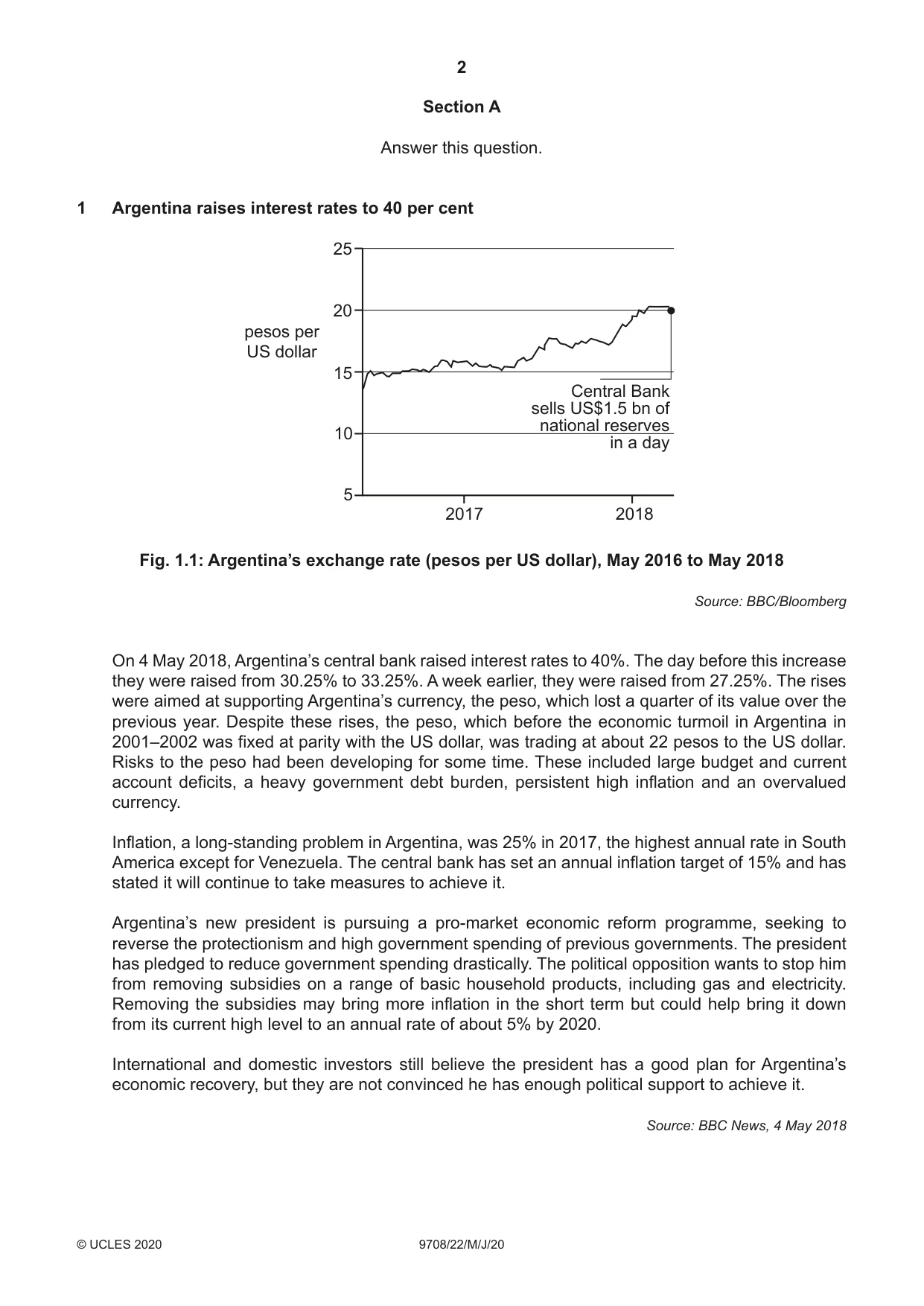
1 Argentina raises interest rates to 40 per cent 25 20 pesos per US dollar 15 Central Bank sells US$1.5 bn of national reserves 10 in a day 5 2017 2018 Fig. 1.1: Argentina’s exchange rate (pesos per US dollar), May 2016 to May 2018 Source: BBC/Bloomberg On 4 May 2018, Argentina’s central bank raised interest rates to 40%. The day before this increase they were raised from 30.25% to 33.25%. A week earlier, they were raised from 27.25%. The rises were aimed at supporting Argentina’s currency, the peso, which lost a quarter of its value over the previous year. Despite these rises, the peso, which before the economic turmoil in Argentina in 2001–2002 was fixed at parity with the US dollar, was trading at about 22 pesos to the US dollar. Risks to the peso had been developing for some time. These included large budget and current account deficits, a heavy government debt burden, persistent high inflation and an overvalued currency. Inflation, a long-standing problem in Argentina, was 25% in 2017, the highest annual rate in South America except for Venezuela. The central bank has set an annual inflation target of 15% and has stated it will continue to take measures to achieve it. Argentina’s new president is pursuing a pro-market economic reform programme, seeking to reverse the protectionism and high government spending of previous governments. The president has pledged to reduce government spending drastically. The political opposition wants to stop him from removing subsidies on a range of basic household products, including gas and electricity. Removing the subsidies may bring more inflation in the short term but could help bring it down from its current high level to an annual rate of about 5% by 2020. International and domestic investors still believe the president has a good plan for Argentina’s economic recovery, but they are not convinced he has enough political support to achieve it. Source: BBC News, 4 May 2018 (a) State what the upward trend shown in Fig. 1.1 means has happened to the value of the peso between 2016 and 2018. [1] (b) The central bank of Argentina sold US dollars from its foreign exchange reserves to a value of US$1.5 billion on one day in May 2018. With the help of a supply and demand diagram, explain what effect you would expect this intervention to have on the value of the Argentine peso. [3] (c) In the extract it is stated that risks to the peso have been developing for some time and that large budget and current account deficits are some of these risks. (i) Distinguish between a budget deficit and a current account deficit. [2] The extract also states that persistent high inflation represents a risk to the peso. (ii) Explain one way in which persistent high inflation represents a risk to the peso. [2] (d) Use aggregate demand and aggregate supply analysis to explain how the recent interest rate rises might help Argentina to reduce its annual rate of inflation and achieve its target. [6] (e) Discuss whether the potential advantages outweigh the disadvantages to the Argentine economy if the president is successful in reversing protectionism. [6]
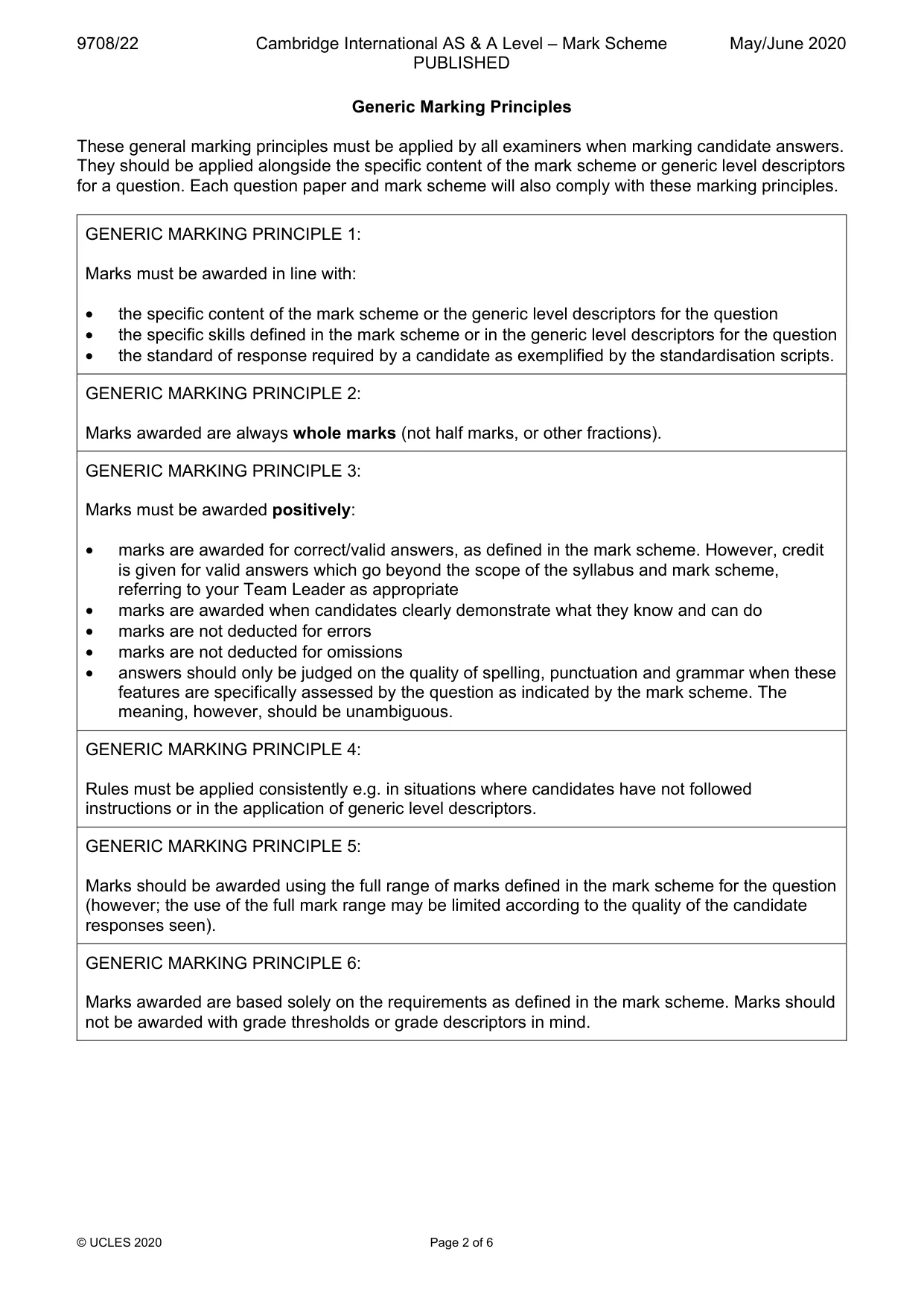
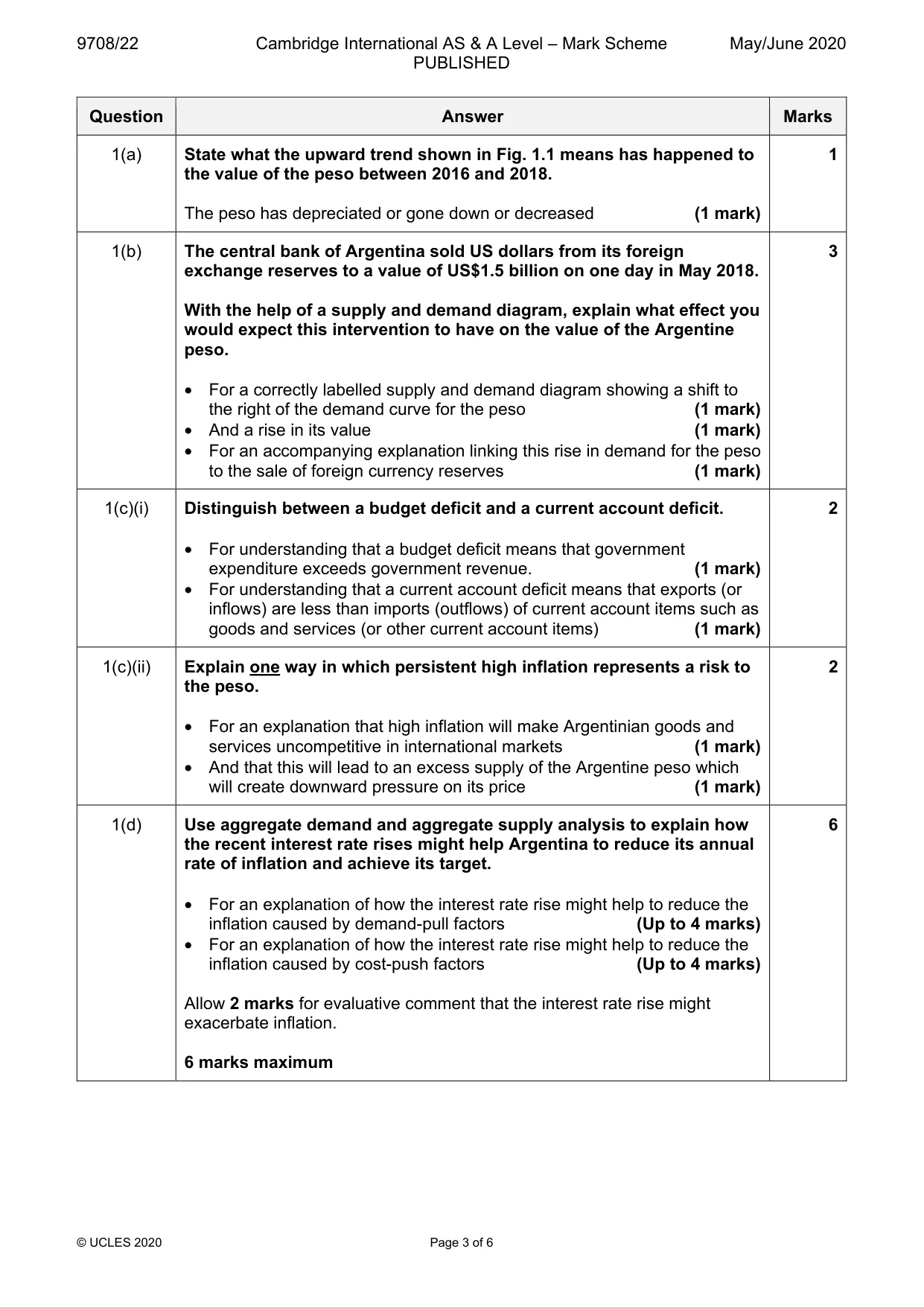
Mark scheme: Question Answer Marks 1(a) State what the upward trend shown in Fig. 1.1 means has happened to 1 the value of the peso between 2016 and 2018. The peso has depreciated or gone down or decreased (1 mark) 1(b) The central bank of Argentina sold US dollars from its foreign 3 exchange reserves to a value of US$1.5 billion on one day in May 2018. With the help of a supply and demand diagram, explain what effect you would expect this intervention to have on the value of the Argentine peso. • For a correctly labelled supply and demand diagram showing a shift to the right of the demand curve for the peso (1 mark) • And a rise in its value (1 mark) • For an accompanying explanation linking this rise in demand for the peso to the sale of foreign currency reserves (1 mark) 1(c)(i) Distinguish between a budget deficit and a current account deficit. 2 • For understanding that a budget deficit means that government expenditure exceeds government revenue. (1 mark) • For understanding that a current account deficit means that exports (or inflows) are less than imports (outflows) of current account items such as goods and services (or other current account items) (1 mark) 1(c)(ii) Explain one way in which persistent high inflation represents a risk to 2 the peso. • For an explanation that high inflation will make Argentinian goods and services uncompetitive in international markets (1 mark) • And that this will lead to an excess supply of the Argentine peso which will create downward pressure on its price (1 mark) 1(d) Use aggregate demand and aggregate supply analysis to explain how 6 the recent interest rate rises might help Argentina to reduce its annual rate of inflation and achieve its target. • For an explanation of how the interest rate rise might help to reduce the inflation caused by demand-pull factors (Up to 4 marks) • For an explanation of how the interest rate rise might help to reduce the inflation caused by cost-push factors (Up to 4 marks) Allow 2 marks for evaluative comment that the interest rate rise might exacerbate inflation. 6 marks maximum 1(e) Discuss whether the potential advantages outweigh the disadvantages 6 to the Argentine economy if the president is successful in reversing protectionism. • For an analysis of the advantages of removing protectionism (Up to 3 marks) • For an analysis of the disadvantages of removing protectionism (Up to 3 marks) Reserve 1 mark for a reasoned conclusion
Q2 · Use a production possibility curve diagram(s) to distinguish between the growth of an…
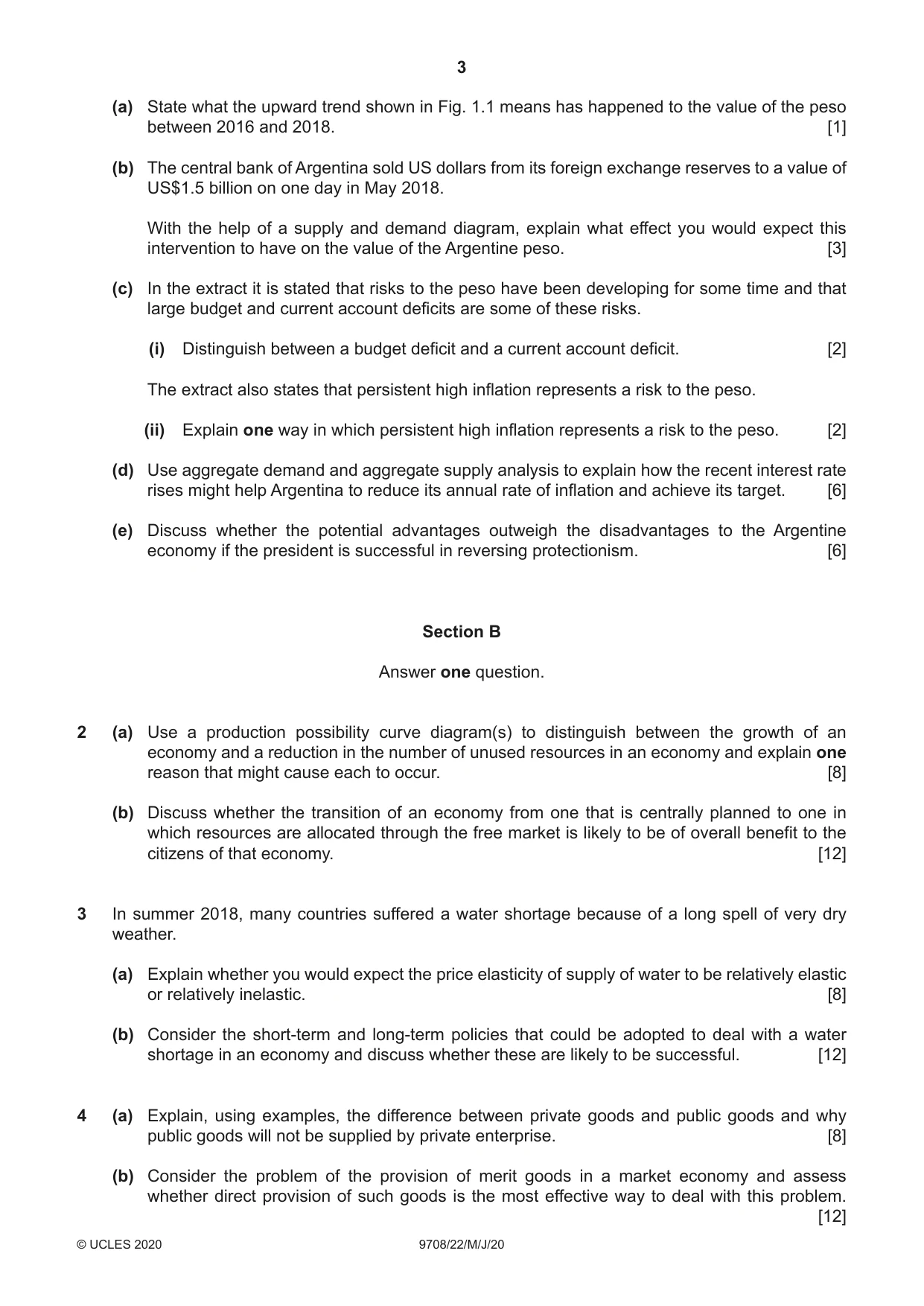
2 (a) Use a production possibility curve diagram(s) to distinguish between the growth of an economy and a reduction in the number of unused resources in an economy and explain one reason that might cause each to occur. [8] (b) Discuss whether the transition of an economy from one that is centrally planned to one in which resources are allocated through the free market is likely to be of overall benefit to the citizens of that economy. [12]
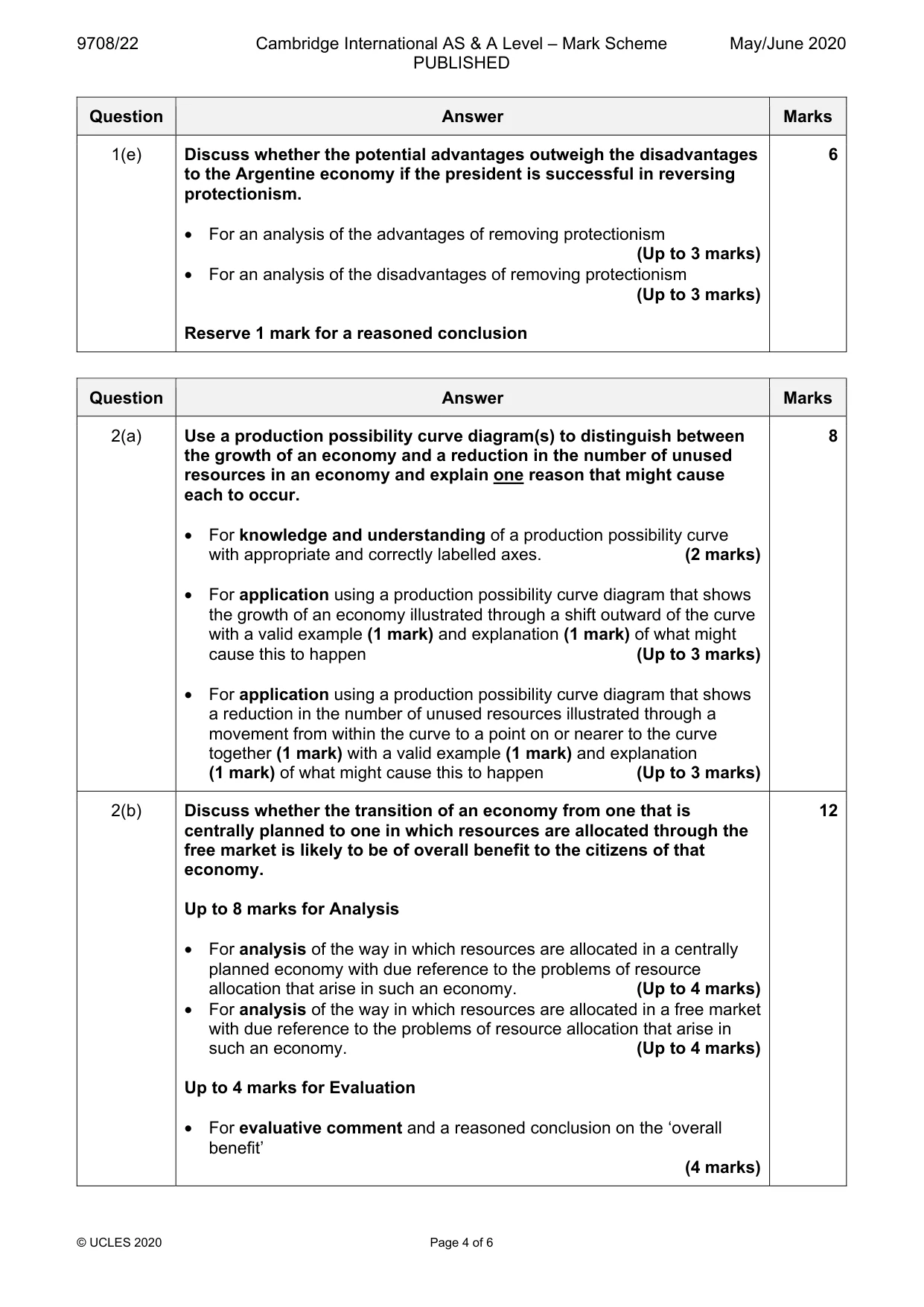
Mark scheme: 2(a) Use a production possibility curve diagram(s) to distinguish between 8 the growth of an economy and a reduction in the number of unused resources in an economy and explain one reason that might cause each to occur. • For knowledge and understanding of a production possibility curve with appropriate and correctly labelled axes. (2 marks) • For application using a production possibility curve diagram that shows the growth of an economy illustrated through a shift outward of the curve with a valid example (1 mark) and explanation (1 mark) of what might cause this to happen (Up to 3 marks) • For application using a production possibility curve diagram that shows a reduction in the number of unused resources illustrated through a movement from within the curve to a point on or nearer to the curve together (1 mark) with a valid example (1 mark) and explanation (1 mark) of what might cause this to happen (Up to 3 marks) 2(b) Discuss whether the transition of an economy from one that is 12 centrally planned to one in which resources are allocated through the free market is likely to be of overall benefit to the citizens of that economy. Up to 8 marks for Analysis • For analysis of the way in which resources are allocated in a centrally planned economy with due reference to the problems of resource allocation that arise in such an economy. (Up to 4 marks) • For analysis of the way in which resources are allocated in a free market with due reference to the problems of resource allocation that arise in such an economy. (Up to 4 marks) Up to 4 marks for Evaluation • For evaluative comment and a reasoned conclusion on the ‘overall benefit’ (4 marks)
More questions on Resource allocation in different economic systems
Q3 · In summer 2018, many countries suffered a water shortage because of a long spell of very…
3 In summer 2018, many countries suffered a water shortage because of a long spell of very dry weather. (a) Explain whether you would expect the price elasticity of supply of water to be relatively elastic or relatively inelastic. [8] (b) Consider the short-term and long-term policies that could be adopted to deal with a water shortage in an economy and discuss whether these are likely to be successful. [12]
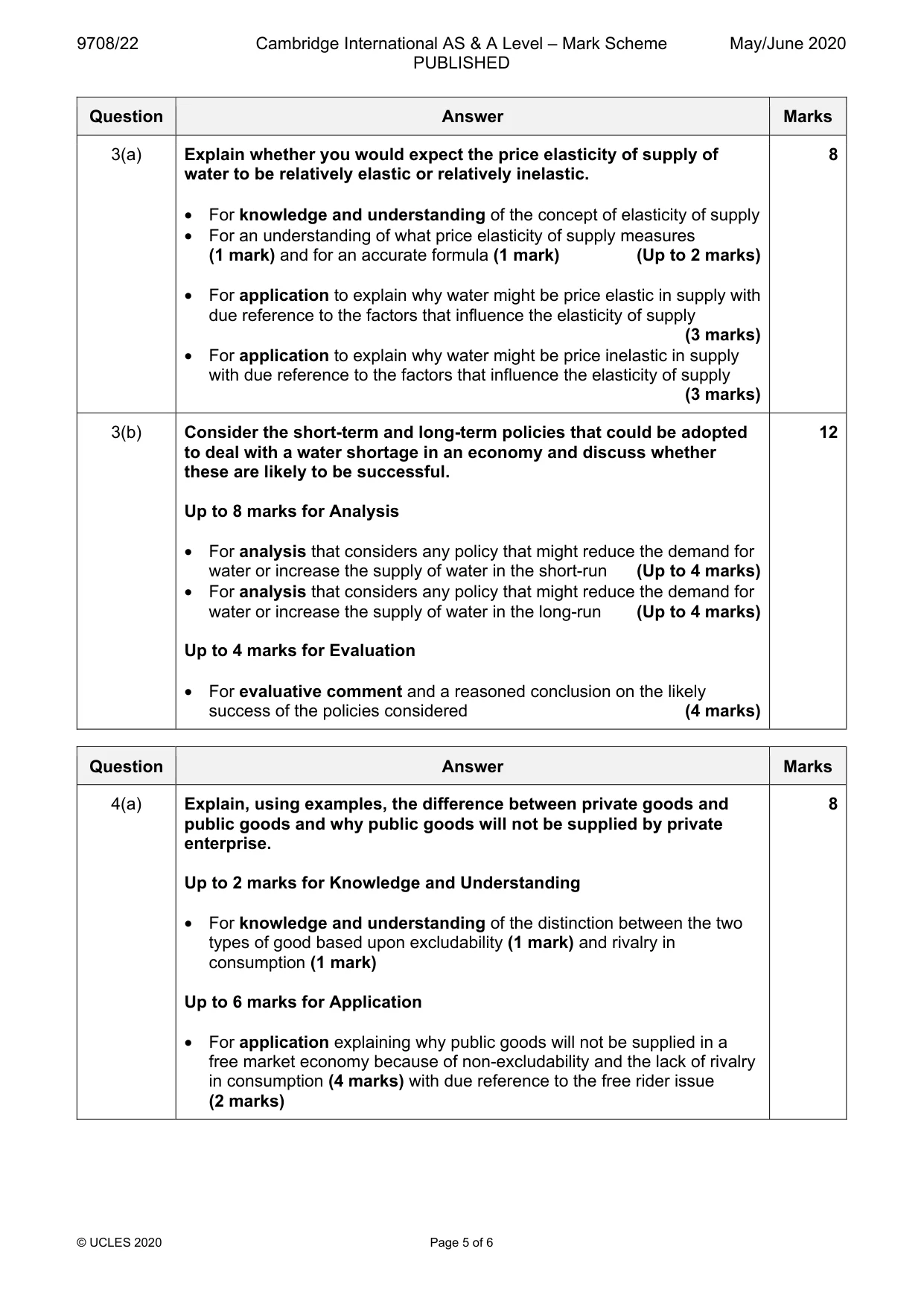
Mark scheme: 3(a) Explain whether you would expect the price elasticity of supply of 8 water to be relatively elastic or relatively inelastic. • For knowledge and understanding of the concept of elasticity of supply • For an understanding of what price elasticity of supply measures (1 mark) and for an accurate formula (1 mark) (Up to 2 marks) • For application to explain why water might be price elastic in supply with due reference to the factors that influence the elasticity of supply (3 marks) • For application to explain why water might be price inelastic in supply with due reference to the factors that influence the elasticity of supply (3 marks) 3(b) Consider the short-term and long-term policies that could be adopted 12 to deal with a water shortage in an economy and discuss whether these are likely to be successful. Up to 8 marks for Analysis • For analysis that considers any policy that might reduce the demand for water or increase the supply of water in the short-run (Up to 4 marks) • For analysis that considers any policy that might reduce the demand for water or increase the supply of water in the long-run (Up to 4 marks) Up to 4 marks for Evaluation • For evaluative comment and a reasoned conclusion on the likely success of the policies considered (4 marks)
Q4 · Explain, using examples, the difference between private goods and public goods and why…
4 (a) Explain, using examples, the difference between private goods and public goods and why public goods will not be supplied by private enterprise. [8] (b) Consider the problem of the provision of merit goods in a market economy and assess whether direct provision of such goods is the most effective way to deal with this problem.
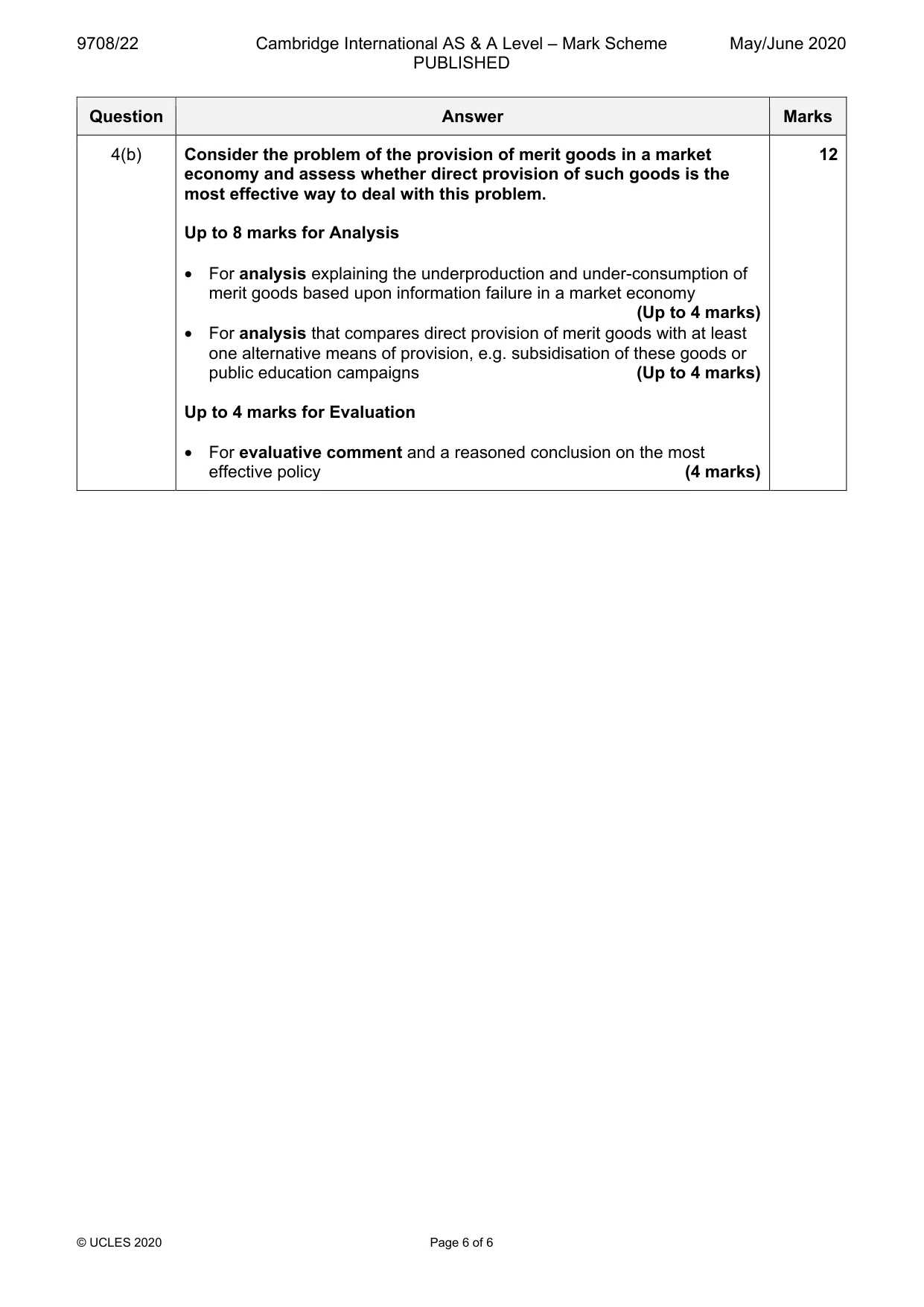
Mark scheme: 4(a) Explain, using examples, the difference between private goods and 8 public goods and why public goods will not be supplied by private enterprise. Up to 2 marks for Knowledge and Understanding • For knowledge and understanding of the distinction between the two types of good based upon excludability (1 mark) and rivalry in consumption (1 mark) Up to 6 marks for Application • For application explaining why public goods will not be supplied in a free market economy because of non-excludability and the lack of rivalry in consumption (4 marks) with due reference to the free rider issue (2 marks) 4(b) Consider the problem of the provision of merit goods in a market 12 economy and assess whether direct provision of such goods is the most effective way to deal with this problem. Up to 8 marks for Analysis • For analysis explaining the underproduction and under-consumption of merit goods based upon information failure in a market economy (Up to 4 marks) • For analysis that compares direct provision of merit goods with at least one alternative means of provision, e.g. subsidisation of these goods or public education campaigns (Up to 4 marks) Up to 4 marks for Evaluation • For evaluative comment and a reasoned conclusion on the most effective policy (4 marks)
What was in this paper
The subtopics covered by these 4 questions, and how many questions each got. Open one in a new tab to see every Cambridge question on it.