Cambridge A Level Biology 9700 — 2023 May/June Paper 2 · Variant 2
9700/22/M/J/23 · 6 questions · 60 marks · ≈68 min
The question paper and its mark scheme, free to read here and free to download. This is Cambridge’s own paper, exactly as it was sat.
Question paper20 pages



Mark scheme22 pages
Answers below. Sit the paper first if you are practising.
Questions as text
Q1 · The sinoatrial node (SAN) and the atrioventricular node (AVN) have an important role in…
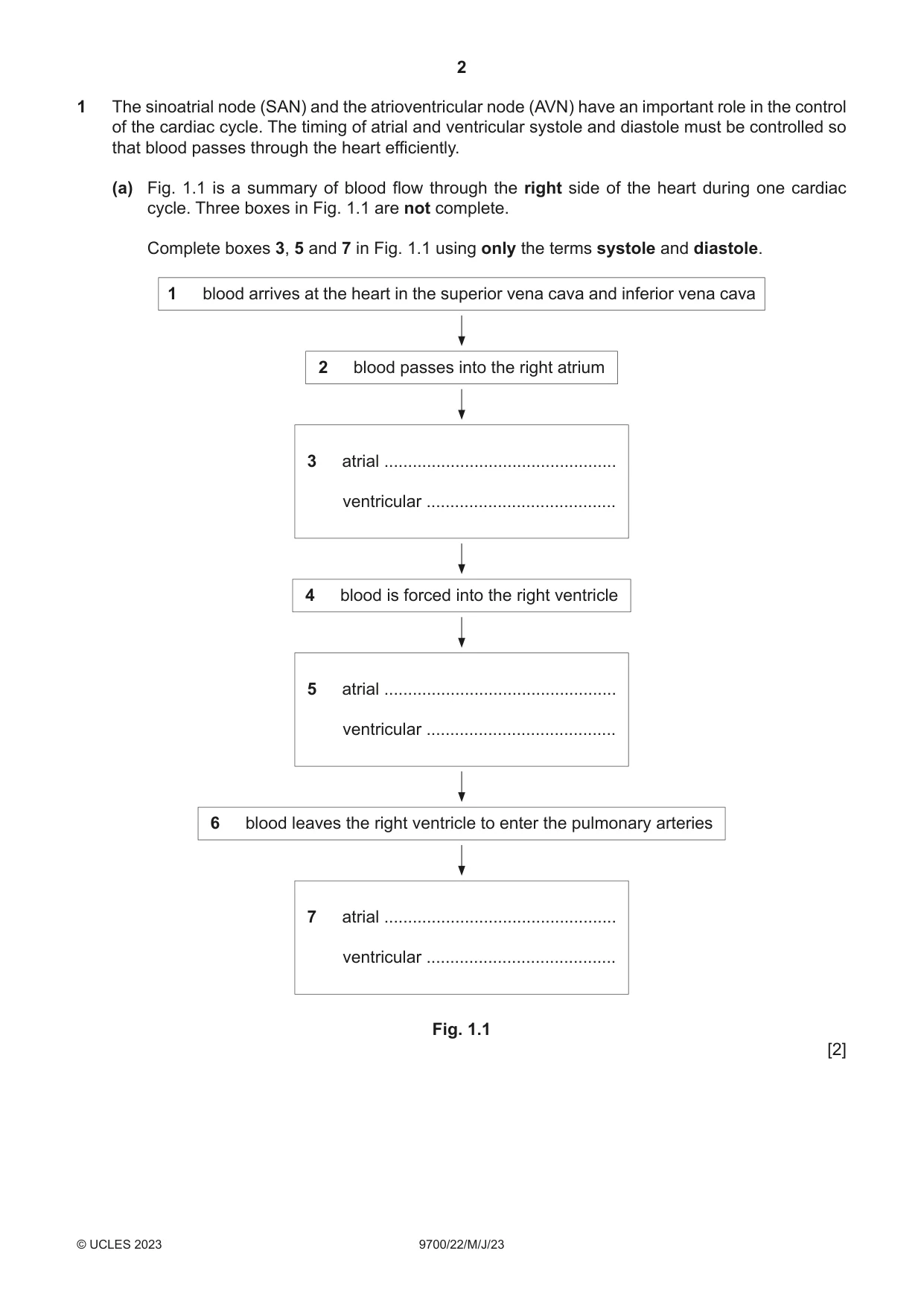
1 The sinoatrial node (SAN) and the atrioventricular node (AVN) have an important role in the control of the cardiac cycle. The timing of atrial and ventricular systole and diastole must be controlled so that blood passes through the heart efficiently. (a) Fig. 1.1 is a summary of blood flow through the right side of the heart during one cardiac cycle. Three boxes in Fig. 1.1 are not complete. Complete boxes 3, 5 and 7 in Fig. 1.1 using only the terms systole and diastole. 1 blood arrives at the heart in the superior vena cava and inferior vena cava 2 blood passes into the right atrium 3 atrial ................................................. ventricular ........................................ 4 blood is forced into the right ventricle 5 atrial ................................................. ventricular ........................................ 6 blood leaves the right ventricle to enter the pulmonary arteries 7 atrial ................................................. ventricular ........................................ Fig. 1.1 [2] (b) Impulses sent out by the SAN pass to the AVN, where there is a short delay. With reference to Fig. 1.1, explain why it is important for the control of the cardiac cycle that there is a short delay at the AVN after impulses have been sent out by the SAN. ................................................................................................................................................... ................................................................................................................................................... ................................................................................................................................................... ................................................................................................................................................... ................................................................................................................................................... ............................................................................................................................................. [2] (c) Changes in blood pressure occur in the heart during the cardiac cycle. These changes cause the opening and closing of the bicuspid and tricuspid (atrioventricular) valves and the aortic and pulmonary (semilunar) valves. Explain how blood pressure changes: • cause the opening of the tricuspid valve • cause the opening of the pulmonary valve • help the flow of blood through the heart. ................................................................................................................................................... ................................................................................................................................................... ................................................................................................................................................... ................................................................................................................................................... ................................................................................................................................................... ................................................................................................................................................... ............................................................................................................................................. [3] [Total: 7]
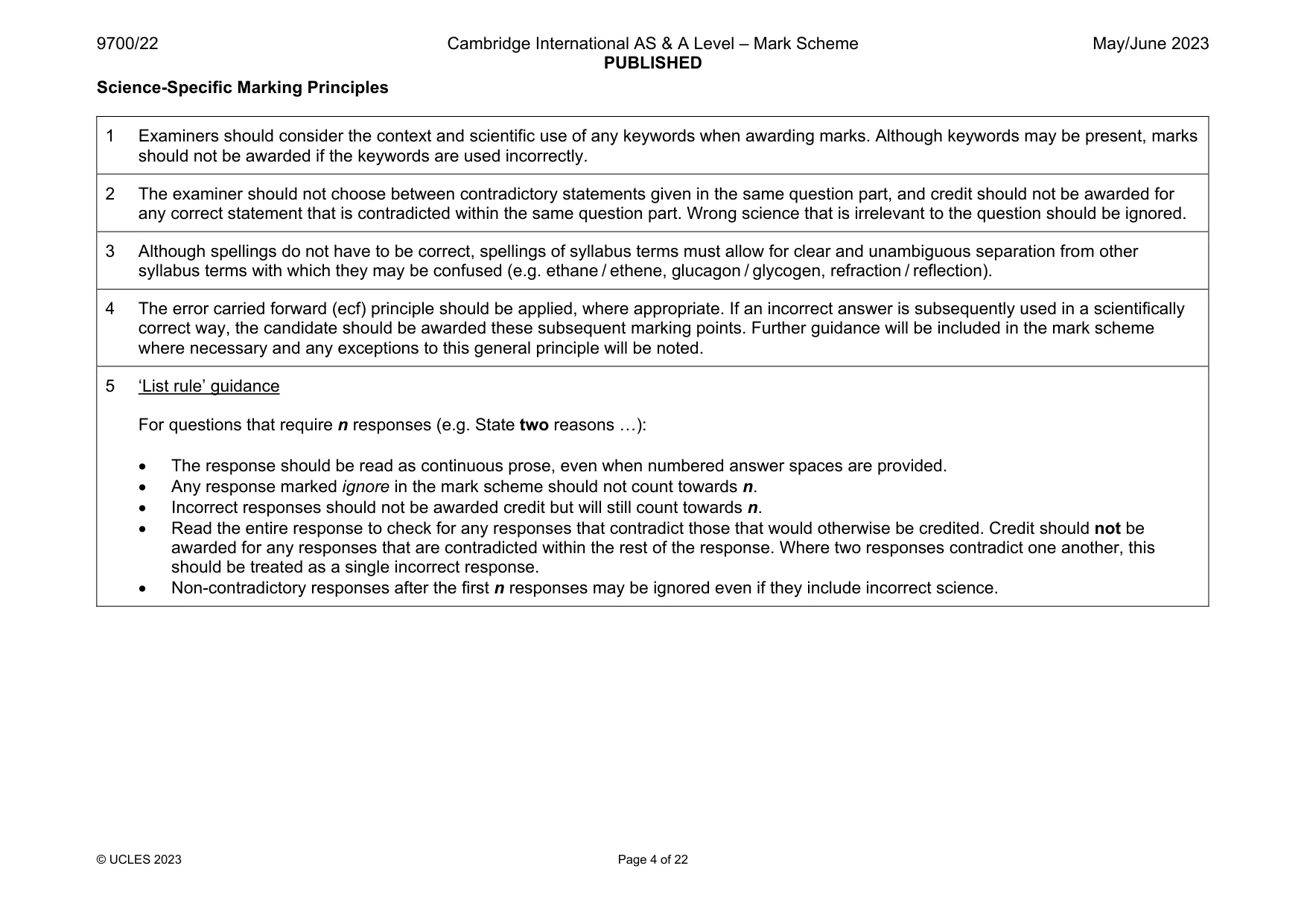
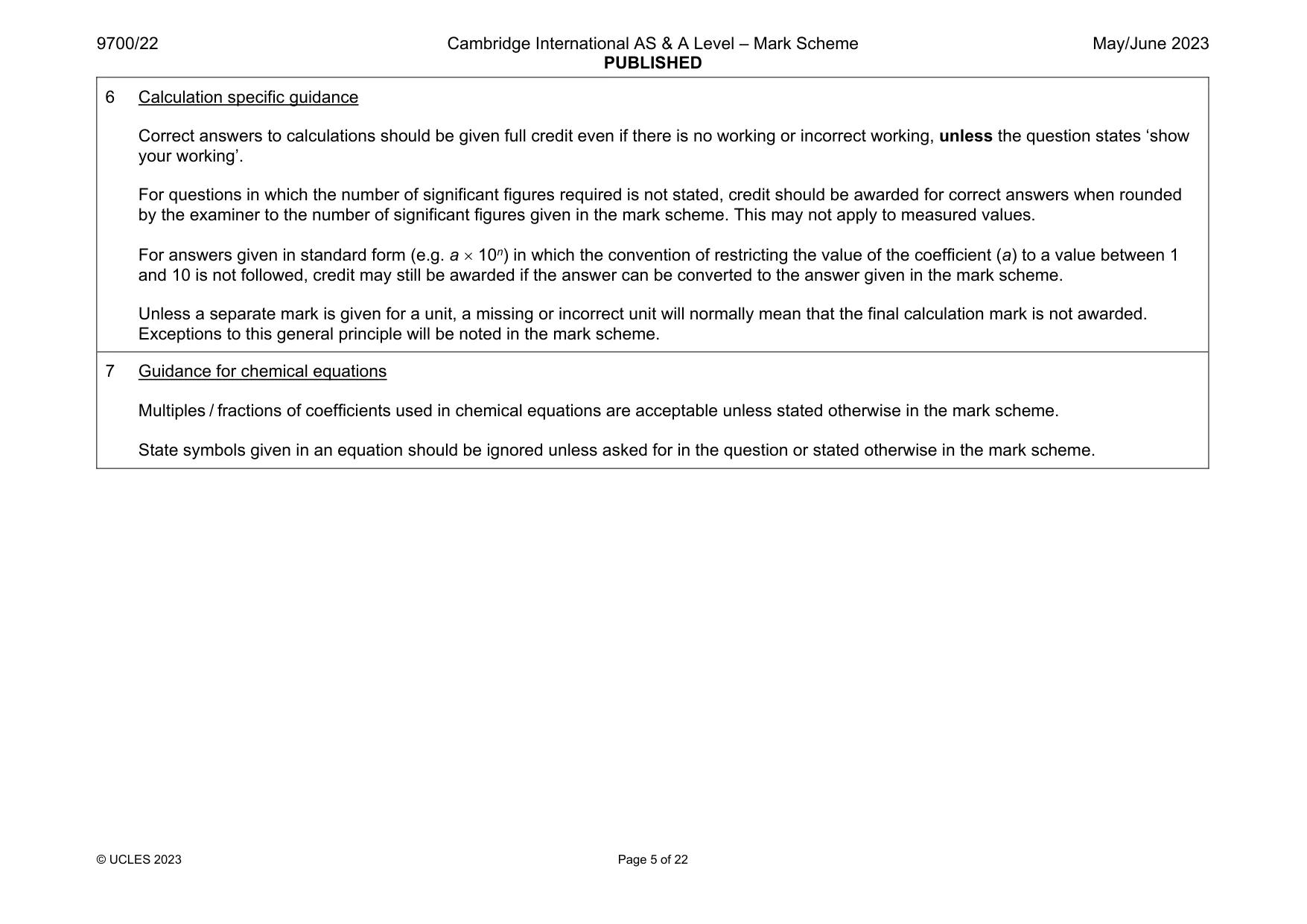
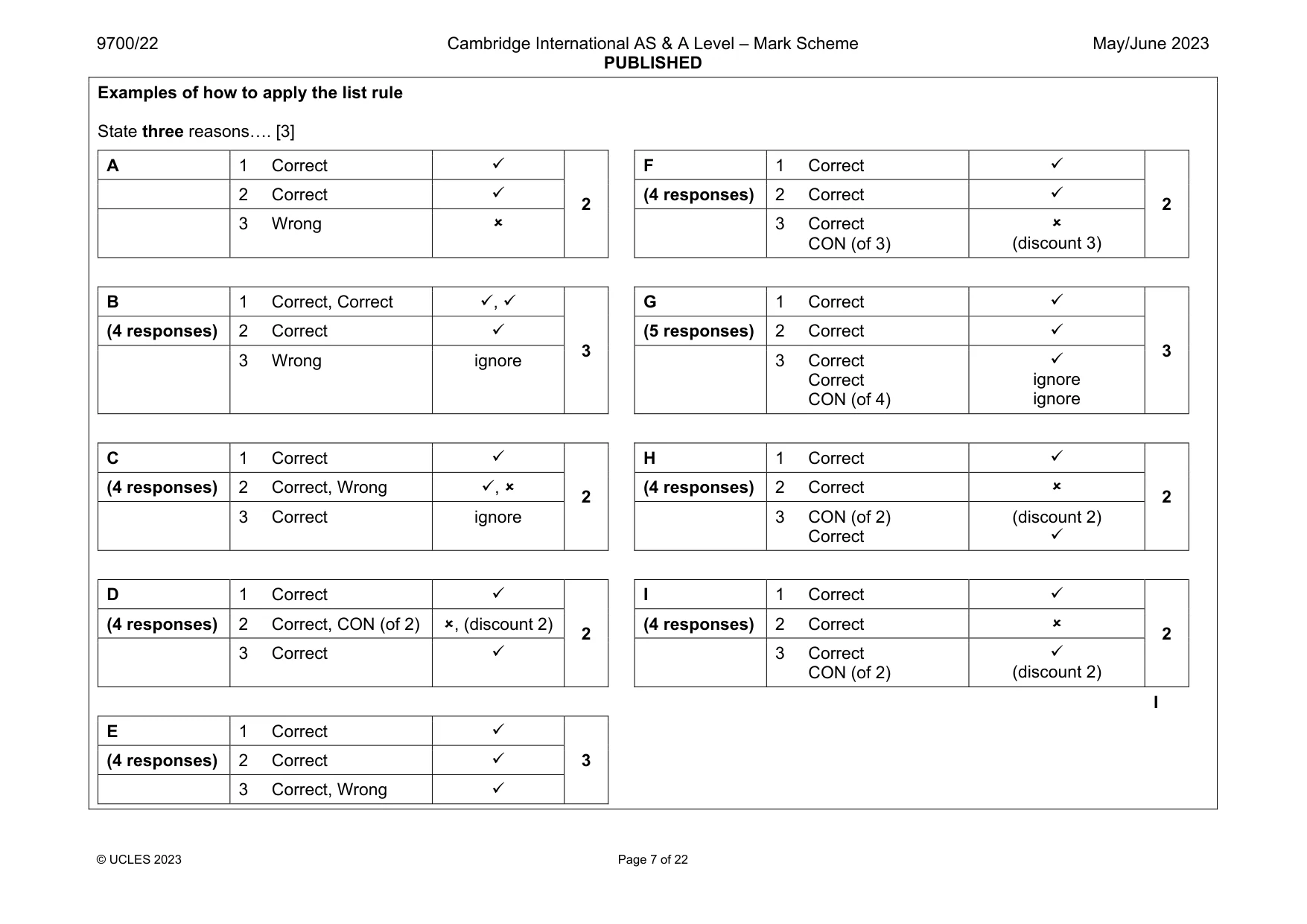
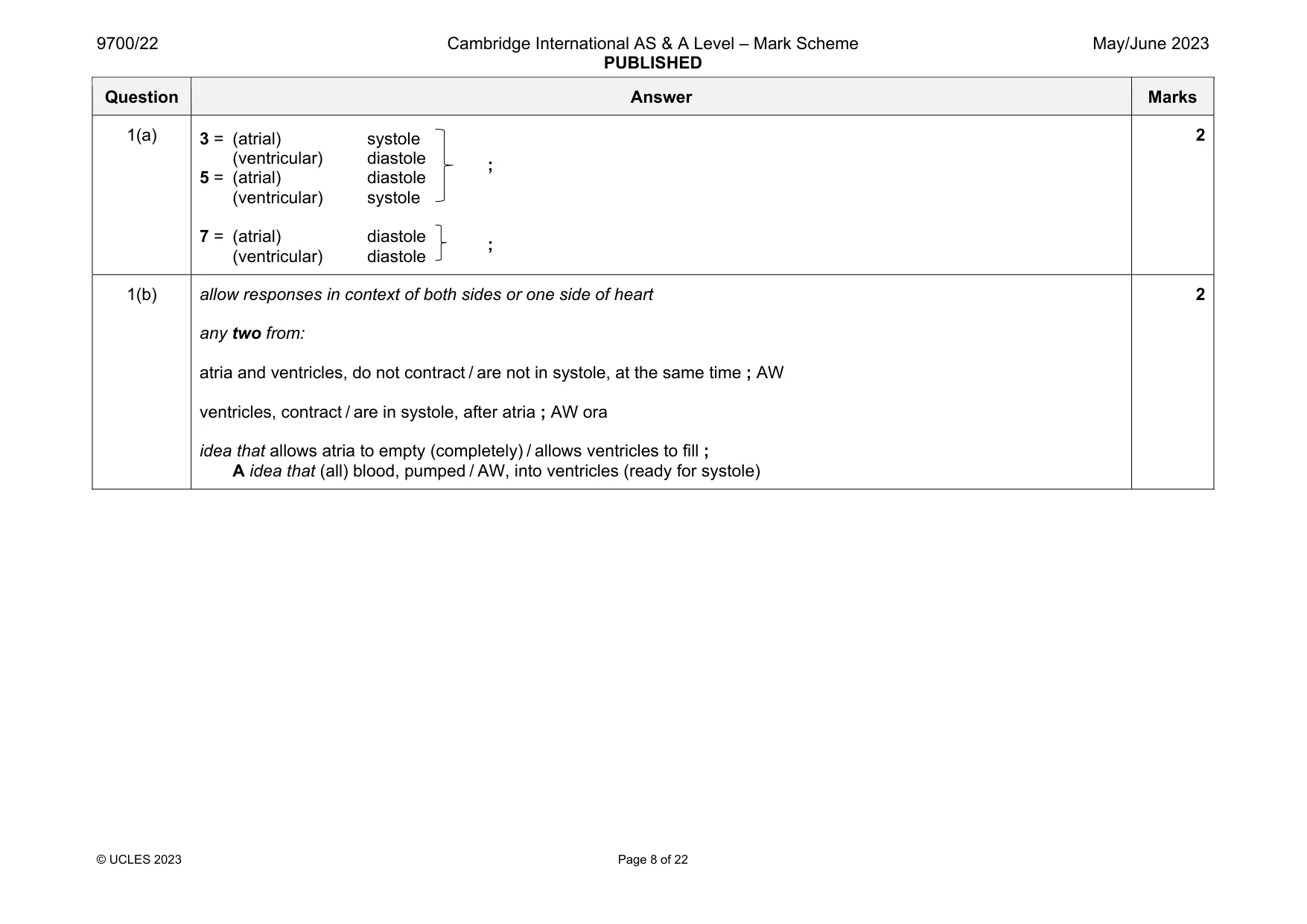
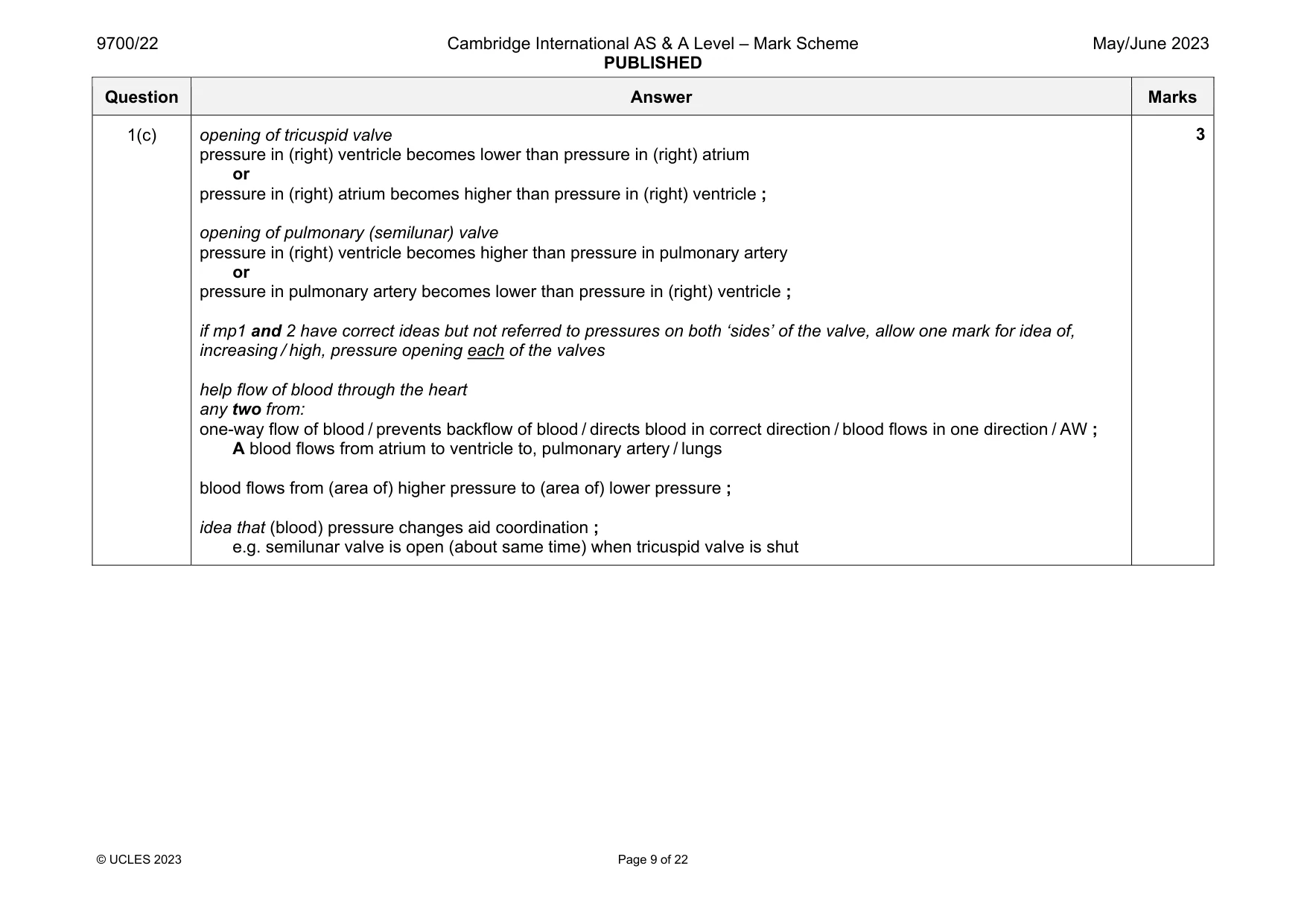
Mark scheme: 1(a) 3 = (atrial) systole (ventricular) diastole 5 = (atrial) diastole (ventricular) systole 7 = (atrial) diastole (ventricular) diastole 2 1(b) allow responses in context of both sides or one side of heart any two from: atria and ventricles, do not contract / are not in systole, at the same time ; AW ventricles, contract / are in systole, after atria ; AW ora idea that allows atria to empty (completely) / allows ventricles to fill ; A idea that (all) blood, pumped / AW, into ventricles (ready for systole) 2 ; ; Question Answer Marks 1(c) opening of tricuspid valve pressure in (right) ventricle becomes lower than pressure in (right) atrium or pressure in (right) atrium becomes higher than pressure in (right) ventricle ; opening of pulmonary (semilunar) valve pressure in (right) ventricle becomes higher than pressure in pulmonary artery or pressure in pulmonary artery becomes lower than pressure in (right) ventricle ; if mp1 and 2 have correct ideas but not referred to pressures on both ‘sides’ of the valve, allow one mark for idea of, increasing / high, pressure opening each of the valves help flow of blood through the heart any two from: one-way flow of blood / prevents backflow of blood / directs blood in correct direction / blood flows in one direction / AW ; A blood flows from atrium to ventricle to, pulmonary artery / lungs blood flows from (area of) higher pressure to (area of) lower pressure ; idea that (blood) pressure changes aid coordination ; e.g. semilunar valve is open (about same time) when tricuspid valve is shut 3
Q2 · A photomicrograph of a longitudinal section (LS) through a root tip
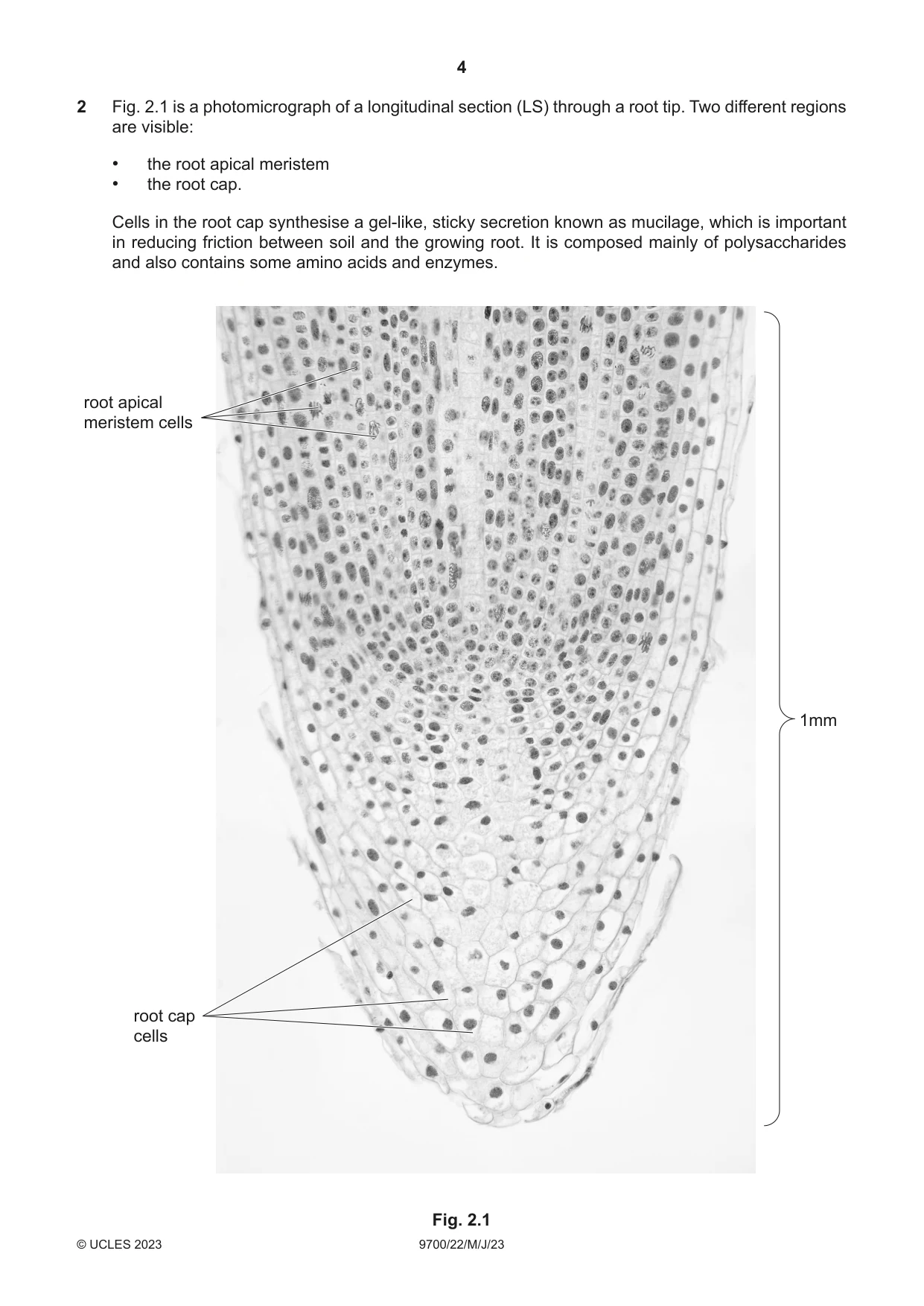
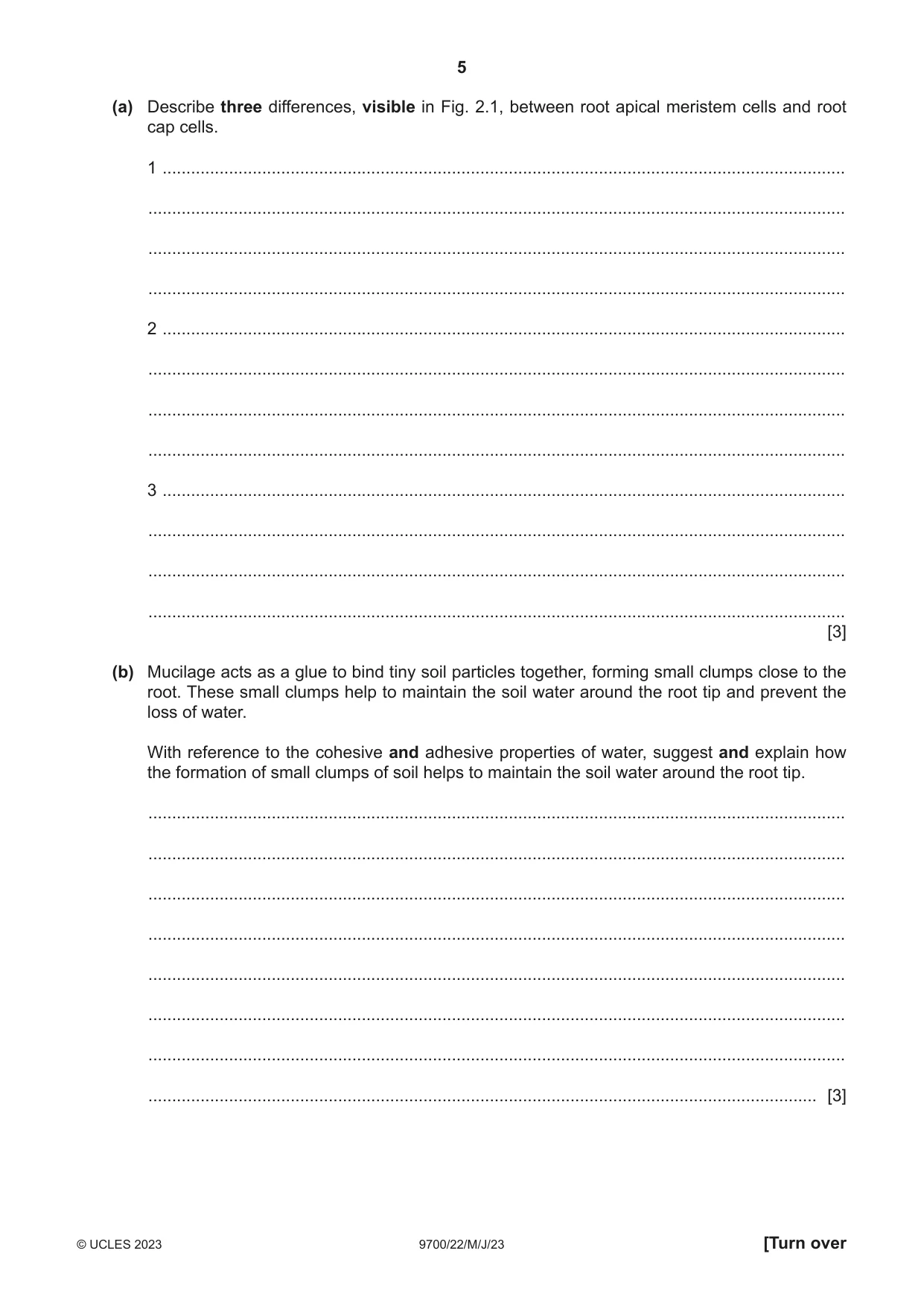
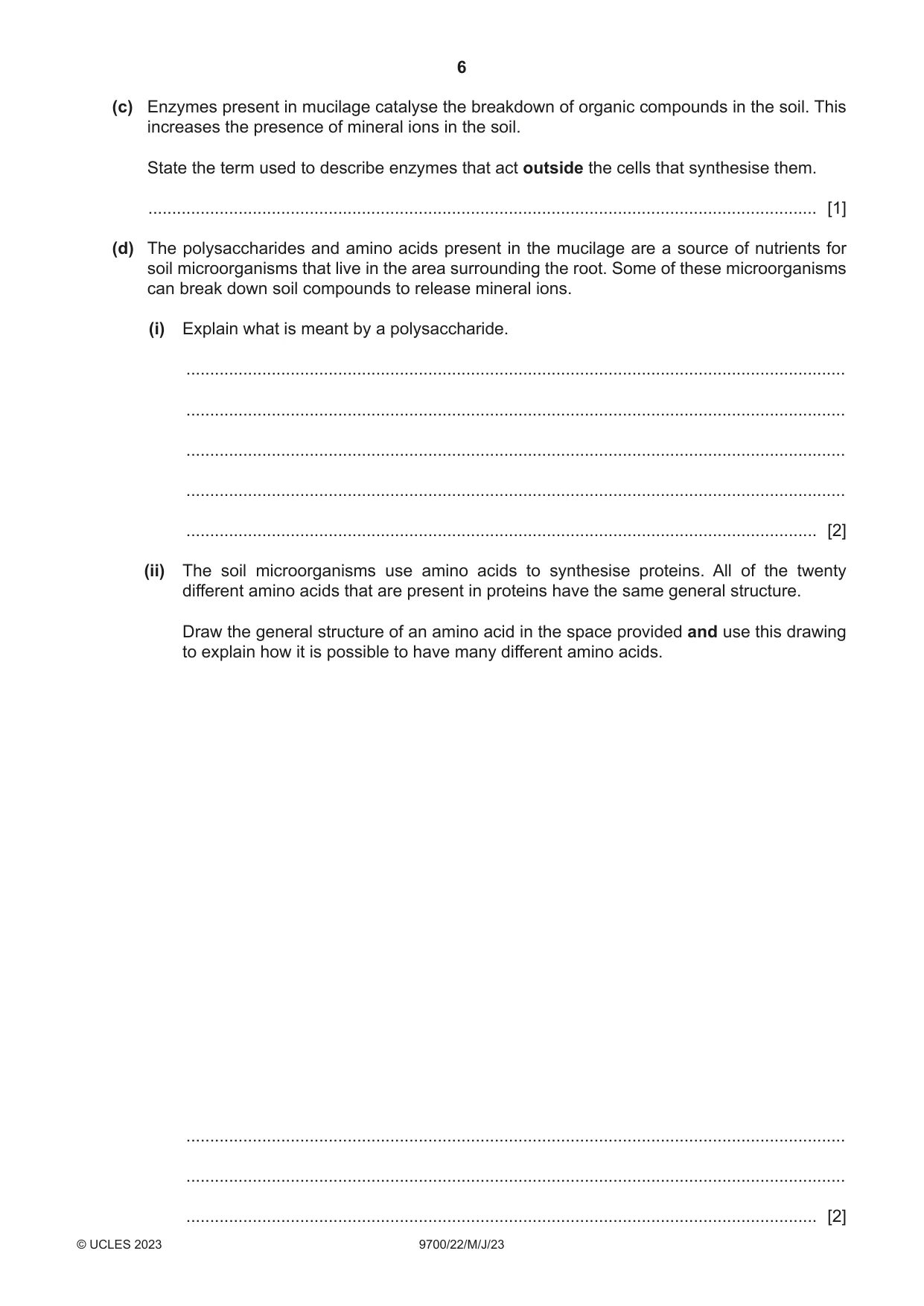
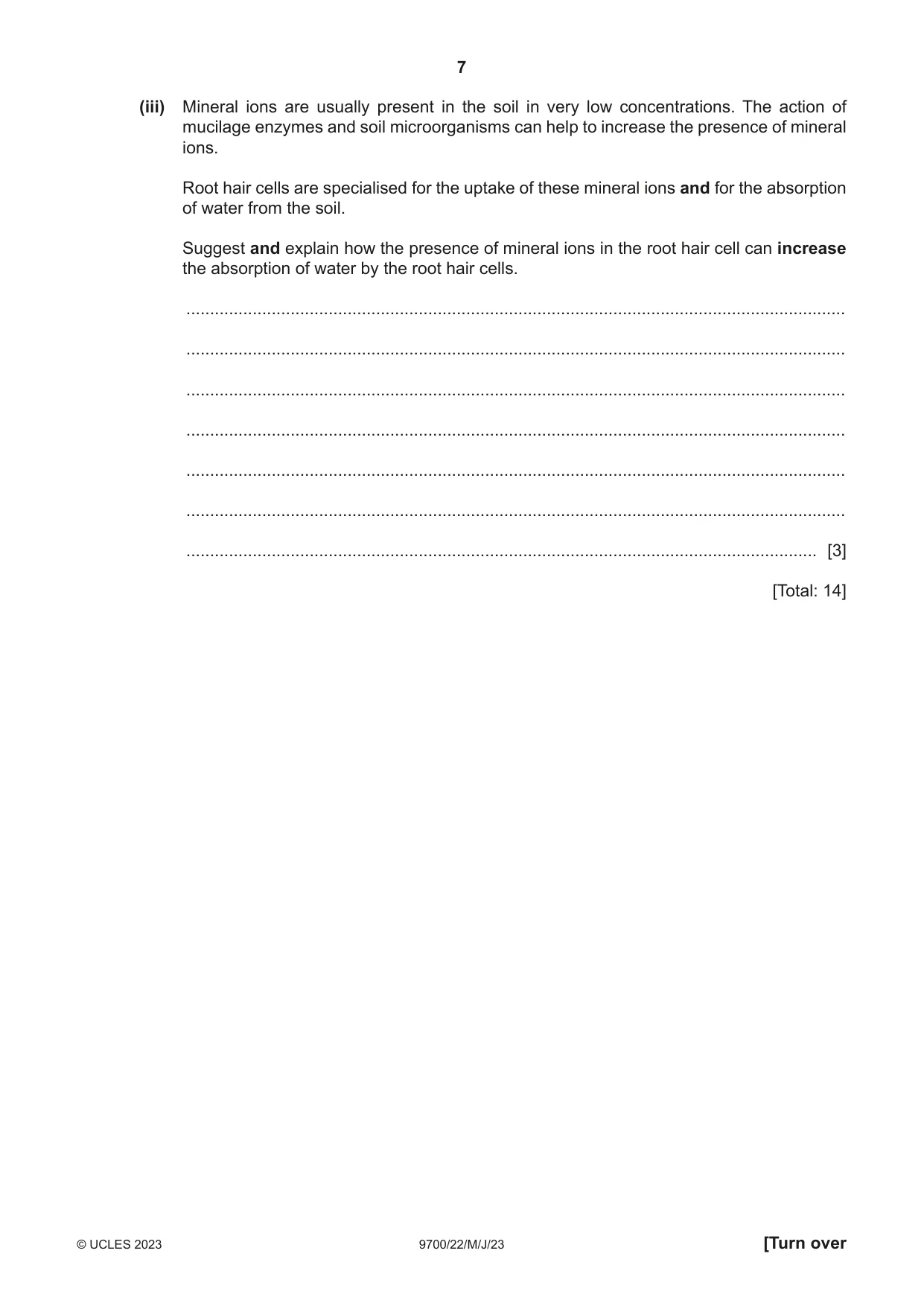
2 Fig. 2.1 is a photomicrograph of a longitudinal section (LS) through a root tip. Two diffe are visible: • the root apical meristem • the root cap. Cells in the root cap synthesise a gel-like, sticky secretion known as mucilage, which in reducing friction between soil and the growing root. It is composed mainly of poly and also contains some amino acids and enzymes. root apical meristem cells root cap cells Fig. 2.1 (a) Describe three differences, visible in Fig. 2.1, between root apical meristem cells and root cap cells. 1 ................................................................................................................................................ ................................................................................................................................................... ................................................................................................................................................... ................................................................................................................................................... 2 ................................................................................................................................................ ................................................................................................................................................... ................................................................................................................................................... ................................................................................................................................................... 3 ................................................................................................................................................ ................................................................................................................................................... ................................................................................................................................................... ................................................................................................................................................... [3] (b) Mucilage acts as a glue to bind tiny soil particles together, forming small clumps close to the root. These small clumps help to maintain the soil water around the root tip and prevent the loss of water. With reference to the cohesive and adhesive properties of water, suggest and explain how the formation of small clumps of soil helps to maintain the soil water around the root tip. ................................................................................................................................................... ................................................................................................................................................... ................................................................................................................................................... ................................................................................................................................................... ................................................................................................................................................... ................................................................................................................................................... ................................................................................................................................................... ............................................................................................................................................. [3] (c) Enzymes present in mucilage catalyse the breakdown of organic compounds in the soil. This increases the presence of mineral ions in the soil. State the term used to describe enzymes that act outside the cells that synthesise them. ............................................................................................................................................. [1] (d) The polysaccharides and amino acids present in the mucilage are a source of nutrients for soil microorganisms that live in the area surrounding the root. Some of these microorganisms can break down soil compounds to release mineral ions. (i) Explain what is meant by a polysaccharide. ........................................................................................................................................... ........................................................................................................................................... ........................................................................................................................................... ........................................................................................................................................... ..................................................................................................................................... [2] (ii) The soil microorganisms use amino acids to synthesise proteins. All of the twenty different amino acids that are present in proteins have the same general structure. Draw the general structure of an amino acid in the space provided and use this drawing to explain how it is possible to have many different amino acids. ........................................................................................................................................... ........................................................................................................................................... ..................................................................................................................................... [2] (iii) Mineral ions are usually present in the soil in very low concentrations. The action of mucilage enzymes and soil microorganisms can help to increase the presence of mineral ions. Root hair cells are specialised for the uptake of these mineral ions and for the absorption of water from the soil. Suggest and explain how the presence of mineral ions in the root hair cell can increase the absorption of water by the root hair cells. ........................................................................................................................................... ........................................................................................................................................... ........................................................................................................................................... ........................................................................................................................................... ........................................................................................................................................... ........................................................................................................................................... ..................................................................................................................................... [3] [Total: 14]
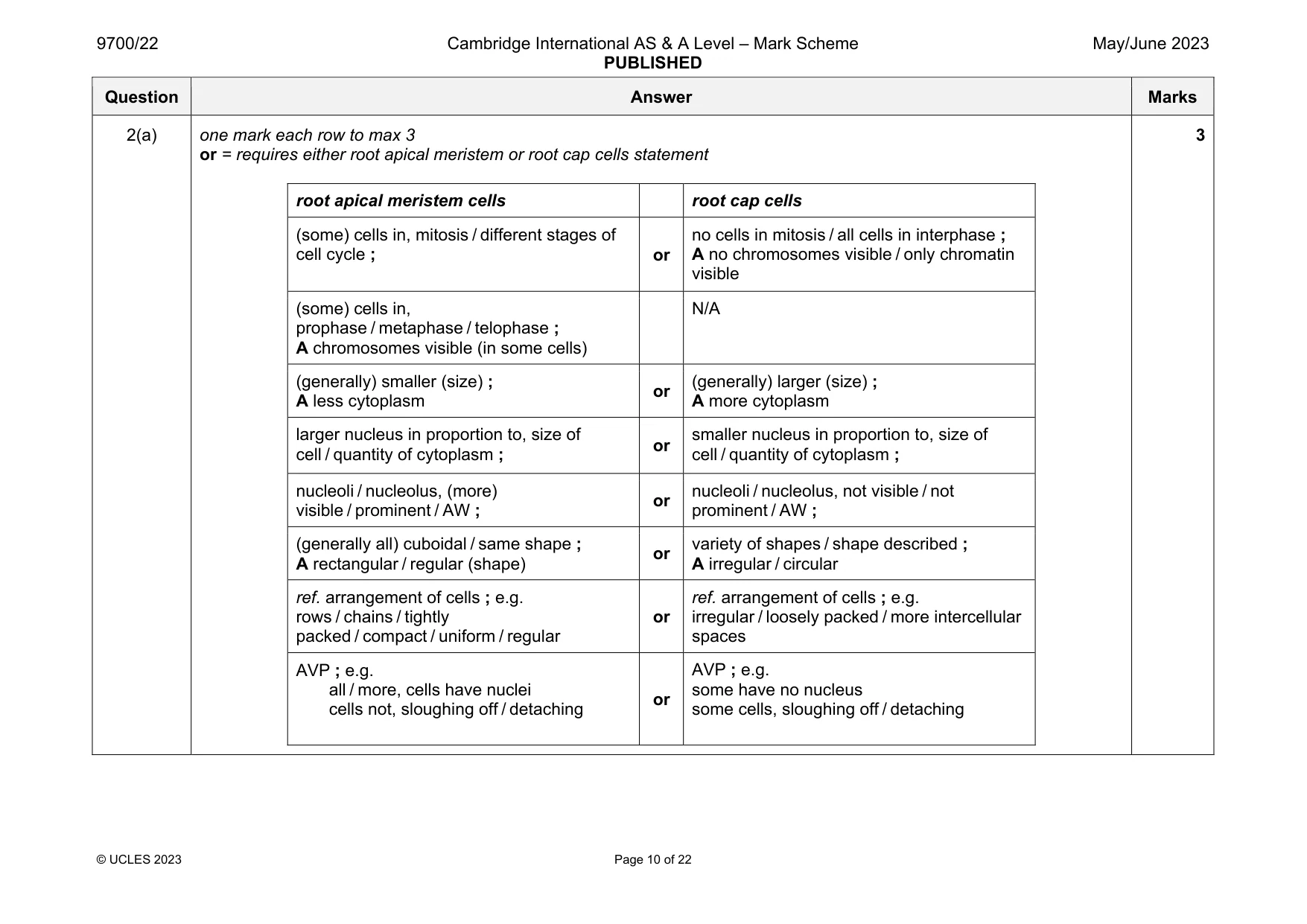
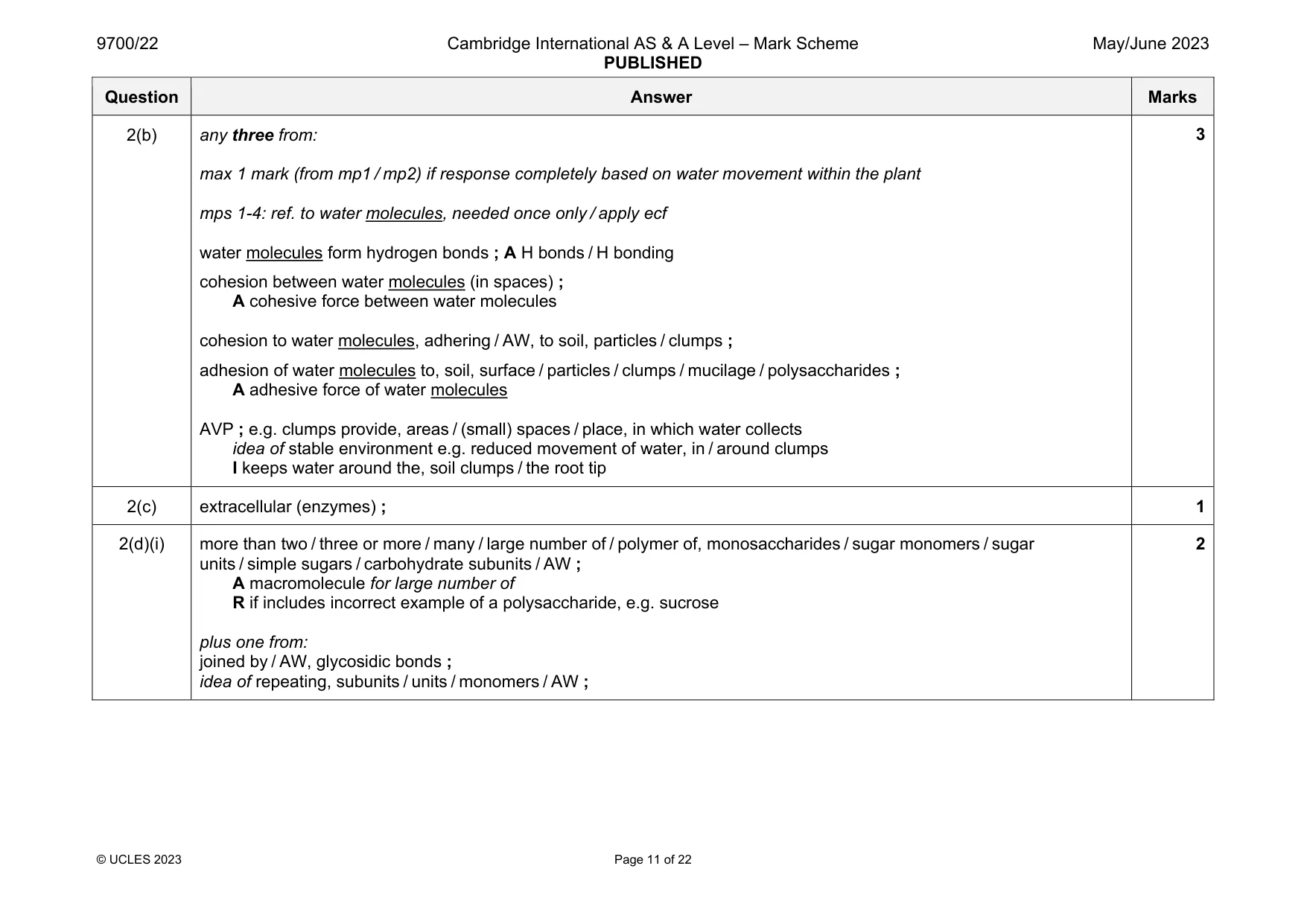
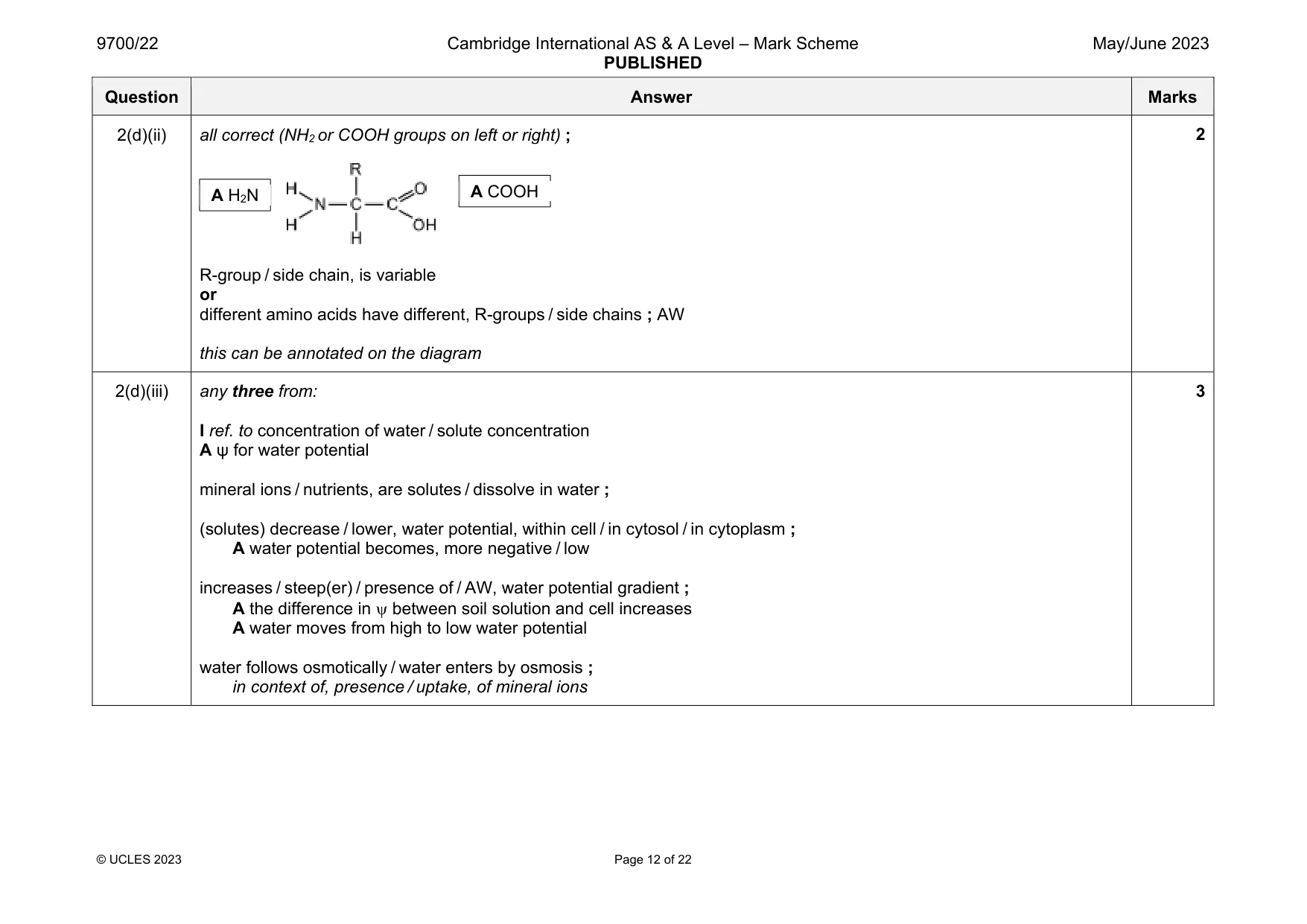
Mark scheme: 2(a) one mark each row to max 3 or = requires either root apical meristem or root cap cells statement root apical meristem cells root cap cells (some) cells in, mitosis / different stages of cell cycle ; or no cells in mitosis / all cells in interphase ; A no chromosomes visible / only chromatin visible (some) cells in, prophase / metaphase / telophase ; A chromosomes visible (in some cells) N/A (generally) smaller (size) ; A less cytoplasm or (generally) larger (size) ; A more cytoplasm larger nucleus in proportion to, size of cell / quantity of cytoplasm ; or smaller nucleus in proportion to, size of cell / quantity of cytoplasm ; nucleoli / nucleolus, (more) visible / prominent / AW ; or nucleoli / nucleolus, not visible / not prominent / AW ; (generally all) cuboidal / same shape ; A rectangular / regular (shape) or variety of shapes / shape described ; A irregular / circular ref. arrangement of cells ; e.g. rows / chains / tightly packed / compact / uniform / regular or ref. arrangement of cells ; e.g. irregular / loosely packed / more intercellular spaces AVP ; e.g. all / more, cells have nuclei cells not, sloughing off / detaching or AVP ; e.g. some have no nucleus some cells, sloughing off / detaching 3 Question Answer Marks 2(b) any three from: max 1 mark (from mp1 / mp2) if response completely based on water movement within the plant mps 1-4: ref. to water molecules, needed once only / apply ecf water molecules form hydrogen bonds ; A H bonds / H bonding cohesion between water molecules (in spaces) ; A cohesive force between water molecules cohesion to water molecules, adhering / AW, to soil, particles / clumps ; adhesion of water molecules to, soil, surface / particles / clumps / mucilage / polysaccharides ; A adhesive force of water molecules AVP ; e.g. clumps provide, areas / (small) spaces / place, in which water collects idea of stable environment e.g. reduced movement of water, in / around clumps I keeps water around the, soil clumps / the root tip 3 2(c) extracellular (enzymes) ; 1 2(d)(i) more than two / three or more / many / large number of / polymer of, monosaccharides / sugar monomers / sugar units / simple sugars / carbohydrate subunits / AW ; A macromolecule for large number of R if includes incorrect example of a polysaccharide, e.g. sucrose plus one from: joined by / AW, glycosidic bonds ; idea of repeating, subunits / units / monomers / AW ; 2 Question Answer Marks 2(d)(ii) all correct (NH2 or COOH groups on left or right) ; R-group / side chain, is variable or different amino acids have different, R-groups / side chains ; AW this can be annotated on the diagram 2 2(d)(iii) any three from: I ref. to concentration of water / solute concentration A ψ for water potential mineral ions / nutrients, are solutes / dissolve in water ; (solutes) decrease / lower, water potential, within cell / in cytosol / in cytoplasm ; A water potential becomes, more negative / low increases / steep(er) / presence of / AW, water potential gradient ; A the difference in between soil solution and cell increases A water moves from high to low water potential water follows osmotically / water enters by osmosis ; in context of, presence / uptake, of mineral ions 3 A H2N A COOH
Q3 · Cells of the immune system respond to the presence of non-self antigens
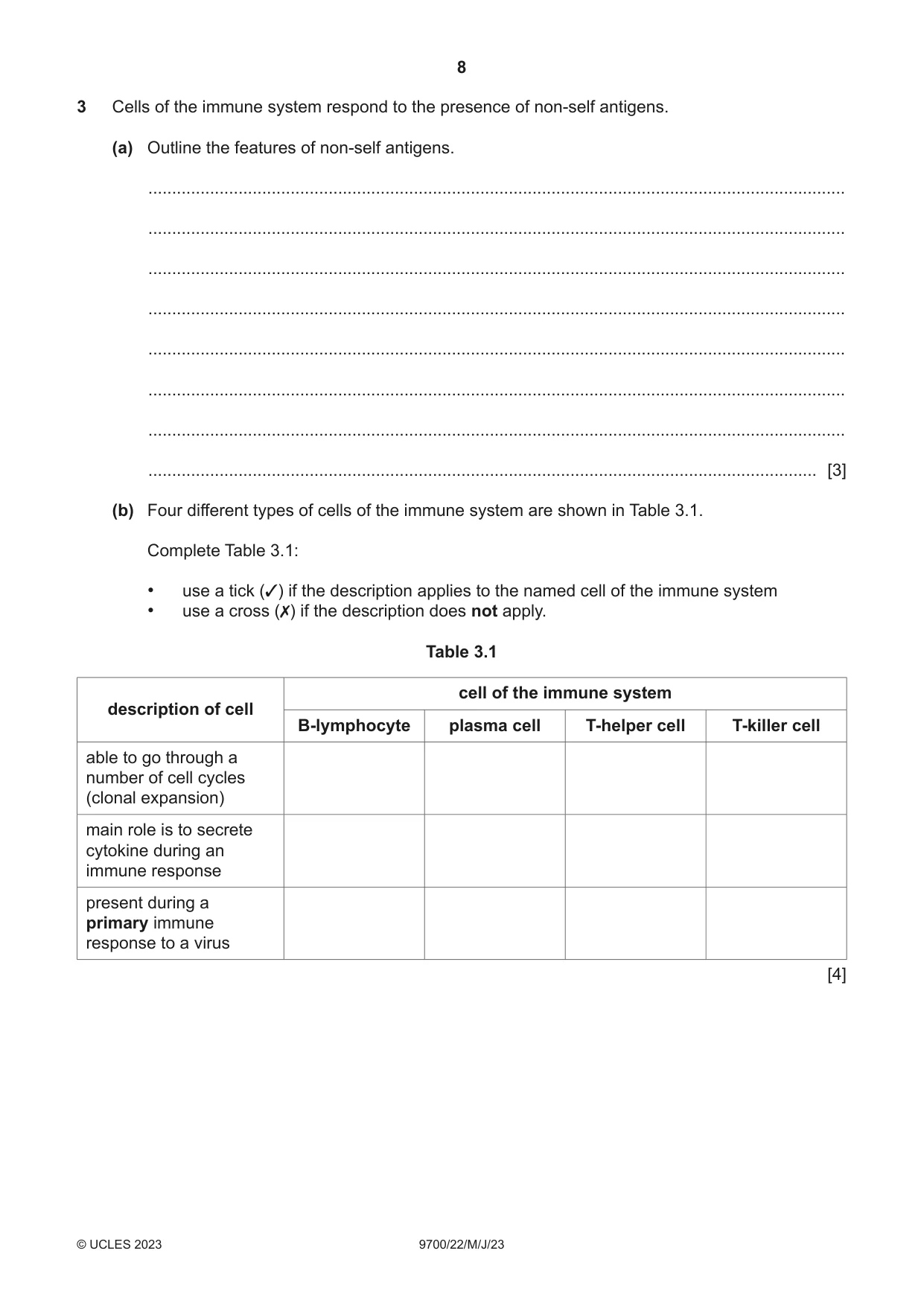
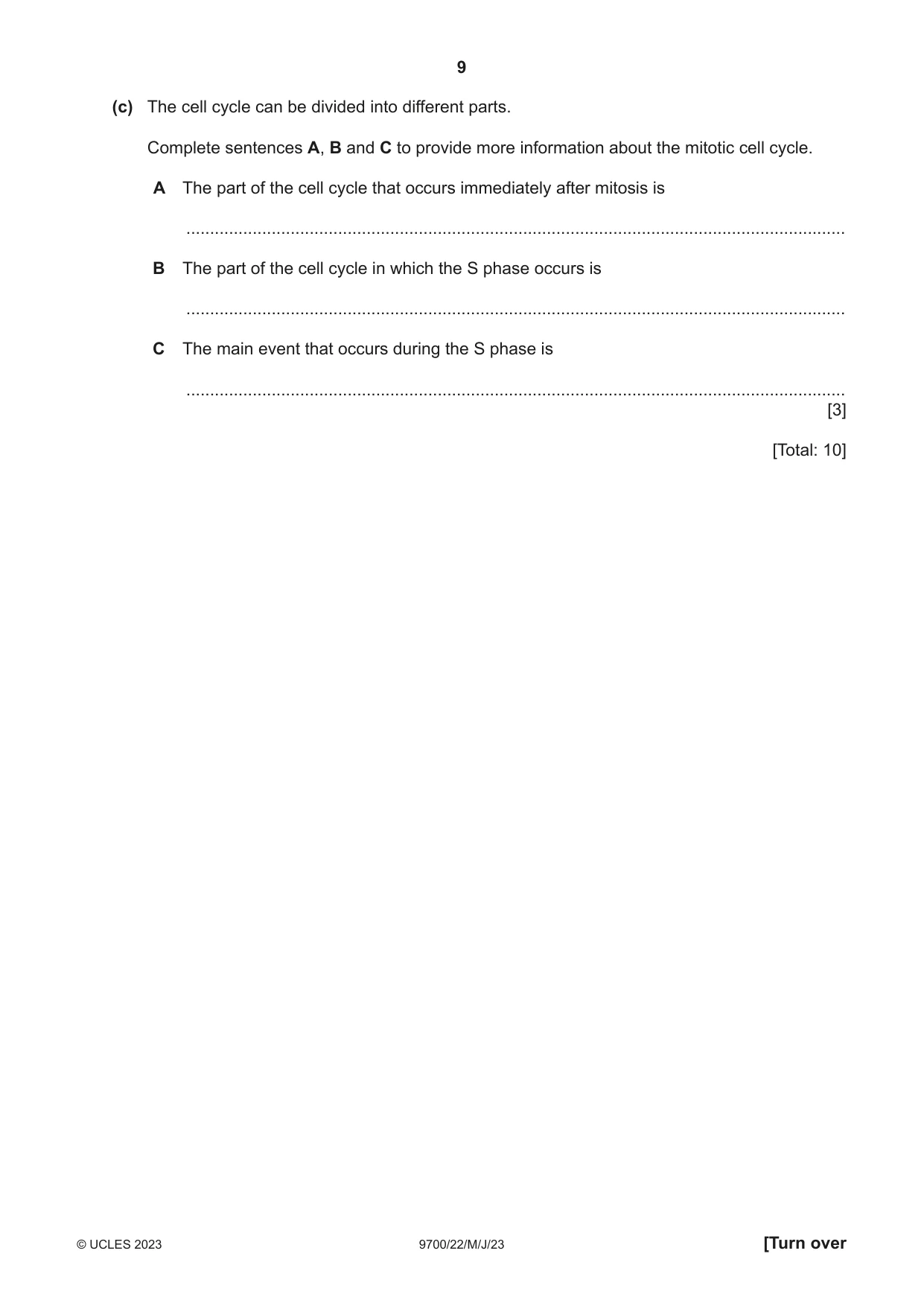
3 Cells of the immune system respond to the presence of non-self antigens. (a) Outline the features of non-self antigens. ................................................................................................................................................... ................................................................................................................................................... ................................................................................................................................................... ................................................................................................................................................... ................................................................................................................................................... ................................................................................................................................................... ................................................................................................................................................... ............................................................................................................................................. [3] (b) Four different types of cells of the immune system are shown in Table 3.1. Complete Table 3.1: • use a tick (✓) if the description applies to the named cell of the immune system • use a cross (✗) if the description does not apply. Table 3.1 cell of the immune system description of cell B-lymphocyte plasma cell T-helper cell T-killer cell able to go through a number of cell cycles (clonal expansion) main role is to secrete cytokine during an immune response present during a primary immune response to a virus [4] (c) The cell cycle can be divided into different parts. Complete sentences A, B and C to provide more information about the mitotic cell cycle. A The part of the cell cycle that occurs immediately after mitosis is ........................................................................................................................................... B The part of the cell cycle in which the S phase occurs is ........................................................................................................................................... C The main event that occurs during the S phase is ........................................................................................................................................... [3] [Total: 10]
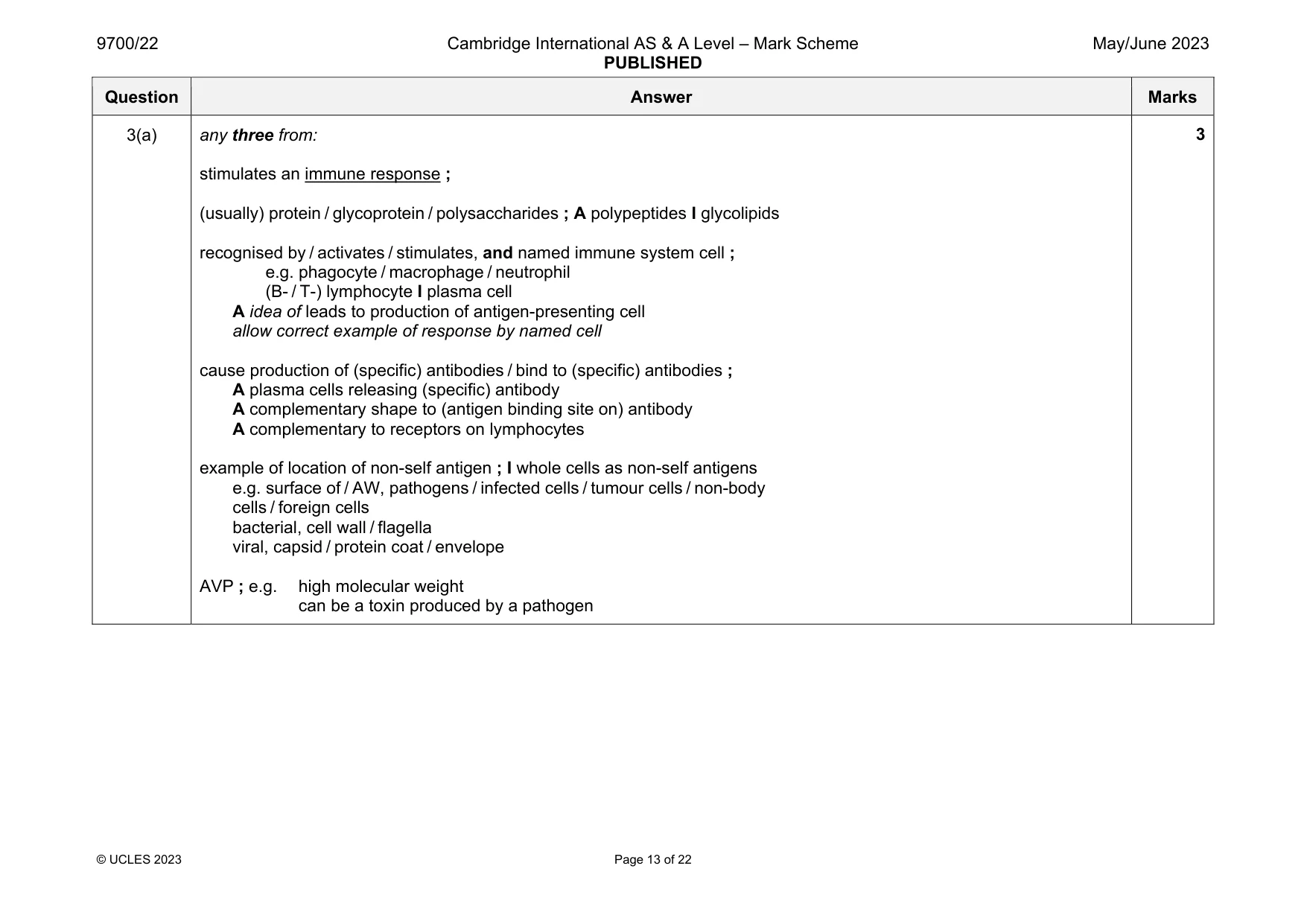
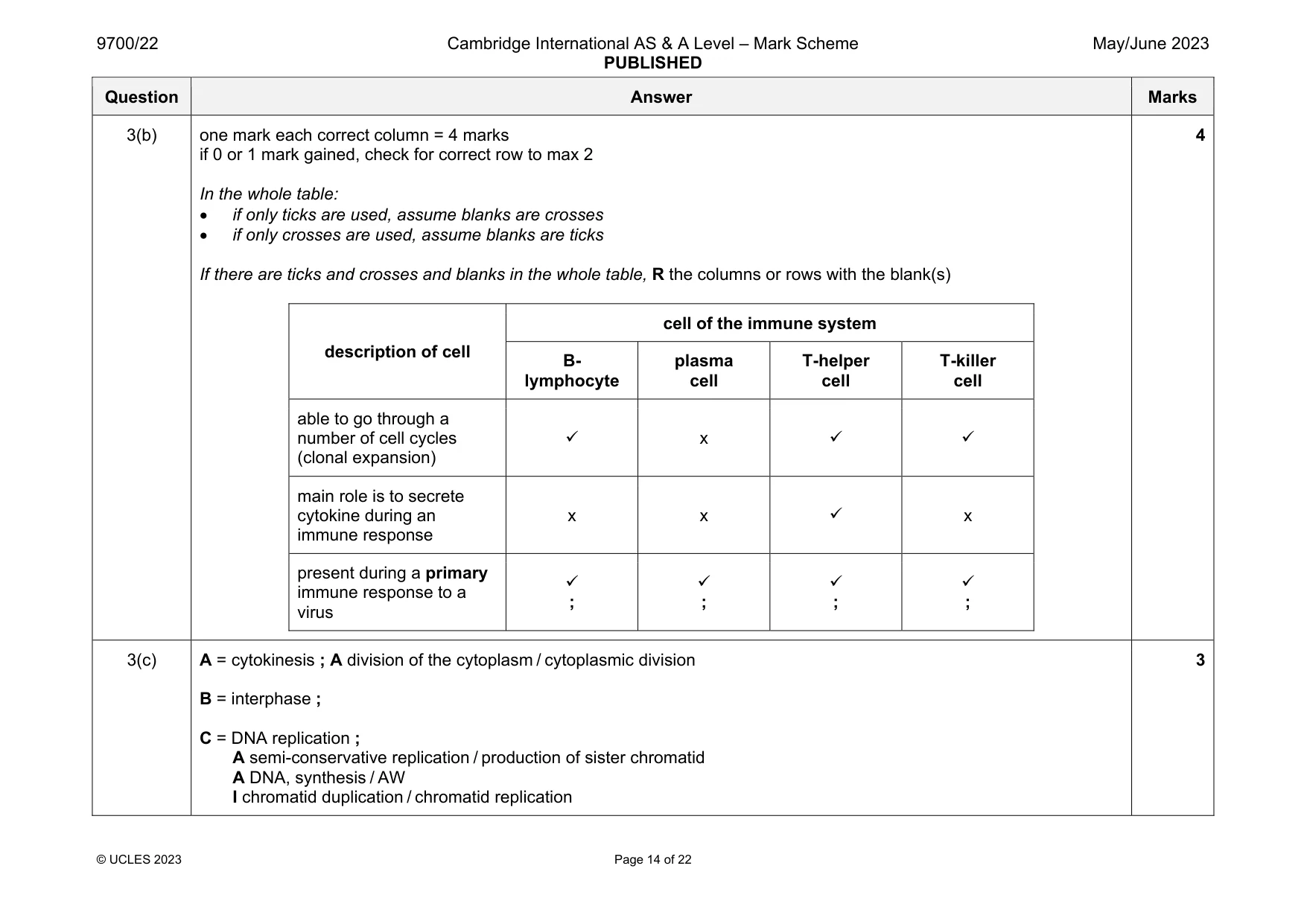
Mark scheme: 3(a) any three from: stimulates an immune response ; (usually) protein / glycoprotein / polysaccharides ; A polypeptides I glycolipids recognised by / activates / stimulates, and named immune system cell ; e.g. phagocyte / macrophage / neutrophil (B- / T-) lymphocyte I plasma cell A idea of leads to production of antigen-presenting cell allow correct example of response by named cell cause production of (specific) antibodies / bind to (specific) antibodies ; A plasma cells releasing (specific) antibody A complementary shape to (antigen binding site on) antibody A complementary to receptors on lymphocytes example of location of non-self antigen ; I whole cells as non-self antigens e.g. surface of / AW, pathogens / infected cells / tumour cells / non-body cells / foreign cells bacterial, cell wall / flagella viral, capsid / protein coat / envelope AVP ; e.g. high molecular weight can be a toxin produced by a pathogen Question Answer Marks 3(b) one mark each correct column = 4 marks if 0 or 1 mark gained, check for correct row to max 2 In the whole table: if only ticks are used, assume blanks are crosses if only crosses are used, assume blanks are ticks If there are ticks and crosses and blanks in the whole table, R the columns or rows with the blank(s) description of cell cell of the immune system B- lymphocyte plasma cell T-helper cell T-killer cell able to go through a number of cell cycles (clonal expansion) x main role is to secrete cytokine during an immune response x x x present during a primary immune response to a virus ; ; ; ; 4 3(c) A = cytokinesis ; A division of the cytoplasm / cytoplasmic division B = interphase ; C = DNA replication ; A semi-conservative replication / production of sister chromatid A DNA, synthesis / AW I chromatid duplication / chromatid replication 3
Q4 · Trypanosoma brucei is a unicellular organism that causes the infectious disease known as…
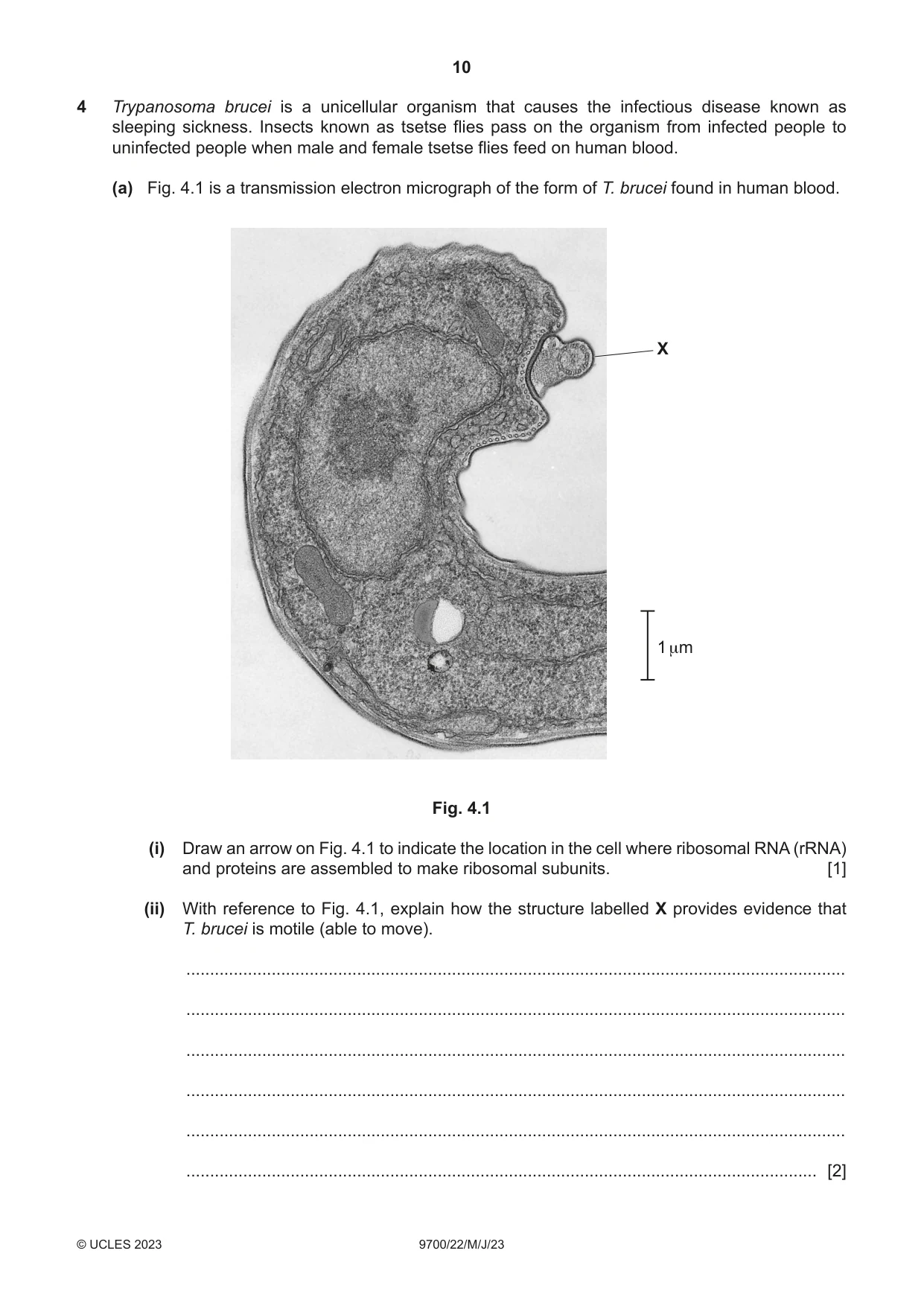
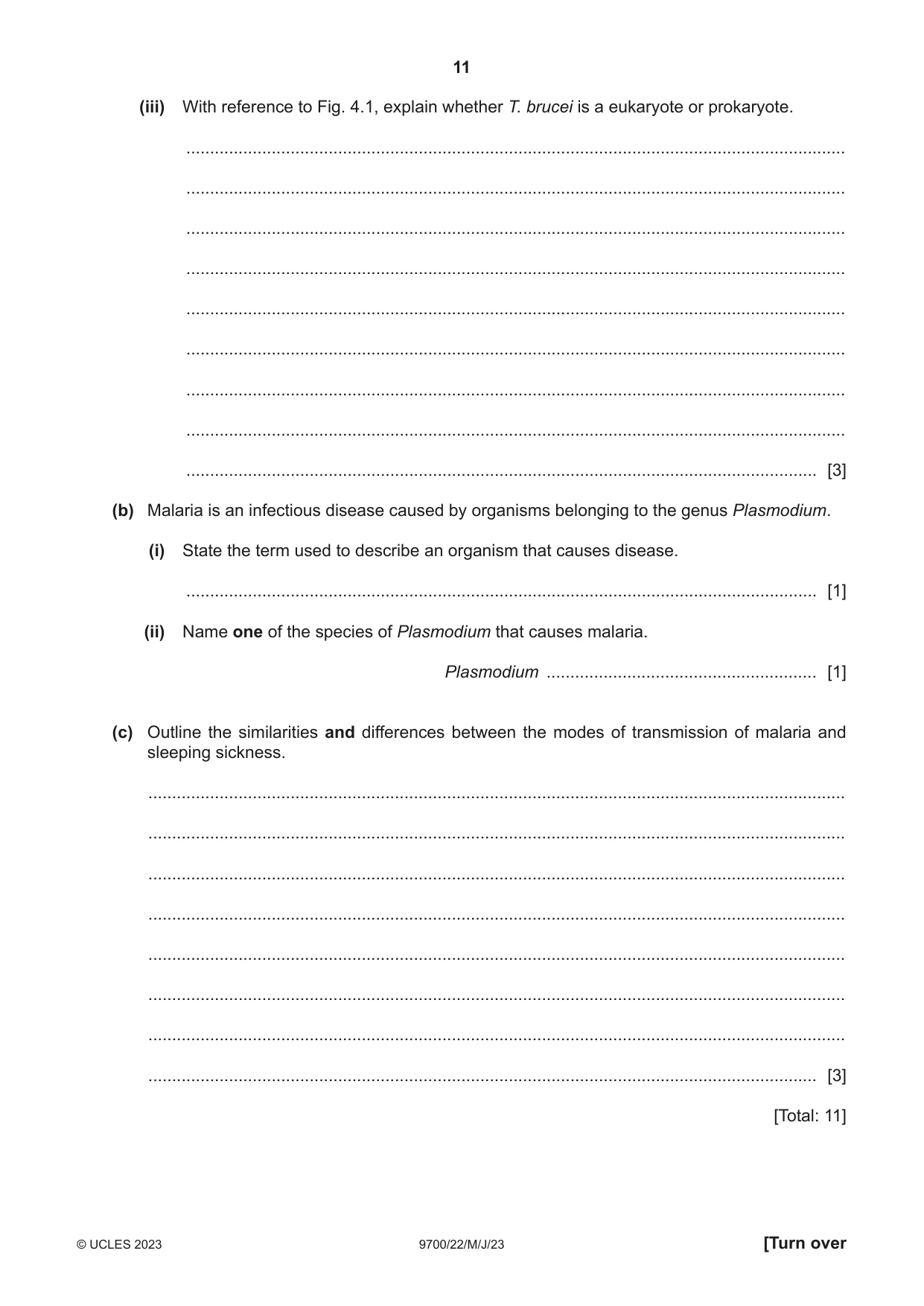
4 Trypanosoma brucei is a unicellular organism that causes the infectious disease known as sleeping sickness. Insects known as tsetse flies pass on the organism from infected people to uninfected people when male and female tsetse flies feed on human blood. (a) Fig. 4.1 is a transmission electron micrograph of the form of T. brucei found in human blood. X 1 μm Fig. 4.1 (i) Draw an arrow on Fig. 4.1 to indicate the location in the cell where ribosomal RNA (rRNA) and proteins are assembled to make ribosomal subunits. [1] (ii) With reference to Fig. 4.1, explain how the structure labelled X provides evidence that T. brucei is motile (able to move). ........................................................................................................................................... ........................................................................................................................................... ........................................................................................................................................... ........................................................................................................................................... ........................................................................................................................................... ..................................................................................................................................... [2] (iii) With reference to Fig. 4.1, explain whether T. brucei is a eukaryote or prokaryote. ........................................................................................................................................... ........................................................................................................................................... ........................................................................................................................................... ........................................................................................................................................... ........................................................................................................................................... ........................................................................................................................................... ........................................................................................................................................... ........................................................................................................................................... ..................................................................................................................................... [3] (b) Malaria is an infectious disease caused by organisms belonging to the genus Plasmodium. (i) State the term used to describe an organism that causes disease. ..................................................................................................................................... [1] (ii) Name one of the species of Plasmodium that causes malaria. Plasmodium ......................................................... [1] (c) Outline the similarities and differences between the modes of transmission of malaria and sleeping sickness. ................................................................................................................................................... ................................................................................................................................................... ................................................................................................................................................... ................................................................................................................................................... ................................................................................................................................................... ................................................................................................................................................... ................................................................................................................................................... ............................................................................................................................................. [3] [Total: 11]
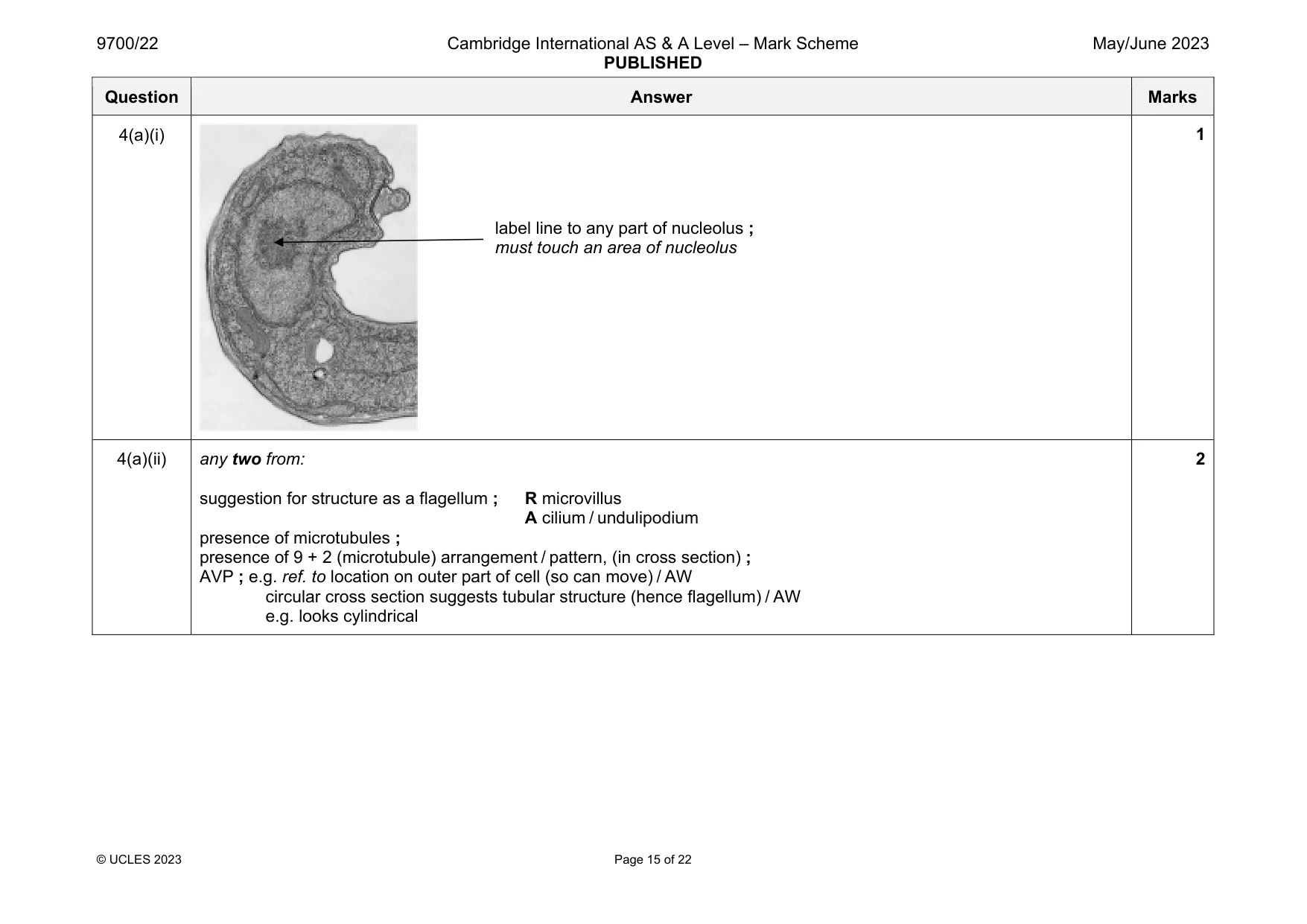
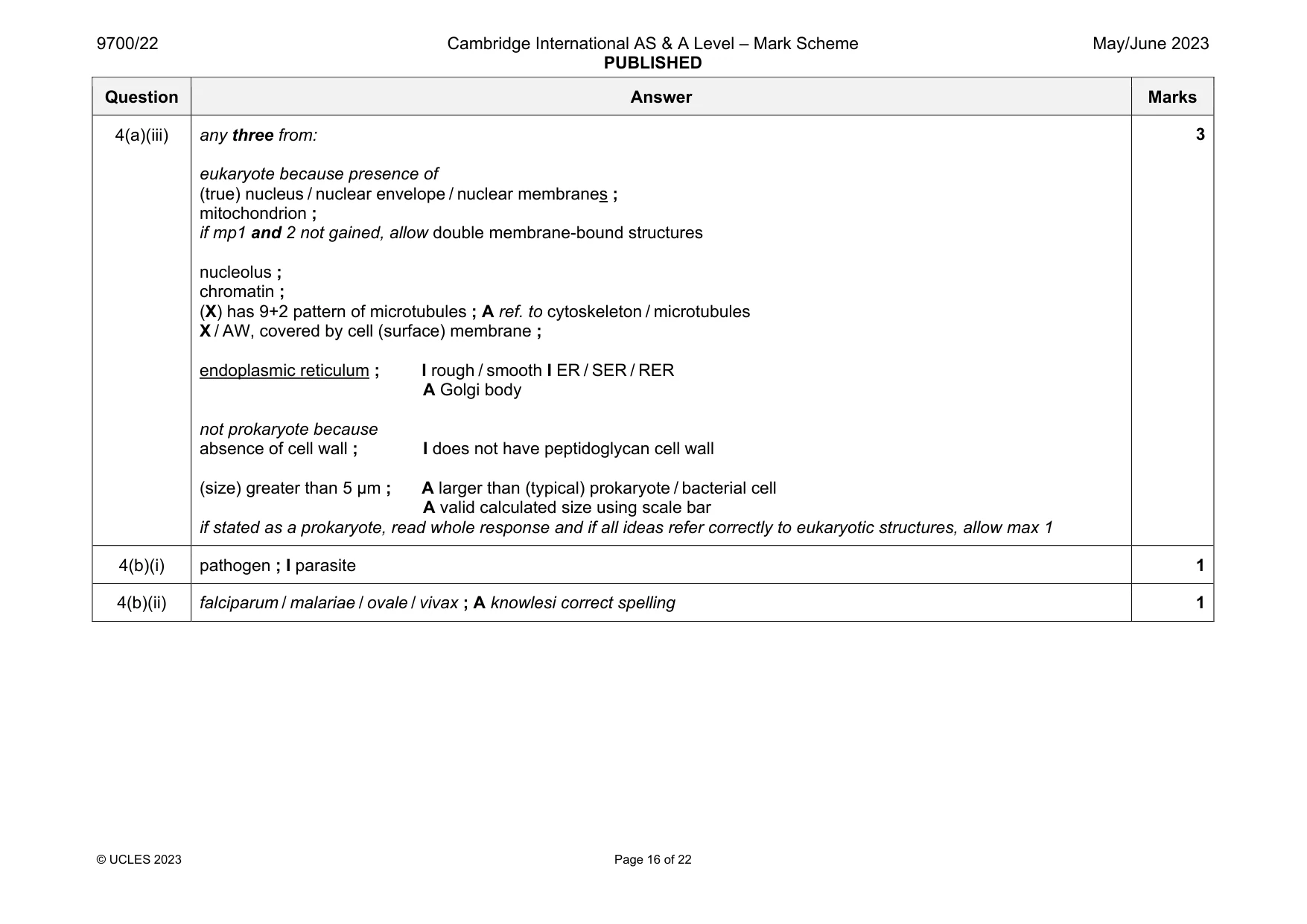
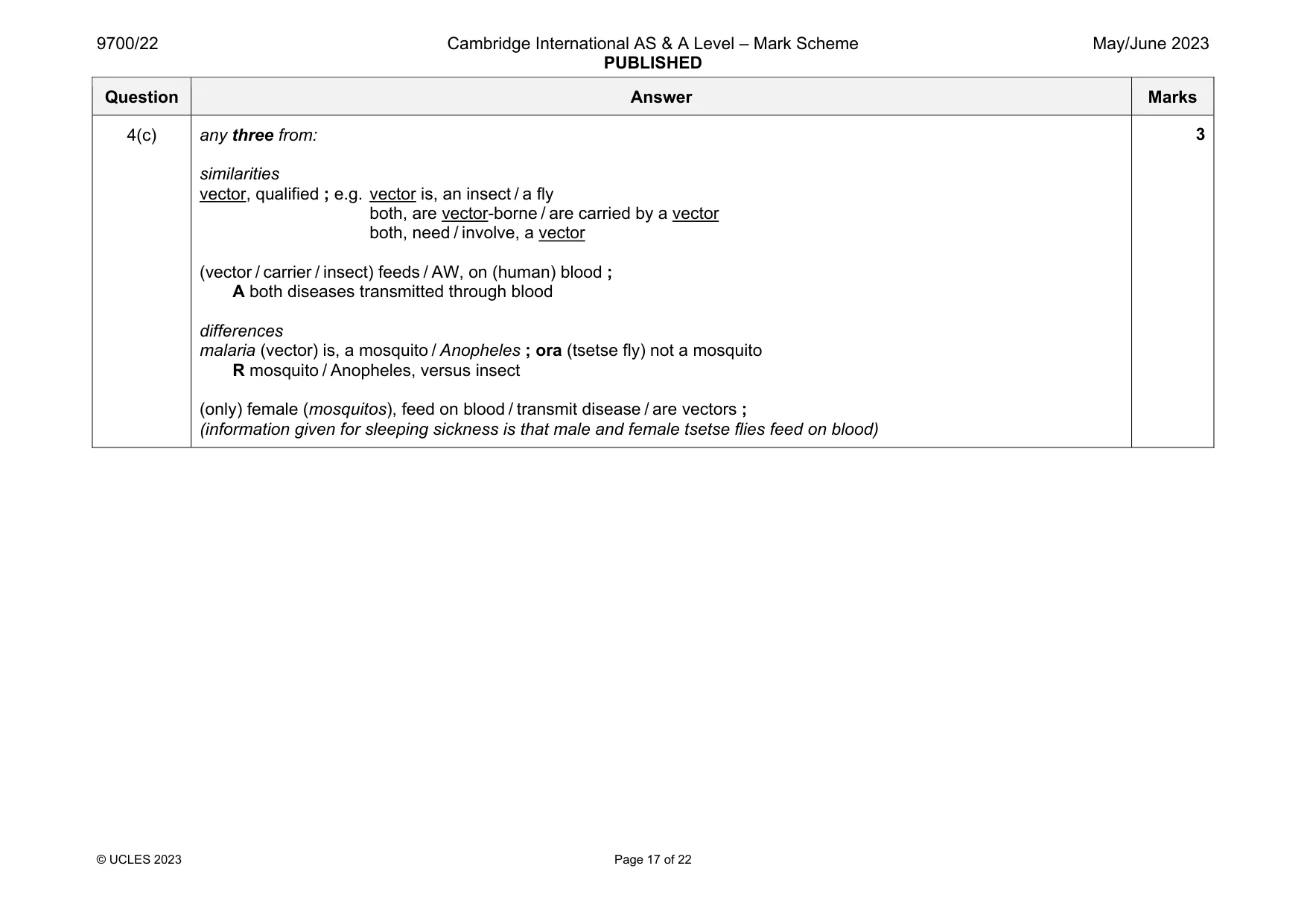
Mark scheme: 4(a)(i) 4(a)(ii) any two from: suggestion for structure as a flagellum ; R microvillus A cilium / undulipodium presence of microtubules ; presence of 9 + 2 (microtubule) arrangement / pattern, (in cross section) ; AVP ; e.g. ref. to location on outer part of cell (so can move) / AW circular cross section suggests tubular structure (hence flagellum) / AW e.g. looks cylindrical 2 label line to any part of nucleolus ; must touch an area of nucleolus Question Answer Marks 4(a)(iii) any three from: eukaryote because presence of (true) nucleus / nuclear envelope / nuclear membranes ; mitochondrion ; if mp1 and 2 not gained, allow double membrane-bound structures nucleolus ; chromatin ; (X) has 9+2 pattern of microtubules ; A ref. to cytoskeleton / microtubules X / AW, covered by cell (surface) membrane ; endoplasmic reticulum ; I rough / smooth I ER / SER / RER A Golgi body not prokaryote because absence of cell wall ; I does not have peptidoglycan cell wall (size) greater than 5 µm ; A larger than (typical) prokaryote / bacterial cell A valid calculated size using scale bar if stated as a prokaryote, read whole response and if all ideas refer correctly to eukaryotic structures, allow max 1 3 4(b)(i) pathogen ; I parasite 1 4(b)(ii) falciparum / malariae / ovale / vivax ; A knowlesi correct spelling 1 Question Answer Marks 4(c) any three from: similarities vector, qualified ; e.g. vector is, an insect / a fly both, are vector-borne / are carried by a vector both, need / involve, a vector (vector / carrier / insect) feeds / AW, on (human) blood ; A both diseases transmitted through blood differences malaria (vector) is, a mosquito / Anopheles ; ora (tsetse fly) not a mosquito R mosquito / Anopheles, versus insect (only) female (mosquitos), feed on blood / transmit disease / are vectors ; (information given for sleeping sickness is that male and female tsetse flies feed on blood) 3
More questions on Cells as the basic units of living organisms
Q5 · Nucleotide and nucleoside analogues are therapeutic drugs that have a similar structure…
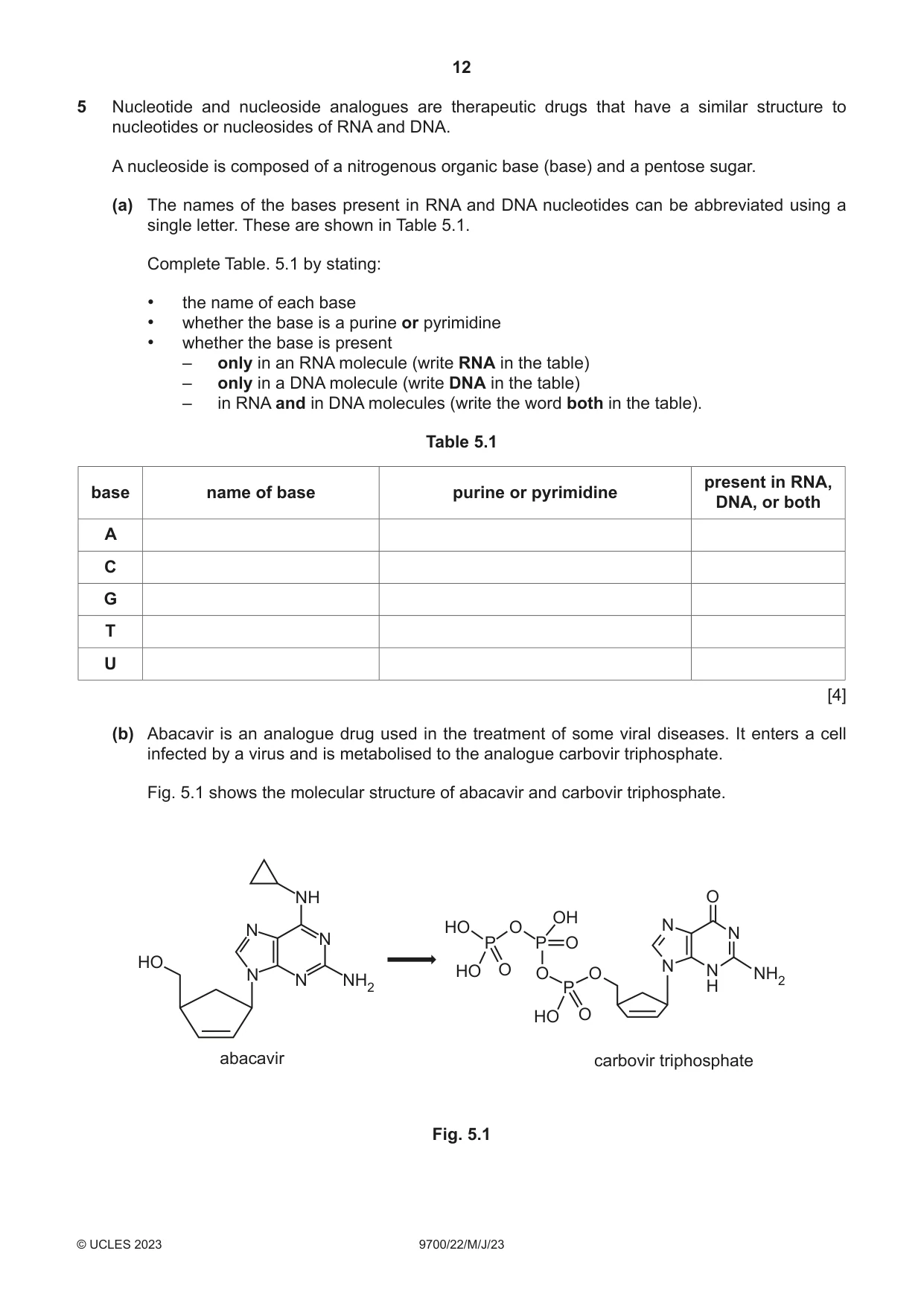
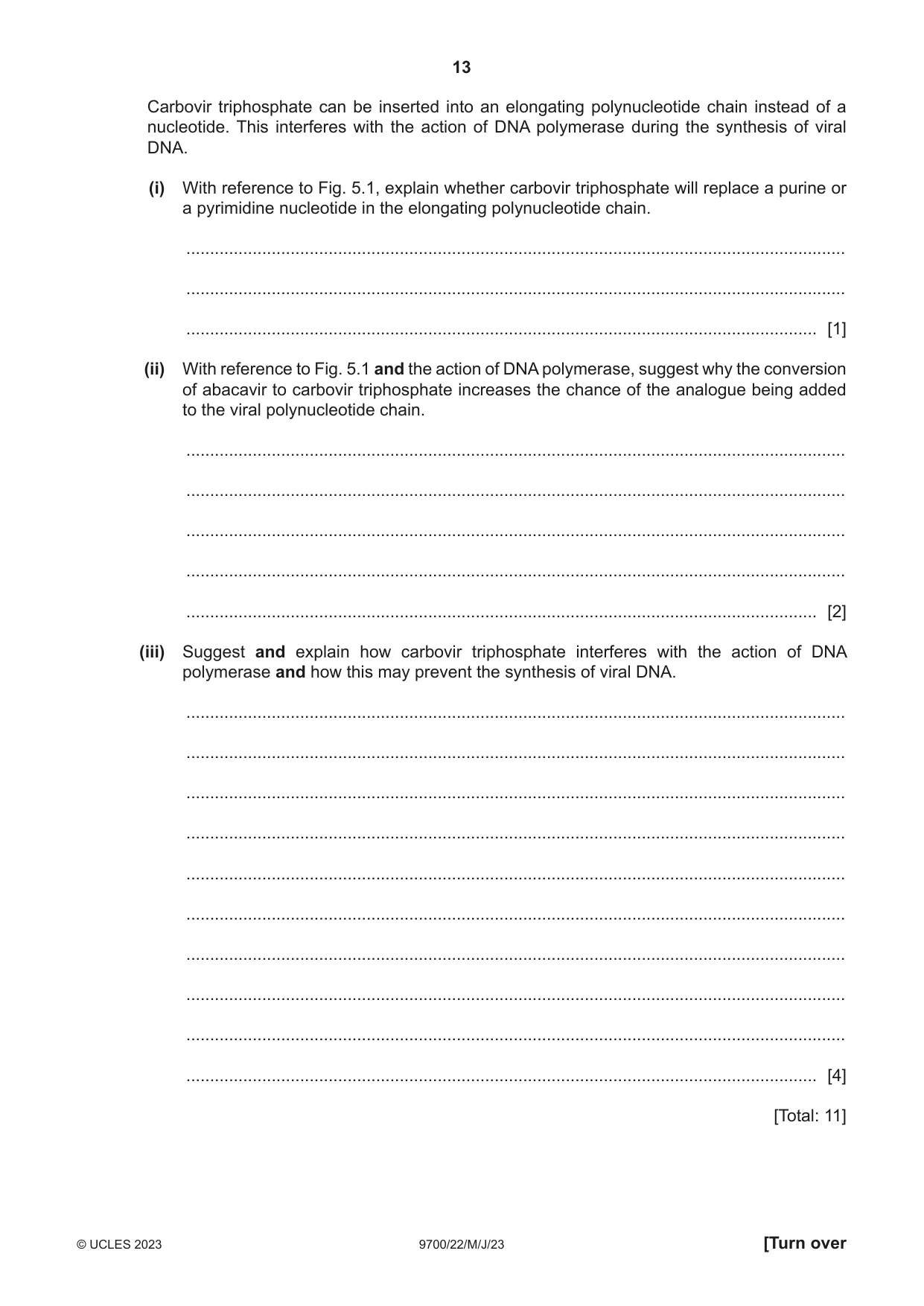
5 Nucleotide and nucleoside analogues are therapeutic drugs that have a similar structure to nucleotides or nucleosides of RNA and DNA. A nucleoside is composed of a nitrogenous organic base (base) and a pentose sugar. (a) The names of the bases present in RNA and DNA nucleotides can be abbreviated using a single letter. These are shown in Table 5.1. Complete Table. 5.1 by stating: • the name of each base • whether the base is a purine or pyrimidine • whether the base is present – only in an RNA molecule (write RNA in the table) – only in a DNA molecule (write DNA in the table) – in RNA and in DNA molecules (write the word both in the table). Table 5.1 present in RNA, base name of base purine or pyrimidine DNA, or both A C G T U [4] (b) Abacavir is an analogue drug used in the treatment of some viral diseases. It enters a cell infected by a virus and is metabolised to the analogue carbovir triphosphate. Fig. 5.1 shows the molecular structure of abacavir and carbovir triphosphate. NH O OH N HO O N N N P P O HO N N HO O O O N NH2 N NH2 H P HO O abacavir carbovir triphosphate Fig. 5.1 Carbovir triphosphate can be inserted into an elongating polynucleotide chain instead of a nucleotide. This interferes with the action of DNA polymerase during the synthesis of viral DNA. (i) With reference to Fig. 5.1, explain whether carbovir triphosphate will replace a purine or a pyrimidine nucleotide in the elongating polynucleotide chain. ........................................................................................................................................... ........................................................................................................................................... ..................................................................................................................................... [1] (ii) With reference to Fig. 5.1 and the action of DNA polymerase, suggest why the conversion of abacavir to carbovir triphosphate increases the chance of the analogue being added to the viral polynucleotide chain. ........................................................................................................................................... ........................................................................................................................................... ........................................................................................................................................... ........................................................................................................................................... ..................................................................................................................................... [2] (iii) Suggest and explain how carbovir triphosphate interferes with the action of DNA polymerase and how this may prevent the synthesis of viral DNA. ........................................................................................................................................... ........................................................................................................................................... ........................................................................................................................................... ........................................................................................................................................... ........................................................................................................................................... ........................................................................................................................................... ........................................................................................................................................... ........................................................................................................................................... ........................................................................................................................................... ..................................................................................................................................... [4] [Total: 11]
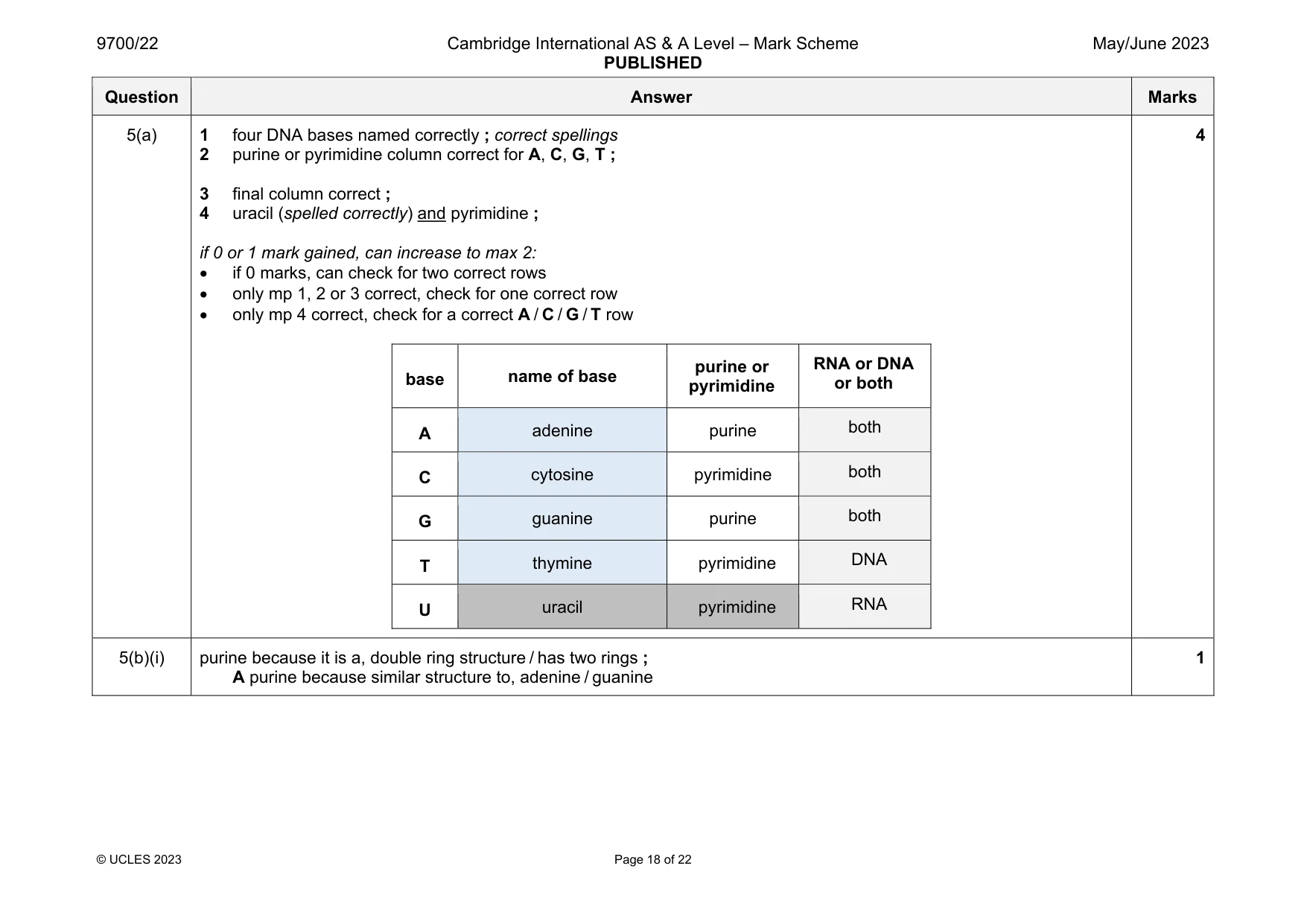
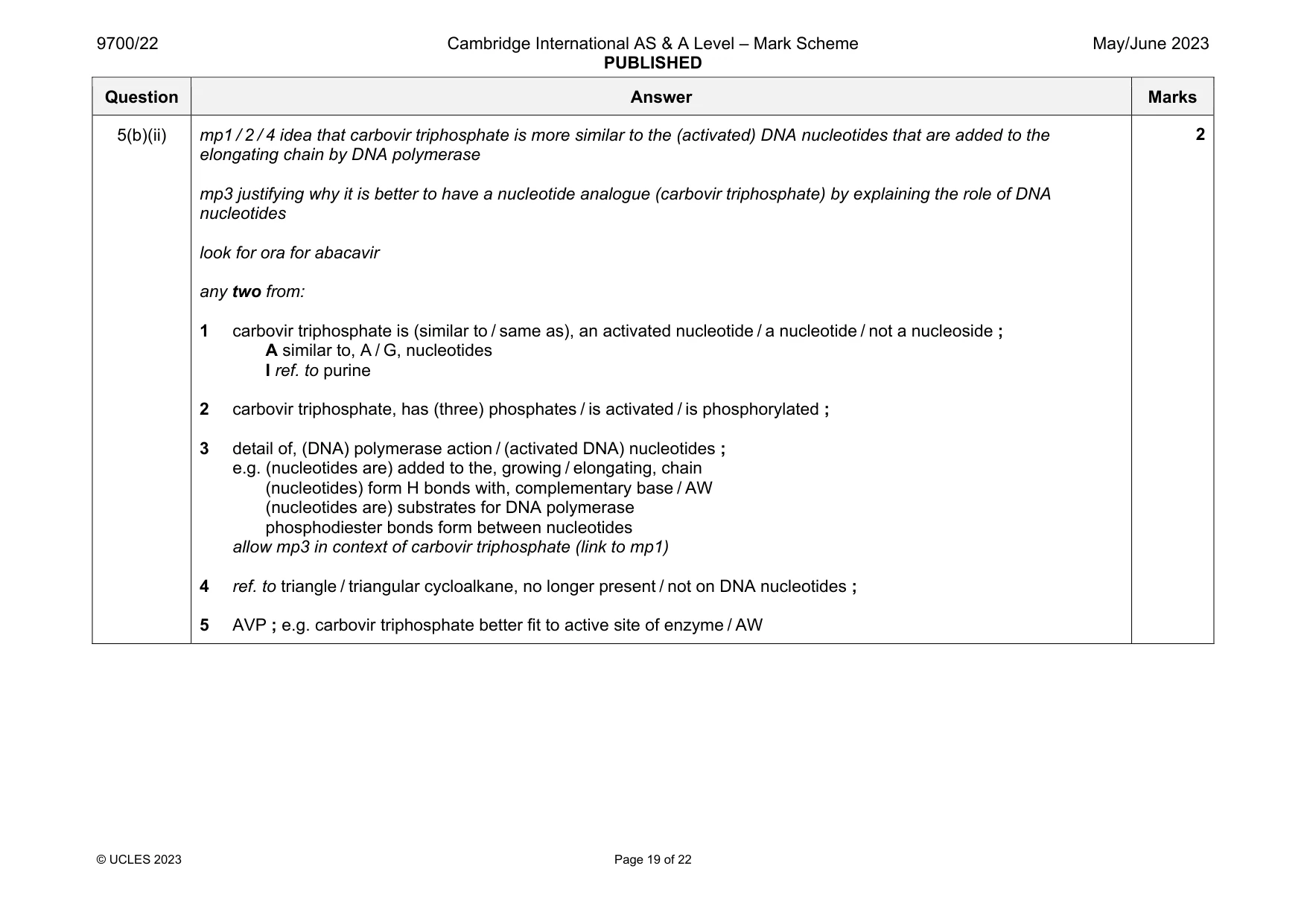
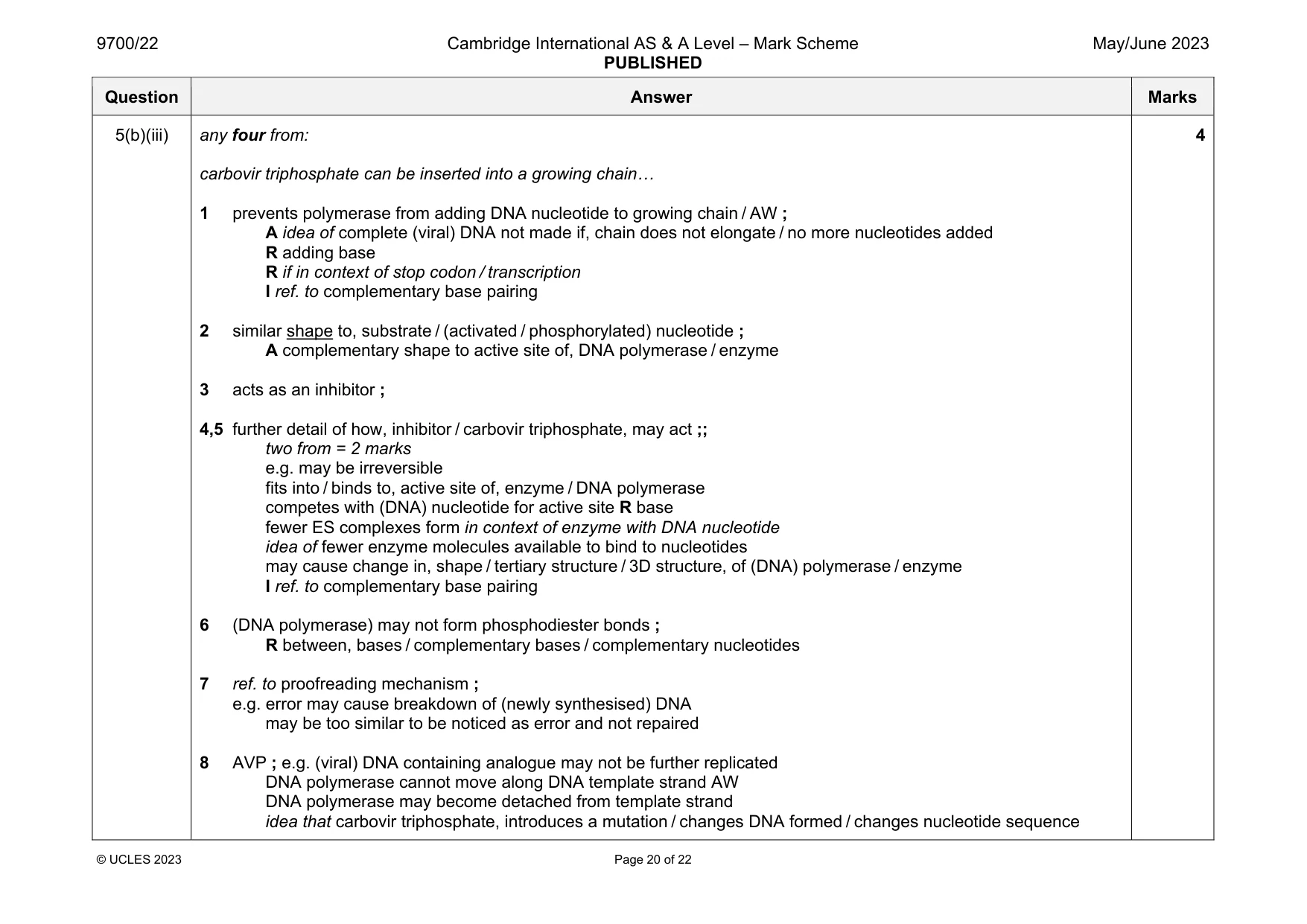
Mark scheme: 5(a) 1 four DNA bases named correctly ; correct spellings 2 purine or pyrimidine column correct for A, C, G, T ; 3 final column correct ; 4 uracil (spelled correctly) and pyrimidine ; if 0 or 1 mark gained, can increase to max 2: if 0 marks, can check for two correct rows only mp 1, 2 or 3 correct, check for one correct row only mp 4 correct, check for a correct A / C / G / T row base name of base purine or pyrimidine RNA or DNA or both A adenine purine both C cytosine pyrimidine both G guanine purine both T thymine pyrimidine DNA U uracil pyrimidine RNA 4 5(b)(i) purine because it is a, double ring structure / has two rings ; A purine because similar structure to, adenine / guanine 1 Question Answer Marks 5(b)(ii) mp1 / 2 / 4 idea that carbovir triphosphate is more similar to the (activated) DNA nucleotides that are added to the elongating chain by DNA polymerase mp3 justifying why it is better to have a nucleotide analogue (carbovir triphosphate) by explaining the role of DNA nucleotides look for ora for abacavir any two from: 1 carbovir triphosphate is (similar to / same as), an activated nucleotide / a nucleotide / not a nucleoside ; A similar to, A / G, nucleotides I ref. to purine 2 carbovir triphosphate, has (three) phosphates / is activated / is phosphorylated ; 3 detail of, (DNA) polymerase action / (activated DNA) nucleotides ; e.g. (nucleotides are) added to the, growing / elongating, chain (nucleotides) form H bonds with, complementary base / AW (nucleotides are) substrates for DNA polymerase phosphodiester bonds form between nucleotides allow mp3 in context of carbovir triphosphate (link to mp1) 4 ref. to triangle / triangular cycloalkane, no longer present / not on DNA nucleotides ; 5 AVP ; e.g. carbovir triphosphate better fit to active site of enzyme / AW 2 Question Answer Marks 5(b)(iii) any four from: carbovir triphosphate can be inserted into a growing chain… 1 prevents polymerase from adding DNA nucleotide to growing chain / AW ; A idea of complete (viral) DNA not made if, chain does not elongate / no more nucleotides added R adding base R if in context of stop codon / transcription I ref. to complementary base pairing 2 similar shape to, substrate / (activated / phosphorylated) nucleotide ; A complementary shape to active site of, DNA polymerase / enzyme 3 acts as an inhibitor ; 4,5 further detail of how, inhibitor / carbovir triphosphate, may act ;; two from = 2 marks e.g. may be irreversible fits into / binds to, active site of, enzyme / DNA polymerase competes with (DNA) nucleotide for active site R base fewer ES complexes form in context of enzyme with DNA nucleotide idea of fewer enzyme molecules available to bind to nucleotides may cause change in, shape / tertiary structure / 3D structure, of (DNA) polymerase / enzyme I ref. to complementary base pairing 6 (DNA polymerase) may not form phosphodiester bonds ; R between, bases / complementary bases / complementary nucleotides 7 ref. to proofreading mechanism ; e.g. error may cause breakdown of (newly synthesised) DNA may be too similar to be noticed as error and not repaired 8 AVP ; e.g. (viral) DNA containing analogue may not be further replicated DNA polymerase cannot move along DNA template strand AW DNA polymerase may become detached from template strand idea that carbovir triphosphate, introduces a mutation / changes DNA formed / changes nucleotide sequence 4
More questions on Structure of nucleic acids and replication of DNA
Q6 · The Weibel Lung model was developed after an extensive study of the gas exchange system
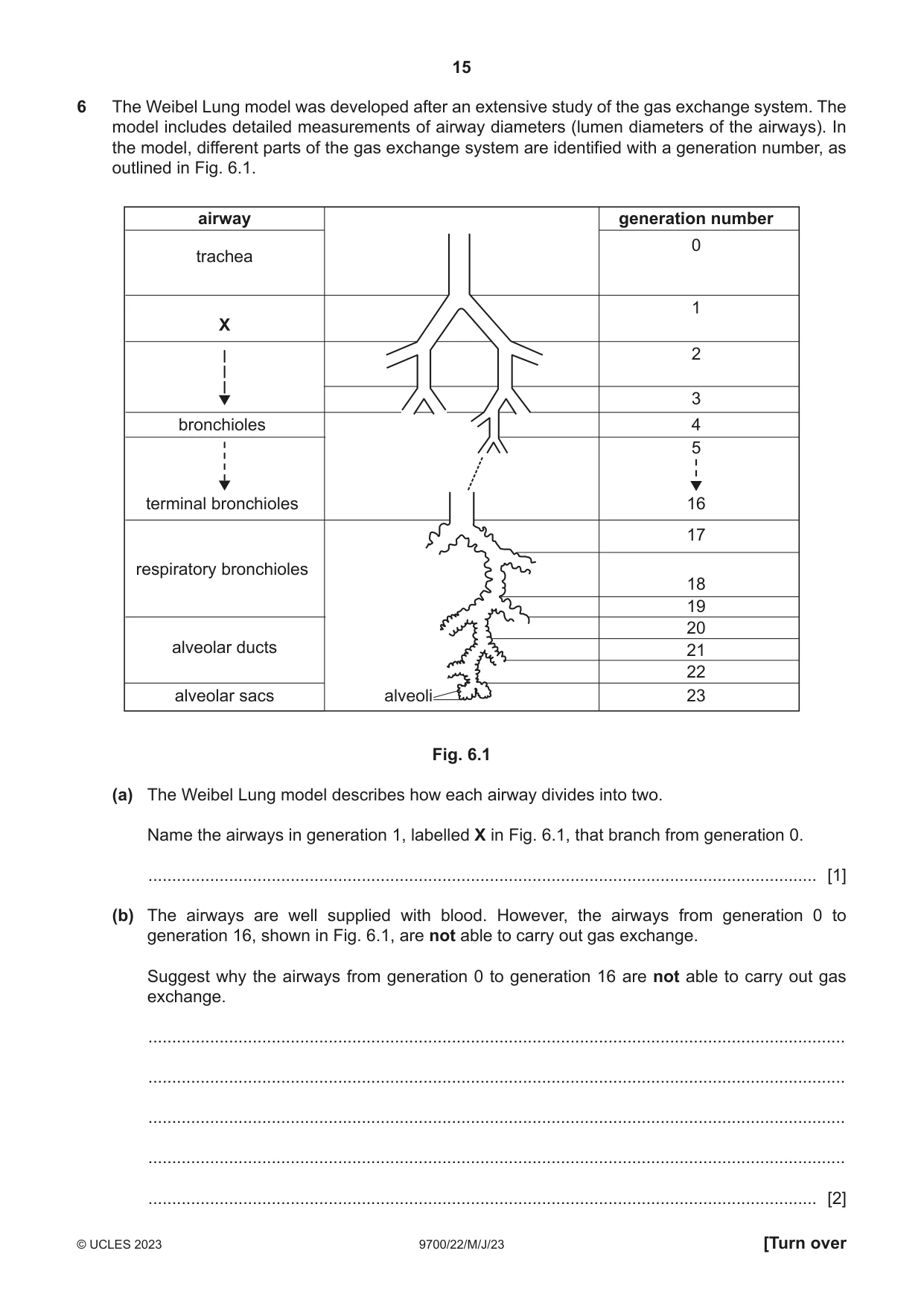
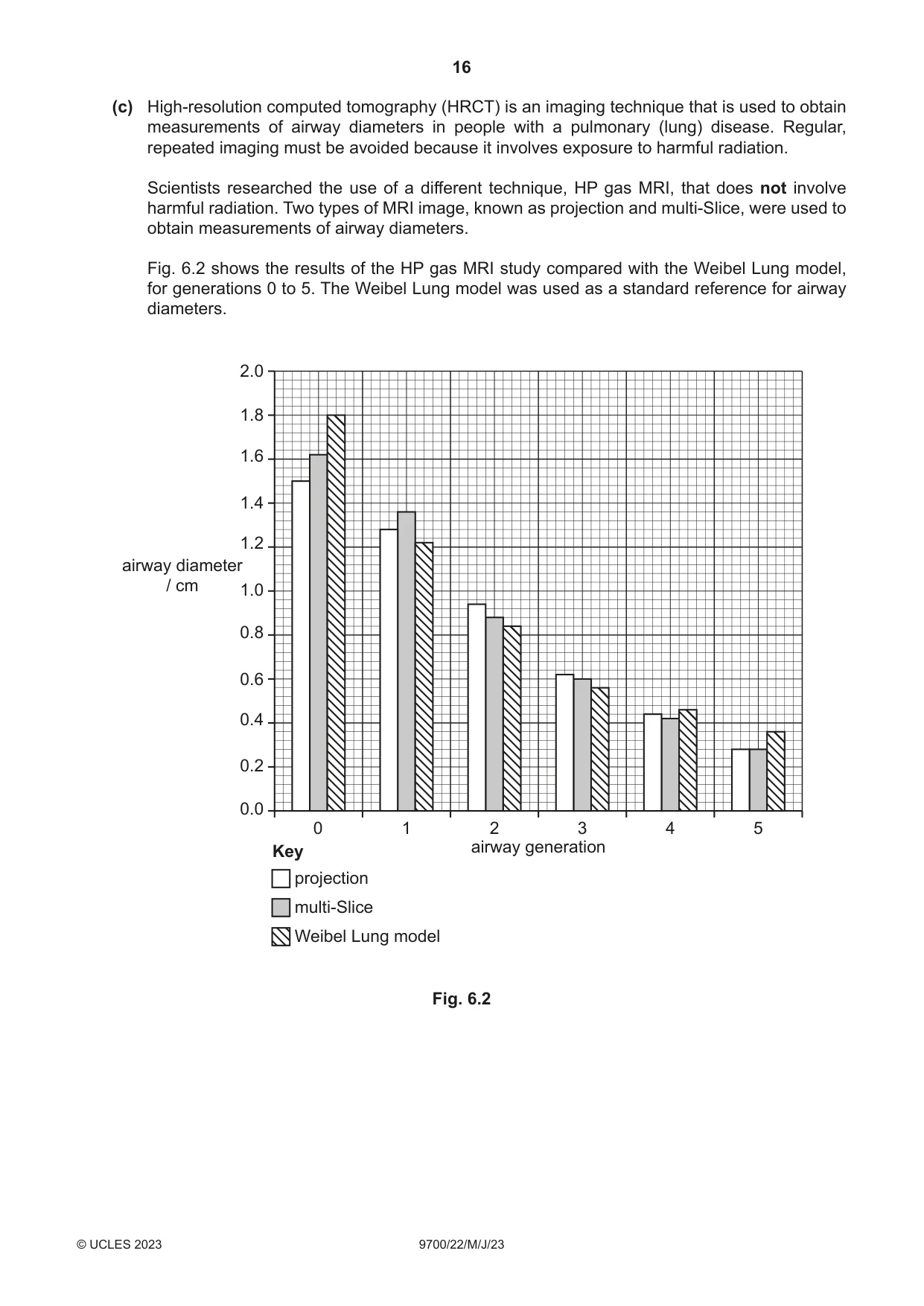
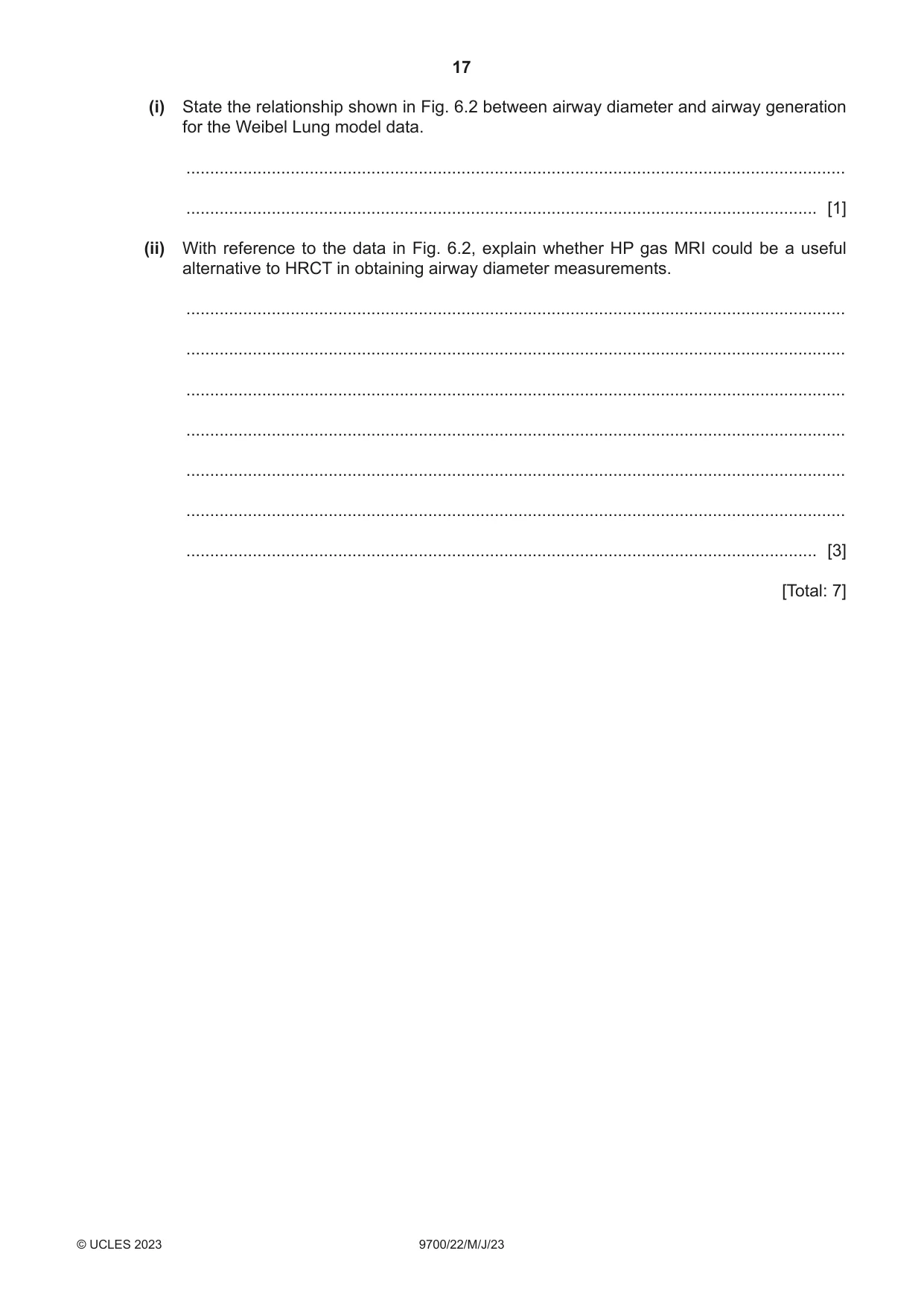
6 The Weibel Lung model was developed after an extensive study of the gas exchange system. The model includes detailed measurements of airway diameters (lumen diameters of the airways). In the model, different parts of the gas exchange system are identified with a generation number, as outlined in Fig. 6.1. airway generation number 0 trachea 1 X 2 3 bronchioles 4 5 terminal bronchioles 16 17 respiratory bronchioles 18 19 20 alveolar ducts 21 22 alveolar sacs alveoli 23 Fig. 6.1 (a) The Weibel Lung model describes how each airway divides into two. Name the airways in generation 1, labelled X in Fig. 6.1, that branch from generation 0. ............................................................................................................................................. [1] (b) The airways are well supplied with blood. However, the airways from generation 0 to generation 16, shown in Fig. 6.1, are not able to carry out gas exchange. Suggest why the airways from generation 0 to generation 16 are not able to carry out gas exchange. ................................................................................................................................................... ................................................................................................................................................... ................................................................................................................................................... ................................................................................................................................................... ............................................................................................................................................. [2] (c) High-resolution computed tomography (HRCT) is an imaging technique that is used to obtain measurements of airway diameters in people with a pulmonary (lung) disease. Regular, repeated imaging must be avoided because it involves exposure to harmful radiation. Scientists researched the use of a different technique, HP gas MRI, that does not involve harmful radiation. Two types of MRI image, known as projection and multi-Slice, were used to obtain measurements of airway diameters. Fig. 6.2 shows the results of the HP gas MRI study compared with the Weibel Lung model, for generations 0 to 5. The Weibel Lung model was used as a standard reference for airway diameters. 2.0 1.8 1.6 1.4 1.2 airway diameter / cm 1.0 0.8 0.6 0.4 0.2 0.0 0 1 2 3 4 5 Key airway generation projection multi-Slice Weibel Lung model Fig. 6.2 (i) State the relationship shown in Fig. 6.2 between airway diameter and airway generation for the Weibel Lung model data. ........................................................................................................................................... ..................................................................................................................................... [1] (ii) With reference to the data in Fig. 6.2, explain whether HP gas MRI could be a useful alternative to HRCT in obtaining airway diameter measurements. ........................................................................................................................................... ........................................................................................................................................... ........................................................................................................................................... ........................................................................................................................................... ........................................................................................................................................... ........................................................................................................................................... ..................................................................................................................................... [3] [Total: 7]
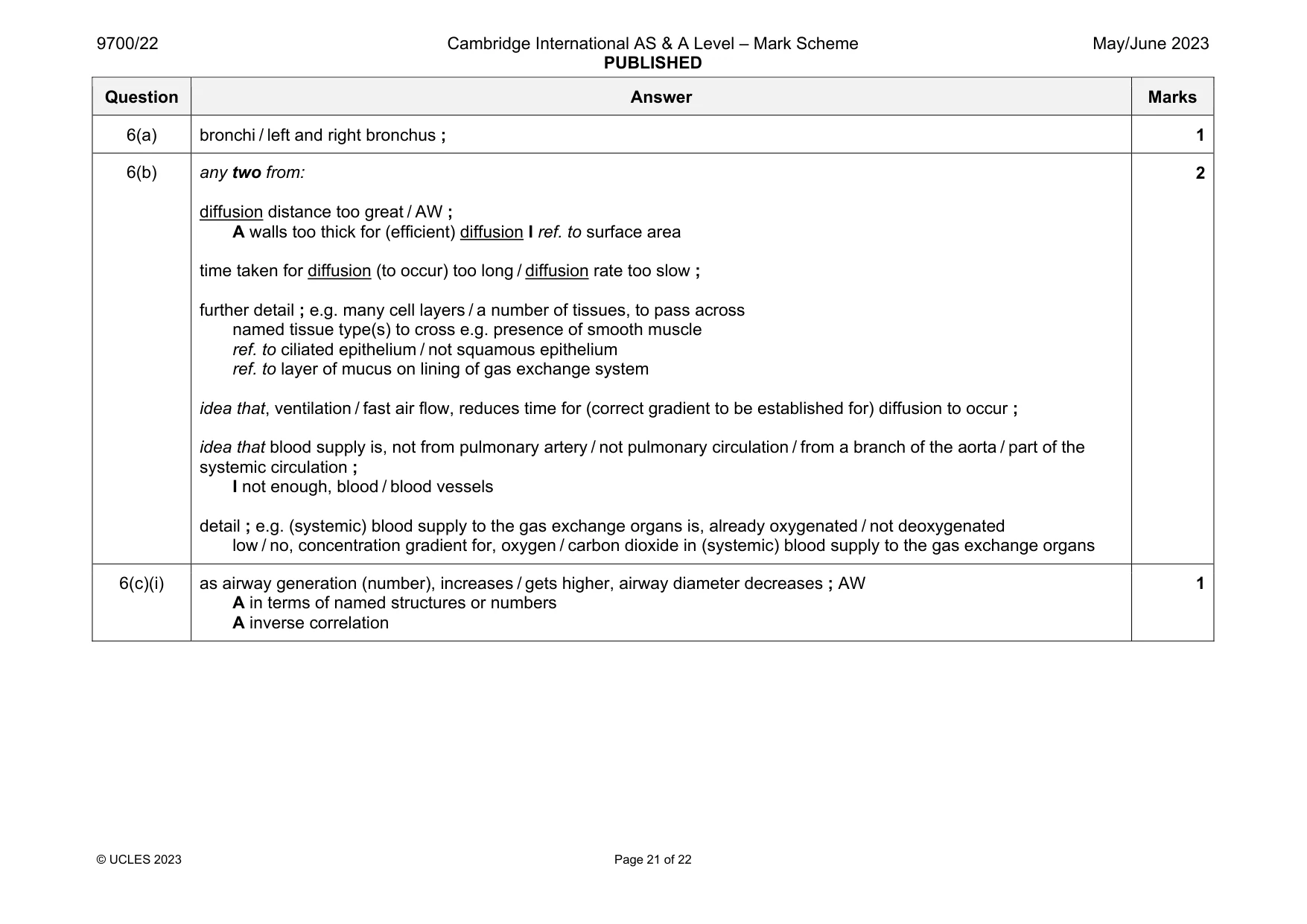
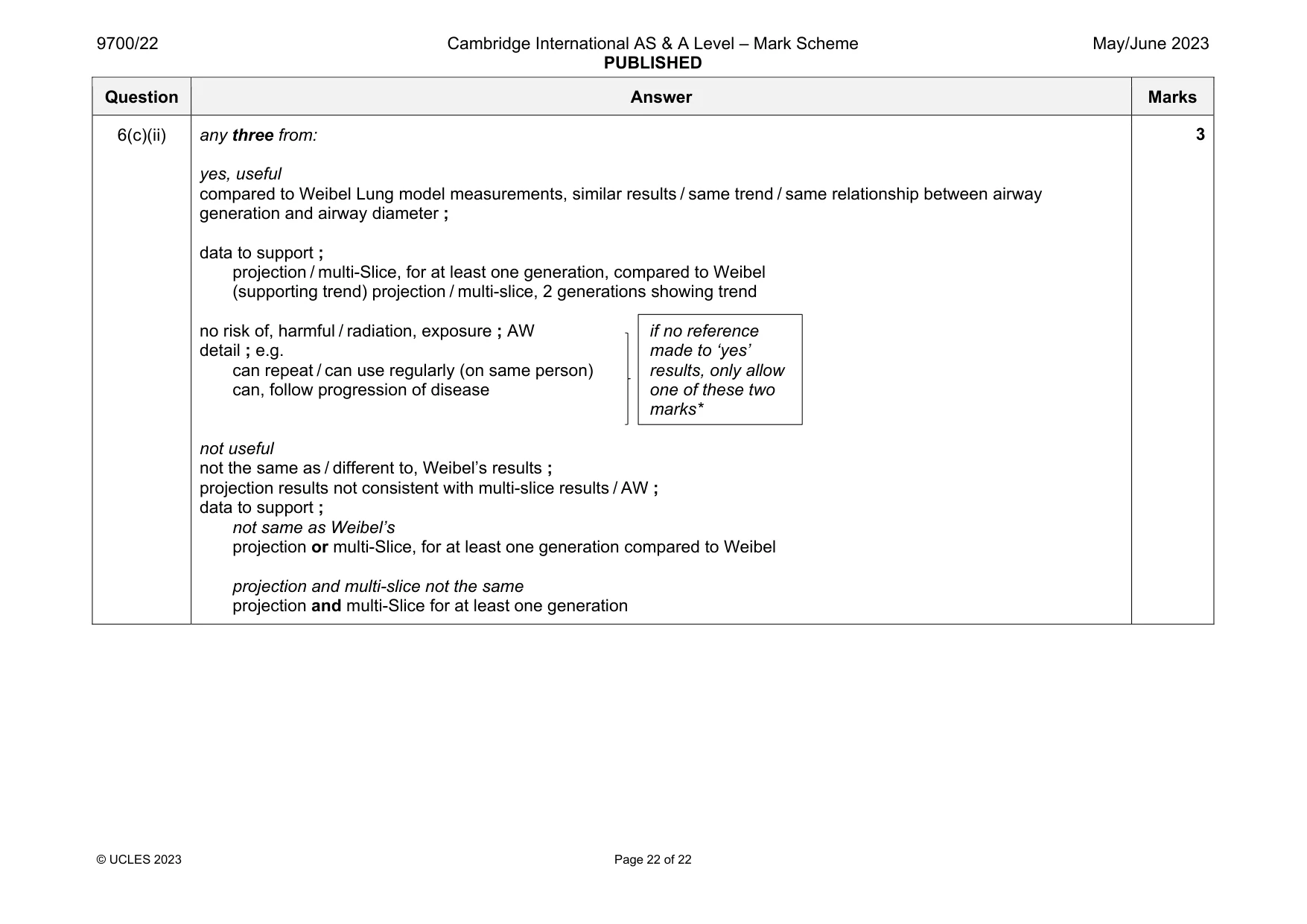
Mark scheme: 6(a) bronchi / left and right bronchus ; 1 6(b) any two from: diffusion distance too great / AW ; A walls too thick for (efficient) diffusion I ref. to surface area time taken for diffusion (to occur) too long / diffusion rate too slow ; further detail ; e.g. many cell layers / a number of tissues, to pass across named tissue type(s) to cross e.g. presence of smooth muscle ref. to ciliated epithelium / not squamous epithelium ref. to layer of mucus on lining of gas exchange system idea that, ventilation / fast air flow, reduces time for (correct gradient to be established for) diffusion to occur ; idea that blood supply is, not from pulmonary artery / not pulmonary circulation / from a branch of the aorta / part of the systemic circulation ; I not enough, blood / blood vessels detail ; e.g. (systemic) blood supply to the gas exchange organs is, already oxygenated / not deoxygenated low / no, concentration gradient for, oxygen / carbon dioxide in (systemic) blood supply to the gas exchange organs 2 6(c)(i) as airway generation (number), increases / gets higher, airway diameter decreases ; AW A in terms of named structures or numbers A inverse correlation 1 Question Answer Marks 6(c)(ii) any three from: yes, useful compared to Weibel Lung model measurements, similar results / same trend / same relationship between airway generation and airway diameter ; data to support ; projection / multi-Slice, for at least one generation, compared to Weibel (supporting trend) projection / multi-slice, 2 generations showing trend no risk of, harmful / radiation, exposure ; AW detail ; e.g. can repeat / can use regularly (on same person) can, follow progression of disease not useful not the same as / different to, Weibel’s results ; projection results not consistent with multi-slice results / AW ; data to support ; not same as Weibel’s projection or multi-Slice, for at least one generation compared to Weibel projection and multi-slice not the same projection and multi-Slice for at least one generation 3 if no reference made to ‘yes’ results, only allow one of these two marks*
What was in this paper
The subtopics covered by these 6 questions, and how many questions each got. Open one in a new tab to see every Cambridge question on it.
What you needed in this session
Cambridge’s own grade thresholds for 2023 May/June, Paper 2 · Variant 2. A higher threshold means an easier paper — the bar moves with how the cohort did.