Cambridge A Level Biology 9700 — 2021 Oct/Nov Paper 2 · Variant 1
9700/21/O/N/21 · 6 questions · 60 marks · ≈68 min
The question paper and its mark scheme, free to read here and free to download. This is Cambridge’s own paper, exactly as it was sat.
Question paper16 pages
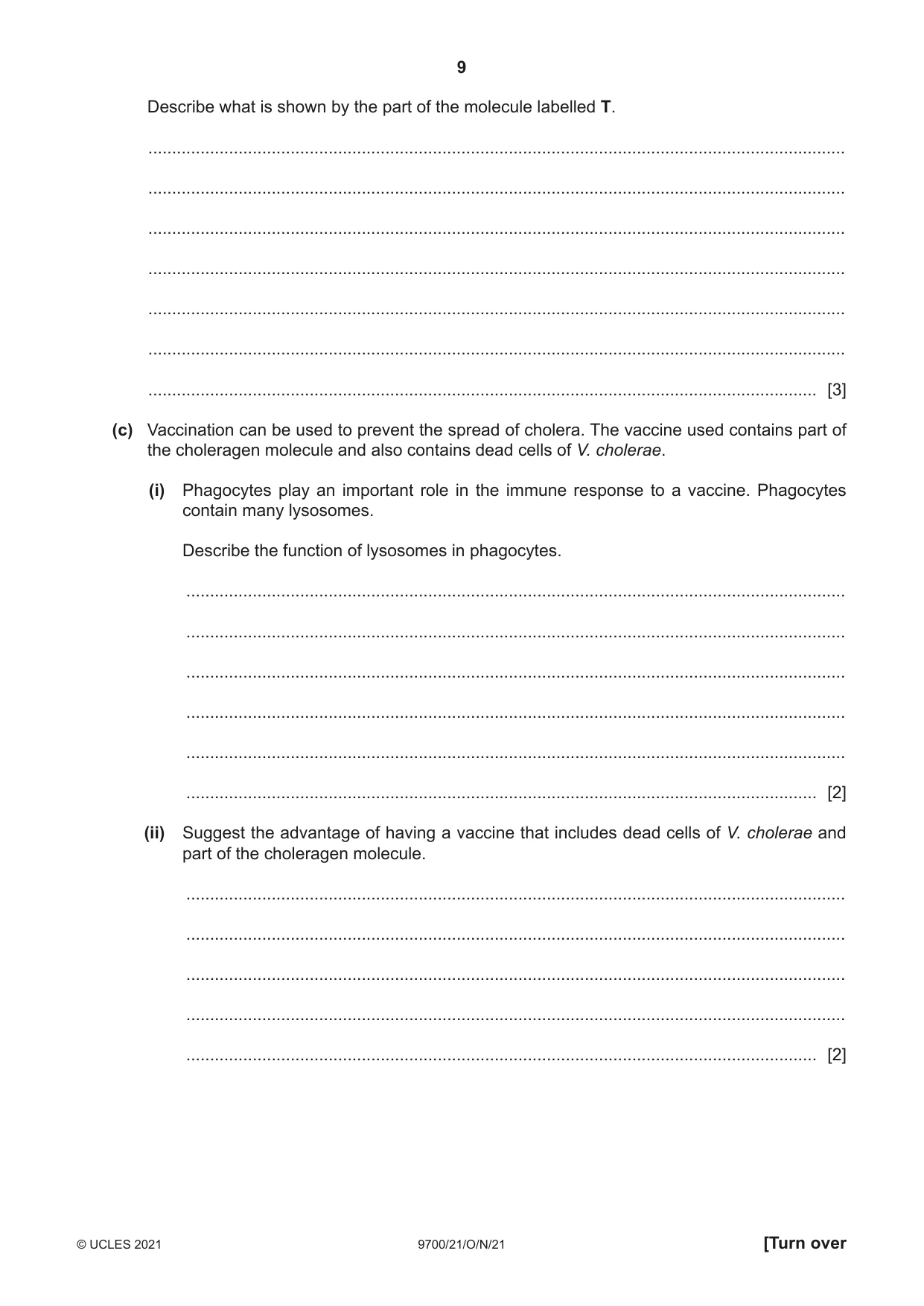
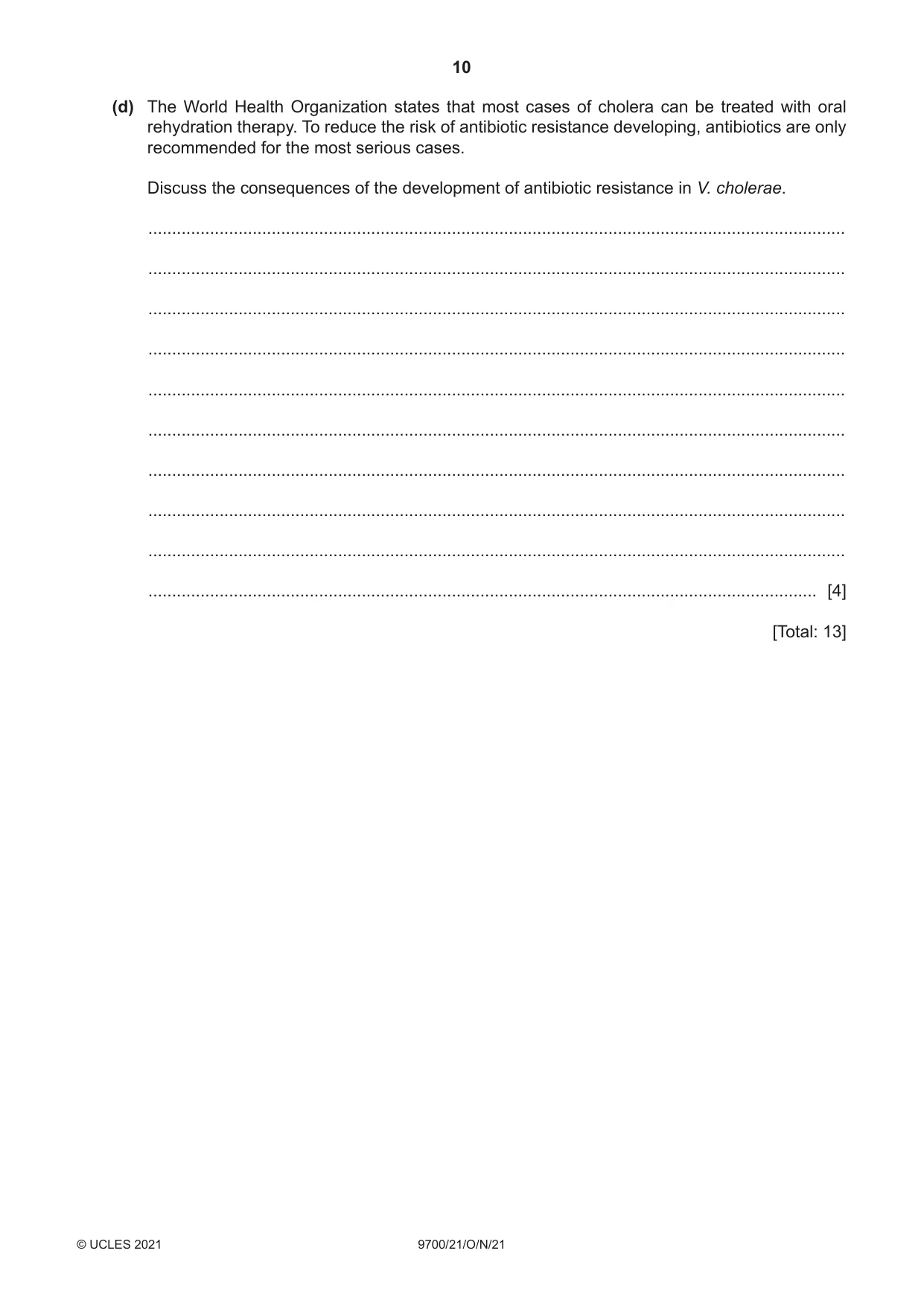
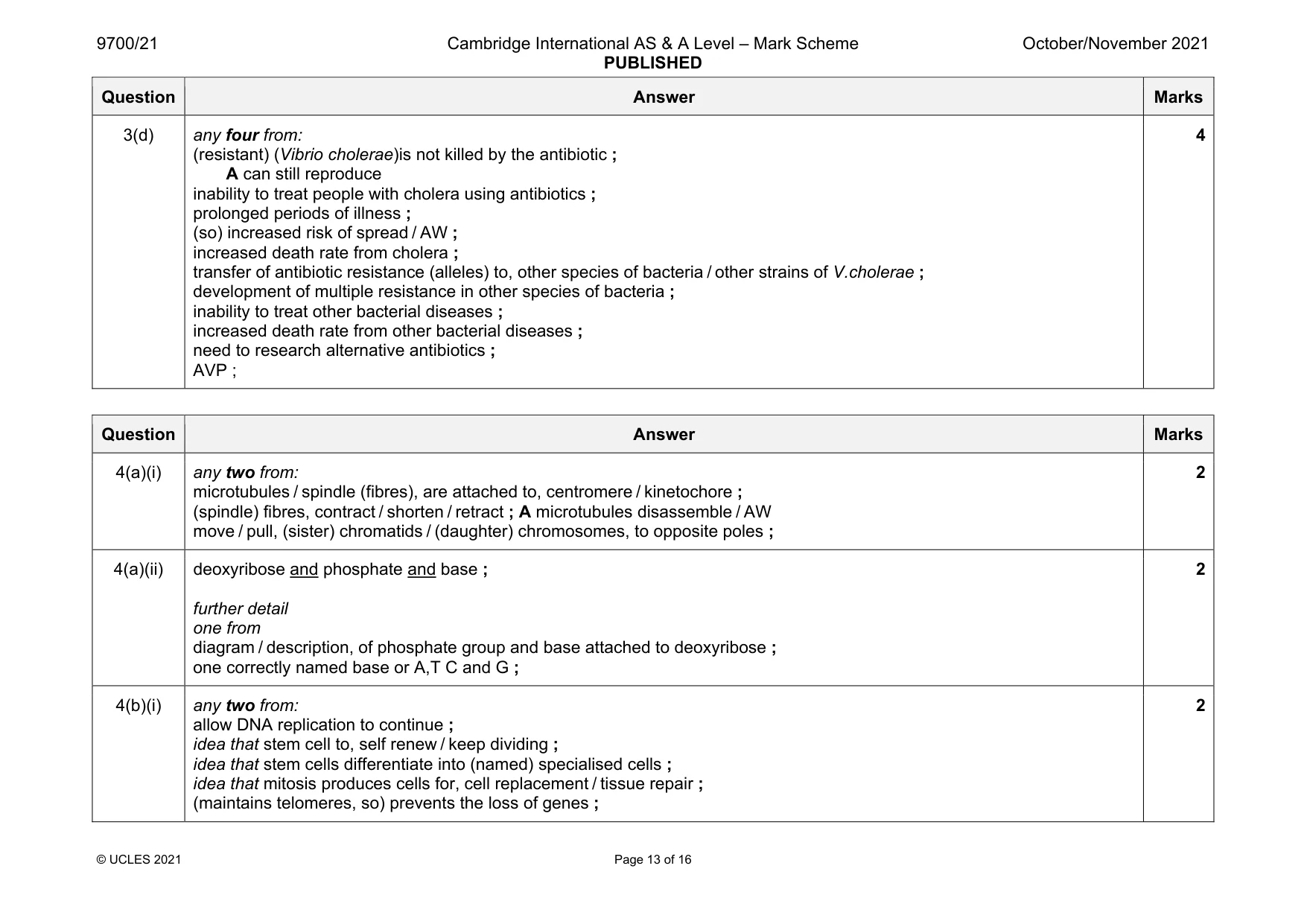
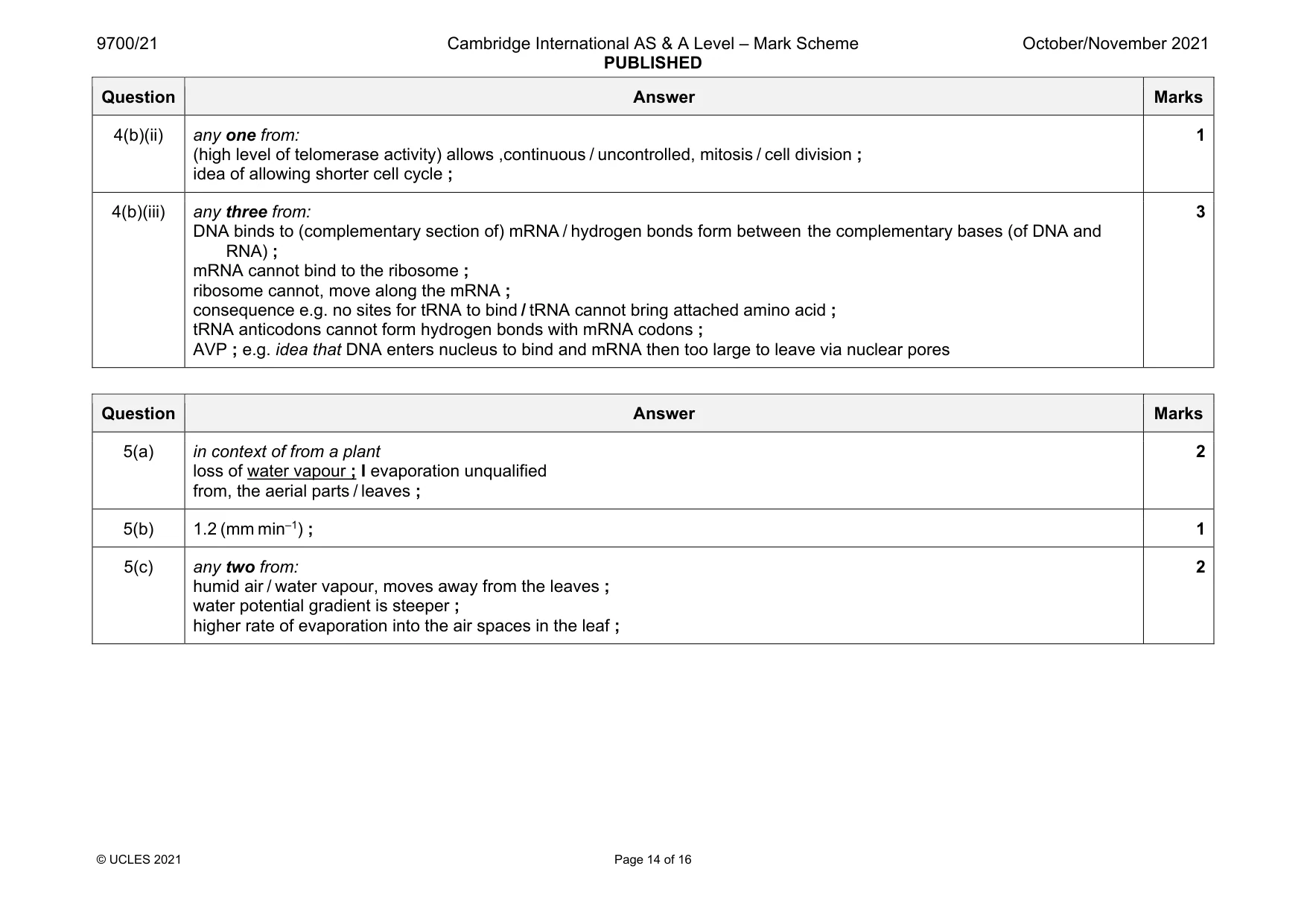
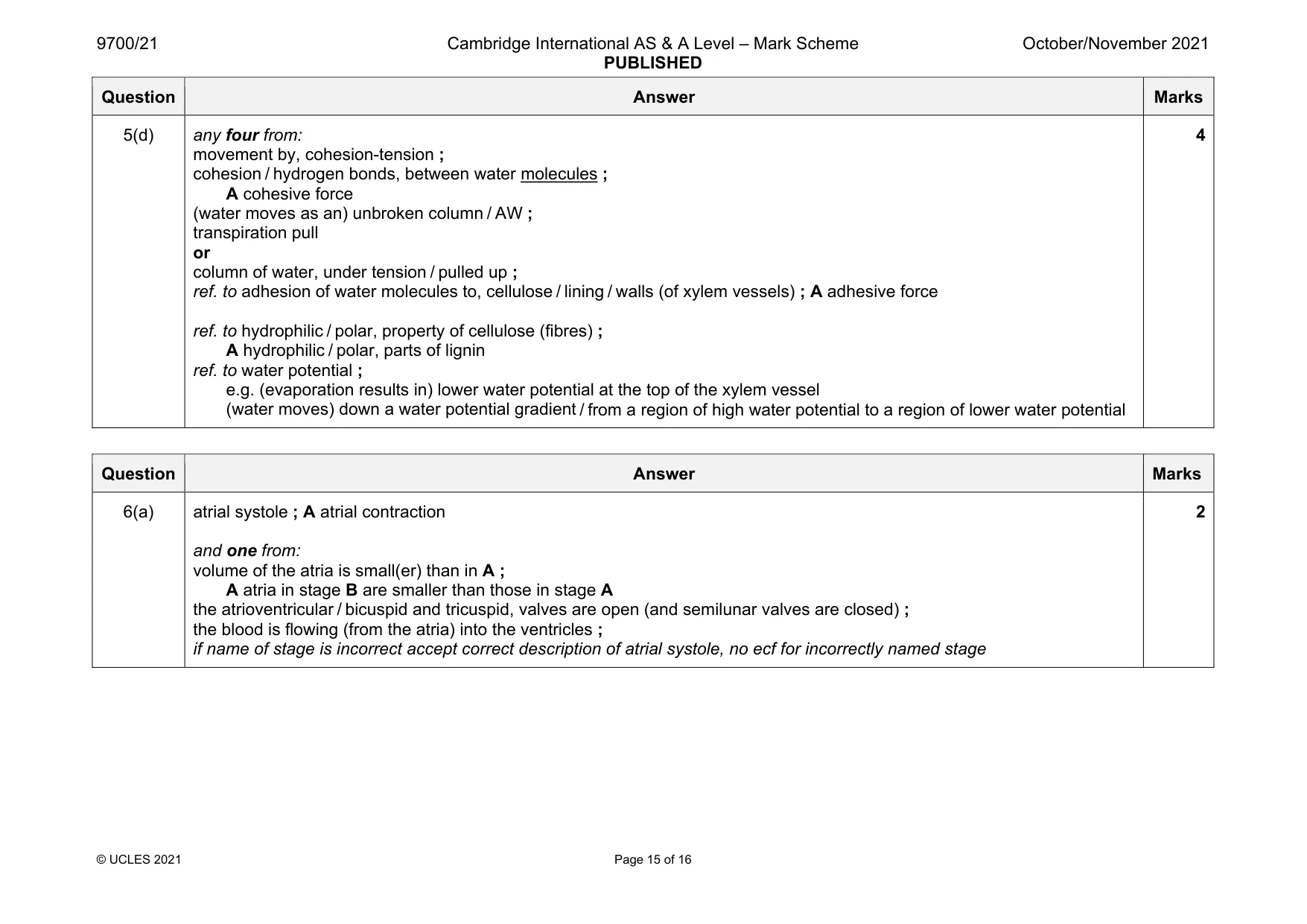
Mark scheme16 pages
Answers below. Sit the paper first if you are practising.
Questions as text
Q1 · A transmission electron micrograph of cells from the leaf of a plant
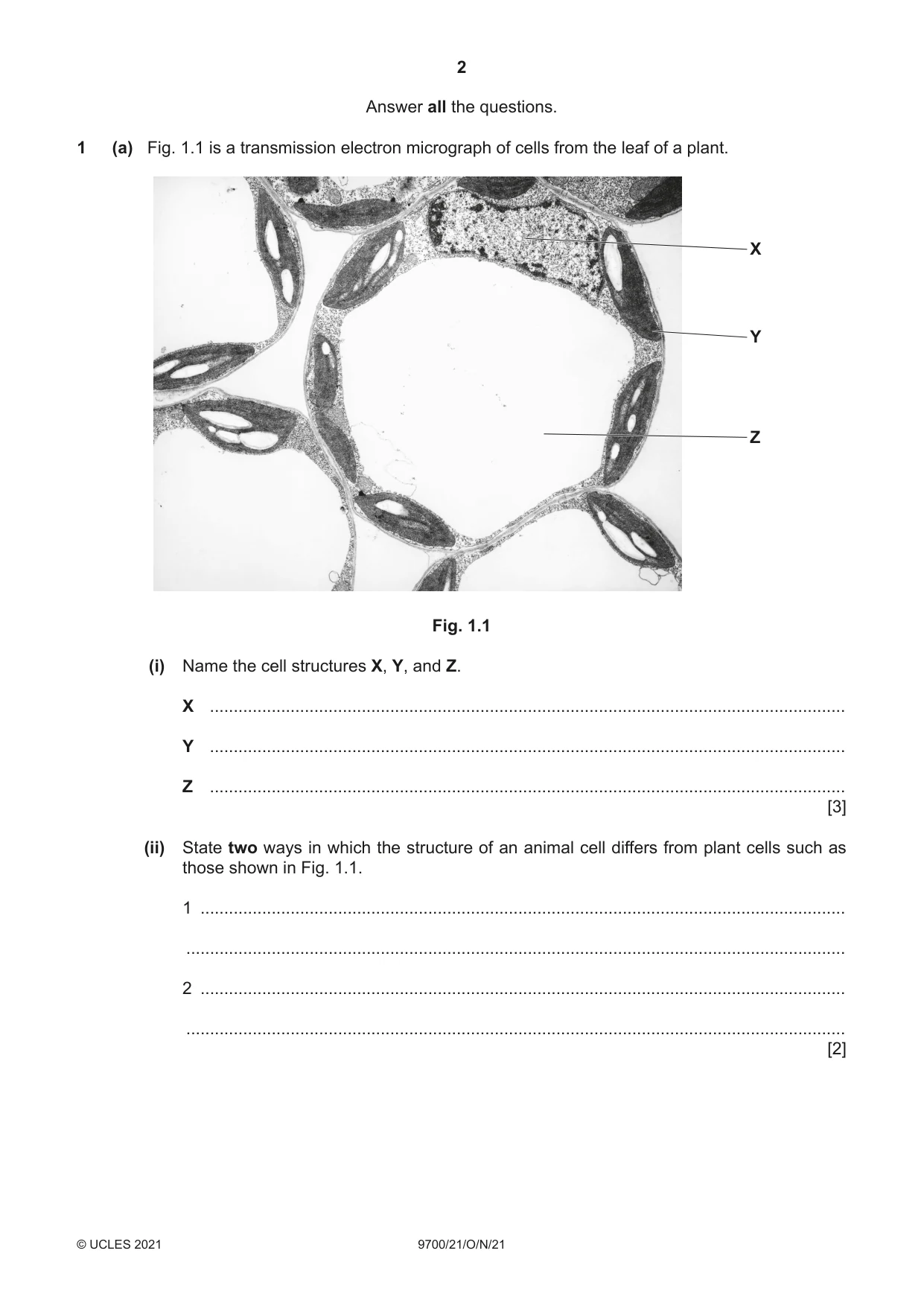
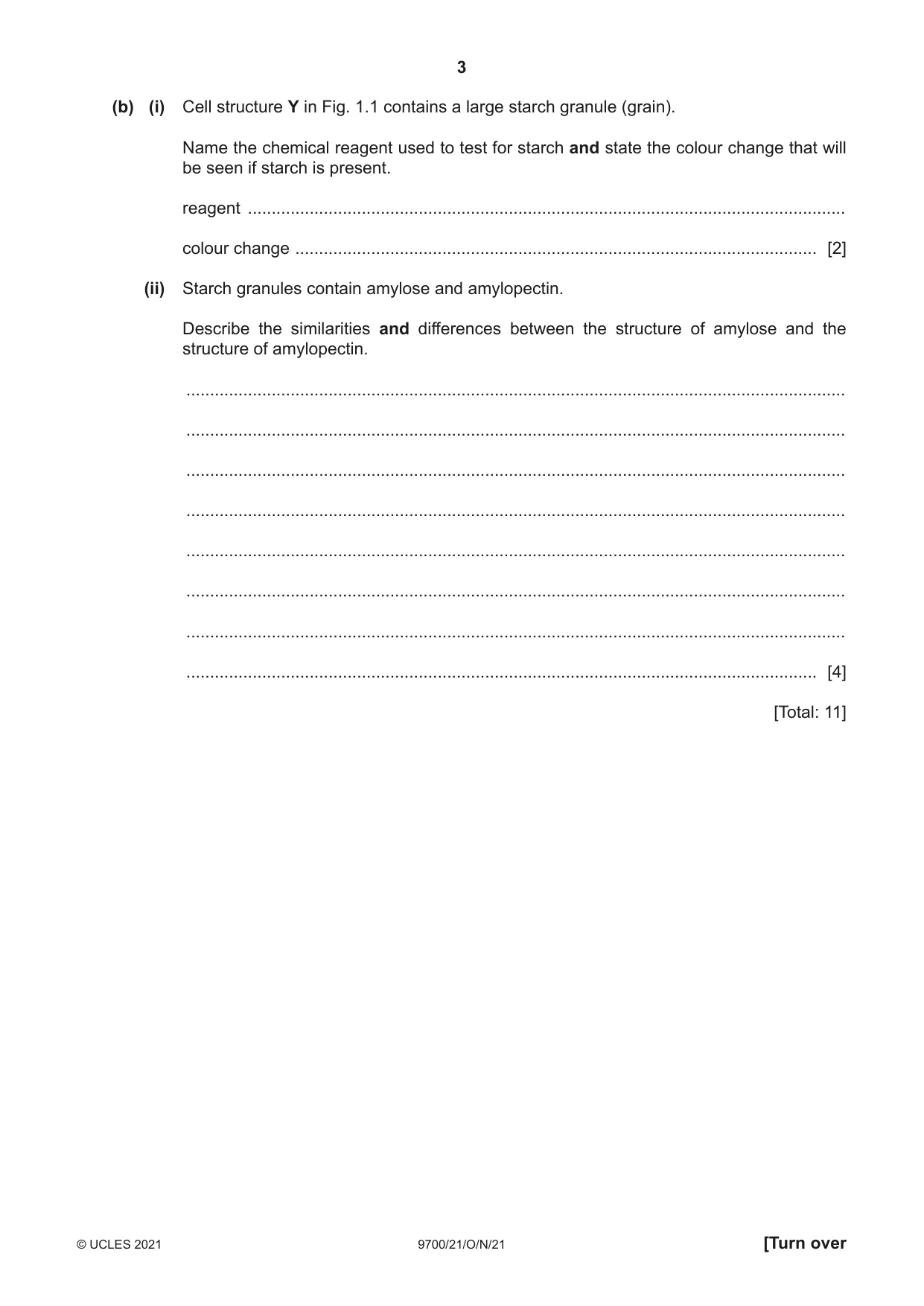
1 (a) Fig. 1.1 is a transmission electron micrograph of cells from the leaf of a plant. X Y Z Fig. 1.1 (i) Name the cell structures X, Y, and Z. X ...................................................................................................................................... Y ...................................................................................................................................... Z ...................................................................................................................................... [3] (ii) State two ways in which the structure of an animal cell differs from plant cells such as those shown in Fig. 1.1. 1 ........................................................................................................................................ ........................................................................................................................................... 2 ........................................................................................................................................ ........................................................................................................................................... [2] (b) (i) Cell structure Y in Fig. 1.1 contains a large starch granule (grain). Name the chemical reagent used to test for starch and state the colour change that will be seen if starch is present. reagent .............................................................................................................................. colour change .............................................................................................................. [2] (ii) Starch granules contain amylose and amylopectin. Describe the similarities and differences between the structure of amylose and the structure of amylopectin. ........................................................................................................................................... ........................................................................................................................................... ........................................................................................................................................... ........................................................................................................................................... ........................................................................................................................................... ........................................................................................................................................... ........................................................................................................................................... ..................................................................................................................................... [4] [Total: 11]
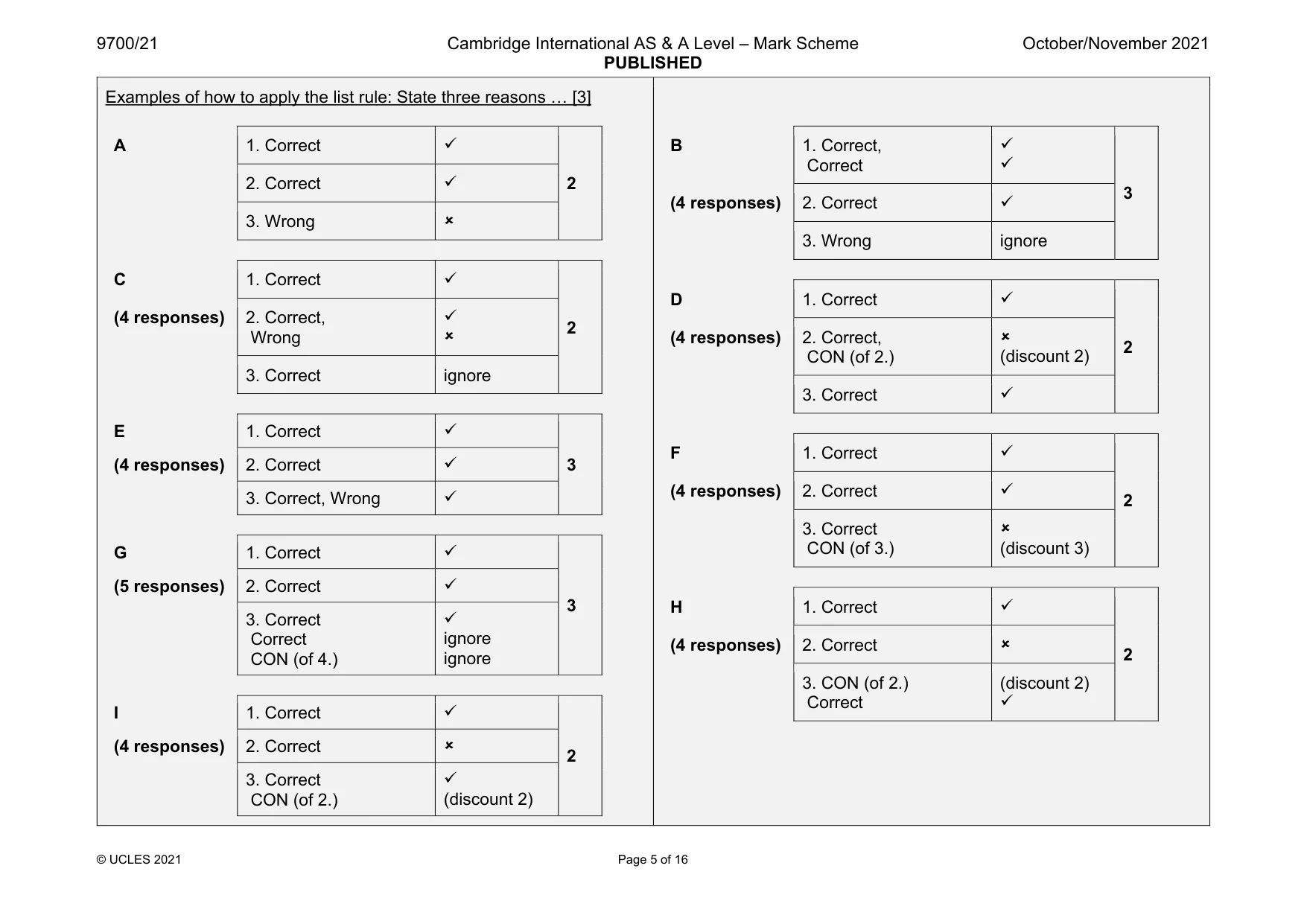
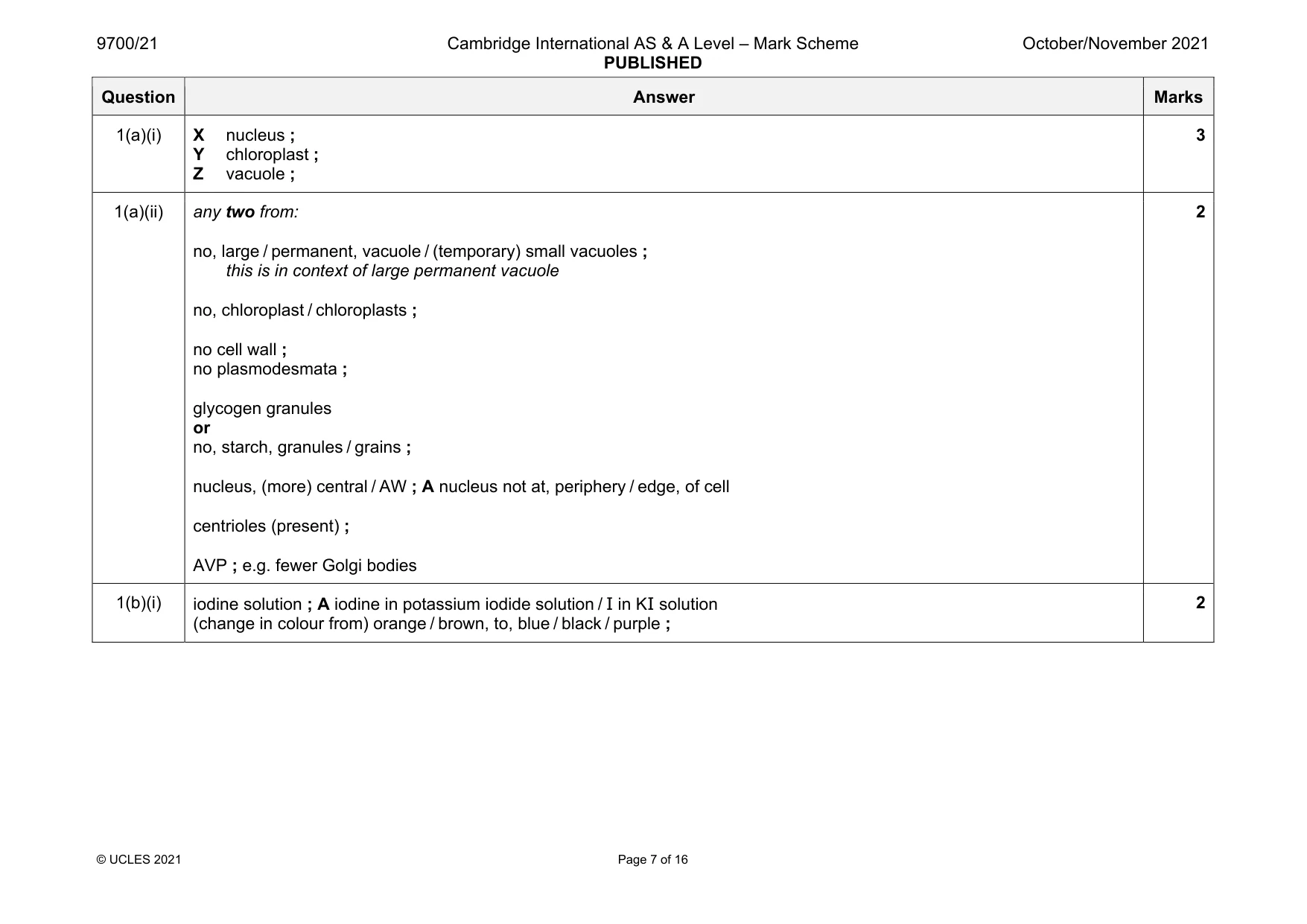
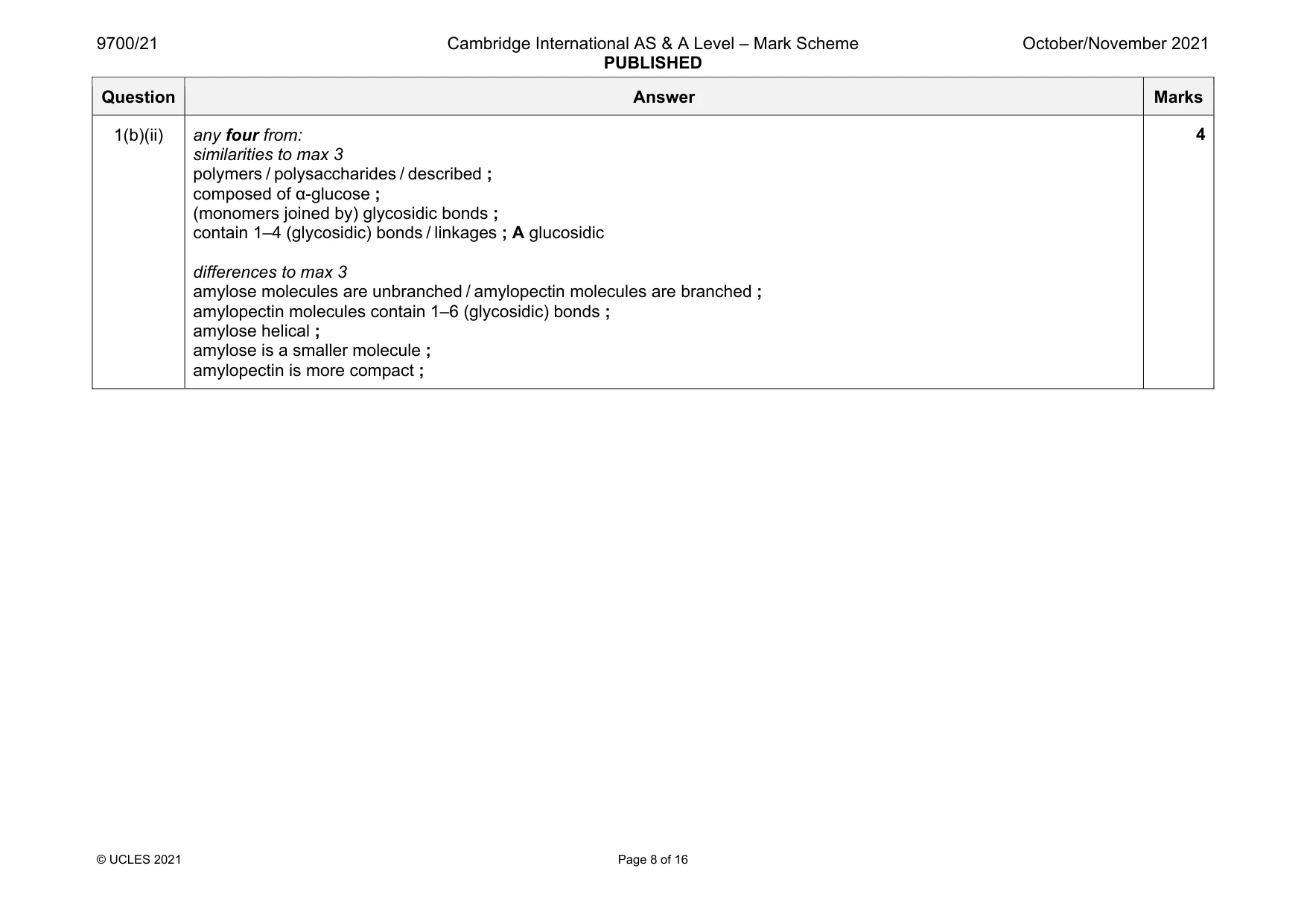
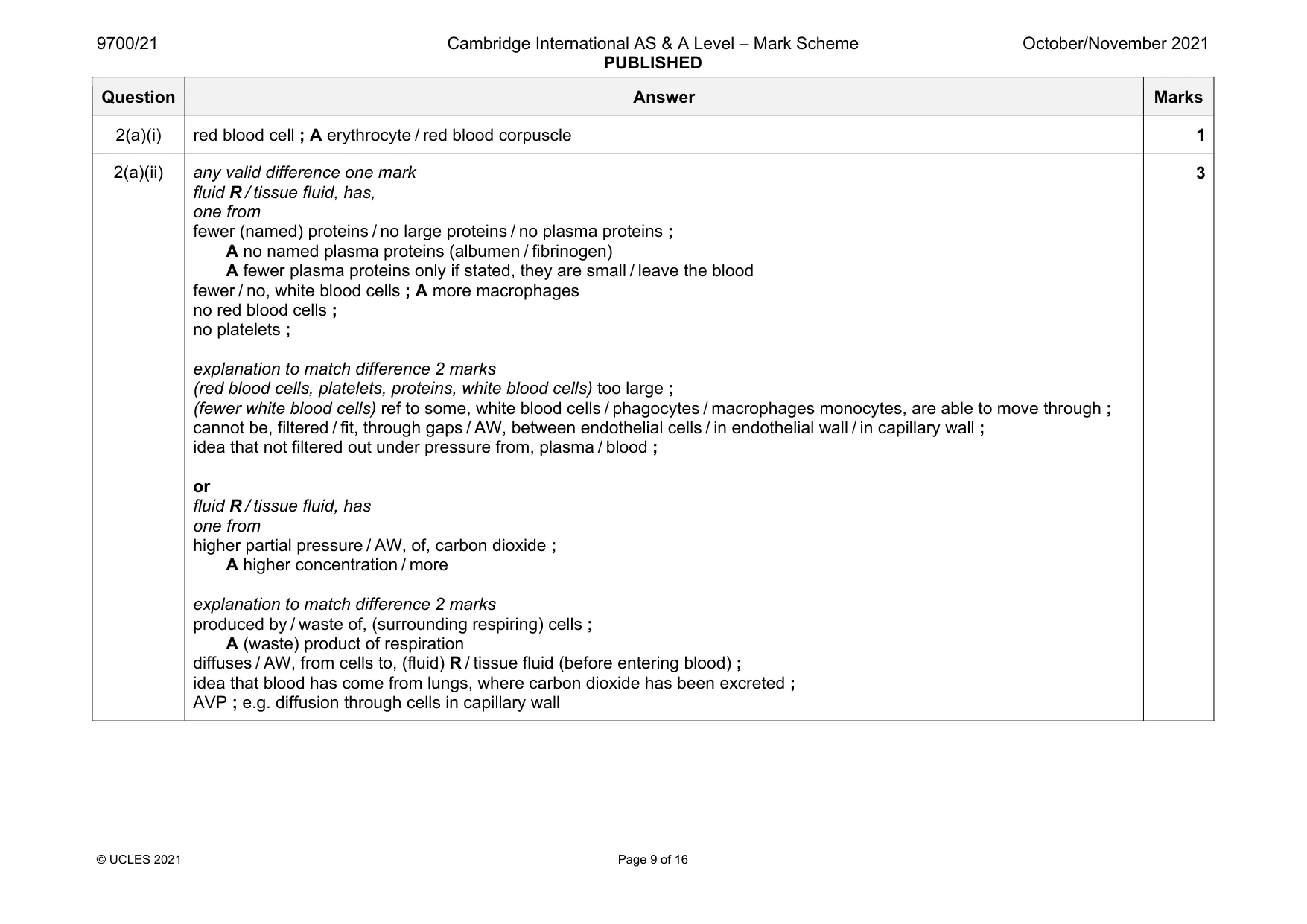
Mark scheme: 1(a)(i) X nucleus ; Y chloroplast ; Z vacuole ; 3 1(a)(ii) any two from: no, large / permanent, vacuole / (temporary) small vacuoles ; this is in context of large permanent vacuole no, chloroplast / chloroplasts ; no cell wall ; no plasmodesmata ; glycogen granules or no, starch, granules / grains ; nucleus, (more) central / AW ; A nucleus not at, periphery / edge, of cell centrioles (present) ; AVP ; e.g. fewer Golgi bodies 2 1(b)(i) iodine solution ; A iodine in potassium iodide solution / I in KI solution (change in colour from) orange / brown, to, blue / black / purple ; 2 Question Answer Marks 1(b)(ii) any four from: similarities to max 3 polymers / polysaccharides / described ; composed of α-glucose ; (monomers joined by) glycosidic bonds ; contain 1–4 (glycosidic) bonds / linkages ; A glucosidic differences to max 3 amylose molecules are unbranched / amylopectin molecules are branched ; amylopectin molecules contain 1–6 (glycosidic) bonds ; amylose helical ; amylose is a smaller molecule ; amylopectin is more compact ; 4
Q2 · A transmission electron micrograph of a transverse section through a blood capillary that…
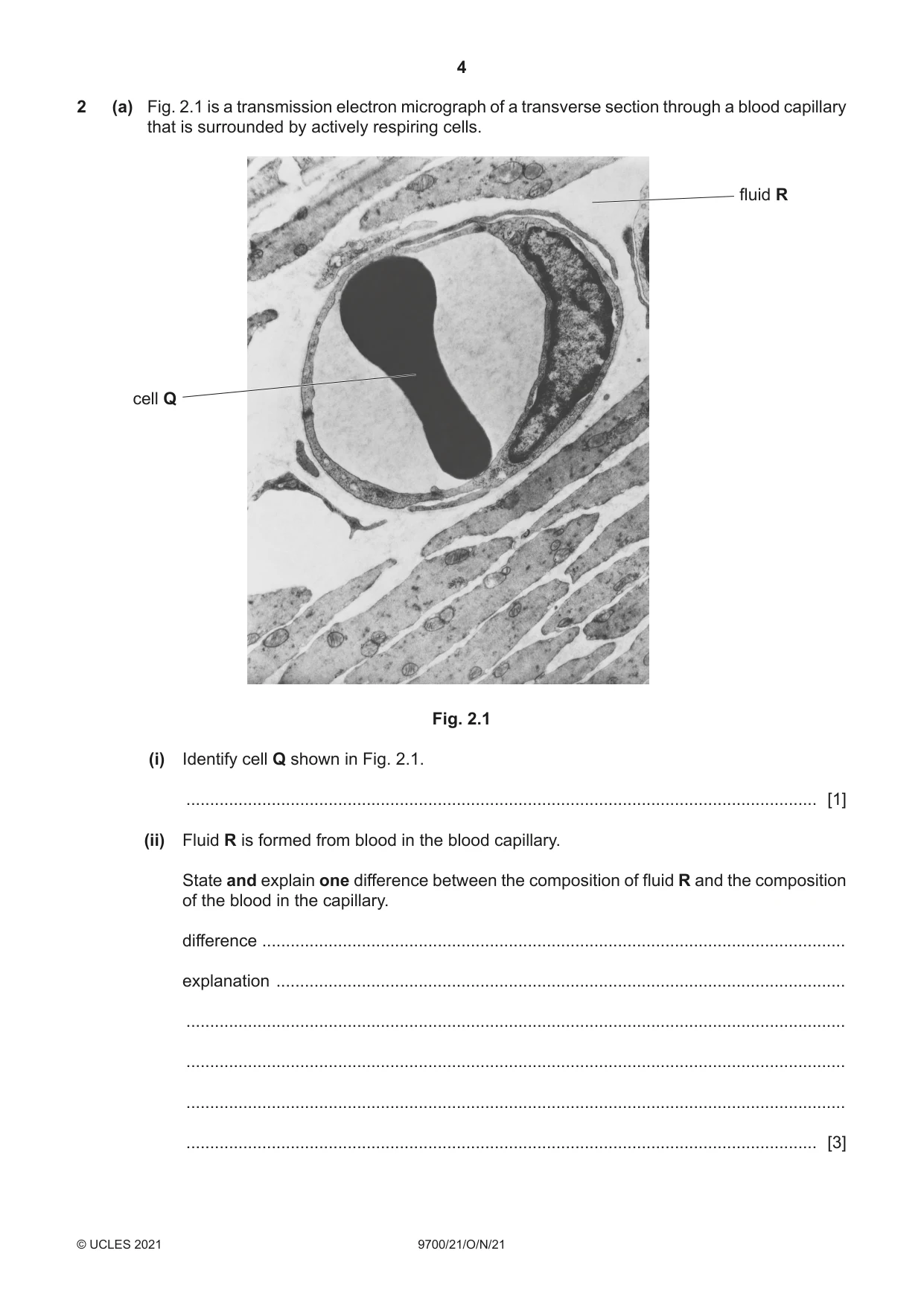
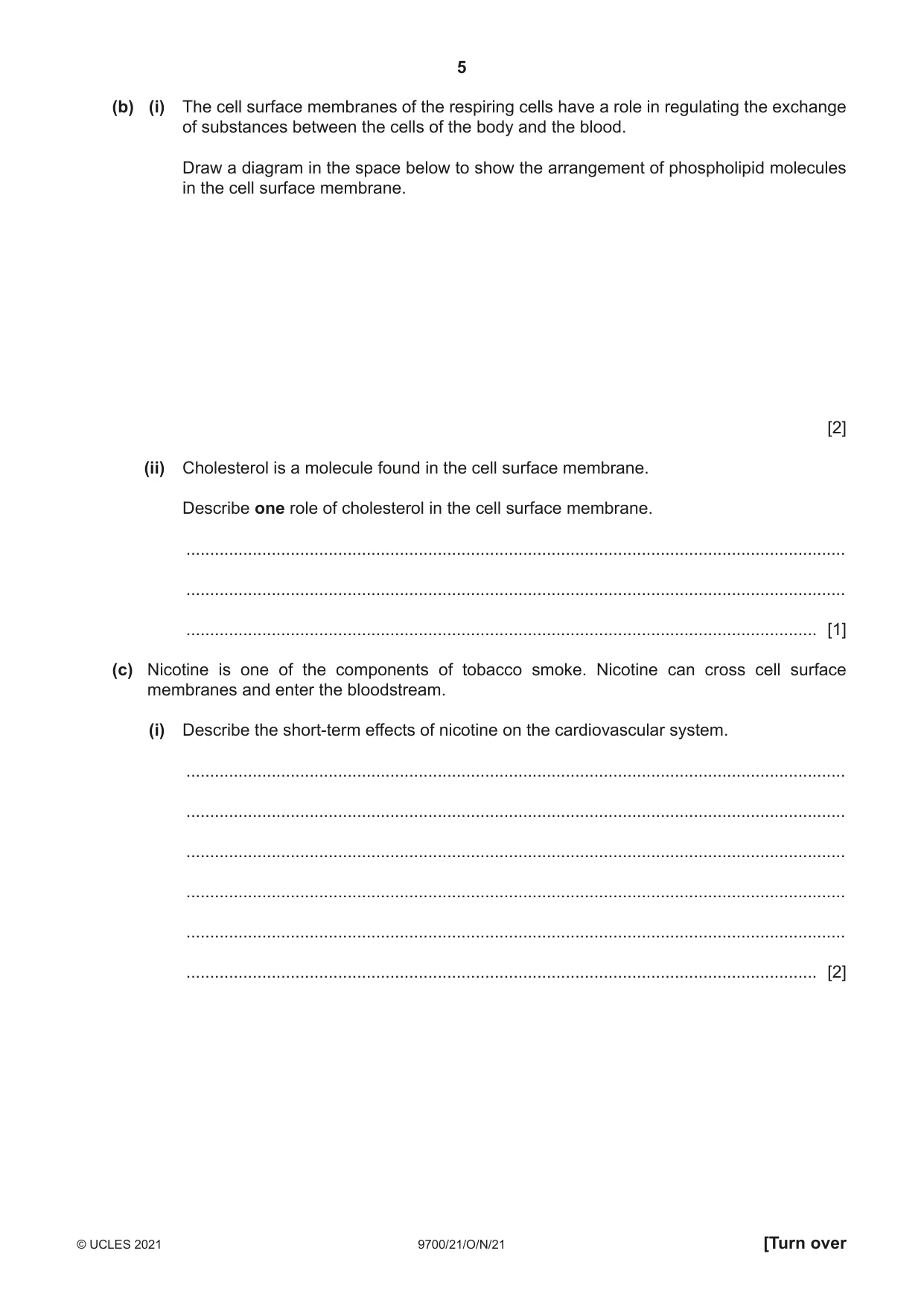
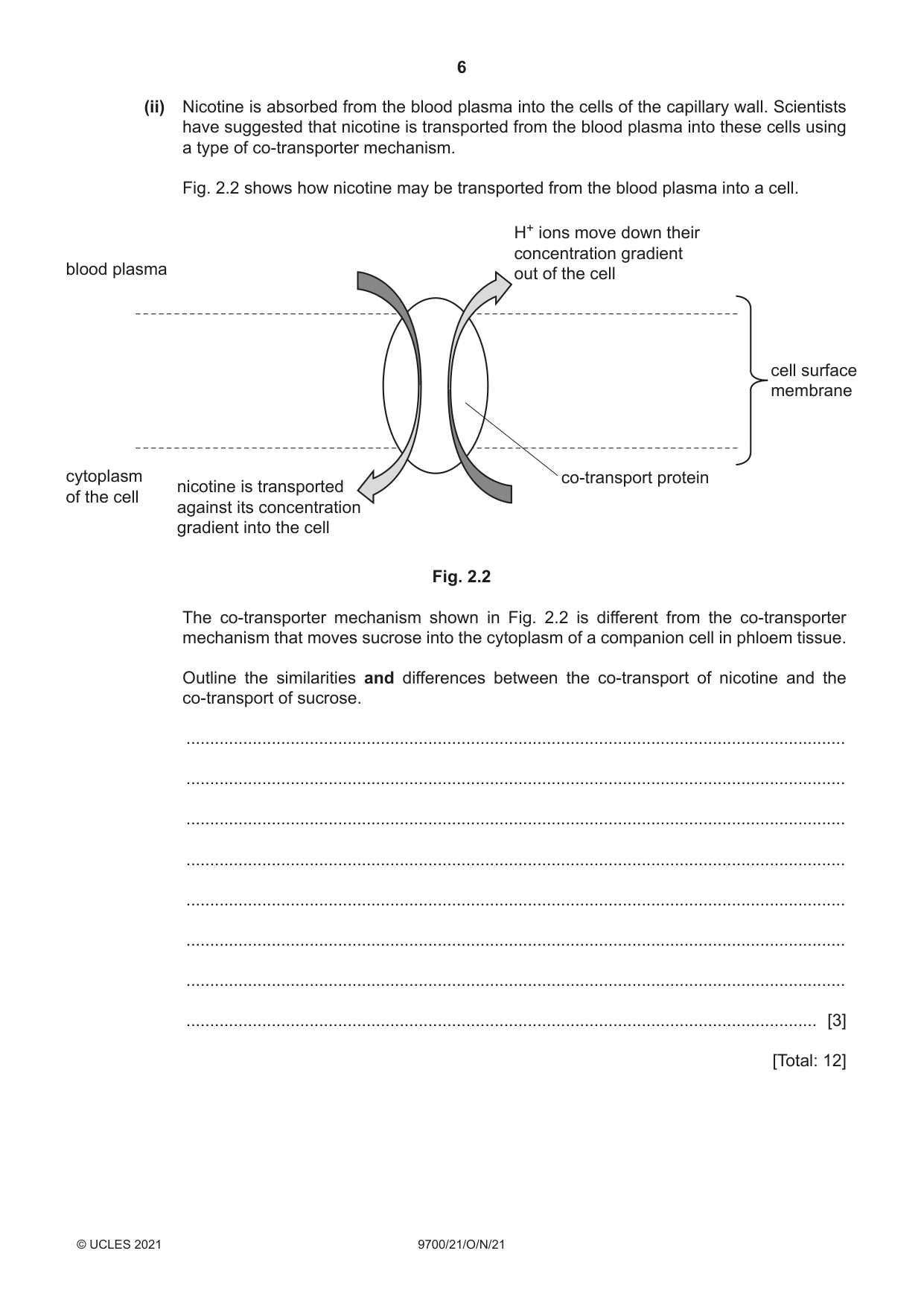
2 (a) Fig. 2.1 is a transmission electron micrograph of a transverse section through a blood capillary that is surrounded by actively respiring cells. fluid R cell Q Fig. 2.1 (i) Identify cell Q shown in Fig. 2.1. ..................................................................................................................................... [1] (ii) Fluid R is formed from blood in the blood capillary. State and explain one difference between the composition of fluid R and the composition of the blood in the capillary. difference ........................................................................................................................... explanation ........................................................................................................................ ........................................................................................................................................... ........................................................................................................................................... ........................................................................................................................................... ..................................................................................................................................... [3] (b) (i) The cell surface membranes of the respiring cells have a role in regulating the exchange of substances between the cells of the body and the blood. Draw a diagram in the space below to show the arrangement of phospholipid molecules in the cell surface membrane. [2] (ii) Cholesterol is a molecule found in the cell surface membrane. Describe one role of cholesterol in the cell surface membrane. ........................................................................................................................................... ........................................................................................................................................... ..................................................................................................................................... [1] (c) Nicotine is one of the components of tobacco smoke. Nicotine can cross cell surface membranes and enter the bloodstream. (i) Describe the short-term effects of nicotine on the cardiovascular system. ........................................................................................................................................... ........................................................................................................................................... ........................................................................................................................................... ........................................................................................................................................... ........................................................................................................................................... ..................................................................................................................................... [2] (ii) Nicotine is absorbed from the blood plasma into the cells of the capillary wall. Scientists have suggested that nicotine is transported from the blood plasma into these cells using a type of co-transporter mechanism. Fig. 2.2 shows how nicotine may be transported from the blood plasma into a cell. H+ ions move down their concentration gradient blood plasma out of the cell cell surface membrane cytoplasm co-transport protein nicotine is transportedof the cell against its concentration gradient into the cell Fig. 2.2 The co-transporter mechanism shown in Fig. 2.2 is different from the co-transporter mechanism that moves sucrose into the cytoplasm of a companion cell in phloem tissue. Outline the similarities and differences between the co-transport of nicotine and the co-transport of sucrose. ........................................................................................................................................... ........................................................................................................................................... ........................................................................................................................................... ........................................................................................................................................... ........................................................................................................................................... ........................................................................................................................................... ........................................................................................................................................... ..................................................................................................................................... [3] [Total: 12] Question 3 starts on page 8.
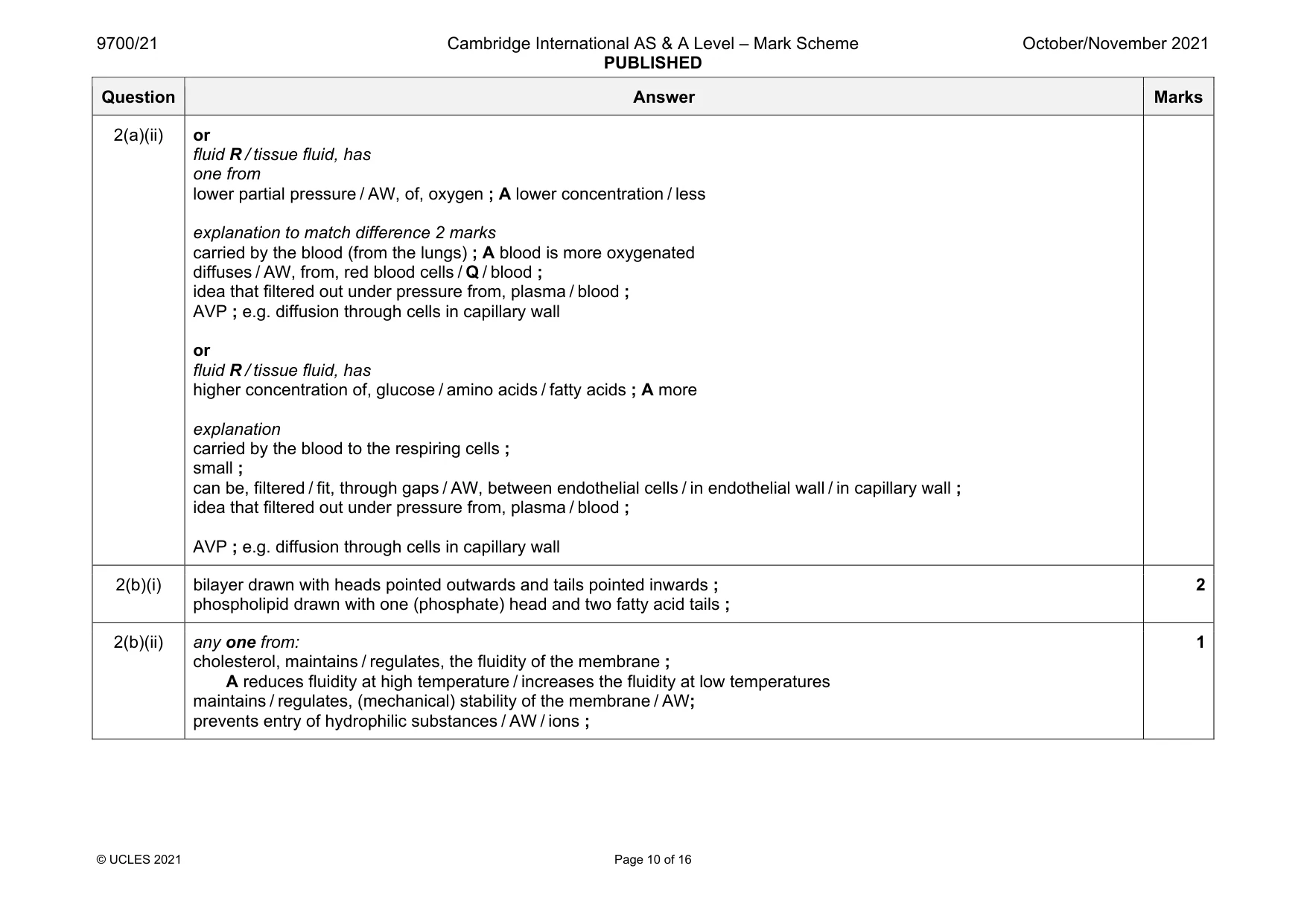
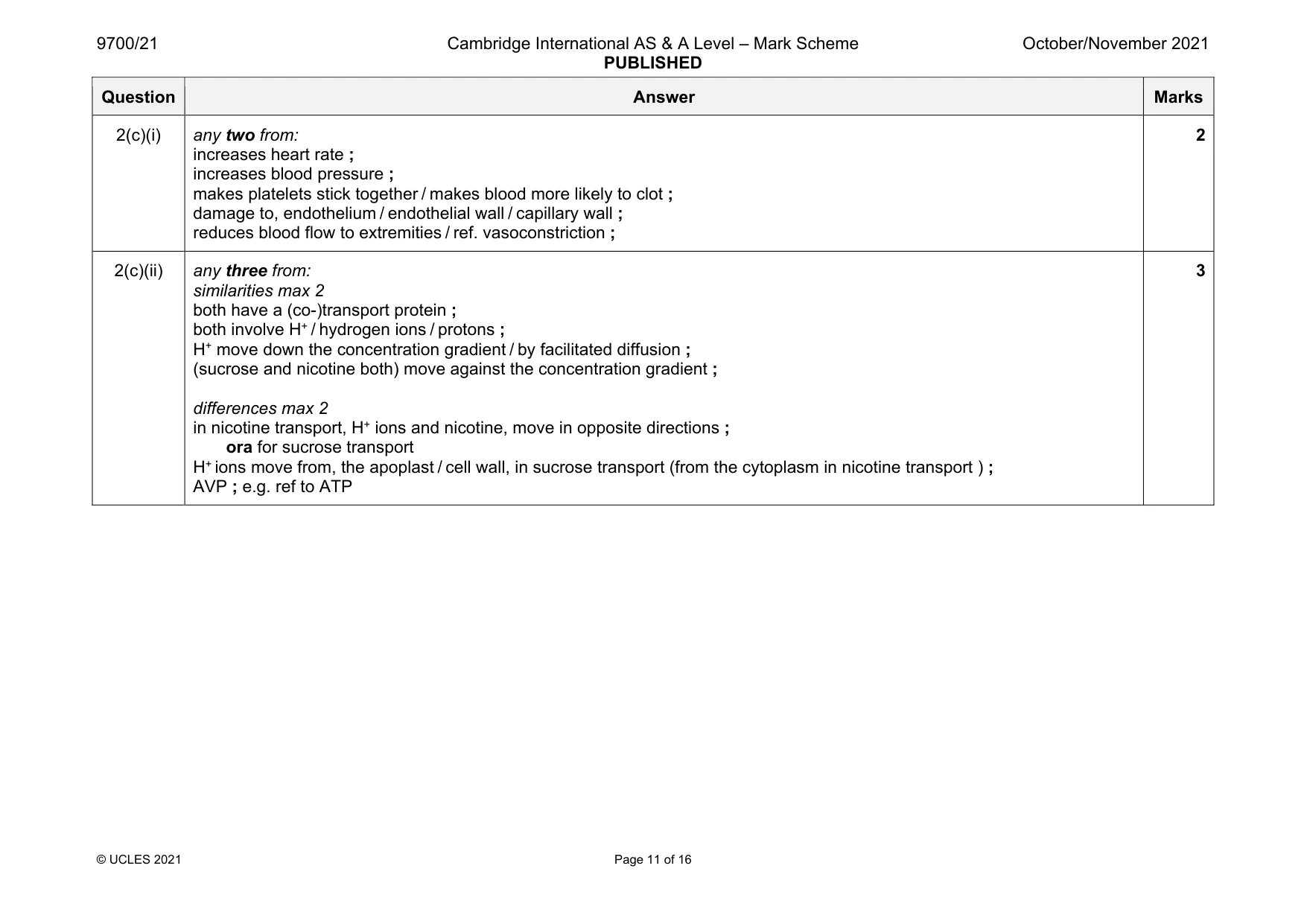
Mark scheme: 2(a)(i) red blood cell ; A erythrocyte / red blood corpuscle 1 2(a)(ii) any valid difference one mark fluid R / tissue fluid, has, one from fewer (named) proteins / no large proteins / no plasma proteins ; A no named plasma proteins (albumen / fibrinogen) A fewer plasma proteins only if stated, they are small / leave the blood fewer / no, white blood cells ; A more macrophages no red blood cells ; no platelets ; explanation to match difference 2 marks (red blood cells, platelets, proteins, white blood cells) too large ; (fewer white blood cells) ref to some, white blood cells / phagocytes / macrophages monocytes, are able to move through ; cannot be, filtered / fit, through gaps / AW, between endothelial cells / in endothelial wall / in capillary wall ; idea that not filtered out under pressure from, plasma / blood ; or fluid R / tissue fluid, has one from higher partial pressure / AW, of, carbon dioxide ; A higher concentration / more explanation to match difference 2 marks produced by / waste of, (surrounding respiring) cells ; A (waste) product of respiration diffuses / AW, from cells to, (fluid) R / tissue fluid (before entering blood) ; idea that blood has come from lungs, where carbon dioxide has been excreted ; AVP ; e.g. diffusion through cells in capillary wall 3 Question Answer Marks 2(a)(ii) or fluid R / tissue fluid, has one from lower partial pressure / AW, of, oxygen ; A lower concentration / less explanation to match difference 2 marks carried by the blood (from the lungs) ; A blood is more oxygenated diffuses / AW, from, red blood cells / Q / blood ; idea that filtered out under pressure from, plasma / blood ; AVP ; e.g. diffusion through cells in capillary wall or fluid R / tissue fluid, has higher concentration of, glucose / amino acids / fatty acids ; A more explanation carried by the blood to the respiring cells ; small ; can be, filtered / fit, through gaps / AW, between endothelial cells / in endothelial wall / in capillary wall ; idea that filtered out under pressure from, plasma / blood ; AVP ; e.g. diffusion through cells in capillary wall 2(b)(i) bilayer drawn with heads pointed outwards and tails pointed inwards ; phospholipid drawn with one (phosphate) head and two fatty acid tails ; 2 2(b)(ii) any one from: cholesterol, maintains / regulates, the fluidity of the membrane ; A reduces fluidity at high temperature / increases the fluidity at low temperatures maintains / regulates, (mechanical) stability of the membrane / AW; prevents entry of hydrophilic substances / AW / ions ; 1 Question Answer Marks 2(c)(i) any two from: increases heart rate ; increases blood pressure ; makes platelets stick together / makes blood more likely to clot ; damage to, endothelium / endothelial wall / capillary wall ; reduces blood flow to extremities / ref. vasoconstriction ; 2 2(c)(ii) any three from: similarities max 2 both have a (co-)transport protein ; both involve H+ / hydrogen ions / protons ; H+ move down the concentration gradient / by facilitated diffusion ; (sucrose and nicotine both) move against the concentration gradient ; differences max 2 in nicotine transport, H+ ions and nicotine, move in opposite directions ; ora for sucrose transport H+ ions move from, the apoplast / cell wall, in sucrose transport (from the cytoplasm in nicotine transport ) ; AVP ; e.g. ref to ATP 3
Q3 · Cholera is an infectious disease caused by the bacterial pathogen Vibrio cholerae
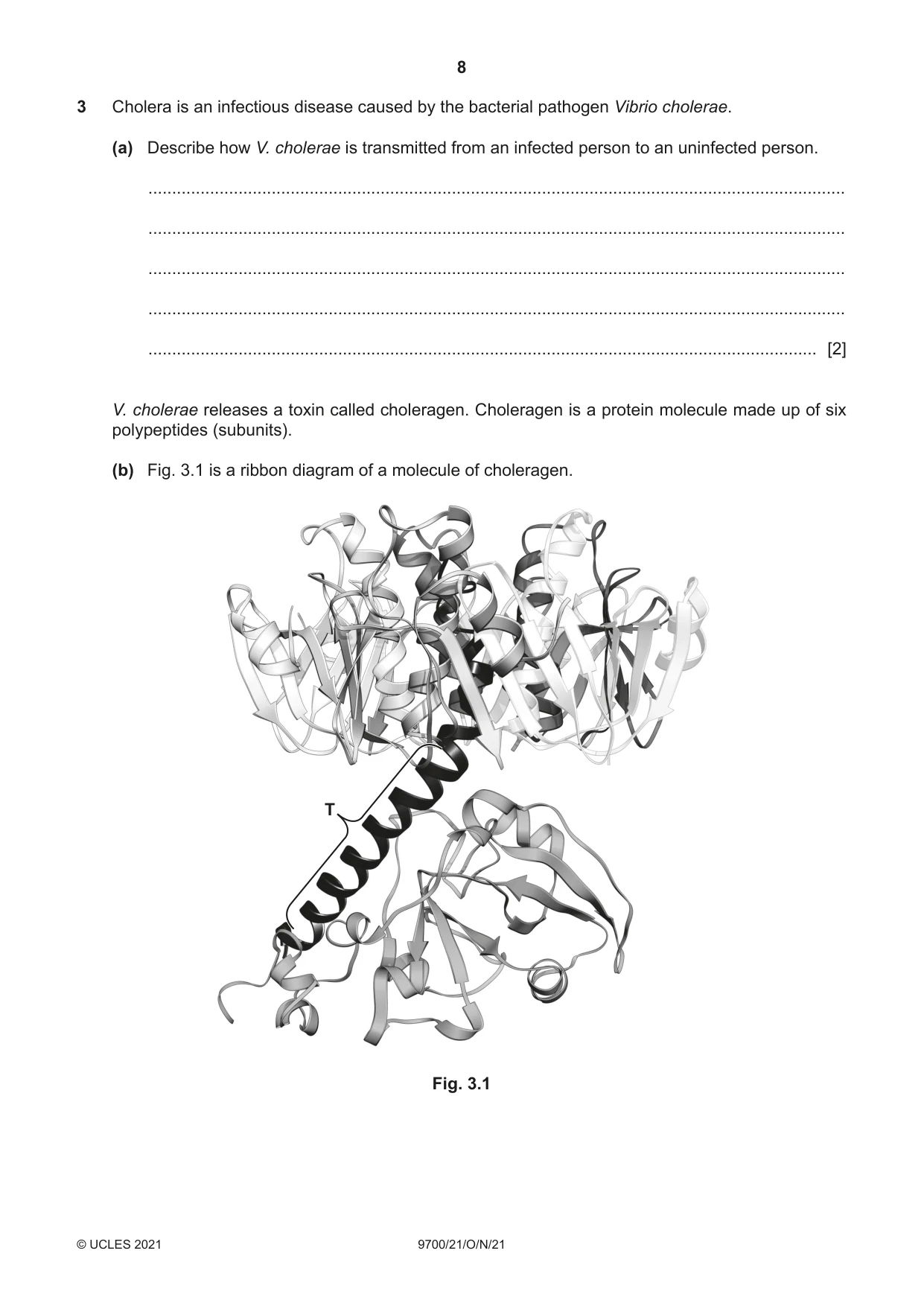
3 Cholera is an infectious disease caused by the bacterial pathogen Vibrio cholerae. (a) Describe how V. cholerae is transmitted from an infected person to an uninfected person. ................................................................................................................................................... ................................................................................................................................................... ................................................................................................................................................... ................................................................................................................................................... ............................................................................................................................................. [2] V. cholerae releases a toxin called choleragen. Choleragen is a protein molecule made up of six polypeptides (subunits). (b) Fig. 3.1 is a ribbon diagram of a molecule of choleragen. T Fig. 3.1 Describe what is shown by the part of the molecule labelled T. ................................................................................................................................................... ................................................................................................................................................... ................................................................................................................................................... ................................................................................................................................................... ................................................................................................................................................... ................................................................................................................................................... ............................................................................................................................................. [3] (c) Vaccination can be used to prevent the spread of cholera. The vaccine used contains part of the choleragen molecule and also contains dead cells of V. cholerae. (i) Phagocytes play an important role in the immune response to a vaccine. Phagocytes contain many lysosomes. Describe the function of lysosomes in phagocytes. ........................................................................................................................................... ........................................................................................................................................... ........................................................................................................................................... ........................................................................................................................................... ........................................................................................................................................... ..................................................................................................................................... [2] (ii) Suggest the advantage of having a vaccine that includes dead cells of V. cholerae and part of the choleragen molecule. ........................................................................................................................................... ........................................................................................................................................... ........................................................................................................................................... ........................................................................................................................................... ..................................................................................................................................... [2] (d) The World Health Organization states that most cases of cholera can be treated with oral rehydration therapy. To reduce the risk of antibiotic resistance developing, antibiotics are only recommended for the most serious cases. Discuss the consequences of the development of antibiotic resistance in V. cholerae. ................................................................................................................................................... ................................................................................................................................................... ................................................................................................................................................... ................................................................................................................................................... ................................................................................................................................................... ................................................................................................................................................... ................................................................................................................................................... ................................................................................................................................................... ................................................................................................................................................... ............................................................................................................................................. [4] [Total: 13] Question 4 starts on page 12.
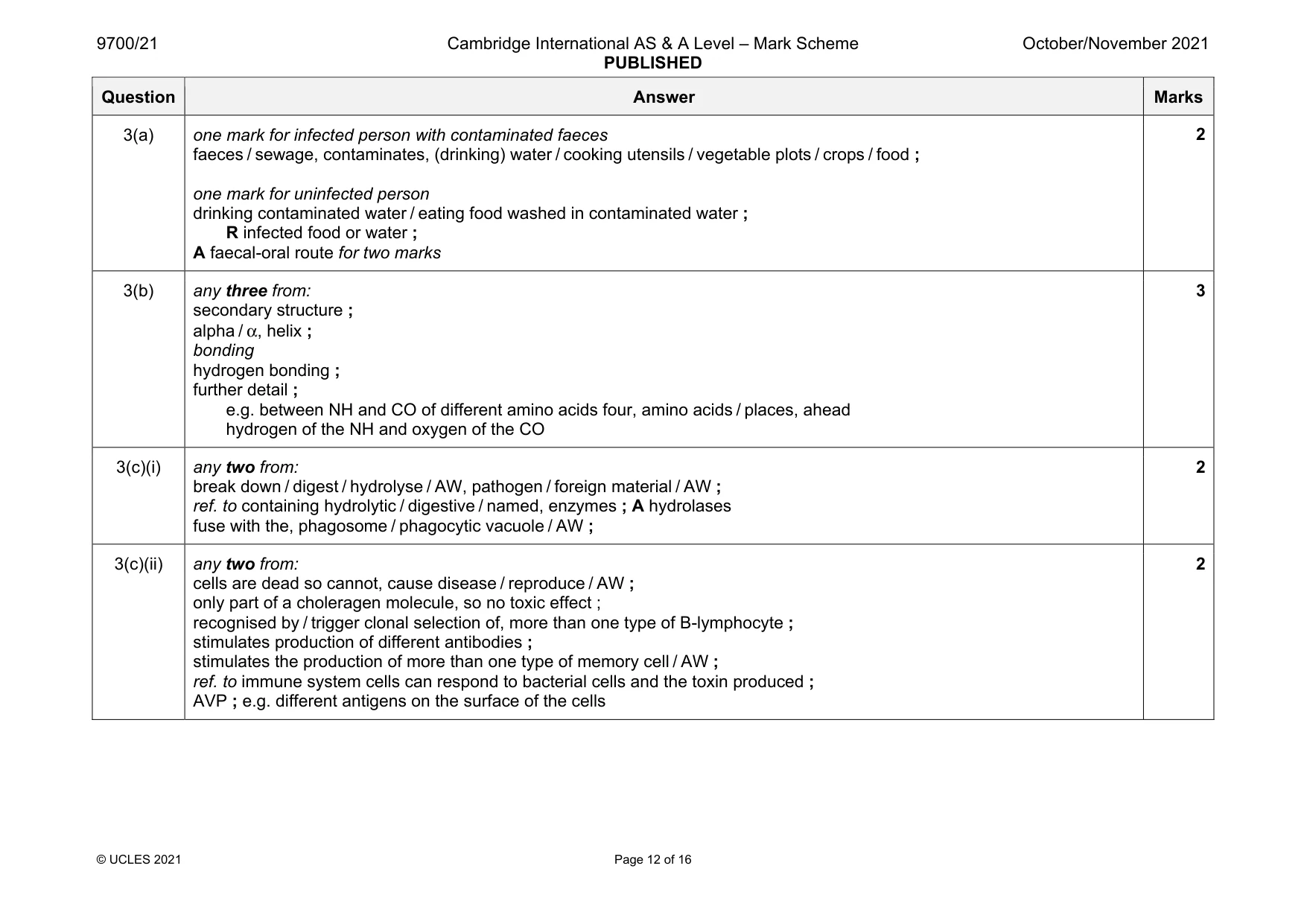
Mark scheme: 3(a) one mark for infected person with contaminated faeces faeces / sewage, contaminates, (drinking) water / cooking utensils / vegetable plots / crops / food ; one mark for uninfected person drinking contaminated water / eating food washed in contaminated water ; R infected food or water ; A faecal-oral route for two marks 3(b) any three from: secondary structure ; alpha / α, helix ; bonding hydrogen bonding ; further detail ; e.g. between NH and CO of different amino acids four, amino acids / places, ahead hydrogen of the NH and oxygen of the CO 3 3(c)(i) any two from: break down / digest / hydrolyse / AW, pathogen / foreign material / AW ; ref. to containing hydrolytic / digestive / named, enzymes ; A hydrolases fuse with the, phagosome / phagocytic vacuole / AW ; 2 3(c)(ii) any two from: cells are dead so cannot, cause disease / reproduce / AW ; only part of a choleragen molecule, so no toxic effect ; recognised by / trigger clonal selection of, more than one type of B-lymphocyte ; stimulates production of different antibodies ; stimulates the production of more than one type of memory cell / AW ; ref. to immune system cells can respond to bacterial cells and the toxin produced ; AVP ; e.g. different antigens on the surface of the cells 2 Question Answer Marks 3(d) any four from: (resistant) (Vibrio cholerae)is not killed by the antibiotic ; A can still reproduce inability to treat people with cholera using antibiotics ; prolonged periods of illness ; (so) increased risk of spread / AW ; increased death rate from cholera ; transfer of antibiotic resistance (alleles) to, other species of bacteria / other strains of V.cholerae ; development of multiple resistance in other species of bacteria ; inability to treat other bacterial diseases ; increased death rate from other bacterial diseases ; need to research alternative antibiotics ; AVP ; 4
Q4 · A drawing made by a student of a plant cell, showing one of the stages of mitosis
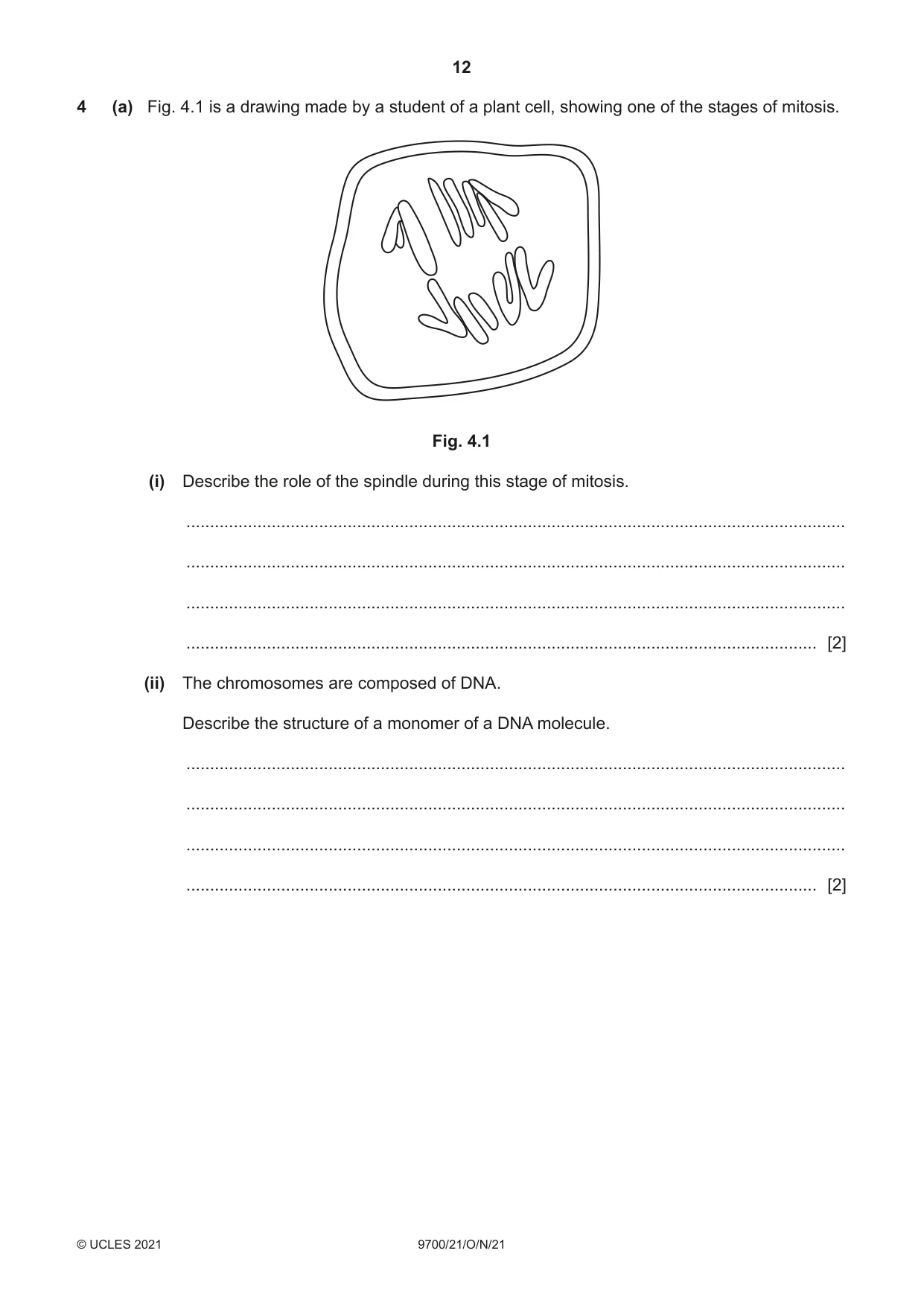
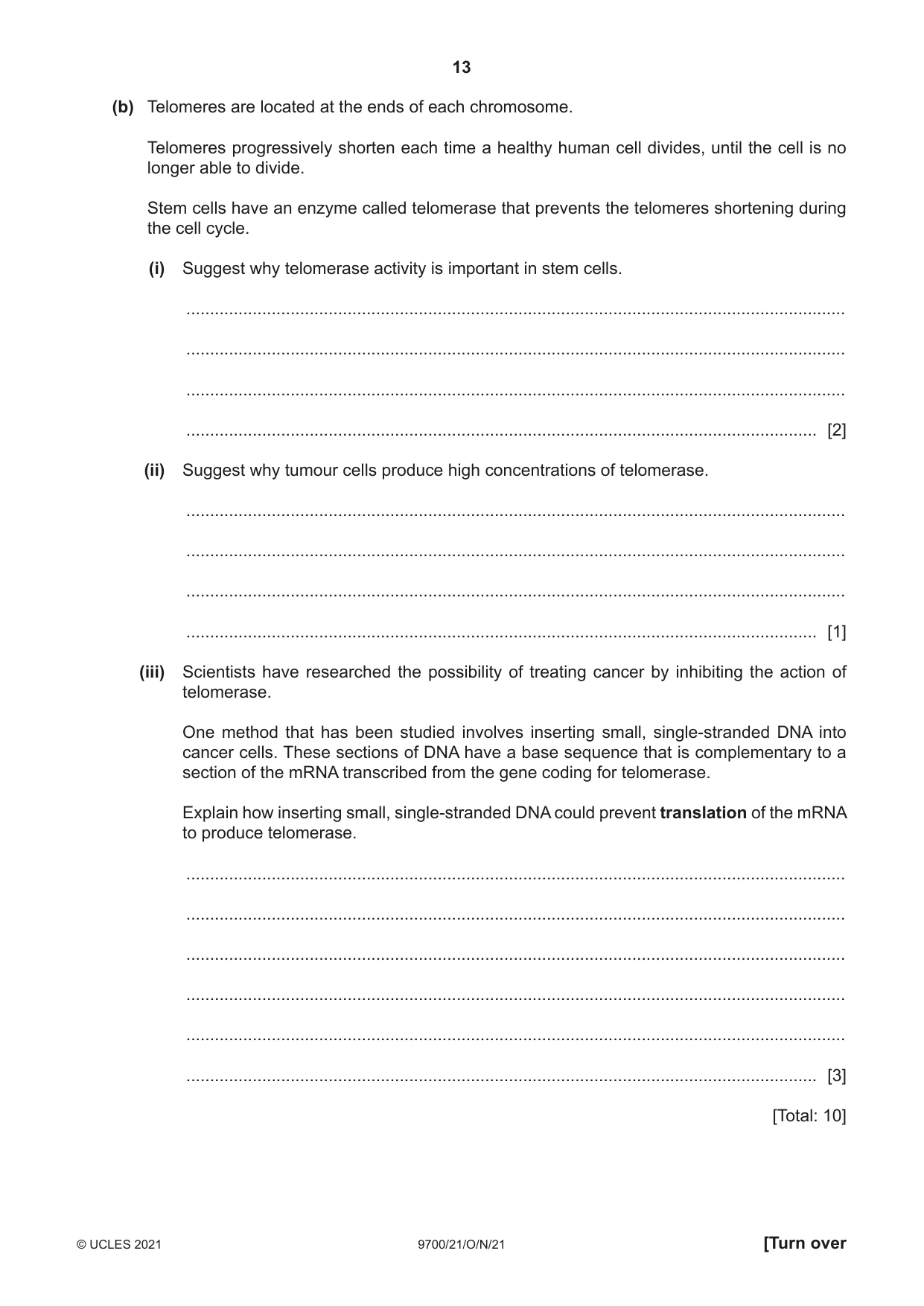
4 (a) Fig. 4.1 is a drawing made by a student of a plant cell, showing one of the stages of mitosis. Fig. 4.1 (i) Describe the role of the spindle during this stage of mitosis. ........................................................................................................................................... ........................................................................................................................................... ........................................................................................................................................... ..................................................................................................................................... [2] (ii) The chromosomes are composed of DNA. Describe the structure of a monomer of a DNA molecule. ........................................................................................................................................... ........................................................................................................................................... ........................................................................................................................................... ..................................................................................................................................... [2] (b) Telomeres are located at the ends of each chromosome. Telomeres progressively shorten each time a healthy human cell divides, until the cell is no longer able to divide. Stem cells have an enzyme called telomerase that prevents the telomeres shortening during the cell cycle. (i) Suggest why telomerase activity is important in stem cells. ........................................................................................................................................... ........................................................................................................................................... ........................................................................................................................................... ..................................................................................................................................... [2] (ii) Suggest why tumour cells produce high concentrations of telomerase. ........................................................................................................................................... ........................................................................................................................................... ........................................................................................................................................... ..................................................................................................................................... [1] (iii) Scientists have researched the possibility of treating cancer by inhibiting the action of telomerase. One method that has been studied involves inserting small, single-stranded DNA into cancer cells. These sections of DNA have a base sequence that is complementary to a section of the mRNA transcribed from the gene coding for telomerase. Explain how inserting small, single-stranded DNA could prevent translation of the mRNA to produce telomerase. ........................................................................................................................................... ........................................................................................................................................... ........................................................................................................................................... ........................................................................................................................................... ........................................................................................................................................... ..................................................................................................................................... [3] [Total: 10]
Mark scheme: 4(a)(i) any two from: microtubules / spindle (fibres), are attached to, centromere / kinetochore ; (spindle) fibres, contract / shorten / retract ; A microtubules disassemble / AW move / pull, (sister) chromatids / (daughter) chromosomes, to opposite poles ; 4(a)(ii) deoxyribose and phosphate and base ; further detail one from diagram / description, of phosphate group and base attached to deoxyribose ; one correctly named base or A,T C and G ; 2 4(b)(i) any two from: allow DNA replication to continue ; idea that stem cell to, self renew / keep dividing ; idea that stem cells differentiate into (named) specialised cells ; idea that mitosis produces cells for, cell replacement / tissue repair ; (maintains telomeres, so) prevents the loss of genes ; 2 Question Answer Marks 4(b)(ii) any one from: (high level of telomerase activity) allows ,continuous / uncontrolled, mitosis / cell division ; idea of allowing shorter cell cycle ; 1 4(b)(iii) any three from: DNA binds to (complementary section of) mRNA / hydrogen bonds form between the complementary bases (of DNA and RNA) ; mRNA cannot bind to the ribosome ; ribosome cannot, move along the mRNA ; consequence e.g. no sites for tRNA to bind / tRNA cannot bring attached amino acid ; tRNA anticodons cannot form hydrogen bonds with mRNA codons ; AVP ; e.g. idea that DNA enters nucleus to bind and mRNA then too large to leave via nuclear pores 3
More questions on Structure of nucleic acids and replication of DNA
Q5 · A student investigated the effects of air movement on the rate of transpiration by using…
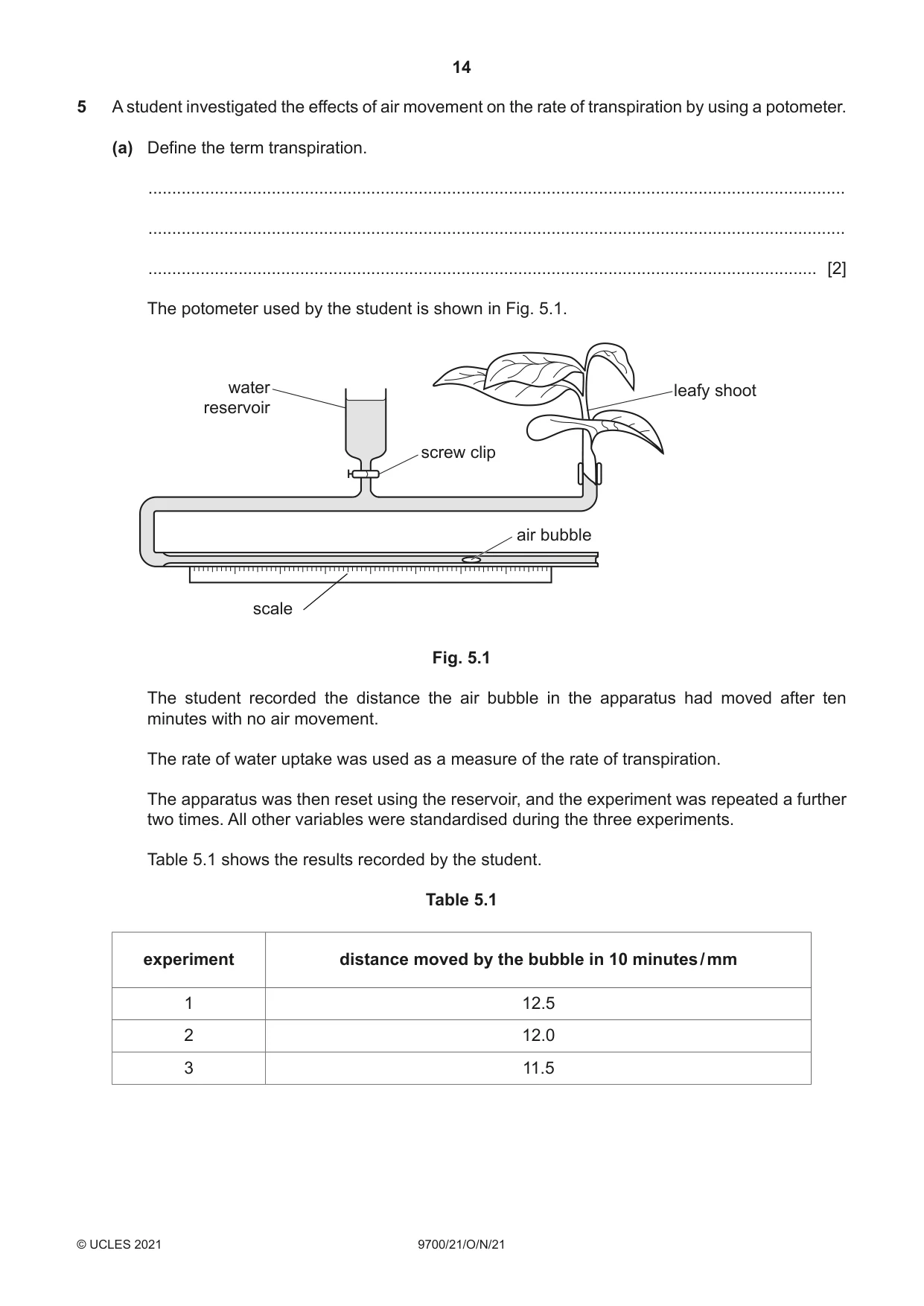
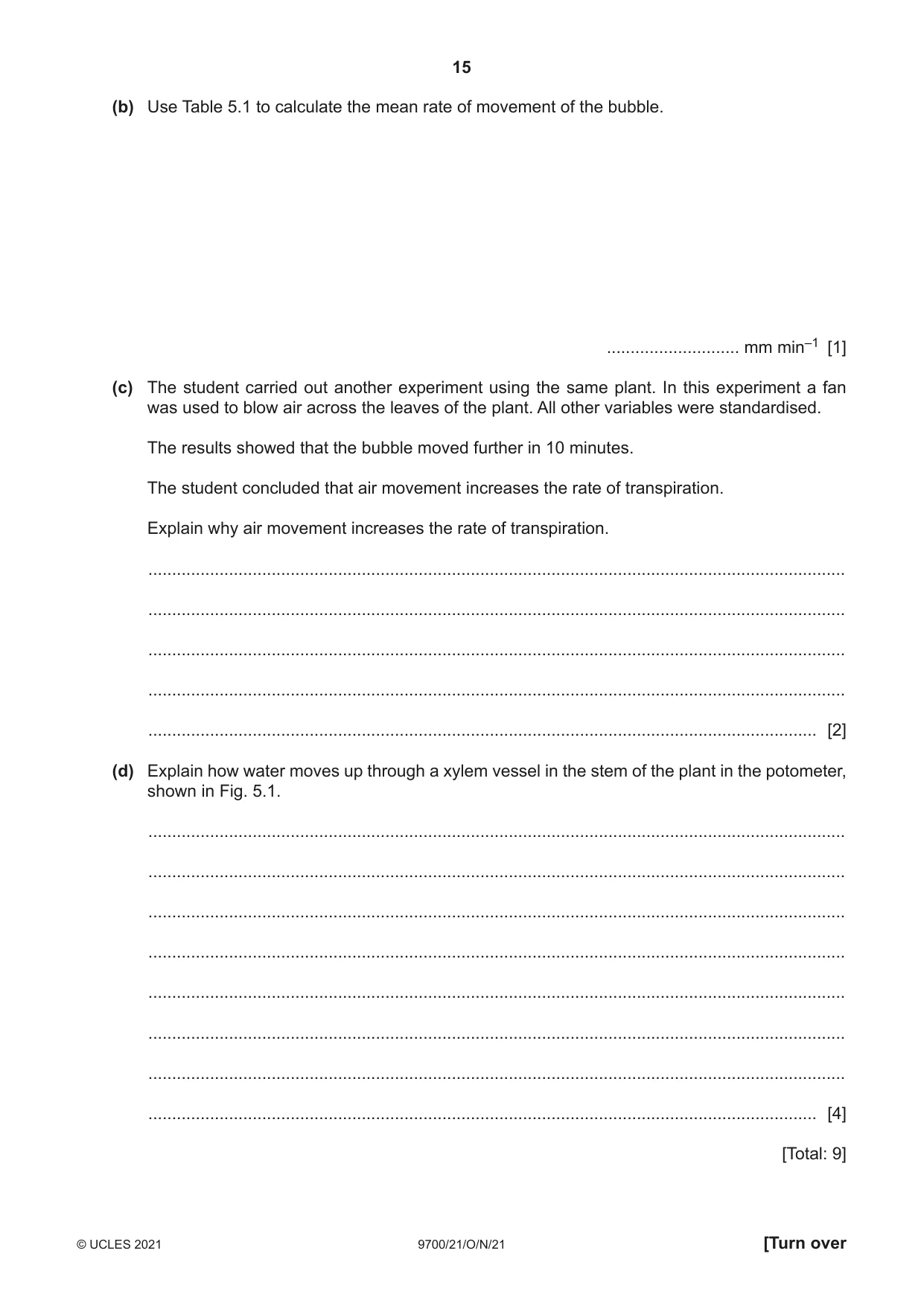
5 A student investigated the effects of air movement on the rate of transpiration by using a potometer. (a) Define the term transpiration. ................................................................................................................................................... ................................................................................................................................................... ............................................................................................................................................. [2] The potometer used by the student is shown in Fig. 5.1. water leafy shoot reservoir screw clip air bubble scale Fig. 5.1 The student recorded the distance the air bubble in the apparatus had moved after ten minutes with no air movement. The rate of water uptake was used as a measure of the rate of transpiration. The apparatus was then reset using the reservoir, and the experiment was repeated a further two times. All other variables were standardised during the three experiments. Table 5.1 shows the results recorded by the student. Table 5.1 experiment distance moved by the bubble in 10 minutes / mm 1 12.5 2 12.0 3 11.5 (b) Use Table 5.1 to calculate the mean rate of movement of the bubble. ............................ mm min–1 [1] (c) The student carried out another experiment using the same plant. In this experiment a fan was used to blow air across the leaves of the plant. All other variables were standardised. The results showed that the bubble moved further in 10 minutes. The student concluded that air movement increases the rate of transpiration. Explain why air movement increases the rate of transpiration. ................................................................................................................................................... ................................................................................................................................................... ................................................................................................................................................... ................................................................................................................................................... ............................................................................................................................................. [2] (d) Explain how water moves up through a xylem vessel in the stem of the plant in the potometer, shown in Fig. 5.1. ................................................................................................................................................... ................................................................................................................................................... ................................................................................................................................................... ................................................................................................................................................... ................................................................................................................................................... ................................................................................................................................................... ................................................................................................................................................... ............................................................................................................................................. [4] [Total: 9]
Mark scheme: 5(a) in context of from a plant loss of water vapour ; I evaporation unqualified from, the aerial parts / leaves ; 2 5(b) 1.2 (mm min–1) ; 1 5(c) any two from: humid air / water vapour, moves away from the leaves ; water potential gradient is steeper ; higher rate of evaporation into the air spaces in the leaf ; 2 Question Answer Marks 5(d) any four from: movement by, cohesion-tension ; cohesion / hydrogen bonds, between water molecules ; A cohesive force (water moves as an) unbroken column / AW ; transpiration pull or column of water, under tension / pulled up ; ref. to adhesion of water molecules to, cellulose / lining / walls (of xylem vessels) ; A adhesive force ref. to hydrophilic / polar, property of cellulose (fibres) ; A hydrophilic / polar, parts of lignin ref. to water potential ; e.g. (evaporation results in) lower water potential at the top of the xylem vessel (water moves) down a water potential gradient / from a region of high water potential to a region of lower water potential 4
Q6 · A diagram of sections through the heart showing two stages of the cardiac cycle, A and B
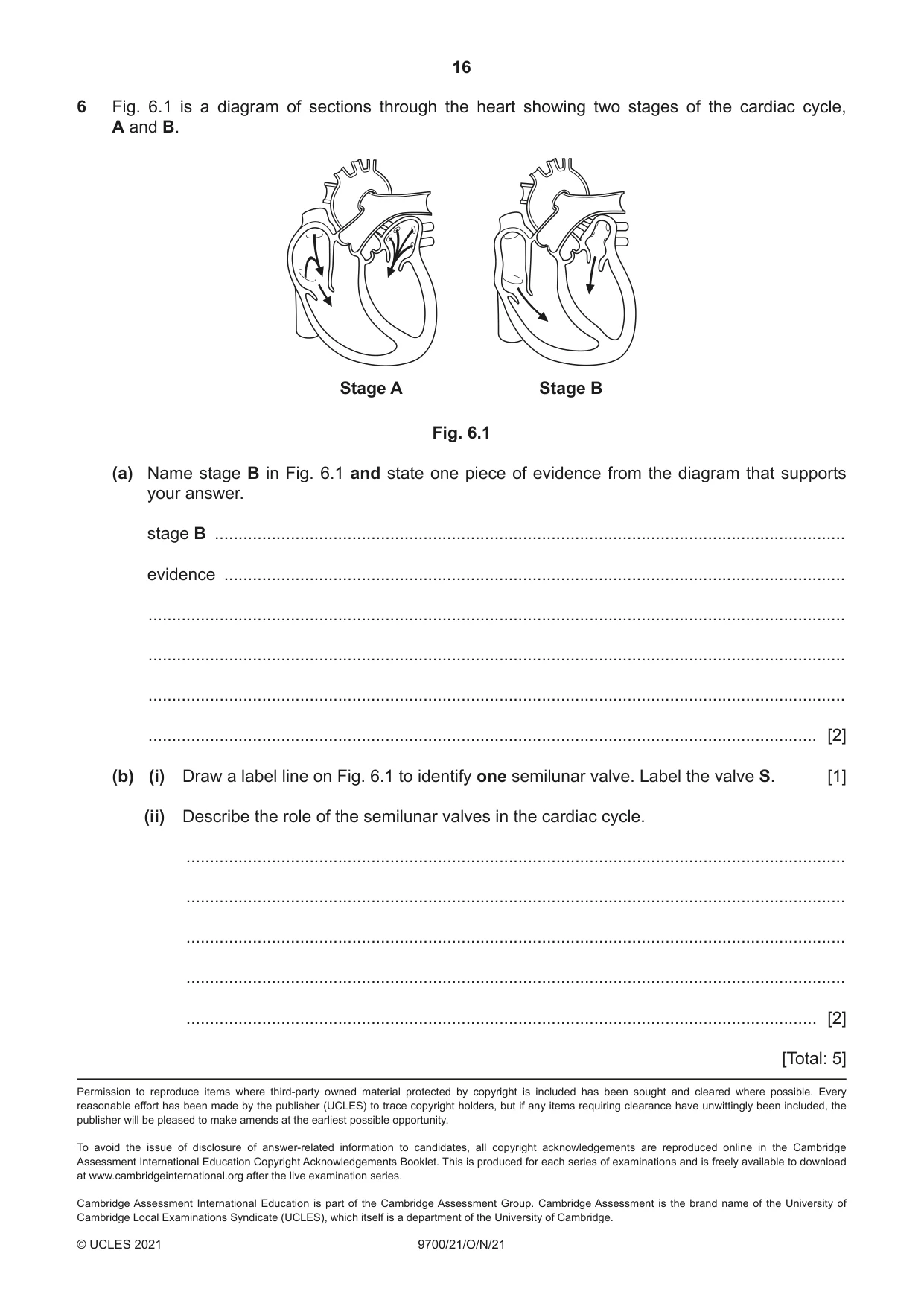
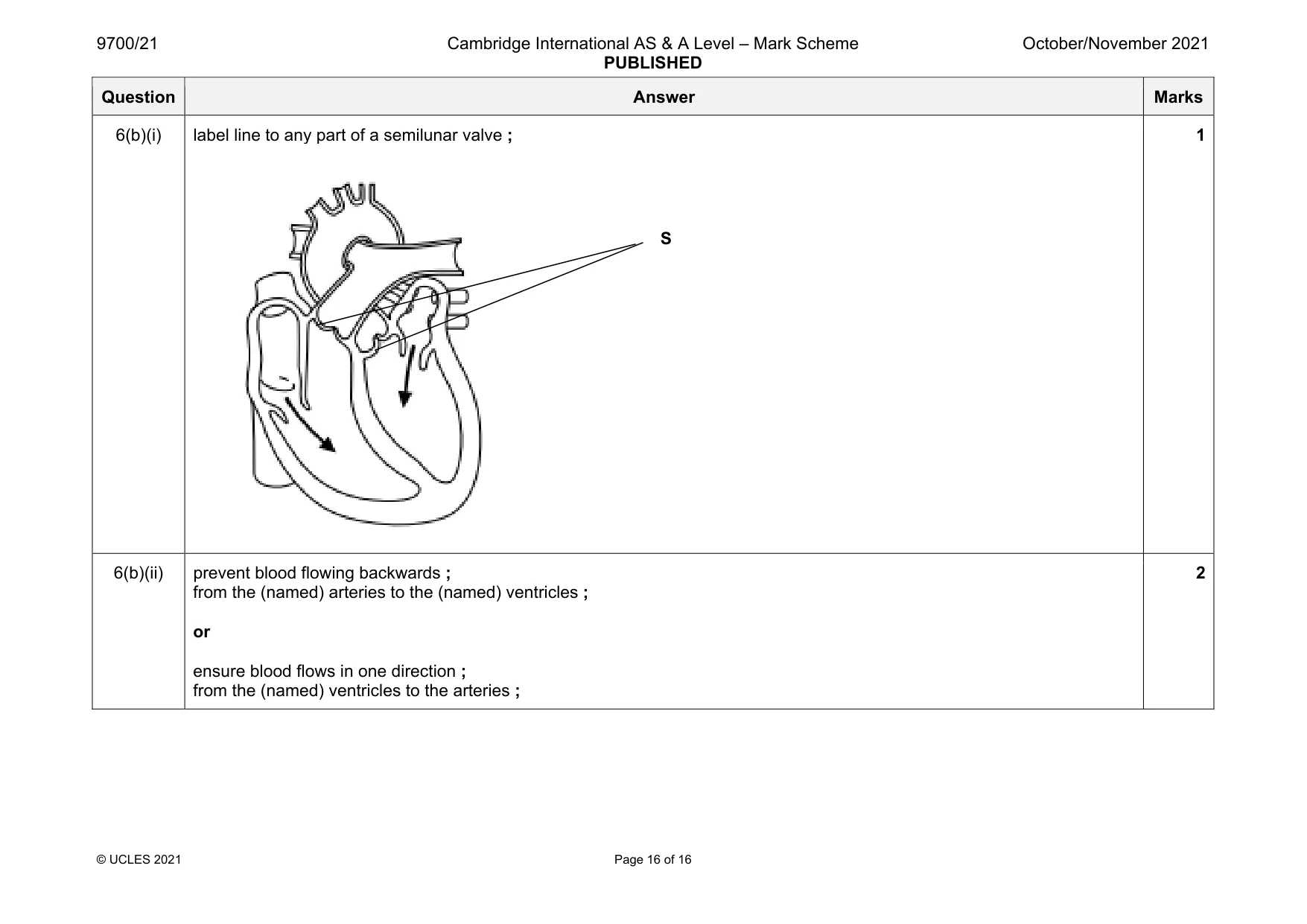
6 Fig. 6.1 is a diagram of sections through the heart showing two stages of the cardiac cycle, A and B. Stage A Stage B Fig. 6.1 (a) Name stage B in Fig. 6.1 and state one piece of evidence from the diagram that supports your answer. stage B ..................................................................................................................................... evidence ................................................................................................................................... ................................................................................................................................................... ................................................................................................................................................... ................................................................................................................................................... ............................................................................................................................................. [2] (b) (i) Draw a label line on Fig. 6.1 to identify one semilunar valve. Label the valve S. [1] (ii) Describe the role of the semilunar valves in the cardiac cycle. ........................................................................................................................................... ........................................................................................................................................... ........................................................................................................................................... ........................................................................................................................................... ..................................................................................................................................... [2] [Total: 5]
Mark scheme: 6(a) atrial systole ; A atrial contraction and one from: volume of the atria is small(er) than in A ; A atria in stage B are smaller than those in stage A the atrioventricular / bicuspid and tricuspid, valves are open (and semilunar valves are closed) ; the blood is flowing (from the atria) into the ventricles ; if name of stage is incorrect accept correct description of atrial systole, no ecf for incorrectly named stage Question Answer Marks 6(b)(i) label line to any part of a semilunar valve ; 1 6(b)(ii) prevent blood flowing backwards ; from the (named) arteries to the (named) ventricles ; or ensure blood flows in one direction ; from the (named) ventricles to the arteries ; 2 S
What was in this paper
The subtopics covered by these 6 questions, and how many questions each got. Open one in a new tab to see every Cambridge question on it.
What you needed in this session
Cambridge’s own grade thresholds for 2021 Oct/Nov, Paper 2 · Variant 1. A higher threshold means an easier paper — the bar moves with how the cohort did.