Cambridge A Level Biology 9700 — 2016 Oct/Nov Paper 2 · Variant 3
9700/23/O/N/16 · 60 marks · ≈68 min
The question paper and its mark scheme, free to read here and free to download. This is Cambridge’s own paper, exactly as it was sat.
Question paper16 pages


Mark scheme9 pages
Answers below. Sit the paper first if you are practising.
Paper as text
Question paper, page 1
This document consists of 14 printed pages and 2 blank pages. DC (CW/FD) 109122/3 © UCLES 2016 [Turn over Cambridge International Examinations Cambridge International Advanced Subsidiary and Advanced Level * 3 1 6 3 1 8 7 2 1 3 * BIOLOGY 9700/23 Paper 2 AS Level Structured Questions October/November 2016 1 hour 15 minutes Candidates answer on the Question Paper. No Additional Materials are required. READ THESE INSTRUCTIONS FIRST Write your Centre number, candidate number and name on all the work you hand in. Write in dark blue or black pen. You may use an HB pencil for any diagrams or graphs. Do not use staples, paper clips, glue or correction fluid. DO NOT WRITE IN ANY BARCODES. Answer all questions. Electronic calculators may be used. You may lose marks if you do not show your working or if you do not use appropriate units. At the end of the examination, fasten all your work securely together. The number of marks is given in brackets [ ] at the end of each question or part question.
Question paper, page 2
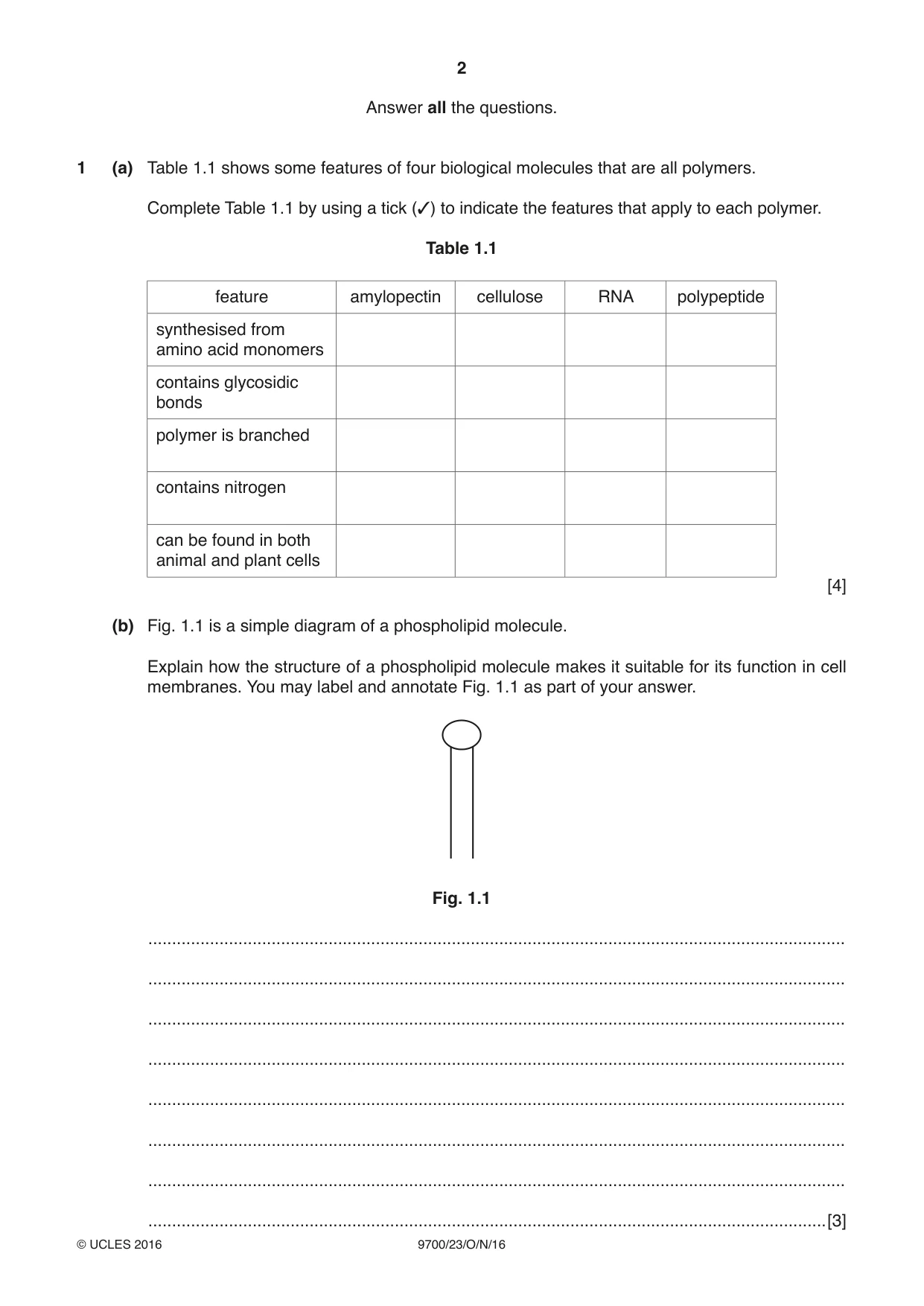
2 9700/23/O/N/16 © UCLES 2016 Answer all the questions. 1 (a) Table 1.1 shows some features of four biological molecules that are all polymers. Complete Table 1.1 by using a tick (3) to indicate the features that apply to each polymer. Table 1.1 feature amylopectin cellulose RNA polypeptide synthesised from amino acid monomers contains glycosidic bonds polymer is branched contains nitrogen can be found in both animal and plant cells [4] (b) Fig. 1.1 is a simple diagram of a phospholipid molecule. Explain how the structure of a phospholipid molecule makes it suitable for its function in cell membranes. You may label and annotate Fig. 1.1 as part of your answer. Fig. 1.1 … … … … … … … …[3]
Question paper, page 3
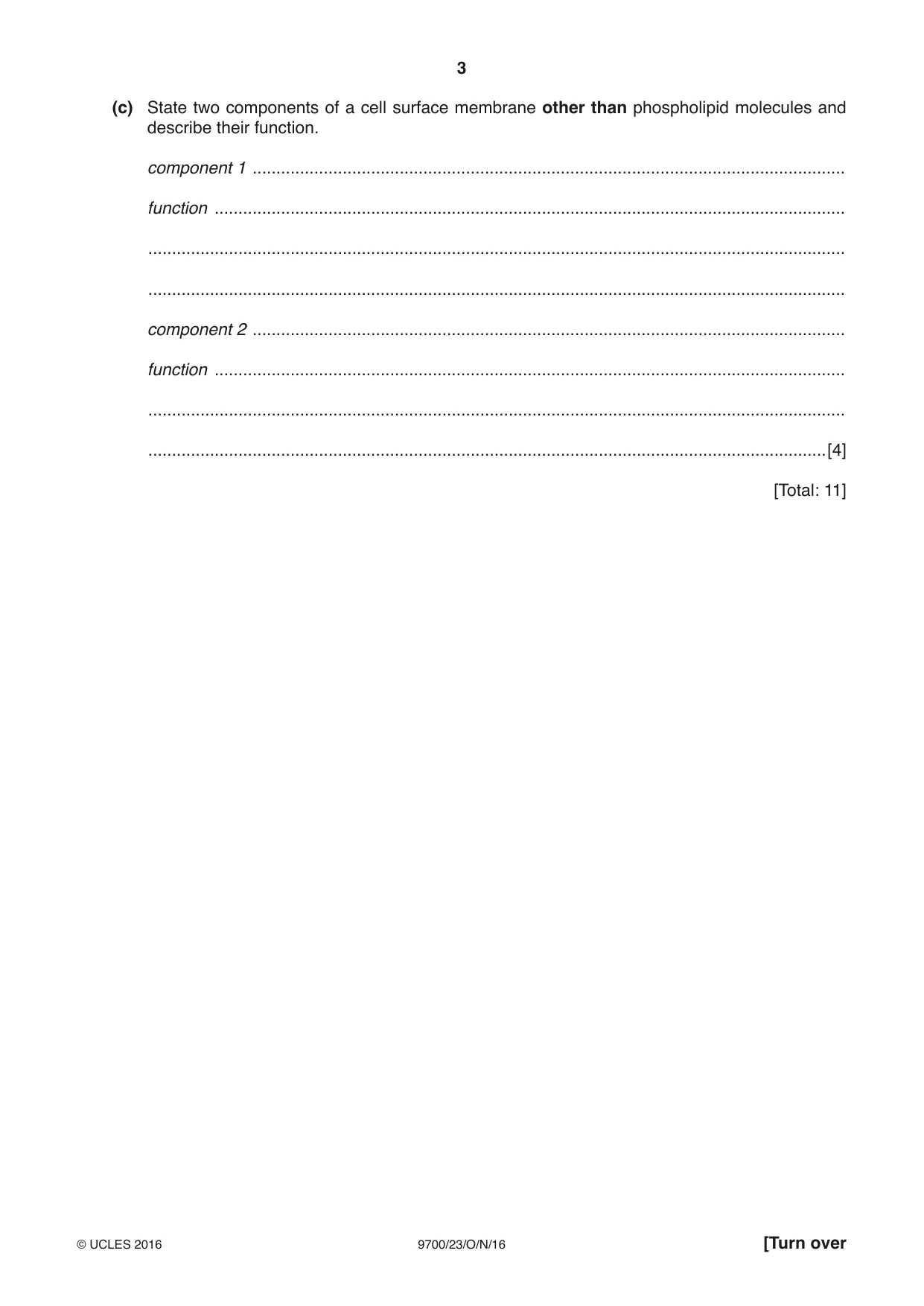
3 9700/23/O/N/16 © UCLES 2016 [Turn over (c) State two components of a cell surface membrane other than phospholipid molecules and describe their function. component 1 … function … … … component 2 … function … … …[4] [Total: 11]
Question paper, page 4
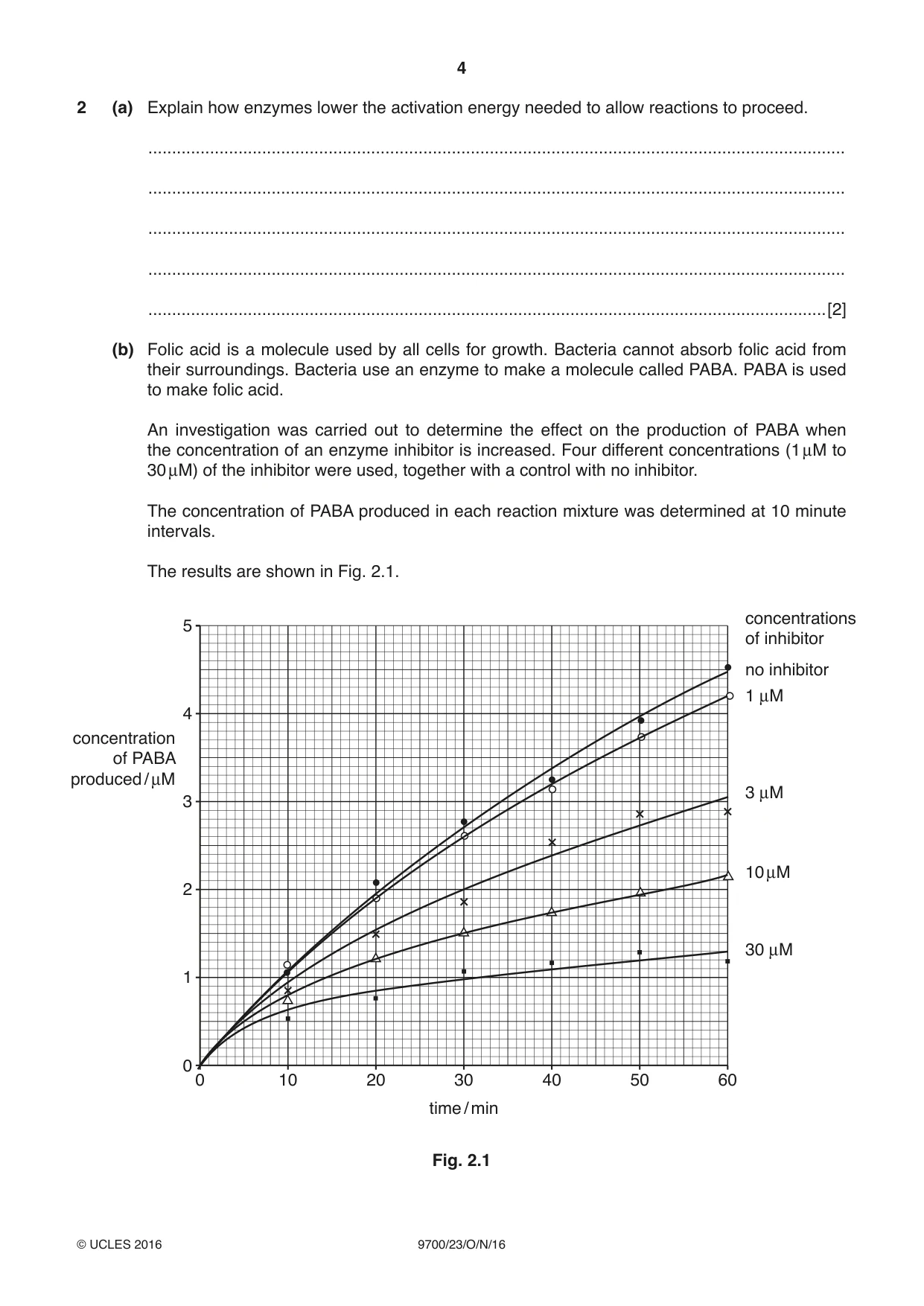
4 9700/23/O/N/16 © UCLES 2016 2 (a) Explain how enzymes lower the activation energy needed to allow reactions to proceed. … … … … …[2] (b) Folic acid is a molecule used by all cells for growth. Bacteria cannot absorb folic acid from their surroundings. Bacteria use an enzyme to make a molecule called PABA. PABA is used to make folic acid. An investigation was carried out to determine the effect on the production of PABA when the concentration of an enzyme inhibitor is increased. Four different concentrations (1 µM to 30 µM) of the inhibitor were used, together with a control with no inhibitor. The concentration of PABA produced in each reaction mixture was determined at 10 minute intervals. The results are shown in Fig. 2.1. 0 0 10 20 30 time / min 40 50 60 1 2 3 concentration of PABA produced / μM 4 5 concentrations of inhibitor no inhibitor 1 μM 3 μM 10 μM 30 μM Fig. 2.1
Question paper, page 5
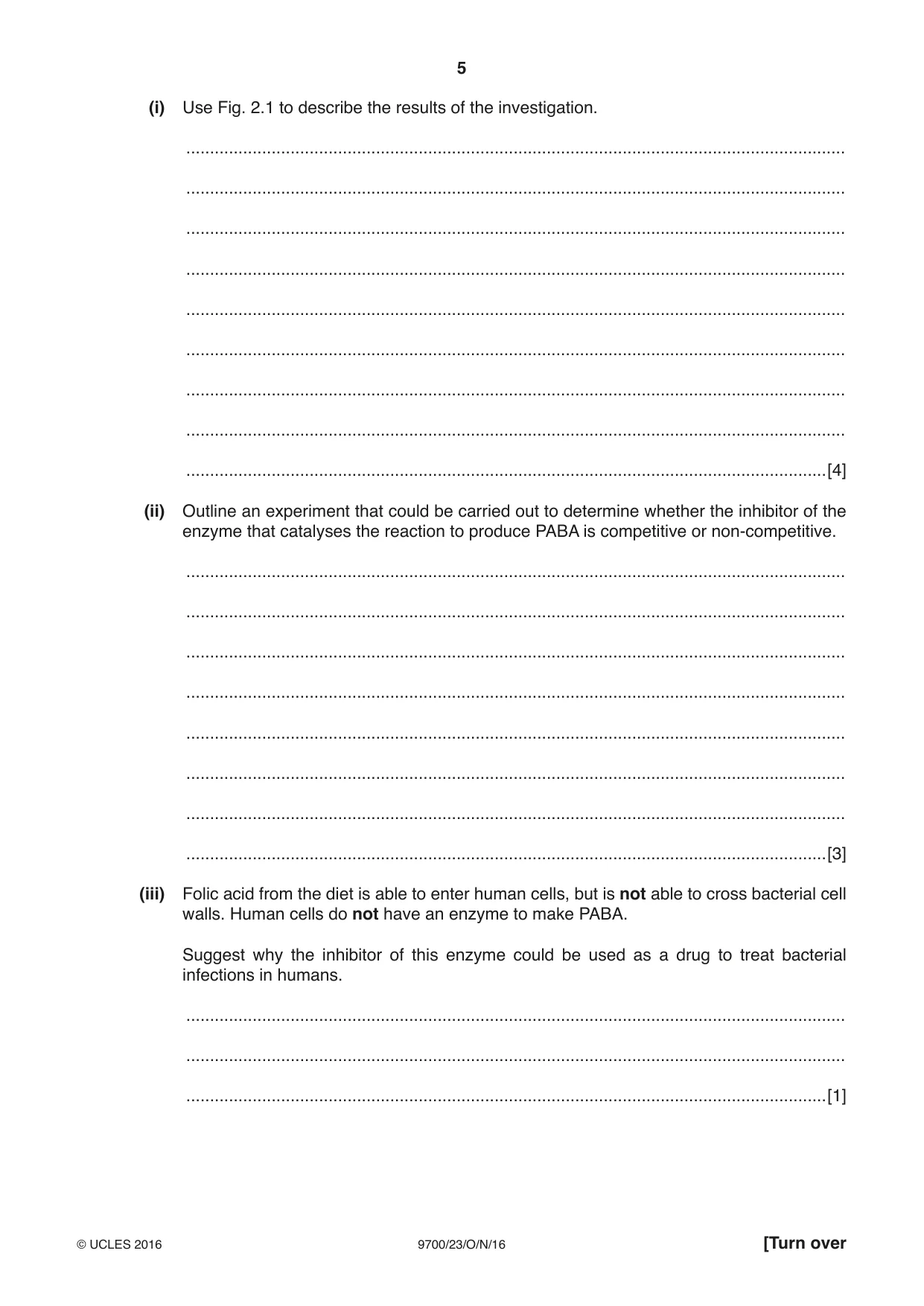
5 9700/23/O/N/16 © UCLES 2016 [Turn over (i) Use Fig. 2.1 to describe the results of the investigation. … … … … … … … … …[4] (ii) Outline an experiment that could be carried out to determine whether the inhibitor of the enzyme that catalyses the reaction to produce PABA is competitive or non-competitive. … … … … … … … …[3] (iii) Folic acid from the diet is able to enter human cells, but is not able to cross bacterial cell walls. Human cells do not have an enzyme to make PABA. Suggest why the inhibitor of this enzyme could be used as a drug to treat bacterial infections in humans. … … …[1]
Question paper, page 6
6 9700/23/O/N/16 © UCLES 2016 (iv) Suggest why there are few drugs that have any effect on viruses. … … … … …[2] (c) The search for new antibiotics is important because there are many strains of bacteria that are resistant to antibiotics. Suggest two ways to reduce the spread of antibiotic resistance. 1 … … 2 … …[2] [Total: 14]
Question paper, page 7
7 9700/23/O/N/16 © UCLES 2016 [Turn over BLANK PAGE
Question paper, page 8
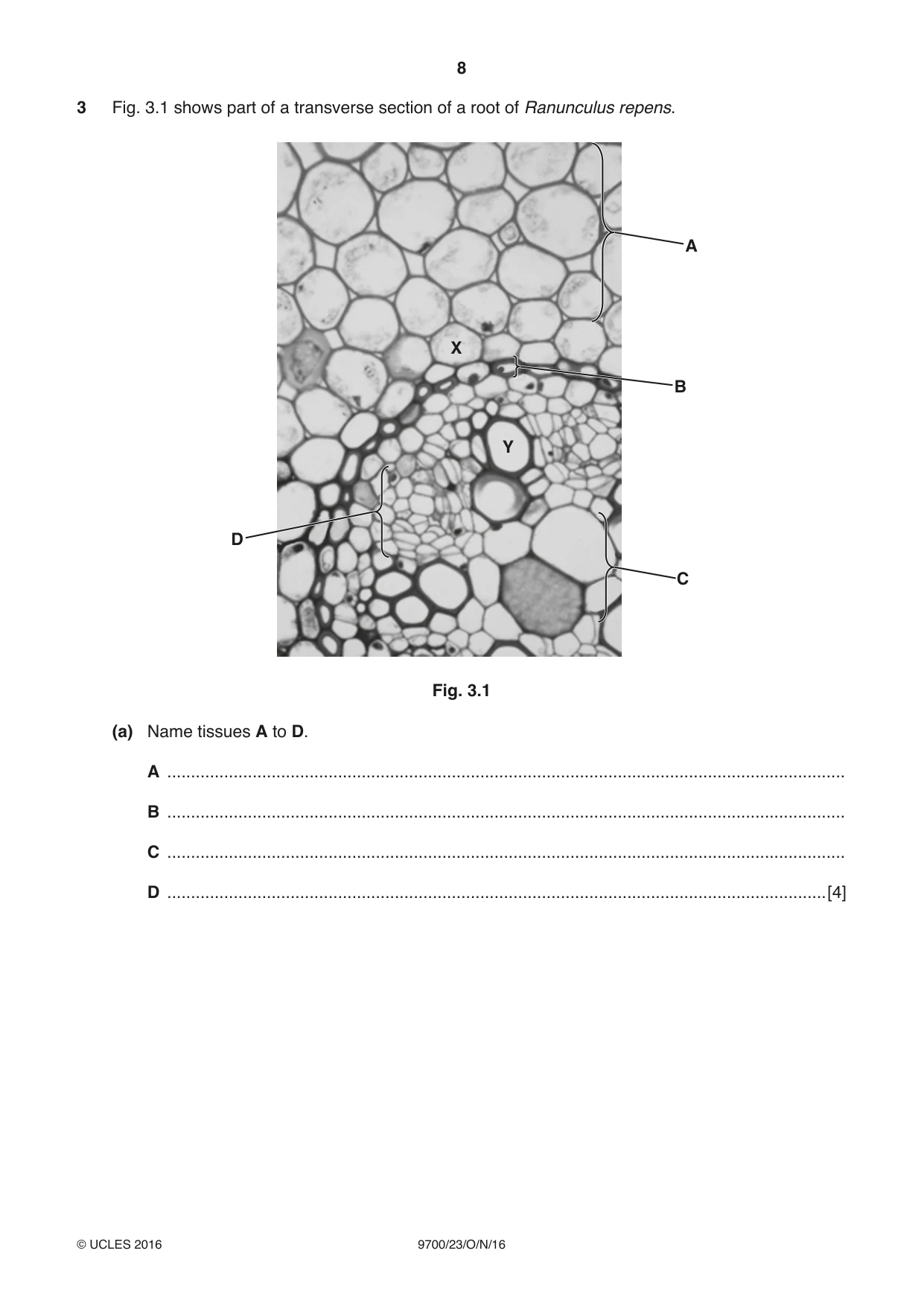
8 9700/23/O/N/16 © UCLES 2016 3 Fig. 3.1 shows part of a transverse section of a root of Ranunculus repens. X Y A B C D Fig. 3.1 (a) Name tissues A to D. A … B … C … D …[4]
Question paper, page 9
9 9700/23/O/N/16 © UCLES 2016 [Turn over (b) Explain how water moves from X to Y. … … … … … … … … …[4] [Total: 8]
Question paper, page 10
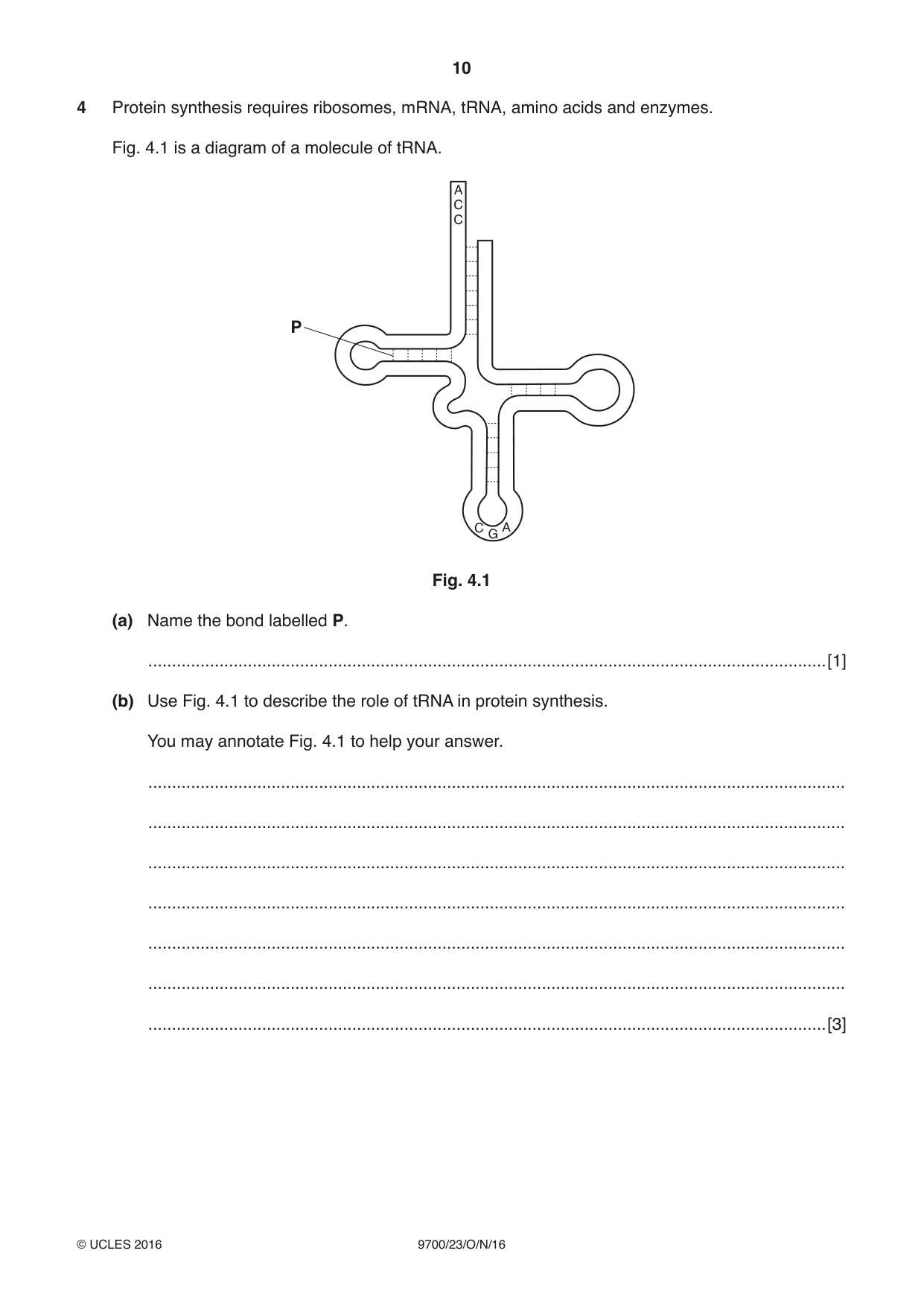
10 9700/23/O/N/16 © UCLES 2016 4 Protein synthesis requires ribosomes, mRNA, tRNA, amino acids and enzymes. Fig. 4.1 is a diagram of a molecule of tRNA. A C G A C C P Fig. 4.1 (a) Name the bond labelled P. …[1] (b) Use Fig. 4.1 to describe the role of tRNA in protein synthesis. You may annotate Fig. 4.1 to help your answer. … … … … … … …[3]
Question paper, page 11
11 9700/23/O/N/16 © UCLES 2016 [Turn over (c) tRNA molecules are synthesised inside the nucleus of eukaryotic cells. Outline the process by which tRNA molecules are synthesised in the nucleus. … … … … … … …[3] [Total: 7]
Question paper, page 12
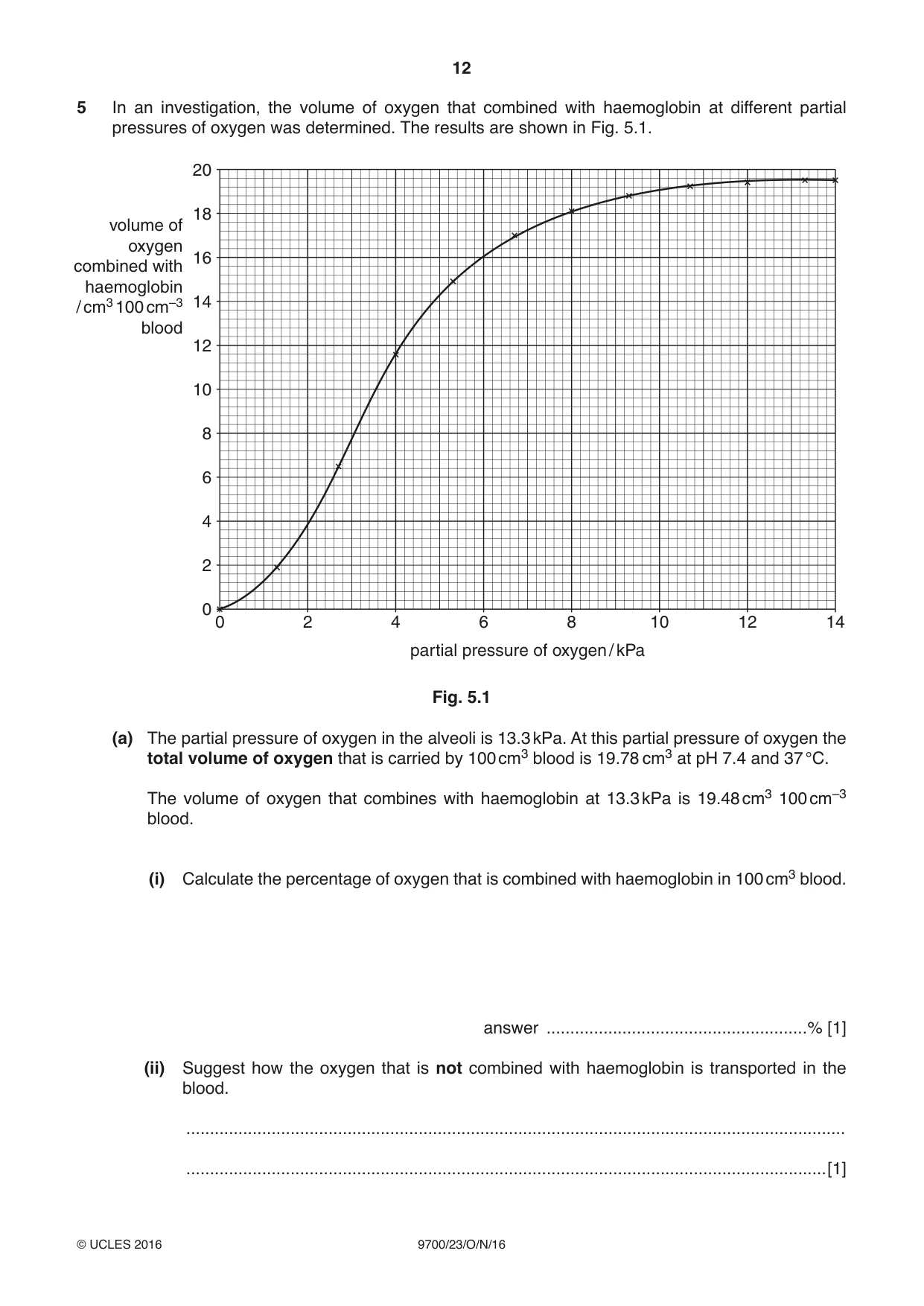
12 9700/23/O/N/16 © UCLES 2016 5 In an investigation, the volume of oxygen that combined with haemoglobin at different partial pressures of oxygen was determined. The results are shown in Fig. 5.1. 0 0 4 8 12 16 20 2 6 10 14 volume of oxygen combined with haemoglobin / cm3 100 cm–3 blood 18 2 4 6 8 partial pressure of oxygen / kPa 10 12 14 Fig. 5.1 (a) The partial pressure of oxygen in the alveoli is 13.3 kPa. At this partial pressure of oxygen the total volume of oxygen that is carried by 100 cm3 blood is 19.78 cm3 at pH 7.4 and 37 °C. The volume of oxygen that combines with haemoglobin at 13.3 kPa is 19.48 cm3 100 cm–3 blood. (i) Calculate the percentage of oxygen that is combined with haemoglobin in 100 cm3 blood. answer …% [1] (ii) Suggest how the oxygen that is not combined with haemoglobin is transported in the blood. … …[1]
Question paper, page 13
13 9700/23/O/N/16 © UCLES 2016 [Turn over (iii) Explain why a long-term smoker would have a lower volume of oxygen combined with haemoglobin in the alveoli at 13.3 kPa. … … … … …[2] (b) Describe the role of carbonic anhydrase in the transport of carbon dioxide. … … … … … … …[3] (c) The investigation was repeated in the presence of carbon dioxide. The volumes of oxygen combined with haemoglobin at partial pressures of oxygen below 8.0 kPa were less than shown in Fig. 5.1. Name this effect and explain the advantage of this decrease at partial pressures of oxygen below 8.0 kPa. name … advantage … … … … … … …[3] [Total: 10]
Question paper, page 14
14 9700/23/O/N/16 © UCLES 2016 6 Measles is a highly infectious disease. (a) Name the pathogen that causes measles. …[1] The number of cases of measles is reported to the World Health Organization (WHO) by countries throughout the world so that global data are collected. Fig. 6.1 shows the global data collected between January 2008 and December 2012. 0 5000 Jan 2008 Mar May Jul Sep Nov Jan 2009 Mar May Jul Sep Nov Jan 2010 Mar May Jul Sep Nov Jan 2011 Mar May Jul Sep Nov Jan 2012 Mar May Jul Sep Nov 10 000 15 000 20 000 25 000 number of cases Key Africa Rest of the world 30 000 35 000 40 000 45 000 Fig. 6.1 (b) Use the data in Fig. 6.1 to describe the pattern shown in the number of cases of measles reported to the WHO between January 2008 and December 2012. … … … … … … …[3]
Question paper, page 15
15 9700/23/O/N/16 © UCLES 2016 (c) The WHO is coordinating a vaccination campaign to reduce the number of cases of measles. Between seven to ten days after receiving the vaccination for measles the concentration of antibodies in the blood begins to increase. Describe what happens in the body after the injection of a measles vaccine until the concentration of antibodies in the blood begins to increase. … … … … … … … … …[4] (d) Explain why countries that have established vaccination programmes still have cases of measles. … … … … …[2] [Total: 10]
Question paper, page 16
16 9700/23/O/N/16 © UCLES 2016 BLANK PAGE Permission to reproduce items where third-party owned material protected by copyright is included has been sought and cleared where possible. Every reasonable effort has been made by the publisher (UCLES) to trace copyright holders, but if any items requiring clearance have unwittingly been included, the publisher will be pleased to make amends at the earliest possible opportunity. To avoid the issue of disclosure of answer-related information to candidates, all copyright acknowledgements are reproduced online in the Cambridge International Examinations Copyright Acknowledgements Booklet. This is produced for each series of examinations and is freely available to download at www.cie.org.uk after the live examination series. Cambridge International Examinations is part of the Cambridge Assessment Group. Cambridge Assessment is the brand name of University of Cambridge Local Examinations Syndicate (UCLES), which is itself a department of the University of Cambridge.
Mark scheme, page 1
® IGCSE is the registered trademark of Cambridge International Examinations. This document consists of 9 printed pages. © UCLES 2016 [Turn over Cambridge International Examinations Cambridge International Advanced Subsidiary and Advanced Level BIOLOGY 9700/23 Paper 2 AS Level Structured Questions October/November 2016 MARK SCHEME Maximum Mark: 60 Published This mark scheme is published as an aid to teachers and candidates, to indicate the requirements of the examination. It shows the basis on which Examiners were instructed to award marks. It does not indicate the details of the discussions that took place at an Examiners’ meeting before marking began, which would have considered the acceptability of alternative answers. Mark schemes should be read in conjunction with the question paper and the Principal Examiner Report for Teachers. Cambridge will not enter into discussions about these mark schemes. Cambridge is publishing the mark schemes for the October/November 2016 series for most Cambridge IGCSE®, Cambridge International A and AS Level components and some Cambridge O Level components.
Mark scheme, page 2
Page 2 Mark Scheme Syllabus Paper Cambridge International AS/A Level – October/November 2016 9700 23 © UCLES 2016 Mark scheme abbreviations: ; separates marking points / alternative answers for the same point R reject A accept (for answers correctly cued by the question, or by extra guidance) AW alternative wording (where responses vary more than usual) underline actual word given must be used by candidate (grammatical variants accepted) max indicates the maximum number of marks that can be given ora or reverse argument mp marking point (with relevant number) ecf error carried forward I ignore AVP alternative valid point (examples given)
Mark scheme, page 3
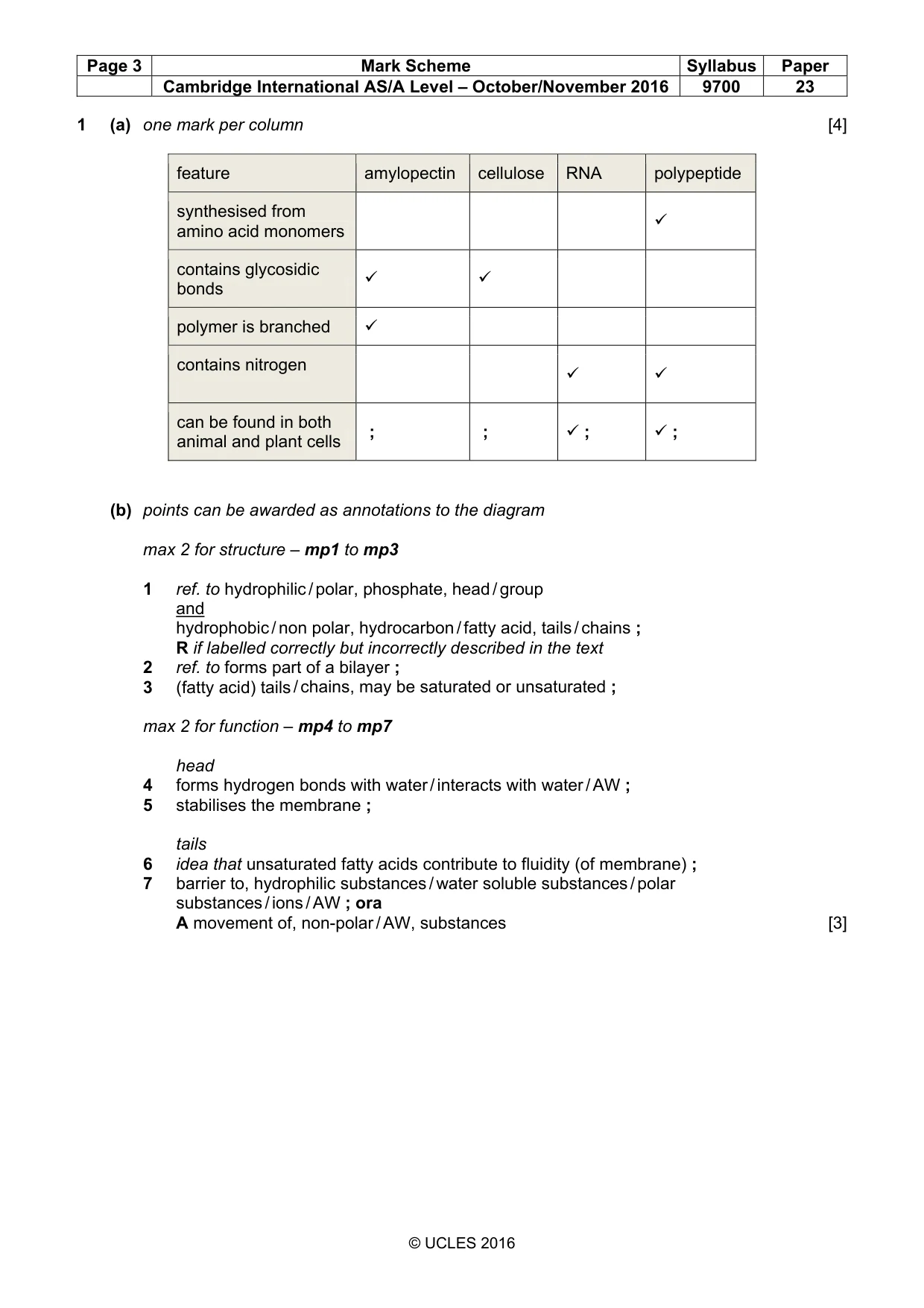
Page 3 Mark Scheme Syllabus Paper Cambridge International AS/A Level – October/November 2016 9700 23 © UCLES 2016 1 (a) one mark per column [4] feature amylopectin cellulose RNA polypeptide synthesised from amino acid monomers 9 contains glycosidic bonds 9 9 polymer is branched 9 contains nitrogen 9 9 can be found in both animal and plant cells ; ; 9 ; 9 ; (b) points can be awarded as annotations to the diagram max 2 for structure – mp1 to mp3 1 ref. to hydrophilic / polar, phosphate, head / group and hydrophobic / non polar, hydrocarbon / fatty acid, tails / chains ; R if labelled correctly but incorrectly described in the text 2 ref. to forms part of a bilayer ; 3 (fatty acid) tails / chains, may be saturated or unsaturated ; max 2 for function – mp4 to mp7 head 4 forms hydrogen bonds with water / interacts with water / AW ; 5 stabilises the membrane ; tails 6 idea that unsaturated fatty acids contribute to fluidity (of membrane) ; 7 barrier to, hydrophilic substances / water soluble substances / polar substances / ions / AW ; ora A movement of, non-polar / AW, substances [3]
Mark scheme, page 4
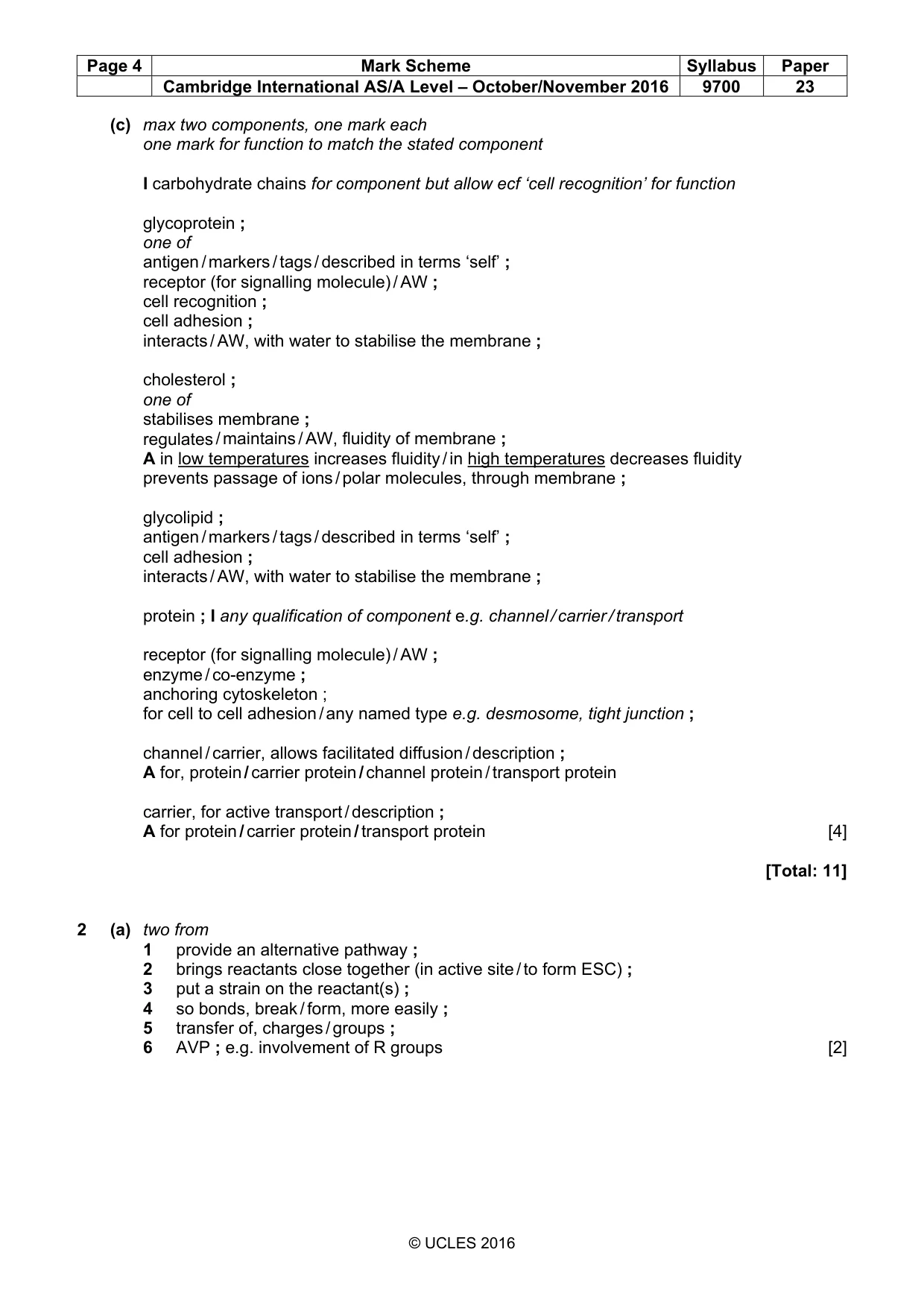
Page 4 Mark Scheme Syllabus Paper Cambridge International AS/A Level – October/November 2016 9700 23 © UCLES 2016 (c) max two components, one mark each one mark for function to match the stated component I carbohydrate chains for component but allow ecf ‘cell recognition’ for function glycoprotein ; one of antigen / markers / tags / described in terms ‘self’ ; receptor (for signalling molecule) / AW ; cell recognition ; cell adhesion ; interacts / AW, with water to stabilise the membrane ; cholesterol ; one of stabilises membrane ; regulates / maintains / AW, fluidity of membrane ; A in low temperatures increases fluidity / in high temperatures decreases fluidity prevents passage of ions / polar molecules, through membrane ; glycolipid ; antigen / markers / tags / described in terms ‘self’ ; cell adhesion ; interacts / AW, with water to stabilise the membrane ; protein ; I any qualification of component e.g. channel / carrier / transport receptor (for signalling molecule) / AW ; enzyme / co-enzyme ; anchoring cytoskeleton ; for cell to cell adhesion / any named type e.g. desmosome, tight junction ; channel / carrier, allows facilitated diffusion / description ; A for, protein / carrier protein / channel protein / transport protein carrier, for active transport / description ; A for protein / carrier protein / transport protein [4] [Total: 11] 2 (a) two from 1 provide an alternative pathway ; 2 brings reactants close together (in active site / to form ESC) ; 3 put a strain on the reactant(s) ; 4 so bonds, break / form, more easily ; 5 transfer of, charges / groups ; 6 AVP ; e.g. involvement of R groups [2]
Mark scheme, page 5
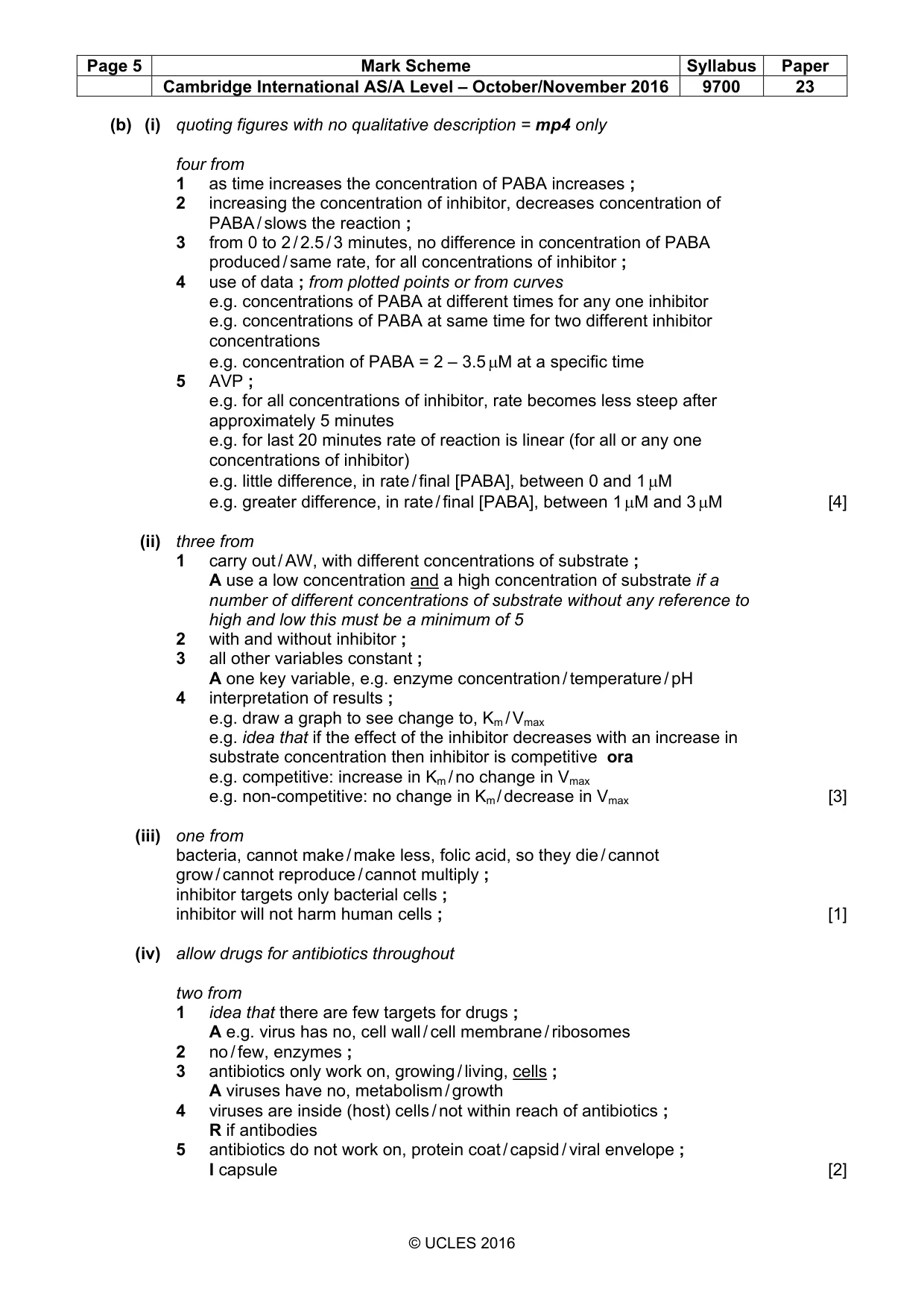
Page 5 Mark Scheme Syllabus Paper Cambridge International AS/A Level – October/November 2016 9700 23 © UCLES 2016 (b) (i) quoting figures with no qualitative description = mp4 only four from 1 as time increases the concentration of PABA increases ; 2 increasing the concentration of inhibitor, decreases concentration of PABA / slows the reaction ; 3 from 0 to 2 / 2.5 / 3 minutes, no difference in concentration of PABA produced / same rate, for all concentrations of inhibitor ; 4 use of data ; from plotted points or from curves e.g. concentrations of PABA at different times for any one inhibitor e.g. concentrations of PABA at same time for two different inhibitor concentrations e.g. concentration of PABA = 2 – 3.5 µM at a specific time 5 AVP ; e.g. for all concentrations of inhibitor, rate becomes less steep after approximately 5 minutes e.g. for last 20 minutes rate of reaction is linear (for all or any one concentrations of inhibitor) e.g. little difference, in rate / final [PABA], between 0 and 1 µM e.g. greater difference, in rate / final [PABA], between 1 µM and 3 µM [4] (ii) three from 1 carry out / AW, with different concentrations of substrate ; A use a low concentration and a high concentration of substrate if a number of different concentrations of substrate without any reference to high and low this must be a minimum of 5 2 with and without inhibitor ; 3 all other variables constant ; A one key variable, e.g. enzyme concentration / temperature / pH 4 interpretation of results ; e.g. draw a graph to see change to, Km / Vmax e.g. idea that if the effect of the inhibitor decreases with an increase in substrate concentration then inhibitor is competitive ora e.g. competitive: increase in Km / no change in Vmax e.g. non-competitive: no change in Km / decrease in Vmax [3] (iii) one from bacteria, cannot make / make less, folic acid, so they die / cannot grow / cannot reproduce / cannot multiply ; inhibitor targets only bacterial cells ; inhibitor will not harm human cells ; [1] (iv) allow drugs for antibiotics throughout two from 1 idea that there are few targets for drugs ; A e.g. virus has no, cell wall / cell membrane / ribosomes 2 no / few, enzymes ; 3 antibiotics only work on, growing / living, cells ; A viruses have no, metabolism / growth 4 viruses are inside (host) cells / not within reach of antibiotics ; R if antibodies 5 antibiotics do not work on, protein coat / capsid / viral envelope ; I capsule [2]
Mark scheme, page 6
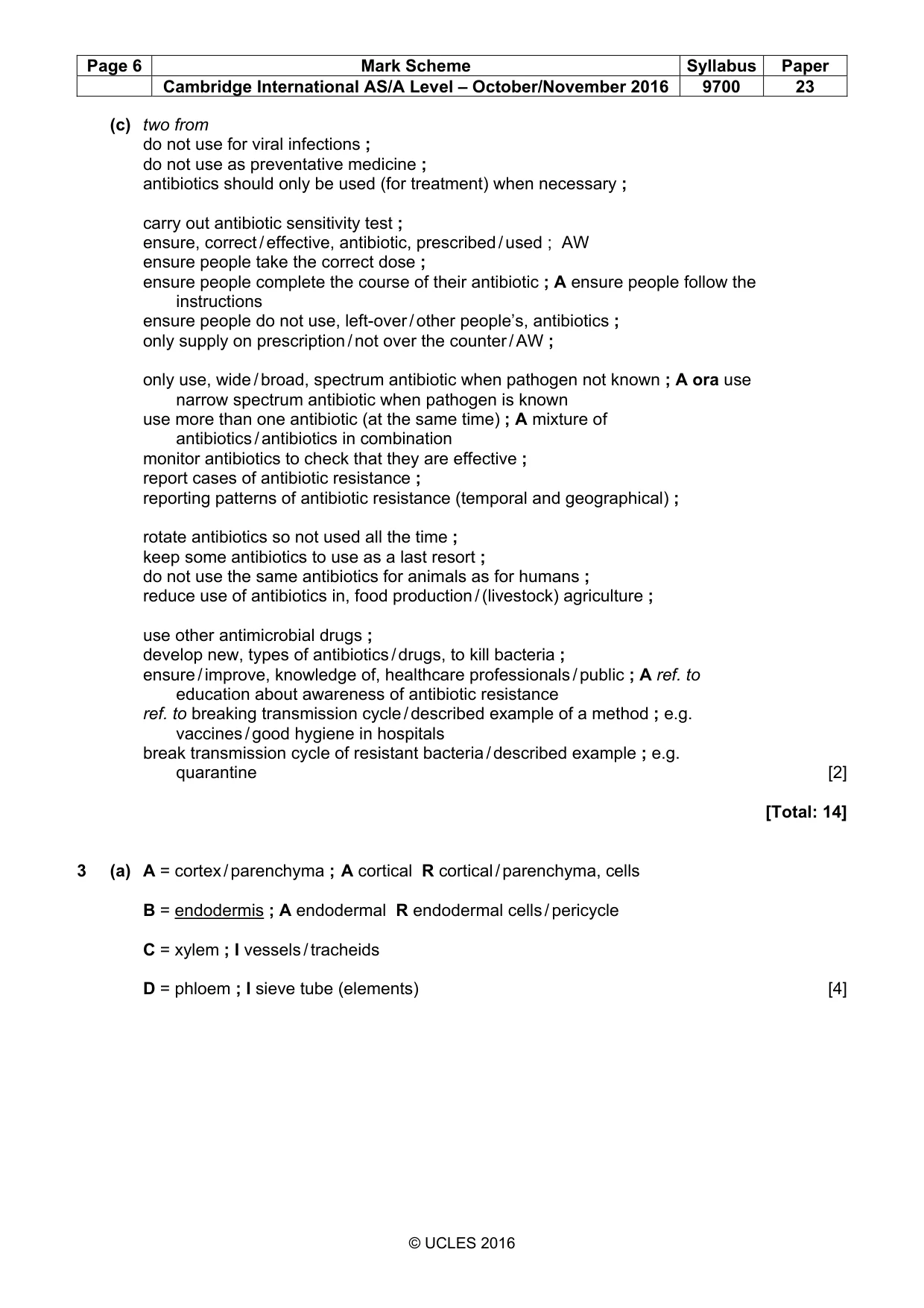
Page 6 Mark Scheme Syllabus Paper Cambridge International AS/A Level – October/November 2016 9700 23 © UCLES 2016 (c) two from do not use for viral infections ; do not use as preventative medicine ; antibiotics should only be used (for treatment) when necessary ; carry out antibiotic sensitivity test ; ensure, correct / effective, antibiotic, prescribed / used ; AW ensure people take the correct dose ; ensure people complete the course of their antibiotic ; A ensure people follow the instructions ensure people do not use, left-over / other people’s, antibiotics ; only supply on prescription / not over the counter / AW ; only use, wide / broad, spectrum antibiotic when pathogen not known ; A ora use narrow spectrum antibiotic when pathogen is known use more than one antibiotic (at the same time) ; A mixture of antibiotics / antibiotics in combination monitor antibiotics to check that they are effective ; report cases of antibiotic resistance ; reporting patterns of antibiotic resistance (temporal and geographical) ; rotate antibiotics so not used all the time ; keep some antibiotics to use as a last resort ; do not use the same antibiotics for animals as for humans ; reduce use of antibiotics in, food production / (livestock) agriculture ; use other antimicrobial drugs ; develop new, types of antibiotics / drugs, to kill bacteria ; ensure / improve, knowledge of, healthcare professionals / public ; A ref. to education about awareness of antibiotic resistance ref. to breaking transmission cycle / described example of a method ; e.g. vaccines / good hygiene in hospitals break transmission cycle of resistant bacteria / described example ; e.g. quarantine [2] [Total: 14] 3 (a) A = cortex / parenchyma ; A cortical R cortical / parenchyma, cells B = endodermis ; A endodermal R endodermal cells / pericycle C = xylem ; I vessels / tracheids D = phloem ; I sieve tube (elements) [4]
Mark scheme, page 7
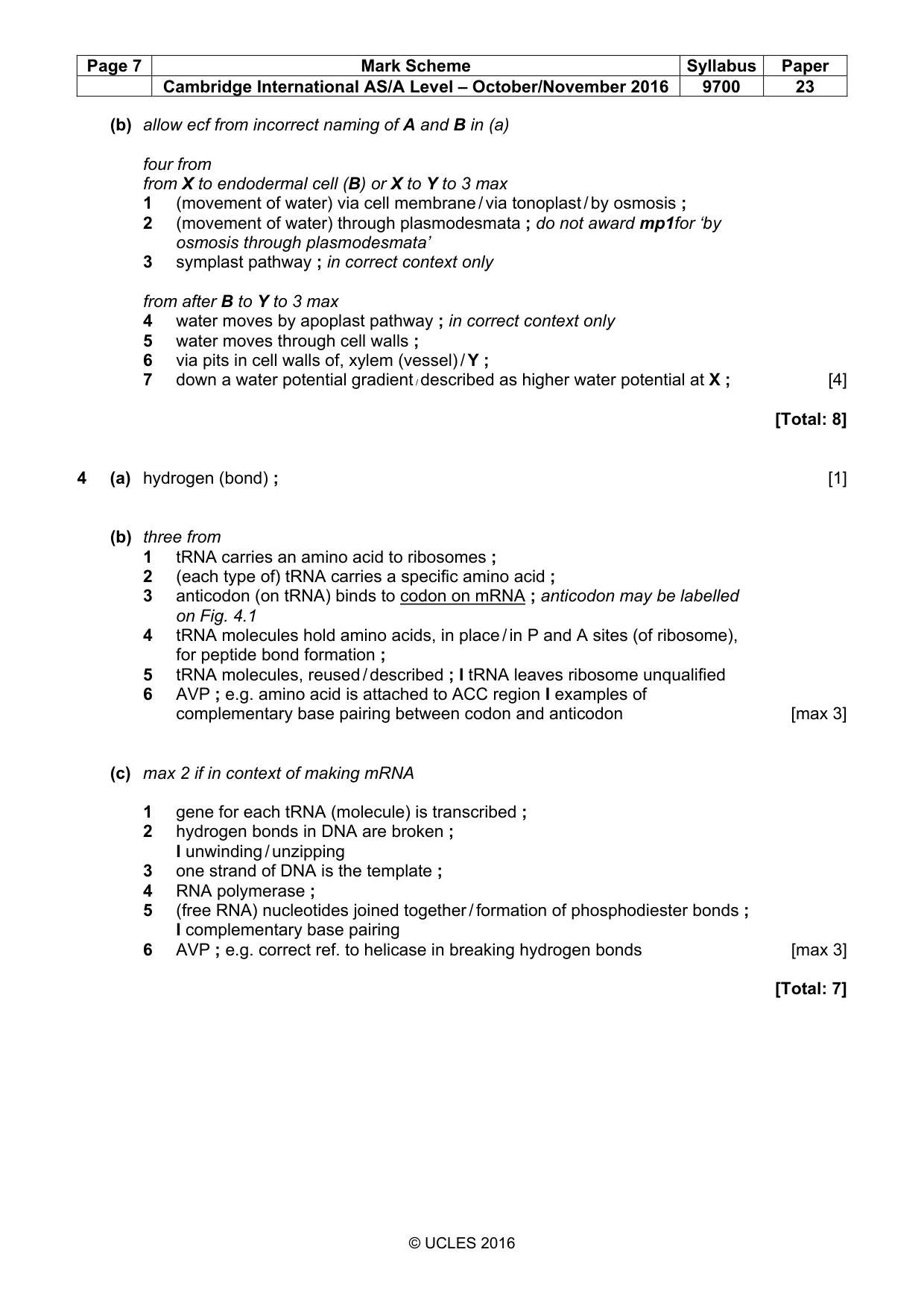
Page 7 Mark Scheme Syllabus Paper Cambridge International AS/A Level – October/November 2016 9700 23 © UCLES 2016 (b) allow ecf from incorrect naming of A and B in (a) four from from X to endodermal cell (B) or X to Y to 3 max 1 (movement of water) via cell membrane / via tonoplast / by osmosis ; 2 (movement of water) through plasmodesmata ; do not award mp1for ‘by osmosis through plasmodesmata’ 3 symplast pathway ; in correct context only from after B to Y to 3 max 4 water moves by apoplast pathway ; in correct context only 5 water moves through cell walls ; 6 via pits in cell walls of, xylem (vessel) / Y ; 7 down a water potential gradient / described as higher water potential at X ; [4] [Total: 8] 4 (a) hydrogen (bond) ; [1] (b) three from 1 tRNA carries an amino acid to ribosomes ; 2 (each type of) tRNA carries a specific amino acid ; 3 anticodon (on tRNA) binds to codon on mRNA ; anticodon may be labelled on Fig. 4.1 4 tRNA molecules hold amino acids, in place / in P and A sites (of ribosome), for peptide bond formation ; 5 tRNA molecules, reused / described ; I tRNA leaves ribosome unqualified 6 AVP ; e.g. amino acid is attached to ACC region I examples of complementary base pairing between codon and anticodon [max 3] (c) max 2 if in context of making mRNA 1 gene for each tRNA (molecule) is transcribed ; 2 hydrogen bonds in DNA are broken ; I unwinding / unzipping 3 one strand of DNA is the template ; 4 RNA polymerase ; 5 (free RNA) nucleotides joined together / formation of phosphodiester bonds ; I complementary base pairing 6 AVP ; e.g. correct ref. to helicase in breaking hydrogen bonds [max 3] [Total: 7]
Mark scheme, page 8
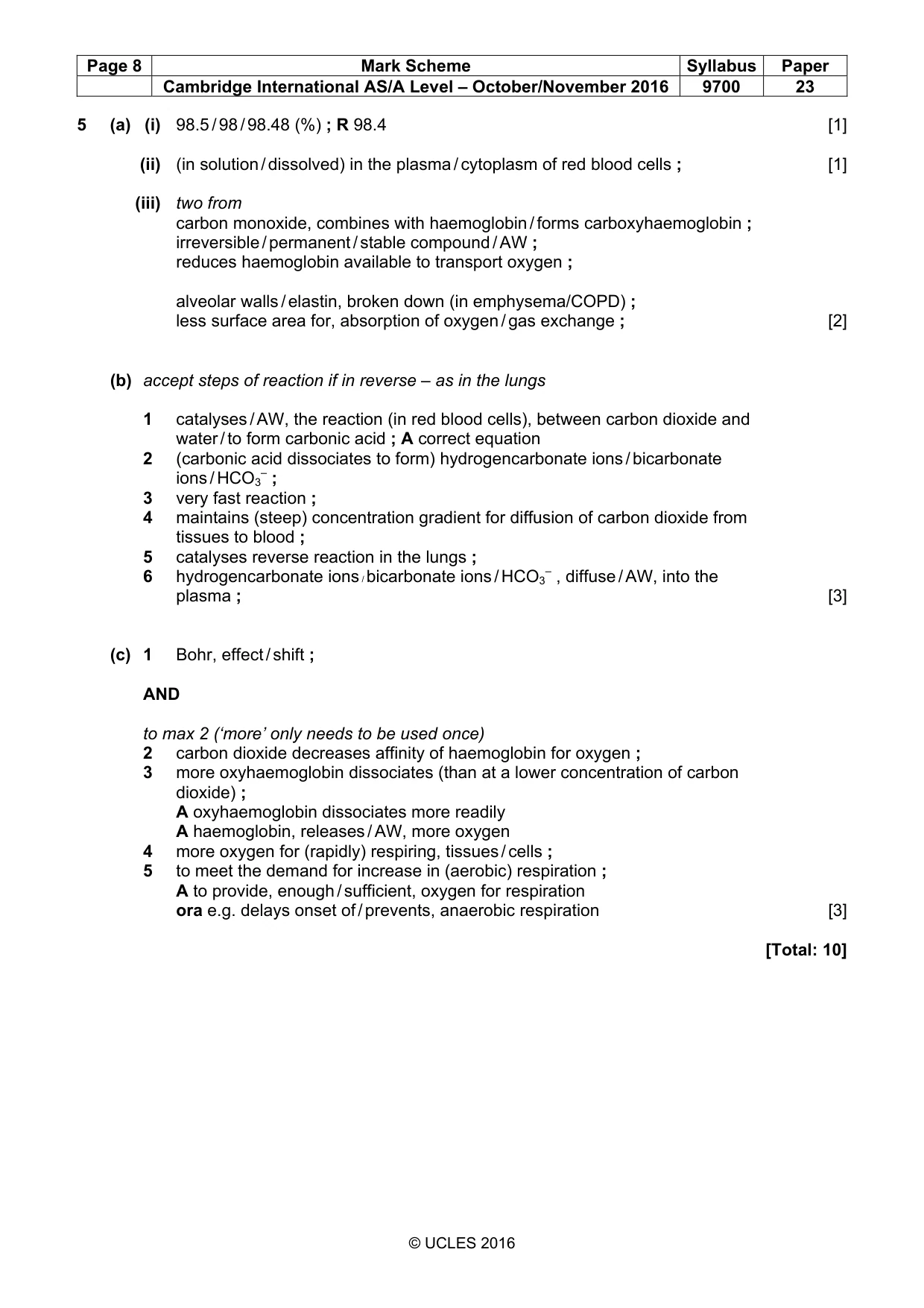
Page 8 Mark Scheme Syllabus Paper Cambridge International AS/A Level – October/November 2016 9700 23 © UCLES 2016 5 (a) (i) 98.5 / 98 / 98.48 (%) ; R 98.4 [1] (ii) (in solution / dissolved) in the plasma / cytoplasm of red blood cells ; [1] (iii) two from carbon monoxide, combines with haemoglobin / forms carboxyhaemoglobin ; irreversible / permanent / stable compound / AW ; reduces haemoglobin available to transport oxygen ; alveolar walls / elastin, broken down (in emphysema/COPD) ; less surface area for, absorption of oxygen / gas exchange ; [2] (b) accept steps of reaction if in reverse – as in the lungs 1 catalyses / AW, the reaction (in red blood cells), between carbon dioxide and water / to form carbonic acid ; A correct equation 2 (carbonic acid dissociates to form) hydrogencarbonate ions / bicarbonate ions / HCO3 – ; 3 very fast reaction ; 4 maintains (steep) concentration gradient for diffusion of carbon dioxide from tissues to blood ; 5 catalyses reverse reaction in the lungs ; 6 hydrogencarbonate ions / bicarbonate ions / HCO3 – , diffuse / AW, into the plasma ; [3] (c) 1 Bohr, effect / shift ; AND to max 2 (‘more’ only needs to be used once) 2 carbon dioxide decreases affinity of haemoglobin for oxygen ; 3 more oxyhaemoglobin dissociates (than at a lower concentration of carbon dioxide) ; A oxyhaemoglobin dissociates more readily A haemoglobin, releases / AW, more oxygen 4 more oxygen for (rapidly) respiring, tissues / cells ; 5 to meet the demand for increase in (aerobic) respiration ; A to provide, enough / sufficient, oxygen for respiration ora e.g. delays onset of / prevents, anaerobic respiration [3] [Total: 10]
Mark scheme, page 9
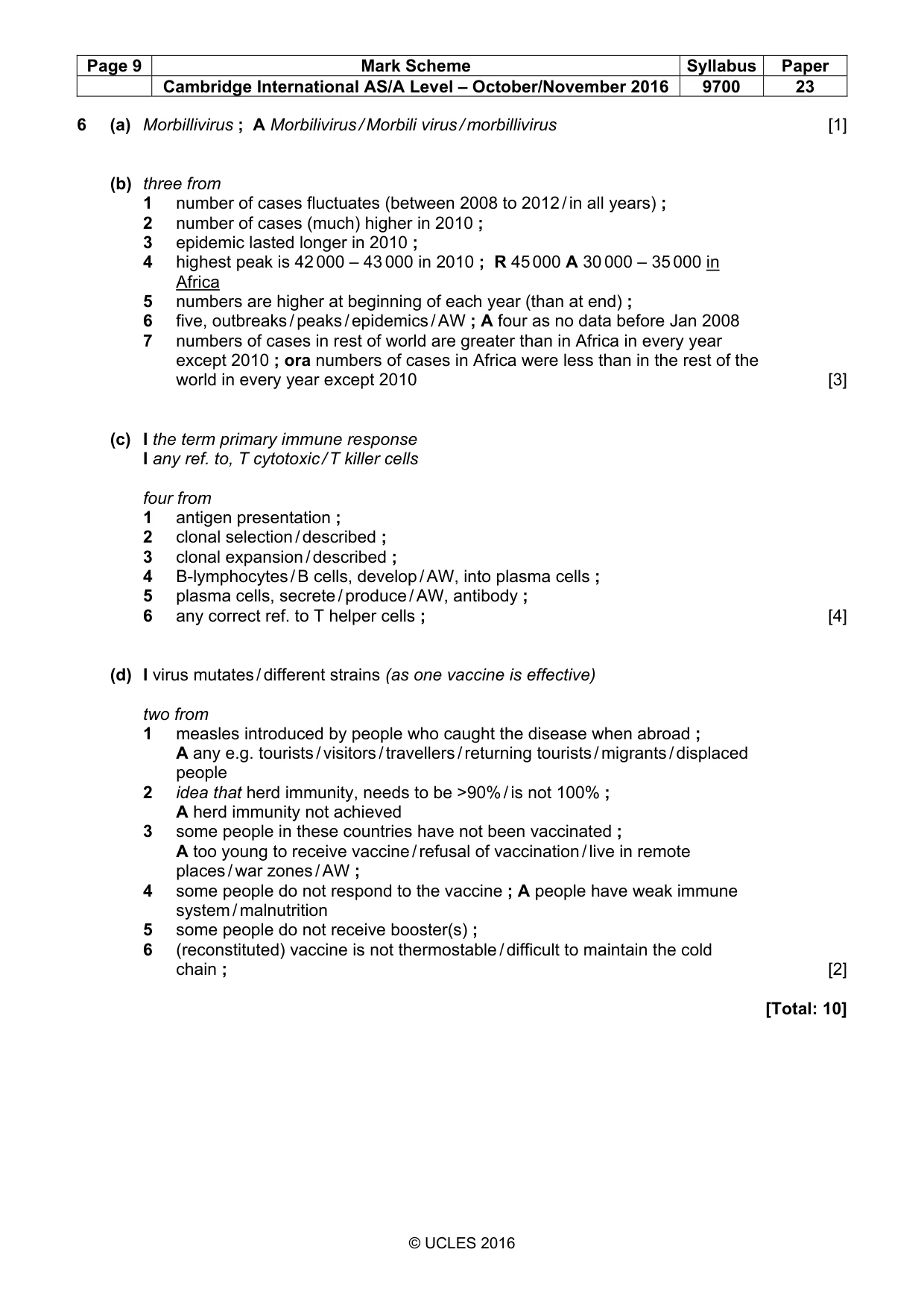
Page 9 Mark Scheme Syllabus Paper Cambridge International AS/A Level – October/November 2016 9700 23 © UCLES 2016 6 (a) Morbillivirus ; A Morbilivirus / Morbili virus / morbillivirus [1] (b) three from 1 number of cases fluctuates (between 2008 to 2012 / in all years) ; 2 number of cases (much) higher in 2010 ; 3 epidemic lasted longer in 2010 ; 4 highest peak is 42 000 – 43 000 in 2010 ; R 45 000 A 30 000 – 35 000 in Africa 5 numbers are higher at beginning of each year (than at end) ; 6 five, outbreaks / peaks / epidemics / AW ; A four as no data before Jan 2008 7 numbers of cases in rest of world are greater than in Africa in every year except 2010 ; ora numbers of cases in Africa were less than in the rest of the world in every year except 2010 [3] (c) I the term primary immune response I any ref. to, T cytotoxic / T killer cells four from 1 antigen presentation ; 2 clonal selection / described ; 3 clonal expansion / described ; 4 B-lymphocytes / B cells, develop / AW, into plasma cells ; 5 plasma cells, secrete / produce / AW, antibody ; 6 any correct ref. to T helper cells ; [4] (d) I virus mutates / different strains (as one vaccine is effective) two from 1 measles introduced by people who caught the disease when abroad ; A any e.g. tourists / visitors / travellers / returning tourists / migrants / displaced people 2 idea that herd immunity, needs to be >90% / is not 100% ; A herd immunity not achieved 3 some people in these countries have not been vaccinated ; A too young to receive vaccine / refusal of vaccination / live in remote places / war zones / AW ; 4 some people do not respond to the vaccine ; A people have weak immune system / malnutrition 5 some people do not receive booster(s) ; 6 (reconstituted) vaccine is not thermostable / difficult to maintain the cold chain ; [2] [Total: 10]
What you needed in this session
Cambridge’s own grade thresholds for 2016 Oct/Nov, Paper 2 · Variant 3. A higher threshold means an easier paper — the bar moves with how the cohort did.