Cambridge A Level Biology 9700 — 2014 Oct/Nov Paper 2 · Variant 2
9700/22/O/N/14 · 60 marks · ≈68 min
The question paper and its mark scheme, free to read here and free to download. This is Cambridge’s own paper, exactly as it was sat.
Question paper16 pages
Mark scheme11 pages
Answers below. Sit the paper first if you are practising.
Paper as text
Question paper, page 1
This document consists of 15 printed pages and 1 blank page. DC (LK/SW) 79830/4 © UCLES 2014 [Turn over Cambridge International Examinations Cambridge International Advanced Subsidiary and Advanced Level * 8 7 9 3 8 8 5 3 0 3 * BIOLOGY 9700/22 Paper 2 Structured Questions AS October/November 2014 1 hour 15 minutes Candidates answer on the Question Paper. No Additional Materials are required. READ THESE INSTRUCTIONS FIRST Write your Centre number, candidate number and name in the spaces provided at the top of this page. Write in dark blue or black pen. You may use an HB pencil for any diagrams or graphs. Do not use staples, paper clips, glue or correction fluid. DO NOT WRITE IN ANY BARCODES. Answer all questions. Electronic calculators may be used. At the end of the examination, fasten all your work securely together. The number of marks is given in brackets [ ] at the end of each question or part question.
Question paper, page 2
2 9700/22/O/N/14 © UCLES 2014 Answer all the questions 1 Fig. 1.1 is a light micrograph of a section through part of the gas exchange system. A, B and C are three different types of tissue. B A C Fig. 1.1 (a) The cell types in tissue A have different functions. Describe how the cell types work together to maintain the health of the gas exchange system. … … … … … … … …[3]
Question paper, page 3
3 9700/22/O/N/14 © UCLES 2014 [Turn over (b) Suggest why the cells in tissue B have many mitochondria. … … … …[1] (c) Name the parts of the gas exchange system where tissue C is distributed. … …[1] [Total: 5]
Question paper, page 4
4 9700/22/O/N/14 © UCLES 2014 2 Fig. 2.1 shows one section of the nitrogen (N) cycle. Some details of the water cycle are also included. water and nitrate ions in roots water and nitrogen-containing organic compounds in leaves water vapour in atmosphere X Y transport in xylem uptake death death decomposition and ammonification water and nitrate ions in soil nitrogen-containing organic compounds in soil ammonium ions Fig. 2.1 (a) Name processes X and Y. X … Y …[2] (b) Name one organism involved in process Y. …[1] (c) Explain why process X occurs, even if it is a disadvantage to a plant. … … …[1] (d) State two examples of how the leaves of xerophytic plants are adapted to reduce the loss of water vapour to the atmosphere. 1. … … 2. … …[2]
Question paper, page 5
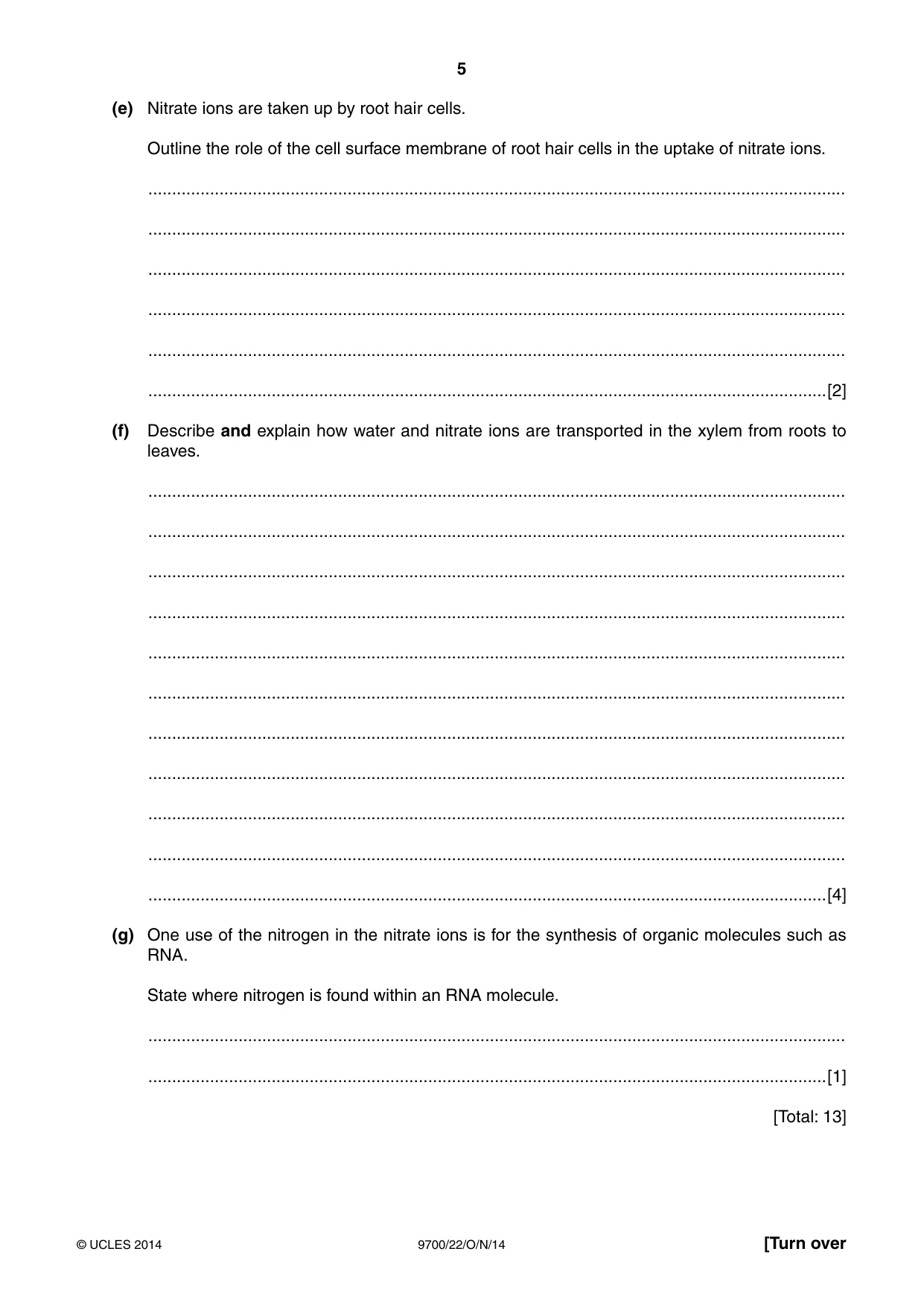
5 9700/22/O/N/14 © UCLES 2014 [Turn over (e) Nitrate ions are taken up by root hair cells. Outline the role of the cell surface membrane of root hair cells in the uptake of nitrate ions. … … … … … …[2] (f) Describe and explain how water and nitrate ions are transported in the xylem from roots to leaves. … … … … … … … … … … …[4] (g) One use of the nitrogen in the nitrate ions is for the synthesis of organic molecules such as RNA. State where nitrogen is found within an RNA molecule. … …[1] [Total: 13]
Question paper, page 6
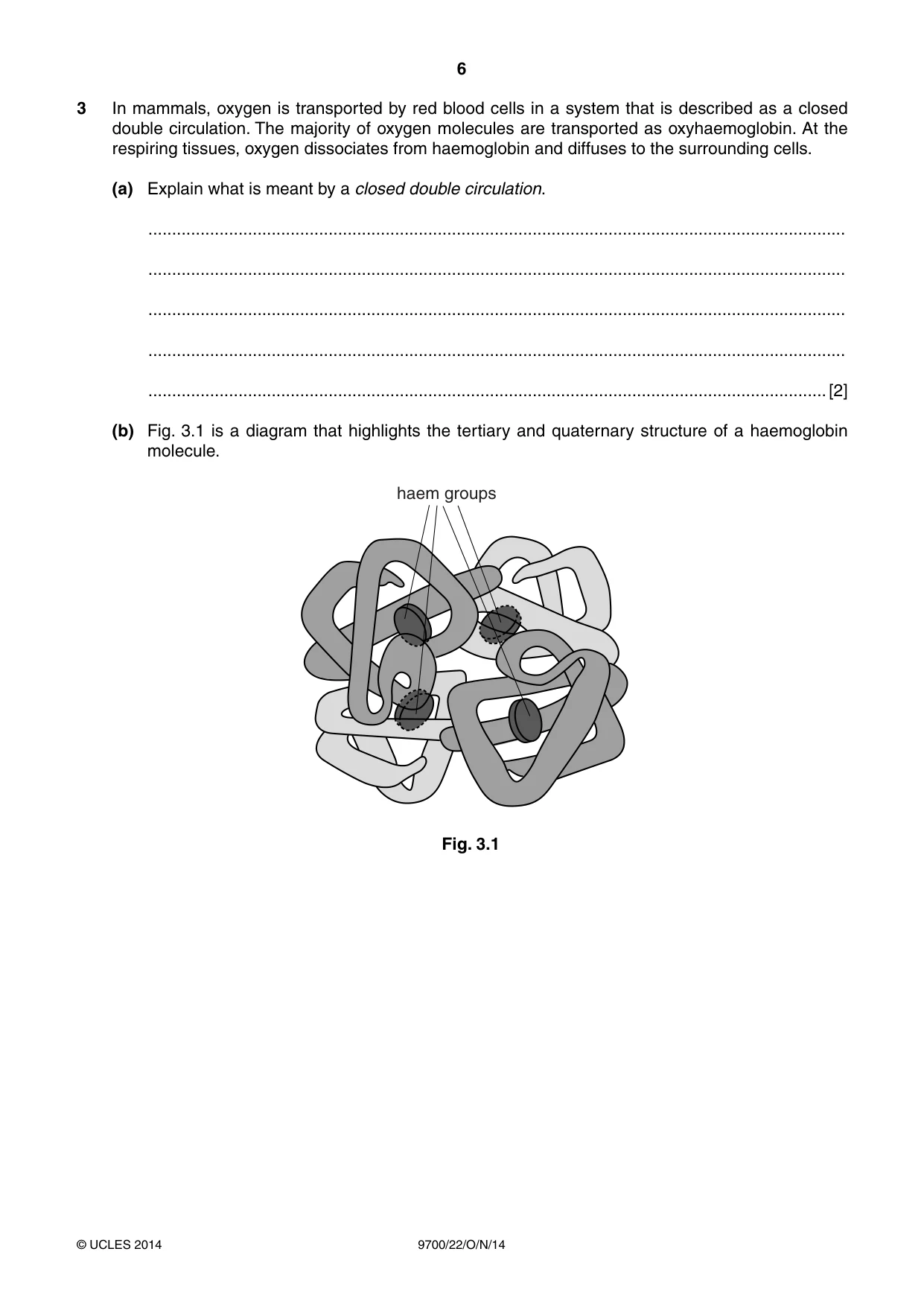
6 9700/22/O/N/14 © UCLES 2014 3 I n mammals, oxygen is transported by red blood cells in a system that is described as a closed double circulation. The majority of oxygen molecules are transported as oxyhaemoglobin. At the respiring tissues, oxygen dissociates from haemoglobin and diffuses to the surrounding cells. (a) Explain what is meant by a closed double circulation. … … … … …[2] (b) Fig. 3.1 is a diagram that highlights the tertiary and quaternary structure of a haemoglobin molecule. haem groups Fig. 3.1
Question paper, page 7
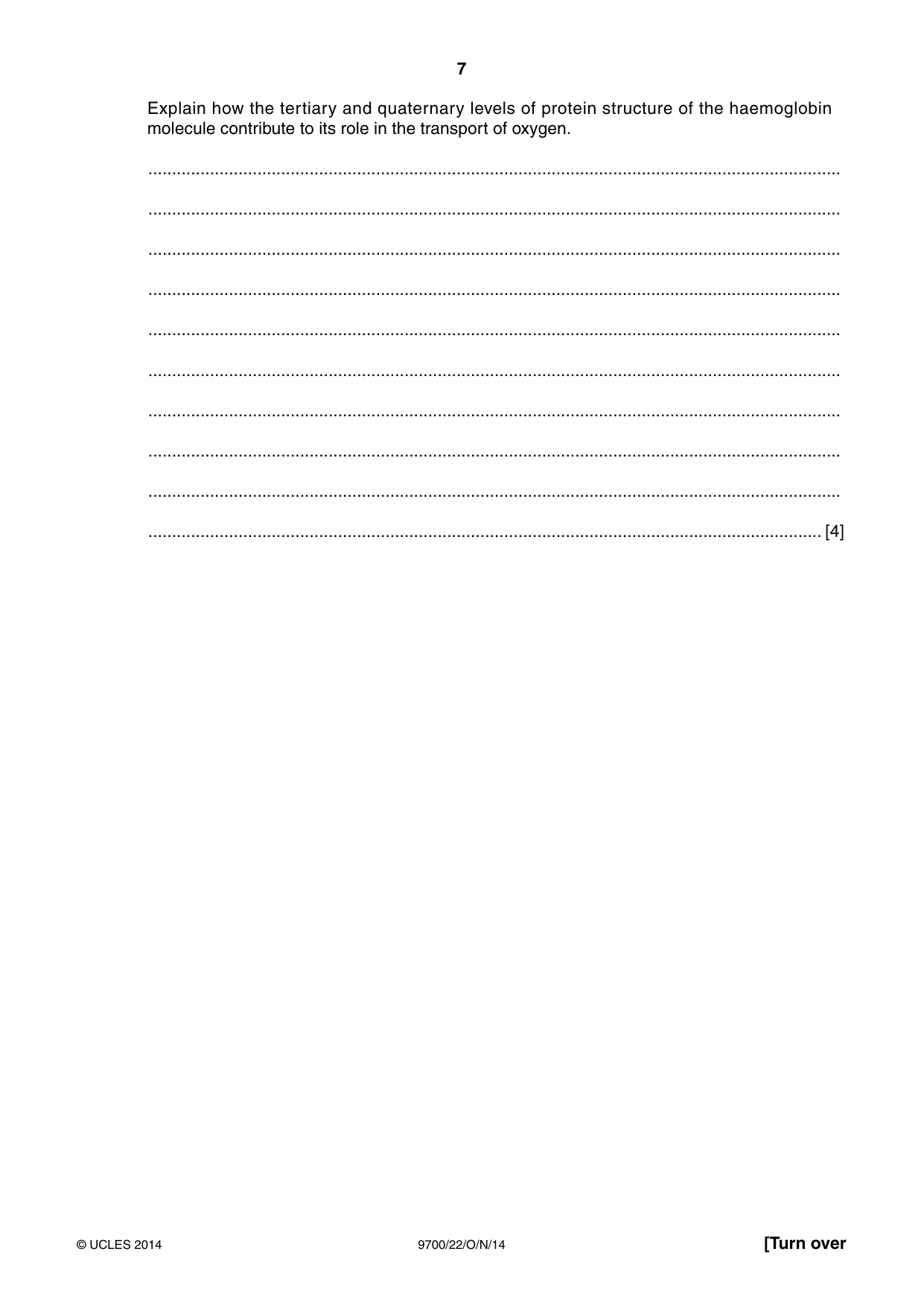
7 9700/22/O/N/14 © UCLES 2014 [Turn over Explain how the tertiary and quaternary levels of protein structure of the haemoglobin molecule contribute to its role in the transport of oxygen. … … … … … … … … … … [4]
Question paper, page 8
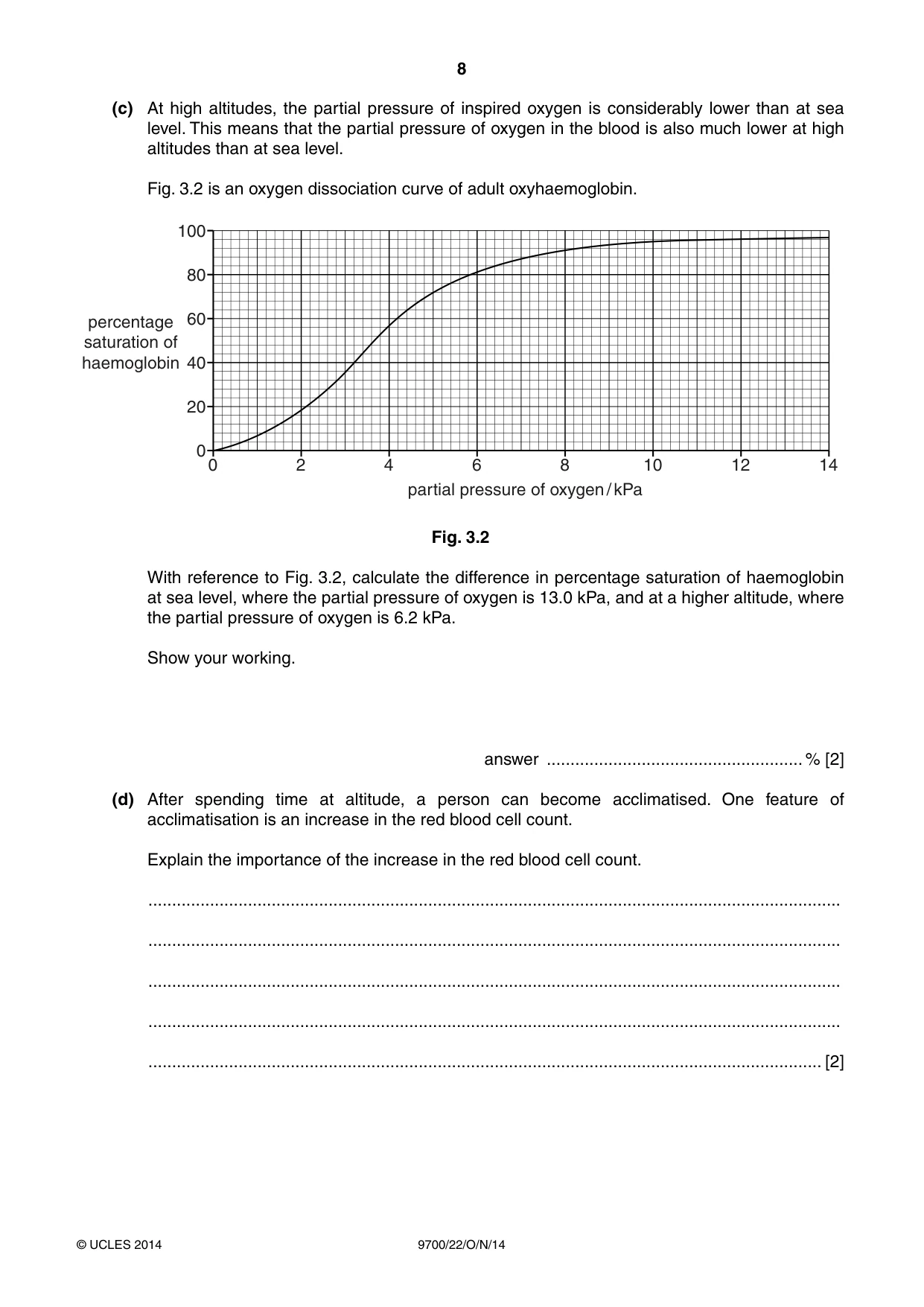
8 9700/22/O/N/14 © UCLES 2014 (c) At high altitudes, the partial pressure of inspired oxygen is considerably lower than at sea level. This means that the partial pressure of oxygen in the blood is also much lower at high altitudes than at sea level. Fig. 3.2 is an oxygen dissociation curve of adult oxyhaemoglobin. 0 0 20 40 60 80 100 2 4 6 8 partial pressure of oxygen / kPa percentage saturation of haemoglobin 10 12 14 Fig. 3.2 With reference to Fig. 3.2, calculate the difference in percentage saturation of haemoglobin at sea level, where the partial pressure of oxygen is 13.0 kPa, and at a higher altitude, where the partial pressure of oxygen is 6.2 kPa. Show your working. answer … % [2] (d) After spending time at altitude, a person can become acclimatised. One feature of acclimatisation is an increase in the red blood cell count. Explain the importance of the increase in the red blood cell count. … … … … … [2]
Question paper, page 9
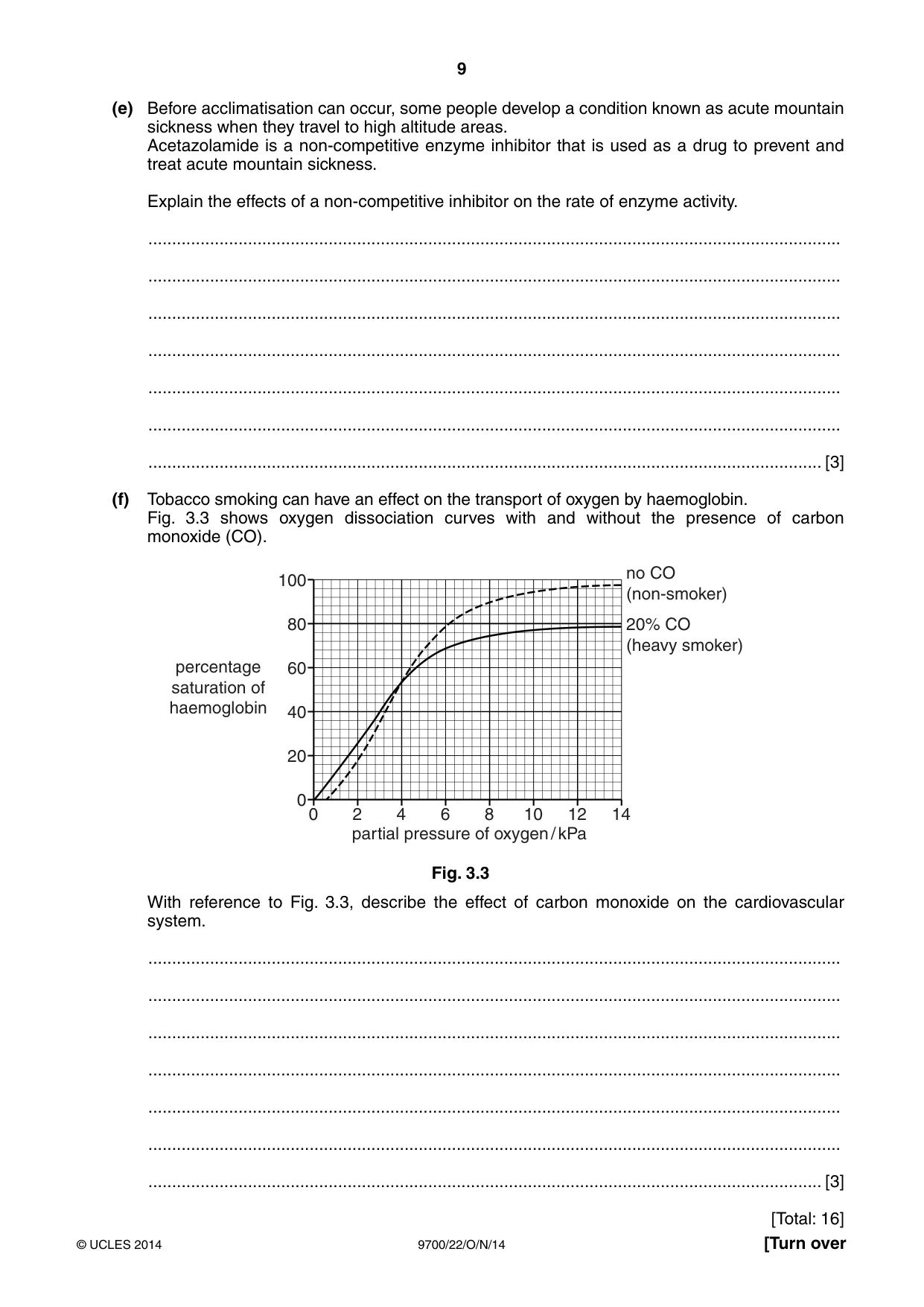
9 9700/22/O/N/14 © UCLES 2014 [Turn over (e) Before acclimatisation can occur, some people develop a condition known as acute mountain sickness when they travel to high altitude areas. Acetazolamide is a non-competitive enzyme inhibitor that is used as a drug to prevent and treat acute mountain sickness. Explain the effects of a non-competitive inhibitor on the rate of enzyme activity. … … … … … … … [3] (f) Tobacco smoking can have an effect on the transport of oxygen by haemoglobin. Fig. 3.3 shows oxygen dissociation curves with and without the presence of carbon monoxide (CO). 0 0 20 40 60 80 100 2 4 6 8 partial pressure of oxygen / kPa percentage saturation of haemoglobin 10 12 14 no CO (non-smoker) 20% CO (heavy smoker) Fig. 3.3 With reference to Fig. 3.3, describe the effect of carbon monoxide on the cardiovascular system. … … … … … … … [3] [Total: 16]
Question paper, page 10
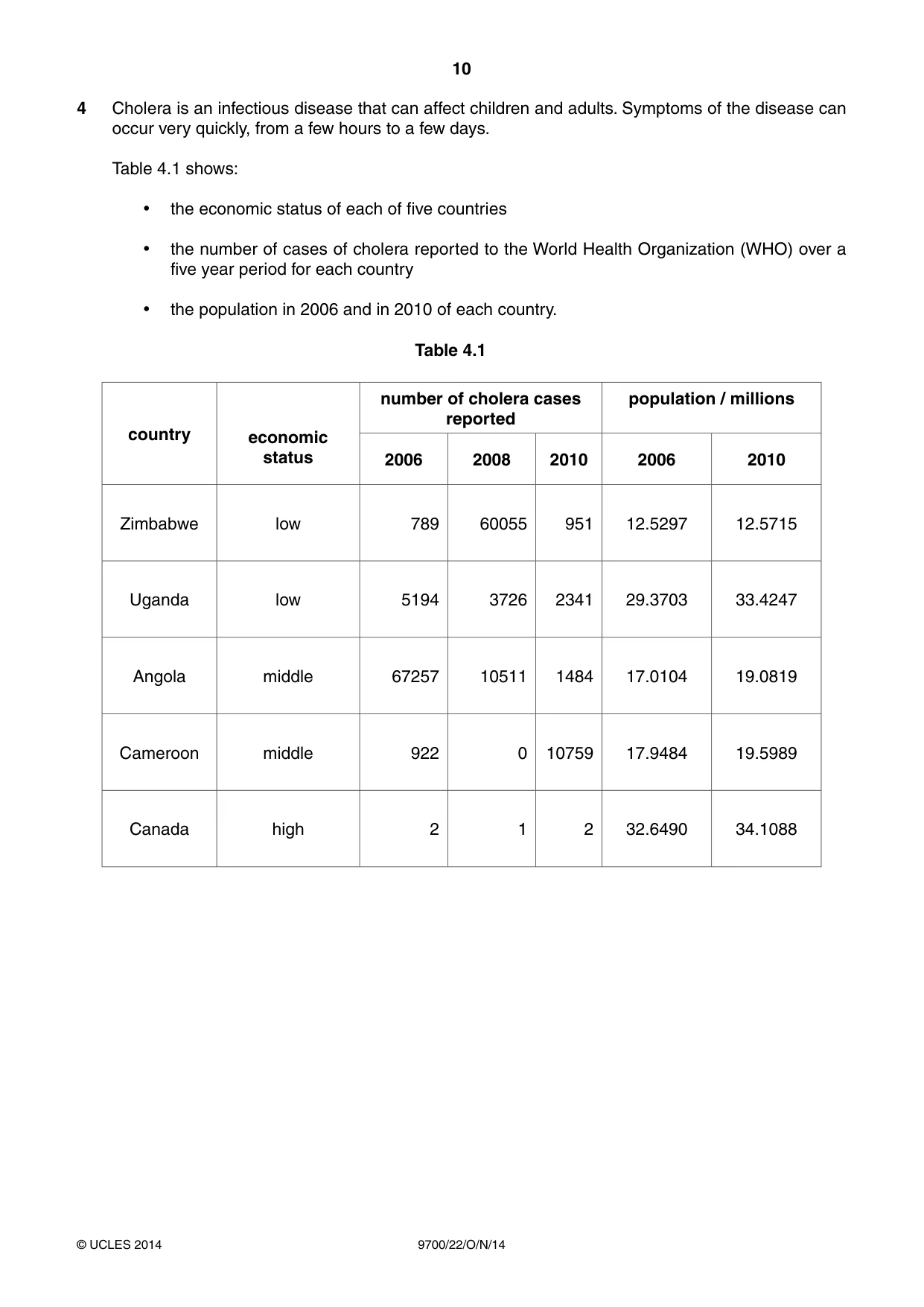
10 9700/22/O/N/14 © UCLES 2014 4 Cholera is an infectious disease that can affect children and adults. Symptoms of the disease can occur very quickly, from a few hours to a few days. Table 4.1 shows: • the economic status of each of five countries • the number of cases of cholera reported to the World Health Organization (WHO) over a five year period for each country • the population in 2006 and in 2010 of each country. Table 4.1 country economic status number of cholera cases reported population / millions 2006 2008 2010 2006 2010 Zimbabwe low 789 60055 951 12.5297 12.5715 Uganda low 5194 3726 2341 29.3703 33.4247 Angola middle 67257 10511 1484 17.0104 19.0819 Cameroon middle 922 0 10759 17.9484 19.5989 Canada high 2 1 2 32.6490 34.1088
Question paper, page 11
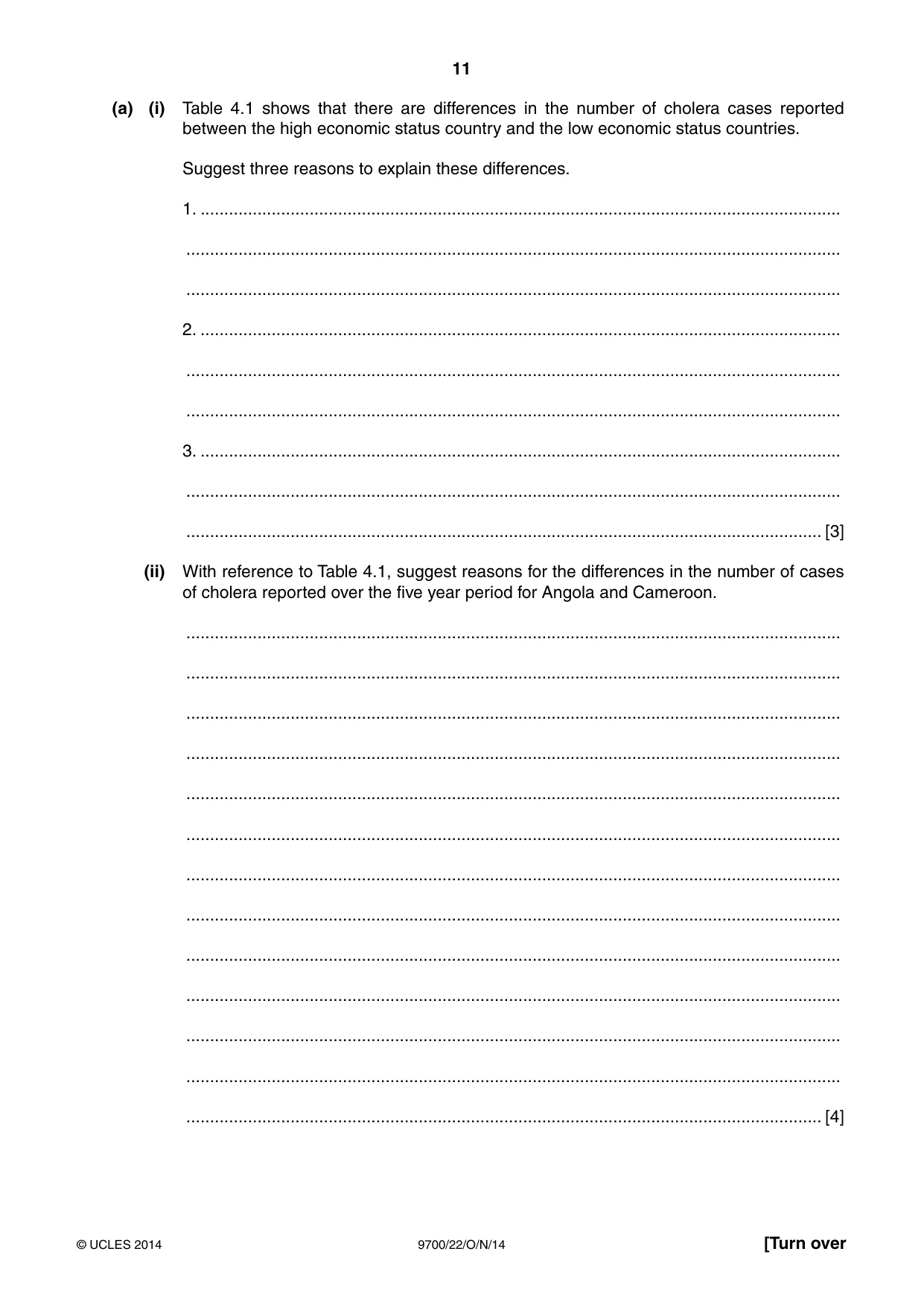
11 9700/22/O/N/14 © UCLES 2014 [Turn over (a) (i) Table 4.1 shows that there are differences in the number of cholera cases reported between the high economic status country and the low economic status countries. Suggest three reasons to explain these differences. 1. . … … … 2. … … … 3. … … … [3] (ii) With reference to Table 4.1, suggest reasons for the differences in the number of cases of cholera reported over the five year period for Angola and Cameroon. … … … … … … … … … … … … … [4]
Question paper, page 12
12 9700/22/O/N/14 © UCLES 2014 (b) Vaccination helps to prevent the spread of infectious diseases by stimulating an immune response in individuals against specific pathogens, such as Morbillivirus, the virus that causes measles. (i) Suggest two reasons why measles vaccination programmes may fail to prevent epidemics. 1. … … 2. … … [2] (ii) Outline the response produced by B-lymphocytes on exposure to Morbillivirus in an individual who already has immunity to measles. … … … … … … … … [3] [Total: 12]
Question paper, page 13
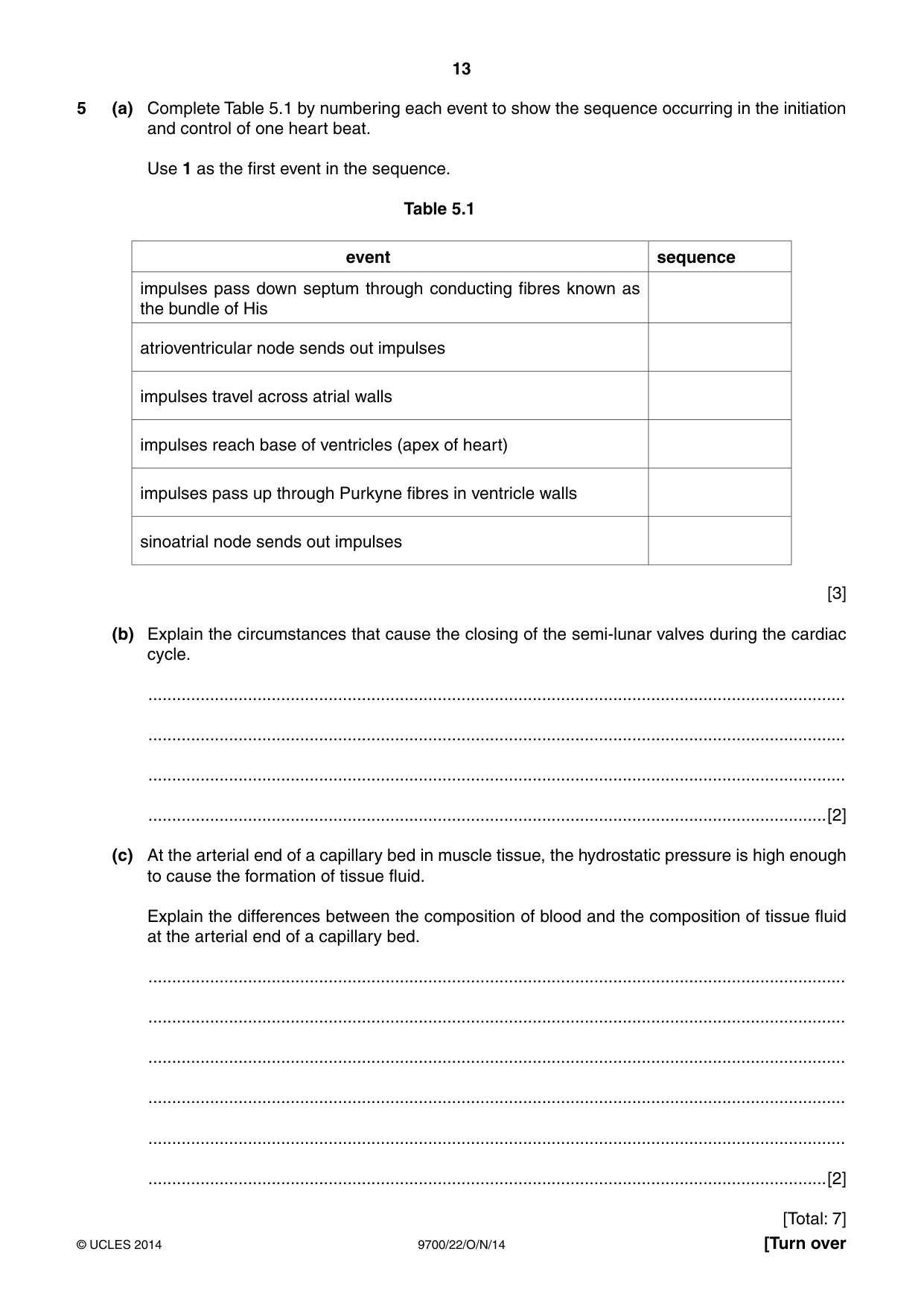
13 9700/22/O/N/14 © UCLES 2014 [Turn over 5 (a) Complete Table 5.1 by numbering each event to show the sequence occurring in the initiation and control of one heart beat. Use 1 as the first event in the sequence. Table 5.1 event sequence impulses pass down septum through conducting fibres known as the bundle of His atrioventricular node sends out impulses impulses travel across atrial walls impulses reach base of ventricles (apex of heart) impulses pass up through Purkyne fibres in ventricle walls sinoatrial node sends out impulses [3] (b) Explain the circumstances that cause the closing of the semi-lunar valves during the cardiac cycle. … … … …[2] (c) At the arterial end of a capillary bed in muscle tissue, the hydrostatic pressure is high enough to cause the formation of tissue fluid. Explain the differences between the composition of blood and the composition of tissue fluid at the arterial end of a capillary bed. … … … … … …[2] [Total: 7]
Question paper, page 14
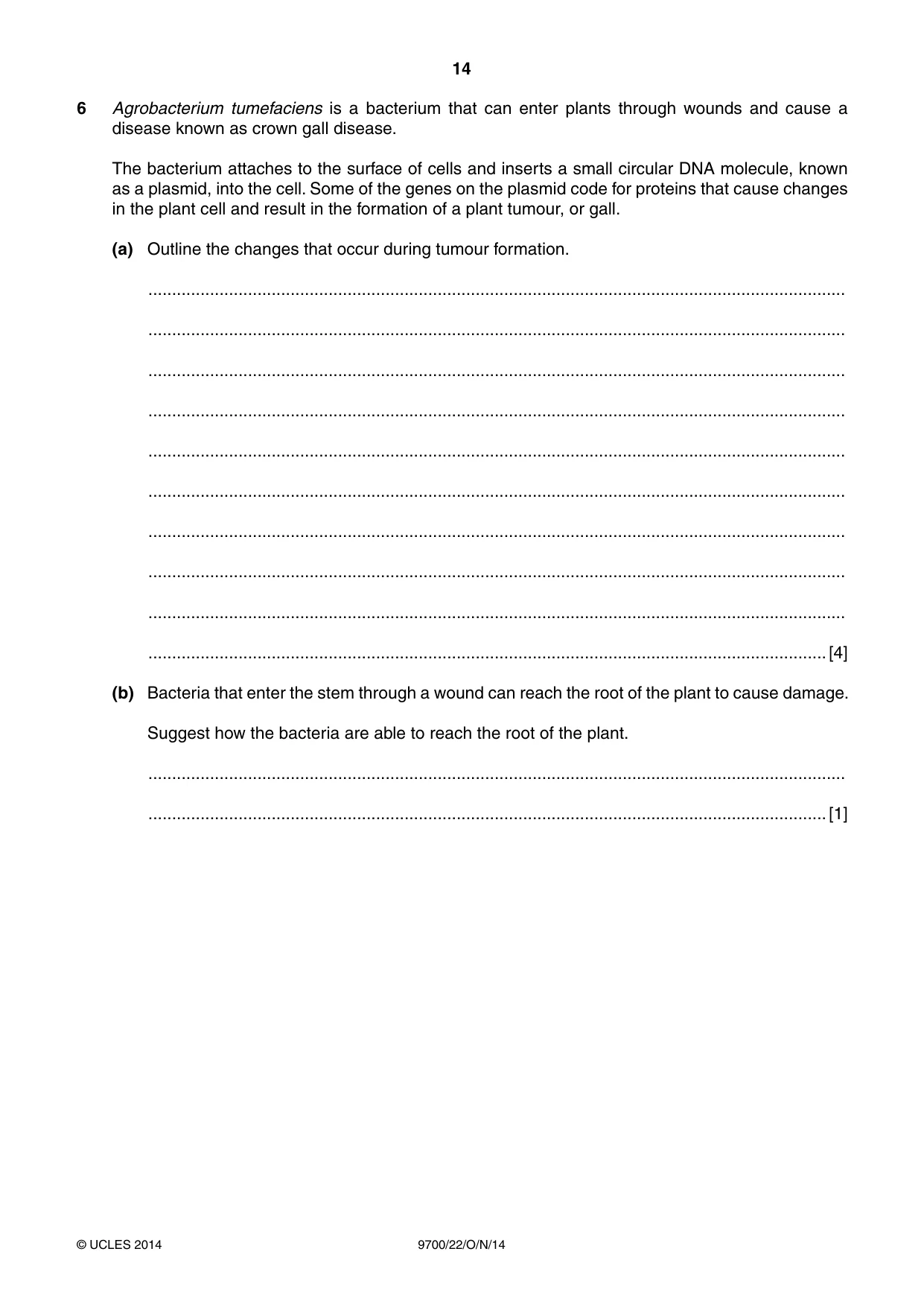
14 9700/22/O/N/14 © UCLES 2014 6 Agrobacterium tumefaciens is a bacterium that can enter plants through wounds and cause a disease known as crown gall disease. The bacterium attaches to the surface of cells and inserts a small circular DNA molecule, known as a plasmid, into the cell. Some of the genes on the plasmid code for proteins that cause changes in the plant cell and result in the formation of a plant tumour, or gall. (a) Outline the changes that occur during tumour formation. … … … … … … … … … …[4] (b) Bacteria that enter the stem through a wound can reach the root of the plant to cause damage. Suggest how the bacteria are able to reach the root of the plant. … …[1]
Question paper, page 15
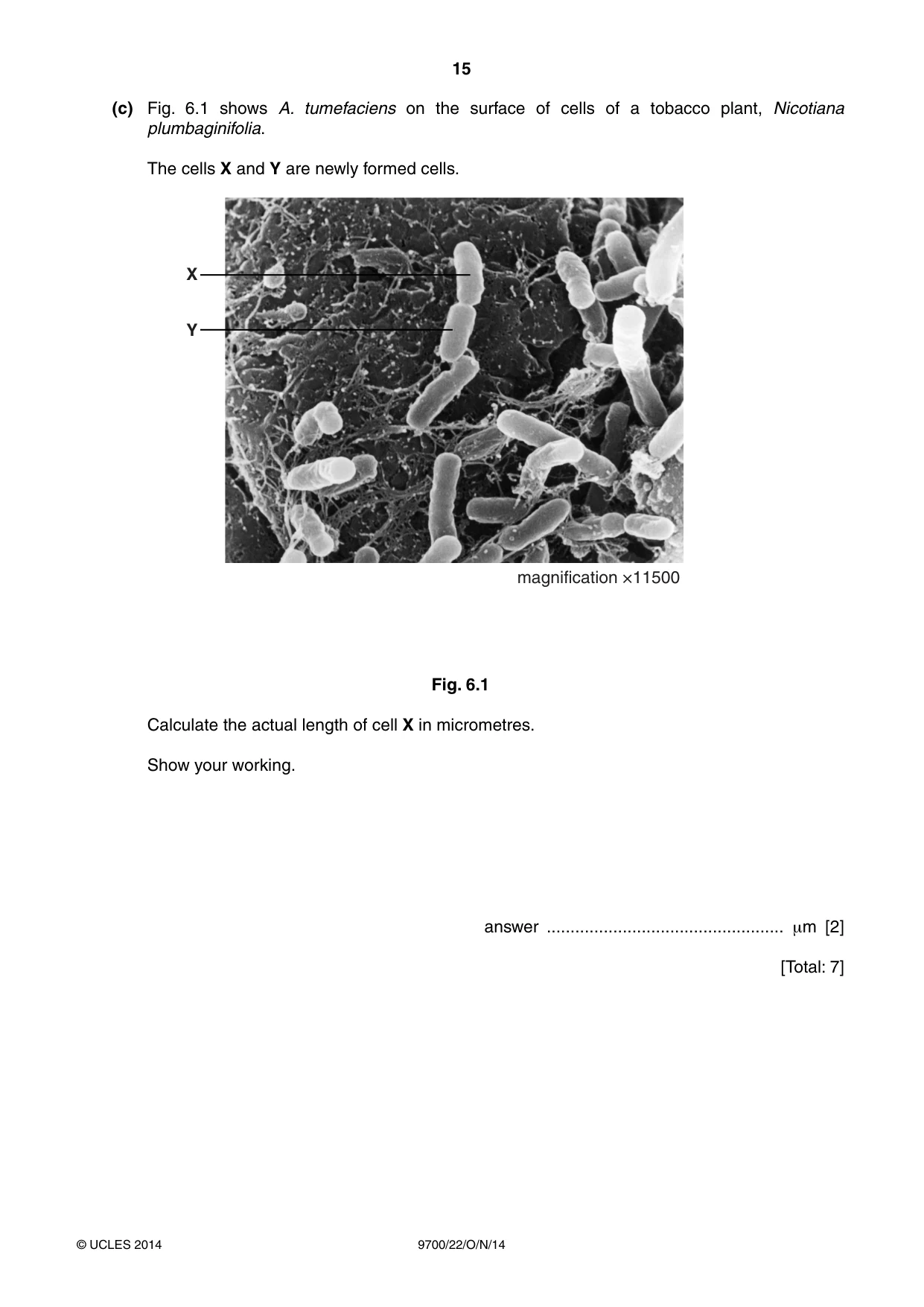
15 9700/22/O/N/14 © UCLES 2014 (c) Fig. 6.1 shows A. tumefaciens on the surface of cells of a tobacco plant, Nicotiana plumbaginifolia. The cells X and Y are newly formed cells. X Y magnification ×11500 Fig. 6.1 Calculate the actual length of cell X in micrometres. Show your working. answer … μm [2] [Total: 7]
Question paper, page 16
16 9700/22/O/N/14 © UCLES 2014 Copyright Acknowledgements: Fig. 1.1 © ASTRID & HANNS-FRIEDER MICHLER/SCIENCE PHOTO LIBRARY. Fig. 6.1 © DR. JEREMY BURGESS/SCIENCE PHOTO LIBRARY. Permission to reproduce items where third-party owned material protected by copyright is included has been sought and cleared where possible. Every reasonable effort has been made by the publisher (UCLES) to trace copyright holders, but if any items requiring clearance have unwittingly been included, the publisher will be pleased to make amends at the earliest possible opportunity. Cambridge International Examinations is part of the Cambridge Assessment Group. Cambridge Assessment is the brand name of University of Cambridge Local Examinations Syndicate (UCLES), which is itself a department of the University of Cambridge. BLANK PAGE
Mark scheme, page 1
® IGCSE is the registered trademark of Cambridge International Examinations. CAMBRIDGE INTERNATIONAL EXAMINATIONS Cambridge International Advanced Subsidiary and Advanced Level MARK SCHEME for the October/November 2014 series 9700 BIOLOGY 9700/22 Paper 2 (AS Structured Questions), maximum raw mark 60 This mark scheme is published as an aid to teachers and candidates, to indicate the requirements of the examination. It shows the basis on which Examiners were instructed to award marks. It does not indicate the details of the discussions that took place at an Examiners’ meeting before marking began, which would have considered the acceptability of alternative answers. Mark schemes should be read in conjunction with the question paper and the Principal Examiner Report for Teachers. Cambridge will not enter into discussions about these mark schemes. Cambridge is publishing the mark schemes for the October / November 2014 series for most Cambridge IGCSE®, Cambridge International A and AS Level components and some Cambridge O Level components.
Mark scheme, page 2
Page 2 Mark Scheme Syllabus Paper Cambridge International AS / A Level – October / November 2014 9700 22 © Cambridge International Examinations 2014 Mark scheme abbreviations ; separates marking points / alternative answers for the same point R reject A accept (for answers correctly cued by the equation, or by extra guidance) AW alternative wording (where responses vary more than usual) underline actual word given must be used by candidate (grammatical variants accepted) max indicates the maximum number of marks that can be given ora or reverse argument mp marking point (with relevant number) ecf error carried forward I ignore AVP alternative valid point
Mark scheme, page 3
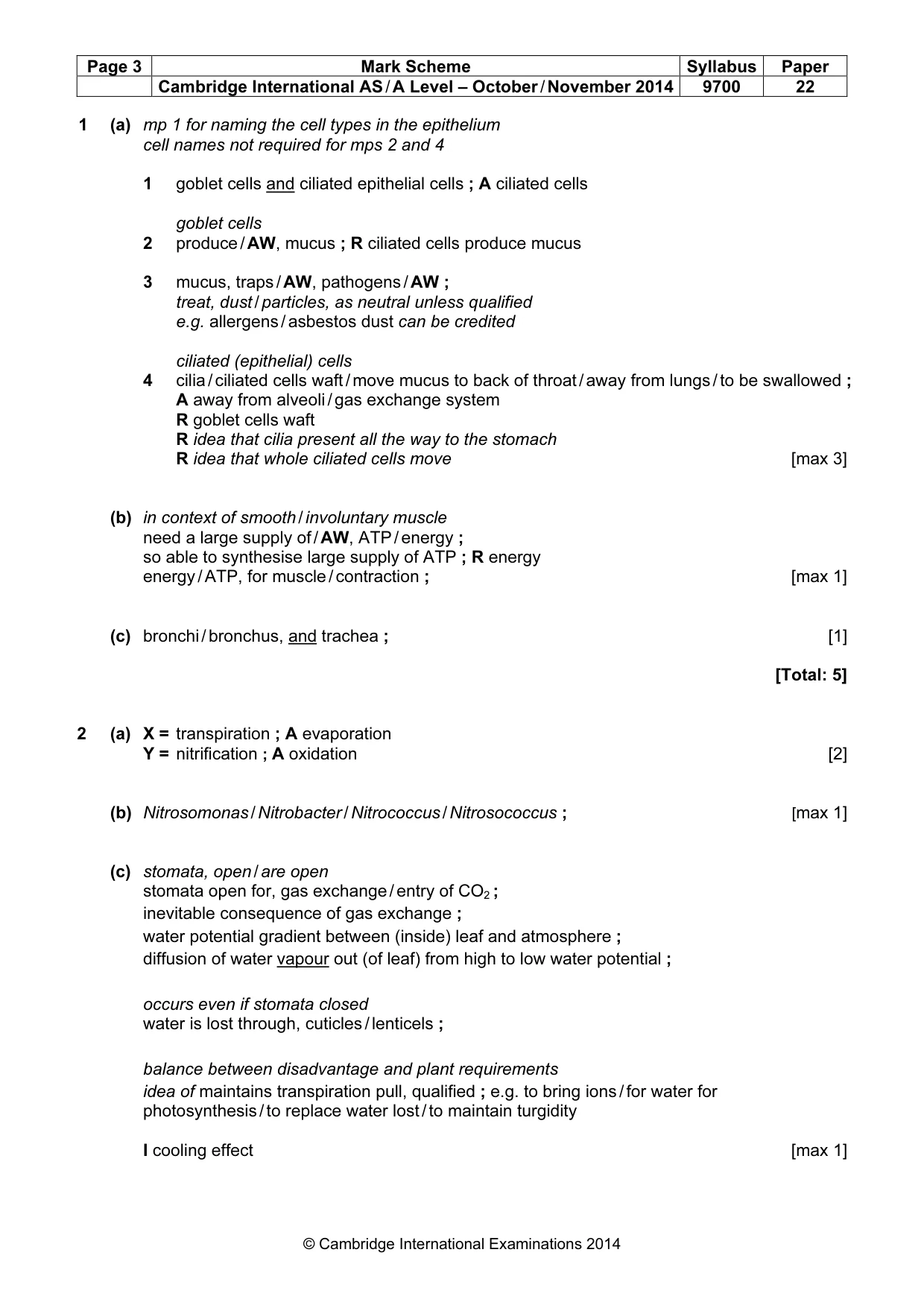
Page 3 Mark Scheme Syllabus Paper Cambridge International AS / A Level – October / November 2014 9700 22 © Cambridge International Examinations 2014 1 (a) mp 1 for naming the cell types in the epithelium cell names not required for mps 2 and 4 1 goblet cells and ciliated epithelial cells ; A ciliated cells goblet cells 2 produce / AW, mucus ; R ciliated cells produce mucus 3 mucus, traps / AW, pathogens / AW ; treat, dust / particles, as neutral unless qualified e.g. allergens / asbestos dust can be credited ciliated (epithelial) cells 4 cilia / ciliated cells waft / move mucus to back of throat / away from lungs / to be swallowed ; A away from alveoli / gas exchange system R goblet cells waft R idea that cilia present all the way to the stomach R idea that whole ciliated cells move [max 3] (b) in context of smooth / involuntary muscle need a large supply of / AW, ATP / energy ; so able to synthesise large supply of ATP ; R energy energy / ATP, for muscle / contraction ; [max 1] (c) bronchi / bronchus, and trachea ; [1] [Total: 5] 2 (a) X = transpiration ; A evaporation Y = nitrification ; A oxidation [2] (b) Nitrosomonas / Nitrobacter / Nitrococcus / Nitrosococcus ; [max 1] (c) stomata, open / are open stomata open for, gas exchange / entry of CO2 ; inevitable consequence of gas exchange ; water potential gradient between (inside) leaf and atmosphere ; diffusion of water vapour out (of leaf) from high to low water potential ; occurs even if stomata closed water is lost through, cuticles / lenticels ; balance between disadvantage and plant requirements idea of maintains transpiration pull, qualified ; e.g. to bring ions / for water for photosynthesis / to replace water lost / to maintain turgidity I cooling effect [max 1]
Mark scheme, page 4
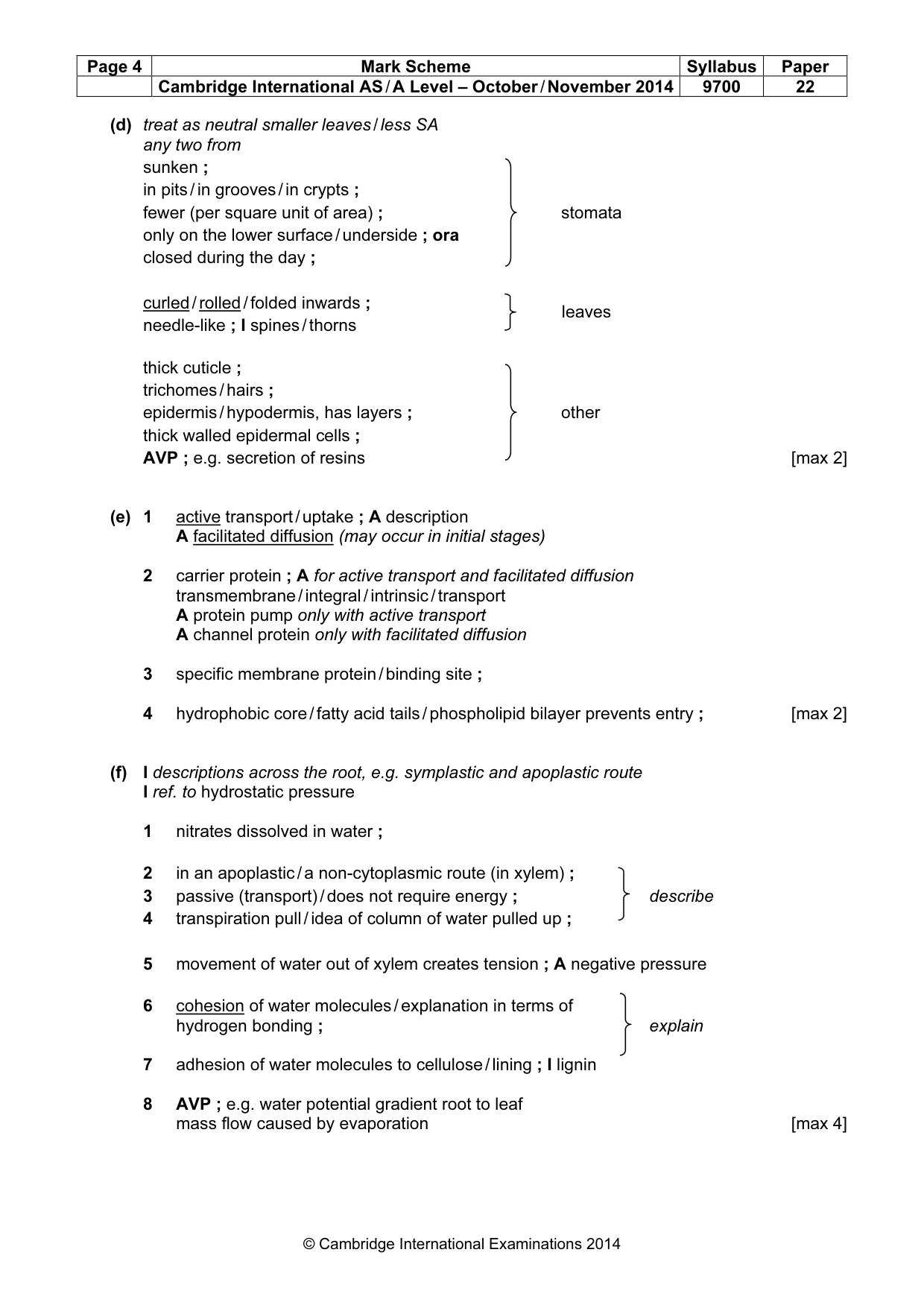
Page 4 Mark Scheme Syllabus Paper Cambridge International AS / A Level – October / November 2014 9700 22 © Cambridge International Examinations 2014 (d) treat as neutral smaller leaves / less SA any two from sunken ; in pits / in grooves / in crypts ; fewer (per square unit of area) ; stomata only on the lower surface / underside ; ora closed during the day ; curled / rolled / folded inwards ; needle-like ; I spines / thorns thick cuticle ; trichomes / hairs ; epidermis / hypodermis, has layers ; other thick walled epidermal cells ; AVP ; e.g. secretion of resins [max 2] (e) 1 active transport / uptake ; A description A facilitated diffusion (may occur in initial stages) 2 carrier protein ; A for active transport and facilitated diffusion transmembrane / integral / intrinsic / transport A protein pump only with active transport A channel protein only with facilitated diffusion 3 specific membrane protein / binding site ; 4 hydrophobic core / fatty acid tails / phospholipid bilayer prevents entry ; [max 2] (f) I descriptions across the root, e.g. symplastic and apoplastic route I ref. to hydrostatic pressure 1 nitrates dissolved in water ; 2 in an apoplastic / a non-cytoplasmic route (in xylem) ; 3 passive (transport) / does not require energy ; describe 4 transpiration pull / idea of column of water pulled up ; 5 movement of water out of xylem creates tension ; A negative pressure 6 cohesion of water molecules / explanation in terms of hydrogen bonding ; explain 7 adhesion of water molecules to cellulose / lining ; I lignin 8 AVP ; e.g. water potential gradient root to leaf mass flow caused by evaporation [max 4] leaves
Mark scheme, page 5
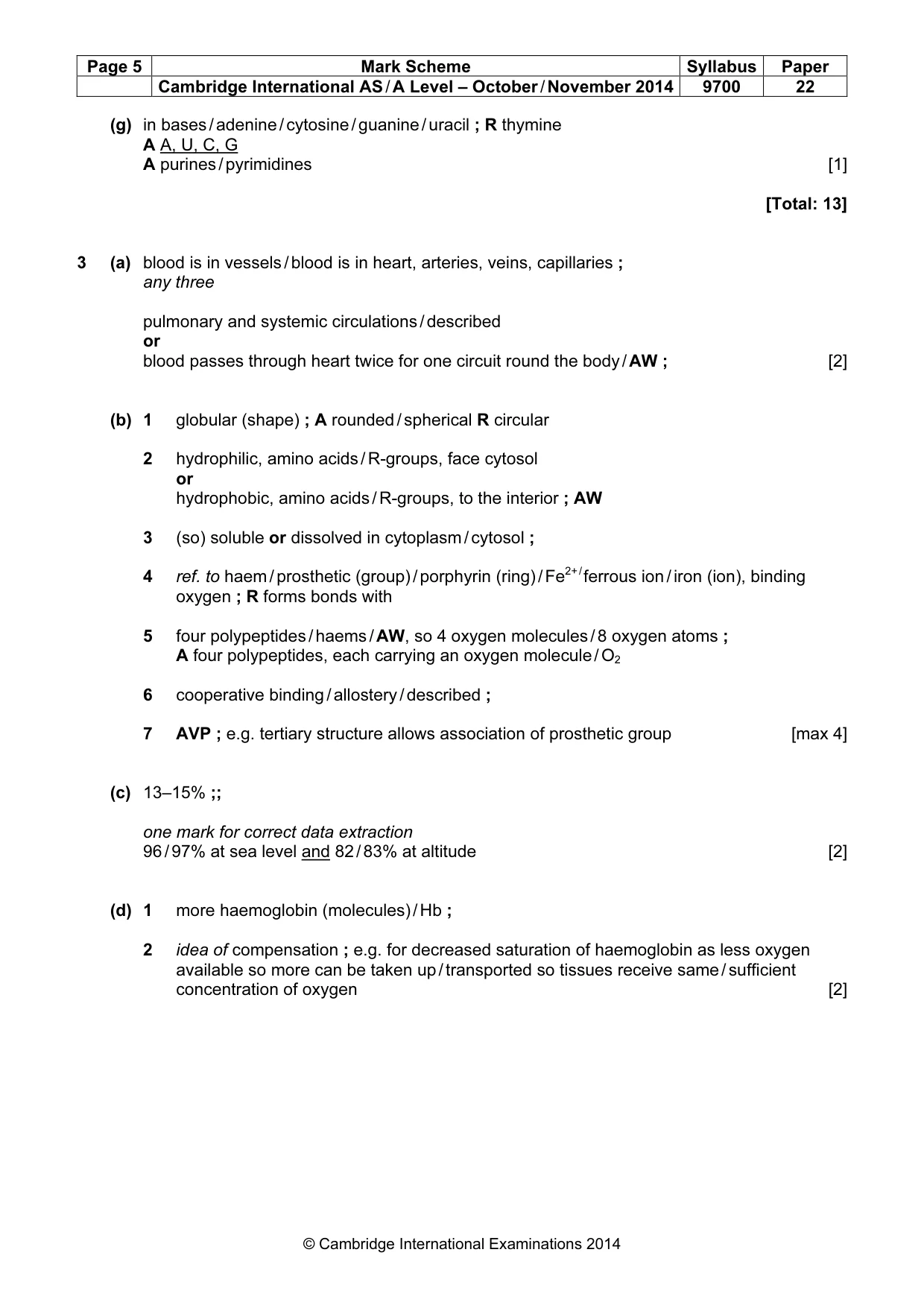
Page 5 Mark Scheme Syllabus Paper Cambridge International AS / A Level – October / November 2014 9700 22 © Cambridge International Examinations 2014 (g) in bases / adenine / cytosine / guanine / uracil ; R thymine A A, U, C, G A purines / pyrimidines [1] [Total: 13] 3 (a) blood is in vessels / blood is in heart, arteries, veins, capillaries ; any three pulmonary and systemic circulations / described or blood passes through heart twice for one circuit round the body / AW ; [2] (b) 1 globular (shape) ; A rounded / spherical R circular 2 hydrophilic, amino acids / R-groups, face cytosol or hydrophobic, amino acids / R-groups, to the interior ; AW 3 (so) soluble or dissolved in cytoplasm / cytosol ; 4 ref. to haem / prosthetic (group) / porphyrin (ring) / Fe2+ / ferrous ion / iron (ion), binding oxygen ; R forms bonds with 5 four polypeptides / haems / AW, so 4 oxygen molecules / 8 oxygen atoms ; A four polypeptides, each carrying an oxygen molecule / O2 6 cooperative binding / allostery / described ; 7 AVP ; e.g. tertiary structure allows association of prosthetic group [max 4] (c) 13–15% ;; one mark for correct data extraction 96 / 97% at sea level and 82 / 83% at altitude [2] (d) 1 more haemoglobin (molecules) / Hb ; 2 idea of compensation ; e.g. for decreased saturation of haemoglobin as less oxygen available so more can be taken up / transported so tissues receive same / sufficient concentration of oxygen [2]
Mark scheme, page 6
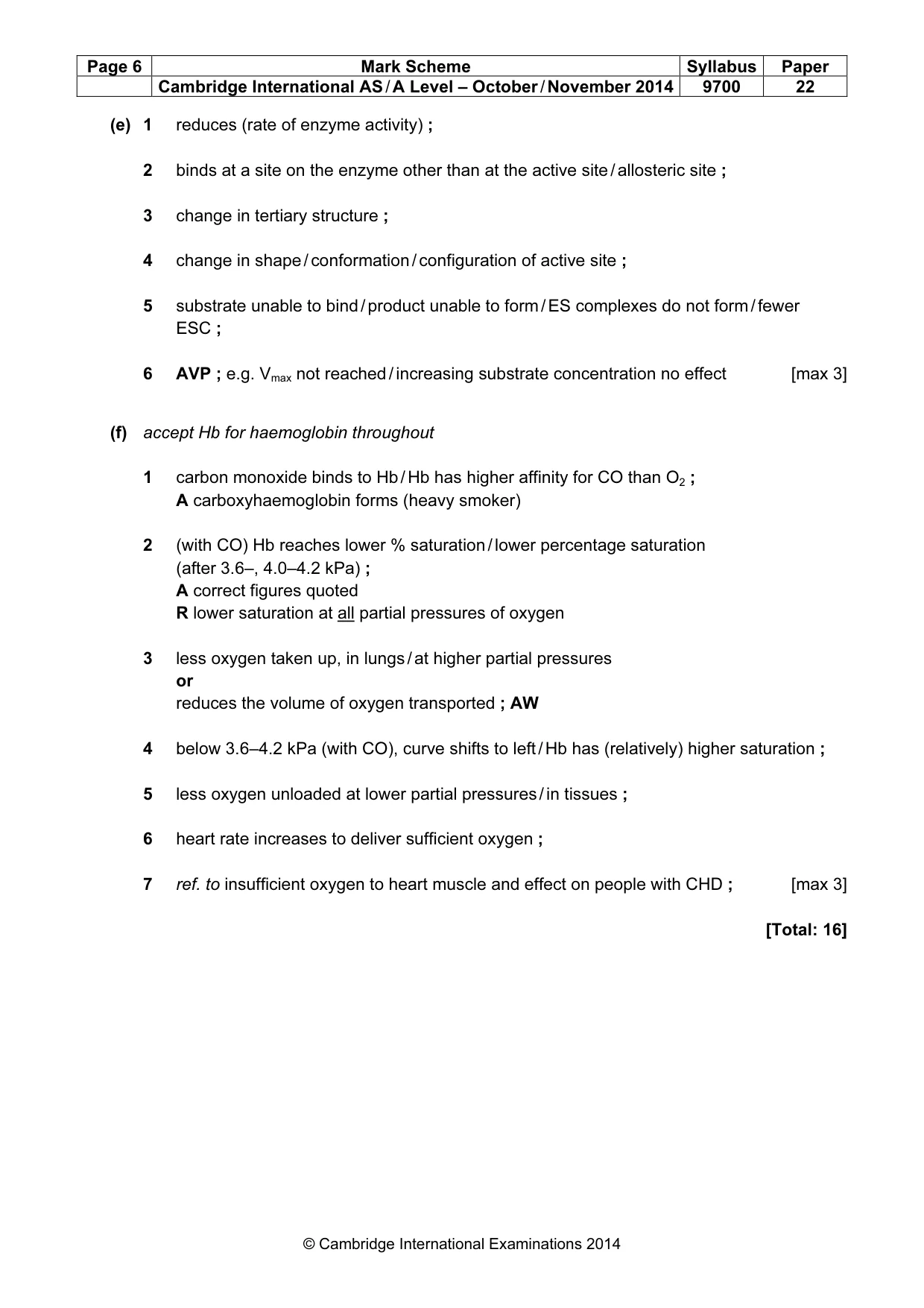
Page 6 Mark Scheme Syllabus Paper Cambridge International AS / A Level – October / November 2014 9700 22 © Cambridge International Examinations 2014 (e) 1 reduces (rate of enzyme activity) ; 2 binds at a site on the enzyme other than at the active site / allosteric site ; 3 change in tertiary structure ; 4 change in shape / conformation / configuration of active site ; 5 substrate unable to bind / product unable to form / ES complexes do not form / fewer ESC ; 6 AVP ; e.g. Vmax not reached / increasing substrate concentration no effect [max 3] (f) accept Hb for haemoglobin throughout 1 carbon monoxide binds to Hb / Hb has higher affinity for CO than O2 ; A carboxyhaemoglobin forms (heavy smoker) 2 (with CO) Hb reaches lower % saturation / lower percentage saturation (after 3.6–, 4.0–4.2 kPa) ; A correct figures quoted R lower saturation at all partial pressures of oxygen 3 less oxygen taken up, in lungs / at higher partial pressures or reduces the volume of oxygen transported ; AW 4 below 3.6–4.2 kPa (with CO), curve shifts to left / Hb has (relatively) higher saturation ; 5 less oxygen unloaded at lower partial pressures / in tissues ; 6 heart rate increases to deliver sufficient oxygen ; 7 ref. to insufficient oxygen to heart muscle and effect on people with CHD ; [max 3] [Total: 16]
Mark scheme, page 7
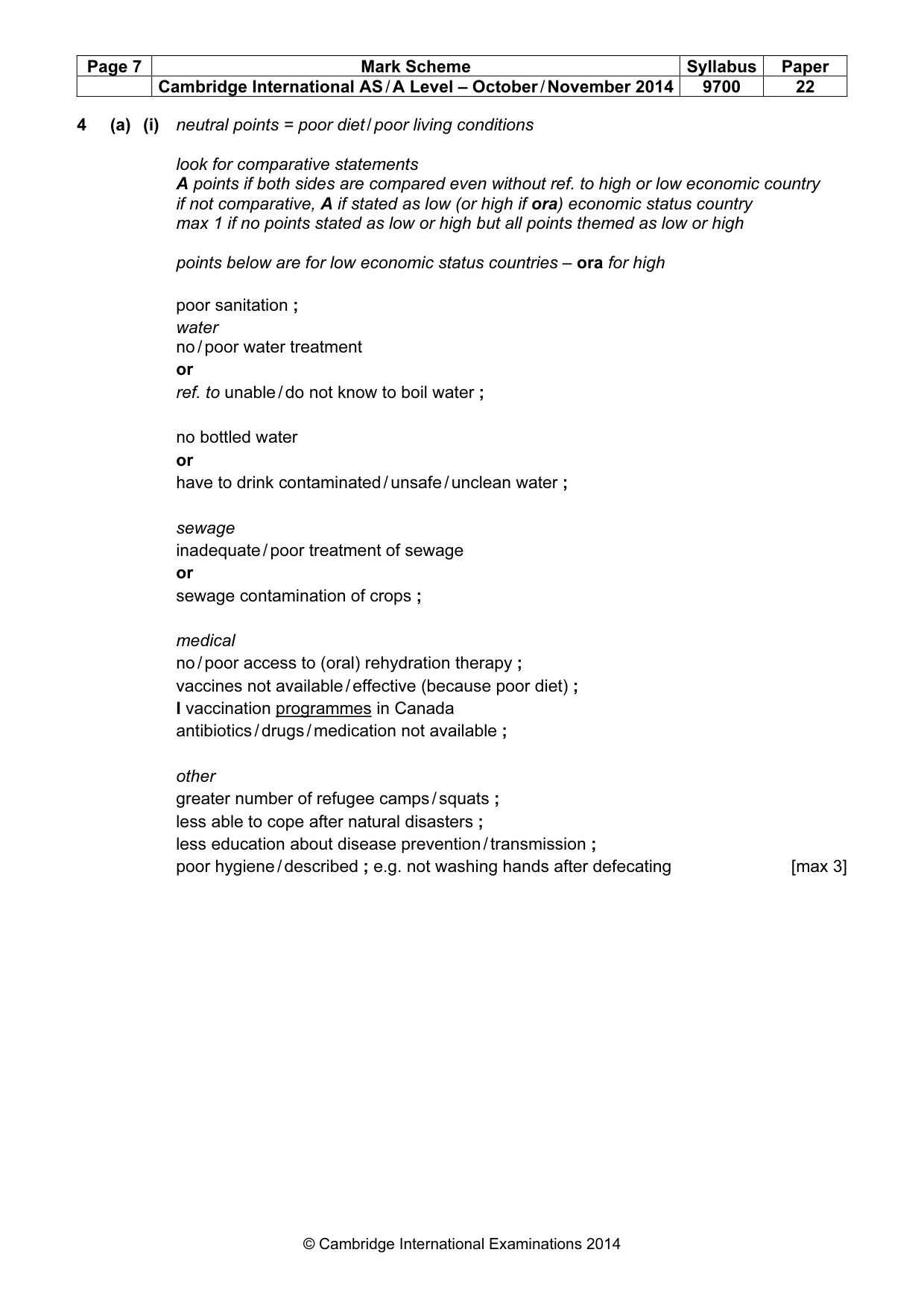
Page 7 Mark Scheme Syllabus Paper Cambridge International AS / A Level – October / November 2014 9700 22 © Cambridge International Examinations 2014 4 (a) (i) neutral points = poor diet / poor living conditions look for comparative statements A points if both sides are compared even without ref. to high or low economic country if not comparative, A if stated as low (or high if ora) economic status country max 1 if no points stated as low or high but all points themed as low or high points below are for low economic status countries – ora for high poor sanitation ; water no / poor water treatment or ref. to unable / do not know to boil water ; no bottled water or have to drink contaminated / unsafe / unclean water ; sewage inadequate / poor treatment of sewage or sewage contamination of crops ; medical no / poor access to (oral) rehydration therapy ; vaccines not available / effective (because poor diet) ; I vaccination programmes in Canada antibiotics / drugs / medication not available ; other greater number of refugee camps / squats ; less able to cope after natural disasters ; less education about disease prevention / transmission ; poor hygiene / described ; e.g. not washing hands after defecating [max 3]
Mark scheme, page 8
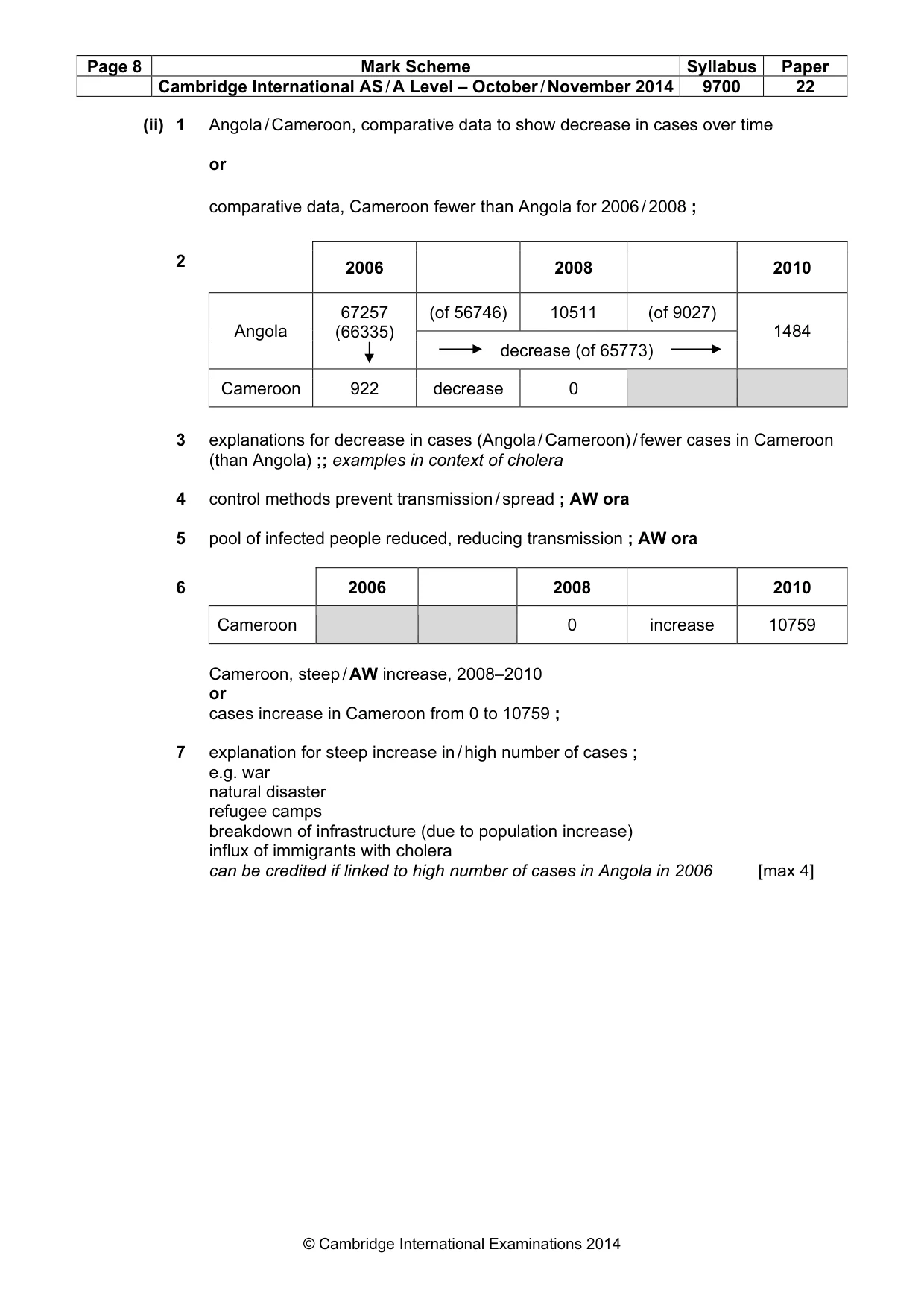
Page 8 Mark Scheme Syllabus Paper Cambridge International AS / A Level – October / November 2014 9700 22 © Cambridge International Examinations 2014 (ii) 1 Angola / Cameroon, comparative data to show decrease in cases over time or comparative data, Cameroon fewer than Angola for 2006 / 2008 ; 2 2006 2008 2010 Angola 67257 (66335) (of 56746) 10511 (of 9027) 1484 decrease (of 65773) Cameroon 922 decrease 0 3 explanations for decrease in cases (Angola / Cameroon) / fewer cases in Cameroon (than Angola) ;; examples in context of cholera 4 control methods prevent transmission / spread ; AW ora 5 pool of infected people reduced, reducing transmission ; AW ora 6 2006 2008 2010 Cameroon 0 increase 10759 Cameroon, steep / AW increase, 2008–2010 or cases increase in Cameroon from 0 to 10759 ; 7 explanation for steep increase in / high number of cases ; e.g. war natural disaster refugee camps breakdown of infrastructure (due to population increase) influx of immigrants with cholera can be credited if linked to high number of cases in Angola in 2006 [max 4]
Mark scheme, page 9
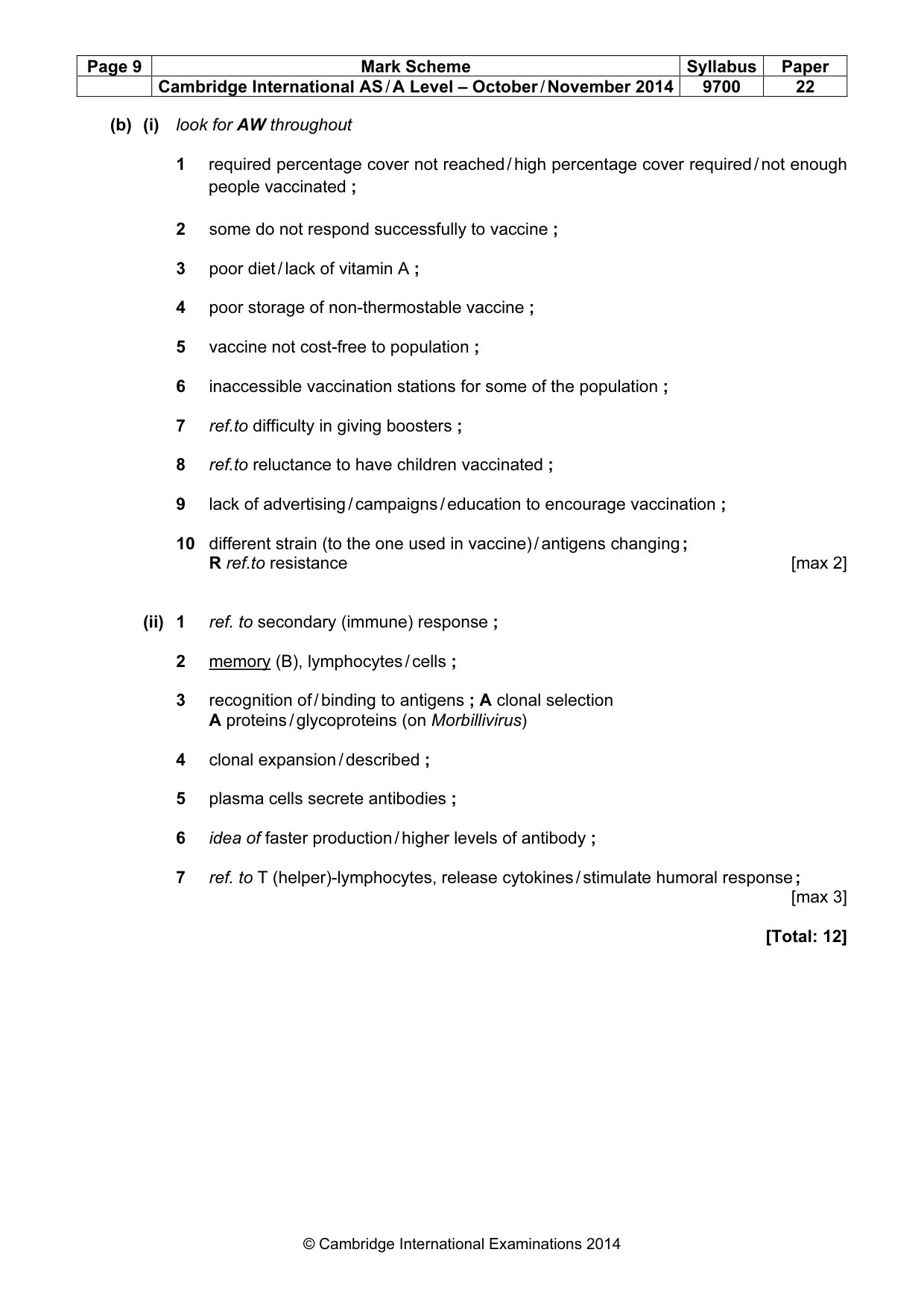
Page 9 Mark Scheme Syllabus Paper Cambridge International AS / A Level – October / November 2014 9700 22 © Cambridge International Examinations 2014 (b) (i) look for AW throughout 1 required percentage cover not reached / high percentage cover required / not enough people vaccinated ; 2 some do not respond successfully to vaccine ; 3 poor diet / lack of vitamin A ; 4 poor storage of non-thermostable vaccine ; 5 vaccine not cost-free to population ; 6 inaccessible vaccination stations for some of the population ; 7 ref.to difficulty in giving boosters ; 8 ref.to reluctance to have children vaccinated ; 9 lack of advertising / campaigns / education to encourage vaccination ; 10 different strain (to the one used in vaccine) / antigens changing ; R ref.to resistance [max 2] (ii) 1 ref. to secondary (immune) response ; 2 memory (B), lymphocytes / cells ; 3 recognition of / binding to antigens ; A clonal selection A proteins / glycoproteins (on Morbillivirus) 4 clonal expansion / described ; 5 plasma cells secrete antibodies ; 6 idea of faster production / higher levels of antibody ; 7 ref. to T (helper)-lymphocytes, release cytokines / stimulate humoral response ; [max 3] [Total: 12]
Mark scheme, page 10
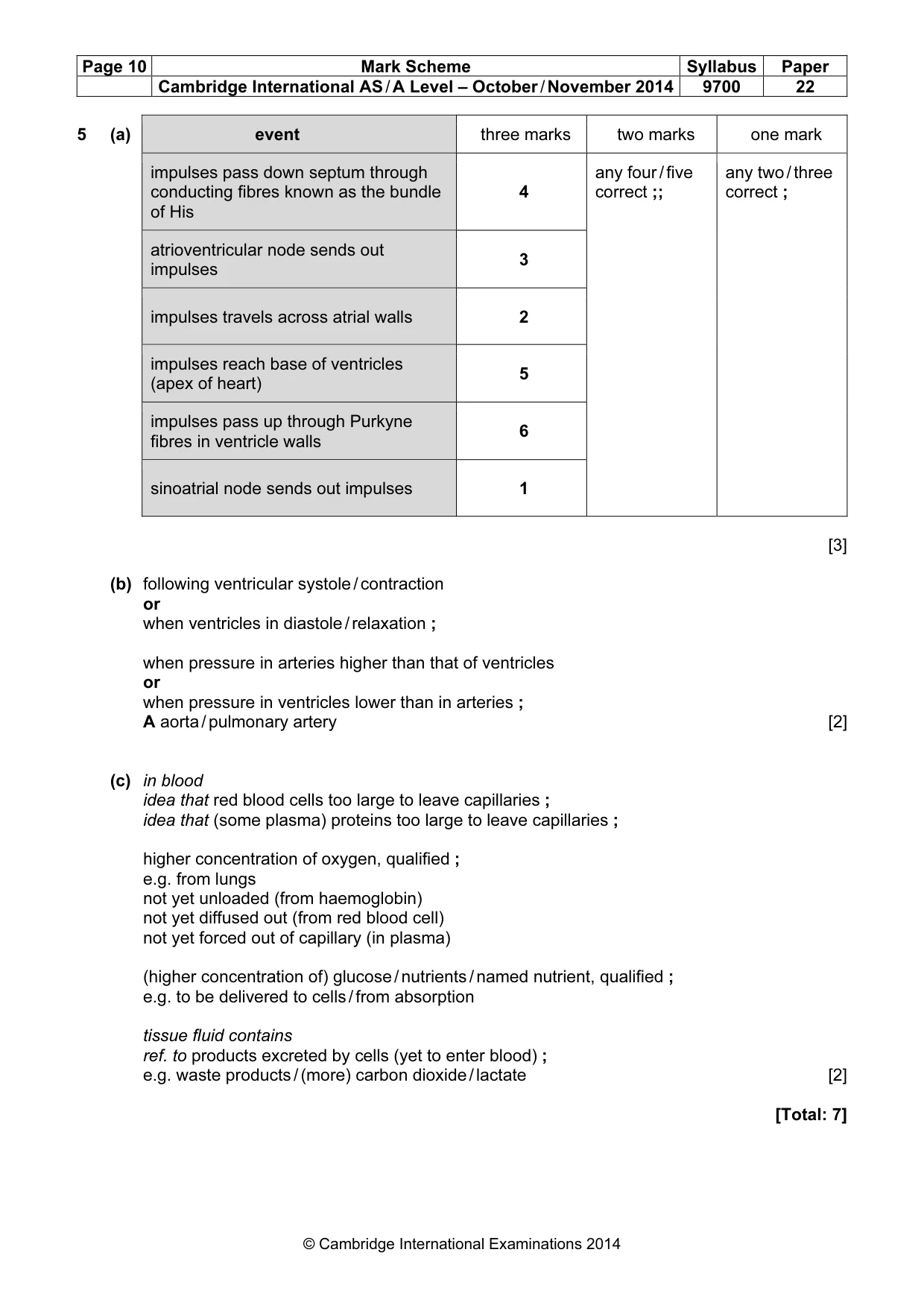
Page 10 Mark Scheme Syllabus Paper Cambridge International AS / A Level – October / November 2014 9700 22 © Cambridge International Examinations 2014 5 (a) event three marks two marks one mark impulses pass down septum through conducting fibres known as the bundle of His 4 any four / five correct ;; any two / three correct ; atrioventricular node sends out impulses 3 impulses travels across atrial walls 2 impulses reach base of ventricles (apex of heart) 5 impulses pass up through Purkyne fibres in ventricle walls 6 sinoatrial node sends out impulses 1 [3] (b) following ventricular systole / contraction or when ventricles in diastole / relaxation ; when pressure in arteries higher than that of ventricles or when pressure in ventricles lower than in arteries ; A aorta / pulmonary artery [2] (c) in blood idea that red blood cells too large to leave capillaries ; idea that (some plasma) proteins too large to leave capillaries ; higher concentration of oxygen, qualified ; e.g. from lungs not yet unloaded (from haemoglobin) not yet diffused out (from red blood cell) not yet forced out of capillary (in plasma) (higher concentration of) glucose / nutrients / named nutrient, qualified ; e.g. to be delivered to cells / from absorption tissue fluid contains ref. to products excreted by cells (yet to enter blood) ; e.g. waste products / (more) carbon dioxide / lactate [2] [Total: 7]
Mark scheme, page 11
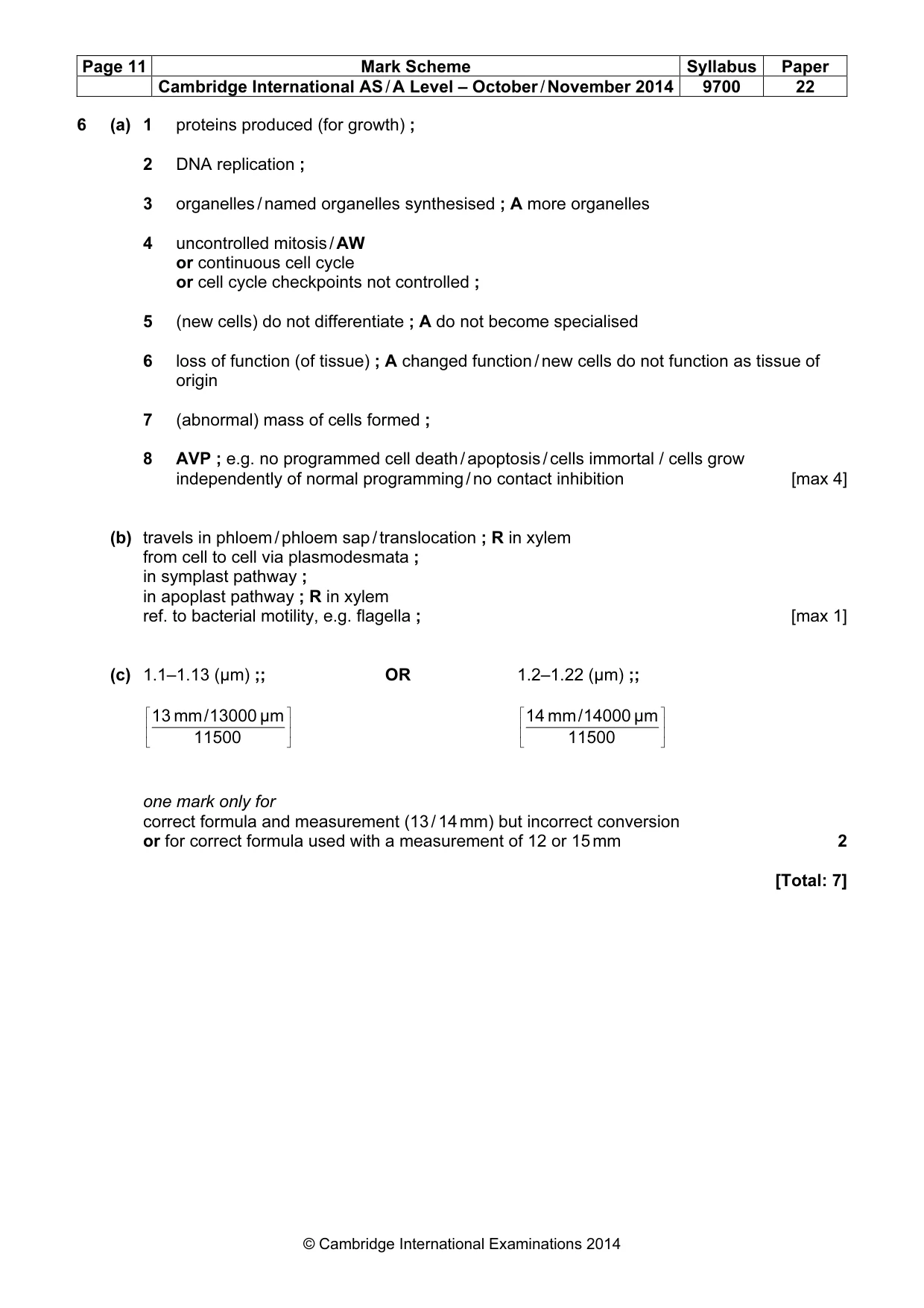
Page 11 Mark Scheme Syllabus Paper Cambridge International AS / A Level – October / November 2014 9700 22 © Cambridge International Examinations 2014 6 (a) 1 proteins produced (for growth) ; 2 DNA replication ; 3 organelles / named organelles synthesised ; A more organelles 4 uncontrolled mitosis / AW or continuous cell cycle or cell cycle checkpoints not controlled ; 5 (new cells) do not differentiate ; A do not become specialised 6 loss of function (of tissue) ; A changed function / new cells do not function as tissue of origin 7 (abnormal) mass of cells formed ; 8 AVP ; e.g. no programmed cell death / apoptosis / cells immortal / cells grow independently of normal programming / no contact inhibition [max 4] (b) travels in phloem / phloem sap / translocation ; R in xylem from cell to cell via plasmodesmata ; in symplast pathway ; in apoplast pathway ; R in xylem ref. to bacterial motility, e.g. flagella ; [max 1] (c) 1.1–1.13 (µm) ;; OR 1.2–1.22 (µm) ;; 11500 µm 13000 / mm 13 11500 µm 14000 / mm 14 one mark only for correct formula and measurement (13 / 14 mm) but incorrect conversion or for correct formula used with a measurement of 12 or 15 mm 2 [Total: 7]
What you needed in this session
Cambridge’s own grade thresholds for 2014 Oct/Nov, Paper 2 · Variant 2. A higher threshold means an easier paper — the bar moves with how the cohort did.