Cambridge A Level Biology 9700 — 2013 May/June Paper 2 · Variant 3
9700/23/M/J/13 · 60 marks · ≈68 min
The question paper and its mark scheme, free to read here and free to download. This is Cambridge’s own paper, exactly as it was sat.
Question paper12 pages
Mark scheme7 pages
Answers below. Sit the paper first if you are practising.
Paper as text
Question paper, page 1
This document consists of 12 printed pages. DC (NF/JG) 79167/5 R © UCLES 2013 [Turn over UNIVERSITY OF CAMBRIDGE INTERNATIONAL EXAMINATIONS General Certificate of Education Advanced Subsidiary Level and Advanced Level * 7 7 8 5 3 5 9 0 5 0 * BIOLOGY 9700/23 Paper 2 Structured Questions AS May/June 2013 1 hour 15 minutes Candidates answer on the Question Paper. No Additional Materials are required. READ THESE INSTRUCTIONS FIRST Write your Centre number, candidate number and name in the spaces provided at the top of this page. Write in dark blue or black ink. You may use a soft pencil for any diagrams, graphs or rough working. Do not use red ink, staples, paper clips, highlighters, glue or correction fluid. DO NOT WRITE IN ANY BARCODES. Answer all questions. Electronic calculators may be used. At the end of the examination, fasten all your work securely together. The number of marks is given in brackets [ ] at the end of each question or part question.
Question paper, page 2
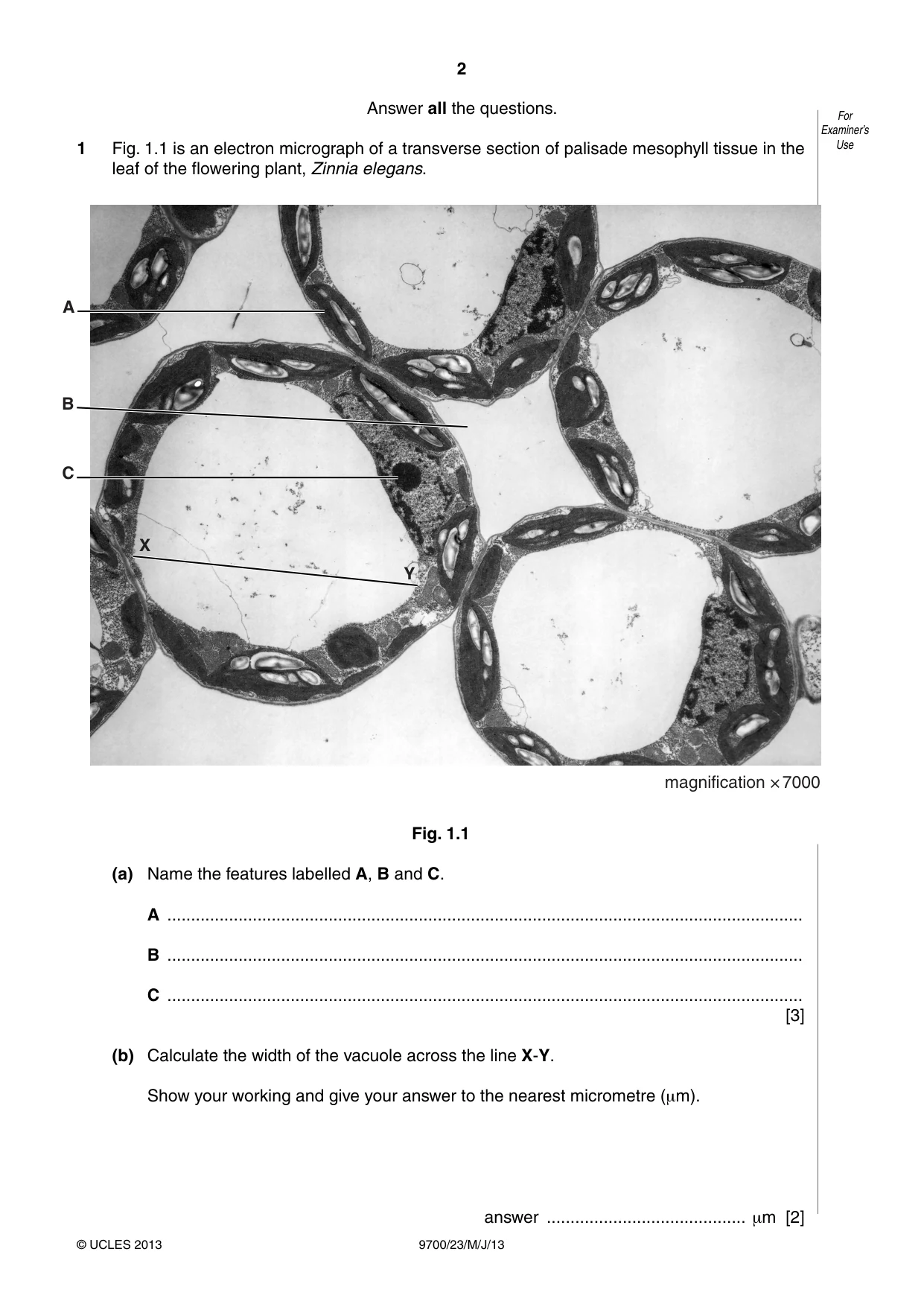
2 9700/23/M/J/13 © UCLES 2013 For Examiner’s Use Answer all the questions. 1 Fig. 1.1 is an electron micrograph of a transverse section of palisade mesophyll tissue in the leaf of the flowering plant, Zinnia elegans. A B C X Y magnification × 7000 Fig. 1.1 (a) Name the features labelled A, B and C. A … B … C … [3] (b) Calculate the width of the vacuole across the line X-Y. Show your working and give your answer to the nearest micrometre (μm). answer … μm [2]
Question paper, page 3
3 9700/23/M/J/13 © UCLES 2013 [Turn over For Examiner’s Use (c) The membrane surrounding the vacuole, called the tonoplast, has a fluid mosaic structure. Describe the structure of this membrane. … … … … … … … … … [4] (d) Palisade mesophyll cells have very large vacuoles. Explain how water moves from the xylem in the leaf into these vacuoles. … … … … … … … [3] [Total: 12]
Question paper, page 4
4 9700/23/M/J/13 © UCLES 2013 For Examiner’s Use 2 Read the following passage. A method called in vitro translation is often used by scientists to produce proteins in the laboratory. The method uses extracts from animal cells, plant cells or bacteria. These are chosen because they have high levels of protein synthesis. The cells are treated so that the cell walls, if present, and cell membranes are broken down and then treated so that any of the cell’s own DNA and mRNA are destroyed. When mRNA from any source is added to these extracts, it will be translated into the corresponding protein. (a) Explain why: (i) the cells are chosen on the basis of their high level of protein synthesis … … … … [2] (ii) the cell walls (if present) and cell membranes need to be broken down … … … [1] (iii) the cell’s own mRNA needs to be destroyed … … … [1] (iv) mRNA from any source can be translated in any type of extract. … … … … [2]
Question paper, page 5
5 9700/23/M/J/13 © UCLES 2013 [Turn over For Examiner’s Use (b) State two differences between the cell structures used in translation in prokaryotes and eukaryotes. … … … … [2] (c) Scientists usually find that the method of in vitro translation is less efficient than in vivo translation, which occurs in cells. Suggest a reason for this. … … … [1] [Total: 9]
Question paper, page 6
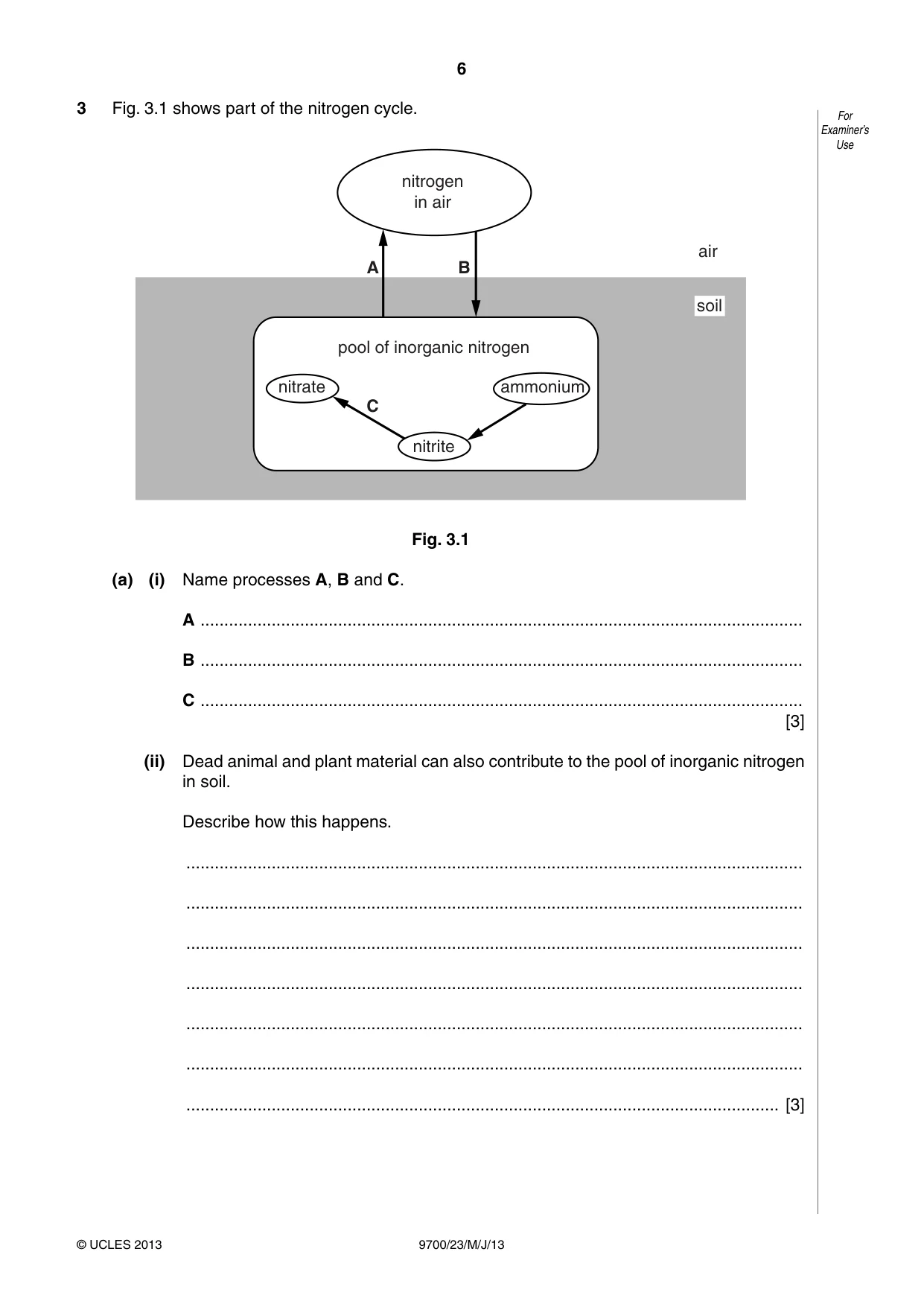
6 9700/23/M/J/13 © UCLES 2013 For Examiner’s Use 3 Fig. 3.1 shows part of the nitrogen cycle. nitrogen in air pool of inorganic nitrogen nitrate nitrite ammonium soil air A B C Fig. 3.1 (a) (i) Name processes A, B and C. A … B … C … [3] (ii) Dead animal and plant material can also contribute to the pool of inorganic nitrogen in soil. Describe how this happens. … … … … … … … [3]
Question paper, page 7
7 9700/23/M/J/13 © UCLES 2013 [Turn over For Examiner’s Use (b) Other inorganic substances, such as phosphate, are cycled entirely within the soil. (i) State one use for phosphate and one use for nitrate in organisms. phosphate … nitrate … [2] (ii) Nitrogen and phosphate are both cycled more rapidly in ecosystems where there are high rates of growth within trophic levels and high rates of energy flow between trophic levels. With reference to the use of both nitrogen and phosphate in organisms, explain this statement. … … … … … … … … … … [3] [Total: 11]
Question paper, page 8
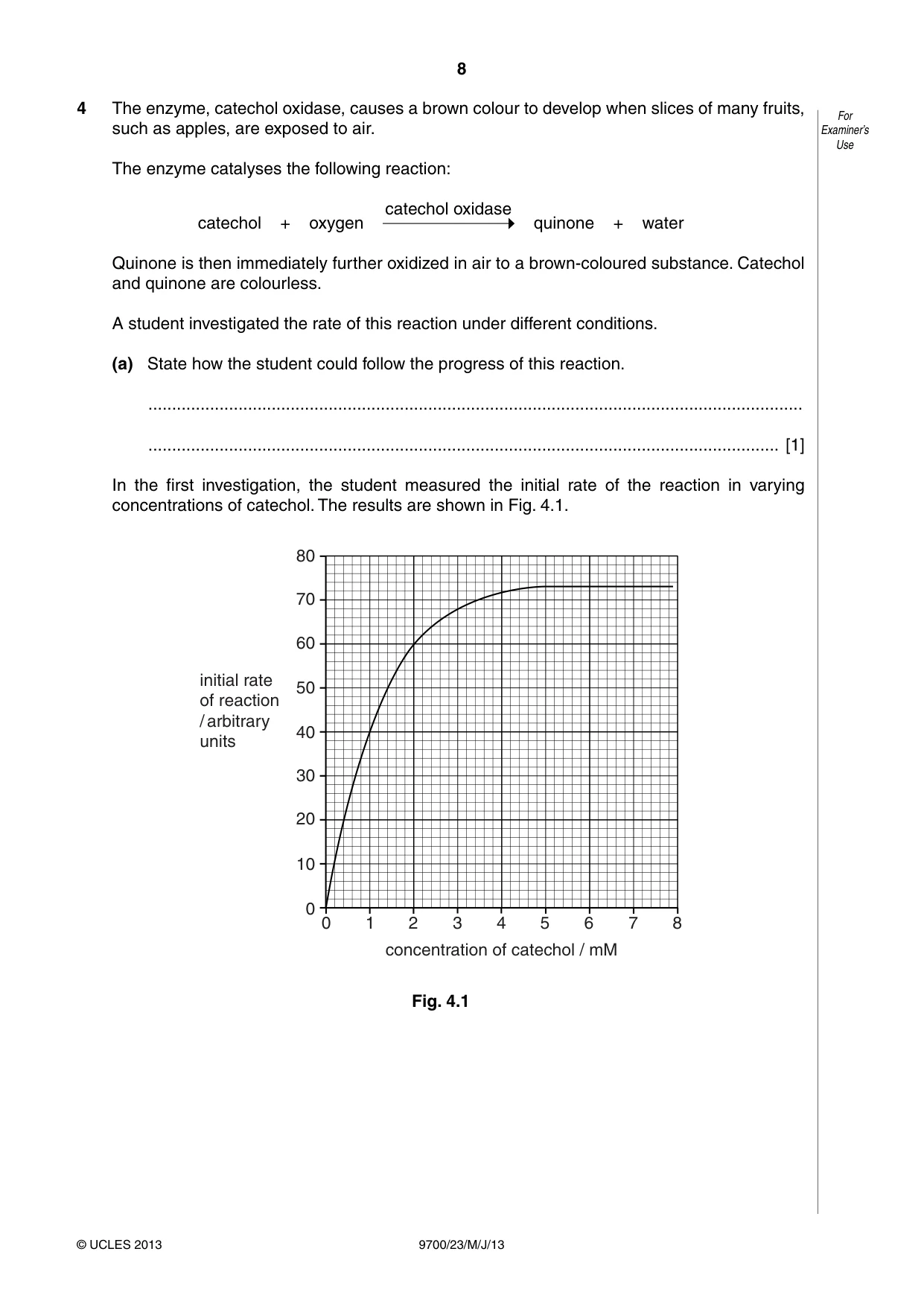
8 9700/23/M/J/13 © UCLES 2013 For Examiner’s Use 4 The enzyme, catechol oxidase, causes a brown colour to develop when slices of many fruits, such as apples, are exposed to air. The enzyme catalyses the following reaction: catechol oxidase catechol + oxygen quinone + water Quinone is then immediately further oxidized in air to a brown-coloured substance. Catechol and quinone are colourless. A student investigated the rate of this reaction under different conditions. (a) State how the student could follow the progress of this reaction. … … [1] In the first investigation, the student measured the initial rate of the reaction in varying concentrations of catechol. The results are shown in Fig. 4.1. 80 70 60 50 40 30 20 10 0 0 1 2 3 4 5 6 7 8 concentration of catechol / mM initial rate of reaction / arbitrary units Fig. 4.1
Question paper, page 9
9 9700/23/M/J/13 © UCLES 2013 [Turn over For Examiner’s Use (b) Explain the results shown in Fig. 4.1. … … … … … … … … … … … [5] (c) In a second investigation, the student repeated the experiment, but this time added a competitive inhibitor, para-hydroxybenzoic acid (PHBA), to each reaction mixture. (i) Sketch on Fig. 4.1 the results that would be obtained for this second investigation. [2] (ii) Explain the effect that PHBA will have on the action of phenoloxidase. … … … … [2] (d) Lemon juice contains citric acid. Adding even a small amount of diluted lemon juice to apple slices slows the appearance of the brown colour. Suggest an explanation for this observation. … … … … [2] [Total: 12]
Question paper, page 10
10 9700/23/M/J/13 © UCLES 2013 For Examiner’s Use 5 (a) Explain the importance of mitosis in multicellular organisms. … … … … … … [3] A protein, mitosis-promoting factor (MPF), has been identified in cells. MPF is a globular protein made from two polypeptide chains. (b) Place a tick (✓) in the box next to the type, or types, of protein structure shown by MPF. primary secondary tertiary quaternary [1] The presence of MPF is known to cause prophase to start. (c) Describe the changes that occur during prophase in an animal cell. … … … … … … … … [4]
Question paper, page 11
11 9700/23/M/J/13 © UCLES 2013 [Turn over For Examiner’s Use (d) MPF normally begins to break down and stops functioning during anaphase. Suggest the possible consequences of MPF not breaking down. … … … … … … … [3] [Total: 11]
Question paper, page 12
12 9700/23/M/J/13 © UCLES 2013 For Examiner’s Use Copyright Acknowledgements: Fig. 1.1 © DR JEREMY BURGESS/SCIENCE PHOTO LIBRARY. Permission to reproduce items where third-party owned material protected by copyright is included has been sought and cleared where possible. Every reasonable effort has been made by the publisher (UCLES) to trace copyright holders, but if any items requiring clearance have unwittingly been included, the publisher will be pleased to make amends at the earliest possible opportunity. University of Cambridge International Examinations is part of the Cambridge Assessment Group. Cambridge Assessment is the brand name of University of Cambridge Local Examinations Syndicate (UCLES), which is itself a department of the University of Cambridge. 6 Measles is an infectious disease, while lung cancer is not. (a) Explain why lung cancer is sometimes referred to as a ‘lifestyle disease’. … … … … [2] (b) State the type of pathogen that causes measles and state its mode of transmission. pathogen … transmission … … [2] (c) Between January and April 2011, 118 measles cases were reported in the USA, where measles was previously thought to be virtually eradicated. Suggest a reason for this rise in measles cases. … … … … [1] [Total: 5]
Mark scheme, page 1
CAMBRIDGE INTERNATIONAL EXAMINATIONS GCE Advanced Subsidiary Level and GCE Advanced Level MARK SCHEME for the May/June 2013 series 9700 BIOLOGY 9700/23 Paper 2 (AS Structured Questions), maximum raw mark 60 This mark scheme is published as an aid to teachers and candidates, to indicate the requirements of the examination. It shows the basis on which Examiners were instructed to award marks. It does not indicate the details of the discussions that took place at an Examiners’ meeting before marking began, which would have considered the acceptability of alternative answers. Mark schemes should be read in conjunction with the question paper and the Principal Examiner Report for Teachers. Cambridge will not enter into discussions about these mark schemes. Cambridge is publishing the mark schemes for the May/June 2013 series for most IGCSE, GCE Advanced Level and Advanced Subsidiary Level components and some Ordinary Level components.
Mark scheme, page 2
Page 2 Mark Scheme Syllabus Paper GCE AS/A LEVEL – May/June 2013 9700 23 © Cambridge International Examinations 2013 Mark scheme abbreviations: ; separates marking points / alternative answers for the same point R reject A accept (for answers correctly cued by the question, or by extra guidance) AW alternative wording (where responses vary more than usual) underline actual word given must be used by candidate (grammatical variants excepted) max indicates the maximum number of marks that can be given ora or reverse argument mp marking point (with relevant number) ecf error carried forward I ignore
Mark scheme, page 3
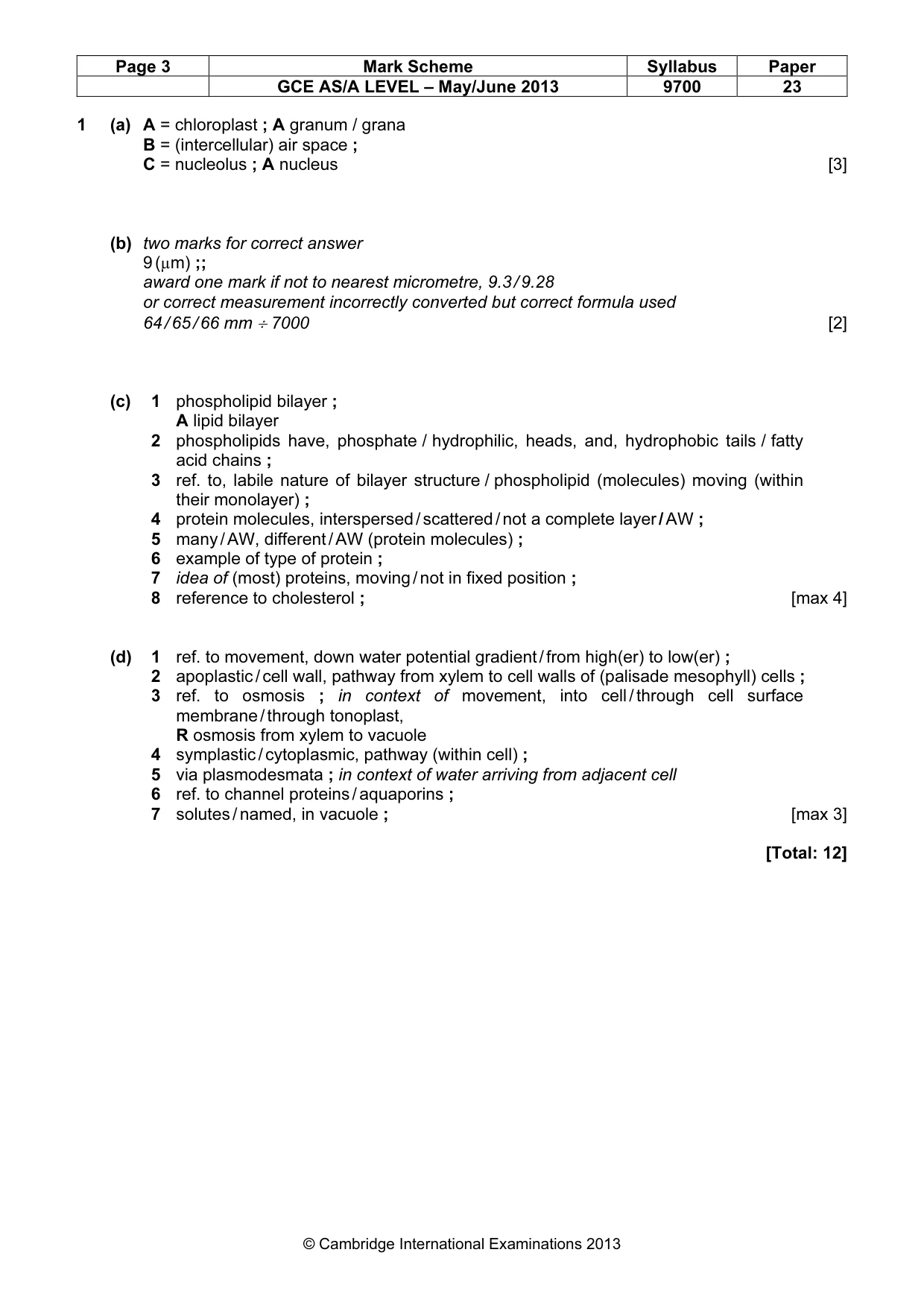
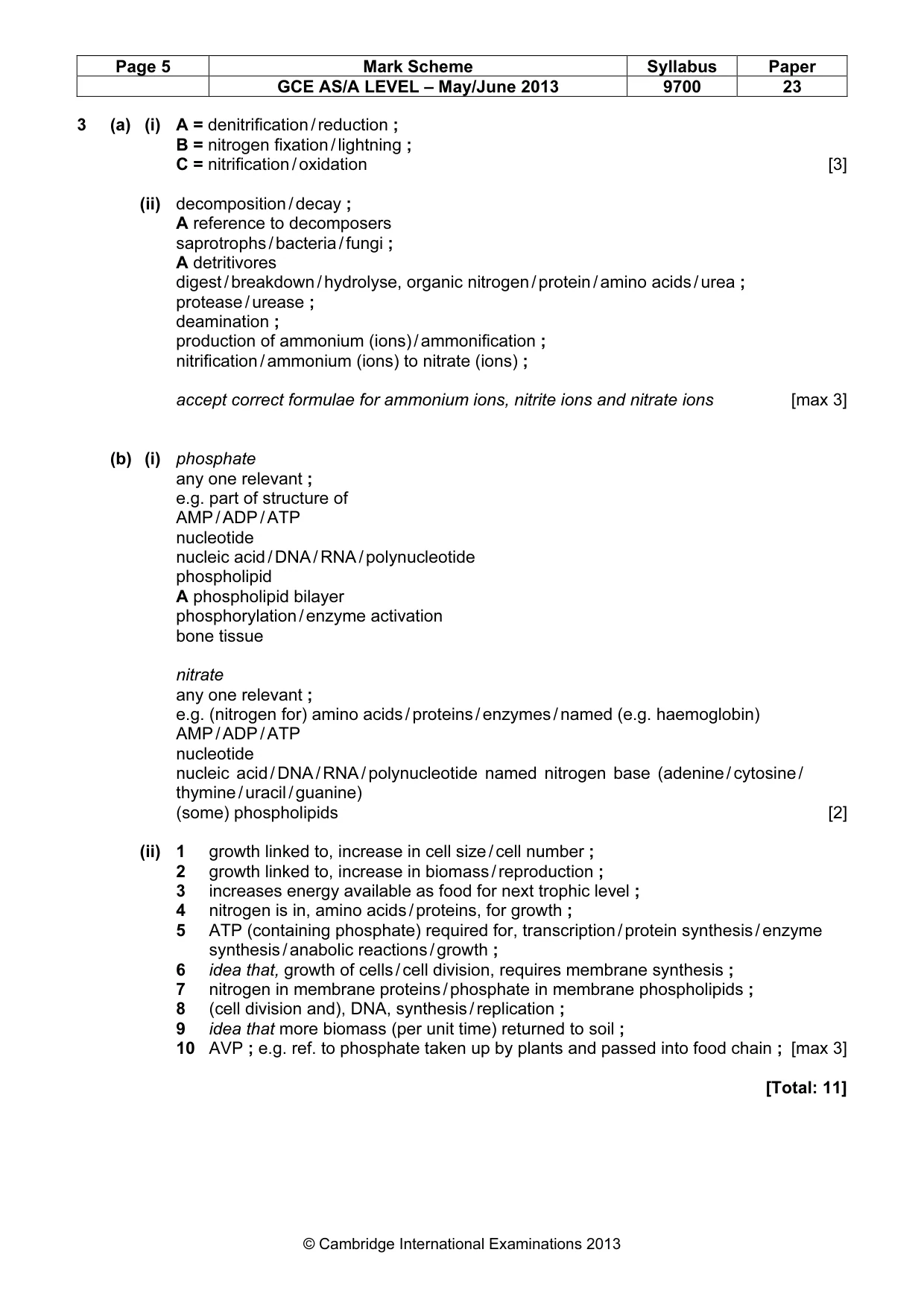
Page 3 Mark Scheme Syllabus Paper GCE AS/A LEVEL – May/June 2013 9700 23 © Cambridge International Examinations 2013 1 (a) A = chloroplast ; A granum / grana B = (intercellular) air space ; C = nucleolus ; A nucleus [3] (b) two marks for correct answer 9 (µm) ;; award one mark if not to nearest micrometre, 9.3 / 9.28 or correct measurement incorrectly converted but correct formula used 64 / 65 / 66 mm ÷ 7000 [2] (c) 1 phospholipid bilayer ; A lipid bilayer 2 phospholipids have, phosphate / hydrophilic, heads, and, hydrophobic tails / fatty acid chains ; 3 ref. to, labile nature of bilayer structure / phospholipid (molecules) moving (within their monolayer) ; 4 protein molecules, interspersed / scattered / not a complete layer / AW ; 5 many / AW, different / AW (protein molecules) ; 6 example of type of protein ; 7 idea of (most) proteins, moving / not in fixed position ; 8 reference to cholesterol ; [max 4] (d) 1 ref. to movement, down water potential gradient / from high(er) to low(er) ; 2 apoplastic / cell wall, pathway from xylem to cell walls of (palisade mesophyll) cells ; 3 ref. to osmosis ; in context of movement, into cell / through cell surface membrane / through tonoplast, R osmosis from xylem to vacuole 4 symplastic / cytoplasmic, pathway (within cell) ; 5 via plasmodesmata ; in context of water arriving from adjacent cell 6 ref. to channel proteins / aquaporins ; 7 solutes / named, in vacuole ; [max 3] [Total: 12]
Mark scheme, page 4
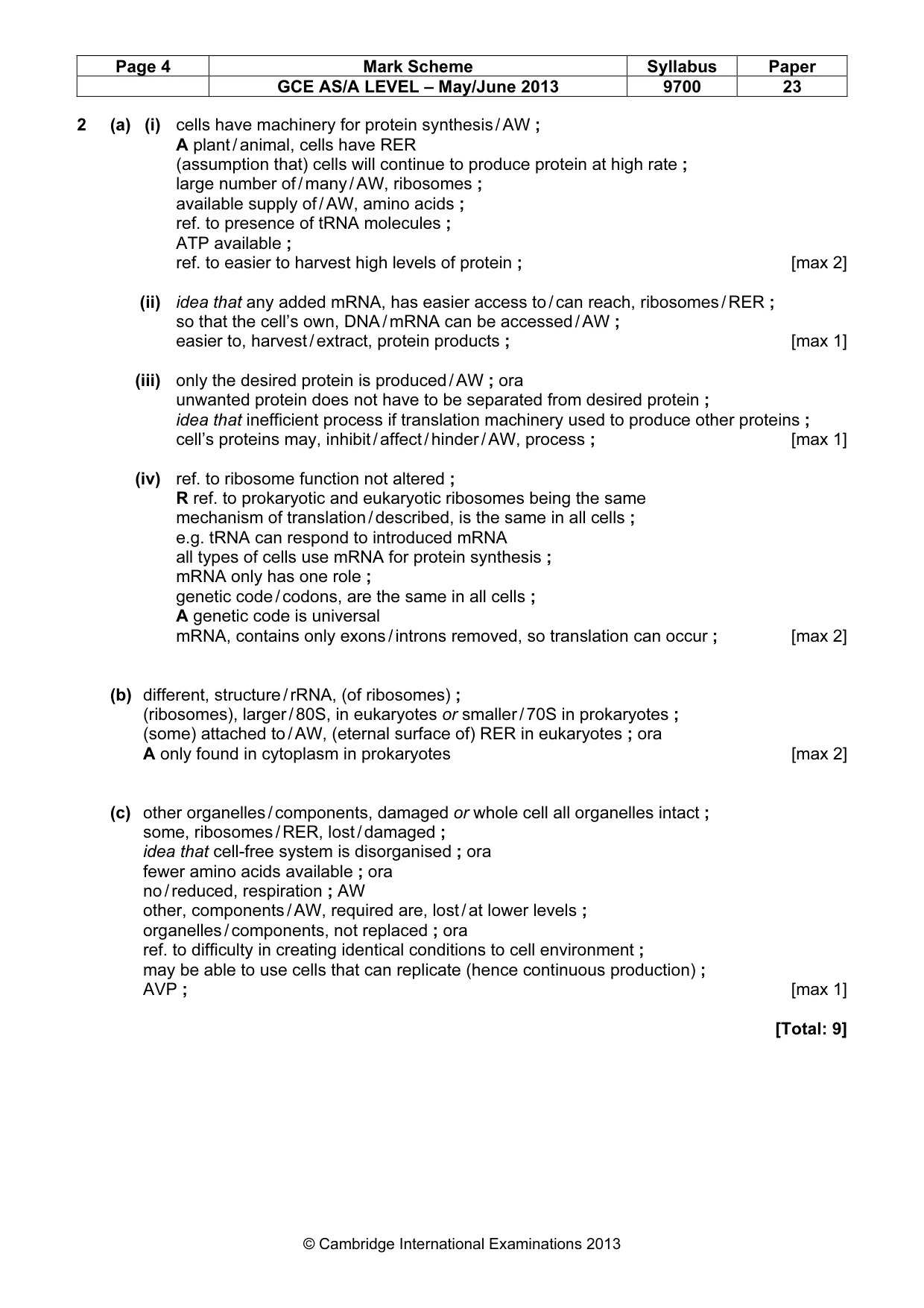
Page 4 Mark Scheme Syllabus Paper GCE AS/A LEVEL – May/June 2013 9700 23 © Cambridge International Examinations 2013 2 (a) (i) cells have machinery for protein synthesis / AW ; A plant / animal, cells have RER (assumption that) cells will continue to produce protein at high rate ; large number of / many / AW, ribosomes ; available supply of / AW, amino acids ; ref. to presence of tRNA molecules ; ATP available ; ref. to easier to harvest high levels of protein ; [max 2] (ii) idea that any added mRNA, has easier access to / can reach, ribosomes / RER ; so that the cell’s own, DNA / mRNA can be accessed / AW ; easier to, harvest / extract, protein products ; [max 1] (iii) only the desired protein is produced / AW ; ora unwanted protein does not have to be separated from desired protein ; idea that inefficient process if translation machinery used to produce other proteins ; cell’s proteins may, inhibit / affect / hinder / AW, process ; [max 1] (iv) ref. to ribosome function not altered ; R ref. to prokaryotic and eukaryotic ribosomes being the same mechanism of translation / described, is the same in all cells ; e.g. tRNA can respond to introduced mRNA all types of cells use mRNA for protein synthesis ; mRNA only has one role ; genetic code / codons, are the same in all cells ; A genetic code is universal mRNA, contains only exons / introns removed, so translation can occur ; [max 2] (b) different, structure / rRNA, (of ribosomes) ; (ribosomes), larger / 80S, in eukaryotes or smaller / 70S in prokaryotes ; (some) attached to / AW, (eternal surface of) RER in eukaryotes ; ora A only found in cytoplasm in prokaryotes [max 2] (c) other organelles / components, damaged or whole cell all organelles intact ; some, ribosomes / RER, lost / damaged ; idea that cell-free system is disorganised ; ora fewer amino acids available ; ora no / reduced, respiration ; AW other, components / AW, required are, lost / at lower levels ; organelles / components, not replaced ; ora ref. to difficulty in creating identical conditions to cell environment ; may be able to use cells that can replicate (hence continuous production) ; AVP ; [max 1] [Total: 9]
Mark scheme, page 5
Page 5 Mark Scheme Syllabus Paper GCE AS/A LEVEL – May/June 2013 9700 23 © Cambridge International Examinations 2013 3 (a) (i) A = denitrification / reduction ; B = nitrogen fixation / lightning ; C = nitrification / oxidation [3] (ii) decomposition / decay ; A reference to decomposers saprotrophs / bacteria / fungi ; A detritivores digest / breakdown / hydrolyse, organic nitrogen / protein / amino acids / urea ; protease / urease ; deamination ; production of ammonium (ions) / ammonification ; nitrification / ammonium (ions) to nitrate (ions) ; accept correct formulae for ammonium ions, nitrite ions and nitrate ions [max 3] (b) (i) phosphate any one relevant ; e.g. part of structure of AMP / ADP / ATP nucleotide nucleic acid / DNA / RNA / polynucleotide phospholipid A phospholipid bilayer phosphorylation / enzyme activation bone tissue nitrate any one relevant ; e.g. (nitrogen for) amino acids / proteins / enzymes / named (e.g. haemoglobin) AMP / ADP / ATP nucleotide nucleic acid / DNA / RNA / polynucleotide named nitrogen base (adenine / cytosine / thymine / uracil / guanine) (some) phospholipids [2] (ii) 1 growth linked to, increase in cell size / cell number ; 2 growth linked to, increase in biomass / reproduction ; 3 increases energy available as food for next trophic level ; 4 nitrogen is in, amino acids / proteins, for growth ; 5 ATP (containing phosphate) required for, transcription / protein synthesis / enzyme synthesis / anabolic reactions / growth ; 6 idea that, growth of cells / cell division, requires membrane synthesis ; 7 nitrogen in membrane proteins / phosphate in membrane phospholipids ; 8 (cell division and), DNA, synthesis / replication ; 9 idea that more biomass (per unit time) returned to soil ; 10 AVP ; e.g. ref. to phosphate taken up by plants and passed into food chain ; [max 3] [Total: 11]
Mark scheme, page 6
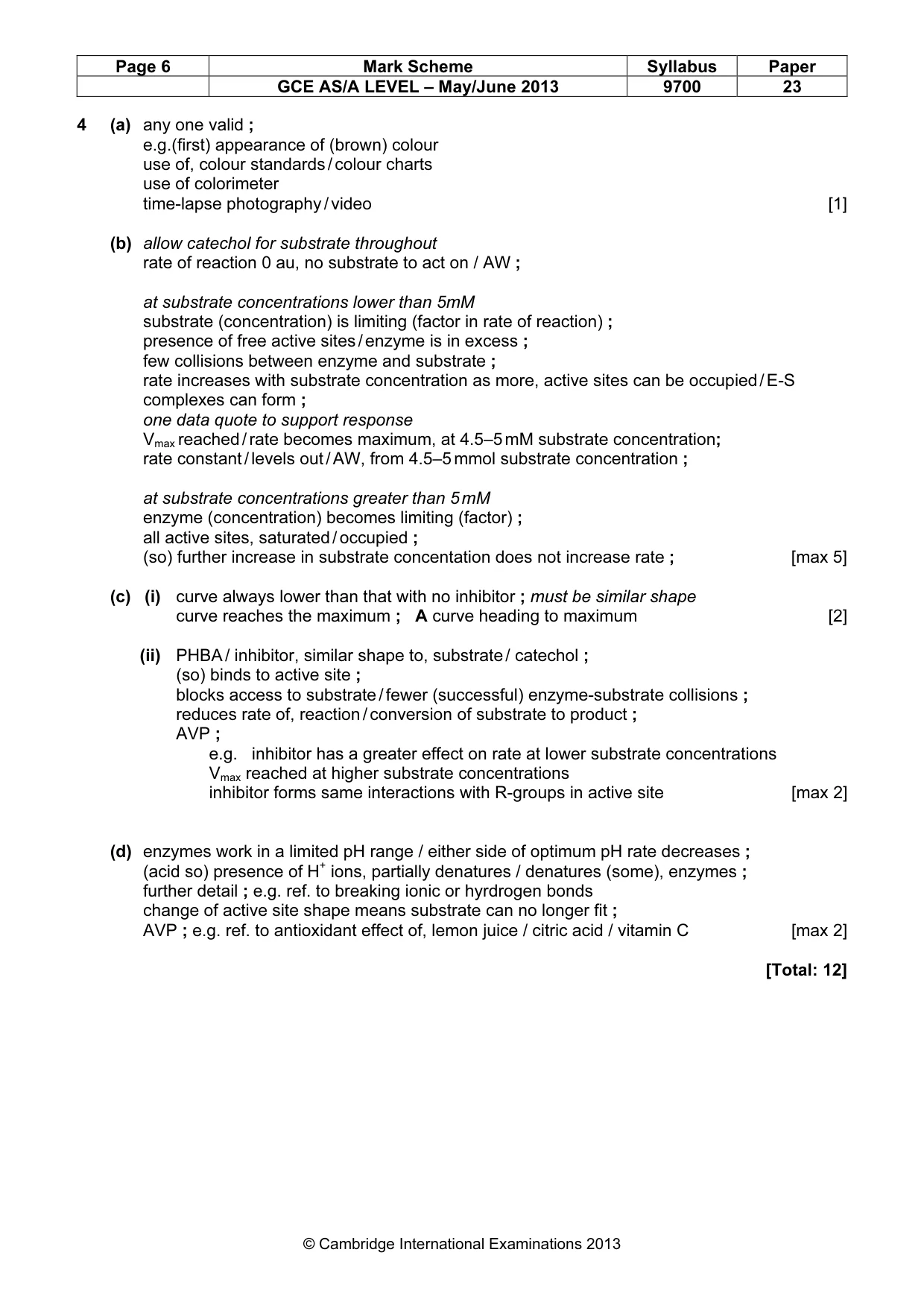
Page 6 Mark Scheme Syllabus Paper GCE AS/A LEVEL – May/June 2013 9700 23 © Cambridge International Examinations 2013 4 (a) any one valid ; e.g.(first) appearance of (brown) colour use of, colour standards / colour charts use of colorimeter time-lapse photography / video [1] (b) allow catechol for substrate throughout rate of reaction 0 au, no substrate to act on / AW ; at substrate concentrations lower than 5mM substrate (concentration) is limiting (factor in rate of reaction) ; presence of free active sites / enzyme is in excess ; few collisions between enzyme and substrate ; rate increases with substrate concentration as more, active sites can be occupied / E-S complexes can form ; one data quote to support response Vmax reached / rate becomes maximum, at 4.5–5 mM substrate concentration; rate constant / levels out / AW, from 4.5–5 mmol substrate concentration ; at substrate concentrations greater than 5 mM enzyme (concentration) becomes limiting (factor) ; all active sites, saturated / occupied ; (so) further increase in substrate concentation does not increase rate ; [max 5] (c) (i) curve always lower than that with no inhibitor ; must be similar shape curve reaches the maximum ; A curve heading to maximum [2] (ii) PHBA / inhibitor, similar shape to, substrate / catechol ; (so) binds to active site ; blocks access to substrate / fewer (successful) enzyme-substrate collisions ; reduces rate of, reaction / conversion of substrate to product ; AVP ; e.g. inhibitor has a greater effect on rate at lower substrate concentrations Vmax reached at higher substrate concentrations inhibitor forms same interactions with R-groups in active site [max 2] (d) enzymes work in a limited pH range / either side of optimum pH rate decreases ; (acid so) presence of H+ ions, partially denatures / denatures (some), enzymes ; further detail ; e.g. ref. to breaking ionic or hyrdrogen bonds change of active site shape means substrate can no longer fit ; AVP ; e.g. ref. to antioxidant effect of, lemon juice / citric acid / vitamin C [max 2] [Total: 12]
Mark scheme, page 7
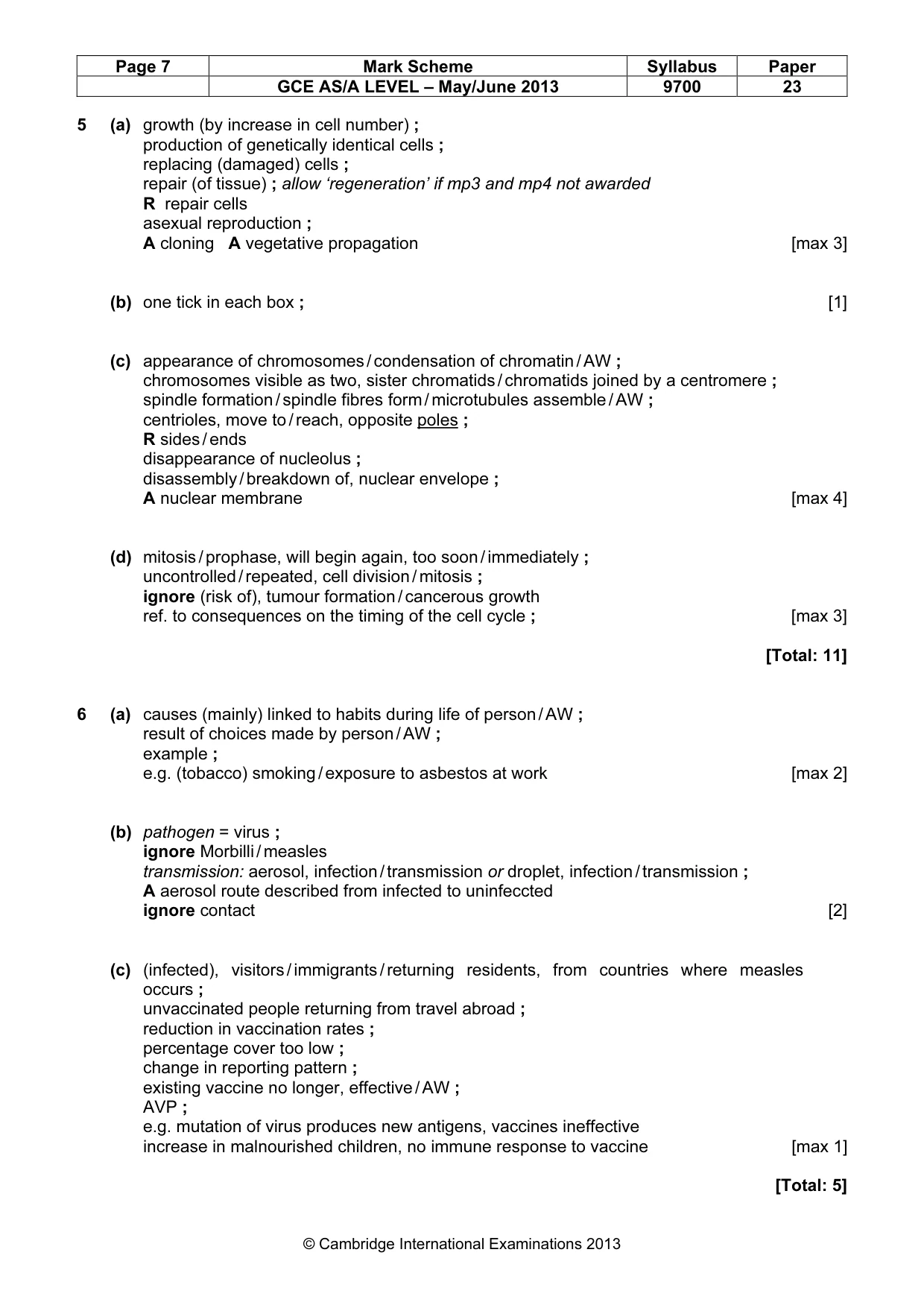
Page 7 Mark Scheme Syllabus Paper GCE AS/A LEVEL – May/June 2013 9700 23 © Cambridge International Examinations 2013 5 (a) growth (by increase in cell number) ; production of genetically identical cells ; replacing (damaged) cells ; repair (of tissue) ; allow ‘regeneration’ if mp3 and mp4 not awarded R repair cells asexual reproduction ; A cloning A vegetative propagation [max 3] (b) one tick in each box ; [1] (c) appearance of chromosomes / condensation of chromatin / AW ; chromosomes visible as two, sister chromatids / chromatids joined by a centromere ; spindle formation / spindle fibres form / microtubules assemble / AW ; centrioles, move to / reach, opposite poles ; R sides / ends disappearance of nucleolus ; disassembly / breakdown of, nuclear envelope ; A nuclear membrane [max 4] (d) mitosis / prophase, will begin again, too soon / immediately ; uncontrolled / repeated, cell division / mitosis ; ignore (risk of), tumour formation / cancerous growth ref. to consequences on the timing of the cell cycle ; [max 3] [Total: 11] 6 (a) causes (mainly) linked to habits during life of person / AW ; result of choices made by person / AW ; example ; e.g. (tobacco) smoking / exposure to asbestos at work [max 2] (b) pathogen = virus ; ignore Morbilli / measles transmission: aerosol, infection / transmission or droplet, infection / transmission ; A aerosol route described from infected to uninfeccted ignore contact [2] (c) (infected), visitors / immigrants / returning residents, from countries where measles occurs ; unvaccinated people returning from travel abroad ; reduction in vaccination rates ; percentage cover too low ; change in reporting pattern ; existing vaccine no longer, effective / AW ; AVP ; e.g. mutation of virus produces new antigens, vaccines ineffective increase in malnourished children, no immune response to vaccine [max 1] [Total: 5]
What you needed in this session
Cambridge’s own grade thresholds for 2013 May/June, Paper 2 · Variant 3. A higher threshold means an easier paper — the bar moves with how the cohort did.