Cambridge A Level Biology 9700 — 2013 May/June Paper 2 · Variant 2
9700/22/M/J/13 · 60 marks · ≈68 min
The question paper and its mark scheme, free to read here and free to download. This is Cambridge’s own paper, exactly as it was sat.
Question paper16 pages

Mark scheme10 pages
Answers below. Sit the paper first if you are practising.
Paper as text
Question paper, page 1
This document consists of 14 printed pages and 2 blank pages. DC (NF/CGW) 62569/3 © UCLES 2013 [Turn over UNIVERSITY OF CAMBRIDGE INTERNATIONAL EXAMINATIONS General Certificate of Education Advanced Subsidiary Level and Advanced Level * 8 5 7 3 7 6 3 1 6 2 * BIOLOGY 9700/22 Paper 2 Structured Questions AS May/June 2013 1 hour 15 minutes Candidates answer on the Question Paper. No Additional Materials are required. READ THESE INSTRUCTIONS FIRST Write your Centre number, candidate number and name in the spaces provided at the top of this page. Write in dark blue or black ink. You may use a soft pencil for any diagrams, graphs, or rough working. Do not use red ink, staples, paper clips, highlighters, glue or correction fluid. DO NOT WRITE IN ANY BARCODES. Answer all questions. Electronic calculators may be used. At the end of the examination, fasten all your work securely together. The number of marks is given in brackets [ ] at the end of each question or part question.
Question paper, page 2
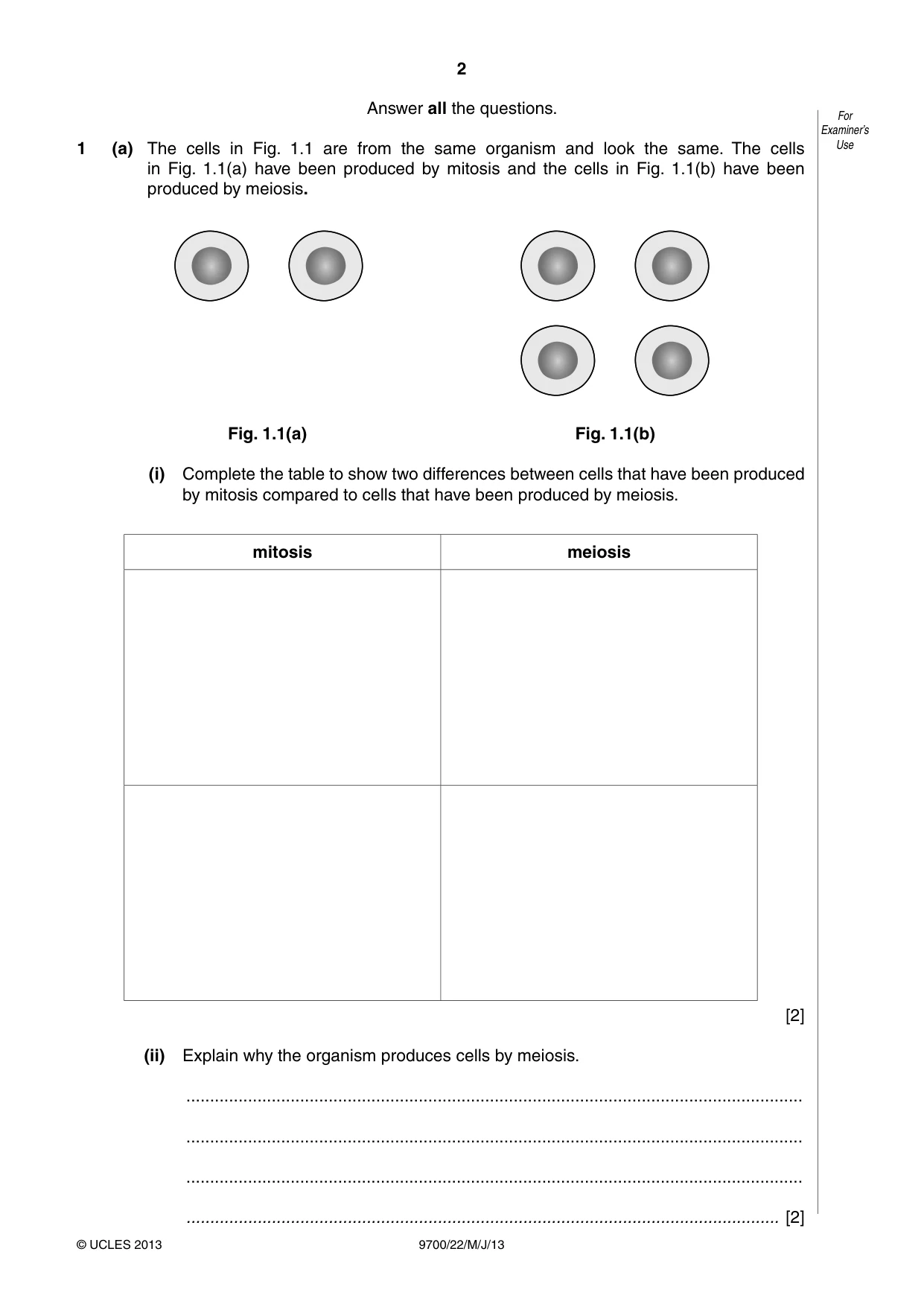
2 9700/22/M/J/13 © UCLES 2013 For Examiner’s Use Answer all the questions. 1 (a) The cells in Fig. 1.1 are from the same organism and look the same. The cells in Fig. 1.1(a) have been produced by mitosis and the cells in Fig. 1.1(b) have been produced by meiosis. Fig. 1.1(a) Fig. 1.1(b) (i) Complete the table to show two differences between cells that have been produced by mitosis compared to cells that have been produced by meiosis. mitosis meiosis [2] (ii) Explain why the organism produces cells by meiosis. … … … … [2]
Question paper, page 3
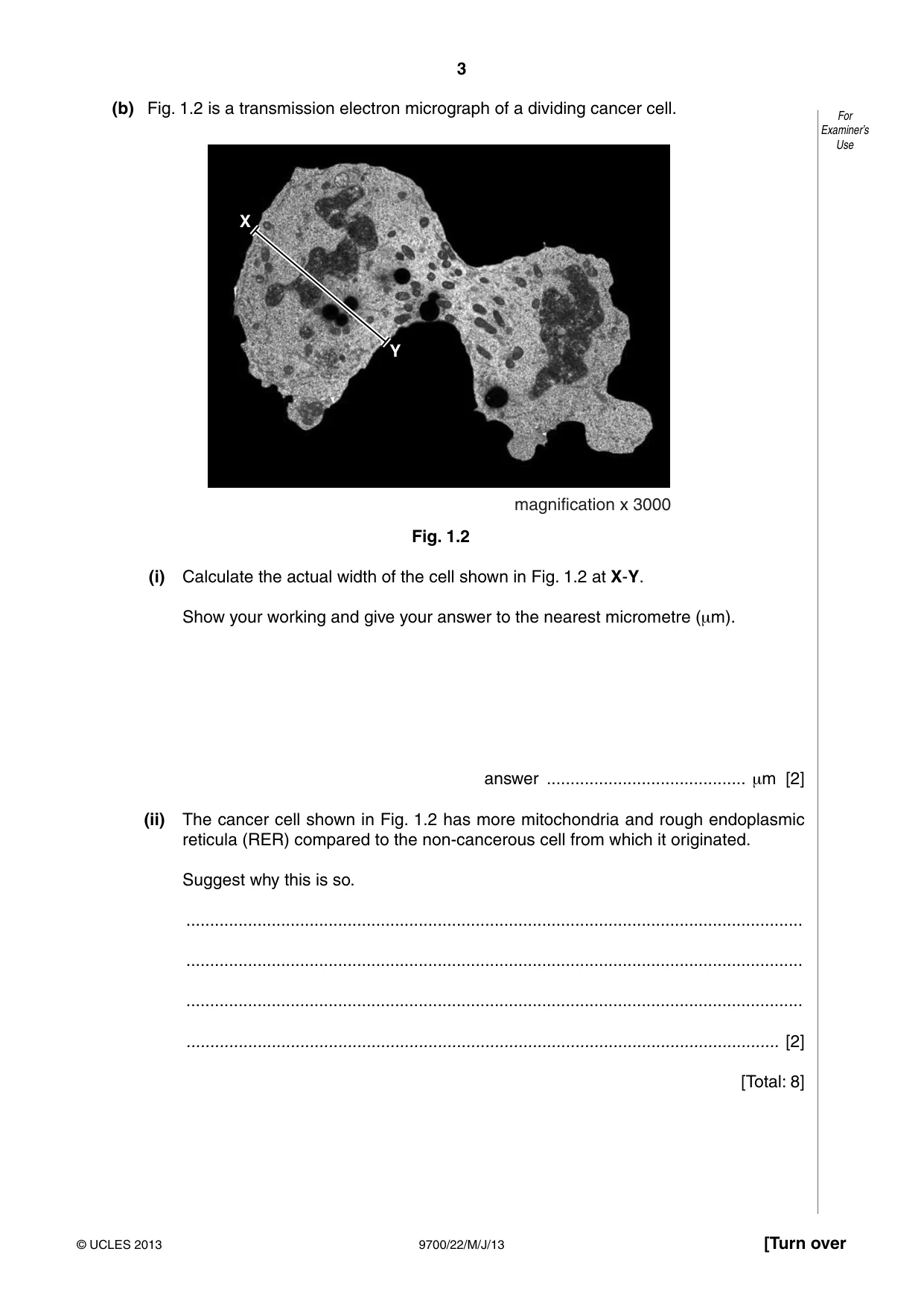
3 9700/22/M/J/13 © UCLES 2013 [Turn over For Examiner’s Use (b) Fig. 1.2 is a transmission electron micrograph of a dividing cancer cell. X Y magnification x 3000 Fig. 1.2 (i) Calculate the actual width of the cell shown in Fig. 1.2 at X-Y. Show your working and give your answer to the nearest micrometre (μm). answer … μm [2] (ii) The cancer cell shown in Fig. 1.2 has more mitochondria and rough endoplasmic reticula (RER) compared to the non-cancerous cell from which it originated. Suggest why this is so. … … … … [2] [Total: 8]
Question paper, page 4
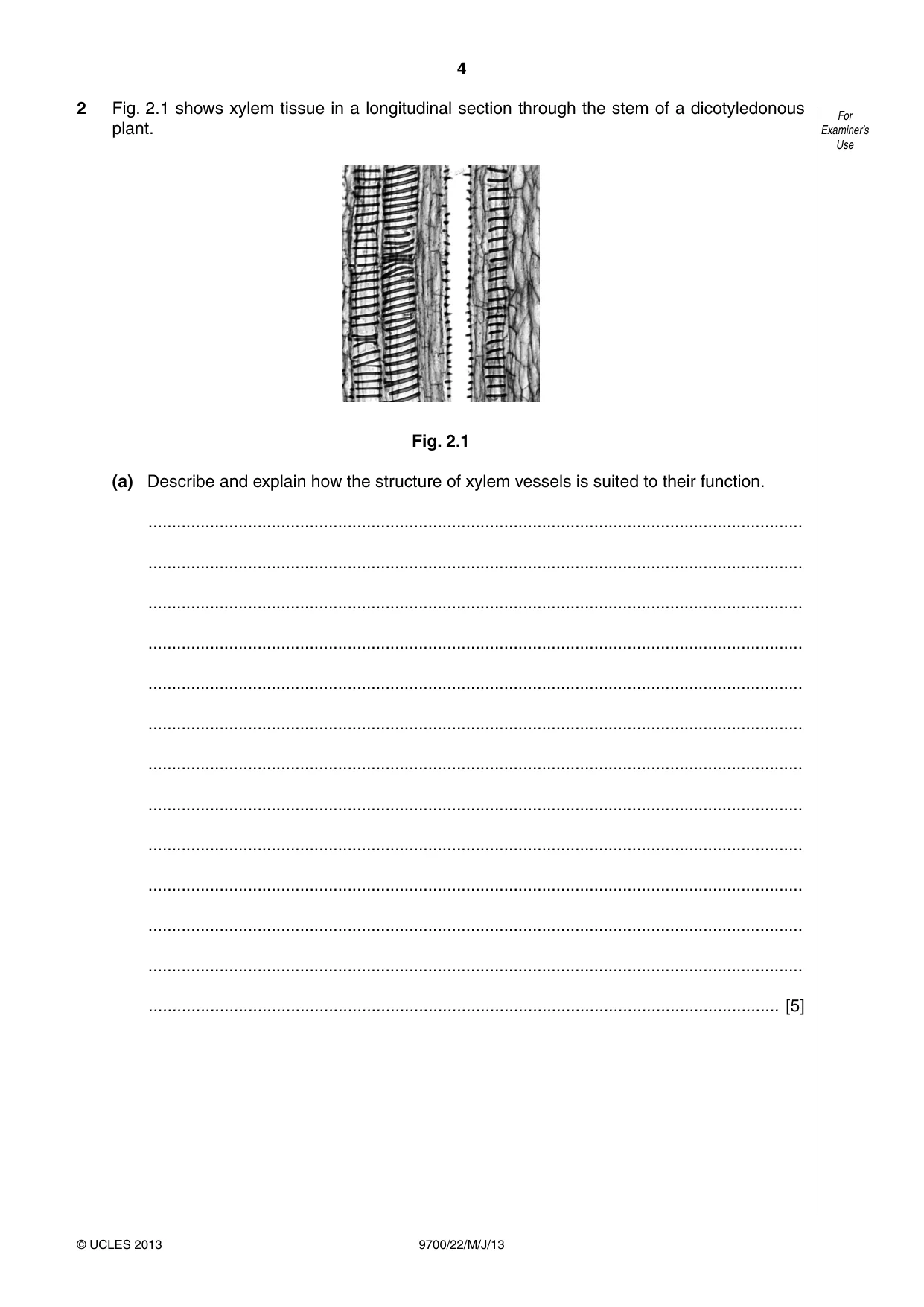
4 9700/22/M/J/13 © UCLES 2013 For Examiner’s Use 2 Fig. 2.1 shows xylem tissue in a longitudinal section through the stem of a dicotyledonous plant. Fig. 2.1 (a) Describe and explain how the structure of xylem vessels is suited to their function. … … … … … … … … … … … … … [5]
Question paper, page 5
5 9700/22/M/J/13 © UCLES 2013 [Turn over For Examiner’s Use (b) It is possible to obtain images, such as Fig. 2.1, at the same magnification with both the light microscope and the electron microscope. State the advantages of using the light microscope, rather than using the electron microscope, in studies of tissues. … … … … … [2] [Total: 7]
Question paper, page 6
6 9700/22/M/J/13 © UCLES 2013 For Examiner’s Use 3 (a) Explain why tuberculosis (TB) is known as an infectious disease. … … … … … … [3] (b) Outline the role of antibiotics in the treatment of infectious diseases, such as TB. … … … … … … … … … [4]
Question paper, page 7
7 9700/22/M/J/13 © UCLES 2013 [Turn over For Examiner’s Use Tobacco smoking is a risk factor for a number of diseases. This means that it increases the risk of developing disease. In 2009, the World Health Organization (WHO) published a factsheet stating that tobacco smoking: • may be responsible for more than 20% of the new cases of TB globally • increases the risk of becoming infected and having active TB • increases the risk of dying from TB • is a risk factor for TB in all socioeconomic groups. Projects have been set up in a number of different countries to tackle this health problem. One project involves health workers encouraging TB patients to give up smoking. (c) Suggest what epidemiological evidence would lead to the conclusion that tobacco smoking is a risk factor for TB. … … … … … [2] (d) Suggest and explain how the effects of smoking can increase the risk of becoming infected with TB. … … … … … … [3] (e) Many smokers know that tobacco smoking is a risk factor for coronary heart disease, but continue to smoke. Some of these smokers have stated that they expect medical practitioners to cure them if they develop coronary heart disease. List two treatments used by medical practitioners to treat coronary heart disease. 1. … 2. … [2] [Total: 14]
Question paper, page 8
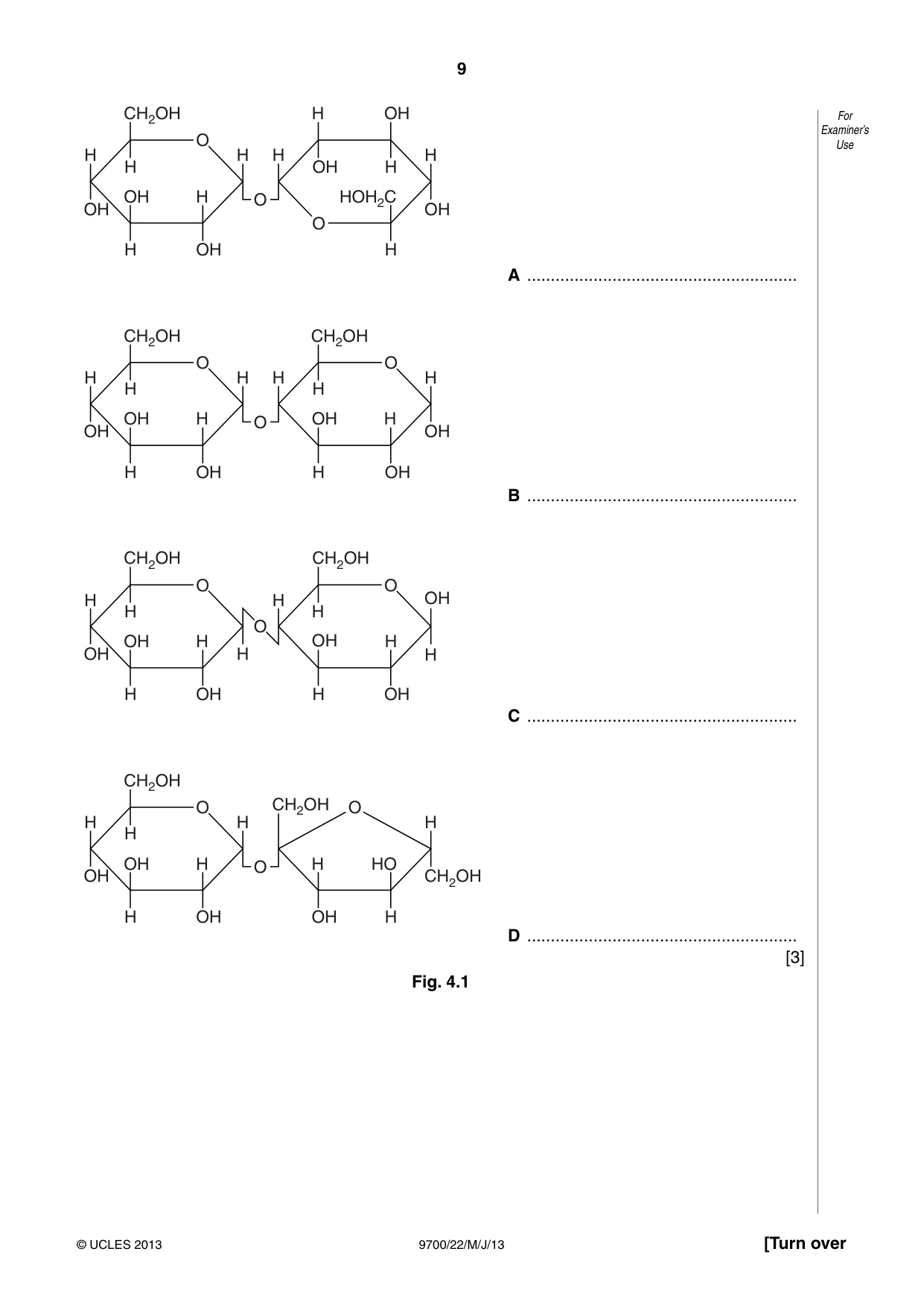
8 9700/22/M/J/13 © UCLES 2013 For Examiner’s Use 4 Polysaccharides are synthesised by condensation reactions between monosaccharide or disaccharide subunits (monomers). (a) Name the type of bond formed when polysaccharides are synthesised. … [1] (b) Disaccharides are formed following synthesis from monosaccharides or as a result of polysaccharide hydrolysis. Cellobiose, maltose, sucrose and trehalose are four different disaccharides found in nature. Fig. 4.1 shows the molecular structure of these disaccharides. Identify the disaccharides, labelled A to D, using the information below. • The disaccharide cellobiose is formed from the hydrolysis of the polysaccharide cellulose. • When cellobiose is hydrolysed, two β-glucose molecules are produced. • One of the disaccharides is sucrose. • Trehalose is a disaccharide that is synthesised from two α-glucose molecules. • The disaccharide maltose is formed from the hydrolysis of amylose, a component of starch. Write the name of the disaccharides in the spaces provided on Fig. 4.1.
Question paper, page 9
9 9700/22/M/J/13 © UCLES 2013 [Turn over For Examiner’s Use H H H H H H H OH OH OH CH2OH OH O H H OH H OH H HOH2C H O O H H H H OH OH OH H OH CH2OH CH2OH OH O H H H OH O H H H H H OH OH OH CH2OH CH2OH OH O H H OH H H OH H H H H H H OH OH CH2OH CH2OH CH2OH OH H HO OH O H H O O O O O A … B … C … D … [3] Fig. 4.1
Question paper, page 10
10 9700/22/M/J/13 © UCLES 2013 For Examiner’s Use In some organisms, trehalose is used as an energy store and gives protection against the harmful effects of very low temperatures. Trehalose is sometimes referred to as a cryoprotectant, allowing organisms to survive in freezing conditions. Freezing temperatures can damage the cell surface membrane and membranes within the cell. (c) Explain the importance of the cell surface membrane to cells. … … … … … … … [3] (d) Freezing temperatures can also completely stop enzyme activity by causing the molecules to undergo ‘cold denaturation’. Enzyme activity is not recovered when temperatures are increased to a normal working temperature range. (i) Explain the mode of action of enzymes. … … … … … … … [3] (ii) Suggest how the molecular structure of the enzyme changes during ‘cold denaturation’. … … … … [2]
Question paper, page 11
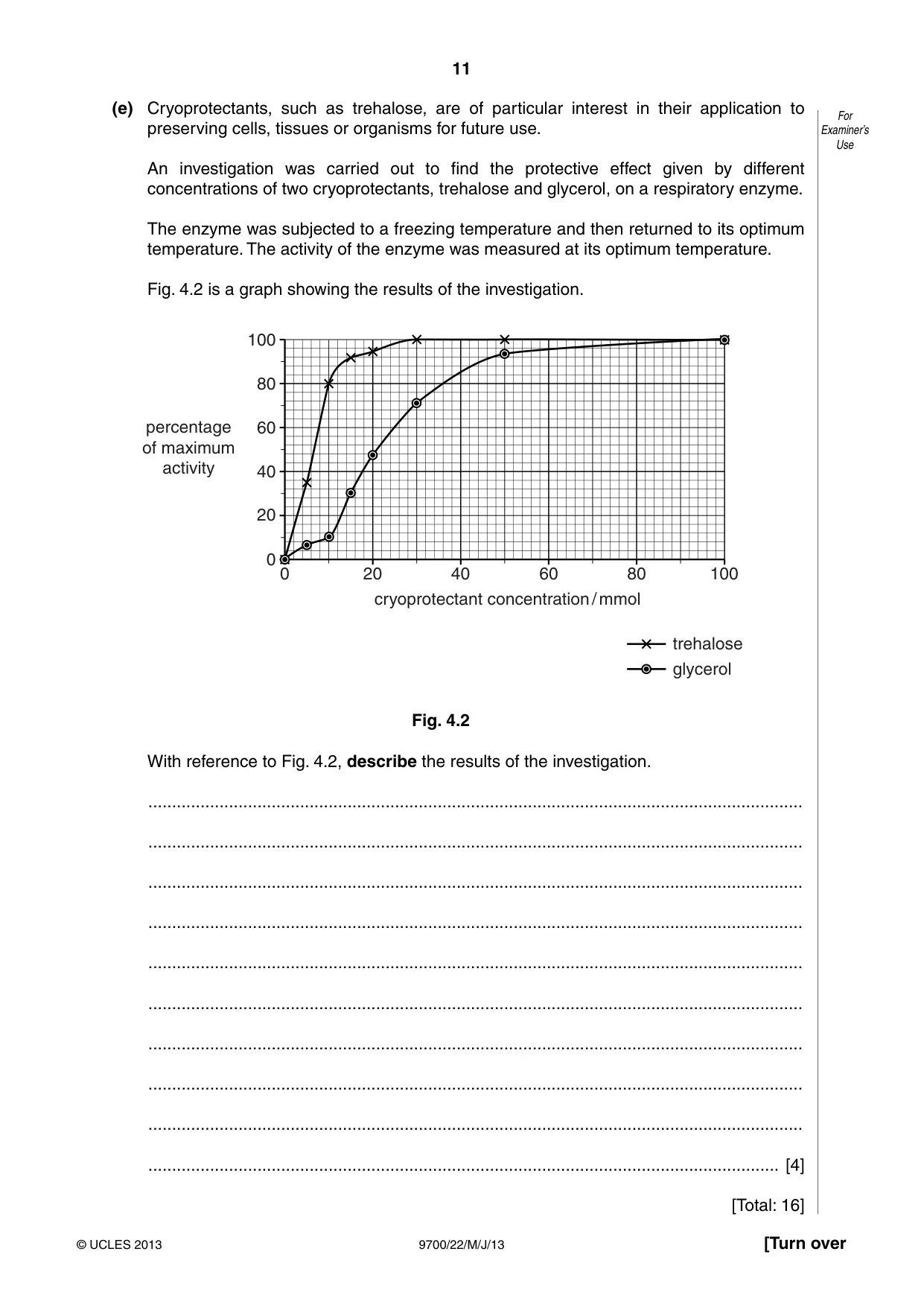
11 9700/22/M/J/13 © UCLES 2013 [Turn over For Examiner’s Use (e) Cryoprotectants, such as trehalose, are of particular interest in their application to preserving cells, tissues or organisms for future use. An investigation was carried out to find the protective effect given by different concentrations of two cryoprotectants, trehalose and glycerol, on a respiratory enzyme. The enzyme was subjected to a freezing temperature and then returned to its optimum temperature. The activity of the enzyme was measured at its optimum temperature. Fig. 4.2 is a graph showing the results of the investigation. 100 80 0 20 40 cryoprotectant concentration / mmol 60 80 trehalose glycerol 100 60 percentage of maximum activity 40 20 0 Fig. 4.2 With reference to Fig. 4.2, describe the results of the investigation. … … … … … … … … … … [4] [Total: 16]
Question paper, page 12
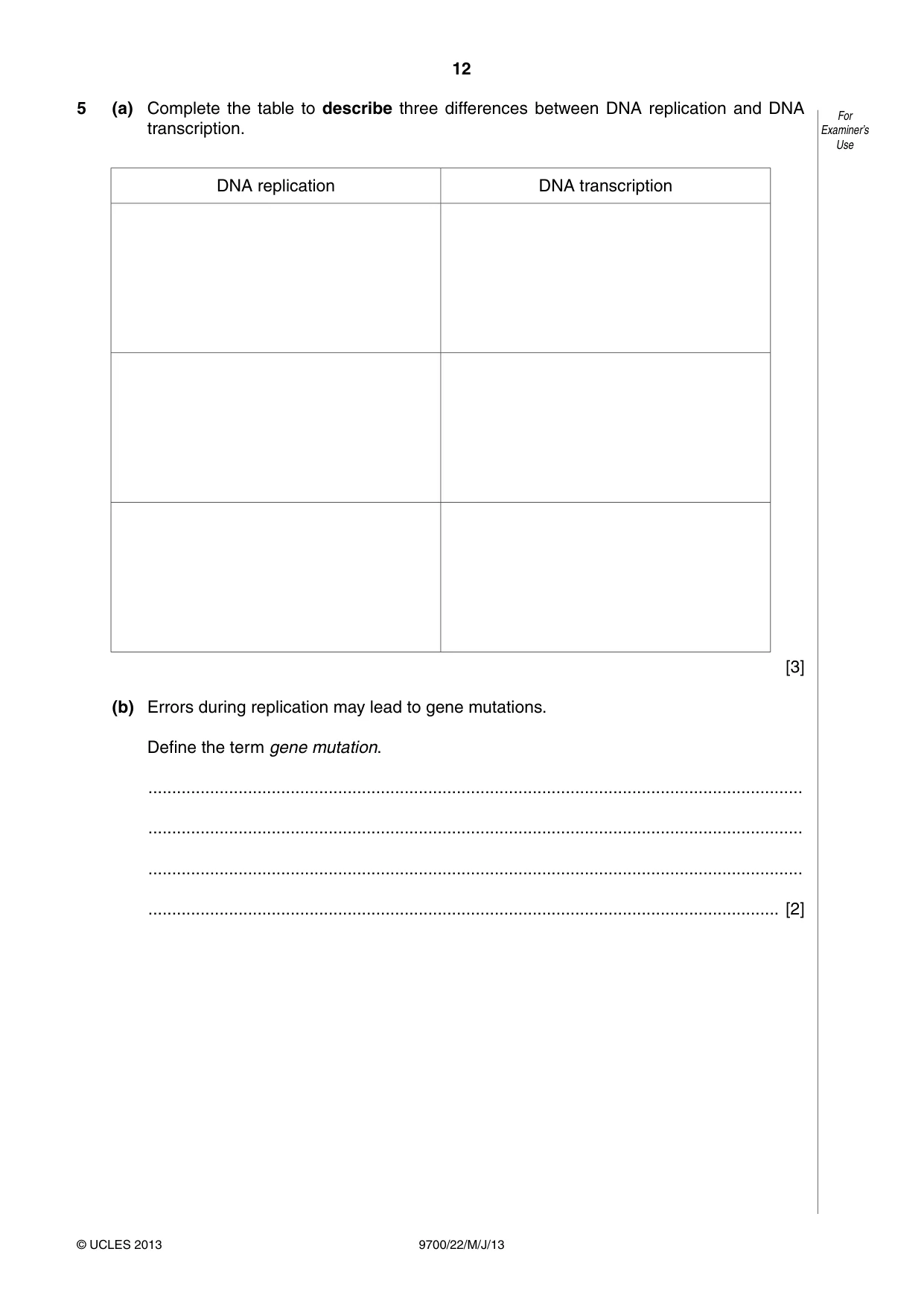
12 9700/22/M/J/13 © UCLES 2013 For Examiner’s Use 5 (a) Complete the table to describe three differences between DNA replication and DNA transcription. DNA replication DNA transcription [3] (b) Errors during replication may lead to gene mutations. Define the term gene mutation. … … … … [2]
Question paper, page 13
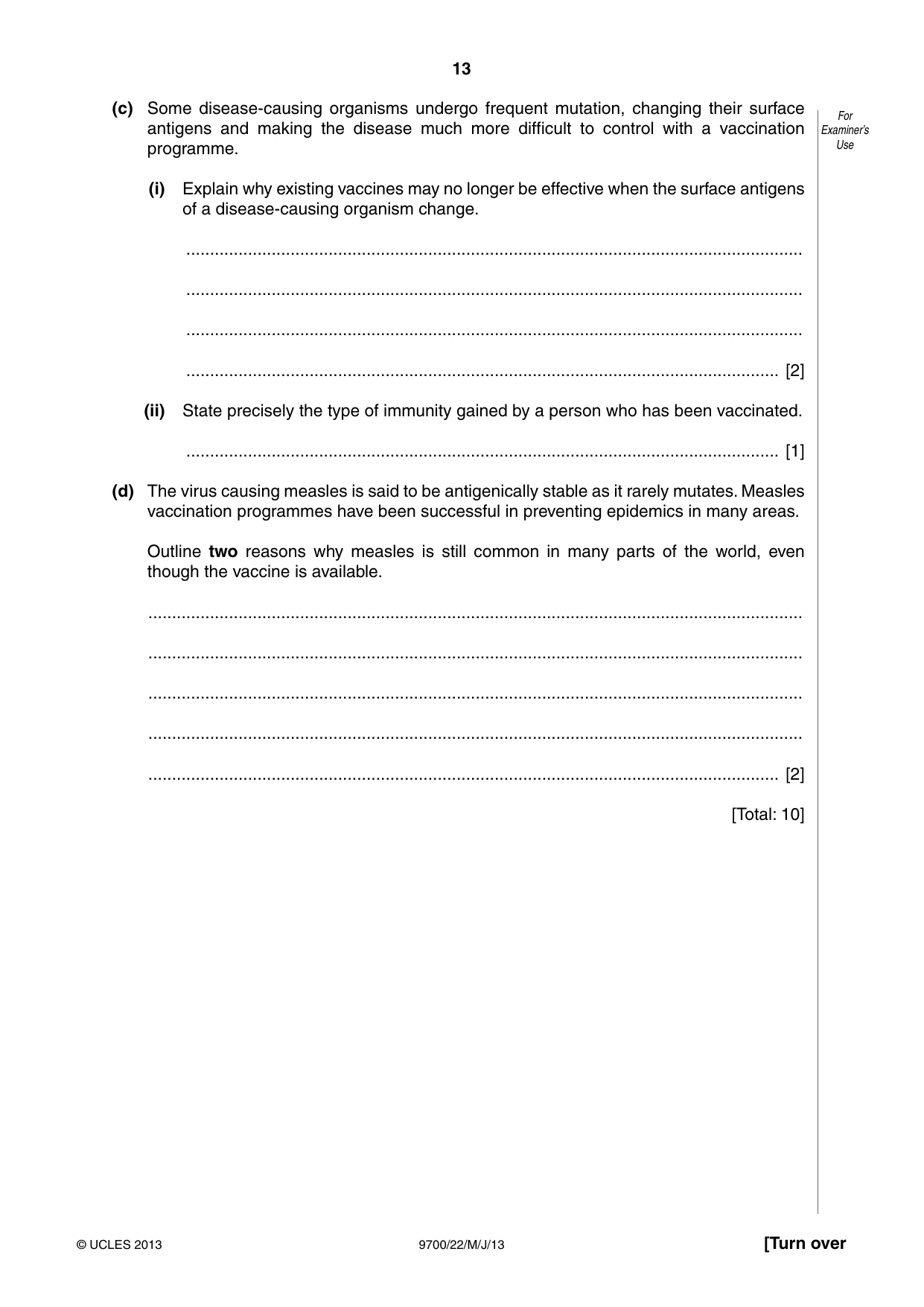
13 9700/22/M/J/13 © UCLES 2013 [Turn over For Examiner’s Use (c) Some disease-causing organisms undergo frequent mutation, changing their surface antigens and making the disease much more difficult to control with a vaccination programme. (i) Explain why existing vaccines may no longer be effective when the surface antigens of a disease-causing organism change. … … … … [2] (ii) State precisely the type of immunity gained by a person who has been vaccinated. … [1] (d) The virus causing measles is said to be antigenically stable as it rarely mutates. Measles vaccination programmes have been successful in preventing epidemics in many areas. Outline two reasons why measles is still common in many parts of the world, even though the vaccine is available. … … … … … [2] [Total: 10]
Question paper, page 14
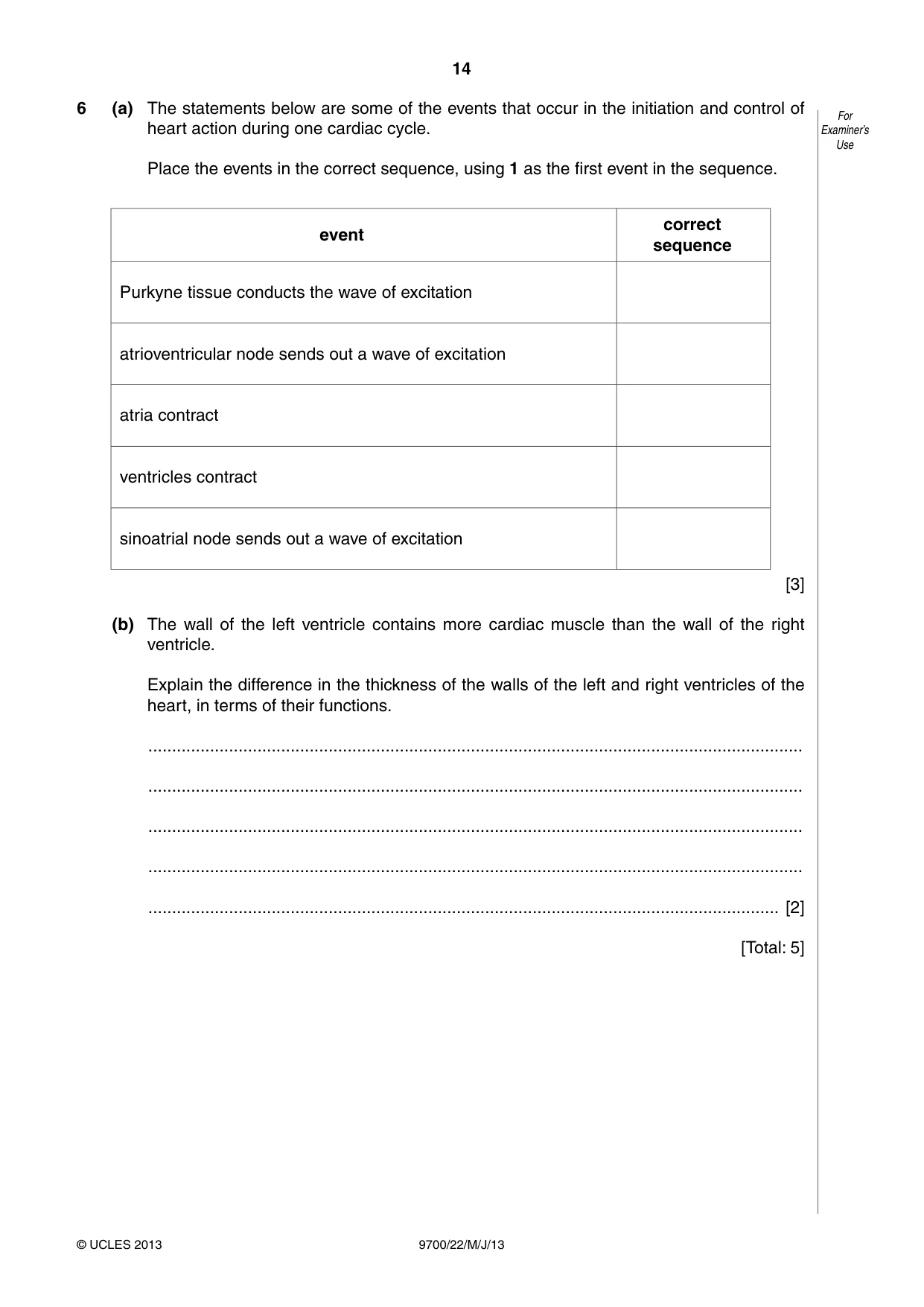
14 9700/22/M/J/13 © UCLES 2013 For Examiner’s Use 6 (a) The statements below are some of the events that occur in the initiation and control of heart action during one cardiac cycle. Place the events in the correct sequence, using 1 as the first event in the sequence. event correct sequence Purkyne tissue conducts the wave of excitation atrioventricular node sends out a wave of excitation atria contract ventricles contract sinoatrial node sends out a wave of excitation [3] (b) The wall of the left ventricle contains more cardiac muscle than the wall of the right ventricle. Explain the difference in the thickness of the walls of the left and right ventricles of the heart, in terms of their functions. … … … … … [2] [Total: 5]
Question paper, page 15
15 9700/22/M/J/13 © UCLES 2013 BLANK PAGE
Question paper, page 16
16 9700/22/M/J/13 © UCLES 2013 BLANK PAGE Copyright Acknowledgements: Fig. 1.2 © BIOPHOTO ASSOCIATES/SCIENCE PHOTO LIBRARY. Fig. 2.1 © STEVE GSCHMEISSNER/SCIENCE PHOTO LIBRARY. Permission to reproduce items where third-party owned material protected by copyright is included has been sought and cleared where possible. Every reasonable effort has been made by the publisher (UCLES) to trace copyright holders, but if any items requiring clearance have unwittingly been included, the publisher will be pleased to make amends at the earliest possible opportunity. University of Cambridge International Examinations is part of the Cambridge Assessment Group. Cambridge Assessment is the brand name of University of Cambridge Local Examinations Syndicate (UCLES), which is itself a department of the University of Cambridge.
Mark scheme, page 1
CAMBRIDGE INTERNATIONAL EXAMINATIONS GCE Advanced Subsidiary Level and GCE Advanced Level MARK SCHEME for the May/June 2013 series 9700 BIOLOGY 9700/22 Paper 2 (AS Structured Questions), maximum raw mark 60 This mark scheme is published as an aid to teachers and candidates, to indicate the requirements of the examination. It shows the basis on which Examiners were instructed to award marks. It does not indicate the details of the discussions that took place at an Examiners’ meeting before marking began, which would have considered the acceptability of alternative answers. Mark schemes should be read in conjunction with the question paper and the Principal Examiner Report for Teachers. Cambridge will not enter into discussions about these mark schemes. Cambridge is publishing the mark schemes for the May/June 2013 series for most IGCSE, GCE Advanced Level and Advanced Subsidiary Level components and some Ordinary Level components.
Mark scheme, page 2
Page 2 Mark Scheme Syllabus Paper GCE AS/A LEVEL – May/June 2013 9700 22 © Cambridge International Examinations 2013 Mark scheme abbreviations: ; separates marking points / alternative answers for the same point R reject A accept (for answers correctly cued by the question, or by extra guidance) AW alternative wording (where responses vary more than usual) underline actual word given must be used by candidate (grammatical variants excepted) max indicates the maximum number of marks that can be given ora or reverse argument mp marking point (with relevant number) ecf error carried forward I ignore
Mark scheme, page 3
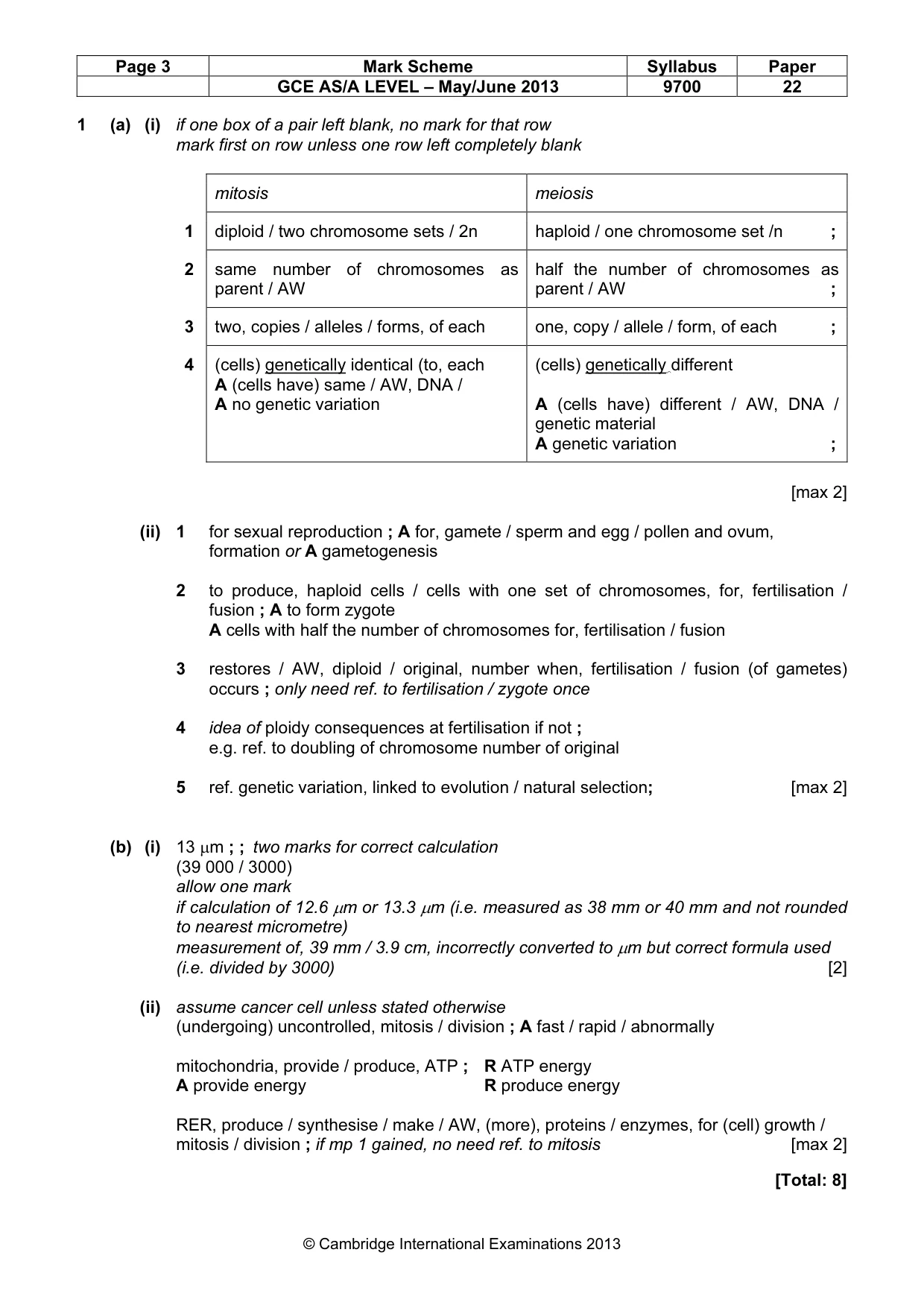
Page 3 Mark Scheme Syllabus Paper GCE AS/A LEVEL – May/June 2013 9700 22 © Cambridge International Examinations 2013 1 (a) (i) if one box of a pair left blank, no mark for that row mark first on row unless one row left completely blank mitosis meiosis 1 diploid / two chromosome sets / 2n haploid / one chromosome set /n ; 2 same number of chromosomes as parent / AW half the number of chromosomes as parent / AW ; 3 two, copies / alleles / forms, of each one, copy / allele / form, of each ; 4 (cells) genetically identical (to, each A (cells have) same / AW, DNA / A no genetic variation (cells) genetically different A (cells have) different / AW, DNA / genetic material A genetic variation ; [max 2] (ii) 1 for sexual reproduction ; A for, gamete / sperm and egg / pollen and ovum, formation or A gametogenesis 2 to produce, haploid cells / cells with one set of chromosomes, for, fertilisation / fusion ; A to form zygote A cells with half the number of chromosomes for, fertilisation / fusion 3 restores / AW, diploid / original, number when, fertilisation / fusion (of gametes) occurs ; only need ref. to fertilisation / zygote once 4 idea of ploidy consequences at fertilisation if not ; e.g. ref. to doubling of chromosome number of original 5 ref. genetic variation, linked to evolution / natural selection; [max 2] (b) (i) 13 µm ; ; two marks for correct calculation (39 000 / 3000) allow one mark if calculation of 12.6 µm or 13.3 µm (i.e. measured as 38 mm or 40 mm and not rounded to nearest micrometre) measurement of, 39 mm / 3.9 cm, incorrectly converted to µm but correct formula used (i.e. divided by 3000) [2] (ii) assume cancer cell unless stated otherwise (undergoing) uncontrolled, mitosis / division ; A fast / rapid / abnormally mitochondria, provide / produce, ATP ; R ATP energy A provide energy R produce energy RER, produce / synthesise / make / AW, (more), proteins / enzymes, for (cell) growth / mitosis / division ; if mp 1 gained, no need ref. to mitosis [max 2] [Total: 8]
Mark scheme, page 4
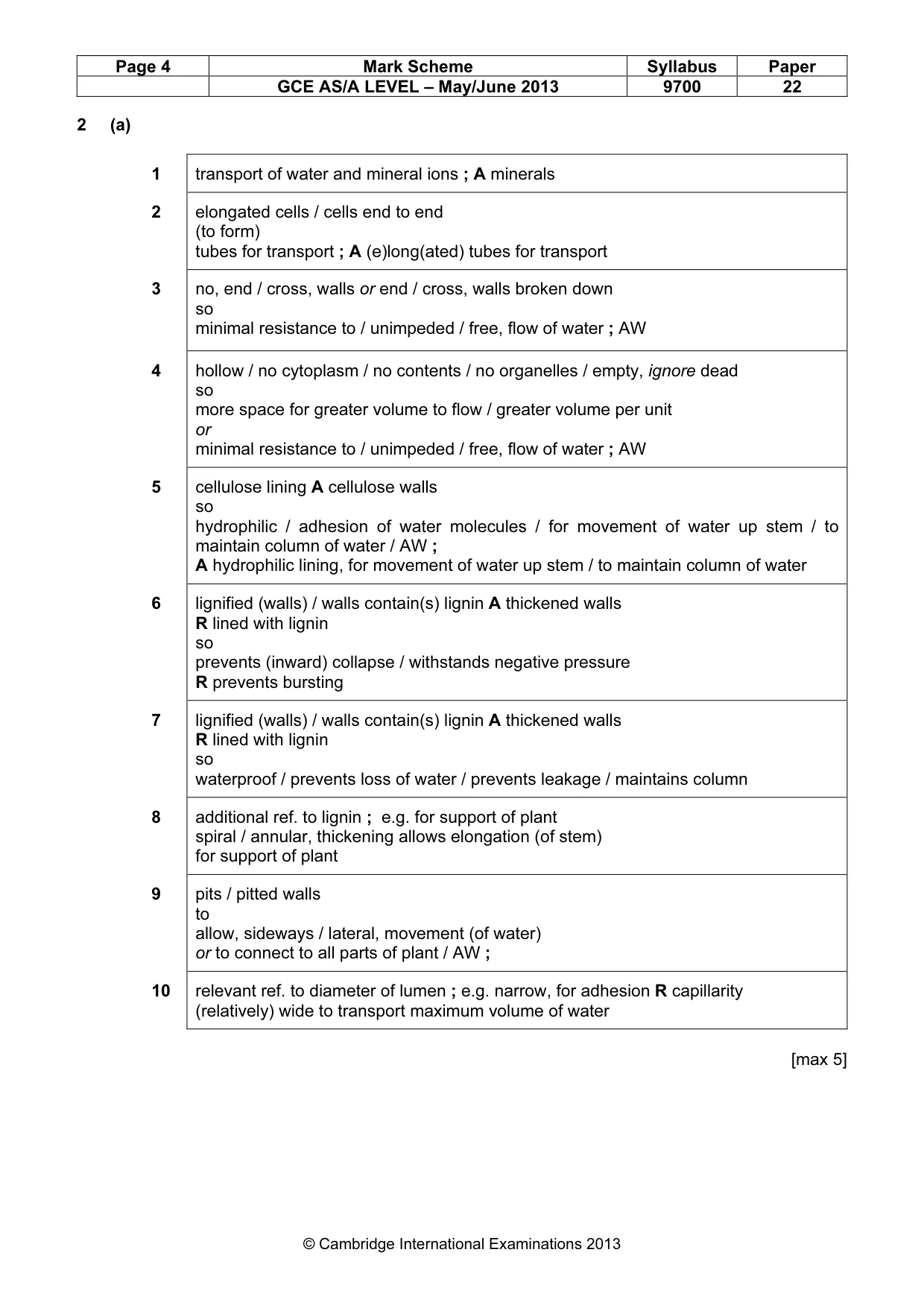
Page 4 Mark Scheme Syllabus Paper GCE AS/A LEVEL – May/June 2013 9700 22 © Cambridge International Examinations 2013 2 (a) 1 transport of water and mineral ions ; A minerals 2 elongated cells / cells end to end (to form) tubes for transport ; A (e)long(ated) tubes for transport 3 no, end / cross, walls or end / cross, walls broken down so minimal resistance to / unimpeded / free, flow of water ; AW 4 hollow / no cytoplasm / no contents / no organelles / empty, ignore dead so more space for greater volume to flow / greater volume per unit or minimal resistance to / unimpeded / free, flow of water ; AW 5 cellulose lining A cellulose walls so hydrophilic / adhesion of water molecules / for movement of water up stem / to maintain column of water / AW ; A hydrophilic lining, for movement of water up stem / to maintain column of water 6 lignified (walls) / walls contain(s) lignin A thickened walls R lined with lignin so prevents (inward) collapse / withstands negative pressure R prevents bursting 7 lignified (walls) / walls contain(s) lignin A thickened walls R lined with lignin so waterproof / prevents loss of water / prevents leakage / maintains column 8 additional ref. to lignin ; e.g. for support of plant spiral / annular, thickening allows elongation (of stem) for support of plant 9 pits / pitted walls to allow, sideways / lateral, movement (of water) or to connect to all parts of plant / AW ; 10 relevant ref. to diameter of lumen ; e.g. narrow, for adhesion R capillarity (relatively) wide to transport maximum volume of water [max 5]
Mark scheme, page 5
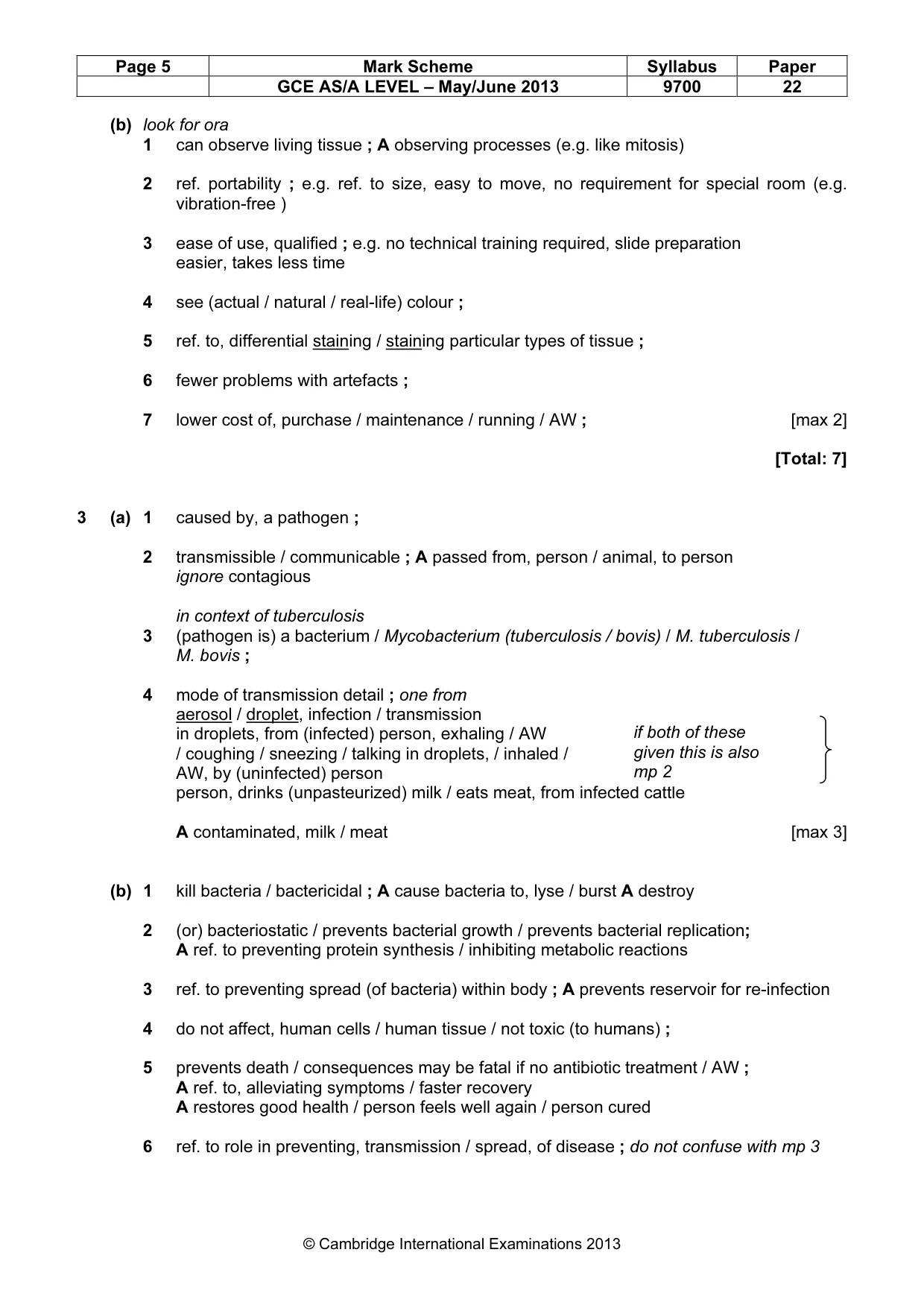
Page 5 Mark Scheme Syllabus Paper GCE AS/A LEVEL – May/June 2013 9700 22 © Cambridge International Examinations 2013 (b) look for ora 1 can observe living tissue ; A observing processes (e.g. like mitosis) 2 ref. portability ; e.g. ref. to size, easy to move, no requirement for special room (e.g. vibration-free ) 3 ease of use, qualified ; e.g. no technical training required, slide preparation easier, takes less time 4 see (actual / natural / real-life) colour ; 5 ref. to, differential staining / staining particular types of tissue ; 6 fewer problems with artefacts ; 7 lower cost of, purchase / maintenance / running / AW ; [max 2] [Total: 7] 3 (a) 1 caused by, a pathogen ; 2 transmissible / communicable ; A passed from, person / animal, to person ignore contagious in context of tuberculosis 3 (pathogen is) a bacterium / Mycobacterium (tuberculosis / bovis) / M. tuberculosis / M. bovis ; 4 mode of transmission detail ; one from aerosol / droplet, infection / transmission in droplets, from (infected) person, exhaling / AW / coughing / sneezing / talking in droplets, / inhaled / AW, by (uninfected) person person, drinks (unpasteurized) milk / eats meat, from infected cattle A contaminated, milk / meat [max 3] (b) 1 kill bacteria / bactericidal ; A cause bacteria to, lyse / burst A destroy 2 (or) bacteriostatic / prevents bacterial growth / prevents bacterial replication; A ref. to preventing protein synthesis / inhibiting metabolic reactions 3 ref. to preventing spread (of bacteria) within body ; A prevents reservoir for re-infection 4 do not affect, human cells / human tissue / not toxic (to humans) ; 5 prevents death / consequences may be fatal if no antibiotic treatment / AW ; A ref. to, alleviating symptoms / faster recovery A restores good health / person feels well again / person cured 6 ref. to role in preventing, transmission / spread, of disease ; do not confuse with mp 3 if both of these given this is also mp 2
Mark scheme, page 6
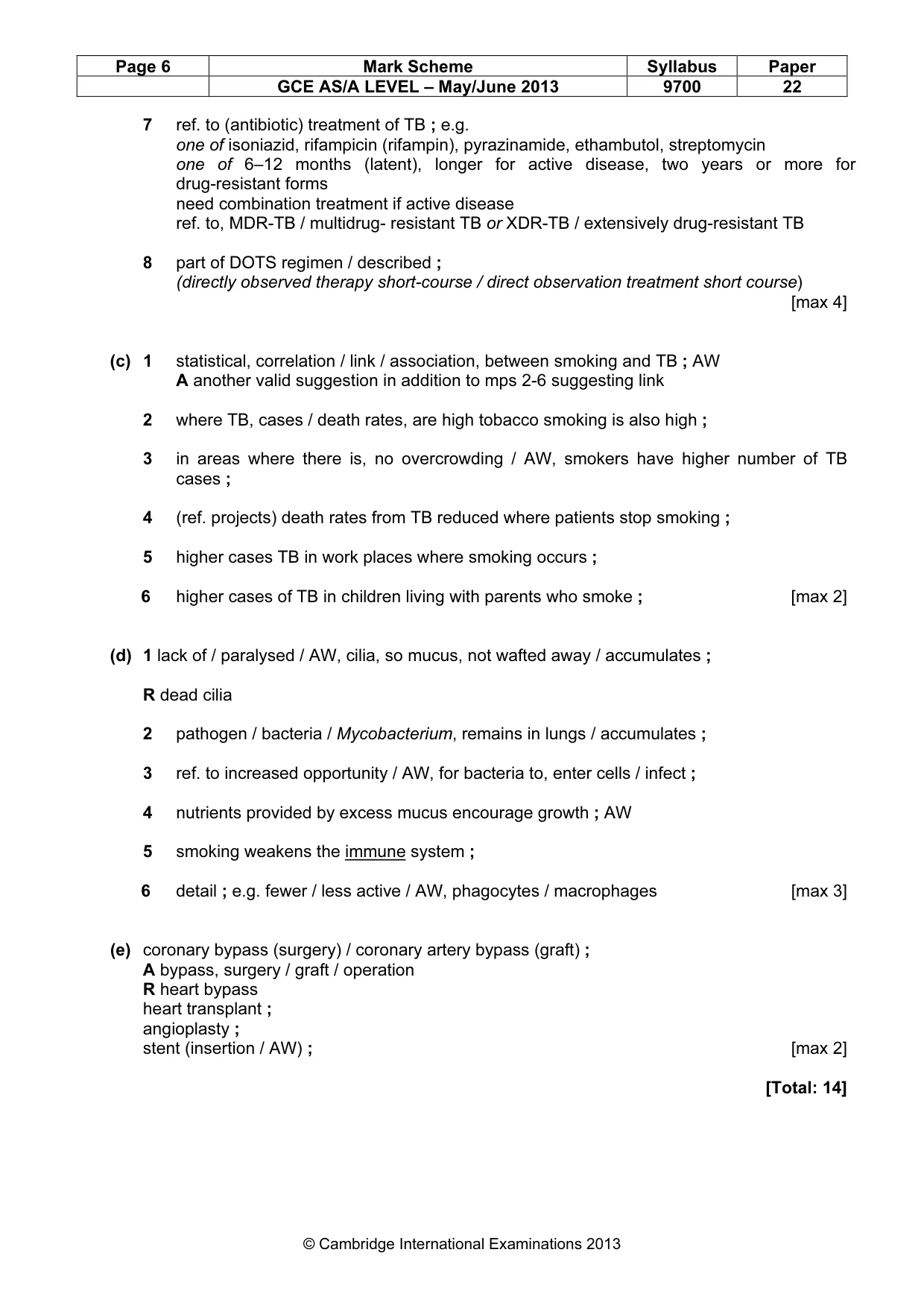
Page 6 Mark Scheme Syllabus Paper GCE AS/A LEVEL – May/June 2013 9700 22 © Cambridge International Examinations 2013 7 ref. to (antibiotic) treatment of TB ; e.g. one of isoniazid, rifampicin (rifampin), pyrazinamide, ethambutol, streptomycin one of 6–12 months (latent), longer for active disease, two years or more for drug-resistant forms need combination treatment if active disease ref. to, MDR-TB / multidrug- resistant TB or XDR-TB / extensively drug-resistant TB 8 part of DOTS regimen / described ; (directly observed therapy short-course / direct observation treatment short course) [max 4] (c) 1 statistical, correlation / link / association, between smoking and TB ; AW A another valid suggestion in addition to mps 2-6 suggesting link 2 where TB, cases / death rates, are high tobacco smoking is also high ; 3 in areas where there is, no overcrowding / AW, smokers have higher number of TB cases ; 4 (ref. projects) death rates from TB reduced where patients stop smoking ; 5 higher cases TB in work places where smoking occurs ; 6 higher cases of TB in children living with parents who smoke ; [max 2] (d) 1 lack of / paralysed / AW, cilia, so mucus, not wafted away / accumulates ; R dead cilia 2 pathogen / bacteria / Mycobacterium, remains in lungs / accumulates ; 3 ref. to increased opportunity / AW, for bacteria to, enter cells / infect ; 4 nutrients provided by excess mucus encourage growth ; AW 5 smoking weakens the immune system ; 6 detail ; e.g. fewer / less active / AW, phagocytes / macrophages [max 3] (e) coronary bypass (surgery) / coronary artery bypass (graft) ; A bypass, surgery / graft / operation R heart bypass heart transplant ; angioplasty ; stent (insertion / AW) ; [max 2] [Total: 14]
Mark scheme, page 7
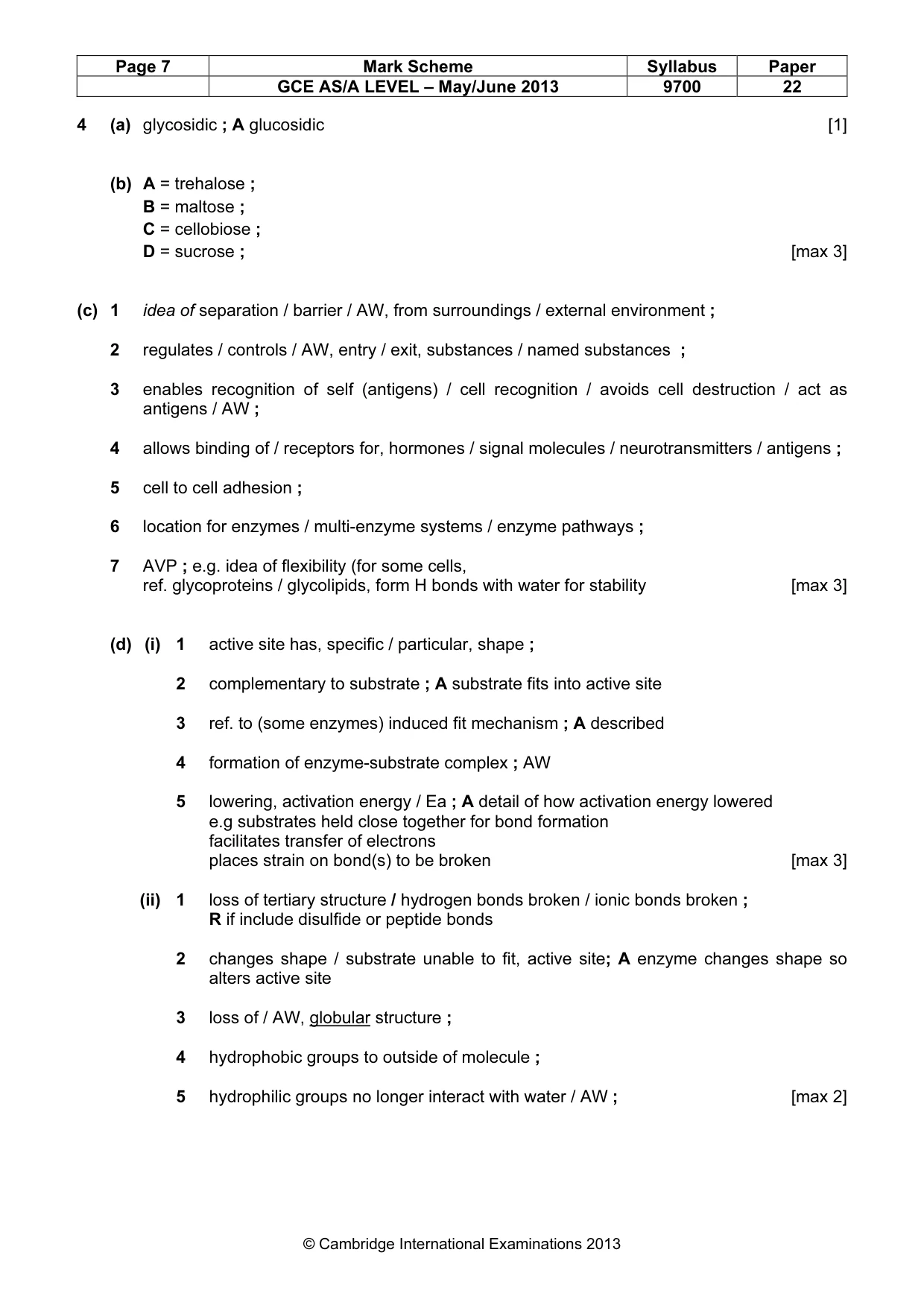
Page 7 Mark Scheme Syllabus Paper GCE AS/A LEVEL – May/June 2013 9700 22 © Cambridge International Examinations 2013 4 (a) glycosidic ; A glucosidic [1] (b) A = trehalose ; B = maltose ; C = cellobiose ; D = sucrose ; [max 3] (c) 1 idea of separation / barrier / AW, from surroundings / external environment ; 2 regulates / controls / AW, entry / exit, substances / named substances ; 3 enables recognition of self (antigens) / cell recognition / avoids cell destruction / act as antigens / AW ; 4 allows binding of / receptors for, hormones / signal molecules / neurotransmitters / antigens ; 5 cell to cell adhesion ; 6 location for enzymes / multi-enzyme systems / enzyme pathways ; 7 AVP ; e.g. idea of flexibility (for some cells, ref. glycoproteins / glycolipids, form H bonds with water for stability [max 3] (d) (i) 1 active site has, specific / particular, shape ; 2 complementary to substrate ; A substrate fits into active site 3 ref. to (some enzymes) induced fit mechanism ; A described 4 formation of enzyme-substrate complex ; AW 5 lowering, activation energy / Ea ; A detail of how activation energy lowered e.g substrates held close together for bond formation facilitates transfer of electrons places strain on bond(s) to be broken [max 3] (ii) 1 loss of tertiary structure / hydrogen bonds broken / ionic bonds broken ; R if include disulfide or peptide bonds 2 changes shape / substrate unable to fit, active site; A enzyme changes shape so alters active site 3 loss of / AW, globular structure ; 4 hydrophobic groups to outside of molecule ; 5 hydrophilic groups no longer interact with water / AW ; [max 2]
Mark scheme, page 8
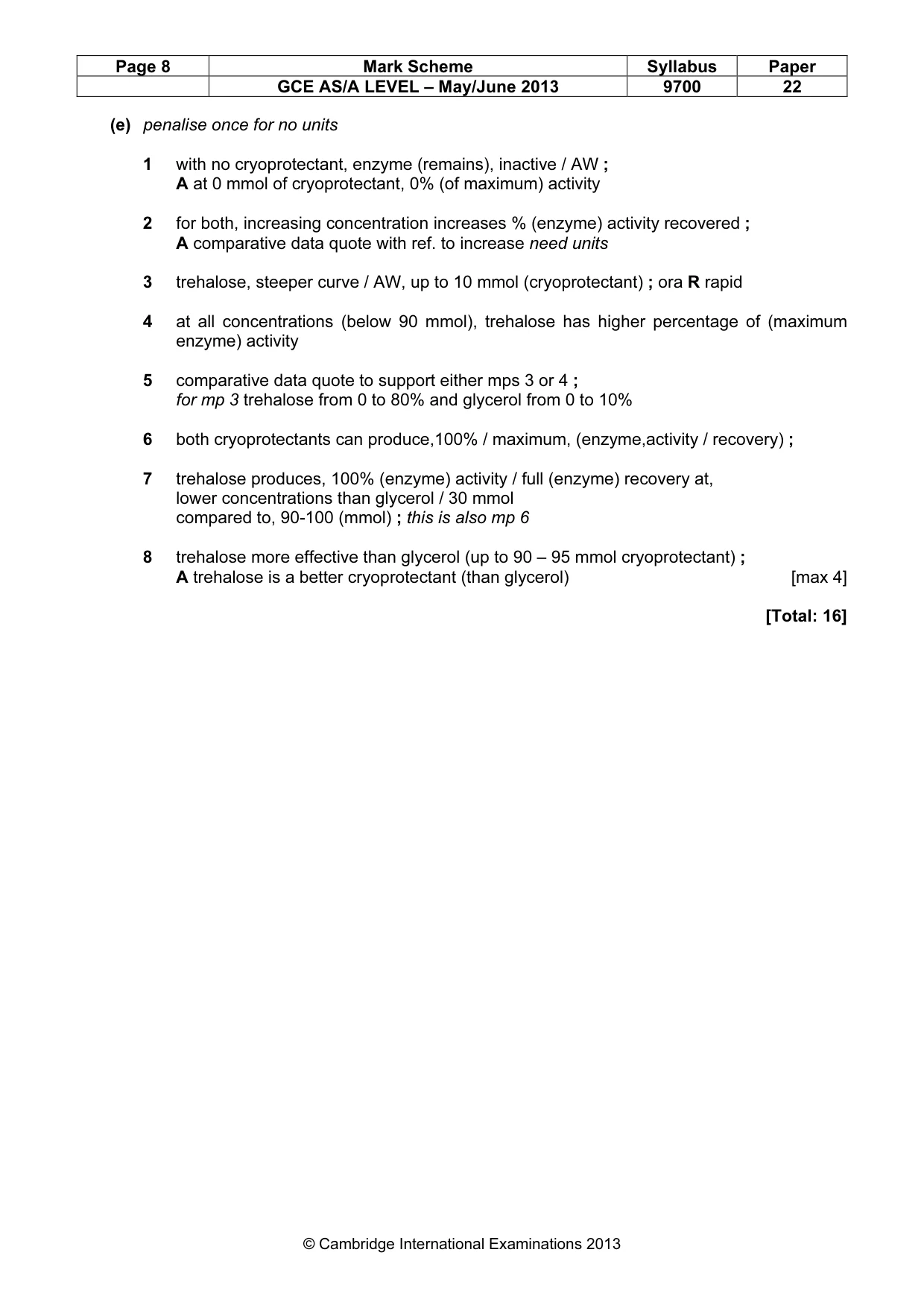
Page 8 Mark Scheme Syllabus Paper GCE AS/A LEVEL – May/June 2013 9700 22 © Cambridge International Examinations 2013 (e) penalise once for no units 1 with no cryoprotectant, enzyme (remains), inactive / AW ; A at 0 mmol of cryoprotectant, 0% (of maximum) activity 2 for both, increasing concentration increases % (enzyme) activity recovered ; A comparative data quote with ref. to increase need units 3 trehalose, steeper curve / AW, up to 10 mmol (cryoprotectant) ; ora R rapid 4 at all concentrations (below 90 mmol), trehalose has higher percentage of (maximum enzyme) activity 5 comparative data quote to support either mps 3 or 4 ; for mp 3 trehalose from 0 to 80% and glycerol from 0 to 10% 6 both cryoprotectants can produce,100% / maximum, (enzyme,activity / recovery) ; 7 trehalose produces, 100% (enzyme) activity / full (enzyme) recovery at, lower concentrations than glycerol / 30 mmol compared to, 90-100 (mmol) ; this is also mp 6 8 trehalose more effective than glycerol (up to 90 – 95 mmol cryoprotectant) ; A trehalose is a better cryoprotectant (than glycerol) [max 4] [Total: 16]
Mark scheme, page 9
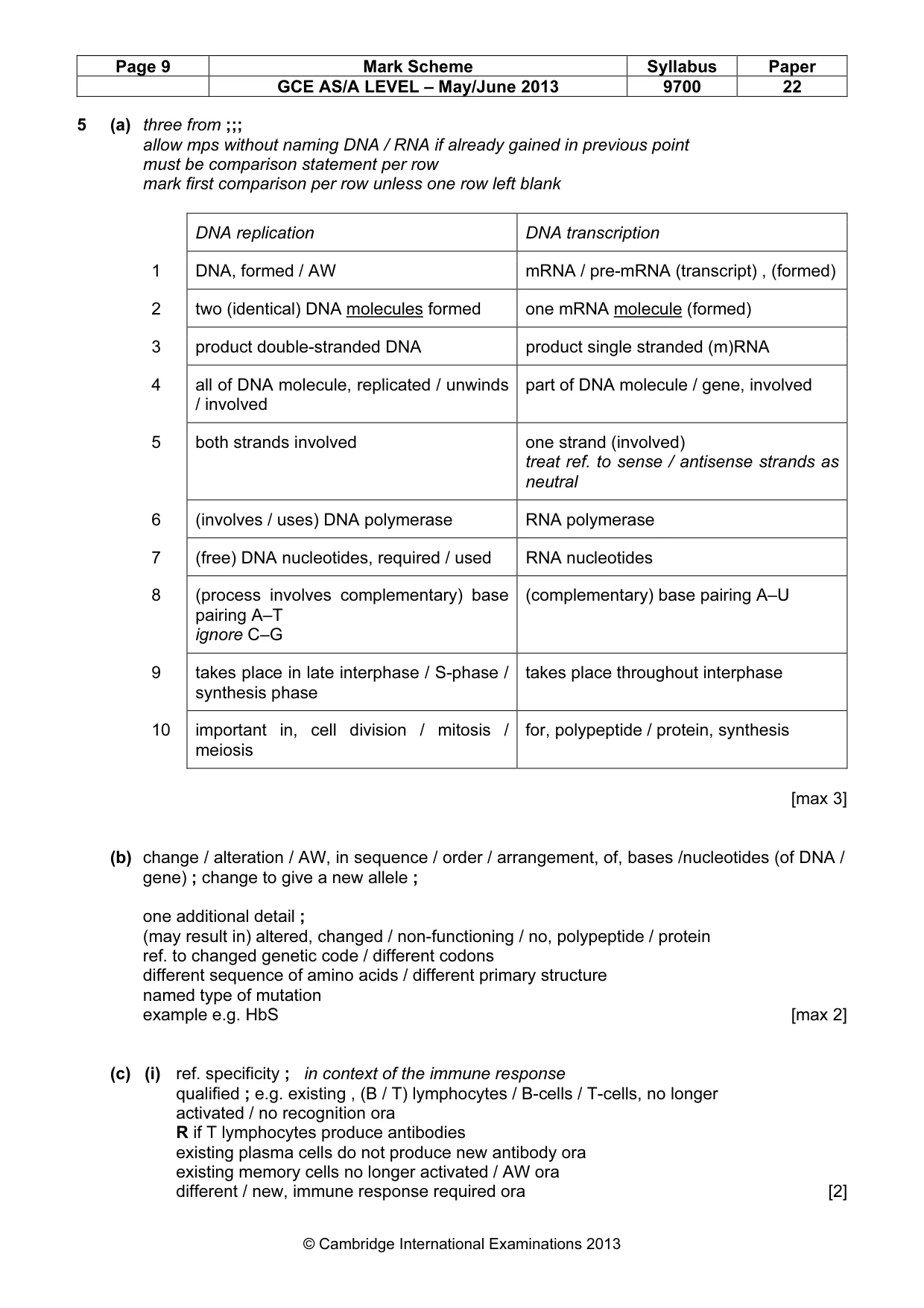
Page 9 Mark Scheme Syllabus Paper GCE AS/A LEVEL – May/June 2013 9700 22 © Cambridge International Examinations 2013 5 (a) three from ;;; allow mps without naming DNA / RNA if already gained in previous point must be comparison statement per row mark first comparison per row unless one row left blank DNA replication DNA transcription 1 DNA, formed / AW mRNA / pre-mRNA (transcript) , (formed) 2 two (identical) DNA molecules formed one mRNA molecule (formed) 3 product double-stranded DNA product single stranded (m)RNA 4 all of DNA molecule, replicated / unwinds / involved part of DNA molecule / gene, involved 5 both strands involved one strand (involved) treat ref. to sense / antisense strands as neutral 6 (involves / uses) DNA polymerase RNA polymerase 7 (free) DNA nucleotides, required / used RNA nucleotides 8 (process involves complementary) base pairing A–T ignore C–G (complementary) base pairing A–U 9 takes place in late interphase / S-phase / synthesis phase takes place throughout interphase 10 important in, cell division / mitosis / meiosis for, polypeptide / protein, synthesis [max 3] (b) change / alteration / AW, in sequence / order / arrangement, of, bases /nucleotides (of DNA / gene) ; change to give a new allele ; one additional detail ; (may result in) altered, changed / non-functioning / no, polypeptide / protein ref. to changed genetic code / different codons different sequence of amino acids / different primary structure named type of mutation example e.g. HbS [max 2] (c) (i) ref. specificity ; in context of the immune response qualified ; e.g. existing , (B / T) lymphocytes / B-cells / T-cells, no longer activated / no recognition ora R if T lymphocytes produce antibodies existing plasma cells do not produce new antibody ora existing memory cells no longer activated / AW ora different / new, immune response required ora [2]
Mark scheme, page 10
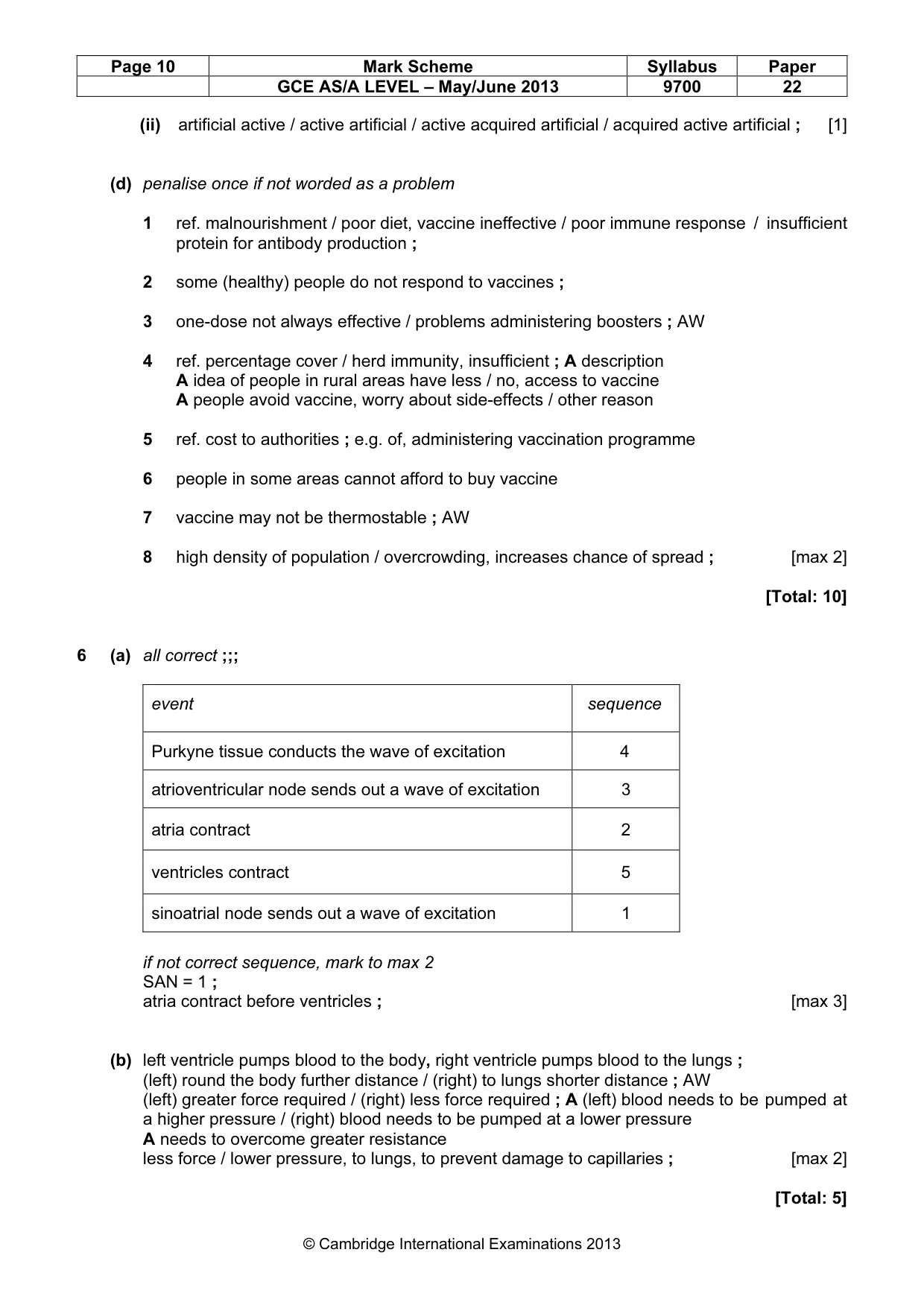
Page 10 Mark Scheme Syllabus Paper GCE AS/A LEVEL – May/June 2013 9700 22 © Cambridge International Examinations 2013 (ii) artificial active / active artificial / active acquired artificial / acquired active artificial ; [1] (d) penalise once if not worded as a problem 1 ref. malnourishment / poor diet, vaccine ineffective / poor immune response / insufficient protein for antibody production ; 2 some (healthy) people do not respond to vaccines ; 3 one-dose not always effective / problems administering boosters ; AW 4 ref. percentage cover / herd immunity, insufficient ; A description A idea of people in rural areas have less / no, access to vaccine A people avoid vaccine, worry about side-effects / other reason 5 ref. cost to authorities ; e.g. of, administering vaccination programme 6 people in some areas cannot afford to buy vaccine 7 vaccine may not be thermostable ; AW 8 high density of population / overcrowding, increases chance of spread ; [max 2] [Total: 10] 6 (a) all correct ;;; event sequence Purkyne tissue conducts the wave of excitation 4 atrioventricular node sends out a wave of excitation 3 atria contract 2 ventricles contract 5 sinoatrial node sends out a wave of excitation 1 if not correct sequence, mark to max 2 SAN = 1 ; atria contract before ventricles ; [max 3] (b) left ventricle pumps blood to the body, right ventricle pumps blood to the lungs ; (left) round the body further distance / (right) to lungs shorter distance ; AW (left) greater force required / (right) less force required ; A (left) blood needs to be pumped at a higher pressure / (right) blood needs to be pumped at a lower pressure A needs to overcome greater resistance less force / lower pressure, to lungs, to prevent damage to capillaries ; [max 2] [Total: 5]
What you needed in this session
Cambridge’s own grade thresholds for 2013 May/June, Paper 2 · Variant 2. A higher threshold means an easier paper — the bar moves with how the cohort did.