Cambridge A Level Biology 9700 — 2012 Oct/Nov Paper 2 · Variant 2
9700/22/O/N/12 · 60 marks · ≈68 min
The question paper and its mark scheme, free to read here and free to download. This is Cambridge’s own paper, exactly as it was sat.
Question paper16 pages
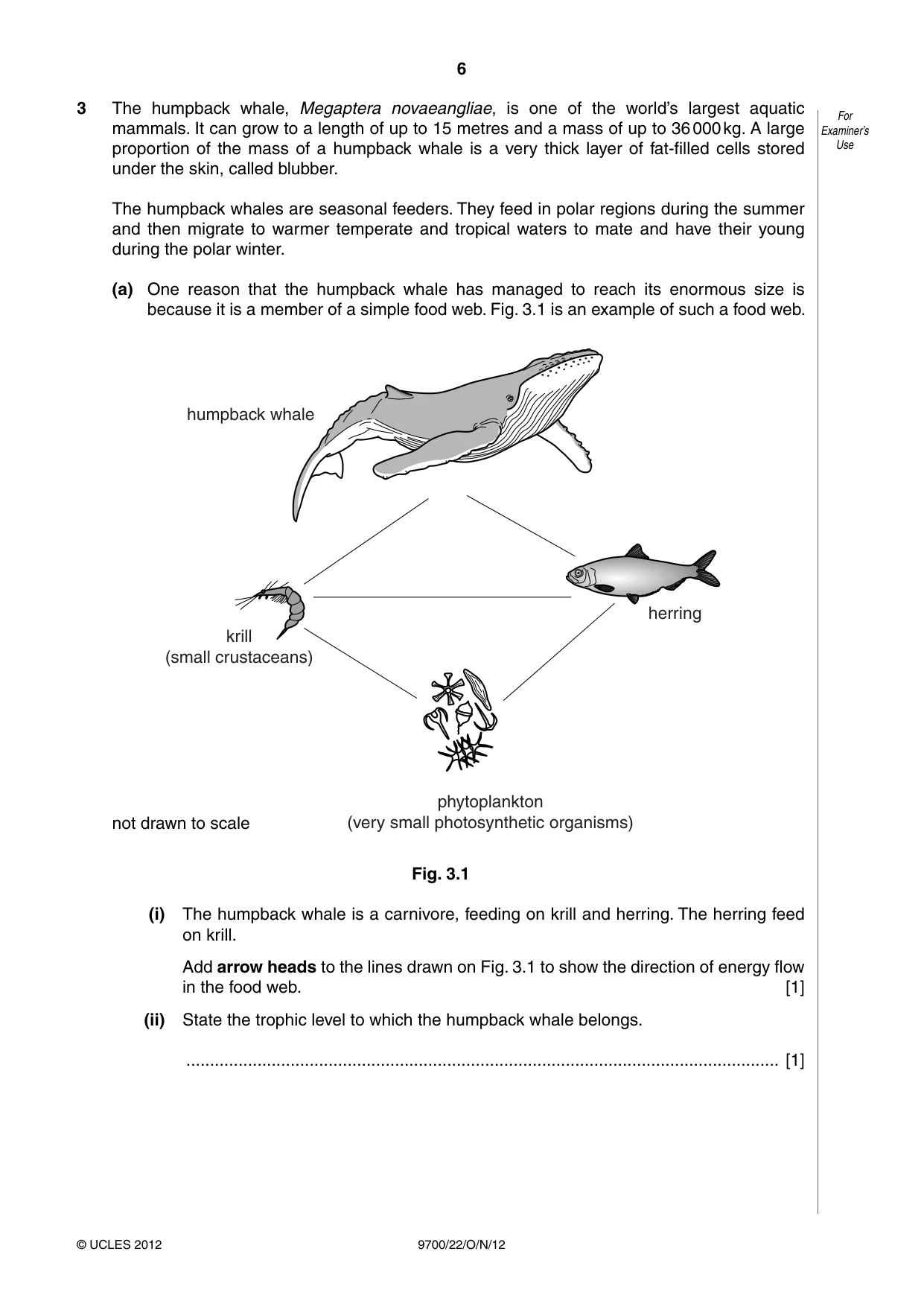
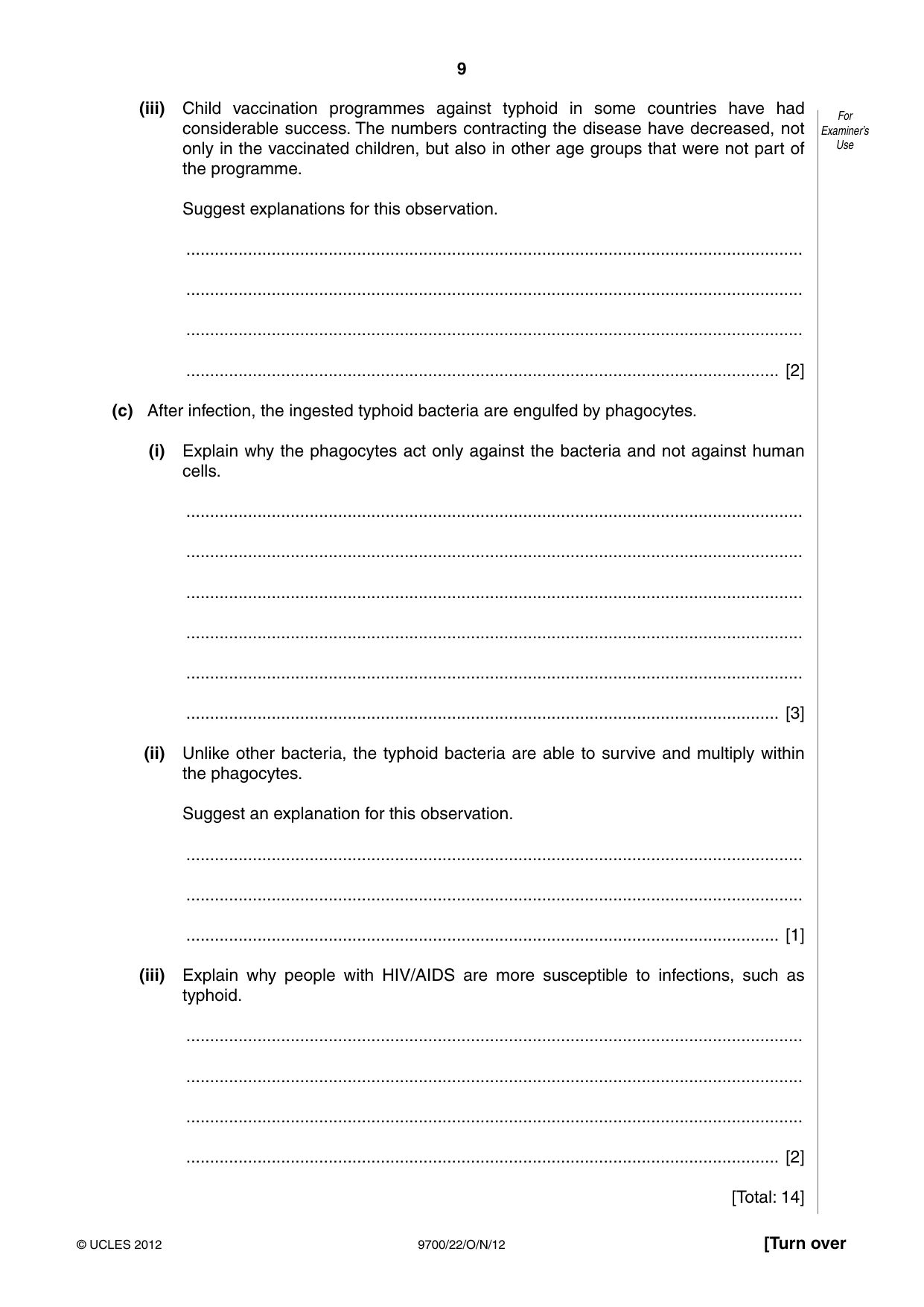
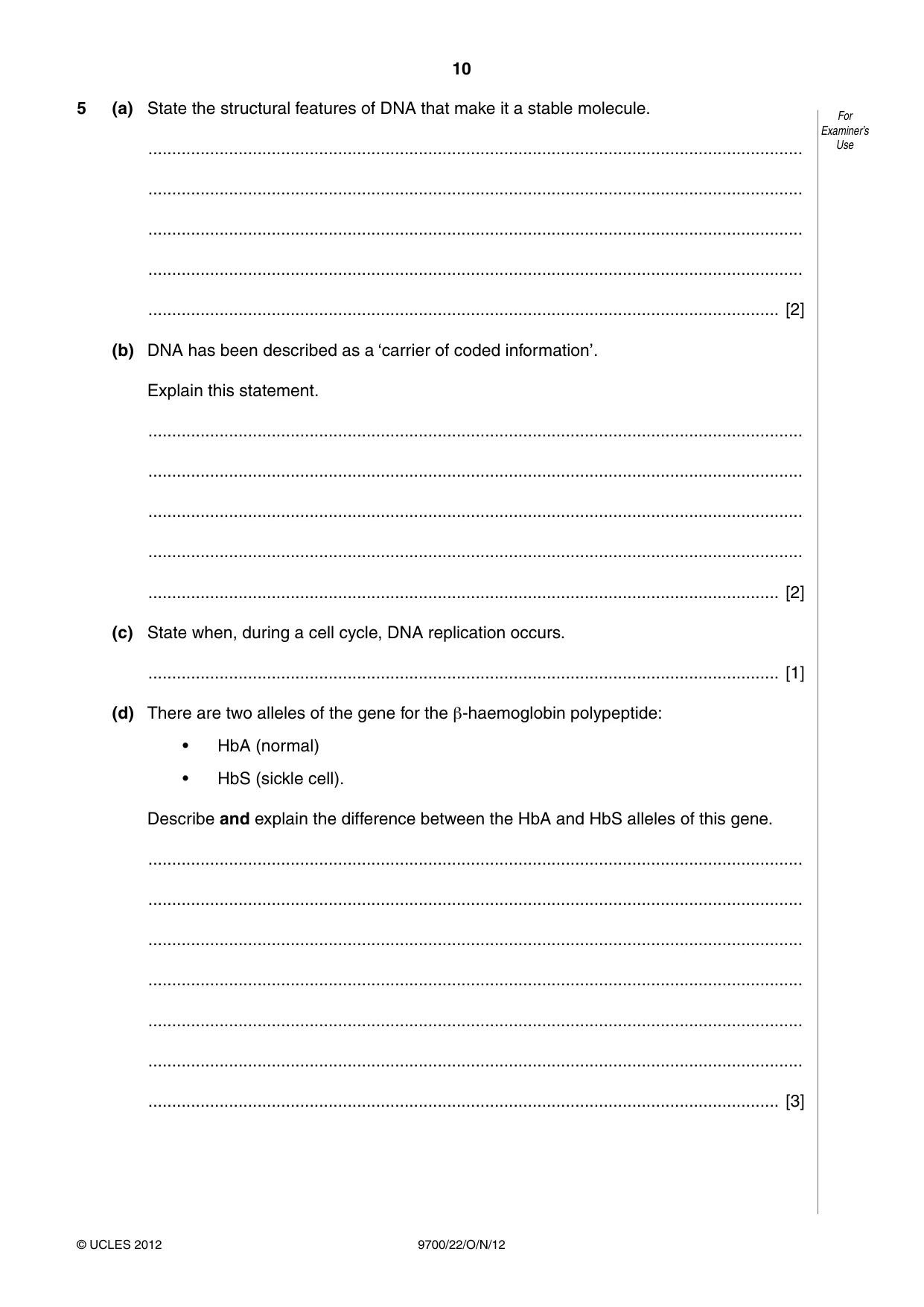
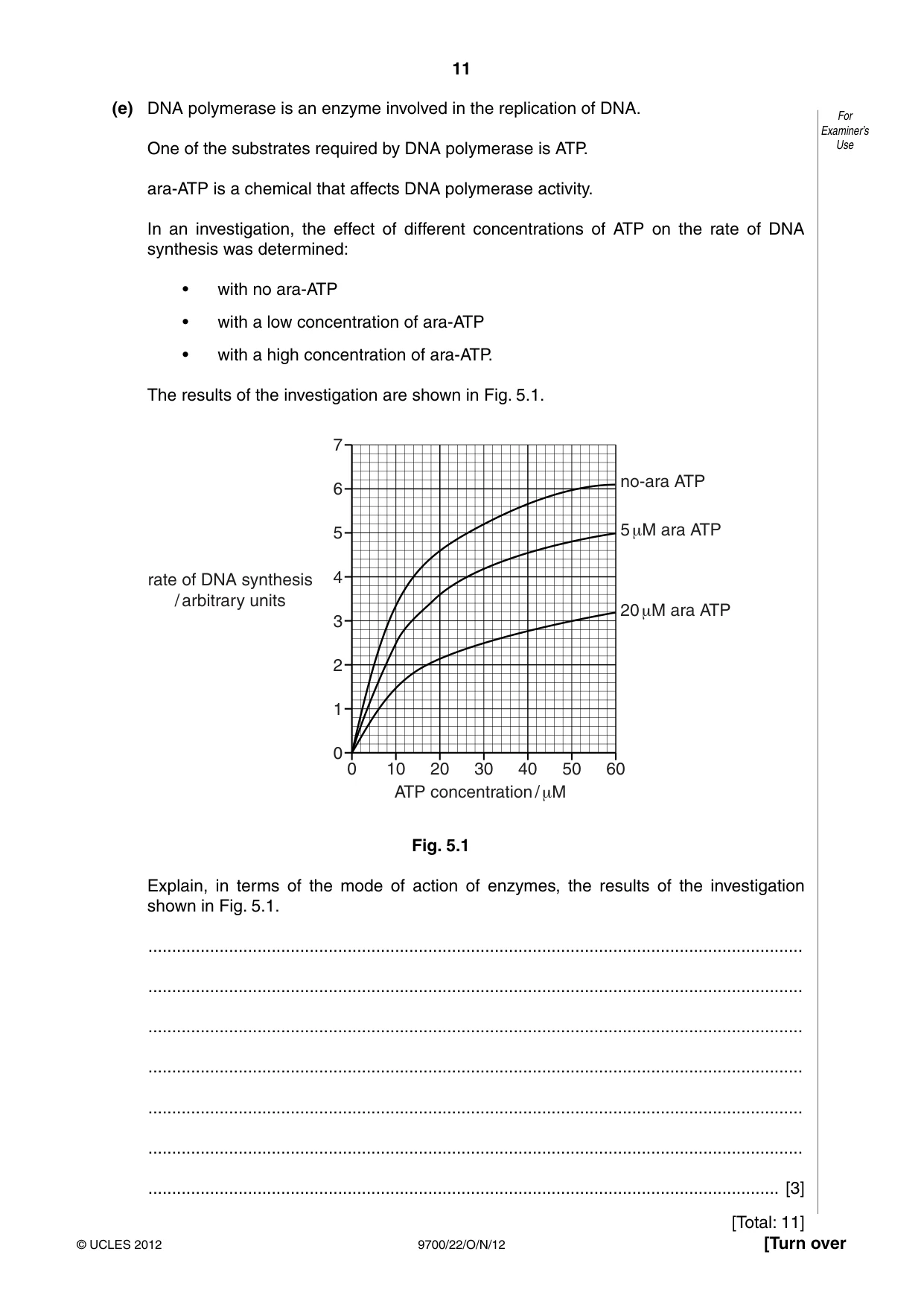
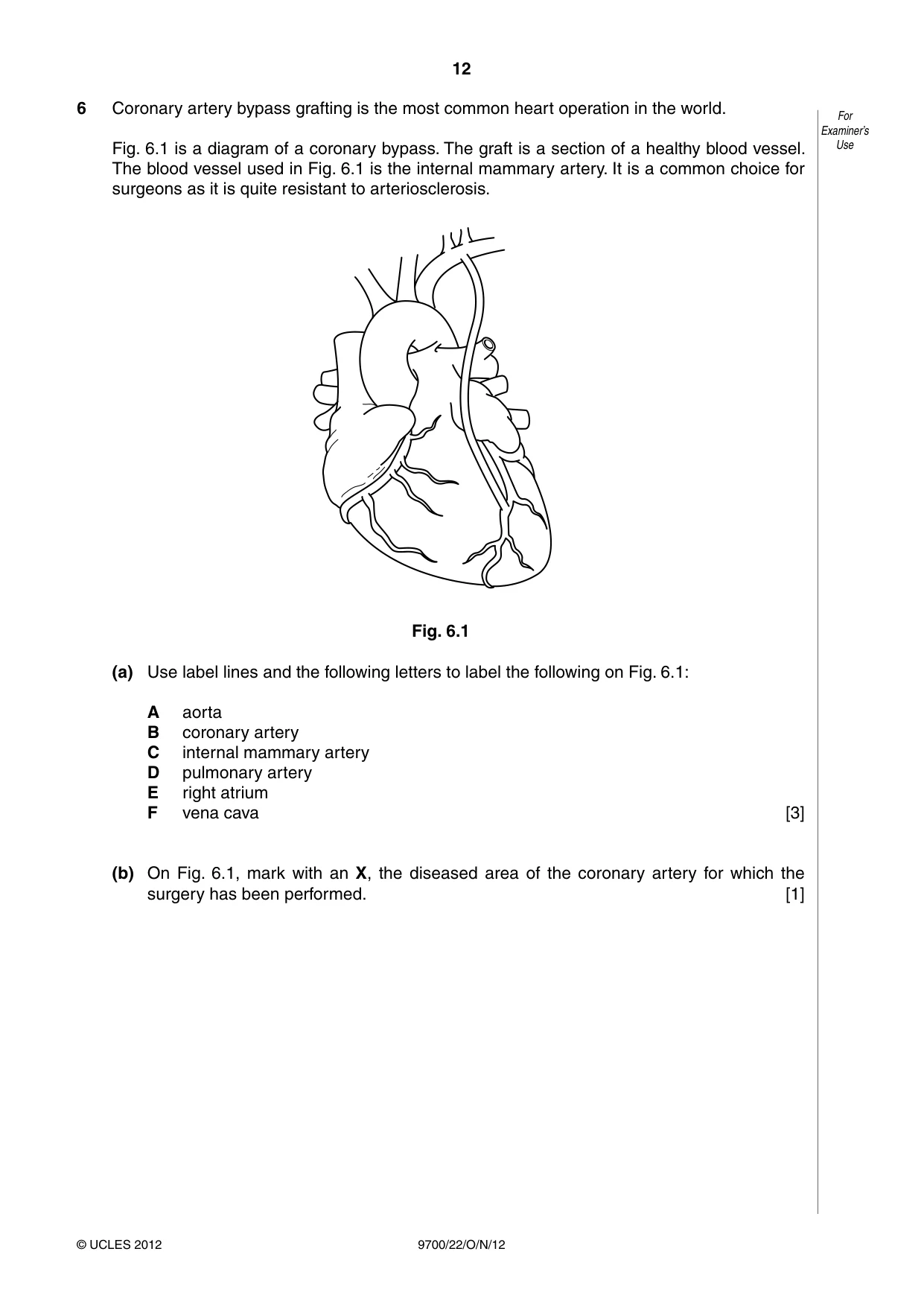


Mark scheme9 pages
Answers below. Sit the paper first if you are practising.
Paper as text
Question paper, page 1
This document consists of 13 printed pages and 3 blank pages. DC (NF/SW) 49037/3 © UCLES 2012 [Turn over UNIVERSITY OF CAMBRIDGE INTERNATIONAL EXAMINATIONS General Certificate of Education Advanced Subsidiary Level and Advanced Level * 6 3 8 2 5 6 7 4 6 1 * BIOLOGY 9700/22 Paper 2 Structured Questions AS October/November 2012 1 hour 15 minutes Candidates answer on the Question Paper. No Additional Materials are required. READ THESE INSTRUCTIONS FIRST Write your Centre number, candidate number and name in the spaces provided at the top of this page. Write in dark blue or black ink. You may use a soft pencil for any diagrams, graphs, or rough working. Do not use staples, paper clips, highlighters, glue or correction fluid. DO NOT WRITE IN ANY BARCODES. Answer all questions. At the end of the examination, fasten all your work securely together. The number of marks is given in brackets [ ] at the end of each question or part question. For Examiner’s Use 1 2 3 4 5 6 Total
Question paper, page 2
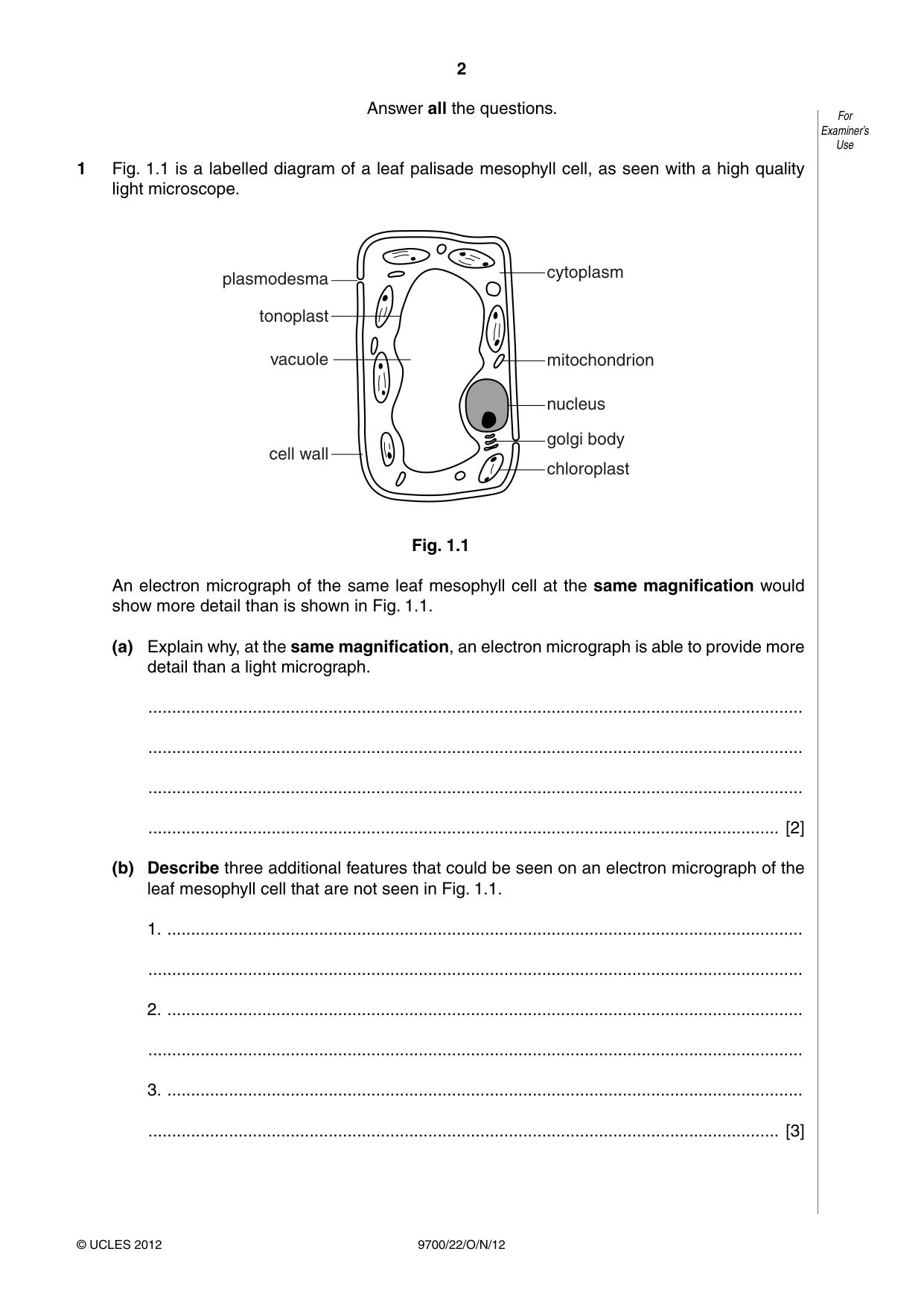
2 9700/22/O/N/12 © UCLES 2012 For Examiner’s Use Answer all the questions. 1 Fig. 1.1 is a labelled diagram of a leaf palisade mesophyll cell, as seen with a high quality light microscope. cytoplasm mitochondrion nucleus golgi body chloroplast cell wall vacuole tonoplast plasmodesma Fig. 1.1 An electron micrograph of the same leaf mesophyll cell at the same magnification would show more detail than is shown in Fig. 1.1. (a) Explain why, at the same magnification, an electron micrograph is able to provide more detail than a light micrograph. … … … … [2] (b) Describe three additional features that could be seen on an electron micrograph of the leaf mesophyll cell that are not seen in Fig. 1.1. 1. … … 2. … … 3. … … [3]
Question paper, page 3
3 9700/22/O/N/12 © UCLES 2012 [Turn over For Examiner’s Use (c) The length of the labelled chloroplast in Fig. 1.1 is 5.0 μm. Calculate the magnification of the cell shown in Fig. 1.1. Show your working. magnification × … [2] (d) In Fig. 1.1, starch granules are visible within the chloroplasts. Starch is the most common storage compound of plants. It is composed of amylopectin and amylose. (i) Describe the structural differences between amylopectin and amylose. … … … … … [2] (ii) State one role of magnesium ions within chloroplasts. … … [1] [Total: 10]
Question paper, page 4
4 9700/22/O/N/12 © UCLES 2012 For Examiner’s Use 2 The fluid mosaic model of membrane structure was first proposed in 1972 by Singer and Nicolson. The model describes in detail how the components of a membrane are organised. (a) Some of the components of the cell surface membrane are: • phospholipid molecules • protein molecules • cholesterol molecules. (i) In the box below, draw a labelled diagram of a section through a cell surface membrane to show how the above components are organised within the membrane. The diagram should include other named components of the membrane. Label the inner and outer surfaces of the membrane. [5]
Question paper, page 5
5 9700/22/O/N/12 © UCLES 2012 [Turn over For Examiner’s Use (ii) Suggest why ‘fluid mosaic’ is an appropriate term to use to describe membrane structure. … … … … … … [3] [Total: 8]
Question paper, page 6
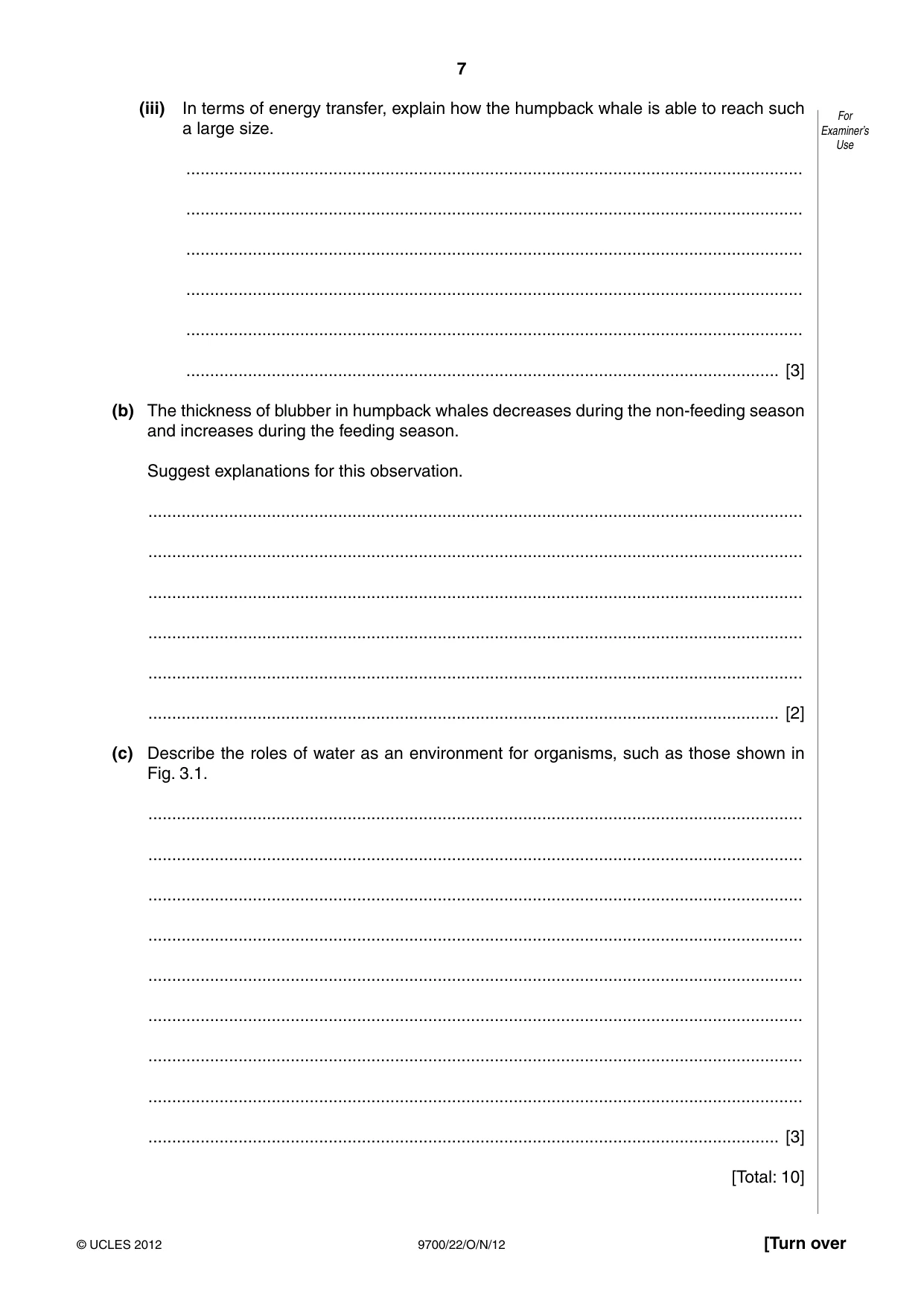
6 9700/22/O/N/12 © UCLES 2012 For Examiner’s Use 3 The humpback whale, Megaptera novaeangliae, is one of the world’s largest aquatic mammals. It can grow to a length of up to 15 metres and a mass of up to 36 000 kg. A large proportion of the mass of a humpback whale is a very thick layer of fat-filled cells stored under the skin, called blubber. The humpback whales are seasonal feeders. They feed in polar regions during the summer and then migrate to warmer temperate and tropical waters to mate and have their young during the polar winter. (a) One reason that the humpback whale has managed to reach its enormous size is because it is a member of a simple food web. Fig. 3.1 is an example of such a food web. humpback whale krill (small crustaceans) herring phytoplankton (very small photosynthetic organisms) not drawn to scale Fig. 3.1 (i) The humpback whale is a carnivore, feeding on krill and herring. The herring feed on krill. Add arrow heads to the lines drawn on Fig. 3.1 to show the direction of energy flow in the food web. [1] (ii) State the trophic level to which the humpback whale belongs. … [1]
Question paper, page 7
7 9700/22/O/N/12 © UCLES 2012 [Turn over For Examiner’s Use (iii) In terms of energy transfer, explain how the humpback whale is able to reach such a large size. … … … … … … [3] (b) The thickness of blubber in humpback whales decreases during the non-feeding season and increases during the feeding season. Suggest explanations for this observation. … … … … … … [2] (c) Describe the roles of water as an environment for organisms, such as those shown in Fig. 3.1. … … … … … … … … … [3] [Total: 10]
Question paper, page 8
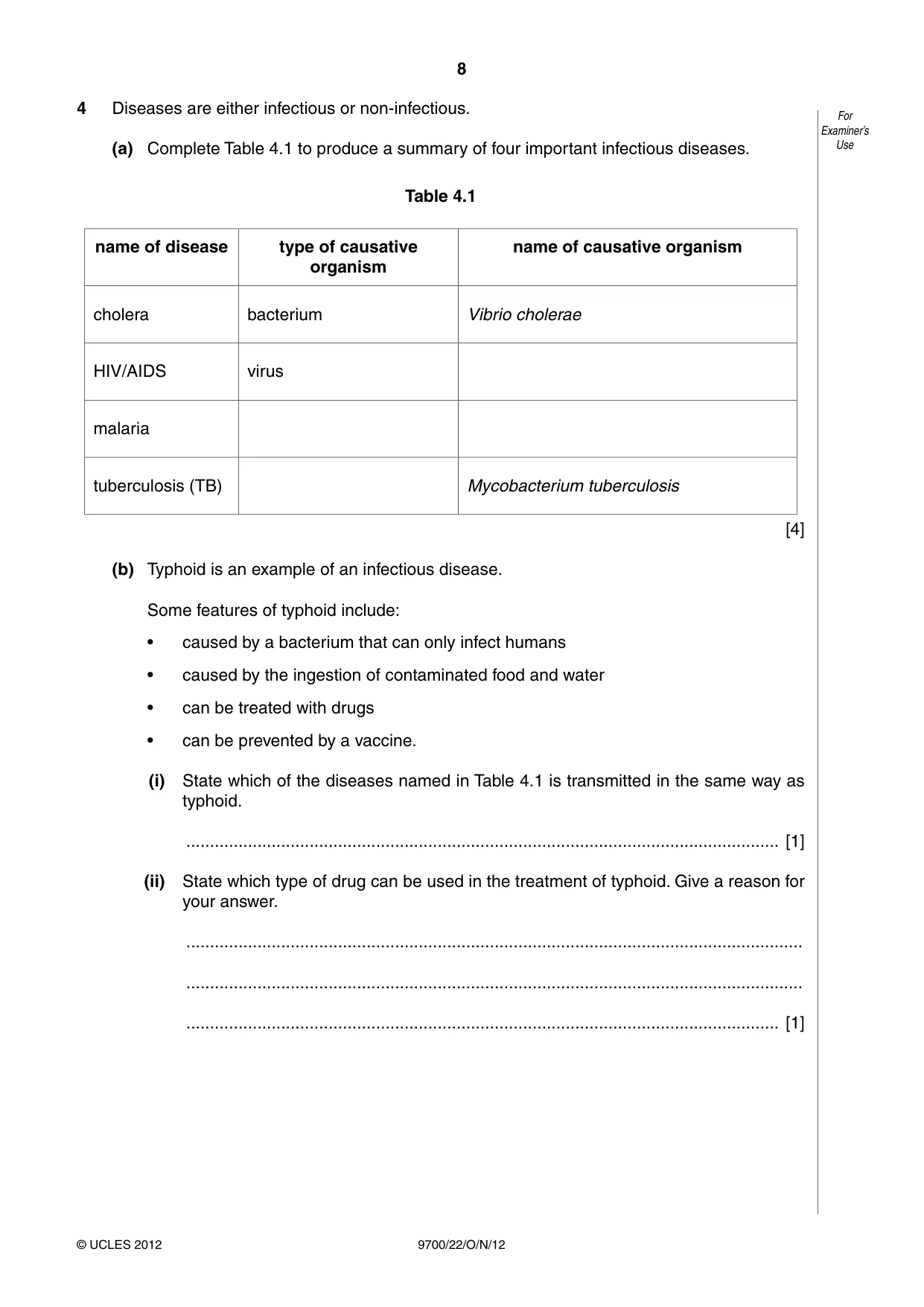
8 9700/22/O/N/12 © UCLES 2012 For Examiner’s Use 4 Diseases are either infectious or non-infectious. (a) Complete Table 4.1 to produce a summary of four important infectious diseases. Table 4.1 name of disease type of causative organism name of causative organism cholera bacterium Vibrio cholerae HIV/AIDS virus malaria tuberculosis (TB) Mycobacterium tuberculosis [4] (b) Typhoid is an example of an infectious disease. Some features of typhoid include: • caused by a bacterium that can only infect humans • caused by the ingestion of contaminated food and water • can be treated with drugs • can be prevented by a vaccine. (i) State which of the diseases named in Table 4.1 is transmitted in the same way as typhoid. … [1] (ii) State which type of drug can be used in the treatment of typhoid. Give a reason for your answer. … … … [1]
Question paper, page 9
9 9700/22/O/N/12 © UCLES 2012 [Turn over For Examiner’s Use (iii) Child vaccination programmes against typhoid in some countries have had considerable success. The numbers contracting the disease have decreased, not only in the vaccinated children, but also in other age groups that were not part of the programme. Suggest explanations for this observation. … … … … [2] (c) After infection, the ingested typhoid bacteria are engulfed by phagocytes. (i) Explain why the phagocytes act only against the bacteria and not against human cells. … … … … … … [3] (ii) Unlike other bacteria, the typhoid bacteria are able to survive and multiply within the phagocytes. Suggest an explanation for this observation. … … … [1] (iii) Explain why people with HIV/AIDS are more susceptible to infections, such as typhoid. … … … … [2] [Total: 14]
Question paper, page 10
10 9700/22/O/N/12 © UCLES 2012 For Examiner’s Use 5 (a) State the structural features of DNA that make it a stable molecule. … … … … … [2] (b) DNA has been described as a ‘carrier of coded information’. Explain this statement. … … … … … [2] (c) State when, during a cell cycle, DNA replication occurs. … [1] (d) There are two alleles of the gene for the β-haemoglobin polypeptide: • HbA (normal) • HbS (sickle cell). Describe and explain the difference between the HbA and HbS alleles of this gene. … … … … … … … [3]
Question paper, page 11
11 9700/22/O/N/12 © UCLES 2012 [Turn over For Examiner’s Use (e) DNA polymerase is an enzyme involved in the replication of DNA. One of the substrates required by DNA polymerase is ATP. ara-ATP is a chemical that affects DNA polymerase activity. In an investigation, the effect of different concentrations of ATP on the rate of DNA synthesis was determined: • with no ara-ATP • with a low concentration of ara-ATP • with a high concentration of ara-ATP. The results of the investigation are shown in Fig. 5.1. 0 0 1 2 3 4 5 6 7 10 20 30 40 50 60 ATP concentration / +M rate of DNA synthesis / arbitrary units 20 +M ara ATP 5 +M ara ATP no-ara ATP Fig. 5.1 Explain, in terms of the mode of action of enzymes, the results of the investigation shown in Fig. 5.1. … … … … … … … [3] [Total: 11]
Question paper, page 12
12 9700/22/O/N/12 © UCLES 2012 For Examiner’s Use 6 Coronary artery bypass grafting is the most common heart operation in the world. Fig. 6.1 is a diagram of a coronary bypass. The graft is a section of a healthy blood vessel. The blood vessel used in Fig. 6.1 is the internal mammary artery. It is a common choice for surgeons as it is quite resistant to arteriosclerosis. Fig. 6.1 (a) Use label lines and the following letters to label the following on Fig. 6.1: A aorta B coronary artery C internal mammary artery D pulmonary artery E right atrium F vena cava [3] (b) On Fig. 6.1, mark with an X, the diseased area of the coronary artery for which the surgery has been performed. [1]
Question paper, page 13
13 9700/22/O/N/12 © UCLES 2012 For Examiner’s Use (c) With reference to coronary heart bypass surgery, discuss the difficulties in achieving a balance between prevention and cure. … … … … … … [3] [Total: 7]
Question paper, page 14
14 9700/22/O/N/12 © UCLES 2012 BLANK PAGE
Question paper, page 15
15 9700/22/O/N/12 © UCLES 2012 BLANK PAGE
Question paper, page 16
16 9700/22/O/N/12 © UCLES 2012 Permission to reproduce items where third-party owned material protected by copyright is included has been sought and cleared where possible. Every reasonable effort has been made by the publisher (UCLES) to trace copyright holders, but if any items requiring clearance have unwittingly been included, the publisher will be pleased to make amends at the earliest possible opportunity. University of Cambridge International Examinations is part of the Cambridge Assessment Group. Cambridge Assessment is the brand name of University of Cambridge Local Examinations Syndicate (UCLES), which is itself a department of the University of Cambridge. BLANK PAGE
Mark scheme, page 1
CAMBRIDGE INTERNATIONAL EXAMINATIONS GCE Advanced Subsidiary Level and GCE Advanced Level MARK SCHEME for the October/November 2012 series 9700 BIOLOGY 9700/22 Paper 2 (AS Structured Questions), maximum raw mark 60 This mark scheme is published as an aid to teachers and candidates, to indicate the requirements of the examination. It shows the basis on which Examiners were instructed to award marks. It does not indicate the details of the discussions that took place at an Examiners’ meeting before marking began, which would have considered the acceptability of alternative answers. Mark schemes should be read in conjunction with the question paper and the Principal Examiner Report for Teachers. Cambridge will not enter into discussions about these mark schemes. Cambridge is publishing the mark schemes for the October/November 2012 series for most IGCSE, GCE Advanced Level and Advanced Subsidiary Level components and some Ordinary Level components.
Mark scheme, page 2
Page 2 Mark Scheme Syllabus Paper GCE AS/A LEVEL – October/November 2012 9700 22 © Cambridge International Examinations 2012 Mark scheme abbreviations: ; separates marking points / alternative answers for the same point R reject A accept (for answers correctly cued by the question, or by extra guidance) AW alternative wording (where responses vary more than usual) underline actual word given must be used by candidate (grammatical variants excepted) max indicates the maximum number of marks that can be given ora or reverse argument mp marking point (with relevant number) ecf error carried forward I ignore AVP alternative valid point (examples given)
Mark scheme, page 3
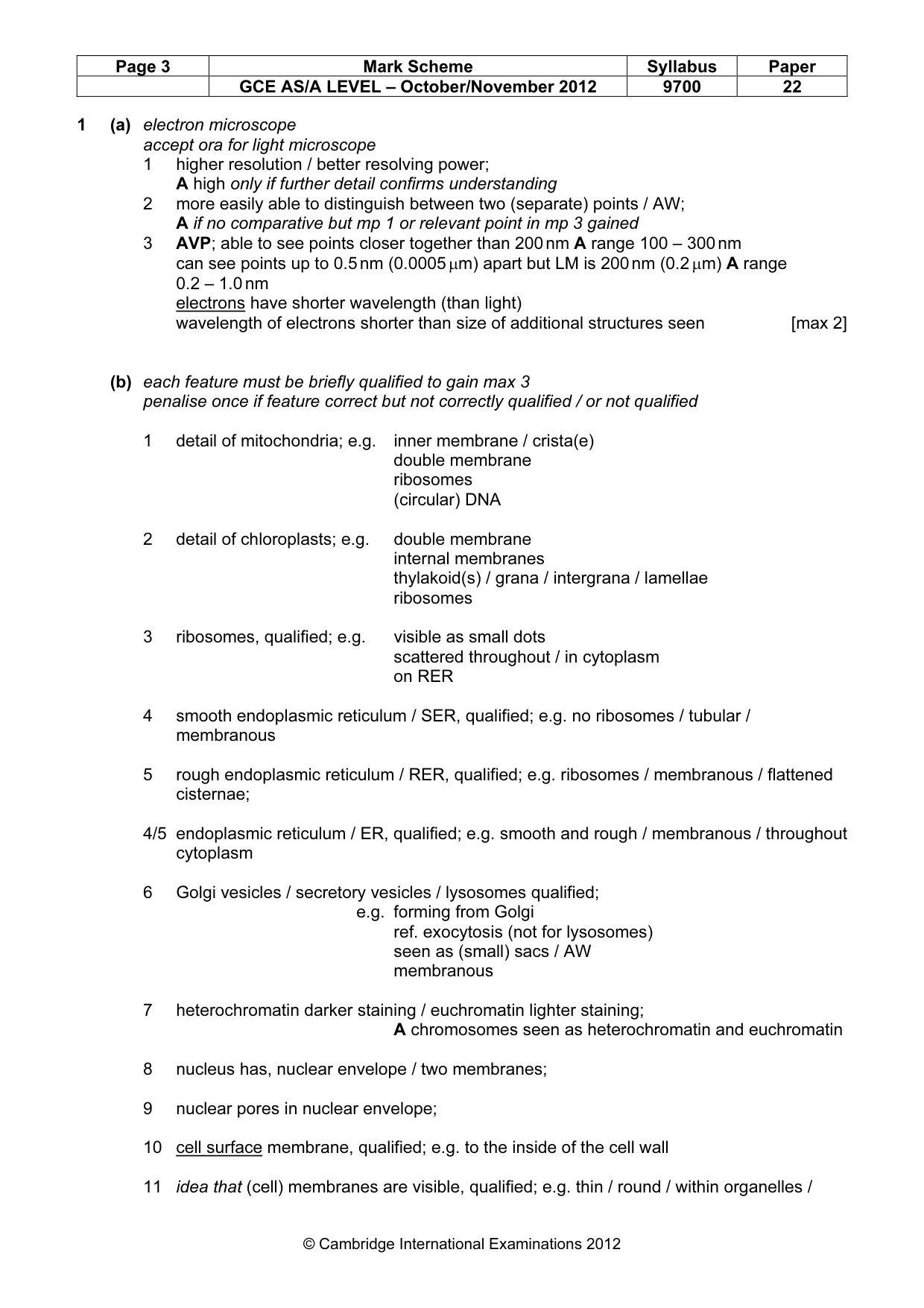
Page 3 Mark Scheme Syllabus Paper GCE AS/A LEVEL – October/November 2012 9700 22 © Cambridge International Examinations 2012 1 (a) electron microscope accept ora for light microscope 1 higher resolution / better resolving power; A high only if further detail confirms understanding 2 more easily able to distinguish between two (separate) points / AW; A if no comparative but mp 1 or relevant point in mp 3 gained 3 AVP; able to see points closer together than 200 nm A range 100 – 300 nm can see points up to 0.5 nm (0.0005 µm) apart but LM is 200 nm (0.2 µm) A range 0.2 – 1.0 nm electrons have shorter wavelength (than light) wavelength of electrons shorter than size of additional structures seen [max 2] (b) each feature must be briefly qualified to gain max 3 penalise once if feature correct but not correctly qualified / or not qualified 1 detail of mitochondria; e.g. inner membrane / crista(e) double membrane ribosomes (circular) DNA 2 detail of chloroplasts; e.g. double membrane internal membranes thylakoid(s) / grana / intergrana / lamellae ribosomes 3 ribosomes, qualified; e.g. visible as small dots scattered throughout / in cytoplasm on RER 4 smooth endoplasmic reticulum / SER, qualified; e.g. no ribosomes / tubular / membranous 5 rough endoplasmic reticulum / RER, qualified; e.g. ribosomes / membranous / flattened cisternae; 4/5 endoplasmic reticulum / ER, qualified; e.g. smooth and rough / membranous / throughout cytoplasm 6 Golgi vesicles / secretory vesicles / lysosomes qualified; e.g. forming from Golgi ref. exocytosis (not for lysosomes) seen as (small) sacs / AW membranous 7 heterochromatin darker staining / euchromatin lighter staining; A chromosomes seen as heterochromatin and euchromatin 8 nucleus has, nuclear envelope / two membranes; 9 nuclear pores in nuclear envelope; 10 cell surface membrane, qualified; e.g. to the inside of the cell wall 11 idea that (cell) membranes are visible, qualified; e.g. thin / round / within organelles /
Mark scheme, page 4
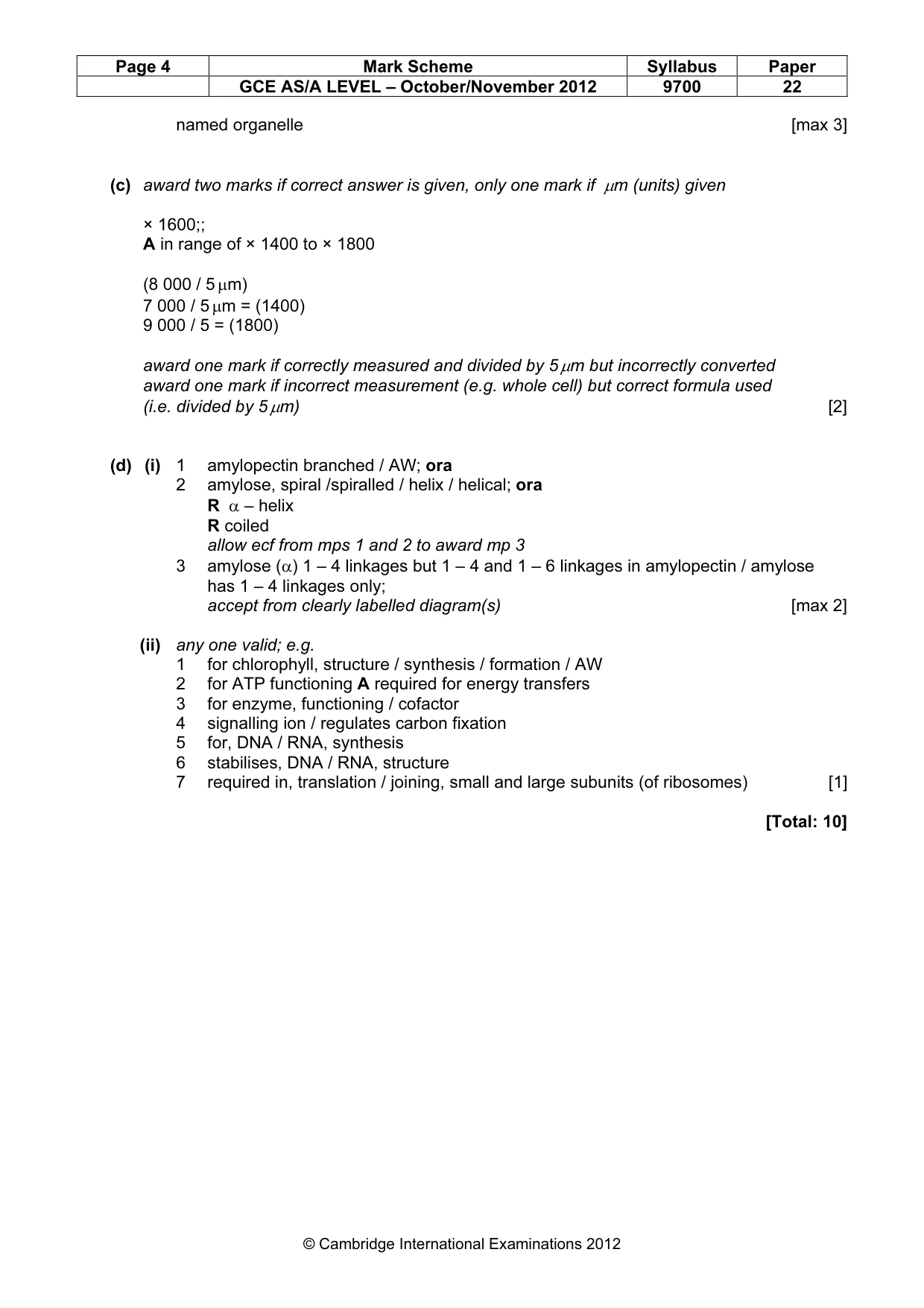
Page 4 Mark Scheme Syllabus Paper GCE AS/A LEVEL – October/November 2012 9700 22 © Cambridge International Examinations 2012 named organelle [max 3] (c) award two marks if correct answer is given, only one mark if µm (units) given × 1600;; A in range of × 1400 to × 1800 (8 000 / 5 µm) 7 000 / 5 µm = (1400) 9 000 / 5 = (1800) award one mark if correctly measured and divided by 5 µm but incorrectly converted award one mark if incorrect measurement (e.g. whole cell) but correct formula used (i.e. divided by 5 µm) [2] (d) (i) 1 amylopectin branched / AW; ora 2 amylose, spiral /spiralled / helix / helical; ora R α – helix R coiled allow ecf from mps 1 and 2 to award mp 3 3 amylose (α) 1 – 4 linkages but 1 – 4 and 1 – 6 linkages in amylopectin / amylose has 1 – 4 linkages only; accept from clearly labelled diagram(s) [max 2] (ii) any one valid; e.g. 1 for chlorophyll, structure / synthesis / formation / AW 2 for ATP functioning A required for energy transfers 3 for enzyme, functioning / cofactor 4 signalling ion / regulates carbon fixation 5 for, DNA / RNA, synthesis 6 stabilises, DNA / RNA, structure 7 required in, translation / joining, small and large subunits (of ribosomes) [1] [Total: 10]
Mark scheme, page 5
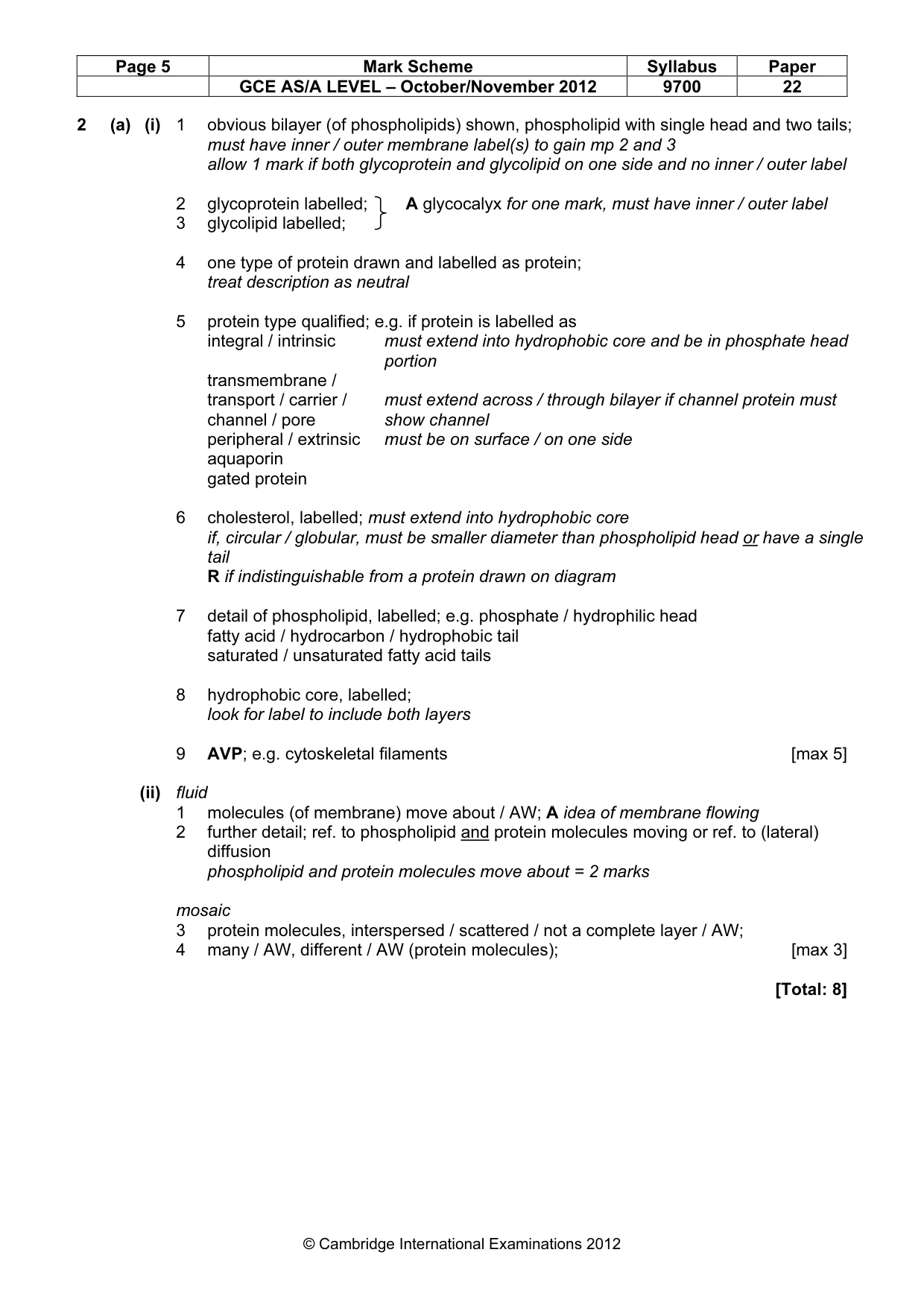
Page 5 Mark Scheme Syllabus Paper GCE AS/A LEVEL – October/November 2012 9700 22 © Cambridge International Examinations 2012 2 (a) (i) 1 obvious bilayer (of phospholipids) shown, phospholipid with single head and two tails; must have inner / outer membrane label(s) to gain mp 2 and 3 allow 1 mark if both glycoprotein and glycolipid on one side and no inner / outer label 2 glycoprotein labelled; A glycocalyx for one mark, must have inner / outer label 3 glycolipid labelled; 4 one type of protein drawn and labelled as protein; treat description as neutral 5 protein type qualified; e.g. if protein is labelled as integral / intrinsic must extend into hydrophobic core and be in phosphate head portion transmembrane / transport / carrier / must extend across / through bilayer if channel protein must channel / pore show channel peripheral / extrinsic must be on surface / on one side aquaporin gated protein 6 cholesterol, labelled; must extend into hydrophobic core if, circular / globular, must be smaller diameter than phospholipid head or have a single tail R if indistinguishable from a protein drawn on diagram 7 detail of phospholipid, labelled; e.g. phosphate / hydrophilic head fatty acid / hydrocarbon / hydrophobic tail saturated / unsaturated fatty acid tails 8 hydrophobic core, labelled; look for label to include both layers 9 AVP; e.g. cytoskeletal filaments [max 5] (ii) fluid 1 molecules (of membrane) move about / AW; A idea of membrane flowing 2 further detail; ref. to phospholipid and protein molecules moving or ref. to (lateral) diffusion phospholipid and protein molecules move about = 2 marks mosaic 3 protein molecules, interspersed / scattered / not a complete layer / AW; 4 many / AW, different / AW (protein molecules); [max 3] [Total: 8]
Mark scheme, page 6
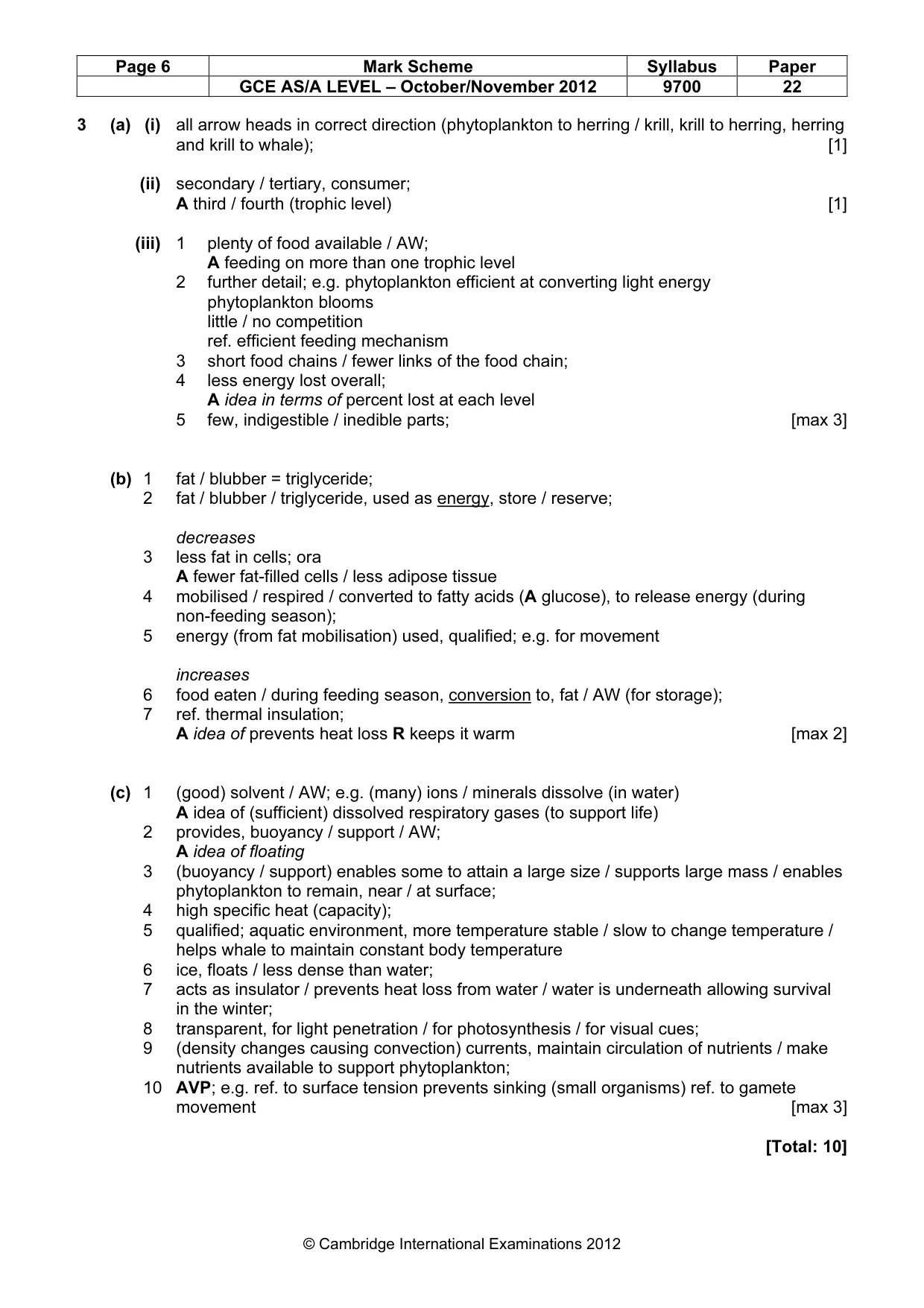
Page 6 Mark Scheme Syllabus Paper GCE AS/A LEVEL – October/November 2012 9700 22 © Cambridge International Examinations 2012 3 (a) (i) all arrow heads in correct direction (phytoplankton to herring / krill, krill to herring, herring and krill to whale); [1] (ii) secondary / tertiary, consumer; A third / fourth (trophic level) [1] (iii) 1 plenty of food available / AW; A feeding on more than one trophic level 2 further detail; e.g. phytoplankton efficient at converting light energy phytoplankton blooms little / no competition ref. efficient feeding mechanism 3 short food chains / fewer links of the food chain; 4 less energy lost overall; A idea in terms of percent lost at each level 5 few, indigestible / inedible parts; [max 3] (b) 1 fat / blubber = triglyceride; 2 fat / blubber / triglyceride, used as energy, store / reserve; decreases 3 less fat in cells; ora A fewer fat-filled cells / less adipose tissue 4 mobilised / respired / converted to fatty acids (A glucose), to release energy (during non-feeding season); 5 energy (from fat mobilisation) used, qualified; e.g. for movement increases 6 food eaten / during feeding season, conversion to, fat / AW (for storage); 7 ref. thermal insulation; A idea of prevents heat loss R keeps it warm [max 2] (c) 1 (good) solvent / AW; e.g. (many) ions / minerals dissolve (in water) A idea of (sufficient) dissolved respiratory gases (to support life) 2 provides, buoyancy / support / AW; A idea of floating 3 (buoyancy / support) enables some to attain a large size / supports large mass / enables phytoplankton to remain, near / at surface; 4 high specific heat (capacity); 5 qualified; aquatic environment, more temperature stable / slow to change temperature / helps whale to maintain constant body temperature 6 ice, floats / less dense than water; 7 acts as insulator / prevents heat loss from water / water is underneath allowing survival in the winter; 8 transparent, for light penetration / for photosynthesis / for visual cues; 9 (density changes causing convection) currents, maintain circulation of nutrients / make nutrients available to support phytoplankton; 10 AVP; e.g. ref. to surface tension prevents sinking (small organisms) ref. to gamete movement [max 3] [Total: 10]
Mark scheme, page 7
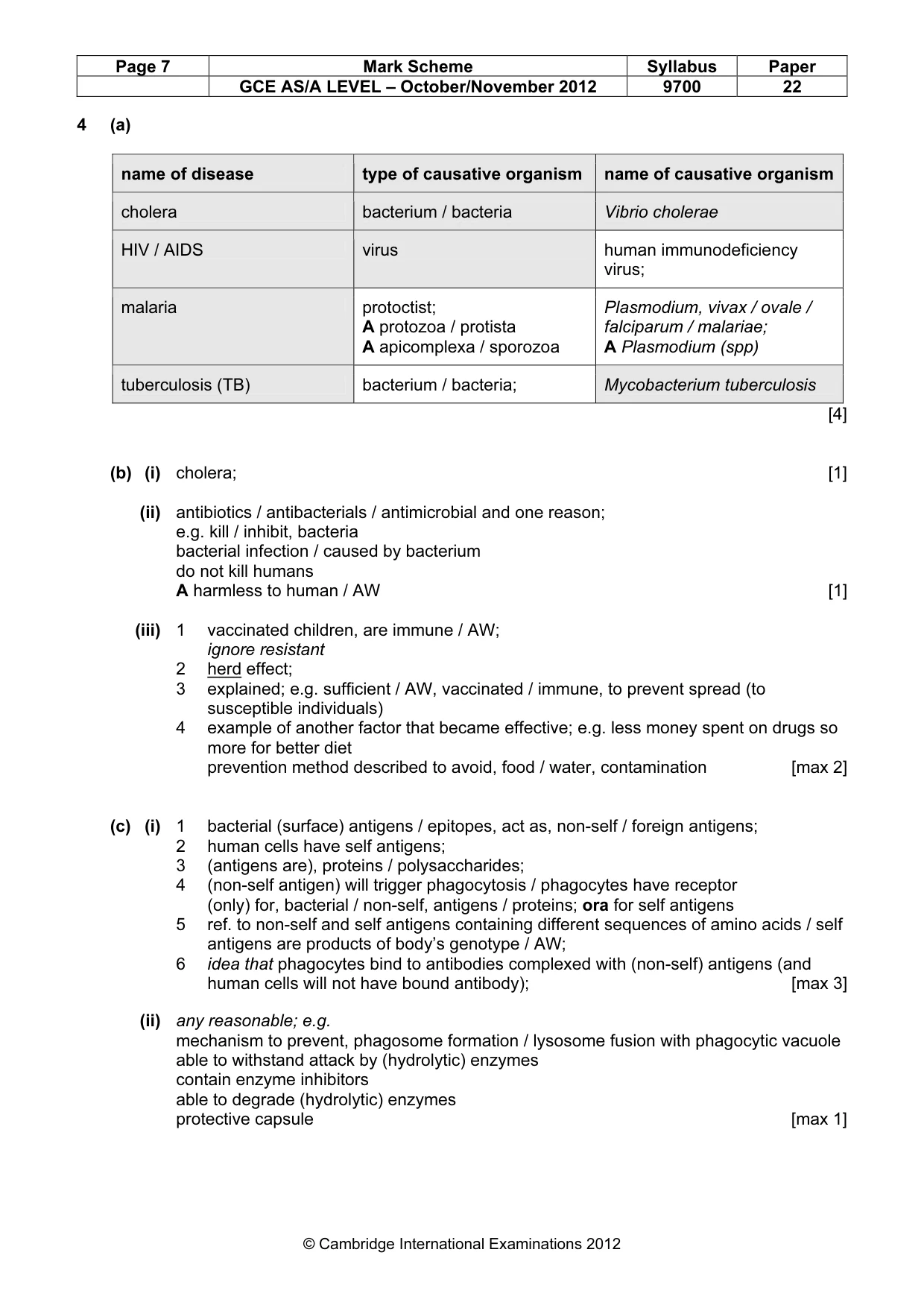
Page 7 Mark Scheme Syllabus Paper GCE AS/A LEVEL – October/November 2012 9700 22 © Cambridge International Examinations 2012 4 (a) name of disease type of causative organism name of causative organism cholera bacterium / bacteria Vibrio cholerae HIV / AIDS virus human immunodeficiency virus; malaria protoctist; A protozoa / protista A apicomplexa / sporozoa Plasmodium, vivax / ovale / falciparum / malariae; A Plasmodium (spp) tuberculosis (TB) bacterium / bacteria; Mycobacterium tuberculosis [4] (b) (i) cholera; [1] (ii) antibiotics / antibacterials / antimicrobial and one reason; e.g. kill / inhibit, bacteria bacterial infection / caused by bacterium do not kill humans A harmless to human / AW [1] (iii) 1 vaccinated children, are immune / AW; ignore resistant 2 herd effect; 3 explained; e.g. sufficient / AW, vaccinated / immune, to prevent spread (to susceptible individuals) 4 example of another factor that became effective; e.g. less money spent on drugs so more for better diet prevention method described to avoid, food / water, contamination [max 2] (c) (i) 1 bacterial (surface) antigens / epitopes, act as, non-self / foreign antigens; 2 human cells have self antigens; 3 (antigens are), proteins / polysaccharides; 4 (non-self antigen) will trigger phagocytosis / phagocytes have receptor (only) for, bacterial / non-self, antigens / proteins; ora for self antigens 5 ref. to non-self and self antigens containing different sequences of amino acids / self antigens are products of body’s genotype / AW; 6 idea that phagocytes bind to antibodies complexed with (non-self) antigens (and human cells will not have bound antibody); [max 3] (ii) any reasonable; e.g. mechanism to prevent, phagosome formation / lysosome fusion with phagocytic vacuole able to withstand attack by (hydrolytic) enzymes contain enzyme inhibitors able to degrade (hydrolytic) enzymes protective capsule [max 1]
Mark scheme, page 8
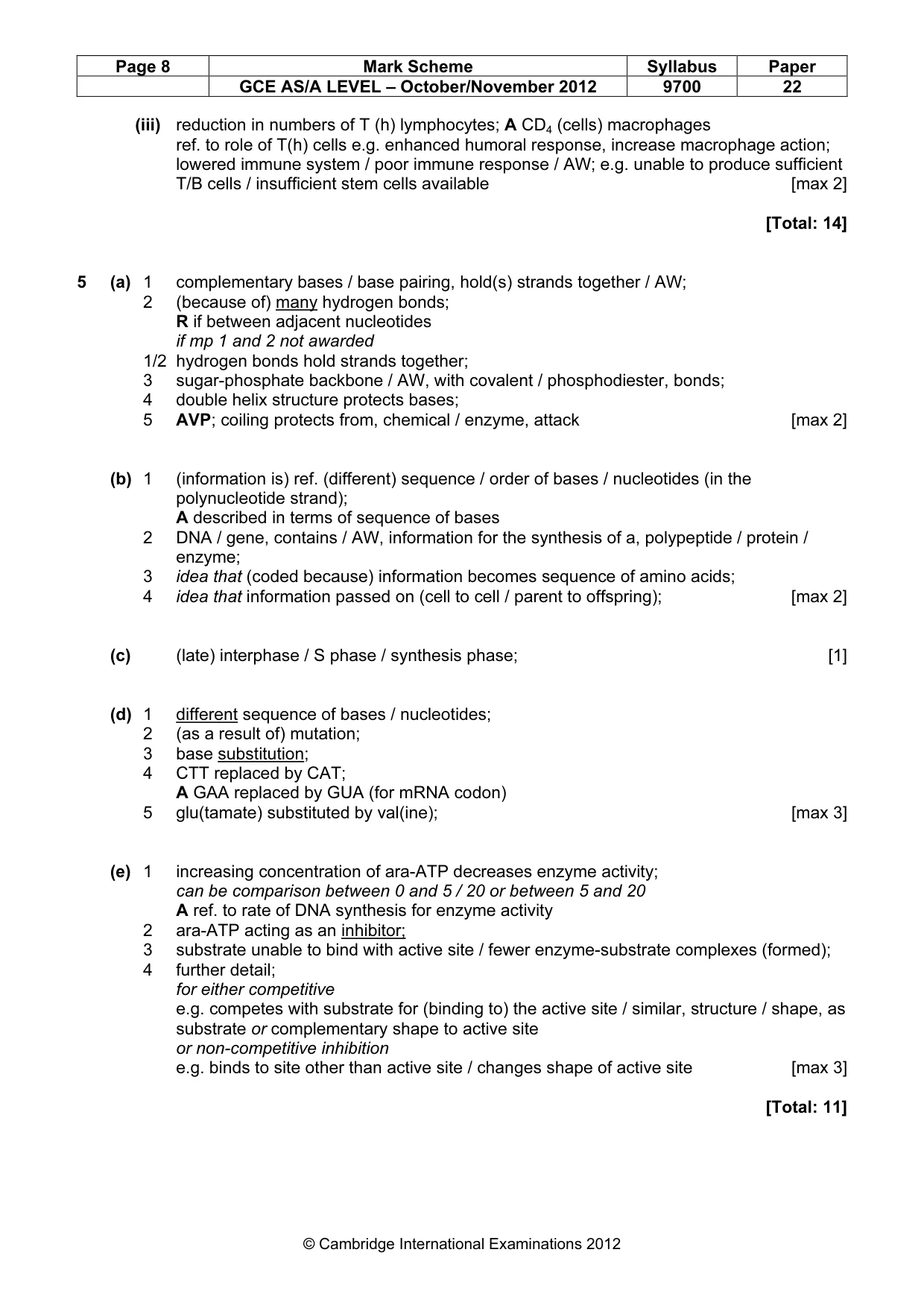
Page 8 Mark Scheme Syllabus Paper GCE AS/A LEVEL – October/November 2012 9700 22 © Cambridge International Examinations 2012 (iii) reduction in numbers of T (h) lymphocytes; A CD4 (cells) macrophages ref. to role of T(h) cells e.g. enhanced humoral response, increase macrophage action; lowered immune system / poor immune response / AW; e.g. unable to produce sufficient T/B cells / insufficient stem cells available [max 2] [Total: 14] 5 (a) 1 complementary bases / base pairing, hold(s) strands together / AW; 2 (because of) many hydrogen bonds; R if between adjacent nucleotides if mp 1 and 2 not awarded 1/2 hydrogen bonds hold strands together; 3 sugar-phosphate backbone / AW, with covalent / phosphodiester, bonds; 4 double helix structure protects bases; 5 AVP; coiling protects from, chemical / enzyme, attack [max 2] (b) 1 (information is) ref. (different) sequence / order of bases / nucleotides (in the polynucleotide strand); A described in terms of sequence of bases 2 DNA / gene, contains / AW, information for the synthesis of a, polypeptide / protein / enzyme; 3 idea that (coded because) information becomes sequence of amino acids; 4 idea that information passed on (cell to cell / parent to offspring); [max 2] (c) (late) interphase / S phase / synthesis phase; [1] (d) 1 different sequence of bases / nucleotides; 2 (as a result of) mutation; 3 base substitution; 4 CTT replaced by CAT; A GAA replaced by GUA (for mRNA codon) 5 glu(tamate) substituted by val(ine); [max 3] (e) 1 increasing concentration of ara-ATP decreases enzyme activity; can be comparison between 0 and 5 / 20 or between 5 and 20 A ref. to rate of DNA synthesis for enzyme activity 2 ara-ATP acting as an inhibitor; 3 substrate unable to bind with active site / fewer enzyme-substrate complexes (formed); 4 further detail; for either competitive e.g. competes with substrate for (binding to) the active site / similar, structure / shape, as substrate or complementary shape to active site or non-competitive inhibition e.g. binds to site other than active site / changes shape of active site [max 3] [Total: 11]
Mark scheme, page 9
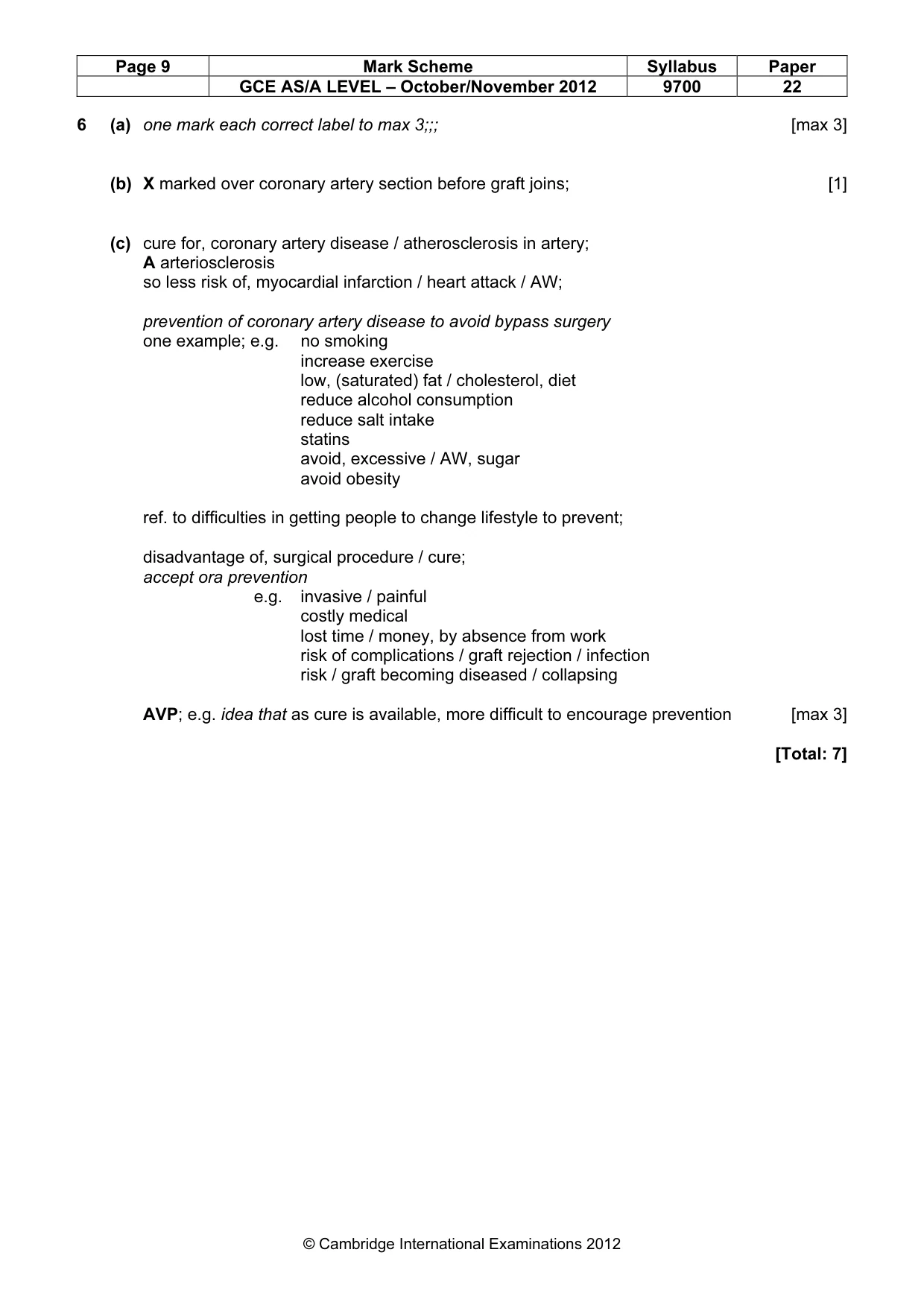
Page 9 Mark Scheme Syllabus Paper GCE AS/A LEVEL – October/November 2012 9700 22 © Cambridge International Examinations 2012 6 (a) one mark each correct label to max 3;;; [max 3] (b) X marked over coronary artery section before graft joins; [1] (c) cure for, coronary artery disease / atherosclerosis in artery; A arteriosclerosis so less risk of, myocardial infarction / heart attack / AW; prevention of coronary artery disease to avoid bypass surgery one example; e.g. no smoking increase exercise low, (saturated) fat / cholesterol, diet reduce alcohol consumption reduce salt intake statins avoid, excessive / AW, sugar avoid obesity ref. to difficulties in getting people to change lifestyle to prevent; disadvantage of, surgical procedure / cure; accept ora prevention e.g. invasive / painful costly medical lost time / money, by absence from work risk of complications / graft rejection / infection risk / graft becoming diseased / collapsing AVP; e.g. idea that as cure is available, more difficult to encourage prevention [max 3] [Total: 7]
What you needed in this session
Cambridge’s own grade thresholds for 2012 Oct/Nov, Paper 2 · Variant 2. A higher threshold means an easier paper — the bar moves with how the cohort did.