Cambridge A Level Biology 9700 — 2011 Oct/Nov Paper 2 · Variant 2
9700/22/O/N/11 · 60 marks · ≈68 min
The question paper and its mark scheme, free to read here and free to download. This is Cambridge’s own paper, exactly as it was sat.
Question paper12 pages
Mark scheme8 pages
Answers below. Sit the paper first if you are practising.
Paper as text
Question paper, page 1
This document consists of 11 printed pages and 1 blank page. DC (NH/DJ) 34118/5 © UCLES 2011 [Turn over UNIVERSITY OF CAMBRIDGE INTERNATIONAL EXAMINATIONS General Certificate of Education Advanced Subsidiary Level and Advanced Level READ THESE INSTRUCTIONS FIRST Write your Centre number, candidate number and name in the spaces provided at the top of this page. Write in dark blue or black ink. You may use a soft pencil for any diagrams, graphs, or rough working. Do not use staples, paper clips, highlighters, glue or correction fluid. DO NOT WRITE IN ANY BARCODES. Answer all questions. At the end of the examination, fasten all your work securely together. The number of marks is given in brackets [ ] at the end of each question or part question. * 6 1 9 4 0 4 4 8 1 7 * BIOLOGY 9700/22 Paper 2 Structured Questions AS October/November 2011 1 hour 15 minutes Candidates answer on the Question Paper. No Additional Materials are required. For Examiner’s Use 1 2 3 4 5 6 Total
Question paper, page 2
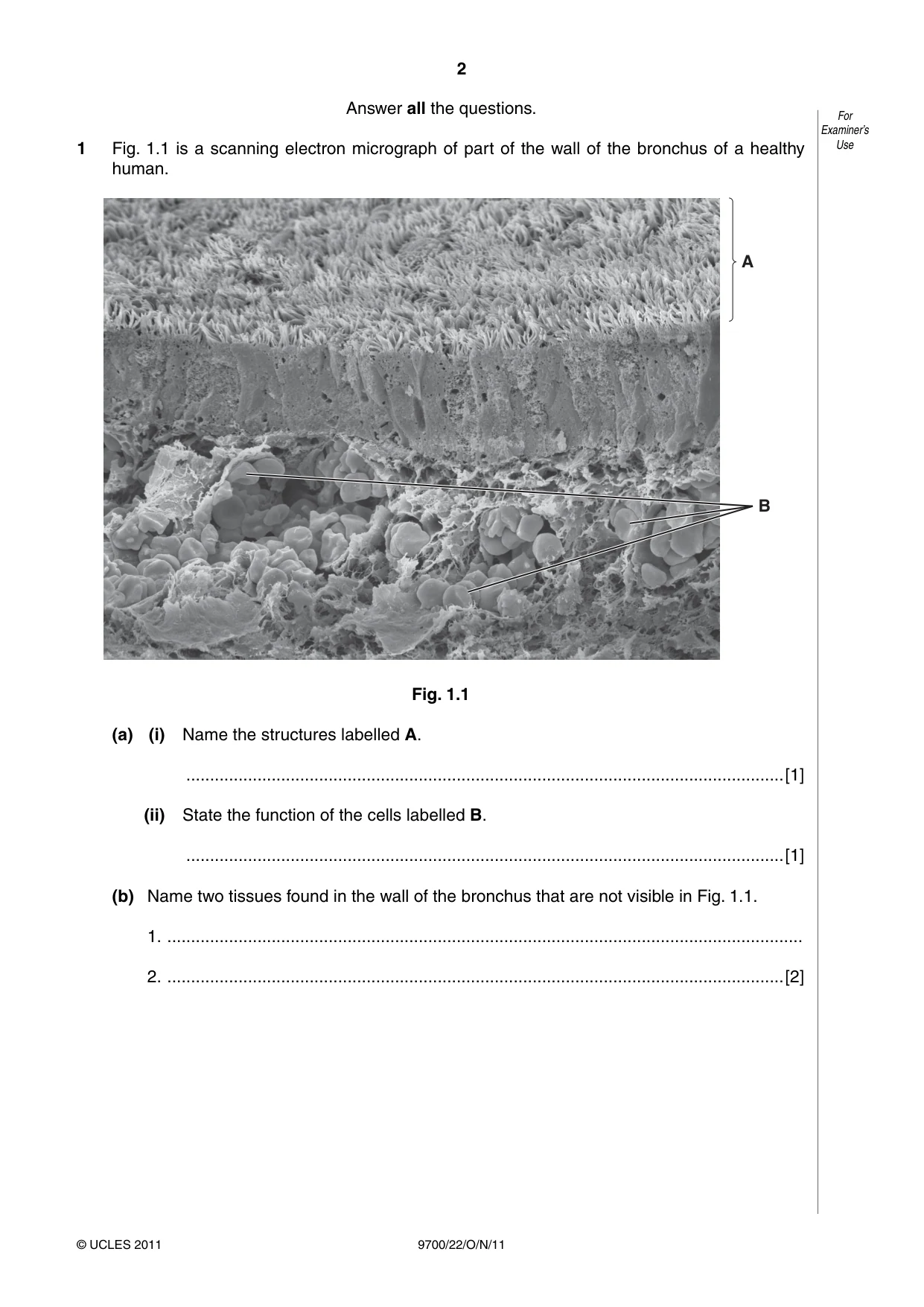
2 9700/22/O/N/11 © UCLES 2011 For Examiner’s Use Answer all the questions. 1 Fig. 1.1 is a scanning electron micrograph of part of the wall of the bronchus of a healthy human. B A Fig. 1.1 (a) (i) Name the structures labelled A. …[1] (ii) State the function of the cells labelled B. …[1] (b) Name two tissues found in the wall of the bronchus that are not visible in Fig. 1.1. 1. … 2. …[2]
Question paper, page 3
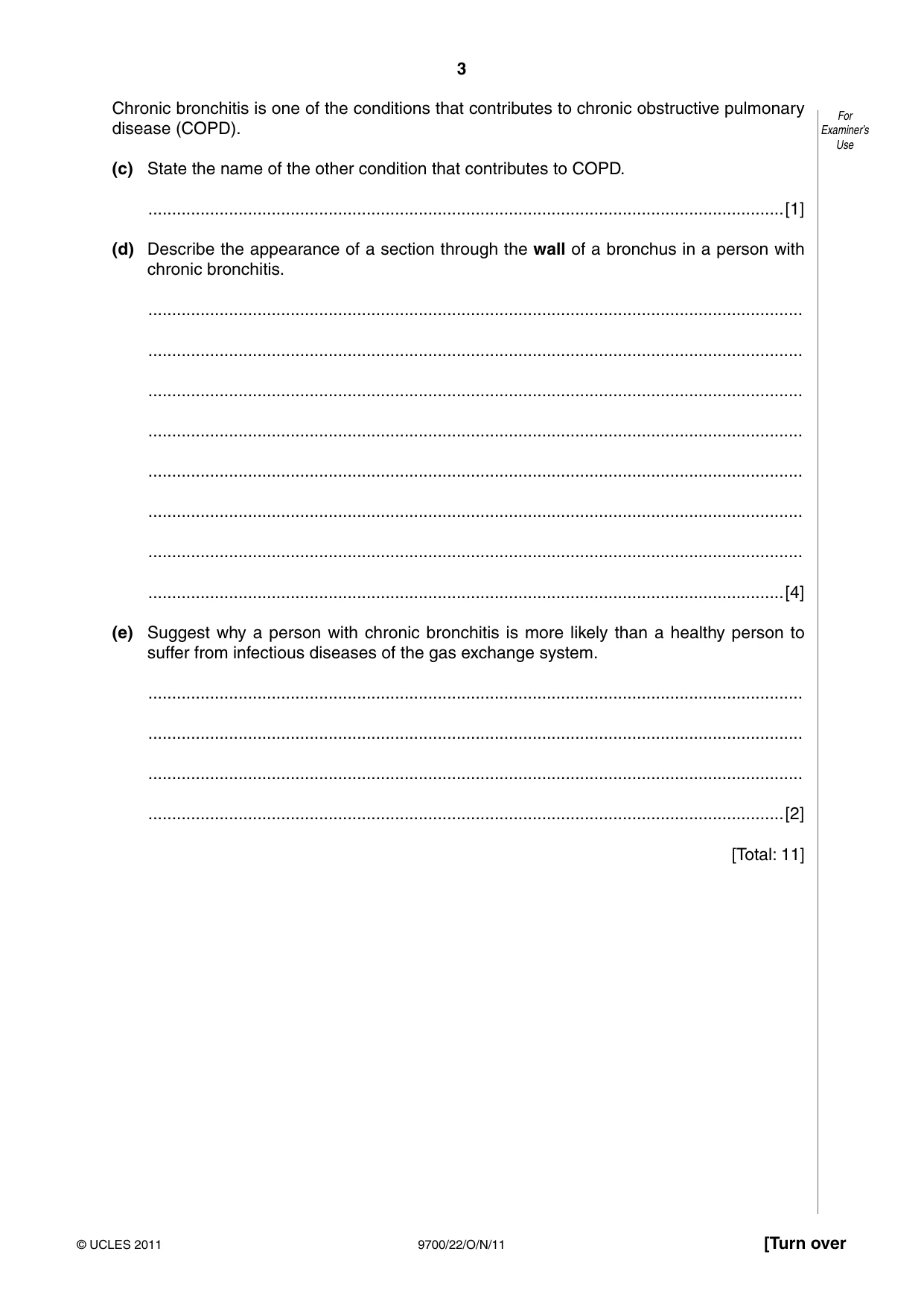
3 9700/22/O/N/11 © UCLES 2011 [Turn over For Examiner’s Use Chronic bronchitis is one of the conditions that contributes to chronic obstructive pulmonary disease (COPD). (c) State the name of the other condition that contributes to COPD. …[1] (d) Describe the appearance of a section through the wall of a bronchus in a person with chronic bronchitis. … … … … … … … …[4] (e) Suggest why a person with chronic bronchitis is more likely than a healthy person to suffer from infectious diseases of the gas exchange system. … … … …[2] [Total: 11]
Question paper, page 4
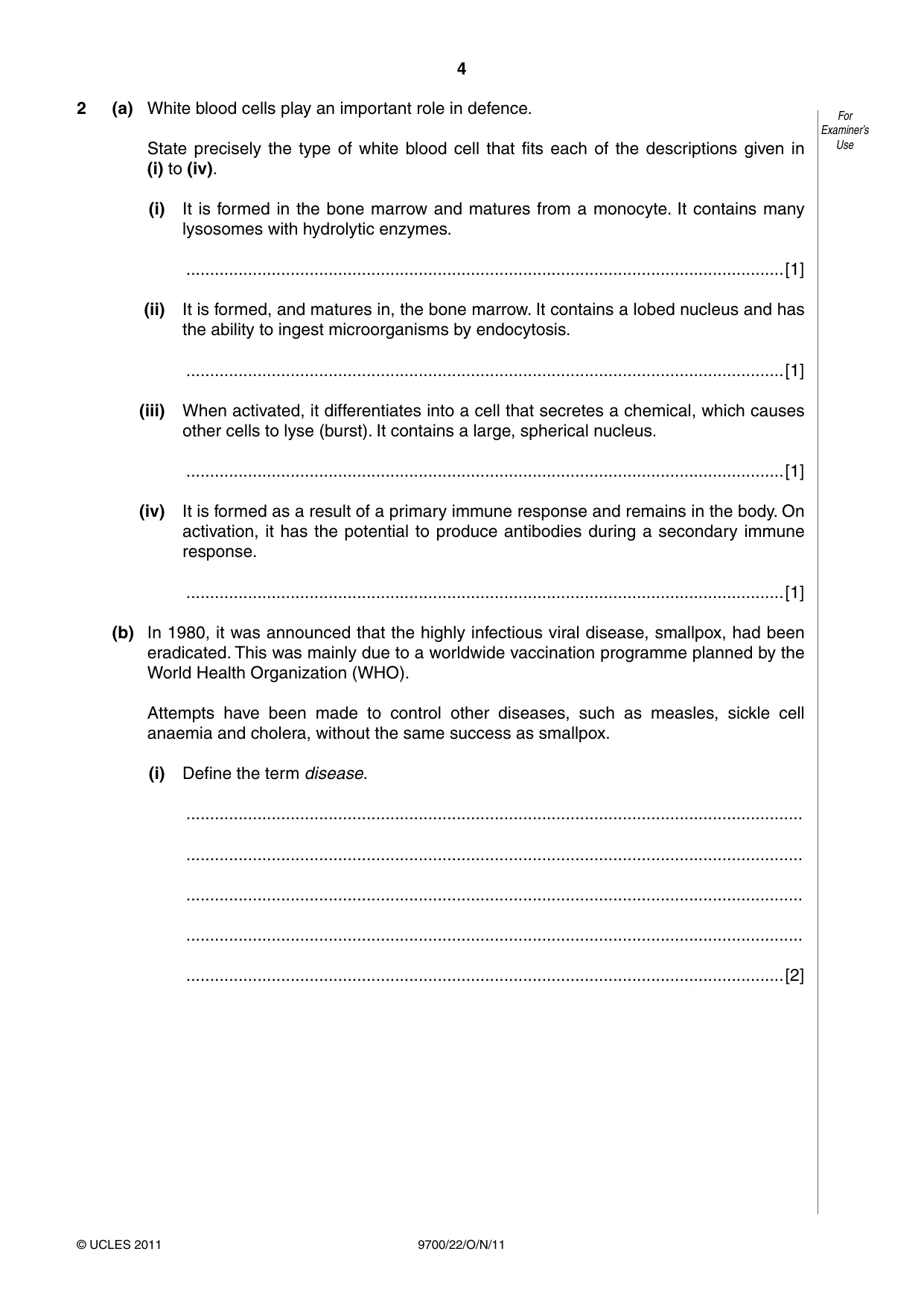
4 9700/22/O/N/11 © UCLES 2011 For Examiner’s Use 2 (a) White blood cells play an important role in defence. State precisely the type of white blood cell that fits each of the descriptions given in (i) to (iv). (i) It is formed in the bone marrow and matures from a monocyte. It contains many lysosomes with hydrolytic enzymes. …[1] (ii) It is formed, and matures in, the bone marrow. It contains a lobed nucleus and has the ability to ingest microorganisms by endocytosis. …[1] (iii) When activated, it differentiates into a cell that secretes a chemical, which causes other cells to lyse (burst). It contains a large, spherical nucleus. …[1] (iv) It is formed as a result of a primary immune response and remains in the body. On activation, it has the potential to produce antibodies during a secondary immune response. …[1] (b) In 1980, it was announced that the highly infectious viral disease, smallpox, had been eradicated. This was mainly due to a worldwide vaccination programme planned by the World Health Organization (WHO). Attempts have been made to control other diseases, such as measles, sickle cell anaemia and cholera, without the same success as smallpox. (i) Define the term disease. … … … … …[2]
Question paper, page 5
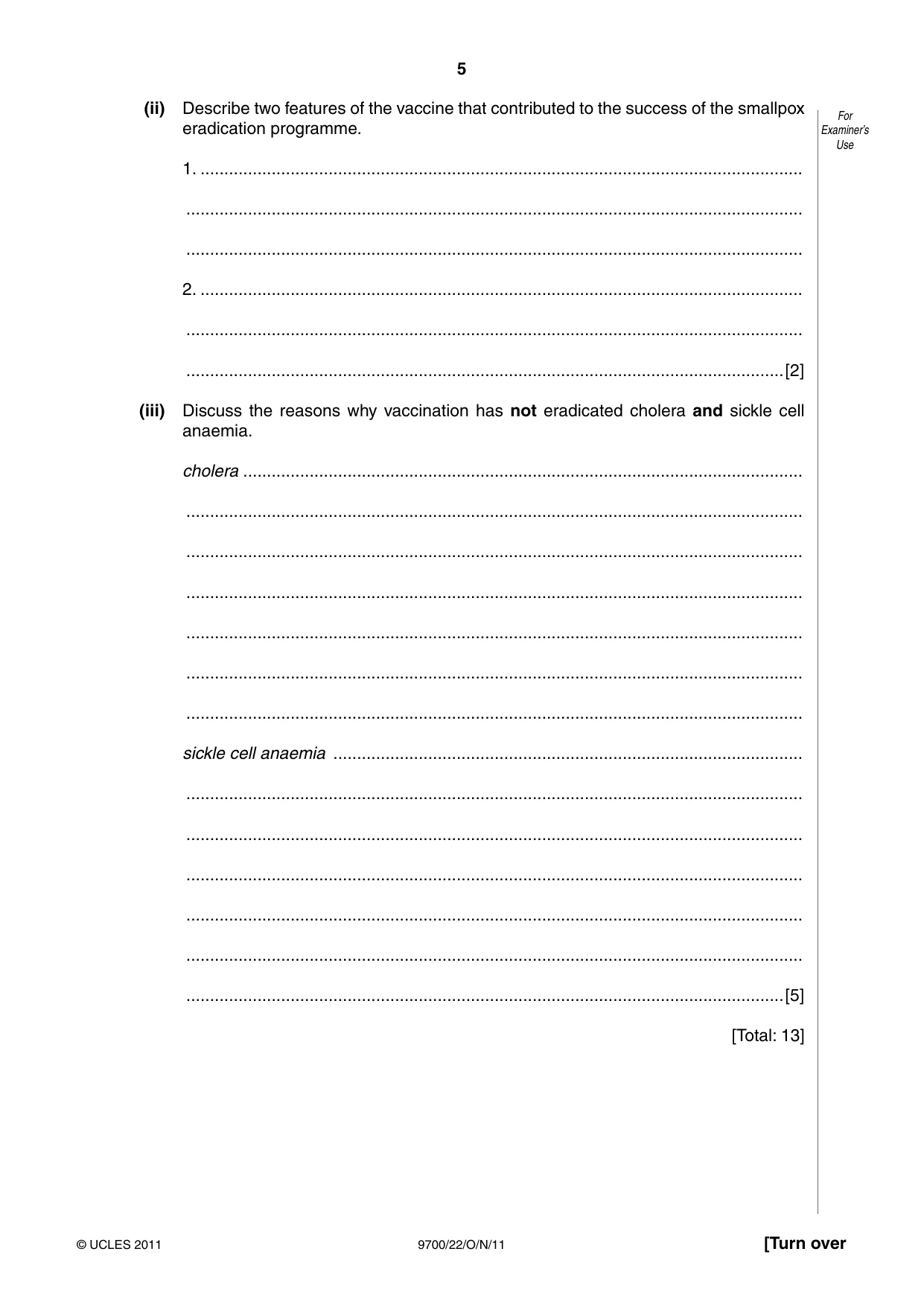
5 9700/22/O/N/11 © UCLES 2011 [Turn over For Examiner’s Use (ii) Describe two features of the vaccine that contributed to the success of the smallpox eradication programme. 1. … … … 2. … … …[2] (iii) Discuss the reasons why vaccination has not eradicated cholera and sickle cell anaemia. cholera … … … … … … … sickle cell anaemia … … … … … … …[5] [Total: 13]
Question paper, page 6
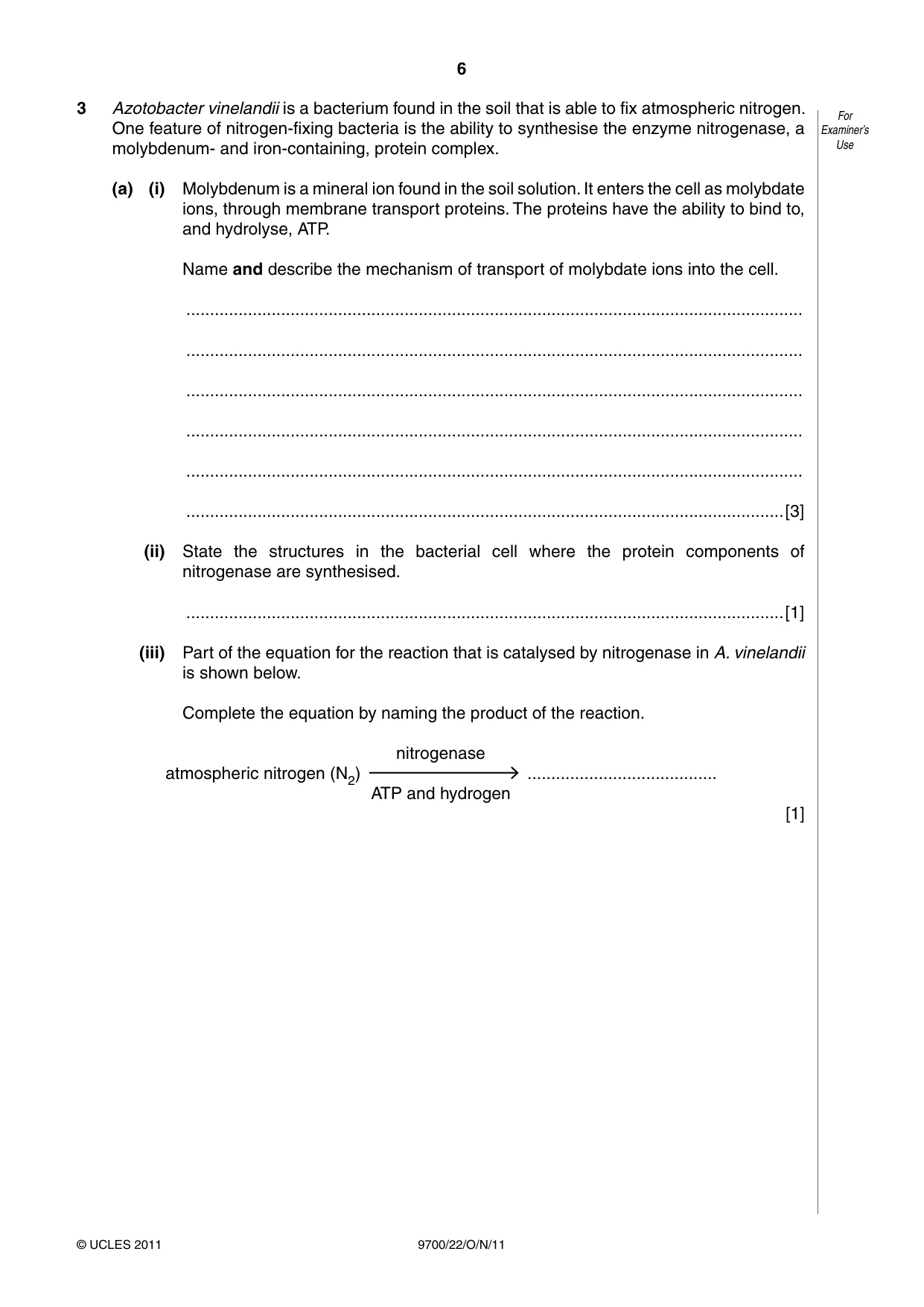
6 9700/22/O/N/11 © UCLES 2011 For Examiner’s Use 3 Azotobacter vinelandii is a bacterium found in the soil that is able to fix atmospheric nitrogen. One feature of nitrogen-fixing bacteria is the ability to synthesise the enzyme nitrogenase, a molybdenum- and iron-containing, protein complex. (a) (i) Molybdenum is a mineral ion found in the soil solution. It enters the cell as molybdate ions, through membrane transport proteins. The proteins have the ability to bind to, and hydrolyse, ATP. Name and describe the mechanism of transport of molybdate ions into the cell. … … … … … …[3] (ii) State the structures in the bacterial cell where the protein components of nitrogenase are synthesised. …[1] (iii) Part of the equation for the reaction that is catalysed by nitrogenase in A. vinelandii is shown below. Complete the equation by naming the product of the reaction. nitrogenase atmospheric nitrogen (N 2 ) … ATP and hydrogen [1]
Question paper, page 7
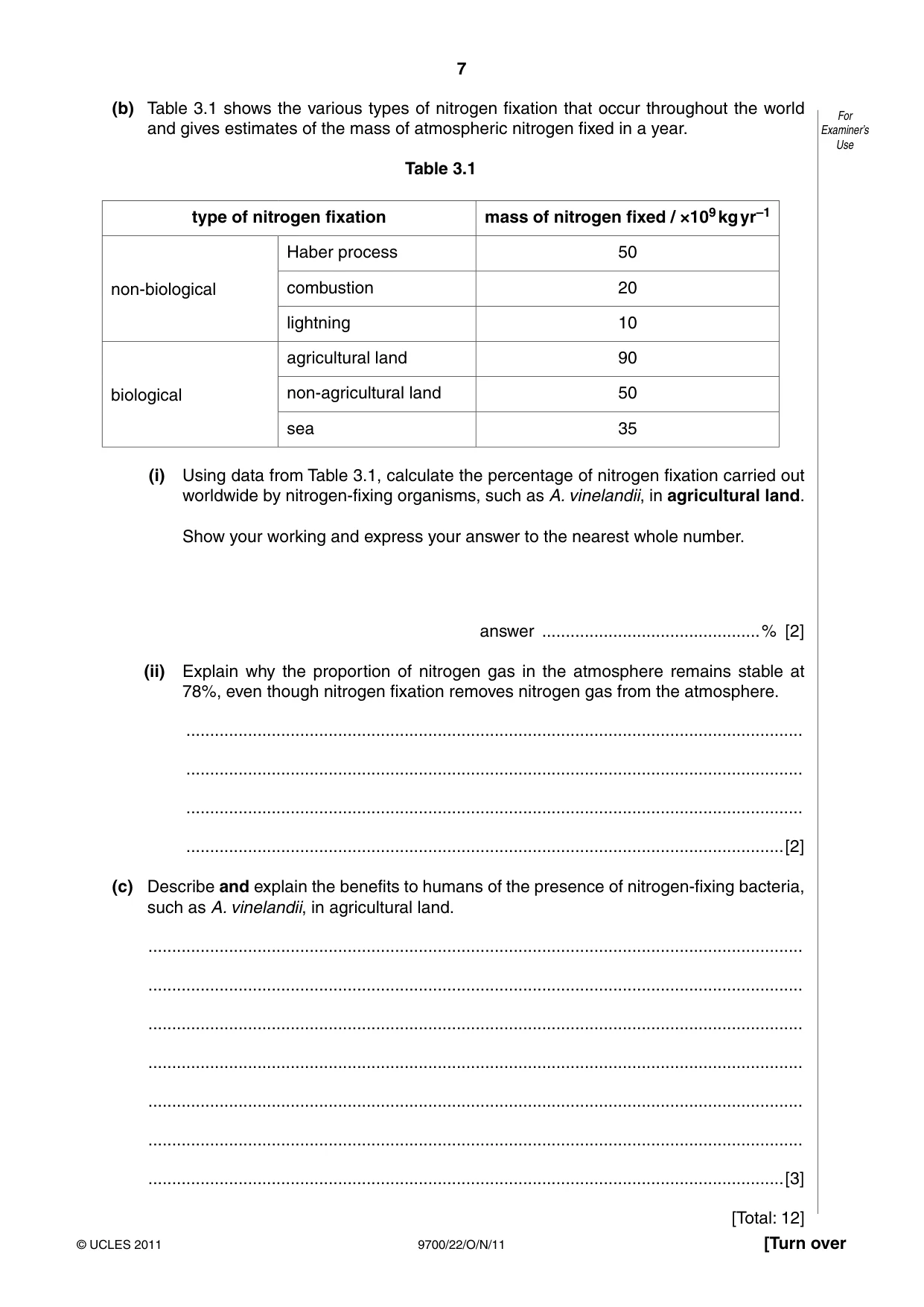
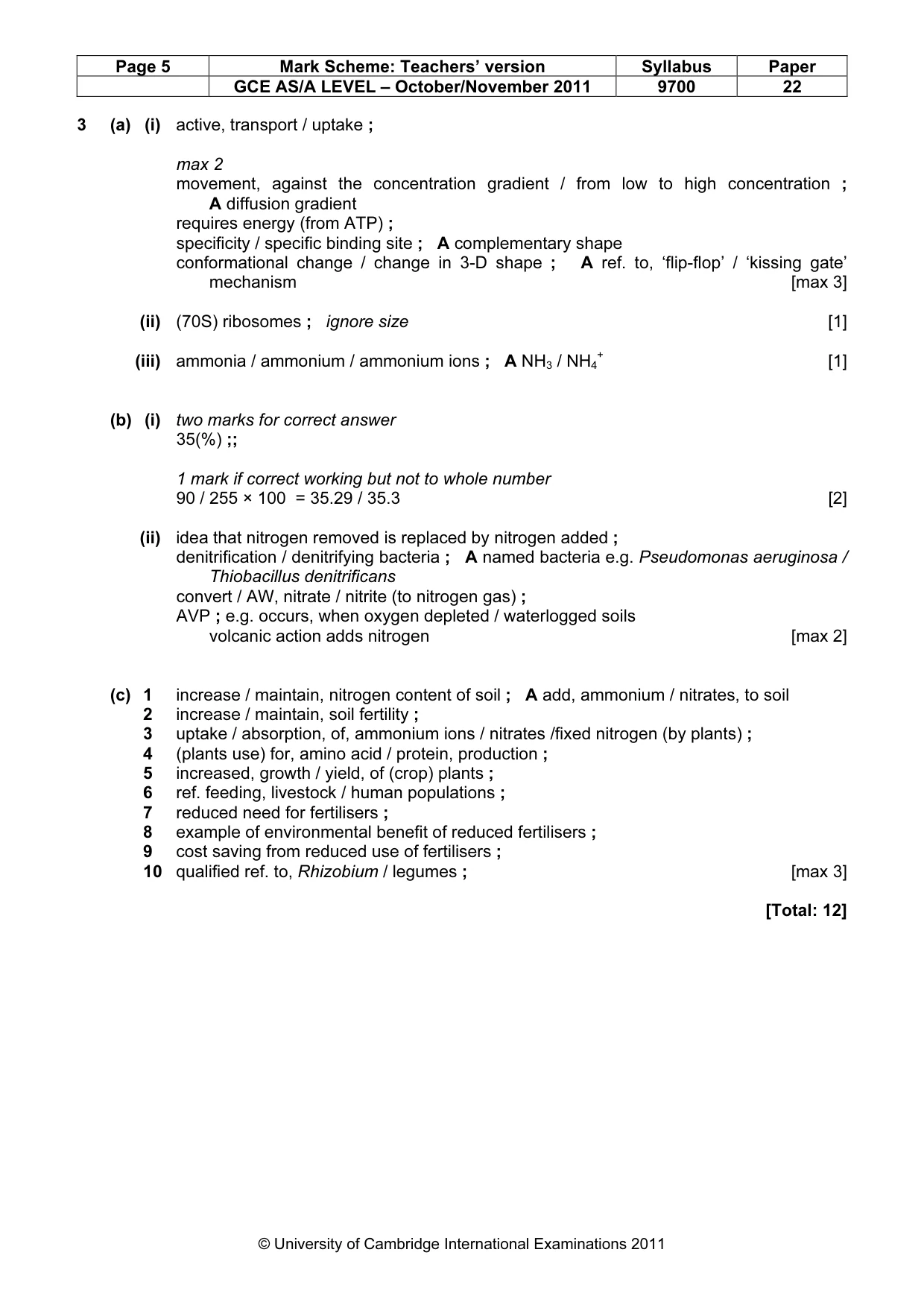
7 9700/22/O/N/11 © UCLES 2011 [Turn over For Examiner’s Use (b) Table 3.1 shows the various types of nitrogen fixation that occur throughout the world and gives estimates of the mass of atmospheric nitrogen fixed in a year. Table 3.1 type of nitrogen fixation mass of nitrogen fixed / ×109 kg yr–1 non-biological Haber process 50 combustion 20 lightning 10 biological agricultural land 90 non-agricultural land 50 sea 35 (i) Using data from Table 3.1, calculate the percentage of nitrogen fixation carried out worldwide by nitrogen-fixing organisms, such as A. vinelandii, in agricultural land. Show your working and express your answer to the nearest whole number. answer …% [2] (ii) Explain why the proportion of nitrogen gas in the atmosphere remains stable at 78%, even though nitrogen fixation removes nitrogen gas from the atmosphere. … … … …[2] (c) Describe and explain the benefits to humans of the presence of nitrogen-fixing bacteria, such as A. vinelandii, in agricultural land. … … … … … … …[3] [Total: 12]
Question paper, page 8
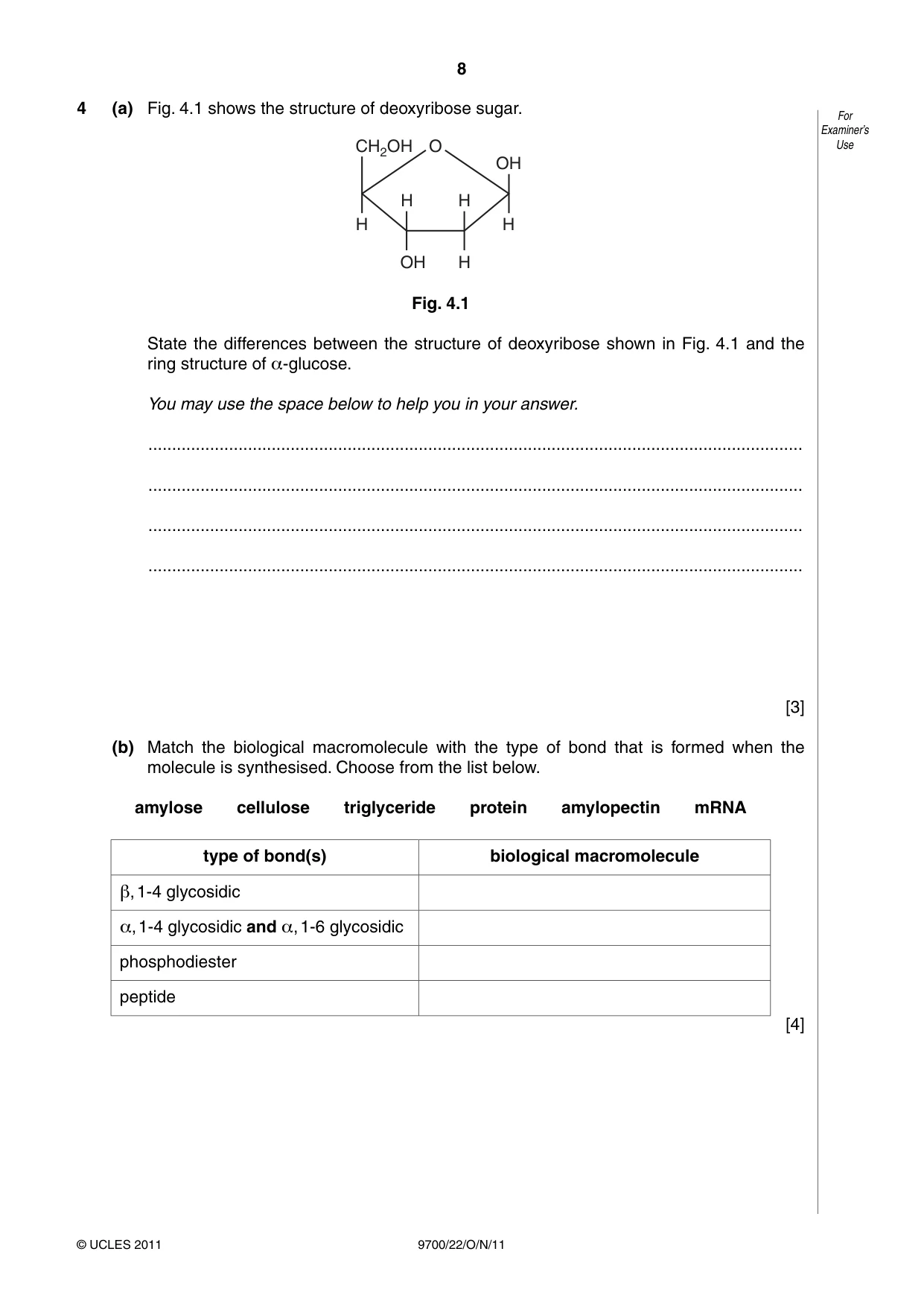
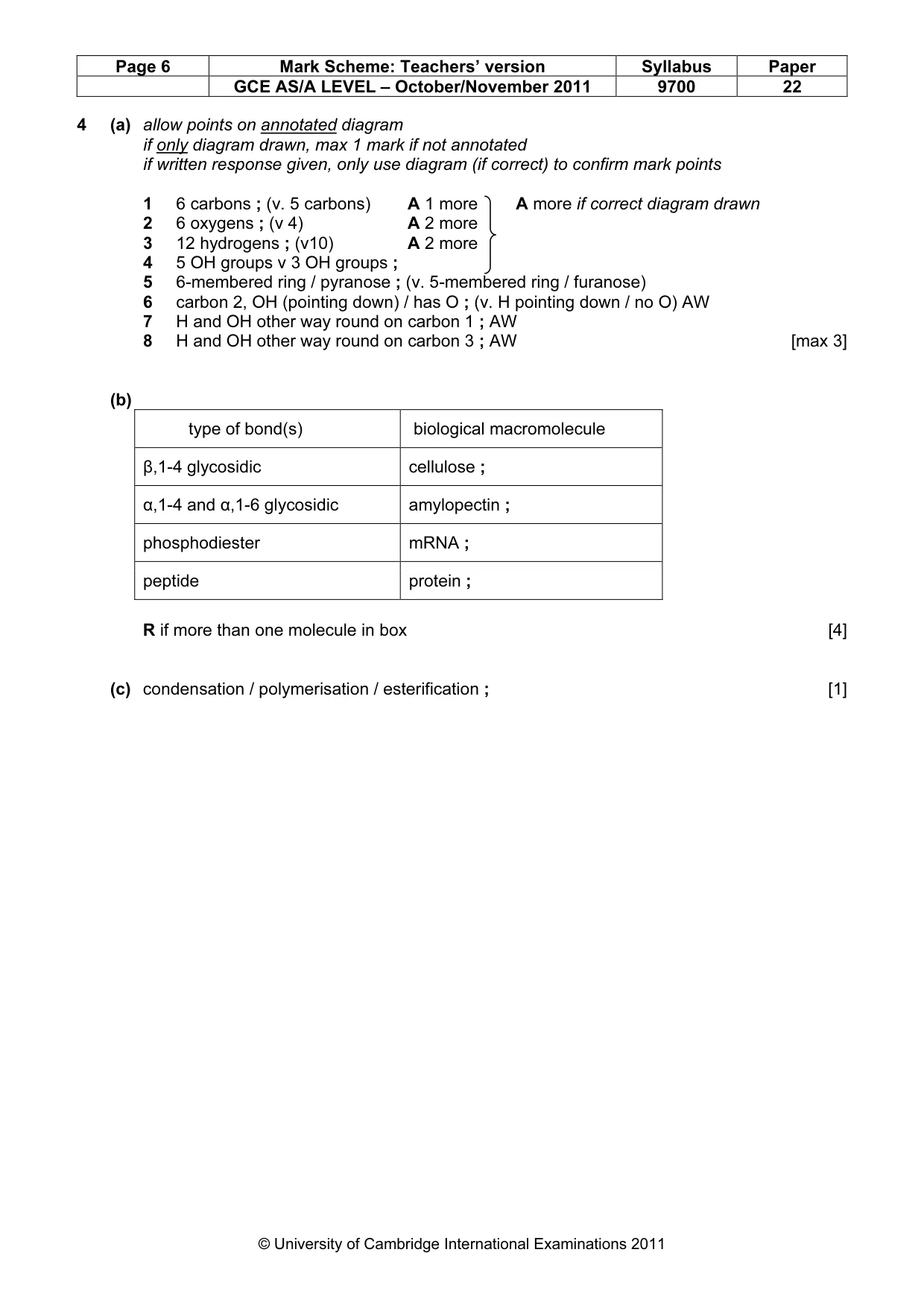
8 9700/22/O/N/11 © UCLES 2011 For Examiner’s Use 4 (a) Fig. 4.1 shows the structure of deoxyribose sugar. O CH2OH H H OH OH H H H Fig. 4.1 State the differences between the structure of deoxyribose shown in Fig. 4.1 and the ring structure of α-glucose. You may use the space below to help you in your answer. … … … … [3] (b) Match the biological macromolecule with the type of bond that is formed when the molecule is synthesised. Choose from the list below. amylose cellulose triglyceride protein amylopectin mRNA type of bond(s) biological macromolecule β, 1-4 glycosidic α, 1-4 glycosidic and α, 1-6 glycosidic phosphodiester peptide [4]
Question paper, page 9
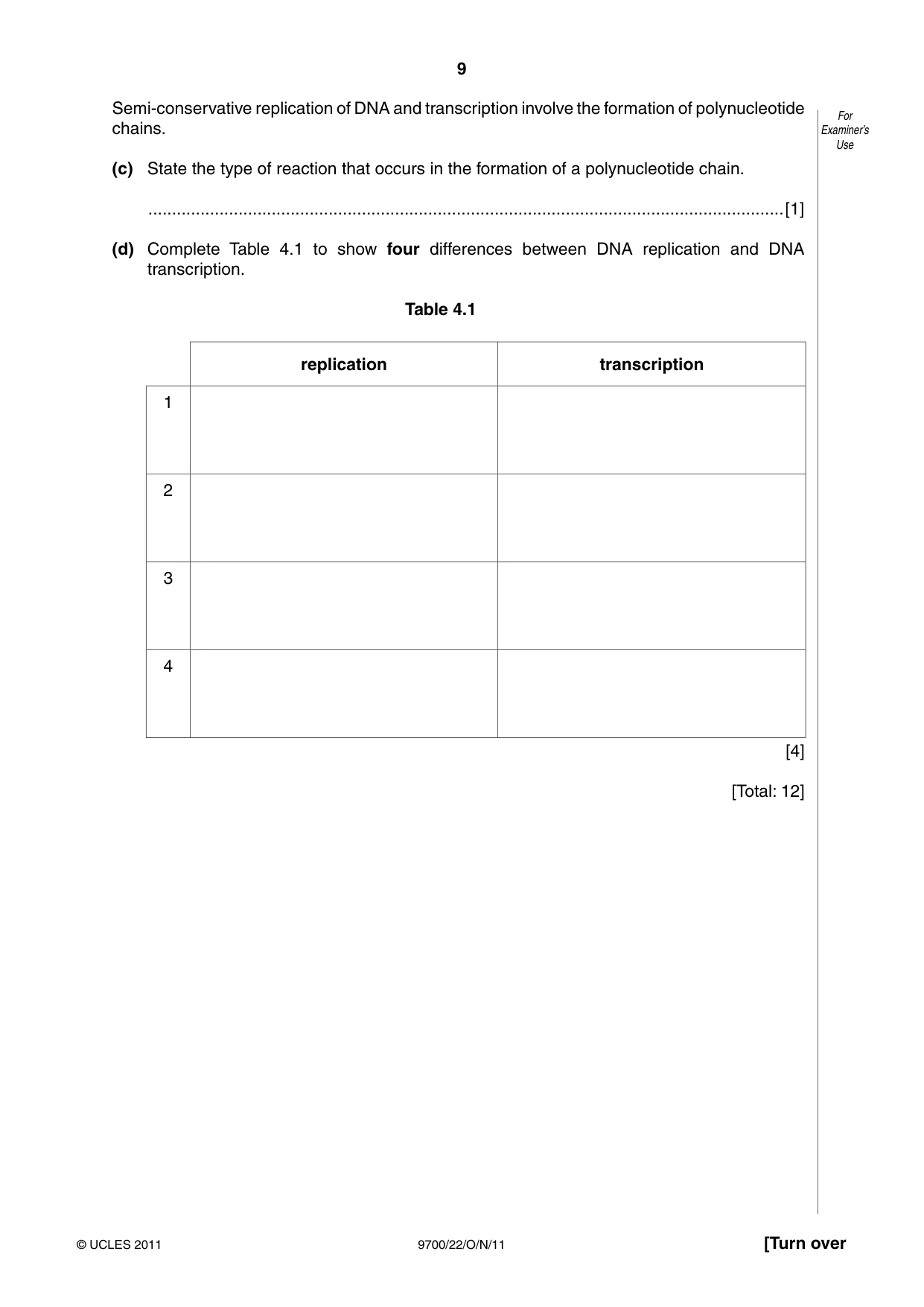
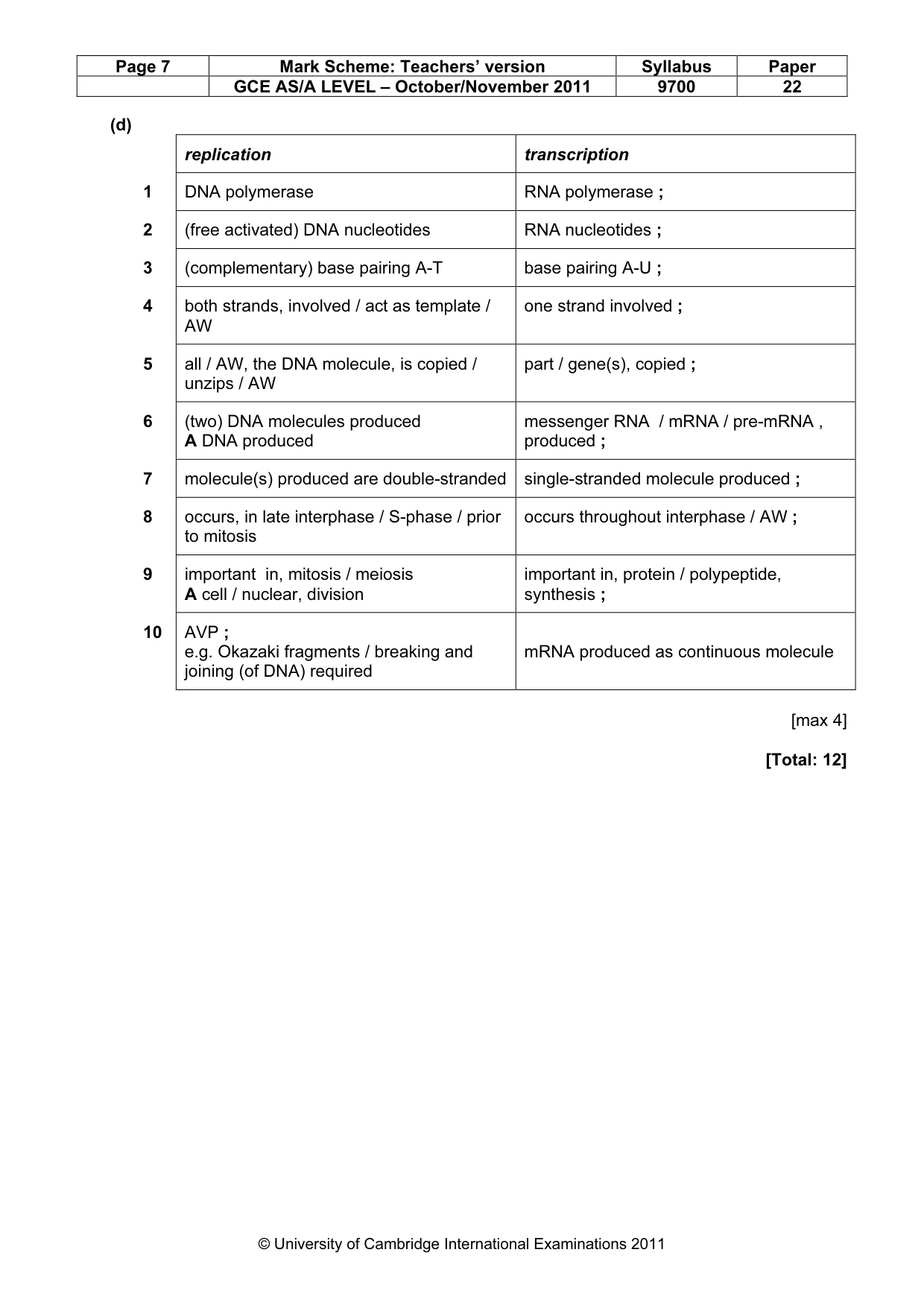
9 9700/22/O/N/11 © UCLES 2011 [Turn over For Examiner’s Use Semi-conservative replication of DNA and transcription involve the formation of polynucleotide chains. (c) State the type of reaction that occurs in the formation of a polynucleotide chain. …[1] (d) Complete Table 4.1 to show four differences between DNA replication and DNA transcription. Table 4.1 replication transcription 1 2 3 4 [4] [Total: 12]
Question paper, page 10
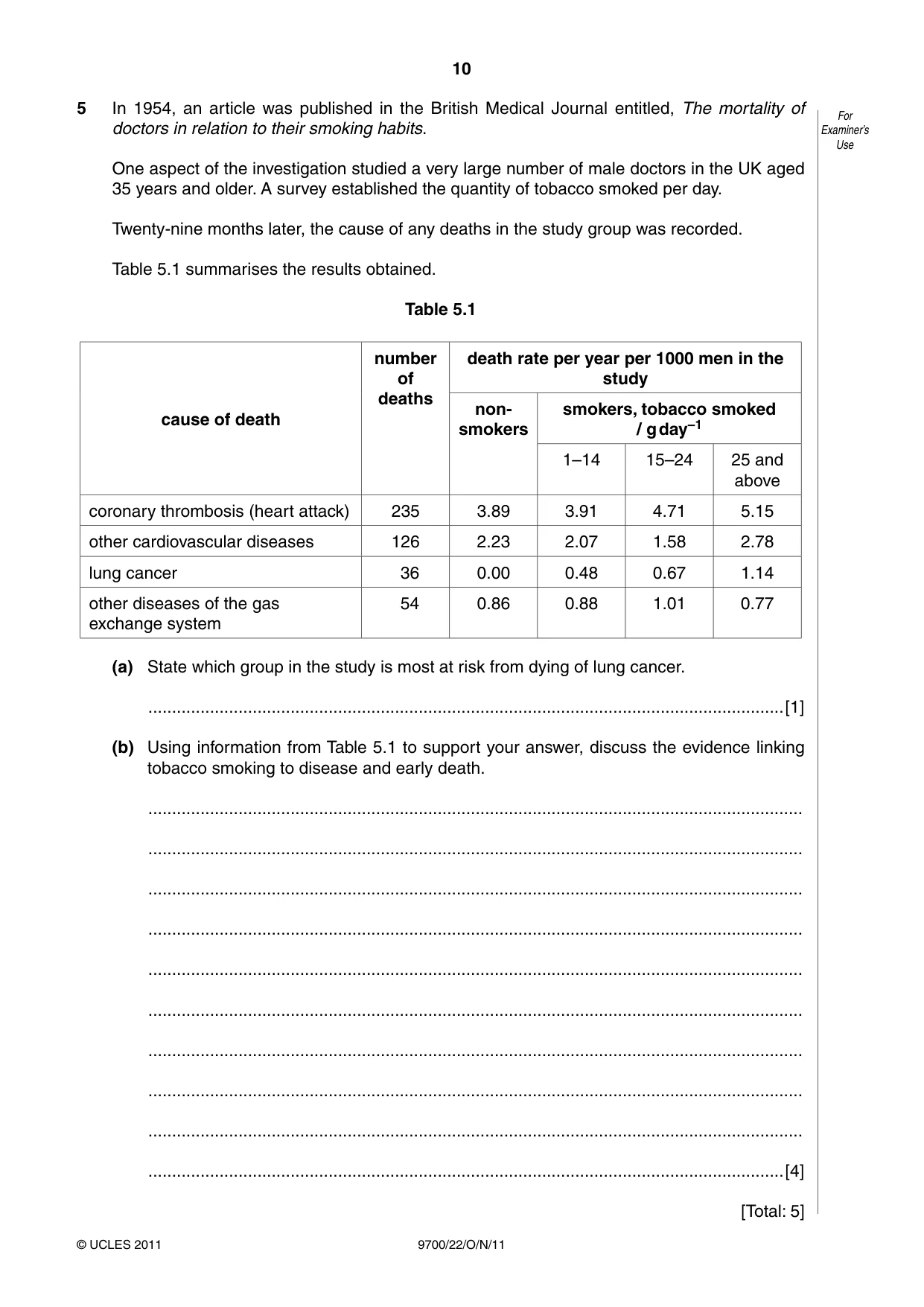
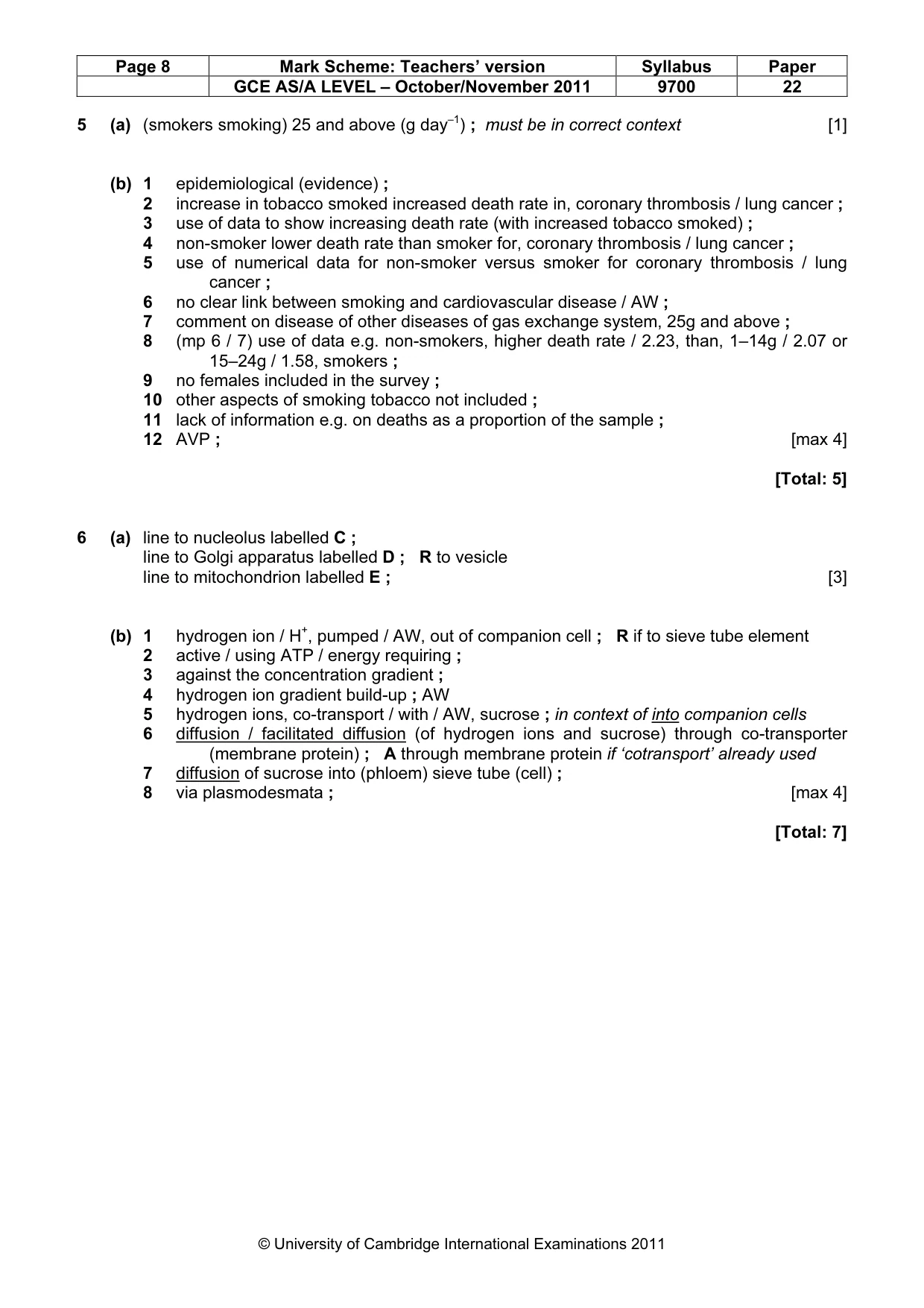
10 9700/22/O/N/11 © UCLES 2011 For Examiner’s Use 5 In 1954, an article was published in the British Medical Journal entitled, The mortality of doctors in relation to their smoking habits. One aspect of the investigation studied a very large number of male doctors in the UK aged 35 years and older. A survey established the quantity of tobacco smoked per day. Twenty-nine months later, the cause of any deaths in the study group was recorded. Table 5.1 summarises the results obtained. Table 5.1 cause of death number of deaths death rate per year per 1000 men in the study non- smokers smokers, tobacco smoked / g day–1 1–14 15–24 25 and above coronary thrombosis (heart attack) 235 3.89 3.91 4.71 5.15 other cardiovascular diseases 126 2.23 2.07 1.58 2.78 lung cancer 36 0.00 0.48 0.67 1.14 other diseases of the gas exchange system 54 0.86 0.88 1.01 0.77 (a) State which group in the study is most at risk from dying of lung cancer. …[1] (b) Using information from Table 5.1 to support your answer, discuss the evidence linking tobacco smoking to disease and early death. … … … … … … … … … …[4] [Total: 5]
Question paper, page 11
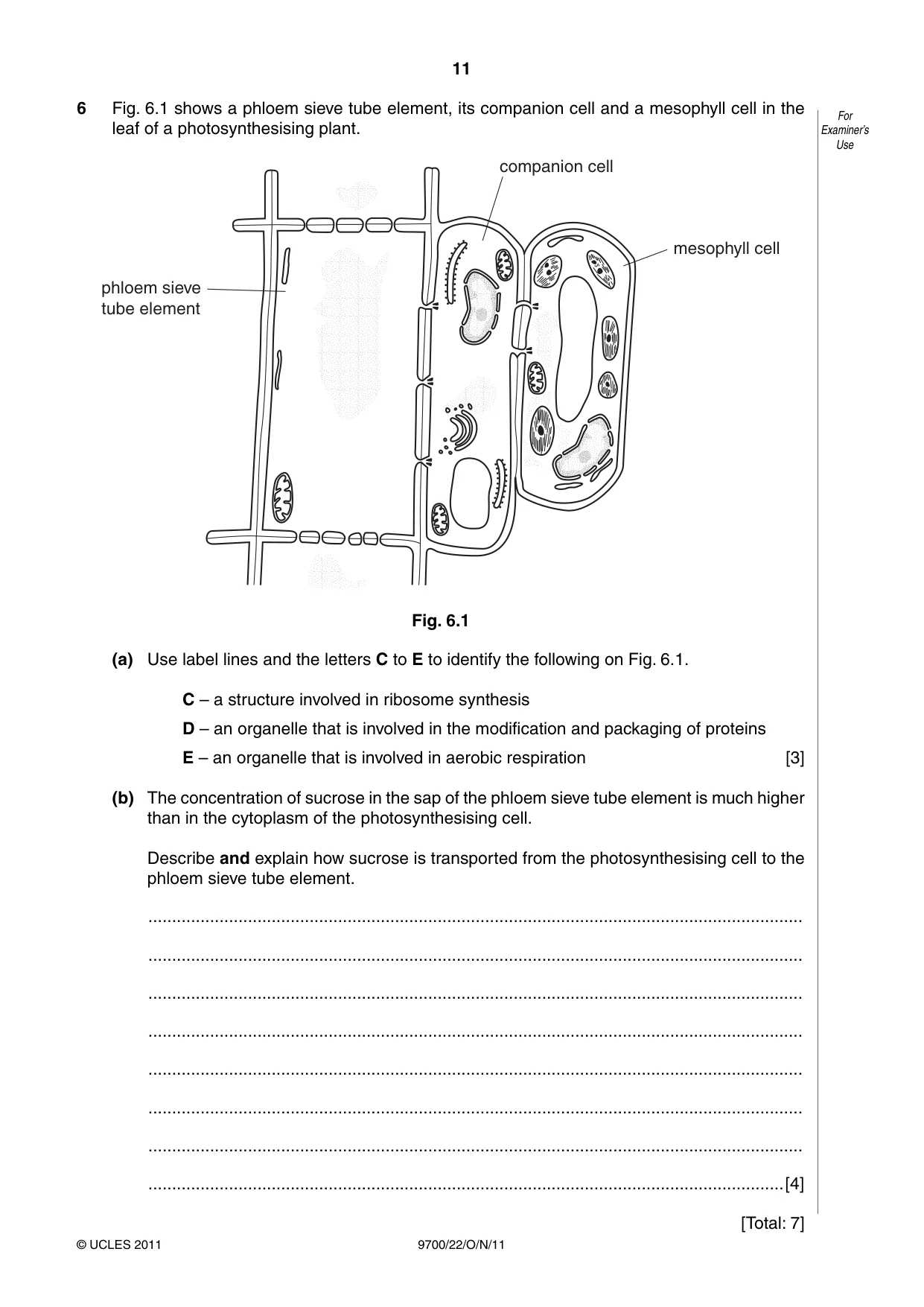
11 9700/22/O/N/11 © UCLES 2011 For Examiner’s Use 6 Fig. 6.1 shows a phloem sieve tube element, its companion cell and a mesophyll cell in the leaf of a photosynthesising plant. companion cell mesophyll cell phloem sieve tube element Fig. 6.1 (a) Use label lines and the letters C to E to identify the following on Fig. 6.1. C – a structure involved in ribosome synthesis D – an organelle that is involved in the modification and packaging of proteins E – an organelle that is involved in aerobic respiration [3] (b) The concentration of sucrose in the sap of the phloem sieve tube element is much higher than in the cytoplasm of the photosynthesising cell. Describe and explain how sucrose is transported from the photosynthesising cell to the phloem sieve tube element. … … … … … … … …[4] [Total: 7]
Question paper, page 12
12 9700/22/O/N/11 © UCLES 2011 BLANK PAGE Copyright Acknowledgements: Question 1, Fig. 1.1 © STEVE GSCHMEISSNER/SCIENCE PHOTO LIBRARY Permission to reproduce items where third-party owned material protected by copyright is included has been sought and cleared where possible. Every reasonable effort has been made by the publisher (UCLES) to trace copyright holders, but if any items requiring clearance have unwittingly been included, the publisher will be pleased to make amends at the earliest possible opportunity. University of Cambridge International Examinations is part of the Cambridge Assessment Group. Cambridge Assessment is the brand name of University of Cambridge Local Examinations Syndicate (UCLES), which is itself a department of the University of Cambridge.
Mark scheme, page 1
UNIVERSITY OF CAMBRIDGE INTERNATIONAL EXAMINATIONS GCE Advanced Subsidiary Level and GCE Advanced Level MARK SCHEME for the October/November 2011 question paper for the guidance of teachers 9700 BIOLOGY 9700/22 Paper 2 (AS Structured Questions), maximum raw mark 60 This mark scheme is published as an aid to teachers and candidates, to indicate the requirements of the examination. It shows the basis on which Examiners were instructed to award marks. It does not indicate the details of the discussions that took place at an Examiners’ meeting before marking began, which would have considered the acceptability of alternative answers. Mark schemes must be read in conjunction with the question papers and the report on the examination. • Cambridge will not enter into discussions or correspondence in connection with these mark schemes. Cambridge is publishing the mark schemes for the October/November 2011 question papers for most IGCSE, GCE Advanced Level and Advanced Subsidiary Level syllabuses and some Ordinary Level syllabuses.
Mark scheme, page 2
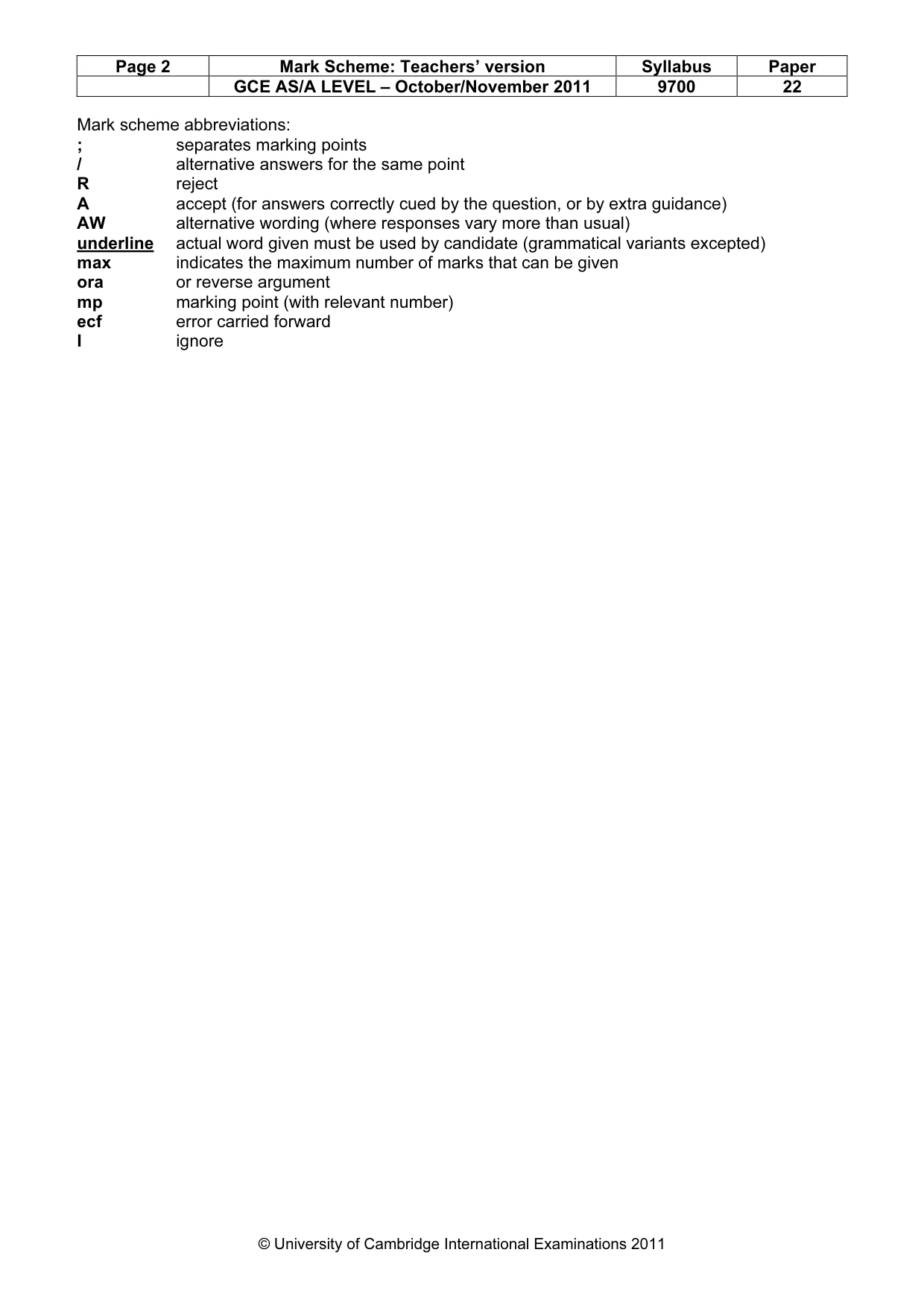
Page 2 Mark Scheme: Teachers’ version Syllabus Paper GCE AS/A LEVEL – October/November 2011 9700 22 © University of Cambridge International Examinations 2011 Mark scheme abbreviations: ; separates marking points / alternative answers for the same point R reject A accept (for answers correctly cued by the question, or by extra guidance) AW alternative wording (where responses vary more than usual) underline actual word given must be used by candidate (grammatical variants excepted) max indicates the maximum number of marks that can be given ora or reverse argument mp marking point (with relevant number) ecf error carried forward I ignore
Mark scheme, page 3
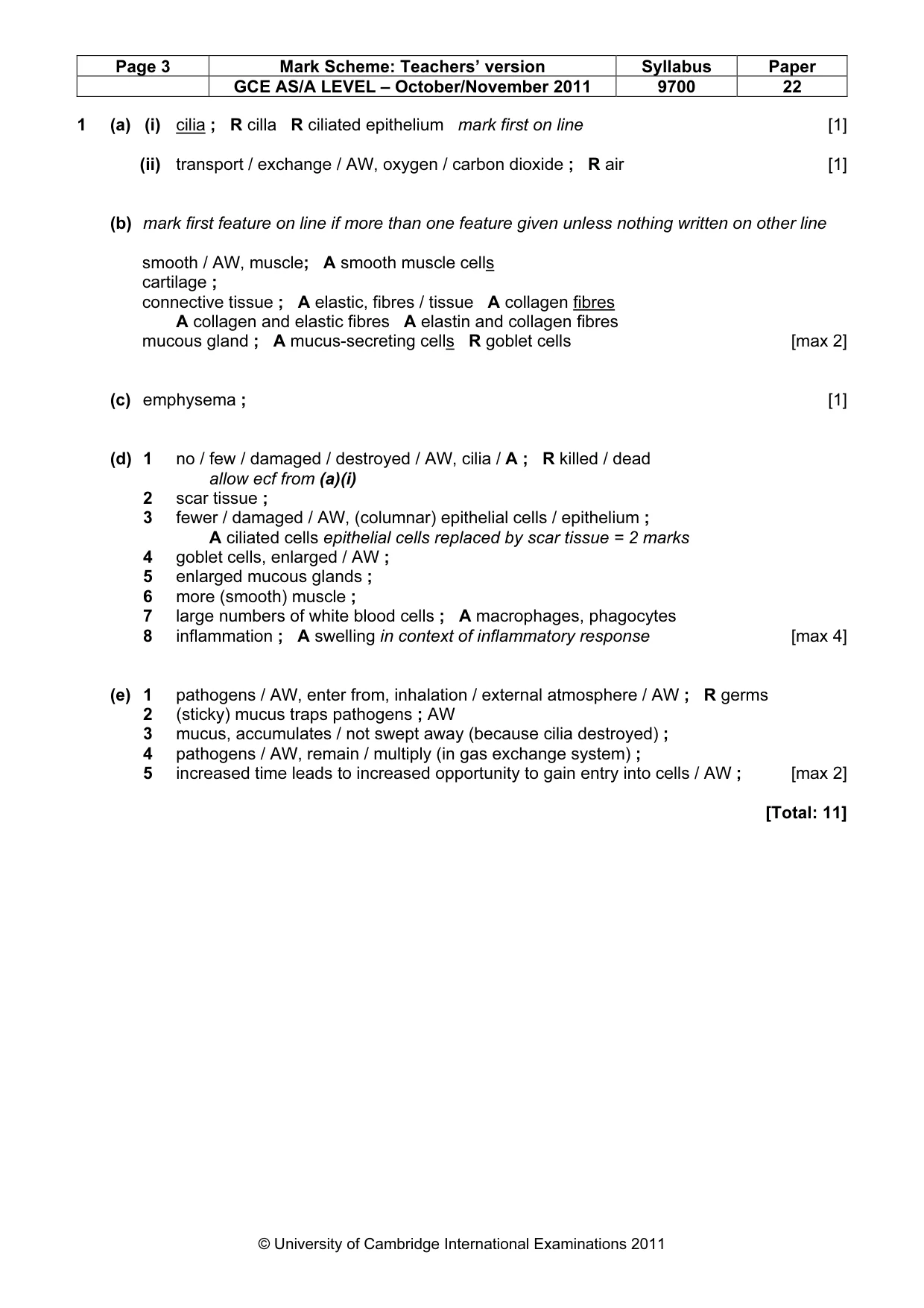
Page 3 Mark Scheme: Teachers’ version Syllabus Paper GCE AS/A LEVEL – October/November 2011 9700 22 © University of Cambridge International Examinations 2011 1 (a) (i) cilia ; R cilla R ciliated epithelium mark first on line [1] (ii) transport / exchange / AW, oxygen / carbon dioxide ; R air [1] (b) mark first feature on line if more than one feature given unless nothing written on other line smooth / AW, muscle; A smooth muscle cells cartilage ; connective tissue ; A elastic, fibres / tissue A collagen fibres A collagen and elastic fibres A elastin and collagen fibres mucous gland ; A mucus-secreting cells R goblet cells [max 2] (c) emphysema ; [1] (d) 1 no / few / damaged / destroyed / AW, cilia / A ; R killed / dead allow ecf from (a)(i) 2 scar tissue ; 3 fewer / damaged / AW, (columnar) epithelial cells / epithelium ; A ciliated cells epithelial cells replaced by scar tissue = 2 marks 4 goblet cells, enlarged / AW ; 5 enlarged mucous glands ; 6 more (smooth) muscle ; 7 large numbers of white blood cells ; A macrophages, phagocytes 8 inflammation ; A swelling in context of inflammatory response [max 4] (e) 1 pathogens / AW, enter from, inhalation / external atmosphere / AW ; R germs 2 (sticky) mucus traps pathogens ; AW 3 mucus, accumulates / not swept away (because cilia destroyed) ; 4 pathogens / AW, remain / multiply (in gas exchange system) ; 5 increased time leads to increased opportunity to gain entry into cells / AW ; [max 2] [Total: 11]
Mark scheme, page 4
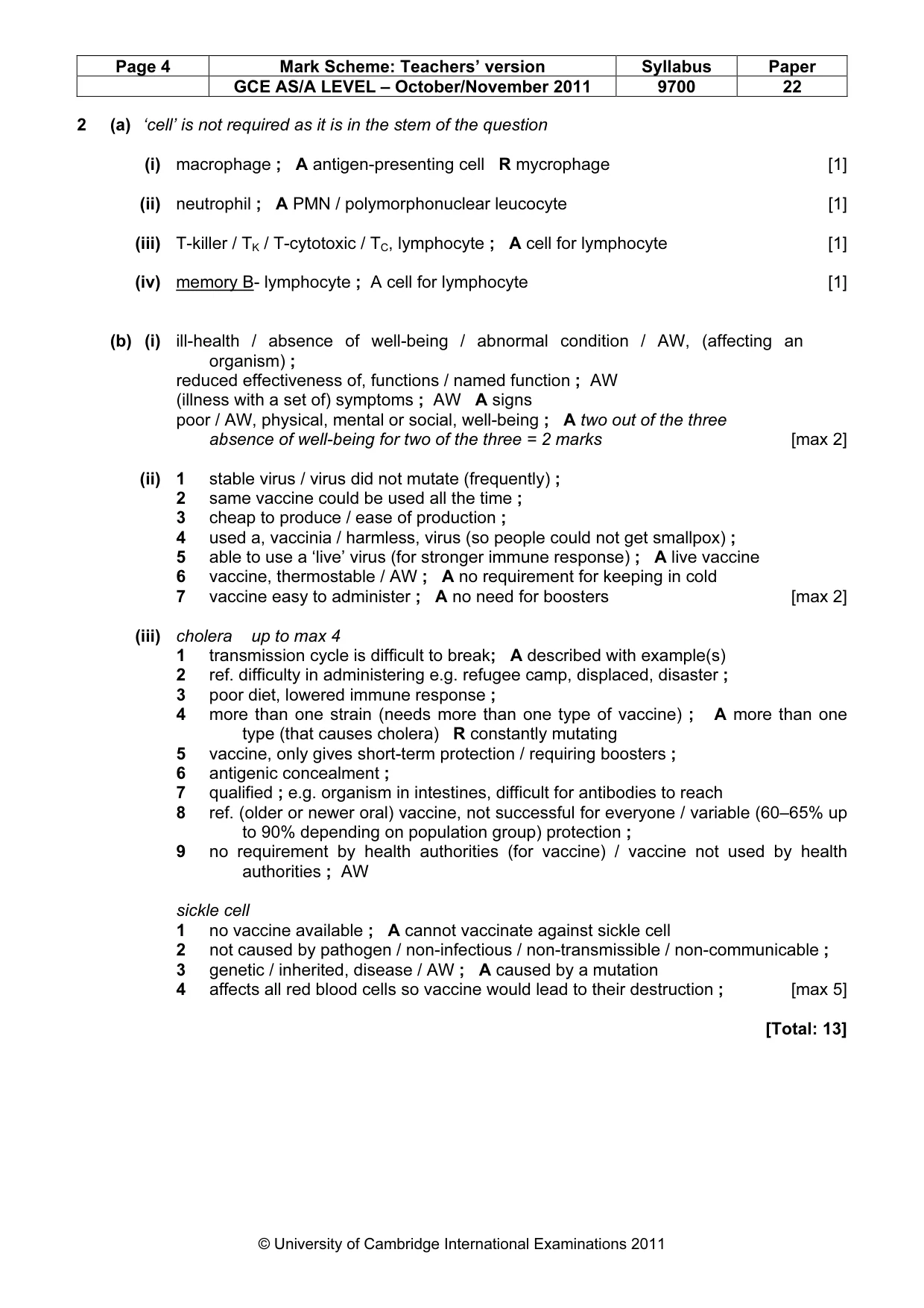
Page 4 Mark Scheme: Teachers’ version Syllabus Paper GCE AS/A LEVEL – October/November 2011 9700 22 © University of Cambridge International Examinations 2011 2 (a) ‘cell’ is not required as it is in the stem of the question (i) macrophage ; A antigen-presenting cell R mycrophage [1] (ii) neutrophil ; A PMN / polymorphonuclear leucocyte [1] (iii) T-killer / TK / T-cytotoxic / TC, lymphocyte ; A cell for lymphocyte [1] (iv) memory B- lymphocyte ; A cell for lymphocyte [1] (b) (i) ill-health / absence of well-being / abnormal condition / AW, (affecting an organism) ; reduced effectiveness of, functions / named function ; AW (illness with a set of) symptoms ; AW A signs poor / AW, physical, mental or social, well-being ; A two out of the three absence of well-being for two of the three = 2 marks [max 2] (ii) 1 stable virus / virus did not mutate (frequently) ; 2 same vaccine could be used all the time ; 3 cheap to produce / ease of production ; 4 used a, vaccinia / harmless, virus (so people could not get smallpox) ; 5 able to use a ‘live’ virus (for stronger immune response) ; A live vaccine 6 vaccine, thermostable / AW ; A no requirement for keeping in cold 7 vaccine easy to administer ; A no need for boosters [max 2] (iii) cholera up to max 4 1 transmission cycle is difficult to break; A described with example(s) 2 ref. difficulty in administering e.g. refugee camp, displaced, disaster ; 3 poor diet, lowered immune response ; 4 more than one strain (needs more than one type of vaccine) ; A more than one type (that causes cholera) R constantly mutating 5 vaccine, only gives short-term protection / requiring boosters ; 6 antigenic concealment ; 7 qualified ; e.g. organism in intestines, difficult for antibodies to reach 8 ref. (older or newer oral) vaccine, not successful for everyone / variable (60–65% up to 90% depending on population group) protection ; 9 no requirement by health authorities (for vaccine) / vaccine not used by health authorities ; AW sickle cell 1 no vaccine available ; A cannot vaccinate against sickle cell 2 not caused by pathogen / non-infectious / non-transmissible / non-communicable ; 3 genetic / inherited, disease / AW ; A caused by a mutation 4 affects all red blood cells so vaccine would lead to their destruction ; [max 5] [Total: 13]
Mark scheme, page 5
Page 5 Mark Scheme: Teachers’ version Syllabus Paper GCE AS/A LEVEL – October/November 2011 9700 22 © University of Cambridge International Examinations 2011 3 (a) (i) active, transport / uptake ; max 2 movement, against the concentration gradient / from low to high concentration ; A diffusion gradient requires energy (from ATP) ; specificity / specific binding site ; A complementary shape conformational change / change in 3-D shape ; A ref. to, ‘flip-flop’ / ‘kissing gate’ mechanism [max 3] (ii) (70S) ribosomes ; ignore size [1] (iii) ammonia / ammonium / ammonium ions ; A NH3 / NH4 + [1] (b) (i) two marks for correct answer 35(%) ;; 1 mark if correct working but not to whole number 90 / 255 × 100 = 35.29 / 35.3 [2] (ii) idea that nitrogen removed is replaced by nitrogen added ; denitrification / denitrifying bacteria ; A named bacteria e.g. Pseudomonas aeruginosa / Thiobacillus denitrificans convert / AW, nitrate / nitrite (to nitrogen gas) ; AVP ; e.g. occurs, when oxygen depleted / waterlogged soils volcanic action adds nitrogen [max 2] (c) 1 increase / maintain, nitrogen content of soil ; A add, ammonium / nitrates, to soil 2 increase / maintain, soil fertility ; 3 uptake / absorption, of, ammonium ions / nitrates /fixed nitrogen (by plants) ; 4 (plants use) for, amino acid / protein, production ; 5 increased, growth / yield, of (crop) plants ; 6 ref. feeding, livestock / human populations ; 7 reduced need for fertilisers ; 8 example of environmental benefit of reduced fertilisers ; 9 cost saving from reduced use of fertilisers ; 10 qualified ref. to, Rhizobium / legumes ; [max 3] [Total: 12]
Mark scheme, page 6
Page 6 Mark Scheme: Teachers’ version Syllabus Paper GCE AS/A LEVEL – October/November 2011 9700 22 © University of Cambridge International Examinations 2011 4 (a) allow points on annotated diagram if only diagram drawn, max 1 mark if not annotated if written response given, only use diagram (if correct) to confirm mark points 1 6 carbons ; (v. 5 carbons) A 1 more A more if correct diagram drawn 2 6 oxygens ; (v 4) A 2 more 3 12 hydrogens ; (v10) A 2 more 4 5 OH groups v 3 OH groups ; 5 6-membered ring / pyranose ; (v. 5-membered ring / furanose) 6 carbon 2, OH (pointing down) / has O ; (v. H pointing down / no O) AW 7 H and OH other way round on carbon 1 ; AW 8 H and OH other way round on carbon 3 ; AW [max 3] (b) type of bond(s) biological macromolecule β,1-4 glycosidic cellulose ; α,1-4 and α,1-6 glycosidic amylopectin ; phosphodiester mRNA ; peptide protein ; R if more than one molecule in box [4] (c) condensation / polymerisation / esterification ; [1]
Mark scheme, page 7
Page 7 Mark Scheme: Teachers’ version Syllabus Paper GCE AS/A LEVEL – October/November 2011 9700 22 © University of Cambridge International Examinations 2011 (d) replication transcription 1 DNA polymerase RNA polymerase ; 2 (free activated) DNA nucleotides RNA nucleotides ; 3 (complementary) base pairing A-T base pairing A-U ; 4 both strands, involved / act as template / AW one strand involved ; 5 all / AW, the DNA molecule, is copied / unzips / AW part / gene(s), copied ; 6 (two) DNA molecules produced A DNA produced messenger RNA / mRNA / pre-mRNA , produced ; 7 molecule(s) produced are double-stranded single-stranded molecule produced ; 8 occurs, in late interphase / S-phase / prior to mitosis occurs throughout interphase / AW ; 9 important in, mitosis / meiosis A cell / nuclear, division important in, protein / polypeptide, synthesis ; 10 AVP ; e.g. Okazaki fragments / breaking and joining (of DNA) required mRNA produced as continuous molecule [max 4] [Total: 12]
Mark scheme, page 8
Page 8 Mark Scheme: Teachers’ version Syllabus Paper GCE AS/A LEVEL – October/November 2011 9700 22 © University of Cambridge International Examinations 2011 5 (a) (smokers smoking) 25 and above (g day–1) ; must be in correct context [1] (b) 1 epidemiological (evidence) ; 2 increase in tobacco smoked increased death rate in, coronary thrombosis / lung cancer ; 3 use of data to show increasing death rate (with increased tobacco smoked) ; 4 non-smoker lower death rate than smoker for, coronary thrombosis / lung cancer ; 5 use of numerical data for non-smoker versus smoker for coronary thrombosis / lung cancer ; 6 no clear link between smoking and cardiovascular disease / AW ; 7 comment on disease of other diseases of gas exchange system, 25g and above ; 8 (mp 6 / 7) use of data e.g. non-smokers, higher death rate / 2.23, than, 1–14g / 2.07 or 15–24g / 1.58, smokers ; 9 no females included in the survey ; 10 other aspects of smoking tobacco not included ; 11 lack of information e.g. on deaths as a proportion of the sample ; 12 AVP ; [max 4] [Total: 5] 6 (a) line to nucleolus labelled C ; line to Golgi apparatus labelled D ; R to vesicle line to mitochondrion labelled E ; [3] (b) 1 hydrogen ion / H+, pumped / AW, out of companion cell ; R if to sieve tube element 2 active / using ATP / energy requiring ; 3 against the concentration gradient ; 4 hydrogen ion gradient build-up ; AW 5 hydrogen ions, co-transport / with / AW, sucrose ; in context of into companion cells 6 diffusion / facilitated diffusion (of hydrogen ions and sucrose) through co-transporter (membrane protein) ; A through membrane protein if ‘cotransport’ already used 7 diffusion of sucrose into (phloem) sieve tube (cell) ; 8 via plasmodesmata ; [max 4] [Total: 7]
What you needed in this session
Cambridge’s own grade thresholds for 2011 Oct/Nov, Paper 2 · Variant 2. A higher threshold means an easier paper — the bar moves with how the cohort did.