Cambridge A Level Biology 9700 — 2011 May/June Paper 2 · Variant 2
9700/22/M/J/11 · 60 marks · ≈68 min
The question paper and its mark scheme, free to read here and free to download. This is Cambridge’s own paper, exactly as it was sat.
Question paper16 pages



Mark scheme8 pages
Answers below. Sit the paper first if you are practising.
Paper as text
Question paper, page 1
This document consists of 12 printed pages and 4 blank pages. DC (SM/CGW) 34109/2 © UCLES 2011 [Turn over UNIVERSITY OF CAMBRIDGE INTERNATIONAL EXAMINATIONS General Certificate of Education Advanced Subsidiary Level and Advanced Level * 8 4 3 6 7 9 9 1 6 0 * BIOLOGY 9700/22 Paper 2 Structured Questions AS May/June 2011 1 hour 15 minutes Candidates answer on the Question Paper. No Additional Materials are required. READ THESE INSTRUCTIONS FIRST Write your Centre number, candidate number and name in the spaces provided at the top of this page. Write in dark blue or black ink. You may use a soft pencil for any diagrams, graphs, or rough working. Do not use red ink, staples, paper clips, highlighters, glue or correction fluid. DO NOT WRITE IN ANY BARCODES. Answer all questions. At the end of the examination, fasten all your work securely together. The number of marks is given in brackets [ ] at the end of each question or part question. For Examiner’s Use 1 2 3 4 5 6 Total
Question paper, page 2
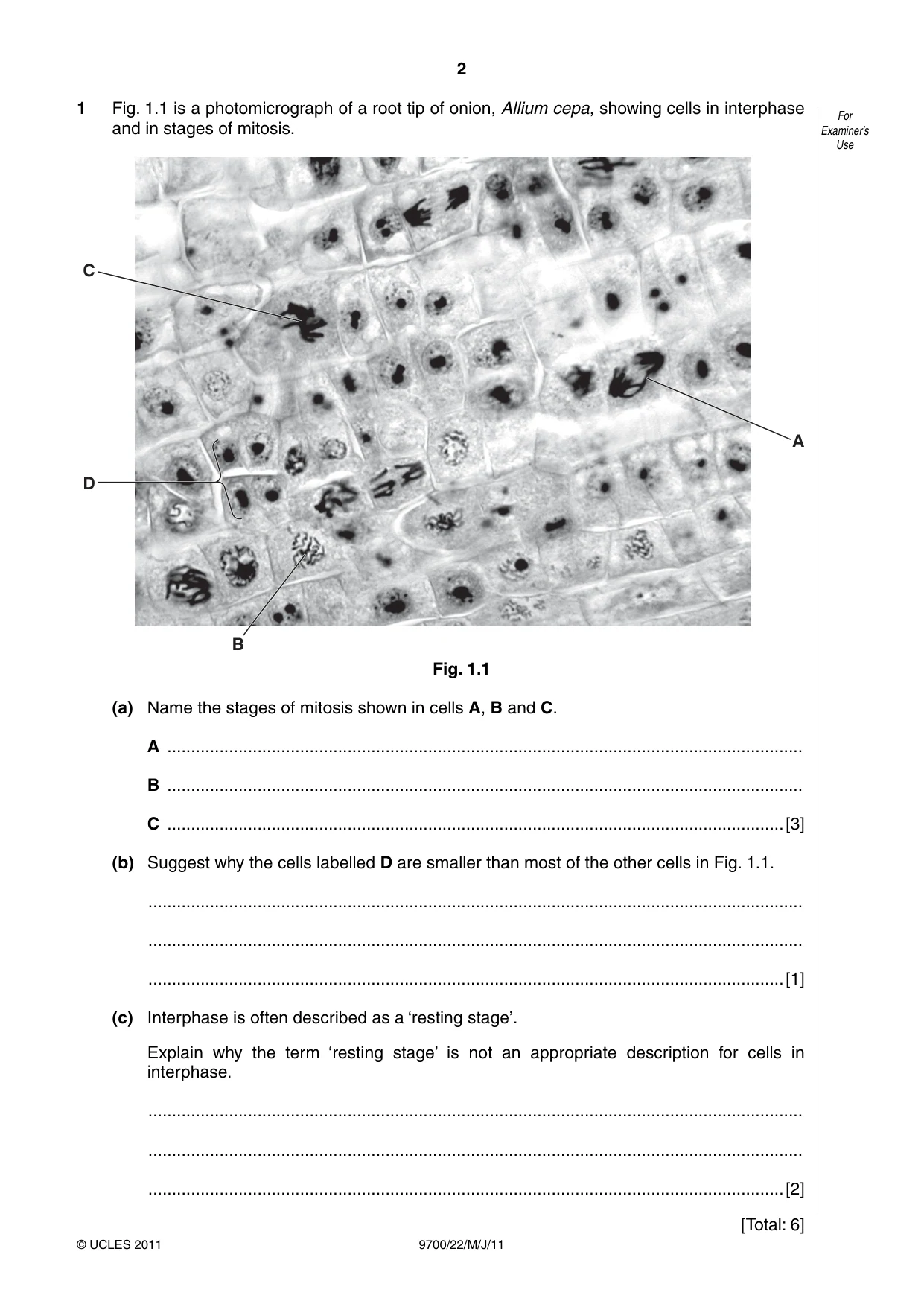
2 9700/22/M/J/11 © UCLES 2011 For Examiner’s Use 1 Fig. 1.1 is a photomicrograph of a root tip of onion, Allium cepa, showing cells in interphase and in stages of mitosis. C D B A Fig. 1.1 (a) Name the stages of mitosis shown in cells A, B and C. A … B … C …[3] (b) Suggest why the cells labelled D are smaller than most of the other cells in Fig. 1.1. … … …[1] (c) Interphase is often described as a ‘resting stage’. Explain why the term ‘resting stage’ is not an appropriate description for cells in interphase. … … …[2] [Total: 6]
Question paper, page 3
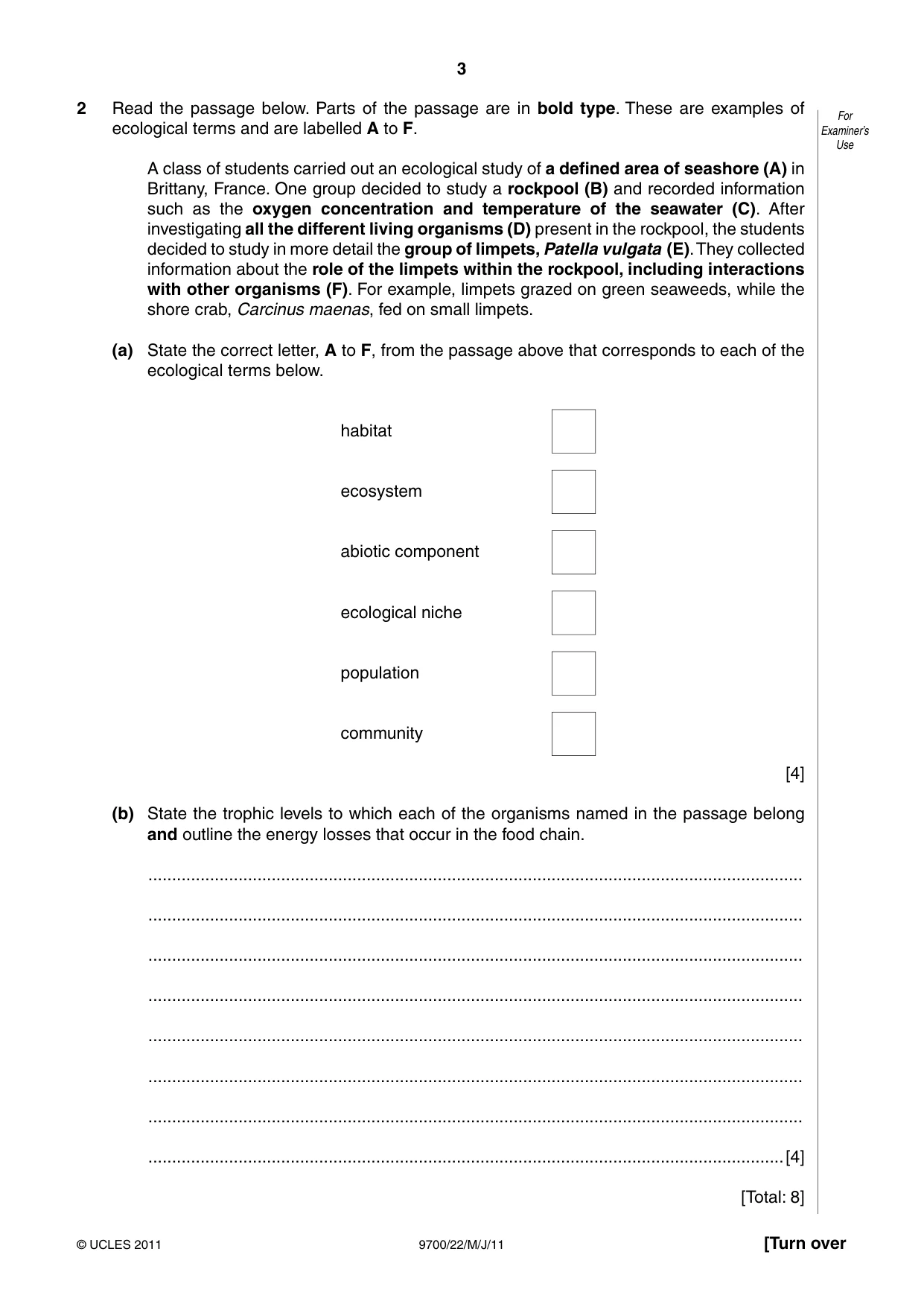
3 [Turn over © UCLES 2011 9700/22/M/J/11 For Examiner’s Use 2 Read the passage below. Parts of the passage are in bold type. These are examples of ecological terms and are labelled A to F. A class of students carried out an ecological study of a defined area of seashore (A) in Brittany, France. One group decided to study a rockpool (B) and recorded information such as the oxygen concentration and temperature of the seawater (C). After investigating all the different living organisms (D) present in the rockpool, the students decided to study in more detail the group of limpets, Patella vulgata (E). They collected information about the role of the limpets within the rockpool, including interactions with other organisms (F). For example, limpets grazed on green seaweeds, while the shore crab, Carcinus maenas, fed on small limpets. (a) State the correct letter, A to F, from the passage above that corresponds to each of the ecological terms below. habitat ecosystem abiotic component ecological niche population community [4] (b) State the trophic levels to which each of the organisms named in the passage belong and outline the energy losses that occur in the food chain. … … … … … … … …[4] [Total: 8]
Question paper, page 4
4 9700/22/M/J/11 © UCLES 2011 BLANK PAGE
Question paper, page 5
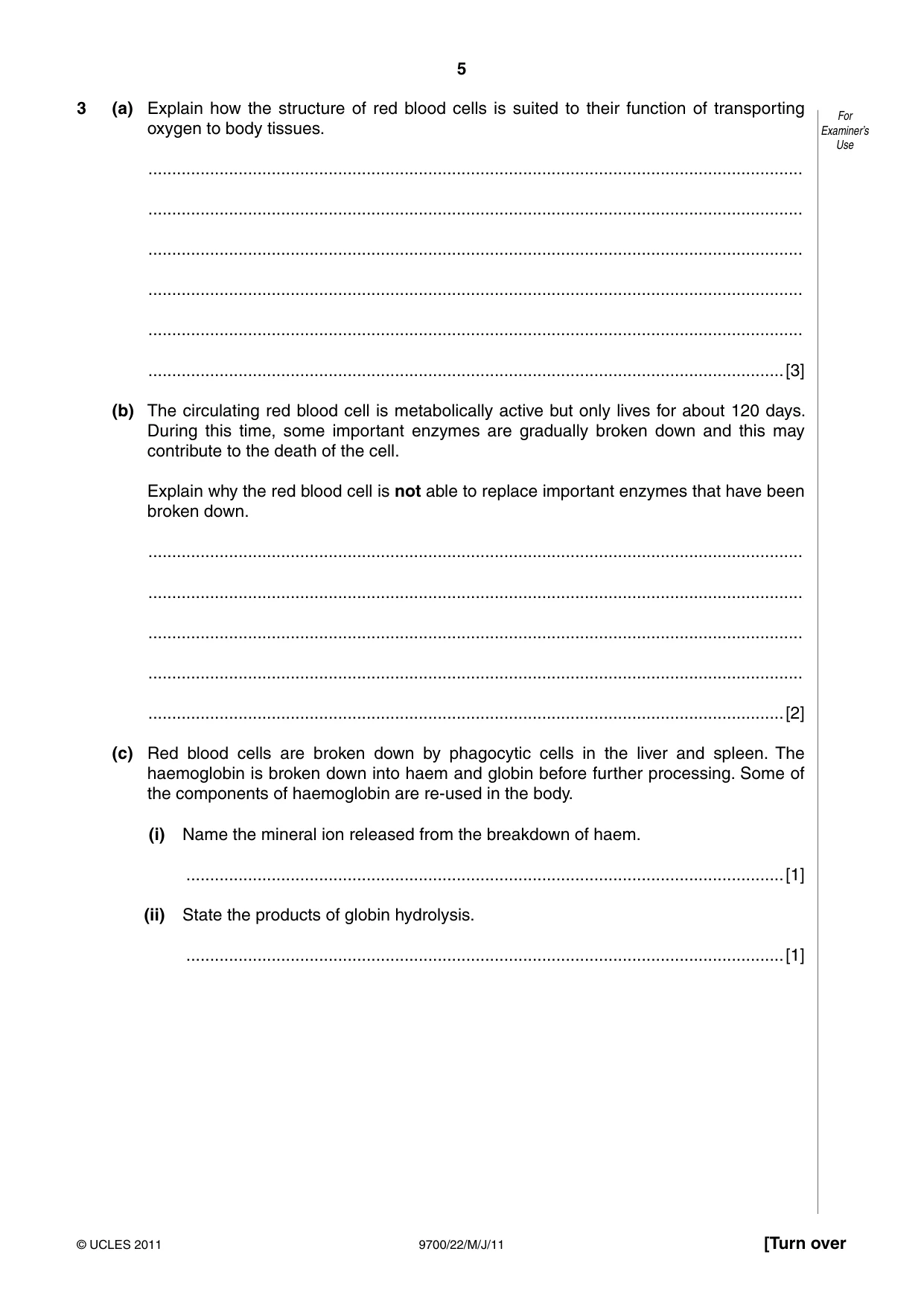
5 [Turn over © UCLES 2011 9700/22/M/J/11 For Examiner’s Use 3 (a) Explain how the structure of red blood cells is suited to their function of transporting oxygen to body tissues. … … … … … …[3] (b) The circulating red blood cell is metabolically active but only lives for about 120 days. During this time, some important enzymes are gradually broken down and this may contribute to the death of the cell. Explain why the red blood cell is not able to replace important enzymes that have been broken down. … … … … …[2] (c) Red blood cells are broken down by phagocytic cells in the liver and spleen. The haemoglobin is broken down into haem and globin before further processing. Some of the components of haemoglobin are re-used in the body. (i) Name the mineral ion released from the breakdown of haem. …[1] (ii) State the products of globin hydrolysis. …[1]
Question paper, page 6
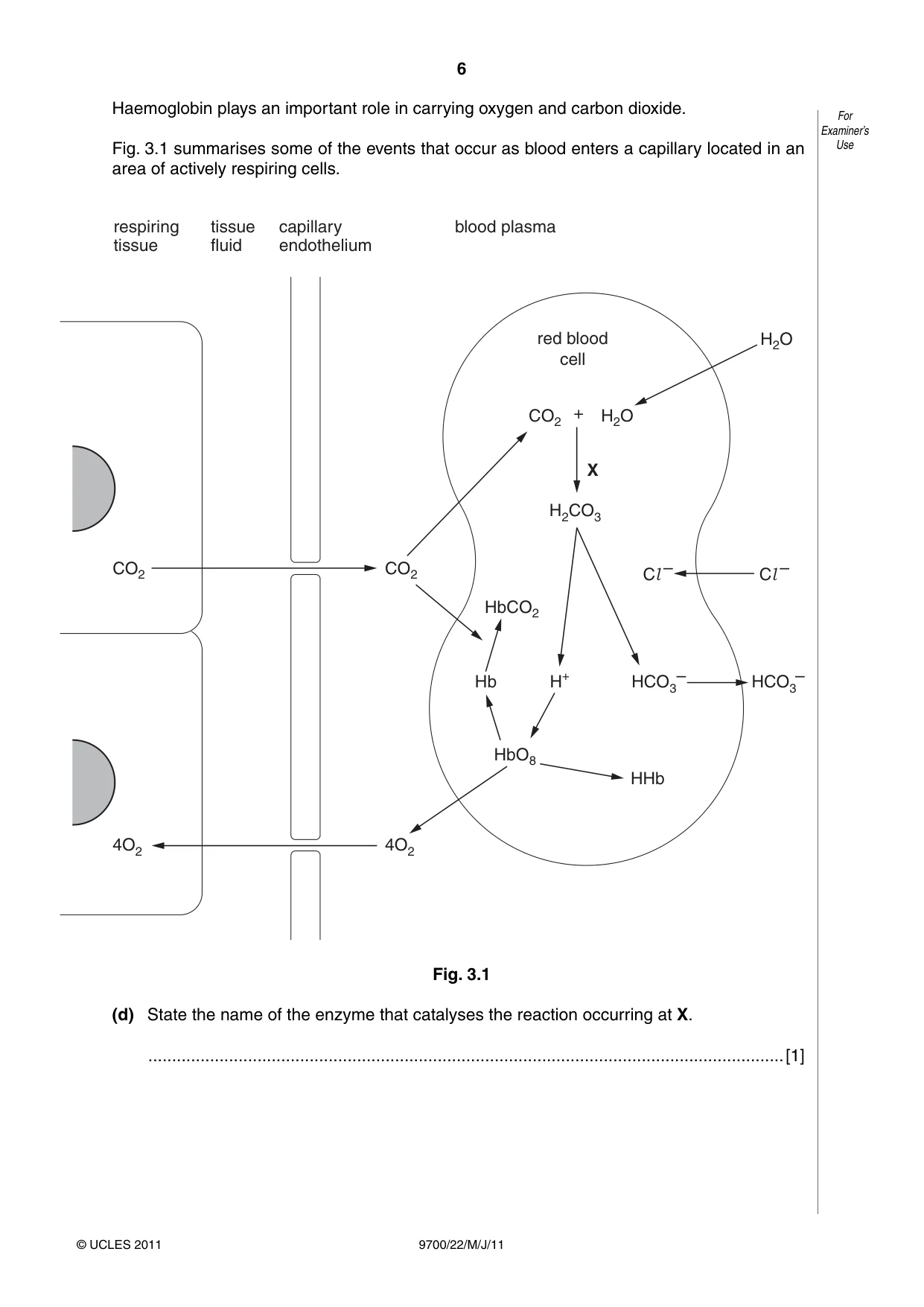
6 9700/22/M/J/11 © UCLES 2011 For Examiner’s Use Haemoglobin plays an important role in carrying oxygen and carbon dioxide. Fig. 3.1 summarises some of the events that occur as blood enters a capillary located in an area of actively respiring cells. CO2 CO2 Cl – Cl – HbCO2 H2CO3 H2O H2O red blood cell blood plasma capillary endothelium tissue fluid respiring tissue + X HbO8 Hb HCO3– HCO3– HHb H+ CO2 4O2 4O2 Fig. 3.1 (d) State the name of the enzyme that catalyses the reaction occurring at X. …[1]
Question paper, page 7
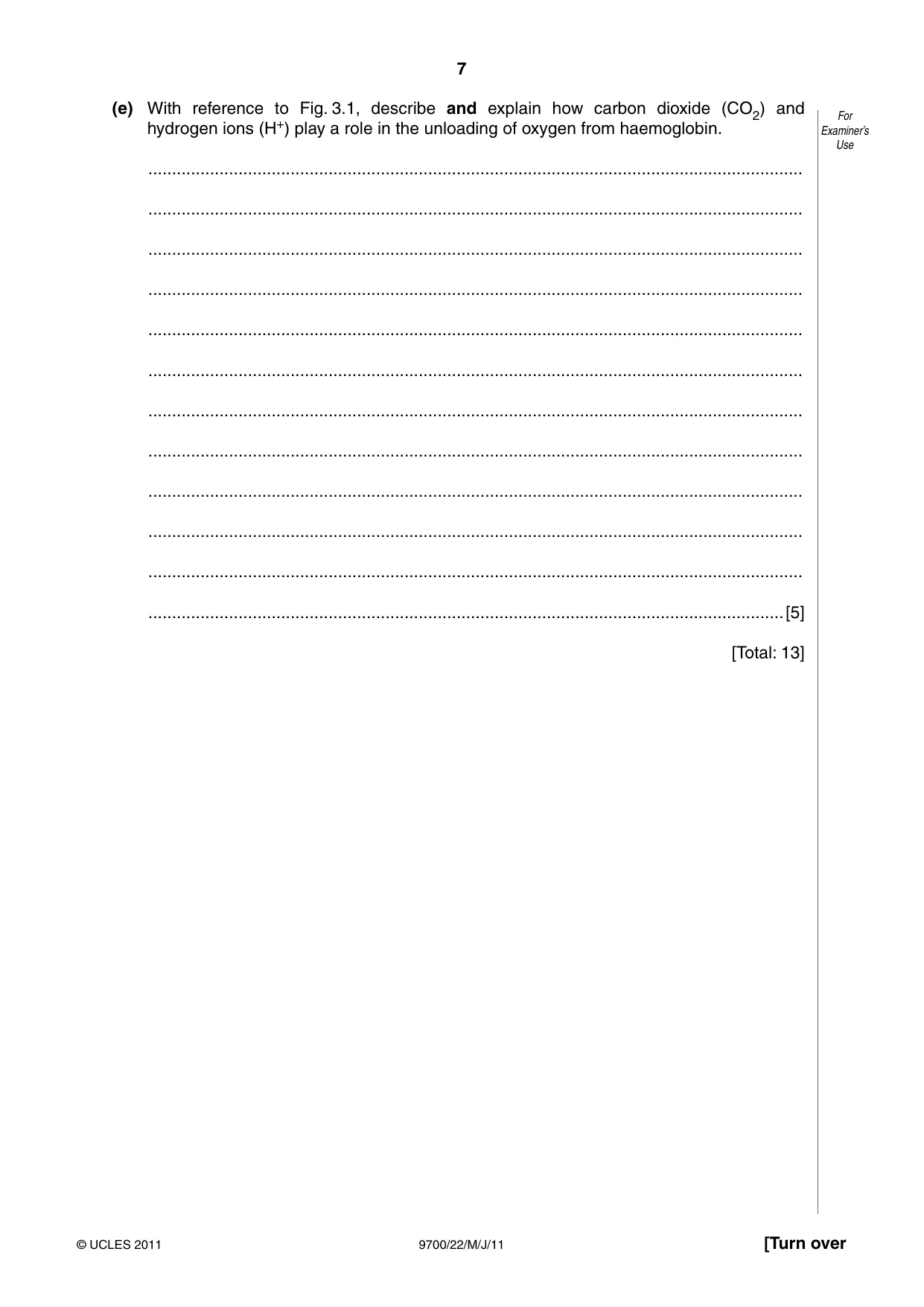
7 [Turn over © UCLES 2011 9700/22/M/J/11 For Examiner’s Use (e) With reference to Fig. 3.1, describe and explain how carbon dioxide (CO2) and hydrogen ions (H+) play a role in the unloading of oxygen from haemoglobin. … … … … … … … … … … … …[5] [Total: 13]
Question paper, page 8
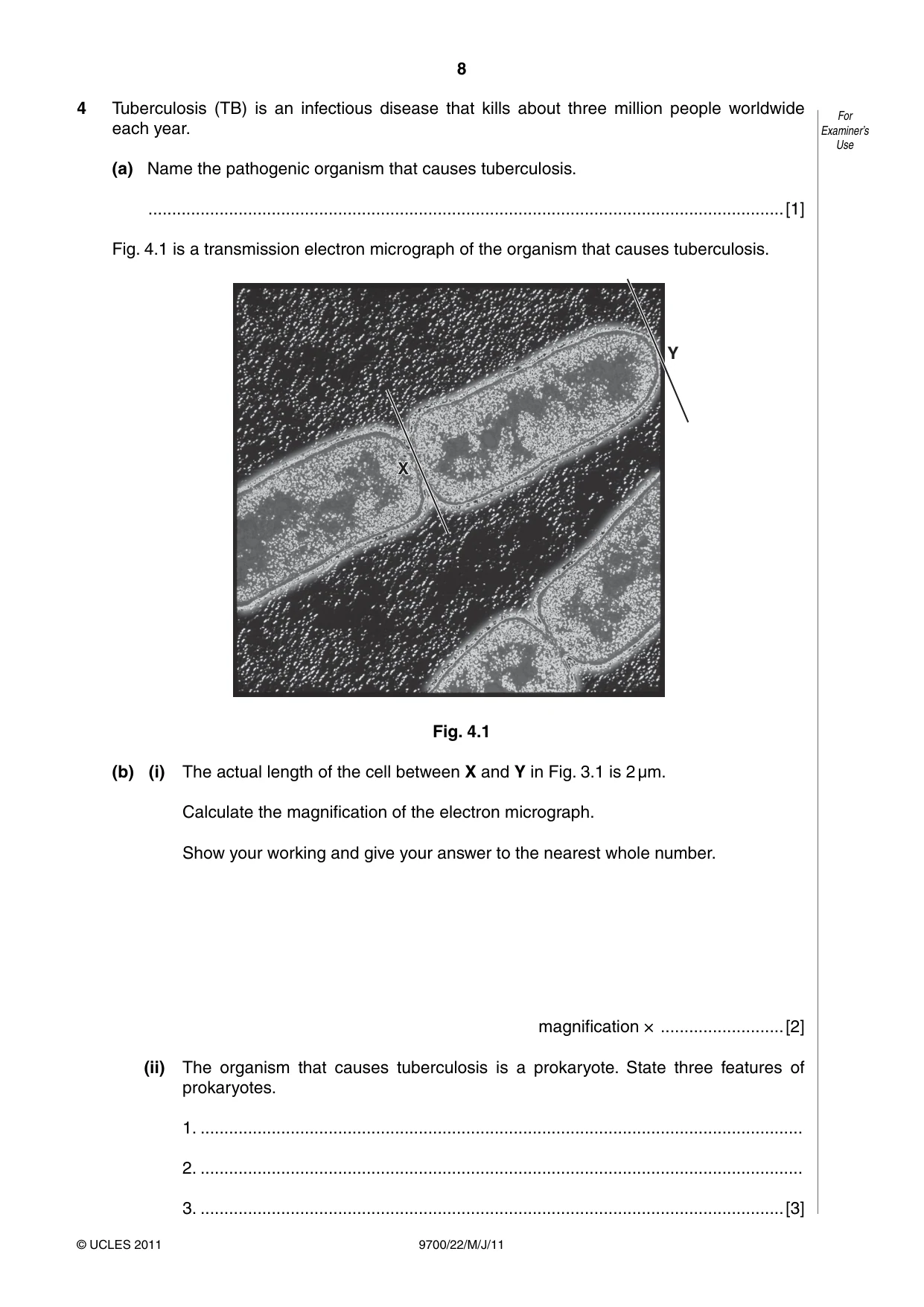
8 9700/22/M/J/11 © UCLES 2011 For Examiner’s Use 4 Tuberculosis (TB) is an infectious disease that kills about three million people worldwide each year. (a) Name the pathogenic organism that causes tuberculosis. …[1] Fig. 4.1 is a transmission electron micrograph of the organism that causes tuberculosis. X Y Fig. 4.1 (b) (i) The actual length of the cell between X and Y in Fig. 3.1 is 2 µm. Calculate the magnification of the electron micrograph. Show your working and give your answer to the nearest whole number. magnification × …[2] (ii) The organism that causes tuberculosis is a prokaryote. State three features of prokaryotes. 1. … 2. … 3. …[3]
Question paper, page 9
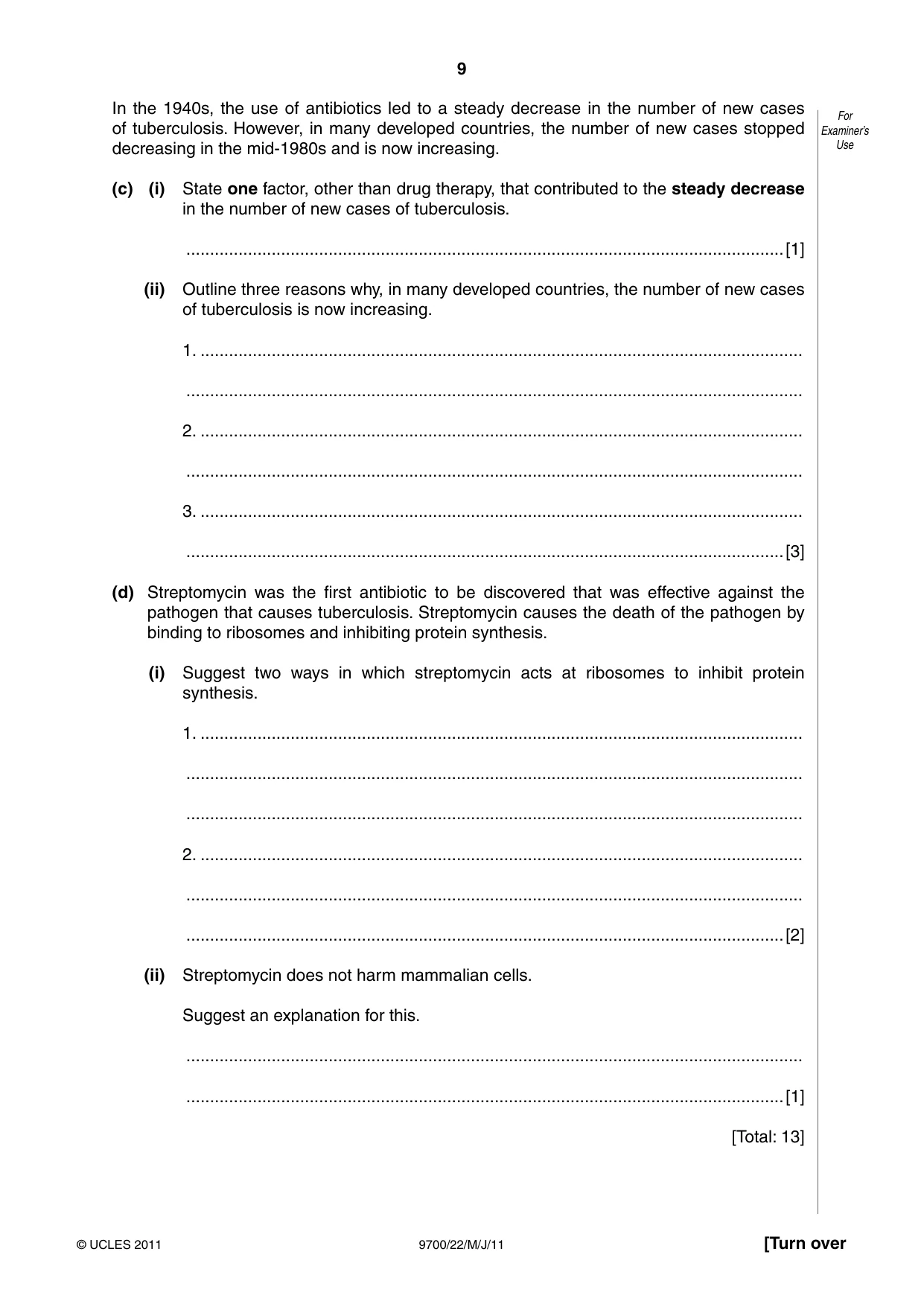
9 [Turn over © UCLES 2011 9700/22/M/J/11 For Examiner’s Use In the 1940s, the use of antibiotics led to a steady decrease in the number of new cases of tuberculosis. However, in many developed countries, the number of new cases stopped decreasing in the mid-1980s and is now increasing. (c) (i) State one factor, other than drug therapy, that contributed to the steady decrease in the number of new cases of tuberculosis. …[1] (ii) Outline three reasons why, in many developed countries, the number of new cases of tuberculosis is now increasing. 1. … … 2. … … 3. … …[3] (d) Streptomycin was the first antibiotic to be discovered that was effective against the pathogen that causes tuberculosis. Streptomycin causes the death of the pathogen by binding to ribosomes and inhibiting protein synthesis. (i) Suggest two ways in which streptomycin acts at ribosomes to inhibit protein synthesis. 1. … … … 2. … … …[2] (ii) Streptomycin does not harm mammalian cells. Suggest an explanation for this. … …[1] [Total: 13]
Question paper, page 10
10 9700/22/M/J/11 © UCLES 2011 BLANK PAGE
Question paper, page 11
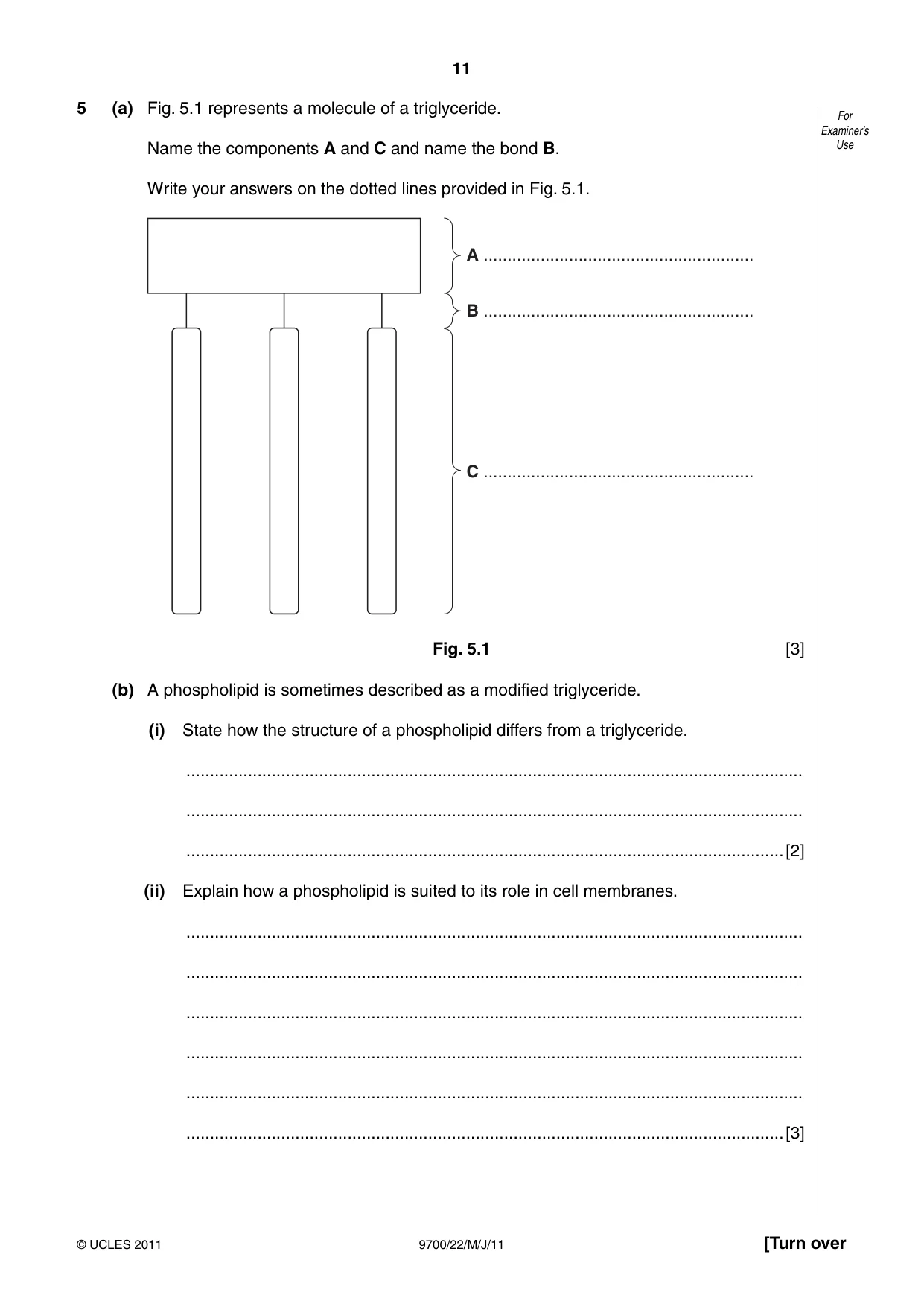
11 [Turn over © UCLES 2011 9700/22/M/J/11 For Examiner’s Use 5 (a) Fig. 5.1 represents a molecule of a triglyceride. Name the components A and C and name the bond B. Write your answers on the dotted lines provided in Fig. 5.1. A … B … C … Fig. 5.1 [3] (b) A phospholipid is sometimes described as a modified triglyceride. (i) State how the structure of a phospholipid differs from a triglyceride. … … …[2] (ii) Explain how a phospholipid is suited to its role in cell membranes. … … … … … …[3]
Question paper, page 12
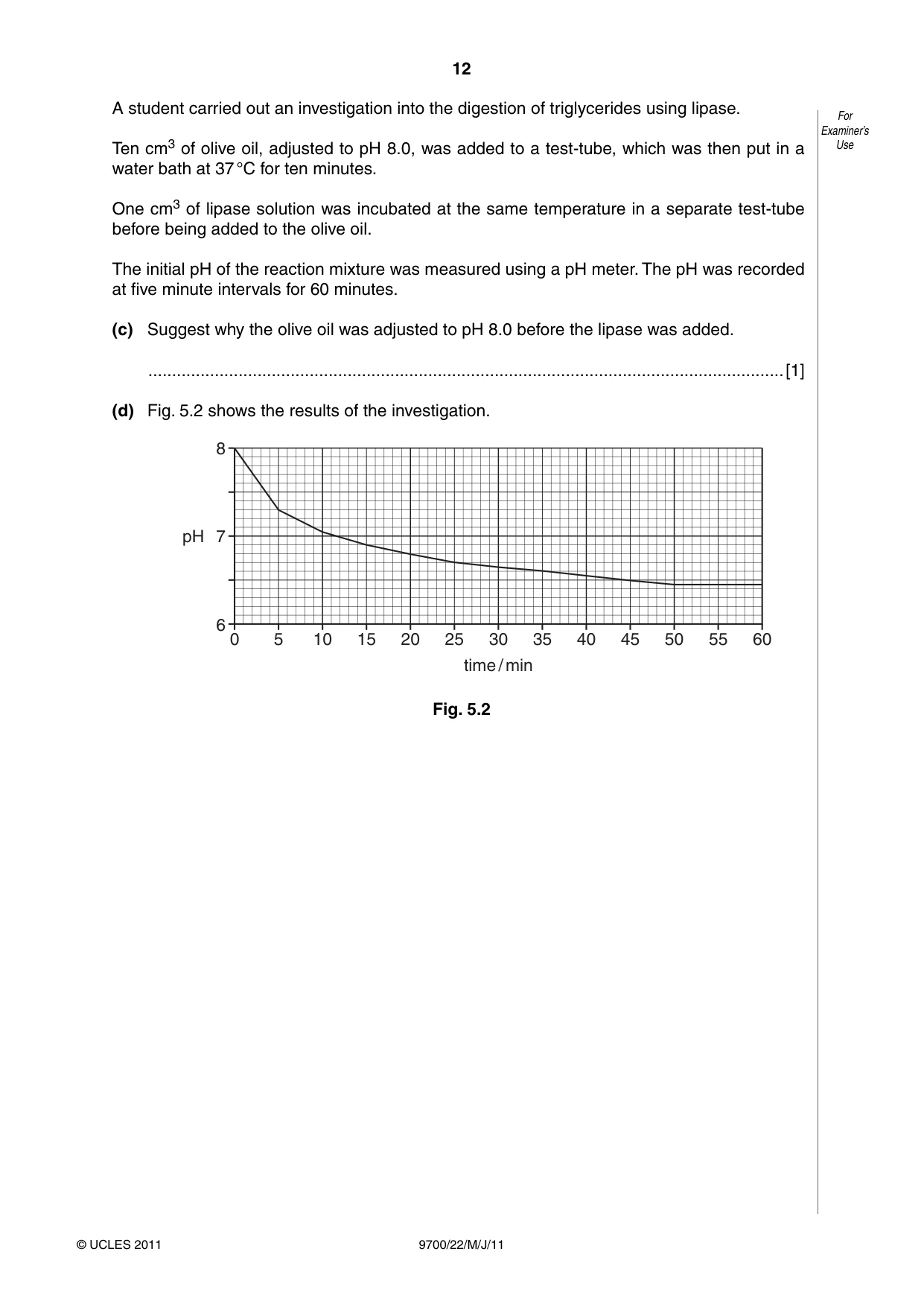
12 9700/22/M/J/11 © UCLES 2011 For Examiner’s Use A student carried out an investigation into the digestion of triglycerides using lipase. Ten cm3 of olive oil, adjusted to pH 8.0, was added to a test-tube, which was then put in a water bath at 37 °C for ten minutes. One cm3 of lipase solution was incubated at the same temperature in a separate test-tube before being added to the olive oil. The initial pH of the reaction mixture was measured using a pH meter. The pH was recorded at five minute intervals for 60 minutes. (c) Suggest why the olive oil was adjusted to pH 8.0 before the lipase was added. …[1] (d) Fig. 5.2 shows the results of the investigation. 0 6 7 8 5 10 15 20 25 30 time / min pH 35 40 45 50 55 60 Fig. 5.2
Question paper, page 13
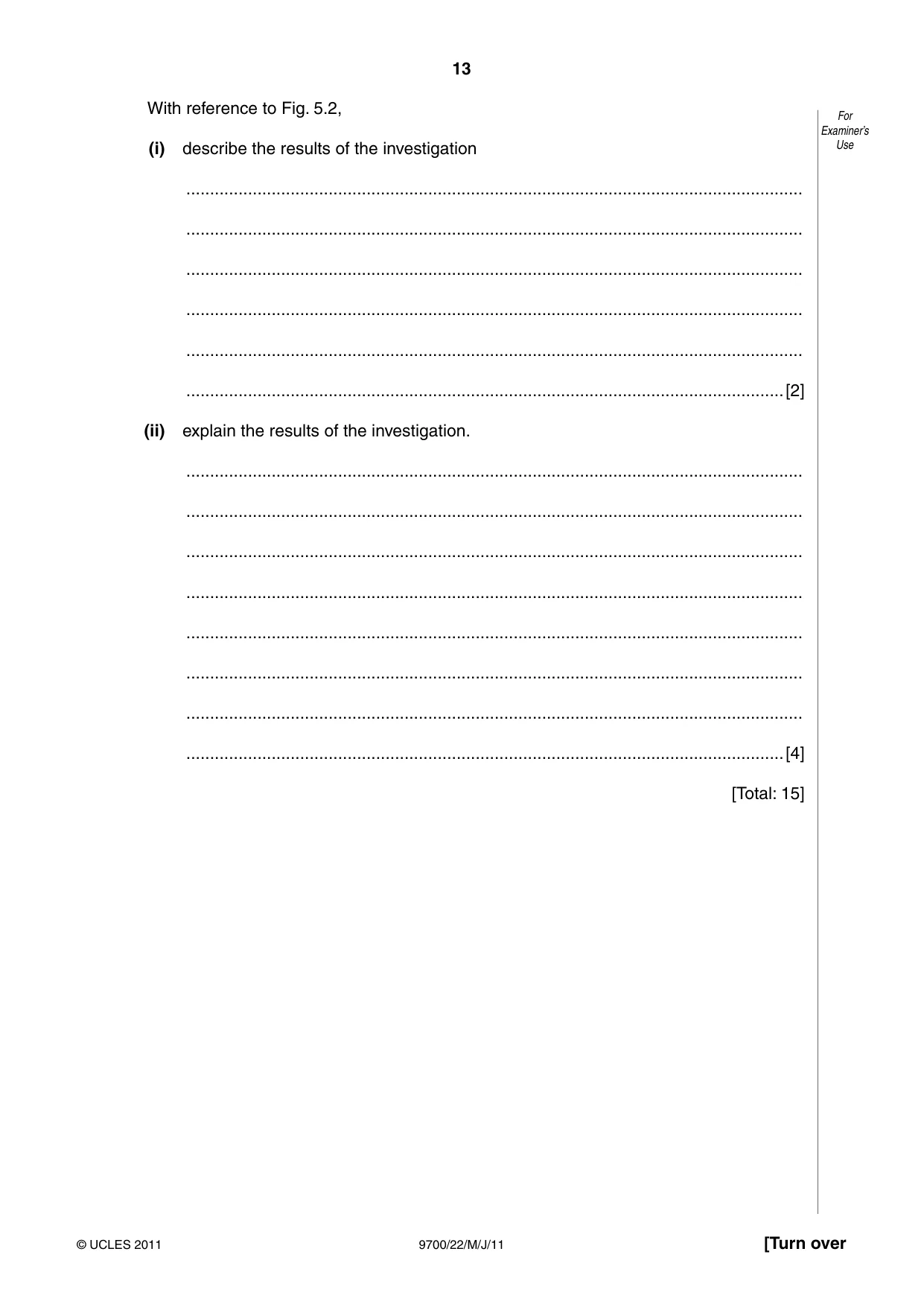
13 [Turn over © UCLES 2011 9700/22/M/J/11 For Examiner’s Use With reference to Fig. 5.2, (i) describe the results of the investigation … … … … … …[2] (ii) explain the results of the investigation. … … … … … … … …[4] [Total: 15]
Question paper, page 14
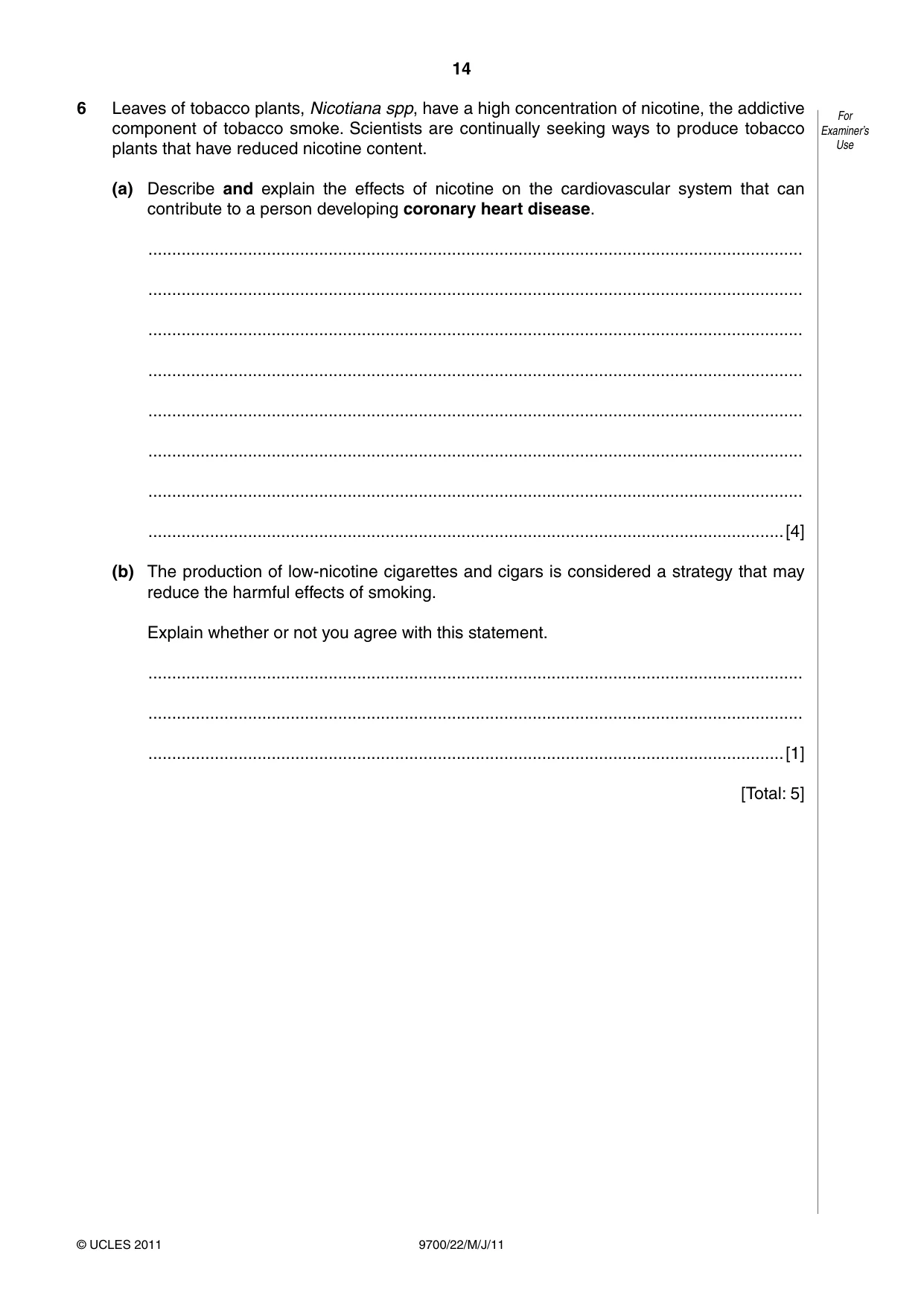
14 9700/22/M/J/11 © UCLES 2011 For Examiner’s Use 6 Leaves of tobacco plants, Nicotiana spp, have a high concentration of nicotine, the addictive component of tobacco smoke. Scientists are continually seeking ways to produce tobacco plants that have reduced nicotine content. (a) Describe and explain the effects of nicotine on the cardiovascular system that can contribute to a person developing coronary heart disease. … … … … … … … …[4] (b) The production of low-nicotine cigarettes and cigars is considered a strategy that may reduce the harmful effects of smoking. Explain whether or not you agree with this statement. … … …[1] [Total: 5]
Question paper, page 15
15 9700/22/M/J/11 © UCLES 2011 BLANK PAGE
Question paper, page 16
16 9700/22/M/J/11 © UCLES 2011 BLANK PAGE Copyright Acknowledgements: Fig. 4.1 Pasieka/Science Photo Library Permission to reproduce items where third-party owned material protected by copyright is included has been sought and cleared where possible. Every reasonable effort has been made by the publisher (UCLES) to trace copyright holders, but if any items requiring clearance have unwittingly been included, the publisher will be pleased to make amends at the earliest possible opportunity. University of Cambridge International Examinations is part of the Cambridge Assessment Group. Cambridge Assessment is the brand name of University of Cambridge Local Examinations Syndicate (UCLES), which is itself a department of the University of Cambridge.
Mark scheme, page 1
UNIVERSITY OF CAMBRIDGE INTERNATIONAL EXAMINATIONS GCE Advanced Subsidiary Level and GCE Advanced Level MARK SCHEME for the May/June 2011 question paper for the guidance of teachers 9700 BIOLOGY 9700/22 Paper 2 (AS Structured Questions), maximum raw mark 60 This mark scheme is published as an aid to teachers and candidates, to indicate the requirements of the examination. It shows the basis on which Examiners were instructed to award marks. It does not indicate the details of the discussions that took place at an Examiners’ meeting before marking began, which would have considered the acceptability of alternative answers. Mark schemes must be read in conjunction with the question papers and the report on the examination. • Cambridge will not enter into discussions or correspondence in connection with these mark schemes. Cambridge is publishing the mark schemes for the May/June 2011 question papers for most IGCSE, GCE Advanced Level and Advanced Subsidiary Level syllabuses and some Ordinary Level syllabuses.
Mark scheme, page 2
Page 2 Mark Scheme: Teachers’ version Syllabus Paper GCE AS/A LEVEL – May/June 2011 9700 22 © University of Cambridge International Examinations 2011 Mark scheme abbreviations: ; separates marking points / alternative answers for the same point R reject A accept (for answers correctly cued by the question, or by extra guidance) AW alternative wording (where responses vary more than usual) underline actual word given must be used by candidate (grammatical variants excepted) max indicates the maximum number of marks that can be given ora or reverse argument mp marking point (with relevant number) ecf error carried forward I ignore
Mark scheme, page 3
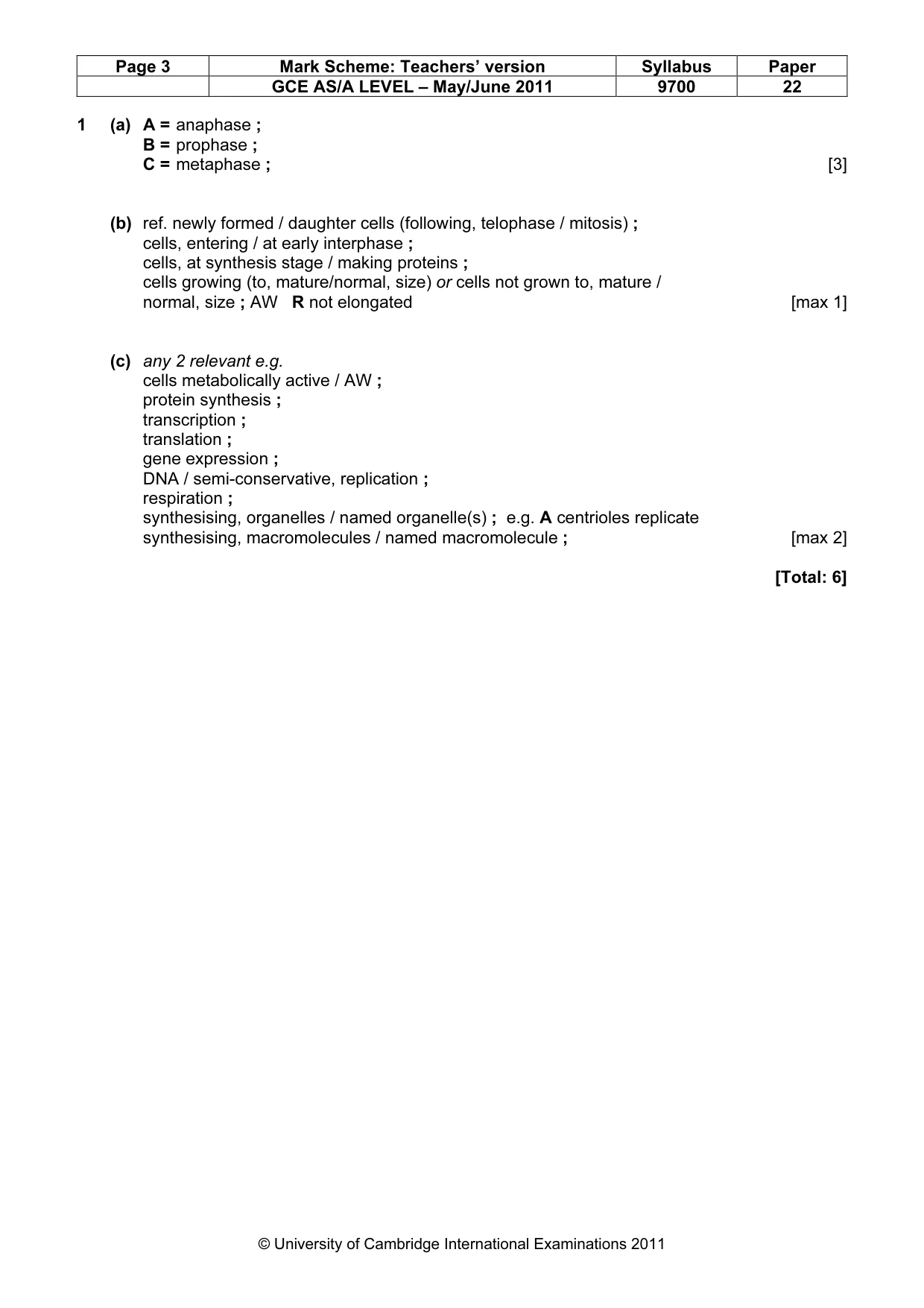
Page 3 Mark Scheme: Teachers’ version Syllabus Paper GCE AS/A LEVEL – May/June 2011 9700 22 © University of Cambridge International Examinations 2011 1 (a) A = anaphase ; B = prophase ; C = metaphase ; [3] (b) ref. newly formed / daughter cells (following, telophase / mitosis) ; cells, entering / at early interphase ; cells, at synthesis stage / making proteins ; cells growing (to, mature/normal, size) or cells not grown to, mature / normal, size ; AW R not elongated [max 1] (c) any 2 relevant e.g. cells metabolically active / AW ; protein synthesis ; transcription ; translation ; gene expression ; DNA / semi-conservative, replication ; respiration ; synthesising, organelles / named organelle(s) ; e.g. A centrioles replicate synthesising, macromolecules / named macromolecule ; [max 2] [Total: 6]
Mark scheme, page 4
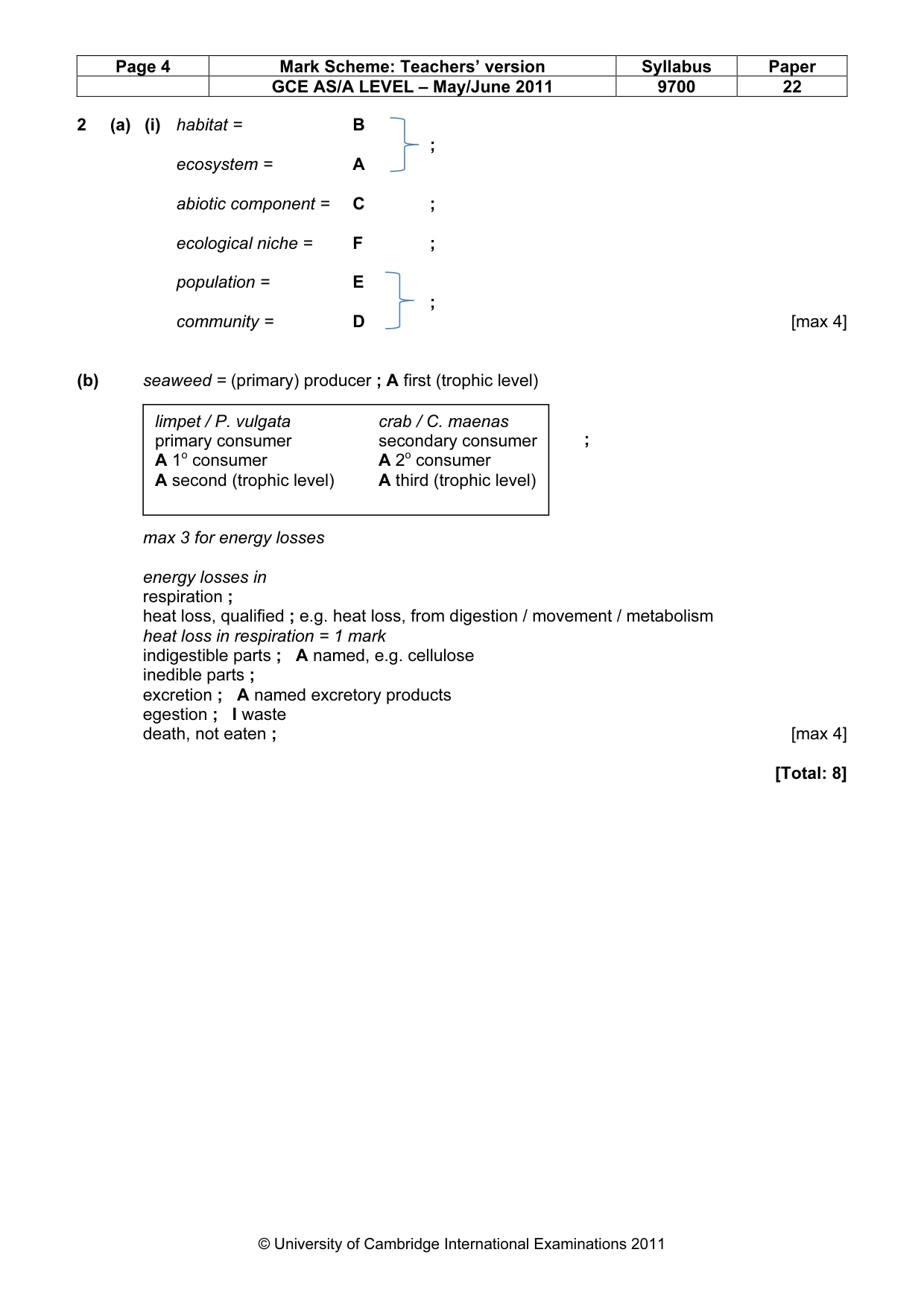
Page 4 Mark Scheme: Teachers’ version Syllabus Paper GCE AS/A LEVEL – May/June 2011 9700 22 © University of Cambridge International Examinations 2011 2 (a) (i) habitat = B ; ecosystem = A abiotic component = C ; ecological niche = F ; population = E ; community = D [max 4] (b) seaweed = (primary) producer ; A first (trophic level) ; max 3 for energy losses energy losses in respiration ; heat loss, qualified ; e.g. heat loss, from digestion / movement / metabolism heat loss in respiration = 1 mark indigestible parts ; A named, e.g. cellulose inedible parts ; excretion ; A named excretory products egestion ; I waste death, not eaten ; [max 4] [Total: 8] limpet / P. vulgata crab / C. maenas primary consumer secondary consumer A 1o consumer A 2o consumer A second (trophic level) A third (trophic level)
Mark scheme, page 5
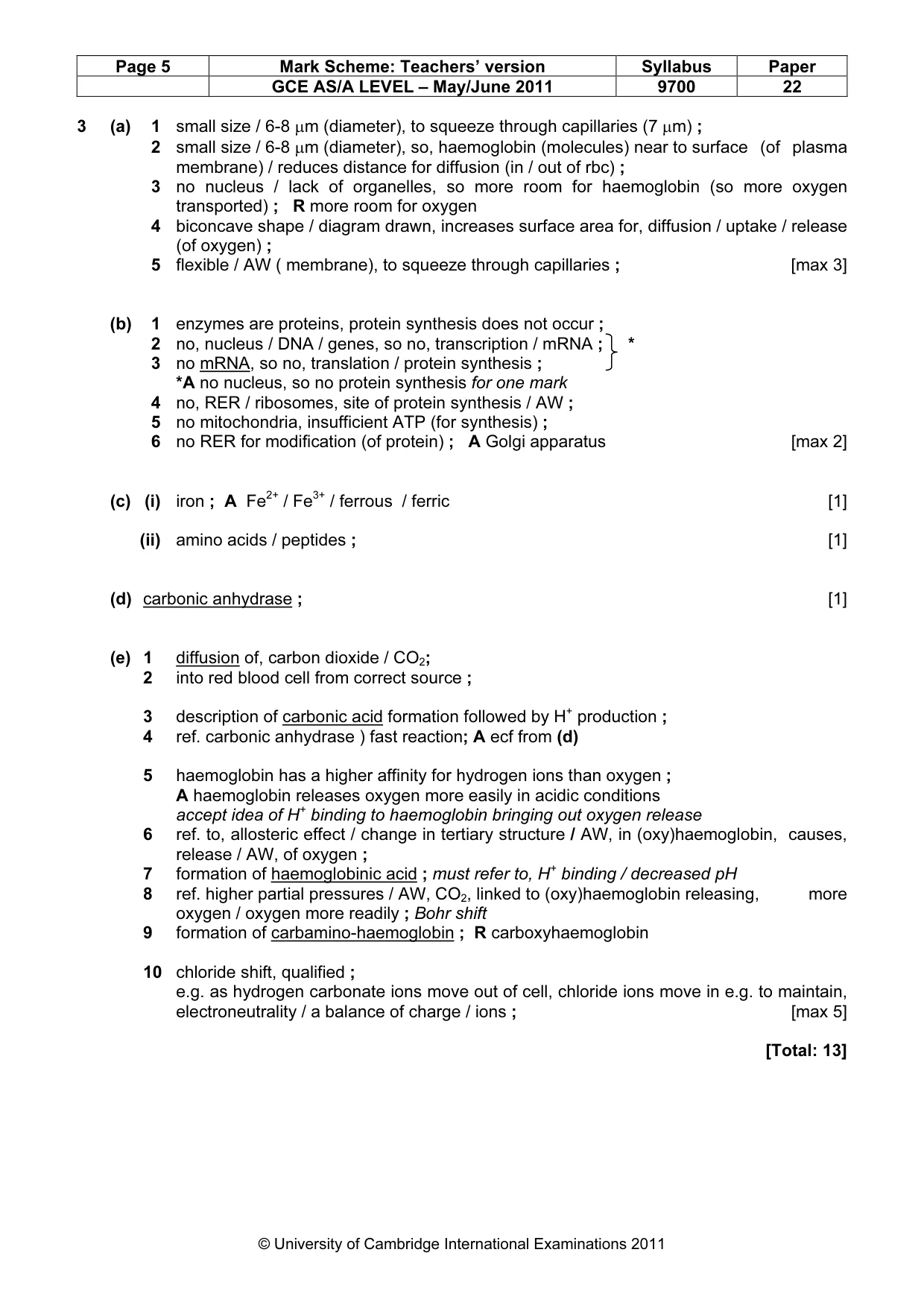
Page 5 Mark Scheme: Teachers’ version Syllabus Paper GCE AS/A LEVEL – May/June 2011 9700 22 © University of Cambridge International Examinations 2011 3 (a) 1 small size / 6-8 µm (diameter), to squeeze through capillaries (7 µm) ; 2 small size / 6-8 µm (diameter), so, haemoglobin (molecules) near to surface (of plasma membrane) / reduces distance for diffusion (in / out of rbc) ; 3 no nucleus / lack of organelles, so more room for haemoglobin (so more oxygen transported) ; R more room for oxygen 4 biconcave shape / diagram drawn, increases surface area for, diffusion / uptake / release (of oxygen) ; 5 flexible / AW ( membrane), to squeeze through capillaries ; [max 3] (b) 1 enzymes are proteins, protein synthesis does not occur ; 2 no, nucleus / DNA / genes, so no, transcription / mRNA ; * 3 no mRNA, so no, translation / protein synthesis ; *A no nucleus, so no protein synthesis for one mark 4 no, RER / ribosomes, site of protein synthesis / AW ; 5 no mitochondria, insufficient ATP (for synthesis) ; 6 no RER for modification (of protein) ; A Golgi apparatus [max 2] (c) (i) iron ; A Fe2+ / Fe3+ / ferrous / ferric [1] (ii) amino acids / peptides ; [1] (d) carbonic anhydrase ; [1] (e) 1 diffusion of, carbon dioxide / CO2; 2 into red blood cell from correct source ; 3 description of carbonic acid formation followed by H+ production ; 4 ref. carbonic anhydrase ) fast reaction; A ecf from (d) 5 haemoglobin has a higher affinity for hydrogen ions than oxygen ; A haemoglobin releases oxygen more easily in acidic conditions accept idea of H+ binding to haemoglobin bringing out oxygen release 6 ref. to, allosteric effect / change in tertiary structure / AW, in (oxy)haemoglobin, causes, release / AW, of oxygen ; 7 formation of haemoglobinic acid ; must refer to, H+ binding / decreased pH 8 ref. higher partial pressures / AW, CO2, linked to (oxy)haemoglobin releasing, more oxygen / oxygen more readily ; Bohr shift 9 formation of carbamino-haemoglobin ; R carboxyhaemoglobin 10 chloride shift, qualified ; e.g. as hydrogen carbonate ions move out of cell, chloride ions move in e.g. to maintain, electroneutrality / a balance of charge / ions ; [max 5] [Total: 13]
Mark scheme, page 6
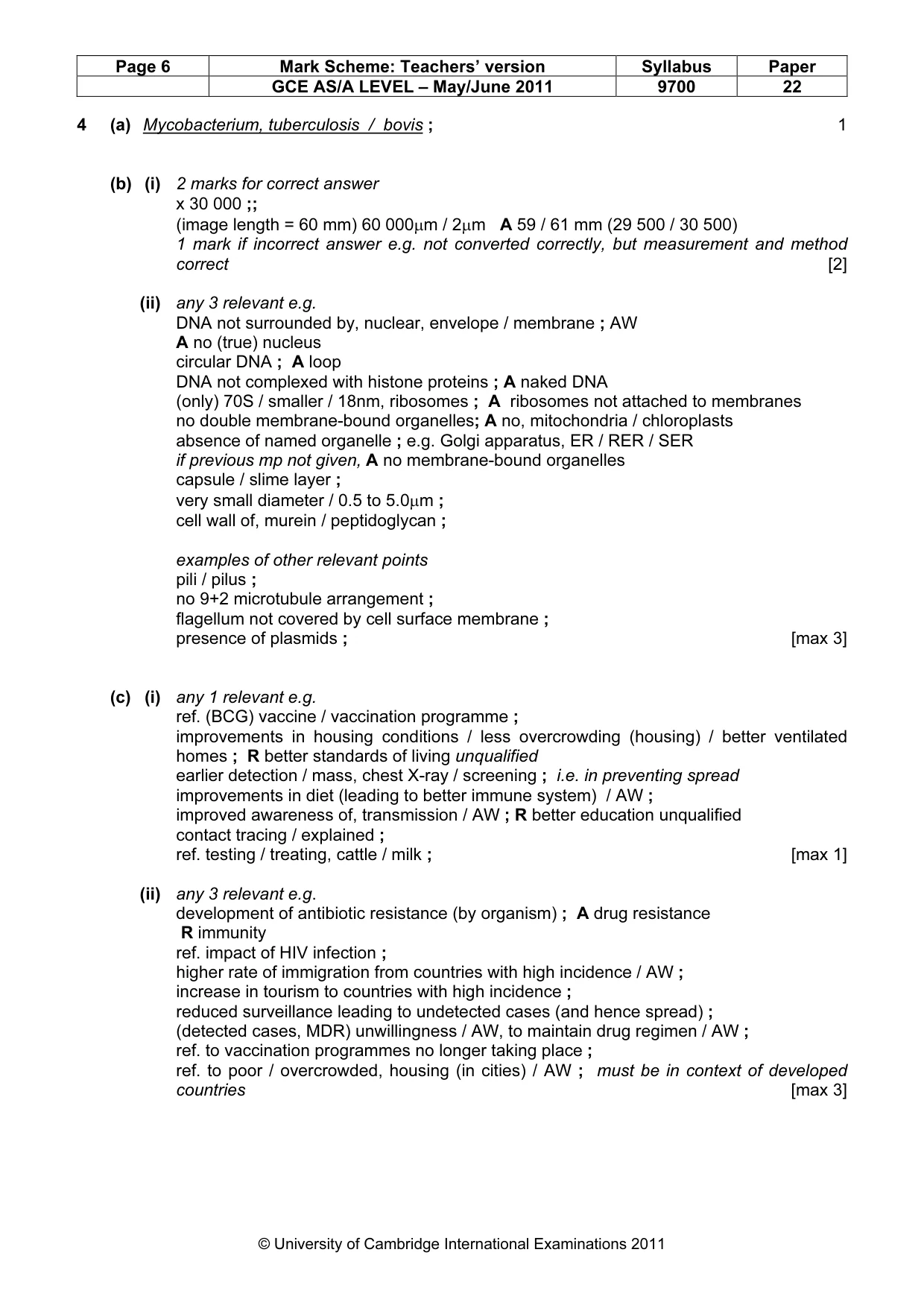
Page 6 Mark Scheme: Teachers’ version Syllabus Paper GCE AS/A LEVEL – May/June 2011 9700 22 © University of Cambridge International Examinations 2011 4 (a) Mycobacterium, tuberculosis / bovis ; 1 (b) (i) 2 marks for correct answer x 30 000 ;; (image length = 60 mm) 60 000µm / 2µm A 59 / 61 mm (29 500 / 30 500) 1 mark if incorrect answer e.g. not converted correctly, but measurement and method correct [2] (ii) any 3 relevant e.g. DNA not surrounded by, nuclear, envelope / membrane ; AW A no (true) nucleus circular DNA ; A loop DNA not complexed with histone proteins ; A naked DNA (only) 70S / smaller / 18nm, ribosomes ; A ribosomes not attached to membranes no double membrane-bound organelles; A no, mitochondria / chloroplasts absence of named organelle ; e.g. Golgi apparatus, ER / RER / SER if previous mp not given, A no membrane-bound organelles capsule / slime layer ; very small diameter / 0.5 to 5.0µm ; cell wall of, murein / peptidoglycan ; examples of other relevant points pili / pilus ; no 9+2 microtubule arrangement ; flagellum not covered by cell surface membrane ; presence of plasmids ; [max 3] (c) (i) any 1 relevant e.g. ref. (BCG) vaccine / vaccination programme ; improvements in housing conditions / less overcrowding (housing) / better ventilated homes ; R better standards of living unqualified earlier detection / mass, chest X-ray / screening ; i.e. in preventing spread improvements in diet (leading to better immune system) / AW ; improved awareness of, transmission / AW ; R better education unqualified contact tracing / explained ; ref. testing / treating, cattle / milk ; [max 1] (ii) any 3 relevant e.g. development of antibiotic resistance (by organism) ; A drug resistance R immunity ref. impact of HIV infection ; higher rate of immigration from countries with high incidence / AW ; increase in tourism to countries with high incidence ; reduced surveillance leading to undetected cases (and hence spread) ; (detected cases, MDR) unwillingness / AW, to maintain drug regimen / AW ; ref. to vaccination programmes no longer taking place ; ref. to poor / overcrowded, housing (in cities) / AW ; must be in context of developed countries [max 3]
Mark scheme, page 7
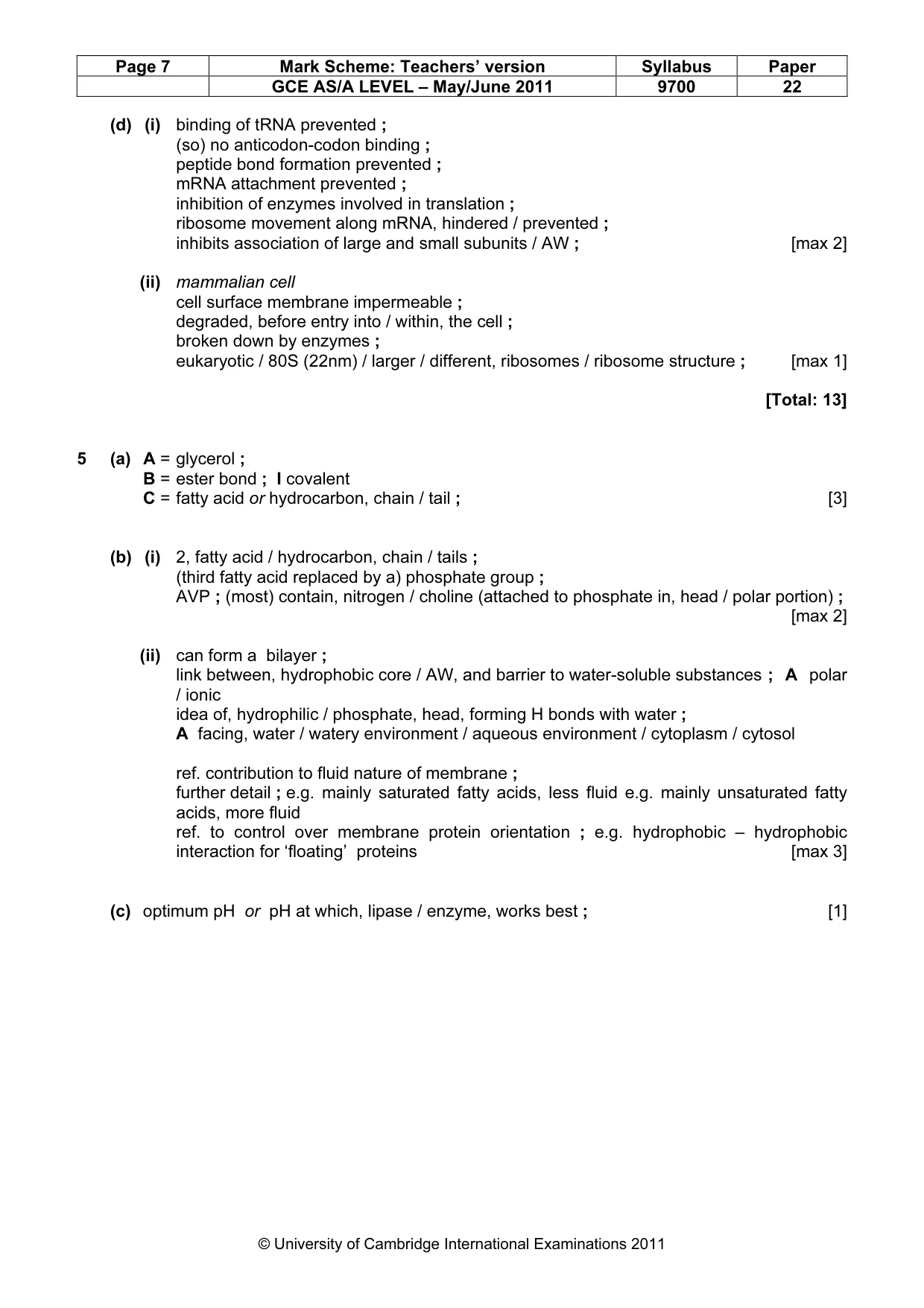
Page 7 Mark Scheme: Teachers’ version Syllabus Paper GCE AS/A LEVEL – May/June 2011 9700 22 © University of Cambridge International Examinations 2011 (d) (i) binding of tRNA prevented ; (so) no anticodon-codon binding ; peptide bond formation prevented ; mRNA attachment prevented ; inhibition of enzymes involved in translation ; ribosome movement along mRNA, hindered / prevented ; inhibits association of large and small subunits / AW ; [max 2] (ii) mammalian cell cell surface membrane impermeable ; degraded, before entry into / within, the cell ; broken down by enzymes ; eukaryotic / 80S (22nm) / larger / different, ribosomes / ribosome structure ; [max 1] [Total: 13] 5 (a) A = glycerol ; B = ester bond ; I covalent C = fatty acid or hydrocarbon, chain / tail ; [3] (b) (i) 2, fatty acid / hydrocarbon, chain / tails ; (third fatty acid replaced by a) phosphate group ; AVP ; (most) contain, nitrogen / choline (attached to phosphate in, head / polar portion) ; [max 2] (ii) can form a bilayer ; link between, hydrophobic core / AW, and barrier to water-soluble substances ; A polar / ionic idea of, hydrophilic / phosphate, head, forming H bonds with water ; A facing, water / watery environment / aqueous environment / cytoplasm / cytosol ref. contribution to fluid nature of membrane ; further detail ; e.g. mainly saturated fatty acids, less fluid e.g. mainly unsaturated fatty acids, more fluid ref. to control over membrane protein orientation ; e.g. hydrophobic – hydrophobic interaction for ‘floating’ proteins [max 3] (c) optimum pH or pH at which, lipase / enzyme, works best ; [1]
Mark scheme, page 8
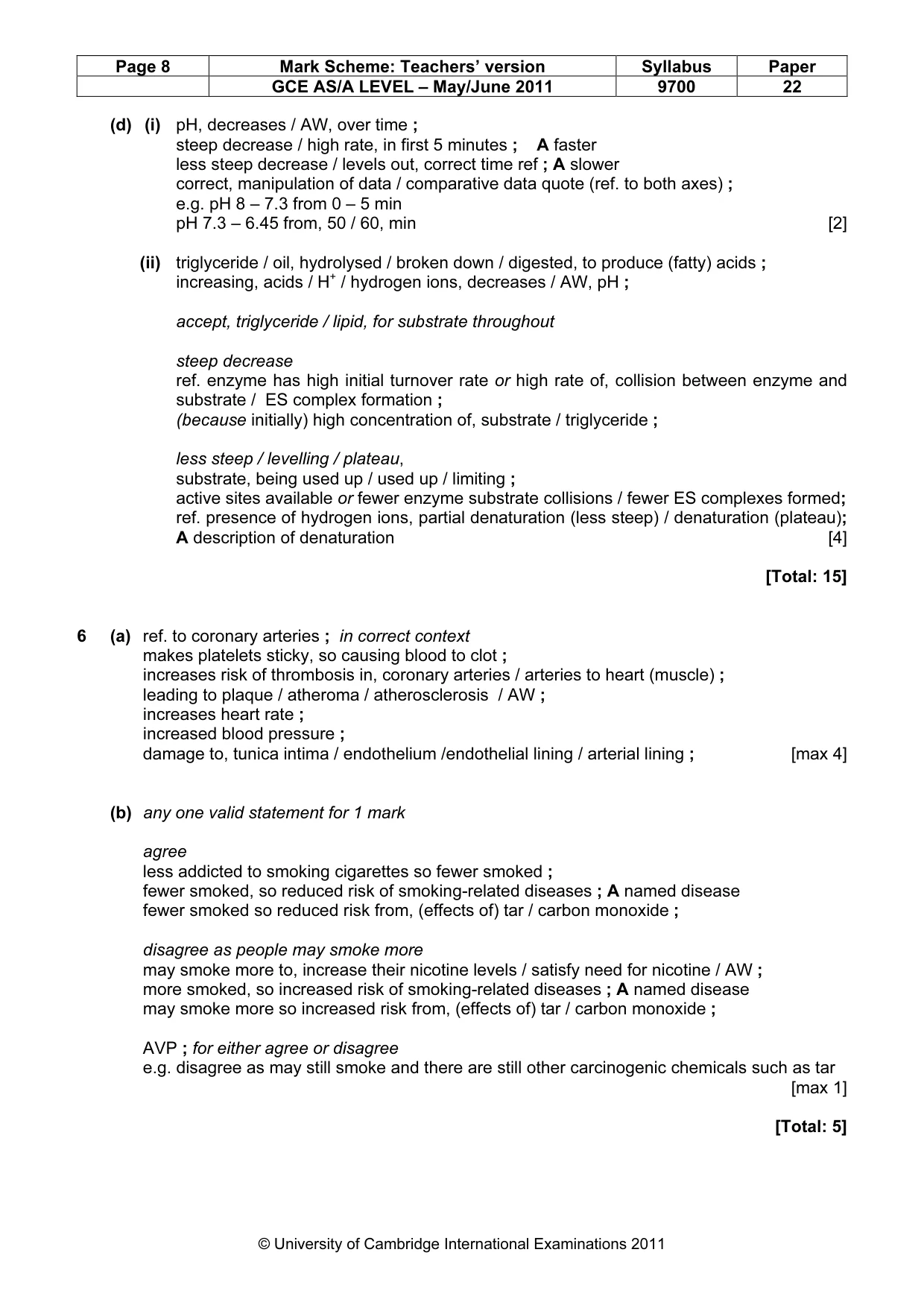
Page 8 Mark Scheme: Teachers’ version Syllabus Paper GCE AS/A LEVEL – May/June 2011 9700 22 © University of Cambridge International Examinations 2011 (d) (i) pH, decreases / AW, over time ; steep decrease / high rate, in first 5 minutes ; A faster less steep decrease / levels out, correct time ref ; A slower correct, manipulation of data / comparative data quote (ref. to both axes) ; e.g. pH 8 – 7.3 from 0 – 5 min pH 7.3 – 6.45 from, 50 / 60, min [2] (ii) triglyceride / oil, hydrolysed / broken down / digested, to produce (fatty) acids ; increasing, acids / H+ / hydrogen ions, decreases / AW, pH ; accept, triglyceride / lipid, for substrate throughout steep decrease ref. enzyme has high initial turnover rate or high rate of, collision between enzyme and substrate / ES complex formation ; (because initially) high concentration of, substrate / triglyceride ; less steep / levelling / plateau, substrate, being used up / used up / limiting ; active sites available or fewer enzyme substrate collisions / fewer ES complexes formed; ref. presence of hydrogen ions, partial denaturation (less steep) / denaturation (plateau); A description of denaturation [4] [Total: 15] 6 (a) ref. to coronary arteries ; in correct context makes platelets sticky, so causing blood to clot ; increases risk of thrombosis in, coronary arteries / arteries to heart (muscle) ; leading to plaque / atheroma / atherosclerosis / AW ; increases heart rate ; increased blood pressure ; damage to, tunica intima / endothelium /endothelial lining / arterial lining ; [max 4] (b) any one valid statement for 1 mark agree less addicted to smoking cigarettes so fewer smoked ; fewer smoked, so reduced risk of smoking-related diseases ; A named disease fewer smoked so reduced risk from, (effects of) tar / carbon monoxide ; disagree as people may smoke more may smoke more to, increase their nicotine levels / satisfy need for nicotine / AW ; more smoked, so increased risk of smoking-related diseases ; A named disease may smoke more so increased risk from, (effects of) tar / carbon monoxide ; AVP ; for either agree or disagree e.g. disagree as may still smoke and there are still other carcinogenic chemicals such as tar [max 1] [Total: 5]
What you needed in this session
Cambridge’s own grade thresholds for 2011 May/June, Paper 2 · Variant 2. A higher threshold means an easier paper — the bar moves with how the cohort did.