Cambridge A Level Accounting 9706 — 2025 Oct/Nov Paper 4 · Variant 2
9706/42/O/N/25 · 2 questions · 50 marks · ≈56 min
The question paper and its mark scheme, free to read here and free to download. This is Cambridge’s own paper, exactly as it was sat.
Question paper12 pages
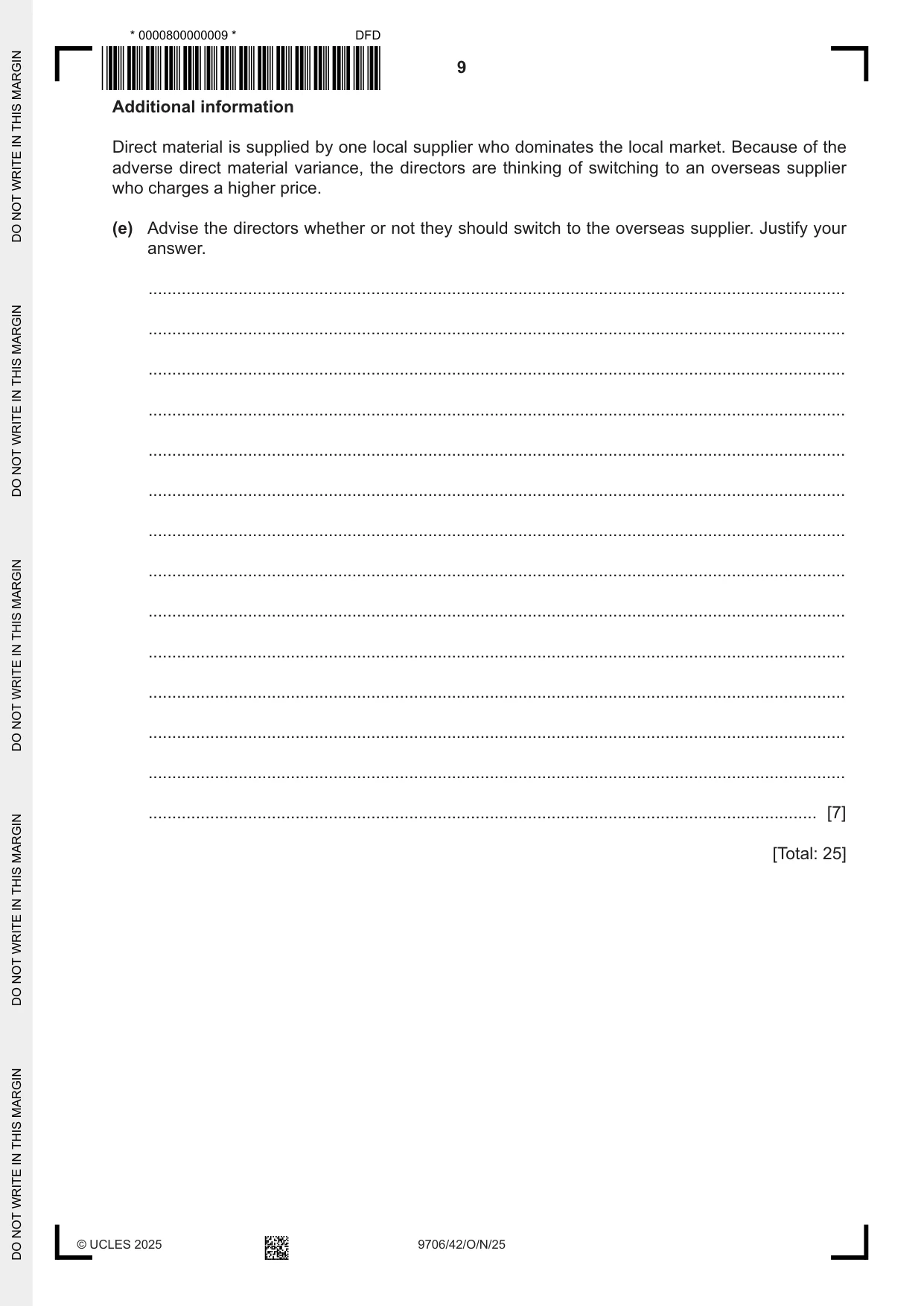


Mark scheme13 pages
Answers below. Sit the paper first if you are practising.
Questions as text
Q1 · Read Source A in the insert
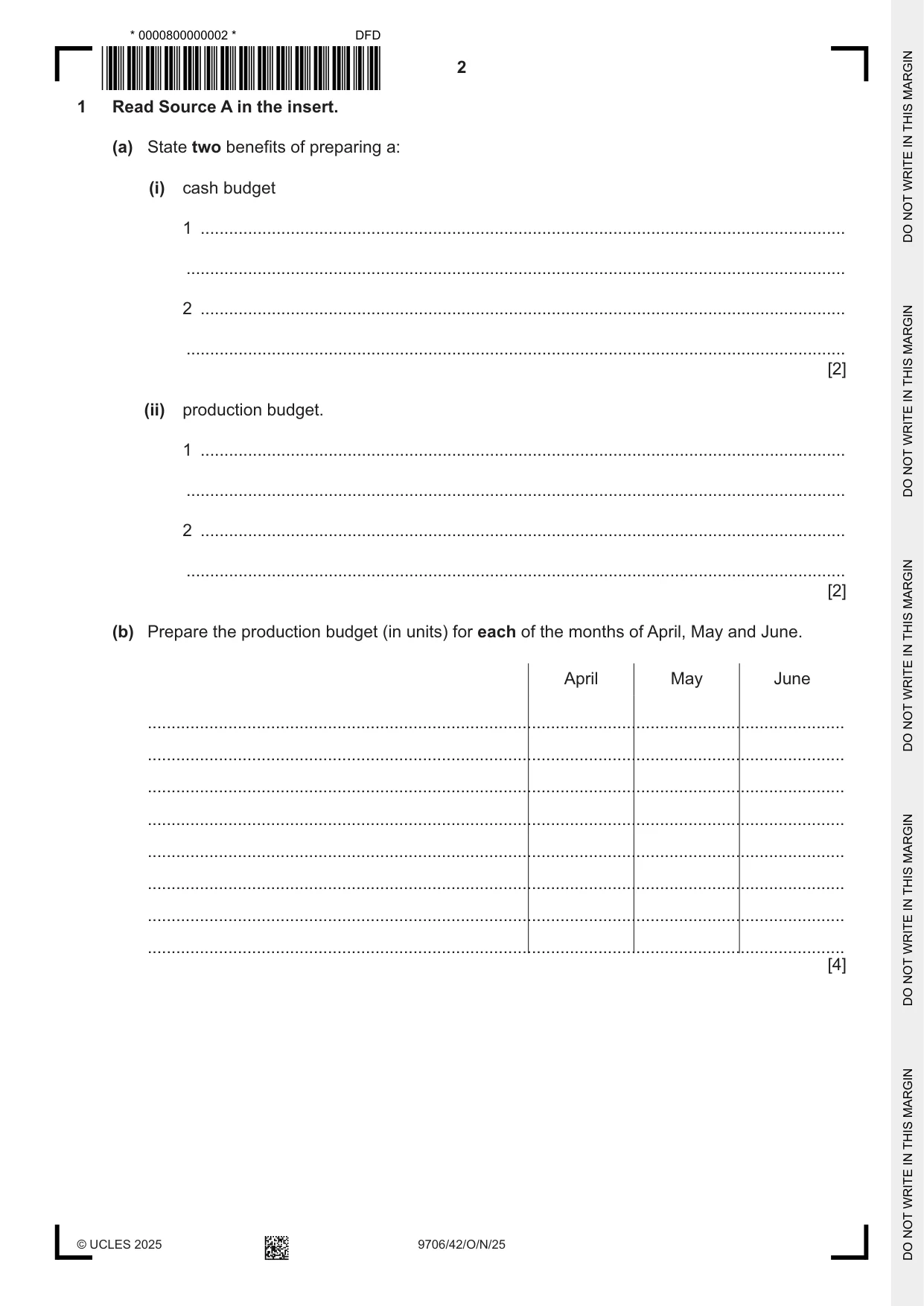
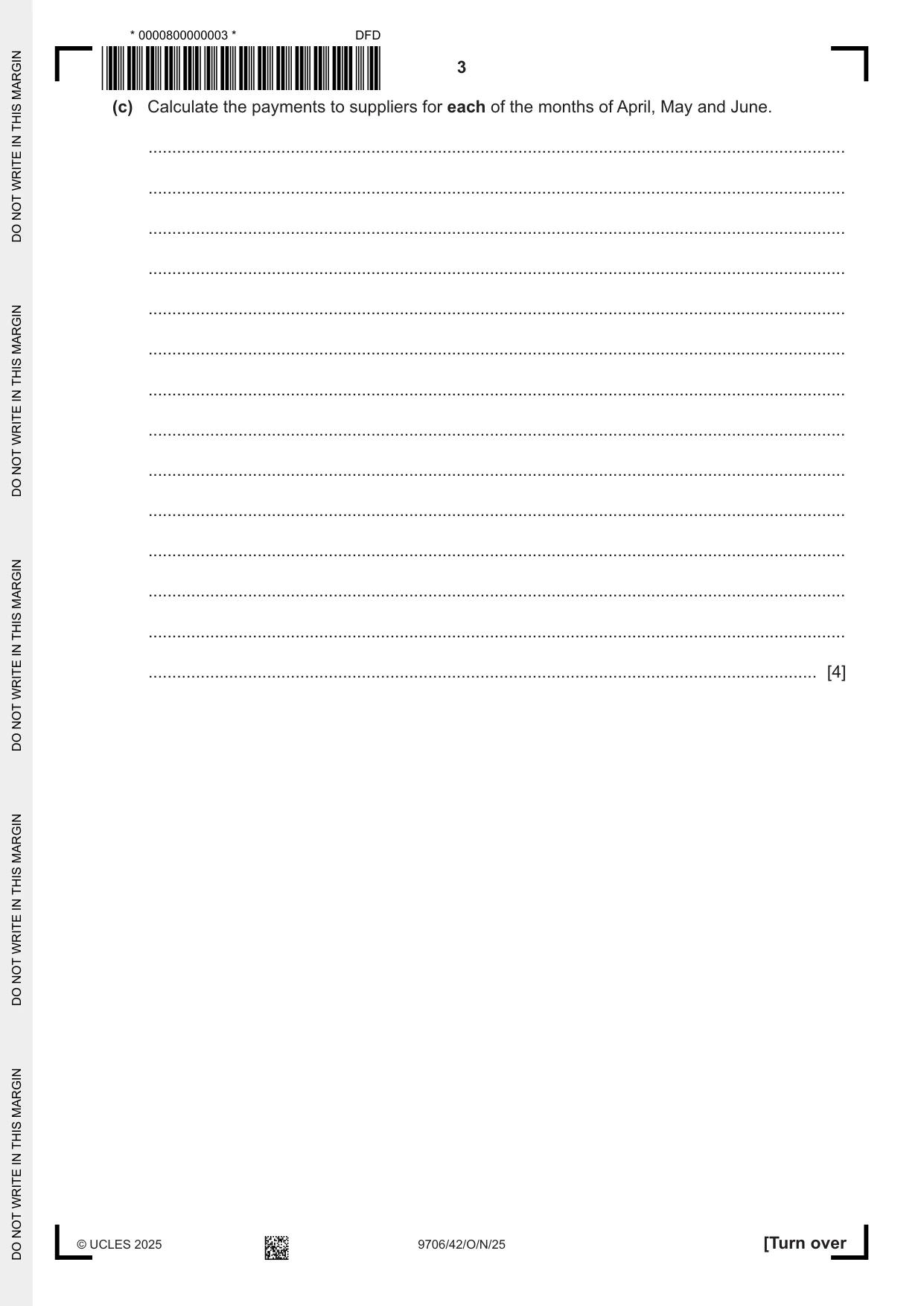
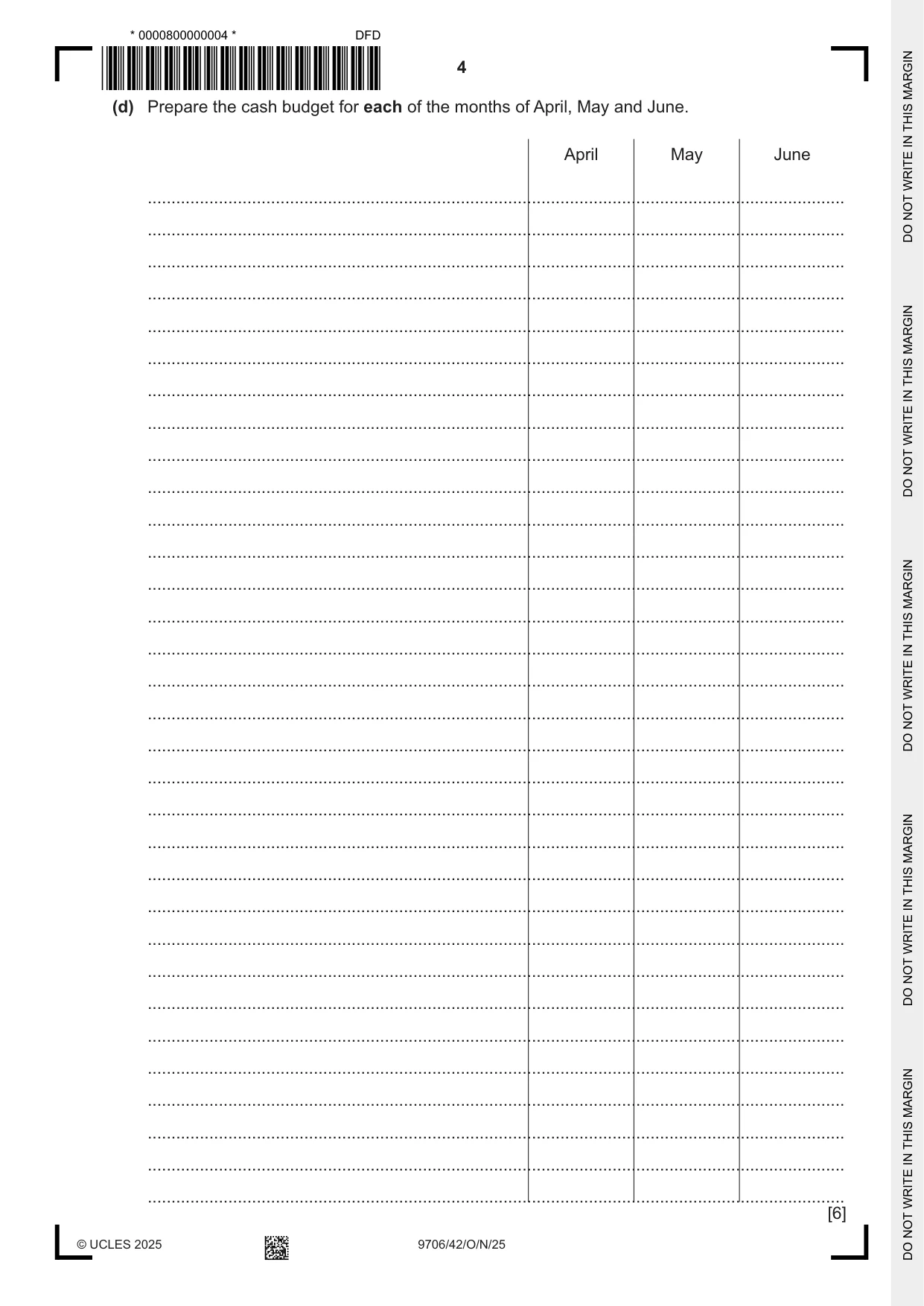
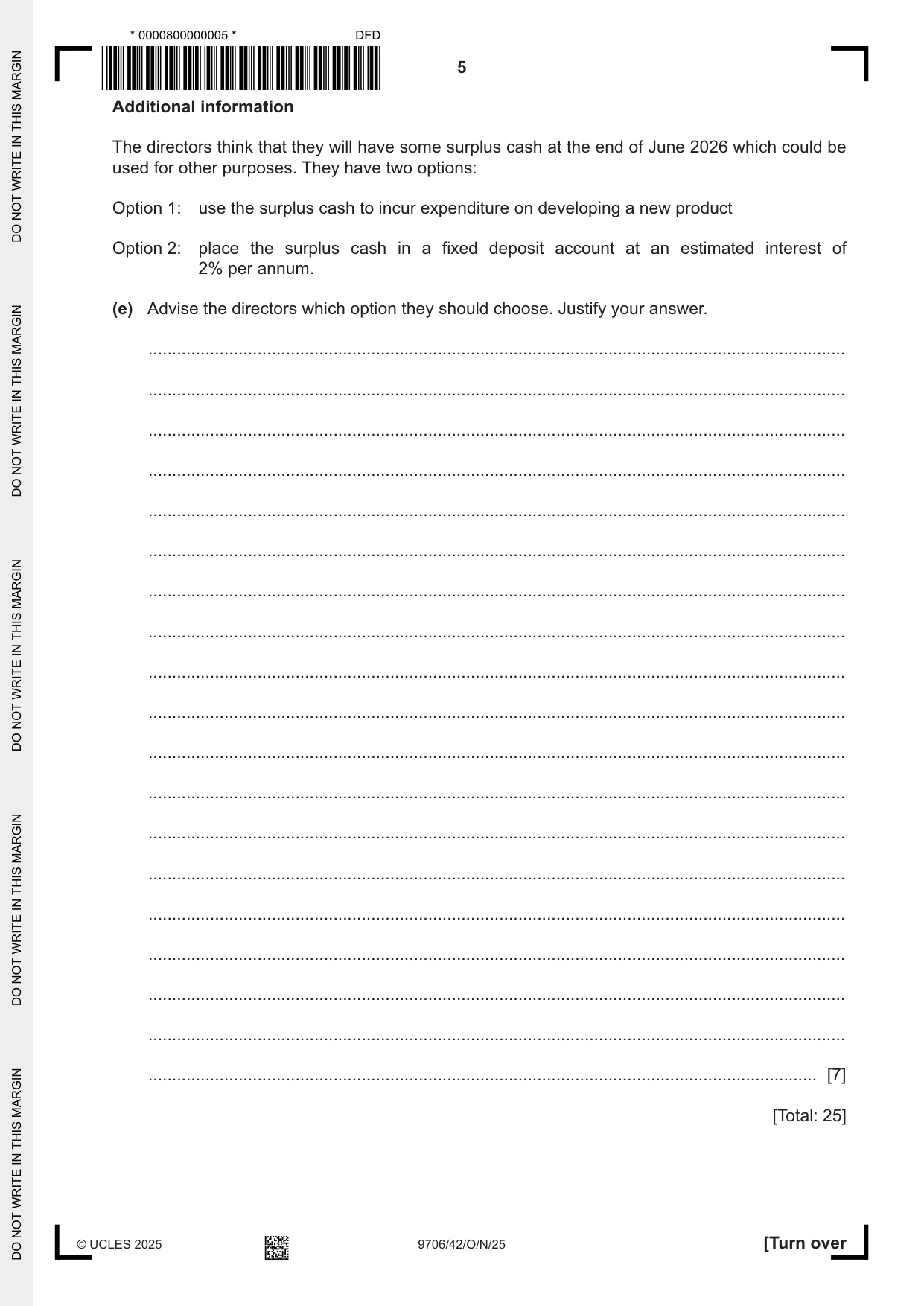
1 Read Source A in the insert. (a) State two benefits of preparing a: (i) cash budget 1 ........................................................................................................................................ ........................................................................................................................................... 2 ........................................................................................................................................ ........................................................................................................................................... [2] (ii) production budget. 1 ........................................................................................................................................ ........................................................................................................................................... 2 ........................................................................................................................................ ........................................................................................................................................... [2] (b) Prepare the production budget (in units) for each of the months of April, May and June. April May June ................................................................................................................................................... ................................................................................................................................................... ................................................................................................................................................... ................................................................................................................................................... ................................................................................................................................................... ................................................................................................................................................... ................................................................................................................................................... ................................................................................................................................................... [4] (c) Calculate the payments to suppliers for each of the months of April, May and June. ................................................................................................................................................... ................................................................................................................................................... ................................................................................................................................................... ................................................................................................................................................... ................................................................................................................................................... ................................................................................................................................................... ................................................................................................................................................... ................................................................................................................................................... ................................................................................................................................................... ................................................................................................................................................... ................................................................................................................................................... ................................................................................................................................................... ................................................................................................................................................... ............................................................................................................................................. [4] (d) Prepare the cash budget for each of the months of April, May and June. April May June ................................................................................................................................................... ................................................................................................................................................... ................................................................................................................................................... ................................................................................................................................................... ................................................................................................................................................... ................................................................................................................................................... ................................................................................................................................................... ................................................................................................................................................... ................................................................................................................................................... ................................................................................................................................................... ................................................................................................................................................... ................................................................................................................................................... ................................................................................................................................................... ................................................................................................................................................... ................................................................................................................................................... ................................................................................................................................................... ................................................................................................................................................... ................................................................................................................................................... ................................................................................................................................................... ................................................................................................................................................... ................................................................................................................................................... ................................................................................................................................................... ................................................................................................................................................... ................................................................................................................................................... ................................................................................................................................................... ................................................................................................................................................... ................................................................................................................................................... ................................................................................................................................................... ................................................................................................................................................... ................................................................................................................................................... ................................................................................................................................................... ................................................................................................................................................... [6] Additional information The directors think that they will have some surplus cash at the end of June 2026 which could be used for other purposes. They have two options: Option 1: use the surplus cash to incur expenditure on developing a new product Option 2: place the surplus cash in a fixed deposit account at an estimated interest of 2% per annum. (e) Advise the directors which option they should choose. Justify your answer. ................................................................................................................................................... ................................................................................................................................................... ................................................................................................................................................... ................................................................................................................................................... ................................................................................................................................................... ................................................................................................................................................... ................................................................................................................................................... ................................................................................................................................................... ................................................................................................................................................... ................................................................................................................................................... ................................................................................................................................................... ................................................................................................................................................... ................................................................................................................................................... ................................................................................................................................................... ................................................................................................................................................... ................................................................................................................................................... ................................................................................................................................................... ................................................................................................................................................... ............................................................................................................................................. [7] [Total: 25]
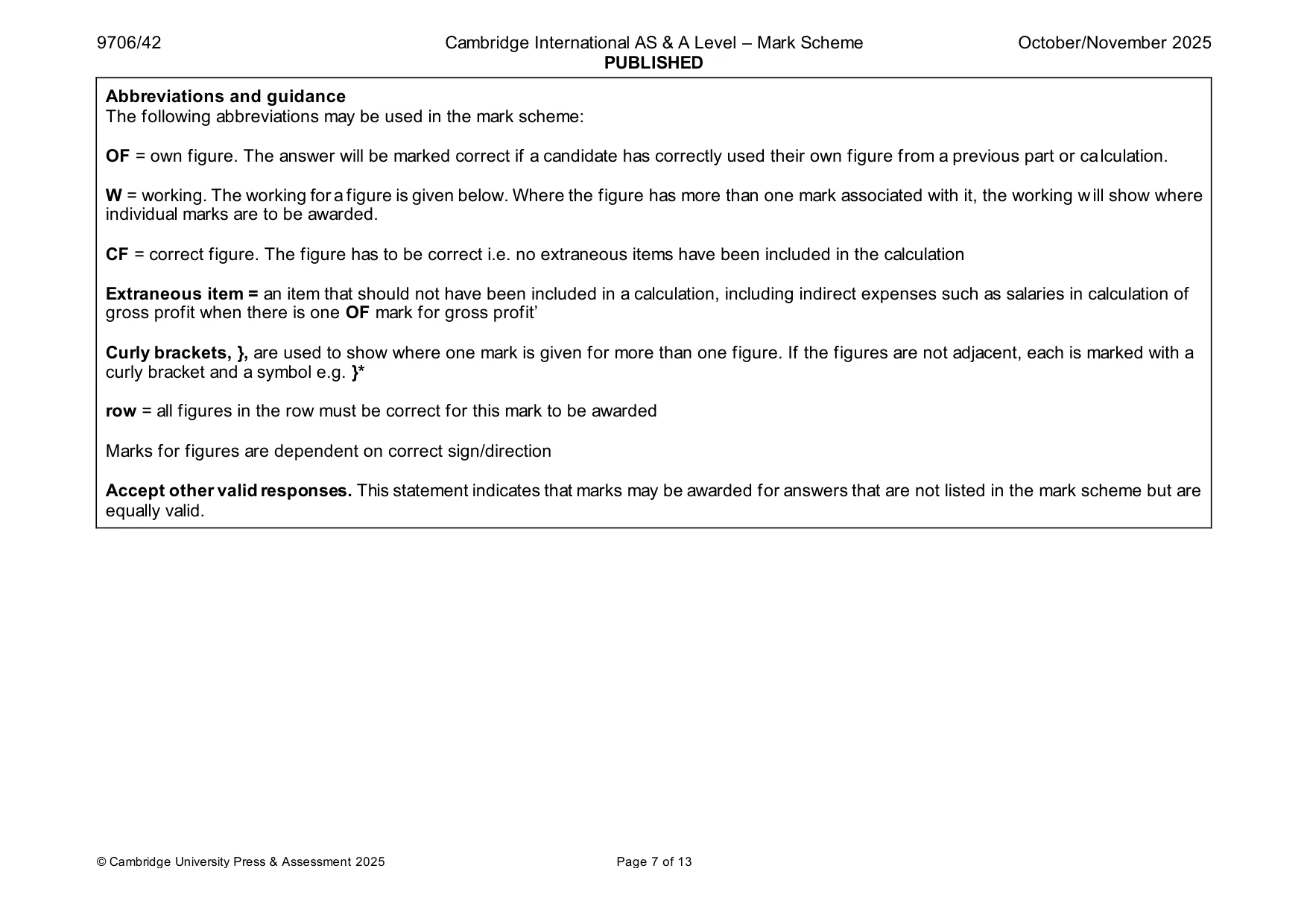
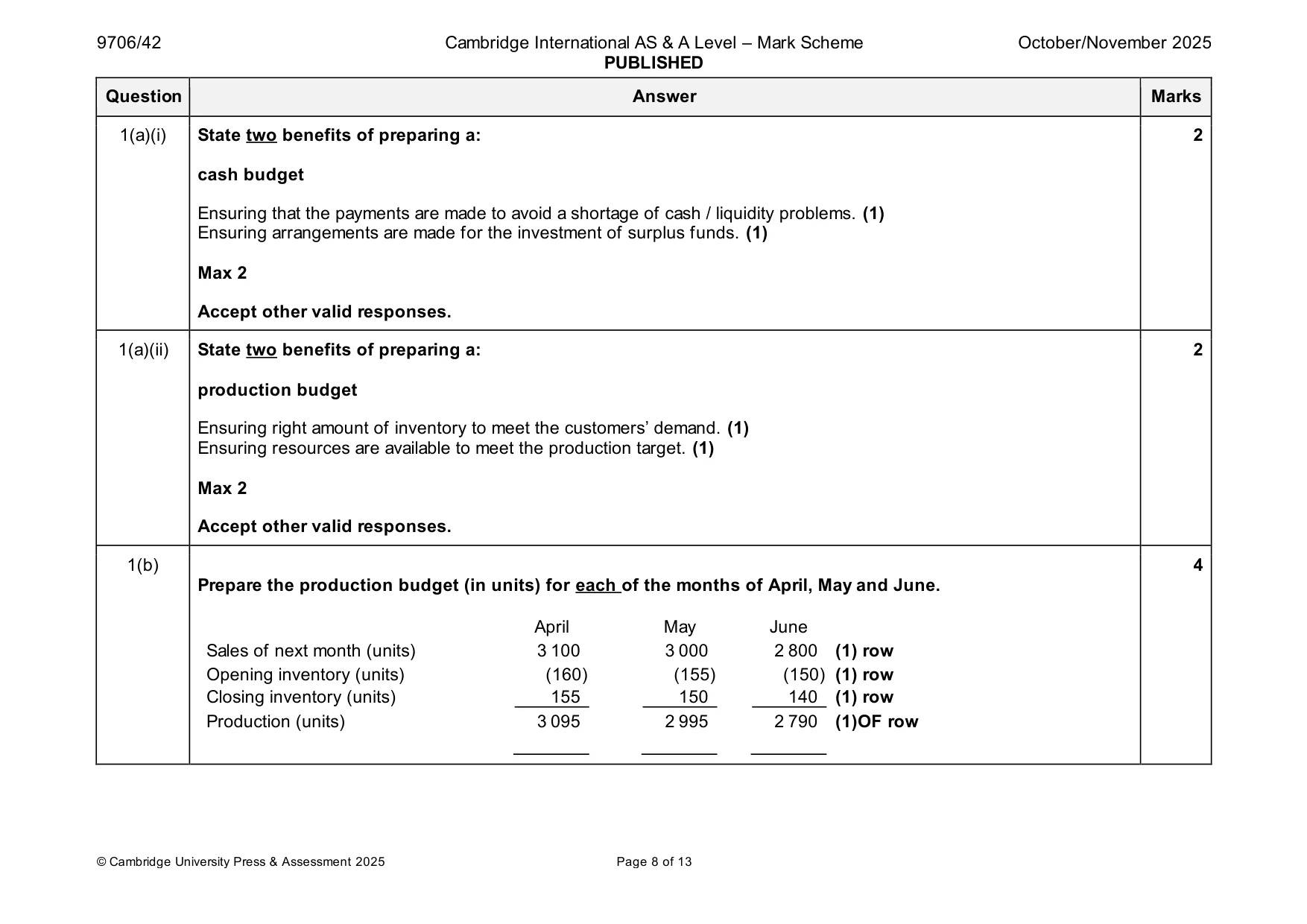
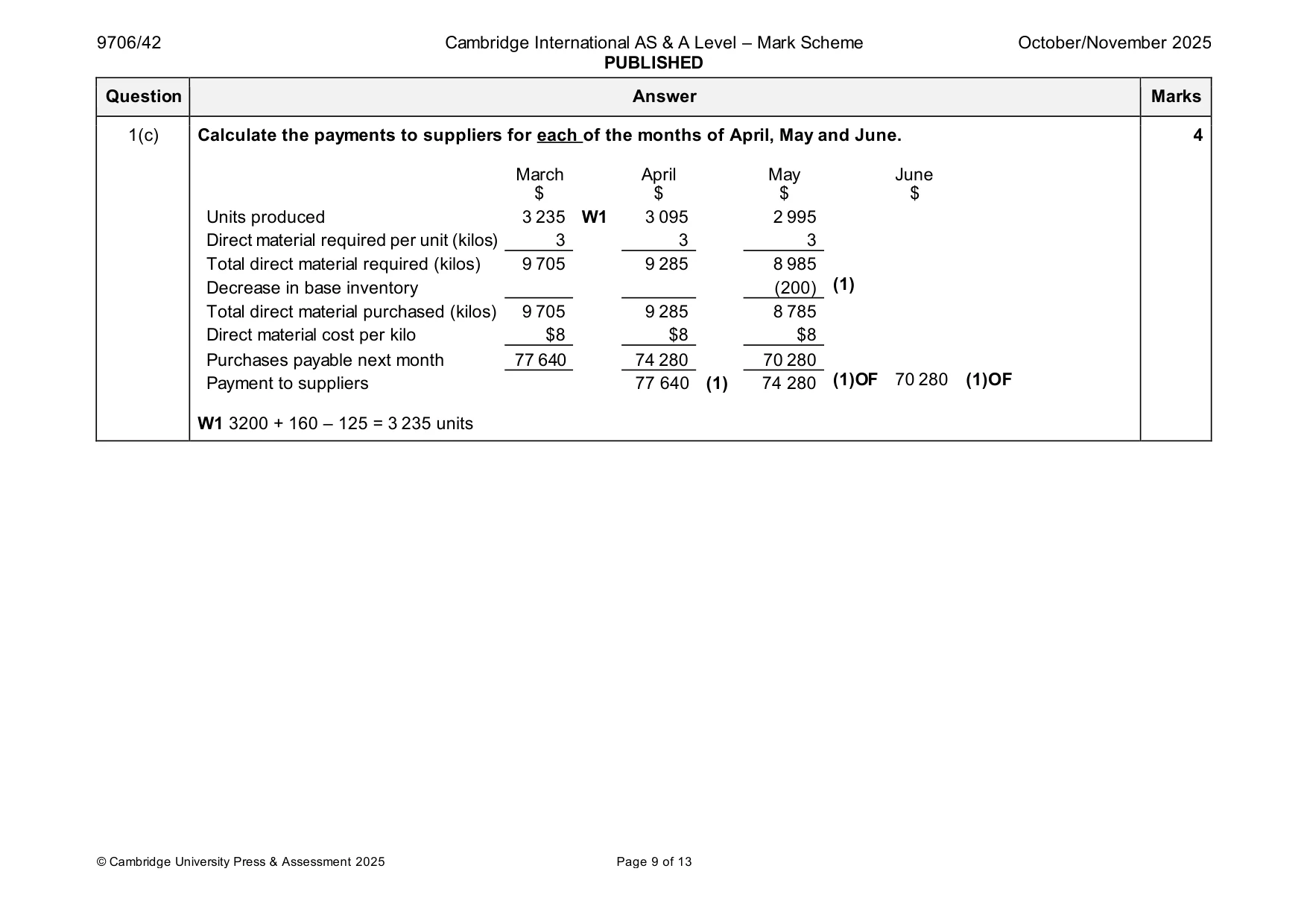
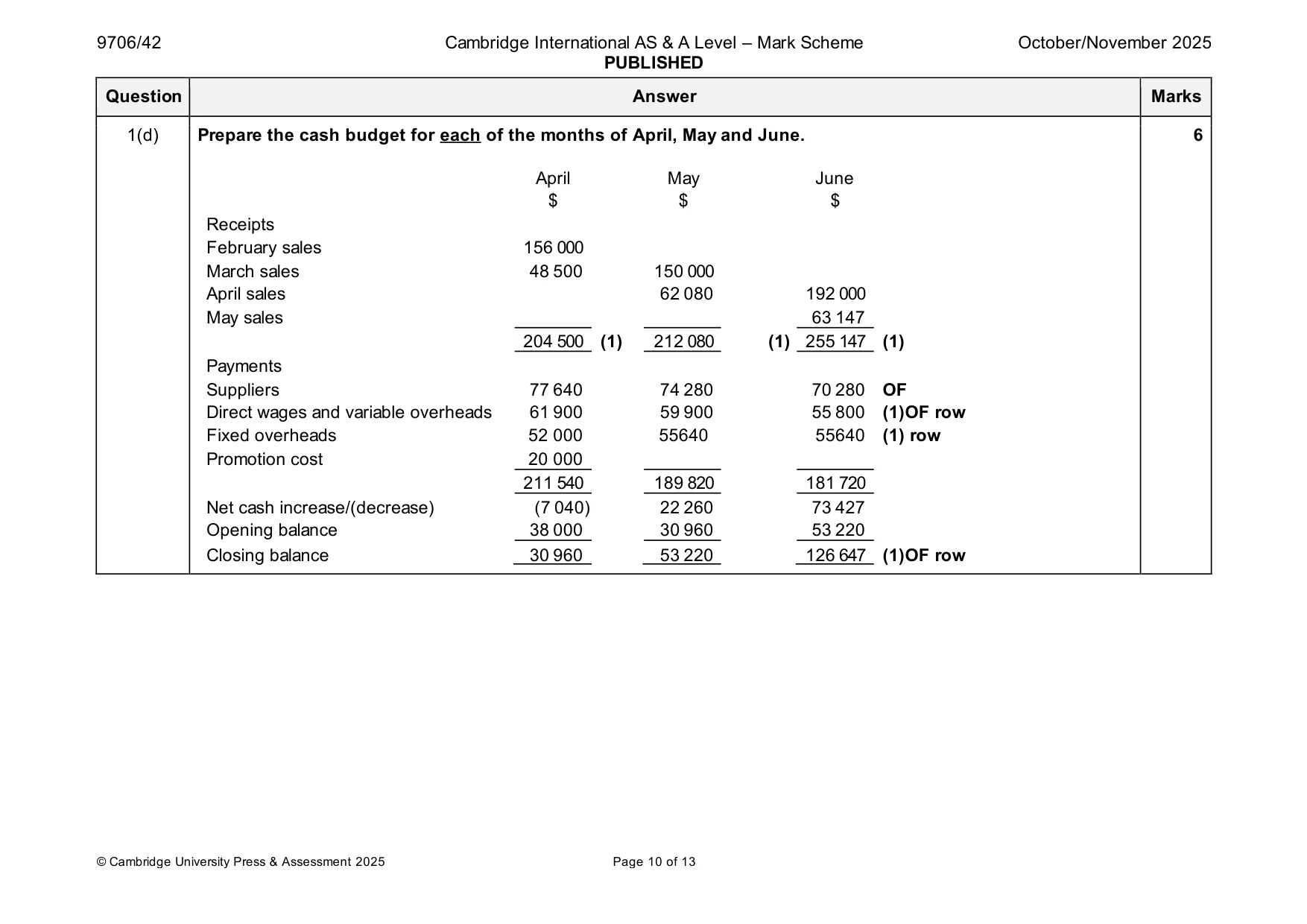
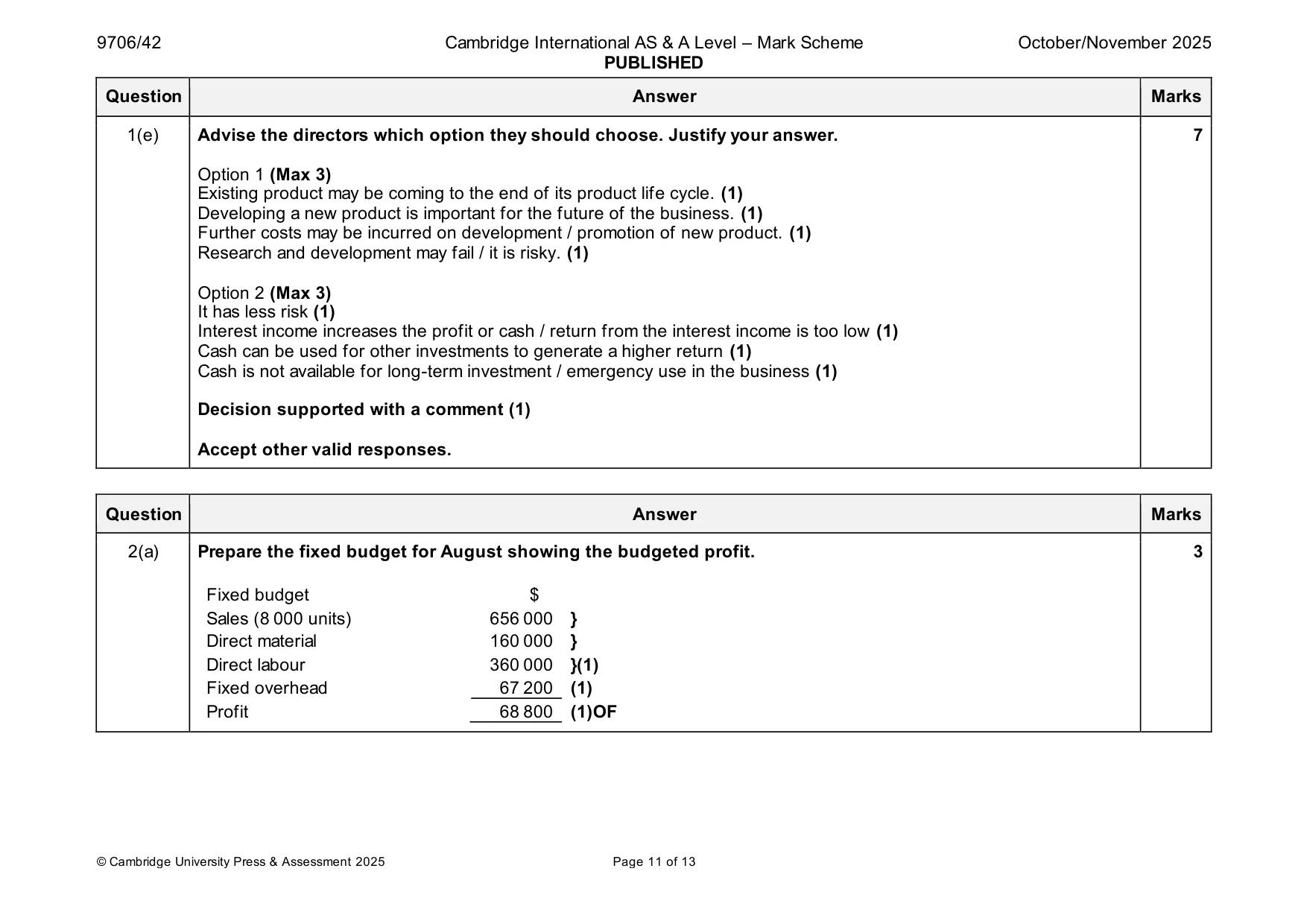
Mark scheme: Question Answer Marks 1(a)(i) State two benefits of preparing a: 2 cash budget Ensuring that the payments are made to avoid a shortage of cash / liquidity problems. (1) Ensuring arrangements are made for the investment of surplus funds. (1) Max 2 Accept other valid responses. 1(a)(ii) State two benefits of preparing a: 2 production budget Ensuring right amount of inventory to meet the customers’ demand. (1) Ensuring resources are available to meet the production target. (1) Max 2 Accept other valid responses. 1(b) 4 Prepare the production budget (in units) for each of the months of April, May and June. April May June Sales of next month (units) 3 100 3 000 2 800 (1) row Opening inventory (units) (160) (155) (150) (1) row Closing inventory (units) 155 150 140 (1) row Production (units) 3 095 2 995 2 790 (1)OF row 1(c) Calculate the payments to suppliers for each of the months of April, May and June. 4 March April May June $ $ $ $ Units produced 3 235 W1 3 095 2 995 Direct material required per unit (kilos) 3 3 3 Total direct material required (kilos) 9 705 9 285 8 985 Decrease in base inventory (200) (1) Total direct material purchased (kilos) 9 705 9 285 8 785 Direct material cost per kilo $8 $8 $8 Purchases payable next month 77 640 74 280 70 280 Payment to suppliers 77 640 (1) 74 280 (1)OF 70 280 (1)OF W1 3200 + 160 – 125 = 3 235 units 1(d) Prepare the cash budget for each of the months of April, May and June. 6 April May June $ $ $ Receipts February sales 156 000 March sales 48 500 150 000 April sales 62 080 192 000 May sales 63 147 204 500 (1) 212 080 (1) 255 147 (1) Payments Suppliers 77 640 74 280 70 280 OF Direct wages and variable overheads 61 900 59 900 55 800 (1)OF row Fixed overheads 52 000 55640 55640 (1) row Promotion cost 20 000 211 540 189 820 181 720 Net cash increase/(decrease) (7 040) 22 260 73 427 Opening balance 38 000 30 960 53 220 Closing balance 30 960 53 220 126 647 (1)OF row 1(e) Advise the directors which option they should choose. Justify your answer. 7 Option 1 (Max 3) Existing product may be coming to the end of its product life cycle. (1) Developing a new product is important for the future of the business. (1) Further costs may be incurred on development / promotion of new product. (1) Research and development may fail / it is risky. (1) Option 2 (Max 3) It has less risk (1) Interest income increases the profit or cash / return from the interest income is too low (1) Cash can be used for other investments to generate a higher return (1) Cash is not available for long-term investment / emergency use in the business (1) Decision supported with a comment (1) Accept other valid responses.
Q2 · Read Source B in the insert
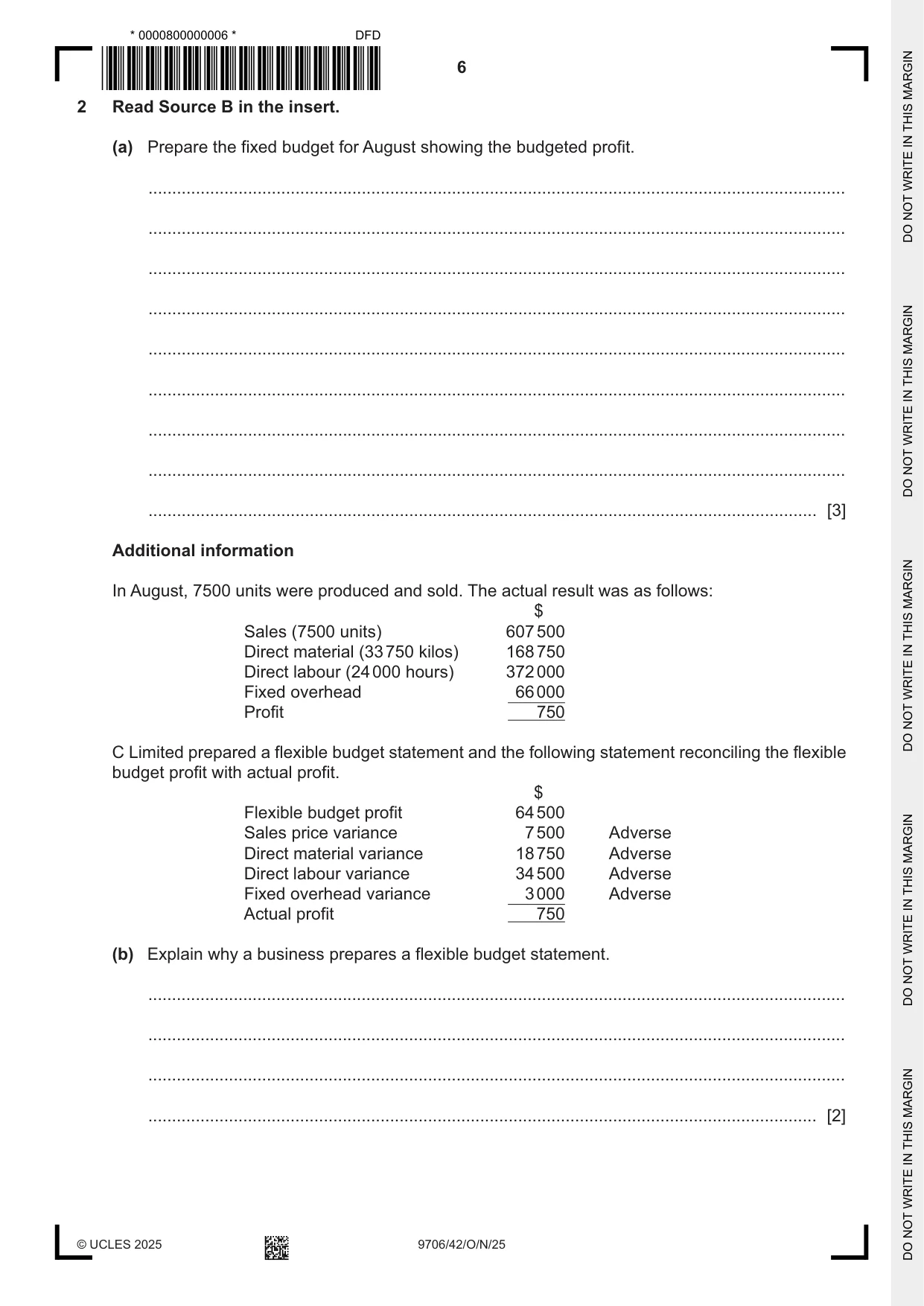
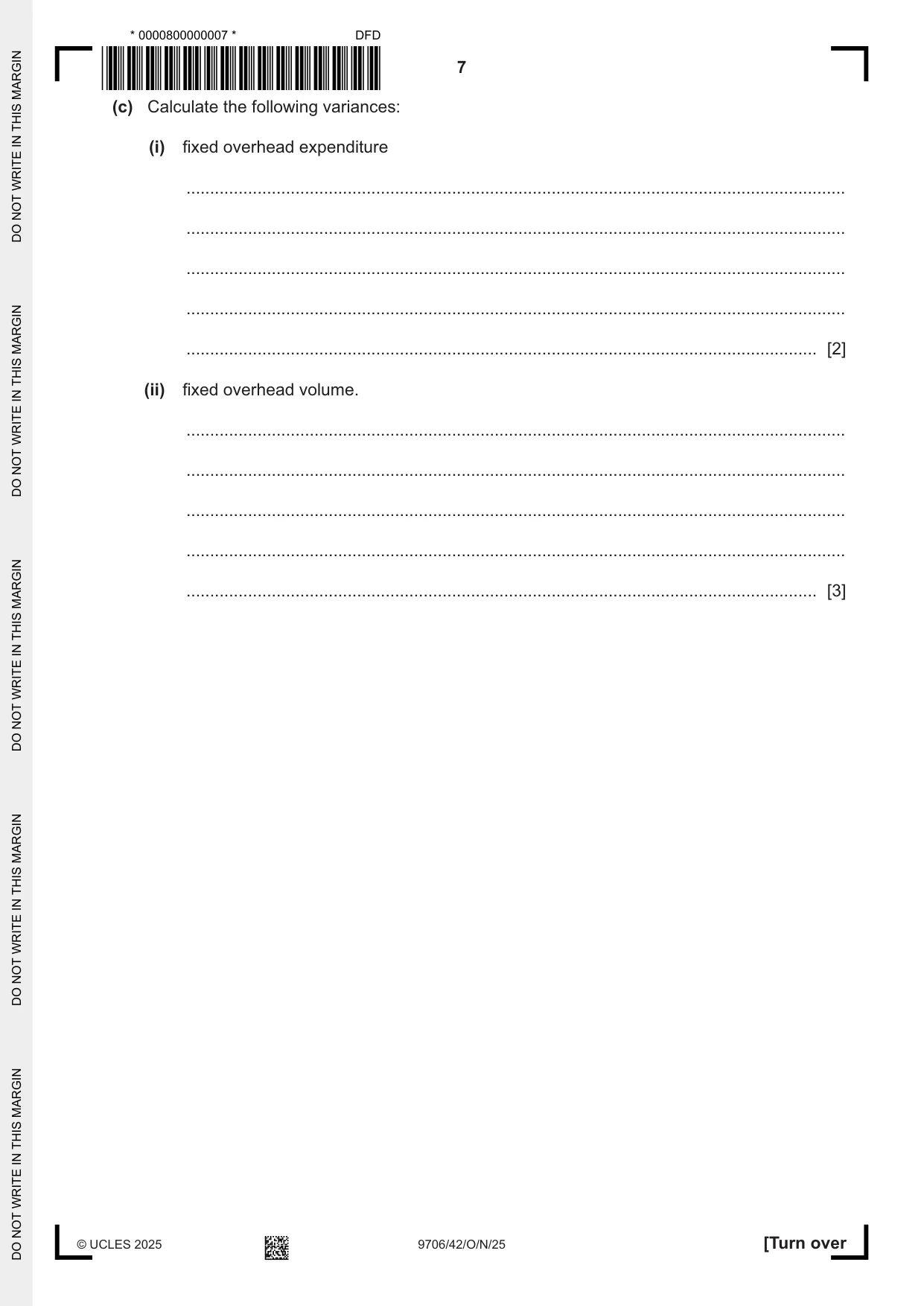
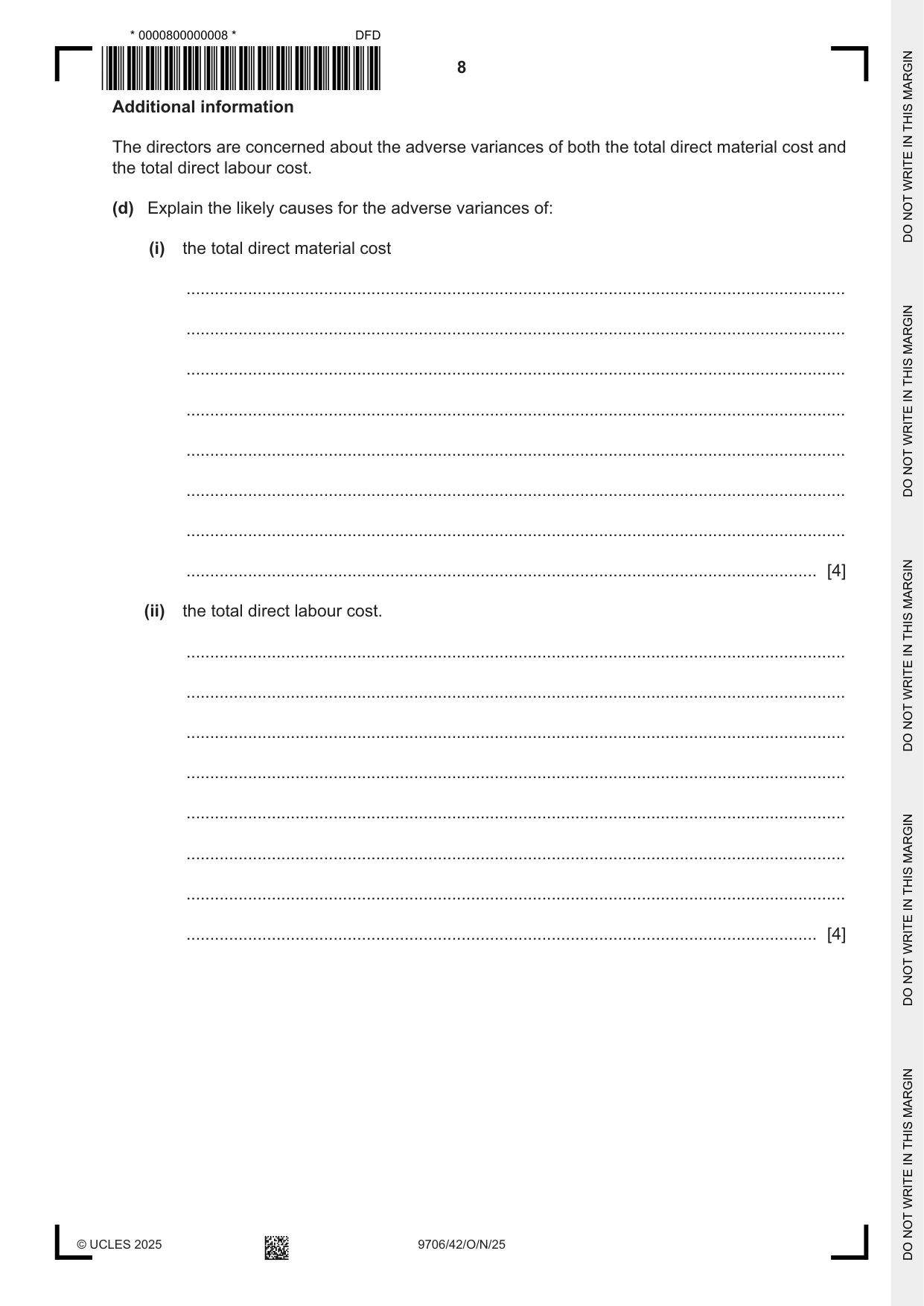
2 Read Source B in the insert. (a) Prepare the fixed budget for August showing the budgeted profit. ................................................................................................................................................... ................................................................................................................................................... ................................................................................................................................................... ................................................................................................................................................... ................................................................................................................................................... ................................................................................................................................................... ................................................................................................................................................... ................................................................................................................................................... ............................................................................................................................................. [3] Additional information In August, 7500 units were produced and sold. The actual result was as follows: $ Sales (7500 units) 607 500 Direct material (33 750 kilos) 168 750 Direct labour (24 000 hours) 372 000 Fixed overhead 66 000 Profit 750 C Limited prepared a flexible budget statement and the following statement reconciling the flexible budget profit with actual profit. $ Flexible budget profit 64 500 Sales price variance 7 500 Adverse Direct material variance 18 750 Adverse Direct labour variance 34 500 Adverse Fixed overhead variance 3 000 Adverse Actual profit 750 (b) Explain why a business prepares a flexible budget statement. ................................................................................................................................................... ................................................................................................................................................... ................................................................................................................................................... ............................................................................................................................................. [2] (c) Calculate the following variances: (i) fixed overhead expenditure ........................................................................................................................................... ........................................................................................................................................... ........................................................................................................................................... ........................................................................................................................................... ..................................................................................................................................... [2] (ii) fixed overhead volume. ........................................................................................................................................... ........................................................................................................................................... ........................................................................................................................................... ........................................................................................................................................... ..................................................................................................................................... [3] Additional information The directors are concerned about the adverse variances of both the total direct material cost and the total direct labour cost. (d) Explain the likely causes for the adverse variances of: (i) the total direct material cost ........................................................................................................................................... ........................................................................................................................................... ........................................................................................................................................... ........................................................................................................................................... ........................................................................................................................................... ........................................................................................................................................... ........................................................................................................................................... ..................................................................................................................................... [4] (ii) the total direct labour cost. ........................................................................................................................................... ........................................................................................................................................... ........................................................................................................................................... ........................................................................................................................................... ........................................................................................................................................... ........................................................................................................................................... ........................................................................................................................................... ..................................................................................................................................... [4]
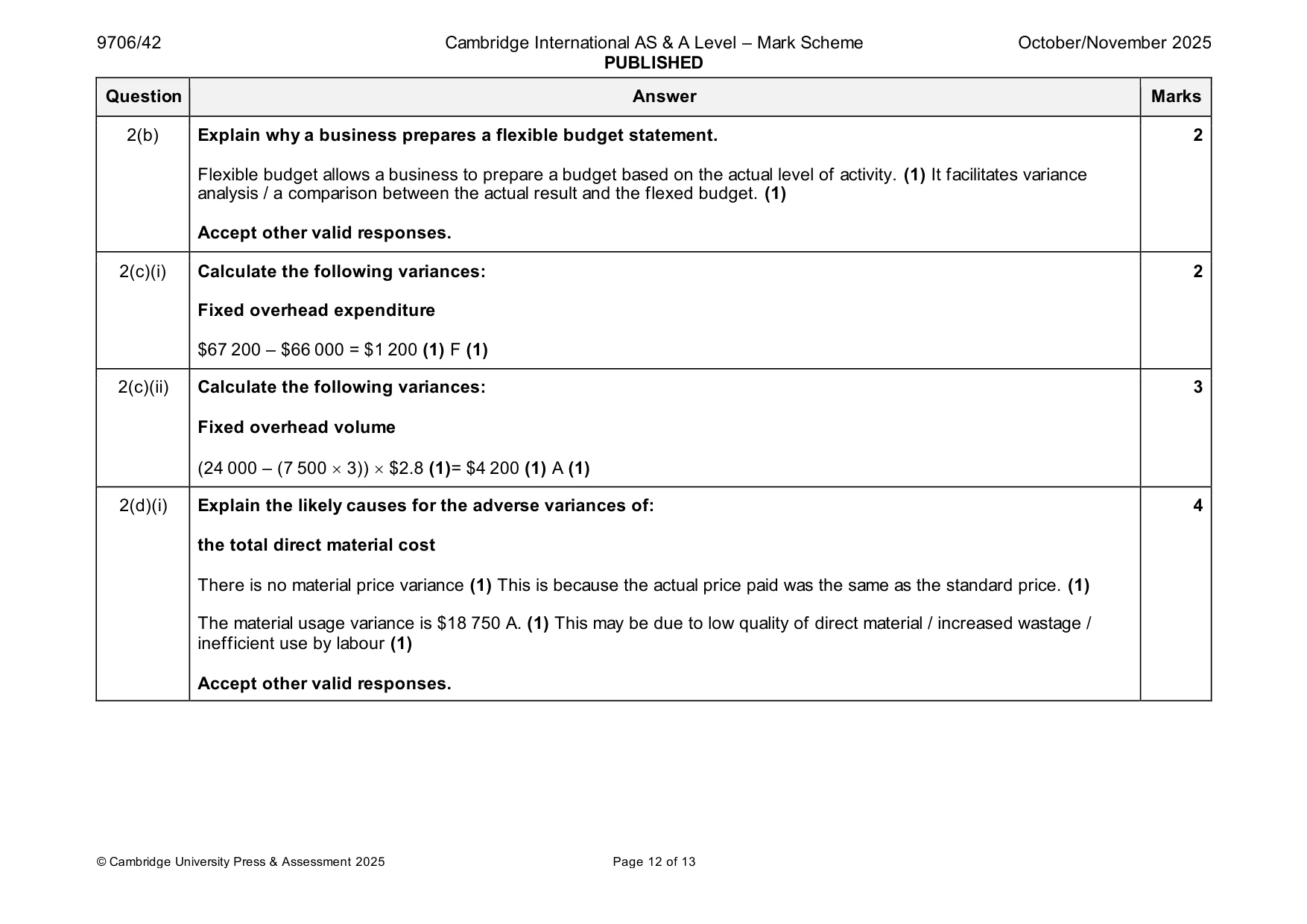
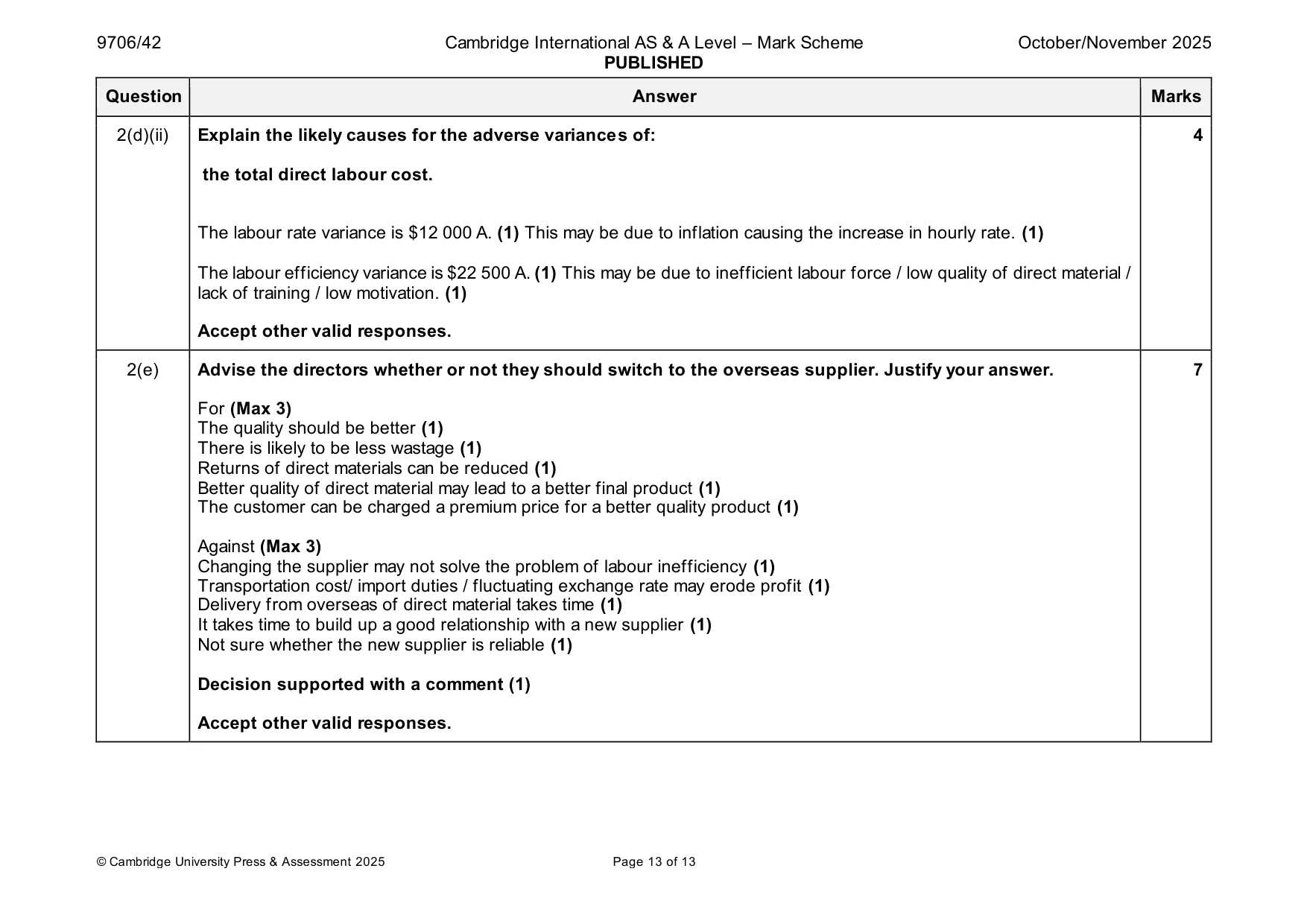
Mark scheme: 2(a) Prepare the fixed budget for August showing the budgeted profit. 3 Fixed budget $ Sales (8 000 units) 656 000 } Direct material 160 000 } Direct labour 360 000 }(1) Fixed overhead 67 200 (1) Profit 68 800 (1)OF 2(b) Explain why a business prepares a flexible budget statement. 2 Flexible budget allows a business to prepare a budget based on the actual level of activity. (1) It facilitates variance analysis / a comparison between the actual result and the flexed budget. (1) Accept other valid responses. 2(c)(i) Calculate the following variances: 2 Fixed overhead expenditure $67 200 – $66 000 = $1 200 (1) F (1) 2(c)(ii) Calculate the following variances: 3 Fixed overhead volume (24 000 – (7 500 3)) $2.8 (1)= $4 200 (1) A (1) 2(d)(i) Explain the likely causes for the adverse variances of: 4 the total direct material cost There is no material price variance (1) This is because the actual price paid was the same as the standard price. (1) The material usage variance is $18 750 A. (1) This may be due to low quality of direct material / increased wastage / inefficient use by labour (1) Accept other valid responses. 2(d)(ii) Explain the likely causes for the adverse variances of: 4 the total direct labour cost. The labour rate variance is $12 000 A. (1) This may be due to inflation causing the increase in hourly rate. (1) The labour efficiency variance is $22 500 A. (1) This may be due to inefficient labour force / low quality of direct material / lack of training / low motivation. (1) Accept other valid responses. 2(e) Advise the directors whether or not they should switch to the overseas supplier. Justify your answer. 7 For (Max 3) The quality should be better (1) There is likely to be less wastage (1) Returns of direct materials can be reduced (1) Better quality of direct material may lead to a better final product (1) The customer can be charged a premium price for a better quality product (1) Against (Max 3) Changing the supplier may not solve the problem of labour inefficiency (1) Transportation cost/ import duties / fluctuating exchange rate may erode profit (1) Delivery from overseas of direct material takes time (1) It takes time to build up a good relationship with a new supplier (1) Not sure whether the new supplier is reliable (1) Decision supported with a comment (1) Accept other valid responses.
What was in this paper
The subtopics covered by these 2 questions, and how many questions each got. Open one in a new tab to see every Cambridge question on it.
What you needed in this session
Cambridge’s own grade thresholds for 2025 Oct/Nov, Paper 4 · Variant 2. A higher threshold means an easier paper — the bar moves with how the cohort did.