Cambridge A Level Accounting 9706 — 2025 Feb/March Paper 4 · Variant 2
9706/42/F/M/25 · 2 questions · 50 marks · ≈56 min
The question paper and its mark scheme, free to read here and free to download. This is Cambridge’s own paper, exactly as it was sat.
Question paper12 pages

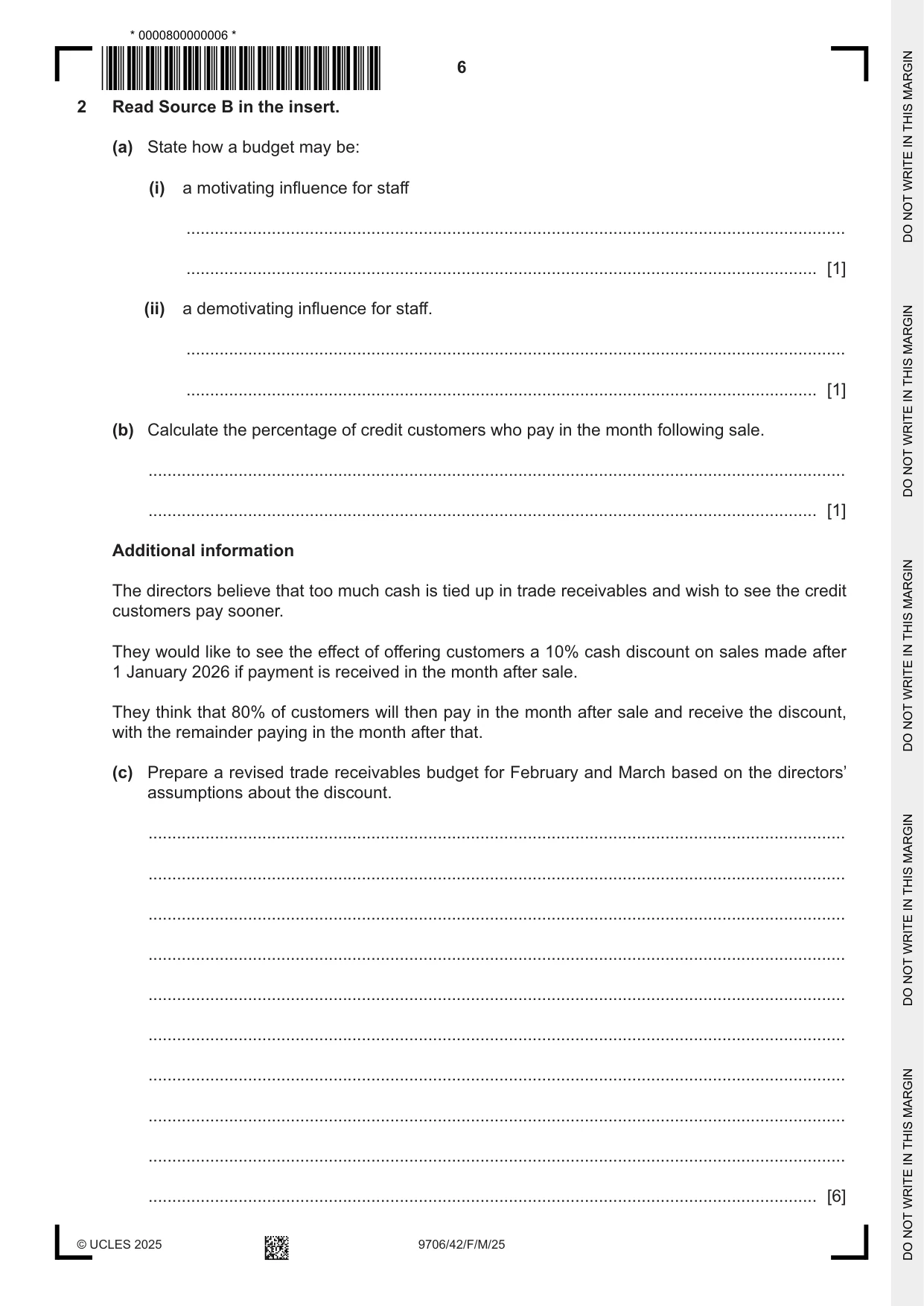
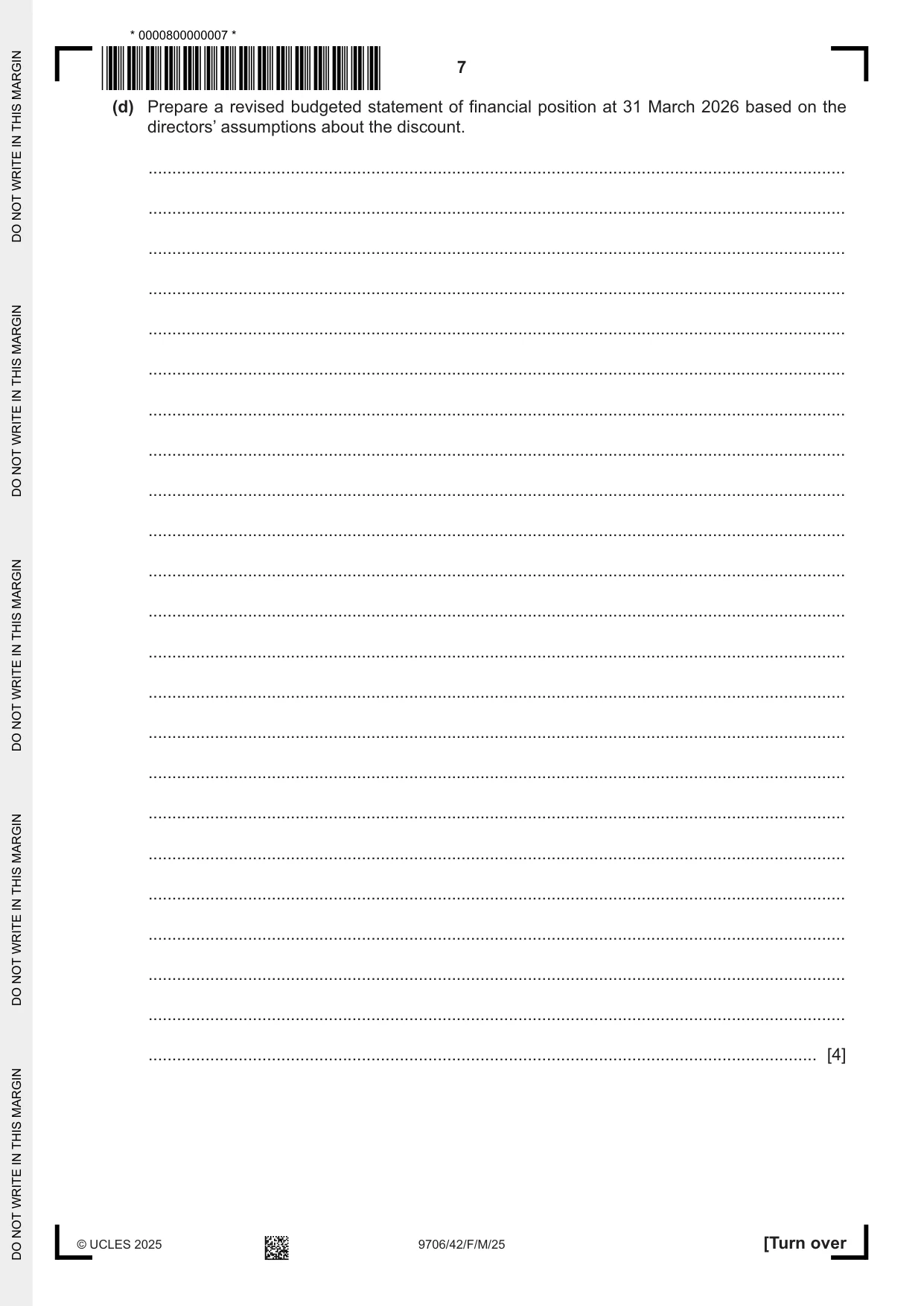
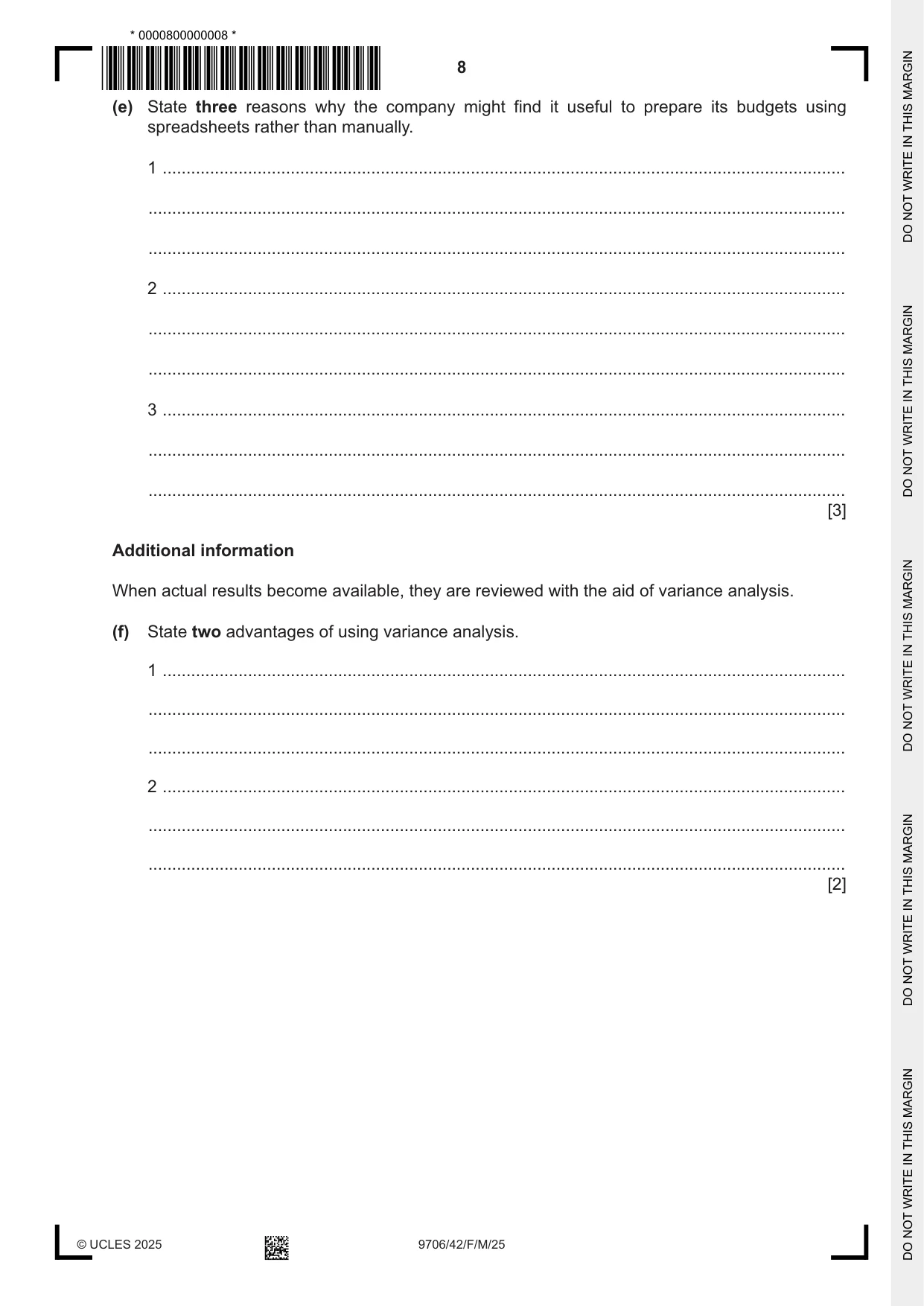
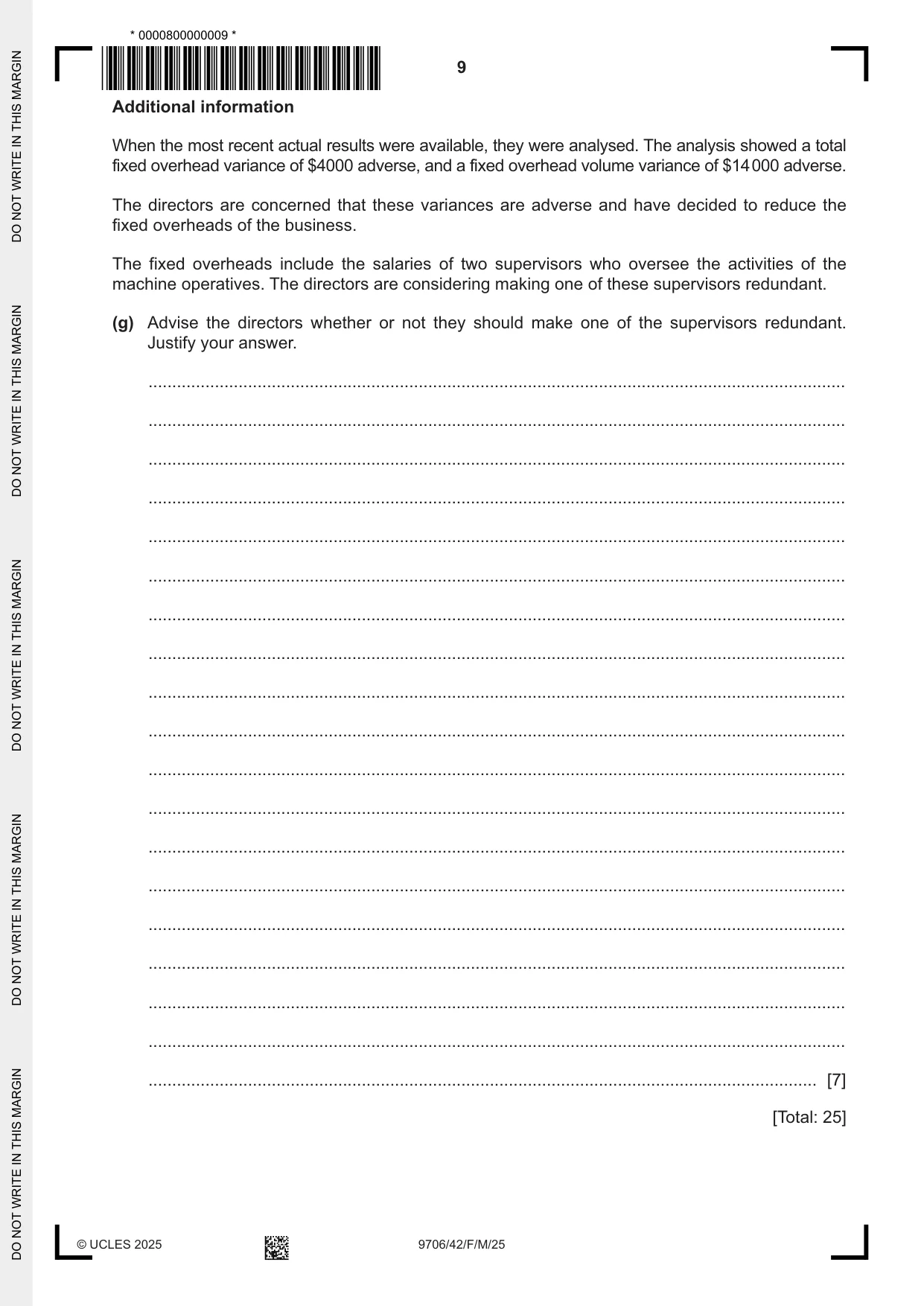



Mark scheme11 pages
Answers below. Sit the paper first if you are practising.
Questions as text
Q1 · Read Source A in the insert
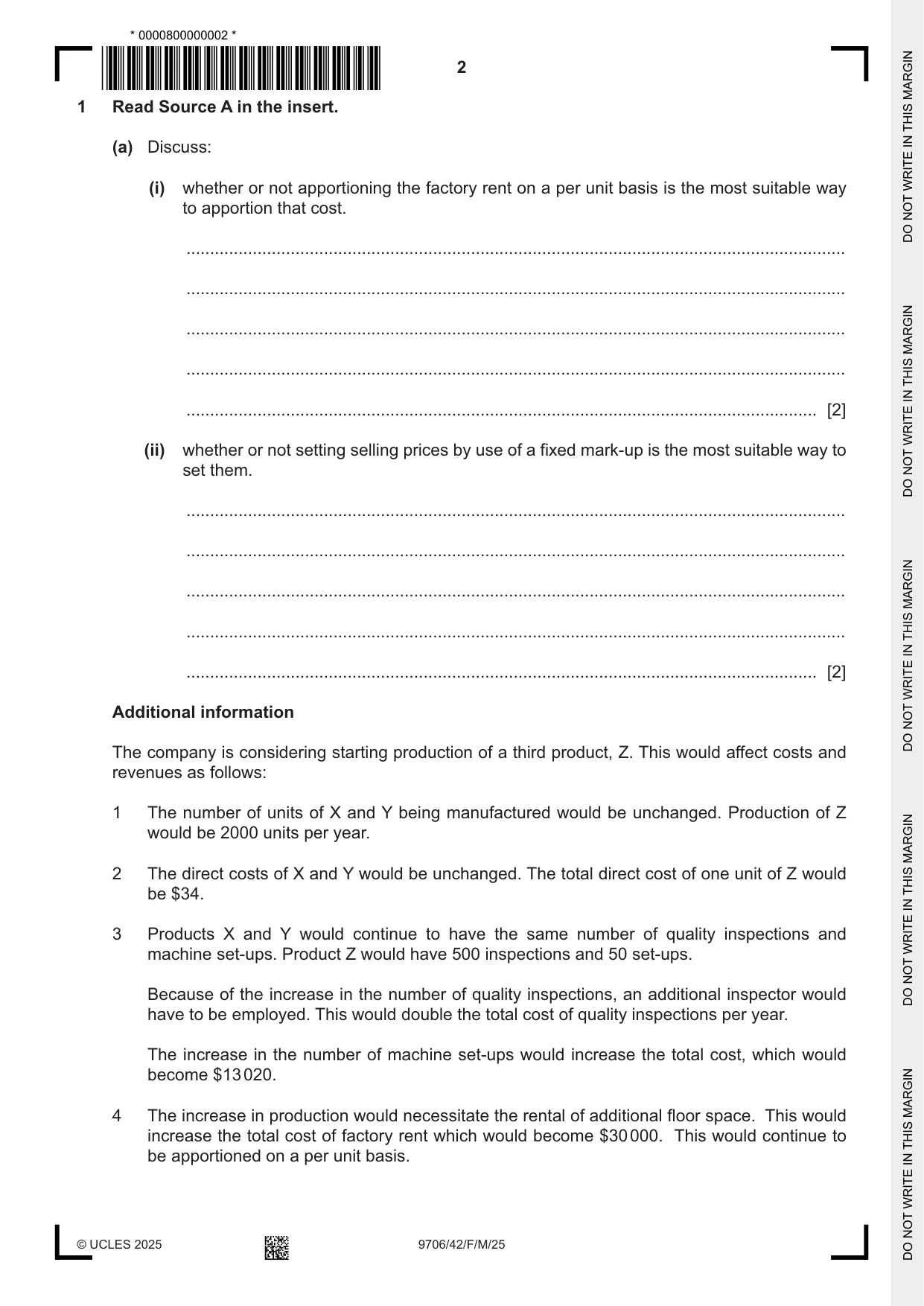
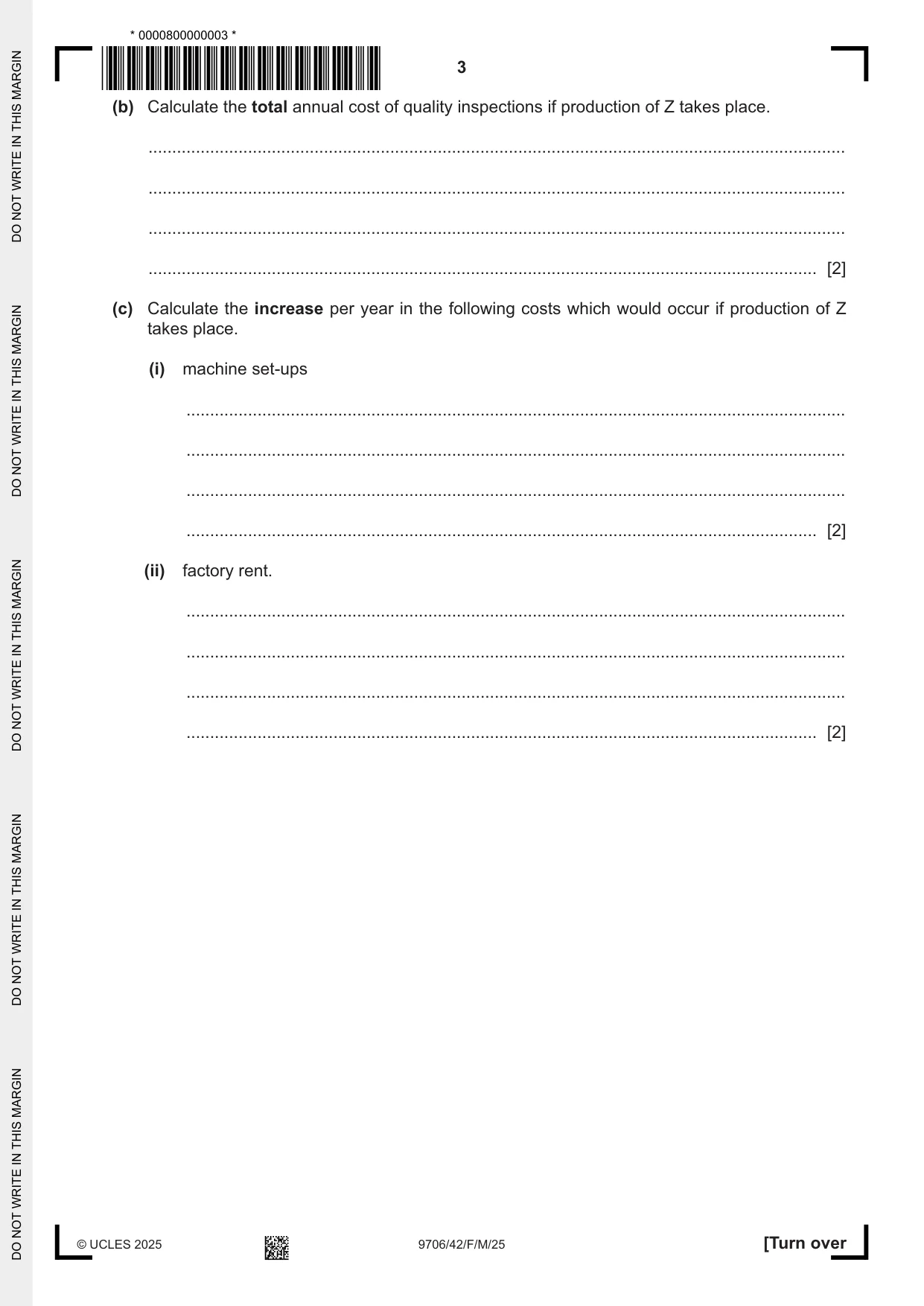
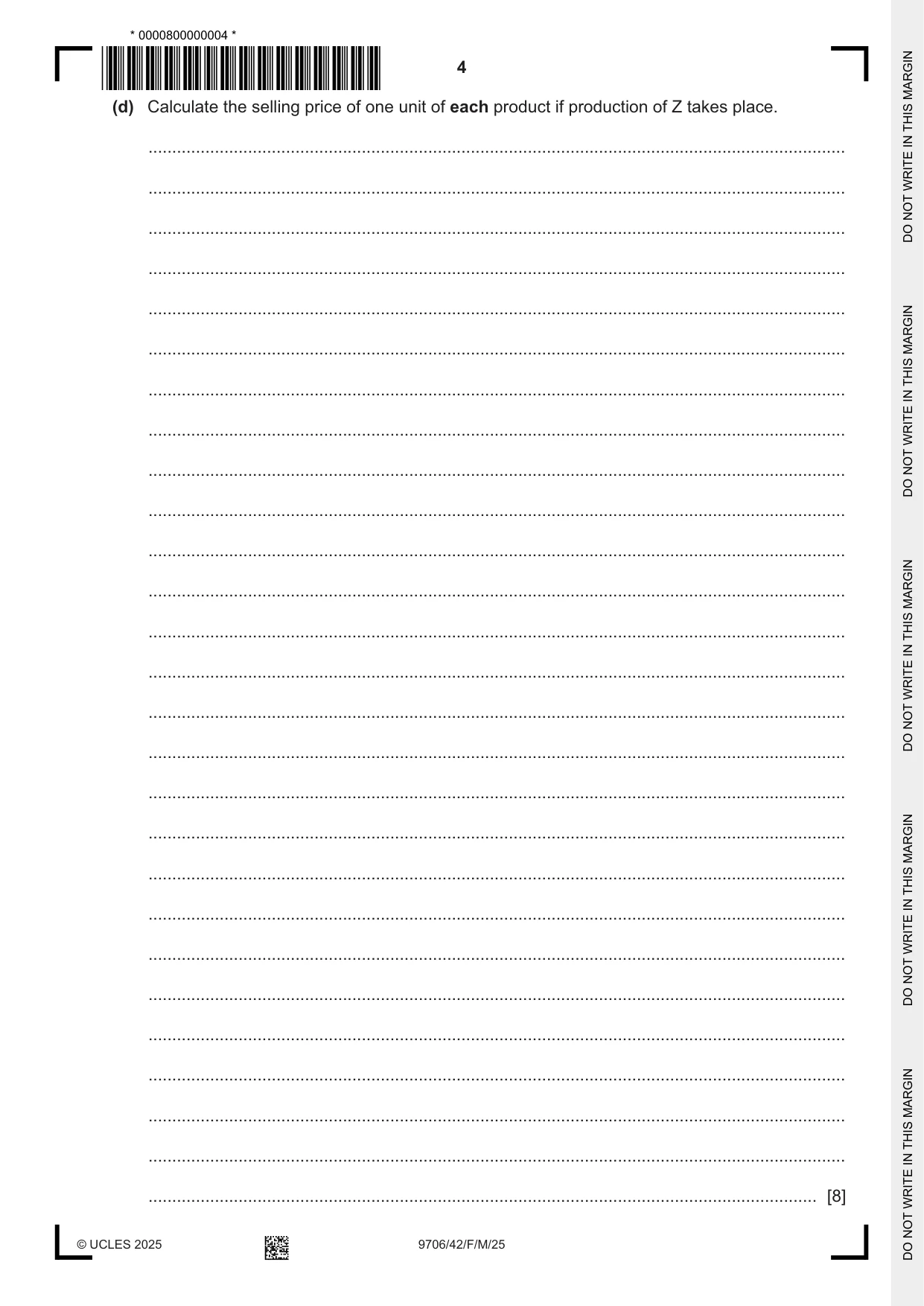
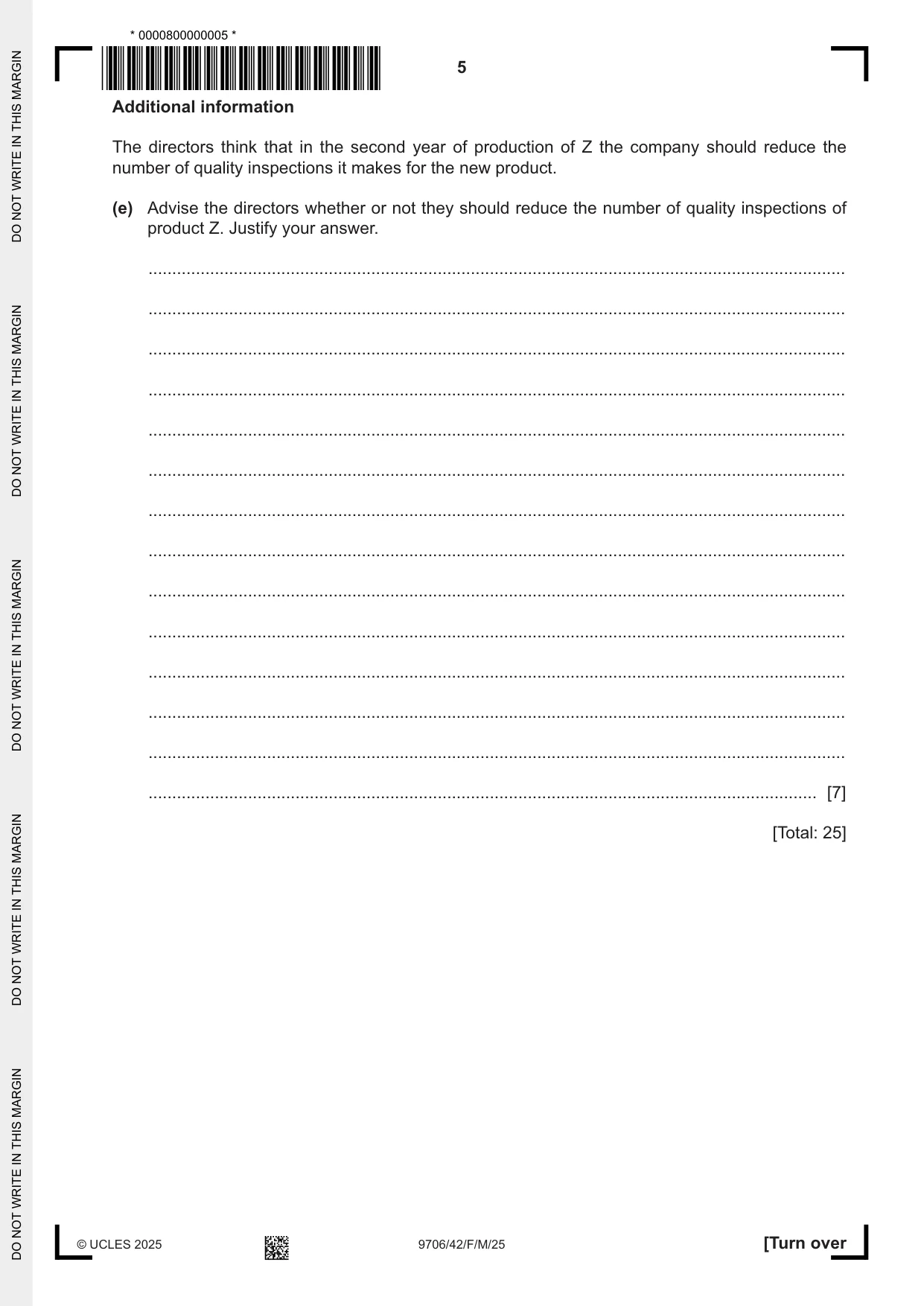
1 Read Source A in the insert. (a) Discuss: (i) whether or not apportioning the factory rent on a per unit basis is the most suitable way to apportion that cost. ........................................................................................................................................... ........................................................................................................................................... ........................................................................................................................................... ........................................................................................................................................... ..................................................................................................................................... [2] (ii) whether or not setting selling prices by use of a fixed mark-up is the most suitable way to set them. ........................................................................................................................................... ........................................................................................................................................... ........................................................................................................................................... ........................................................................................................................................... ..................................................................................................................................... [2] Additional information The company is considering starting production of a third product, Z. This would affect costs and revenues as follows: 1 The number of units of X and Y being manufactured would be unchanged. Production of Z would be 2000 units per year. 2 The direct costs of X and Y would be unchanged. The total direct cost of one unit of Z would be $34. 3 Products X and Y would continue to have the same number of quality inspections and machine set-ups. Product Z would have 500 inspections and 50 set-ups. Because of the increase in the number of quality inspections, an additional inspector would have to be employed. This would double the total cost of quality inspections per year. The increase in the number of machine set-ups would increase the total cost, which would become $13 020. 4 The increase in production would necessitate the rental of additional floor space. This would increase the total cost of factory rent which would become $30 000. This would continue to be apportioned on a per unit basis. (b) Calculate the total annual cost of quality inspections if production of Z takes place. ................................................................................................................................................... ................................................................................................................................................... ................................................................................................................................................... ............................................................................................................................................. [2] (c) Calculate the increase per year in the following costs which would occur if production of Z takes place. (i) machine set-ups ........................................................................................................................................... ........................................................................................................................................... ........................................................................................................................................... ..................................................................................................................................... [2] (ii) factory rent. ........................................................................................................................................... ........................................................................................................................................... ........................................................................................................................................... ..................................................................................................................................... [2] (d) Calculate the selling price of one unit of each product if production of Z takes place. ................................................................................................................................................... ................................................................................................................................................... ................................................................................................................................................... ................................................................................................................................................... ................................................................................................................................................... ................................................................................................................................................... ................................................................................................................................................... ................................................................................................................................................... ................................................................................................................................................... ................................................................................................................................................... ................................................................................................................................................... ................................................................................................................................................... ................................................................................................................................................... ................................................................................................................................................... ................................................................................................................................................... ................................................................................................................................................... ................................................................................................................................................... ................................................................................................................................................... ................................................................................................................................................... ................................................................................................................................................... ................................................................................................................................................... ................................................................................................................................................... ................................................................................................................................................... ................................................................................................................................................... ................................................................................................................................................... ................................................................................................................................................... ............................................................................................................................................. [8] Additional information The directors think that in the second year of production of Z the company should reduce the number of quality inspections it makes for the new product. (e) Advise the directors whether or not they should reduce the number of quality inspections of product Z. Justify your answer. ................................................................................................................................................... ................................................................................................................................................... ................................................................................................................................................... ................................................................................................................................................... ................................................................................................................................................... ................................................................................................................................................... ................................................................................................................................................... ................................................................................................................................................... ................................................................................................................................................... ................................................................................................................................................... ................................................................................................................................................... ................................................................................................................................................... ................................................................................................................................................... ............................................................................................................................................. [7] [Total: 25]
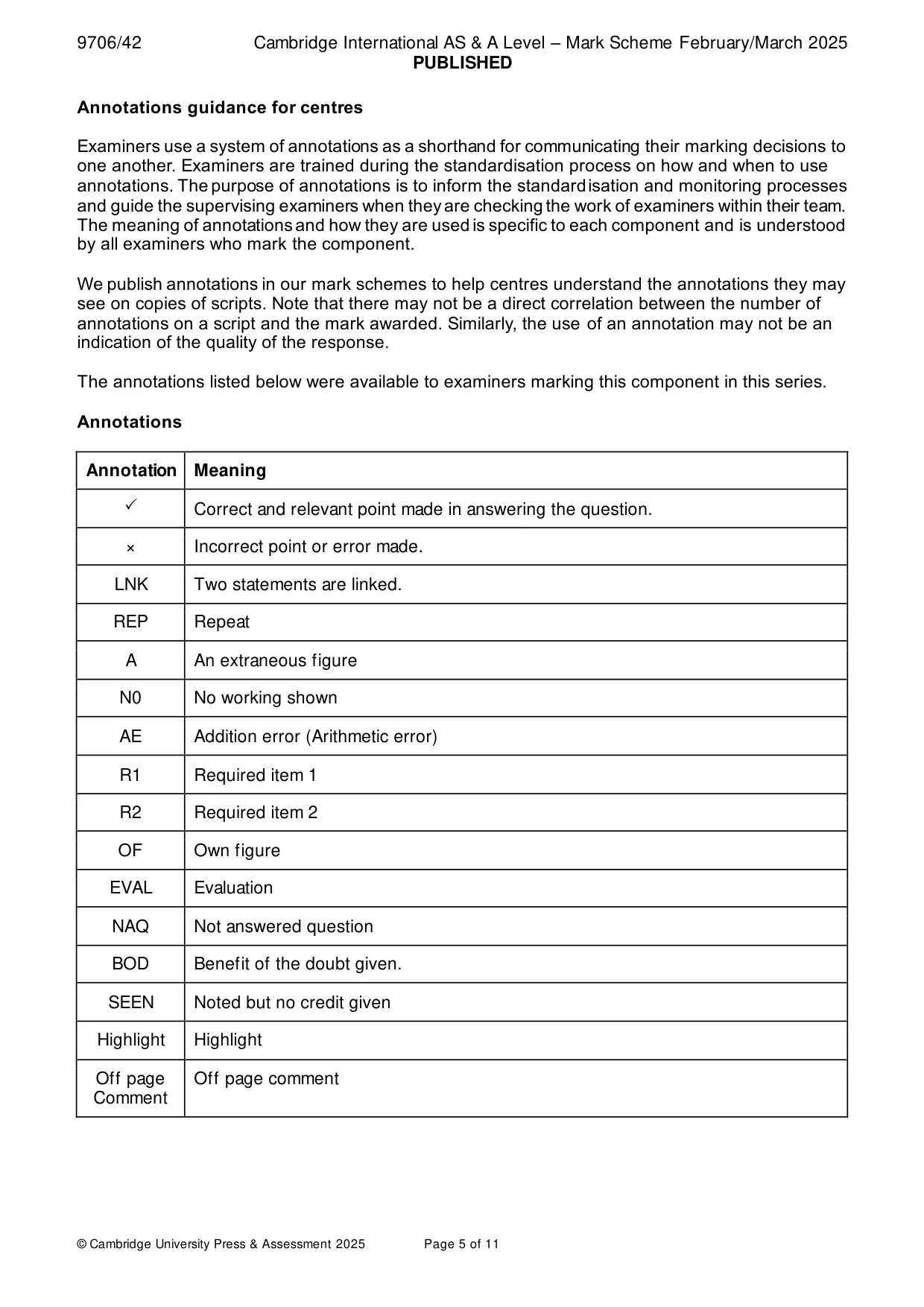
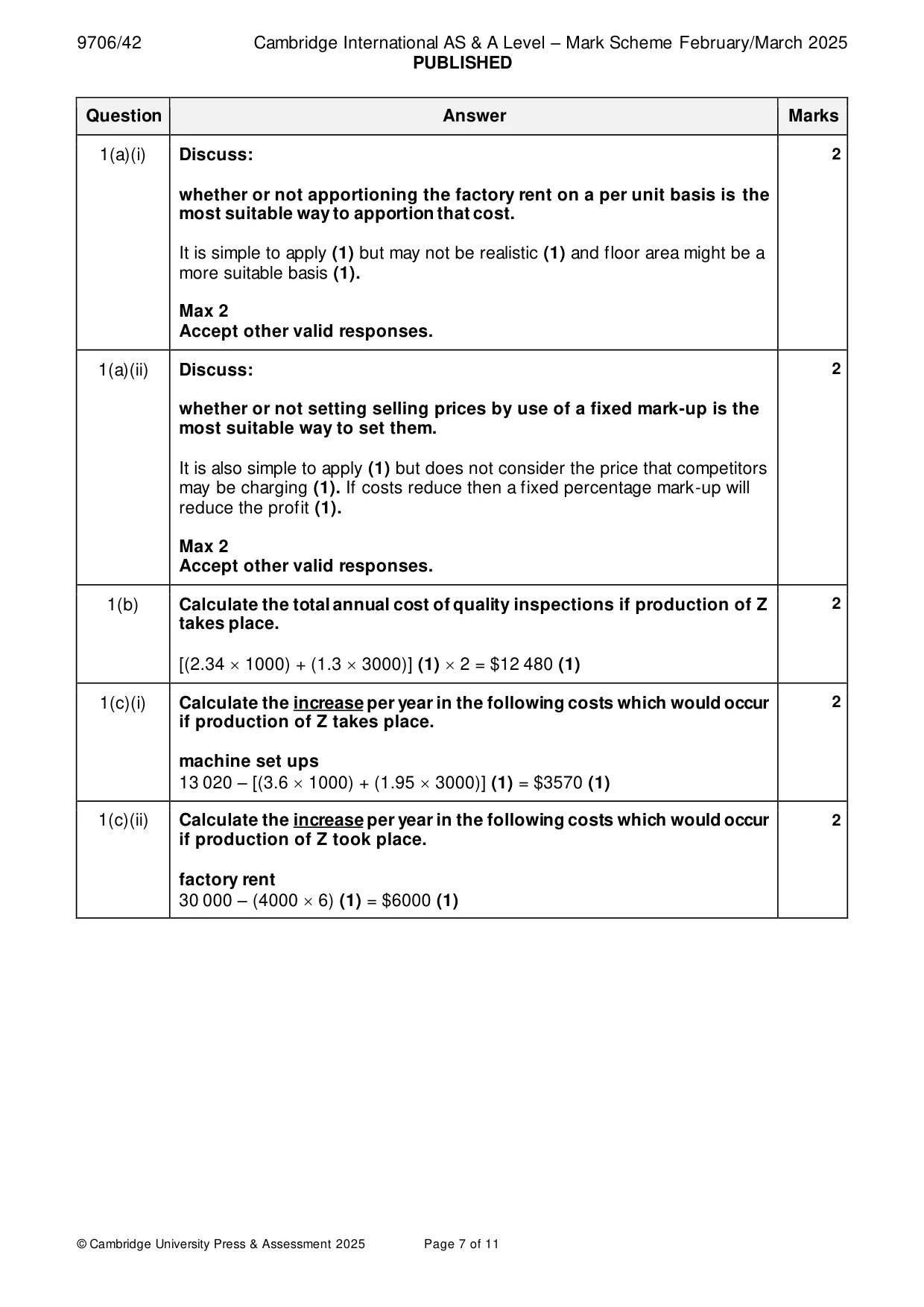
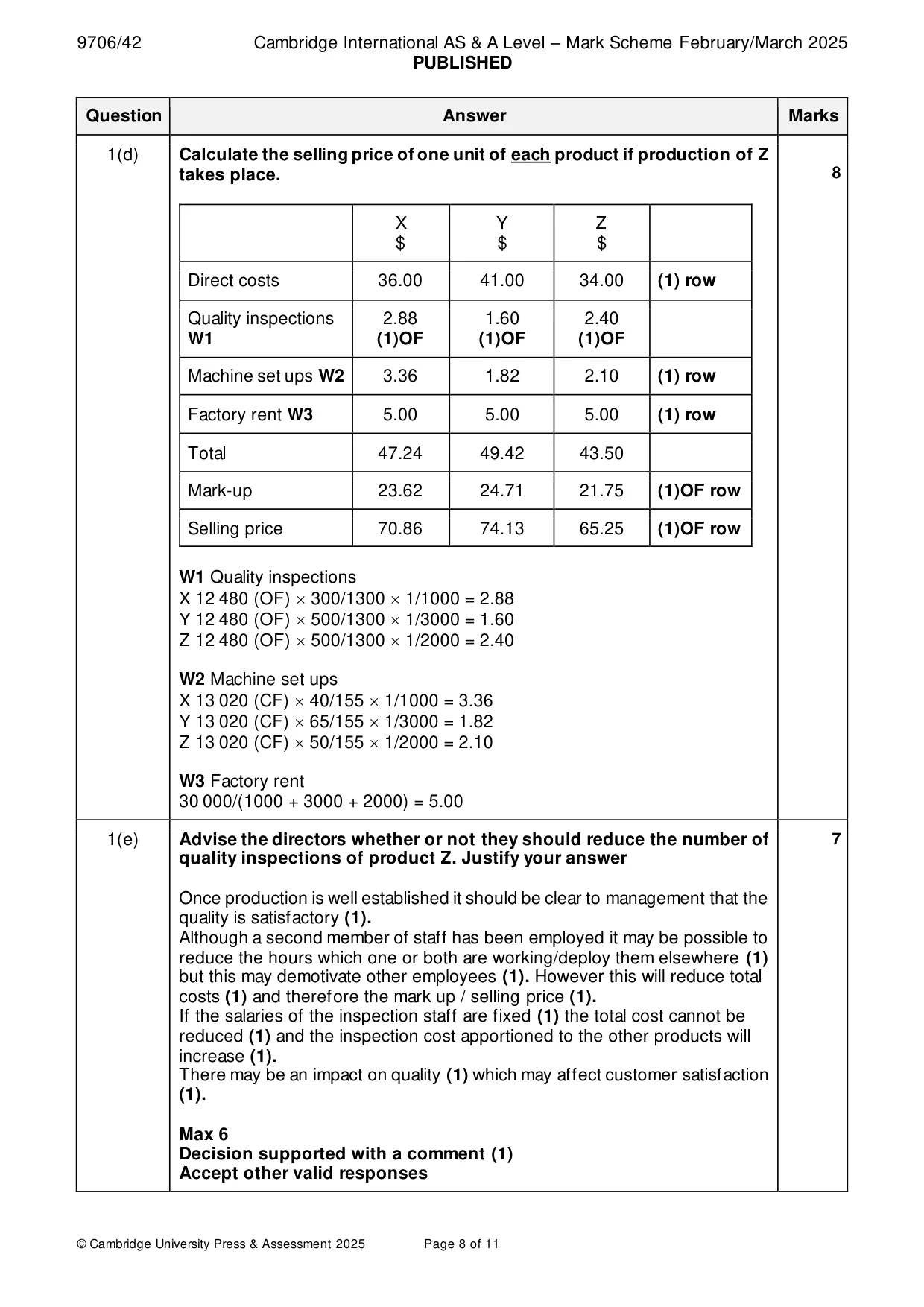
Mark scheme: Question Answer Marks 1(a)(i) Discuss: 2 whether or not apportioning the factory rent on a per unit basis is the most suitable way to apportion that cost. It is simple to apply (1) but may not be realistic (1) and floor area might be a more suitable basis (1). Max 2 Accept other valid responses. 1(a)(ii) Discuss: 2 whether or not setting selling prices by use of a fixed mark-up is the most suitable way to set them. It is also simple to apply (1) but does not consider the price that competitors may be charging (1). If costs reduce then a fixed percentage mark-up will reduce the profit (1). Max 2 Accept other valid responses. 1(b) Calculate the total annual cost of quality inspections if production of Z 2 takes place. [(2.34 1000) + (1.3 3000)] (1) 2 = $12 480 (1) 1(c)(i) Calculate the increase per year in the following costs which would occur 2 if production of Z takes place. machine set ups 13 020 – [(3.6 1000) + (1.95 3000)] (1) = $3570 (1) 1(c)(ii) Calculate the increase per year in the following costs which would occur 2 if production of Z took place. factory rent 30 000 – (4000 6) (1) = $6000 (1) 1(d) Calculate the selling price of one unit of each product if production of Z takes place. 8 X Y Z $ $ $ Direct costs 36.00 41.00 34.00 (1) row Quality inspections 2.88 1.60 2.40 W1 (1)OF (1)OF (1)OF Machine set ups W2 3.36 1.82 2.10 (1) row Factory rent W3 5.00 5.00 5.00 (1) row Total 47.24 49.42 43.50 Mark-up 23.62 24.71 21.75 (1)OF row Selling price 70.86 74.13 65.25 (1)OF row W1 Quality inspections X 12 480 (OF) 300/1300 1/1000 = 2.88 Y 12 480 (OF) 500/1300 1/3000 = 1.60 Z 12 480 (OF) 500/1300 1/2000 = 2.40 W2 Machine set ups X 13 020 (CF) 40/155 1/1000 = 3.36 Y 13 020 (CF) 65/155 1/3000 = 1.82 Z 13 020 (CF) 50/155 1/2000 = 2.10 W3 Factory rent 30 000/(1000 + 3000 + 2000) = 5.00 1(e) Advise the directors whether or not they should reduce the number of 7 quality inspections of product Z. Justify your answer Once production is well established it should be clear to management that the quality is satisfactory (1). Although a second member of staff has been employed it may be possible to reduce the hours which one or both are working/deploy them elsewhere (1) but this may demotivate other employees (1). However this will reduce total costs (1) and therefore the mark up / selling price (1). If the salaries of the inspection staff are fixed (1) the total cost cannot be reduced (1) and the inspection cost apportioned to the other products will increase (1). There may be an impact on quality (1) which may affect customer satisfaction (1). Max 6 Decision supported with a comment (1) Accept other valid responses
Q2 · Read Source B in the insert
2 Read Source B in the insert. (a) State how a budget may be: (i) a motivating influence for staff ........................................................................................................................................... ..................................................................................................................................... [1] (ii) a demotivating influence for staff. ........................................................................................................................................... ..................................................................................................................................... [1] (b) Calculate the percentage of credit customers who pay in the month following sale. ................................................................................................................................................... ............................................................................................................................................. [1] Additional information The directors believe that too much cash is tied up in trade receivables and wish to see the credit customers pay sooner. They would like to see the effect of offering customers a 10% cash discount on sales made after 1 January 2026 if payment is received in the month after sale. They think that 80% of customers will then pay in the month after sale and receive the discount, with the remainder paying in the month after that. (c) Prepare a revised trade receivables budget for February and March based on the directors’ assumptions about the discount. ................................................................................................................................................... ................................................................................................................................................... ................................................................................................................................................... ................................................................................................................................................... ................................................................................................................................................... ................................................................................................................................................... ................................................................................................................................................... ................................................................................................................................................... ................................................................................................................................................... ............................................................................................................................................. [6] (d) Prepare a revised budgeted statement of financial position at 31 March 2026 based on the directors’ assumptions about the discount. ................................................................................................................................................... ................................................................................................................................................... ................................................................................................................................................... ................................................................................................................................................... ................................................................................................................................................... ................................................................................................................................................... ................................................................................................................................................... ................................................................................................................................................... ................................................................................................................................................... ................................................................................................................................................... ................................................................................................................................................... ................................................................................................................................................... ................................................................................................................................................... ................................................................................................................................................... ................................................................................................................................................... ................................................................................................................................................... ................................................................................................................................................... ................................................................................................................................................... ................................................................................................................................................... ................................................................................................................................................... ................................................................................................................................................... ................................................................................................................................................... ............................................................................................................................................. [4] (e) State three reasons why the company might find it useful to prepare its budgets using spreadsheets rather than manually. 1 ................................................................................................................................................ ................................................................................................................................................... ................................................................................................................................................... 2 ................................................................................................................................................ ................................................................................................................................................... ................................................................................................................................................... 3 ................................................................................................................................................ ................................................................................................................................................... ................................................................................................................................................... [3] Additional information When actual results become available, they are reviewed with the aid of variance analysis. (f) State two advantages of using variance analysis. 1 ................................................................................................................................................ ................................................................................................................................................... ................................................................................................................................................... 2 ................................................................................................................................................ ................................................................................................................................................... ................................................................................................................................................... [2]
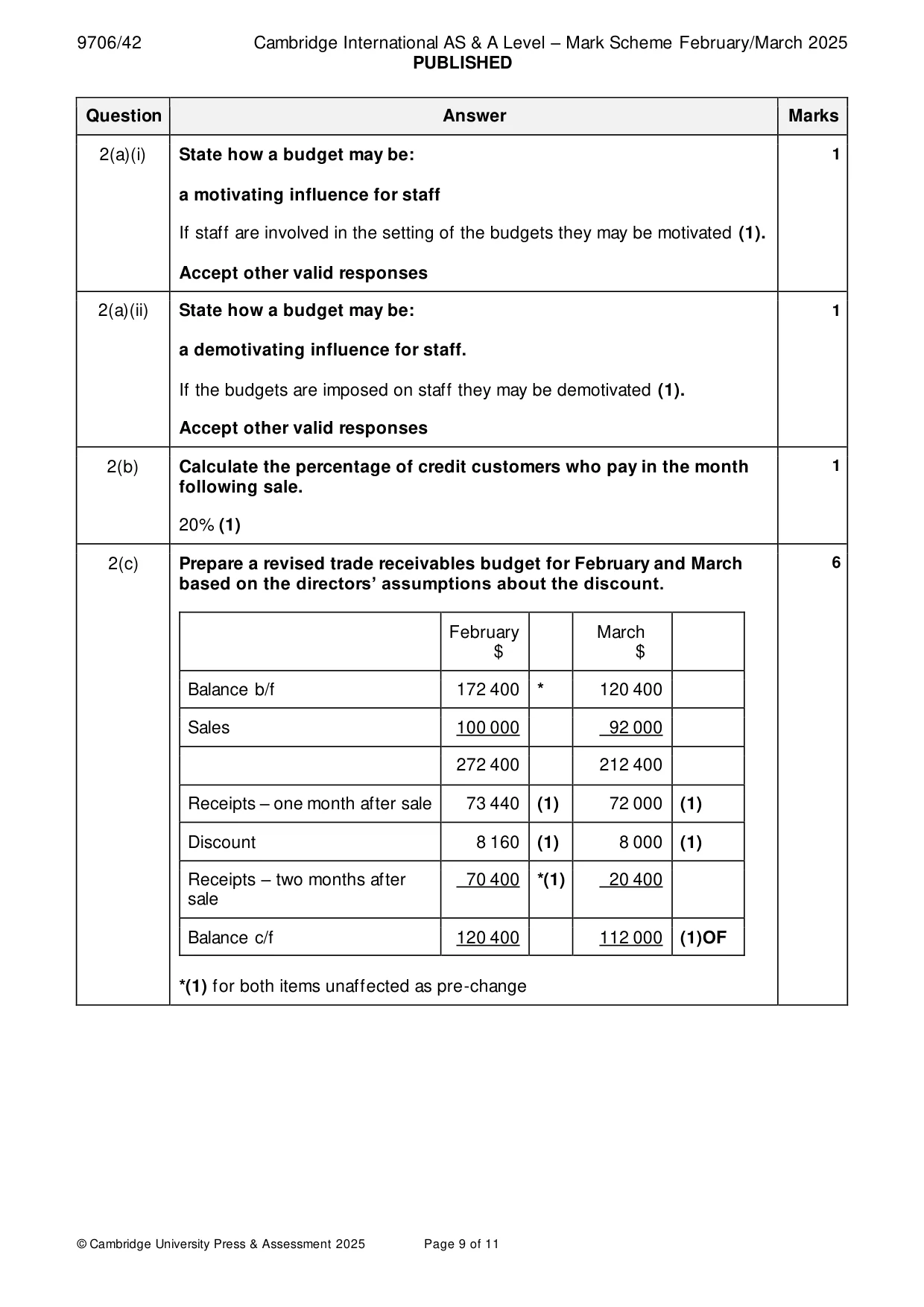
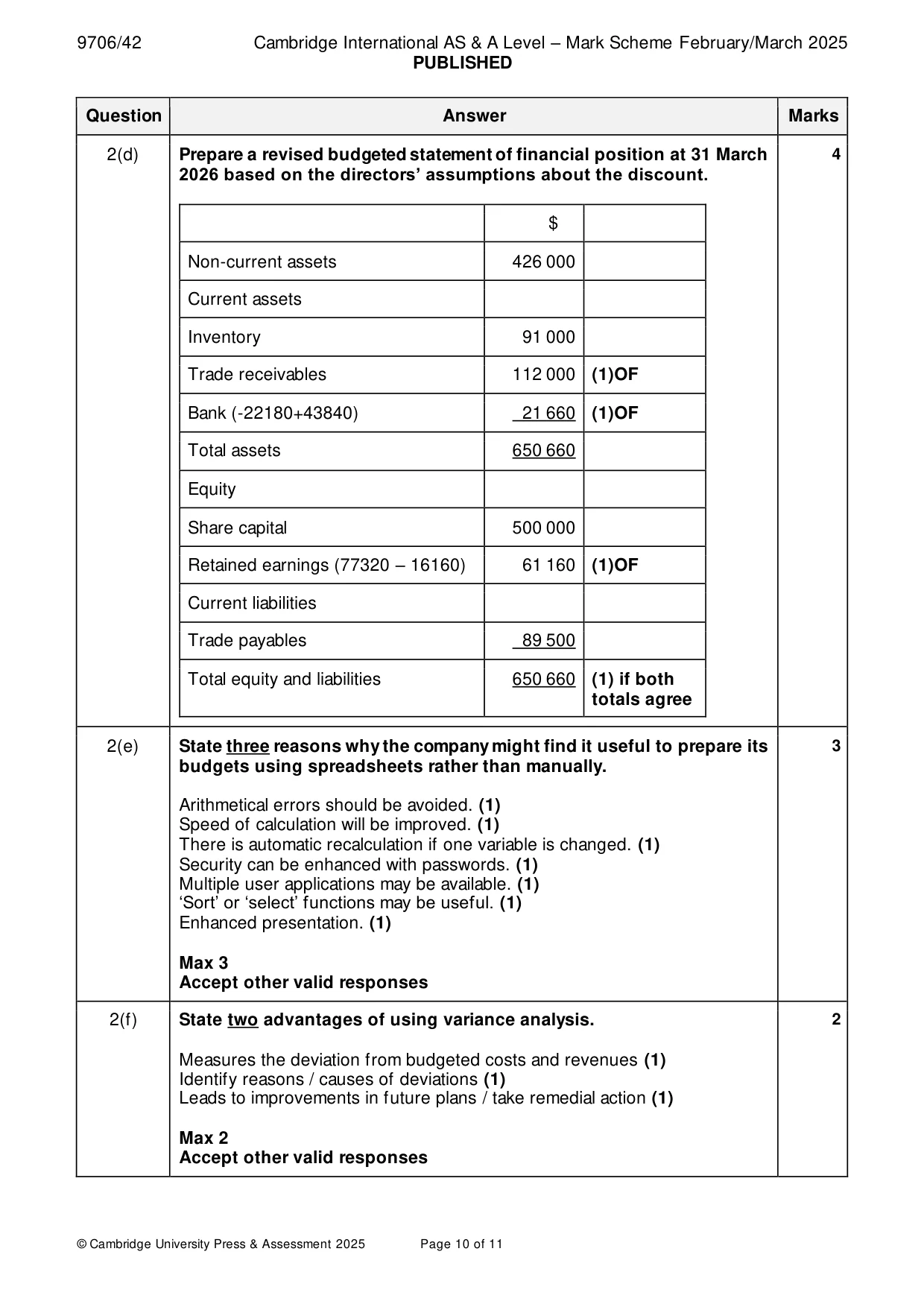
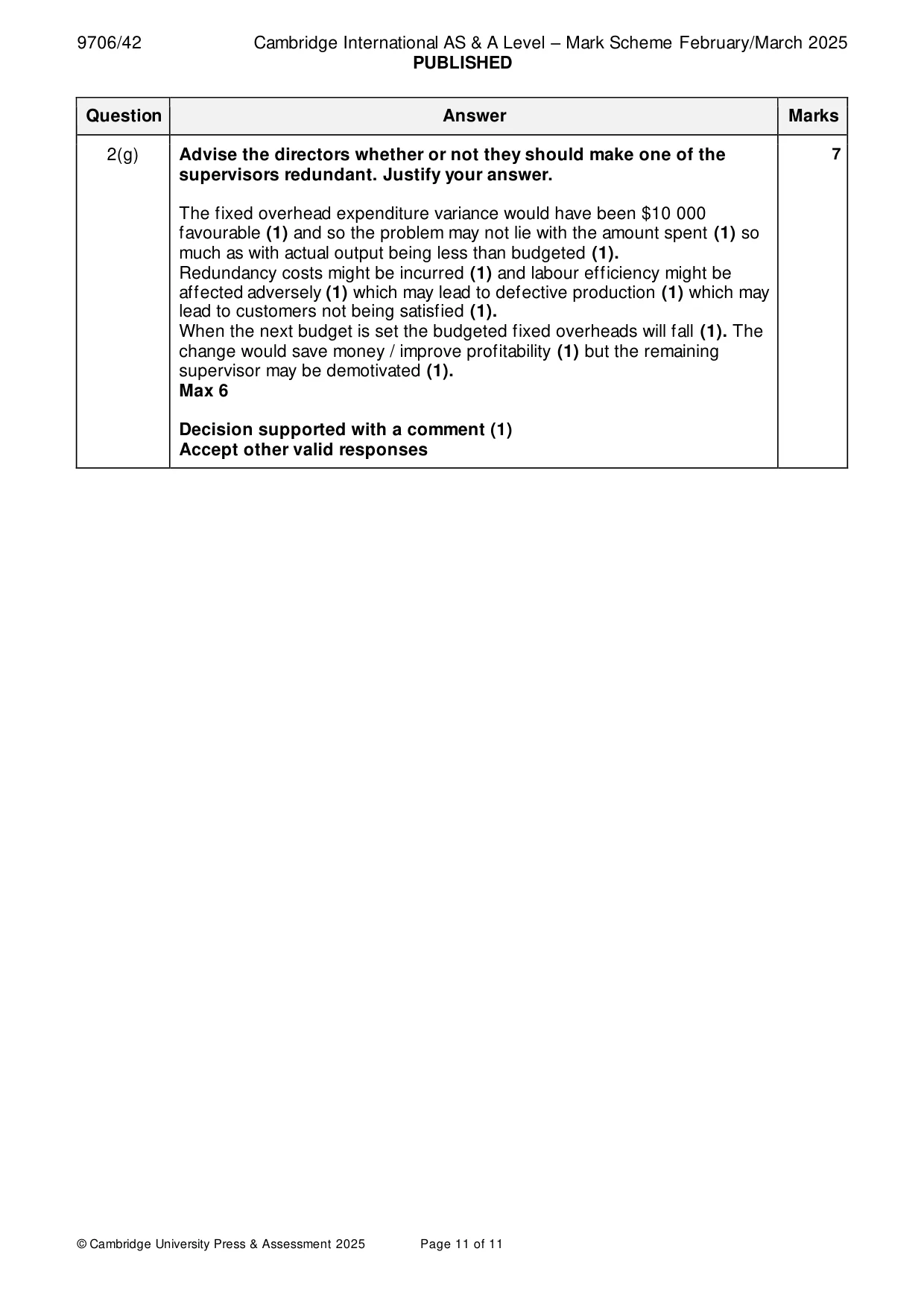
Mark scheme: 2(a)(i) State how a budget may be: 1 a motivating influence for staff If staff are involved in the setting of the budgets they may be motivated (1). Accept other valid responses 2(a)(ii) State how a budget may be: 1 a demotivating influence for staff. If the budgets are imposed on staff they may be demotivated (1). Accept other valid responses 2(b) Calculate the percentage of credit customers who pay in the month 1 following sale. 20% (1) 2(c) Prepare a revised trade receivables budget for February and March 6 based on the directors’ assumptions about the discount. February March $ $ Balance b/f 172 400 * 120 400 Sales 100 000 92 000 272 400 212 400 Receipts – one month after sale 73 440 (1) 72 000 (1) Discount 8 160 (1) 8 000 (1) Receipts – two months after 70 400 *(1) 20 400 sale Balance c/f 120 400 112 000 (1)OF *(1) for both items unaffected as pre-change 2(d) Prepare a revised budgeted statement of financial position at 31 March 4 2026 based on the directors’ assumptions about the discount. $ Non-current assets 426 000 Current assets Inventory 91 000 Trade receivables 112 000 (1)OF Bank (-22180+43840) 21 660 (1)OF Total assets 650 660 Equity Share capital 500 000 Retained earnings (77320 – 16160) 61 160 (1)OF Current liabilities Trade payables 89 500 Total equity and liabilities 650 660 (1) if both totals agree 2(e) State three reasons why the company might find it useful to prepare its 3 budgets using spreadsheets rather than manually. Arithmetical errors should be avoided. (1) Speed of calculation will be improved. (1) There is automatic recalculation if one variable is changed. (1) Security can be enhanced with passwords. (1) Multiple user applications may be available. (1) ‘Sort’ or ‘select’ functions may be useful. (1) Enhanced presentation. (1) Max 3 Accept other valid responses 2(f) State two advantages of using variance analysis. 2 Measures the deviation from budgeted costs and revenues (1) Identify reasons / causes of deviations (1) Leads to improvements in future plans / take remedial action (1) Max 2 Accept other valid responses 2(g) Advise the directors whether or not they should make one of the 7 supervisors redundant. Justify your answer. The fixed overhead expenditure variance would have been $10 000 favourable (1) and so the problem may not lie with the amount spent (1) so much as with actual output being less than budgeted (1). Redundancy costs might be incurred (1) and labour efficiency might be affected adversely (1) which may lead to defective production (1) which may lead to customers not being satisfied (1). When the next budget is set the budgeted fixed overheads will fall (1). The change would save money / improve profitability (1) but the remaining supervisor may be demotivated (1). Max 6 Decision supported with a comment (1) Accept other valid responses
What was in this paper
The subtopics covered by these 2 questions, and how many questions each got. Open one in a new tab to see every Cambridge question on it.
What you needed in this session
Cambridge’s own grade thresholds for 2025 Feb/March, Paper 4 · Variant 2. A higher threshold means an easier paper — the bar moves with how the cohort did.