Cambridge A Level Accounting 9706 — 2024 Oct/Nov Paper 4 · Variant 2
9706/42/O/N/24 · 2 questions · 50 marks · ≈56 min
The question paper and its mark scheme, free to read here and free to download. This is Cambridge’s own paper, exactly as it was sat.
Question paper8 pages
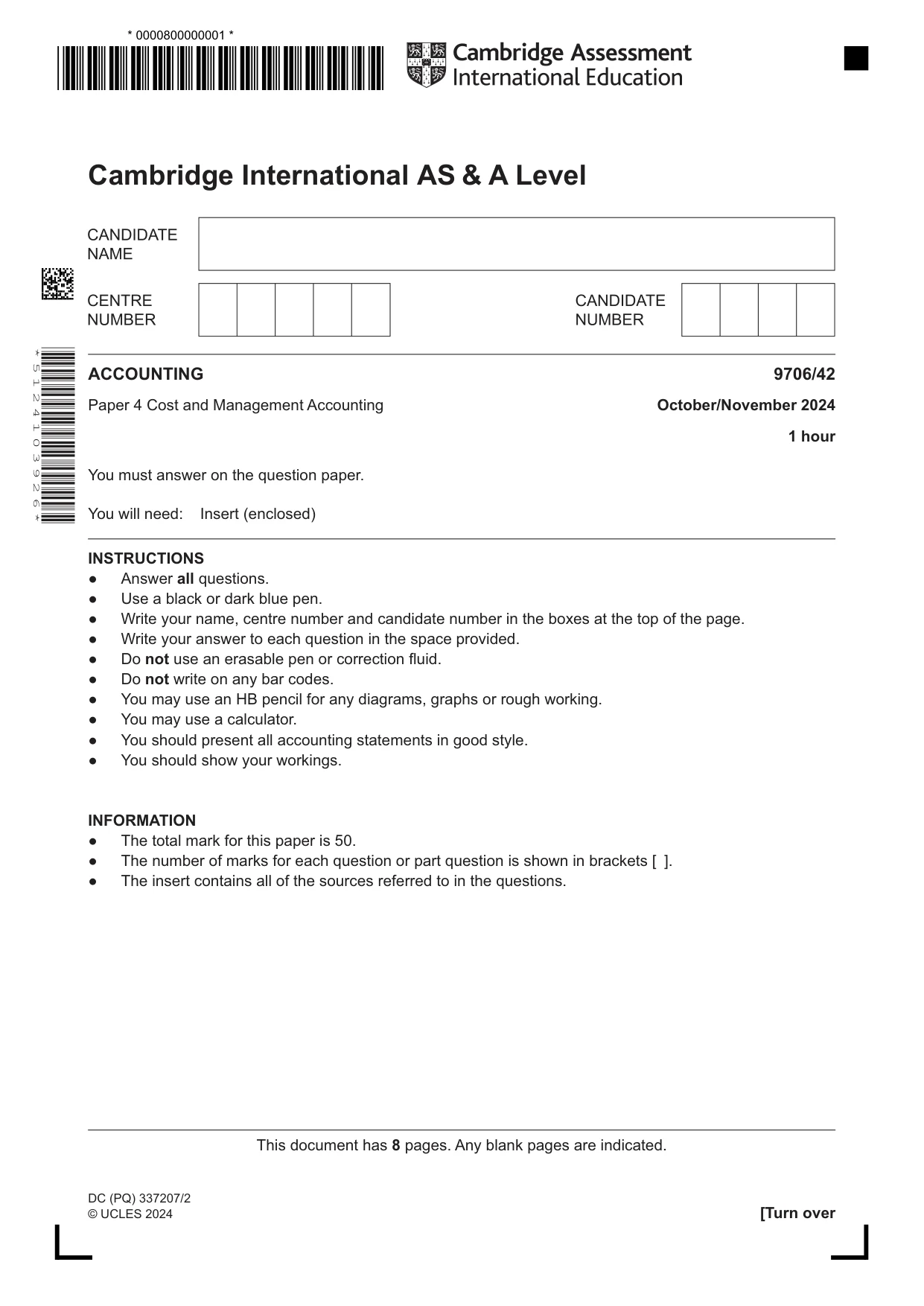
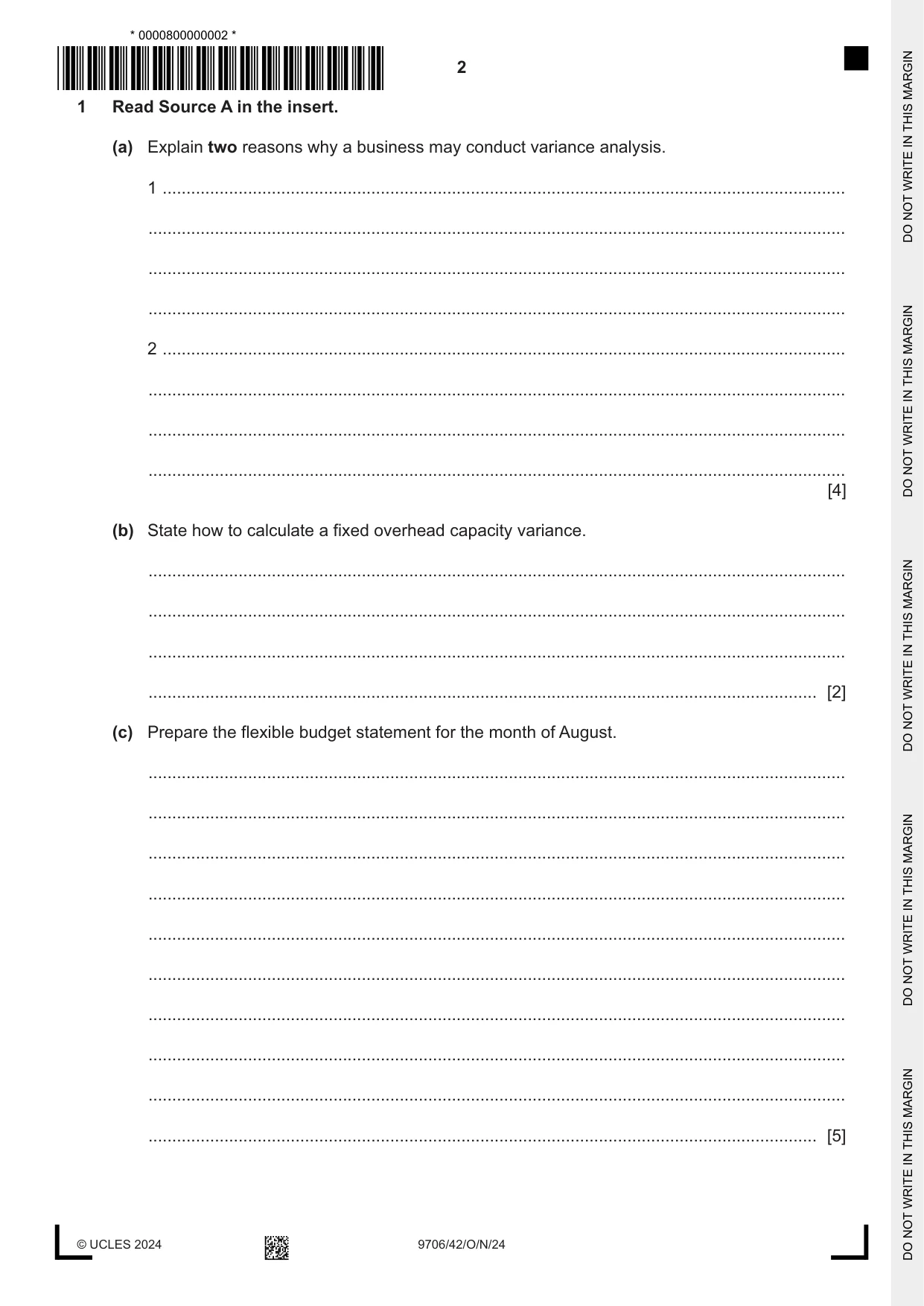
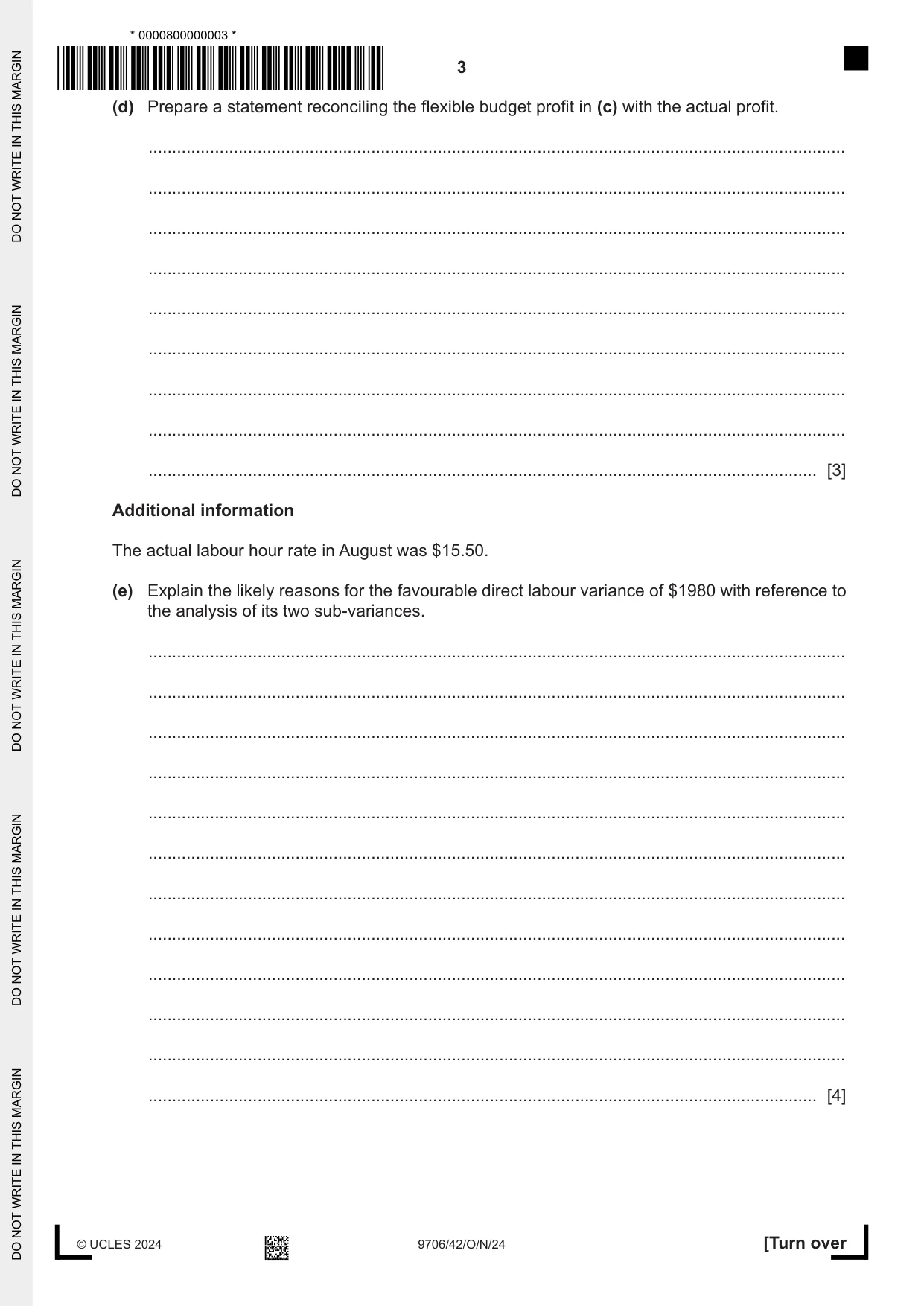
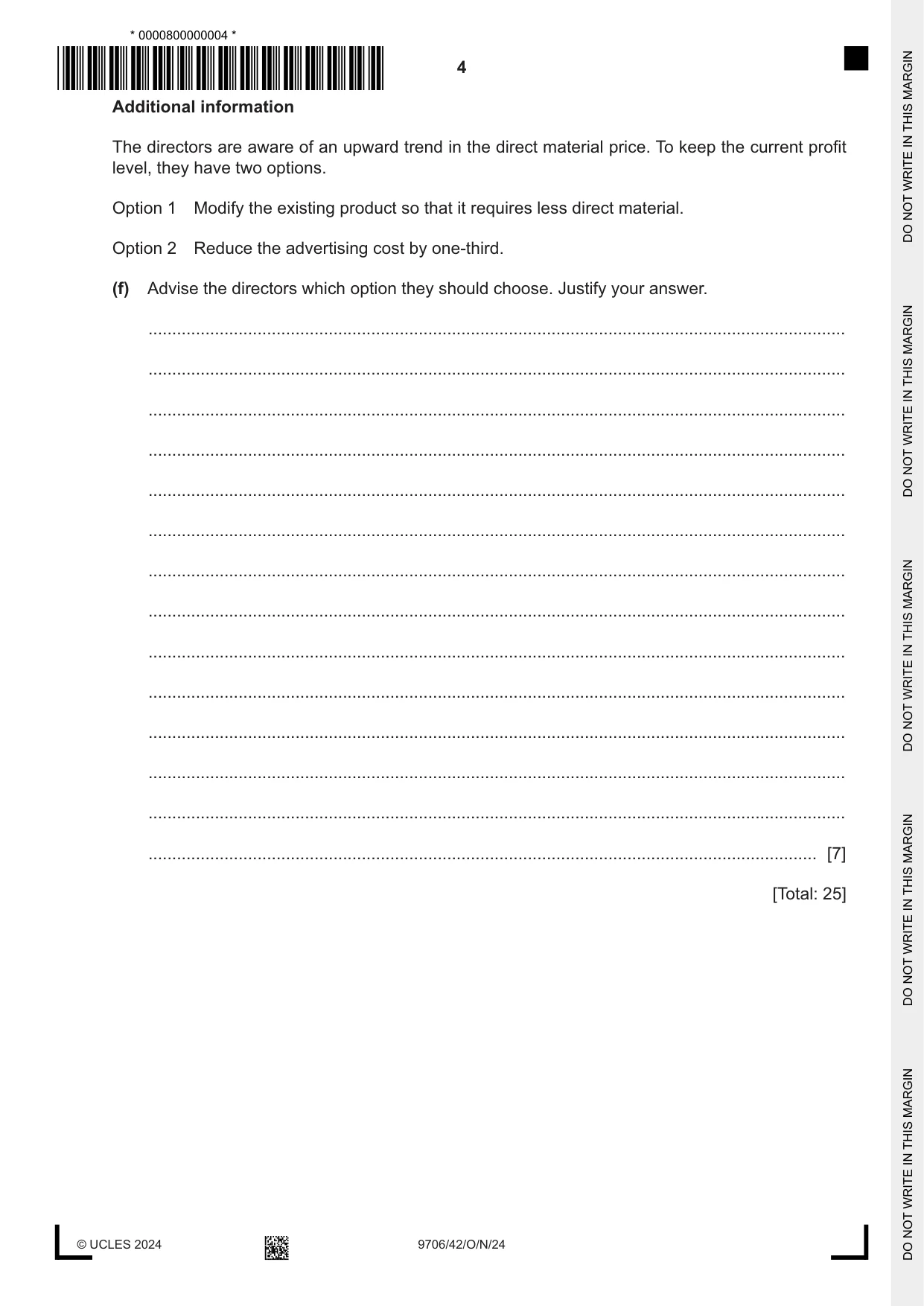

Mark scheme14 pages
Answers below. Sit the paper first if you are practising.
Questions as text
Q1 · Read Source A in the insert
1 Read Source A in the insert. (a) Explain two reasons why a business may conduct variance analysis. 1 ................................................................................................................................................ ................................................................................................................................................... ................................................................................................................................................... ................................................................................................................................................... 2 ................................................................................................................................................ ................................................................................................................................................... ................................................................................................................................................... ................................................................................................................................................... [4] (b) State how to calculate a fixed overhead capacity variance. ................................................................................................................................................... ................................................................................................................................................... ................................................................................................................................................... ............................................................................................................................................. [2] (c) Prepare the flexible budget statement for the month of August. ................................................................................................................................................... ................................................................................................................................................... ................................................................................................................................................... ................................................................................................................................................... ................................................................................................................................................... ................................................................................................................................................... ................................................................................................................................................... ................................................................................................................................................... ................................................................................................................................................... ............................................................................................................................................. [5] (d) Prepare a statement reconciling the flexible budget profit in (c) with the actual profit. ................................................................................................................................................... ................................................................................................................................................... ................................................................................................................................................... ................................................................................................................................................... ................................................................................................................................................... ................................................................................................................................................... ................................................................................................................................................... ................................................................................................................................................... ............................................................................................................................................. [3] Additional information The actual labour hour rate in August was $15.50. (e) Explain the likely reasons for the favourable direct labour variance of $1980 with reference to the analysis of its two sub-variances. ................................................................................................................................................... ................................................................................................................................................... ................................................................................................................................................... ................................................................................................................................................... ................................................................................................................................................... ................................................................................................................................................... ................................................................................................................................................... ................................................................................................................................................... ................................................................................................................................................... ................................................................................................................................................... ................................................................................................................................................... ............................................................................................................................................. [4] Additional information The directors are aware of an upward trend in the direct material price. To keep the current profit level, they have two options. Option 1 Modify the existing product so that it requires less direct material. Option 2 Reduce the advertising cost by one-third. (f) Advise the directors which option they should choose. Justify your answer. ................................................................................................................................................... ................................................................................................................................................... ................................................................................................................................................... ................................................................................................................................................... ................................................................................................................................................... ................................................................................................................................................... ................................................................................................................................................... ................................................................................................................................................... ................................................................................................................................................... ................................................................................................................................................... ................................................................................................................................................... ................................................................................................................................................... ................................................................................................................................................... ............................................................................................................................................. [7] [Total: 25]
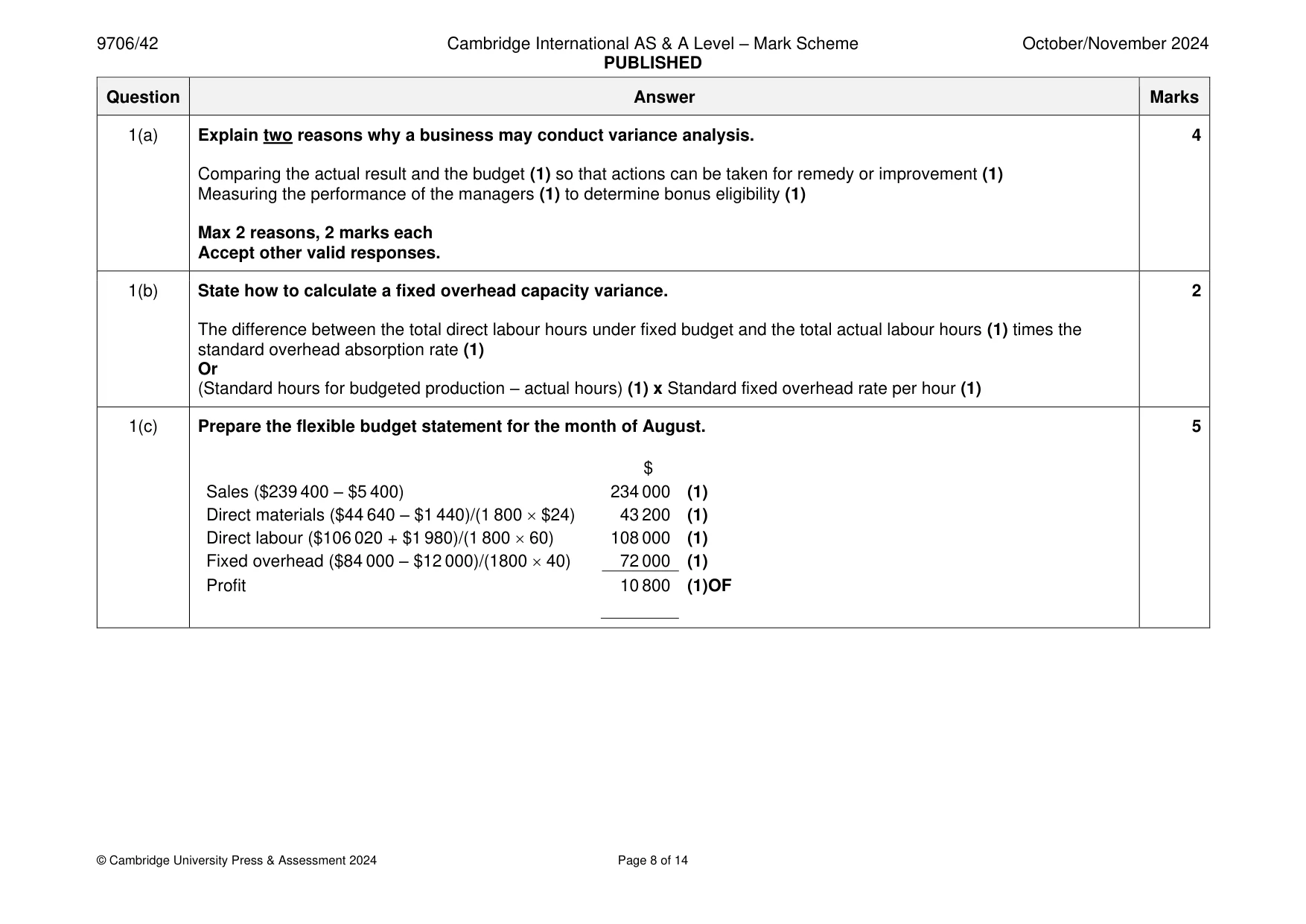
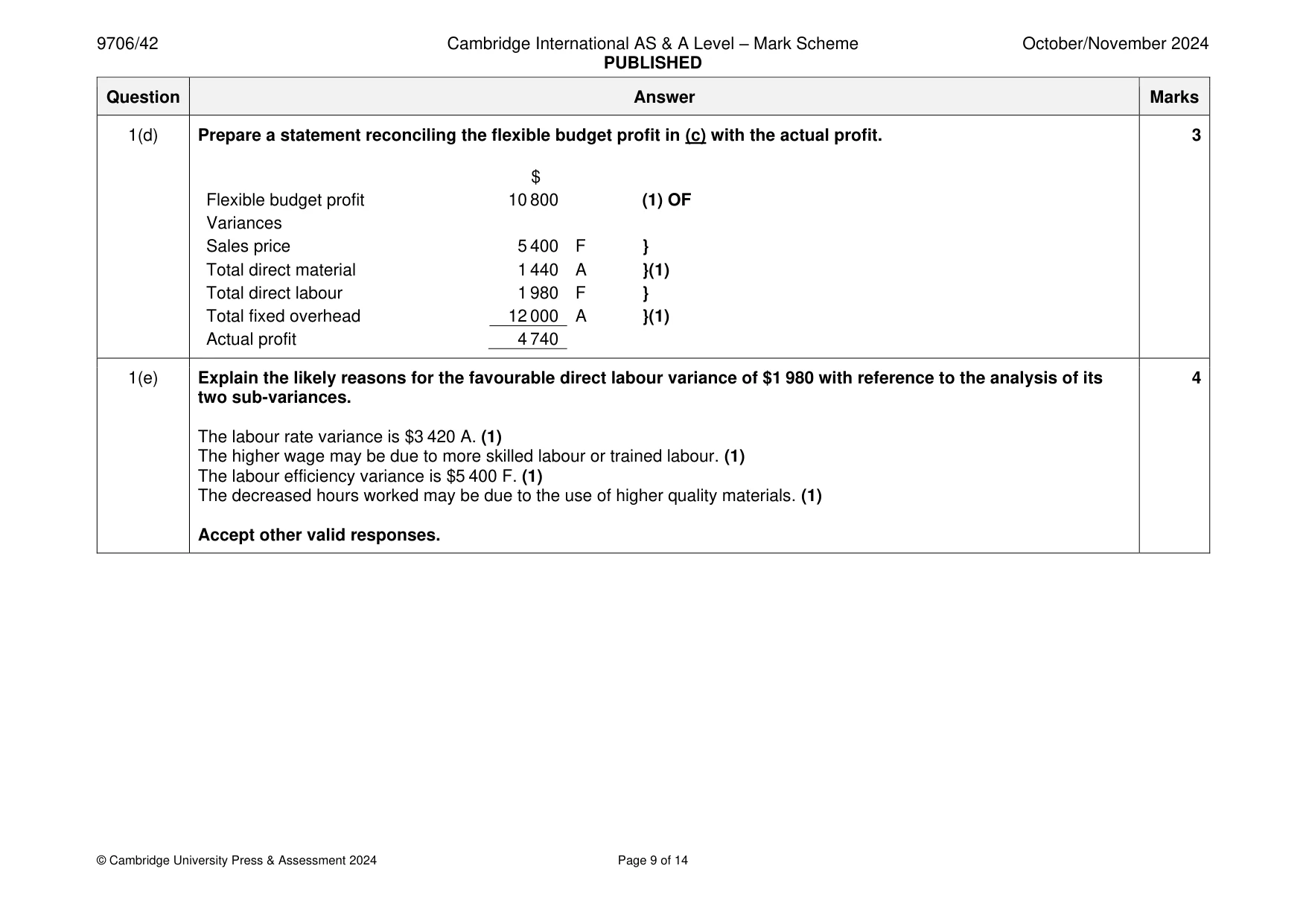
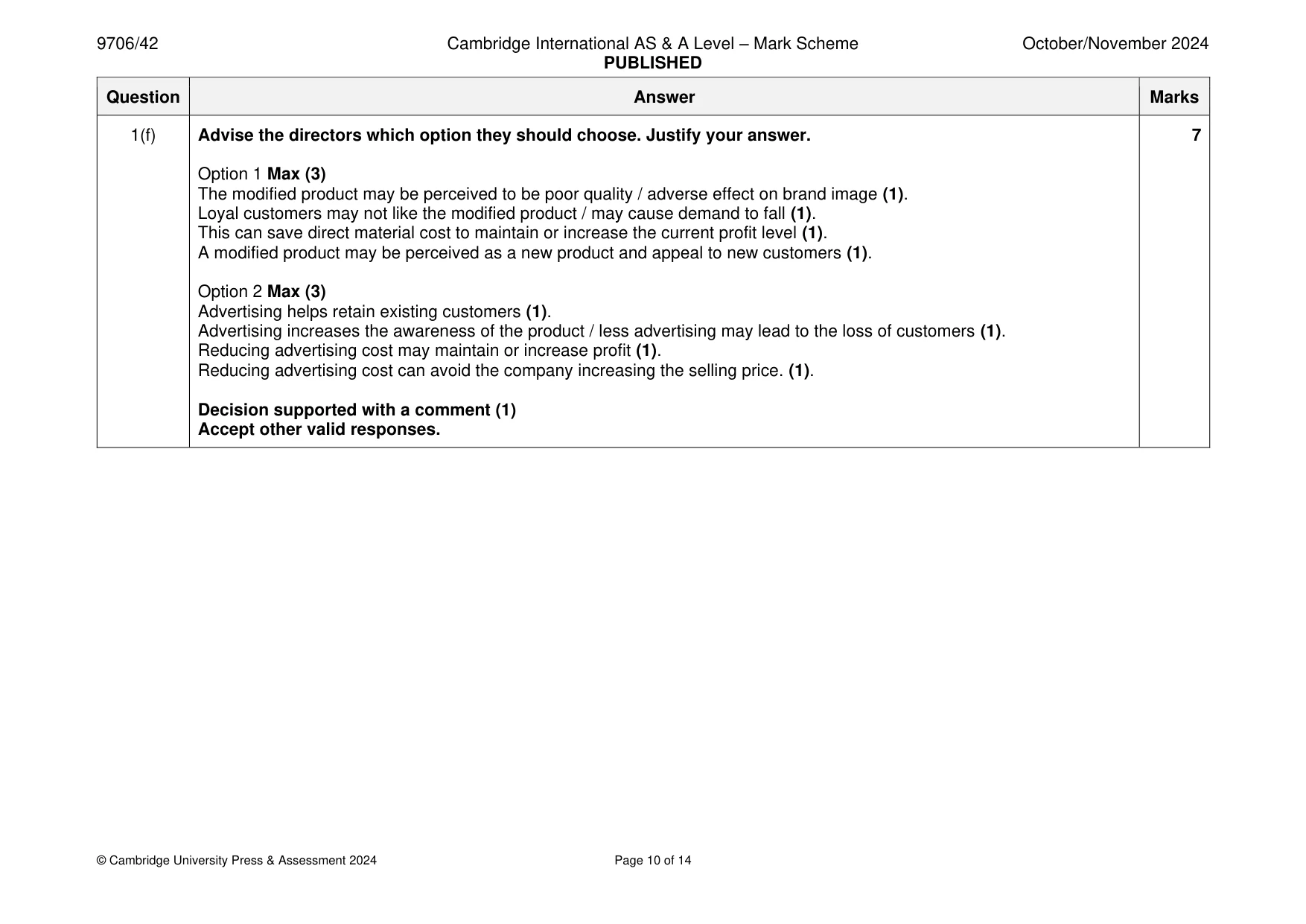
Mark scheme: Question Answer Marks 1(a) Explain two reasons why a business may conduct variance analysis. 4 Comparing the actual result and the budget (1) so that actions can be taken for remedy or improvement (1) Measuring the performance of the managers (1) to determine bonus eligibility (1) Max 2 reasons, 2 marks each Accept other valid responses. 1(b) State how to calculate a fixed overhead capacity variance. 2 The difference between the total direct labour hours under fixed budget and the total actual labour hours (1) times the standard overhead absorption rate (1) Or (Standard hours for budgeted production – actual hours) (1) x Standard fixed overhead rate per hour (1) 1(c) Prepare the flexible budget statement for the month of August. 5 $ Sales ($239 400 – $5 400) 234 000 (1) Direct materials ($44 640 – $1 440)/(1 800 $24) 43 200 (1) Direct labour ($106 020 + $1 980)/(1 800 60) 108 000 (1) Fixed overhead ($84 000 – $12 000)/(1800 40) 72 000 (1) Profit 10 800 (1)OF 1(d) Prepare a statement reconciling the flexible budget profit in (c) with the actual profit. 3 $ Flexible budget profit 10 800 (1) OF Variances Sales price 5 400 F } Total direct material 1 440 A }(1) Total direct labour 1 980 F } Total fixed overhead 12 000 A }(1) Actual profit 4 740 1(e) Explain the likely reasons for the favourable direct labour variance of $1 980 with reference to the analysis of its 4 two sub-variances. The labour rate variance is $3 420 A. (1) The higher wage may be due to more skilled labour or trained labour. (1) The labour efficiency variance is $5 400 F. (1) The decreased hours worked may be due to the use of higher quality materials. (1) Accept other valid responses. 1(f) Advise the directors which option they should choose. Justify your answer. 7 Option 1 Max (3) The modified product may be perceived to be poor quality / adverse effect on brand image (1). Loyal customers may not like the modified product / may cause demand to fall (1). This can save direct material cost to maintain or increase the current profit level (1). A modified product may be perceived as a new product and appeal to new customers (1). Option 2 Max (3) Advertising helps retain existing customers (1). Advertising increases the awareness of the product / less advertising may lead to the loss of customers (1). Reducing advertising cost may maintain or increase profit (1). Reducing advertising cost can avoid the company increasing the selling price. (1). Decision supported with a comment (1) Accept other valid responses.
Q2 · Read Source B in the insert
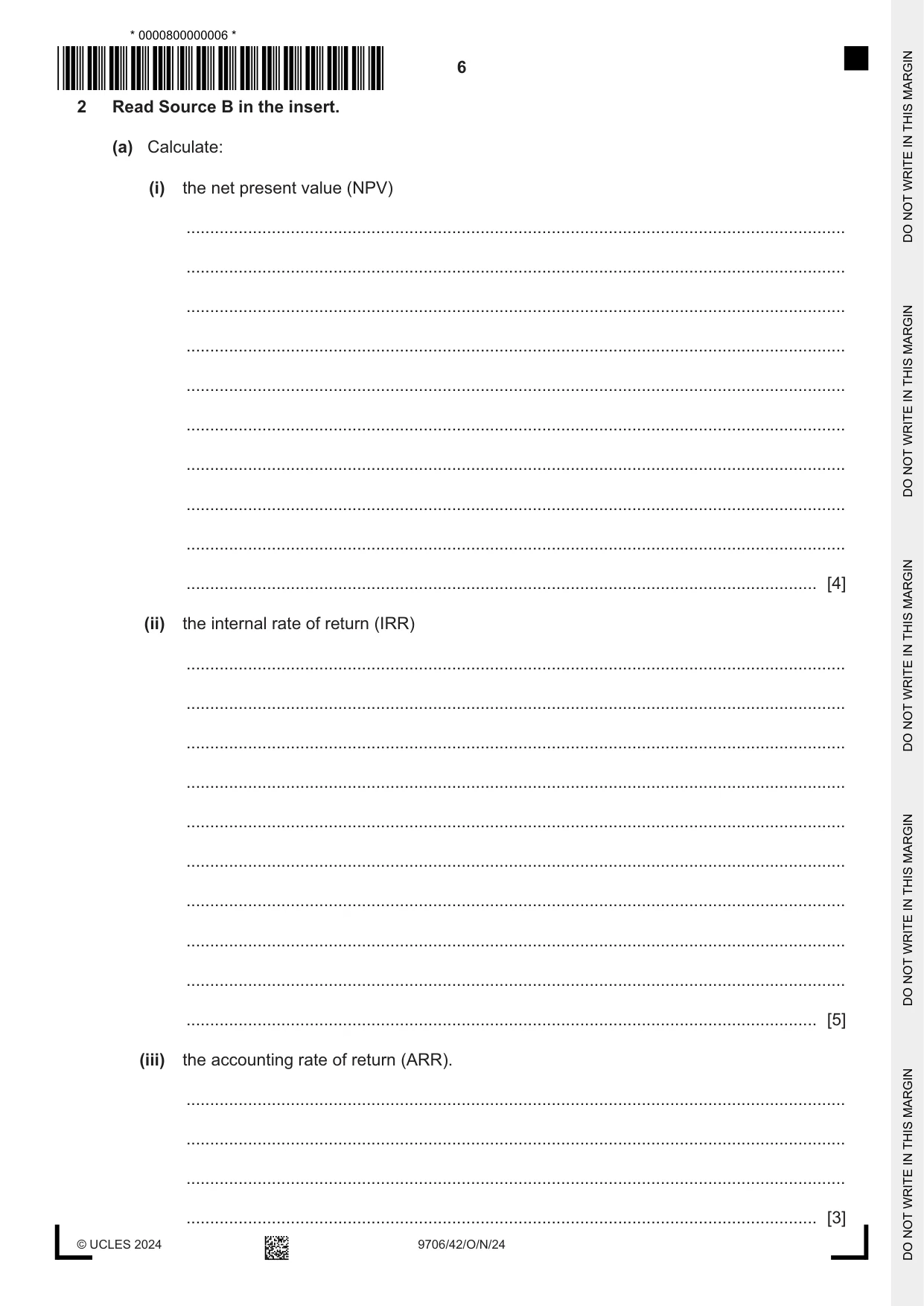
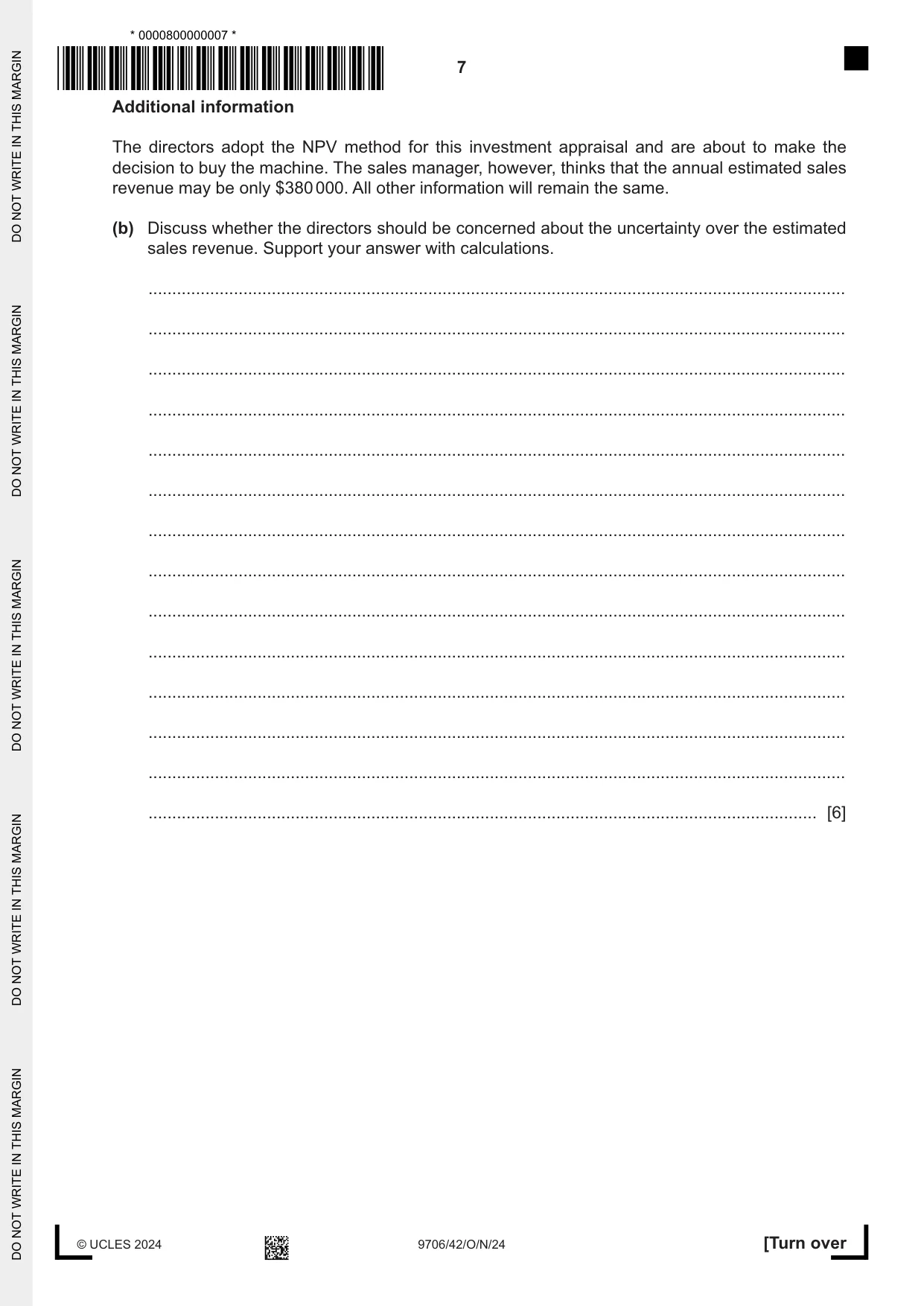
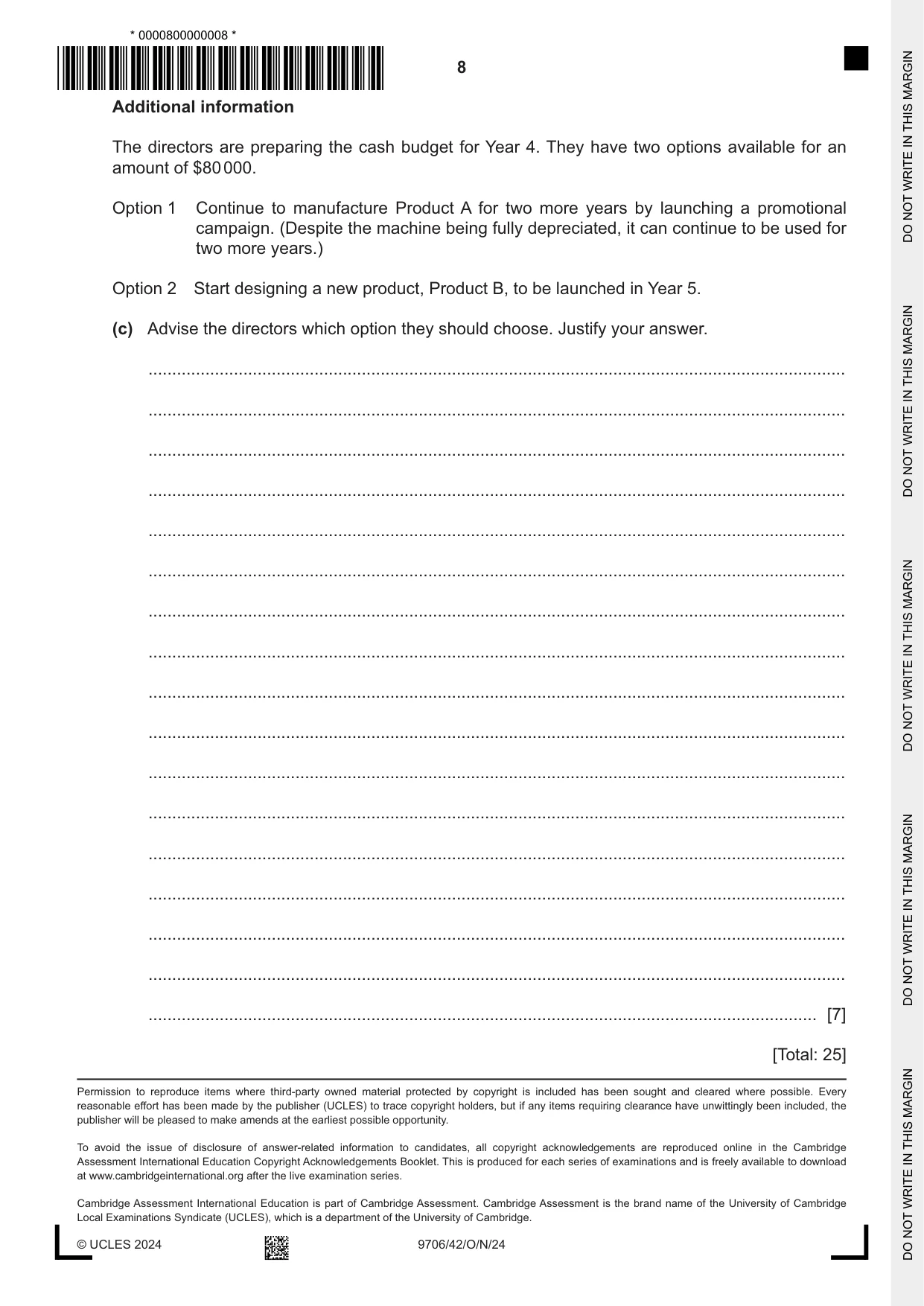
2 Read Source B in the insert. (a) Calculate: (i) the net present value (NPV) ........................................................................................................................................... ........................................................................................................................................... ........................................................................................................................................... ........................................................................................................................................... ........................................................................................................................................... ........................................................................................................................................... ........................................................................................................................................... ........................................................................................................................................... ........................................................................................................................................... ..................................................................................................................................... [4] (ii) the internal rate of return (IRR) ........................................................................................................................................... ........................................................................................................................................... ........................................................................................................................................... ........................................................................................................................................... ........................................................................................................................................... ........................................................................................................................................... ........................................................................................................................................... ........................................................................................................................................... ........................................................................................................................................... ..................................................................................................................................... [5] (iii) the accounting rate of return (ARR). ........................................................................................................................................... ........................................................................................................................................... ........................................................................................................................................... ..................................................................................................................................... [3] Additional information The directors adopt the NPV method for this investment appraisal and are about to make the decision to buy the machine. The sales manager, however, thinks that the annual estimated sales revenue may be only $380 000. All other information will remain the same. (b) Discuss whether the directors should be concerned about the uncertainty over the estimated sales revenue. Support your answer with calculations. ................................................................................................................................................... ................................................................................................................................................... ................................................................................................................................................... ................................................................................................................................................... ................................................................................................................................................... ................................................................................................................................................... ................................................................................................................................................... ................................................................................................................................................... ................................................................................................................................................... ................................................................................................................................................... ................................................................................................................................................... ................................................................................................................................................... ................................................................................................................................................... ............................................................................................................................................. [6] Additional information The directors are preparing the cash budget for Year 4. They have two options available for an amount of $80 000. Option 1 Continue to manufacture Product A for two more years by launching a promotional campaign. (Despite the machine being fully depreciated, it can continue to be used for two more years.) Option 2 Start designing a new product, Product B, to be launched in Year 5. (c) Advise the directors which option they should choose. Justify your answer. ................................................................................................................................................... ................................................................................................................................................... ................................................................................................................................................... ................................................................................................................................................... ................................................................................................................................................... ................................................................................................................................................... ................................................................................................................................................... ................................................................................................................................................... ................................................................................................................................................... ................................................................................................................................................... ................................................................................................................................................... ................................................................................................................................................... ................................................................................................................................................... ................................................................................................................................................... ................................................................................................................................................... ................................................................................................................................................... ............................................................................................................................................. [7] [Total: 25]
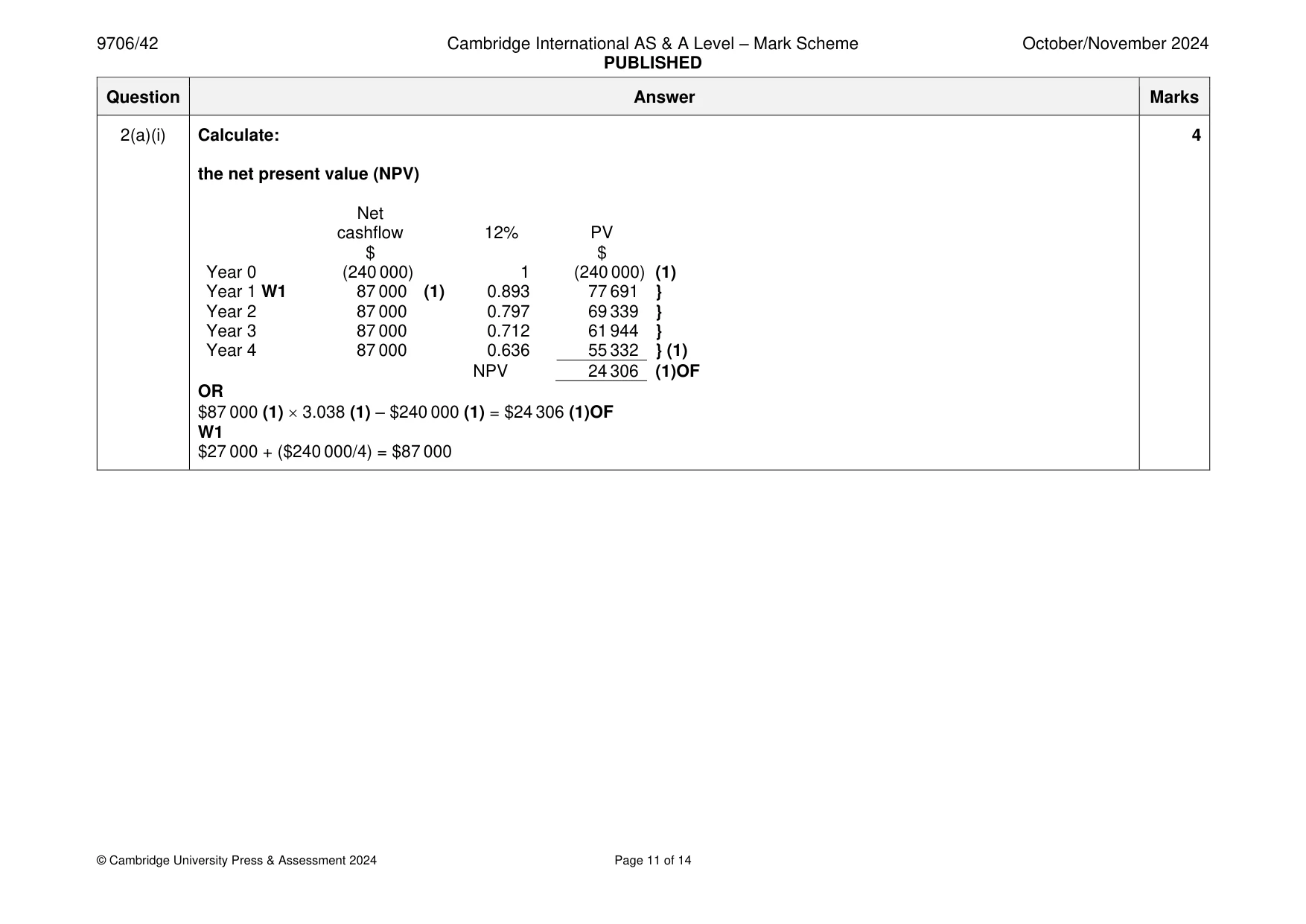
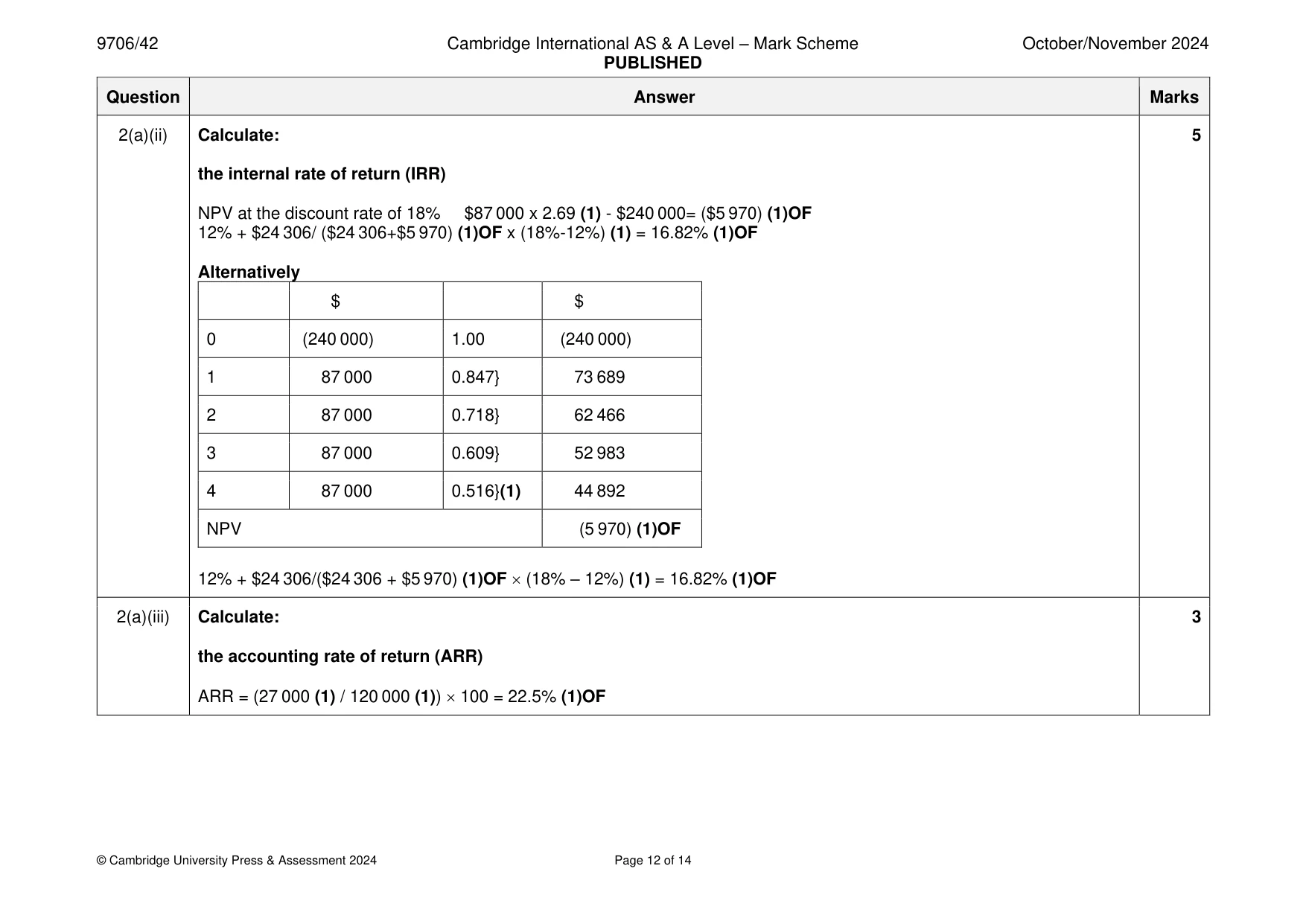
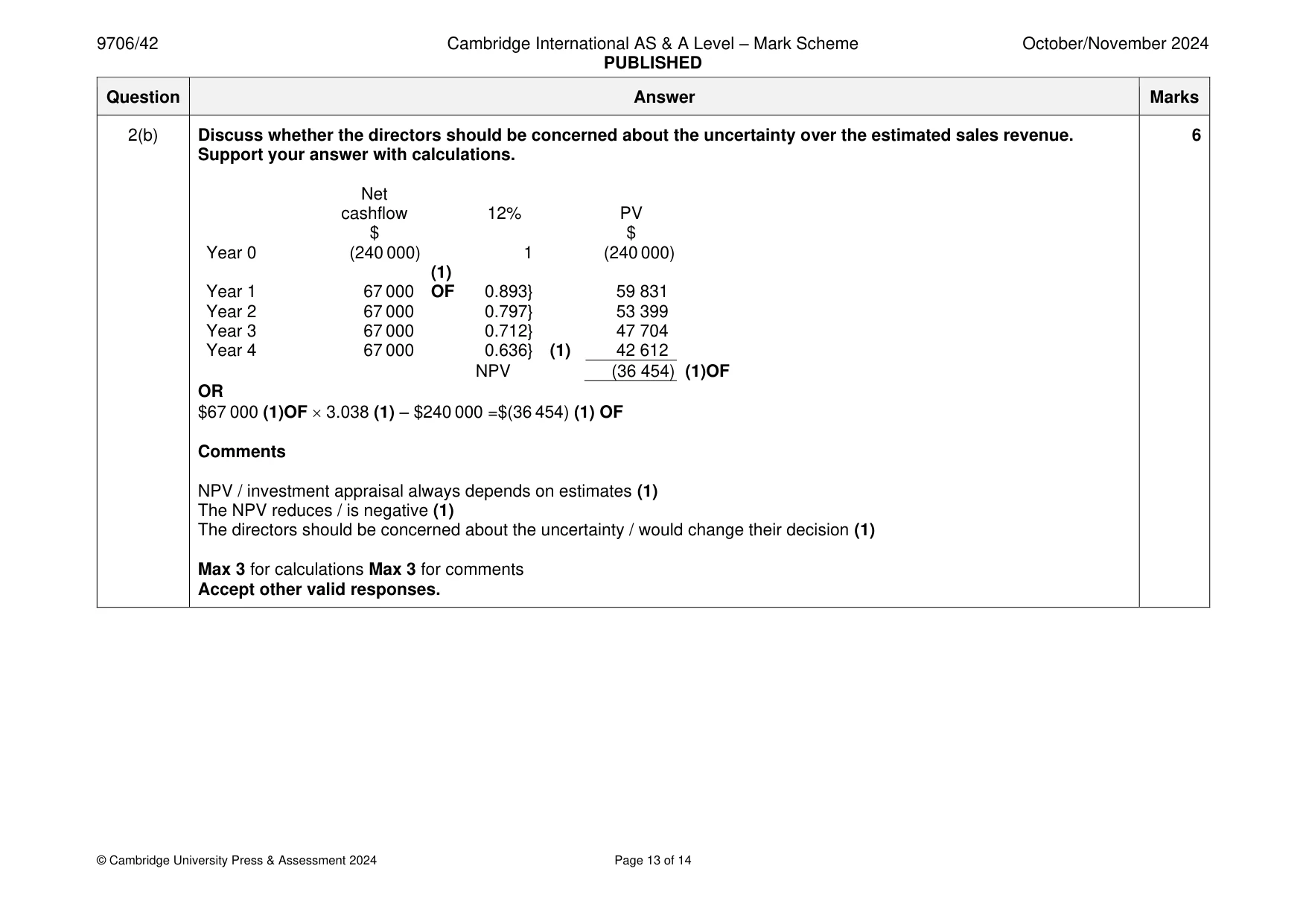
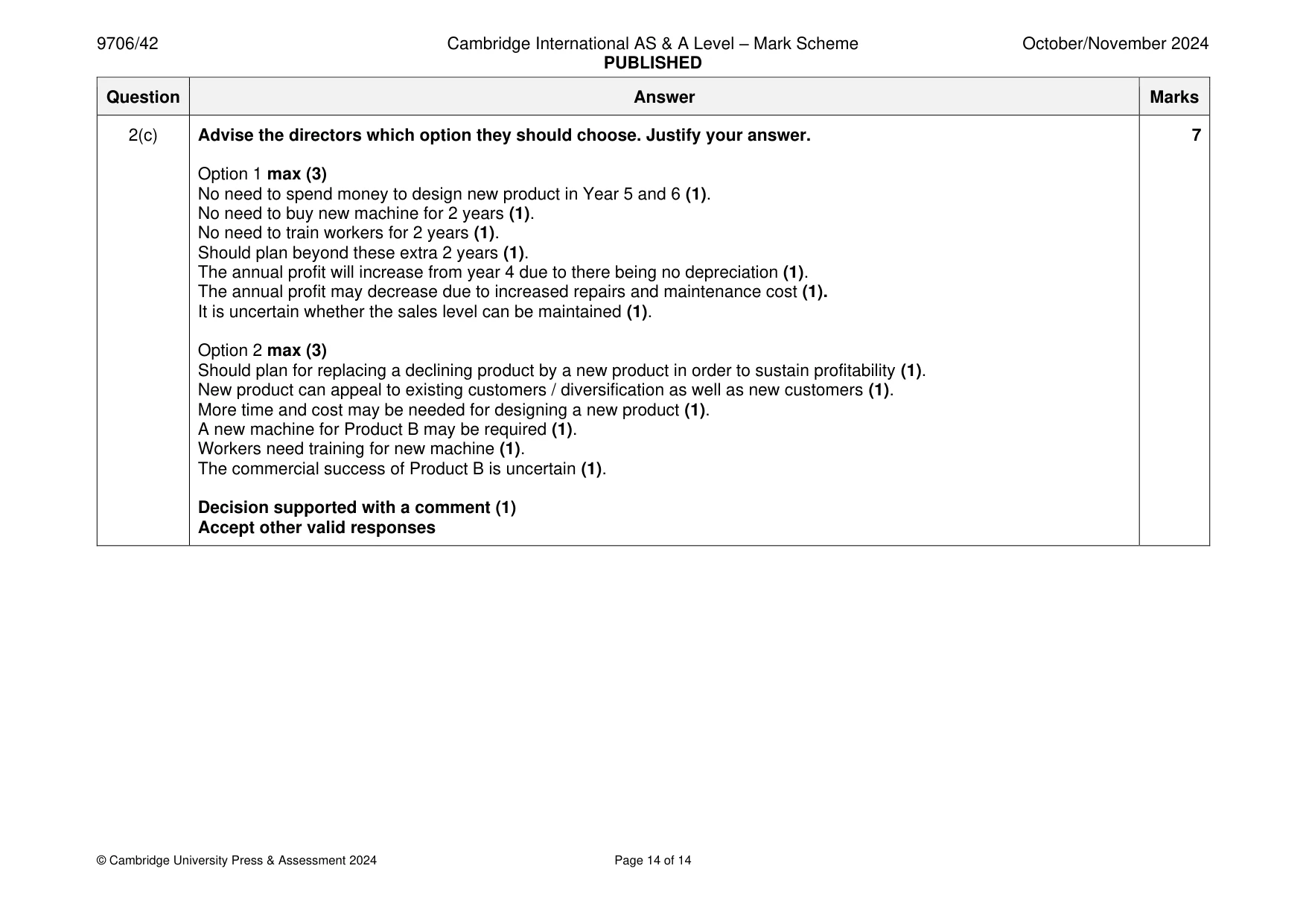
Mark scheme: 2(a)(i) Calculate: 4 the net present value (NPV) Net cashflow 12% PV $ $ Year 0 (240 000) 1 (240 000) (1) Year 1 W1 87 000 (1) 0.893 77 691 } Year 2 87 000 0.797 69 339 } Year 3 87 000 0.712 61 944 } Year 4 87 000 0.636 55 332 } (1) NPV 24 306 (1)OF OR $87 000 (1) 3.038 (1) – $240 000 (1) = $24 306 (1)OF W1 $27 000 + ($240 000/4) = $87 000 2(a)(ii) Calculate: 5 the internal rate of return (IRR) NPV at the discount rate of 18% $87 000 x 2.69 (1) - $240 000= ($5 970) (1)OF 12% + $24 306/ ($24 306+$5 970) (1)OF x (18%-12%) (1) = 16.82% (1)OF Alternatively $ $ 0 (240 000) 1.00 (240 000) 1 87 000 0.847} 73 689 2 87 000 0.718} 62 466 3 87 000 0.609} 52 983 4 87 000 0.516}(1) 44 892 NPV (5 970) (1)OF 12% + $24 306/($24 306 + $5 970) (1)OF (18% – 12%) (1) = 16.82% (1)OF 2(a)(iii) Calculate: 3 the accounting rate of return (ARR) ARR = (27 000 (1) / 120 000 (1)) 100 = 22.5% (1)OF 2(b) Discuss whether the directors should be concerned about the uncertainty over the estimated sales revenue. 6 Support your answer with calculations. Net cashflow 12% PV $ $ Year 0 (240 000) 1 (240 000) (1) Year 1 67 000 OF 0.893} 59 831 Year 2 67 000 0.797} 53 399 Year 3 67 000 0.712} 47 704 Year 4 67 000 0.636} (1) 42 612 NPV (36 454) (1)OF OR $67 000 (1)OF 3.038 (1) – $240 000 =$(36 454) (1) OF Comments NPV / investment appraisal always depends on estimates (1) The NPV reduces / is negative (1) The directors should be concerned about the uncertainty / would change their decision (1) Max 3 for calculations Max 3 for comments Accept other valid responses. 2(c) Advise the directors which option they should choose. Justify your answer. 7 Option 1 max (3) No need to spend money to design new product in Year 5 and 6 (1). No need to buy new machine for 2 years (1). No need to train workers for 2 years (1). Should plan beyond these extra 2 years (1). The annual profit will increase from year 4 due to there being no depreciation (1). The annual profit may decrease due to increased repairs and maintenance cost (1). It is uncertain whether the sales level can be maintained (1). Option 2 max (3) Should plan for replacing a declining product by a new product in order to sustain profitability (1). New product can appeal to existing customers / diversification as well as new customers (1). More time and cost may be needed for designing a new product (1). A new machine for Product B may be required (1). Workers need training for new machine (1). The commercial success of Product B is uncertain (1). Decision supported with a comment (1) Accept other valid responses
What was in this paper
The subtopics covered by these 2 questions, and how many questions each got. Open one in a new tab to see every Cambridge question on it.
What you needed in this session
Cambridge’s own grade thresholds for 2024 Oct/Nov, Paper 4 · Variant 2. A higher threshold means an easier paper — the bar moves with how the cohort did.