Cambridge A Level Accounting 9706 — 2024 Feb/March Paper 4 · Variant 2
9706/42/F/M/24 · 2 questions · 50 marks · ≈56 min
The question paper and its mark scheme, free to read here and free to download. This is Cambridge’s own paper, exactly as it was sat.
Question paper8 pages




Mark scheme10 pages
Answers below. Sit the paper first if you are practising.




Questions as text
Q1 · Read Source A in the insert
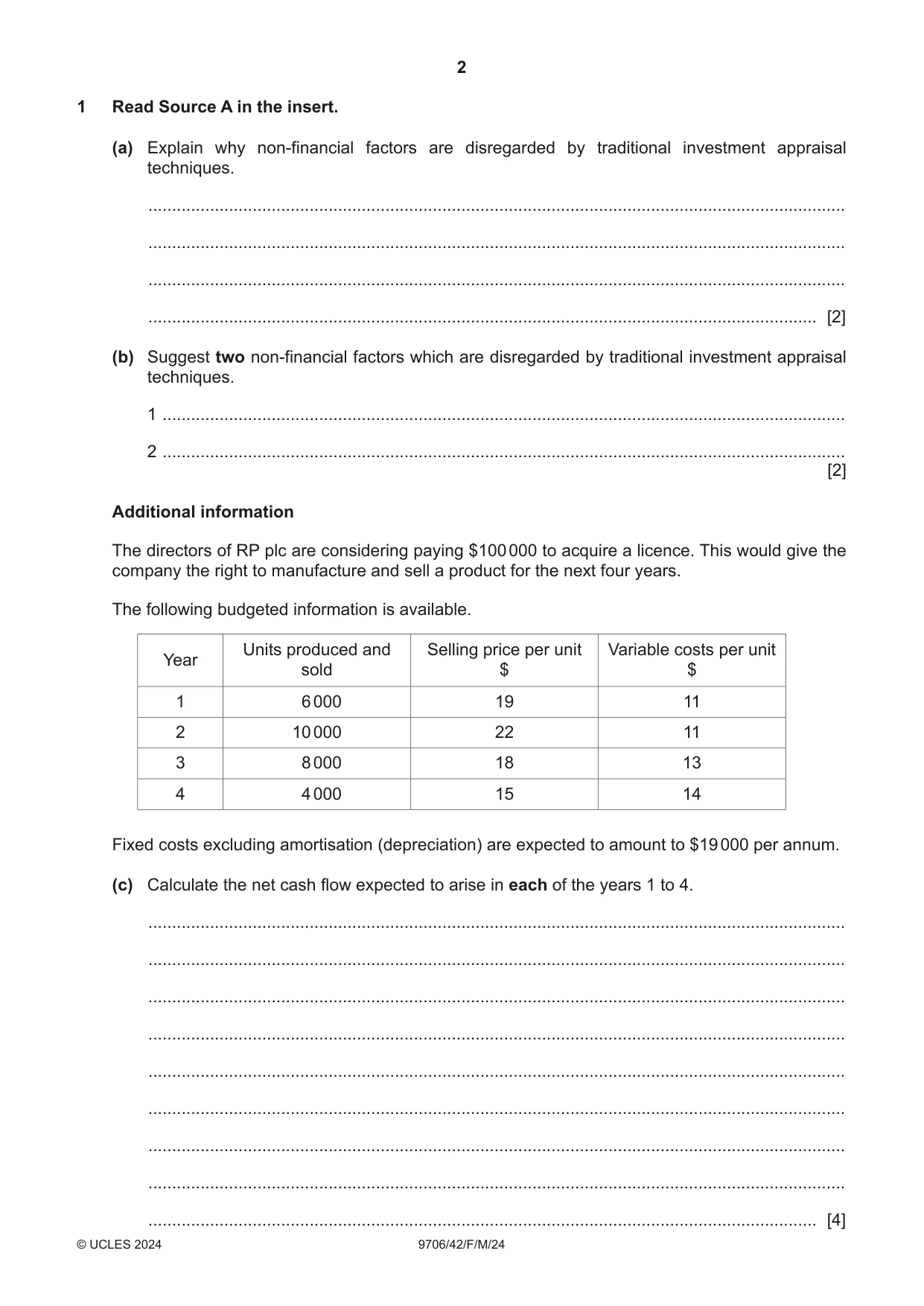
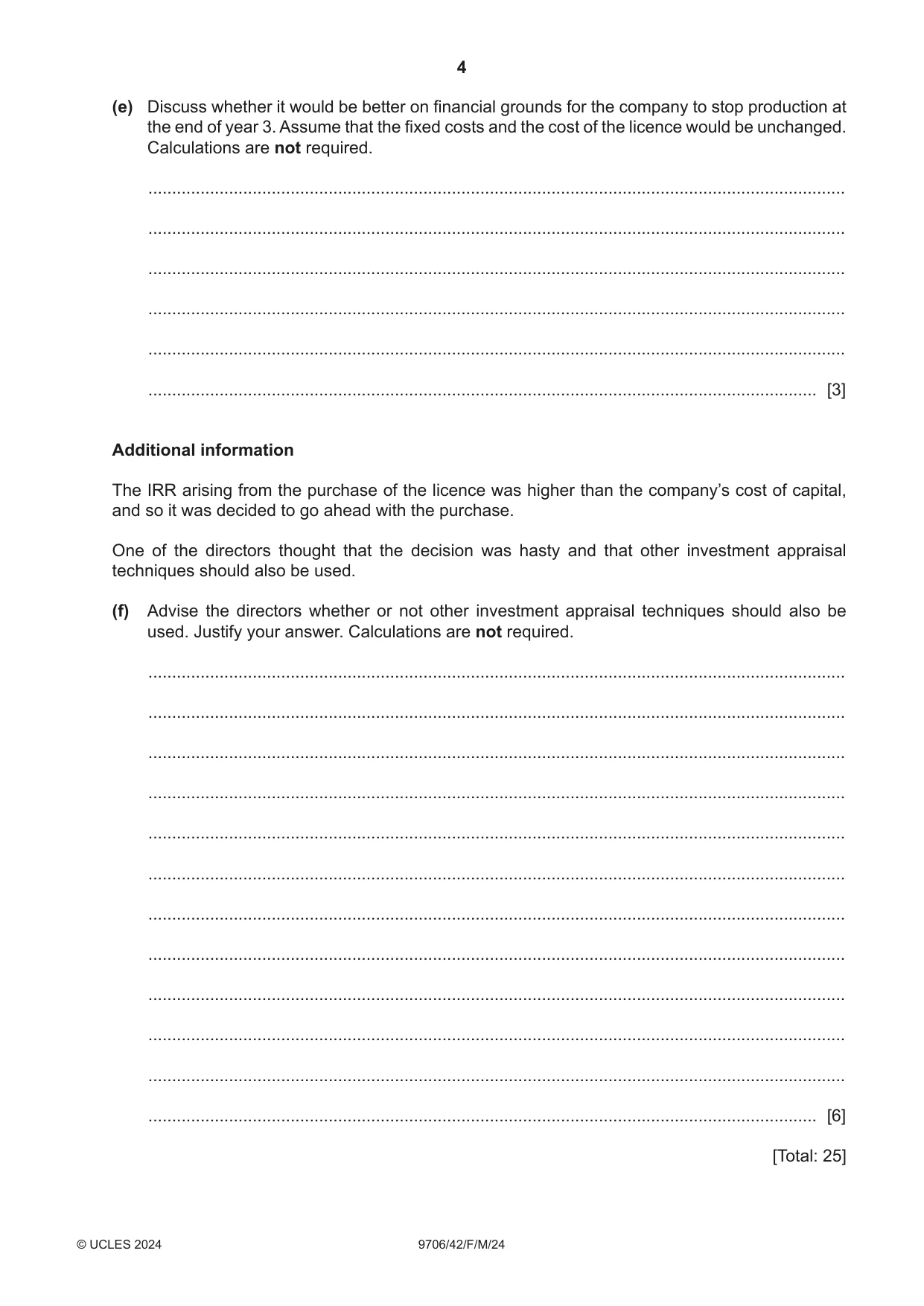
1 Read Source A in the insert. (a) Explain why non-financial factors are disregarded by traditional investment appraisal techniques. ................................................................................................................................................... ................................................................................................................................................... ................................................................................................................................................... ............................................................................................................................................. [2] (b) Suggest two non-financial factors which are disregarded by traditional investment appraisal techniques. 1 ................................................................................................................................................ 2 ................................................................................................................................................ [2] Additional information The directors of RP plc are considering paying $100 000 to acquire a licence. This would give the company the right to manufacture and sell a product for the next four years. The following budgeted information is available. Units produced and Selling price per unit Variable costs per unit Year sold $ $ 1 6 000 19 11 2 10 000 22 11 3 8 000 18 13 4 4 000 15 14 Fixed costs excluding amortisation (depreciation) are expected to amount to $19 000 per annum. (c) Calculate the net cash flow expected to arise in each of the years 1 to 4. ................................................................................................................................................... ................................................................................................................................................... ................................................................................................................................................... ................................................................................................................................................... ................................................................................................................................................... ................................................................................................................................................... ................................................................................................................................................... ................................................................................................................................................... ............................................................................................................................................. [4] Additional information Discount factors are as follows: Year 10% 15% 1 0.909 0.870 2 0.826 0.756 3 0.751 0.658 4 0.683 0.572 (d) Calculate, to two decimal places, the internal rate of return (IRR) of the purchase of the licence. ................................................................................................................................................... ................................................................................................................................................... ................................................................................................................................................... ................................................................................................................................................... ................................................................................................................................................... ................................................................................................................................................... ................................................................................................................................................... ................................................................................................................................................... ................................................................................................................................................... ................................................................................................................................................... ................................................................................................................................................... ................................................................................................................................................... ................................................................................................................................................... ................................................................................................................................................... ................................................................................................................................................... ................................................................................................................................................... ................................................................................................................................................... ................................................................................................................................................... ................................................................................................................................................... ............................................................................................................................................. [8] (e) Discuss whether it would be better on financial grounds for the company to stop production at the end of year 3. Assume that the fixed costs and the cost of the licence would be unchanged. Calculations are not required. ................................................................................................................................................... ................................................................................................................................................... ................................................................................................................................................... ................................................................................................................................................... ................................................................................................................................................... ............................................................................................................................................. [3] Additional information The IRR arising from the purchase of the licence was higher than the company’s cost of capital, and so it was decided to go ahead with the purchase. One of the directors thought that the decision was hasty and that other investment appraisal techniques should also be used. (f) Advise the directors whether or not other investment appraisal techniques should also be used. Justify your answer. Calculations are not required. ................................................................................................................................................... ................................................................................................................................................... ................................................................................................................................................... ................................................................................................................................................... ................................................................................................................................................... ................................................................................................................................................... ................................................................................................................................................... ................................................................................................................................................... ................................................................................................................................................... ................................................................................................................................................... ................................................................................................................................................... ............................................................................................................................................. [6] [Total: 25]
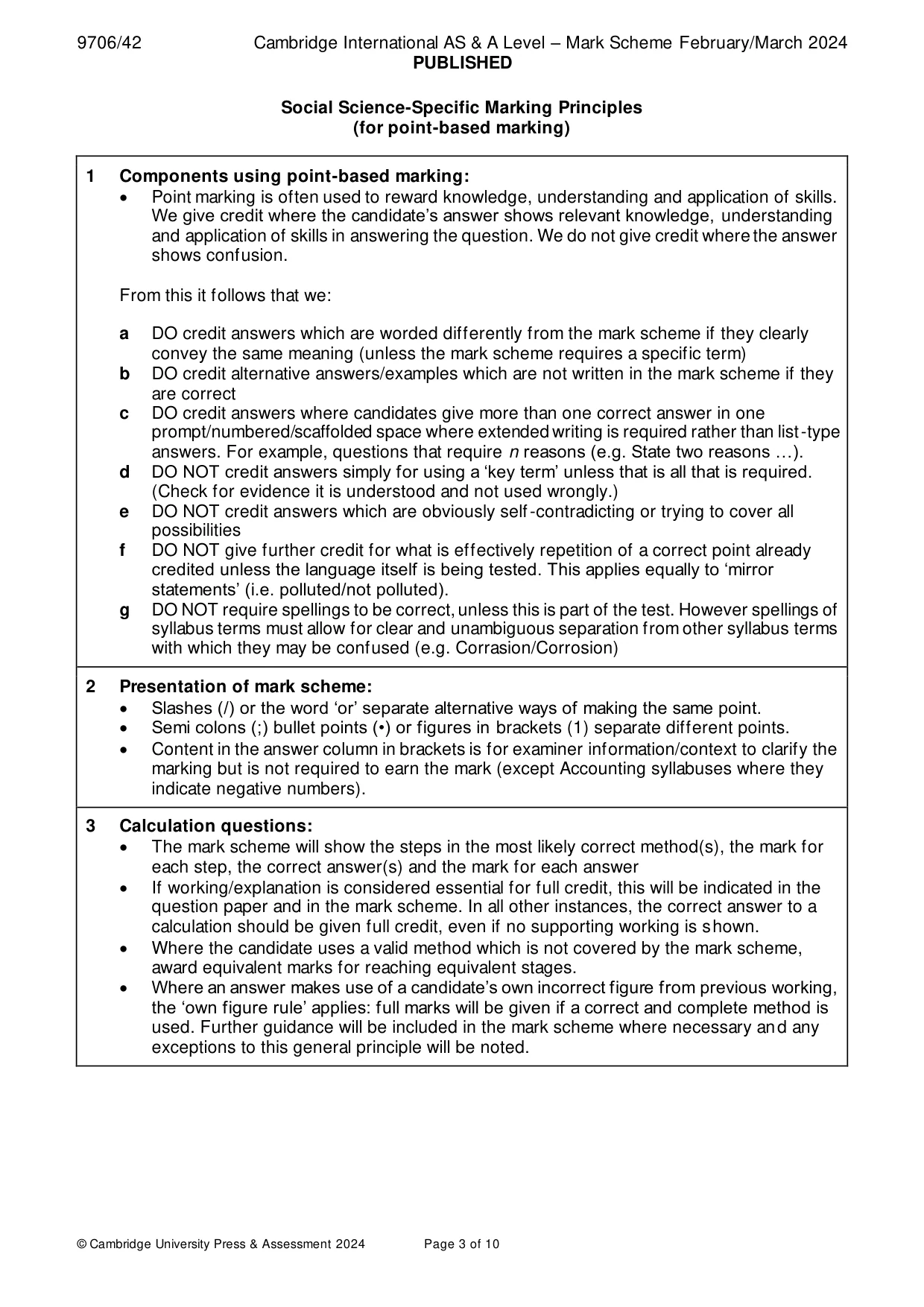
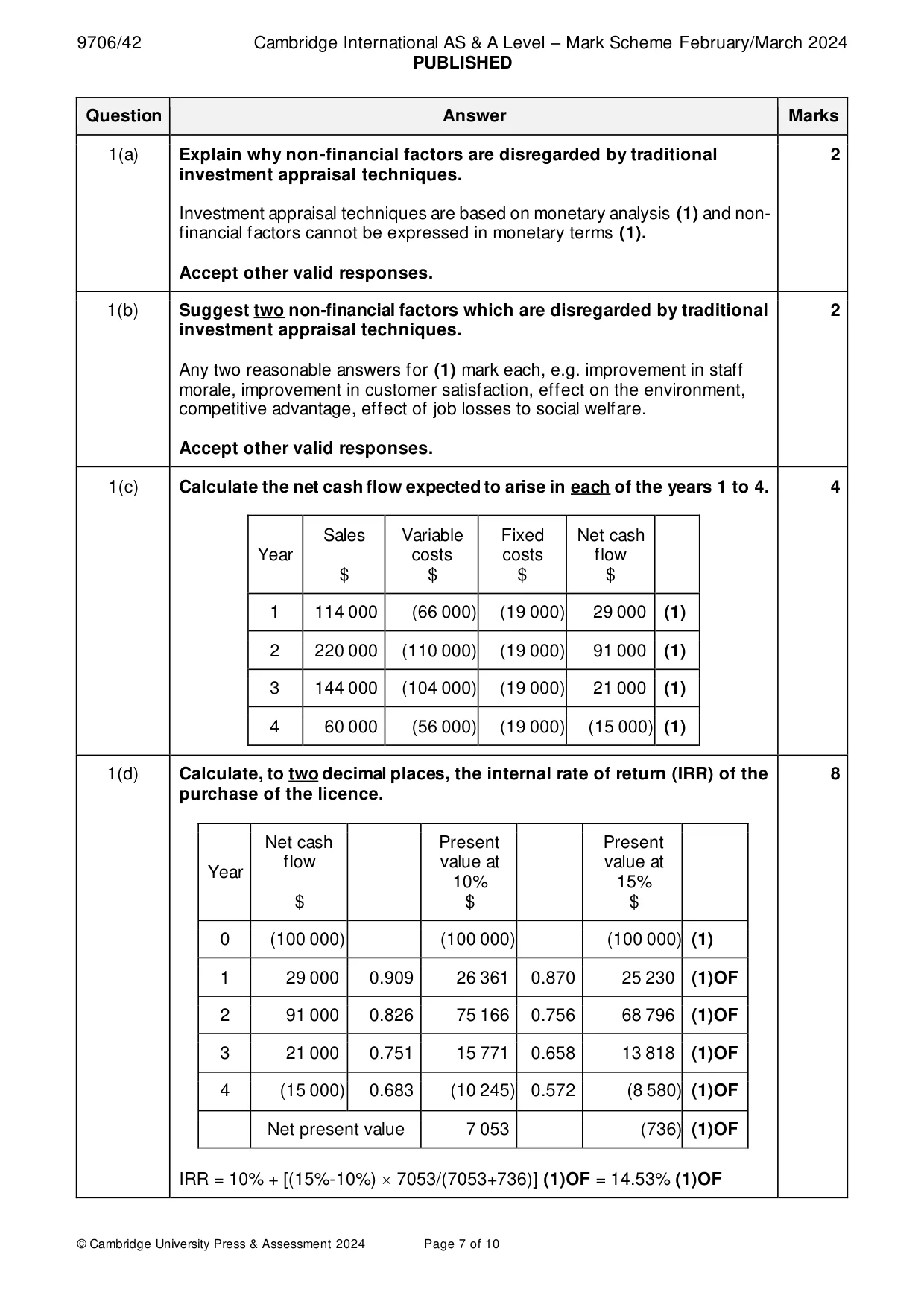
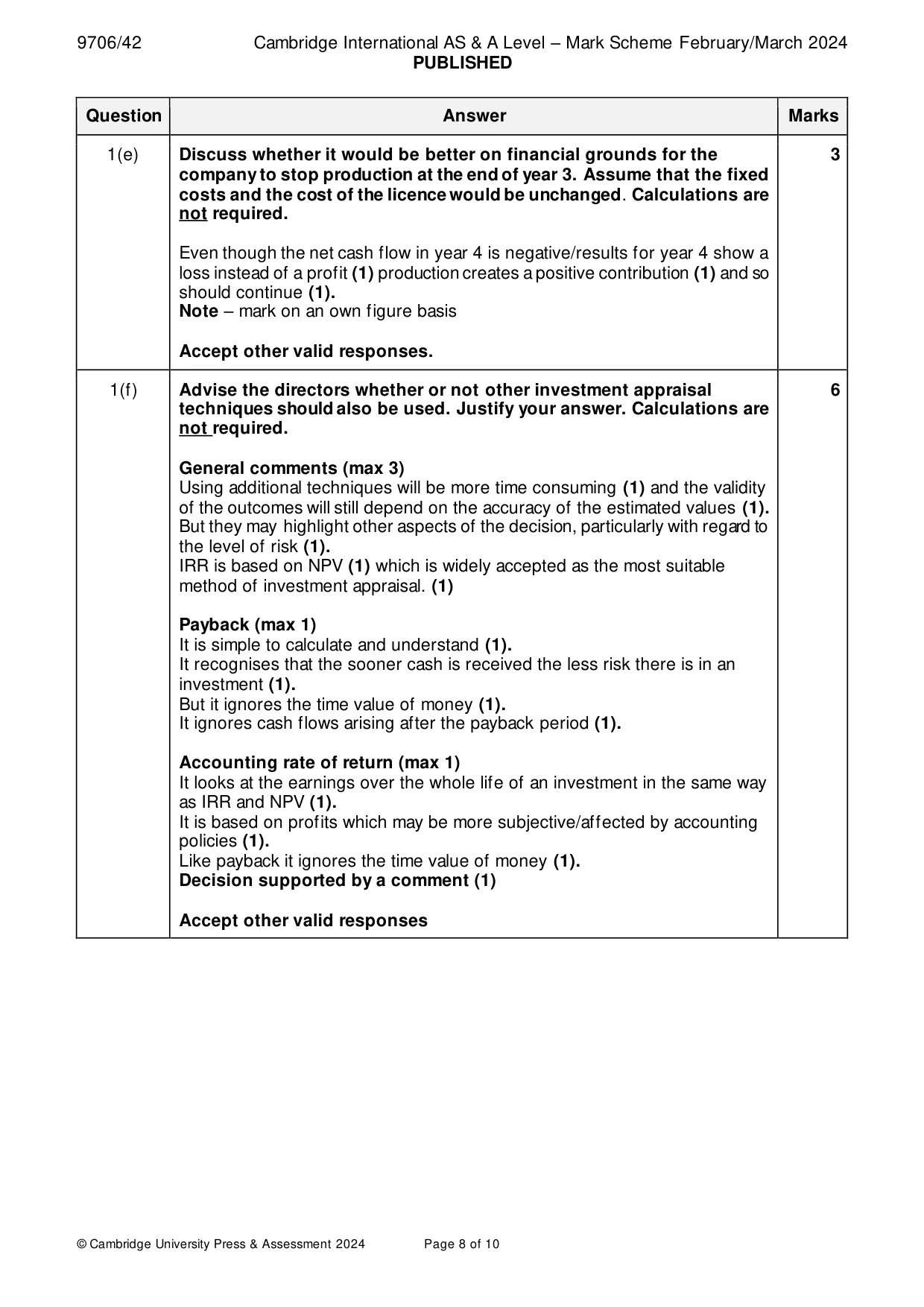
Mark scheme: Question Answer Marks 1(a) Explain why non-financial factors are disregarded by traditional 2 investment appraisal techniques. Investment appraisal techniques are based on monetary analysis (1) and non- financial factors cannot be expressed in monetary terms (1). Accept other valid responses. 1(b) Suggest two non-financial factors which are disregarded by traditional 2 investment appraisal techniques. Any two reasonable answers for (1) mark each, e.g. improvement in staff morale, improvement in customer satisfaction, effect on the environment, competitive advantage, effect of job losses to social welfare. Accept other valid responses. 1(c) Calculate the net cash flow expected to arise in each of the years 1 to 4. 4 Sales Variable Fixed Net cash Year costs costs flow $ $ $ $ 1 114 000 (66 000) (19 000) 29 000 (1) 2 220 000 (110 000) (19 000) 91 000 (1) 3 144 000 (104 000) (19 000) 21 000 (1) 4 60 000 (56 000) (19 000) (15 000) (1) 1(d) Calculate, to two decimal places, the internal rate of return (IRR) of the 8 purchase of the licence. Net cash Present Present flow value at value at Year 10% 15% $ $ $ 0 (100 000) (100 000) (100 000) (1) 1 29 000 0.909 26 361 0.870 25 230 (1)OF 2 91 000 0.826 75 166 0.756 68 796 (1)OF 3 21 000 0.751 15 771 0.658 13 818 (1)OF 4 (15 000) 0.683 (10 245) 0.572 (8 580) (1)OF Net present value 7 053 (736) (1)OF IRR = 10% + [(15%-10%) 7053/(7053+736)] (1)OF = 14.53% (1)OF 1(e) Discuss whether it would be better on financial grounds for the 3 company to stop production at the end of year 3. Assume that the fixed costs and the cost of the licence would be unchanged. Calculations are not required. Even though the net cash flow in year 4 is negative/results for year 4 show a loss instead of a profit (1) production creates a positive contribution (1) and so should continue (1). Note – mark on an own figure basis Accept other valid responses. 1(f) Advise the directors whether or not other investment appraisal 6 techniques should also be used. Justify your answer. Calculations are not required. General comments (max 3) Using additional techniques will be more time consuming (1) and the validity of the outcomes will still depend on the accuracy of the estimated values (1). But they may highlight other aspects of the decision, particularly with regard to the level of risk (1). IRR is based on NPV (1) which is widely accepted as the most suitable method of investment appraisal. (1) Payback (max 1) It is simple to calculate and understand (1). It recognises that the sooner cash is received the less risk there is in an investment (1). But it ignores the time value of money (1). It ignores cash flows arising after the payback period (1). Accounting rate of return (max 1) It looks at the earnings over the whole life of an investment in the same way as IRR and NPV (1). It is based on profits which may be more subjective/affected by accounting policies (1). Like payback it ignores the time value of money (1). Decision supported by a comment (1) Accept other valid responses
Q2 · Read Source B in the insert
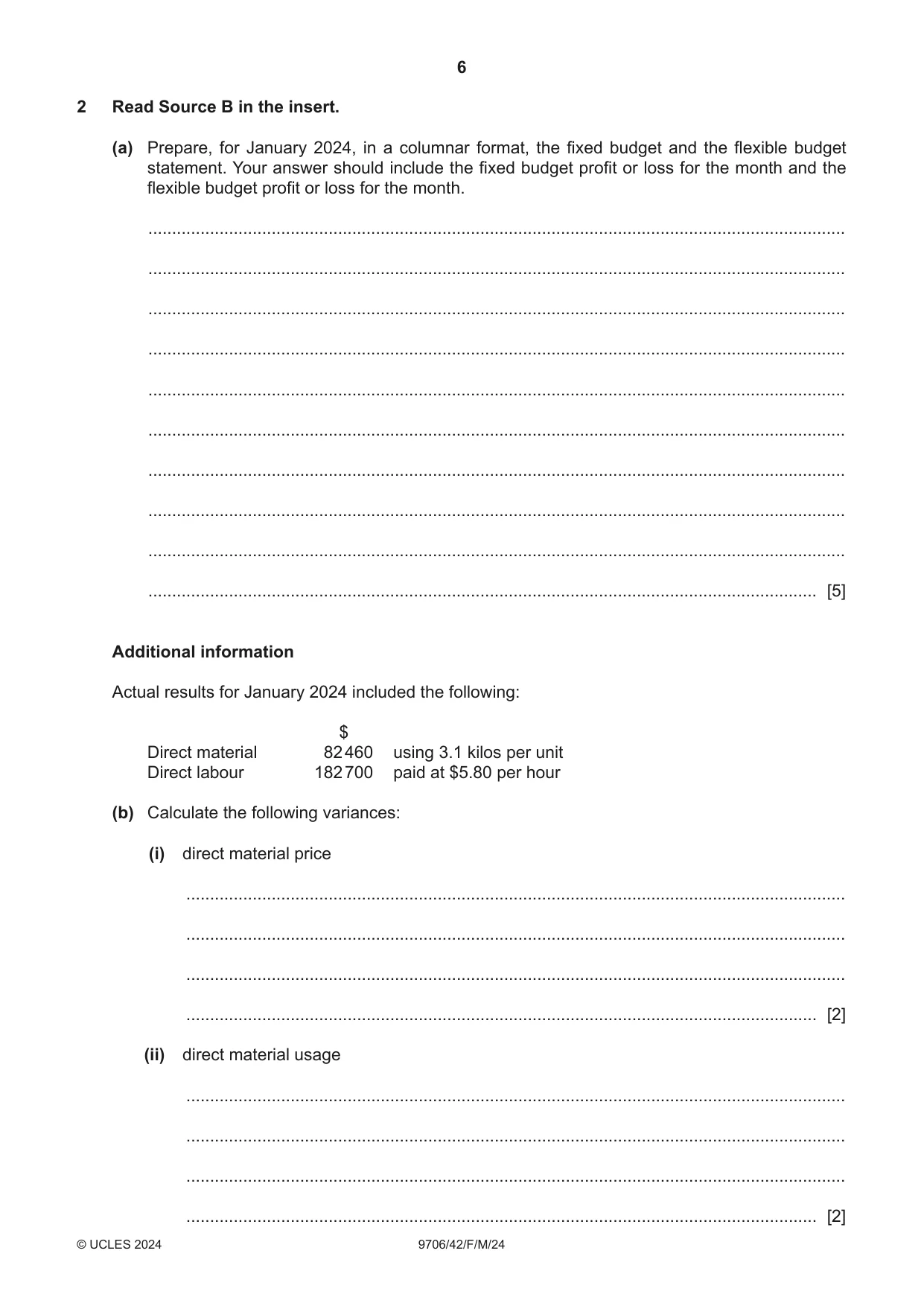
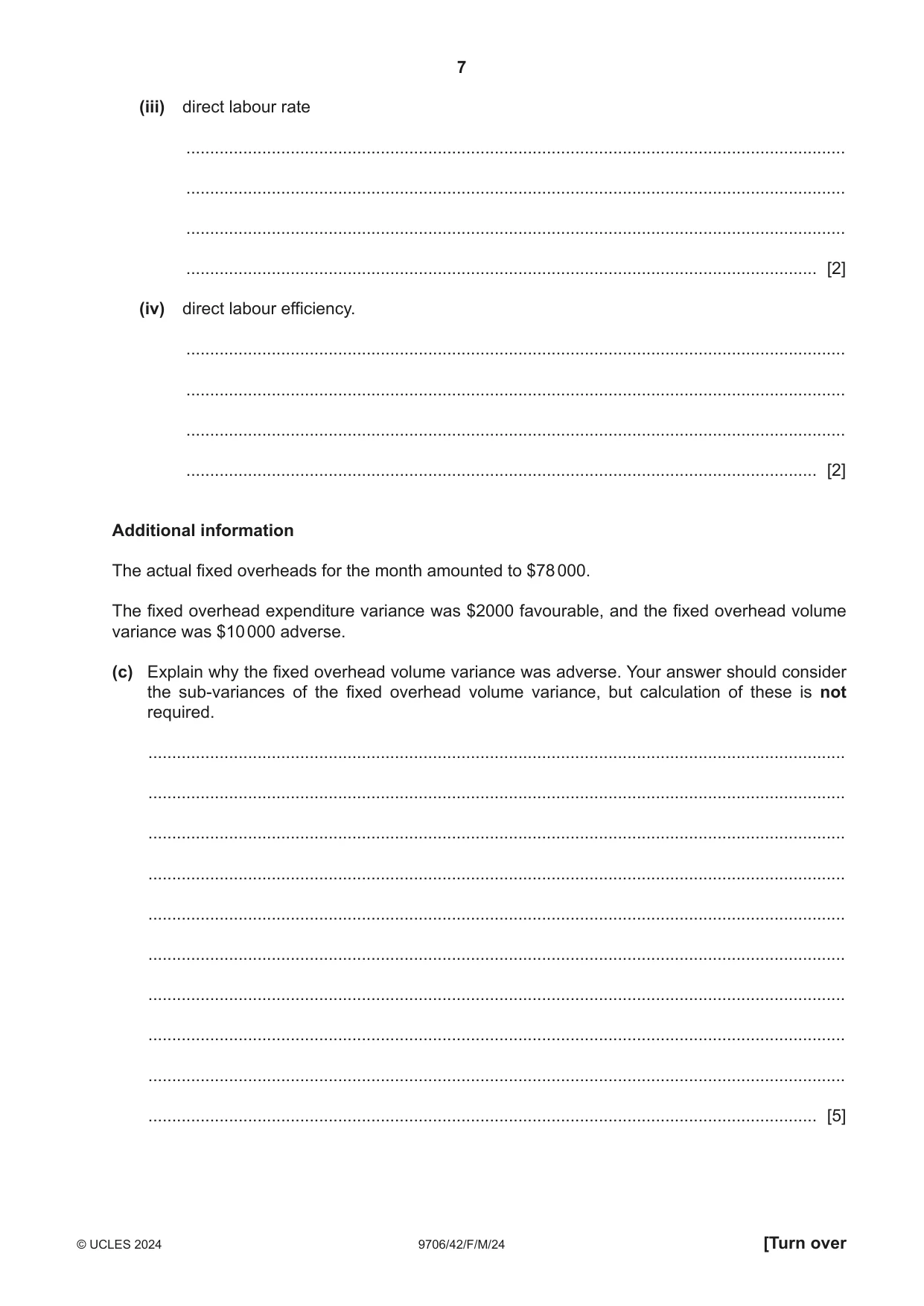
2 Read Source B in the insert. (a) Prepare, for January 2024, in a columnar format, the fixed budget and the flexible budget statement. Your answer should include the fixed budget profit or loss for the month and the flexible budget profit or loss for the month. ................................................................................................................................................... ................................................................................................................................................... ................................................................................................................................................... ................................................................................................................................................... ................................................................................................................................................... ................................................................................................................................................... ................................................................................................................................................... ................................................................................................................................................... ................................................................................................................................................... ............................................................................................................................................. [5] Additional information Actual results for January 2024 included the following: $ Direct material 82 460 using 3.1 kilos per unit Direct labour 182 700 paid at $5.80 per hour (b) Calculate the following variances: (i) direct material price ........................................................................................................................................... ........................................................................................................................................... ........................................................................................................................................... ..................................................................................................................................... [2] (ii) direct material usage ........................................................................................................................................... ........................................................................................................................................... ........................................................................................................................................... ..................................................................................................................................... [2] (iii) direct labour rate ........................................................................................................................................... ........................................................................................................................................... ........................................................................................................................................... ..................................................................................................................................... [2] (iv) direct labour efficiency. ........................................................................................................................................... ........................................................................................................................................... ........................................................................................................................................... ..................................................................................................................................... [2] Additional information The actual fixed overheads for the month amounted to $78 000. The fixed overhead expenditure variance was $2000 favourable, and the fixed overhead volume variance was $10 000 adverse. (c) Explain why the fixed overhead volume variance was adverse. Your answer should consider the sub-variances of the fixed overhead volume variance, but calculation of these is not required. ................................................................................................................................................... ................................................................................................................................................... ................................................................................................................................................... ................................................................................................................................................... ................................................................................................................................................... ................................................................................................................................................... ................................................................................................................................................... ................................................................................................................................................... ................................................................................................................................................... ............................................................................................................................................. [5] Additional information The company has been preparing sales, production, purchases and labour budgets for several years. It has now been suggested that the company should also prepare budgets for trade receivables and trade payables. (d) Advise the directors whether or not the company should start to prepare budgets for trade receivables and trade payables. Justify your answer. ................................................................................................................................................... ................................................................................................................................................... ................................................................................................................................................... ................................................................................................................................................... ................................................................................................................................................... ................................................................................................................................................... ................................................................................................................................................... ................................................................................................................................................... ................................................................................................................................................... ................................................................................................................................................... ................................................................................................................................................... ............................................................................................................................................. [7] [Total: 25]
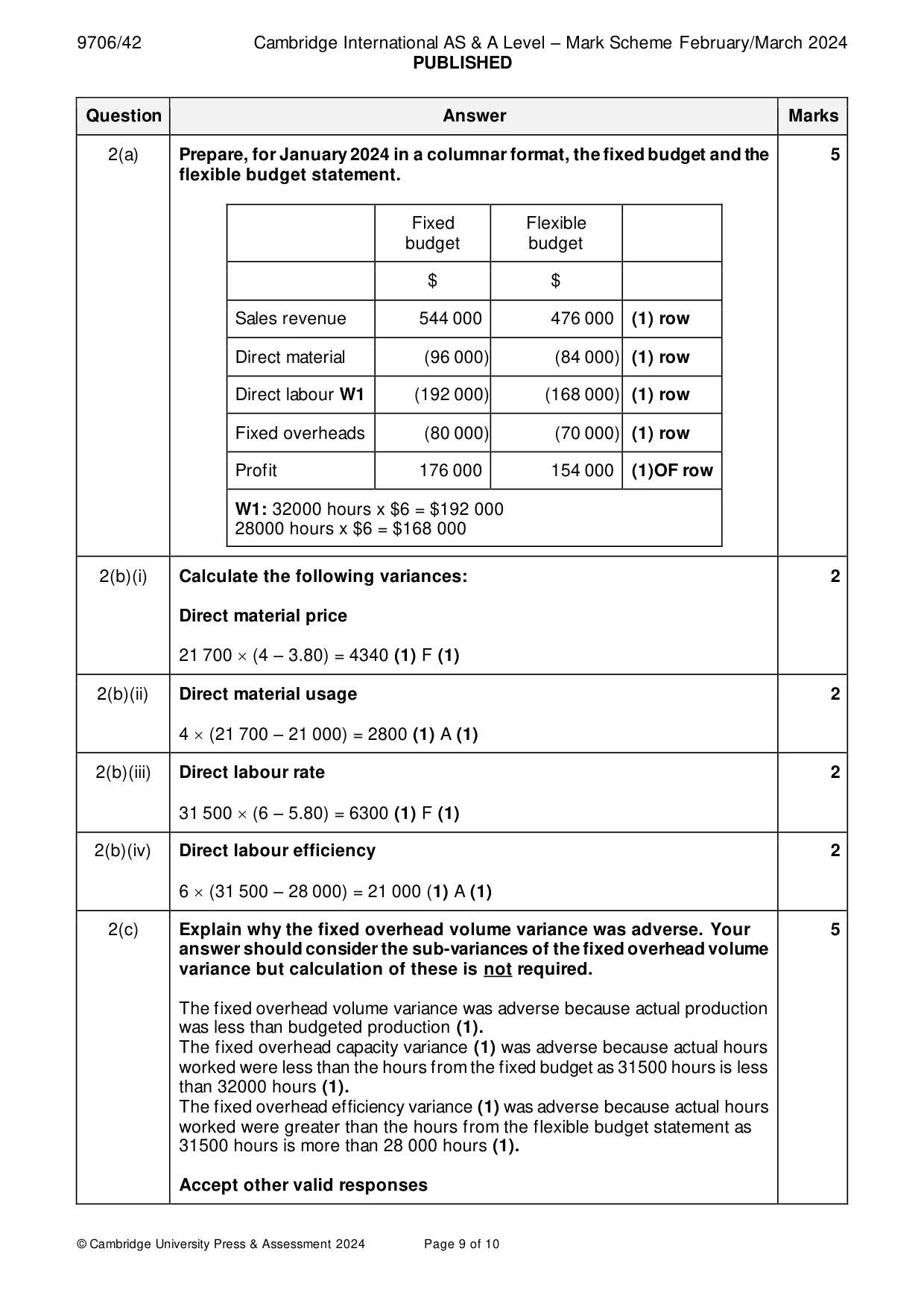
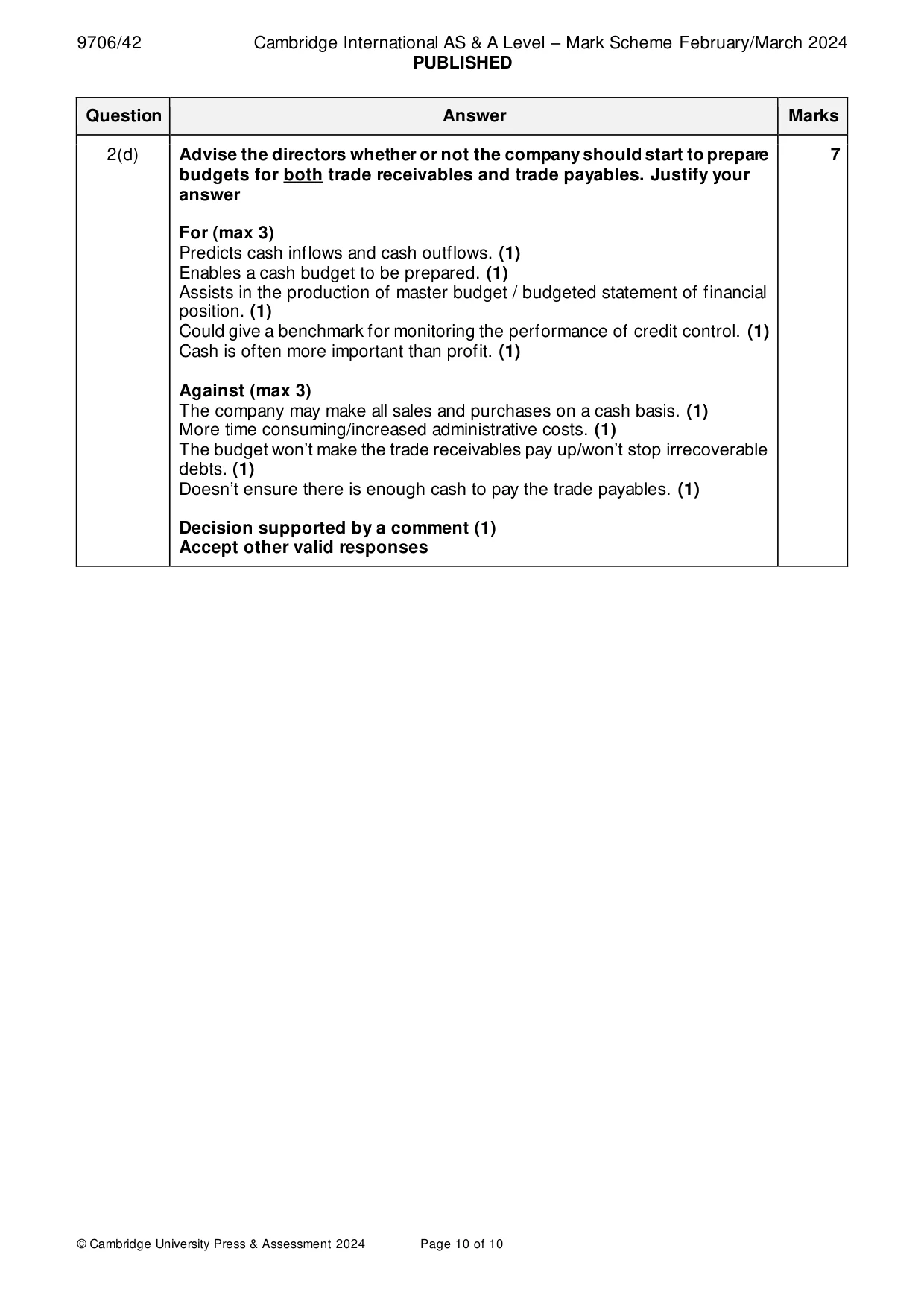
Mark scheme: 2(a) Prepare, for January 2024 in a columnar format, the fixed budget and the 5 flexible budget statement. Fixed Flexible budget budget $ $ Sales revenue 544 000 476 000 (1) row Direct material (96 000) (84 000) (1) row Direct labour W1 (192 000) (168 000) (1) row Fixed overheads (80 000) (70 000) (1) row Profit 176 000 154 000 (1)OF row W1: 32000 hours x $6 = $192 000 28000 hours x $6 = $168 000 2(b)(i) Calculate the following variances: 2 Direct material price 21 700 (4 – 3.80) = 4340 (1) F (1) 2(b)(ii) Direct material usage 2 4 (21 700 – 21 000) = 2800 (1) A (1) 2(b)(iii) Direct labour rate 2 31 500 (6 – 5.80) = 6300 (1) F (1) 2(b)(iv) Direct labour efficiency 2 6 (31 500 – 28 000) = 21 000 (1) A (1) 2(c) Explain why the fixed overhead volume variance was adverse. Your 5 answer should consider the sub-variances of the fixed overhead volume variance but calculation of these is not required. The fixed overhead volume variance was adverse because actual production was less than budgeted production (1). The fixed overhead capacity variance (1) was adverse because actual hours worked were less than the hours from the fixed budget as 31500 hours is less than 32000 hours (1). The fixed overhead efficiency variance (1) was adverse because actual hours worked were greater than the hours from the flexible budget statement as 31500 hours is more than 28 000 hours (1). Accept other valid responses 2(d) Advise the directors whether or not the company should start to prepare 7 budgets for both trade receivables and trade payables. Justify your answer For (max 3) Predicts cash inflows and cash outflows. (1) Enables a cash budget to be prepared. (1) Assists in the production of master budget / budgeted statement of financial position. (1) Could give a benchmark for monitoring the performance of credit control. (1) Cash is often more important than profit. (1) Against (max 3) The company may make all sales and purchases on a cash basis. (1) More time consuming/increased administrative costs. (1) The budget won’t make the trade receivables pay up/won’t stop irrecoverable debts. (1) Doesn’t ensure there is enough cash to pay the trade payables. (1) Decision supported by a comment (1) Accept other valid responses
What was in this paper
The subtopics covered by these 2 questions, and how many questions each got. Open one in a new tab to see every Cambridge question on it.
What you needed in this session
Cambridge’s own grade thresholds for 2024 Feb/March, Paper 4 · Variant 2. A higher threshold means an easier paper — the bar moves with how the cohort did.