Cambridge A Level Accounting 9706 — 2025 Oct/Nov Paper 4 · Variant 3
9706/43/O/N/25 · 2 questions · 50 marks · ≈56 min
The question paper and its mark scheme, free to read here and free to download. This is Cambridge’s own paper, exactly as it was sat.
Question paper8 pages
Mark scheme14 pages
Answers below. Sit the paper first if you are practising.
Questions as text
Q1 · Read Source A in the insert
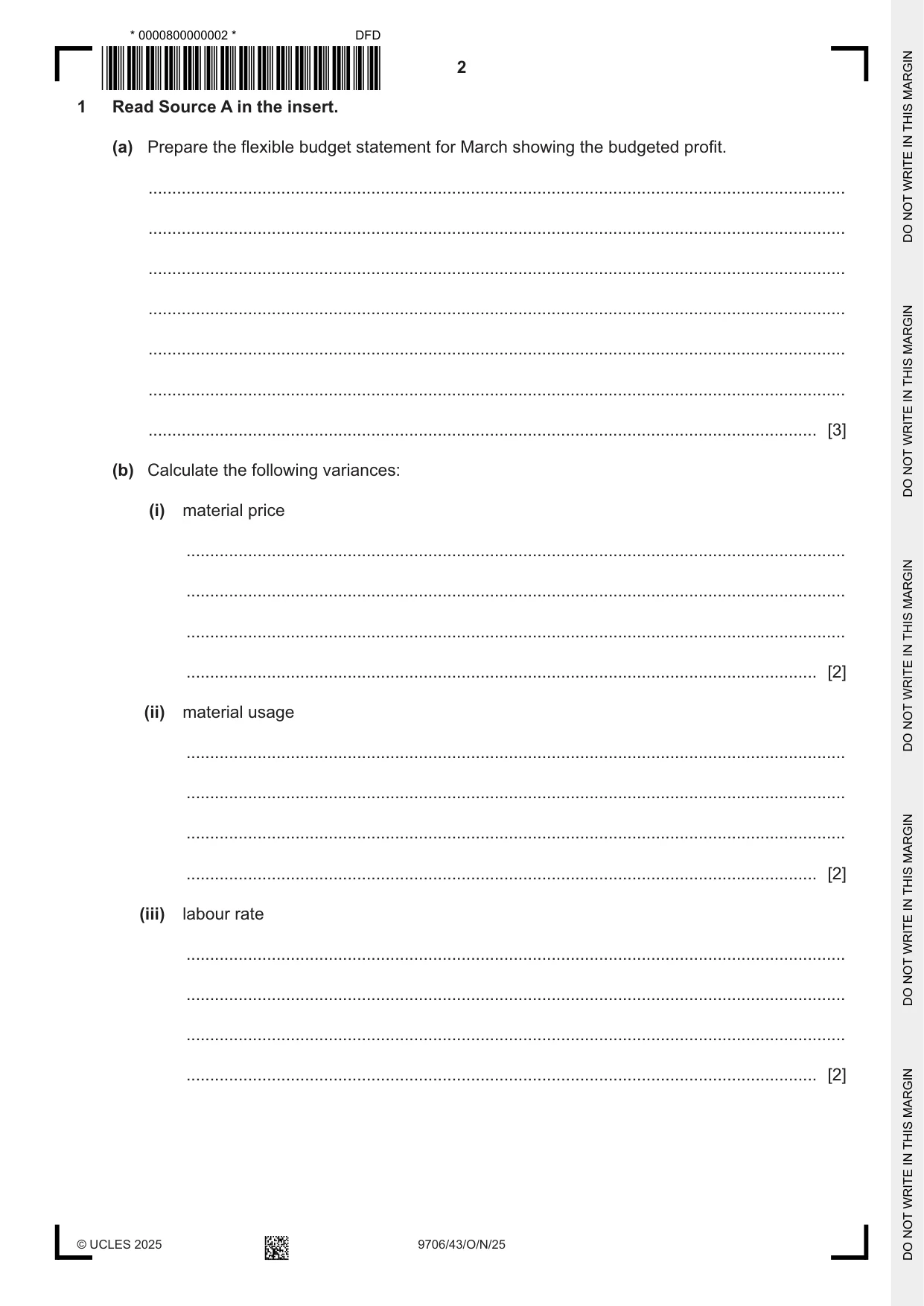
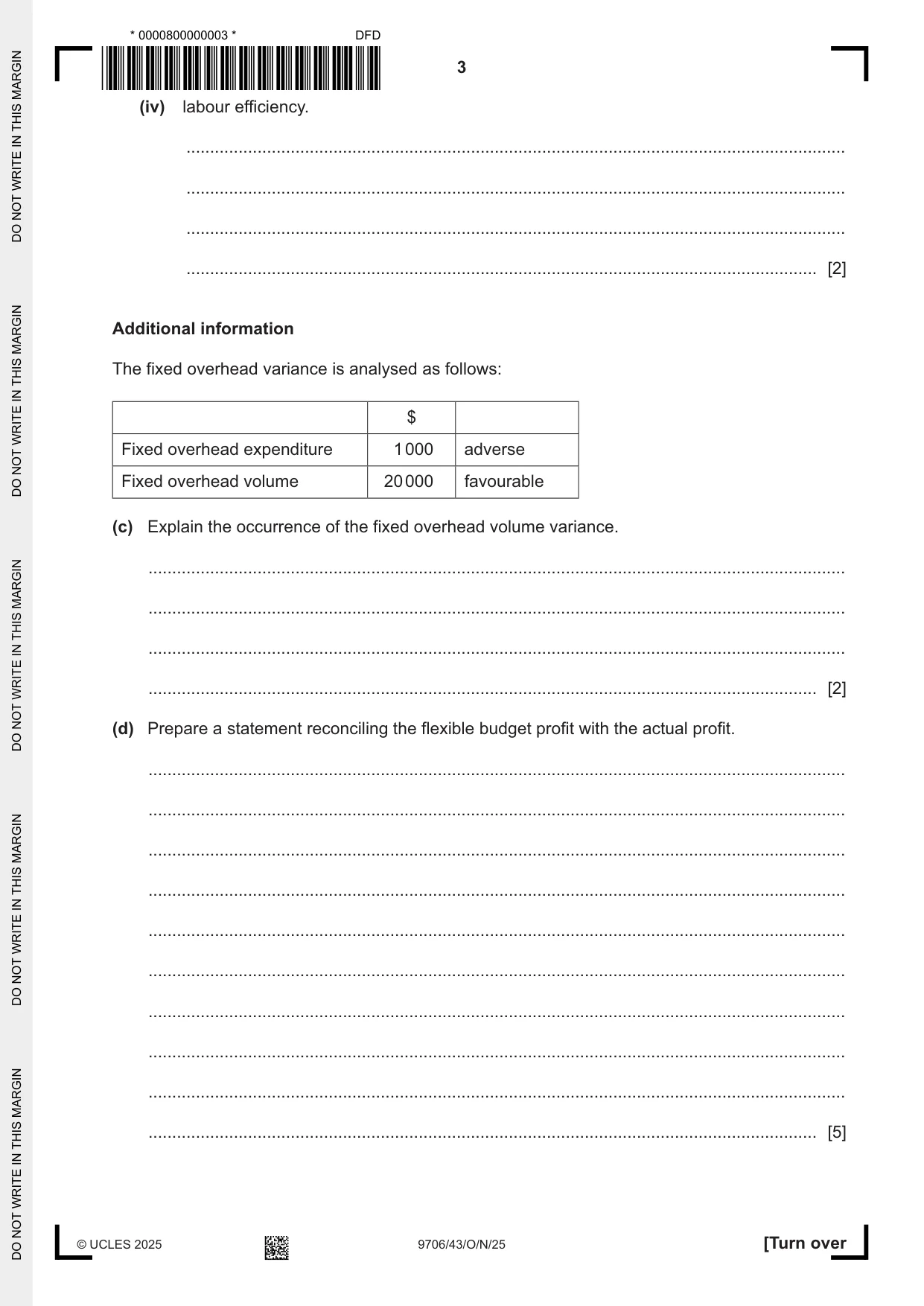
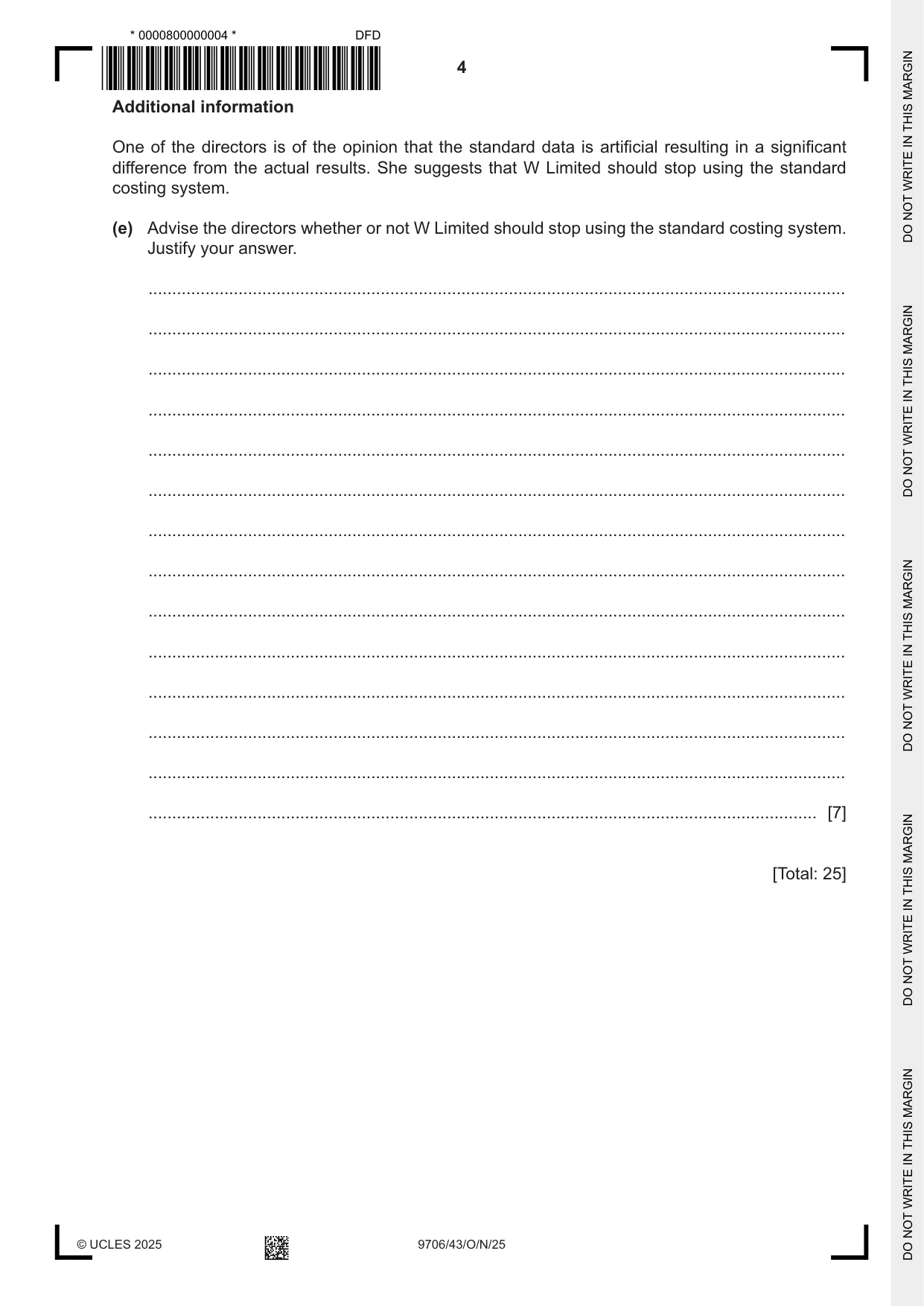
1 Read Source A in the insert. (a) Prepare the flexible budget statement for March showing the budgeted profit. ................................................................................................................................................... ................................................................................................................................................... ................................................................................................................................................... ................................................................................................................................................... ................................................................................................................................................... ................................................................................................................................................... ............................................................................................................................................. [3] (b) Calculate the following variances: (i) material price ........................................................................................................................................... ........................................................................................................................................... ........................................................................................................................................... ..................................................................................................................................... [2] (ii) material usage ........................................................................................................................................... ........................................................................................................................................... ........................................................................................................................................... ..................................................................................................................................... [2] (iii) labour rate ........................................................................................................................................... ........................................................................................................................................... ........................................................................................................................................... ..................................................................................................................................... [2] (iv) labour efficiency. ........................................................................................................................................... ........................................................................................................................................... ........................................................................................................................................... ..................................................................................................................................... [2] Additional information The fixed overhead variance is analysed as follows: $ Fixed overhead expenditure 1 000 adverse Fixed overhead volume 20 000 favourable (c) Explain the occurrence of the fixed overhead volume variance. ................................................................................................................................................... ................................................................................................................................................... ................................................................................................................................................... ............................................................................................................................................. [2] (d) Prepare a statement reconciling the flexible budget profit with the actual profit. ................................................................................................................................................... ................................................................................................................................................... ................................................................................................................................................... ................................................................................................................................................... ................................................................................................................................................... ................................................................................................................................................... ................................................................................................................................................... ................................................................................................................................................... ................................................................................................................................................... ............................................................................................................................................. [5] Additional information One of the directors is of the opinion that the standard data is artificial resulting in a significant difference from the actual results. She suggests that W Limited should stop using the standard costing system. (e) Advise the directors whether or not W Limited should stop using the standard costing system. Justify your answer. ................................................................................................................................................... ................................................................................................................................................... ................................................................................................................................................... ................................................................................................................................................... ................................................................................................................................................... ................................................................................................................................................... ................................................................................................................................................... ................................................................................................................................................... ................................................................................................................................................... ................................................................................................................................................... ................................................................................................................................................... ................................................................................................................................................... ................................................................................................................................................... ............................................................................................................................................. [7] [Total: 25]
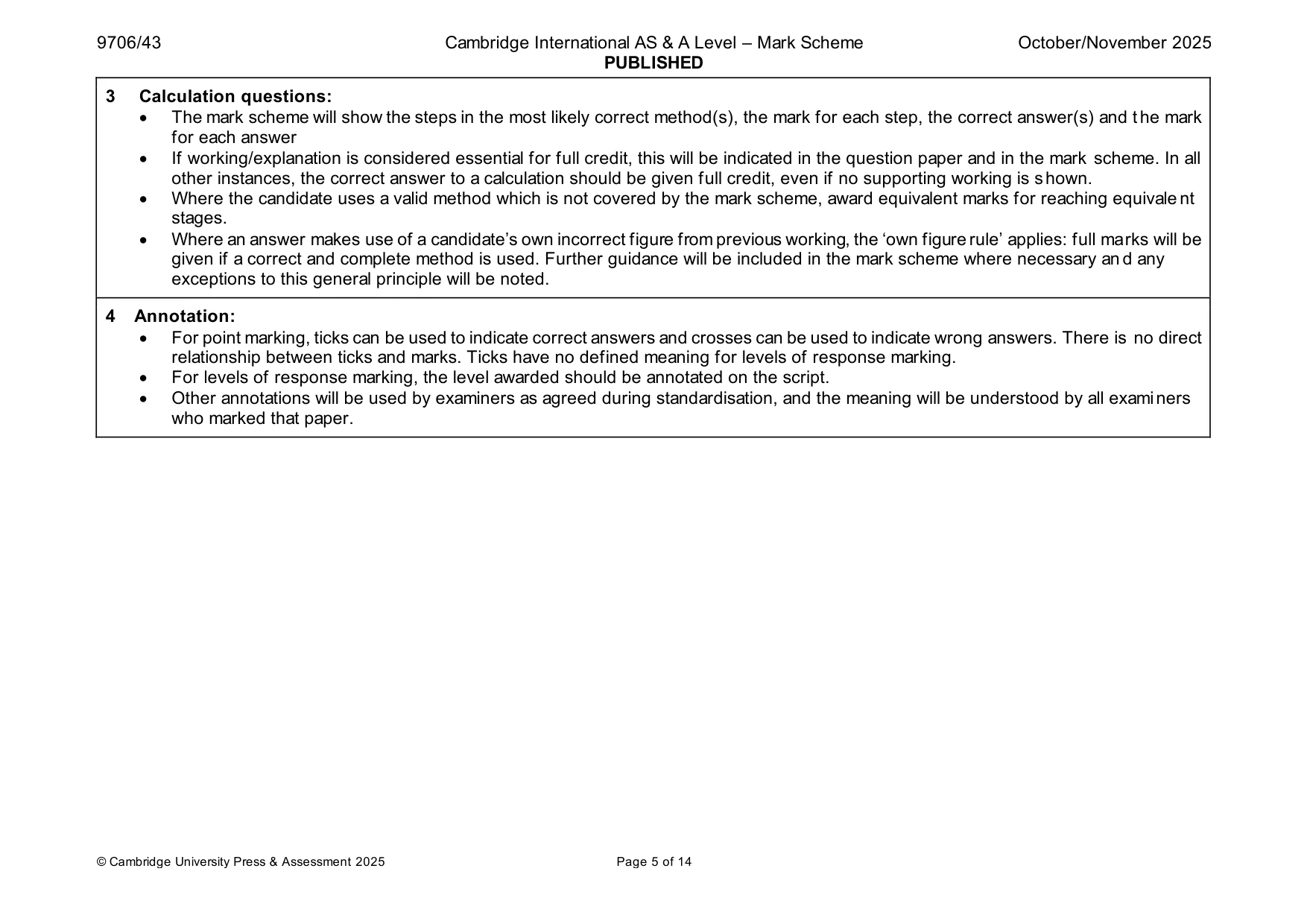
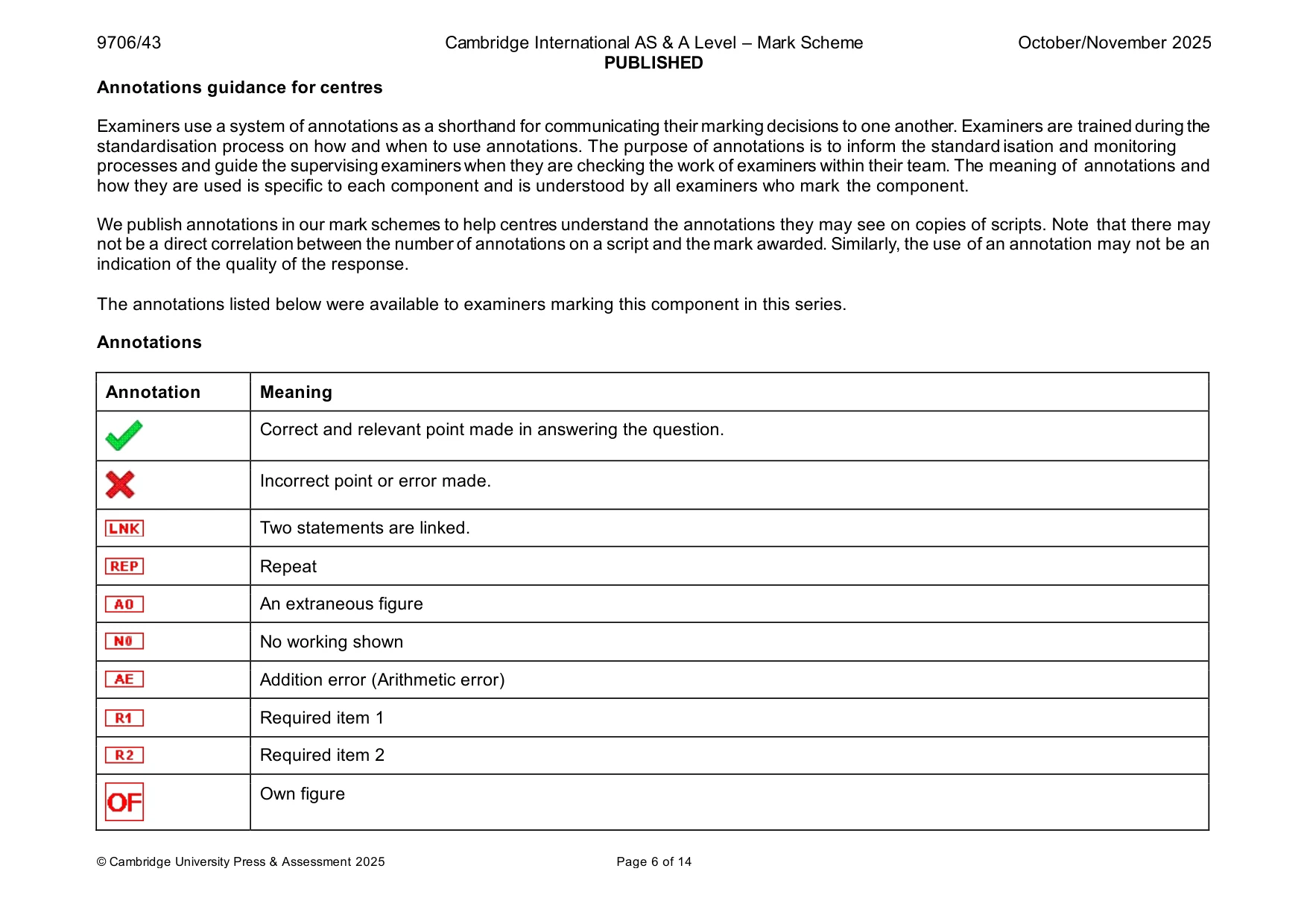
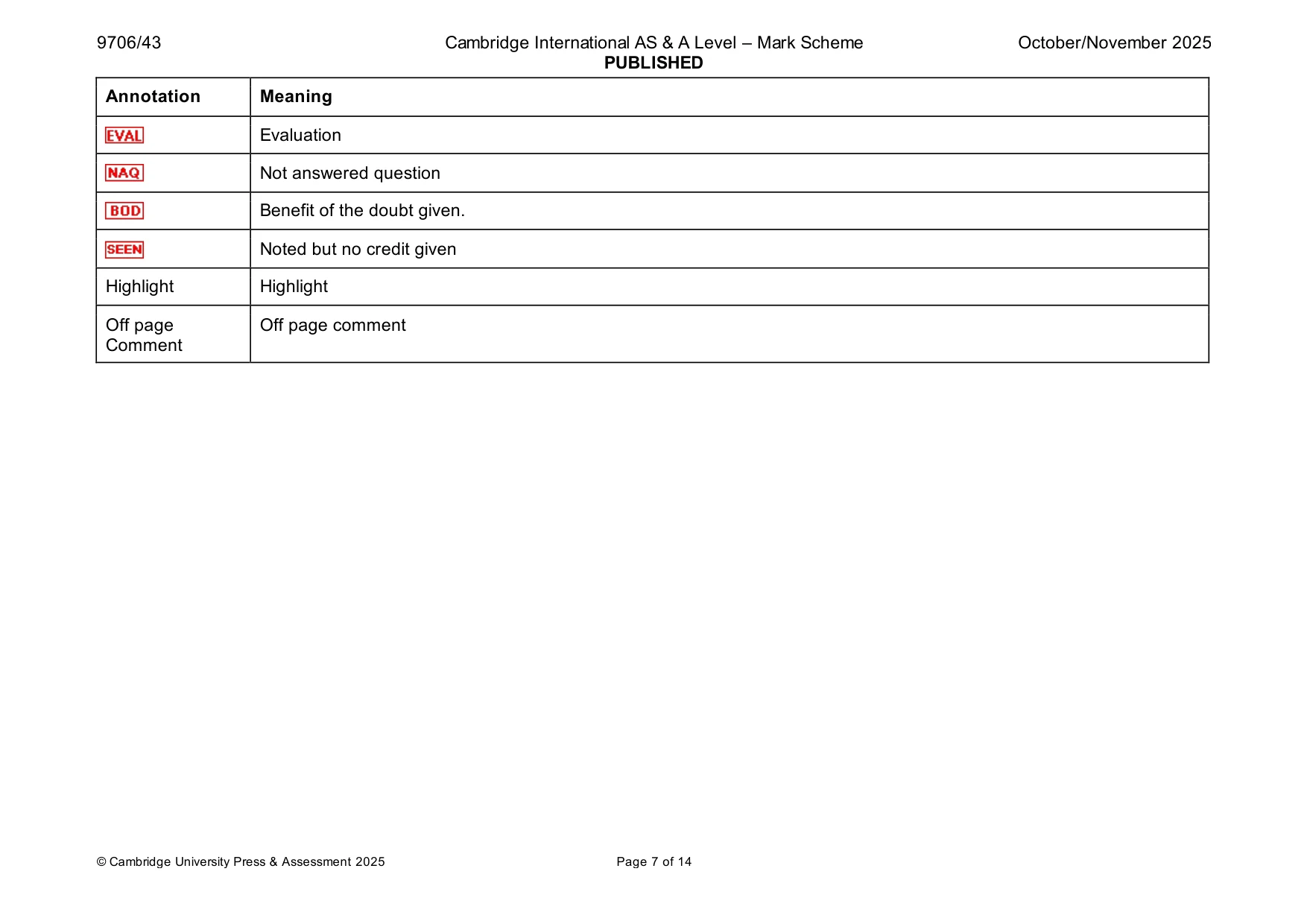
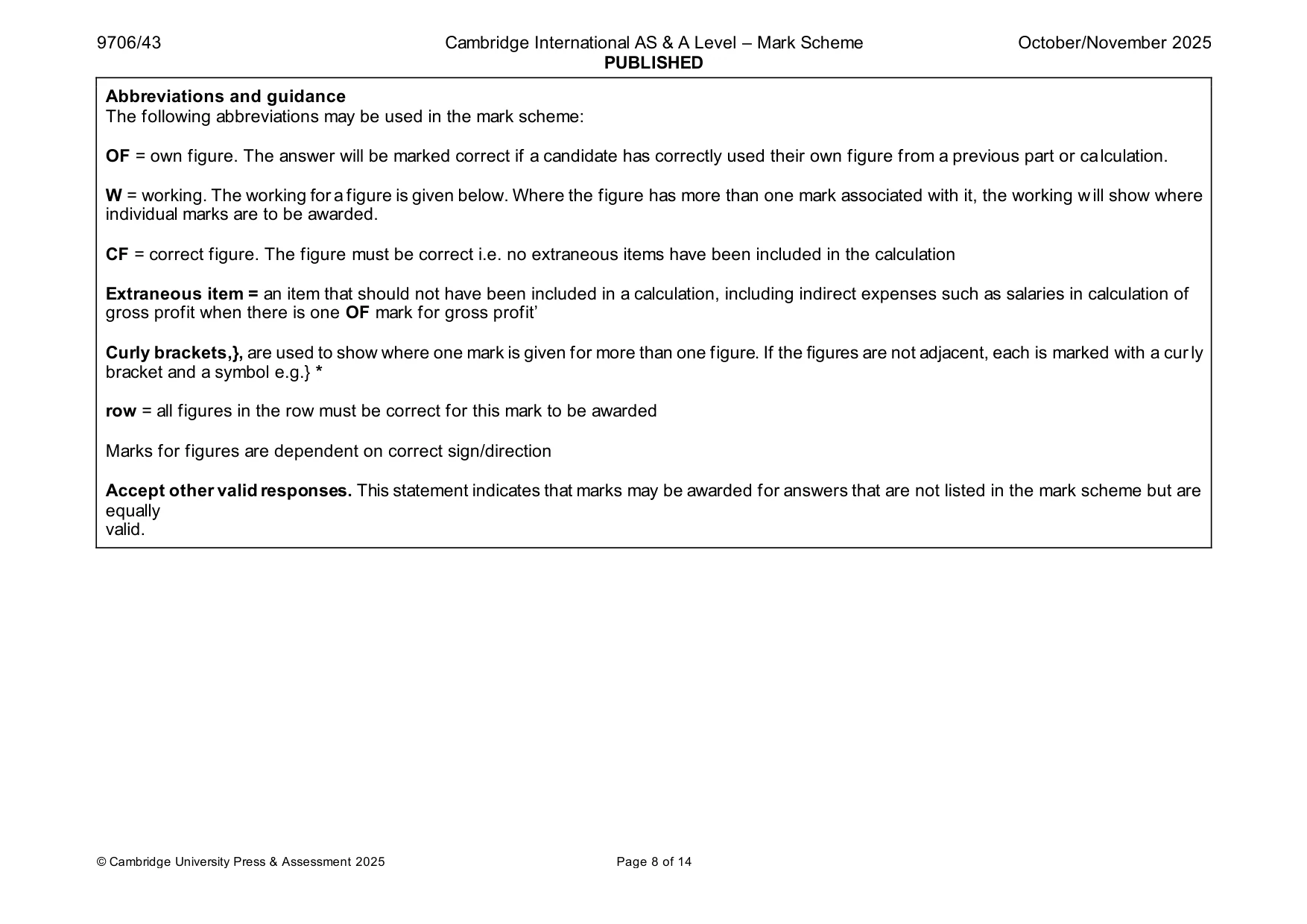
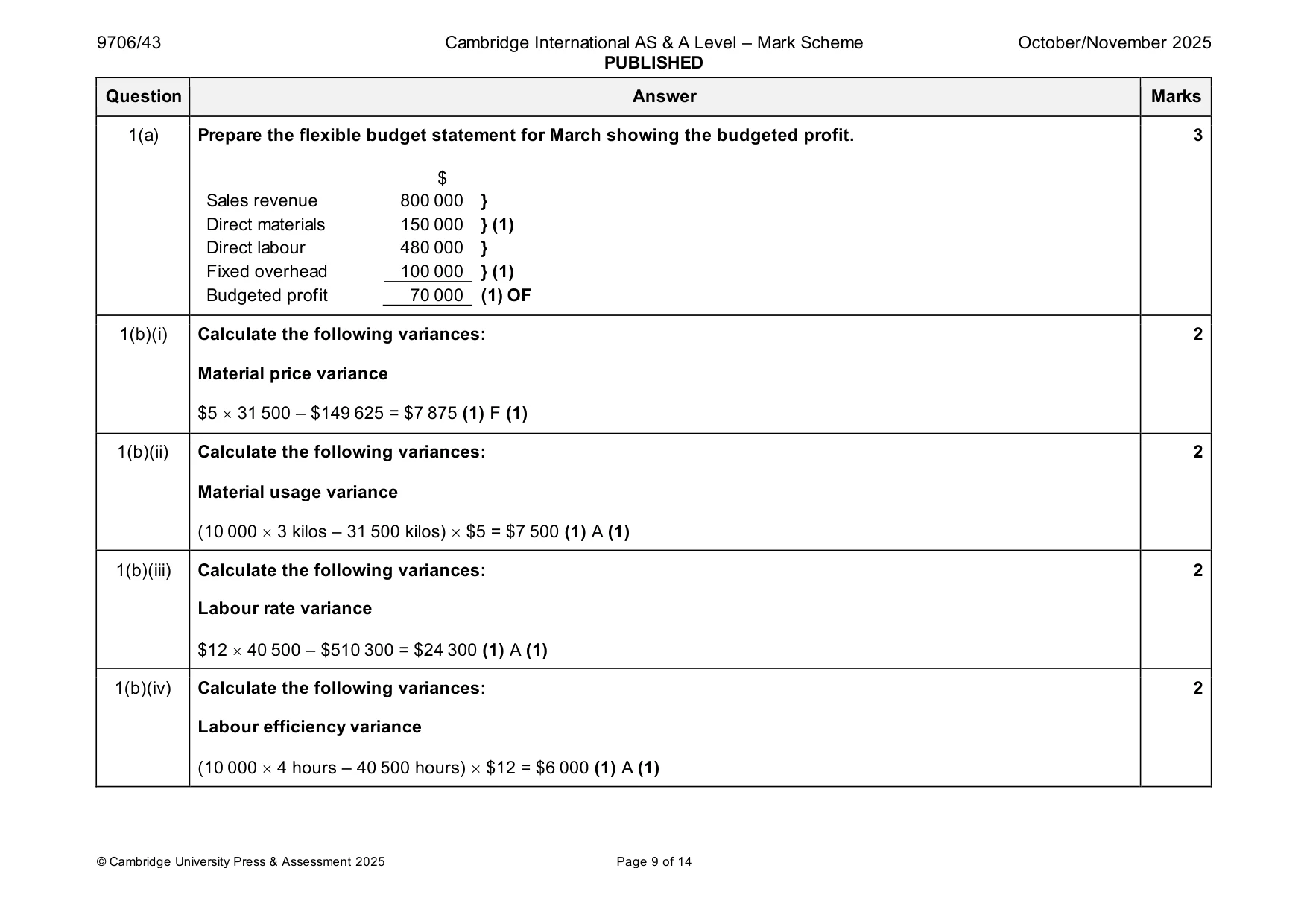
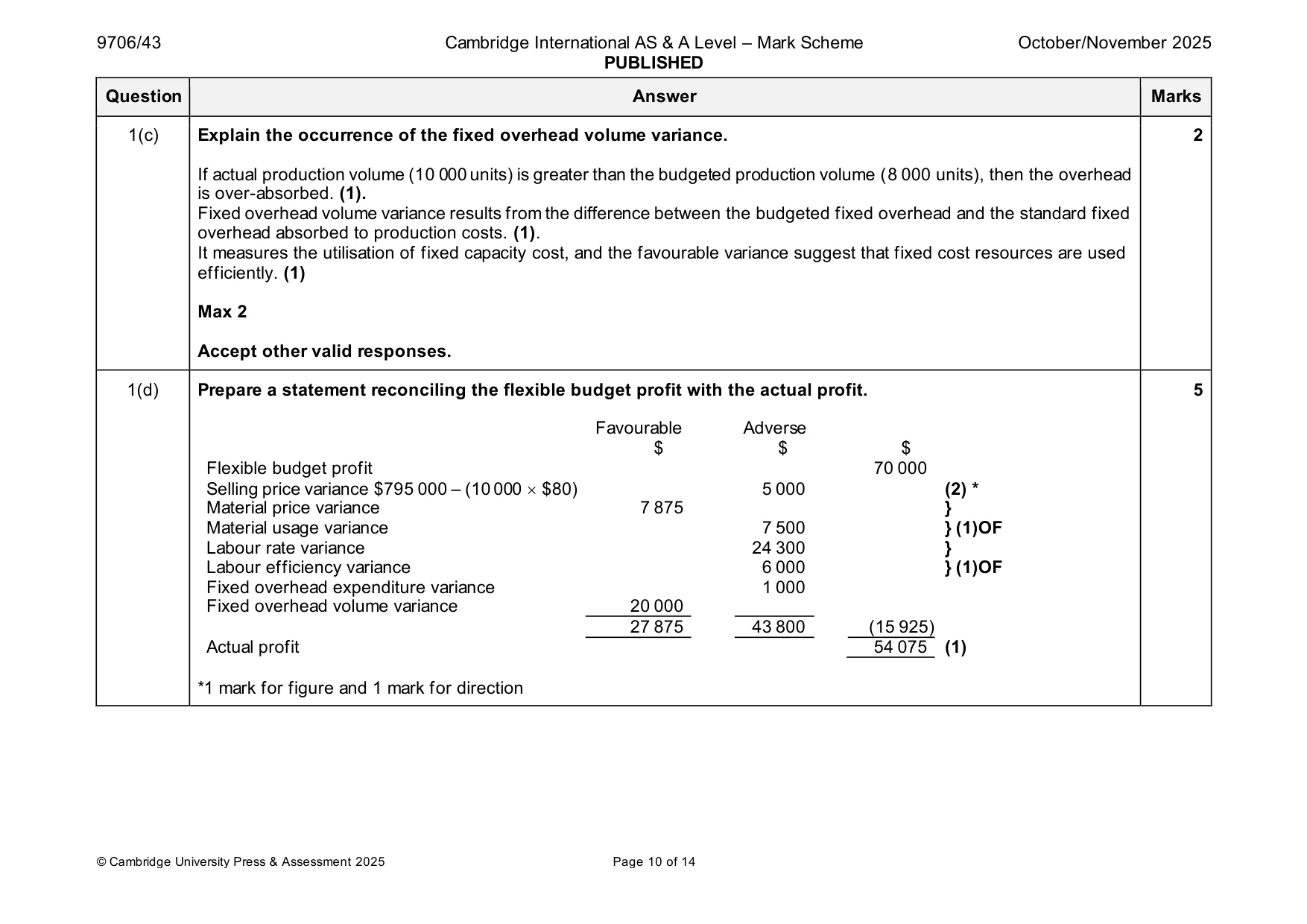
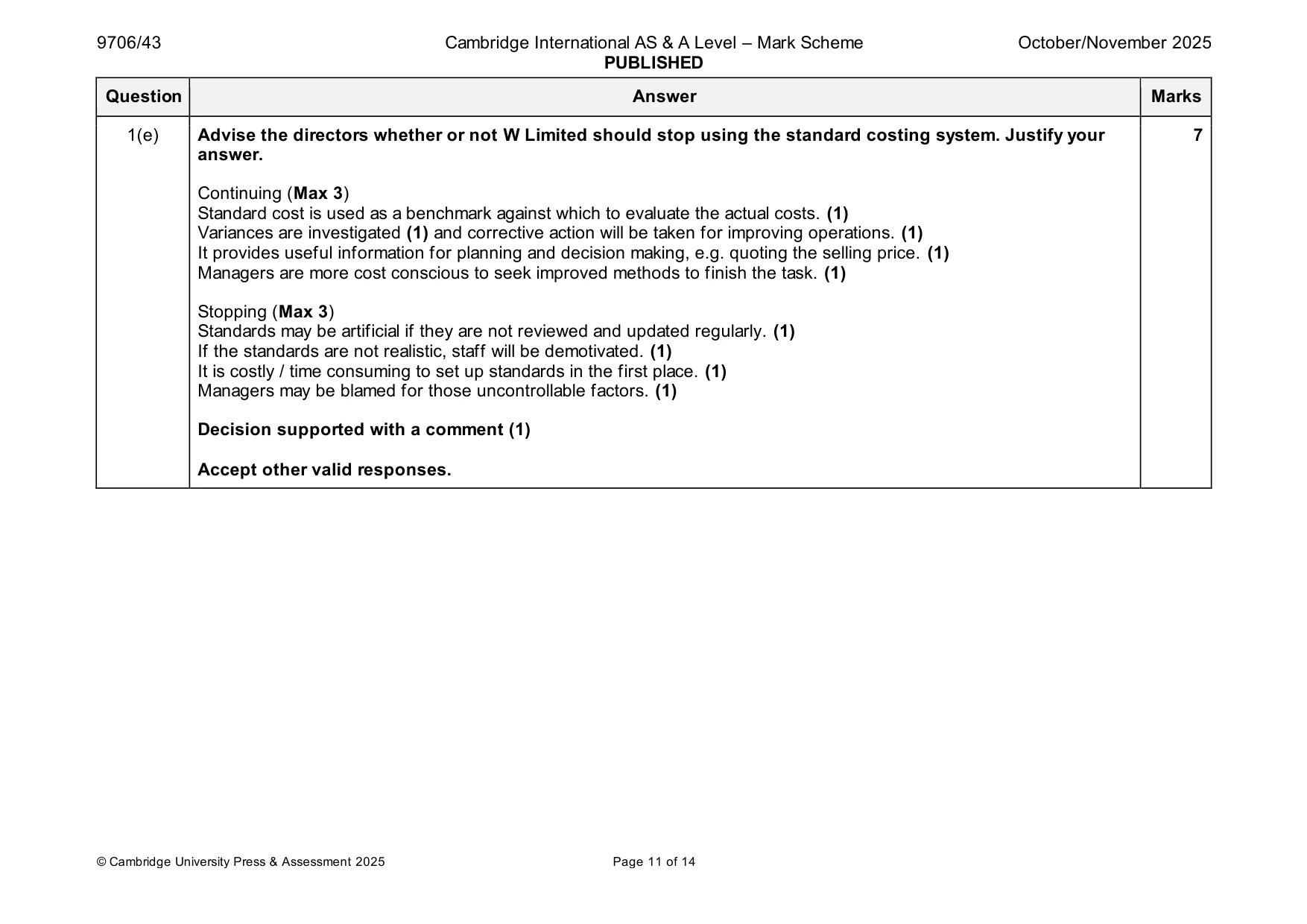
Mark scheme: Question Answer Marks 1(a) Prepare the flexible budget statement for March showing the budgeted profit. 3 $ Sales revenue 800 000 } Direct materials 150 000 } (1) Direct labour 480 000 } Fixed overhead 100 000 } (1) Budgeted profit 70 000 (1) OF 1(b)(i) Calculate the following variances: 2 Material price variance $5 31 500 – $149 625 = $7 875 (1) F (1) 1(b)(ii) Calculate the following variances: 2 Material usage variance (10 000 3 kilos – 31 500 kilos) $5 = $7 500 (1) A (1) 1(b)(iii) Calculate the following variances: 2 Labour rate variance $12 40 500 – $510 300 = $24 300 (1) A (1) 1(b)(iv) Calculate the following variances: 2 Labour efficiency variance (10 000 4 hours – 40 500 hours) $12 = $6 000 (1) A (1) 1(c) Explain the occurrence of the fixed overhead volume variance. 2 If actual production volume (10 000 units) is greater than the budgeted production volume (8 000 units), then the overhead is over-absorbed. (1). Fixed overhead volume variance results from the difference between the budgeted fixed overhead and the standard fixed overhead absorbed to production costs. (1). It measures the utilisation of fixed capacity cost, and the favourable variance suggest that fixed cost resources are used efficiently. (1) Max 2 Accept other valid responses. 1(d) Prepare a statement reconciling the flexible budget profit with the actual profit. 5 Favourable Adverse $ $ $ Flexible budget profit 70 000 Selling price variance $795 000 – (10 000 $80) 5 000 (2) * Material price variance 7 875 } Material usage variance 7 500 } (1)OF Labour rate variance 24 300 } Labour efficiency variance 6 000 } (1)OF Fixed overhead expenditure variance 1 000 Fixed overhead volume variance 20 000 27 875 43 800 (15 925) Actual profit 54 075 (1) *1 mark for figure and 1 mark for direction 1(e) Advise the directors whether or not W Limited should stop using the standard costing system. Justify your 7 answer. Continuing (Max 3) Standard cost is used as a benchmark against which to evaluate the actual costs. (1) Variances are investigated (1) and corrective action will be taken for improving operations. (1) It provides useful information for planning and decision making, e.g. quoting the selling price. (1) Managers are more cost conscious to seek improved methods to finish the task. (1) Stopping (Max 3) Standards may be artificial if they are not reviewed and updated regularly. (1) If the standards are not realistic, staff will be demotivated. (1) It is costly / time consuming to set up standards in the first place. (1) Managers may be blamed for those uncontrollable factors. (1) Decision supported with a comment (1) Accept other valid responses.
Q2 · Read Source B in the insert
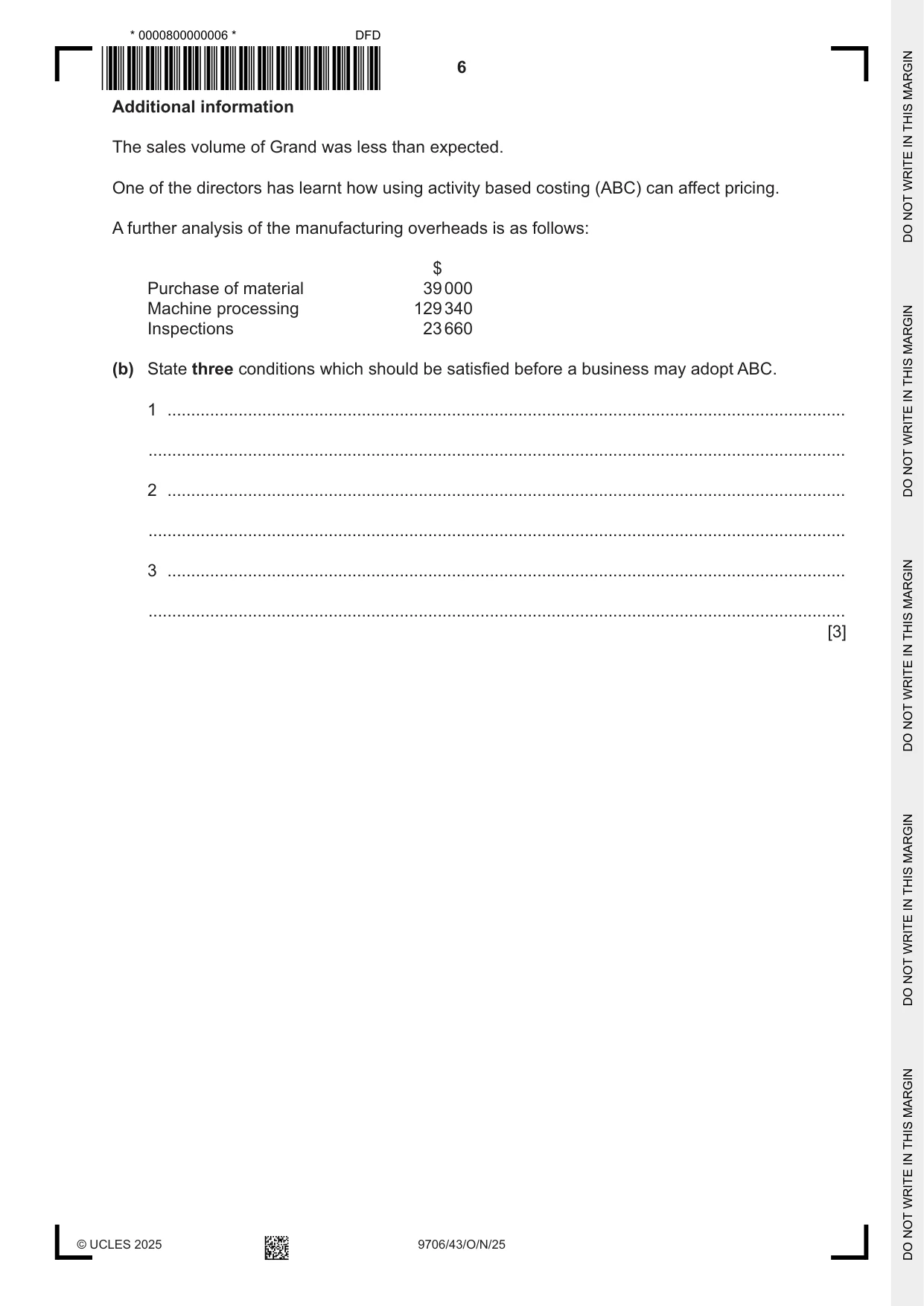
2 Read Source B in the insert. (a) Calculate, to two decimal places, the unit selling price for each product using the traditional method. ................................................................................................................................................... ................................................................................................................................................... ................................................................................................................................................... ................................................................................................................................................... ................................................................................................................................................... ................................................................................................................................................... ................................................................................................................................................... ................................................................................................................................................... ................................................................................................................................................... ................................................................................................................................................... ................................................................................................................................................... ................................................................................................................................................... ................................................................................................................................................... ............................................................................................................................................. [5] Additional information The sales volume of Grand was less than expected. One of the directors has learnt how using activity based costing (ABC) can affect pricing. A further analysis of the manufacturing overheads is as follows: $ Purchase of material 39 000 Machine processing 129 340 Inspections 23 660 (b) State three conditions which should be satisfied before a business may adopt ABC. 1 ............................................................................................................................................... ................................................................................................................................................... 2 ............................................................................................................................................... ................................................................................................................................................... 3 ............................................................................................................................................... ................................................................................................................................................... [3] (c) Calculate, to two decimal places, the unit selling price for each product using ABC. ................................................................................................................................................... ................................................................................................................................................... ................................................................................................................................................... ................................................................................................................................................... ................................................................................................................................................... ................................................................................................................................................... ................................................................................................................................................... ................................................................................................................................................... ................................................................................................................................................... ................................................................................................................................................... ................................................................................................................................................... ................................................................................................................................................... ................................................................................................................................................... ................................................................................................................................................... ................................................................................................................................................... Workings: [7]
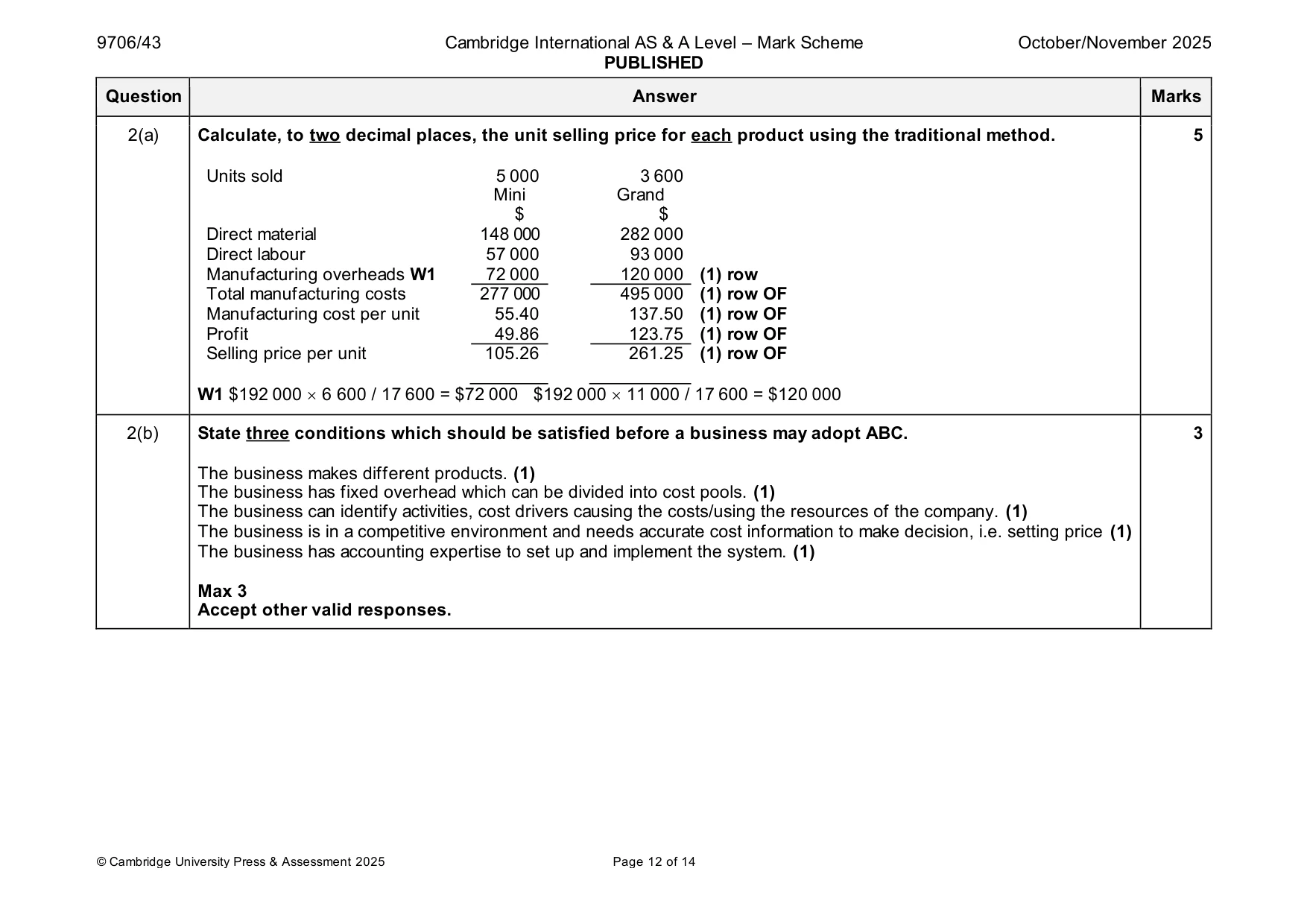
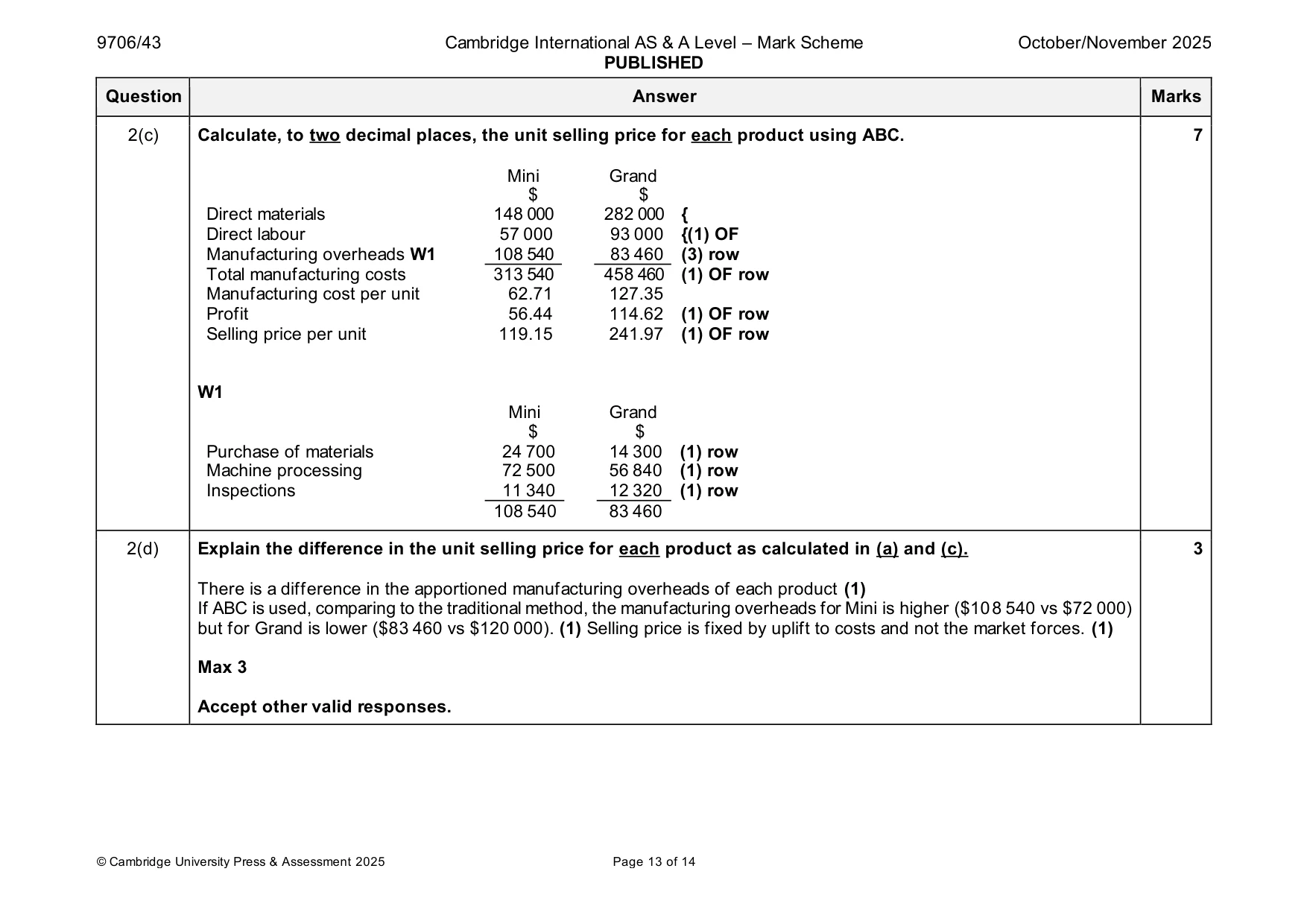
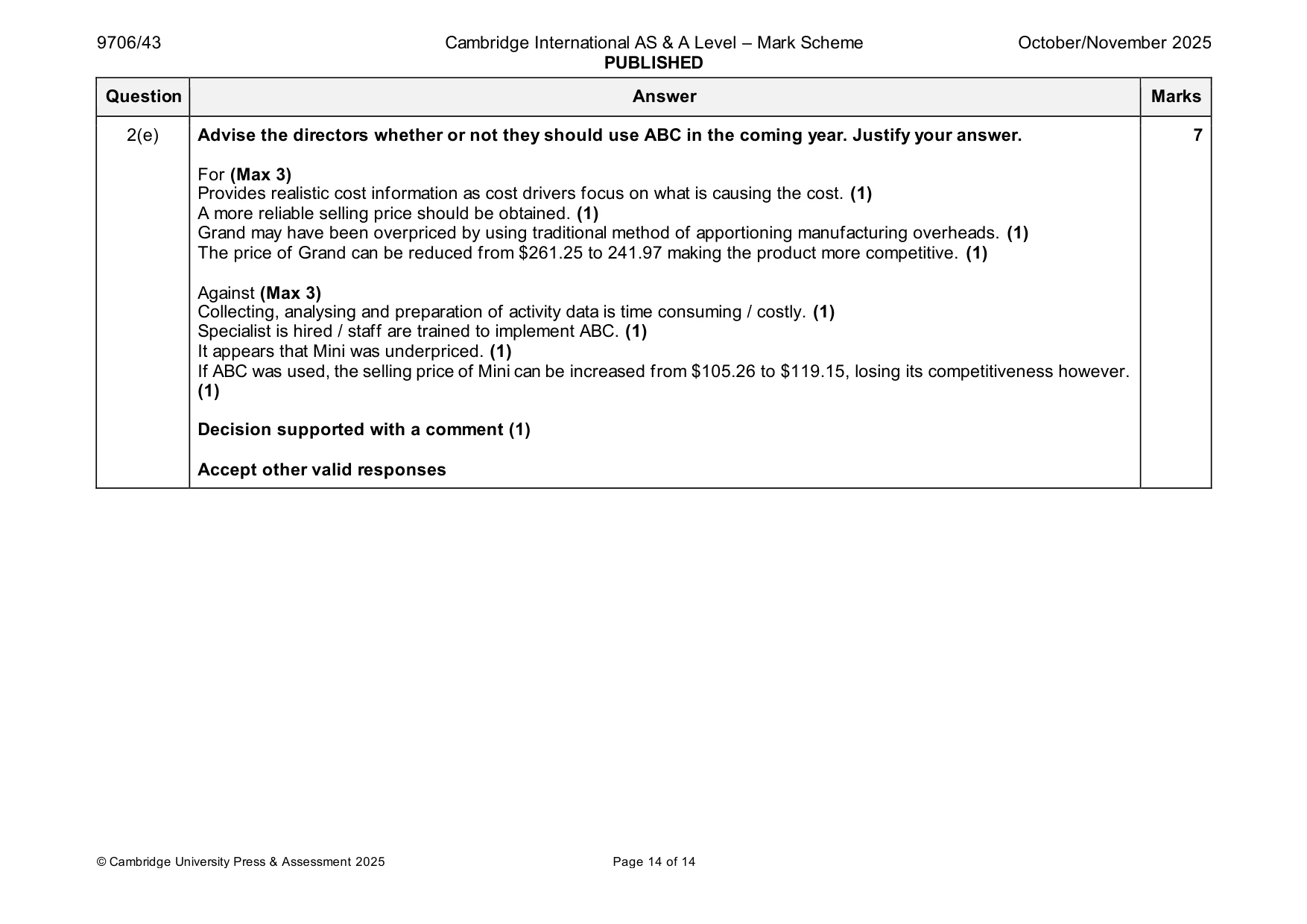
Mark scheme: 2(a) Calculate, to two decimal places, the unit selling price for each product using the traditional method. 5 Units sold 5 000 3 600 Mini Grand $ $ Direct material 148 000 282 000 Direct labour 57 000 93 000 Manufacturing overheads W1 72 000 120 000 (1) row Total manufacturing costs 277 000 495 000 (1) row OF Manufacturing cost per unit 55.40 137.50 (1) row OF Profit 49.86 123.75 (1) row OF Selling price per unit 105.26 261.25 (1) row OF W1 $192 000 6 600 / 17 600 = $72 000 $192 000 11 000 / 17 600 = $120 000 2(b) State three conditions which should be satisfied before a business may adopt ABC. 3 The business makes different products. (1) The business has fixed overhead which can be divided into cost pools. (1) The business can identify activities, cost drivers causing the costs/using the resources of the company. (1) The business is in a competitive environment and needs accurate cost information to make decision, i.e. setting price (1) The business has accounting expertise to set up and implement the system. (1) Max 3 Accept other valid responses. 2(c) Calculate, to two decimal places, the unit selling price for each product using ABC. 7 Mini Grand $ $ Direct materials 148 000 282 000 { Direct labour 57 000 93 000 {(1) OF Manufacturing overheads W1 108 540 83 460 (3) row Total manufacturing costs 313 540 458 460 (1) OF row Manufacturing cost per unit 62.71 127.35 Profit 56.44 114.62 (1) OF row Selling price per unit 119.15 241.97 (1) OF row W1 Mini Grand $ $ Purchase of materials 24 700 14 300 (1) row Machine processing 72 500 56 840 (1) row Inspections 11 340 12 320 (1) row 108 540 83 460 2(d) Explain the difference in the unit selling price for each product as calculated in (a) and (c). 3 There is a difference in the apportioned manufacturing overheads of each product (1) If ABC is used, comparing to the traditional method, the manufacturing overheads for Mini is higher ($108 540 vs $72 000) but for Grand is lower ($83 460 vs $120 000). (1) Selling price is fixed by uplift to costs and not the market forces. (1) Max 3 Accept other valid responses. 2(e) Advise the directors whether or not they should use ABC in the coming year. Justify your answer. 7 For (Max 3) Provides realistic cost information as cost drivers focus on what is causing the cost. (1) A more reliable selling price should be obtained. (1) Grand may have been overpriced by using traditional method of apportioning manufacturing overheads. (1) The price of Grand can be reduced from $261.25 to 241.97 making the product more competitive. (1) Against (Max 3) Collecting, analysing and preparation of activity data is time consuming / costly. (1) Specialist is hired / staff are trained to implement ABC. (1) It appears that Mini was underpriced. (1) If ABC was used, the selling price of Mini can be increased from $105.26 to $119.15, losing its competitiveness however. (1) Decision supported with a comment (1) Accept other valid responses
What was in this paper
The subtopics covered by these 2 questions, and how many questions each got. Open one in a new tab to see every Cambridge question on it.
What you needed in this session
Cambridge’s own grade thresholds for 2025 Oct/Nov, Paper 4 · Variant 3. A higher threshold means an easier paper — the bar moves with how the cohort did.