Cambridge A Level Accounting 9706 — 2025 May/June Paper 4 · Variant 2
9706/42/M/J/25 · 2 questions · 50 marks · ≈56 min
The question paper and its mark scheme, free to read here and free to download. This is Cambridge’s own paper, exactly as it was sat.
Question paper8 pages

Mark scheme15 pages
Answers below. Sit the paper first if you are practising.
Questions as text
Q1 · Read Source A in the insert
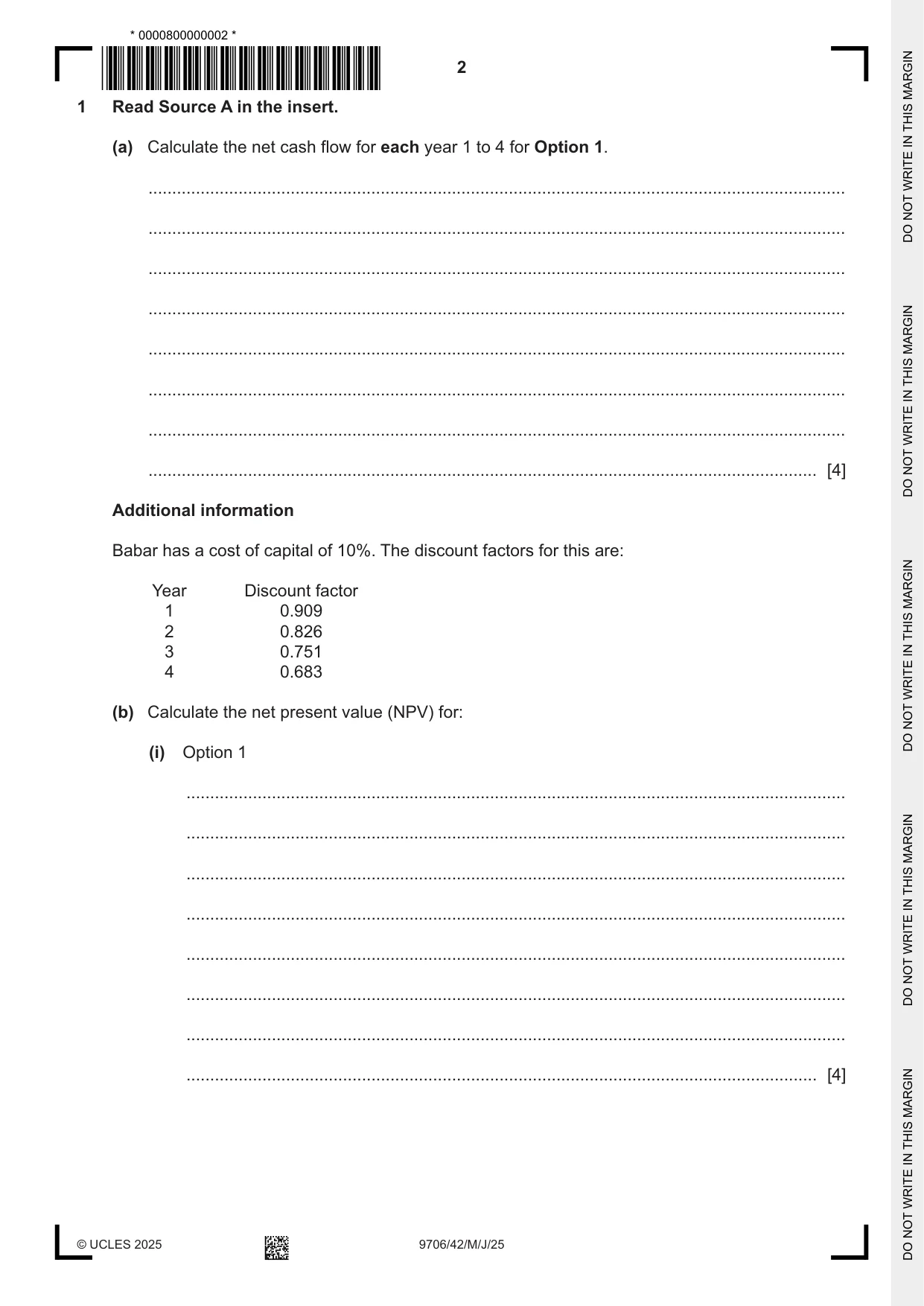
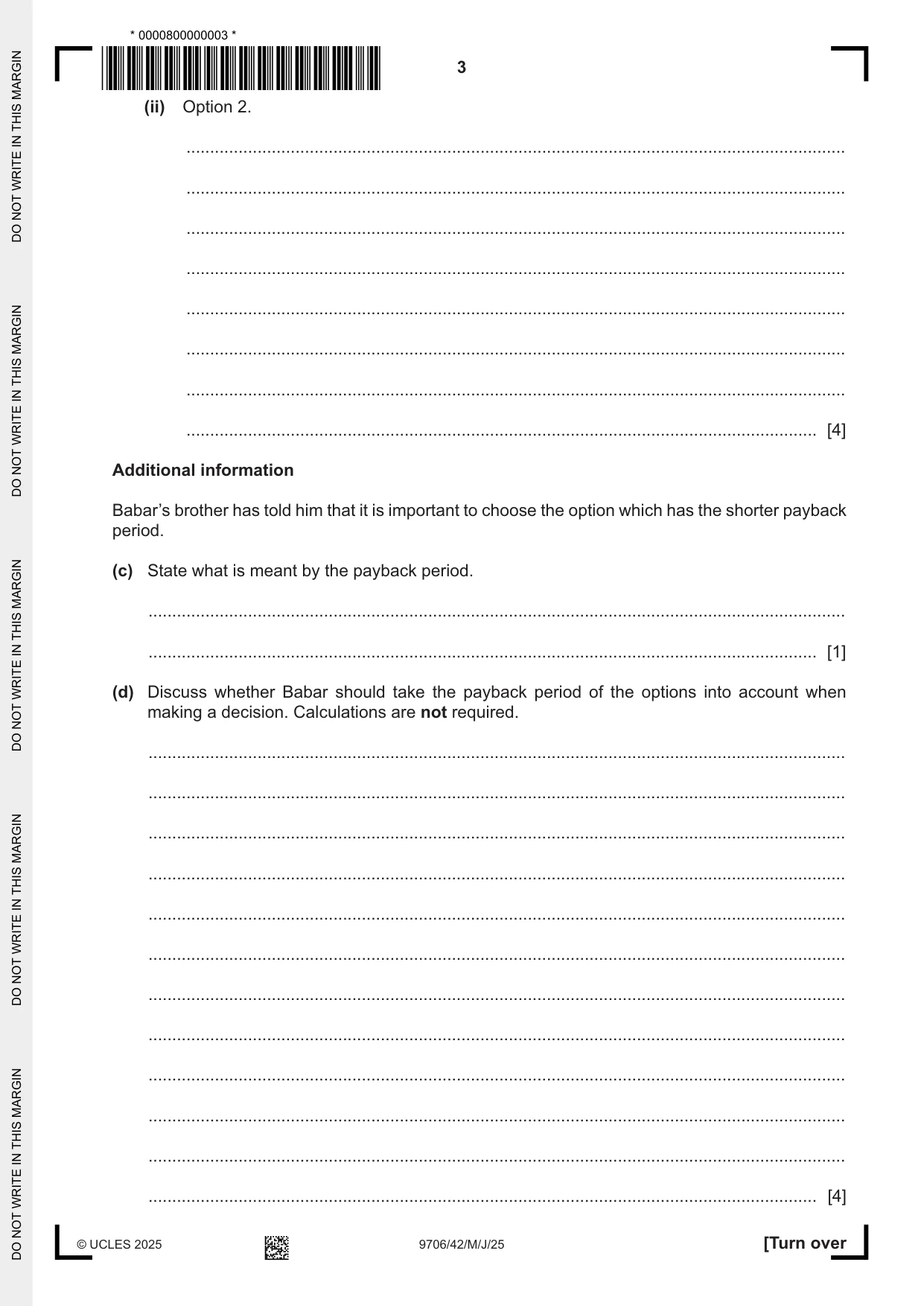
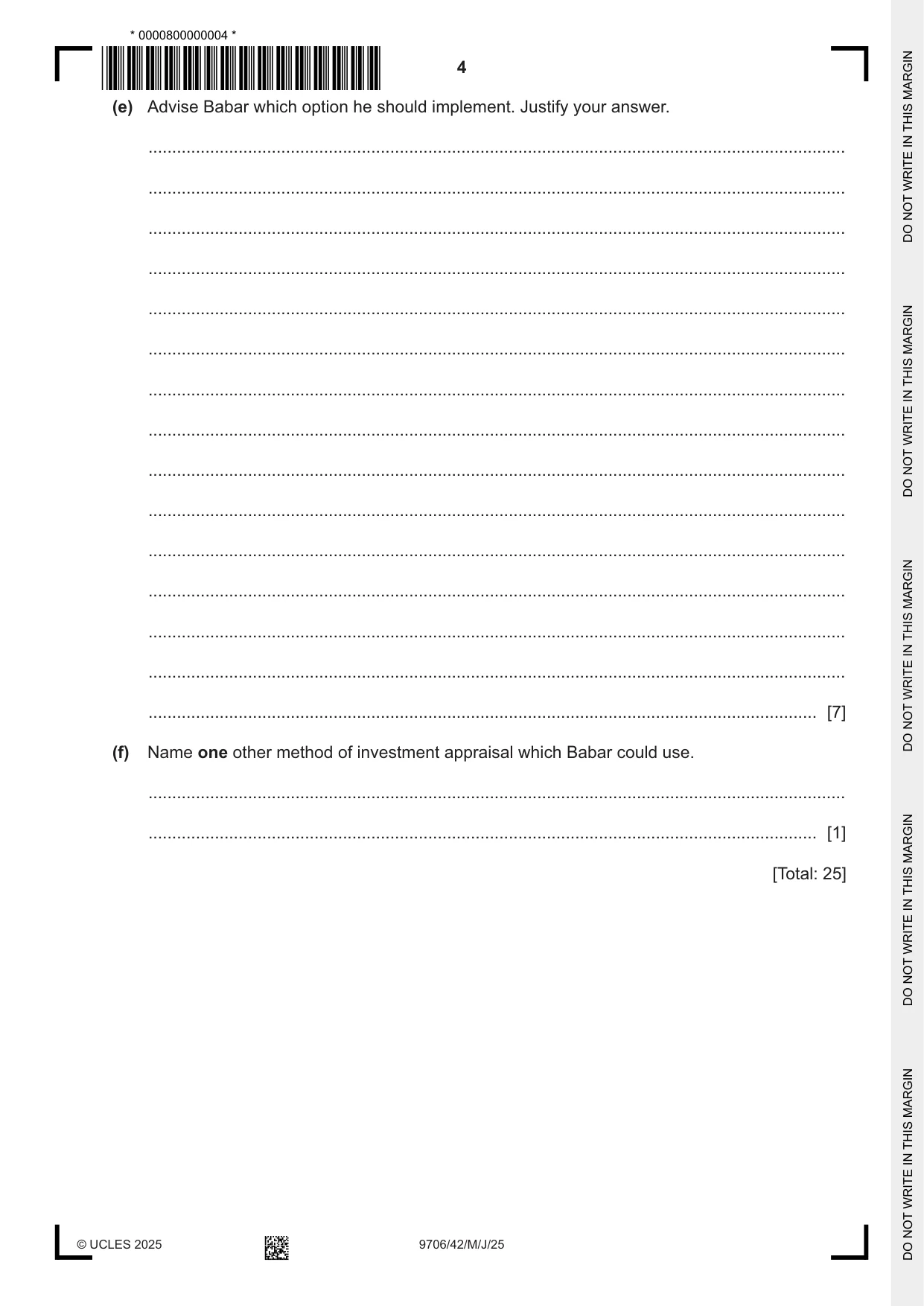
1 Read Source A in the insert. (a) Calculate the net cash flow for each year 1 to 4 for Option 1. ................................................................................................................................................... ................................................................................................................................................... ................................................................................................................................................... ................................................................................................................................................... ................................................................................................................................................... ................................................................................................................................................... ................................................................................................................................................... ............................................................................................................................................. [4] Additional information Babar has a cost of capital of 10%. The discount factors for this are: Year Discount factor 1 0.909 2 0.826 3 0.751 4 0.683 (b) Calculate the net present value (NPV) for: (i) Option 1 ........................................................................................................................................... ........................................................................................................................................... ........................................................................................................................................... ........................................................................................................................................... ........................................................................................................................................... ........................................................................................................................................... ........................................................................................................................................... ..................................................................................................................................... [4] (ii) Option 2. ........................................................................................................................................... ........................................................................................................................................... ........................................................................................................................................... ........................................................................................................................................... ........................................................................................................................................... ........................................................................................................................................... ........................................................................................................................................... ..................................................................................................................................... [4] Additional information Babar’s brother has told him that it is important to choose the option which has the shorter payback period. (c) State what is meant by the payback period. ................................................................................................................................................... ............................................................................................................................................. [1] (d) Discuss whether Babar should take the payback period of the options into account when making a decision. Calculations are not required. ................................................................................................................................................... ................................................................................................................................................... ................................................................................................................................................... ................................................................................................................................................... ................................................................................................................................................... ................................................................................................................................................... ................................................................................................................................................... ................................................................................................................................................... ................................................................................................................................................... ................................................................................................................................................... ................................................................................................................................................... ............................................................................................................................................. [4] (e) Advise Babar which option he should implement. Justify your answer. ................................................................................................................................................... ................................................................................................................................................... ................................................................................................................................................... ................................................................................................................................................... ................................................................................................................................................... ................................................................................................................................................... ................................................................................................................................................... ................................................................................................................................................... ................................................................................................................................................... ................................................................................................................................................... ................................................................................................................................................... ................................................................................................................................................... ................................................................................................................................................... ................................................................................................................................................... ............................................................................................................................................. [7] (f) Name one other method of investment appraisal which Babar could use. ................................................................................................................................................... ............................................................................................................................................. [1] [Total: 25]
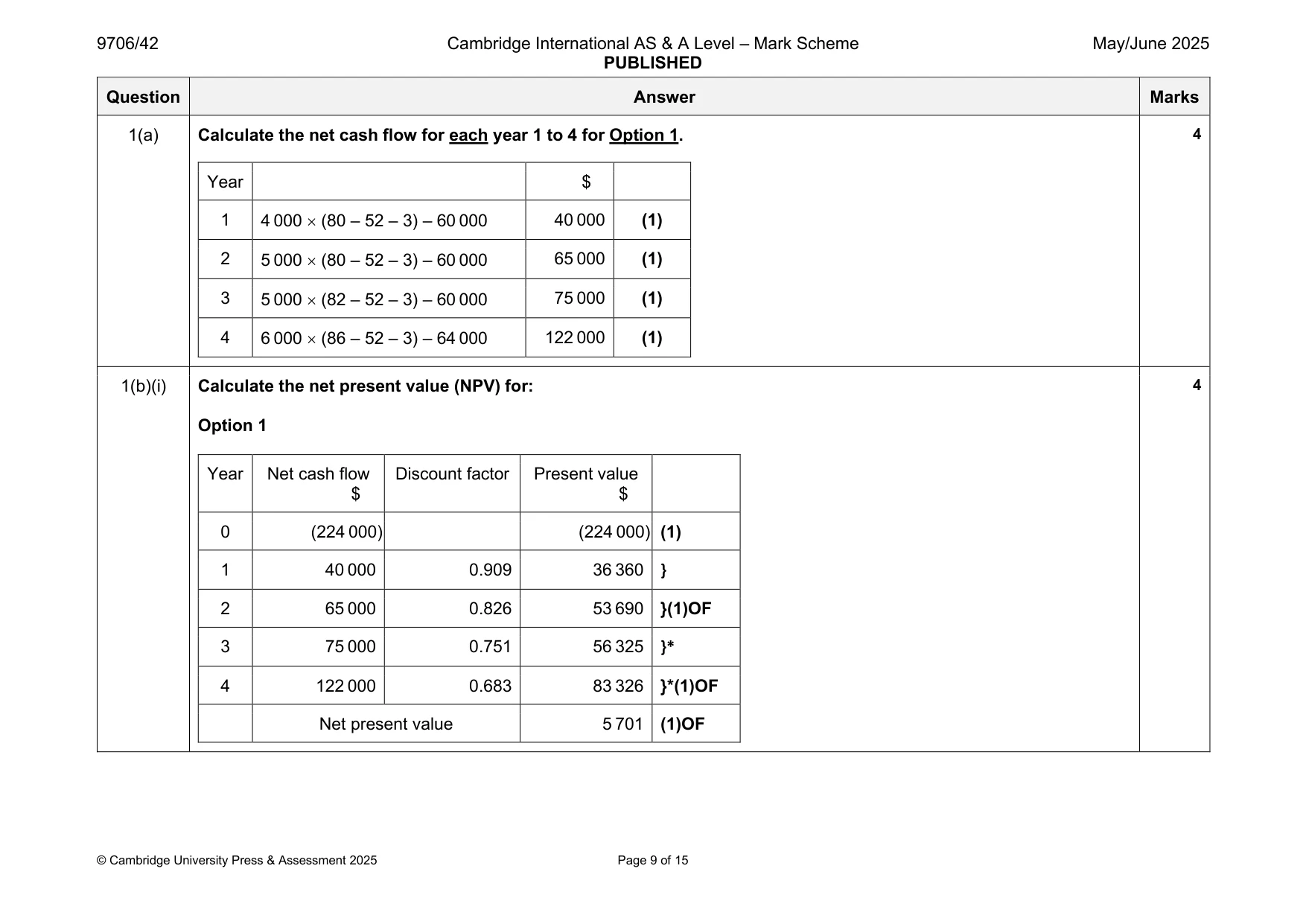
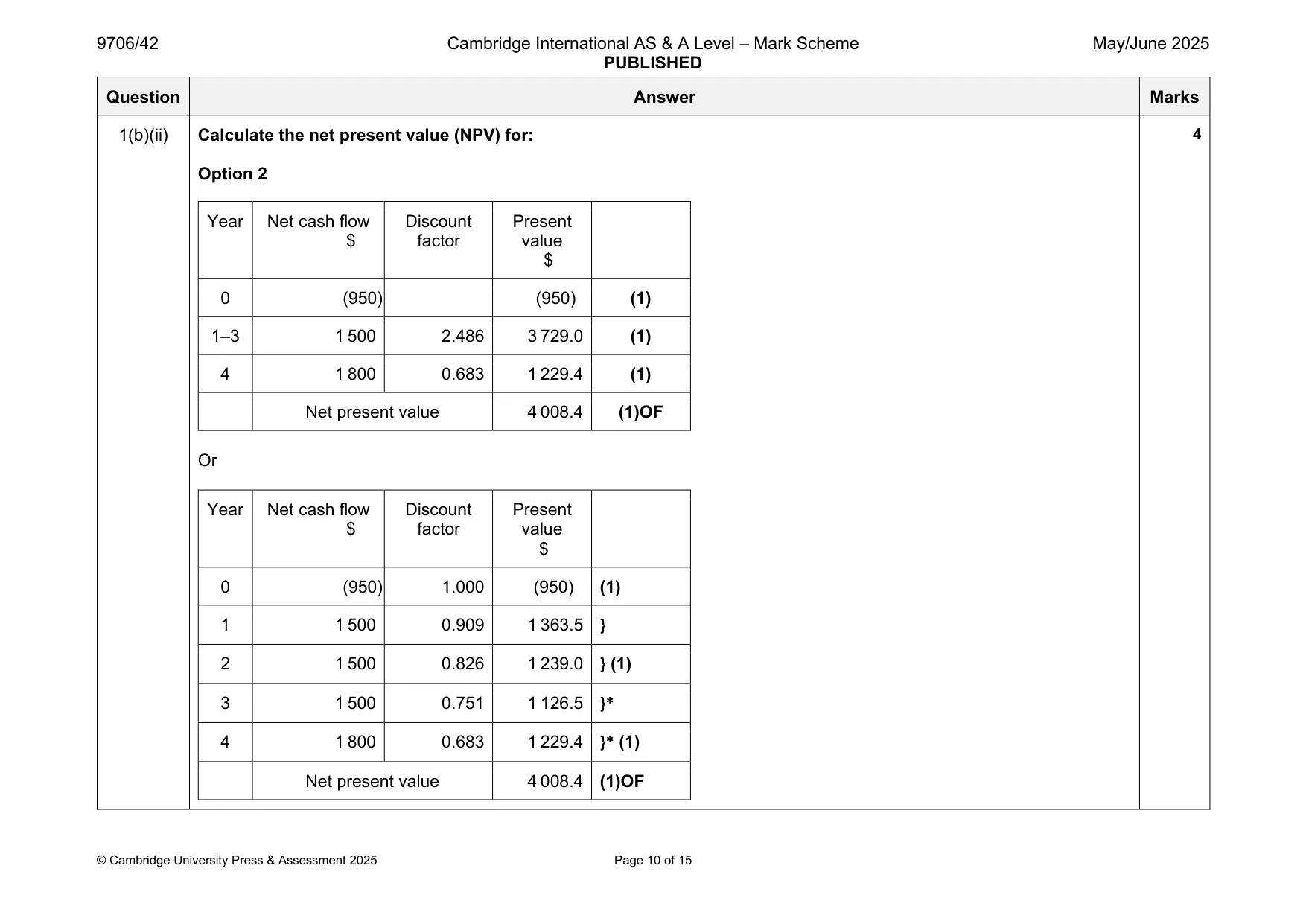
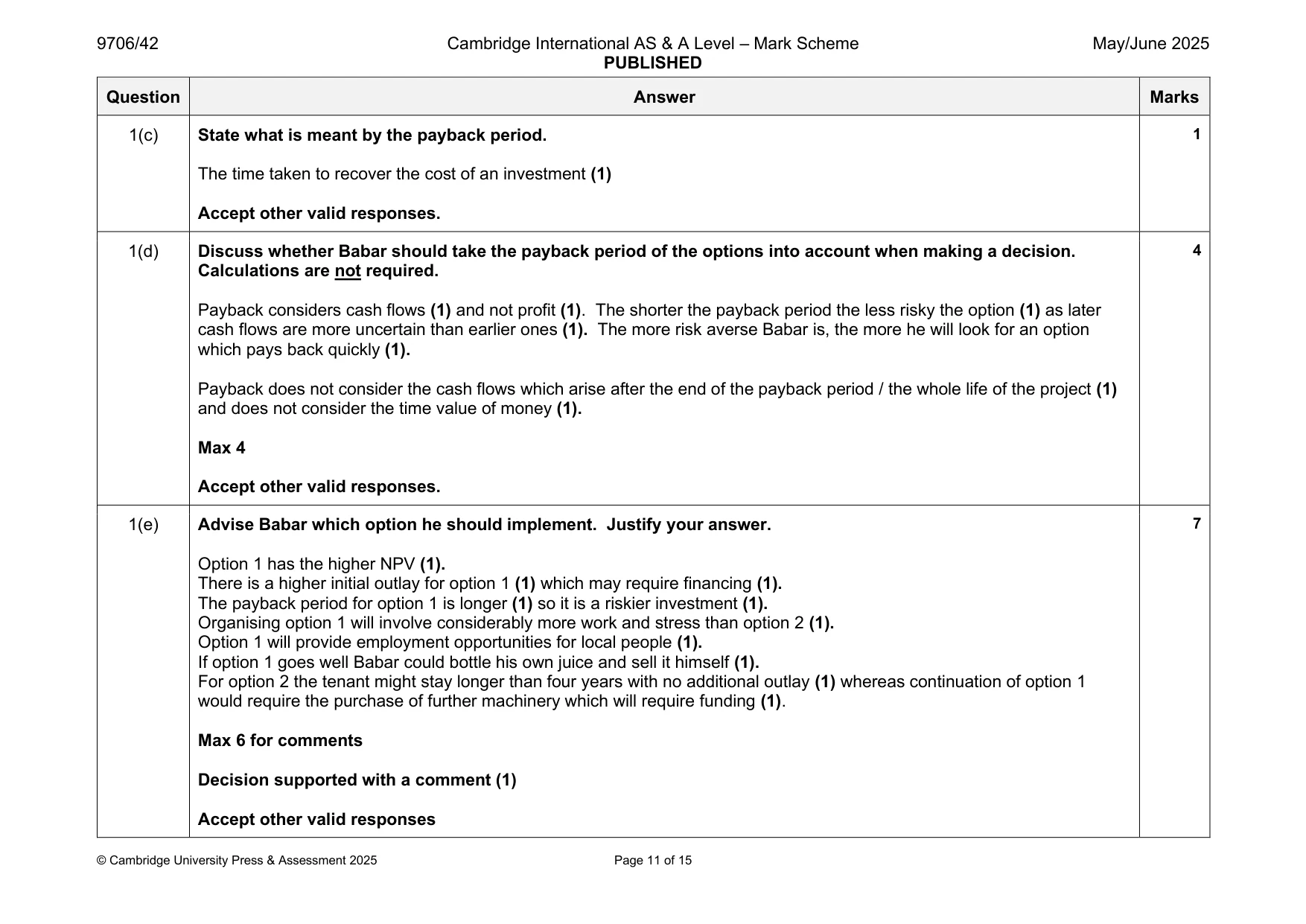
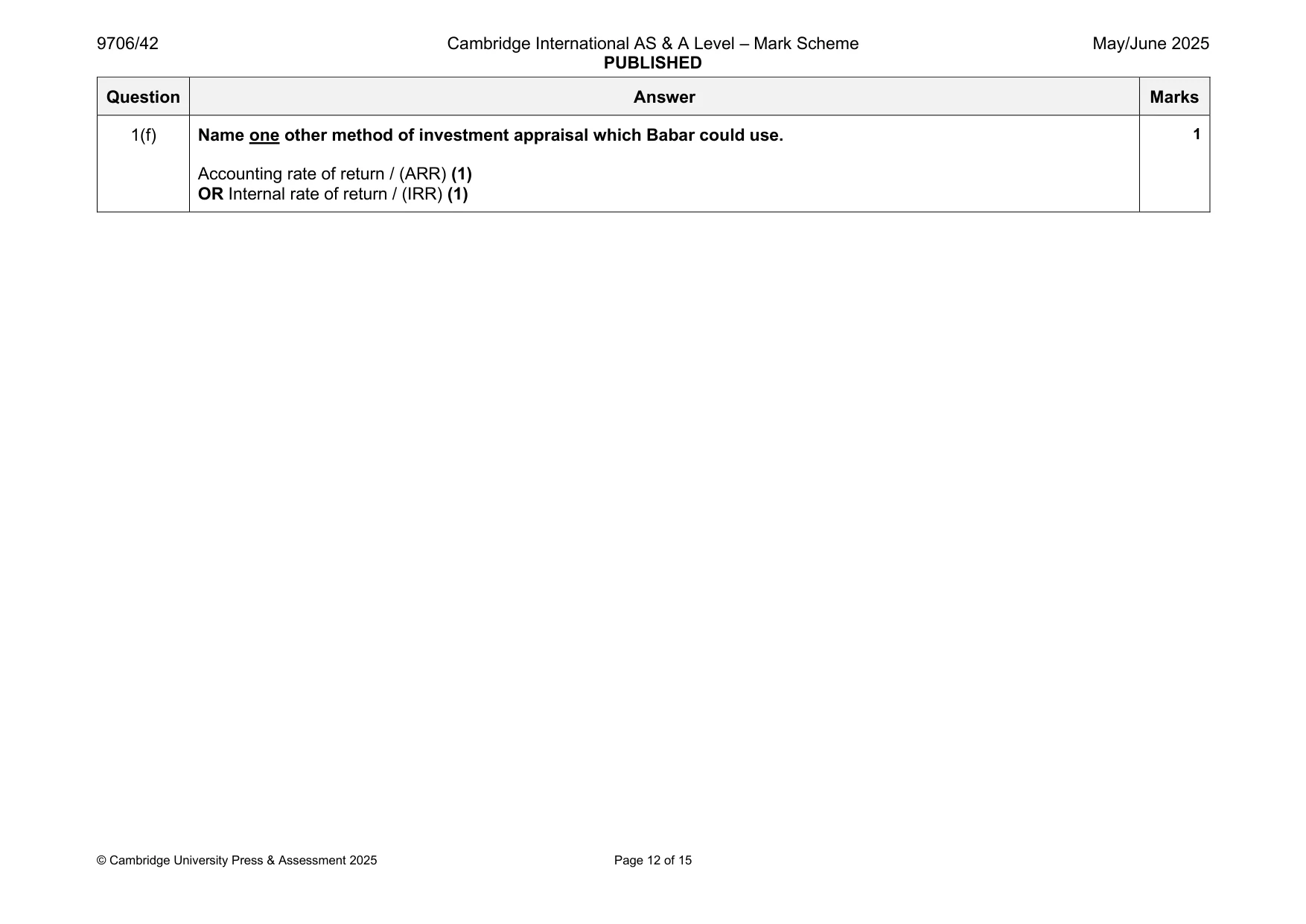
Mark scheme: Question Answer Marks 1(a) Calculate the net cash flow for each year 1 to 4 for Option 1. 4 Year $ 1 4 000 (80 – 52 – 3) – 60 000 40 000 (1) 2 5 000 (80 – 52 – 3) – 60 000 65 000 (1) 3 5 000 (82 – 52 – 3) – 60 000 75 000 (1) 4 6 000 (86 – 52 – 3) – 64 000 122 000 (1) 1(b)(i) Calculate the net present value (NPV) for: 4 Option 1 Year Net cash flow Discount factor Present value $ $ 0 (224 000) (224 000) (1) 1 40 000 0.909 36 360 } 2 65 000 0.826 53 690 }(1)OF 3 75 000 0.751 56 325 }* 4 122 000 0.683 83 326 }*(1)OF Net present value 5 701 (1)OF 1(b)(ii) Calculate the net present value (NPV) for: 4 Option 2 Year Net cash flow Discount Present $ factor value $ 0 (950) (950) (1) 1–3 1 500 2.486 3 729.0 (1) 4 1 800 0.683 1 229.4 (1) Net present value 4 008.4 (1)OF Or Year Net cash flow Discount Present $ factor value $ 0 (950) 1.000 (950) (1) 1 1 500 0.909 1 363.5 } 2 1 500 0.826 1 239.0 } (1) 3 1 500 0.751 1 126.5 }* 4 1 800 0.683 1 229.4 }* (1) Net present value 4 008.4 (1)OF 1(c) State what is meant by the payback period. 1 The time taken to recover the cost of an investment (1) Accept other valid responses. 1(d) Discuss whether Babar should take the payback period of the options into account when making a decision. 4 Calculations are not required. Payback considers cash flows (1) and not profit (1). The shorter the payback period the less risky the option (1) as later cash flows are more uncertain than earlier ones (1). The more risk averse Babar is, the more he will look for an option which pays back quickly (1). Payback does not consider the cash flows which arise after the end of the payback period / the whole life of the project (1) and does not consider the time value of money (1). Max 4 Accept other valid responses. 1(e) Advise Babar which option he should implement. Justify your answer. 7 Option 1 has the higher NPV (1). There is a higher initial outlay for option 1 (1) which may require financing (1). The payback period for option 1 is longer (1) so it is a riskier investment (1). Organising option 1 will involve considerably more work and stress than option 2 (1). Option 1 will provide employment opportunities for local people (1). If option 1 goes well Babar could bottle his own juice and sell it himself (1). For option 2 the tenant might stay longer than four years with no additional outlay (1) whereas continuation of option 1 would require the purchase of further machinery which will require funding (1). Max 6 for comments Decision supported with a comment (1) Accept other valid responses 1(f) Name one other method of investment appraisal which Babar could use. 1 Accounting rate of return / (ARR) (1) OR Internal rate of return / (IRR) (1)
Q2 · Read Source B in the insert
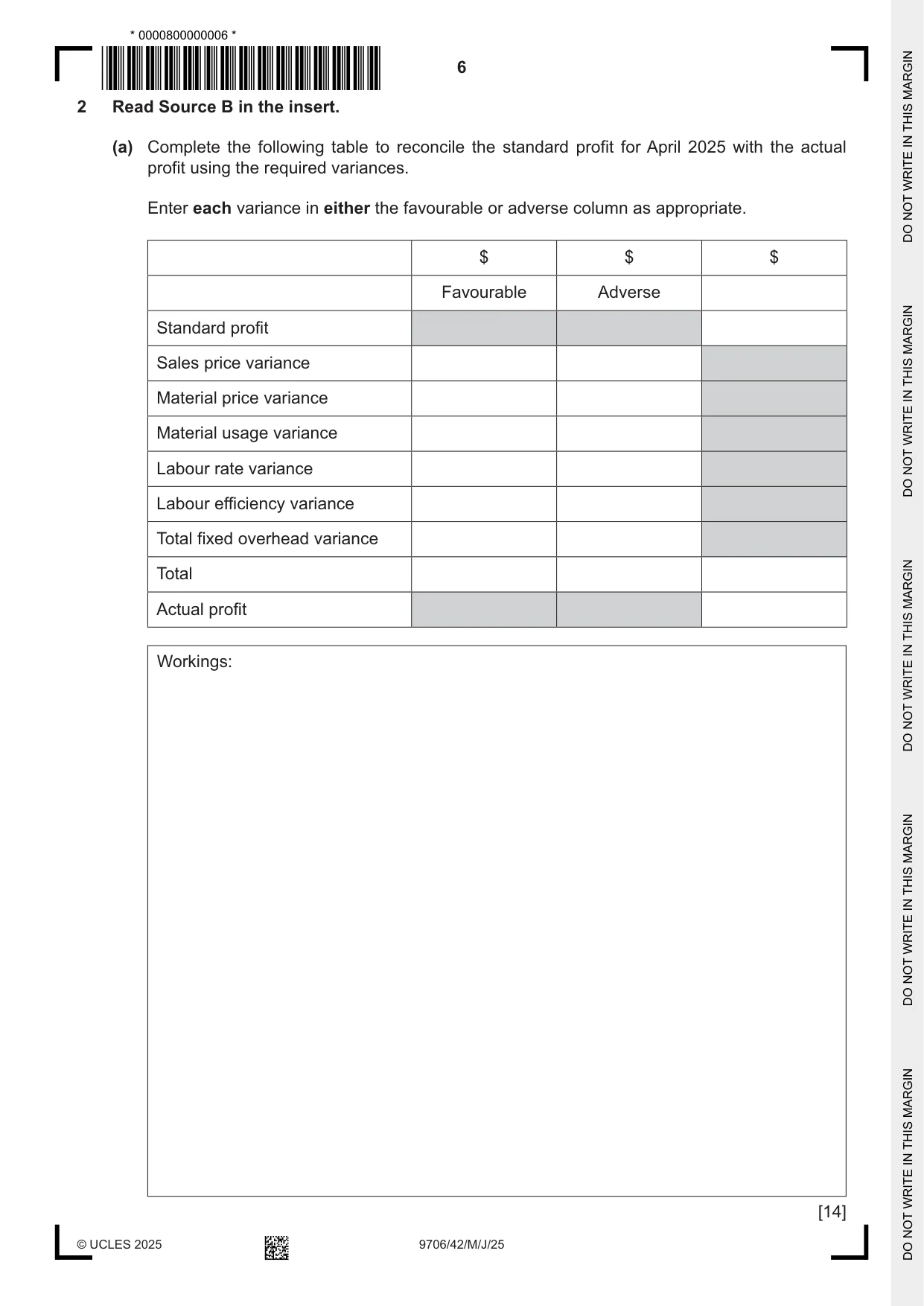
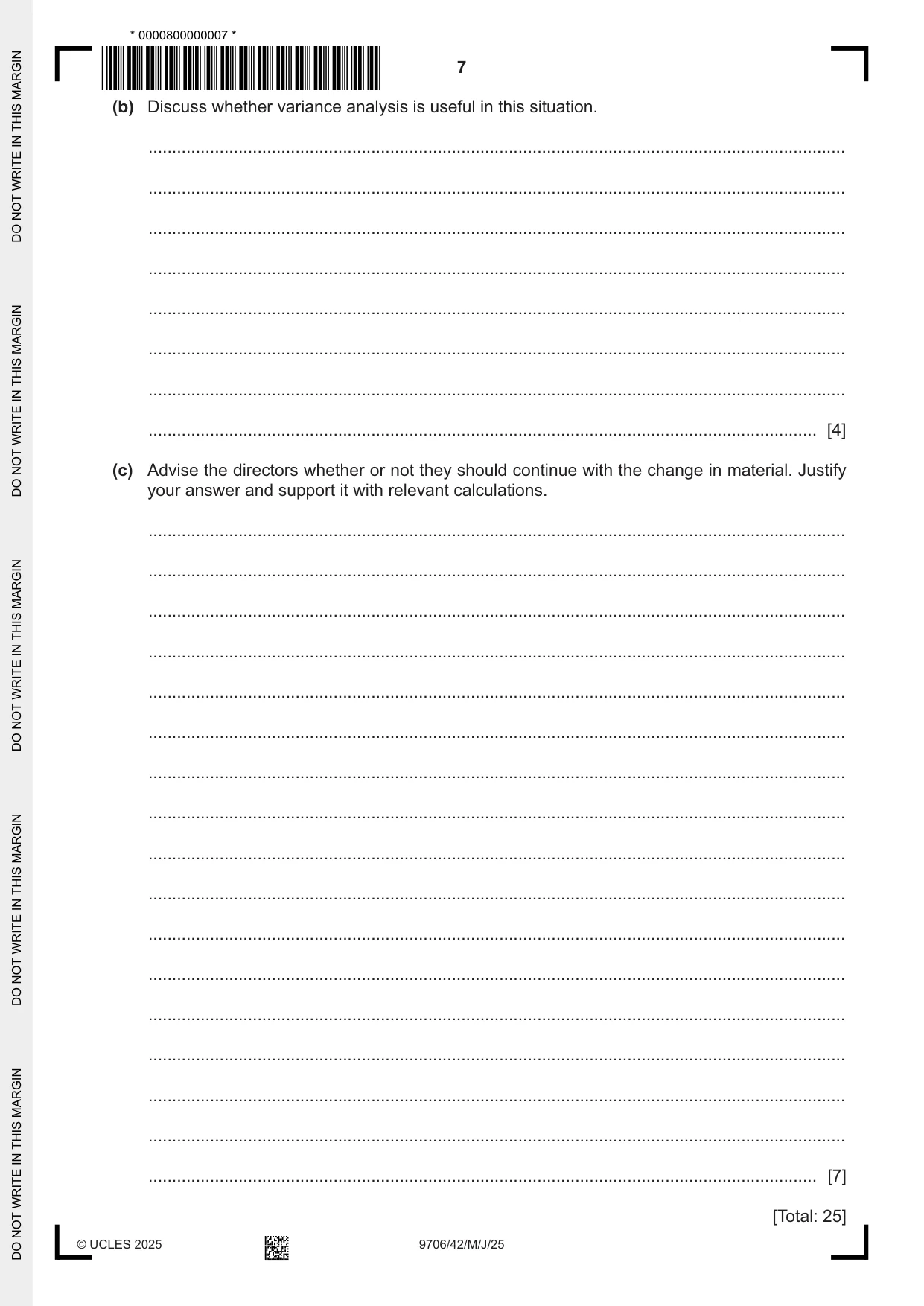
2 Read Source B in the insert. (a) Complete the following table to reconcile the standard profit for April 2025 with the actual profit using the required variances. Enter each variance in either the favourable or adverse column as appropriate. $ $ $ Favourable Adverse Standard profit Sales price variance Material price variance Material usage variance Labour rate variance Labour efficiency variance Total fixed overhead variance Total Actual profit Workings: [14] (b) Discuss whether variance analysis is useful in this situation. ................................................................................................................................................... ................................................................................................................................................... ................................................................................................................................................... ................................................................................................................................................... ................................................................................................................................................... ................................................................................................................................................... ................................................................................................................................................... ............................................................................................................................................. [4] (c) Advise the directors whether or not they should continue with the change in material. Justify your answer and support it with relevant calculations. ................................................................................................................................................... ................................................................................................................................................... ................................................................................................................................................... ................................................................................................................................................... ................................................................................................................................................... ................................................................................................................................................... ................................................................................................................................................... ................................................................................................................................................... ................................................................................................................................................... ................................................................................................................................................... ................................................................................................................................................... ................................................................................................................................................... ................................................................................................................................................... ................................................................................................................................................... ................................................................................................................................................... ................................................................................................................................................... ............................................................................................................................................. [7] [Total: 25]
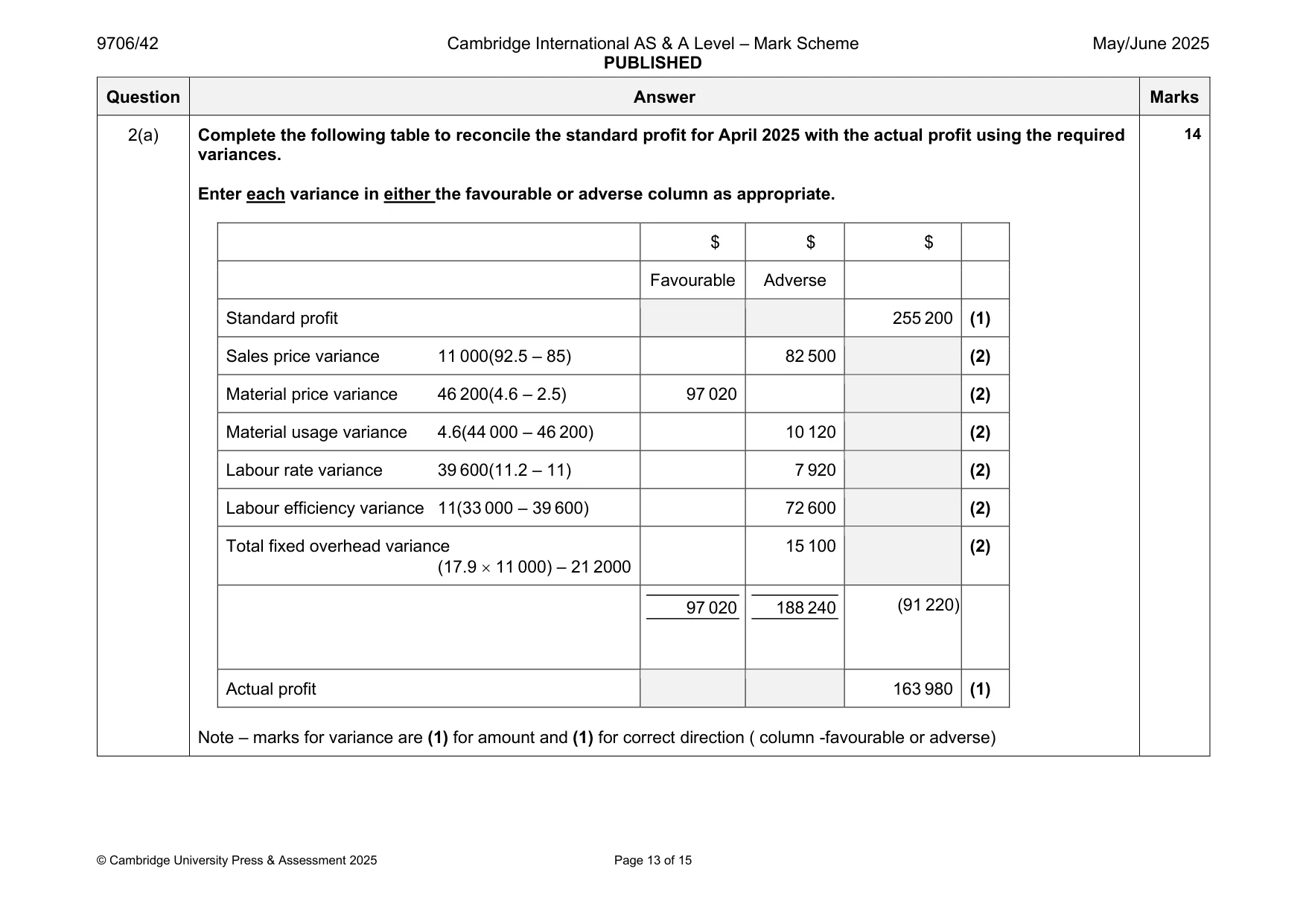
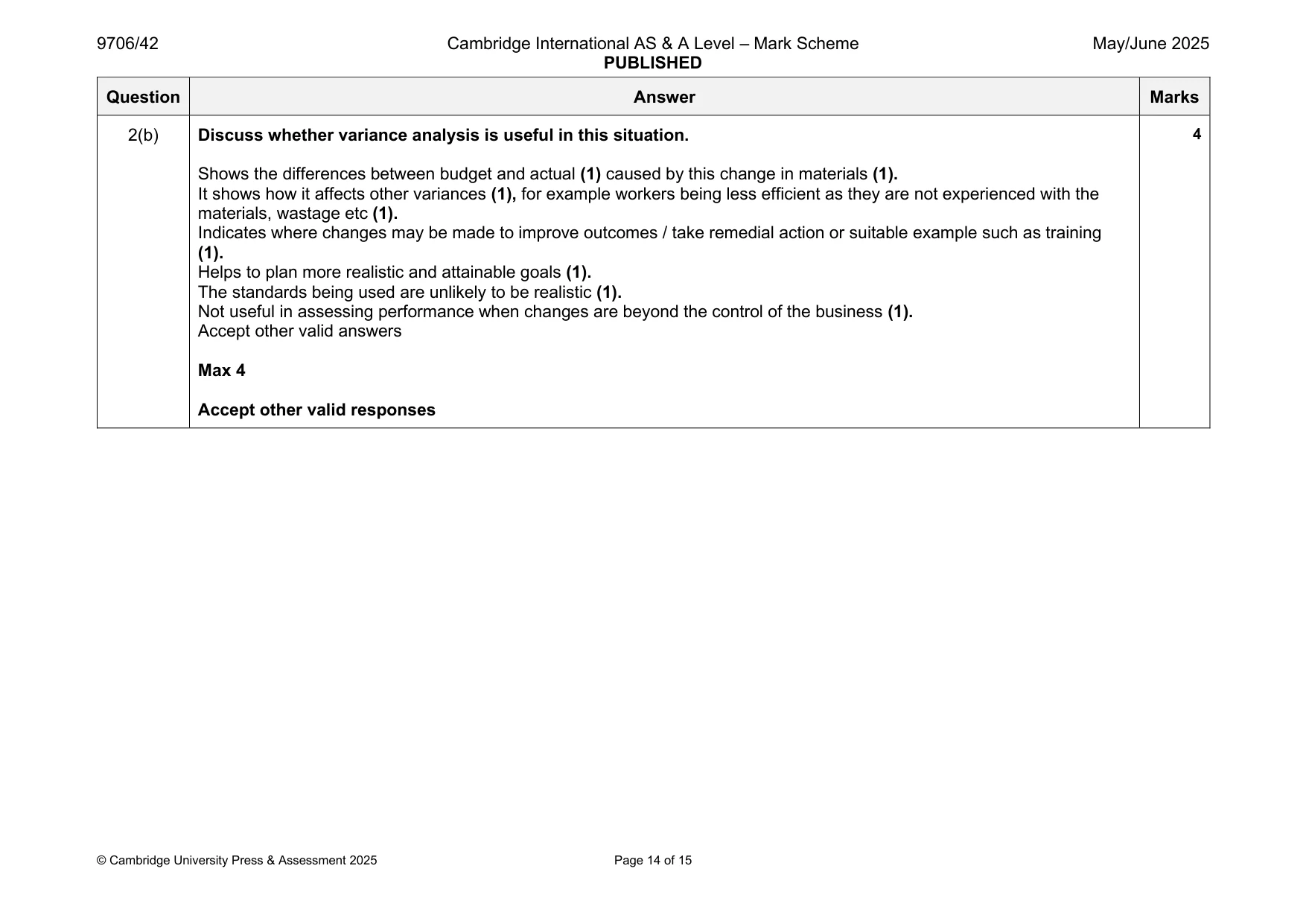
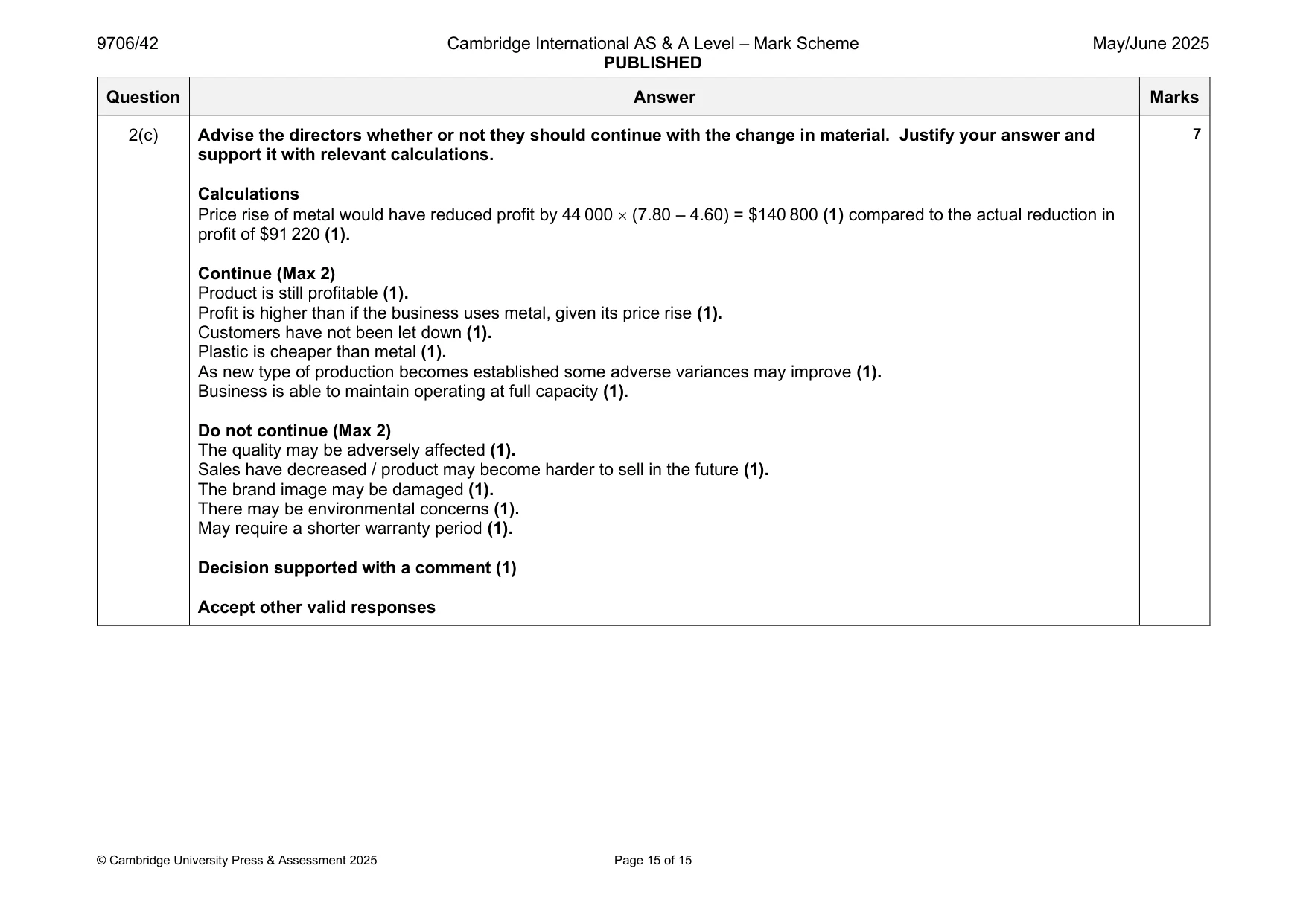
Mark scheme: 2(a) Complete the following table to reconcile the standard profit for April 2025 with the actual profit using the required 14 variances. Enter each variance in either the favourable or adverse column as appropriate. $ $ $ Favourable Adverse Standard profit 255 200 (1) Sales price variance 11 000(92.5 – 85) 82 500 (2) Material price variance 46 200(4.6 – 2.5) 97 020 (2) Material usage variance 4.6(44 000 – 46 200) 10 120 (2) Labour rate variance 39 600(11.2 – 11) 7 920 (2) Labour efficiency variance 11(33 000 – 39 600) 72 600 (2) Total fixed overhead variance 15 100 (2) (17.9 11 000) – 21 2000 97 020 188 240 (91 220) Actual profit 163 980 (1) Note – marks for variance are (1) for amount and (1) for correct direction ( column -favourable or adverse) 2(b) Discuss whether variance analysis is useful in this situation. 4 Shows the differences between budget and actual (1) caused by this change in materials (1). It shows how it affects other variances (1), for example workers being less efficient as they are not experienced with the materials, wastage etc (1). Indicates where changes may be made to improve outcomes / take remedial action or suitable example such as training (1). Helps to plan more realistic and attainable goals (1). The standards being used are unlikely to be realistic (1). Not useful in assessing performance when changes are beyond the control of the business (1). Accept other valid answers Max 4 Accept other valid responses 2(c) Advise the directors whether or not they should continue with the change in material. Justify your answer and 7 support it with relevant calculations. Calculations Price rise of metal would have reduced profit by 44 000 (7.80 – 4.60) = $140 800 (1) compared to the actual reduction in profit of $91 220 (1). Continue (Max 2) Product is still profitable (1). Profit is higher than if the business uses metal, given its price rise (1). Customers have not been let down (1). Plastic is cheaper than metal (1). As new type of production becomes established some adverse variances may improve (1). Business is able to maintain operating at full capacity (1). Do not continue (Max 2) The quality may be adversely affected (1). Sales have decreased / product may become harder to sell in the future (1). The brand image may be damaged (1). There may be environmental concerns (1). May require a shorter warranty period (1). Decision supported with a comment (1) Accept other valid responses
What was in this paper
The subtopics covered by these 2 questions, and how many questions each got. Open one in a new tab to see every Cambridge question on it.
What you needed in this session
Cambridge’s own grade thresholds for 2025 May/June, Paper 4 · Variant 2. A higher threshold means an easier paper — the bar moves with how the cohort did.