Cambridge A Level Accounting 9706 — 2022 May/June Paper 2 · Variant 2
9706/22/M/J/22 · 4 questions · 90 marks · ≈101 min
The question paper and its mark scheme, free to read here and free to download. This is Cambridge’s own paper, exactly as it was sat.
Question paper20 pages

Mark scheme17 pages
Answers below. Sit the paper first if you are practising.
Questions as text
Q1 · Karen and Lee are in partnership sharing profits and losses in the ratio 2 : 3…
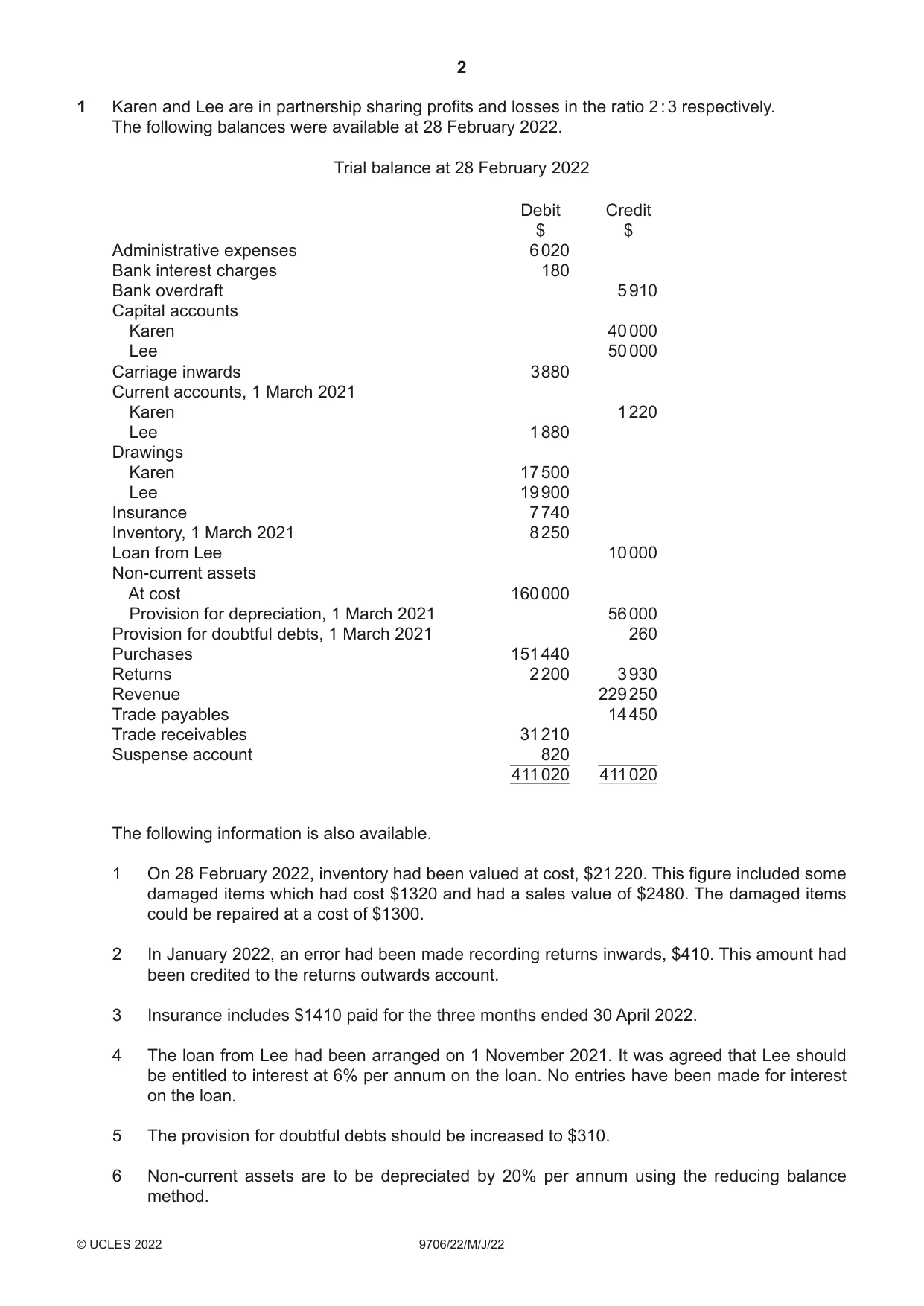
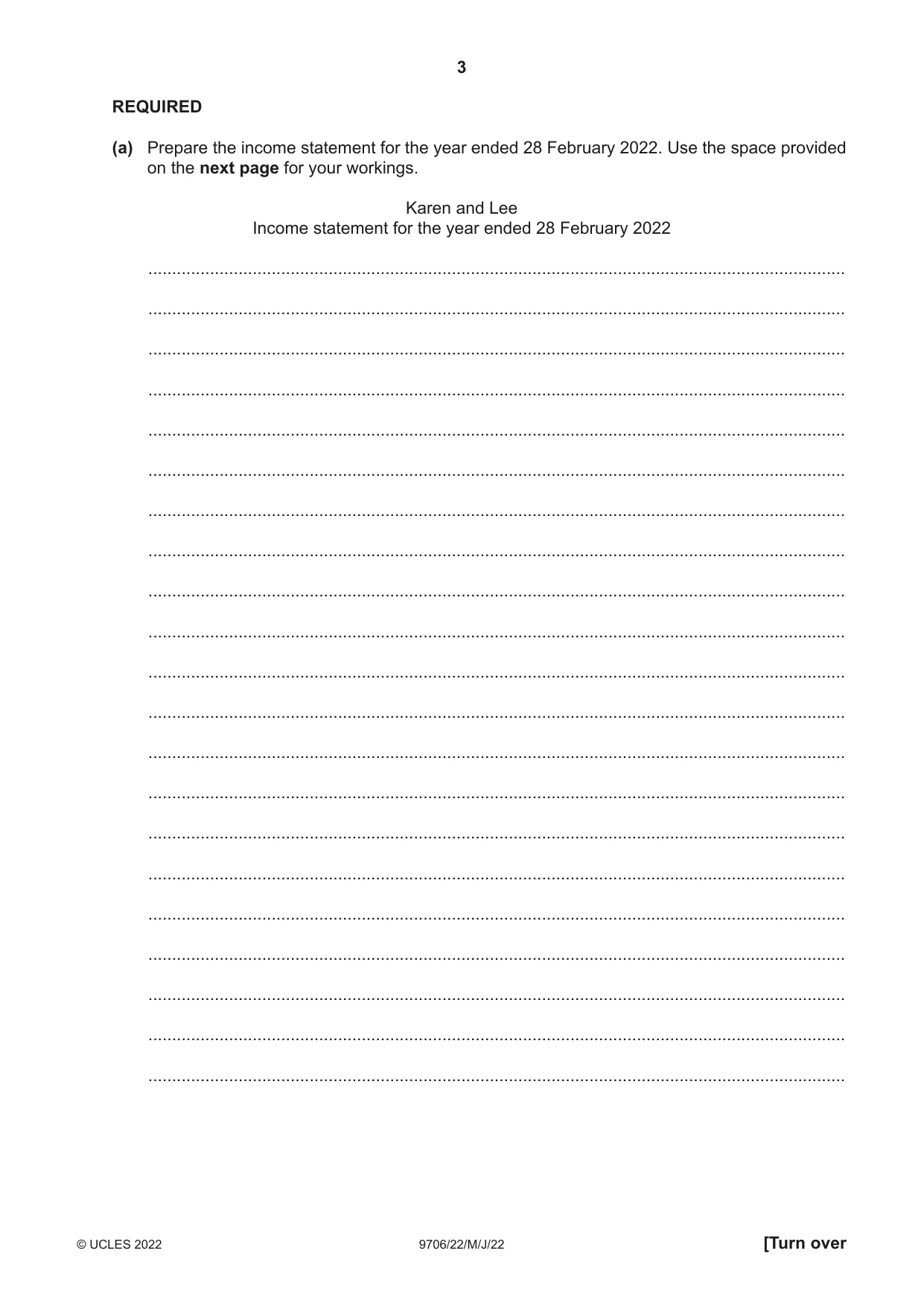
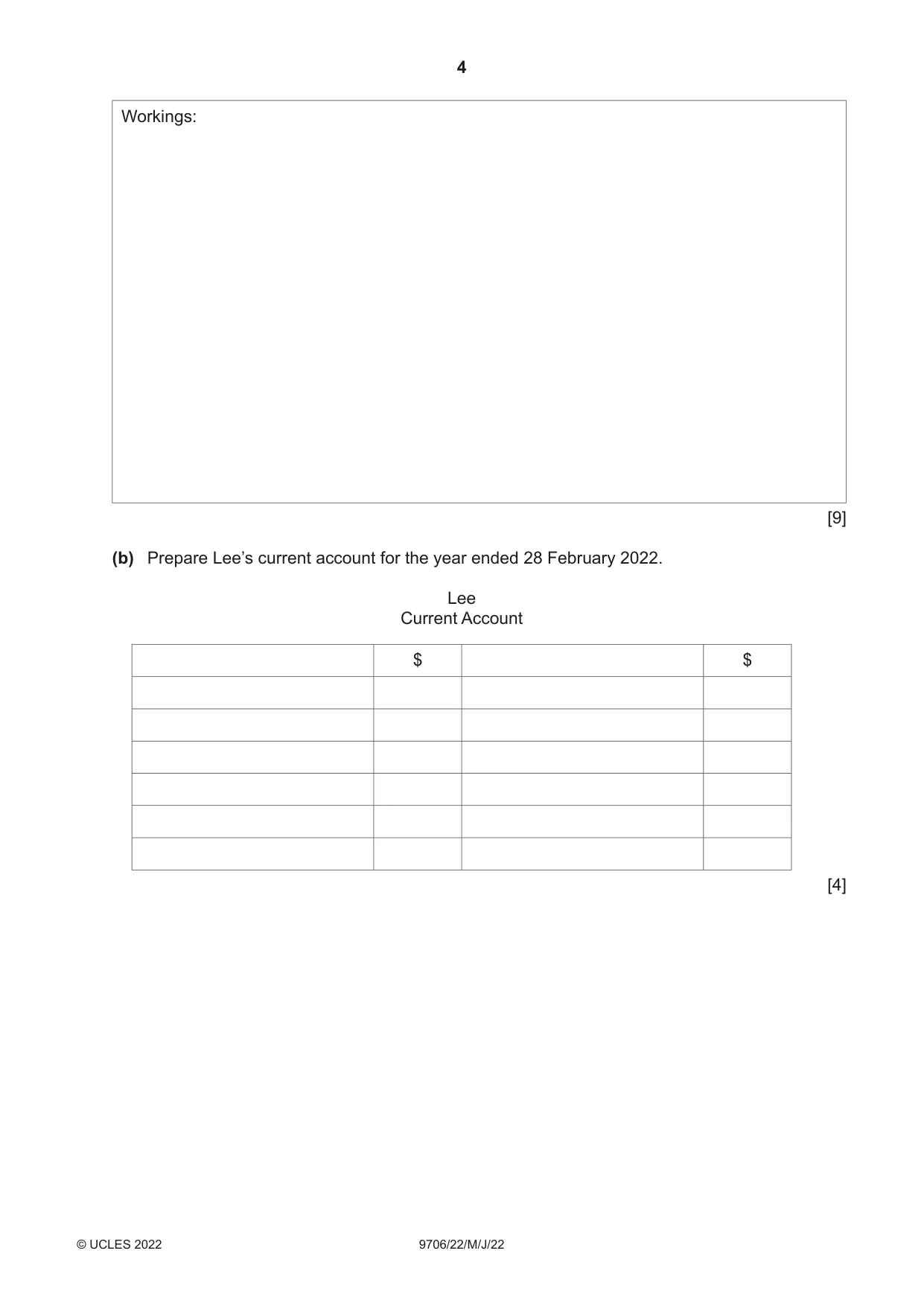
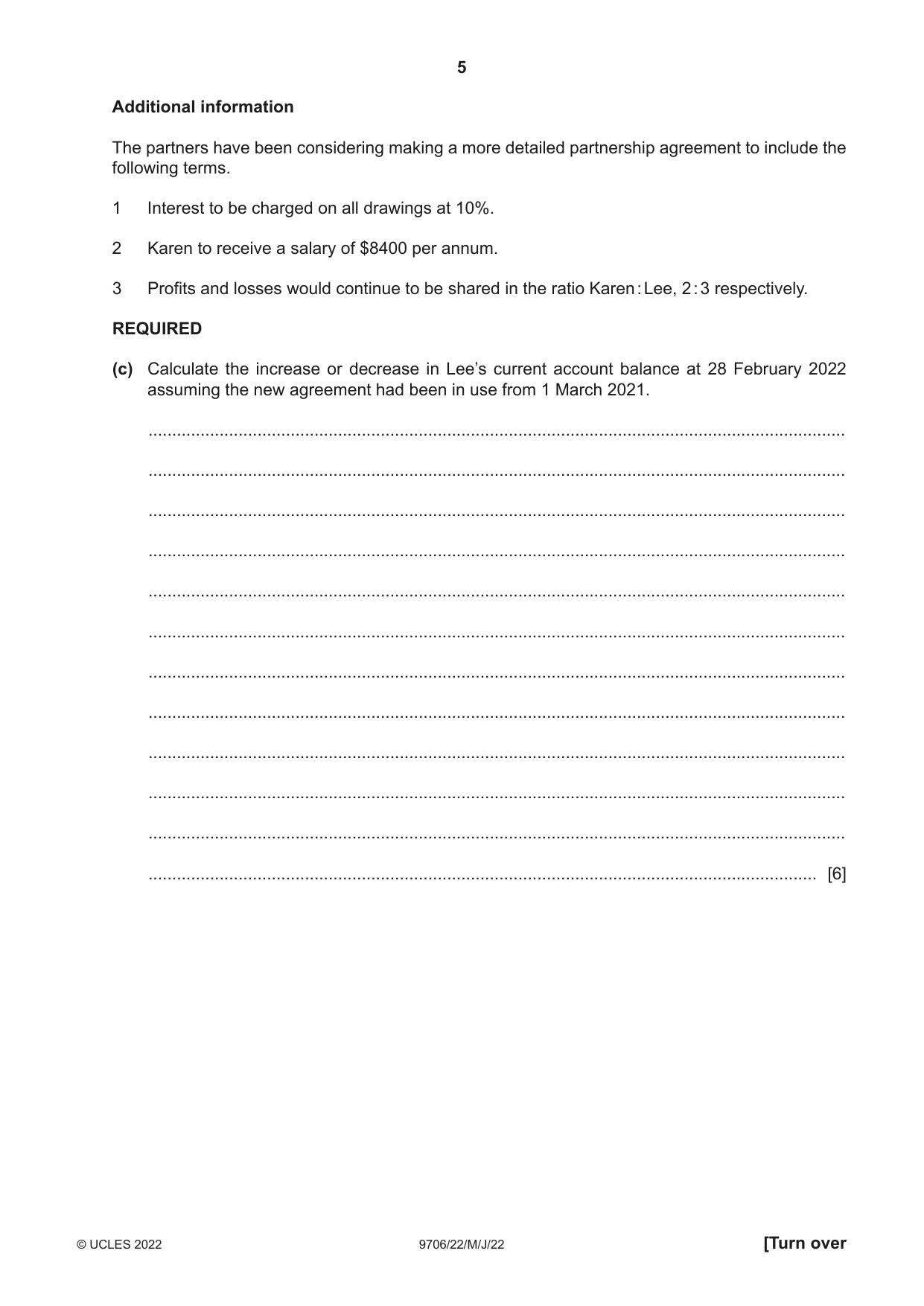
1 Karen and Lee are in partnership sharing profits and losses in the ratio 2 : 3 respectively. The following balances were available at 28 February 2022. Trial balance at 28 February 2022 Debit Credit $ $ Administrative expenses 6 020 Bank interest charges 180 Bank overdraft 5 910 Capital accounts Karen 40 000 Lee 50 000 Carriage inwards 3 880 Current accounts, 1 March 2021 Karen 1 220 Lee 1 880 Drawings Karen 17 500 Lee 19 900 Insurance 7 740 Inventory, 1 March 2021 8 250 Loan from Lee 10 000 Non-current assets At cost 160 000 Provision for depreciation, 1 March 2021 56 000 Provision for doubtful debts, 1 March 2021 260 Purchases 151 440 Returns 2 200 3 930 Revenue 229 250 Trade payables 14 450 Trade receivables 31 210 Suspense account 820 411 020 411 020 The following information is also available. 1 On 28 February 2022, inventory had been valued at cost, $21 220. This figure included some damaged items which had cost $1320 and had a sales value of $2480. The damaged items could be repaired at a cost of $1300. 2 In January 2022, an error had been made recording returns inwards, $410. This amount had been credited to the returns outwards account. 3 Insurance includes $1410 paid for the three months ended 30 April 2022. 4 The loan from Lee had been arranged on 1 November 2021. It was agreed that Lee should be entitled to interest at 6% per annum on the loan. No entries have been made for interest on the loan. 5 The provision for doubtful debts should be increased to $310. 6 Non-current assets are to be depreciated by 20% per annum using the reducing balance method. REQUIRED (a) Prepare the income statement for the year ended 28 February 2022. Use the space provided on the next page for your workings. Karen and Lee Income statement for the year ended 28 February 2022 ................................................................................................................................................... ................................................................................................................................................... ................................................................................................................................................... ................................................................................................................................................... ................................................................................................................................................... ................................................................................................................................................... ................................................................................................................................................... ................................................................................................................................................... ................................................................................................................................................... ................................................................................................................................................... ................................................................................................................................................... ................................................................................................................................................... ................................................................................................................................................... ................................................................................................................................................... ................................................................................................................................................... ................................................................................................................................................... ................................................................................................................................................... ................................................................................................................................................... ................................................................................................................................................... ................................................................................................................................................... ................................................................................................................................................... Workings: [9] (b) Prepare Lee’s current account for the year ended 28 February 2022. Lee Current Account $ $ [4] Additional information The partners have been considering making a more detailed partnership agreement to include the following terms. 1 Interest to be charged on all drawings at 10%.
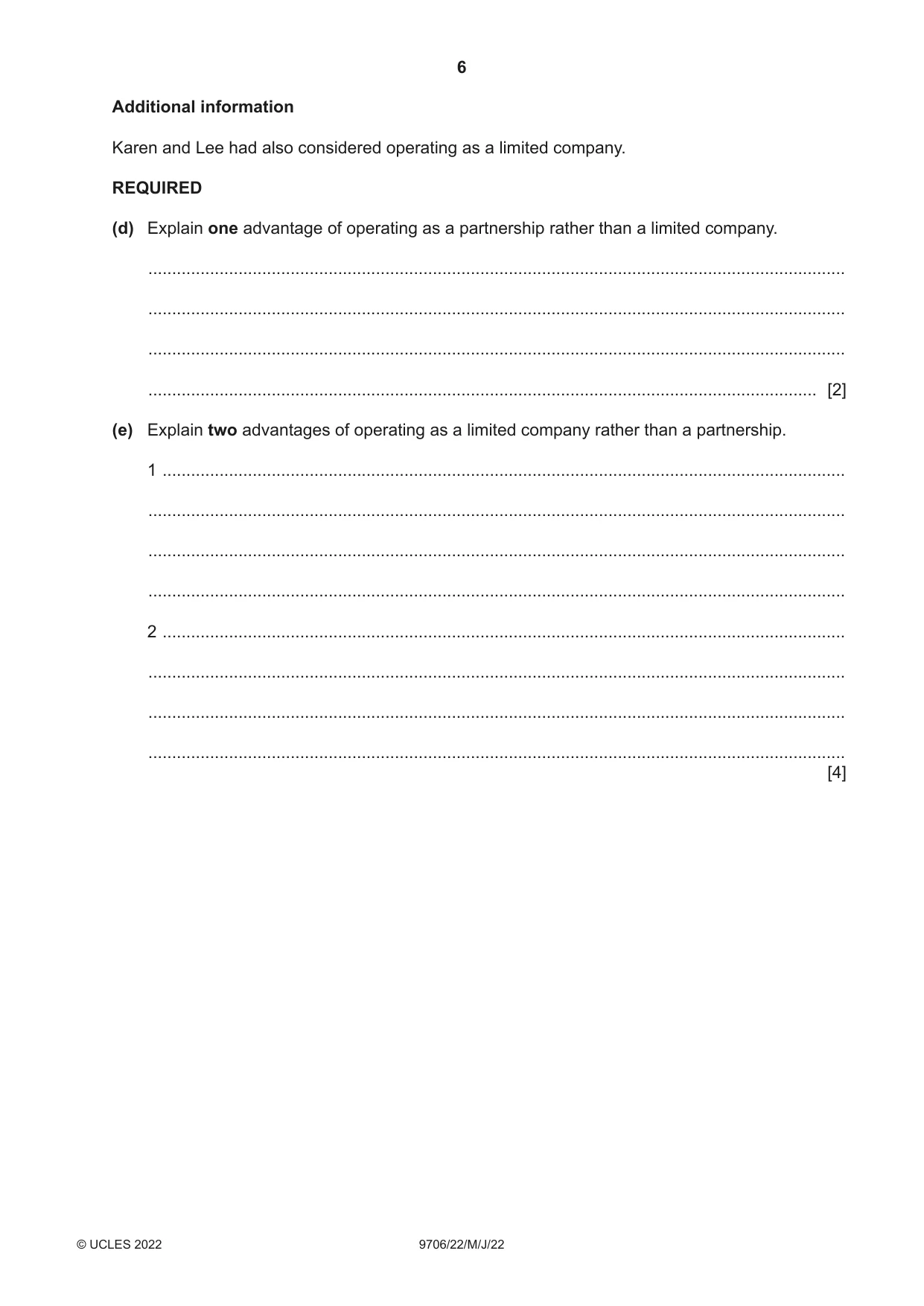
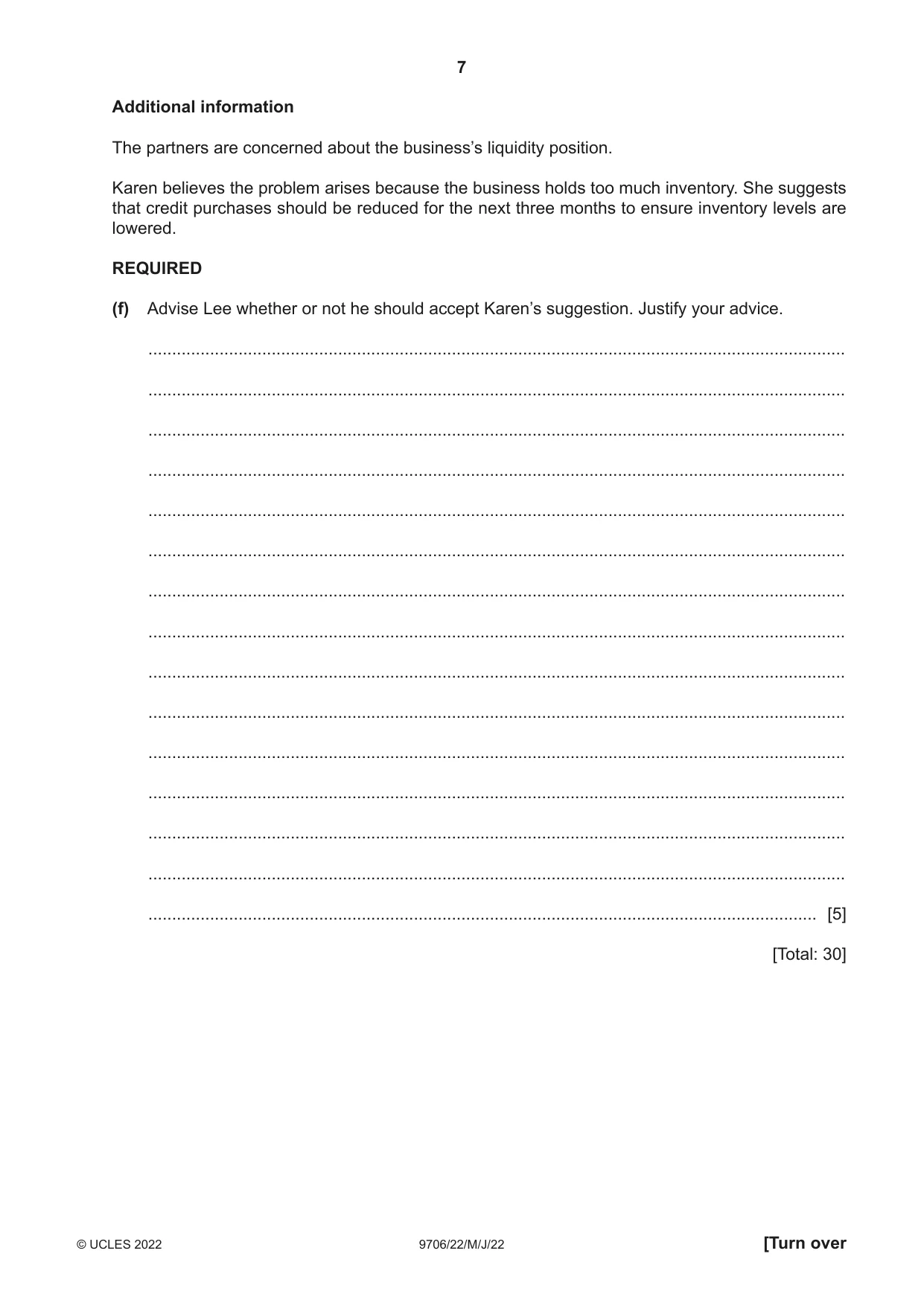
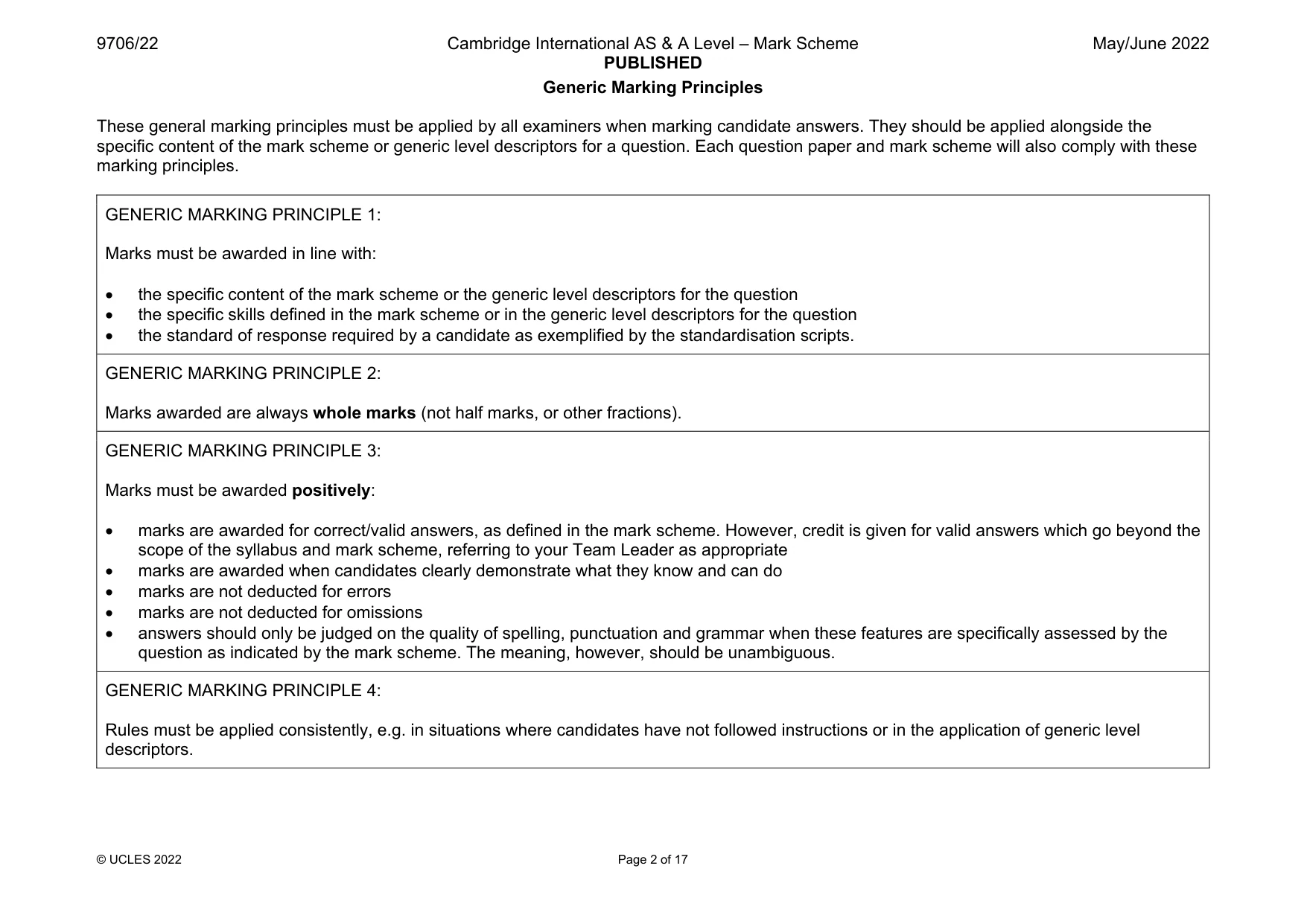
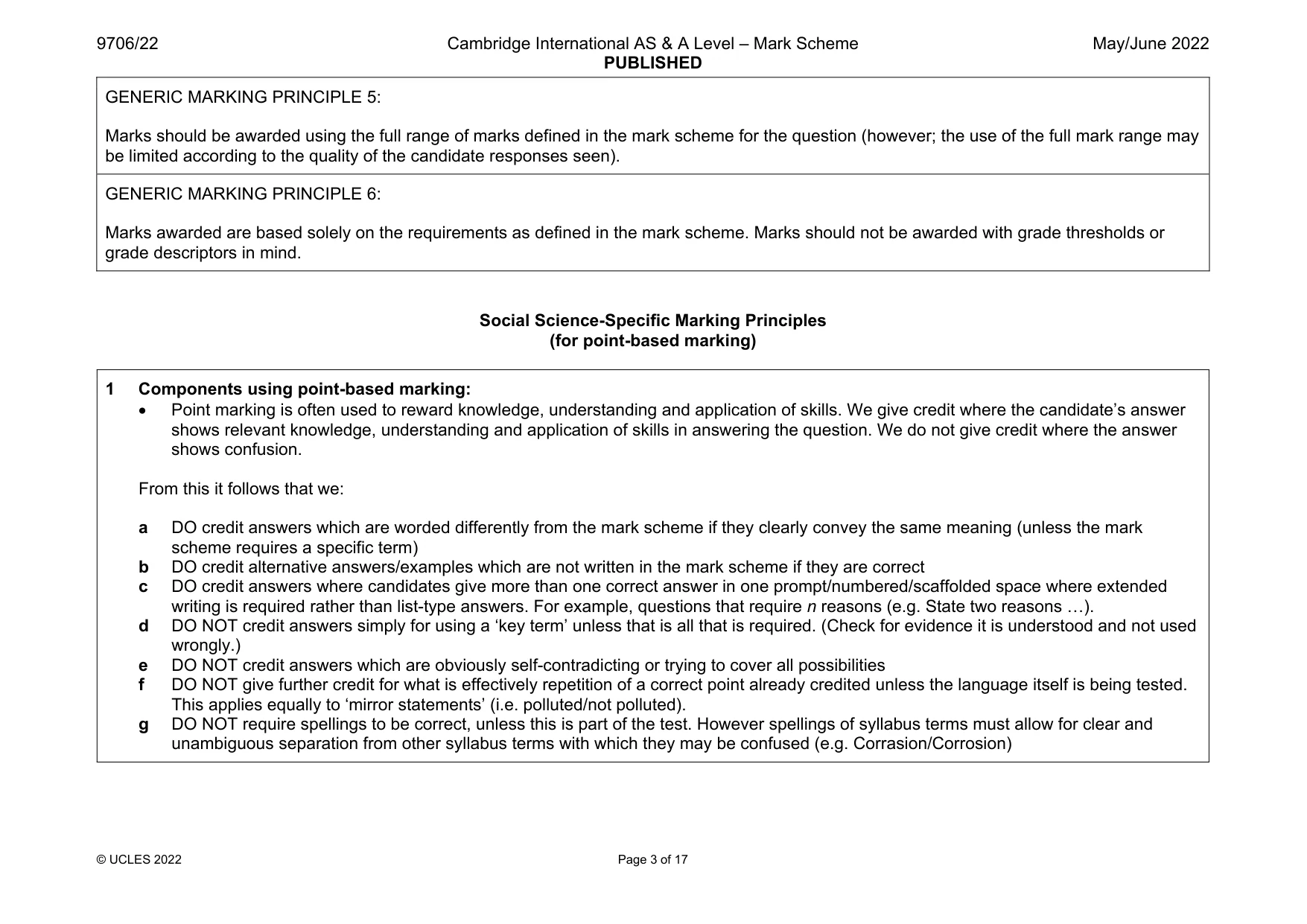
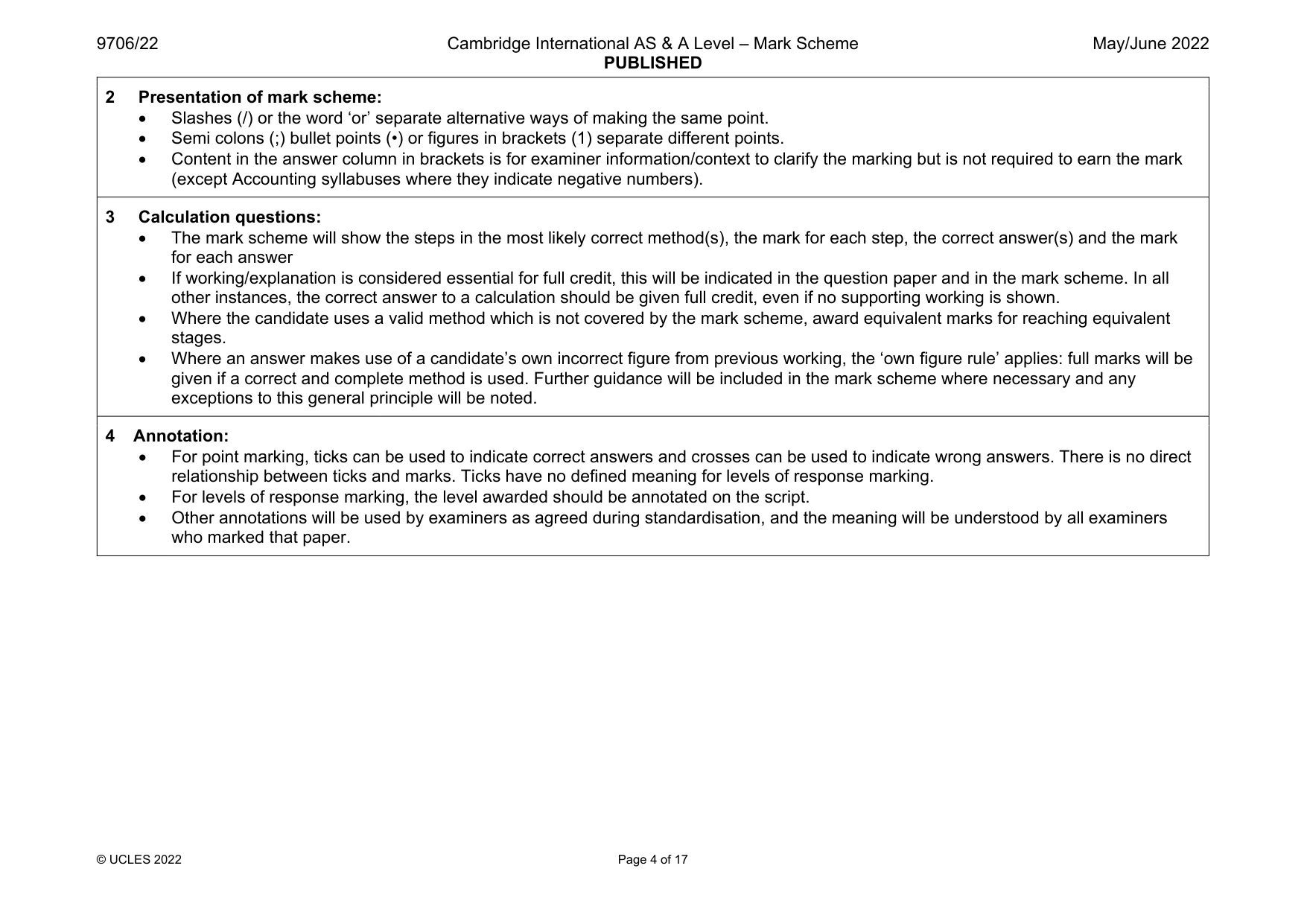
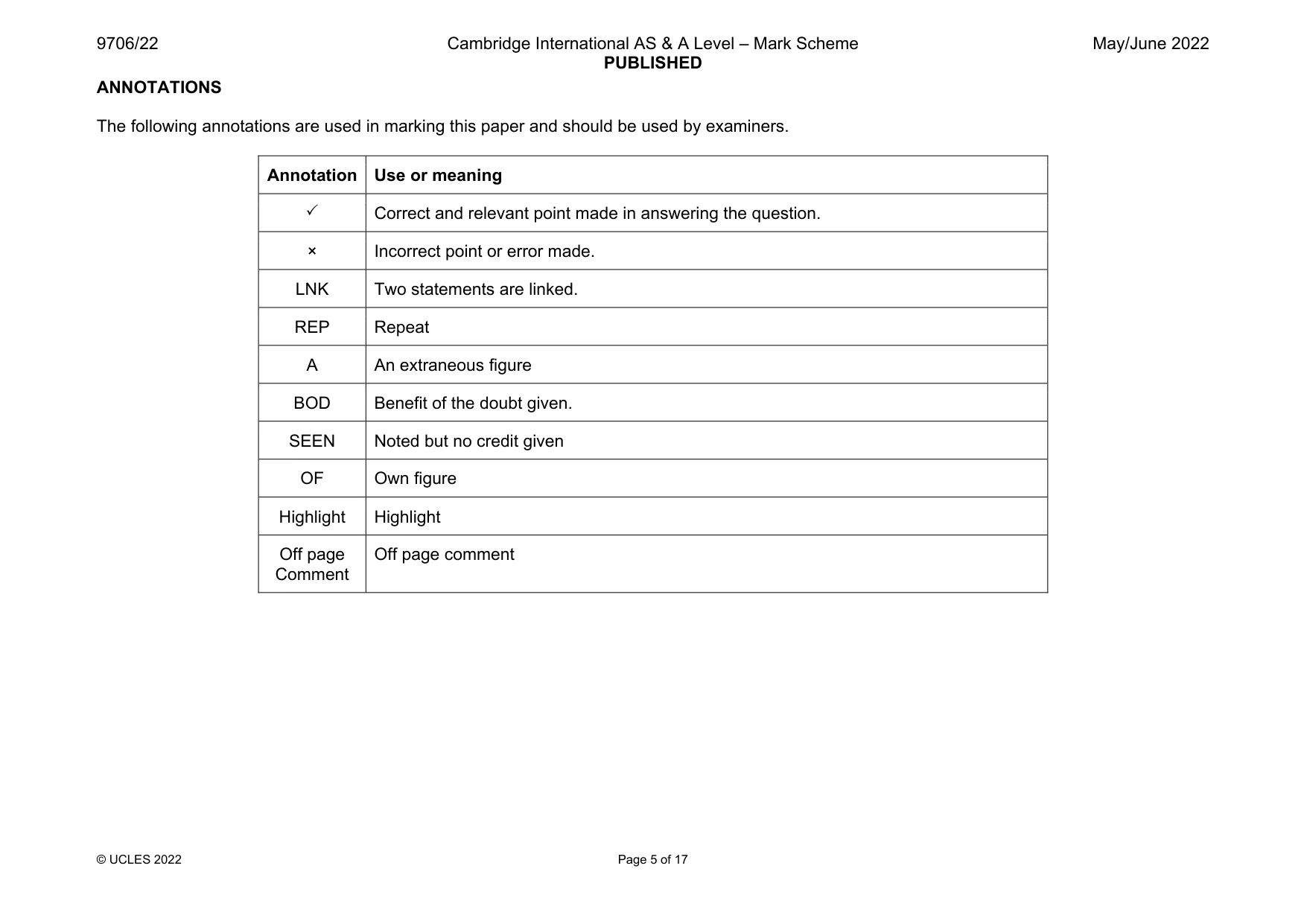
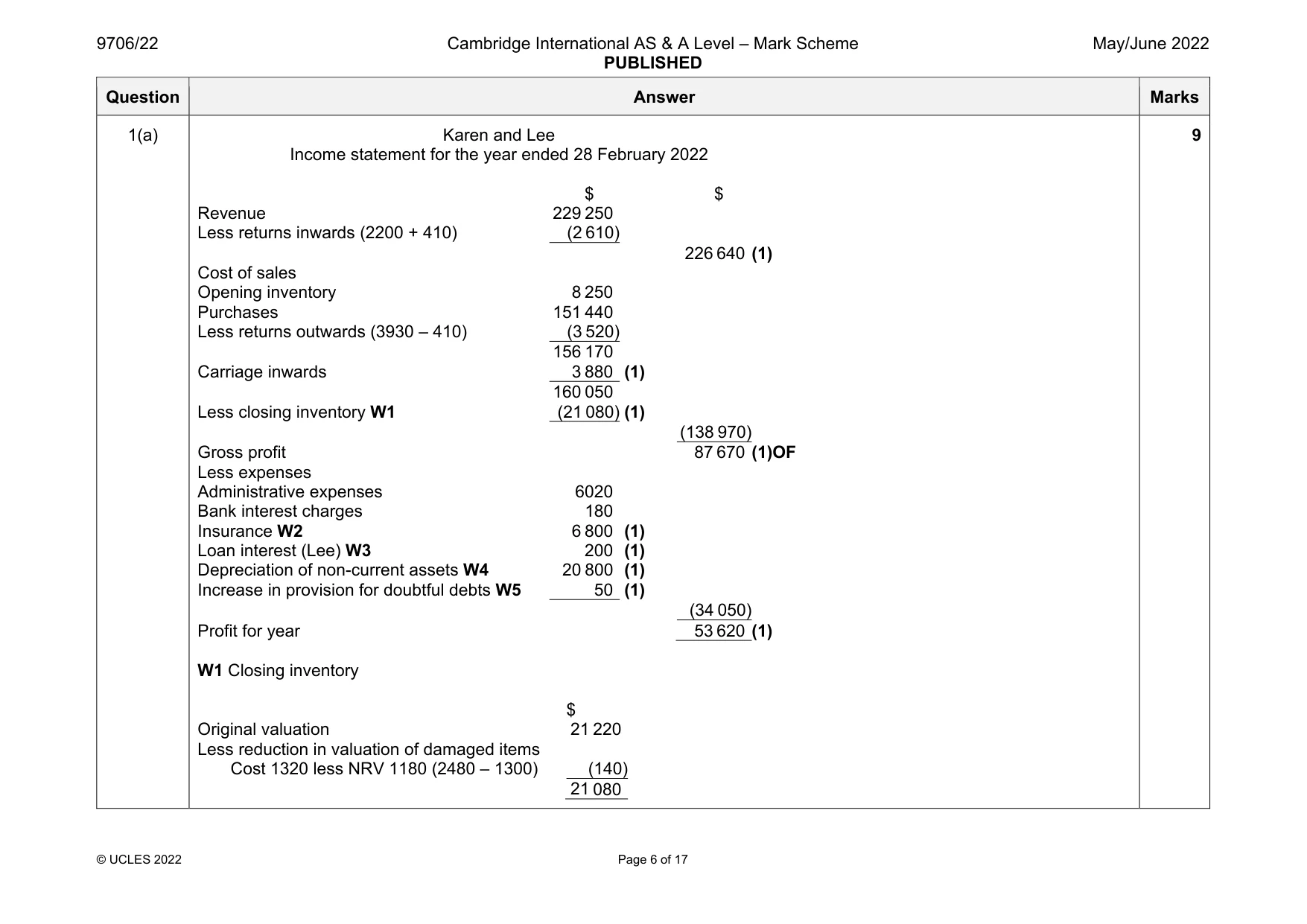
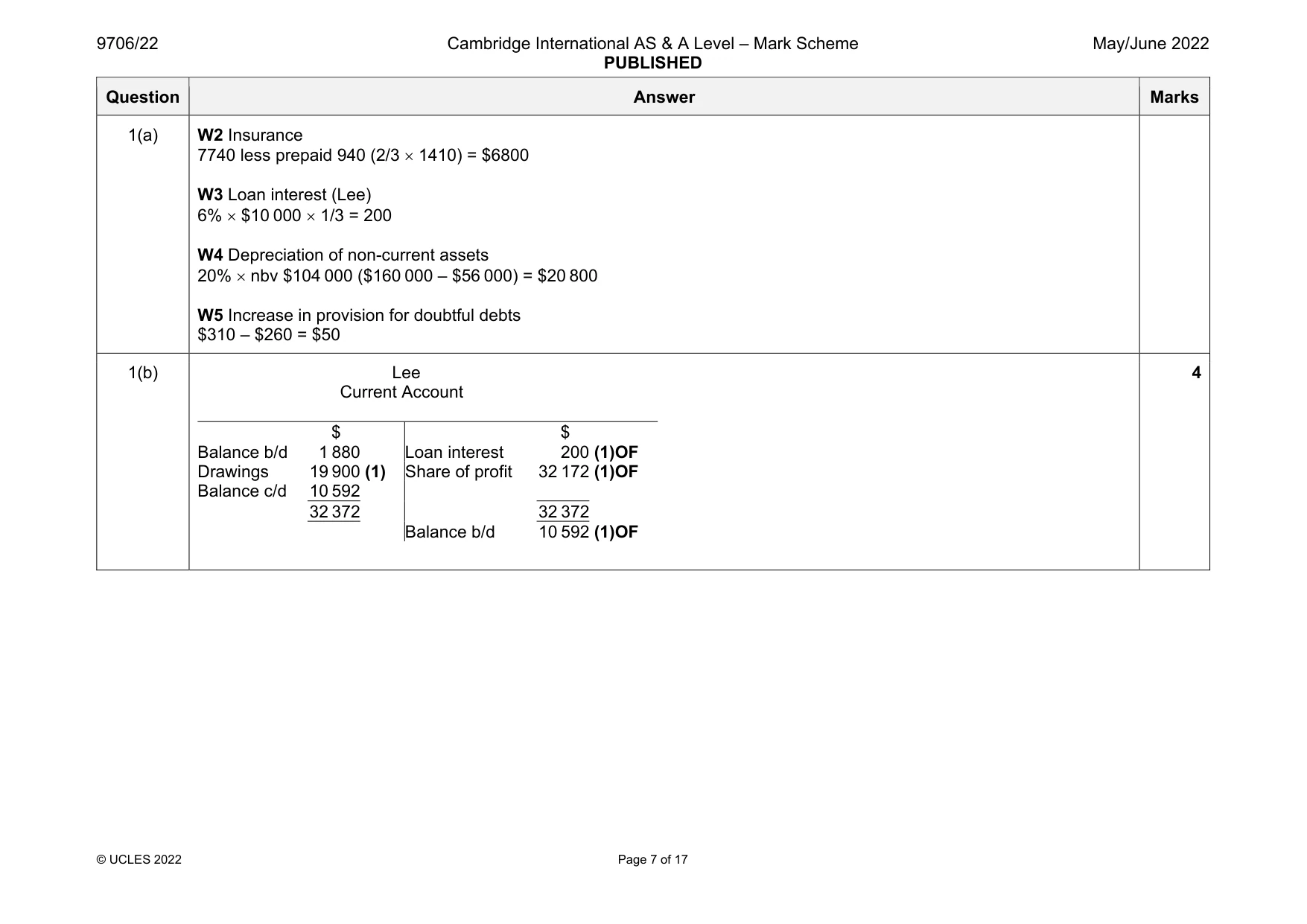
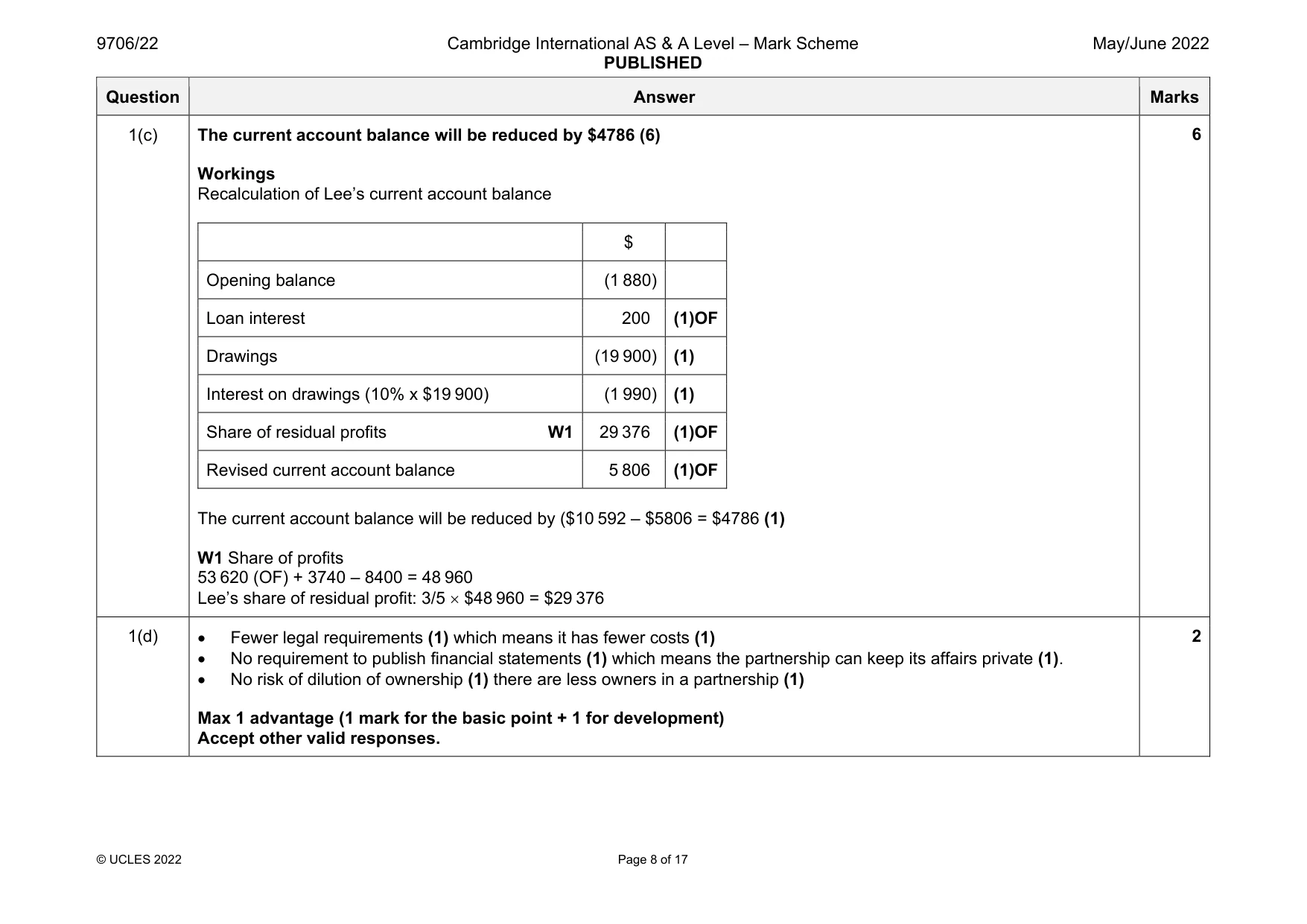
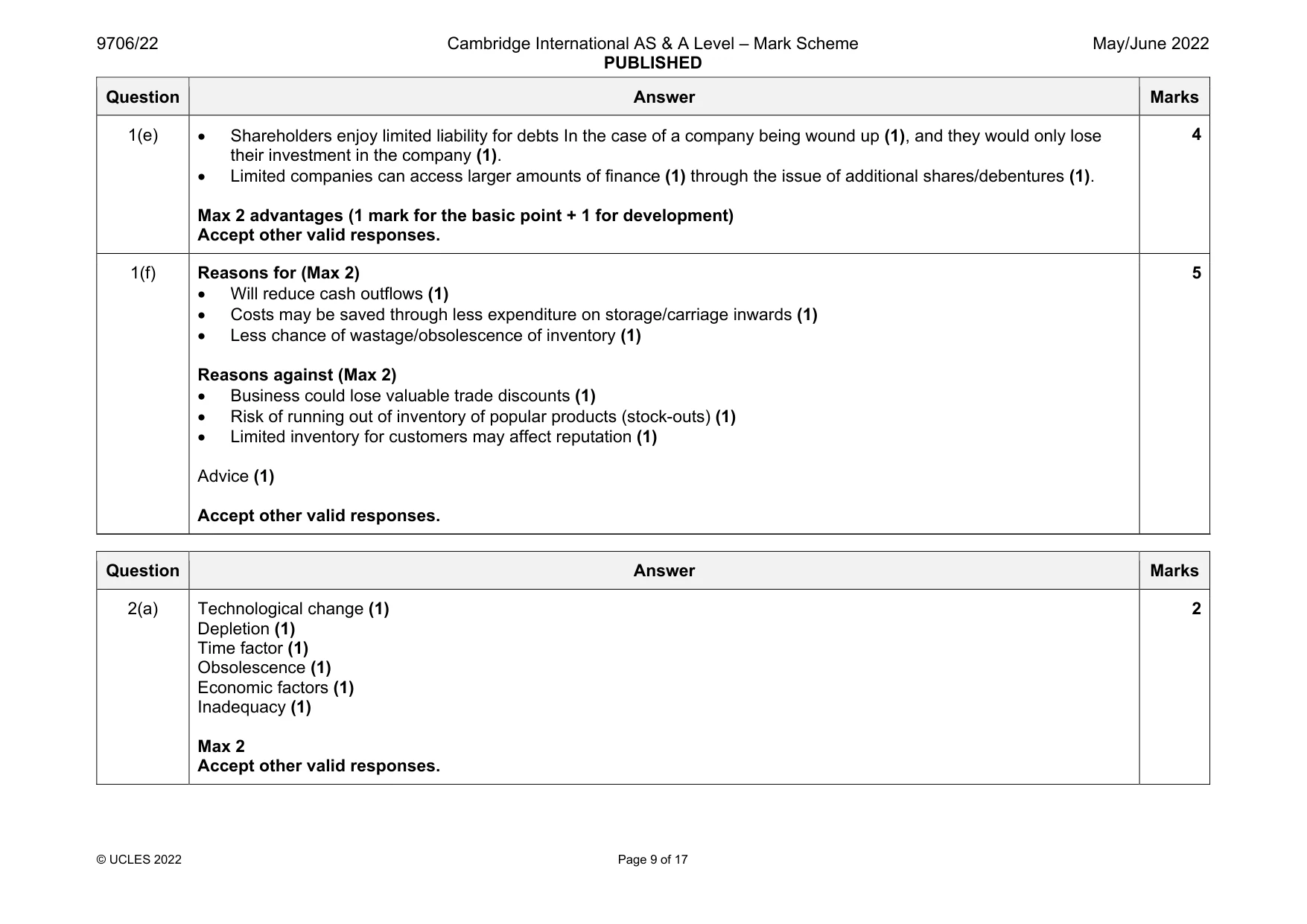
Mark scheme: 1(a) Karen and Lee Income statement for the year ended 28 February 2022 $ $ Revenue 229 250 Less returns inwards (2200 + 410) (2 610) 226 640 (1) Cost of sales Opening inventory 8 250 Purchases 151 440 Less returns outwards (3930 – 410) (3 520) 156 170 Carriage inwards 3 880 (1) 160 050 Less closing inventory W1 (21 080) (1) (138 970) Gross profit 87 670 (1)OF Less expenses Administrative expenses 6020 Bank interest charges 180 Insurance W2 6 800 (1) Loan interest (Lee) W3 200 (1) Depreciation of non-current assets W4 20 800 (1) Increase in provision for doubtful debts W5 50 (1) (34 050) Profit for year 53 620 (1) W1 Closing inventory $ Original valuation 21 220 Less reduction in valuation of damaged items Cost 1320 less NRV 1180 (2480 – 1300) (140) 21 080 9 Question Answer Marks 1(a) W2 Insurance 7740 less prepaid 940 (2/3 1410) = $6800 W3 Loan interest (Lee) 6% $10 000 1/3 = 200 W4 Depreciation of non-current assets 20% nbv $104 000 ($160 000 – $56 000) = $20 800 W5 Increase in provision for doubtful debts $310 – $260 = $50 1(b) Lee Current Account $ $ Balance b/d 1 880 Loan interest 200 (1)OF Drawings 19 900 (1) Share of profit 32 172 (1)OF Balance c/d 10 592 32 372 32 372 Balance b/d 10 592 (1)OF 4 Question Answer Marks 1(c) The current account balance will be reduced by $4786 (6) Workings Recalculation of Lee’s current account balance $ Opening balance (1 880) Loan interest 200 (1)OF Drawings (19 900) (1) Interest on drawings (10% x $19 900) (1 990) (1) Share of residual profits W1 29 376 (1)OF Revised current account balance 5 806 (1)OF The current account balance will be reduced by ($10 592 – $5806 = $4786 (1) W1 Share of profits 53 620 (OF) + 3740 – 8400 = 48 960 Lee’s share of residual profit: 3/5 $48 960 = $29 376 6 1(d) Fewer legal requirements (1) which means it has fewer costs (1) No requirement to publish financial statements (1) which means the partnership can keep its affairs private (1). No risk of dilution of ownership (1) there are less owners in a partnership (1) Max 1 advantage (1 mark for the basic point + 1 for development) Accept other valid responses. 2 Question Answer Marks 1(e) Shareholders enjoy limited liability for debts In the case of a company being wound up (1), and they would only lose their investment in the company (1). Limited companies can access larger amounts of finance (1) through the issue of additional shares/debentures (1). Max 2 advantages (1 mark for the basic point + 1 for development) Accept other valid responses. 4 1(f) Reasons for (Max 2) Will reduce cash outflows (1) Costs may be saved through less expenditure on storage/carriage inwards (1) Less chance of wastage/obsolescence of inventory (1) Reasons against (Max 2) Business could lose valuable trade discounts (1) Risk of running out of inventory of popular products (stock-outs) (1) Limited inventory for customers may affect reputation (1) Advice (1) Accept other valid responses. 5
Q2 · V Limited owns various non-current assets
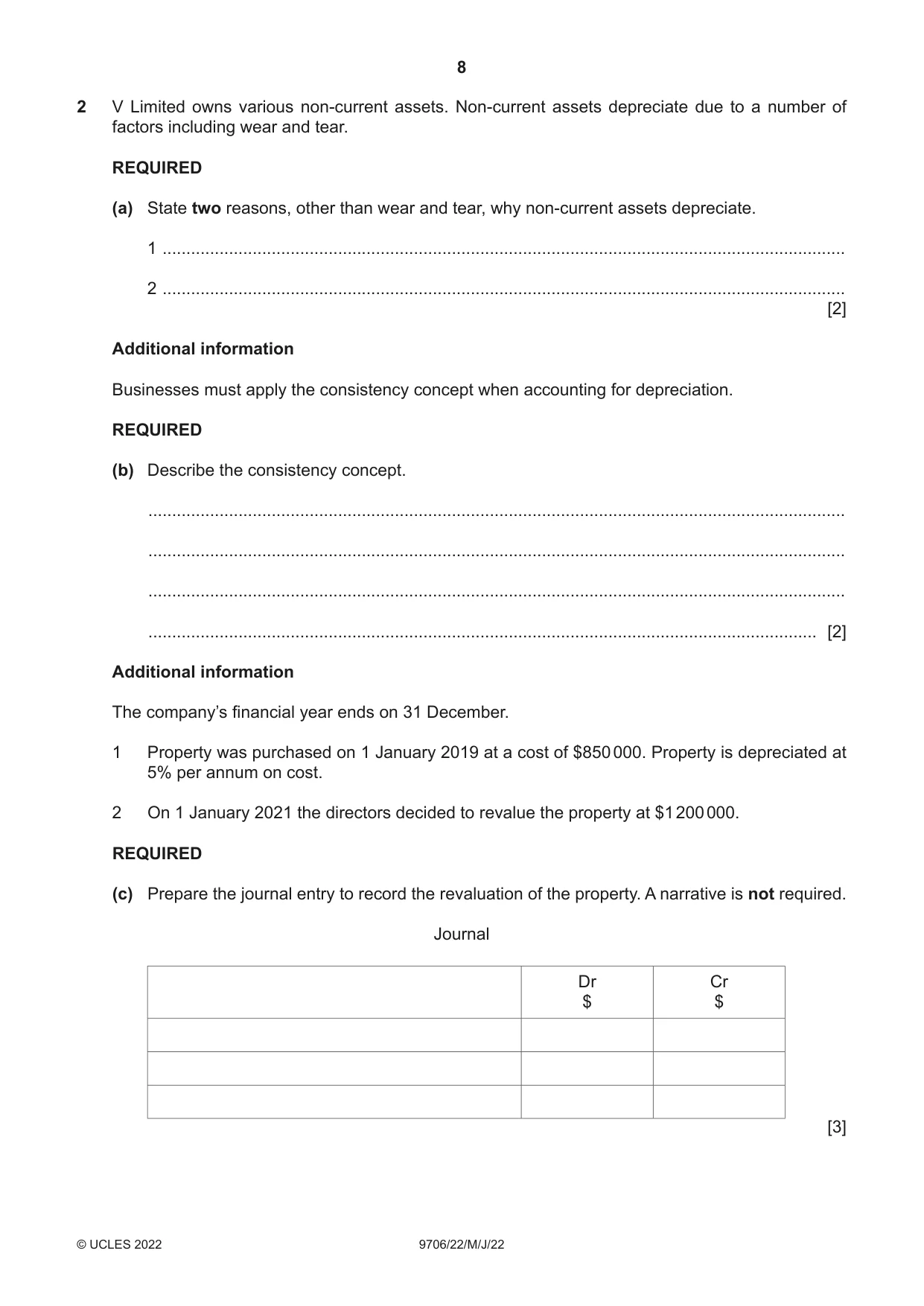
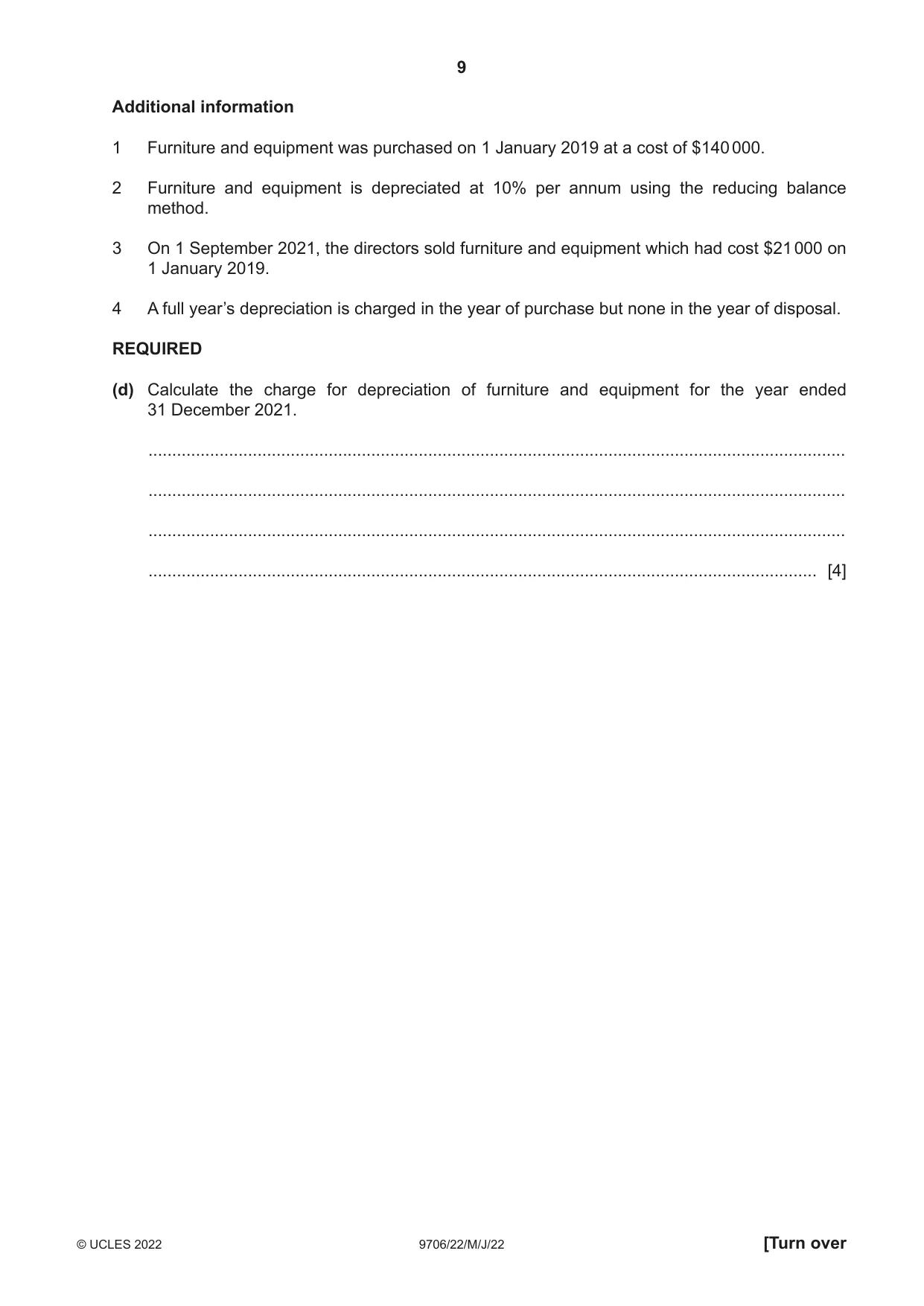
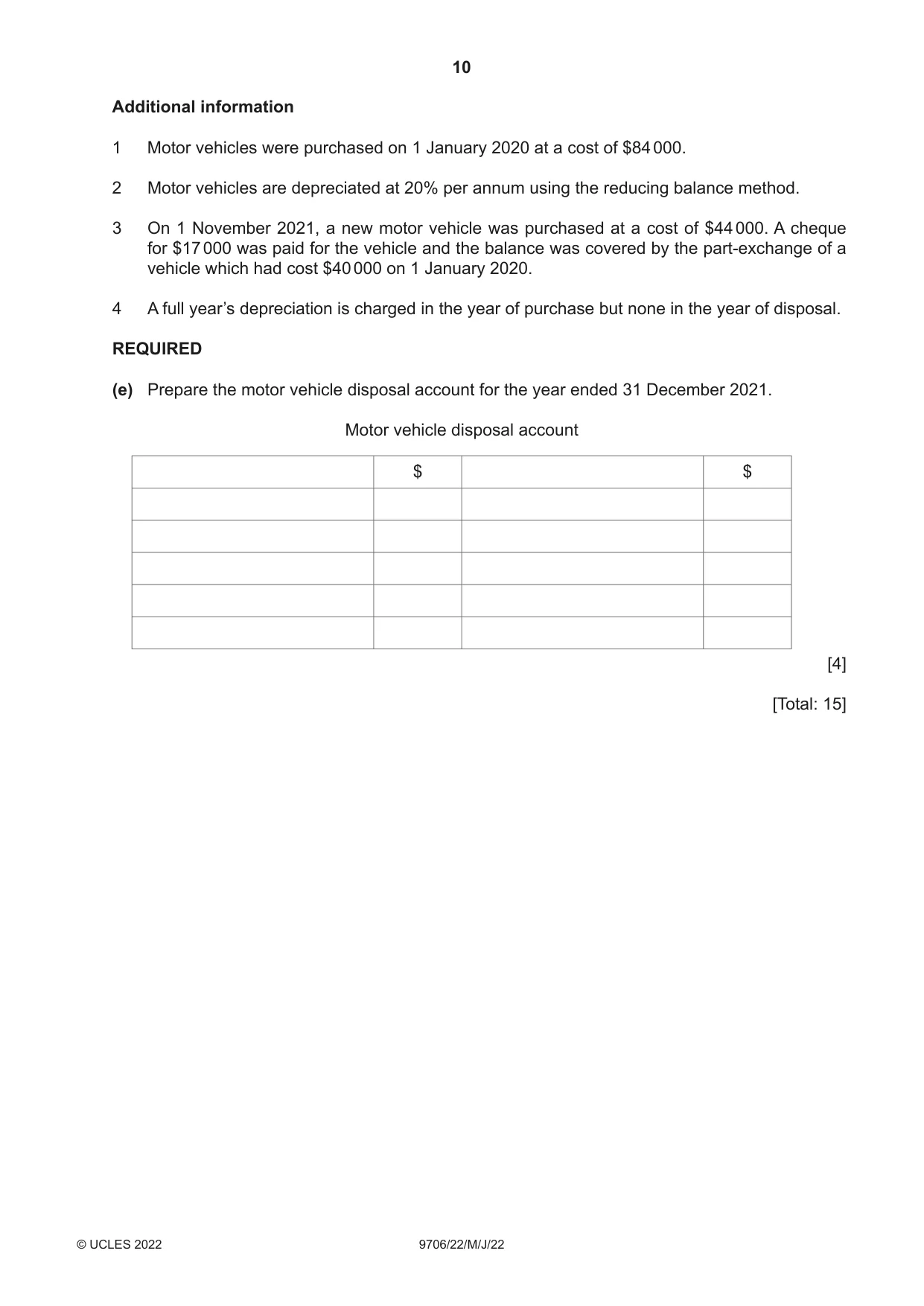
2 V Limited owns various non-current assets. Non-current assets depreciate due to a number of factors including wear and tear. REQUIRED (a) State two reasons, other than wear and tear, why non-current assets depreciate. 1 ................................................................................................................................................ 2 ................................................................................................................................................ [2] Additional information Businesses must apply the consistency concept when accounting for depreciation. REQUIRED (b) Describe the consistency concept. ................................................................................................................................................... ................................................................................................................................................... ................................................................................................................................................... ............................................................................................................................................. [2] Additional information The company’s financial year ends on 31 December. 1 Property was purchased on 1 January 2019 at a cost of $850 000. Property is depreciated at 5% per annum on cost. 2 On 1 January 2021 the directors decided to revalue the property at $1 200 000. REQUIRED (c) Prepare the journal entry to record the revaluation of the property. A narrative is not required. Journal Dr Cr $ $ [3] Additional information 1 Furniture and equipment was purchased on 1 January 2019 at a cost of $140 000. 2 Furniture and equipment is depreciated at 10% per annum using the reducing balance method. 3 On 1 September 2021, the directors sold furniture and equipment which had cost $21 000 on 1 January 2019. 4 A full year’s depreciation is charged in the year of purchase but none in the year of disposal. REQUIRED (d) Calculate the charge for depreciation of furniture and equipment for the year ended 31 December 2021. ................................................................................................................................................... ................................................................................................................................................... ................................................................................................................................................... ............................................................................................................................................. [4] Additional information 1 Motor vehicles were purchased on 1 January 2020 at a cost of $84 000. 2 Motor vehicles are depreciated at 20% per annum using the reducing balance method. 3 On 1 November 2021, a new motor vehicle was purchased at a cost of $44 000. A cheque for $17 000 was paid for the vehicle and the balance was covered by the part-exchange of a vehicle which had cost $40 000 on 1 January 2020. 4 A full year’s depreciation is charged in the year of purchase but none in the year of disposal. REQUIRED (e) Prepare the motor vehicle disposal account for the year ended 31 December 2021. Motor vehicle disposal account $ $ [4] [Total: 15]
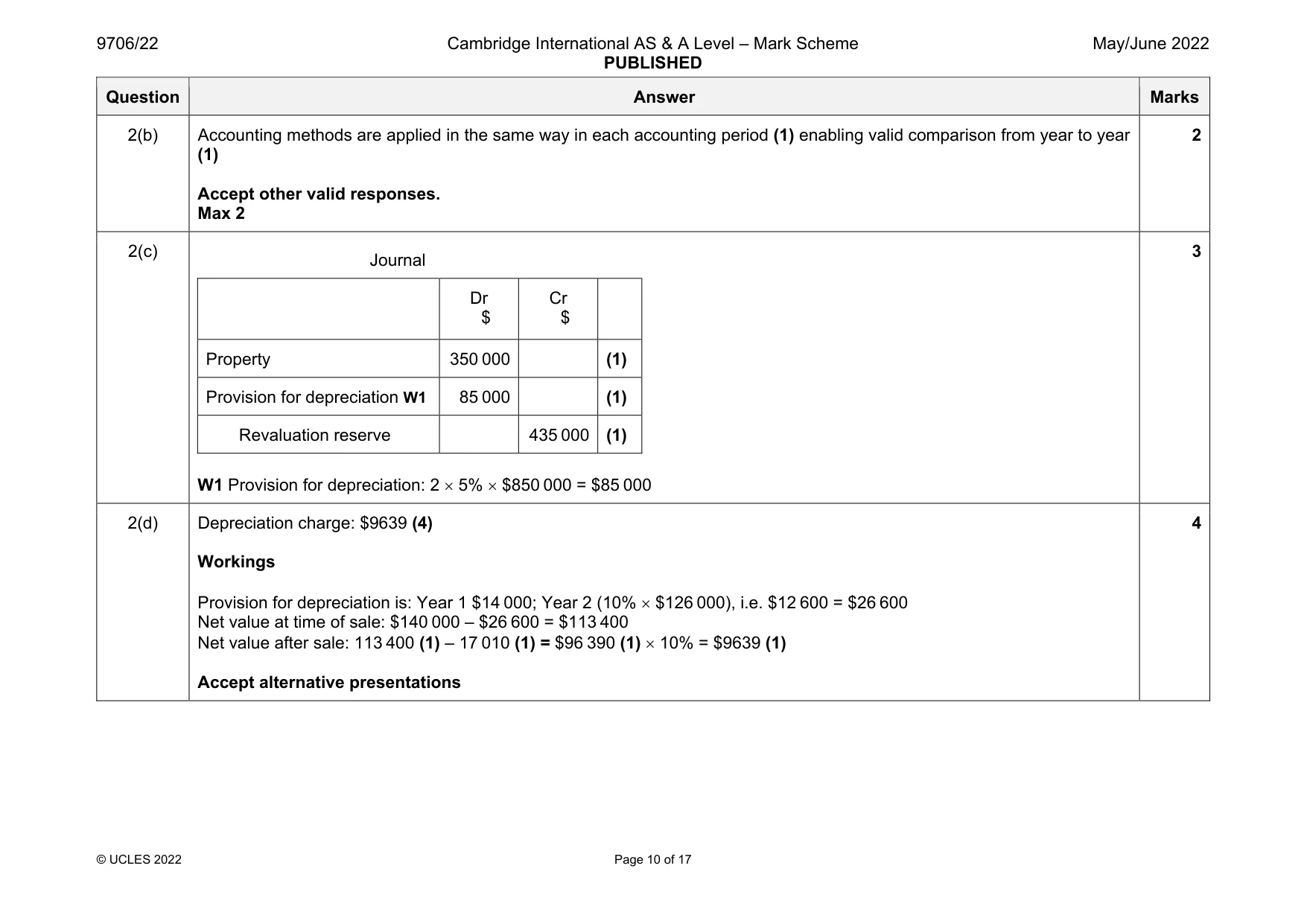
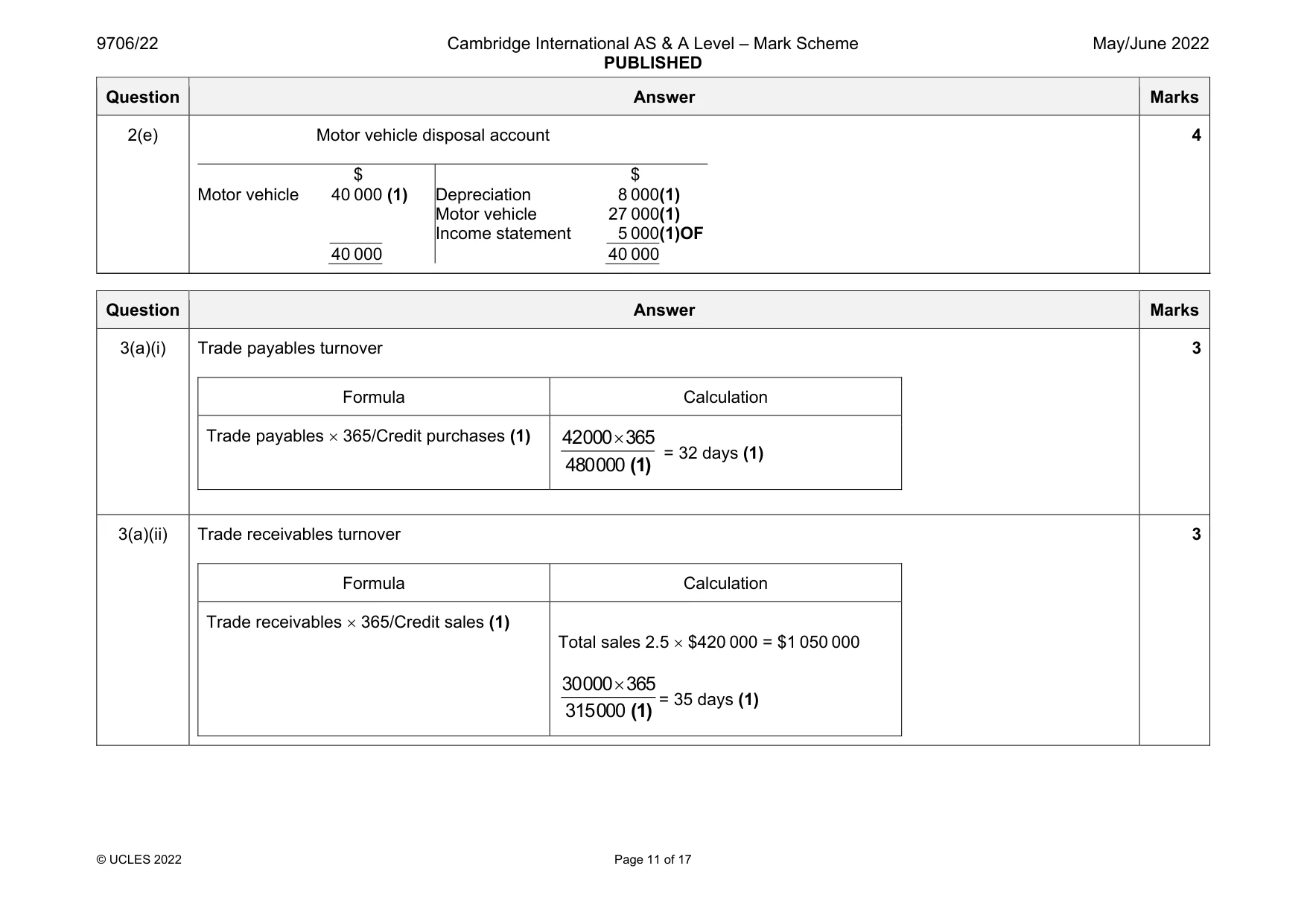
Mark scheme: 2(a) Technological change (1) Depletion (1) Time factor (1) Obsolescence (1) Economic factors (1) Inadequacy (1) Max 2 Accept other valid responses. Question Answer Marks 2(b) Accounting methods are applied in the same way in each accounting period (1) enabling valid comparison from year to year (1) Accept other valid responses. Max 2 2 2(c) Journal Dr $ Cr $ Property 350 000 (1) Provision for depreciation W1 85 000 (1) Revaluation reserve 435 000 (1) W1 Provision for depreciation: 2 5% $850 000 = $85 000 3 2(d) Depreciation charge: $9639 (4) Workings Provision for depreciation is: Year 1 $14 000; Year 2 (10% $126 000), i.e. $12 600 = $26 600 Net value at time of sale: $140 000 – $26 600 = $113 400 Net value after sale: 113 400 (1) – 17 010 (1) = $96 390 (1) 10% = $9639 (1) Accept alternative presentations 4 Question Answer Marks 2(e) Motor vehicle disposal account $ $ Motor vehicle 40 000 (1) Depreciation 8 000(1) Motor vehicle 27 000(1) Income statement 5 000(1)OF 40 000 40 000 4
Q3 · Profits and losses would continue to be shared in the ratio Karen : Lee, 2 : 3…
3 Profits and losses would continue to be shared in the ratio Karen : Lee, 2 : 3 respectively. REQUIRED (c) Calculate the increase or decrease in Lee’s current account balance at 28 February 2022 assuming the new agreement had been in use from 1 March 2021. ................................................................................................................................................... ................................................................................................................................................... ................................................................................................................................................... ................................................................................................................................................... ................................................................................................................................................... ................................................................................................................................................... ................................................................................................................................................... ................................................................................................................................................... ................................................................................................................................................... ................................................................................................................................................... ................................................................................................................................................... ............................................................................................................................................. [6] Additional information Karen and Lee had also considered operating as a limited company. REQUIRED (d) Explain one advantage of operating as a partnership rather than a limited company. ................................................................................................................................................... ................................................................................................................................................... ................................................................................................................................................... ............................................................................................................................................. [2] (e) Explain two advantages of operating as a limited company rather than a partnership. 1 ................................................................................................................................................ ................................................................................................................................................... ................................................................................................................................................... ................................................................................................................................................... 2 ................................................................................................................................................ ................................................................................................................................................... ................................................................................................................................................... ................................................................................................................................................... [4] Additional information The partners are concerned about the business’s liquidity position. Karen believes the problem arises because the business holds too much inventory. She suggests that credit purchases should be reduced for the next three months to ensure inventory levels are lowered. REQUIRED (f) Advise Lee whether or not he should accept Karen’s suggestion. Justify your advice. ................................................................................................................................................... ................................................................................................................................................... ................................................................................................................................................... ................................................................................................................................................... ................................................................................................................................................... ................................................................................................................................................... ................................................................................................................................................... ................................................................................................................................................... ................................................................................................................................................... ................................................................................................................................................... ................................................................................................................................................... ................................................................................................................................................... ................................................................................................................................................... ................................................................................................................................................... ............................................................................................................................................. [5] [Total: 30] 2 V Limited owns various non-current assets. Non-current assets depreciate due to a number of factors including wear and tear. REQUIRED (a) State two reasons, other than wear and tear, why non-current assets depreciate. 1 ................................................................................................................................................ 2 ................................................................................................................................................ [2] Additional information Businesses must apply the consistency concept when accounting for depreciation. REQUIRED (b) Describe the consistency concept. ................................................................................................................................................... ................................................................................................................................................... ................................................................................................................................................... ............................................................................................................................................. [2] Additional information The company’s financial year ends on 31 December. 1 Property was purchased on 1 January 2019 at a cost of $850 000. Property is depreciated at 5% per annum on cost. 2 On 1 January 2021 the directors decided to revalue the property at $1 200 000. REQUIRED (c) Prepare the journal entry to record the revaluation of the property. A narrative is not required. Journal Dr Cr $ $ [3] Additional information 1 Furniture and equipment was purchased on 1 January 2019 at a cost of $140 000. 2 Furniture and equipment is depreciated at 10% per annum using the reducing balance method. 3 On 1 September 2021, the directors sold furniture and equipment which had cost $21 000 on 1 January 2019.
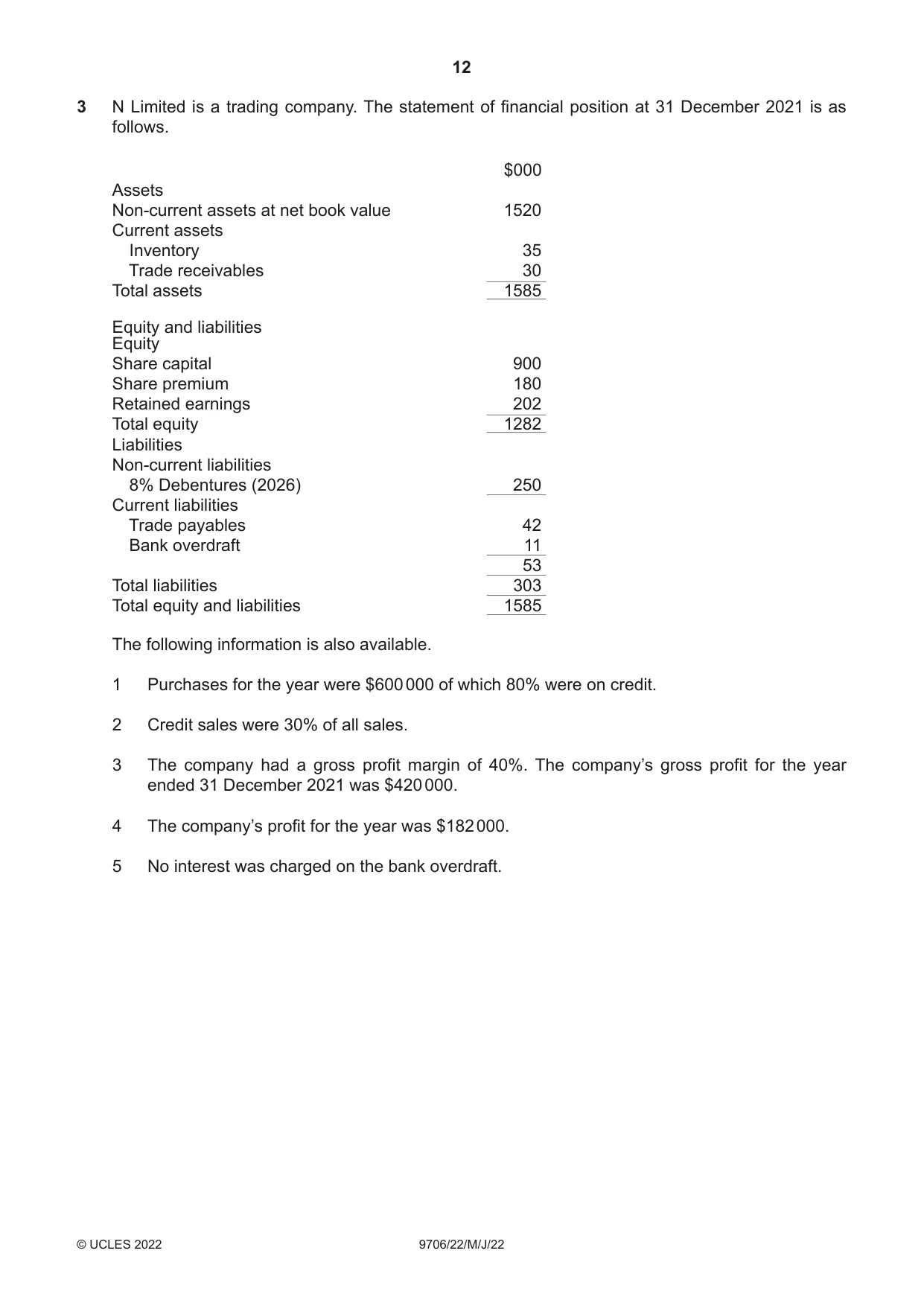
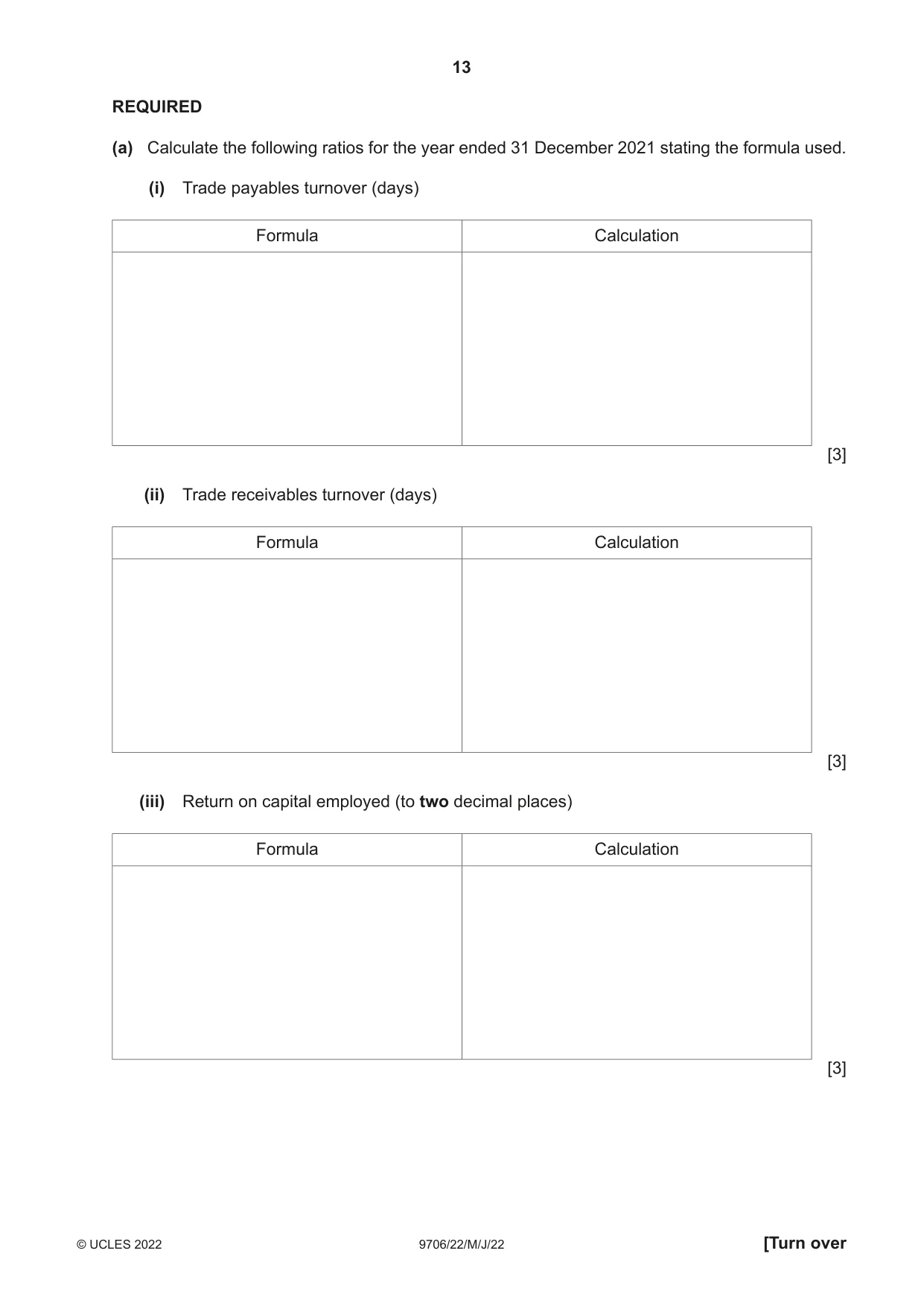
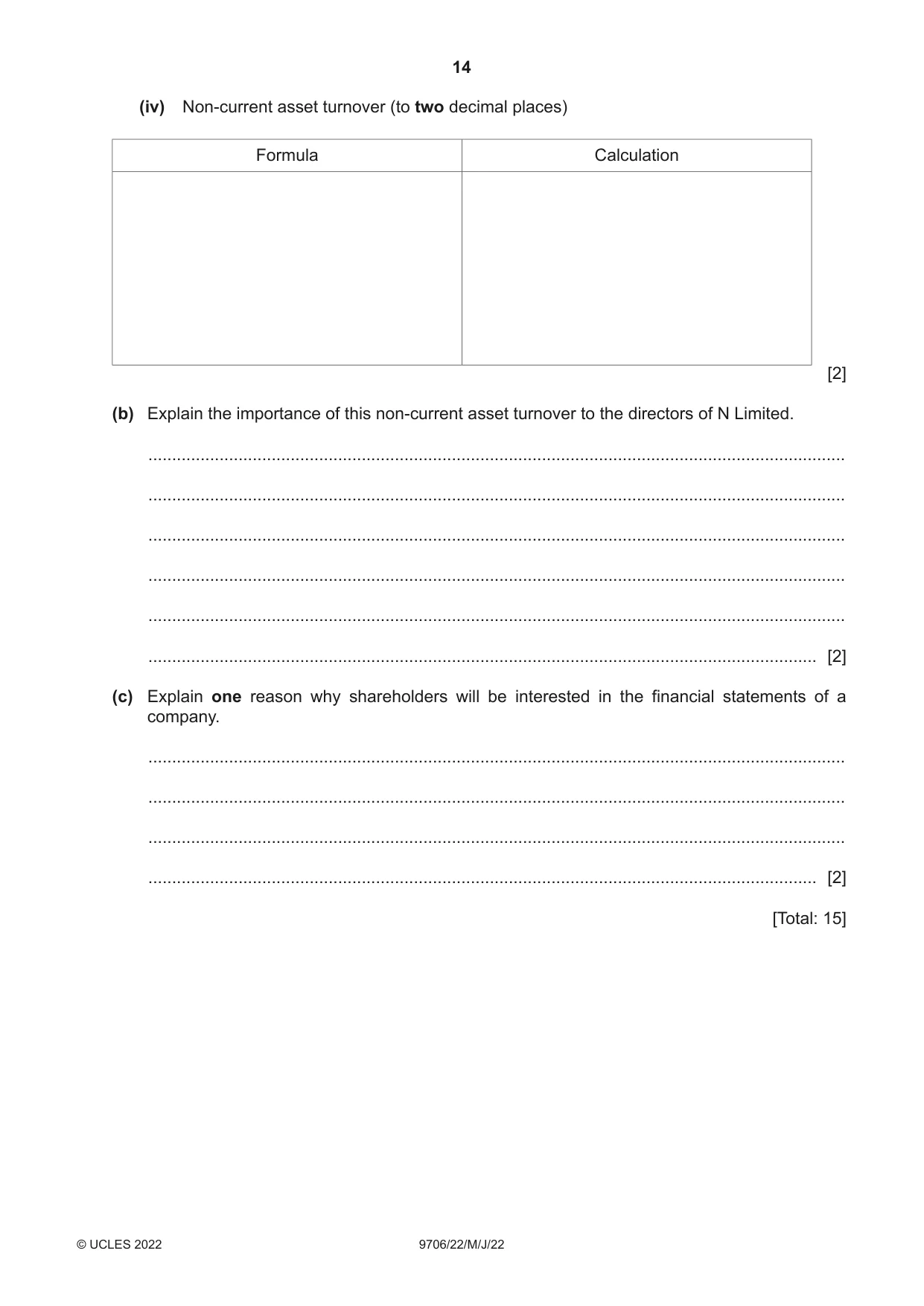
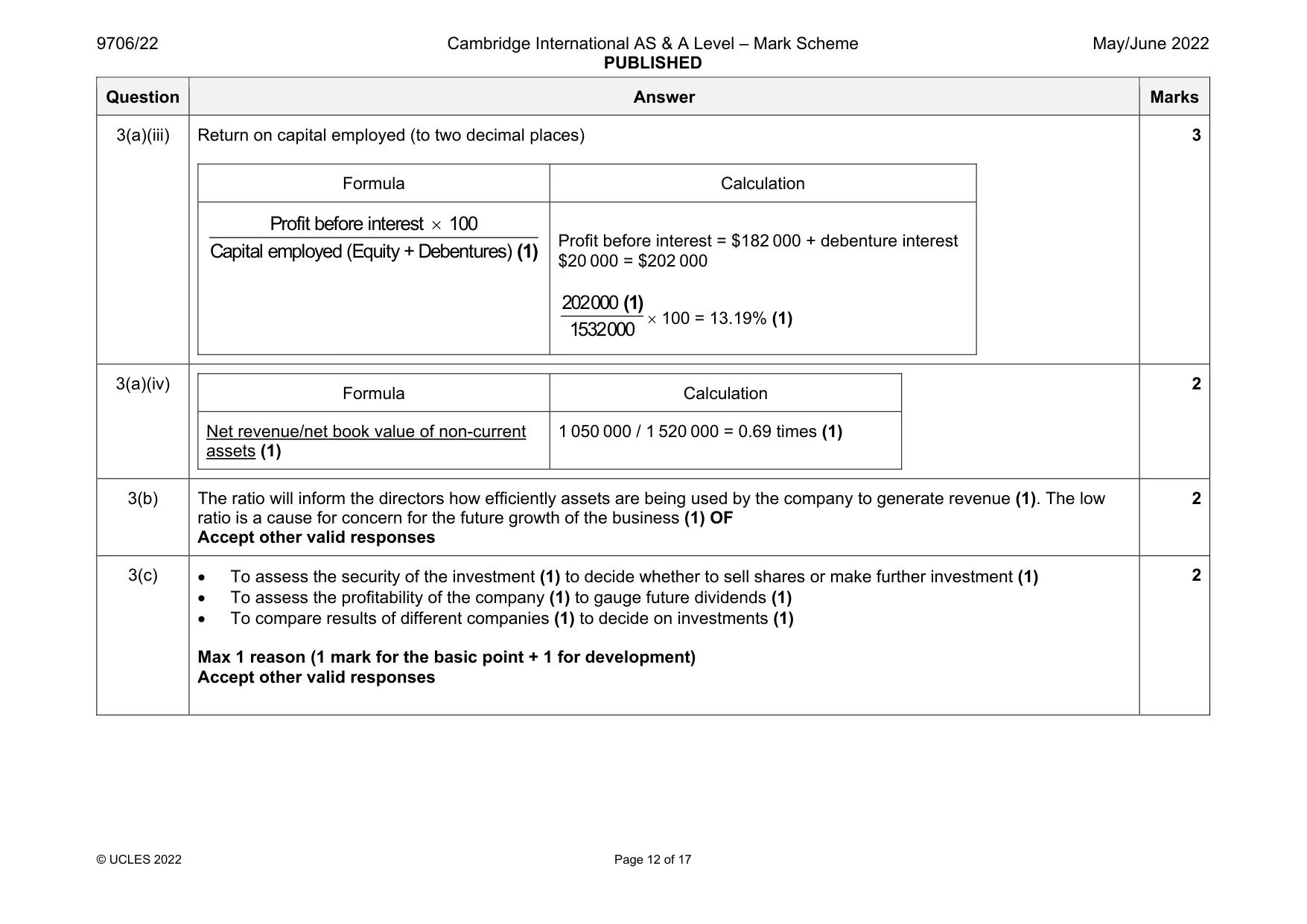
Mark scheme: 3(a)(i) Trade payables turnover Formula Calculation Trade payables 365/Credit purchases (1) 42000 365 480000 (1) = 32 days (1) 3 3(a)(ii) Trade receivables turnover Formula Calculation Trade receivables 365/Credit sales (1) Total sales 2.5 $420 000 = $1 050 000 30000 365 315000 (1) = 35 days (1) 3 Question Answer Marks 3(a)(iii) Return on capital employed (to two decimal places) Formula Calculation Profit before interest 100 Capital employed (Equity + Debentures) (1) Profit before interest = $182 000 + debenture interest $20 000 = $202 000 202000 1532000 (1) 100 = 13.19% (1) 3 3(a)(iv) Formula Calculation Net revenue/net book value of non-current assets (1) 1 050 000 / 1 520 000 = 0.69 times (1) 2 3(b) The ratio will inform the directors how efficiently assets are being used by the company to generate revenue (1). The low ratio is a cause for concern for the future growth of the business (1) OF Accept other valid responses 2 3(c) To assess the security of the investment (1) to decide whether to sell shares or make further investment (1) To assess the profitability of the company (1) to gauge future dividends (1) To compare results of different companies (1) to decide on investments (1) Max 1 reason (1 mark for the basic point + 1 for development) Accept other valid responses 2
Q4 · A full year’s depreciation is charged in the year of purchase but none in the year of…
4 A full year’s depreciation is charged in the year of purchase but none in the year of disposal. REQUIRED (d) Calculate the charge for depreciation of furniture and equipment for the year ended 31 December 2021. ................................................................................................................................................... ................................................................................................................................................... ................................................................................................................................................... ............................................................................................................................................. [4] Additional information 1 Motor vehicles were purchased on 1 January 2020 at a cost of $84 000. 2 Motor vehicles are depreciated at 20% per annum using the reducing balance method. 3 On 1 November 2021, a new motor vehicle was purchased at a cost of $44 000. A cheque for $17 000 was paid for the vehicle and the balance was covered by the part-exchange of a vehicle which had cost $40 000 on 1 January 2020. 4 A full year’s depreciation is charged in the year of purchase but none in the year of disposal. REQUIRED (e) Prepare the motor vehicle disposal account for the year ended 31 December 2021. Motor vehicle disposal account $ $ [4] [Total: 15]
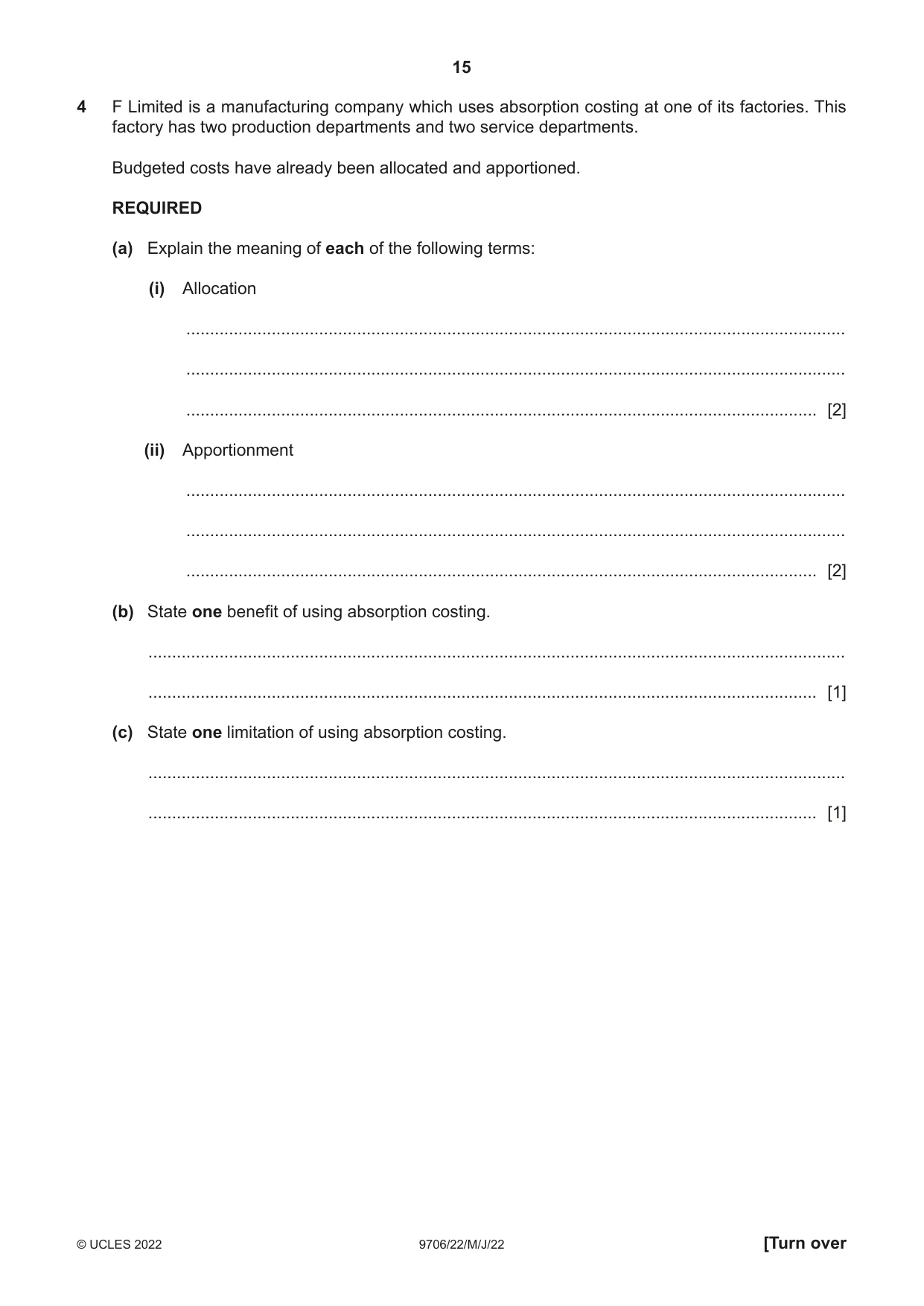
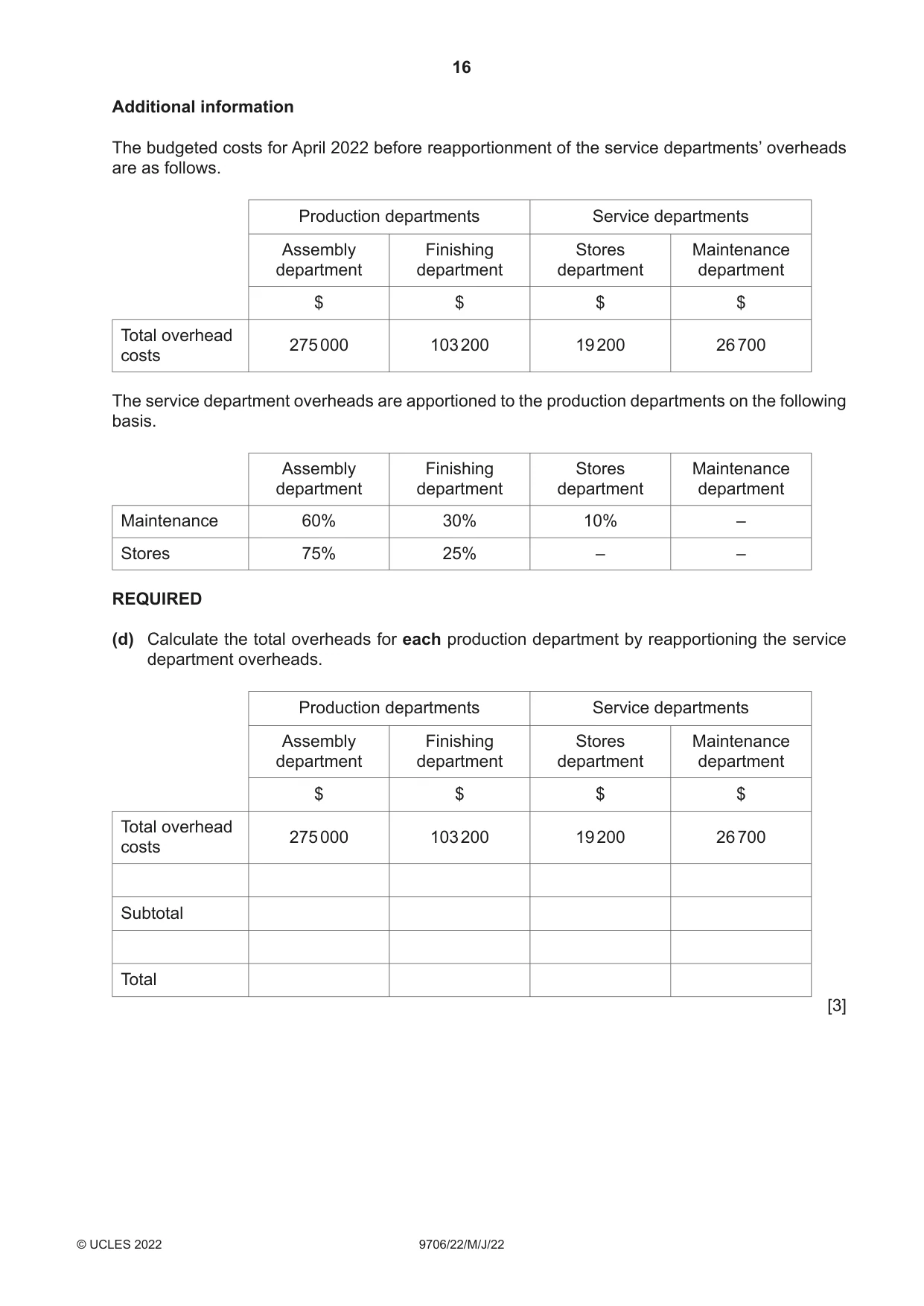
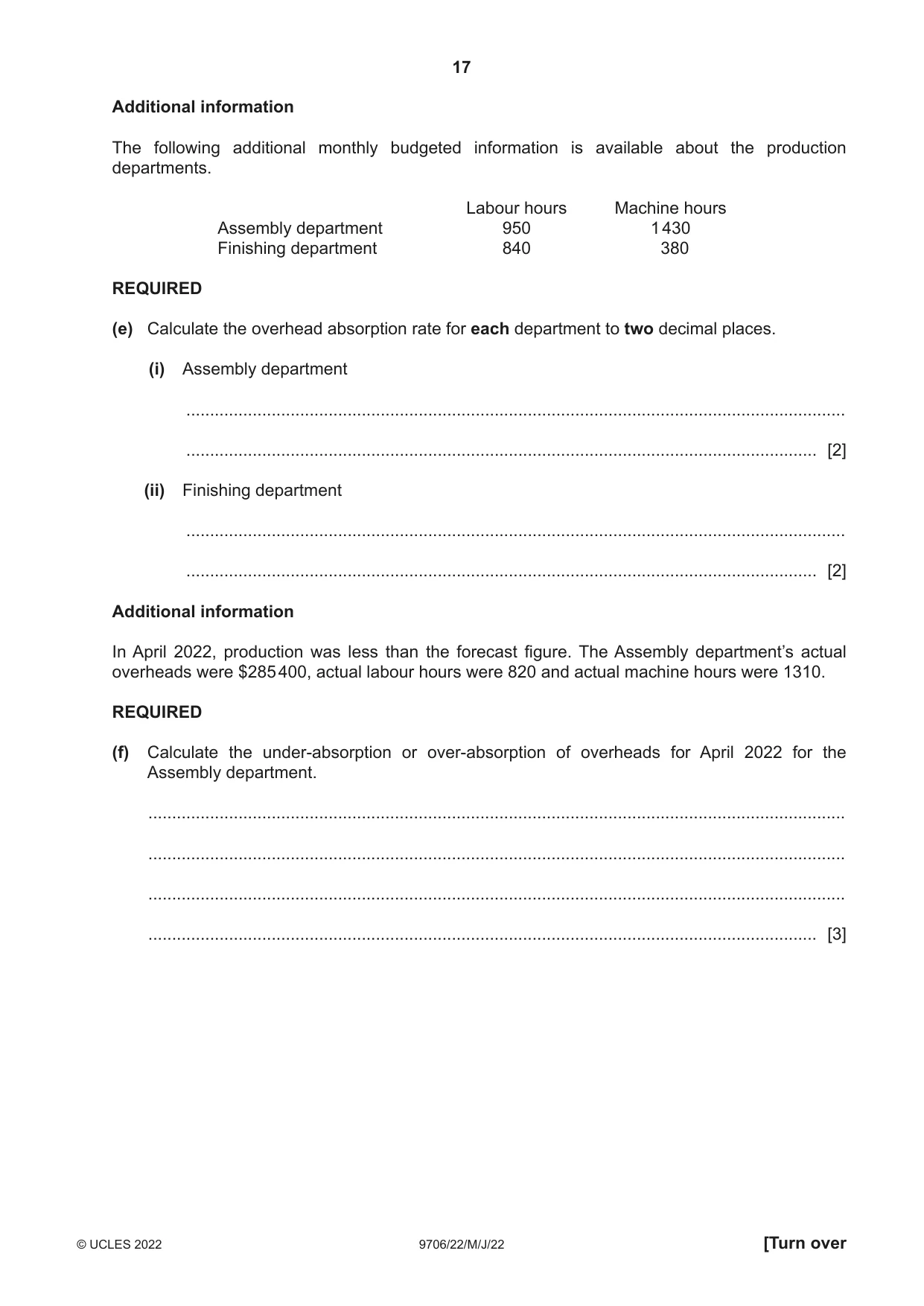
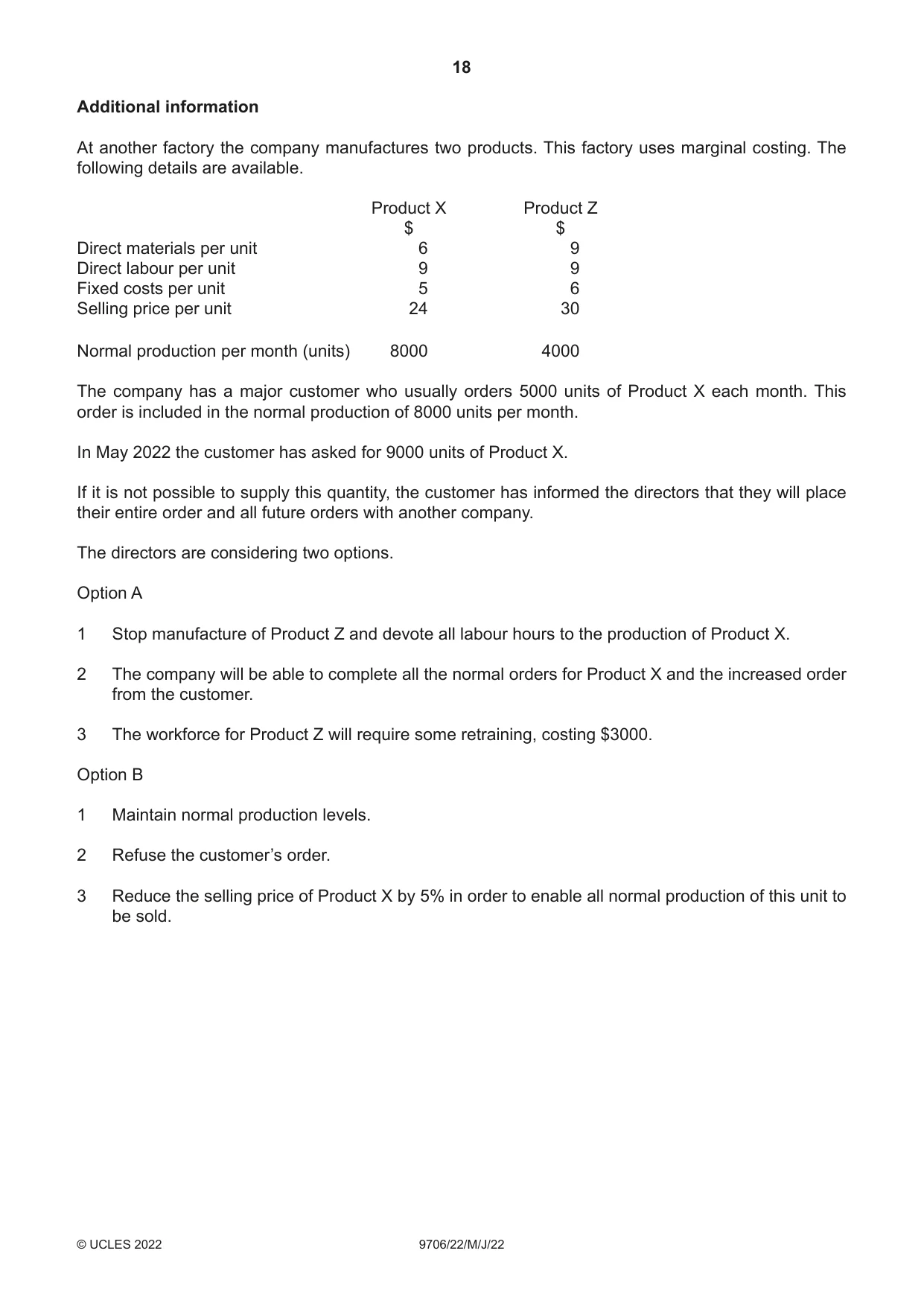
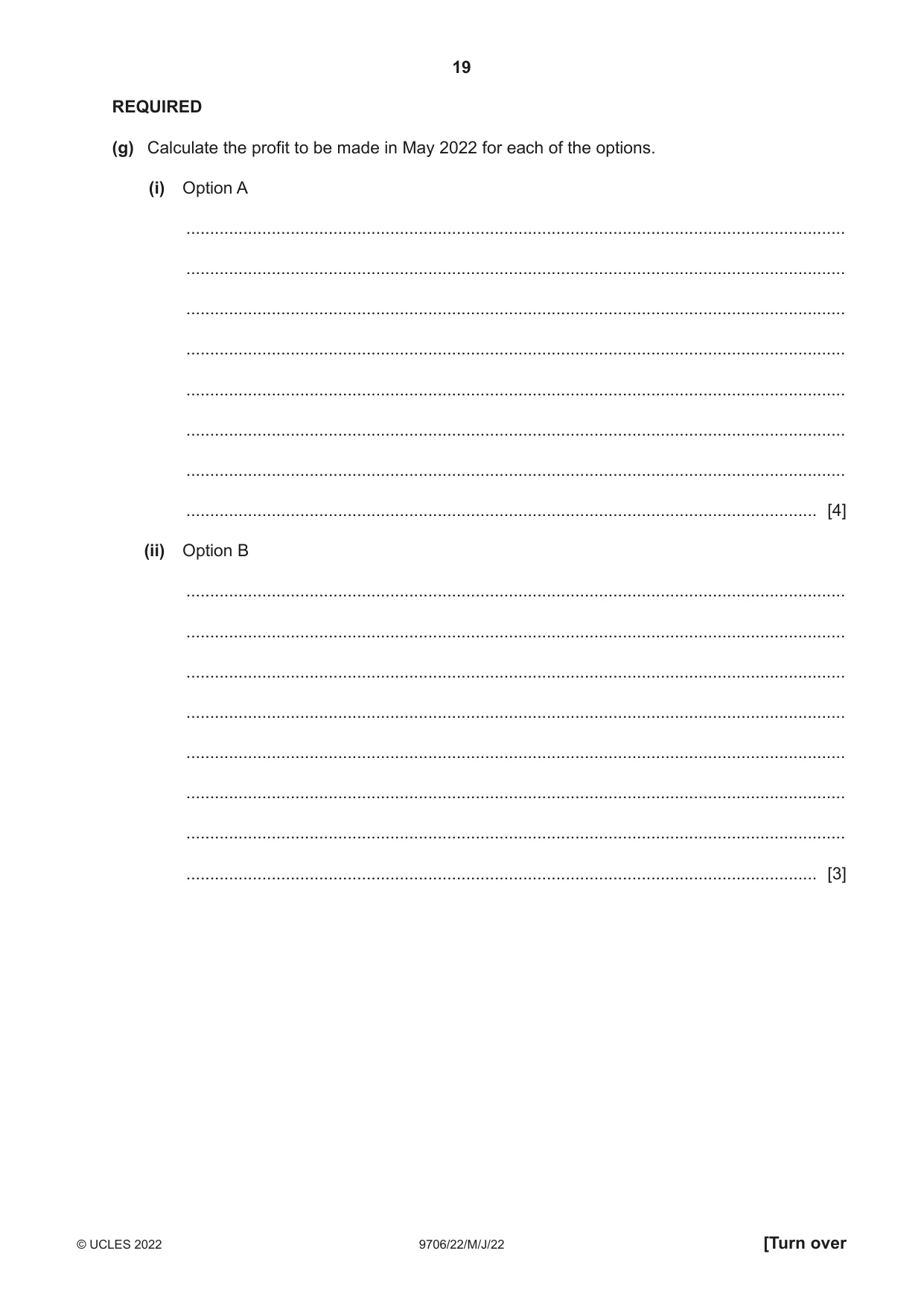
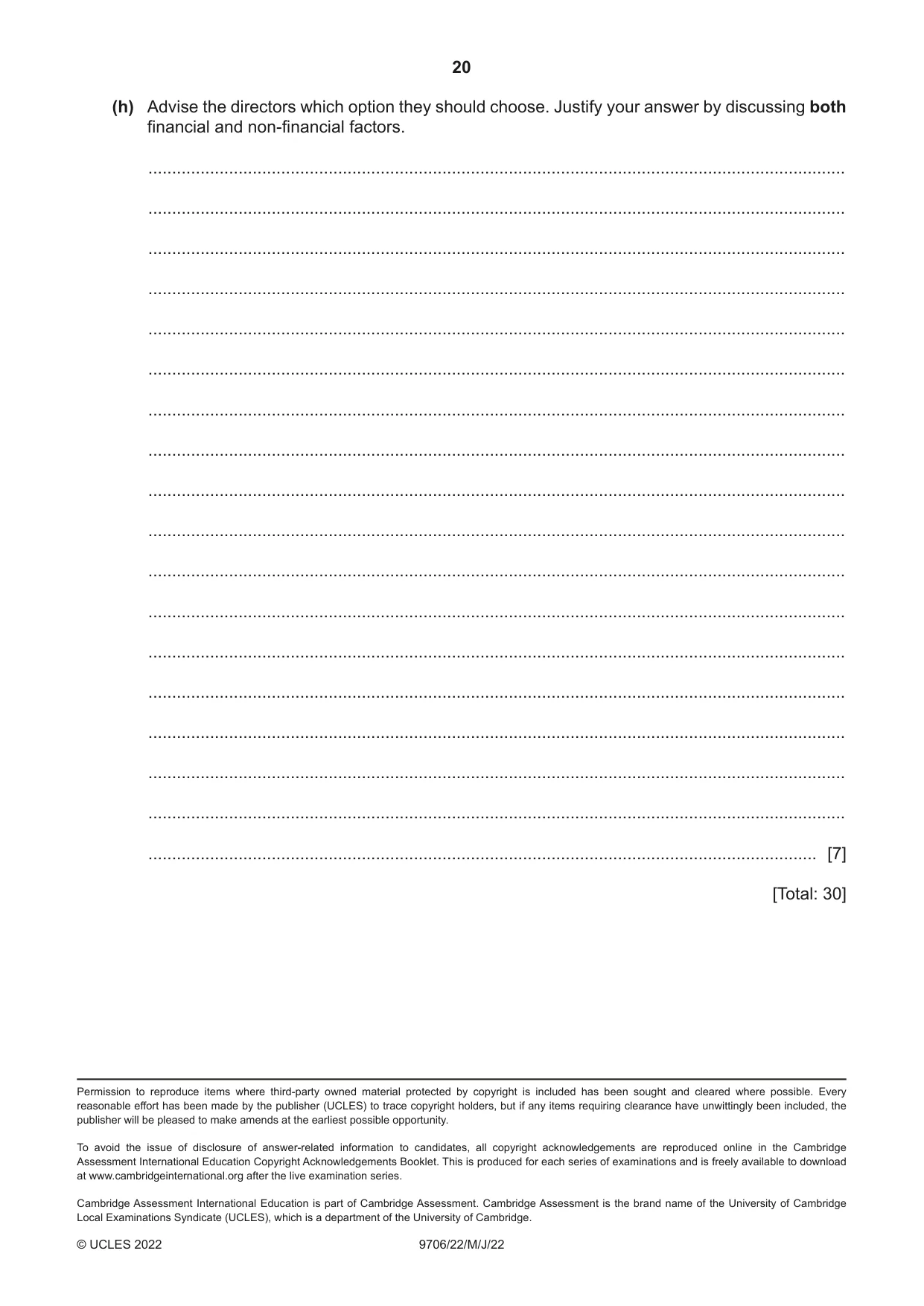
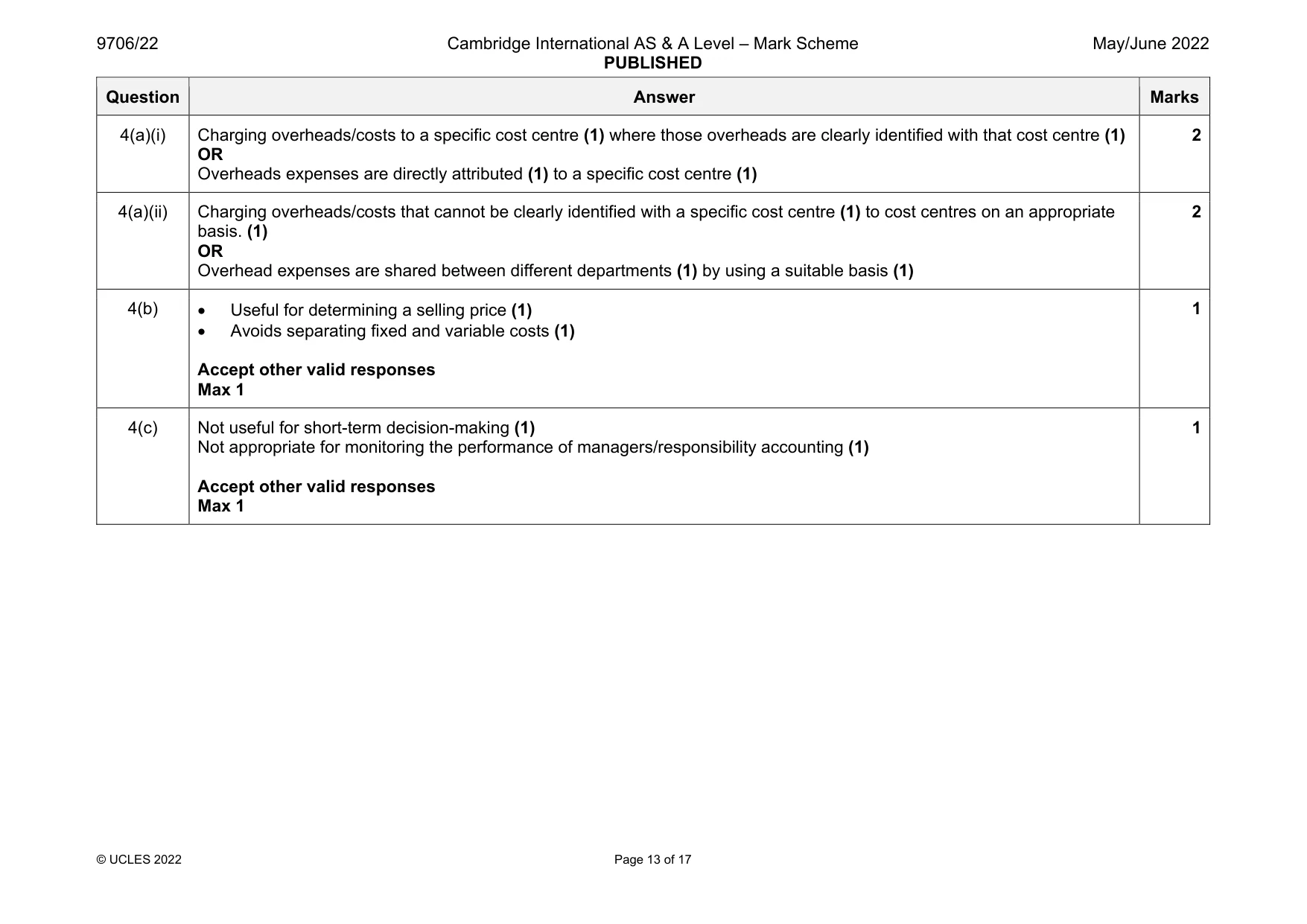
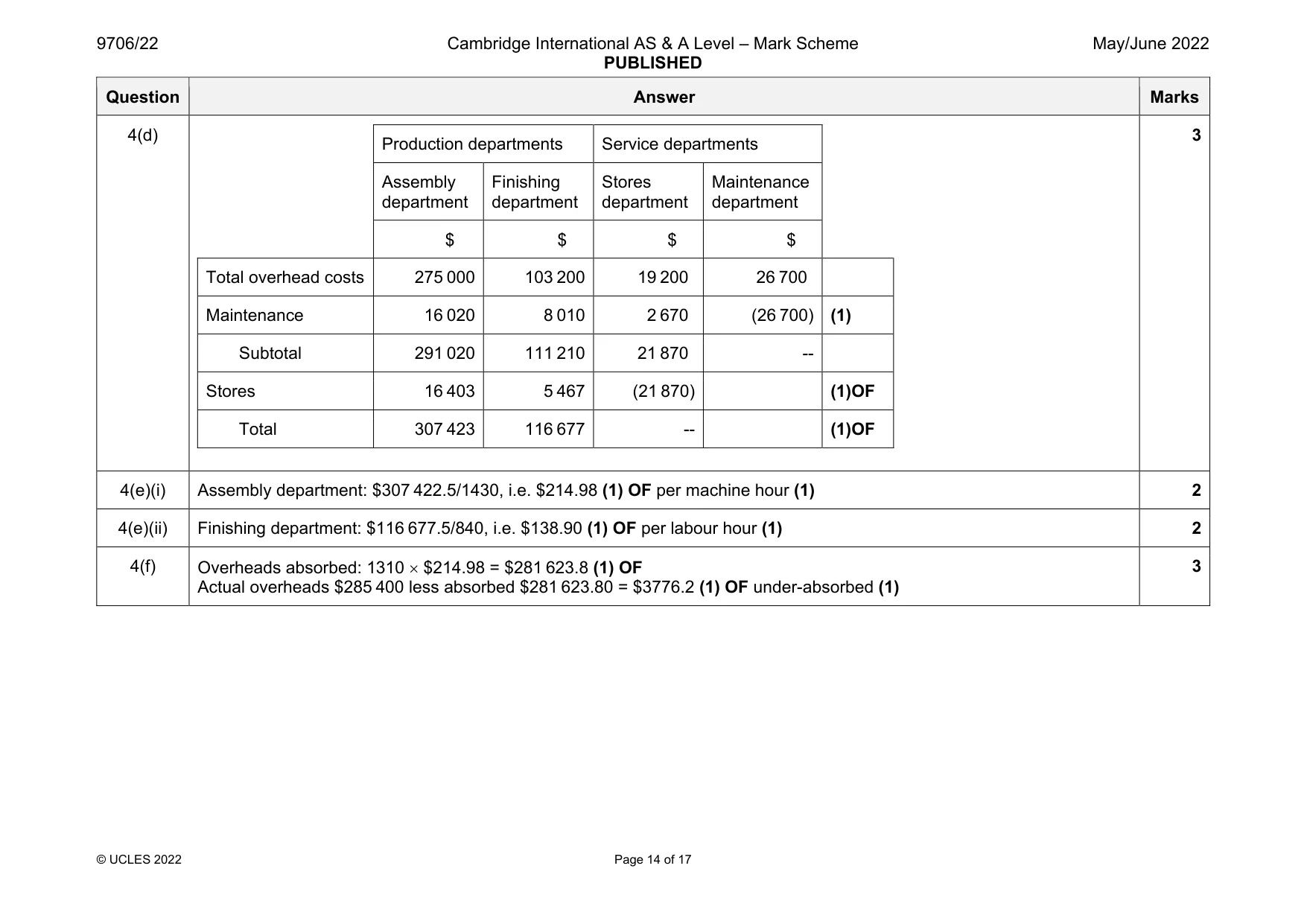
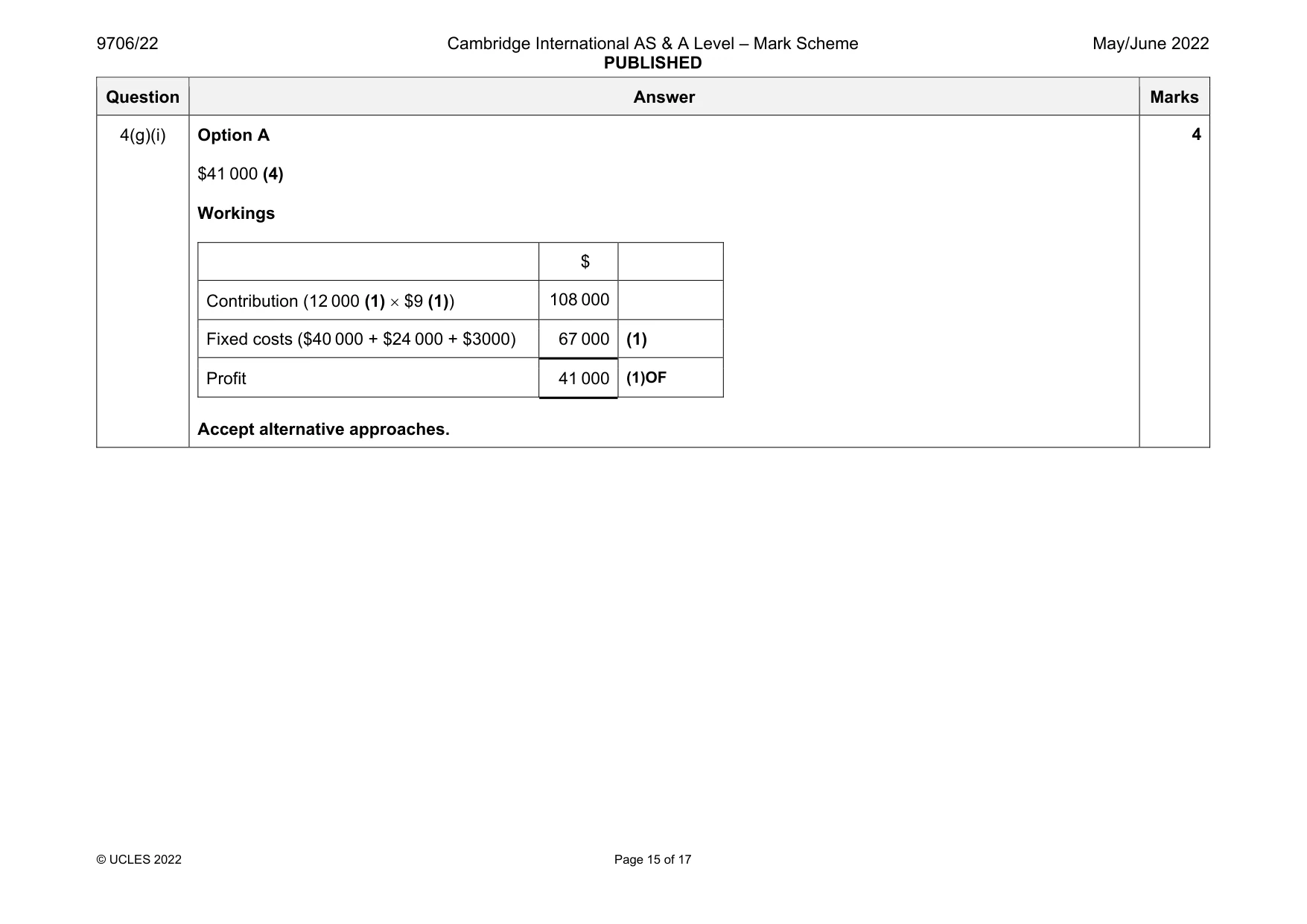
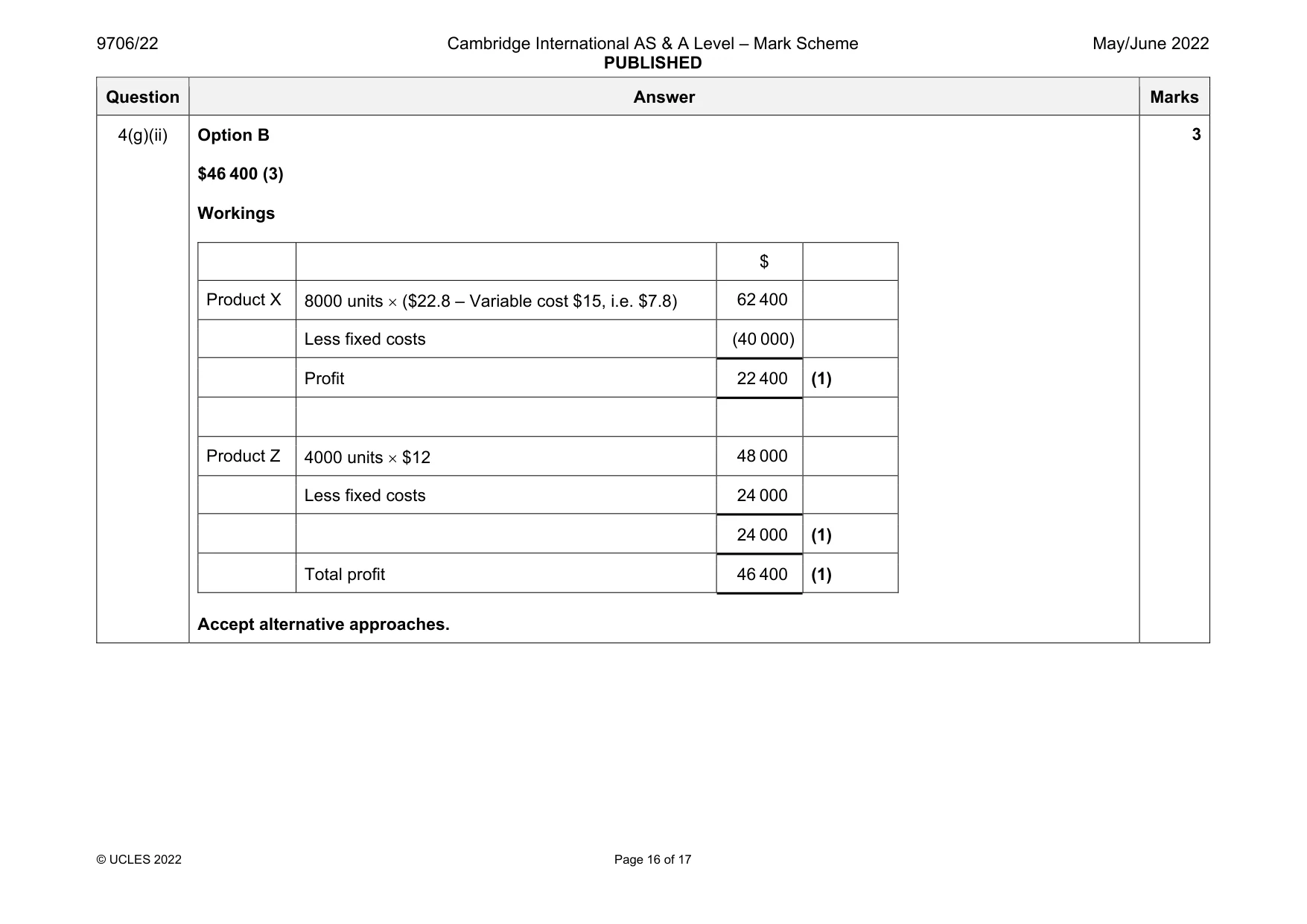
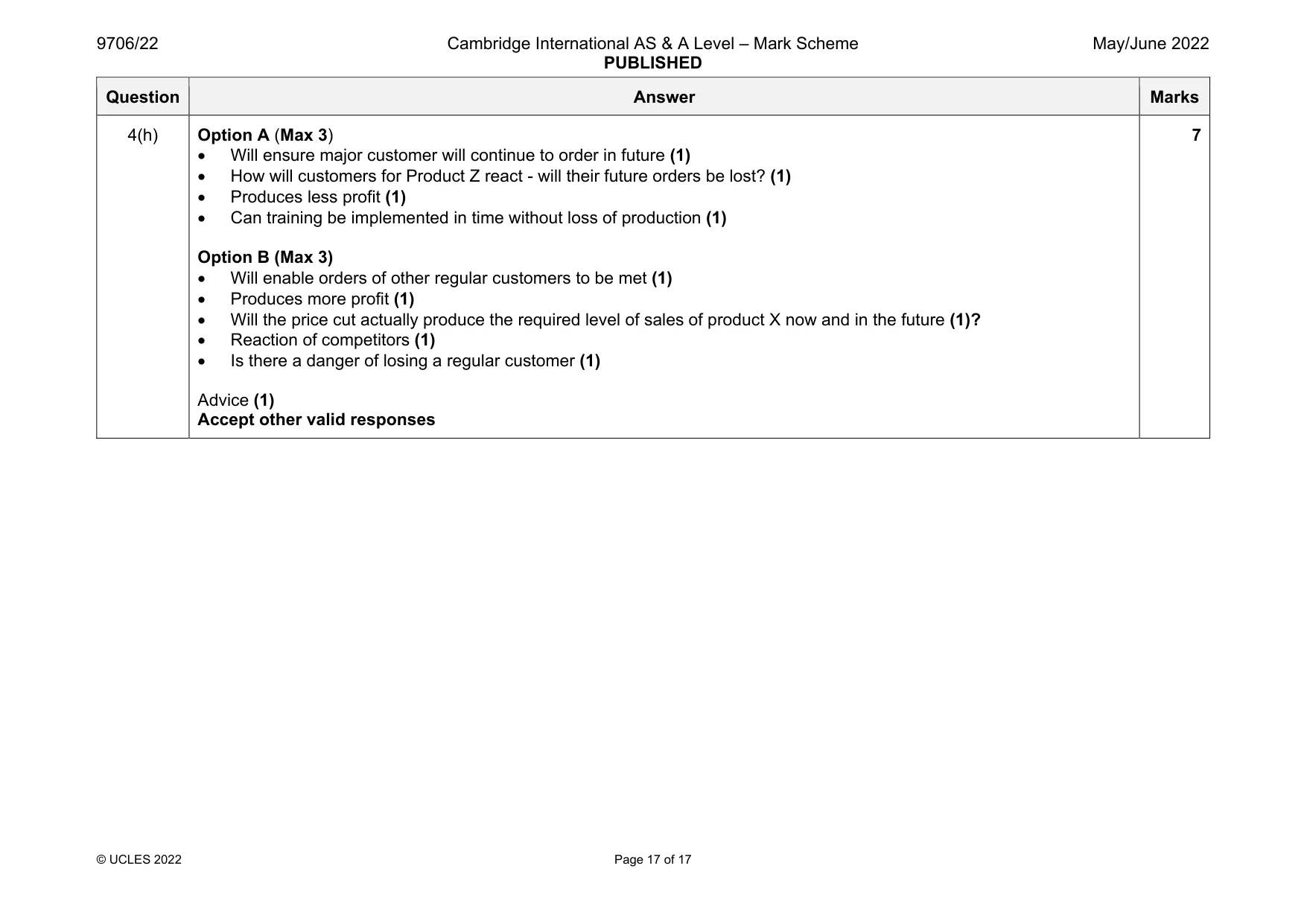
Mark scheme: 4(a)(i) Charging overheads/costs to a specific cost centre (1) where those overheads are clearly identified with that cost centre (1) OR Overheads expenses are directly attributed (1) to a specific cost centre (1) 2 4(a)(ii) Charging overheads/costs that cannot be clearly identified with a specific cost centre (1) to cost centres on an appropriate basis. (1) OR Overhead expenses are shared between different departments (1) by using a suitable basis (1) 2 4(b) Useful for determining a selling price (1) Avoids separating fixed and variable costs (1) Accept other valid responses Max 1 1 4(c) Not useful for short-term decision-making (1) Not appropriate for monitoring the performance of managers/responsibility accounting (1) Accept other valid responses Max 1 1 Question Answer Marks 4(d) Production departments Service departments Assembly department Finishing department Stores department Maintenance department $ $ $ $ Total overhead costs 275 000 103 200 19 200 26 700 Maintenance 16 020 8 010 2 670 (26 700) (1) Subtotal 291 020 111 210 21 870 -- Stores 16 403 5 467 (21 870) (1)OF Total 307 423 116 677 -- (1)OF 3 4(e)(i) Assembly department: $307 422.5/1430, i.e. $214.98 (1) OF per machine hour (1) 2 4(e)(ii) Finishing department: $116 677.5/840, i.e. $138.90 (1) OF per labour hour (1) 2 4(f) Overheads absorbed: 1310 $214.98 = $281 623.8 (1) OF Actual overheads $285 400 less absorbed $281 623.80 = $3776.2 (1) OF under-absorbed (1) 3 Question Answer Marks 4(g)(i) Option A $41 000 (4) Workings $ Contribution (12 000 (1) $9 (1)) 108 000 Fixed costs ($40 000 + $24 000 + $3000) 67 000 (1) Profit 41 000 (1)OF Accept alternative approaches. 4 Question Answer Marks 4(g)(ii) Option B $46 400 (3) Workings $ Product X 8000 units ($22.8 – Variable cost $15, i.e. $7.8) 62 400 Less fixed costs (40 000) Profit 22 400 (1) Product Z 4000 units $12 48 000 Less fixed costs 24 000 24 000 (1) Total profit 46 400 (1) Accept alternative approaches. 3 Question Answer Marks 4(h) Option A (Max 3) Will ensure major customer will continue to order in future (1) How will customers for Product Z react - will their future orders be lost? (1) Produces less profit (1) Can training be implemented in time without loss of production (1) Option B (Max 3) Will enable orders of other regular customers to be met (1) Produces more profit (1) Will the price cut actually produce the required level of sales of product X now and in the future (1)? Reaction of competitors (1) Is there a danger of losing a regular customer (1) Advice (1) Accept other valid responses 7
What was in this paper
The subtopics covered by these 4 questions, and how many questions each got. Open one in a new tab to see every Cambridge question on it.
What you needed in this session
Cambridge’s own grade thresholds for 2022 May/June, Paper 2 · Variant 2. A higher threshold means an easier paper — the bar moves with how the cohort did.