Cambridge A Level Accounting 9706 — 2018 May/June Paper 2 · Variant 2
9706/22/M/J/18 · 4 questions · 90 marks · ≈101 min
The question paper and its mark scheme, free to read here and free to download. This is Cambridge’s own paper, exactly as it was sat.
Question paper16 pages
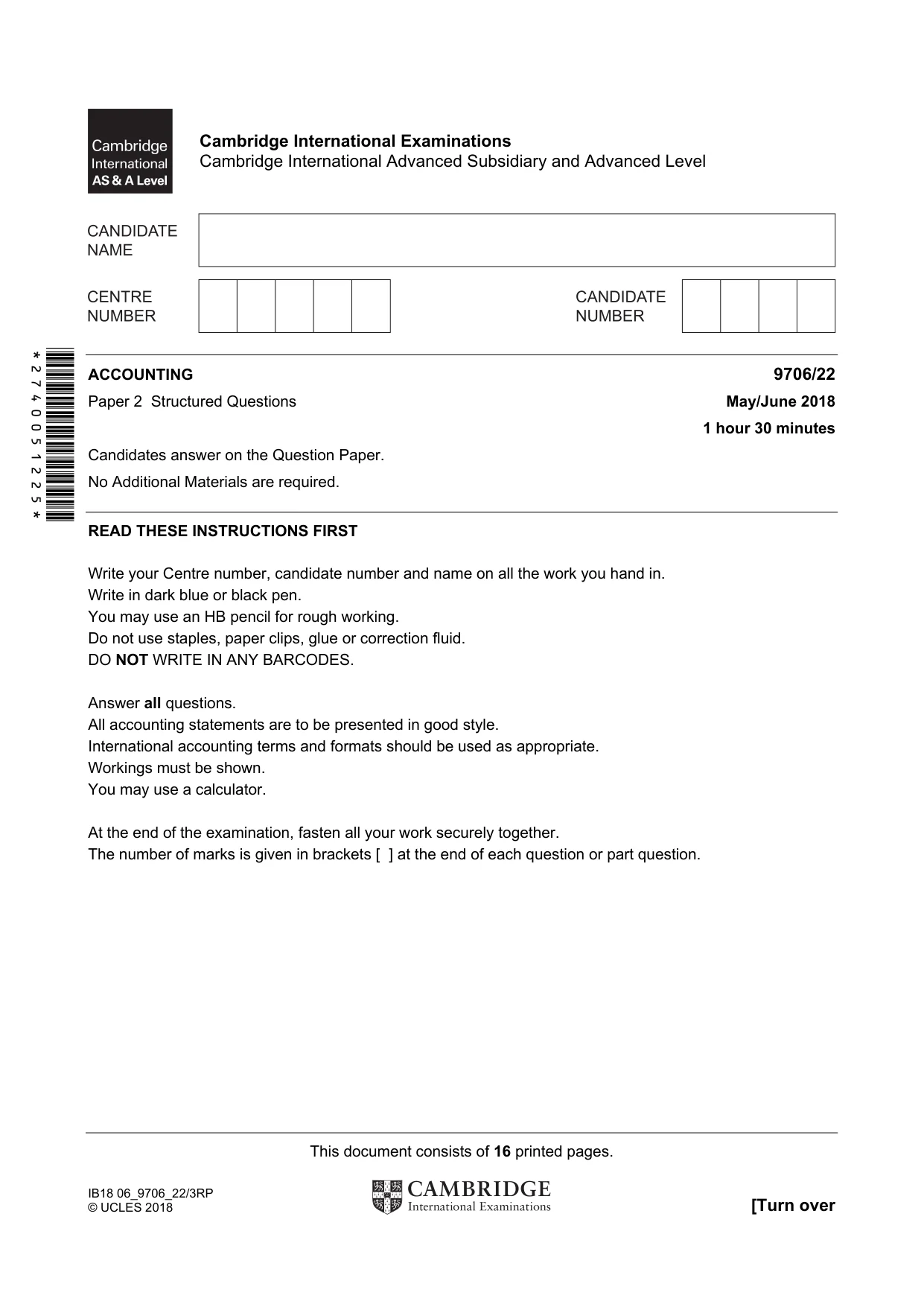
Mark scheme12 pages
Answers below. Sit the paper first if you are practising.
Questions as text
Q1 · Cherie and Harry are in partnership
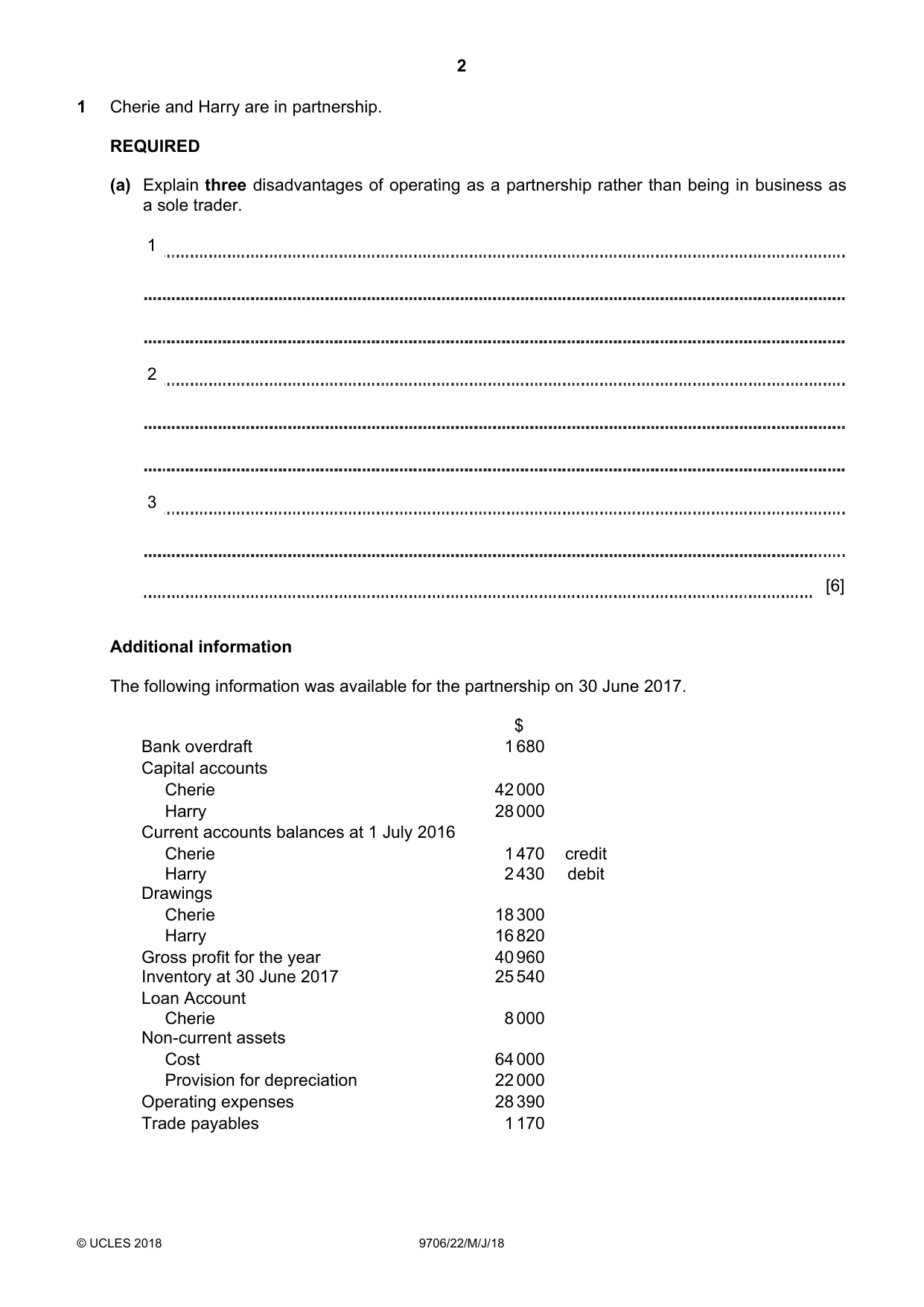
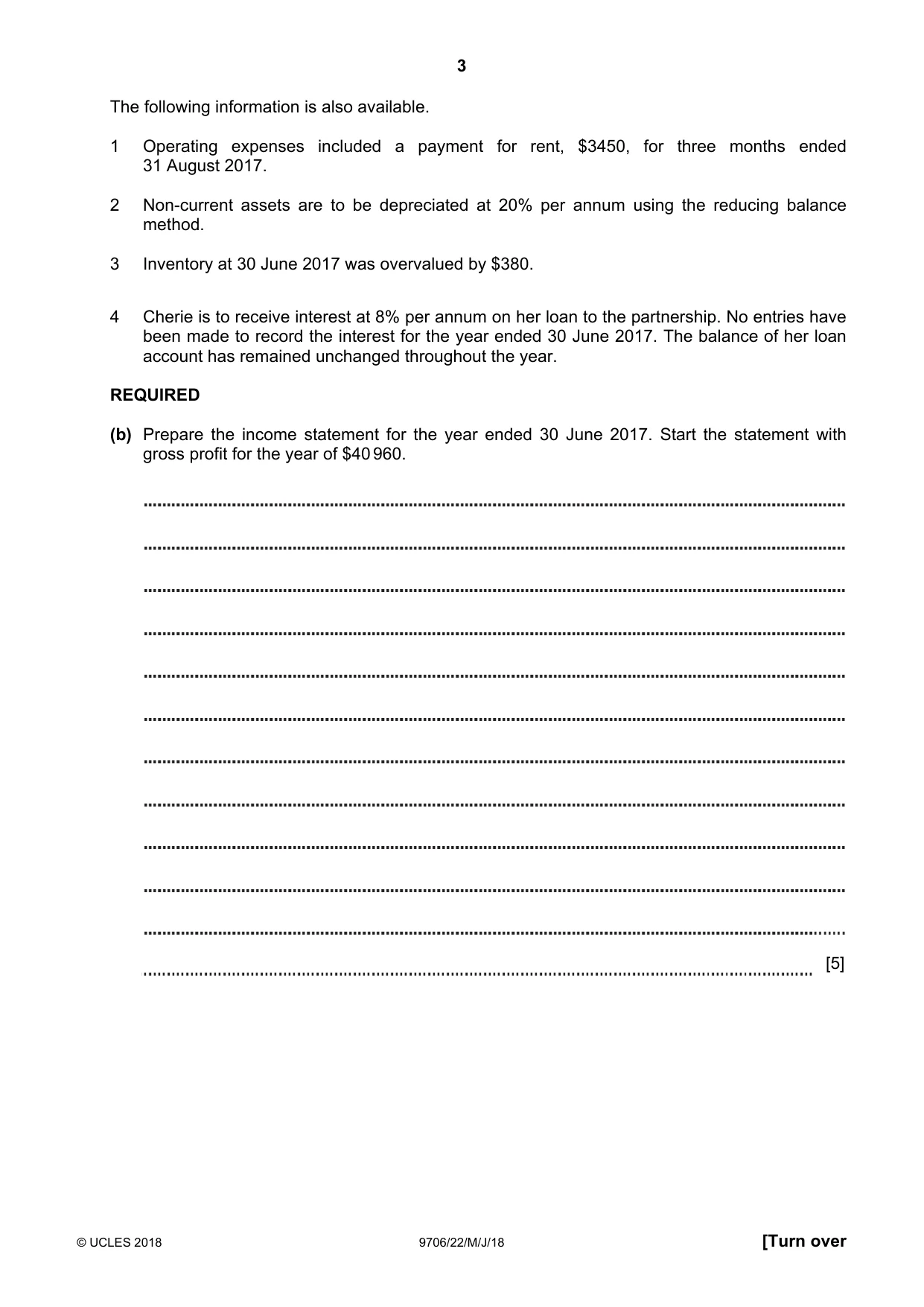
1 Cherie and Harry are in partnership. REQUIRED (a) Explain three disadvantages of operating as a partnership rather than being in business as a sole trader. 1 2 3 [6] Additional information The following information was available for the partnership on 30 June 2017. $ Bank overdraft 1 680 Capital accounts Cherie 42 000 Harry 28 000 Current accounts balances at 1 July 2016 Cherie 1 470 credit Harry 2 430 debit Drawings Cherie 18 300 Harry 16 820 Gross profit for the year 40 960 Inventory at 30 June 2017 25 540 Loan Account Cherie 8 000 Non-current assets Cost 64 000 Provision for depreciation 22 000 Operating expenses 28 390 Trade payables 1 170 The following information is also available. 1 Operating expenses included a payment for rent, $3450, for three months ended 31 August 2017.
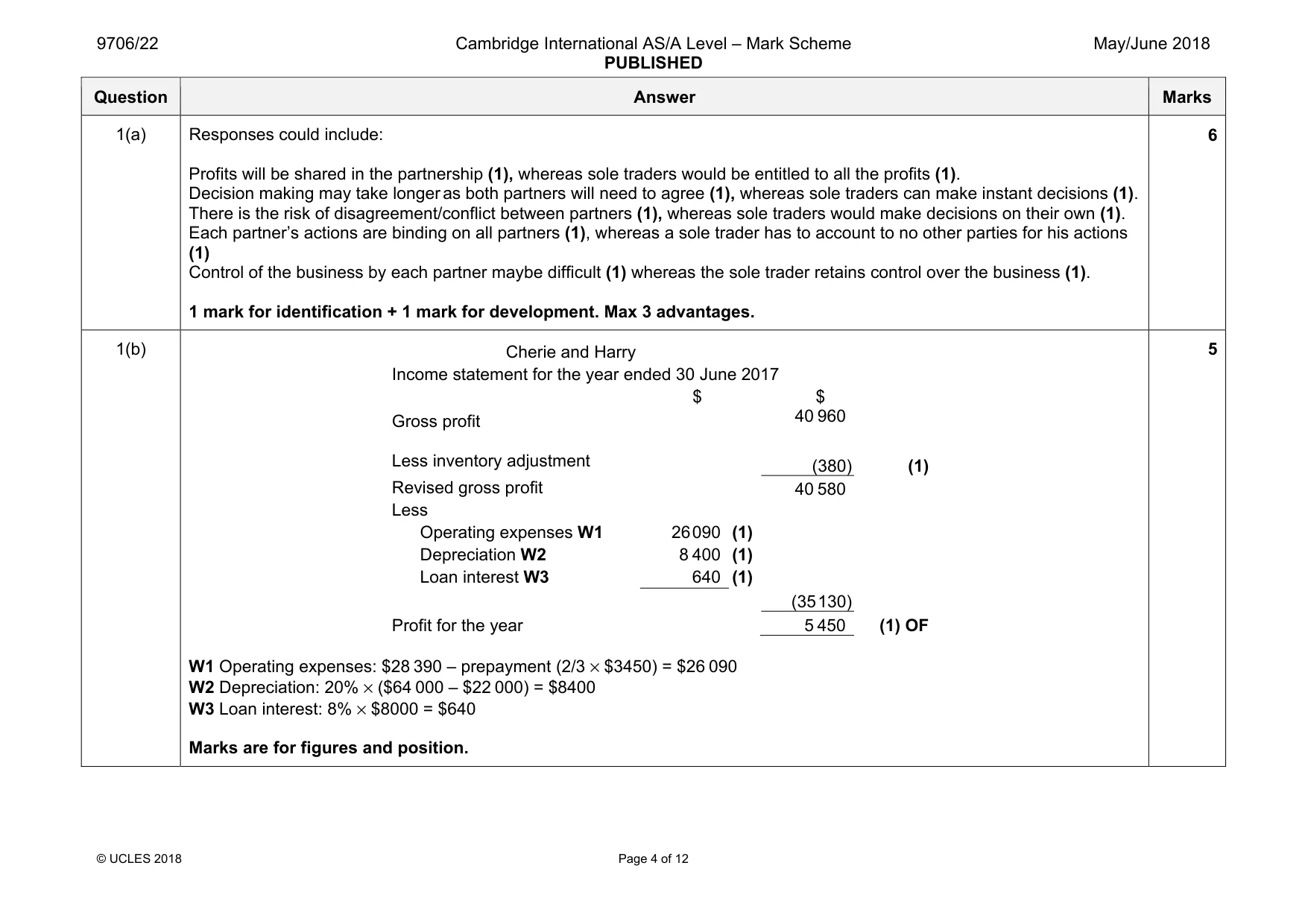
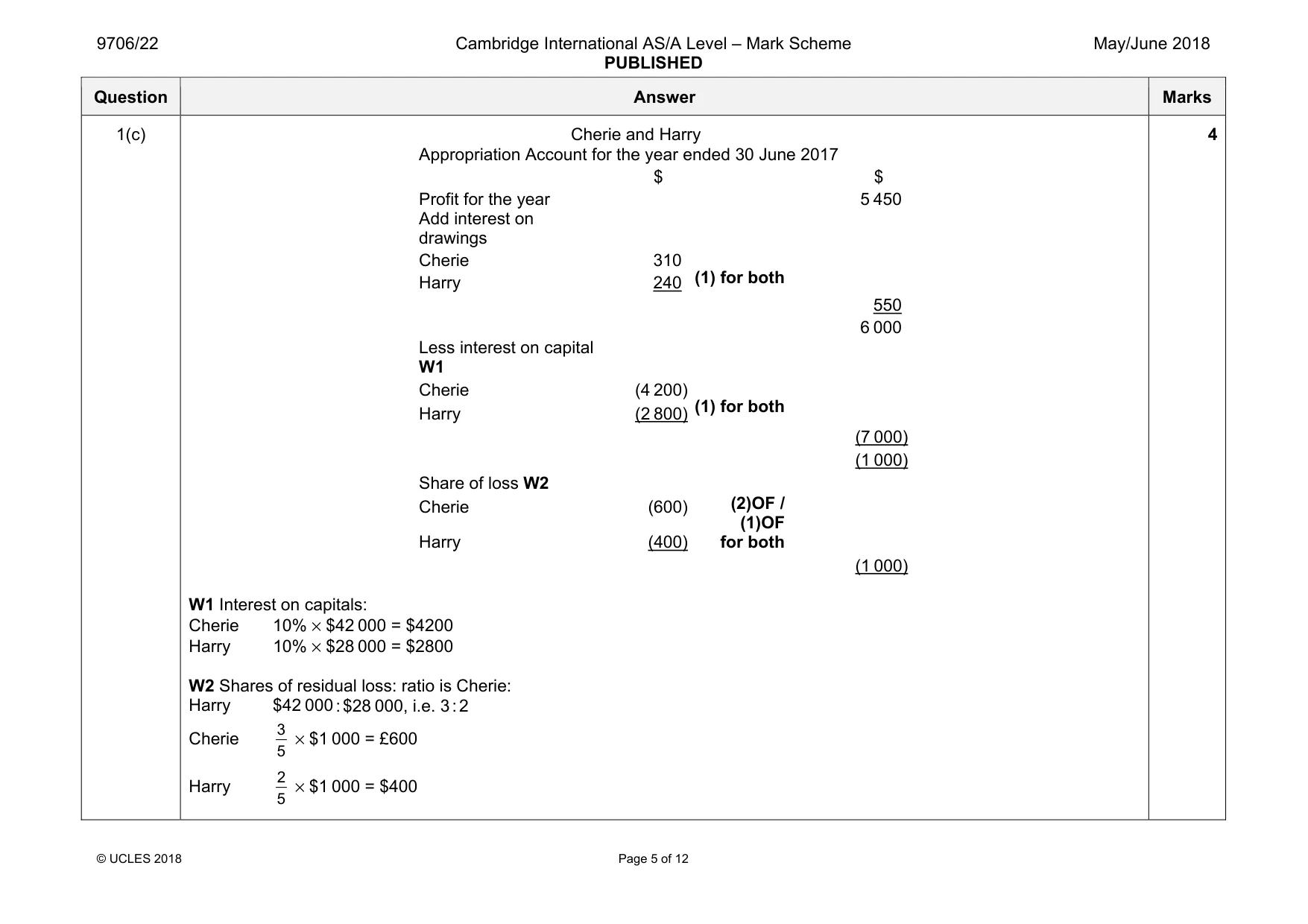
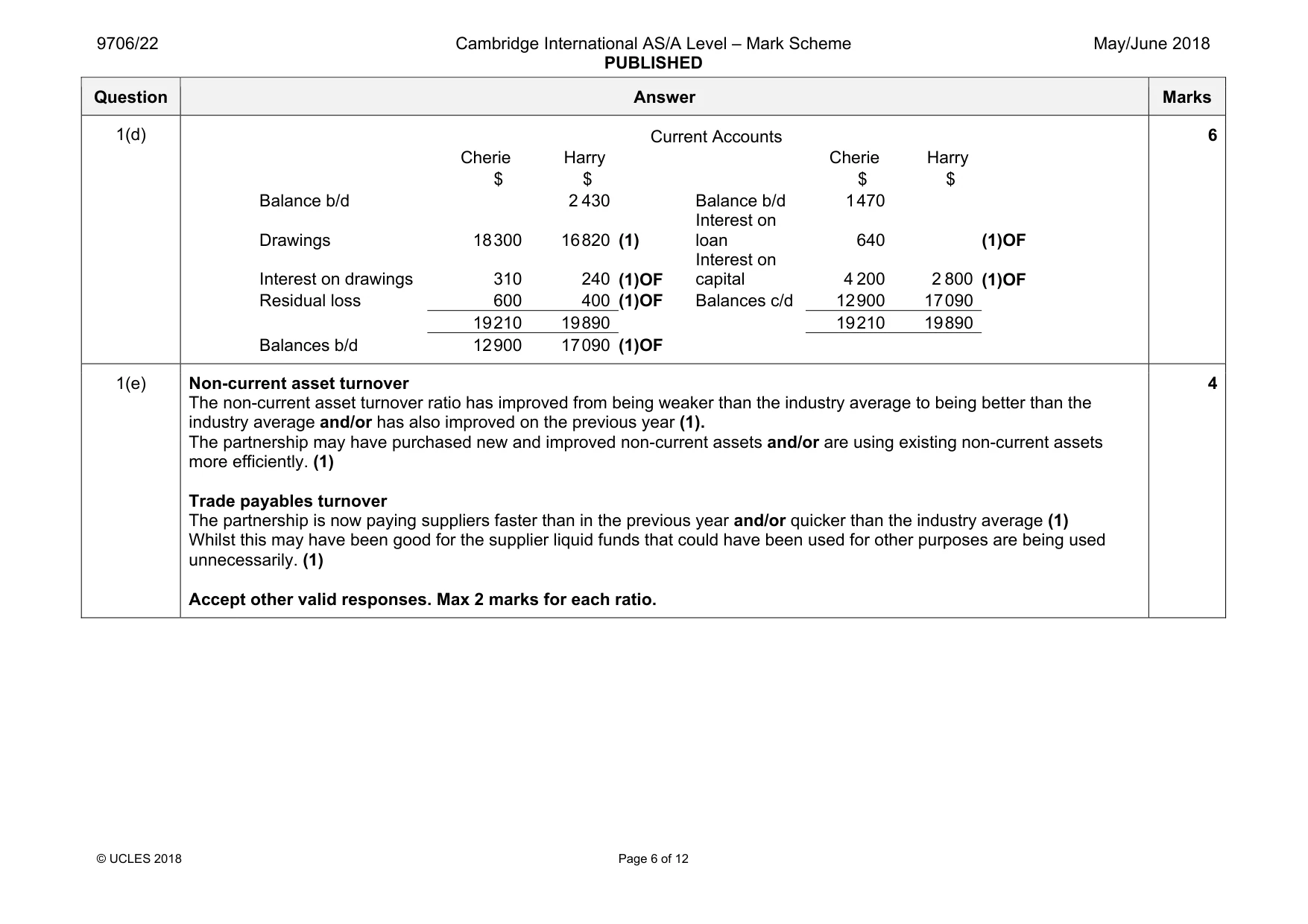
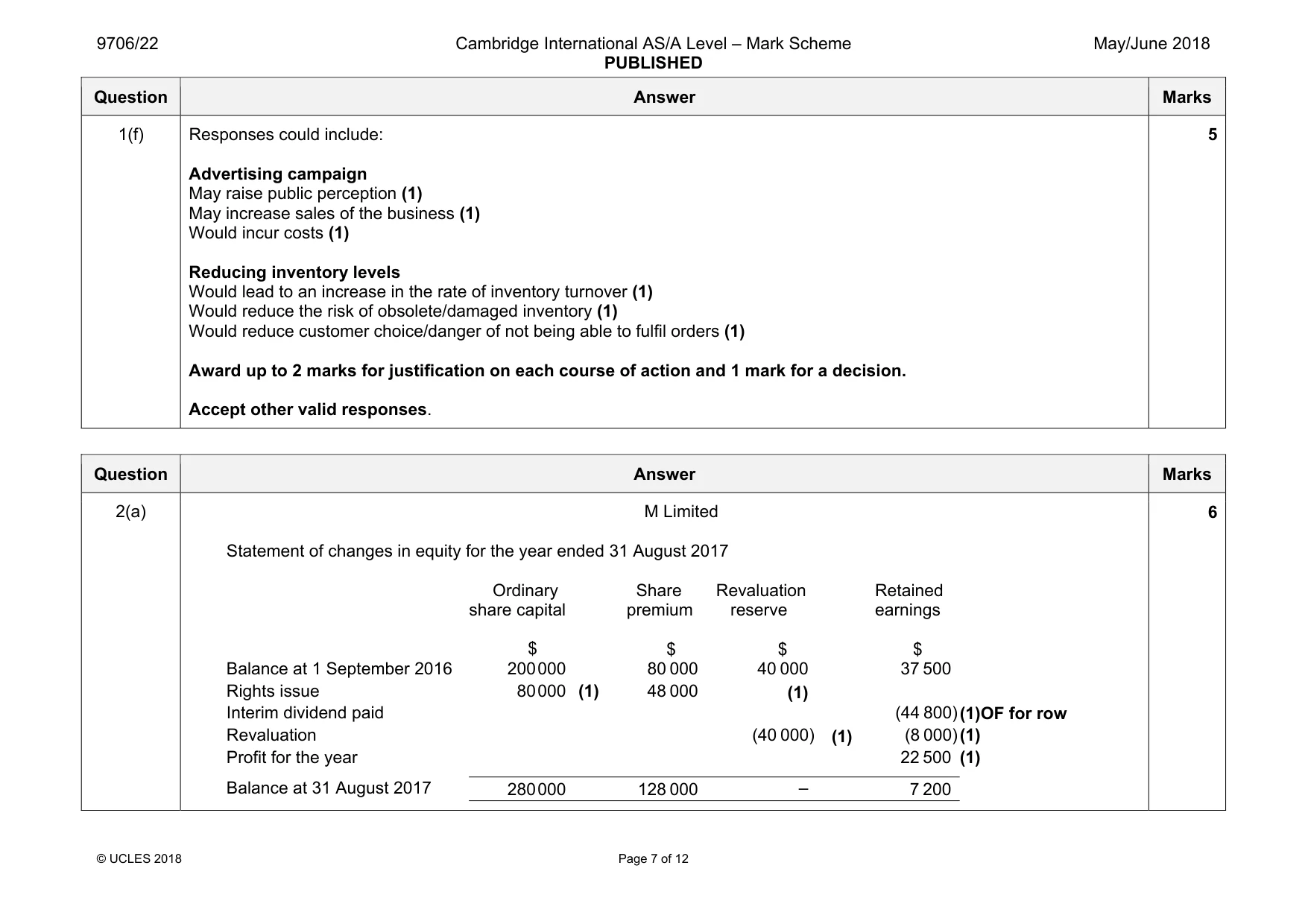
Mark scheme: 1(a) Responses could include: Profits will be shared in the partnership (1), whereas sole traders would be entitled to all the profits (1). Decision making may take longer as both partners will need to agree (1), whereas sole traders can make instant decisions (1). There is the risk of disagreement/conflict between partners (1), whereas sole traders would make decisions on their own (1). Each partner’s actions are binding on all partners (1), whereas a sole trader has to account to no other parties for his actions (1) Control of the business by each partner maybe difficult (1) whereas the sole trader retains control over the business (1). 1 mark for identification + 1 mark for development. Max 3 advantages. 6 1(b) Cherie and Harry Income statement for the year ended 30 June 2017 $ $ Gross profit Less inventory adjustment 40 960 (1) (380) Revised gross profit 40 580 Less Operating expenses W1 26 090 (1) Depreciation W2 8 400 (1) Loan interest W3 640 (1) (35 130) Profit for the year 5 450 (1) OF W1 Operating expenses: $28 390 – prepayment (2/3 × $3450) = $26 090 W2 Depreciation: 20% × ($64 000 – $22 000) = $8400 W3 Loan interest: 8% × $8000 = $640 Marks are for figures and position. 5 Question Answer Marks 1(c) Cherie and Harry Appropriation Account for the year ended 30 June 2017 $ $ Profit for the year 5 450 Add interest on drawings Cherie 310 (1) for both Harry 240 550 6 000 Less interest on capital W1 Cherie (4 200) (1) for both Harry (2 800) (7 000) (1 000) Share of loss W2 Cherie (600) (2)OF / (1)OF for both Harry (400) (1 000) W1 Interest on capitals: Cherie 10% × $42 000 = $4200 Harry 10% × $28 000 = $2800 W2 Shares of residual loss: ratio is Cherie: Harry $42 000 : $28 000, i.e. 3 : 2 Cherie 5 3 × $1 000 = £600 Harry 5 2 × $1 000 = $400 4 Question Answer Marks 1(d) Current Accounts Cherie Harry Cherie Harry $ $ $ $ Balance b/d 2 430 Balance b/d 1 470 Drawings 18 300 16 820 (1) Interest on loan 640 (1)OF Interest on drawings 310 240 (1)OF Interest on capital 4 200 2 800 (1)OF Residual loss 600 400 (1)OF Balances c/d 12 900 17 090 19 210 19 890 19 210 19 890 Balances b/d 12 900 17 090 (1)OF 6 1(e) Non-current asset turnover The non-current asset turnover ratio has improved from being weaker than the industry average to being better than the industry average and/or has also improved on the previous year (1). The partnership may have purchased new and improved non-current assets and/or are using existing non-current assets more efficiently. (1) Trade payables turnover The partnership is now paying suppliers faster than in the previous year and/or quicker than the industry average (1) Whilst this may have been good for the supplier liquid funds that could have been used for other purposes are being used unnecessarily. (1) Accept other valid responses. Max 2 marks for each ratio. 4 Question Answer Marks 1(f) Responses could include: Advertising campaign May raise public perception (1) May increase sales of the business (1) Would incur costs (1) Reducing inventory levels Would lead to an increase in the rate of inventory turnover (1) Would reduce the risk of obsolete/damaged inventory (1) Would reduce customer choice/danger of not being able to fulfil orders (1) Award up to 2 marks for justification on each course of action and 1 mark for a decision. Accept other valid responses. 5
Q2 · Non-current assets are to be depreciated at 20% per annum using the reducing balance…
2 Non-current assets are to be depreciated at 20% per annum using the reducing balance method.
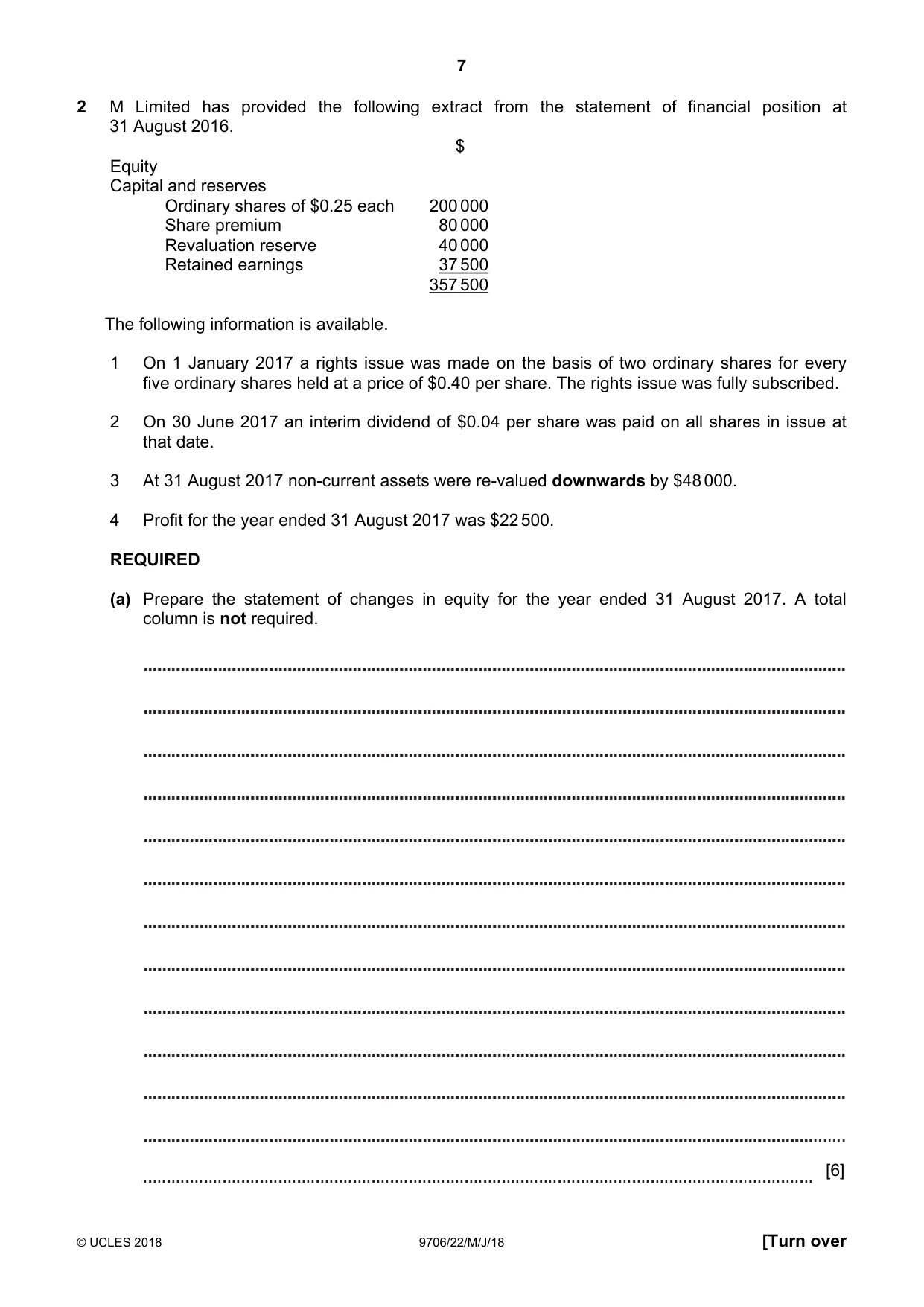
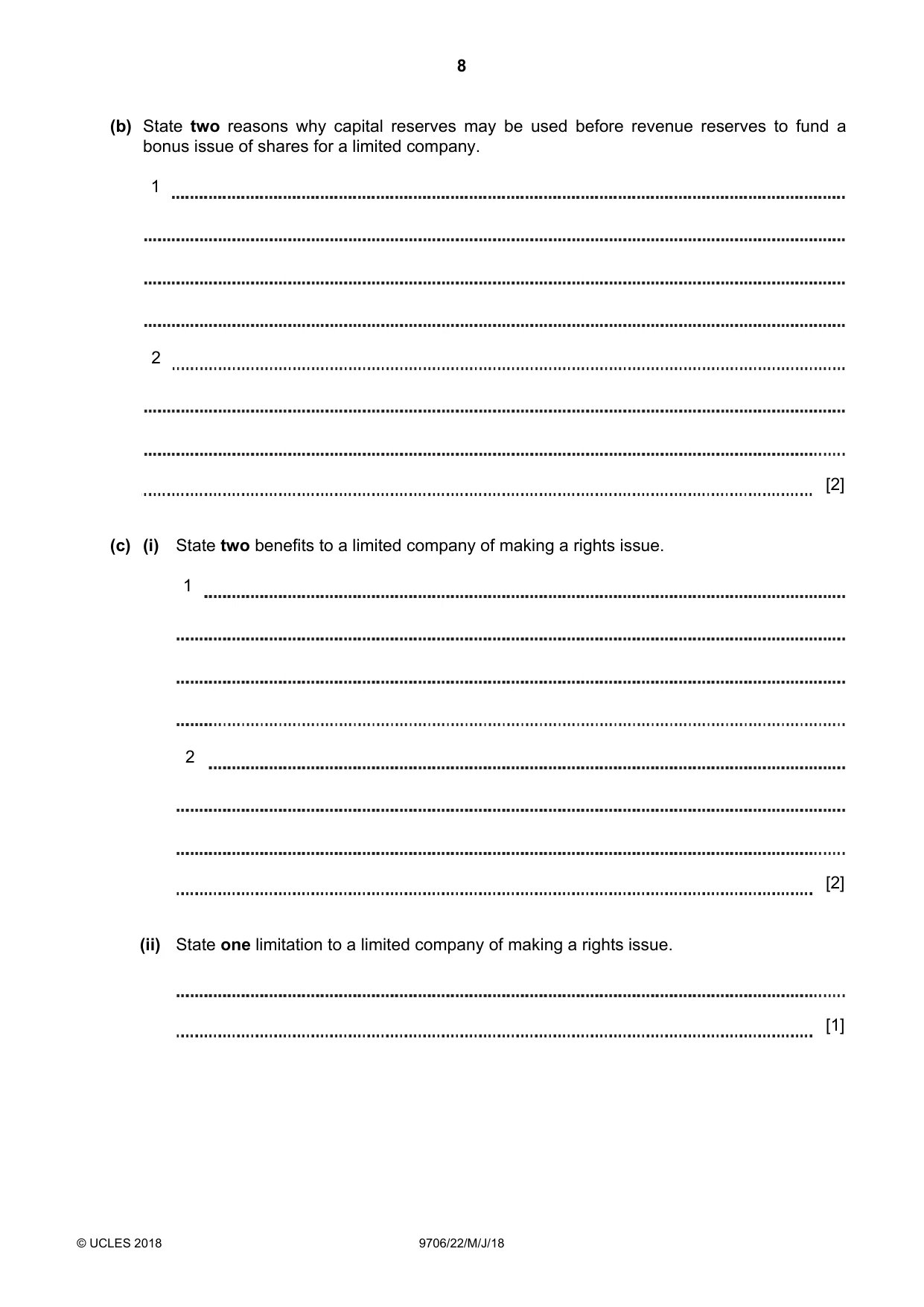
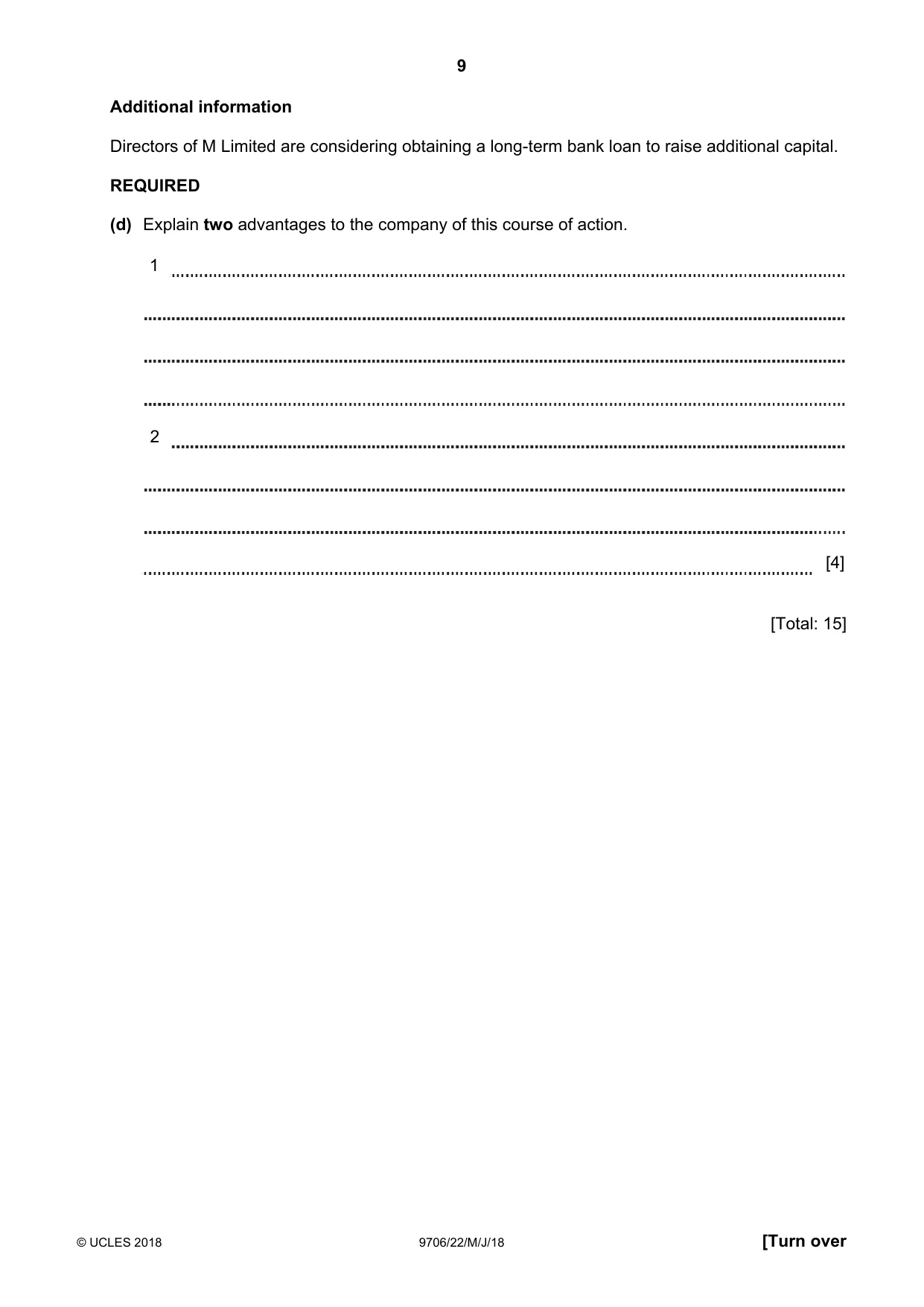
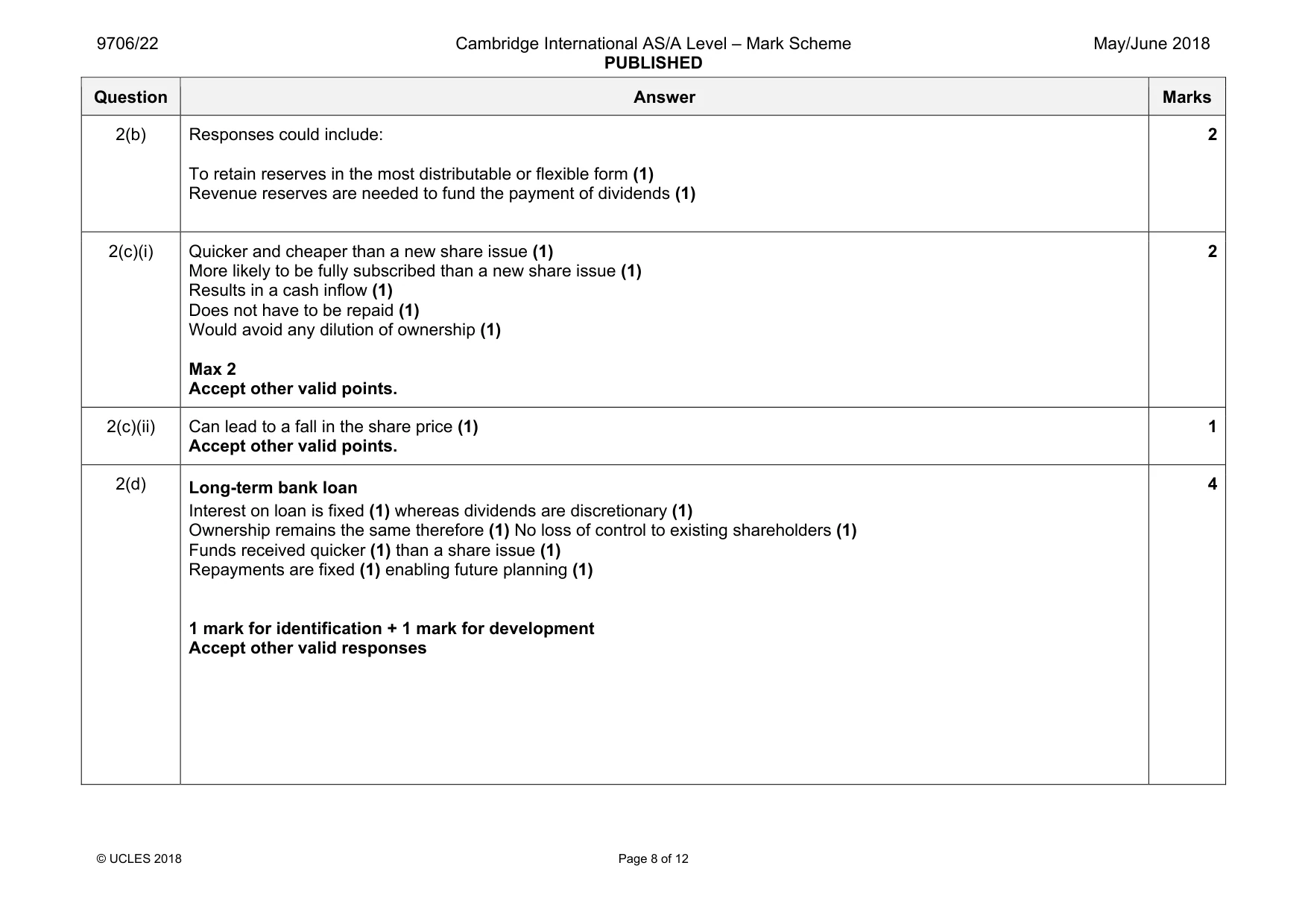
Mark scheme: 2(a) M Limited Statement of changes in equity for the year ended 31 August 2017 Ordinary share capital $ Share premium $ Revaluation reserve $ Retained earnings $ Balance at 1 September 2016 200 000 80 000 40 000 37 500 Rights issue 80 000 (1) 48 000 (1) Interim dividend paid (44 800)(1)OF for row Revaluation (40 000) (1) (8 000) (1) Profit for the year 22 500 (1) Balance at 31 August 2017 280 000 128 000 – 7 200 6 Question Answer Marks 2(b) Responses could include: To retain reserves in the most distributable or flexible form (1) Revenue reserves are needed to fund the payment of dividends (1) 2 2(c)(i) Quicker and cheaper than a new share issue (1) More likely to be fully subscribed than a new share issue (1) Results in a cash inflow (1) Does not have to be repaid (1) Would avoid any dilution of ownership (1) Max 2 Accept other valid points. 2 2(c)(ii) Can lead to a fall in the share price (1) Accept other valid points. 1 2(d) Long-term bank loan Interest on loan is fixed (1) whereas dividends are discretionary (1) Ownership remains the same therefore (1) No loss of control to existing shareholders (1) Funds received quicker (1) than a share issue (1) Repayments are fixed (1) enabling future planning (1) 1 mark for identification + 1 mark for development Accept other valid responses 4
Q3 · Inventory at 30 June 2017 was overvalued by $380
3 Inventory at 30 June 2017 was overvalued by $380.
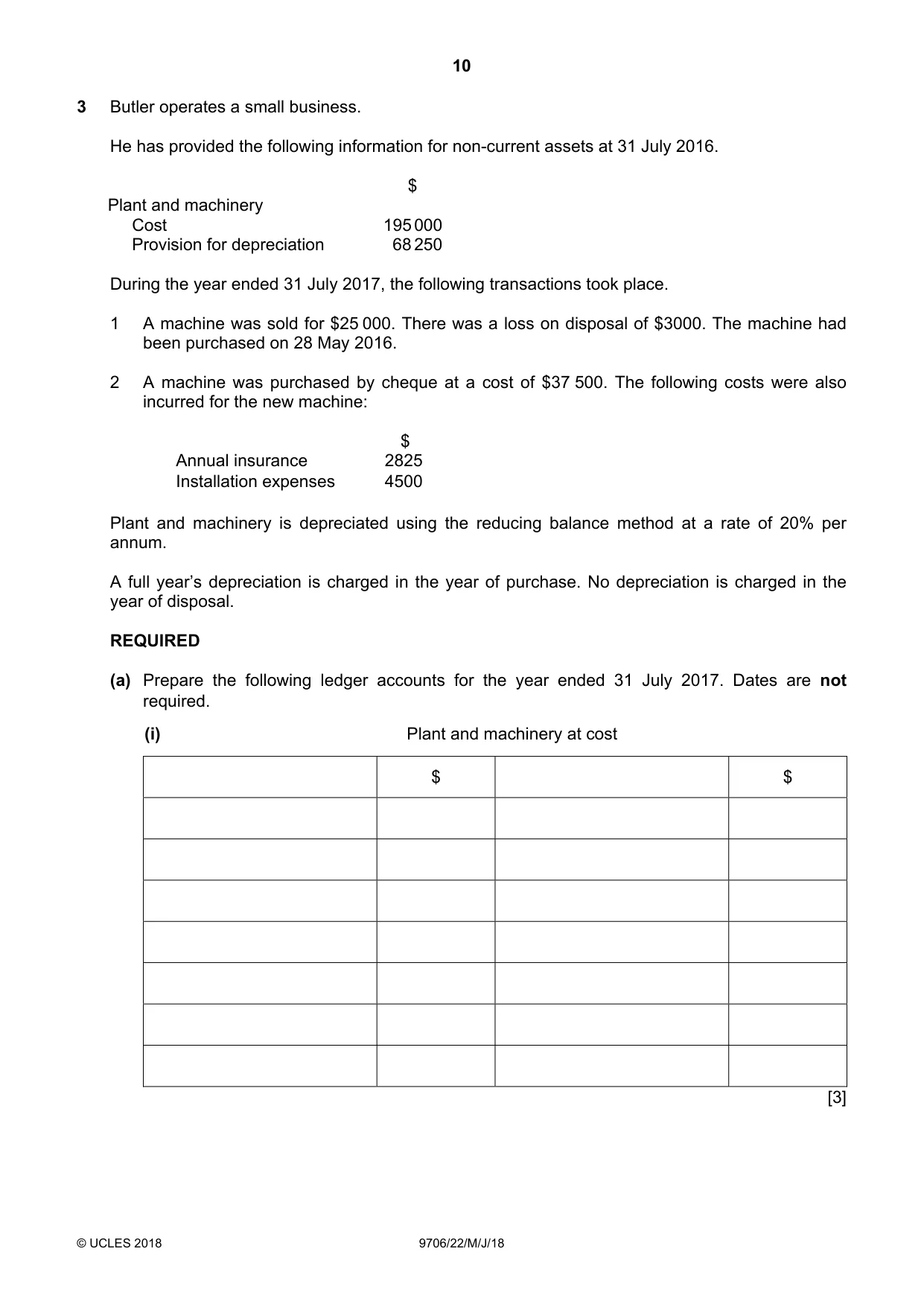
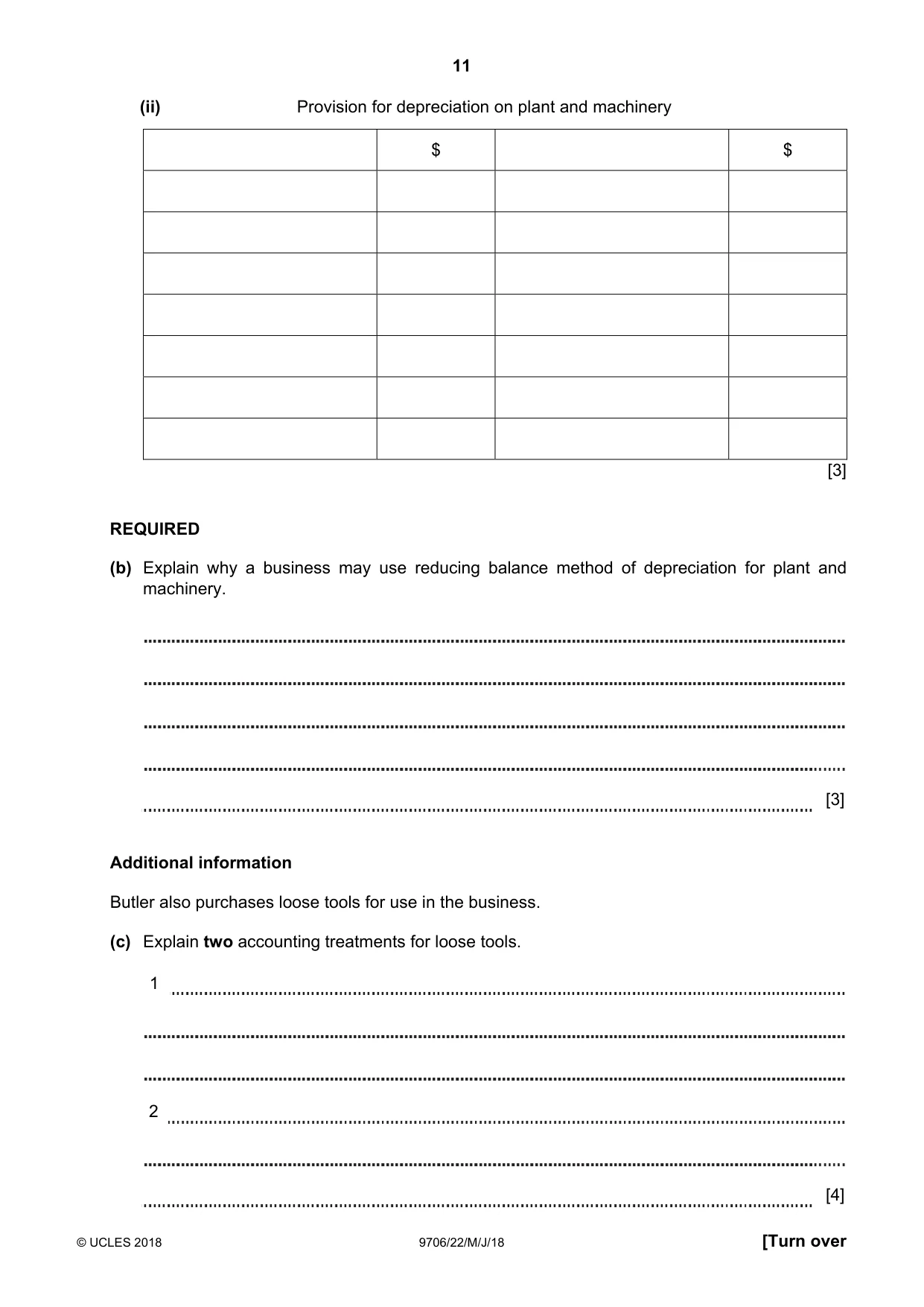
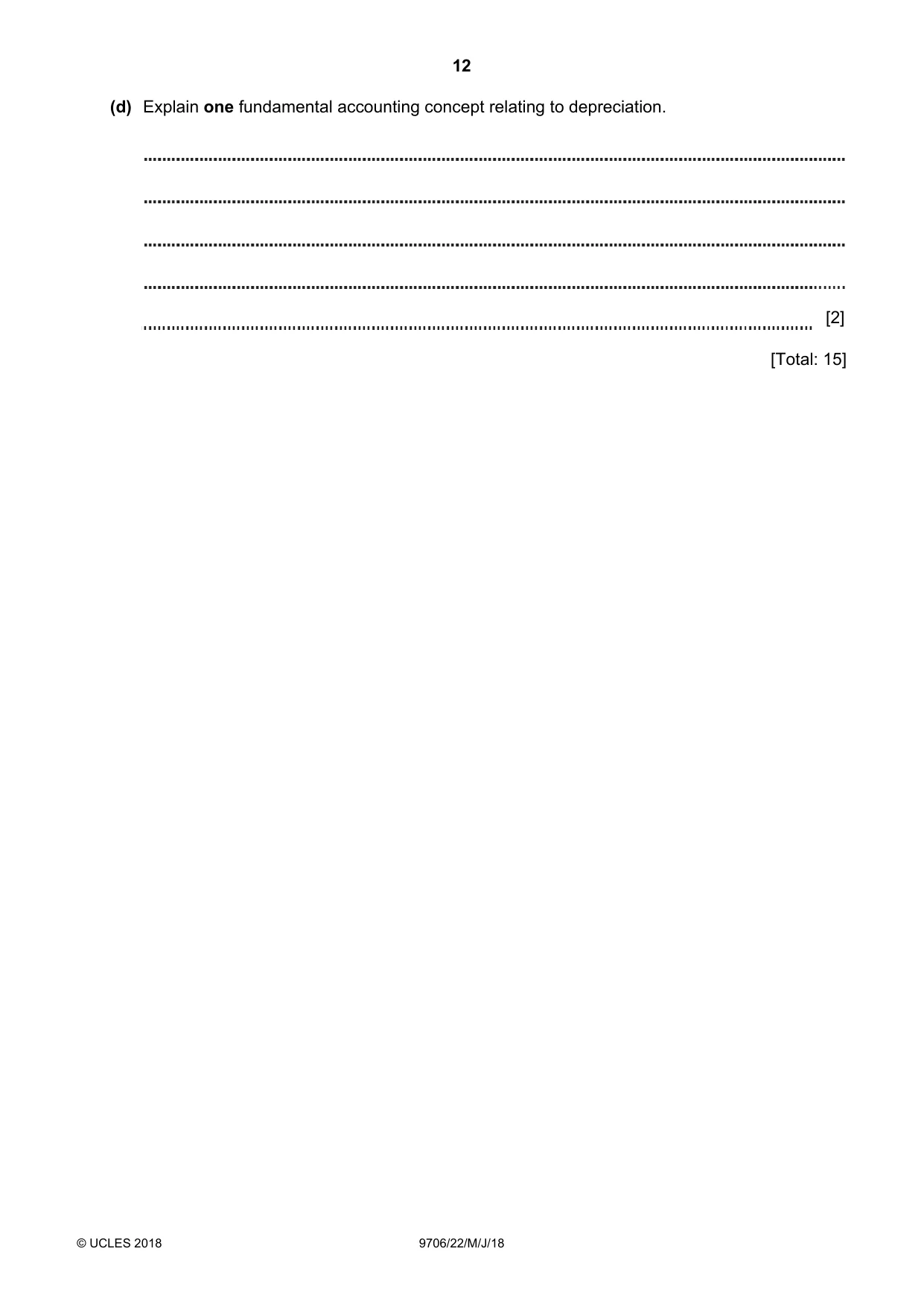
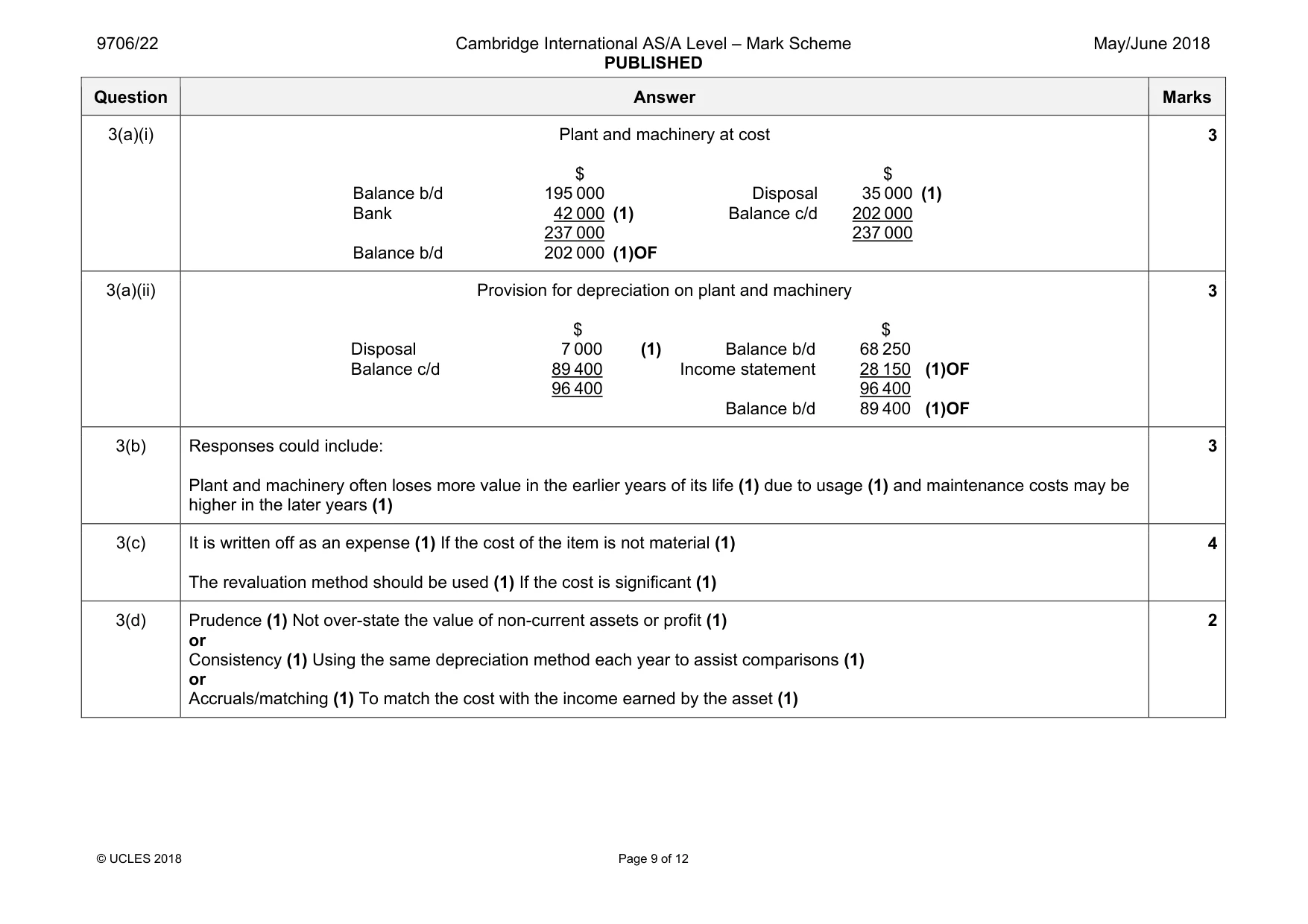
Mark scheme: 3(a)(i) Plant and machinery at cost $ $ Balance b/d 195 000 Disposal 35 000 (1) Bank 42 000 (1) Balance c/d 202 000 237 000 237 000 Balance b/d 202 000 (1)OF 3 3(a)(ii) Provision for depreciation on plant and machinery $ $ Disposal 7 000 (1) Balance b/d 68 250 Balance c/d 89 400 Income statement 28 150 (1)OF 96 400 96 400 Balance b/d 89 400 (1)OF 3 3(b) Responses could include: Plant and machinery often loses more value in the earlier years of its life (1) due to usage (1) and maintenance costs may be higher in the later years (1) 3 3(c) It is written off as an expense (1) If the cost of the item is not material (1) The revaluation method should be used (1) If the cost is significant (1) 4 3(d) Prudence (1) Not over-state the value of non-current assets or profit (1) or Consistency (1) Using the same depreciation method each year to assist comparisons (1) or Accruals/matching (1) To match the cost with the income earned by the asset (1) 2
Q4 · Cherie is to receive interest at 8% per annum on her loan to the partnership
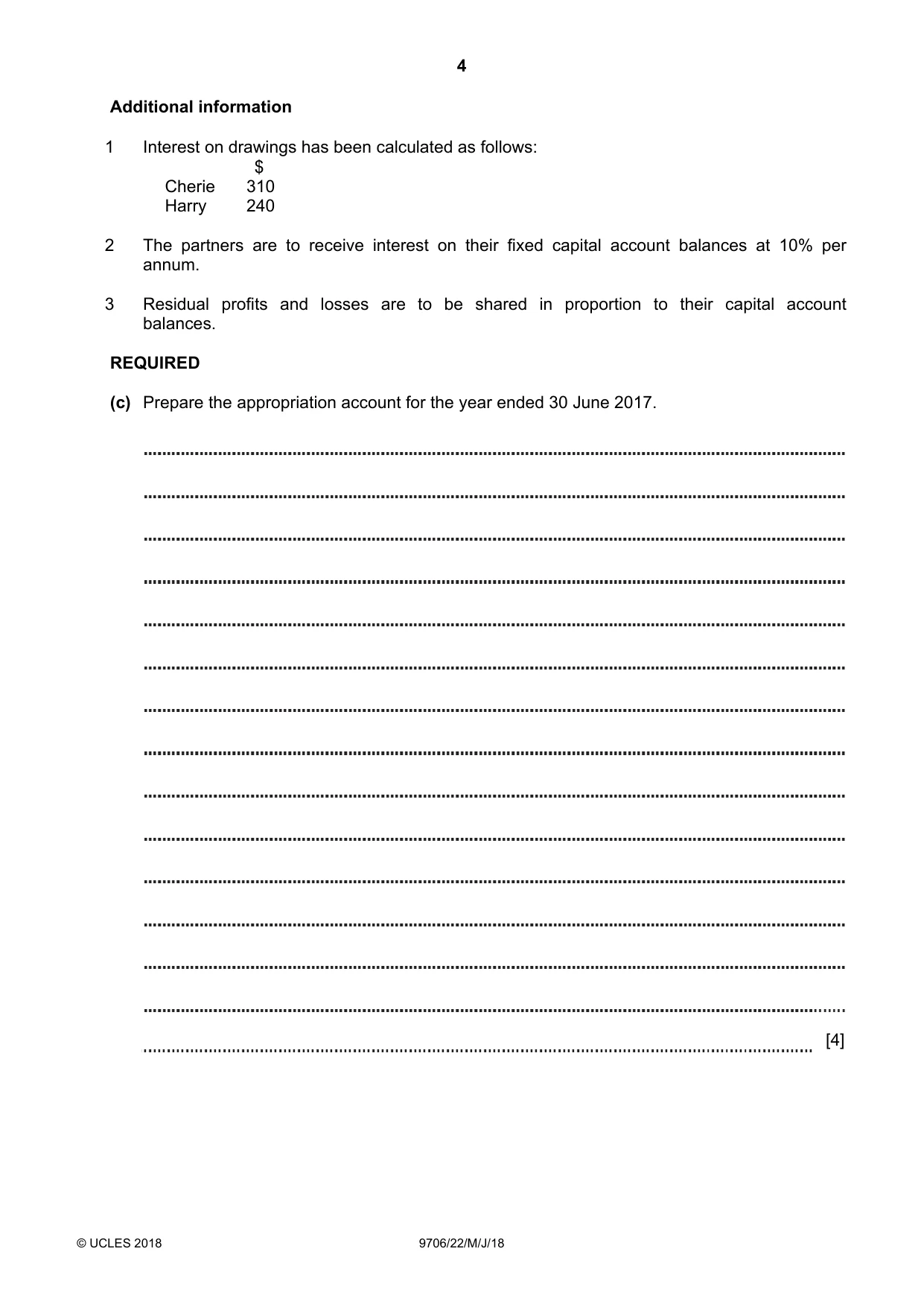
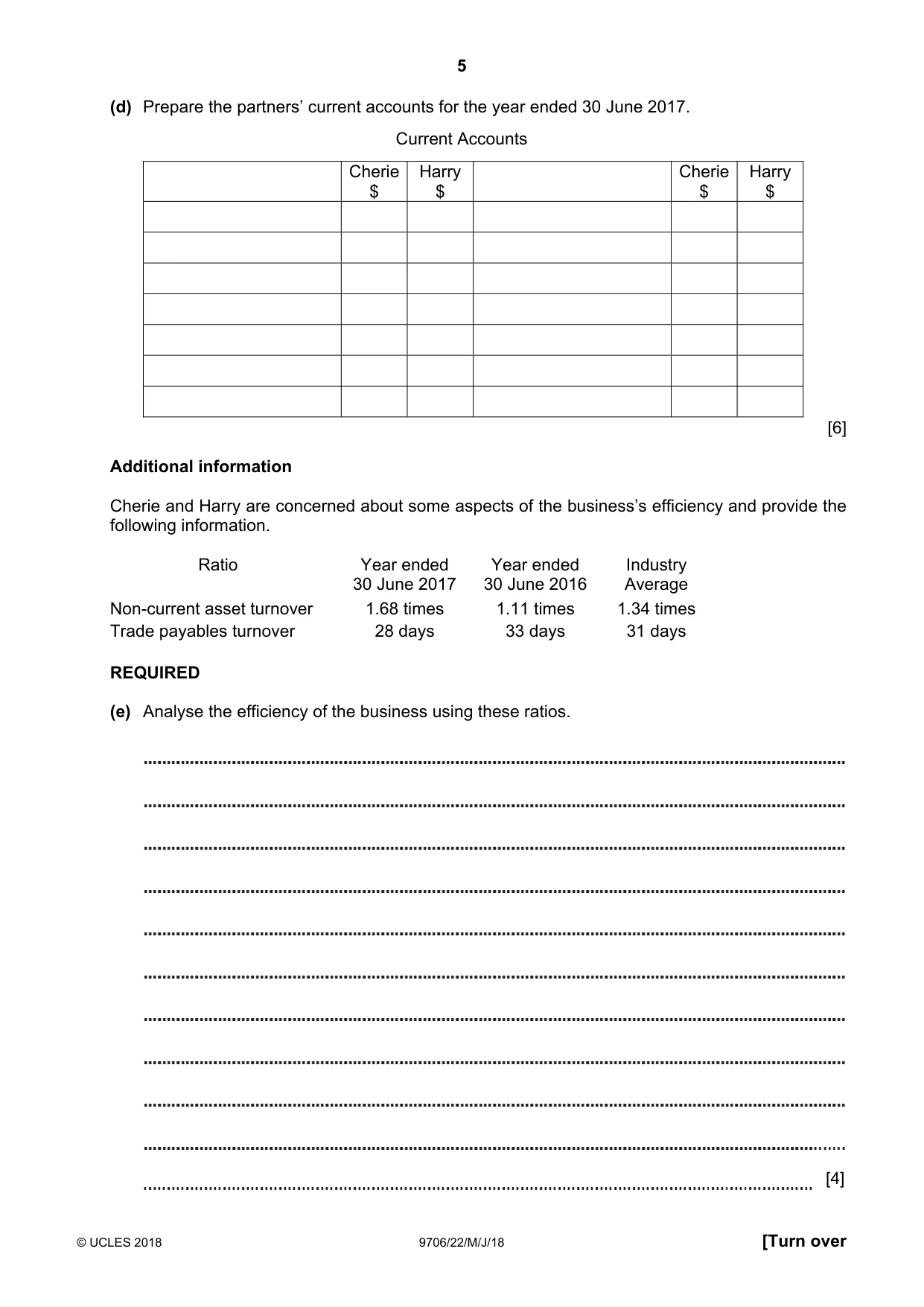
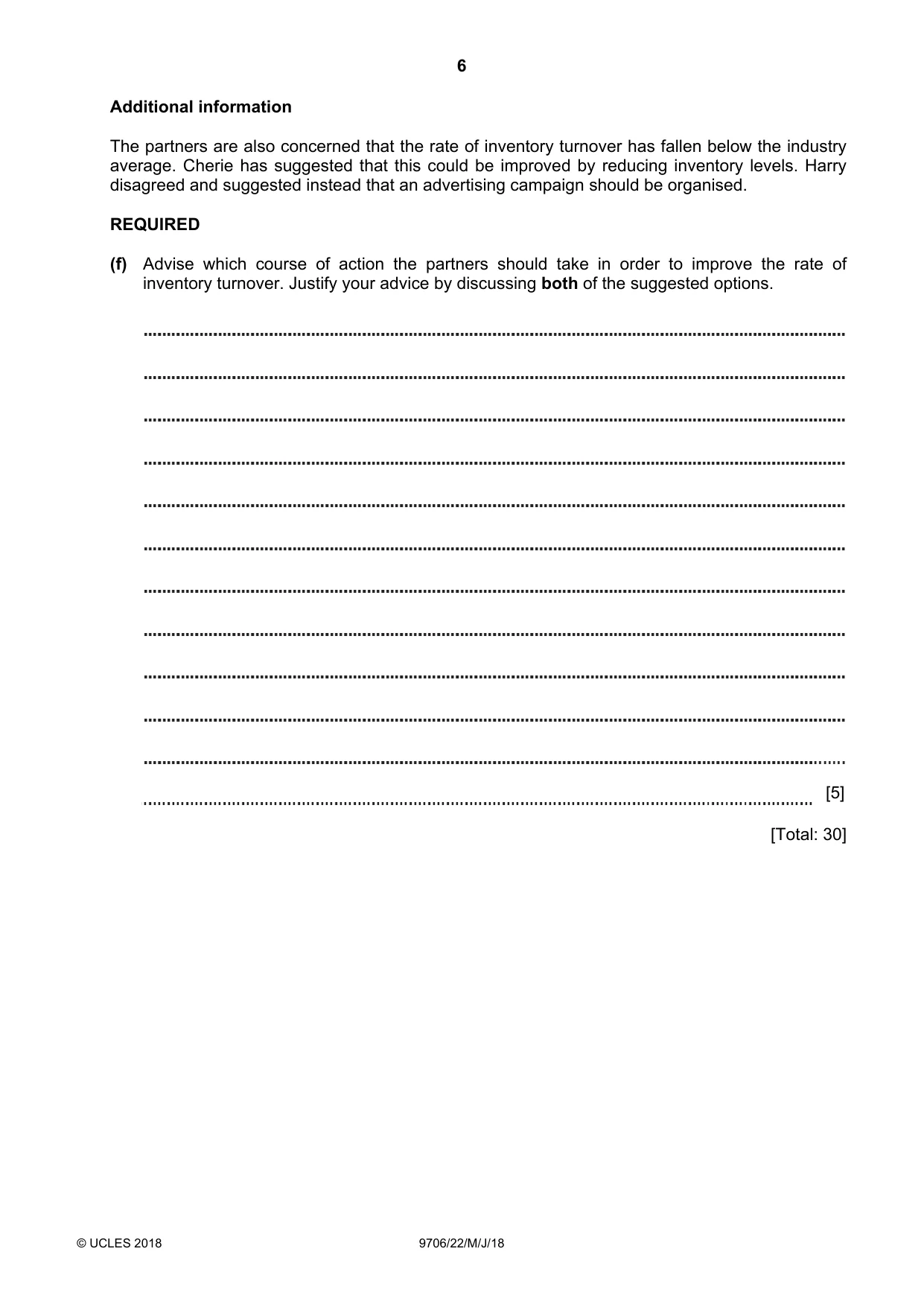
4 Cherie is to receive interest at 8% per annum on her loan to the partnership. No entries have been made to record the interest for the year ended 30 June 2017. The balance of her loan account has remained unchanged throughout the year. REQUIRED (b) Prepare the income statement for the year ended 30 June 2017. Start the statement with gross profit for the year of $40 960. [5] Additional information 1 Interest on drawings has been calculated as follows: $ Cherie 310 Harry 240 2 The partners are to receive interest on their fixed capital account balances at 10% per annum. 3 Residual profits and losses are to be shared in proportion to their capital account balances. REQUIRED (c) Prepare the appropriation account for the year ended 30 June 2017. [4] (d) Prepare the partners’ current accounts for the year ended 30 June 2017. Current Accounts Cherie Harry Cherie Harry $ $ $ $ [6] Additional information Cherie and Harry are concerned about some aspects of the business’s efficiency and provide the following information. Ratio Year ended Year ended Industry 30 June 2017 30 June 2016 Average Non-current asset turnover 1.68 times 1.11 times 1.34 times Trade payables turnover 28 days 33 days 31 days REQUIRED (e) Analyse the efficiency of the business using these ratios. [4]
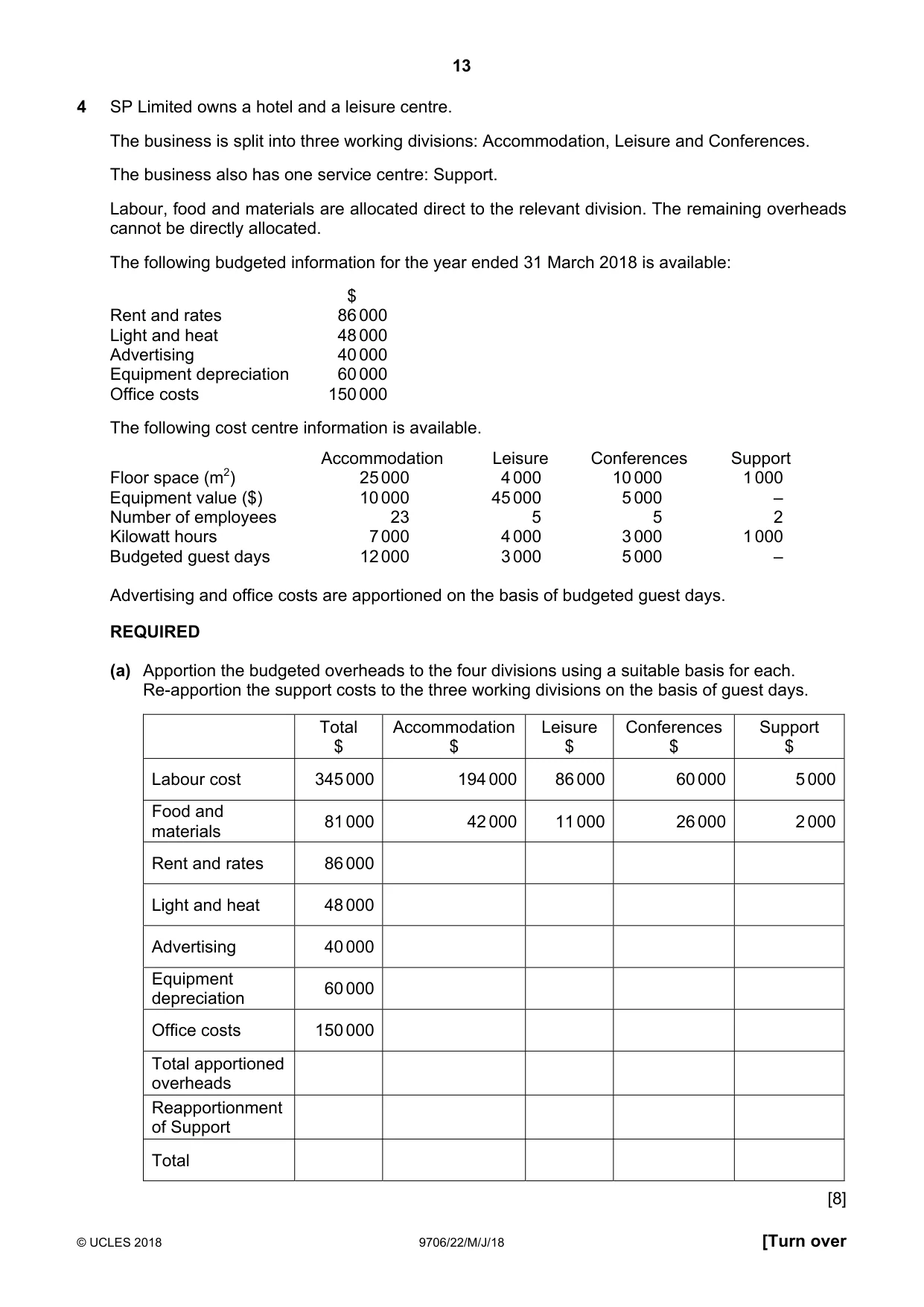
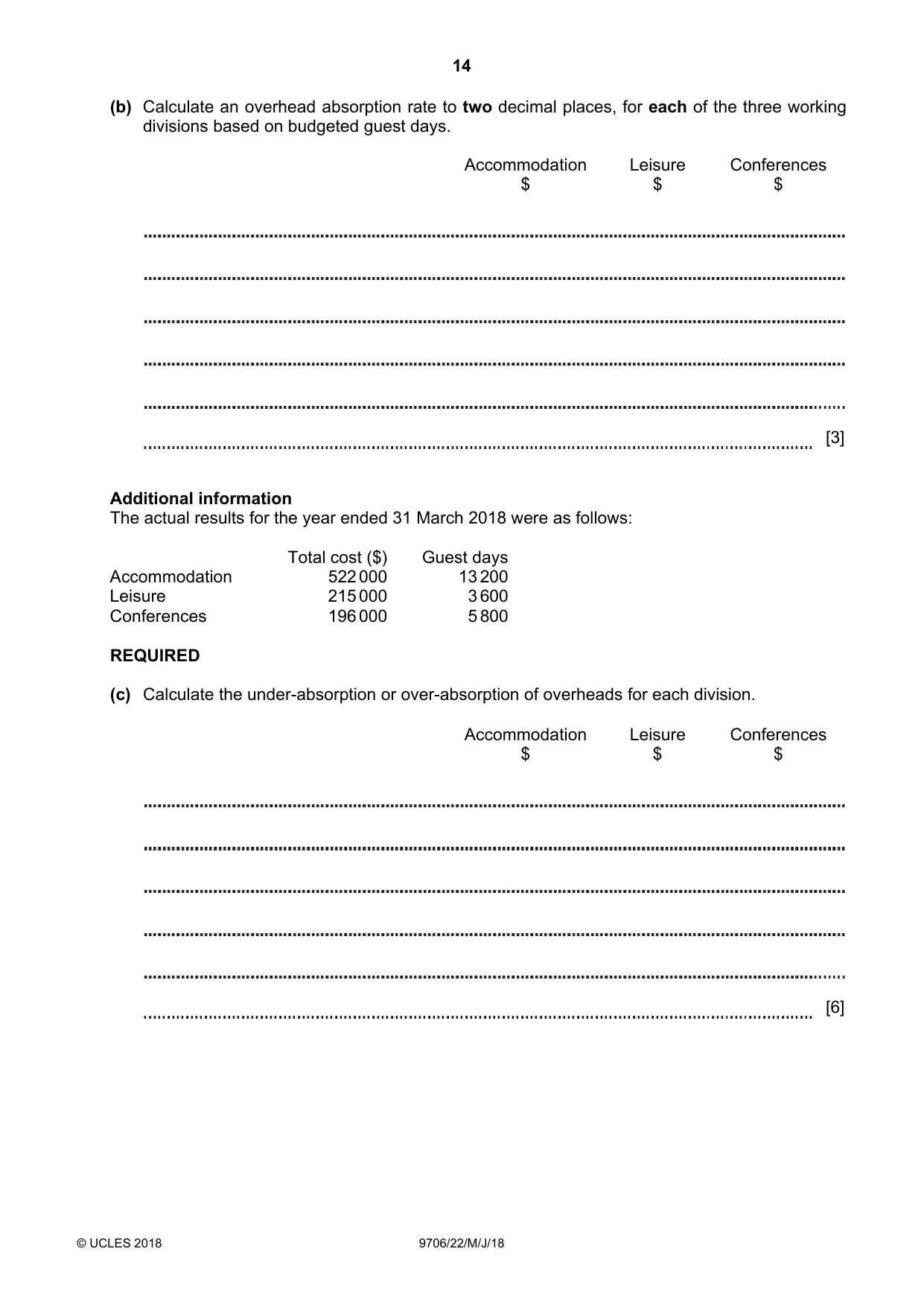
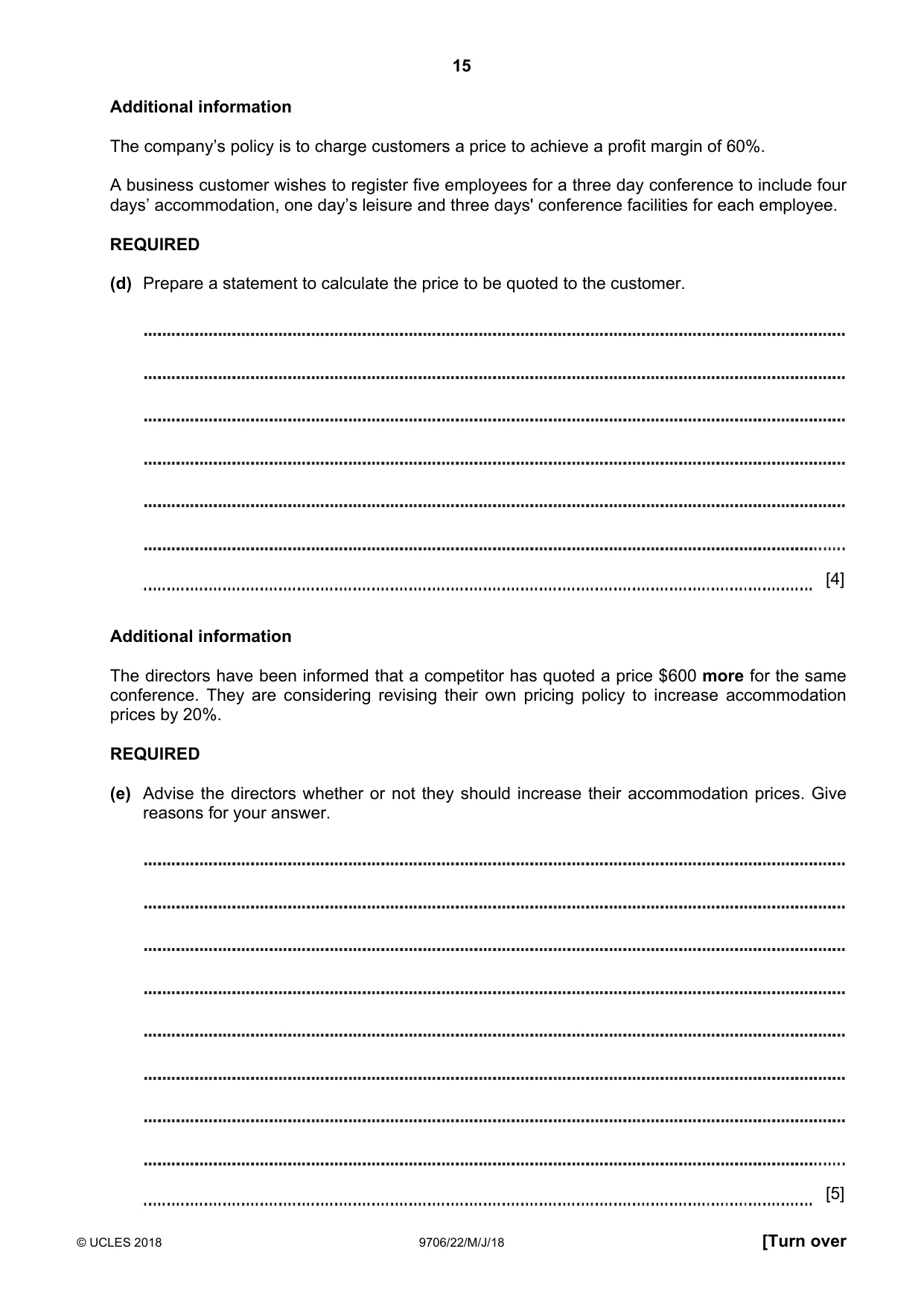
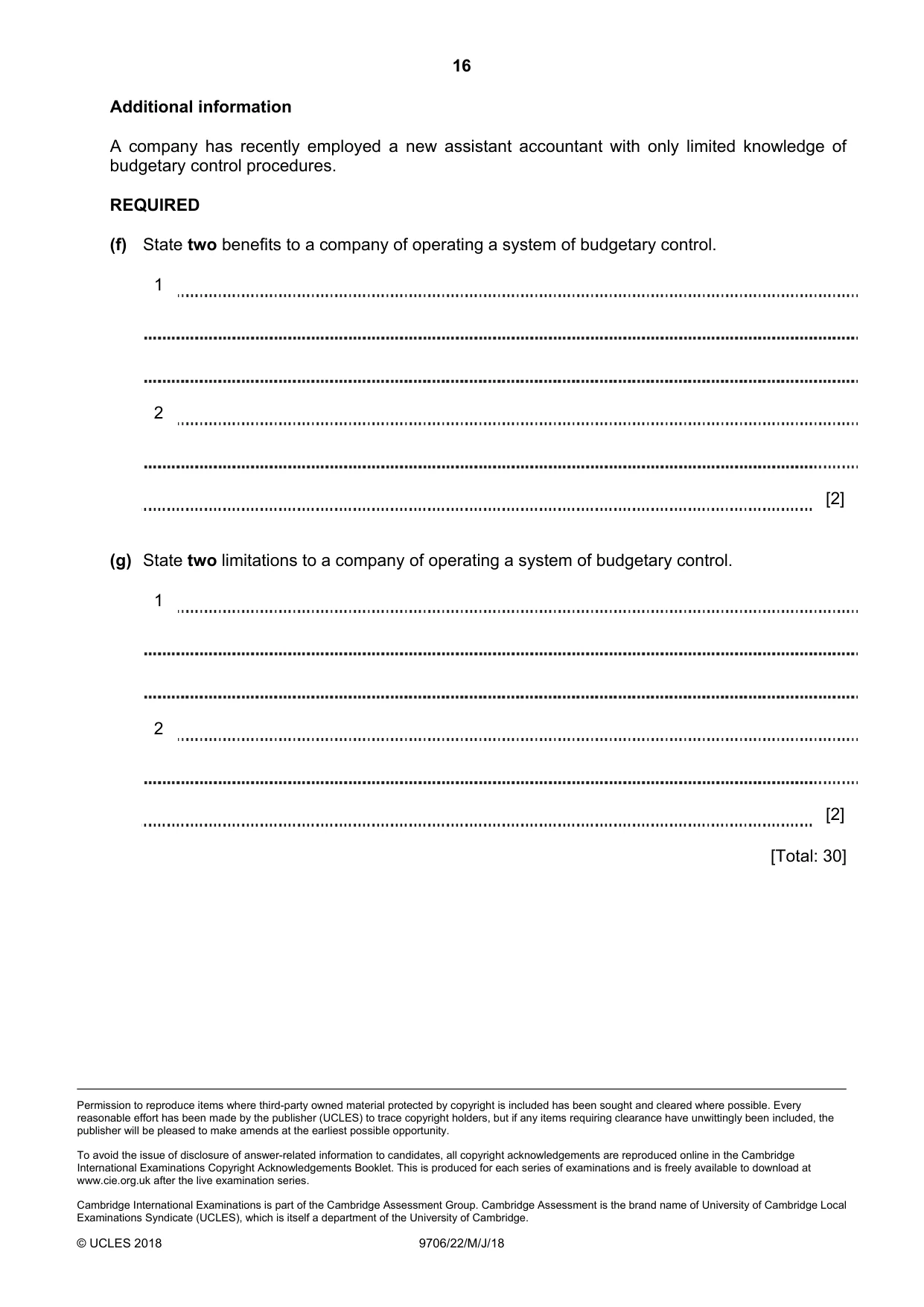
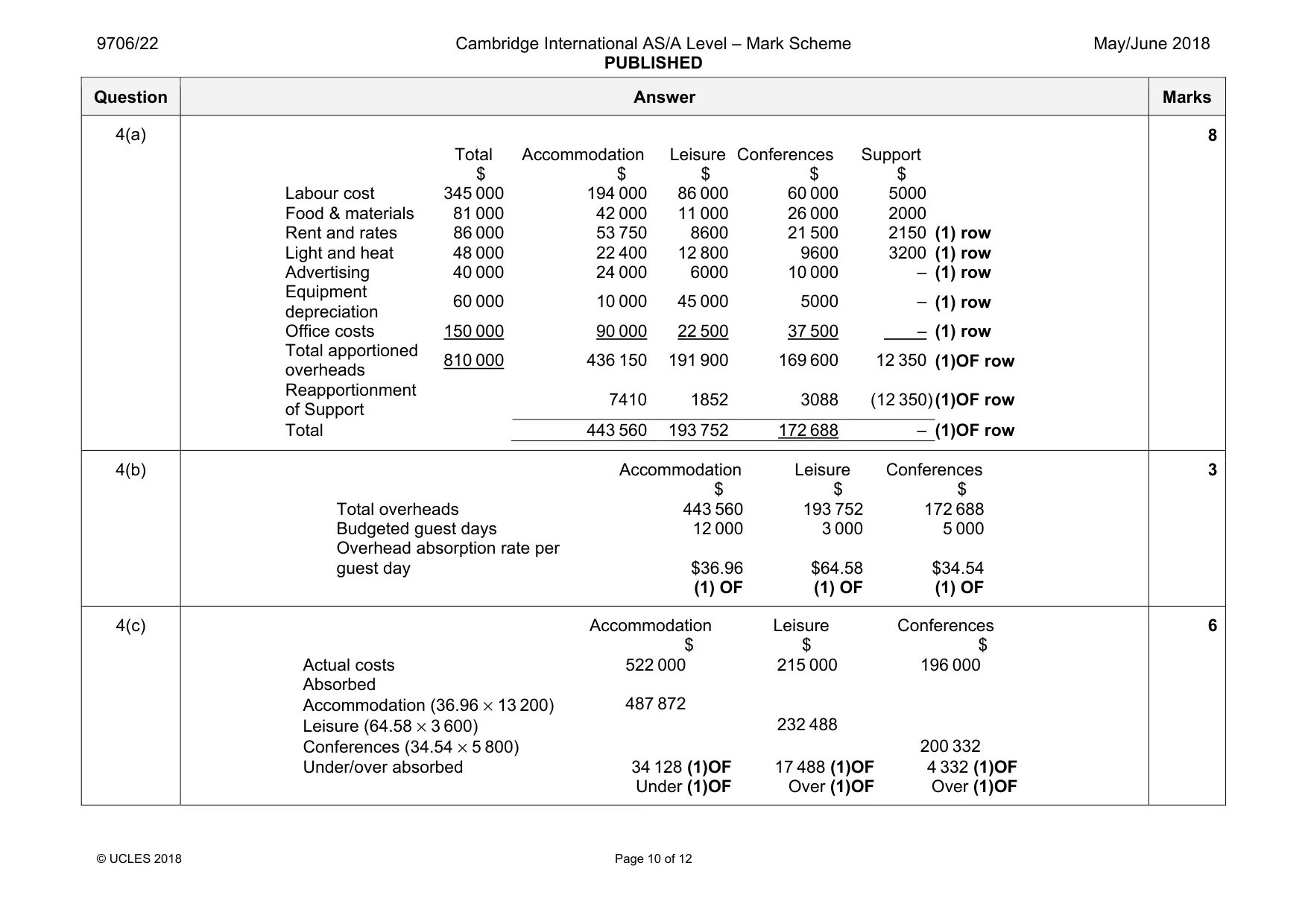
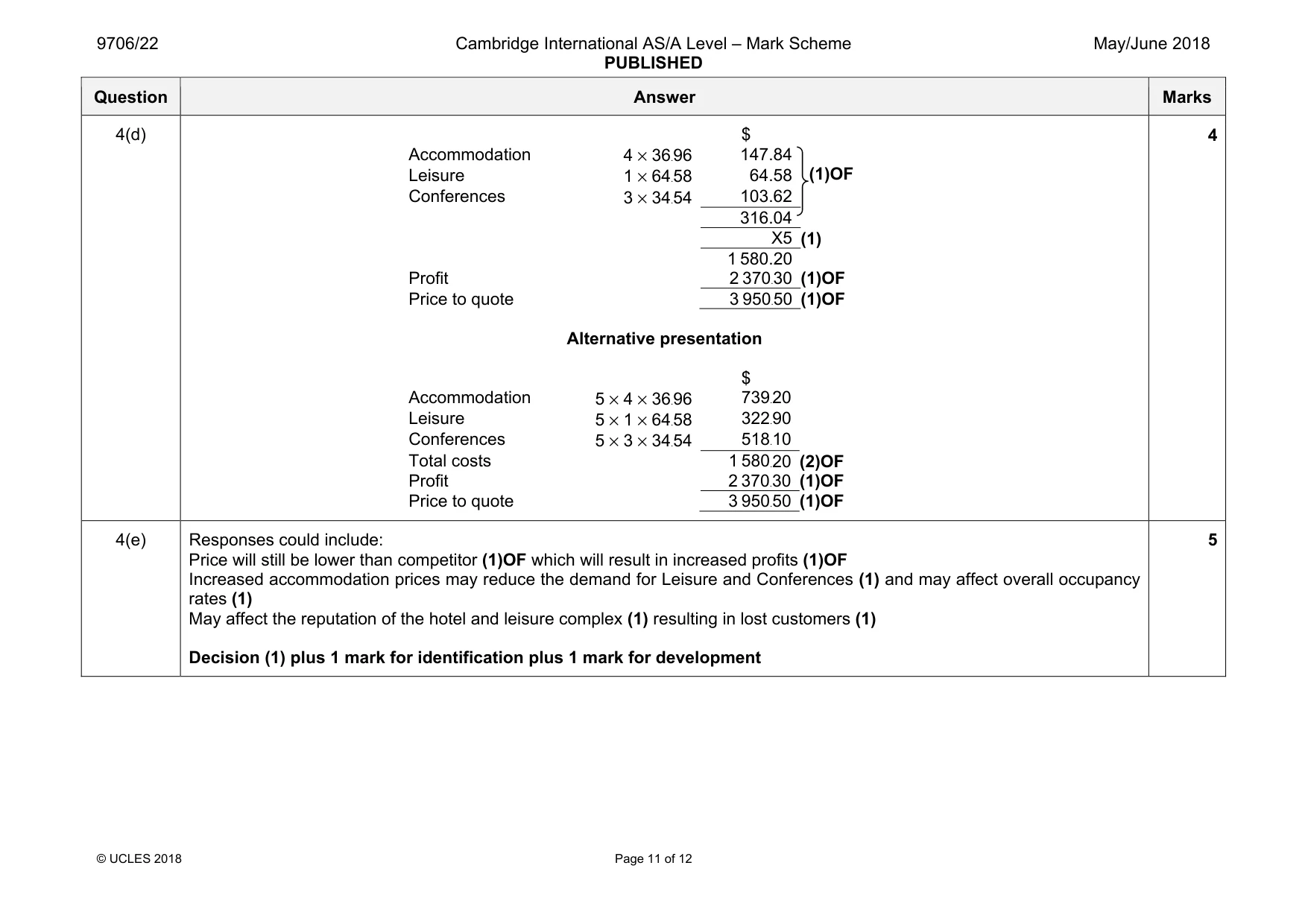
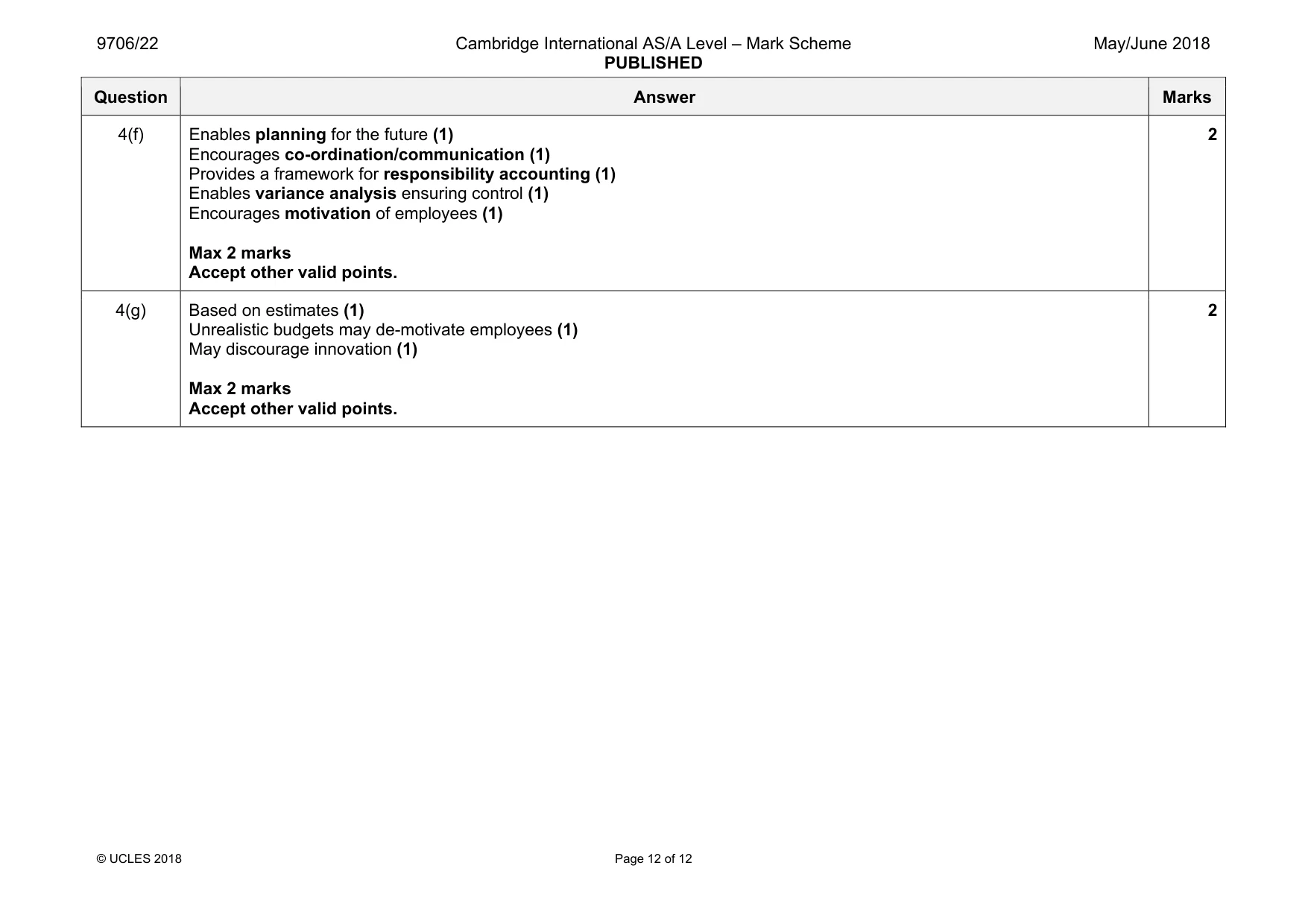
Mark scheme: 4(a) Total $ Accommodation $ Leisure $ Conferences $ Support $ Labour cost 345 000 194 000 86 000 60 000 5000 Food & materials 81 000 42 000 11 000 26 000 2000 Rent and rates 86 000 53 750 8600 21 500 2150 (1) row Light and heat 48 000 22 400 12 800 9600 3200 (1) row Advertising 40 000 24 000 6000 10 000 – (1) row Equipment depreciation 60 000 10 000 45 000 5000 – (1) row Office costs 150 000 90 000 22 500 37 500 – (1) row Total apportioned overheads 810 000 436 150 191 900 169 600 12 350 (1)OF row Reapportionment of Support 7410 1852 3088 (12 350)(1)OF row Total 443 560 193 752 172 688 – (1)OF row 8 4(b) Accommodation $ Leisure $ Conferences $ Total overheads 443 560 193 752 172 688 Budgeted guest days 12 000 3 000 5 000 Overhead absorption rate per guest day $36.96 $64.58 $34.54 (1) OF (1) OF (1) OF 3 4(c) Accommodation $ Leisure $ Conferences $ Actual costs 522 000 215 000 196 000 Absorbed Accommodation (36.96 × 13 200) 487 872 Leisure (64.58 × 3 600) 232 488 Conferences (34.54 × 5 800) 200 332 Under/over absorbed 34 128 (1)OF Under (1)OF 17 488 (1)OF Over (1)OF 4 332 (1)OF Over (1)OF 6 Question Answer Marks 4(d) $ Accommodation 4 × 36.96 147.84 (1)OF Leisure 1 × 64.58 64.58 Conferences 3 × 34.54 103.62 316.04 X5 (1) 1 580.20 Profit 2 370.30 (1)OF Price to quote 3 950.50 (1)OF Alternative presentation $ Accommodation 5 × 4 × 36.96 739.20 Leisure 5 × 1 × 64.58 322.90 Conferences 5 × 3 × 34.54 518.10 Total costs 1 580.20 (2)OF Profit 2 370.30 (1)OF Price to quote 3 950.50 (1)OF 4 4(e) Responses could include: Price will still be lower than competitor (1)OF which will result in increased profits (1)OF Increased accommodation prices may reduce the demand for Leisure and Conferences (1) and may affect overall occupancy rates (1) May affect the reputation of the hotel and leisure complex (1) resulting in lost customers (1) Decision (1) plus 1 mark for identification plus 1 mark for development 5 Question Answer Marks 4(f) Enables planning for the future (1) Encourages co-ordination/communication (1) Provides a framework for responsibility accounting (1) Enables variance analysis ensuring control (1) Encourages motivation of employees (1) Max 2 marks Accept other valid points. 2 4(g) Based on estimates (1) Unrealistic budgets may de-motivate employees (1) May discourage innovation (1) Max 2 marks Accept other valid points. 2
What was in this paper
The subtopics covered by these 4 questions, and how many questions each got. Open one in a new tab to see every Cambridge question on it.
What you needed in this session
Cambridge’s own grade thresholds for 2018 May/June, Paper 2 · Variant 2. A higher threshold means an easier paper — the bar moves with how the cohort did.