Cambridge IGCSE Sciences - Co-ordinated (Double) 0654 — 2022 May/June Paper 4 · Variant 3
0654/43/M/J/22 · 12 questions · 120 marks · ≈135 min
The question paper and its mark scheme, free to read here and free to download. This is Cambridge’s own paper, exactly as it was sat.
Question paper36 pages






Mark scheme15 pages
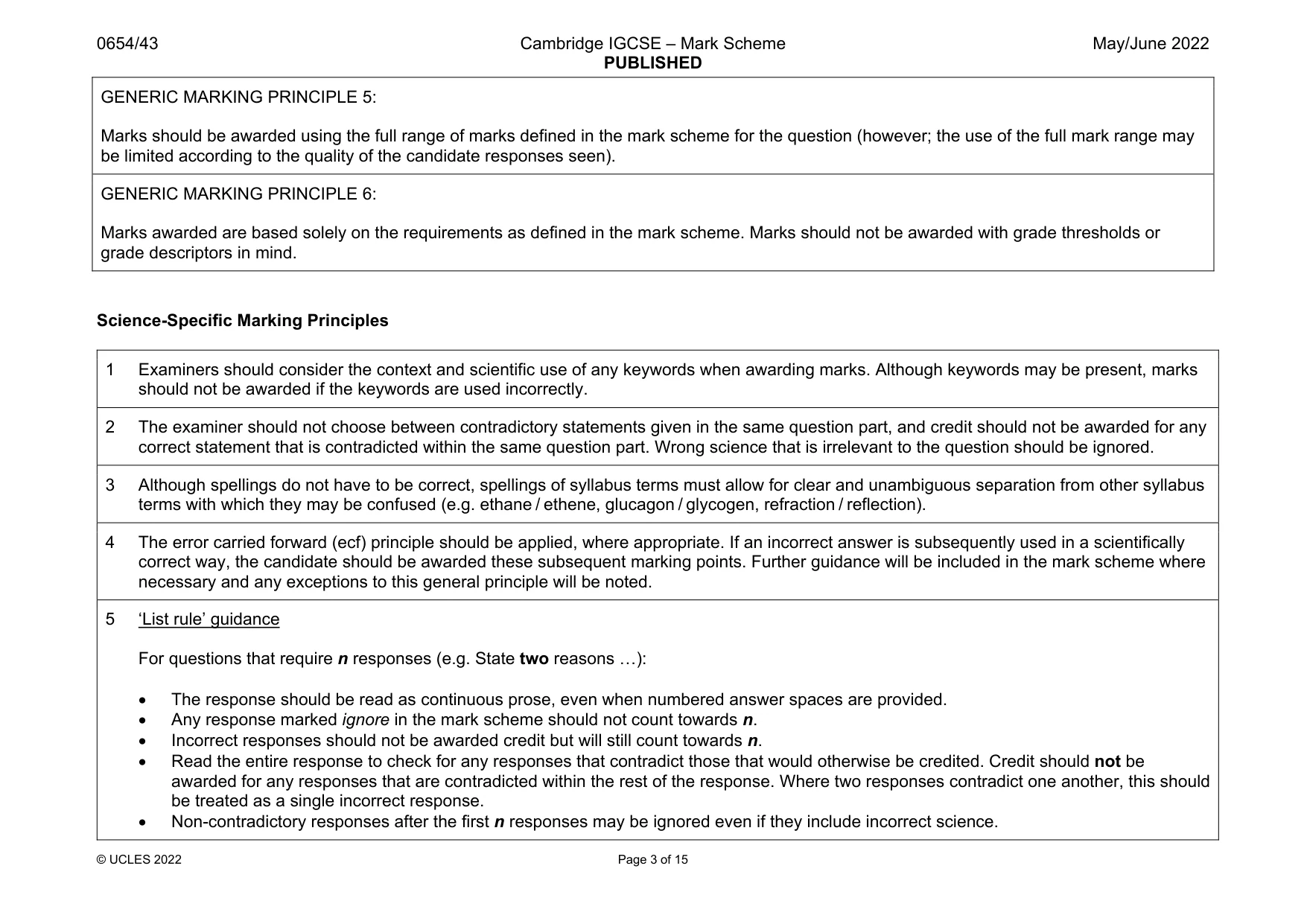
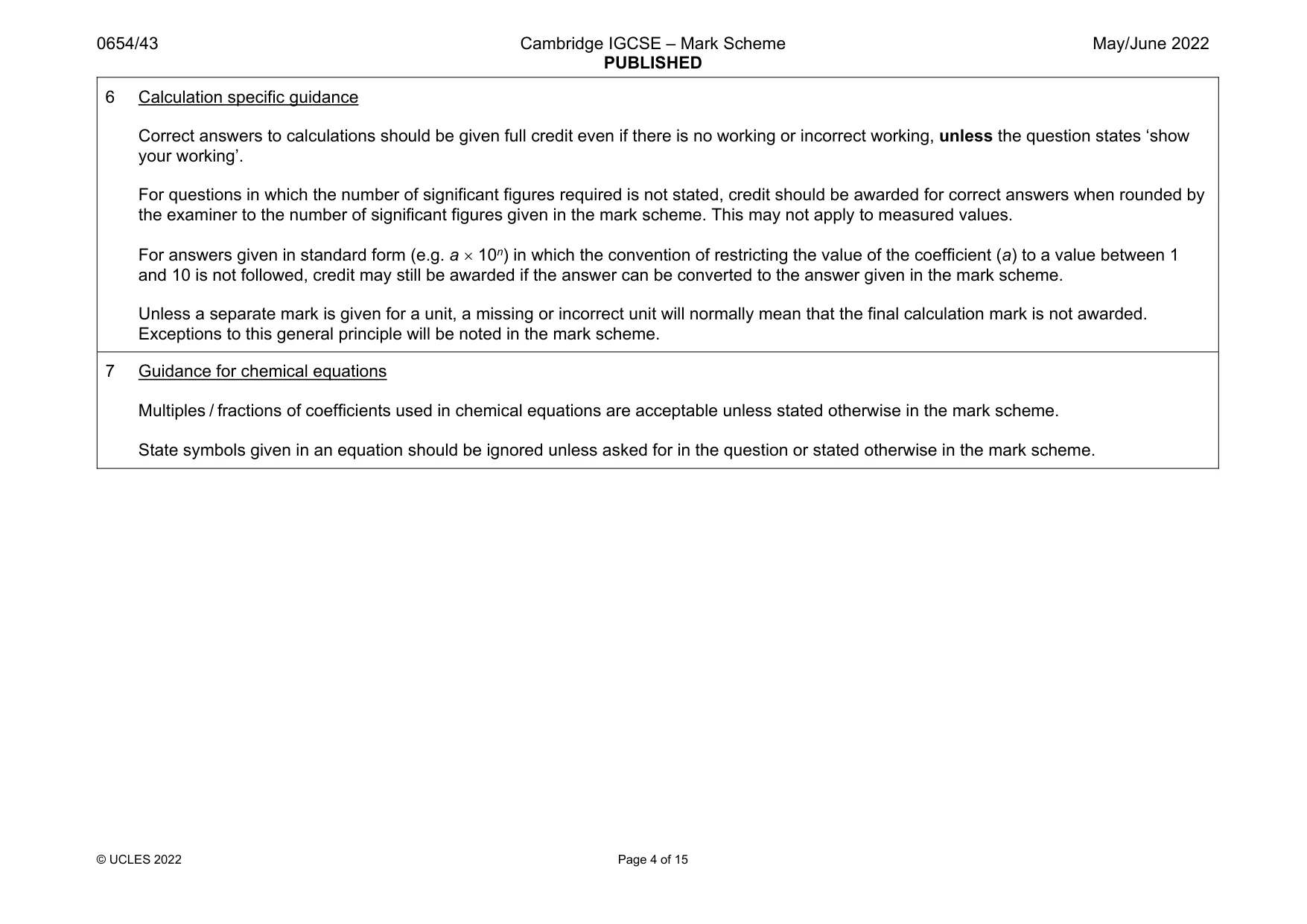
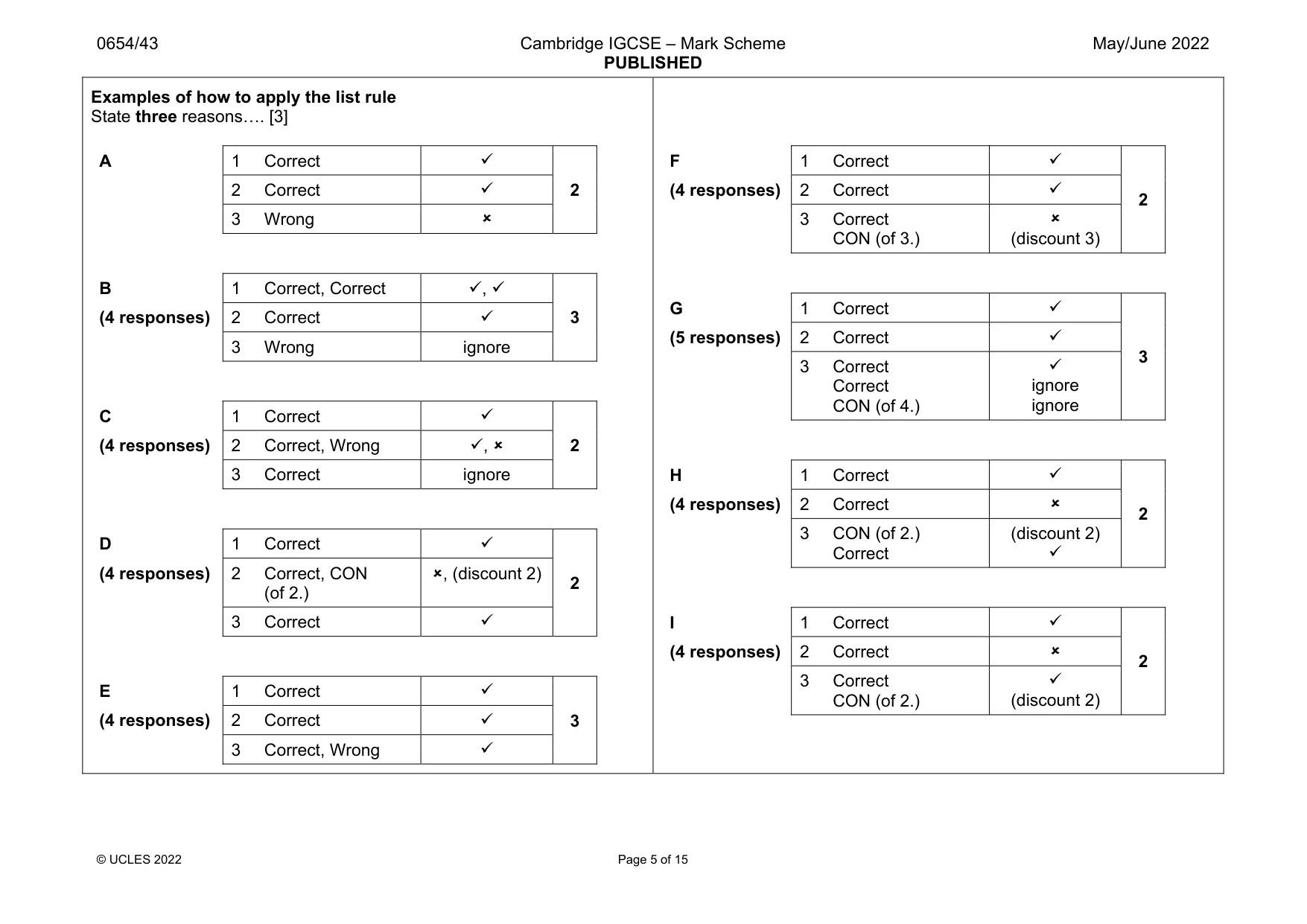
Answers below. Sit the paper first if you are practising.
Questions as text
Q1 · A diagram of the female reproductive system
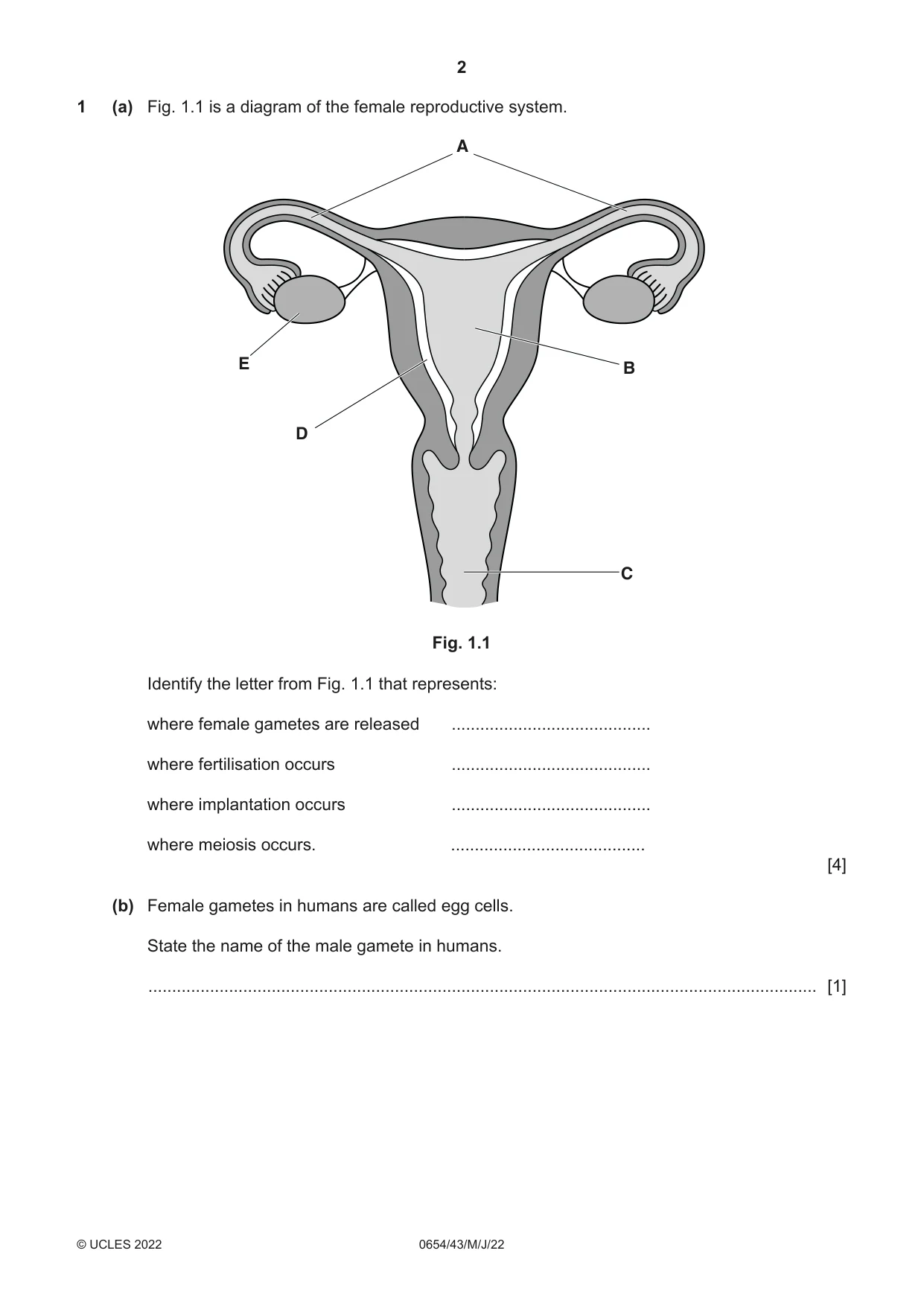
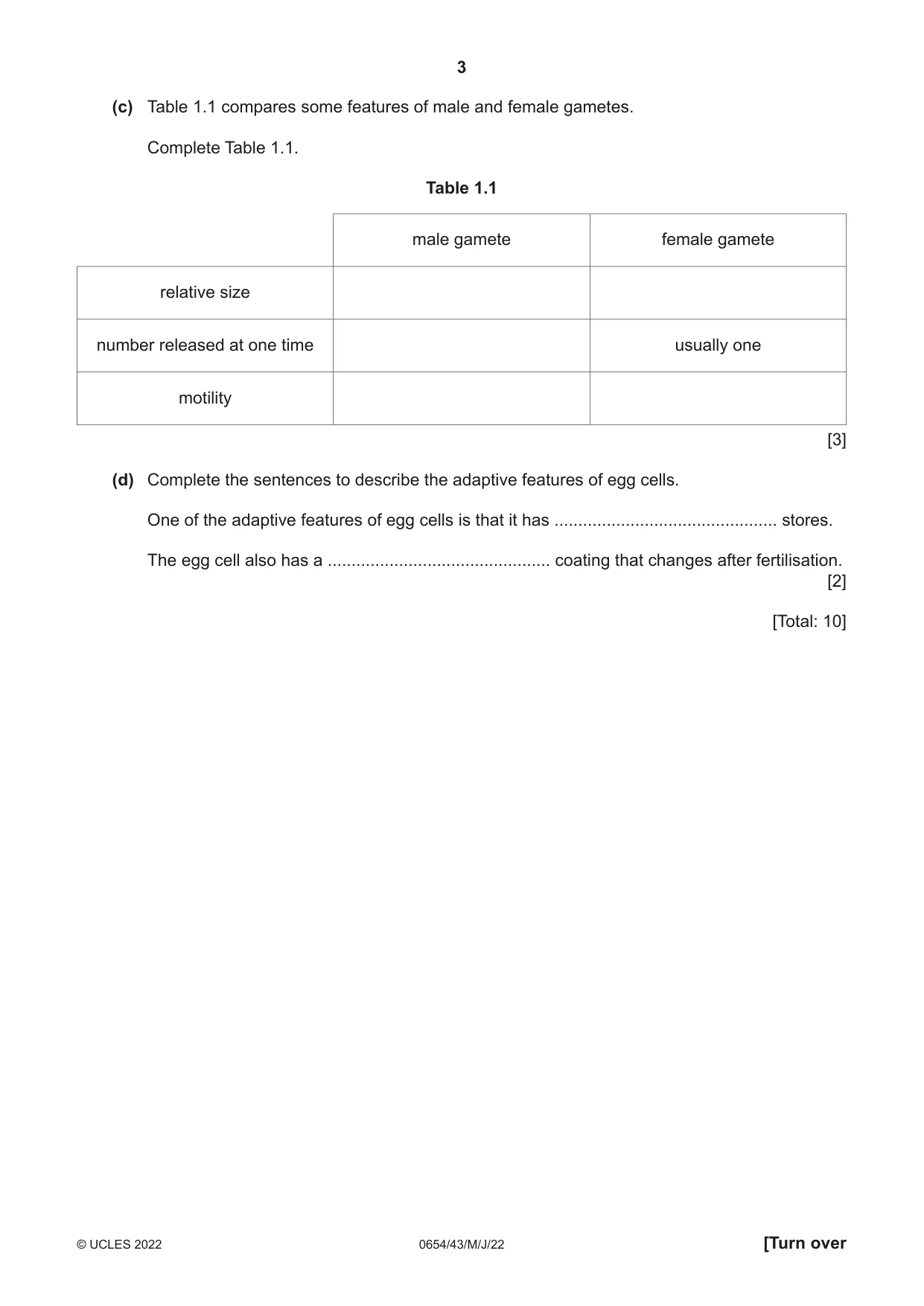
1 (a) Fig. 1.1 is a diagram of the female reproductive system. A E B D C Fig. 1.1 Identify the letter from Fig. 1.1 that represents: where female gametes are released .......................................... where fertilisation occurs .......................................... where implantation occurs .......................................... where meiosis occurs. ......................................... [4] (b) Female gametes in humans are called egg cells. State the name of the male gamete in humans. ............................................................................................................................................. [1] (c) Table 1.1 compares some features of male and female gametes. Complete Table 1.1. Table 1.1 male gamete female gamete relative size number released at one time usually one motility [3] (d) Complete the sentences to describe the adaptive features of egg cells. One of the adaptive features of egg cells is that it has ............................................... stores. The egg cell also has a ............................................... coating that changes after fertilisation. [2] [Total: 10]
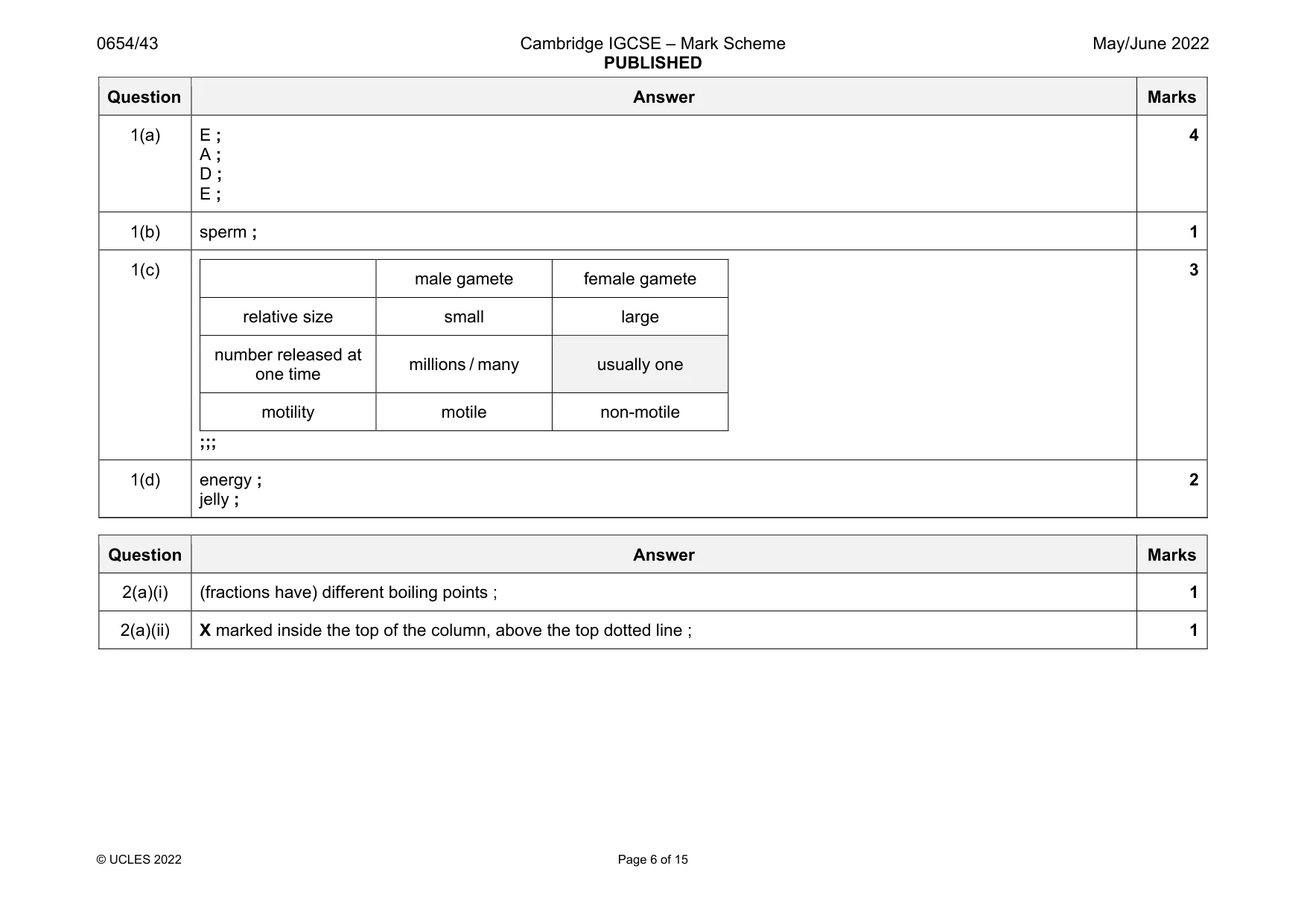
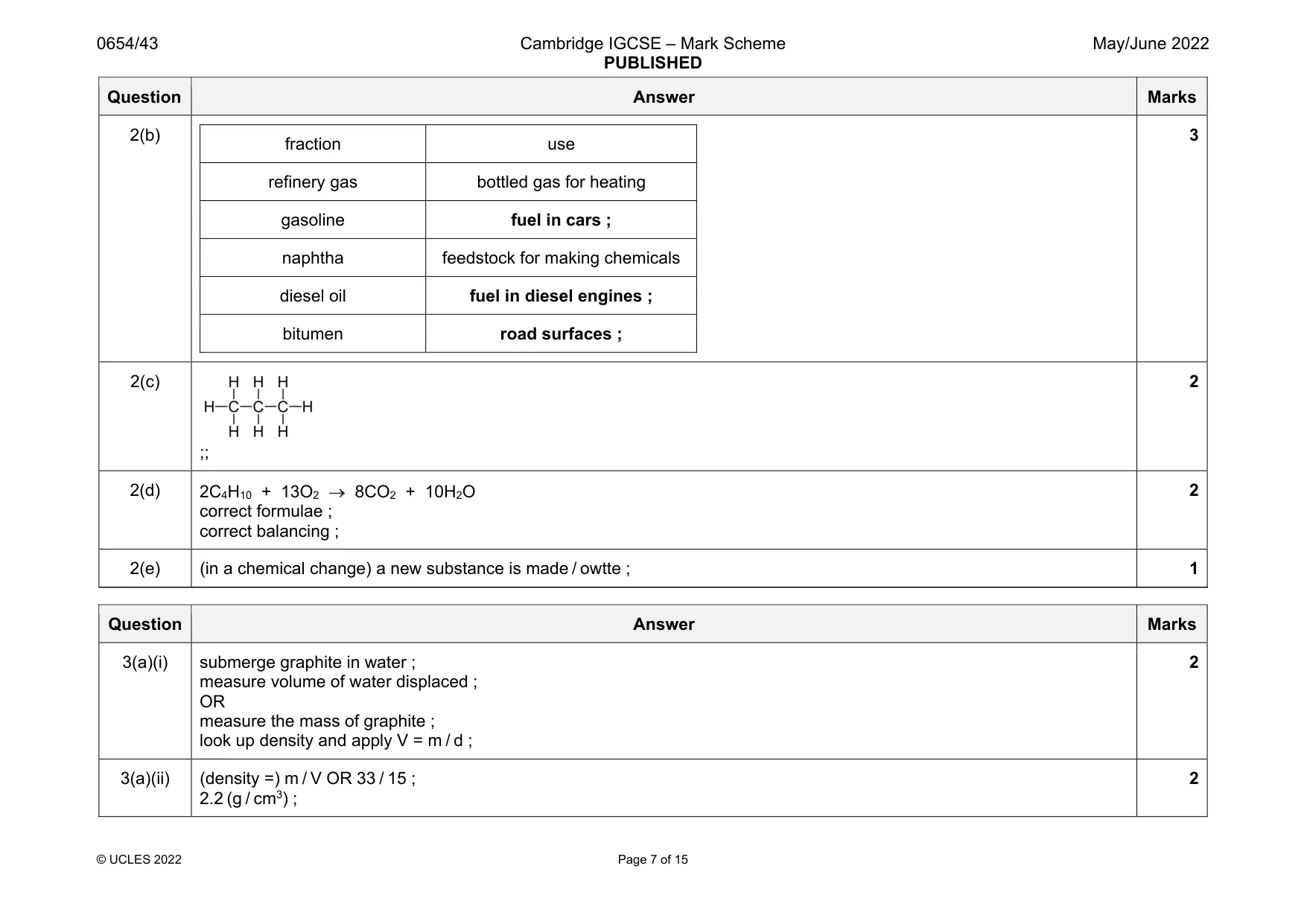
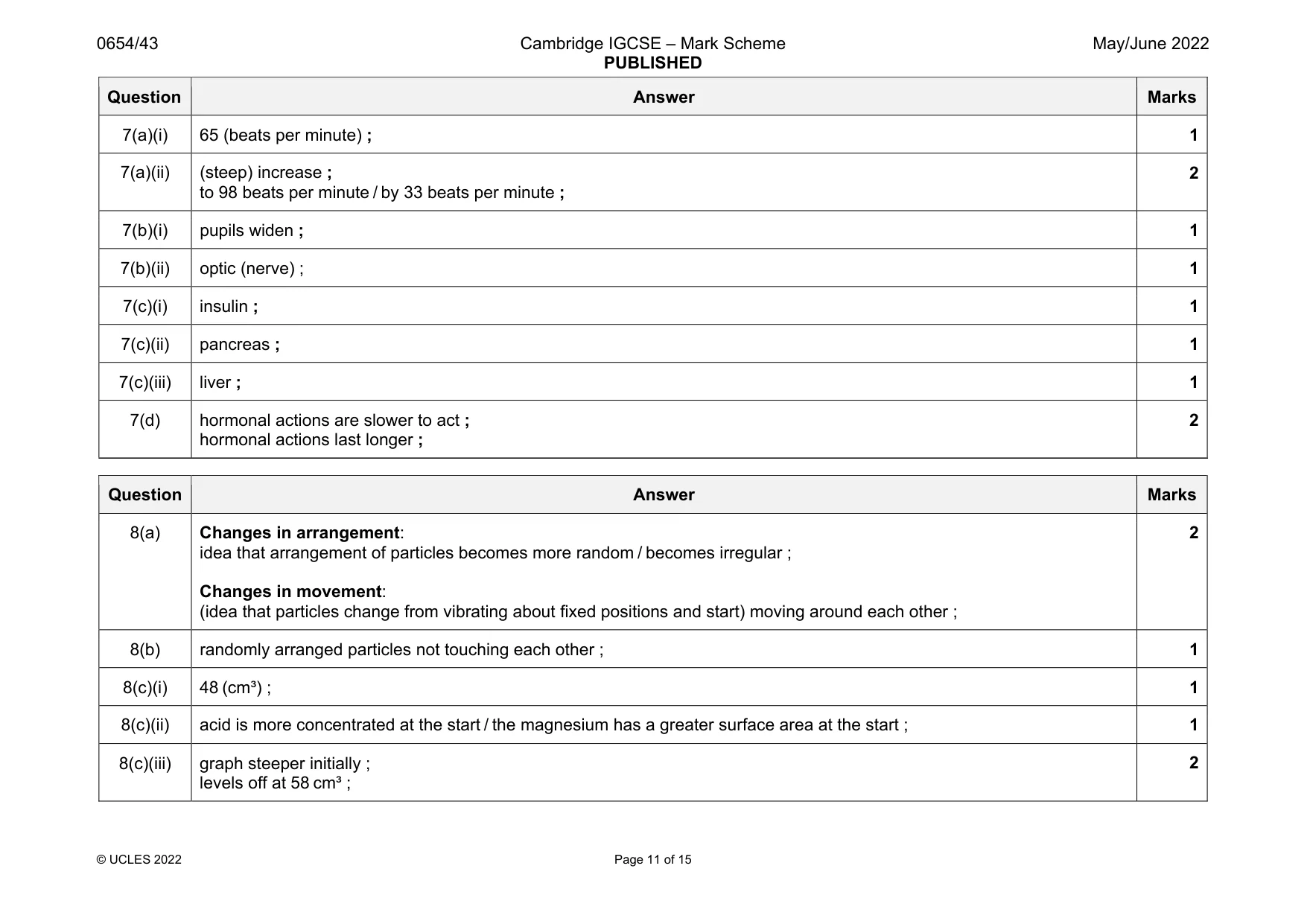
Mark scheme: 1(a) E ; A ; D ; E ; 4 1(b) sperm ; 1 1(c) male gamete female gamete relative size small large number released at one time millions / many usually one motility motile non-motile ;;; 3 1(d) energy ; jelly ; 2
Q2 · Petroleum is a fossil fuel
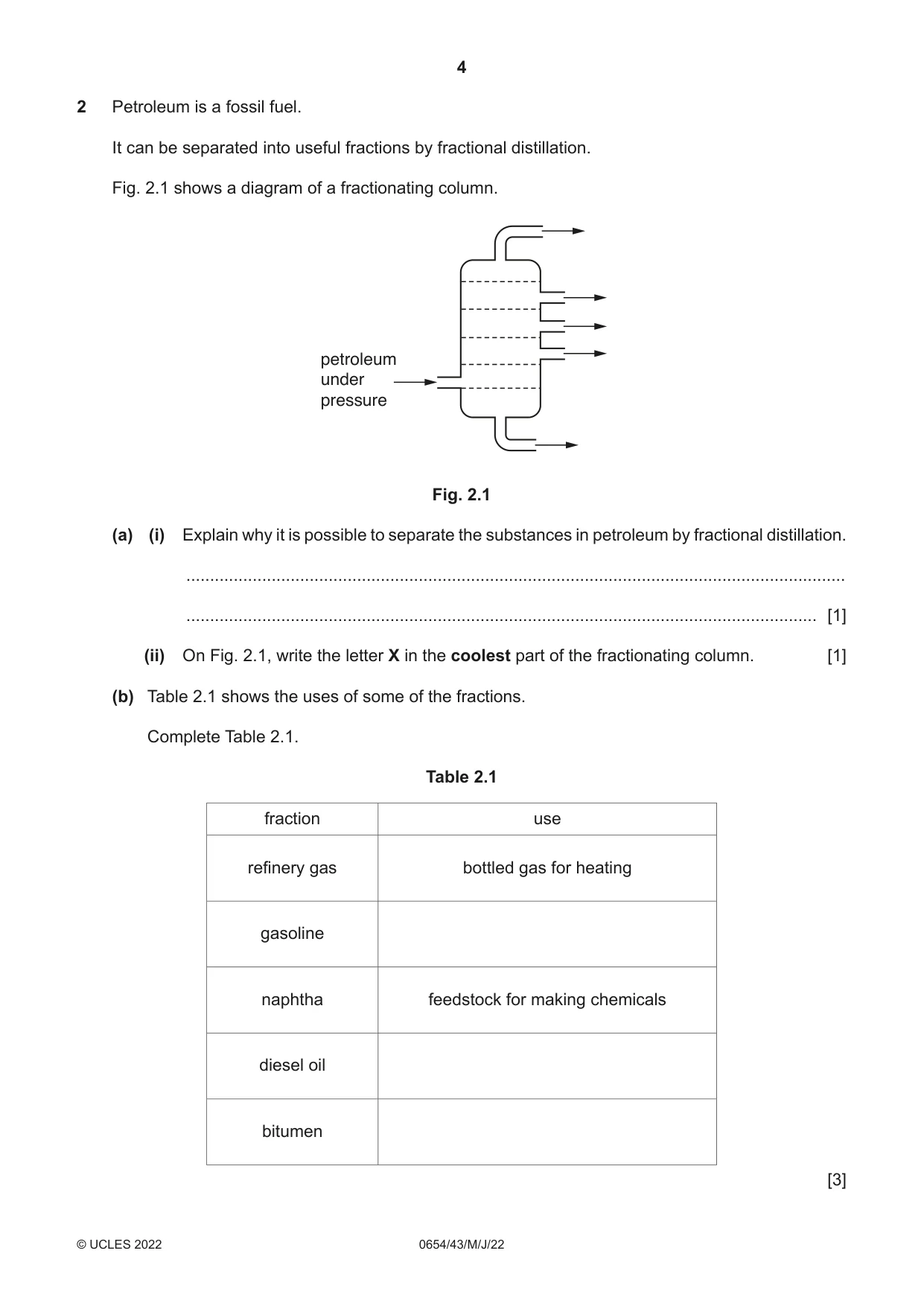
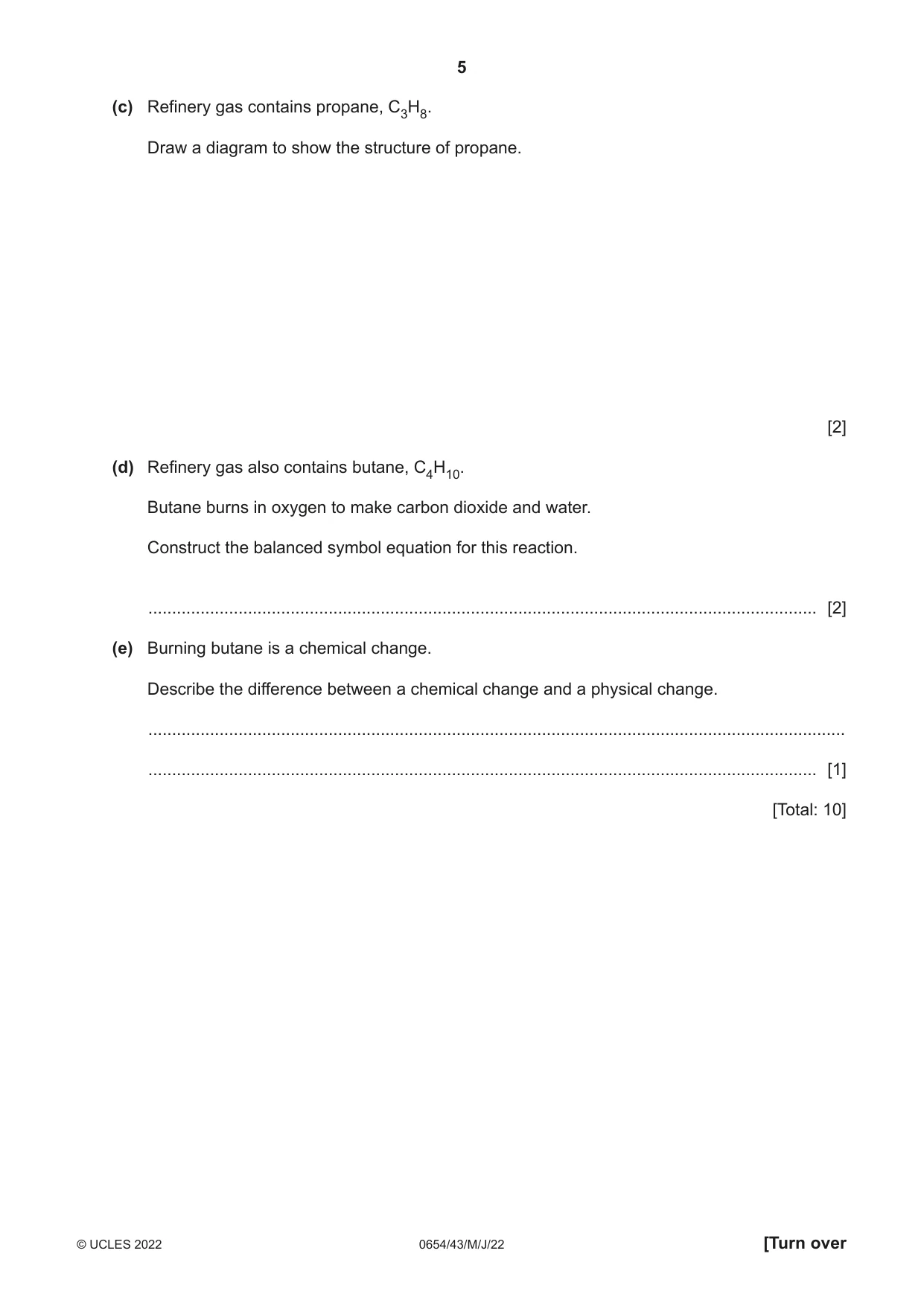
2 Petroleum is a fossil fuel. It can be separated into useful fractions by fractional distillation. Fig. 2.1 shows a diagram of a fractionating column. petroleum under pressure Fig. 2.1 (a) (i) Explain why it is possible to separate the substances in petroleum by fractional distillation. ........................................................................................................................................... ..................................................................................................................................... [1] (ii) On Fig. 2.1, write the letter X in the coolest part of the fractionating column. [1] (b) Table 2.1 shows the uses of some of the fractions. Complete Table 2.1. Table 2.1 fraction use refinery gas bottled gas for heating gasoline naphtha feedstock for making chemicals diesel oil bitumen [3] (c) Refinery gas contains propane, C3H8. Draw a diagram to show the structure of propane. [2] (d) Refinery gas also contains butane, C4H10. Butane burns in oxygen to make carbon dioxide and water. Construct the balanced symbol equation for this reaction. ............................................................................................................................................. [2] (e) Burning butane is a chemical change. Describe the difference between a chemical change and a physical change. ................................................................................................................................................... ............................................................................................................................................. [1] [Total: 10]
Mark scheme: 2(a)(i) (fractions have) different boiling points ; 1 2(a)(ii) X marked inside the top of the column, above the top dotted line ; 1 Question Answer Marks 2(b) fraction use refinery gas bottled gas for heating gasoline fuel in cars ; naphtha feedstock for making chemicals diesel oil fuel in diesel engines ; bitumen road surfaces ; 3 2(c) ;; 2 2(d) 2C4H10 + 13O2 8CO2 + 10H2O correct formulae ; correct balancing ; 2 2(e) (in a chemical change) a new substance is made / owtte ; 1
Q3 · A piece of graphite with an irregular shape
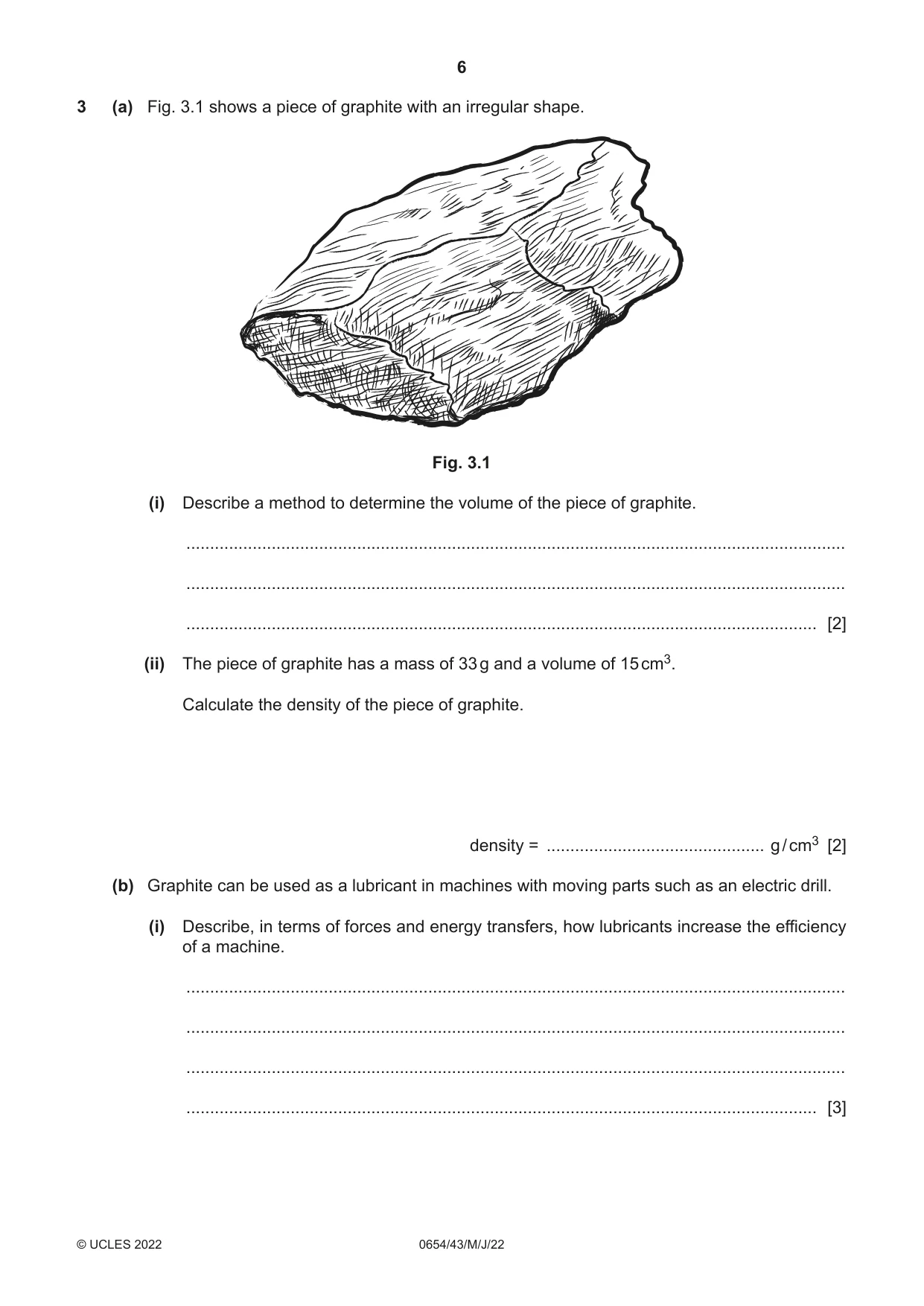
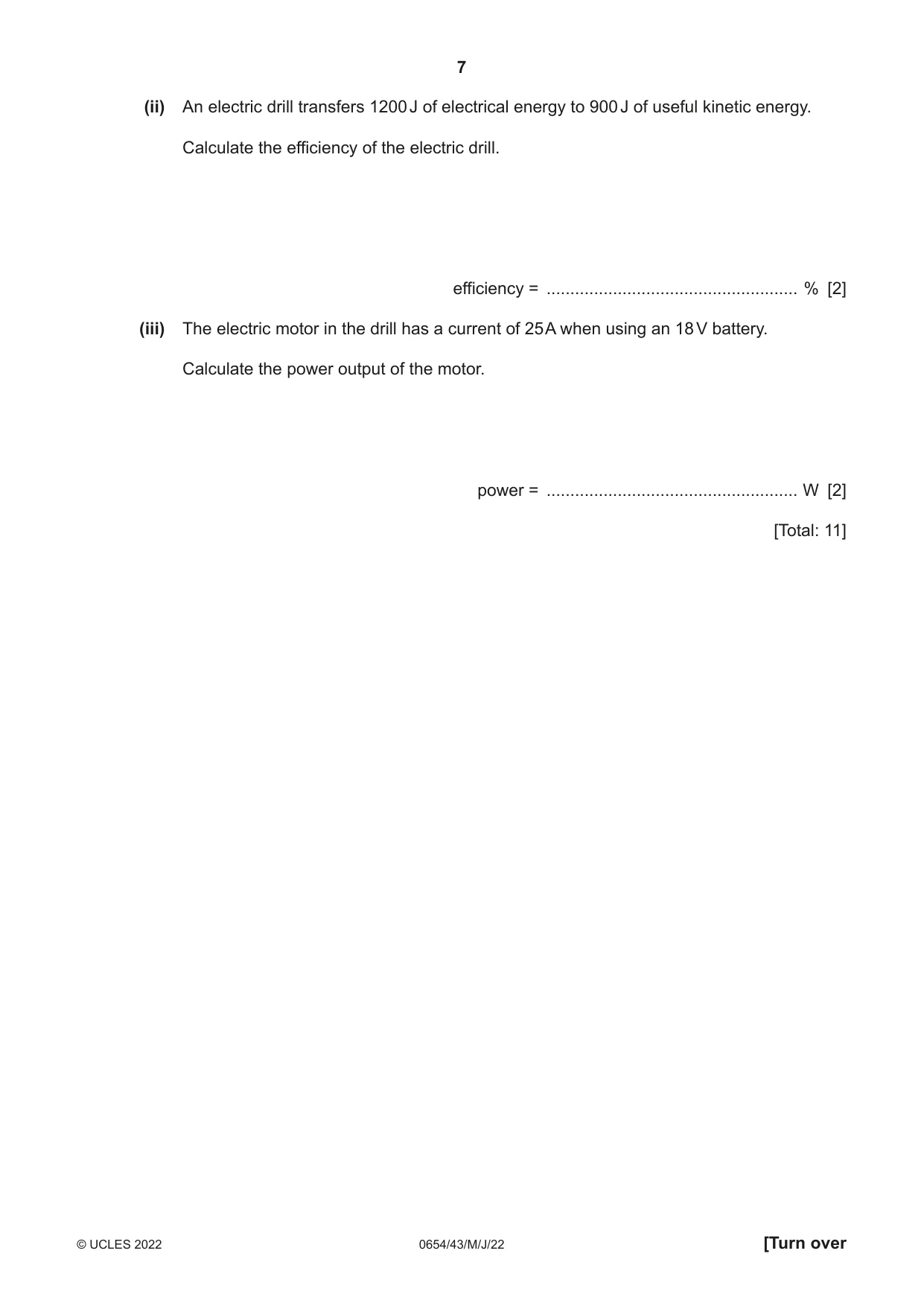
3 (a) Fig. 3.1 shows a piece of graphite with an irregular shape. Fig. 3.1 (i) Describe a method to determine the volume of the piece of graphite. ........................................................................................................................................... ........................................................................................................................................... ..................................................................................................................................... [2] (ii) The piece of graphite has a mass of 33 g and a volume of 15 cm3. Calculate the density of the piece of graphite. density = .............................................. g / cm3 [2] (b) Graphite can be used as a lubricant in machines with moving parts such as an electric drill. (i) Describe, in terms of forces and energy transfers, how lubricants increase the efficiency of a machine. ........................................................................................................................................... ........................................................................................................................................... ........................................................................................................................................... ..................................................................................................................................... [3] (ii) An electric drill transfers 1200 J of electrical energy to 900 J of useful kinetic energy. Calculate the efficiency of the electric drill. efficiency = ..................................................... % [2] (iii) The electric motor in the drill has a current of 25 A when using an 18 V battery. Calculate the power output of the motor. power = ..................................................... W [2] [Total: 11]
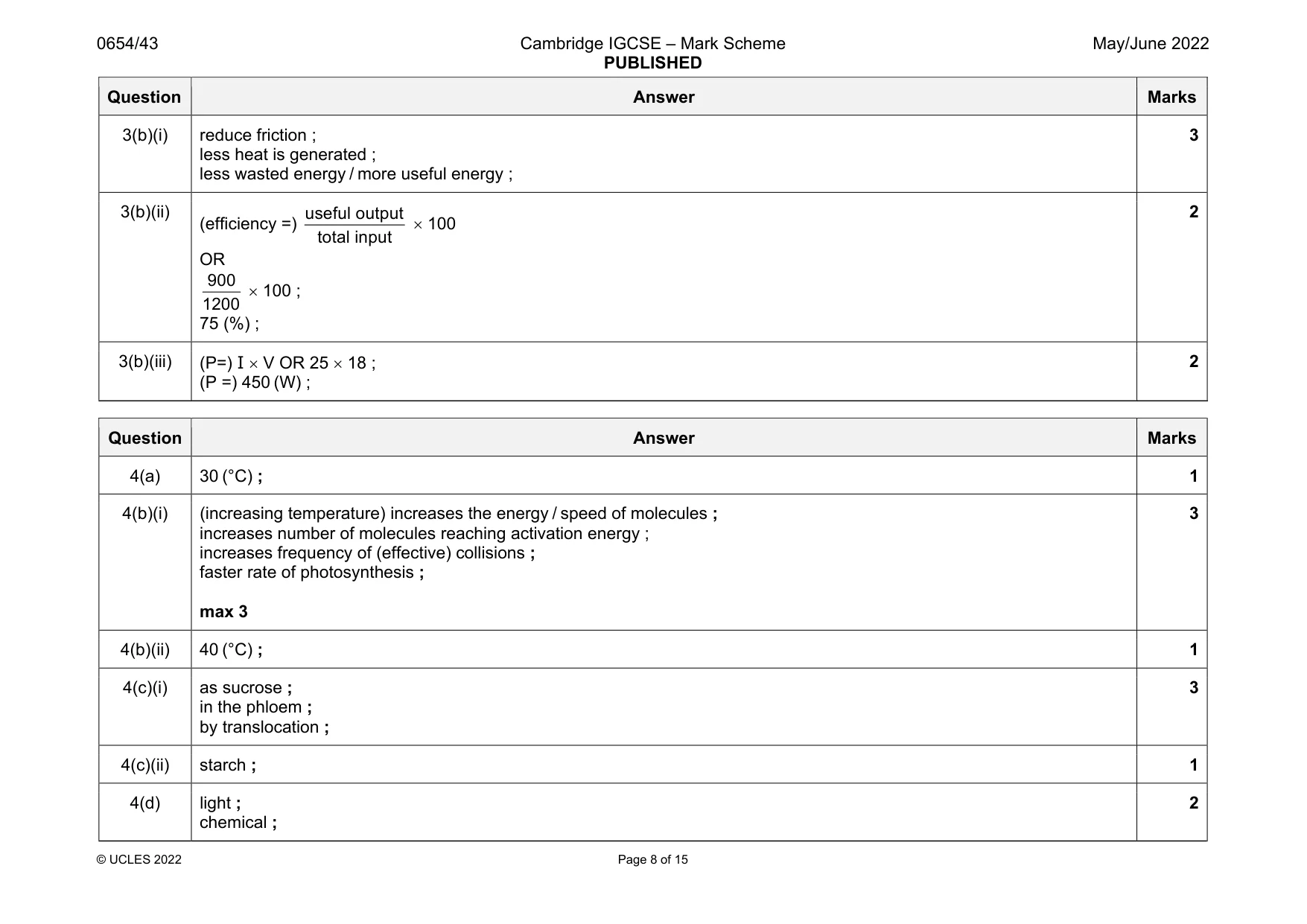
Mark scheme: 3(a)(i) submerge graphite in water ; measure volume of water displaced ; OR measure the mass of graphite ; look up density and apply V = m / d ; 2 3(a)(ii) (density =) m / V OR 33 / 15 ; 2.2 (g / cm3) ; 2 Question Answer Marks 3(b)(i) reduce friction ; less heat is generated ; less wasted energy / more useful energy ; 3 3(b)(ii) (efficiency =) useful output total input 100 OR 900 1200 100 ; 75 (%) ; 2 3(b)(iii) (P=) I V OR 25 18 ; (P =) 450 (W) ; 2
Q4 · A student investigates the effect of temperature on the rate of photosynthesis
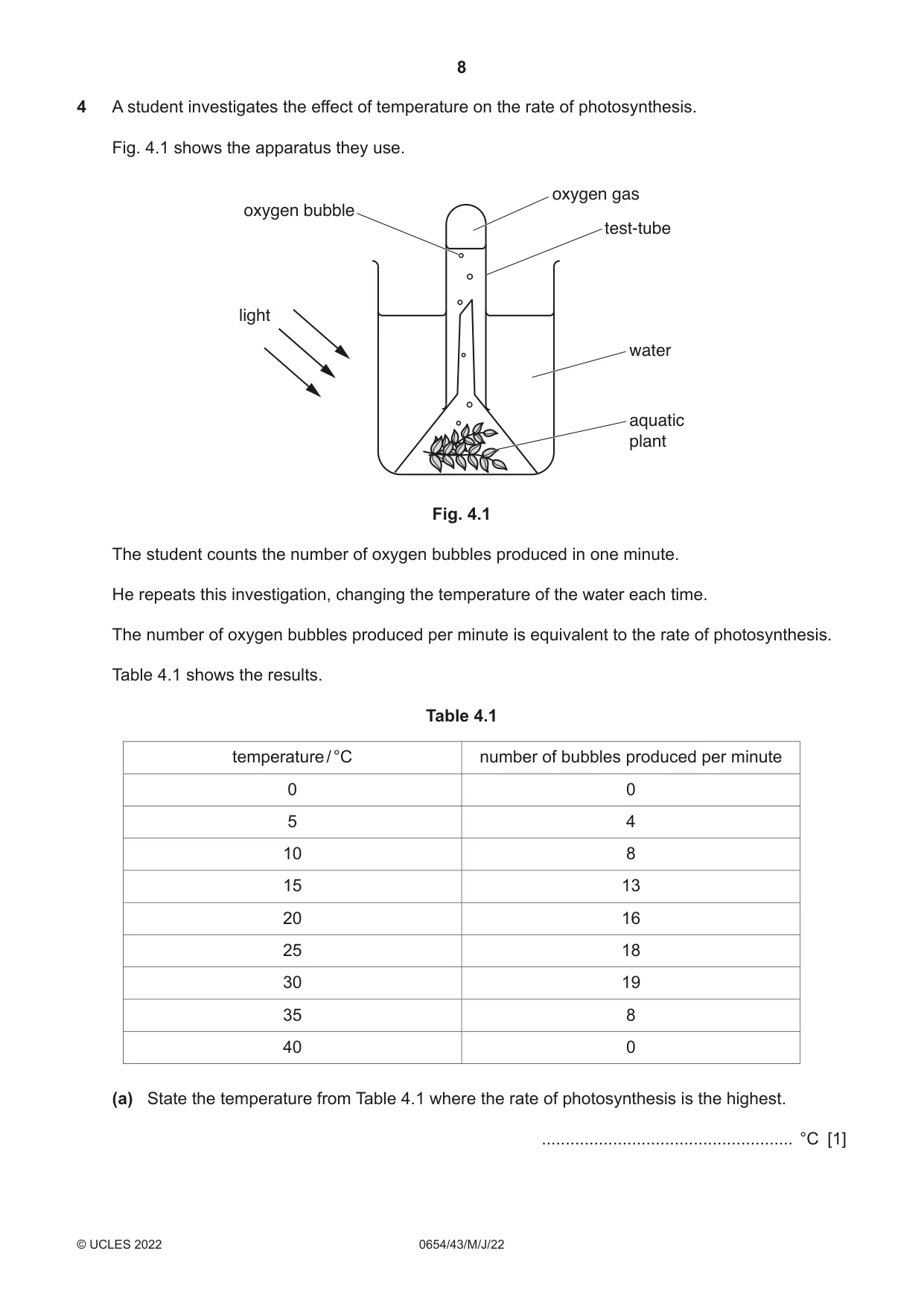
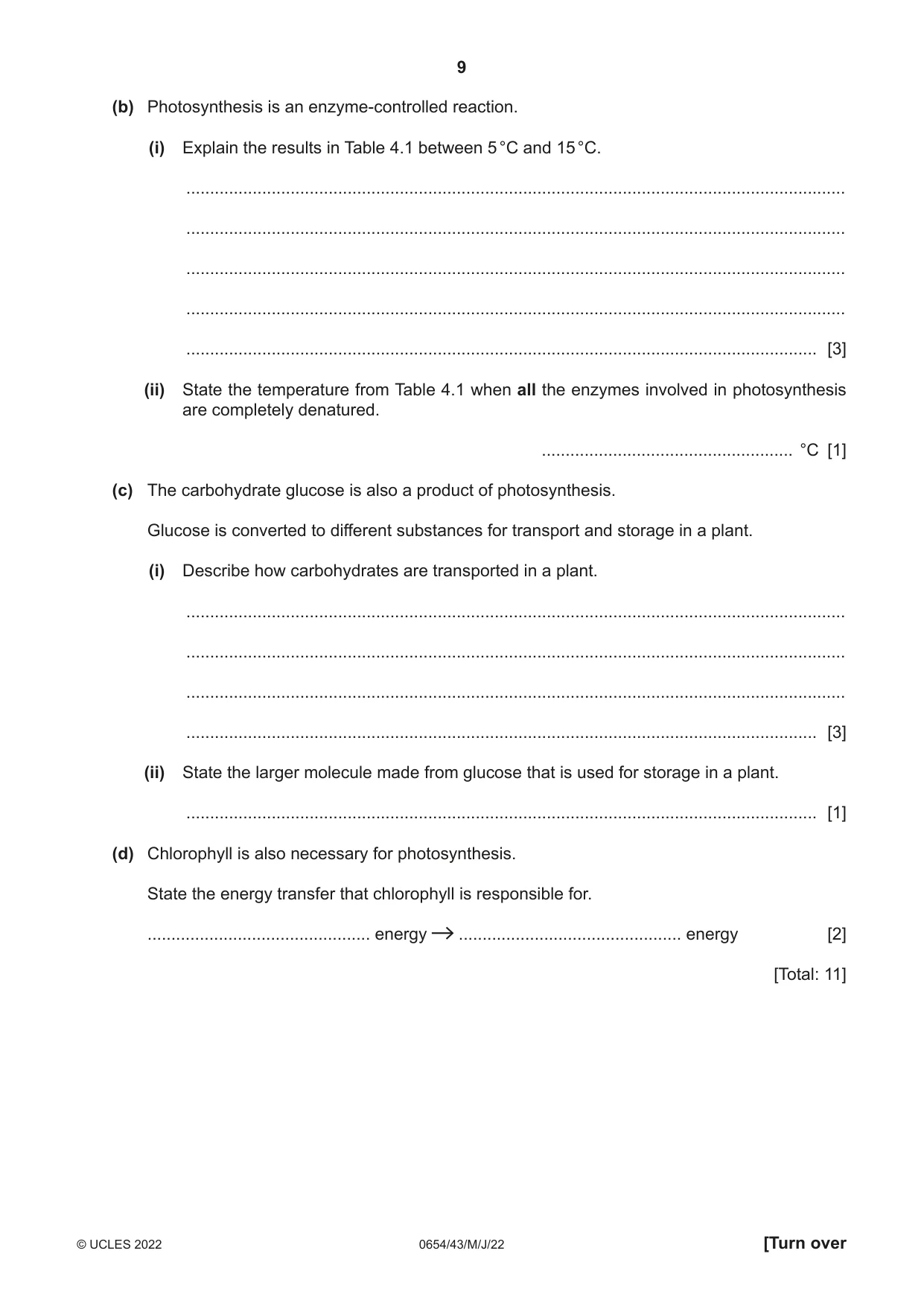
4 A student investigates the effect of temperature on the rate of photosynthesis. Fig. 4.1 shows the apparatus they use. oxygen gas oxygen bubble test-tube light water aquatic plant Fig. 4.1 The student counts the number of oxygen bubbles produced in one minute. He repeats this investigation, changing the temperature of the water each time. The number of oxygen bubbles produced per minute is equivalent to the rate of photosynthesis. Table 4.1 shows the results. Table 4.1 temperature / °C number of bubbles produced per minute 0 0 5 4 10 8 15 13 20 16 25 18 30 19 35 8 40 0 (a) State the temperature from Table 4.1 where the rate of photosynthesis is the highest. ..................................................... °C [1] (b) Photosynthesis is an enzyme-controlled reaction. (i) Explain the results in Table 4.1 between 5 °C and 15 °C. ........................................................................................................................................... ........................................................................................................................................... ........................................................................................................................................... ........................................................................................................................................... ..................................................................................................................................... [3] (ii) State the temperature from Table 4.1 when all the enzymes involved in photosynthesis are completely denatured. ..................................................... °C [1] (c) The carbohydrate glucose is also a product of photosynthesis. Glucose is converted to different substances for transport and storage in a plant. (i) Describe how carbohydrates are transported in a plant. ........................................................................................................................................... ........................................................................................................................................... ........................................................................................................................................... ..................................................................................................................................... [3] (ii) State the larger molecule made from glucose that is used for storage in a plant. ..................................................................................................................................... [1] (d) Chlorophyll is also necessary for photosynthesis. State the energy transfer that chlorophyll is responsible for. ............................................... energy ............................................... energy [2] [Total: 11]
Mark scheme: 4(a) 30 (°C) ; 1 4(b)(i) (increasing temperature) increases the energy / speed of molecules ; increases number of molecules reaching activation energy ; increases frequency of (effective) collisions ; faster rate of photosynthesis ; max 3 3 4(b)(ii) 40 (°C) ; 1 4(c)(i) as sucrose ; in the phloem ; by translocation ; 3 4(c)(ii) starch ; 1 4(d) light ; chemical ; 2
Q5 · This question is about electrolysis
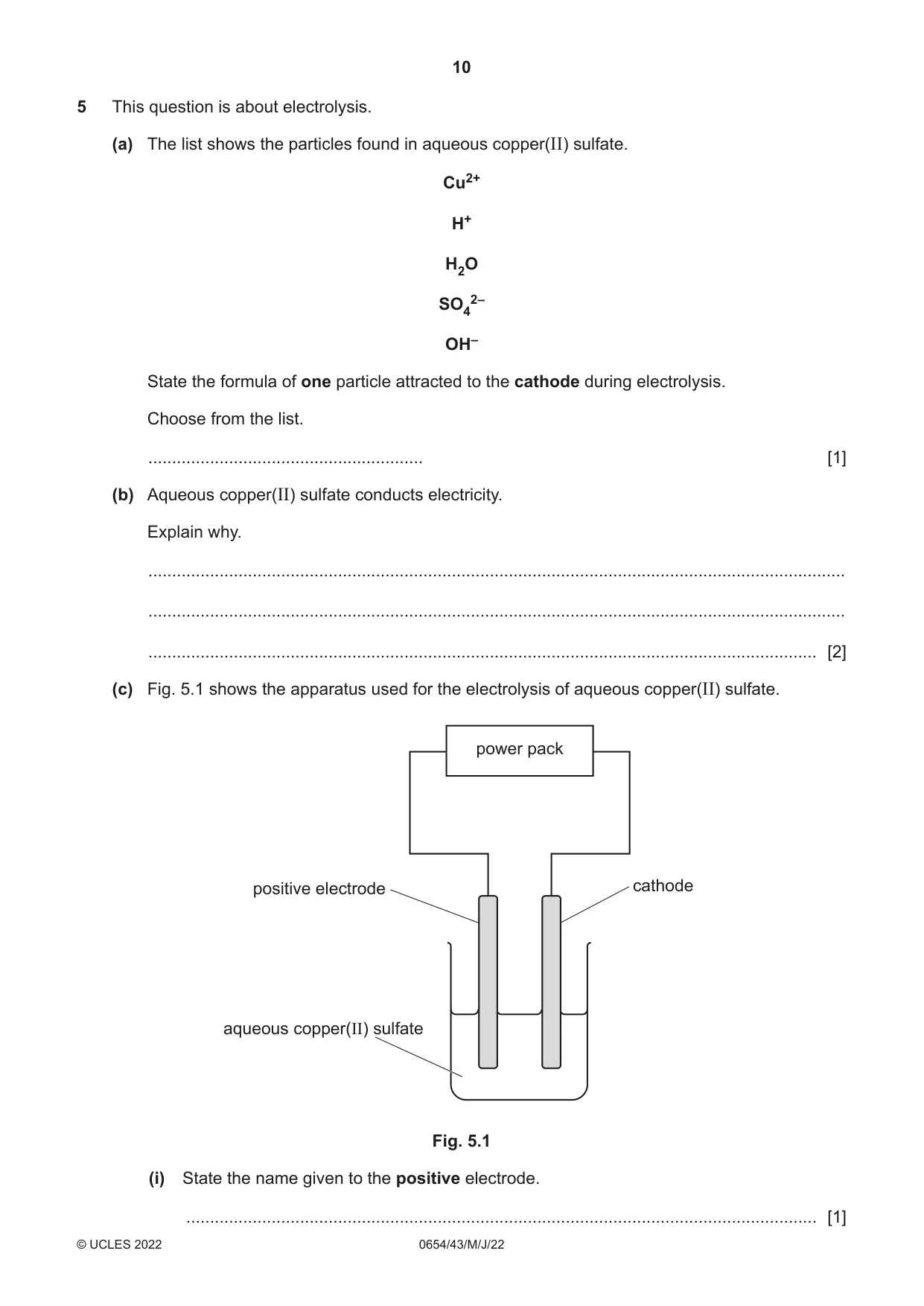
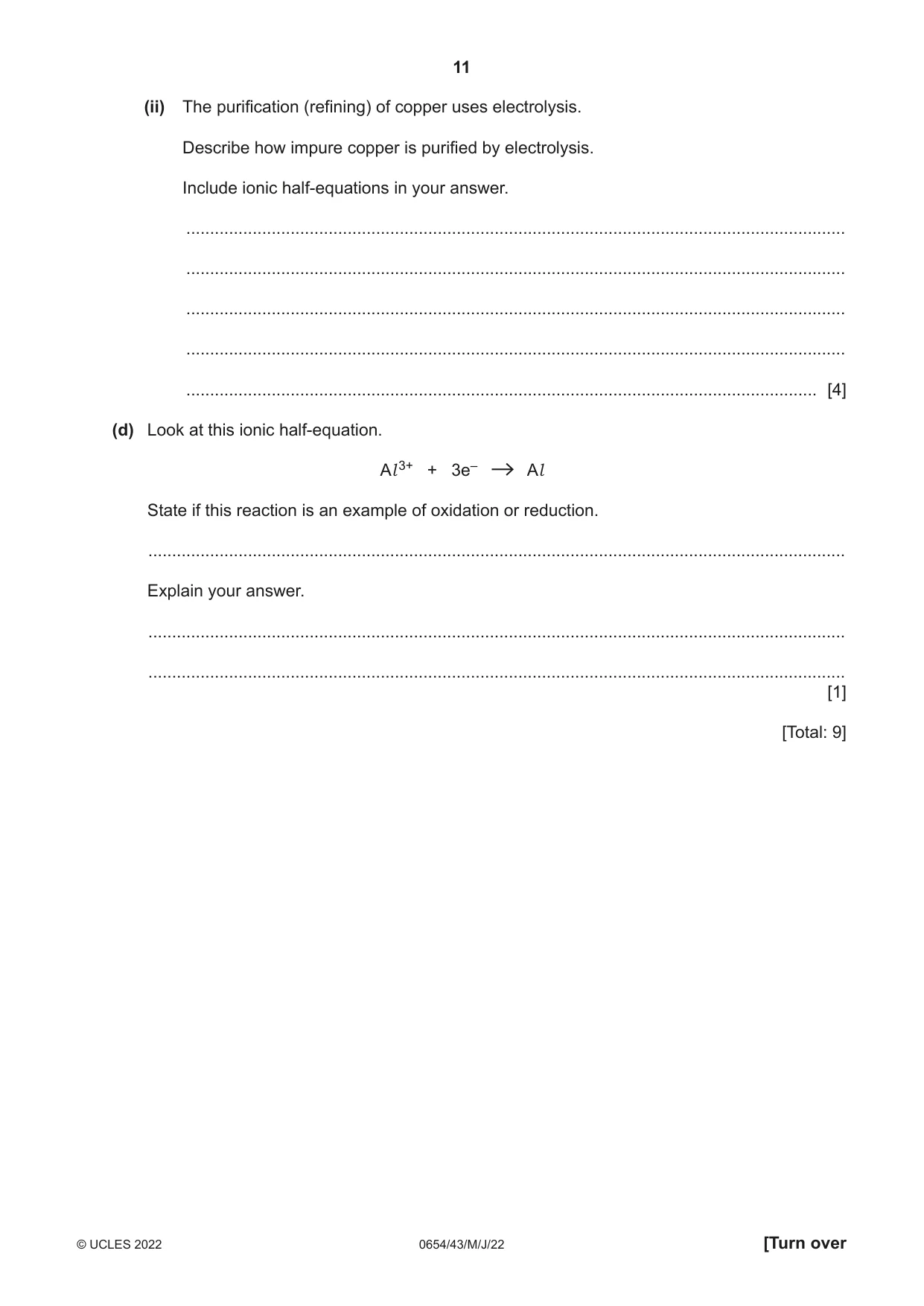
5 This question is about electrolysis. (a) The list shows the particles found in aqueous copper(II) sulfate. Cu2+ H+ H2O SO42– OH– State the formula of one particle attracted to the cathode during electrolysis. Choose from the list. .......................................................... [1] (b) Aqueous copper(II) sulfate conducts electricity. Explain why. ................................................................................................................................................... ................................................................................................................................................... ............................................................................................................................................. [2] (c) Fig. 5.1 shows the apparatus used for the electrolysis of aqueous copper(II) sulfate. power pack positive electrode cathode aqueous copper(II) sulfate Fig. 5.1 (i) State the name given to the positive electrode. ..................................................................................................................................... [1] (ii) The purification (refining) of copper uses electrolysis. Describe how impure copper is purified by electrolysis. Include ionic half-equations in your answer. ........................................................................................................................................... ........................................................................................................................................... ........................................................................................................................................... ........................................................................................................................................... ..................................................................................................................................... [4] (d) Look at this ionic half-equation. Al 3+ + 3e– Al State if this reaction is an example of oxidation or reduction. ................................................................................................................................................... Explain your answer. ................................................................................................................................................... ................................................................................................................................................... [1] [Total: 9]
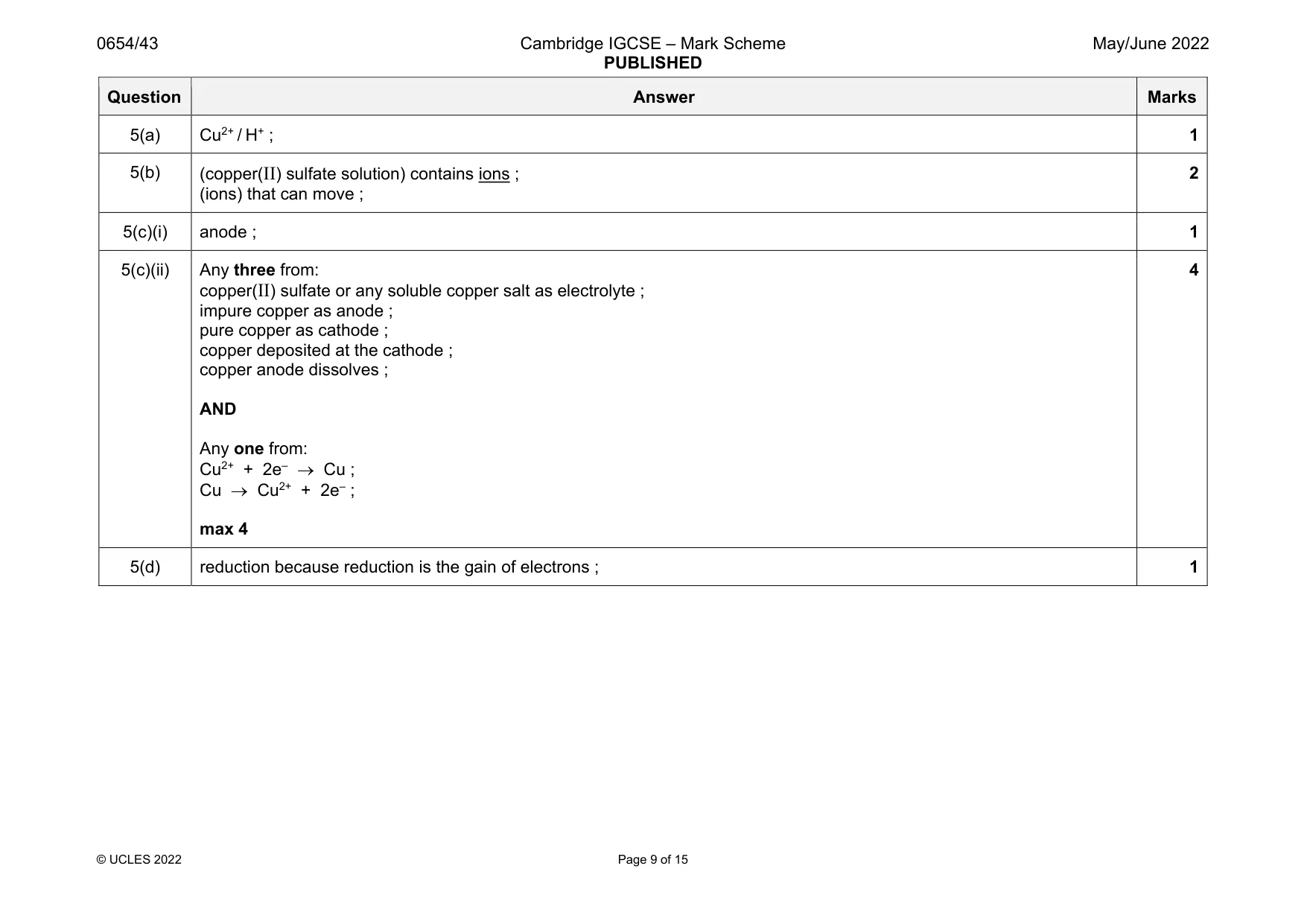
Mark scheme: 5(a) 1 5(b) (copper(II) sulfate solution) contains ions ; (ions) that can move ; 2 5(c)(i) anode ; 1 5(c)(ii) Any three from: copper(II) sulfate or any soluble copper salt as electrolyte ; impure copper as anode ; pure copper as cathode ; copper deposited at the cathode ; copper anode dissolves ; AND Any one from: Cu2+ + 2e– Cu ; Cu Cu2+ + 2e– ; max 4 4 5(d) reduction because reduction is the gain of electrons ; 1
Question 6
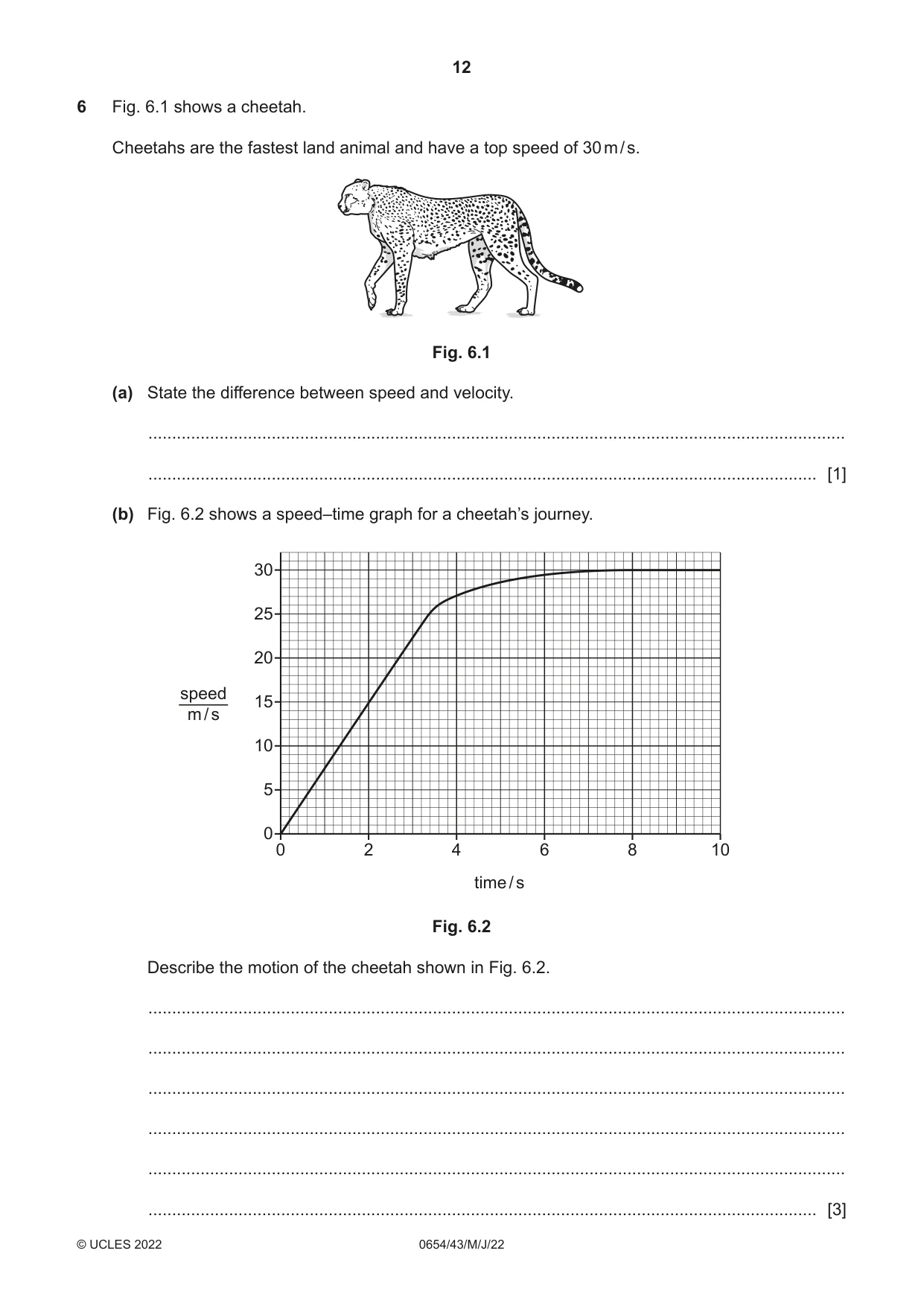
6 Fig. 6.1 shows a cheetah. Cheetahs are the fastest land animal and have a top speed of 30 m / s. Fig. 6.1 (a) State the difference between speed and velocity. ................................................................................................................................................... ............................................................................................................................................. [1] (b) Fig. 6.2 shows a speed–time graph for a cheetah’s journey. 30 25 20 speed 15 m / s 10 5 0 0 2 4 6 8 10 time / s Fig. 6.2 Describe the motion of the cheetah shown in Fig. 6.2. ................................................................................................................................................... ................................................................................................................................................... ................................................................................................................................................... ................................................................................................................................................... ................................................................................................................................................... ............................................................................................................................................. [3] (c) The mass of the cheetah is 42 kg. Calculate the kinetic energy of the cheetah when it is running at its maximum speed of 30 m / s. kinetic energy = ...................................................... J [2] (d) A cheetah drinks water from a puddle. Over time, the water in the puddle evaporates. Evaporation and boiling both turn liquid water into a gas. (i) State one difference between evaporation and boiling. ........................................................................................................................................... ..................................................................................................................................... [1] (ii) State two ways to increase the rate of evaporation from the puddle. 1 ........................................................................................................................................ ........................................................................................................................................... 2 ........................................................................................................................................ ........................................................................................................................................... [2] [Total: 9]
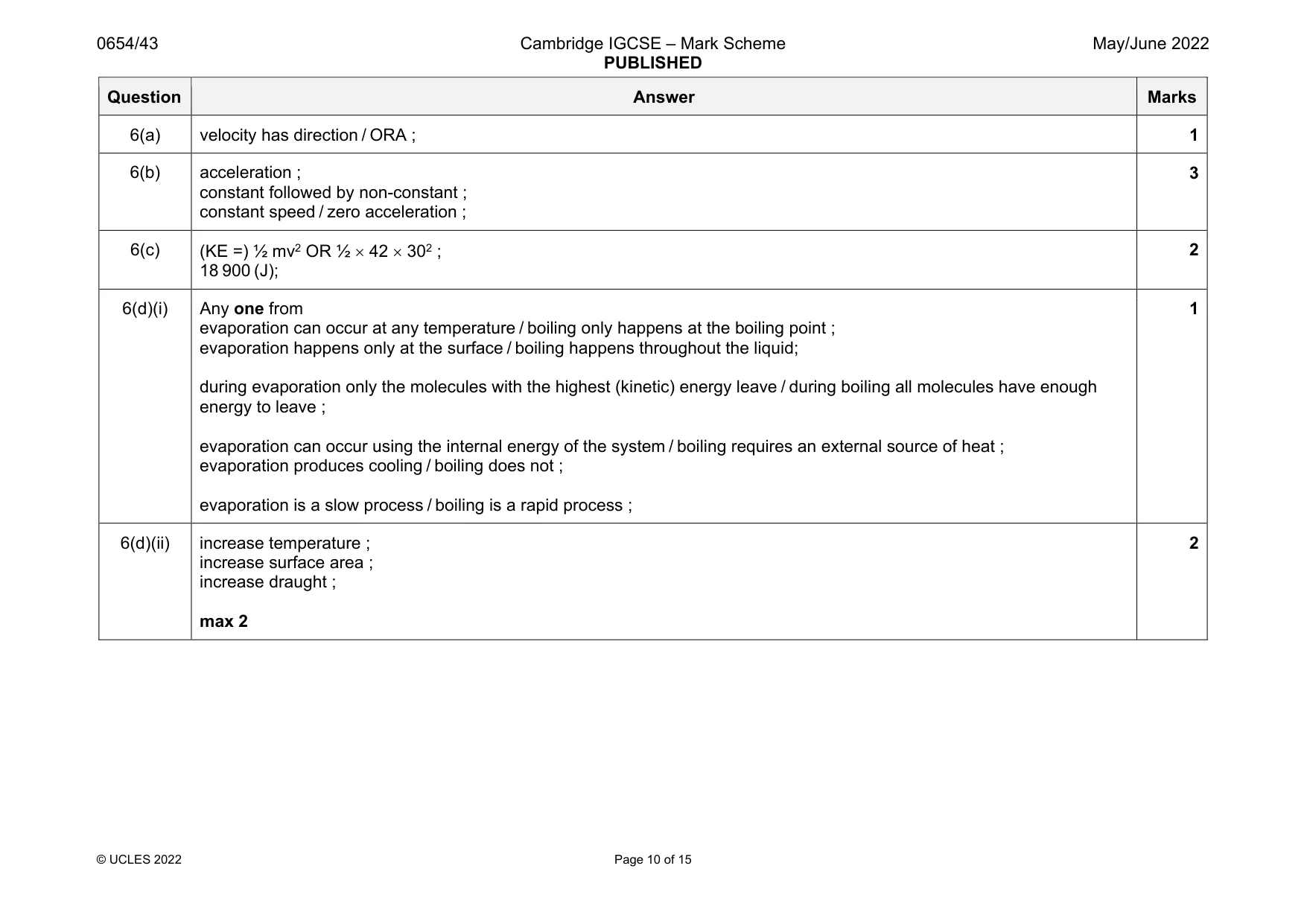
Mark scheme: 6(a) velocity has direction / ORA ; 1 6(b) acceleration ; constant followed by non-constant ; constant speed / zero acceleration ; 3 6(c) (KE =) ½ mv2 OR ½ 42 302 ; 18 900 (J); 2 6(d)(i) Any one from evaporation can occur at any temperature / boiling only happens at the boiling point ; evaporation happens only at the surface / boiling happens throughout the liquid; during evaporation only the molecules with the highest (kinetic) energy leave / during boiling all molecules have enough energy to leave ; evaporation can occur using the internal energy of the system / boiling requires an external source of heat ; evaporation produces cooling / boiling does not ; evaporation is a slow process / boiling is a rapid process ; 1 6(d)(ii) increase temperature ; increase surface area ; increase draught ; max 2 2
Q7 · The effect of an injection of adrenaline on pulse rate is recorded
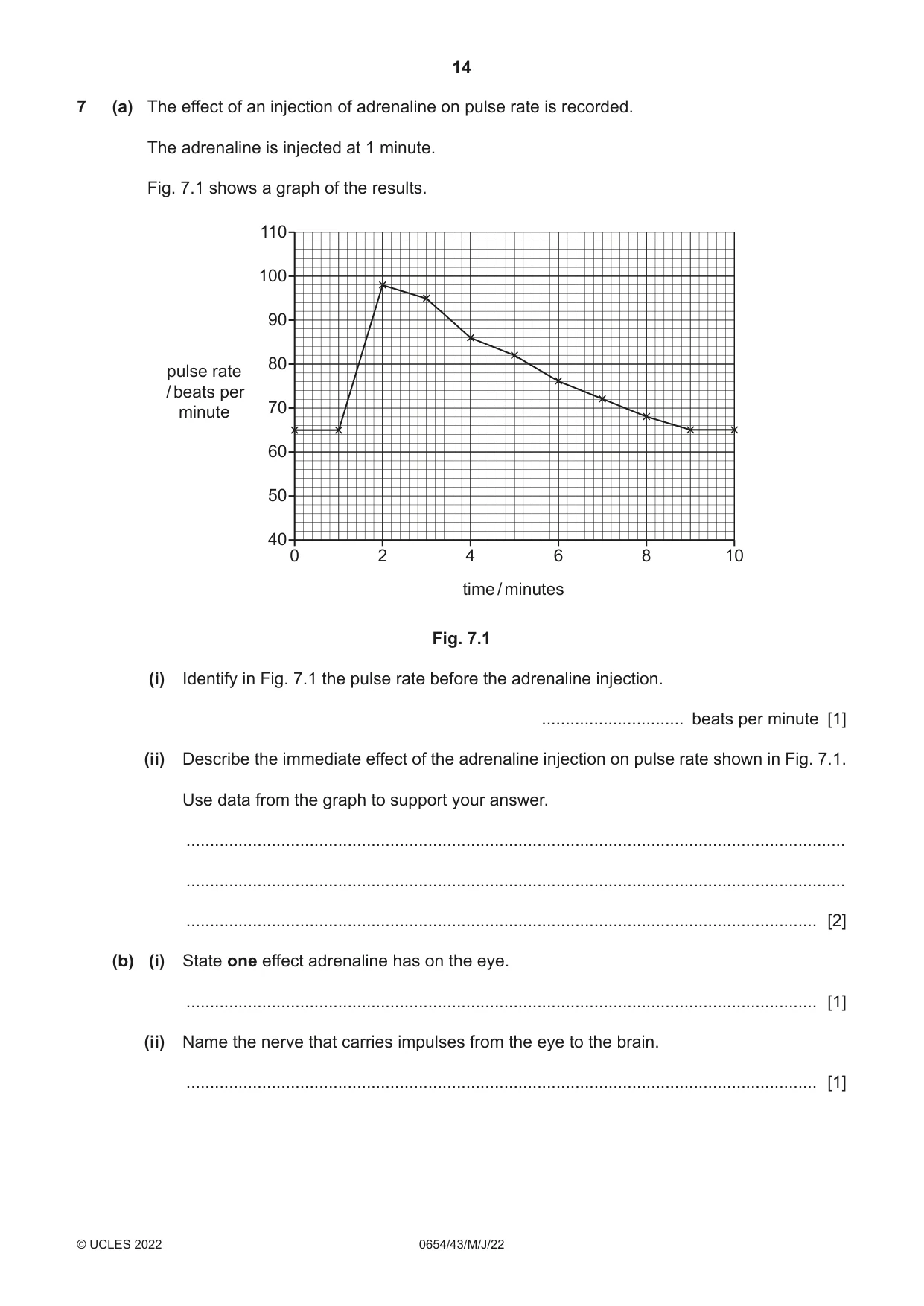
7 (a) The effect of an injection of adrenaline on pulse rate is recorded. The adrenaline is injected at 1 minute. Fig. 7.1 shows a graph of the results. 110 100 90 80 pulse rate / beats per minute 70 60 50 40 0 2 4 6 8 10 time / minutes Fig. 7.1 (i) Identify in Fig. 7.1 the pulse rate before the adrenaline injection. .............................. beats per minute [1] (ii) Describe the immediate effect of the adrenaline injection on pulse rate shown in Fig. 7.1. Use data from the graph to support your answer. ........................................................................................................................................... ........................................................................................................................................... ..................................................................................................................................... [2] (b) (i) State one effect adrenaline has on the eye. ..................................................................................................................................... [1] (ii) Name the nerve that carries impulses from the eye to the brain. ..................................................................................................................................... [1] (c) A hormone decreases blood glucose concentration by causing the glucose to be stored. (i) State the name of the hormone that decreases blood glucose concentration. ..................................................................................................................................... [1] (ii) State the name of the organ that produces this hormone. ..................................................................................................................................... [1] (iii) State the name of the organ that stores the excess glucose. ..................................................................................................................................... [1] (d) Describe two ways the actions of the hormonal system are different from the nervous system. 1 ................................................................................................................................................ ................................................................................................................................................... 2 ................................................................................................................................................ ................................................................................................................................................... [2] [Total: 10]
Mark scheme: 7(a)(i) 65 (beats per minute) ; 1 7(a)(ii) (steep) increase ; to 98 beats per minute / by 33 beats per minute ; 2 7(b)(i) pupils widen ; 1 7(b)(ii) optic (nerve) ; 1 7(c)(i) insulin ; 1 7(c)(ii) pancreas ; 1 7(c)(iii) liver ; 1 7(d) hormonal actions are slower to act ; hormonal actions last longer ; 2
Q8 · The arrangement of ions in magnesium metal at 25°C
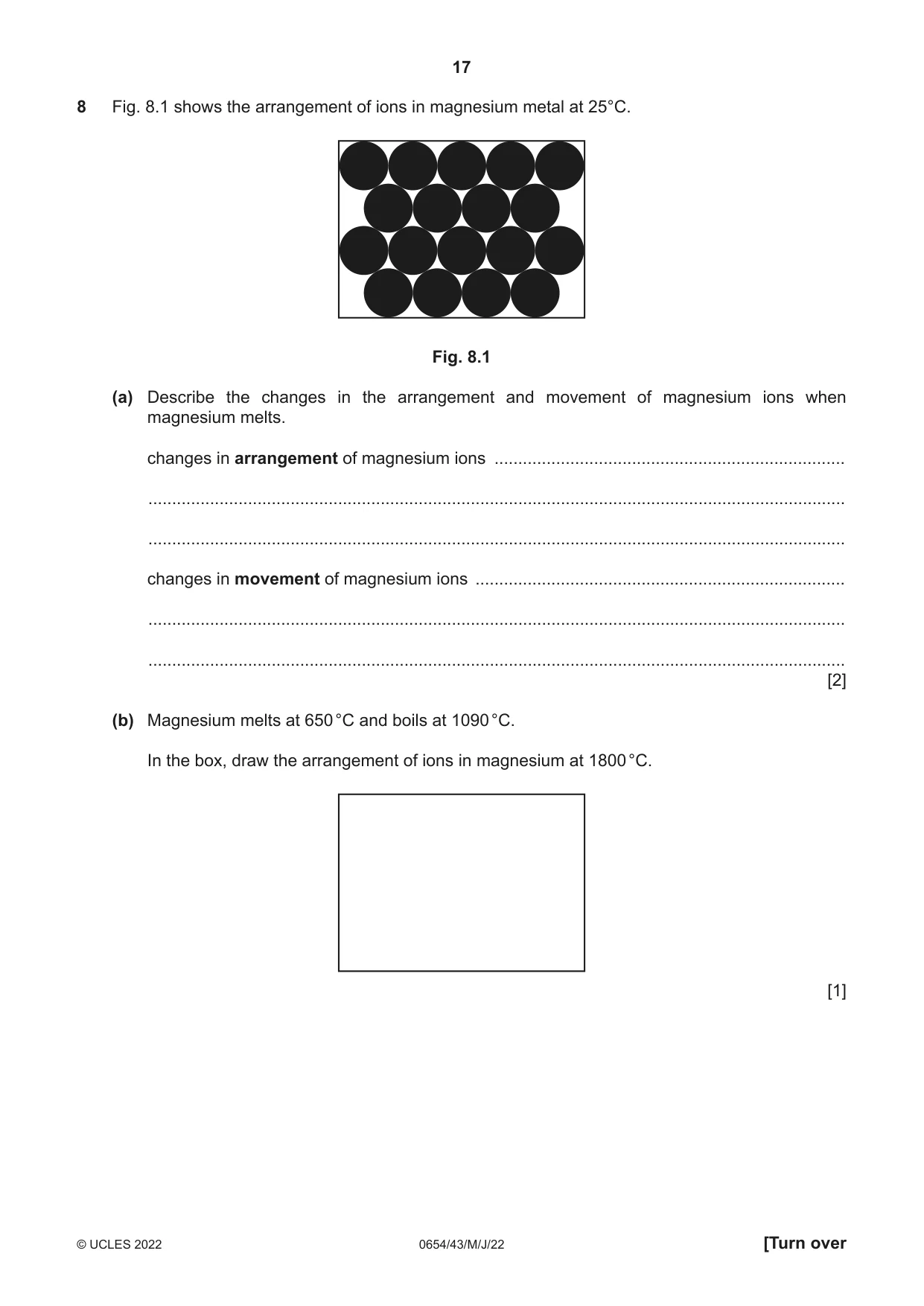
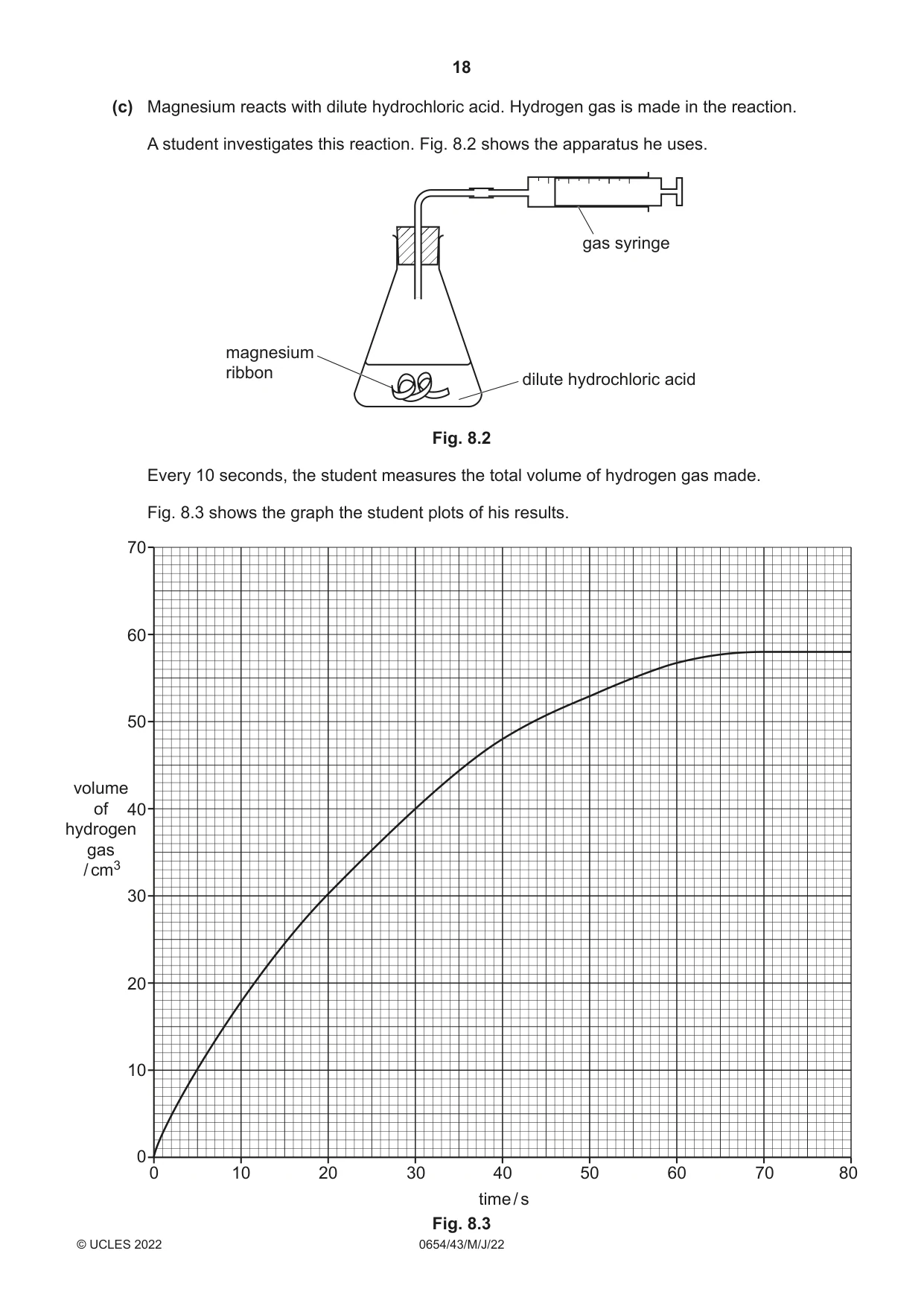
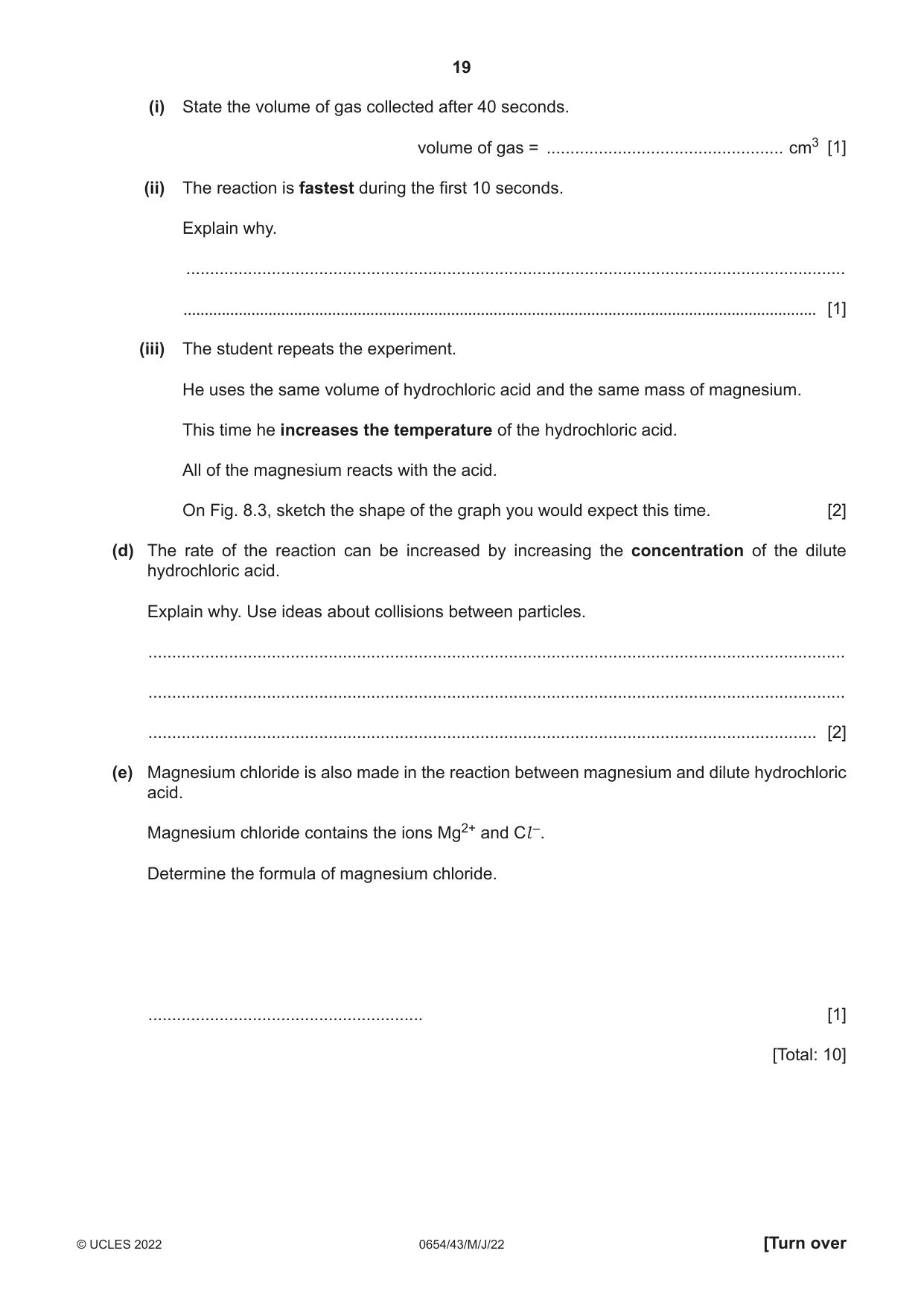
8 Fig. 8.1 shows the arrangement of ions in magnesium metal at 25°C. Fig. 8.1 (a) Describe the changes in the arrangement and movement of magnesium ions when magnesium melts. changes in arrangement of magnesium ions .......................................................................... ................................................................................................................................................... ................................................................................................................................................... changes in movement of magnesium ions .............................................................................. ................................................................................................................................................... ................................................................................................................................................... [2] (b) Magnesium melts at 650 °C and boils at 1090 °C. In the box, draw the arrangement of ions in magnesium at 1800 °C. [1] (c) Magnesium reacts with dilute hydrochloric acid. Hydrogen gas is made in the reaction. A student investigates this reaction. Fig. 8.2 shows the apparatus he uses. gas syringe magnesium ribbon dilute hydrochloric acid Fig. 8.2 Every 10 seconds, the student measures the total volume of hydrogen gas made. Fig. 8.3 shows the graph the student plots of his results. 70 60 50 volume of 40 hydrogen gas / cm3 30 20 10 0 0 10 20 30 40 50 60 70 80 time / s Fig. 8.3 (i) State the volume of gas collected after 40 seconds. volume of gas = .................................................. cm3 [1] (ii) The reaction is fastest during the first 10 seconds. Explain why. ........................................................................................................................................... ..................................................................................................................................................... [1] (iii) The student repeats the experiment. He uses the same volume of hydrochloric acid and the same mass of magnesium. This time he increases the temperature of the hydrochloric acid. All of the magnesium reacts with the acid. On Fig. 8.3, sketch the shape of the graph you would expect this time. [2] (d) The rate of the reaction can be increased by increasing the concentration of the dilute hydrochloric acid. Explain why. Use ideas about collisions between particles. ................................................................................................................................................... ................................................................................................................................................... ............................................................................................................................................. [2] (e) Magnesium chloride is also made in the reaction between magnesium and dilute hydrochloric acid. Magnesium chloride contains the ions Mg2+ and Cl –. Determine the formula of magnesium chloride. .......................................................... [1] [Total: 10]
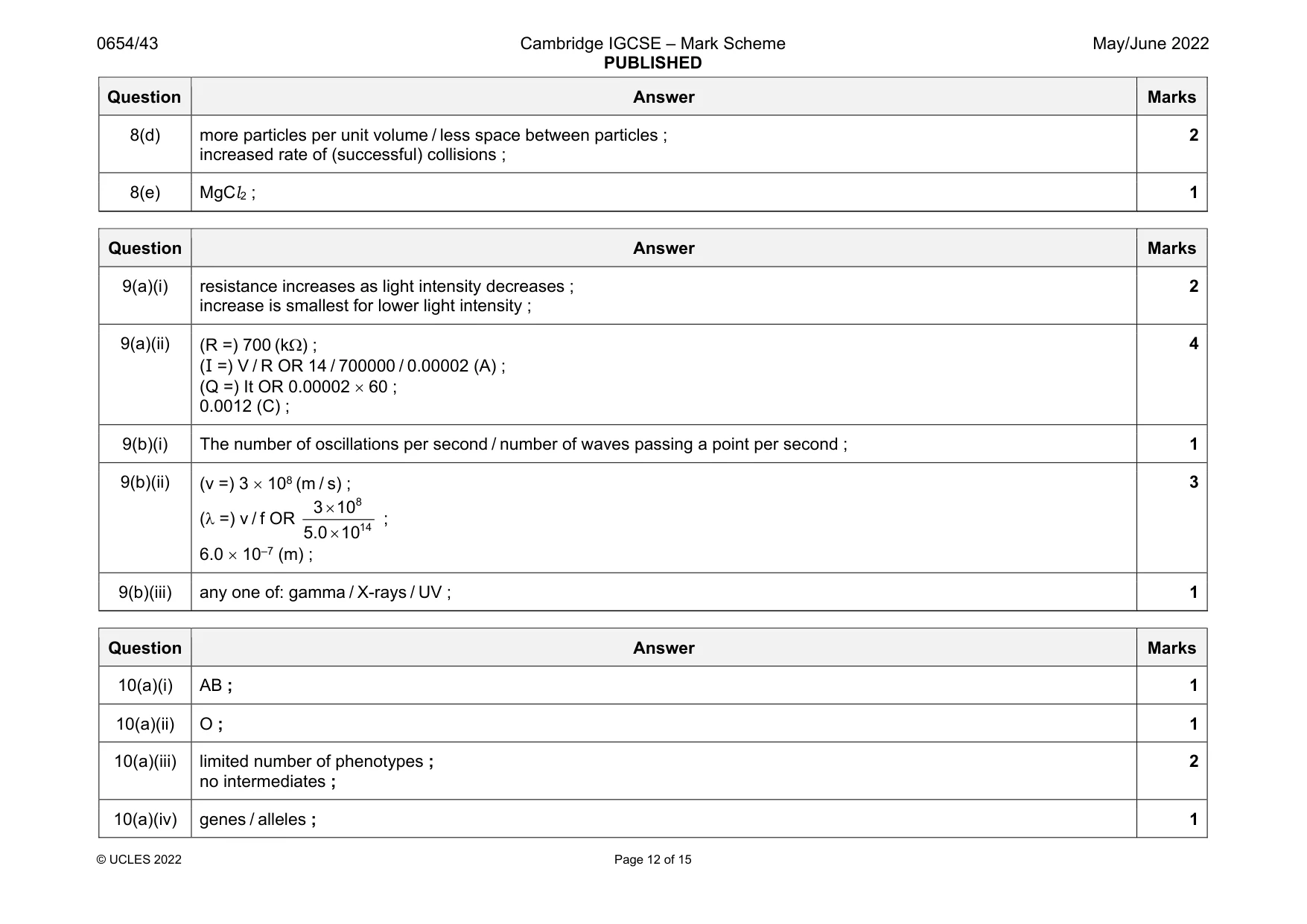
Mark scheme: 8(a) Changes in arrangement: idea that arrangement of particles becomes more random / becomes irregular ; Changes in movement: (idea that particles change from vibrating about fixed positions and start) moving around each other ; 8(b) randomly arranged particles not touching each other ; 1 8(c)(i) 48 (cm³) ; 1 8(c)(ii) acid is more concentrated at the start / the magnesium has a greater surface area at the start ; 1 8(c)(iii) graph steeper initially ; levels off at 58 cm³ ; 2 Question Answer Marks 8(d) more particles per unit volume / less space between particles ; increased rate of (successful) collisions ; 2 8(e) MgCl2 ; 1
Q9 · A student investigates the effect of changing light levels on the resistance of a…
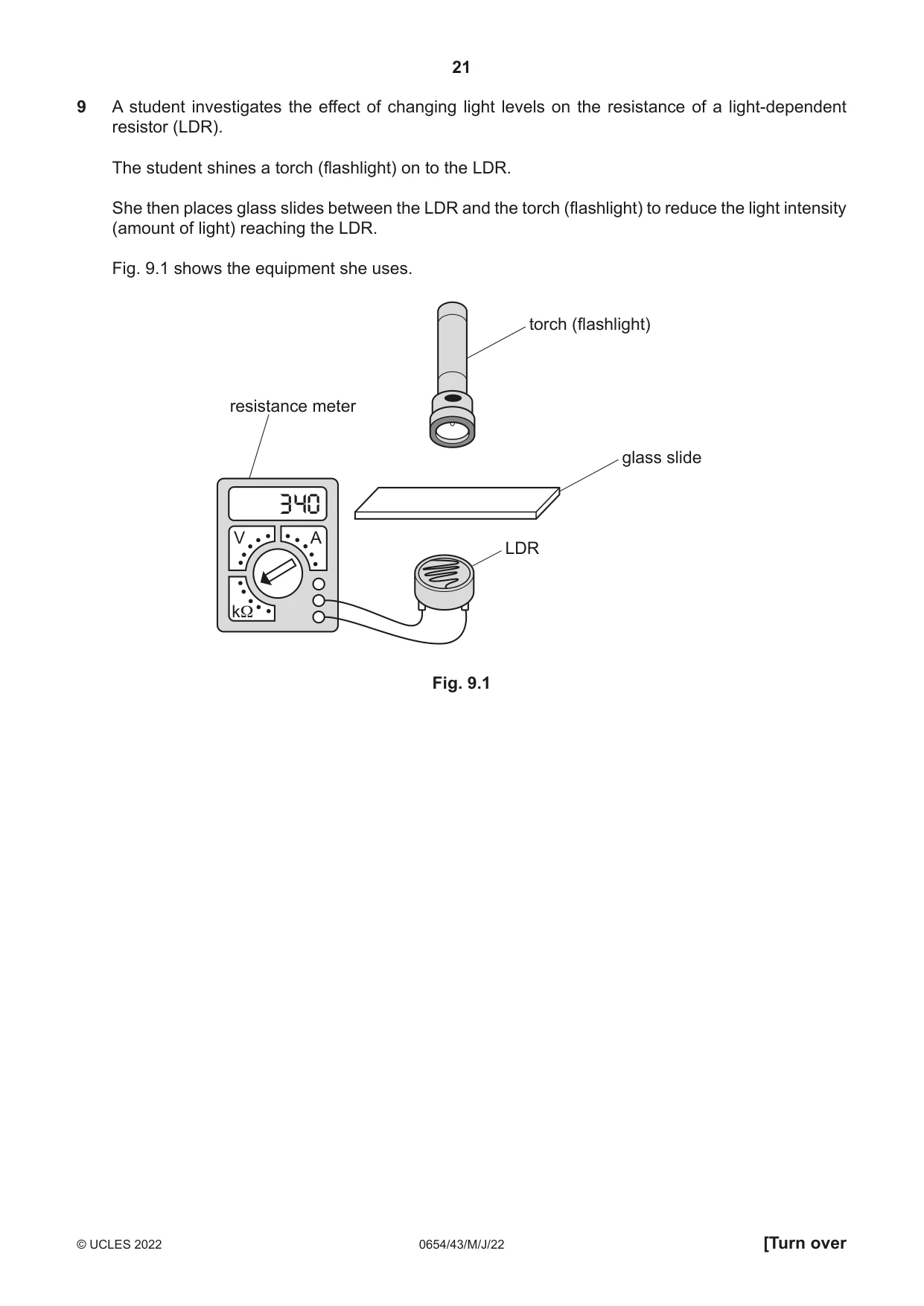
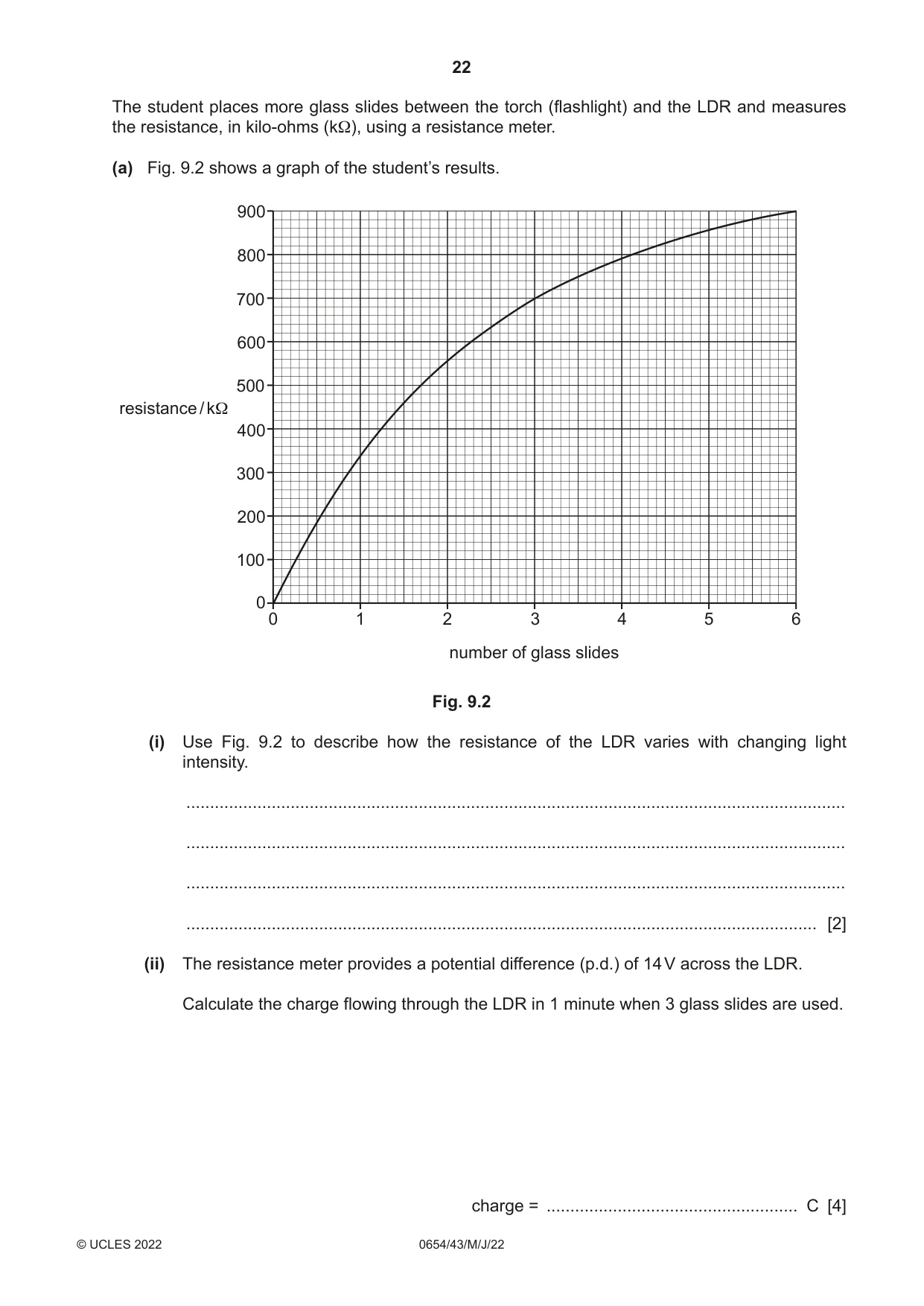
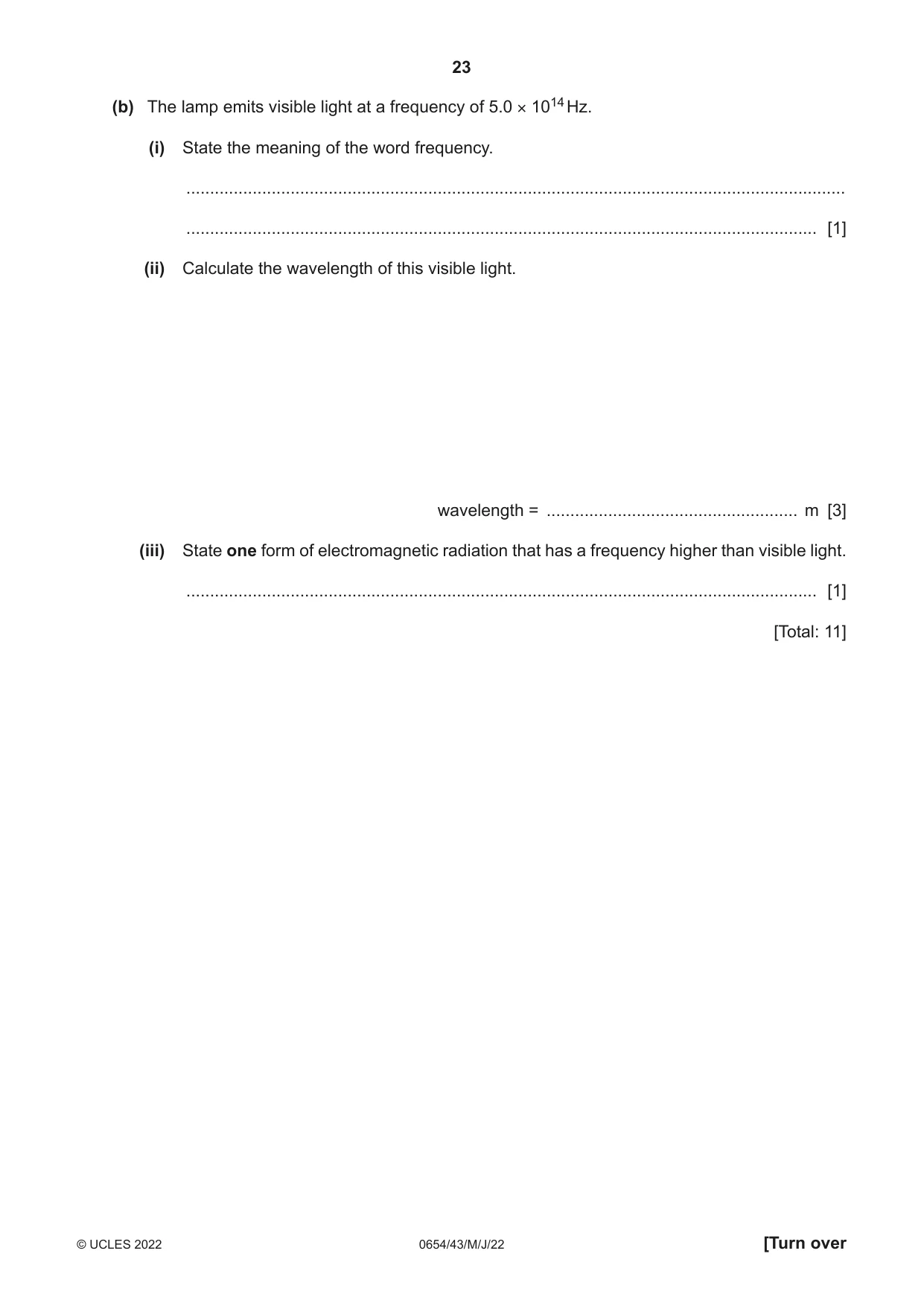
9 A student investigates the effect of changing light levels on the resistance of a light-dependent resistor (LDR). The student shines a torch (flashlight) on to the LDR. She then places glass slides between the LDR and the torch (flashlight) to reduce the light intensity (amount of light) reaching the LDR. Fig. 9.1 shows the equipment she uses. torch (flashlight) resistance meter glass slide 340 V A LDR kΩ Fig. 9.1 The student places more glass slides between the torch (flashlight) and the LDR and measures the resistance, in kilo-ohms (kΩ), using a resistance meter. (a) Fig. 9.2 shows a graph of the student’s results. 900 800 700 600 500 resistance / kΩ 400 300 200 100 0 0 1 2 3 4 5 6 number of glass slides Fig. 9.2 (i) Use Fig. 9.2 to describe how the resistance of the LDR varies with changing light intensity. ........................................................................................................................................... ........................................................................................................................................... ........................................................................................................................................... ..................................................................................................................................... [2] (ii) The resistance meter provides a potential difference (p.d.) of 14 V across the LDR. Calculate the charge flowing through the LDR in 1 minute when 3 glass slides are used. charge = ..................................................... C [4] (b) The lamp emits visible light at a frequency of 5.0 × 10¹⁴ Hz. (i) State the meaning of the word frequency. ........................................................................................................................................... ..................................................................................................................................... [1] (ii) Calculate the wavelength of this visible light. wavelength = ..................................................... m [3] (iii) State one form of electromagnetic radiation that has a frequency higher than visible light. ..................................................................................................................................... [1] [Total: 11]
Mark scheme: 9(a)(i) resistance increases as light intensity decreases ; increase is smallest for lower light intensity ; 2 9(a)(ii) (R =) 700 (k) ; (I =) V / R OR 14 / 700000 / 0.00002 (A) ; (Q =) It OR 0.00002 60 ; 0.0012 (C) ; 4 9(b)(i) The number of oscillations per second / number of waves passing a point per second ; 1 9(b)(ii) (v =) 3 108 (m / s) ; ( =) v / f OR 8 14 3 10 5.0 10 ; 6.0 10–7 (m) ; 3 9(b)(iii) any one of: gamma / X-rays / UV ; 1
Q10 · The blood group of some patients in hospital is recorded
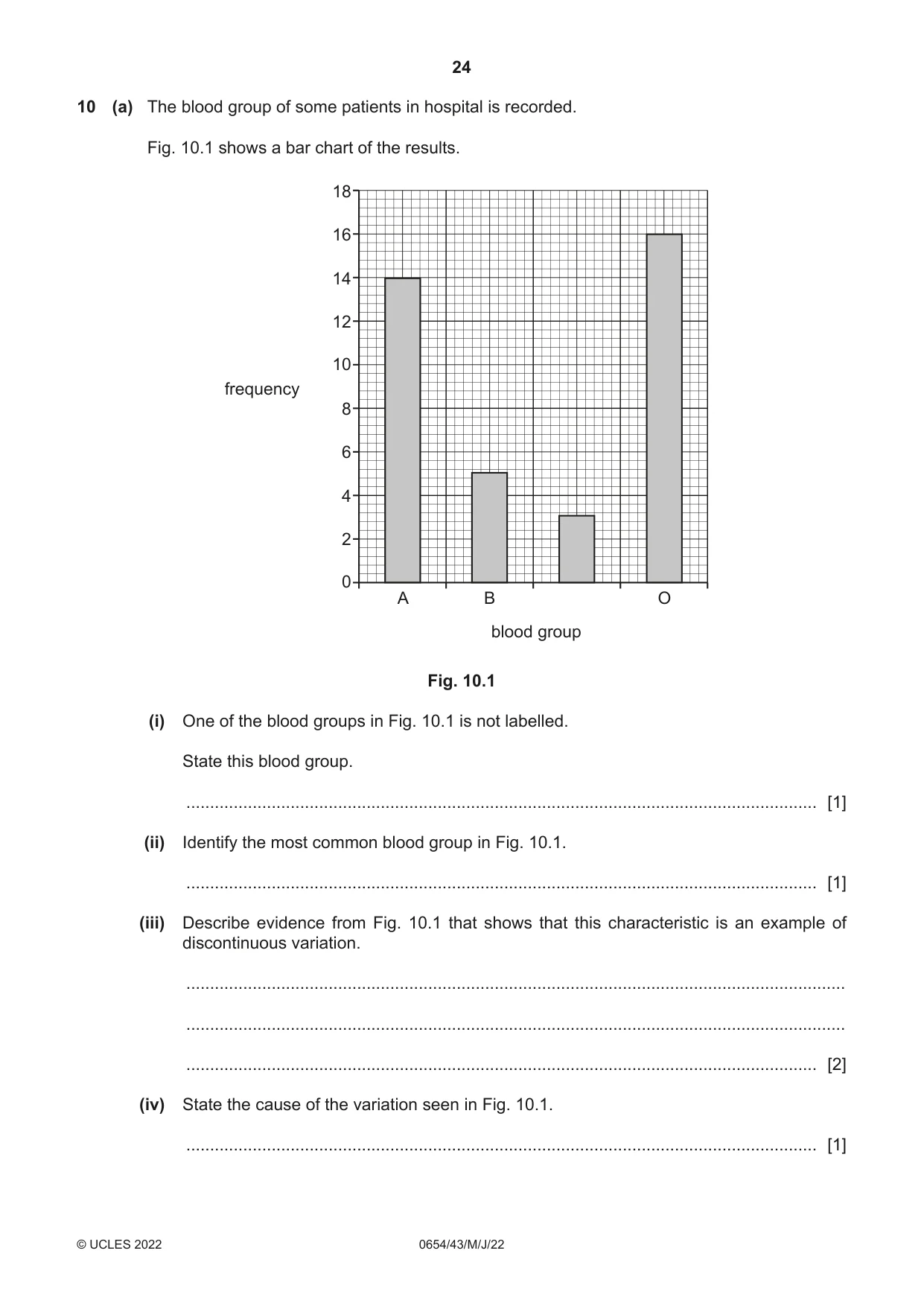
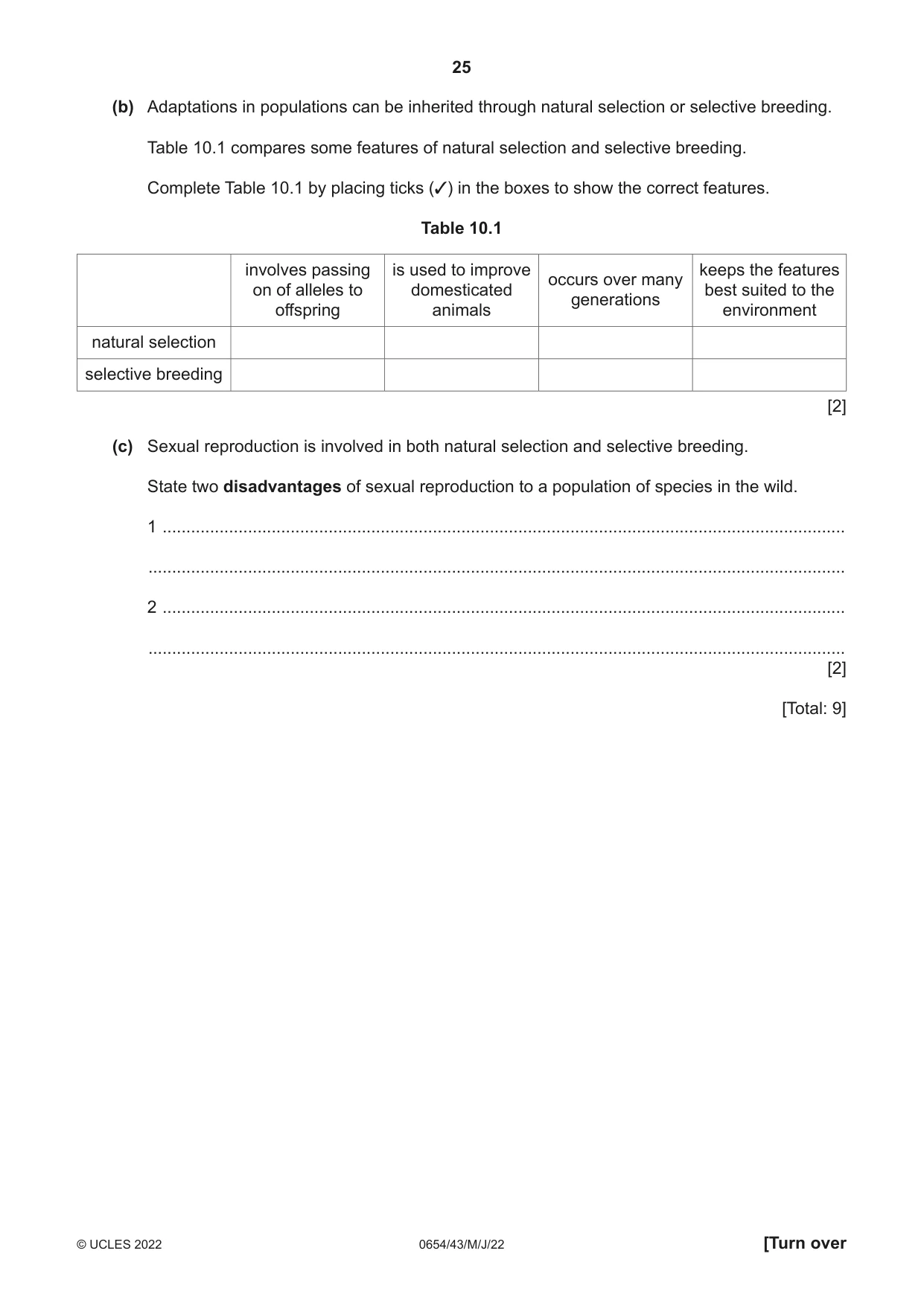
10 (a) The blood group of some patients in hospital is recorded. Fig. 10.1 shows a bar chart of the results. 18 16 14 12 10 frequency 8 6 4 2 0 A B O blood group Fig. 10.1 (i) One of the blood groups in Fig. 10.1 is not labelled. State this blood group. ..................................................................................................................................... [1] (ii) Identify the most common blood group in Fig. 10.1. ..................................................................................................................................... [1] (iii) Describe evidence from Fig. 10.1 that shows that this characteristic is an example of discontinuous variation. ........................................................................................................................................... ........................................................................................................................................... ..................................................................................................................................... [2] (iv) State the cause of the variation seen in Fig. 10.1. ..................................................................................................................................... [1] (b) Adaptations in populations can be inherited through natural selection or selective breeding. Table 10.1 compares some features of natural selection and selective breeding. Complete Table 10.1 by placing ticks (3) in the boxes to show the correct features. Table 10.1 involves passing is used to improve keeps the features occurs over many on of alleles to domesticated best suited to the generations offspring animals environment natural selection selective breeding [2] (c) Sexual reproduction is involved in both natural selection and selective breeding. State two disadvantages of sexual reproduction to a population of species in the wild. 1 ................................................................................................................................................ ................................................................................................................................................... 2 ................................................................................................................................................ ................................................................................................................................................... [2] [Total: 9]
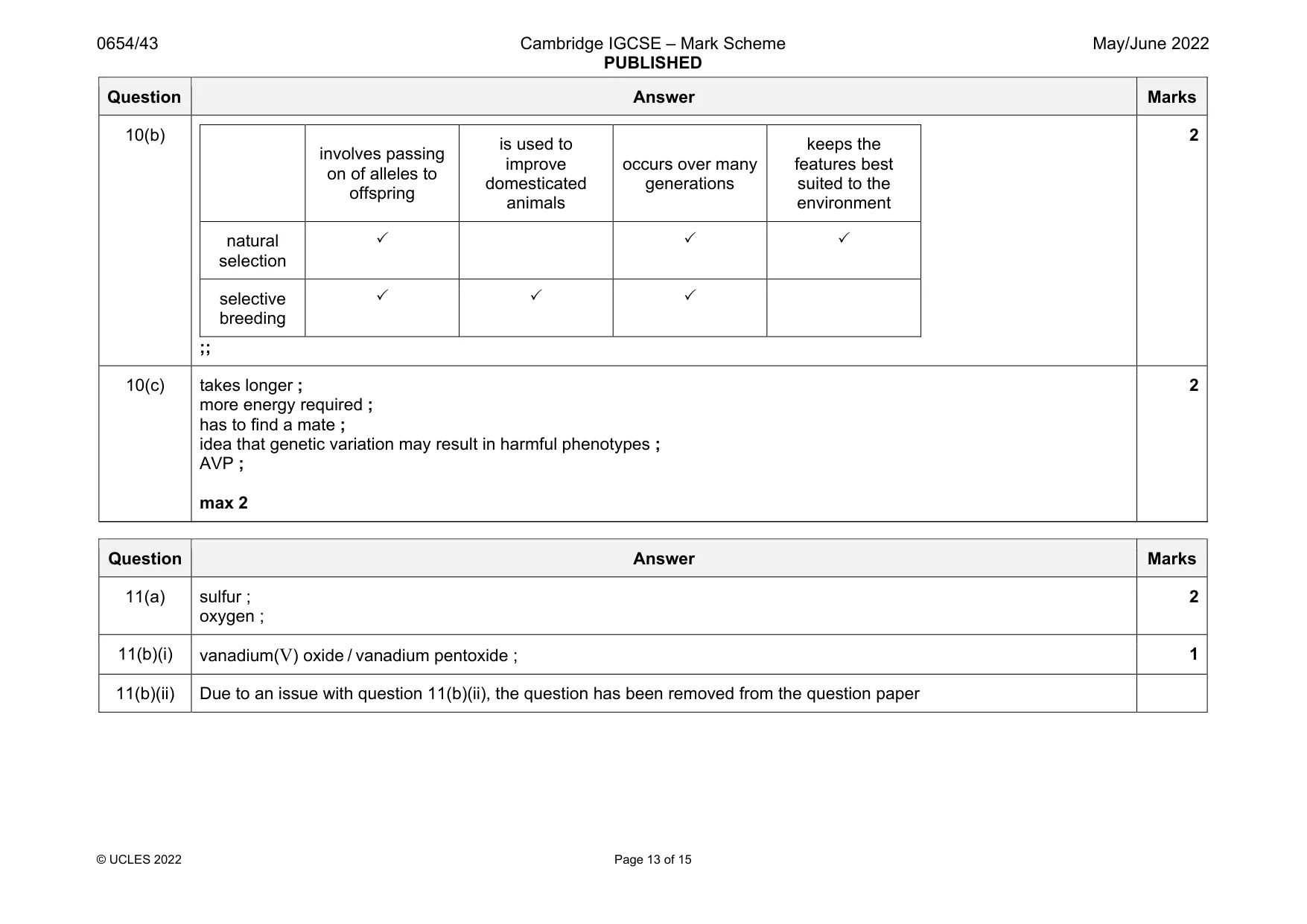
Mark scheme: 10(a)(i) AB ; 1 10(a)(ii) O ; 1 10(a)(iii) limited number of phenotypes ; no intermediates ; 2 10(a)(iv) genes / alleles ; 1 Question Answer Marks 10(b) involves passing on of alleles to offspring is used to improve domesticated animals occurs over many generations keeps the features best suited to the environment natural selection selective breeding ;; 2 10(c) takes longer ; more energy required ; has to find a mate ; idea that genetic variation may result in harmful phenotypes ; AVP ; max 2 2
Q11 · Sulfuric acid is made by the Contact process
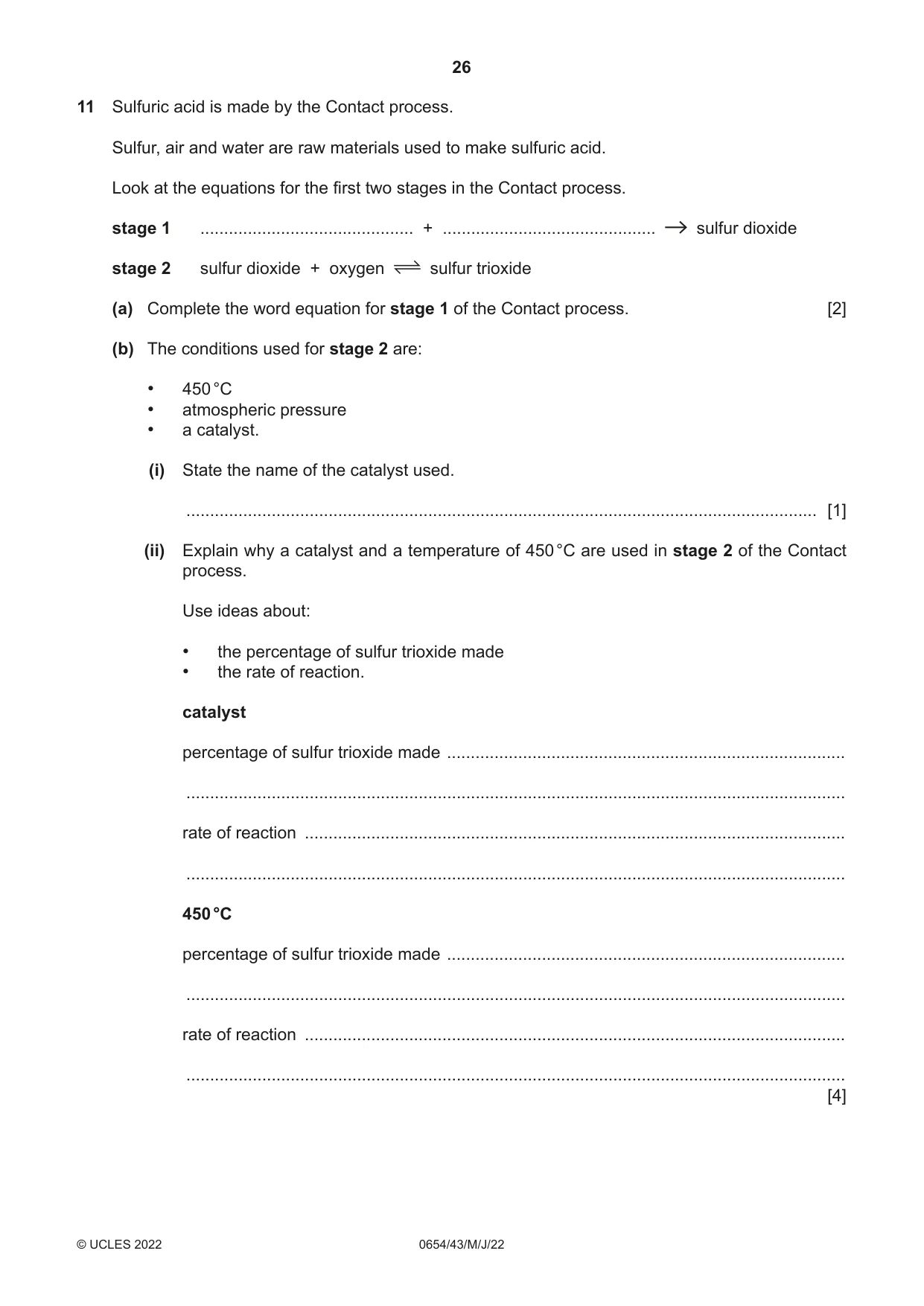
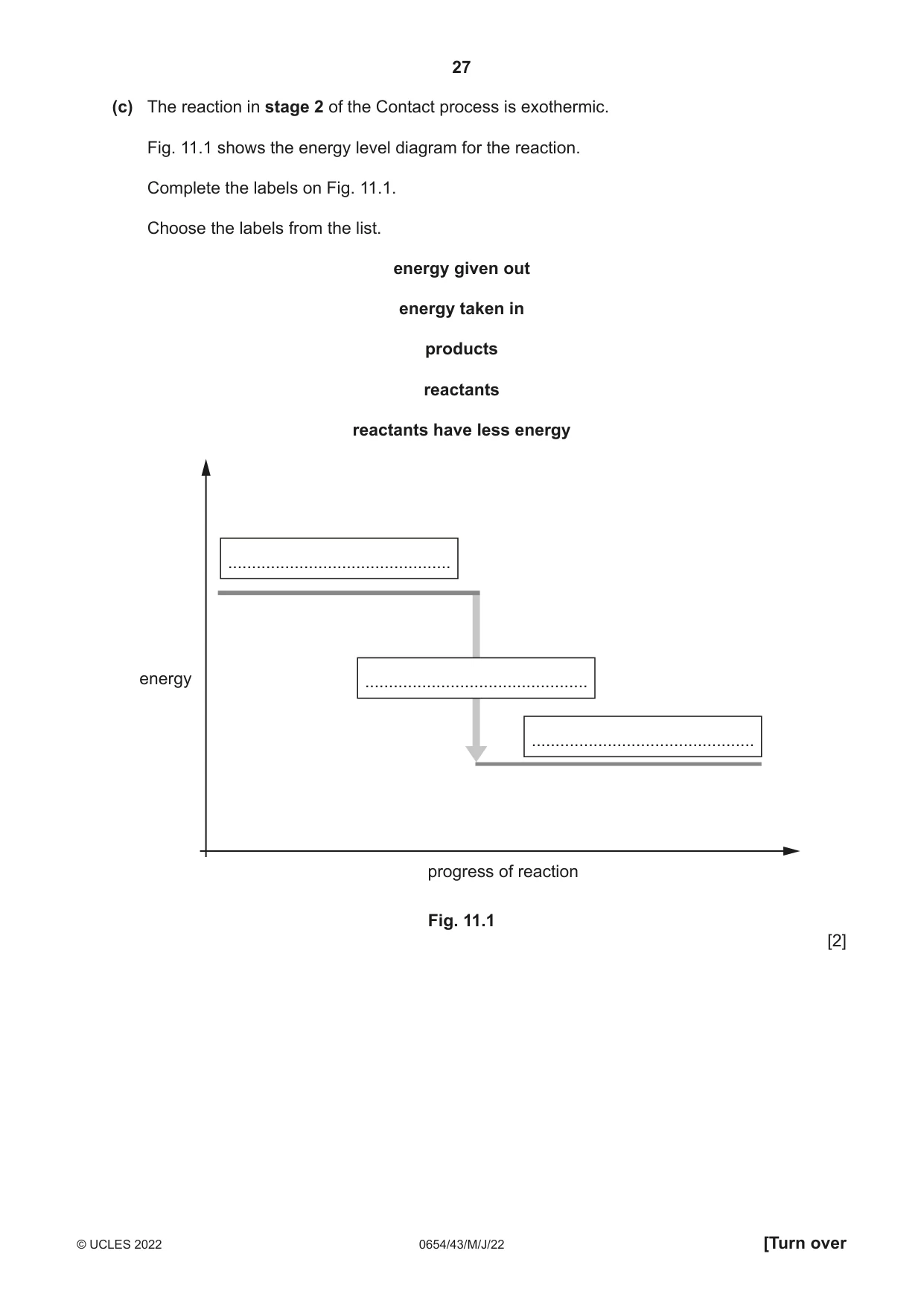
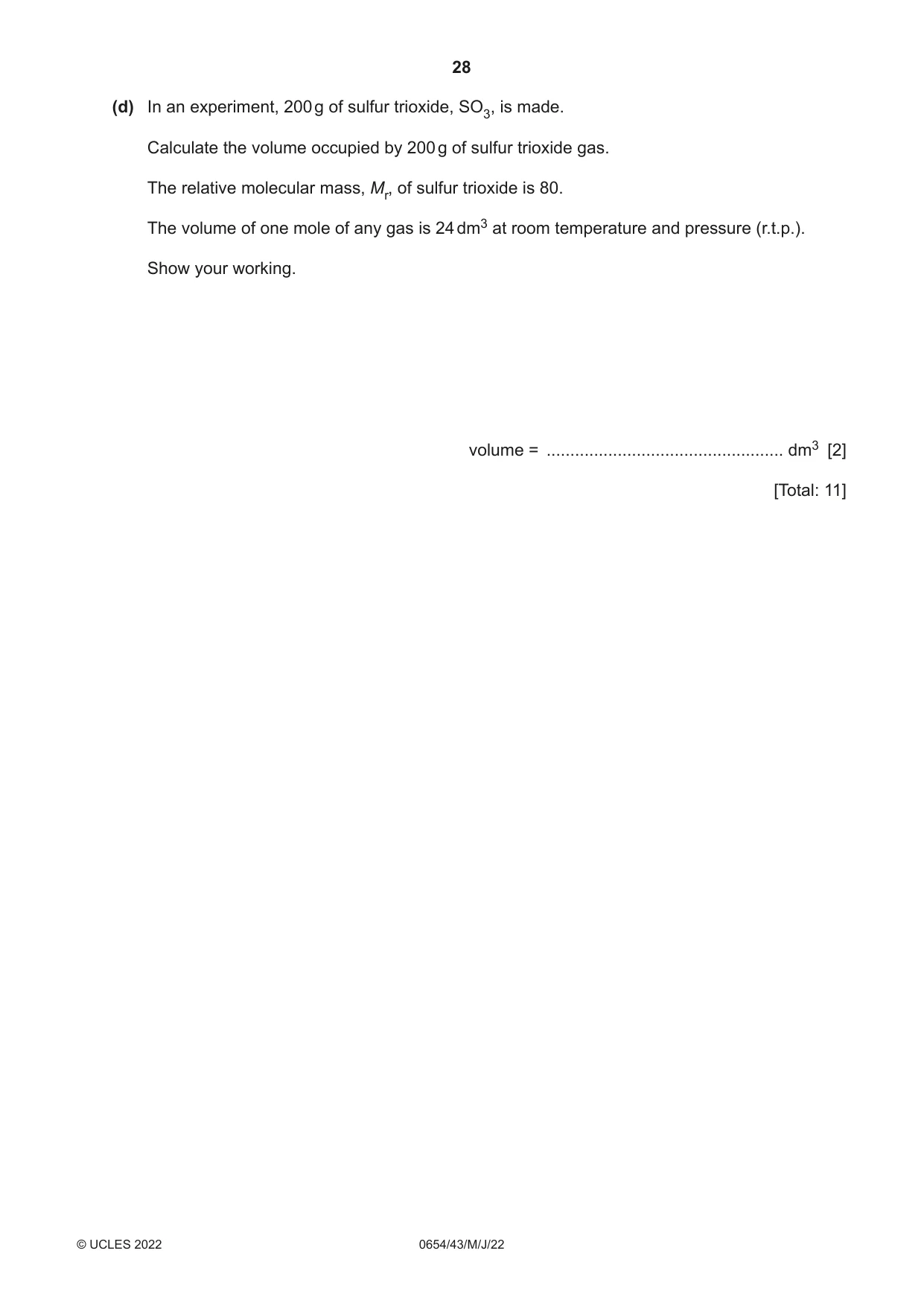
11 Sulfuric acid is made by the Contact process. Sulfur, air and water are raw materials used to make sulfuric acid. Look at the equations for the first two stages in the Contact process. stage 1 ............................................. + ............................................. sulfur dioxide stage 2 sulfur dioxide + oxygen sulfur trioxide (a) Complete the word equation for stage 1 of the Contact process. [2] (b) The conditions used for stage 2 are: • 450 °C • atmospheric pressure • a catalyst. (i) State the name of the catalyst used. ..................................................................................................................................... [1] (ii) Explain why a catalyst and a temperature of 450 °C are used in stage 2 of the Contact process. Use ideas about: • the percentage of sulfur trioxide made • the rate of reaction. catalyst percentage of sulfur trioxide made .................................................................................... ........................................................................................................................................... rate of reaction .................................................................................................................. ........................................................................................................................................... 450 °C percentage of sulfur trioxide made .................................................................................... ........................................................................................................................................... rate of reaction .................................................................................................................. ........................................................................................................................................... [4] (c) The reaction in stage 2 of the Contact process is exothermic. Fig. 11.1 shows the energy level diagram for the reaction. Complete the labels on Fig. 11.1. Choose the labels from the list. energy given out energy taken in products reactants reactants have less energy ............................................... energy ............................................... ............................................... progress of reaction Fig. 11.1 [2] (d) In an experiment, 200 g of sulfur trioxide, SO3, is made. Calculate the volume occupied by 200 g of sulfur trioxide gas. The relative molecular mass, Mr, of sulfur trioxide is 80. The volume of one mole of any gas is 24 dm3 at room temperature and pressure (r.t.p.). Show your working. volume = .................................................. dm3 [2] [Total: 11]
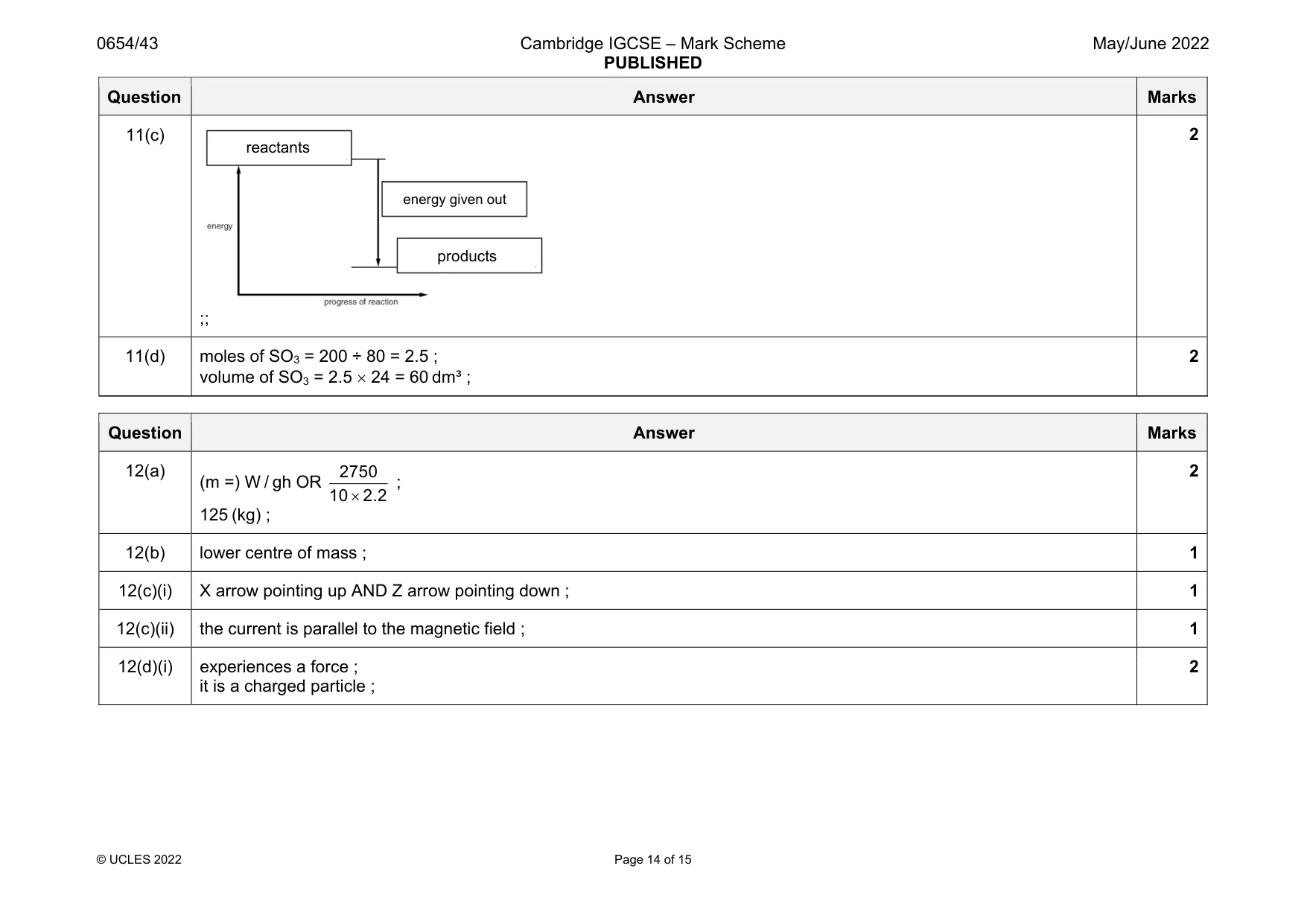
Mark scheme: 11(a) sulfur ; oxygen ; 2 11(b)(i) vanadium(V) oxide / vanadium pentoxide ; 1 11(b)(ii) Due to an issue with question 11(b)(ii), the question has been removed from the question paper Question Answer Marks 11(c) ;; 2 11(d) moles of SO3 = 200 ÷ 80 = 2.5 ; volume of SO3 = 2.5 24 = 60 dm³ ; 2 reactants products energy given out
Q12 · A forklift truck lifting a crate
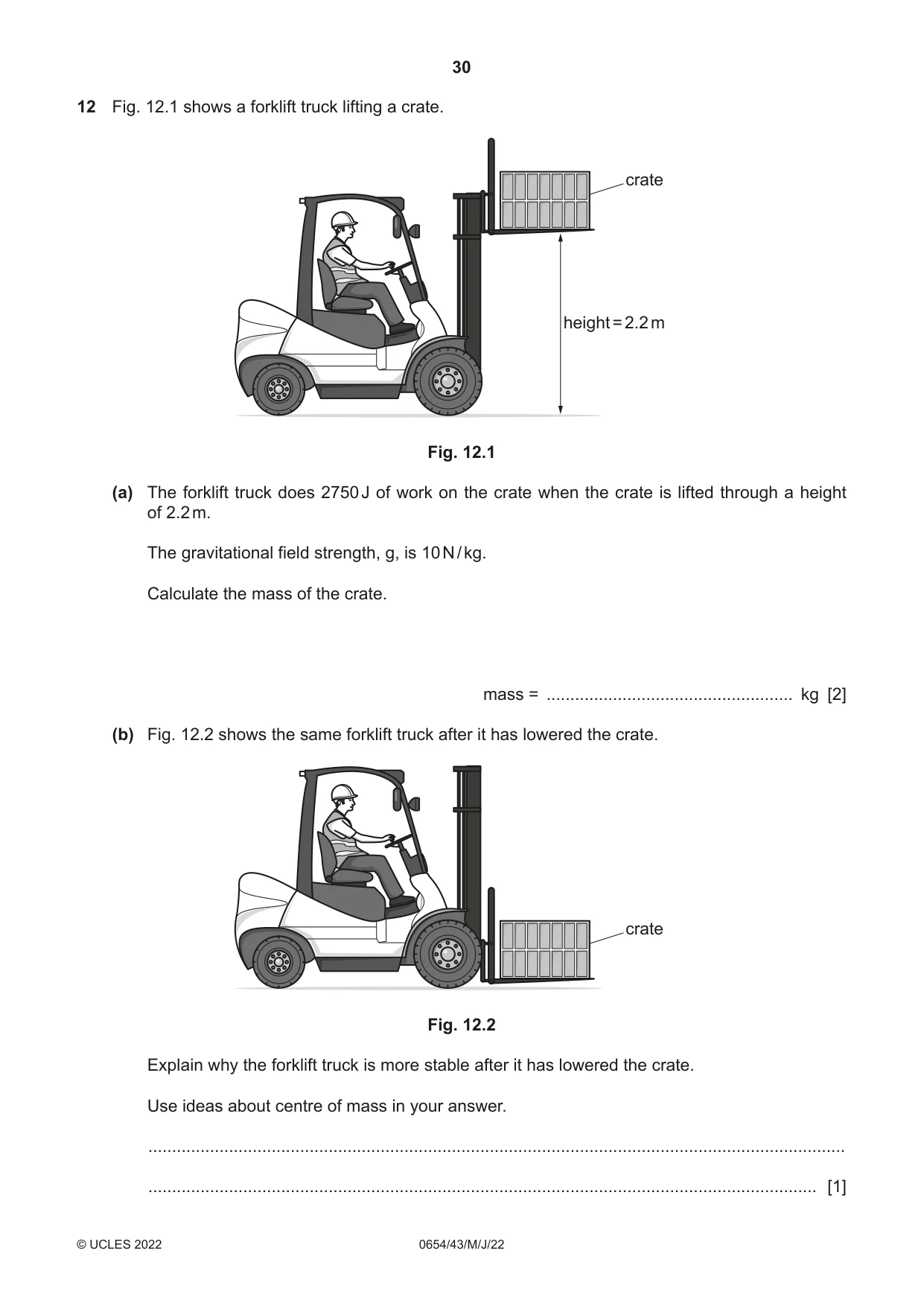
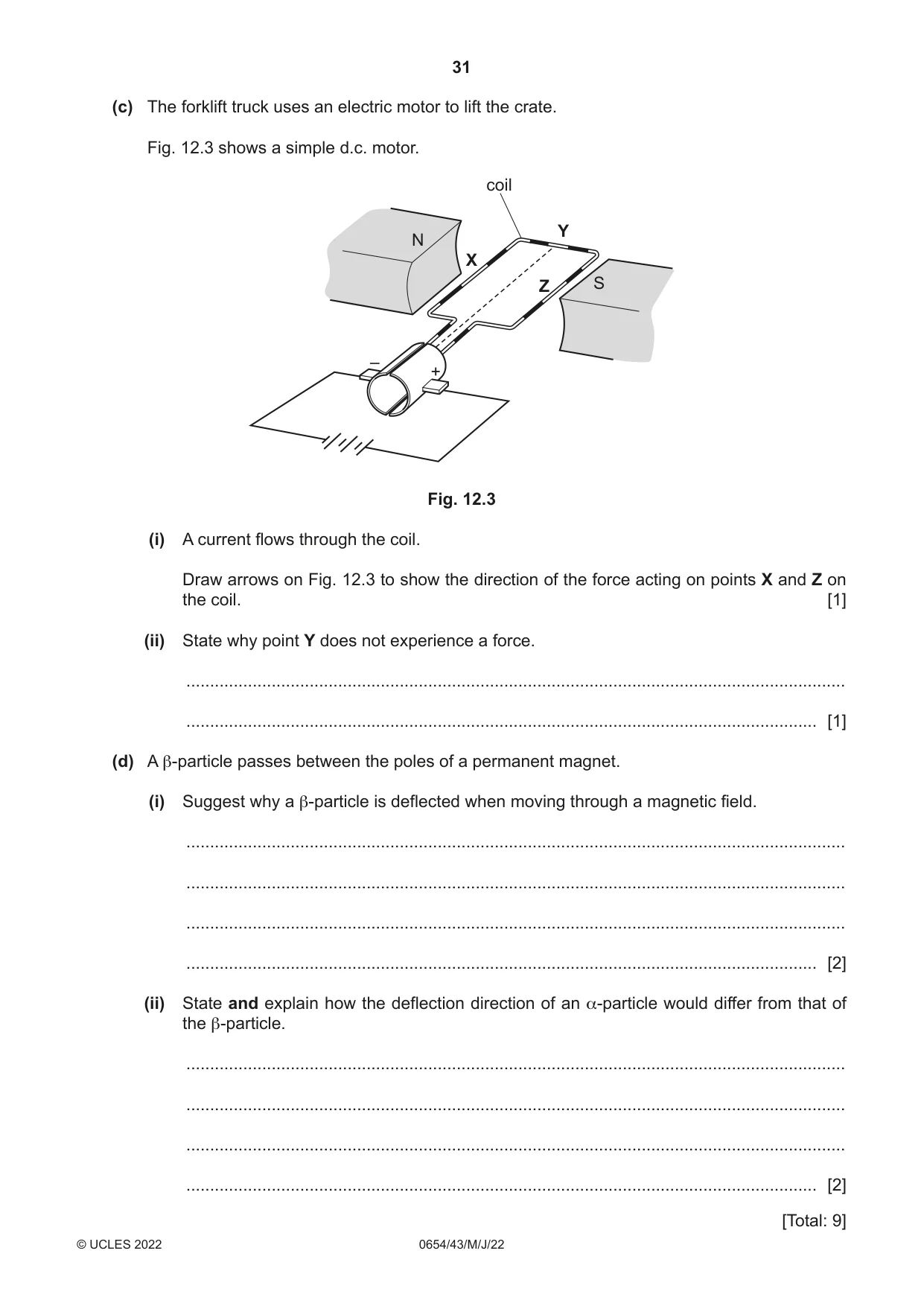
12 Fig. 12.1 shows a forklift truck lifting a crate. crate height = 2.2 m Fig. 12.1 (a) The forklift truck does 2750 J of work on the crate when the crate is lifted through a height of 2.2 m. The gravitational field strength, g, is 10 N / kg. Calculate the mass of the crate. mass = .................................................... kg [2] (b) Fig. 12.2 shows the same forklift truck after it has lowered the crate. crate Fig. 12.2 Explain why the forklift truck is more stable after it has lowered the crate. Use ideas about centre of mass in your answer. ................................................................................................................................................... ............................................................................................................................................. [1] (c) The forklift truck uses an electric motor to lift the crate. Fig. 12.3 shows a simple d.c. motor. coil Y N X Z S – + Fig. 12.3 (i) A current flows through the coil. Draw arrows on Fig. 12.3 to show the direction of the force acting on points X and Z on the coil. [1] (ii) State why point Y does not experience a force. ........................................................................................................................................... ..................................................................................................................................... [1] (d) A β-particle passes between the poles of a permanent magnet. (i) Suggest why a β-particle is deflected when moving through a magnetic field. ........................................................................................................................................... ........................................................................................................................................... ........................................................................................................................................... ..................................................................................................................................... [2] (ii) State and explain how the deflection direction of an α-particle would differ from that of the β-particle. ........................................................................................................................................... ........................................................................................................................................... ........................................................................................................................................... ..................................................................................................................................... [2]
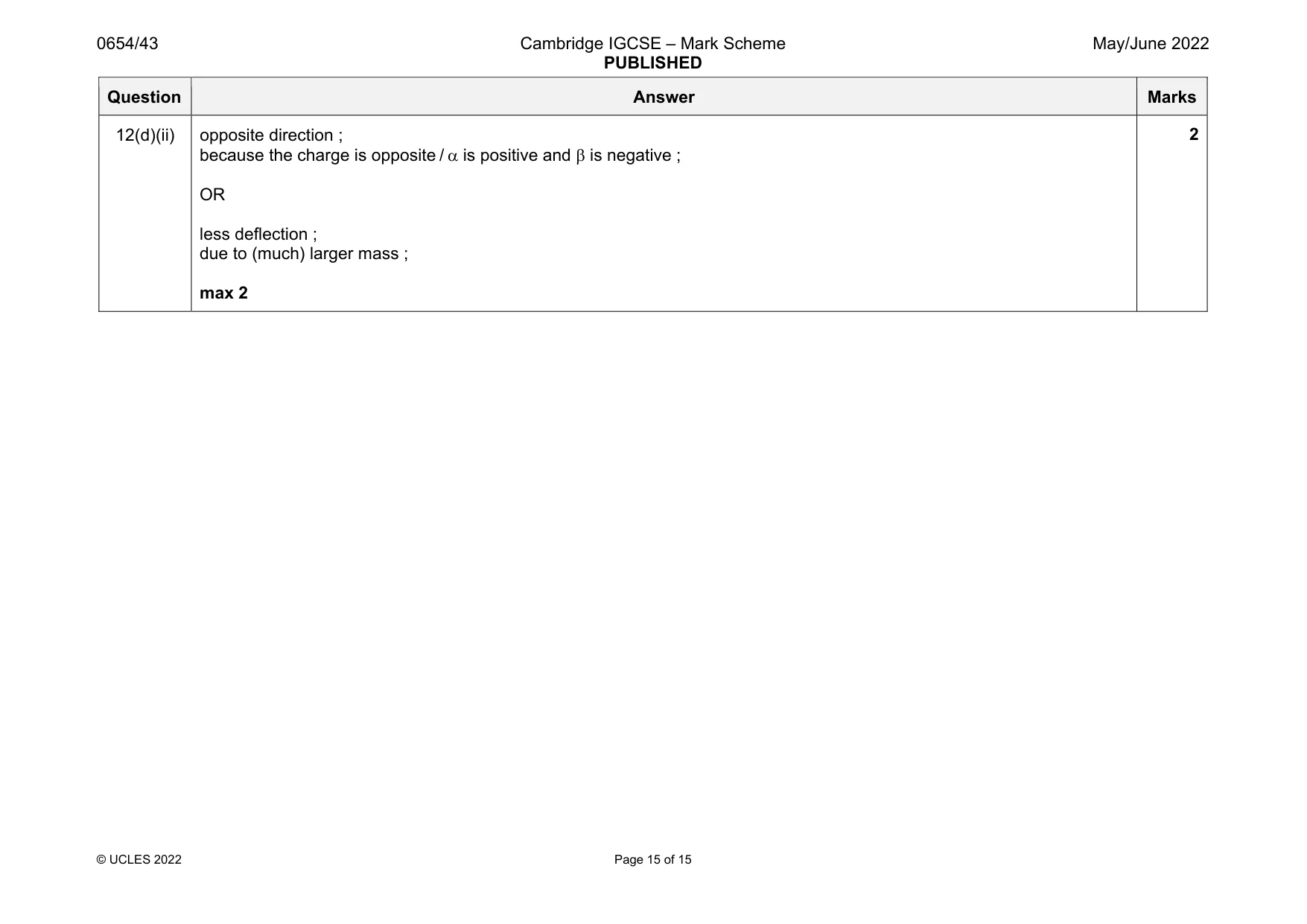
Mark scheme: 12(a) (m =) W / gh OR 2750 10 2.2 ; 125 (kg) ; 2 12(b) lower centre of mass ; 1 12(c)(i) X arrow pointing up AND Z arrow pointing down ; 1 12(c)(ii) the current is parallel to the magnetic field ; 1 12(d)(i) experiences a force ; it is a charged particle ; 2 Question Answer Marks 12(d)(ii) opposite direction ; because the charge is opposite / is positive and is negative ; OR less deflection ; due to (much) larger mass ; max 2 2
What was in this paper
The subtopics covered by these 12 questions, and how many questions each got. Open one in a new tab to see every Cambridge question on it.
What you needed in this session
Cambridge’s own grade thresholds for 2022 May/June, Paper 4 · Variant 3. A higher threshold means an easier paper — the bar moves with how the cohort did.