Cambridge IGCSE Science - Combined 0653 — 2020 May/June Paper 3 · Variant 2
0653/32/M/J/20 · 9 questions · 80 marks · ≈90 min
The question paper and its mark scheme, free to read here and free to download. This is Cambridge’s own paper, exactly as it was sat.
Question paper20 pages
Mark scheme10 pages
Answers below. Sit the paper first if you are practising.
Questions as text
Question 1
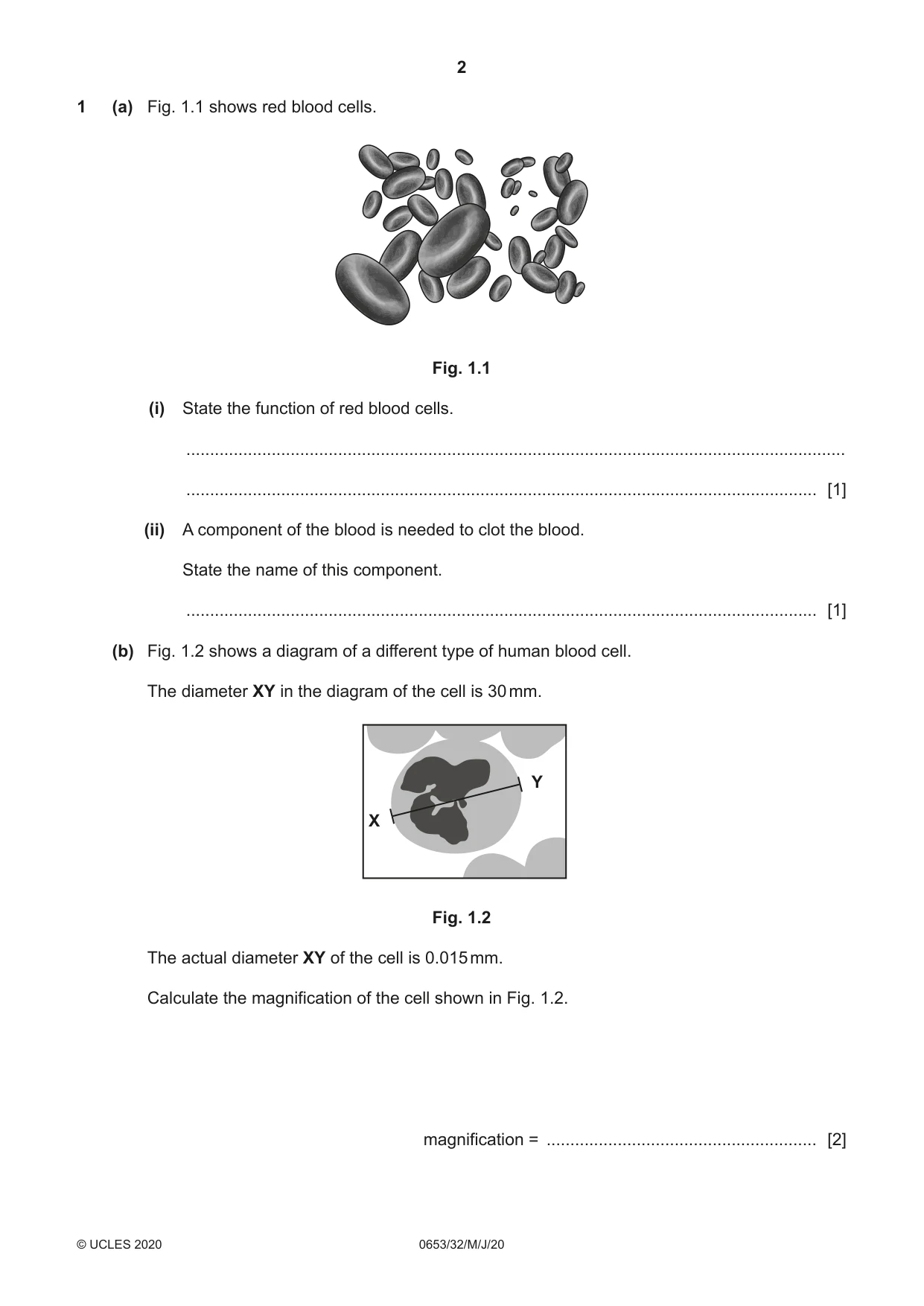
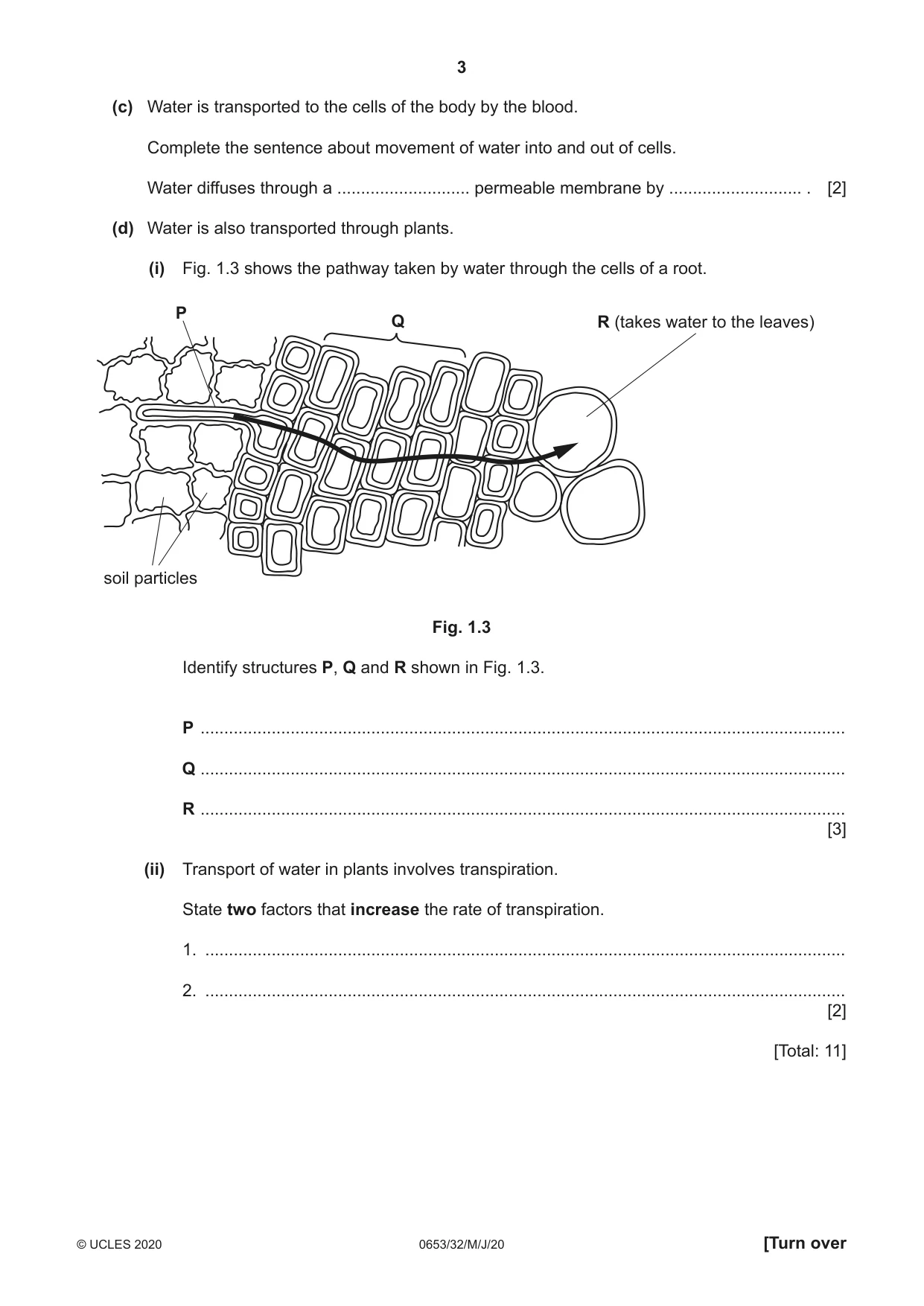
1 (a) Fig. 1.1 shows red blood cells. Fig. 1.1 (i) State the function of red blood cells. ........................................................................................................................................... ..................................................................................................................................... [1] (ii) A component of the blood is needed to clot the blood. State the name of this component. ..................................................................................................................................... [1] (b) Fig. 1.2 shows a diagram of a different type of human blood cell. The diameter XY in the diagram of the cell is 30 mm. Y X Fig. 1.2 The actual diameter XY of the cell is 0.015 mm. Calculate the magnification of the cell shown in Fig. 1.2. magnification = ......................................................... [2] (c) Water is transported to the cells of the body by the blood. Complete the sentence about movement of water into and out of cells. Water diffuses through a ............................ permeable membrane by ............................ . [2] (d) Water is also transported through plants. (i) Fig. 1.3 shows the pathway taken by water through the cells of a root. P Q R (takes water to the leaves) soil particles Fig. 1.3 Identify structures P, Q and R shown in Fig. 1.3. P ........................................................................................................................................ Q ........................................................................................................................................ R ........................................................................................................................................ [3] (ii) Transport of water in plants involves transpiration. State two factors that increase the rate of transpiration. 1. ....................................................................................................................................... 2. ....................................................................................................................................... [2] [Total: 11]
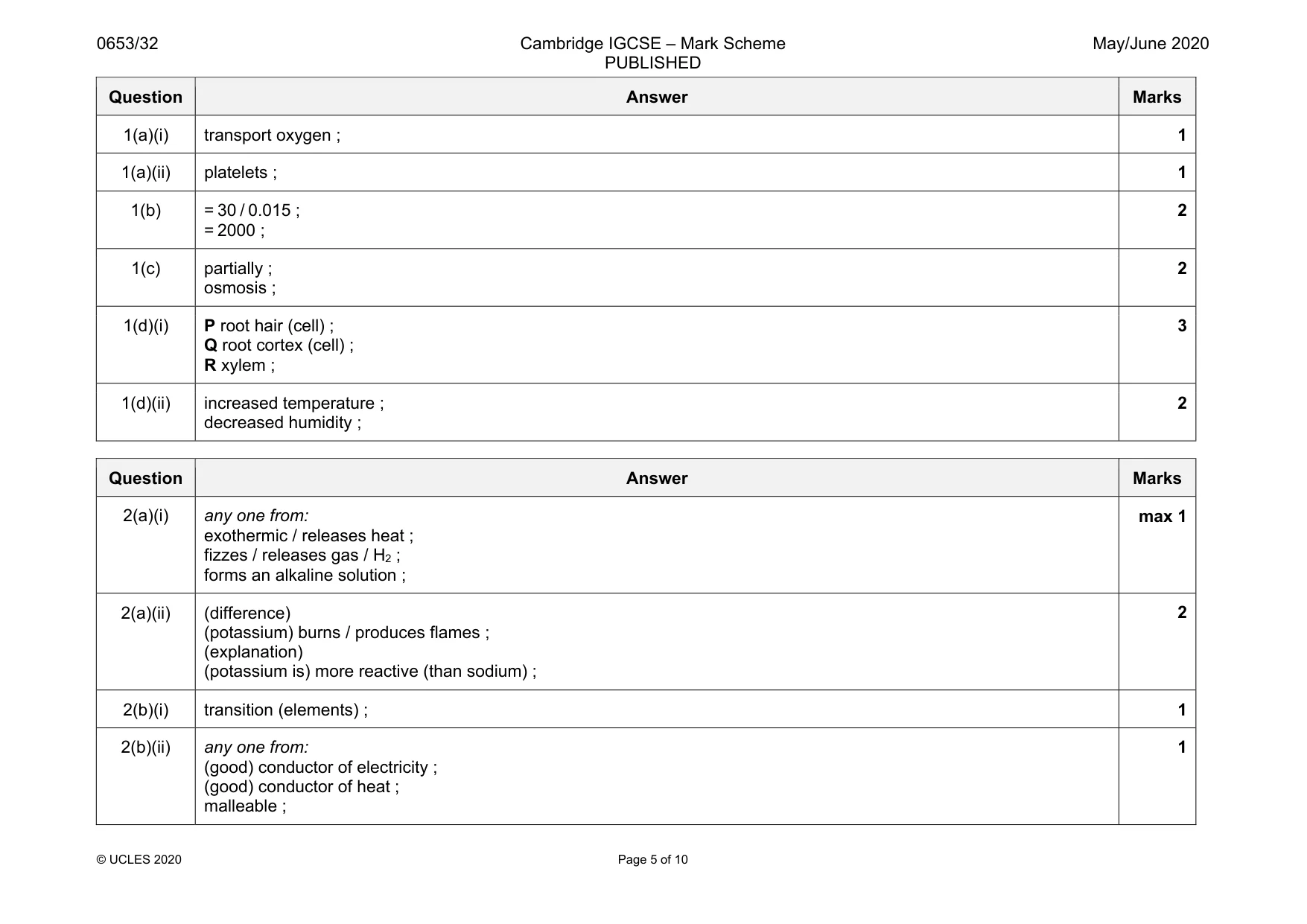
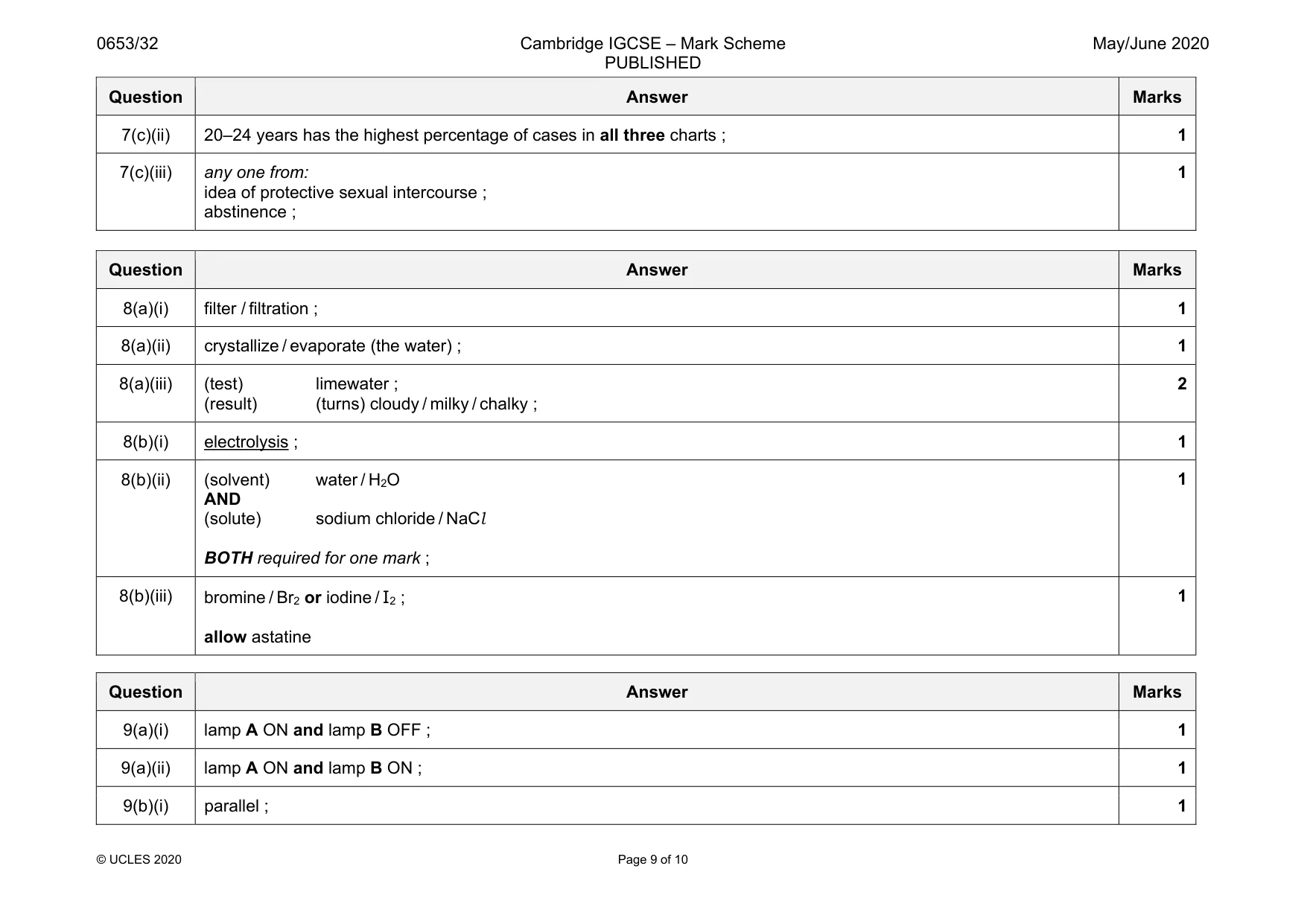
Mark scheme: 1(a)(i) transport oxygen ; 1 1(a)(ii) platelets ; 1 1(b) = 30 / 0.015 ; = 2000 ; 2 1(c) partially ; osmosis ; 2 1(d)(i) P root hair (cell) ; Q root cortex (cell) ; R xylem ; 3 1(d)(ii) increased temperature ; decreased humidity ; 2
Q2 · A teacher puts a small piece of sodium onto water in a water trough, as shown in Fig
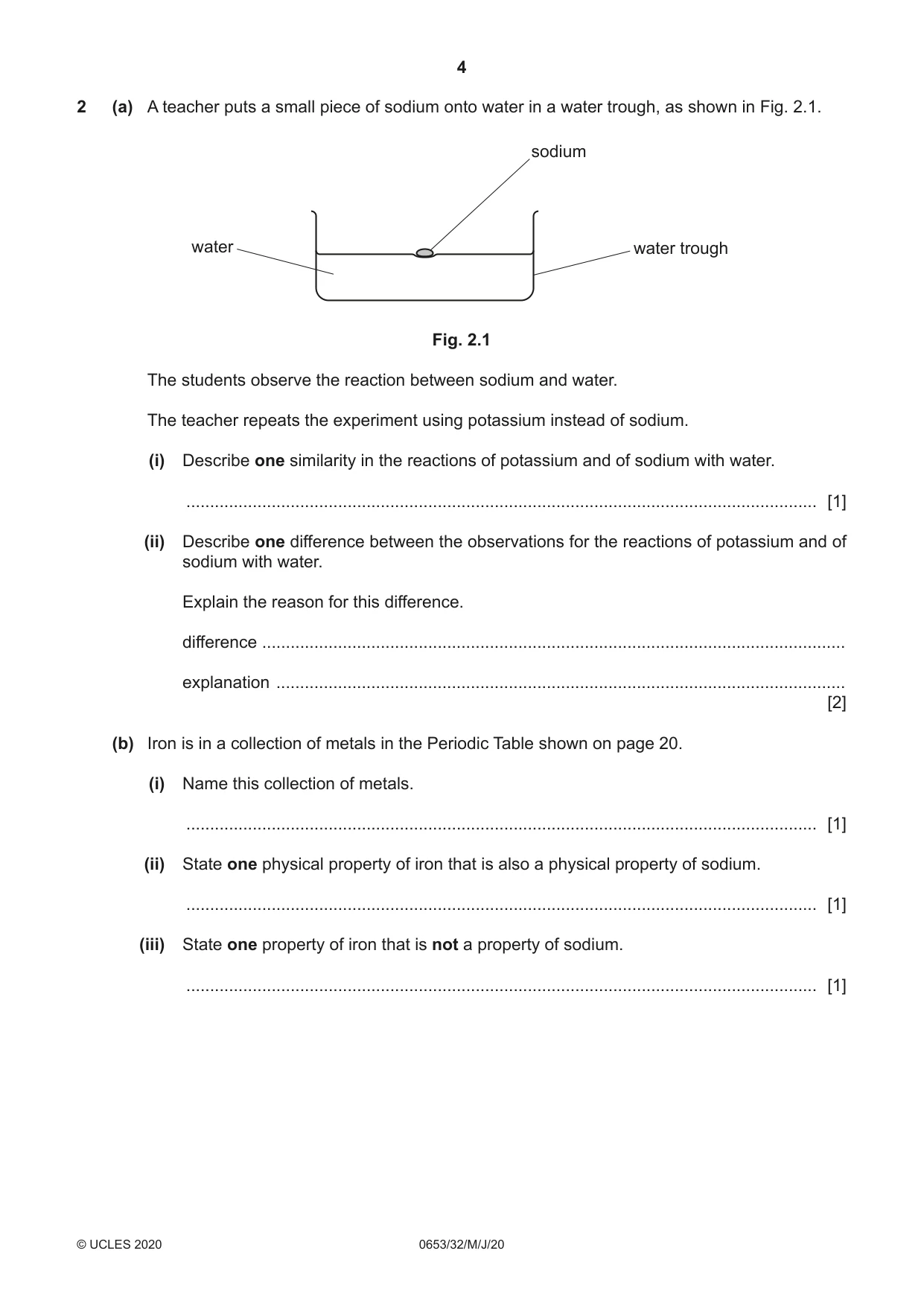
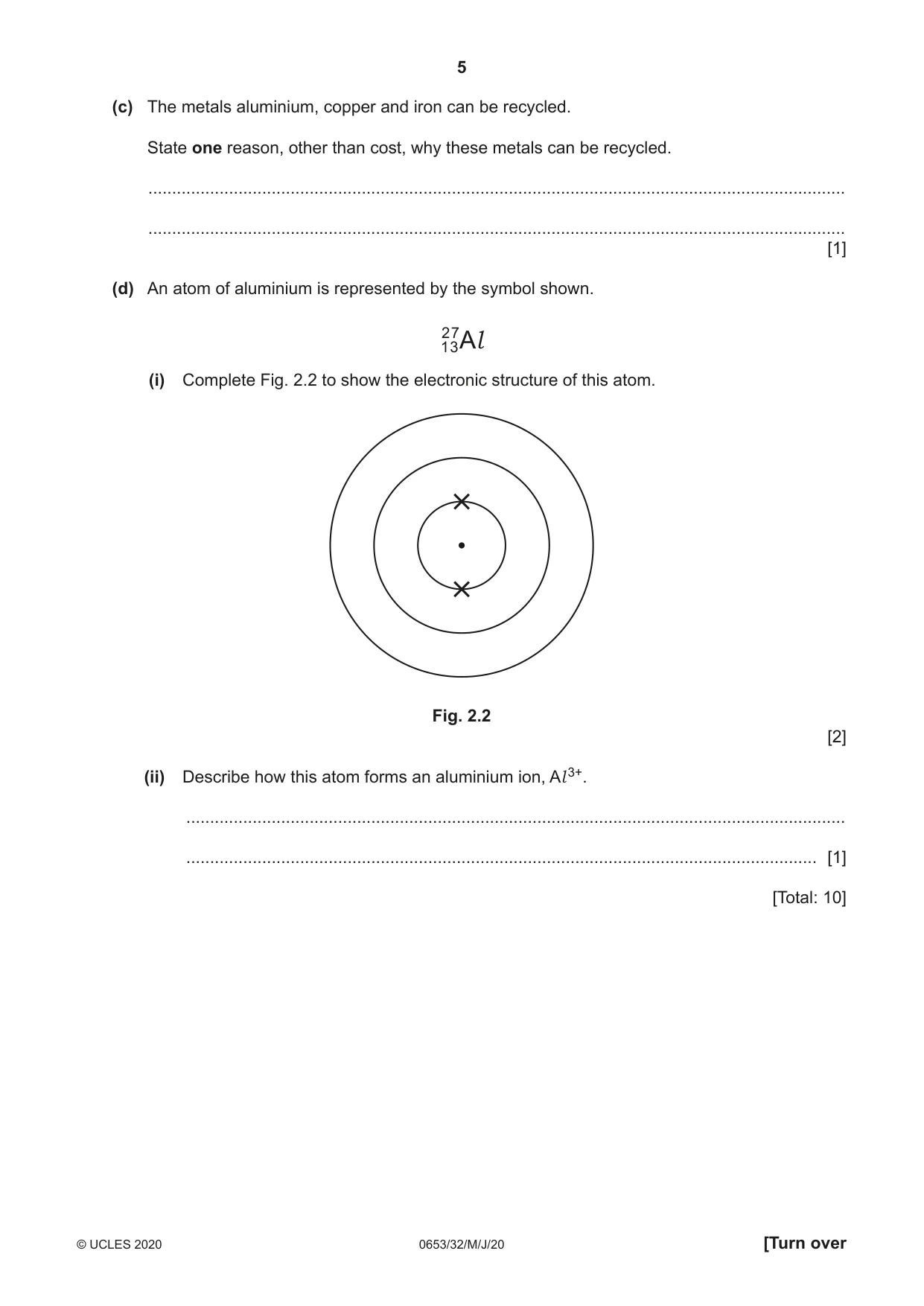
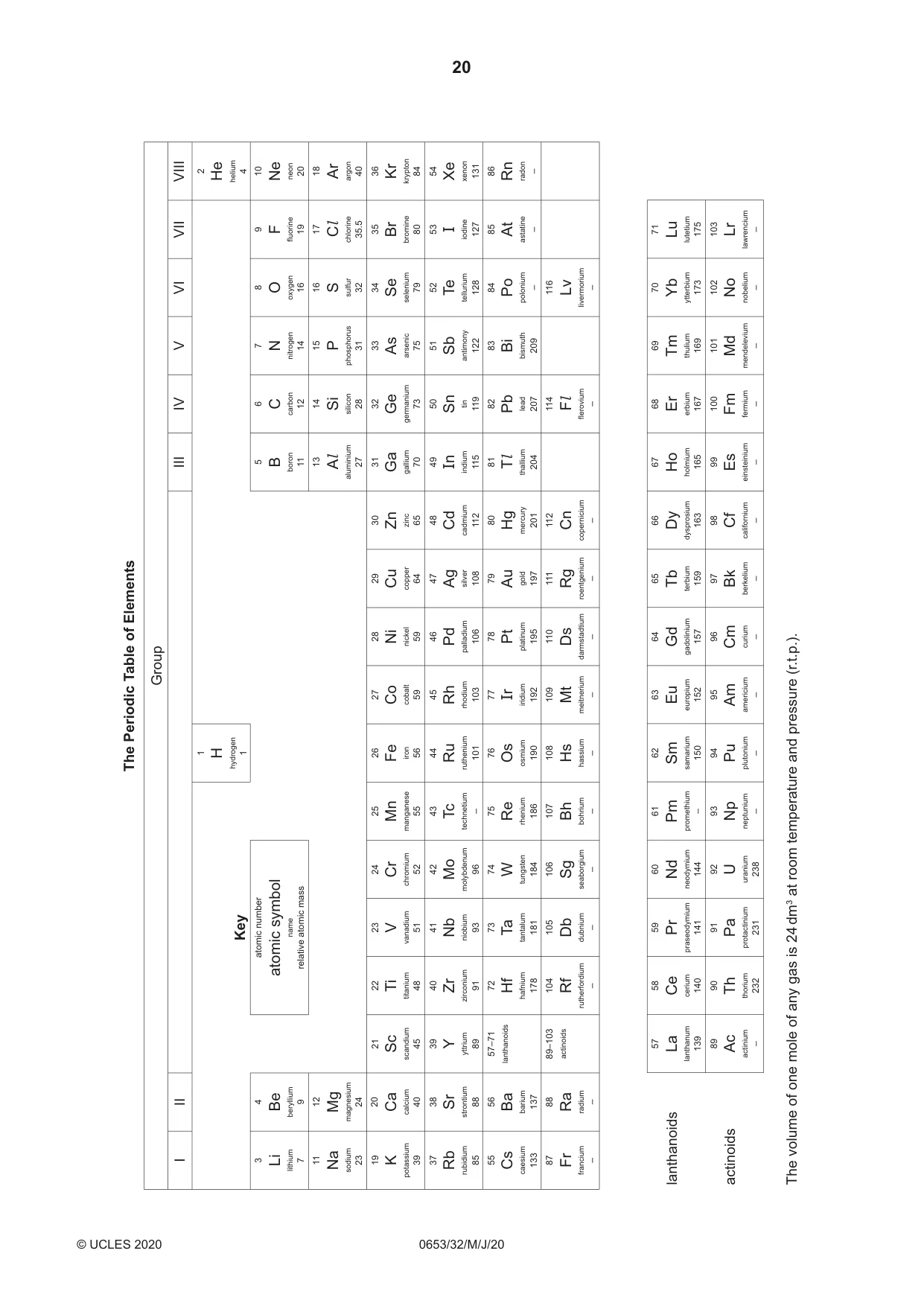
2 (a) A teacher puts a small piece of sodium onto water in a water trough, as shown in Fig. 2.1. sodium water water trough Fig. 2.1 The students observe the reaction between sodium and water. The teacher repeats the experiment using potassium instead of sodium. (i) Describe one similarity in the reactions of potassium and of sodium with water. ..................................................................................................................................... [1] (ii) Describe one difference between the observations for the reactions of potassium and of sodium with water. Explain the reason for this difference. difference ........................................................................................................................... explanation ........................................................................................................................ [2] (b) Iron is in a collection of metals in the Periodic Table shown on page 20. (i) Name this collection of metals. ..................................................................................................................................... [1] (ii) State one physical property of iron that is also a physical property of sodium. ..................................................................................................................................... [1] (iii) State one property of iron that is not a property of sodium. ..................................................................................................................................... [1] (c) The metals aluminium, copper and iron can be recycled. State one reason, other than cost, why these metals can be recycled. ................................................................................................................................................... ................................................................................................................................................... [1] (d) An atom of aluminium is represented by the symbol shown. 2 1 37Al (i) Complete Fig. 2.2 to show the electronic structure of this atom. Fig. 2.2 [2] (ii) Describe how this atom forms an aluminium ion, Al 3+. ........................................................................................................................................... ..................................................................................................................................... [1] [Total: 10]
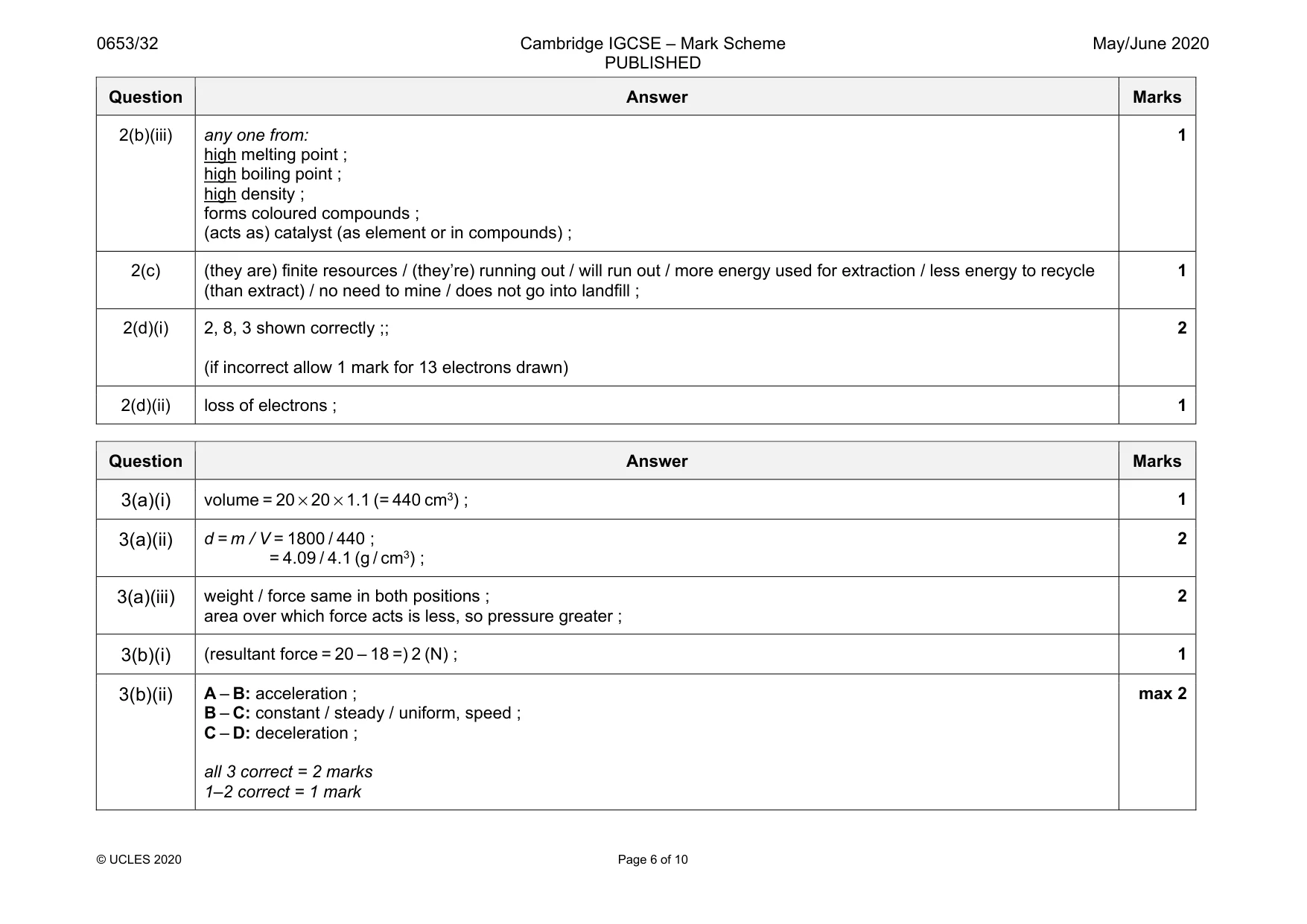
Mark scheme: 2(a)(i) any one from: exothermic / releases heat ; fizzes / releases gas / H2 ; forms an alkaline solution ; max 1 2(a)(ii) (difference) (potassium) burns / produces flames ; (explanation) (potassium is) more reactive (than sodium) ; 2 2(b)(i) transition (elements) ; 1 2(b)(ii) any one from: (good) conductor of electricity ; (good) conductor of heat ; malleable ; 1 Question Answer Marks 2(b)(iii) any one from: high melting point ; high boiling point ; high density ; forms coloured compounds ; (acts as) catalyst (as element or in compounds) ; 1 2(c) (they are) finite resources / (they’re) running out / will run out / more energy used for extraction / less energy to recycle (than extract) / no need to mine / does not go into landfill ; 1 2(d)(i) 2, 8, 3 shown correctly ;; (if incorrect allow 1 mark for 13 electrons drawn) 2 2(d)(ii) loss of electrons ; 1
Q3 · A square sheet of metal
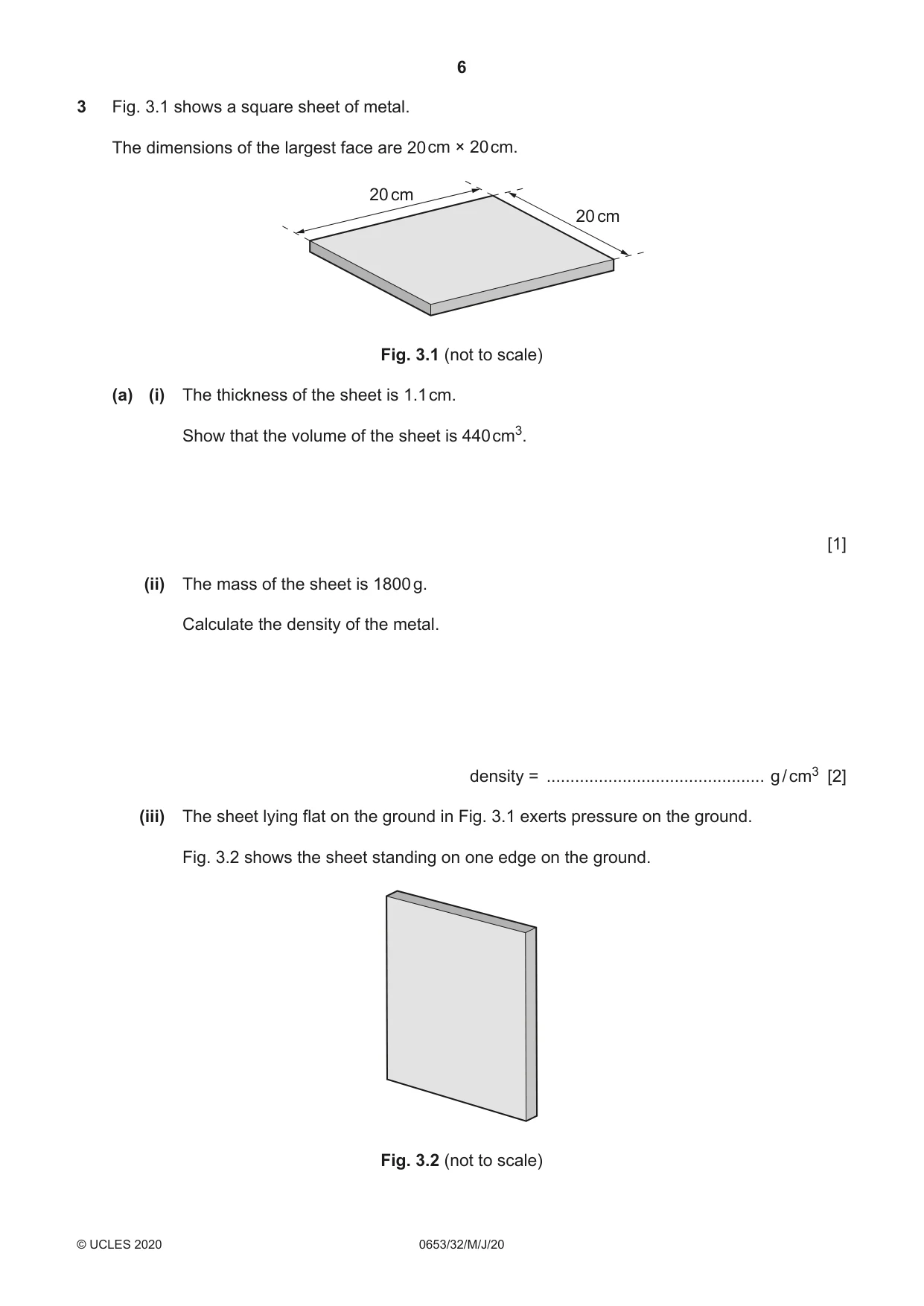
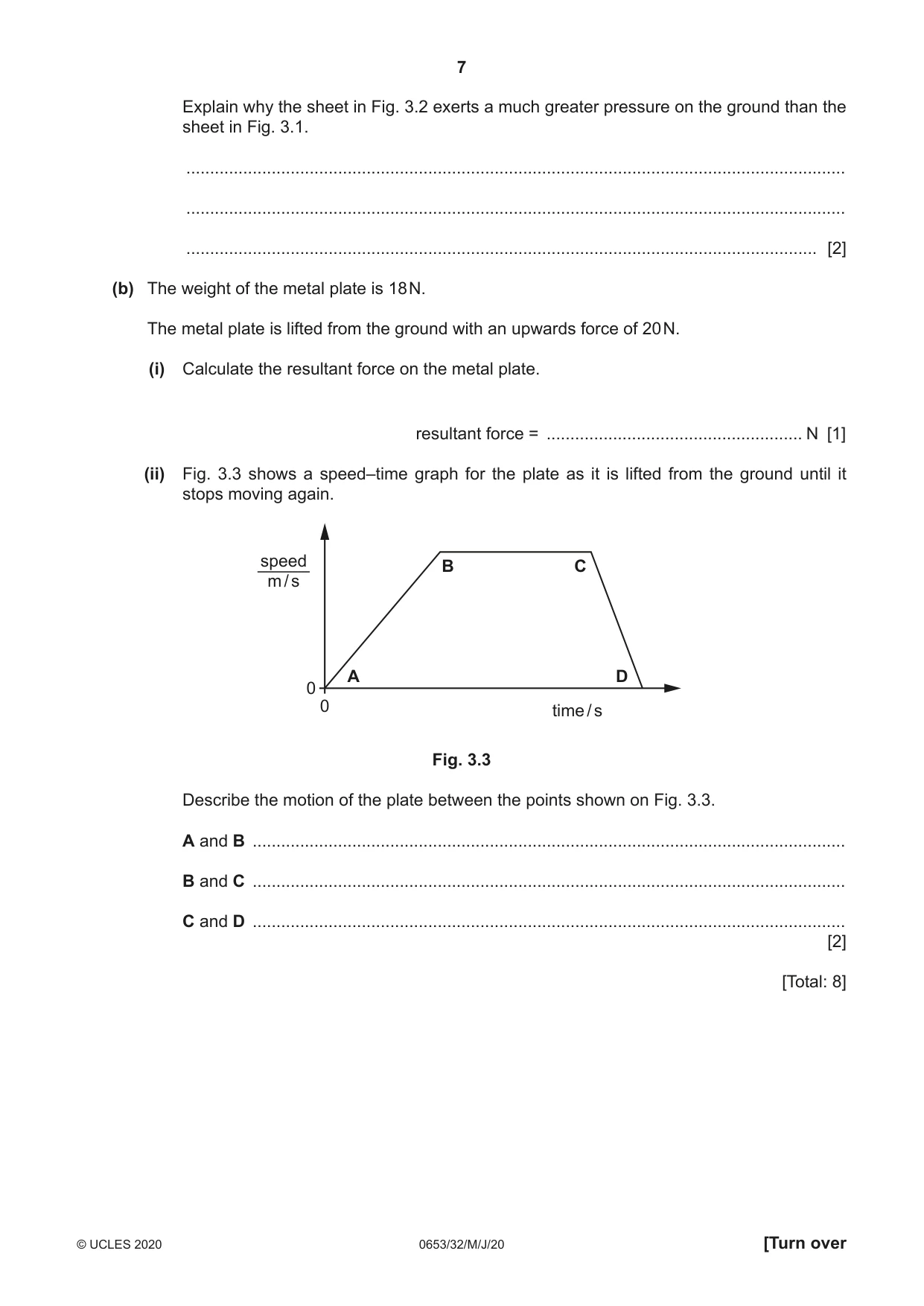
3 Fig. 3.1 shows a square sheet of metal. The dimensions of the largest face are 20 cm × 20 cm. 20 cm 20 cm Fig. 3.1 (not to scale) (a) (i) The thickness of the sheet is 1.1 cm. Show that the volume of the sheet is 440 cm3. [1] (ii) The mass of the sheet is 1800 g. Calculate the density of the metal. density = .............................................. g / cm3 [2] (iii) The sheet lying flat on the ground in Fig. 3.1 exerts pressure on the ground. Fig. 3.2 shows the sheet standing on one edge on the ground. Fig. 3.2 (not to scale) Explain why the sheet in Fig. 3.2 exerts a much greater pressure on the ground than the sheet in Fig. 3.1. ........................................................................................................................................... ........................................................................................................................................... ..................................................................................................................................... [2] (b) The weight of the metal plate is 18 N. The metal plate is lifted from the ground with an upwards force of 20 N. (i) Calculate the resultant force on the metal plate. resultant force = ...................................................... N [1] (ii) Fig. 3.3 shows a speed–time graph for the plate as it is lifted from the ground until it stops moving again. speed B C m / s A D 0 0 time / s Fig. 3.3 Describe the motion of the plate between the points shown on Fig. 3.3. A and B ............................................................................................................................. B and C ............................................................................................................................. C and D ............................................................................................................................. [2] [Total: 8]
Mark scheme: 3(a)(i) volume = 20 × 20 × 1.1 (= 440 cm3) ; 3(a)(ii) d = m / V = 1800 / 440 ; = 4.09 / 4.1 (g / cm3) ; 2 3(a)(iii) weight / force same in both positions ; area over which force acts is less, so pressure greater ; 2 3(b)(i) (resultant force = 20 – 18 =) 2 (N) ; 1 3(b)(ii) A – B: acceleration ; B – C: constant / steady / uniform, speed ; C – D: deceleration ; all 3 correct = 2 marks 1–2 correct = 1 mark max 2
Q4 · The human alimentary canal and associated organs
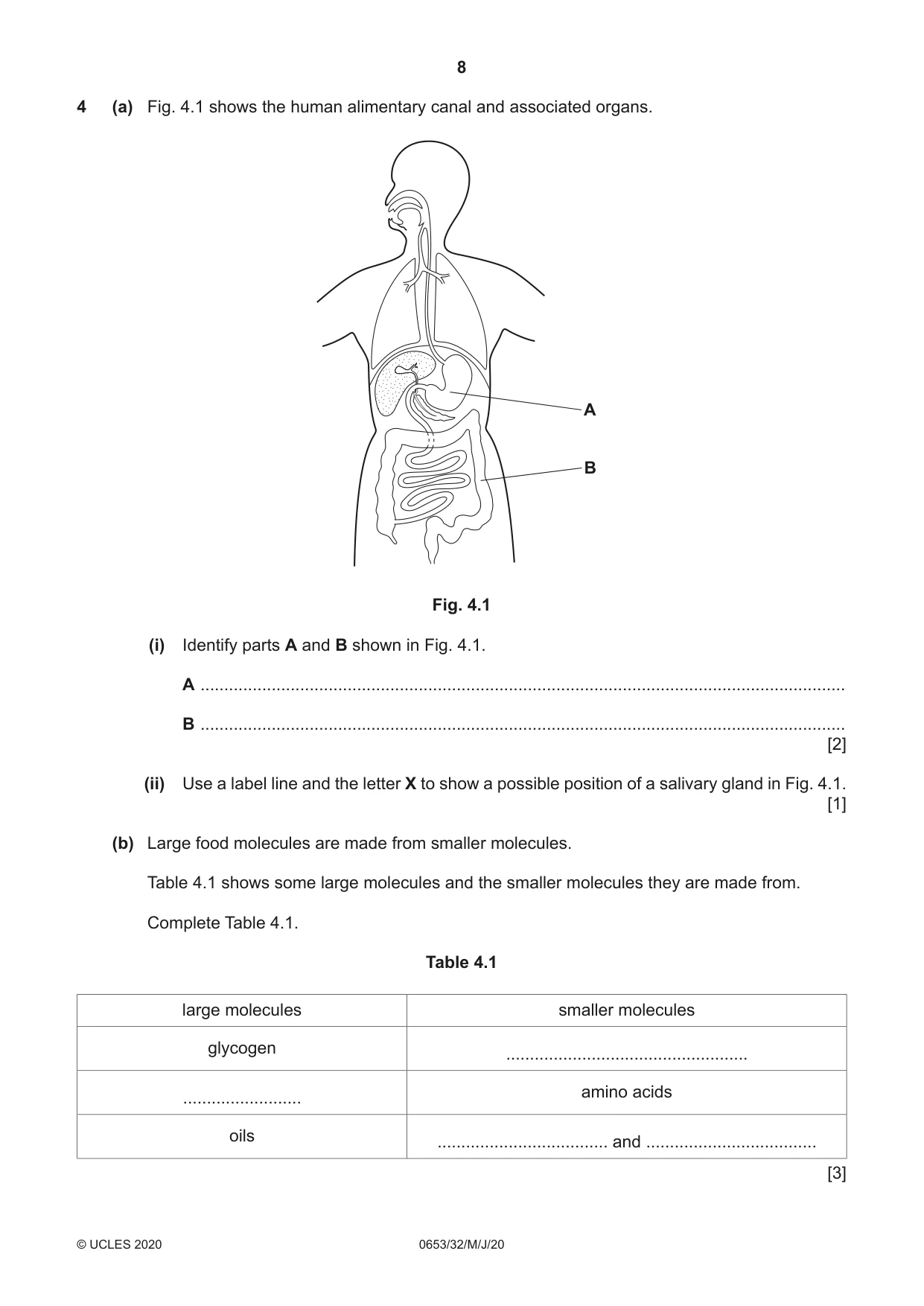
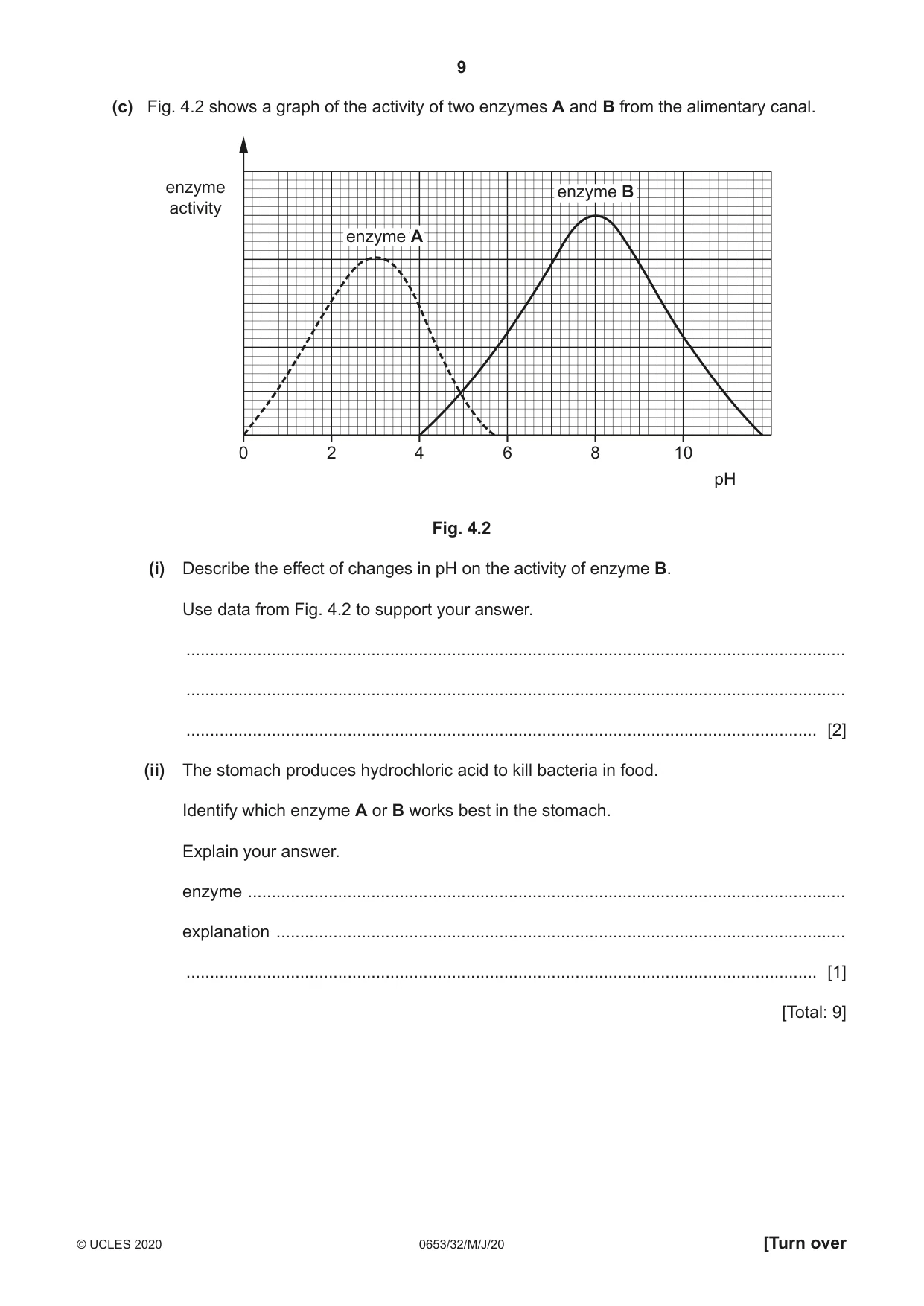
4 (a) Fig. 4.1 shows the human alimentary canal and associated organs. A B Fig. 4.1 (i) Identify parts A and B shown in Fig. 4.1. A ........................................................................................................................................ B ........................................................................................................................................ [2] (ii) Use a label line and the letter X to show a possible position of a salivary gland in Fig. 4.1. [1] (b) Large food molecules are made from smaller molecules. Table 4.1 shows some large molecules and the smaller molecules they are made from. Complete Table 4.1. Table 4.1 large molecules smaller molecules glycogen ................................................... amino acids ......................... oils .................................... and .................................... [3] (c) Fig. 4.2 shows a graph of the activity of two enzymes A and B from the alimentary canal. enzyme enzyme B activity enzyme A 0 2 4 6 8 10 pH Fig. 4.2 (i) Describe the effect of changes in pH on the activity of enzyme B. Use data from Fig. 4.2 to support your answer. ........................................................................................................................................... ........................................................................................................................................... ..................................................................................................................................... [2] (ii) The stomach produces hydrochloric acid to kill bacteria in food. Identify which enzyme A or B works best in the stomach. Explain your answer. enzyme .............................................................................................................................. explanation ........................................................................................................................ ..................................................................................................................................... [1] [Total: 9]
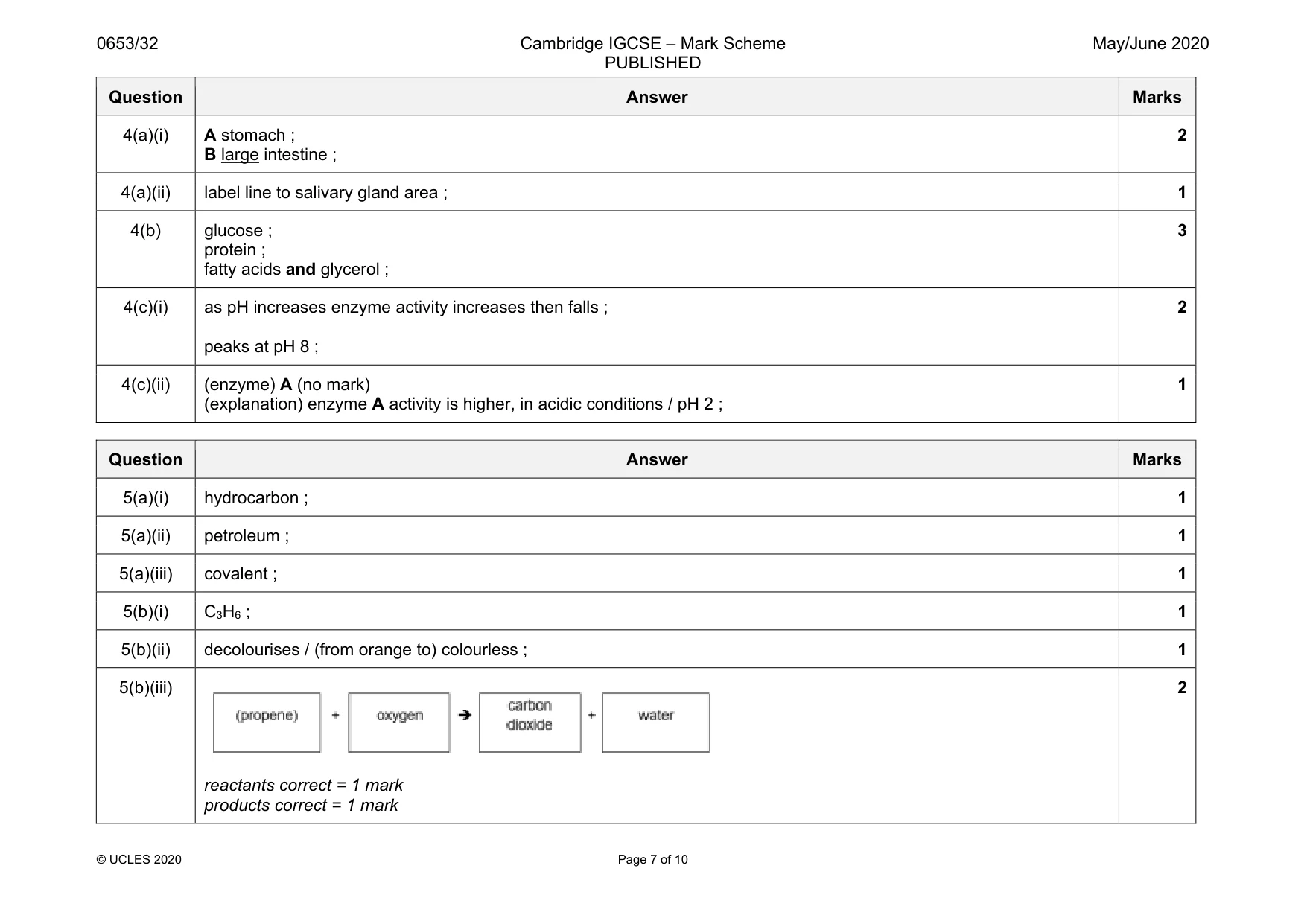
Mark scheme: 4(a)(i) A stomach ; B large intestine ; 2 4(a)(ii) label line to salivary gland area ; 1 4(b) glucose ; protein ; fatty acids and glycerol ; 3 4(c)(i) as pH increases enzyme activity increases then falls ; peaks at pH 8 ; 2 4(c)(ii) (enzyme) A (no mark) (explanation) enzyme A activity is higher, in acidic conditions / pH 2 ; 1
Q5 · A liquid fuel contains atoms of carbon and hydrogen only
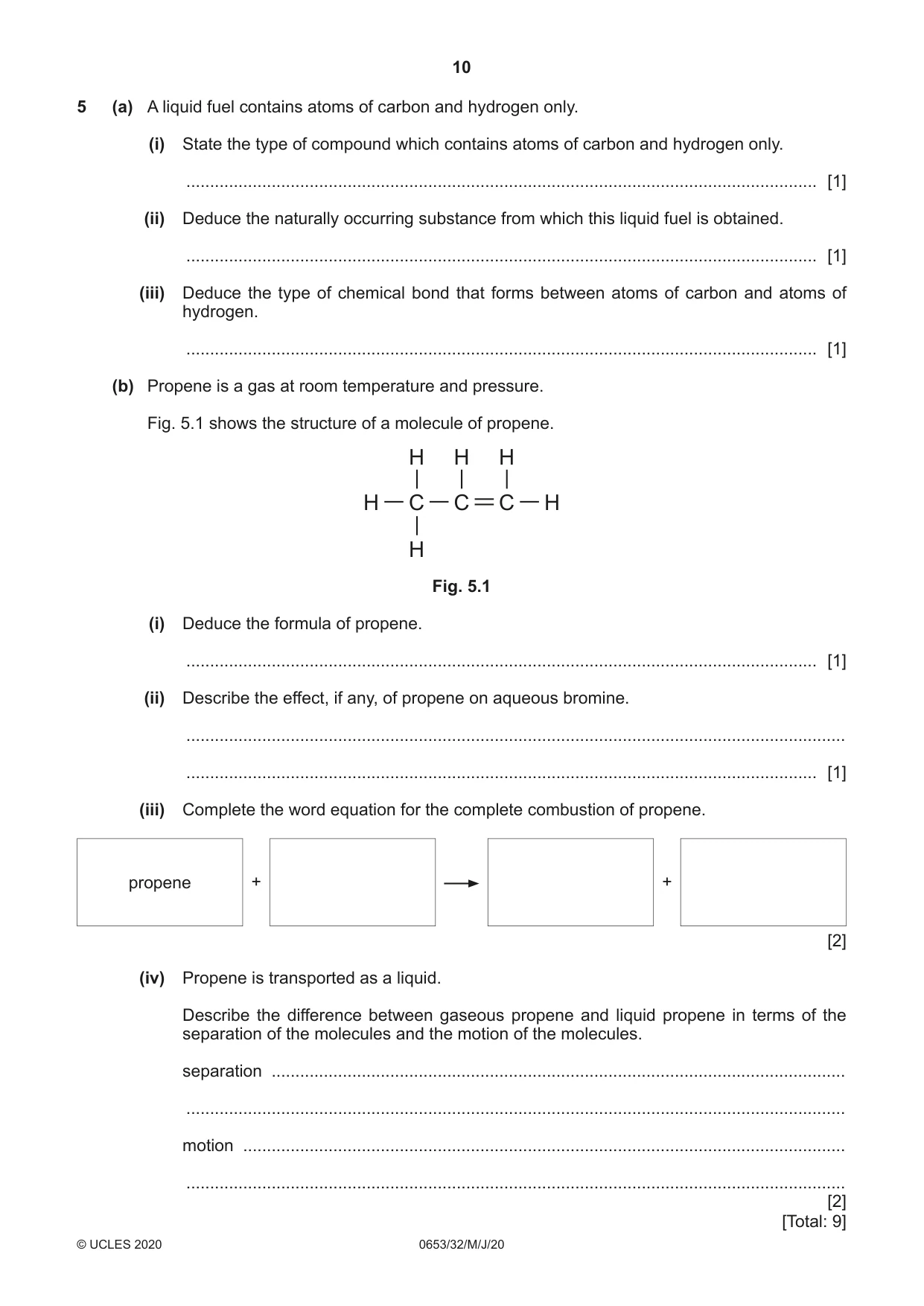
5 (a) A liquid fuel contains atoms of carbon and hydrogen only. (i) State the type of compound which contains atoms of carbon and hydrogen only. ..................................................................................................................................... [1] (ii) Deduce the naturally occurring substance from which this liquid fuel is obtained. ..................................................................................................................................... [1] (iii) Deduce the type of chemical bond that forms between atoms of carbon and atoms of hydrogen. ..................................................................................................................................... [1] (b) Propene is a gas at room temperature and pressure. Fig. 5.1 shows the structure of a molecule of propene. H H H H C C C H H Fig. 5.1 (i) Deduce the formula of propene. ..................................................................................................................................... [1] (ii) Describe the effect, if any, of propene on aqueous bromine. ........................................................................................................................................... ..................................................................................................................................... [1] (iii) Complete the word equation for the complete combustion of propene. propene + + [2] (iv) Propene is transported as a liquid. Describe the difference between gaseous propene and liquid propene in terms of the separation of the molecules and the motion of the molecules. separation ......................................................................................................................... ........................................................................................................................................... motion ............................................................................................................................... ........................................................................................................................................... [2] [Total: 9]
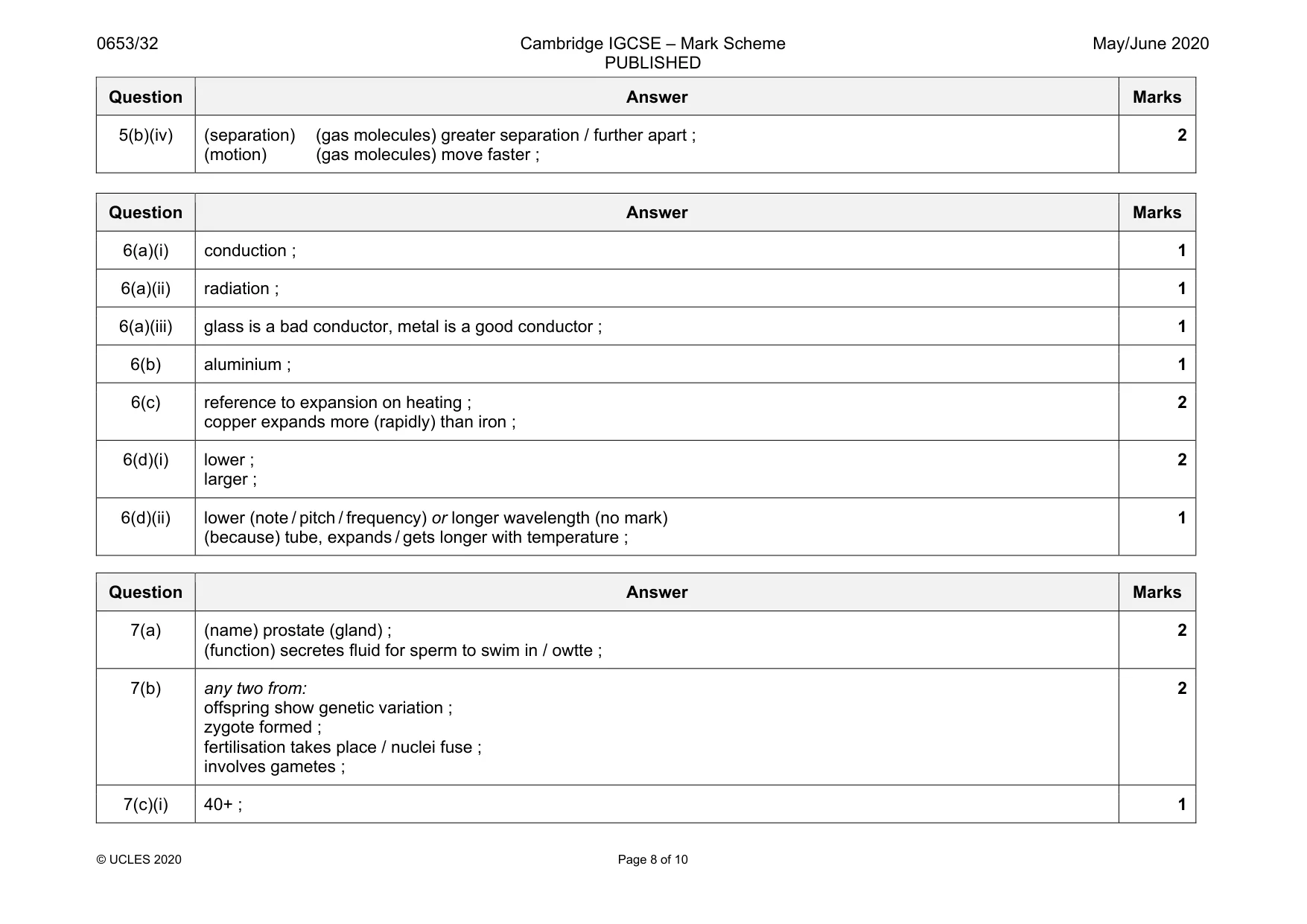
Mark scheme: 5(a)(i) hydrocarbon ; 1 5(a)(ii) petroleum ; 1 5(a)(iii) covalent ; 1 5(b)(i) C3H6 ; 1 5(b)(ii) decolourises / (from orange to) colourless ; 1 5(b)(iii) reactants correct = 1 mark products correct = 1 mark 2 Question Answer Marks 5(b)(iv) (separation) (gas molecules) greater separation / further apart ; (motion) (gas molecules) move faster ; 2
Q6 · A man holding a glass rod in one hand and a metal rod in the other hand
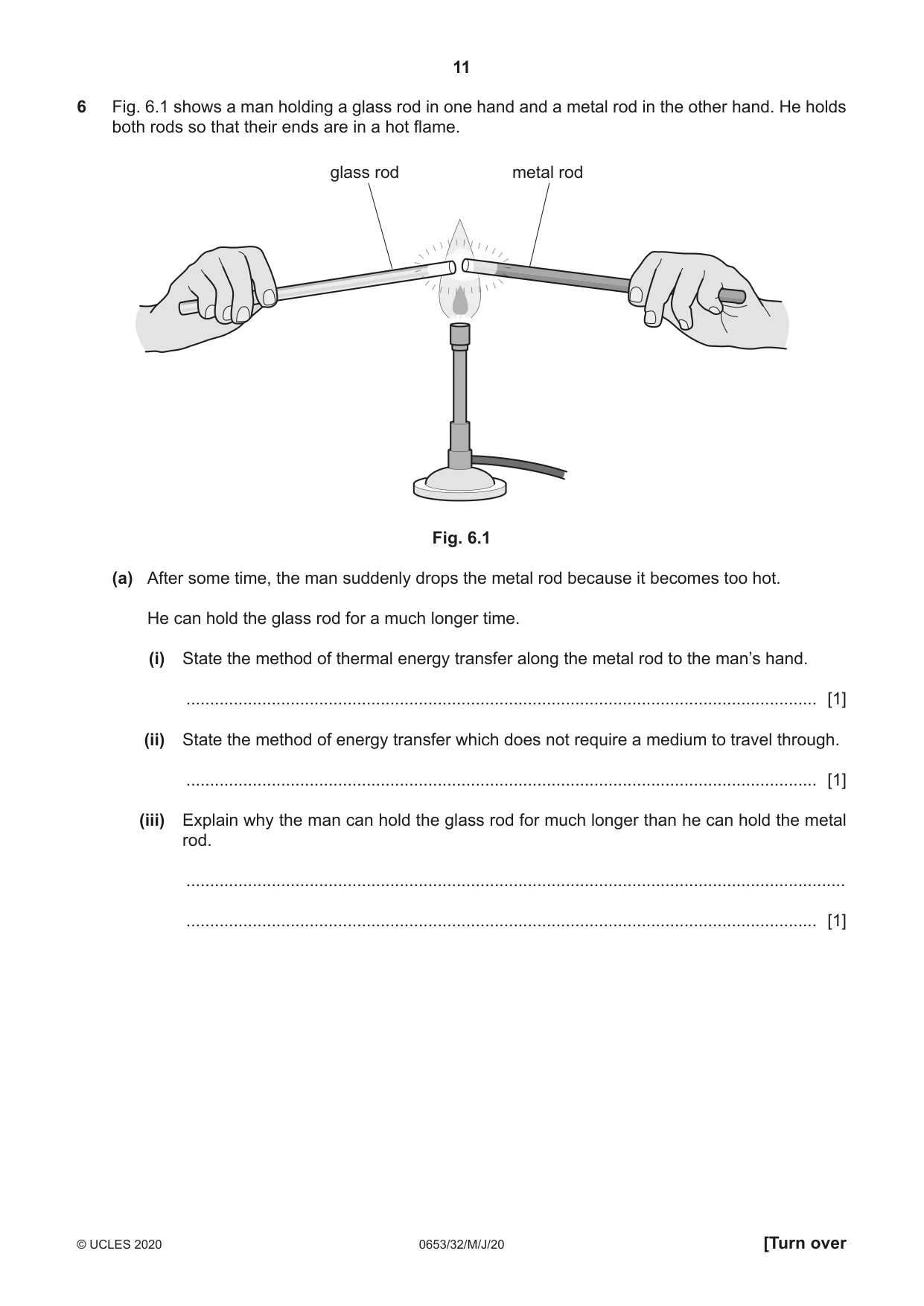
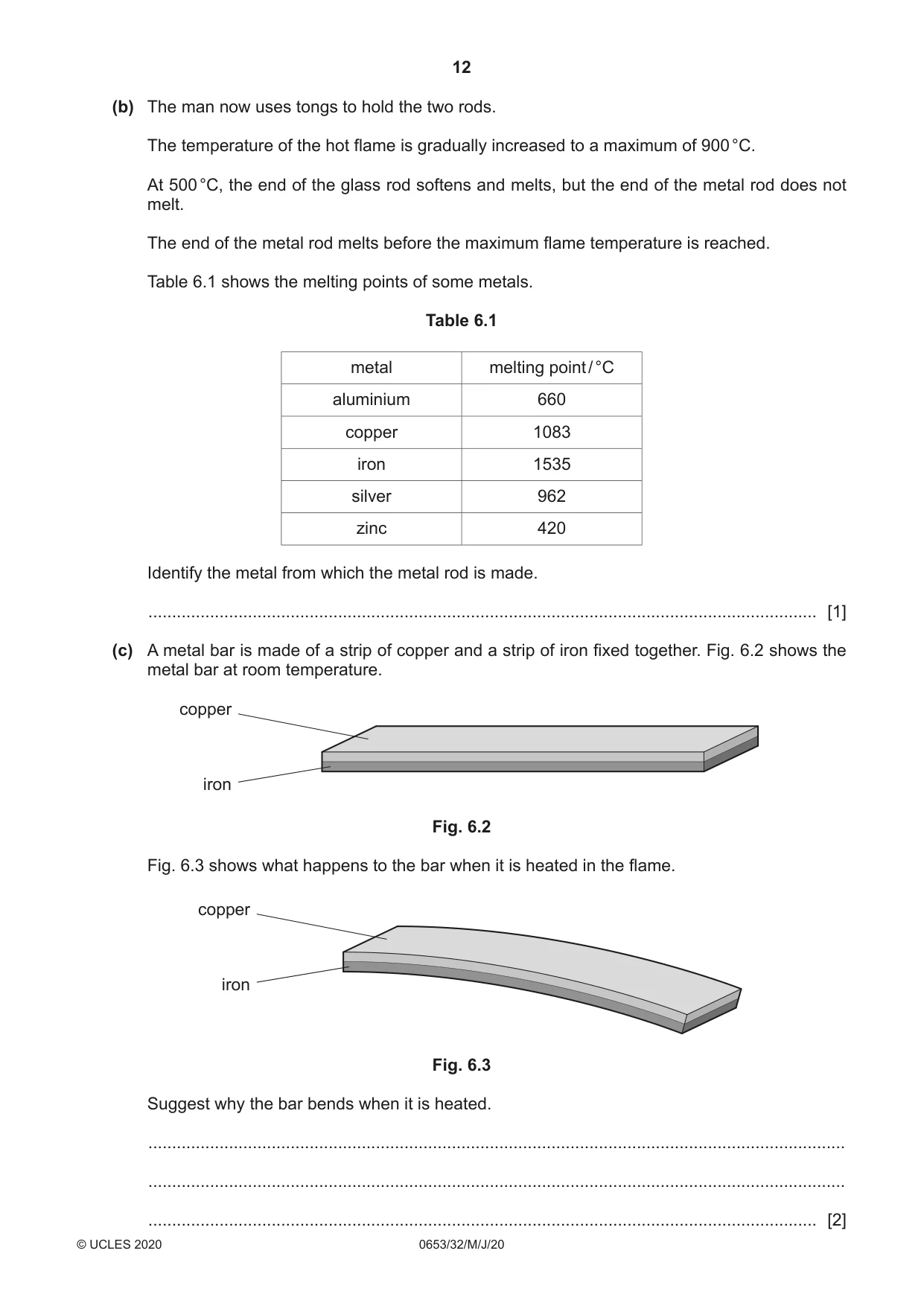
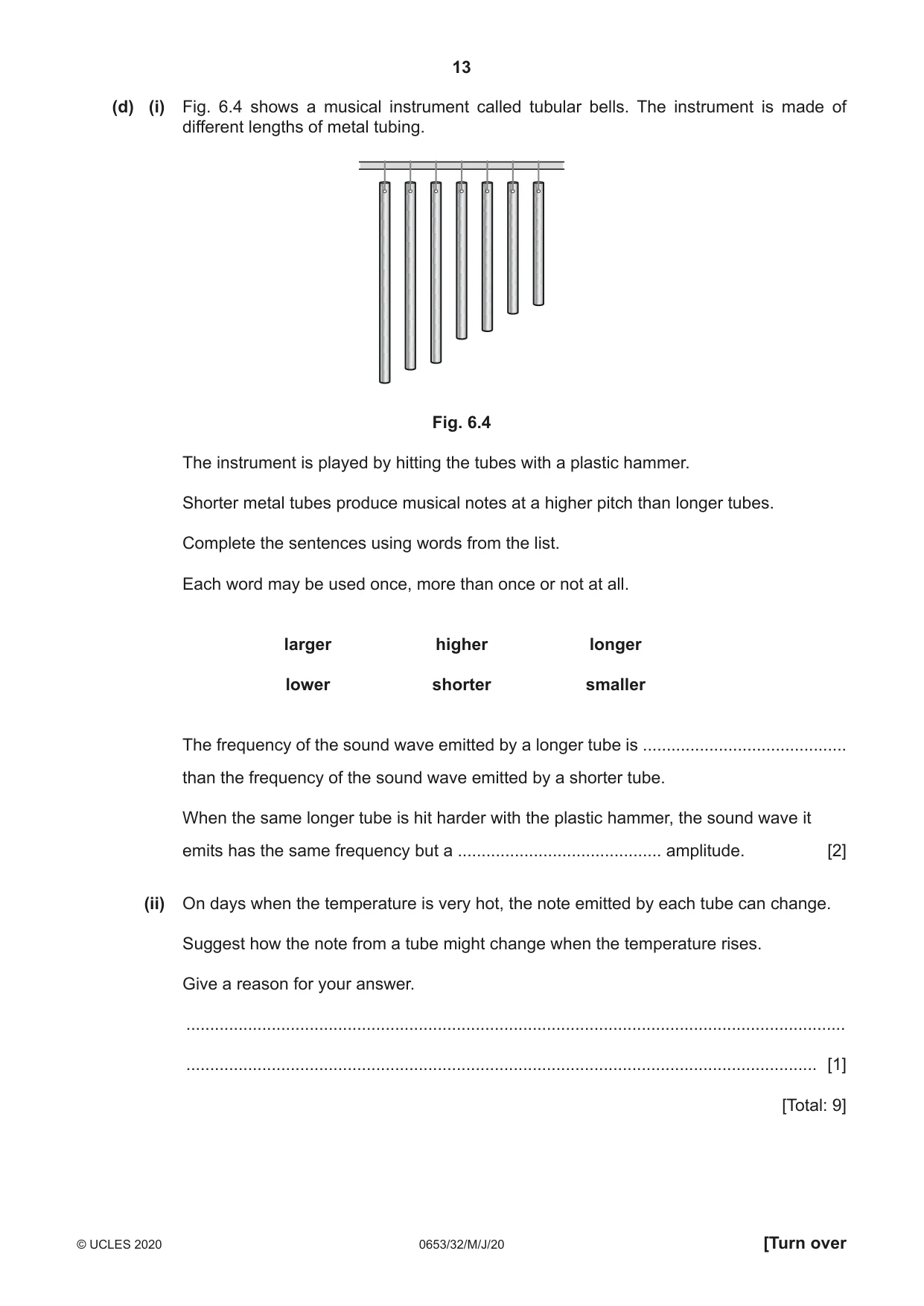
6 Fig. 6.1 shows a man holding a glass rod in one hand and a metal rod in the other hand. He holds both rods so that their ends are in a hot flame. glass rod metal rod Fig. 6.1 (a) After some time, the man suddenly drops the metal rod because it becomes too hot. He can hold the glass rod for a much longer time. (i) State the method of thermal energy transfer along the metal rod to the man’s hand. ..................................................................................................................................... [1] (ii) State the method of energy transfer which does not require a medium to travel through. ..................................................................................................................................... [1] (iii) Explain why the man can hold the glass rod for much longer than he can hold the metal rod. ........................................................................................................................................... ..................................................................................................................................... [1] (b) The man now uses tongs to hold the two rods. The temperature of the hot flame is gradually increased to a maximum of 900 °C. At 500 °C, the end of the glass rod softens and melts, but the end of the metal rod does not melt. The end of the metal rod melts before the maximum flame temperature is reached. Table 6.1 shows the melting points of some metals. Table 6.1 metal melting point / °C aluminium 660 copper 1083 iron 1535 silver 962 zinc 420 Identify the metal from which the metal rod is made. ............................................................................................................................................. [1] (c) A metal bar is made of a strip of copper and a strip of iron fixed together. Fig. 6.2 shows the metal bar at room temperature. copper iron Fig. 6.2 Fig. 6.3 shows what happens to the bar when it is heated in the flame. copper iron Fig. 6.3 Suggest why the bar bends when it is heated. ................................................................................................................................................... ................................................................................................................................................... ............................................................................................................................................. [2] (d) (i) Fig. 6.4 shows a musical instrument called tubular bells. The instrument is made of different lengths of metal tubing. Fig. 6.4 The instrument is played by hitting the tubes with a plastic hammer. Shorter metal tubes produce musical notes at a higher pitch than longer tubes. Complete the sentences using words from the list. Each word may be used once, more than once or not at all. larger higher longer lower shorter smaller The frequency of the sound wave emitted by a longer tube is ........................................... than the frequency of the sound wave emitted by a shorter tube. When the same longer tube is hit harder with the plastic hammer, the sound wave it emits has the same frequency but a ........................................... amplitude. [2] (ii) On days when the temperature is very hot, the note emitted by each tube can change. Suggest how the note from a tube might change when the temperature rises. Give a reason for your answer. ........................................................................................................................................... ..................................................................................................................................... [1] [Total: 9]
Mark scheme: 6(a)(i) conduction ; 1 6(a)(ii) radiation ; 1 6(a)(iii) glass is a bad conductor, metal is a good conductor ; 1 6(b) aluminium ; 1 6(c) reference to expansion on heating ; copper expands more (rapidly) than iron ; 2 6(d)(i) lower ; larger ; 2 6(d)(ii) lower (note / pitch / frequency) or longer wavelength (no mark) (because) tube, expands / gets longer with temperature ; 1
Q7 · The male reproductive organs
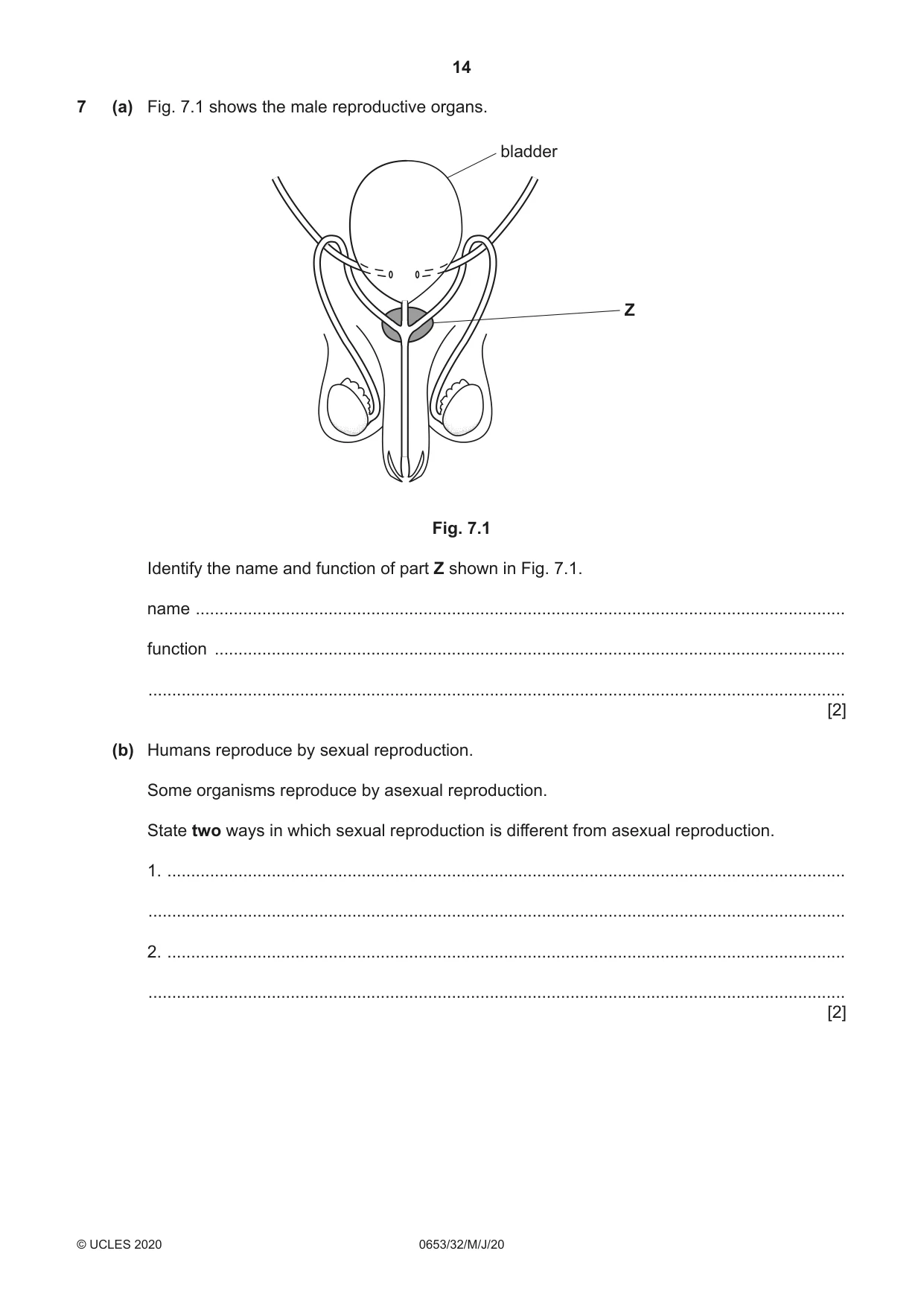
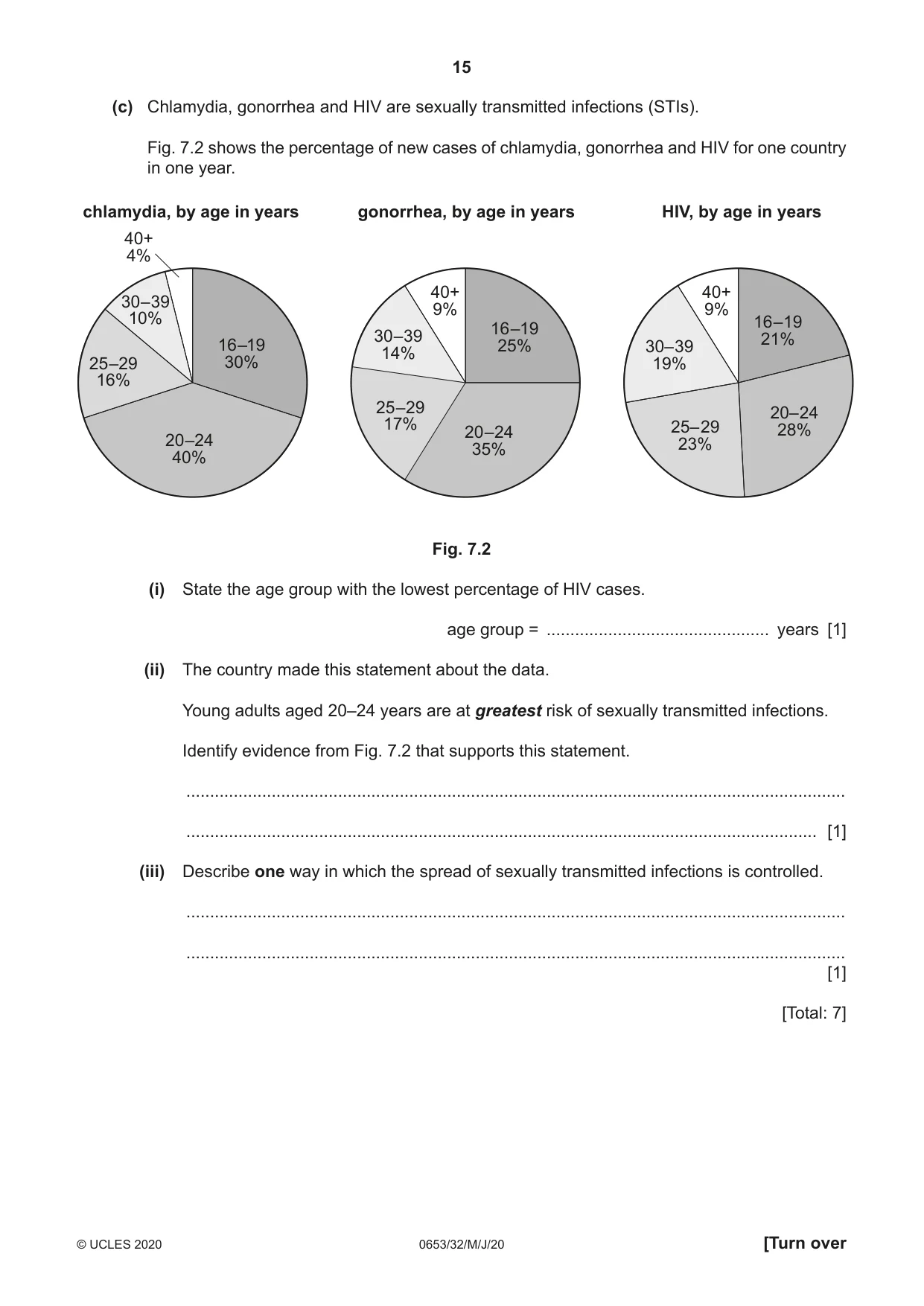
7 (a) Fig. 7.1 shows the male reproductive organs. bladder Z Fig. 7.1 Identify the name and function of part Z shown in Fig. 7.1. name ......................................................................................................................................... function ..................................................................................................................................... ................................................................................................................................................... [2] (b) Humans reproduce by sexual reproduction. Some organisms reproduce by asexual reproduction. State two ways in which sexual reproduction is different from asexual reproduction. 1. ............................................................................................................................................... ................................................................................................................................................... 2. ............................................................................................................................................... ................................................................................................................................................... [2] (c) Chlamydia, gonorrhea and HIV are sexually transmitted infections (STIs). Fig. 7.2 shows the percentage of new cases of chlamydia, gonorrhea and HIV for one country in one year. chlamydia, by age in years gonorrhea, by age in years HIV, by age in years 40+ 4% 40+ 40+ 30–39 9% 9% 10% 16–19 16–19 30–39 21% 16–19 25% 30–39 14% 25–29 30% 19% 16% 25–29 20–24 17% 25–29 28% 20–24 20–24 23% 35% 40% Fig. 7.2 (i) State the age group with the lowest percentage of HIV cases. age group = ............................................... years [1] (ii) The country made this statement about the data. Young adults aged 20–24 years are at greatest risk of sexually transmitted infections. Identify evidence from Fig. 7.2 that supports this statement. ........................................................................................................................................... ..................................................................................................................................... [1] (iii) Describe one way in which the spread of sexually transmitted infections is controlled. ........................................................................................................................................... ........................................................................................................................................... [1] [Total: 7]
Mark scheme: 7(a) (name) prostate (gland) ; (function) secretes fluid for sperm to swim in / owtte ; 2 7(b) any two from: offspring show genetic variation ; zygote formed ; fertilisation takes place / nuclei fuse ; involves gametes ; 2 7(c)(i) 40+ ; 1 Question Answer Marks 7(c)(ii) 20–24 years has the highest percentage of cases in all three charts ; 1 7(c)(iii) any one from: idea of protective sexual intercourse ; abstinence ; 1
Q8 · Copper chloride is made in the reaction between excess solid copper carbonate and dilute…
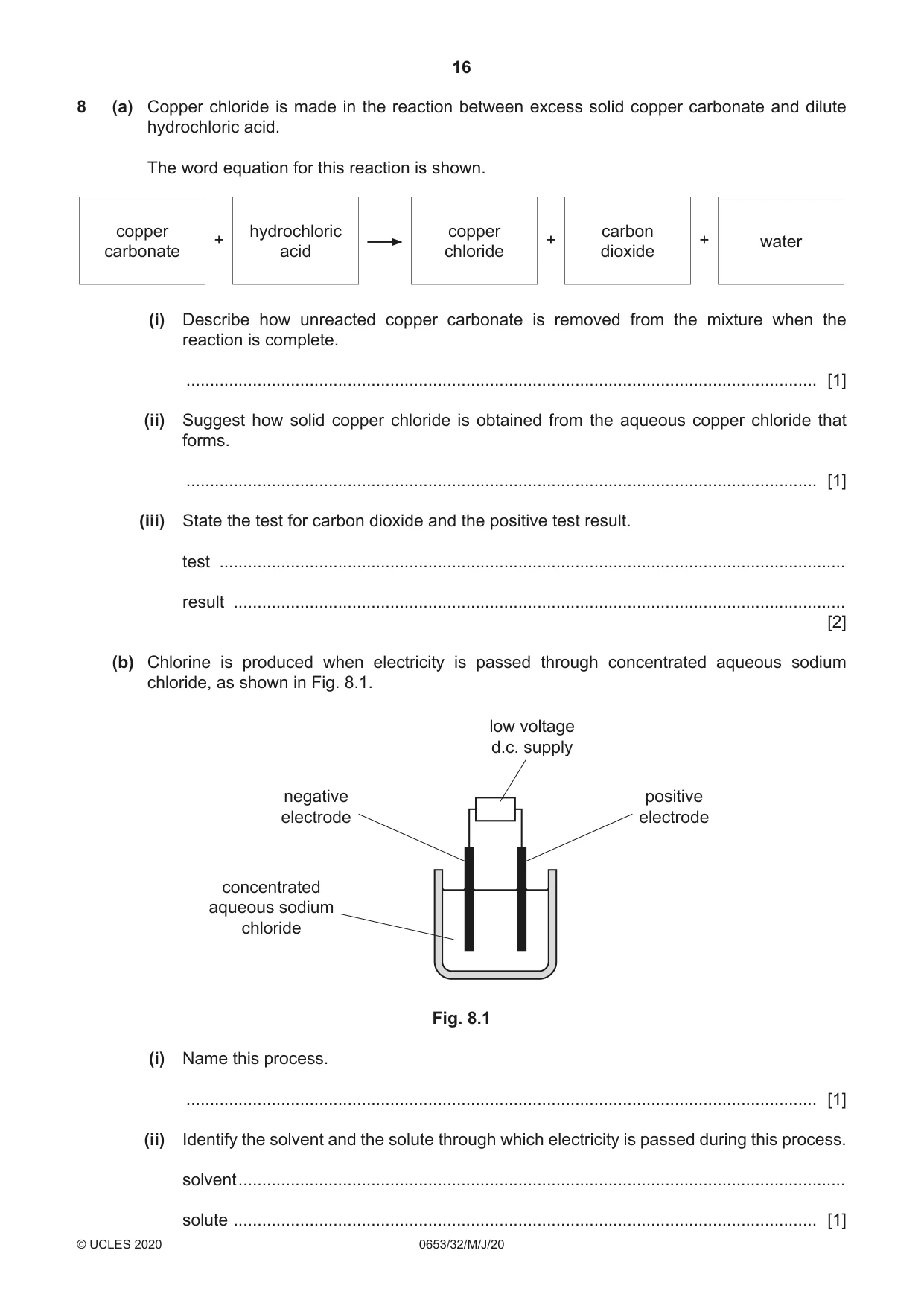
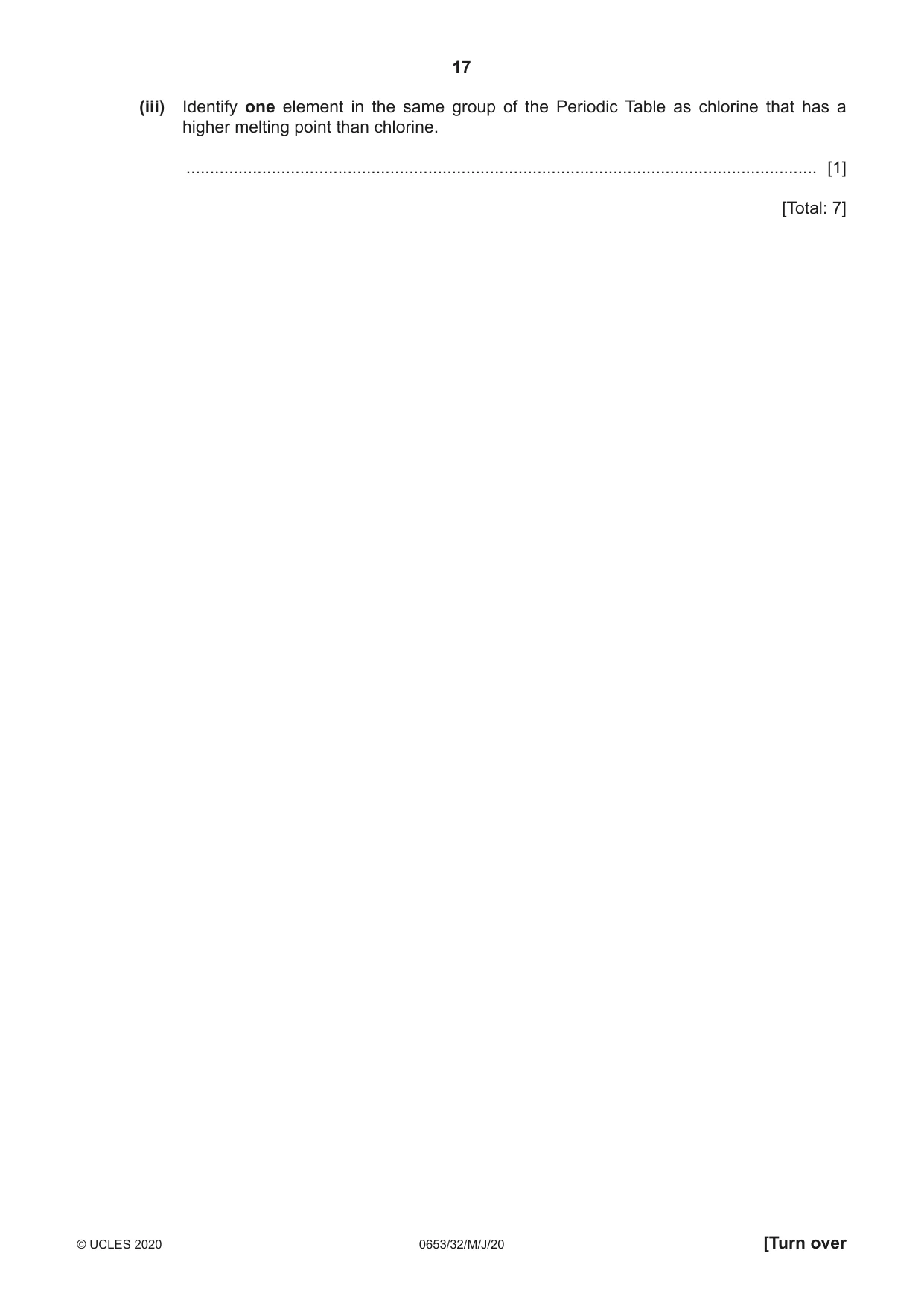
8 (a) Copper chloride is made in the reaction between excess solid copper carbonate and dilute hydrochloric acid. The word equation for this reaction is shown. copper hydrochloric copper carbon + + + water carbonate acid chloride dioxide (i) Describe how unreacted copper carbonate is removed from the mixture when the reaction is complete. ..................................................................................................................................... [1] (ii) Suggest how solid copper chloride is obtained from the aqueous copper chloride that forms. ..................................................................................................................................... [1] (iii) State the test for carbon dioxide and the positive test result. test .................................................................................................................................... result ................................................................................................................................. [2] (b) Chlorine is produced when electricity is passed through concentrated aqueous sodium chloride, as shown in Fig. 8.1. low voltage d.c. supply negative positive electrode electrode concentrated aqueous sodium chloride Fig. 8.1 (i) Name this process. ..................................................................................................................................... [1] (ii) Identify the solvent and the solute through which electricity is passed during this process. solvent ................................................................................................................................ solute ........................................................................................................................... [1] (iii) Identify one element in the same group of the Periodic Table as chlorine that has a higher melting point than chlorine. ..................................................................................................................................... [1] [Total: 7]
Mark scheme: 8(a)(i) filter / filtration ; 1 8(a)(ii) crystallize / evaporate (the water) ; 1 8(a)(iii) (test) limewater ; (result) (turns) cloudy / milky / chalky ; 2 8(b)(i) electrolysis ; 1 8(b)(ii) (solvent) water / H2O AND (solute) sodium chloride / NaCl BOTH required for one mark ; 1 8(b)(iii) bromine / Br2 or iodine / I2 ; allow astatine 1
Q9 · A simple circuit containing two identical lamps A and B
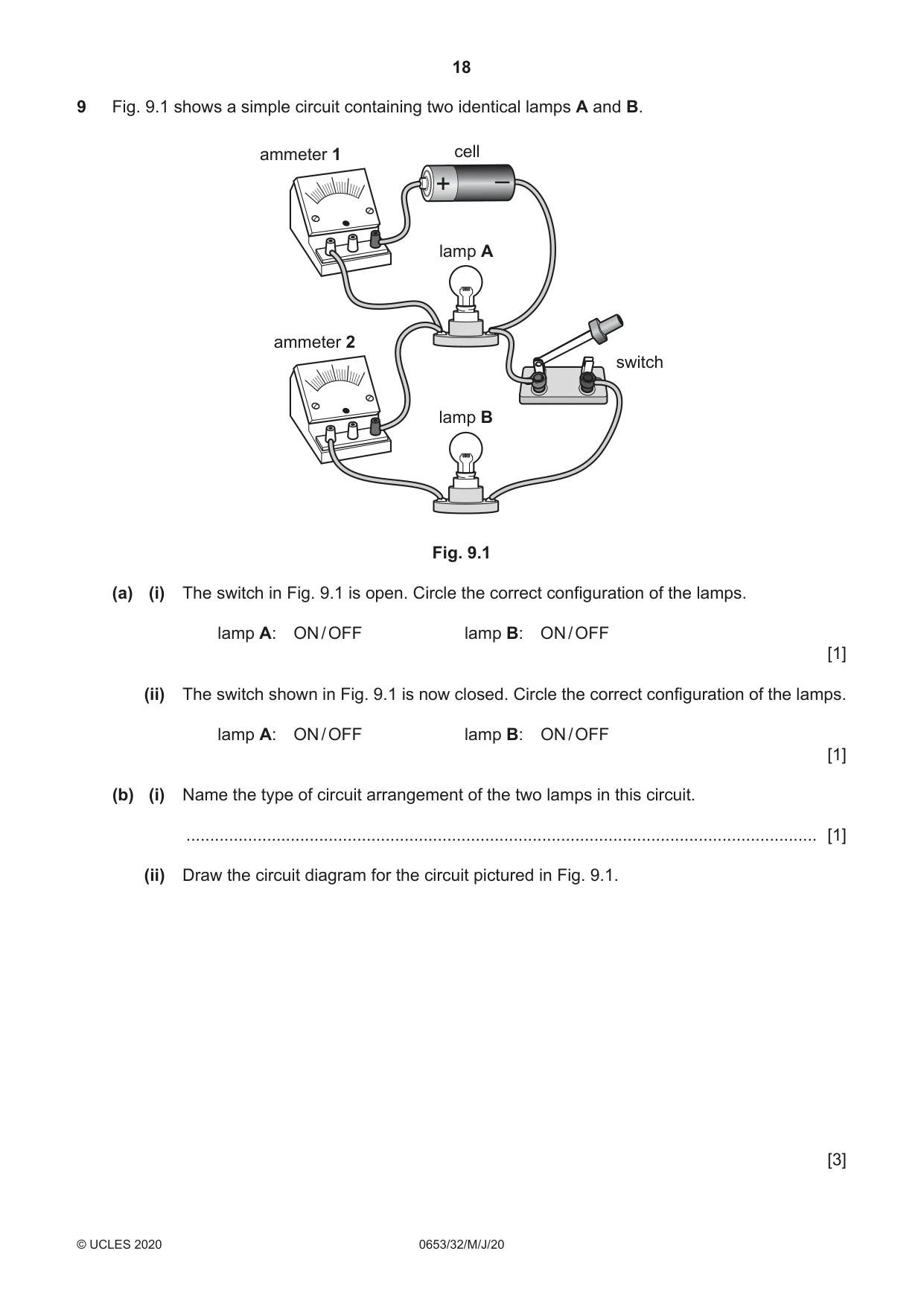
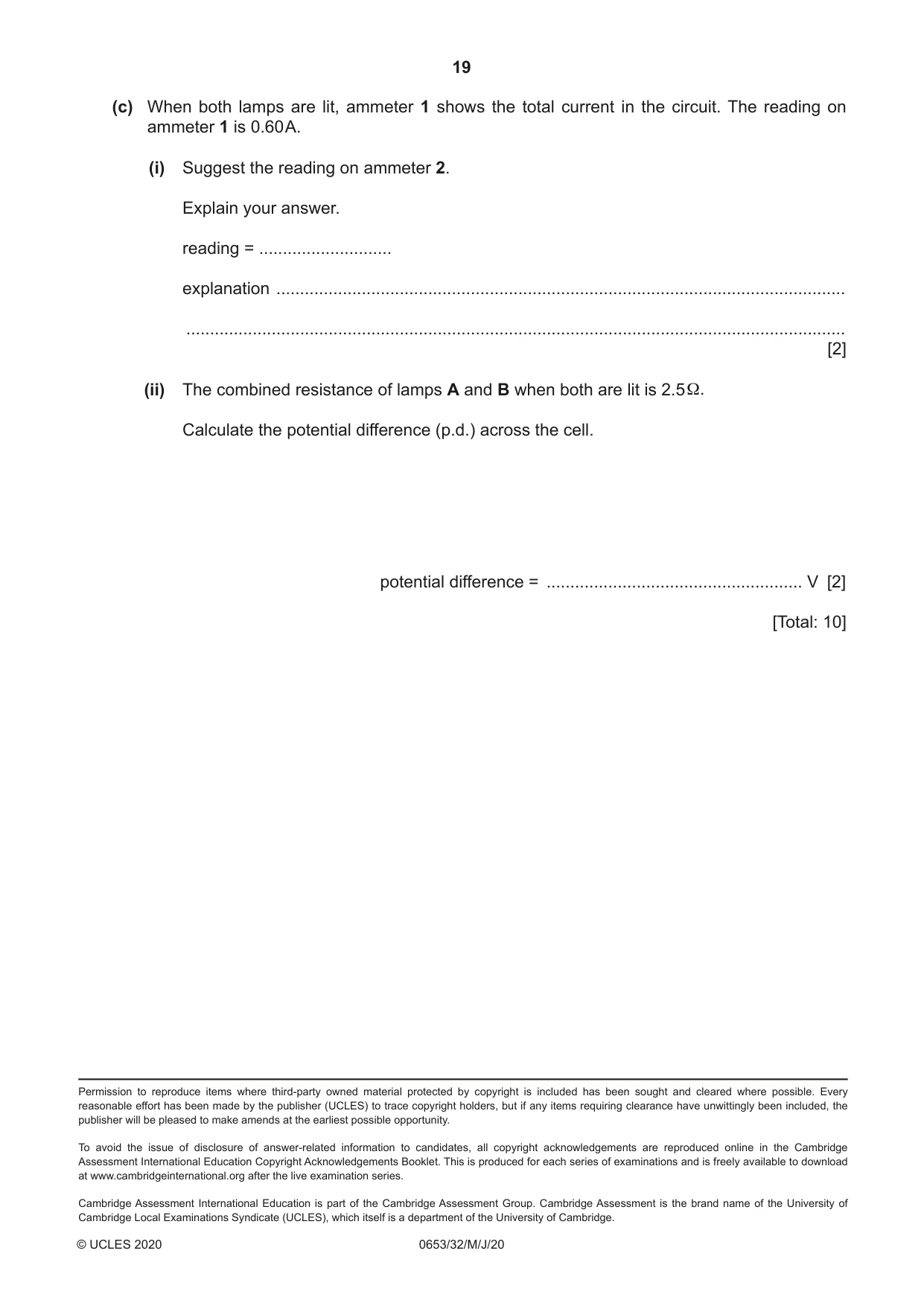
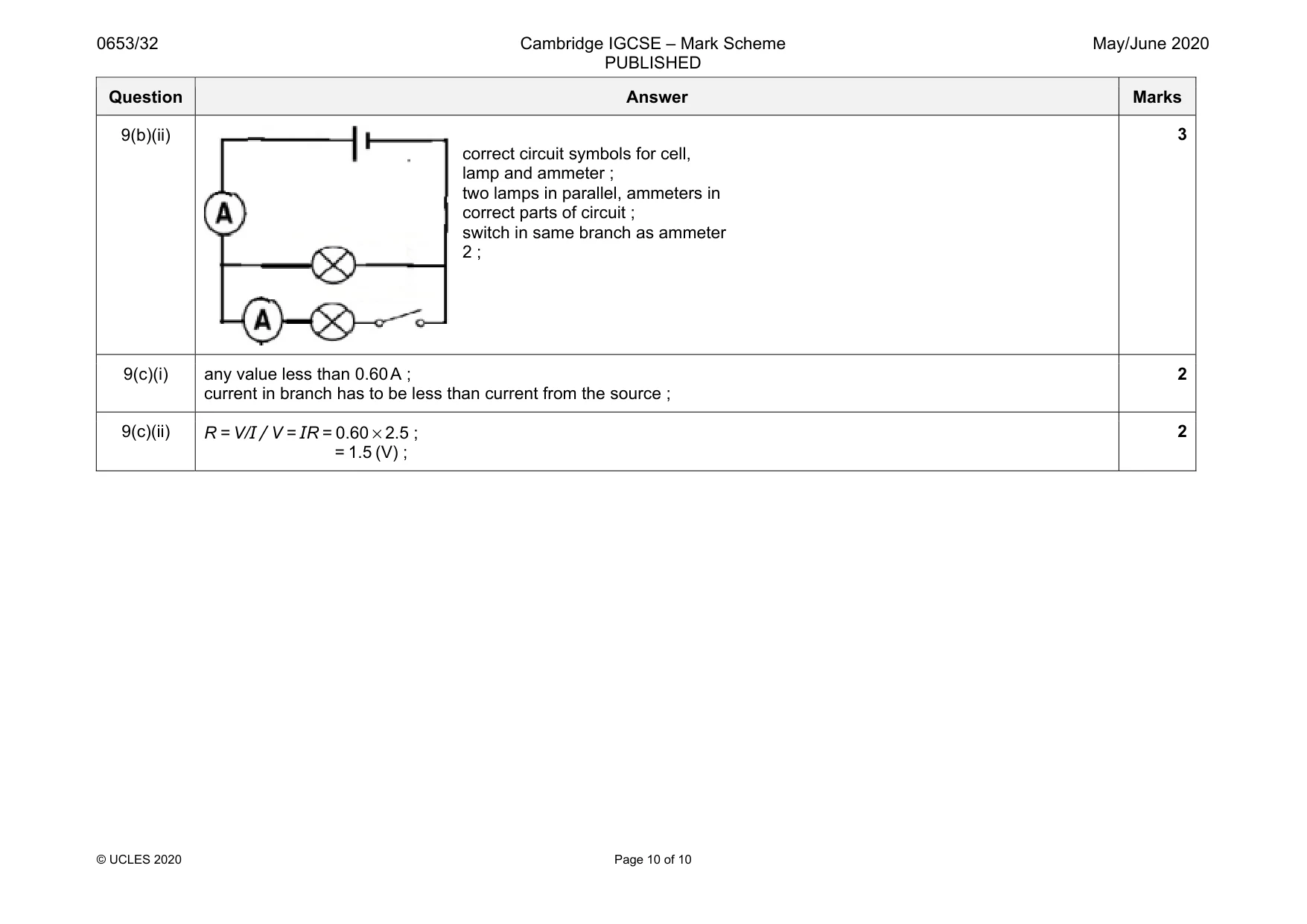
9 Fig. 9.1 shows a simple circuit containing two identical lamps A and B. ammeter 1 cell + – lamp A ammeter 2 switch lamp B Fig. 9.1 (a) (i) The switch in Fig. 9.1 is open. Circle the correct configuration of the lamps. lamp A: ON / OFF lamp B: ON / OFF [1] (ii) The switch shown in Fig. 9.1 is now closed. Circle the correct configuration of the lamps. lamp A: ON / OFF lamp B: ON / OFF [1] (b) (i) Name the type of circuit arrangement of the two lamps in this circuit. ..................................................................................................................................... [1] (ii) Draw the circuit diagram for the circuit pictured in Fig. 9.1. [3] (c) When both lamps are lit, ammeter 1 shows the total current in the circuit. The reading on ammeter 1 is 0.60 A. (i) Suggest the reading on ammeter 2. Explain your answer. reading = ............................ explanation ........................................................................................................................ ........................................................................................................................................... [2] (ii) The combined resistance of lamps A and B when both are lit is 2.5 Ω. Calculate the potential difference (p.d.) across the cell. potential difference = ...................................................... V [2] [Total: 10]
Mark scheme: 9(a)(i) lamp A ON and lamp B OFF ; 1 9(a)(ii) lamp A ON and lamp B ON ; 1 9(b)(i) parallel ; 1 Question Answer Marks 9(b)(ii) 3 9(c)(i) any value less than 0.60 A ; current in branch has to be less than current from the source ; 2 9(c)(ii) R = V/I / V = IR = 0.60 × 2.5 ; = 1.5 (V) ; 2 correct circuit symbols for cell, lamp and ammeter ; two lamps in parallel, ammeters in correct parts of circuit ; switch in same branch as ammeter 2 ;
What was in this paper
The subtopics covered by these 9 questions, and how many questions each got. Open one in a new tab to see every Cambridge question on it.