Questions as text
Q1 · Which row correctly describes iron and lead? 0652/21 Oct/Nov 2017
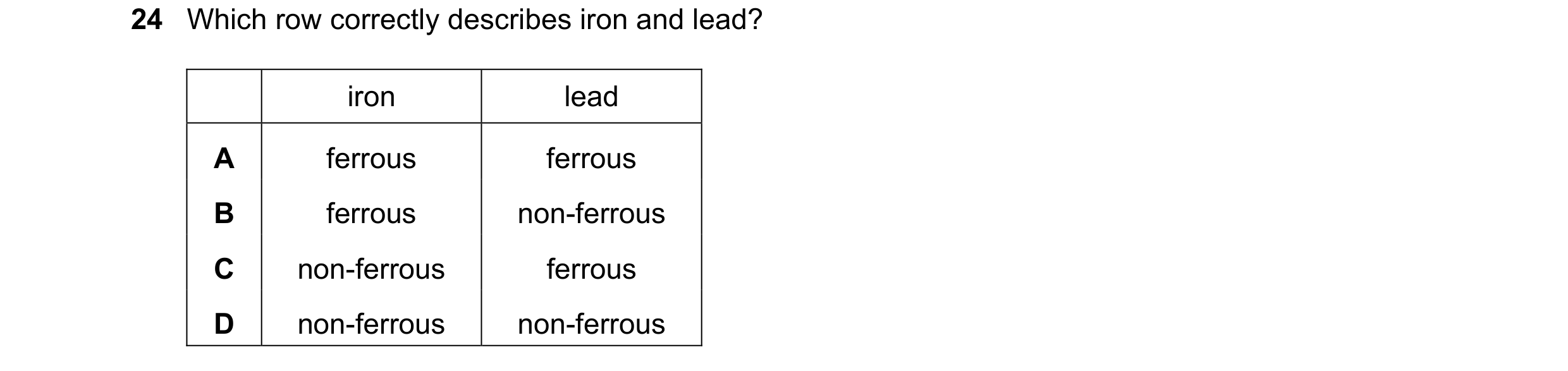
24 Which row correctly describes iron and lead? iron lead A ferrous ferrous B ferrous non-ferrous C non-ferrous ferrous D non-ferrous non-ferrous
1 marks
Answer: B
This question in 0652/21 Oct/Nov 2017
Q2 · A positively charged insulating rod is placed on a balance 0652/21 Oct/Nov 2017
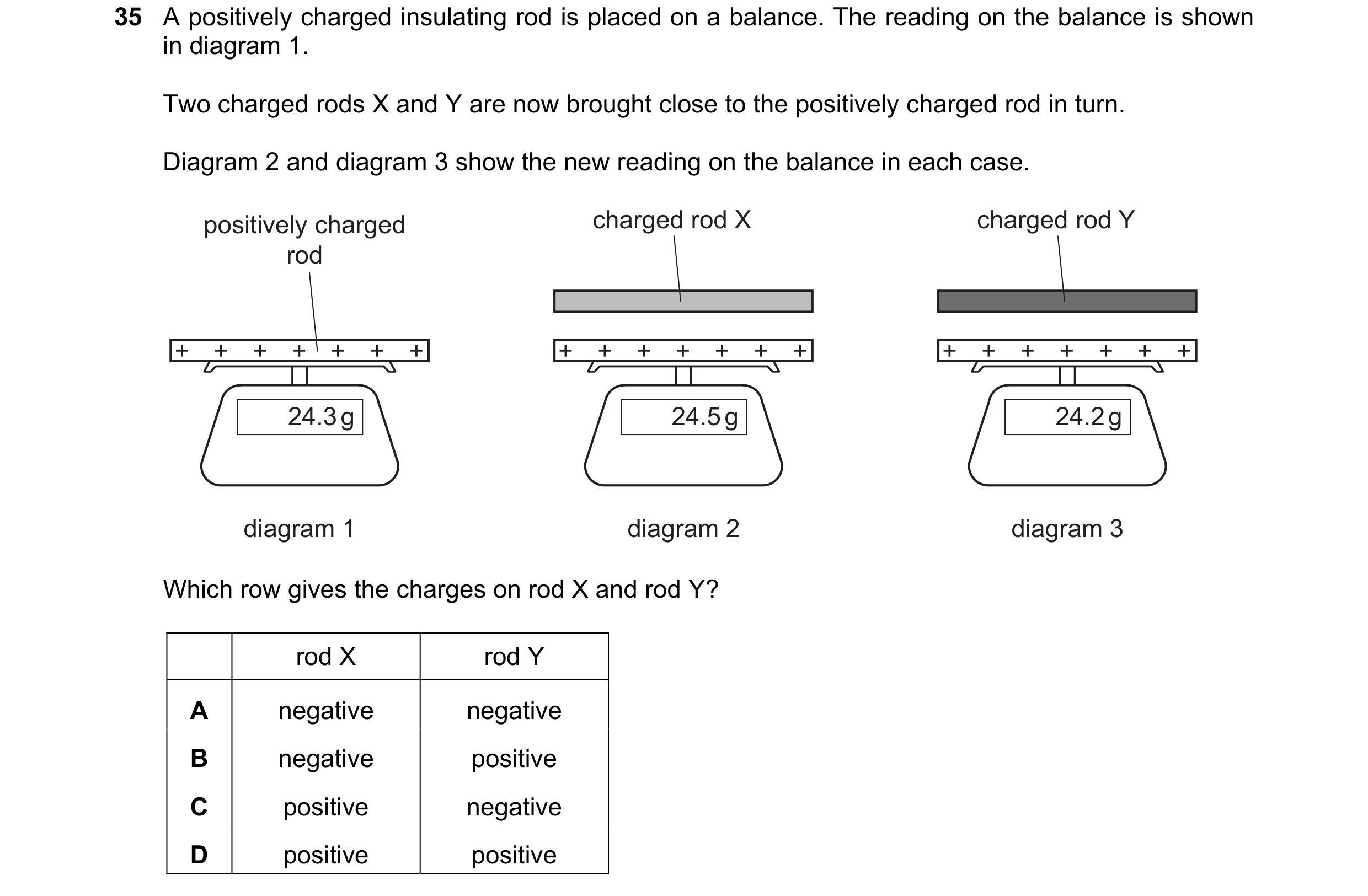
35 A positively charged insulating rod is placed on a balance. The reading on the balance is shown in diagram 1. Two charged rods X and Y are now brought close to the positively charged rod in turn. Diagram 2 and diagram 3 show the new reading on the balance in each case. positively charged charged rod X charged rod Y rod + + + + + + + + + + + + + + + + + + + + + 24.3 g 24.5 g 24.2 g diagram 1 diagram 2 diagram 3 Which row gives the charges on rod X and rod Y? rod X rod Y A negative negative B negative positive C positive negative D positive positive
1 marks
Answer: C
This question in 0652/21 Oct/Nov 2017
Q3 · Which row correctly describes iron and lead? 0652/22 Oct/Nov 2017
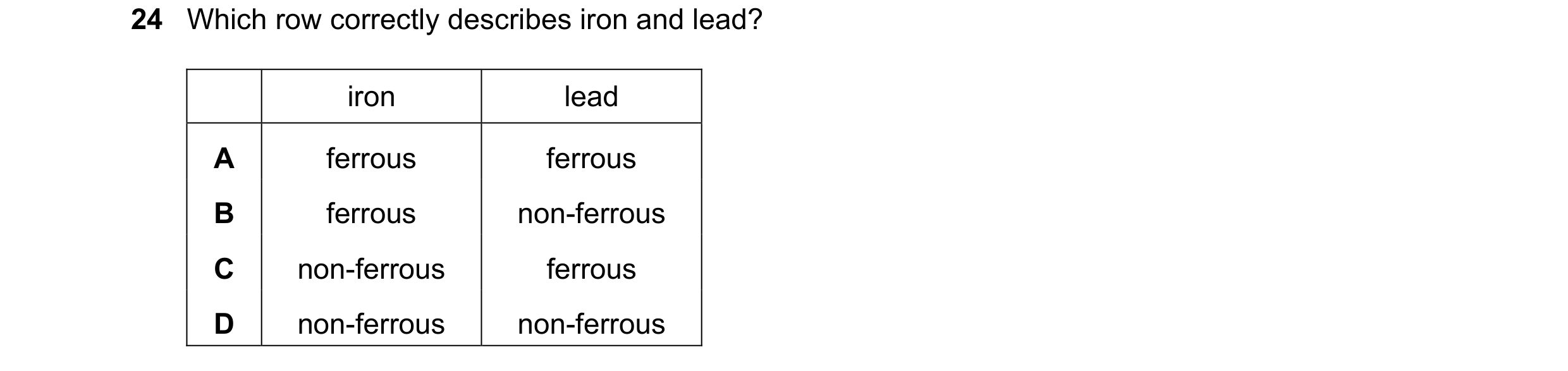
24 Which row correctly describes iron and lead? iron lead A ferrous ferrous B ferrous non-ferrous C non-ferrous ferrous D non-ferrous non-ferrous
1 marks
Answer: B
This question in 0652/22 Oct/Nov 2017
Q4 · A positively charged insulating rod is placed on a balance 0652/22 Oct/Nov 2017
35 A positively charged insulating rod is placed on a balance. The reading on the balance is shown in diagram 1. Two charged rods X and Y are now brought close to the positively charged rod in turn. Diagram 2 and diagram 3 show the new reading on the balance in each case. positively charged charged rod X charged rod Y rod + + + + + + + + + + + + + + + + + + + + + 24.3 g 24.5 g 24.2 g diagram 1 diagram 2 diagram 3 Which row gives the charges on rod X and rod Y? rod X rod Y A negative negative B negative positive C positive negative D positive positive
1 marks
Answer: C
This question in 0652/22 Oct/Nov 2017
Q5 · Why is iron a suitable material for the core of an electromagnet? 0652/21 Oct/Nov 2018
32 Why is iron a suitable material for the core of an electromagnet? A It is a good conductor of electricity. B It is a poor conductor of electricity. C It loses its magnetism when the current is switched off. D It stays magnetised when the current is switched off.
1 marks
Answer: C
This question in 0652/21 Oct/Nov 2018
Q6 · Why is iron a suitable material for the core of an electromagnet? 0652/22 Oct/Nov 2018
32 Why is iron a suitable material for the core of an electromagnet? A It is a good conductor of electricity. B It is a poor conductor of electricity. C It loses its magnetism when the current is switched off. D It stays magnetised when the current is switched off.
1 marks
Answer: C
This question in 0652/22 Oct/Nov 2018
Q7 · A strong permanent magnet is placed close to an iron block, as shown in the diagram 0652/21 Oct/Nov 2020
34 A strong permanent magnet is placed close to an iron block, as shown in the diagram. strong magnet iron N S block Magnetic poles are induced in the iron block. What is the arrangement of the induced poles? A B C D N S N S S N S N
1 marks
Answer: A
This question in 0652/21 Oct/Nov 2020
Q8 · A strong permanent magnet is placed close to an iron block, as shown in the diagram 0652/22 Oct/Nov 2020
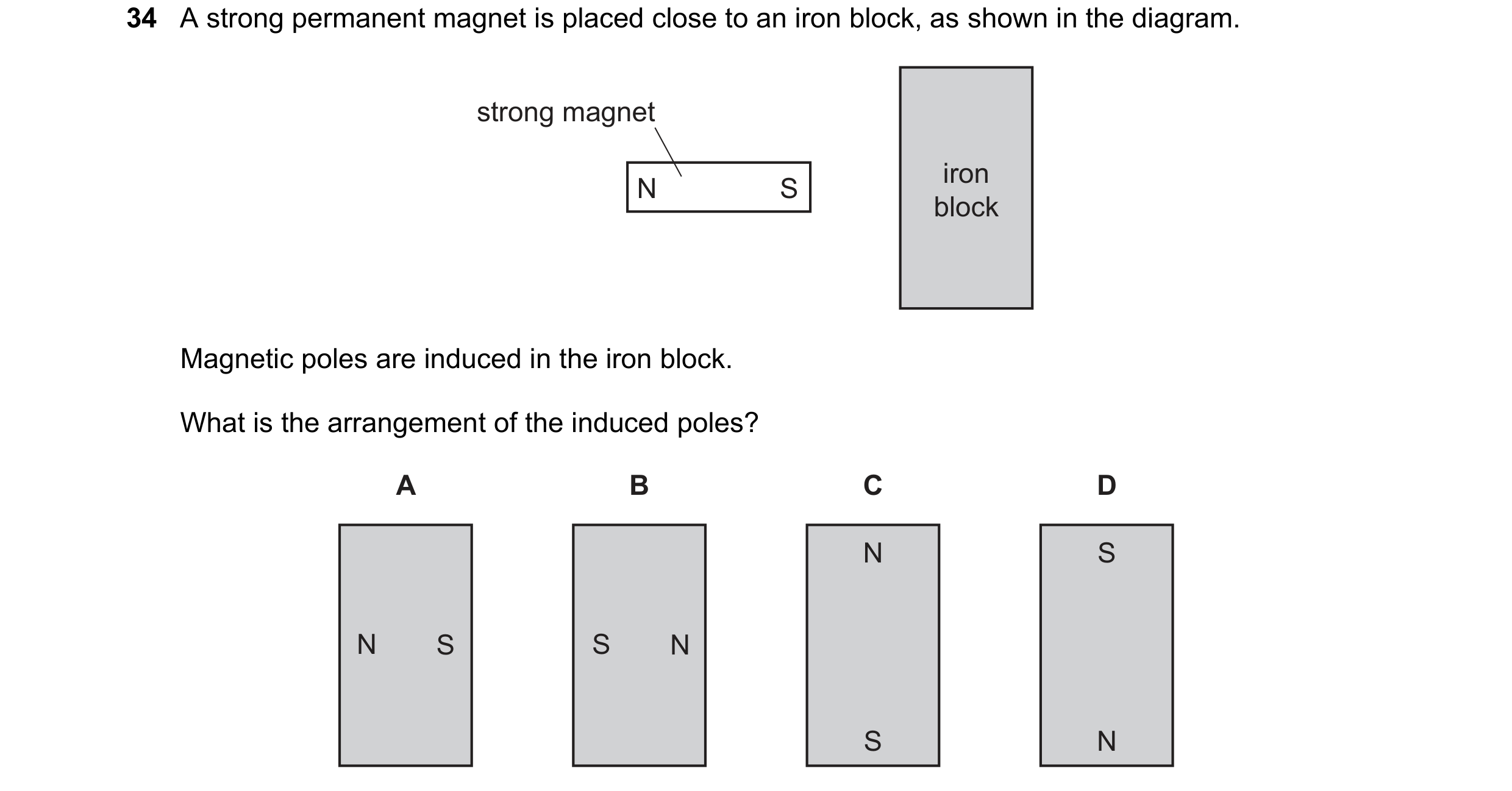
34 A strong permanent magnet is placed close to an iron block, as shown in the diagram. strong magnet iron N S block Magnetic poles are induced in the iron block. What is the arrangement of the induced poles? A B C D N S N S S N S N
1 marks
Answer: A
This question in 0652/22 Oct/Nov 2020
Q9 · The diagram shows two light plastic balls suspended by insulating threads from a support 0652/21 Oct/Nov 2021
34 The diagram shows two light plastic balls suspended by insulating threads from a support. insulating threads plastic ball plastic ball Which statement is an explanation of why the plastic balls hang apart from each other? A The balls have like charges. B One ball is charged; the other is uncharged. C The balls have unlike charges. D Both balls are uncharged.
1 marks
Answer: A
This question in 0652/21 Oct/Nov 2021
Q10 · Which metal is used to make the core of an electromagnet? 0652/21 Oct/Nov 2022
33 Which metal is used to make the core of an electromagnet? A aluminium B copper C iron D steel
1 marks
Answer: C
This question in 0652/21 Oct/Nov 2022
Q11 · The diagram shows the charges on three objects, P, Q and R 0652/21 Oct/Nov 2022
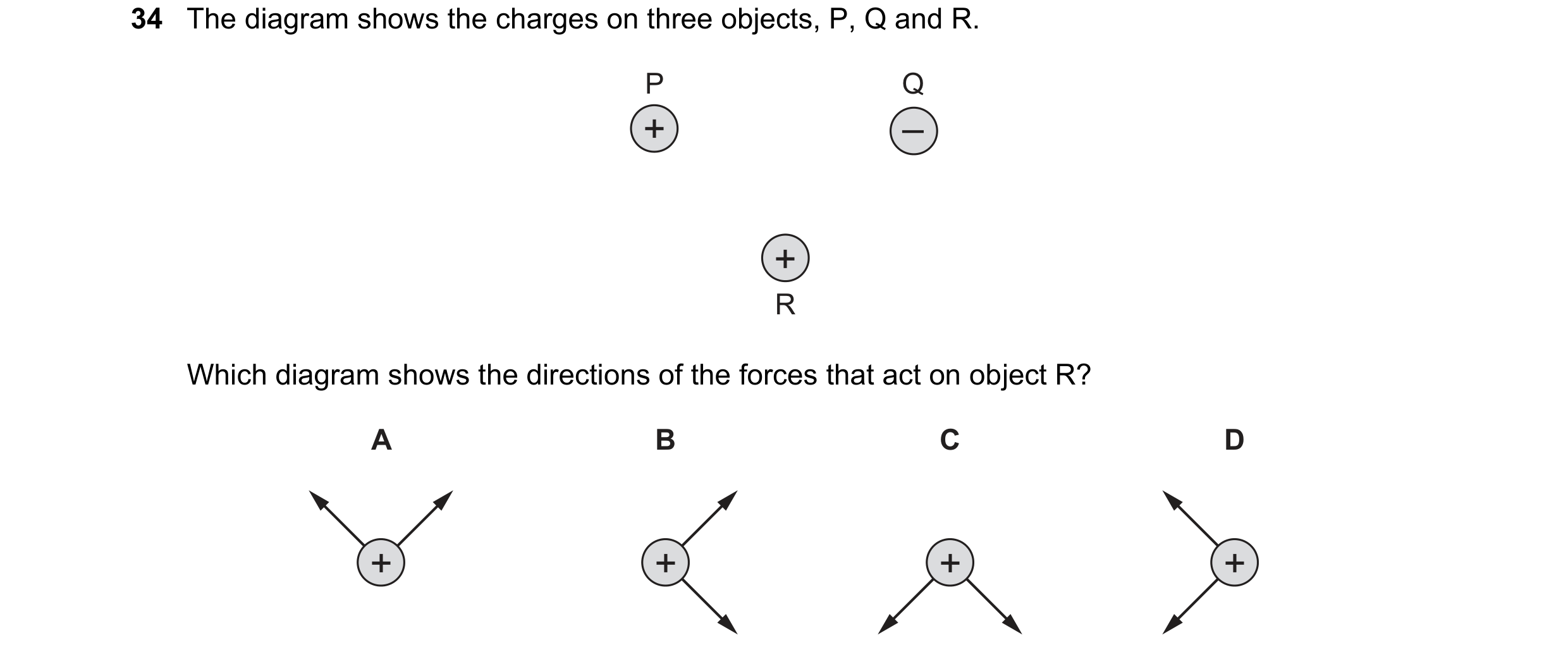
34 The diagram shows the charges on three objects, P, Q and R. P Q + – + R Which diagram shows the directions of the forces that act on object R? A B C D + + + +
1 marks
Answer: B
This question in 0652/21 Oct/Nov 2022
Q12 · Which metal is used to make the core of an electromagnet? 0652/22 Oct/Nov 2022
33 Which metal is used to make the core of an electromagnet? A aluminium B copper C iron D steel
1 marks
Answer: C
This question in 0652/22 Oct/Nov 2022
Q13 · The diagram shows the charges on three objects, P, Q and R 0652/22 Oct/Nov 2022
34 The diagram shows the charges on three objects, P, Q and R. P Q + – + R Which diagram shows the directions of the forces that act on object R? A B C D + + + +
1 marks
Answer: B
This question in 0652/22 Oct/Nov 2022
Q14 · Which metal is used to make the core of an electromagnet and what is a property of an… 0652/21 Oct/Nov 2023
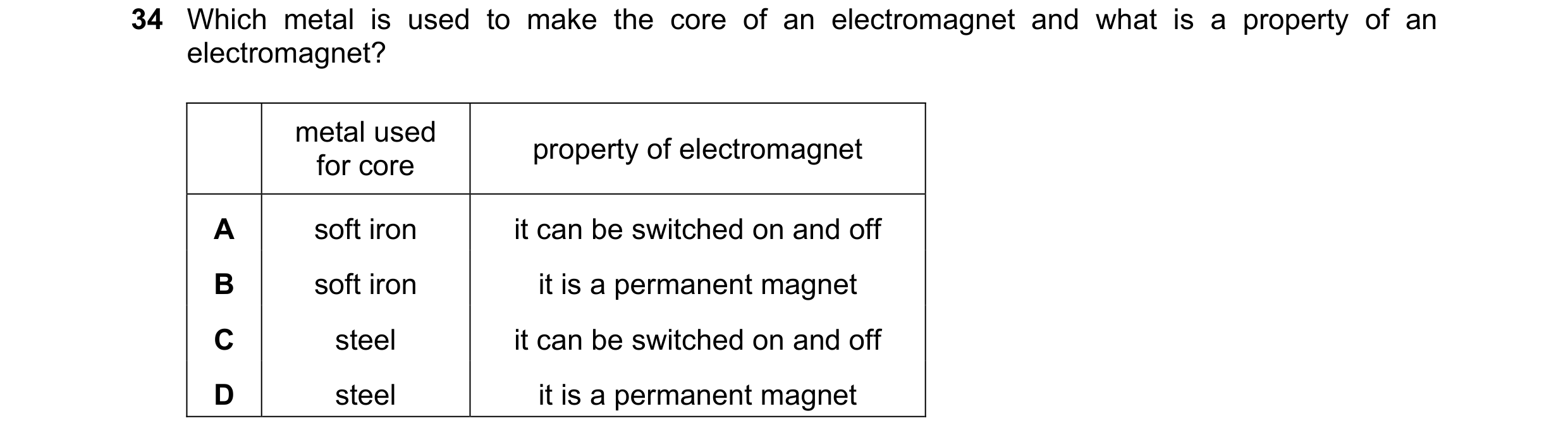
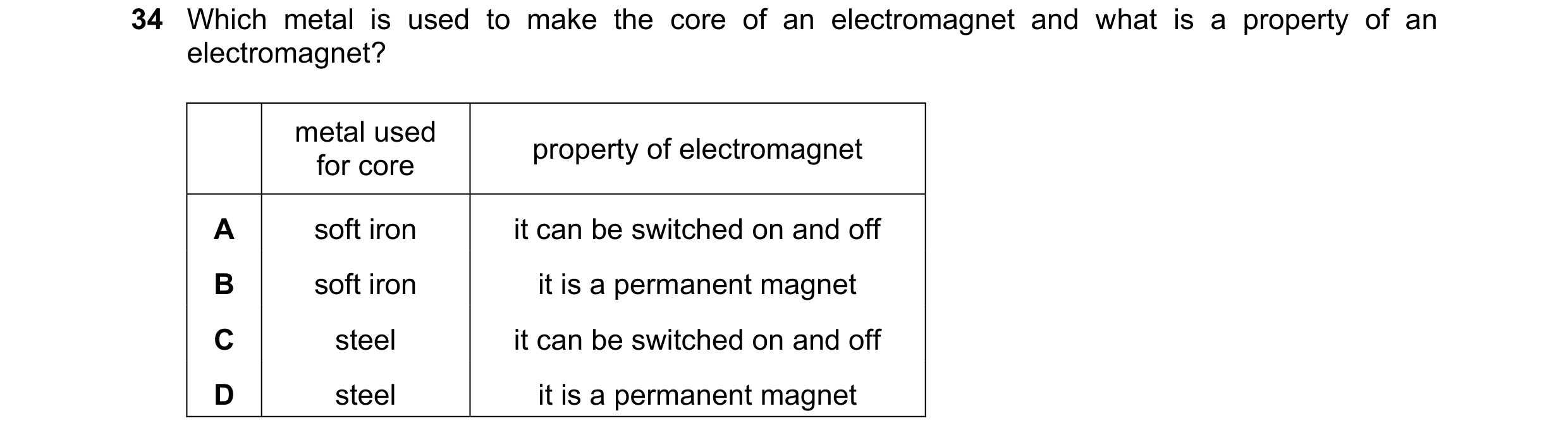
34 Which metal is used to make the core of an electromagnet and what is a property of an electromagnet? metal used property of electromagnet for core A soft iron it can be switched on and off B soft iron it is a permanent magnet C steel it can be switched on and off D steel it is a permanent magnet
1 marks
Answer: A
This question in 0652/21 Oct/Nov 2023
Q15 · The first diagram shows a beam of alpha-particles entering an electric field 0652/21 Oct/Nov 2023
39 The first diagram shows a beam of alpha-particles entering an electric field. The second diagram shows a beam of alpha-particles entering a magnetic field. + + + + + + alpha-particles – – – – – – N alpha-particles S In which direction is the beam deflected in each of the fields? electric field magnetic field A towards the negative plate into the page B towards the negative plate out of the page C towards the positive plate into the page D towards the positive plate out of the page
1 marks
Answer: A
This question in 0652/21 Oct/Nov 2023
Q16 · Which metal is used to make the core of an electromagnet and what is a property of an… 0652/22 Oct/Nov 2023
34 Which metal is used to make the core of an electromagnet and what is a property of an electromagnet? metal used property of electromagnet for core A soft iron it can be switched on and off B soft iron it is a permanent magnet C steel it can be switched on and off D steel it is a permanent magnet
1 marks
Answer: A
This question in 0652/22 Oct/Nov 2023
Q17 · The first diagram shows a beam of alpha-particles entering an electric field 0652/22 Oct/Nov 2023
39 The first diagram shows a beam of alpha-particles entering an electric field. The second diagram shows a beam of alpha-particles entering a magnetic field. + + + + + + alpha-particles – – – – – – N alpha-particles S In which direction is the beam deflected in each of the fields? electric field magnetic field A towards the negative plate into the page B towards the negative plate out of the page C towards the positive plate into the page D towards the positive plate out of the page
1 marks
Answer: A
This question in 0652/22 Oct/Nov 2023
 1 / 7
1 / 7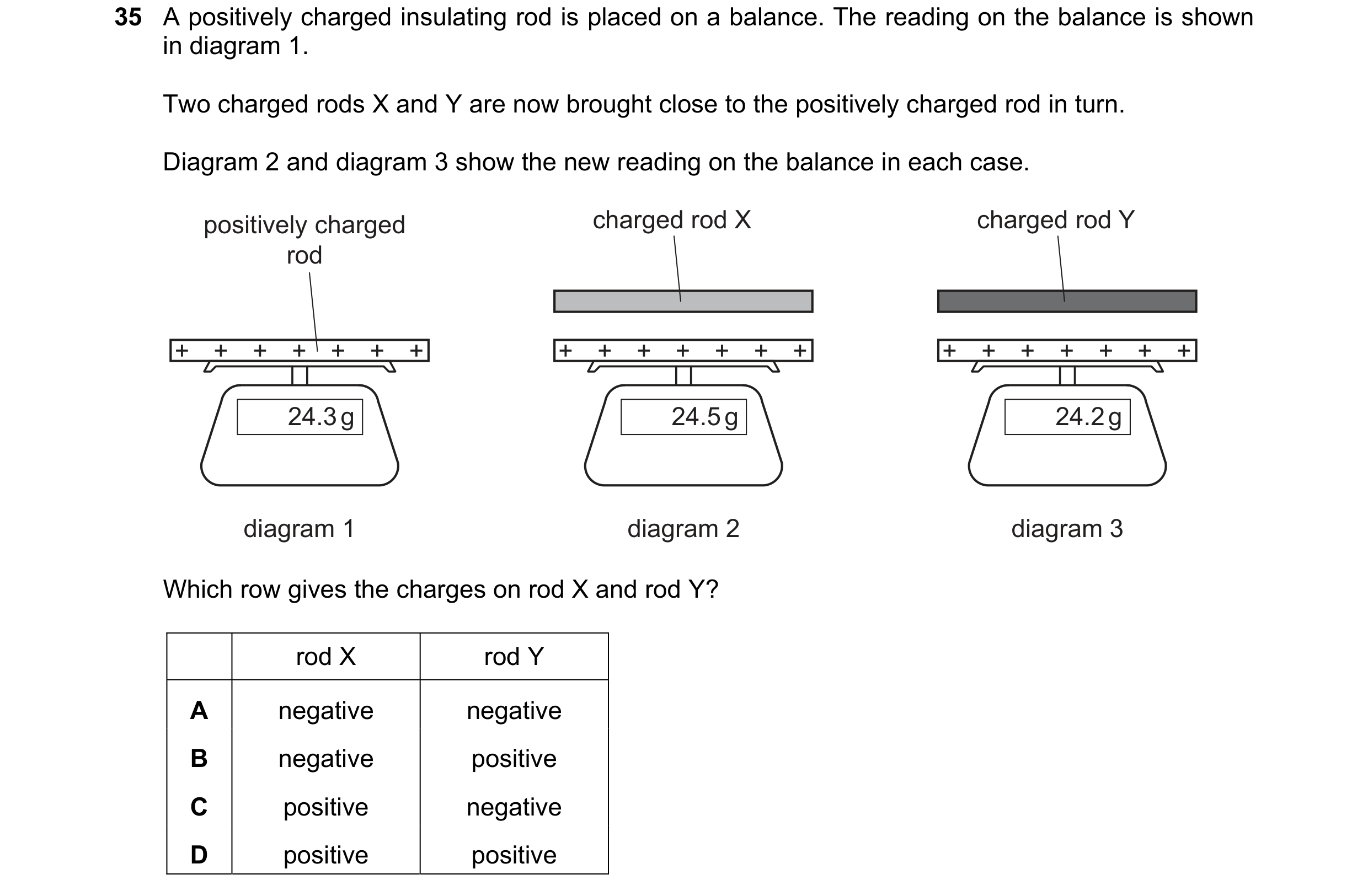

 2 / 7
2 / 7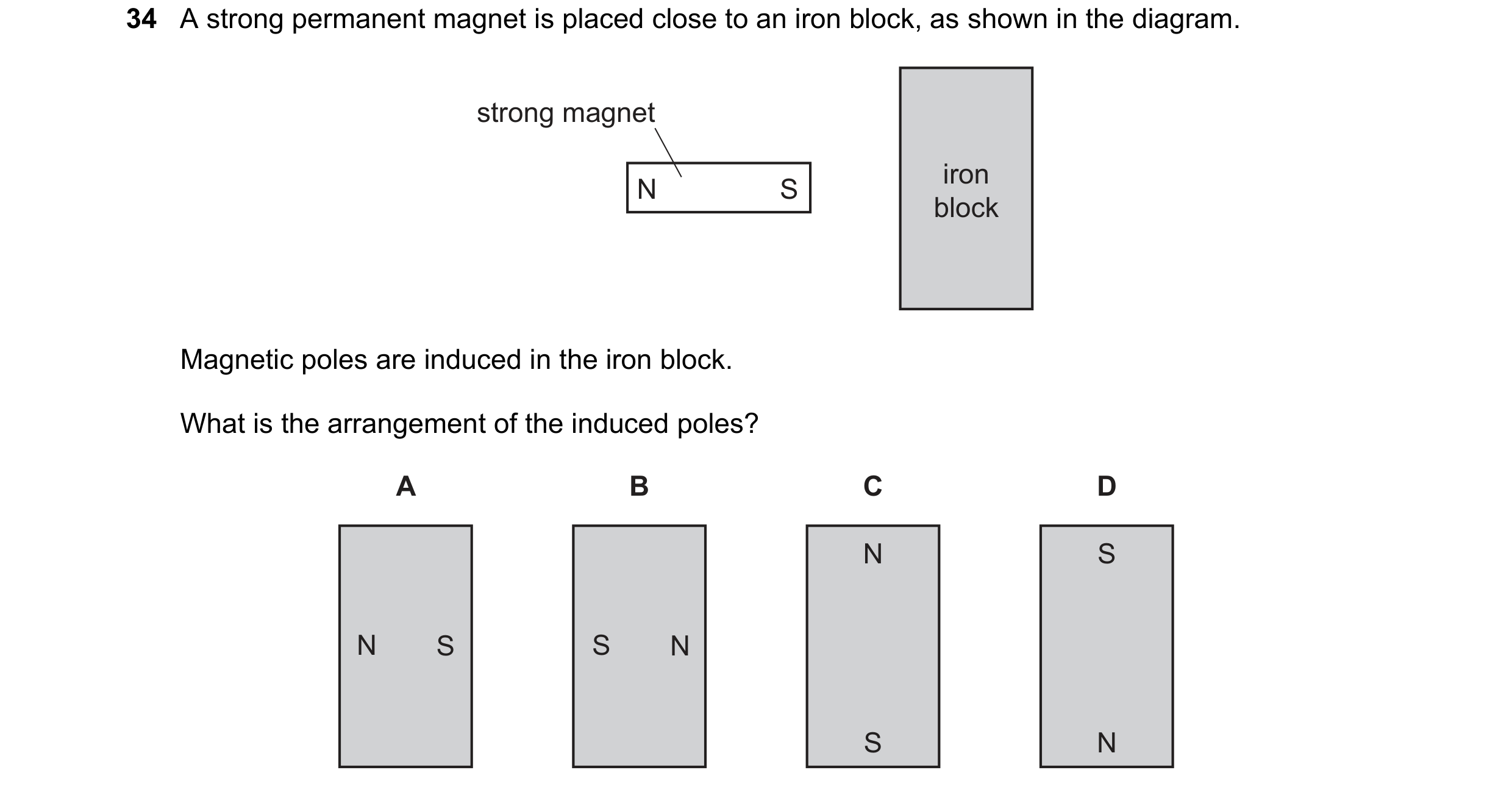
 3 / 7
3 / 7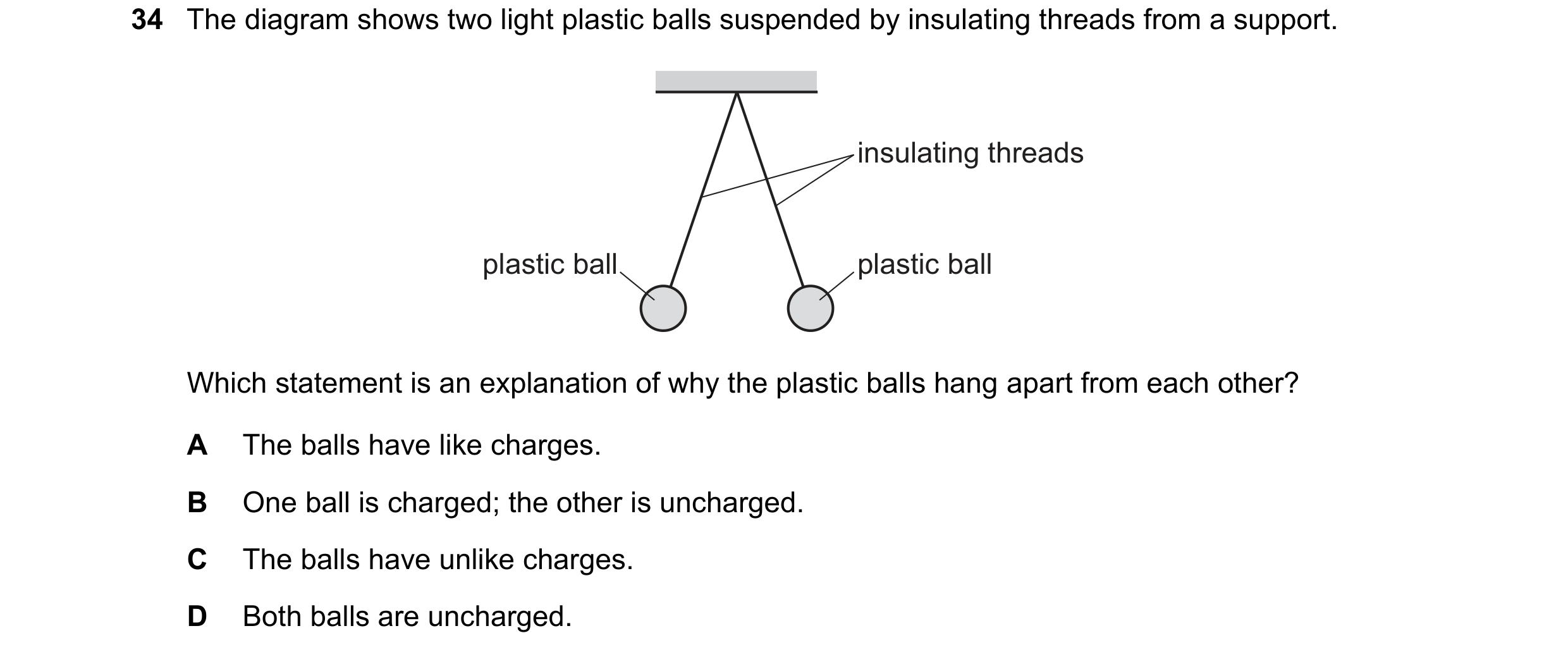

 4 / 7
4 / 7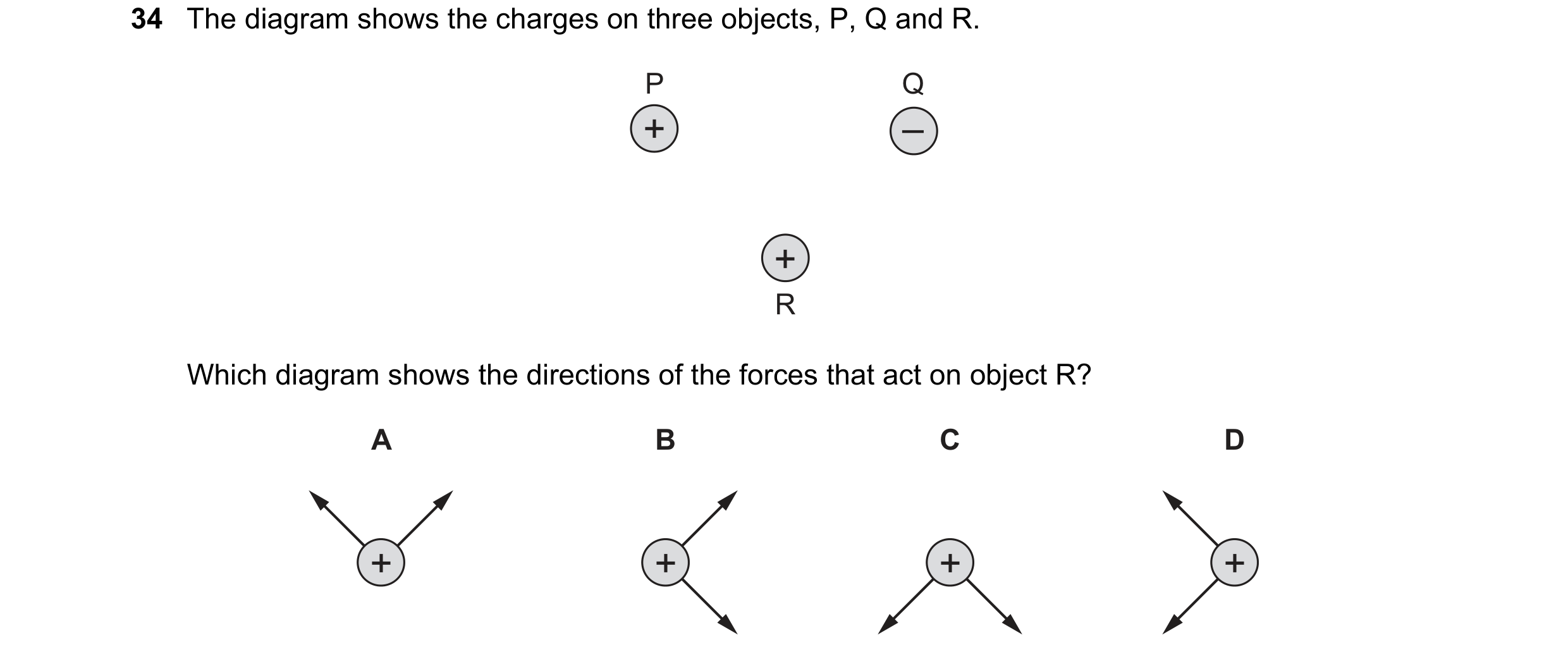
 5 / 7
5 / 7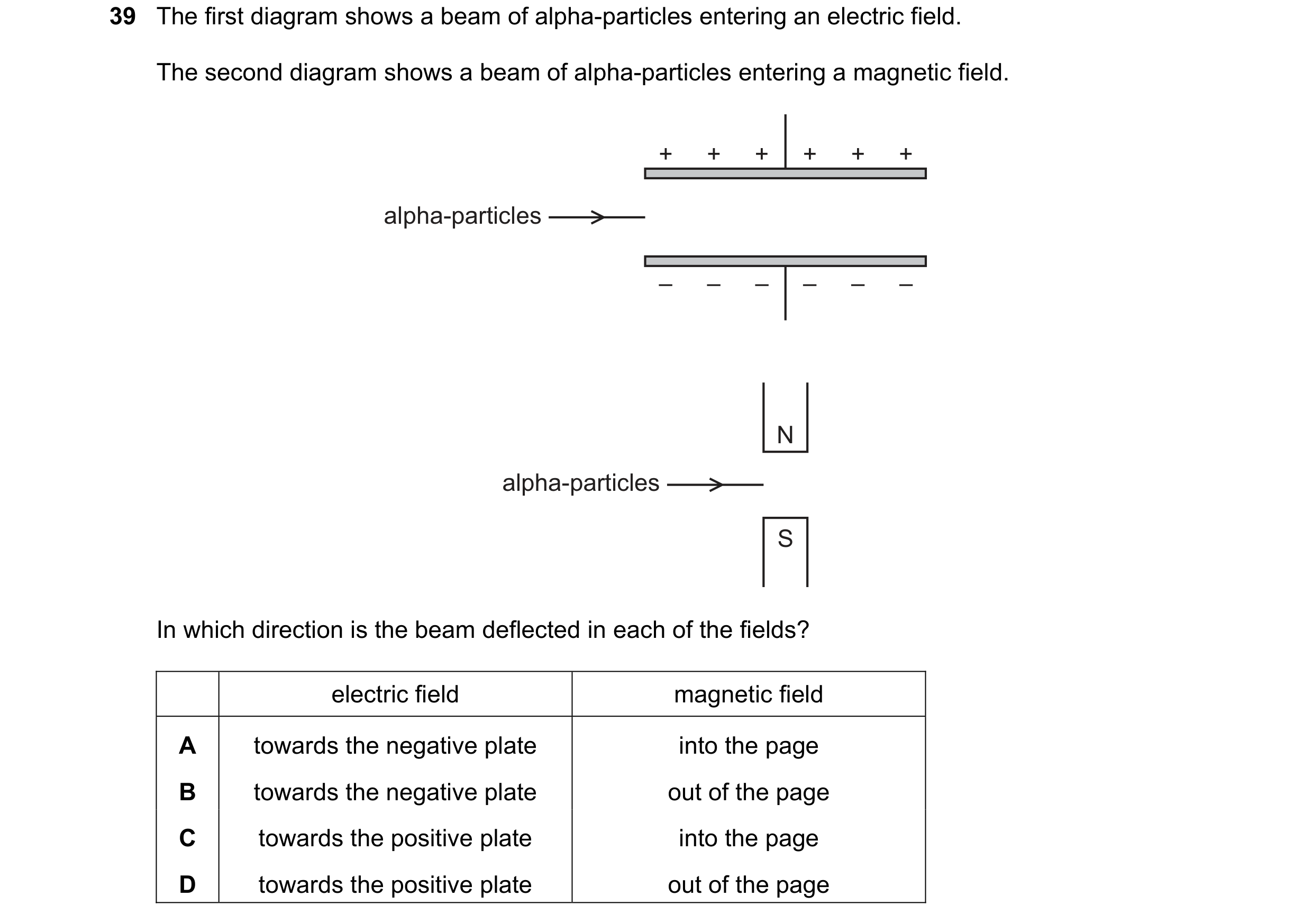
 6 / 7
6 / 7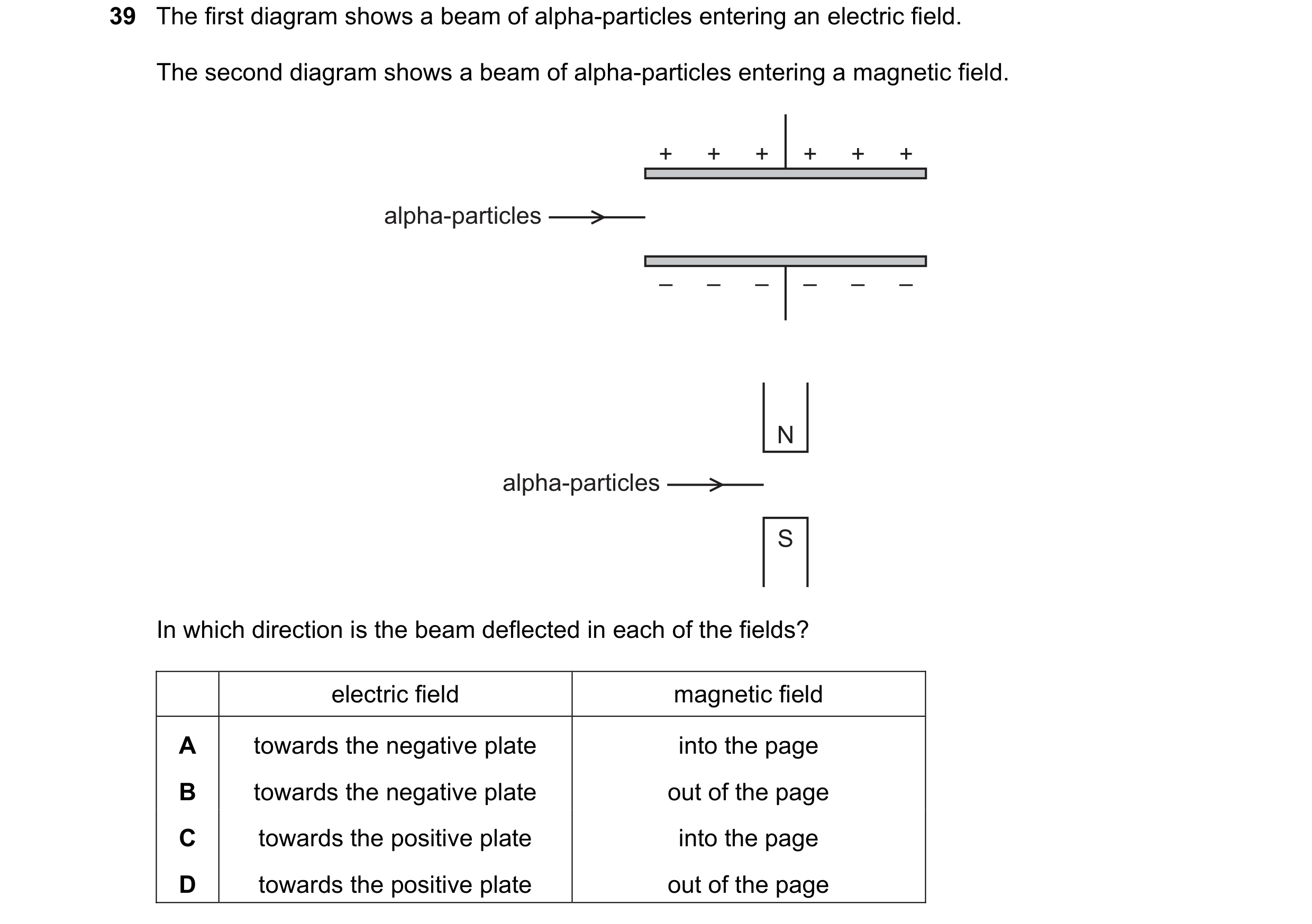 7 / 7
7 / 7