Cambridge IGCSE Geography 0460 — 2021 May/June Paper 2 · Variant 1
0460/21/M/J/21 · 6 questions · 60 marks · ≈68 min
The question paper and its mark scheme, free to read here and free to download. This is Cambridge’s own paper, exactly as it was sat.
Question paper16 pages

Mark scheme6 pages
Answers below. Sit the paper first if you are practising.
Questions as text
Q1 · Study the map extract for Laveissière, France
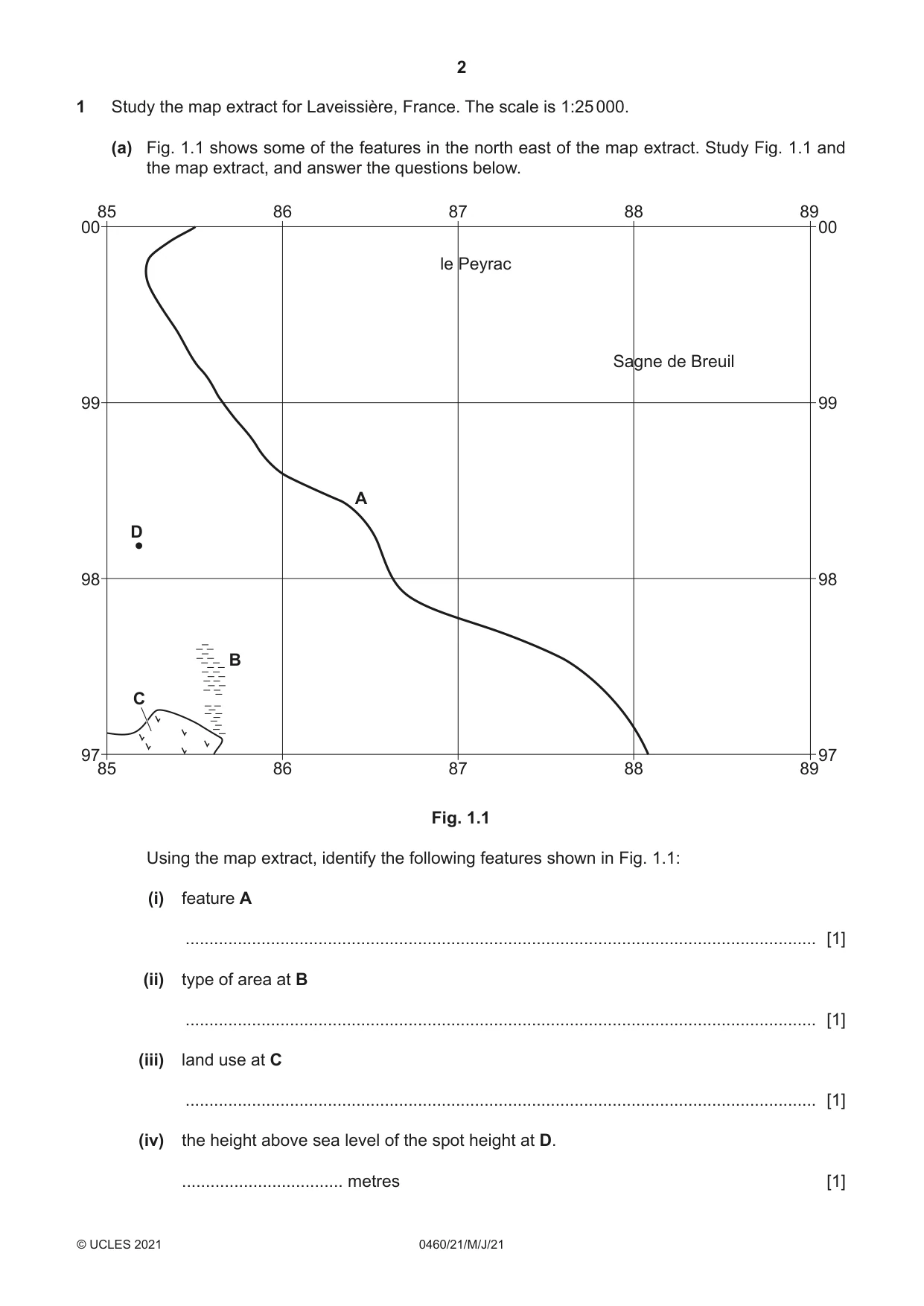
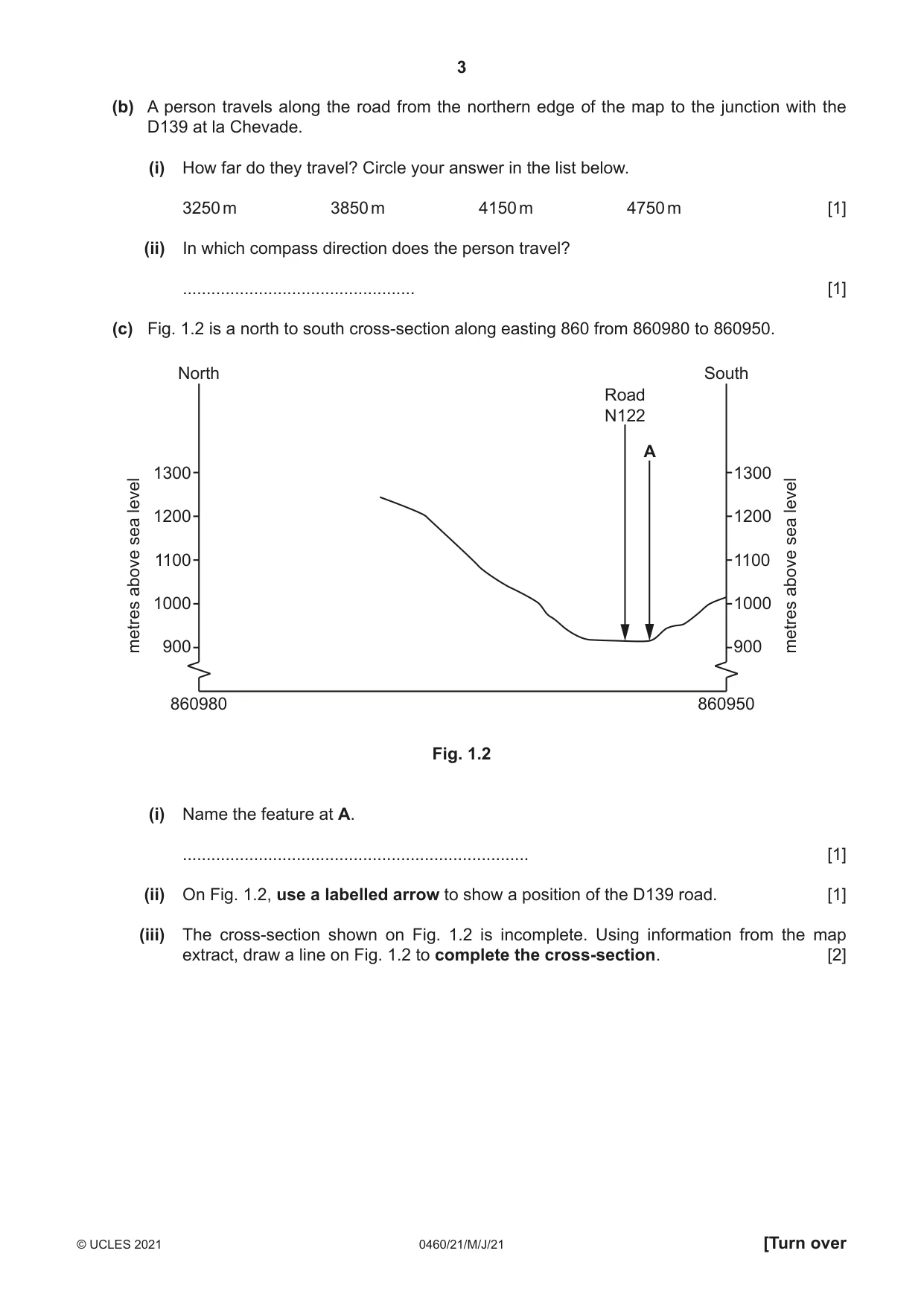
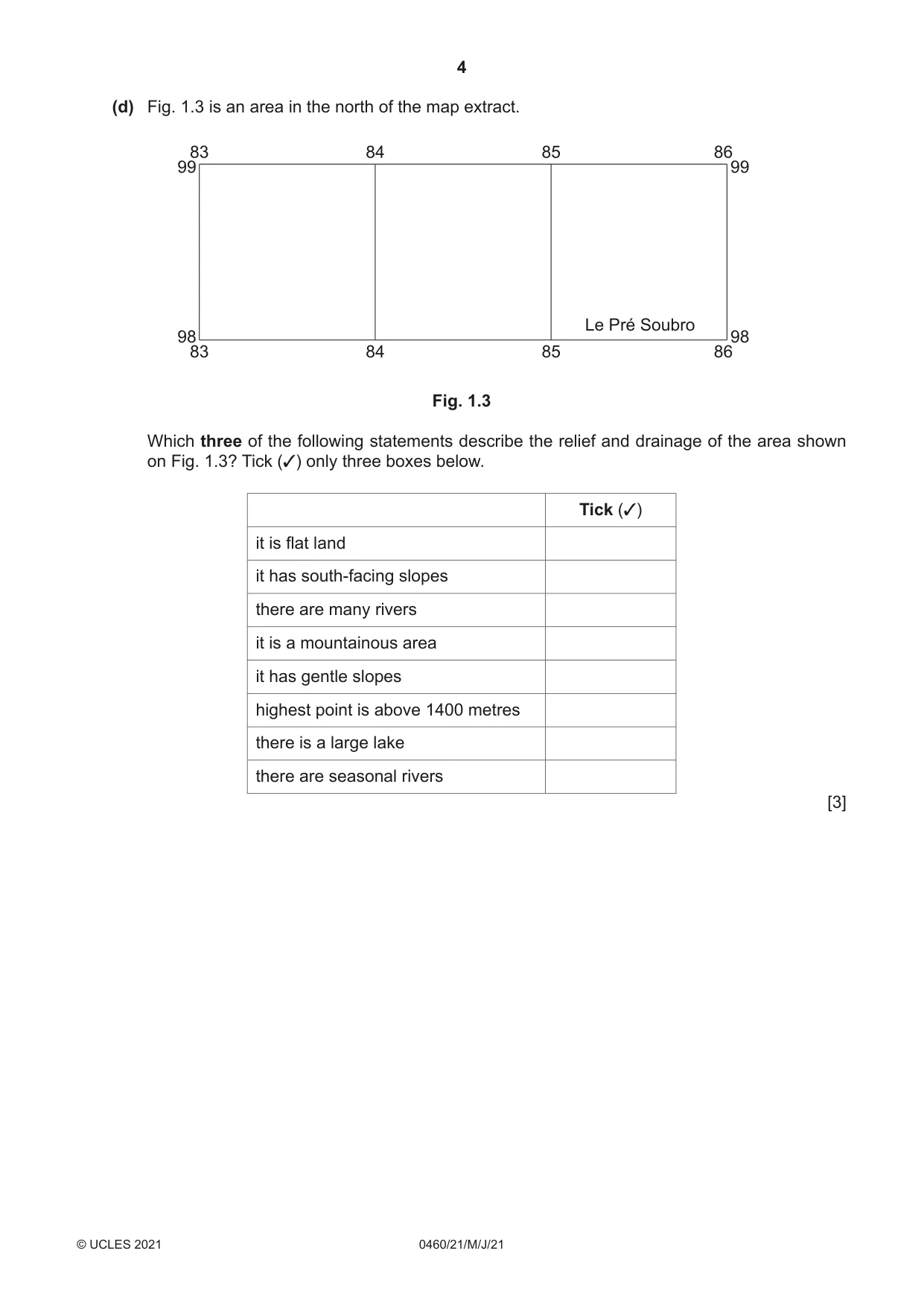
1 Study the map extract for Laveissière, France. The scale is 1:25 000. (a) Fig. 1.1 shows some of the features in the north east of the map extract. Study Fig. 1.1 and the map extract, and answer the questions below. 85 86 87 88 89 00 00 le Peyrac Sagne de Breuil 99 99 A D 98 98 B C 97 97 85 86 87 88 89 Fig. 1.1 Using the map extract, identify the following features shown in Fig. 1.1: (i) feature A ..................................................................................................................................... [1] (ii) type of area at B ..................................................................................................................................... [1] (iii) land use at C ..................................................................................................................................... [1] (iv) the height above sea level of the spot height at D. .................................. metres [1] (b) A person travels along the road from the northern edge of the map to the junction with the D139 at la Chevade. (i) How far do they travel? Circle your answer in the list below. 3250 m 3850 m 4150 m 4750 m [1] (ii) In which compass direction does the person travel? ................................................. [1] (c) Fig. 1.2 is a north to south cross-section along easting 860 from 860980 to 860950. North South Road N122 A 1300 1300 level level 1200 1200 sea sea above 1100 1100 above 1000 1000 metres metres 900 900 860980 860950 Fig. 1.2 (i) Name the feature at A. ......................................................................... [1] (ii) On Fig. 1.2, use a labelled arrow to show a position of the D139 road. [1] (iii) The cross-section shown on Fig. 1.2 is incomplete. Using information from the map extract, draw a line on Fig. 1.2 to complete the cross-section. [2] (d) Fig. 1.3 is an area in the north of the map extract. 83 84 85 86 99 99 Le Pré Soubro 98 98 83 84 85 86 Fig. 1.3 Which three of the following statements describe the relief and drainage of the area shown on Fig. 1.3? Tick (3) only three boxes below. Tick (3) it is flat land it has south-facing slopes there are many rivers it is a mountainous area it has gentle slopes highest point is above 1400 metres there is a large lake there are seasonal rivers [3] (e) Laveissière is a settlement in the south of the map extract. (i) Describe the site of the settlement of Laveissière. ........................................................................................................................................... ........................................................................................................................................... ........................................................................................................................................... ........................................................................................................................................... ........................................................................................................................................... ........................................................................................................................................... ........................................................................................................................................... ..................................................................................................................................... [4] (ii) Identify the services provided for tourists in the settlement of Laveissière. ........................................................................................................................................... ........................................................................................................................................... ........................................................................................................................................... ........................................................................................................................................... ........................................................................................................................................... ..................................................................................................................................... [3] [Total: 20]
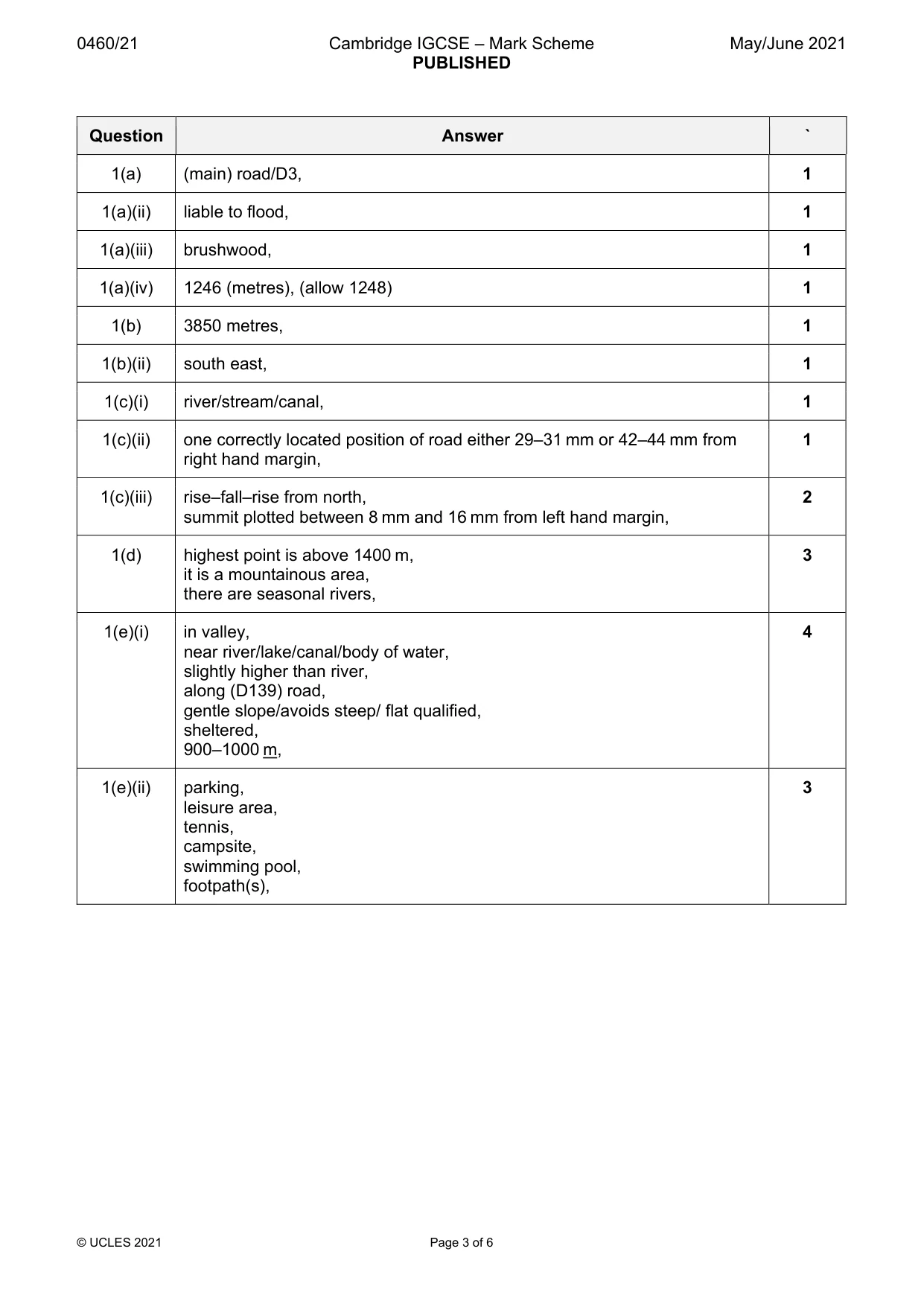
Mark scheme: Question Answer ` 1(a) (main) road/D3, 1 1(a)(ii) liable to flood, 1 1(a)(iii) brushwood, 1 1(a)(iv) 1246 (metres), (allow 1248) 1 1(b) 3850 metres, 1 1(b)(ii) south east, 1 1(c)(i) river/stream/canal, 1 1(c)(ii) one correctly located position of road either 29–31 mm or 42–44 mm from 1 right hand margin, 1(c)(iii) rise–fall–rise from north, 2 summit plotted between 8 mm and 16 mm from left hand margin, 1(d) highest point is above 1400 m, 3 it is a mountainous area, there are seasonal rivers, 1(e)(i) in valley, 4 near river/lake/canal/body of water, slightly higher than river, along (D139) road, gentle slope/avoids steep/ flat qualified, sheltered, 900–1000 m, 1(e)(ii) parking, 3 leisure area, tennis, campsite, swimming pool, footpath(s),
More questions on Settlements (rural and urban) and service provision
Q2 · The percentage of the popula ion who were born out ide the country, in the different…
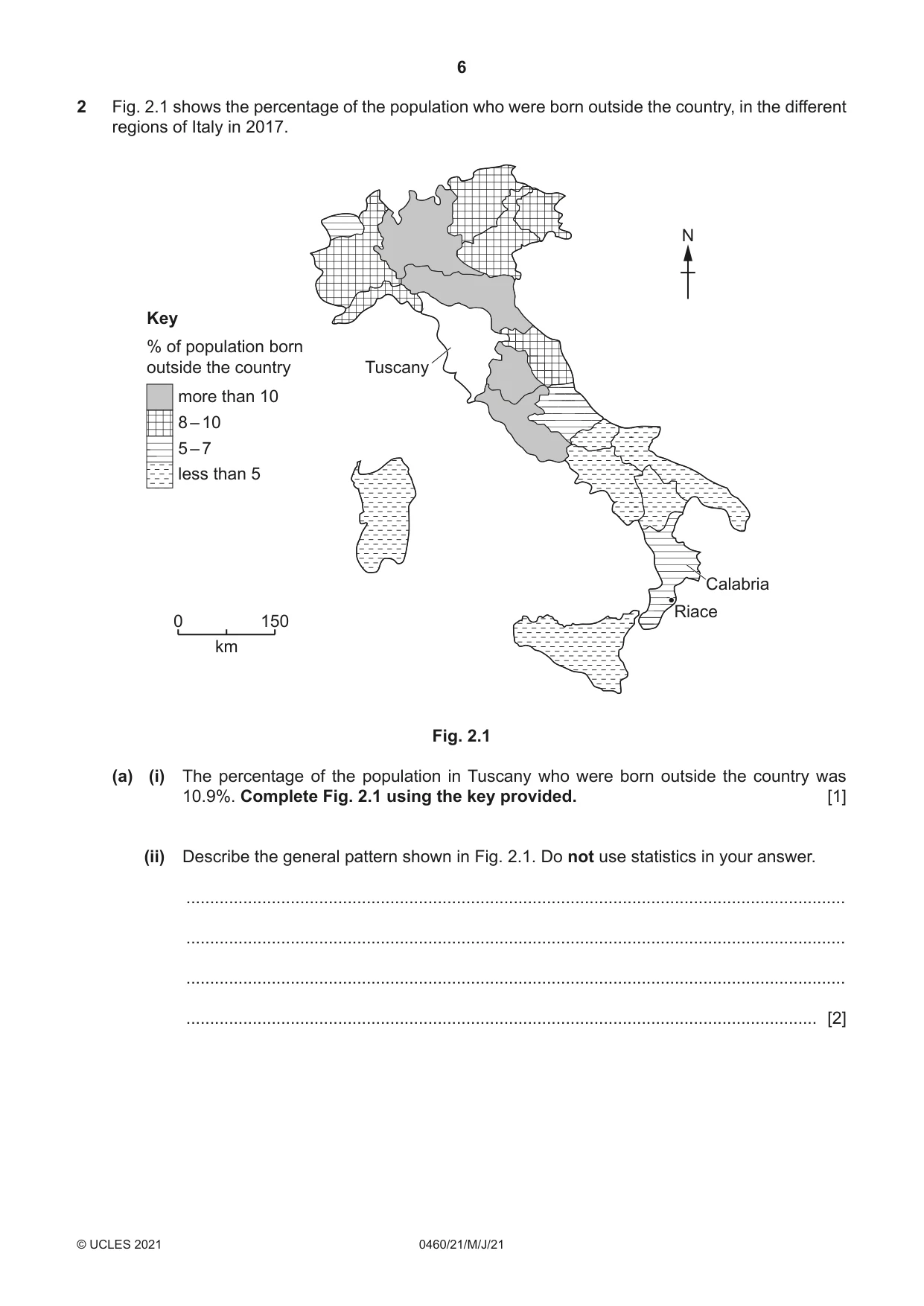
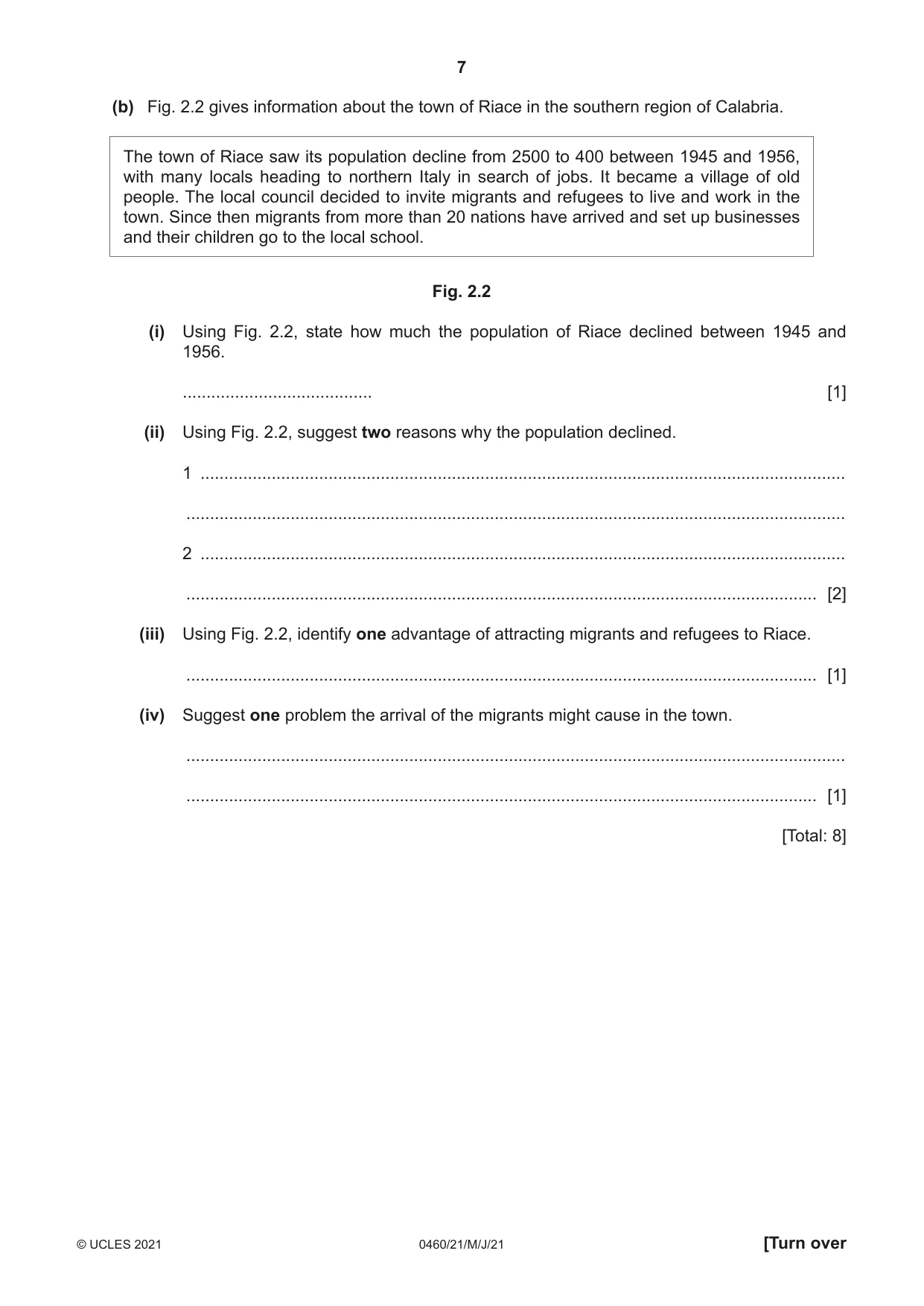
2 Fig. 2.1 shows the percentage of the popula ion who were born out ide the country, in the different regions of Italy in 2017. N Key % of population born outside the country Tuscany more than 10 8 – 10 5 – 7 less than 5 Calabria Riace 0 150 km Fig. 2.1 (a) (i) The percentage of the population in Tuscany who were born outside the country was 10.9%. Complete Fig. 2.1 using the key provided. [1] (ii) Describe the general pattern shown in Fig. 2.1. Do not use statistics in your answer. ........................................................................................................................................... ........................................................................................................................................... ........................................................................................................................................... ..................................................................................................................................... [2] (b) Fig. 2.2 gives information about the town of Riace in the southern region of Calabria. The town of Riace saw its population decline from 2500 to 400 between 1945 and 1956, with many locals heading to northern Italy in search of jobs. It became a village of old people. The local council decided to invite migrants and refugees to live and work in the town. Since then migrants from more than 20 nations have arrived and set up businesses and their children go to the local school. Fig. 2.2 (i) Using Fig. 2.2, state how much the population of Riace declined between 1945 and 1956. ........................................ [1] (ii) Using Fig. 2.2, suggest two reasons why the population declined. 1 ........................................................................................................................................ ........................................................................................................................................... 2 ........................................................................................................................................ ..................................................................................................................................... [2] (iii) Using Fig. 2.2, identify one advantage of attracting migrants and refugees to Riace. ..................................................................................................................................... [1] (iv) Suggest one problem the arrival of the migrants might cause in the town. ........................................................................................................................................... ..................................................................................................................................... [1] [Total: 8]
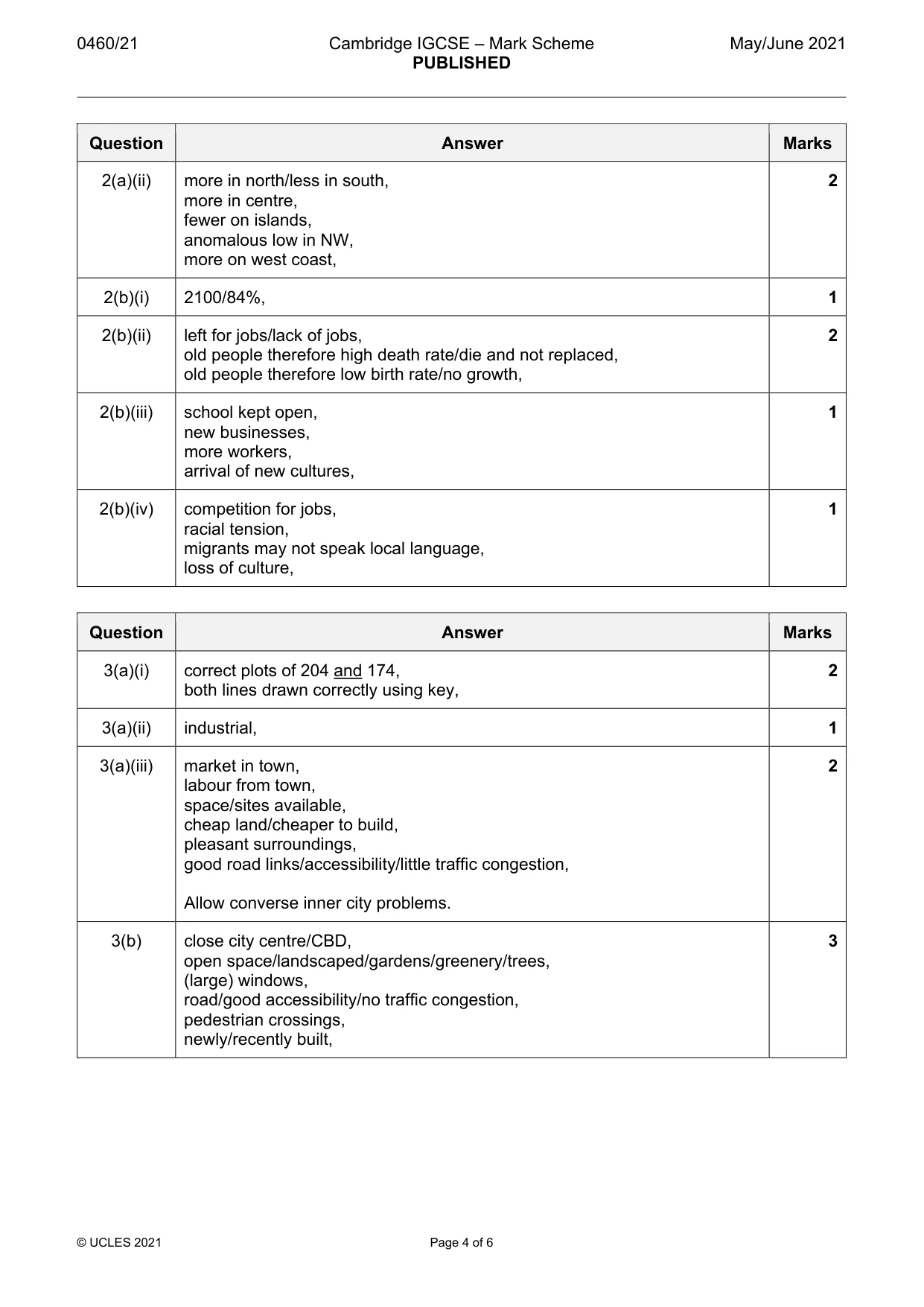
Mark scheme: 2(a)(ii) more in north/less in south, 2 more in centre, fewer on islands, anomalous low in NW, more on west coast, 2(b)(i) 2100/84%, 1 2(b)(ii) left for jobs/lack of jobs, 2 old people therefore high death rate/die and not replaced, old people therefore low birth rate/no growth, 2(b)(iii) school kept open, 1 new businesses, more workers, arrival of new cultures, 2(b)(iv) competition for jobs, 1 racial tension, migrants may not speak local language, loss of culture,
Q3 · Shenzhen, China has undergone extensive urbanisation
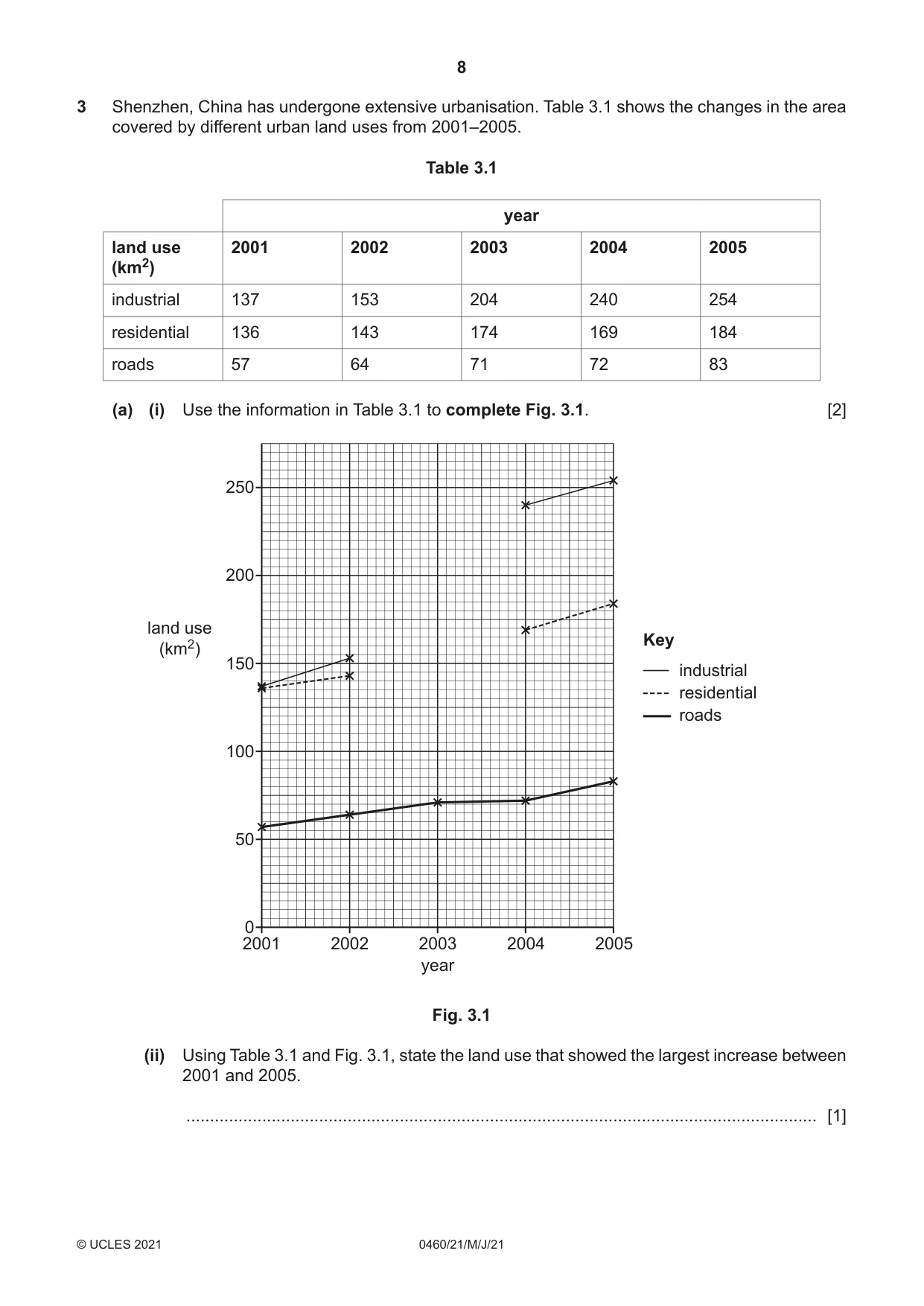
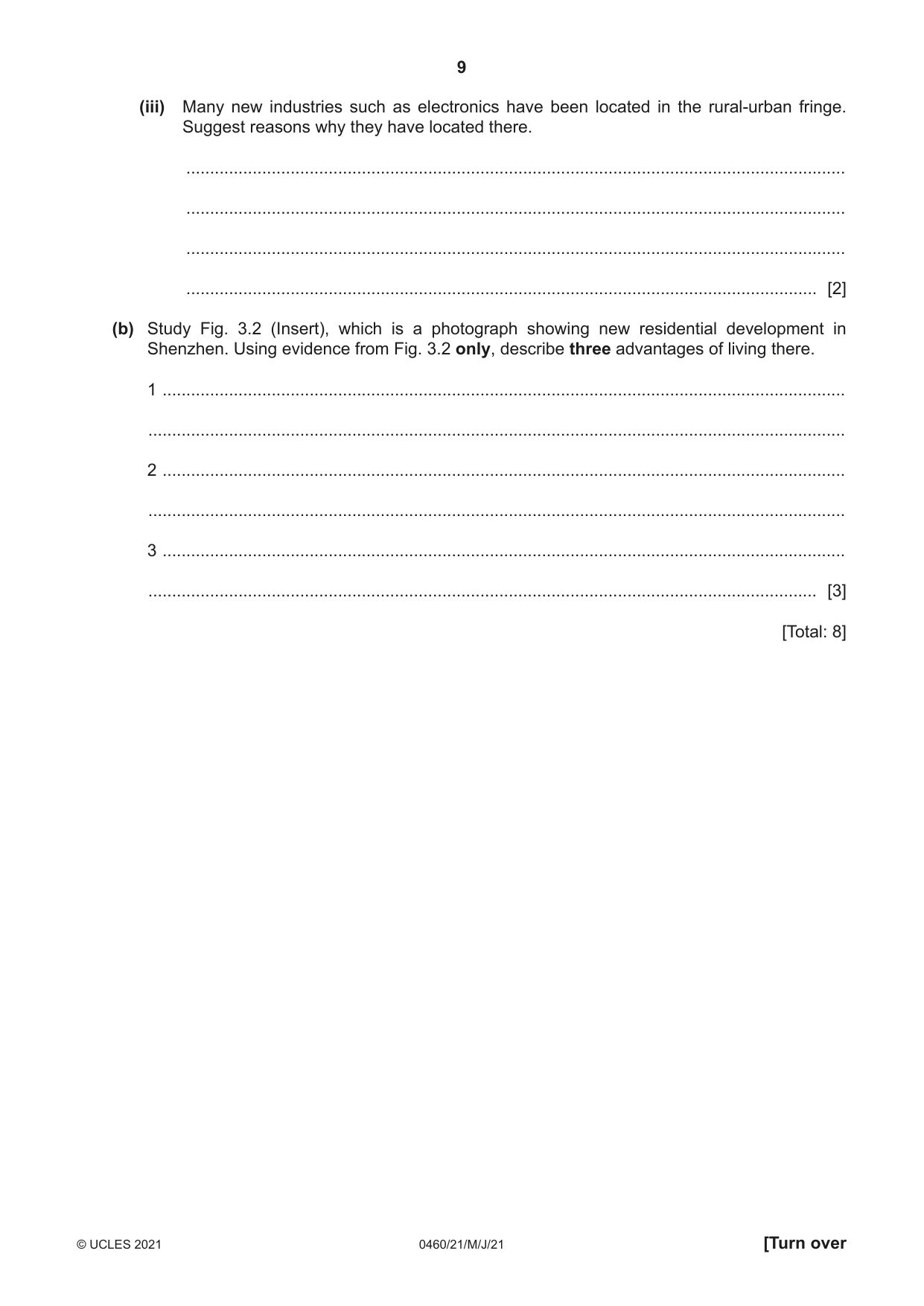
3 Shenzhen, China has undergone extensive urbanisation. Table 3.1 shows the changes in the area covered by different urban land uses from 2001–2005. Table 3.1 year land use 2001 2002 2003 2004 2005 (km2) industrial 137 153 204 240 254 residential 136 143 174 169 184 roads 57 64 71 72 83 (a) (i) Use the information in Table 3.1 to complete Fig. 3.1. [2] 250 200 land use Key (km2) 150 industrial residential roads 100 50 0 2001 2002 2003 2004 2005 year Fig. 3.1 (ii) Using Table 3.1 and Fig. 3.1, state the land use that showed the largest increase between 2001 and 2005. ..................................................................................................................................... [1] (iii) Many new industries such as electronics have been located in the rural-urban fringe. Suggest reasons why they have located there. ........................................................................................................................................... ........................................................................................................................................... ........................................................................................................................................... ..................................................................................................................................... [2] (b) Study Fig. 3.2 (Insert), which is a photograph showing new residential development in Shenzhen. Using evidence from Fig. 3.2 only, describe three advantages of living there. 1 ................................................................................................................................................ ................................................................................................................................................... 2 ................................................................................................................................................ ................................................................................................................................................... 3 ................................................................................................................................................ ............................................................................................................................................. [3] [Total: 8]
Mark scheme: 3(a)(i) correct plots of 204 and 174, 2 both lines drawn correctly using key, 3(a)(ii) industrial, 1 3(a)(iii) market in town, 2 labour from town, space/sites available, cheap land/cheaper to build, pleasant surroundings, good road links/accessibility/little traffic congestion, Allow converse inner city problems. 3(b) close city centre/CBD, 3 open space/landscaped/gardens/greenery/trees, (large) windows, road/good accessibility/no traffic congestion, pedestrian crossings, newly/recently built,
Question 4
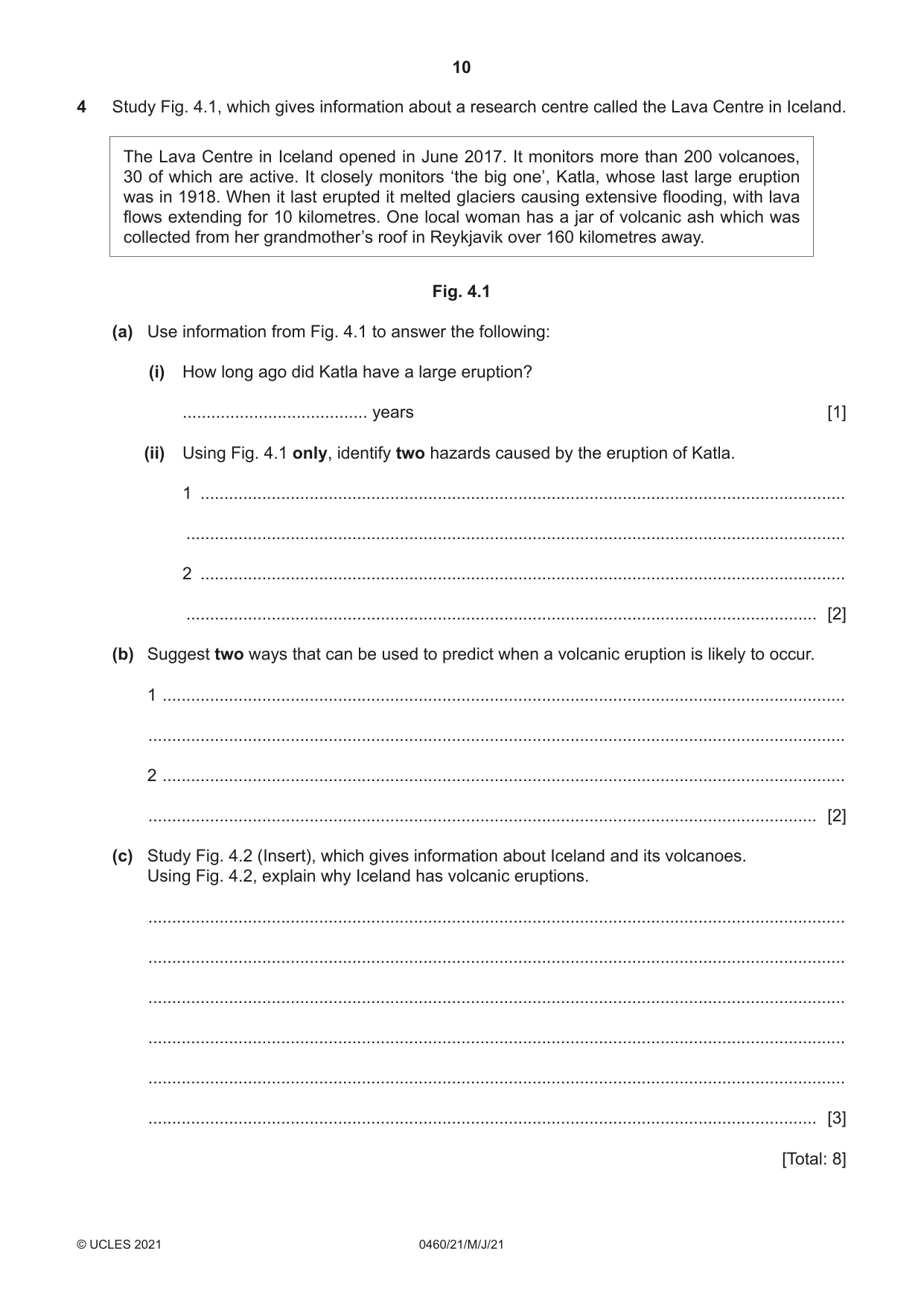
4 Study Fig. 4.1, which gives information about a research centre called the Lava Centre in Iceland. The Lava Centre in Iceland opened in June 2017. It monitors more than 200 volcanoes, 30 of which are active. It closely monitors ‘the big one’, Katla, whose last large eruption was in 1918. When it last erupted it melted glaciers causing extensive flooding, with lava flows extending for 10 kilometres. One local woman has a jar of volcanic ash which was collected from her grandmother’s roof in Reykjavik over 160 kilometres away. Fig. 4.1 (a) Use information from Fig. 4.1 to answer the following: (i) How long ago did Katla have a large eruption? ....................................... years [1] (ii) Using Fig. 4.1 only, identify two hazards caused by the eruption of Katla. 1 ........................................................................................................................................ ........................................................................................................................................... 2 ........................................................................................................................................ ..................................................................................................................................... [2] (b) Suggest two ways that can be used to predict when a volcanic eruption is likely to occur. 1 ................................................................................................................................................ ................................................................................................................................................... 2 ................................................................................................................................................ ............................................................................................................................................. [2] (c) Study Fig. 4.2 (Insert), which gives information about Iceland and its volcanoes. Using Fig. 4.2, explain why Iceland has volcanic eruptions. ................................................................................................................................................... ................................................................................................................................................... ................................................................................................................................................... ................................................................................................................................................... ................................................................................................................................................... ............................................................................................................................................. [3] [Total: 8]
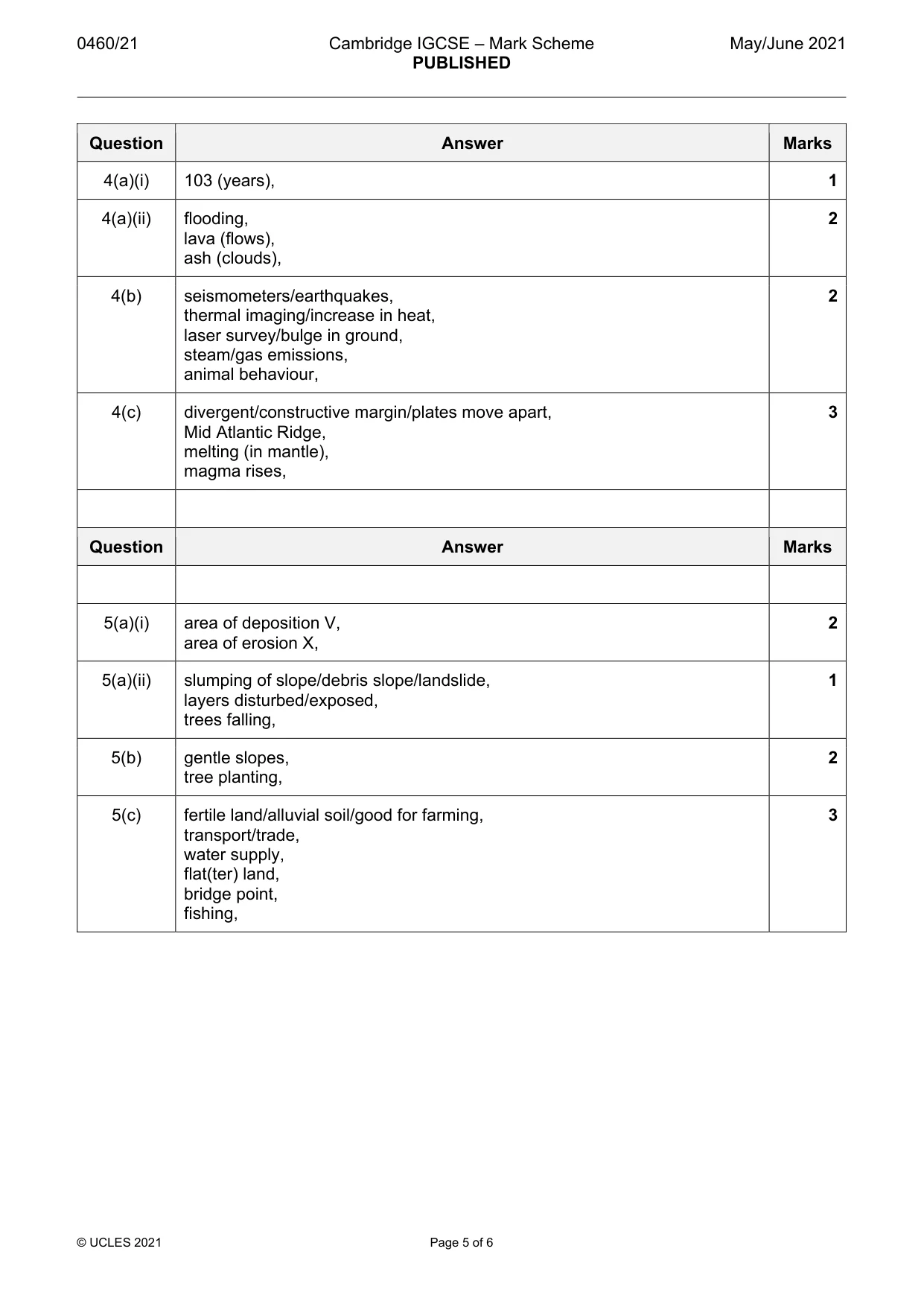
Mark scheme: 4(a)(i) 103 (years), 1 4(a)(ii) flooding, 2 lava (flows), ash (clouds), 4(b) seismometers/earthquakes, 2 thermal imaging/increase in heat, laser survey/bulge in ground, steam/gas emissions, animal behaviour, 4(c) divergent/constructive margin/plates move apart, 3 Mid Atlantic Ridge, melting (in mantle), magma rises,
Question 5
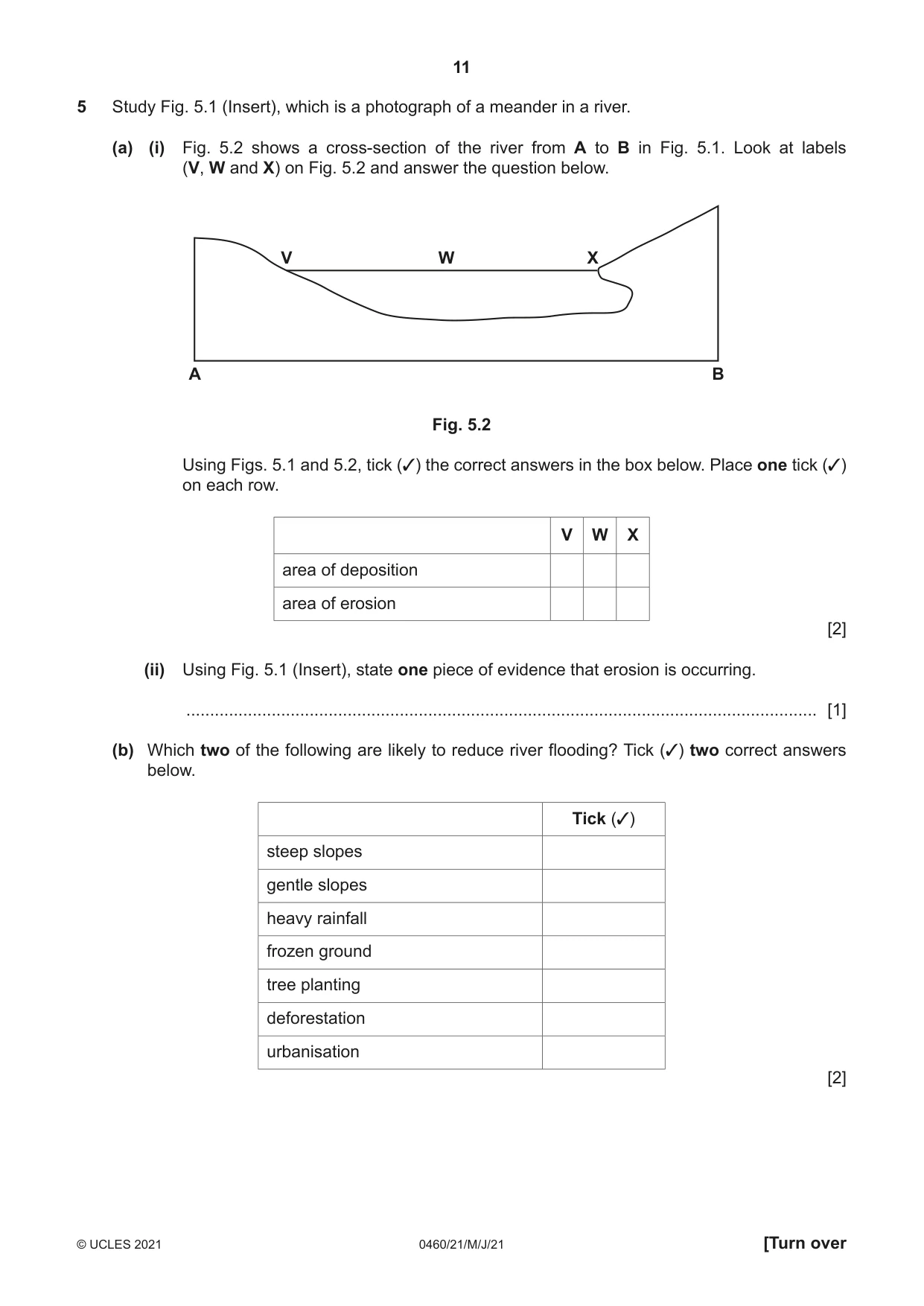
5 Study Fig. 5.1 (Insert), which is a photograph of a meander in a river. (a) (i) Fig. 5.2 shows a cross-section of the river from A to B in Fig. 5.1. Look at labels (V, W and X) on Fig. 5.2 and answer the question below. V W X A B Fig. 5.2 Using Figs. 5.1 and 5.2, tick (3) the correct answers in the box below. Place one tick (3) on each row. V W X area of deposition area of erosion [2] (ii) Using Fig. 5.1 (Insert), state one piece of evidence that erosion is occurring. ..................................................................................................................................... [1] (b) Which two of the following are likely to reduce river flooding? Tick (3) two correct answers below. Tick (3) steep slopes gentle slopes heavy rainfall frozen ground tree planting deforestation urbanisation [2] (c) Suggest three reasons why people live close to rivers. 1 ................................................................................................................................................. ................................................................................................................................................... 2 ................................................................................................................................................. ................................................................................................................................................... 3 ................................................................................................................................................. ............................................................................................................................................. [3] [Total: 8]
Mark scheme: 5(a)(i) area of deposition V, 2 area of erosion X, 5(a)(ii) slumping of slope/debris slope/landslide, 1 layers disturbed/exposed, trees falling, 5(b) gentle slopes, 2 tree planting, 5(c) fertile land/alluvial soil/good for farming, 3 transport/trade, water supply, flat(ter) land, bridge point, fishing,
Question 6
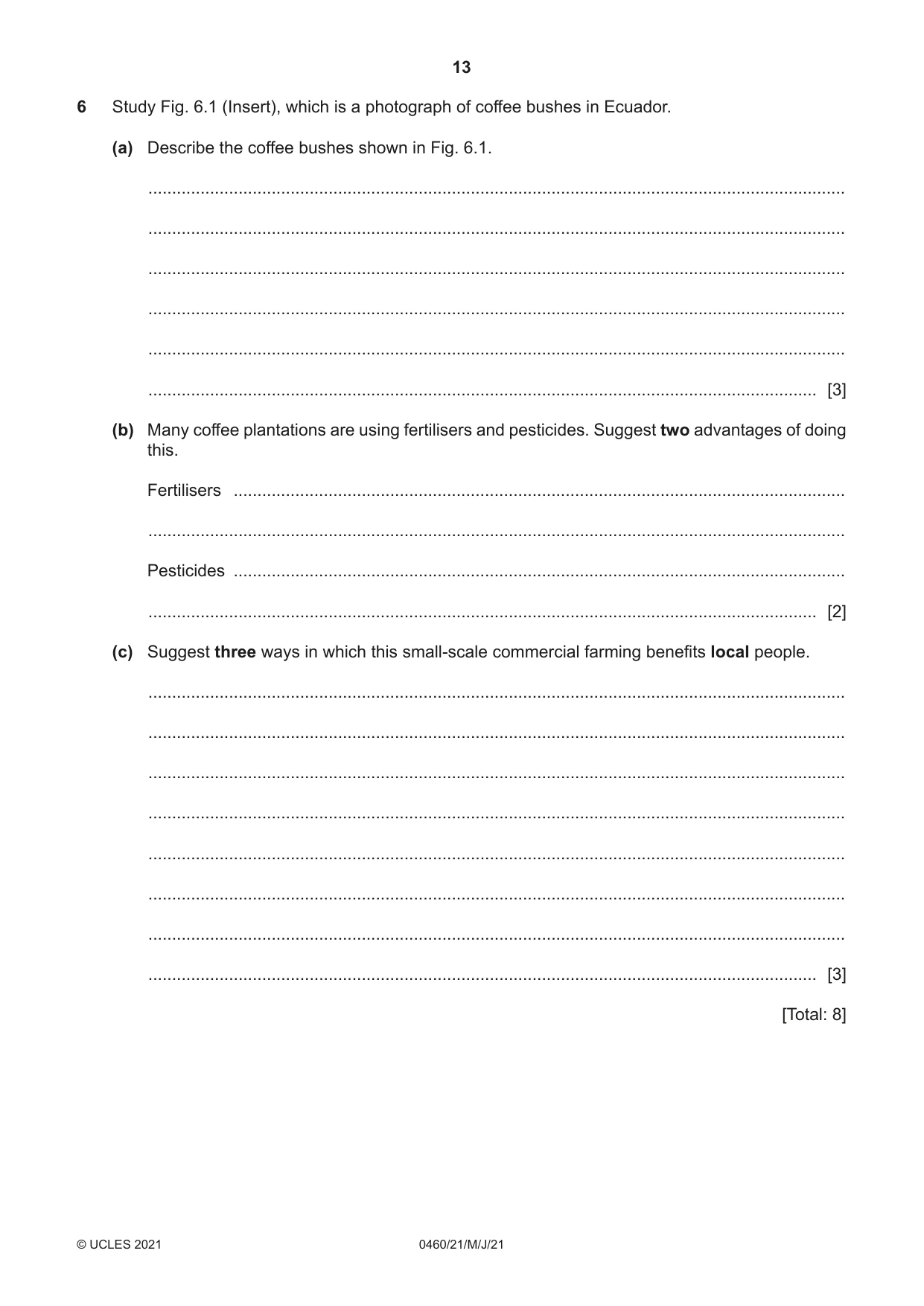
6 Study Fig. 6.1 (Insert), which is a photograph of coffee bushes in Ecuador. (a) Describe the coffee bushes shown in Fig. 6.1. ................................................................................................................................................... ................................................................................................................................................... ................................................................................................................................................... ................................................................................................................................................... ................................................................................................................................................... ............................................................................................................................................. [3] (b) Many coffee plantations are using fertilisers and pesticides. Suggest two advantages of doing this. Fertilisers ................................................................................................................................. ................................................................................................................................................... Pesticides ................................................................................................................................. ............................................................................................................................................. [2] (c) Suggest three ways in which this small-scale commercial farming benefits local people. ................................................................................................................................................... ................................................................................................................................................... ................................................................................................................................................... ................................................................................................................................................... ................................................................................................................................................... ................................................................................................................................................... ................................................................................................................................................... ............................................................................................................................................. [3] [Total: 8] Additional Pages If you use the following lined pages to complete the answer(s) to any question(s), the question number(s) must be clearly shown. .................................................................................................................................................................. .................................................................................................................................................................. .................................................................................................................................................................. .................................................................................................................................................................. .................................................................................................................................................................. .................................................................................................................................................................. .................................................................................................................................................................. .................................................................................................................................................................. .................................................................................................................................................................. .................................................................................................................................................................. .................................................................................................................................................................. .................................................................................................................................................................. .................................................................................................................................................................. .................................................................................................................................................................. .................................................................................................................................................................. .................................................................................................................................................................. .................................................................................................................................................................. .................................................................................................................................................................. .................................................................................................................................................................. .................................................................................................................................................................. .................................................................................................................................................................. .................................................................................................................................................................. .................................................................................................................................................................. .................................................................................................................................................................. .................................................................................................................................................................. .................................................................................................................................................................. .................................................................................................................................................................. .................................................................................................................................................................. .................................................................................................................................................................. .................................................................................................................................................................. .................................................................................................................................................................. .................................................................................................................................................................. .................................................................................................................................................................. .................................................................................................................................................................. .................................................................................................................................................................. .................................................................................................................................................................. .................................................................................................................................................................. .................................................................................................................................................................. .................................................................................................................................................................. .................................................................................................................................................................. .................................................................................................................................................................. .................................................................................................................................................................. .................................................................................................................................................................. .................................................................................................................................................................. .................................................................................................................................................................. .................................................................................................................................................................. .................................................................................................................................................................. .................................................................................................................................................................. .................................................................................................................................................................. .................................................................................................................................................................. .................................................................................................................................................................. .................................................................................................................................................................. ..................................................................................................................................................................
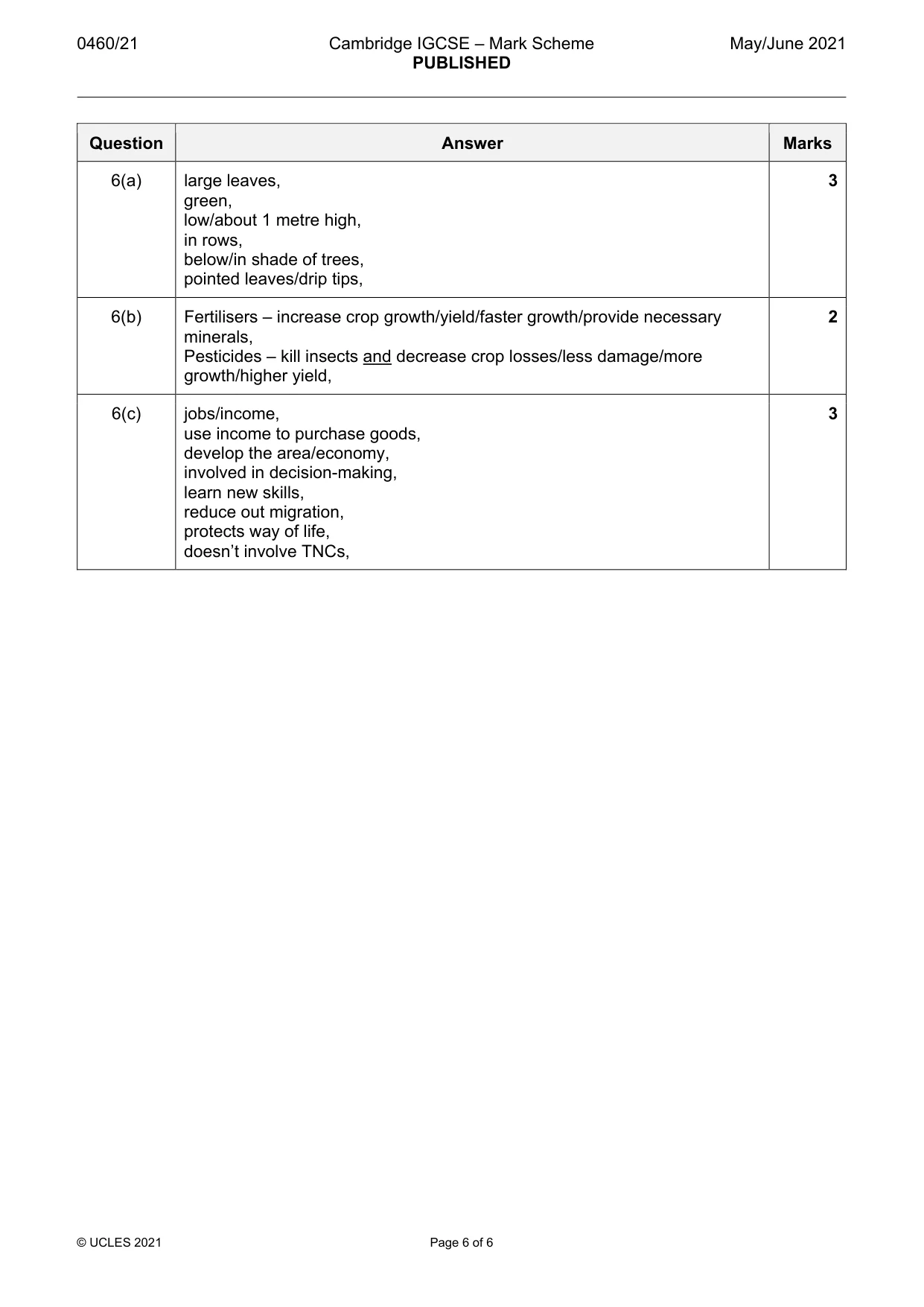
Mark scheme: 6(a) large leaves, 3 green, low/about 1 metre high, in rows, below/in shade of trees, pointed leaves/drip tips, 6(b) Fertilisers – increase crop growth/yield/faster growth/provide necessary 2 minerals, Pesticides – kill insects and decrease crop losses/less damage/more growth/higher yield, 6(c) jobs/income, 3 use income to purchase goods, develop the area/economy, involved in decision-making, learn new skills, reduce out migration, protects way of life, doesn’t involve TNCs,
What was in this paper
The subtopics covered by these 6 questions, and how many questions each got. Open one in a new tab to see every Cambridge question on it.
What you needed in this session
Cambridge’s own grade thresholds for 2021 May/June, Paper 2 · Variant 1. A higher threshold means an easier paper — the bar moves with how the cohort did.