Cambridge IGCSE Environmental Management 0680 — 2022 May/June Paper 2 · Variant 2
0680/22/M/J/22 · 3 questions · 80 marks · ≈90 min
The question paper and its mark scheme, free to read here and free to download. This is Cambridge’s own paper, exactly as it was sat.
Question paper24 pages





Mark scheme11 pages
Answers below. Sit the paper first if you are practising.
Questions as text
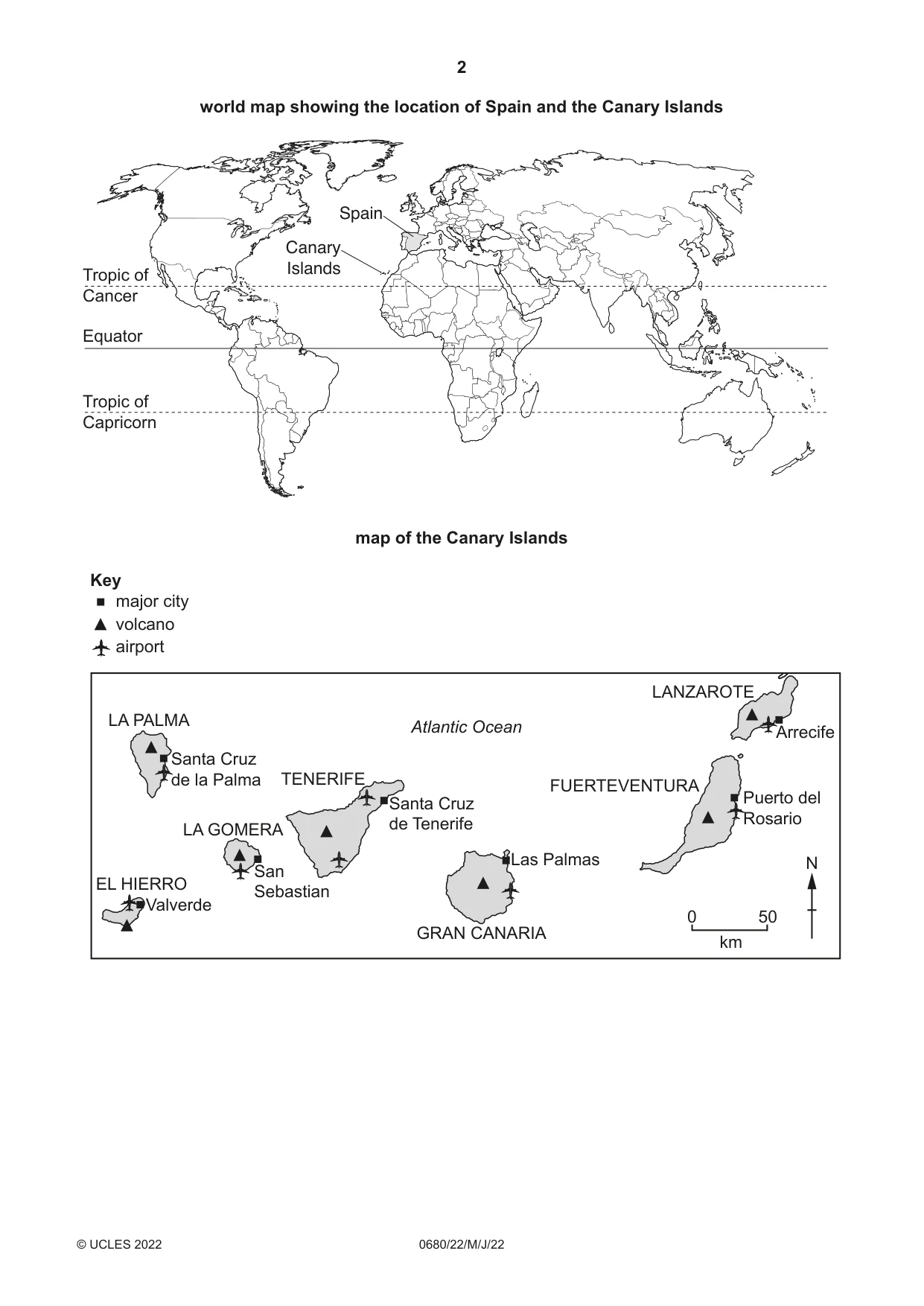
Q1 · The Canary Islands are volcanic islands
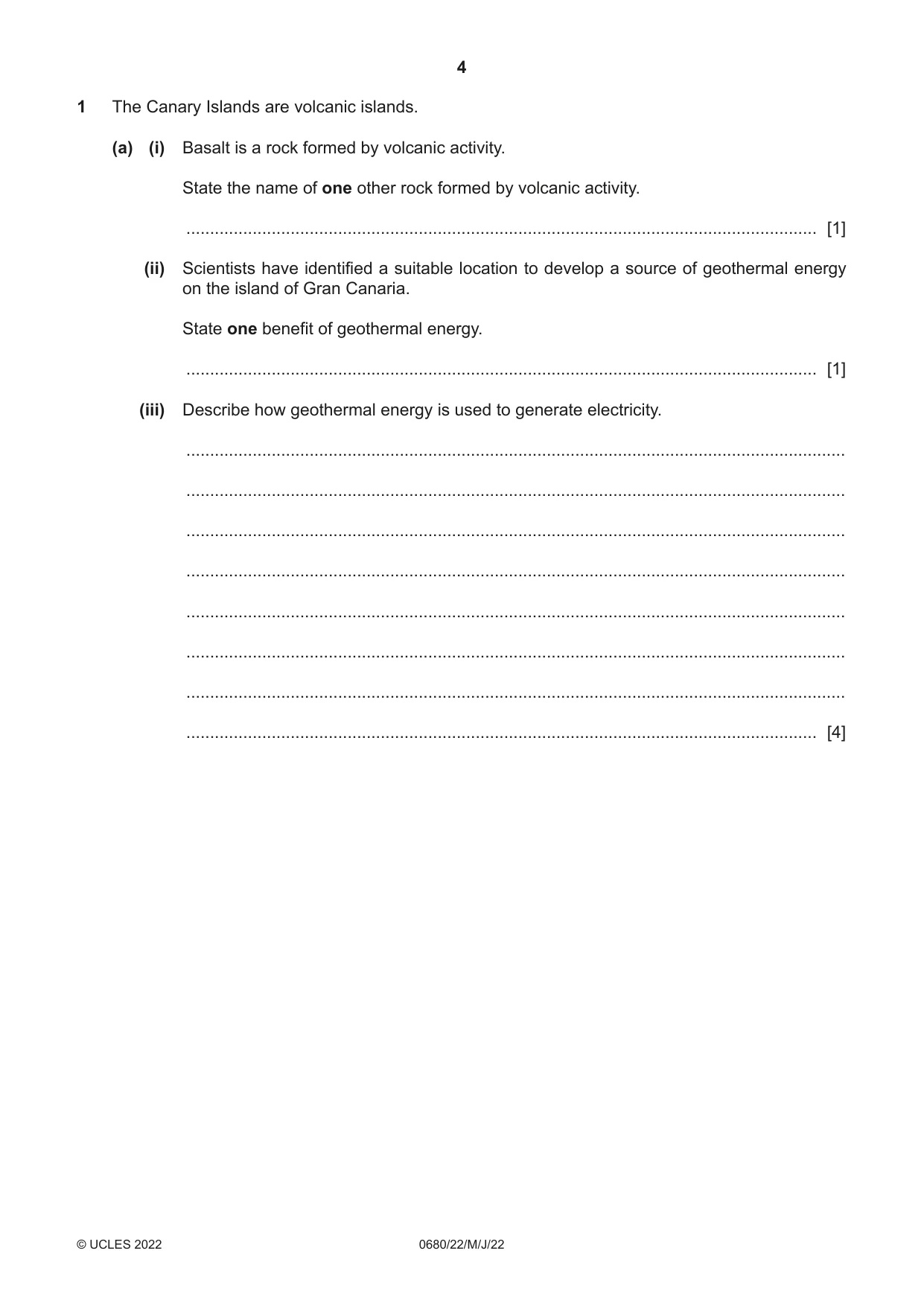
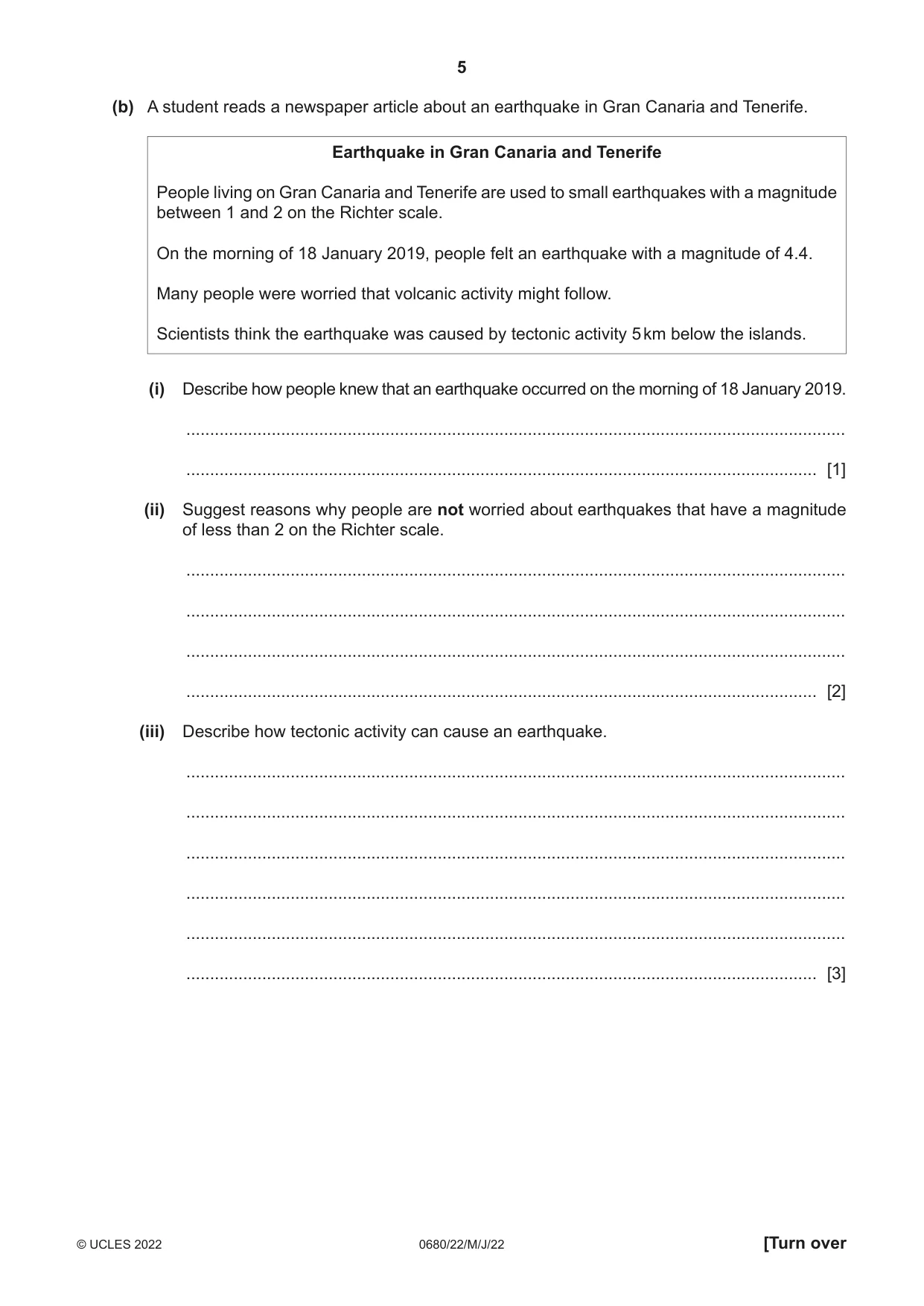
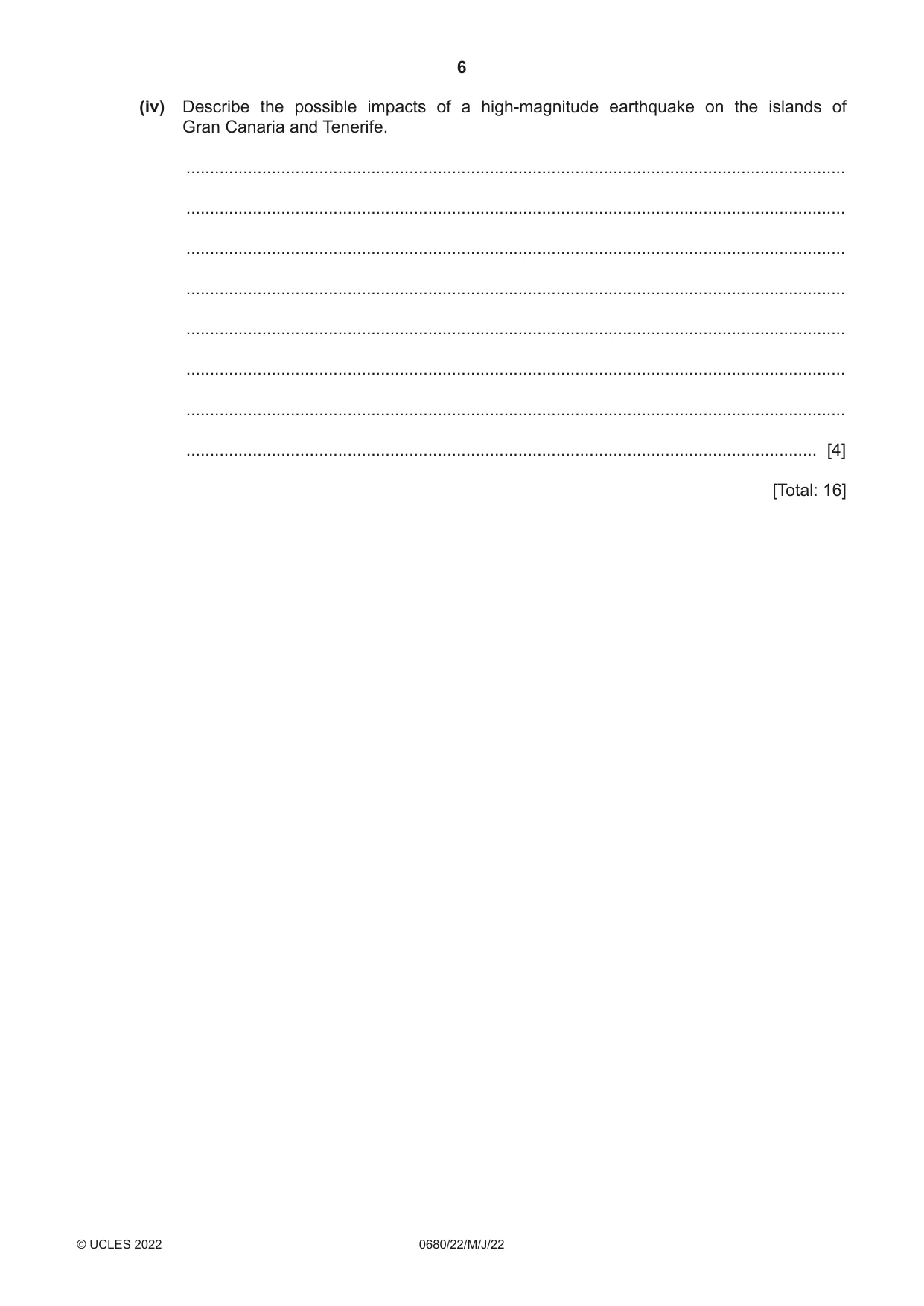
1 The Canary Islands are volcanic islands. (a) (i) Basalt is a rock formed by volcanic activity. State the name of one other rock formed by volcanic activity. ..................................................................................................................................... [1] (ii) Scientists have identified a suitable location to develop a source of geothermal energy on the island of Gran Canaria. State one benefit of geothermal energy. ..................................................................................................................................... [1] (iii) Describe how geothermal energy is used to generate electricity. ........................................................................................................................................... ........................................................................................................................................... ........................................................................................................................................... ........................................................................................................................................... ........................................................................................................................................... ........................................................................................................................................... ........................................................................................................................................... ..................................................................................................................................... [4] (b) A student reads a newspaper article about an earthquake in Gran Canaria and Tenerife. Earthquake in Gran Canaria and Tenerife People living on Gran Canaria and Tenerife are used to small earthquakes with a magnitude between 1 and 2 on the Richter scale. On the morning of 18 January 2019, people felt an earthquake with a magnitude of 4.4. Many people were worried that volcanic activity might follow. Scientists think the earthquake was caused by tectonic activity 5 km below the islands. (i) Describe how people knew that an earthquake occurred on the morning of 18 January 2019. ........................................................................................................................................... ..................................................................................................................................... [1] (ii) Suggest reasons why people are not worried about earthquakes that have a magnitude of less than 2 on the Richter scale. ........................................................................................................................................... ........................................................................................................................................... ........................................................................................................................................... ..................................................................................................................................... [2] (iii) Describe how tectonic activity can cause an earthquake. ........................................................................................................................................... ........................................................................................................................................... ........................................................................................................................................... ........................................................................................................................................... ........................................................................................................................................... ..................................................................................................................................... [3] (iv) Describe the possible impacts of a high-magnitude earthquake on the islands of Gran Canaria and Tenerife. ........................................................................................................................................... ........................................................................................................................................... ........................................................................................................................................... ........................................................................................................................................... ........................................................................................................................................... ........................................................................................................................................... ........................................................................................................................................... ..................................................................................................................................... [4] [Total: 16]
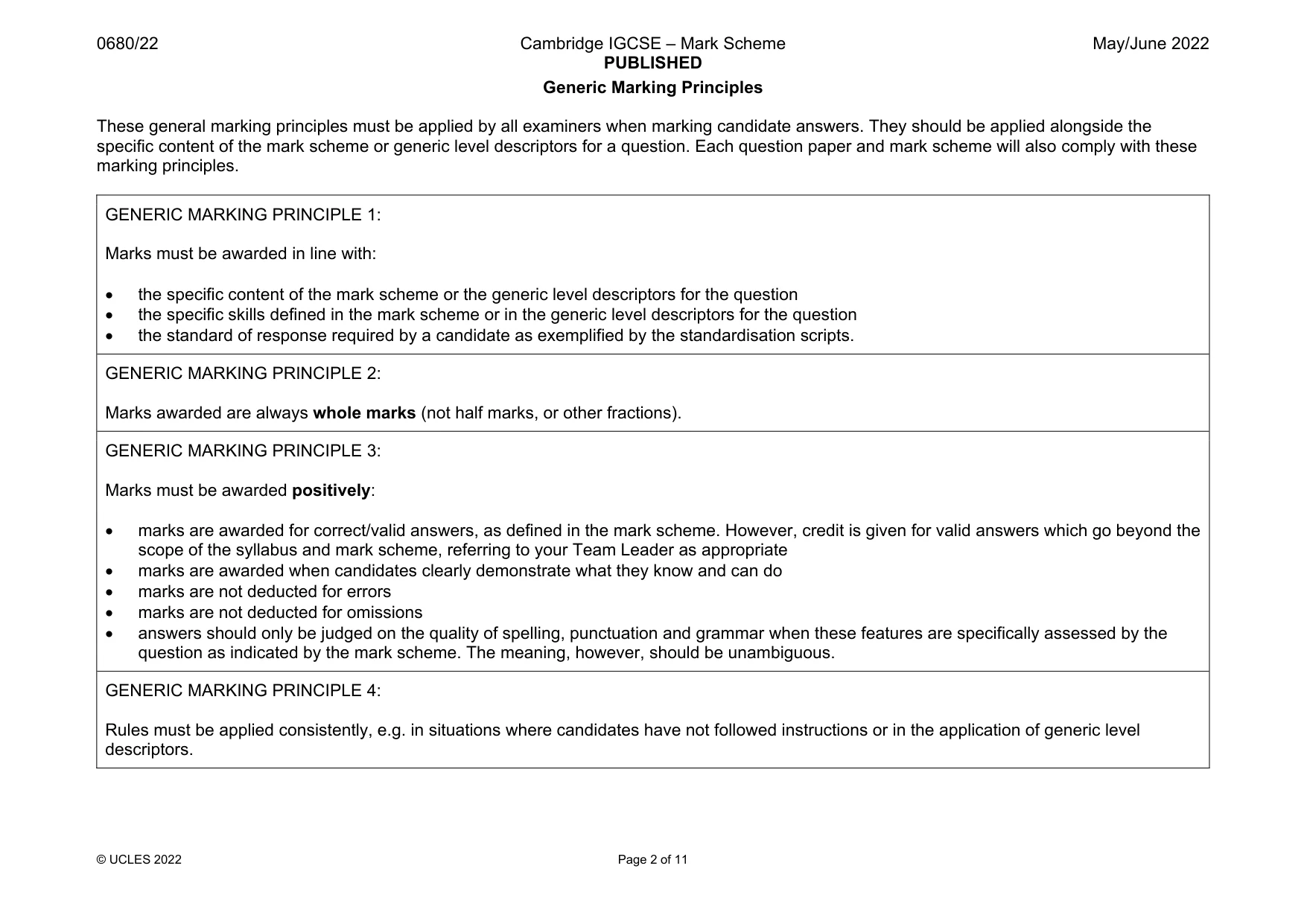
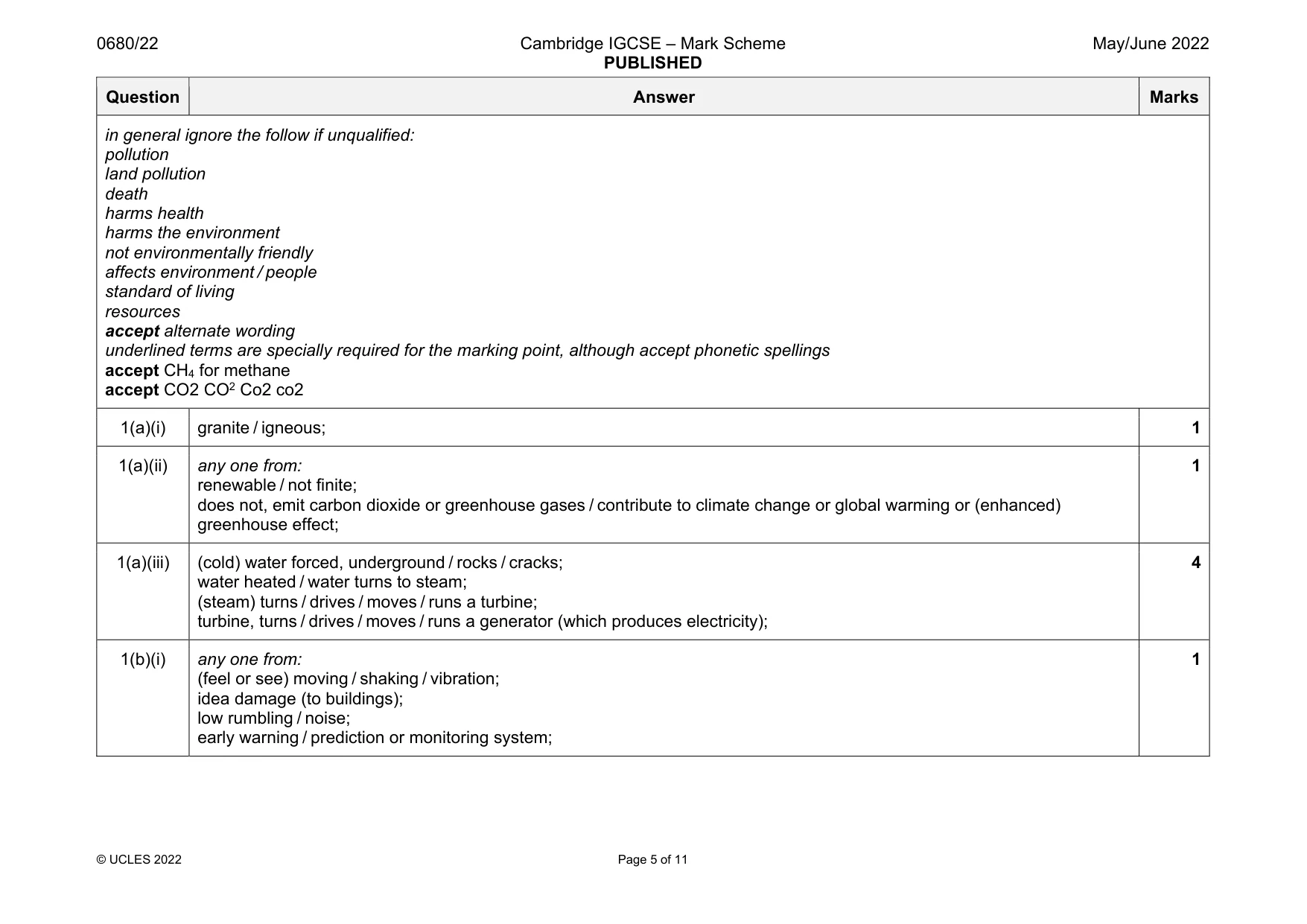
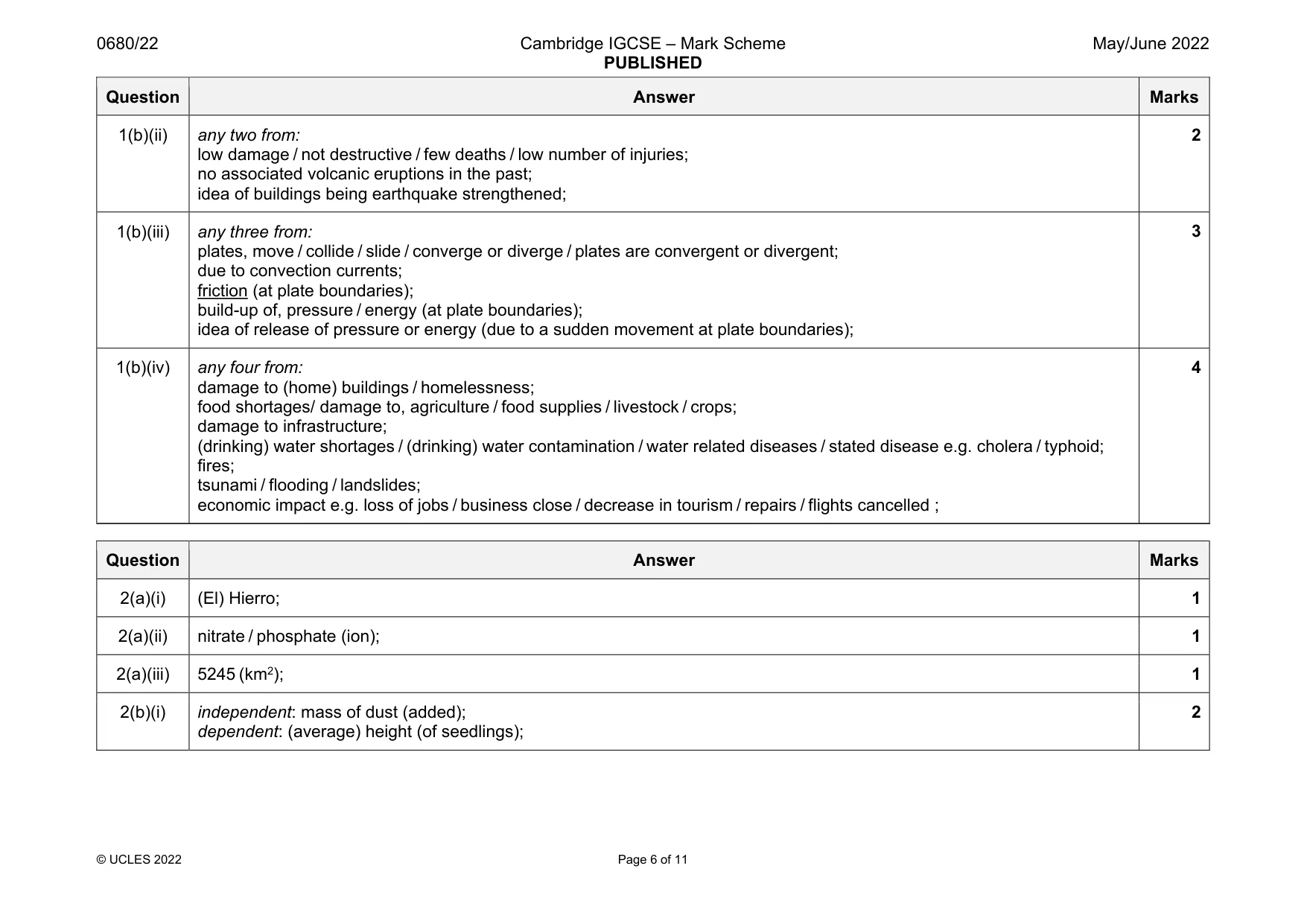
Mark scheme: 1(a)(i) granite / igneous; 1 1(a)(ii) any one from: renewable / not finite; does not, emit carbon dioxide or greenhouse gases / contribute to climate change or global warming or (enhanced) greenhouse effect; 1 1(a)(iii) (cold) water forced, underground / rocks / cracks; water heated / water turns to steam; (steam) turns / drives / moves / runs a turbine; turbine, turns / drives / moves / runs a generator (which produces electricity); 4 1(b)(i) any one from: (feel or see) moving / shaking / vibration; idea damage (to buildings); low rumbling / noise; early warning / prediction or monitoring system; 1 Question Answer Marks 1(b)(ii) any two from: low damage / not destructive / few deaths / low number of injuries; no associated volcanic eruptions in the past; idea of buildings being earthquake strengthened; 2 1(b)(iii) any three from: plates, move / collide / slide / converge or diverge / plates are convergent or divergent; due to convection currents; friction (at plate boundaries); build-up of, pressure / energy (at plate boundaries); idea of release of pressure or energy (due to a sudden movement at plate boundaries); 3 1(b)(iv) any four from: damage to (home) buildings / homelessness; food shortages/ damage to, agriculture / food supplies / livestock / crops; damage to infrastructure; (drinking) water shortages / (drinking) water contamination / water related diseases / stated disease e.g. cholera / typhoid; fires; tsunami / flooding / landslides; economic impact e.g. loss of jobs / business close / decrease in tourism / repairs / flights cancelled ; 4
Q2 · The Canary Islands are 100 km west of North Africa
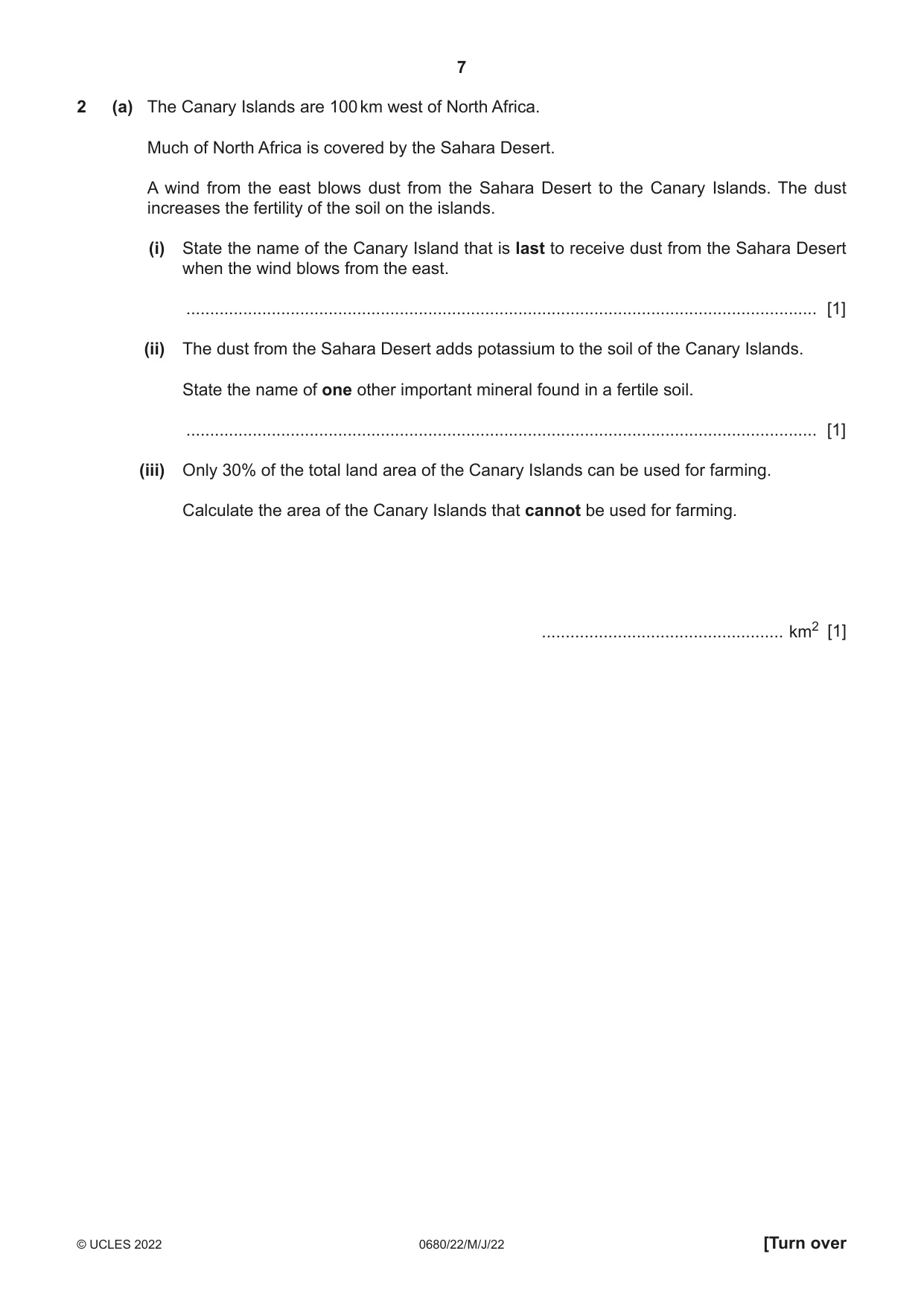
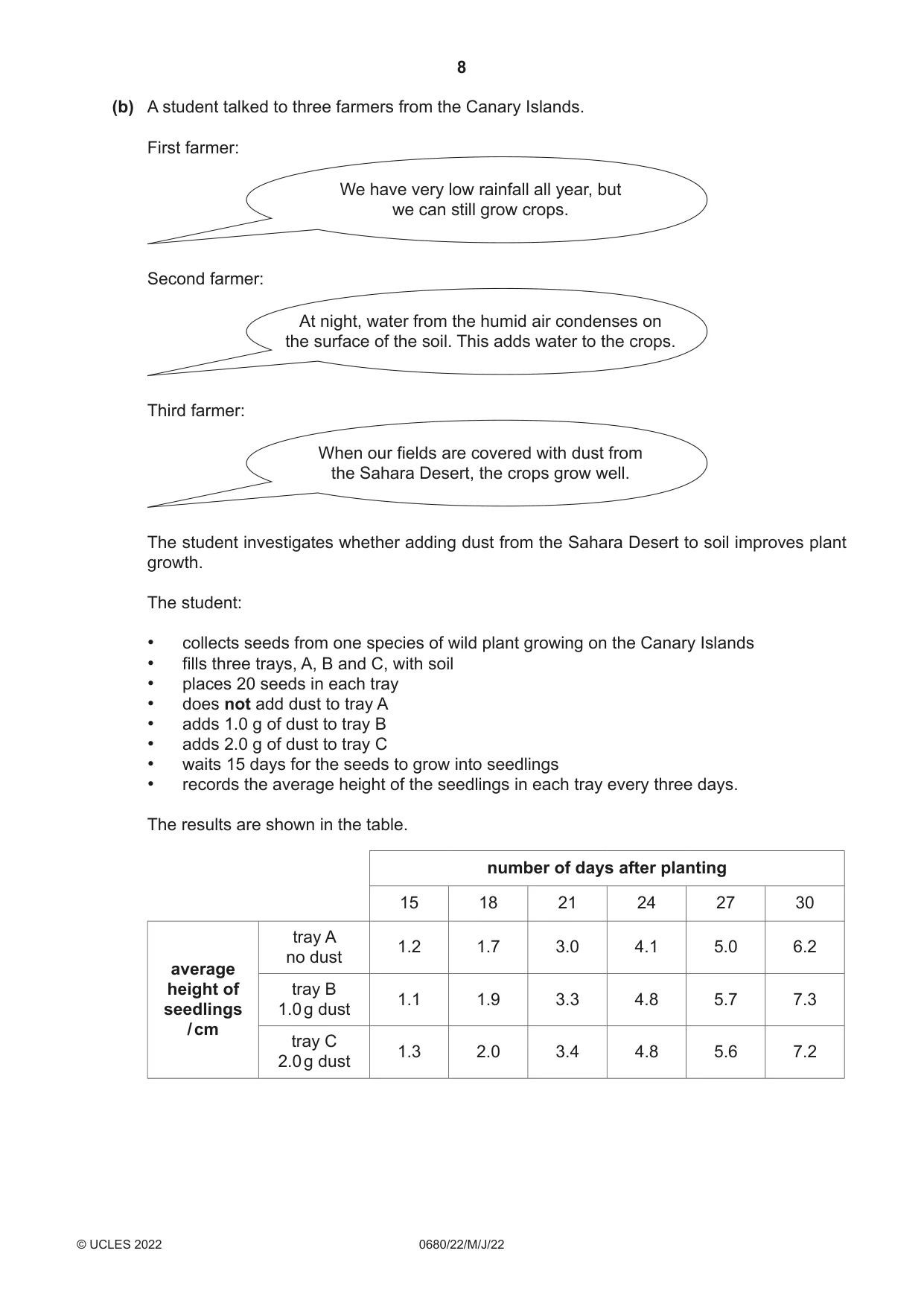
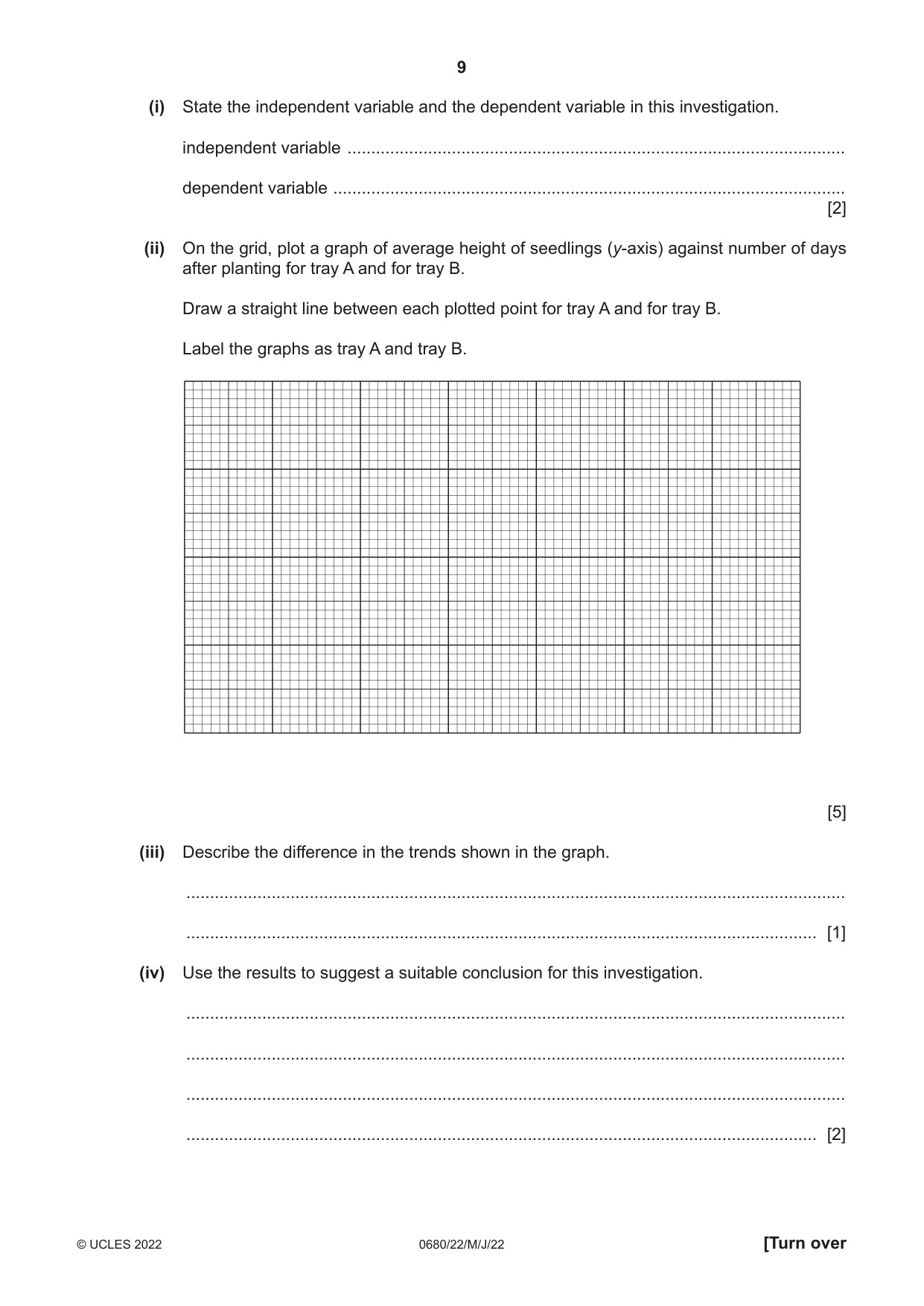
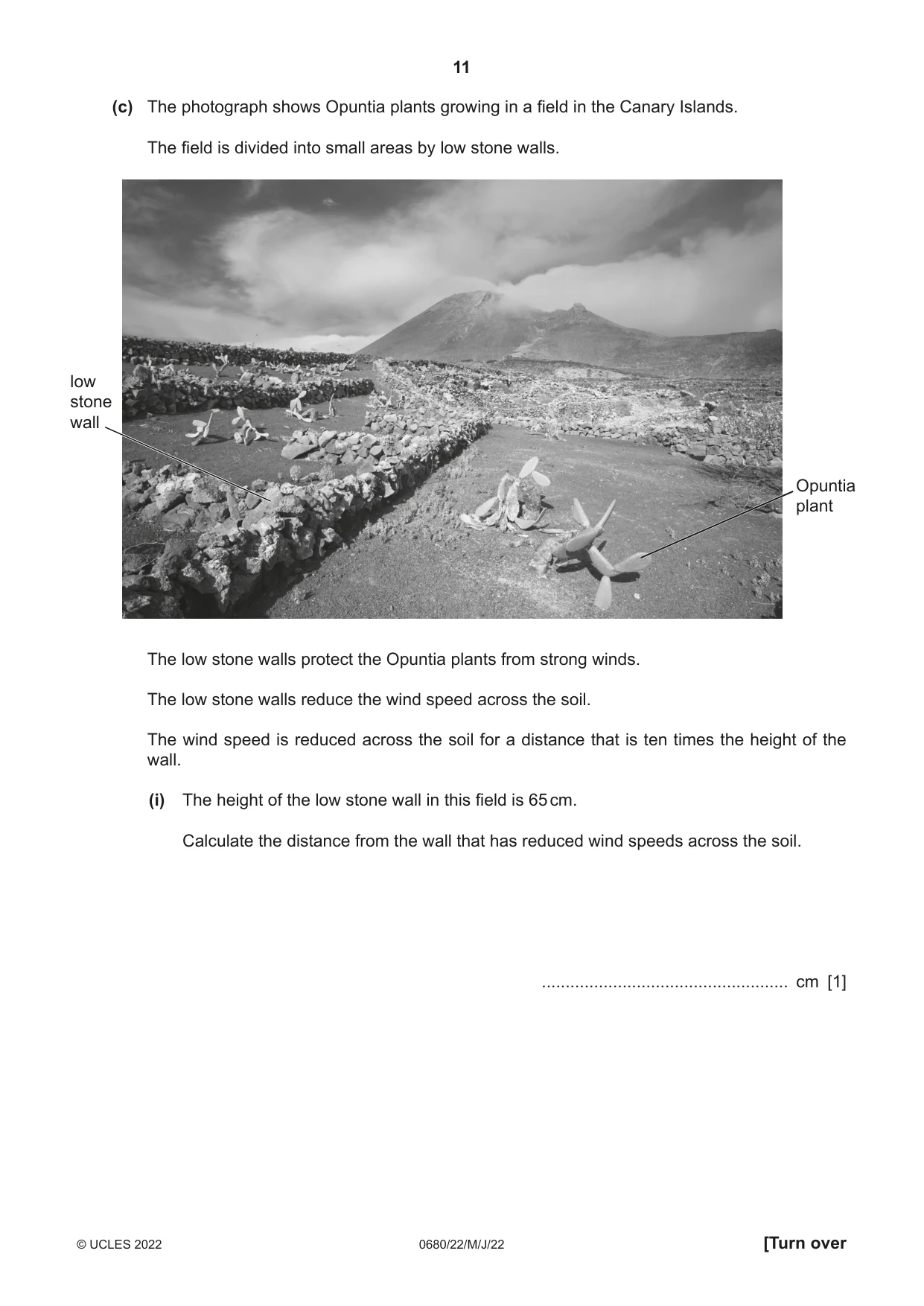
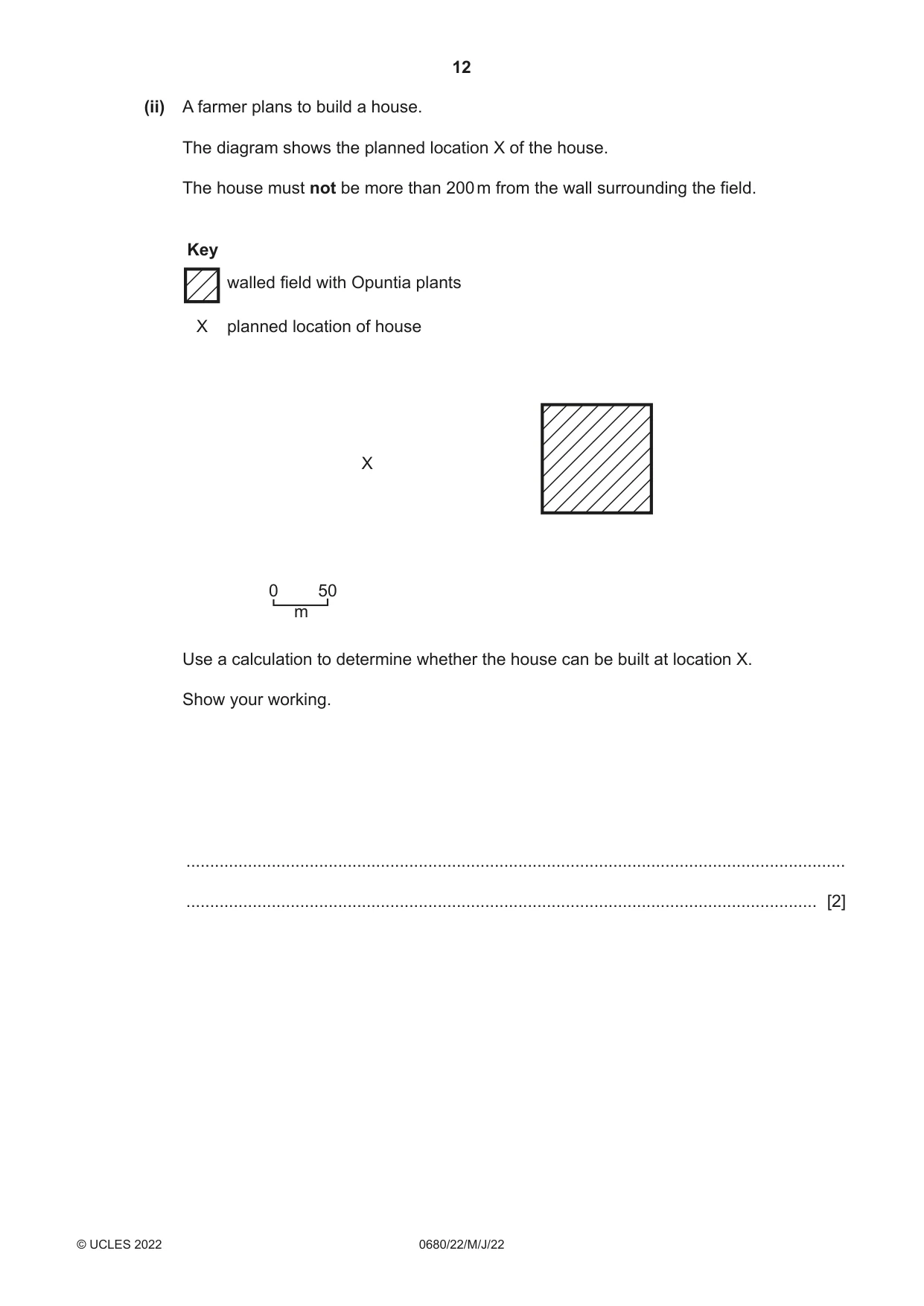
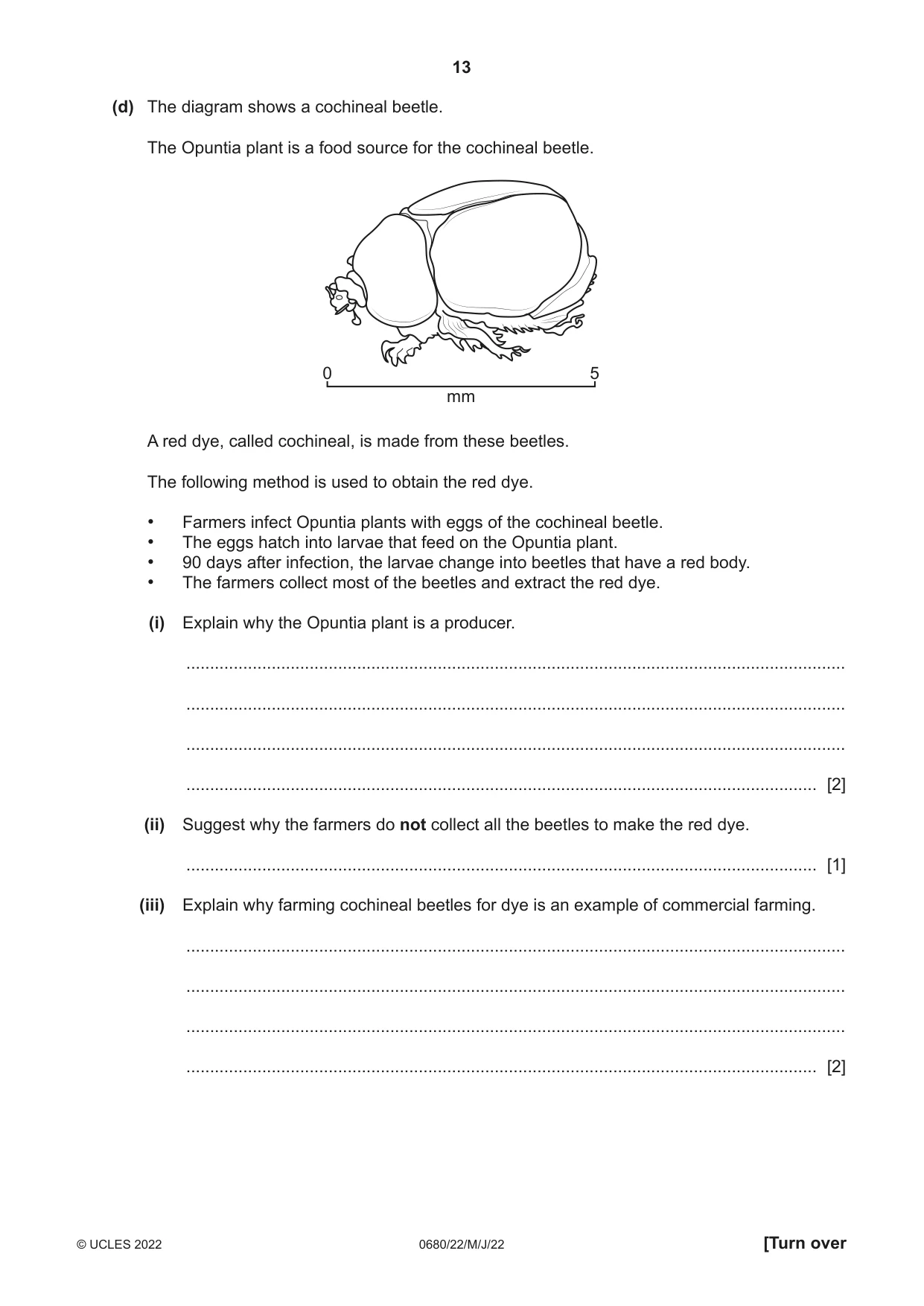
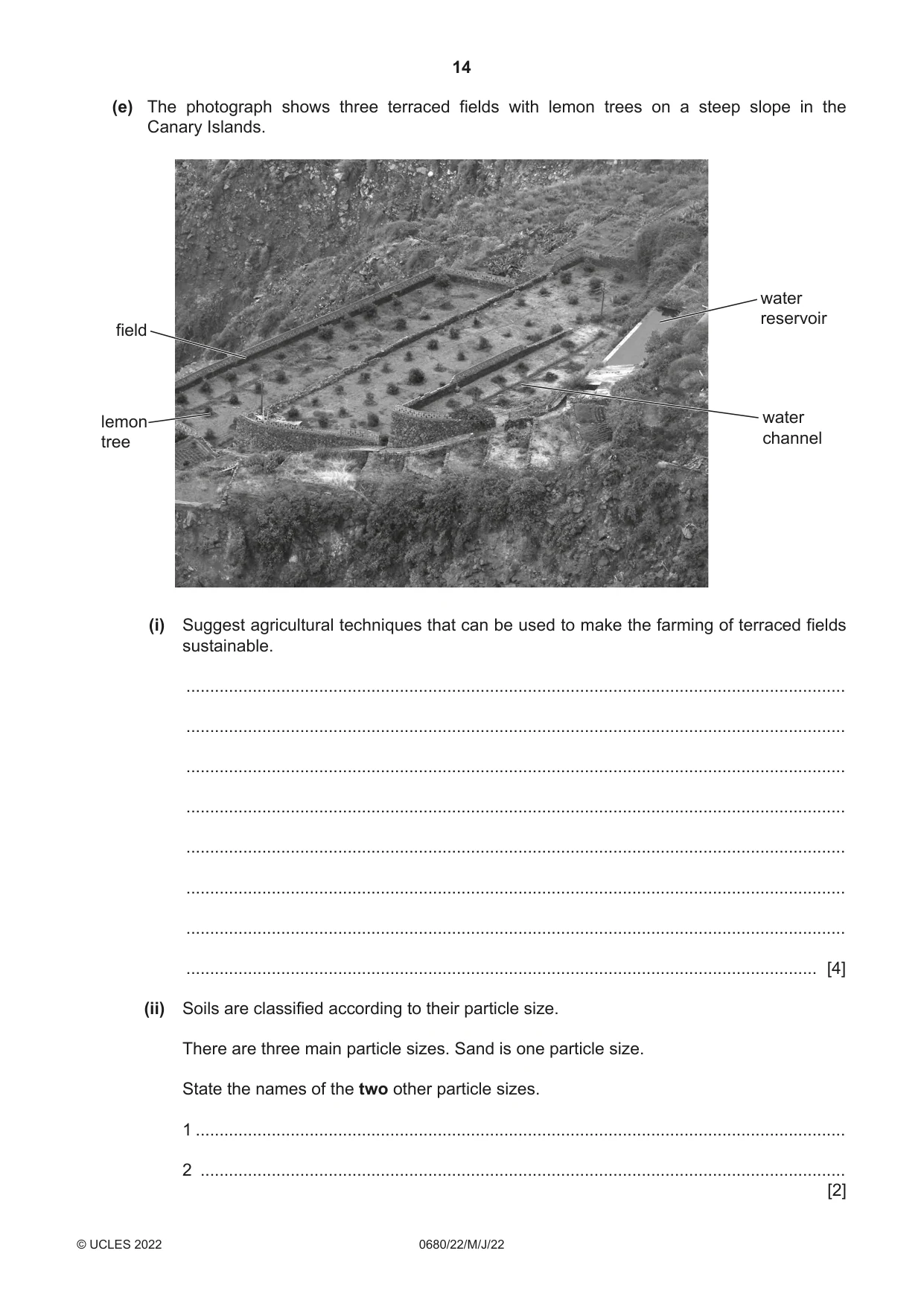
2 (a) The Canary Islands are 100 km west of North Africa. Much of North Africa is covered by the Sahara Desert. A wind from the east blows dust from the Sahara Desert to the Canary Islands. The dust increases the fertility of the soil on the islands. (i) State the name of the Canary Island that is last to receive dust from the Sahara Desert when the wind blows from the east. ..................................................................................................................................... [1] (ii) The dust from the Sahara Desert adds potassium to the soil of the Canary Islands. State the name of one other important mineral found in a fertile soil. ..................................................................................................................................... [1] (iii) Only 30% of the total land area of the Canary Islands can be used for farming. Calculate the area of the Canary Islands that cannot be used for farming. ................................................... km2 [1] (b) A student talked to three farmers from the Canary Islands. First farmer: We have very low rainfall all year, but we can still grow crops. Second farmer: At night, water from the humid air condenses on the surface of the soil. This adds water to the crops. Third farmer: When our fields are covered with dust from the Sahara Desert, the crops grow well. The student investigates whether adding dust from the Sahara Desert to soil improves plant growth. The student: • collects seeds from one species of wild plant growing on the Canary Islands • fills three trays, A, B and C, with soil • places 20 seeds in each tray • does not add dust to tray A • adds 1.0 g of dust to tray B • adds 2.0 g of dust to tray C • waits 15 days for the seeds to grow into seedlings • records the average height of the seedlings in each tray every three days. The results are shown in the table. number of days after planting 15 18 21 24 27 30 tray A 1.2 1.7 3.0 4.1 5.0 6.2 no dust average height of tray B 1.1 1.9 3.3 4.8 5.7 7.3 seedlings 1.0 g dust / cm tray C 1.3 2.0 3.4 4.8 5.6 7.2 2.0 g dust (i) State the independent variable and the dependent variable in this investigation. independent variable ......................................................................................................... dependent variable ............................................................................................................ [2] (ii) On the grid, plot a graph of average height of seedlings (y-axis) against number of days after planting for tray A and for tray B. Draw a straight line between each plotted point for tray A and for tray B. Label the graphs as tray A and tray B. [5] (iii) Describe the difference in the trends shown in the graph. ........................................................................................................................................... ..................................................................................................................................... [1] (iv) Use the results to suggest a suitable conclusion for this investigation. ........................................................................................................................................... ........................................................................................................................................... ........................................................................................................................................... ..................................................................................................................................... [2] (v) Suggest one reason why the student decides to repeat the investigation with seeds of different plant species. ........................................................................................................................................... ..................................................................................................................................... [1] (c) The photograph shows Opuntia plants growing in a field in the Canary Islands. The field is divided into small areas by low stone walls. low stone wall Opuntia plant The low stone walls protect the Opuntia plants from strong winds. The low stone walls reduce the wind speed across the soil. The wind speed is reduced across the soil for a distance that is ten times the height of the wall. (i) The height of the low stone wall in this field is 65 cm. Calculate the distance from the wall that has reduced wind speeds across the soil. .................................................... cm [1] (ii) A farmer plans to build a house. The diagram shows the planned location X of the house. The house must not be more than 200 m from the wall surrounding the field. Key walled field with Opuntia plants X planned location of house X 0 50 m Use a calculation to determine whether the house can be built at location X. Show your working. ........................................................................................................................................... ..................................................................................................................................... [2] (d) The diagram shows a cochineal beetle. The Opuntia plant is a food source for the cochineal beetle. 0 5 mm A red dye, called cochineal, is made from these beetles. The following method is used to obtain the red dye. • Farmers infect Opuntia plants with eggs of the cochineal beetle. • The eggs hatch into larvae that feed on the Opuntia plant. • 90 days after infection, the larvae change into beetles that have a red body. • The farmers collect most of the beetles and extract the red dye. (i) Explain why the Opuntia plant is a producer. ........................................................................................................................................... ........................................................................................................................................... ........................................................................................................................................... ..................................................................................................................................... [2] (ii) Suggest why the farmers do not collect all the beetles to make the red dye. ..................................................................................................................................... [1] (iii) Explain why farming cochineal beetles for dye is an example of commercial farming. ........................................................................................................................................... ........................................................................................................................................... ........................................................................................................................................... ..................................................................................................................................... [2] (e) The photograph shows three terraced fields with lemon trees on a steep slope in the Canary Islands. water reservoir field lemon water tree channel (i) Suggest agricultural techniques that can be used to make the farming of terraced fields sustainable. ........................................................................................................................................... ........................................................................................................................................... ........................................................................................................................................... ........................................................................................................................................... ........................................................................................................................................... ........................................................................................................................................... ........................................................................................................................................... ..................................................................................................................................... [4] (ii) Soils are classified according to their particle size. There are three main particle sizes. Sand is one particle size. State the names of the two other particle sizes. 1 ......................................................................................................................................... 2 ........................................................................................................................................ [2] (iii) Bunds help prevent soil erosion. Describe how bunds help prevent soil erosion. ........................................................................................................................................... ........................................................................................................................................... ........................................................................................................................................... ........................................................................................................................................... ........................................................................................................................................... ........................................................................................................................................... ........................................................................................................................................... ..................................................................................................................................... [4] [Total: 32]
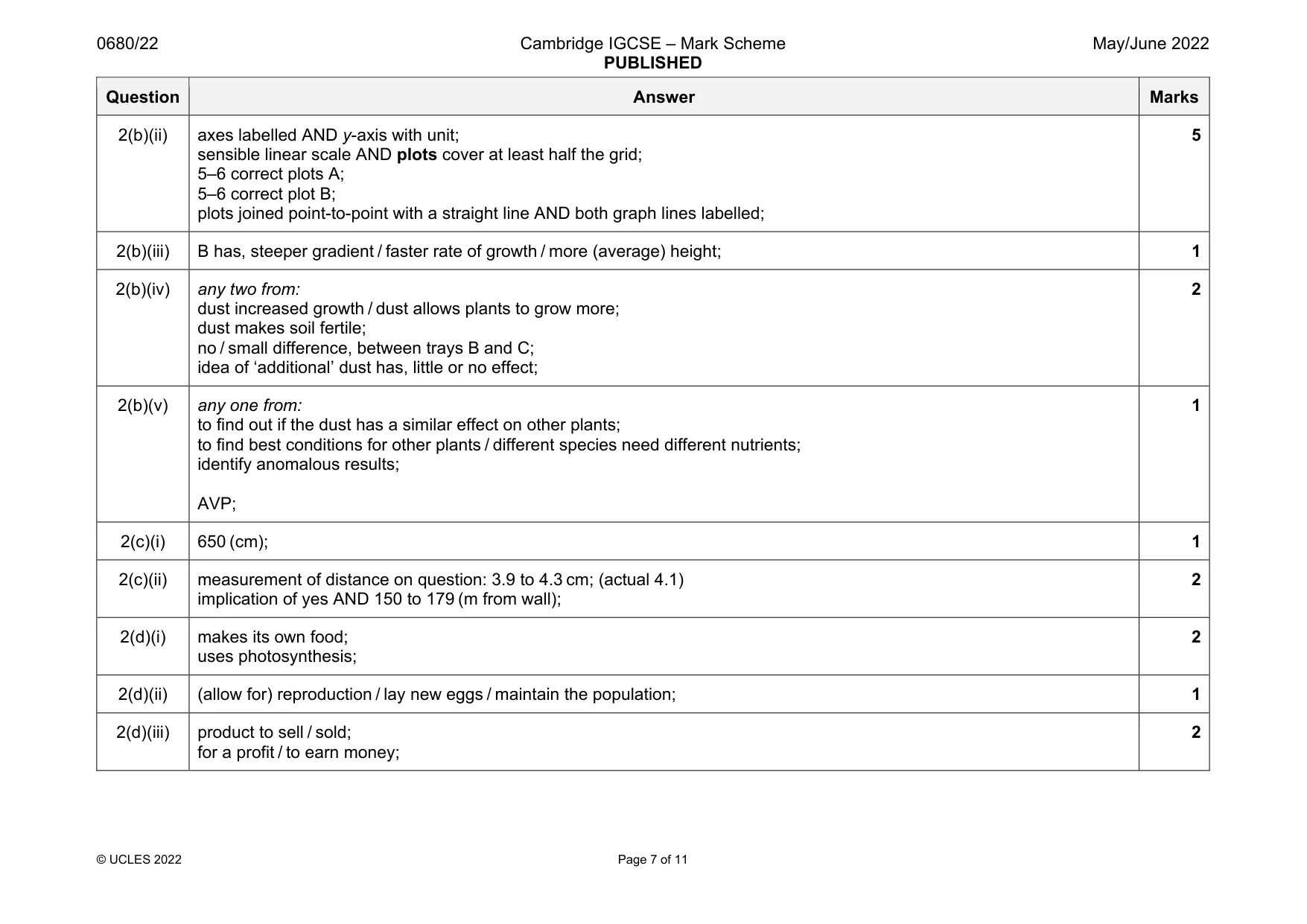
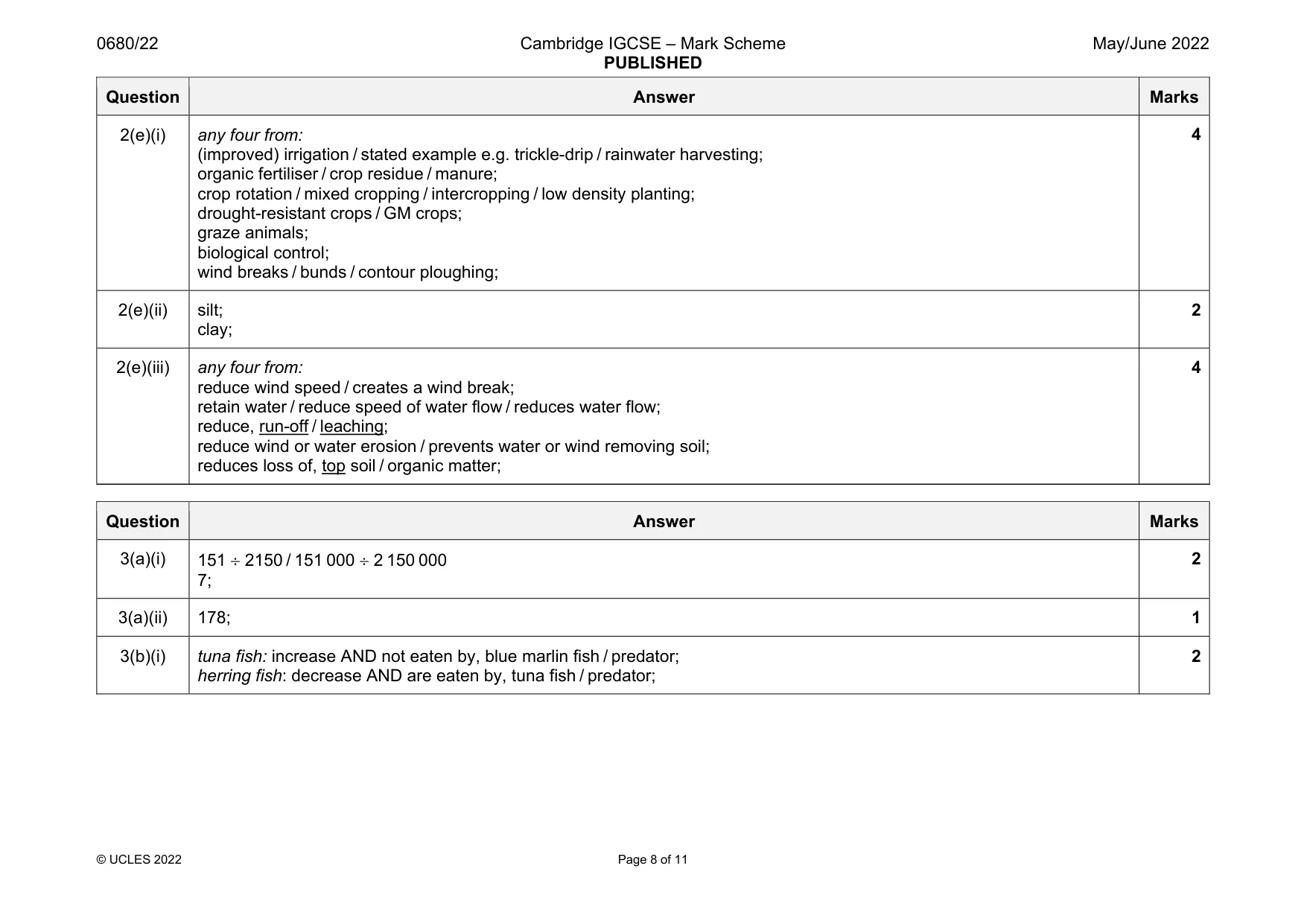
Mark scheme: 2(a)(i) (El) Hierro; 1 2(a)(ii) nitrate / phosphate (ion); 1 2(a)(iii) 5245 (km2); 1 2(b)(i) independent: mass of dust (added); dependent: (average) height (of seedlings); 2 Question Answer Marks 2(b)(ii) axes labelled AND y-axis with unit; sensible linear scale AND plots cover at least half the grid; 5–6 correct plots A; 5–6 correct plot B; plots joined point-to-point with a straight line AND both graph lines labelled; 5 2(b)(iii) B has, steeper gradient / faster rate of growth / more (average) height; 1 2(b)(iv) any two from: dust increased growth / dust allows plants to grow more; dust makes soil fertile; no / small difference, between trays B and C; idea of ‘additional’ dust has, little or no effect; 2 2(b)(v) any one from: to find out if the dust has a similar effect on other plants; to find best conditions for other plants / different species need different nutrients; identify anomalous results; AVP; 1 2(c)(i) 650 (cm); 1 2(c)(ii) measurement of distance on question: 3.9 to 4.3 cm; (actual 4.1) implication of yes AND 150 to 179 (m from wall); 2 2(d)(i) makes its own food; uses photosynthesis; 2 2(d)(ii) (allow for) reproduction / lay new eggs / maintain the population; 1 2(d)(iii) product to sell / sold; for a profit / to earn money; 2 Question Answer Marks 2(e)(i) any four from: (improved) irrigation / stated example e.g. trickle-drip / rainwater harvesting; organic fertiliser / crop residue / manure; crop rotation / mixed cropping / intercropping / low density planting; drought-resistant crops / GM crops; graze animals; biological control; wind breaks / bunds / contour ploughing; 4 2(e)(ii) silt; clay; 2 2(e)(iii) any four from: reduce wind speed / creates a wind break; retain water / reduce speed of water flow / reduces water flow; reduce, run-off / leaching; reduce wind or water erosion / prevents water or wind removing soil; reduces loss of, top soil / organic matter; 4
Q3 · The population of each island of the Canary Islands in 2019 is shown in the table
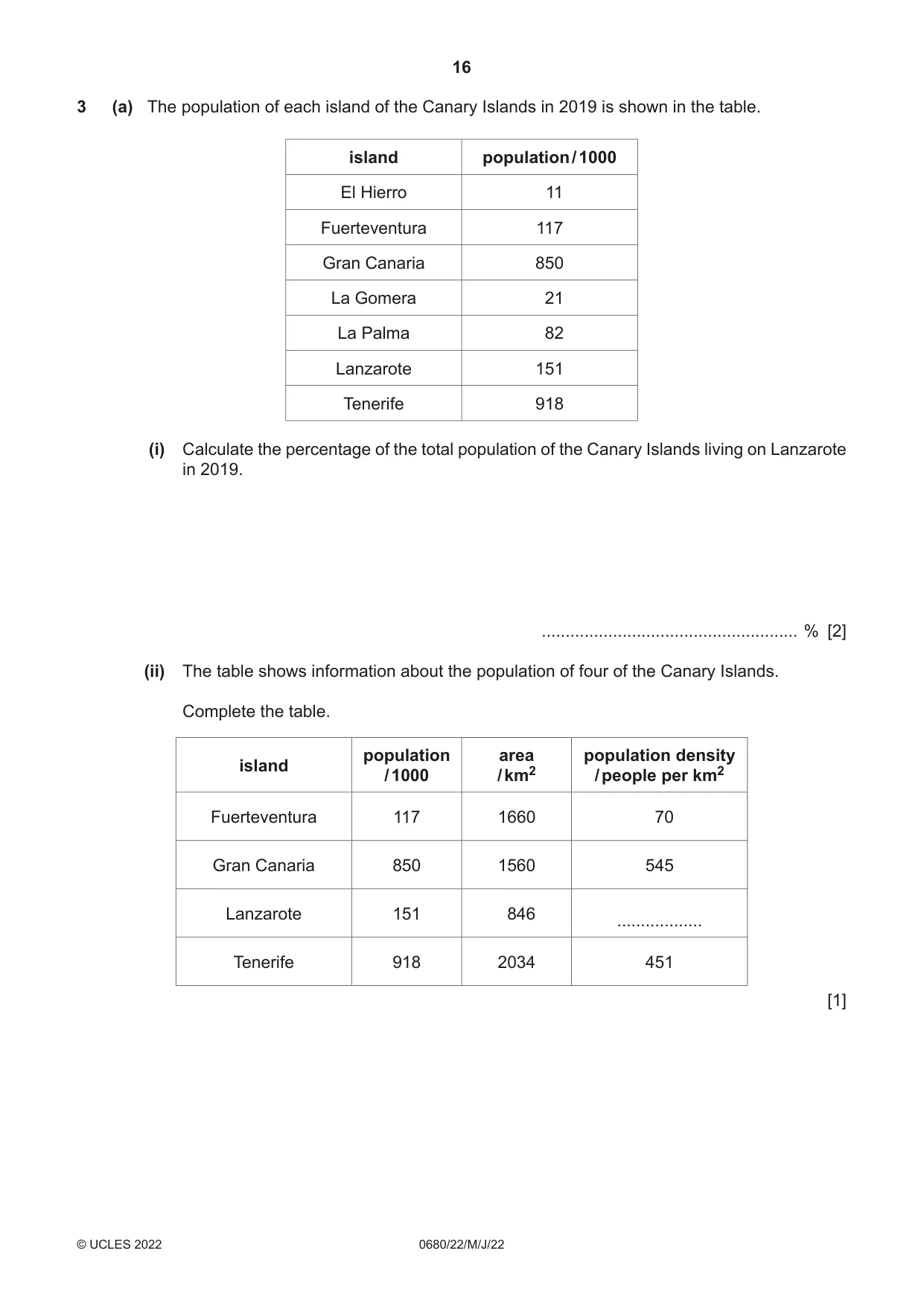
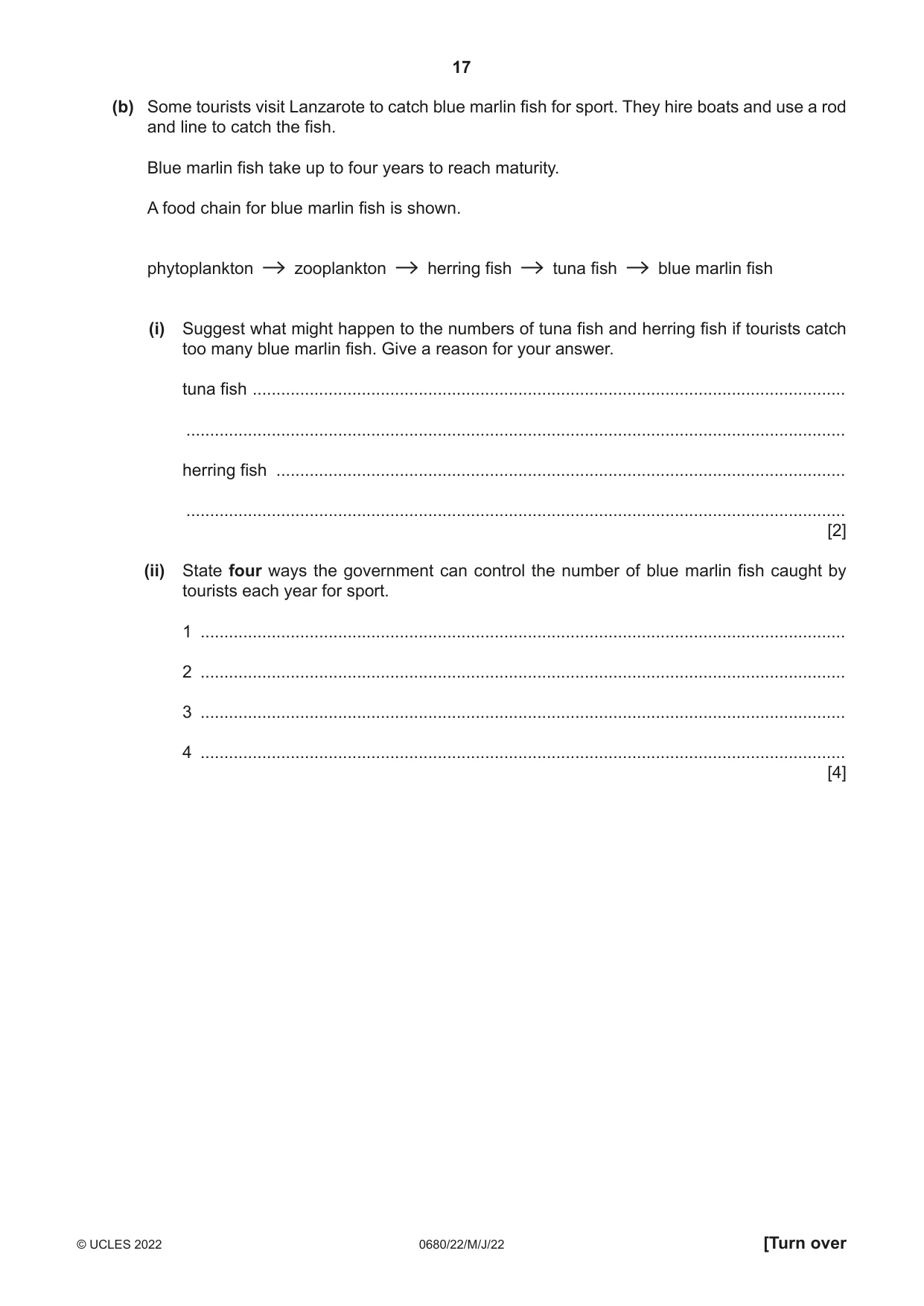
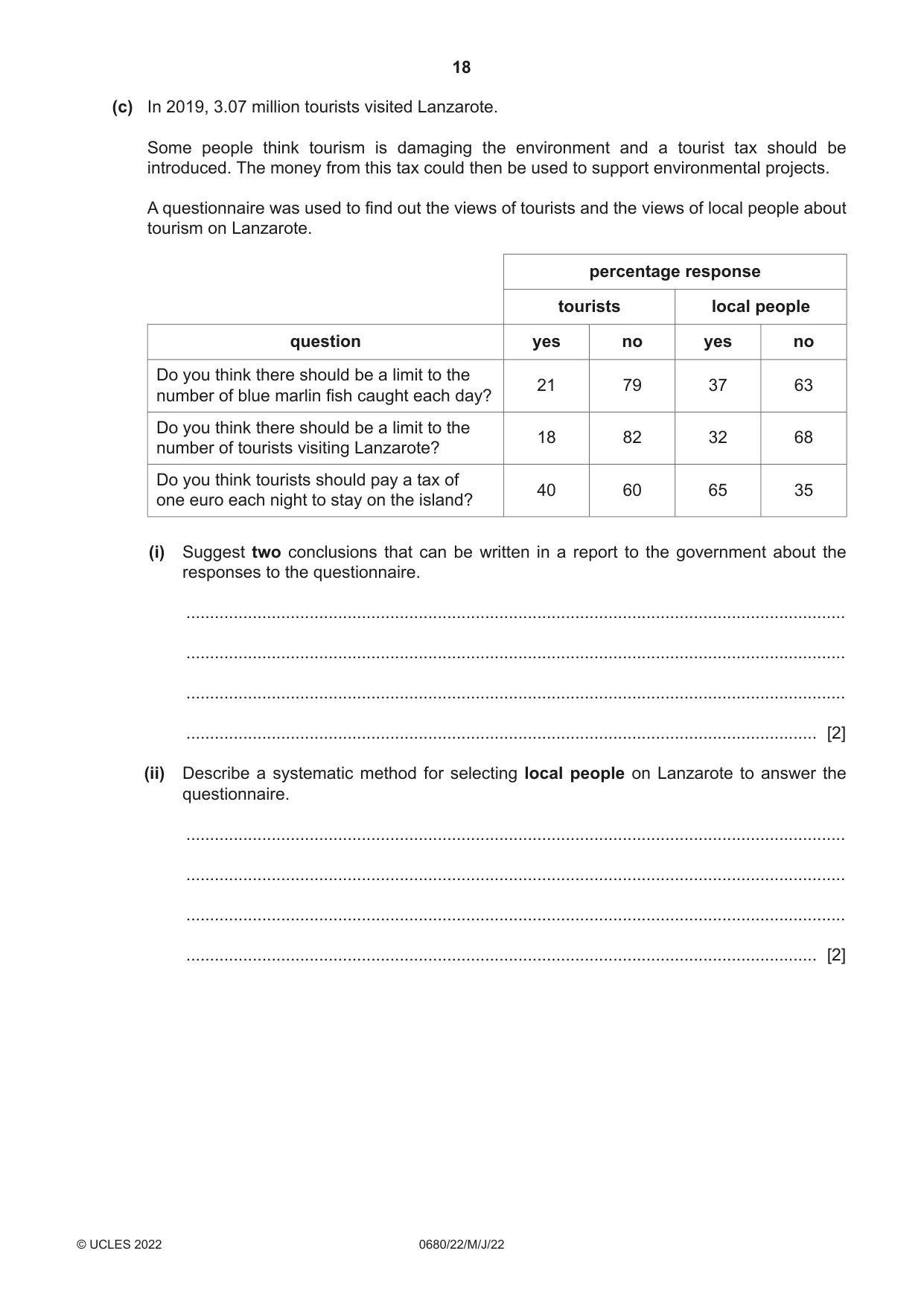
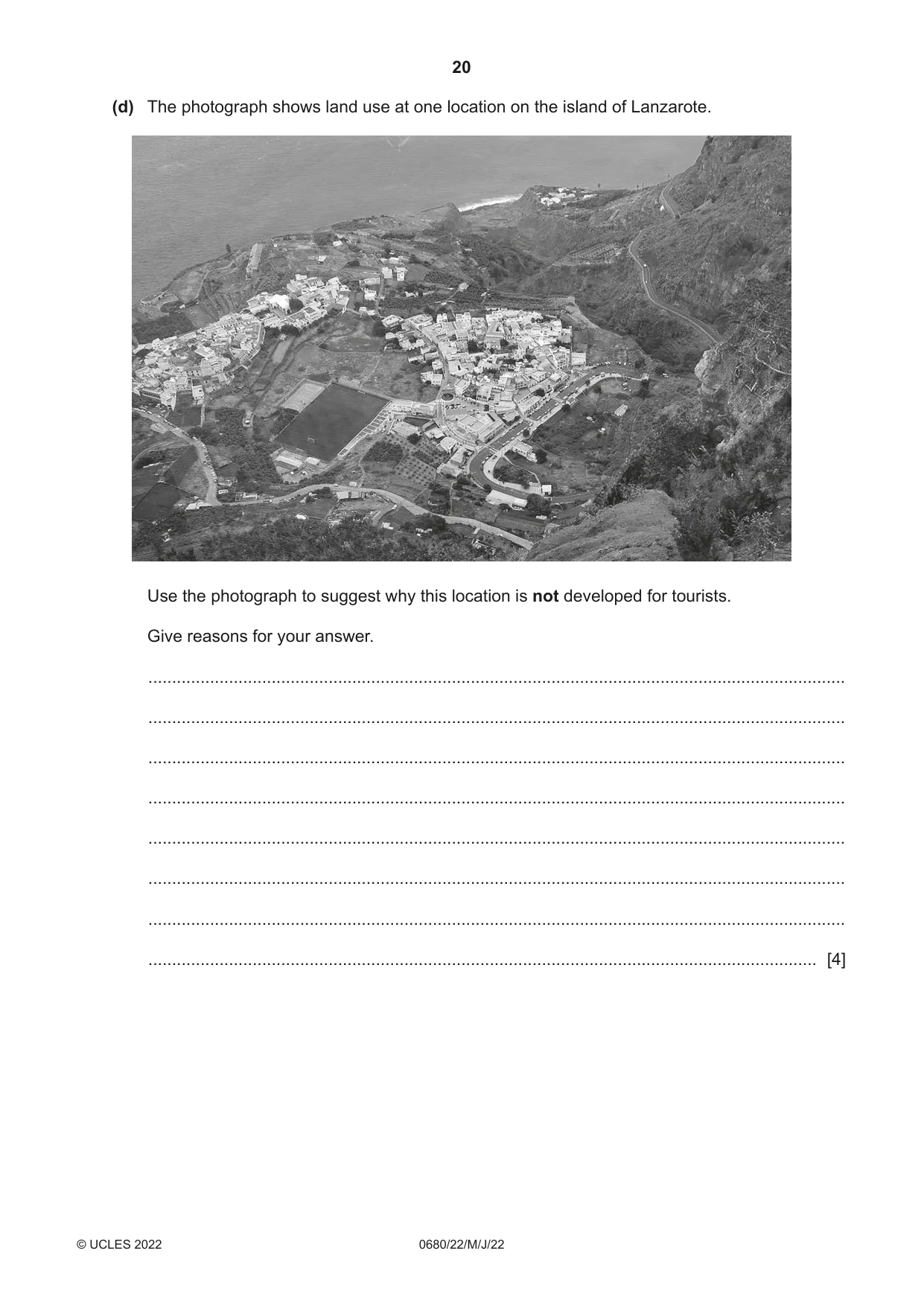
3 (a) The population of each island of the Canary Islands in 2019 is shown in the table. island population / 1000 El Hierro 11 Fuerteventura 117 Gran Canaria 850 La Gomera 21 La Palma 82 Lanzarote 151 Tenerife 918 (i) Calculate the percentage of the total population of the Canary Islands living on Lanzarote in 2019. ...................................................... % [2] (ii) The table shows information about the population of four of the Canary Islands. Complete the table. population area population density island / 1000 / km2 / people per km2 Fuerteventura 117 1660 70 Gran Canaria 850 1560 545 Lanzarote 151 846 .................. Tenerife 918 2034 451 [1] (b) Some tourists visit Lanzarote to catch blue marlin fish for sport. They hire boats and use a rod and line to catch the fish. Blue marlin fish take up to four years to reach maturity. A food chain for blue marlin fish is shown. phytoplankton zooplankton herring fish tuna fish blue marlin fish (i) Suggest what might happen to the numbers of tuna fish and herring fish if tourists catch too many blue marlin fish. Give a reason for your answer. tuna fish ............................................................................................................................. ........................................................................................................................................... herring fish ........................................................................................................................ ........................................................................................................................................... [2] (ii) State four ways the government can control the number of blue marlin fish caught by tourists each year for sport. 1 ........................................................................................................................................ 2 ........................................................................................................................................ 3 ........................................................................................................................................ 4 ........................................................................................................................................ [4] (c) In 2019, 3.07 million tourists visited Lanzarote. Some people think tourism is damaging the environment and a tourist tax should be introduced. The money from this tax could then be used to support environmental projects. A questionnaire was used to find out the views of tourists and the views of local people about tourism on Lanzarote. percentage response tourists local people question yes no yes no Do you think there should be a limit to the 21 79 37 63 number of blue marlin fish caught each day? Do you think there should be a limit to the 18 82 32 68 number of tourists visiting Lanzarote? Do you think tourists should pay a tax of 40 60 65 35 one euro each night to stay on the island? (i) Suggest two conclusions that can be written in a report to the government about the responses to the questionnaire. ........................................................................................................................................... ........................................................................................................................................... ........................................................................................................................................... ..................................................................................................................................... [2] (ii) Describe a systematic method for selecting local people on Lanzarote to answer the questionnaire. ........................................................................................................................................... ........................................................................................................................................... ........................................................................................................................................... ..................................................................................................................................... [2]
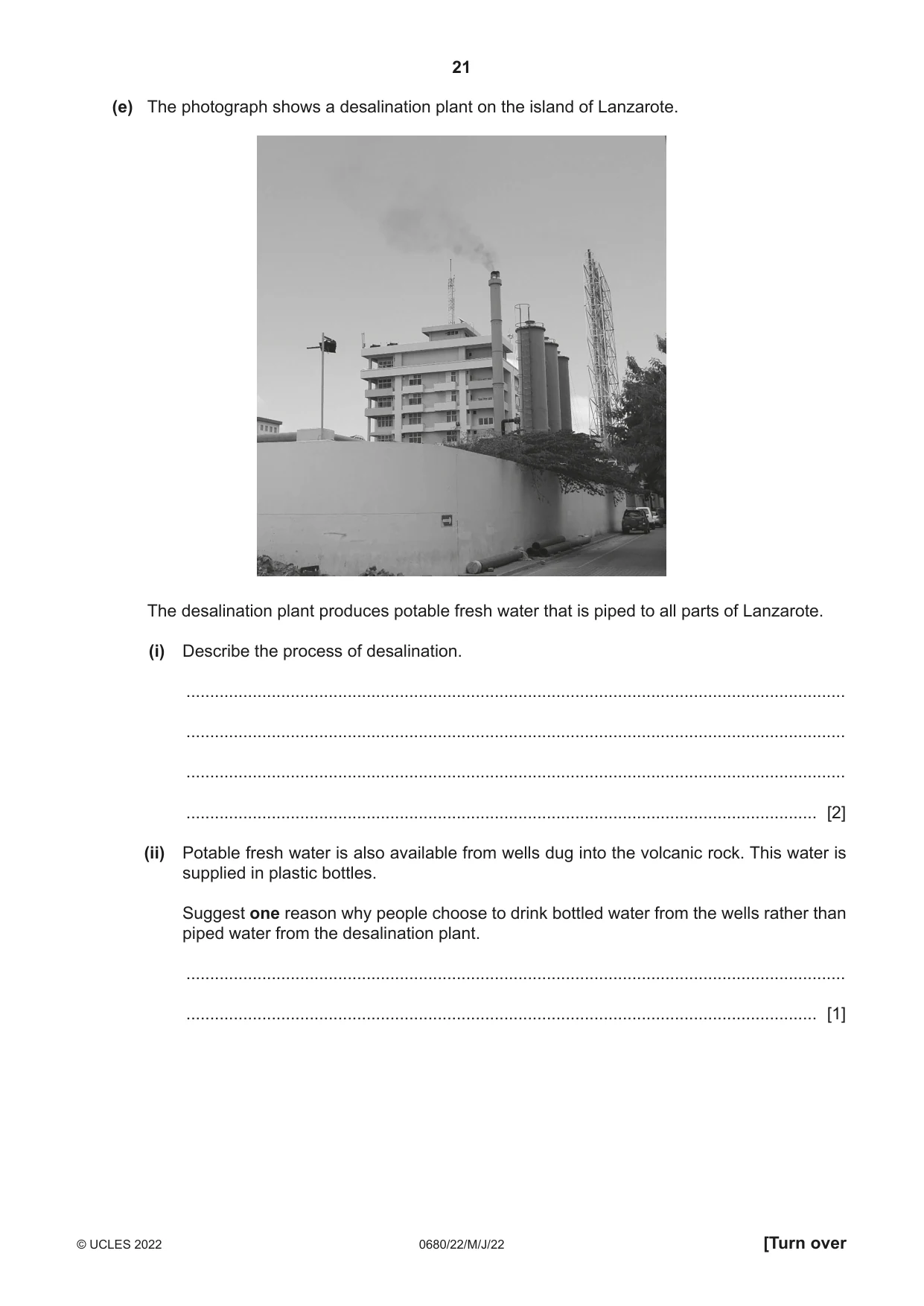
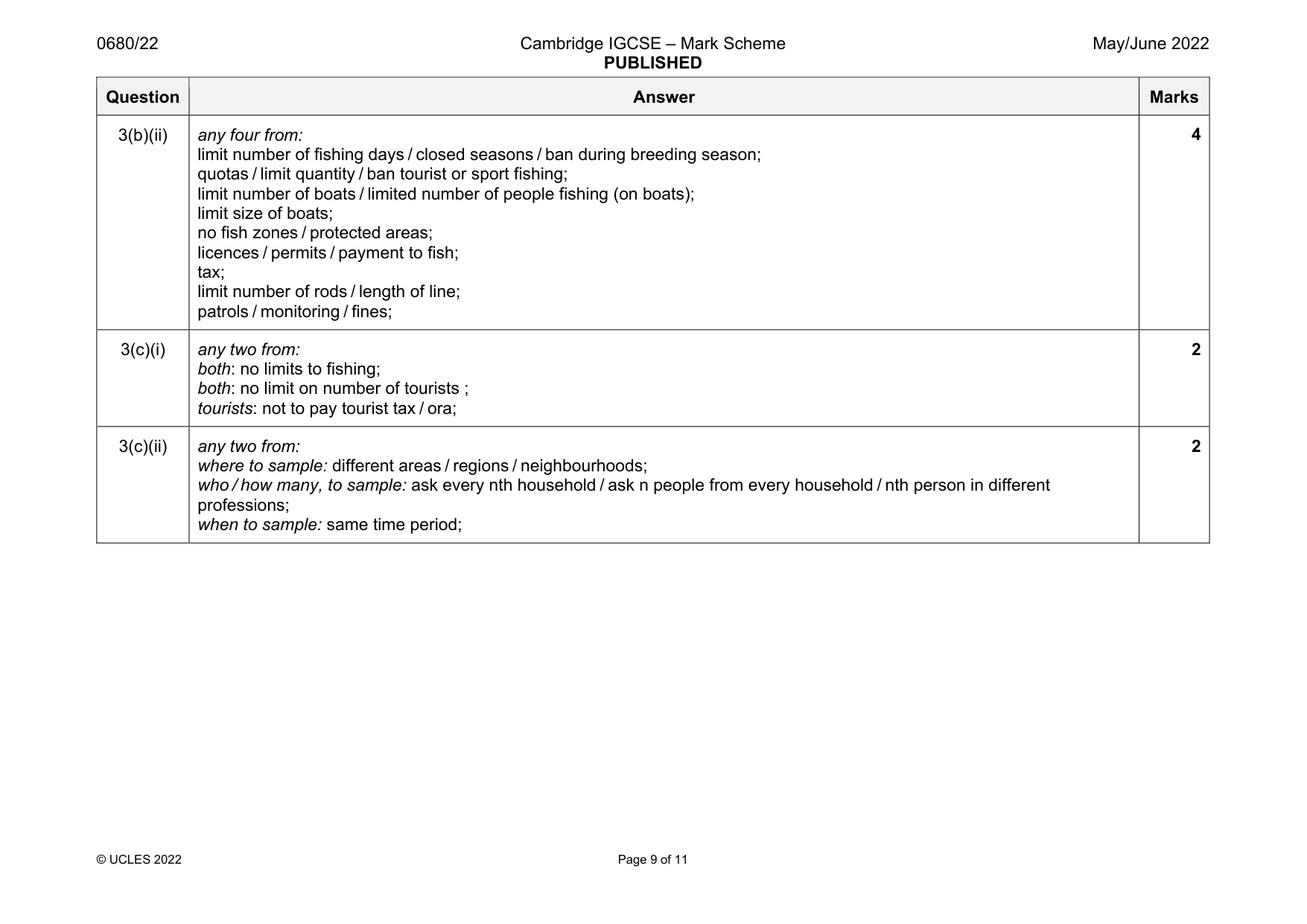
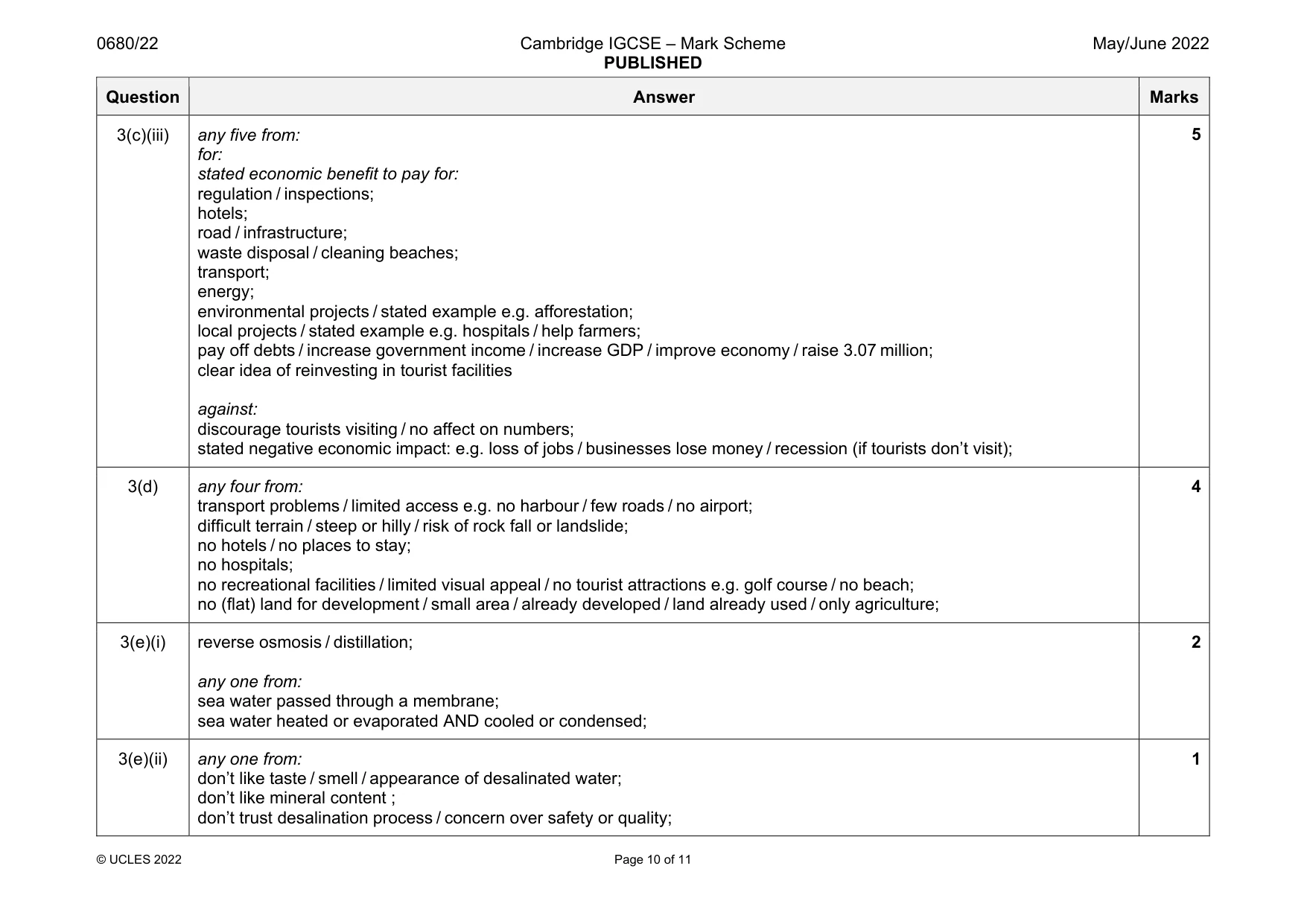
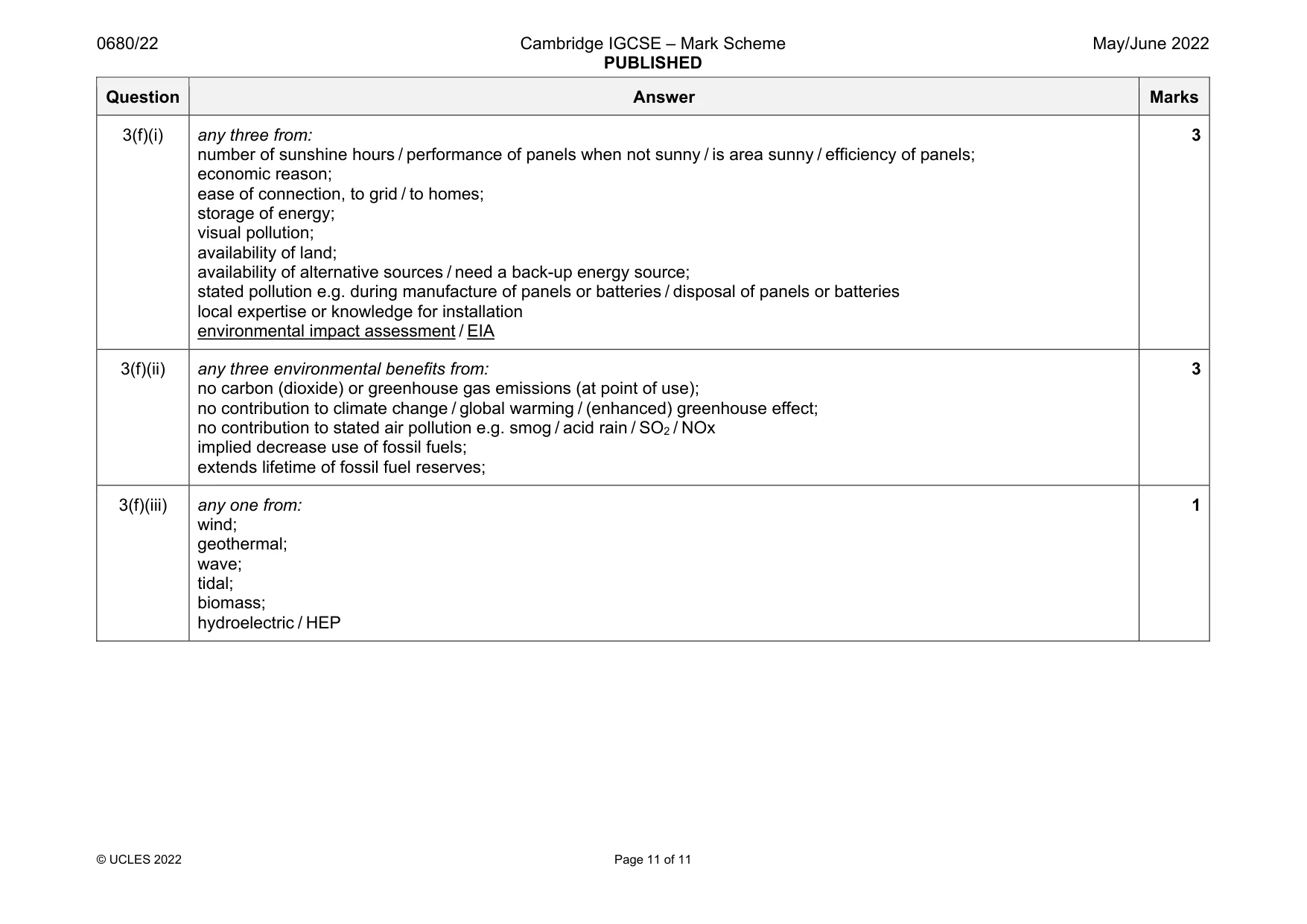
Mark scheme: 3(a)(i) 7; 2 3(a)(ii) 178; 1 3(b)(i) tuna fish: increase AND not eaten by, blue marlin fish / predator; herring fish: decrease AND are eaten by, tuna fish / predator; 2 Question Answer Marks 3(b)(ii) any four from: limit number of fishing days / closed seasons / ban during breeding season; quotas / limit quantity / ban tourist or sport fishing; limit number of boats / limited number of people fishing (on boats); limit size of boats; no fish zones / protected areas; licences / permits / payment to fish; tax; limit number of rods / length of line; patrols / monitoring / fines; 4 3(c)(i) any two from: both: no limits to fishing; both: no limit on number of tourists ; tourists: not to pay tourist tax / ora; 2 3(c)(ii) any two from: where to sample: different areas / regions / neighbourhoods; who / how many, to sample: ask every nth household / ask n people from every household / nth person in different professions; when to sample: same time period; 2 Question Answer Marks 3(c)(iii) any five from: for: stated economic benefit to pay for: regulation / inspections; hotels; road / infrastructure; waste disposal / cleaning beaches; transport; energy; environmental projects / stated example e.g. afforestation; local projects / stated example e.g. hospitals / help farmers; pay off debts / increase government income / increase GDP / improve economy / raise 3.07 million; clear idea of reinvesting in tourist facilities against: discourage tourists visiting / no affect on numbers; stated negative economic impact: e.g. loss of jobs / businesses lose money / recession (if tourists don’t visit); 5 3(d) any four from: transport problems / limited access e.g. no harbour / few roads / no airport; difficult terrain / steep or hilly / risk of rock fall or landslide; no hotels / no places to stay; no hospitals; no recreational facilities / limited visual appeal / no tourist attractions e.g. golf course / no beach; no (flat) land for development / small area / already developed / land already used / only agriculture; 4 3(e)(i) reverse osmosis / distillation; any one from: sea water passed through a membrane; sea water heated or evaporated AND cooled or condensed; 2 3(e)(ii) any one from: don’t like taste / smell / appearance of desalinated water; don’t like mineral content ; don’t trust desalination process / concern over safety or quality; 1 Question Answer Marks 3(f)(i) any three from: number of sunshine hours / performance of panels when not sunny / is area sunny / efficiency of panels; economic reason; ease of connection, to grid / to homes; storage of energy; visual pollution; availability of land; availability of alternative sources / need a back-up energy source; stated pollution e.g. during manufacture of panels or batteries / disposal of panels or batteries local expertise or knowledge for installation environmental impact assessment / EIA 3 3(f)(ii) any three environmental benefits from: no carbon (dioxide) or greenhouse gas emissions (at point of use); no contribution to climate change / global warming / (enhanced) greenhouse effect; no contribution to stated air pollution e.g. smog / acid rain / SO2 / NOx implied decrease use of fossil fuels; extends lifetime of fossil fuel reserves; 3 3(f)(iii) any one from: wind; geothermal; wave; tidal; biomass; hydroelectric / HEP 1
What was in this paper
The subtopics covered by these 3 questions, and how many questions each got. Open one in a new tab to see every Cambridge question on it.
What you needed in this session
Cambridge’s own grade thresholds for 2022 May/June, Paper 2 · Variant 2. A higher threshold means an easier paper — the bar moves with how the cohort did.