Cambridge IGCSE Biology (9-1) 0970 — 2023 May/June Paper 3 · Variant 1
0970/31/M/J/23 · 8 questions · 80 marks · ≈90 min
The question paper and its mark scheme, free to read here and free to download. This is Cambridge’s own paper, exactly as it was sat.
Question paper20 pages



Mark scheme11 pages
Answers below. Sit the paper first if you are practising.
Questions as text
Q1 · Describe the meaning of the term species
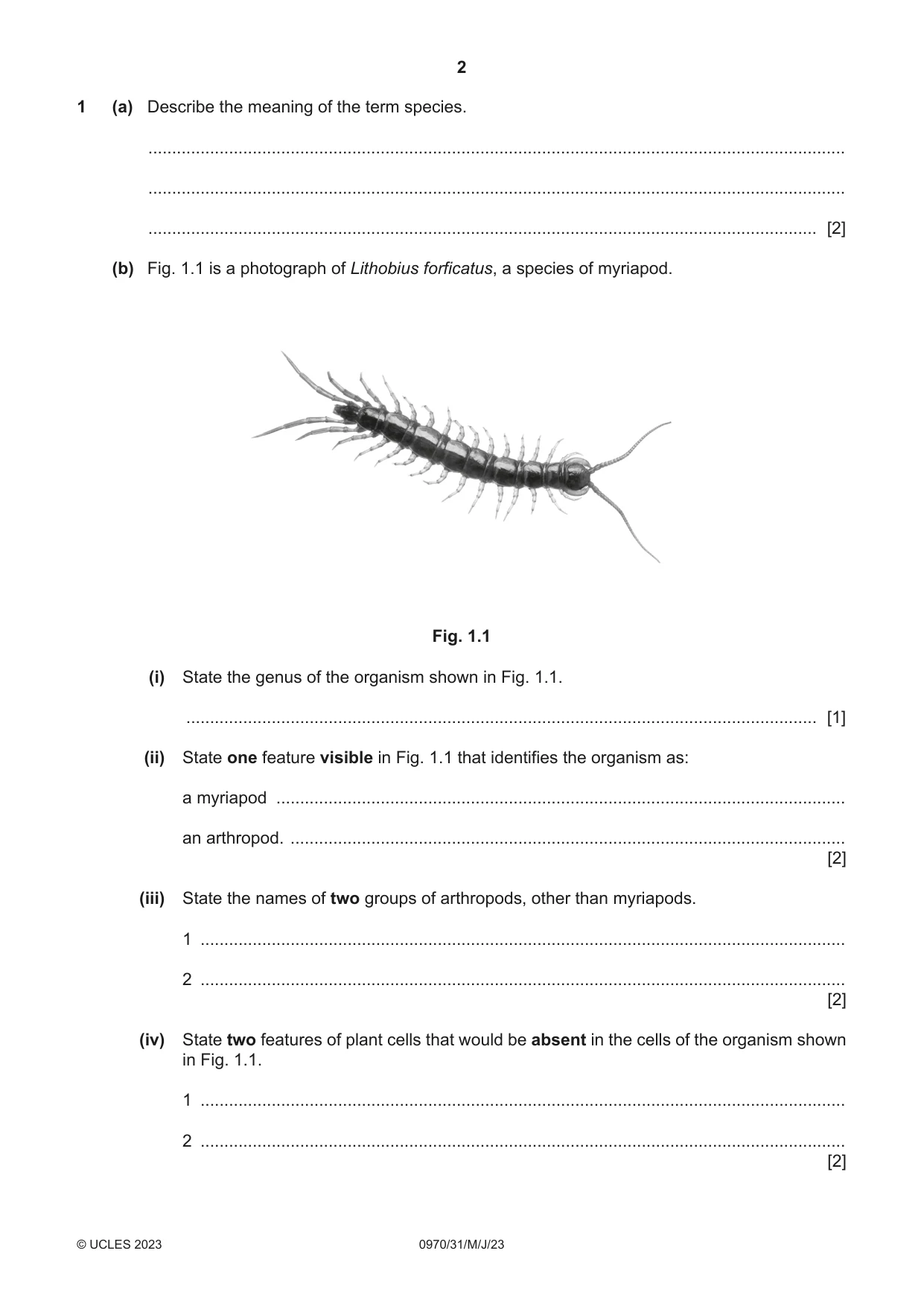
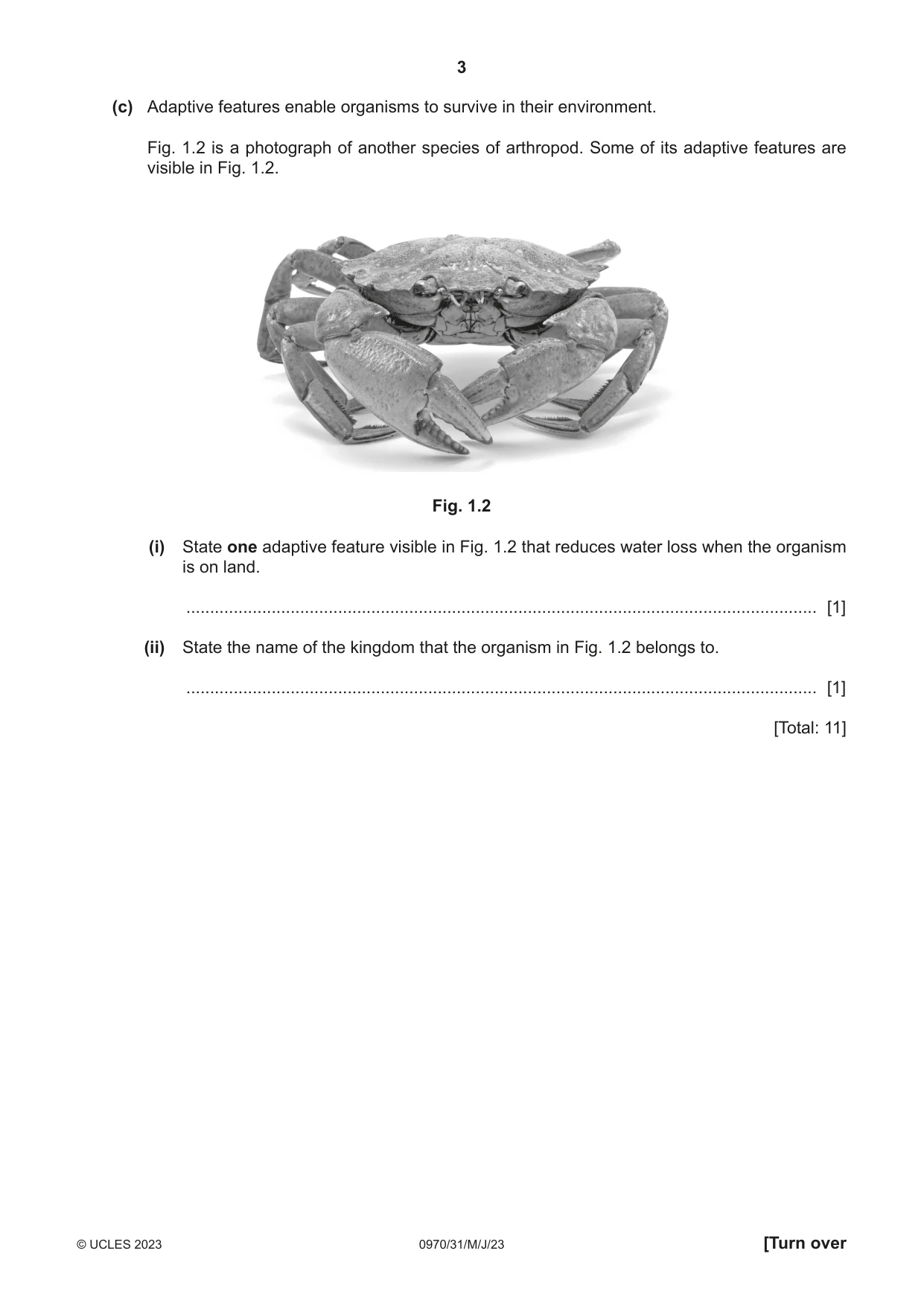
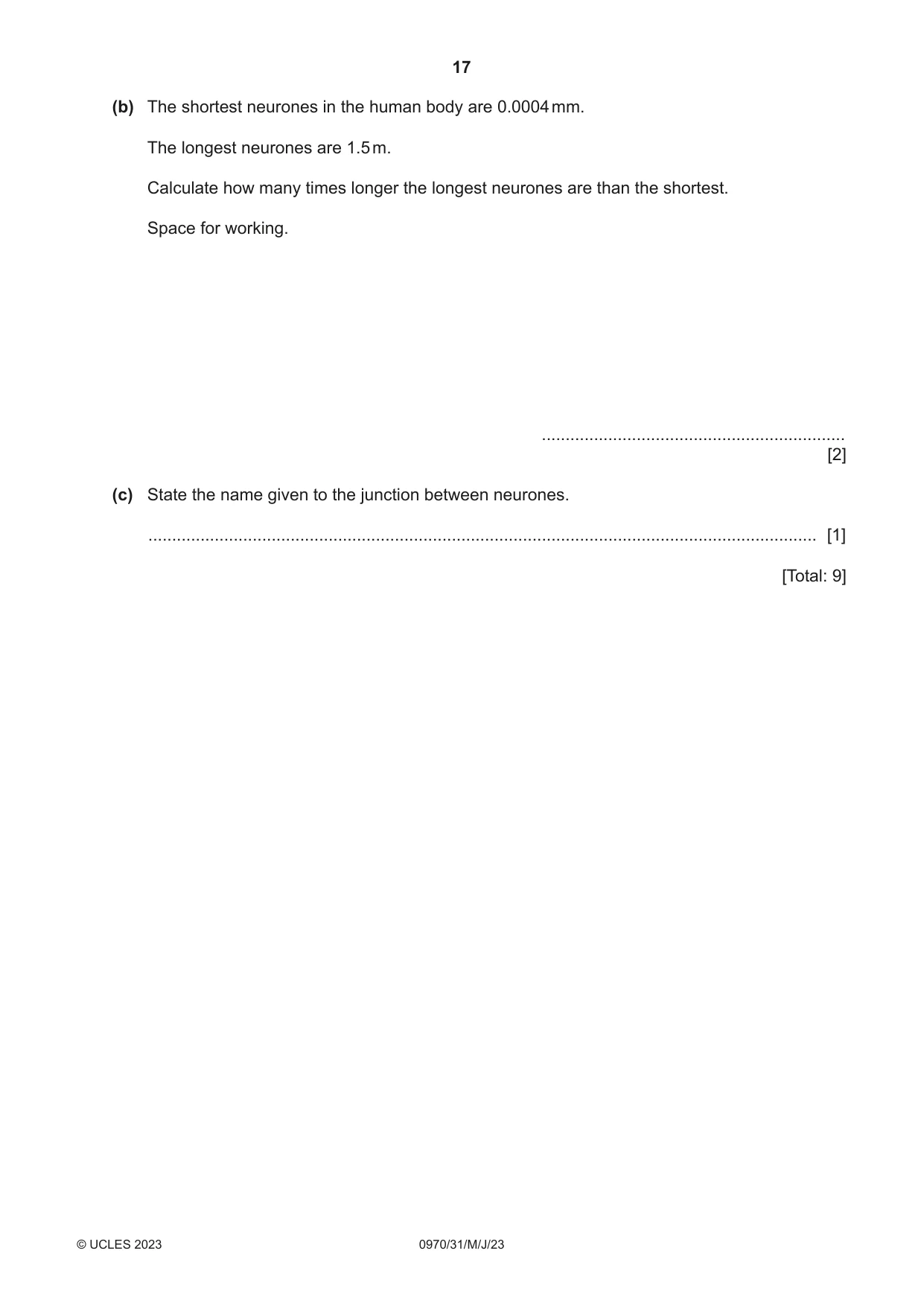
1 (a) Describe the meaning of the term species. ................................................................................................................................................... ................................................................................................................................................... ............................................................................................................................................. [2] (b) Fig. 1.1 is a photograph of Lithobius forficatus, a species of myriapod. Fig. 1.1 (i) State the genus of the organism shown in Fig. 1.1. ..................................................................................................................................... [1] (ii) State one feature visible in Fig. 1.1 that identifies the organism as: a myriapod ........................................................................................................................ an arthropod. ..................................................................................................................... [2] (iii) State the names of two groups of arthropods, other than myriapods. 1 ........................................................................................................................................ 2 ........................................................................................................................................ [2] (iv) State two features of plant cells that would be absent in the cells of the organism shown in Fig. 1.1. 1 ........................................................................................................................................ 2 ........................................................................................................................................ [2] (c) Adaptive features enable organisms to survive in their environment. Fig. 1.2 is a photograph of another species of arthropod. Some of its adaptive features are visible in Fig. 1.2. Fig. 1.2 (i) State one adaptive feature visible in Fig. 1.2 that reduces water loss when the organism is on land. ..................................................................................................................................... [1] (ii) State the name of the kingdom that the organism in Fig. 1.2 belongs to. ..................................................................................................................................... [1] [Total: 11]
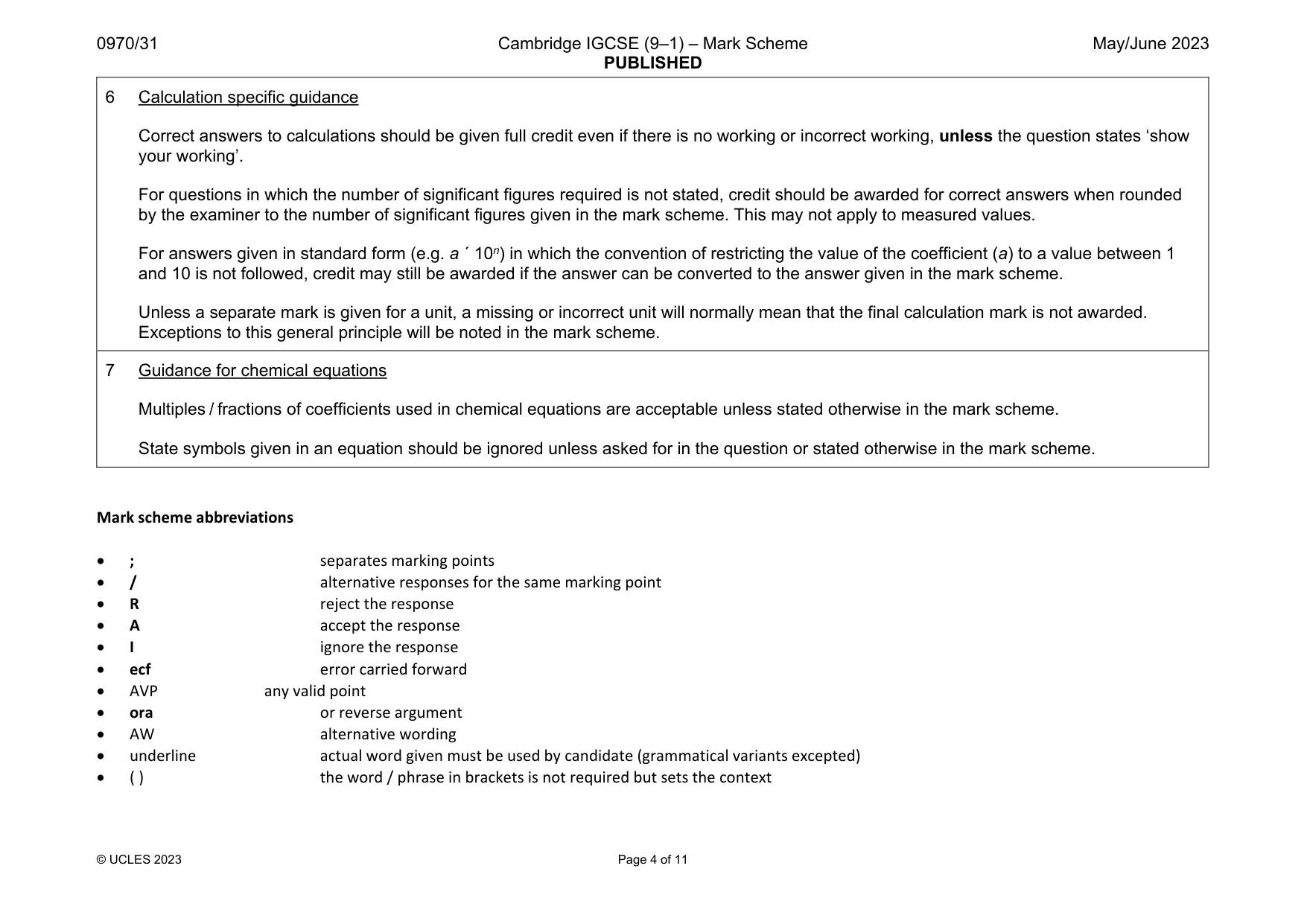
Mark scheme: 1(a) a group of organisms that can reproduce ; to produce fertile offspring ; 2 1(b)(i) Lithobius ; 1 1(b)(ii) myriapod:any one from: many pairs of legs / more than 16 legs / more than 8 pairs of legs ; one or two pairs of legs on each segment ; arthropod: any one from: segmented body ; exoskeleton ; jointed legs ; 2 1(b)(iii) any two from: insects ; arachnids ; crustaceans ; 2 1(b)(iv) any two from: chloroplasts / chlorophyll ; cell wall / cellulose ; (permanent) vacuole ; AVP ; e.g. starch, grain / granule 2 1(c)(i) (hard) shell / exoskeleton / carapace ; 1 1(c)(ii) animal ; 1
Q2 · A diagram of a human tooth
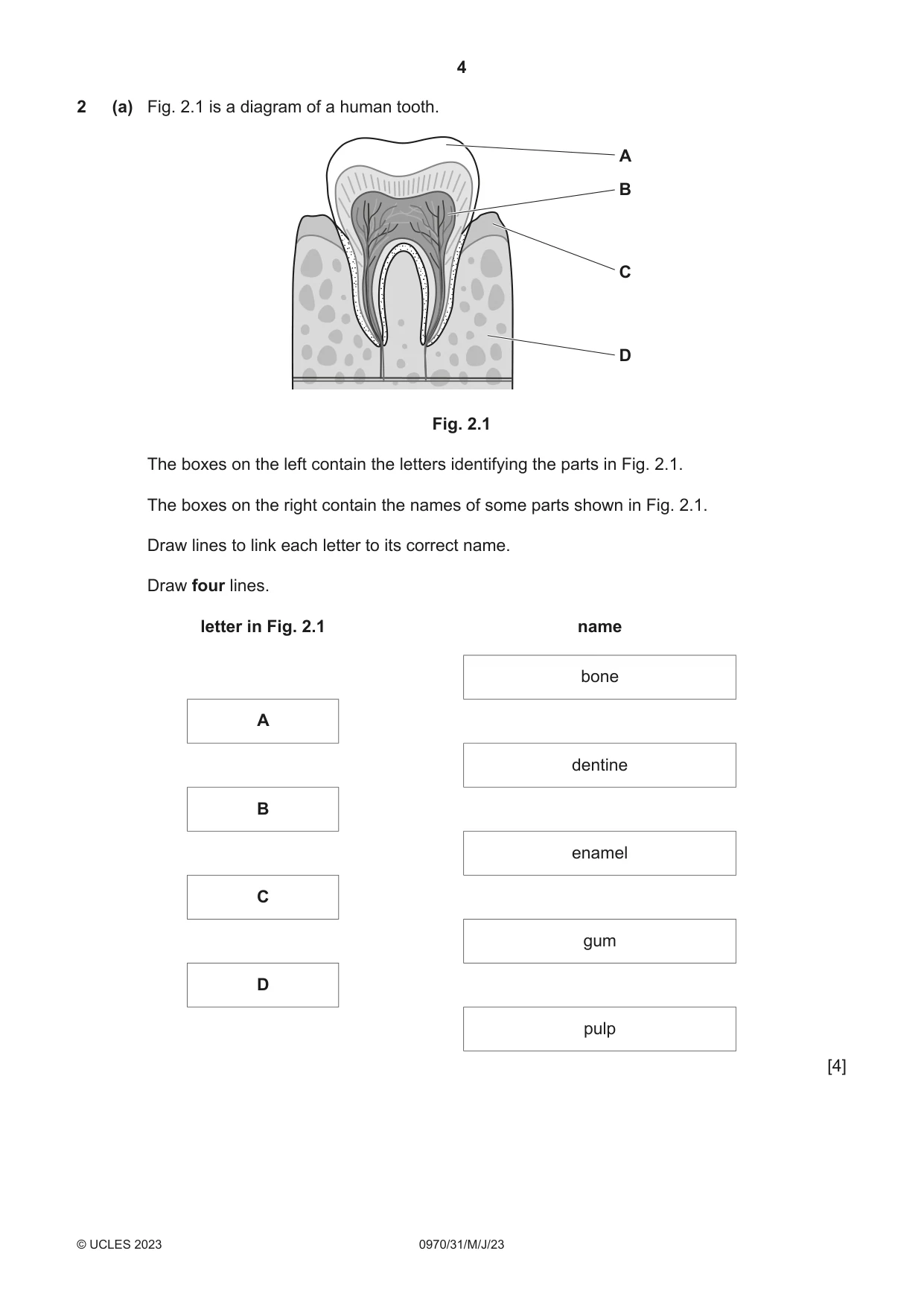
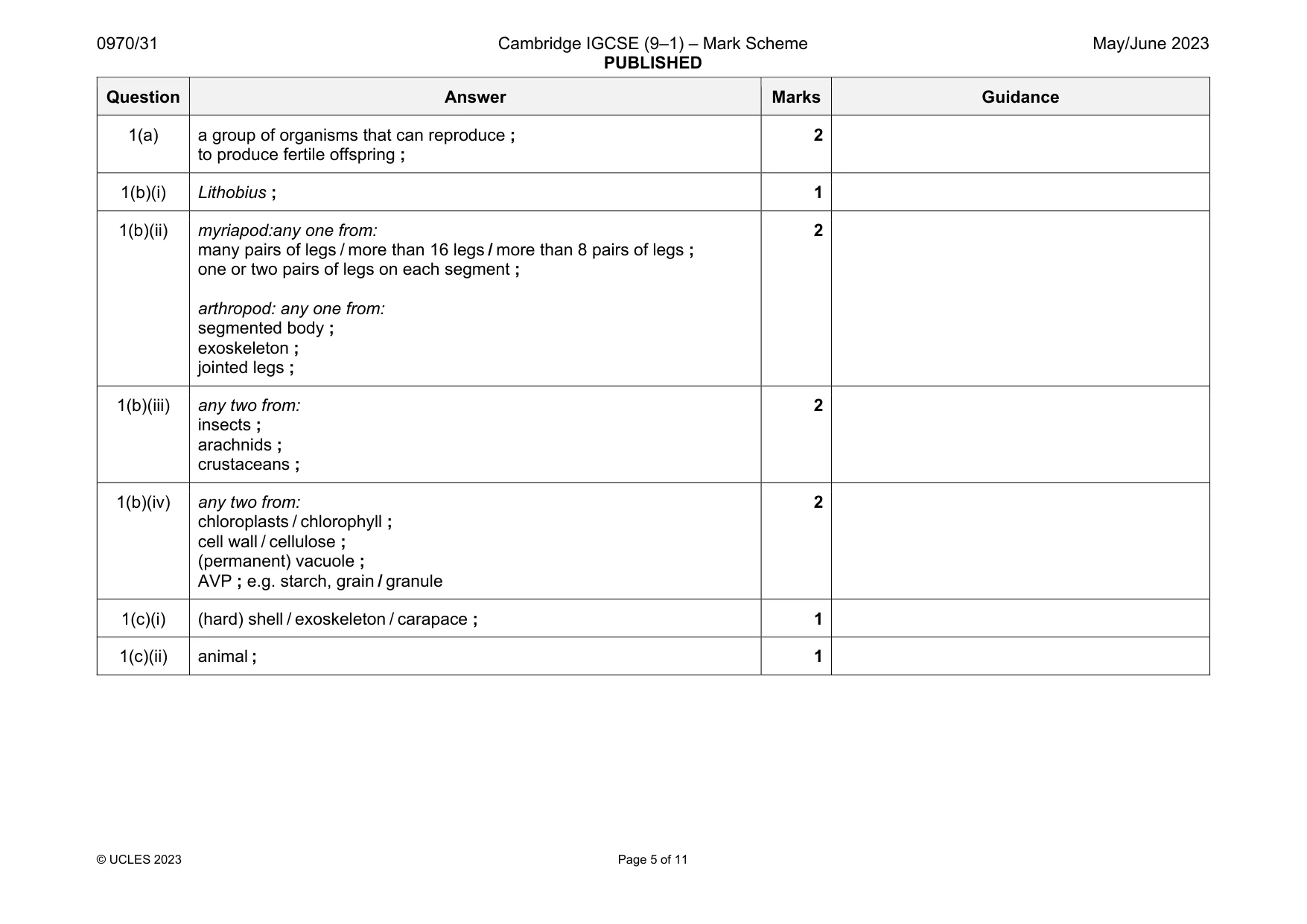
2 (a) Fig. 2.1 is a diagram of a human tooth. A B C D Fig. 2.1 The boxes on the left contain the letters identifying the parts in Fig. 2.1. The boxes on the right contain the names of some parts shown in Fig. 2.1. Draw lines to link each letter to its correct name. Draw four lines. letter in Fig. 2.1 name bone A dentine B enamel C gum D pulp [4] (b) Complete the sentences to describe the role of teeth in digestion. The teeth are needed for ............................................. digestion. They break down food into smaller ............................................. . This increases the ............................................. area of the food for the action of biological catalysts called ............................................. . These biological catalysts are needed for ............................................. digestion. [5] (c) State the names of two different types of human teeth. 1 ................................................................................................................................................ 2 ................................................................................................................................................ [2] [Total: 11]
Mark scheme: 2(a) bone A dentine B enamel C gum D pulp ;;;; 4 R each additional line 2(b) physical / mechanical ; pieces / AW ; surface ; enzymes ; chemical ; 5 2(c) any two from: incisor ; canine ; pre-molar ; molar ; 2
Q3 · A photomicrograph of a sample of human blood
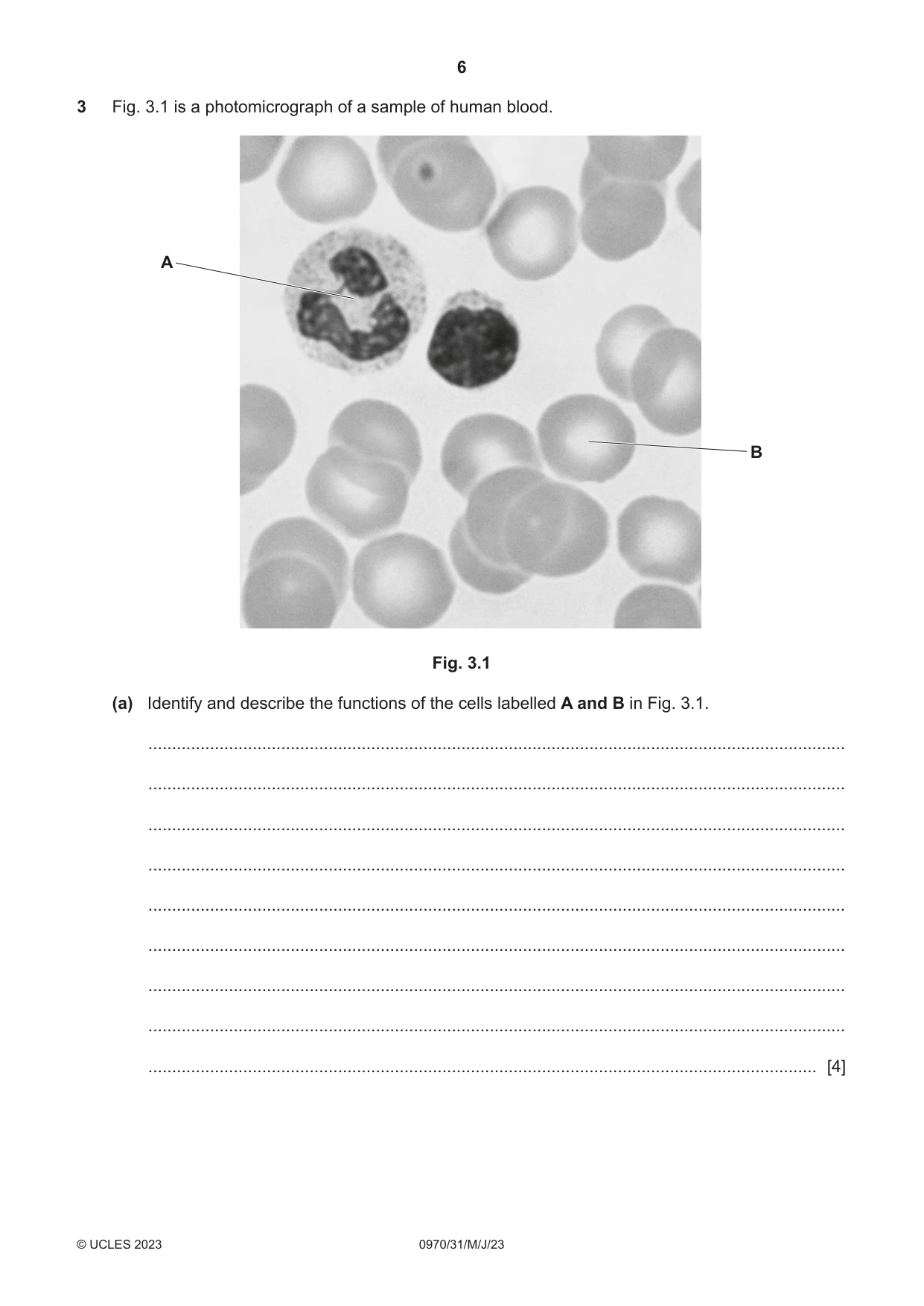
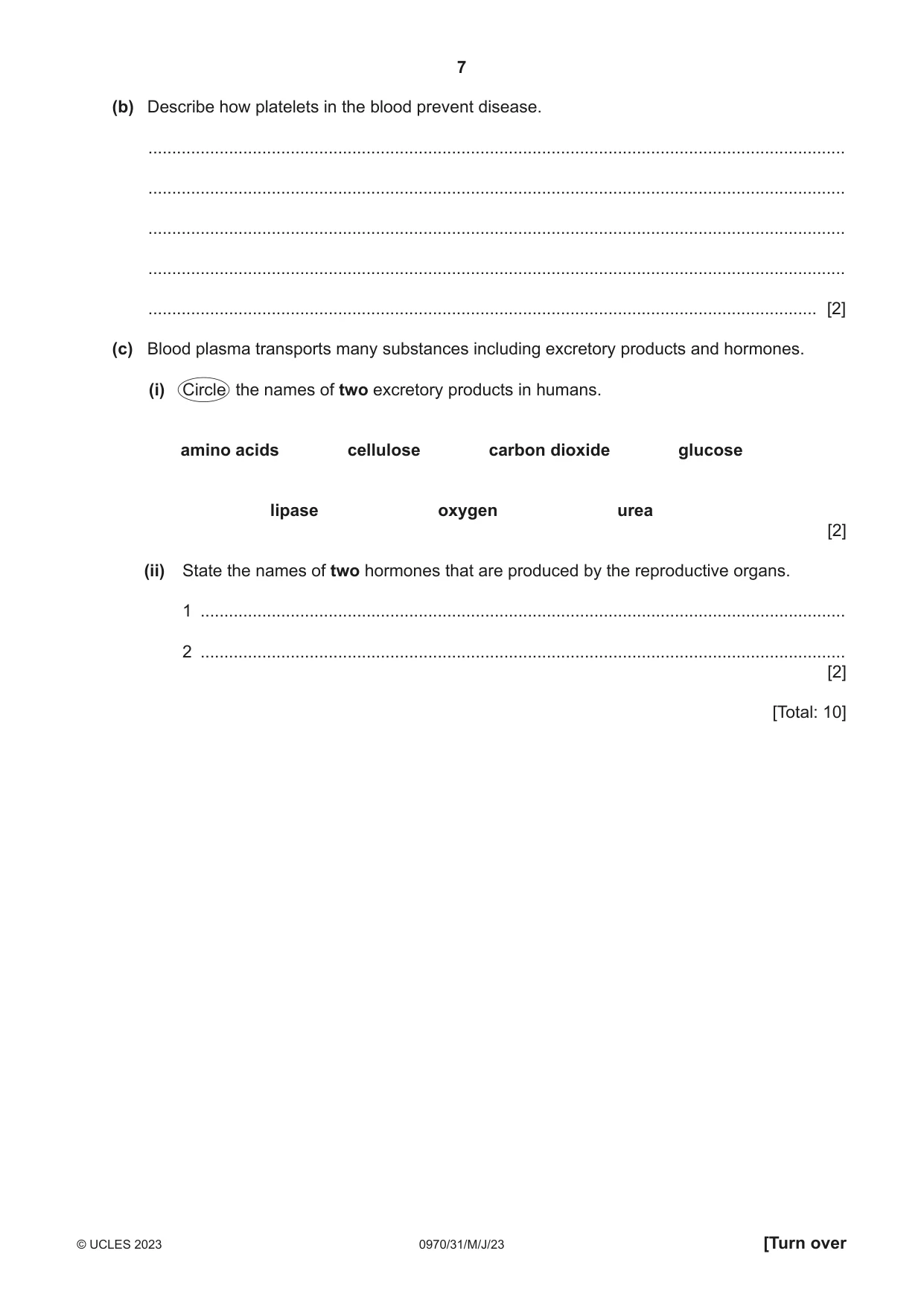
3 Fig. 3.1 is a photomicrograph of a sample of human blood. A B Fig. 3.1 (a) Identify and describe the functions of the cells labelled A and B in Fig. 3.1. ................................................................................................................................................... ................................................................................................................................................... ................................................................................................................................................... ................................................................................................................................................... ................................................................................................................................................... ................................................................................................................................................... ................................................................................................................................................... ................................................................................................................................................... ............................................................................................................................................. [4] (b) Describe how platelets in the blood prevent disease. ................................................................................................................................................... ................................................................................................................................................... ................................................................................................................................................... ................................................................................................................................................... ............................................................................................................................................. [2] (c) Blood plasma transports many substances including excretory products and hormones. (i) Circle the names of two excretory products in humans. amino acids cellulose carbon dioxide glucose lipase oxygen urea [2] (ii) State the names of two hormones that are produced by the reproductive organs. 1 ........................................................................................................................................ 2 ........................................................................................................................................ [2] [Total: 10]
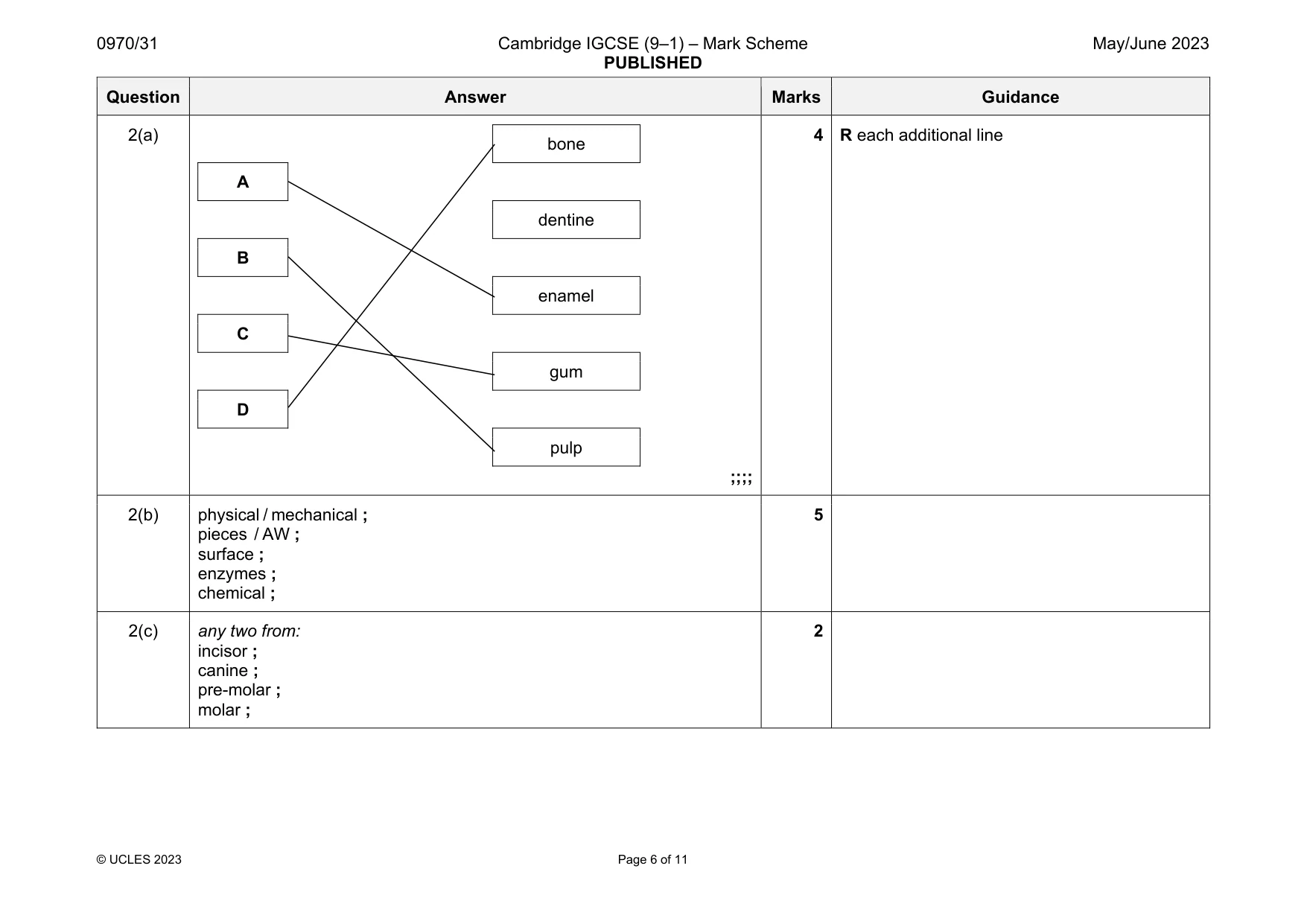
Mark scheme: 3(a) A is a white blood cell ; A / white blood cell, produces antibodies / phagocytosis (described) ; B is a red blood cell ; B / red blood cell, transports oxygen ; 4 3(b) clot (blood) / form a barrier / seal the wound / form a scab ; to prevent entry of, (named) pathogens ; 2 3(c)(i) carbon dioxide circled ; urea circled ; 2 R each additional circle 3(c)(ii) any two from : testosterone ; oestrogen ; AVP ; e.g. progesterone 2
Q4 · A diagram of a cross-section of a root
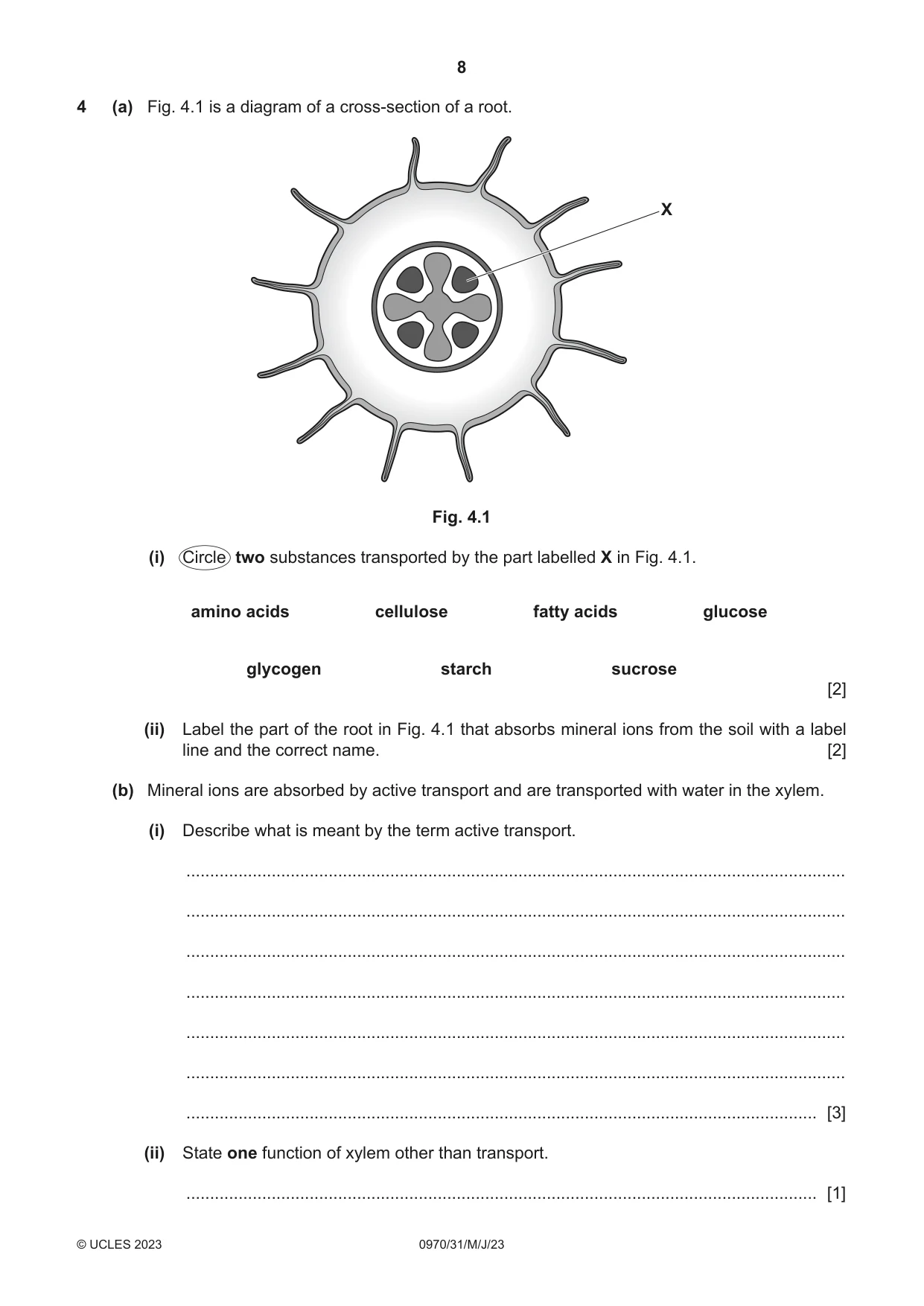
4 (a) Fig. 4.1 is a diagram of a cross-section of a root. X Fig. 4.1 (i) Circle two substances transported by the part labelled X in Fig. 4.1. amino acids cellulose fatty acids glucose glycogen starch sucrose [2] (ii) Label the part of the root in Fig. 4.1 that absorbs mineral ions from the soil with a label line and the correct name. [2] (b) Mineral ions are absorbed by active transport and are transported with water in the xylem. (i) Describe what is meant by the term active transport. ........................................................................................................................................... ........................................................................................................................................... ........................................................................................................................................... ........................................................................................................................................... ........................................................................................................................................... ........................................................................................................................................... ..................................................................................................................................... [3] (ii) State one function of xylem other than transport. ..................................................................................................................................... [1] (c) Transpiration is the loss of water vapour from leaves. State two environmental factors that affect the rate of transpiration. 1 ................................................................................................................................................ 2 ................................................................................................................................................ [2] [Total: 10]
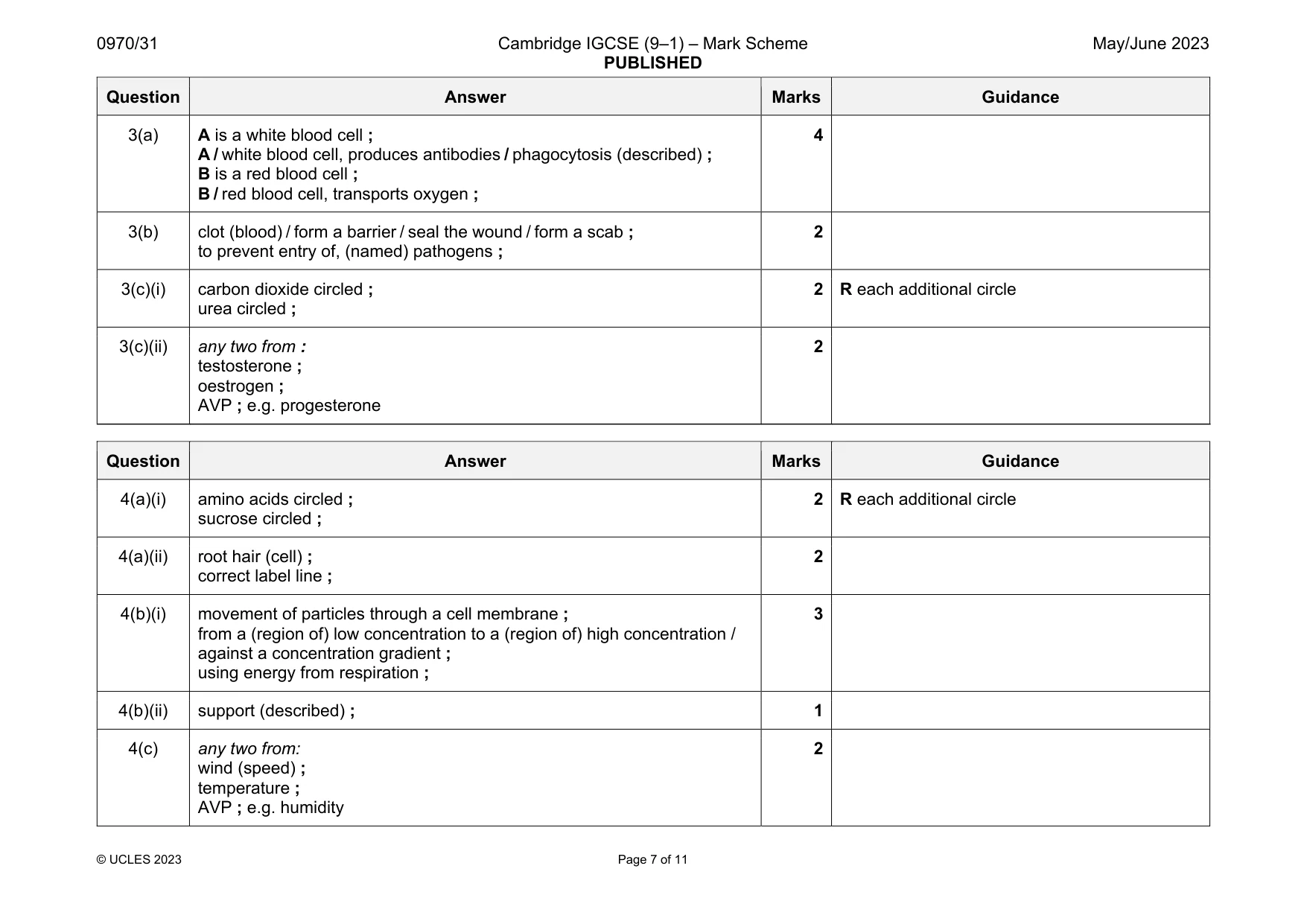
Mark scheme: 4(a)(i) amino acids circled ; sucrose circled ; 2 R each additional circle 4(a)(ii) root hair (cell) ; correct label line ; 2 4(b)(i) movement of particles through a cell membrane ; from a (region of) low concentration to a (region of) high concentration / against a concentration gradient ; using energy from respiration ; 3 4(b)(ii) support (described) ; 1 4(c) any two from: wind (speed) ; temperature ; AVP ; e.g. humidity 2
Q5 · A pyramid of numbers for a food chain
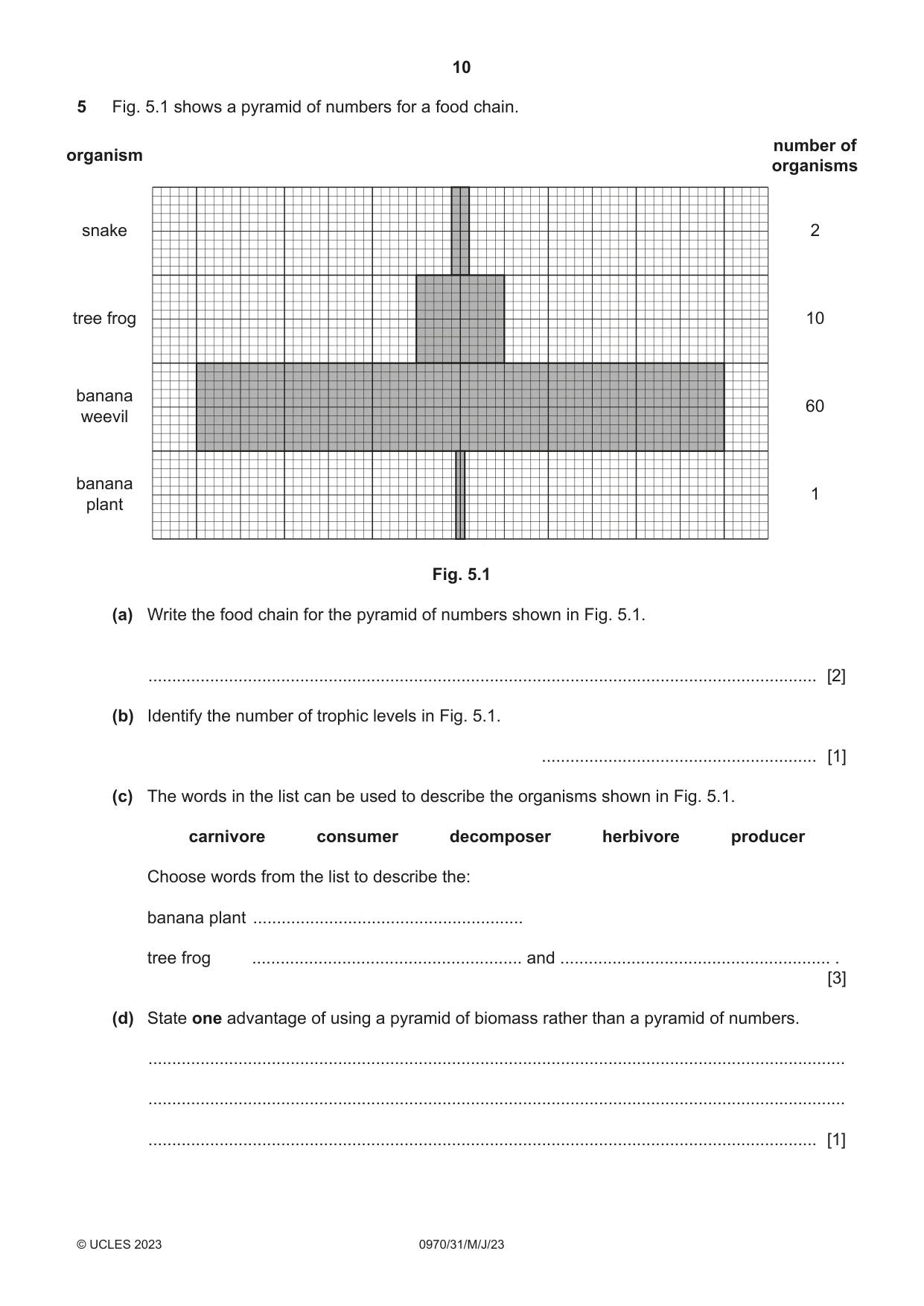
5 Fig. 5.1 shows a pyramid of numbers for a food chain. number oforganism organisms snake 2 tree frog 10 banana 60 weevil banana 1 plant Fig. 5.1 (a) Write the food chain for the pyramid of numbers shown in Fig. 5.1. ............................................................................................................................................. [2] (b) Identify the number of trophic levels in Fig. 5.1. .......................................................... [1] (c) The words in the list can be used to describe the organisms shown in Fig. 5.1. carnivore consumer decomposer herbivore producer Choose words from the list to describe the: banana plant ......................................................... tree frog ......................................................... and ......................................................... . [3] (d) State one advantage of using a pyramid of biomass rather than a pyramid of numbers. ................................................................................................................................................... ................................................................................................................................................... ............................................................................................................................................. [1] (e) Describe how plants synthesise carbohydrates. ................................................................................................................................................... ................................................................................................................................................... ................................................................................................................................................... ................................................................................................................................................... ................................................................................................................................................... ................................................................................................................................................... ............................................................................................................................................. [3] [Total: 10]
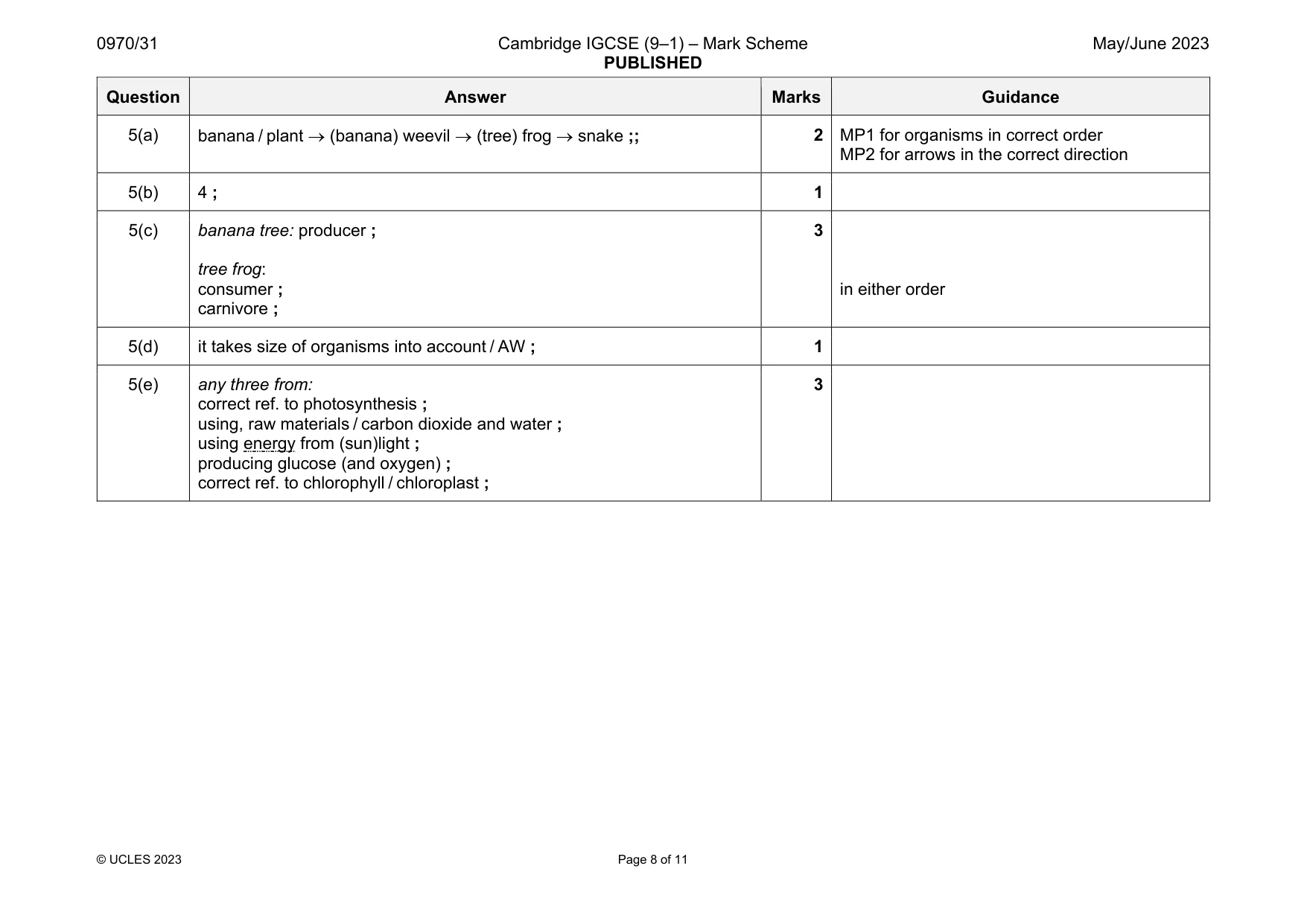
Mark scheme: 5(a) 2 MP1 for organisms in correct order MP2 for arrows in the correct direction 5(b) 4 ; 1 5(c) banana tree: producer ; tree frog: consumer ; carnivore ; 3 in either order 5(d) it takes size of organisms into account / AW ; 1 5(e) any three from: correct ref. to photosynthesis ; using, raw materials / carbon dioxide and water ; using energy from (sun)light ; producing glucose (and oxygen) ; correct ref. to chlorophyll / chloroplast ; 3
Q6 · A graph that shows the concentration of dissolved oxygen in the water at increasing…
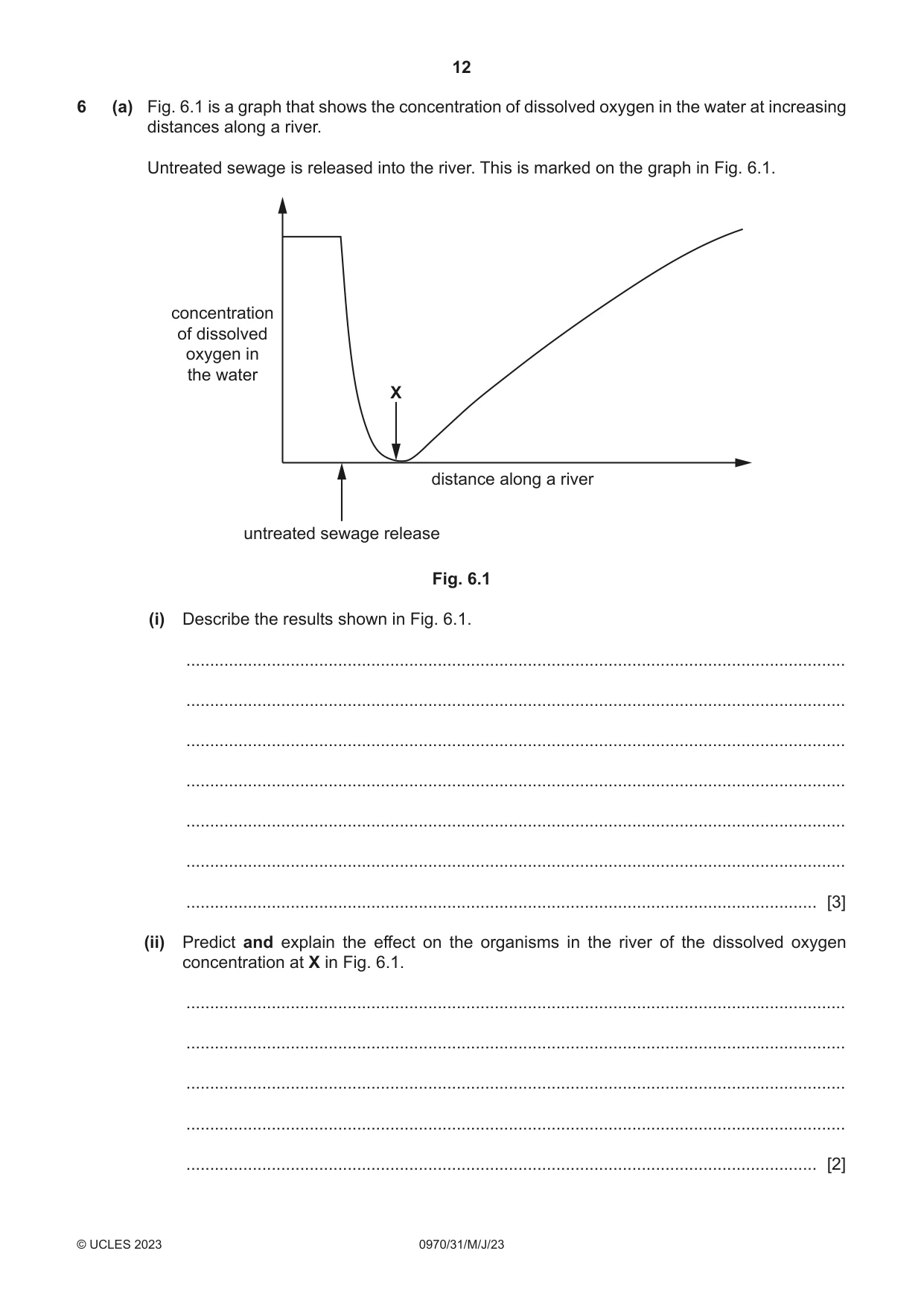
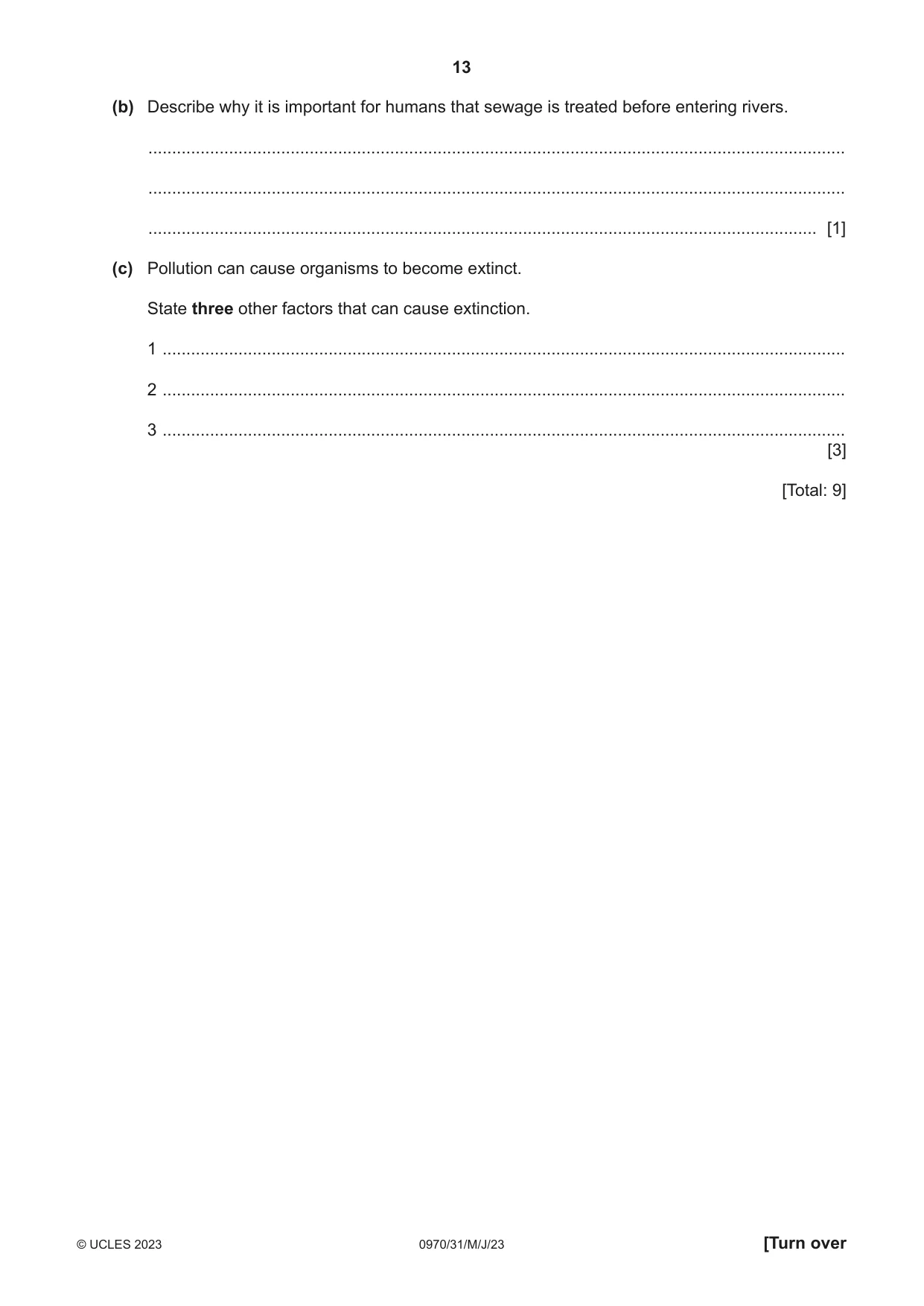
6 (a) Fig. 6.1 is a graph that shows the concentration of dissolved oxygen in the water at increasing distances along a river. Untreated sewage is released into the river. This is marked on the graph in Fig. 6.1. concentration of dissolved oxygen in the water X distance along a river untreated sewage release Fig. 6.1 (i) Describe the results shown in Fig. 6.1. ........................................................................................................................................... ........................................................................................................................................... ........................................................................................................................................... ........................................................................................................................................... ........................................................................................................................................... ........................................................................................................................................... ..................................................................................................................................... [3] (ii) Predict and explain the effect on the organisms in the river of the dissolved oxygen concentration at X in Fig. 6.1. ........................................................................................................................................... ........................................................................................................................................... ........................................................................................................................................... ........................................................................................................................................... ..................................................................................................................................... [2] (b) Describe why it is important for humans that sewage is treated before entering rivers. ................................................................................................................................................... ................................................................................................................................................... ............................................................................................................................................. [1] (c) Pollution can cause organisms to become extinct. State three other factors that can cause extinction. 1 ................................................................................................................................................ 2 ................................................................................................................................................ 3 ................................................................................................................................................ [3] [Total: 9]
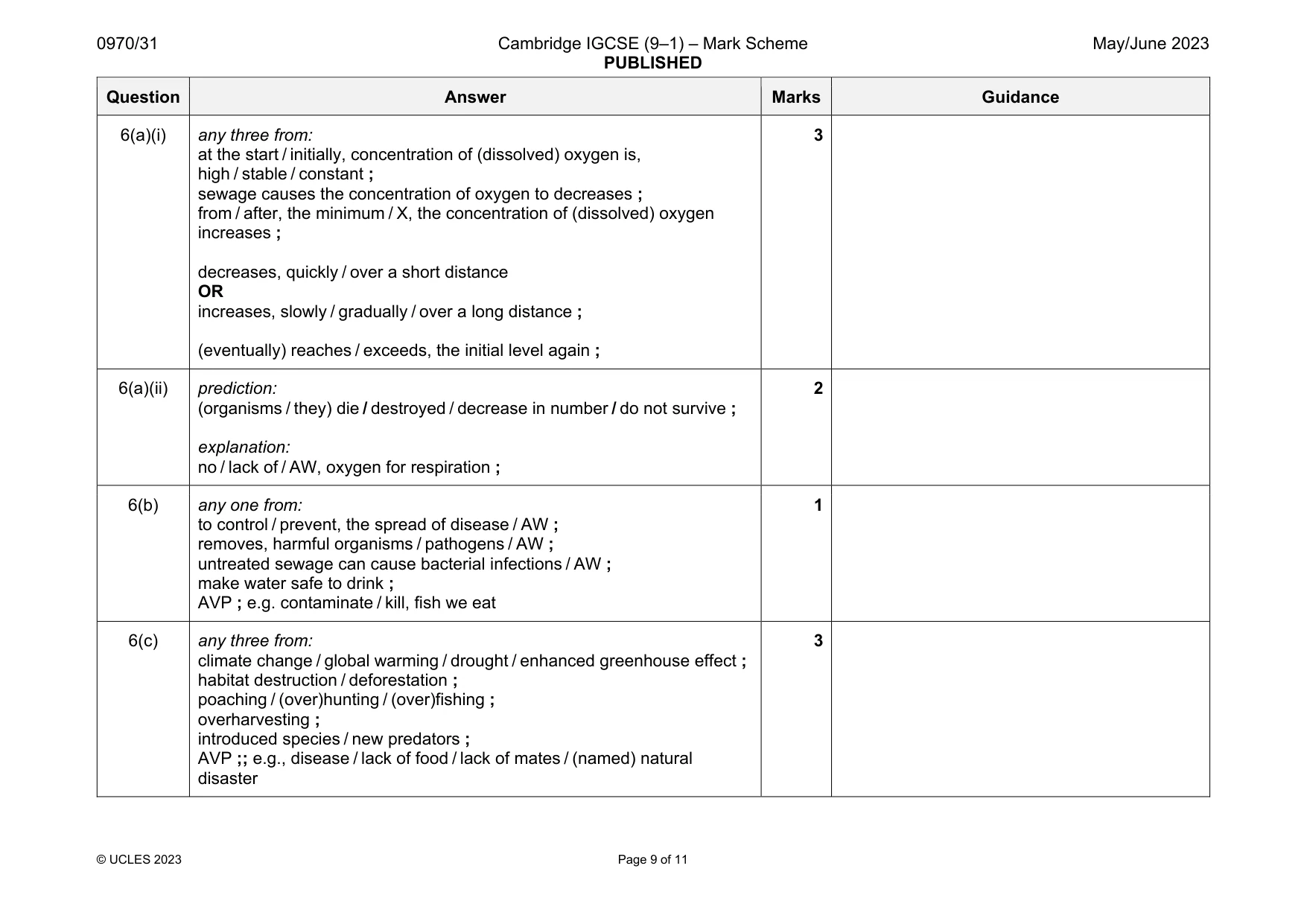
Mark scheme: 6(a)(i) any three from: at the start / initially, concentration of (dissolved) oxygen is, high / stable / constant ; sewage causes the concentration of oxygen to decreases ; from / after, the minimum / X, the concentration of (dissolved) oxygen increases ; decreases, quickly / over a short distance OR increases, slowly / gradually / over a long distance ; (eventually) reaches / exceeds, the initial level again ; 3 6(a)(ii) prediction: (organisms / they) die / destroyed / decrease in number / do not survive ; explanation: no / lack of / AW, oxygen for respiration ; 2 6(b) any one from: to control / prevent, the spread of disease / AW ; removes, harmful organisms / pathogens / AW ; untreated sewage can cause bacterial infections / AW ; make water safe to drink ; AVP ; e.g. contaminate / kill, fish we eat 1 6(c) any three from: climate change / global warming / drought / enhanced greenhouse effect ; habitat destruction / deforestation ; poaching / (over)hunting / (over)fishing ; overharvesting ; introduced species / new predators ; AVP ;; e.g., disease / lack of food / lack of mates / (named) natural disaster 3
Q7 · A diagram showing some of the organs in the human body
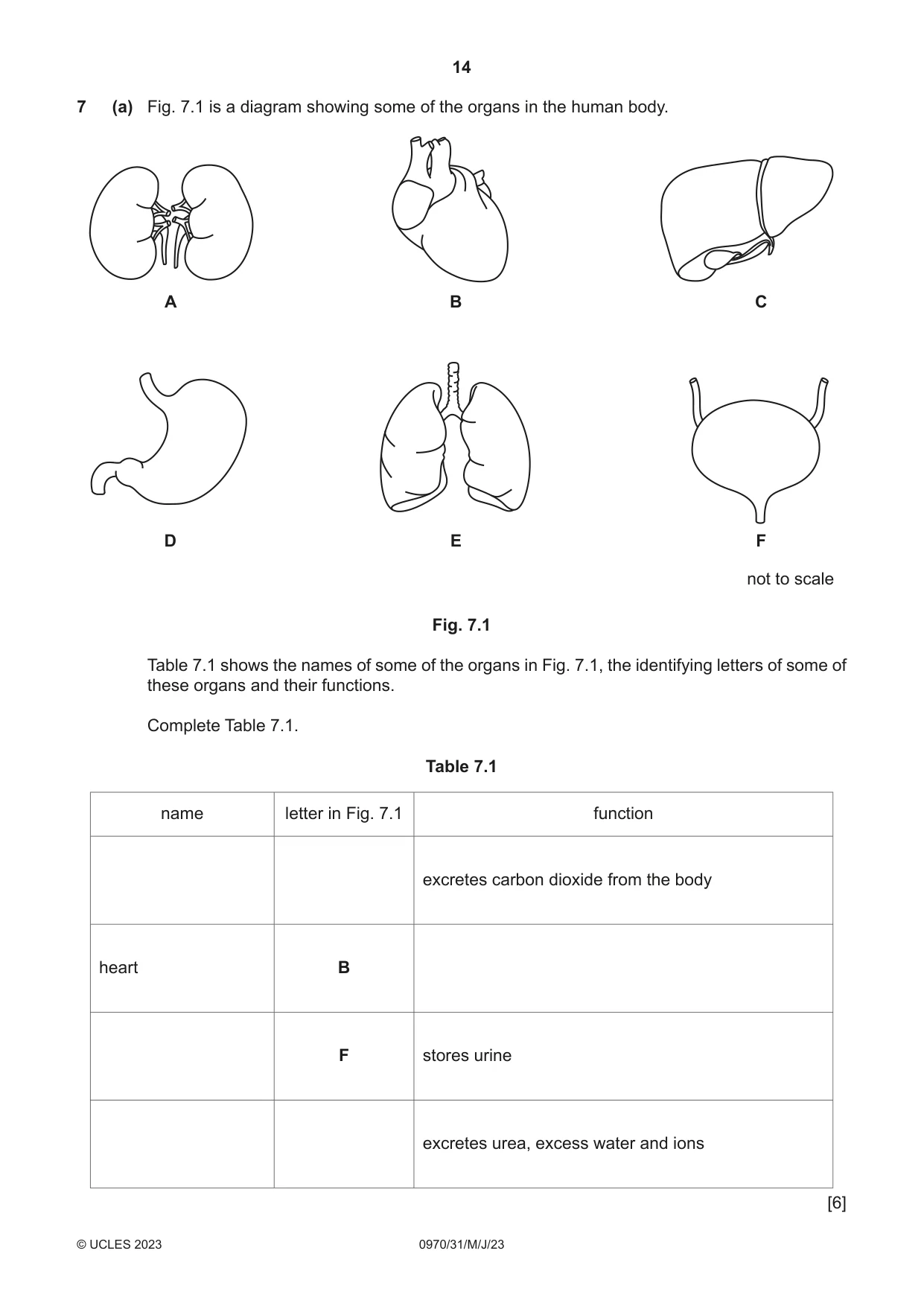
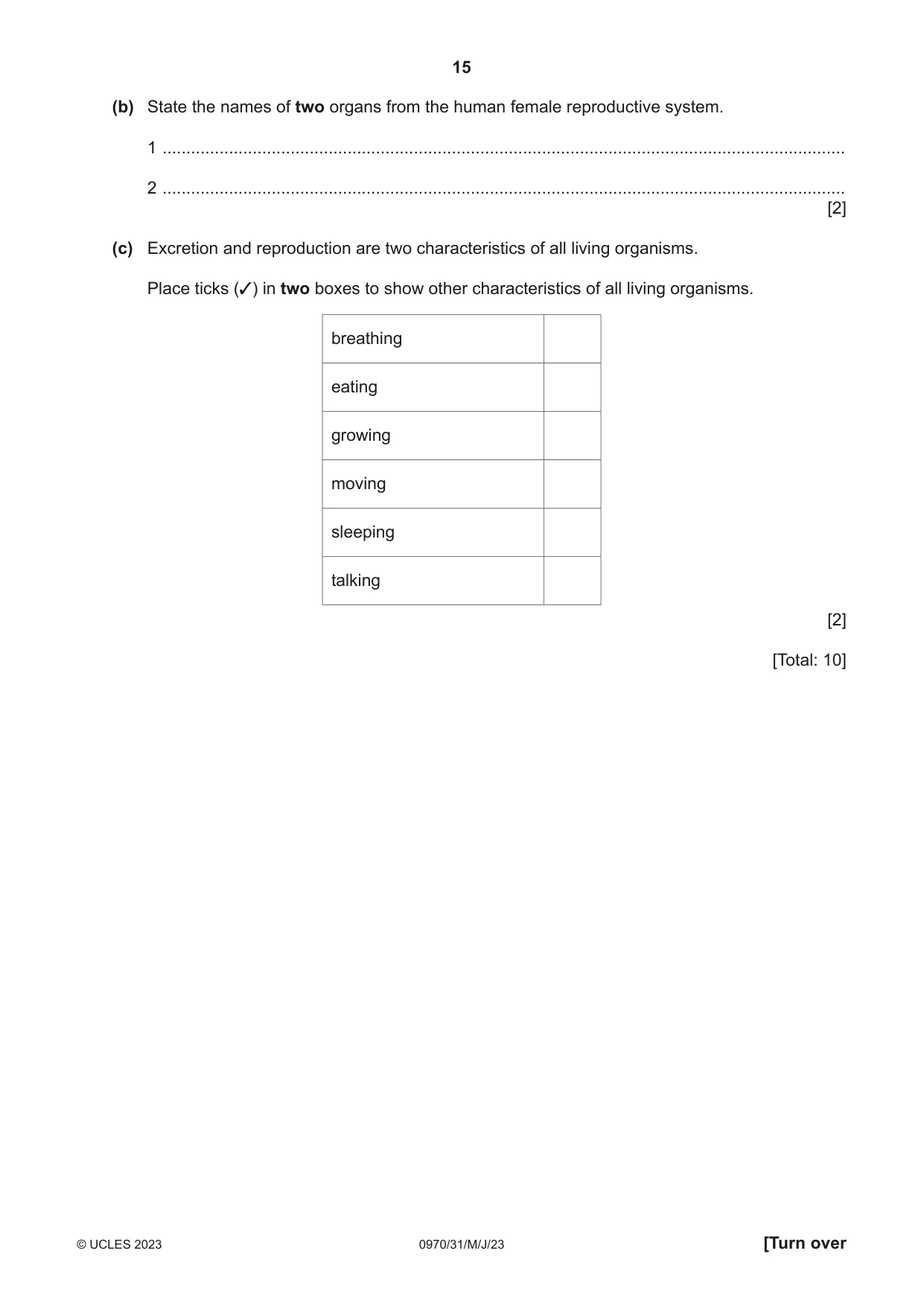
7 (a) Fig. 7.1 is a diagram showing some of the organs in the human body. A B C D E F not to scale Fig. 7.1 Table 7.1 shows the names of some of the organs in Fig. 7.1, the identifying letters of some of these organs and their functions. Complete Table 7.1. Table 7.1 name letter in Fig. 7.1 function excretes carbon dioxide from the body heart B F stores urine excretes urea, excess water and ions [6] (b) State the names of two organs from the human female reproductive system. 1 ................................................................................................................................................ 2 ................................................................................................................................................ [2] (c) Excretion and reproduction are two characteristics of all living organisms. Place ticks (3) in two boxes to show other characteristics of all living organisms. breathing eating growing moving sleeping talking [2] [Total: 10]
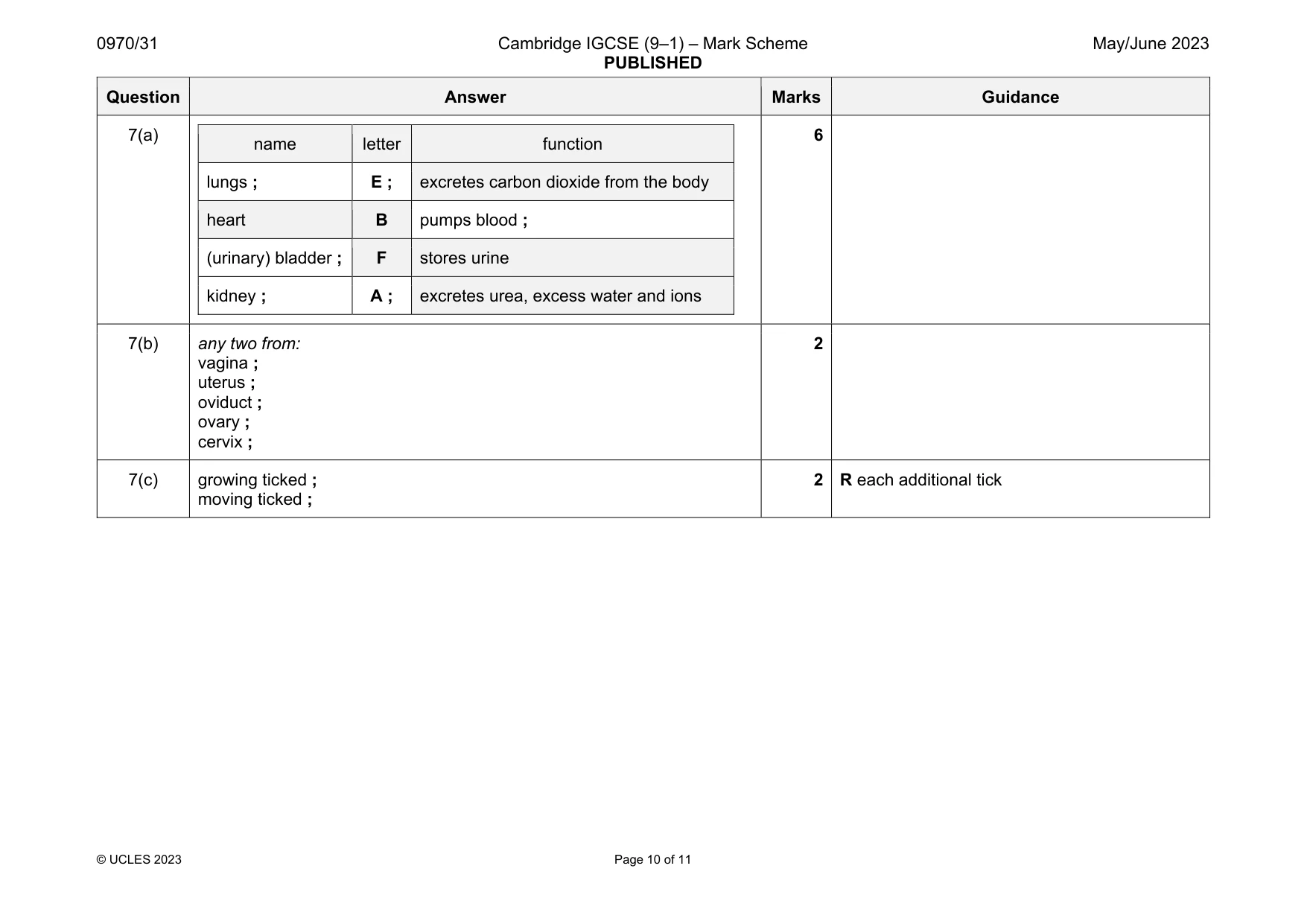
Mark scheme: 7(a) name letter function lungs ; E ; excretes carbon dioxide from the body heart B pumps blood ; (urinary) bladder ; F stores urine kidney ; A ; excretes urea, excess water and ions 6 7(b) any two from: vagina ; uterus ; oviduct ; ovary ; cervix ; 2 7(c) growing ticked ; moving ticked ; 2 R each additional tick
Q8 · A diagram representing a reflex action
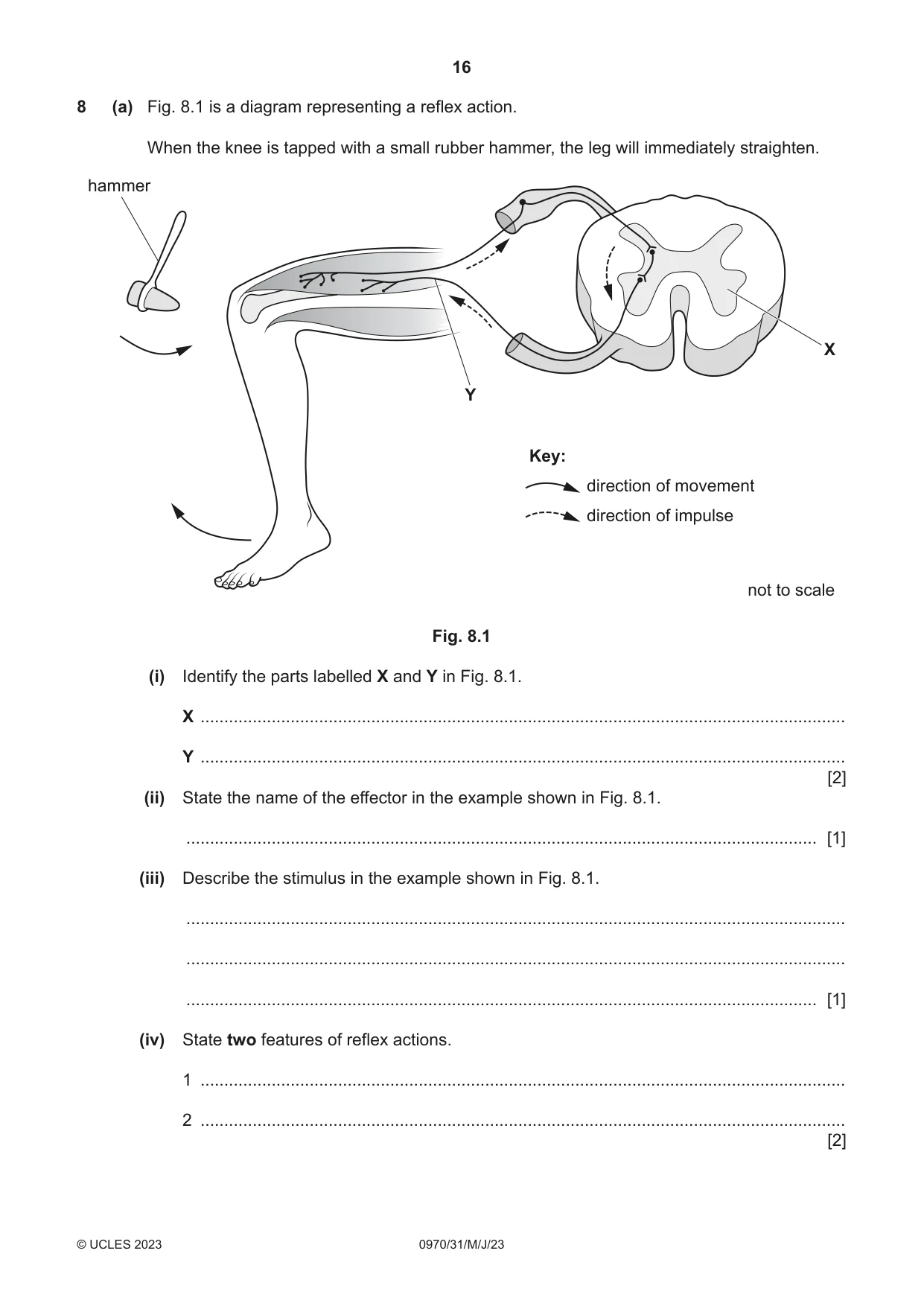
8 (a) Fig. 8.1 is a diagram representing a reflex action. When the knee is tapped with a small rubber hammer, the leg will immediately straighten. hammer X Y Key: direction of movement direction of impulse not to scale Fig. 8.1 (i) Identify the parts labelled X and Y in Fig. 8.1. X ........................................................................................................................................ Y ........................................................................................................................................ [2] (ii) State the name of the effector in the example shown in Fig. 8.1. ..................................................................................................................................... [1] (iii) Describe the stimulus in the example shown in Fig. 8.1. ........................................................................................................................................... ........................................................................................................................................... ..................................................................................................................................... [1] (iv) State two features of reflex actions. 1 ........................................................................................................................................ 2 ........................................................................................................................................ [2] (b) The shortest neurones in the human body are 0.0004 mm. The longest neurones are 1.5 m. Calculate how many times longer the longest neurones are than the shortest. Space for working. ................................................................ [2] (c) State the name given to the junction between neurones. ............................................................................................................................................. [1] [Total: 9]
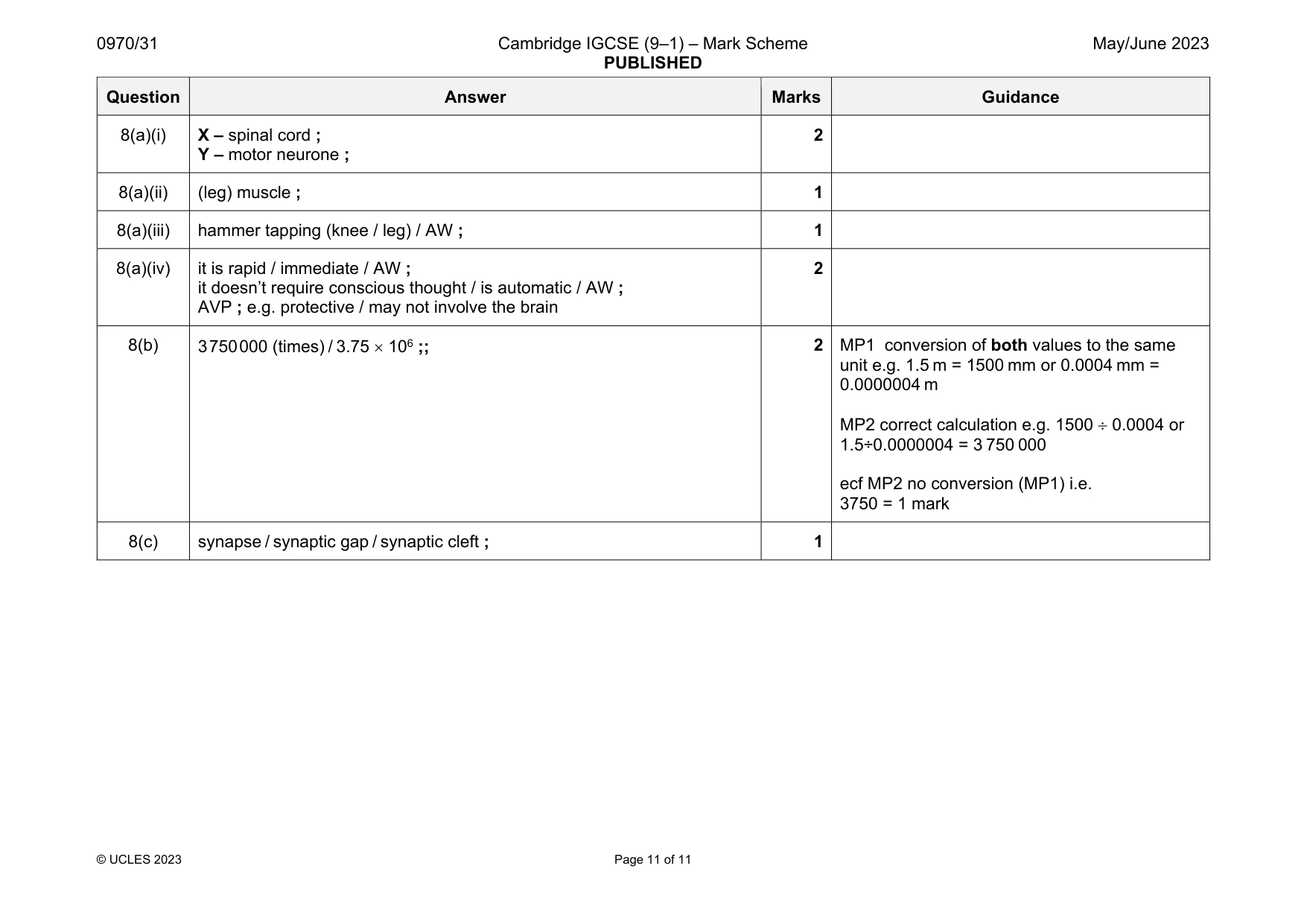
Mark scheme: 8(a)(i) X – spinal cord ; Y – motor neurone ; 2 8(a)(ii) (leg) muscle ; 1 8(a)(iii) hammer tapping (knee / leg) / AW ; 1 8(a)(iv) it is rapid / immediate / AW ; it doesn’t require conscious thought / is automatic / AW ; AVP ; e.g. protective / may not involve the brain 2 8(b) 3 750 000 (times) / 3.75 106 ;; 2 MP1 conversion of both values to the same unit e.g. 1.5 m = 1500 mm or 0.0004 mm = 0.0000004 m MP2 correct calculation e.g. 1500 0.0004 or 1.5÷0.0000004 = 3 750 000 ecf MP2 no conversion (MP1) i.e. 3750 = 1 mark 8(c) synapse / synaptic gap / synaptic cleft ; 1
What was in this paper
The subtopics covered by these 8 questions, and how many questions each got. Open one in a new tab to see every Cambridge question on it.
What you needed in this session
Cambridge’s own grade thresholds for 2023 May/June, Paper 3 · Variant 1. A higher threshold means an easier paper — the bar moves with how the cohort did.