Cambridge IGCSE Biology (9-1) 0970 — 2020 May/June Paper 3 · Variant 1
0970/31/M/J/20 · 9 questions · 80 marks · ≈90 min
The question paper and its mark scheme, free to read here and free to download. This is Cambridge’s own paper, exactly as it was sat.
Question paper20 pages


Mark scheme10 pages
Answers below. Sit the paper first if you are practising.
Questions as text
Q1 · Some of the structures involved in excretion
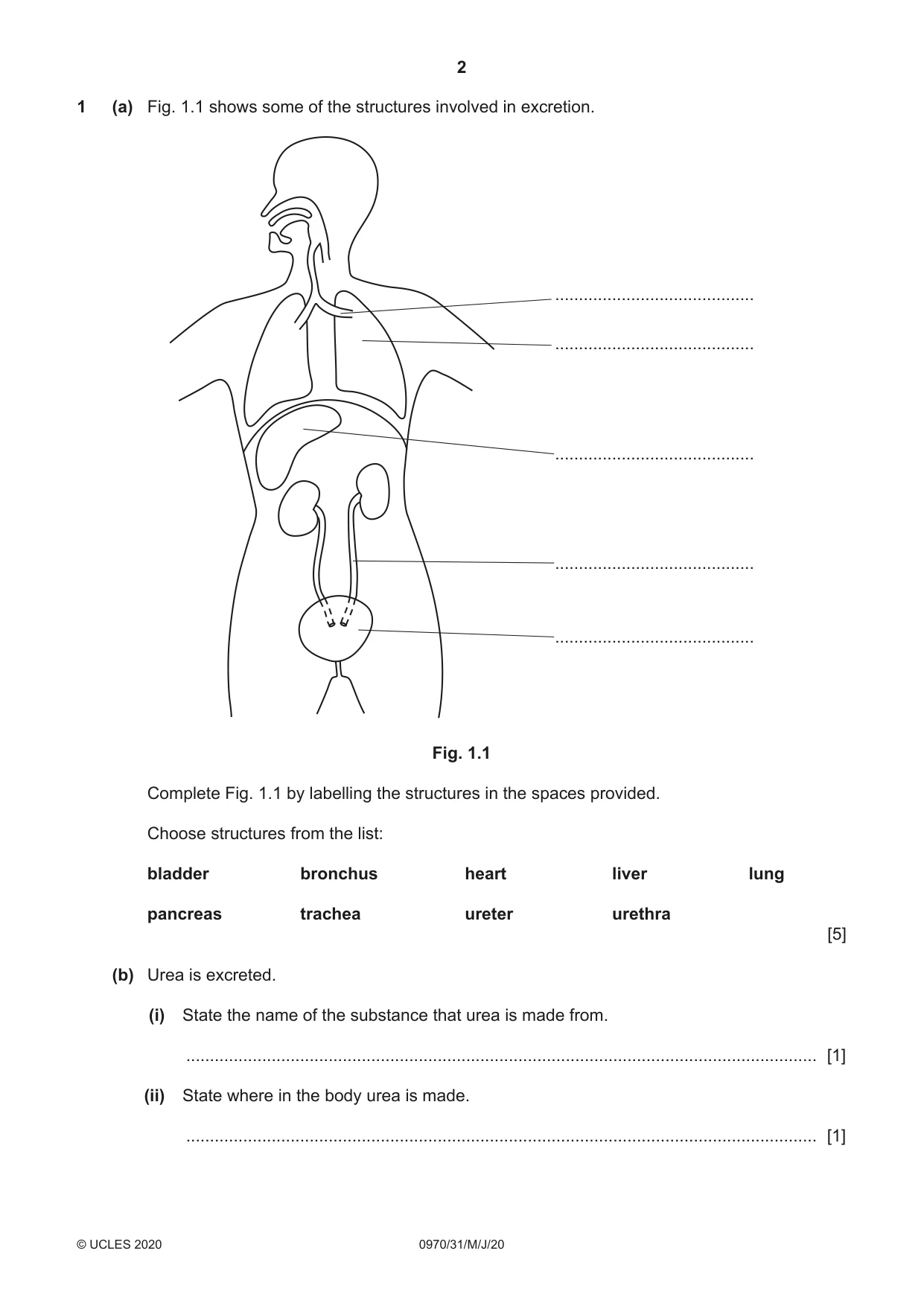
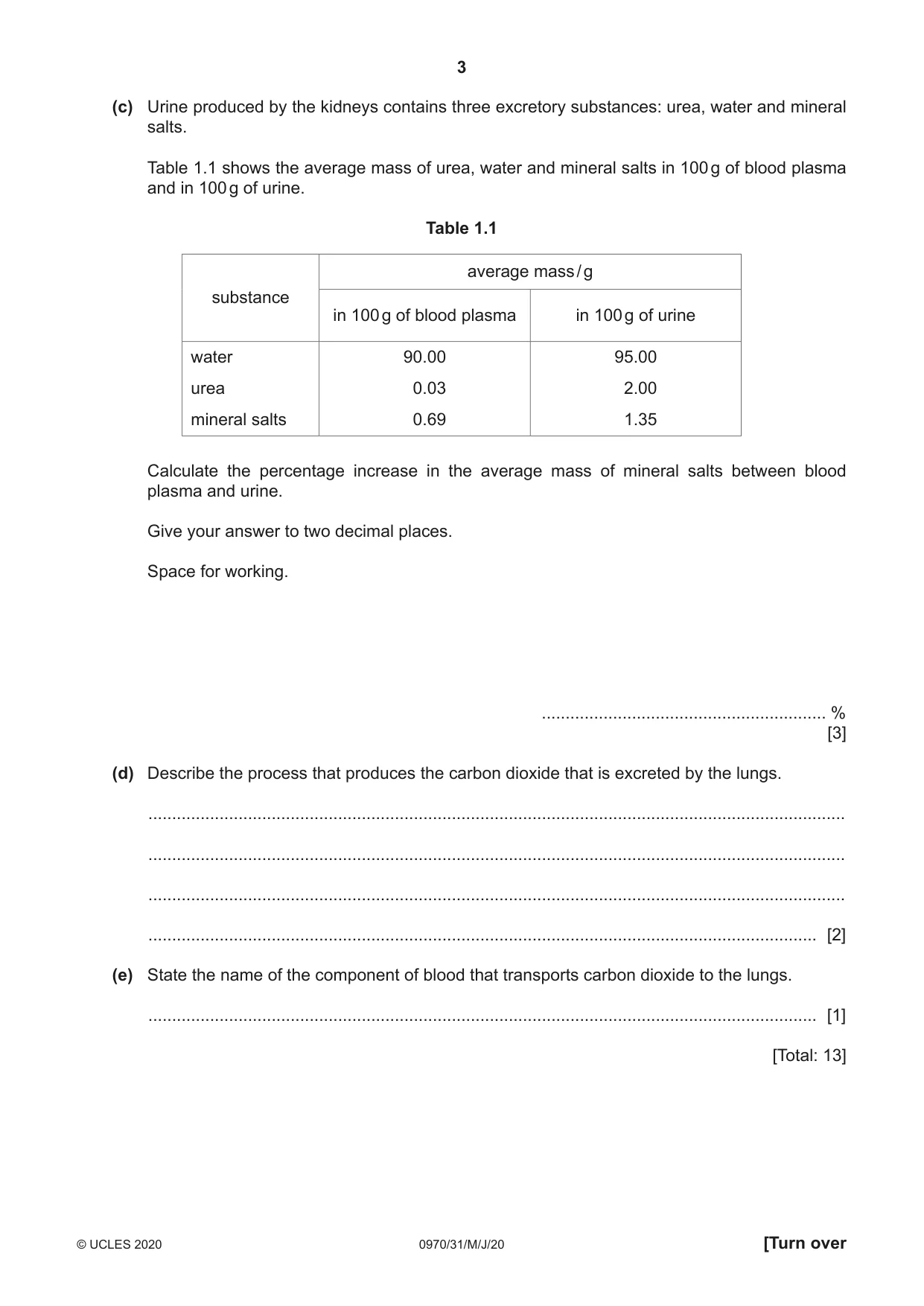
1 (a) Fig. 1.1 shows some of the structures involved in excretion. .......................................... .......................................... .......................................... .......................................... .......................................... Fig. 1.1 Complete Fig. 1.1 by labelling the structures in the spaces provided. Choose structures from the list: bladder bronchus heart liver lung pancreas trachea ureter urethra [5] (b) Urea is excreted. (i) State the name of the substance that urea is made from. ..................................................................................................................................... [1] (ii) State where in the body urea is made. ..................................................................................................................................... [1] (c) Urine produced by the kidneys contains three excretory substances: urea, water and mineral salts. Table 1.1 shows the average mass of urea, water and mineral salts in 100 g of blood plasma and in 100 g of urine. Table 1.1 average mass / g substance in 100 g of blood plasma in 100 g of urine water 90.00 95.00 urea 0.03 2.00 mineral salts 0.69 1.35 Calculate the percentage increase in the average mass of mineral salts between blood plasma and urine. Give your answer to two decimal places. Space for working. ............................................................ % [3] (d) Describe the process that produces the carbon dioxide that is excreted by the lungs. ................................................................................................................................................... ................................................................................................................................................... ................................................................................................................................................... ............................................................................................................................................. [2] (e) State the name of the component of blood that transports carbon dioxide to the lungs. ............................................................................................................................................. [1] [Total: 13]
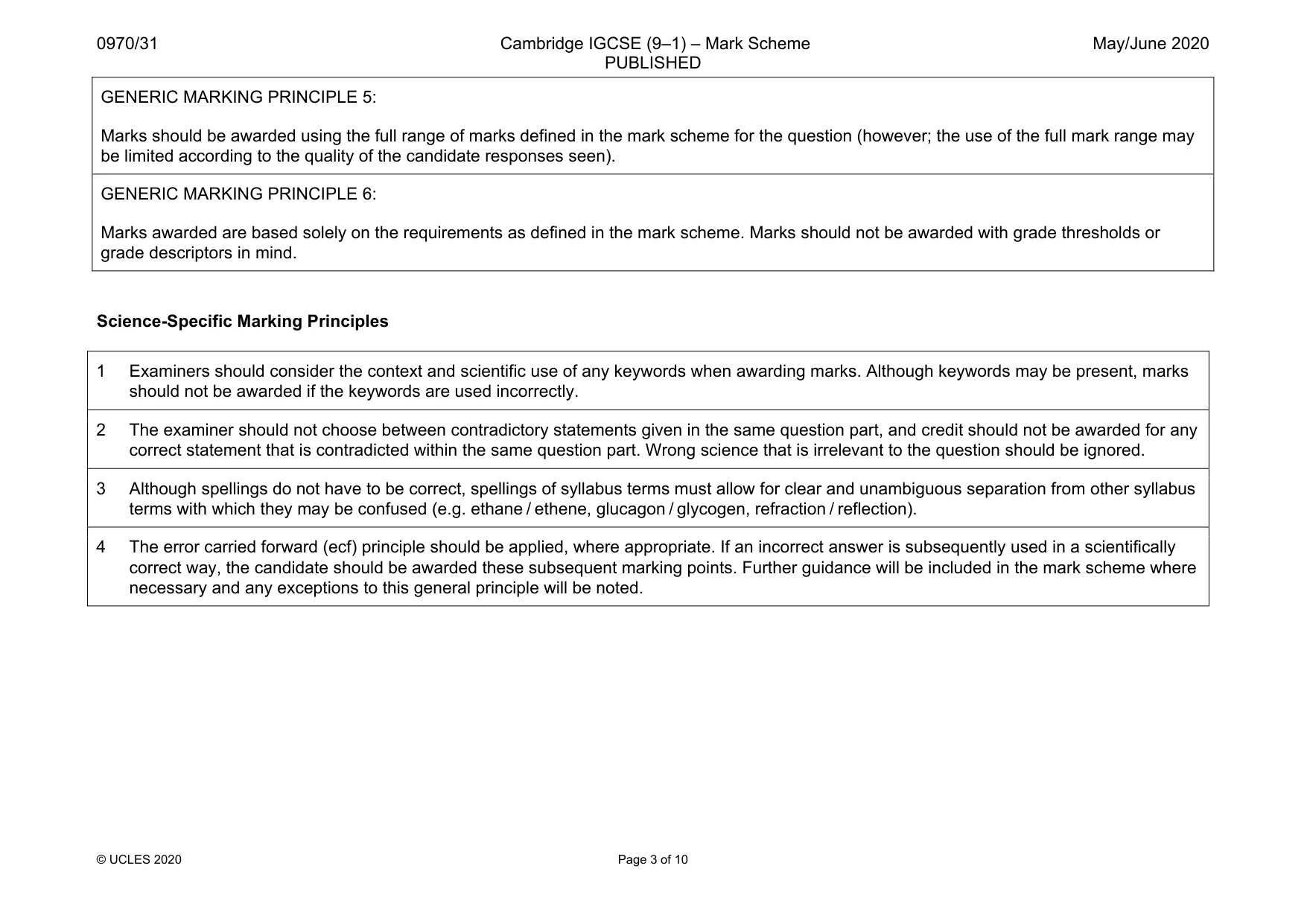
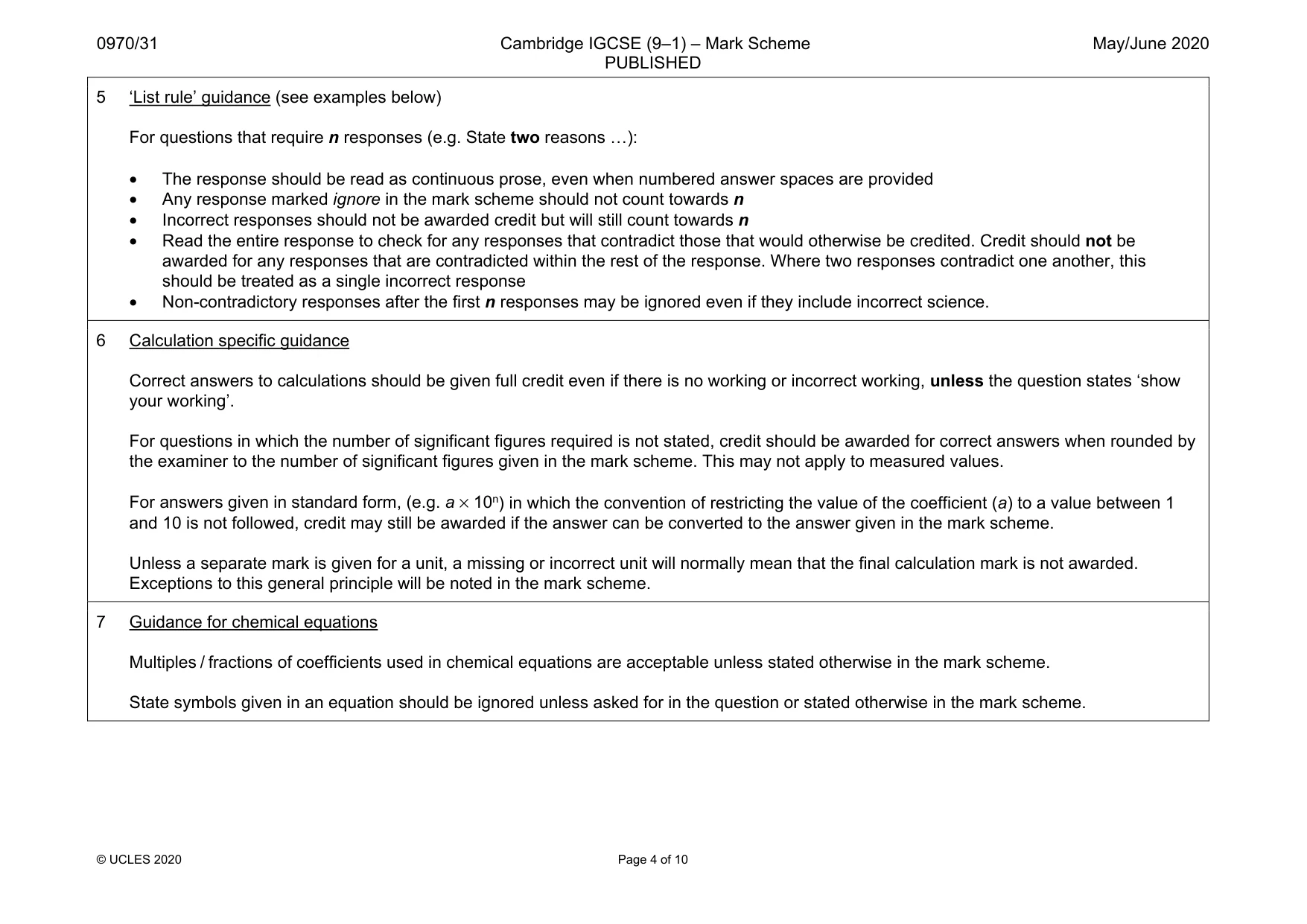
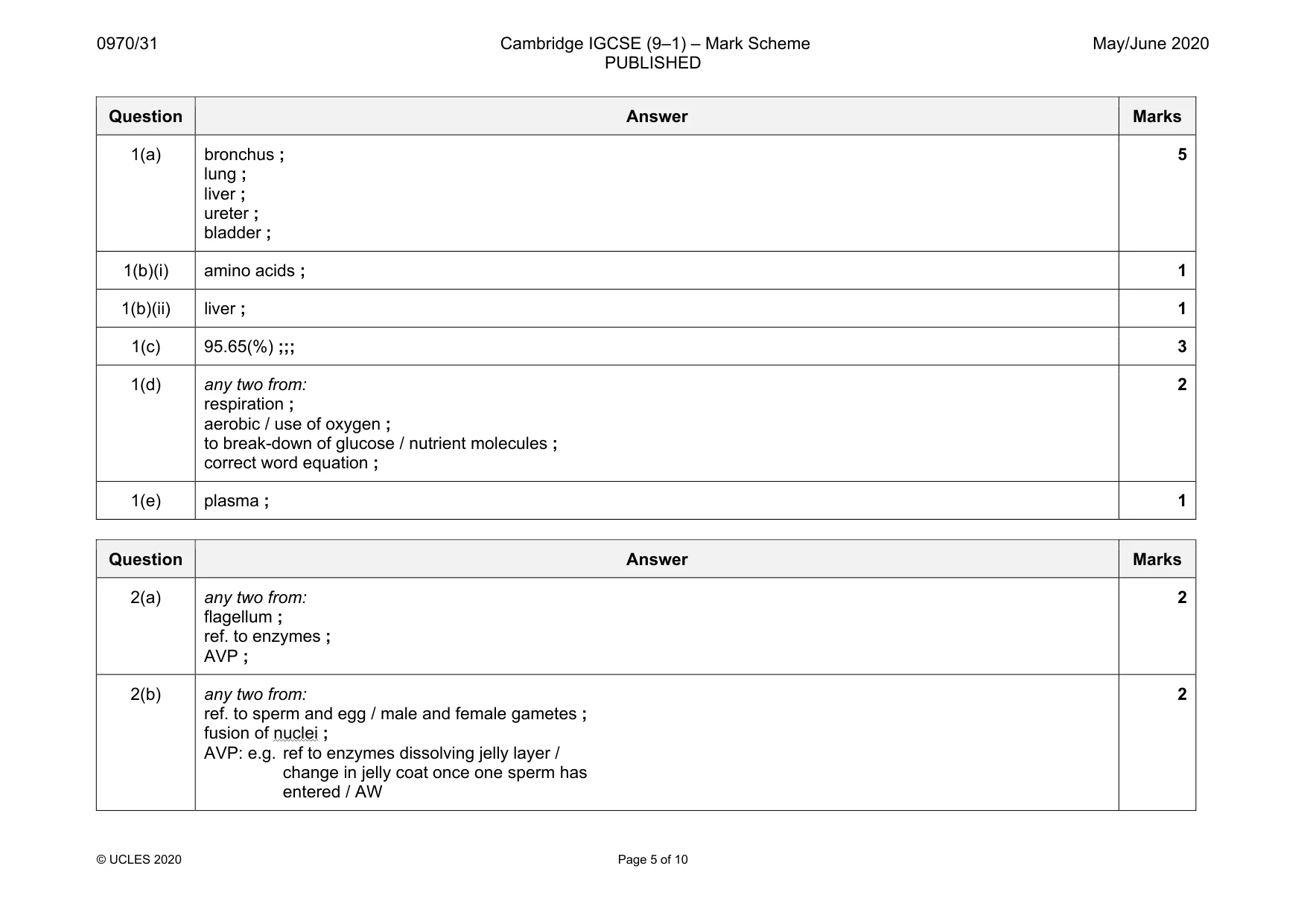
Mark scheme: 1(a) bronchus ; lung ; liver ; ureter ; bladder ; 5 1(b)(i) amino acids ; 1 1(b)(ii) liver ; 1 1(c) 95.65(%) ;;; 3 1(d) any two from: respiration ; aerobic / use of oxygen ; to break-down of glucose / nutrient molecules ; correct word equation ; 2 1(e) plasma ; 1
Q2 · An image of two sperm cells
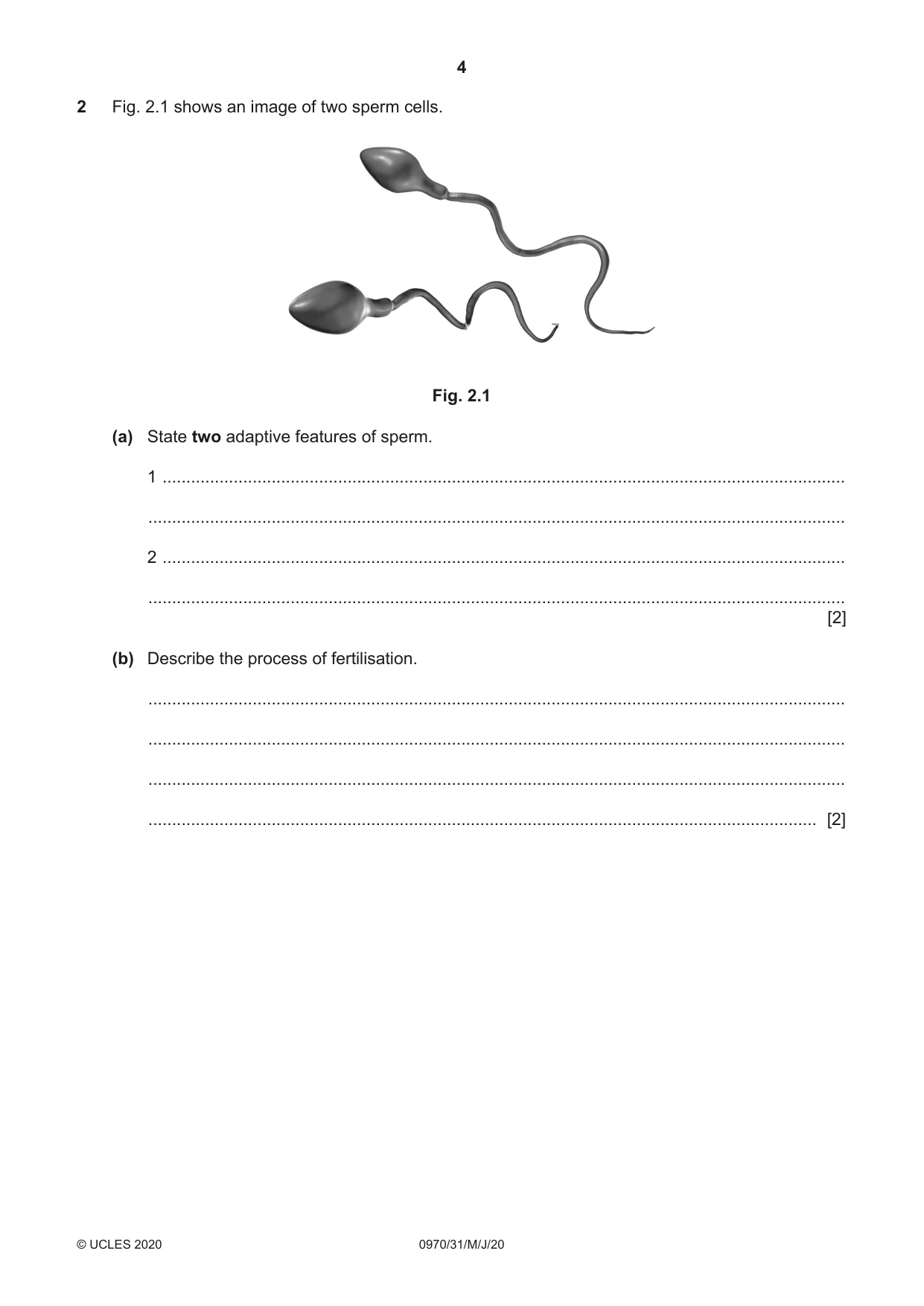
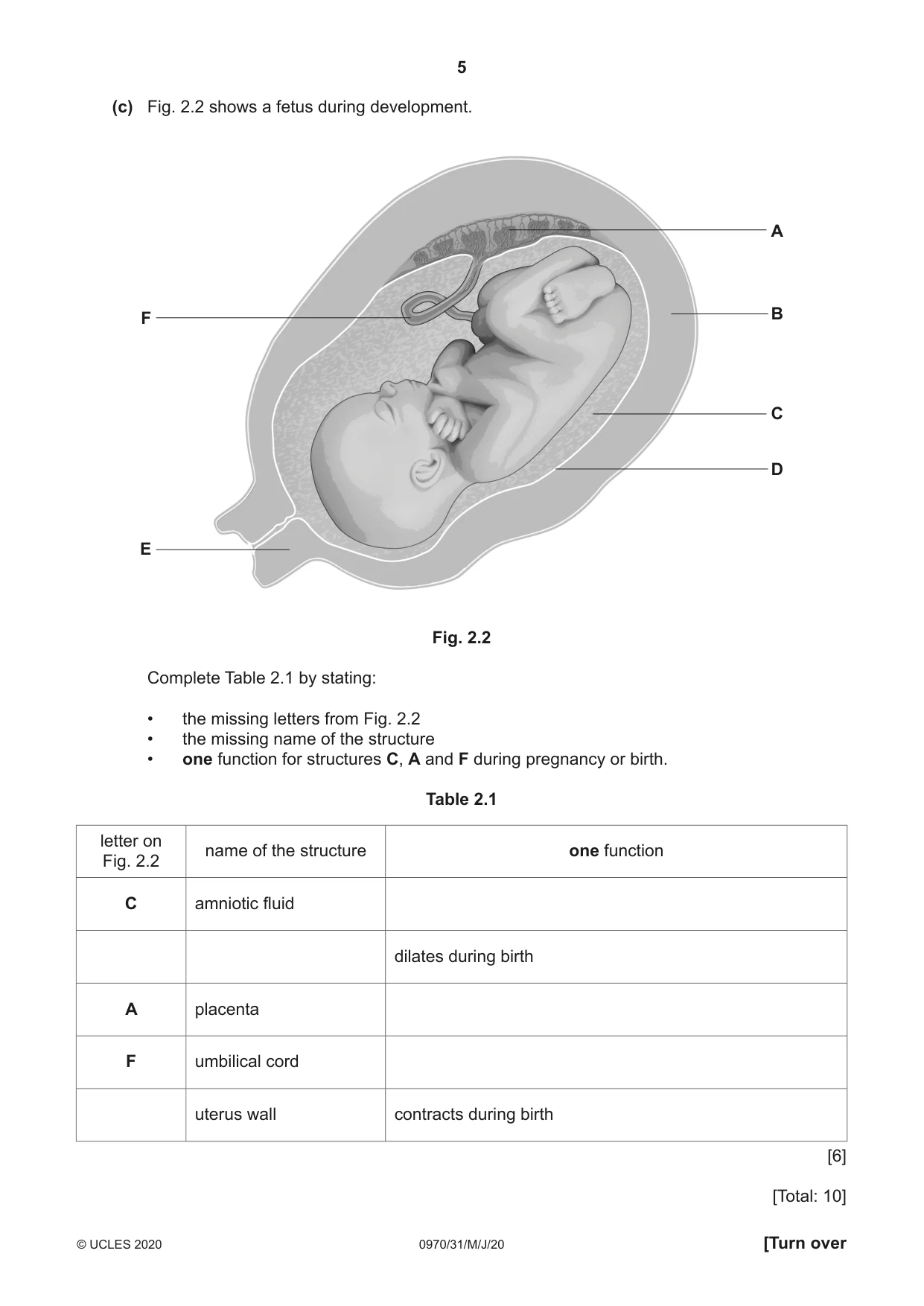
2 Fig. 2.1 shows an image of two sperm cells. Fig. 2.1 (a) State two adaptive features of sperm. 1 ................................................................................................................................................ ................................................................................................................................................... 2 ................................................................................................................................................ ................................................................................................................................................... [2] (b) Describe the process of fertilisation. ................................................................................................................................................... ................................................................................................................................................... ................................................................................................................................................... ............................................................................................................................................. [2] (c) Fig. 2.2 shows a fetus during development. A F B C D E Fig. 2.2 Complete Table 2.1 by stating: • the missing letters from Fig. 2.2 • the missing name of the structure • one function for structures C, A and F during pregnancy or birth. Table 2.1 letter on name of the structure one functionFig. 2.2 C amniotic fluid dilates during birth A placenta F umbilical cord uterus wall contracts during birth [6] [Total: 10]
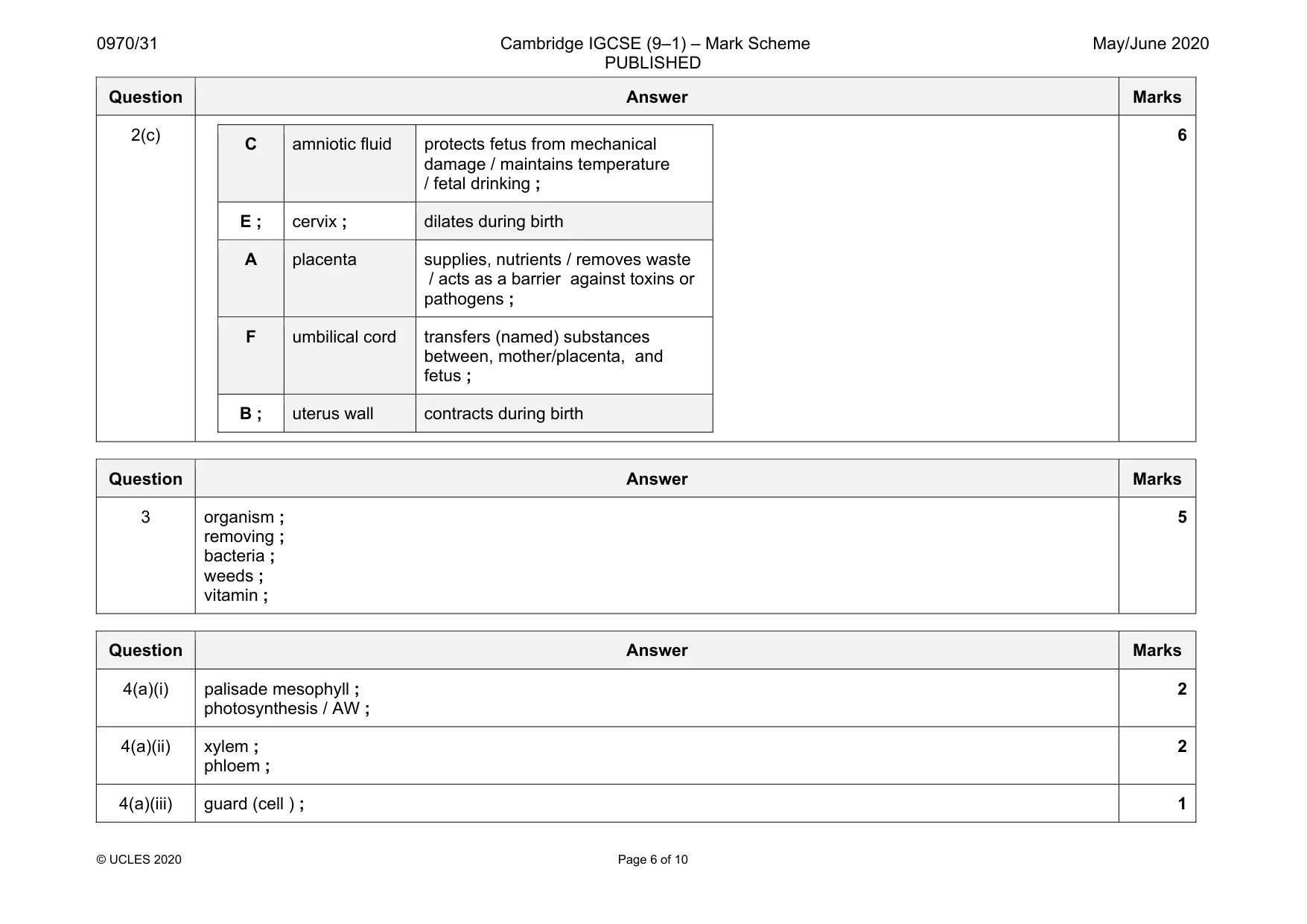
Mark scheme: 2(a) any two from: flagellum ; ref. to enzymes ; AVP ; 2 2(b) any two from: ref. to sperm and egg / male and female gametes ; fusion of nuclei ; AVP: e.g. ref to enzymes dissolving jelly layer / change in jelly coat once one sperm has entered / AW 2 Question Answer Marks 2(c) C amniotic fluid protects fetus from mechanical damage / maintains temperature / fetal drinking ; E ; cervix ; dilates during birth A placenta supplies, nutrients / removes waste / acts as a barrier against toxins or pathogens ; F umbilical cord transfers (named) substances between, mother/placenta, and fetus ; B ; uterus wall contracts during birth 6
Q3 · Complete the sentences about genetic engineering
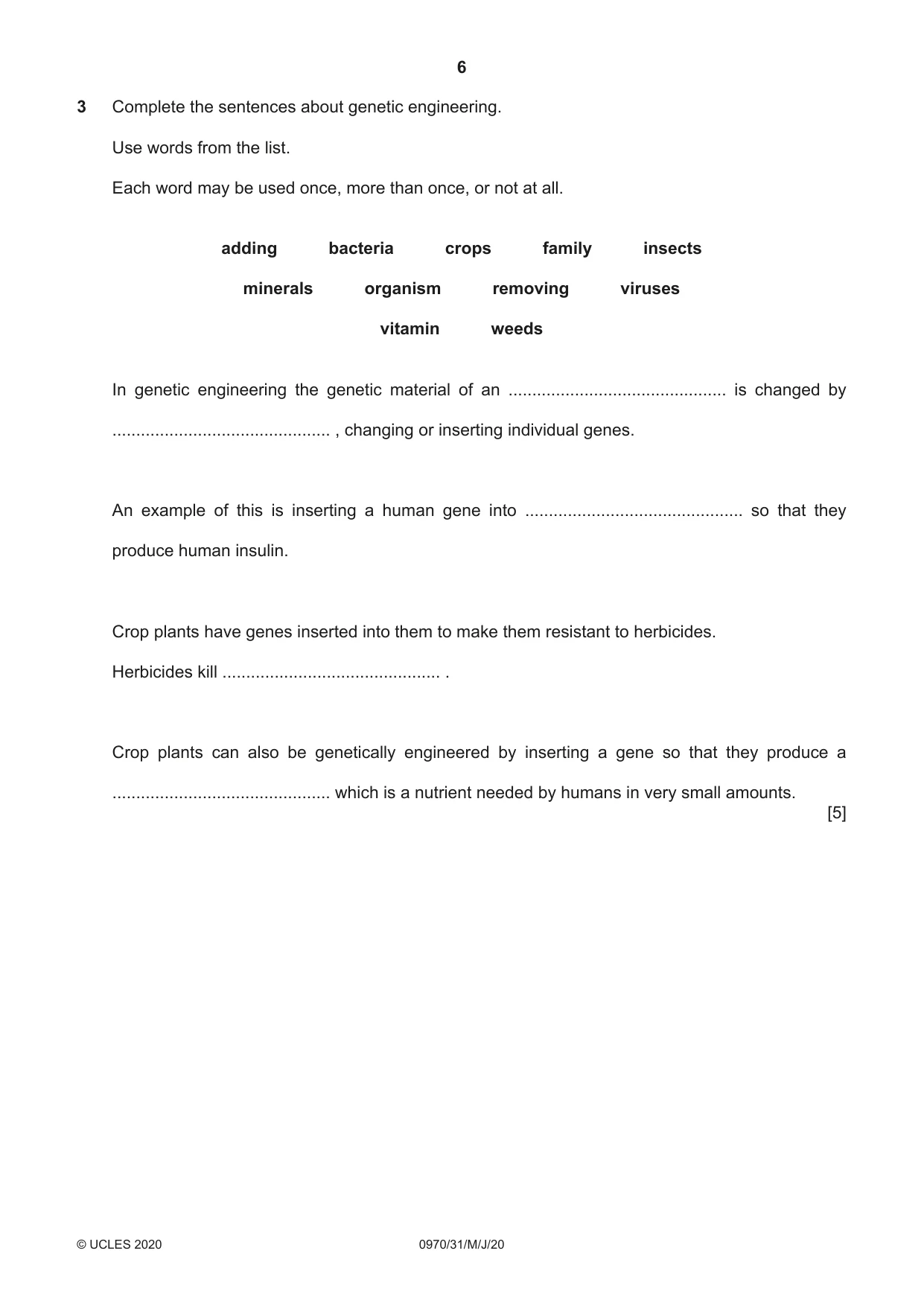
3 Complete the sentences about genetic engineering. Use words from the list. Each word may be used once, more than once, or not at all. adding bacteria crops family insects minerals organism removing viruses vitamin weeds In genetic engineering the genetic material of an .............................................. is changed by .............................................. , changing or inserting individual genes. An example of this is inserting a human gene into .............................................. so that they produce human insulin. Crop plants have genes inserted into them to make them resistant to herbicides. Herbicides kill .............................................. . Crop plants can also be genetically engineered by inserting a gene so that they produce a .............................................. which is a nutrient needed by humans in very small amounts. [5]
Mark scheme: 3 organism ; removing ; bacteria ; weeds ; vitamin ; 5
Q4 · A photomicrograph of a cross-section of part of a leaf
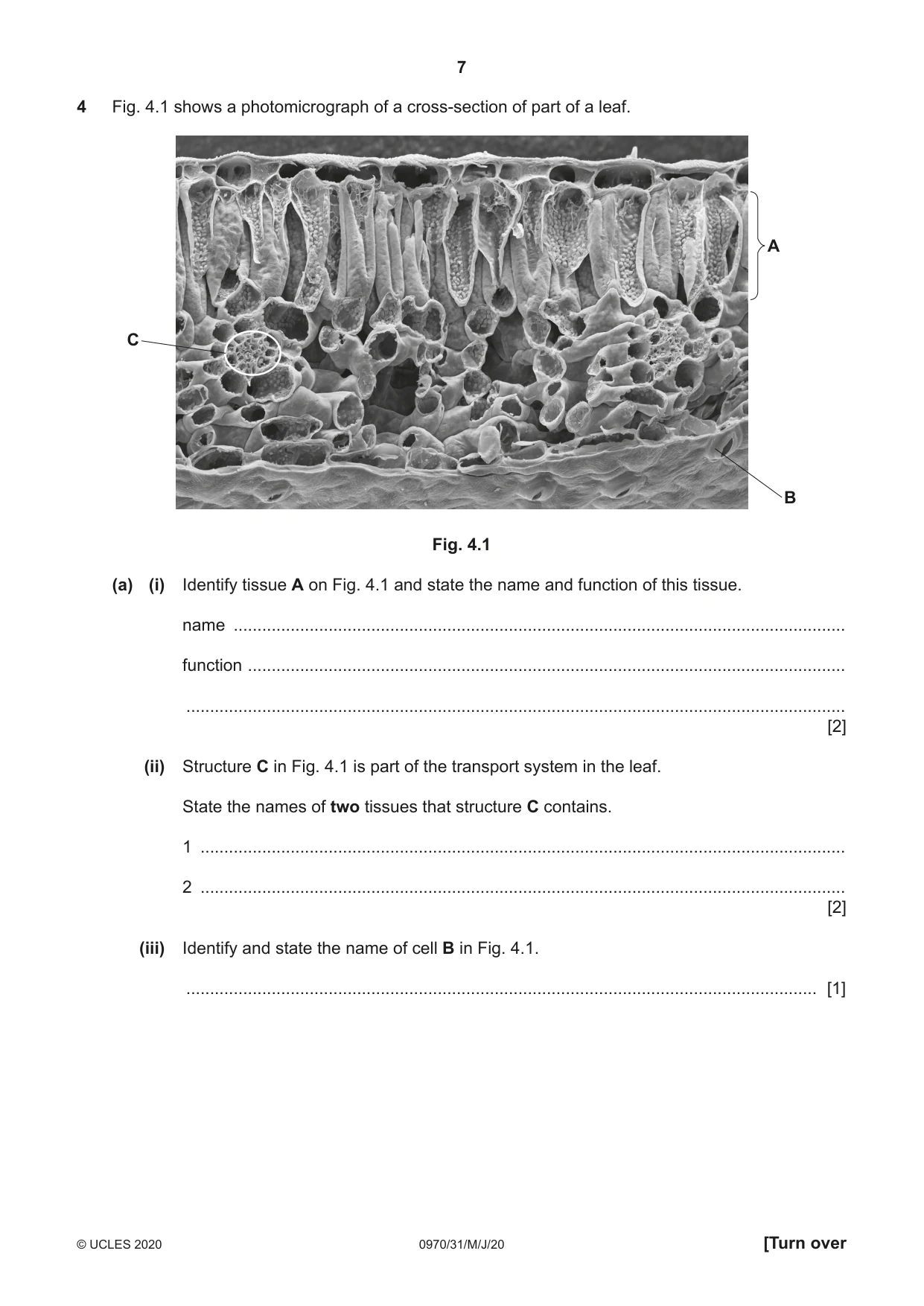
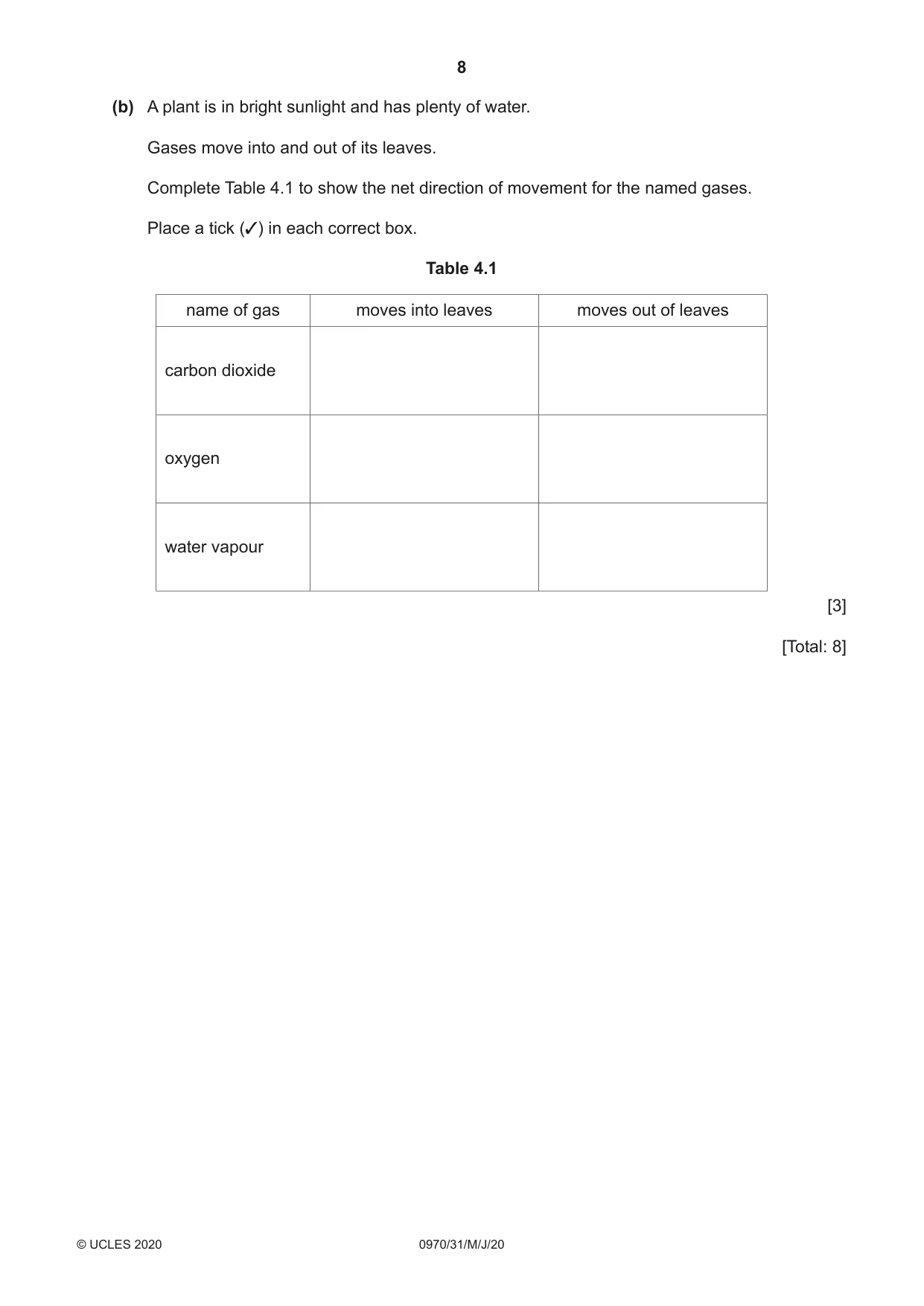
4 Fig. 4.1 shows a photomicrograph of a cross-section of part of a leaf. A C B Fig. 4.1 (a) (i) Identify tissue A on Fig. 4.1 and state the name and function of this tissue. name ................................................................................................................................. function .............................................................................................................................. ........................................................................................................................................... [2] (ii) Structure C in Fig. 4.1 is part of the transport system in the leaf. State the names of two tissues that structure C contains. 1 ........................................................................................................................................ 2 ........................................................................................................................................ [2] (iii) Identify and state the name of cell B in Fig. 4.1. ..................................................................................................................................... [1] (b) A plant is in bright sunlight and has plenty of water. Gases move into and out of its leaves. Complete Table 4.1 to show the net direction of movement for the named gases. Place a tick (3) in each correct box. Table 4.1 name of gas moves into leaves moves out of leaves carbon dioxide oxygen water vapour [3] [Total: 8]
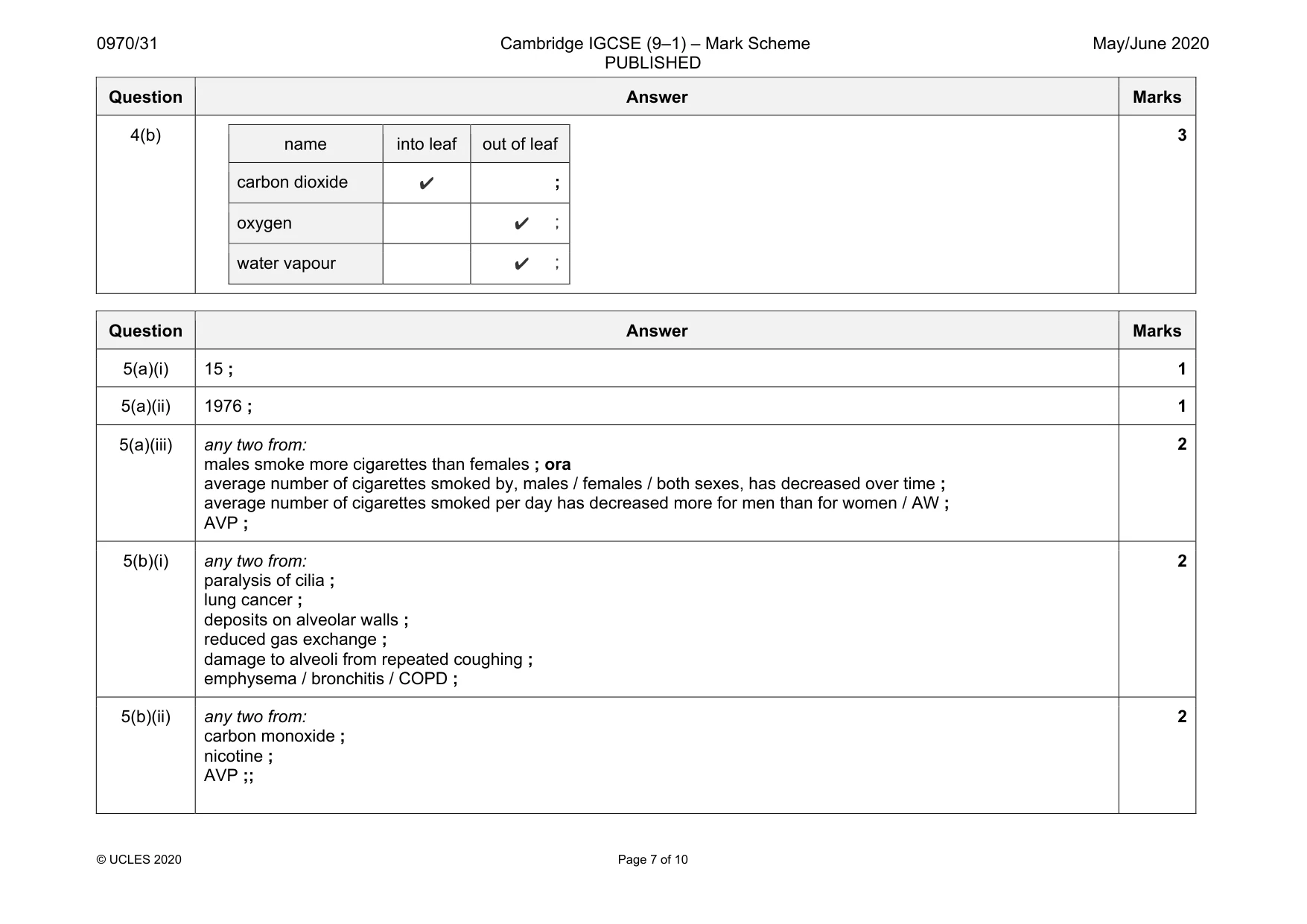
Mark scheme: 4(a)(i) palisade mesophyll ; photosynthesis / AW ; 2 4(a)(ii) xylem ; phloem ; 2 4(a)(iii) guard (cell ) ; 1 Question Answer Marks 4(b) name into leaf out of leaf carbon dioxide ✔ ; oxygen ✔ ; water vapour ✔ ; 3
Q5 · The average number of cigarettes smoked per day by male and female smokers between 1974…
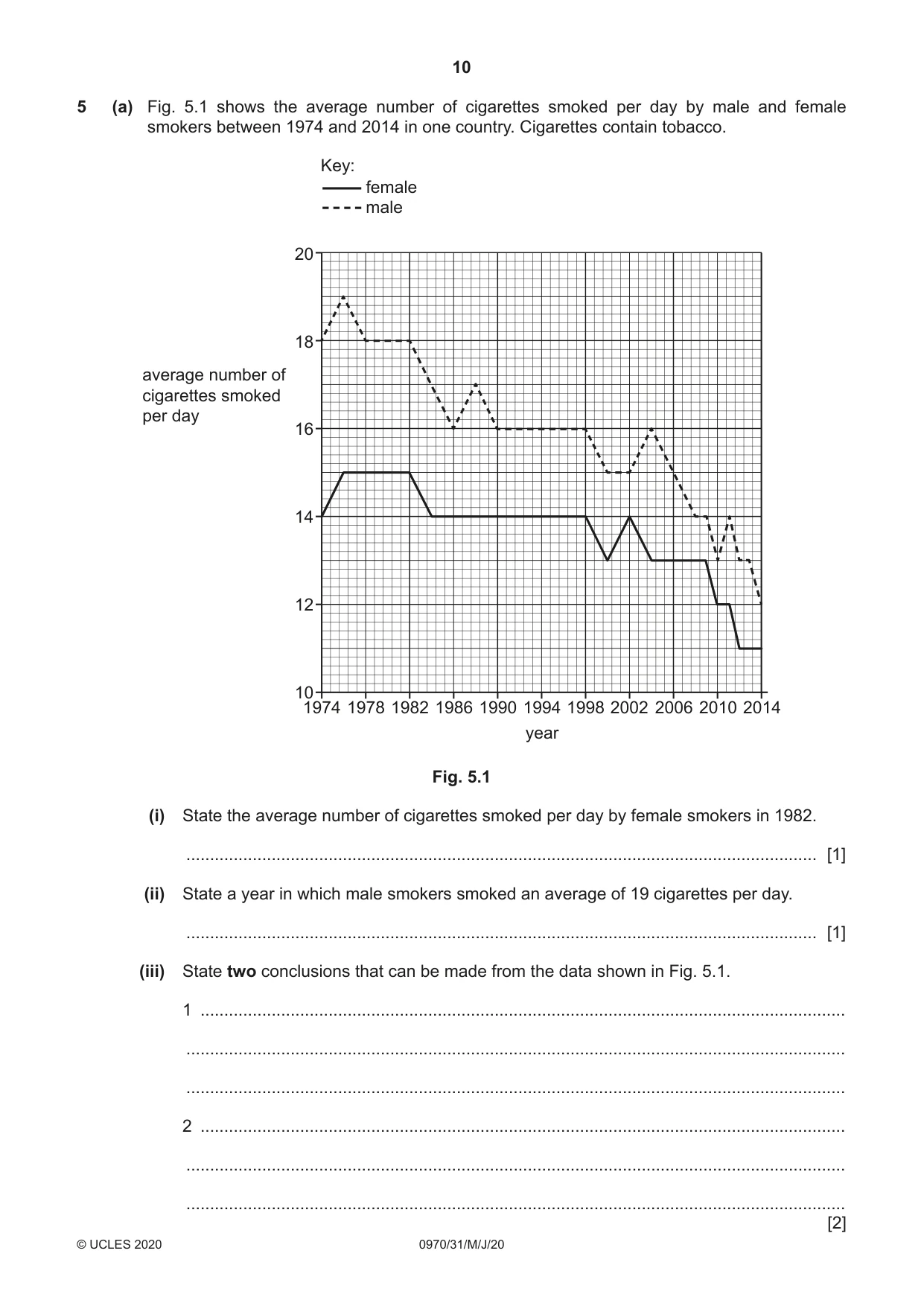
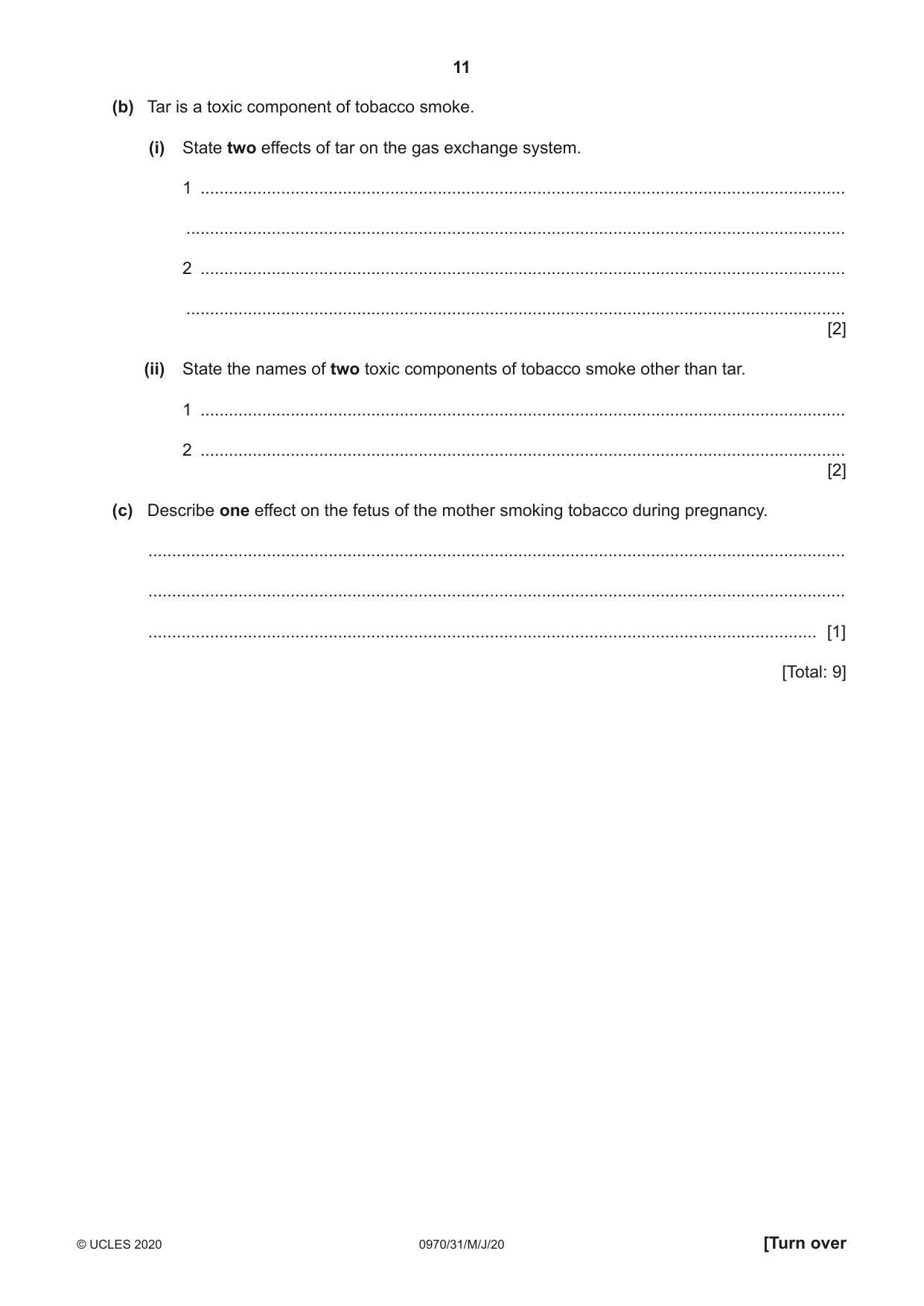
5 (a) Fig. 5.1 shows the average number of cigarettes smoked per day by male and female smokers between 1974 and 2014 in one country. Cigarettes contain tobacco. Key: female male 20 18 average number of cigarettes smoked per day 16 14 12 10 1974 1978 1982 1986 1990 1994 1998 2002 2006 2010 2014 year Fig. 5.1 (i) State the average number of cigarettes smoked per day by female smokers in 1982. ..................................................................................................................................... [1] (ii) State a year in which male smokers smoked an average of 19 cigarettes per day. ..................................................................................................................................... [1] (iii) State two conclusions that can be made from the data shown in Fig. 5.1. 1 ........................................................................................................................................ ........................................................................................................................................... ........................................................................................................................................... 2 ........................................................................................................................................ ........................................................................................................................................... ........................................................................................................................................... [2] (b) Tar is a toxic component of tobacco smoke. (i) State two effects of tar on the gas exchange system. 1 ........................................................................................................................................ ........................................................................................................................................... 2 ........................................................................................................................................ ........................................................................................................................................... [2] (ii) State the names of two toxic components of tobacco smoke other than tar. 1 ........................................................................................................................................ 2 ........................................................................................................................................ [2] (c) Describe one effect on the fetus of the mother smoking tobacco during pregnancy. ................................................................................................................................................... ................................................................................................................................................... ............................................................................................................................................. [1] [Total: 9]
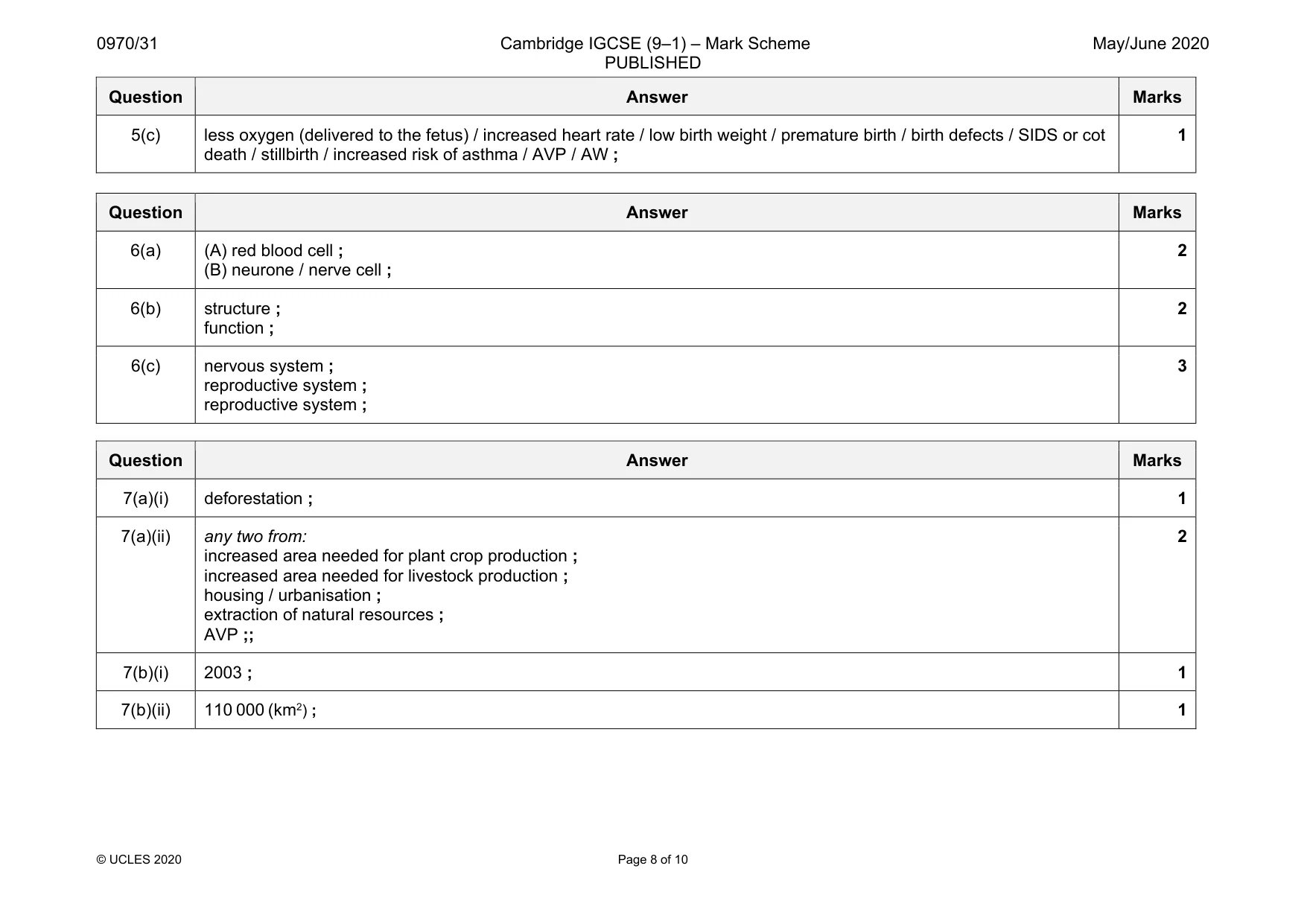
Mark scheme: 5(a)(i) 15 ; 1 5(a)(ii) 1976 ; 1 5(a)(iii) any two from: males smoke more cigarettes than females ; ora average number of cigarettes smoked by, males / females / both sexes, has decreased over time ; average number of cigarettes smoked per day has decreased more for men than for women / AW ; AVP ; 2 5(b)(i) any two from: paralysis of cilia ; lung cancer ; deposits on alveolar walls ; reduced gas exchange ; damage to alveoli from repeated coughing ; emphysema / bronchitis / COPD ; 2 5(b)(ii) any two from: carbon monoxide ; nicotine ; AVP ;; 2 Question Answer Marks 5(c) less oxygen (delivered to the fetus) / increased heart rate / low birth weight / premature birth / birth defects / SIDS or cot death / stillbirth / increased risk of asthma / AVP / AW ; 1
Q6 · Images of cells from two different organ systems
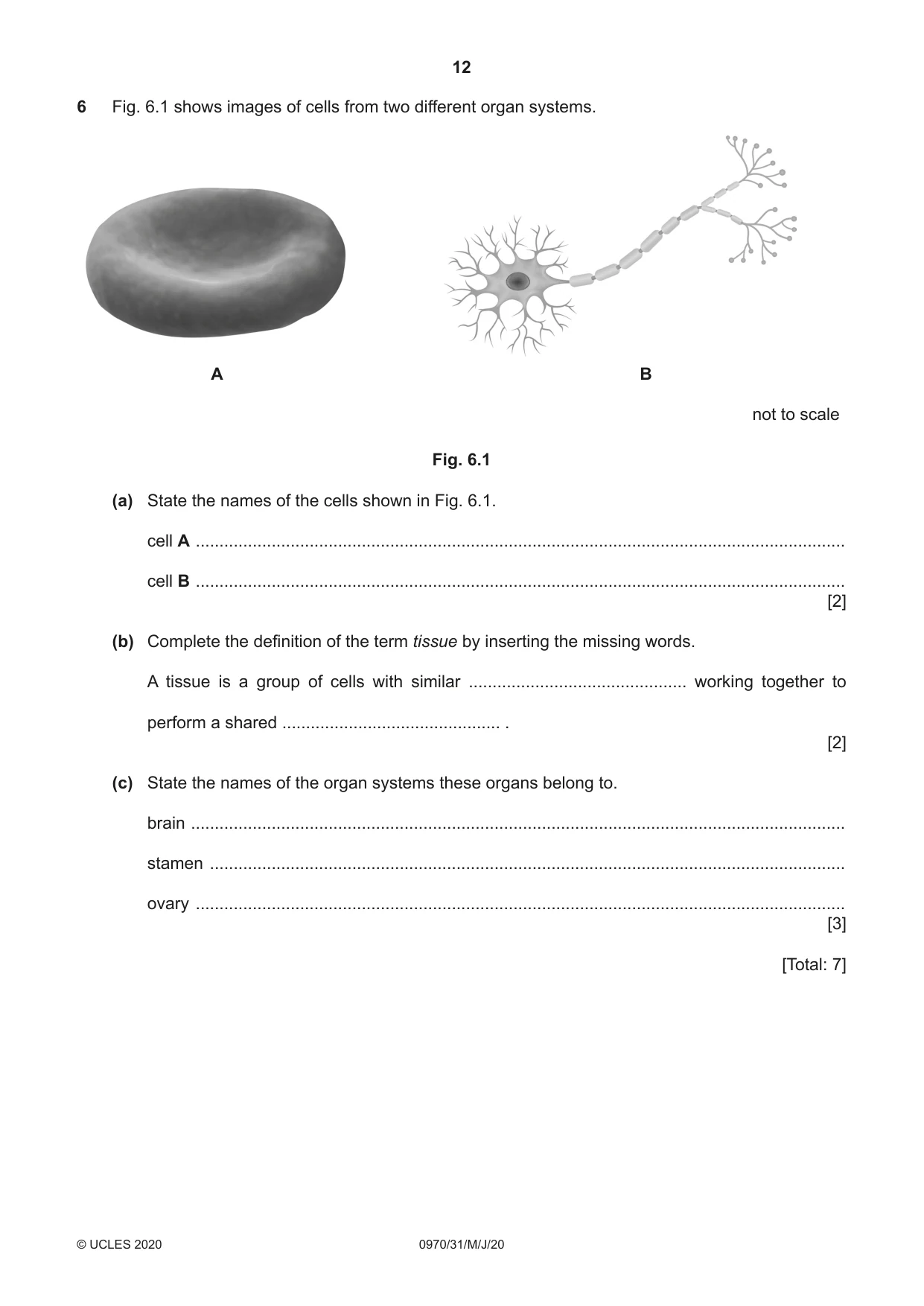
6 Fig. 6.1 shows images of cells from two different organ systems. A B not to scale Fig. 6.1 (a) State the names of the cells shown in Fig. 6.1. cell A ......................................................................................................................................... cell B ......................................................................................................................................... [2] (b) Complete the definition of the term tissue by inserting the missing words. A tissue is a group of cells with similar .............................................. working together to perform a shared .............................................. . [2] (c) State the names of the organ systems these organs belong to. brain .......................................................................................................................................... stamen ...................................................................................................................................... ovary ......................................................................................................................................... [3] [Total: 7]
Mark scheme: 6(a) (A) red blood cell ; (B) neurone / nerve cell ; 2 6(b) structure ; function ; 2 6(c) nervous system ; reproductive system ; reproductive system ; 3
Q7 · A tropical forest where the trees have been cut down
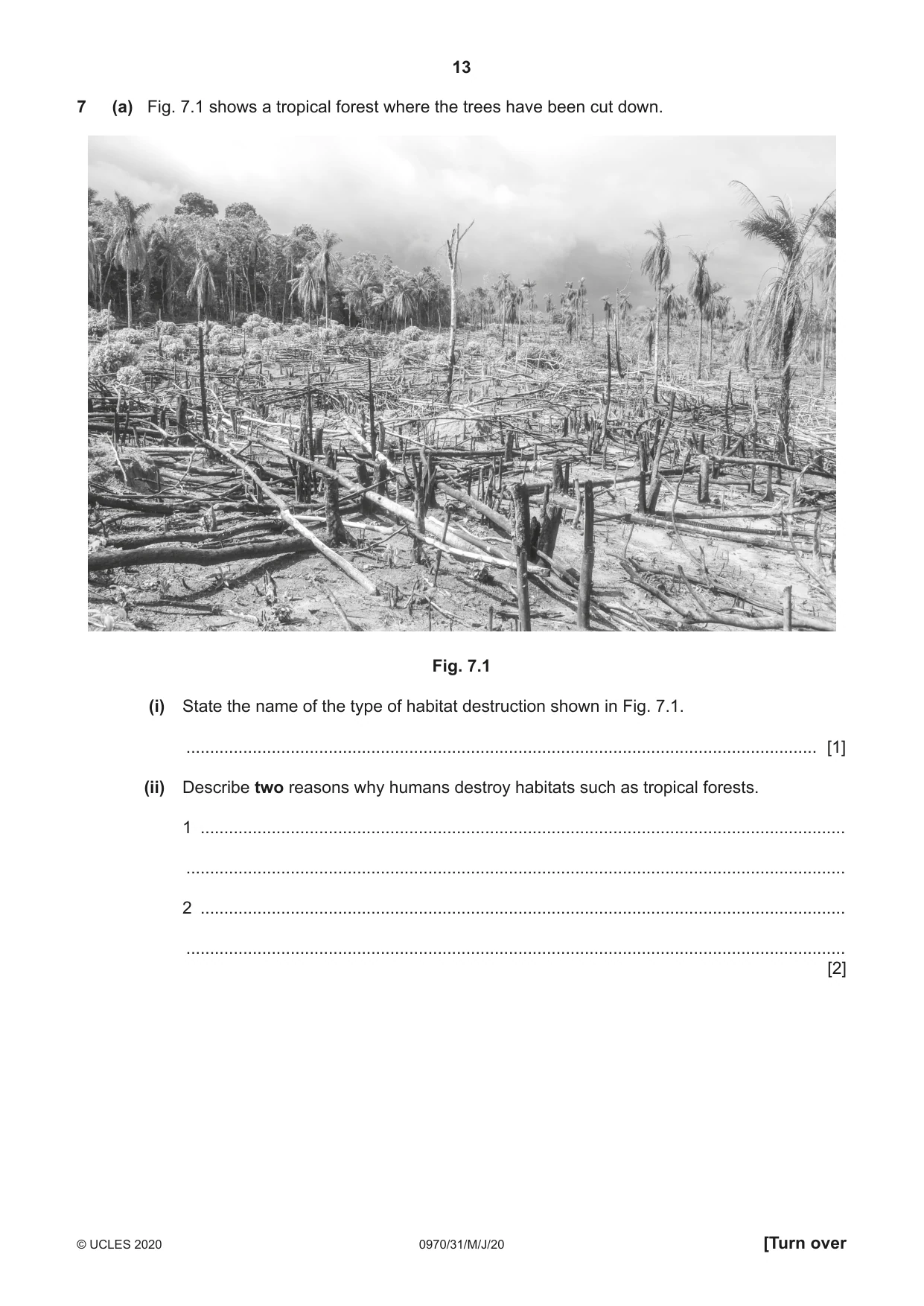
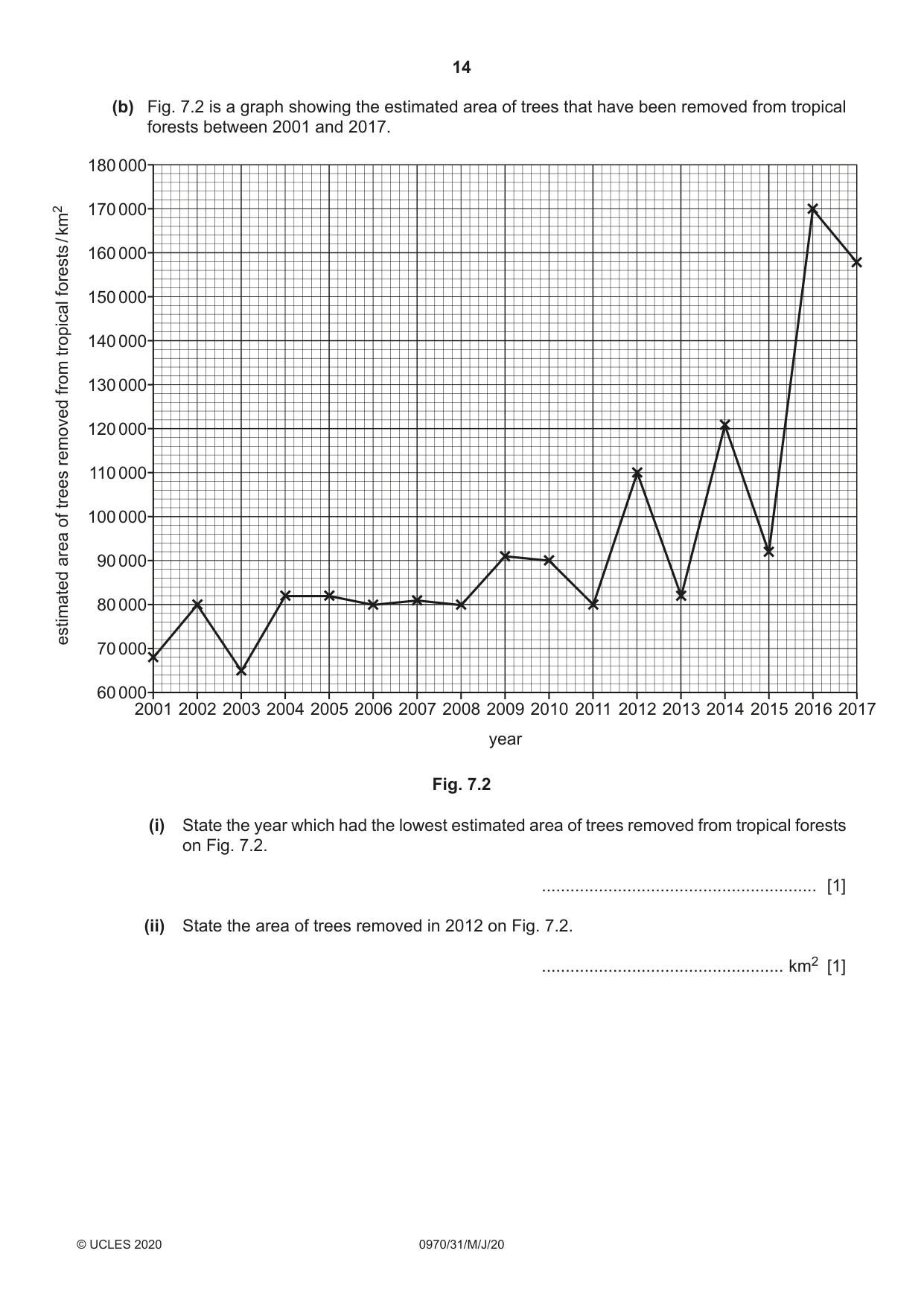
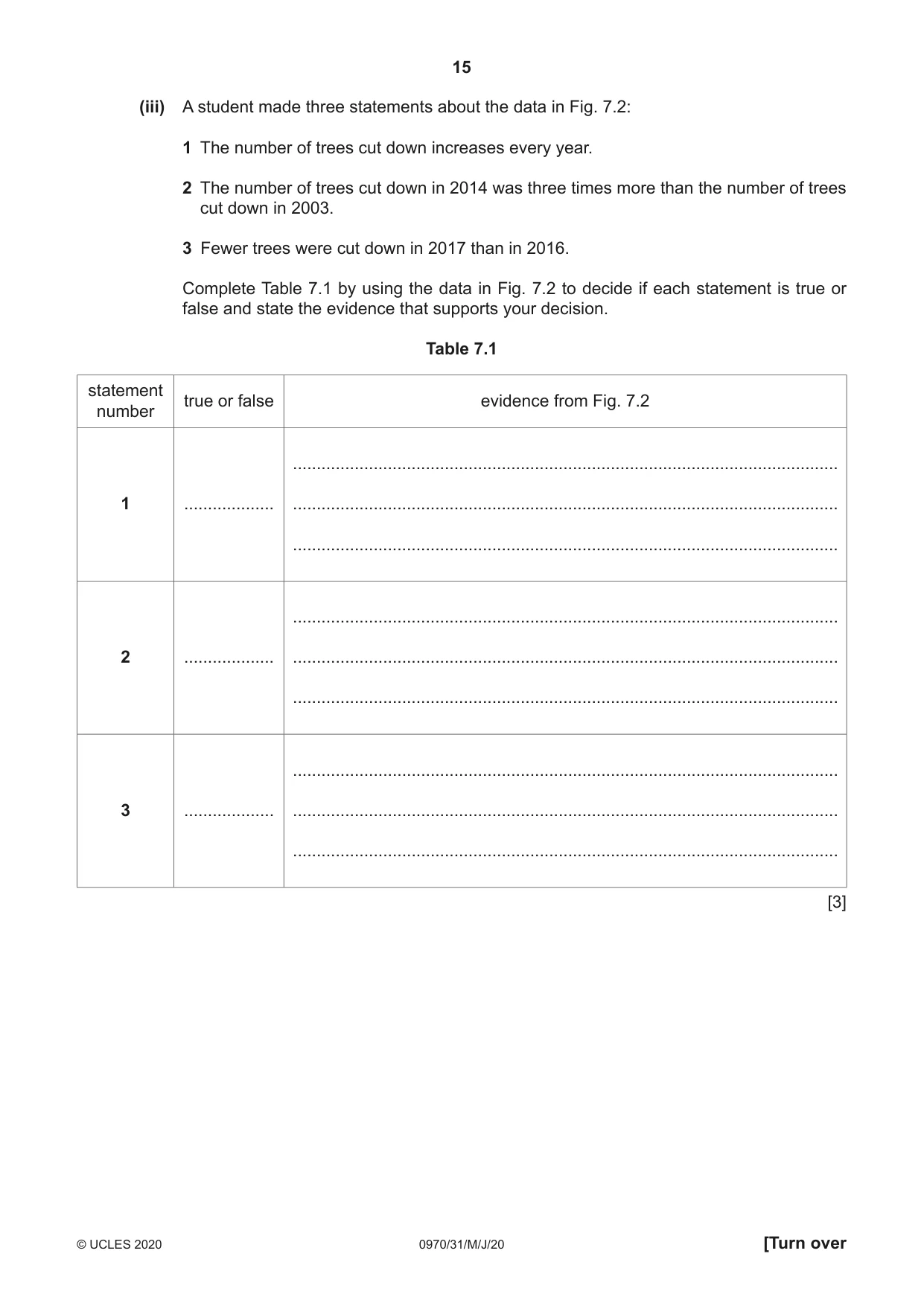
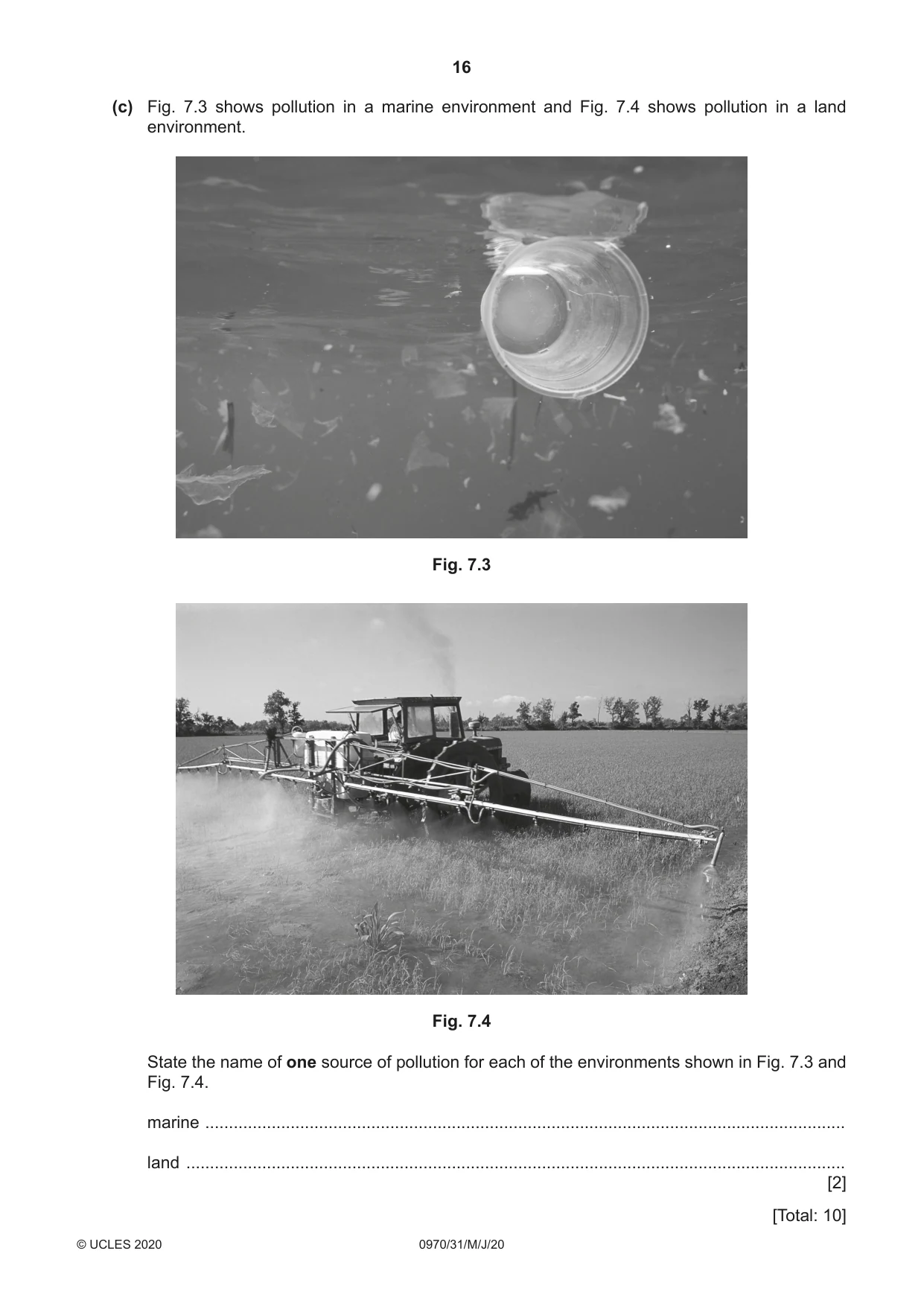
7 (a) Fig. 7.1 shows a tropical forest where the trees have been cut down. Fig. 7.1 (i) State the name of the type of habitat destruction shown in Fig. 7.1. ..................................................................................................................................... [1] (ii) Describe two reasons why humans destroy habitats such as tropical forests. 1 ........................................................................................................................................ ........................................................................................................................................... 2 ........................................................................................................................................ ........................................................................................................................................... [2] (b) Fig. 7.2 is a graph showing the estimated area of trees that have been removed from tropical forests between 2001 and 2017. 180 000 170 000km2 / 160 000 forests 150 000 tropical 140 000 from 130 000 120 000 removed 110 000 trees of 100 000 area 90 000 80 000 estimated 70 000 60 000 2001 2002 2003 2004 2005 2006 2007 2008 2009 2010 2011 2012 2013 2014 2015 2016 2017 year Fig. 7.2 (i) State the year which had the lowest estimated area of trees removed from tropical forests on Fig. 7.2. .......................................................... [1] (ii) State the area of trees removed in 2012 on Fig. 7.2. ................................................... km2 [1] (iii) A student made three statements about the data in Fig. 7.2: 1 The number of trees cut down increases every year. 2 The number of trees cut down in 2014 was three times more than the number of trees cut down in 2003. 3 Fewer trees were cut down in 2017 than in 2016. Complete Table 7.1 by using the data in Fig. 7.2 to decide if each statement is true or false and state the evidence that supports your decision. Table 7.1 statement true or false evidence from Fig. 7.2 number ................................................................................................................... 1 ................... ................................................................................................................... ................................................................................................................... ................................................................................................................... 2 ................... ................................................................................................................... ................................................................................................................... ................................................................................................................... 3 ................... ................................................................................................................... ................................................................................................................... [3] (c) Fig. 7.3 shows pollution in a marine environment and Fig. 7.4 shows pollution in a land environment. Fig. 7.3 Fig. 7.4 State the name of one source of pollution for each of the environments shown in Fig. 7.3 and Fig. 7.4. marine ....................................................................................................................................... land ........................................................................................................................................... [2] [Total: 10]
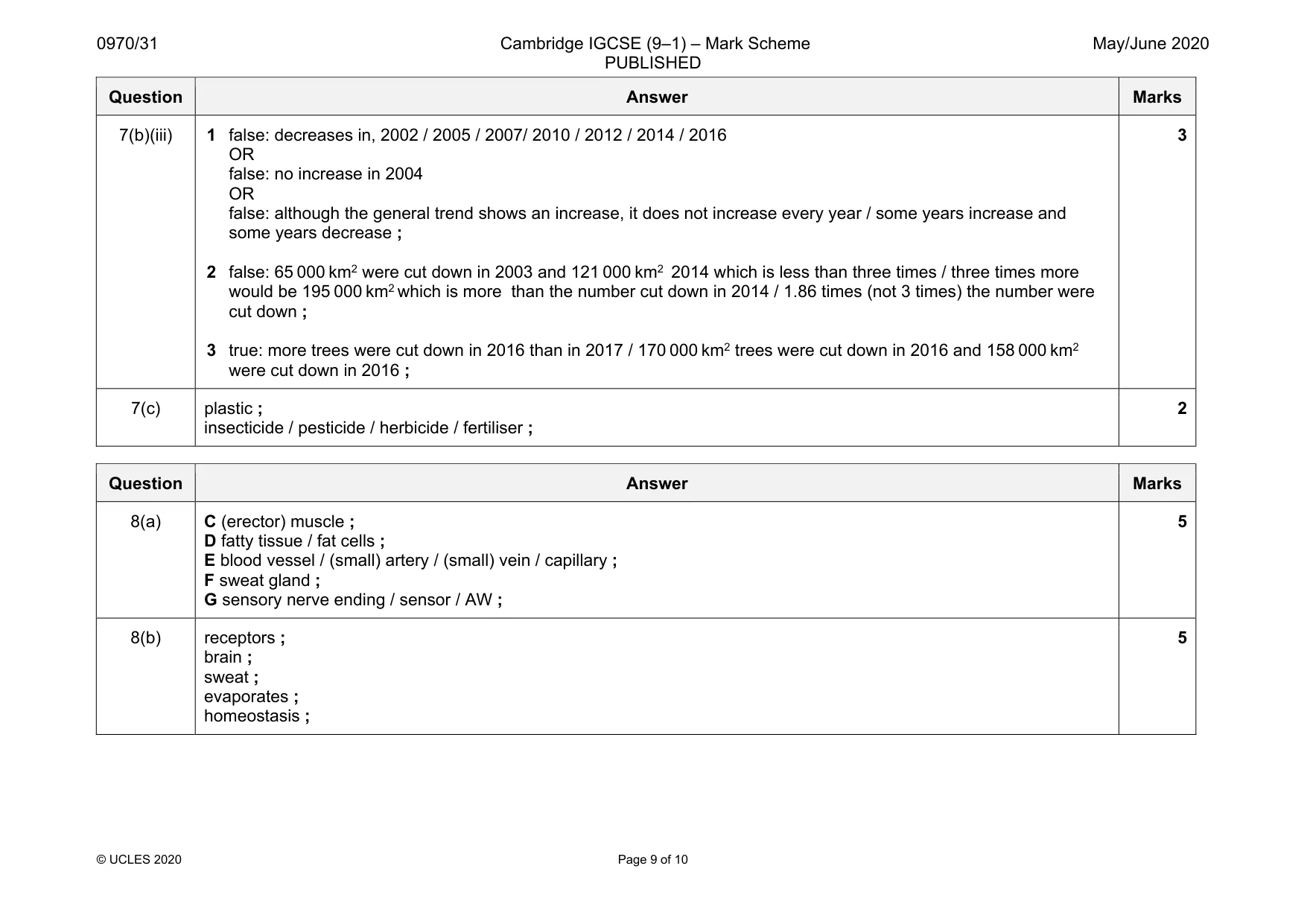
Mark scheme: 7(a)(i) deforestation ; 1 7(a)(ii) any two from: increased area needed for plant crop production ; increased area needed for livestock production ; housing / urbanisation ; extraction of natural resources ; AVP ;; 2 7(b)(i) 2003 ; 1 7(b)(ii) 110 000 (km2) ; 1 Question Answer Marks 7(b)(iii) 1 false: decreases in, 2002 / 2005 / 2007/ 2010 / 2012 / 2014 / 2016 OR false: no increase in 2004 OR false: although the general trend shows an increase, it does not increase every year / some years increase and some years decrease ; 2 false: 65 000 km2 were cut down in 2003 and 121 000 km2 2014 which is less than three times / three times more would be 195 000 km2 which is more than the number cut down in 2014 / 1.86 times (not 3 times) the number were cut down ; 3 true: more trees were cut down in 2016 than in 2017 / 170 000 km2 trees were cut down in 2016 and 158 000 km2 were cut down in 2016 ; 3 7(c) plastic ; insecticide / pesticide / herbicide / fertiliser ; 2
Q8 · A diagram of a section of human skin
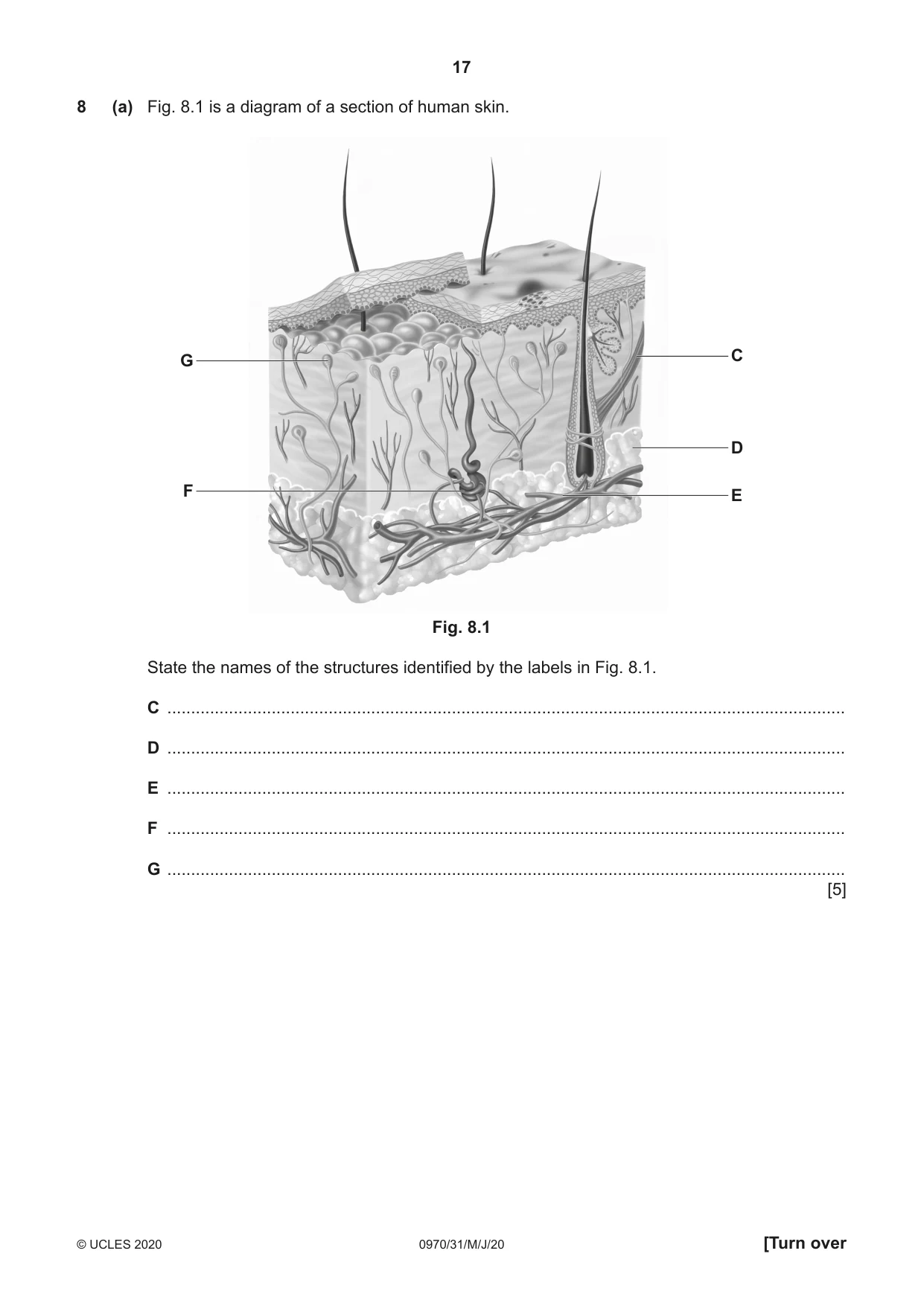
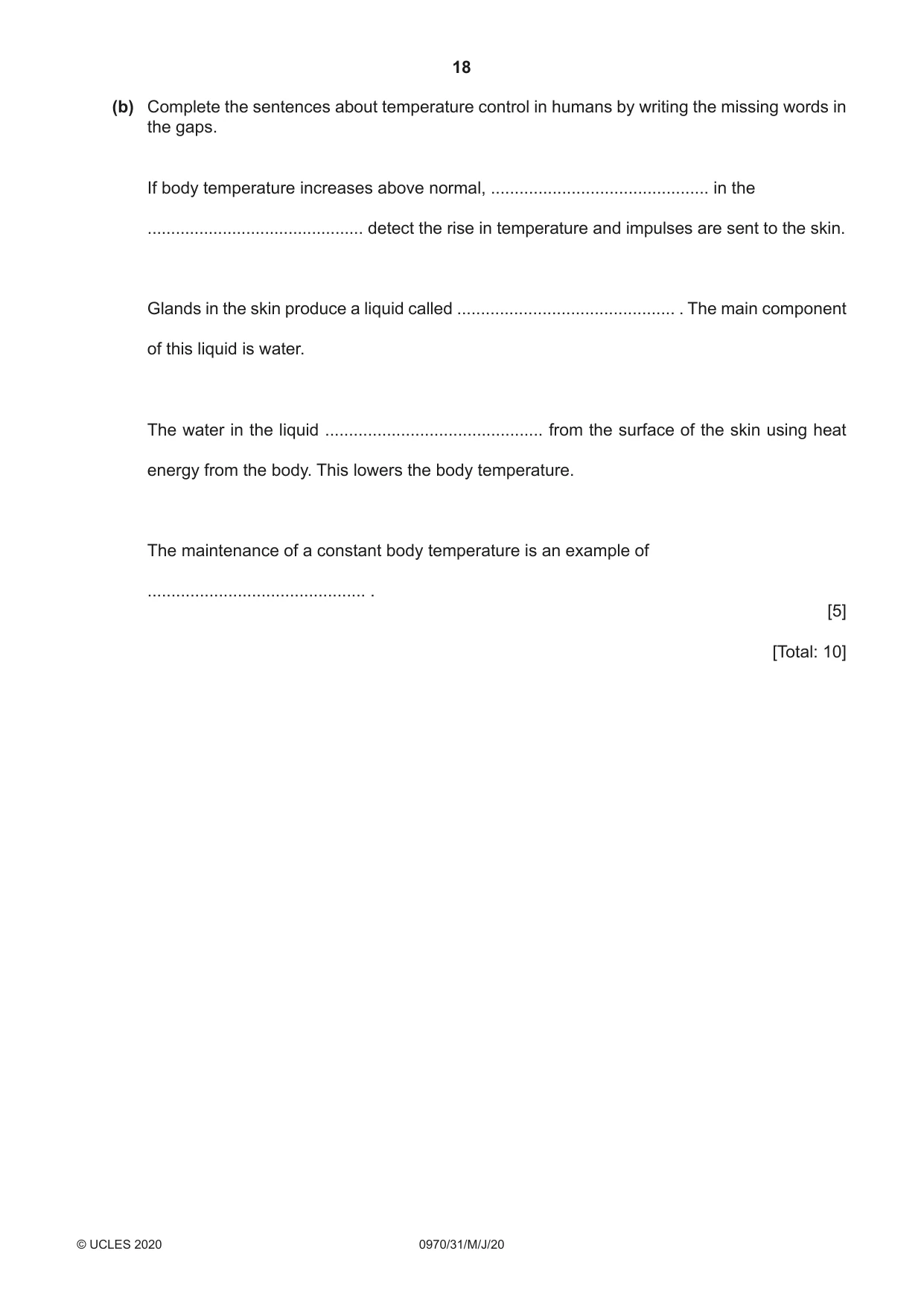
8 (a) Fig. 8.1 is a diagram of a section of human skin. C G D F E Fig. 8.1 State the names of the structures identified by the labels in Fig. 8.1. C ............................................................................................................................................... D ............................................................................................................................................... E ............................................................................................................................................... F ............................................................................................................................................... G ............................................................................................................................................... [5] (b) Complete the sentences about temperature control in humans by writing the missing words in the gaps. If body temperature increases above normal, .............................................. in the .............................................. detect the rise in temperature and impulses are sent to the skin. Glands in the skin produce a liquid called .............................................. . The main component of this liquid is water. The water in the liquid .............................................. from the surface of the skin using heat energy from the body. This lowers the body temperature. The maintenance of a constant body temperature is an example of .............................................. . [5] [Total: 10]
Mark scheme: 8(a) C (erector) muscle ; D fatty tissue / fat cells ; E blood vessel / (small) artery / (small) vein / capillary ; F sweat gland ; G sensory nerve ending / sensor / AW ; 8(b) receptors ; brain ; sweat ; evaporates ; homeostasis ; 5
Q9 · The eye is an example of a sense organ
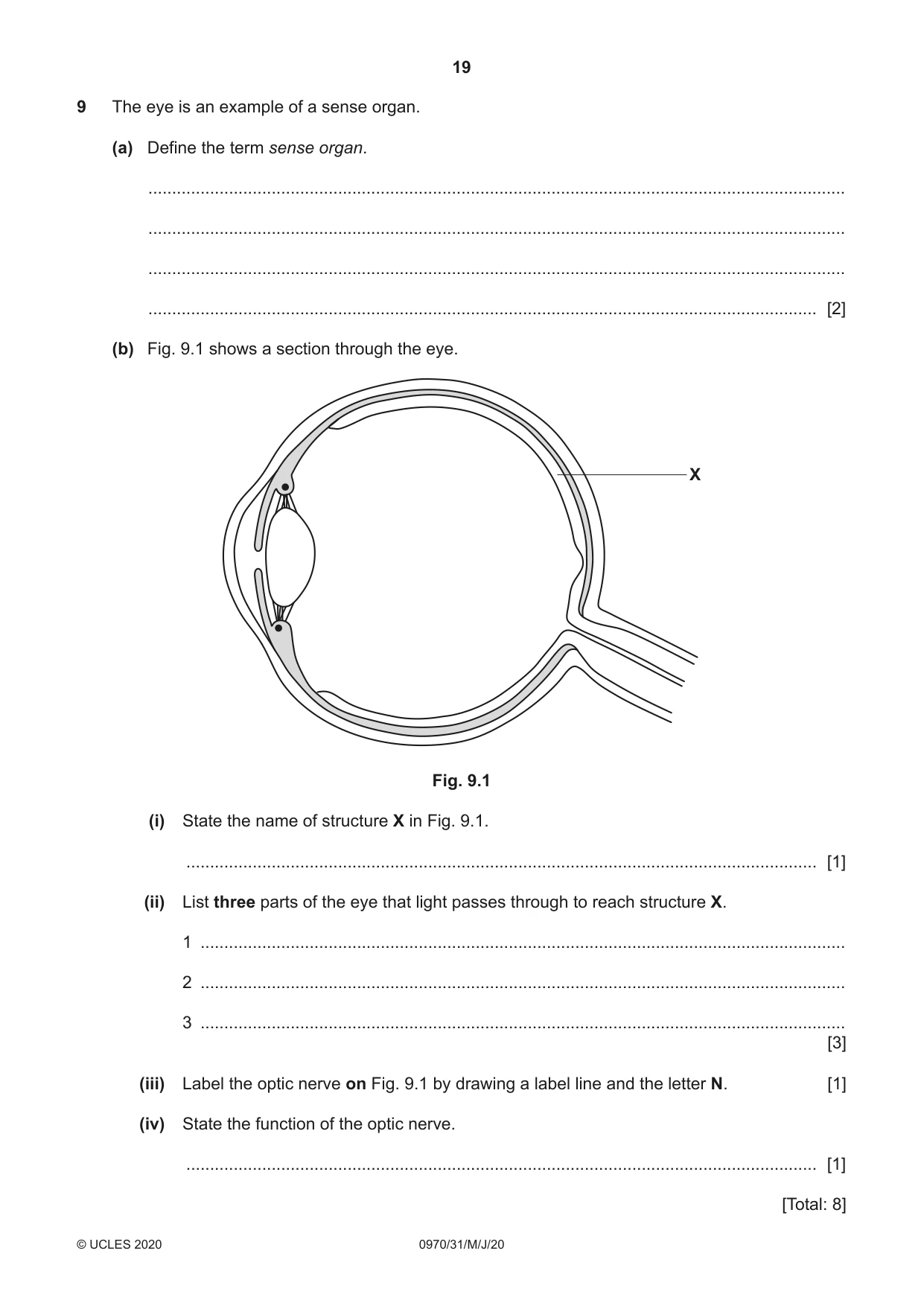
9 The eye is an example of a sense organ. (a) Define the term sense organ. ................................................................................................................................................... ................................................................................................................................................... ................................................................................................................................................... ............................................................................................................................................. [2] (b) Fig. 9.1 shows a section through the eye. X Fig. 9.1 (i) State the name of structure X in Fig. 9.1. ..................................................................................................................................... [1] (ii) List three parts of the eye that light passes through to reach structure X. 1 ........................................................................................................................................ 2 ........................................................................................................................................ 3 ........................................................................................................................................ [3] (iii) Label the optic nerve on Fig. 9.1 by drawing a label line and the letter N. [1] (iv) State the function of the optic nerve. ..................................................................................................................................... [1] [Total: 8]
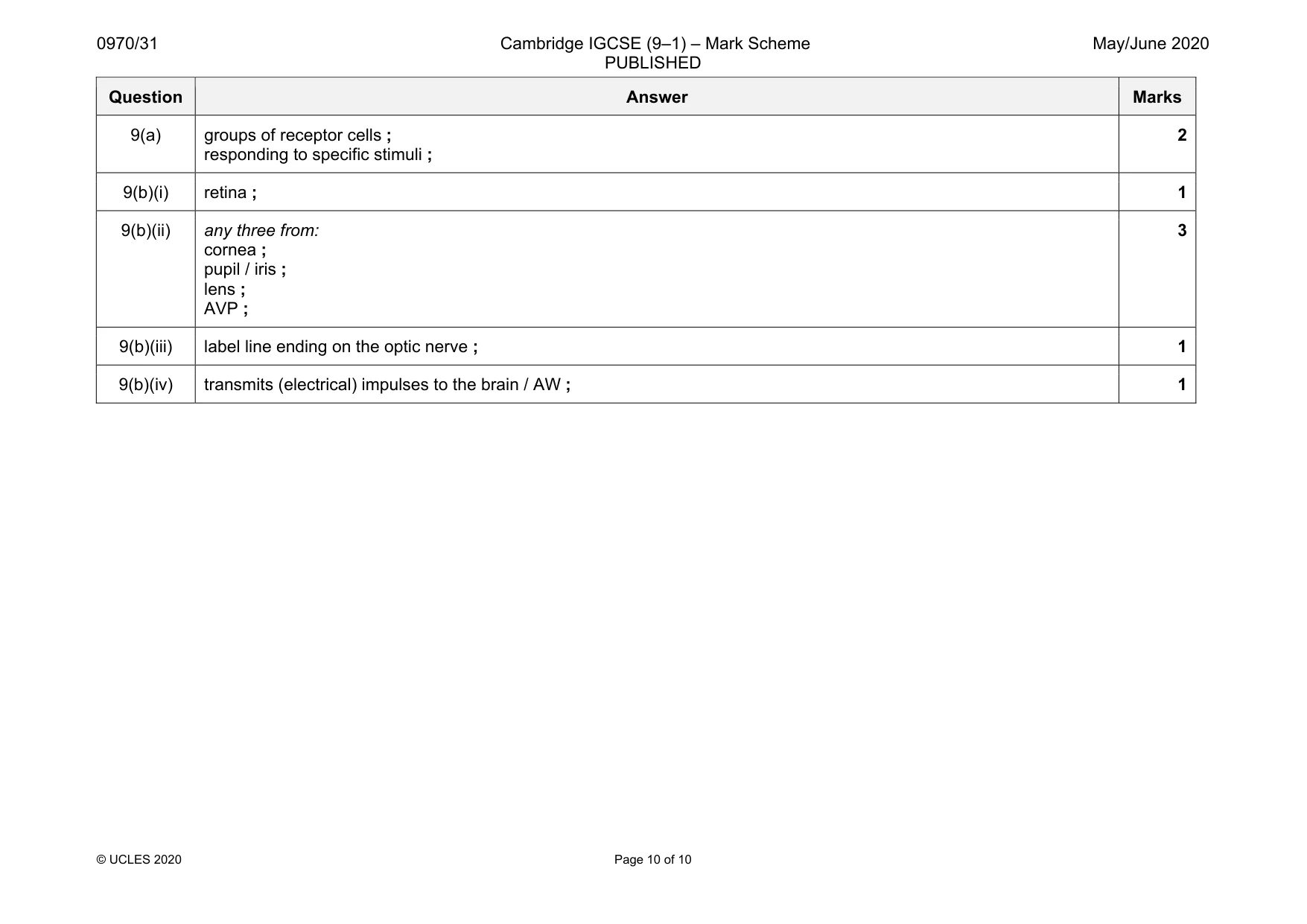
Mark scheme: 9(a) groups of receptor cells ; responding to specific stimuli ; 2 9(b)(i) retina ; 1 9(b)(ii) any three from: cornea ; pupil / iris ; lens ; AVP ; 3 9(b)(iii) label line ending on the optic nerve ; 1 9(b)(iv) transmits (electrical) impulses to the brain / AW ; 1
What was in this paper
The subtopics covered by these 9 questions, and how many questions each got. Open one in a new tab to see every Cambridge question on it.