Cambridge IGCSE Biology (9-1) 0970 — 2020 May/June Paper 3 · Variant 2
0970/32/M/J/20 · 9 questions · 80 marks · ≈90 min
The question paper and its mark scheme, free to read here and free to download. This is Cambridge’s own paper, exactly as it was sat.
Question paper20 pages




Mark scheme11 pages
Answers below. Sit the paper first if you are practising.
Questions as text
Q1 · Some substances move into cells by the process of diffusion
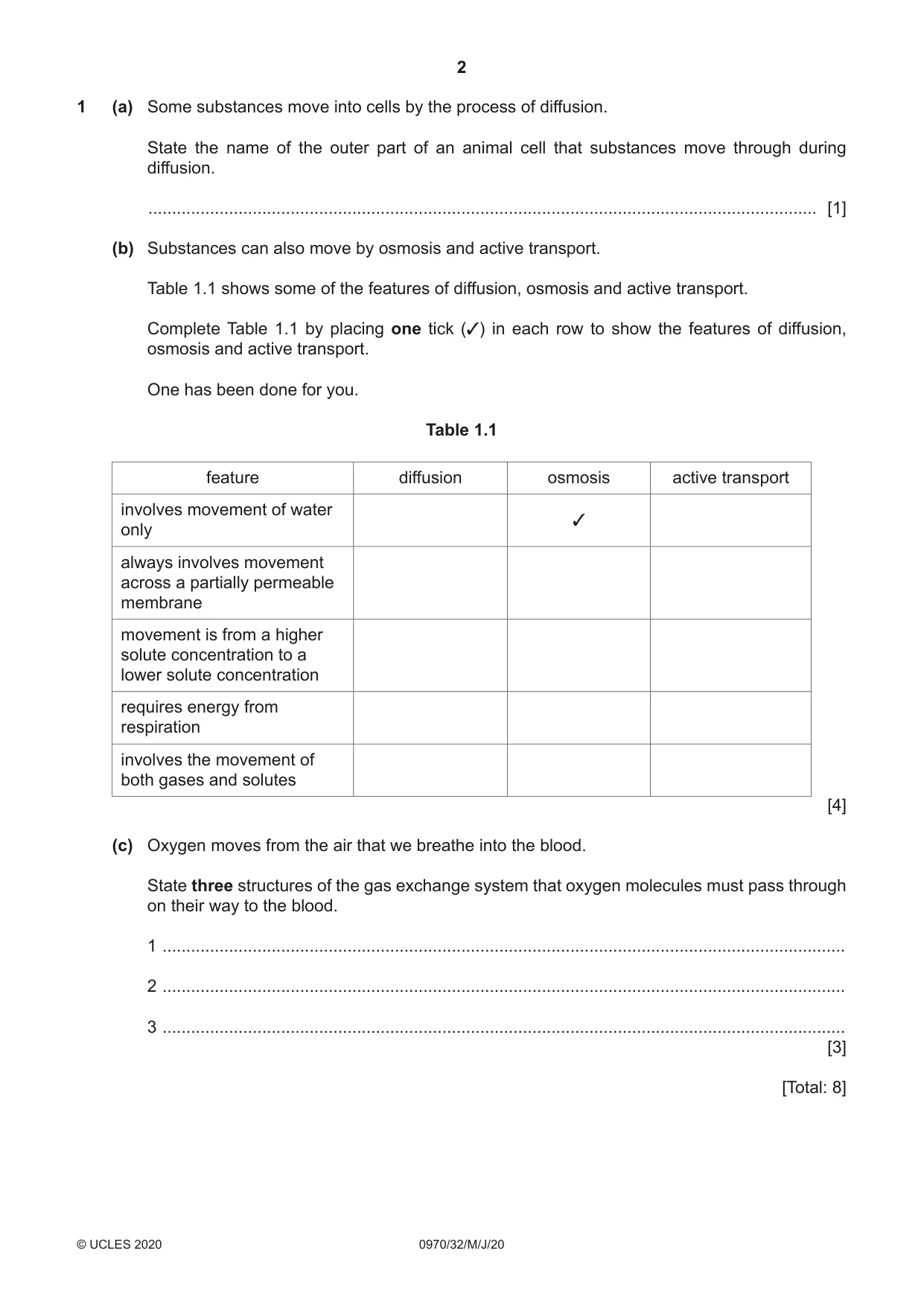
1 (a) Some substances move into cells by the process of diffusion. State the name of the outer part of an animal cell that substances move through during diffusion. ............................................................................................................................................. [1] (b) Substances can also move by osmosis and active transport. Table 1.1 shows some of the features of diffusion, osmosis and active transport. Complete Table 1.1 by placing one tick (3) in each row to show the features of diffusion, osmosis and active transport. One has been done for you. Table 1.1 feature diffusion osmosis active transport involves movement of water 3 only always involves movement across a partially permeable membrane movement is from a higher solute concentration to a lower solute concentration requires energy from respiration involves the movement of both gases and solutes [4] (c) Oxygen moves from the air that we breathe into the blood. State three structures of the gas exchange system that oxygen molecules must pass through on their way to the blood. 1 ................................................................................................................................................ 2 ................................................................................................................................................ 3 ................................................................................................................................................ [3] [Total: 8]
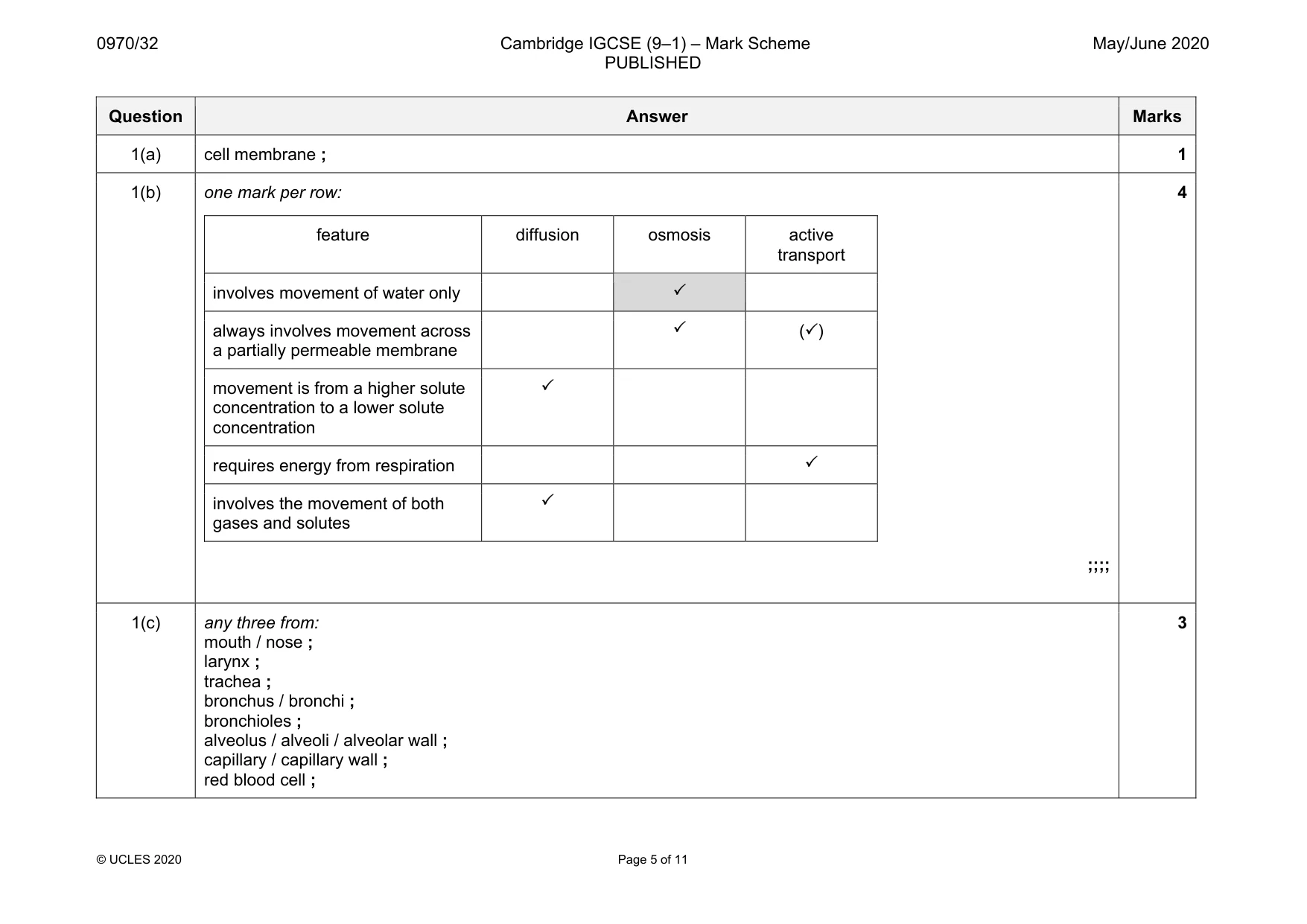
Mark scheme: 1(a) cell membrane ; 1 1(b) one mark per row: ;;;; feature diffusion osmosis active transport involves movement of water only always involves movement across a partially permeable membrane () movement is from a higher solute concentration to a lower solute concentration requires energy from respiration involves the movement of both gases and solutes 4 1(c) any three from: mouth / nose ; larynx ; trachea ; bronchus / bronchi ; bronchioles ; alveolus / alveoli / alveolar wall ; capillary / capillary wall ; red blood cell ; 3
Q2 · A diagram of the human female reproductive system
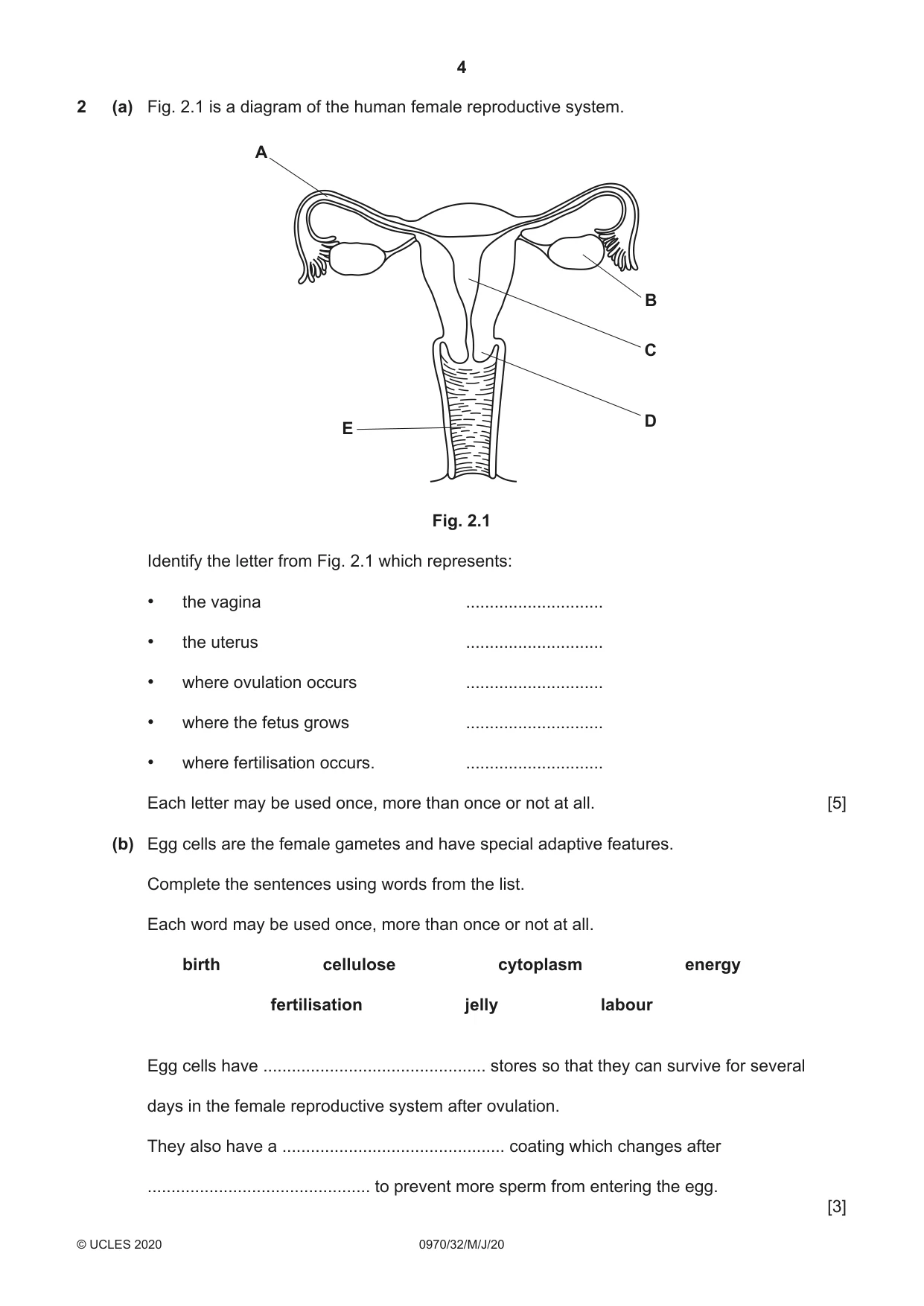
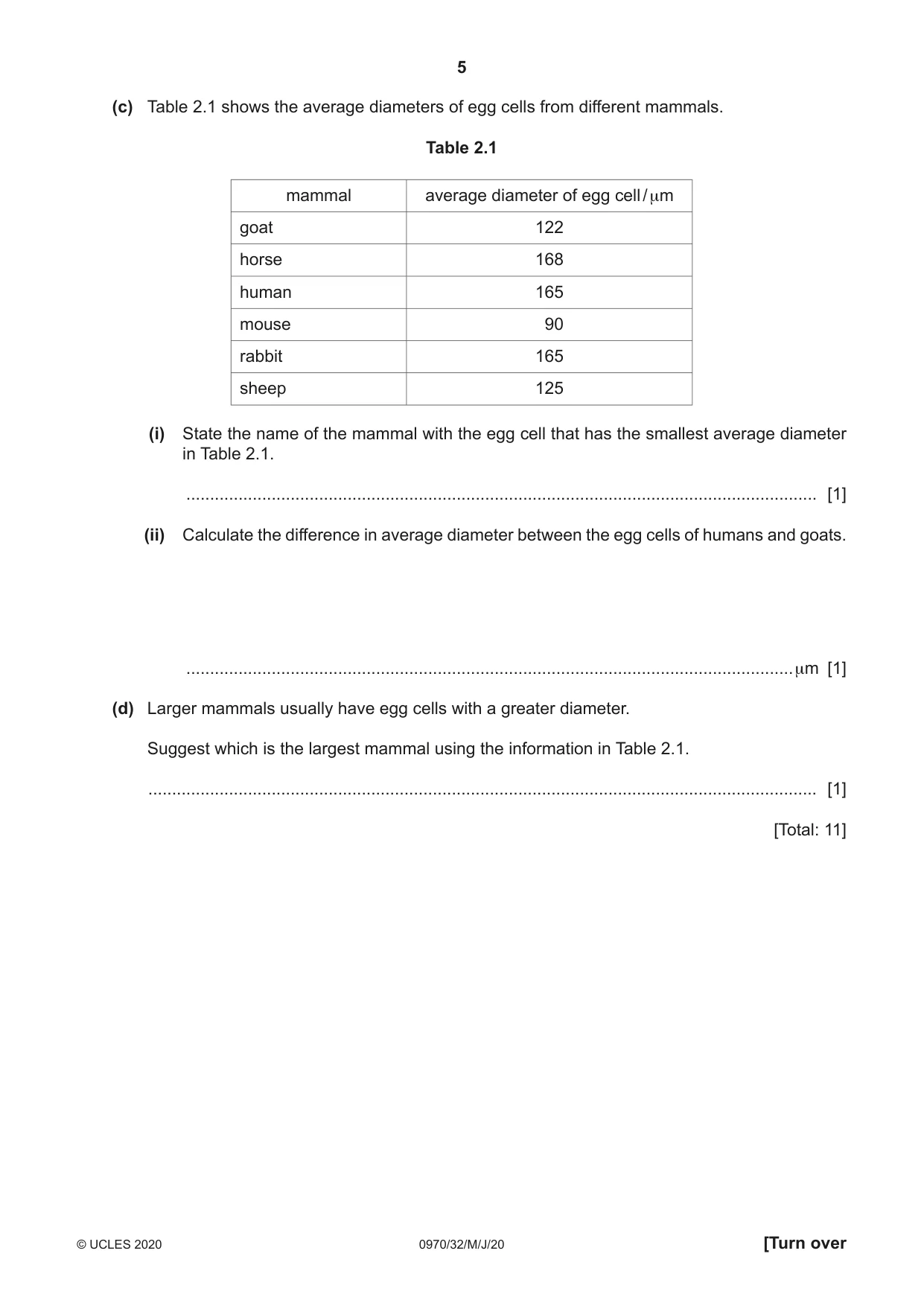
2 (a) Fig. 2.1 is a diagram of the human female reproductive system. A B C D E Fig. 2.1 Identify the letter from Fig. 2.1 which represents: • the vagina ............................. • the uterus ............................. • where ovulation occurs ............................. • where the fetus grows ............................. • where fertilisation occurs. ............................. Each letter may be used once, more than once or not at all. [5] (b) Egg cells are the female gametes and have special adaptive features. Complete the sentences using words from the list. Each word may be used once, more than once or not at all. birth cellulose cytoplasm energy fertilisation jelly labour Egg cells have ............................................... stores so that they can survive for several days in the female reproductive system after ovulation. They also have a ............................................... coating which changes after ............................................... to prevent more sperm from entering the egg. [3] (c) Table 2.1 shows the average diameters of egg cells from different mammals. Table 2.1 mammal average diameter of egg cell / µm goat 122 horse 168 human 165 mouse 90 rabbit 165 sheep 125 (i) State the name of the mammal with the egg cell that has the smallest average diameter in Table 2.1. ..................................................................................................................................... [1] (ii) Calculate the difference in average diameter between the egg cells of humans and goats. ................................................................................................................................µm [1] (d) Larger mammals usually have egg cells with a greater diameter. Suggest which is the largest mammal using the information in Table 2.1. ............................................................................................................................................. [1] [Total: 11]
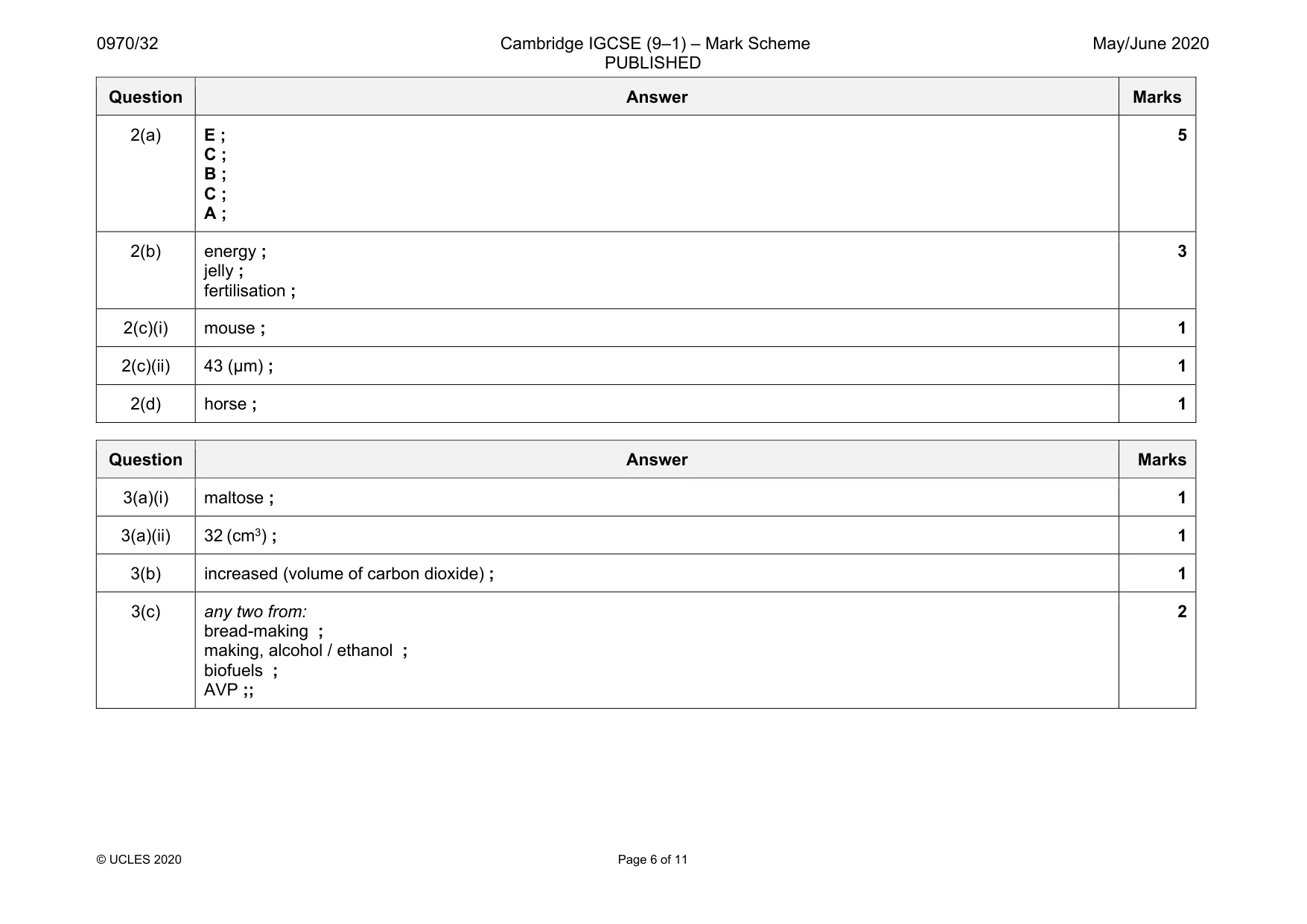
Mark scheme: 2(a) E ; C ; B ; C ; A ; 5 2(b) energy ; jelly ; fertilisation ; 3 2(c)(i) mouse ; 1 2(c)(ii) 43 (µm) ; 1 2(d) horse ; 1
Q3 · A student investigated respiration in yeast
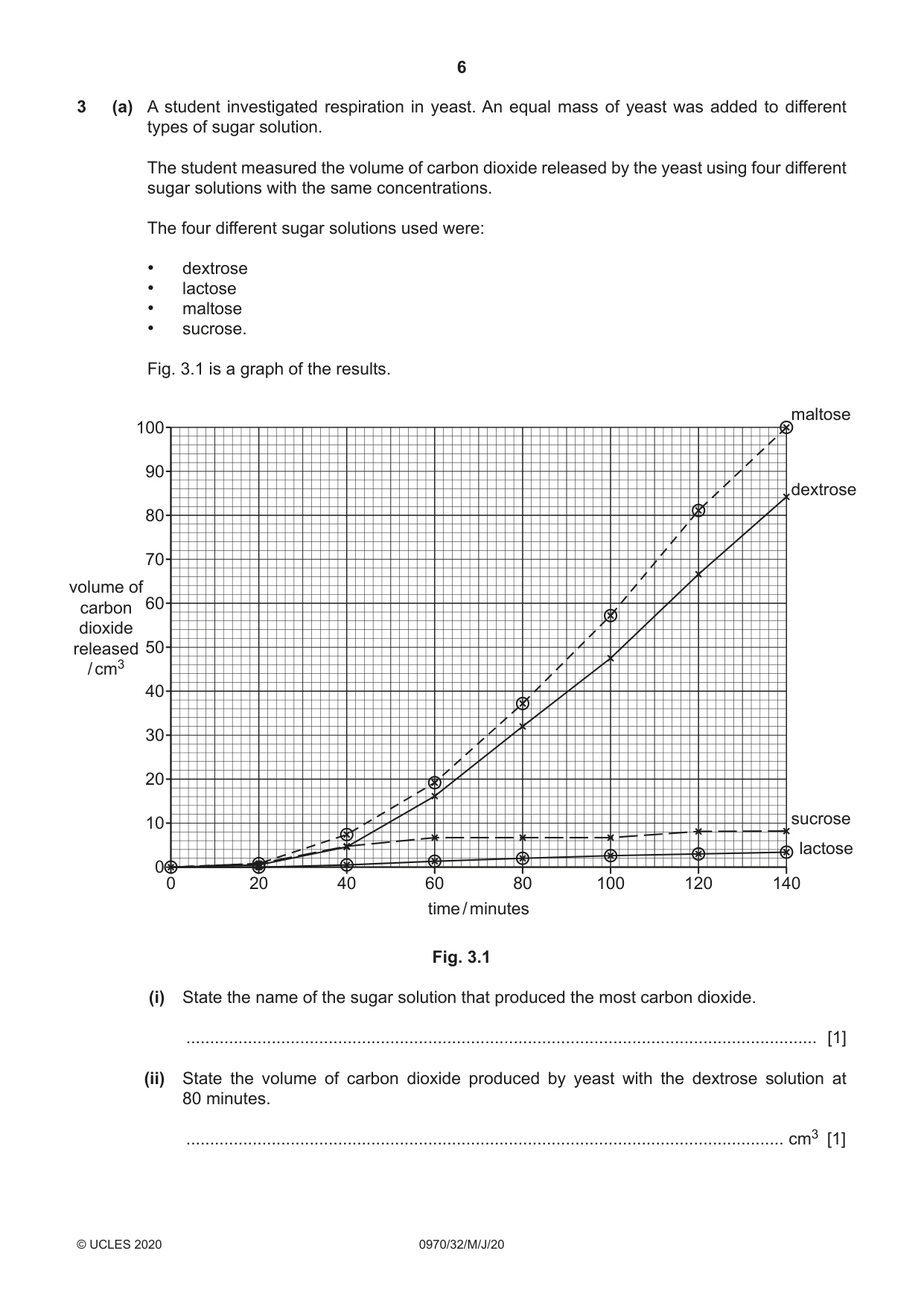
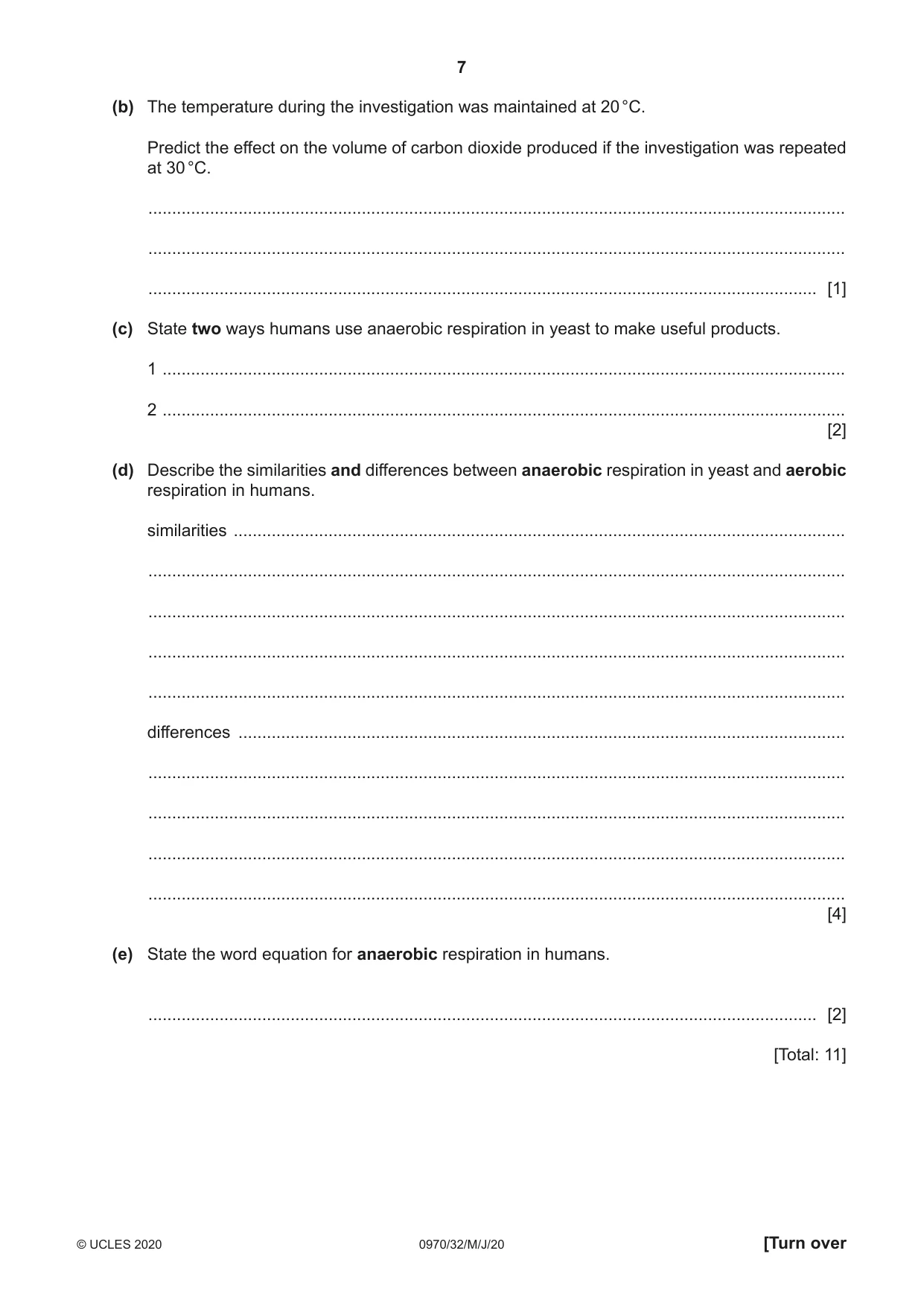
3 (a) A student investigated respiration in yeast. An equal mass of yeast was added to different types of sugar solution. The student measured the volume of carbon dioxide released by the yeast using four different sugar solutions with the same concentrations. The four different sugar solutions used were: • dextrose • lactose • maltose • sucrose. Fig. 3.1 is a graph of the results. maltose 100 90 dextrose 80 70 volume of carbon 60 dioxide released 50 / cm3 40 30 20 10 sucrose lactose 0 0 20 40 60 80 100 120 140 time / minutes Fig. 3.1 (i) State the name of the sugar solution that produced the most carbon dioxide. ..................................................................................................................................... [1] (ii) State the volume of carbon dioxide produced by yeast with the dextrose solution at 80 minutes. .............................................................................................................................. cm3 [1] (b) The temperature during the investigation was maintained at 20 °C. Predict the effect on the volume of carbon dioxide produced if the investigation was repeated at 30 °C. ................................................................................................................................................... ................................................................................................................................................... ............................................................................................................................................. [1] (c) State two ways humans use anaerobic respiration in yeast to make useful products. 1 ................................................................................................................................................ 2 ................................................................................................................................................ [2] (d) Describe the similarities and differences between anaerobic respiration in yeast and aerobic respiration in humans. similarities ................................................................................................................................. ................................................................................................................................................... ................................................................................................................................................... ................................................................................................................................................... ................................................................................................................................................... differences ................................................................................................................................ ................................................................................................................................................... ................................................................................................................................................... ................................................................................................................................................... ................................................................................................................................................... [4] (e) State the word equation for anaerobic respiration in humans. ............................................................................................................................................. [2] [Total: 11]
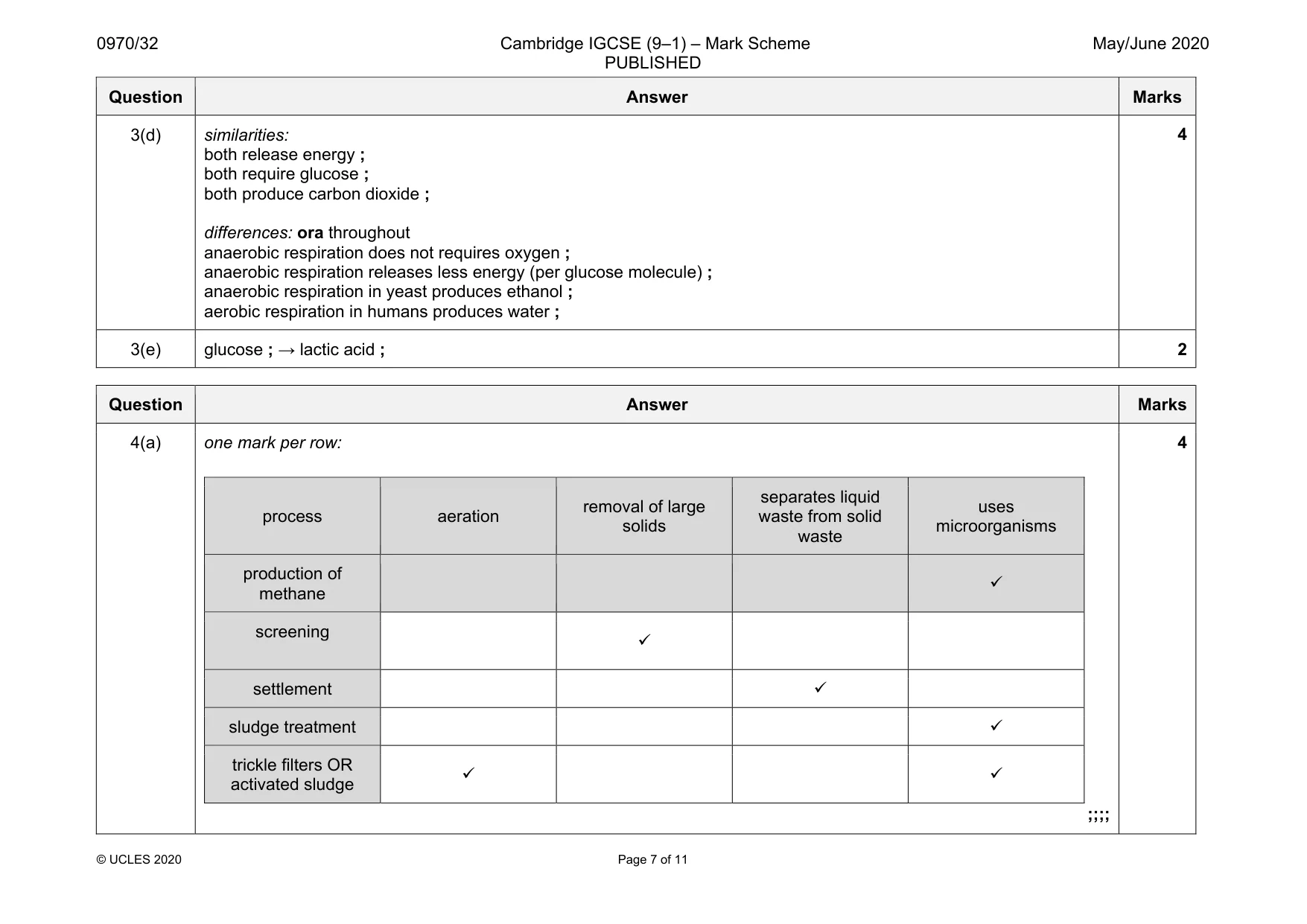
Mark scheme: 3(a)(i) maltose ; 1 3(a)(ii) 32 (cm3) ; 1 3(b) increased (volume of carbon dioxide) ; 1 3(c) any two from: bread-making ; making, alcohol / ethanol ; biofuels ; AVP ;; 2 Question Answer Marks 3(d) similarities: both release energy ; both require glucose ; both produce carbon dioxide ; differences: ora throughout anaerobic respiration does not requires oxygen ; anaerobic respiration releases less energy (per glucose molecule) ; anaerobic respiration in yeast produces ethanol ; aerobic respiration in humans produces water ; 4 3(e) glucose ; → lactic acid ; 2
Q4 · Some of the processes involved in the treatment of sewage
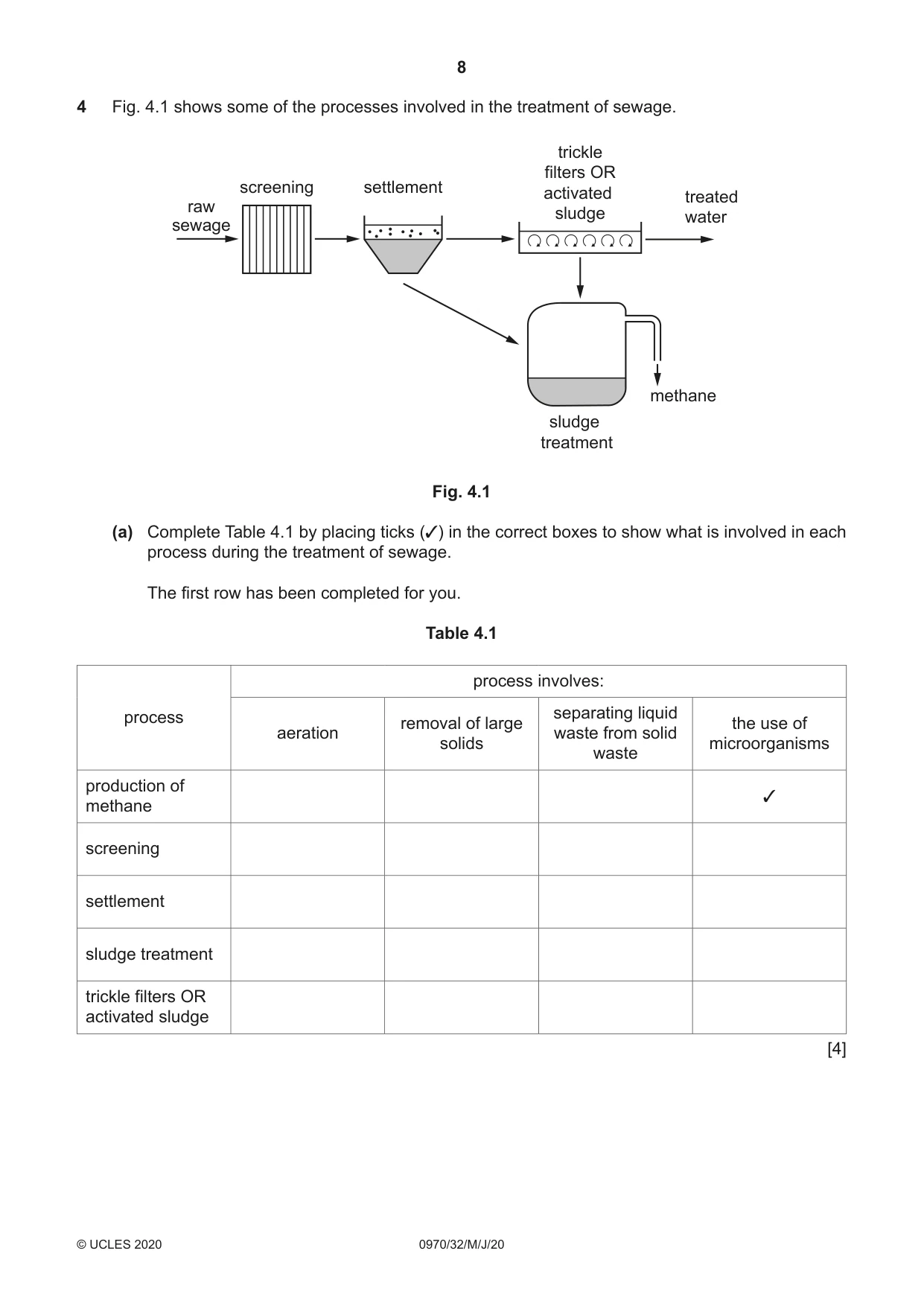
4 Fig. 4.1 shows some of the processes involved in the treatment of sewage. trickle filters OR screening settlement activated treated raw sludge water sewage methane sludge treatment Fig. 4.1 (a) Complete Table 4.1 by placing ticks (3) in the correct boxes to show what is involved in each process during the treatment of sewage. The first row has been completed for you. Table 4.1 process involves: process separating liquid removal of large the use of aeration waste from solid solids microorganisms waste production of 3 methane screening settlement sludge treatment trickle filters OR activated sludge [4] (b) Describe two reasons why it is necessary to treat sewage before returning the water to the environment. 1 ................................................................................................................................................ ................................................................................................................................................... 2 ................................................................................................................................................ ................................................................................................................................................... [2] [Total: 6]
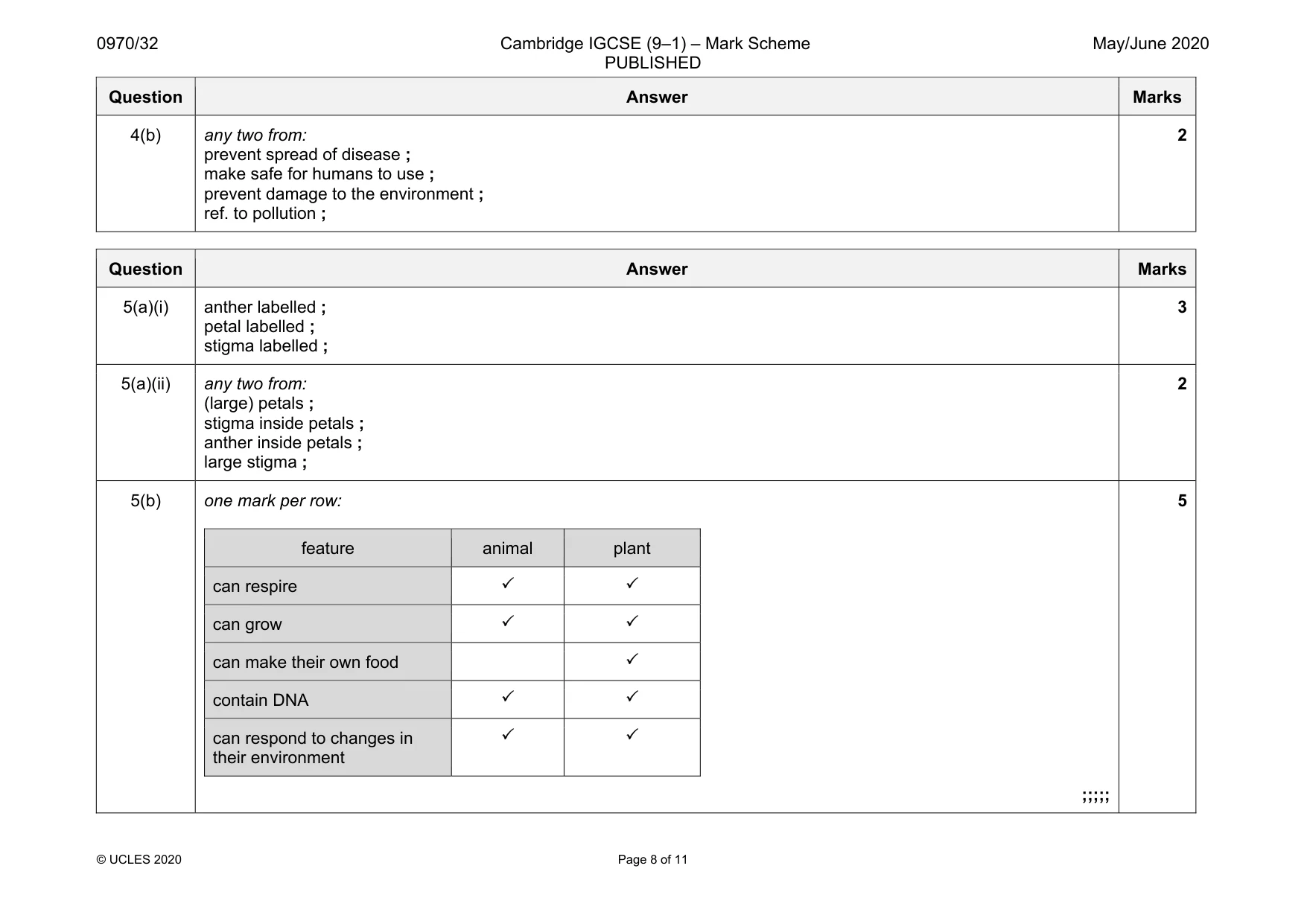
Mark scheme: 4(a) one mark per row: ;;;; process aeration removal of large solids separates liquid waste from solid waste uses microorganisms production of methane screening settlement sludge treatment trickle filters OR activated sludge 4 Question Answer Marks 4(b) any two from: prevent spread of disease ; make safe for humans to use ; prevent damage to the environment ; ref. to pollution ; 2
Q5 · A photograph of part of a flower
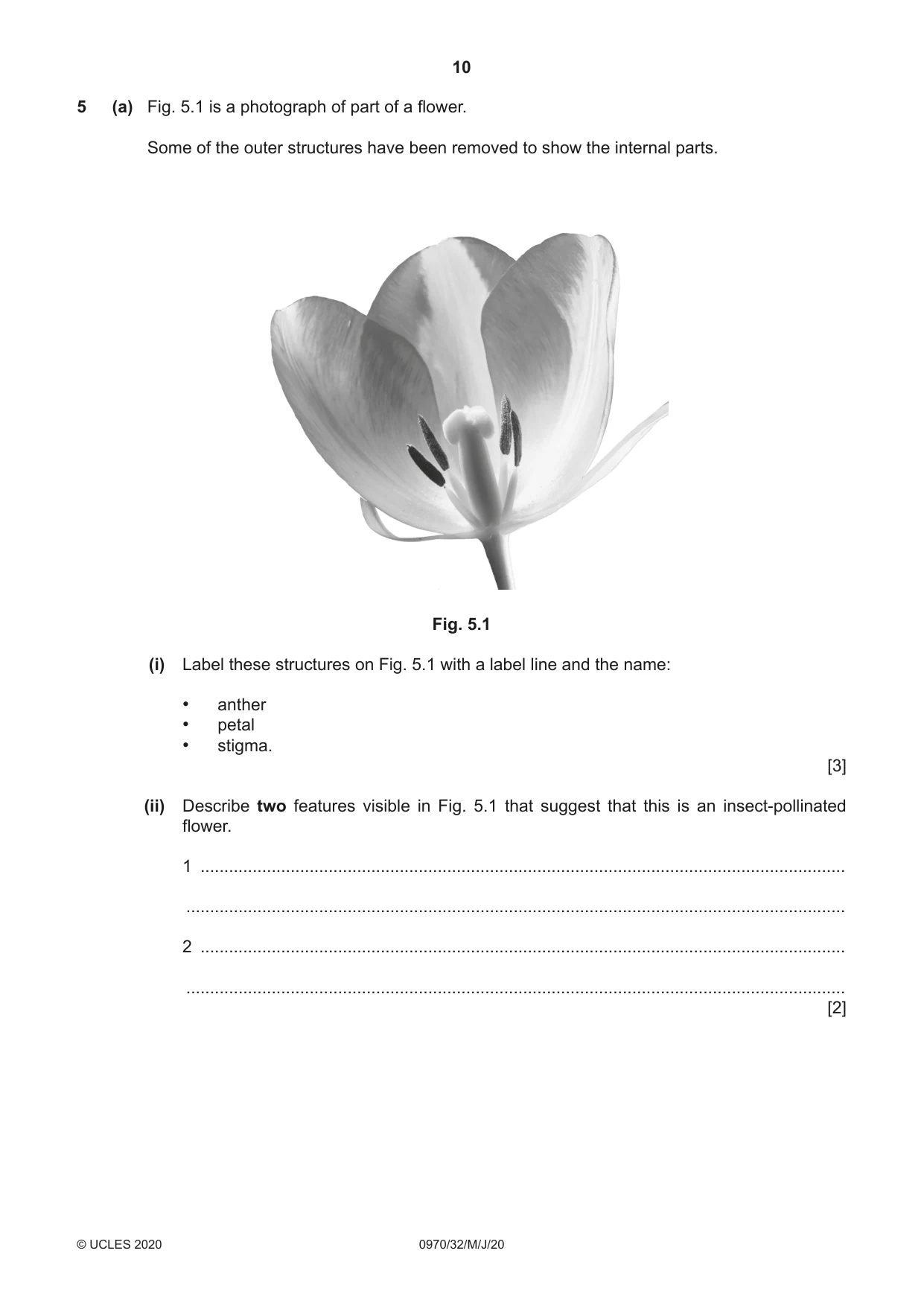
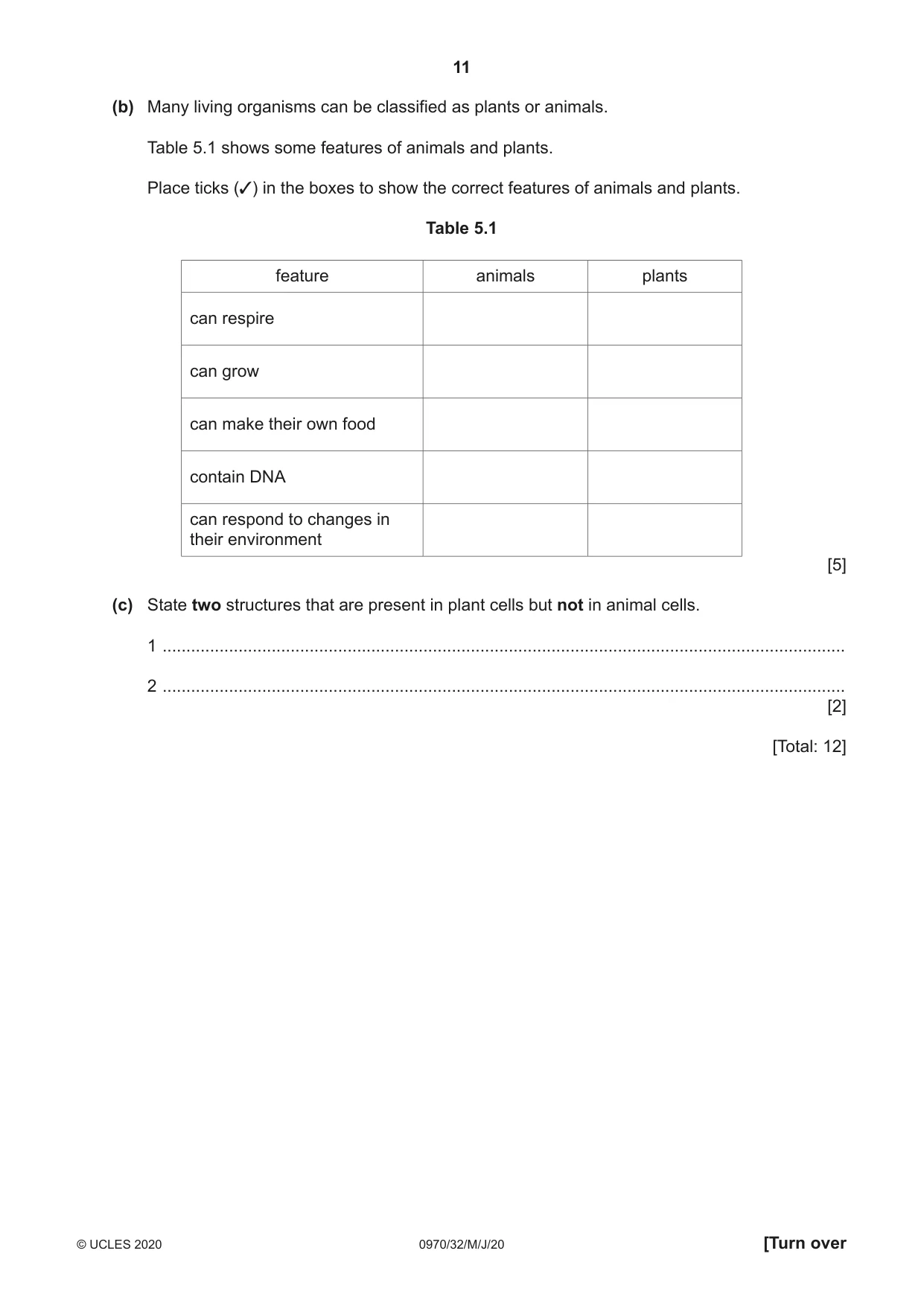
5 (a) Fig. 5.1 is a photograph of part of a flower. Some of the outer structures have been removed to show the internal parts. Fig. 5.1 (i) Label these structures on Fig. 5.1 with a label line and the name: • anther • petal • stigma. [3] (ii) Describe two features visible in Fig. 5.1 that suggest that this is an insect-pollinated flower. 1 ........................................................................................................................................ ........................................................................................................................................... 2 ........................................................................................................................................ ........................................................................................................................................... [2] (b) Many living organisms can be classified as plants or animals. Table 5.1 shows some features of animals and plants. Place ticks (3) in the boxes to show the correct features of animals and plants. Table 5.1 feature animals plants can respire can grow can make their own food contain DNA can respond to changes in their environment [5] (c) State two structures that are present in plant cells but not in animal cells. 1 ................................................................................................................................................ 2 ................................................................................................................................................ [2] [Total: 12]
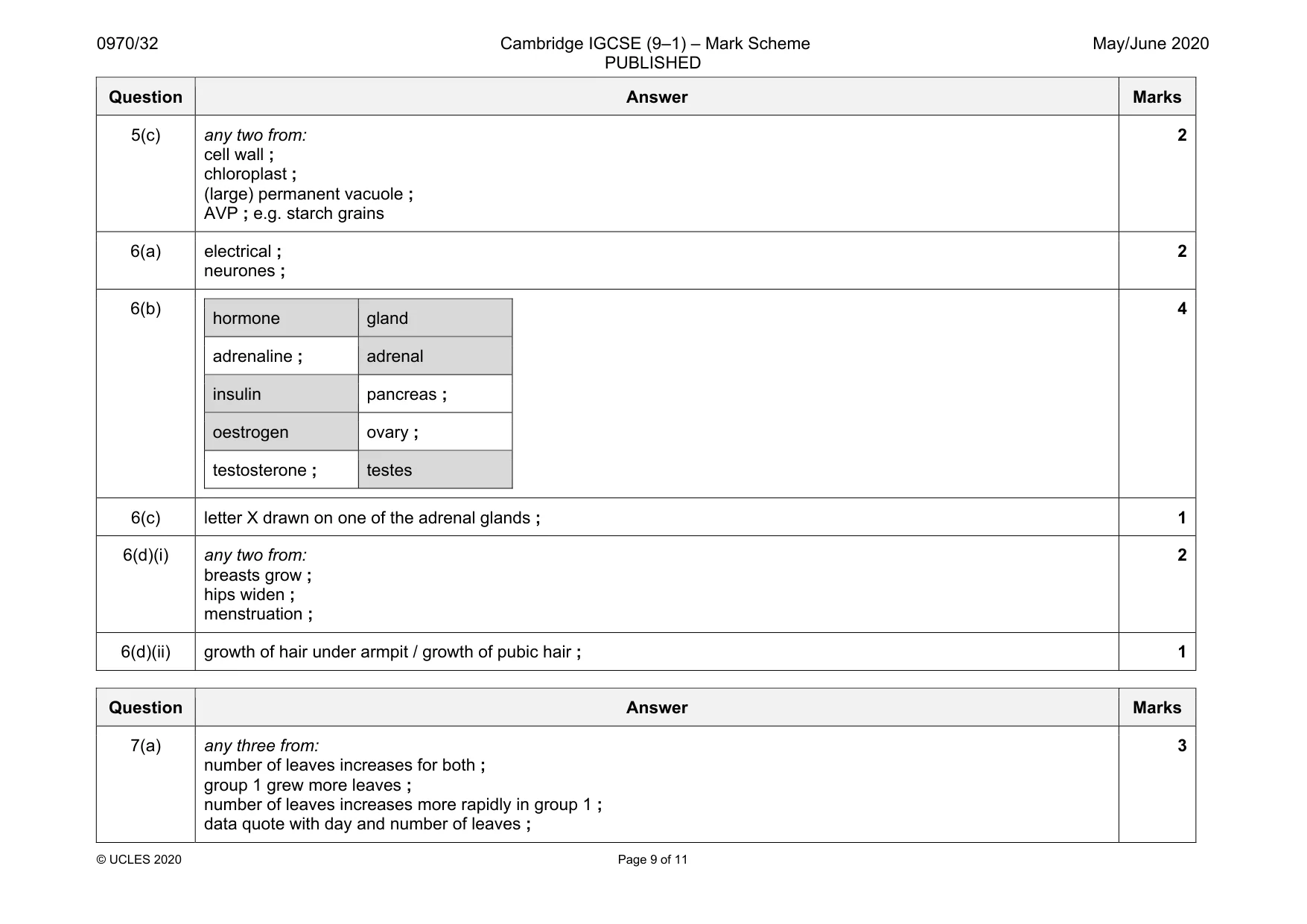
Mark scheme: 5(a)(i) anther labelled ; petal labelled ; stigma labelled ; 3 5(a)(ii) any two from: (large) petals ; stigma inside petals ; anther inside petals ; large stigma ; 2 5(b) one mark per row: ;;;;; feature animal plant can respire can grow can make their own food contain DNA can respond to changes in their environment 5 Question Answer Marks 5(c) any two from: cell wall ; chloroplast ; (large) permanent vacuole ; AVP ; e.g. starch grains 2
Q6 · A student wrote an incorrect definition of the term hormone
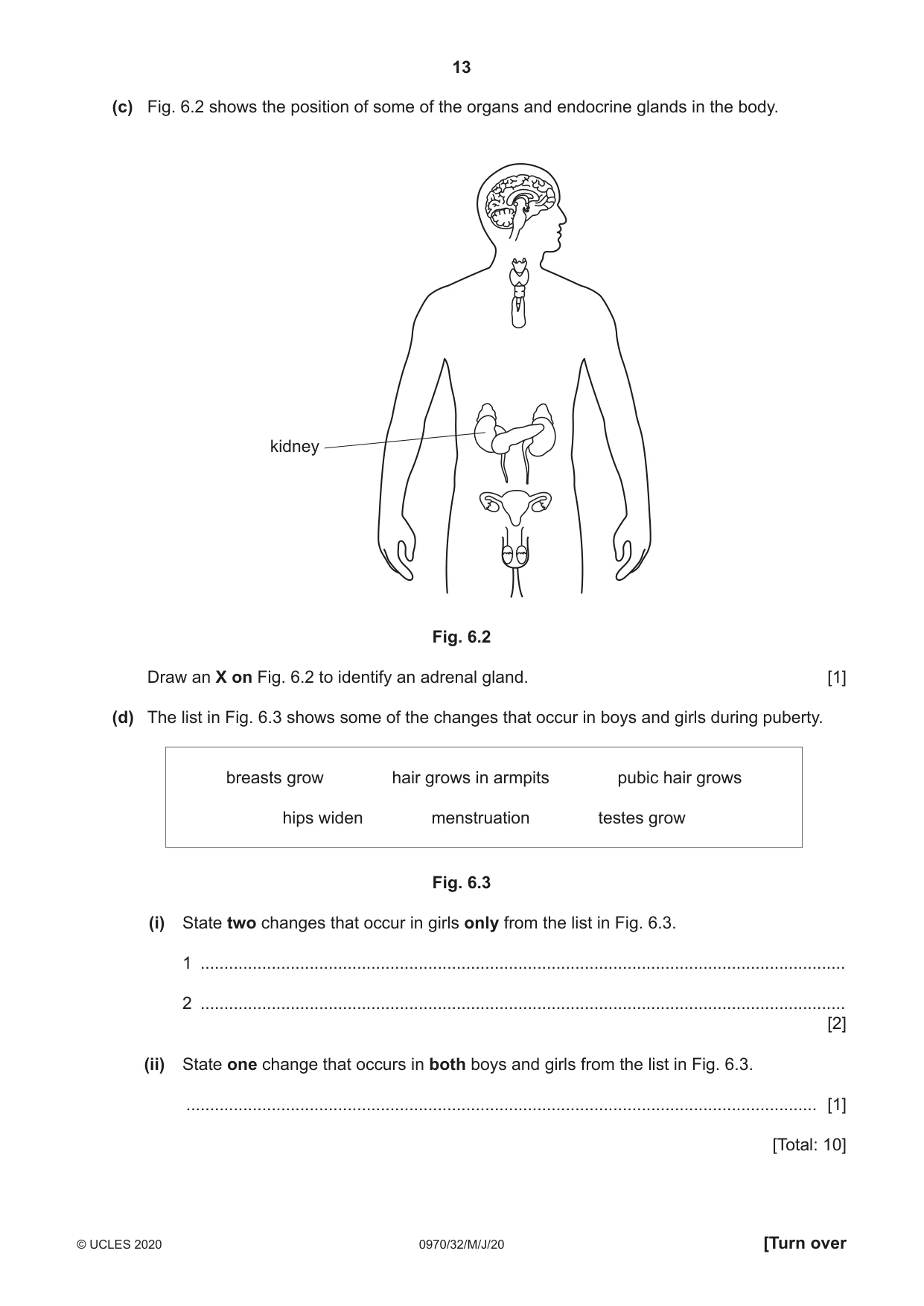
6 (a) A student wrote an incorrect definition of the term hormone. The student’s incorrect definition is shown in Fig. 6.1. A hormone is an electrical substance, produced by a gland and carried by the neurones, which alters the activity of one or more specific target organs. Fig. 6.1 Identify the two incorrect words in the student’s definition. 1 ................................................................................................................................................ 2 ................................................................................................................................................ [2] (b) Table 6.1 shows the names of some hormones and the glands where they are secreted. Complete Table 6.1. Table 6.1 hormone gland adrenal insulin oestrogen testes [4] (c) Fig. 6.2 shows the position of some of the organs and endocrine glands in the body. kidney Fig. 6.2 Draw an X on Fig. 6.2 to identify an adrenal gland. [1] (d) The list in Fig. 6.3 shows some of the changes that occur in boys and girls during puberty. breasts grow hair grows in armpits pubic hair grows hips widen menstruation testes grow Fig. 6.3 (i) State two changes that occur in girls only from the list in Fig. 6.3. 1 ........................................................................................................................................ 2 ........................................................................................................................................ [2] (ii) State one change that occurs in both boys and girls from the list in Fig. 6.3. ..................................................................................................................................... [1] [Total: 10]
Mark scheme: 6(a) electrical ; neurones ; 2 6(b) hormone gland adrenaline ; adrenal insulin pancreas ; oestrogen ovary ; testosterone ; testes 4 6(c) letter X drawn on one of the adrenal glands ; 1 6(d)(i) any two from: breasts grow ; hips widen ; menstruation ; 2 6(d)(ii) growth of hair under armpit / growth of pubic hair ; 1
Q7 · Researchers investigated the effects of using a fertiliser on the number of leaves grown…
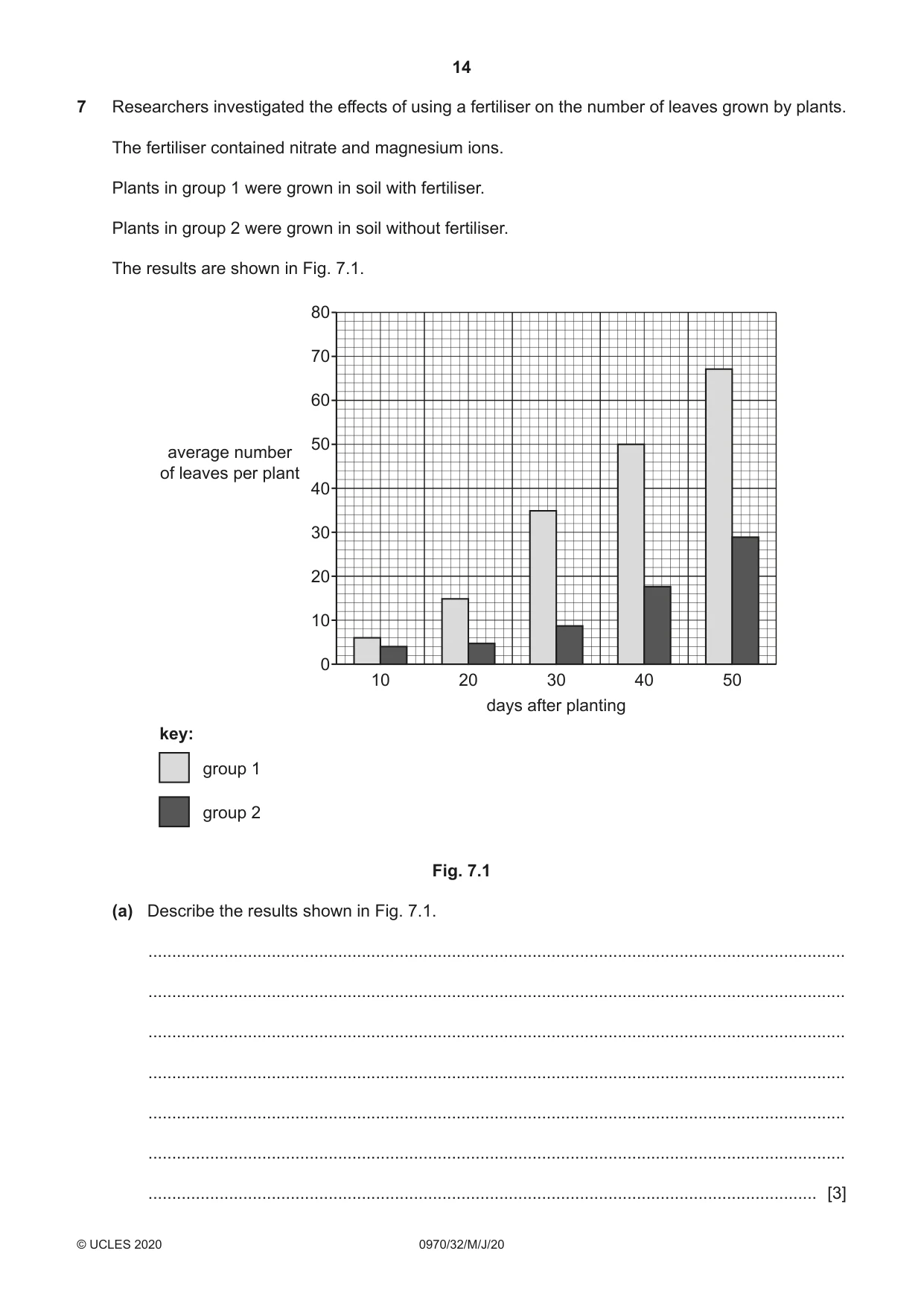
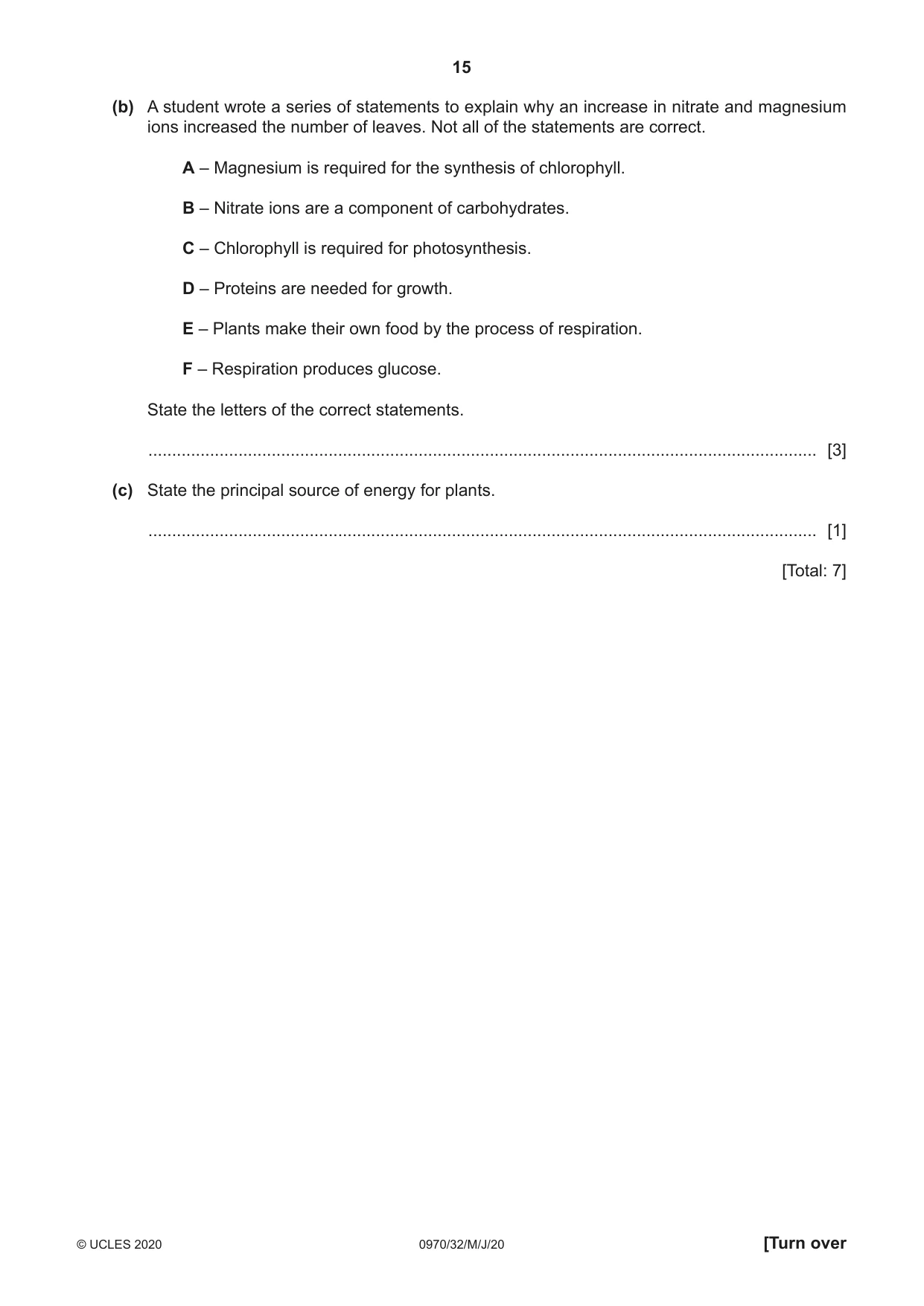
7 Researchers investigated the effects of using a fertiliser on the number of leaves grown by plants. The fertiliser contained nitrate and magnesium ions. Plants in group 1 were grown in soil with fertiliser. Plants in group 2 were grown in soil without fertiliser. The results are shown in Fig. 7.1. 80 70 60 50 average number of leaves per plant 40 30 20 10 0 10 20 30 40 50 days after planting key: group 1 group 2 Fig. 7.1 (a) Describe the results shown in Fig. 7.1. ................................................................................................................................................... ................................................................................................................................................... ................................................................................................................................................... ................................................................................................................................................... ................................................................................................................................................... ................................................................................................................................................... ............................................................................................................................................. [3] (b) A student wrote a series of statements to explain why an increase in nitrate and magnesium ions increased the number of leaves. Not all of the statements are correct. A – Magnesium is required for the synthesis of chlorophyll. B – Nitrate ions are a component of carbohydrates. C – Chlorophyll is required for photosynthesis. D – Proteins are needed for growth. E – Plants make their own food by the process of respiration. F – Respiration produces glucose. State the letters of the correct statements. ............................................................................................................................................. [3] (c) State the principal source of energy for plants. ............................................................................................................................................. [1] [Total: 7]
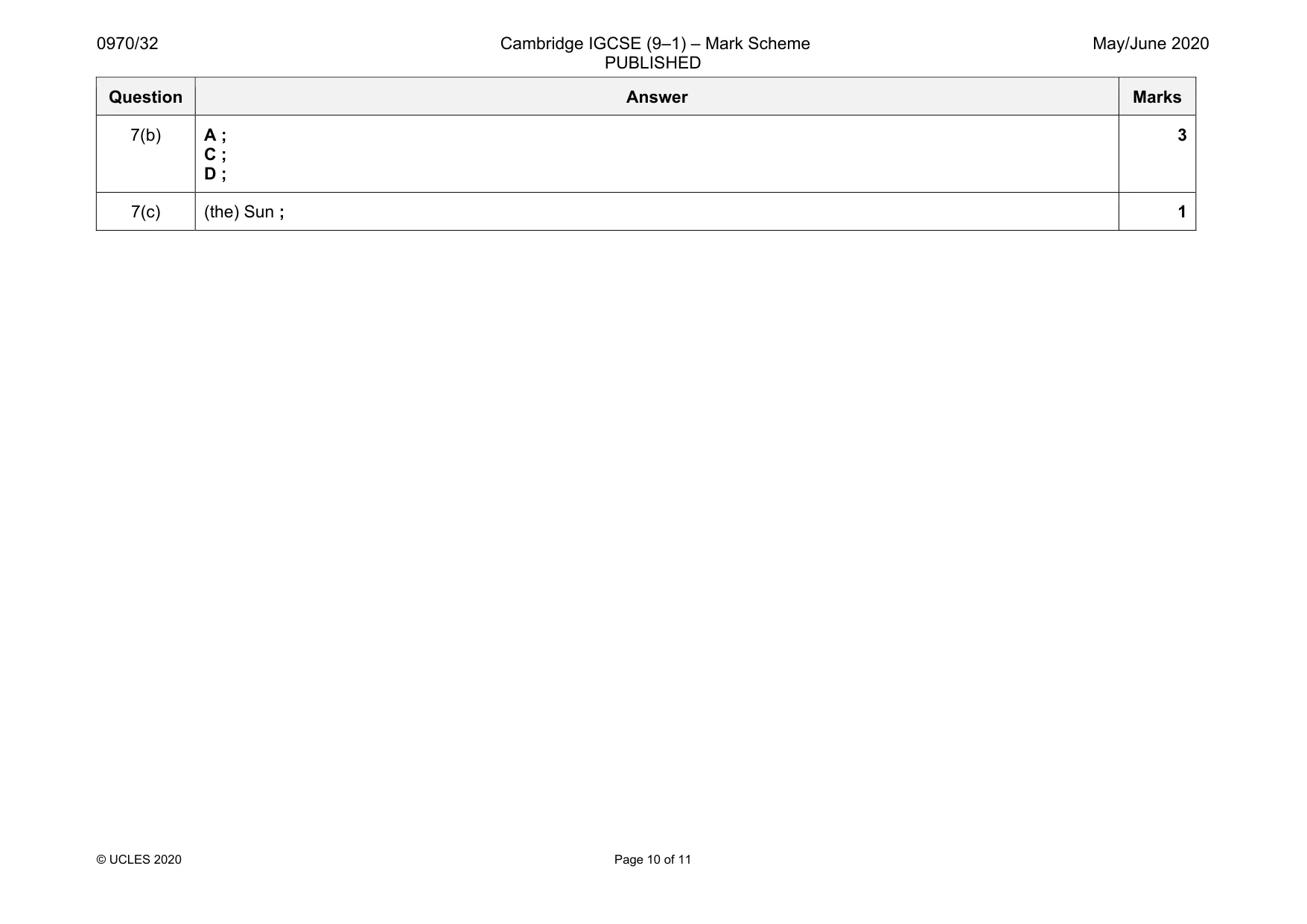
Mark scheme: 7(a) any three from: number of leaves increases for both ; group 1 grew more leaves ; number of leaves increases more rapidly in group 1 ; data quote with day and number of leaves ; Question Answer Marks 7(b) A ; C ; D ; 3 7(c) (the) Sun ; 1
Q8 · The mass of different materials recycled in one country in 2012 and 2017
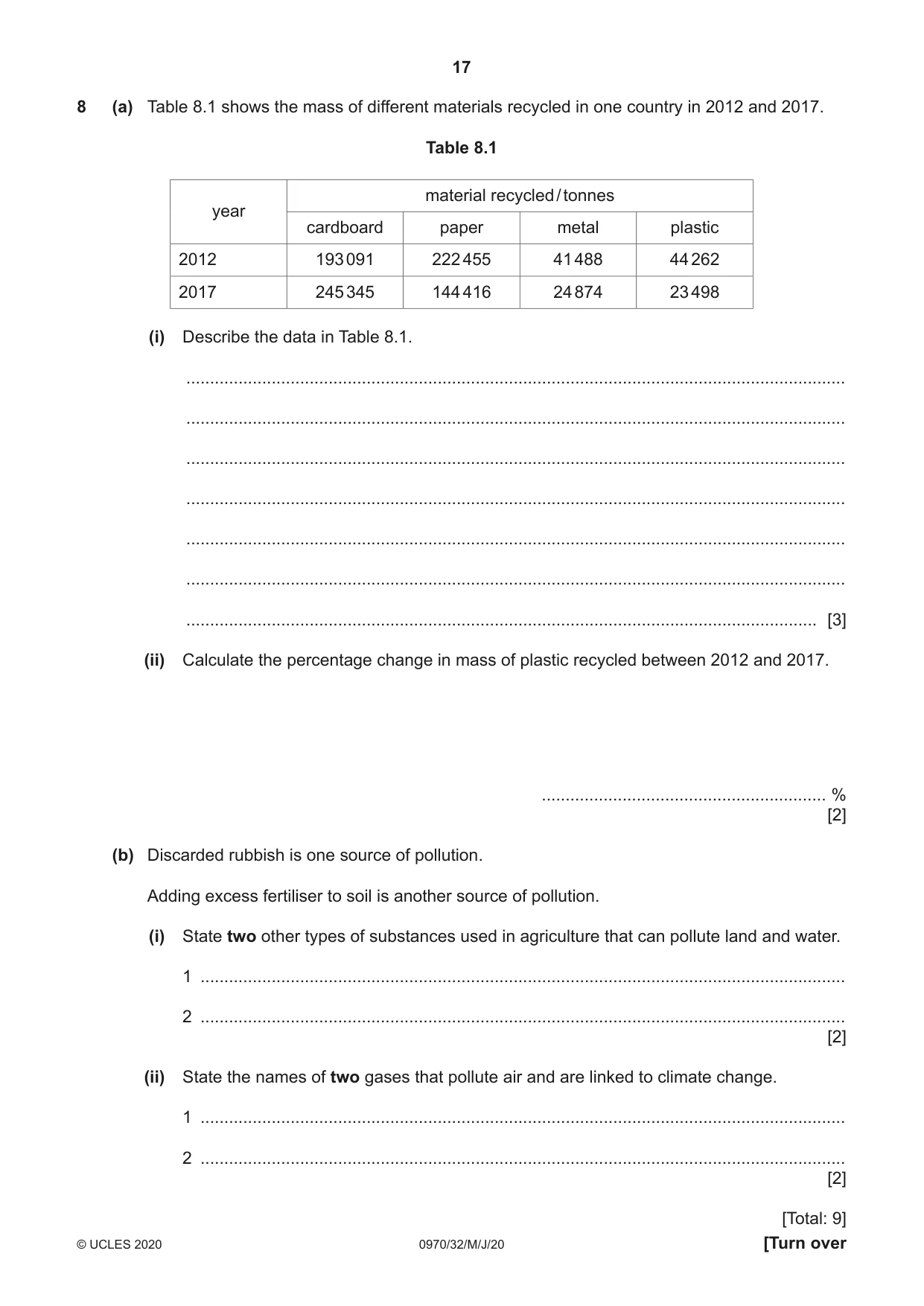
8 (a) Table 8.1 shows the mass of different materials recycled in one country in 2012 and 2017. Table 8.1 material recycled / tonnes year cardboard paper metal plastic 2012 193 091 222 455 41 488 44 262 2017 245 345 144 416 24 874 23 498 (i) Describe the data in Table 8.1. ........................................................................................................................................... ........................................................................................................................................... ........................................................................................................................................... ........................................................................................................................................... ........................................................................................................................................... ........................................................................................................................................... ..................................................................................................................................... [3] (ii) Calculate the percentage change in mass of plastic recycled between 2012 and 2017. ............................................................ % [2] (b) Discarded rubbish is one source of pollution. Adding excess fertiliser to soil is another source of pollution. (i) State two other types of substances used in agriculture that can pollute land and water. 1 ........................................................................................................................................ 2 ........................................................................................................................................ [2] (ii) State the names of two gases that pollute air and are linked to climate change. 1 ........................................................................................................................................ 2 ........................................................................................................................................ [2] [Total: 9]
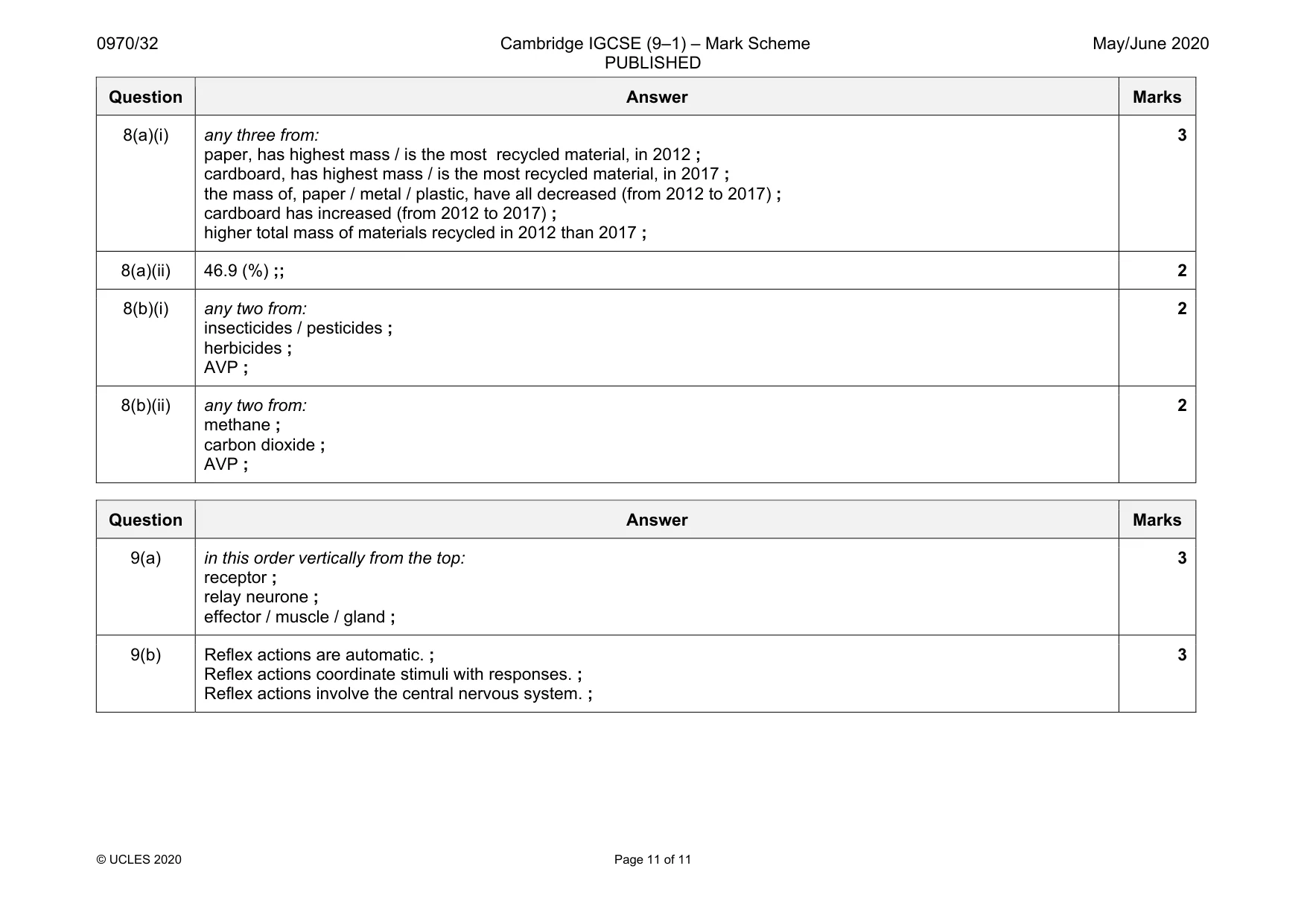
Mark scheme: 8(a)(i) any three from: paper, has highest mass / is the most recycled material, in 2012 ; cardboard, has highest mass / is the most recycled material, in 2017 ; the mass of, paper / metal / plastic, have all decreased (from 2012 to 2017) ; cardboard has increased (from 2012 to 2017) ; higher total mass of materials recycled in 2012 than 2017 ; 3 8(a)(ii) 46.9 (%) ;; 2 8(b)(i) any two from: insecticides / pesticides ; herbicides ; AVP ; 2 8(b)(ii) any two from: methane ; carbon dioxide ; AVP ; 2
Q9 · A flow chart showing the pathway of a reflex action
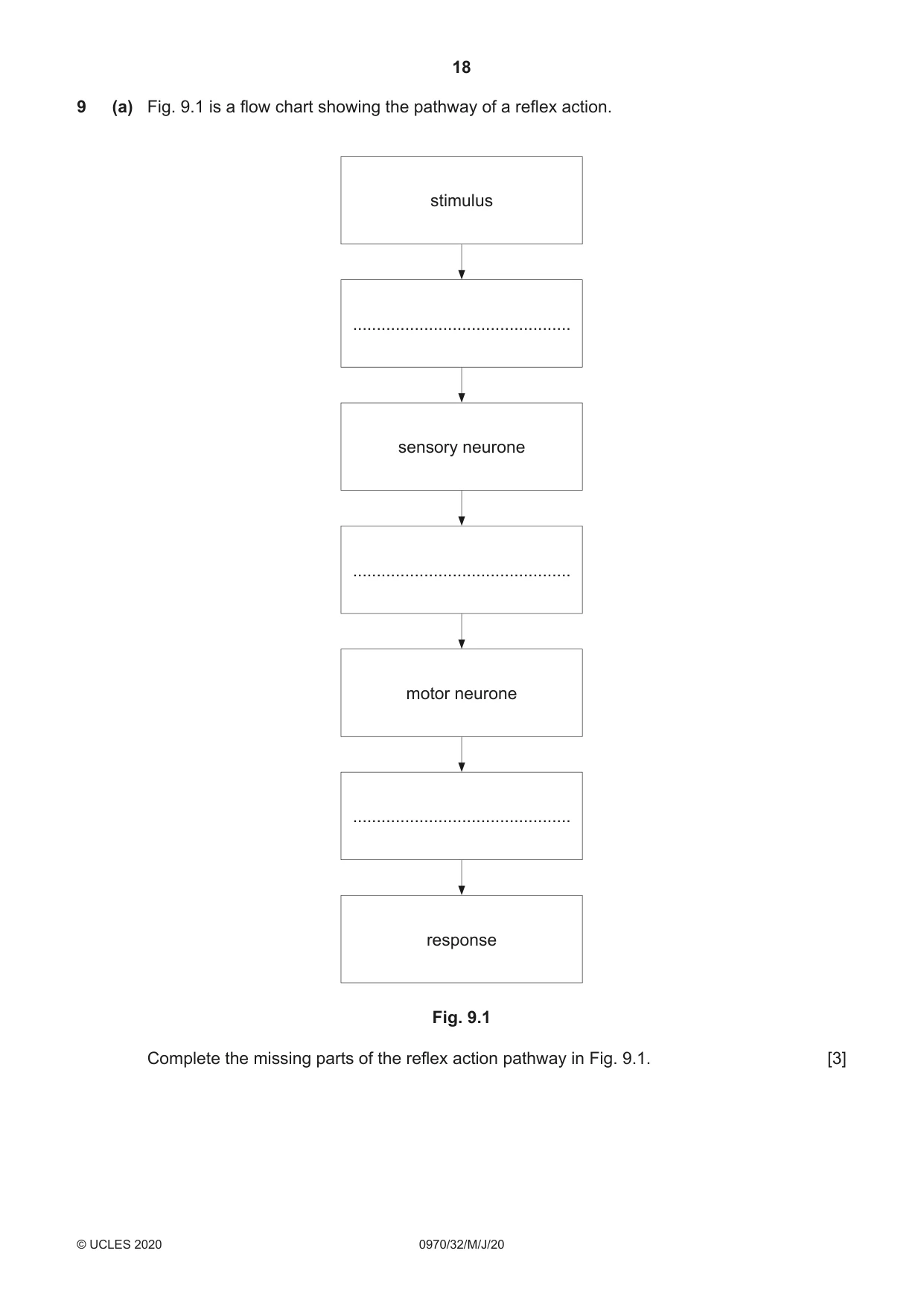
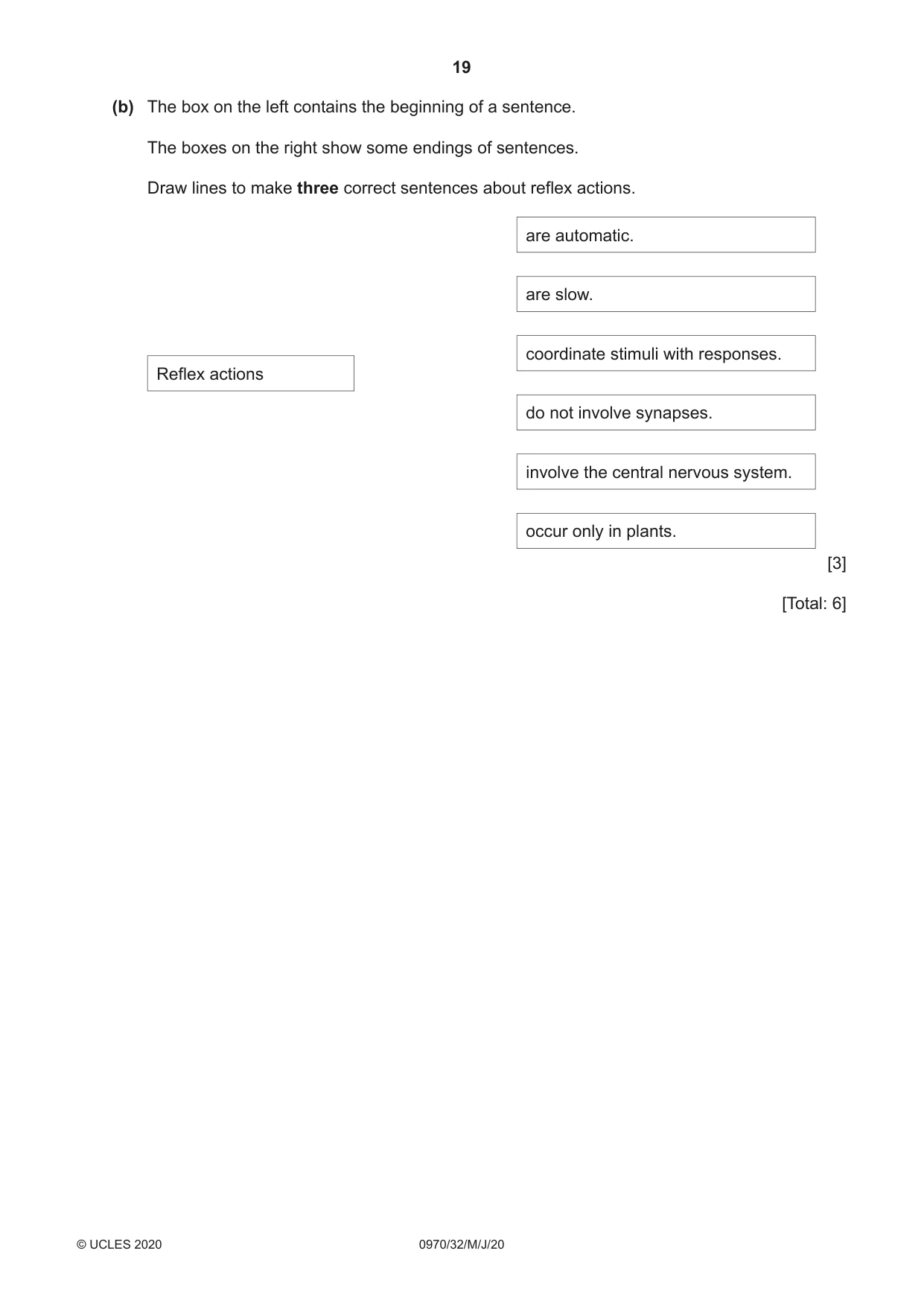
9 (a) Fig. 9.1 is a flow chart showing the pathway of a reflex action. stimulus .............................................. sensory neurone .............................................. motor neurone .............................................. response Fig. 9.1 Complete the missing parts of the reflex action pathway in Fig. 9.1. [3] (b) The box on the left contains the beginning of a sentence. The boxes on the right show some endings of sentences. Draw lines to make three correct sentences about reflex actions. are automatic. are slow. coordinate stimuli with responses. Reflex actions do not involve synapses. involve the central nervous system. occur only in plants. [3] [Total: 6]
Mark scheme: 9(a) in this order vertically from the top: receptor ; relay neurone ; effector / muscle / gland ; 9(b) Reflex actions are automatic. ; Reflex actions coordinate stimuli with responses. ; Reflex actions involve the central nervous system. ; 3
What was in this paper
The subtopics covered by these 9 questions, and how many questions each got. Open one in a new tab to see every Cambridge question on it.