Cambridge A Level Thinking Skills 9694 — 2014 Oct/Nov Paper 2 · Variant 2
9694/22/O/N/14 · 45 marks · ≈51 min
The question paper and its mark scheme, free to read here and free to download. This is Cambridge’s own paper, exactly as it was sat.
Question paper8 pages


Mark scheme8 pages
Answers below. Sit the paper first if you are practising.
Paper as text
Question paper, page 1
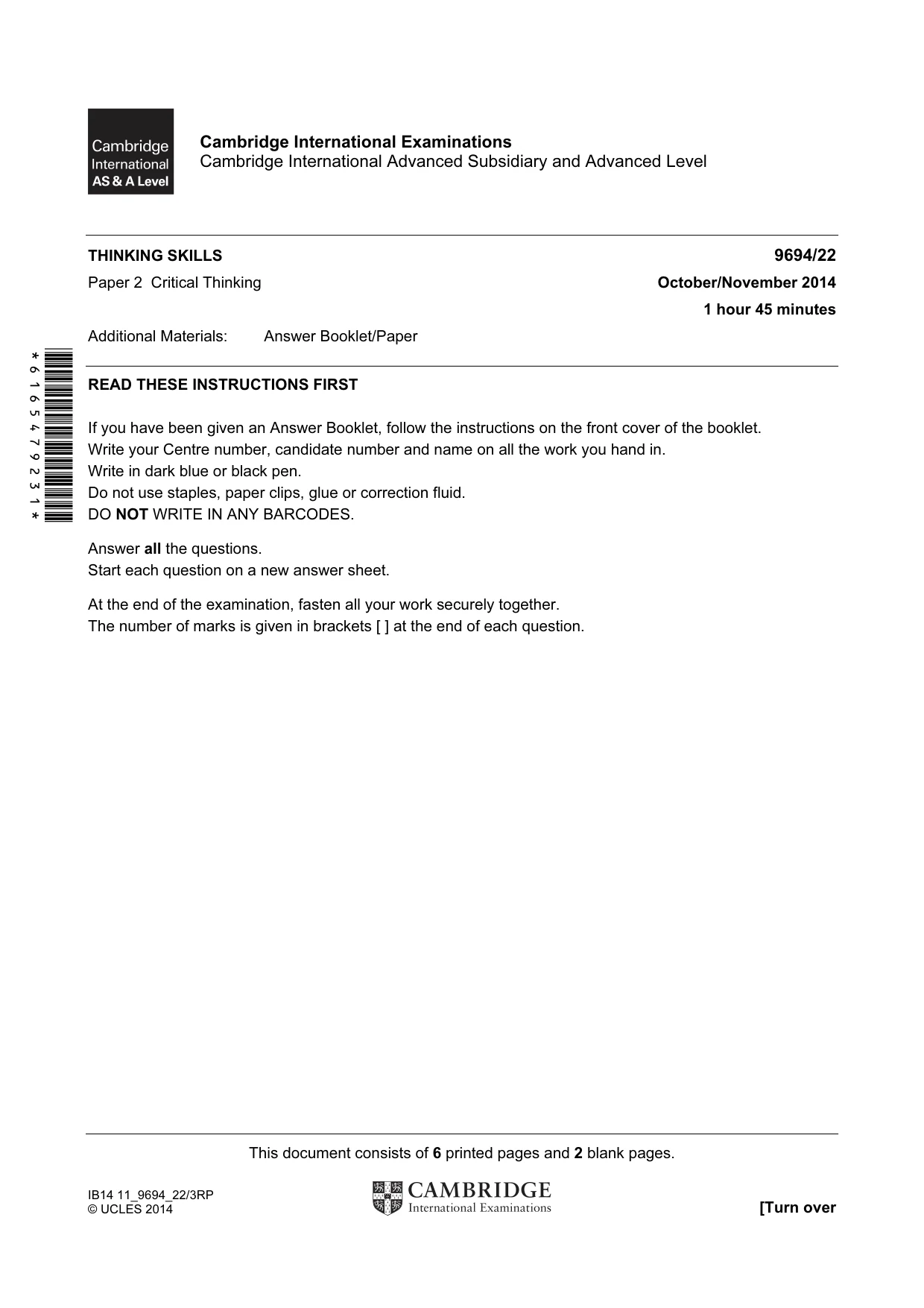
This document consists of 6 printed pages and 2 blank pages. IB14 11_9694_22/3RP © UCLES 2014 [Turn over *6165479231* Cambridge International Examinations Cambridge International Advanced Subsidiary and Advanced Level THINKING SKILLS 9694/22 Paper 2 Critical Thinking October/November 2014 1 hour 45 minutes Additional Materials: Answer Booklet/Paper READ THESE INSTRUCTIONS FIRST If you have been given an Answer Booklet, follow the instructions on the front cover of the booklet. Write your Centre number, candidate number and name on all the work you hand in. Write in dark blue or black pen. Do not use staples, paper clips, glue or correction fluid. DO NOT WRITE IN ANY BARCODES. Answer all the questions. Start each question on a new answer sheet. At the end of the examination, fasten all your work securely together. The number of marks is given in brackets [ ] at the end of each question.
Question paper, page 2
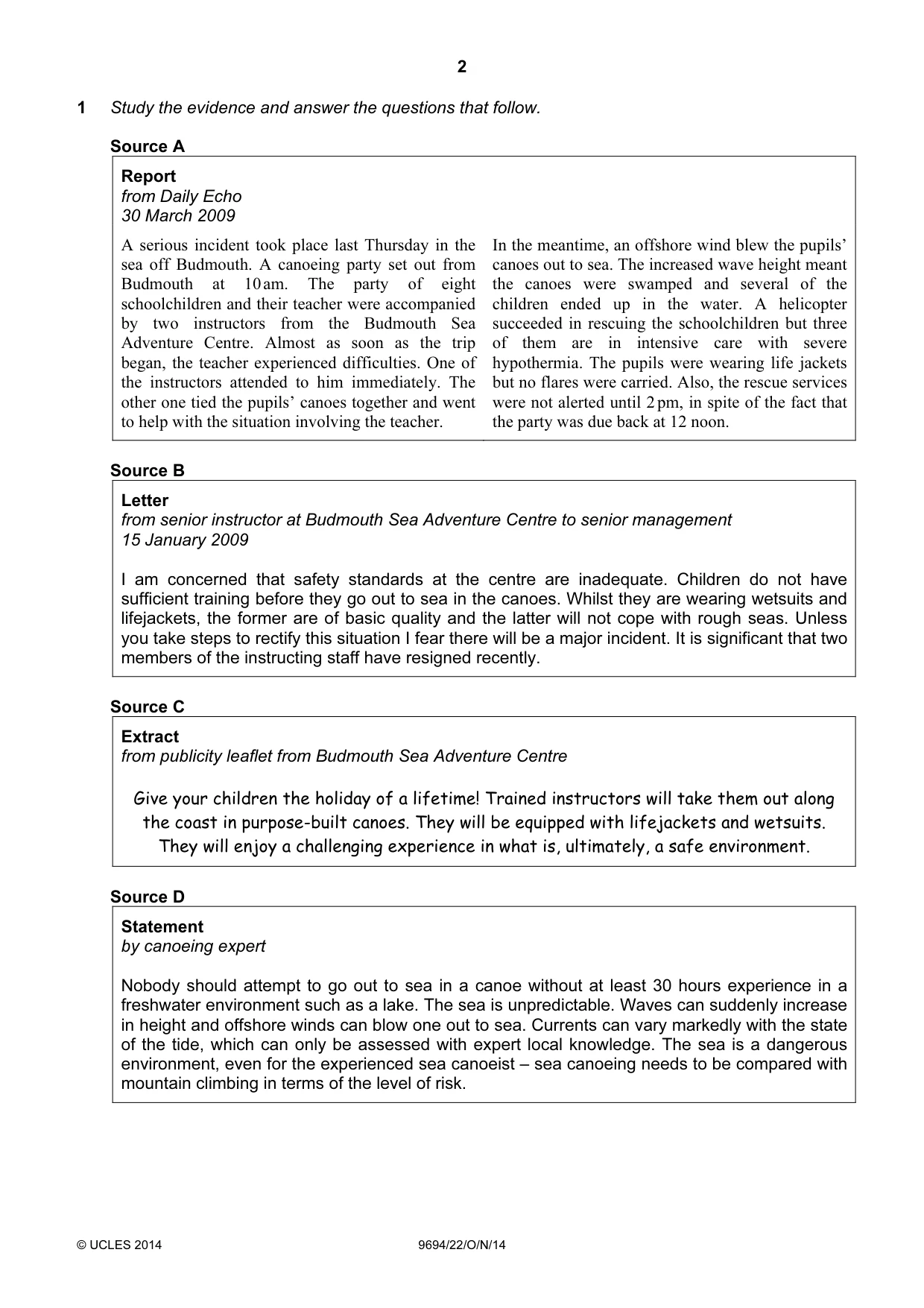
2 © UCLES 2014 9694/22/O/N/14 1 Study the evidence and answer the questions that follow. Source A Report from Daily Echo 30 March 2009 A serious incident took place last Thursday in the sea off Budmouth. A canoeing party set out from Budmouth at 10 am. The party of eight schoolchildren and their teacher were accompanied by two instructors from the Budmouth Sea Adventure Centre. Almost as soon as the trip began, the teacher experienced difficulties. One of the instructors attended to him immediately. The other one tied the pupils’ canoes together and went to help with the situation involving the teacher. In the meantime, an offshore wind blew the pupils’ canoes out to sea. The increased wave height meant the canoes were swamped and several of the children ended up in the water. A helicopter succeeded in rescuing the schoolchildren but three of them are in intensive care with severe hypothermia. The pupils were wearing life jackets but no flares were carried. Also, the rescue services were not alerted until 2 pm, in spite of the fact that the party was due back at 12 noon. Source B Letter from senior instructor at Budmouth Sea Adventure Centre to senior management 15 January 2009 I am concerned that safety standards at the centre are inadequate. Children do not have sufficient training before they go out to sea in the canoes. Whilst they are wearing wetsuits and lifejackets, the former are of basic quality and the latter will not cope with rough seas. Unless you take steps to rectify this situation I fear there will be a major incident. It is significant that two members of the instructing staff have resigned recently. Source C Extract from publicity leaflet from Budmouth Sea Adventure Centre Give your children the holiday of a lifetime! Trained instructors will take them out along the coast in purpose-built canoes. They will be equipped with lifejackets and wetsuits. They will enjoy a challenging experience in what is, ultimately, a safe environment. Source D Statement by canoeing expert Nobody should attempt to go out to sea in a canoe without at least 30 hours experience in a freshwater environment such as a lake. The sea is unpredictable. Waves can suddenly increase in height and offshore winds can blow one out to sea. Currents can vary markedly with the state of the tide, which can only be assessed with expert local knowledge. The sea is a dangerous environment, even for the experienced sea canoeist – sea canoeing needs to be compared with mountain climbing in terms of the level of risk.
Question paper, page 3
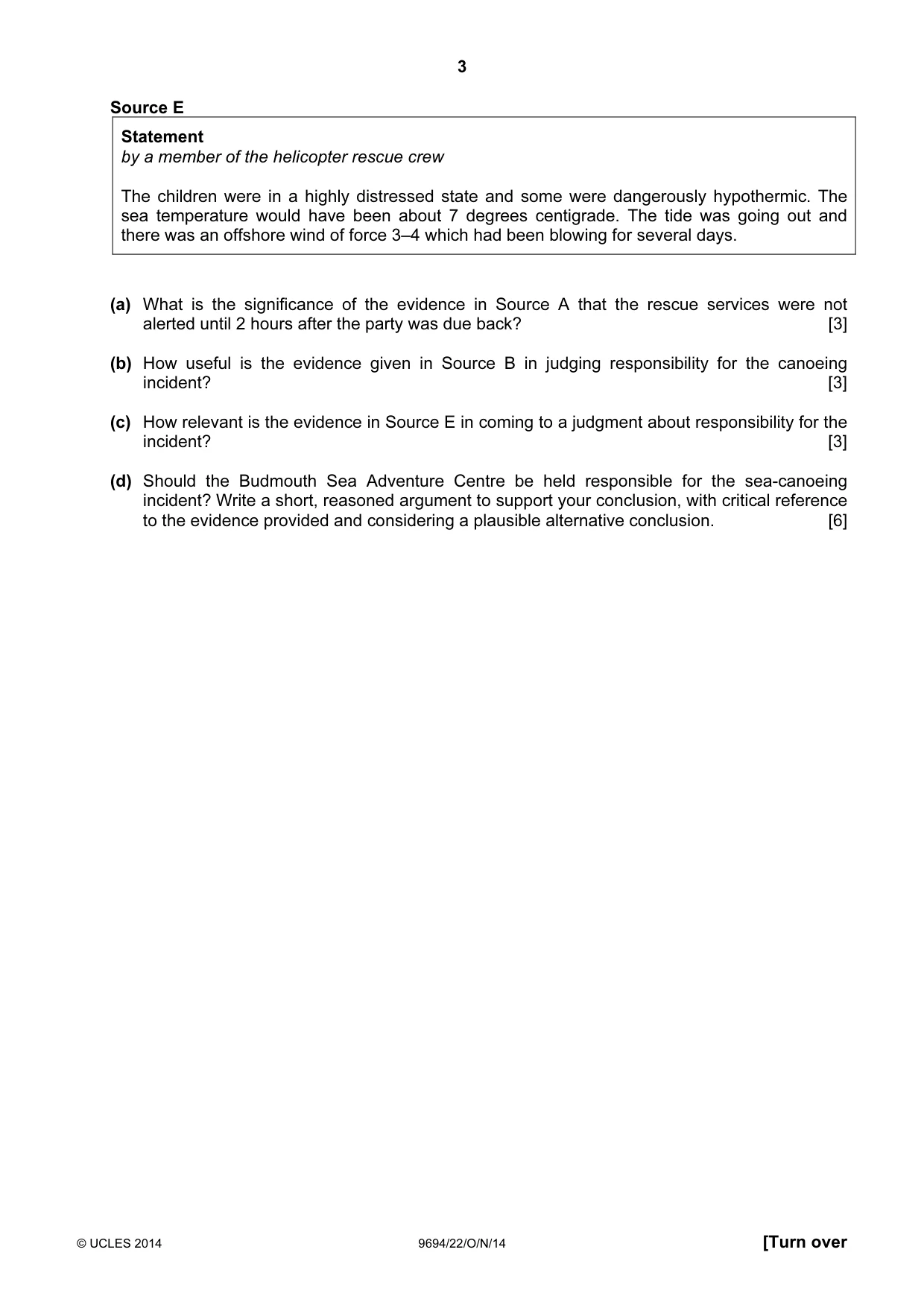
3 © UCLES 2014 9694/22/O/N/14 [Turn over Source E Statement by a member of the helicopter rescue crew The children were in a highly distressed state and some were dangerously hypothermic. The sea temperature would have been about 7 degrees centigrade. The tide was going out and there was an offshore wind of force 3–4 which had been blowing for several days. (a) What is the significance of the evidence in Source A that the rescue services were not alerted until 2 hours after the party was due back? [3] (b) How useful is the evidence given in Source B in judging responsibility for the canoeing incident? [3] (c) How relevant is the evidence in Source E in coming to a judgment about responsibility for the incident? [3] (d) Should the Budmouth Sea Adventure Centre be held responsible for the sea-canoeing incident? Write a short, reasoned argument to support your conclusion, with critical reference to the evidence provided and considering a plausible alternative conclusion. [6]
Question paper, page 4
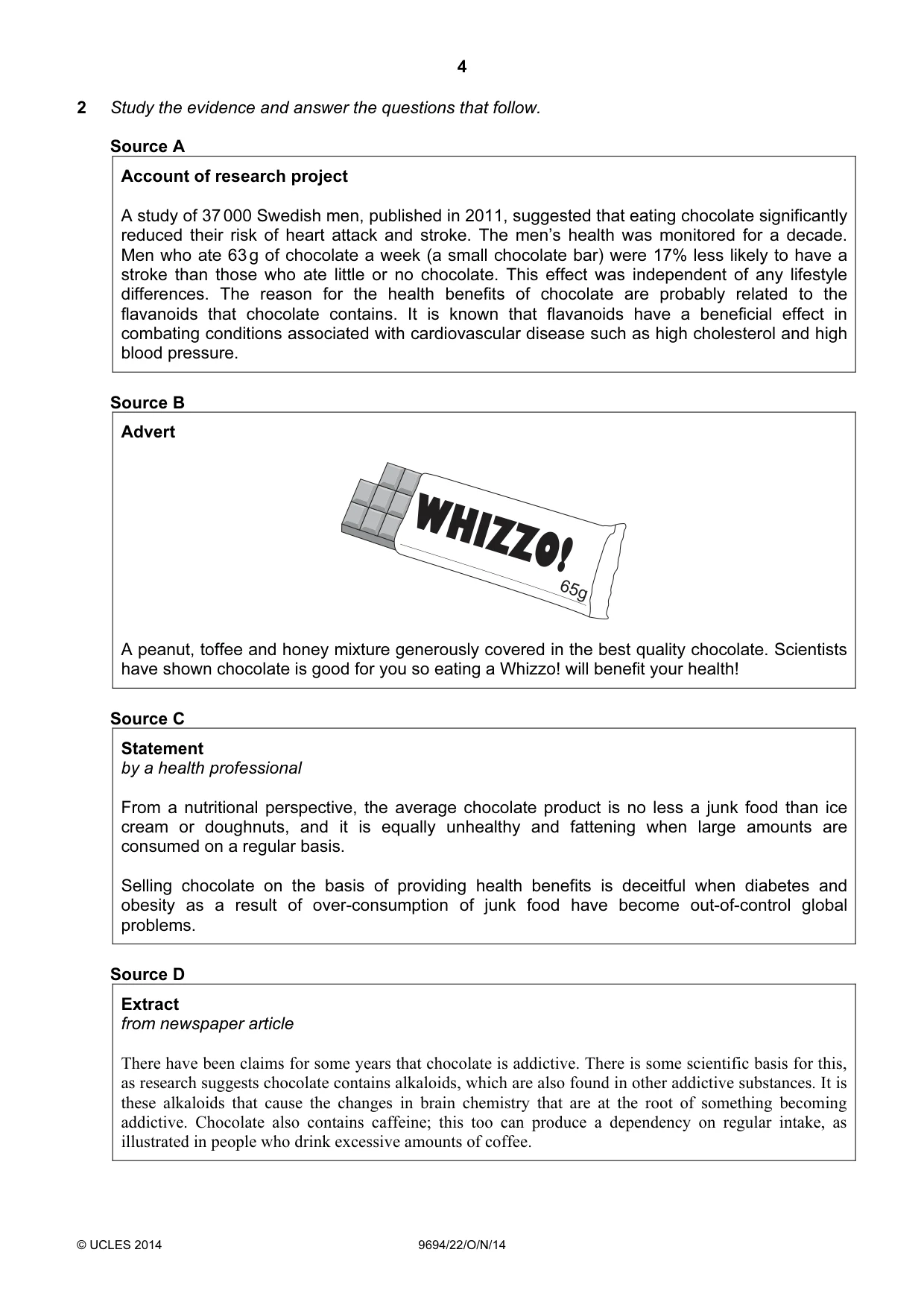
4 © UCLES 2014 9694/22/O/N/14 2 Study the evidence and answer the questions that follow. Source A Account of research project A study of 37 000 Swedish men, published in 2011, suggested that eating chocolate significantly reduced their risk of heart attack and stroke. The men’s health was monitored for a decade. Men who ate 63 g of chocolate a week (a small chocolate bar) were 17% less likely to have a stroke than those who ate little or no chocolate. This effect was independent of any lifestyle differences. The reason for the health benefits of chocolate are probably related to the flavanoids that chocolate contains. It is known that flavanoids have a beneficial effect in combating conditions associated with cardiovascular disease such as high cholesterol and high blood pressure. Source B Advert 65g A peanut, toffee and honey mixture generously covered in the best quality chocolate. Scientists have shown chocolate is good for you so eating a Whizzo! will benefit your health! Source C Statement by a health professional From a nutritional perspective, the average chocolate product is no less a junk food than ice cream or doughnuts, and it is equally unhealthy and fattening when large amounts are consumed on a regular basis. Selling chocolate on the basis of providing health benefits is deceitful when diabetes and obesity as a result of over-consumption of junk food have become out-of-control global problems. Source D Extract from newspaper article There have been claims for some years that chocolate is addictive. There is some scientific basis for this, as research suggests chocolate contains alkaloids, which are also found in other addictive substances. It is these alkaloids that cause the changes in brain chemistry that are at the root of something becoming addictive. Chocolate also contains caffeine; this too can produce a dependency on regular intake, as illustrated in people who drink excessive amounts of coffee.
Question paper, page 5
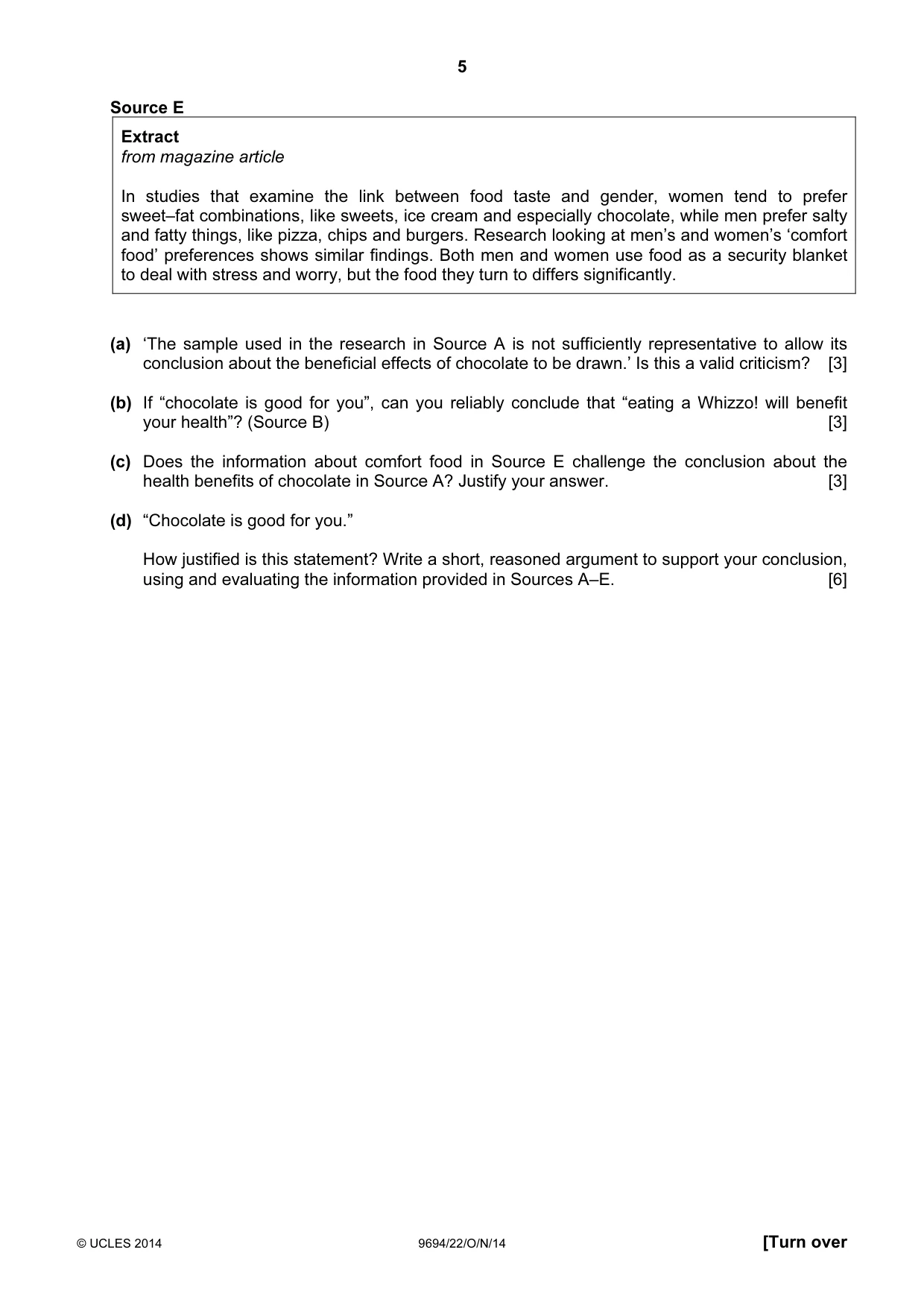
5 © UCLES 2014 9694/22/O/N/14 [Turn over Source E Extract from magazine article In studies that examine the link between food taste and gender, women tend to prefer sweet–fat combinations, like sweets, ice cream and especially chocolate, while men prefer salty and fatty things, like pizza, chips and burgers. Research looking at men’s and women’s ‘comfort food’ preferences shows similar findings. Both men and women use food as a security blanket to deal with stress and worry, but the food they turn to differs significantly. (a) ‘The sample used in the research in Source A is not sufficiently representative to allow its conclusion about the beneficial effects of chocolate to be drawn.’ Is this a valid criticism? [3] (b) If “chocolate is good for you”, can you reliably conclude that “eating a Whizzo! will benefit your health”? (Source B) [3] (c) Does the information about comfort food in Source E challenge the conclusion about the health benefits of chocolate in Source A? Justify your answer. [3] (d) “Chocolate is good for you.” How justified is this statement? Write a short, reasoned argument to support your conclusion, using and evaluating the information provided in Sources A–E. [6]
Question paper, page 6
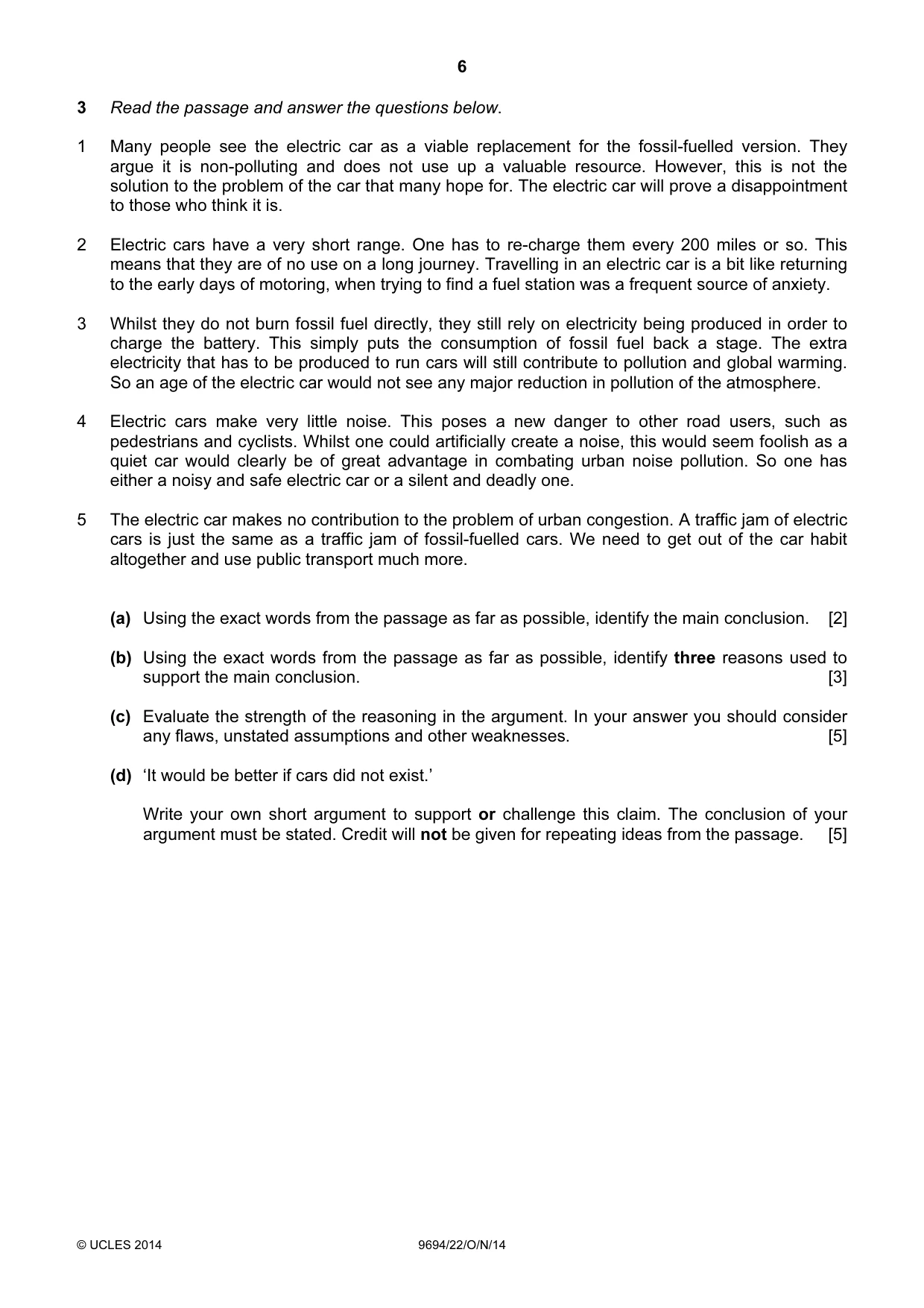
6 © UCLES 2014 9694/22/O/N/14 3 Read the passage and answer the questions below. 1 Many people see the electric car as a viable replacement for the fossil-fuelled version. They argue it is non-polluting and does not use up a valuable resource. However, this is not the solution to the problem of the car that many hope for. The electric car will prove a disappointment to those who think it is. 2 Electric cars have a very short range. One has to re-charge them every 200 miles or so. This means that they are of no use on a long journey. Travelling in an electric car is a bit like returning to the early days of motoring, when trying to find a fuel station was a frequent source of anxiety. 3 Whilst they do not burn fossil fuel directly, they still rely on electricity being produced in order to charge the battery. This simply puts the consumption of fossil fuel back a stage. The extra electricity that has to be produced to run cars will still contribute to pollution and global warming. So an age of the electric car would not see any major reduction in pollution of the atmosphere. 4 Electric cars make very little noise. This poses a new danger to other road users, such as pedestrians and cyclists. Whilst one could artificially create a noise, this would seem foolish as a quiet car would clearly be of great advantage in combating urban noise pollution. So one has either a noisy and safe electric car or a silent and deadly one. 5 The electric car makes no contribution to the problem of urban congestion. A traffic jam of electric cars is just the same as a traffic jam of fossil-fuelled cars. We need to get out of the car habit altogether and use public transport much more. (a) Using the exact words from the passage as far as possible, identify the main conclusion. [2] (b) Using the exact words from the passage as far as possible, identify three reasons used to support the main conclusion. [3] (c) Evaluate the strength of the reasoning in the argument. In your answer you should consider any flaws, unstated assumptions and other weaknesses. [5] (d) ‘It would be better if cars did not exist.’ Write your own short argument to support or challenge this claim. The conclusion of your argument must be stated. Credit will not be given for repeating ideas from the passage. [5]
Question paper, page 7
7 © UCLES 2014 9694/22/O/N/14 BLANK PAGE
Question paper, page 8
8 Permission to reproduce items where third-party owned material protected by copyright is included has been sought and cleared where possible. Every reasonable effort has been made by the publisher (UCLES) to trace copyright holders, but if any items requiring clearance have unwittingly been included, the publisher will be pleased to make amends at the earliest possible opportunity. Cambridge International Examinations is part of the Cambridge Assessment Group. Cambridge Assessment is the brand name of University of Cambridge Local Examinations Syndicate (UCLES), which is itself a department of the University of Cambridge. © UCLES 2014 9694/22/O/N/14 BLANK PAGE
Mark scheme, page 1
® IGCSE is the registered trademark of Cambridge International Examinations. CAMBRIDGE INTERNATIONAL EXAMINATIONS Cambridge International Advanced Subsidiary and Advanced Level MARK SCHEME for the October/November 2014 series 9694 THINKING SKILLS 9694/22 Paper 2 (Critical Thinking), maximum raw mark 45 This mark scheme is published as an aid to teachers and candidates, to indicate the requirements of the examination. It shows the basis on which Examiners were instructed to award marks. It does not indicate the details of the discussions that took place at an Examiners’ meeting before marking began, which would have considered the acceptability of alternative answers. Mark schemes should be read in conjunction with the question paper and the Principal Examiner Report for Teachers. Cambridge will not enter into discussions about these mark schemes. Cambridge is publishing the mark schemes for the October/November 2014 series for most Cambridge IGCSE®, Cambridge International A and AS Level components and some Cambridge O Level components.
Mark scheme, page 2
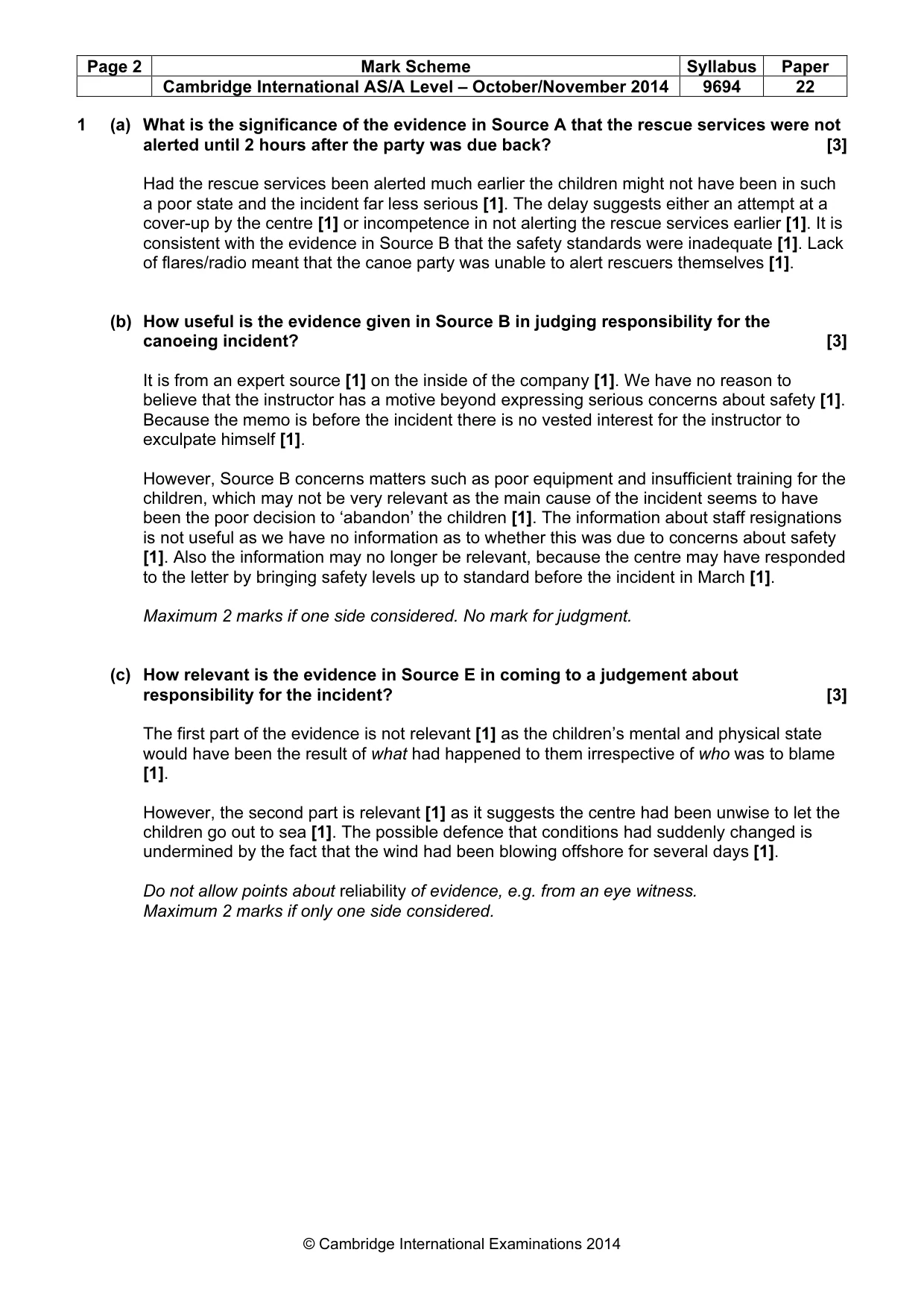
Page 2 Mark Scheme Syllabus Paper Cambridge International AS/A Level – October/November 2014 9694 22 © Cambridge International Examinations 2014 1 (a) What is the significance of the evidence in Source A that the rescue services were not alerted until 2 hours after the party was due back? [3] Had the rescue services been alerted much earlier the children might not have been in such a poor state and the incident far less serious [1]. The delay suggests either an attempt at a cover-up by the centre [1] or incompetence in not alerting the rescue services earlier [1]. It is consistent with the evidence in Source B that the safety standards were inadequate [1]. Lack of flares/radio meant that the canoe party was unable to alert rescuers themselves [1]. (b) How useful is the evidence given in Source B in judging responsibility for the canoeing incident? [3] It is from an expert source [1] on the inside of the company [1]. We have no reason to believe that the instructor has a motive beyond expressing serious concerns about safety [1]. Because the memo is before the incident there is no vested interest for the instructor to exculpate himself [1]. However, Source B concerns matters such as poor equipment and insufficient training for the children, which may not be very relevant as the main cause of the incident seems to have been the poor decision to ‘abandon’ the children [1]. The information about staff resignations is not useful as we have no information as to whether this was due to concerns about safety [1]. Also the information may no longer be relevant, because the centre may have responded to the letter by bringing safety levels up to standard before the incident in March [1]. Maximum 2 marks if one side considered. No mark for judgment. (c) How relevant is the evidence in Source E in coming to a judgement about responsibility for the incident? [3] The first part of the evidence is not relevant [1] as the children’s mental and physical state would have been the result of what had happened to them irrespective of who was to blame [1]. However, the second part is relevant [1] as it suggests the centre had been unwise to let the children go out to sea [1]. The possible defence that conditions had suddenly changed is undermined by the fact that the wind had been blowing offshore for several days [1]. Do not allow points about reliability of evidence, e.g. from an eye witness. Maximum 2 marks if only one side considered.
Mark scheme, page 3
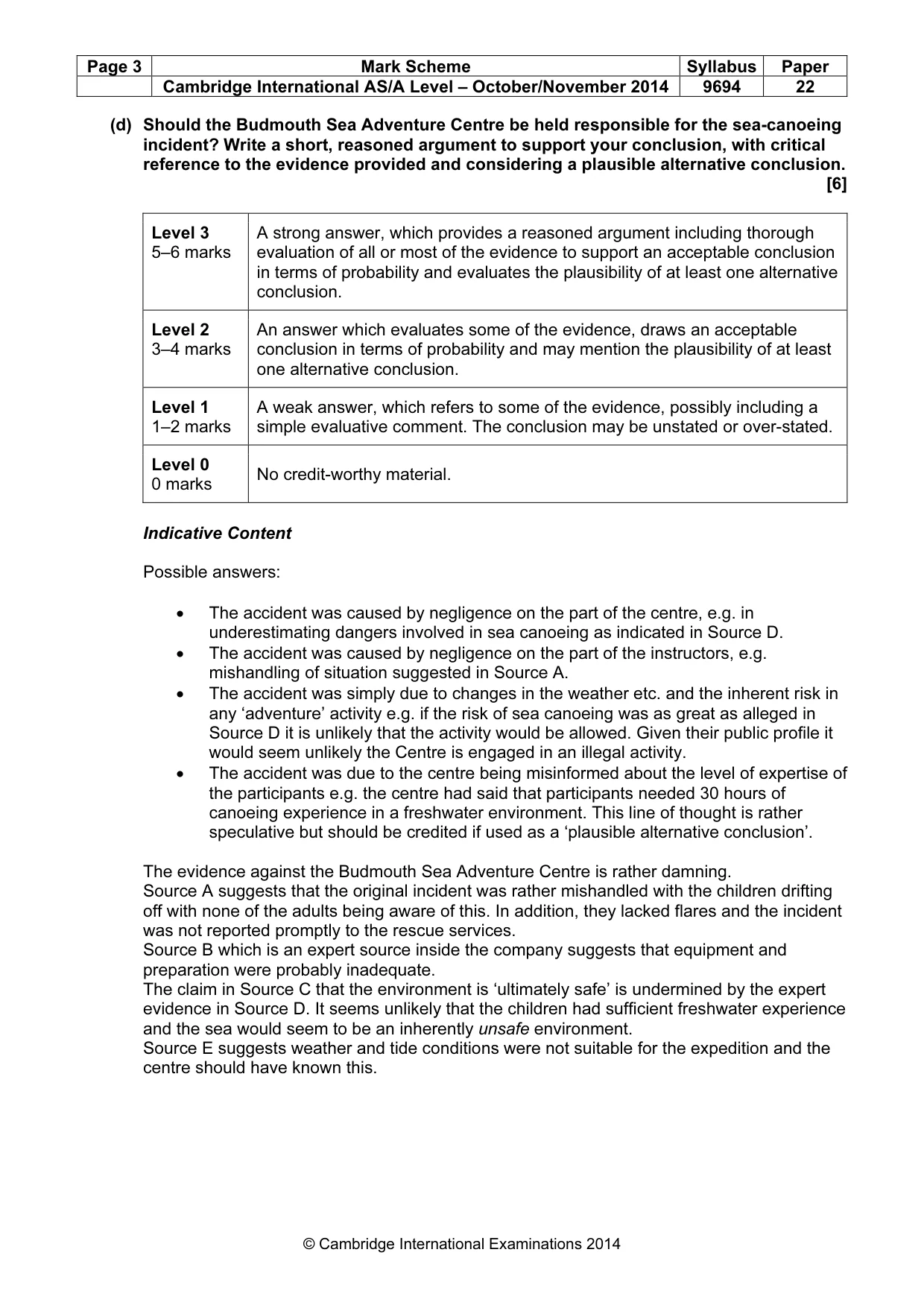
Page 3 Mark Scheme Syllabus Paper Cambridge International AS/A Level – October/November 2014 9694 22 © Cambridge International Examinations 2014 (d) Should the Budmouth Sea Adventure Centre be held responsible for the sea-canoeing incident? Write a short, reasoned argument to support your conclusion, with critical reference to the evidence provided and considering a plausible alternative conclusion. [6] Level 3 5–6 marks A strong answer, which provides a reasoned argument including thorough evaluation of all or most of the evidence to support an acceptable conclusion in terms of probability and evaluates the plausibility of at least one alternative conclusion. Level 2 3–4 marks An answer which evaluates some of the evidence, draws an acceptable conclusion in terms of probability and may mention the plausibility of at least one alternative conclusion. Level 1 1–2 marks A weak answer, which refers to some of the evidence, possibly including a simple evaluative comment. The conclusion may be unstated or over-stated. Level 0 0 marks No credit-worthy material. Indicative Content Possible answers: • The accident was caused by negligence on the part of the centre, e.g. in underestimating dangers involved in sea canoeing as indicated in Source D. • The accident was caused by negligence on the part of the instructors, e.g. mishandling of situation suggested in Source A. • The accident was simply due to changes in the weather etc. and the inherent risk in any ‘adventure’ activity e.g. if the risk of sea canoeing was as great as alleged in Source D it is unlikely that the activity would be allowed. Given their public profile it would seem unlikely the Centre is engaged in an illegal activity. • The accident was due to the centre being misinformed about the level of expertise of the participants e.g. the centre had said that participants needed 30 hours of canoeing experience in a freshwater environment. This line of thought is rather speculative but should be credited if used as a ‘plausible alternative conclusion’. The evidence against the Budmouth Sea Adventure Centre is rather damning. Source A suggests that the original incident was rather mishandled with the children drifting off with none of the adults being aware of this. In addition, they lacked flares and the incident was not reported promptly to the rescue services. Source B which is an expert source inside the company suggests that equipment and preparation were probably inadequate. The claim in Source C that the environment is ‘ultimately safe’ is undermined by the expert evidence in Source D. It seems unlikely that the children had sufficient freshwater experience and the sea would seem to be an inherently unsafe environment. Source E suggests weather and tide conditions were not suitable for the expedition and the centre should have known this.
Mark scheme, page 4
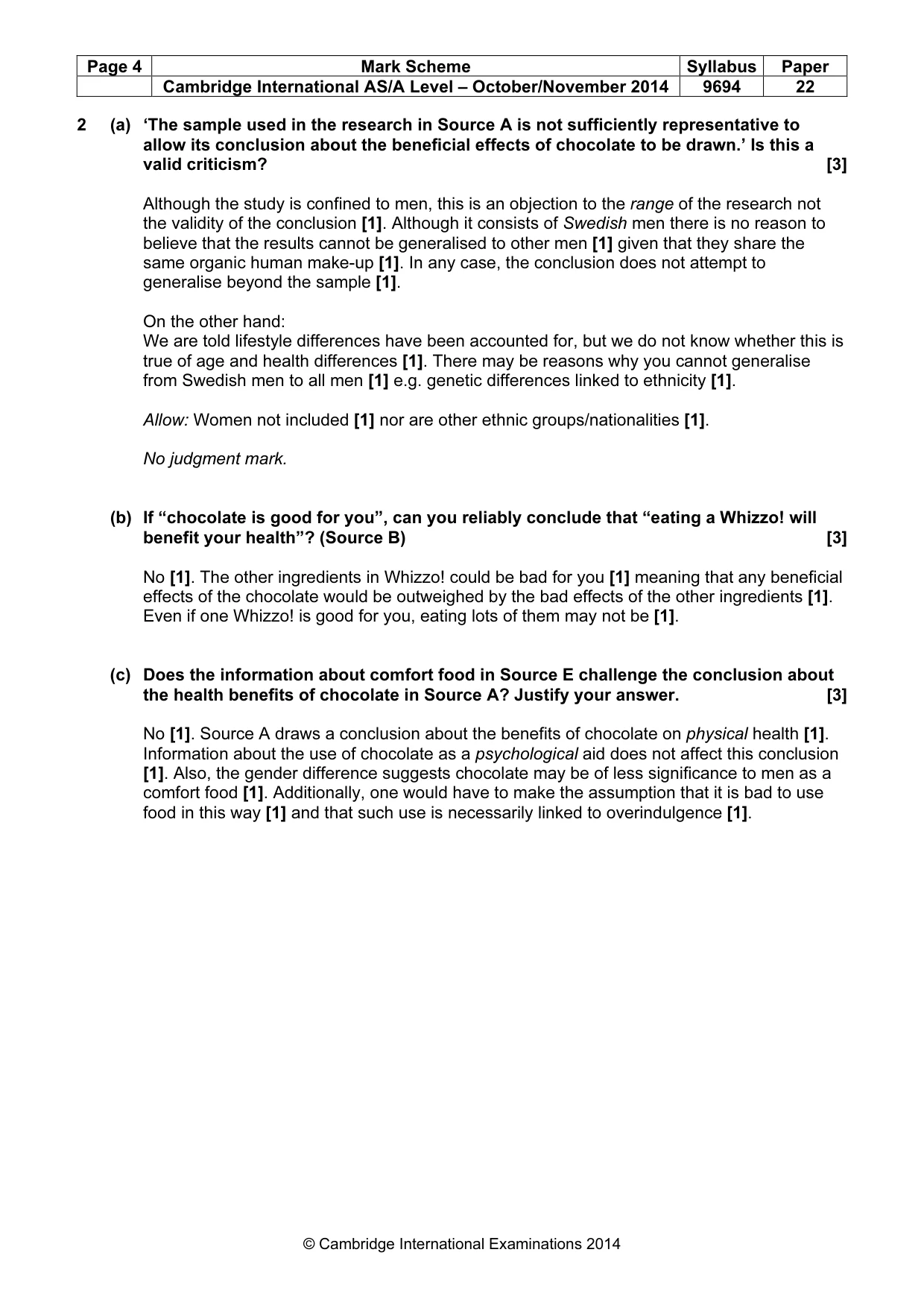
Page 4 Mark Scheme Syllabus Paper Cambridge International AS/A Level – October/November 2014 9694 22 © Cambridge International Examinations 2014 2 (a) ‘The sample used in the research in Source A is not sufficiently representative to allow its conclusion about the beneficial effects of chocolate to be drawn.’ Is this a valid criticism? [3] Although the study is confined to men, this is an objection to the range of the research not the validity of the conclusion [1]. Although it consists of Swedish men there is no reason to believe that the results cannot be generalised to other men [1] given that they share the same organic human make-up [1]. In any case, the conclusion does not attempt to generalise beyond the sample [1]. On the other hand: We are told lifestyle differences have been accounted for, but we do not know whether this is true of age and health differences [1]. There may be reasons why you cannot generalise from Swedish men to all men [1] e.g. genetic differences linked to ethnicity [1]. Allow: Women not included [1] nor are other ethnic groups/nationalities [1]. No judgment mark. (b) If “chocolate is good for you”, can you reliably conclude that “eating a Whizzo! will benefit your health”? (Source B) [3] No [1]. The other ingredients in Whizzo! could be bad for you [1] meaning that any beneficial effects of the chocolate would be outweighed by the bad effects of the other ingredients [1]. Even if one Whizzo! is good for you, eating lots of them may not be [1]. (c) Does the information about comfort food in Source E challenge the conclusion about the health benefits of chocolate in Source A? Justify your answer. [3] No [1]. Source A draws a conclusion about the benefits of chocolate on physical health [1]. Information about the use of chocolate as a psychological aid does not affect this conclusion [1]. Also, the gender difference suggests chocolate may be of less significance to men as a comfort food [1]. Additionally, one would have to make the assumption that it is bad to use food in this way [1] and that such use is necessarily linked to overindulgence [1].
Mark scheme, page 5
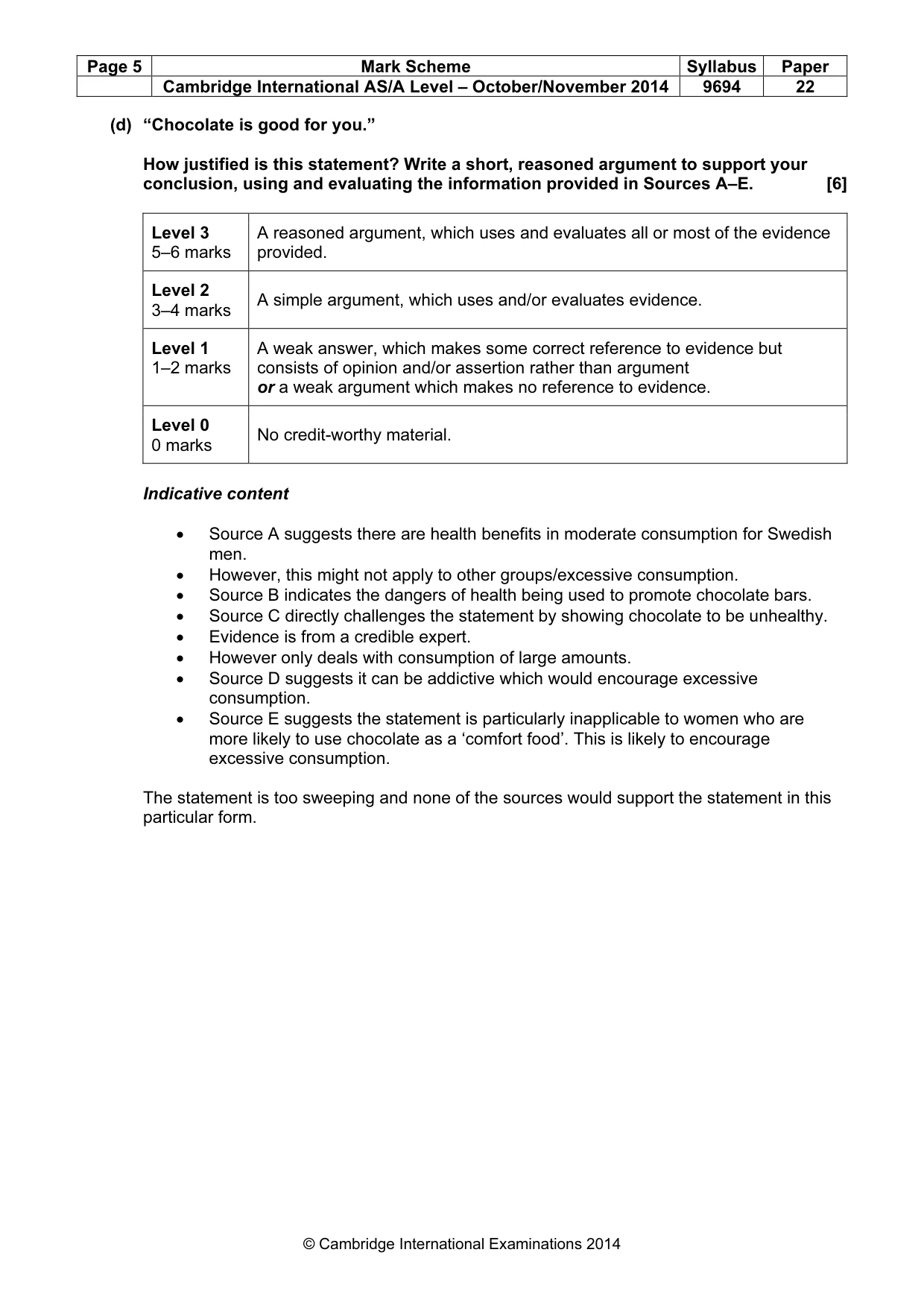
Page 5 Mark Scheme Syllabus Paper Cambridge International AS/A Level – October/November 2014 9694 22 © Cambridge International Examinations 2014 (d) “Chocolate is good for you.” How justified is this statement? Write a short, reasoned argument to support your conclusion, using and evaluating the information provided in Sources A–E. [6] Level 3 5–6 marks A reasoned argument, which uses and evaluates all or most of the evidence provided. Level 2 3–4 marks A simple argument, which uses and/or evaluates evidence. Level 1 1–2 marks A weak answer, which makes some correct reference to evidence but consists of opinion and/or assertion rather than argument or a weak argument which makes no reference to evidence. Level 0 0 marks No credit-worthy material. Indicative content • Source A suggests there are health benefits in moderate consumption for Swedish men. • However, this might not apply to other groups/excessive consumption. • Source B indicates the dangers of health being used to promote chocolate bars. • Source C directly challenges the statement by showing chocolate to be unhealthy. • Evidence is from a credible expert. • However only deals with consumption of large amounts. • Source D suggests it can be addictive which would encourage excessive consumption. • Source E suggests the statement is particularly inapplicable to women who are more likely to use chocolate as a ‘comfort food’. This is likely to encourage excessive consumption. The statement is too sweeping and none of the sources would support the statement in this particular form.
Mark scheme, page 6
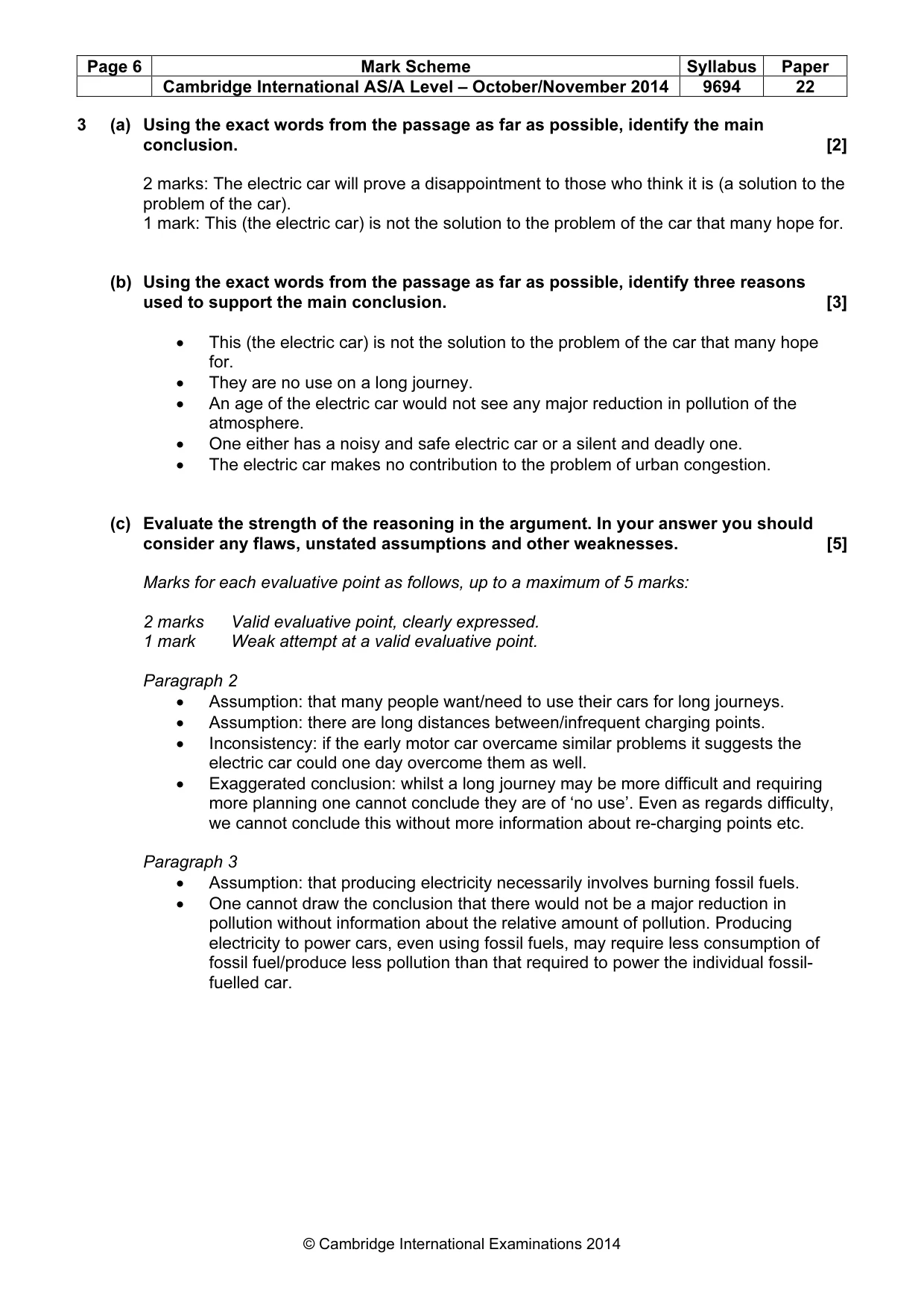
Page 6 Mark Scheme Syllabus Paper Cambridge International AS/A Level – October/November 2014 9694 22 © Cambridge International Examinations 2014 3 (a) Using the exact words from the passage as far as possible, identify the main conclusion. [2] 2 marks: The electric car will prove a disappointment to those who think it is (a solution to the problem of the car). 1 mark: This (the electric car) is not the solution to the problem of the car that many hope for. (b) Using the exact words from the passage as far as possible, identify three reasons used to support the main conclusion. [3] • This (the electric car) is not the solution to the problem of the car that many hope for. • They are no use on a long journey. • An age of the electric car would not see any major reduction in pollution of the atmosphere. • One either has a noisy and safe electric car or a silent and deadly one. • The electric car makes no contribution to the problem of urban congestion. (c) Evaluate the strength of the reasoning in the argument. In your answer you should consider any flaws, unstated assumptions and other weaknesses. [5] Marks for each evaluative point as follows, up to a maximum of 5 marks: 2 marks Valid evaluative point, clearly expressed. 1 mark Weak attempt at a valid evaluative point. Paragraph 2 • Assumption: that many people want/need to use their cars for long journeys. • Assumption: there are long distances between/infrequent charging points. • Inconsistency: if the early motor car overcame similar problems it suggests the electric car could one day overcome them as well. • Exaggerated conclusion: whilst a long journey may be more difficult and requiring more planning one cannot conclude they are of ‘no use’. Even as regards difficulty, we cannot conclude this without more information about re-charging points etc. Paragraph 3 • Assumption: that producing electricity necessarily involves burning fossil fuels. • One cannot draw the conclusion that there would not be a major reduction in pollution without information about the relative amount of pollution. Producing electricity to power cars, even using fossil fuels, may require less consumption of fossil fuel/produce less pollution than that required to power the individual fossil- fuelled car.
Mark scheme, page 7
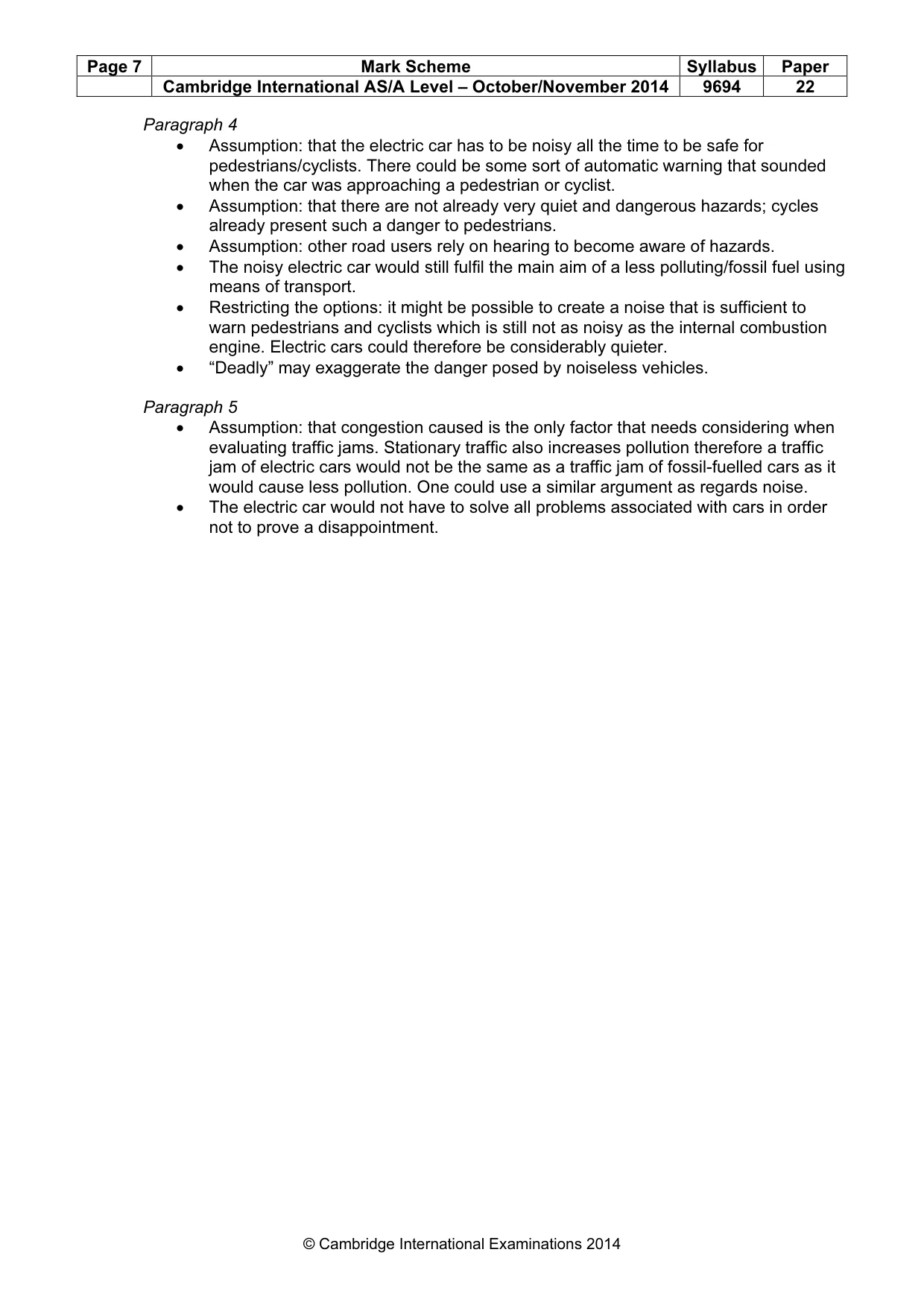
Page 7 Mark Scheme Syllabus Paper Cambridge International AS/A Level – October/November 2014 9694 22 © Cambridge International Examinations 2014 Paragraph 4 • Assumption: that the electric car has to be noisy all the time to be safe for pedestrians/cyclists. There could be some sort of automatic warning that sounded when the car was approaching a pedestrian or cyclist. • Assumption: that there are not already very quiet and dangerous hazards; cycles already present such a danger to pedestrians. • Assumption: other road users rely on hearing to become aware of hazards. • The noisy electric car would still fulfil the main aim of a less polluting/fossil fuel using means of transport. • Restricting the options: it might be possible to create a noise that is sufficient to warn pedestrians and cyclists which is still not as noisy as the internal combustion engine. Electric cars could therefore be considerably quieter. • “Deadly” may exaggerate the danger posed by noiseless vehicles. Paragraph 5 • Assumption: that congestion caused is the only factor that needs considering when evaluating traffic jams. Stationary traffic also increases pollution therefore a traffic jam of electric cars would not be the same as a traffic jam of fossil-fuelled cars as it would cause less pollution. One could use a similar argument as regards noise. • The electric car would not have to solve all problems associated with cars in order not to prove a disappointment.
Mark scheme, page 8
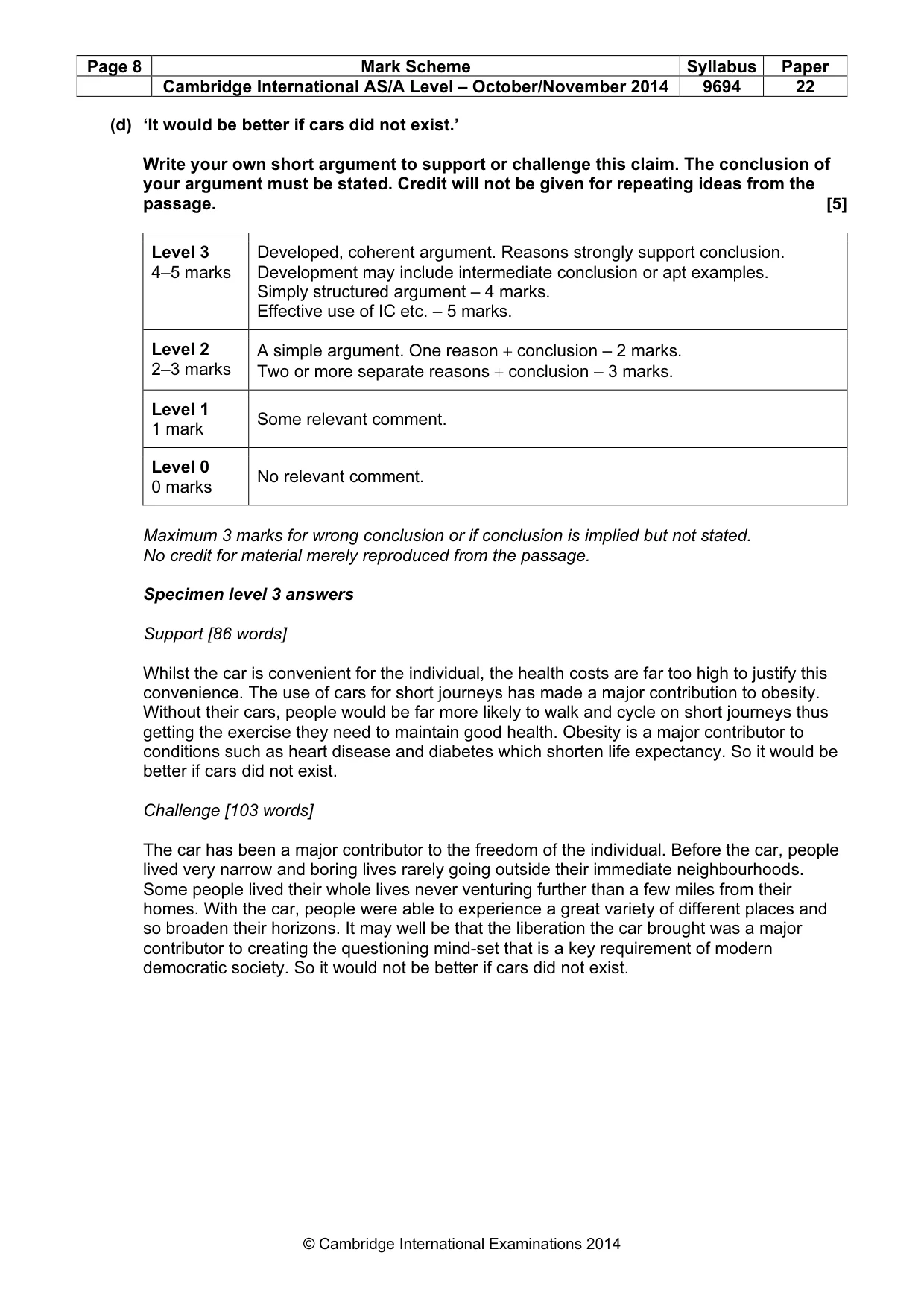
Page 8 Mark Scheme Syllabus Paper Cambridge International AS/A Level – October/November 2014 9694 22 © Cambridge International Examinations 2014 (d) ‘It would be better if cars did not exist.’ Write your own short argument to support or challenge this claim. The conclusion of your argument must be stated. Credit will not be given for repeating ideas from the passage. [5] Level 3 4–5 marks Developed, coherent argument. Reasons strongly support conclusion. Development may include intermediate conclusion or apt examples. Simply structured argument – 4 marks. Effective use of IC etc. – 5 marks. Level 2 2–3 marks A simple argument. One reason + conclusion – 2 marks. Two or more separate reasons + conclusion – 3 marks. Level 1 1 mark Some relevant comment. Level 0 0 marks No relevant comment. Maximum 3 marks for wrong conclusion or if conclusion is implied but not stated. No credit for material merely reproduced from the passage. Specimen level 3 answers Support [86 words] Whilst the car is convenient for the individual, the health costs are far too high to justify this convenience. The use of cars for short journeys has made a major contribution to obesity. Without their cars, people would be far more likely to walk and cycle on short journeys thus getting the exercise they need to maintain good health. Obesity is a major contributor to conditions such as heart disease and diabetes which shorten life expectancy. So it would be better if cars did not exist. Challenge [103 words] The car has been a major contributor to the freedom of the individual. Before the car, people lived very narrow and boring lives rarely going outside their immediate neighbourhoods. Some people lived their whole lives never venturing further than a few miles from their homes. With the car, people were able to experience a great variety of different places and so broaden their horizons. It may well be that the liberation the car brought was a major contributor to creating the questioning mind-set that is a key requirement of modern democratic society. So it would not be better if cars did not exist.
What you needed in this session
Cambridge’s own grade thresholds for 2014 Oct/Nov, Paper 2 · Variant 2. A higher threshold means an easier paper — the bar moves with how the cohort did.