Cambridge A Level Psychology (from 2018) 9990 — 2020 May/June Paper 2 · Variant 3
9990/23/M/J/20 · 10 questions · 60 marks · ≈68 min
The question paper and its mark scheme, free to read here and free to download. This is Cambridge’s own paper, exactly as it was sat.
Question paper12 pages
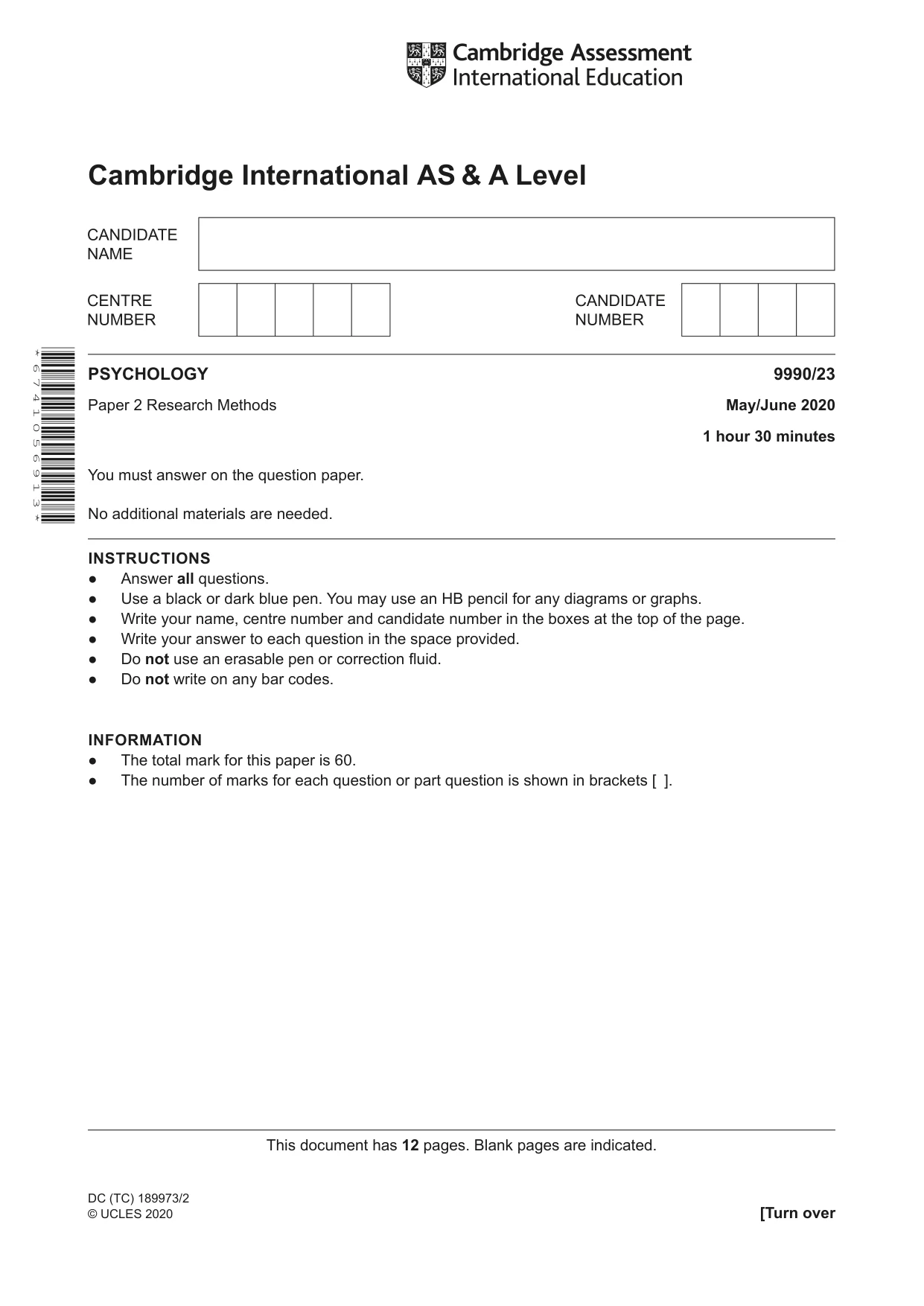
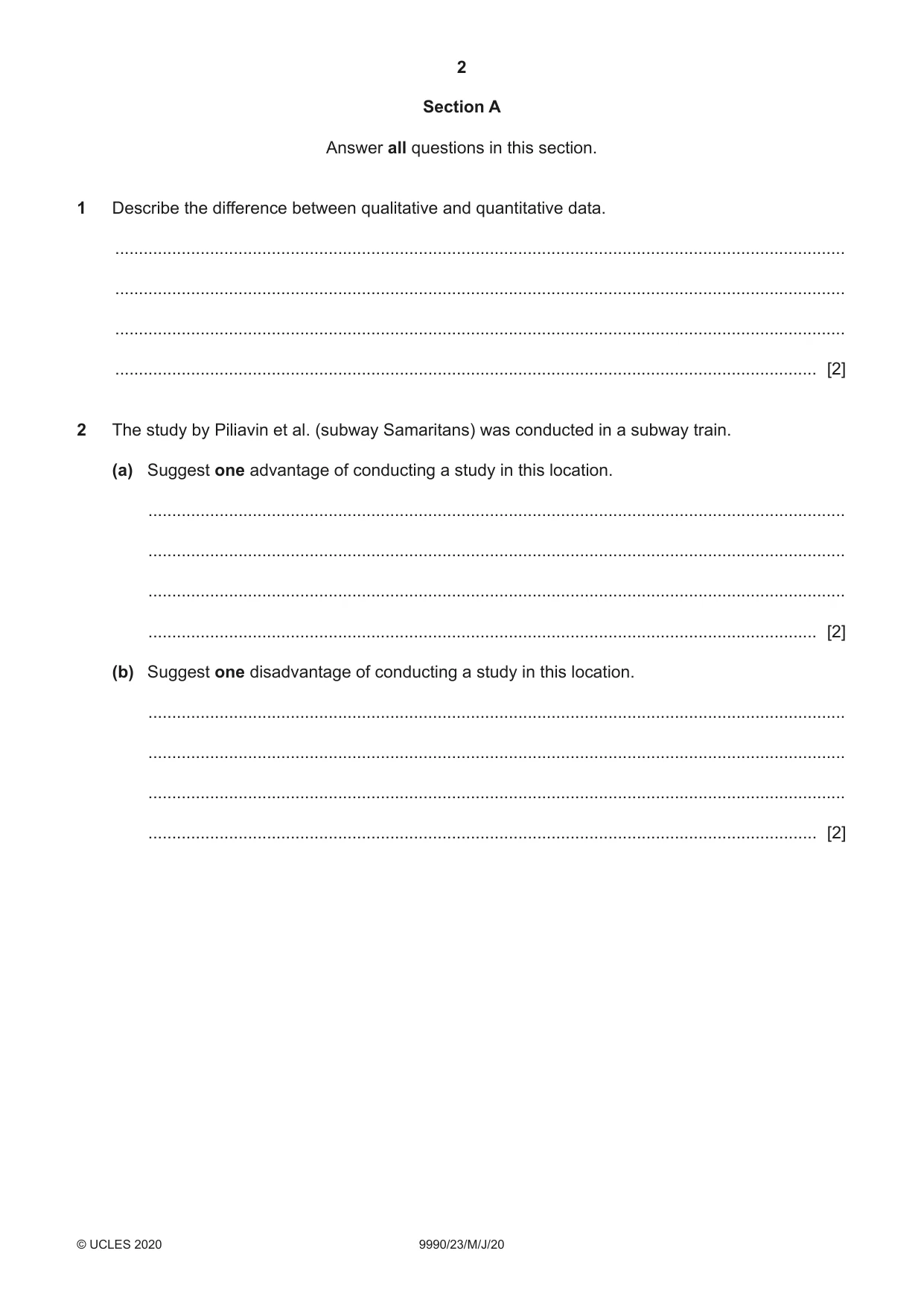
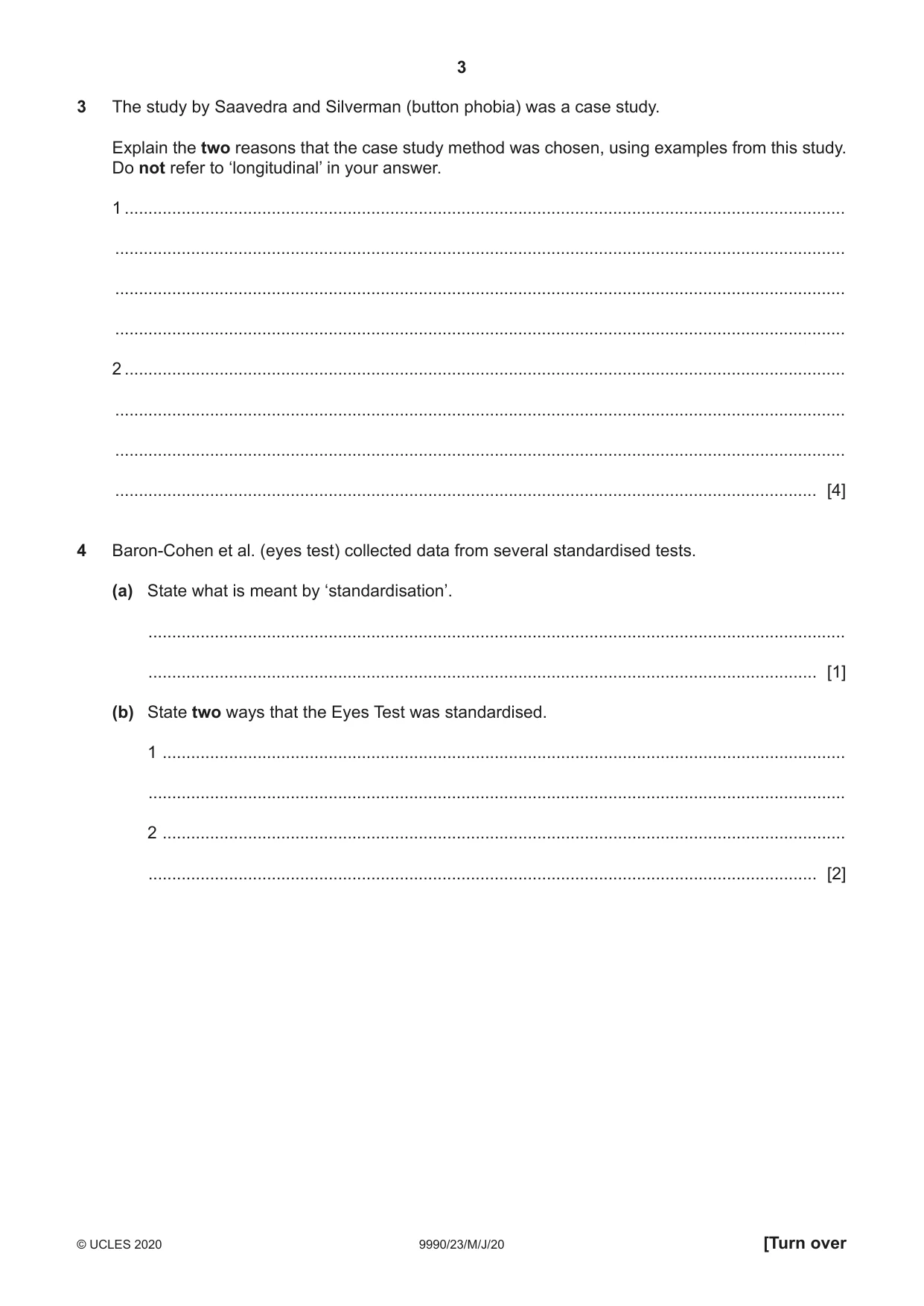
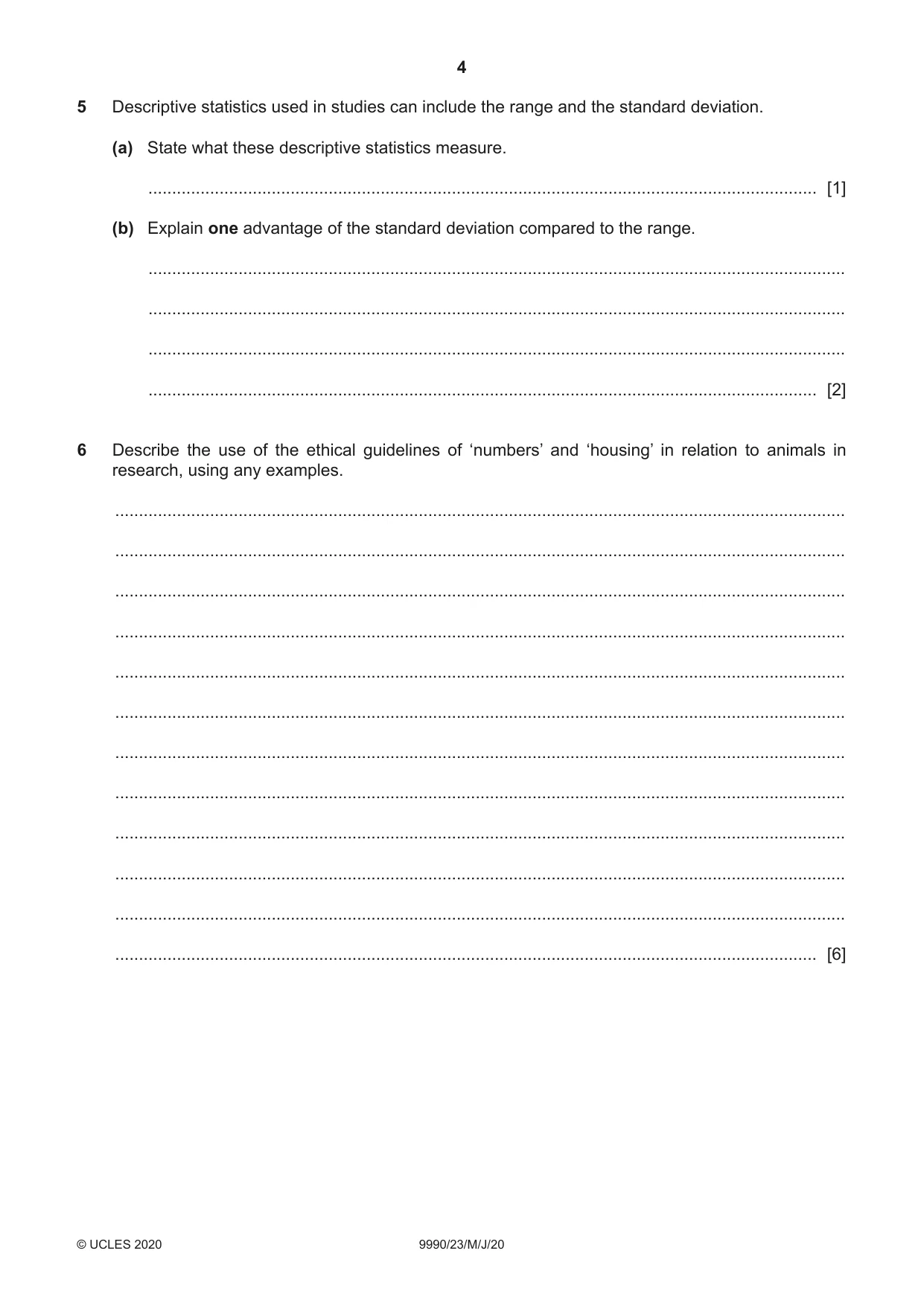



Mark scheme12 pages
Answers below. Sit the paper first if you are practising.
Questions as text
Q1 · Describe the difference between qualitative and quantitative data
1 Describe the difference between qualitative and quantitative data. .......................................................................................................................................................... .......................................................................................................................................................... .......................................................................................................................................................... .................................................................................................................................................... [2]
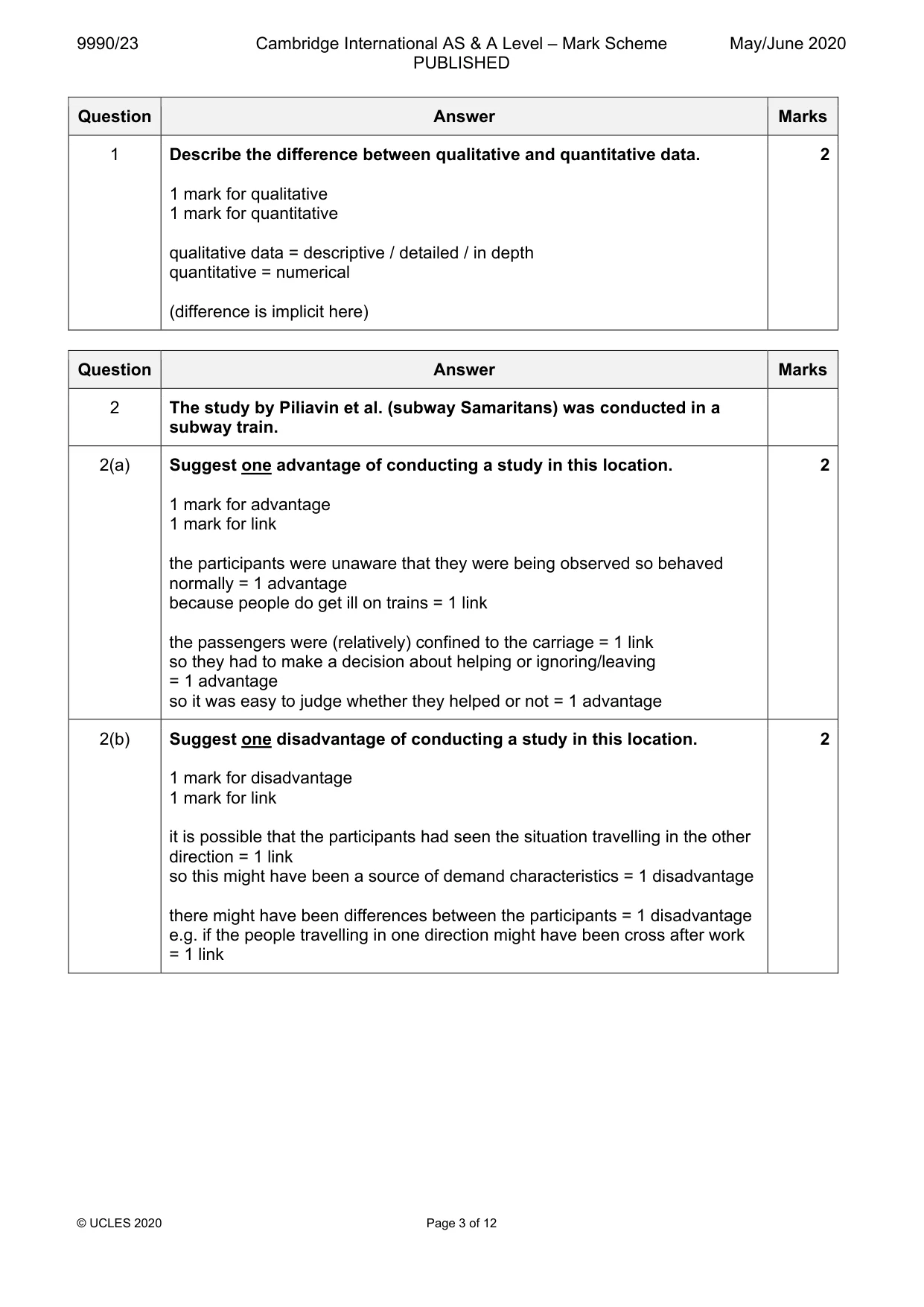
Mark scheme: Question Answer Marks 1 Describe the difference between qualitative and quantitative data. 2 1 mark for qualitative 1 mark for quantitative qualitative data = descriptive / detailed / in depth quantitative = numerical (difference is implicit here)
Q2 · The study by Piliavin et al
2 The study by Piliavin et al. (subway Samaritans) was conducted in a subway train. (a) Suggest one advantage of conducting a study in this location. ................................................................................................................................................... ................................................................................................................................................... ................................................................................................................................................... ............................................................................................................................................. [2] (b) Suggest one disadvantage of conducting a study in this location. ................................................................................................................................................... ................................................................................................................................................... ................................................................................................................................................... ............................................................................................................................................. [2]
Mark scheme: 2 The study by Piliavin et al. (subway Samaritans) was conducted in a subway train. 2(a) Suggest one advantage of conducting a study in this location. 2 1 mark for advantage 1 mark for link the participants were unaware that they were being observed so behaved normally = 1 advantage because people do get ill on trains = 1 link the passengers were (relatively) confined to the carriage = 1 link so they had to make a decision about helping or ignoring/leaving = 1 advantage so it was easy to judge whether they helped or not = 1 advantage 2(b) Suggest one disadvantage of conducting a study in this location. 2 1 mark for disadvantage 1 mark for link it is possible that the participants had seen the situation travelling in the other direction = 1 link so this might have been a source of demand characteristics = 1 disadvantage there might have been differences between the participants = 1 disadvantage e.g. if the people travelling in one direction might have been cross after work = 1 link
Q3 · The study by Saavedra and Silverman (button phobia) was a case study
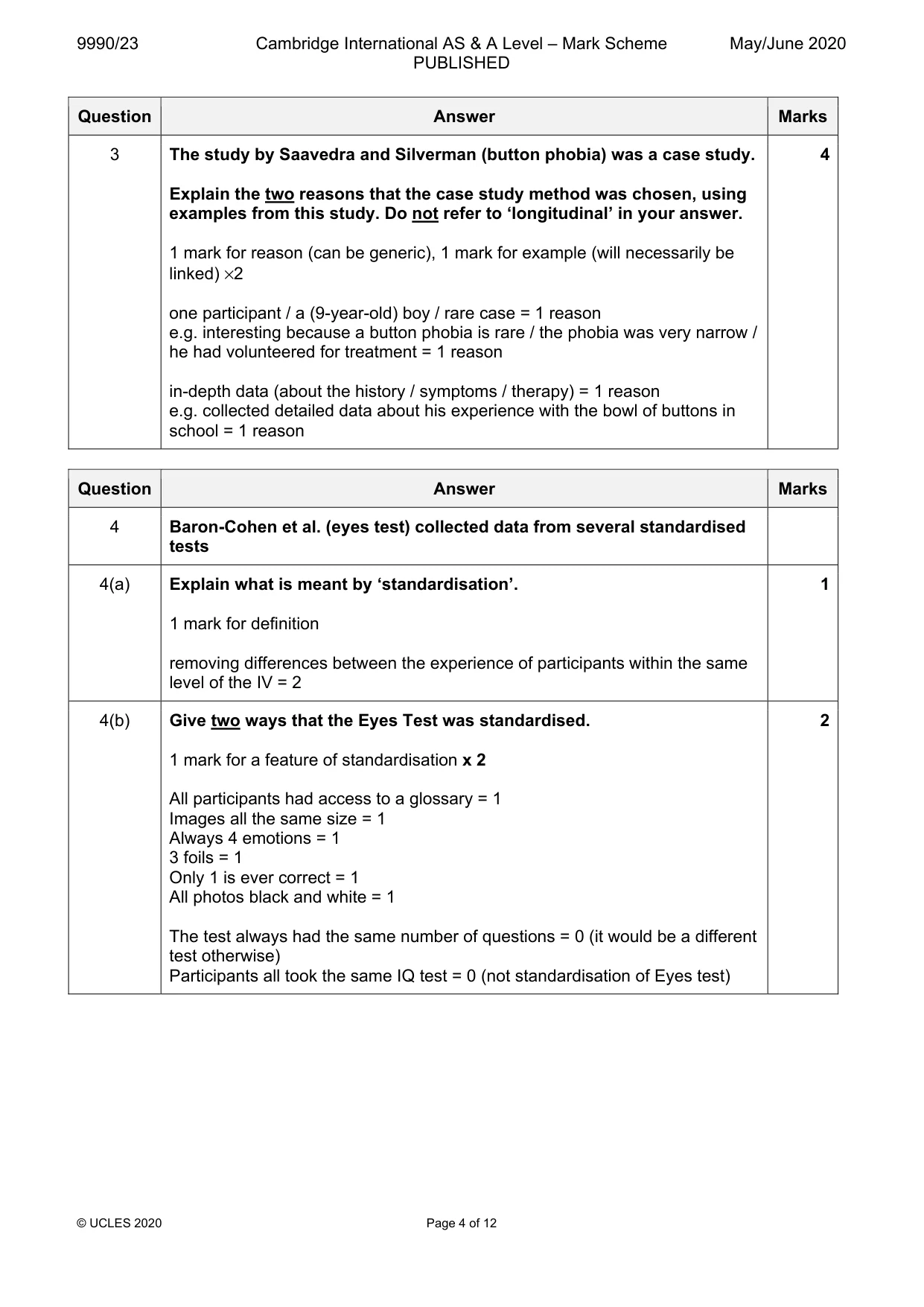
3 The study by Saavedra and Silverman (button phobia) was a case study. Explain the two reasons that the case study method was chosen, using examples from this study. Do not refer to ‘longitudinal’ in your answer. 1 ........................................................................................................................................................ .......................................................................................................................................................... .......................................................................................................................................................... .......................................................................................................................................................... 2 ........................................................................................................................................................ .......................................................................................................................................................... .......................................................................................................................................................... .................................................................................................................................................... [4]
Mark scheme: 3 The study by Saavedra and Silverman (button phobia) was a case study. 4 Explain the two reasons that the case study method was chosen, using examples from this study. Do not refer to ‘longitudinal’ in your answer. 1 mark for reason (can be generic), 1 mark for example (will necessarily be linked) ×2 one participant / a (9-year-old) boy / rare case = 1 reason e.g. interesting because a button phobia is rare / the phobia was very narrow / he had volunteered for treatment = 1 reason in-depth data (about the history / symptoms / therapy) = 1 reason e.g. collected detailed data about his experience with the bowl of buttons in school = 1 reason
More questions on Anxiety disorders and fear-related disorders
Question 4
4 Baron-Cohen et al. (eyes test) collected data from several standardised tests. (a) State what is meant by ‘standardisation’. ................................................................................................................................................... ............................................................................................................................................. [1] (b) State two ways that the Eyes Test was standardised. 1 ................................................................................................................................................ ................................................................................................................................................... 2 ................................................................................................................................................ ............................................................................................................................................. [2]
Mark scheme: 4 Baron-Cohen et al. (eyes test) collected data from several standardised tests 4(a) Explain what is meant by ‘standardisation’. 1 1 mark for definition removing differences between the experience of participants within the same level of the IV = 2 4(b) Give two ways that the Eyes Test was standardised. 2 1 mark for a feature of standardisation x 2 All participants had access to a glossary = 1 Images all the same size = 1 Always 4 emotions = 1 3 foils = 1 Only 1 is ever correct = 1 All photos black and white = 1 The test always had the same number of questions = 0 (it would be a different test otherwise) Participants all took the same IQ test = 0 (not standardisation of Eyes test)
Q5 · Descriptive statistics used in studies can include the range and the standard deviation
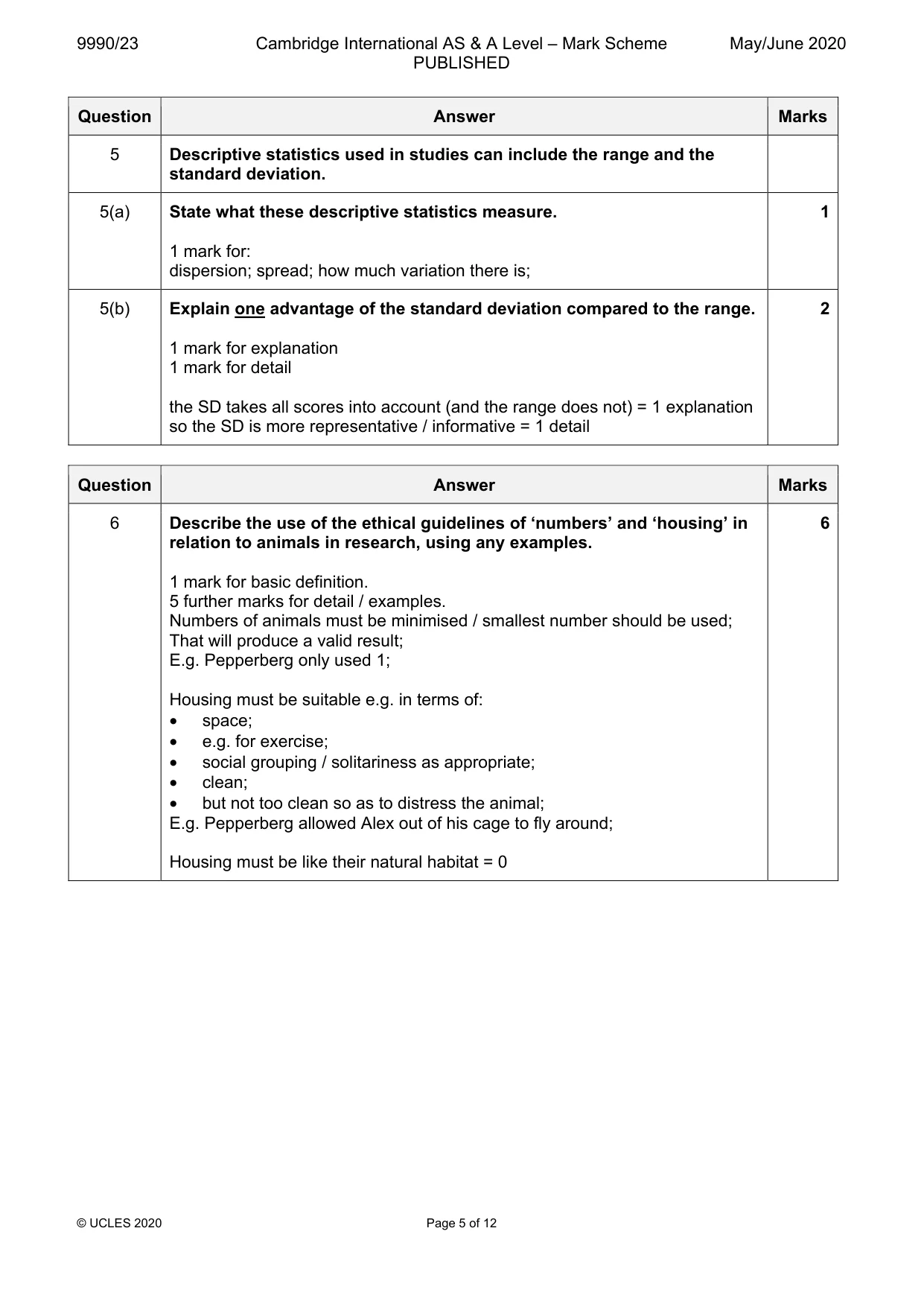
5 Descriptive statistics used in studies can include the range and the standard deviation. (a) State what these descriptive statistics measure. ............................................................................................................................................. [1] (b) Explain one advantage of the standard deviation compared to the range. ................................................................................................................................................... ................................................................................................................................................... ................................................................................................................................................... ............................................................................................................................................. [2]
Mark scheme: 5 Descriptive statistics used in studies can include the range and the standard deviation. 5(a) State what these descriptive statistics measure. 1 1 mark for: dispersion; spread; how much variation there is; 5(b) Explain one advantage of the standard deviation compared to the range. 2 1 mark for explanation 1 mark for detail the SD takes all scores into account (and the range does not) = 1 explanation so the SD is more representative / informative = 1 detail
Q6 · Describe the use of the ethical guidelines of ‘numbers’ and ‘housing’ in relation to…
6 Describe the use of the ethical guidelines of ‘numbers’ and ‘housing’ in relation to animals in research, using any examples. .......................................................................................................................................................... .......................................................................................................................................................... .......................................................................................................................................................... .......................................................................................................................................................... .......................................................................................................................................................... .......................................................................................................................................................... .......................................................................................................................................................... .......................................................................................................................................................... .......................................................................................................................................................... .......................................................................................................................................................... .......................................................................................................................................................... .................................................................................................................................................... [6]
Mark scheme: 6 Describe the use of the ethical guidelines of ‘numbers’ and ‘housing’ in 6 relation to animals in research, using any examples. 1 mark for basic definition. 5 further marks for detail / examples. Numbers of animals must be minimised / smallest number should be used; That will produce a valid result; E.g. Pepperberg only used 1; Housing must be suitable e.g. in terms of: • space; • e.g. for exercise; • social grouping / solitariness as appropriate; • clean; • but not too clean so as to distress the animal; E.g. Pepperberg allowed Alex out of his cage to fly around; Housing must be like their natural habitat = 0
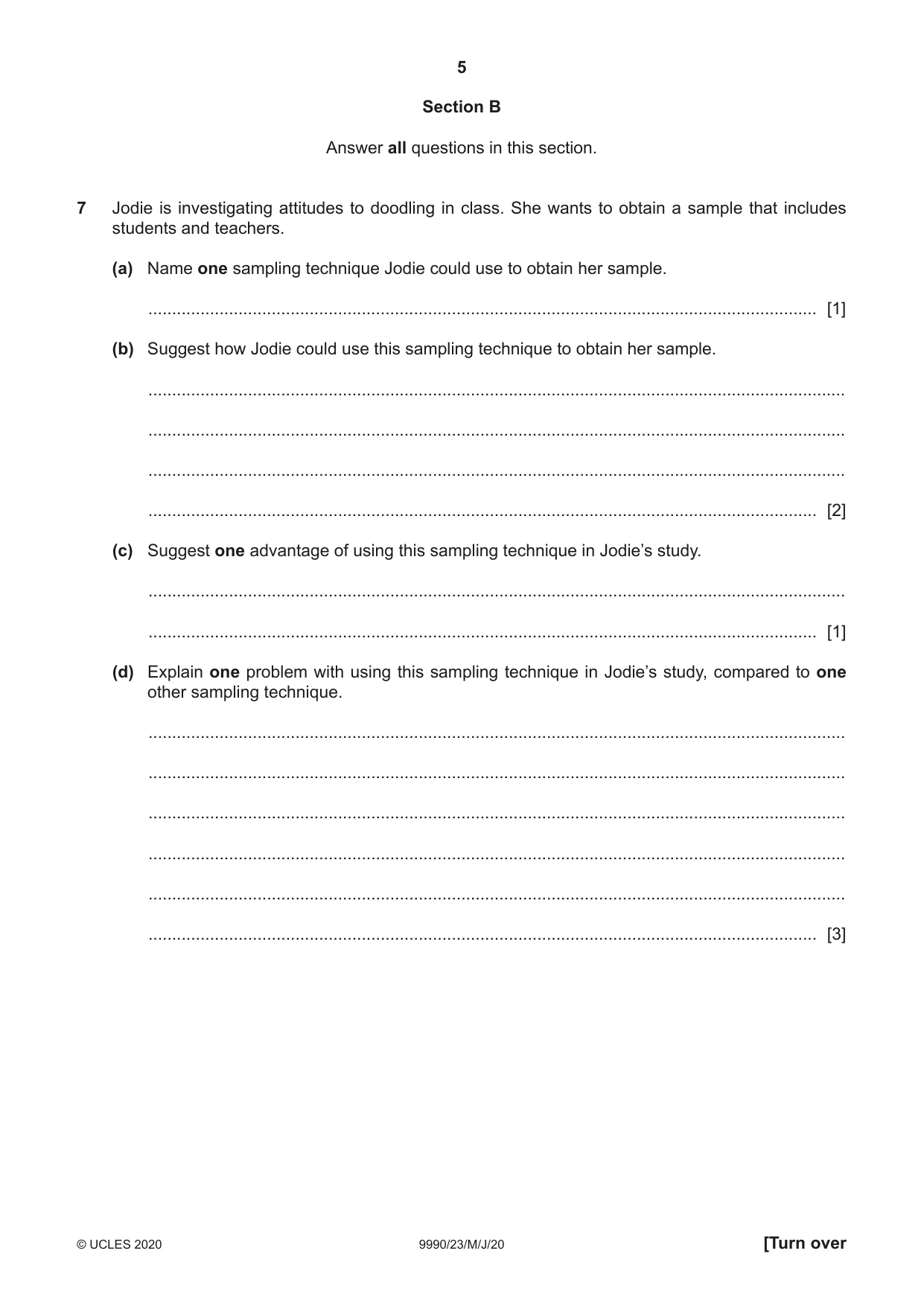
Q7 · Jodie is investigating attitudes to doodling in class
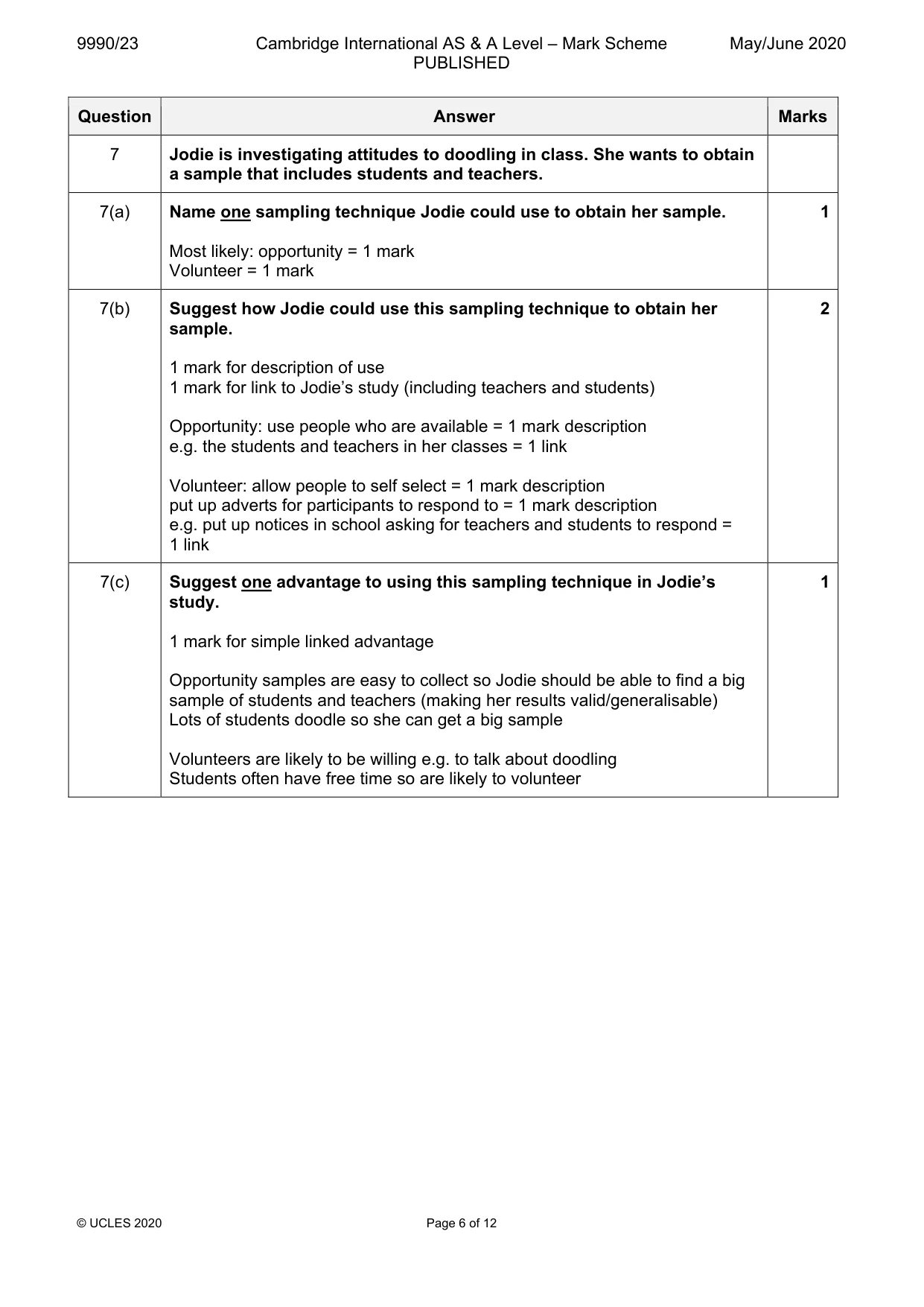
7 Jodie is investigating attitudes to doodling in class. She wants to obtain a sample that includes students and teachers. (a) Name one sampling technique Jodie could use to obtain her sample. ............................................................................................................................................. [1] (b) Suggest how Jodie could use this sampling technique to obtain her sample. ................................................................................................................................................... ................................................................................................................................................... ................................................................................................................................................... ............................................................................................................................................. [2] (c) Suggest one advantage of using this sampling technique in Jodie’s study. ................................................................................................................................................... ............................................................................................................................................. [1] (d) Explain one problem with using this sampling technique in Jodie’s study, compared to one other sampling technique. ................................................................................................................................................... ................................................................................................................................................... ................................................................................................................................................... ................................................................................................................................................... ................................................................................................................................................... ............................................................................................................................................. [3]
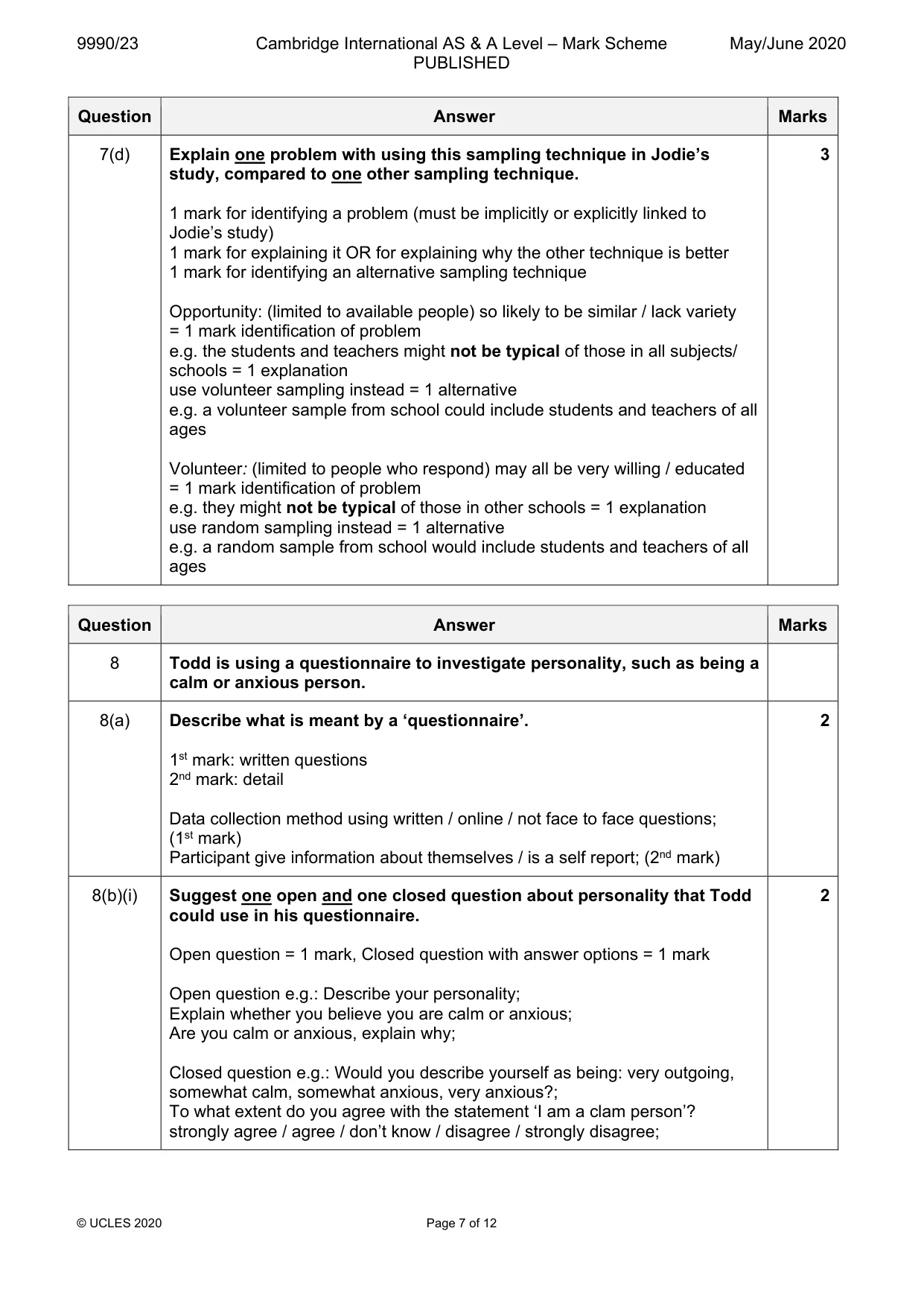
Mark scheme: 7 Jodie is investigating attitudes to doodling in class. She wants to obtain a sample that includes students and teachers. 7(a) Name one sampling technique Jodie could use to obtain her sample. 1 Most likely: opportunity = 1 mark Volunteer = 1 mark 7(b) Suggest how Jodie could use this sampling technique to obtain her 2 sample. 1 mark for description of use 1 mark for link to Jodie’s study (including teachers and students) Opportunity: use people who are available = 1 mark description e.g. the students and teachers in her classes = 1 link Volunteer: allow people to self select = 1 mark description put up adverts for participants to respond to = 1 mark description e.g. put up notices in school asking for teachers and students to respond = 1 link 7(c) Suggest one advantage to using this sampling technique in Jodie’s 1 study. 1 mark for simple linked advantage Opportunity samples are easy to collect so Jodie should be able to find a big sample of students and teachers (making her results valid/generalisable) Lots of students doodle so she can get a big sample Volunteers are likely to be willing e.g. to talk about doodling Students often have free time so are likely to volunteer 7(d) Explain one problem with using this sampling technique in Jodie’s 3 study, compared to one other sampling technique. 1 mark for identifying a problem (must be implicitly or explicitly linked to Jodie’s study) 1 mark for explaining it OR for explaining why the other technique is better 1 mark for identifying an alternative sampling technique Opportunity: (limited to available people) so likely to be similar / lack variety = 1 mark identification of problem e.g. the students and teachers might not be typical of those in all subjects/ schools = 1 explanation use volunteer sampling instead = 1 alternative e.g. a volunteer sample from school could include students and teachers of all ages Volunteer: (limited to people who respond) may all be very willing / educated = 1 mark identification of problem e.g. they might not be typical of those in other schools = 1 explanation use random sampling instead = 1 alternative e.g. a random sample from school would include students and teachers of all ages
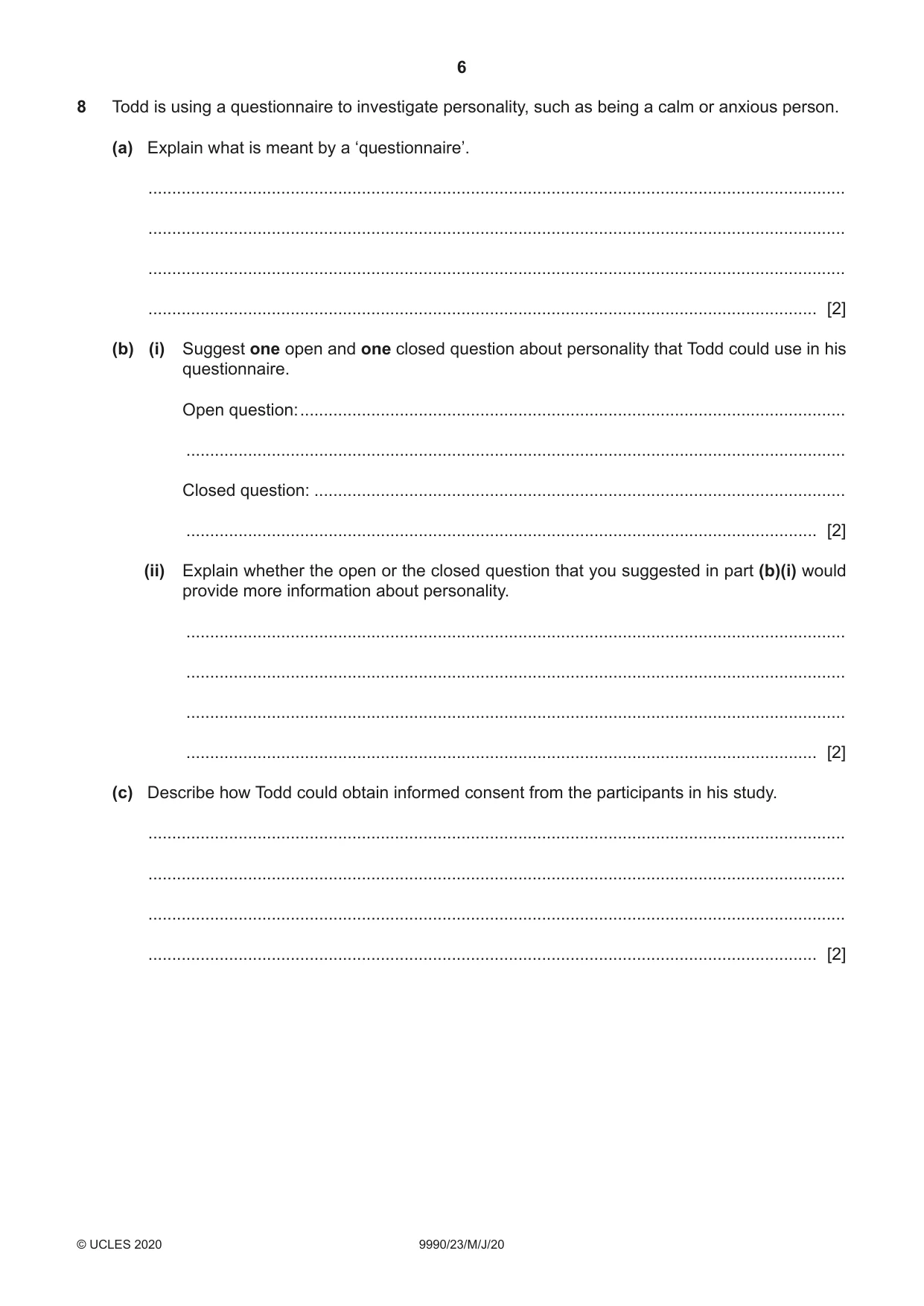
Q8 · Todd is using a questionnaire to investigate personality, such as being a calm or anxious…
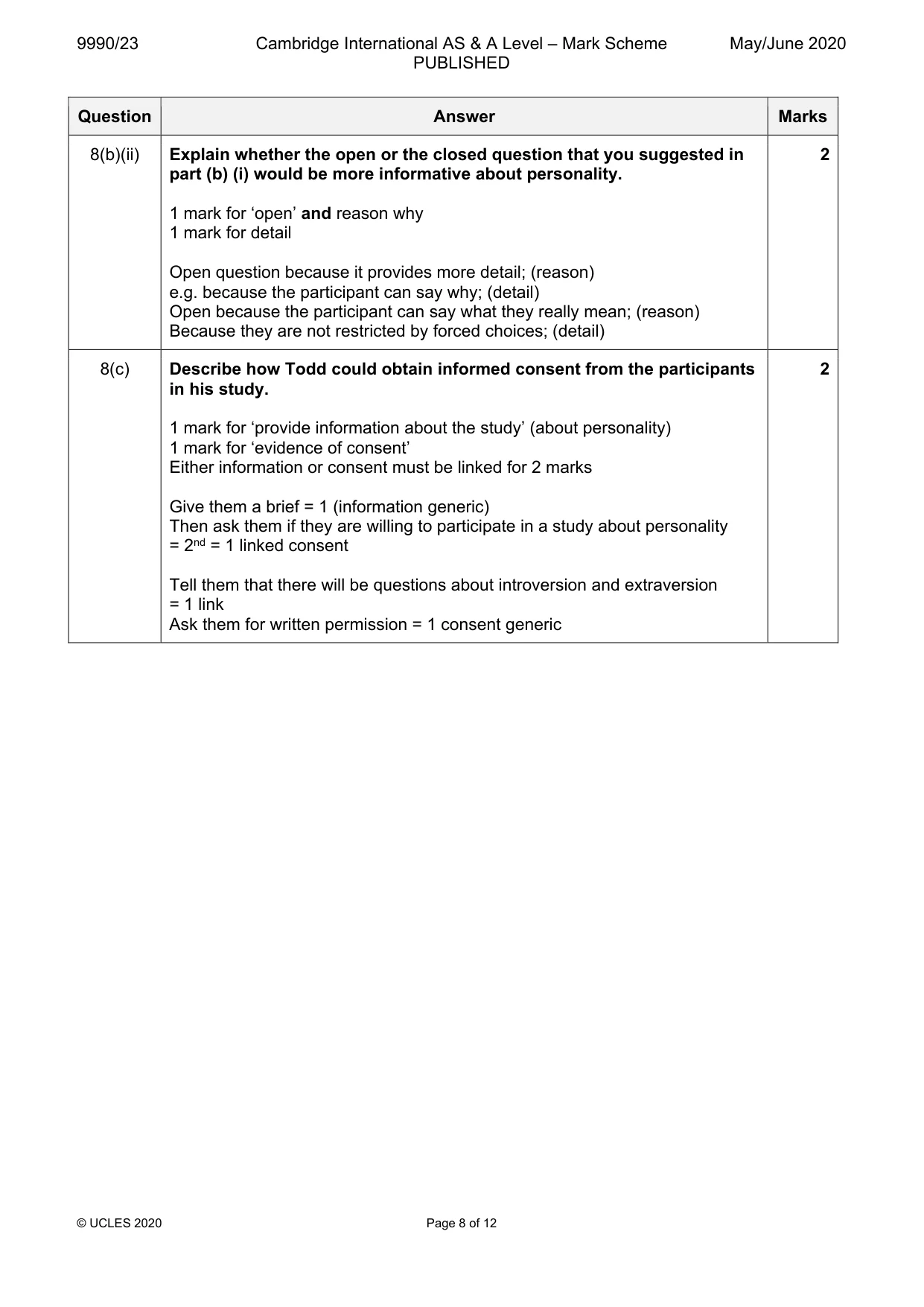
8 Todd is using a questionnaire to investigate personality, such as being a calm or anxious person. (a) Explain what is meant by a ‘questionnaire’. ................................................................................................................................................... ................................................................................................................................................... ................................................................................................................................................... ............................................................................................................................................. [2] (b) (i) Suggest one open and one closed question about personality that Todd could use in his questionnaire. Open question: ................................................................................................................... ........................................................................................................................................... Closed question: ................................................................................................................ ..................................................................................................................................... [2] (ii) Explain whether the open or the closed question that you suggested in part (b)(i) would provide more information about personality. ........................................................................................................................................... ........................................................................................................................................... ........................................................................................................................................... ..................................................................................................................................... [2] (c) Describe how Todd could obtain informed consent from the participants in his study. ................................................................................................................................................... ................................................................................................................................................... ................................................................................................................................................... ............................................................................................................................................. [2]
Mark scheme: 8 Todd is using a questionnaire to investigate personality, such as being a calm or anxious person. 8(a) Describe what is meant by a ‘questionnaire’. 2 1st mark: written questions 2nd mark: detail Data collection method using written / online / not face to face questions; (1st mark) Participant give information about themselves / is a self report; (2nd mark) 8(b)(i) Suggest one open and one closed question about personality that Todd 2 could use in his questionnaire. Open question = 1 mark, Closed question with answer options = 1 mark Open question e.g.: Describe your personality; Explain whether you believe you are calm or anxious; Are you calm or anxious, explain why; Closed question e.g.: Would you describe yourself as being: very outgoing, somewhat calm, somewhat anxious, very anxious?; To what extent do you agree with the statement ‘I am a clam person’? strongly agree / agree / don’t know / disagree / strongly disagree; 8(b)(ii) Explain whether the open or the closed question that you suggested in 2 part (b) (i) would be more informative about personality. 1 mark for ‘open’ and reason why 1 mark for detail Open question because it provides more detail; (reason) e.g. because the participant can say why; (detail) Open because the participant can say what they really mean; (reason) Because they are not restricted by forced choices; (detail) 8(c) Describe how Todd could obtain informed consent from the participants 2 in his study. 1 mark for ‘provide information about the study’ (about personality) 1 mark for ‘evidence of consent’ Either information or consent must be linked for 2 marks Give them a brief = 1 (information generic) Then ask them if they are willing to participate in a study about personality = 2nd = 1 linked consent Tell them that there will be questions about introversion and extraversion = 1 link Ask them for written permission = 1 consent generic
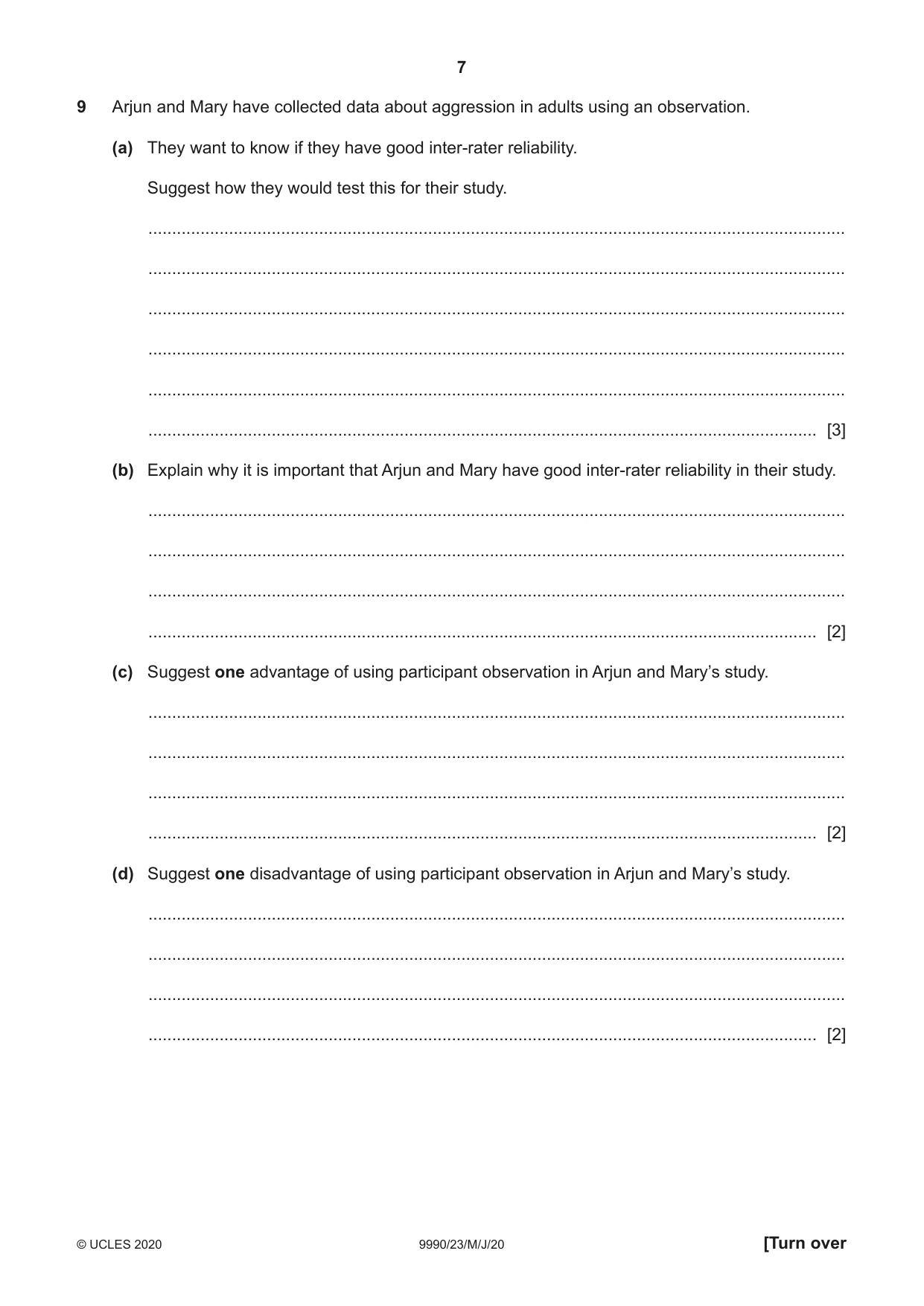
Q9 · Arjun and Mary have collected data about aggression in adults using an observation
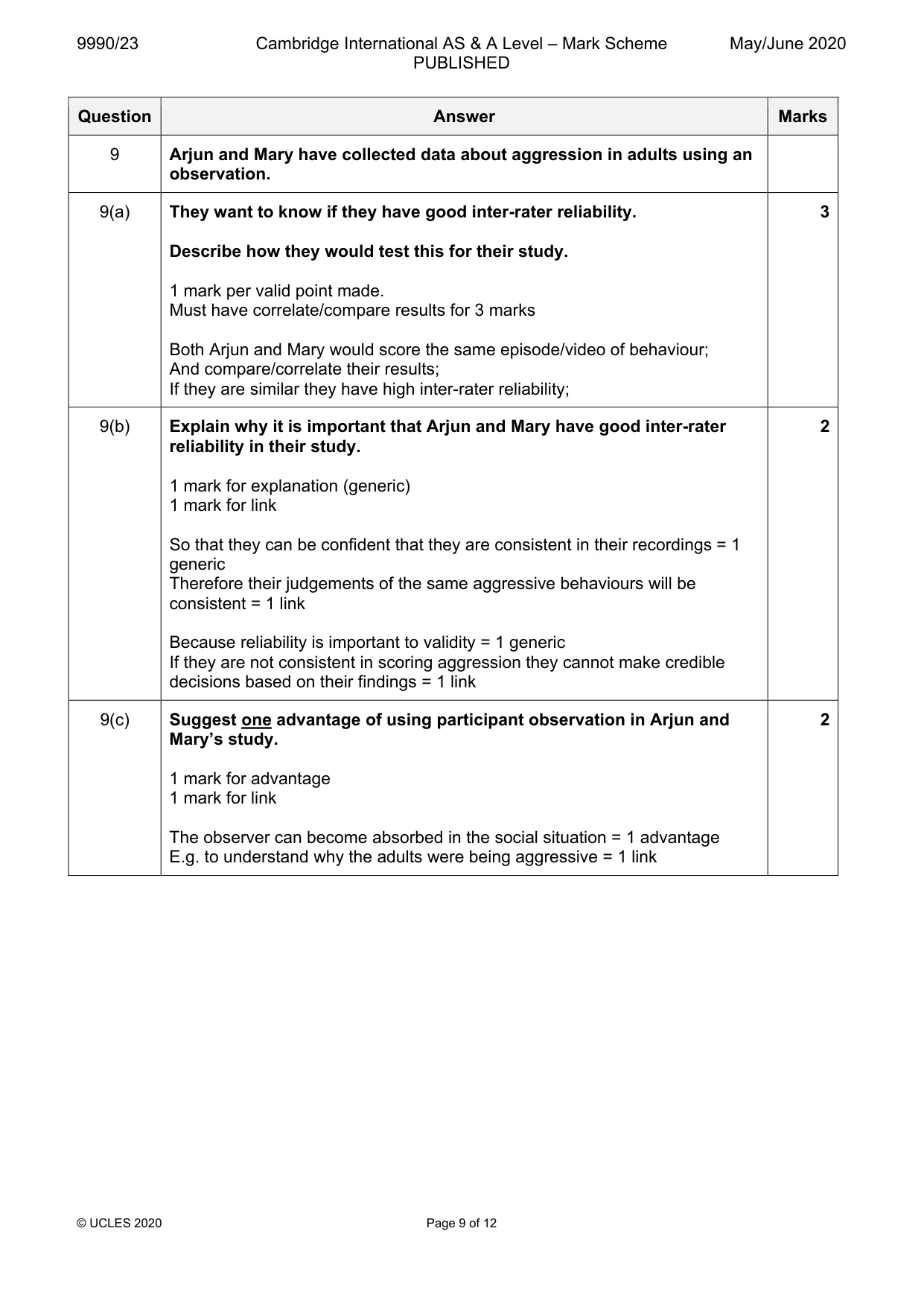
9 Arjun and Mary have collected data about aggression in adults using an observation. (a) They want to know if they have good inter-rater reliability. Suggest how they would test this for their study. ................................................................................................................................................... ................................................................................................................................................... ................................................................................................................................................... ................................................................................................................................................... ................................................................................................................................................... ............................................................................................................................................. [3] (b) Explain why it is important that Arjun and Mary have good inter-rater reliability in their study. ................................................................................................................................................... ................................................................................................................................................... ................................................................................................................................................... ............................................................................................................................................. [2] (c) Suggest one advantage of using participant observation in Arjun and Mary’s study. ................................................................................................................................................... ................................................................................................................................................... ................................................................................................................................................... ............................................................................................................................................. [2] (d) Suggest one disadvantage of using participant observation in Arjun and Mary’s study. ................................................................................................................................................... ................................................................................................................................................... ................................................................................................................................................... ............................................................................................................................................. [2] Section C Answer all questions in this section.
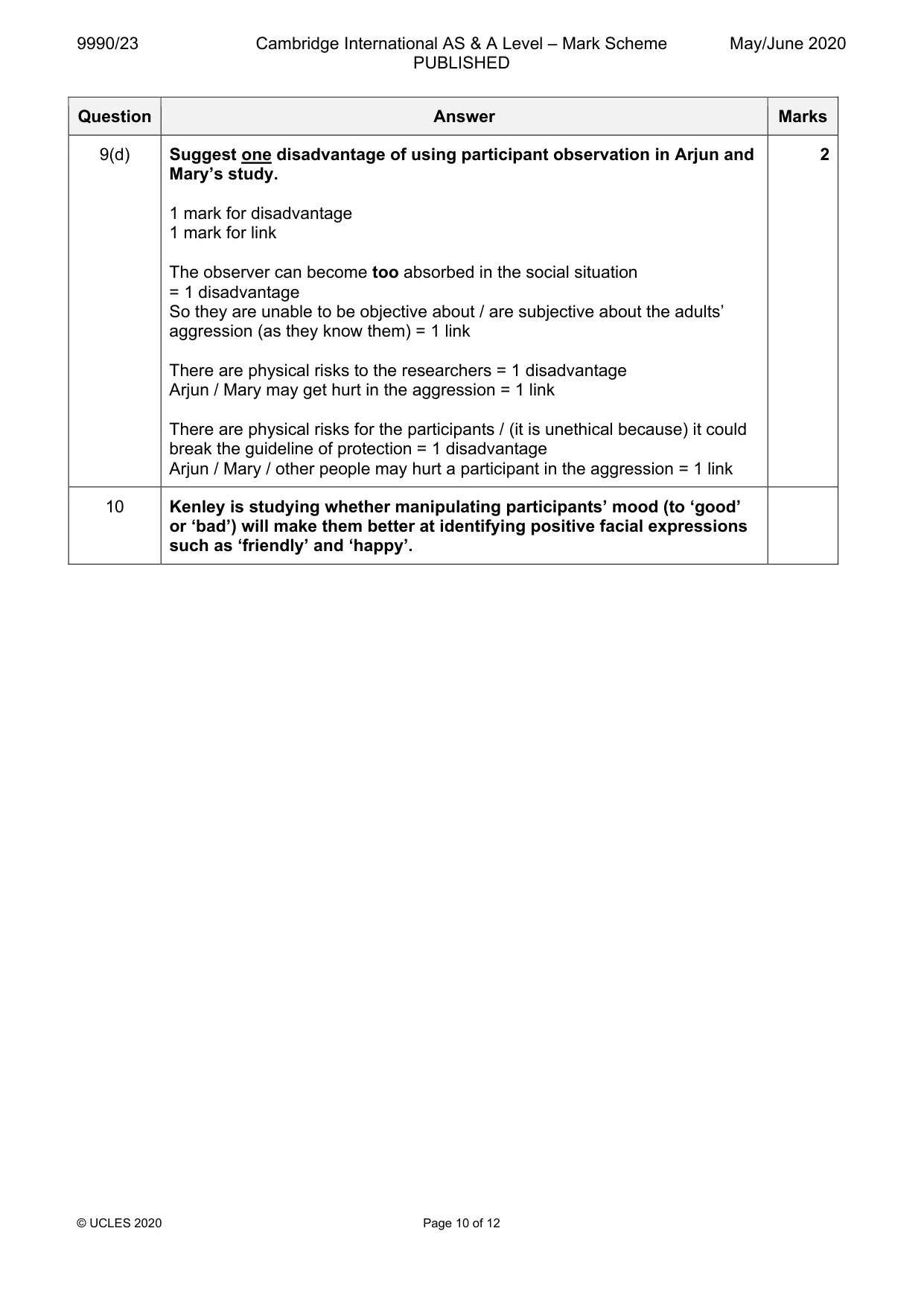
Mark scheme: 9 Arjun and Mary have collected data about aggression in adults using an observation. 9(a) They want to know if they have good inter-rater reliability. 3 Describe how they would test this for their study. 1 mark per valid point made. Must have correlate/compare results for 3 marks Both Arjun and Mary would score the same episode/video of behaviour; And compare/correlate their results; If they are similar they have high inter-rater reliability; 9(b) Explain why it is important that Arjun and Mary have good inter-rater 2 reliability in their study. 1 mark for explanation (generic) 1 mark for link So that they can be confident that they are consistent in their recordings = 1 generic Therefore their judgements of the same aggressive behaviours will be consistent = 1 link Because reliability is important to validity = 1 generic If they are not consistent in scoring aggression they cannot make credible decisions based on their findings = 1 link 9(c) Suggest one advantage of using participant observation in Arjun and 2 Mary’s study. 1 mark for advantage 1 mark for link The observer can become absorbed in the social situation = 1 advantage E.g. to understand why the adults were being aggressive = 1 link 9(d) Suggest one disadvantage of using participant observation in Arjun and 2 Mary’s study. 1 mark for disadvantage 1 mark for link The observer can become too absorbed in the social situation = 1 disadvantage So they are unable to be objective about / are subjective about the adults’ aggression (as they know them) = 1 link There are physical risks to the researchers = 1 disadvantage Arjun / Mary may get hurt in the aggression = 1 link There are physical risks for the participants / (it is unethical because) it could break the guideline of protection = 1 disadvantage Arjun / Mary / other people may hurt a participant in the aggression = 1 link
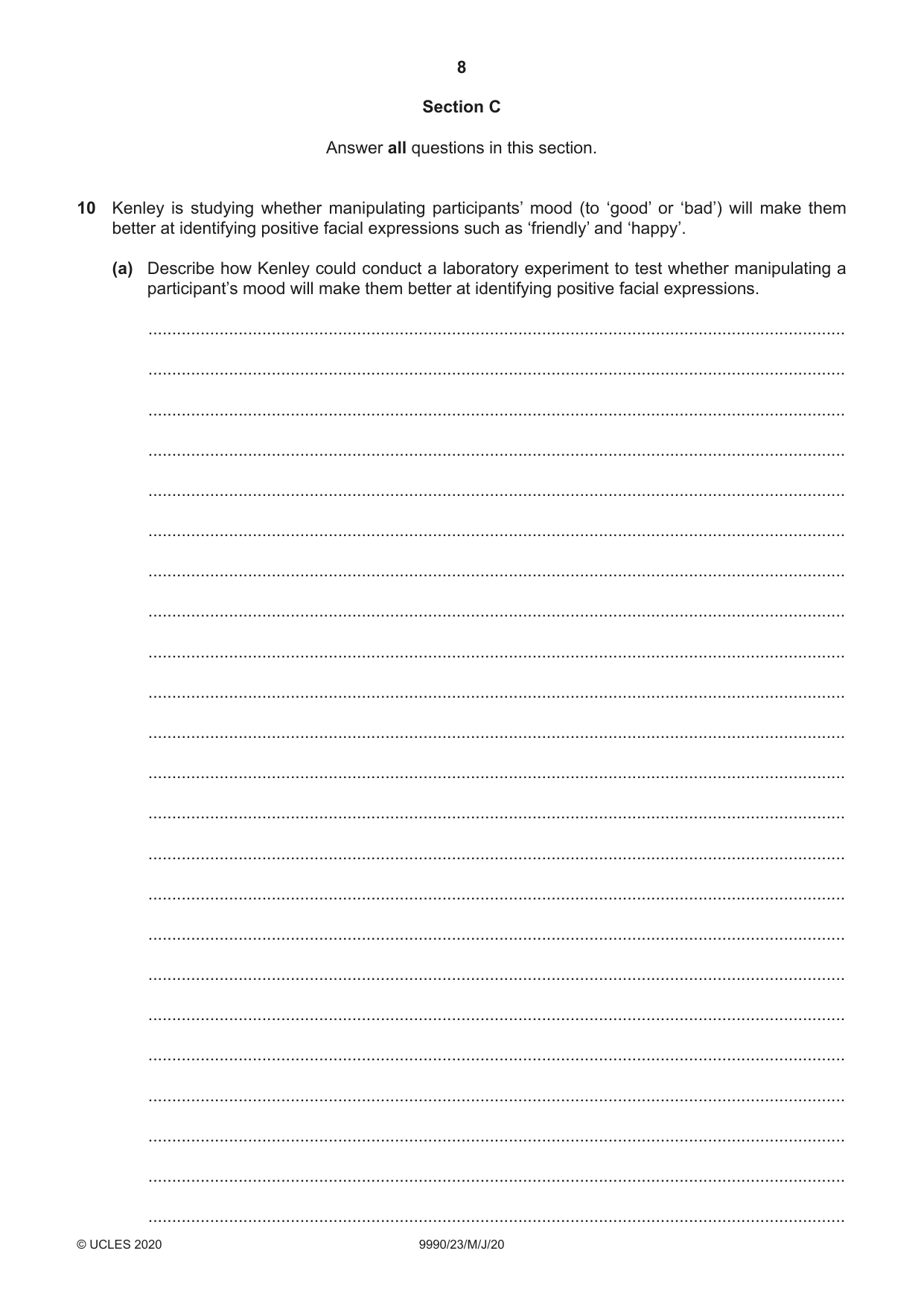
Q10 · Kenley is studying whether manipulating participants’ mood (to ‘good’ or ‘bad’) will make…
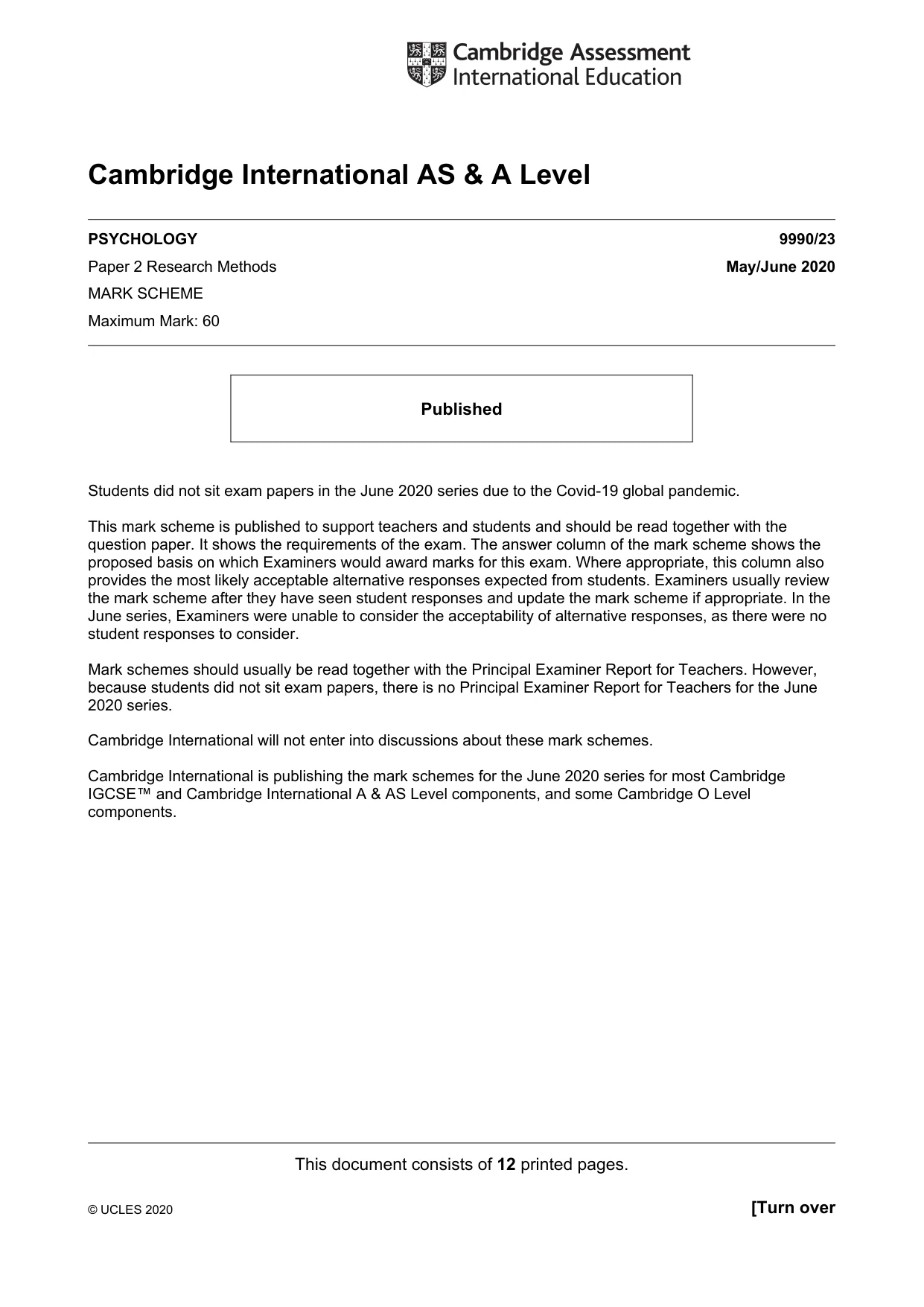
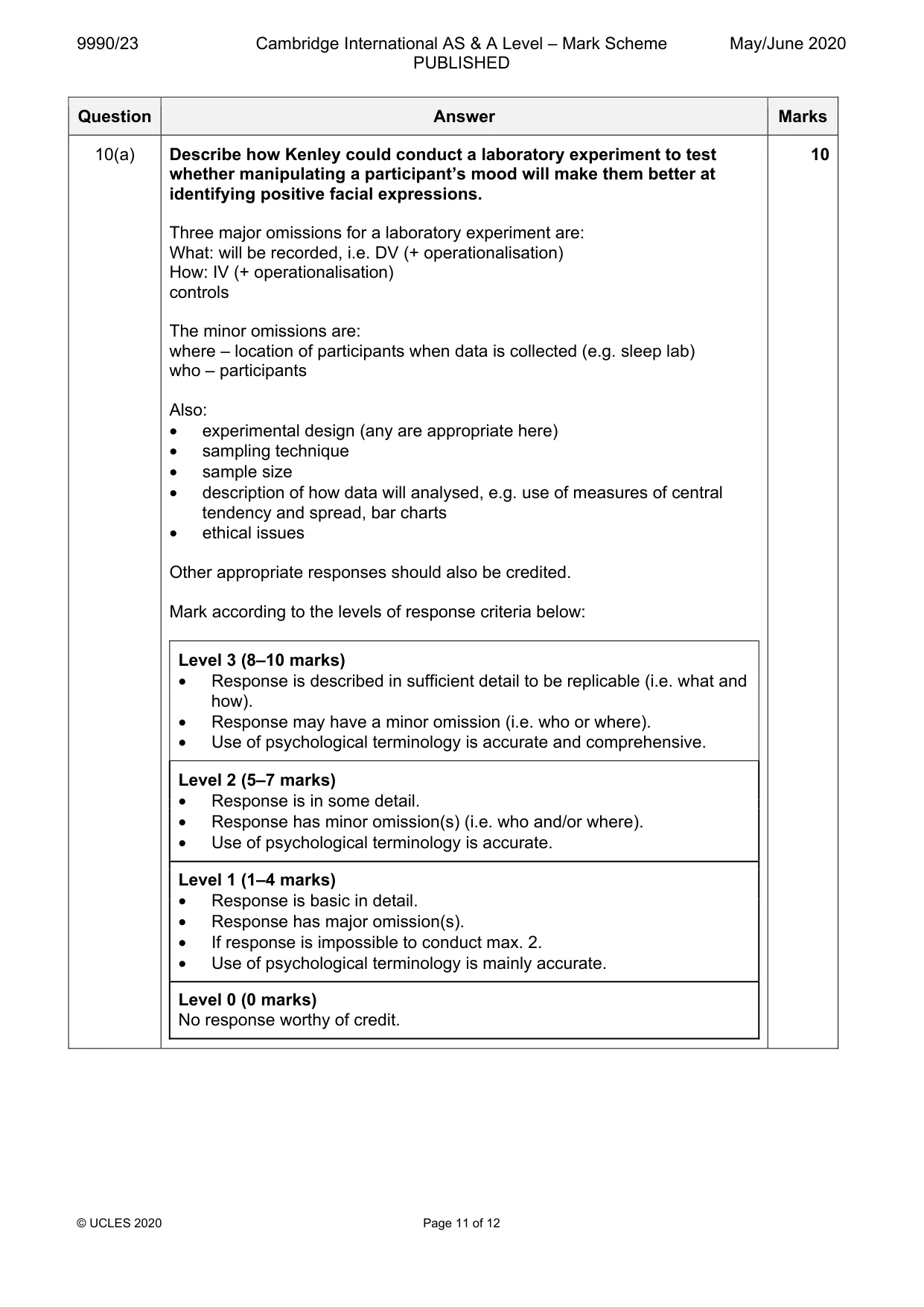
10 Kenley is studying whether manipulating participants’ mood (to ‘good’ or ‘bad’) will make them better at identifying positive facial expressions such as ‘friendly’ and ‘happy’. (a) Describe how Kenley could conduct a laboratory experiment to test whether manipulating a participant’s mood will make them better at identifying positive facial expressions. ................................................................................................................................................... ................................................................................................................................................... ................................................................................................................................................... ................................................................................................................................................... ................................................................................................................................................... ................................................................................................................................................... ................................................................................................................................................... ................................................................................................................................................... ................................................................................................................................................... ................................................................................................................................................... ................................................................................................................................................... ................................................................................................................................................... ................................................................................................................................................... ................................................................................................................................................... ................................................................................................................................................... ................................................................................................................................................... ................................................................................................................................................... ................................................................................................................................................... ................................................................................................................................................... ................................................................................................................................................... ................................................................................................................................................... ................................................................................................................................................... ................................................................................................................................................... ................................................................................................................................................... ................................................................................................................................................... ................................................................................................................................................... ................................................................................................................................................... ................................................................................................................................................... ................................................................................................................................................... ................................................................................................................................................... ................................................................................................................................................... ................................................................................................................................................... ................................................................................................................................................... ................................................................................................................................................... ................................................................................................................................................... ................................................................................................................................................... ........................................................................................................................................... [10] (b) Identify one practical weakness/limitation with the procedure you have described in your answer to part (a) and suggest how your study might be done differently to overcome the problem. Do not refer to ethics or sampling in your answer. ................................................................................................................................................... ................................................................................................................................................... ................................................................................................................................................... ................................................................................................................................................... ................................................................................................................................................... ................................................................................................................................................... ................................................................................................................................................... ............................................................................................................................................. [4]
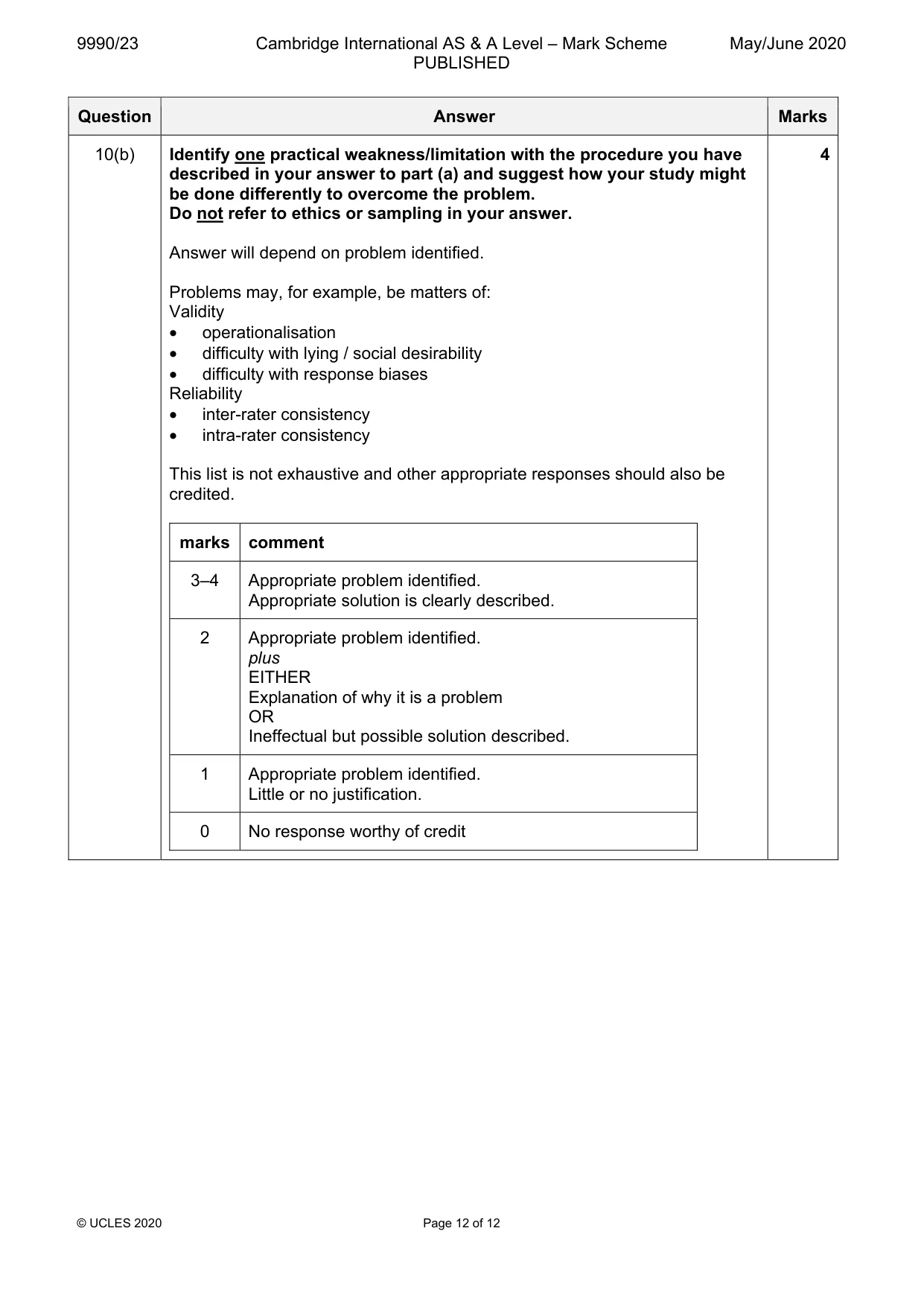
Mark scheme: 10 Kenley is studying whether manipulating participants’ mood (to ‘good’ or ‘bad’) will make them better at identifying positive facial expressions such as ‘friendly’ and ‘happy’. 10(a) Describe how Kenley could conduct a laboratory experiment to test 10 whether manipulating a participant’s mood will make them better at identifying positive facial expressions. Three major omissions for a laboratory experiment are: What: will be recorded, i.e. DV (+ operationalisation) How: IV (+ operationalisation) controls The minor omissions are: where – location of participants when data is collected (e.g. sleep lab) who – participants Also: • experimental design (any are appropriate here) • sampling technique • sample size • description of how data will analysed, e.g. use of measures of central tendency and spread, bar charts • ethical issues Other appropriate responses should also be credited. Mark according to the levels of response criteria below: Level 3 (8–10 marks) • Response is described in sufficient detail to be replicable (i.e. what and how). • Response may have a minor omission (i.e. who or where). • Use of psychological terminology is accurate and comprehensive. Level 2 (5–7 marks) • Response is in some detail. • Response has minor omission(s) (i.e. who and/or where). • Use of psychological terminology is accurate. Level 1 (1–4 marks) • Response is basic in detail. • Response has major omission(s). • If response is impossible to conduct max. 2. • Use of psychological terminology is mainly accurate. Level 0 (0 marks) No response worthy of credit. 10(b) Identify one practical weakness/limitation with the procedure you have 4 described in your answer to part (a) and suggest how your study might be done differently to overcome the problem. Do not refer to ethics or sampling in your answer. Answer will depend on problem identified. Problems may, for example, be matters of: Validity • operationalisation • difficulty with lying / social desirability • difficulty with response biases Reliability • inter-rater consistency • intra-rater consistency This list is not exhaustive and other appropriate responses should also be credited. marks comment 3–4 Appropriate problem identified. Appropriate solution is clearly described. 2 Appropriate problem identified. plus EITHER Explanation of why it is a problem OR Ineffectual but possible solution described. 1 Appropriate problem identified. Little or no justification. 0 No response worthy of credit
What was in this paper
The subtopics covered by these 10 questions, and how many questions each got. Open one in a new tab to see every Cambridge question on it.