Cambridge A Level Chemistry 9701 — 2021 Oct/Nov Paper 5 · Variant 2
9701/52/O/N/21 · 2 questions · 30 marks · ≈34 min
The question paper and its mark scheme, free to read here and free to download. This is Cambridge’s own paper, exactly as it was sat.
Question paper12 pages

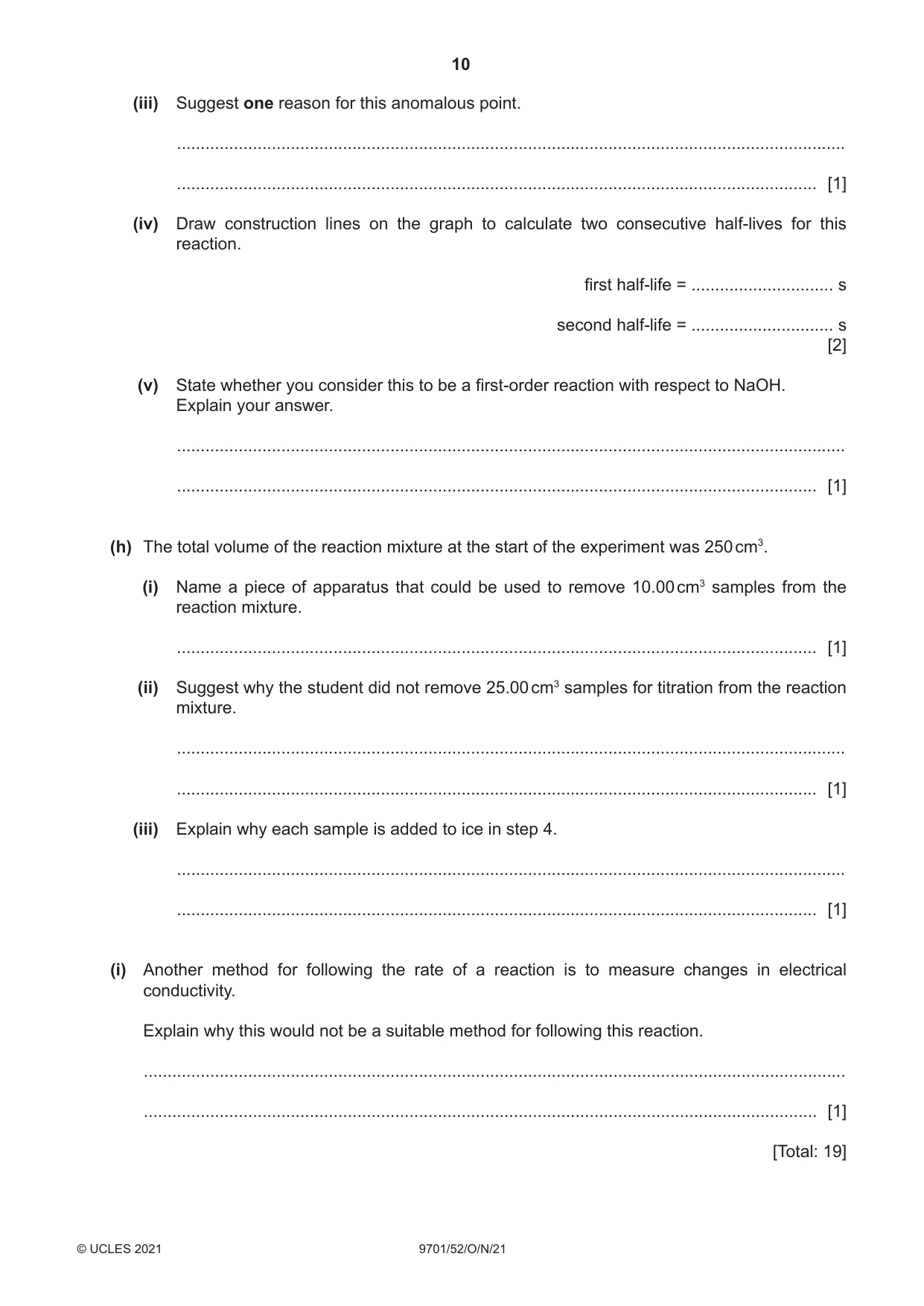

Mark scheme7 pages
Answers below. Sit the paper first if you are practising.
Questions as text
Q1 · It is possible to measure the enthalpy change of combustion, ∆Hc, of ethanol, C2H5OH…
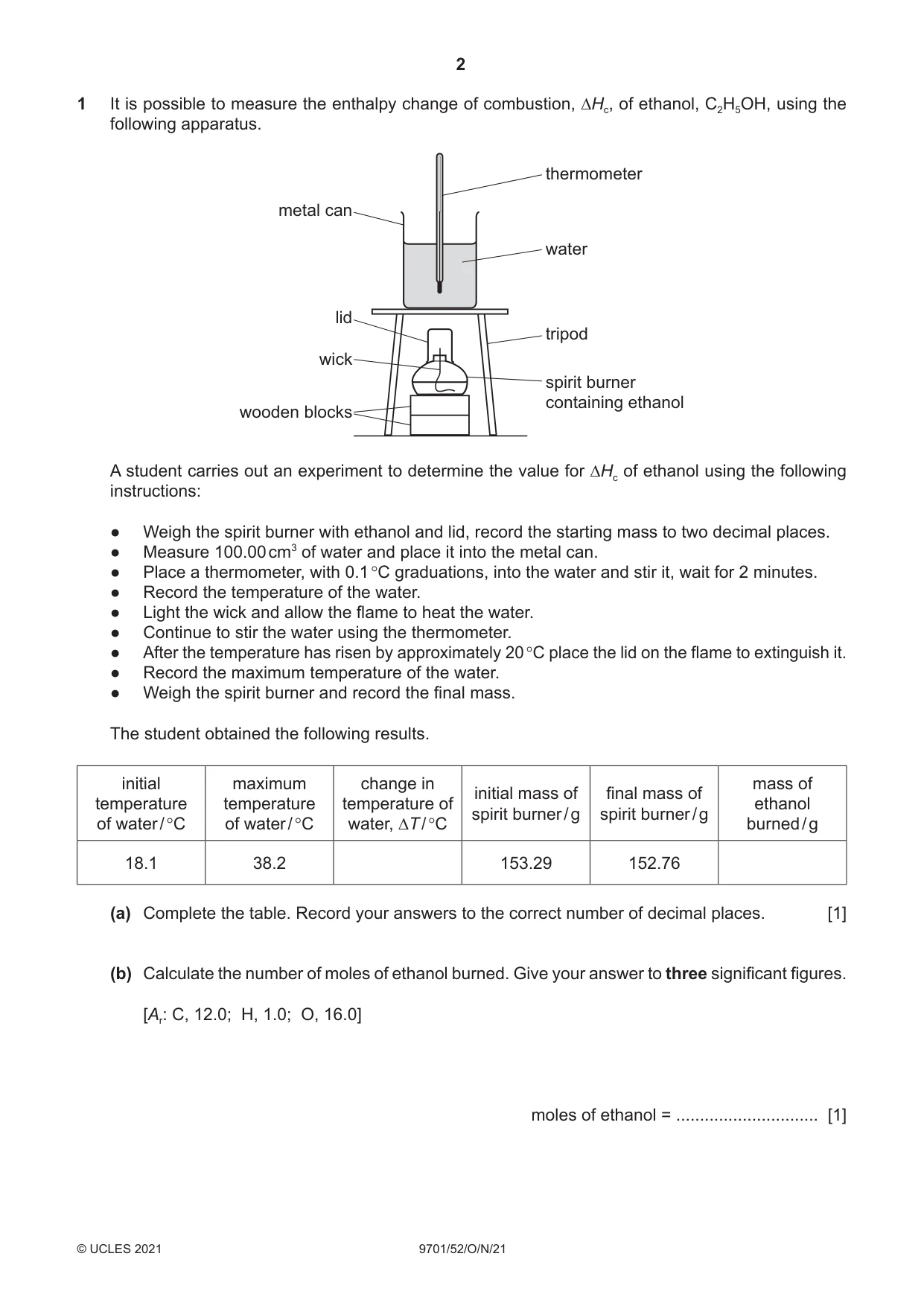
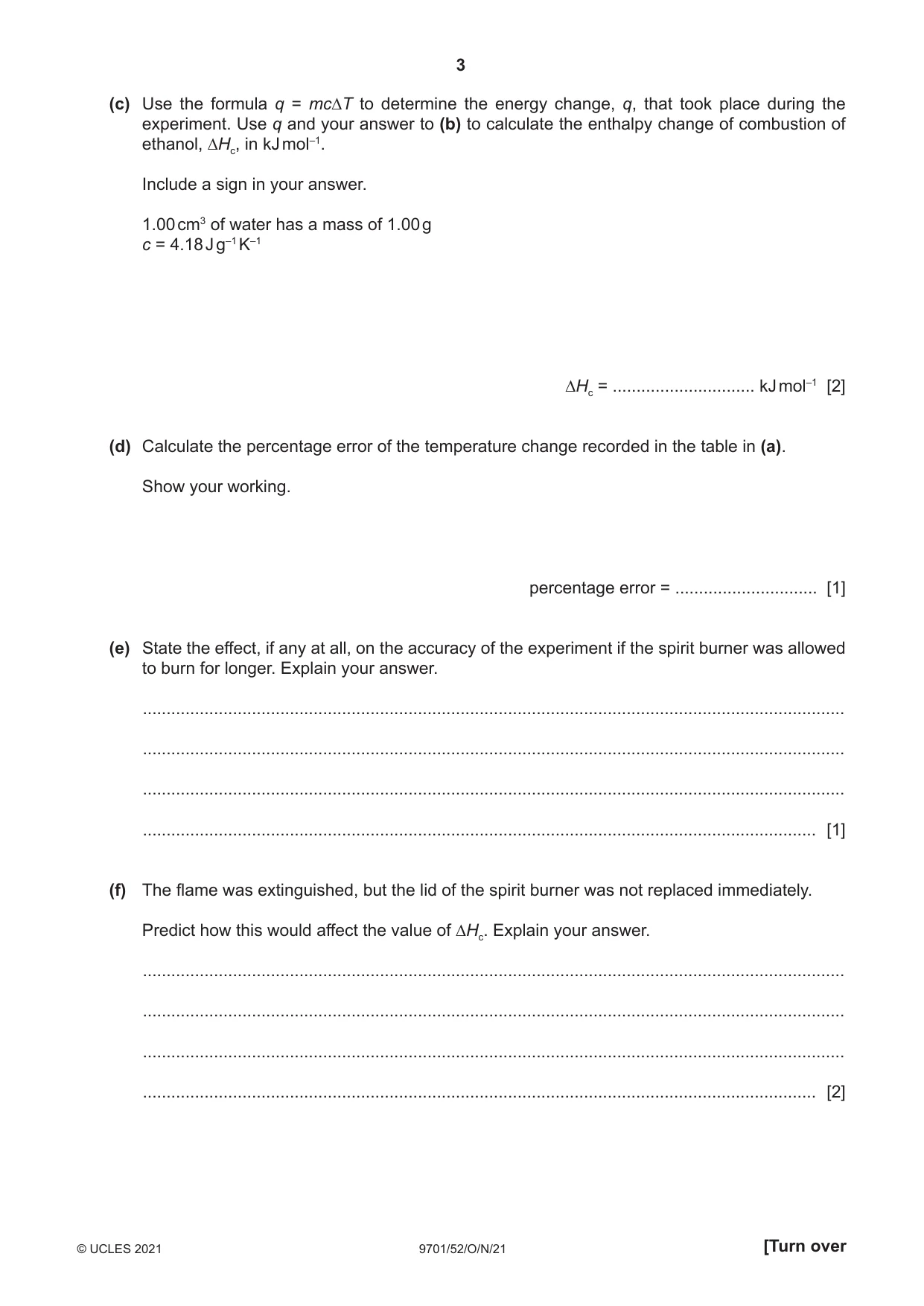
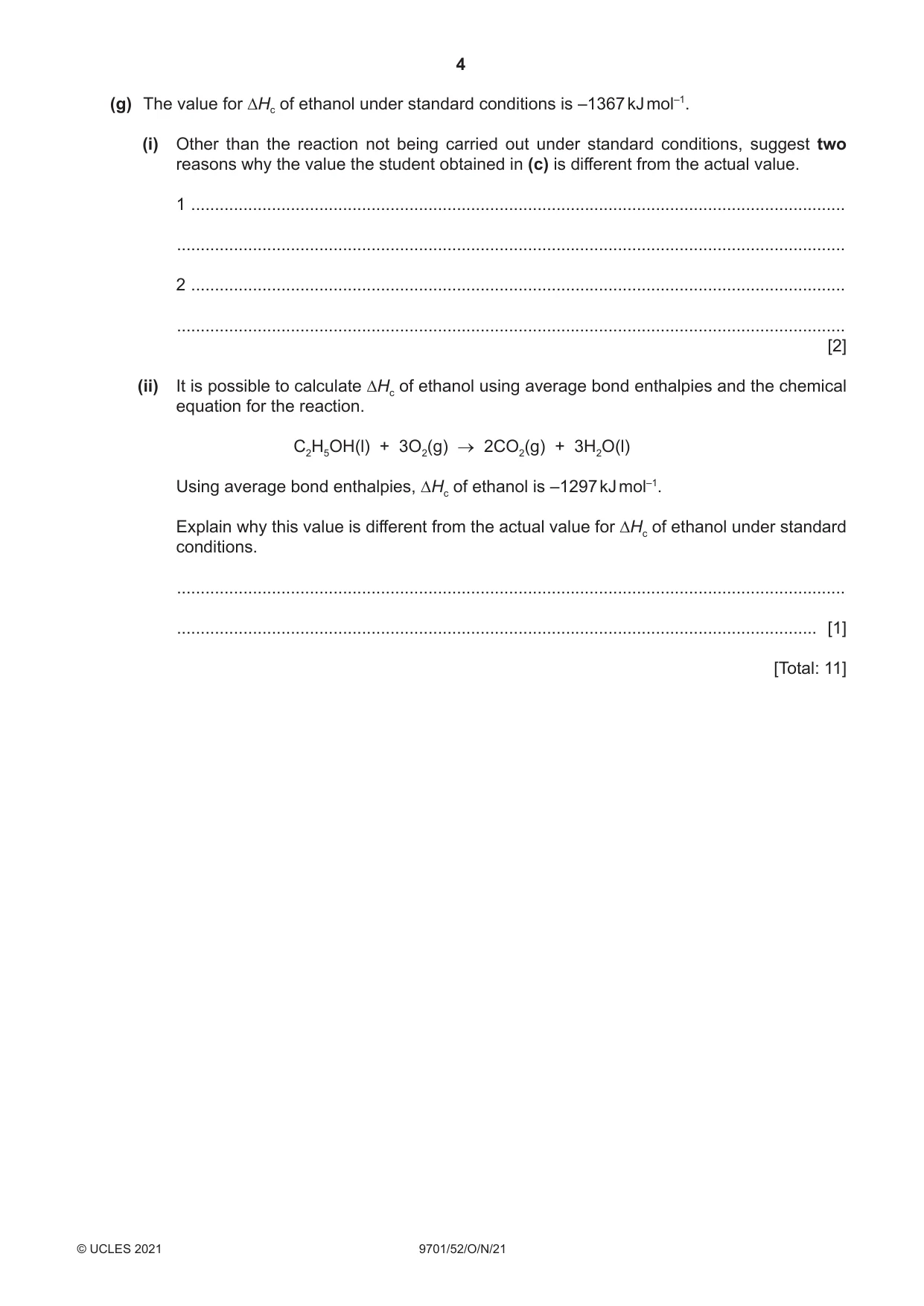
1 It is possible to measure the enthalpy change of combustion, ∆Hc, of ethanol, C2H5OH, using the following apparatus. thermometer metal can water lid tripod wick spirit burner containing ethanol wooden blocks A student carries out an experiment to determine the value for ∆Hc of ethanol using the following instructions: ● Weigh the spirit burner with ethanol and lid, record the starting mass to two decimal places. ● Measure 100.00 cm3 of water and place it into the metal can. ● Place a thermometer, with 0.1 °C graduations, into the water and stir it, wait for 2 minutes. ● Record the temperature of the water. ● Light the wick and allow the flame to heat the water. ● Continue to stir the water using the thermometer. ● After the temperature has risen by approximately 20 °C place the lid on the flame to extinguish it. ● Record the maximum temperature of the water. ● Weigh the spirit burner and record the final mass. The student obtained the following results. initial maximum change in mass of initial mass of final mass of temperature temperature temperature of ethanol spirit burner / g spirit burner / g of water / °C of water / °C water, ∆T / °C burned / g 18.1 38.2 153.29 152.76 (a) Complete the table. Record your answers to the correct number of decimal places. [1] (b) Calculate the number of moles of ethanol burned. Give your answer to three significant figures. [Ar: C, 12.0; H, 1.0; O, 16.0] moles of ethanol = .............................. [1] (c) Use the formula q = mc∆T to determine the energy change, q, that took place during the experiment. Use q and your answer to (b) to calculate the enthalpy change of combustion of ethanol, ∆Hc, in kJ mol–1. Include a sign in your answer. 1.00 cm3 of water has a mass of 1.00 g c = 4.18 J g–1 K–1 ∆Hc = .............................. kJ mol–1 [2] (d) Calculate the percentage error of the temperature change recorded in the table in (a). Show your working. percentage error = .............................. [1] (e) State the effect, if any at all, on the accuracy of the experiment if the spirit burner was allowed to burn for longer. Explain your answer. .................................................................................................................................................... .................................................................................................................................................... .................................................................................................................................................... .............................................................................................................................................. [1] (f) The flame was extinguished, but the lid of the spirit burner was not replaced immediately. Predict how this would affect the value of ∆Hc. Explain your answer. .................................................................................................................................................... .................................................................................................................................................... .................................................................................................................................................... .............................................................................................................................................. [2] (g) The value for ∆Hc of ethanol under standard conditions is –1367 kJ mol–1. (i) Other than the reaction not being carried out under standard conditions, suggest two reasons why the value the student obtained in (c) is different from the actual value. 1 .......................................................................................................................................... ............................................................................................................................................. 2 .......................................................................................................................................... ............................................................................................................................................. [2] (ii) It is possible to calculate ∆Hc of ethanol using average bond enthalpies and the chemical equation for the reaction. C2H5OH(l) + 3O2(g) → 2CO2(g) + 3H2O(l) Using average bond enthalpies, ∆Hc of ethanol is –1297 kJ mol–1. Explain why this value is different from the actual value for ∆Hc of ethanol under standard conditions. ............................................................................................................................................. ....................................................................................................................................... [1] [Total: 11]
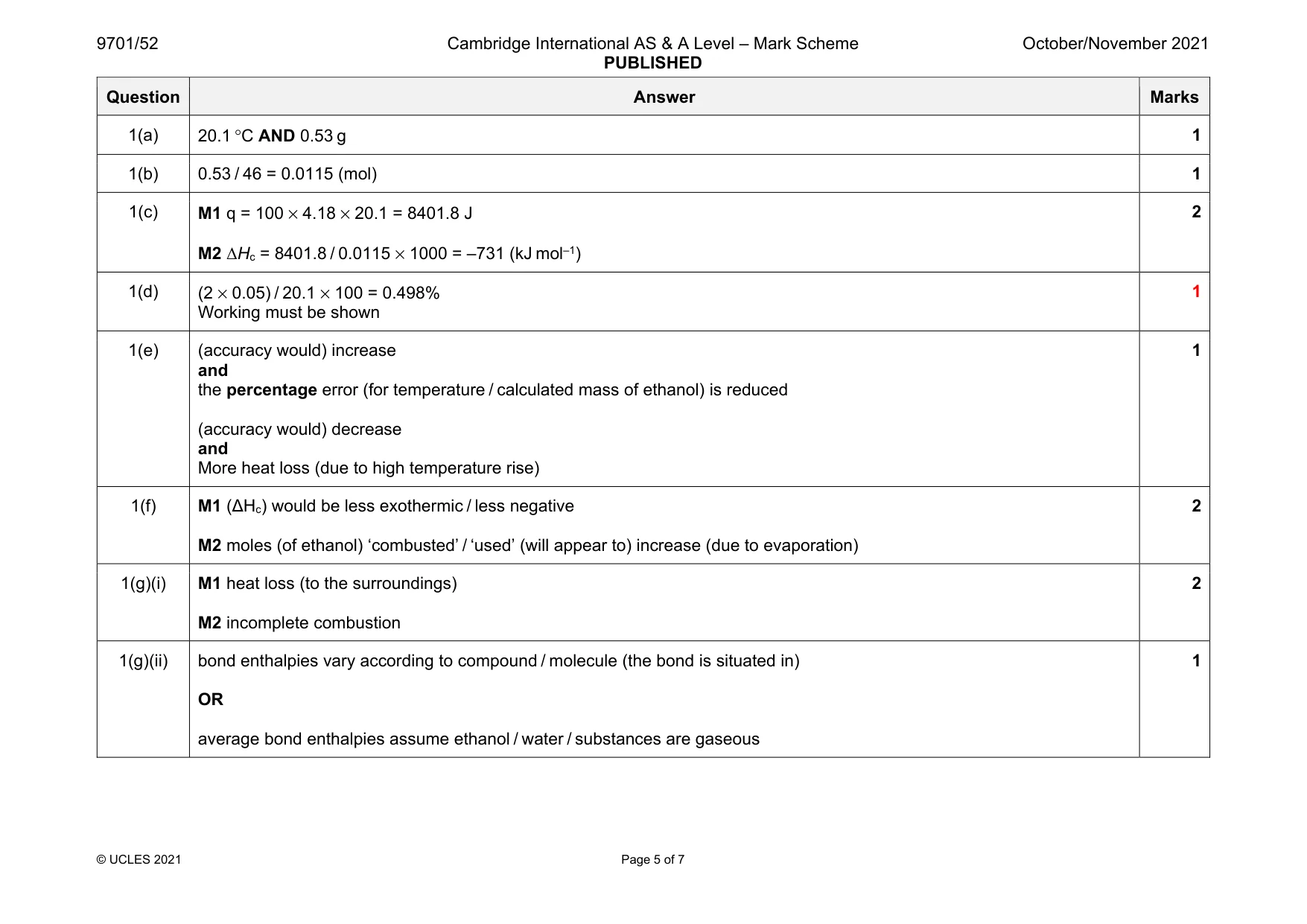
Mark scheme: 1(a) 20.1 °C AND 0.53 g 1 1(b) 0.53 / 46 = 0.0115 (mol) 1 1(c) M1 q = 100 × 4.18 × 20.1 = 8401.8 J M2 ΔHc = 8401.8 / 0.0115 × 1000 = –731 (kJ mol–1) 2 1(d) (2 × 0.05) / 20.1 × 100 = 0.498% Working must be shown 1 1(e) (accuracy would) increase and the percentage error (for temperature / calculated mass of ethanol) is reduced (accuracy would) decrease and More heat loss (due to high temperature rise) 1 1(f) M1 (ΔHc) would be less exothermic / less negative M2 moles (of ethanol) ‘combusted’ / ‘used’ (will appear to) increase (due to evaporation) 2 1(g)(i) M1 heat loss (to the surroundings) M2 incomplete combustion 2 1(g)(ii) bond enthalpies vary according to compound / molecule (the bond is situated in) OR average bond enthalpies assume ethanol / water / substances are gaseous 1
Q2 · Halogenoalkanes undergo hydrolysis with aqueous sodium hydroxide to form alcohols
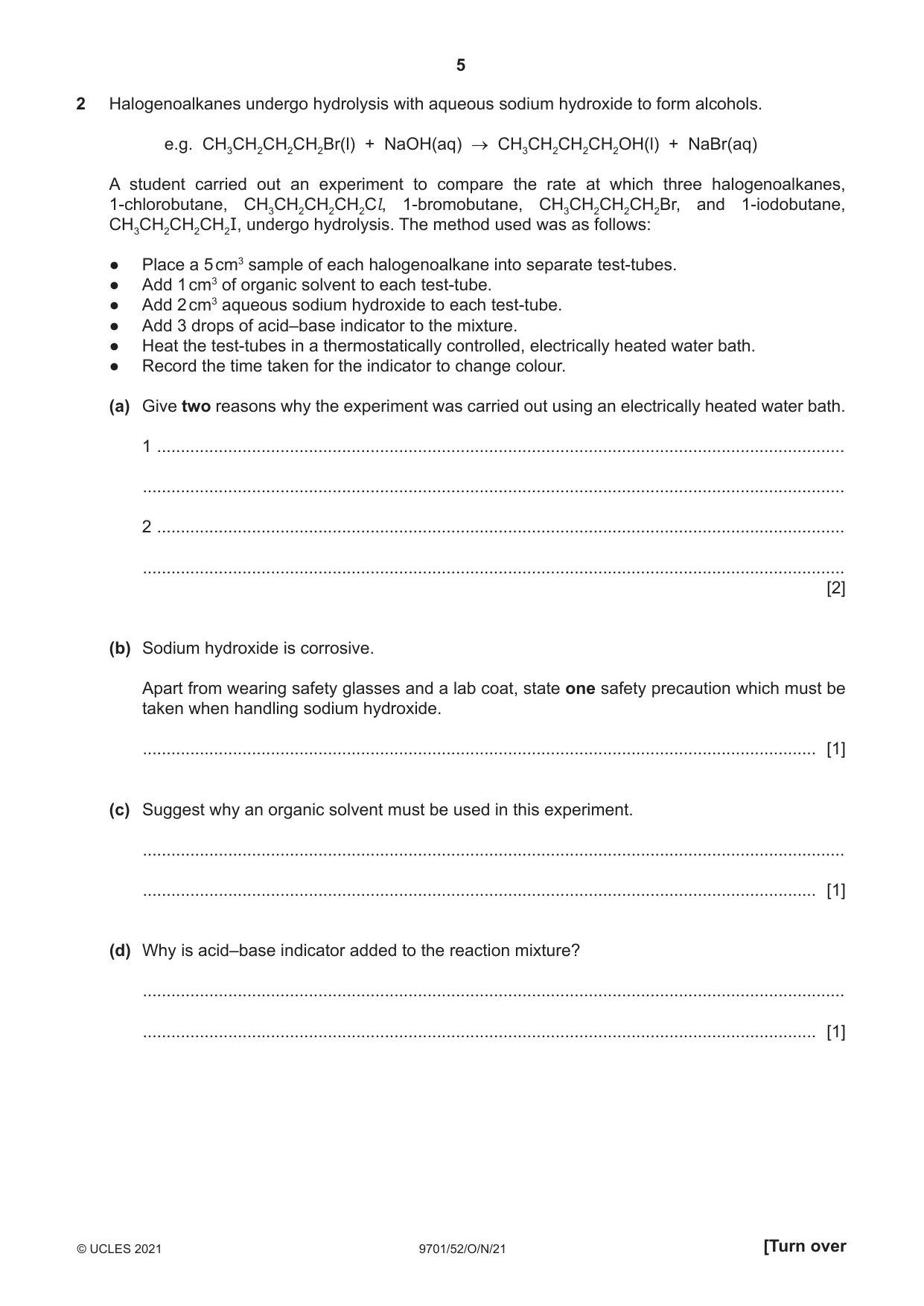
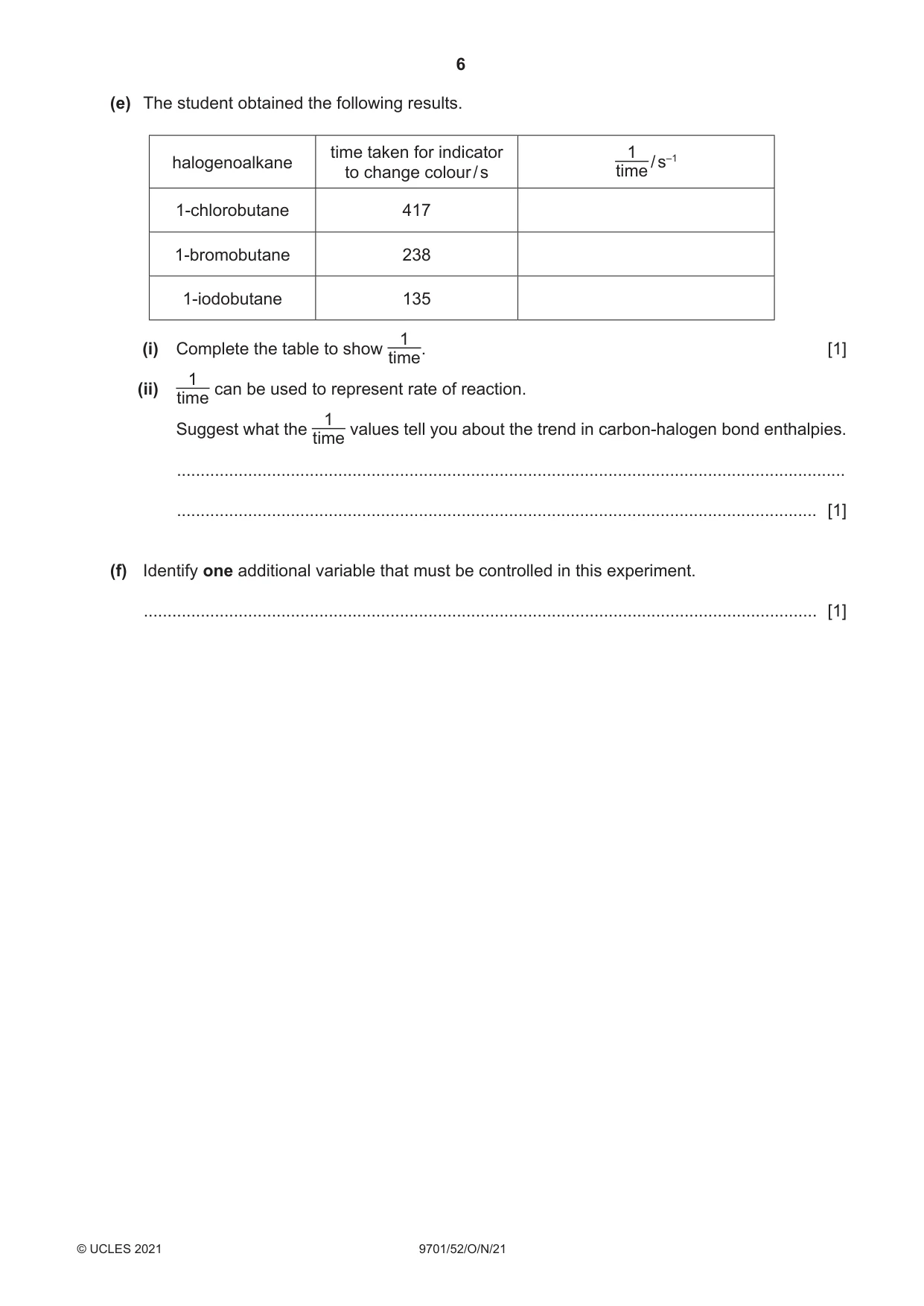
2 Halogenoalkanes undergo hydrolysis with aqueous sodium hydroxide to form alcohols. e.g. CH3CH2CH2CH2Br(l) + NaOH(aq) → CH3CH2CH2CH2OH(l) + NaBr(aq) A student carried out an experiment to compare the rate at which three halogenoalkanes, 1-chlorobutane, CH3CH2CH2CH2Cl, 1-bromobutane, CH3CH2CH2CH2Br, and 1-iodobutane, CH3CH2CH2CH2I, undergo hydrolysis. The method used was as follows: ● Place a 5 cm3 sample of each halogenoalkane into separate test-tubes. ● Add 1 cm3 of organic solvent to each test-tube. ● Add 2 cm3 aqueous sodium hydroxide to each test-tube. ● Add 3 drops of acid–base indicator to the mixture. ● Heat the test-tubes in a thermostatically controlled, electrically heated water bath. ● Record the time taken for the indicator to change colour. (a) Give two reasons why the experiment was carried out using an electrically heated water bath. 1 ................................................................................................................................................. .................................................................................................................................................... 2 ................................................................................................................................................. .................................................................................................................................................... [2] (b) Sodium hydroxide is corrosive. Apart from wearing safety glasses and a lab coat, state one safety precaution which must be taken when handling sodium hydroxide. .............................................................................................................................................. [1] (c) Suggest why an organic solvent must be used in this experiment. .................................................................................................................................................... .............................................................................................................................................. [1] (d) Why is acid–base indicator added to the reaction mixture? .................................................................................................................................................... .............................................................................................................................................. [1] (e) The student obtained the following results. time taken for indicator 1 halogenoalkane to change colour / s time / s–1 1-chlorobutane 417 1-bromobutane 238 1-iodobutane 135 1 (i) Complete the table to show time. [1] 1 (ii) can be used to represent rate of reaction. time 1 Suggest what the values tell you about the trend in carbon-halogen bond enthalpies. time ............................................................................................................................................. ....................................................................................................................................... [1] (f) Identify one additional variable that must be controlled in this experiment. .............................................................................................................................................. [1] Question 2 continues on the next page.
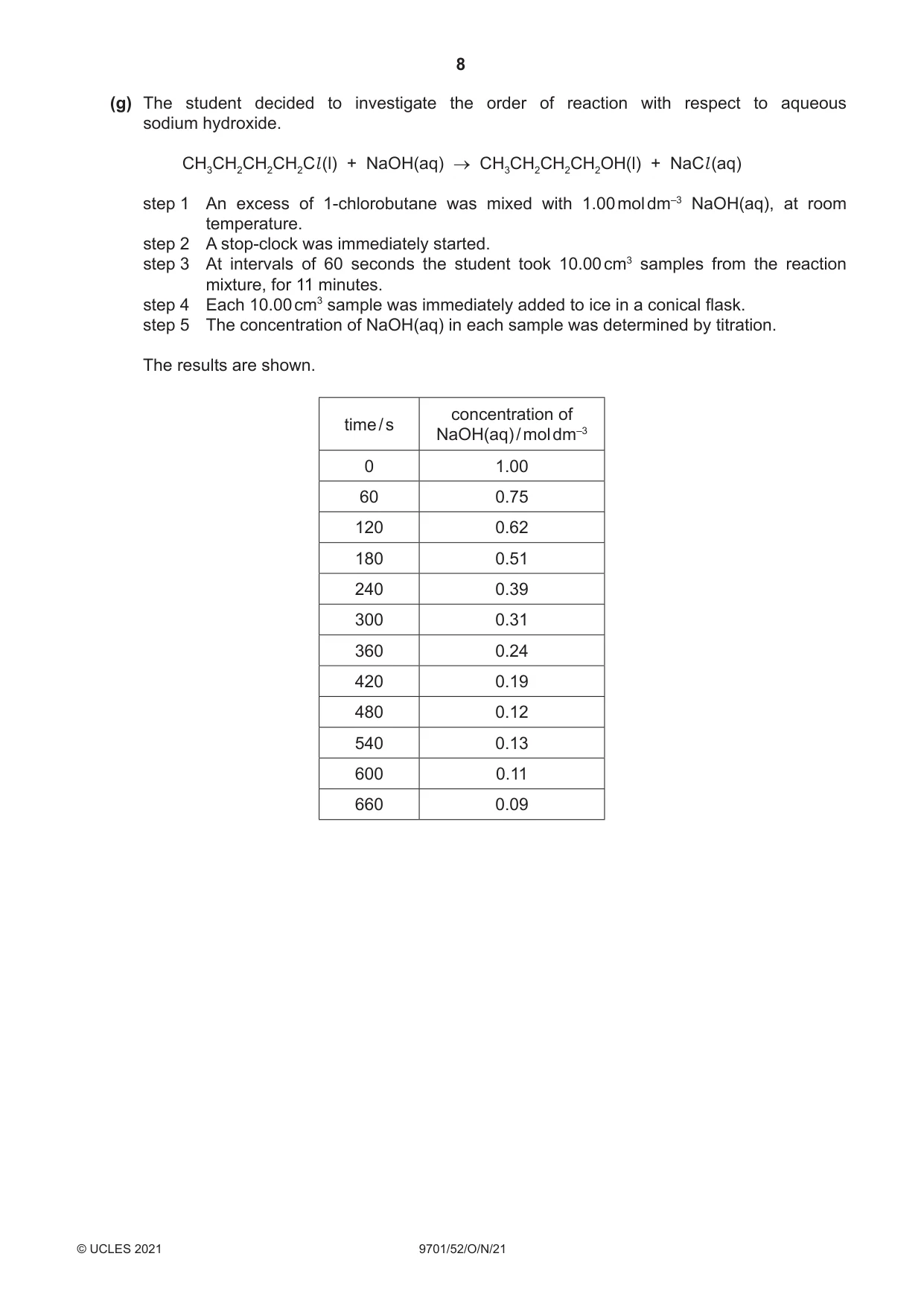
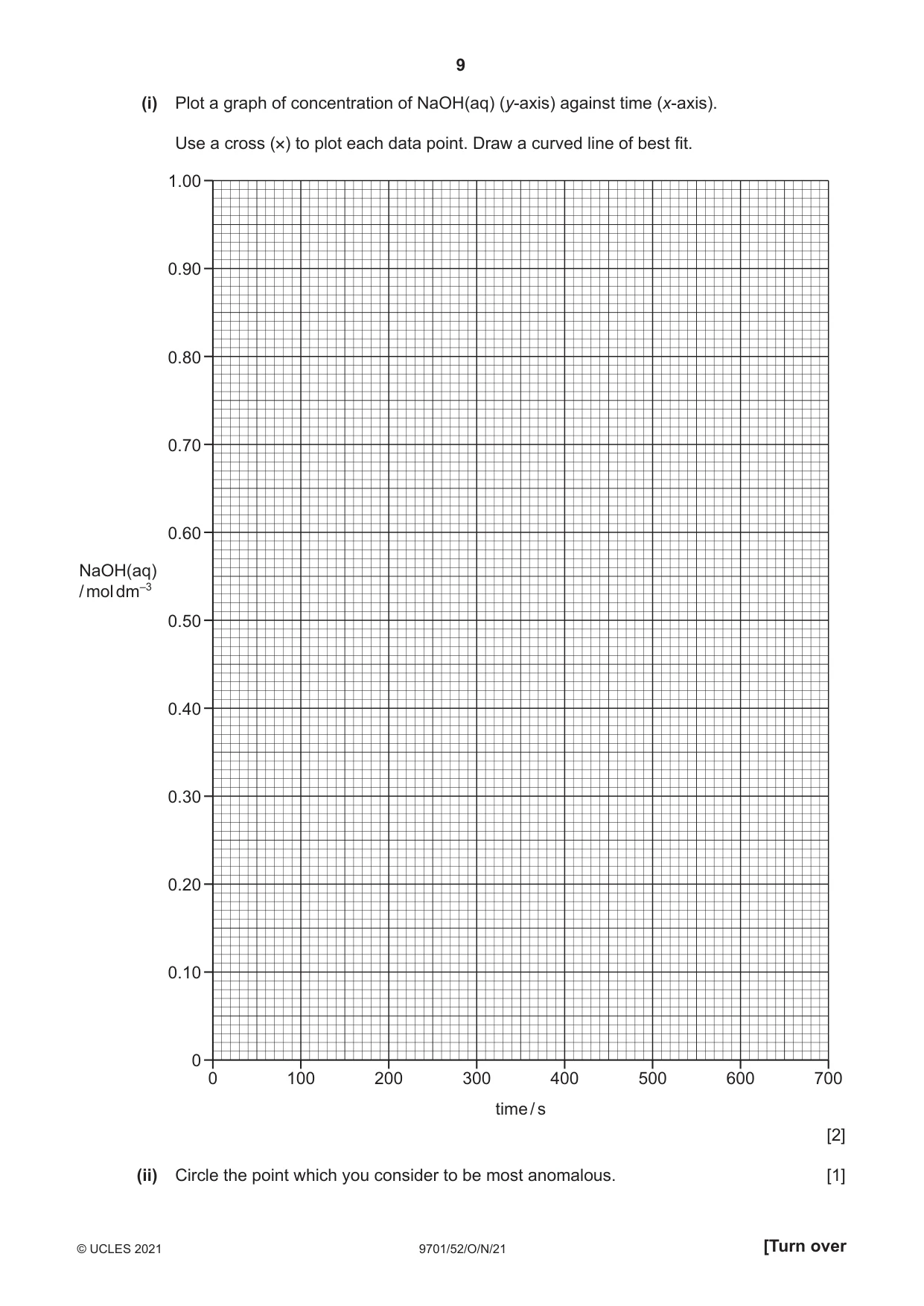
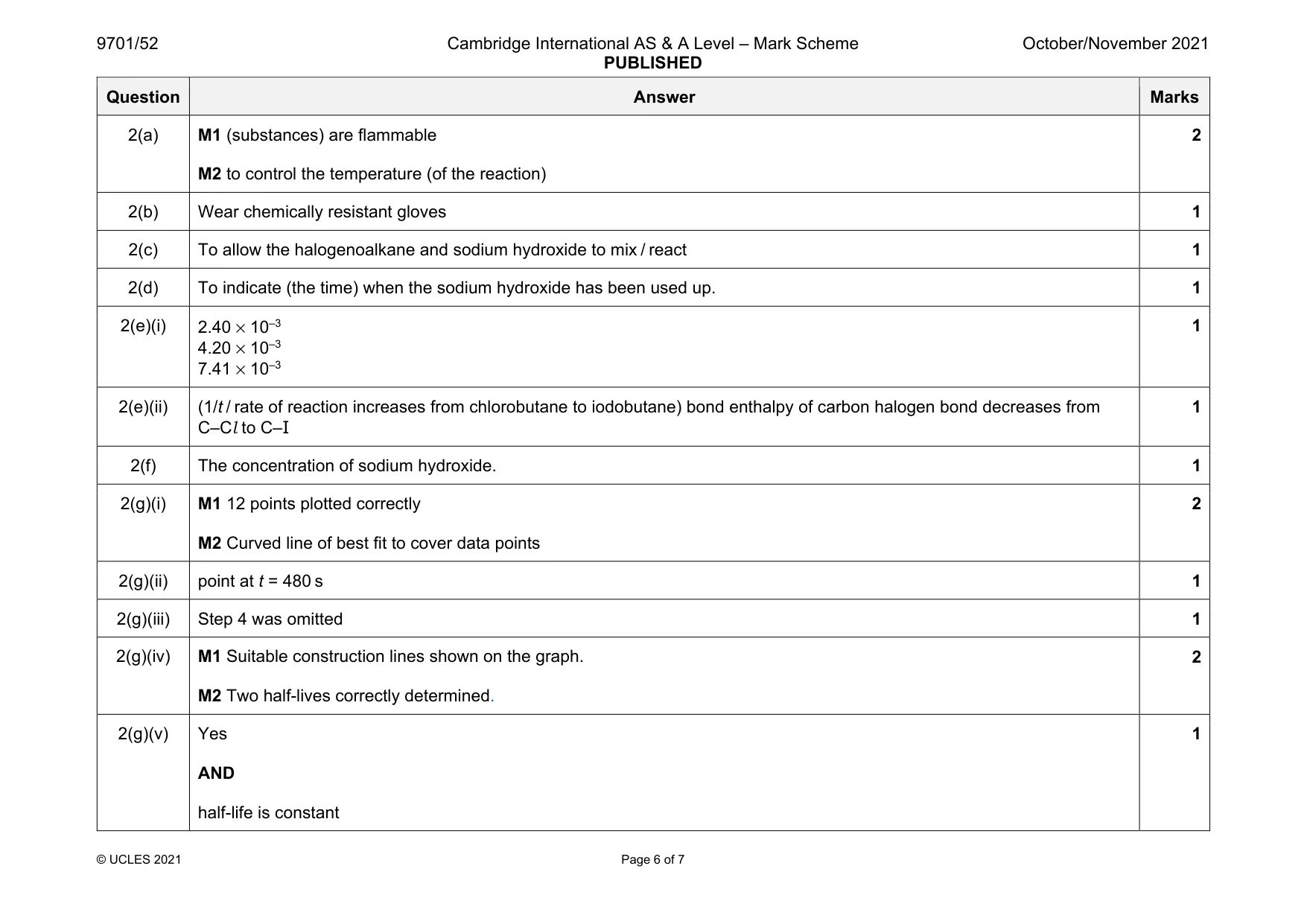
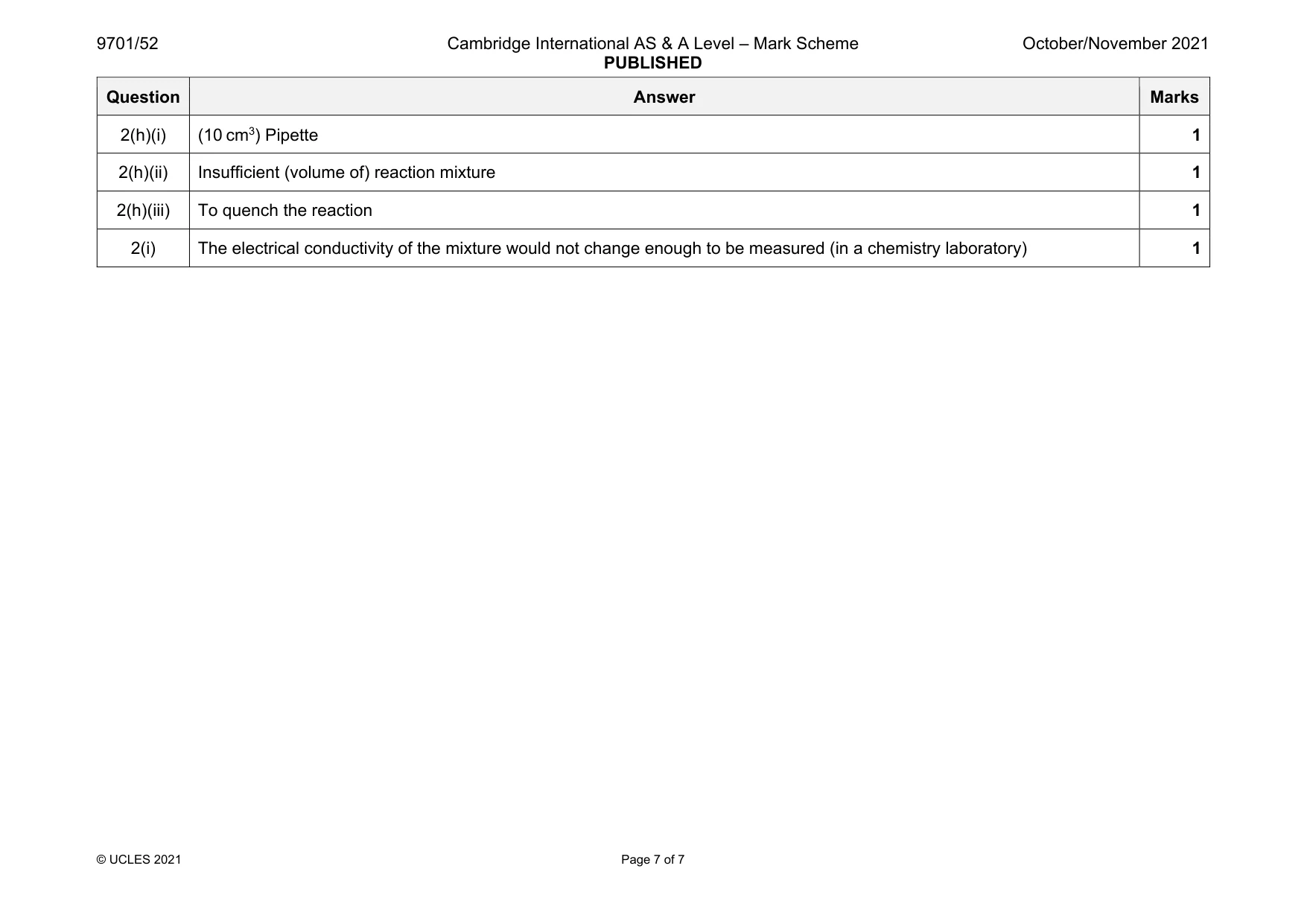
Mark scheme: 2(a) M1 (substances) are flammable M2 to control the temperature (of the reaction) 2 2(b) Wear chemically resistant gloves 1 2(c) To allow the halogenoalkane and sodium hydroxide to mix / react 1 2(d) To indicate (the time) when the sodium hydroxide has been used up. 1 2(e)(i) 2.40 × 10⁻³ 4.20 × 10⁻³ 7.41 × 10⁻³ 1 2(e)(ii) (1/t / rate of reaction increases from chlorobutane to iodobutane) bond enthalpy of carbon halogen bond decreases from C–Cl to C–I 1 2(f) The concentration of sodium hydroxide. 1 2(g)(i) M1 12 points plotted correctly M2 Curved line of best fit to cover data points 2 2(g)(ii) point at t = 480 s 1 2(g)(iii) Step 4 was omitted 1 2(g)(iv) M1 Suitable construction lines shown on the graph. M2 Two half-lives correctly determined. 2 2(g)(v) Yes AND half-life is constant 1 Question Answer Marks 2(h)(i) (10 cm3) Pipette 1 2(h)(ii) Insufficient (volume of) reaction mixture 1 2(h)(iii) To quench the reaction 1 2(i) The electrical conductivity of the mixture would not change enough to be measured (in a chemistry laboratory) 1
What was in this paper
The subtopics covered by these 2 questions, and how many questions each got. Open one in a new tab to see every Cambridge question on it.
What you needed in this session
Cambridge’s own grade thresholds for 2021 Oct/Nov, Paper 5 · Variant 2. A higher threshold means an easier paper — the bar moves with how the cohort did.