Cambridge A Level Chemistry 9701 — 2013 May/June Paper 2 · Variant 2
9701/22/M/J/13 · 60 marks · ≈68 min
The question paper and its mark scheme, free to read here and free to download. This is Cambridge’s own paper, exactly as it was sat.
Question paper12 pages
Mark scheme7 pages
Answers below. Sit the paper first if you are practising.
Paper as text
Question paper, page 1
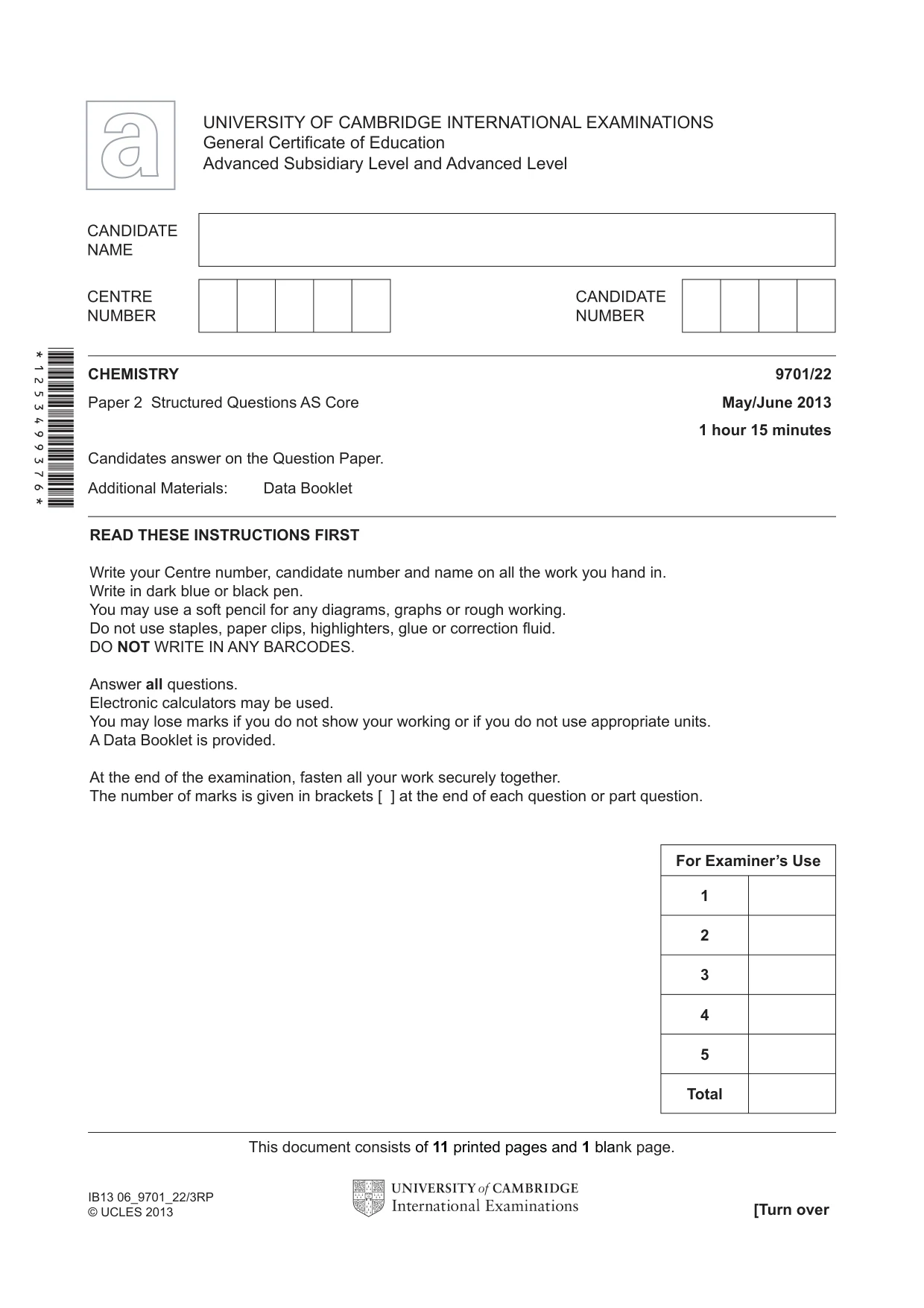
READ THESE INSTRUCTIONS FIRST Write your Centre number, candidate number and name on all the work you hand in. Write in dark blue or black pen. You may use a soft pencil for any diagrams, graphs or rough working. Do not use staples, paper clips, highlighters, glue or correction fl uid. DO NOT WRITE IN ANY BARCODES. Answer all questions. Electronic calculators may be used. You may lose marks if you do not show your working or if you do not use appropriate units. A Data Booklet is provided. At the end of the examination, fasten all your work securely together. The number of marks is given in brackets [ ] at the end of each question or part question. CHEMISTRY 9701/22 Paper 2 Structured Questions AS Core May/June 2013 1 hour 15 minutes Candidates answer on the Question Paper. Additional Materials: Data Booklet UNIVERSITY OF CAMBRIDGE INTERNATIONAL EXAMINATIONS General Certifi cate of Education Advanced Subsidiary Level and Advanced Level This document consists of 11 printed pages and 1 blank page. [Turn over IB13 06_9701_22/3RP © UCLES 2013 *1253499376* For Examiner’s Use 1 2 3 4 5 Total
Question paper, page 2
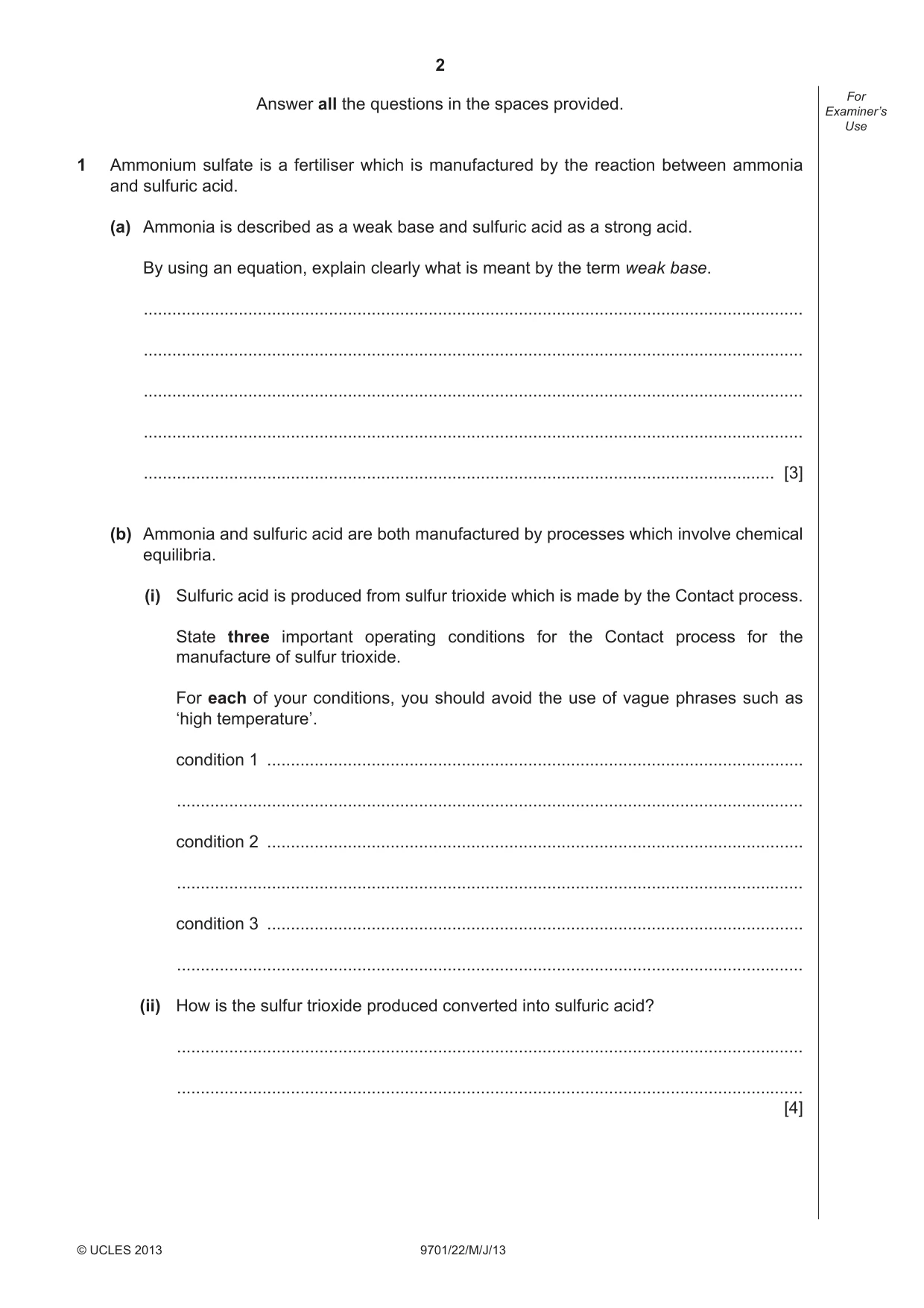
2 9701/22/M/J/13 © UCLES 2013 For Examiner’s Use Answer all the questions in the spaces provided. 1 Ammonium sulfate is a fertiliser which is manufactured by the reaction between ammonia and sulfuric acid. (a) Ammonia is described as a weak base and sulfuric acid as a strong acid. By using an equation, explain clearly what is meant by the term weak base. … … … … … [3] (b) Ammonia and sulfuric acid are both manufactured by processes which involve chemical equilibria. (i) Sulfuric acid is produced from sulfur trioxide which is made by the Contact process. State three important operating conditions for the Contact process for the manufacture of sulfur trioxide. For each of your conditions, you should avoid the use of vague phrases such as ‘high temperature’. condition 1 … … condition 2 … … condition 3 … … (ii) How is the sulfur trioxide produced converted into sulfuric acid? … … [4]
Question paper, page 3
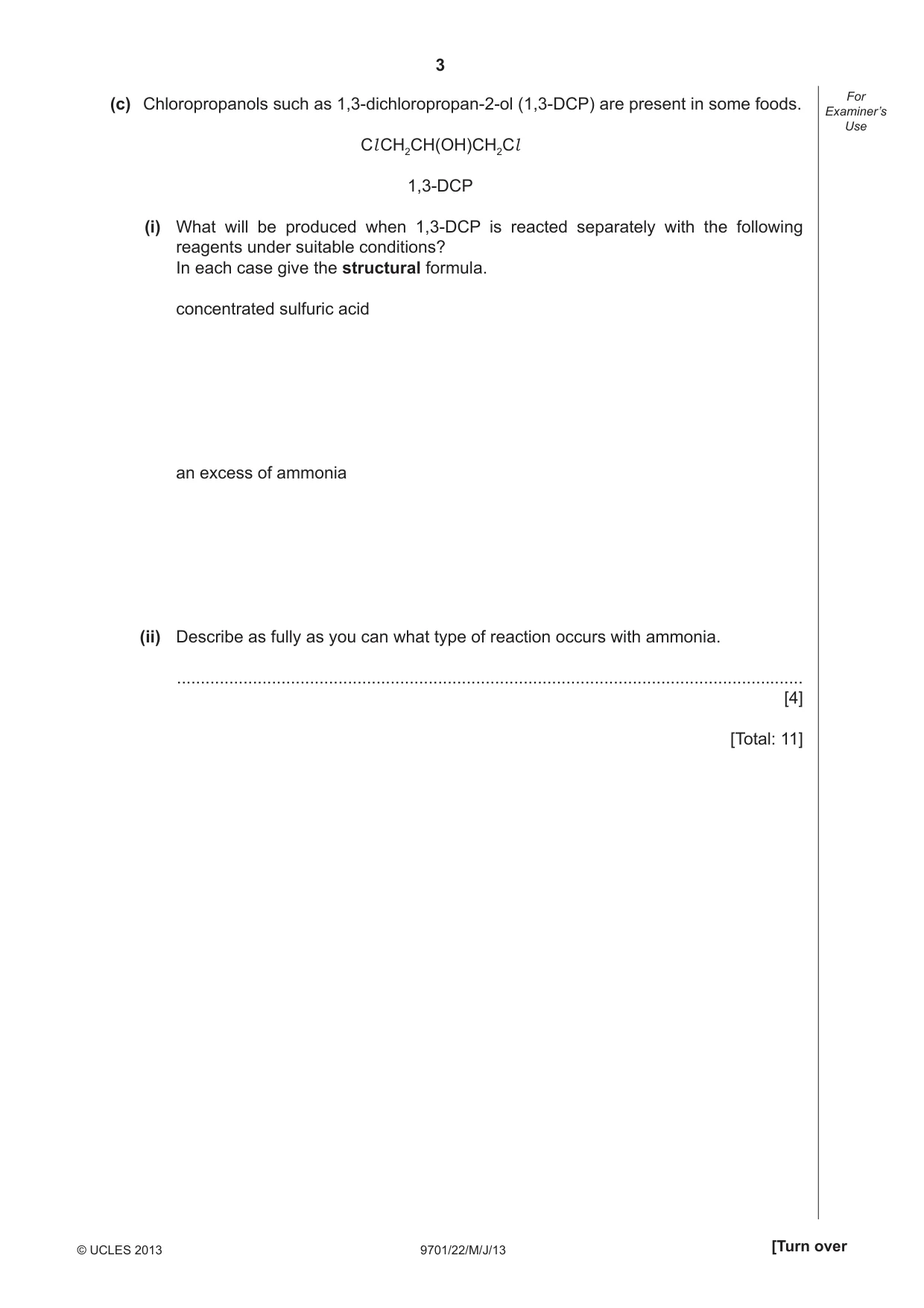
3 9701/22/M/J/13 © UCLES 2013 [Turn over For Examiner’s Use (c) Chloropropanols such as 1,3-dichloropropan-2-ol (1,3-DCP) are present in some foods. Cl CH2CH(OH)CH2Cl 1,3-DCP (i) What will be produced when 1,3-DCP is reacted separately with the following reagents under suitable conditions? In each case give the structural formula. concentrated sulfuric acid an excess of ammonia (ii) Describe as fully as you can what type of reaction occurs with ammonia. … [4] [Total: 11]
Question paper, page 4
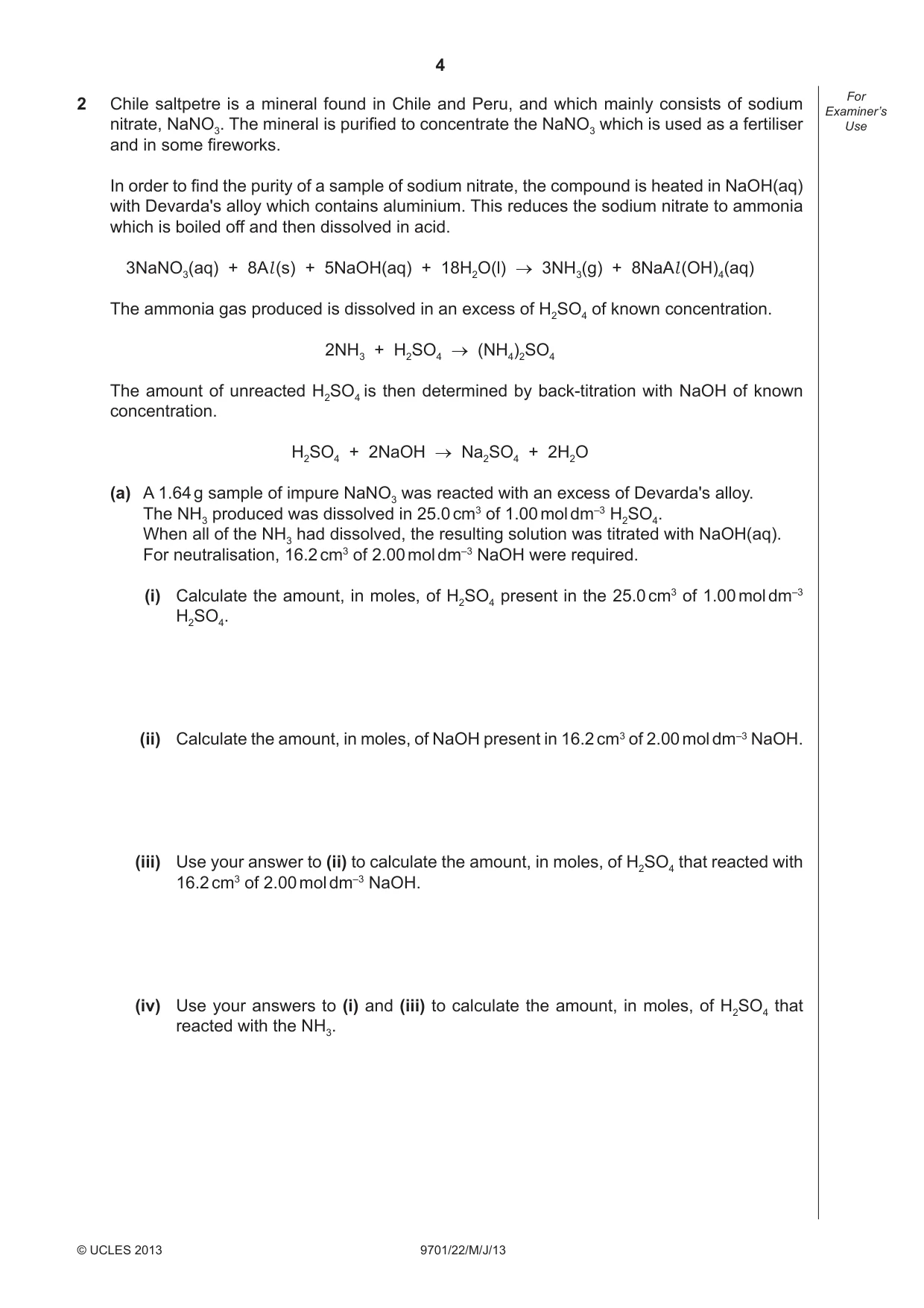
4 9701/22/M/J/13 © UCLES 2013 For Examiner’s Use 2 Chile saltpetre is a mineral found in Chile and Peru, and which mainly consists of sodium nitrate, NaNO3. The mineral is purifi ed to concentrate the NaNO3 which is used as a fertiliser and in some fi reworks. In order to fi nd the purity of a sample of sodium nitrate, the compound is heated in NaOH(aq) with Devarda's alloy which contains aluminium. This reduces the sodium nitrate to ammonia which is boiled off and then dissolved in acid. 3NaNO3(aq) + 8Al (s) + 5NaOH(aq) + 18H2O(l) → 3NH3(g) + 8NaAl (OH)4(aq) The ammonia gas produced is dissolved in an excess of H2SO4 of known concentration. 2NH3 + H2SO4 → (NH4)2SO4 The amount of unreacted H2SO4 is then determined by back-titration with NaOH of known concentration. H2SO4 + 2NaOH → Na2SO4 + 2H2O (a) A 1.64 g sample of impure NaNO3 was reacted with an excess of Devarda's alloy. The NH3 produced was dissolved in 25.0 cm3 of 1.00 mol dm–3 H2SO4. When all of the NH3 had dissolved, the resulting solution was titrated with NaOH(aq). For neutralisation, 16.2 cm3 of 2.00 mol dm–3 NaOH were required. (i) Calculate the amount, in moles, of H2SO4 present in the 25.0 cm3 of 1.00 mol dm–3 H2SO4. (ii) Calculate the amount, in moles, of NaOH present in 16.2 cm3 of 2.00 mol dm–3 NaOH. (iii) Use your answer to (ii) to calculate the amount, in moles, of H2SO4 that reacted with 16.2 cm3 of 2.00 mol dm–3 NaOH. (iv) Use your answers to (i) and (iii) to calculate the amount, in moles, of H2SO4 that reacted with the NH3.
Question paper, page 5
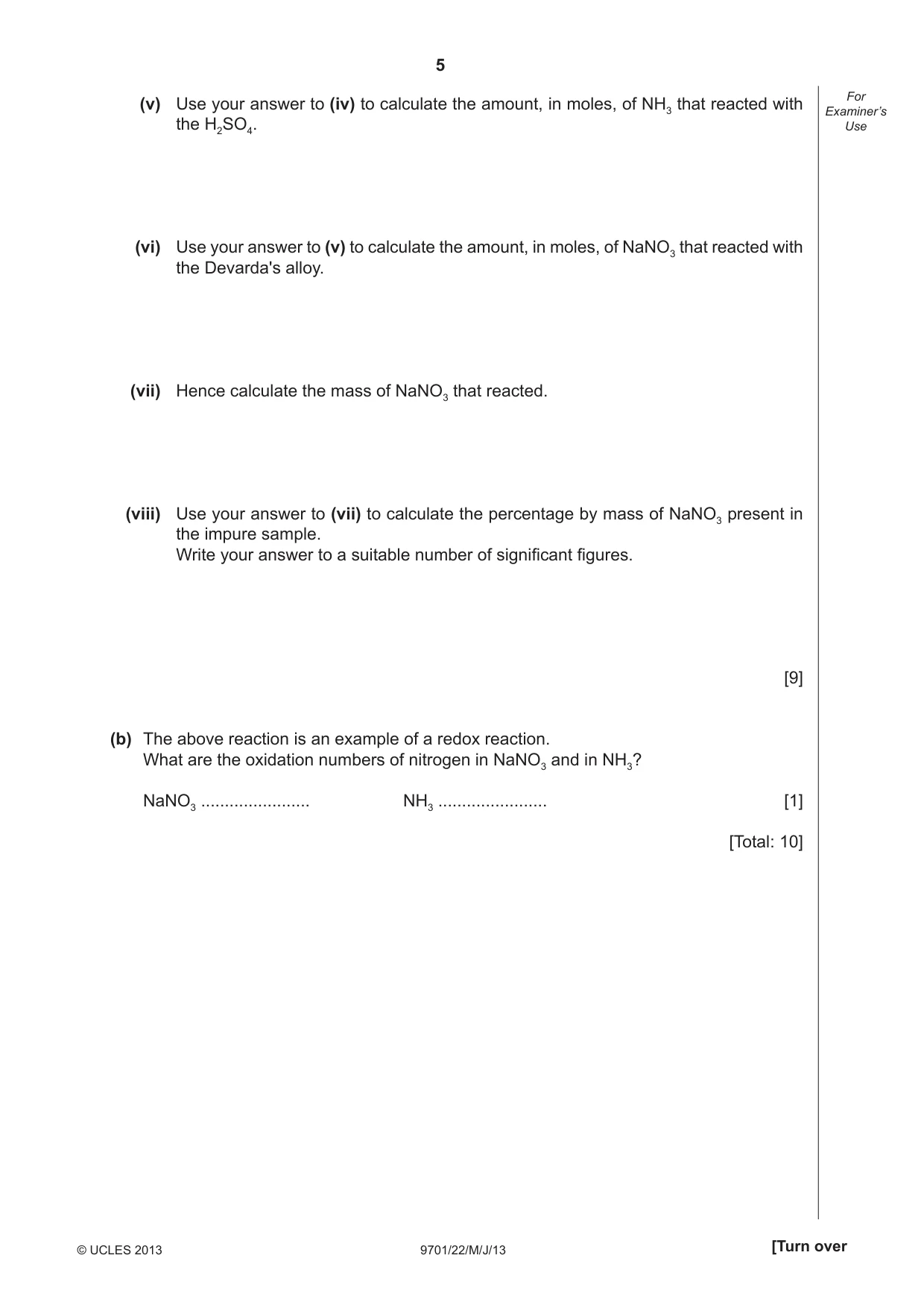
5 9701/22/M/J/13 © UCLES 2013 [Turn over For Examiner’s Use (v) Use your answer to (iv) to calculate the amount, in moles, of NH3 that reacted with the H2SO4. (vi) Use your answer to (v) to calculate the amount, in moles, of NaNO3 that reacted with the Devarda's alloy. (vii) Hence calculate the mass of NaNO3 that reacted. (viii) Use your answer to (vii) to calculate the percentage by mass of NaNO3 present in the impure sample. Write your answer to a suitable number of signifi cant fi gures. [9] (b) The above reaction is an example of a redox reaction. What are the oxidation numbers of nitrogen in NaNO3 and in NH3? NaNO3 … NH3 … [1] [Total: 10]
Question paper, page 6
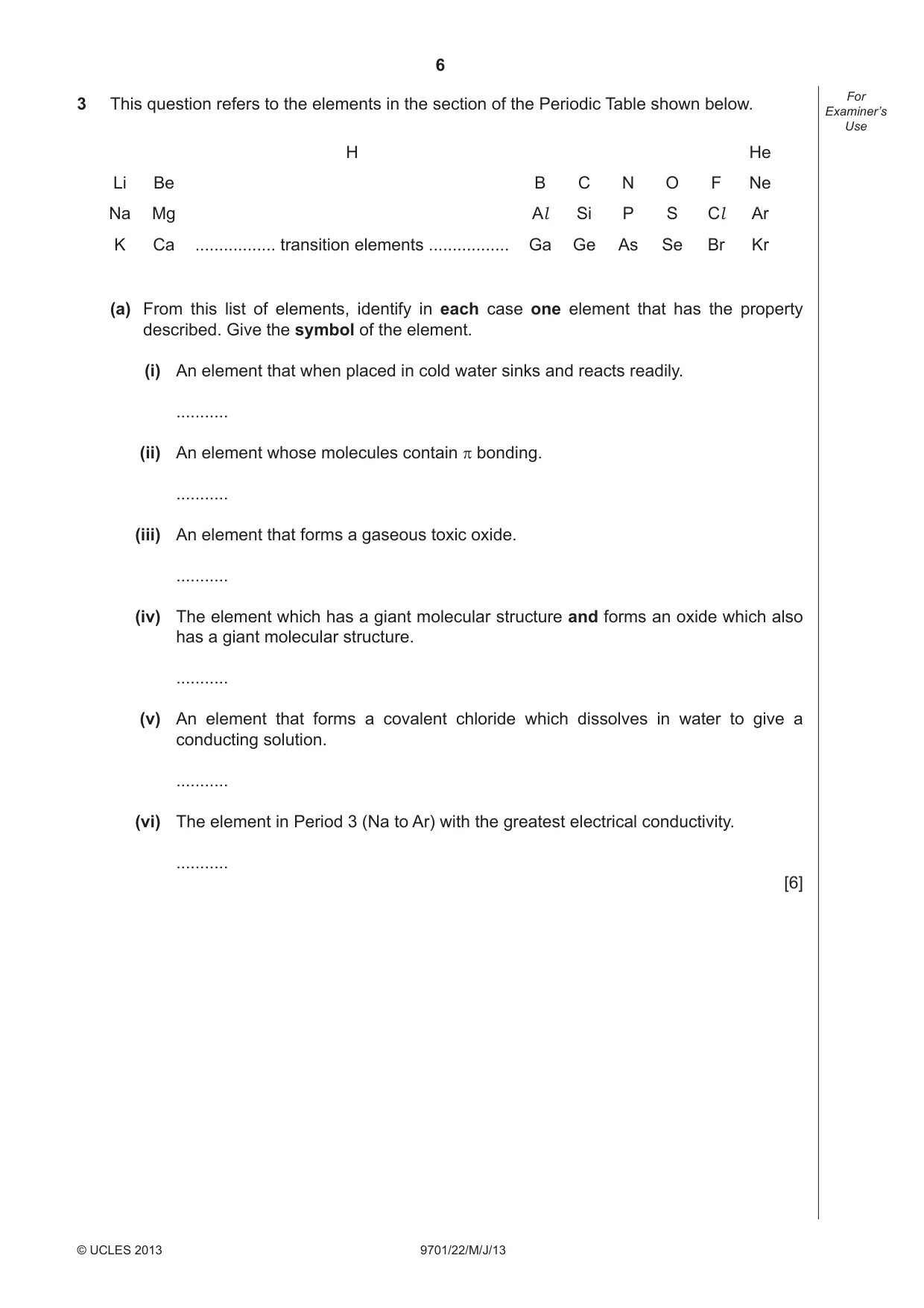
6 9701/22/M/J/13 © UCLES 2013 For Examiner’s Use 3 This question refers to the elements in the section of the Periodic Table shown below. H He Li Be B C N O F Ne Na Mg Al Si P S Cl Ar K Ca … transition elements … Ga Ge As Se Br Kr (a) From this list of elements, identify in each case one element that has the property described. Give the symbol of the element. (i) An element that when placed in cold water sinks and reacts readily. … (ii) An element whose molecules contain π bonding. … (iii) An element that forms a gaseous toxic oxide. … (iv) The element which has a giant molecular structure and forms an oxide which also has a giant molecular structure. … (v) An element that forms a covalent chloride which dissolves in water to give a conducting solution. … (vi) The element in Period 3 (Na to Ar) with the greatest electrical conductivity. … [6]
Question paper, page 7
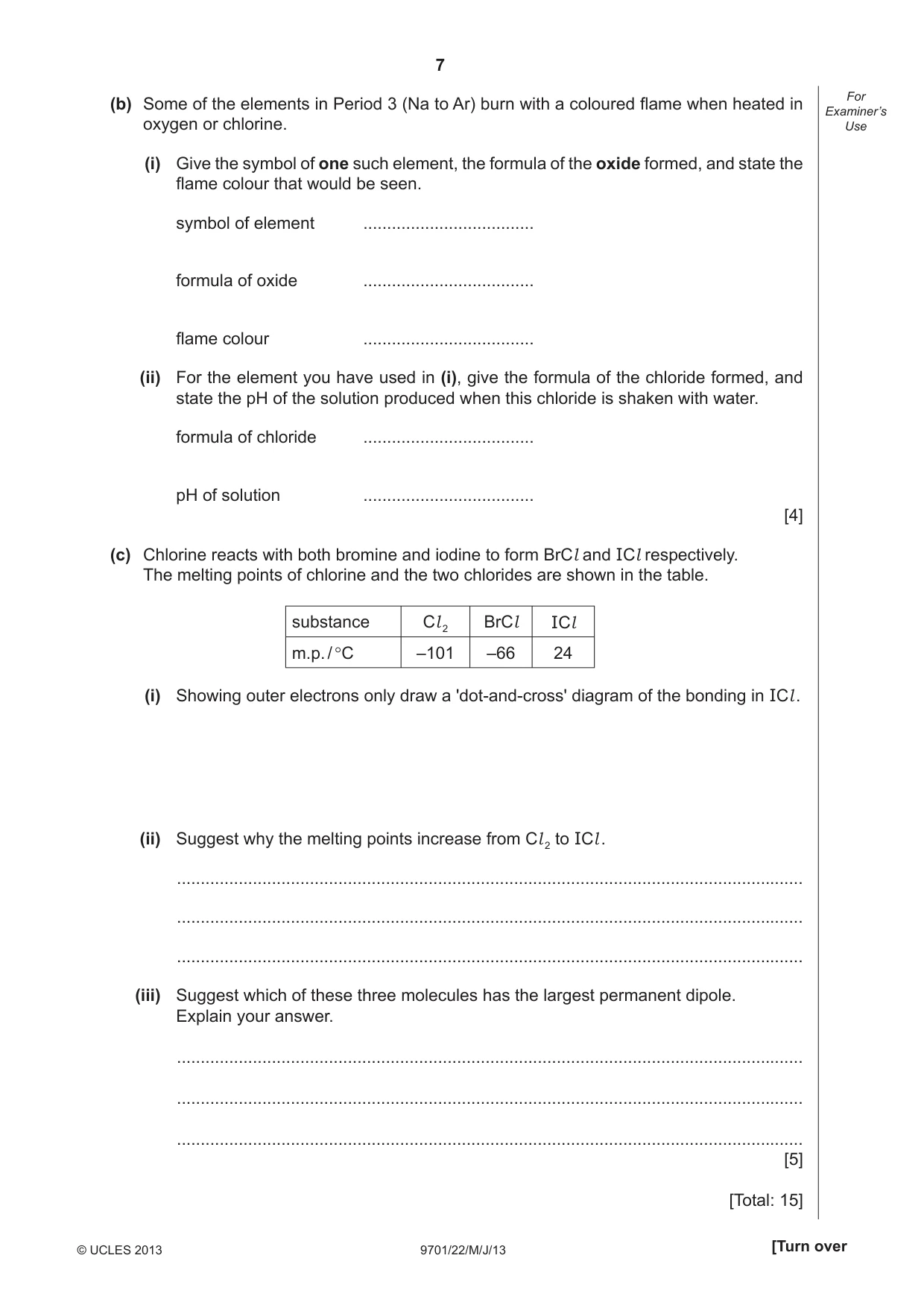
7 9701/22/M/J/13 © UCLES 2013 [Turn over For Examiner’s Use (b) Some of the elements in Period 3 (Na to Ar) burn with a coloured fl ame when heated in oxygen or chlorine. (i) Give the symbol of one such element, the formula of the oxide formed, and state the fl ame colour that would be seen. symbol of element … formula of oxide … fl ame colour … (ii) For the element you have used in (i), give the formula of the chloride formed, and state the pH of the solution produced when this chloride is shaken with water. formula of chloride … pH of solution … [4] (c) Chlorine reacts with both bromine and iodine to form BrCl and ICl respectively. The melting points of chlorine and the two chlorides are shown in the table. substance Cl 2 BrCl ICl m.p. / °C –101 –66 24 (i) Showing outer electrons only draw a 'dot-and-cross' diagram of the bonding in ICl . (ii) Suggest why the melting points increase from Cl 2 to ICl . … … … (iii) Suggest which of these three molecules has the largest permanent dipole. Explain your answer. … … … [5] [Total: 15]
Question paper, page 8
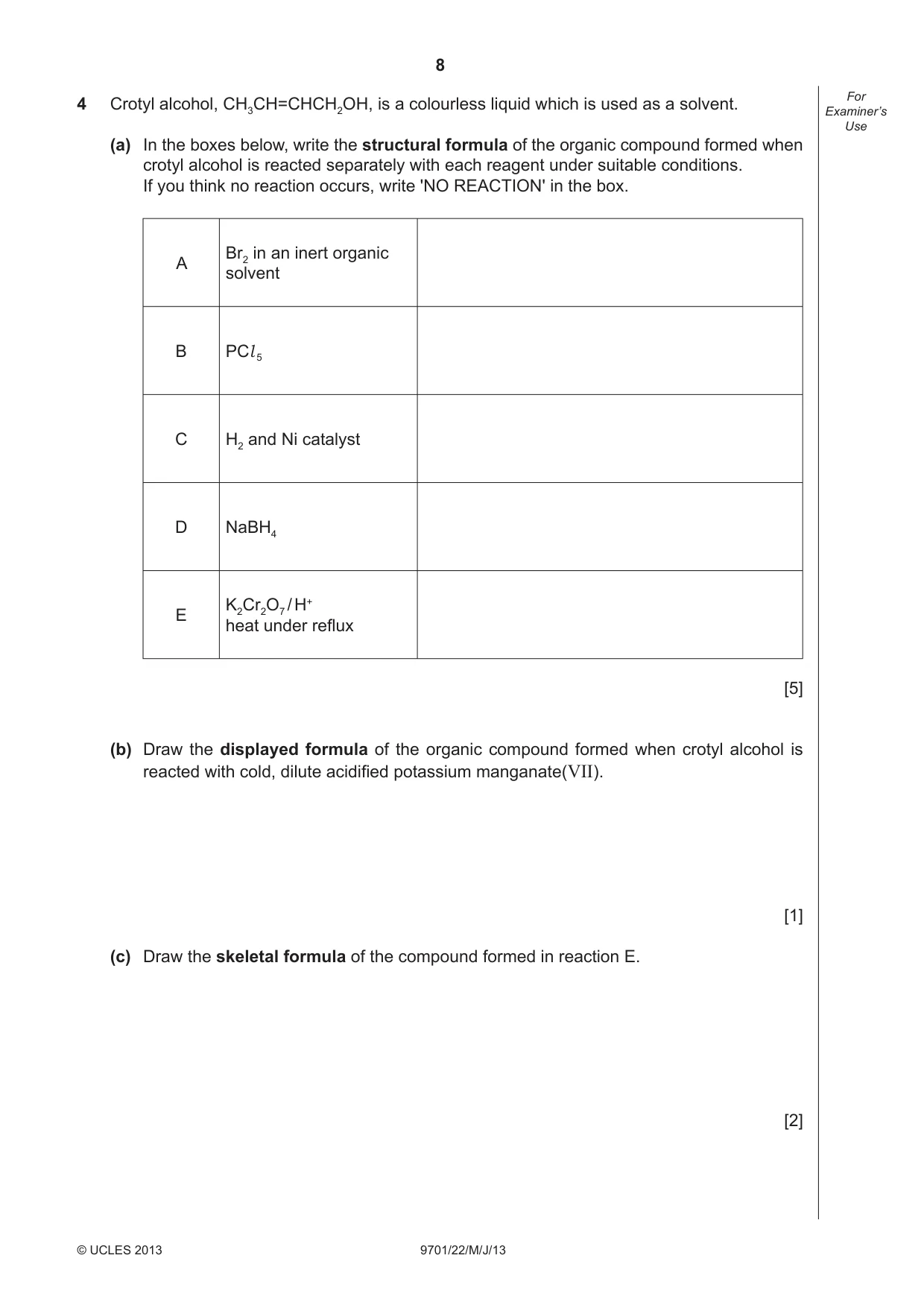
8 9701/22/M/J/13 © UCLES 2013 For Examiner’s Use 4 Crotyl alcohol, CH3CH=CHCH2OH, is a colourless liquid which is used as a solvent. (a) In the boxes below, write the structural formula of the organic compound formed when crotyl alcohol is reacted separately with each reagent under suitable conditions. If you think no reaction occurs, write 'NO REACTION' in the box. A Br2 in an inert organic solvent B PCl 5 C H2 and Ni catalyst D NaBH4 E K2Cr2O7 / H+ heat under refl ux [5] (b) Draw the displayed formula of the organic compound formed when crotyl alcohol is reacted with cold, dilute acidifi ed potassium manganate(VII). [1] (c) Draw the skeletal formula of the compound formed in reaction E. [2]
Question paper, page 9
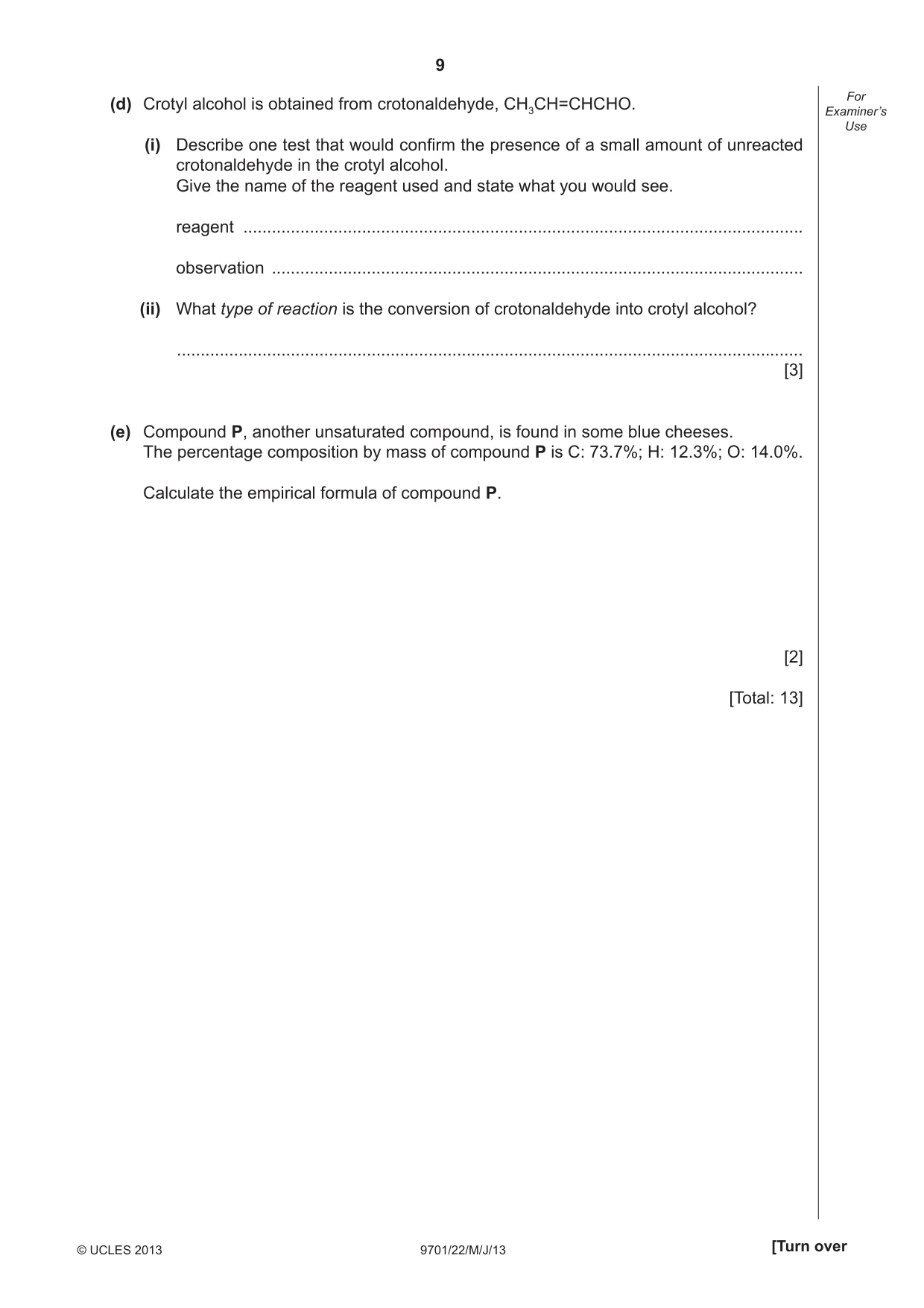
9 9701/22/M/J/13 © UCLES 2013 [Turn over For Examiner’s Use (d) Crotyl alcohol is obtained from crotonaldehyde, CH3CH=CHCHO. (i) Describe one test that would confi rm the presence of a small amount of unreacted crotonaldehyde in the crotyl alcohol. Give the name of the reagent used and state what you would see. reagent … observation … (ii) What type of reaction is the conversion of crotonaldehyde into crotyl alcohol? … [3] (e) Compound P, another unsaturated compound, is found in some blue cheeses. The percentage composition by mass of compound P is C: 73.7%; H: 12.3%; O: 14.0%. Calculate the empirical formula of compound P. [2] [Total: 13]
Question paper, page 10
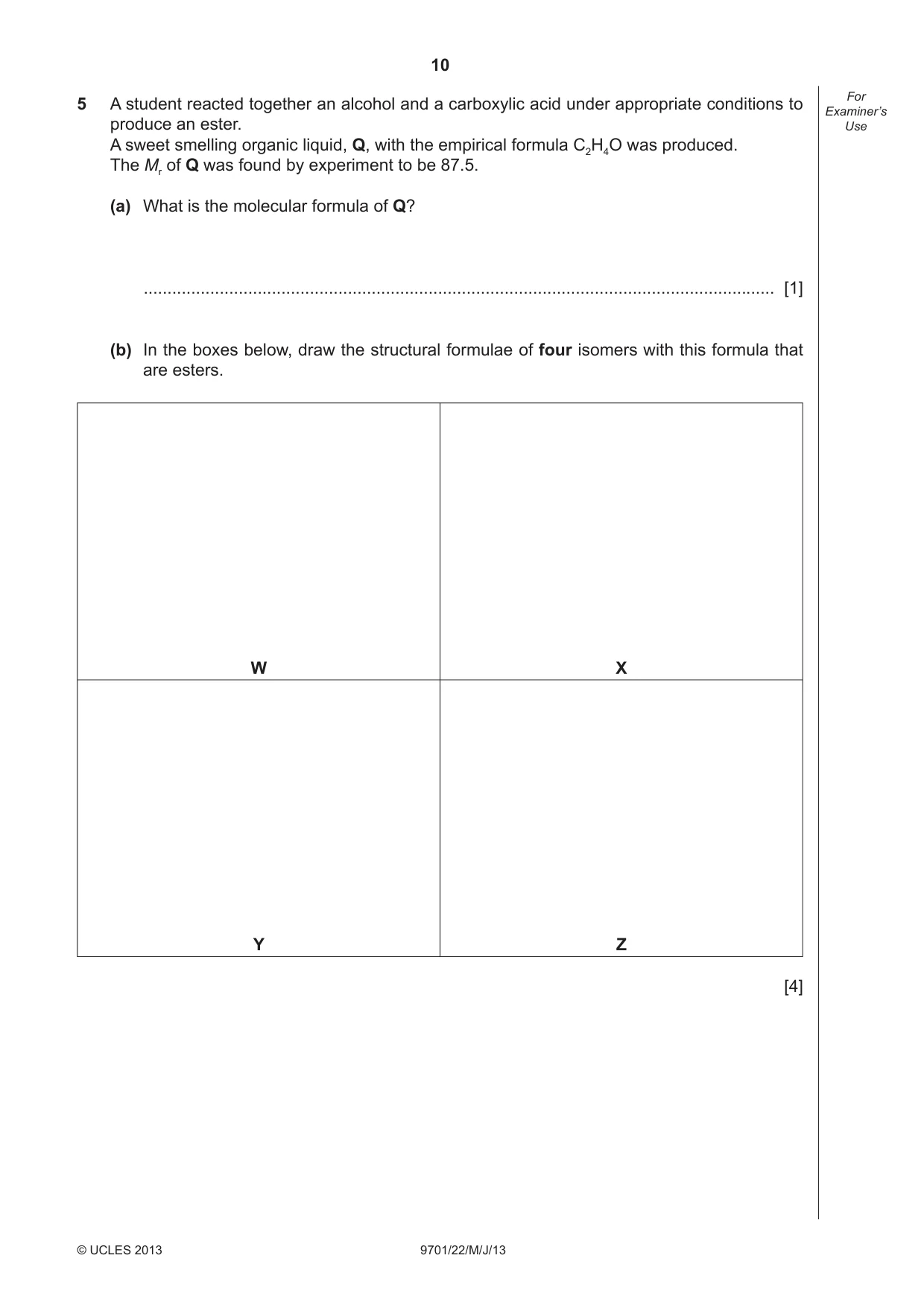
10 9701/22/M/J/13 © UCLES 2013 For Examiner’s Use 5 A student reacted together an alcohol and a carboxylic acid under appropriate conditions to produce an ester. A sweet smelling organic liquid, Q, with the empirical formula C2H4O was produced. The Mr of Q was found by experiment to be 87.5. (a) What is the molecular formula of Q? … [1] (b) In the boxes below, draw the structural formulae of four isomers with this formula that are esters. W X Y Z [4]
Question paper, page 11
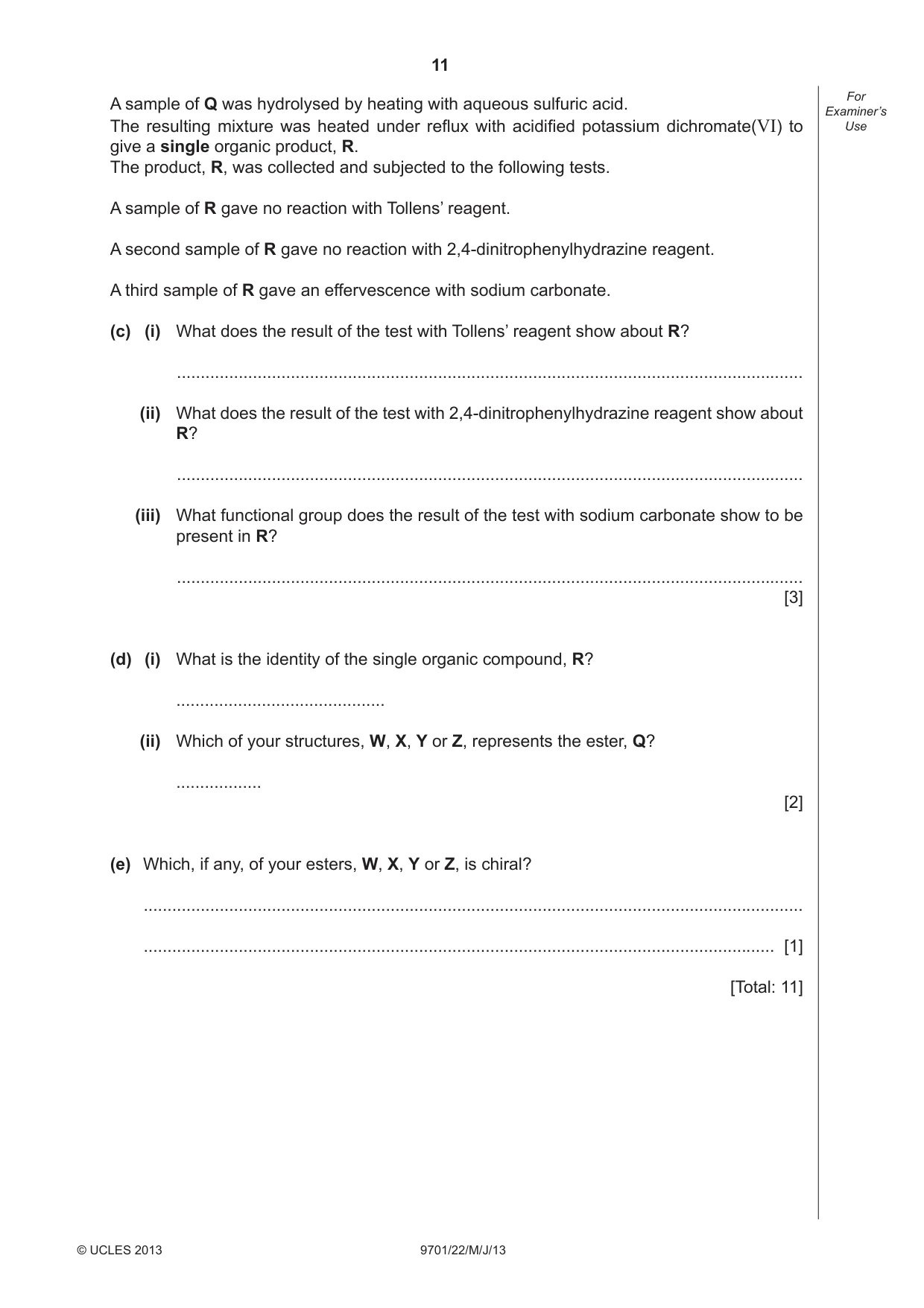
11 9701/22/M/J/13 © UCLES 2013 [Turn over For Examiner’s Use A sample of Q was hydrolysed by heating with aqueous sulfuric acid. The resulting mixture was heated under refl ux with acidifi ed potassium dichromate(VI) to give a single organic product, R. The product, R, was collected and subjected to the following tests. A sample of R gave no reaction with Tollens’ reagent. A second sample of R gave no reaction with 2,4-dinitrophenylhydrazine reagent. A third sample of R gave an effervescence with sodium carbonate. (c) (i) What does the result of the test with Tollens’ reagent show about R? … (ii) What does the result of the test with 2,4-dinitrophenylhydrazine reagent show about R? … (iii) What functional group does the result of the test with sodium carbonate show to be present in R? … [3] (d) (i) What is the identity of the single organic compound, R? … (ii) Which of your structures, W, X, Y or Z, represents the ester, Q? … [2] (e) Which, if any, of your esters, W, X, Y or Z, is chiral? … … [1] [Total: 11]
Question paper, page 12
12 Permission to reproduce items where third-party owned material protected by copyright is included has been sought and cleared where possible. Every reasonable effort has been made by the publisher (UCLES) to trace copyright holders, but if any items requiring clearance have unwittingly been included the publisher will be pleased to make amends at the earliest possible opportunity. University of Cambridge International Examinations is part of the Cambridge Assessment Group. Cambridge Assessment is the brand name of University of Cambridge Local Examinations Syndicate (UCLES), which is itself a department of the University of Cambridge. 9701/22/M/J/13 © UCLES 2013 BLANK PAGE
Mark scheme, page 1
CAMBRIDGE INTERNATIONAL EXAMINATIONS GCE Advanced Subsidiary Level and GCE Advanced Level MARK SCHEME for the May/June 2013 series 9701 CHEMISTRY 9701/22 Paper 2 (AS Structured Questions), maximum raw mark 60 This mark scheme is published as an aid to teachers and candidates, to indicate the requirements of the examination. It shows the basis on which Examiners were instructed to award marks. It does not indicate the details of the discussions that took place at an Examiners’ meeting before marking began, which would have considered the acceptability of alternative answers. Mark schemes should be read in conjunction with the question paper and the Principal Examiner Report for Teachers. Cambridge will not enter into discussions about these mark schemes. Cambridge is publishing the mark schemes for the May/June 2013 series for most IGCSE, GCE Advanced Level and Advanced Subsidiary Level components and some Ordinary Level components.
Mark scheme, page 2
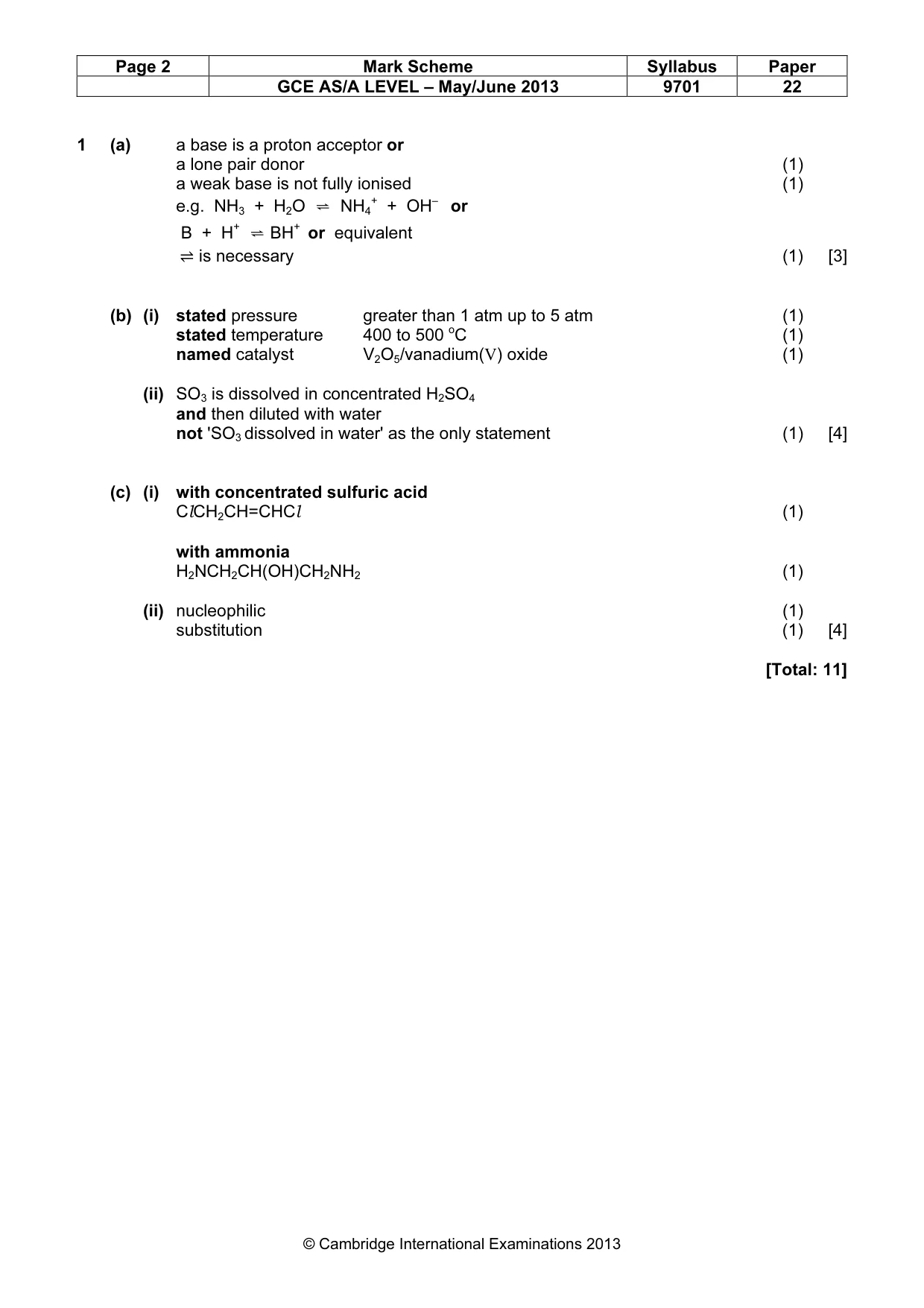
Page 2 Mark Scheme Syllabus Paper GCE AS/A LEVEL – May/June 2013 9701 22 © Cambridge International Examinations 2013 1 (a) a base is a proton acceptor or a lone pair donor (1) a weak base is not fully ionised (1) e.g. NH3 + H2O ⇋ NH4 + + OH– or B + H+ ⇋ BH+ or equivalent ⇌ is necessary (1) [3] (b) (i) stated pressure greater than 1 atm up to 5 atm (1) stated temperature 400 to 500 oC (1) named catalyst V2O5/vanadium(V) oxide (1) (ii) SO3 is dissolved in concentrated H2SO4 and then diluted with water not 'SO3 dissolved in water' as the only statement (1) [4] (c) (i) with concentrated sulfuric acid ClCH2CH=CHCl (1) with ammonia H2NCH2CH(OH)CH2NH2 (1) (ii) nucleophilic (1) substitution (1) [4] [Total: 11]
Mark scheme, page 3
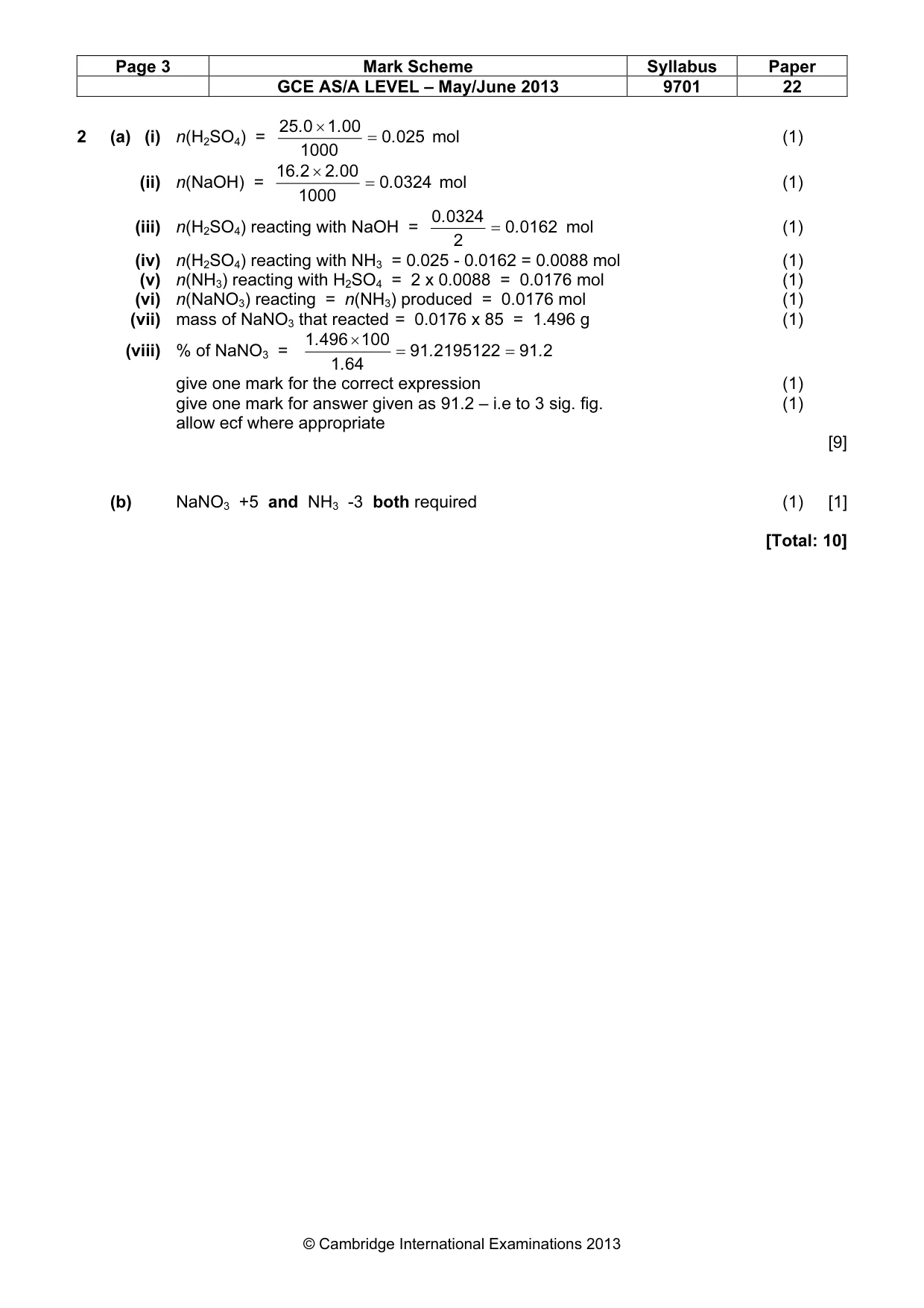
Page 3 Mark Scheme Syllabus Paper GCE AS/A LEVEL – May/June 2013 9701 22 © Cambridge International Examinations 2013 2 (a) (i) n(H2SO4) = 025 0 1000 00 1 0 25 . . . = × mol (1) (ii) n(NaOH) = 0324 0 1000 00 2 2 16 . . . = × mol (1) (iii) n(H2SO4) reacting with NaOH = 0162 0 2 0324 0 . . = mol (1) (iv) n(H2SO4) reacting with NH3 = 0.025 - 0.0162 = 0.0088 mol (1) (v) n(NH3) reacting with H2SO4 = 2 x 0.0088 = 0.0176 mol (1) (vi) n(NaNO3) reacting = n(NH3) produced = 0.0176 mol (1) (vii) mass of NaNO3 that reacted = 0.0176 x 85 = 1.496 g (1) (viii) % of NaNO3 = 2 91 2195122 91 64 1 100 496 1 . . . . = = × give one mark for the correct expression (1) give one mark for answer given as 91.2 – i.e to 3 sig. fig. (1) allow ecf where appropriate [9] (b) NaNO3 +5 and NH3 -3 both required (1) [1] [Total: 10]
Mark scheme, page 4
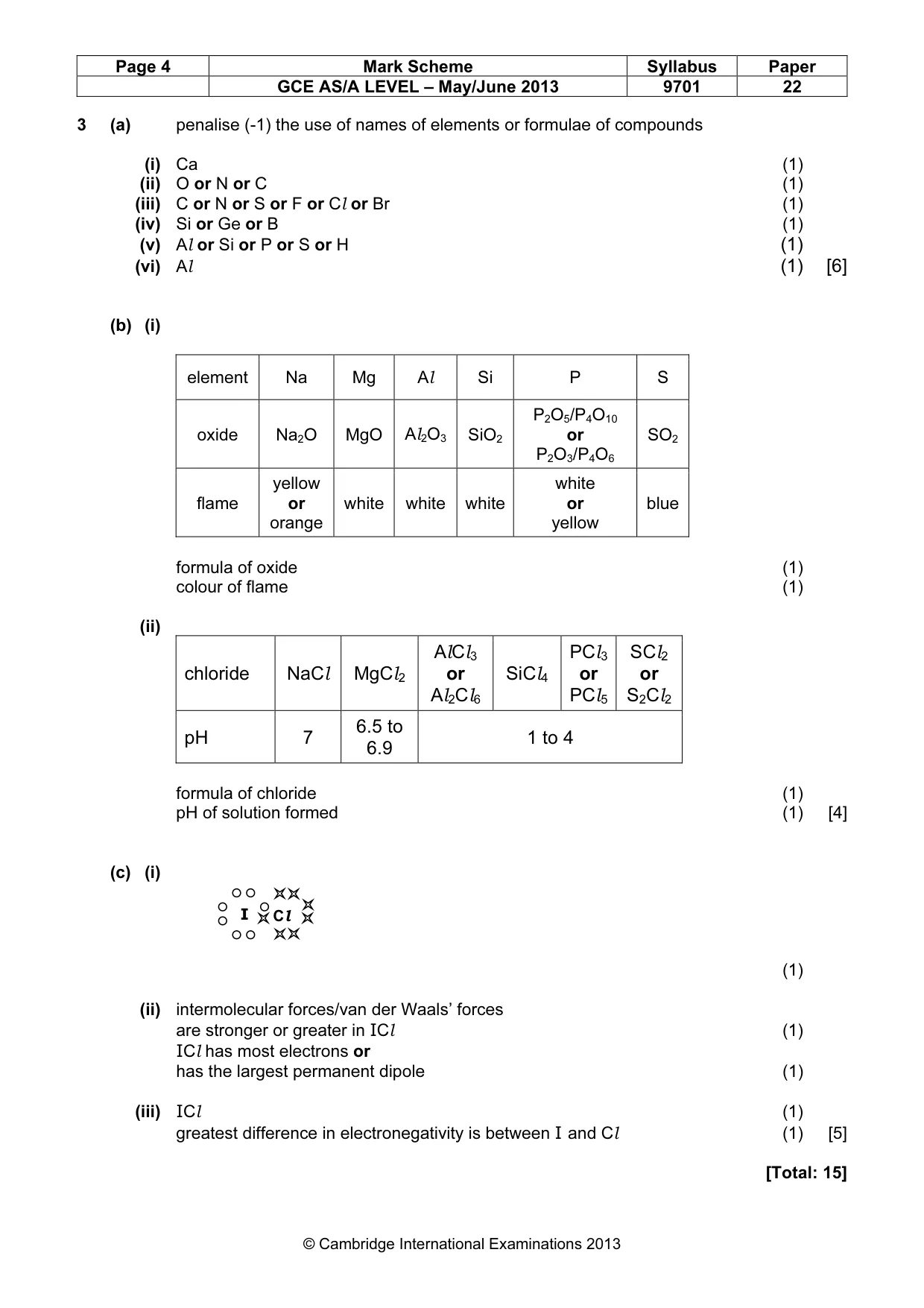
Page 4 Mark Scheme Syllabus Paper GCE AS/A LEVEL – May/June 2013 9701 22 © Cambridge International Examinations 2013 Cl I 3 (a) penalise (-1) the use of names of elements or formulae of compounds (i) Ca (1) (ii) O or N or C (1) (iii) C or N or S or F or Cl or Br (1) (iv) Si or Ge or B (1) (v) Al or Si or P or S or H (1) (vi) Al (1) [6] (b) (i) element Na Mg Al Si P S oxide Na2O MgO Al2O3 SiO2 P2O5/P4O10 or P2O3/P4O6 SO2 flame yellow or orange white white white white or yellow blue formula of oxide (1) colour of flame (1) (ii) chloride NaCl MgCl2 AlCl3 or Al2Cl6 SiCl4 PCl3 or PCl5 SCl2 or S2Cl2 pH 7 6.5 to 6.9 1 to 4 formula of chloride (1) pH of solution formed (1) [4] (c) (i) (1) (ii) intermolecular forces/van der Waals’ forces are stronger or greater in ICl (1) ICl has most electrons or has the largest permanent dipole (1) (iii) ICl (1) greatest difference in electronegativity is between I and Cl (1) [5] [Total: 15]
Mark scheme, page 5
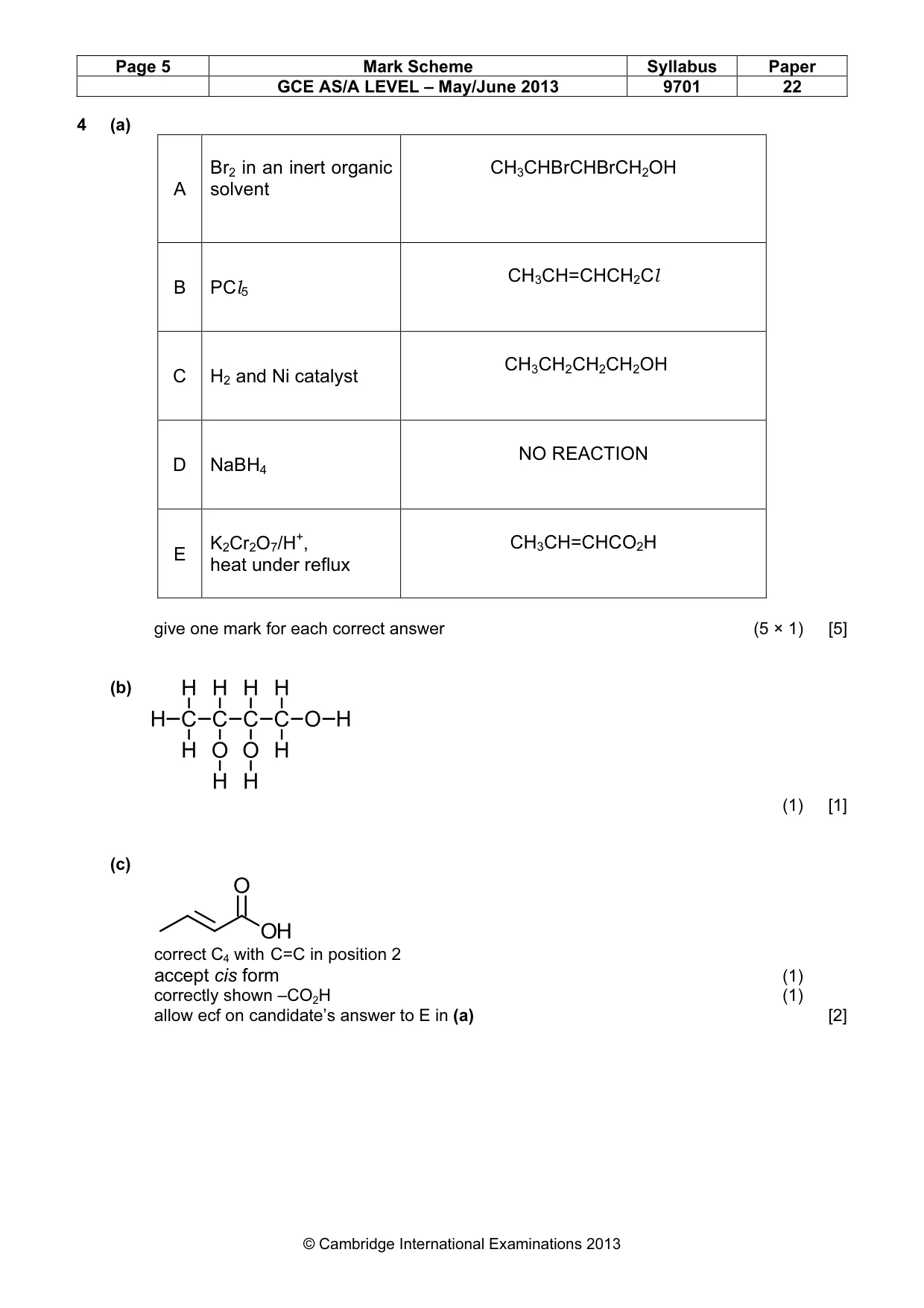
Page 5 Mark Scheme Syllabus Paper GCE AS/A LEVEL – May/June 2013 9701 22 © Cambridge International Examinations 2013 4 (a) A Br2 in an inert organic solvent CH3CHBrCHBrCH2OH B PCl5 CH3CH=CHCH2Cl C H2 and Ni catalyst CH3CH2CH2CH2OH D NaBH4 NO REACTION E K2Cr2O7/H+, heat under reflux CH3CH=CHCO2H give one mark for each correct answer (5 × 1) [5] (b) (1) [1] (c) correct C4 with C=C in position 2 accept cis form (1) correctly shown –CO2H (1) allow ecf on candidate’s answer to E in (a) [2]
Mark scheme, page 6
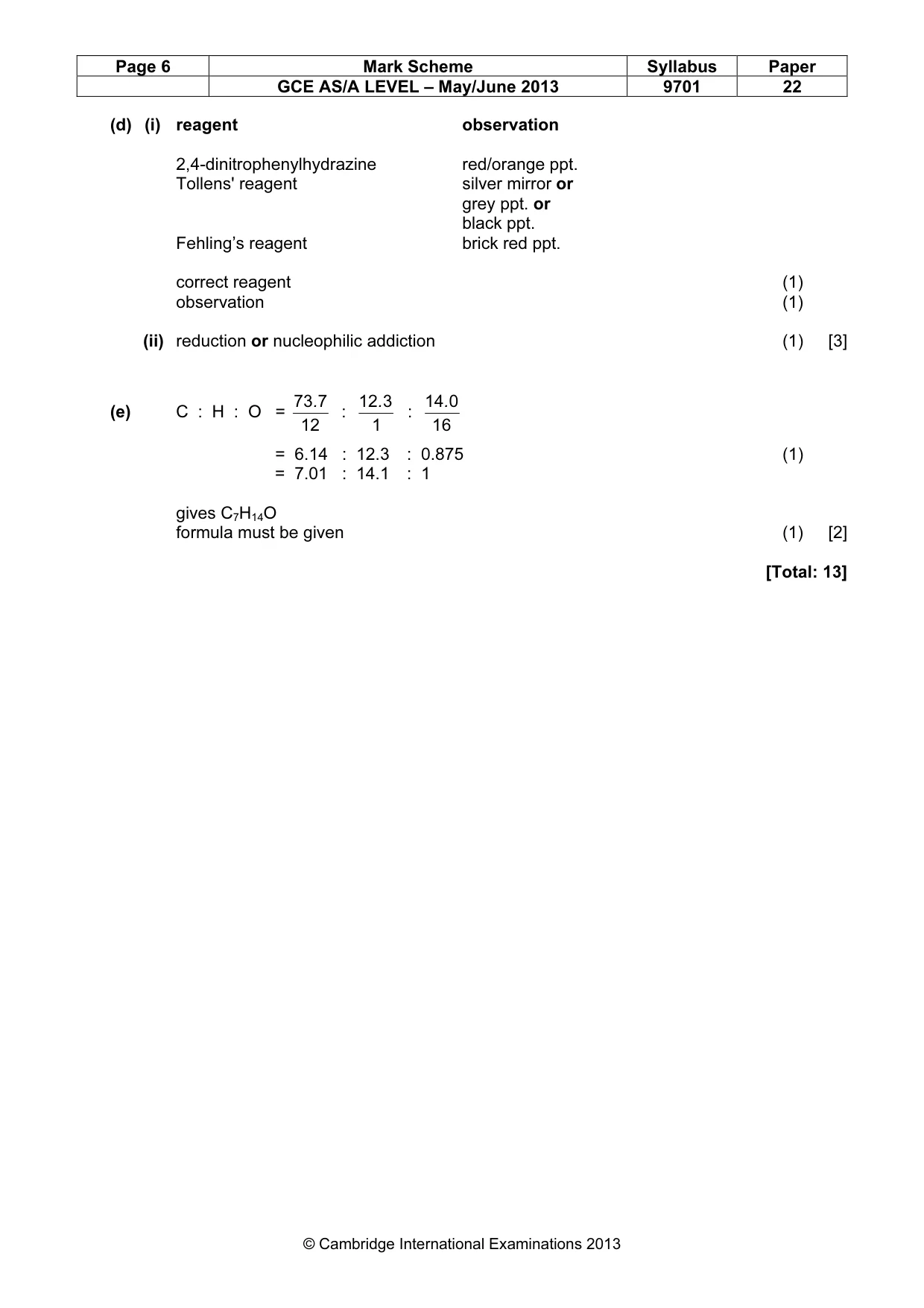
Page 6 Mark Scheme Syllabus Paper GCE AS/A LEVEL – May/June 2013 9701 22 © Cambridge International Examinations 2013 (d) (i) reagent observation 2,4-dinitrophenylhydrazine red/orange ppt. Tollens' reagent silver mirror or grey ppt. or black ppt. Fehling’s reagent brick red ppt. correct reagent (1) observation (1) (ii) reduction or nucleophilic addiction (1) [3] (e) C : H : O = 12 7 73. : 1 3 12. : 16 0 14. = 6.14 : 12.3 : 0.875 (1) = 7.01 : 14.1 : 1 gives C7H14O formula must be given (1) [2] [Total: 13]
Mark scheme, page 7
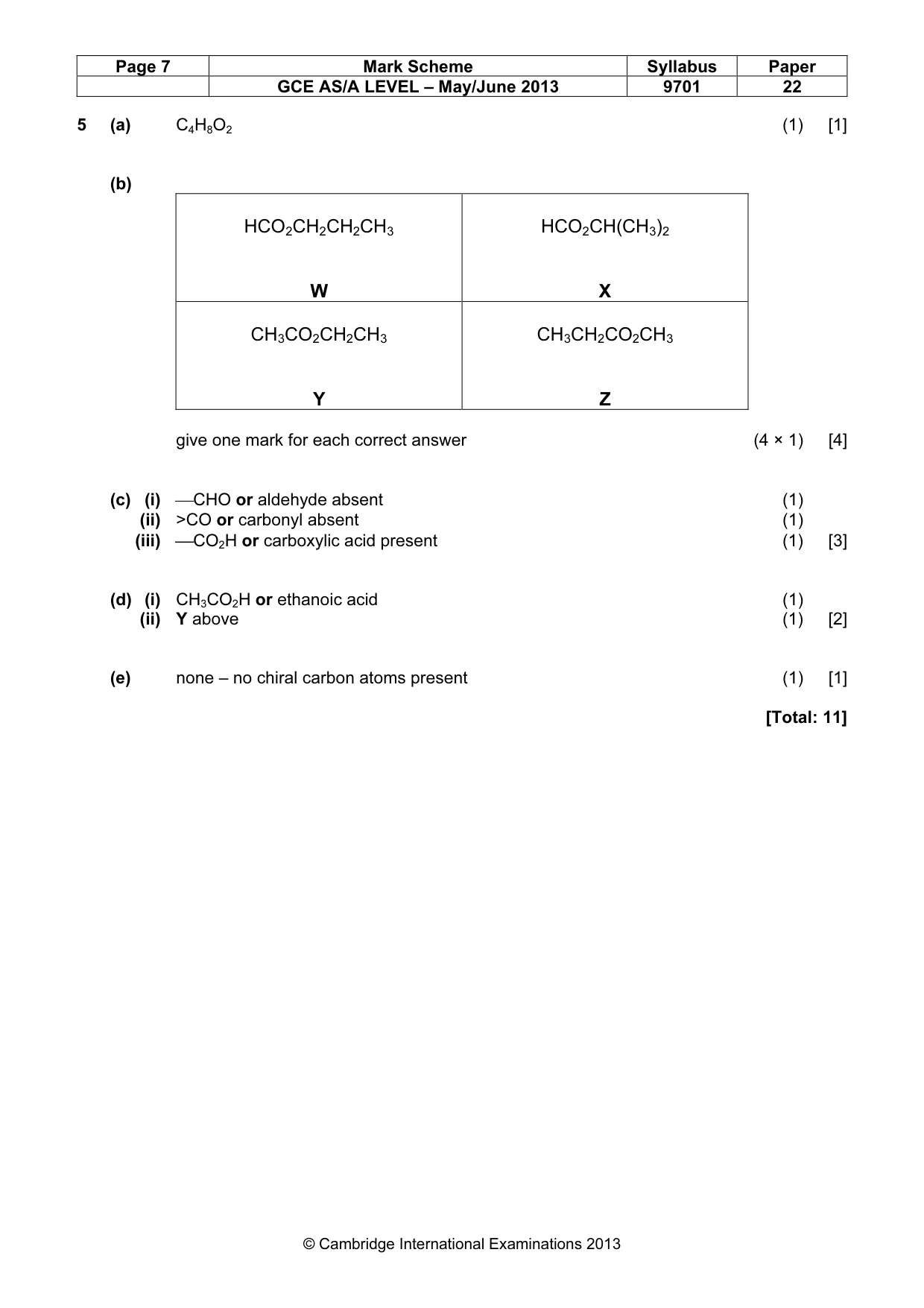
Page 7 Mark Scheme Syllabus Paper GCE AS/A LEVEL – May/June 2013 9701 22 © Cambridge International Examinations 2013 5 (a) C4H8O2 (1) [1] (b) HCO2CH2CH2CH3 W HCO2CH(CH3)2 X CH3CO2CH2CH3 Y CH3CH2CO2CH3 Z give one mark for each correct answer (4 × 1) [4] (c) (i) CHO or aldehyde absent (1) (ii) >CO or carbonyl absent (1) (iii) CO2H or carboxylic acid present (1) [3] (d) (i) CH3CO2H or ethanoic acid (1) (ii) Y above (1) [2] (e) none – no chiral carbon atoms present (1) [1] [Total: 11]
What you needed in this session
Cambridge’s own grade thresholds for 2013 May/June, Paper 2 · Variant 2. A higher threshold means an easier paper — the bar moves with how the cohort did.