Cambridge A Level Biology 9700 — 2018 Oct/Nov Paper 2 · Variant 2
9700/22/O/N/18 · 6 questions · 60 marks · ≈68 min
The question paper and its mark scheme, free to read here and free to download. This is Cambridge’s own paper, exactly as it was sat.
Question paper16 pages

Mark scheme17 pages
Answers below. Sit the paper first if you are practising.
Questions as text
Question 1
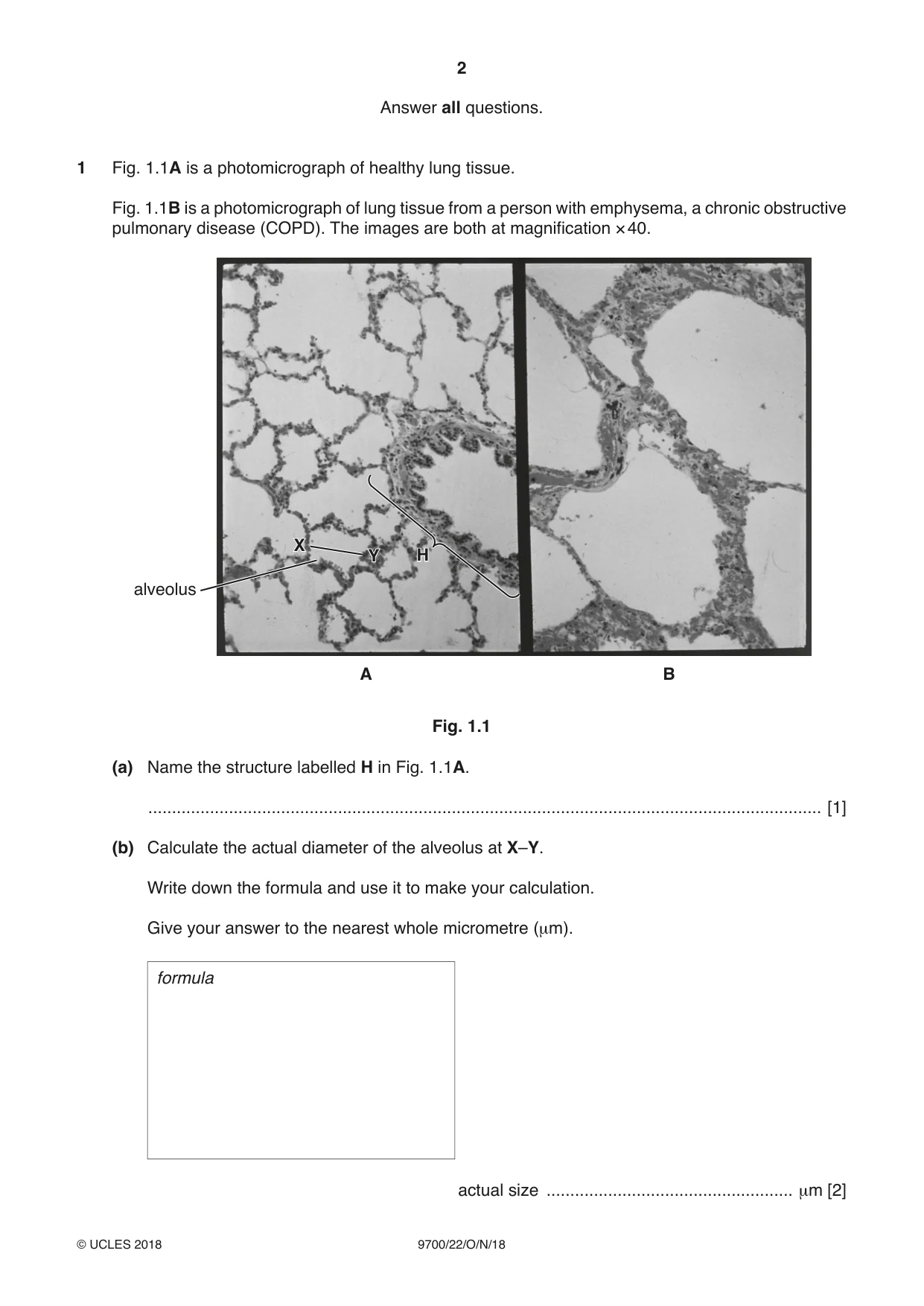
1 Fig. 1.1A is a photomicrograph of healthy lung tissue. Fig. 1.1B is a photomicrograph of lung tissue from a person with emphysema, a chronic obstructive pulmonary disease (COPD). The images are both at magnification × 40. X Y H alveolus A B Fig. 1.1 (a) Name the structure labelled H in Fig. 1.1A. .............................................................................................................................................. [1] (b) Calculate the actual diameter of the alveolus at X–Y. Write down the formula and use it to make your calculation. Give your answer to the nearest whole micrometre (µm). formula actual size .................................................... µm [2] (c) Gas exchange in the lungs occurs in the alveoli. Describe the process of gas exchange in healthy lungs and suggest how this compares with gas exchange in the diseased lung shown in Fig. 1.1B. ................................................................................................................................................... ................................................................................................................................................... ................................................................................................................................................... ................................................................................................................................................... ................................................................................................................................................... ................................................................................................................................................... ................................................................................................................................................... ................................................................................................................................................... ................................................................................................................................................... ................................................................................................................................................... .............................................................................................................................................. [4] [Total: 7]
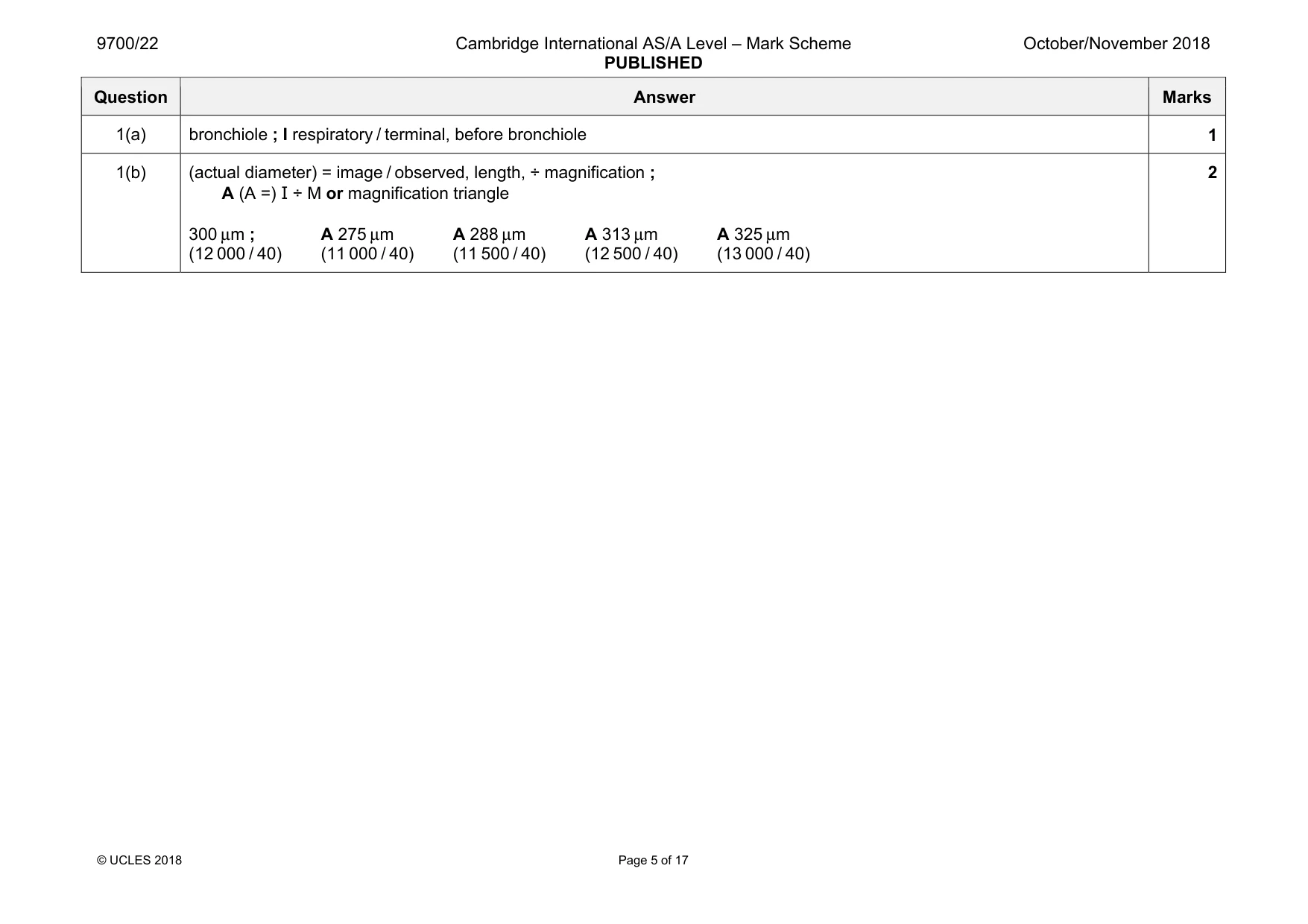
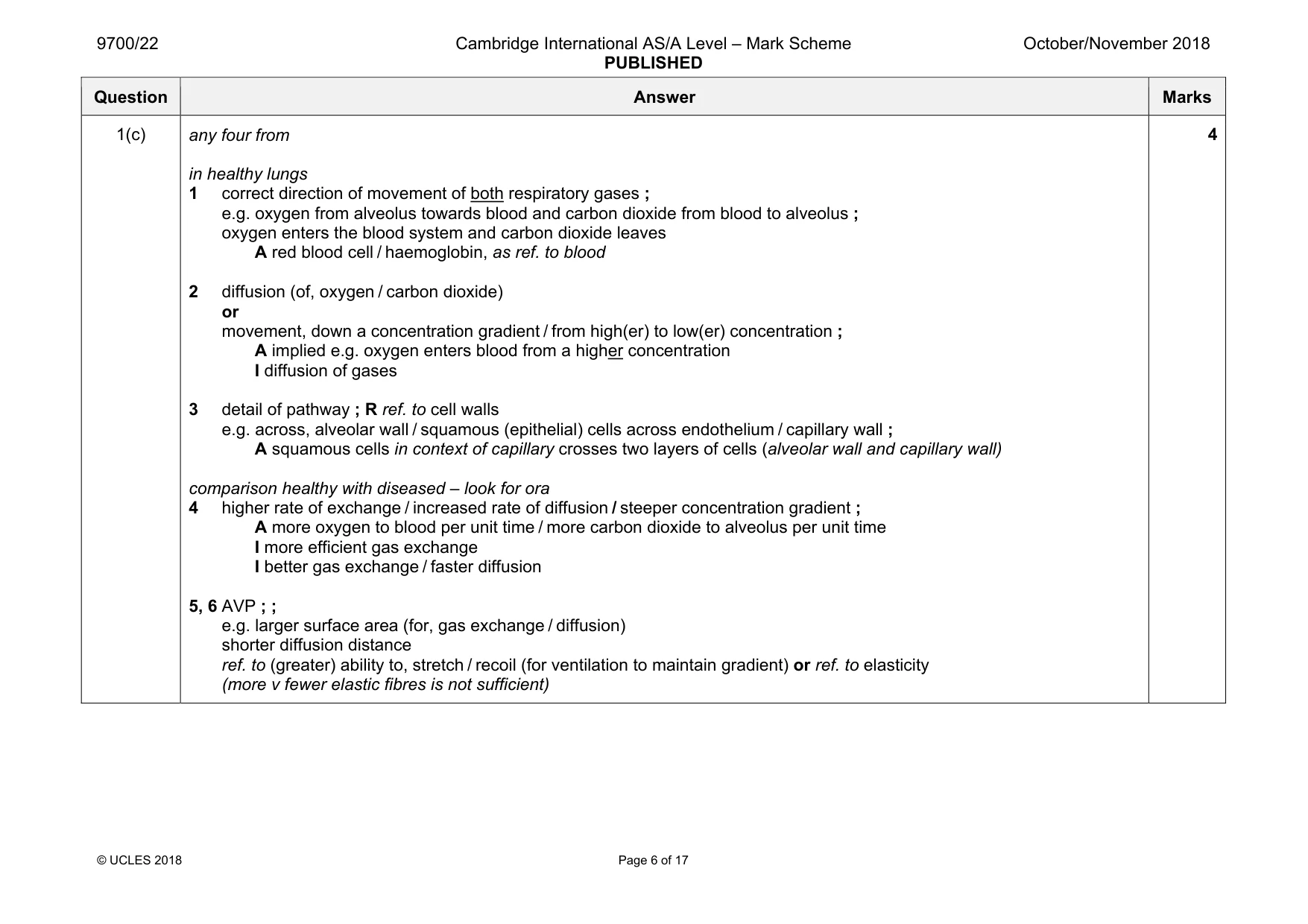
Mark scheme: 1(a) bronchiole ; I respiratory / terminal, before bronchiole 1 1(b) (actual diameter) = image / observed, length, ÷ magnification ; A (A =) I ÷ M or magnification triangle 300 µm ; A 275 µm A 288 µm A 313 µm A 325 µm (12 000 / 40) (11 000 / 40) (11 500 / 40) (12 500 / 40) (13 000 / 40) 2 Question Answer Marks 1(c) any four from in healthy lungs 1 correct direction of movement of both respiratory gases ; e.g. oxygen from alveolus towards blood and carbon dioxide from blood to alveolus ; oxygen enters the blood system and carbon dioxide leaves A red blood cell / haemoglobin, as ref. to blood 2 diffusion (of, oxygen / carbon dioxide) or movement, down a concentration gradient / from high(er) to low(er) concentration ; A implied e.g. oxygen enters blood from a higher concentration I diffusion of gases 3 detail of pathway ; R ref. to cell walls e.g. across, alveolar wall / squamous (epithelial) cells across endothelium / capillary wall ; A squamous cells in context of capillary crosses two layers of cells (alveolar wall and capillary wall) comparison healthy with diseased – look for ora 4 higher rate of exchange / increased rate of diffusion / steeper concentration gradient ; A more oxygen to blood per unit time / more carbon dioxide to alveolus per unit time I more efficient gas exchange I better gas exchange / faster diffusion 5, 6 AVP ; ; e.g. larger surface area (for, gas exchange / diffusion) shorter diffusion distance ref. to (greater) ability to, stretch / recoil (for ventilation to maintain gradient) or ref. to elasticity (more v fewer elastic fibres is not sufficient) 4
Q2 · Woolly foxglove, Digitalis lanata, shown in Fig
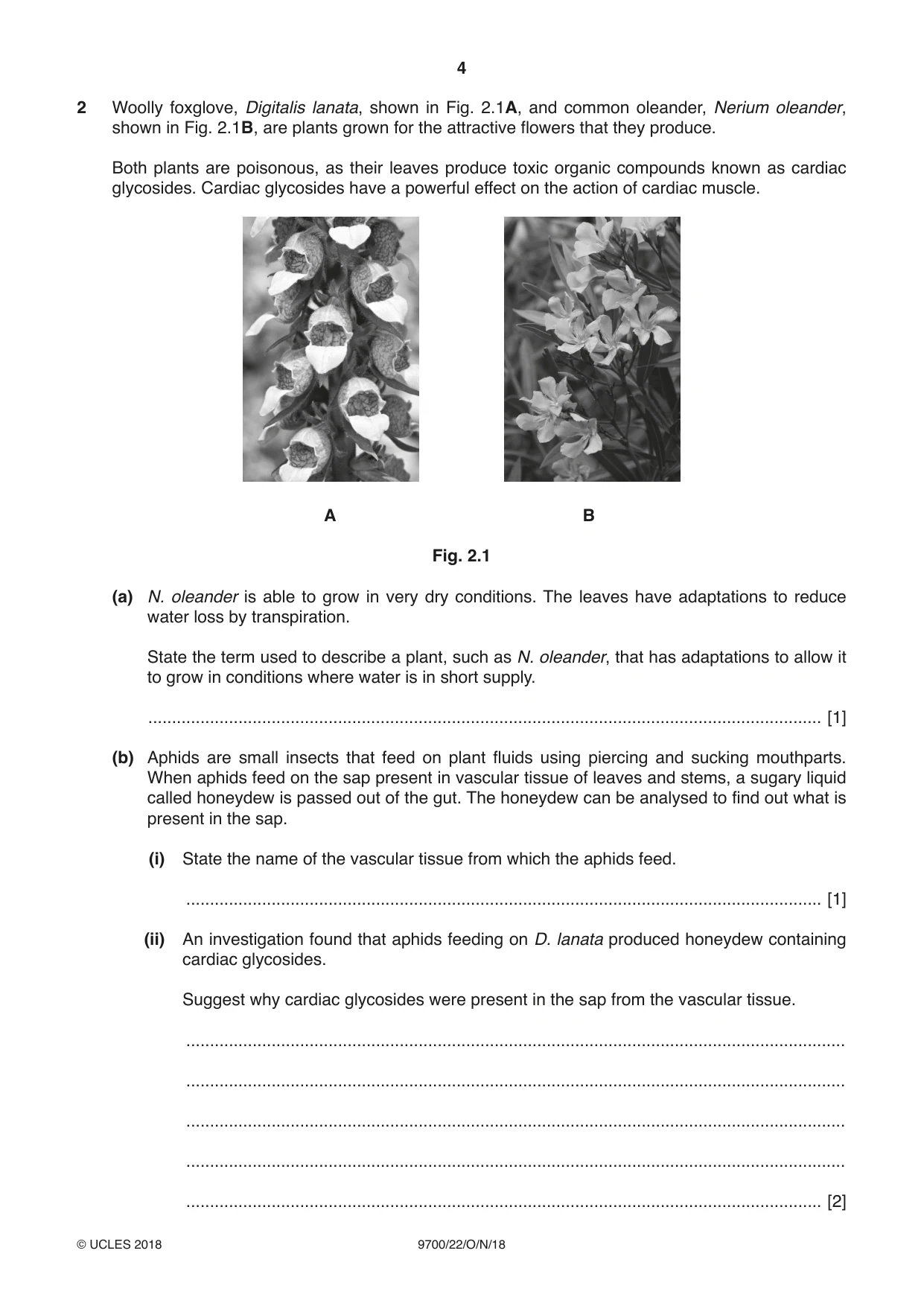
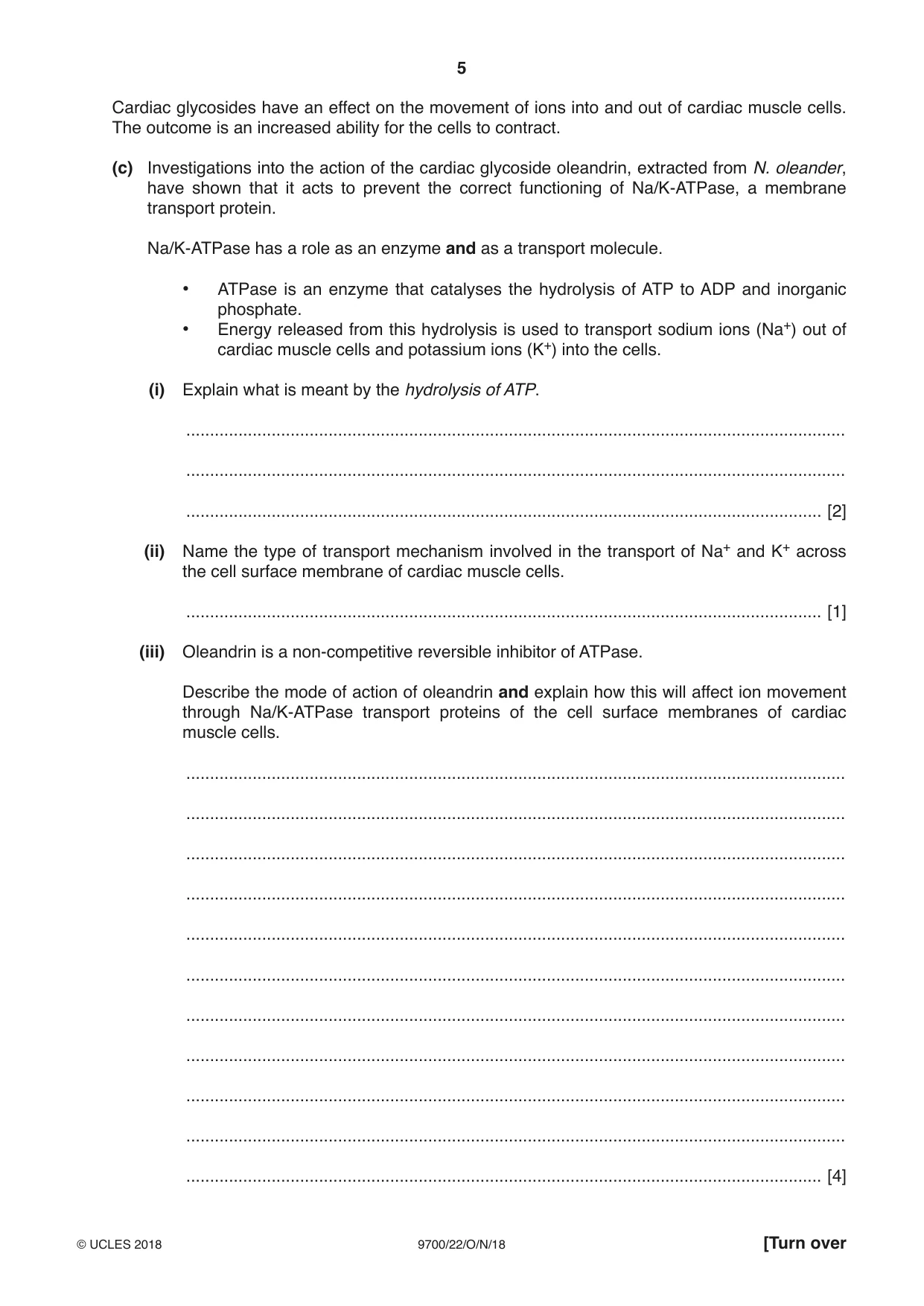
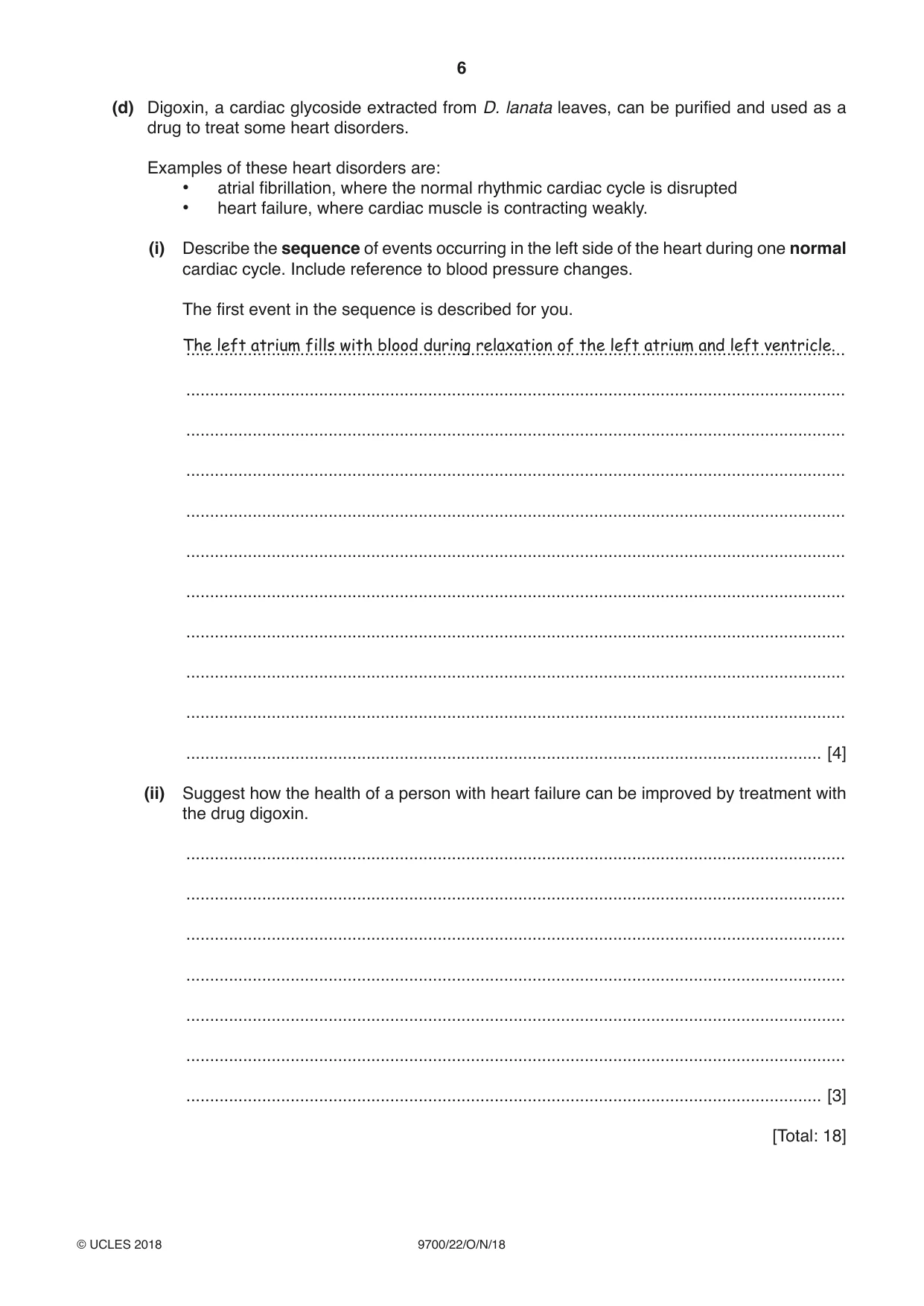
2 Woolly foxglove, Digitalis lanata, shown in Fig. 2.1A, and common oleander, Nerium oleander, shown in Fig. 2.1B, are plants grown for the attractive flowers that they produce. Both plants are poisonous, as their leaves produce toxic organic compounds known as cardiac glycosides. Cardiac glycosides have a powerful effect on the action of cardiac muscle. A B Fig. 2.1 (a) N. oleander is able to grow in very dry conditions. The leaves have adaptations to reduce water loss by transpiration. State the term used to describe a plant, such as N. oleander, that has adaptations to allow it to grow in conditions where water is in short supply. .............................................................................................................................................. [1] (b) Aphids are small insects that feed on plant fluids using piercing and sucking mouthparts. When aphids feed on the sap present in vascular tissue of leaves and stems, a sugary liquid called honeydew is passed out of the gut. The honeydew can be analysed to find out what is present in the sap. (i) State the name of the vascular tissue from which the aphids feed. ...................................................................................................................................... [1] (ii) An investigation found that aphids feeding on D. lanata produced honeydew containing cardiac glycosides. Suggest why cardiac glycosides were present in the sap from the vascular tissue. ........................................................................................................................................... ........................................................................................................................................... ........................................................................................................................................... ........................................................................................................................................... ...................................................................................................................................... [2] Cardiac glycosides have an effect on the movement of ions into and out of cardiac muscle cells. The outcome is an increased ability for the cells to contract. (c) Investigations into the action of the cardiac glycoside oleandrin, extracted from N. oleander, have shown that it acts to prevent the correct functioning of Na/K‑ATPase, a membrane transport protein. Na/K‑ATPase has a role as an enzyme and as a transport molecule. • ATPase is an enzyme that catalyses the hydrolysis of ATP to ADP and inorganic phosphate. • Energy released from this hydrolysis is used to transport sodium ions (Na+) out of cardiac muscle cells and potassium ions (K+) into the cells. (i) Explain what is meant by the hydrolysis of ATP. ........................................................................................................................................... ........................................................................................................................................... ...................................................................................................................................... [2] (ii) Name the type of transport mechanism involved in the transport of Na+ and K+ across the cell surface membrane of cardiac muscle cells. ...................................................................................................................................... [1] (iii) Oleandrin is a non‑competitive reversible inhibitor of ATPase. Describe the mode of action of oleandrin and explain how this will affect ion movement through Na/K‑ATPase transport proteins of the cell surface membranes of cardiac muscle cells. ........................................................................................................................................... ........................................................................................................................................... ........................................................................................................................................... ........................................................................................................................................... ........................................................................................................................................... ........................................................................................................................................... ........................................................................................................................................... ........................................................................................................................................... ........................................................................................................................................... ........................................................................................................................................... ...................................................................................................................................... [4] (d) Digoxin, a cardiac glycoside extracted from D. lanata leaves, can be purified and used as a drug to treat some heart disorders. Examples of these heart disorders are: • atrial fibrillation, where the normal rhythmic cardiac cycle is disrupted • heart failure, where cardiac muscle is contracting weakly. (i) Describe the sequence of events occurring in the left side of the heart during one normal cardiac cycle. Include reference to blood pressure changes. The first event in the sequence is described for you. The...........................................................................................................................................left atrium fills with blood during relaxation of the left atrium and left ventricle. ........................................................................................................................................... ........................................................................................................................................... ........................................................................................................................................... ........................................................................................................................................... ........................................................................................................................................... ........................................................................................................................................... ........................................................................................................................................... ........................................................................................................................................... ........................................................................................................................................... ...................................................................................................................................... [4] (ii) Suggest how the health of a person with heart failure can be improved by treatment with the drug digoxin. ........................................................................................................................................... ........................................................................................................................................... ........................................................................................................................................... ........................................................................................................................................... ........................................................................................................................................... ........................................................................................................................................... ...................................................................................................................................... [3] [Total: 18]
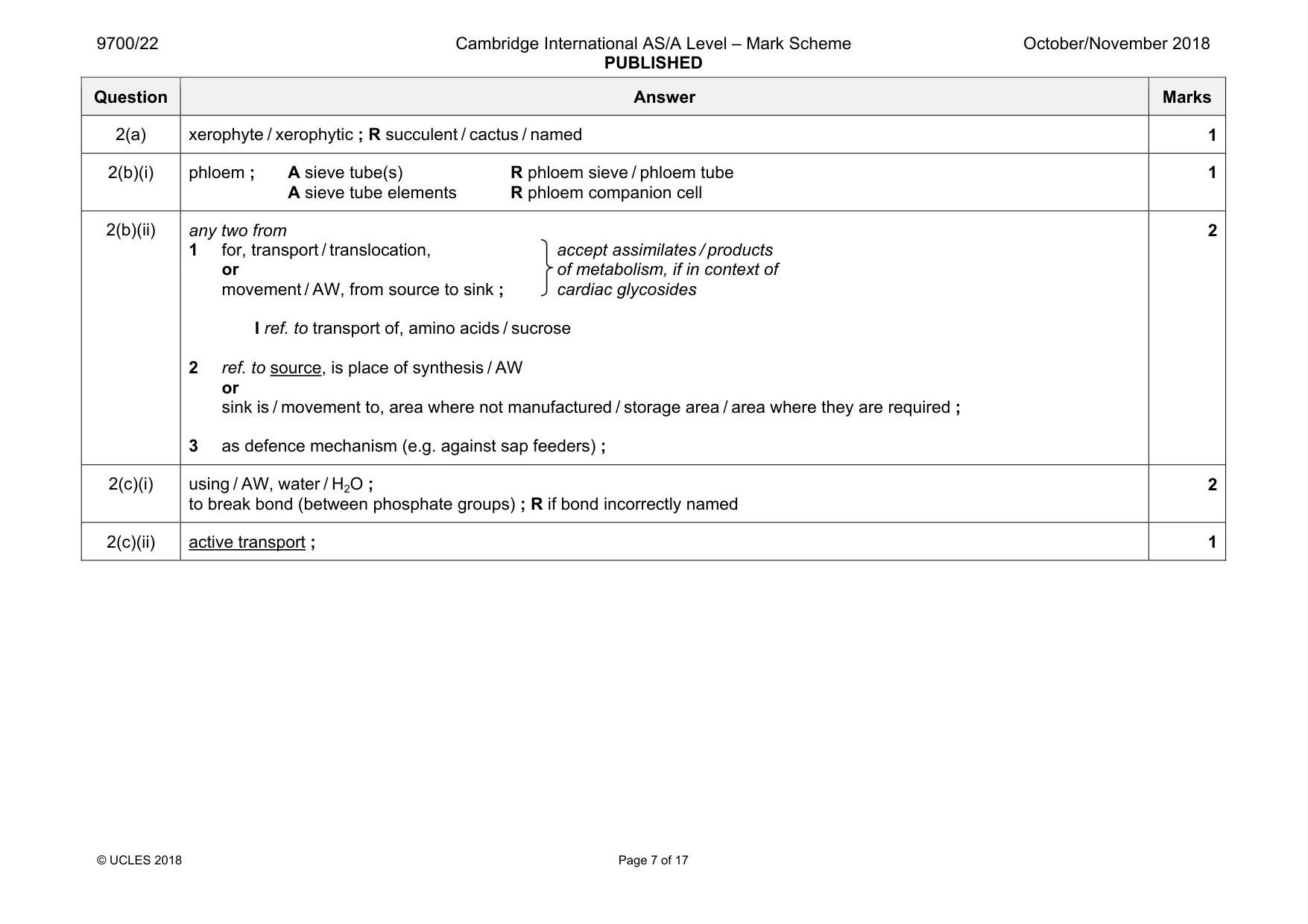
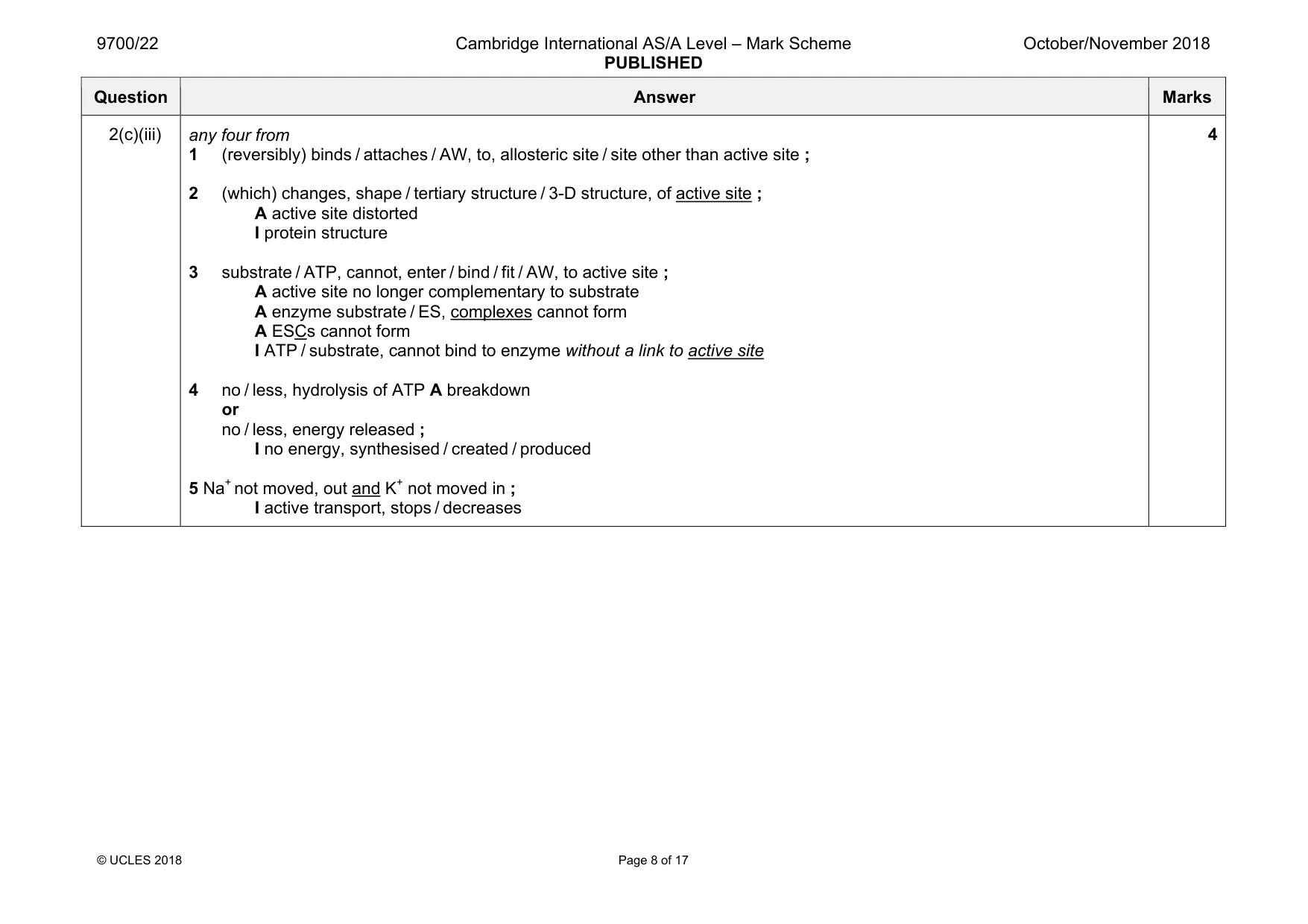
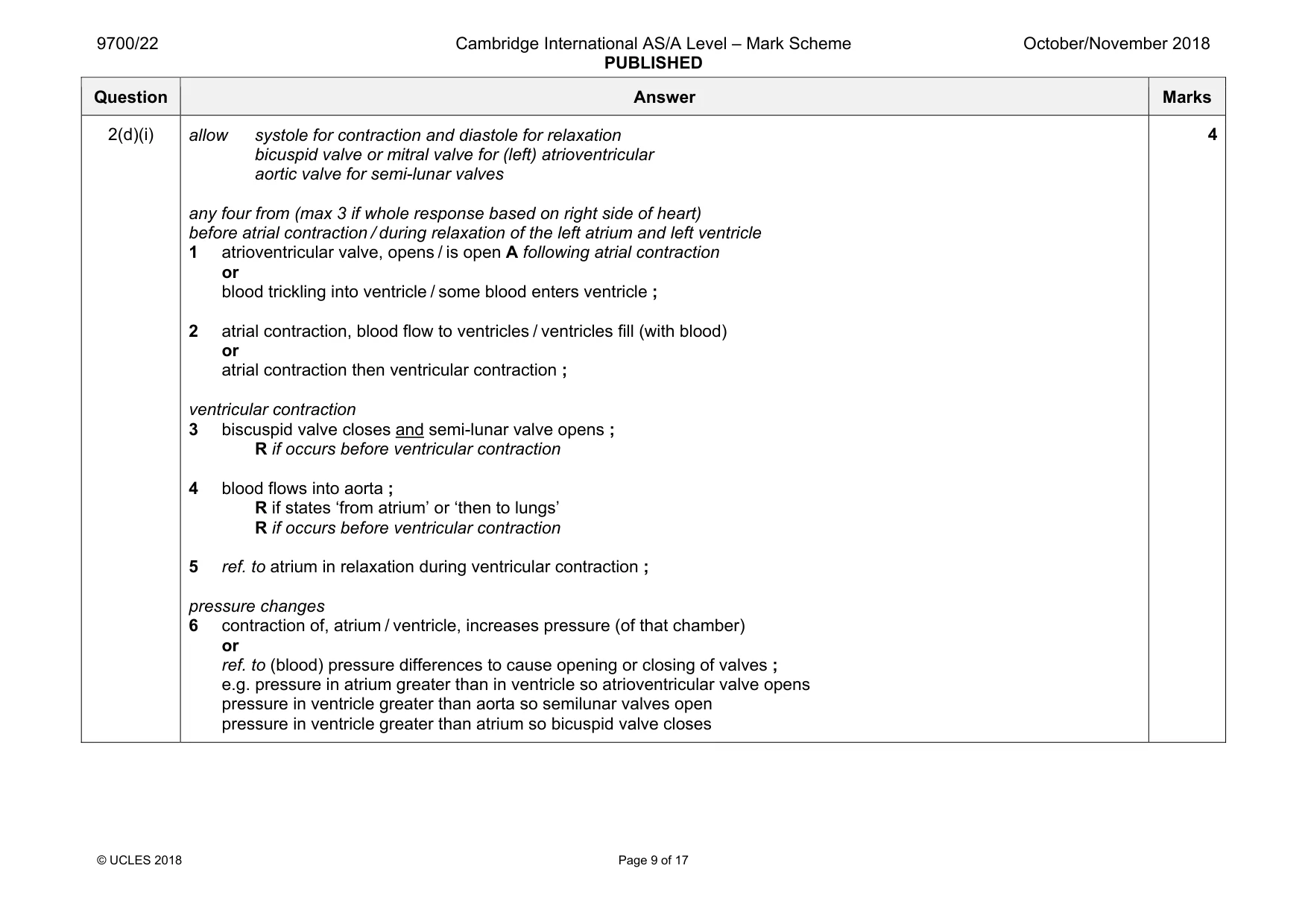
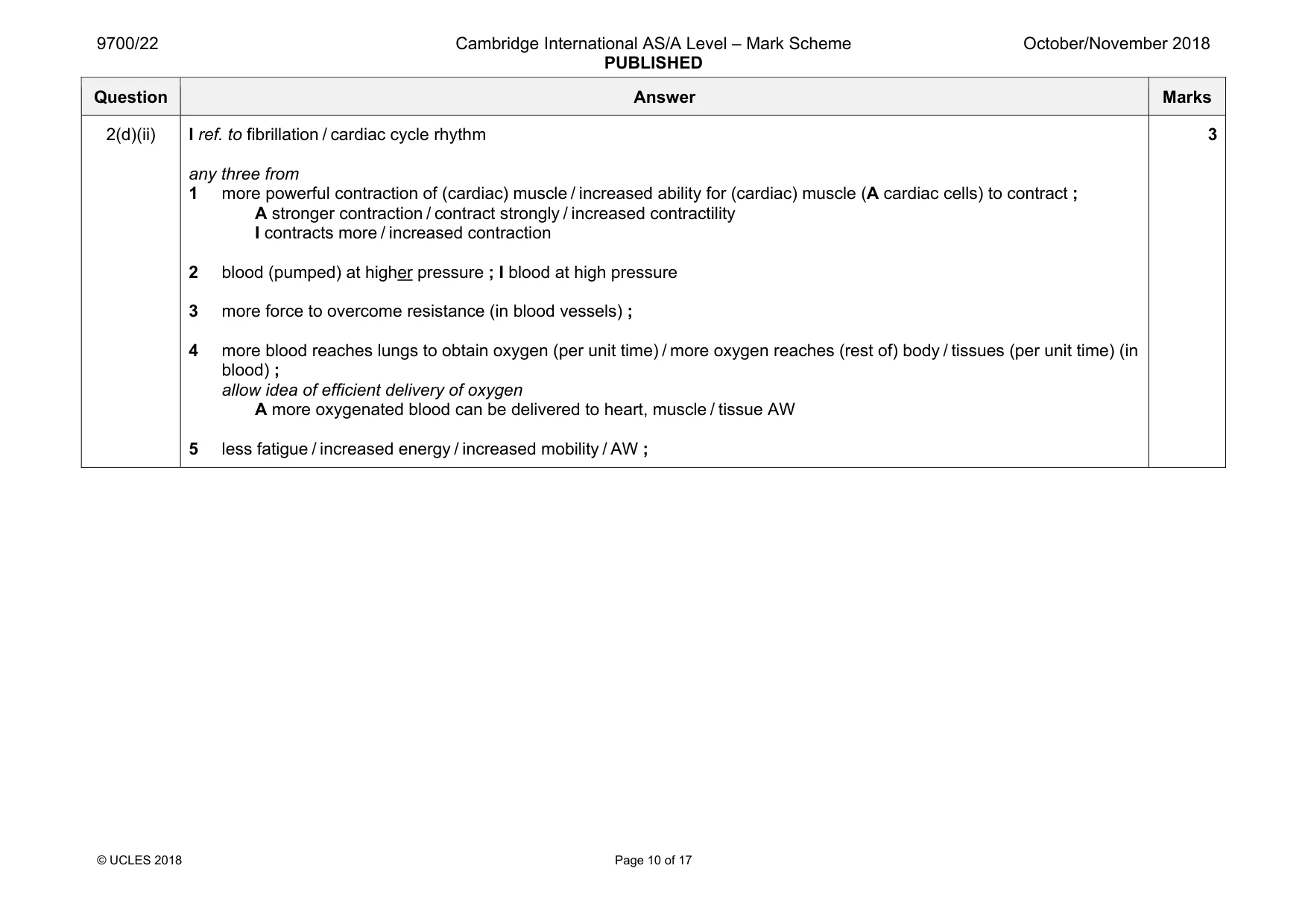
Mark scheme: 2(a) xerophyte / xerophytic ; R succulent / cactus / named 1 2(b)(i) phloem ; A sieve tube(s) R phloem sieve / phloem tube A sieve tube elements R phloem companion cell 1 2(b)(ii) any two from 1 for, transport / translocation, or movement / AW, from source to sink ; accept assimilates / products of metabolism, if in context of cardiac glycosides I ref. to transport of, amino acids / sucrose 2 ref. to source, is place of synthesis / AW or sink is / movement to, area where not manufactured / storage area / area where they are required ; 3 as defence mechanism (e.g. against sap feeders) ; 2 2(c)(i) using / AW, water / H2O ; to break bond (between phosphate groups) ; R if bond incorrectly named 2 2(c)(ii) active transport ; 1 Question Answer Marks 2(c)(iii) any four from 1 (reversibly) binds / attaches / AW, to, allosteric site / site other than active site ; 2 (which) changes, shape / tertiary structure / 3-D structure, of active site ; A active site distorted I protein structure 3 substrate / ATP, cannot, enter / bind / fit / AW, to active site ; A active site no longer complementary to substrate A enzyme substrate / ES, complexes cannot form A ESCs cannot form I ATP / substrate, cannot bind to enzyme without a link to active site 4 no / less, hydrolysis of ATP A breakdown or no / less, energy released ; I no energy, synthesised / created / produced 5 Na+ not moved, out and K+ not moved in ; I active transport, stops / decreases 4 Question Answer Marks 2(d)(i) allow systole for contraction and diastole for relaxation bicuspid valve or mitral valve for (left) atrioventricular aortic valve for semi-lunar valves any four from (max 3 if whole response based on right side of heart) before atrial contraction / during relaxation of the left atrium and left ventricle 1 atrioventricular valve, opens / is open A following atrial contraction or blood trickling into ventricle / some blood enters ventricle ; 2 atrial contraction, blood flow to ventricles / ventricles fill (with blood) or atrial contraction then ventricular contraction ; ventricular contraction 3 biscuspid valve closes and semi-lunar valve opens ; R if occurs before ventricular contraction 4 blood flows into aorta ; R if states ‘from atrium’ or ‘then to lungs’ R if occurs before ventricular contraction 5 ref. to atrium in relaxation during ventricular contraction ; pressure changes 6 contraction of, atrium / ventricle, increases pressure (of that chamber) or ref. to (blood) pressure differences to cause opening or closing of valves ; e.g. pressure in atrium greater than in ventricle so atrioventricular valve opens pressure in ventricle greater than aorta so semilunar valves open pressure in ventricle greater than atrium so bicuspid valve closes 4 Question Answer Marks 2(d)(ii) I ref. to fibrillation / cardiac cycle rhythm any three from 1 more powerful contraction of (cardiac) muscle / increased ability for (cardiac) muscle (A cardiac cells) to contract ; A stronger contraction / contract strongly / increased contractility I contracts more / increased contraction 2 blood (pumped) at higher pressure ; I blood at high pressure 3 more force to overcome resistance (in blood vessels) ; 4 more blood reaches lungs to obtain oxygen (per unit time) / more oxygen reaches (rest of) body / tissues (per unit time) (in blood) ; allow idea of efficient delivery of oxygen A more oxygenated blood can be delivered to heart, muscle / tissue AW 5 less fatigue / increased energy / increased mobility / AW ; 3
Q3 · The response of the human body to tissue damage depends on the types of tissues involved
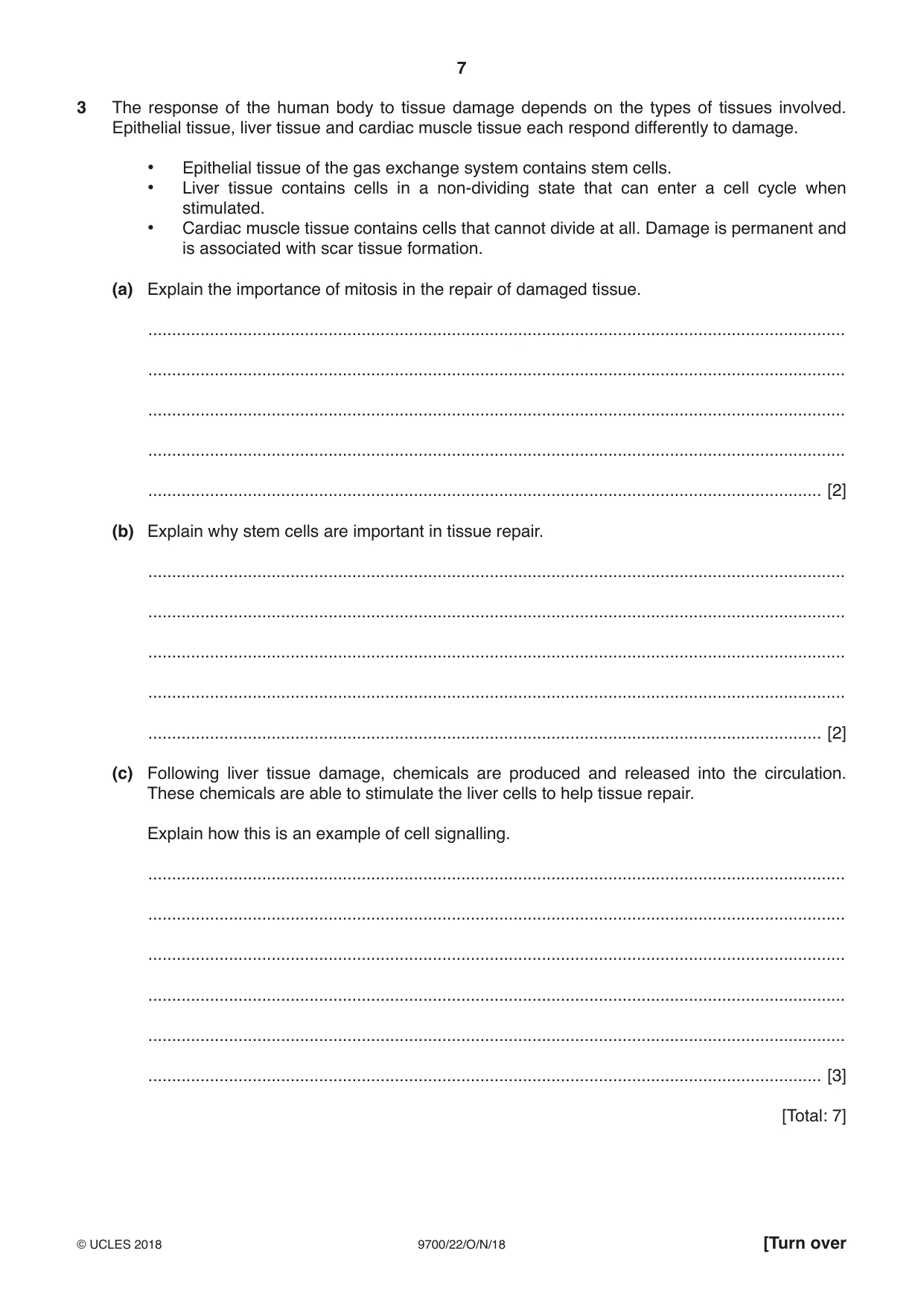
3 The response of the human body to tissue damage depends on the types of tissues involved. Epithelial tissue, liver tissue and cardiac muscle tissue each respond differently to damage. • Epithelial tissue of the gas exchange system contains stem cells. • Liver tissue contains cells in a non‑dividing state that can enter a cell cycle when stimulated. • Cardiac muscle tissue contains cells that cannot divide at all. Damage is permanent and is associated with scar tissue formation. (a) Explain the importance of mitosis in the repair of damaged tissue. ................................................................................................................................................... ................................................................................................................................................... ................................................................................................................................................... ................................................................................................................................................... .............................................................................................................................................. [2] (b) Explain why stem cells are important in tissue repair. ................................................................................................................................................... ................................................................................................................................................... ................................................................................................................................................... ................................................................................................................................................... .............................................................................................................................................. [2] (c) Following liver tissue damage, chemicals are produced and released into the circulation. These chemicals are able to stimulate the liver cells to help tissue repair. Explain how this is an example of cell signalling. ................................................................................................................................................... ................................................................................................................................................... ................................................................................................................................................... ................................................................................................................................................... ................................................................................................................................................... .............................................................................................................................................. [3] [Total: 7]
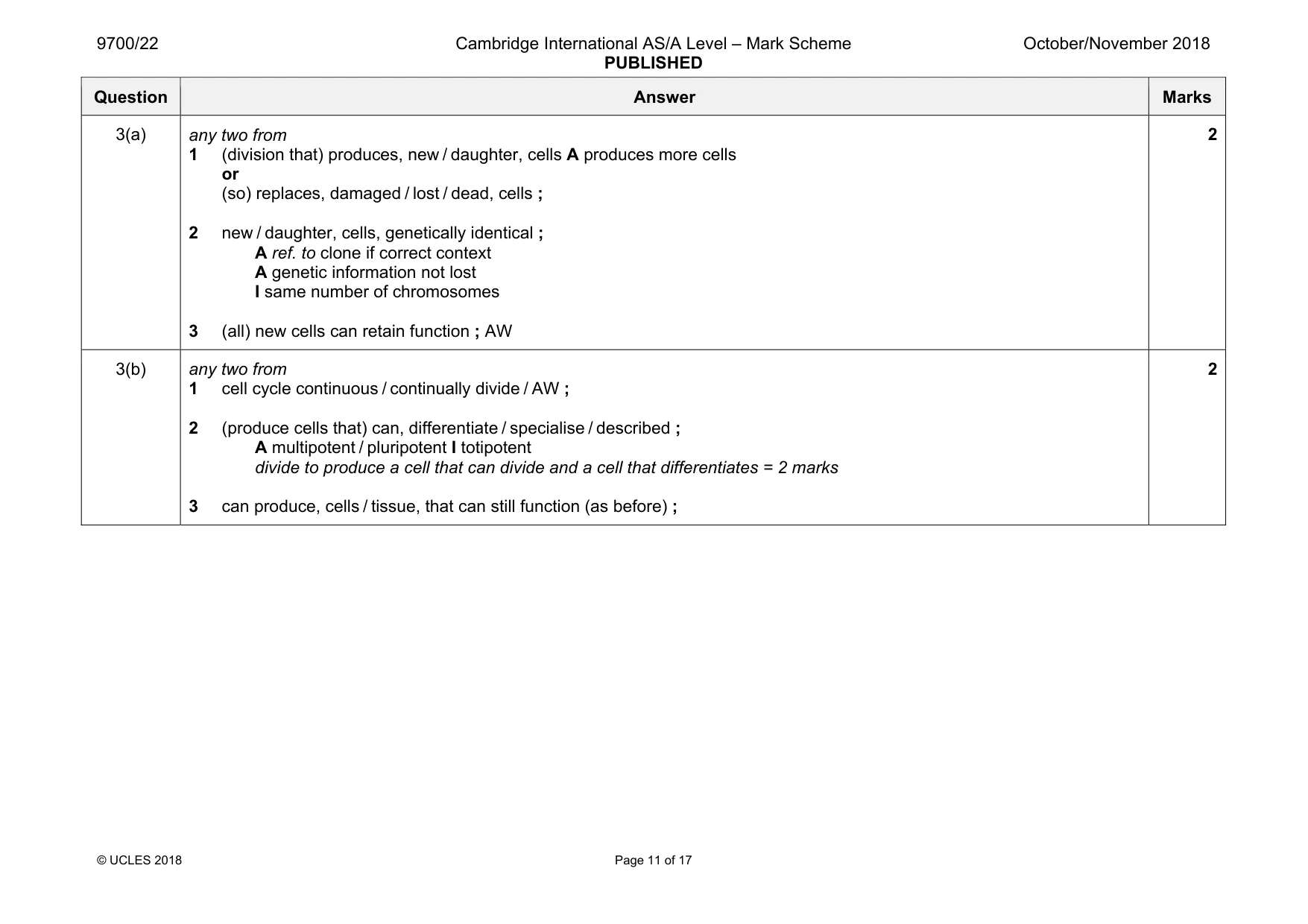
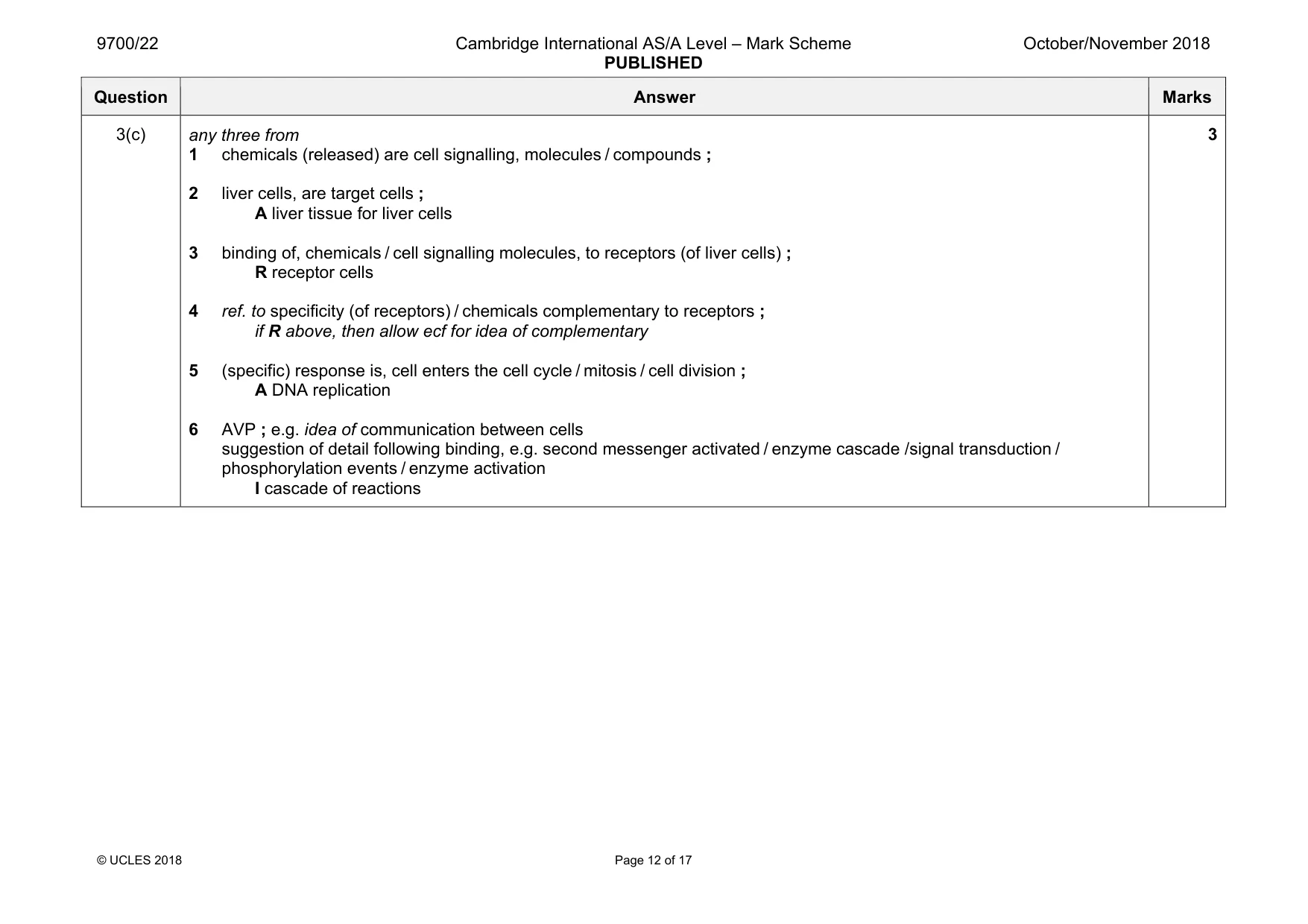
Mark scheme: 3(a) any two from 1 (division that) produces, new / daughter, cells A produces more cells or (so) replaces, damaged / lost / dead, cells ; 2 new / daughter, cells, genetically identical ; A ref. to clone if correct context A genetic information not lost I same number of chromosomes 3 (all) new cells can retain function ; AW 2 3(b) any two from 1 cell cycle continuous / continually divide / AW ; 2 (produce cells that) can, differentiate / specialise / described ; A multipotent / pluripotent I totipotent divide to produce a cell that can divide and a cell that differentiates = 2 marks 3 can produce, cells / tissue, that can still function (as before) ; 2 Question Answer Marks 3(c) any three from 1 chemicals (released) are cell signalling, molecules / compounds ; 2 liver cells, are target cells ; A liver tissue for liver cells 3 binding of, chemicals / cell signalling molecules, to receptors (of liver cells) ; R receptor cells 4 ref. to specificity (of receptors) / chemicals complementary to receptors ; if R above, then allow ecf for idea of complementary 5 (specific) response is, cell enters the cell cycle / mitosis / cell division ; A DNA replication 6 AVP ; e.g. idea of communication between cells suggestion of detail following binding, e.g. second messenger activated / enzyme cascade /signal transduction / phosphorylation events / enzyme activation I cascade of reactions 3
Q4 · Viruses share common structural features
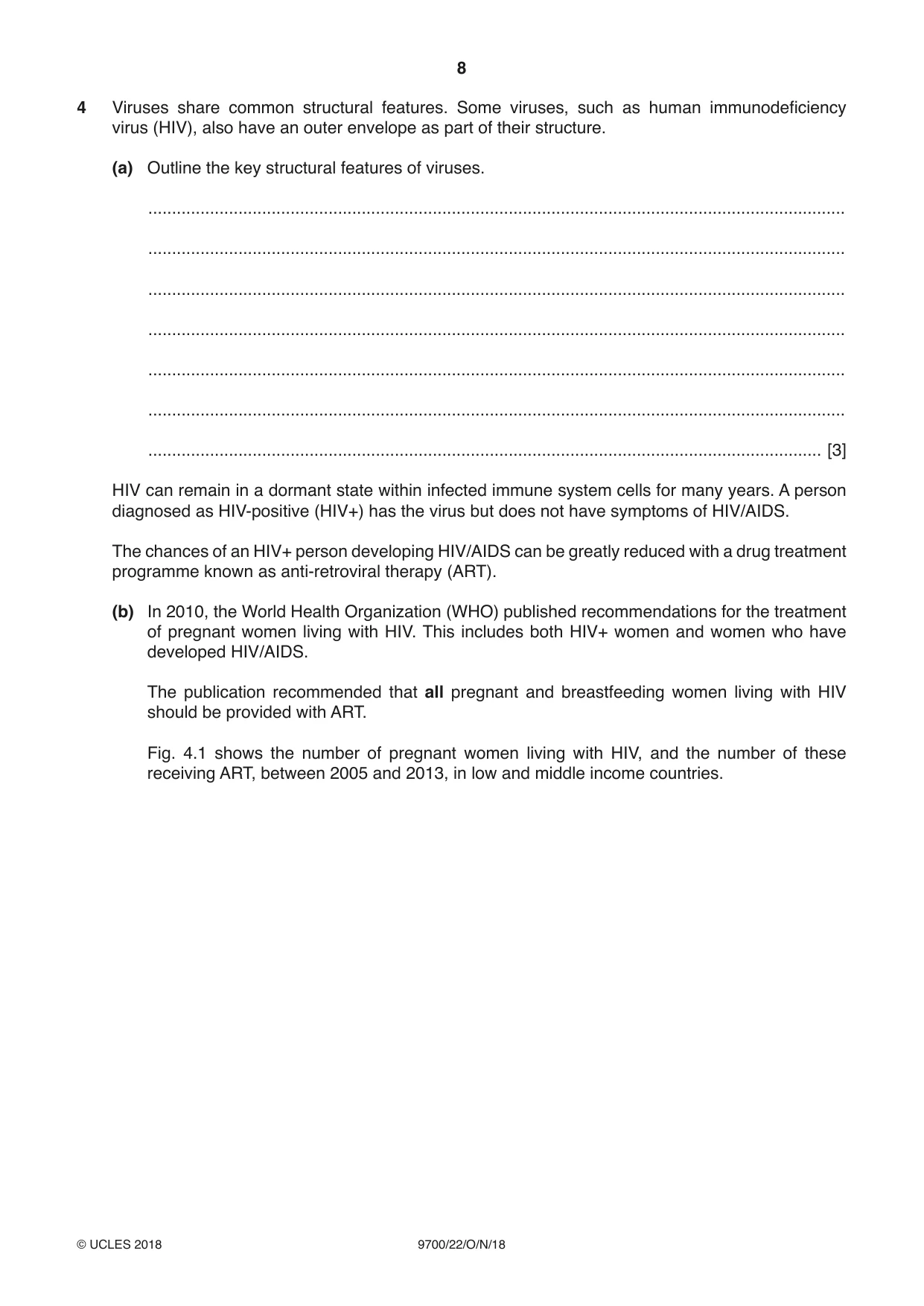
4 Viruses share common structural features. Some viruses, such as human immunodeficiency virus (HIV), also have an outer envelope as part of their structure. (a) Outline the key structural features of viruses. ................................................................................................................................................... ................................................................................................................................................... ................................................................................................................................................... ................................................................................................................................................... ................................................................................................................................................... ................................................................................................................................................... .............................................................................................................................................. [3] HIV can remain in a dormant state within infected immune system cells for many years. A person diagnosed as HIV‑positive (HIV+) has the virus but does not have symptoms of HIV/AIDS. The chances of an HIV+ person developing HIV/AIDS can be greatly reduced with a drug treatment programme known as anti‑retroviral therapy (ART). (b) In 2010, the World Health Organization (WHO) published recommendations for the treatment of pregnant women living with HIV. This includes both HIV+ women and women who have developed HIV/AIDS. The publication recommended that all pregnant and breastfeeding women living with HIV should be provided with ART. Fig. 4.1 shows the number of pregnant women living with HIV, and the number of these receiving ART, between 2005 and 2013, in low and middle income countries. Key total number of pregnant women living with HIV number of pregnant women living with HIV receiving ART 2 000 000 1 800 000 1 600 000 1 400 000 1 200 000 number of pregnant 1 000 000 women 800 000 600 000 400 000 200 000 0 2005 2006 2007 2008 2009 2010 2011 2012 2013 year Fig. 4.1 (i) From the data in Fig. 4.1, it can be calculated that 13% of pregnant women living with HIV received ART in 2005. Calculate the percentage of pregnant women living with HIV that received ART in 2013. answer = .......................... % [1] (ii) Describe the trends shown in Fig. 4.1. ........................................................................................................................................... ........................................................................................................................................... ........................................................................................................................................... ........................................................................................................................................... ........................................................................................................................................... ........................................................................................................................................... ...................................................................................................................................... [3] (iii) Suggest and explain the global importance of providing ART to all pregnant and breastfeeding women living with HIV. ........................................................................................................................................... ........................................................................................................................................... ........................................................................................................................................... ........................................................................................................................................... ........................................................................................................................................... ........................................................................................................................................... ........................................................................................................................................... ........................................................................................................................................... ........................................................................................................................................... ........................................................................................................................................... ........................................................................................................................................... ...................................................................................................................................... [3] Question 4 continues on page 12 (c) In a person who has been infected with HIV‑1, the most common strain of HIV, a sample of blood can be tested for the presence of the virus. One test that can only be used in the early stages of infection involves a monoclonal antibody specific for p24, a structural protein present in the virus. Fig. 4.2 is a flow chart outlining the steps in the production of anti‑HIV p24 monoclonal antibody. inject mouse step 1 remove cells from mouse obtain mouse myeloma step 2 spleen cells fuse cells from spleen with step 3 myeloma cells clone fused cells in a step 4 culture medium separate cells and culture step 5 in individual wells screen cells to identify step 6 desired cells culture desired cells on a step 7 large scale Fig. 4.2 (i) State what is being injected into the mouse in step 1. ...................................................................................................................................... [1] (ii) Explain why several weeks, rather than several days, separates step 1 and step 2. ........................................................................................................................................... ........................................................................................................................................... ...................................................................................................................................... [1] (iii) State one feature of the myeloma mouse cells, used in step 3, that is essential for this production process. ........................................................................................................................................... ........................................................................................................................................... ...................................................................................................................................... [1] (iv) Name the fused cells formed in step 4. ...................................................................................................................................... [1] (v) Suggest why step 6 is necessary. ........................................................................................................................................... ........................................................................................................................................... ...................................................................................................................................... [1] [Total: 15]
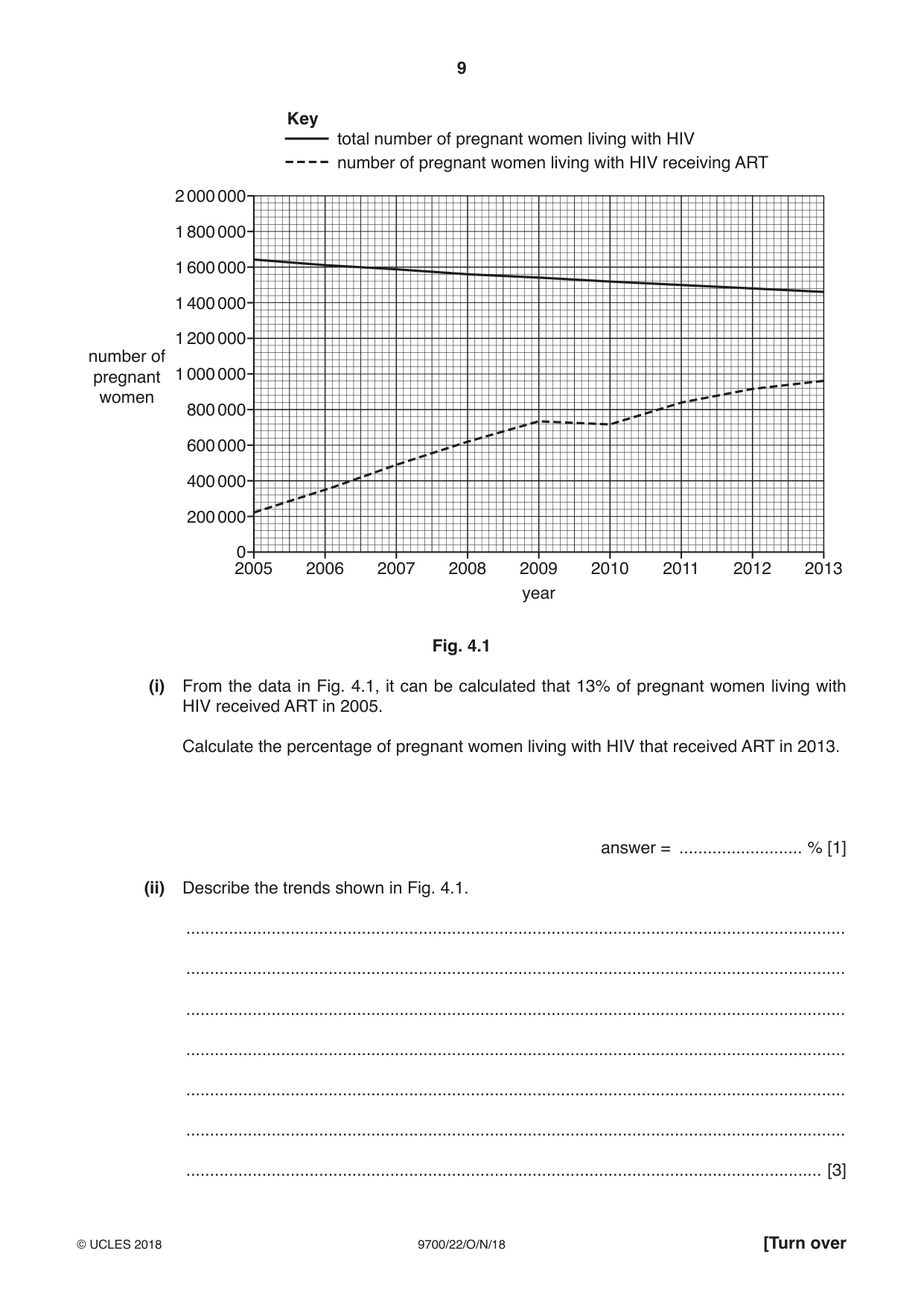
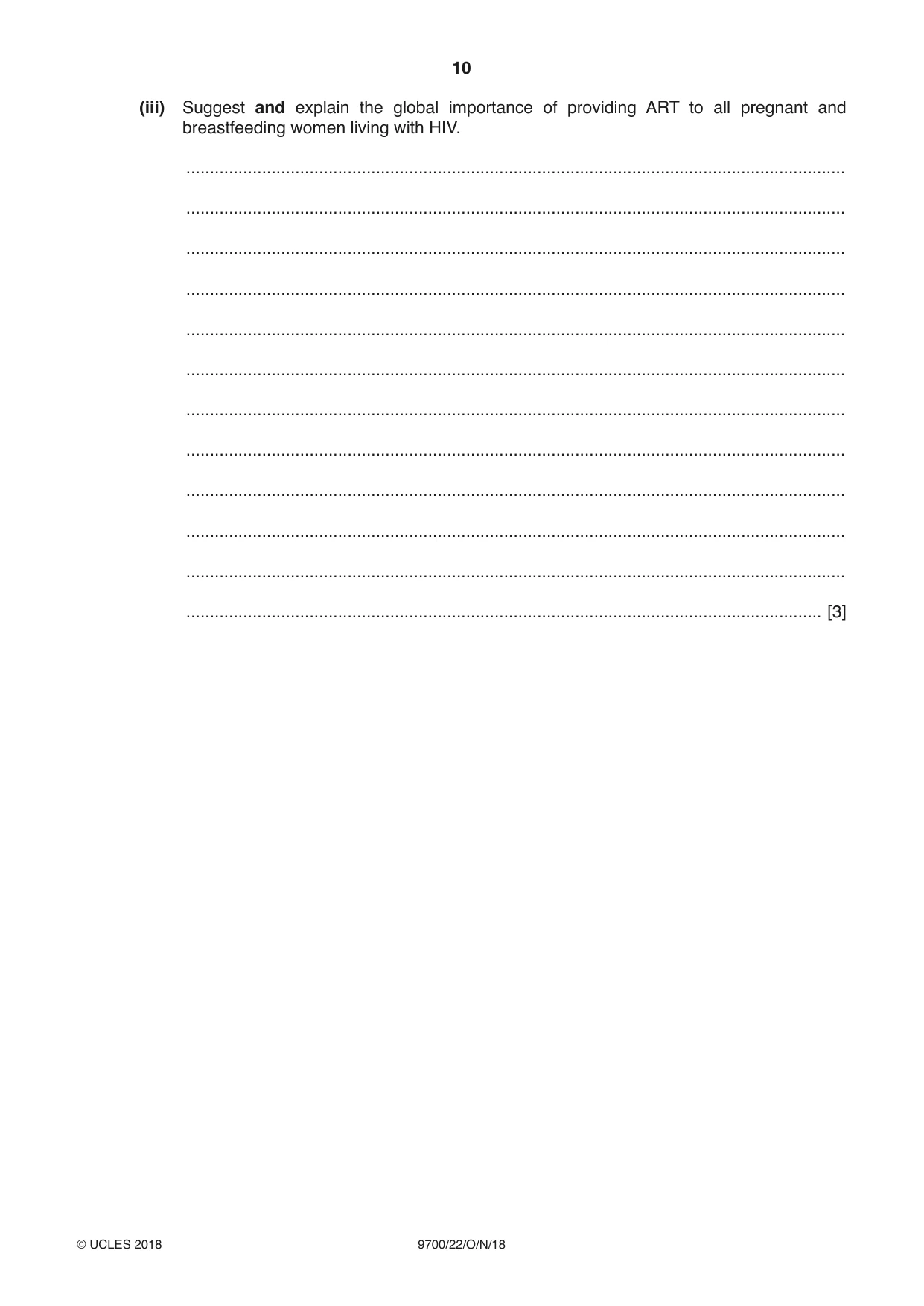
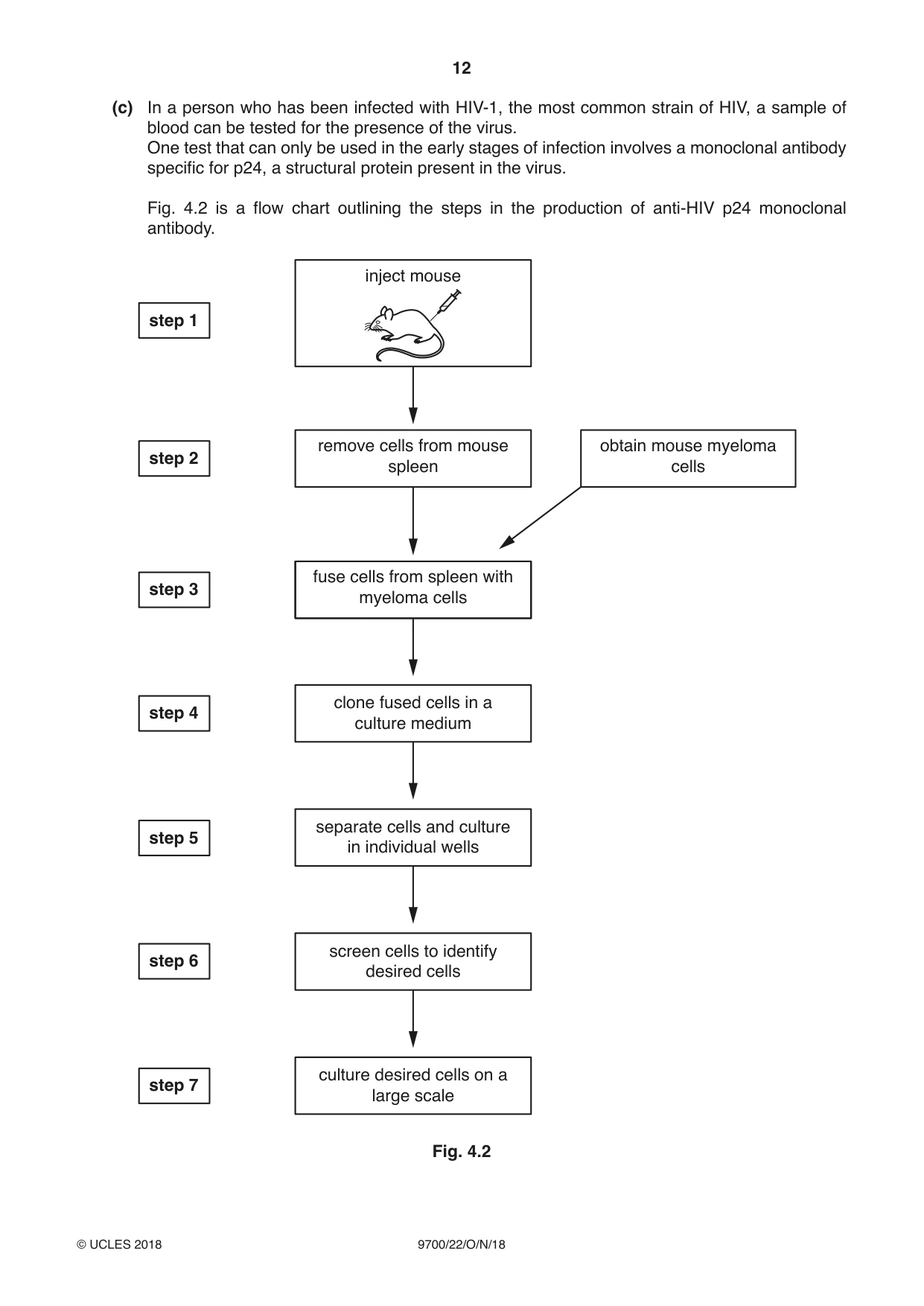
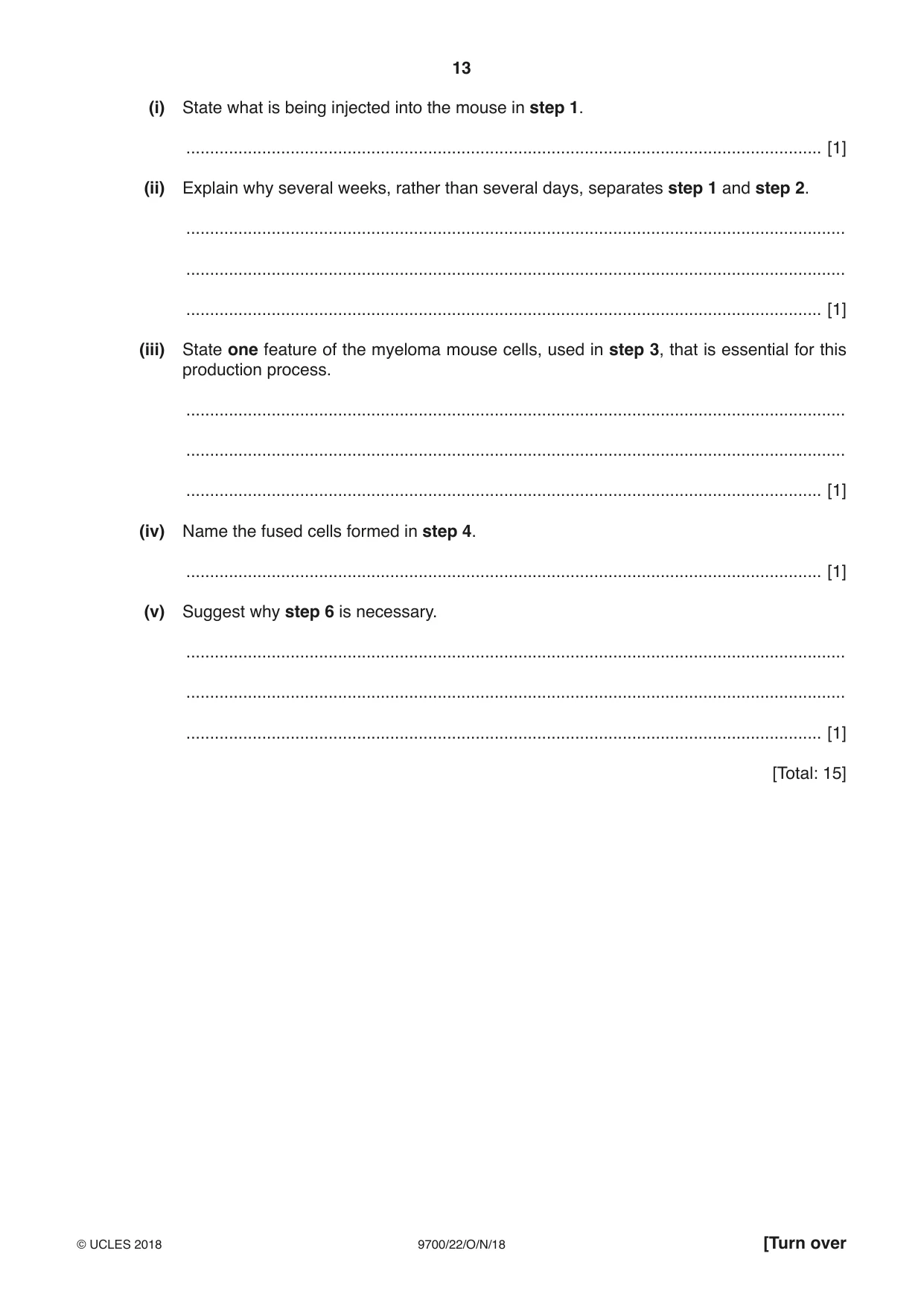
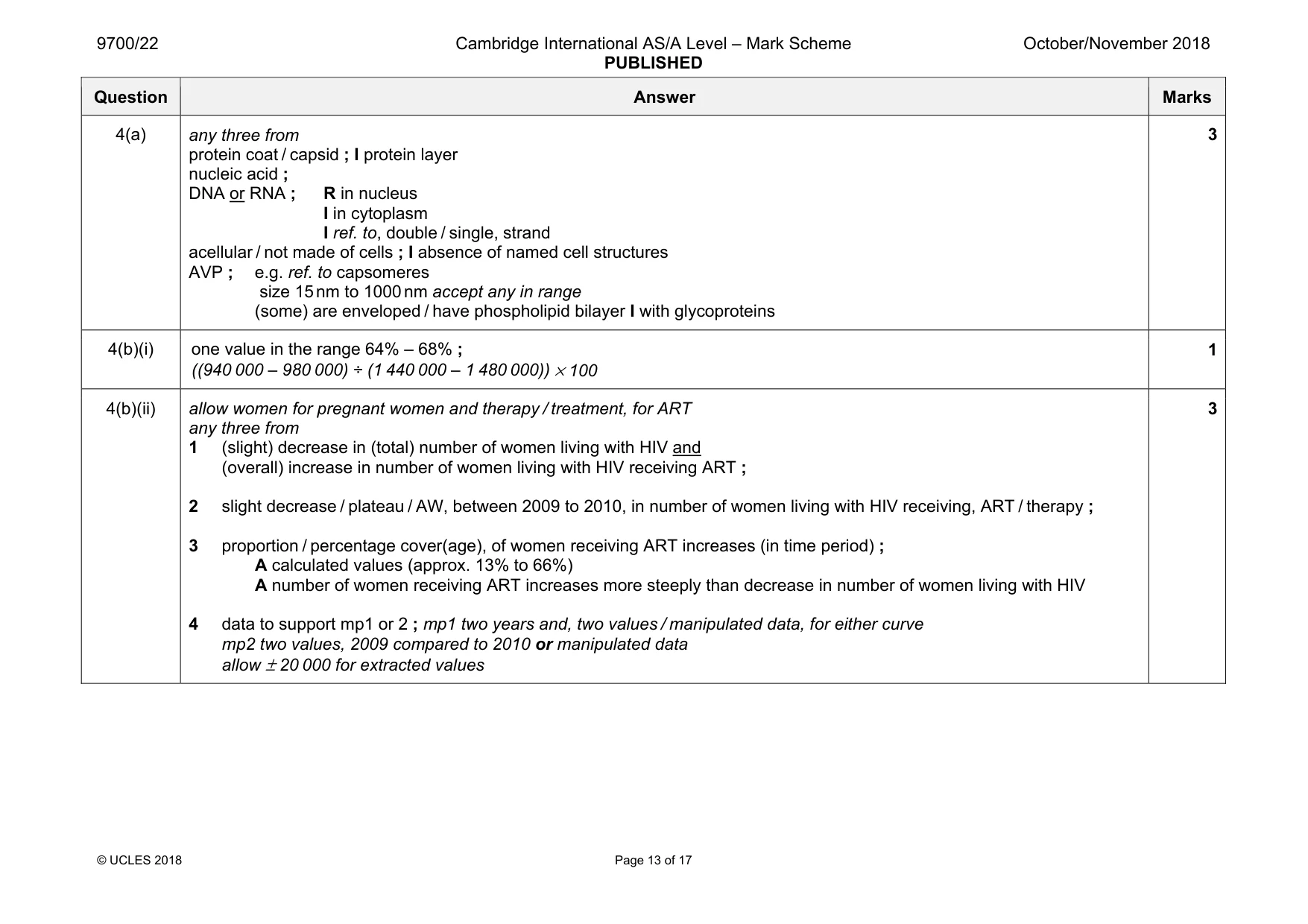
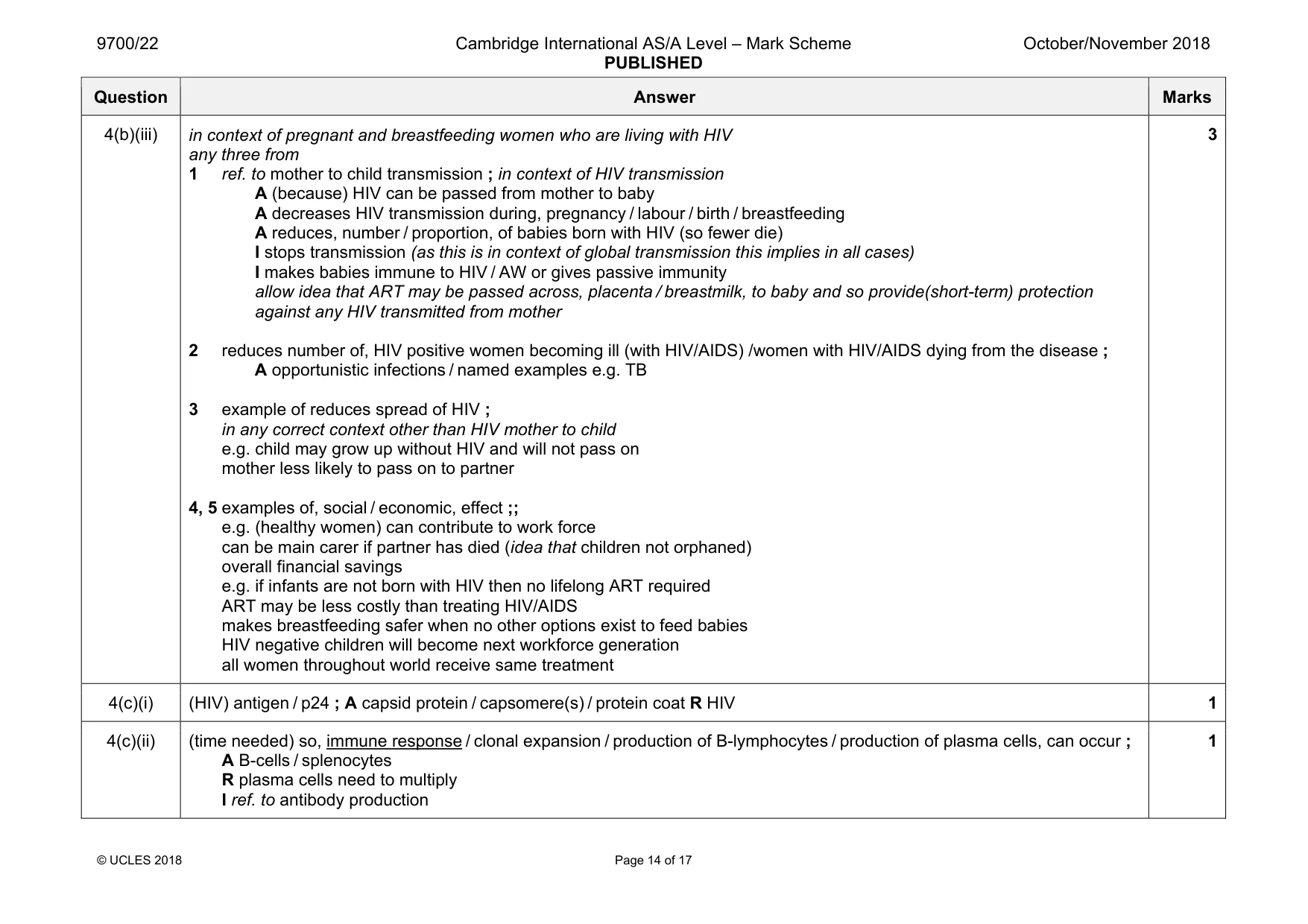
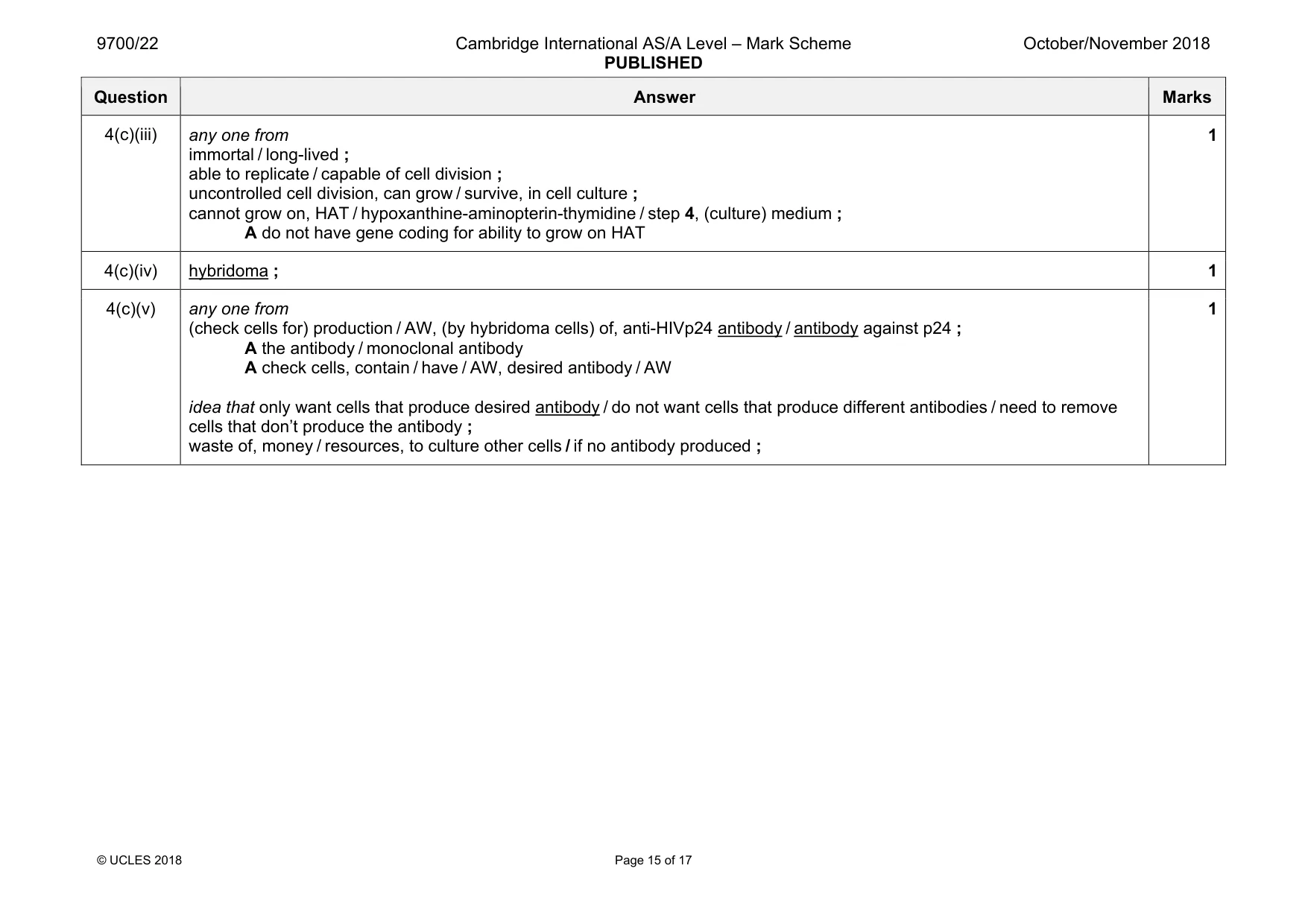
Mark scheme: 4(a) any three from protein coat / capsid ; I protein layer nucleic acid ; DNA or RNA ; R in nucleus I in cytoplasm I ref. to, double / single, strand acellular / not made of cells ; I absence of named cell structures AVP ; e.g. ref. to capsomeres size 15 nm to 1000 nm accept any in range (some) are enveloped / have phospholipid bilayer I with glycoproteins 3 4(b)(i) one value in the range 64% – 68% ; ((940 000 – 980 000) ÷ (1 440 000 – 1 480 000)) × 100 1 4(b)(ii) allow women for pregnant women and therapy / treatment, for ART any three from 1 (slight) decrease in (total) number of women living with HIV and (overall) increase in number of women living with HIV receiving ART ; 2 slight decrease / plateau / AW, between 2009 to 2010, in number of women living with HIV receiving, ART / therapy ; 3 proportion / percentage cover(age), of women receiving ART increases (in time period) ; A calculated values (approx. 13% to 66%) A number of women receiving ART increases more steeply than decrease in number of women living with HIV 4 data to support mp1 or 2 ; mp1 two years and, two values / manipulated data, for either curve mp2 two values, 2009 compared to 2010 or manipulated data allow ± 20 000 for extracted values 3 Question Answer Marks 4(b)(iii) in context of pregnant and breastfeeding women who are living with HIV any three from 1 ref. to mother to child transmission ; in context of HIV transmission A (because) HIV can be passed from mother to baby A decreases HIV transmission during, pregnancy / labour / birth / breastfeeding A reduces, number / proportion, of babies born with HIV (so fewer die) I stops transmission (as this is in context of global transmission this implies in all cases) I makes babies immune to HIV / AW or gives passive immunity allow idea that ART may be passed across, placenta / breastmilk, to baby and so provide(short-term) protection against any HIV transmitted from mother 2 reduces number of, HIV positive women becoming ill (with HIV/AIDS) /women with HIV/AIDS dying from the disease ; A opportunistic infections / named examples e.g. TB 3 example of reduces spread of HIV ; in any correct context other than HIV mother to child e.g. child may grow up without HIV and will not pass on mother less likely to pass on to partner 4, 5 examples of, social / economic, effect ;; e.g. (healthy women) can contribute to work force can be main carer if partner has died (idea that children not orphaned) overall financial savings e.g. if infants are not born with HIV then no lifelong ART required ART may be less costly than treating HIV/AIDS makes breastfeeding safer when no other options exist to feed babies HIV negative children will become next workforce generation all women throughout world receive same treatment 3 4(c)(i) (HIV) antigen / p24 ; A capsid protein / capsomere(s) / protein coat R HIV 1 4(c)(ii) (time needed) so, immune response / clonal expansion / production of B-lymphocytes / production of plasma cells, can occur ; A B-cells / splenocytes R plasma cells need to multiply I ref. to antibody production 1 Question Answer Marks 4(c)(iii) any one from immortal / long-lived ; able to replicate / capable of cell division ; uncontrolled cell division, can grow / survive, in cell culture ; cannot grow on, HAT / hypoxanthine-aminopterin-thymidine / step 4, (culture) medium ; A do not have gene coding for ability to grow on HAT 1 4(c)(iv) hybridoma ; 1 4(c)(v) any one from (check cells for) production / AW, (by hybridoma cells) of, anti-HIVp24 antibody / antibody against p24 ; A the antibody / monoclonal antibody A check cells, contain / have / AW, desired antibody / AW idea that only want cells that produce desired antibody / do not want cells that produce different antibodies / need to remove cells that don’t produce the antibody ; waste of, money / resources, to culture other cells / if no antibody produced ; 1
Q5 · DNA and RNA are nucleic acids
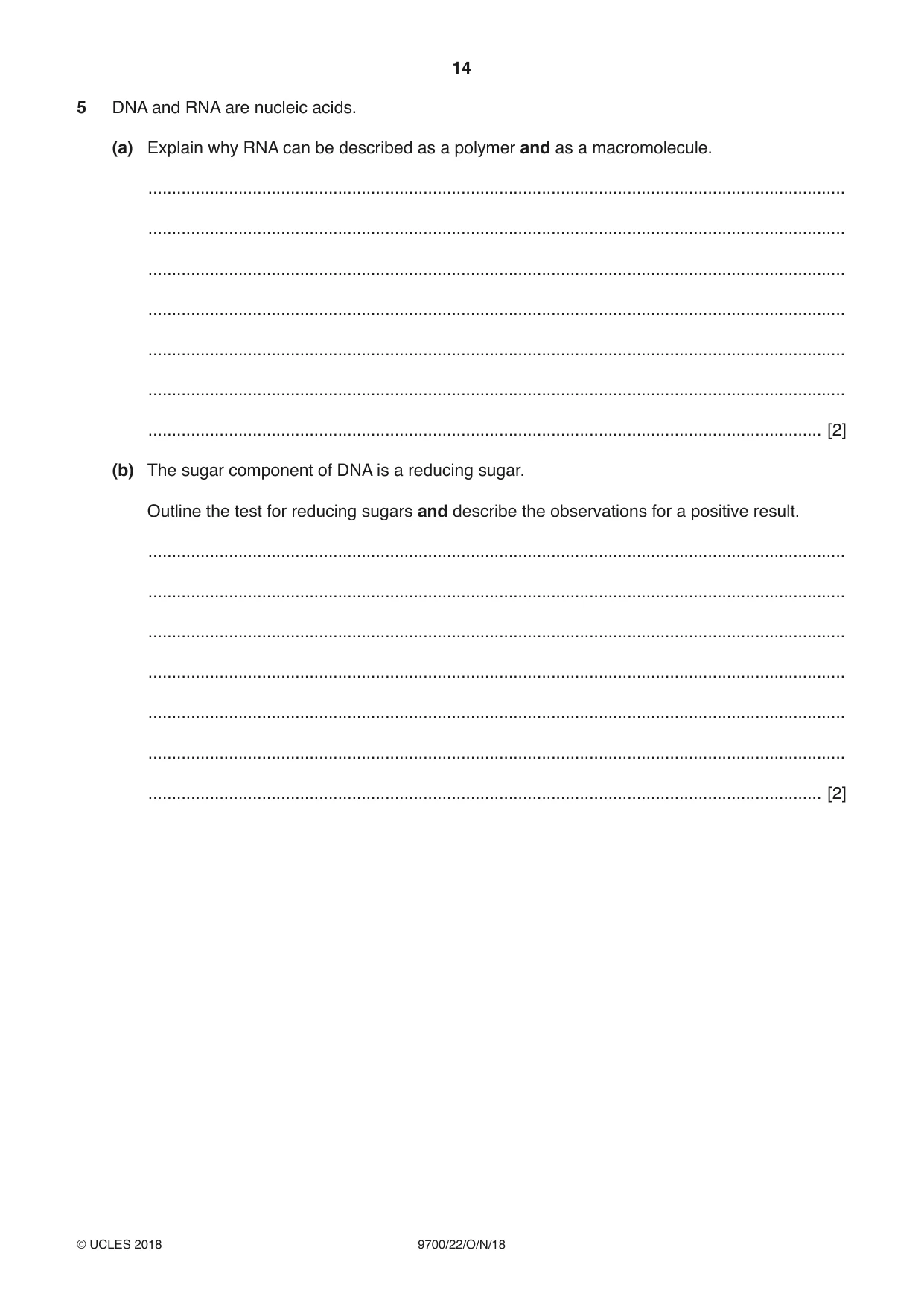
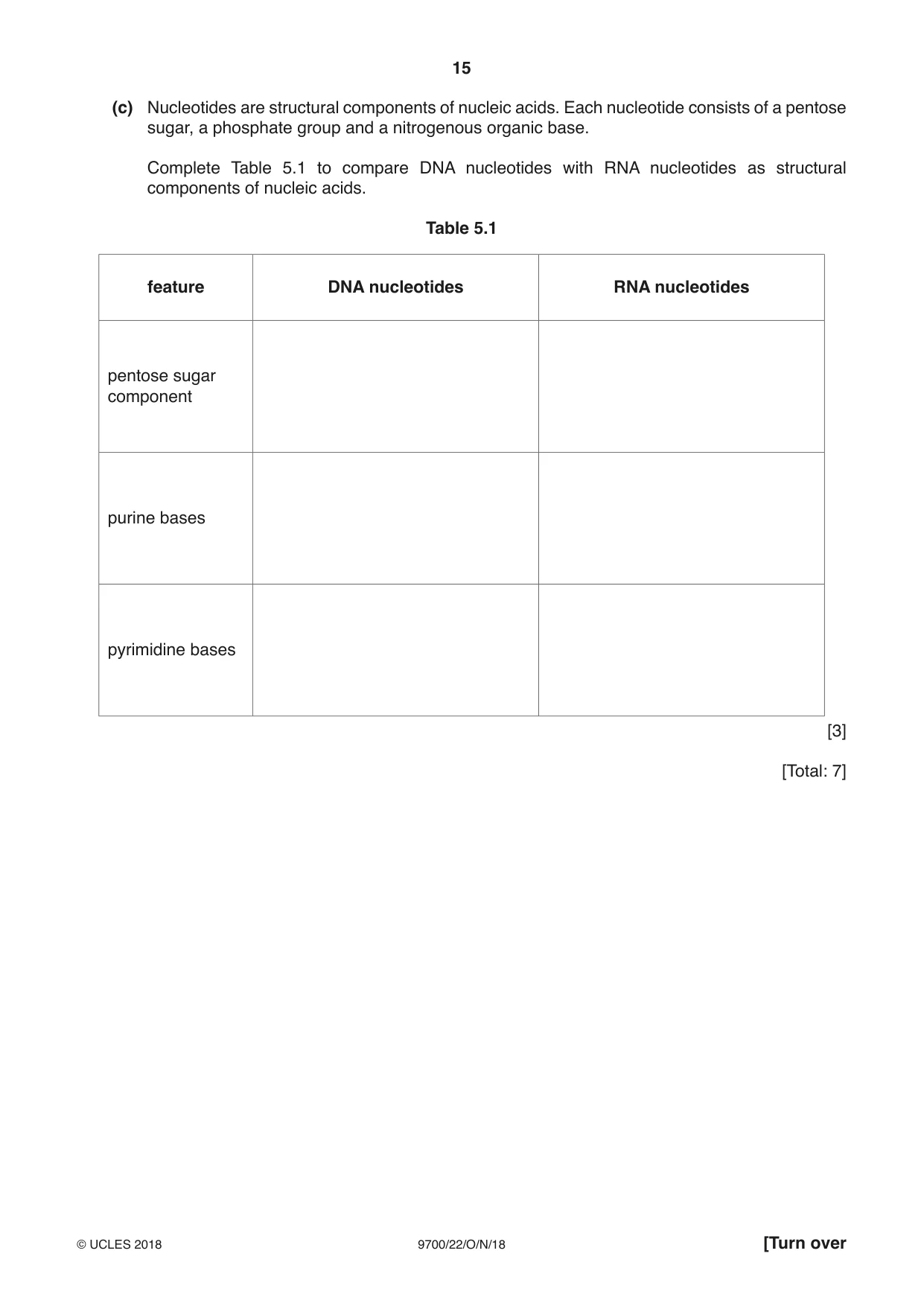
5 DNA and RNA are nucleic acids. (a) Explain why RNA can be described as a polymer and as a macromolecule. ................................................................................................................................................... ................................................................................................................................................... ................................................................................................................................................... ................................................................................................................................................... ................................................................................................................................................... ................................................................................................................................................... .............................................................................................................................................. [2] (b) The sugar component of DNA is a reducing sugar. Outline the test for reducing sugars and describe the observations for a positive result. ................................................................................................................................................... ................................................................................................................................................... ................................................................................................................................................... ................................................................................................................................................... ................................................................................................................................................... ................................................................................................................................................... .............................................................................................................................................. [2] (c) Nucleotides are structural components of nucleic acids. Each nucleotide consists of a pentose sugar, a phosphate group and a nitrogenous organic base. Complete Table 5.1 to compare DNA nucleotides with RNA nucleotides as structural components of nucleic acids. Table 5.1 feature DNA nucleotides RNA nucleotides pentose sugar component purine bases pyrimidine bases [3] [Total: 7]
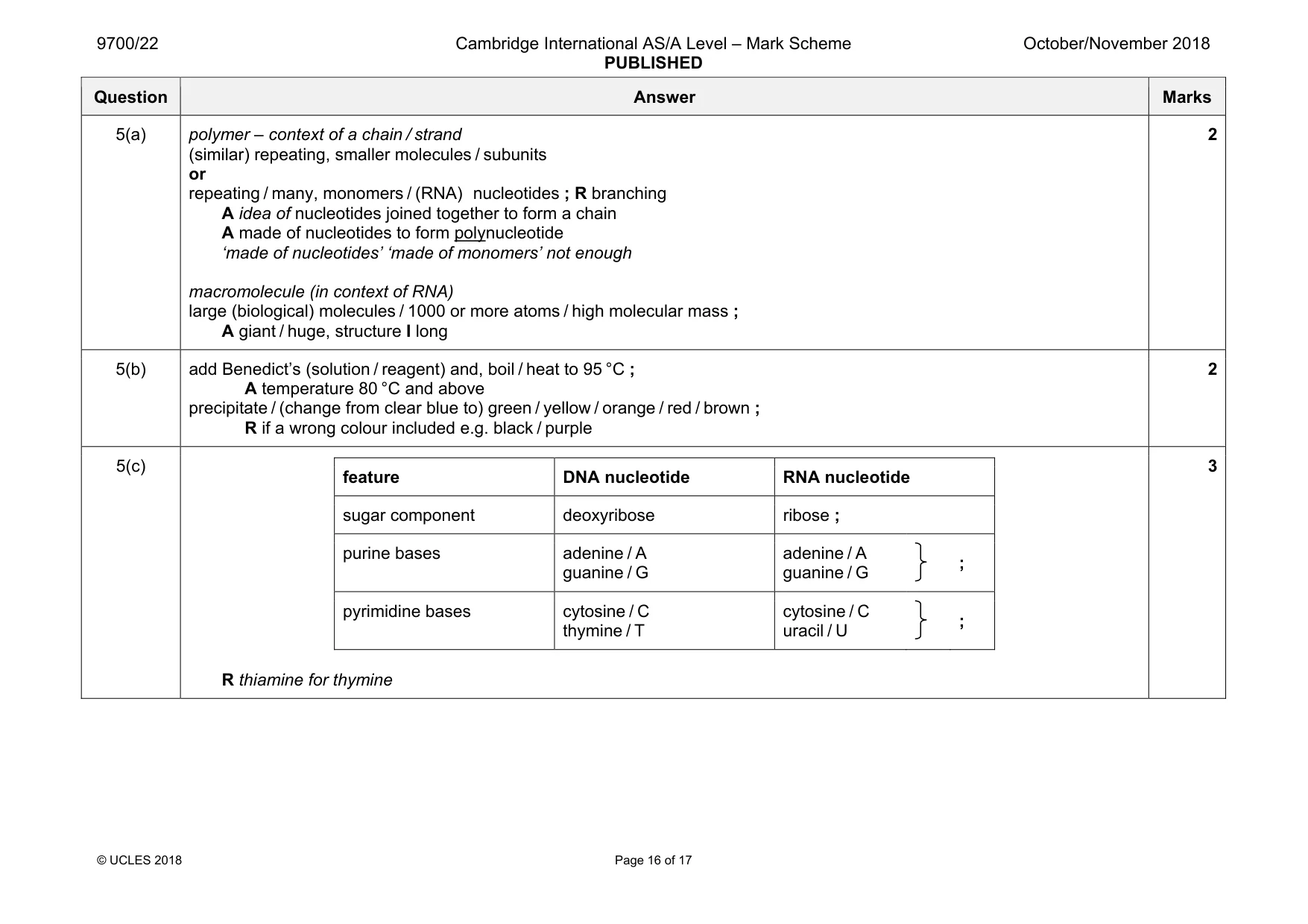
Mark scheme: 5(a) polymer – context of a chain / strand (similar) repeating, smaller molecules / subunits or repeating / many, monomers / (RNA) nucleotides ; R branching A idea of nucleotides joined together to form a chain A made of nucleotides to form polynucleotide ‘made of nucleotides’ ‘made of monomers’ not enough macromolecule (in context of RNA) large (biological) molecules / 1000 or more atoms / high molecular mass ; A giant / huge, structure I long 2 5(b) add Benedict’s (solution / reagent) and, boil / heat to 95 °C ; A temperature 80 °C and above precipitate / (change from clear blue to) green / yellow / orange / red / brown ; R if a wrong colour included e.g. black / purple 2 5(c) feature DNA nucleotide RNA nucleotide sugar component deoxyribose ribose ; purine bases adenine / A guanine / G adenine / A guanine / G ; pyrimidine bases cytosine / C thymine / T cytosine / C uracil / U ; R thiamine for thymine 3
More questions on Structure of nucleic acids and replication of DNA
Q6 · As a red blood cell matures, cell organelles are lost from the cell
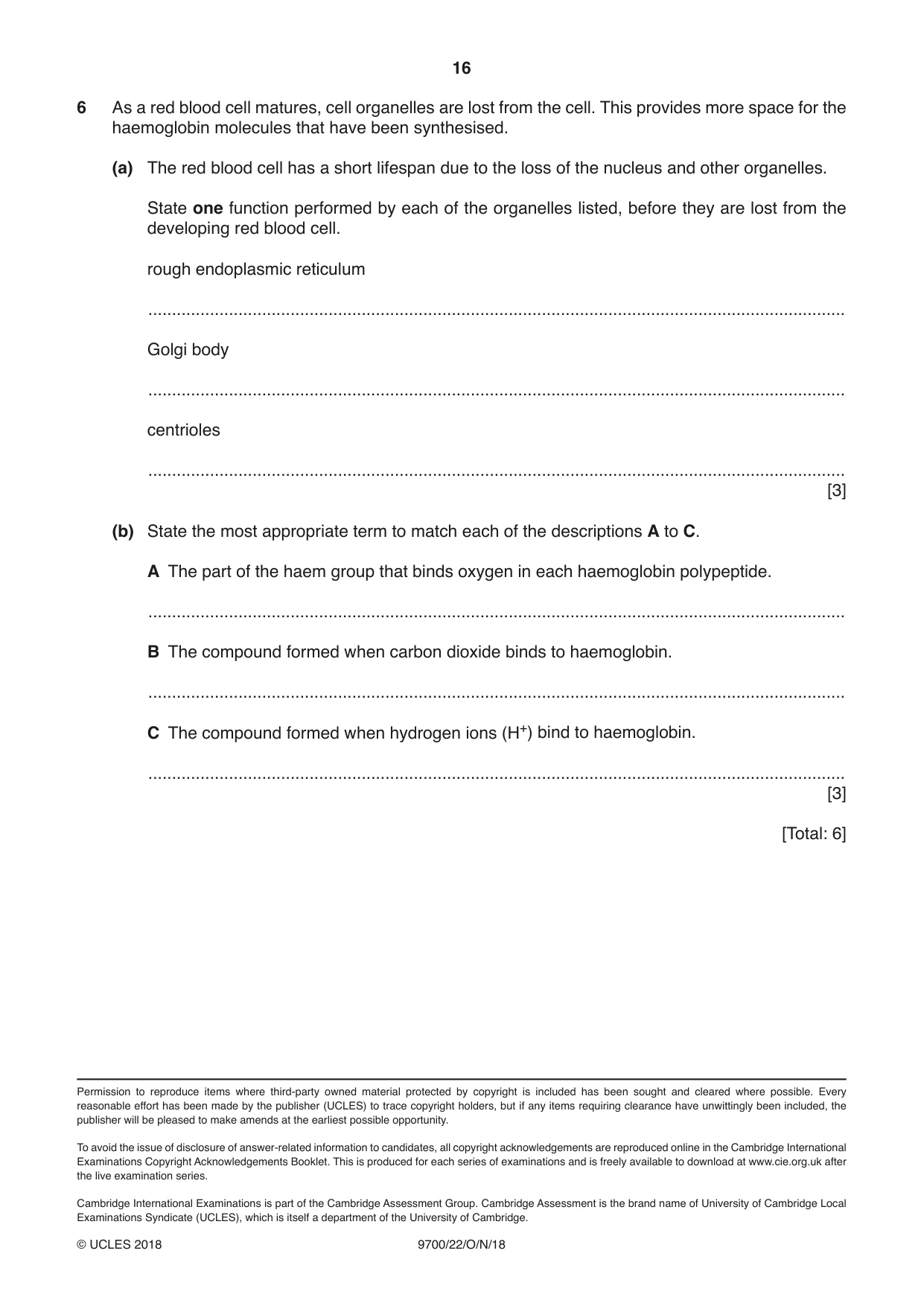
6 As a red blood cell matures, cell organelles are lost from the cell. This provides more space for the haemoglobin molecules that have been synthesised. (a) The red blood cell has a short lifespan due to the loss of the nucleus and other organelles. State one function performed by each of the organelles listed, before they are lost from the developing red blood cell. rough endoplasmic reticulum ................................................................................................................................................... Golgi body ................................................................................................................................................... centrioles ................................................................................................................................................... [3] (b) State the most appropriate term to match each of the descriptions A to C. A The part of the haem group that binds oxygen in each haemoglobin polypeptide. ................................................................................................................................................... B The compound formed when carbon dioxide binds to haemoglobin. ................................................................................................................................................... C The compound formed when hydrogen ions (H+) bind to haemoglobin. ................................................................................................................................................... [3] [Total: 6]
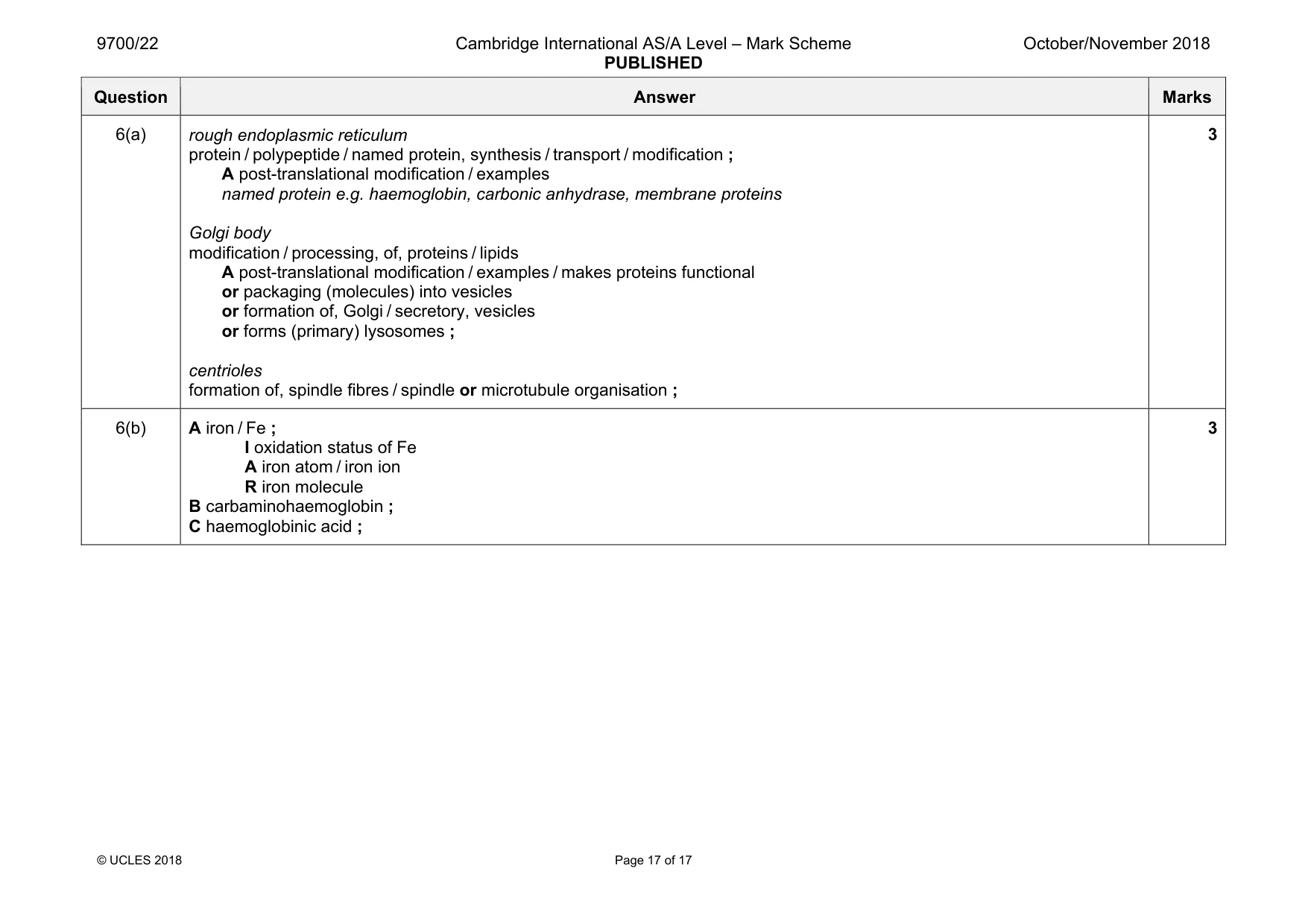
Mark scheme: 6(a) rough endoplasmic reticulum protein / polypeptide / named protein, synthesis / transport / modification ; A post-translational modification / examples named protein e.g. haemoglobin, carbonic anhydrase, membrane proteins Golgi body modification / processing, of, proteins / lipids A post-translational modification / examples / makes proteins functional or packaging (molecules) into vesicles or formation of, Golgi / secretory, vesicles or forms (primary) lysosomes ; centrioles formation of, spindle fibres / spindle or microtubule organisation ; 3 6(b) A iron / Fe ; I oxidation status of Fe A iron atom / iron ion R iron molecule B carbaminohaemoglobin ; C haemoglobinic acid ; 3
More questions on Cells as the basic units of living organisms
What was in this paper
The subtopics covered by these 6 questions, and how many questions each got. Open one in a new tab to see every Cambridge question on it.
What you needed in this session
Cambridge’s own grade thresholds for 2018 Oct/Nov, Paper 2 · Variant 2. A higher threshold means an easier paper — the bar moves with how the cohort did.