Cambridge A Level Biology 9700 — 2016 Oct/Nov Paper 4 · Variant 2
9700/42/O/N/16 · 100 marks · ≈113 min
The question paper and its mark scheme, free to read here and free to download. This is Cambridge’s own paper, exactly as it was sat.
Question paper28 pages






Mark scheme18 pages
Answers below. Sit the paper first if you are practising.
Paper as text
Question paper, page 1
This document consists of 24 printed pages and 4 lined pages. DC (AL) 135238 © UCLES 2016 [Turn over Cambridge International Examinations Cambridge International Advanced Subsidiary and Advanced Level * 3 3 3 5 3 7 6 1 0 7 * BIOLOGY 9700/42 Paper 4 A Level Structured Questions October/November 2016 2 hours Candidates answer on the Question Paper. No Additional Materials are required. READ THESE INSTRUCTIONS FIRST Write your Centre number, candidate number and name on all the work you hand in. Write in dark blue or black pen. You may use an HB pencil for any diagrams or graphs. Do not use staples, paper clips, glue or correction fluid. DO NOT WRITE IN ANY BARCODES. Section A Answer all questions. Section B Answer one question. Electronic calculators may be used. You may lose marks if you do not show your working or if you do not use appropriate units. At the end of the examination, fasten all your work securely together. The number of marks is given in brackets [ ] at the end of each question or part question.
Question paper, page 2
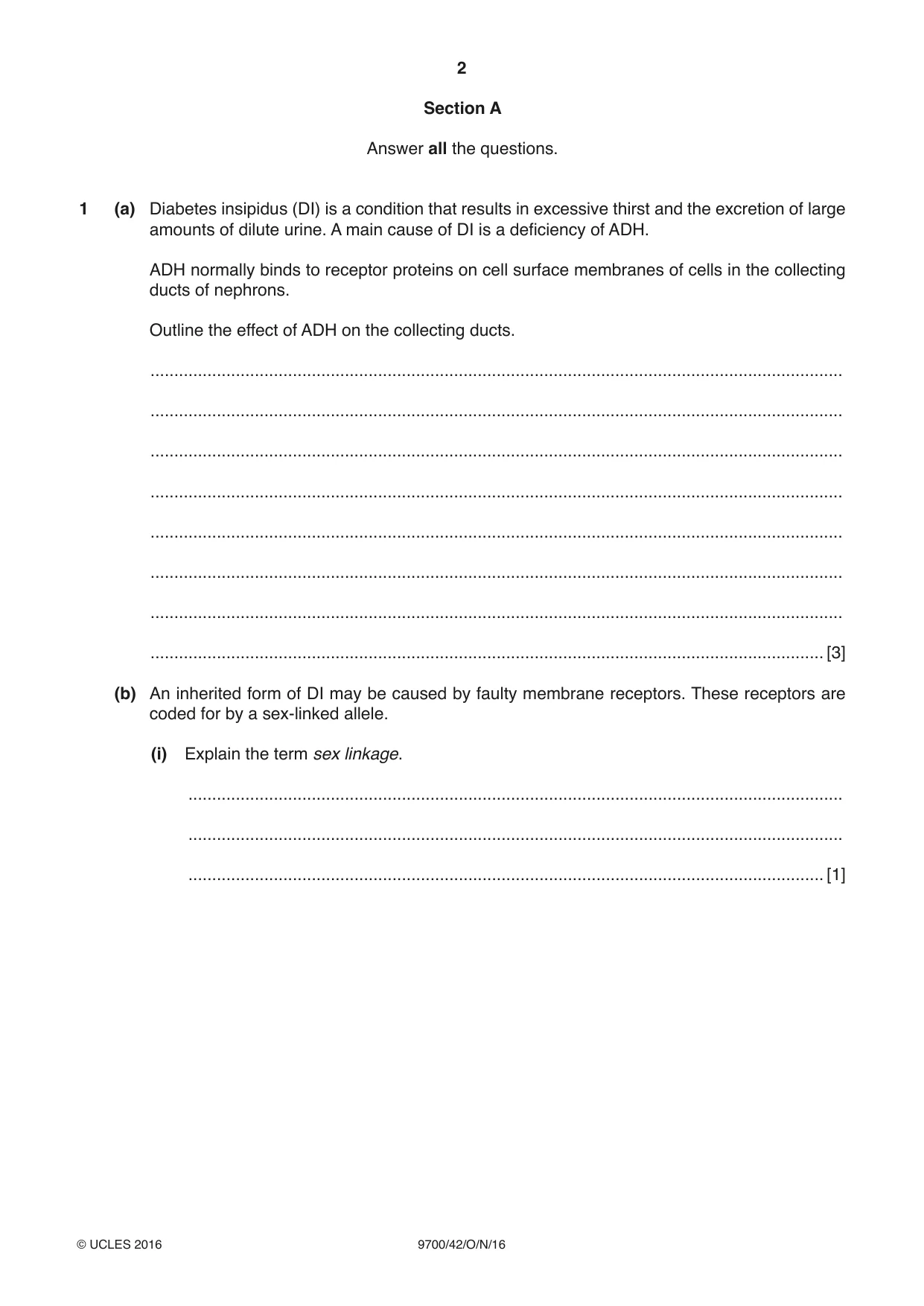
2 9700/42/O/N/16 © UCLES 2016 Section A Answer all the questions. 1 (a) Diabetes insipidus (DI) is a condition that results in excessive thirst and the excretion of large amounts of dilute urine. A main cause of DI is a deficiency of ADH. ADH normally binds to receptor proteins on cell surface membranes of cells in the collecting ducts of nephrons. Outline the effect of ADH on the collecting ducts. … … … … … … … … [3] (b) An inherited form of DI may be caused by faulty membrane receptors. These receptors are coded for by a sex-linked allele. (i) Explain the term sex linkage. … … … [1]
Question paper, page 3
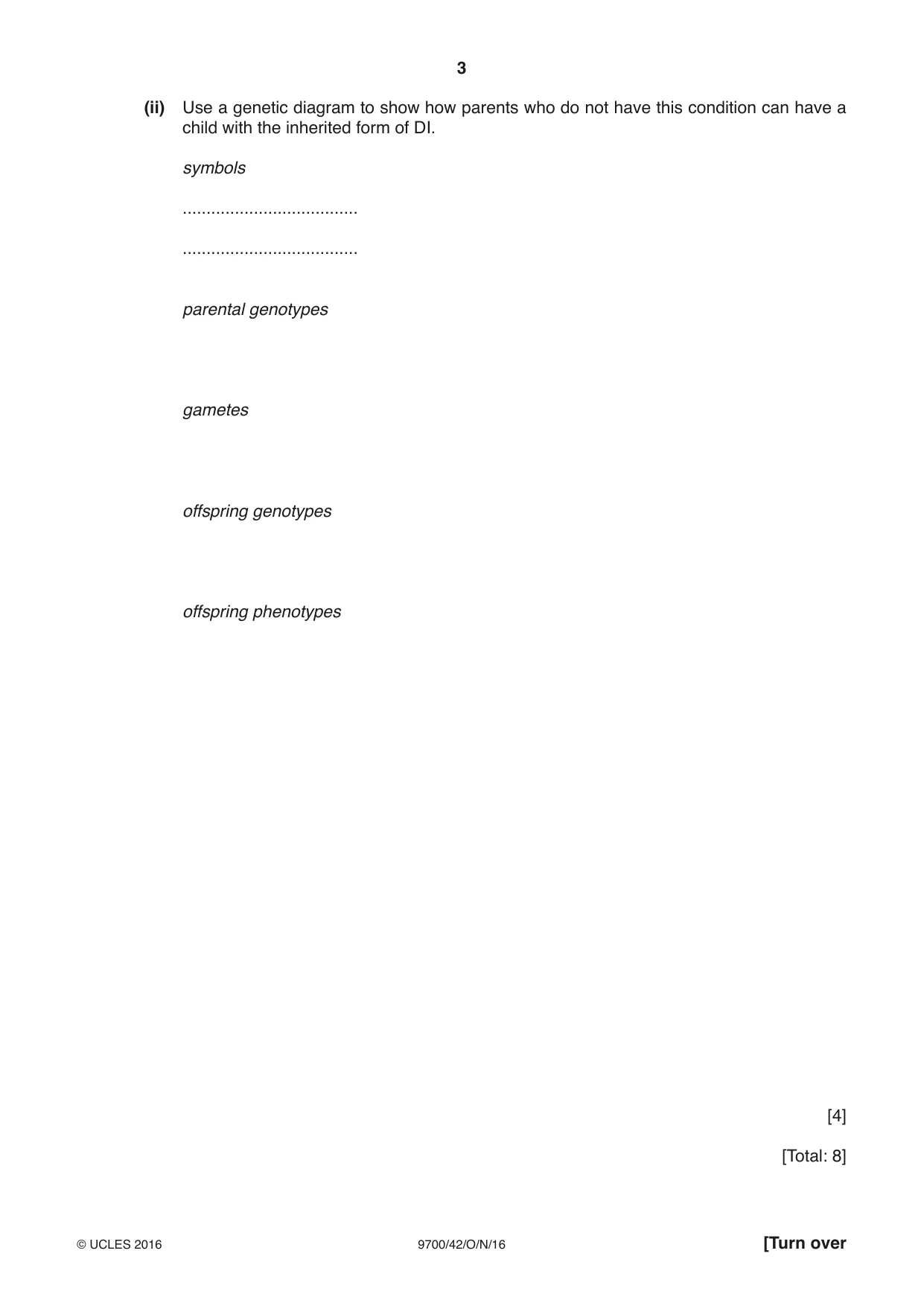
3 9700/42/O/N/16 © UCLES 2016 [Turn over (ii) Use a genetic diagram to show how parents who do not have this condition can have a child with the inherited form of DI. symbols … … parental genotypes gametes offspring genotypes offspring phenotypes [4] [Total: 8]
Question paper, page 4
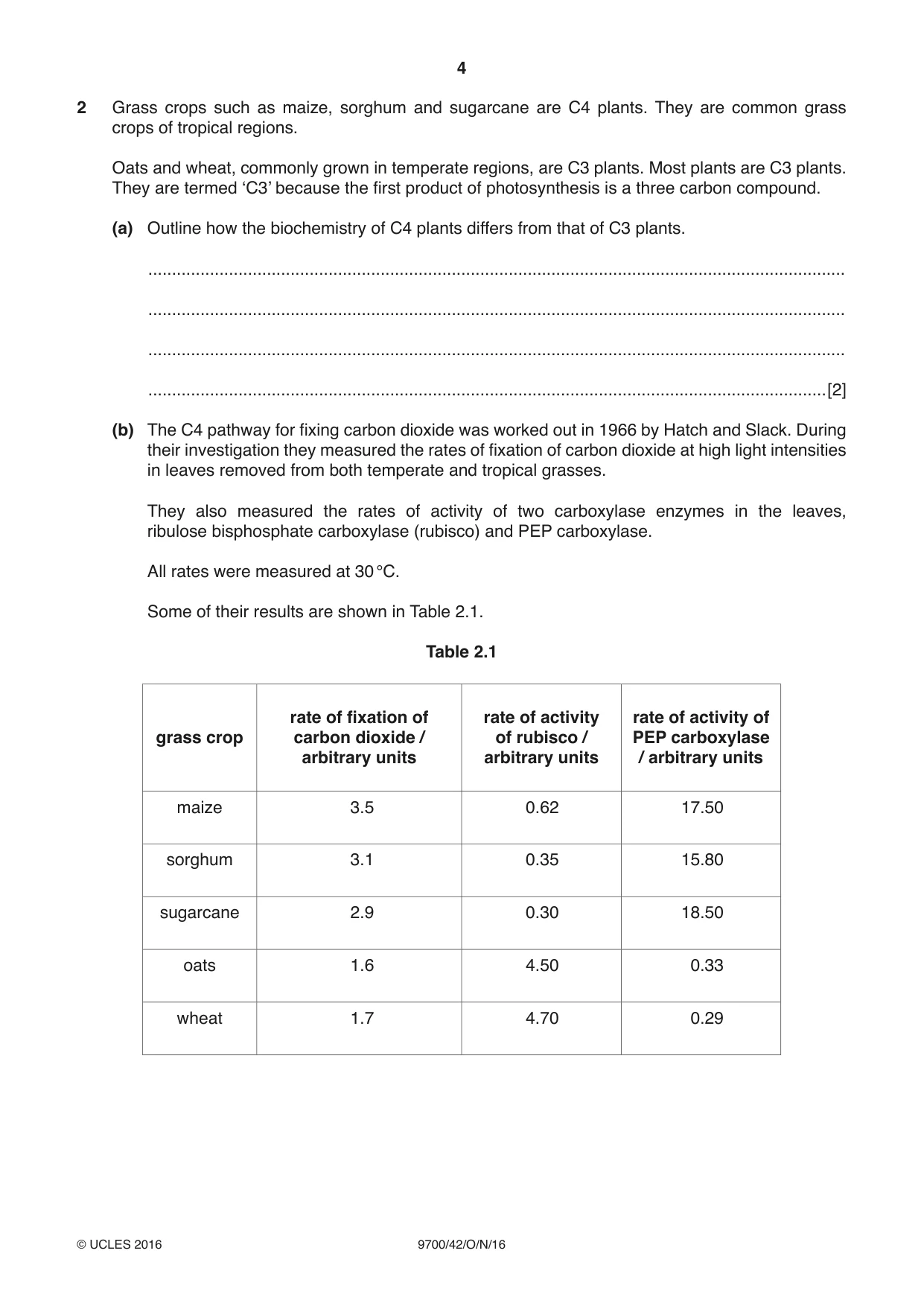
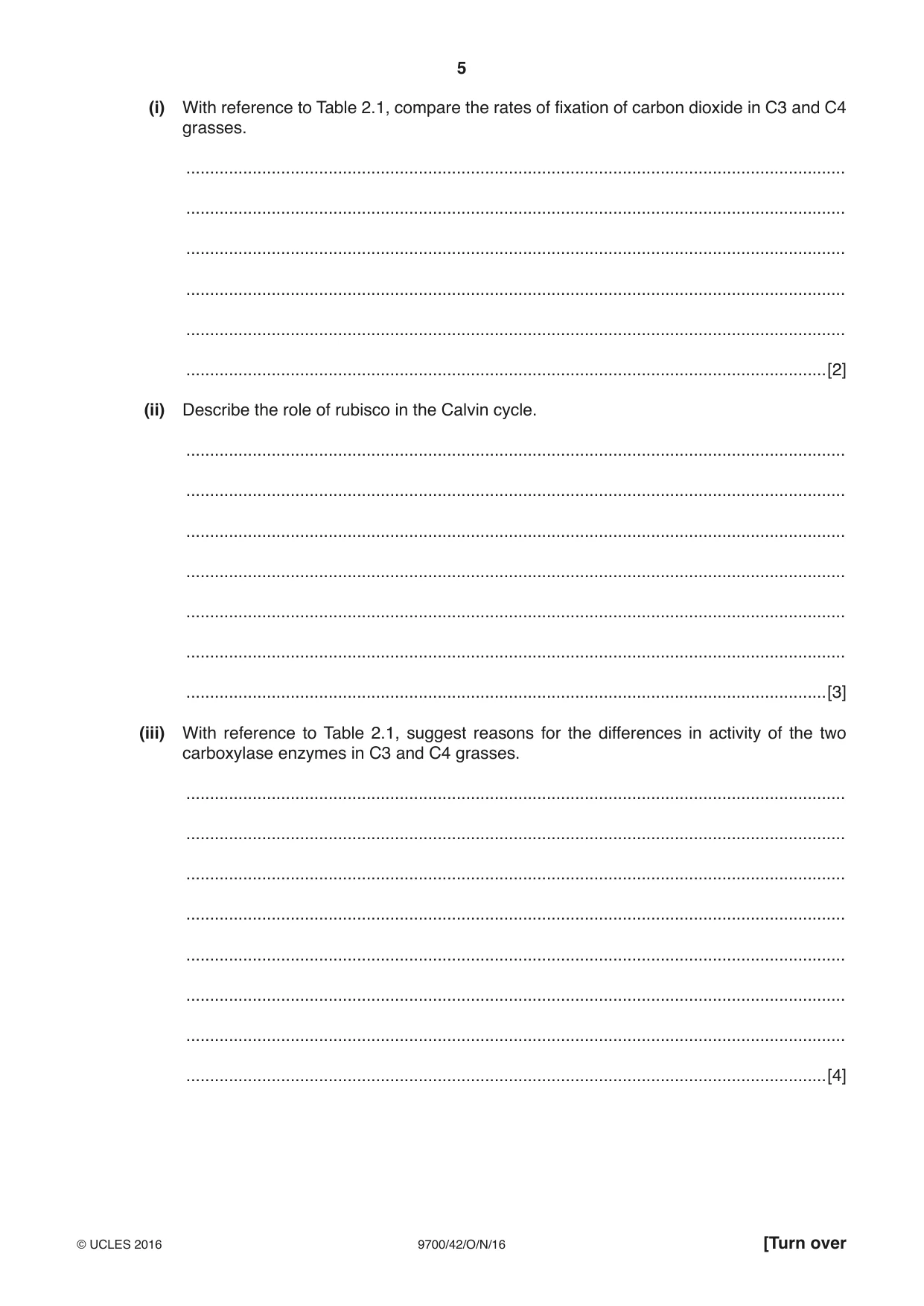
4 9700/42/O/N/16 © UCLES 2016 2 Grass crops such as maize, sorghum and sugarcane are C4 plants. They are common grass crops of tropical regions. Oats and wheat, commonly grown in temperate regions, are C3 plants. Most plants are C3 plants. They are termed ‘C3’ because the first product of photosynthesis is a three carbon compound. (a) Outline how the biochemistry of C4 plants differs from that of C3 plants. … … … …[2] (b) The C4 pathway for fixing carbon dioxide was worked out in 1966 by Hatch and Slack. During their investigation they measured the rates of fixation of carbon dioxide at high light intensities in leaves removed from both temperate and tropical grasses. They also measured the rates of activity of two carboxylase enzymes in the leaves, ribulose bisphosphate carboxylase (rubisco) and PEP carboxylase. All rates were measured at 30 °C. Some of their results are shown in Table 2.1. Table 2.1 grass crop rate of fixation of carbon dioxide / arbitrary units rate of activity of rubisco / arbitrary units rate of activity of PEP carboxylase / arbitrary units maize 3.5 0.62 17.50 sorghum 3.1 0.35 15.80 sugarcane 2.9 0.30 18.50 oats 1.6 4.50 0.33 wheat 1.7 4.70 0.29
Question paper, page 5
5 9700/42/O/N/16 © UCLES 2016 [Turn over (i) With reference to Table 2.1, compare the rates of fixation of carbon dioxide in C3 and C4 grasses. … … … … … …[2] (ii) Describe the role of rubisco in the Calvin cycle. … … … … … … …[3] (iii) With reference to Table 2.1, suggest reasons for the differences in activity of the two carboxylase enzymes in C3 and C4 grasses. … … … … … … … …[4]
Question paper, page 6
6 9700/42/O/N/16 © UCLES 2016 (c) It has been calculated that, to produce one molecule of glucose, the C3 pathway uses 18 molecules of ATP and the C4 pathway uses 30 molecules of ATP. Suggest why C4 plants can afford this high cost of ATP. … … … … …[2] [Total: 13]
Question paper, page 7
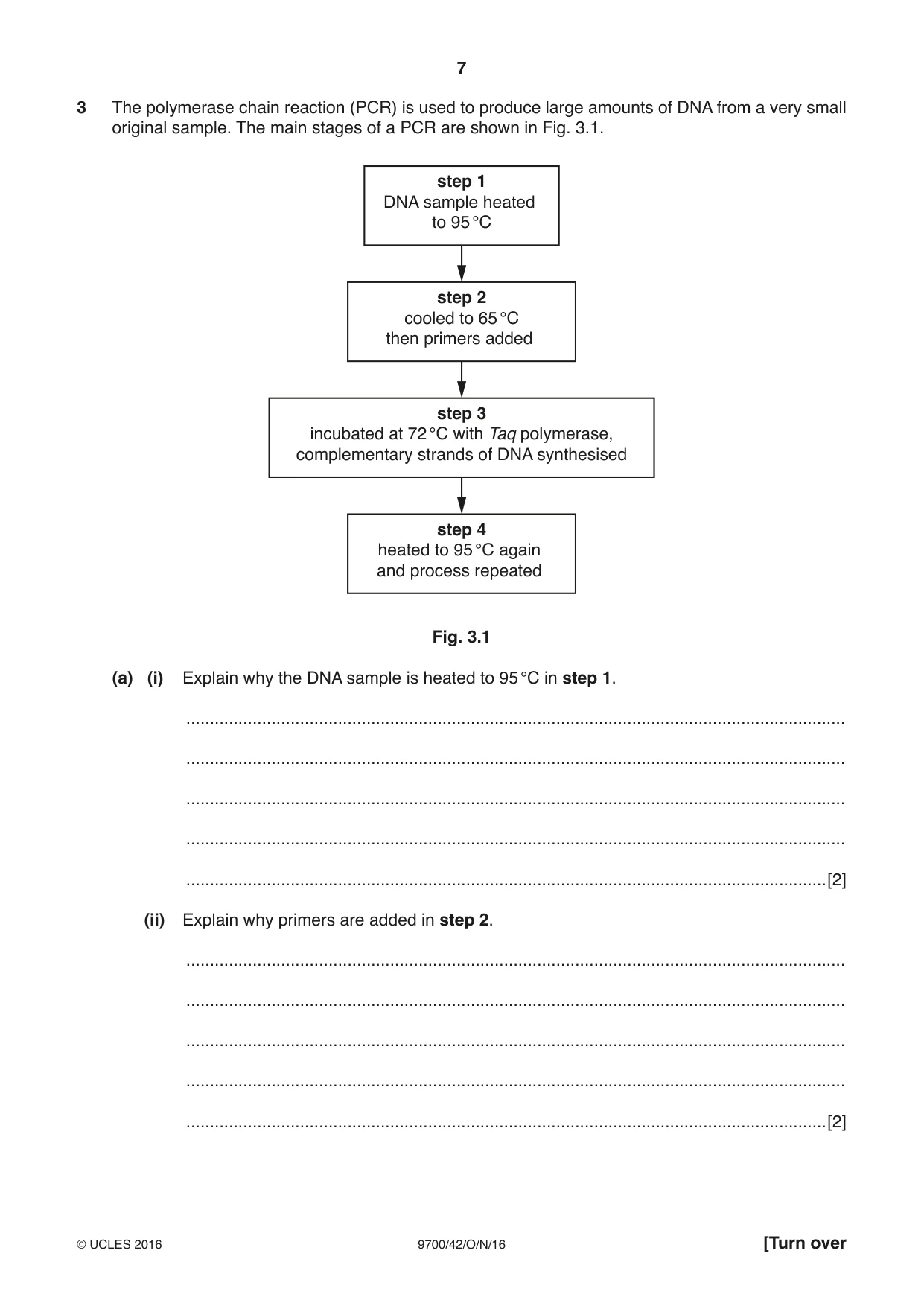
7 9700/42/O/N/16 © UCLES 2016 [Turn over 3 The polymerase chain reaction (PCR) is used to produce large amounts of DNA from a very small original sample. The main stages of a PCR are shown in Fig. 3.1. step 1 DNA sample heated to 95 °C step 2 cooled to 65 °C then primers added step 3 incubated at 72 °C with Taq polymerase, complementary strands of DNA synthesised step 4 heated to 95 °C again and process repeated Fig. 3.1 (a) (i) Explain why the DNA sample is heated to 95 °C in step 1. … … … … …[2] (ii) Explain why primers are added in step 2. … … … … …[2]
Question paper, page 8
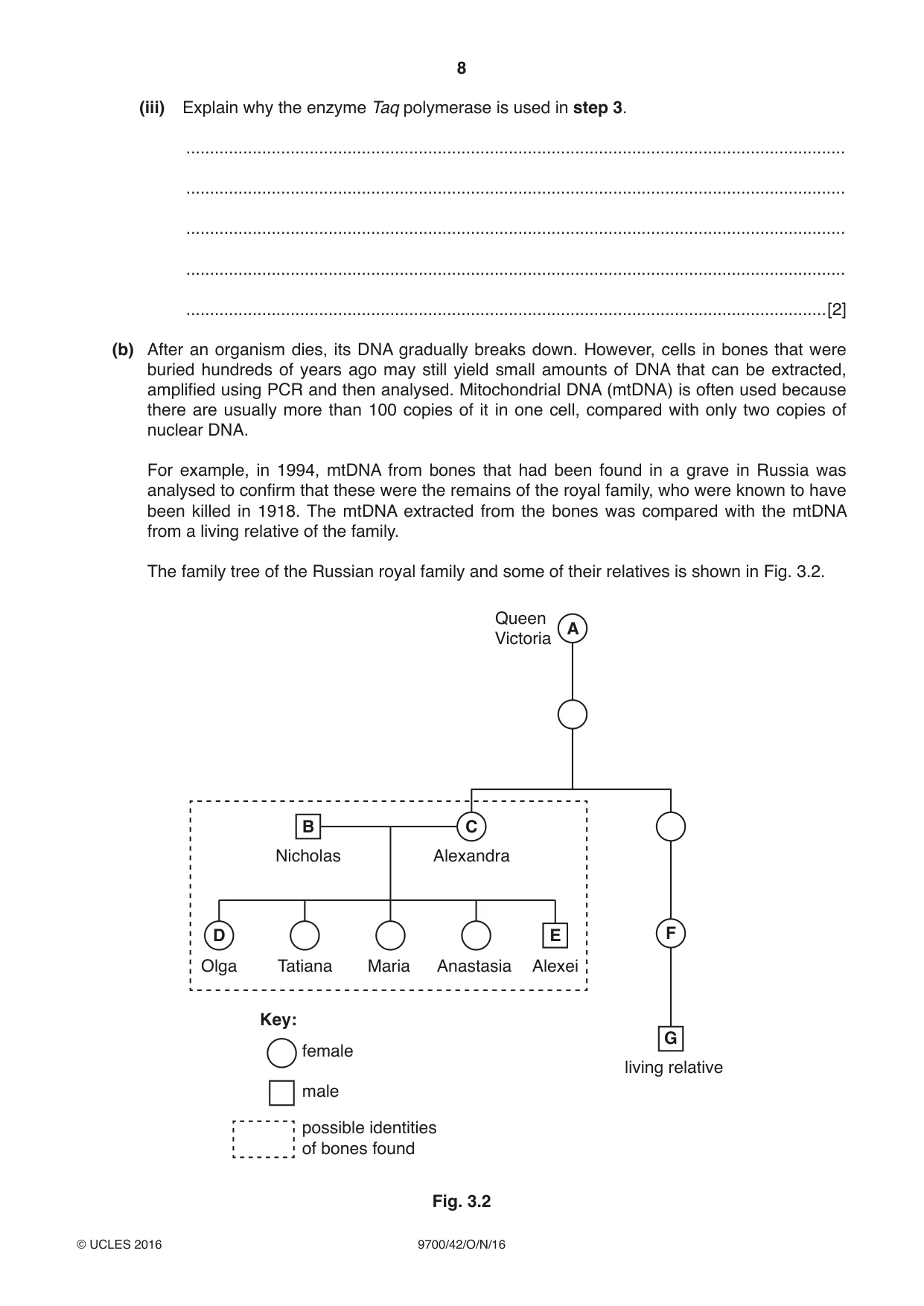
8 9700/42/O/N/16 © UCLES 2016 (iii) Explain why the enzyme Taq polymerase is used in step 3. … … … … …[2] (b) After an organism dies, its DNA gradually breaks down. However, cells in bones that were buried hundreds of years ago may still yield small amounts of DNA that can be extracted, amplified using PCR and then analysed. Mitochondrial DNA (mtDNA) is often used because there are usually more than 100 copies of it in one cell, compared with only two copies of nuclear DNA. For example, in 1994, mtDNA from bones that had been found in a grave in Russia was analysed to confirm that these were the remains of the royal family, who were known to have been killed in 1918. The mtDNA extracted from the bones was compared with the mtDNA from a living relative of the family. The family tree of the Russian royal family and some of their relatives is shown in Fig. 3.2. A B C F G D E Olga Tatiana female Maria Anastasia Alexei Queen Victoria Key: Nicholas Alexandra male possible identities of bones found living relative Fig. 3.2
Question paper, page 9
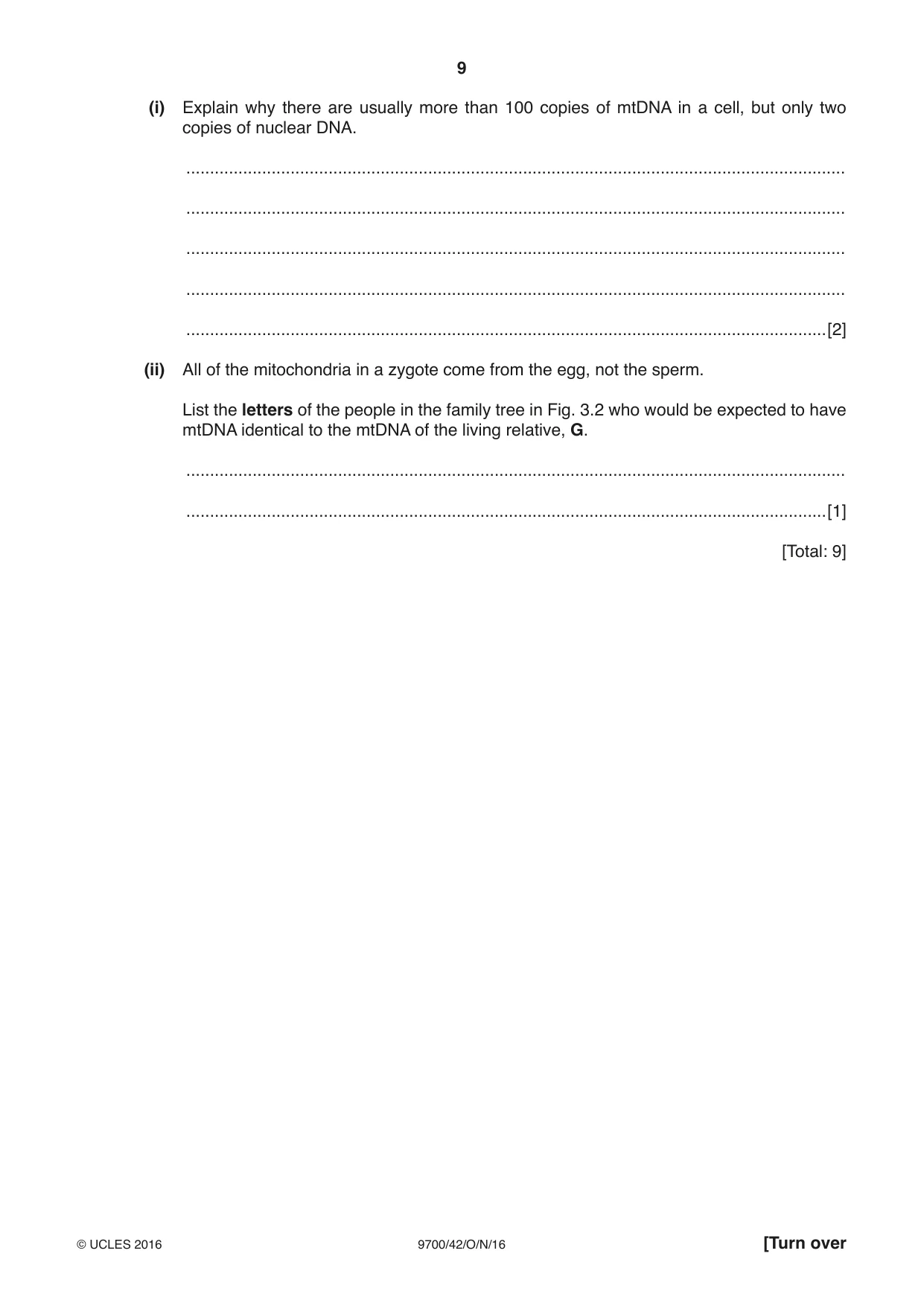
9 9700/42/O/N/16 © UCLES 2016 [Turn over (i) Explain why there are usually more than 100 copies of mtDNA in a cell, but only two copies of nuclear DNA. … … … … …[2] (ii) All of the mitochondria in a zygote come from the egg, not the sperm. List the letters of the people in the family tree in Fig. 3.2 who would be expected to have mtDNA identical to the mtDNA of the living relative, G. … …[1] [Total: 9]
Question paper, page 10
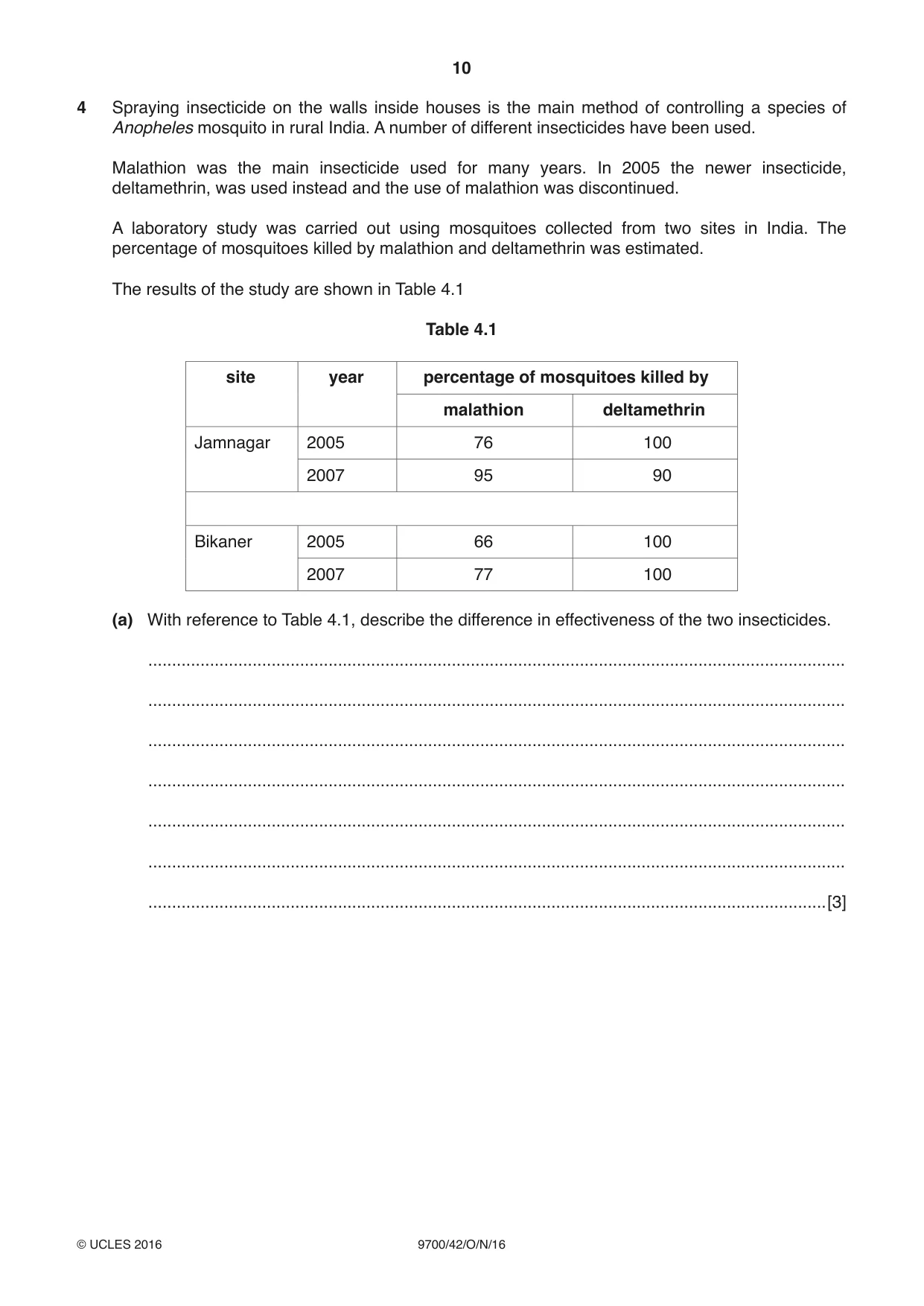
10 9700/42/O/N/16 © UCLES 2016 4 Spraying insecticide on the walls inside houses is the main method of controlling a species of Anopheles mosquito in rural India. A number of different insecticides have been used. Malathion was the main insecticide used for many years. In 2005 the newer insecticide, deltamethrin, was used instead and the use of malathion was discontinued. A laboratory study was carried out using mosquitoes collected from two sites in India. The percentage of mosquitoes killed by malathion and deltamethrin was estimated. The results of the study are shown in Table 4.1 Table 4.1 site year percentage of mosquitoes killed by malathion deltamethrin Jamnagar 2005 76 100 2007 95 90 Bikaner 2005 66 100 2007 77 100 (a) With reference to Table 4.1, describe the difference in effectiveness of the two insecticides. … … … … … … …[3]
Question paper, page 11
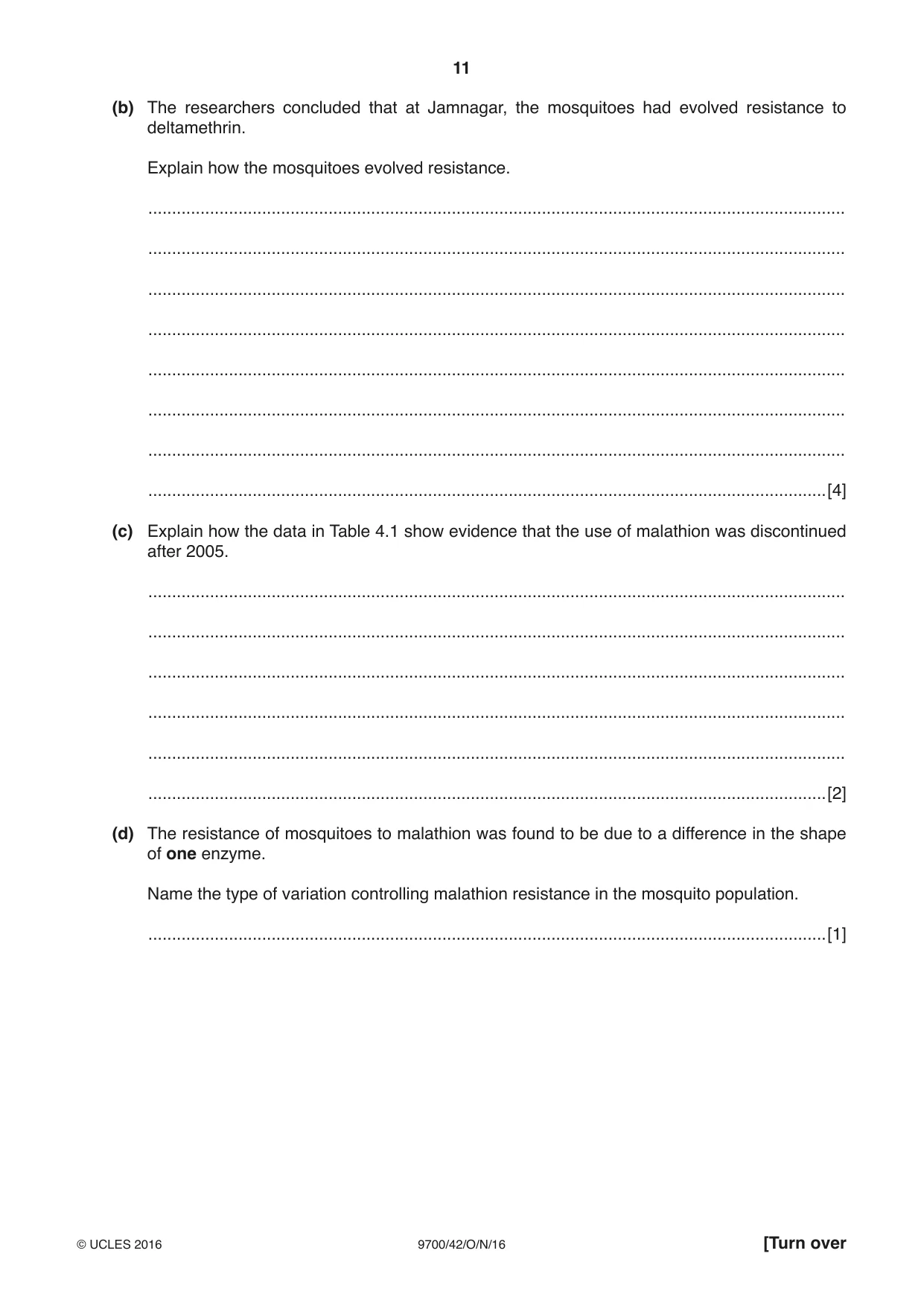
11 9700/42/O/N/16 © UCLES 2016 [Turn over (b) The researchers concluded that at Jamnagar, the mosquitoes had evolved resistance to deltamethrin. Explain how the mosquitoes evolved resistance. … … … … … … … …[4] (c) Explain how the data in Table 4.1 show evidence that the use of malathion was discontinued after 2005. … … … … … …[2] (d) The resistance of mosquitoes to malathion was found to be due to a difference in the shape of one enzyme. Name the type of variation controlling malathion resistance in the mosquito population. …[1]
Question paper, page 12
12 9700/42/O/N/16 © UCLES 2016 (e) Some students suggested that resistance to malathion could be due to a gene with two alleles. They proposed that the allele for resistance to malathion would be dominant to the allele for non-resistance. Using this assumption, the data in Table 4.1 can be used to calculate the frequency of resistant mosquitoes and the frequency of the allele for resistance in a mosquito population. Use the Hardy-Weinberg principle to calculate the frequency, p, of the allele for resistance in Jamnagar in 2005. [3] [Total: 13]
Question paper, page 13
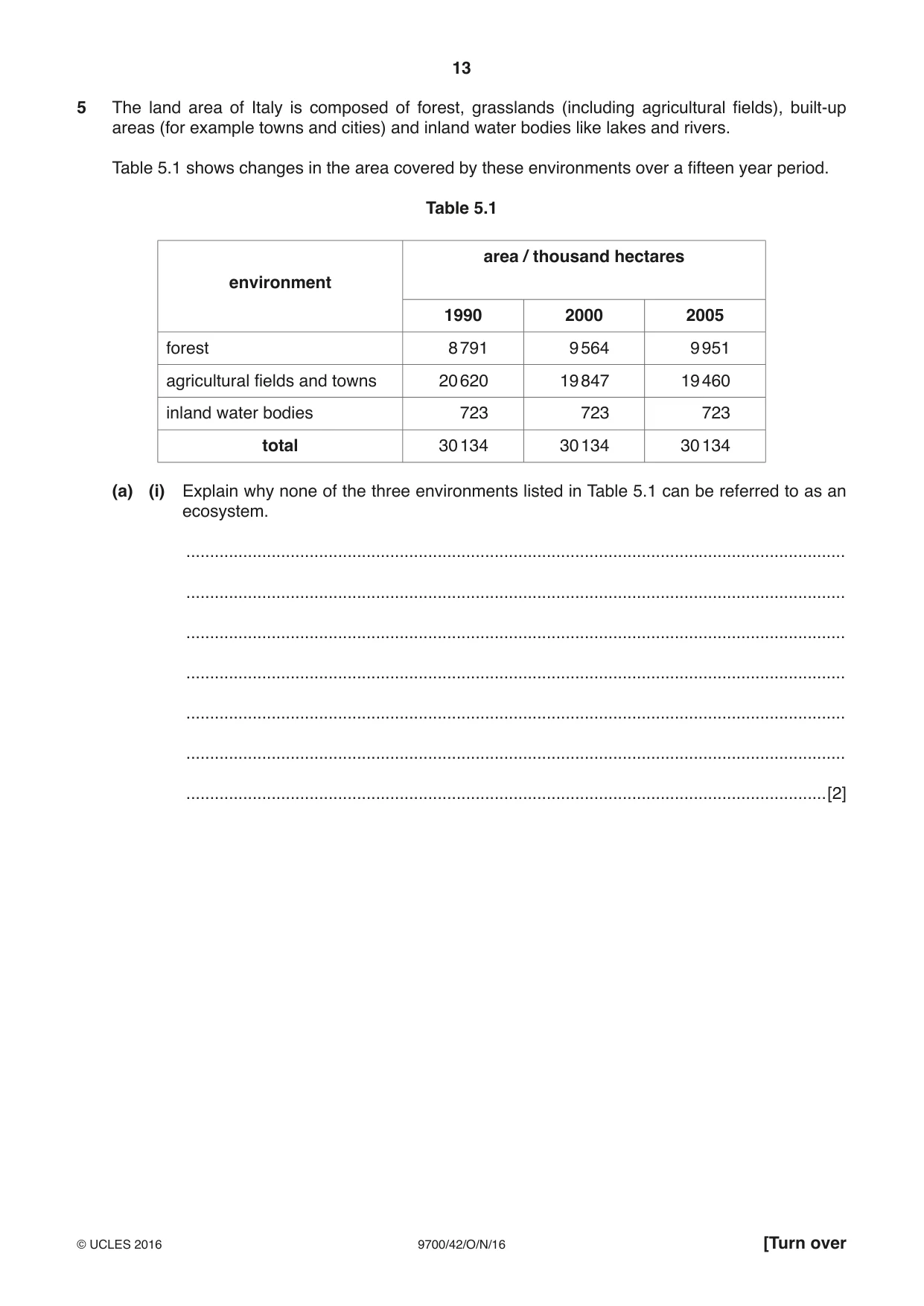
13 9700/42/O/N/16 © UCLES 2016 [Turn over 5 The land area of Italy is composed of forest, grasslands (including agricultural fields), built-up areas (for example towns and cities) and inland water bodies like lakes and rivers. Table 5.1 shows changes in the area covered by these environments over a fifteen year period. Table 5.1 environment area / thousand hectares 1990 2000 2005 forest 8 791 9 564 9 951 agricultural fields and towns 20 620 19 847 19 460 inland water bodies 723 723 723 total 30 134 30 134 30 134 (a) (i) Explain why none of the three environments listed in Table 5.1 can be referred to as an ecosystem. … … … … … … …[2]
Question paper, page 14
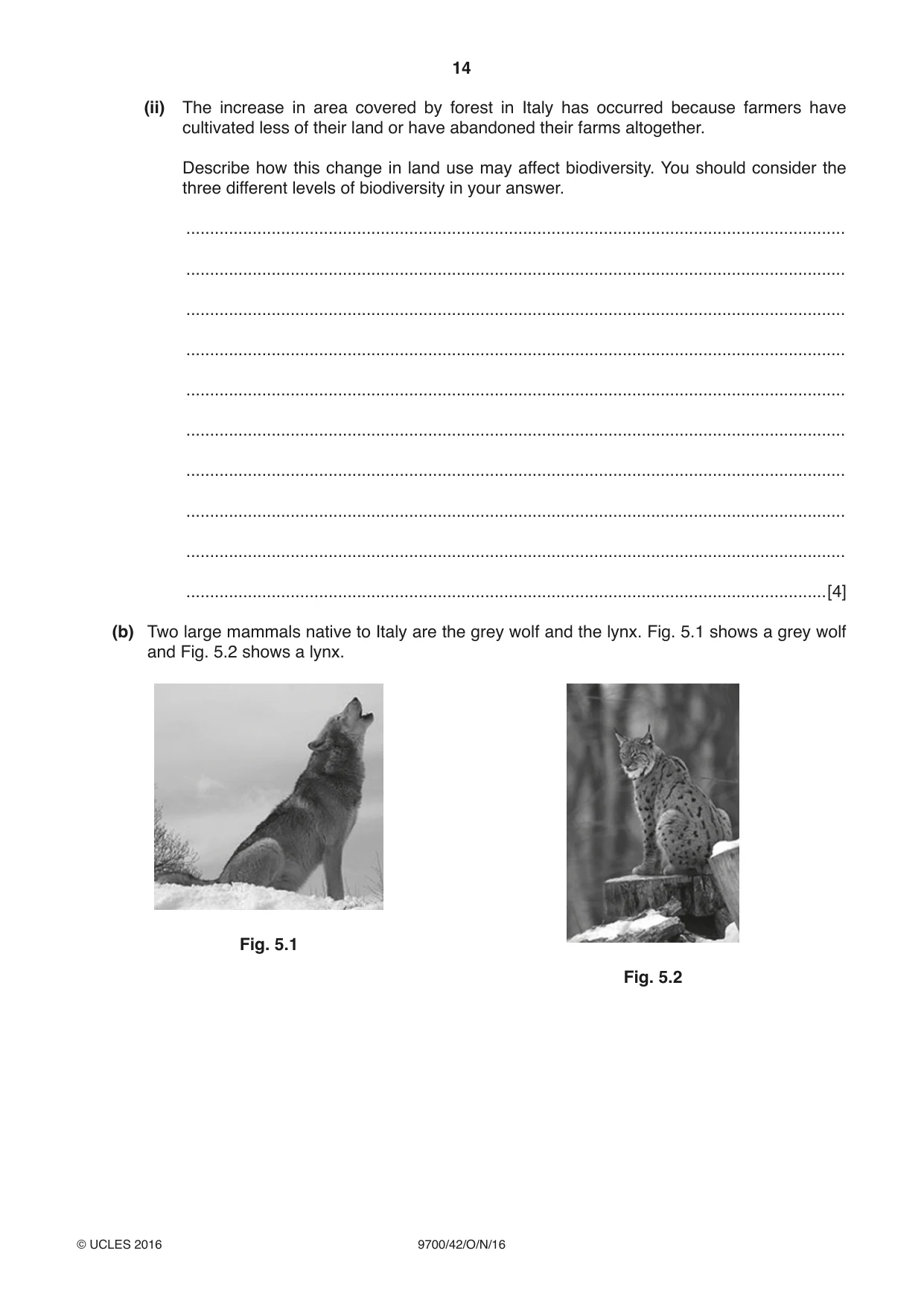
14 9700/42/O/N/16 © UCLES 2016 (ii) The increase in area covered by forest in Italy has occurred because farmers have cultivated less of their land or have abandoned their farms altogether. Describe how this change in land use may affect biodiversity. You should consider the three different levels of biodiversity in your answer. … … … … … … … … … …[4] (b) Two large mammals native to Italy are the grey wolf and the lynx. Fig. 5.1 shows a grey wolf and Fig. 5.2 shows a lynx. Fig. 5.1 Fig. 5.2
Question paper, page 15
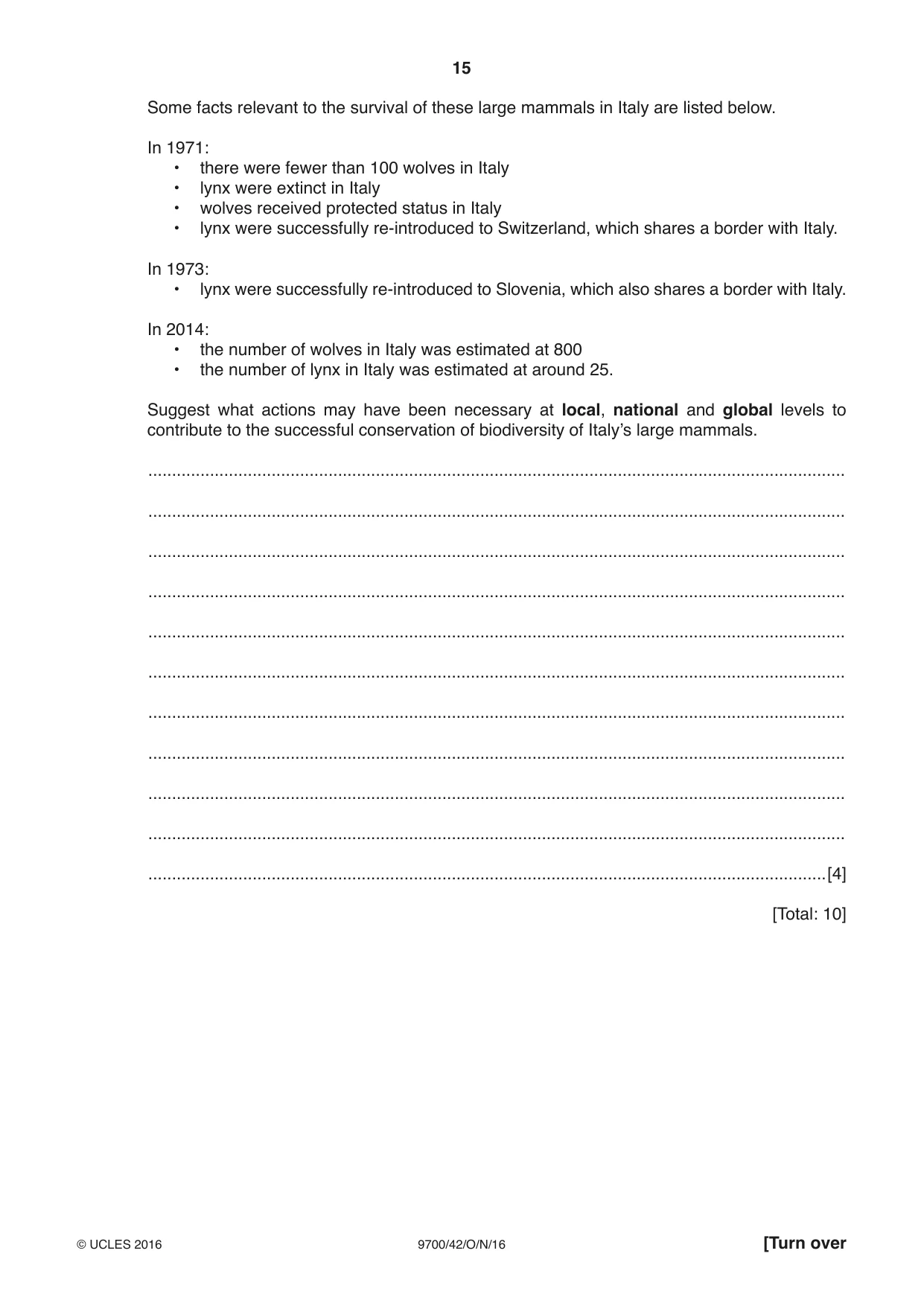
15 9700/42/O/N/16 © UCLES 2016 [Turn over Some facts relevant to the survival of these large mammals in Italy are listed below. In 1971: • there were fewer than 100 wolves in Italy • lynx were extinct in Italy • wolves received protected status in Italy • lynx were successfully re-introduced to Switzerland, which shares a border with Italy. In 1973: • lynx were successfully re-introduced to Slovenia, which also shares a border with Italy. In 2014: • the number of wolves in Italy was estimated at 800 • the number of lynx in Italy was estimated at around 25. Suggest what actions may have been necessary at local, national and global levels to contribute to the successful conservation of biodiversity of Italy’s large mammals. … … … … … … … … … … …[4] [Total: 10]
Question paper, page 16
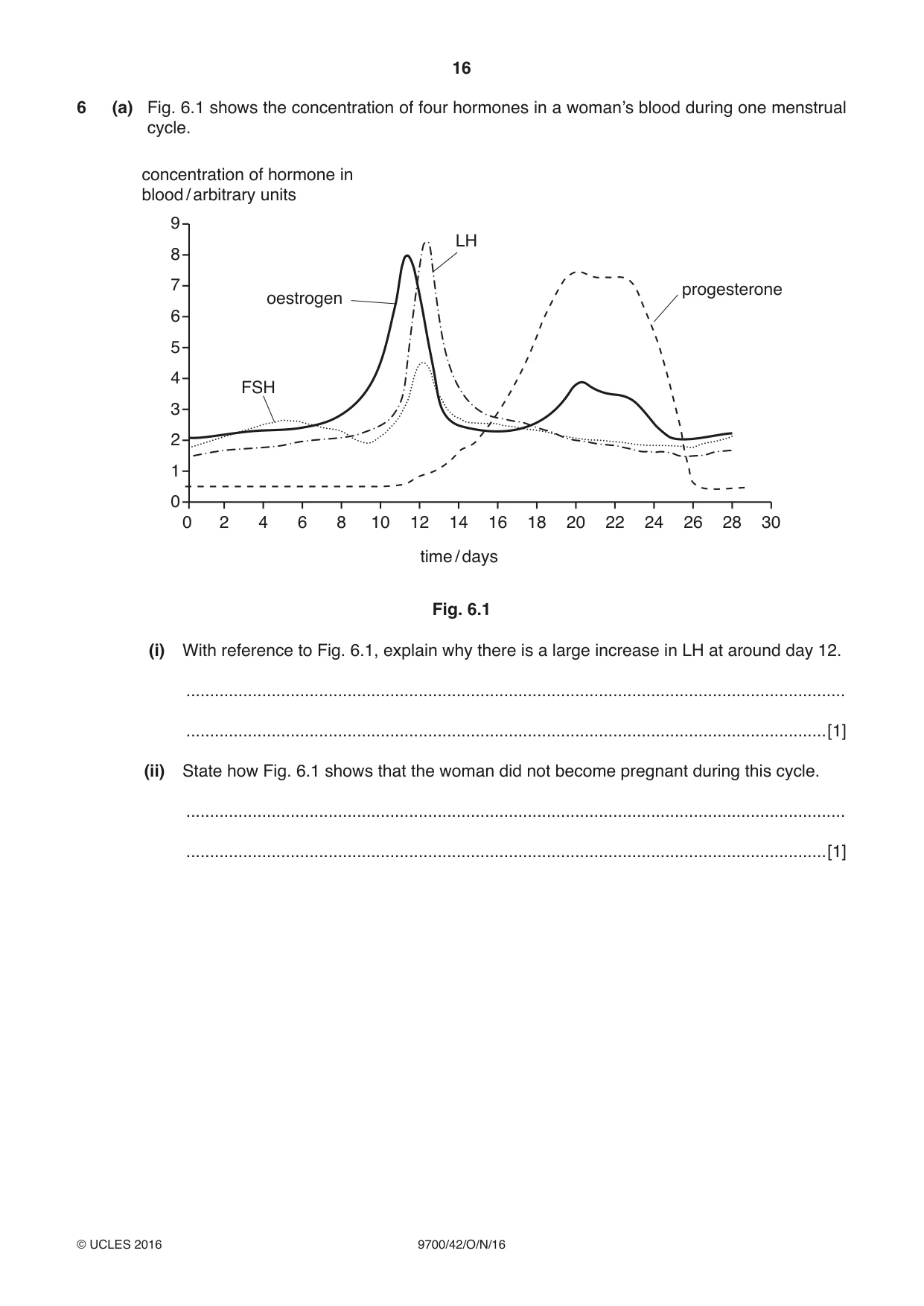
16 9700/42/O/N/16 © UCLES 2016 6 (a) Fig. 6.1 shows the concentration of four hormones in a woman’s blood during one menstrual cycle. 9 8 7 6 5 4 3 2 1 0 0 2 4 6 8 10 12 14 16 18 20 22 24 26 28 30 time / days progesterone oestrogen concentration of hormone in blood / arbitrary units LH FSH Fig. 6.1 (i) With reference to Fig. 6.1, explain why there is a large increase in LH at around day 12. … …[1] (ii) State how Fig. 6.1 shows that the woman did not become pregnant during this cycle. … …[1]
Question paper, page 17
17 9700/42/O/N/16 © UCLES 2016 [Turn over (b) The combined oral contraceptive pill contains oestrogen and progesterone. (i) Explain how this combined contraceptive pill works to prevent pregnancy. … … … … … … … … …[4] (ii) Suggest why some women take the combined contraceptive pill for just the first 21 days of their cycles. … …[1] (iii) Some women have a contraceptive device inserted under the skin. This releases hormones into the blood and can last for up to three years. Suggest one advantage of using such a device rather than taking contraceptive pills. … …[1] [Total: 8]
Question paper, page 18
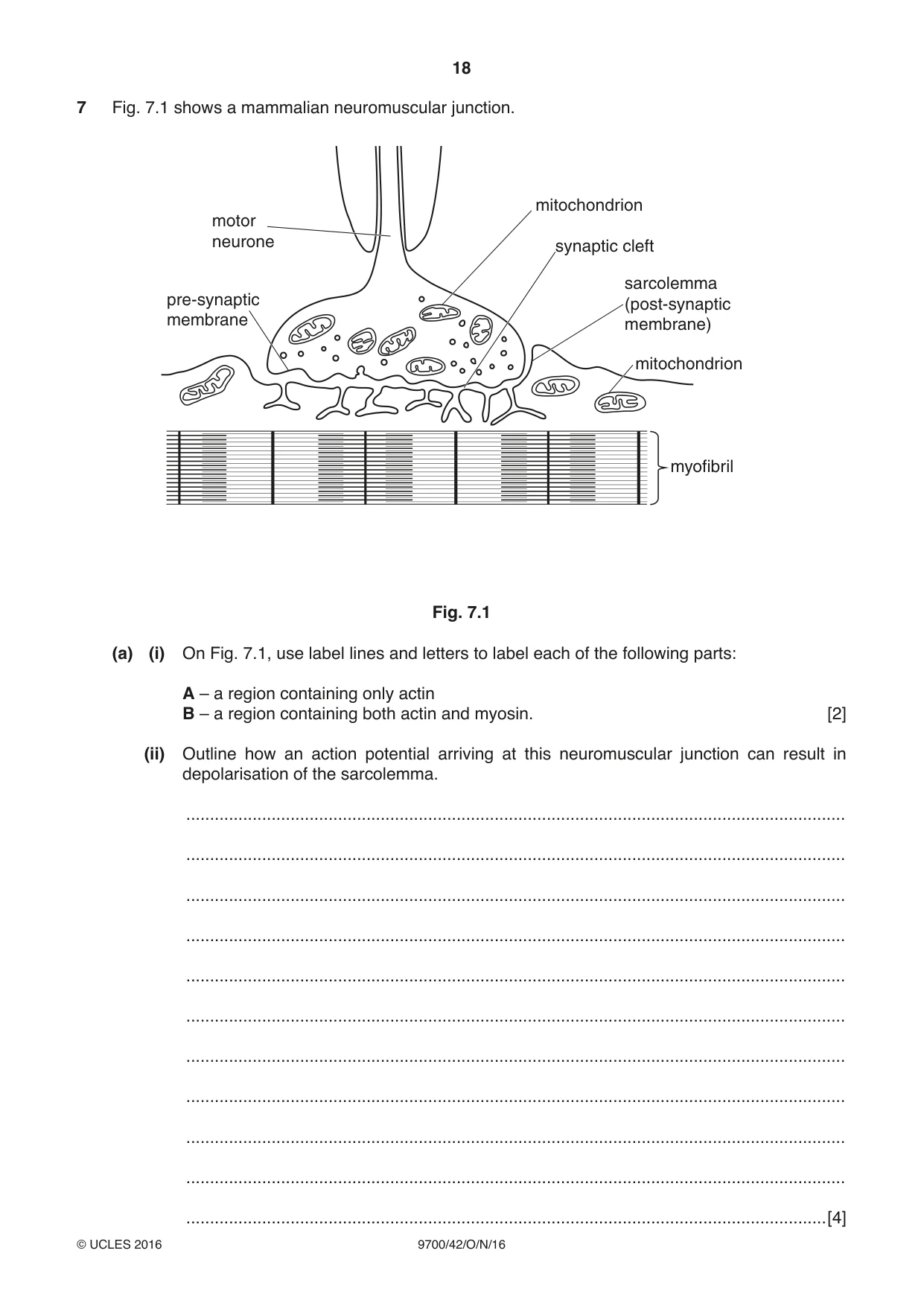
18 9700/42/O/N/16 © UCLES 2016 7 Fig. 7.1 shows a mammalian neuromuscular junction. motor neurone mitochondrion pre-synaptic membrane synaptic cleft sarcolemma (post-synaptic membrane) mitochondrion myofibril Fig. 7.1 (a) (i) On Fig. 7.1, use label lines and letters to label each of the following parts: A – a region containing only actin B – a region containing both actin and myosin. [2] (ii) Outline how an action potential arriving at this neuromuscular junction can result in depolarisation of the sarcolemma. … … … … … … … … … … …[4]
Question paper, page 19
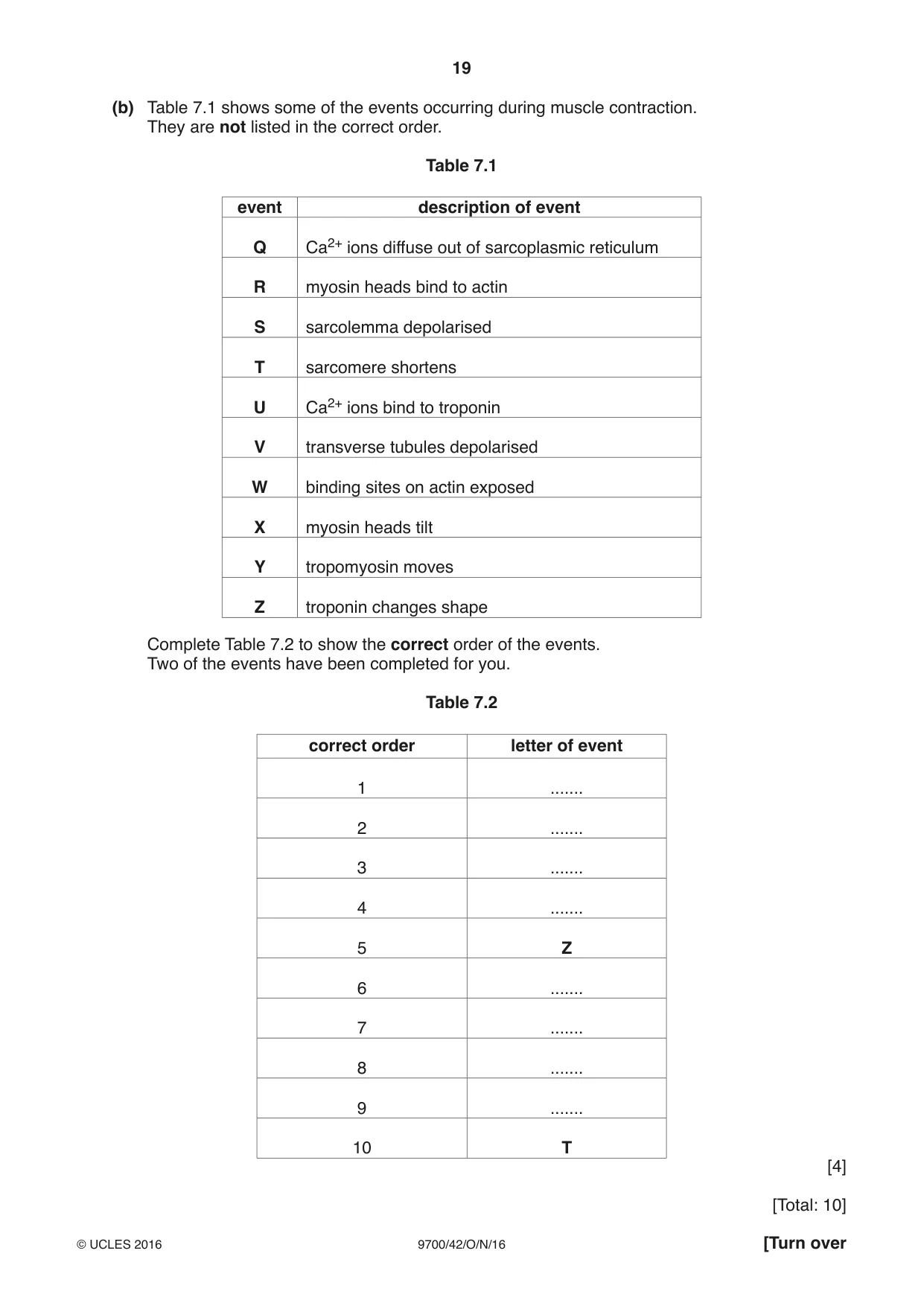
19 9700/42/O/N/16 © UCLES 2016 [Turn over (b) Table 7.1 shows some of the events occurring during muscle contraction. They are not listed in the correct order. Table 7.1 event description of event Q Ca2+ ions diffuse out of sarcoplasmic reticulum R myosin heads bind to actin S sarcolemma depolarised T sarcomere shortens U Ca2+ ions bind to troponin V transverse tubules depolarised W binding sites on actin exposed X myosin heads tilt Y tropomyosin moves Z troponin changes shape Complete Table 7.2 to show the correct order of the events. Two of the events have been completed for you. Table 7.2 correct order letter of event 1 … 2 … 3 … 4 … 5 Z 6 … 7 … 8 … 9 … 10 T [4] [Total: 10]
Question paper, page 20
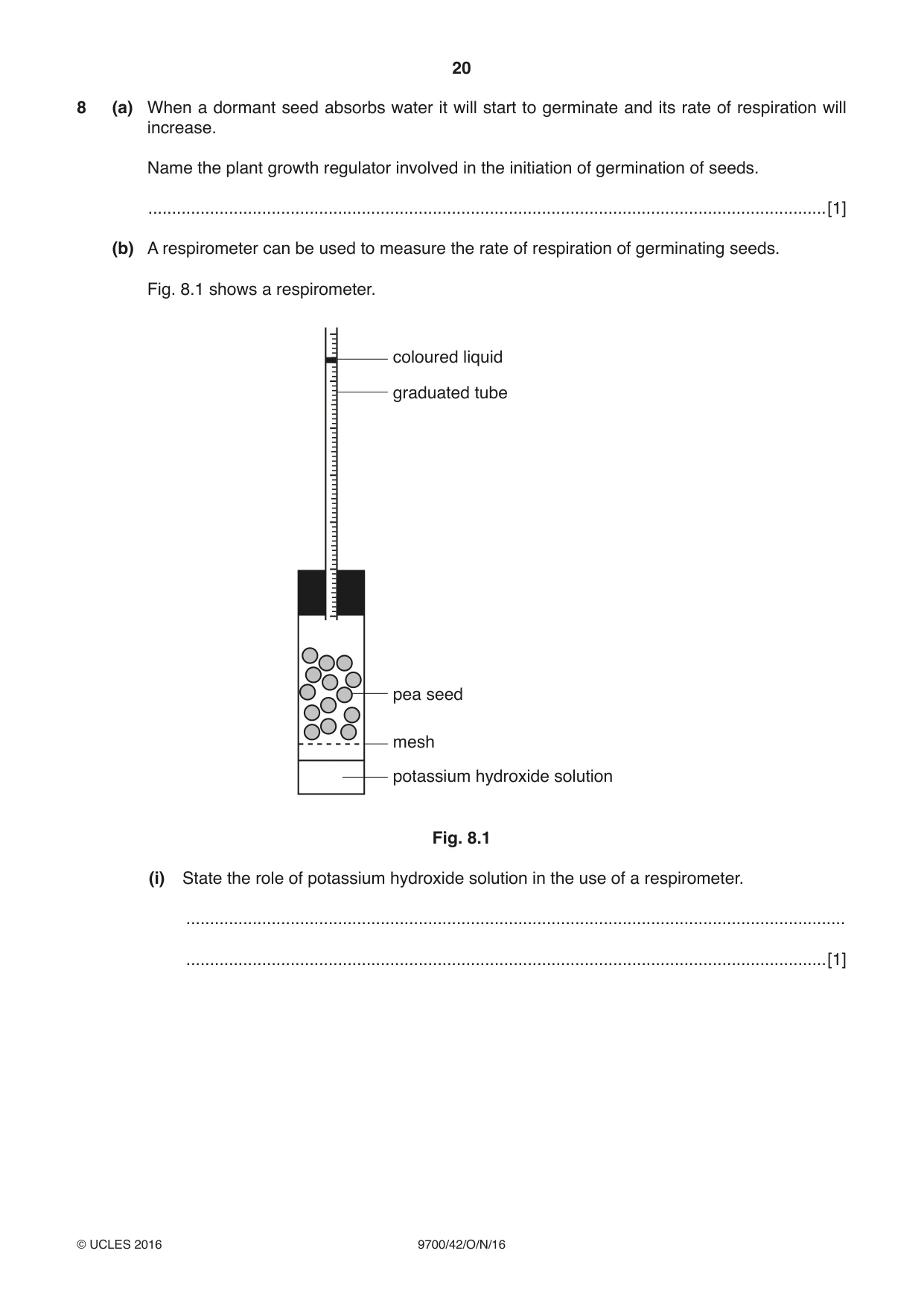
20 9700/42/O/N/16 © UCLES 2016 8 (a) When a dormant seed absorbs water it will start to germinate and its rate of respiration will increase. Name the plant growth regulator involved in the initiation of germination of seeds. …[1] (b) A respirometer can be used to measure the rate of respiration of germinating seeds. Fig. 8.1 shows a respirometer. coloured liquid graduated tube mesh potassium hydroxide solution pea seed Fig. 8.1 (i) State the role of potassium hydroxide solution in the use of a respirometer. … …[1]
Question paper, page 21
21 9700/42/O/N/16 © UCLES 2016 [Turn over (ii) As respiration takes place, oxygen is used by the seeds and the coloured liquid moves down the tube. Describe the role of oxygen in aerobic respiration. … … … … … … …[3]
Question paper, page 22
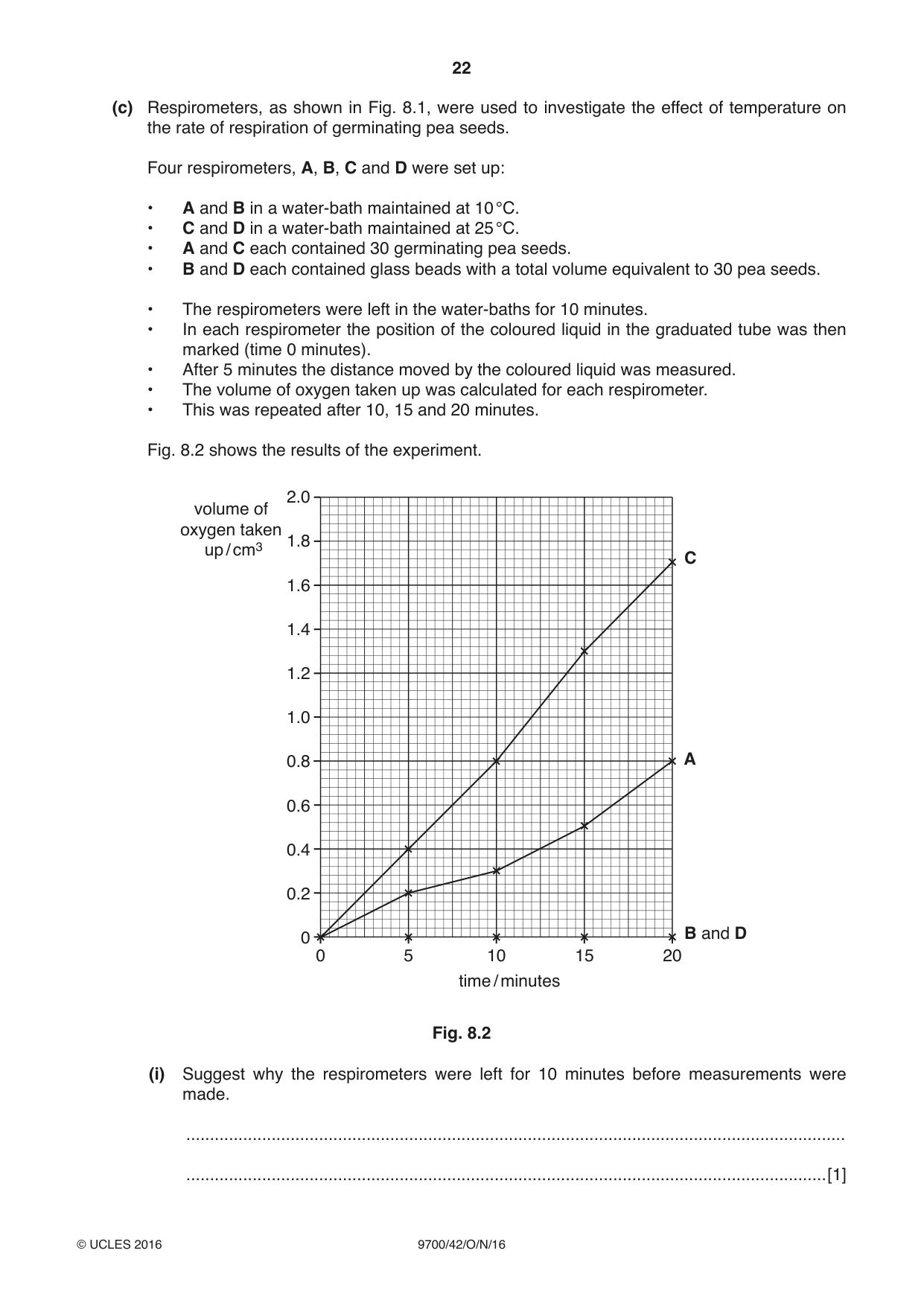
22 9700/42/O/N/16 © UCLES 2016 (c) Respirometers, as shown in Fig. 8.1, were used to investigate the effect of temperature on the rate of respiration of germinating pea seeds. Four respirometers, A, B, C and D were set up: • A and B in a water-bath maintained at 10 °C. • C and D in a water-bath maintained at 25 °C. • A and C each contained 30 germinating pea seeds. • B and D each contained glass beads with a total volume equivalent to 30 pea seeds. • The respirometers were left in the water-baths for 10 minutes. • In each respirometer the position of the coloured liquid in the graduated tube was then marked (time 0 minutes). • After 5 minutes the distance moved by the coloured liquid was measured. • The volume of oxygen taken up was calculated for each respirometer. • This was repeated after 10, 15 and 20 minutes. Fig. 8.2 shows the results of the experiment. 0 5 10 15 20 2.0 1.8 1.6 1.4 1.2 1.0 0.8 0.6 0.4 0.2 0 C A B and D time / minutes volume of oxygen taken up / cm3 Fig. 8.2 (i) Suggest why the respirometers were left for 10 minutes before measurements were made. … …[1]
Question paper, page 23
23 9700/42/O/N/16 © UCLES 2016 [Turn over (ii) Suggest why respirometers B and D were used in this investigation. … … … …[2] (iii) Calculate the rate of oxygen uptake in cm3 per minute for respirometer C between 5 and 20 minutes. Give your answer to two significant figures. Show your working. answer … cm3 min–1 [2] (iv) Explain why there is an increased rate of respiration of germinating pea seeds between 10 °C and 25 °C. … … … … …[2] (v) Suggest why carrying out the experiment with germinating seeds at 50 °C could result in a lower rate of respiration than at 25 °C. … … … …[2] [Total: 14]
Question paper, page 24
24 9700/42/O/N/16 © UCLES 2016 Section B Answer one question. 9 (a) Using examples, outline the importance of homeostasis in a mammal. [7] (b) Describe the main stages of cell signalling in the control of blood glucose concentration by adrenaline. [8] [Total: 15] 10 (a) Explain the role of auxin in cell elongation in plants. [7] (b) Describe the role of abscisic acid in the closure of stomata. [8] [Total: 15] … … … … … … … … … … … … … … … … … … …
Question paper, page 25
25 9700/42/O/N/16 © UCLES 2016 [Turn over … … … … … … … … … … … … … … … … … … … … … … … … … … … …
Question paper, page 26
26 9700/42/O/N/16 © UCLES 2016 … … … … … … … … … … … … … … … … … … … … … … … … … … … …
Question paper, page 27
27 9700/42/O/N/16 © UCLES 2016 [Turn over … … … … … … … … … … … … … … … … … … … … … … … … … … … …
Question paper, page 28
28 9700/42/O/N/16 © UCLES 2016 Permission to reproduce items where third-party owned material protected by copyright is included has been sought and cleared where possible. Every reasonable effort has been made by the publisher (UCLES) to trace copyright holders, but if any items requiring clearance have unwittingly been included, the publisher will be pleased to make amends at the earliest possible opportunity. To avoid the issue of disclosure of answer-related information to candidates, all copyright acknowledgements are reproduced online in the Cambridge International Examinations Copyright Acknowledgements Booklet. This is produced for each series of examinations and is freely available to download at www.cie.org.uk after the live examination series. Cambridge International Examinations is part of the Cambridge Assessment Group. Cambridge Assessment is the brand name of University of Cambridge Local Examinations Syndicate (UCLES), which is itself a department of the University of Cambridge. … … … … … … … … … … … … … … … … … … … … … … … …
Mark scheme, page 1
® IGCSE is the registered trademark of Cambridge International Examinations. This document consists of 18 printed pages. © UCLES 2016 [Turn over Cambridge International Examinations Cambridge International Advanced Subsidiary and Advanced Level BIOLOGY 9700/42 Paper 1 A Level Structured Questions October/November 2016 MARK SCHEME Maximum Mark: 100 Published This mark scheme is published as an aid to teachers and candidates, to indicate the requirements of the examination. It shows the basis on which Examiners were instructed to award marks. It does not indicate the details of the discussions that took place at an Examiners’ meeting before marking began, which would have considered the acceptability of alternative answers. Mark schemes should be read in conjunction with the question paper and the Principal Examiner Report for Teachers. Cambridge will not enter into discussions about these mark schemes. Cambridge is publishing the mark schemes for the October/November 2016 series for most Cambridge IGCSE®, Cambridge International A and AS Level components and some Cambridge O Level components.
Mark scheme, page 2
Page 2 Mark Scheme Syllabus Paper Cambridge International AS/A Level – October/November 2016 9700 42 © UCLES 2016 Mark scheme abbreviations: ; separates marking points / alternative answers for the same point R reject A accept (for answers correctly cued by the question, or by extra guidance) AW alternative wording (where responses vary more than usual) underline actual word given must be used by candidate (grammatical variants accepted) max indicates the maximum number of marks that can be given ora or reverse argument mp marking point (with relevant number) ecf error carried forward I ignore
Mark scheme, page 3
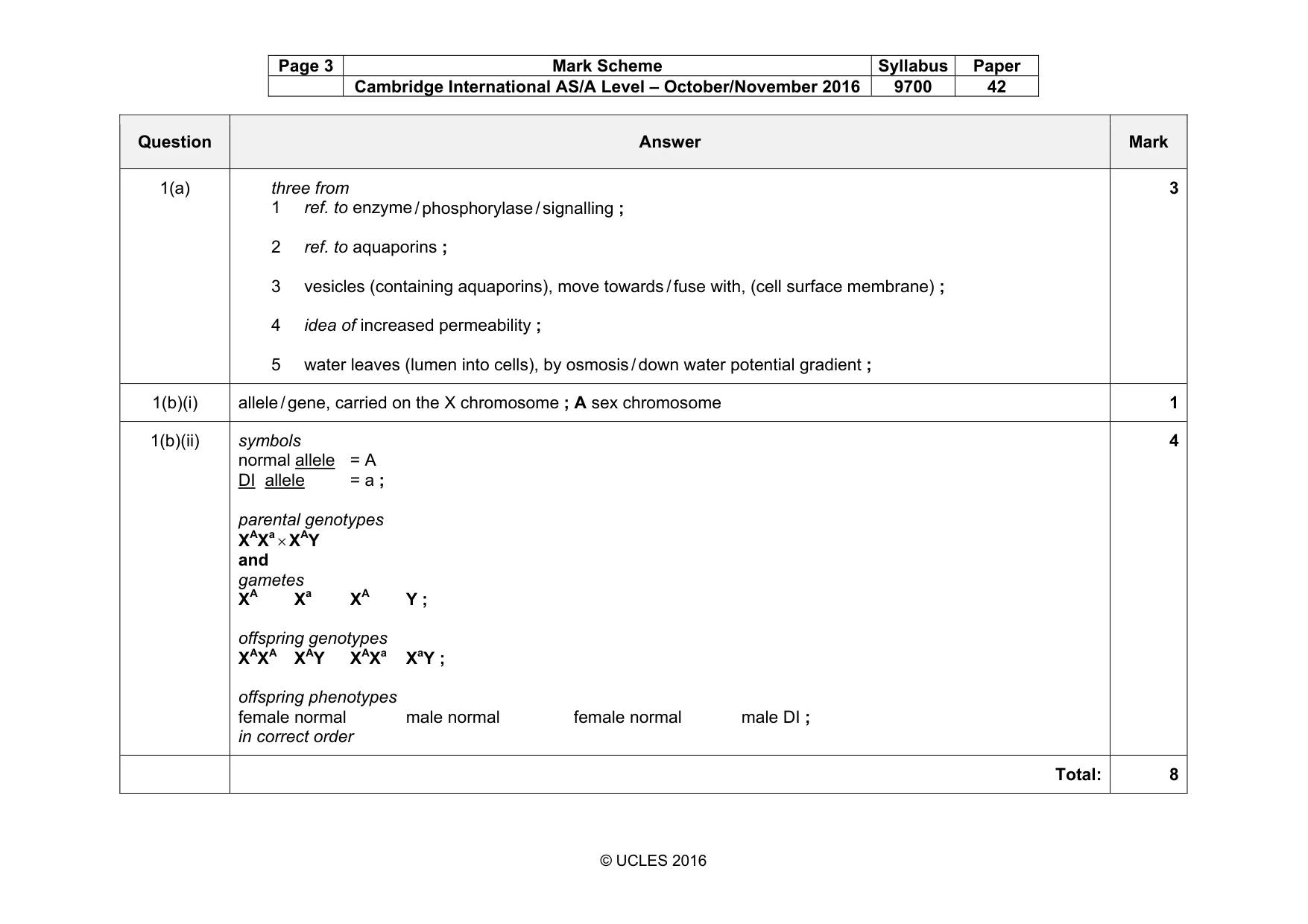
Page 3 Mark Scheme Syllabus Paper Cambridge International AS/A Level – October/November 2016 9700 42 © UCLES 2016 Question Answer Mark 1(a) three from 1 ref. to enzyme / phosphorylase / signalling ; 2 ref. to aquaporins ; 3 vesicles (containing aquaporins), move towards / fuse with, (cell surface membrane) ; 4 idea of increased permeability ; 5 water leaves (lumen into cells), by osmosis / down water potential gradient ; 3 1(b)(i) allele / gene, carried on the X chromosome ; A sex chromosome 1 1(b)(ii) symbols normal allele = A DI allele = a ; parental genotypes XAXa × XAY and gametes XA Xa XA Y ; offspring genotypes XAXA XAY XAXa XaY ; offspring phenotypes female normal male normal female normal male DI ; in correct order 4 Total: 8
Mark scheme, page 4
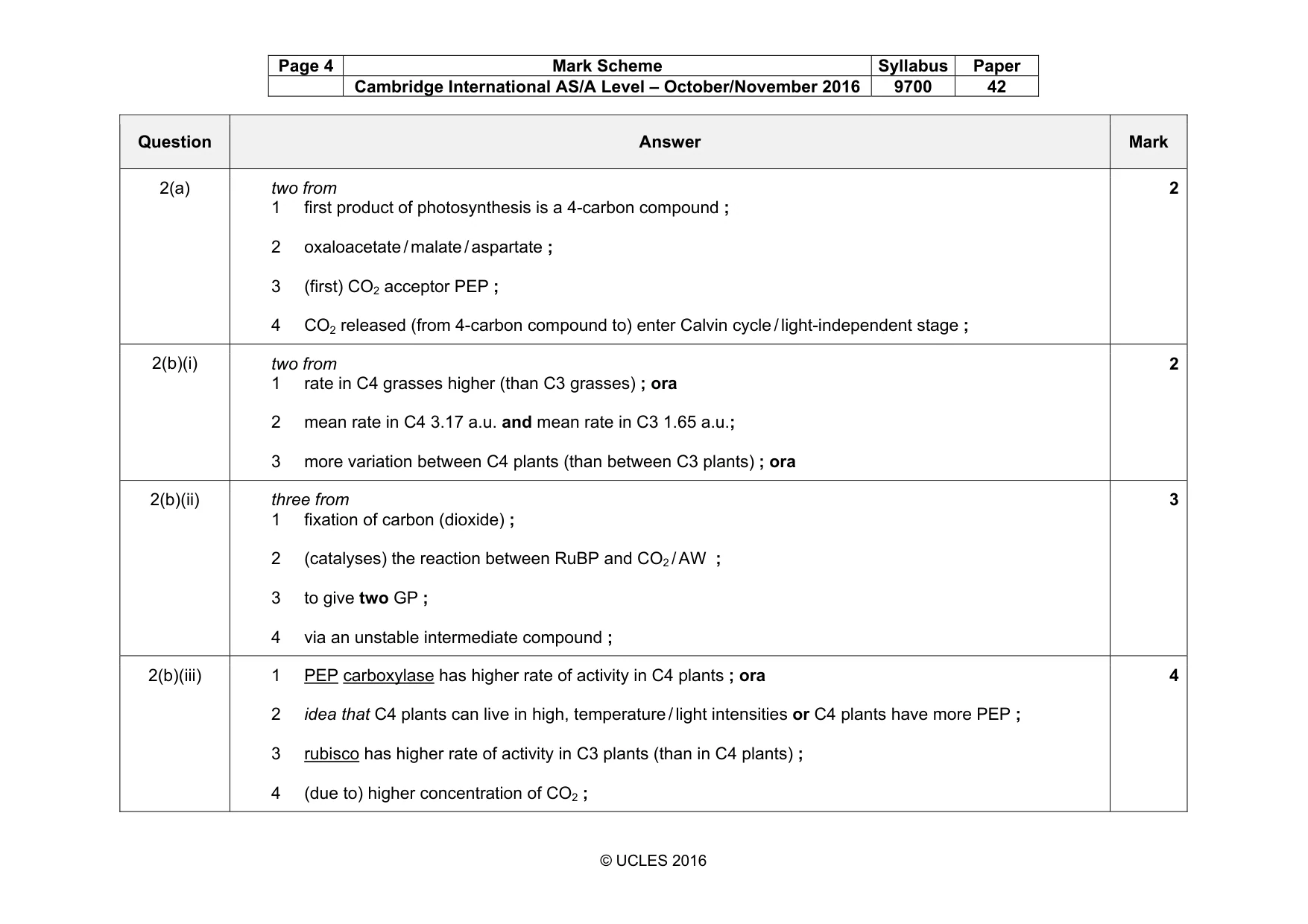
Page 4 Mark Scheme Syllabus Paper Cambridge International AS/A Level – October/November 2016 9700 42 © UCLES 2016 Question Answer Mark 2(a) two from 1 first product of photosynthesis is a 4-carbon compound ; 2 oxaloacetate / malate / aspartate ; 3 (first) CO2 acceptor PEP ; 4 CO2 released (from 4-carbon compound to) enter Calvin cycle / light-independent stage ; 2 2(b)(i) two from 1 rate in C4 grasses higher (than C3 grasses) ; ora 2 mean rate in C4 3.17 a.u. and mean rate in C3 1.65 a.u.; 3 more variation between C4 plants (than between C3 plants) ; ora 2 2(b)(ii) three from 1 fixation of carbon (dioxide) ; 2 (catalyses) the reaction between RuBP and CO2 / AW ; 3 to give two GP ; 4 via an unstable intermediate compound ; 3 2(b)(iii) 1 PEP carboxylase has higher rate of activity in C4 plants ; ora 2 idea that C4 plants can live in high, temperature / light intensities or C4 plants have more PEP ; 3 rubisco has higher rate of activity in C3 plants (than in C4 plants) ; 4 (due to) higher concentration of CO2 ; 4
Mark scheme, page 5
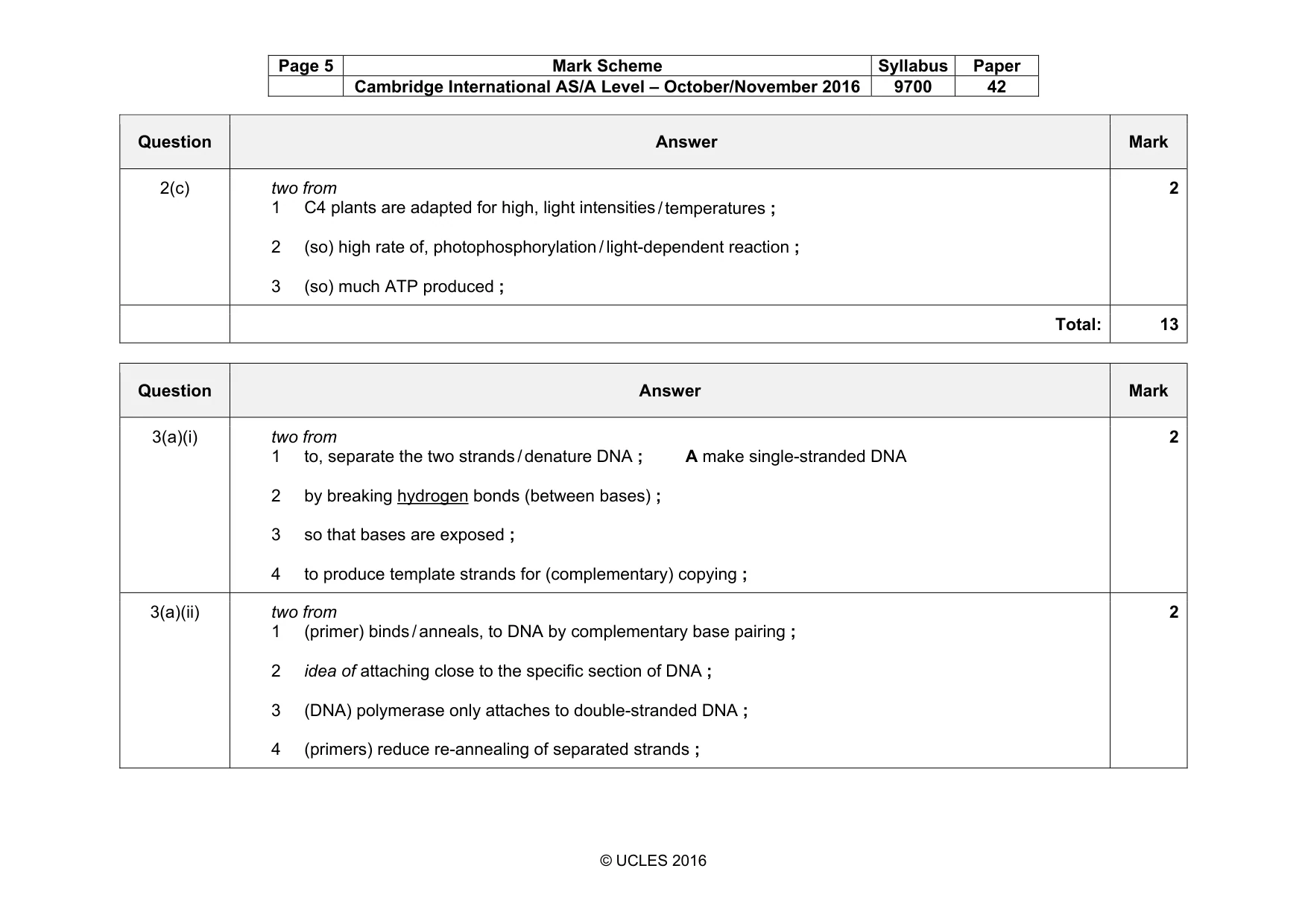
Page 5 Mark Scheme Syllabus Paper Cambridge International AS/A Level – October/November 2016 9700 42 © UCLES 2016 Question Answer Mark 2(c) two from 1 C4 plants are adapted for high, light intensities / temperatures ; 2 (so) high rate of, photophosphorylation / light-dependent reaction ; 3 (so) much ATP produced ; 2 Total: 13 Question Answer Mark 3(a)(i) two from 1 to, separate the two strands / denature DNA ; A make single-stranded DNA 2 by breaking hydrogen bonds (between bases) ; 3 so that bases are exposed ; 4 to produce template strands for (complementary) copying ; 2 3(a)(ii) two from 1 (primer) binds / anneals, to DNA by complementary base pairing ; 2 idea of attaching close to the specific section of DNA ; 3 (DNA) polymerase only attaches to double-stranded DNA ; 4 (primers) reduce re-annealing of separated strands ; 2
Mark scheme, page 6
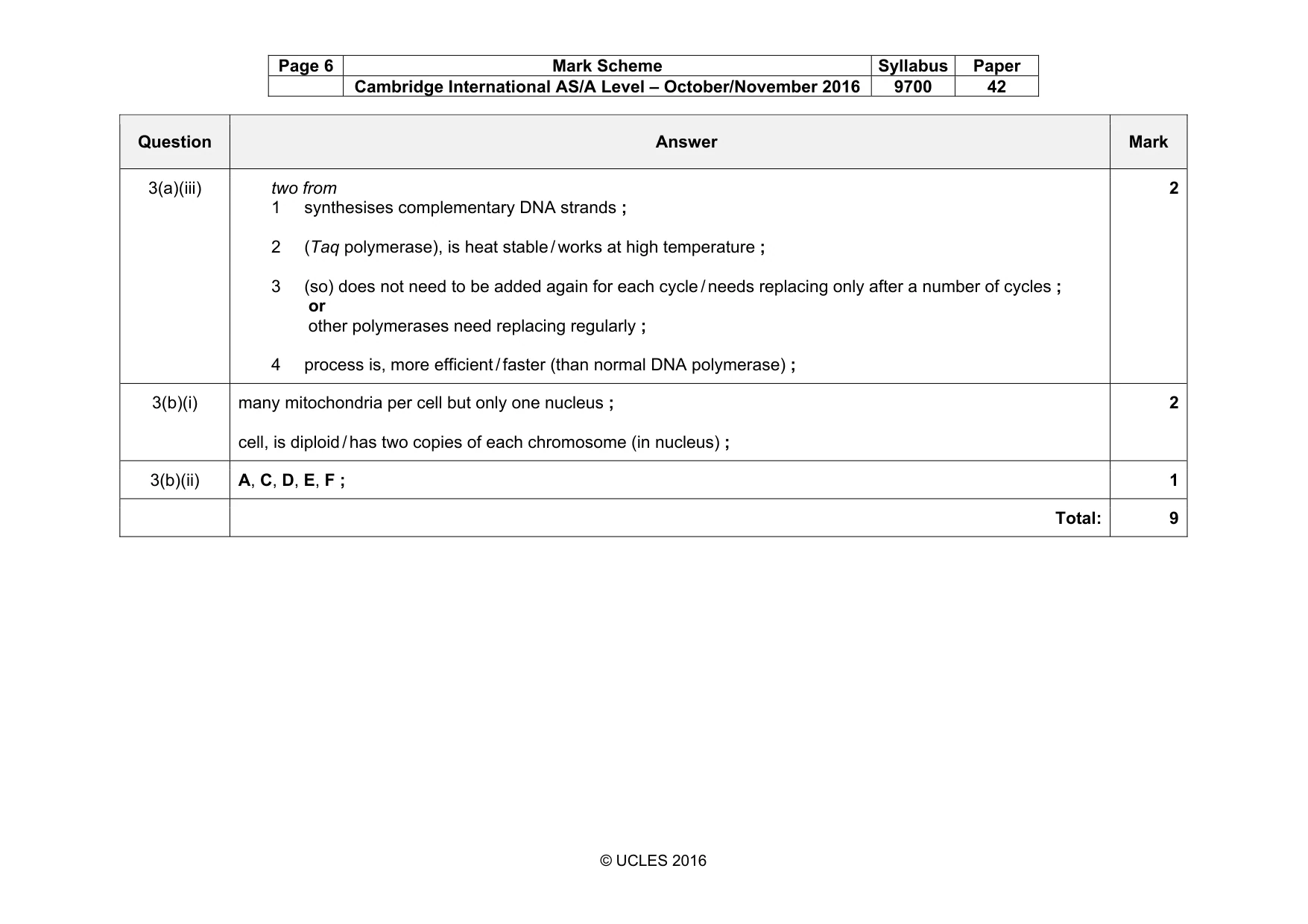
Page 6 Mark Scheme Syllabus Paper Cambridge International AS/A Level – October/November 2016 9700 42 © UCLES 2016 Question Answer Mark 3(a)(iii) two from 1 synthesises complementary DNA strands ; 2 (Taq polymerase), is heat stable / works at high temperature ; 3 (so) does not need to be added again for each cycle / needs replacing only after a number of cycles ; or other polymerases need replacing regularly ; 4 process is, more efficient / faster (than normal DNA polymerase) ; 2 3(b)(i) many mitochondria per cell but only one nucleus ; cell, is diploid / has two copies of each chromosome (in nucleus) ; 2 3(b)(ii) A, C, D, E, F ; 1 Total: 9
Mark scheme, page 7
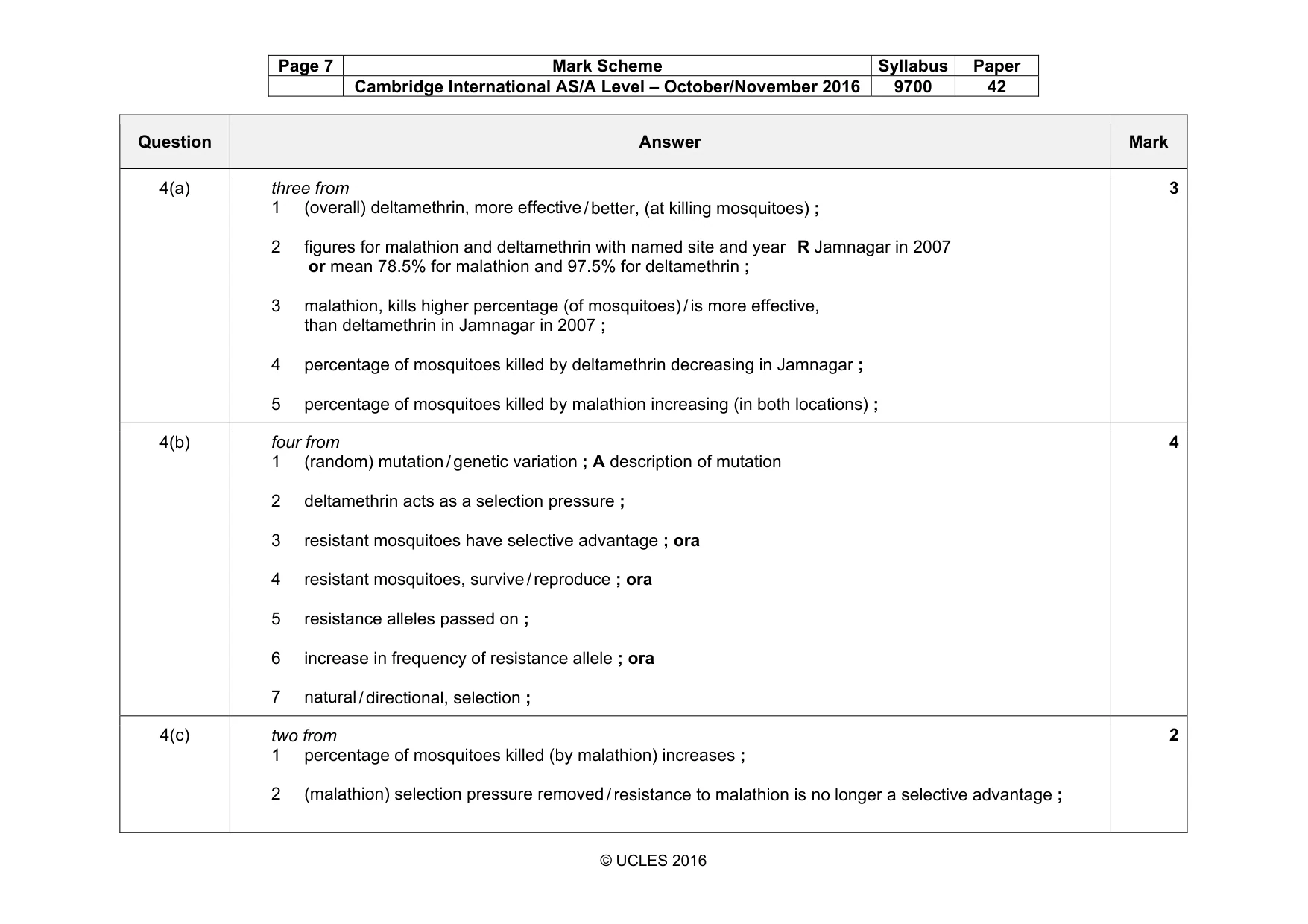
Page 7 Mark Scheme Syllabus Paper Cambridge International AS/A Level – October/November 2016 9700 42 © UCLES 2016 Question Answer Mark 4(a) three from 1 (overall) deltamethrin, more effective / better, (at killing mosquitoes) ; 2 figures for malathion and deltamethrin with named site and year R Jamnagar in 2007 or mean 78.5% for malathion and 97.5% for deltamethrin ; 3 malathion, kills higher percentage (of mosquitoes) / is more effective, than deltamethrin in Jamnagar in 2007 ; 4 percentage of mosquitoes killed by deltamethrin decreasing in Jamnagar ; 5 percentage of mosquitoes killed by malathion increasing (in both locations) ; 3 4(b) four from 1 (random) mutation / genetic variation ; A description of mutation 2 deltamethrin acts as a selection pressure ; 3 resistant mosquitoes have selective advantage ; ora 4 resistant mosquitoes, survive / reproduce ; ora 5 resistance alleles passed on ; 6 increase in frequency of resistance allele ; ora 7 natural / directional, selection ; 4 4(c) two from 1 percentage of mosquitoes killed (by malathion) increases ; 2 (malathion) selection pressure removed / resistance to malathion is no longer a selective advantage ; 2
Mark scheme, page 8
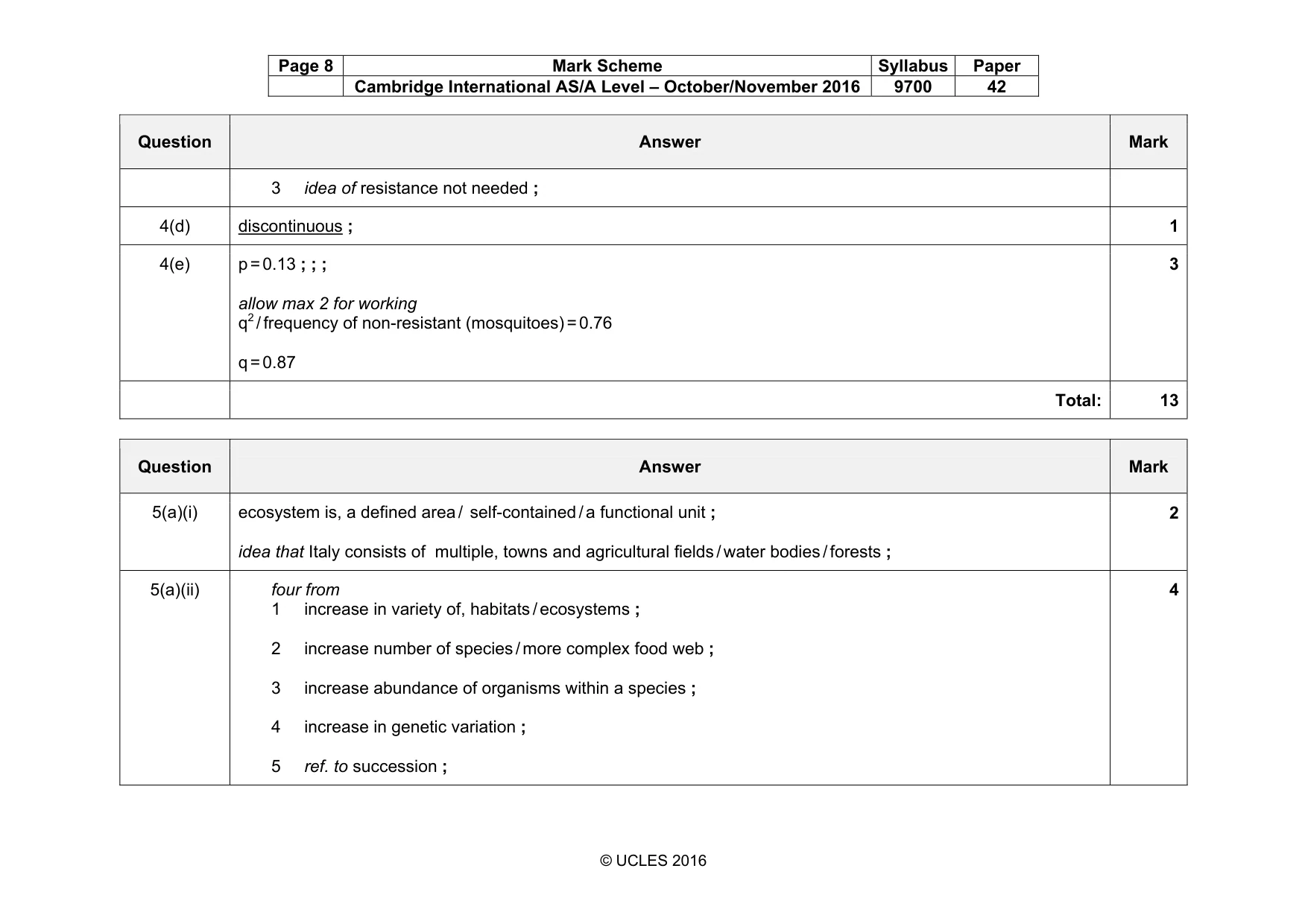
Page 8 Mark Scheme Syllabus Paper Cambridge International AS/A Level – October/November 2016 9700 42 © UCLES 2016 Question Answer Mark 3 idea of resistance not needed ; 4(d) discontinuous ; 1 4(e) p = 0.13 ; ; ; allow max 2 for working q2 / frequency of non-resistant (mosquitoes) = 0.76 q = 0.87 3 Total: 13 Question Answer Mark 5(a)(i) ecosystem is, a defined area / self-contained / a functional unit ; idea that Italy consists of multiple, towns and agricultural fields / water bodies / forests ; 2 5(a)(ii) four from 1 increase in variety of, habitats / ecosystems ; 2 increase number of species / more complex food web ; 3 increase abundance of organisms within a species ; 4 increase in genetic variation ; 5 ref. to succession ; 4
Mark scheme, page 9
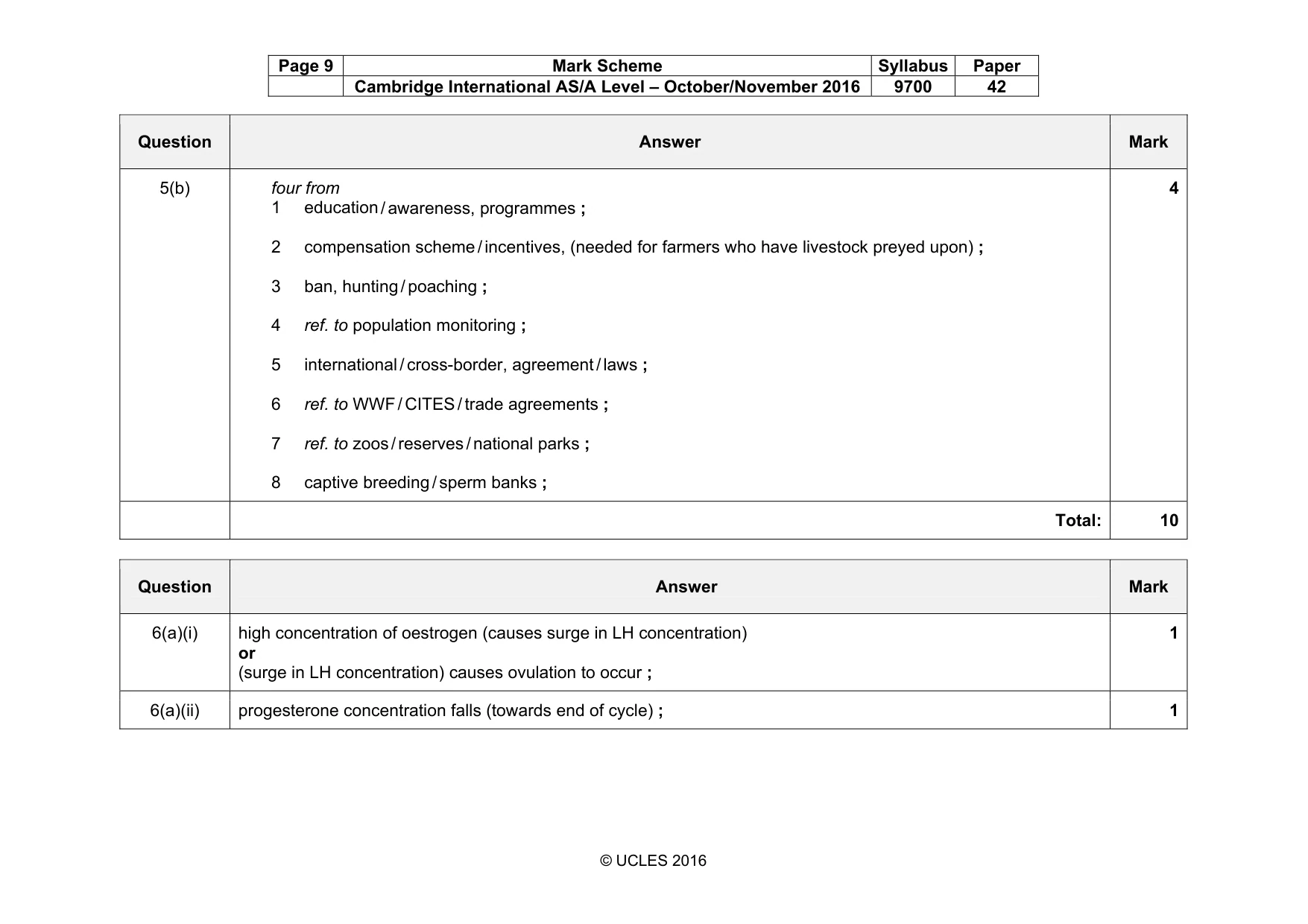
Page 9 Mark Scheme Syllabus Paper Cambridge International AS/A Level – October/November 2016 9700 42 © UCLES 2016 Question Answer Mark 5(b) four from 1 education / awareness, programmes ; 2 compensation scheme / incentives, (needed for farmers who have livestock preyed upon) ; 3 ban, hunting / poaching ; 4 ref. to population monitoring ; 5 international / cross-border, agreement / laws ; 6 ref. to WWF / CITES / trade agreements ; 7 ref. to zoos / reserves / national parks ; 8 captive breeding / sperm banks ; 4 Total: 10 Question Answer Mark 6(a)(i) high concentration of oestrogen (causes surge in LH concentration) or (surge in LH concentration) causes ovulation to occur ; 1 6(a)(ii) progesterone concentration falls (towards end of cycle) ; 1
Mark scheme, page 10
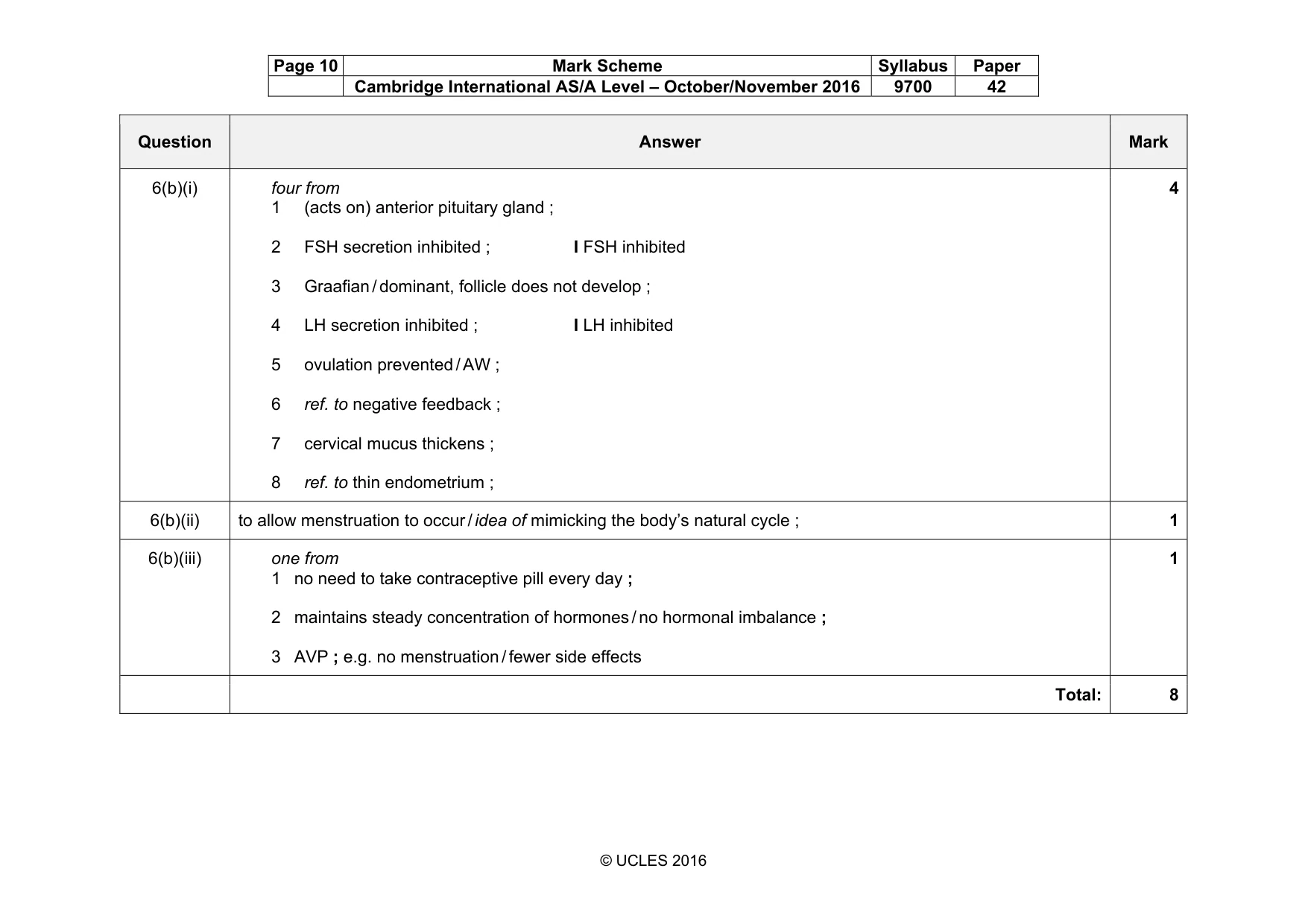
Page 10 Mark Scheme Syllabus Paper Cambridge International AS/A Level – October/November 2016 9700 42 © UCLES 2016 Question Answer Mark 6(b)(i) four from 1 (acts on) anterior pituitary gland ; 2 FSH secretion inhibited ; I FSH inhibited 3 Graafian / dominant, follicle does not develop ; 4 LH secretion inhibited ; I LH inhibited 5 ovulation prevented / AW ; 6 ref. to negative feedback ; 7 cervical mucus thickens ; 8 ref. to thin endometrium ; 4 6(b)(ii) to allow menstruation to occur / idea of mimicking the body’s natural cycle ; 1 6(b)(iii) one from 1 no need to take contraceptive pill every day ; 2 maintains steady concentration of hormones / no hormonal imbalance ; 3 AVP ; e.g. no menstruation / fewer side effects 1 Total: 8
Mark scheme, page 11
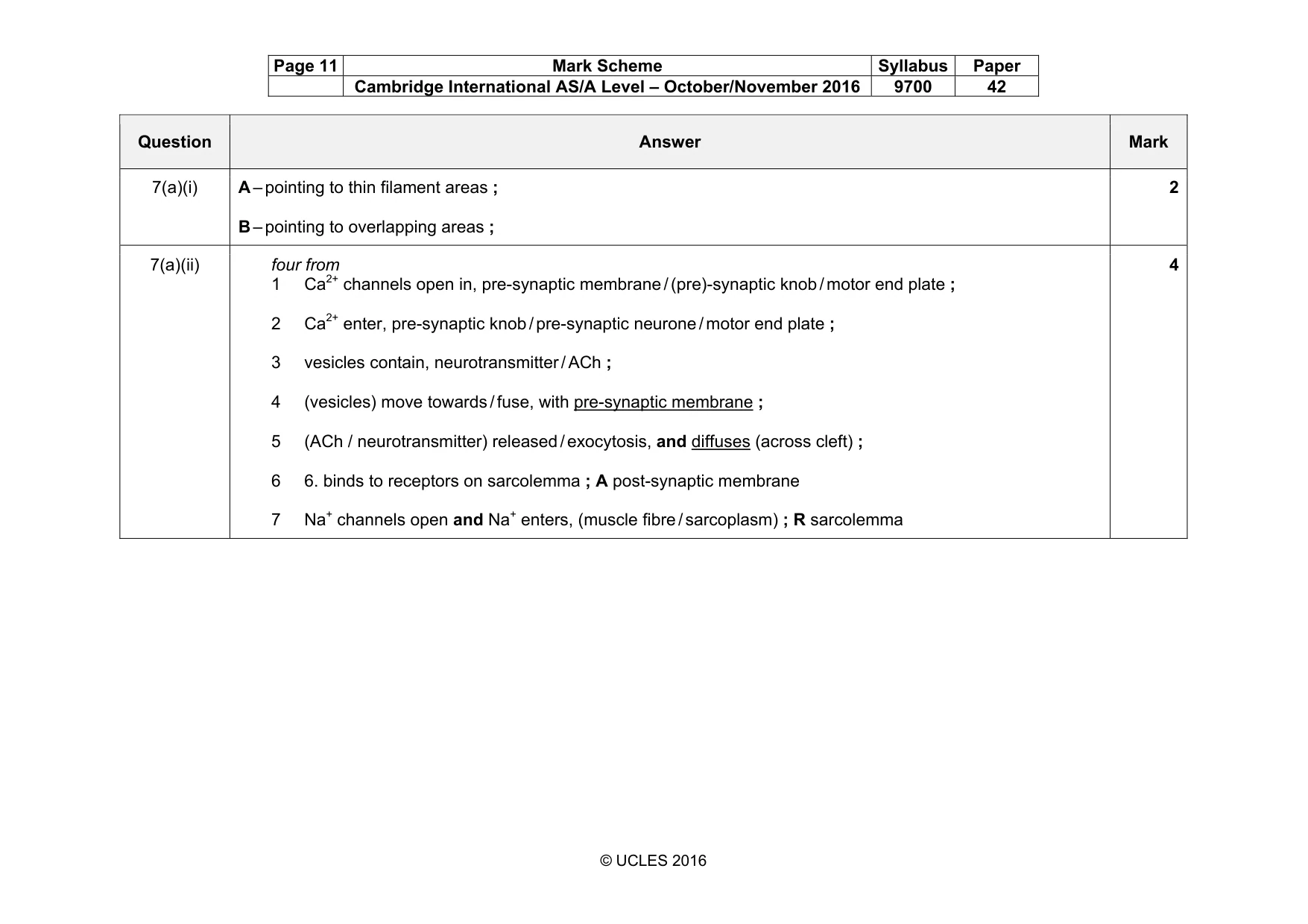
Page 11 Mark Scheme Syllabus Paper Cambridge International AS/A Level – October/November 2016 9700 42 © UCLES 2016 Question Answer Mark 7(a)(i) A – pointing to thin filament areas ; B – pointing to overlapping areas ; 2 7(a)(ii) four from 1 Ca2+ channels open in, pre-synaptic membrane / (pre)-synaptic knob / motor end plate ; 2 Ca2+ enter, pre-synaptic knob / pre-synaptic neurone / motor end plate ; 3 vesicles contain, neurotransmitter / ACh ; 4 (vesicles) move towards / fuse, with pre-synaptic membrane ; 5 (ACh / neurotransmitter) released / exocytosis, and diffuses (across cleft) ; 6 6. binds to receptors on sarcolemma ; A post-synaptic membrane 7 Na+ channels open and Na+ enters, (muscle fibre / sarcoplasm) ; R sarcolemma 4
Mark scheme, page 12
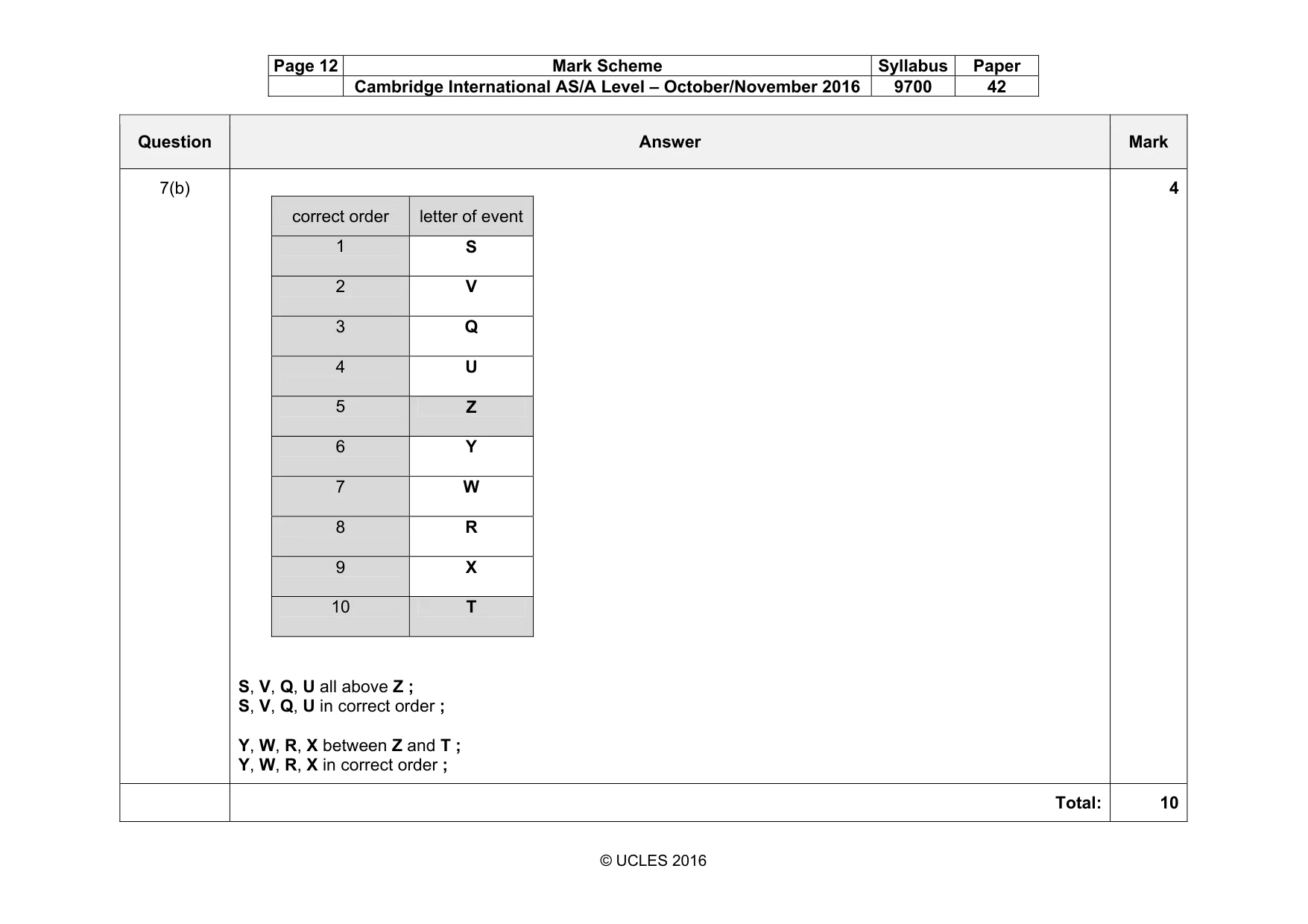
Page 12 Mark Scheme Syllabus Paper Cambridge International AS/A Level – October/November 2016 9700 42 © UCLES 2016 Question Answer Mark 7(b) correct order letter of event 1 S 2 V 3 Q 4 U 5 Z 6 Y 7 W 8 R 9 X 10 T S, V, Q, U all above Z ; S, V, Q, U in correct order ; Y, W, R, X between Z and T ; Y, W, R, X in correct order ; 4 Total: 10
Mark scheme, page 13
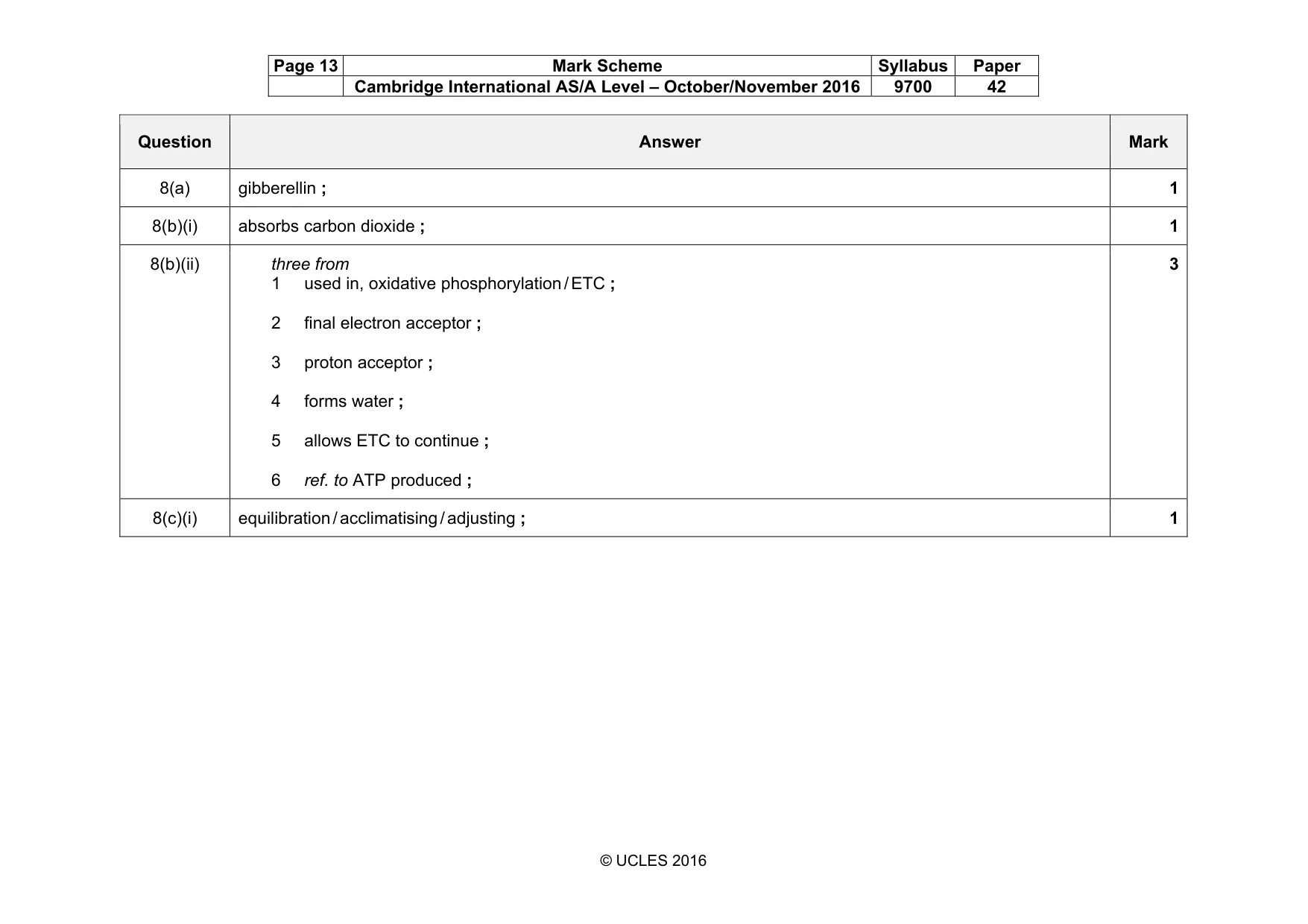
Page 13 Mark Scheme Syllabus Paper Cambridge International AS/A Level – October/November 2016 9700 42 © UCLES 2016 Question Answer Mark 8(a) gibberellin ; 1 8(b)(i) absorbs carbon dioxide ; 1 8(b)(ii) three from 1 used in, oxidative phosphorylation / ETC ; 2 final electron acceptor ; 3 proton acceptor ; 4 forms water ; 5 allows ETC to continue ; 6 ref. to ATP produced ; 3 8(c)(i) equilibration / acclimatising / adjusting ; 1
Mark scheme, page 14
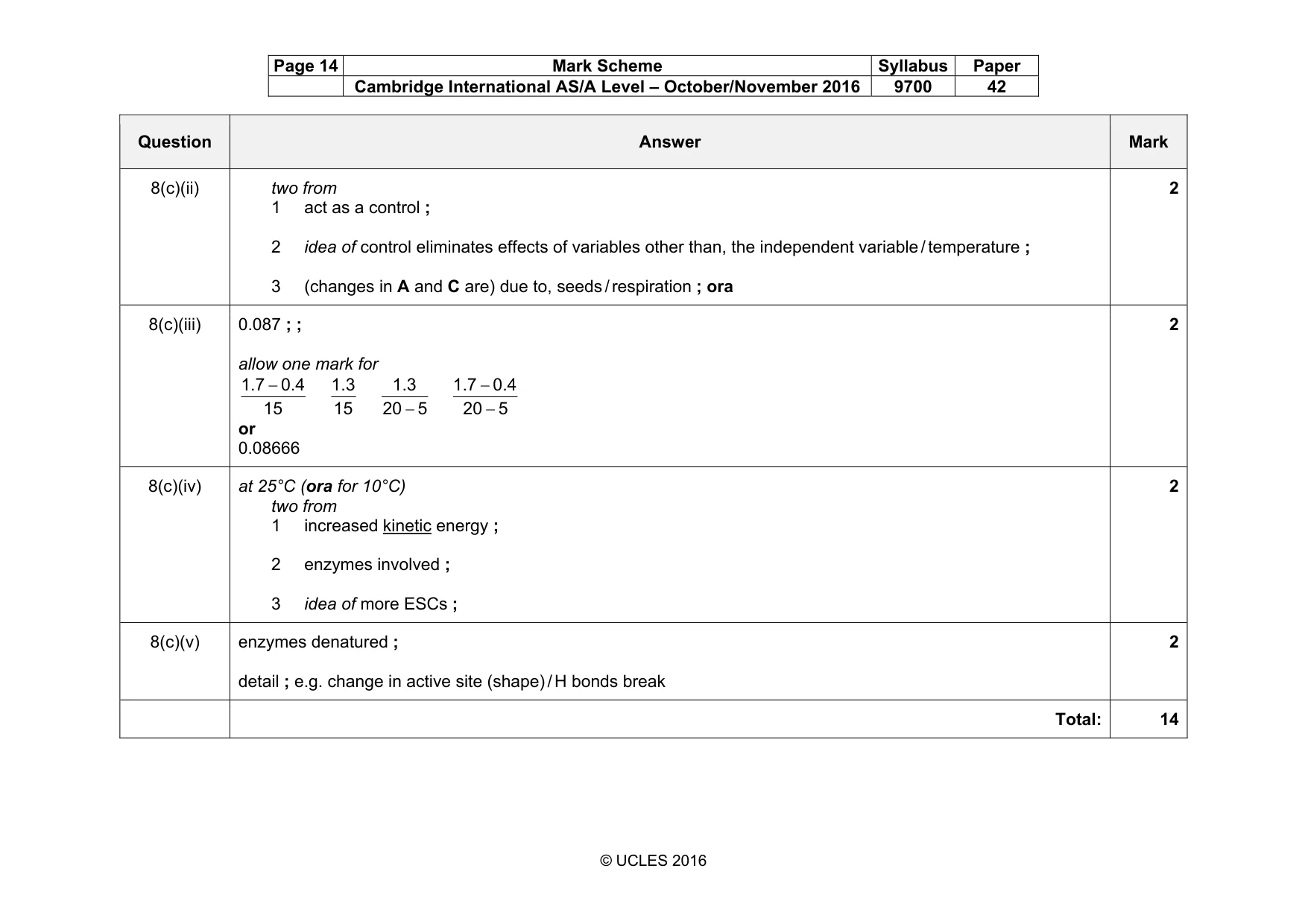
Page 14 Mark Scheme Syllabus Paper Cambridge International AS/A Level – October/November 2016 9700 42 © UCLES 2016 Question Answer Mark 8(c)(ii) two from 1 act as a control ; 2 idea of control eliminates effects of variables other than, the independent variable / temperature ; 3 (changes in A and C are) due to, seeds / respiration ; ora 2 8(c)(iii) 0.087 ; ; allow one mark for 1.7 0.4 15 − 1.3 15 1.3 20 5 − 1.7 0.4 20 5 − − or 0.08666 2 8(c)(iv) at 25°C (ora for 10°C) two from 1 increased kinetic energy ; 2 enzymes involved ; 3 idea of more ESCs ; 2 8(c)(v) enzymes denatured ; detail ; e.g. change in active site (shape) / H bonds break 2 Total: 14
Mark scheme, page 15
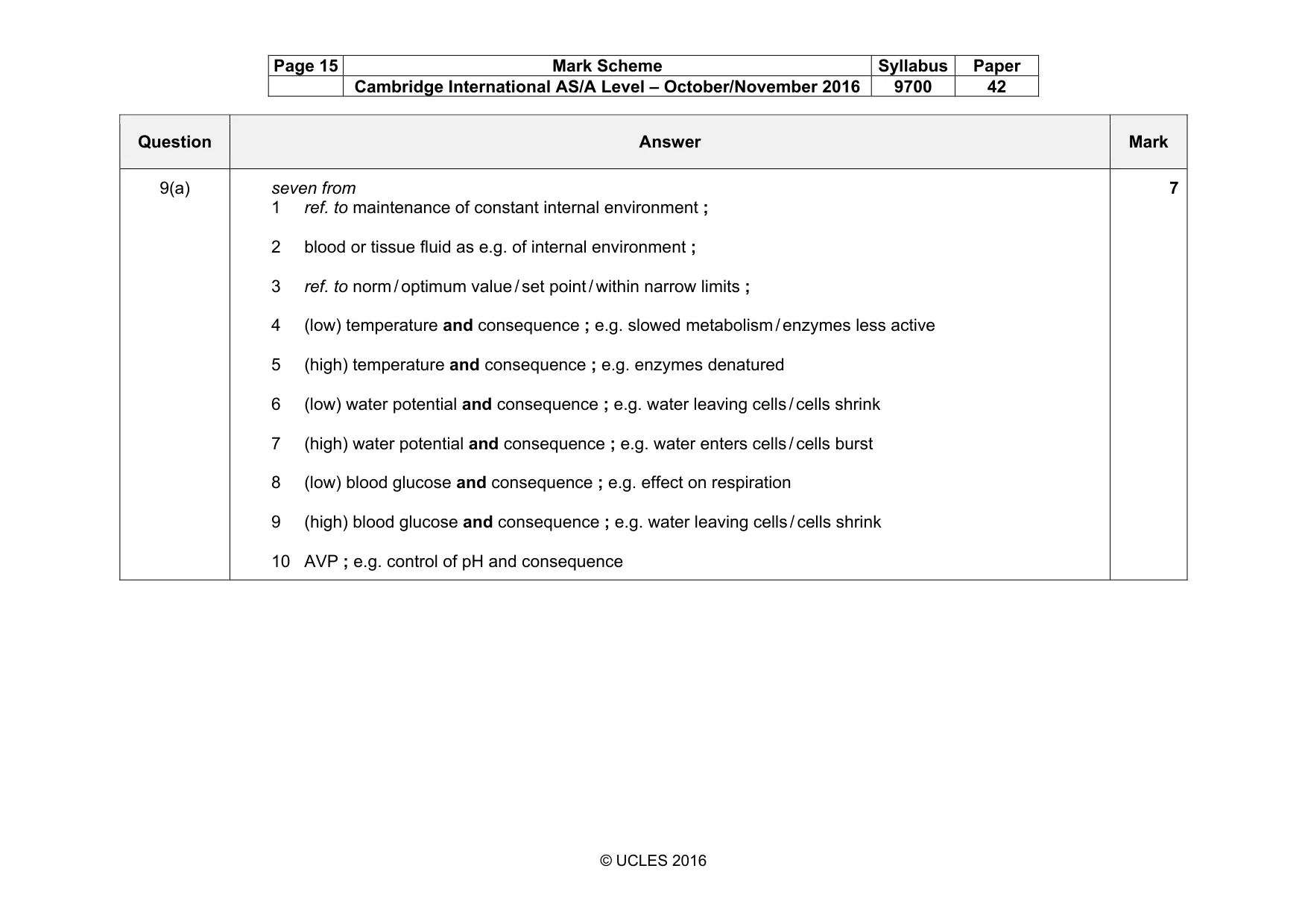
Page 15 Mark Scheme Syllabus Paper Cambridge International AS/A Level – October/November 2016 9700 42 © UCLES 2016 Question Answer Mark 9(a) seven from 1 ref. to maintenance of constant internal environment ; 2 blood or tissue fluid as e.g. of internal environment ; 3 ref. to norm / optimum value / set point / within narrow limits ; 4 (low) temperature and consequence ; e.g. slowed metabolism / enzymes less active 5 (high) temperature and consequence ; e.g. enzymes denatured 6 (low) water potential and consequence ; e.g. water leaving cells / cells shrink 7 (high) water potential and consequence ; e.g. water enters cells / cells burst 8 (low) blood glucose and consequence ; e.g. effect on respiration 9 (high) blood glucose and consequence ; e.g. water leaving cells / cells shrink 10 AVP ; e.g. control of pH and consequence 7
Mark scheme, page 16
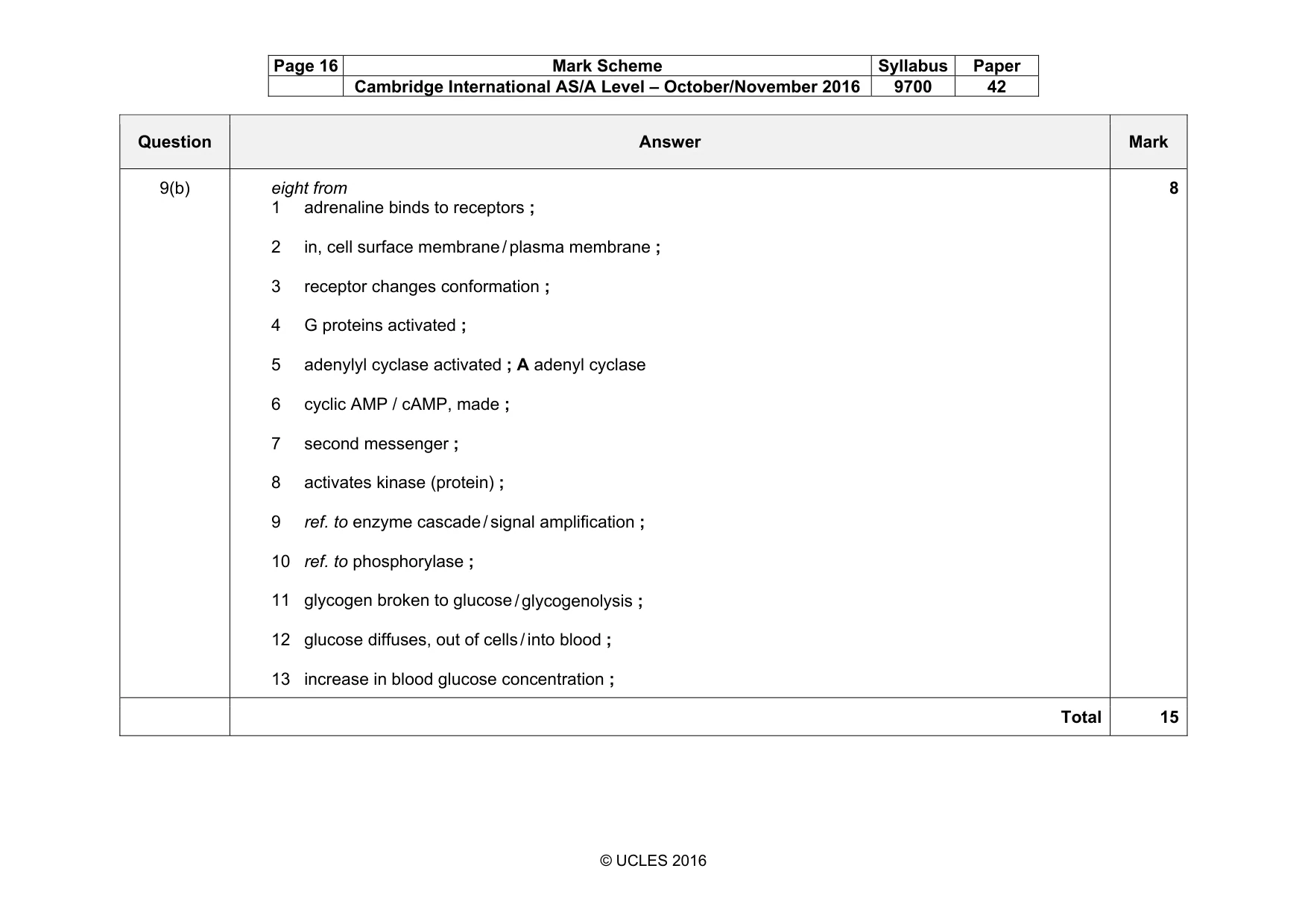
Page 16 Mark Scheme Syllabus Paper Cambridge International AS/A Level – October/November 2016 9700 42 © UCLES 2016 Question Answer Mark 9(b) eight from 1 adrenaline binds to receptors ; 2 in, cell surface membrane / plasma membrane ; 3 receptor changes conformation ; 4 G proteins activated ; 5 adenylyl cyclase activated ; A adenyl cyclase 6 cyclic AMP / cAMP, made ; 7 second messenger ; 8 activates kinase (protein) ; 9 ref. to enzyme cascade / signal amplification ; 10 ref. to phosphorylase ; 11 glycogen broken to glucose / glycogenolysis ; 12 glucose diffuses, out of cells / into blood ; 13 increase in blood glucose concentration ; 8 Total 15
Mark scheme, page 17
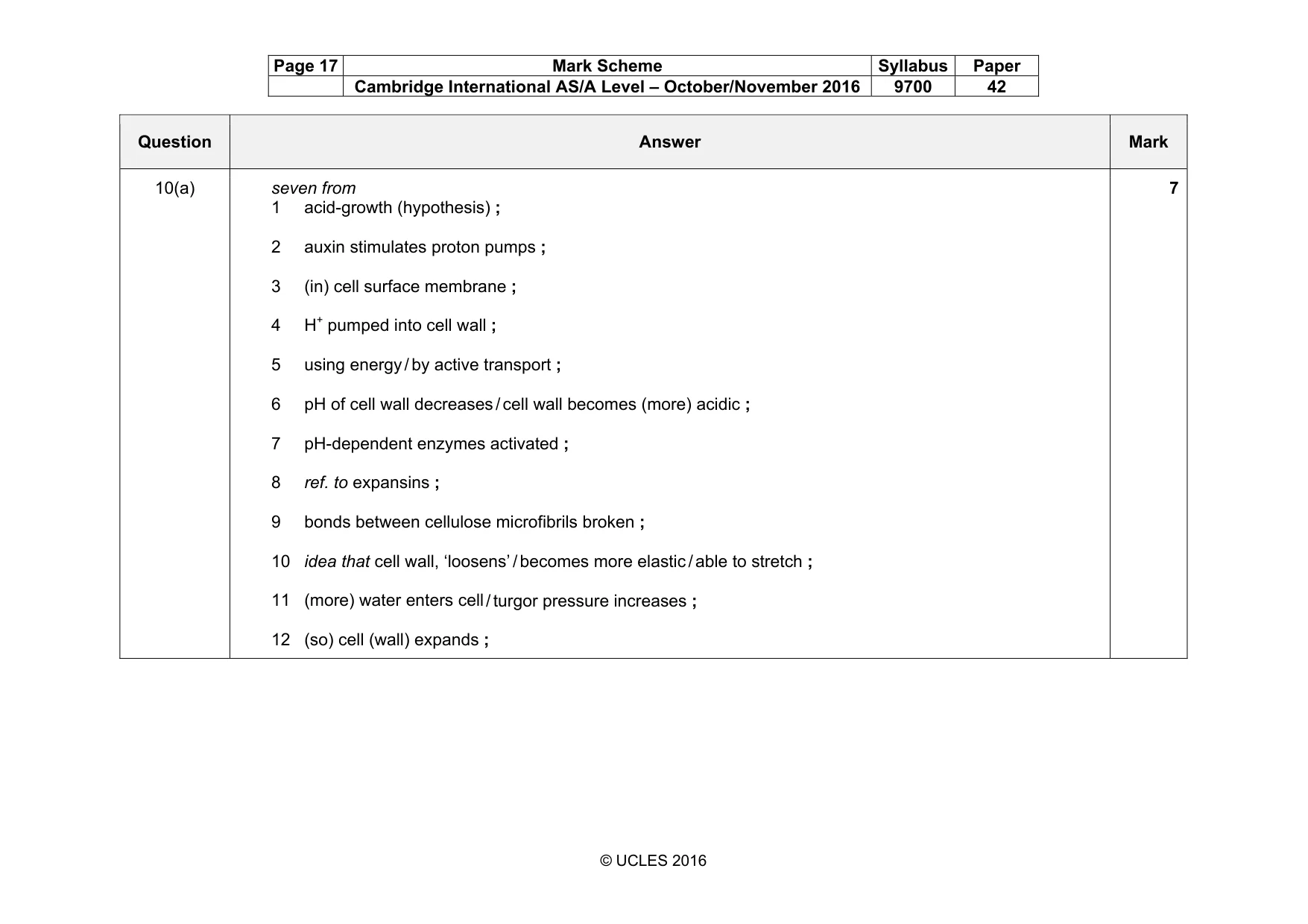
Page 17 Mark Scheme Syllabus Paper Cambridge International AS/A Level – October/November 2016 9700 42 © UCLES 2016 Question Answer Mark 10(a) seven from 1 acid-growth (hypothesis) ; 2 auxin stimulates proton pumps ; 3 (in) cell surface membrane ; 4 H+ pumped into cell wall ; 5 using energy / by active transport ; 6 pH of cell wall decreases / cell wall becomes (more) acidic ; 7 pH-dependent enzymes activated ; 8 ref. to expansins ; 9 bonds between cellulose microfibrils broken ; 10 idea that cell wall, ‘loosens’ / becomes more elastic / able to stretch ; 11 (more) water enters cell / turgor pressure increases ; 12 (so) cell (wall) expands ; 7
Mark scheme, page 18
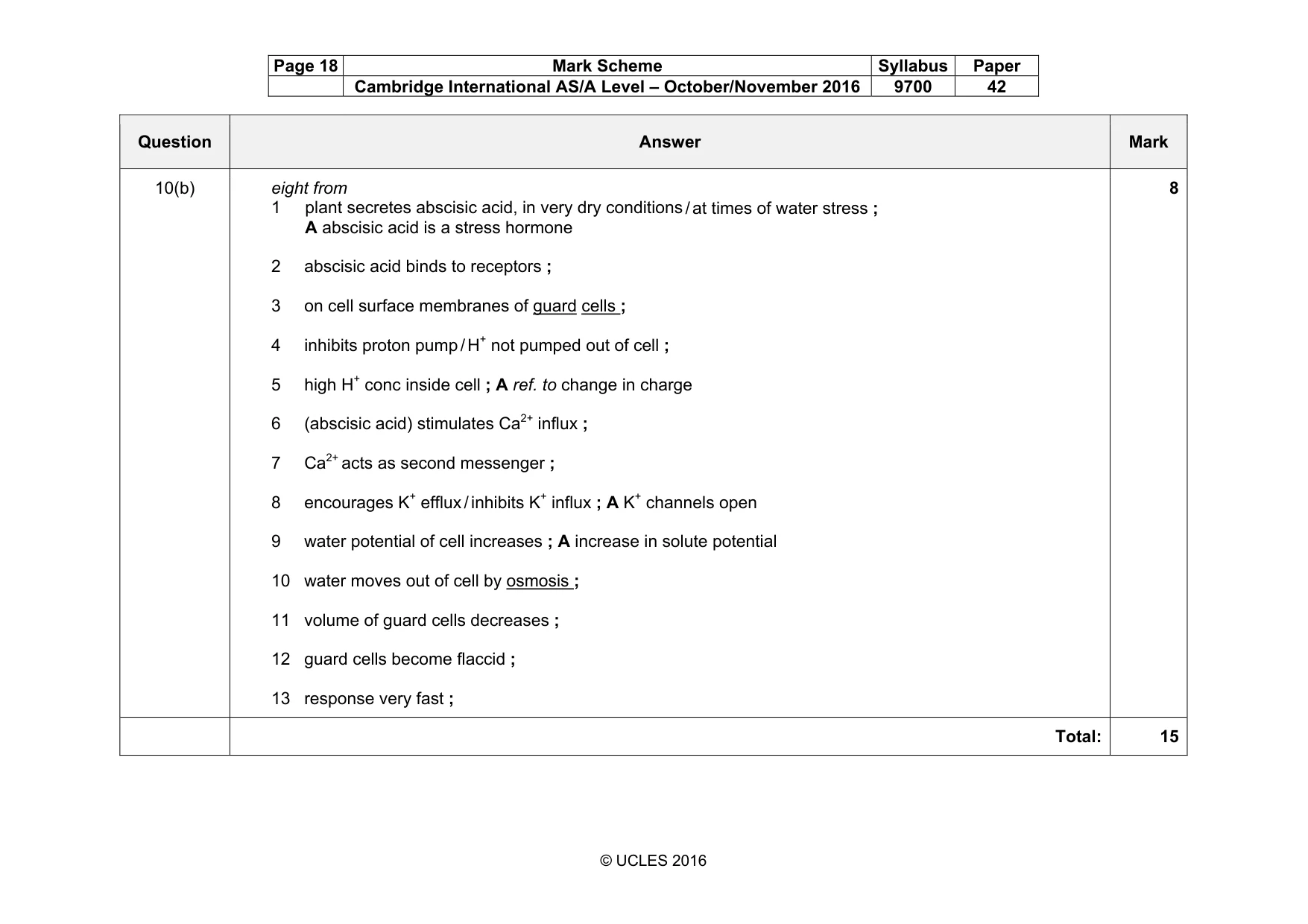
Page 18 Mark Scheme Syllabus Paper Cambridge International AS/A Level – October/November 2016 9700 42 © UCLES 2016 Question Answer Mark 10(b) eight from 1 plant secretes abscisic acid, in very dry conditions / at times of water stress ; A abscisic acid is a stress hormone 2 abscisic acid binds to receptors ; 3 on cell surface membranes of guard cells ; 4 inhibits proton pump / H+ not pumped out of cell ; 5 high H+ conc inside cell ; A ref. to change in charge 6 (abscisic acid) stimulates Ca2+ influx ; 7 Ca2+ acts as second messenger ; 8 encourages K+ efflux / inhibits K+ influx ; A K+ channels open 9 water potential of cell increases ; A increase in solute potential 10 water moves out of cell by osmosis ; 11 volume of guard cells decreases ; 12 guard cells become flaccid ; 13 response very fast ; 8 Total: 15
What you needed in this session
Cambridge’s own grade thresholds for 2016 Oct/Nov, Paper 4 · Variant 2. A higher threshold means an easier paper — the bar moves with how the cohort did.