Cambridge A Level Biology 9700 — 2024 Feb/March Paper 4 · Variant 2
9700/42/F/M/24 · 100 marks · ≈113 min
The question paper and its mark scheme, free to read here and free to download. This is Cambridge’s own paper, exactly as it was sat.
Question paper32 pages



Mark scheme21 pages
Answers below. Sit the paper first if you are practising.
Paper as text
Question paper, page 1
This document has 32 pages. Any blank pages are indicated. [Turn over Cambridge International AS & A Level DC (CE/CT) 327567/4 © UCLES 2024 * 0 7 3 6 9 6 5 5 7 6 * BIOLOGY 9700/42 Paper 4 A Level Structured Questions February/March 2024 2 hours You must answer on the question paper. No additional materials are needed. INSTRUCTIONS ● Answer all questions. ● Use a black or dark blue pen. You may use an HB pencil for any diagrams or graphs. ● Write your name, centre number and candidate number in the boxes at the top of the page. ● Write your answer to each question in the space provided. ● Do not use an erasable pen or correction fluid. ● Do not write on any bar codes. ● You may use a calculator. ● You should show all your working and use appropriate units. INFORMATION ● The total mark for this paper is 100. ● The number of marks for each question or part question is shown in brackets [ ].
Question paper, page 2
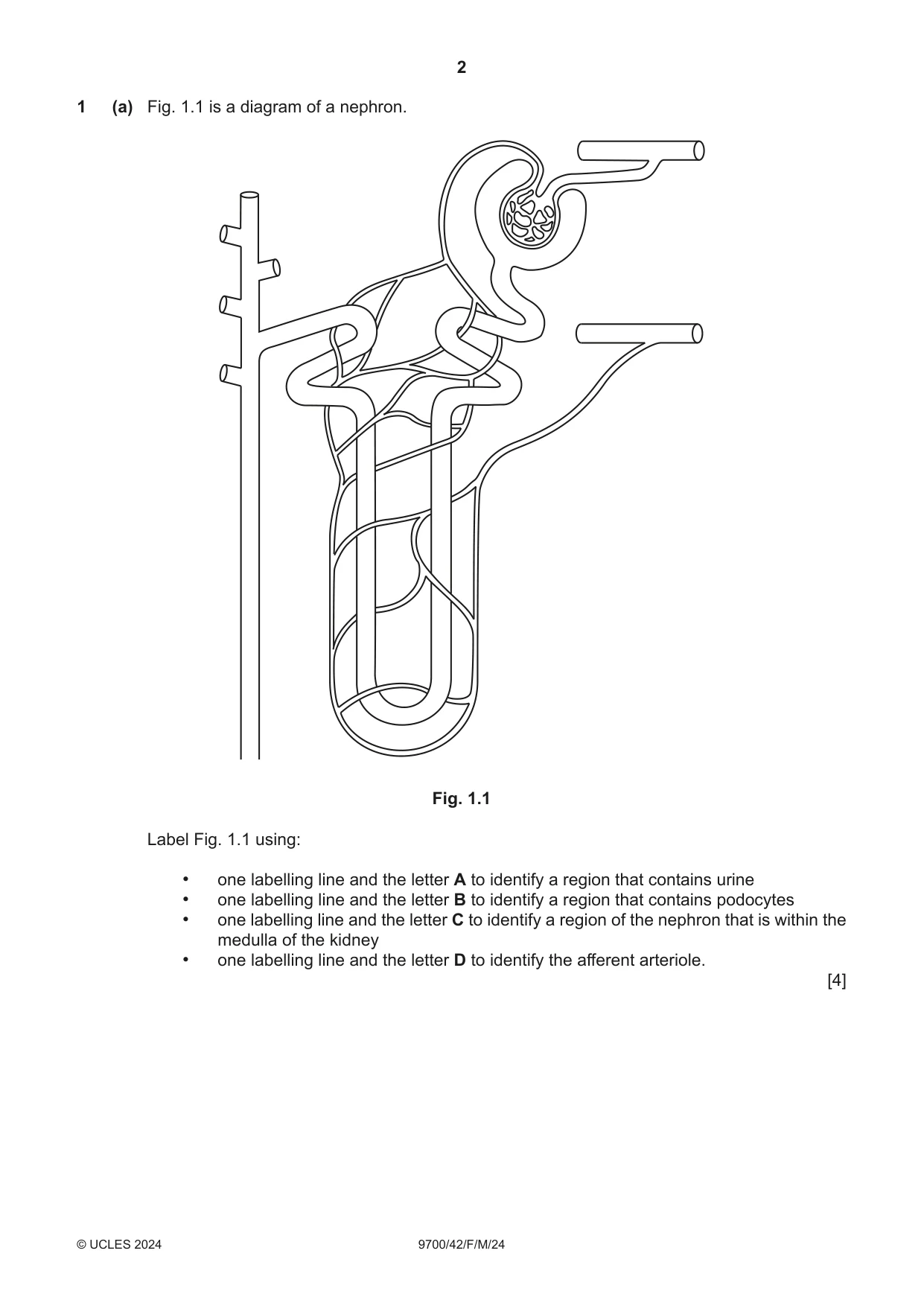
2 9700/42/F/M/24 © UCLES 2024 1 (a) Fig. 1.1 is a diagram of a nephron. Fig. 1.1 Label Fig. 1.1 using: • one labelling line and the letter A to identify a region that contains urine • one labelling line and the letter B to identify a region that contains podocytes • one labelling line and the letter C to identify a region of the nephron that is within the medulla of the kidney • one labelling line and the letter D to identify the afferent arteriole. [4]
Question paper, page 3
3 9700/42/F/M/24 © UCLES 2024 [Turn over (b) The cells of the proximal convoluted tubule are adapted to carry out selective reabsorption. Describe and explain how these cells are adapted to carry out selective reabsorption. … … … … … … … … … [4] [Total: 8]
Question paper, page 4
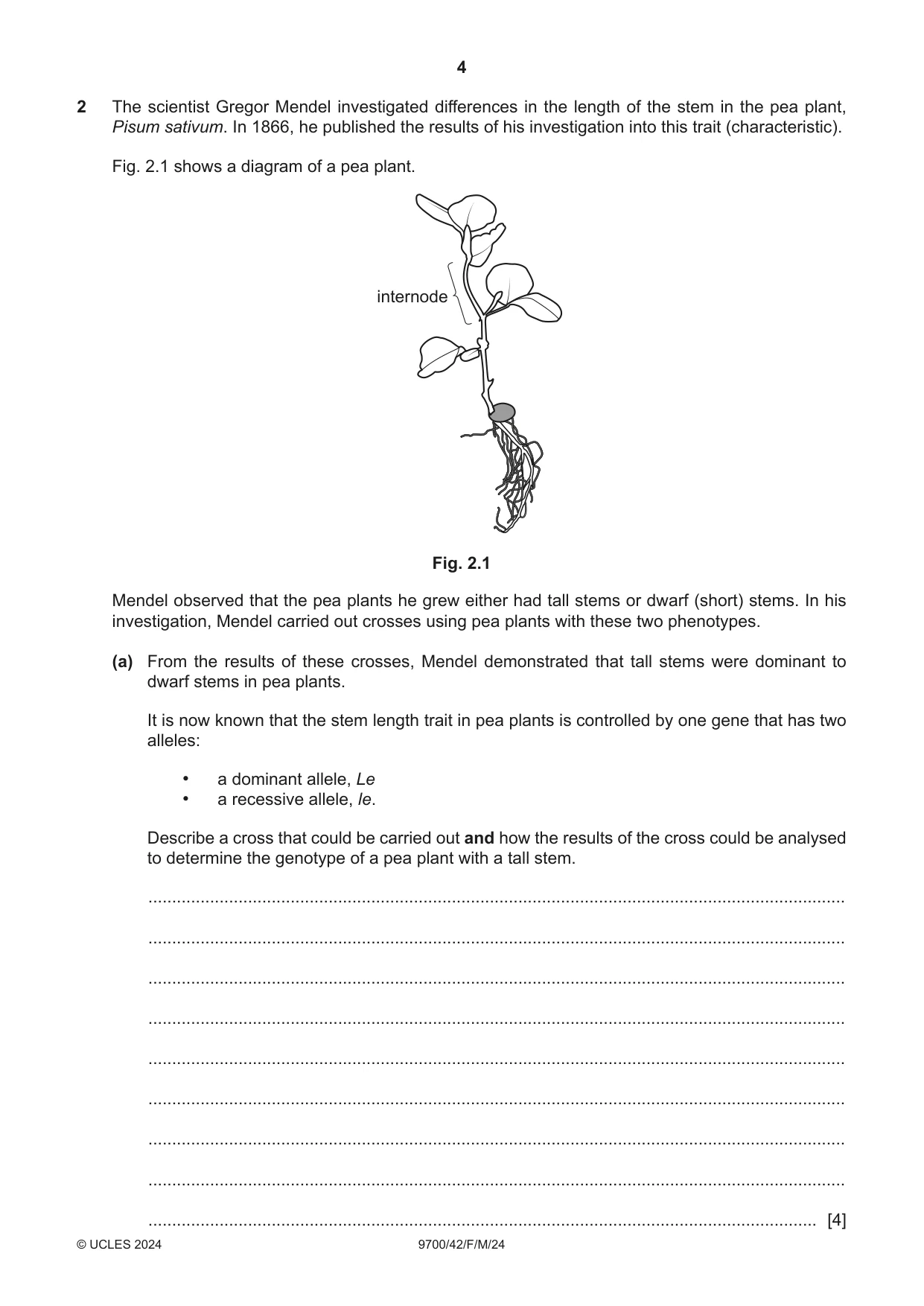
4 9700/42/F/M/24 © UCLES 2024 2 The scientist Gregor Mendel investigated differences in the length of the stem in the pea plant, Pisum sativum. In 1866, he published the results of his investigation into this trait (characteristic). Fig. 2.1 shows a diagram of a pea plant. internode Fig. 2.1 Mendel observed that the pea plants he grew either had tall stems or dwarf (short) stems. In his investigation, Mendel carried out crosses using pea plants with these two phenotypes. (a) From the results of these crosses, Mendel demonstrated that tall stems were dominant to dwarf stems in pea plants. It is now known that the stem length trait in pea plants is controlled by one gene that has two alleles: • a dominant allele, Le • a recessive allele, le. Describe a cross that could be carried out and how the results of the cross could be analysed to determine the genotype of a pea plant with a tall stem. … … … … … … … … … [4]
Question paper, page 5
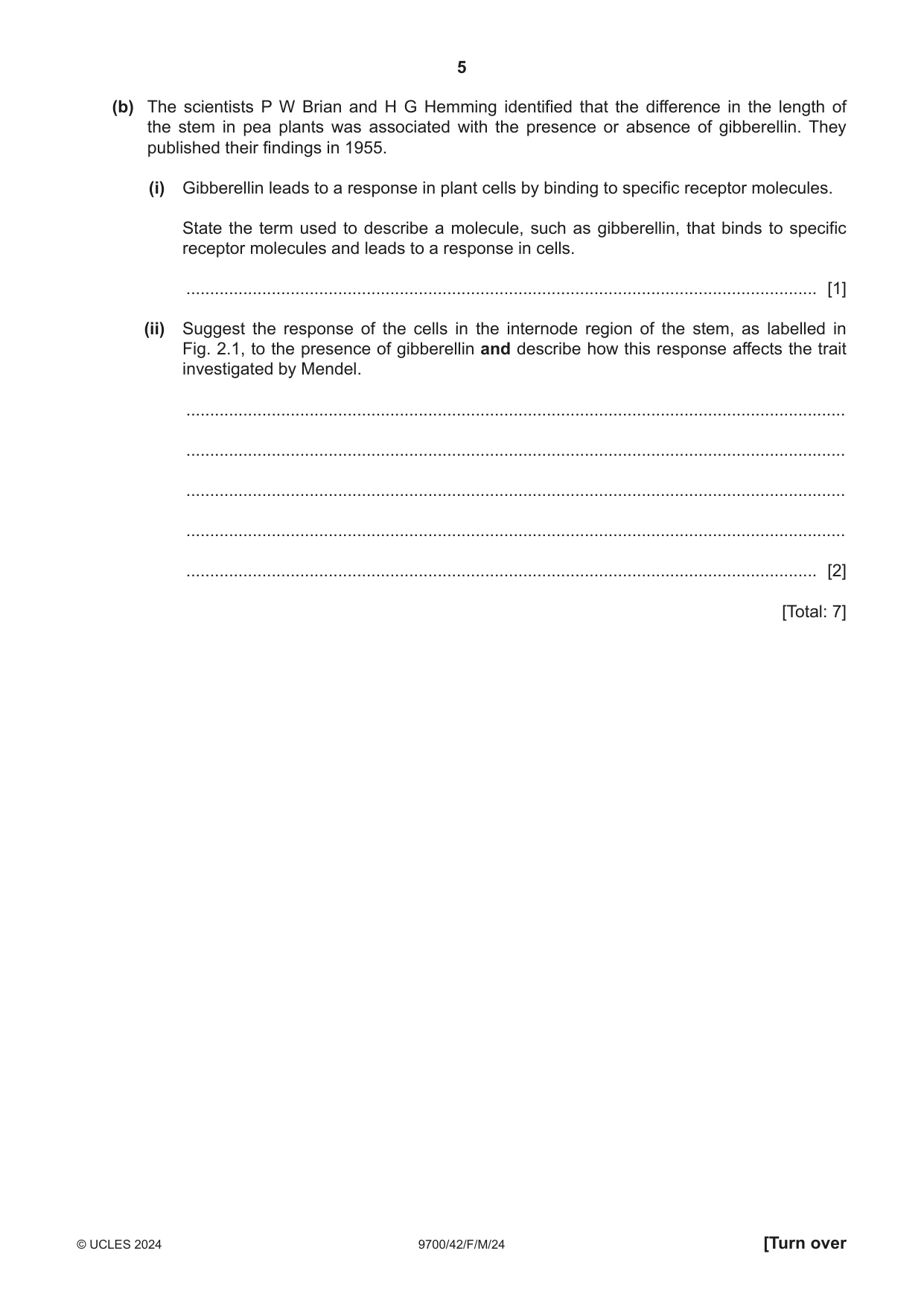
5 9700/42/F/M/24 © UCLES 2024 [Turn over (b) The scientists P W Brian and H G Hemming identified that the difference in the length of the stem in pea plants was associated with the presence or absence of gibberellin. They published their findings in 1955. (i) Gibberellin leads to a response in plant cells by binding to specific receptor molecules. State the term used to describe a molecule, such as gibberellin, that binds to specific receptor molecules and leads to a response in cells. … [1] (ii) Suggest the response of the cells in the internode region of the stem, as labelled in Fig. 2.1, to the presence of gibberellin and describe how this response affects the trait investigated by Mendel. … … … … … [2] [Total: 7]
Question paper, page 6
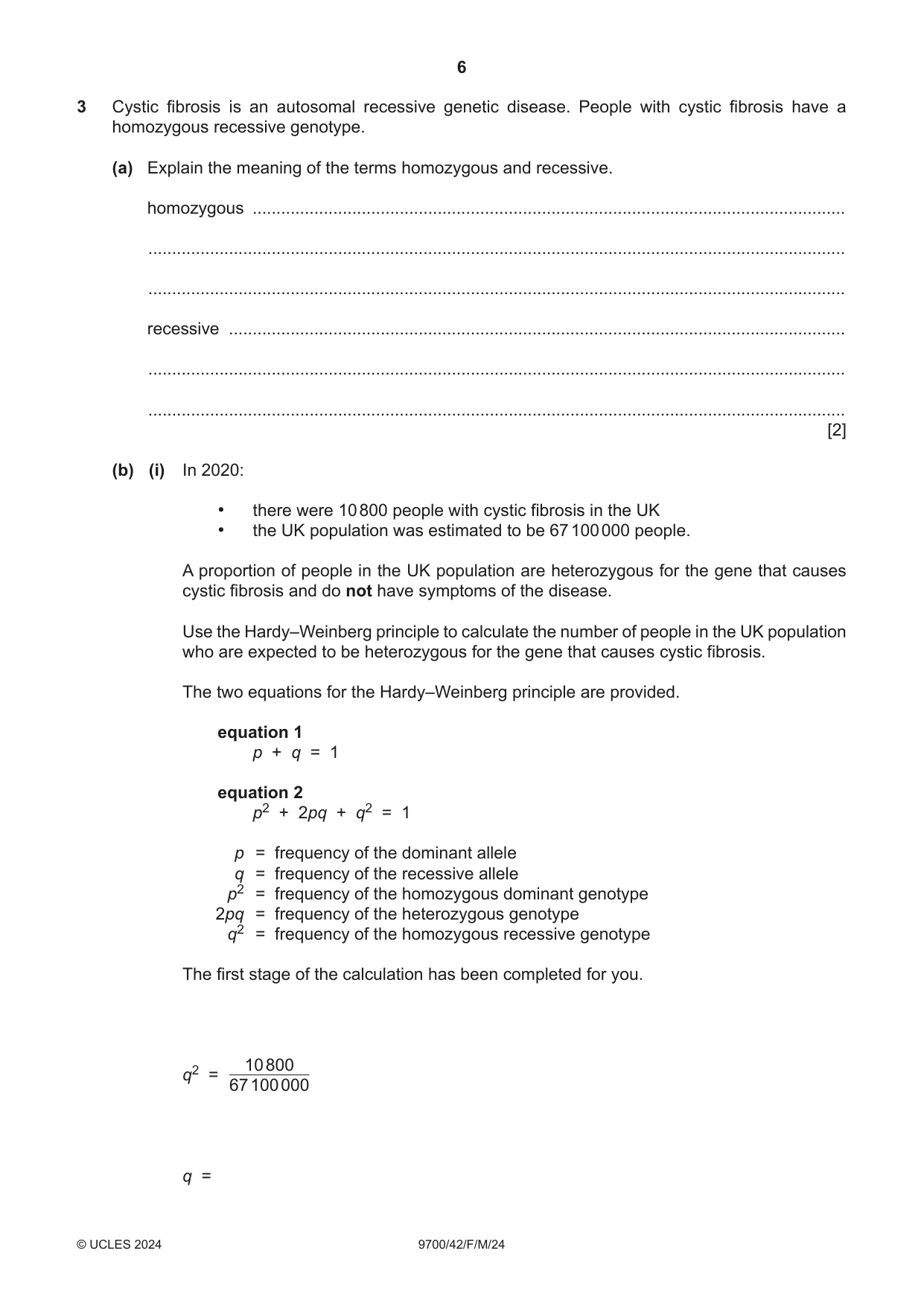
6 9700/42/F/M/24 © UCLES 2024 3 Cystic fibrosis is an autosomal recessive genetic disease. People with cystic fibrosis have a homozygous recessive genotype. (a) Explain the meaning of the terms homozygous and recessive. homozygous … … … recessive … … … [2] (b) (i) In 2020: • there were 10 800 people with cystic fibrosis in the UK • the UK population was estimated to be 67 100 000 people. A proportion of people in the UK population are heterozygous for the gene that causes cystic fibrosis and do not have symptoms of the disease. Use the Hardy–Weinberg principle to calculate the number of people in the UK population who are expected to be heterozygous for the gene that causes cystic fibrosis. The two equations for the Hardy–Weinberg principle are provided. equation 1 p + q = 1 equation 2 p2 + 2pq + q2 = 1 p = frequency of the dominant allele q = frequency of the recessive allele p2 = frequency of the homozygous dominant genotype 2pq = frequency of the heterozygous genotype q2 = frequency of the homozygous recessive genotype The first stage of the calculation has been completed for you. q2 = 10 800 67 100 000 q =
Question paper, page 7
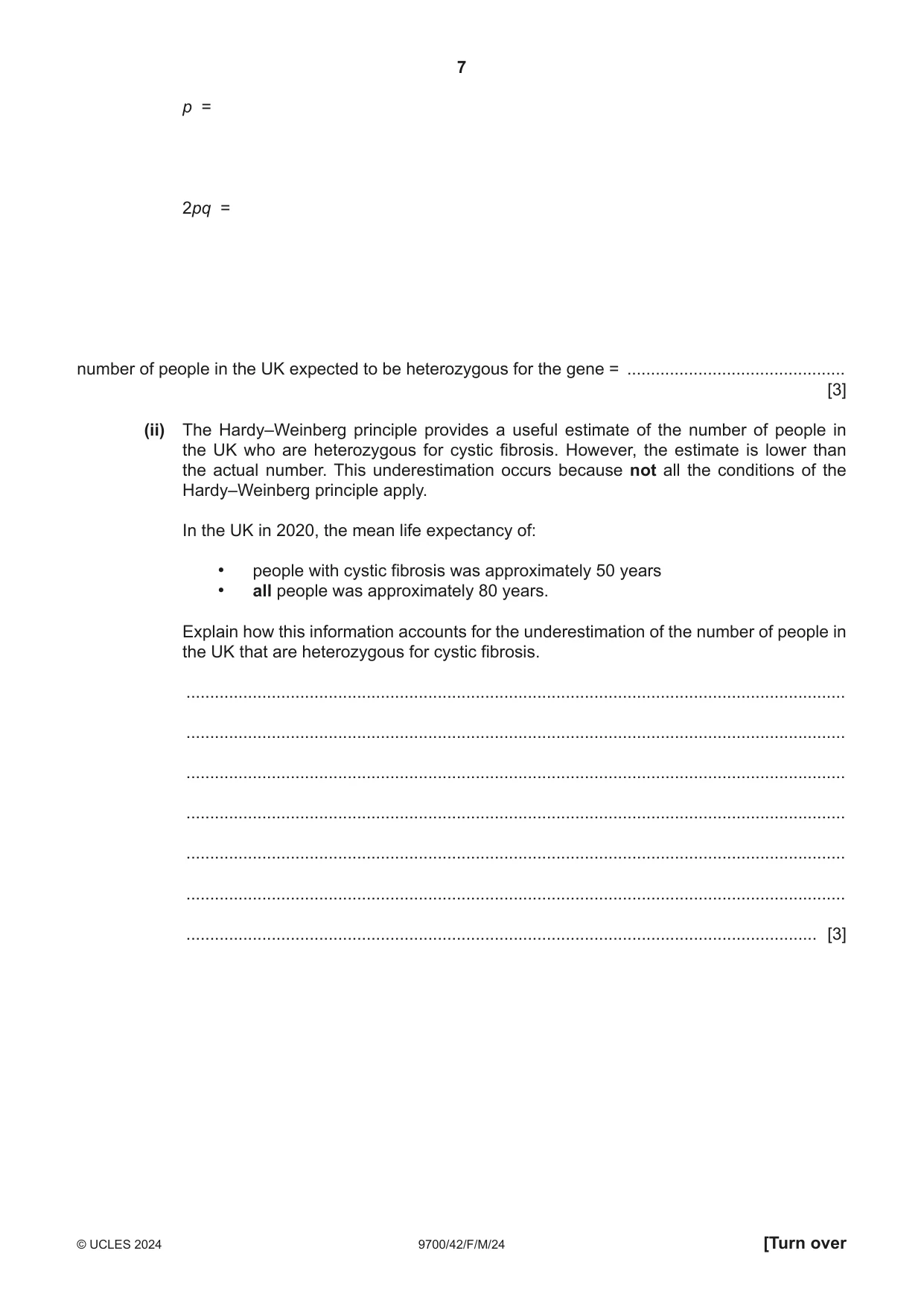
7 9700/42/F/M/24 © UCLES 2024 [Turn over p = 2pq = number of people in the UK expected to be heterozygous for the gene = … [3] (ii) The Hardy–Weinberg principle provides a useful estimate of the number of people in the UK who are heterozygous for cystic fibrosis. However, the estimate is lower than the actual number. This underestimation occurs because not all the conditions of the Hardy–Weinberg principle apply. In the UK in 2020, the mean life expectancy of: • people with cystic fibrosis was approximately 50 years • all people was approximately 80 years. Explain how this information accounts for the underestimation of the number of people in the UK that are heterozygous for cystic fibrosis. … … … … … … … [3]
Question paper, page 8
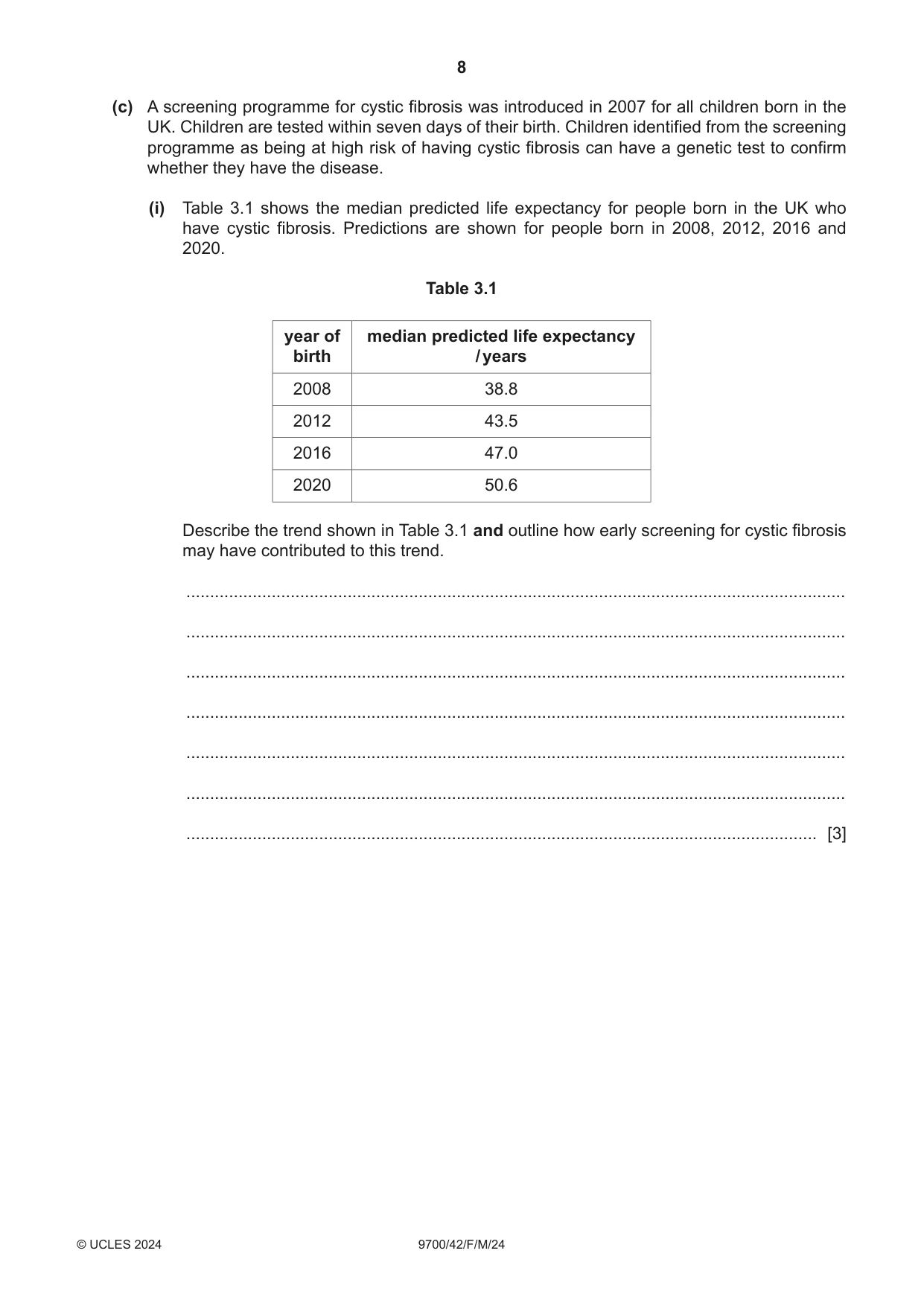
8 9700/42/F/M/24 © UCLES 2024 (c) A screening programme for cystic fibrosis was introduced in 2007 for all children born in the UK. Children are tested within seven days of their birth. Children identified from the screening programme as being at high risk of having cystic fibrosis can have a genetic test to confirm whether they have the disease. (i) Table 3.1 shows the median predicted life expectancy for people born in the UK who have cystic fibrosis. Predictions are shown for people born in 2008, 2012, 2016 and 2020. Table 3.1 year of birth median predicted life expectancy / years 2008 38.8 2012 43.5 2016 47.0 2020 50.6 Describe the trend shown in Table 3.1 and outline how early screening for cystic fibrosis may have contributed to this trend. … … … … … … … [3]
Question paper, page 9
9 9700/42/F/M/24 © UCLES 2024 [Turn over (ii) In many countries, a genetic test for cystic fibrosis is available to adults who do not have cystic fibrosis but have a family member who either has cystic fibrosis or is heterozygous for the gene that causes cystic fibrosis. These adults include partners, parents, offspring, brothers and sisters of the family member. The aim is to find out if any of these adults are heterozygous for the gene that causes cystic fibrosis. Discuss the ethical and social considerations of making a genetic test for cystic fibrosis available to these adults. … … … … … … … [3] [Total: 14]
Question paper, page 10
10 9700/42/F/M/24 © UCLES 2024 BLANK PAGE
Question paper, page 11
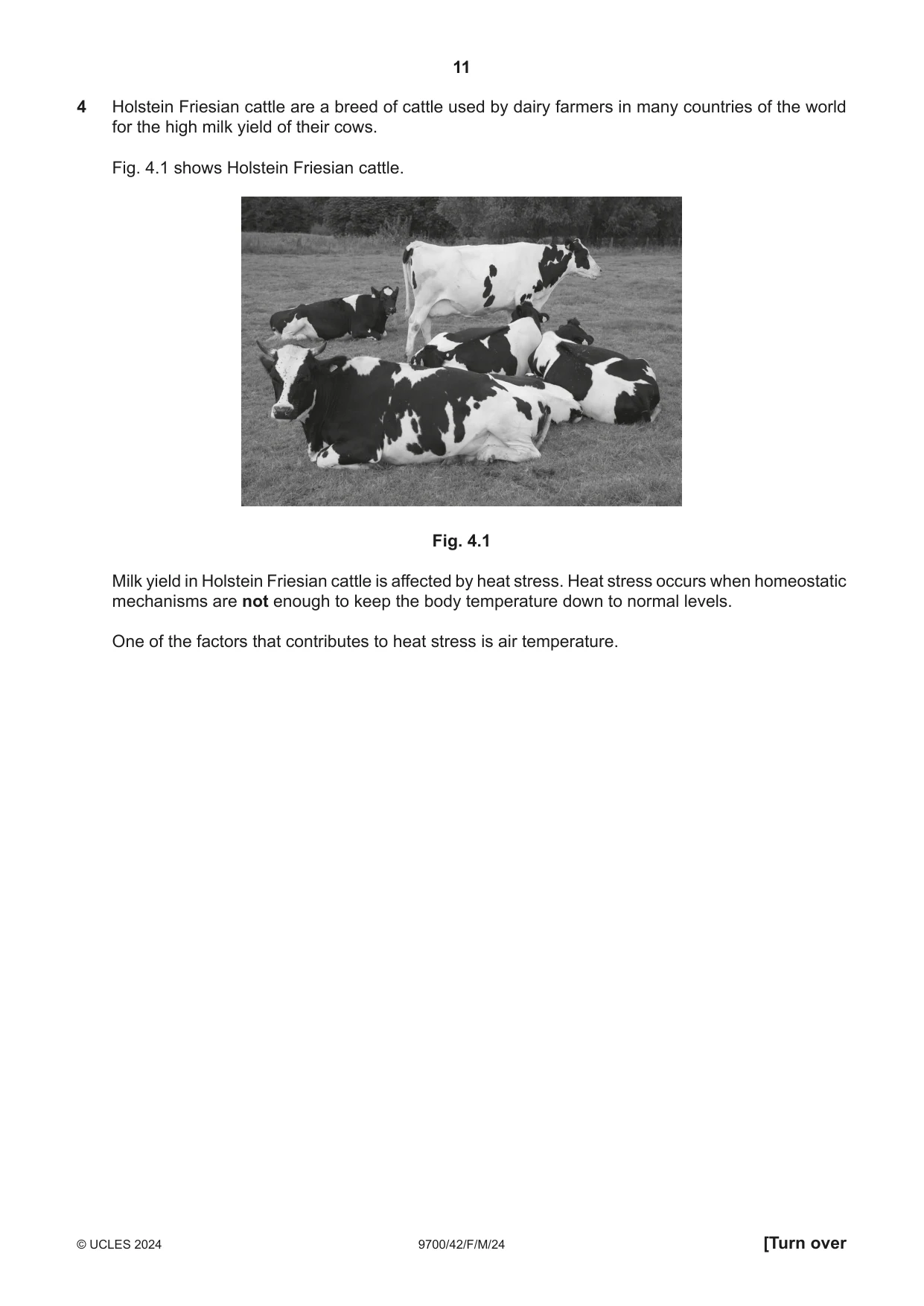
11 9700/42/F/M/24 © UCLES 2024 [Turn over 4 Holstein Friesian cattle are a breed of cattle used by dairy farmers in many countries of the world for the high milk yield of their cows. Fig. 4.1 shows Holstein Friesian cattle. Fig. 4.1 Milk yield in Holstein Friesian cattle is affected by heat stress. Heat stress occurs when homeostatic mechanisms are not enough to keep the body temperature down to normal levels. One of the factors that contributes to heat stress is air temperature.
Question paper, page 12
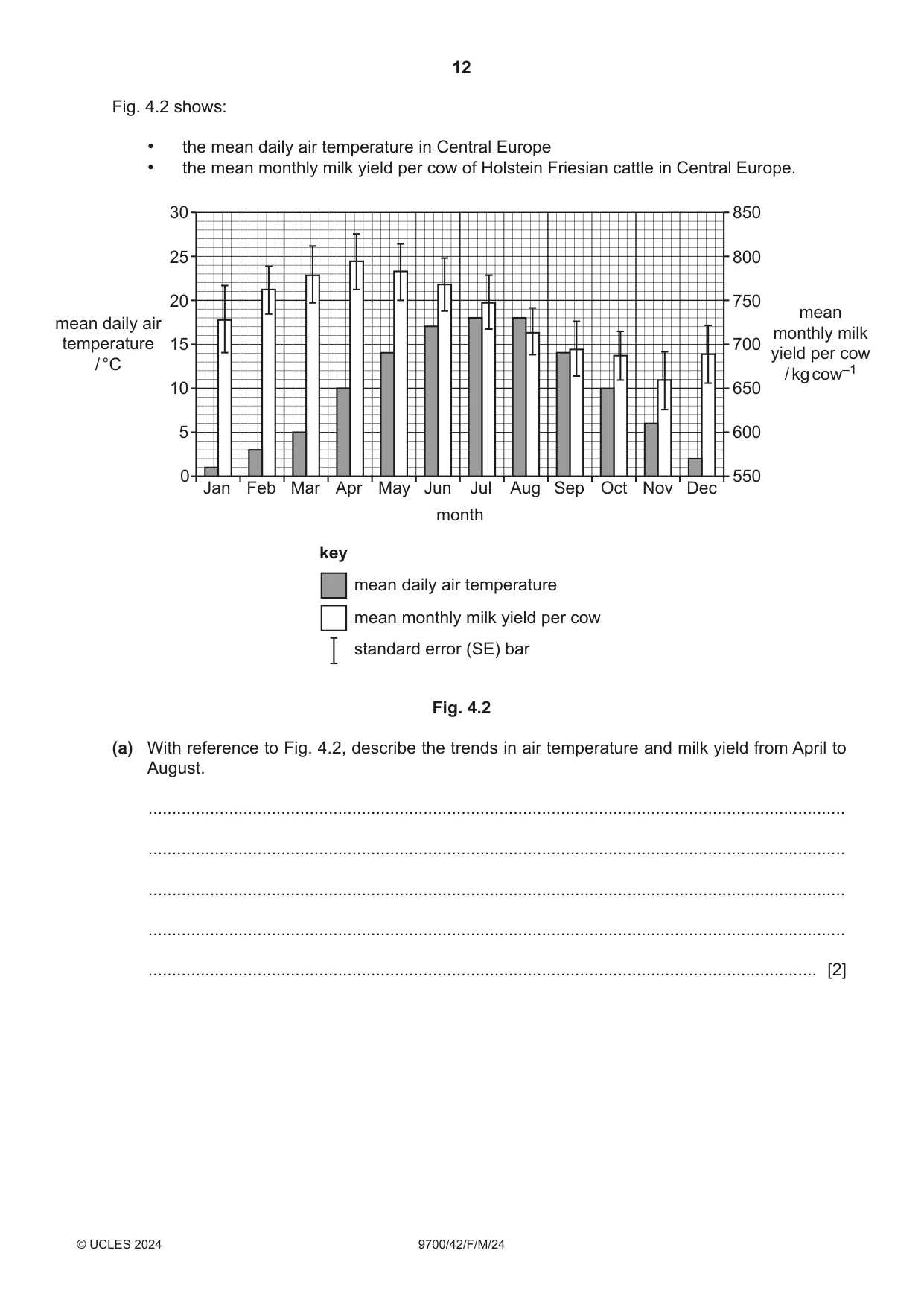
12 9700/42/F/M/24 © UCLES 2024 Fig. 4.2 shows: • the mean daily air temperature in Central Europe • the mean monthly milk yield per cow of Holstein Friesian cattle in Central Europe. 0 5 10 15 20 25 30 550 600 650 700 750 800 850 mean daily air temperature / °C mean monthly milk yield per cow / kg cow–1 month Jan Feb Mar Apr May Jun Jul Aug Sep Oct Nov Dec key mean daily air temperature standard error (SE) bar mean monthly milk yield per cow Fig. 4.2 (a) With reference to Fig. 4.2, describe the trends in air temperature and milk yield from April to August. … … … … … [2]
Question paper, page 13
13 9700/42/F/M/24 © UCLES 2024 [Turn over (b) Many dairy farmers in tropical regions use cattle breeds that are tolerant to heat stress (heat-tolerant cattle). These heat-tolerant cattle: • can tolerate higher air temperatures than Holstein Friesian cattle before heat stress occurs • have milder symptoms of heat stress than Holstein Friesian cattle for the same high air temperatures. Where heat stress does not occur, heat-tolerant cattle produce a lower milk yield than Holstein Friesian cattle under the same conditions. Scientists compared DNA sequences of Holstein Friesian cattle and heat-tolerant cattle for a number of genes known to have an effect on body temperature. Twenty genes were found that had alleles associated only with heat-tolerant cattle. With reference to the information provided, including the data in Fig. 4.2: • state the type (pattern) of phenotypic variation shown by milk yield in cattle • identify factors that cause phenotypic variation in milk yield in cattle. In each case, give a reason for your choice. type (pattern) of phenotypic variation and reason for choice … … … factors that cause phenotypic variation and reason for each choice … … … … … … … [3]
Question paper, page 14
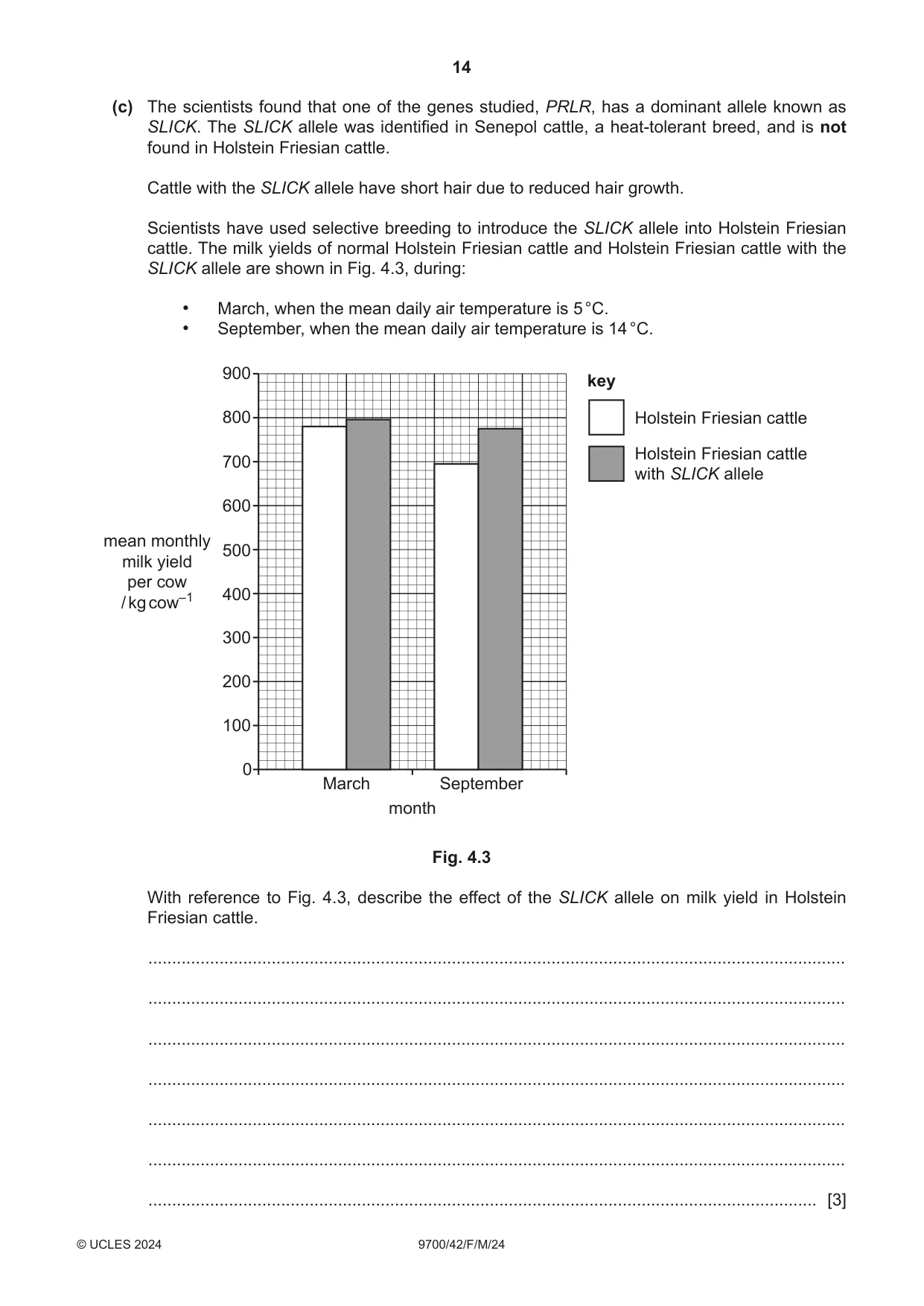
14 9700/42/F/M/24 © UCLES 2024 (c) The scientists found that one of the genes studied, PRLR, has a dominant allele known as SLICK. The SLICK allele was identified in Senepol cattle, a heat-tolerant breed, and is not found in Holstein Friesian cattle. Cattle with the SLICK allele have short hair due to reduced hair growth. Scientists have used selective breeding to introduce the SLICK allele into Holstein Friesian cattle. The milk yields of normal Holstein Friesian cattle and Holstein Friesian cattle with the SLICK allele are shown in Fig. 4.3, during: • March, when the mean daily air temperature is 5 °C. • September, when the mean daily air temperature is 14 °C. 0 100 200 300 400 500 600 700 800 900 mean monthly milk yield per cow / kg cow–1 month March September key Holstein Friesian cattle Holstein Friesian cattle with SLICK allele Fig. 4.3 With reference to Fig. 4.3, describe the effect of the SLICK allele on milk yield in Holstein Friesian cattle. … … … … … … … [3]
Question paper, page 15
15 9700/42/F/M/24 © UCLES 2024 [Turn over (d) The SLICK allele differs from the recessive allele by a single nucleotide deletion. This results in a frameshift mutation and introduces a premature stop codon in the PRLR gene. Scientists can use gene editing to replicate this mutation in Holstein Friesian cattle. This provides a way to introduce the SLICK allele into Holstein Friesian cattle without selective breeding. Compare gene editing and selective breeding for introducing the SLICK allele into Holstein Friesian cattle. Include similarities and differences in your answer. … … … … … … … … … … … … … [6] [Total: 14]
Question paper, page 16
16 9700/42/F/M/24 © UCLES 2024 BLANK PAGE
Question paper, page 17
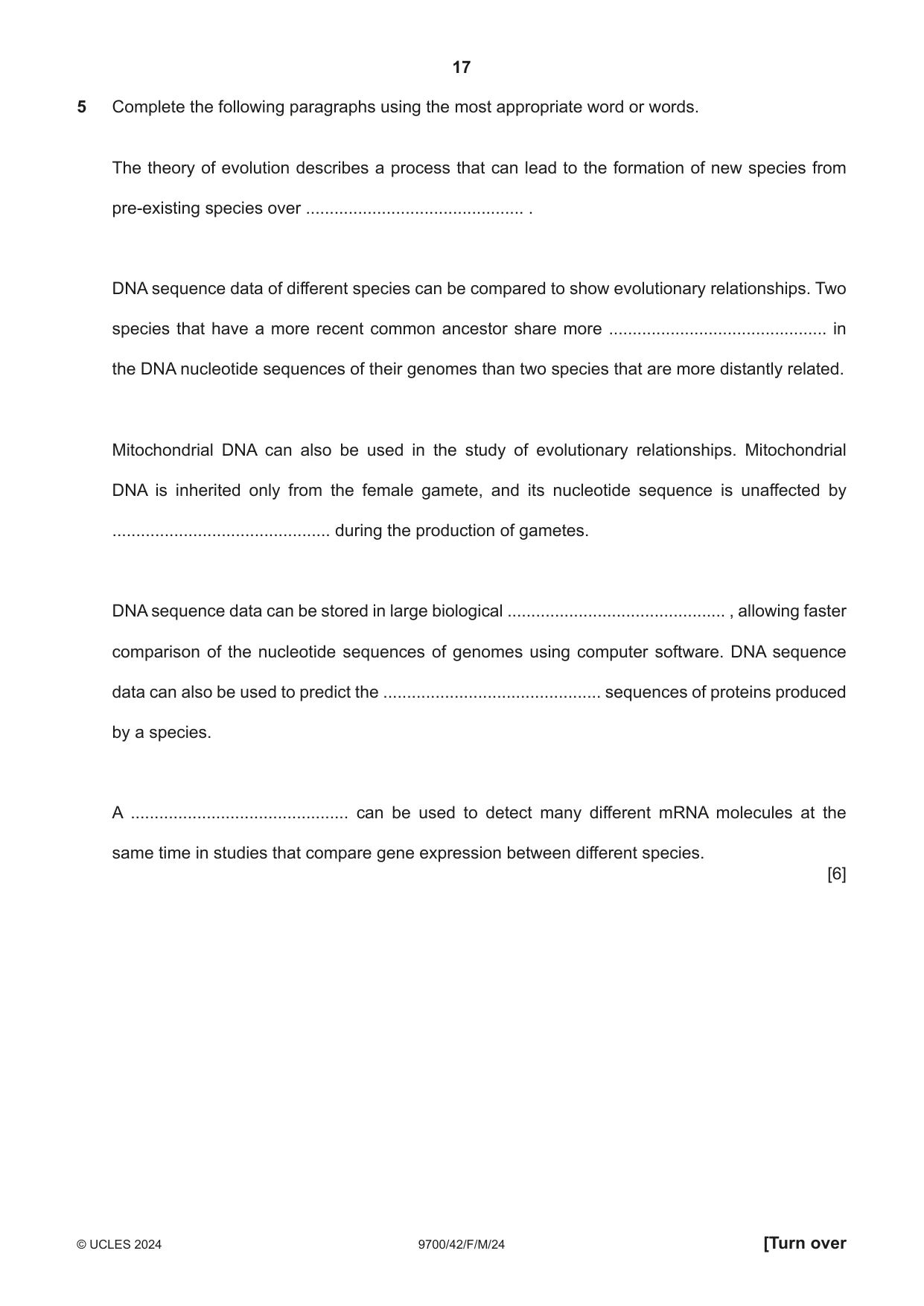
17 9700/42/F/M/24 © UCLES 2024 [Turn over 5 Complete the following paragraphs using the most appropriate word or words. The theory of evolution describes a process that can lead to the formation of new species from pre-existing species over … . DNA sequence data of different species can be compared to show evolutionary relationships. Two species that have a more recent common ancestor share more … in the DNA nucleotide sequences of their genomes than two species that are more distantly related. Mitochondrial DNA can also be used in the study of evolutionary relationships. Mitochondrial DNA is inherited only from the female gamete, and its nucleotide sequence is unaffected by … during the production of gametes. DNA sequence data can be stored in large biological … , allowing faster comparison of the nucleotide sequences of genomes using computer software. DNA sequence data can also be used to predict the … sequences of proteins produced by a species. A … can be used to detect many different mRNA molecules at the same time in studies that compare gene expression between different species. [6]
Question paper, page 18
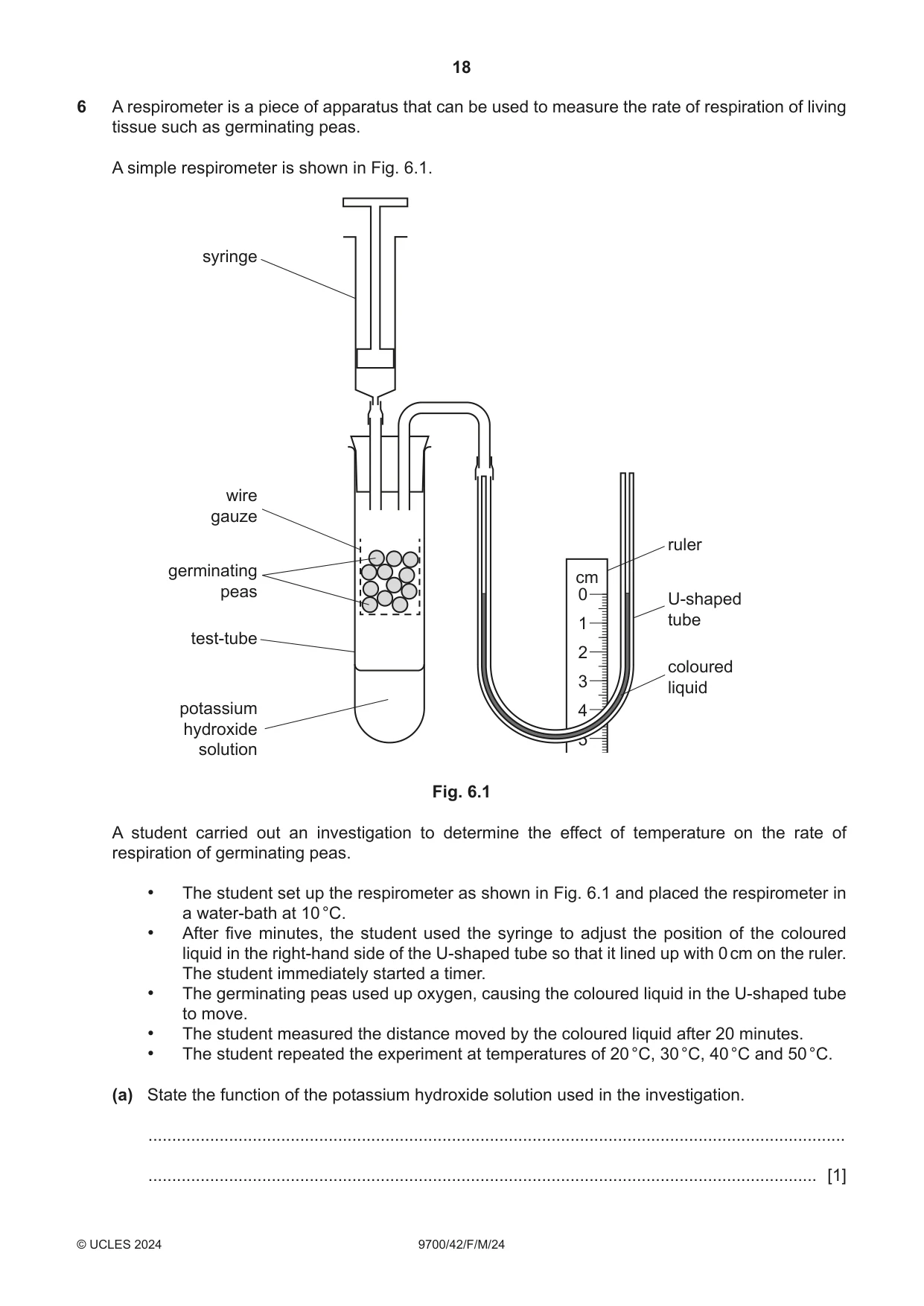
18 9700/42/F/M/24 © UCLES 2024 6 A respirometer is a piece of apparatus that can be used to measure the rate of respiration of living tissue such as germinating peas. A simple respirometer is shown in Fig. 6.1. cm 0 1 2 3 4 5 U-shaped tube ruler coloured liquid syringe wire gauze germinating peas test-tube potassium hydroxide solution Fig. 6.1 A student carried out an investigation to determine the effect of temperature on the rate of respiration of germinating peas. • The student set up the respirometer as shown in Fig. 6.1 and placed the respirometer in a water-bath at 10 °C. • After five minutes, the student used the syringe to adjust the position of the coloured liquid in the right-hand side of the U-shaped tube so that it lined up with 0 cm on the ruler. The student immediately started a timer. • The germinating peas used up oxygen, causing the coloured liquid in the U-shaped tube to move. • The student measured the distance moved by the coloured liquid after 20 minutes. • The student repeated the experiment at temperatures of 20 °C, 30 °C, 40 °C and 50 °C. (a) State the function of the potassium hydroxide solution used in the investigation. … … [1]
Question paper, page 19
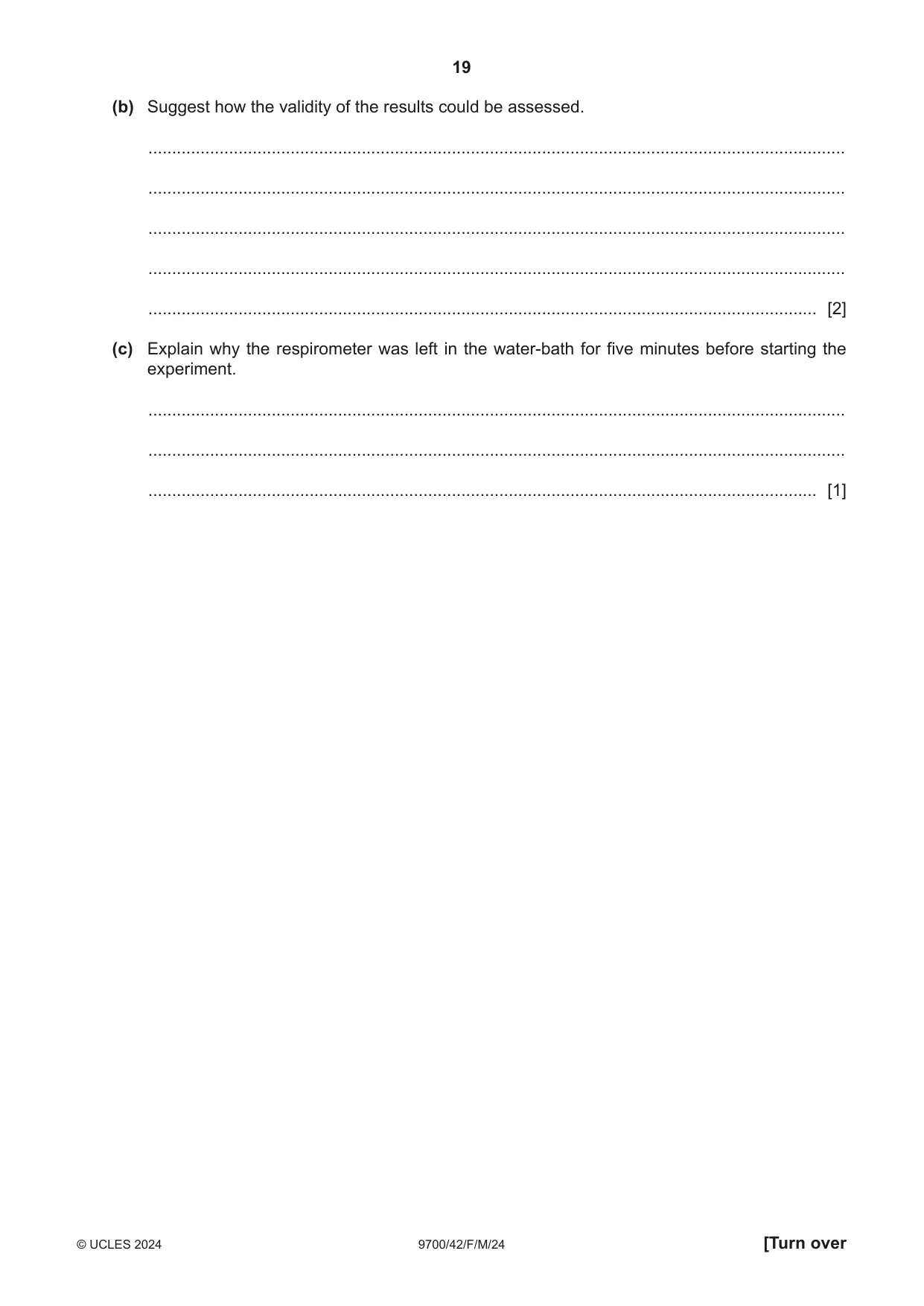
19 9700/42/F/M/24 © UCLES 2024 [Turn over (b) Suggest how the validity of the results could be assessed. … … … … … [2] (c) Explain why the respirometer was left in the water-bath for five minutes before starting the experiment. … … … [1]
Question paper, page 20
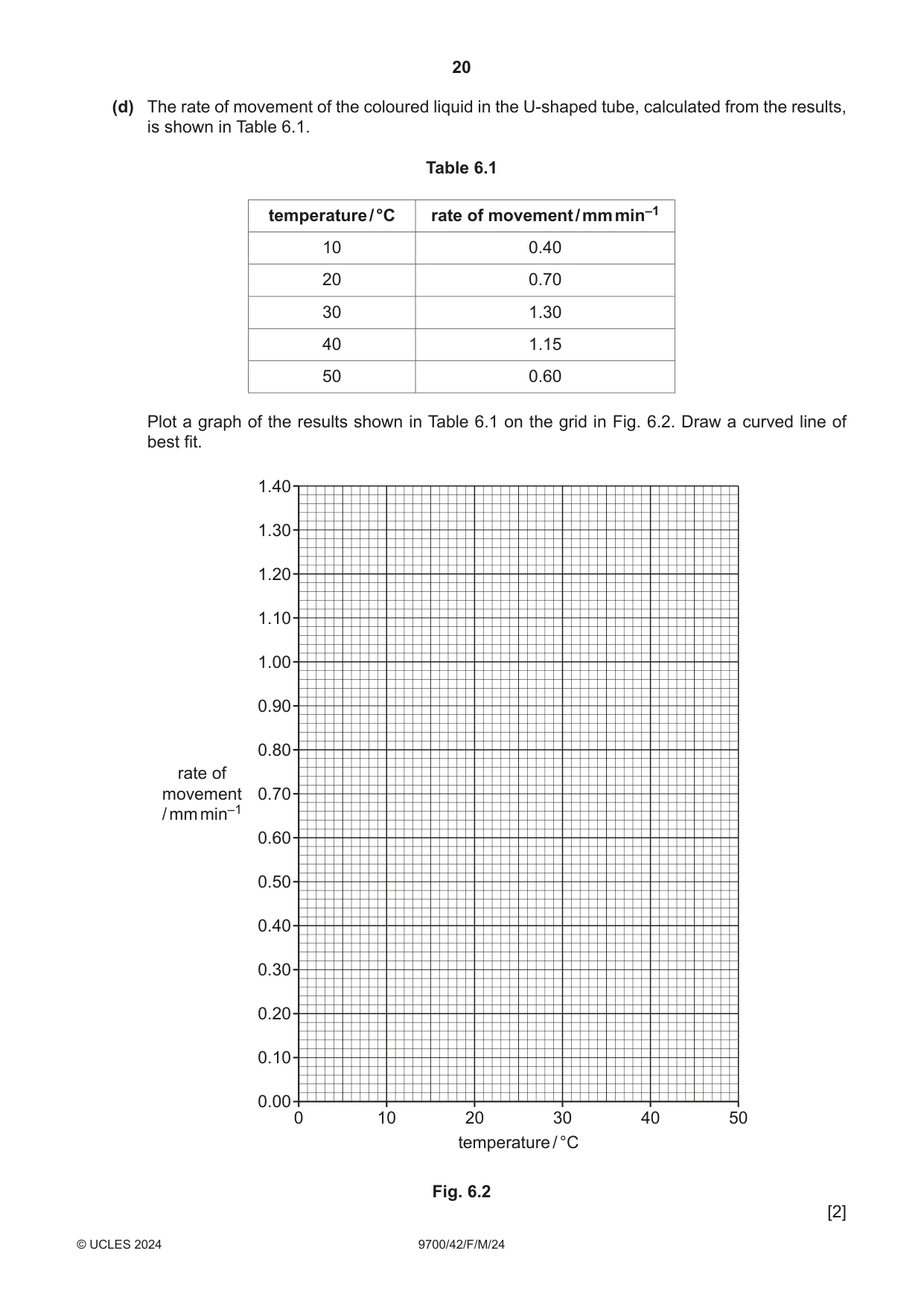
20 9700/42/F/M/24 © UCLES 2024 (d) The rate of movement of the coloured liquid in the U-shaped tube, calculated from the results, is shown in Table 6.1. Table 6.1 temperature / °C rate of movement / mm min–1 10 0.40 20 0.70 30 1.30 40 1.15 50 0.60 Plot a graph of the results shown in Table 6.1 on the grid in Fig. 6.2. Draw a curved line of best fit. 0.00 0.10 0.20 0.30 0.40 0.50 0.60 0.70 0.80 0.90 1.00 1.10 1.20 1.30 1.40 0 10 20 30 40 50 rate of movement / mm min–1 temperature / °C Fig. 6.2 [2]
Question paper, page 21
21 9700/42/F/M/24 © UCLES 2024 [Turn over (e) The rate of movement of the coloured liquid is related to the rate of respiration. Explain the effect of temperature on the rate of respiration shown in Table 6.1 and Fig. 6.2. … … … … … … … [3] [Total: 9]
Question paper, page 22
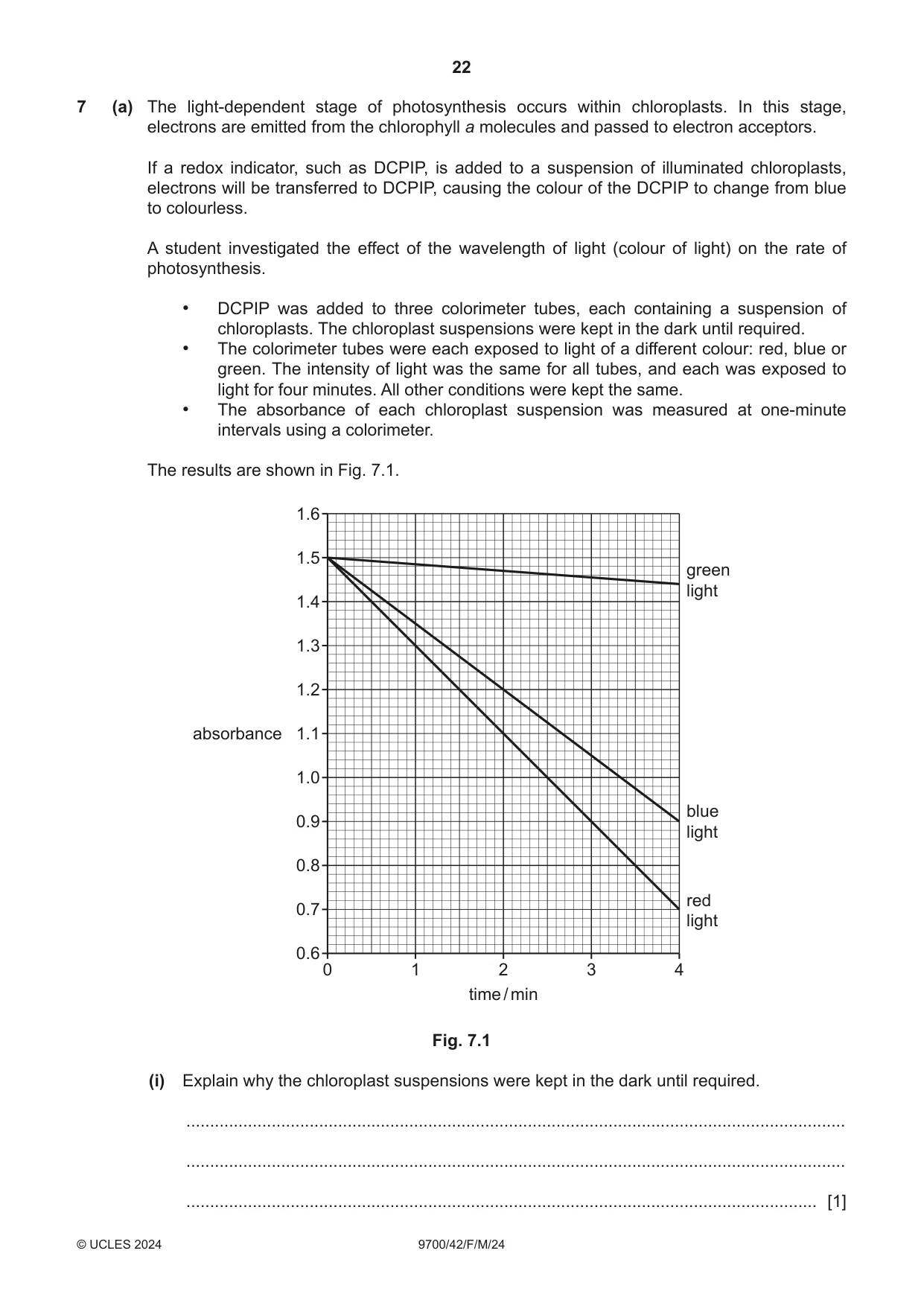
22 9700/42/F/M/24 © UCLES 2024 7 (a) The light-dependent stage of photosynthesis occurs within chloroplasts. In this stage, electrons are emitted from the chlorophyll a molecules and passed to electron acceptors. If a redox indicator, such as DCPIP, is added to a suspension of illuminated chloroplasts, electrons will be transferred to DCPIP, causing the colour of the DCPIP to change from blue to colourless. A student investigated the effect of the wavelength of light (colour of light) on the rate of photosynthesis. • DCPIP was added to three colorimeter tubes, each containing a suspension of chloroplasts. The chloroplast suspensions were kept in the dark until required. • The colorimeter tubes were each exposed to light of a different colour: red, blue or green. The intensity of light was the same for all tubes, and each was exposed to light for four minutes. All other conditions were kept the same. • The absorbance of each chloroplast suspension was measured at one-minute intervals using a colorimeter. The results are shown in Fig. 7.1. 0.6 0.7 0.8 0.9 1.0 1.1 1.2 1.3 1.4 1.5 1.6 0 1 2 3 4 absorbance time / min green light blue light red light Fig. 7.1 (i) Explain why the chloroplast suspensions were kept in the dark until required. … … … [1]
Question paper, page 23
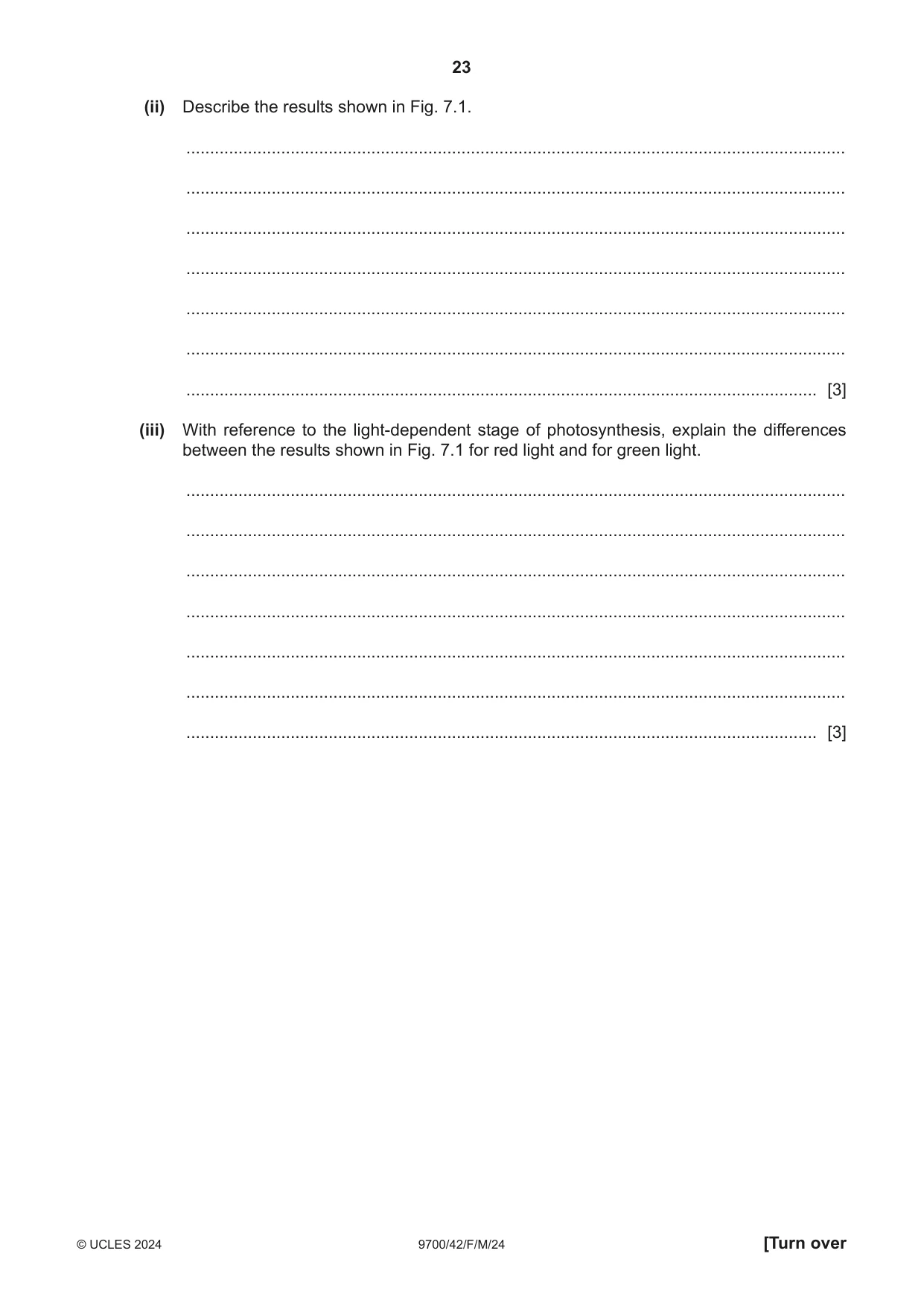
23 9700/42/F/M/24 © UCLES 2024 [Turn over (ii) Describe the results shown in Fig. 7.1. … … … … … … … [3] (iii) With reference to the light-dependent stage of photosynthesis, explain the differences between the results shown in Fig. 7.1 for red light and for green light. … … … … … … … [3]
Question paper, page 24
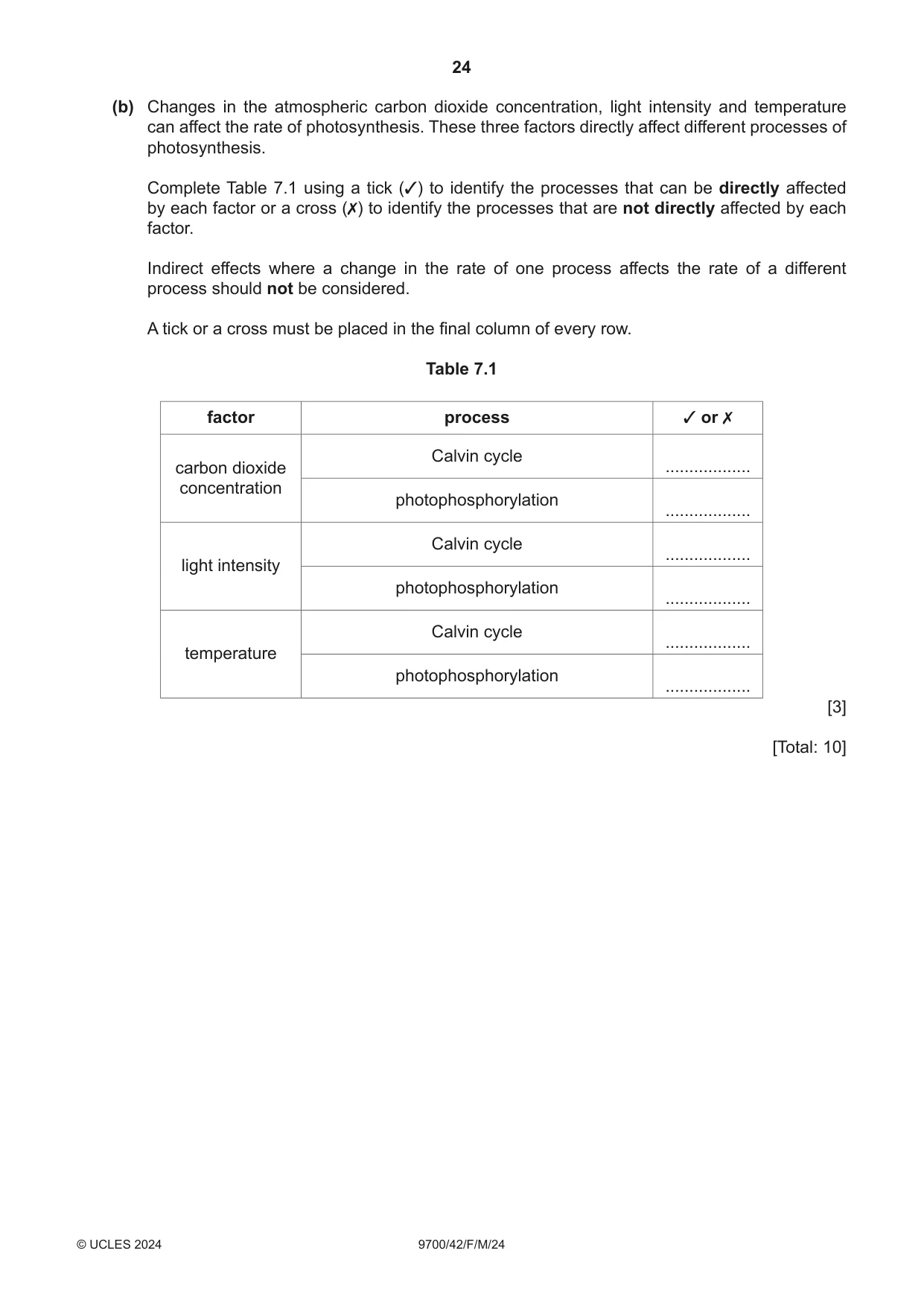
24 9700/42/F/M/24 © UCLES 2024 (b) Changes in the atmospheric carbon dioxide concentration, light intensity and temperature can affect the rate of photosynthesis. These three factors directly affect different processes of photosynthesis. Complete Table 7.1 using a tick (3) to identify the processes that can be directly affected by each factor or a cross (7) to identify the processes that are not directly affected by each factor. Indirect effects where a change in the rate of one process affects the rate of a different process should not be considered. A tick or a cross must be placed in the final column of every row. Table 7.1 factor process 3 or 7 carbon dioxide concentration Calvin cycle … photophosphorylation … light intensity Calvin cycle … photophosphorylation … temperature Calvin cycle … photophosphorylation … [3] [Total: 10]
Question paper, page 25
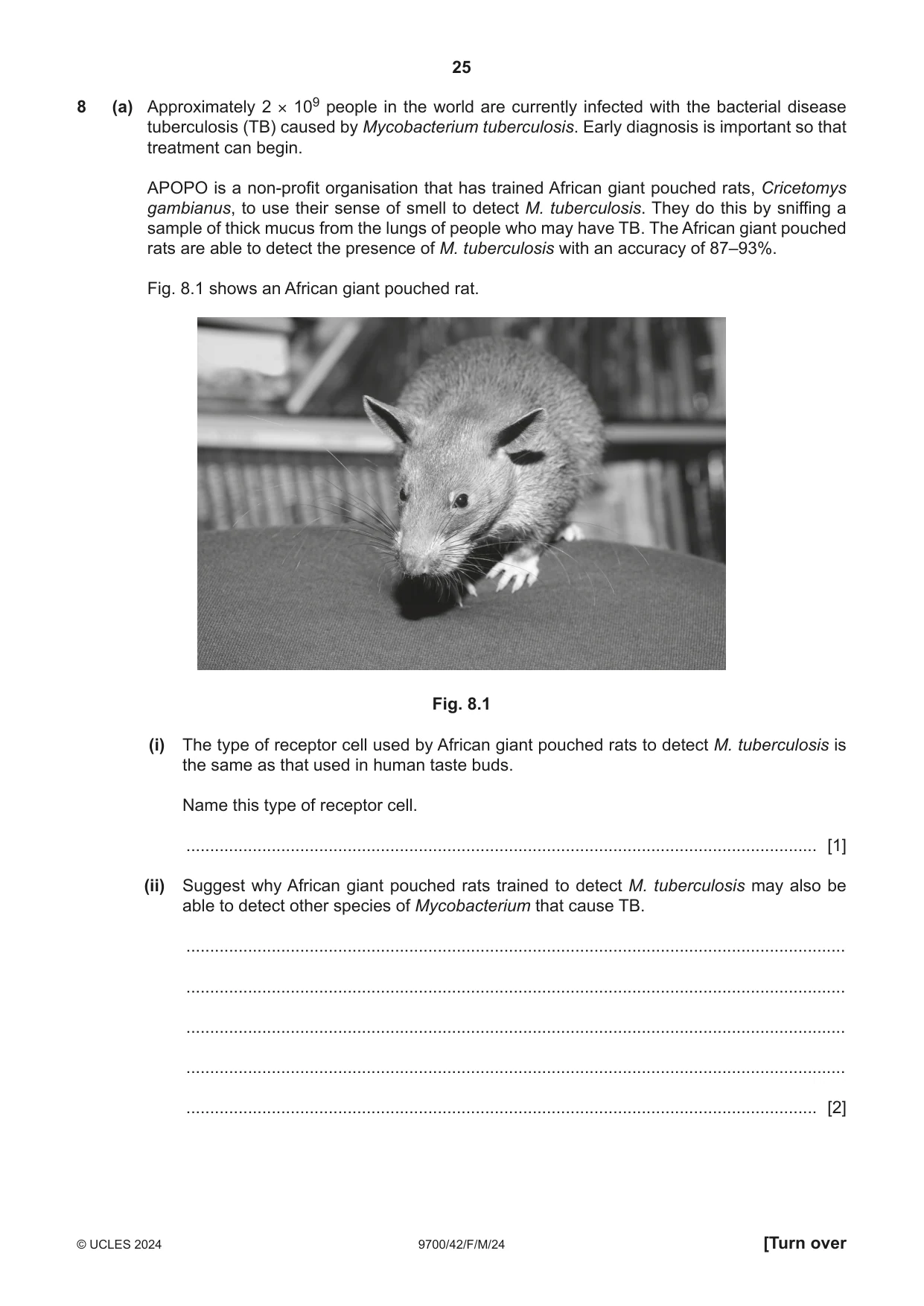
25 9700/42/F/M/24 © UCLES 2024 [Turn over 8 (a) Approximately 2 × 10⁹ people in the world are currently infected with the bacterial disease tuberculosis (TB) caused by Mycobacterium tuberculosis. Early diagnosis is important so that treatment can begin. APOPO is a non-profit organisation that has trained African giant pouched rats, Cricetomys gambianus, to use their sense of smell to detect M. tuberculosis. They do this by sniffing a sample of thick mucus from the lungs of people who may have TB. The African giant pouched rats are able to detect the presence of M. tuberculosis with an accuracy of 87–93%. Fig. 8.1 shows an African giant pouched rat. Fig. 8.1 (i) The type of receptor cell used by African giant pouched rats to detect M. tuberculosis is the same as that used in human taste buds. Name this type of receptor cell. … [1] (ii) Suggest why African giant pouched rats trained to detect M. tuberculosis may also be able to detect other species of Mycobacterium that cause TB. … … … … … [2]
Question paper, page 26
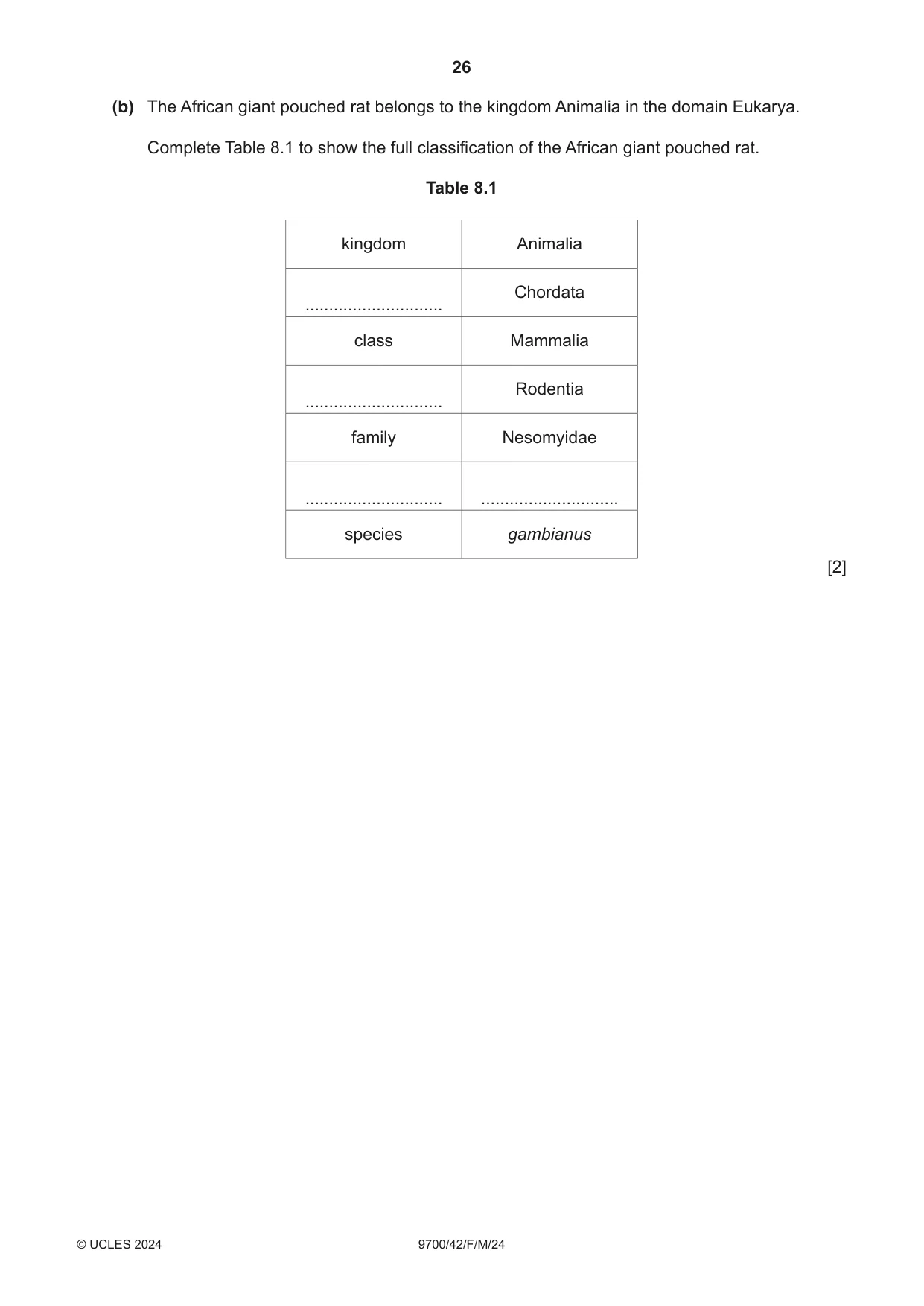
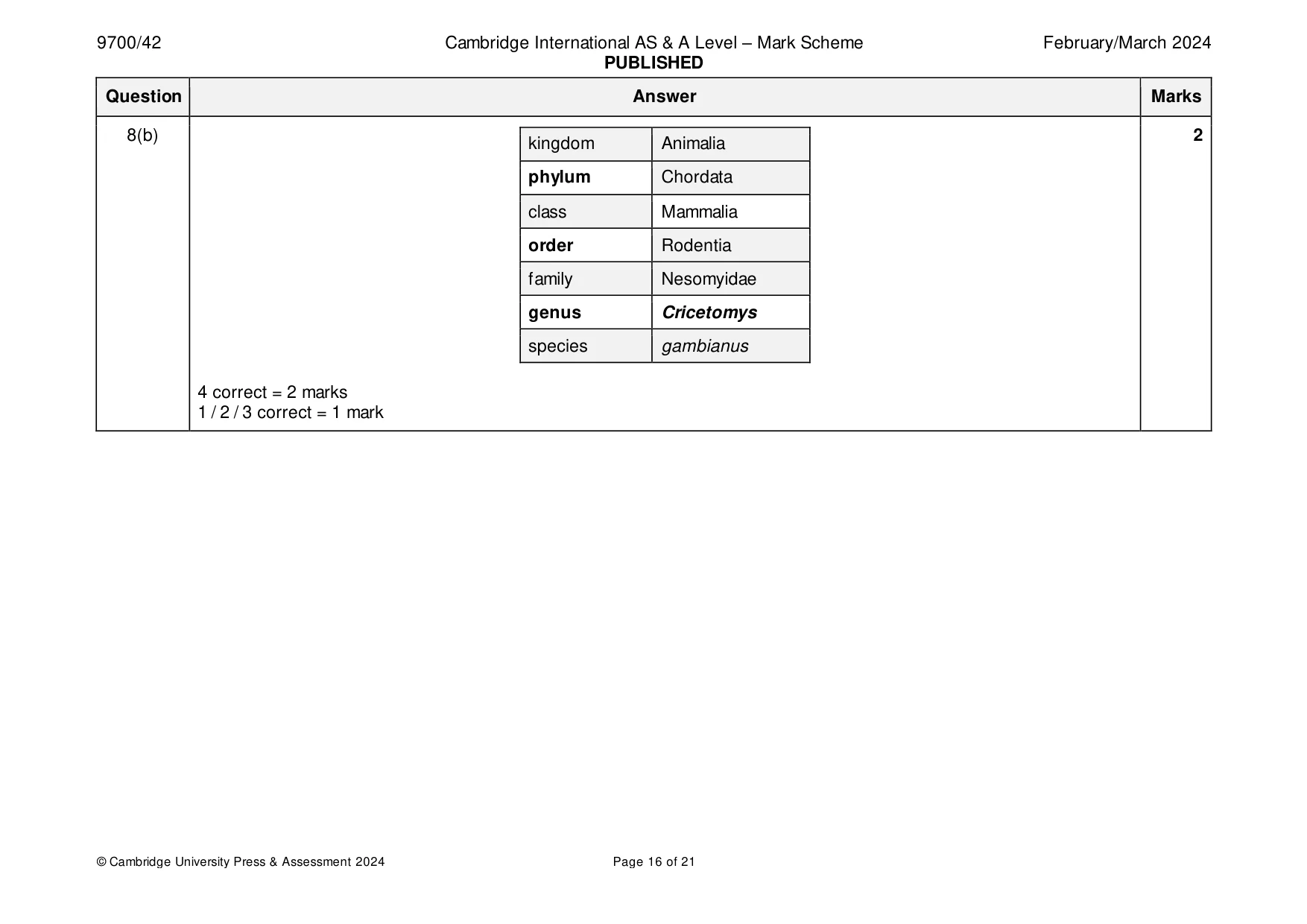
26 9700/42/F/M/24 © UCLES 2024 (b) The African giant pouched rat belongs to the kingdom Animalia in the domain Eukarya. Complete Table 8.1 to show the full classification of the African giant pouched rat. Table 8.1 kingdom Animalia … Chordata class Mammalia … Rodentia family Nesomyidae … … species gambianus [2]
Question paper, page 27
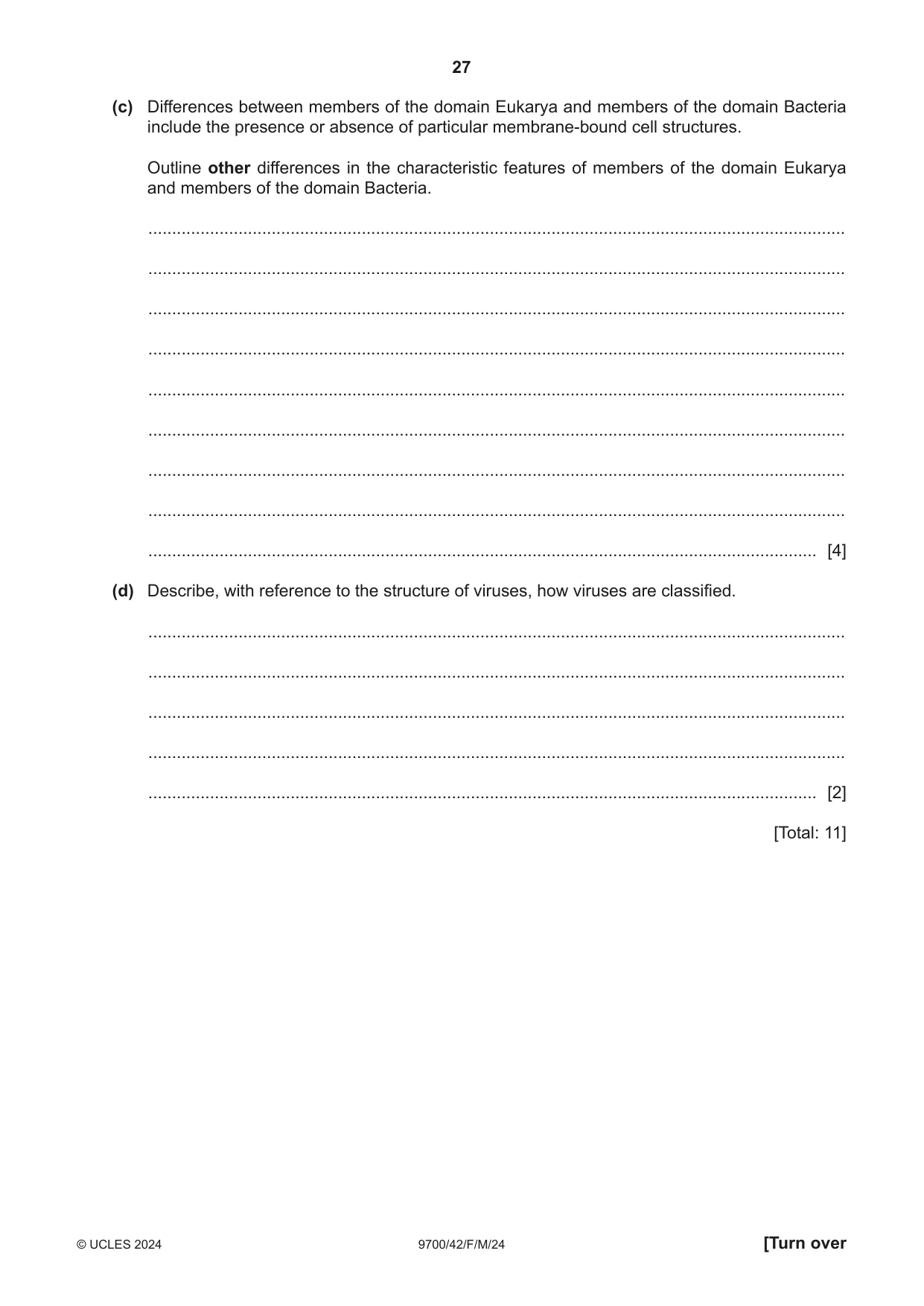
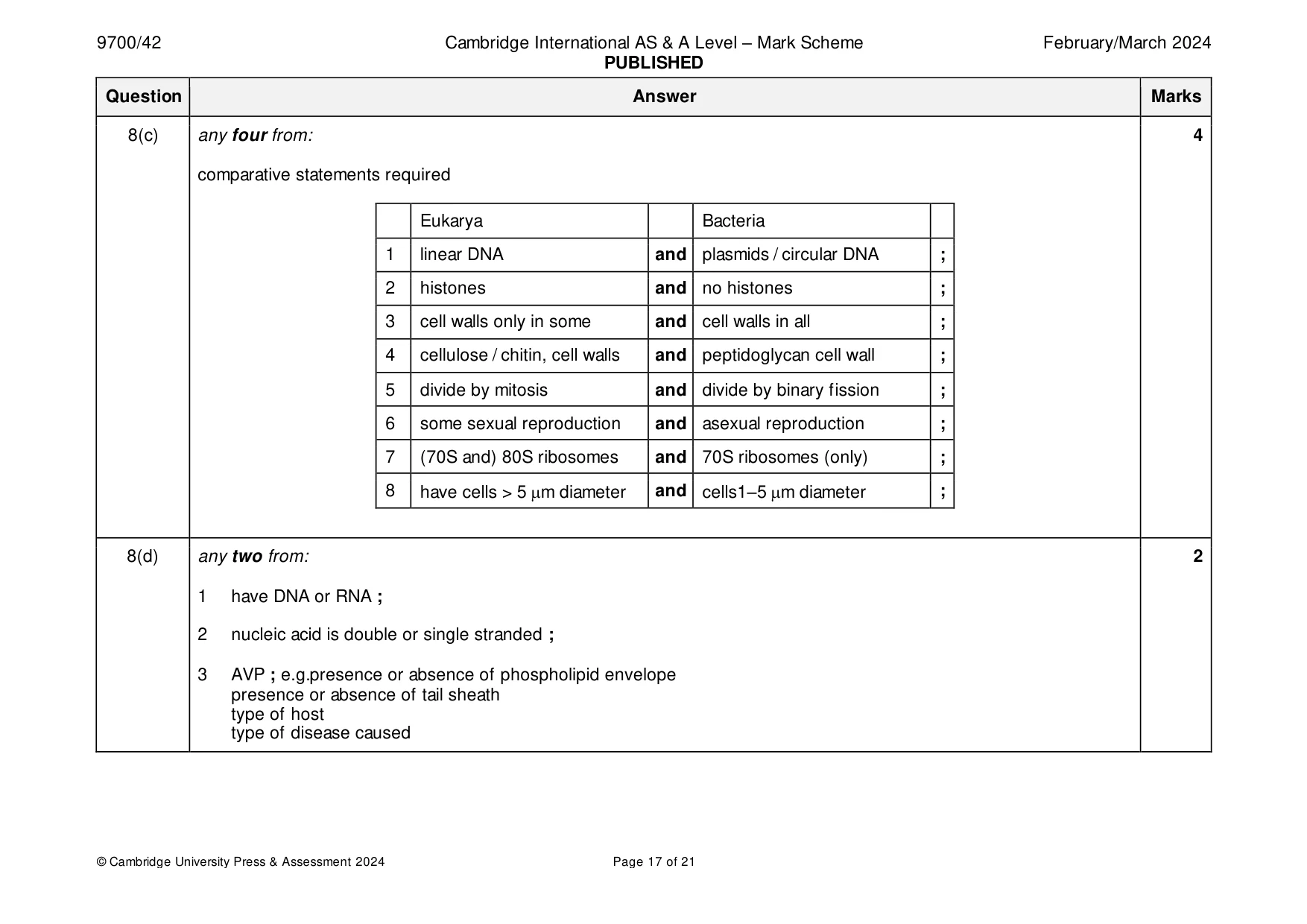
27 9700/42/F/M/24 © UCLES 2024 [Turn over (c) Differences between members of the domain Eukarya and members of the domain Bacteria include the presence or absence of particular membrane-bound cell structures. Outline other differences in the characteristic features of members of the domain Eukarya and members of the domain Bacteria. … … … … … … … … … [4] (d) Describe, with reference to the structure of viruses, how viruses are classified. … … … … … [2] [Total: 11]
Question paper, page 28
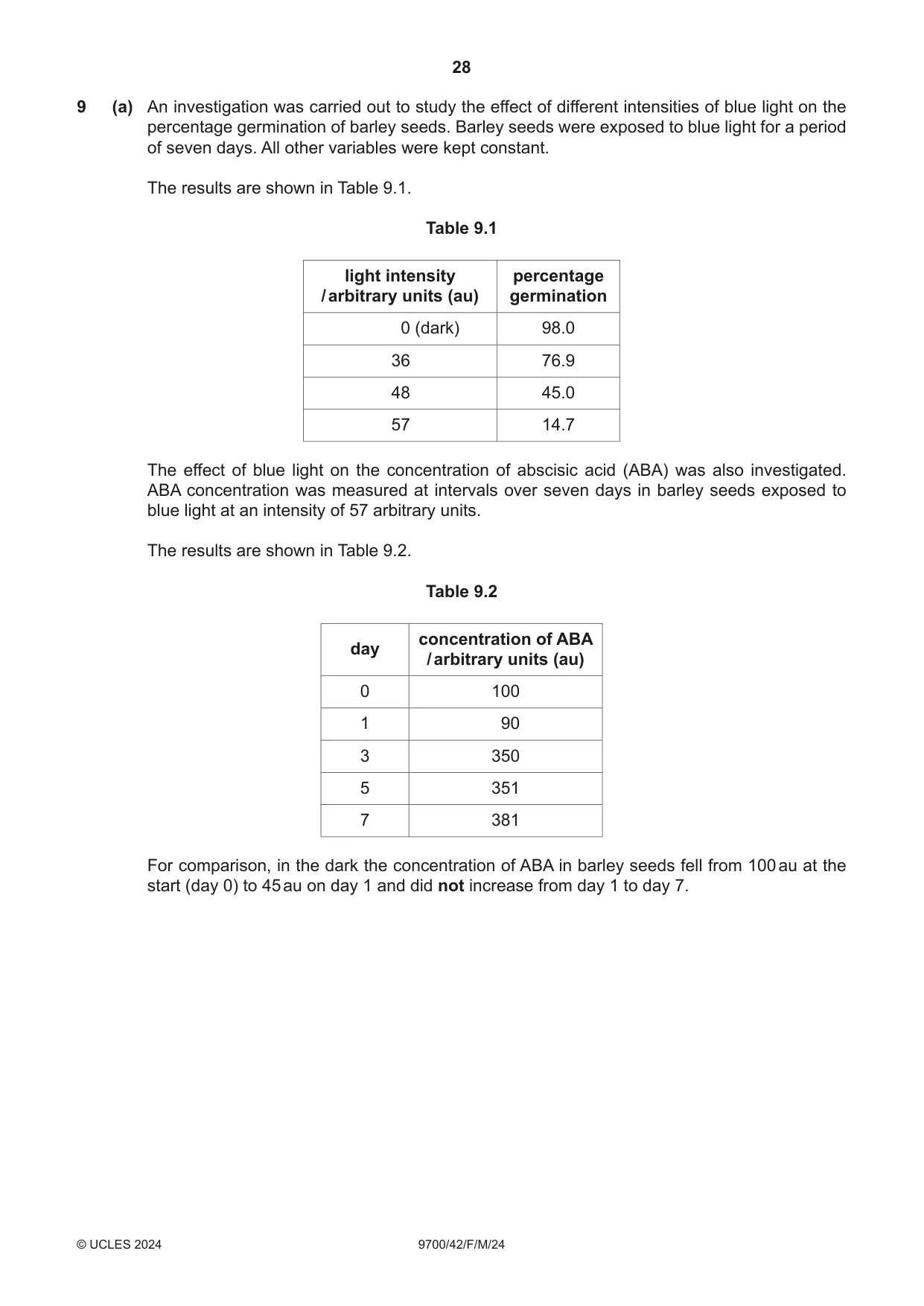
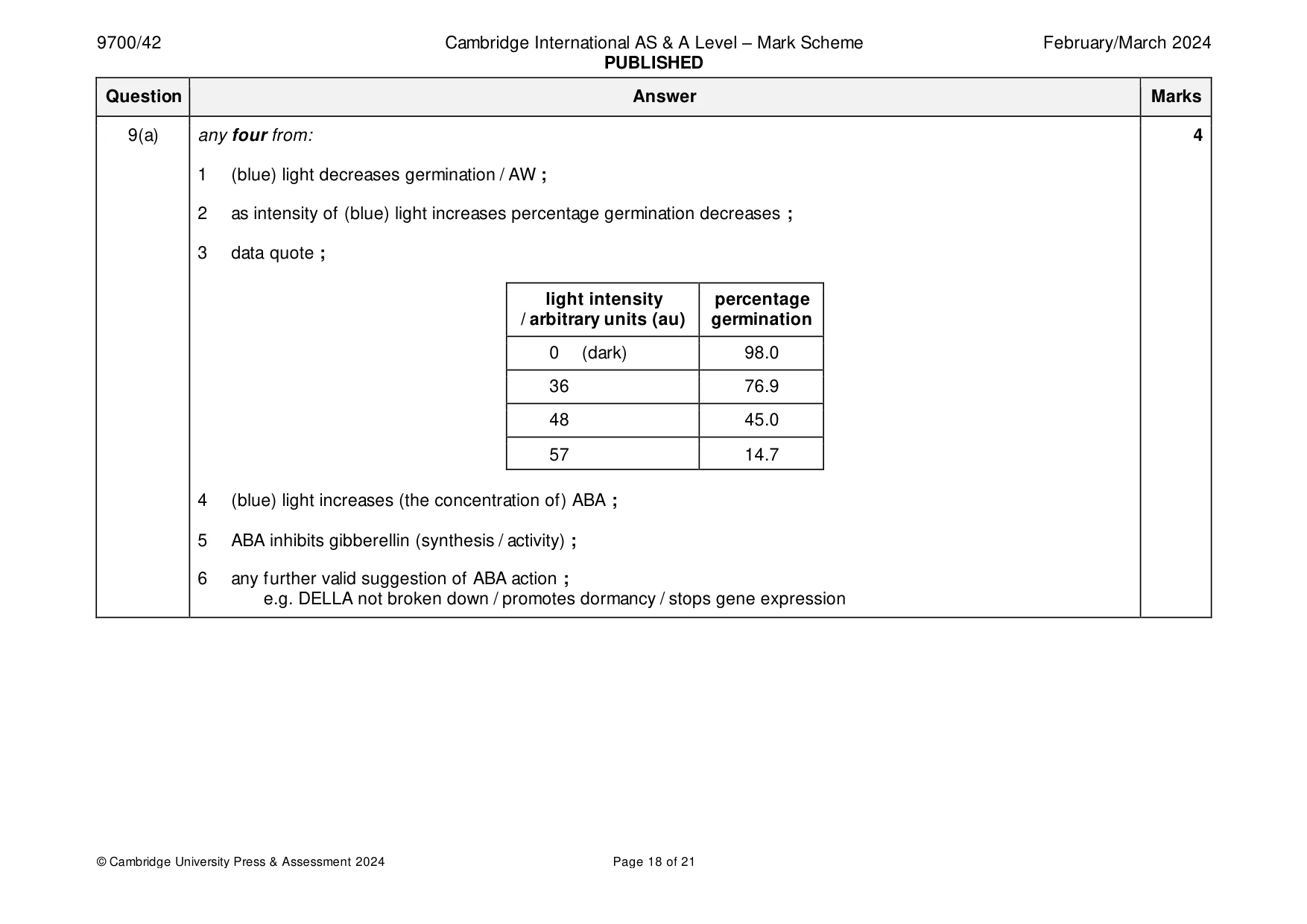
28 9700/42/F/M/24 © UCLES 2024 9 (a) An investigation was carried out to study the effect of different intensities of blue light on the percentage germination of barley seeds. Barley seeds were exposed to blue light for a period of seven days. All other variables were kept constant. The results are shown in Table 9.1. Table 9.1 light intensity / arbitrary units (au) percentage germination 0 (dark) 98.0 36 76.9 48 45.0 57 14.7 The effect of blue light on the concentration of abscisic acid (ABA) was also investigated. ABA concentration was measured at intervals over seven days in barley seeds exposed to blue light at an intensity of 57 arbitrary units. The results are shown in Table 9.2. Table 9.2 day concentration of ABA / arbitrary units (au) 0 100 1 90 3 350 5 351 7 381 For comparison, in the dark the concentration of ABA in barley seeds fell from 100 au at the start (day 0) to 45 au on day 1 and did not increase from day 1 to day 7.
Question paper, page 29
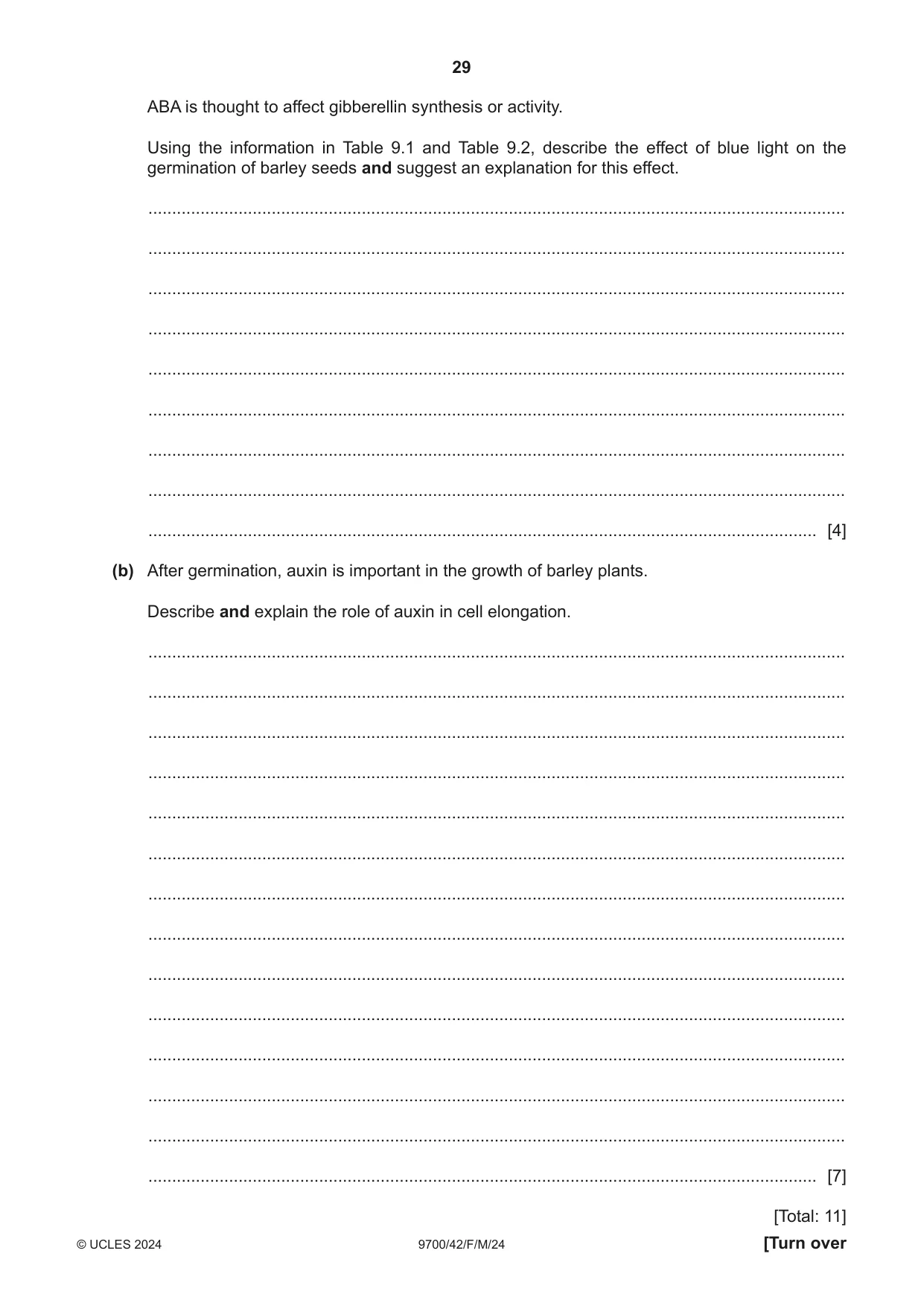
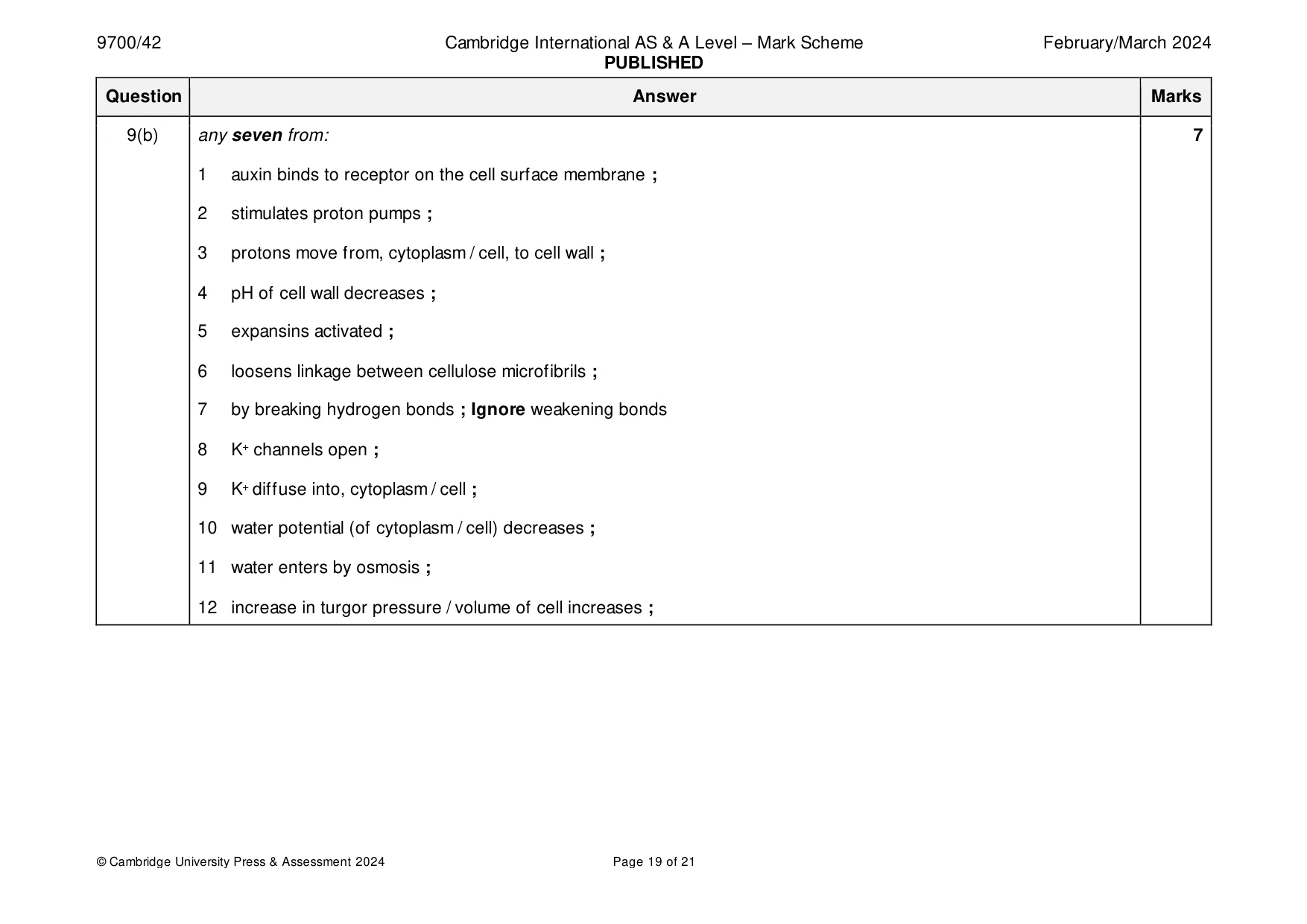
29 9700/42/F/M/24 © UCLES 2024 [Turn over ABA is thought to affect gibberellin synthesis or activity. Using the information in Table 9.1 and Table 9.2, describe the effect of blue light on the germination of barley seeds and suggest an explanation for this effect. … … … … … … … … … [4] (b) After germination, auxin is important in the growth of barley plants. Describe and explain the role of auxin in cell elongation. … … … … … … … … … … … … … … [7] [Total: 11]
Question paper, page 30
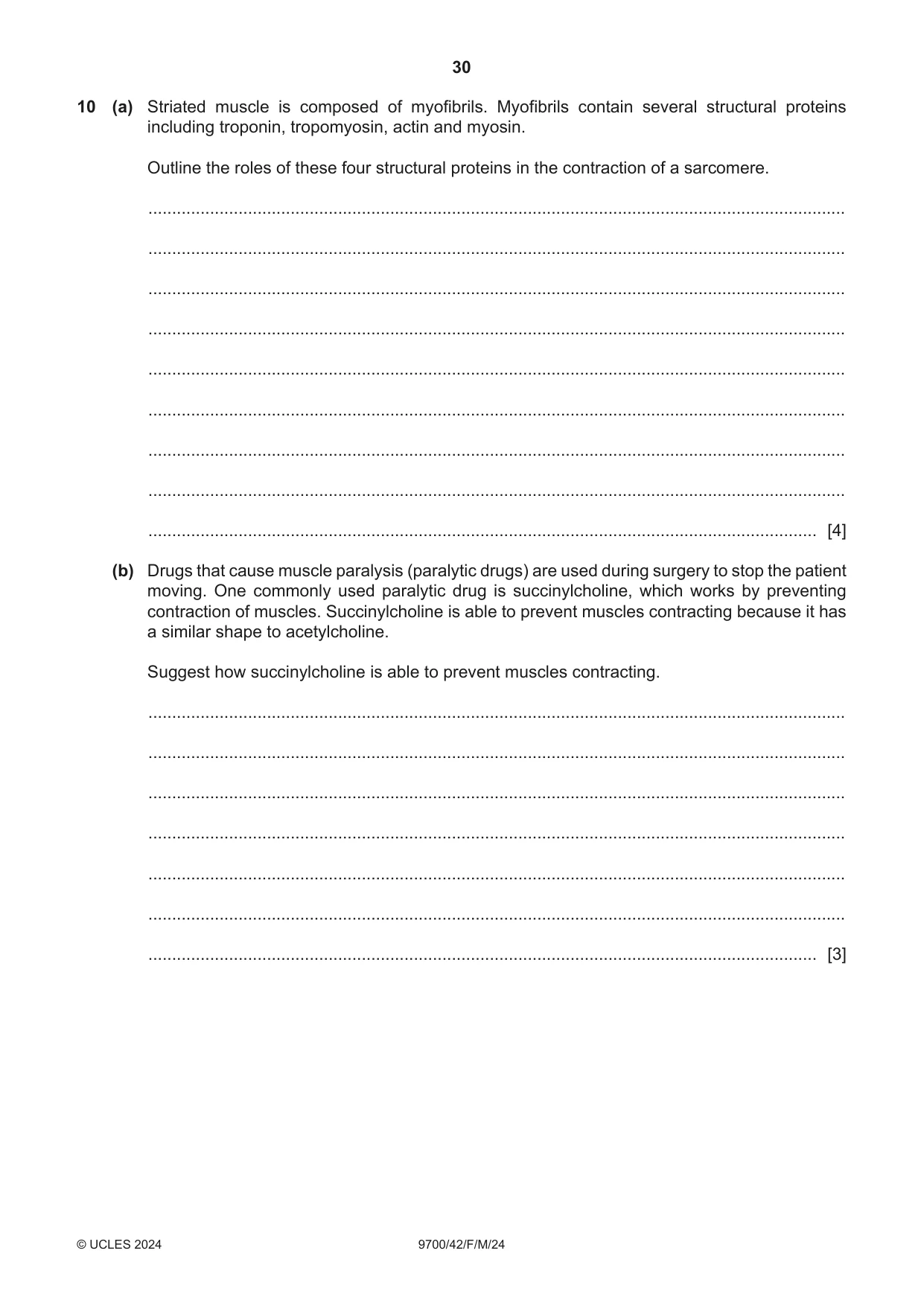
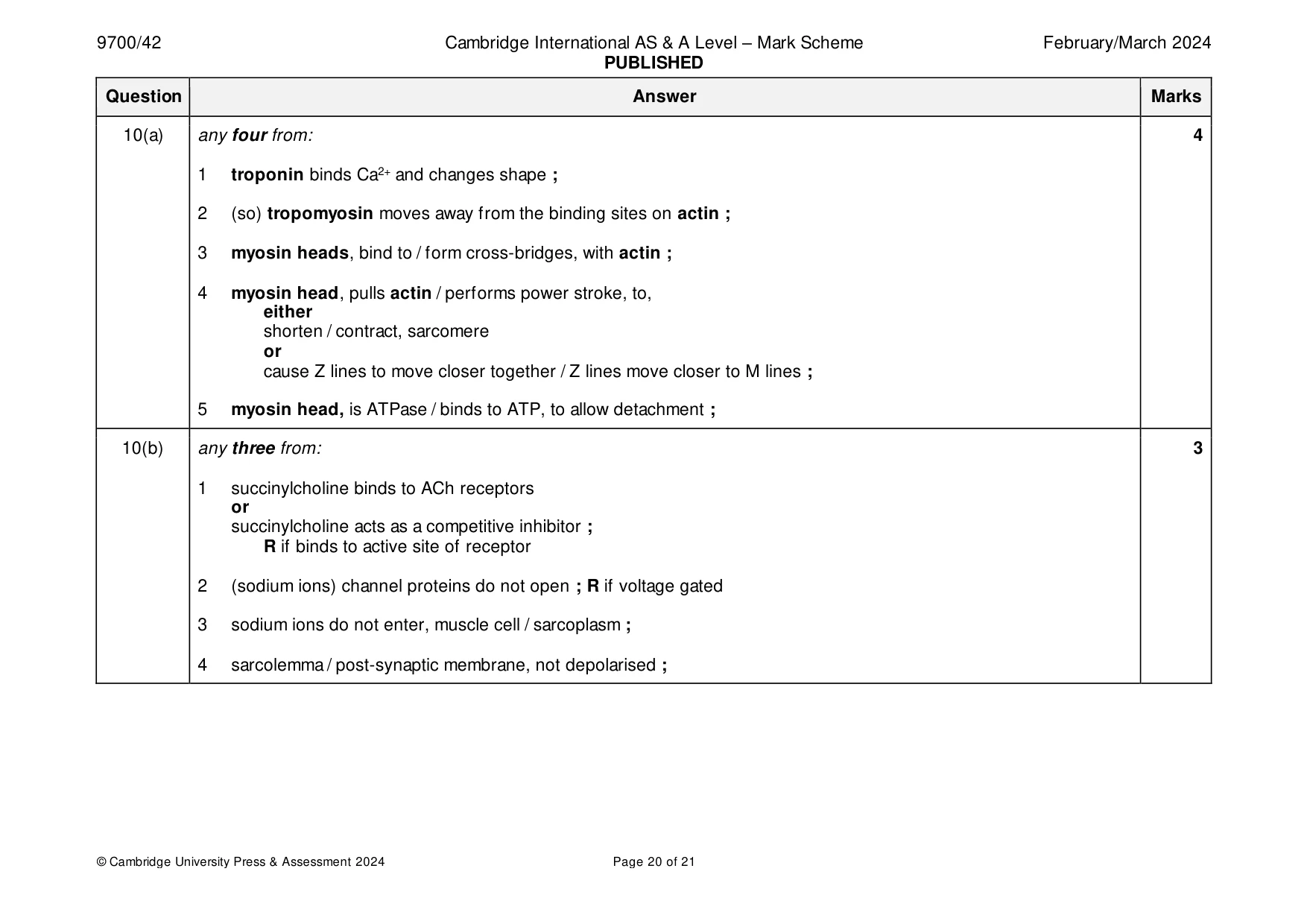
30 9700/42/F/M/24 © UCLES 2024 10 (a) Striated muscle is composed of myofibrils. Myofibrils contain several structural proteins including troponin, tropomyosin, actin and myosin. Outline the roles of these four structural proteins in the contraction of a sarcomere. … … … … … … … … … [4] (b) Drugs that cause muscle paralysis (paralytic drugs) are used during surgery to stop the patient moving. One commonly used paralytic drug is succinylcholine, which works by preventing contraction of muscles. Succinylcholine is able to prevent muscles contracting because it has a similar shape to acetylcholine. Suggest how succinylcholine is able to prevent muscles contracting. … … … … … … … [3]
Question paper, page 31
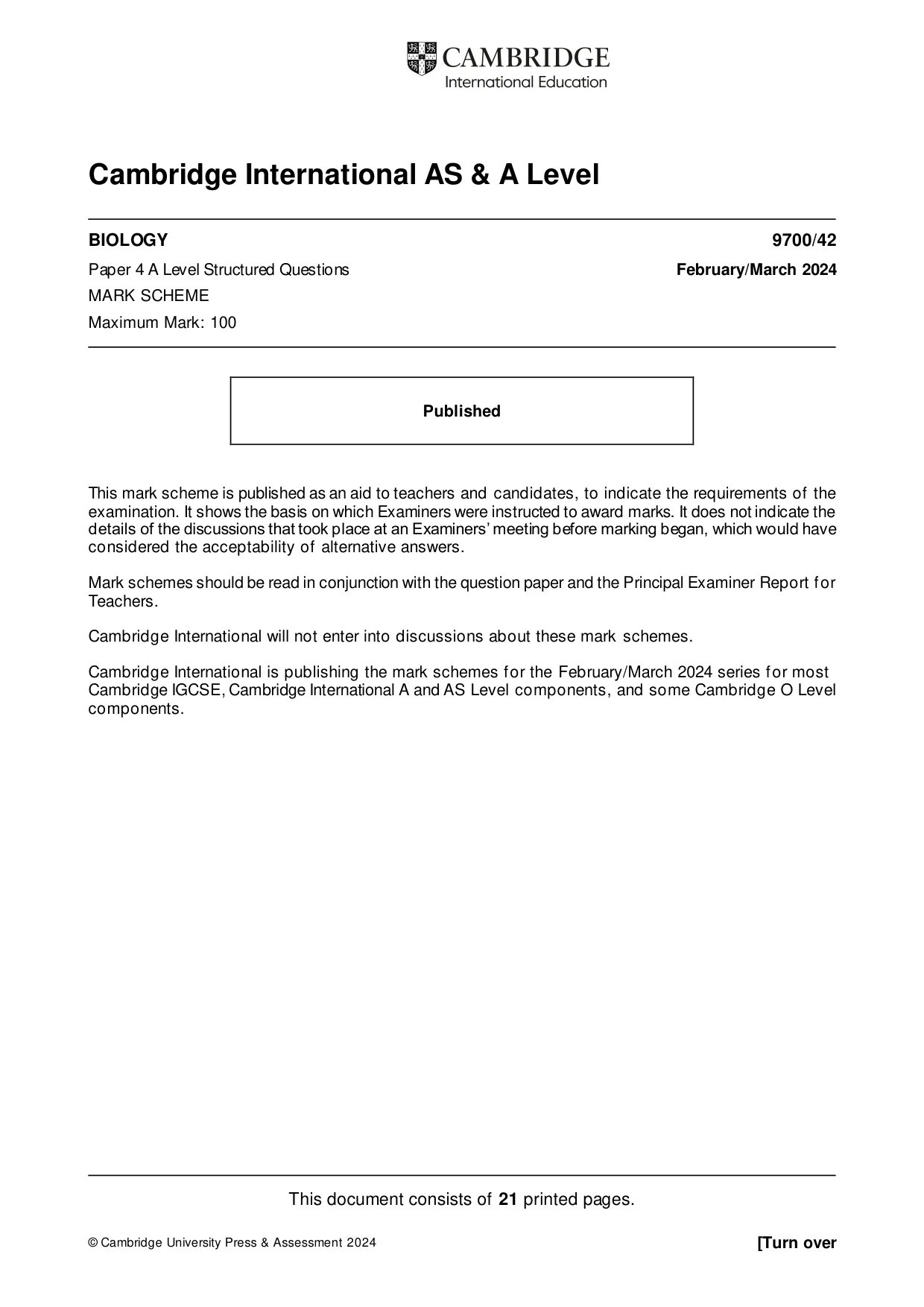
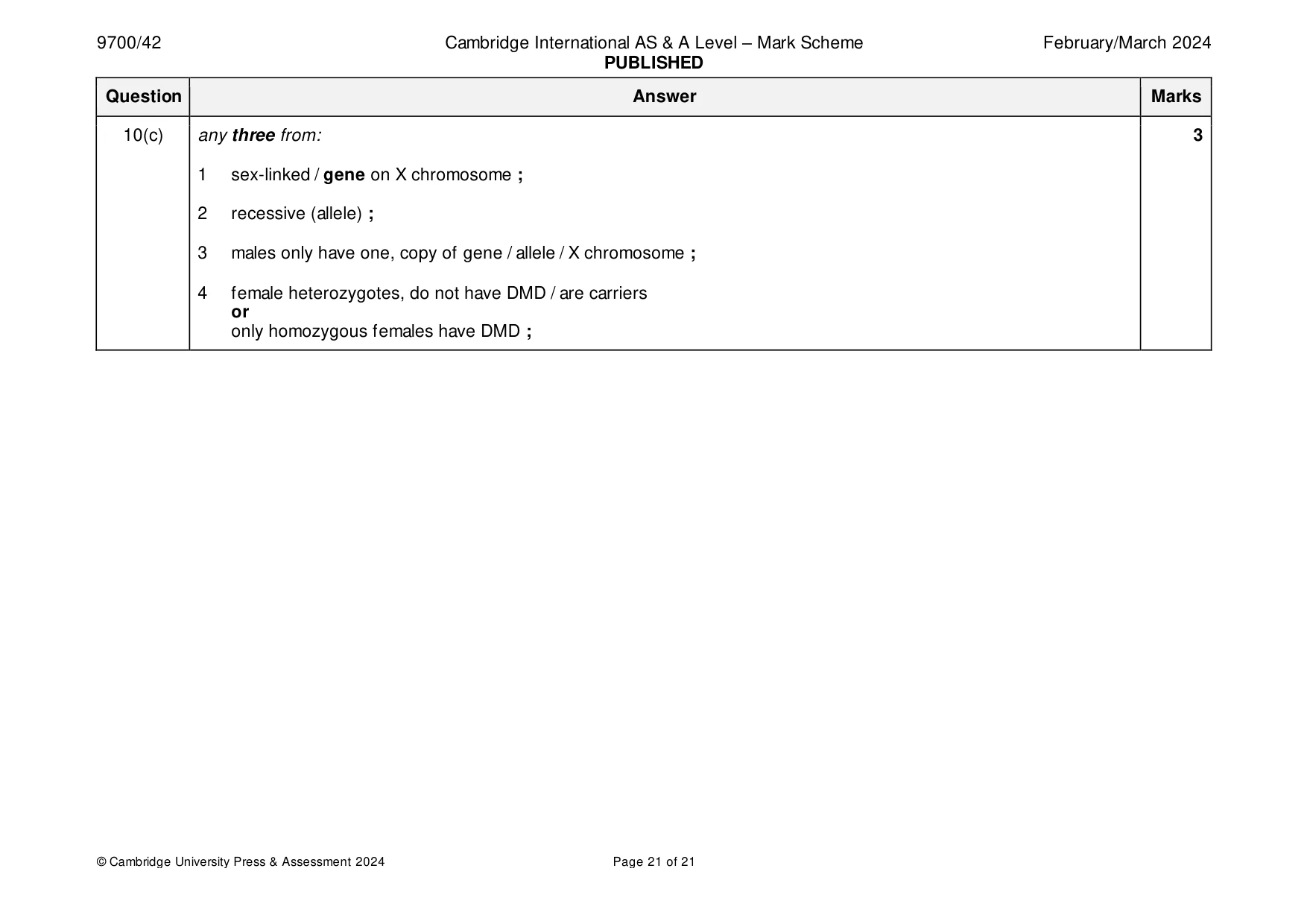
31 9700/42/F/M/24 © UCLES 2024 (c) Duchenne muscular dystrophy (DMD) is a genetic disease that is caused by a single gene. DMD affects striated muscle, and symptoms of the disease first appear at an early age. A fibrous protein, dystrophin, stabilises muscle fibres during contraction. A person with DMD produces non-functioning dystrophin or no dystrophin at all. The disease occurs in about four in 100 000 people and mainly affects boys. Suggest and explain why boys are more likely to have DMD than girls. … … … … … … … [3] [Total: 10]
Question paper, page 32
32 9700/42/F/M/24 © UCLES 2024 The boundaries and names shown, the designations used and the presentation of material on any maps contained in this question paper/insert do not imply official endorsement or acceptance by Cambridge Assessment International Education concerning the legal status of any country, territory, or area or any of its authorities, or of the delimitation of its frontiers or boundaries. Permission to reproduce items where third-party owned material protected by copyright is included has been sought and cleared where possible. Every reasonable effort has been made by the publisher (UCLES) to trace copyright holders, but if any items requiring clearance have unwittingly been included, the publisher will be pleased to make amends at the earliest possible opportunity. To avoid the issue of disclosure of answer-related information to candidates, all copyright acknowledgements are reproduced online in the Cambridge Assessment International Education Copyright Acknowledgements Booklet. This is produced for each series of examinations and is freely available to download at www.cambridgeinternational.org after the live examination series. Cambridge Assessment International Education is part of Cambridge Assessment. Cambridge Assessment is the brand name of the University of Cambridge Local Examinations Syndicate (UCLES), which is a department of the University of Cambridge. BLANK PAGE
Mark scheme, page 1
This document consists of 21 printed pages. © Cambridge University Press & Assessment 2024 [Turn over Cambridge International AS & A Level BIOLOGY 9700/42 Paper 4 A Level Structured Questions February/March 2024 MARK SCHEME Maximum Mark: 100 Published This mark scheme is published as an aid to teachers and candidates, to indicate the requirements of the examination. It shows the basis on which Examiners were instructed to award marks. It does not indicate the details of the discussions that took place at an Examiners’ meeting before marking began, which would have considered the acceptability of alternative answers. Mark schemes should be read in conjunction with the question paper and the Principal Examiner Report for Teachers. Cambridge International will not enter into discussions about these mark schemes. Cambridge International is publishing the mark schemes for the February/March 2024 series for most Cambridge IGCSE, Cambridge International A and AS Level components, and some Cambridge O Level components.
Mark scheme, page 2
9700/42 Cambridge International AS & A Level – Mark Scheme PUBLISHED February/March 2024 © Cambridge University Press & Assessment 2024 Page 2 of 21 Generic Marking Principles These general marking principles must be applied by all examiners when marking candidate answers. They should be applied alon gside the specific content of the mark scheme or generic level descriptions for a question. Each question paper and mark scheme will also comply with these marking principles. GENERIC MARKING PRINCIPLE 1: Marks must be awarded in line with: • the specific content of the mark scheme or the generic level descriptors for the question • the specific skills defined in the mark scheme or in the generic level descriptors for the question • the standard of response required by a candidate as exemplified by the standardisation scripts. GENERIC MARKING PRINCIPLE 2: Marks awarded are always whole marks (not half marks, or other fractions). GENERIC MARKING PRINCIPLE 3: Marks must be awarded positively: • marks are awarded for correct/valid answers, as defined in the mark scheme. However, credit is given for valid answers which go beyond the scope of the syllabus and mark scheme, referring to your Team Leader as appropriate • marks are awarded when candidates clearly demonstrate what they know and can do • marks are not deducted for errors • marks are not deducted for omissions • answers should only be judged on the quality of spelling, punctuation and grammar when these features are specifically assessed by the question as indicated by the mark scheme. The meaning, however, should be unambiguous. GENERIC MARKING PRINCIPLE 4: Rules must be applied consistently, e.g. in situations where candidates have not followed instructions or in the application of generic level descriptors.
Mark scheme, page 3
9700/42 Cambridge International AS & A Level – Mark Scheme PUBLISHED February/March 2024 © Cambridge University Press & Assessment 2024 Page 3 of 21 GENERIC MARKING PRINCIPLE 5: Marks should be awarded using the full range of marks defined in the mark scheme for the question (however; the use of the full mark range may be limited according to the quality of the candidate responses seen). GENERIC MARKING PRINCIPLE 6: Marks awarded are based solely on the requirements as defined in the mark scheme. Marks should not be awarded with grade thresholds or grade descriptors in mind. Science-Specific Marking Principles 1 Examiners should consider the context and scientific use of any keywords when awarding marks. Although keywords may be present, marks should not be awarded if the keywords are used incorrectly. 2 The examiner should not choose between contradictory statements given in the same question part, and credit should not be awarded for any correct statement that is contradicted within the same question part. Wrong science that is irrelevant to the question should be ignored. 3 Although spellings do not have to be correct, spellings of syllabus terms must allow for clear and unambiguous separation fro m other syllabus terms with which they may be confused (e.g. ethane / ethene, glucagon / glycogen, refraction / reflection). 4 The error carried forward (ecf) principle should be applied, where appropriate. If an incorrect answer is subsequently used in a scientifically correct way, the candidate should be awarded these subsequent marking points. Further guidance will be included in the mark scheme where necessary and any exceptions to this general principle will be noted. 5 ‘List rule’ guidance For questions that require n responses (e.g. State two reasons …): • The response should be read as continuous prose, even when numbered answer spaces are provided. • Any response marked ignore in the mark scheme should not count towards n. • Incorrect responses should not be awarded credit but will still count towards n. • Read the entire response to check for any responses that contradict those that would otherwise be credited. Credit should not be awarded for any responses that are contradicted within the rest of the response. Where two responses contradict one another, this should be treated as a single incorrect response. • Non-contradictory responses after the first n responses may be ignored even if they include incorrect science.
Mark scheme, page 4
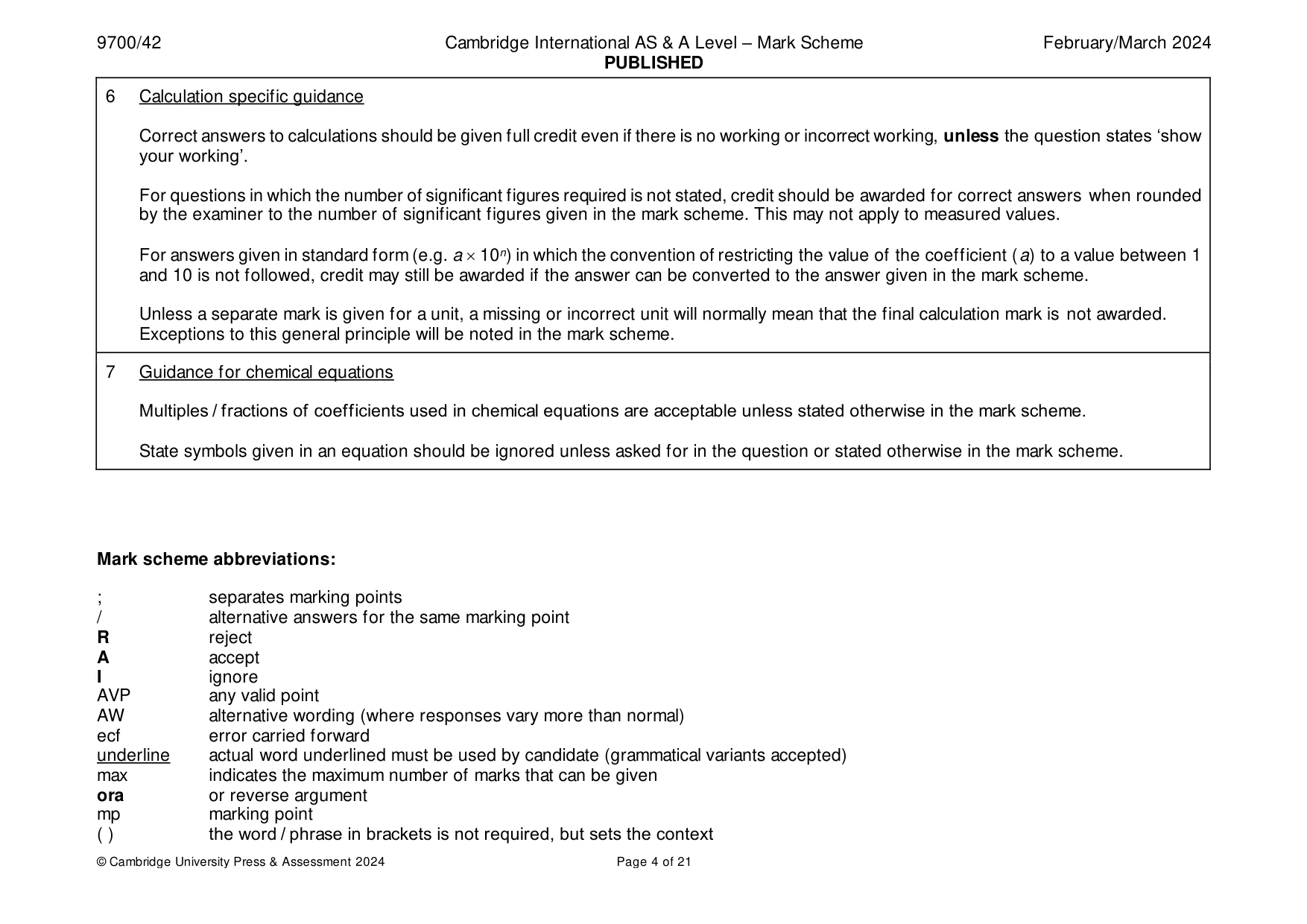
9700/42 Cambridge International AS & A Level – Mark Scheme PUBLISHED February/March 2024 © Cambridge University Press & Assessment 2024 Page 4 of 21 6 Calculation specific guidance Correct answers to calculations should be given full credit even if there is no working or incorrect working, unless the question states ‘show your working’. For questions in which the number of significant figures required is not stated, credit should be awarded for correct answers when rounded by the examiner to the number of significant figures given in the mark scheme. This may not apply to measured values. For answers given in standard form (e.g. a 10n) in which the convention of restricting the value of the coefficient (a) to a value between 1 and 10 is not followed, credit may still be awarded if the answer can be converted to the answer given in the mark scheme. Unless a separate mark is given for a unit, a missing or incorrect unit will normally mean that the final calculation mark is not awarded. Exceptions to this general principle will be noted in the mark scheme. 7 Guidance for chemical equations Multiples / fractions of coefficients used in chemical equations are acceptable unless stated otherwise in the mark scheme. State symbols given in an equation should be ignored unless asked for in the question or stated otherwise in the mark scheme. Mark scheme abbreviations: ; separates marking points / alternative answers for the same marking point R reject A accept I ignore AVP any valid point AW alternative wording (where responses vary more than normal) ecf error carried forward underline actual word underlined must be used by candidate (grammatical variants accepted) max indicates the maximum number of marks that can be given ora or reverse argument mp marking point ( ) the word / phrase in brackets is not required, but sets the context
Mark scheme, page 5
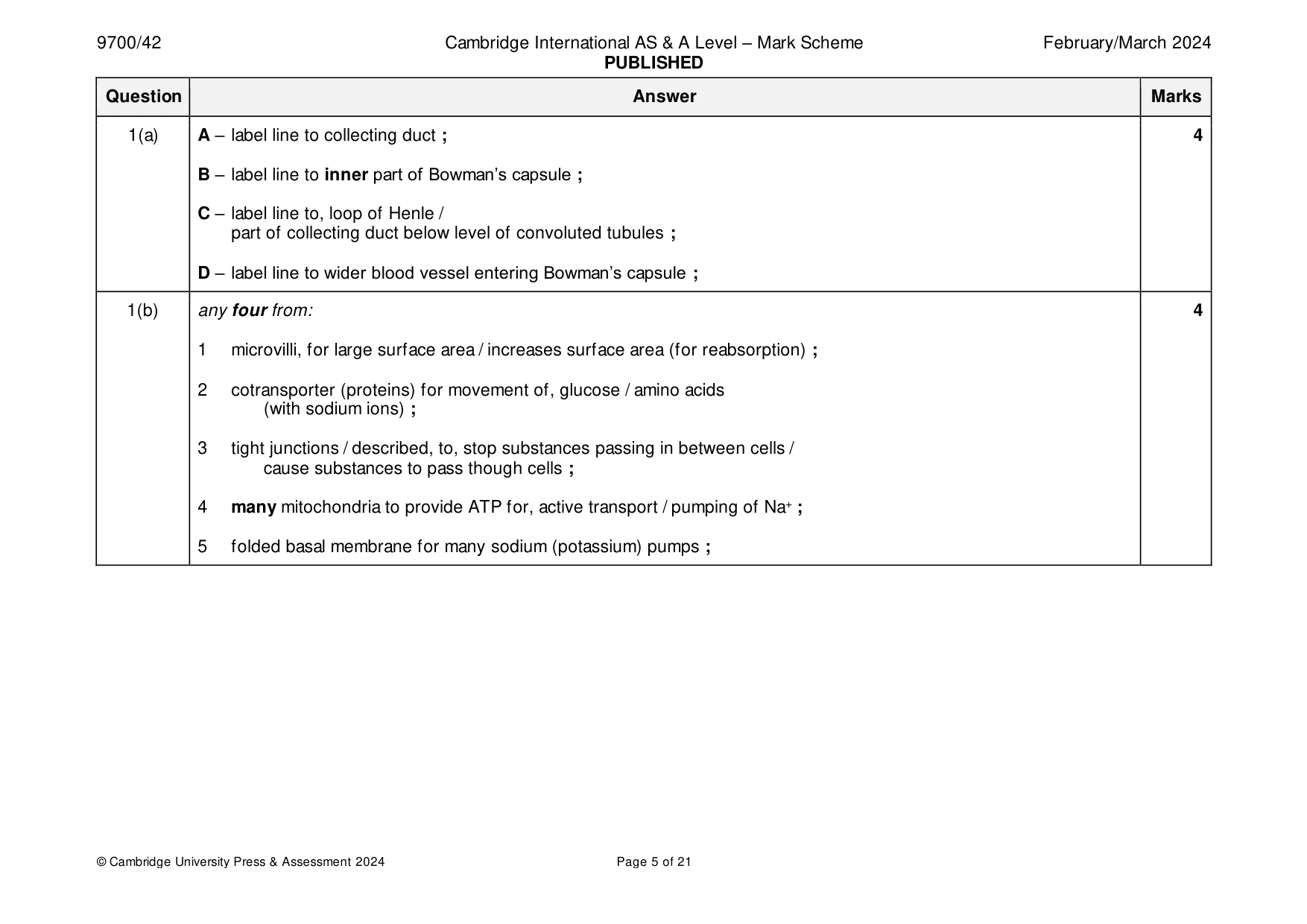
9700/42 Cambridge International AS & A Level – Mark Scheme PUBLISHED February/March 2024 © Cambridge University Press & Assessment 2024 Page 5 of 21 Question Answer Marks 1(a) A – label line to collecting duct ; B – label line to inner part of Bowman’s capsule ; C – label line to, loop of Henle / part of collecting duct below level of convoluted tubules ; D – label line to wider blood vessel entering Bowman’s capsule ; 4 1(b) any four from: 1 microvilli, for large surface area / increases surface area (for reabsorption) ; 2 cotransporter (proteins) for movement of, glucose / amino acids (with sodium ions) ; 3 tight junctions / described, to, stop substances passing in between cells / cause substances to pass though cells ; 4 many mitochondria to provide ATP for, active transport / pumping of Na+ ; 5 folded basal membrane for many sodium (potassium) pumps ; 4
Mark scheme, page 6
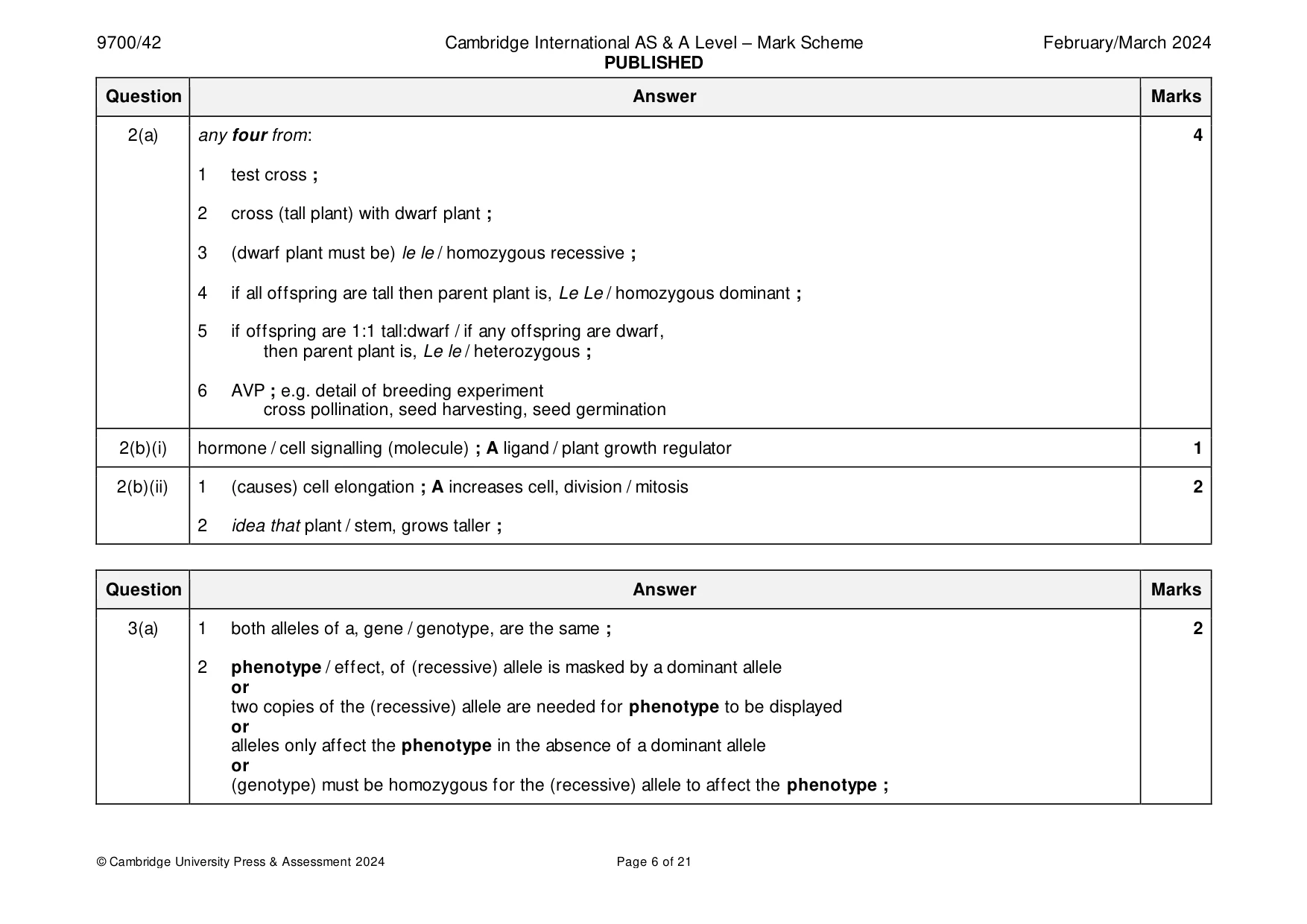
9700/42 Cambridge International AS & A Level – Mark Scheme PUBLISHED February/March 2024 © Cambridge University Press & Assessment 2024 Page 6 of 21 Question Answer Marks 2(a) any four from: 1 test cross ; 2 cross (tall plant) with dwarf plant ; 3 (dwarf plant must be) le le / homozygous recessive ; 4 if all offspring are tall then parent plant is, Le Le / homozygous dominant ; 5 if offspring are 1:1 tall:dwarf / if any offspring are dwarf, then parent plant is, Le le / heterozygous ; 6 AVP ; e.g. detail of breeding experiment cross pollination, seed harvesting, seed germination 4 2(b)(i) hormone / cell signalling (molecule) ; A ligand / plant growth regulator 1 2(b)(ii) 1 (causes) cell elongation ; A increases cell, division / mitosis 2 idea that plant / stem, grows taller ; 2 Question Answer Marks 3(a) 1 both alleles of a, gene / genotype, are the same ; 2 phenotype / effect, of (recessive) allele is masked by a dominant allele or two copies of the (recessive) allele are needed for phenotype to be displayed or alleles only affect the phenotype in the absence of a dominant allele or (genotype) must be homozygous for the (recessive) allele to affect the phenotype ; 2
Mark scheme, page 7
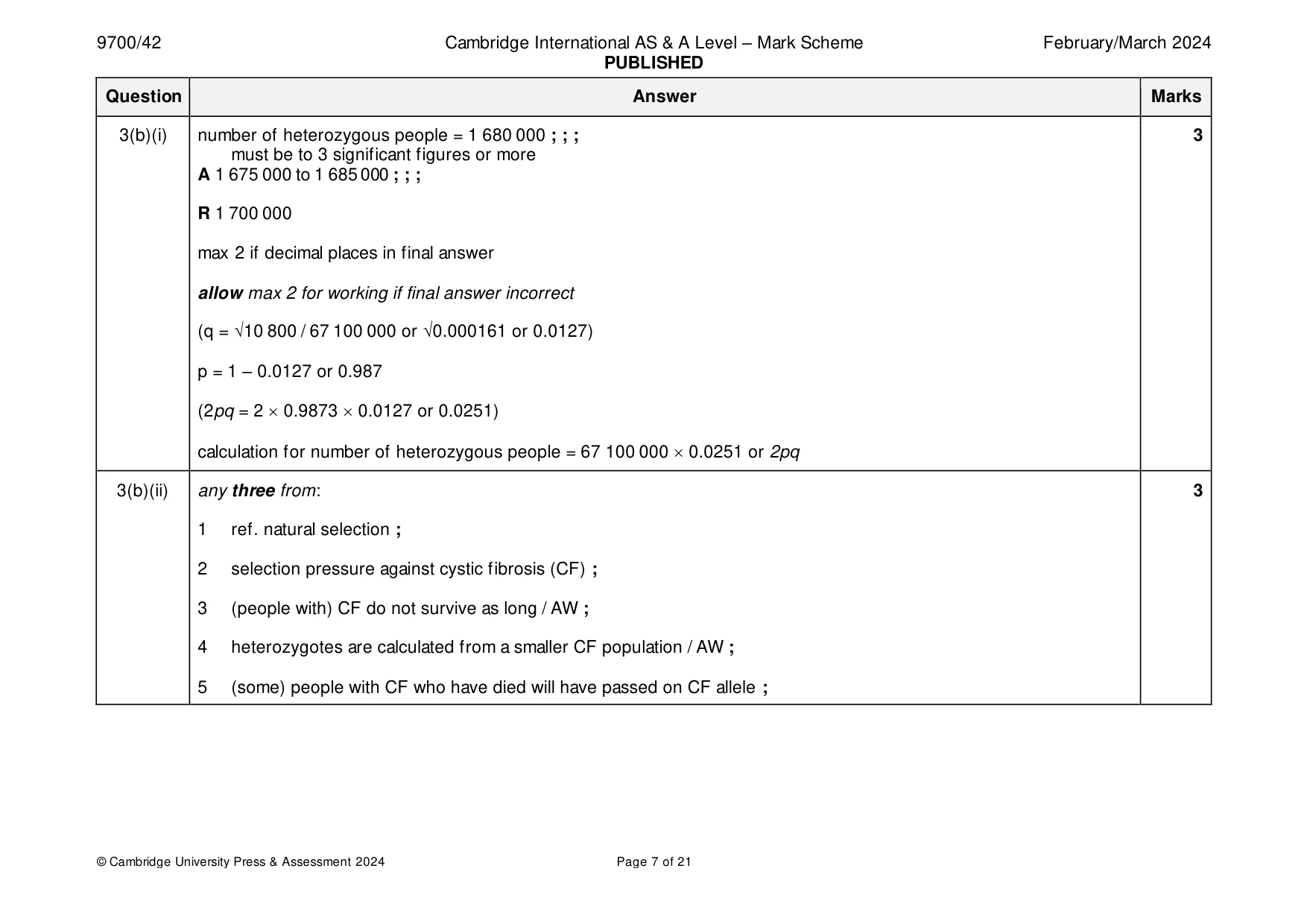
9700/42 Cambridge International AS & A Level – Mark Scheme PUBLISHED February/March 2024 © Cambridge University Press & Assessment 2024 Page 7 of 21 Question Answer Marks 3(b)(i) number of heterozygous people = 1 680 000 ; ; ; must be to 3 significant figures or more A 1 675 000 to 1 685 000 ; ; ; R 1 700 000 max 2 if decimal places in final answer allow max 2 for working if final answer incorrect (q = √10 800 / 67 100 000 or √0.000161 or 0.0127) p = 1 – 0.0127 or 0.987 (2pq = 2 0.9873 0.0127 or 0.0251) calculation for number of heterozygous people = 67 100 000 0.0251 or 2pq 3 3(b)(ii) any three from: 1 ref. natural selection ; 2 selection pressure against cystic fibrosis (CF) ; 3 (people with) CF do not survive as long / AW ; 4 heterozygotes are calculated from a smaller CF population / AW ; 5 (some) people with CF who have died will have passed on CF allele ; 3
Mark scheme, page 8
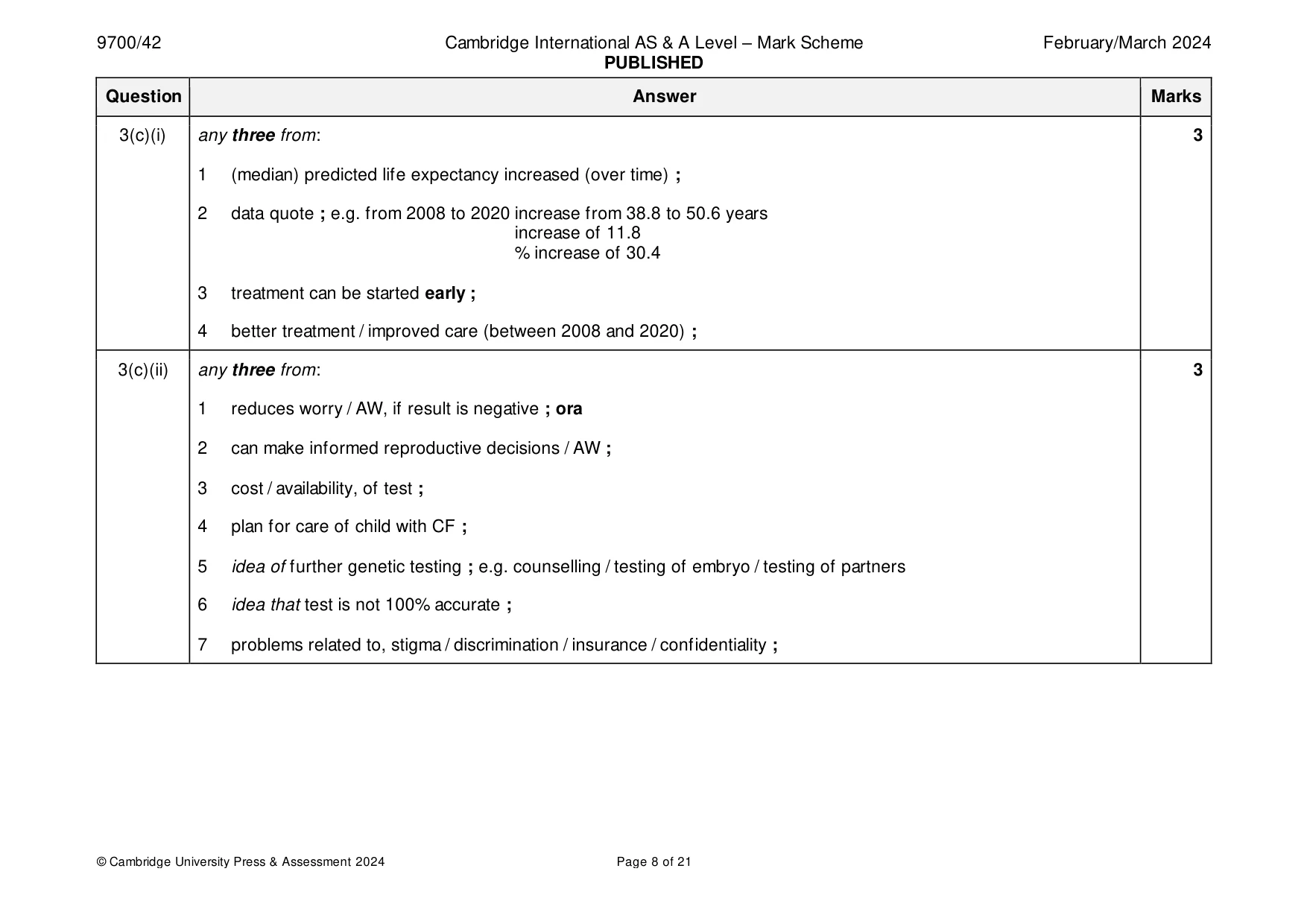
9700/42 Cambridge International AS & A Level – Mark Scheme PUBLISHED February/March 2024 © Cambridge University Press & Assessment 2024 Page 8 of 21 Question Answer Marks 3(c)(i) any three from: 1 (median) predicted life expectancy increased (over time) ; 2 data quote ; e.g. from 2008 to 2020 increase from 38.8 to 50.6 years increase of 11.8 % increase of 30.4 3 treatment can be started early ; 4 better treatment / improved care (between 2008 and 2020) ; 3 3(c)(ii) any three from: 1 reduces worry / AW, if result is negative ; ora 2 can make informed reproductive decisions / AW ; 3 cost / availability, of test ; 4 plan for care of child with CF ; 5 idea of further genetic testing ; e.g. counselling / testing of embryo / testing of partners 6 idea that test is not 100% accurate ; 7 problems related to, stigma / discrimination / insurance / confidentiality ; 3
Mark scheme, page 9
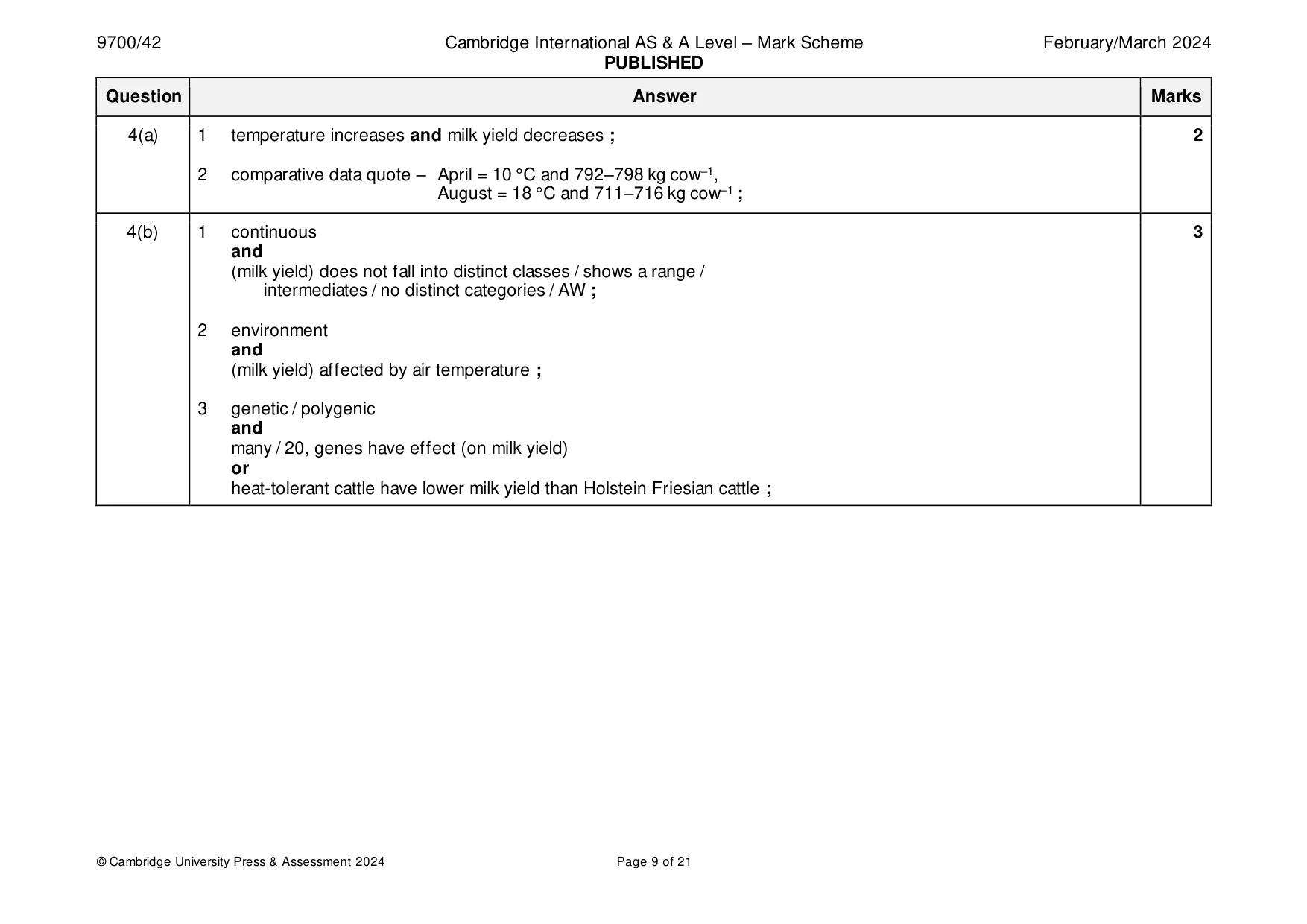
9700/42 Cambridge International AS & A Level – Mark Scheme PUBLISHED February/March 2024 © Cambridge University Press & Assessment 2024 Page 9 of 21 Question Answer Marks 4(a) 1 temperature increases and milk yield decreases ; 2 comparative data quote – April = 10 °C and 792–798 kg cow–1, August = 18 °C and 711–716 kg cow–1 ; 2 4(b) 1 continuous and (milk yield) does not fall into distinct classes / shows a range / intermediates / no distinct categories / AW ; 2 environment and (milk yield) affected by air temperature ; 3 genetic / polygenic and many / 20, genes have effect (on milk yield) or heat-tolerant cattle have lower milk yield than Holstein Friesian cattle ; 3
Mark scheme, page 10
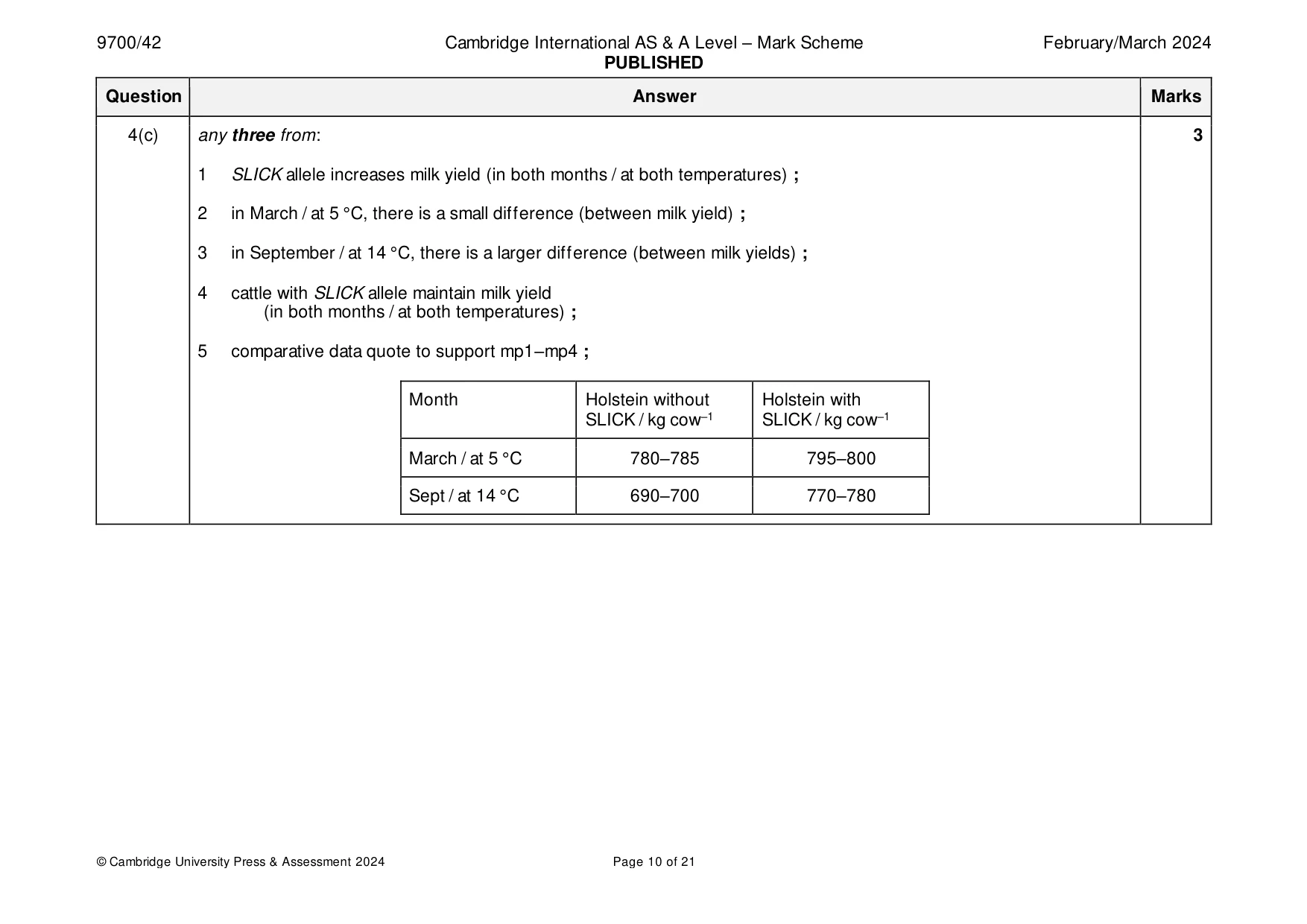
9700/42 Cambridge International AS & A Level – Mark Scheme PUBLISHED February/March 2024 © Cambridge University Press & Assessment 2024 Page 10 of 21 Question Answer Marks 4(c) any three from: 1 SLICK allele increases milk yield (in both months / at both temperatures) ; 2 in March / at 5 °C, there is a small difference (between milk yield) ; 3 in September / at 14 °C, there is a larger difference (between milk yields) ; 4 cattle with SLICK allele maintain milk yield (in both months / at both temperatures) ; 5 comparative data quote to support mp1–mp4 ; Month Holstein without SLICK / kg cow–1 Holstein with SLICK / kg cow–1 March / at 5 °C 780–785 795–800 Sept / at 14 °C 690–700 770–780 3
Mark scheme, page 11
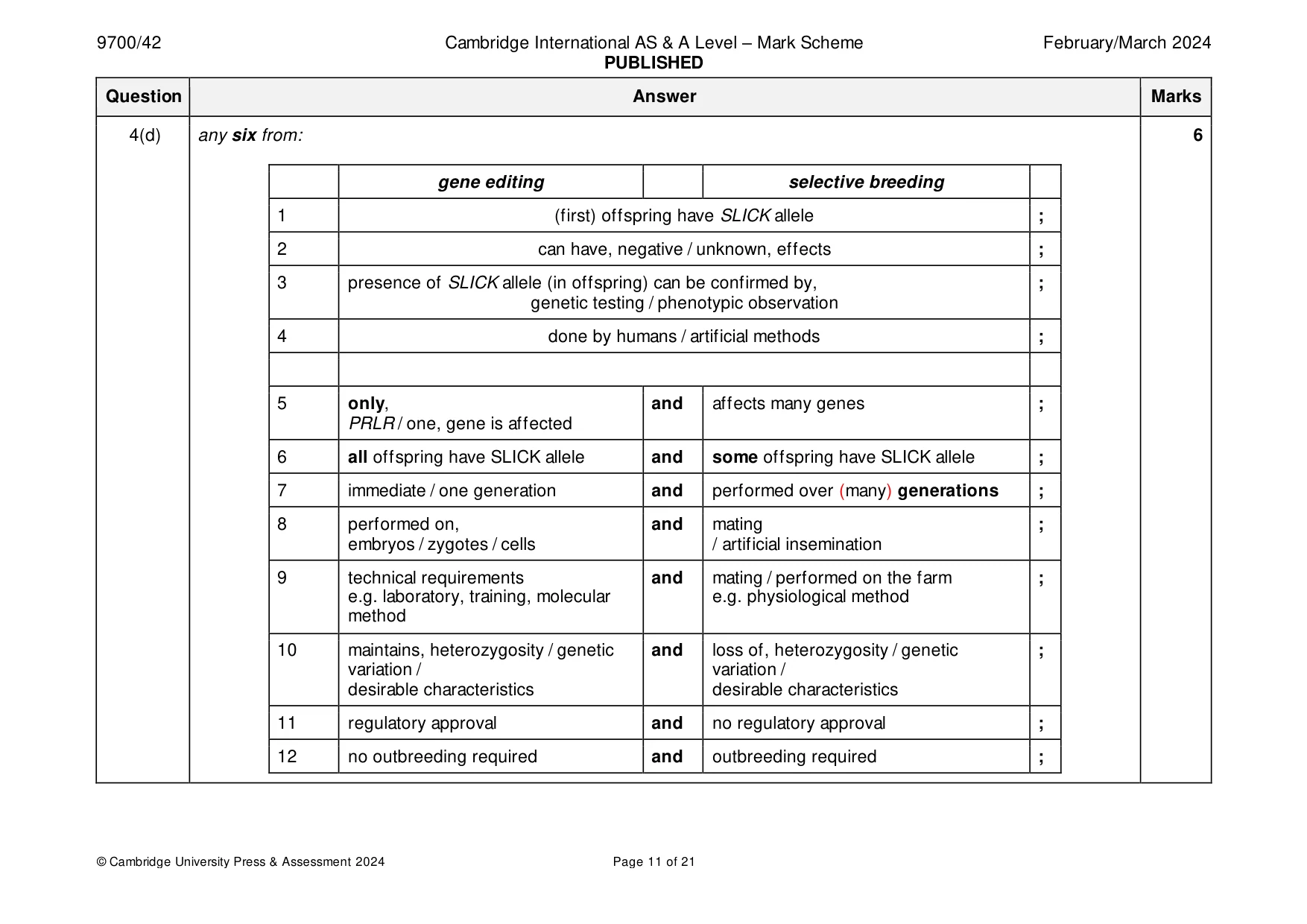
9700/42 Cambridge International AS & A Level – Mark Scheme PUBLISHED February/March 2024 © Cambridge University Press & Assessment 2024 Page 11 of 21 Question Answer Marks 4(d) any six from: gene editing selective breeding 1 (first) offspring have SLICK allele ; 2 can have, negative / unknown, effects ; 3 presence of SLICK allele (in offspring) can be confirmed by, genetic testing / phenotypic observation ; 4 done by humans / artificial methods ; 5 only, PRLR / one, gene is affected and affects many genes ; 6 all offspring have SLICK allele and some offspring have SLICK allele ; 7 immediate / one generation and performed over (many) generations ; 8 performed on, embryos / zygotes / cells and mating / artificial insemination ; 9 technical requirements e.g. laboratory, training, molecular method and mating / performed on the farm e.g. physiological method ; 10 maintains, heterozygosity / genetic variation / desirable characteristics and loss of, heterozygosity / genetic variation / desirable characteristics ; 11 regulatory approval and no regulatory approval ; 12 no outbreeding required and outbreeding required ; 6
Mark scheme, page 12
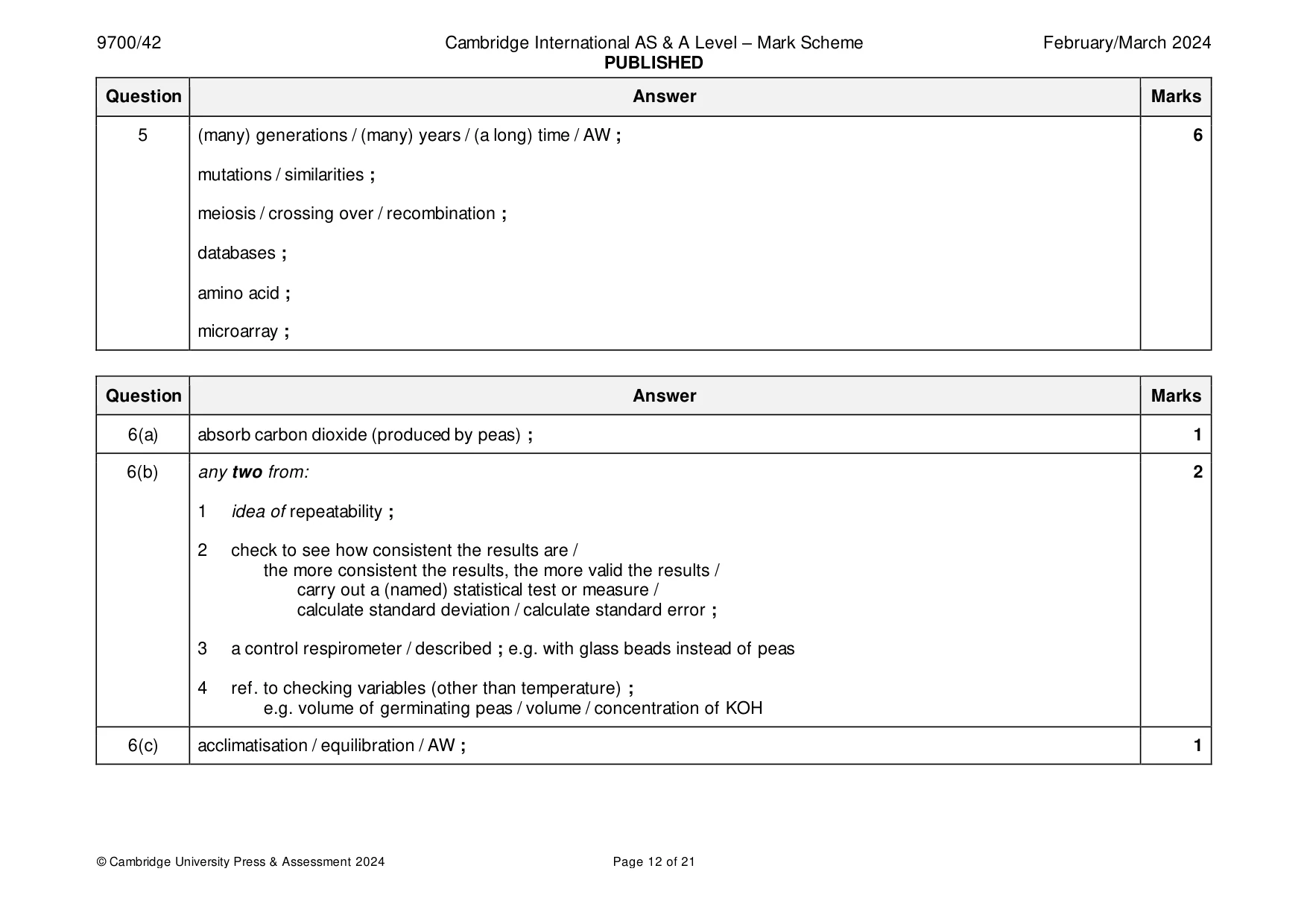
9700/42 Cambridge International AS & A Level – Mark Scheme PUBLISHED February/March 2024 © Cambridge University Press & Assessment 2024 Page 12 of 21 Question Answer Marks 5 (many) generations / (many) years / (a long) time / AW ; mutations / similarities ; meiosis / crossing over / recombination ; databases ; amino acid ; microarray ; 6 Question Answer Marks 6(a) absorb carbon dioxide (produced by peas) ; 1 6(b) any two from: 1 idea of repeatability ; 2 check to see how consistent the results are / the more consistent the results, the more valid the results / carry out a (named) statistical test or measure / calculate standard deviation / calculate standard error ; 3 a control respirometer / described ; e.g. with glass beads instead of peas 4 ref. to checking variables (other than temperature) ; e.g. volume of germinating peas / volume / concentration of KOH 2 6(c) acclimatisation / equilibration / AW ; 1
Mark scheme, page 13
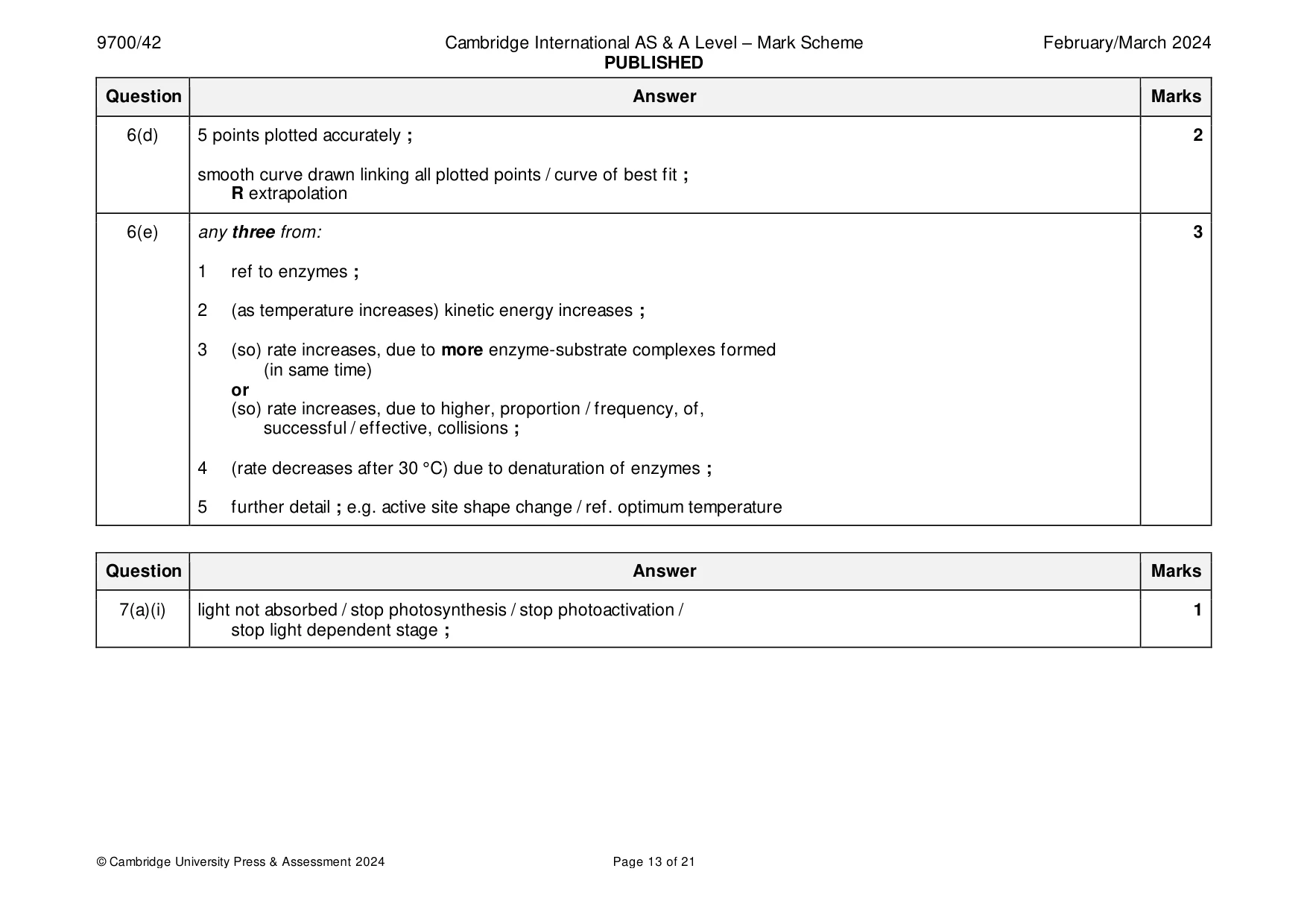
9700/42 Cambridge International AS & A Level – Mark Scheme PUBLISHED February/March 2024 © Cambridge University Press & Assessment 2024 Page 13 of 21 Question Answer Marks 6(d) 5 points plotted accurately ; smooth curve drawn linking all plotted points / curve of best fit ; R extrapolation 2 6(e) any three from: 1 ref to enzymes ; 2 (as temperature increases) kinetic energy increases ; 3 (so) rate increases, due to more enzyme-substrate complexes formed (in same time) or (so) rate increases, due to higher, proportion / frequency, of, successful / effective, collisions ; 4 (rate decreases after 30 °C) due to denaturation of enzymes ; 5 further detail ; e.g. active site shape change / ref. optimum temperature 3 Question Answer Marks 7(a)(i) light not absorbed / stop photosynthesis / stop photoactivation / stop light dependent stage ; 1
Mark scheme, page 14
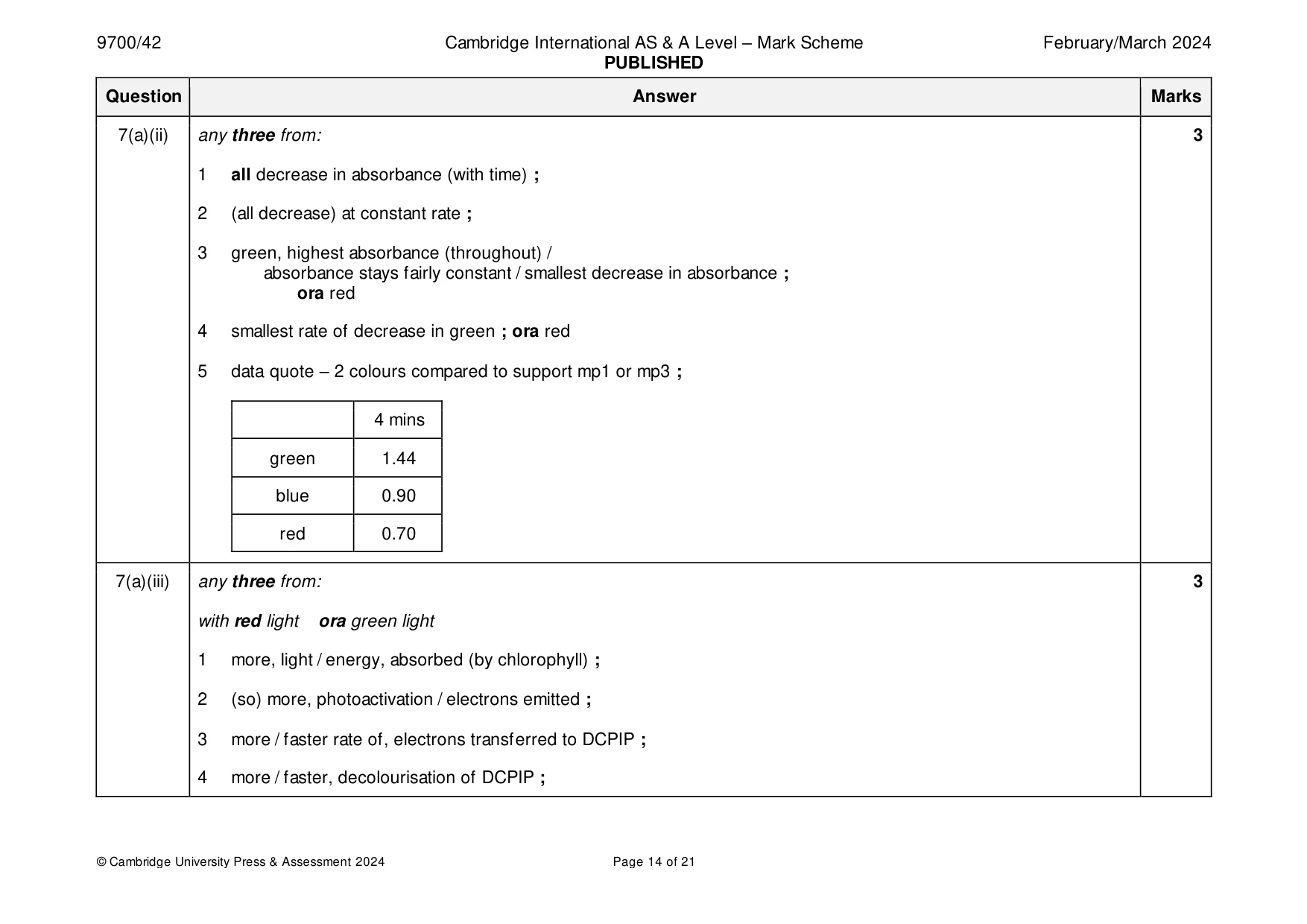
9700/42 Cambridge International AS & A Level – Mark Scheme PUBLISHED February/March 2024 © Cambridge University Press & Assessment 2024 Page 14 of 21 Question Answer Marks 7(a)(ii) any three from: 1 all decrease in absorbance (with time) ; 2 (all decrease) at constant rate ; 3 green, highest absorbance (throughout) / absorbance stays fairly constant / smallest decrease in absorbance ; ora red 4 smallest rate of decrease in green ; ora red 5 data quote – 2 colours compared to support mp1 or mp3 ; 4 mins green 1.44 blue 0.90 red 0.70 3 7(a)(iii) any three from: with red light ora green light 1 more, light / energy, absorbed (by chlorophyll) ; 2 (so) more, photoactivation / electrons emitted ; 3 more / faster rate of, electrons transferred to DCPIP ; 4 more / faster, decolourisation of DCPIP ; 3
Mark scheme, page 15
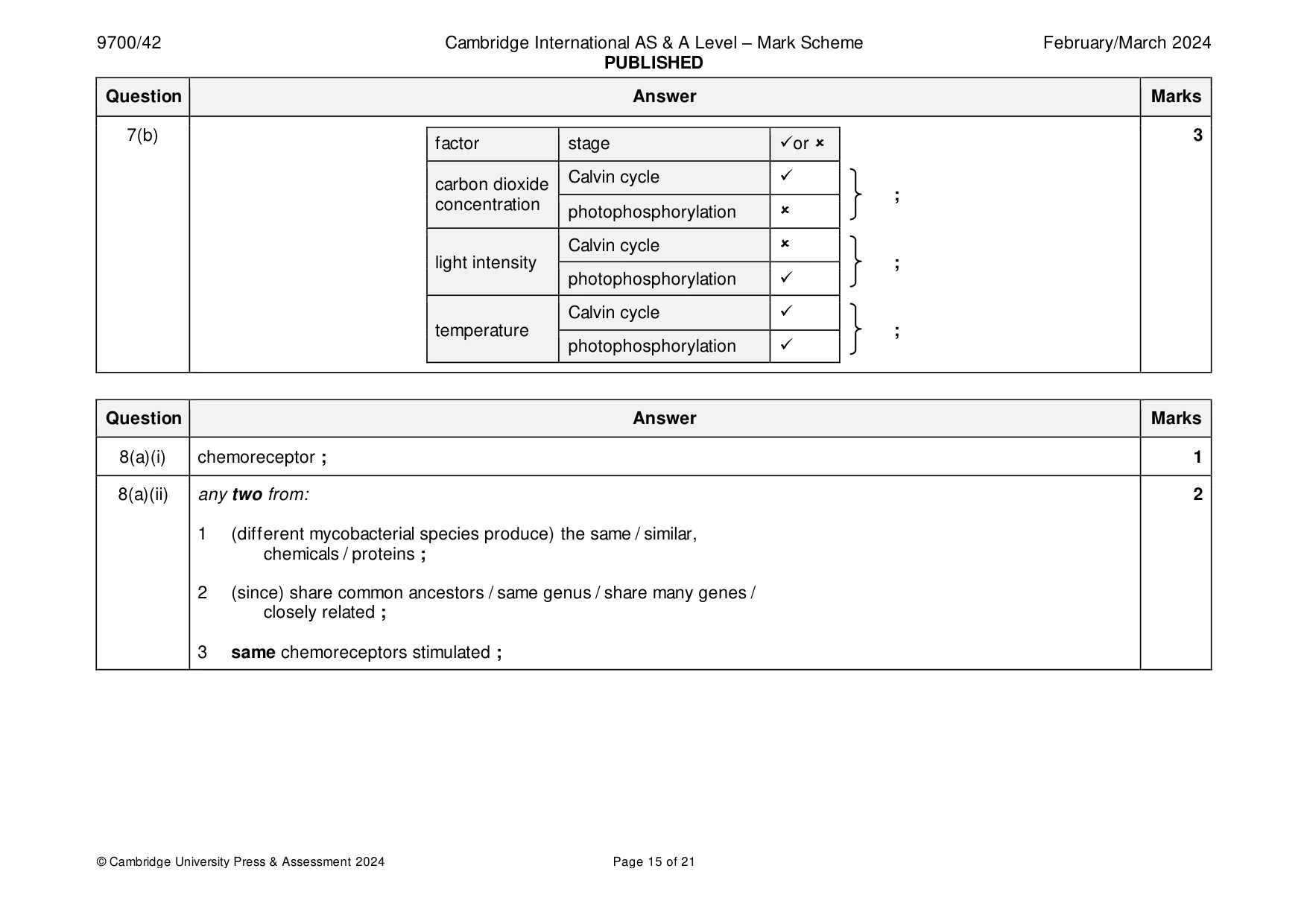
9700/42 Cambridge International AS & A Level – Mark Scheme PUBLISHED February/March 2024 © Cambridge University Press & Assessment 2024 Page 15 of 21 Question Answer Marks 7(b) factor stage ✓or carbon dioxide concentration Calvin cycle ✓ ; photophosphorylation light intensity Calvin cycle ; photophosphorylation ✓ temperature Calvin cycle ✓ ; photophosphorylation ✓ 3 Question Answer Marks 8(a)(i) chemoreceptor ; 1 8(a)(ii) any two from: 1 (different mycobacterial species produce) the same / similar, chemicals / proteins ; 2 (since) share common ancestors / same genus / share many genes / closely related ; 3 same chemoreceptors stimulated ; 2
Mark scheme, page 16
9700/42 Cambridge International AS & A Level – Mark Scheme PUBLISHED February/March 2024 © Cambridge University Press & Assessment 2024 Page 16 of 21 Question Answer Marks 8(b) kingdom Animalia phylum Chordata class Mammalia order Rodentia family Nesomyidae genus Cricetomys species gambianus 4 correct = 2 marks 1 / 2 / 3 correct = 1 mark 2
Mark scheme, page 17
9700/42 Cambridge International AS & A Level – Mark Scheme PUBLISHED February/March 2024 © Cambridge University Press & Assessment 2024 Page 17 of 21 Question Answer Marks 8(c) any four from: comparative statements required Eukarya Bacteria 1 linear DNA and plasmids / circular DNA ; 2 histones and no histones ; 3 cell walls only in some and cell walls in all ; 4 cellulose / chitin, cell walls and peptidoglycan cell wall ; 5 divide by mitosis and divide by binary fission ; 6 some sexual reproduction and asexual reproduction ; 7 (70S and) 80S ribosomes and 70S ribosomes (only) ; 8 have cells > 5 m diameter and cells1–5 m diameter ; 4 8(d) any two from: 1 have DNA or RNA ; 2 nucleic acid is double or single stranded ; 3 AVP ; e.g.presence or absence of phospholipid envelope presence or absence of tail sheath type of host type of disease caused 2
Mark scheme, page 18
9700/42 Cambridge International AS & A Level – Mark Scheme PUBLISHED February/March 2024 © Cambridge University Press & Assessment 2024 Page 18 of 21 Question Answer Marks 9(a) any four from: 1 (blue) light decreases germination / AW ; 2 as intensity of (blue) light increases percentage germination decreases ; 3 data quote ; light intensity / arbitrary units (au) percentage germination 0 (dark) 98.0 36 76.9 48 45.0 57 14.7 4 (blue) light increases (the concentration of) ABA ; 5 ABA inhibits gibberellin (synthesis / activity) ; 6 any further valid suggestion of ABA action ; e.g. DELLA not broken down / promotes dormancy / stops gene expression 4
Mark scheme, page 19
9700/42 Cambridge International AS & A Level – Mark Scheme PUBLISHED February/March 2024 © Cambridge University Press & Assessment 2024 Page 19 of 21 Question Answer Marks 9(b) any seven from: 1 auxin binds to receptor on the cell surface membrane ; 2 stimulates proton pumps ; 3 protons move from, cytoplasm / cell, to cell wall ; 4 pH of cell wall decreases ; 5 expansins activated ; 6 loosens linkage between cellulose microfibrils ; 7 by breaking hydrogen bonds ; Ignore weakening bonds 8 K+ channels open ; 9 K+ diffuse into, cytoplasm / cell ; 10 water potential (of cytoplasm / cell) decreases ; 11 water enters by osmosis ; 12 increase in turgor pressure / volume of cell increases ; 7
Mark scheme, page 20
9700/42 Cambridge International AS & A Level – Mark Scheme PUBLISHED February/March 2024 © Cambridge University Press & Assessment 2024 Page 20 of 21 Question Answer Marks 10(a) any four from: 1 troponin binds Ca2+ and changes shape ; 2 (so) tropomyosin moves away from the binding sites on actin ; 3 myosin heads, bind to / form cross-bridges, with actin ; 4 myosin head, pulls actin / performs power stroke, to, either shorten / contract, sarcomere or cause Z lines to move closer together / Z lines move closer to M lines ; 5 myosin head, is ATPase / binds to ATP, to allow detachment ; 4 10(b) any three from: 1 succinylcholine binds to ACh receptors or succinylcholine acts as a competitive inhibitor ; R if binds to active site of receptor 2 (sodium ions) channel proteins do not open ; R if voltage gated 3 sodium ions do not enter, muscle cell / sarcoplasm ; 4 sarcolemma / post-synaptic membrane, not depolarised ; 3
Mark scheme, page 21
9700/42 Cambridge International AS & A Level – Mark Scheme PUBLISHED February/March 2024 © Cambridge University Press & Assessment 2024 Page 21 of 21 Question Answer Marks 10(c) any three from: 1 sex-linked / gene on X chromosome ; 2 recessive (allele) ; 3 males only have one, copy of gene / allele / X chromosome ; 4 female heterozygotes, do not have DMD / are carriers or only homozygous females have DMD ; 3
What you needed in this session
Cambridge’s own grade thresholds for 2024 Feb/March, Paper 4 · Variant 2. A higher threshold means an easier paper — the bar moves with how the cohort did.