Cambridge A Level Biology 9700 — 2016 Oct/Nov Paper 4 · Variant 3
9700/43/O/N/16 · 100 marks · ≈113 min
The question paper and its mark scheme, free to read here and free to download. This is Cambridge’s own paper, exactly as it was sat.
Question paper24 pages



Mark scheme19 pages
Answers below. Sit the paper first if you are practising.
Paper as text
Question paper, page 1
This document consists of 21 printed pages and 3 lined pages. DC (LK/AR) 108516/3 © UCLES 2016 [Turn over Cambridge International Examinations Cambridge International Advanced Subsidiary and Advanced Level * 1 7 7 7 8 5 9 9 4 6 * BIOLOGY 9700/43 Paper 4 A Level Structured Questions October/November 2016 2 hours Candidates answer on the Question Paper. No Additional Materials are required. READ THESE INSTRUCTIONS FIRST Write your Centre number, candidate number and name on all the work you hand in. Write in dark blue or black pen. You may use an HB pencil for any diagrams or graphs. Do not use staples, paper clips, glue or correction fluid. DO NOT WRITE IN ANY BARCODES. Section A Answer all questions. Section B Answer one question. Electronic calculators may be used. You may lose marks if you do not show your working or if you do not use appropriate units. At the end of the examination, fasten all your work securely together. The number of marks is given in brackets [ ] at the end of each question or part question.
Question paper, page 2
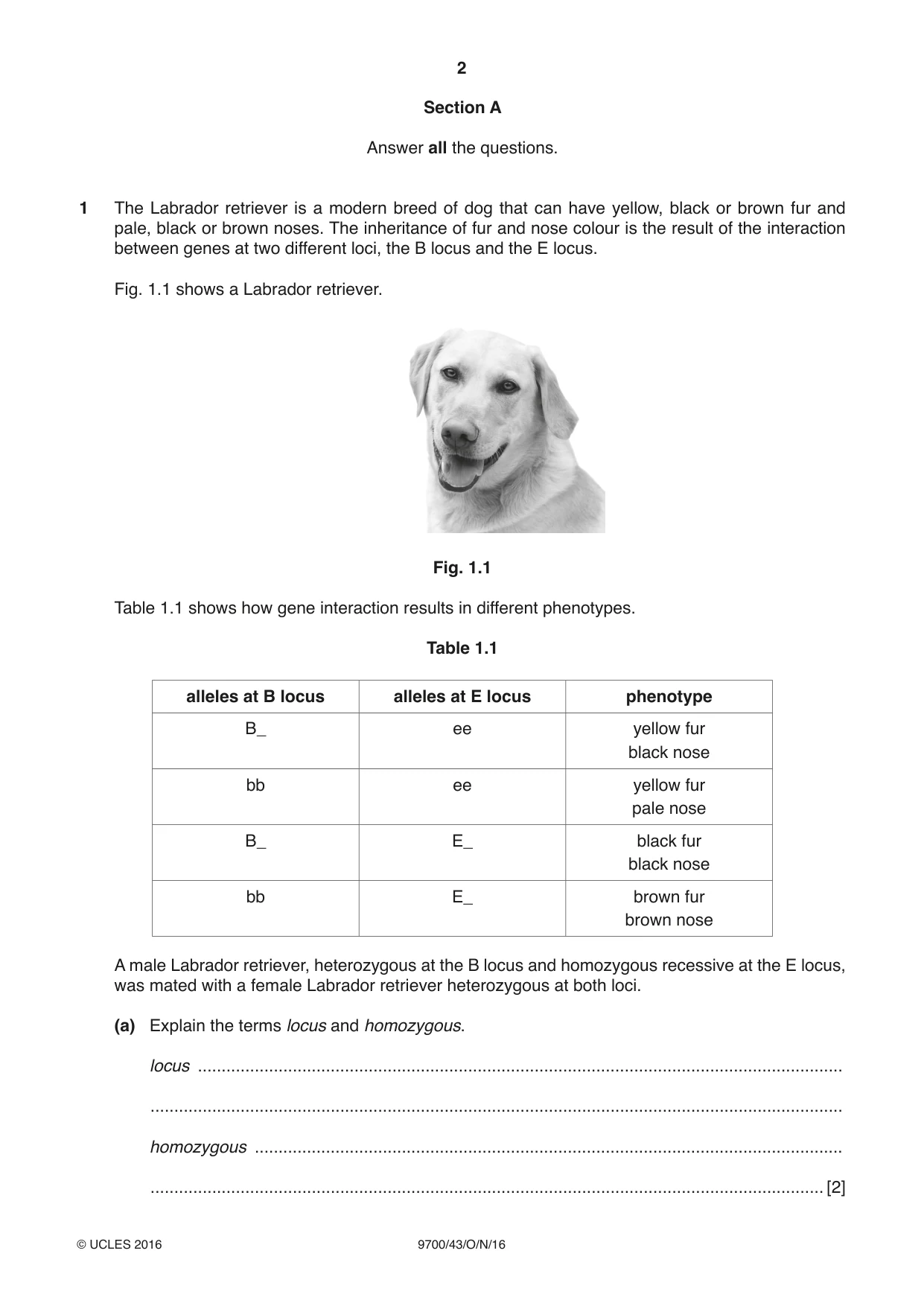
2 9700/43/O/N/16 © UCLES 2016 Section A Answer all the questions. 1 The Labrador retriever is a modern breed of dog that can have yellow, black or brown fur and pale, black or brown noses. The inheritance of fur and nose colour is the result of the interaction between genes at two different loci, the B locus and the E locus. Fig. 1.1 shows a Labrador retriever. Fig. 1.1 Table 1.1 shows how gene interaction results in different phenotypes. Table 1.1 alleles at B locus alleles at E locus phenotype B_ ee yellow fur black nose bb ee yellow fur pale nose B_ E_ black fur black nose bb E_ brown fur brown nose A male Labrador retriever, heterozygous at the B locus and homozygous recessive at the E locus, was mated with a female Labrador retriever heterozygous at both loci. (a) Explain the terms locus and homozygous. locus … … homozygous … … [2]
Question paper, page 3
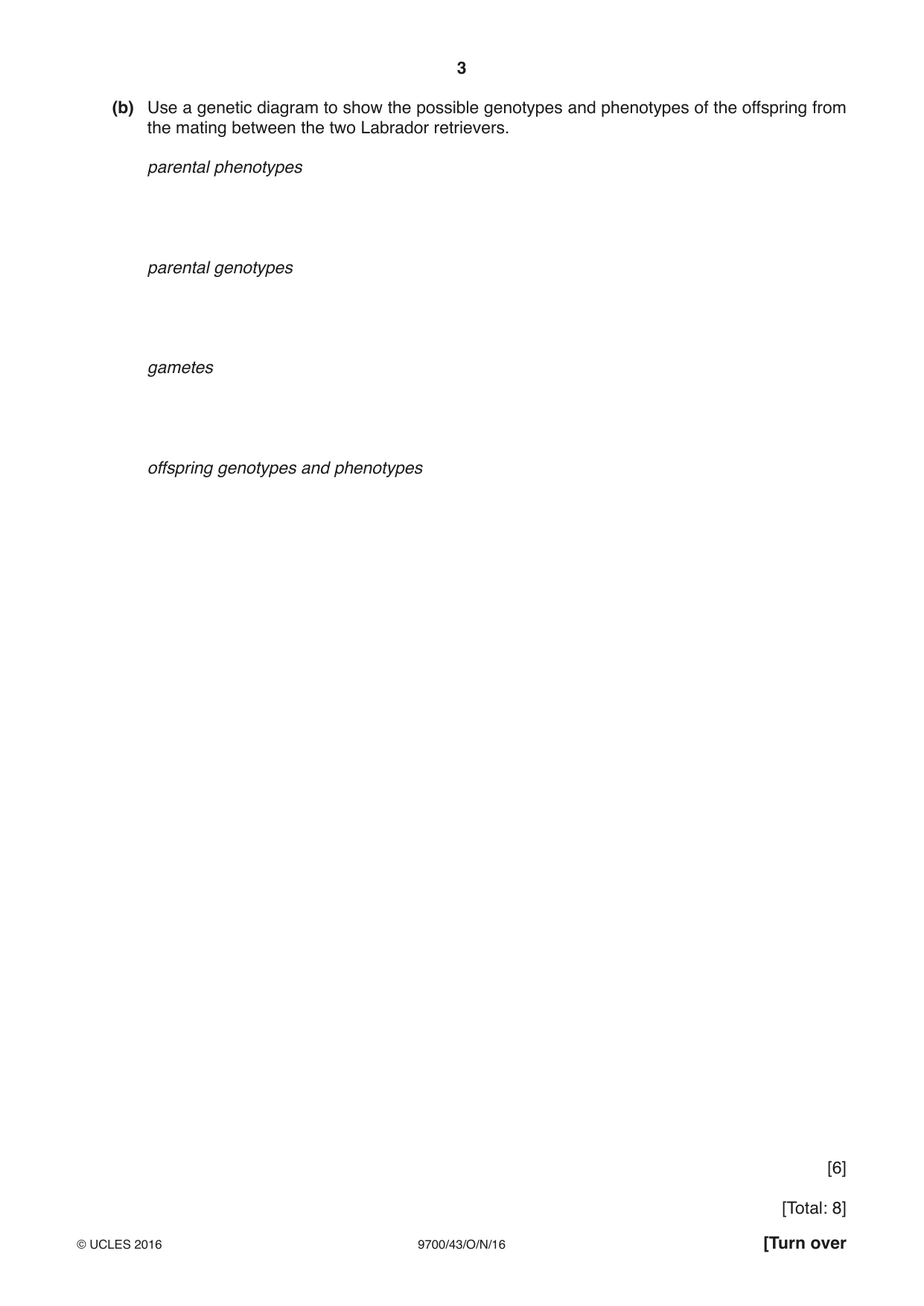
3 9700/43/O/N/16 © UCLES 2016 [Turn over (b) Use a genetic diagram to show the possible genotypes and phenotypes of the offspring from the mating between the two Labrador retrievers. parental phenotypes parental genotypes gametes offspring genotypes and phenotypes [6] [Total: 8]
Question paper, page 4
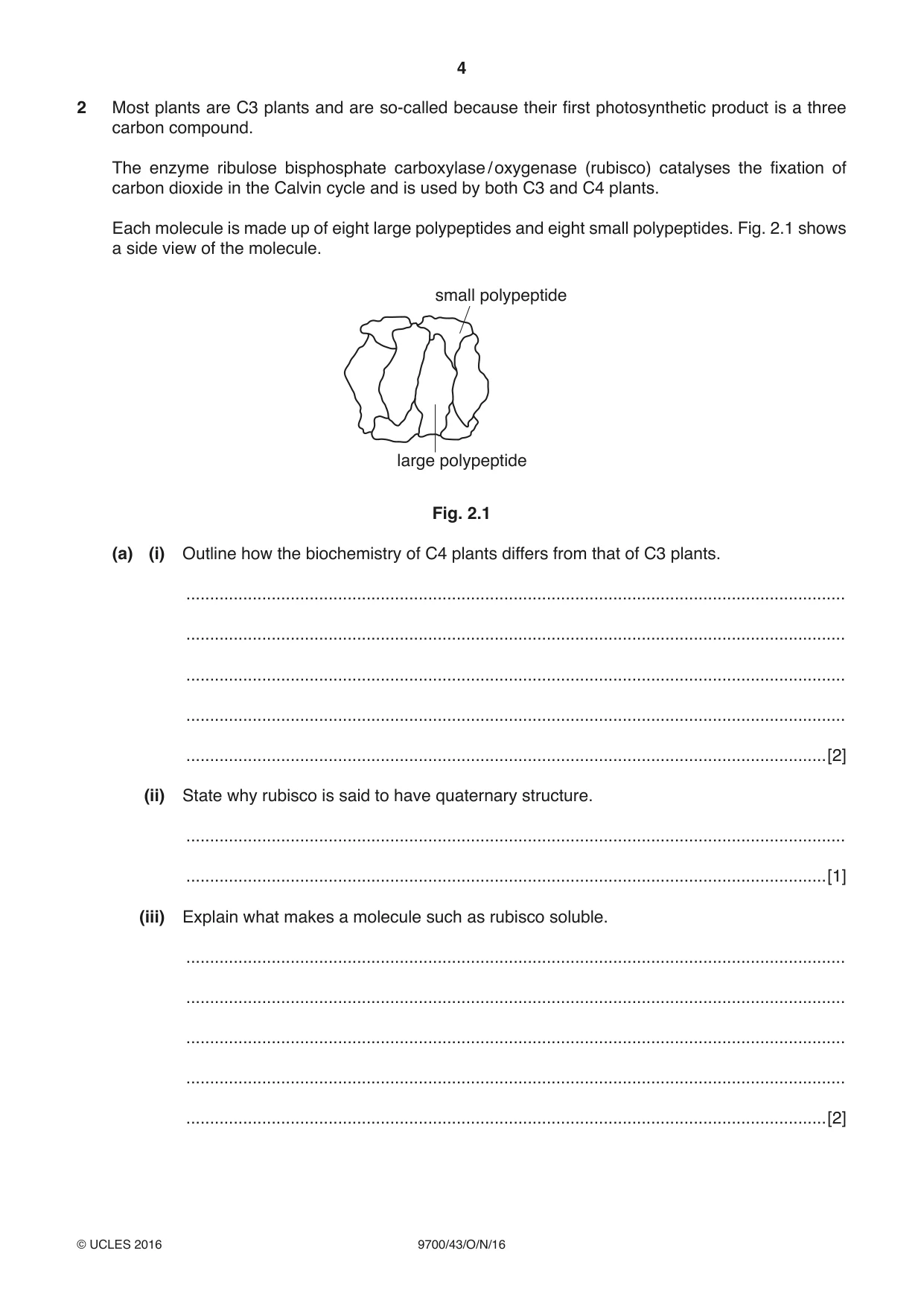
4 9700/43/O/N/16 © UCLES 2016 2 Most plants are C3 plants and are so-called because their first photosynthetic product is a three carbon compound. The enzyme ribulose bisphosphate carboxylase / oxygenase (rubisco) catalyses the fixation of carbon dioxide in the Calvin cycle and is used by both C3 and C4 plants. Each molecule is made up of eight large polypeptides and eight small polypeptides. Fig. 2.1 shows a side view of the molecule. small polypeptide large polypeptide Fig. 2.1 (a) (i) Outline how the biochemistry of C4 plants differs from that of C3 plants. … … … … …[2] (ii) State why rubisco is said to have quaternary structure. … …[1] (iii) Explain what makes a molecule such as rubisco soluble. … … … … …[2]
Question paper, page 5
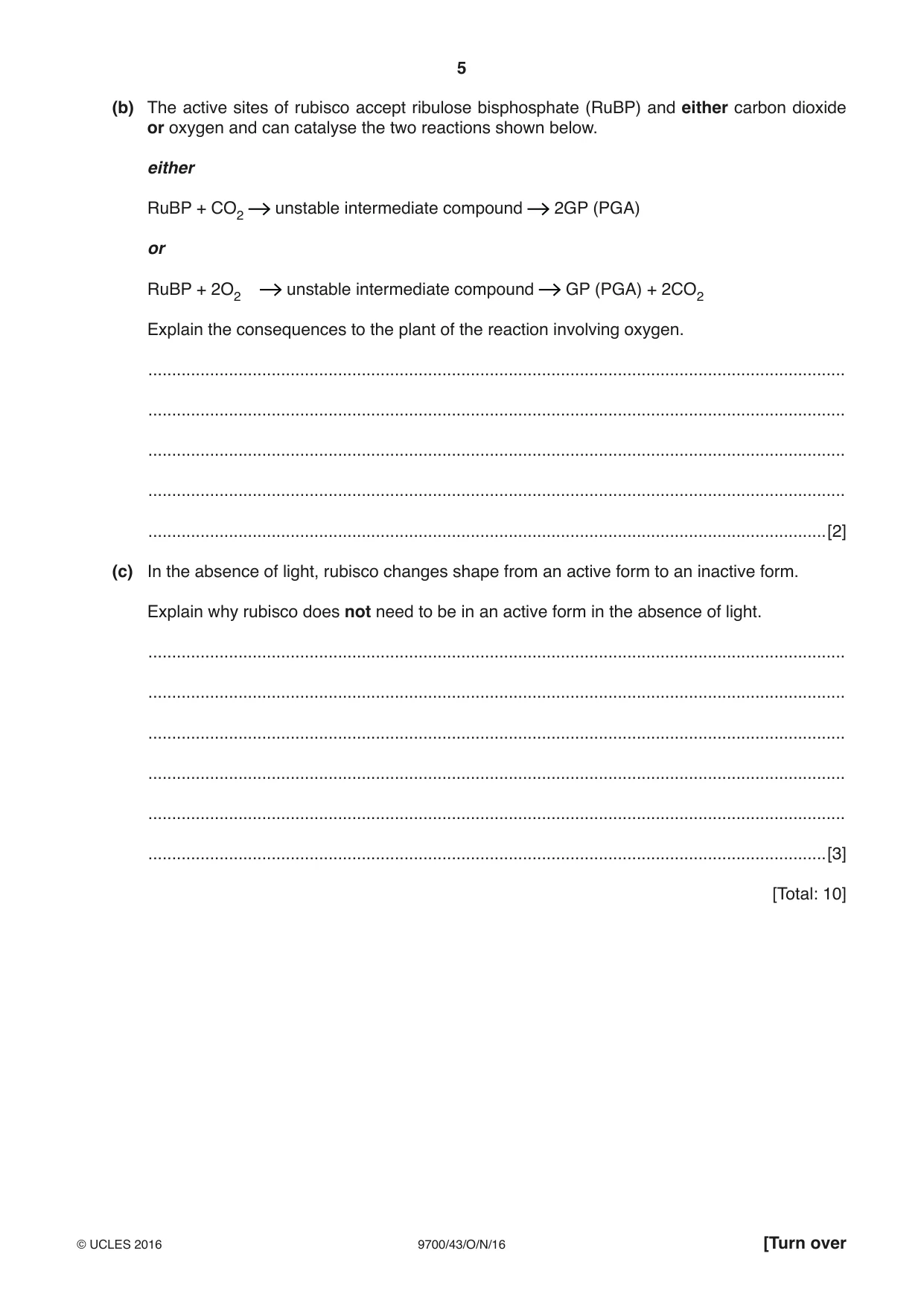
5 9700/43/O/N/16 © UCLES 2016 [Turn over (b) The active sites of rubisco accept ribulose bisphosphate (RuBP) and either carbon dioxide or oxygen and can catalyse the two reactions shown below. either RuBP + CO2 unstable intermediate compound 2GP (PGA) or RuBP + 2O2 unstable intermediate compound GP (PGA) + 2CO2 Explain the consequences to the plant of the reaction involving oxygen. … … … … …[2] (c) In the absence of light, rubisco changes shape from an active form to an inactive form. Explain why rubisco does not need to be in an active form in the absence of light. … … … … … …[3] [Total: 10]
Question paper, page 6
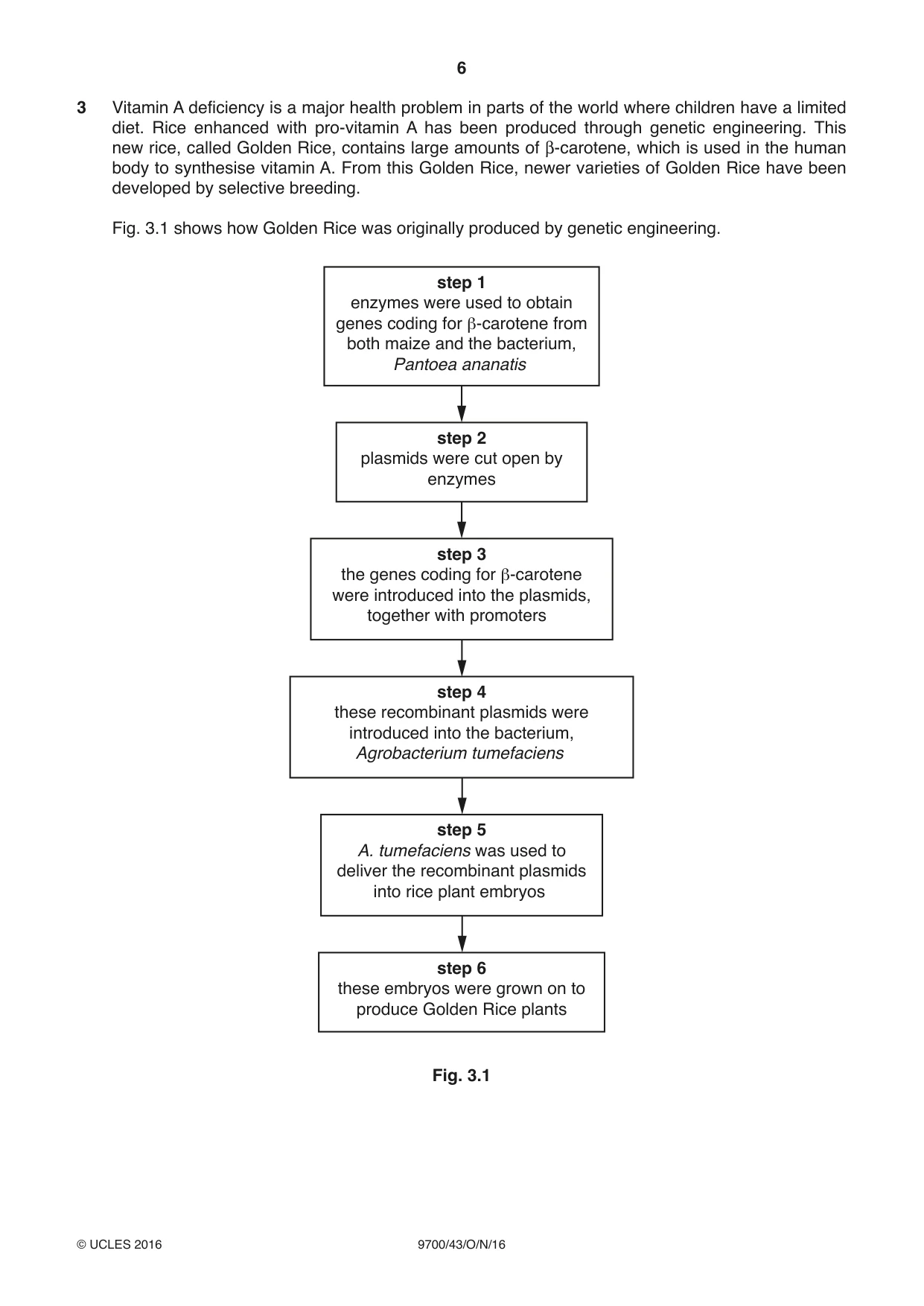
6 9700/43/O/N/16 © UCLES 2016 3 Vitamin A deficiency is a major health problem in parts of the world where children have a limited diet. Rice enhanced with pro-vitamin A has been produced through genetic engineering. This new rice, called Golden Rice, contains large amounts of β-carotene, which is used in the human body to synthesise vitamin A. From this Golden Rice, newer varieties of Golden Rice have been developed by selective breeding. Fig. 3.1 shows how Golden Rice was originally produced by genetic engineering. step 1 enzymes were used to obtain genes coding for β-carotene from both maize and the bacterium, Pantoea ananatis step 2 plasmids were cut open by enzymes step 3 the genes coding for β-carotene were introduced into the plasmids, together with promoters step 4 these recombinant plasmids were introduced into the bacterium, Agrobacterium tumefaciens step 5 A. tumefaciens was used to deliver the recombinant plasmids into rice plant embryos step 6 these embryos were grown on to produce Golden Rice plants Fig. 3.1
Question paper, page 7
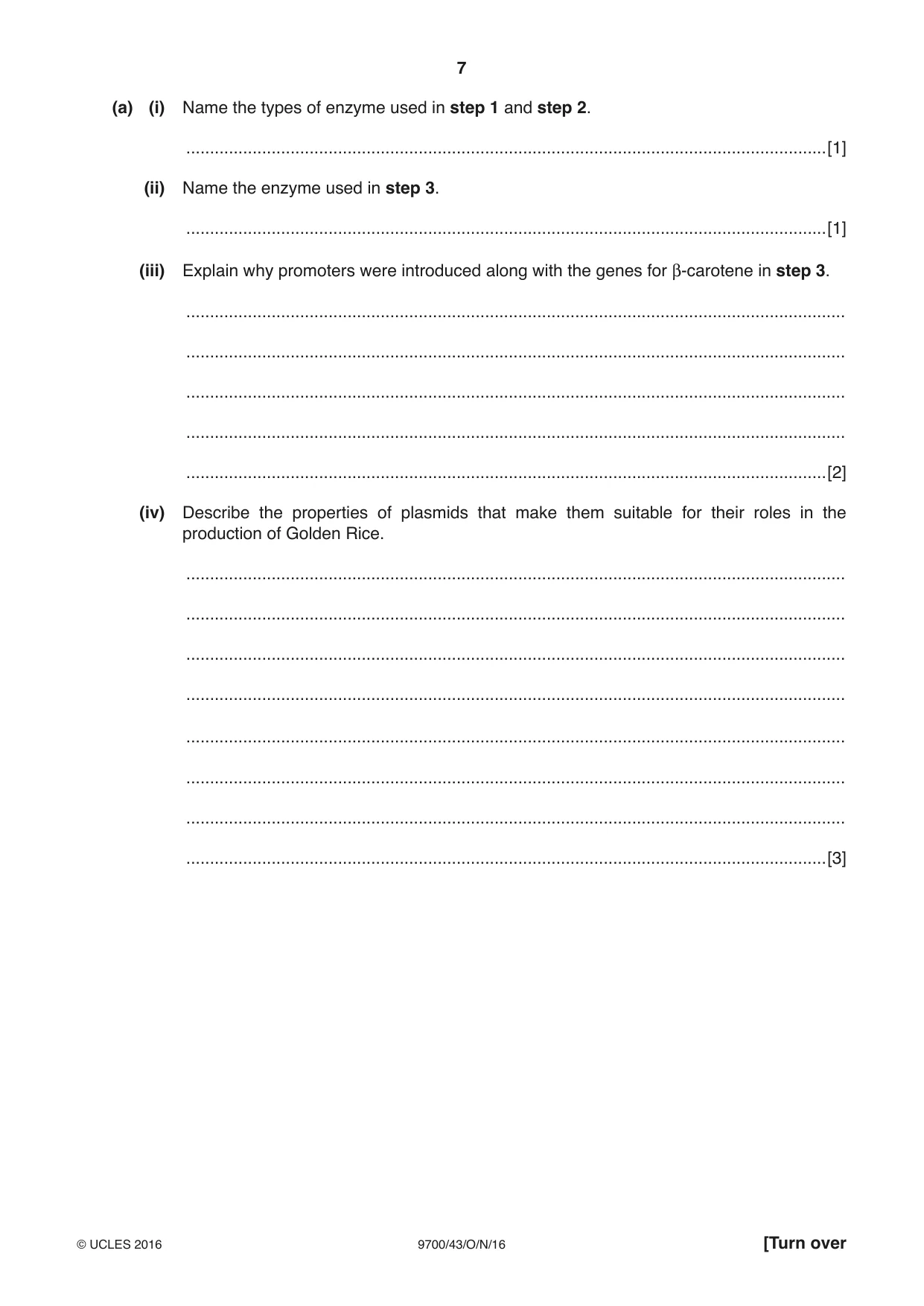
7 9700/43/O/N/16 © UCLES 2016 [Turn over (a) (i) Name the types of enzyme used in step 1 and step 2. …[1] (ii) Name the enzyme used in step 3. …[1] (iii) Explain why promoters were introduced along with the genes for β-carotene in step 3. … … … … …[2] (iv) Describe the properties of plasmids that make them suitable for their roles in the production of Golden Rice. … … … … … … … …[3]
Question paper, page 8
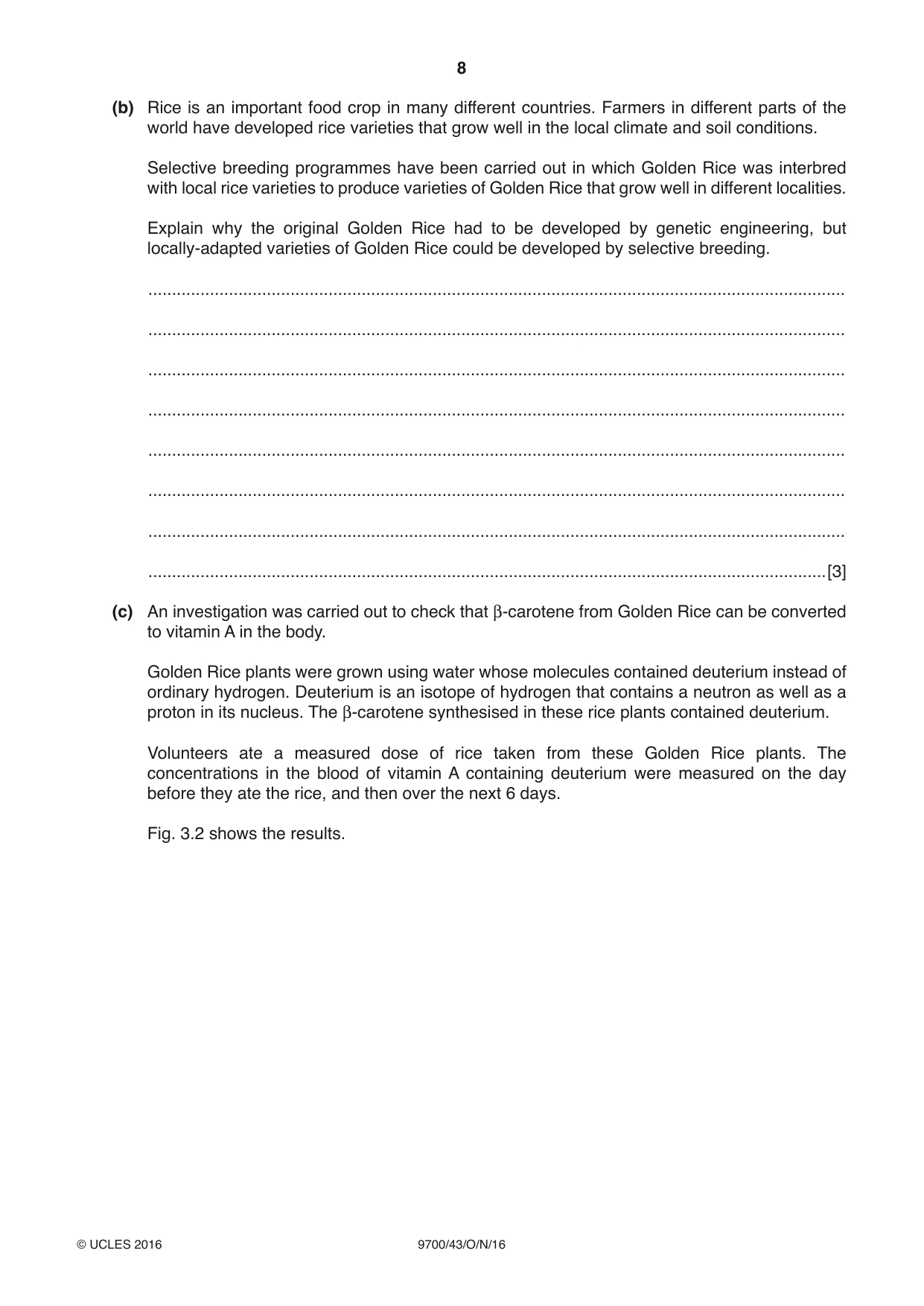
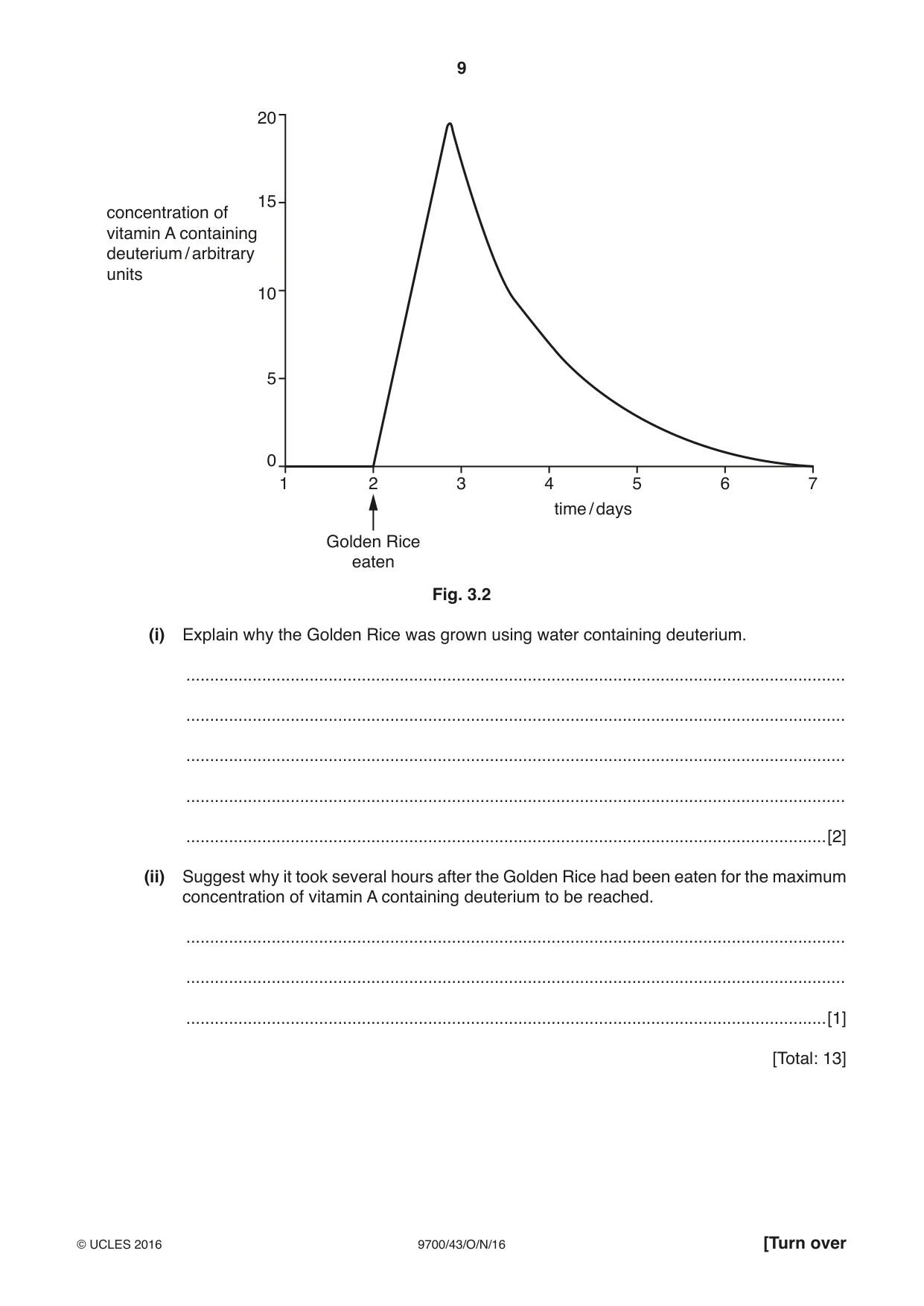
8 9700/43/O/N/16 © UCLES 2016 (b) Rice is an important food crop in many different countries. Farmers in different parts of the world have developed rice varieties that grow well in the local climate and soil conditions. Selective breeding programmes have been carried out in which Golden Rice was interbred with local rice varieties to produce varieties of Golden Rice that grow well in different localities. Explain why the original Golden Rice had to be developed by genetic engineering, but locally-adapted varieties of Golden Rice could be developed by selective breeding. … … … … … … … …[3] (c) An investigation was carried out to check that β-carotene from Golden Rice can be converted to vitamin A in the body. Golden Rice plants were grown using water whose molecules contained deuterium instead of ordinary hydrogen. Deuterium is an isotope of hydrogen that contains a neutron as well as a proton in its nucleus. The β-carotene synthesised in these rice plants contained deuterium. Volunteers ate a measured dose of rice taken from these Golden Rice plants. The concentrations in the blood of vitamin A containing deuterium were measured on the day before they ate the rice, and then over the next 6 days. Fig. 3.2 shows the results.
Question paper, page 9
9 9700/43/O/N/16 © UCLES 2016 [Turn over 1 2 3 4 5 6 7 5 10 15 20 0 concentration of vitamin A containing deuterium / arbitrary units Golden Rice eaten time / days Fig. 3.2 (i) Explain why the Golden Rice was grown using water containing deuterium. … … … … …[2] (ii) Suggest why it took several hours after the Golden Rice had been eaten for the maximum concentration of vitamin A containing deuterium to be reached. … … …[1] [Total: 13]
Question paper, page 10
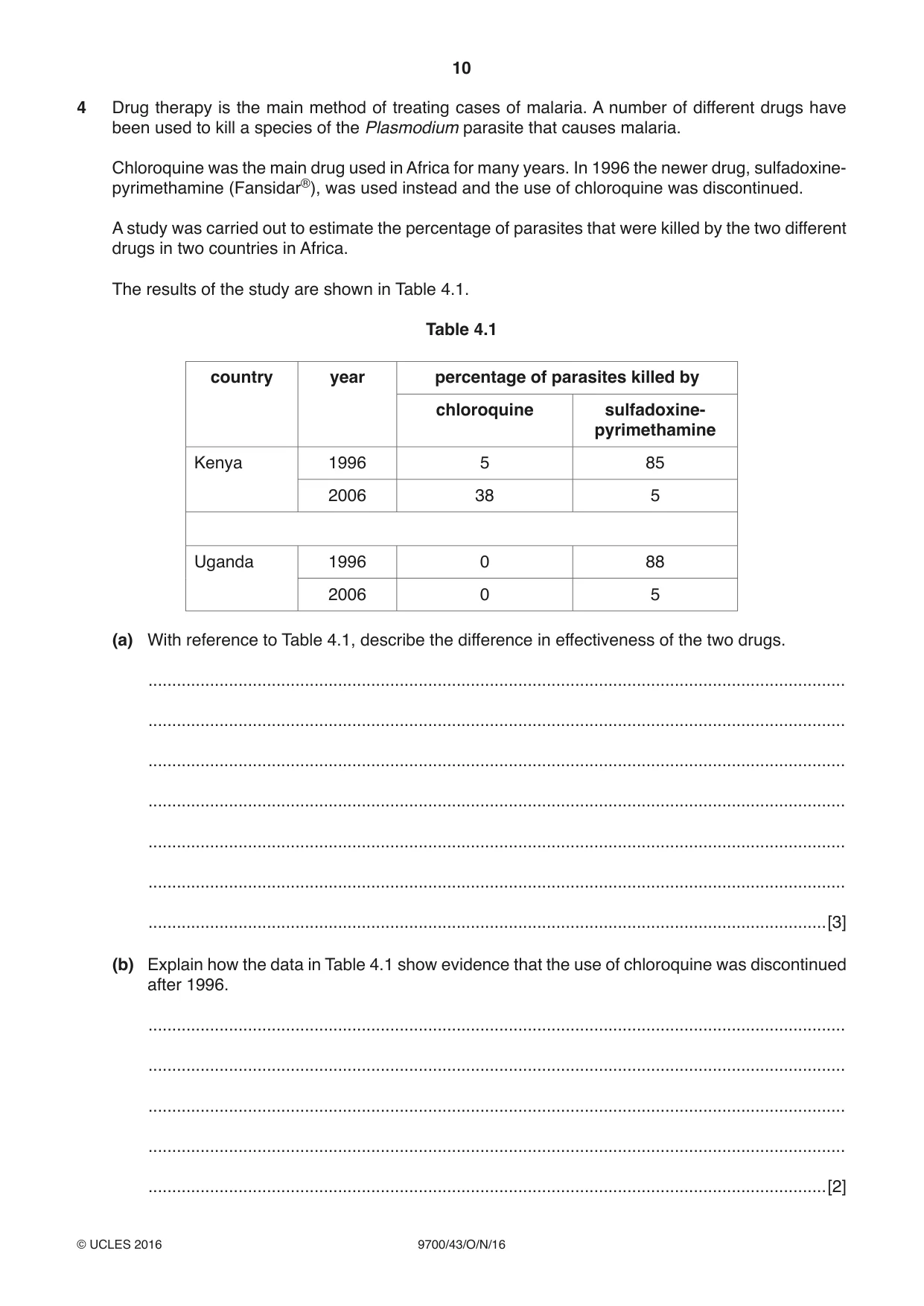
10 9700/43/O/N/16 © UCLES 2016 4 Drug therapy is the main method of treating cases of malaria. A number of different drugs have been used to kill a species of the Plasmodium parasite that causes malaria. Chloroquine was the main drug used in Africa for many years. In 1996 the newer drug, sulfadoxine- pyrimethamine (Fansidar®), was used instead and the use of chloroquine was discontinued. A study was carried out to estimate the percentage of parasites that were killed by the two different drugs in two countries in Africa. The results of the study are shown in Table 4.1. Table 4.1 country year percentage of parasites killed by chloroquine sulfadoxine- pyrimethamine Kenya 1996 5 85 2006 38 5 Uganda 1996 0 88 2006 0 5 (a) With reference to Table 4.1, describe the difference in effectiveness of the two drugs. … … … … … … …[3] (b) Explain how the data in Table 4.1 show evidence that the use of chloroquine was discontinued after 1996. … … … … …[2]
Question paper, page 11
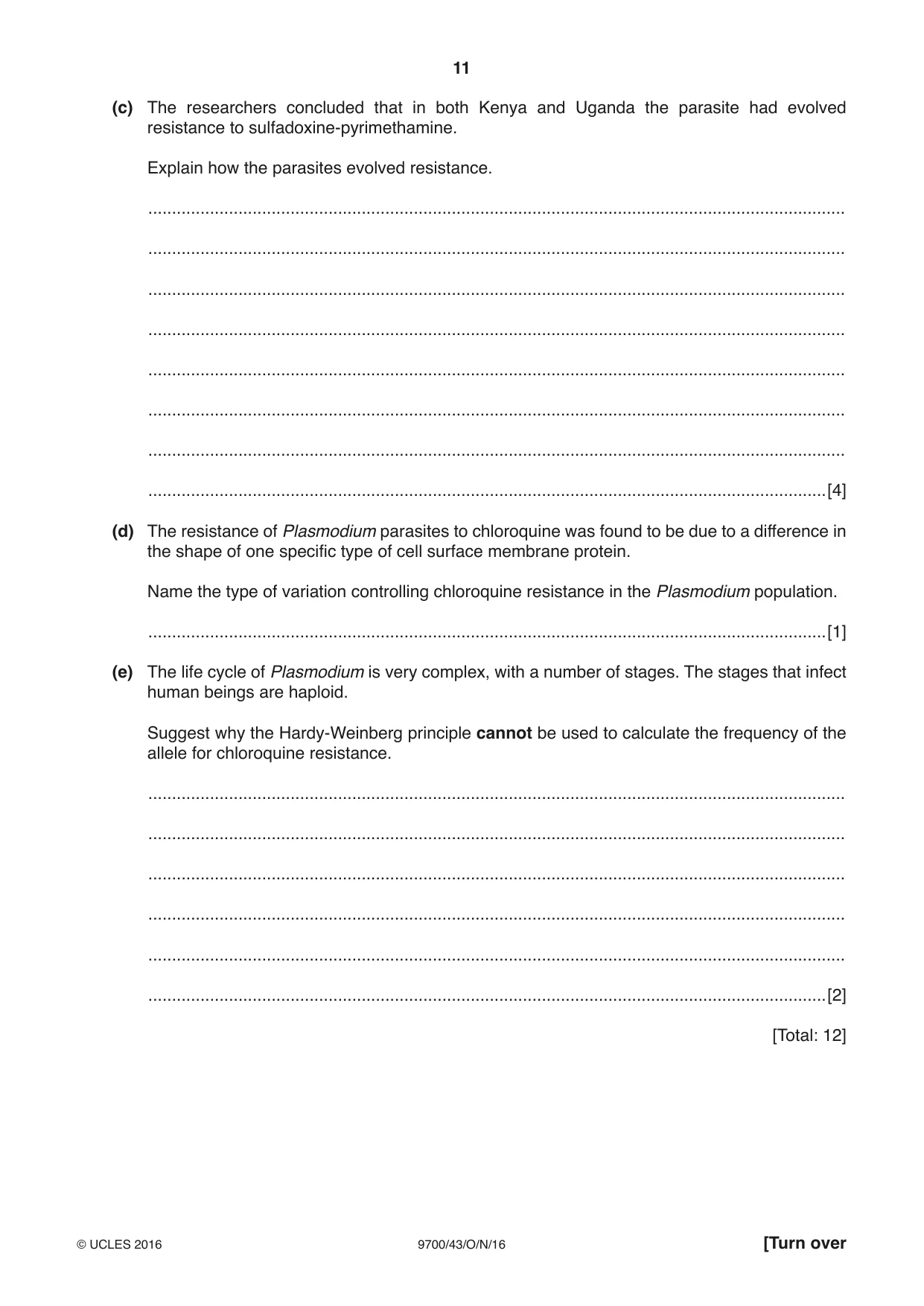
11 9700/43/O/N/16 © UCLES 2016 [Turn over (c) The researchers concluded that in both Kenya and Uganda the parasite had evolved resistance to sulfadoxine-pyrimethamine. Explain how the parasites evolved resistance. … … … … … … … …[4] (d) The resistance of Plasmodium parasites to chloroquine was found to be due to a difference in the shape of one specific type of cell surface membrane protein. Name the type of variation controlling chloroquine resistance in the Plasmodium population. …[1] (e) The life cycle of Plasmodium is very complex, with a number of stages. The stages that infect human beings are haploid. Suggest why the Hardy-Weinberg principle cannot be used to calculate the frequency of the allele for chloroquine resistance. … … … … … …[2] [Total: 12]
Question paper, page 12
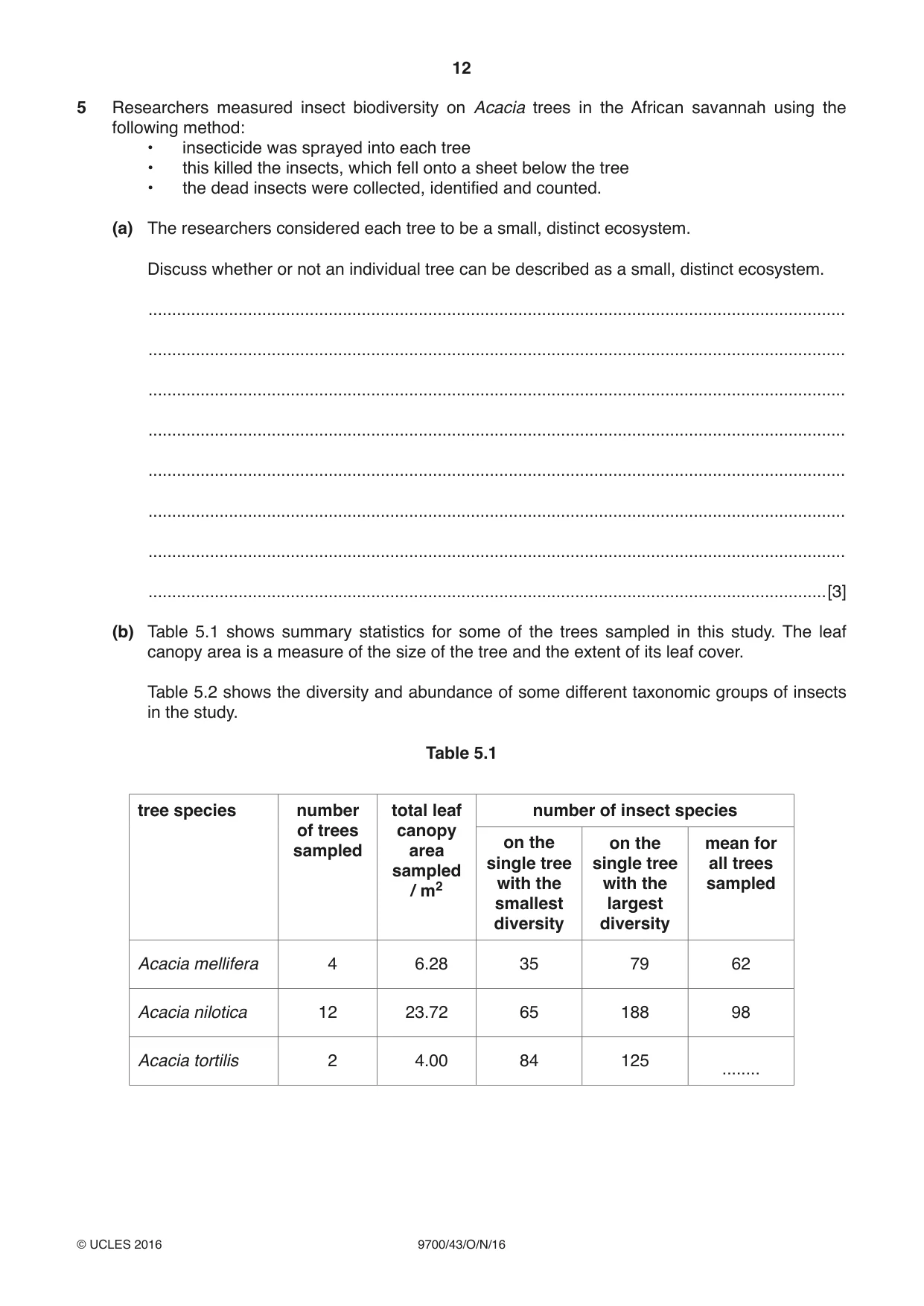
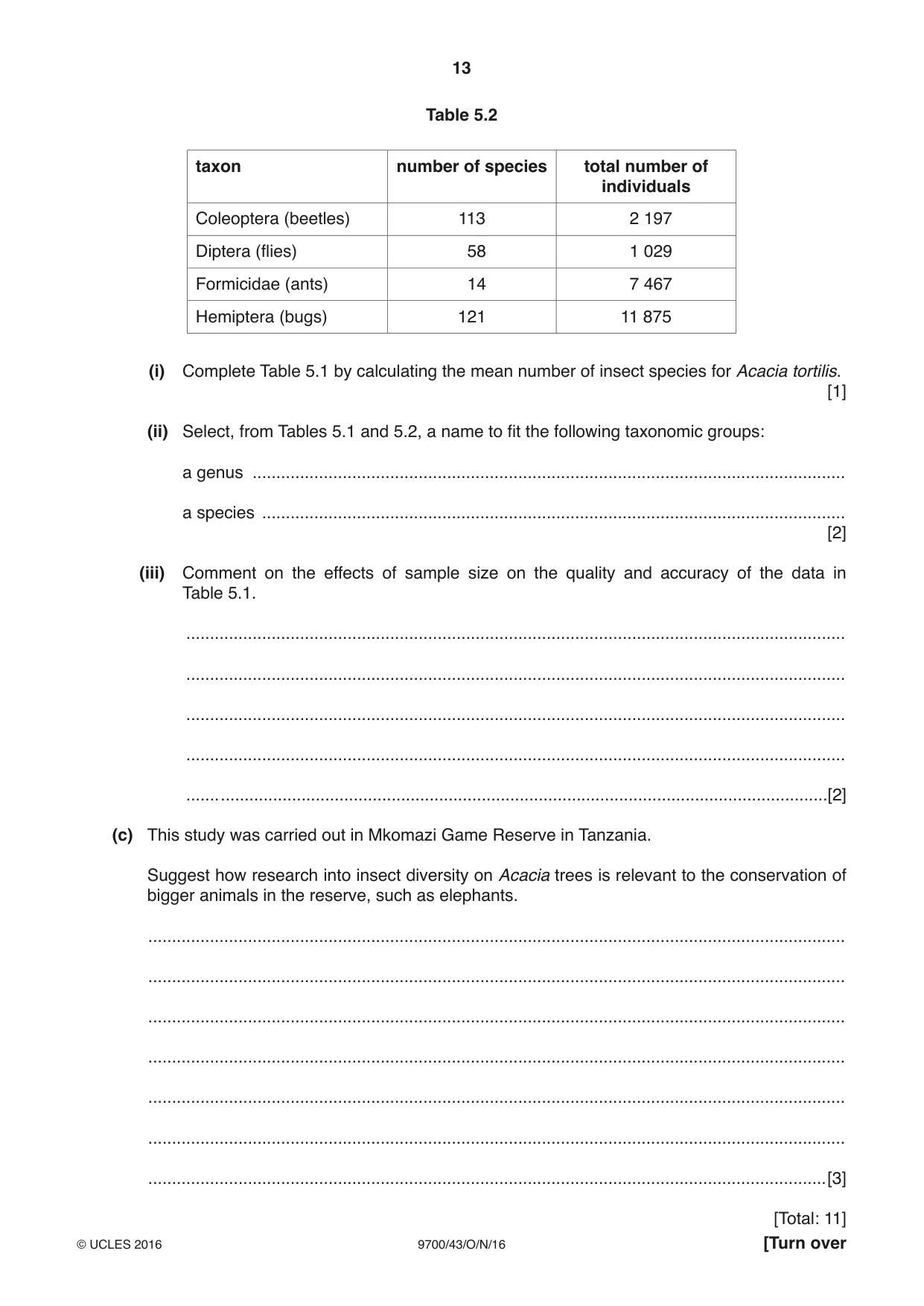
12 9700/43/O/N/16 © UCLES 2016 5 Researchers measured insect biodiversity on Acacia trees in the African savannah using the following method: • insecticide was sprayed into each tree • this killed the insects, which fell onto a sheet below the tree • the dead insects were collected, identified and counted. (a) The researchers considered each tree to be a small, distinct ecosystem. Discuss whether or not an individual tree can be described as a small, distinct ecosystem. … … … … … … … …[3] (b) Table 5.1 shows summary statistics for some of the trees sampled in this study. The leaf canopy area is a measure of the size of the tree and the extent of its leaf cover. Table 5.2 shows the diversity and abundance of some different taxonomic groups of insects in the study. Table 5.1 tree species number of trees sampled total leaf canopy area sampled / m2 number of insect species on the single tree with the smallest diversity on the single tree with the largest diversity mean for all trees sampled Acacia mellifera 4 6.28 35 79 62 Acacia nilotica 12 23.72 65 188 98 Acacia tortilis 2 4.00 84 125 …
Question paper, page 13
13 9700/43/O/N/16 © UCLES 2016 [Turn over Table 5.2 taxon number of species total number of individuals Coleoptera (beetles) 113 2 197 Diptera (flies) 58 1 029 Formicidae (ants) 14 7 467 Hemiptera (bugs) 121 11 875 (i) Complete Table 5.1 by calculating the mean number of insect species for Acacia tortilis. [1] (ii) Select, from Tables 5.1 and 5.2, a name to fit the following taxonomic groups: a genus … a species … [2] (iii) Comment on the effects of sample size on the quality and accuracy of the data in Table 5.1. … … … … …[2] (c) This study was carried out in Mkomazi Game Reserve in Tanzania. Suggest how research into insect diversity on Acacia trees is relevant to the conservation of bigger animals in the reserve, such as elephants. … … … … … … …[3] [Total: 11]
Question paper, page 14
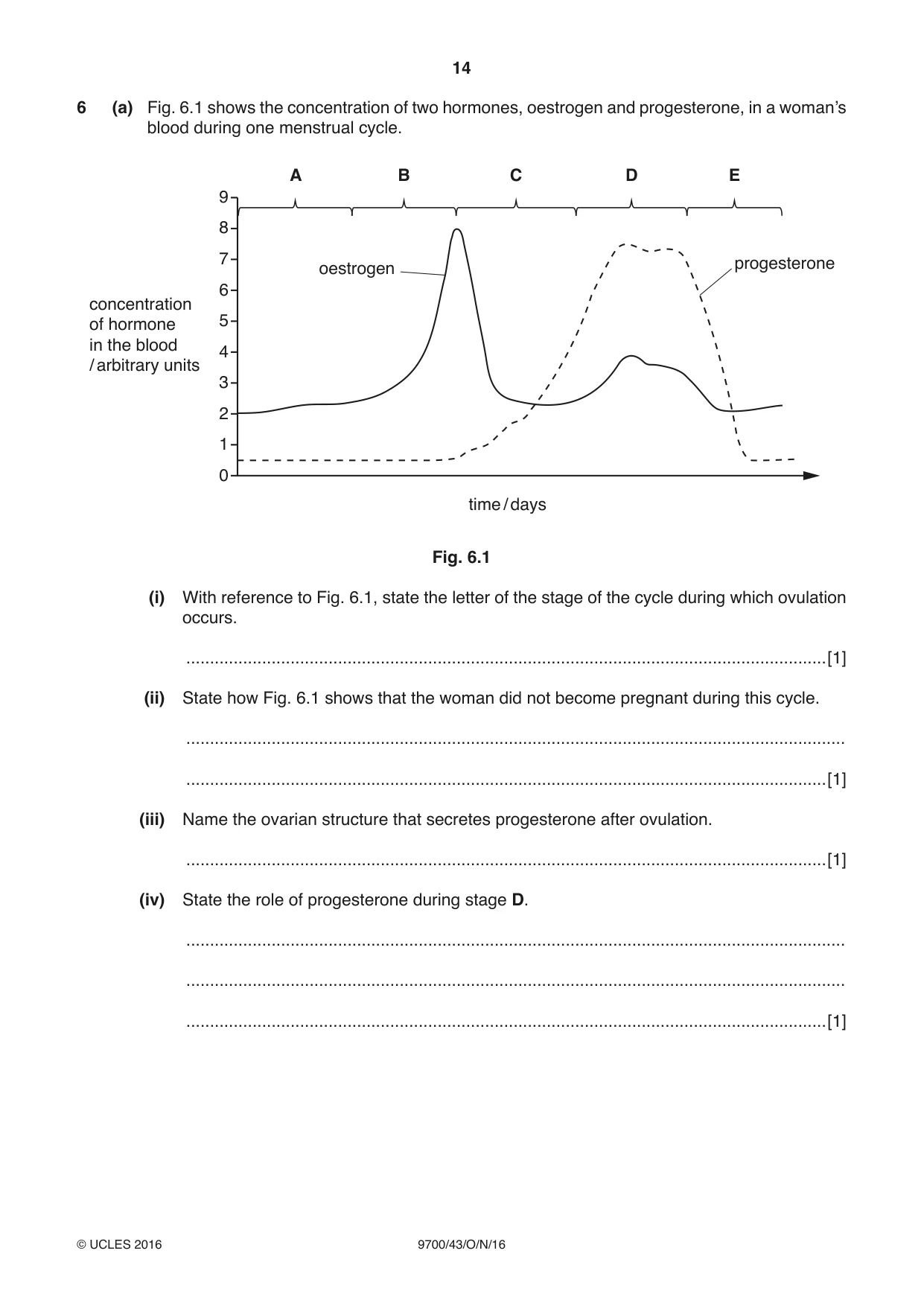
14 9700/43/O/N/16 © UCLES 2016 6 (a) Fig. 6.1 shows the concentration of two hormones, oestrogen and progesterone, in a woman’s blood during one menstrual cycle. 9 8 7 6 5 4 3 2 1 0 A B C D E time / days progesterone oestrogen concentration of hormone in the blood / arbitrary units Fig. 6.1 (i) With reference to Fig. 6.1, state the letter of the stage of the cycle during which ovulation occurs. …[1] (ii) State how Fig. 6.1 shows that the woman did not become pregnant during this cycle. … …[1] (iii) Name the ovarian structure that secretes progesterone after ovulation. …[1] (iv) State the role of progesterone during stage D. … … …[1]
Question paper, page 15
15 9700/43/O/N/16 © UCLES 2016 [Turn over (b) The combined contraceptive pill contains oestrogen and progesterone. Explain how this combined contraceptive pill works to prevent pregnancy. … … … … … … … …[4] [Total: 8]
Question paper, page 16
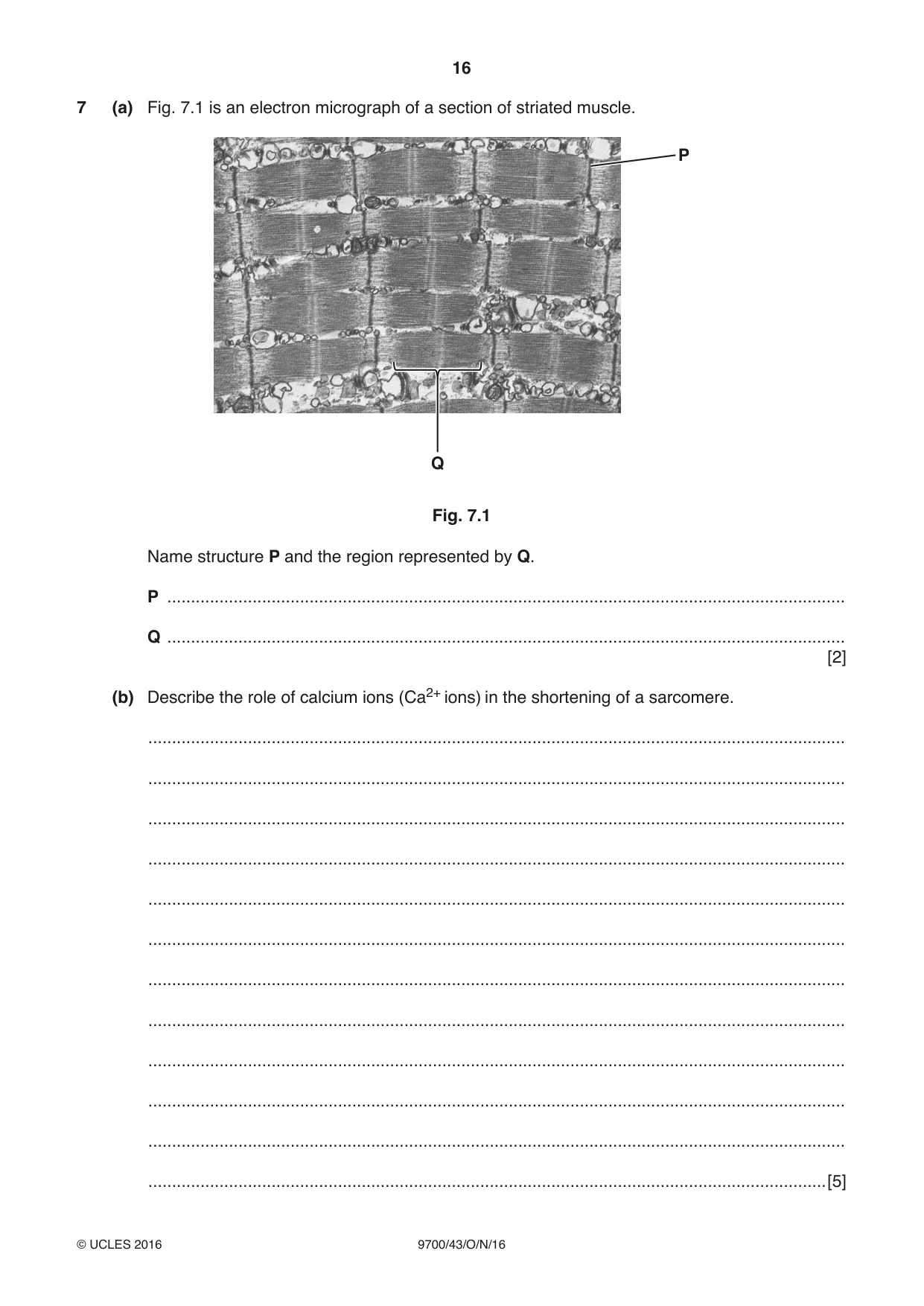
16 9700/43/O/N/16 © UCLES 2016 7 (a) Fig. 7.1 is an electron micrograph of a section of striated muscle. P Q Fig. 7.1 Name structure P and the region represented by Q. P … Q … [2] (b) Describe the role of calcium ions (Ca2+ ions) in the shortening of a sarcomere. … … … … … … … … … … … …[5]
Question paper, page 17
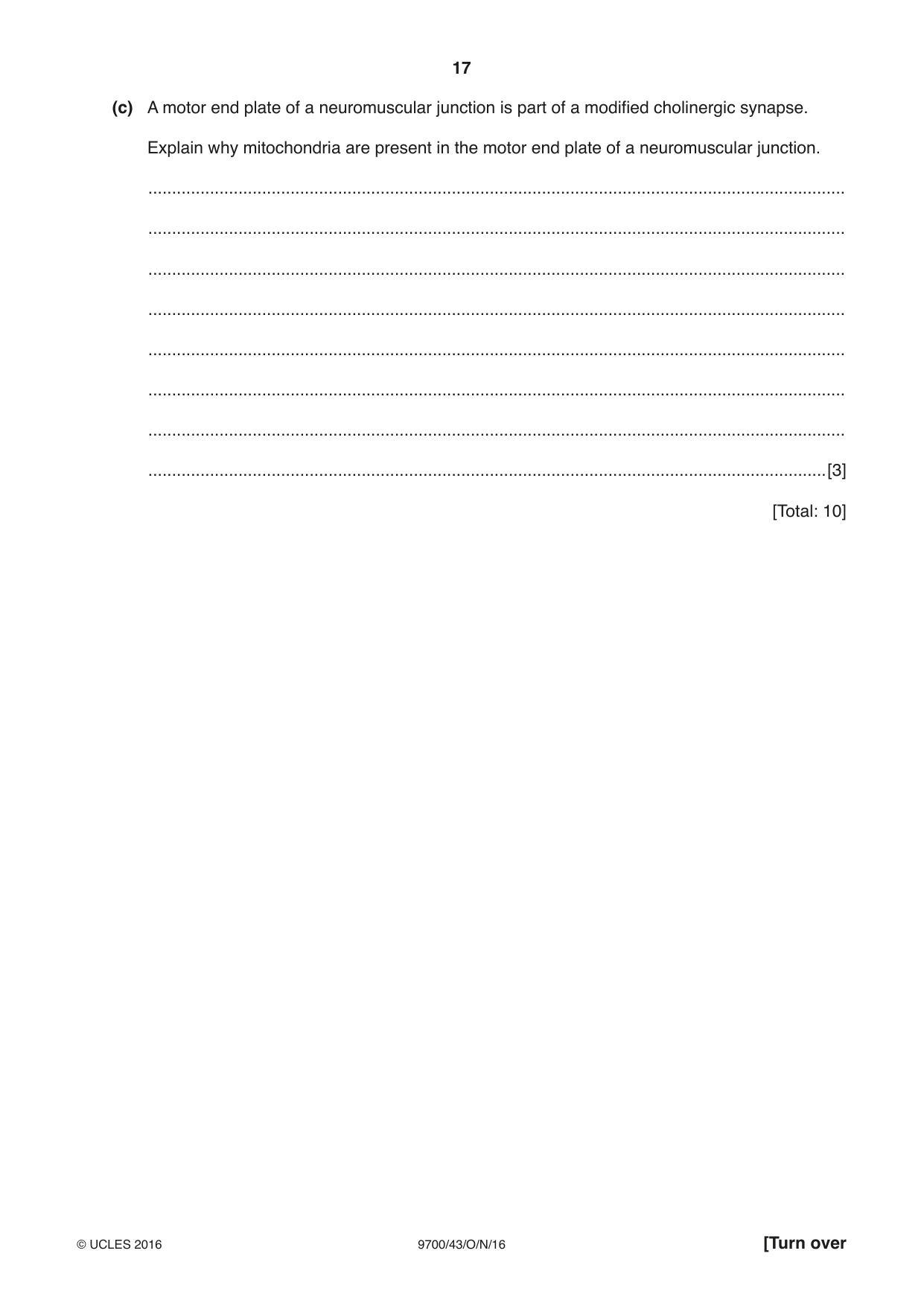
17 9700/43/O/N/16 © UCLES 2016 [Turn over (c) A motor end plate of a neuromuscular junction is part of a modified cholinergic synapse. Explain why mitochondria are present in the motor end plate of a neuromuscular junction. … … … … … … … …[3] [Total: 10]
Question paper, page 18
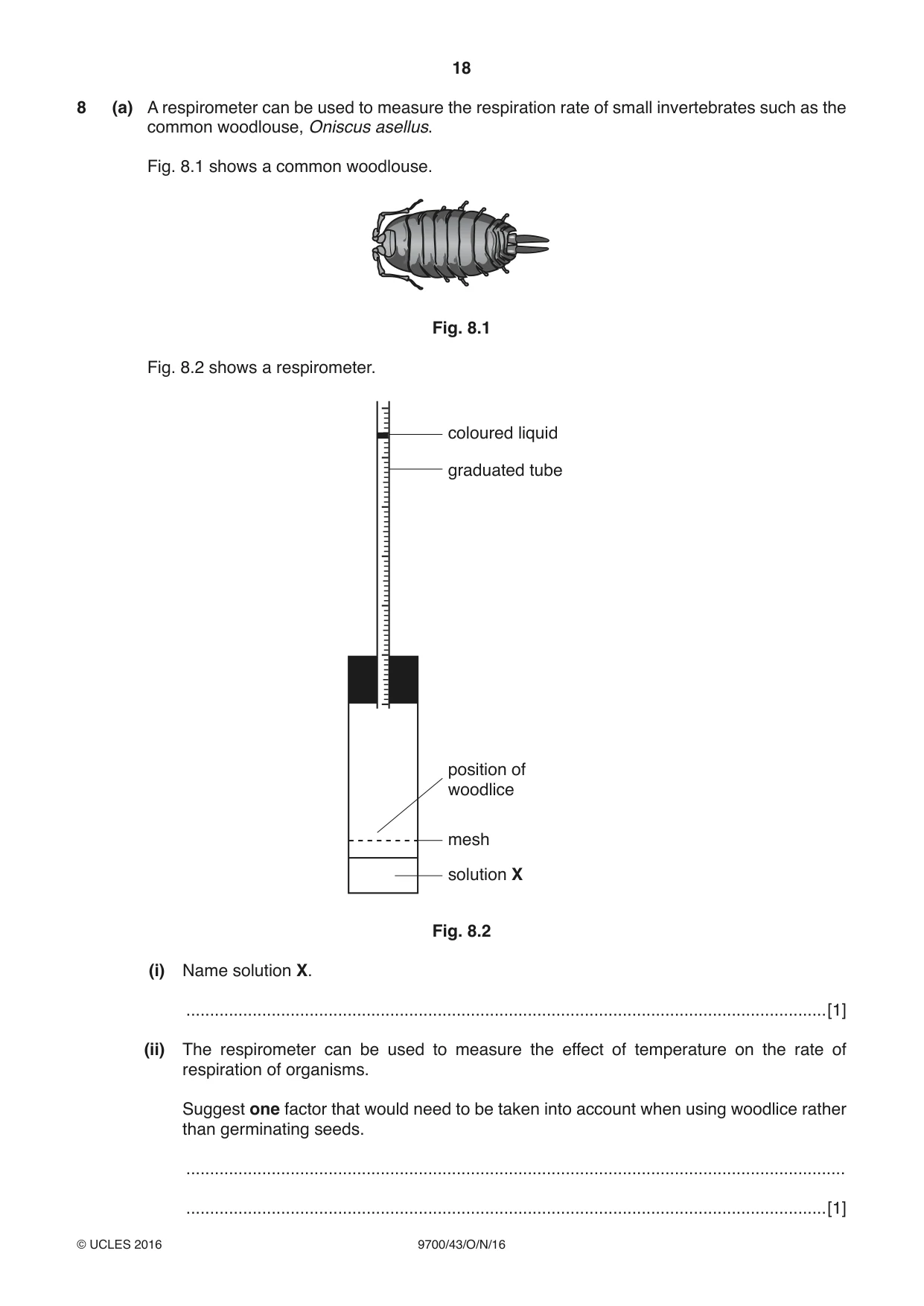
18 9700/43/O/N/16 © UCLES 2016 8 (a) A respirometer can be used to measure the respiration rate of small invertebrates such as the common woodlouse, Oniscus asellus. Fig. 8.1 shows a common woodlouse. Fig. 8.1 Fig. 8.2 shows a respirometer. coloured liquid graduated tube mesh solution X position of woodlice Fig. 8.2 (i) Name solution X. …[1] (ii) The respirometer can be used to measure the effect of temperature on the rate of respiration of organisms. Suggest one factor that would need to be taken into account when using woodlice rather than germinating seeds. … …[1]
Question paper, page 19
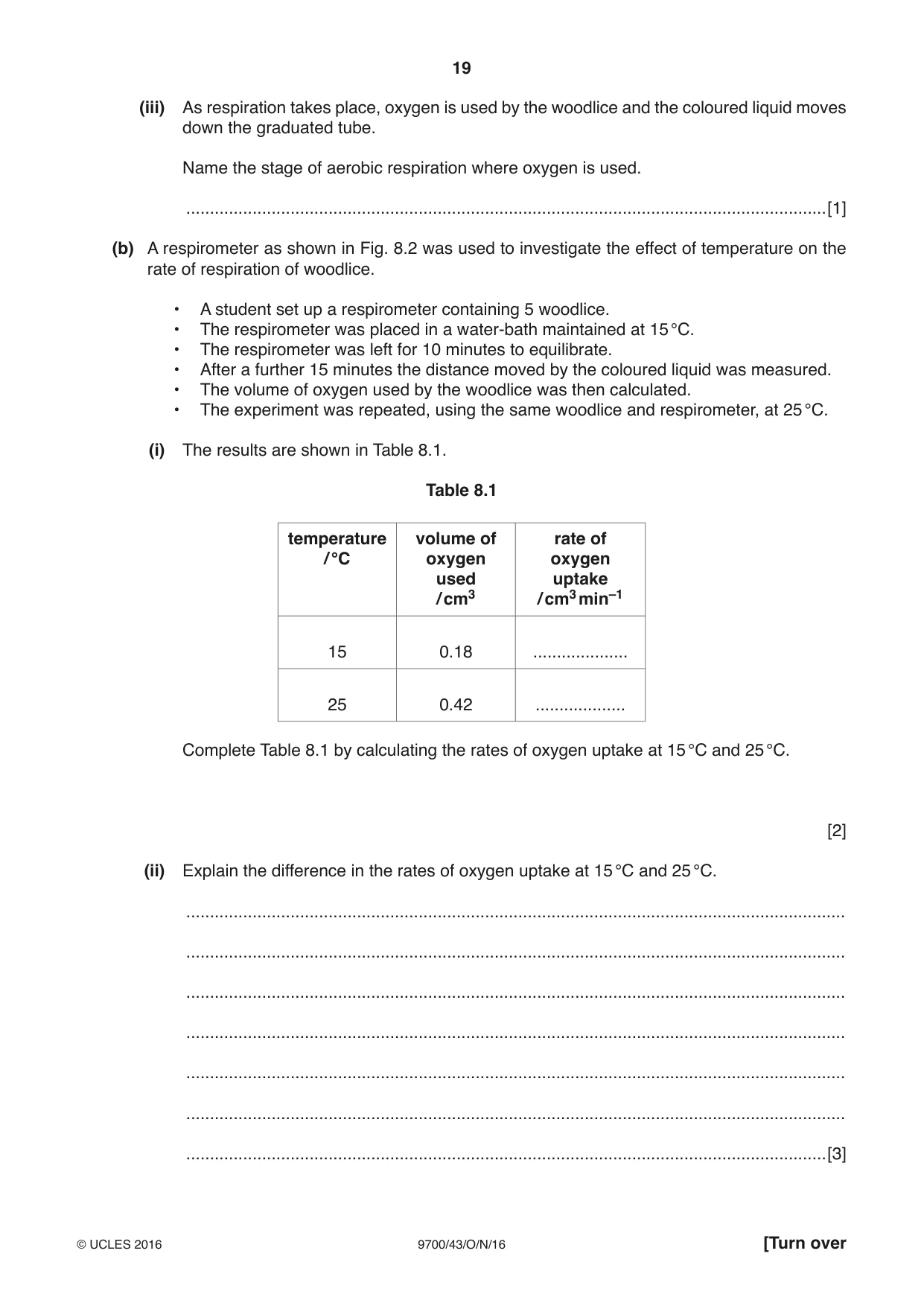
19 9700/43/O/N/16 © UCLES 2016 [Turn over (iii) As respiration takes place, oxygen is used by the woodlice and the coloured liquid moves down the graduated tube. Name the stage of aerobic respiration where oxygen is used. …[1] (b) A respirometer as shown in Fig. 8.2 was used to investigate the effect of temperature on the rate of respiration of woodlice. • A student set up a respirometer containing 5 woodlice. • The respirometer was placed in a water-bath maintained at 15 °C. • The respirometer was left for 10 minutes to equilibrate. • After a further 15 minutes the distance moved by the coloured liquid was measured. • The volume of oxygen used by the woodlice was then calculated. • The experiment was repeated, using the same woodlice and respirometer, at 25 °C. (i) The results are shown in Table 8.1. Table 8.1 temperature / °C volume of oxygen used / cm3 rate of oxygen uptake / cm3 min–1 15 0.18 … 25 0.42 … Complete Table 8.1 by calculating the rates of oxygen uptake at 15 °C and 25 °C. [2] (ii) Explain the difference in the rates of oxygen uptake at 15 °C and 25 °C. … … … … … … …[3]
Question paper, page 20
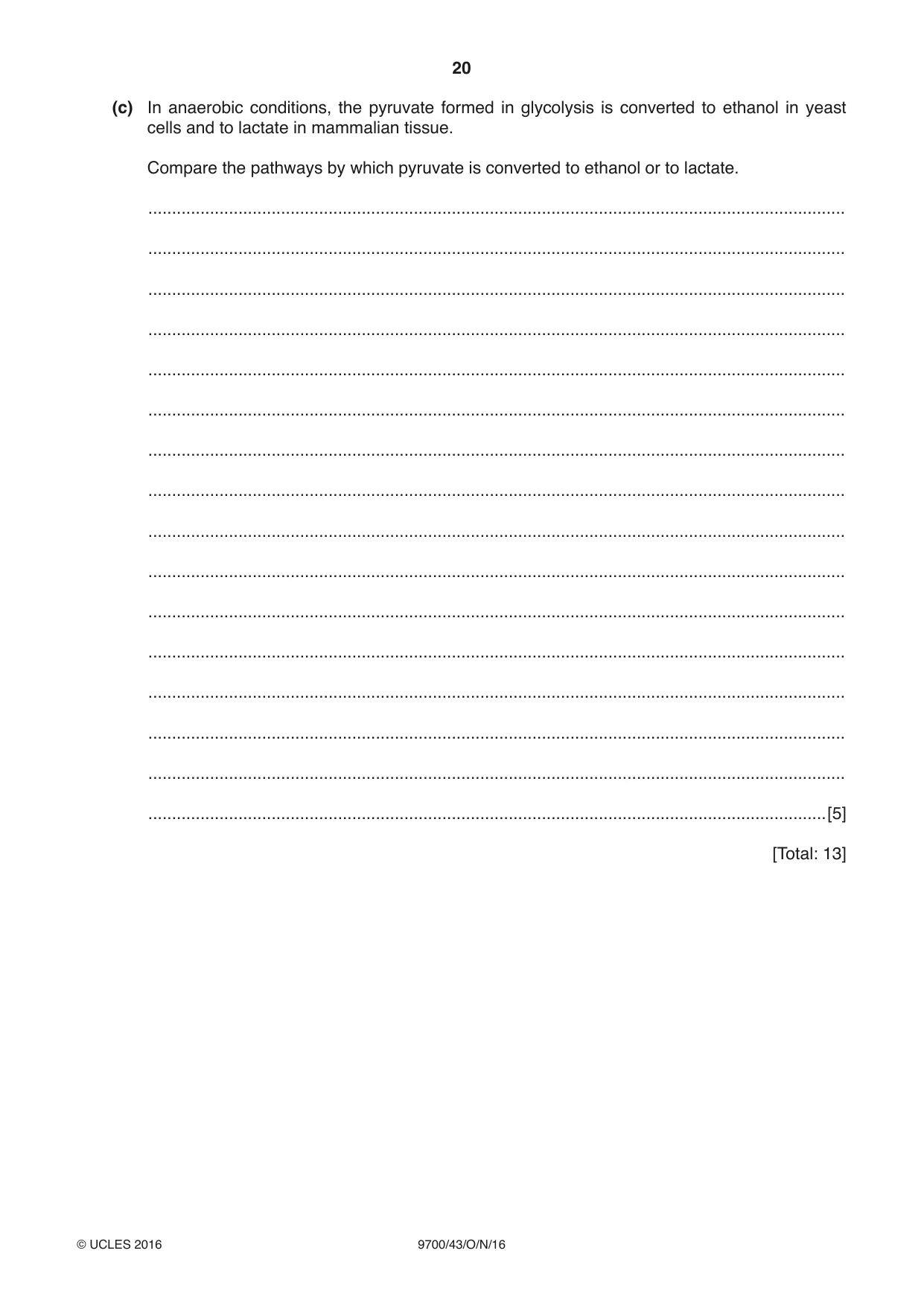
20 9700/43/O/N/16 © UCLES 2016 (c) In anaerobic conditions, the pyruvate formed in glycolysis is converted to ethanol in yeast cells and to lactate in mammalian tissue. Compare the pathways by which pyruvate is converted to ethanol or to lactate. … … … … … … … … … … … … … … … …[5] [Total: 13]
Question paper, page 21
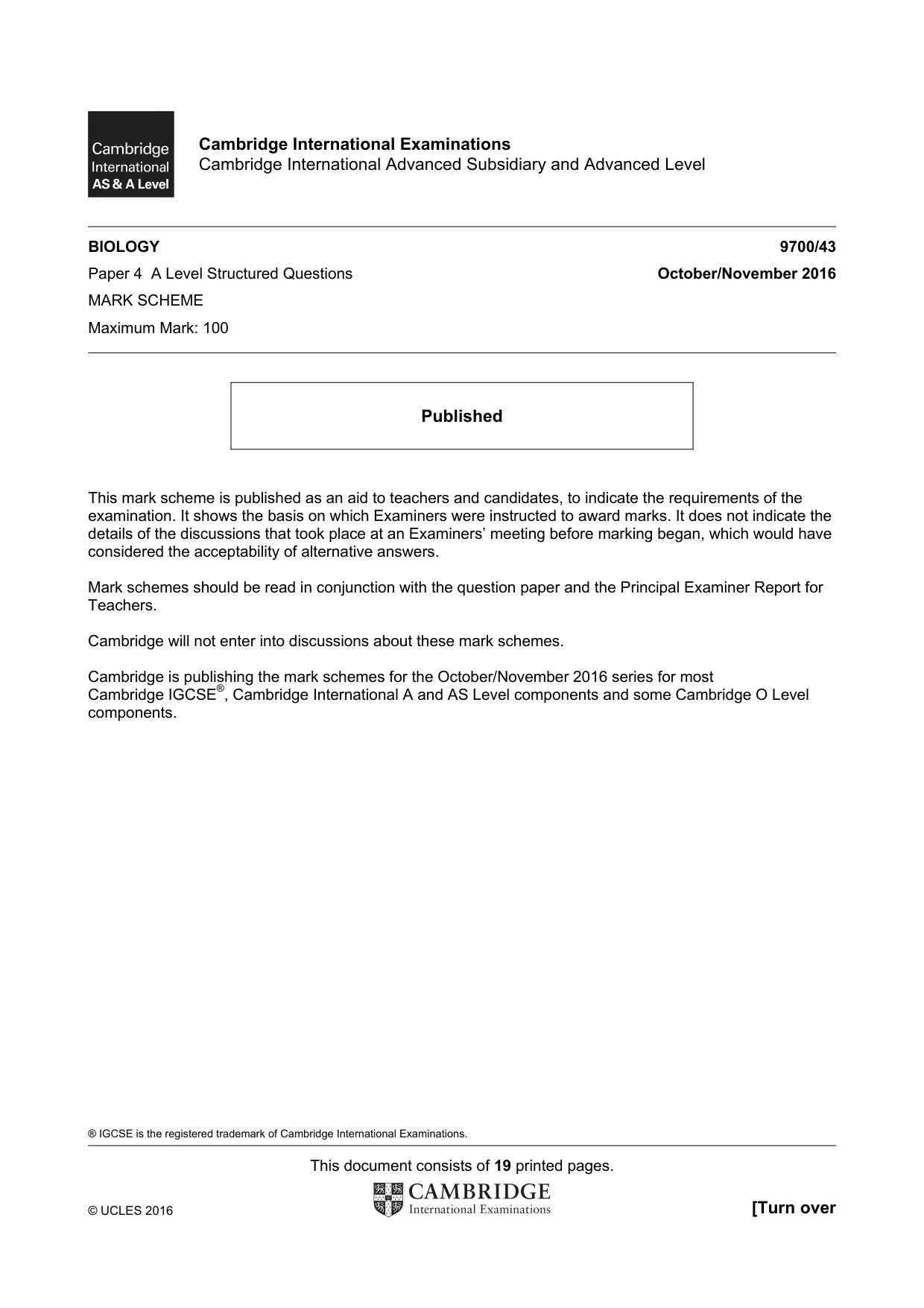
21 9700/43/O/N/16 © UCLES 2016 [Turn over Section B Answer one question. 9 (a) Explain how glucose is reabsorbed into the blood from a kidney nephron. [8] (b) Describe the role of ADH when the water potential of blood decreases. [7] [Total: 15] 10 (a) Describe the response of the Venus fly trap to touch. [8] (b) Explain the control of gibberellin synthesis and outline how gibberellin stimulates stem elongation. [7] [Total: 15] … … … … … … … … … … … … … … … … … …
Question paper, page 22
22 9700/43/O/N/16 © UCLES 2016 … … … … … … … … … … … … … … … … … … … … … … … … … … … …
Question paper, page 23
23 9700/43/O/N/16 © UCLES 2016 [Turn over … … … … … … … … … … … … … … … … … … … … … … … … … … … …
Question paper, page 24
24 9700/43/O/N/16 © UCLES 2016 Permission to reproduce items where third-party owned material protected by copyright is included has been sought and cleared where possible. Every reasonable effort has been made by the publisher (UCLES) to trace copyright holders, but if any items requiring clearance have unwittingly been included, the publisher will be pleased to make amends at the earliest possible opportunity. To avoid the issue of disclosure of answer-related information to candidates, all copyright acknowledgements are reproduced online in the Cambridge International Examinations Copyright Acknowledgements Booklet. This is produced for each series of examinations and is freely available to download at www.cie.org.uk after the live examination series. Cambridge International Examinations is part of the Cambridge Assessment Group. Cambridge Assessment is the brand name of University of Cambridge Local Examinations Syndicate (UCLES), which is itself a department of the University of Cambridge. … … … … … … … … … … … … … … … … … … … … … … … …
Mark scheme, page 1
® IGCSE is the registered trademark of Cambridge International Examinations. This document consists of 19 printed pages. © UCLES 2016 [Turn over Cambridge International Examinations Cambridge International Advanced Subsidiary and Advanced Level BIOLOGY 9700/43 Paper 4 A Level Structured Questions October/November 2016 MARK SCHEME Maximum Mark: 100 Published This mark scheme is published as an aid to teachers and candidates, to indicate the requirements of the examination. It shows the basis on which Examiners were instructed to award marks. It does not indicate the details of the discussions that took place at an Examiners’ meeting before marking began, which would have considered the acceptability of alternative answers. Mark schemes should be read in conjunction with the question paper and the Principal Examiner Report for Teachers. Cambridge will not enter into discussions about these mark schemes. Cambridge is publishing the mark schemes for the October/November 2016 series for most Cambridge IGCSE®, Cambridge International A and AS Level components and some Cambridge O Level components.
Mark scheme, page 2
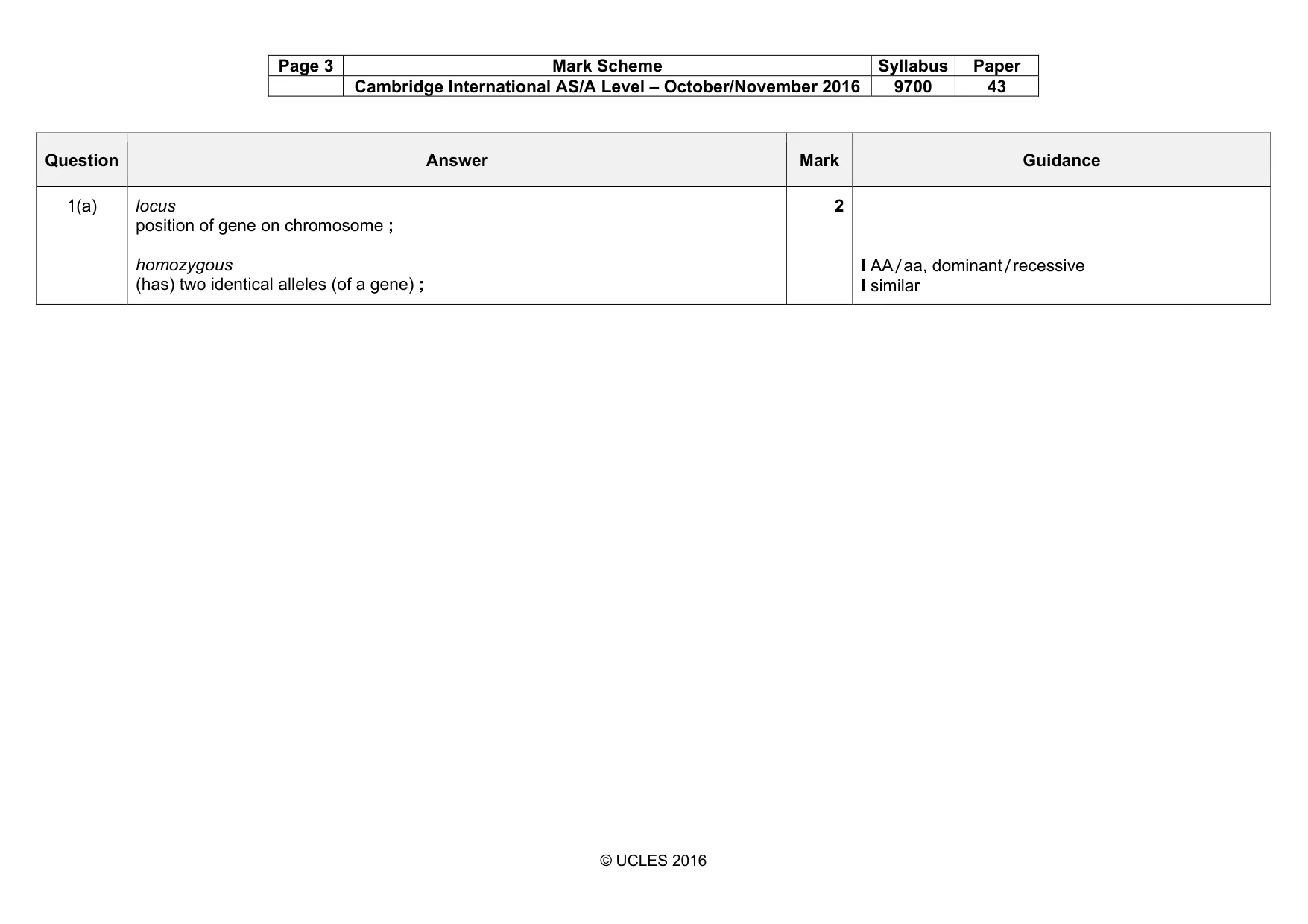
Page 2 Mark Scheme Syllabus Paper Cambridge International AS/A Level – October/November 2016 9700 43 © UCLES 2016 Mark scheme abbreviations: ; separates marking points / alternative answers for the same point R reject A accept (for answers correctly cued by the question, or by extra guidance) AW alternative wording (where responses vary more than usual) underline actual word given must be used by candidate (grammatical variants accepted) max indicates the maximum number of marks that can be given ora or reverse argument mp marking point (with relevant number) ecf error carried forward I ignore
Mark scheme, page 3
Page 3 Mark Scheme Syllabus Paper Cambridge International AS/A Level – October/November 2016 9700 43 © UCLES 2016 Question Answer Mark Guidance 1(a) locus position of gene on chromosome ; homozygous (has) two identical alleles (of a gene) ; 2 I AA / aa, dominant / recessive I similar
Mark scheme, page 4
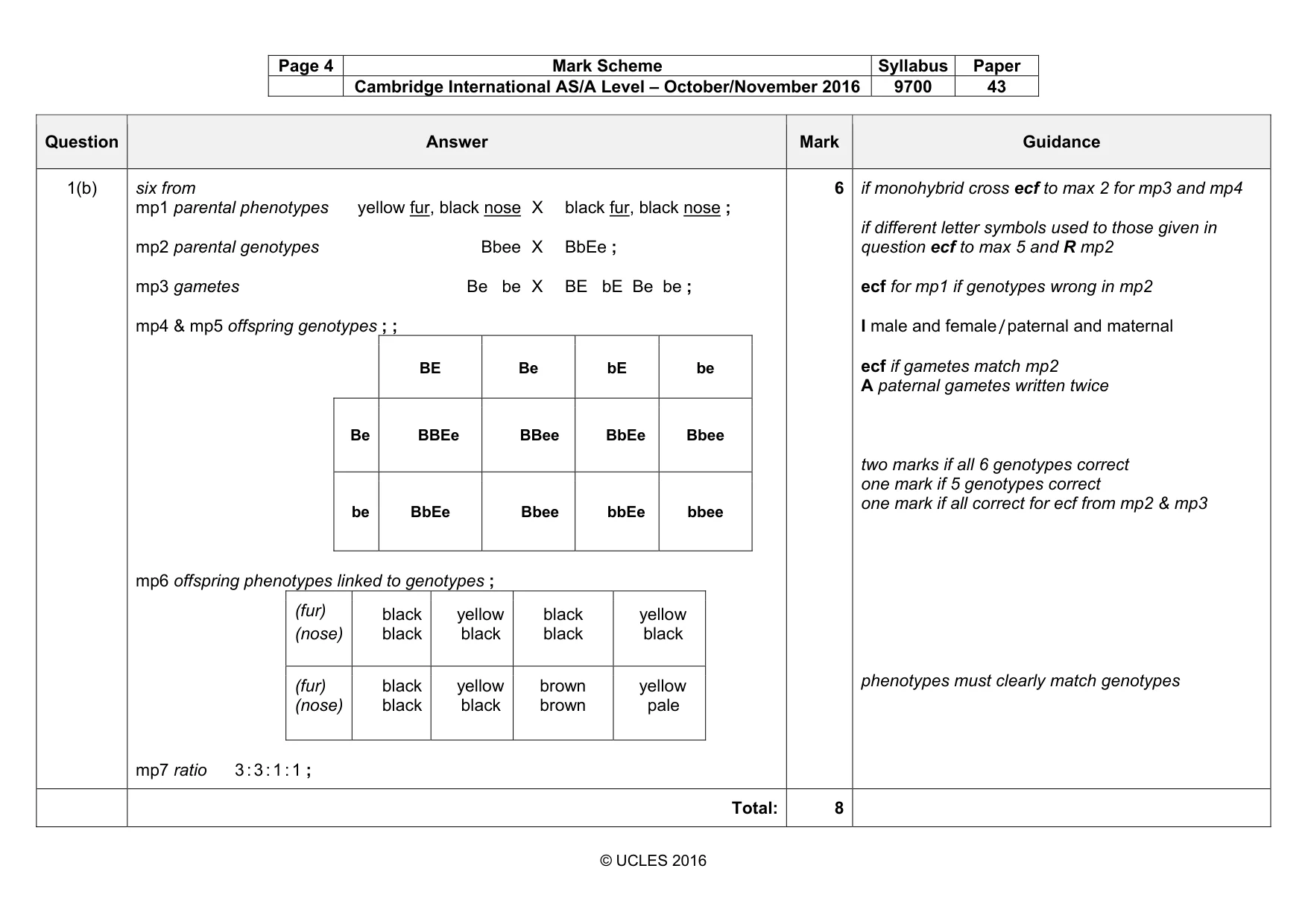
Page 4 Mark Scheme Syllabus Paper Cambridge International AS/A Level – October/November 2016 9700 43 © UCLES 2016 Question Answer Mark Guidance 1(b) six from mp1 parental phenotypes yellow fur, black nose X black fur, black nose ; mp2 parental genotypes Bbee X BbEe ; mp3 gametes Be be X BE bE Be be ; mp4 & mp5 offspring genotypes ; ; BE Be bE be Be BBEe BBee BbEe Bbee be BbEe Bbee bbEe bbee mp6 offspring phenotypes linked to genotypes ; (fur) (nose) black black yellow black black black yellow black (fur) (nose) black black yellow black brown brown yellow pale mp7 ratio 3 : 3 : 1 : 1 ; 6 if monohybrid cross ecf to max 2 for mp3 and mp4 if different letter symbols used to those given in question ecf to max 5 and R mp2 ecf for mp1 if genotypes wrong in mp2 I male and female / paternal and maternal ecf if gametes match mp2 A paternal gametes written twice two marks if all 6 genotypes correct one mark if 5 genotypes correct one mark if all correct for ecf from mp2 & mp3 phenotypes must clearly match genotypes Total: 8
Mark scheme, page 5
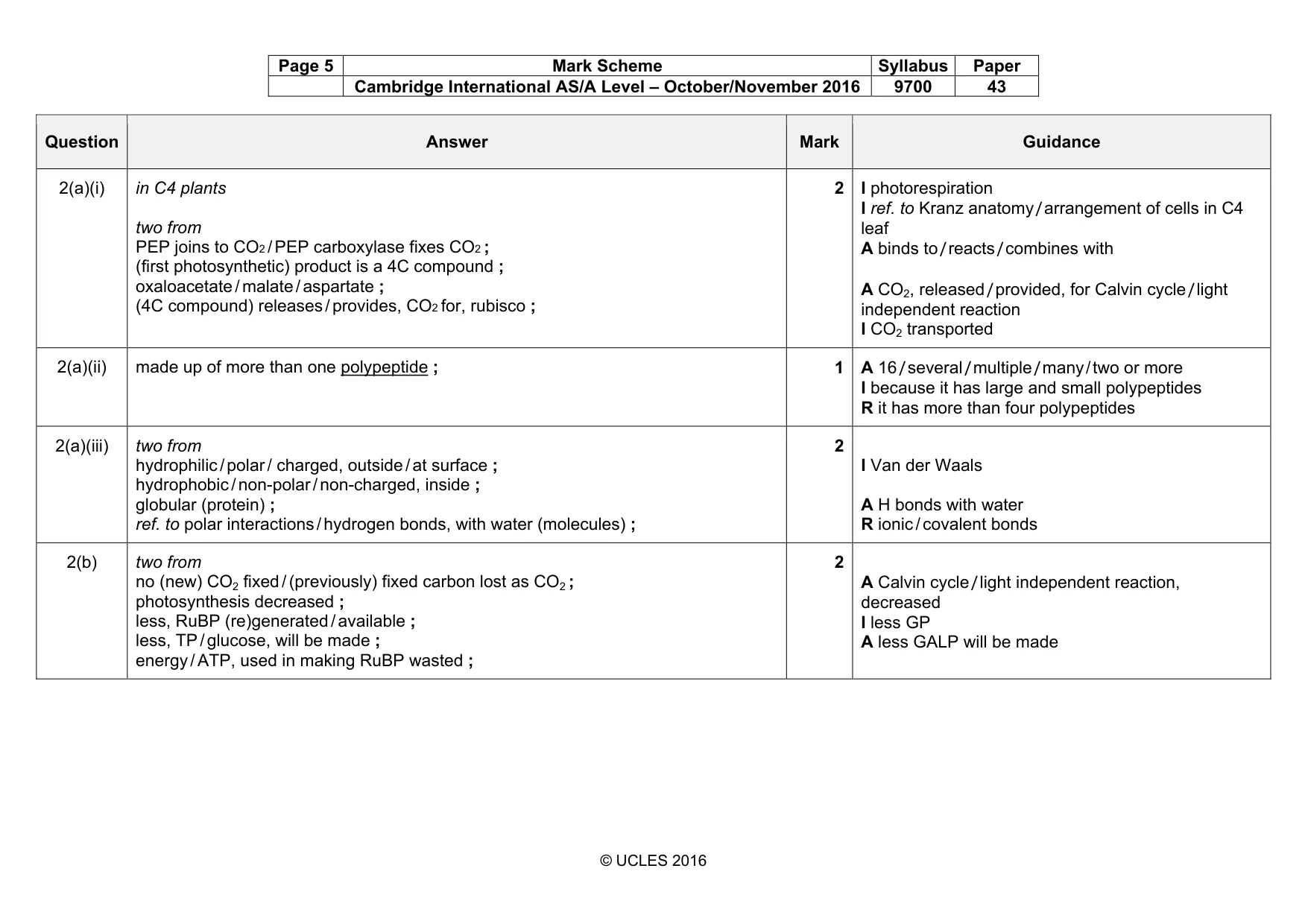
Page 5 Mark Scheme Syllabus Paper Cambridge International AS/A Level – October/November 2016 9700 43 © UCLES 2016 Question Answer Mark Guidance 2(a)(i) in C4 plants two from PEP joins to CO2 / PEP carboxylase fixes CO2 ; (first photosynthetic) product is a 4C compound ; oxaloacetate / malate / aspartate ; (4C compound) releases / provides, CO2 for, rubisco ; 2 I photorespiration I ref. to Kranz anatomy / arrangement of cells in C4 leaf A binds to / reacts / combines with A CO2, released / provided, for Calvin cycle / light independent reaction I CO2 transported 2(a)(ii) made up of more than one polypeptide ; 1 A 16 / several / multiple / many / two or more I because it has large and small polypeptides R it has more than four polypeptides 2(a)(iii) two from hydrophilic / polar / charged, outside / at surface ; hydrophobic / non-polar / non-charged, inside ; globular (protein) ; ref. to polar interactions / hydrogen bonds, with water (molecules) ; 2 I Van der Waals A H bonds with water R ionic / covalent bonds 2(b) two from no (new) CO2 fixed / (previously) fixed carbon lost as CO2 ; photosynthesis decreased ; less, RuBP (re)generated / available ; less, TP / glucose, will be made ; energy / ATP, used in making RuBP wasted ; 2 A Calvin cycle / light independent reaction, decreased I less GP A less GALP will be made
Mark scheme, page 6
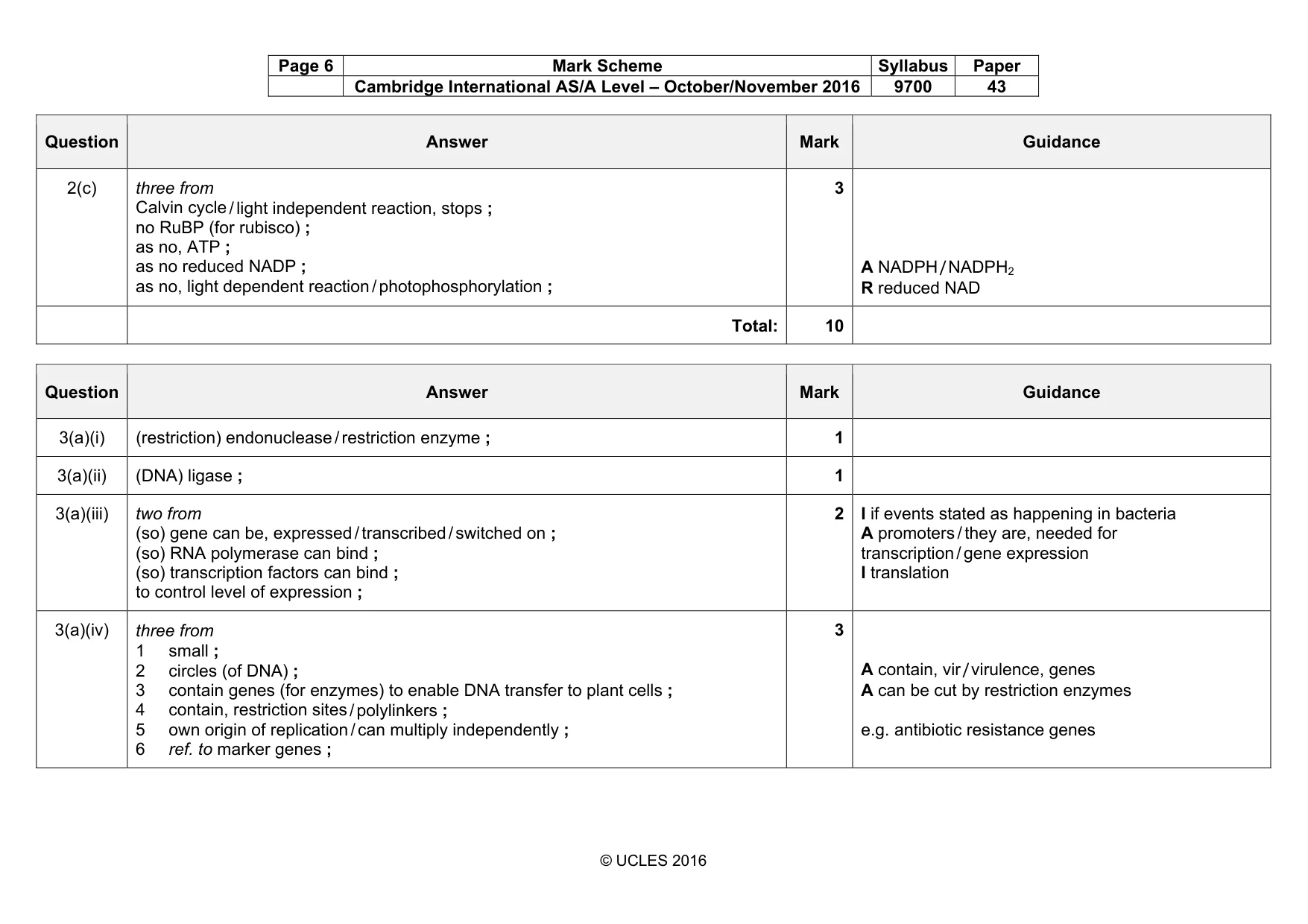
Page 6 Mark Scheme Syllabus Paper Cambridge International AS/A Level – October/November 2016 9700 43 © UCLES 2016 Question Answer Mark Guidance 2(c) three from Calvin cycle / light independent reaction, stops ; no RuBP (for rubisco) ; as no, ATP ; as no reduced NADP ; as no, light dependent reaction / photophosphorylation ; 3 A NADPH / NADPH2 R reduced NAD Total: 10 Question Answer Mark Guidance 3(a)(i) (restriction) endonuclease / restriction enzyme ; 1 3(a)(ii) (DNA) ligase ; 1 3(a)(iii) two from (so) gene can be, expressed / transcribed / switched on ; (so) RNA polymerase can bind ; (so) transcription factors can bind ; to control level of expression ; 2 I if events stated as happening in bacteria A promoters / they are, needed for transcription / gene expression I translation 3(a)(iv) three from 1 small ; 2 circles (of DNA) ; 3 contain genes (for enzymes) to enable DNA transfer to plant cells ; 4 contain, restriction sites / polylinkers ; 5 own origin of replication / can multiply independently ; 6 ref. to marker genes ; 3 A contain, vir / virulence, genes A can be cut by restriction enzymes e.g. antibiotic resistance genes
Mark scheme, page 7
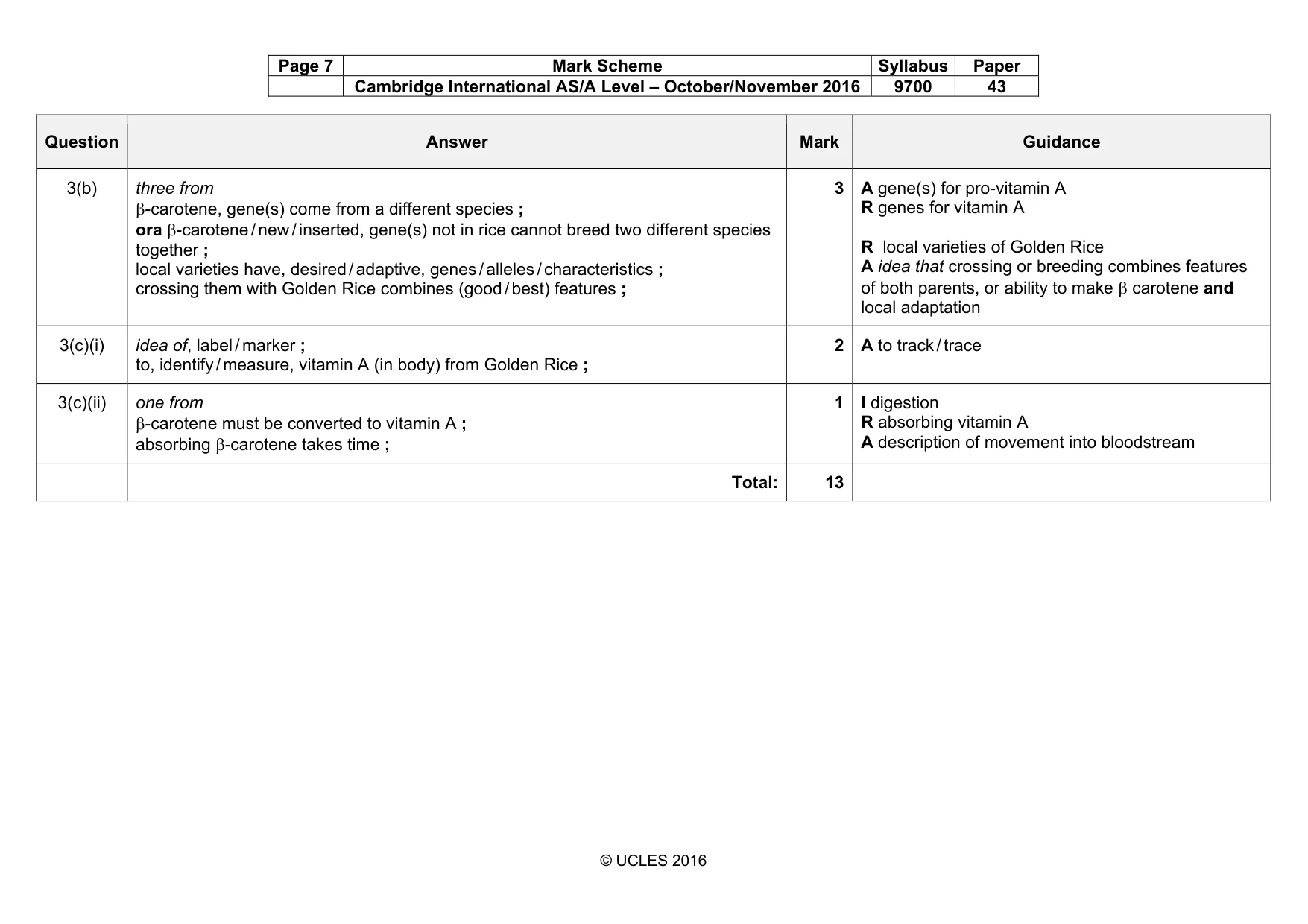
Page 7 Mark Scheme Syllabus Paper Cambridge International AS/A Level – October/November 2016 9700 43 © UCLES 2016 Question Answer Mark Guidance 3(b) three from β-carotene, gene(s) come from a different species ; ora β-carotene / new / inserted, gene(s) not in rice cannot breed two different species together ; local varieties have, desired / adaptive, genes / alleles / characteristics ; crossing them with Golden Rice combines (good / best) features ; 3 A gene(s) for pro-vitamin A R genes for vitamin A R local varieties of Golden Rice A idea that crossing or breeding combines features of both parents, or ability to make β carotene and local adaptation 3(c)(i) idea of, label / marker ; to, identify / measure, vitamin A (in body) from Golden Rice ; 2 A to track / trace 3(c)(ii) one from β-carotene must be converted to vitamin A ; absorbing β-carotene takes time ; 1 I digestion R absorbing vitamin A A description of movement into bloodstream Total: 13
Mark scheme, page 8
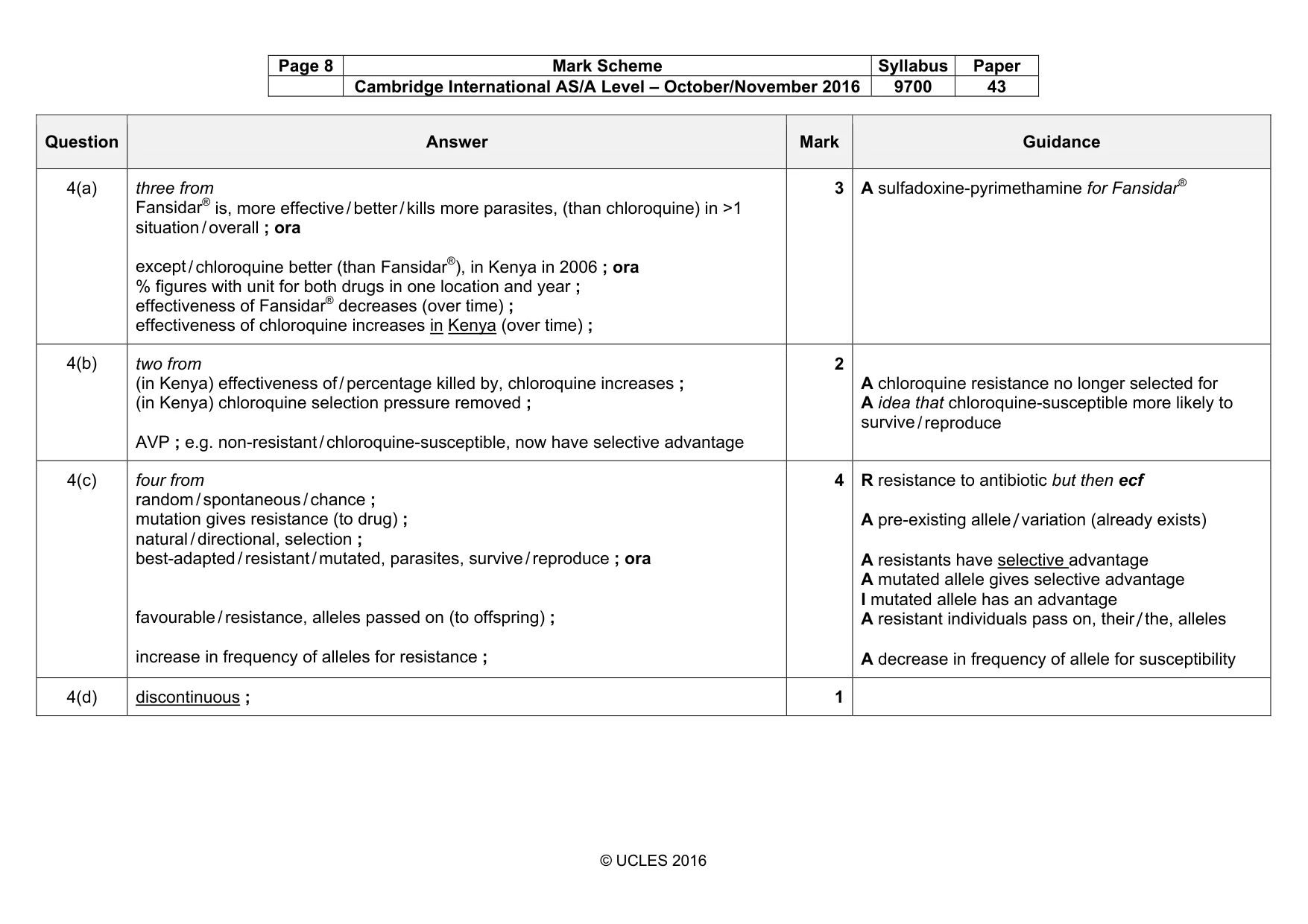
Page 8 Mark Scheme Syllabus Paper Cambridge International AS/A Level – October/November 2016 9700 43 © UCLES 2016 Question Answer Mark Guidance 4(a) three from Fansidar® is, more effective / better / kills more parasites, (than chloroquine) in >1 situation / overall ; ora except / chloroquine better (than Fansidar®), in Kenya in 2006 ; ora % figures with unit for both drugs in one location and year ; effectiveness of Fansidar® decreases (over time) ; effectiveness of chloroquine increases in Kenya (over time) ; 3 A sulfadoxine-pyrimethamine for Fansidar® 4(b) two from (in Kenya) effectiveness of / percentage killed by, chloroquine increases ; (in Kenya) chloroquine selection pressure removed ; AVP ; e.g. non-resistant / chloroquine-susceptible, now have selective advantage 2 A chloroquine resistance no longer selected for A idea that chloroquine-susceptible more likely to survive / reproduce 4(c) four from random / spontaneous / chance ; mutation gives resistance (to drug) ; natural / directional, selection ; best-adapted / resistant / mutated, parasites, survive / reproduce ; ora favourable / resistance, alleles passed on (to offspring) ; increase in frequency of alleles for resistance ; 4 R resistance to antibiotic but then ecf A pre-existing allele / variation (already exists) A resistants have selective advantage A mutated allele gives selective advantage I mutated allele has an advantage A resistant individuals pass on, their / the, alleles A decrease in frequency of allele for susceptibility 4(d) discontinuous ; 1
Mark scheme, page 9
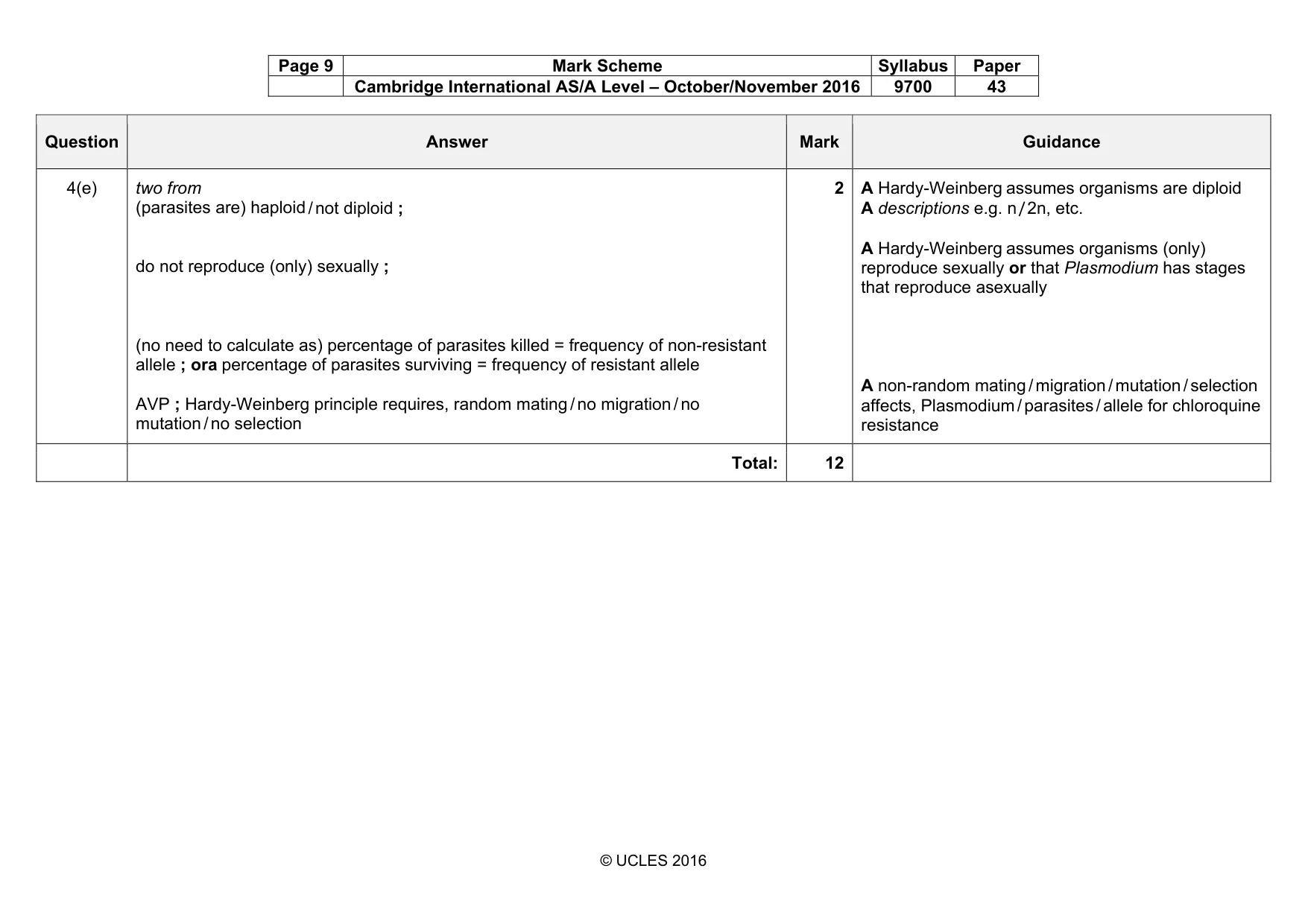
Page 9 Mark Scheme Syllabus Paper Cambridge International AS/A Level – October/November 2016 9700 43 © UCLES 2016 Question Answer Mark Guidance 4(e) two from (parasites are) haploid / not diploid ; do not reproduce (only) sexually ; (no need to calculate as) percentage of parasites killed = frequency of non-resistant allele ; ora percentage of parasites surviving = frequency of resistant allele AVP ; Hardy-Weinberg principle requires, random mating / no migration / no mutation / no selection 2 A Hardy-Weinberg assumes organisms are diploid A descriptions e.g. n / 2n, etc. A Hardy-Weinberg assumes organisms (only) reproduce sexually or that Plasmodium has stages that reproduce asexually A non-random mating / migration / mutation / selection affects, Plasmodium / parasites / allele for chloroquine resistance Total: 12
Mark scheme, page 10
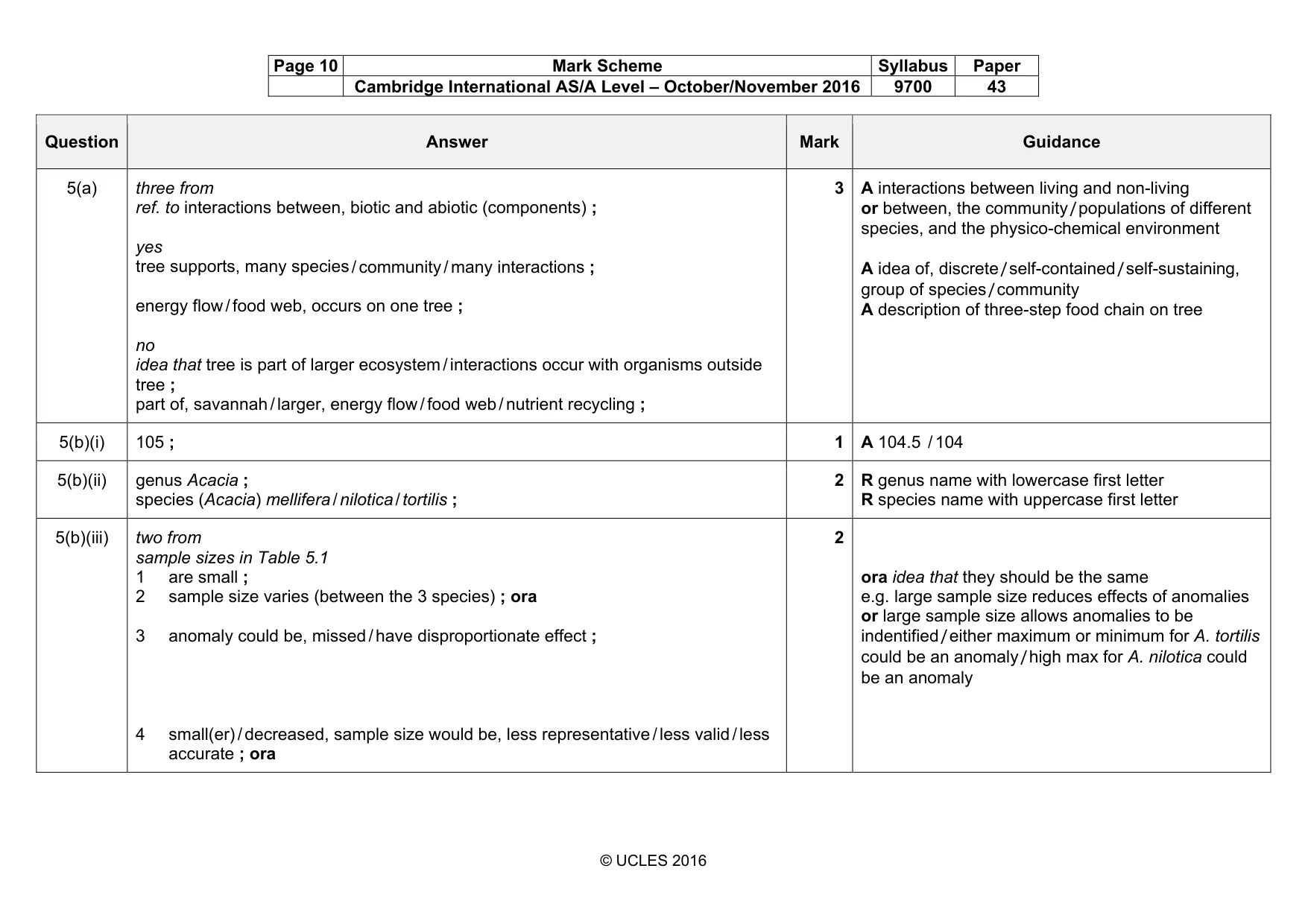
Page 10 Mark Scheme Syllabus Paper Cambridge International AS/A Level – October/November 2016 9700 43 © UCLES 2016 Question Answer Mark Guidance 5(a) three from ref. to interactions between, biotic and abiotic (components) ; yes tree supports, many species / community / many interactions ; energy flow / food web, occurs on one tree ; no idea that tree is part of larger ecosystem / interactions occur with organisms outside tree ; part of, savannah / larger, energy flow / food web / nutrient recycling ; 3 A interactions between living and non-living or between, the community / populations of different species, and the physico-chemical environment A idea of, discrete / self-contained / self-sustaining, group of species / community A description of three-step food chain on tree 5(b)(i) 105 ; 1 A 104.5 / 104 5(b)(ii) genus Acacia ; species (Acacia) mellifera / nilotica / tortilis ; 2 R genus name with lowercase first letter R species name with uppercase first letter 5(b)(iii) two from sample sizes in Table 5.1 1 are small ; 2 sample size varies (between the 3 species) ; ora 3 anomaly could be, missed / have disproportionate effect ; 4 small(er) / decreased, sample size would be, less representative / less valid / less accurate ; ora 2 ora idea that they should be the same e.g. large sample size reduces effects of anomalies or large sample size allows anomalies to be indentified / either maximum or minimum for A. tortilis could be an anomaly / high max for A. nilotica could be an anomaly
Mark scheme, page 11
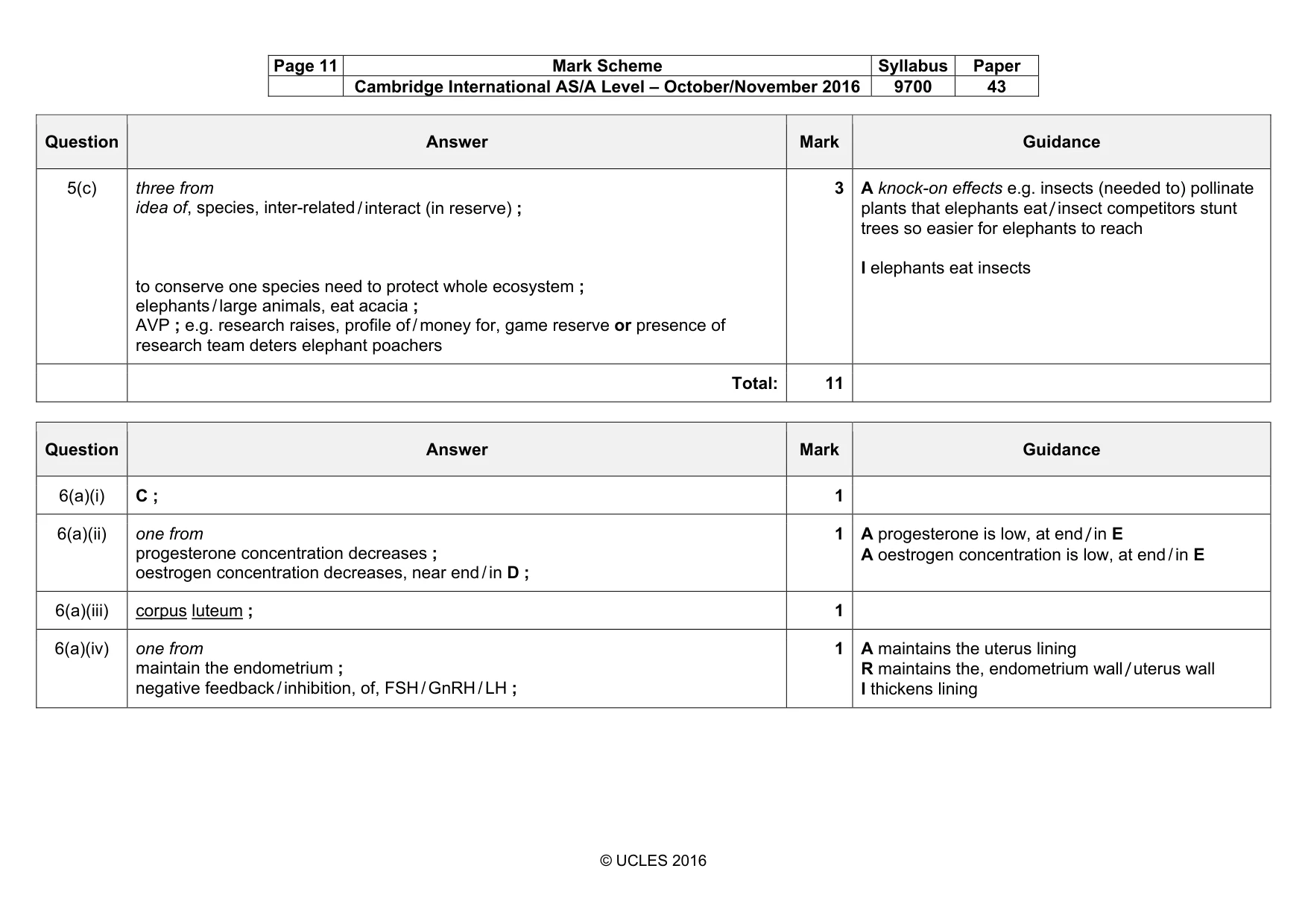
Page 11 Mark Scheme Syllabus Paper Cambridge International AS/A Level – October/November 2016 9700 43 © UCLES 2016 Question Answer Mark Guidance 5(c) three from idea of, species, inter-related / interact (in reserve) ; to conserve one species need to protect whole ecosystem ; elephants / large animals, eat acacia ; AVP ; e.g. research raises, profile of / money for, game reserve or presence of research team deters elephant poachers 3 A knock-on effects e.g. insects (needed to) pollinate plants that elephants eat / insect competitors stunt trees so easier for elephants to reach I elephants eat insects Total: 11 Question Answer Mark Guidance 6(a)(i) C ; 1 6(a)(ii) one from progesterone concentration decreases ; oestrogen concentration decreases, near end / in D ; 1 A progesterone is low, at end / in E A oestrogen concentration is low, at end / in E 6(a)(iii) corpus luteum ; 1 6(a)(iv) one from maintain the endometrium ; negative feedback / inhibition, of, FSH / GnRH / LH ; 1 A maintains the uterus lining R maintains the, endometrium wall / uterus wall I thickens lining
Mark scheme, page 12
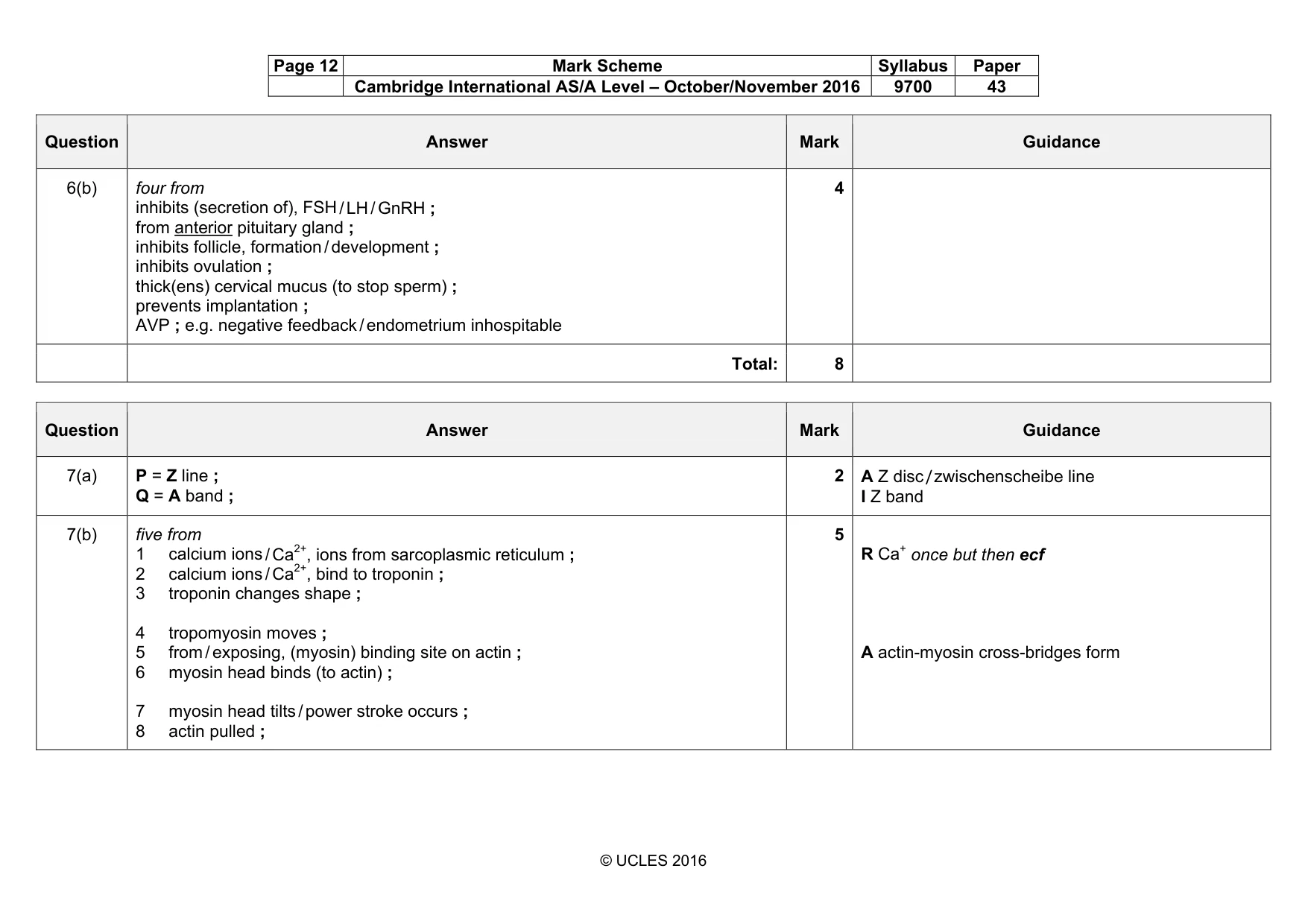
Page 12 Mark Scheme Syllabus Paper Cambridge International AS/A Level – October/November 2016 9700 43 © UCLES 2016 Question Answer Mark Guidance 6(b) four from inhibits (secretion of), FSH / LH / GnRH ; from anterior pituitary gland ; inhibits follicle, formation / development ; inhibits ovulation ; thick(ens) cervical mucus (to stop sperm) ; prevents implantation ; AVP ; e.g. negative feedback / endometrium inhospitable 4 Total: 8 Question Answer Mark Guidance 7(a) P = Z line ; Q = A band ; 2 A Z disc / zwischenscheibe line I Z band 7(b) five from 1 calcium ions / Ca2+, ions from sarcoplasmic reticulum ; 2 calcium ions / Ca2+, bind to troponin ; 3 troponin changes shape ; 4 tropomyosin moves ; 5 from / exposing, (myosin) binding site on actin ; 6 myosin head binds (to actin) ; 7 myosin head tilts / power stroke occurs ; 8 actin pulled ; 5 R Ca+ once but then ecf A actin-myosin cross-bridges form
Mark scheme, page 13
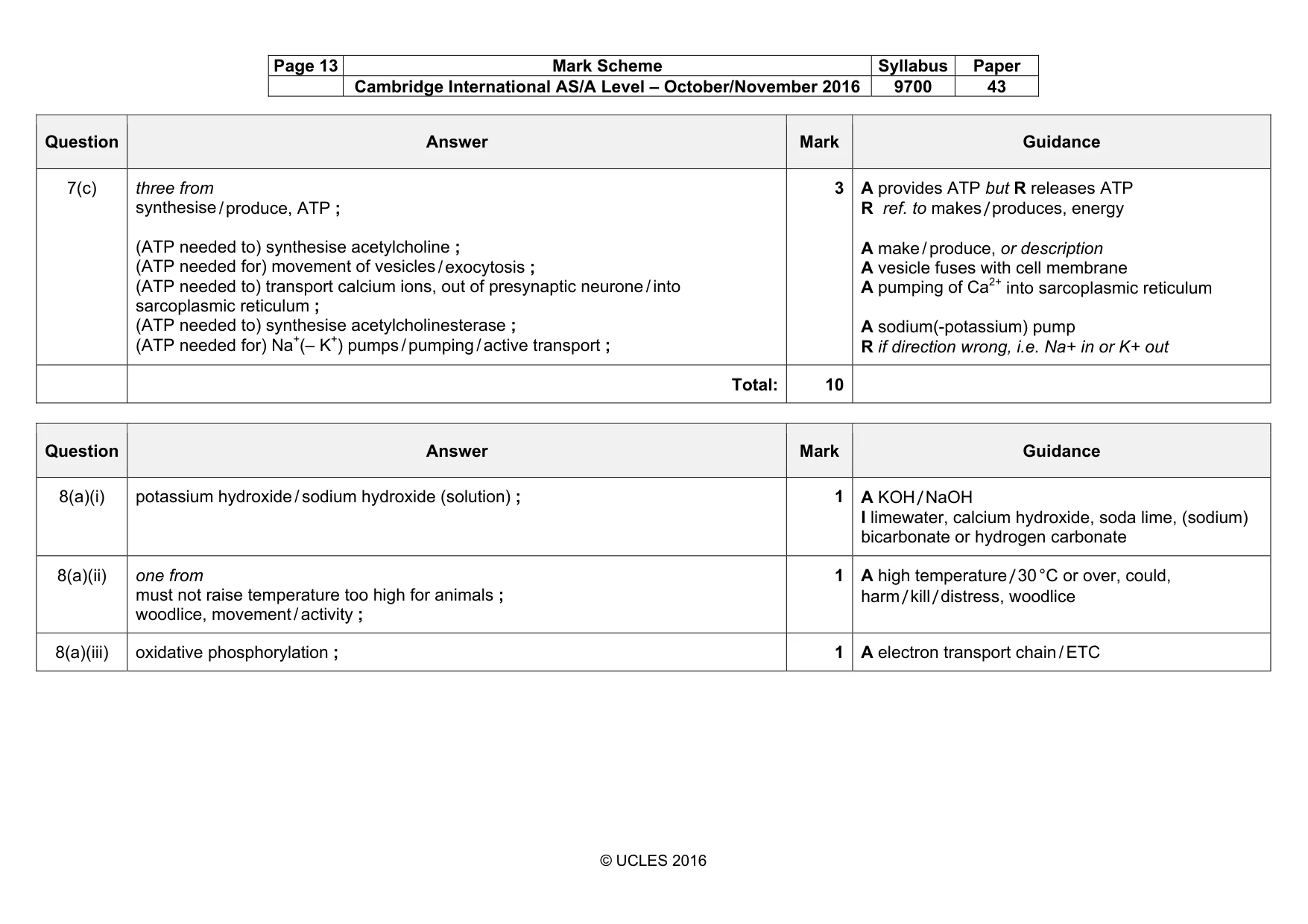
Page 13 Mark Scheme Syllabus Paper Cambridge International AS/A Level – October/November 2016 9700 43 © UCLES 2016 Question Answer Mark Guidance 7(c) three from synthesise / produce, ATP ; (ATP needed to) synthesise acetylcholine ; (ATP needed for) movement of vesicles / exocytosis ; (ATP needed to) transport calcium ions, out of presynaptic neurone / into sarcoplasmic reticulum ; (ATP needed to) synthesise acetylcholinesterase ; (ATP needed for) Na+(– K+) pumps / pumping / active transport ; 3 A provides ATP but R releases ATP R ref. to makes / produces, energy A make / produce, or description A vesicle fuses with cell membrane A pumping of Ca2+ into sarcoplasmic reticulum A sodium(-potassium) pump R if direction wrong, i.e. Na+ in or K+ out Total: 10 Question Answer Mark Guidance 8(a)(i) potassium hydroxide / sodium hydroxide (solution) ; 1 A KOH / NaOH I limewater, calcium hydroxide, soda lime, (sodium) bicarbonate or hydrogen carbonate 8(a)(ii) one from must not raise temperature too high for animals ; woodlice, movement / activity ; 1 A high temperature / 30 °C or over, could, harm / kill / distress, woodlice 8(a)(iii) oxidative phosphorylation ; 1 A electron transport chain / ETC
Mark scheme, page 14
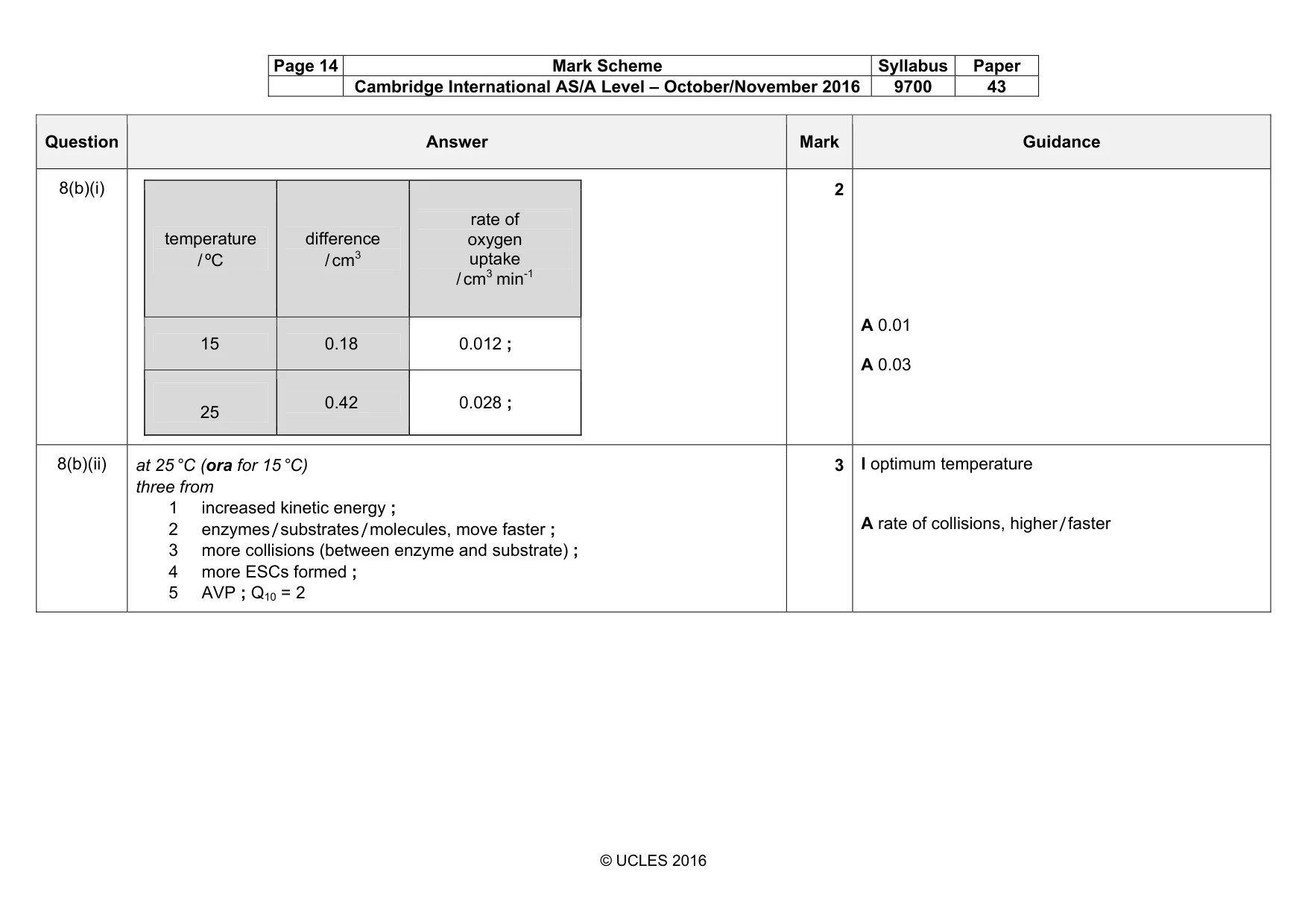
Page 14 Mark Scheme Syllabus Paper Cambridge International AS/A Level – October/November 2016 9700 43 © UCLES 2016 Question Answer Mark Guidance 8(b)(i) temperature / ºC difference / cm3 rate of oxygen uptake / cm3 min-1 15 0.18 0.012 ; 25 0.42 0.028 ; 2 A 0.01 A 0.03 8(b)(ii) at 25 °C (ora for 15 °C) three from 1 increased kinetic energy ; 2 enzymes / substrates / molecules, move faster ; 3 more collisions (between enzyme and substrate) ; 4 more ESCs formed ; 5 AVP ; Q10 = 2 3 I optimum temperature A rate of collisions, higher / faster
Mark scheme, page 15
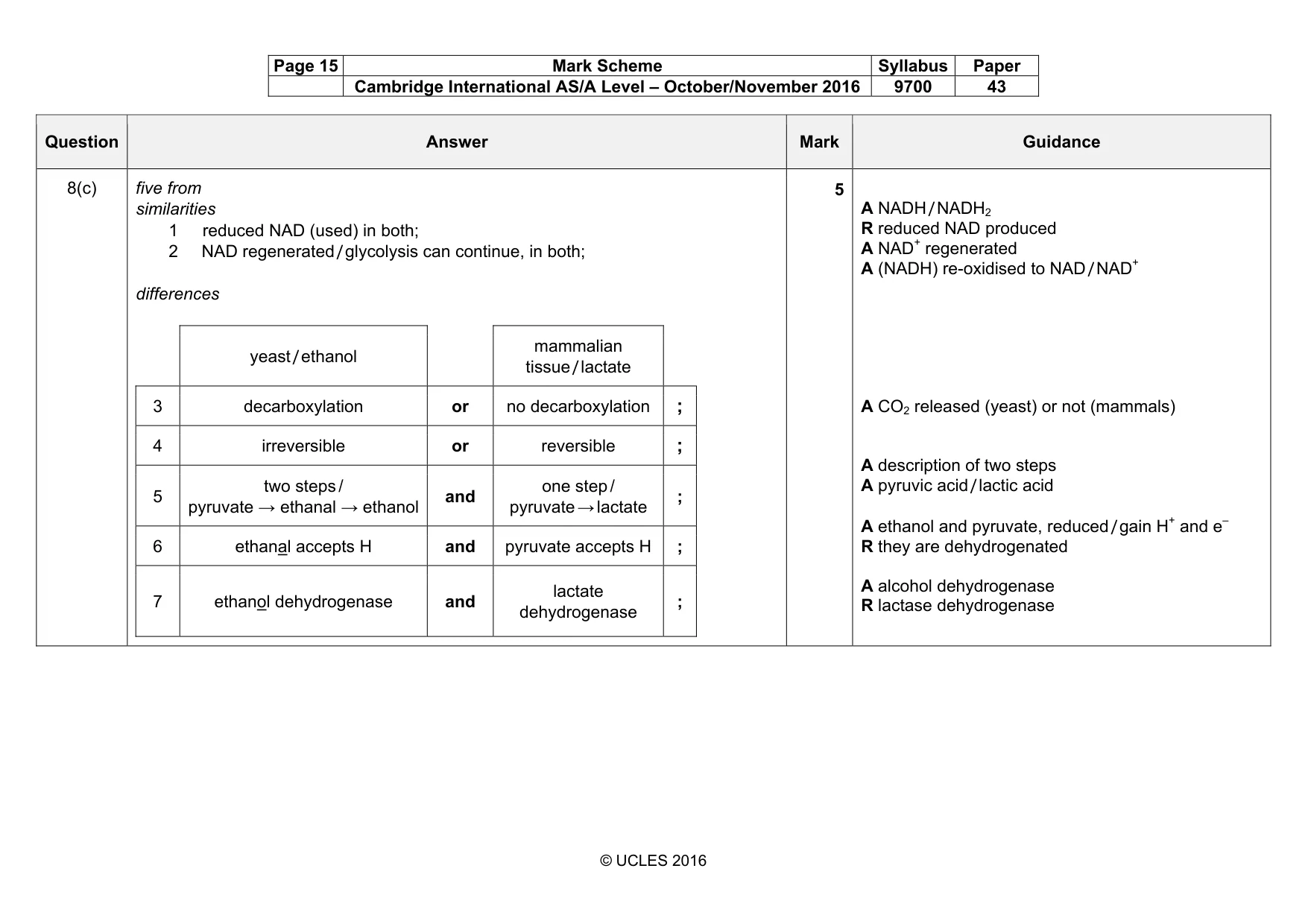
Page 15 Mark Scheme Syllabus Paper Cambridge International AS/A Level – October/November 2016 9700 43 © UCLES 2016 Question Answer Mark Guidance 8(c) five from similarities 1 reduced NAD (used) in both; 2 NAD regenerated / glycolysis can continue, in both; differences yeast / ethanol mammalian tissue / lactate 3 decarboxylation or no decarboxylation ; 4 irreversible or reversible ; 5 two steps / pyruvate → ethanal → ethanol and one step / pyruvate → lactate ; 6 ethanal accepts H and pyruvate accepts H ; 7 ethanol dehydrogenase and lactate dehydrogenase ; 5 A NADH / NADH2 R reduced NAD produced A NAD+ regenerated A (NADH) re-oxidised to NAD / NAD+ A CO2 released (yeast) or not (mammals) A description of two steps A pyruvic acid / lactic acid A ethanol and pyruvate, reduced / gain H+ and e– R they are dehydrogenated A alcohol dehydrogenase R lactase dehydrogenase
Mark scheme, page 16
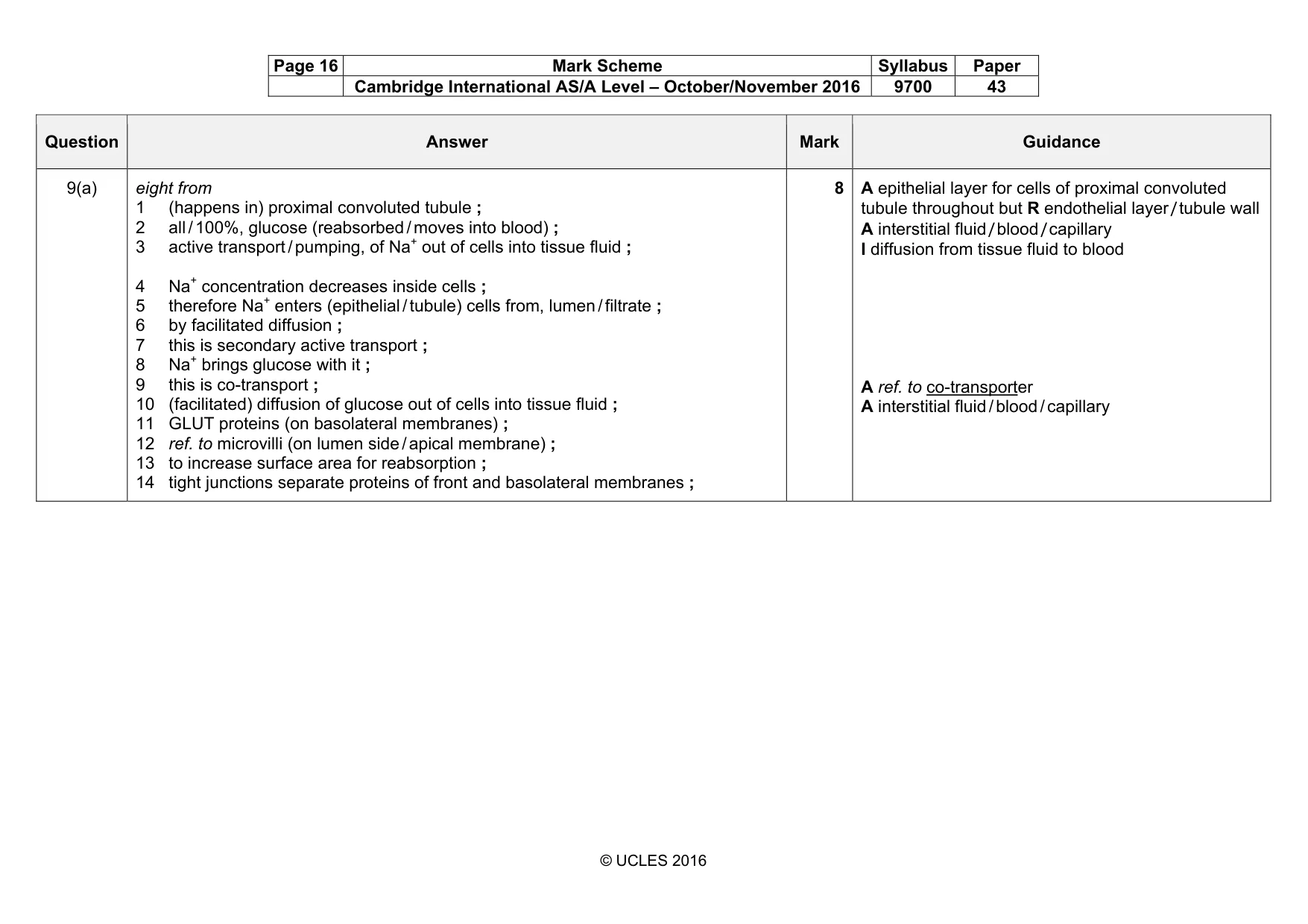
Page 16 Mark Scheme Syllabus Paper Cambridge International AS/A Level – October/November 2016 9700 43 © UCLES 2016 Question Answer Mark Guidance 9(a) eight from 1 (happens in) proximal convoluted tubule ; 2 all / 100%, glucose (reabsorbed / moves into blood) ; 3 active transport / pumping, of Na+ out of cells into tissue fluid ; 4 Na+ concentration decreases inside cells ; 5 therefore Na+ enters (epithelial / tubule) cells from, lumen / filtrate ; 6 by facilitated diffusion ; 7 this is secondary active transport ; 8 Na+ brings glucose with it ; 9 this is co-transport ; 10 (facilitated) diffusion of glucose out of cells into tissue fluid ; 11 GLUT proteins (on basolateral membranes) ; 12 ref. to microvilli (on lumen side / apical membrane) ; 13 to increase surface area for reabsorption ; 14 tight junctions separate proteins of front and basolateral membranes ; 8 A epithelial layer for cells of proximal convoluted tubule throughout but R endothelial layer / tubule wall A interstitial fluid / blood / capillary I diffusion from tissue fluid to blood A ref. to co-transporter A interstitial fluid / blood / capillary
Mark scheme, page 17
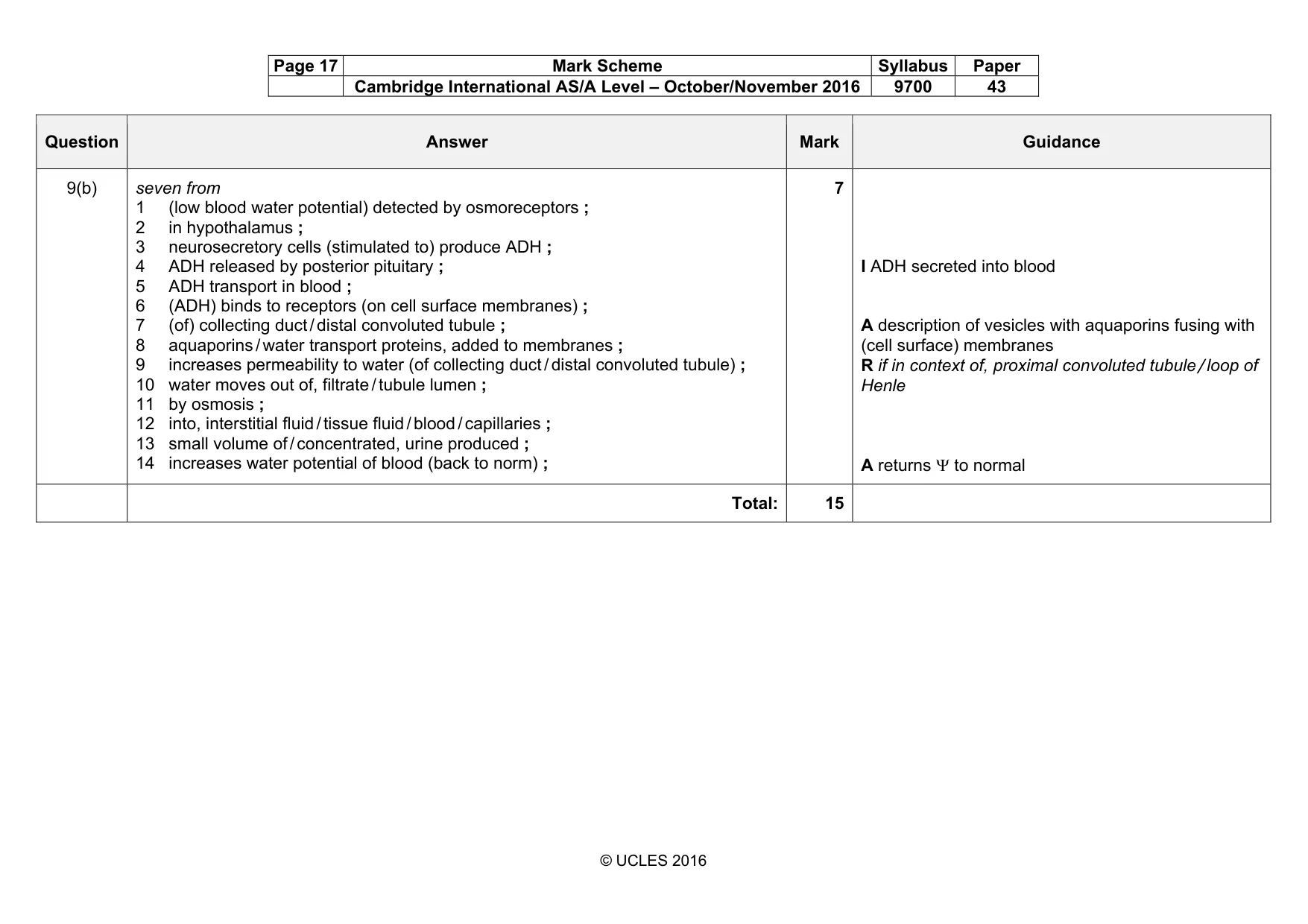
Page 17 Mark Scheme Syllabus Paper Cambridge International AS/A Level – October/November 2016 9700 43 © UCLES 2016 Question Answer Mark Guidance 9(b) seven from 1 (low blood water potential) detected by osmoreceptors ; 2 in hypothalamus ; 3 neurosecretory cells (stimulated to) produce ADH ; 4 ADH released by posterior pituitary ; 5 ADH transport in blood ; 6 (ADH) binds to receptors (on cell surface membranes) ; 7 (of) collecting duct / distal convoluted tubule ; 8 aquaporins / water transport proteins, added to membranes ; 9 increases permeability to water (of collecting duct / distal convoluted tubule) ; 10 water moves out of, filtrate / tubule lumen ; 11 by osmosis ; 12 into, interstitial fluid / tissue fluid / blood / capillaries ; 13 small volume of / concentrated, urine produced ; 14 increases water potential of blood (back to norm) ; 7 I ADH secreted into blood A description of vesicles with aquaporins fusing with (cell surface) membranes R if in context of, proximal convoluted tubule / loop of Henle A returns Ψ to normal Total: 15
Mark scheme, page 18
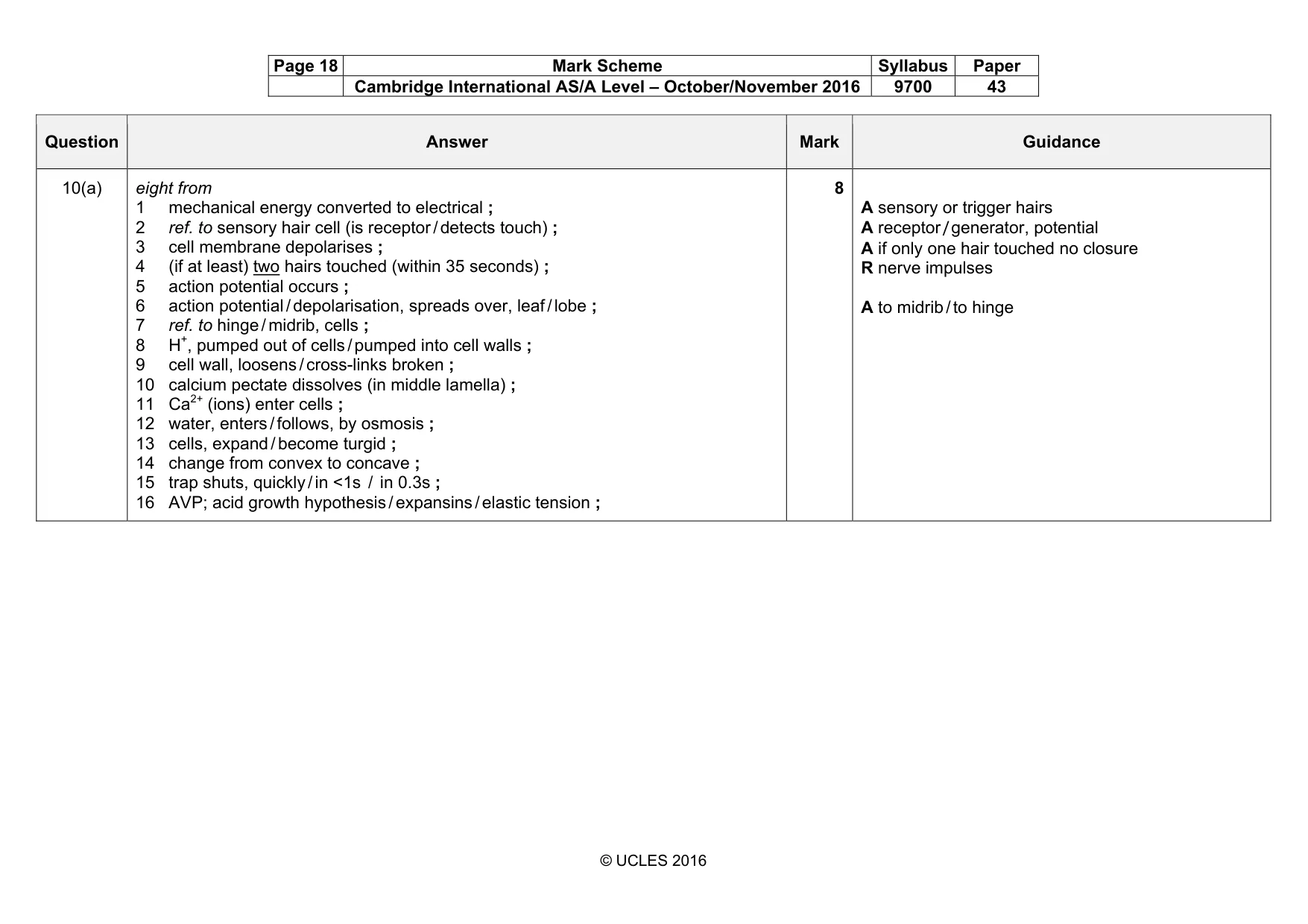
Page 18 Mark Scheme Syllabus Paper Cambridge International AS/A Level – October/November 2016 9700 43 © UCLES 2016 Question Answer Mark Guidance 10(a) eight from 1 mechanical energy converted to electrical ; 2 ref. to sensory hair cell (is receptor / detects touch) ; 3 cell membrane depolarises ; 4 (if at least) two hairs touched (within 35 seconds) ; 5 action potential occurs ; 6 action potential / depolarisation, spreads over, leaf / lobe ; 7 ref. to hinge / midrib, cells ; 8 H+, pumped out of cells / pumped into cell walls ; 9 cell wall, loosens / cross-links broken ; 10 calcium pectate dissolves (in middle lamella) ; 11 Ca2+ (ions) enter cells ; 12 water, enters / follows, by osmosis ; 13 cells, expand / become turgid ; 14 change from convex to concave ; 15 trap shuts, quickly / in <1s / in 0.3s ; 16 AVP; acid growth hypothesis / expansins / elastic tension ; 8 A sensory or trigger hairs A receptor / generator, potential A if only one hair touched no closure R nerve impulses A to midrib / to hinge
Mark scheme, page 19
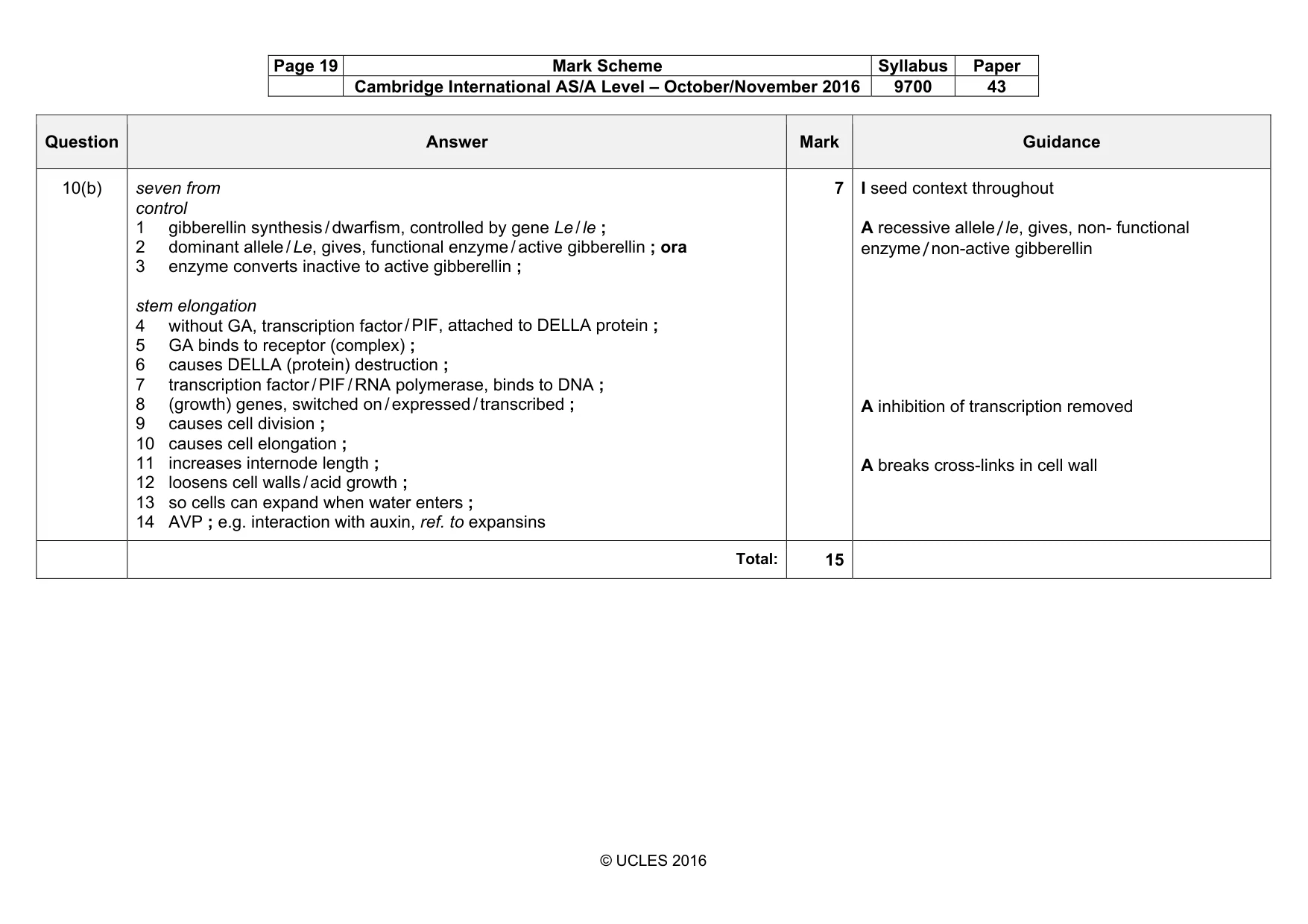
Page 19 Mark Scheme Syllabus Paper Cambridge International AS/A Level – October/November 2016 9700 43 © UCLES 2016 Question Answer Mark Guidance 10(b) seven from control 1 gibberellin synthesis / dwarfism, controlled by gene Le / le ; 2 dominant allele / Le, gives, functional enzyme / active gibberellin ; ora 3 enzyme converts inactive to active gibberellin ; stem elongation 4 without GA, transcription factor / PIF, attached to DELLA protein ; 5 GA binds to receptor (complex) ; 6 causes DELLA (protein) destruction ; 7 transcription factor / PIF / RNA polymerase, binds to DNA ; 8 (growth) genes, switched on / expressed / transcribed ; 9 causes cell division ; 10 causes cell elongation ; 11 increases internode length ; 12 loosens cell walls / acid growth ; 13 so cells can expand when water enters ; 14 AVP ; e.g. interaction with auxin, ref. to expansins 7 I seed context throughout A recessive allele / le, gives, non- functional enzyme / non-active gibberellin A inhibition of transcription removed A breaks cross-links in cell wall Total: 15
What you needed in this session
Cambridge’s own grade thresholds for 2016 Oct/Nov, Paper 4 · Variant 3. A higher threshold means an easier paper — the bar moves with how the cohort did.